Dresden, the capital of Saxony, is called the “Florence of the North” because of its Baroque architecture. There are so many sights here that it is hard to see them in a day and a half – especially in bad weather, which is exactly what we got. We were here on 25–26 September 2020, on our way to Saxon Switzerland. We split our stay into two parts: on Friday we explored the area north of the Elbe (mainly the New Town), and on Saturday the area south of the river, i.e. the Old Town. I had been to Dresden 16 years earlier, for one day on a trip from a summer camp, but I remembered little of it.
Table of contents
- Day 1: the New Town and the north bank of the Elbe
- Day 2: the Old Town in the rain
- The castle, the cathedral, Theaterplatz and the Zwinger
- A night in… a box
- Practical information
Day 1: the New Town and the north bank of the Elbe
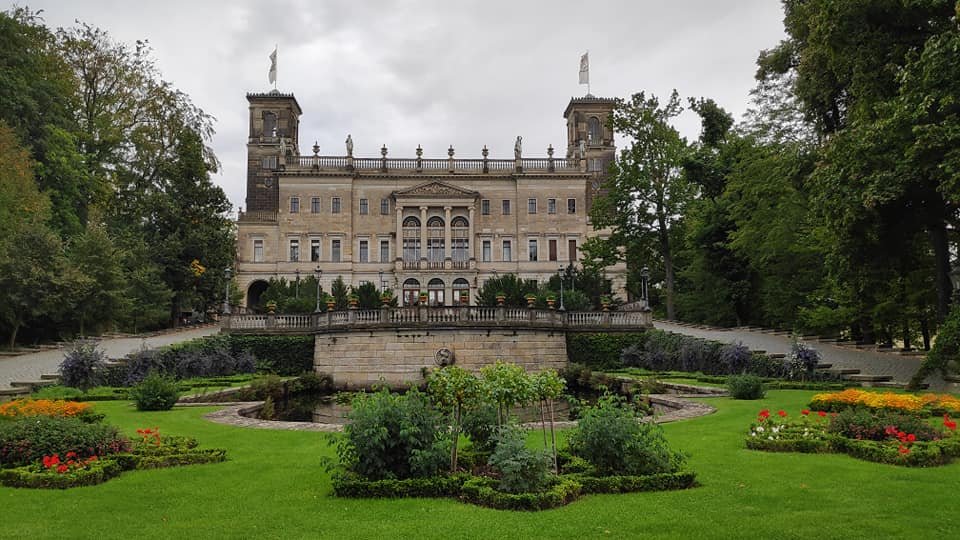
On Friday we went sightseeing under a cloudy sky. On the right bank of the Elbe, on a slope above the river, stands Albrechtsberg Palace – one of the three 19th-century “Elbe castles” – with a garden that descends in terraces towards the river.
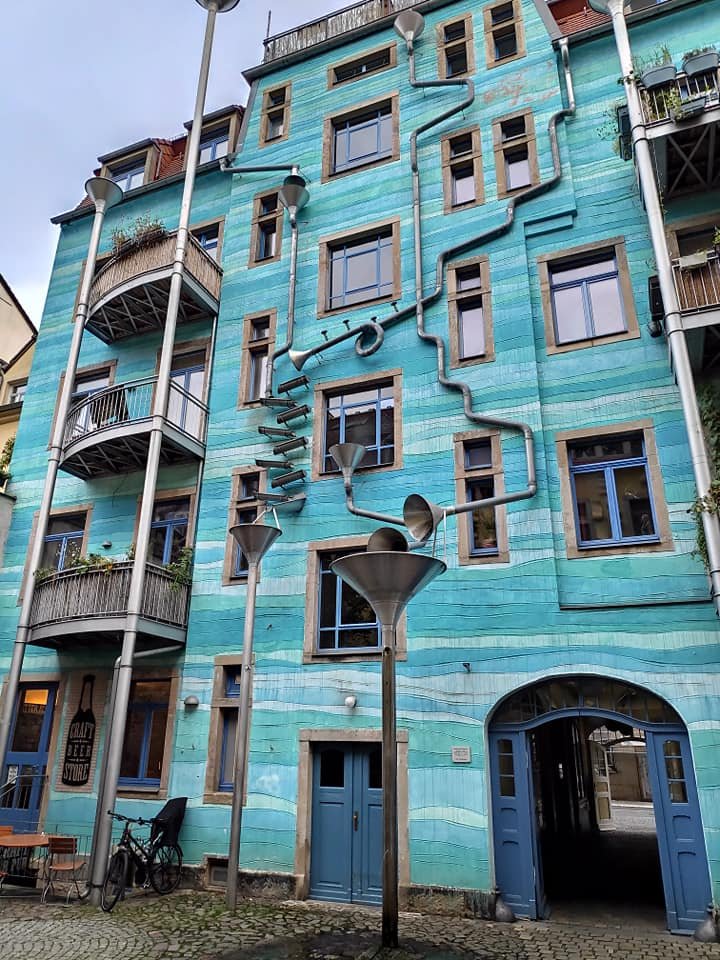
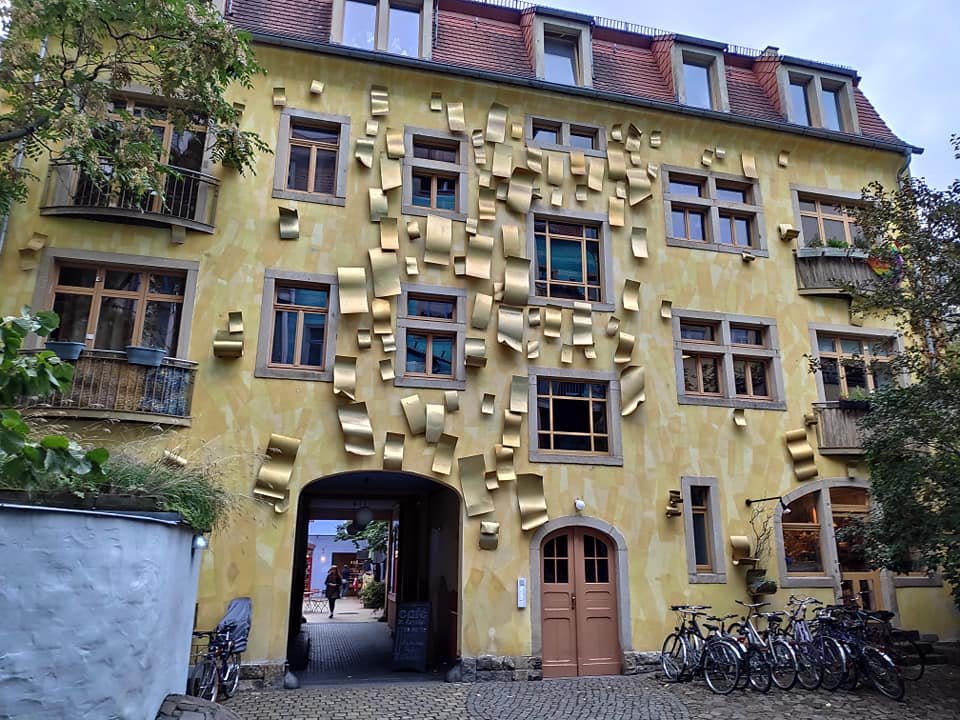
In the New Town district it is worth popping into the Kunsthofpassage – a series of courtyards between townhouses, each with a different, original and colourful design. The best known is the blue house with gutters and funnels on its façade, which “plays music” with the running water when it rains.
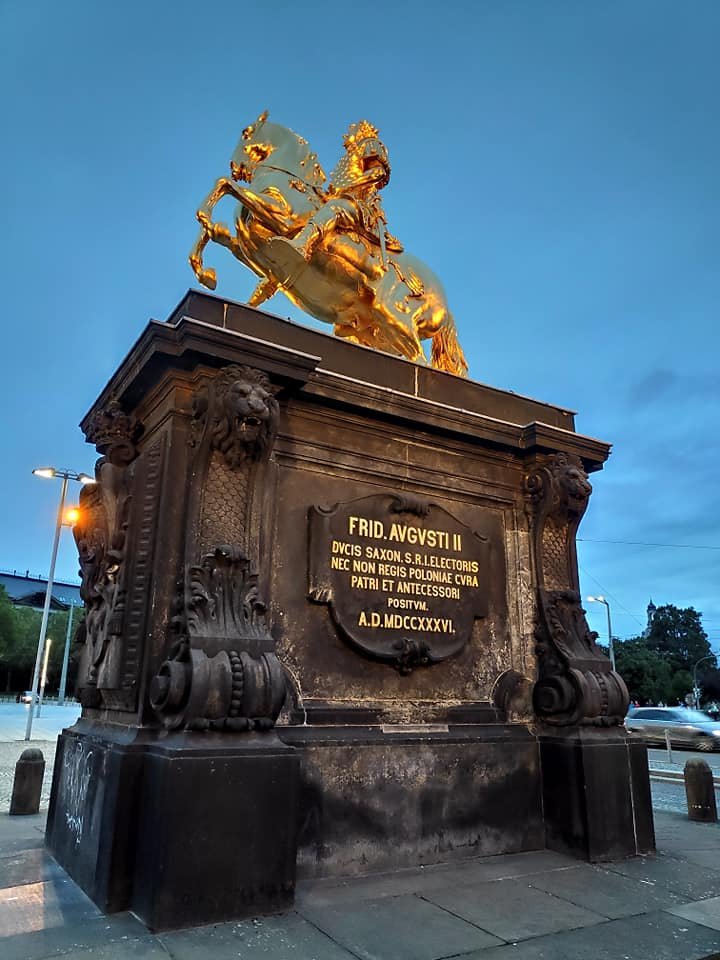
A Polish connection can be found on Neustädter Markt square: the Golden Rider – a gilded equestrian statue of Augustus II the Strong, Elector of Saxony and elected King of Poland, who was born right here in Dresden. Much of Baroque Dresden, including the Zwinger, was built in his time.
Day 2: the Old Town in the rain
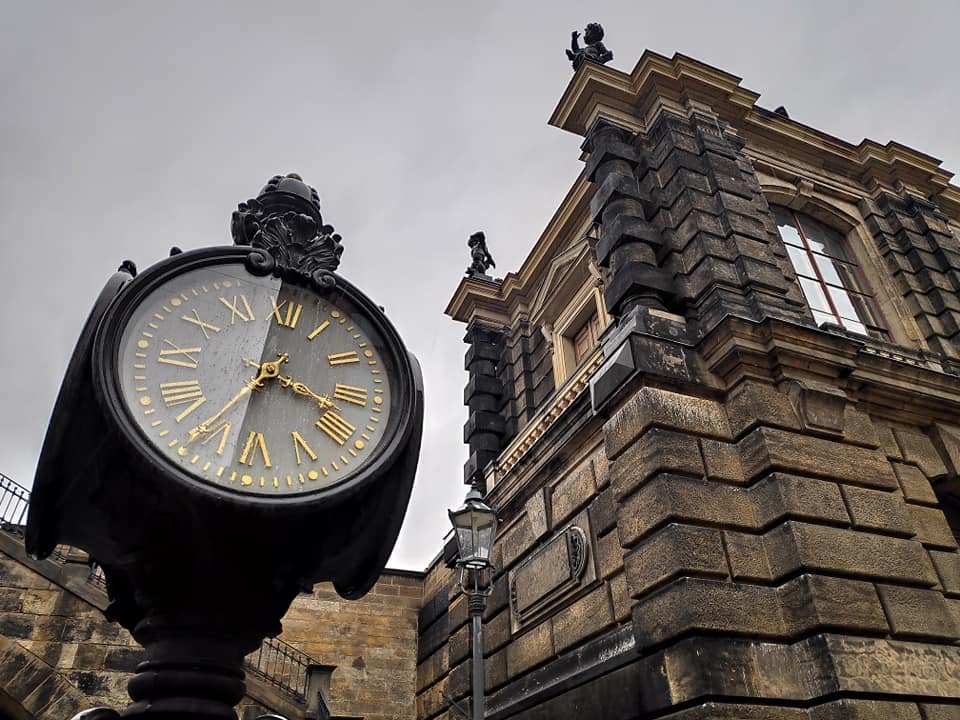
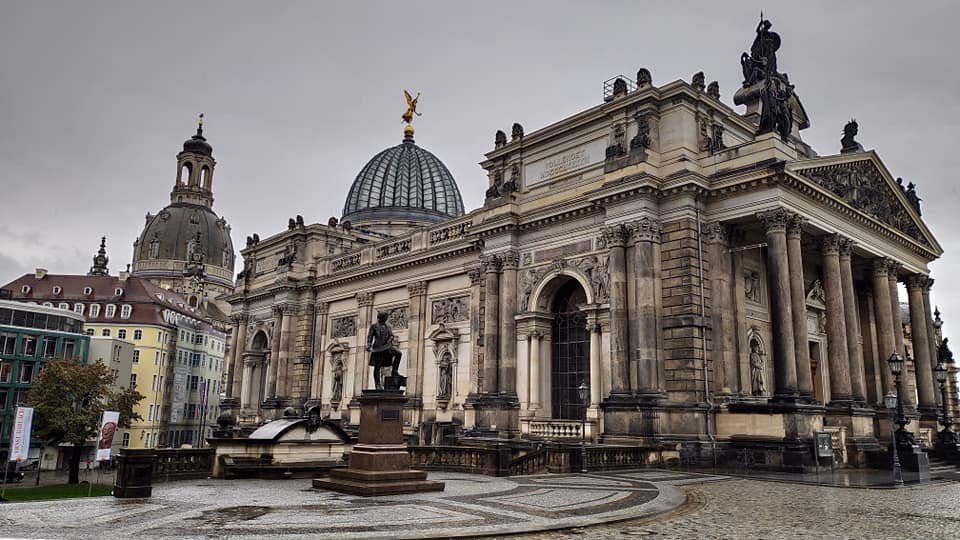
On Saturday the rain was with us all day. We got really cold – it was only 9°C and it rained until the evening; despite my rain jacket I got soaked. The Old Town is impressive all the same. We started our walk on the Brühl’s Terrace, known as the “Balcony of Europe” – from this riverside terrace you can see, among other things, the glass dome of the Academy of Fine Arts, which locals call the “lemon squeezer”, and the dome of the Frauenkirche.
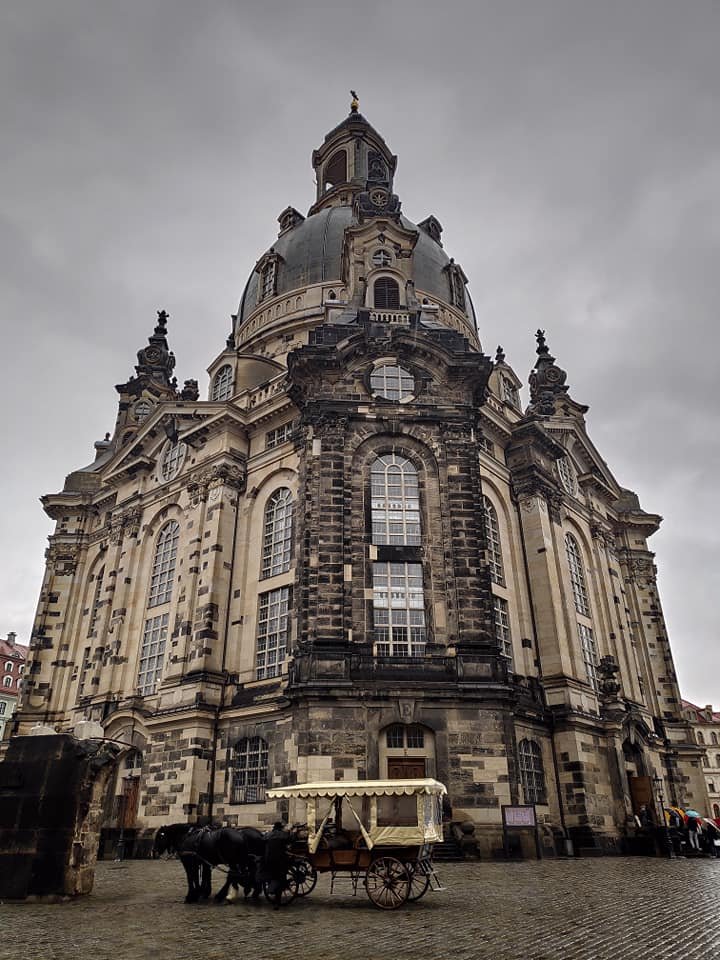
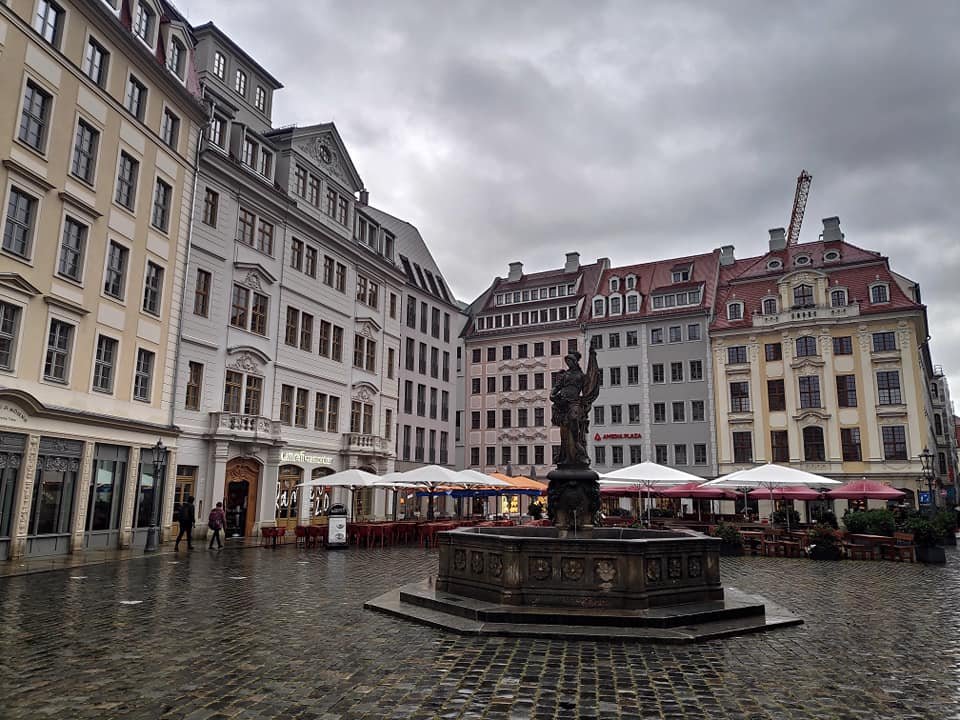
The Church of Our Lady (Frauenkirche) is a symbol of the city’s rebirth: the Baroque church collapsed after the bombing of Dresden in February 1945 and lay in ruins for decades. It was only rebuilt in 1994–2005, partly using the original stones. It stands on Neumarkt square, surrounded by reconstructed townhouses.
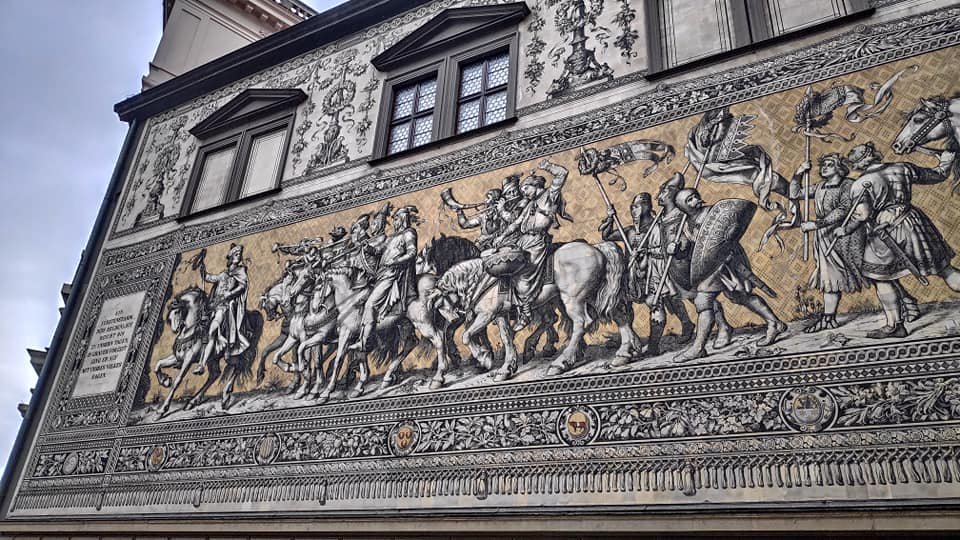
Along the wall of the castle stables on Augustusstraße runs the Procession of Princes (Fürstenzug) – a mural about 100 metres long made of more than 20,000 tiles of Meissen porcelain, depicting the rulers of Saxony from the House of Wettin.
The castle, the cathedral, Theaterplatz and the Zwinger
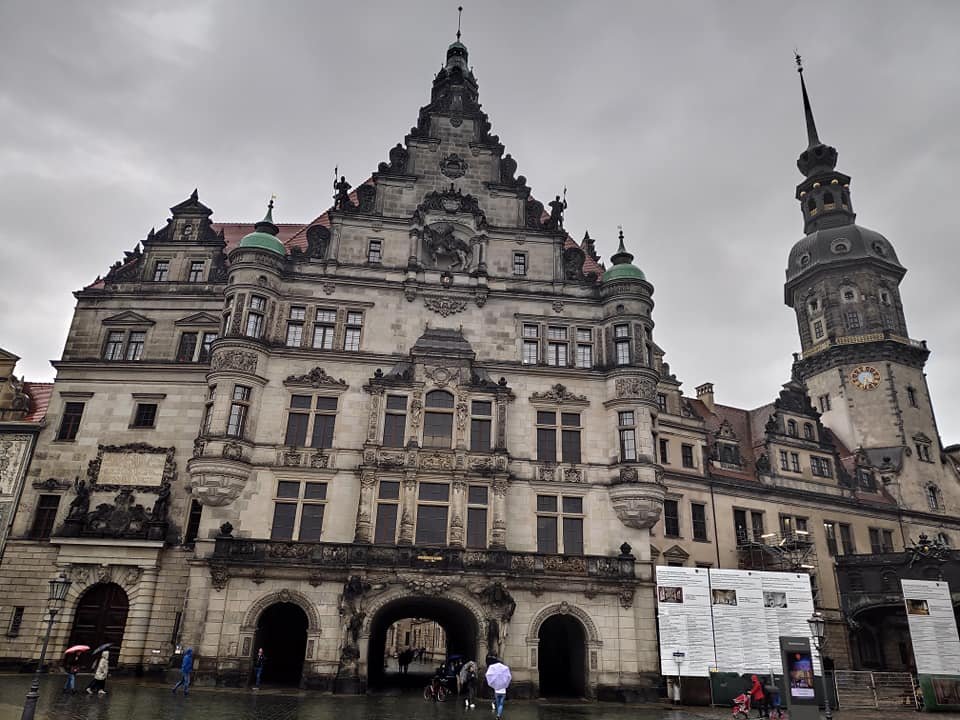
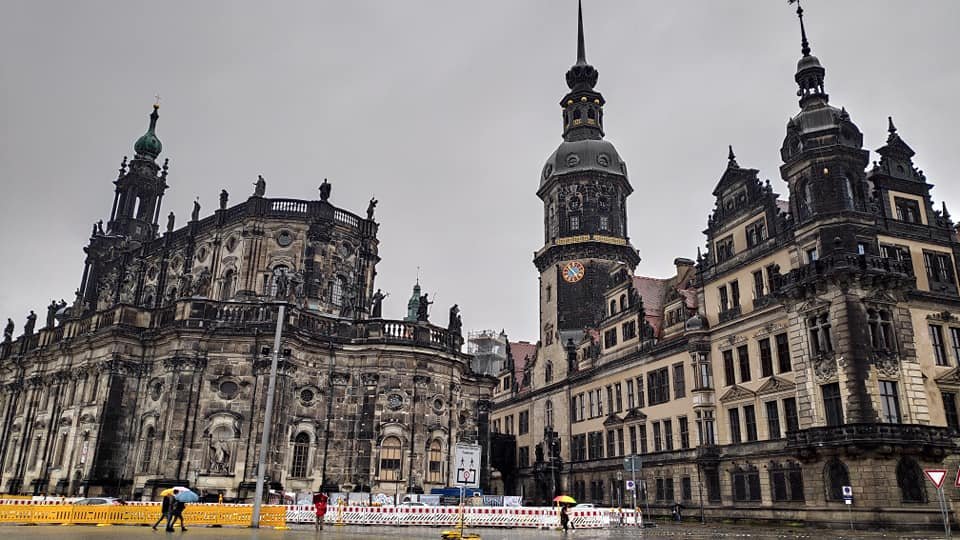
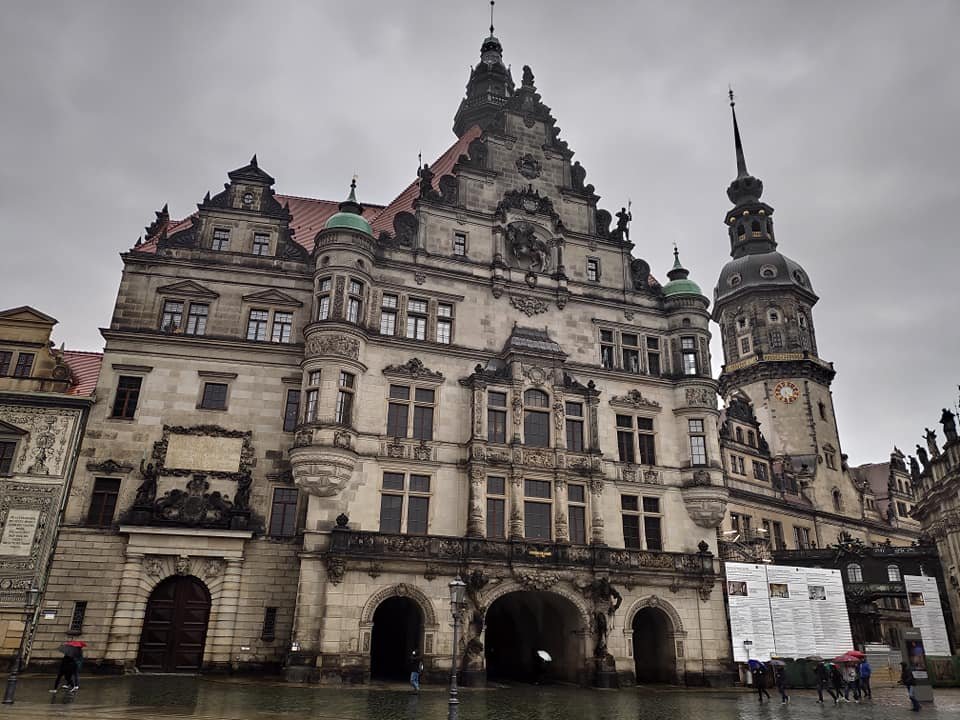
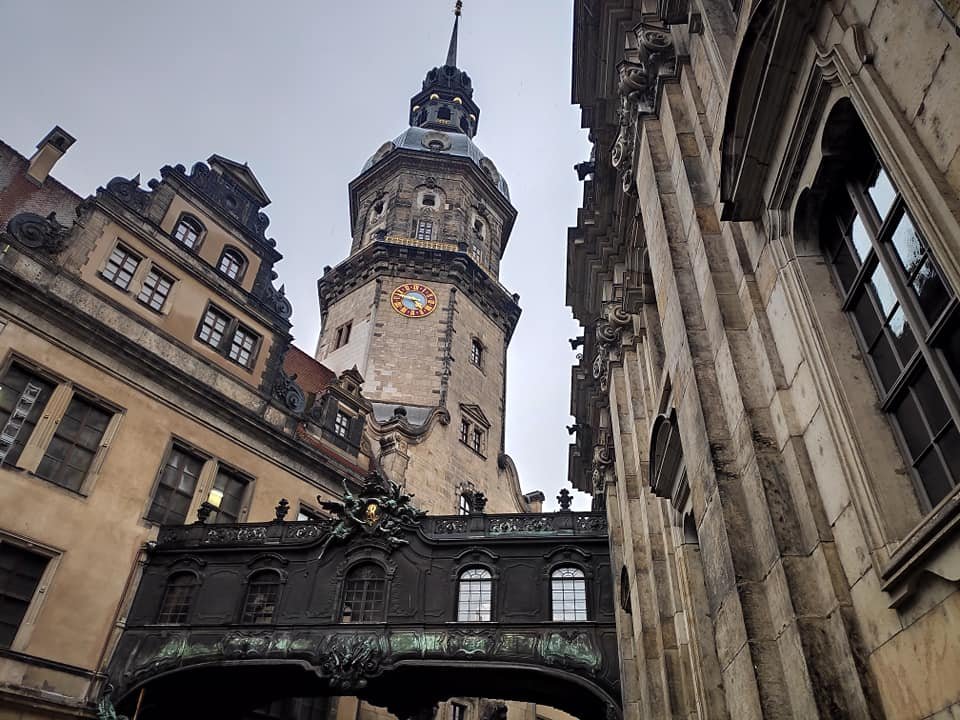
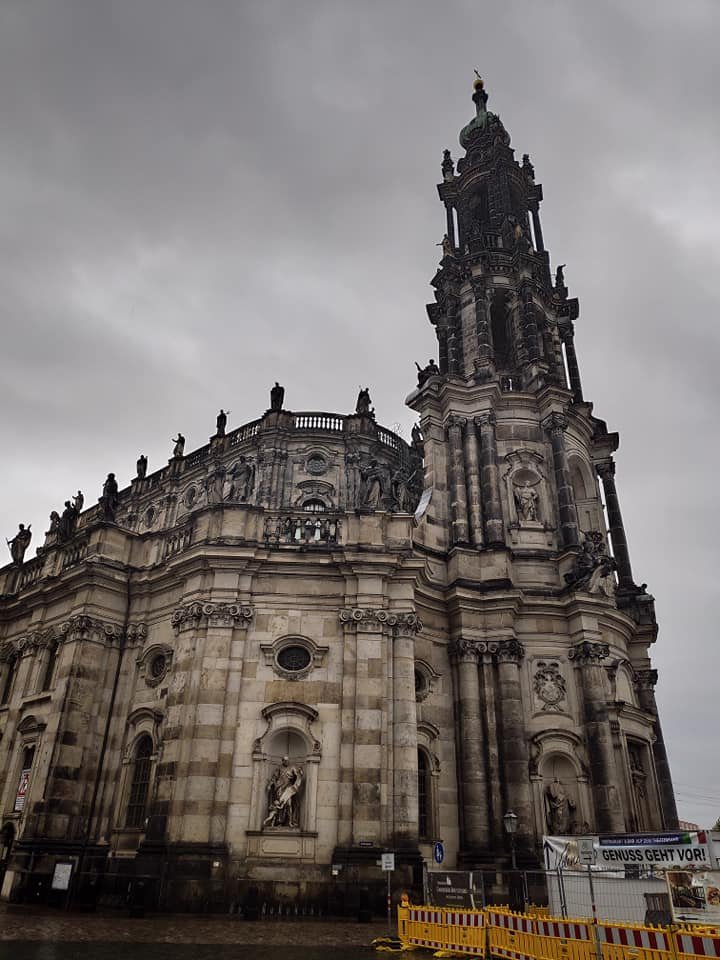
The heart of the Old Town is the Residence Palace – the former seat of the electors and kings of Saxony, which now houses museums. Right next to it stands the Cathedral of the Holy Trinity (Hofkirche), the largest church in Saxony; its crypts hold the rulers of the House of Wettin as well as the heart of Augustus II the Strong (his body was buried in Wawel Cathedral in Kraków).
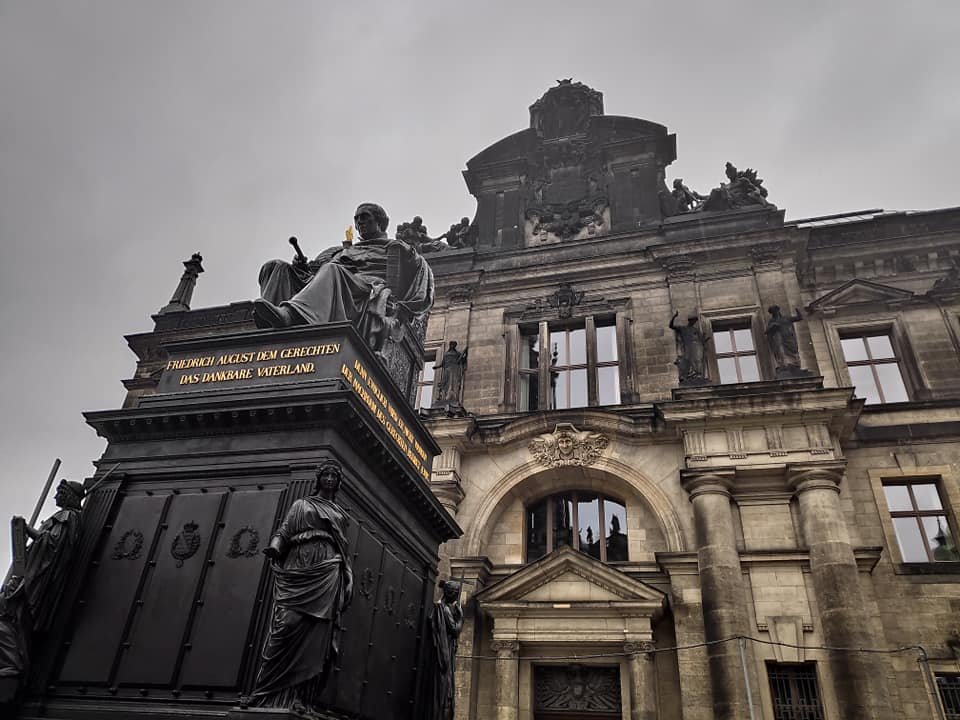
Another figure linked to Poland is Frederick Augustus I – the first King of Saxony and also Duke of Warsaw at the time of the Duchy of Warsaw. His statue stands by the castle.
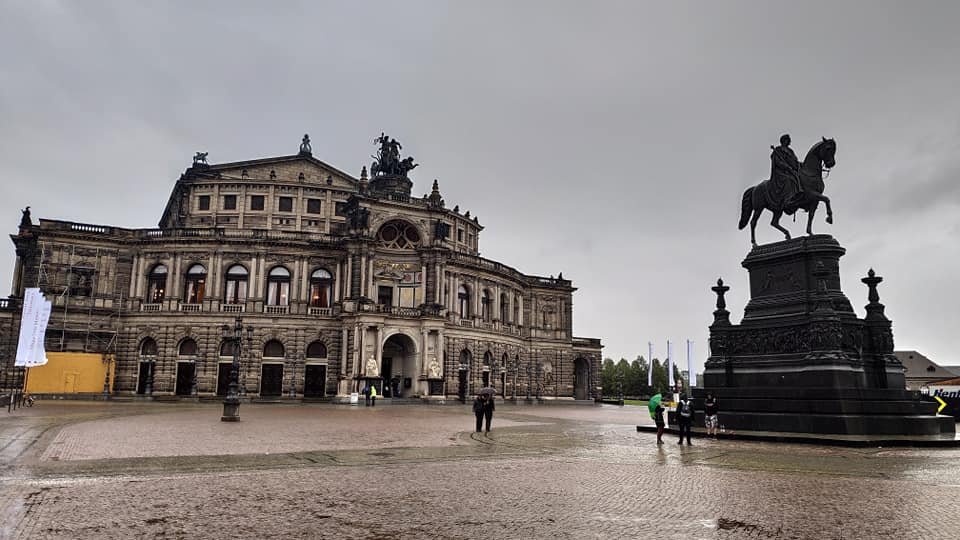
By the Elbe lies Theaterplatz with the Semper Opera House (Semperoper) and the equestrian statue of King John. The square offers a good view of the cathedral and the castle.
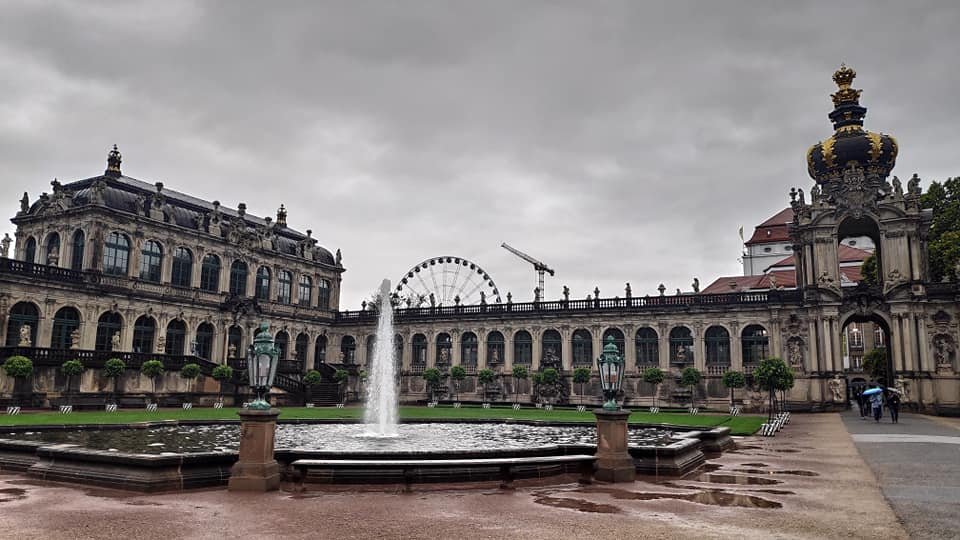
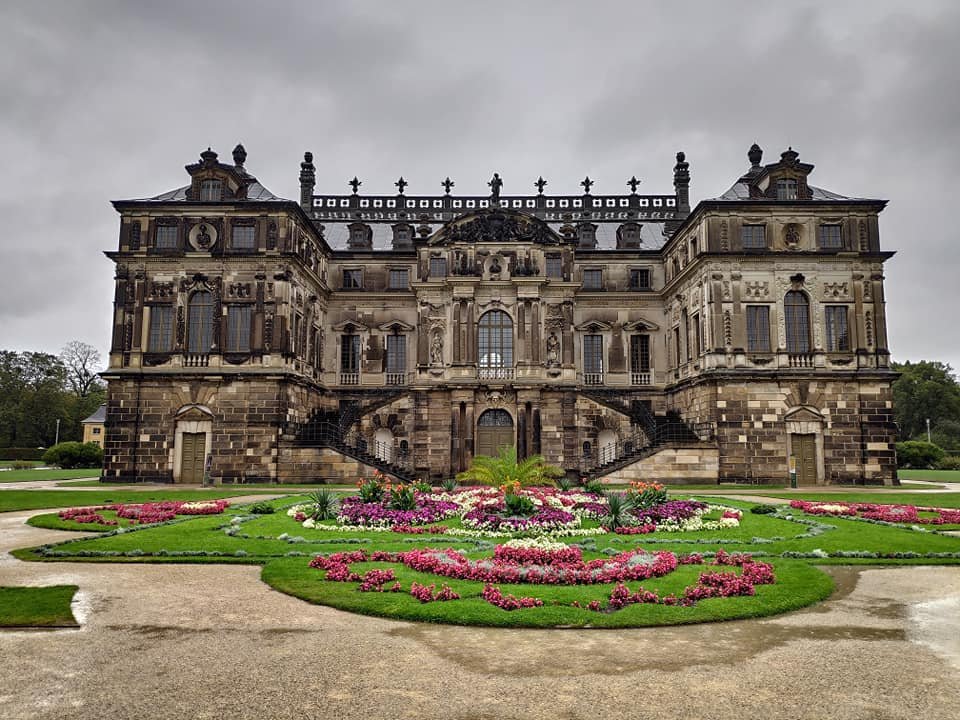
Next to Theaterplatz stands the Zwinger – a Baroque palace complex from the early 18th century with a courtyard, fountains and galleries that now house museums. A little further south-east of the centre stretches the Großer Garten park with a Baroque palace in the middle.
A night in… a box
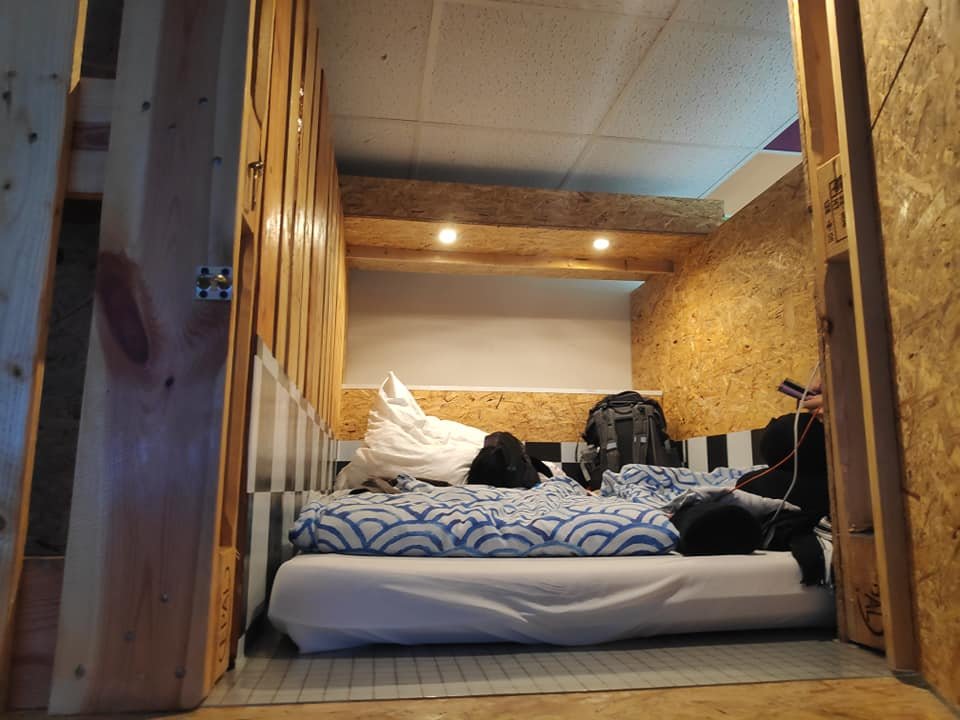
Fun fact: we spent the night in… a box, even though the listing said it was a double room. Sometimes it is worth reading the reviews before booking. It took me a moment to get over it, but we were planning to spend most of our time sightseeing anyway, so the conditions came second. They could at least have mentioned that you would need a padlock to lock the box, though – instead they made money selling them in their vending machine.
Practical information
- How much time – a day and a half is the minimum for the main sights; for the museums (in the castle and the Zwinger) you need a separate day.
- How to plan it – splitting the visit between the two banks of the Elbe worked well for us: the New Town one day, the Old Town the next. The main sights of the Old Town are close together and you can easily cover them on foot.
- Weather – at the end of September we got 9°C and rain all day, while a few days earlier it had been over 20°C and sunny. It is worth checking the forecast and having a good jacket.
- Accommodation – read the reviews: the “double room” in the listing turned out to be a box, and you had to pay for a padlock on the spot.
- Travelling on – from Dresden it is easy to get to Saxon Switzerland by suburban train (S-Bahn), for example to Kurort Rathen and Bad Schandau. There is a separate post about our five days in the mountains there: Saxon Switzerland – Bastei, Lilienstein and Schrammsteine.
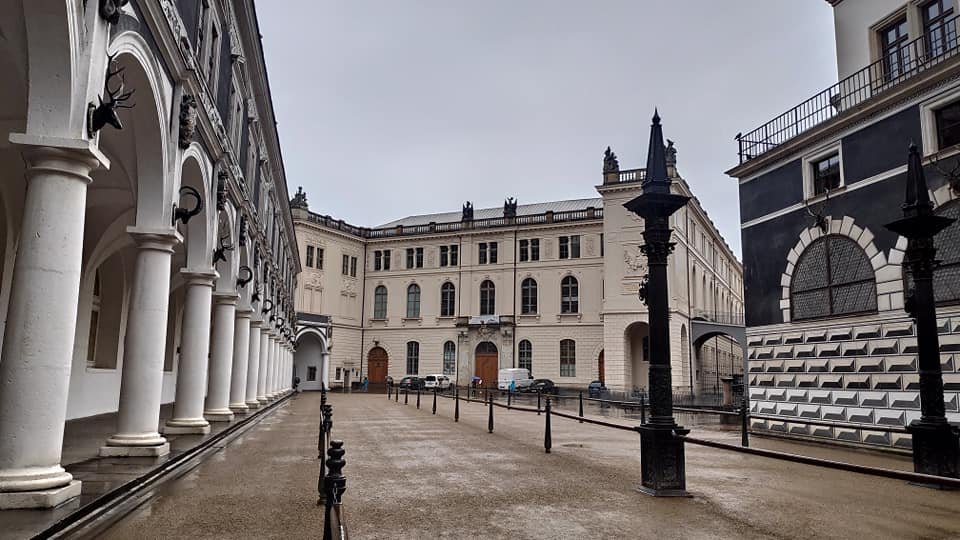
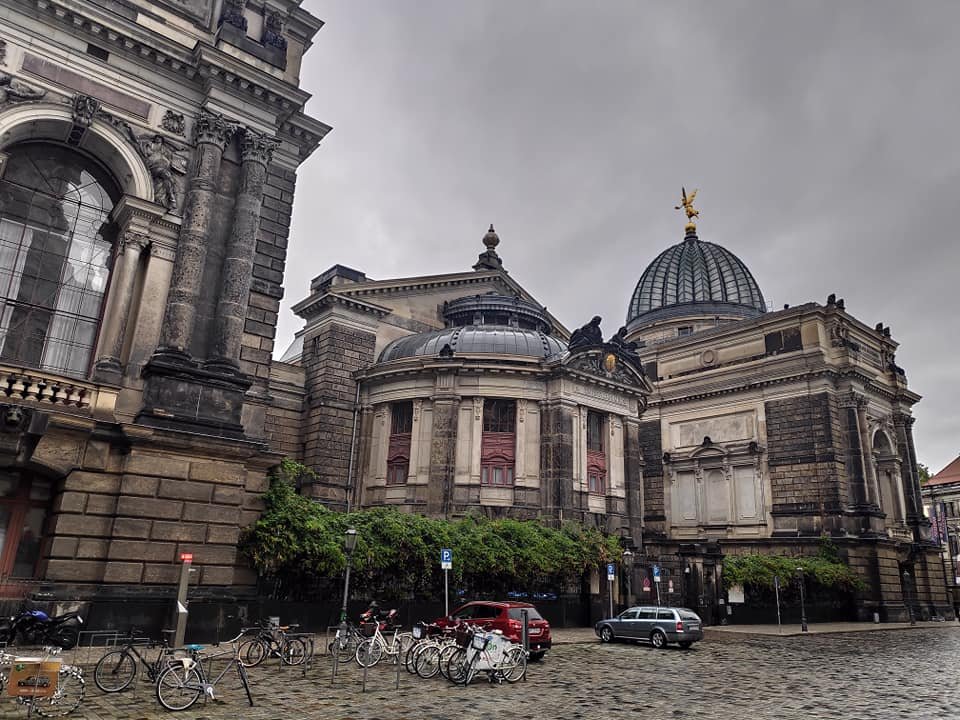
Photo gallery