In September 2016 Michał and I cycled from Jelenia Góra to Prague. The trip lasted from 6 to 12 September. For three days we rode with panniers through Szklarska Poręba, the former Jakuszyce–Harrachov border crossing, Tanvald, Turnov and Mladá Boleslav, and then we spent three days exploring Prague. The whole route was 205 km. We went back to Poland by train via Międzylesie and Kłodzko.
Table of contents
- By train with our bikes to Jelenia Góra
- An evening ride to Szklarska Poręba
- The climb to Jakuszyce and the descent to Harrachov
- The hills between Tanvald and Turnov
- Turnov and a night in the tent
- A bike repair, Kněžmost and Mladá Boleslav
- Into Prague via Kbely
- Holešovice, Výstaviště and the view from Letná
- Charles Bridge, the Lesser Town and Hradčany
- The Old Town – the Powder Tower, the square and the Orloj
- The Vltava at night
- The last day – Cross Club and cycling along the Vltava
- Back by train via Międzylesie and Kłodzko
- Practical information
By train with our bikes to Jelenia Góra
We set off early in the morning on Tuesday, 6 September. We got to Jelenia Góra by train with one change, and the bikes hung on hooks in the bike compartment. Each of us carried panniers, plus a tent and sleeping bags.

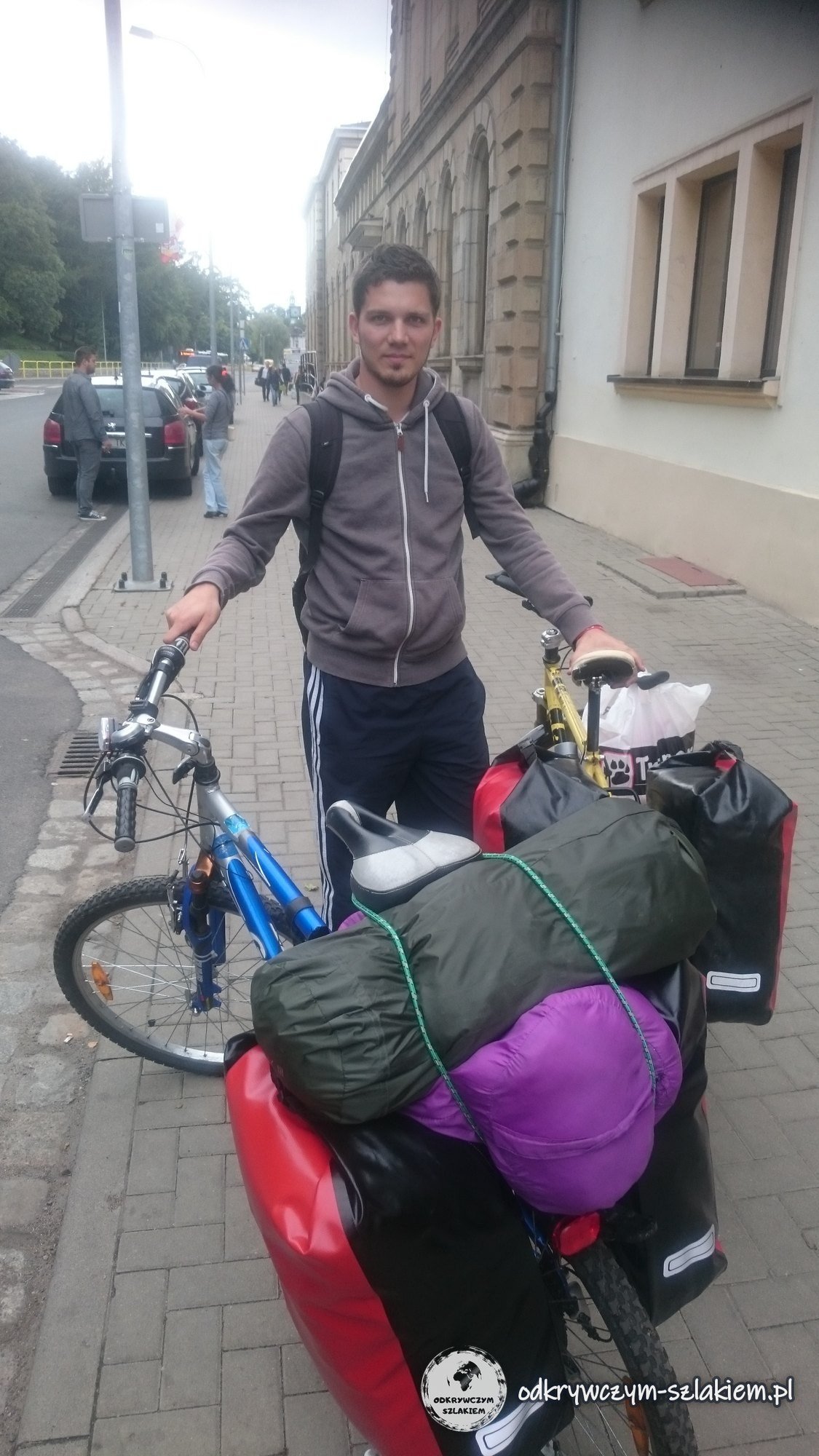
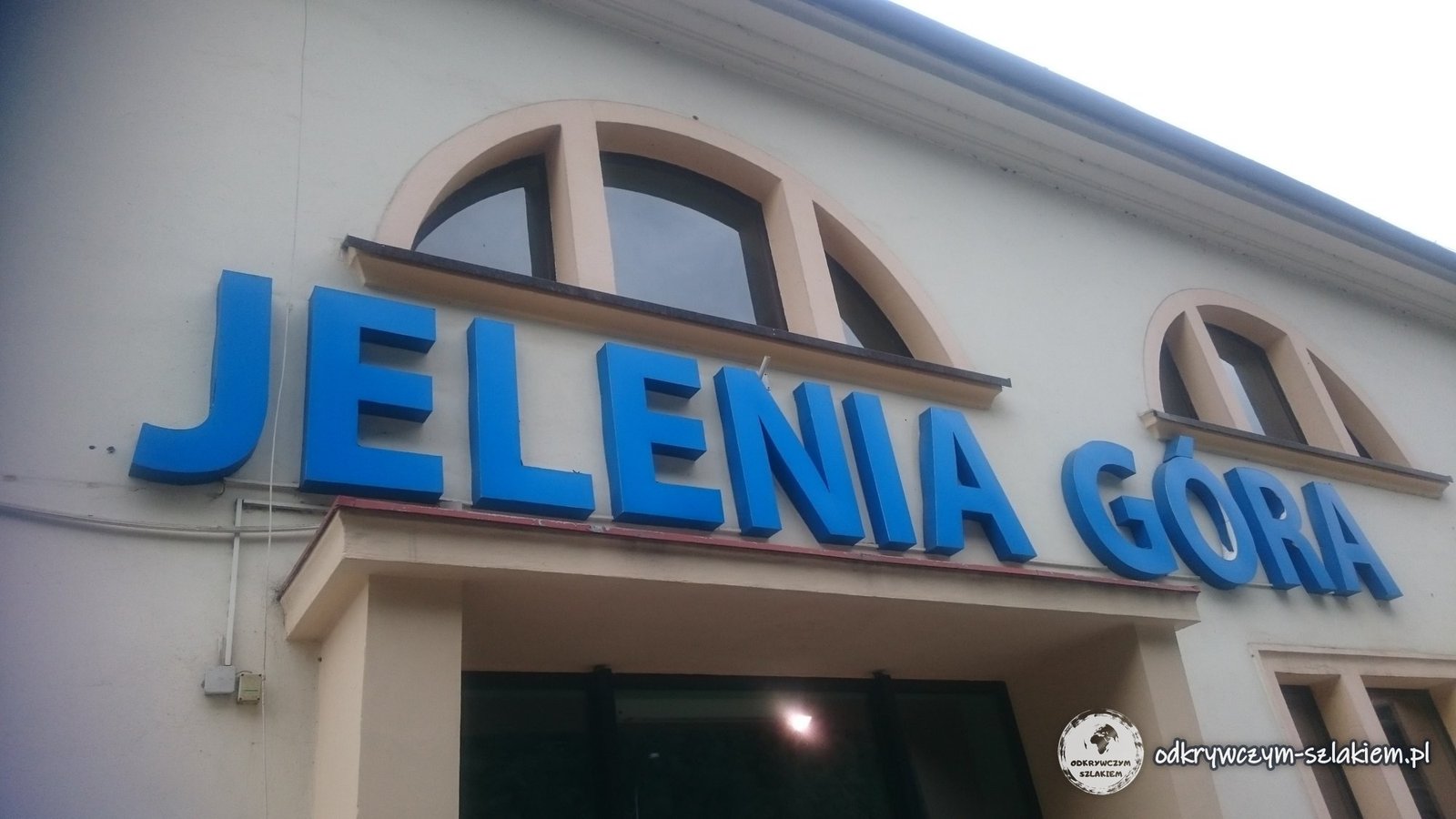
We reached Jelenia Góra station at about 4 pm and set off straight away towards the Giant Mountains.
An evening ride to Szklarska Poręba
From Jelenia Góra we rode to Piechowice and then uphill along the Kamienna valley. By the Las hotel we took our first photo of the trip together.
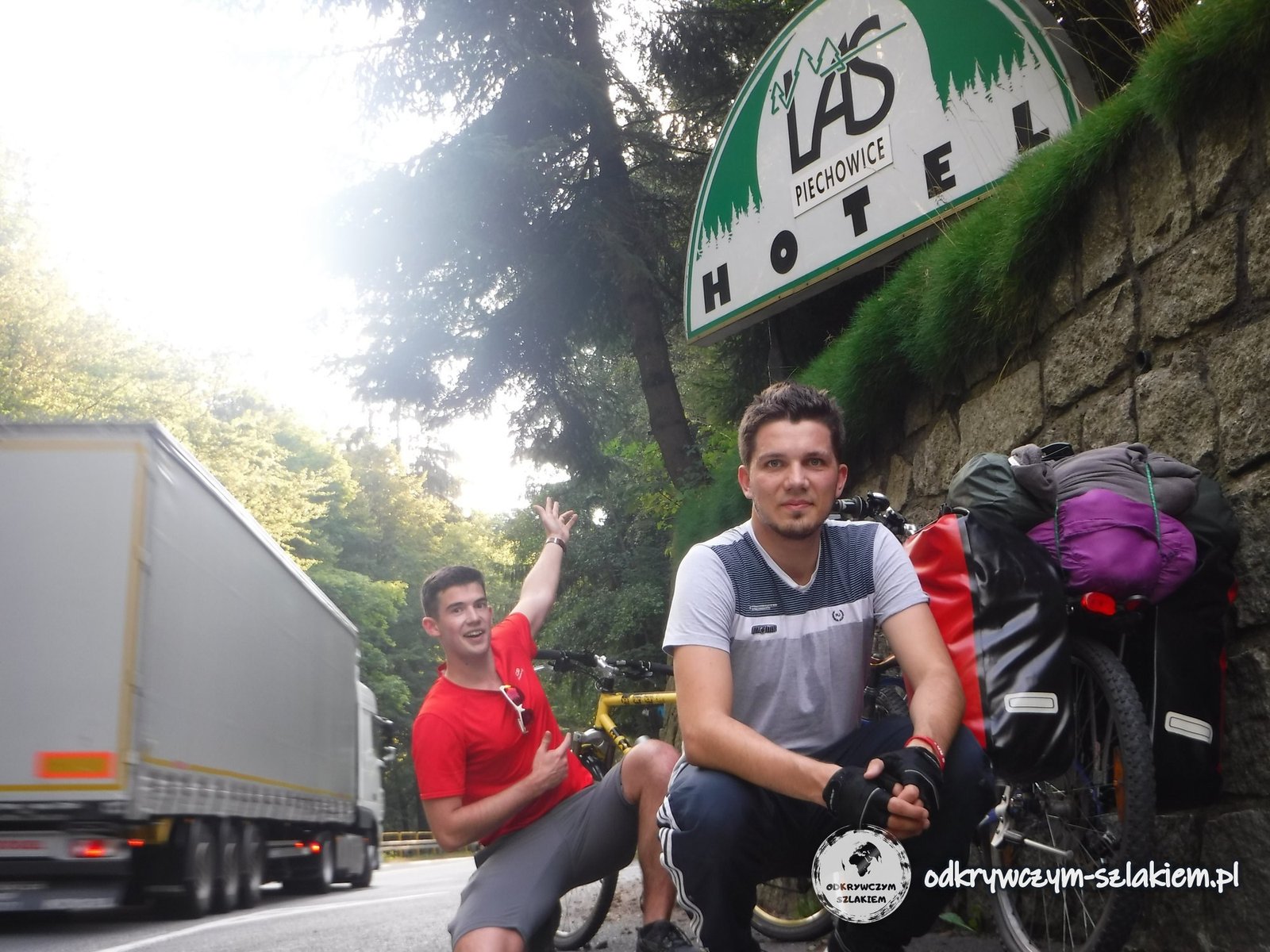
After Piechowice the road climbs all the way. On the way we stopped for a moment by a mountain stream.

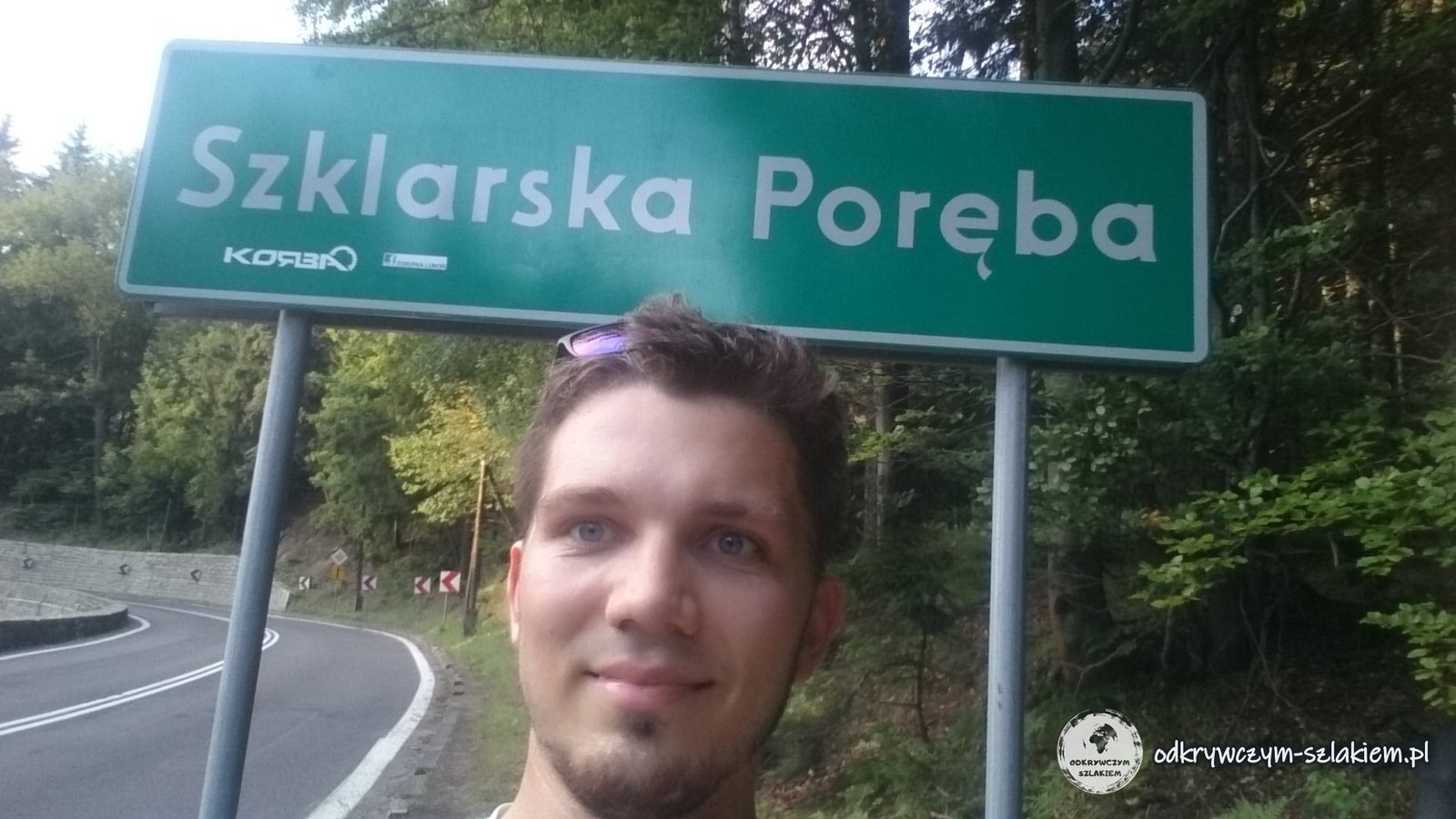
At about 6:20 pm we passed the Szklarska Poręba sign. In the evening we had pizza and spent the night in Szklarska Poręba. I wrote more about the area in my post on the Main Sudetes Trail in summer.
The climb to Jakuszyce and the descent to Harrachov
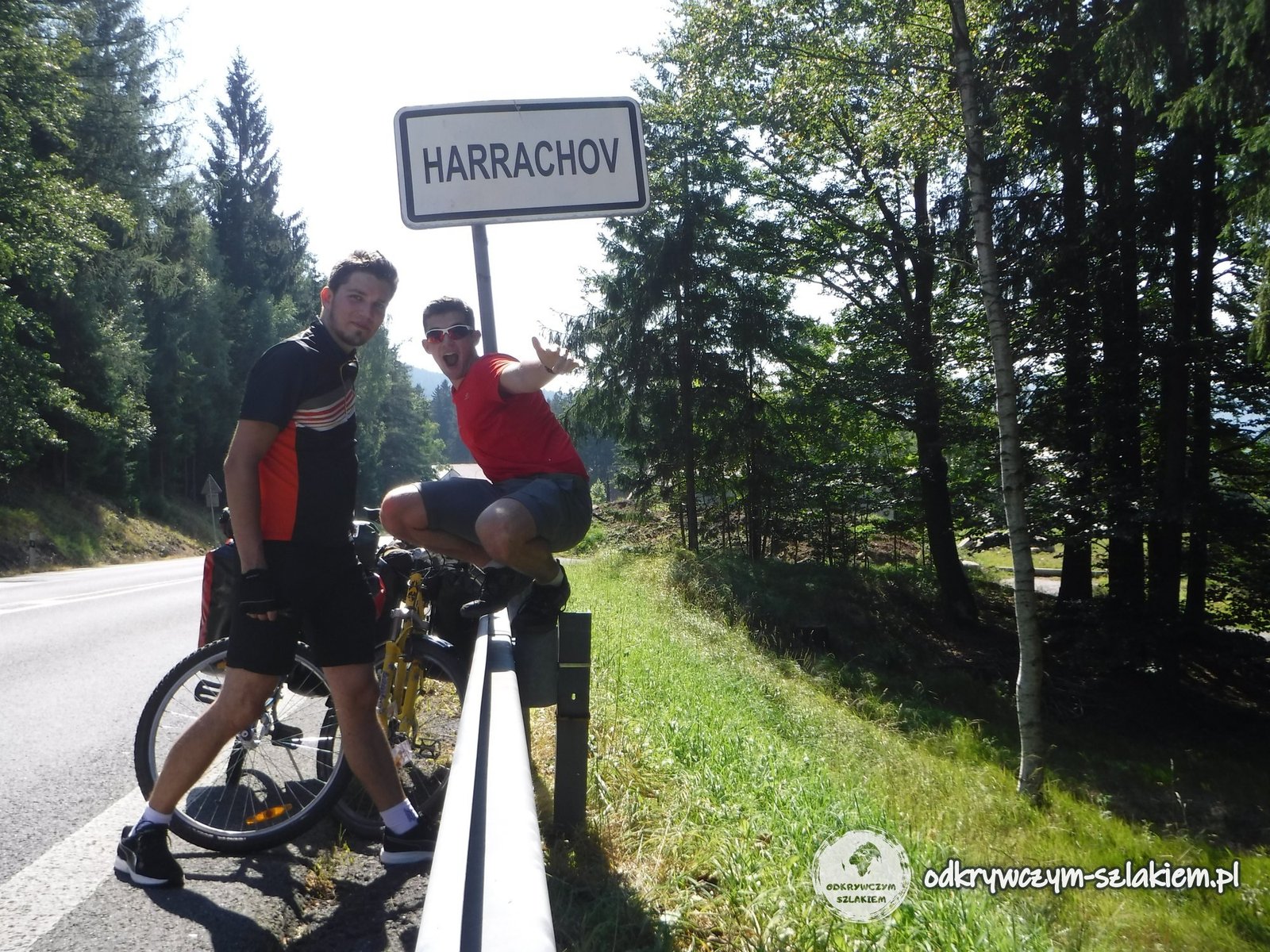
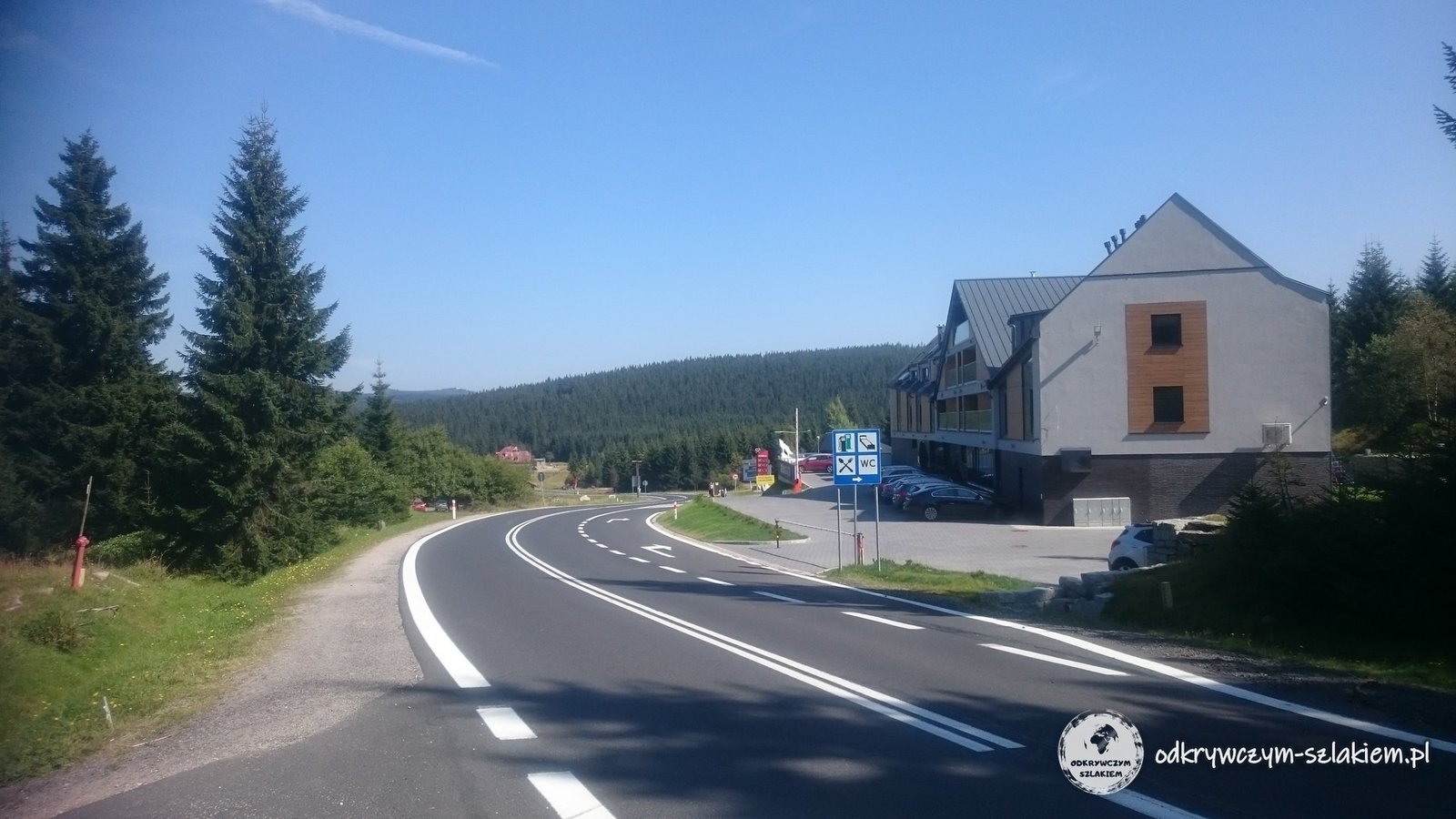
On Wednesday, 7 September, we set off before noon. From Szklarska Poręba the road to the border leads through Jakuszyce, the highest district of the town, up to the Szklarska Pass (886 m above sea level) between the Giant Mountains and the Jizera Mountains. I still remember that hard climb up to the border.
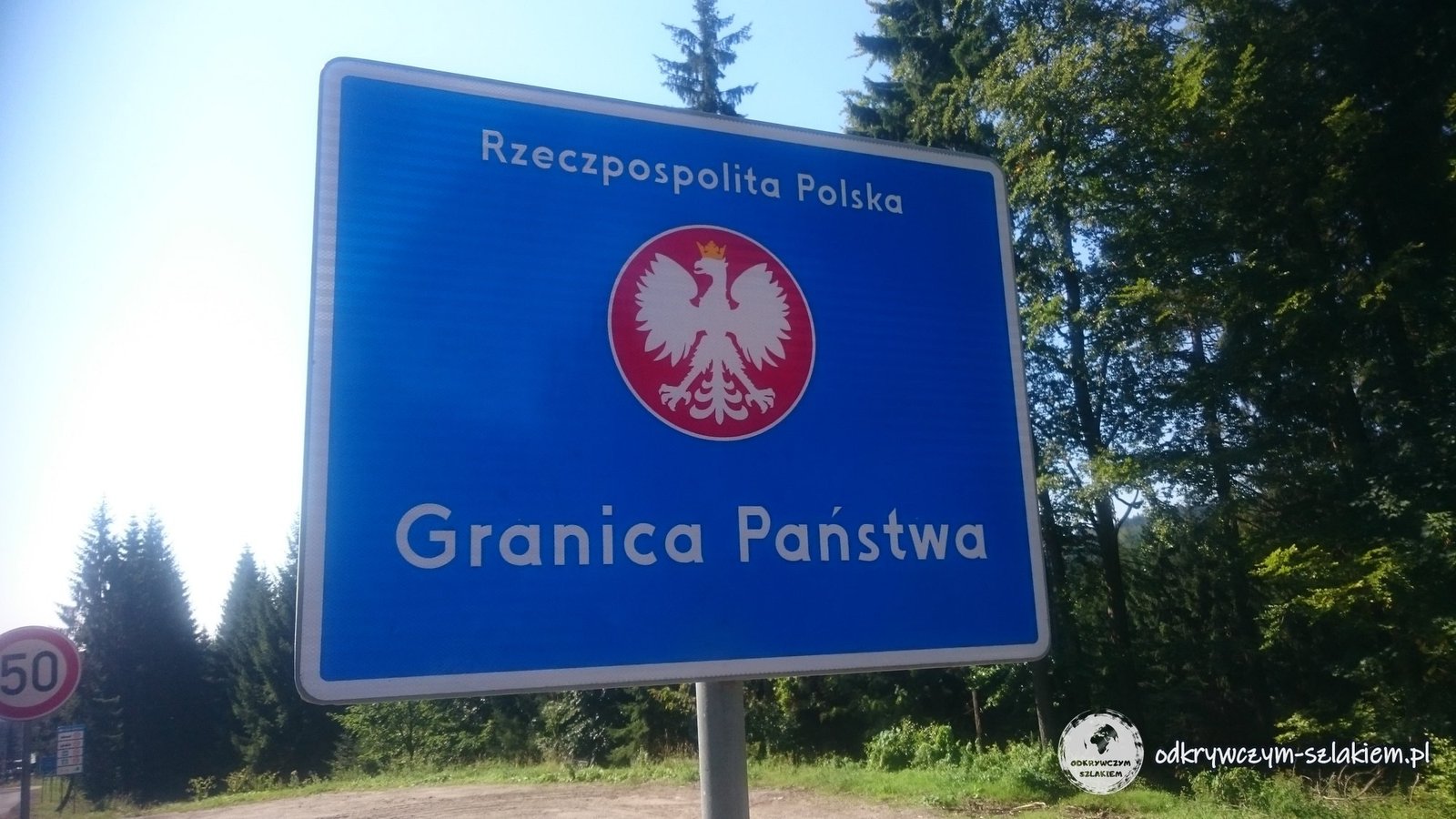
At about 1 pm we were at the former Jakuszyce–Harrachov border crossing. It was in use until 2007, when Poland and the Czech Republic joined the Schengen Area.

We took photos by the “Granica Państwa” (state border) and “Česká republika” signs.
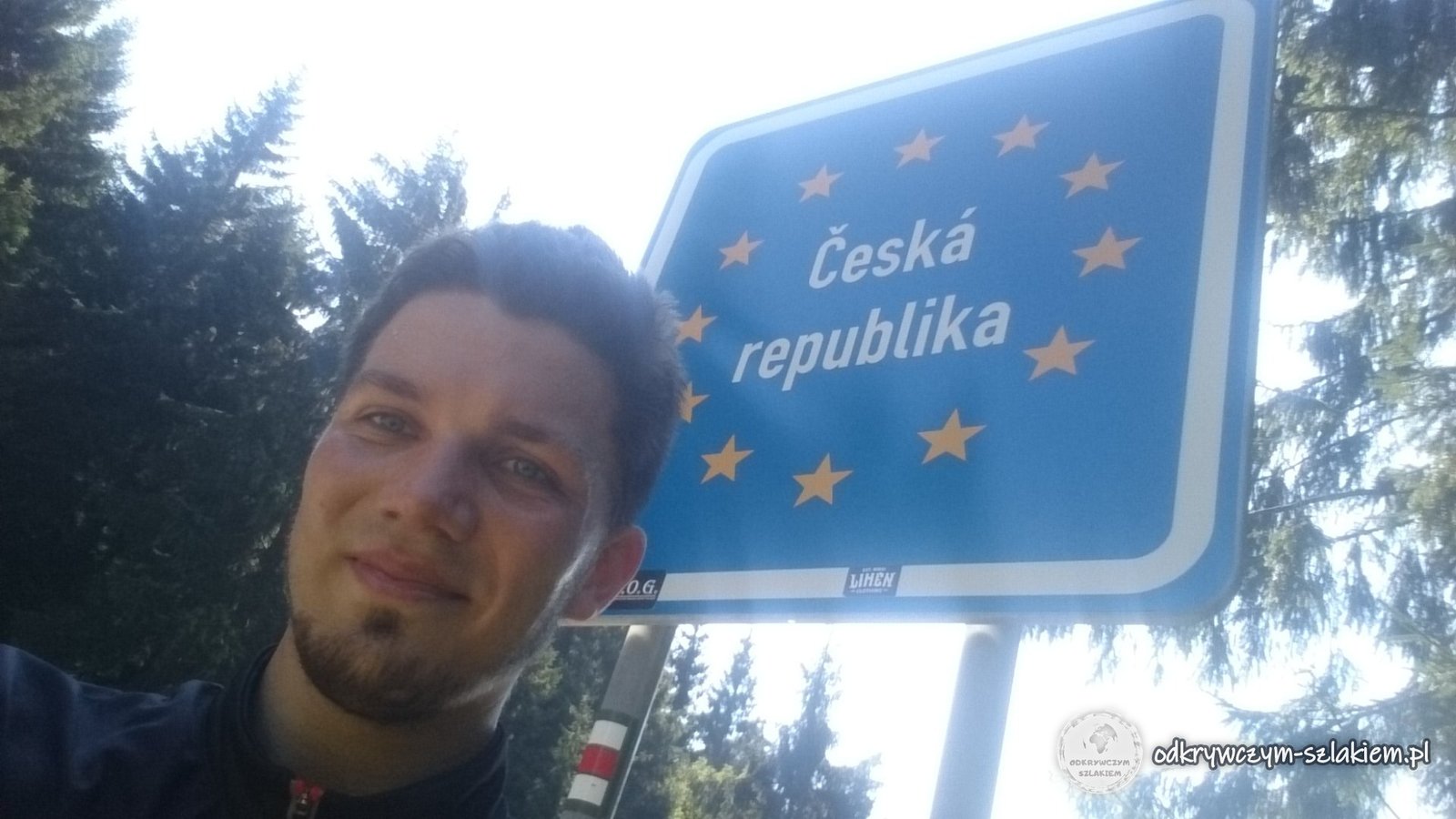
Past the border came a fast, “liberating” descent to Harrachov. The small town lies in the Mumlava valley at about 665 m above sea level. It is known for its ski jumps – including a ski-flying hill from 1980 – and for its glassmaking tradition: the first record of the local glassworks dates from 1712. Further on the road ran through the forest along a rocky river.

The hills between Tanvald and Turnov
From Harrachov we rode on through the Jizera Mountains towards Tanvald. Part of the route followed quiet roads and paths through forests and small villages.
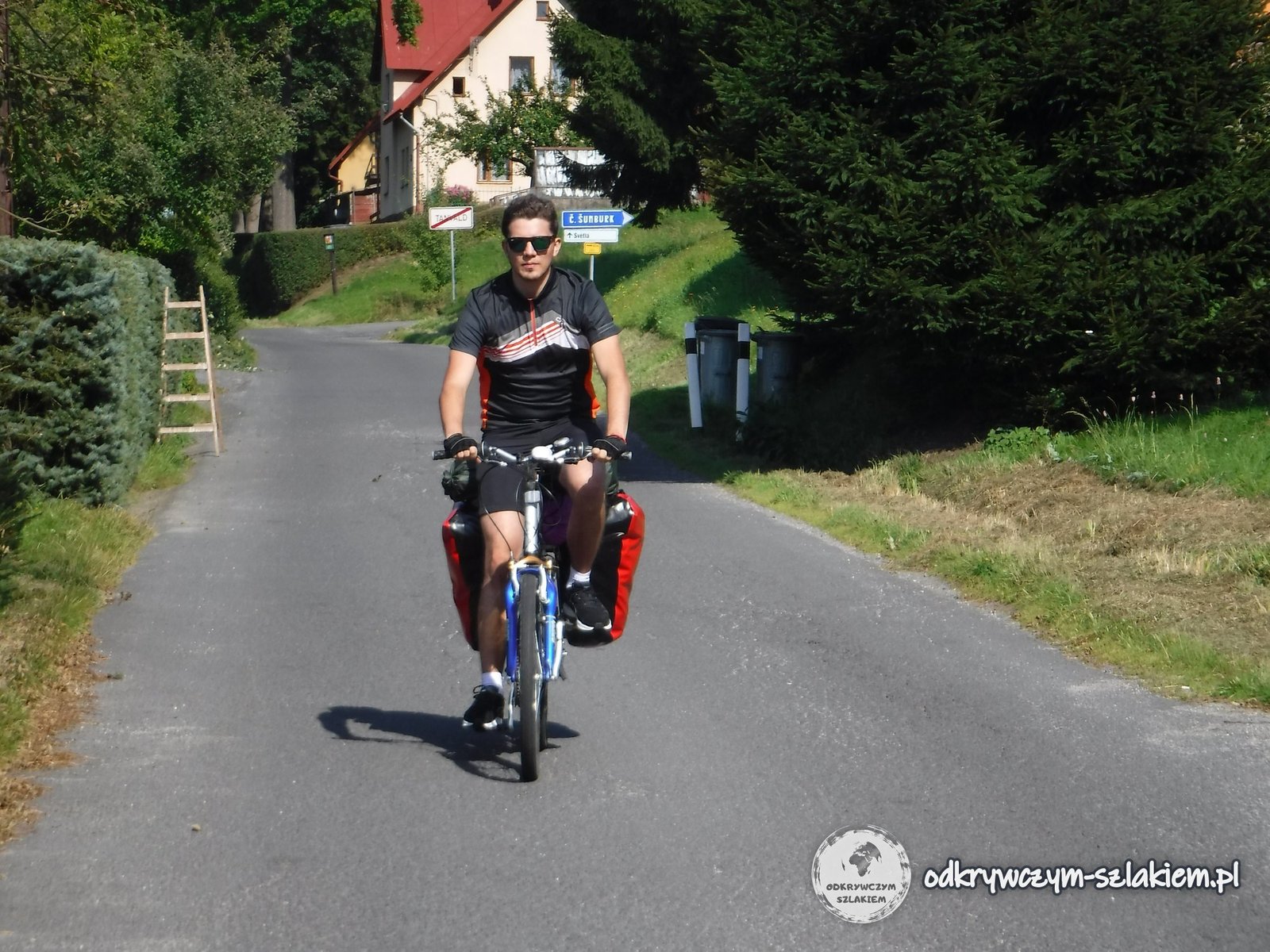
At about 3 pm we reached Tanvald. The town lies at 455 m above sea level, between the Kamenice and Desná rivers. It used to be an important centre of the textile industry, and a rack railway opened in 1902 runs from the Šumburk district to Kořenov.
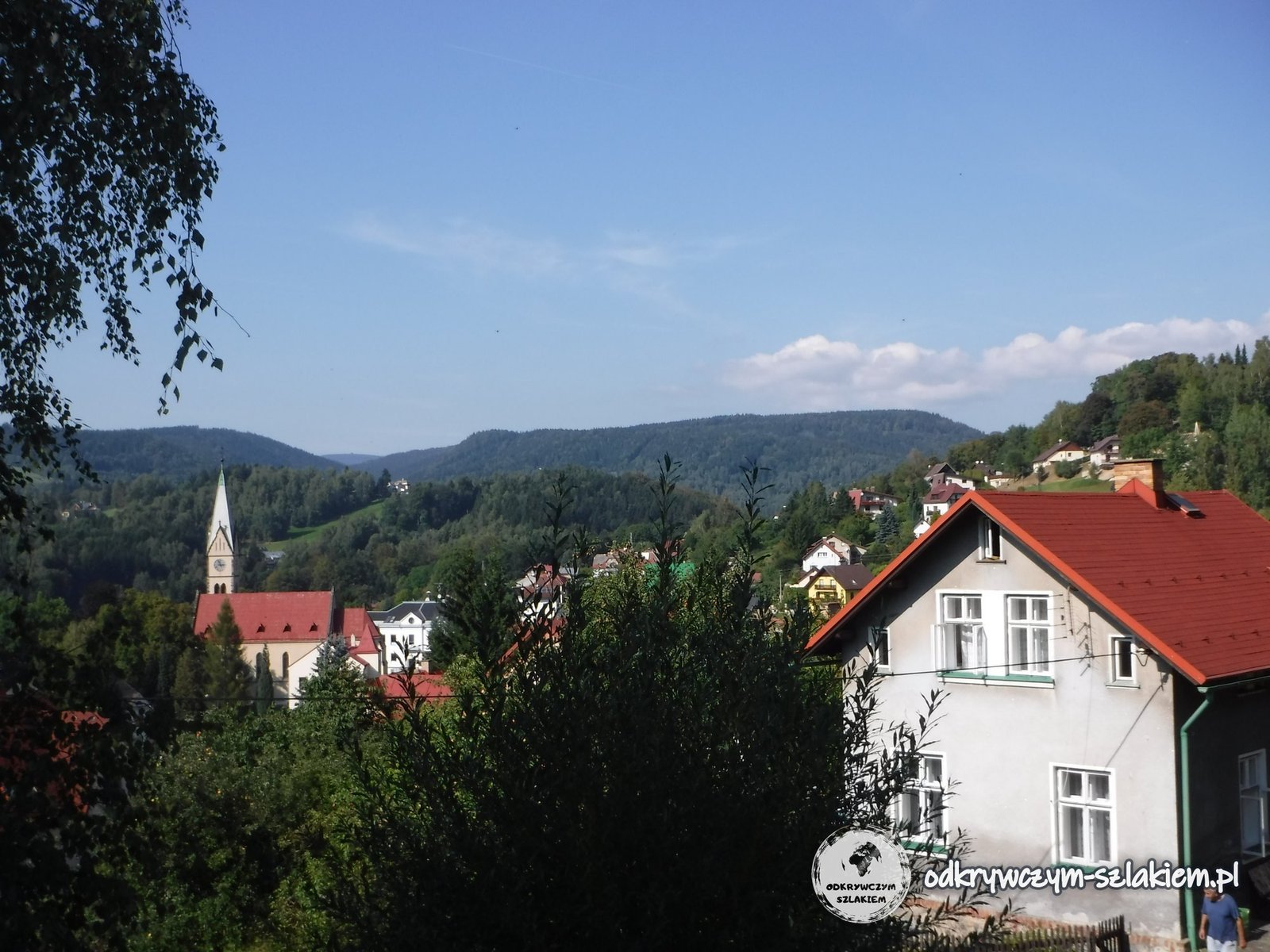
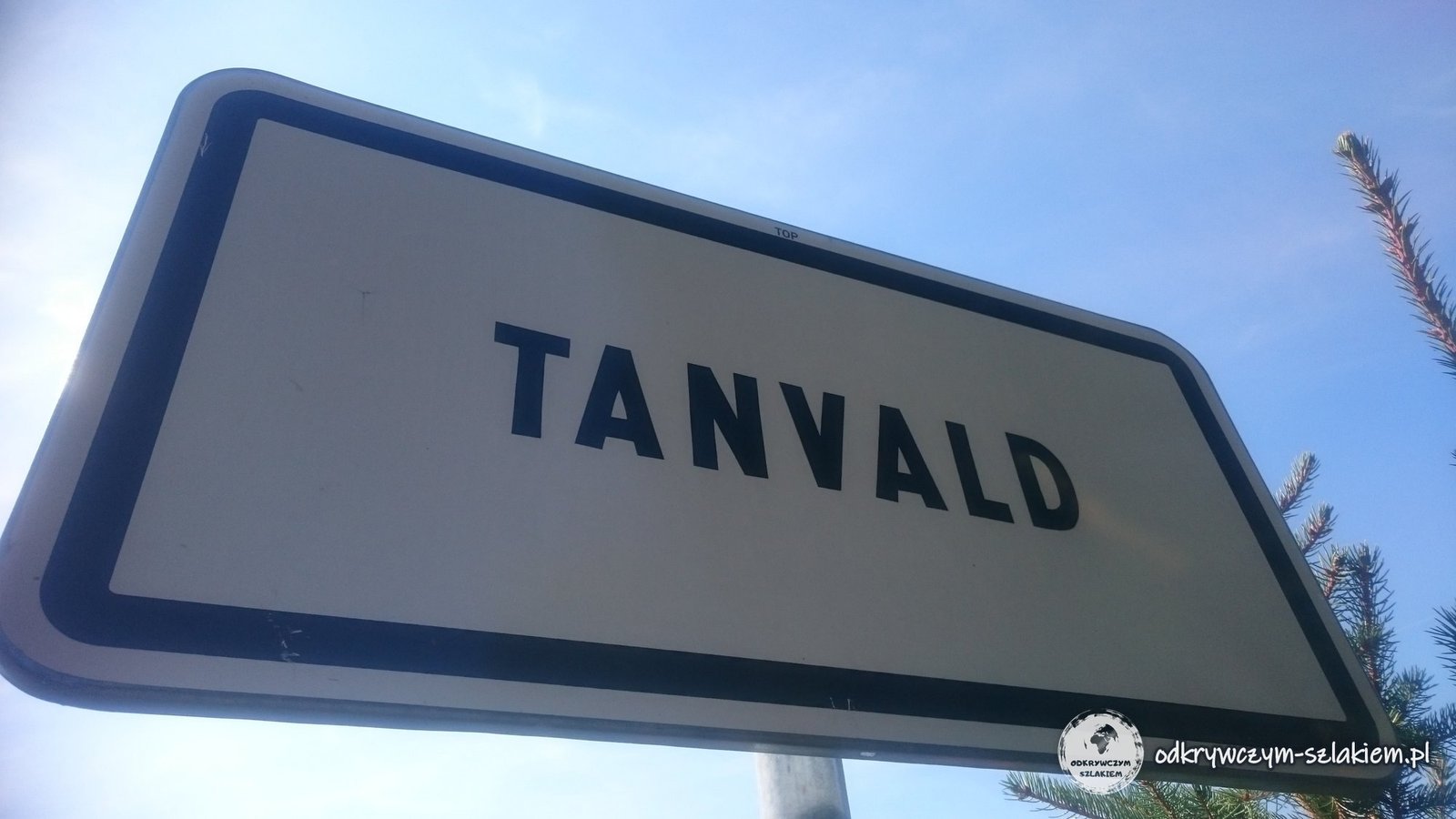
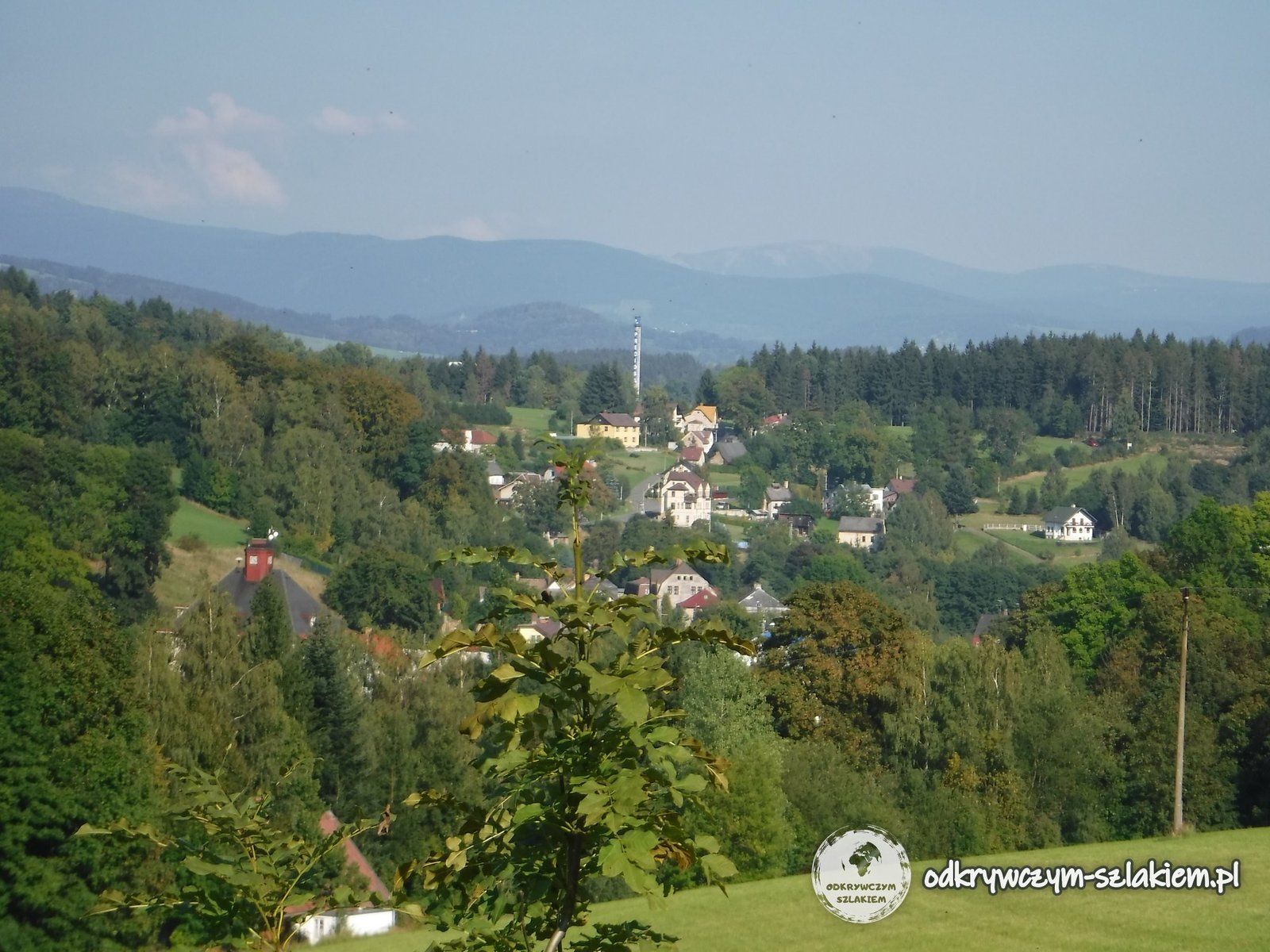
Beyond Tanvald came long stretches of constant climbing and descending over the hills – and it stayed that way all the way to Turnov. From the higher spots, though, we could see valleys and distant mountain ranges.
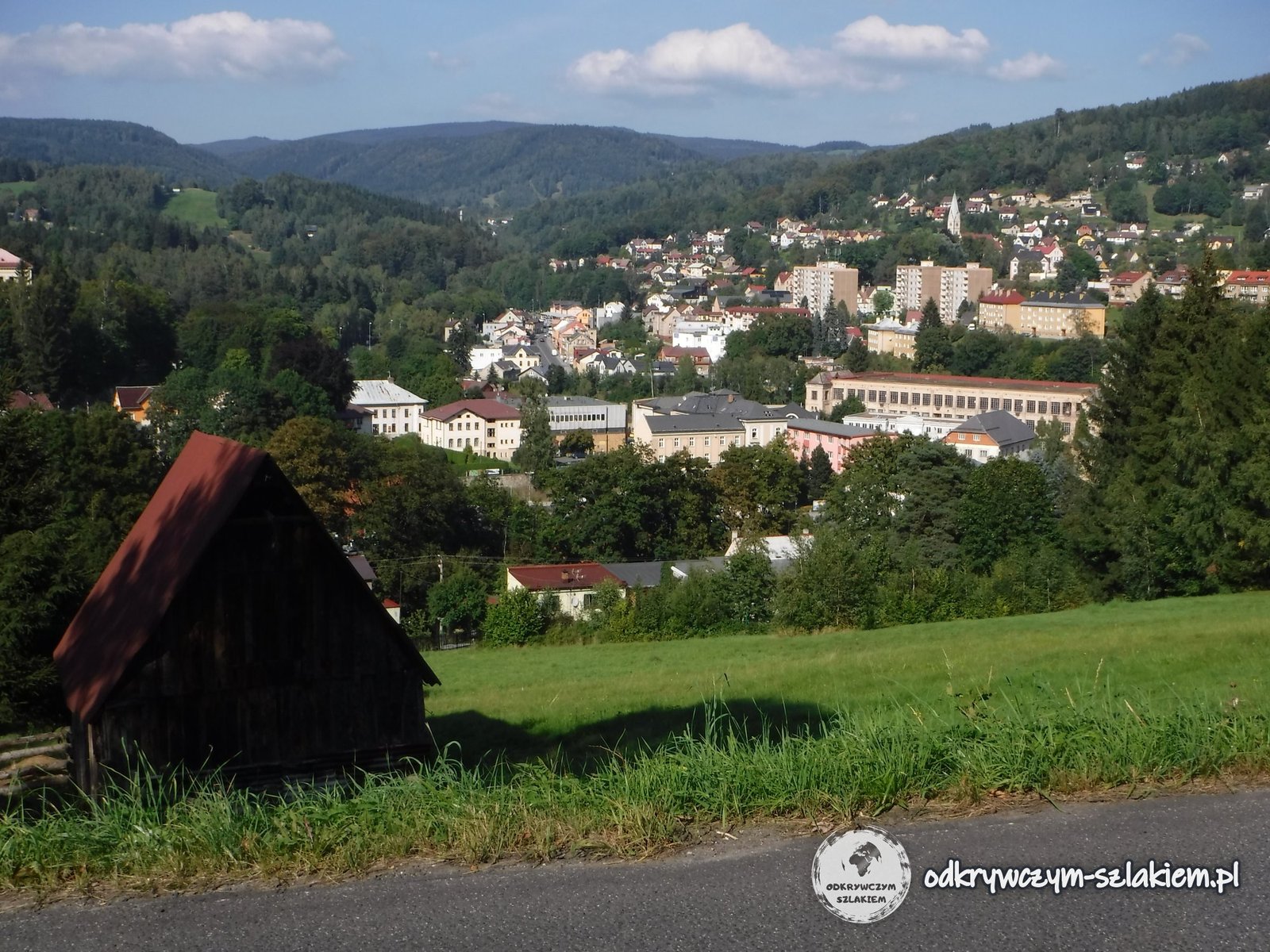
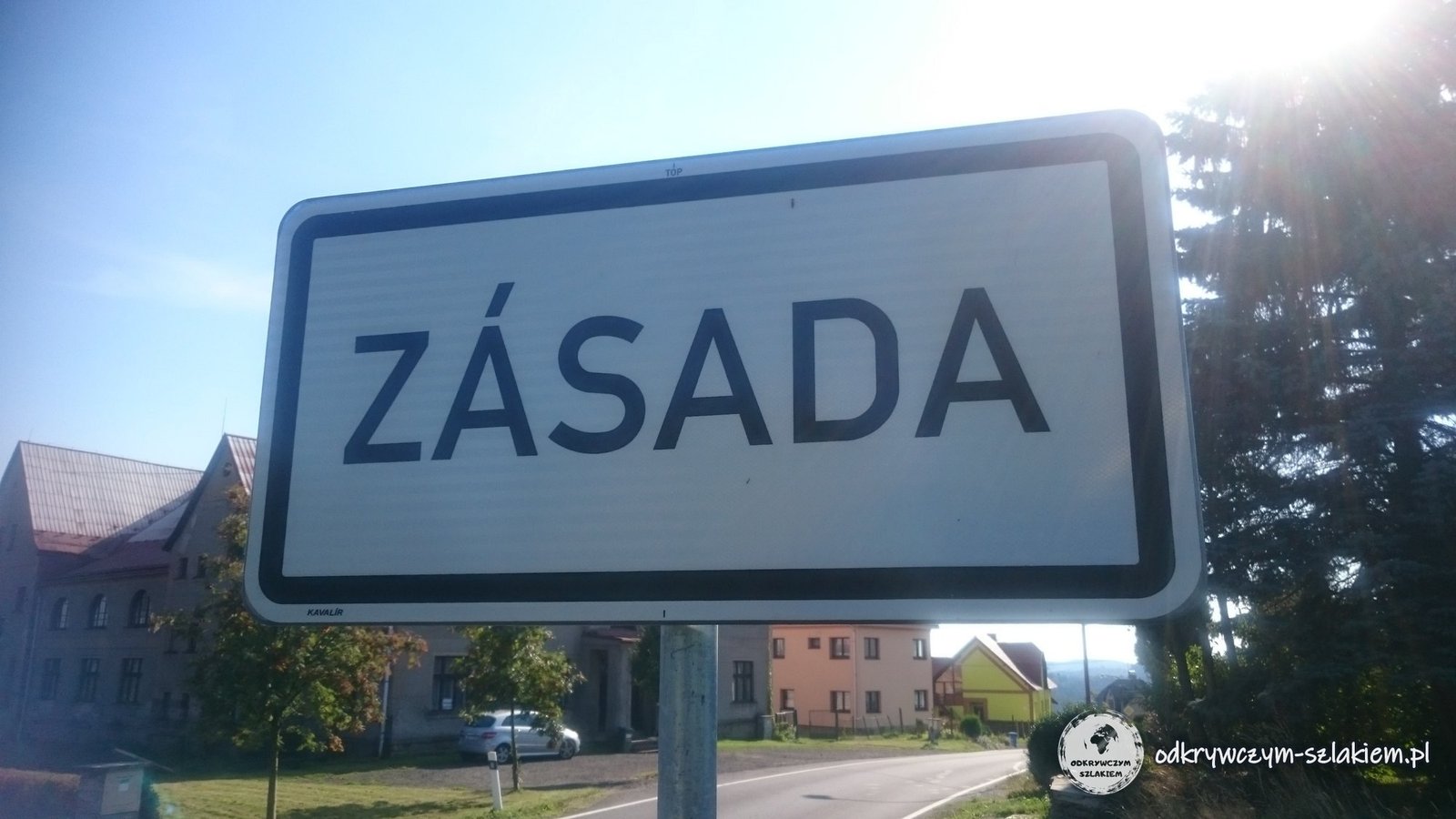
Along the way we passed through the small town of Zásada, among other places.
Turnov and a night in the tent
At about 5:30 pm we arrived in Turnov. It is a town of about 14,000 people on the Jizera river, on the edge of the Český ráj (Bohemian Paradise) protected landscape area. Turnov is known for its tradition of cutting precious stones – the Granát Turnov jewellery cooperative is based here, and the Bohemian Paradise Museum has an exhibition of gemstones.
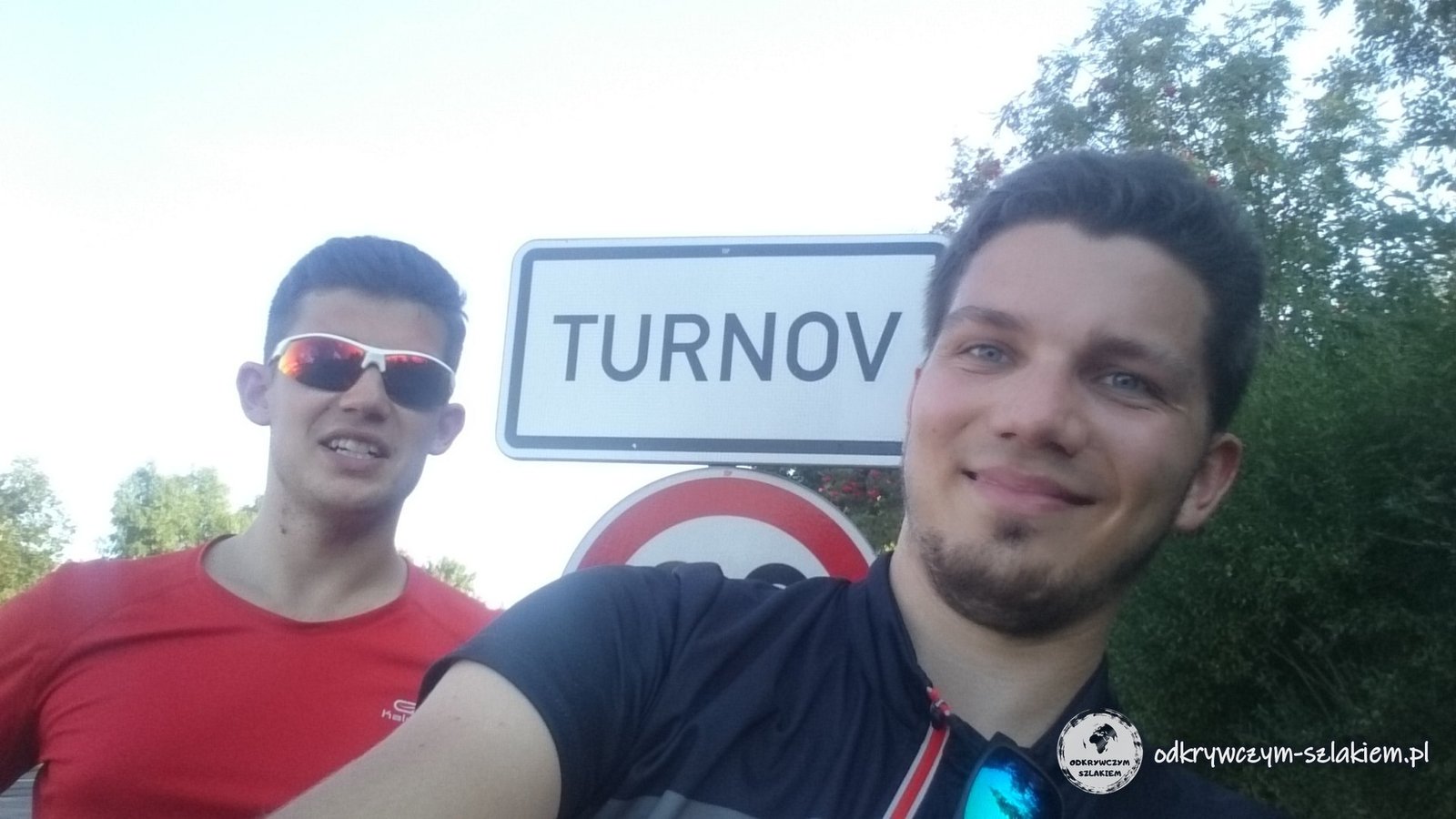
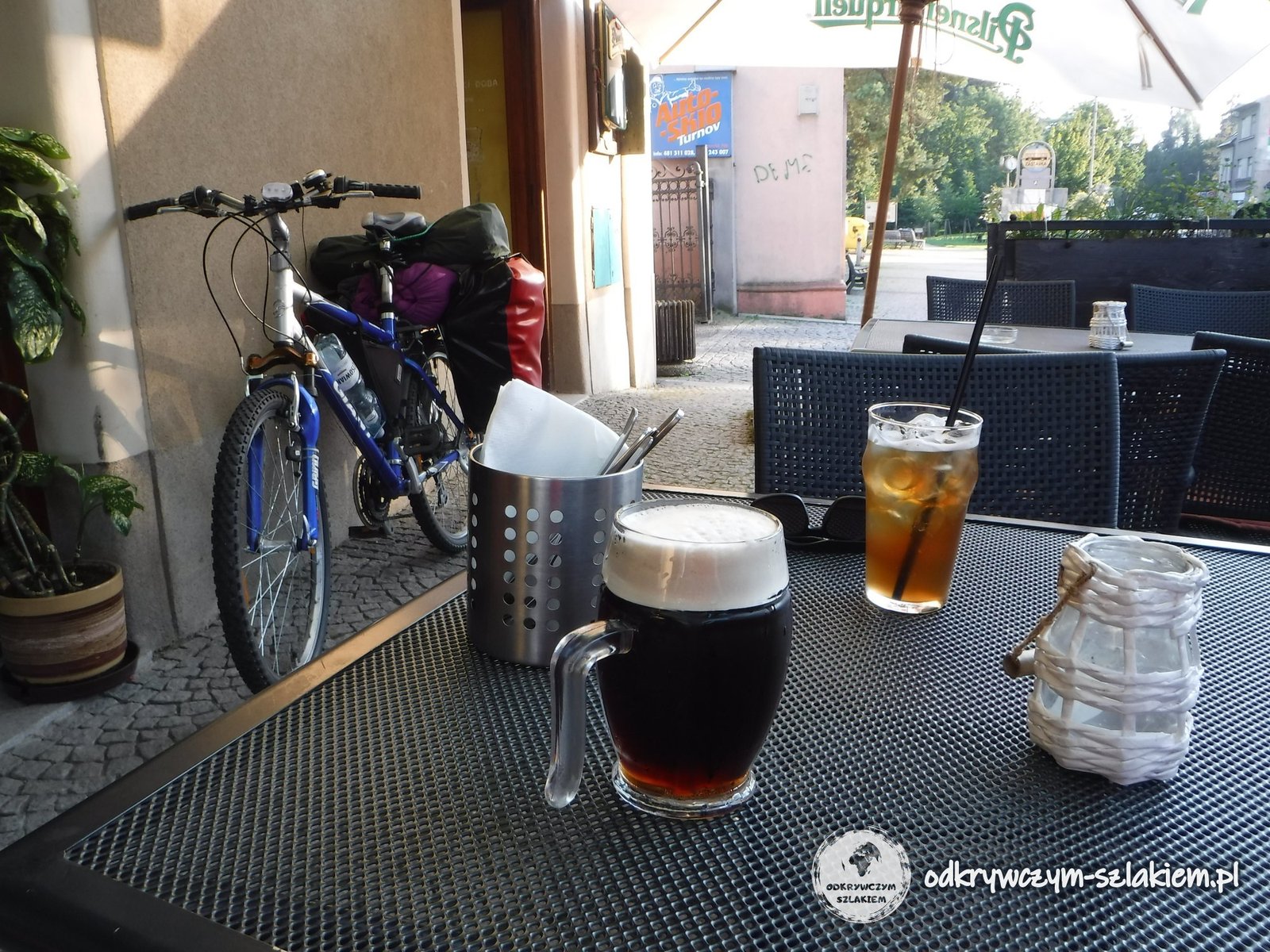
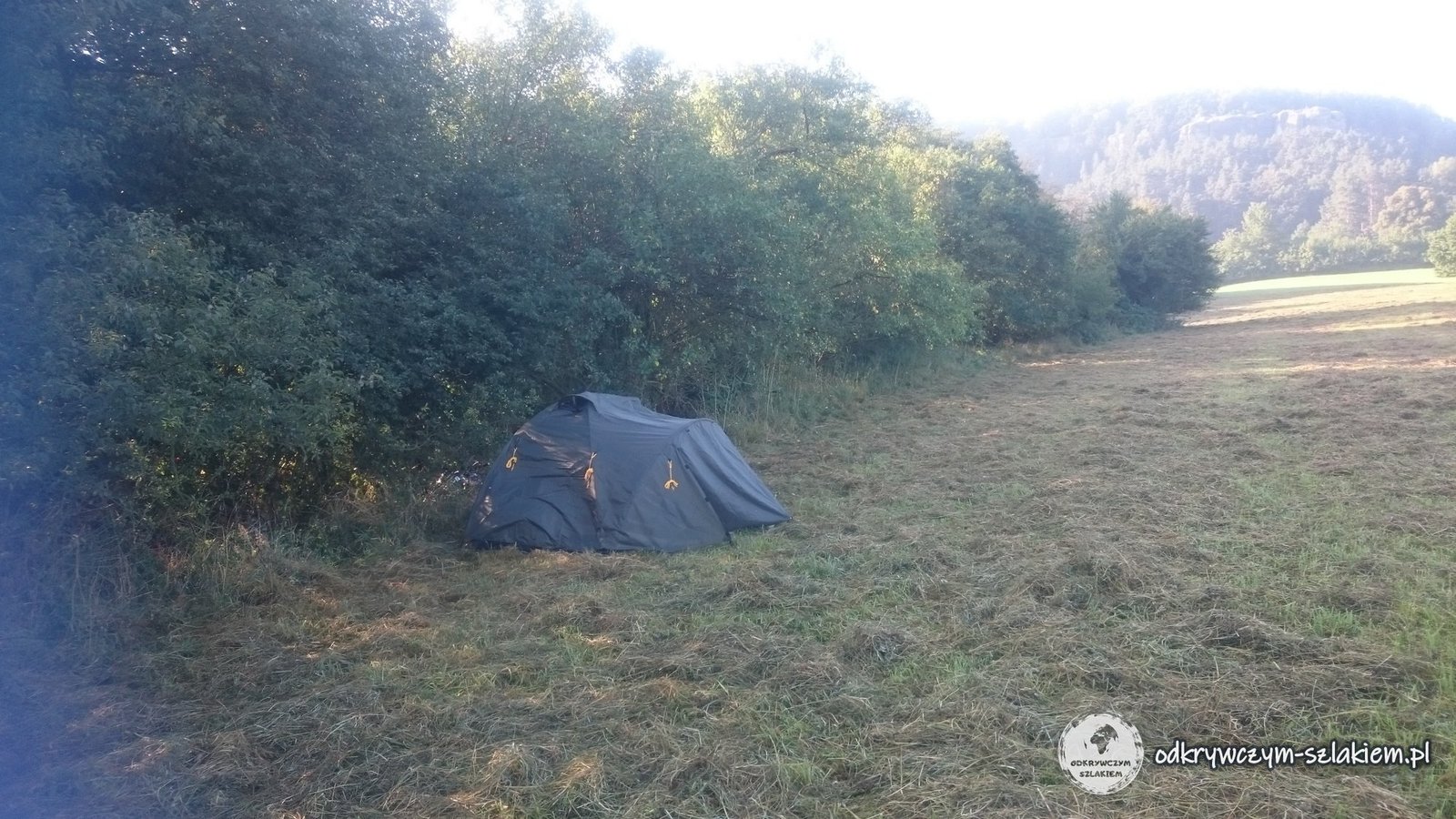
In Turnov we had dinner and sat in a beer garden over a Czech beer, and then rode on. For the night we pitched our tent outside the town, at the edge of a mown meadow by the forest.
A bike repair, Kněžmost and Mladá Boleslav
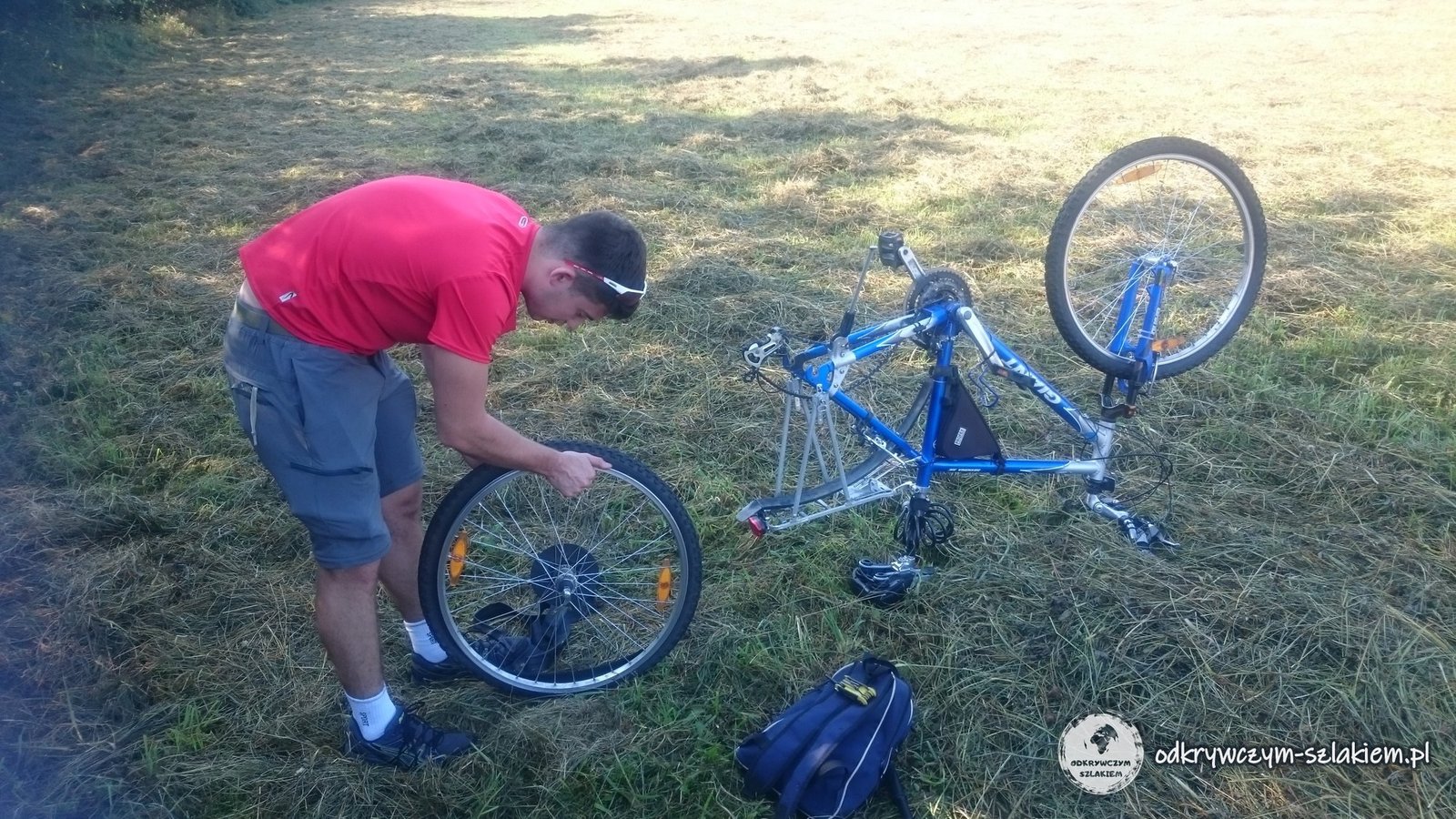
On the morning of Thursday, 8 September, Michał was repairing my bike. Technically the trip was rather unlucky – along the way my wheel got worn through. Pumping it up to normal pressure risked a quick puncture of the inner tube, while riding at lower pressure meant a lot of extra effort… but there was no other way.
We continued on a cycle path along the road, between maize fields, through Kněžmost. Before noon we stopped by the water, where Michał went for a swim.


Around noon we rode through Kosmonosy into Mladá Boleslav, the home of Škoda Auto. Its history began with bicycles: in 1895 Václav Laurin and Václav Klement founded the Slavia bicycle works here, later they made motorcycles, and from 1905 cars.
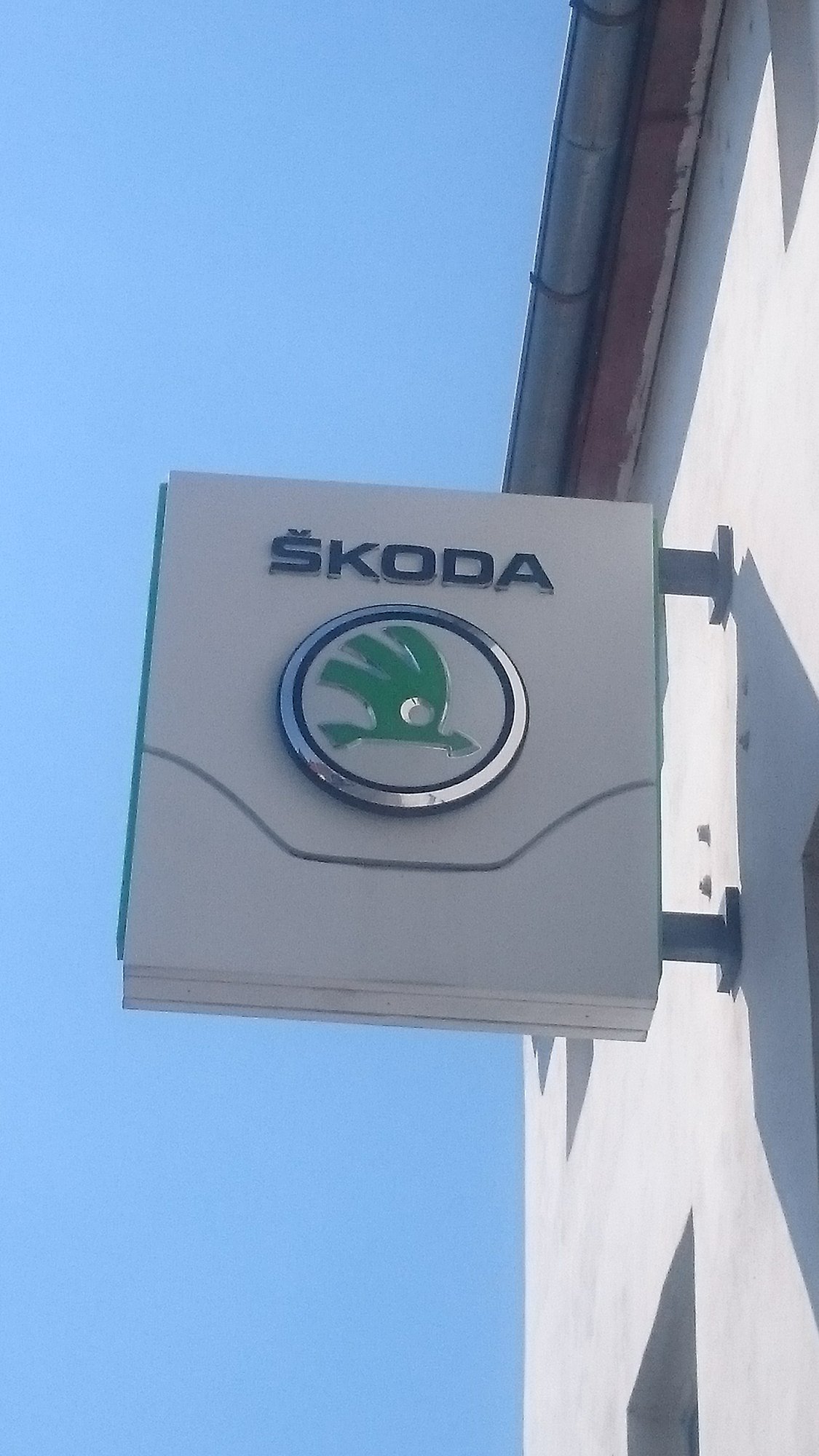
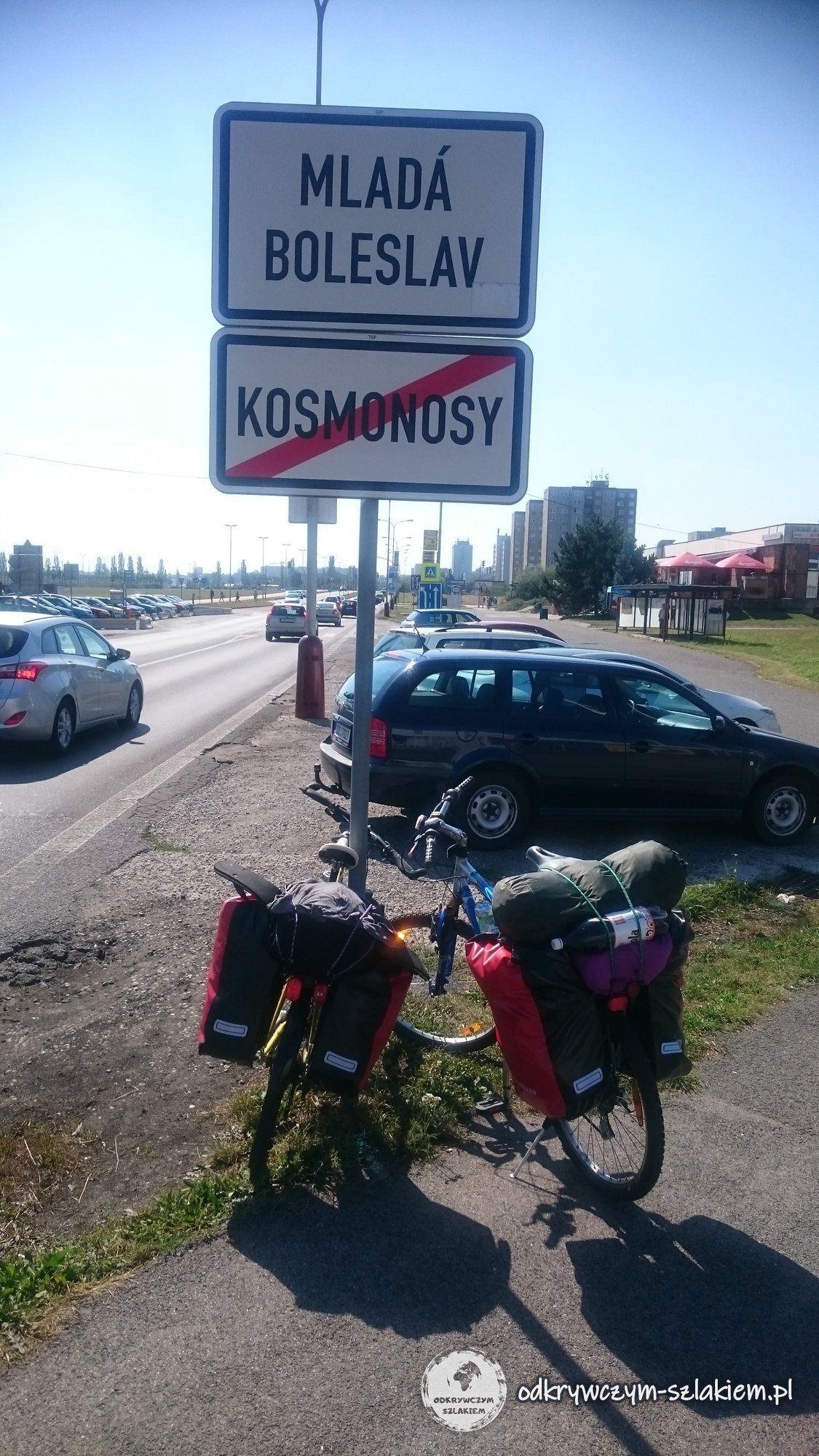
The history of the company and its vehicles, bicycles included, is shown at the Škoda Muzeum. We rode past a showroom and the factory buildings.

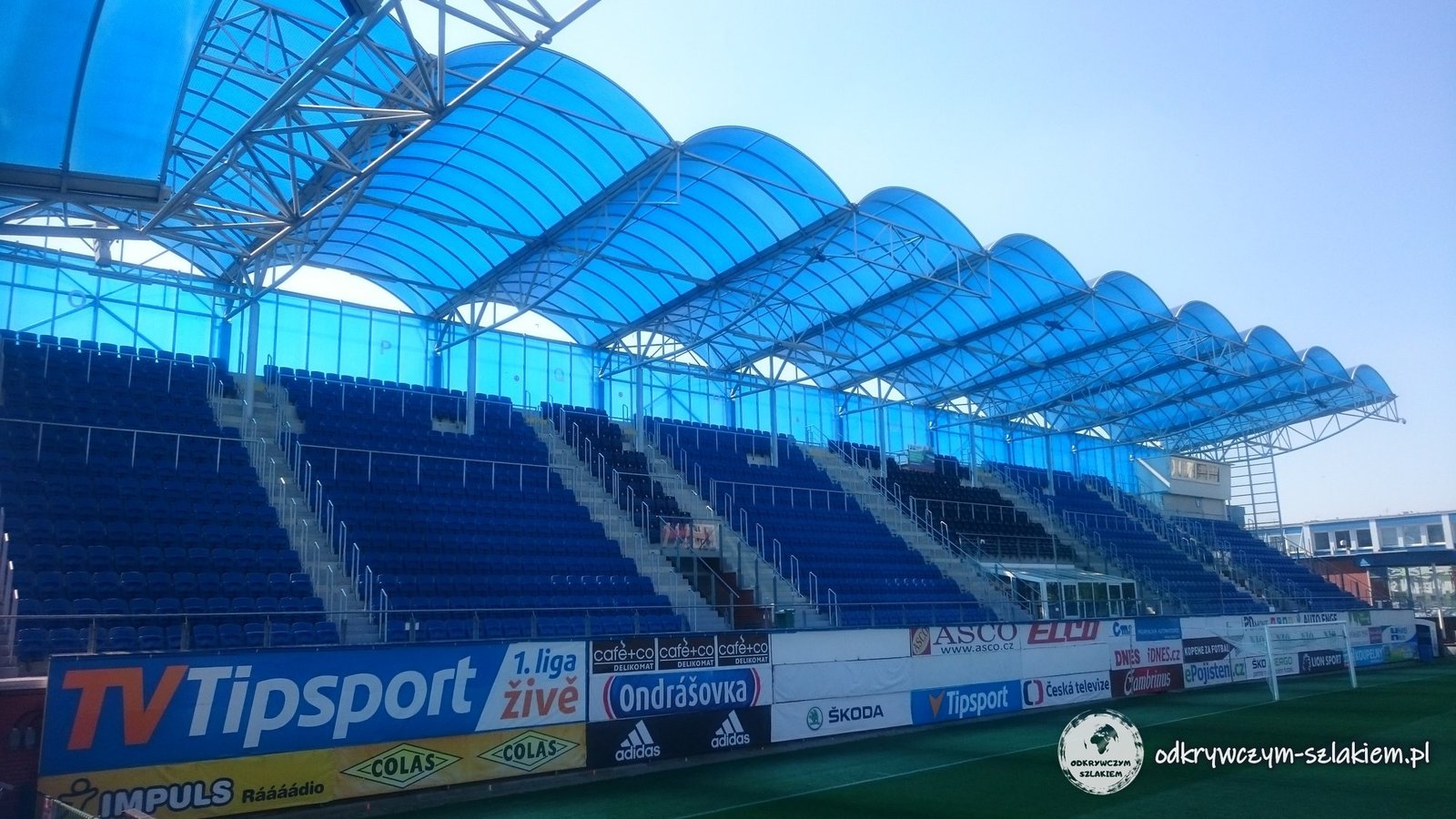
We also looked into the municipal stadium, home of FK Mladá Boleslav. Built in the 1970s and rebuilt around 2000, it holds about 5,000 spectators.
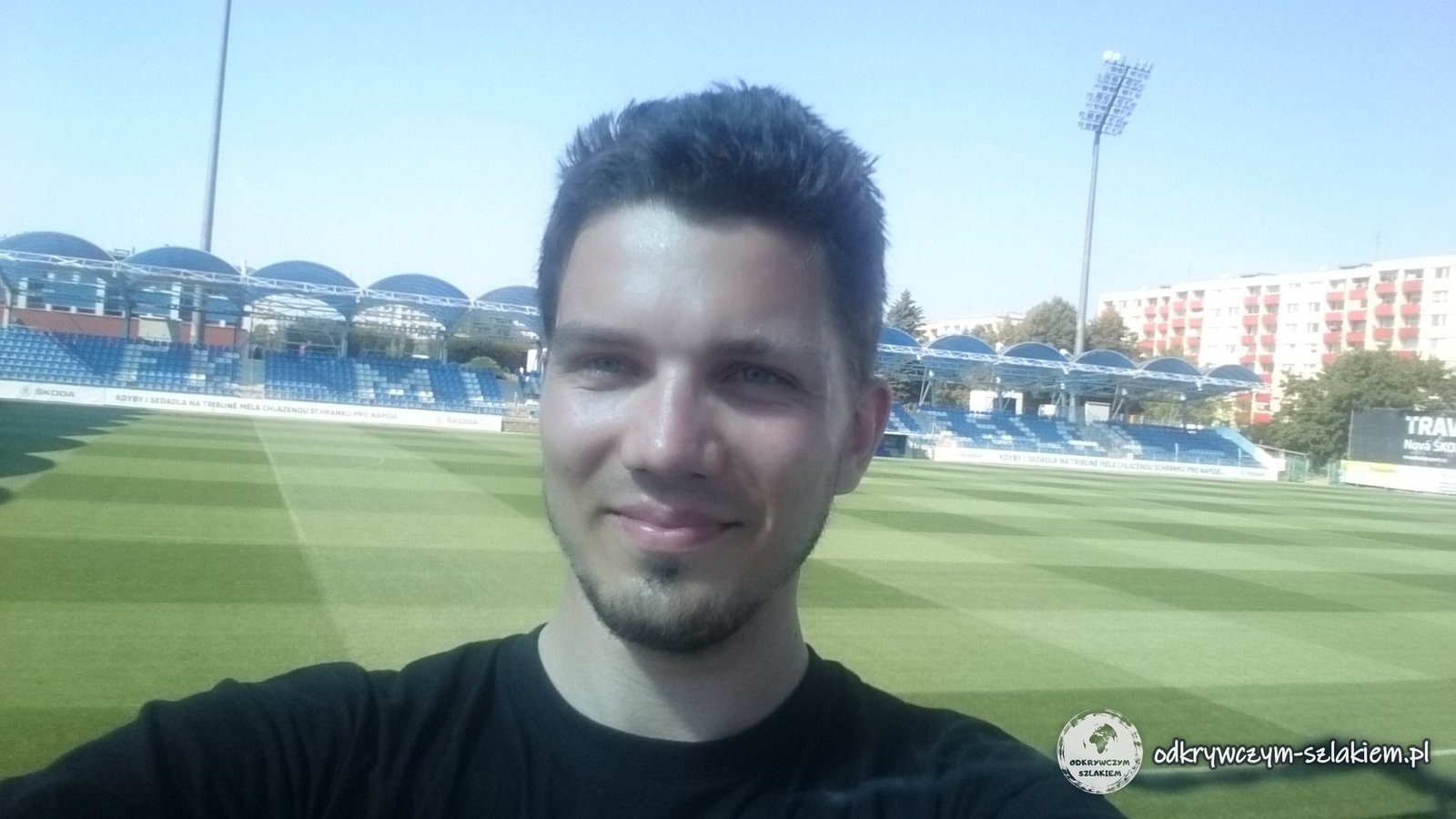
Outside the town, by the tracks, we saw a freight train carrying new cars.

Into Prague via Kbely
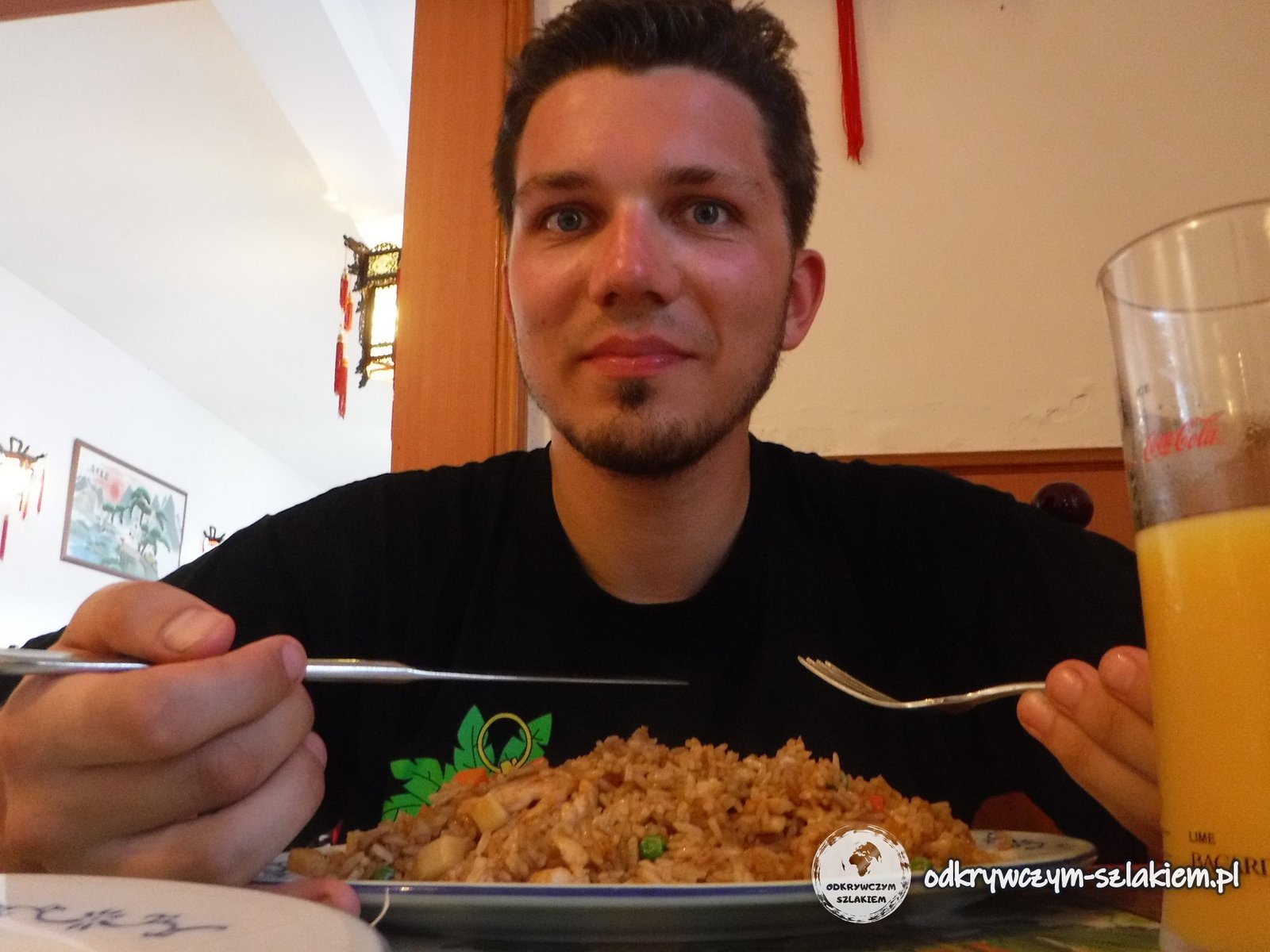
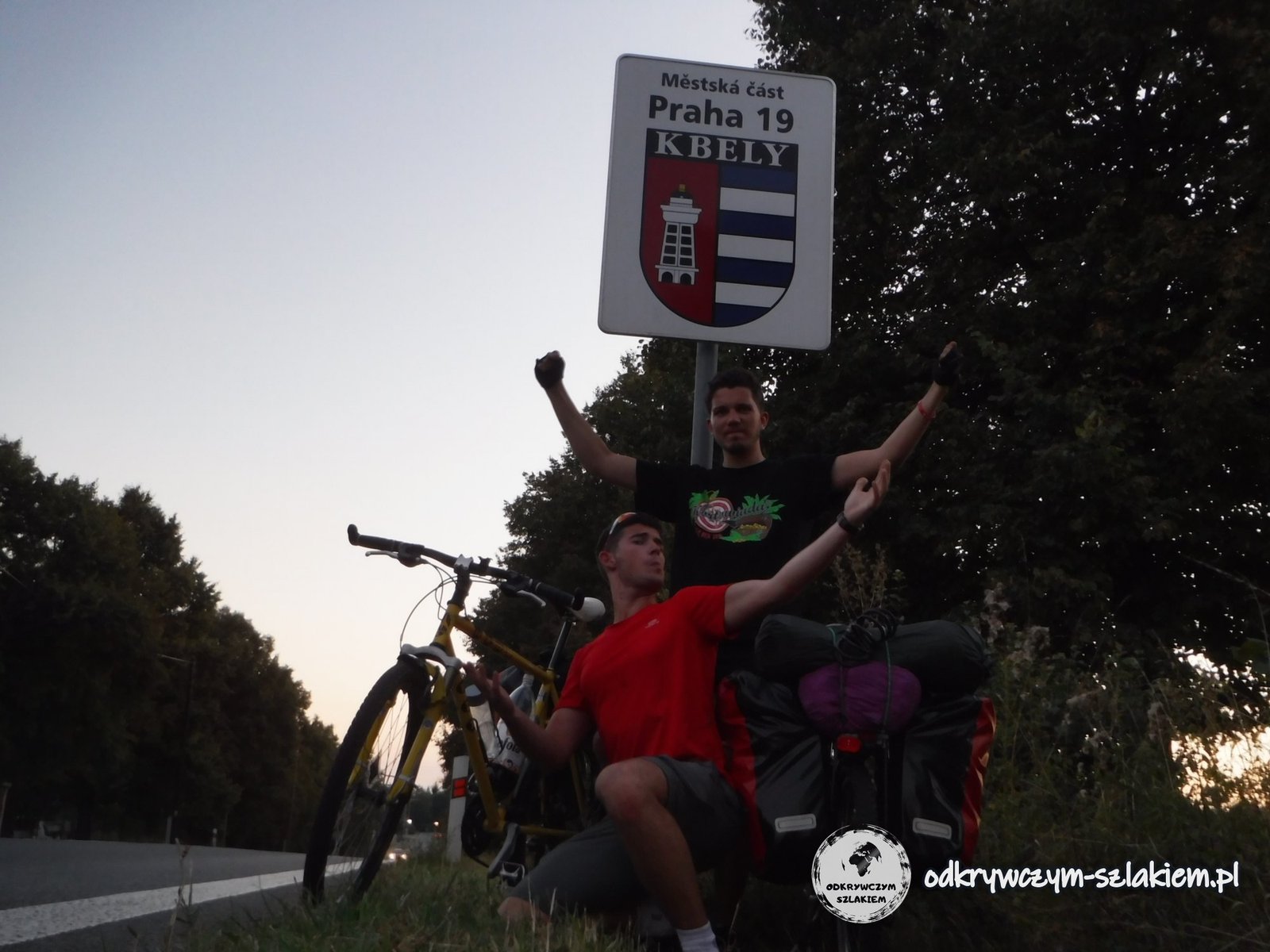
From Mladá Boleslav we rode south, past the town of Brandýs nad Labem-Stará Boleslav. In the evening we stopped for dinner at a Chinese restaurant, and at about 7:45 pm we passed the sign of the Praha 19 – Kbely district. After three days of cycling we were in Prague.
Holešovice, Výstaviště and the view from Letná
We began our first day in Prague, Friday 9 September, in the afternoon in Holešovice, at the Výstaviště exhibition grounds. Their main building is the Industrial Palace (Průmyslový palác), built for the Jubilee Exhibition of 1891.

On the way we came across a piano standing in the street – I sat down at it for a moment.

On Strossmayer Square stands the neo-Gothic Church of St Anthony of Padua, built in 1908–1911. Its two towers resemble those of the Church of Our Lady before Týn on Old Town Square. From there we walked up to Letná, which looks out over the Vltava, the bridges and the Old Town.

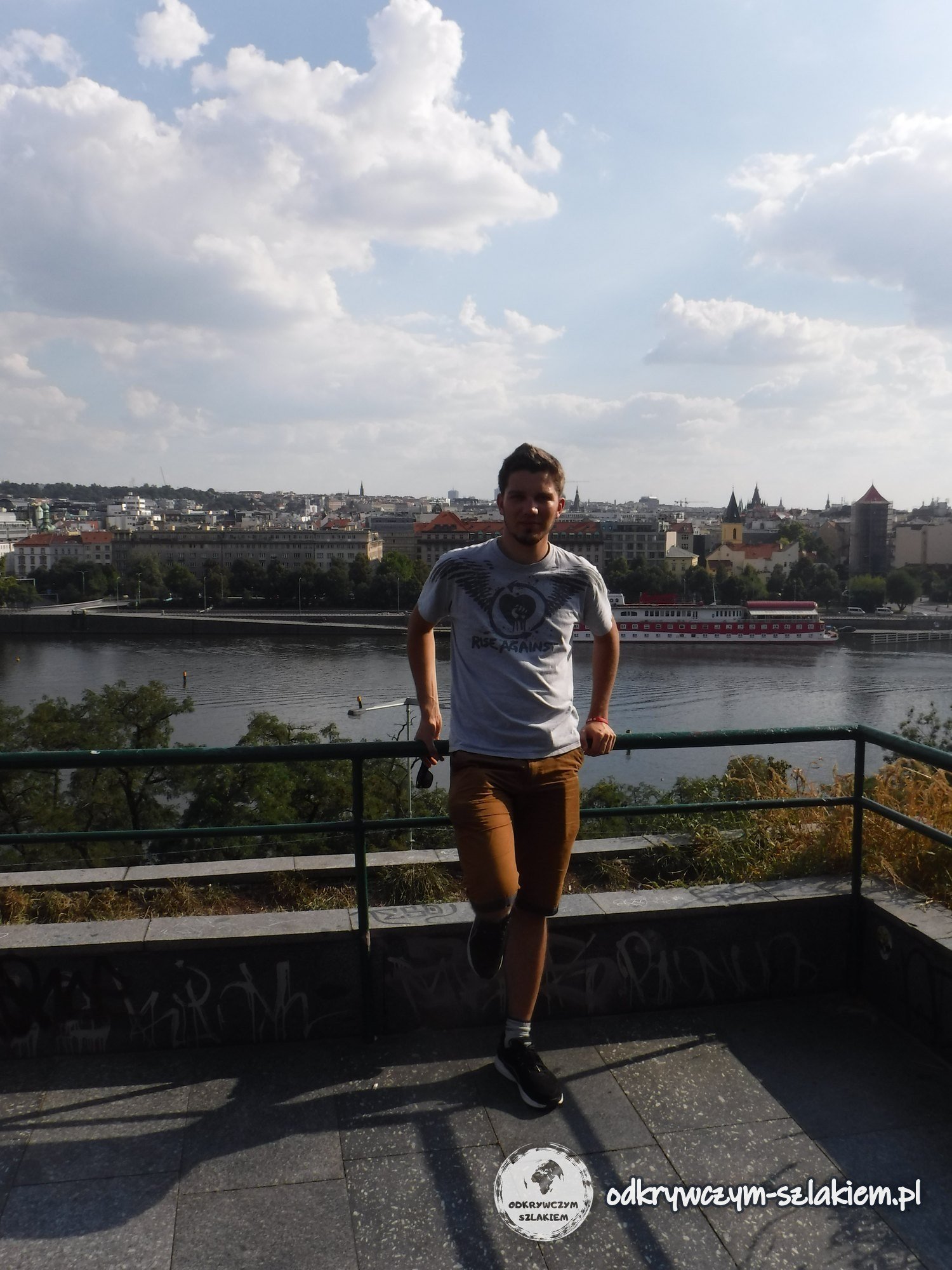
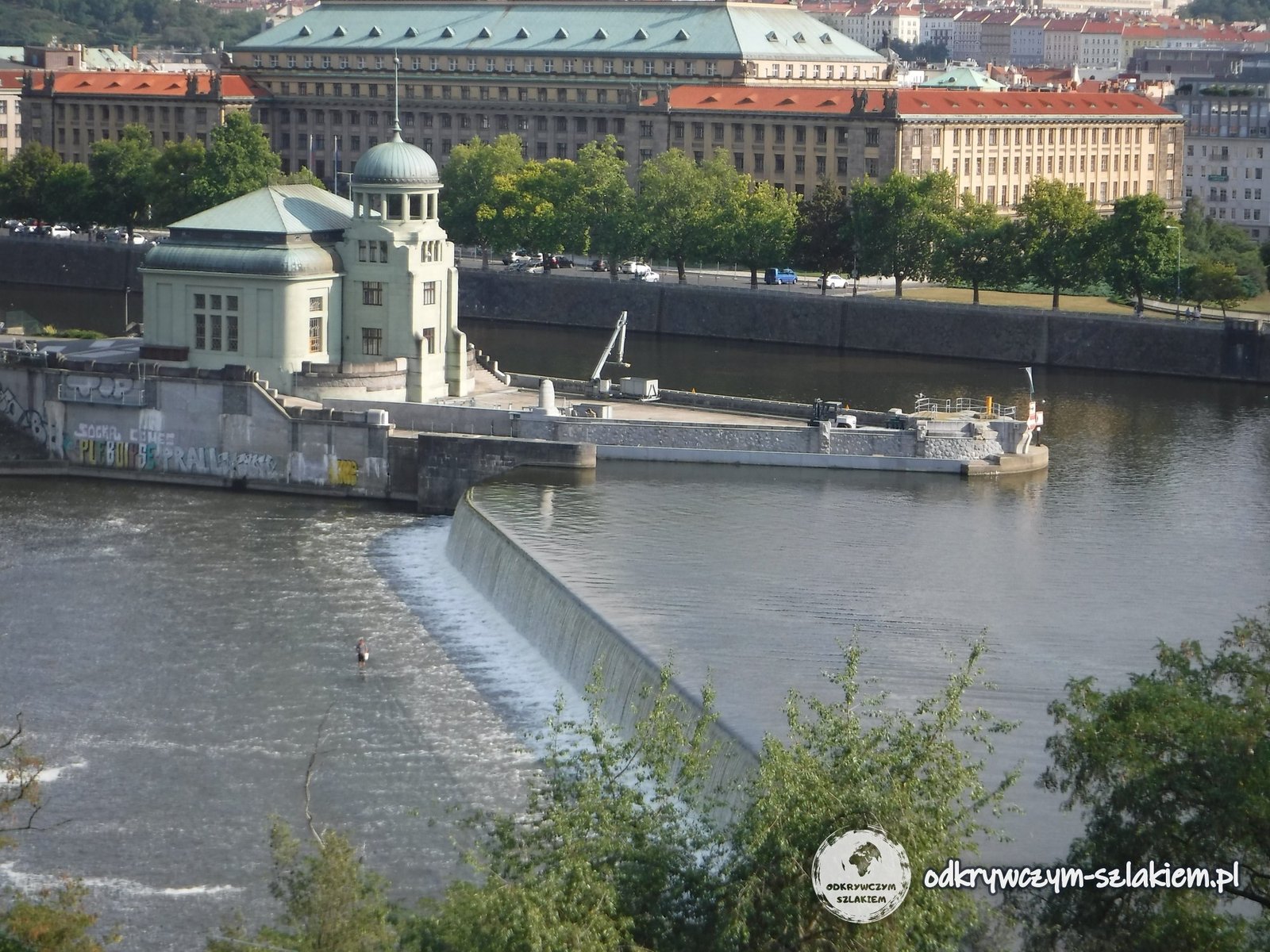
From Letná you can also see Štvanice island with its domed hydroelectric power station, built at the beginning of the 20th century, and the weir on the Vltava.
Charles Bridge, the Lesser Town and Hradčany
Along the Vltava we walked to Charles Bridge. From the Old Town embankment you can see the Lesser Town and Hradčany across the river.

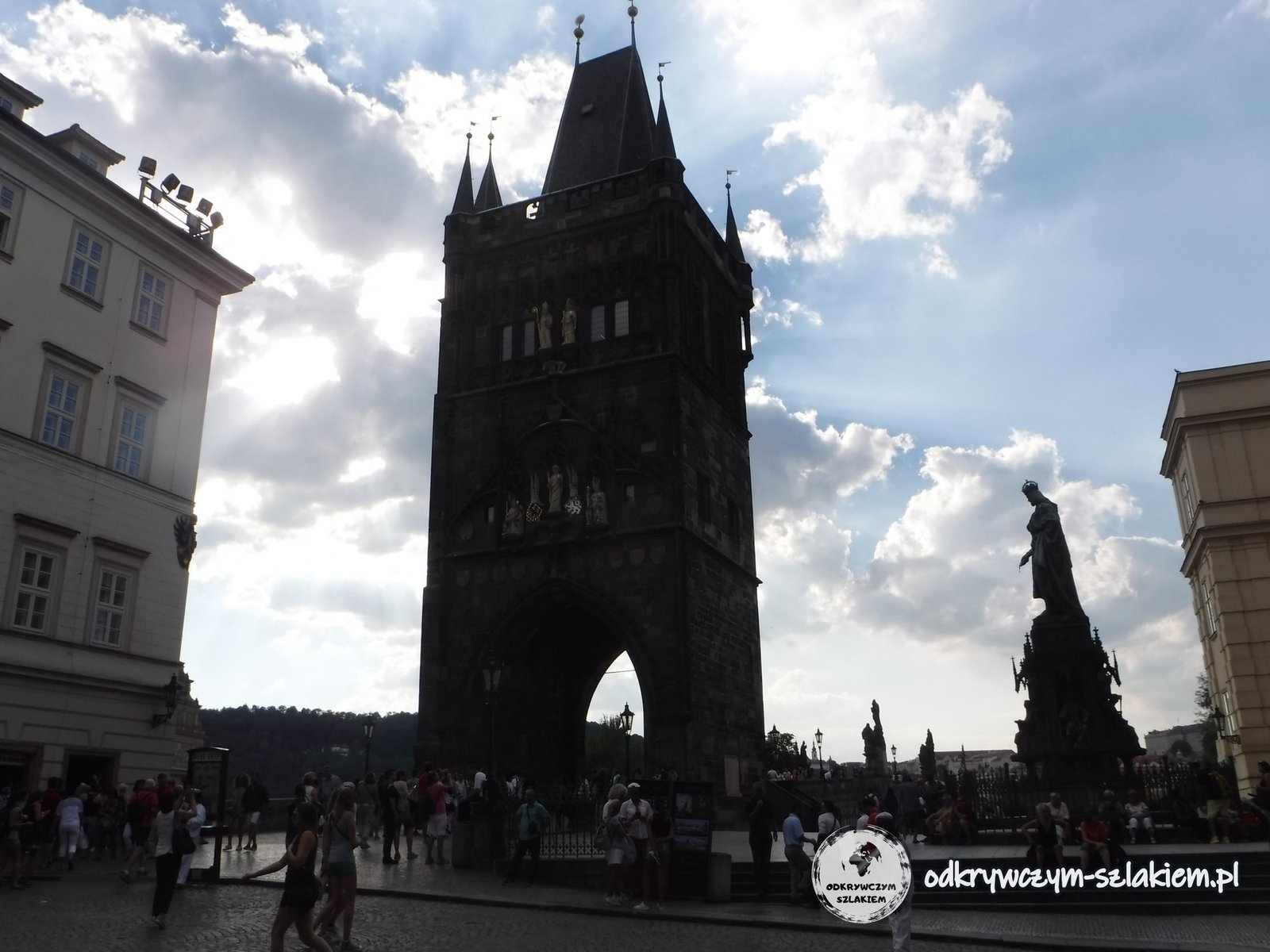
You enter the bridge through the Gothic Old Town Bridge Tower. Charles Bridge was built from 1357. It is about 516 m long, and 30 statues stand on its parapets.
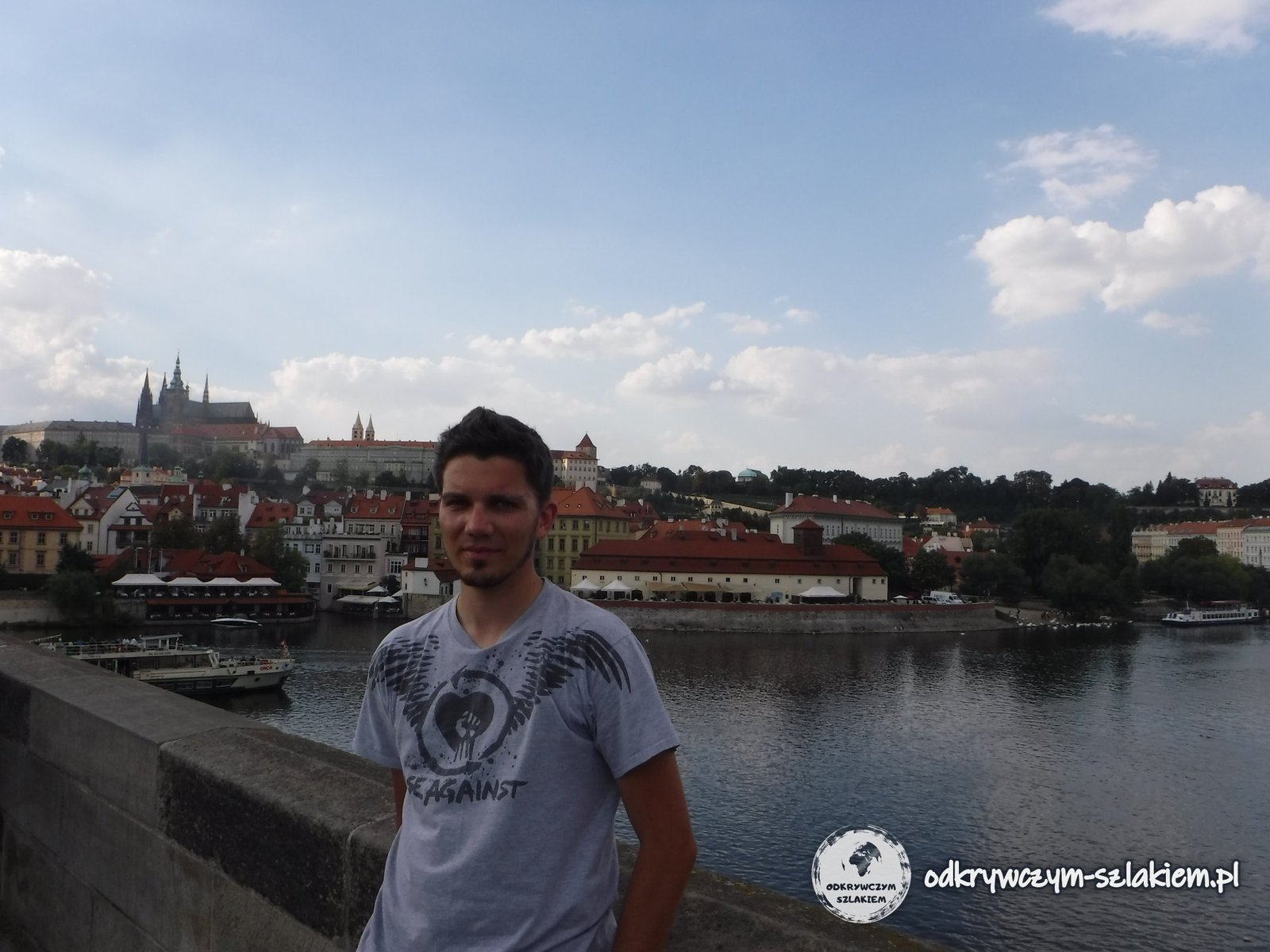
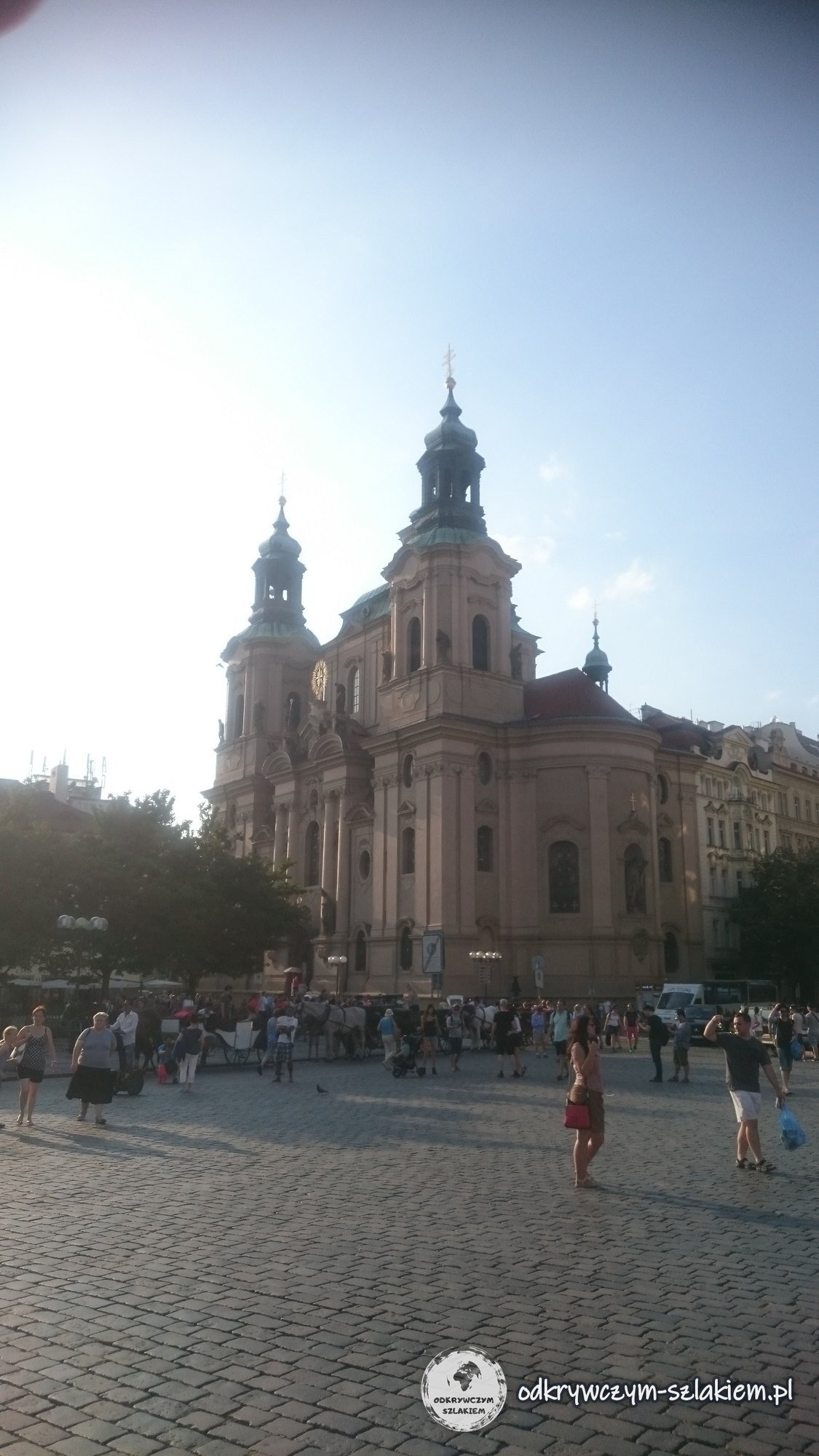
On the other side of the river we crossed Lesser Town Square with the Baroque Church of St Nicholas and climbed the Castle Steps up to Hradčany.
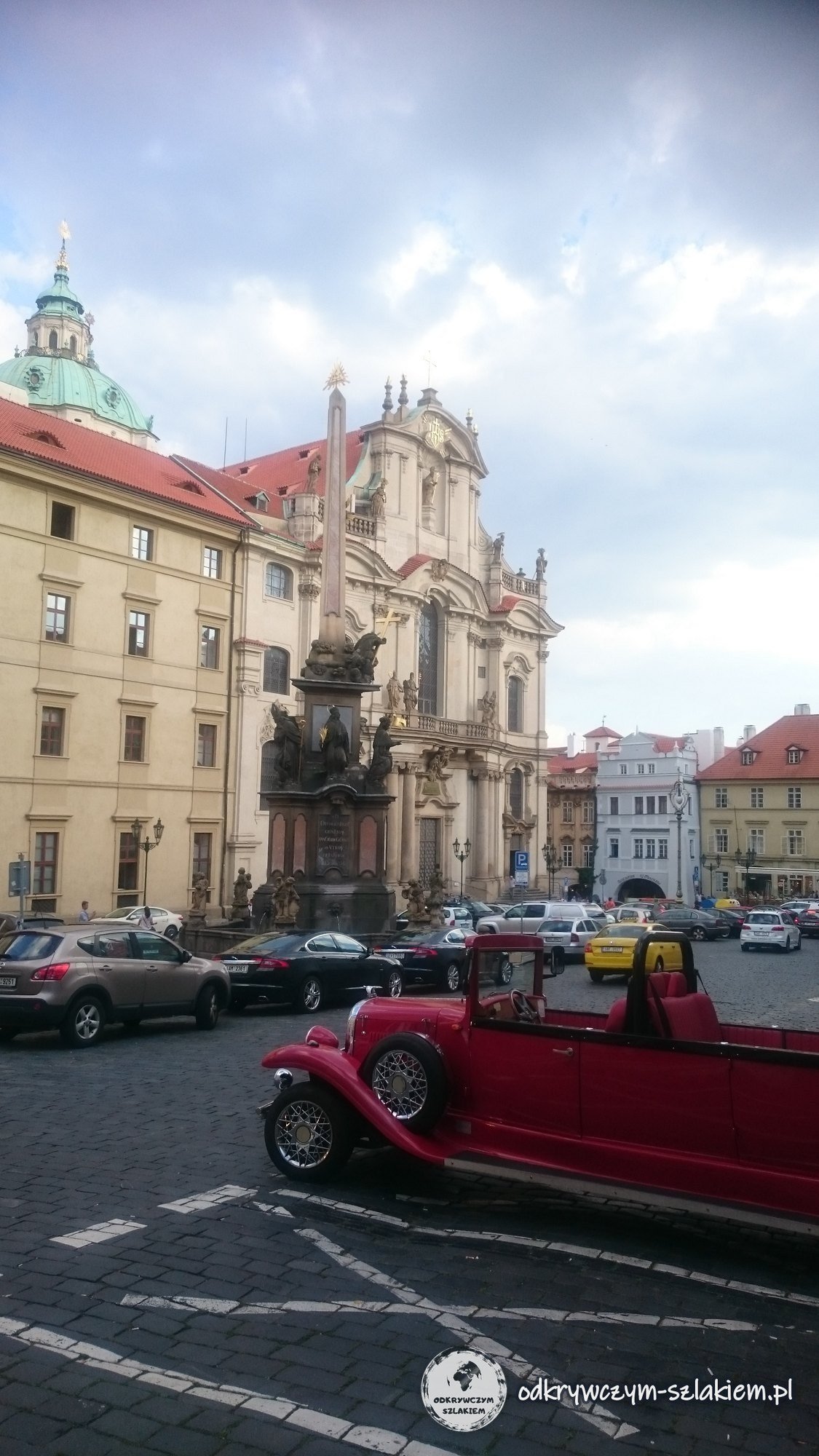

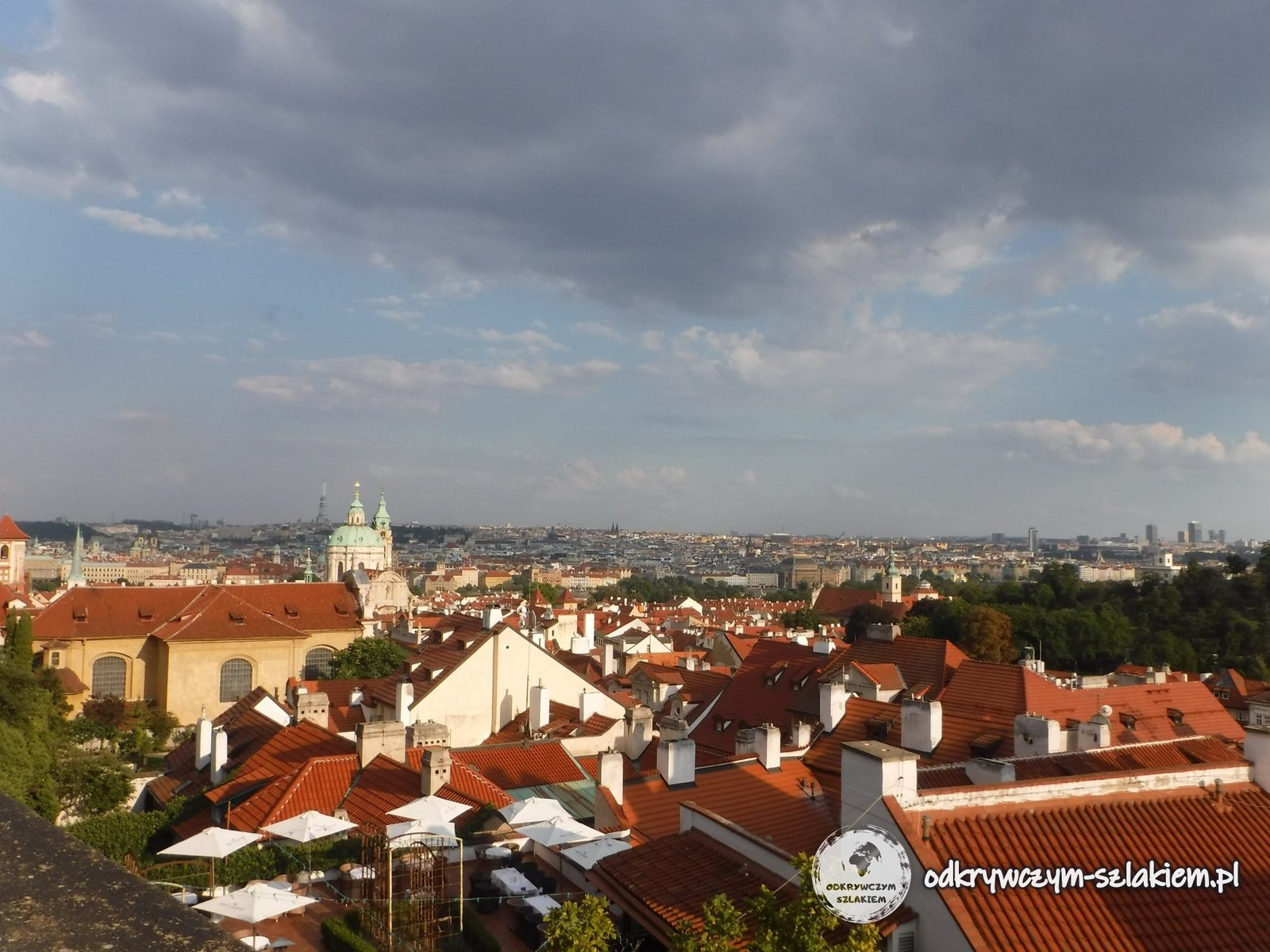
From up there you can see the red roofs of the Lesser Town and the whole city on the other side of the Vltava.
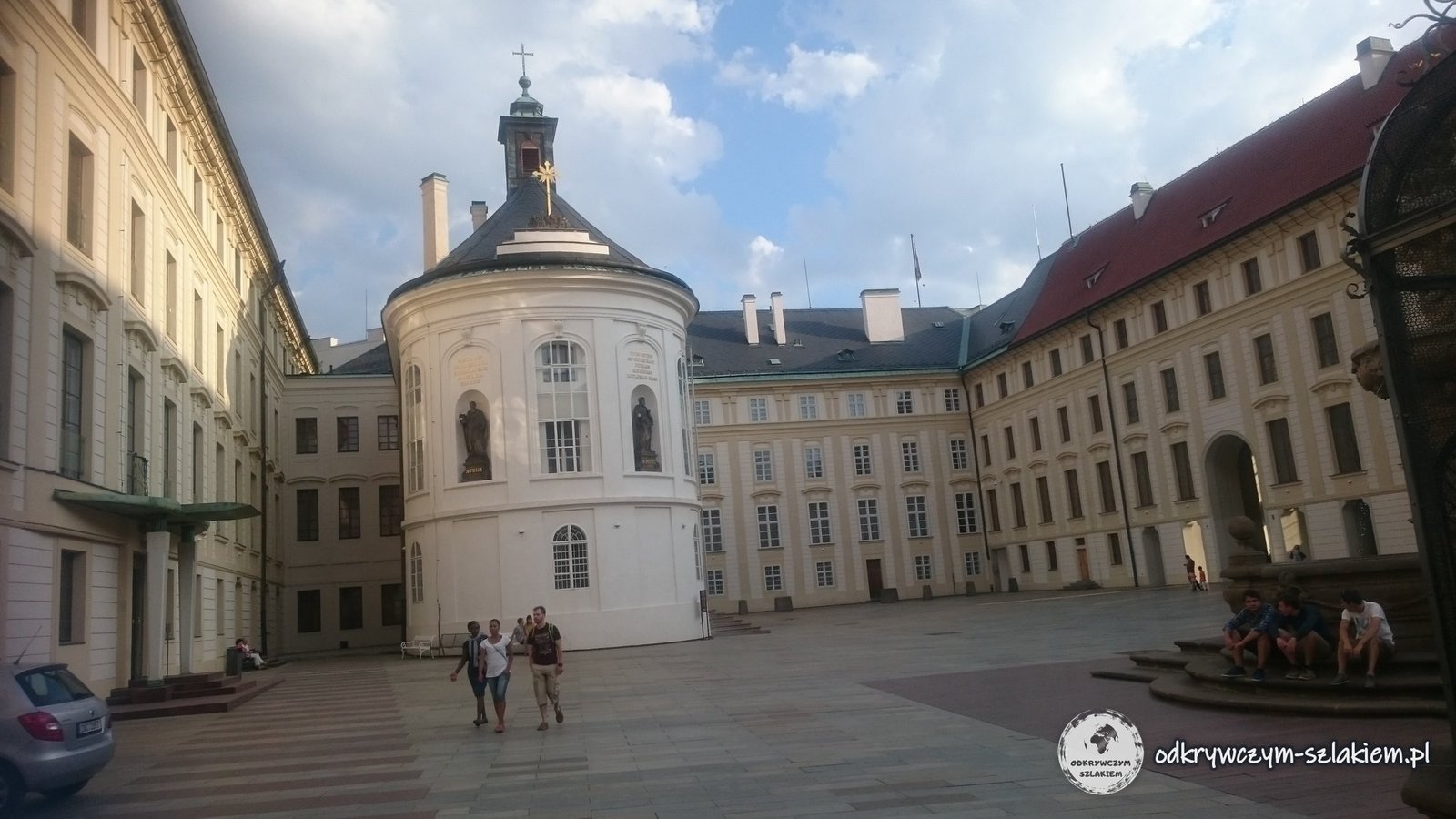
You enter the castle through a gate topped with statues of fighting giants, guarded by soldiers of the Castle Guard. The guard changes every hour, and most ceremonially at noon.

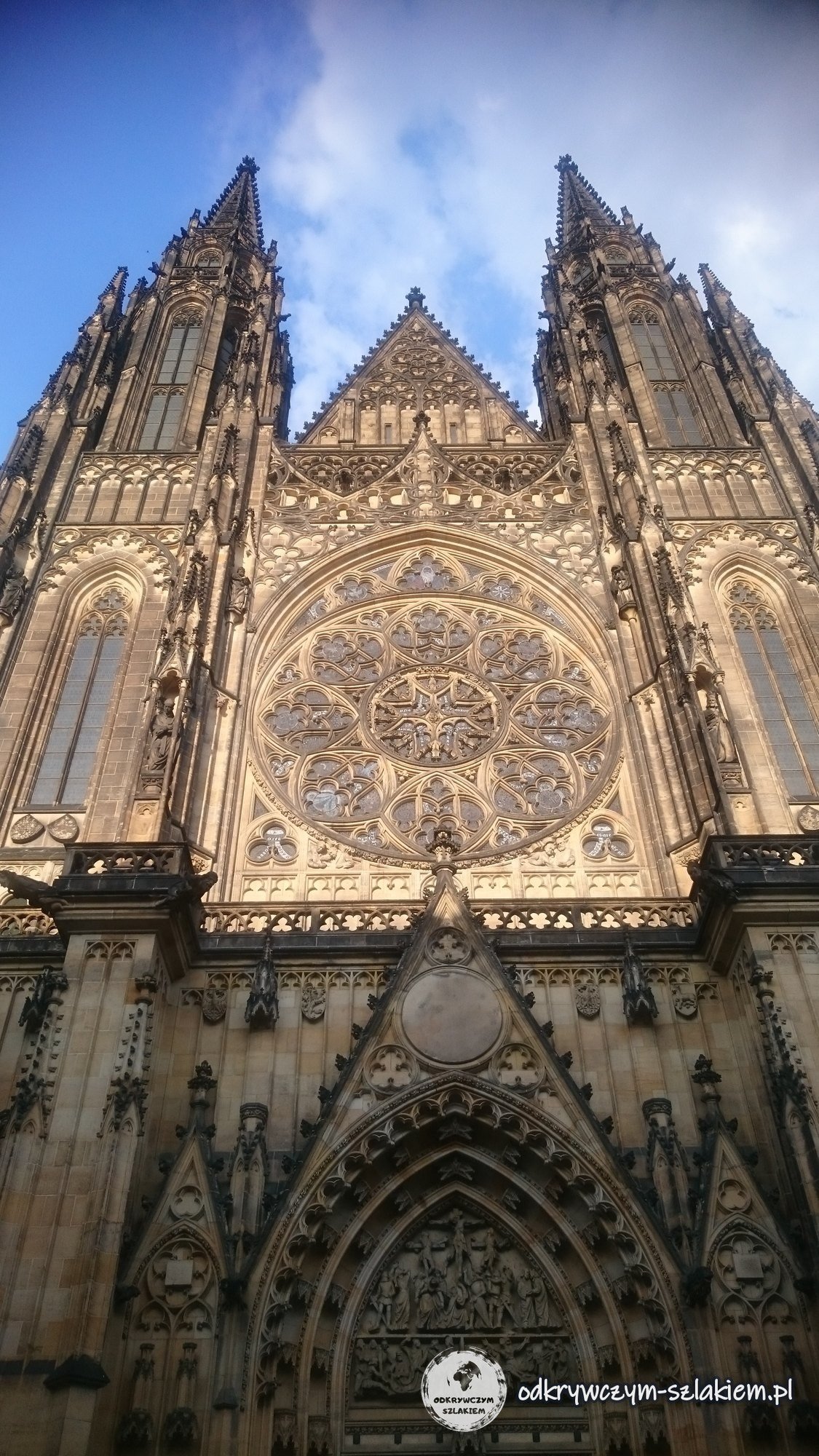
Further on we walked past St Vitus Cathedral, built from 1344 to 1929, and St George’s Basilica with its red Baroque façade. I wrote more about Hradčany in my post Prague – what to see in 2 days.

The Old Town – the Powder Tower, the square and the Orloj
On Saturday, 10 September, we walked around the Old Town. We started at the Gothic Powder Tower (Prašná brána), begun in 1475, and then made our way to Old Town Square with the town hall tower.

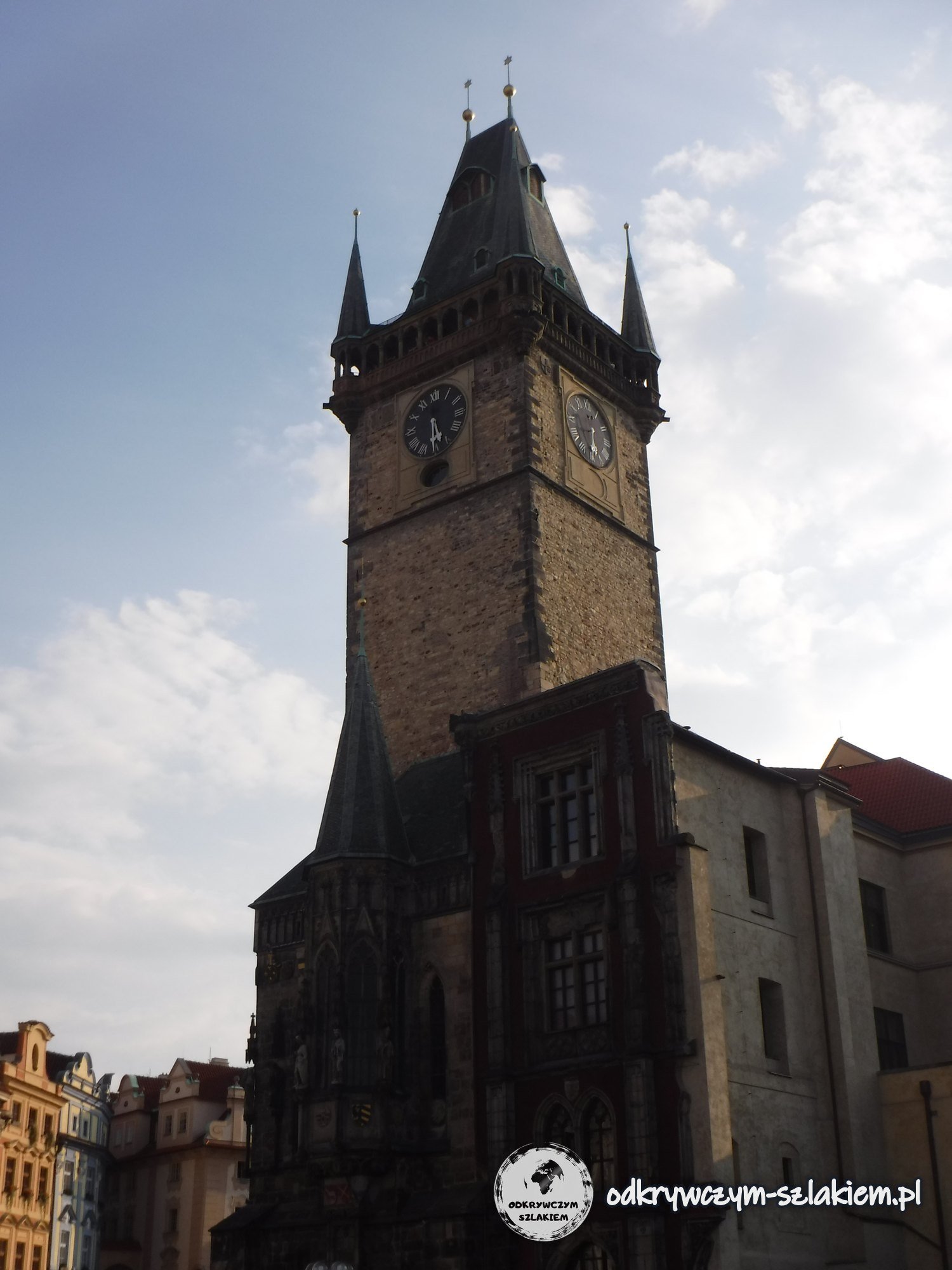
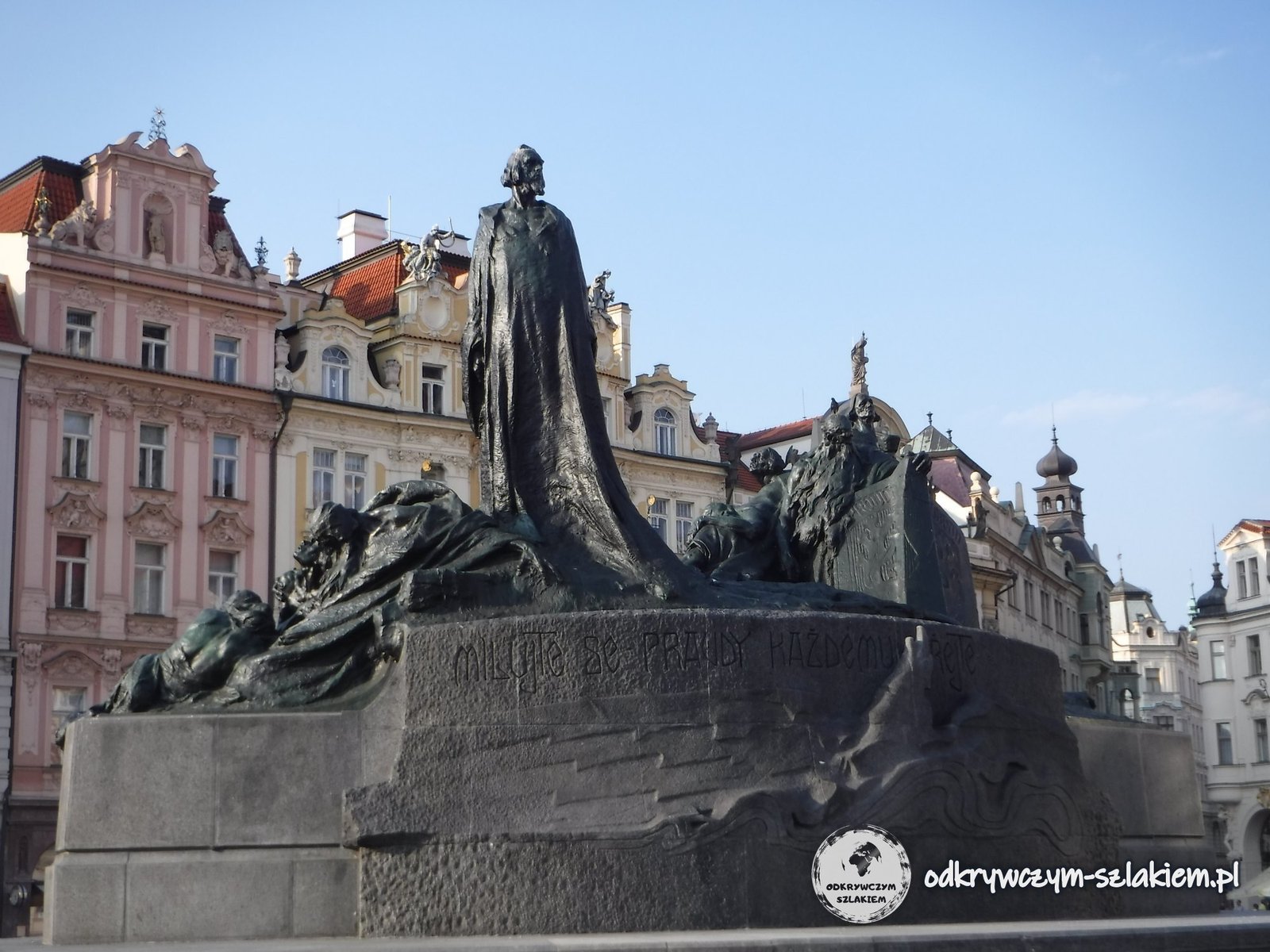
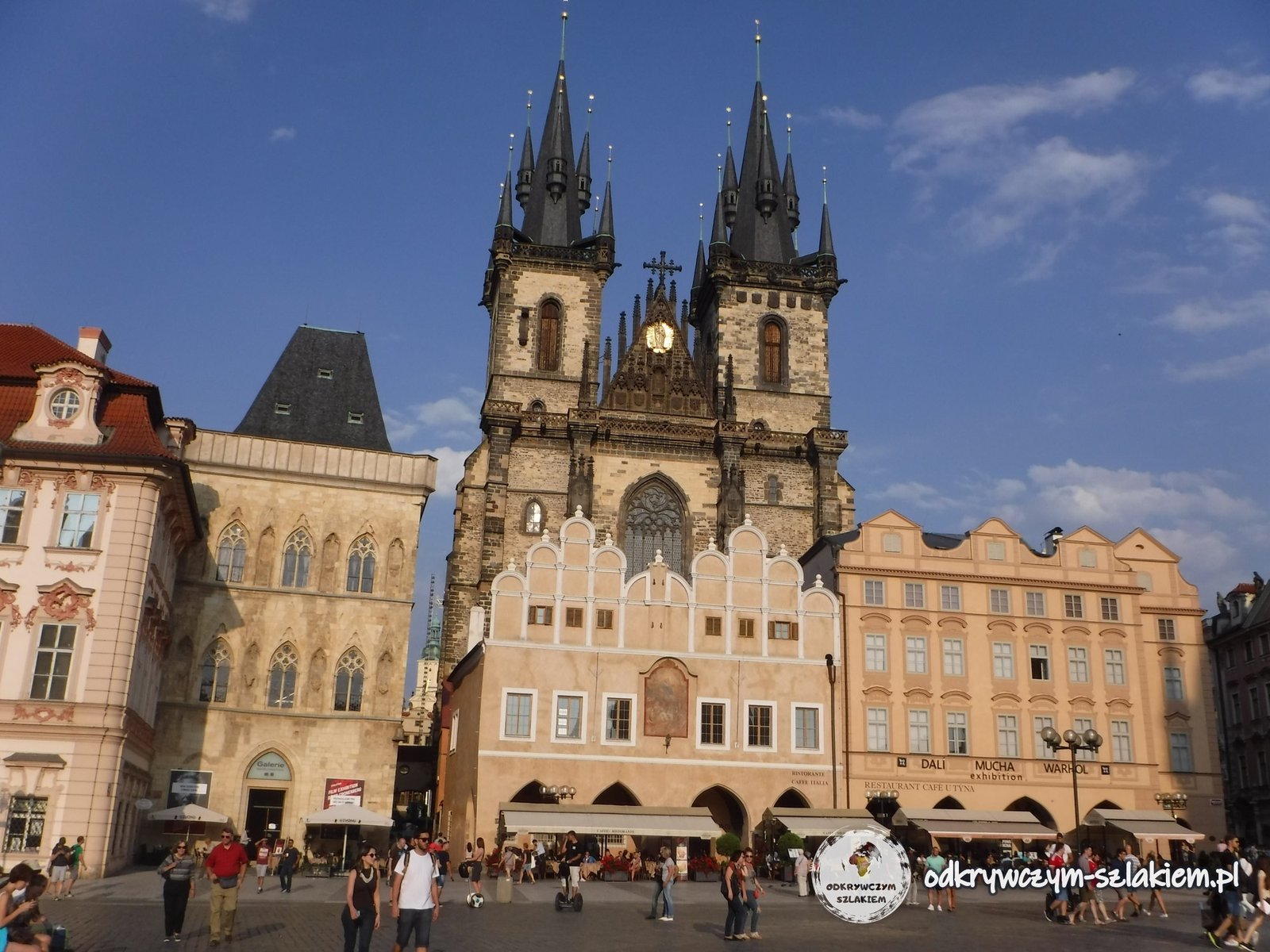
On the square stand, among other things, the Gothic Church of Our Lady before Týn and the Jan Hus Memorial, unveiled in 1915 on the 500th anniversary of his death.
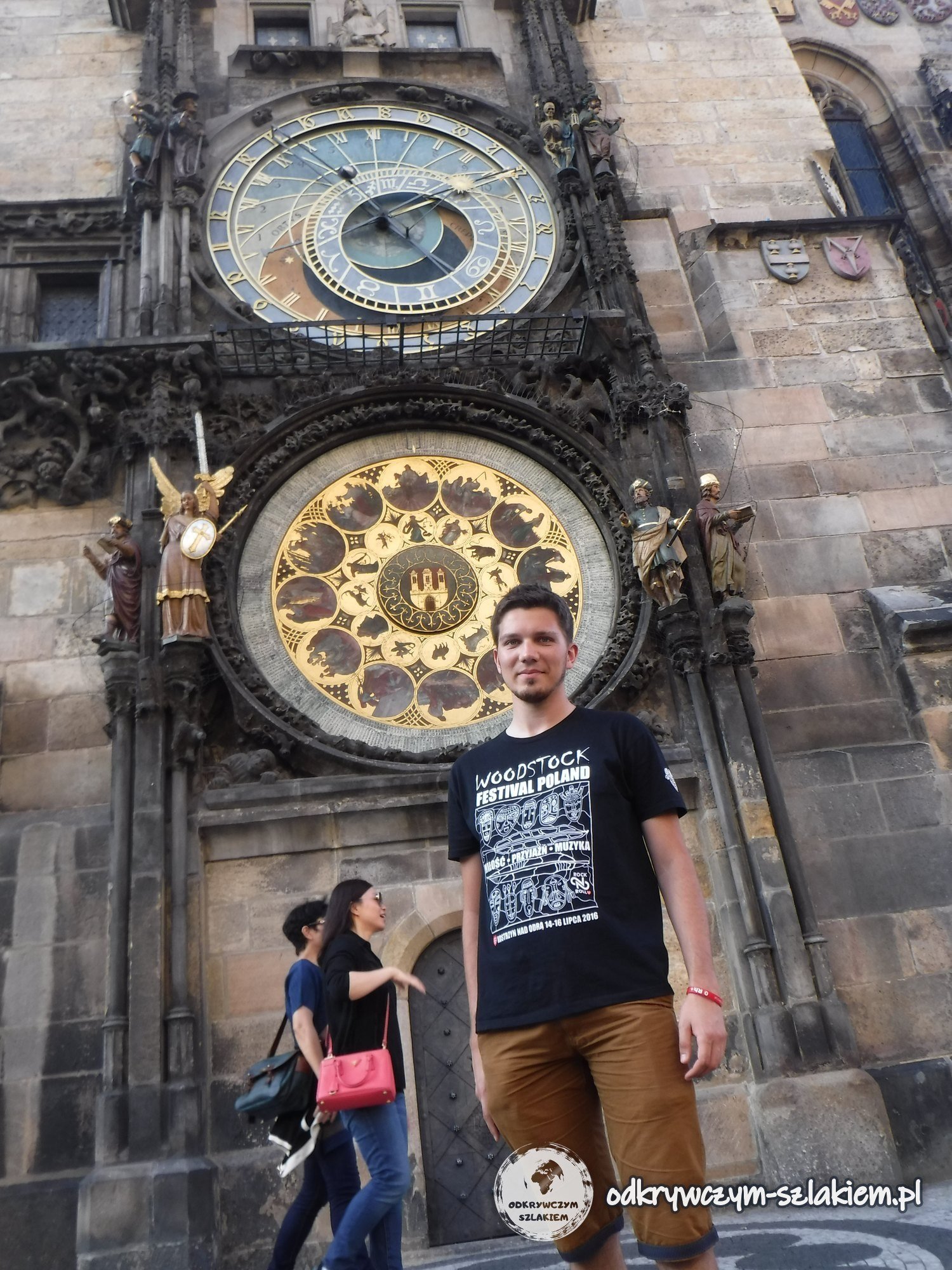
On the town hall tower is the Orloj astronomical clock from 1410 – one of the oldest working astronomical clocks in the world.
The Vltava at night
In the evening we went down to the Vltava. From the other bank we watched the lights come on along Charles Bridge and the Old Town embankment.
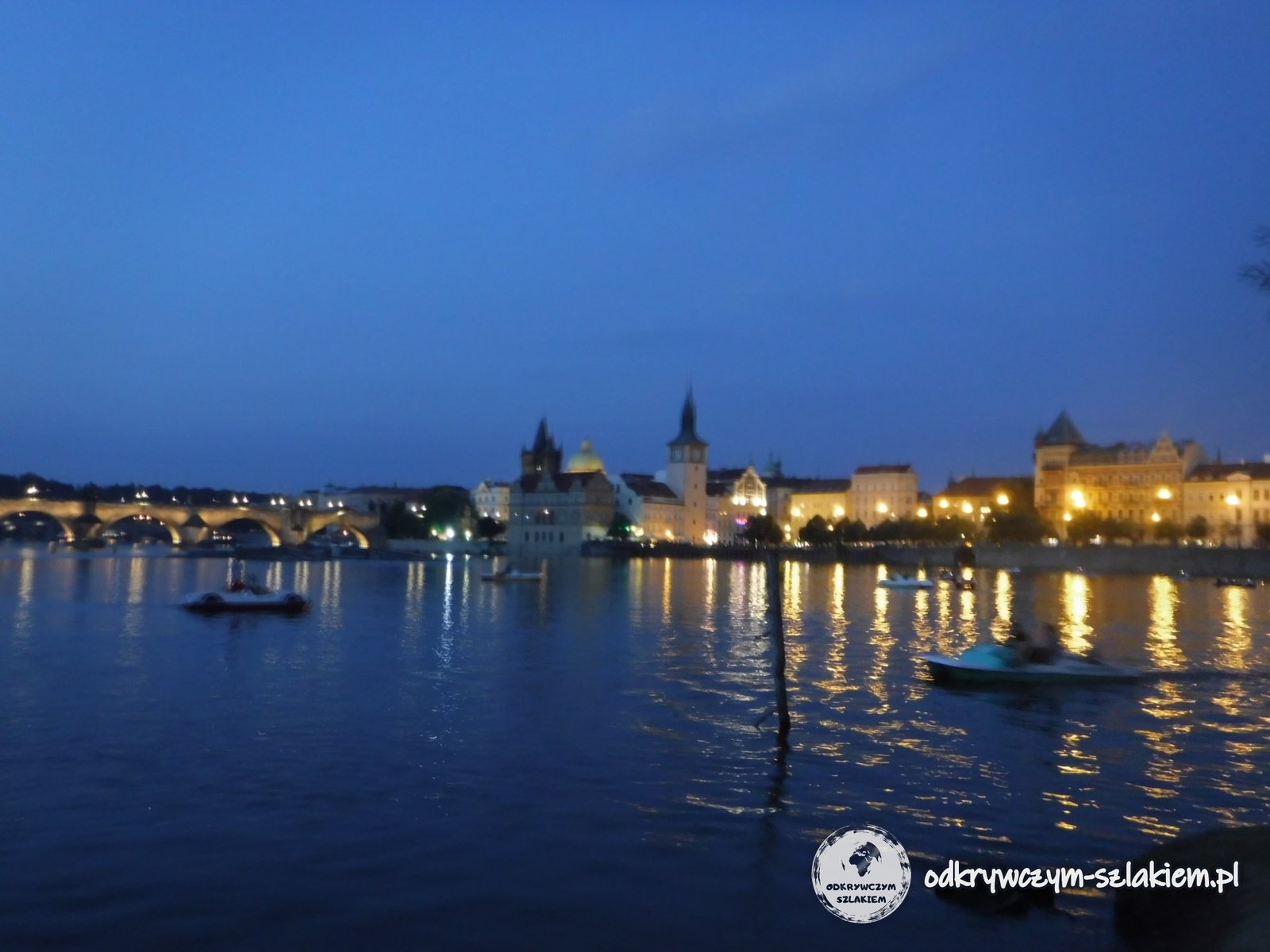
From the same spot you can also see the National Theatre, which opened in 1881 and, after a fire, again in 1883. At about 10 pm fireworks lit up the sky over the city.

The last day – Cross Club and cycling along the Vltava
On Sunday, 11 September, we got back on our bikes. In Holešovice we stopped at Cross Club – a club founded in 2002 whose building and garden are decorated with structures made of machine parts, cogs and other metal pieces.

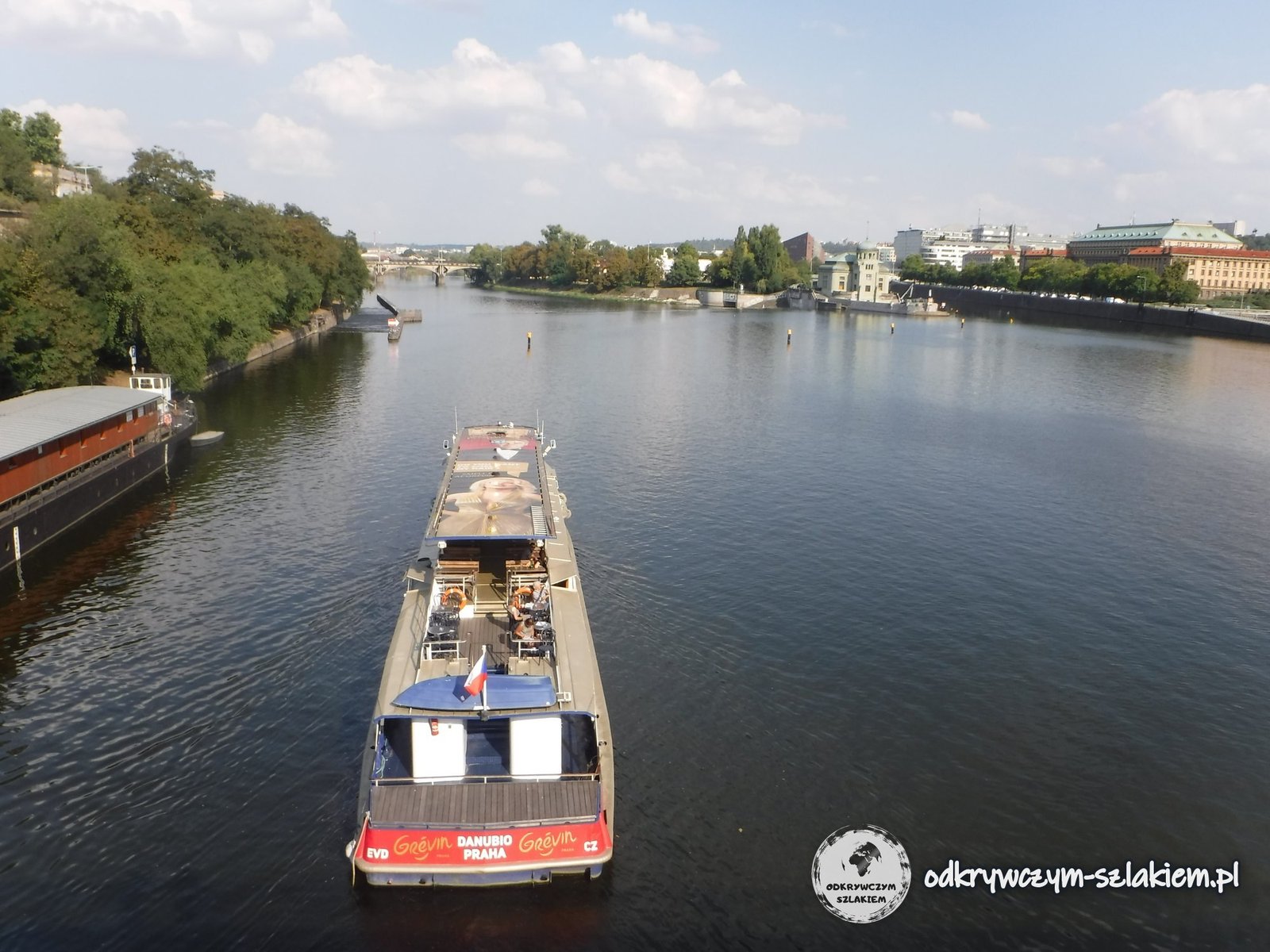
Then we rode along the Vltava. A wide path runs along the embankment, and boats with hotels and restaurants are moored by the bank.

From below Mánes Bridge you can see St Vitus Cathedral above Hradčany, and a little further on – Charles Bridge.

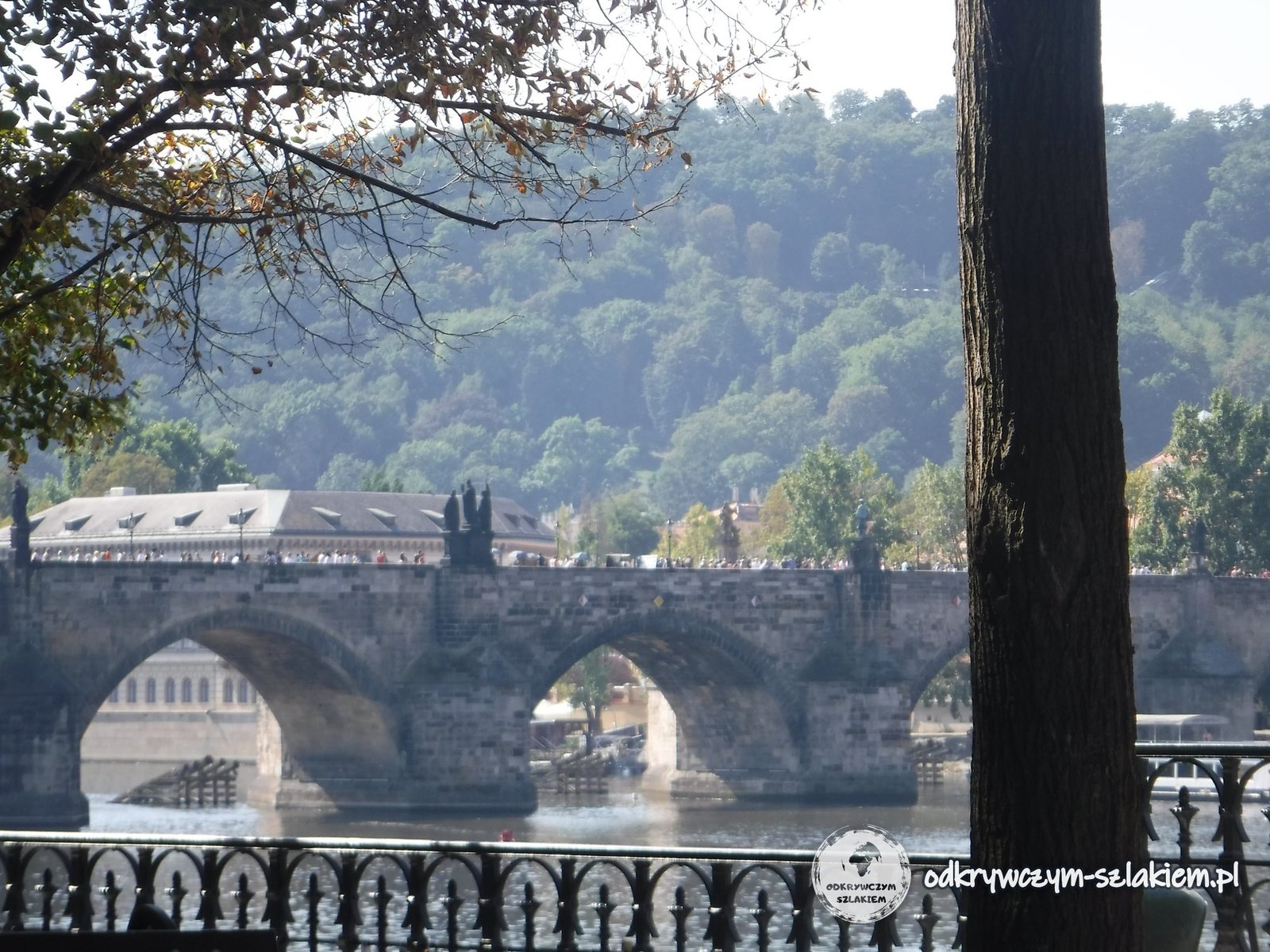
This time we crossed Charles Bridge with our bikes. At noon on a Sunday it was full of tourists.

We spent the evening in a park, and before midnight we took one more look at Prague by night from Letná. On the hill stands a metronome, put up in 1991 on the site of the demolished Stalin monument.

Back by train via Międzylesie and Kłodzko
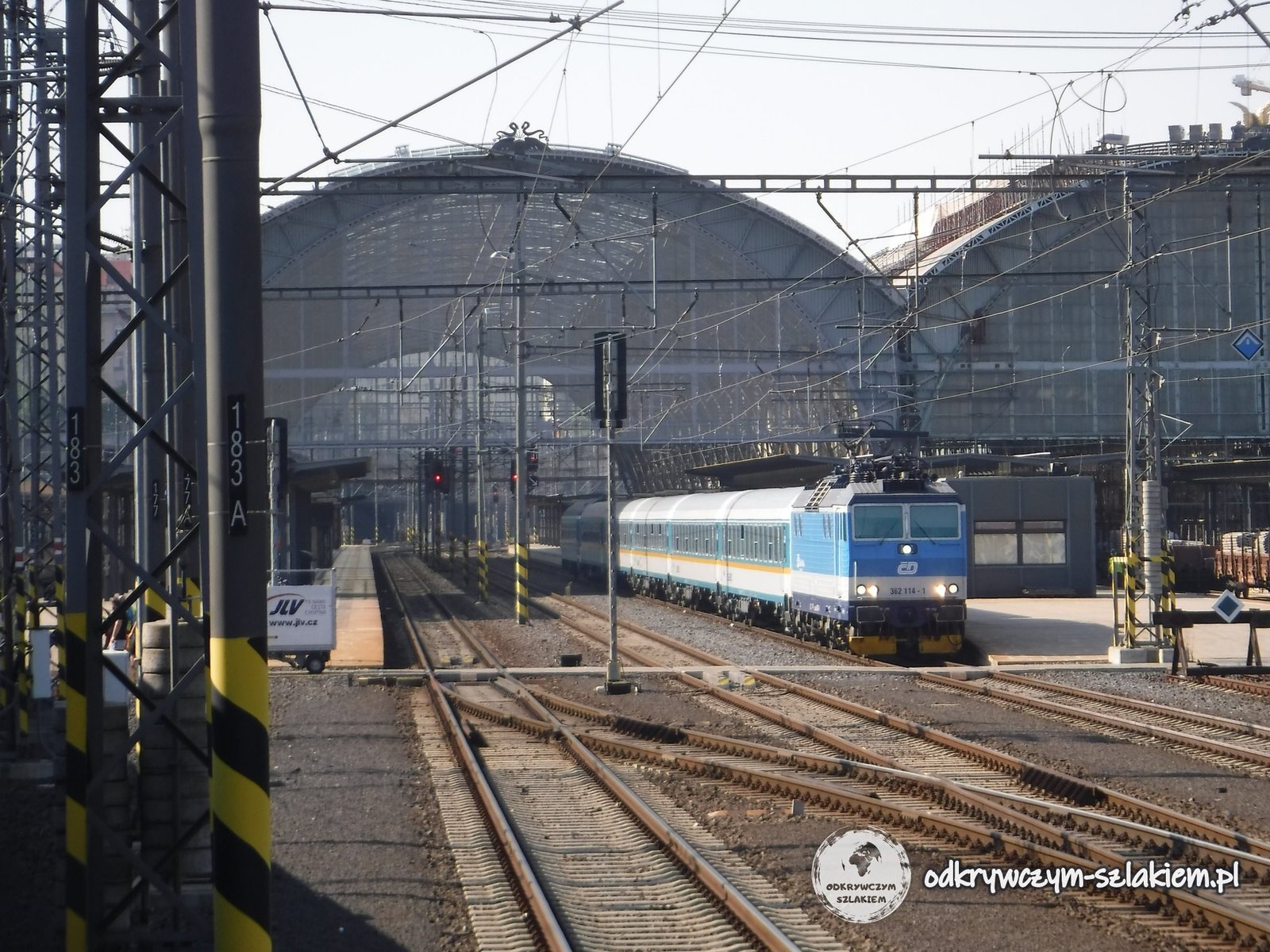
On Monday, 12 September, at around eleven, we left Praha hlavní nádraží station with our bikes. We travelled back with changes – via Międzylesie and Kłodzko to Wrocław.
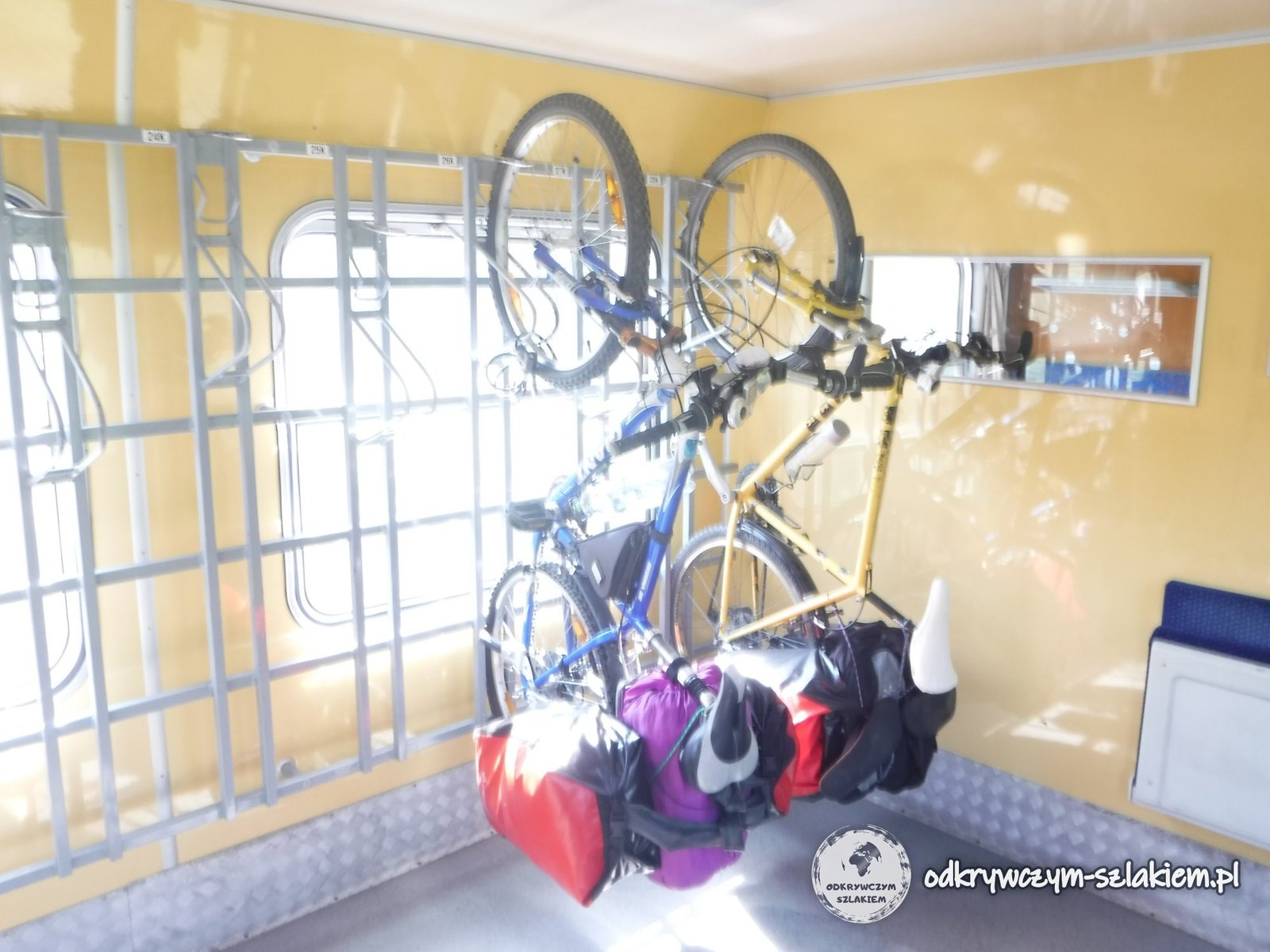
On the train the bikes once again hung on hooks in the bike compartment.
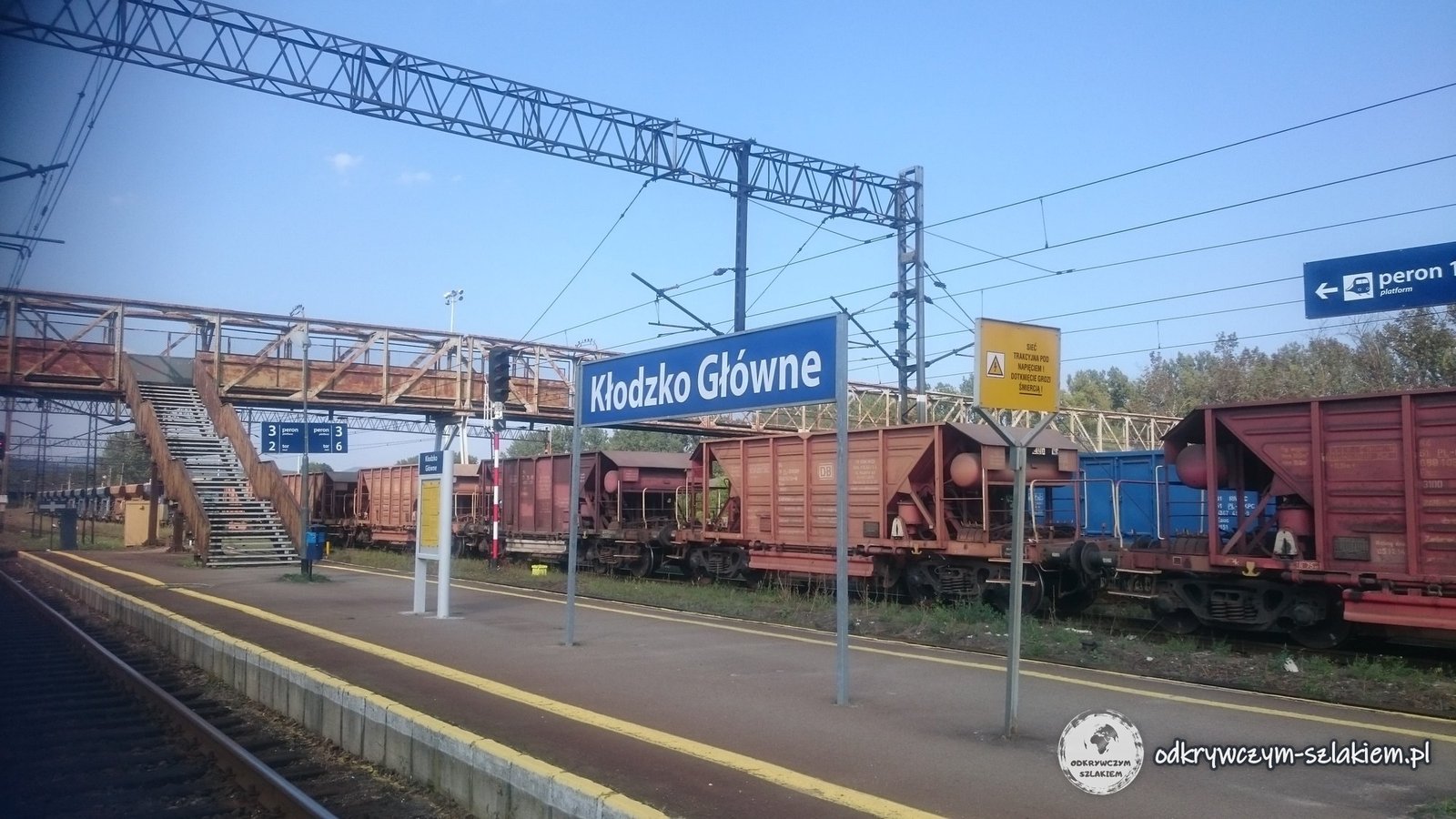
At Kłodzko Główne station we changed to a train to Wrocław.

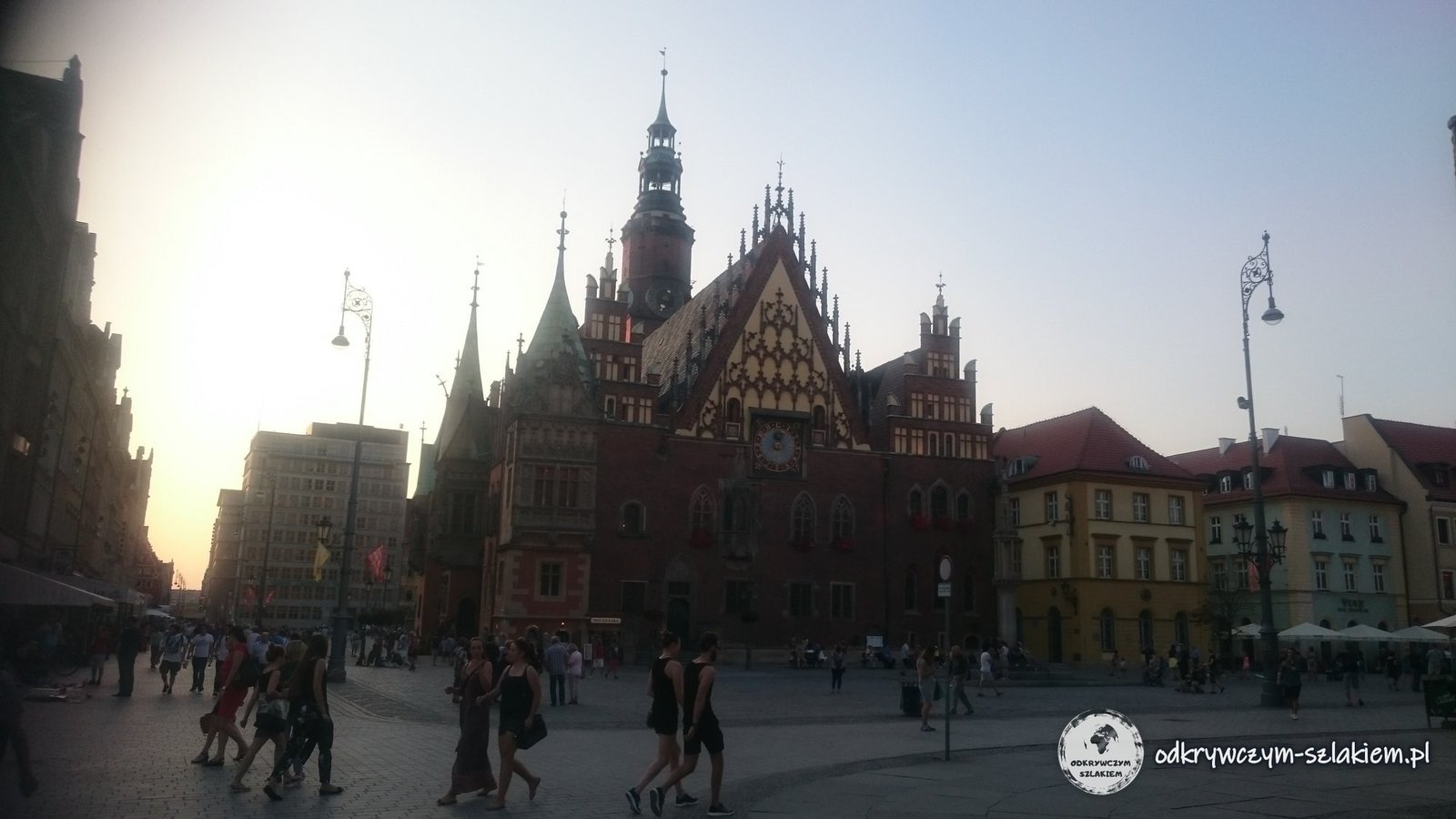
By the evening we were already in Wrocław’s Market Square. I wrote about Wrocław in my post Wrocław – what to see.
Practical information
- Route: Jelenia Góra – Piechowice – Szklarska Poręba – Jakuszyce – Harrachov – Tanvald – Zásada – Turnov – Kněžmost – Kosmonosy – Mladá Boleslav – Brandýs nad Labem-Stará Boleslav – Prague (Kbely), about 205 km in total. The hardest part is the climb from Szklarska Poręba to the Szklarska Pass (886 m above sea level), and between Tanvald and Turnov the road keeps going up and down.
- How long: three days of riding with panniers are enough for the route from Jelenia Góra to Prague.
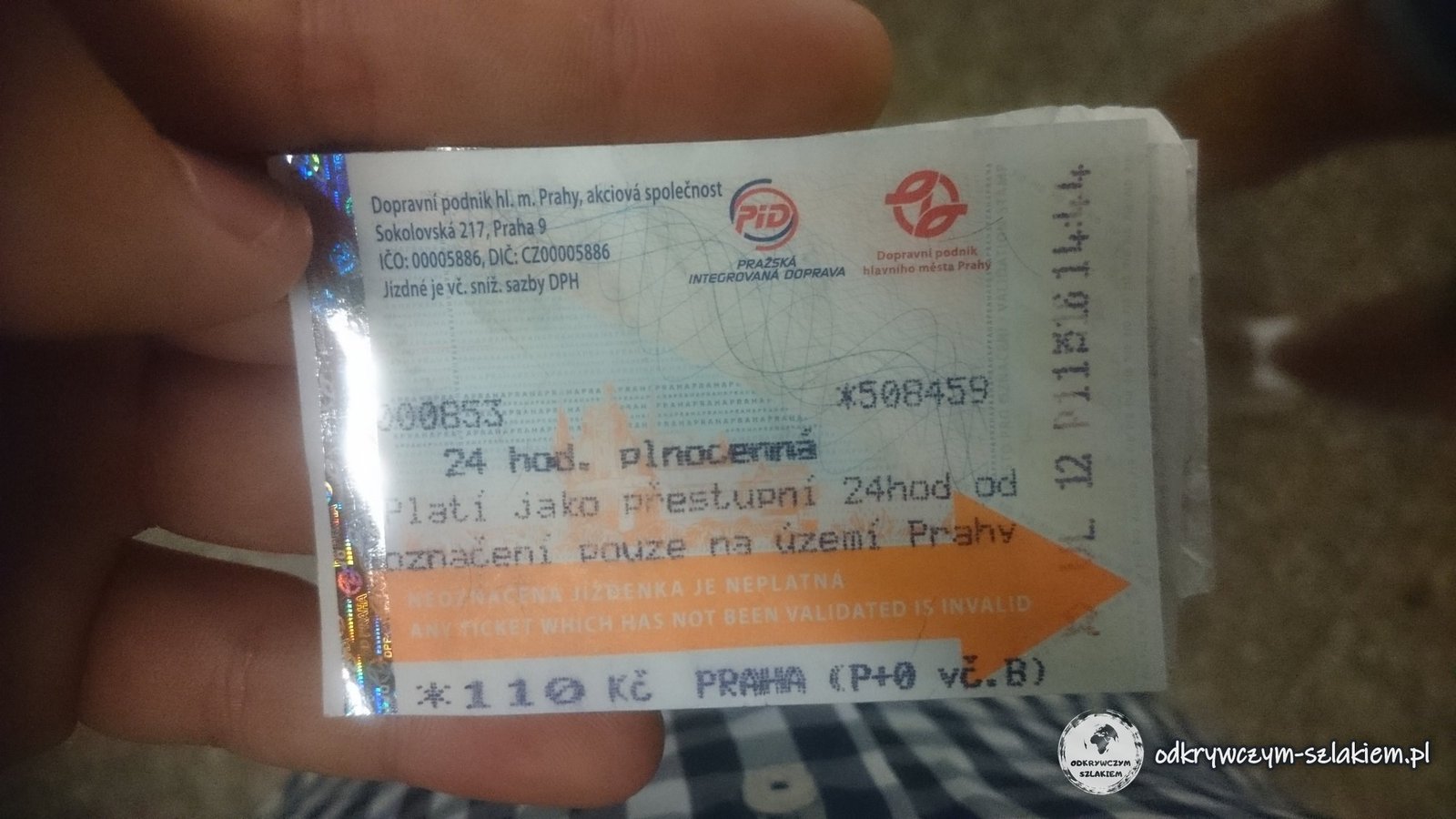
- Public transport in Prague: a 24-hour PID ticket cost 110 CZK in 2016. Since 1 January 2026 it costs 140 CZK in the PID Lítačka app and 150 CZK as a paper or SMS ticket. Within Prague (zones P, 0 and B) one bicycle travels free of charge as luggage with any PID ticket.
- Getting back by train: since December 2024 direct Baltic Express trains (line Ex32) run from Prague via Pardubice, Lichkov and Kłodzko to Wrocław (and on to Gdynia) – four pairs a day, with carriages for bikes. The journey to Wrocław takes just under 4 hours.
- Škoda Muzeum: the museum in Mladá Boleslav is housed in one of the oldest factory buildings, near the bus station.
- More: I described other bike trips in my posts Karlskrona by bike, Brandenburg by bike and By bike to the Rapa Pyramid, and Prague in 2025 in the post Prague – what to see in 2 days.
Photo gallery