Poznań is the capital of Greater Poland (Wielkopolska) and one of the oldest Polish cities. Between 2021 and 2026 I came here several times – among other things to visit Artur, for Lech matches and passing through on the way west. From those visits I have put together a weekend plan: the Old Market Square with the town hall and its goats, the Fara church, Freedom Square, the Games and Computers Museum, the Citadel with its museums and war cemeteries, Sołacki Park, the Poznań Palm House and the stadium on Bułgarska Street. At the end of the post you will find practical information and a two-day plan.
Table of contents
- Old Market Square – the town hall, the goats and the Fara
- Freedom Square and the Freedom Fountain
- The Poznań Museum of Games and Computers
- The Citadel – the park and military museums
- The Citadel – cemeteries, the Peace Bell and The Unrecognised
- Sołacz and Winogrady – Sołacki Park and the view from the Ferris wheel
- The Poznań Palm House
- A Lech match at the stadium on Bułgarska Street
- Practical information and a weekend plan
Old Market Square – the town hall, the goats and the Fara
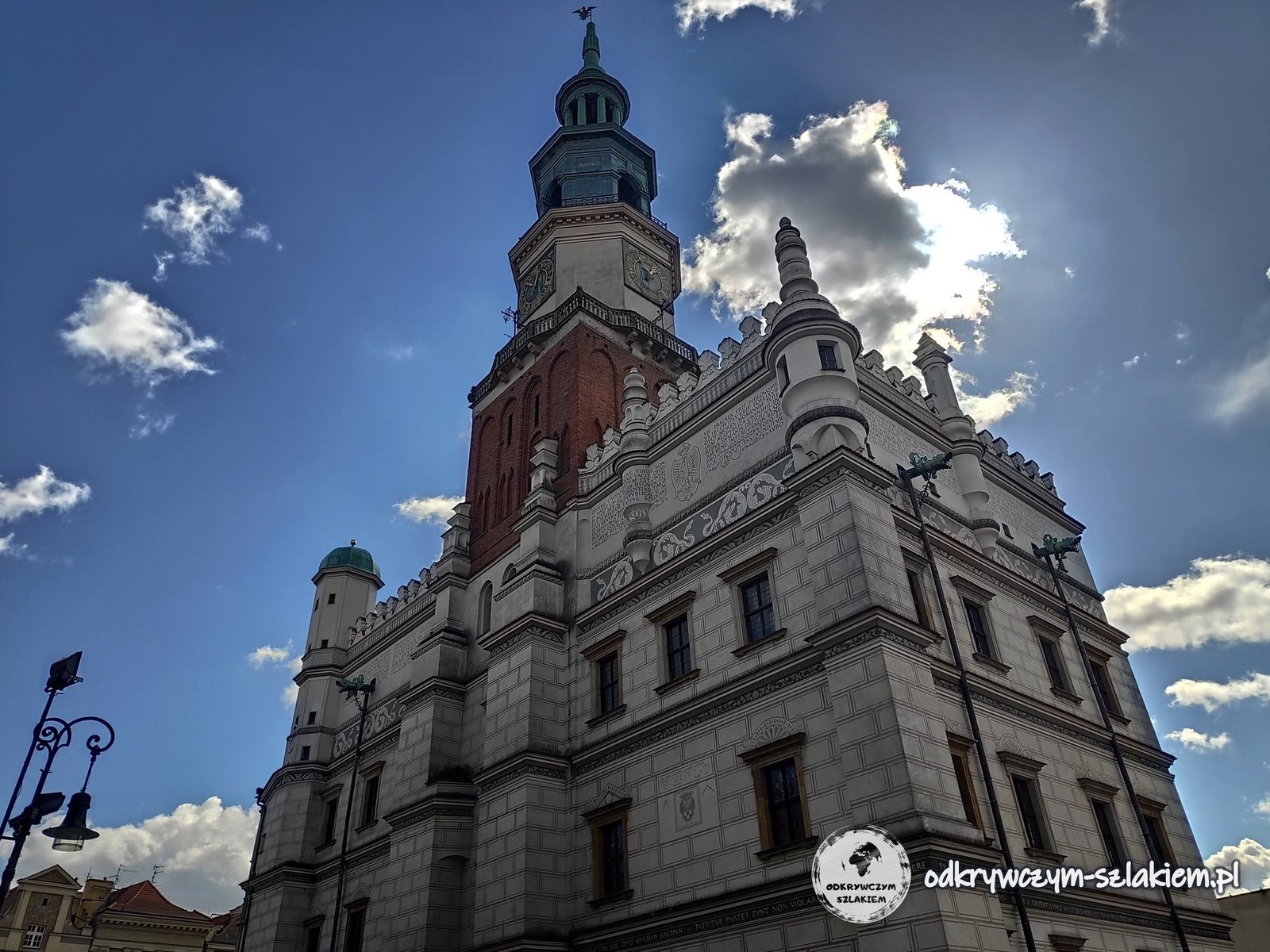
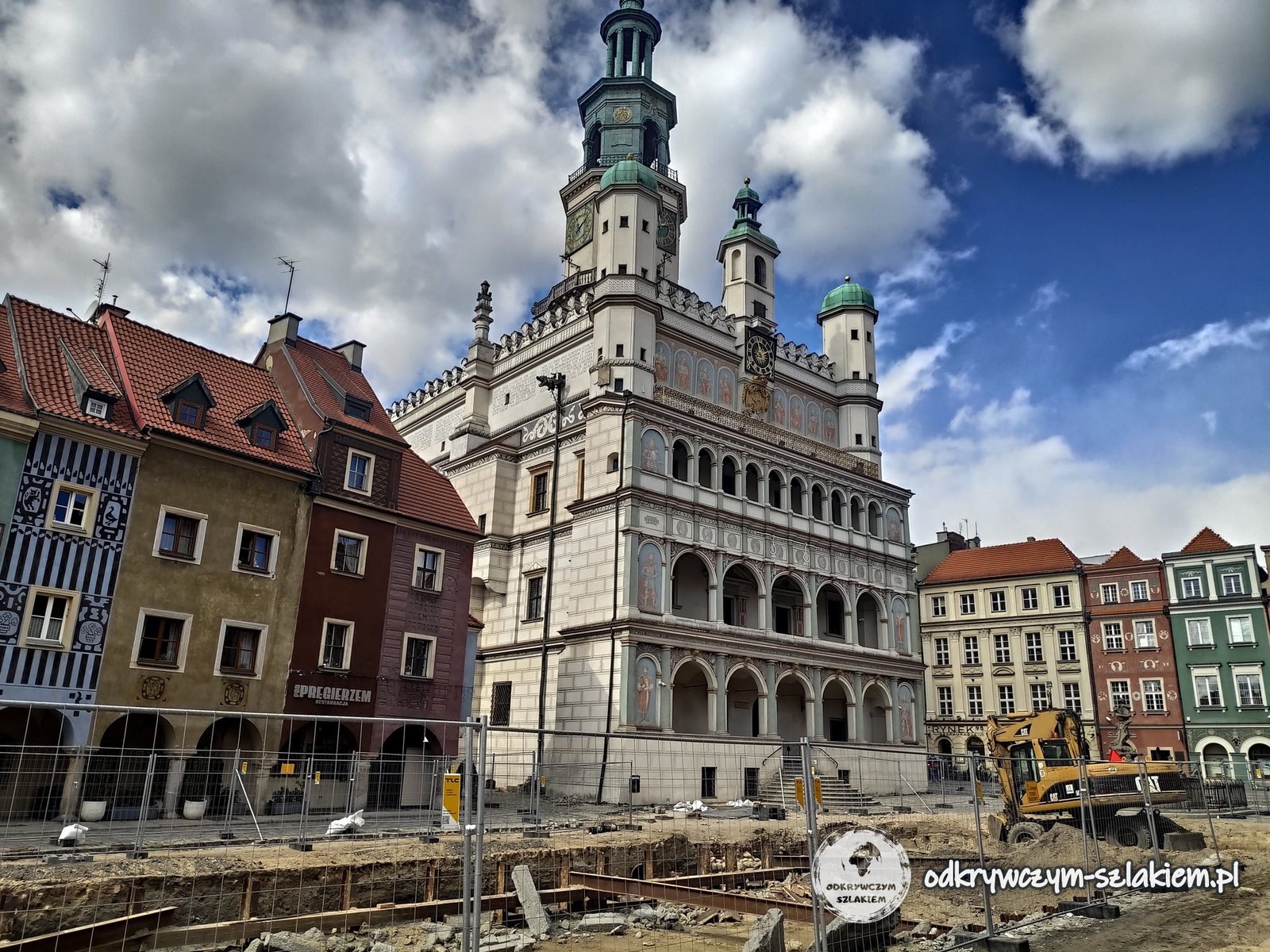
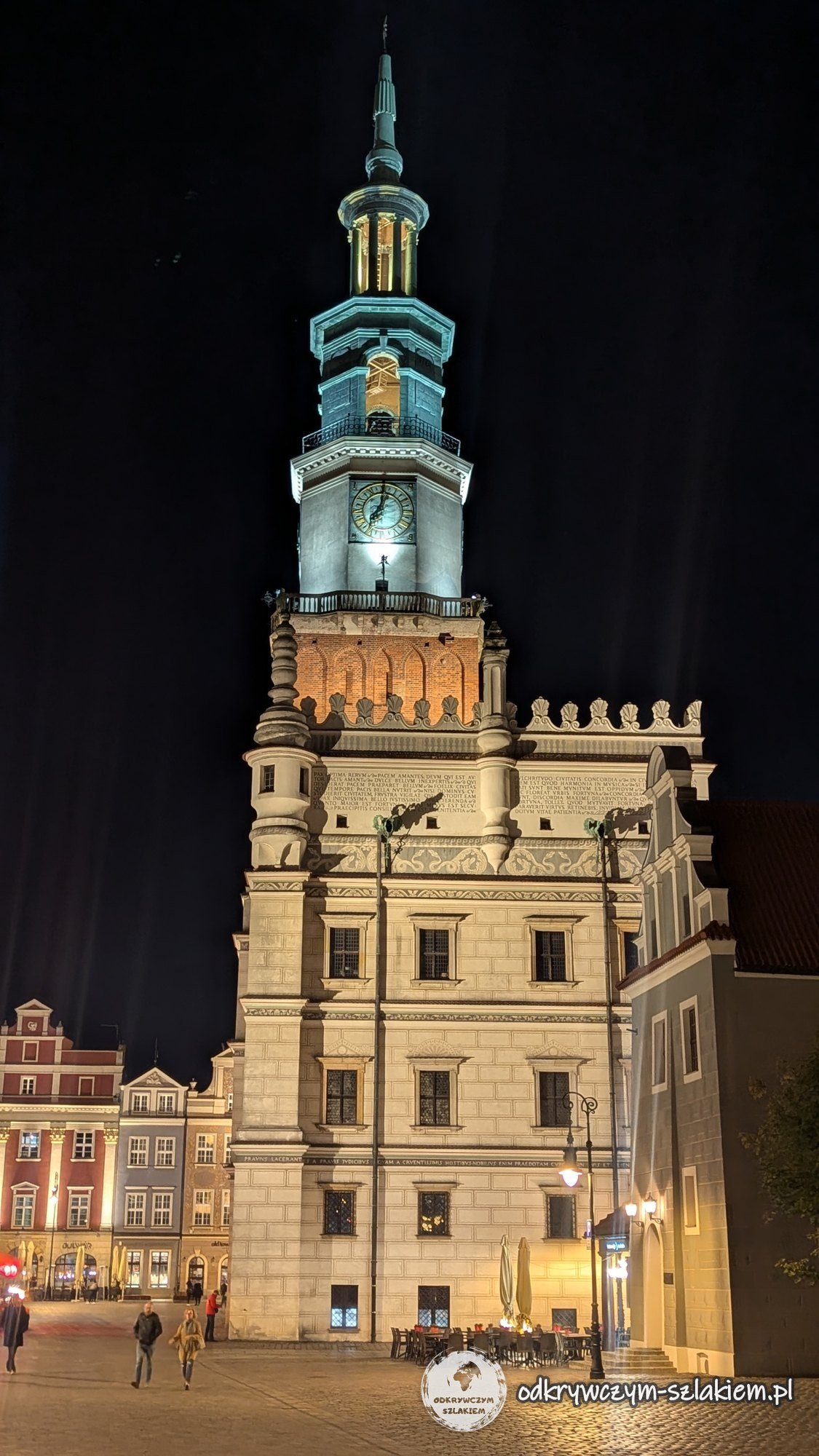
The heart of the city is the Old Market Square (Stary Rynek), with the town hall in the middle. The originally Gothic building was remodelled in the 1550s by the architect Giovanni Battista Quadro from Lugano – hence the Renaissance loggia and attic. Today the town hall houses the Museum of Poznań. Every day at 12:00 two mechanical goats come out above the clock on the tower and butt their horns – the best-known symbol of Poznań.
In April 2022 the square was dug up – a major renovation was under way. In front of the town hall stand the colourful, narrow merchants’ houses (domki budnicze) with arcades, once the stalls of traders.
By October 2024 the renovation of the square was finished. In the evening the illuminated town hall looked completely different than during the day.
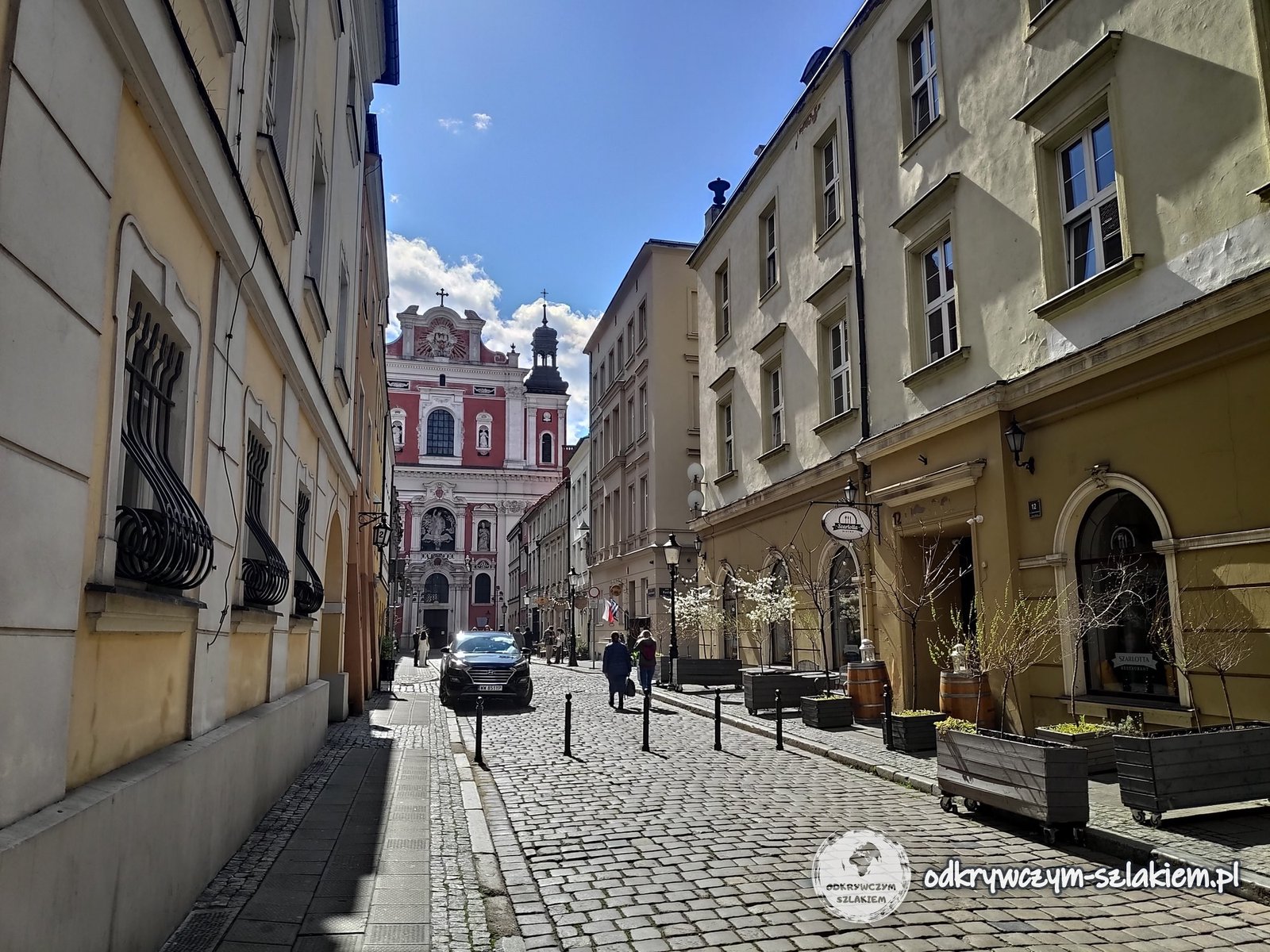
From the square, Świętosławska Street leads to the Fara, the Baroque Collegiate Basilica of Our Lady of Perpetual Help. The Jesuits built the church in 1651–1701, and its pink façade closes the view at the end of the narrow street.
Freedom Square and the Freedom Fountain
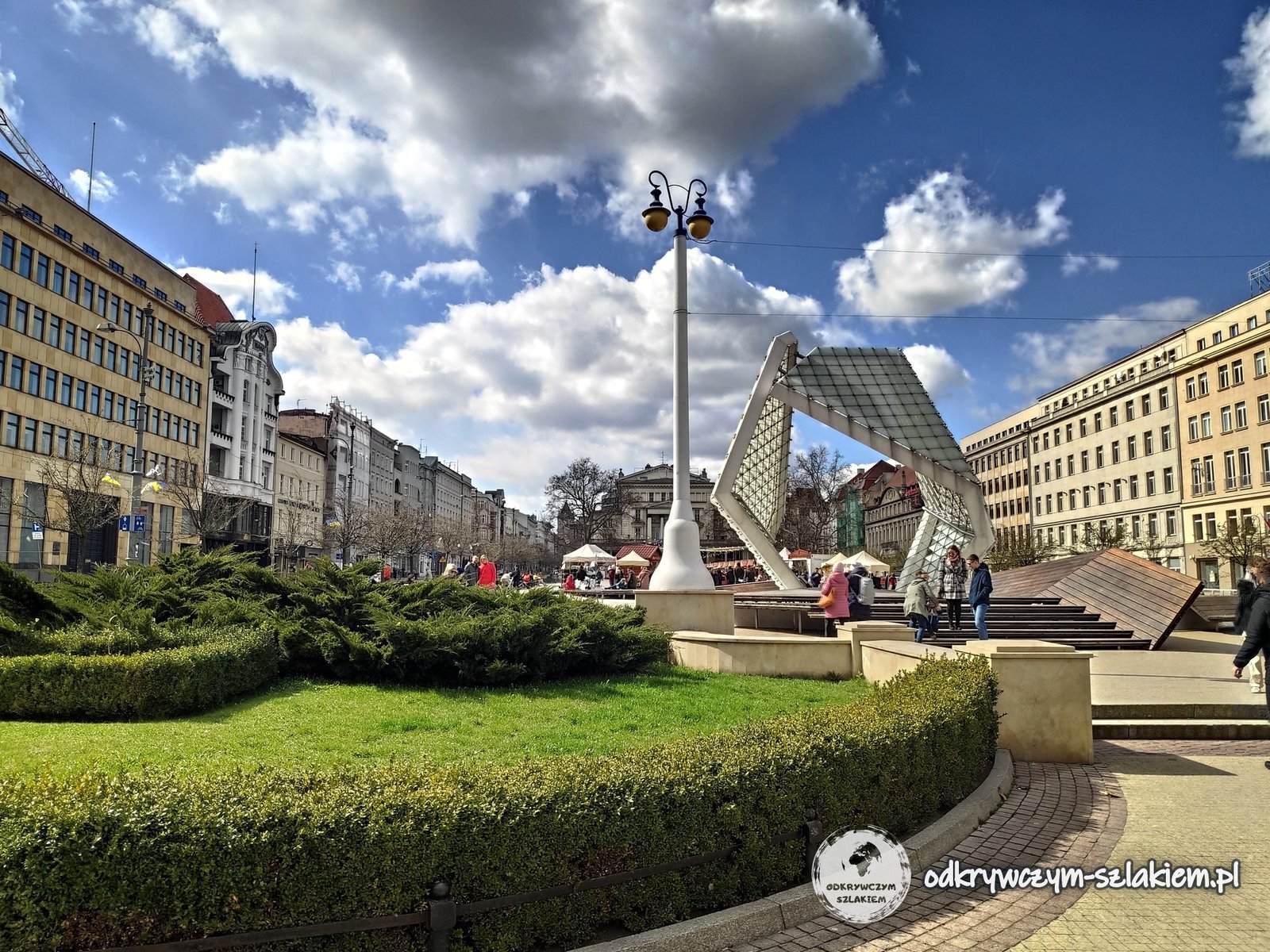
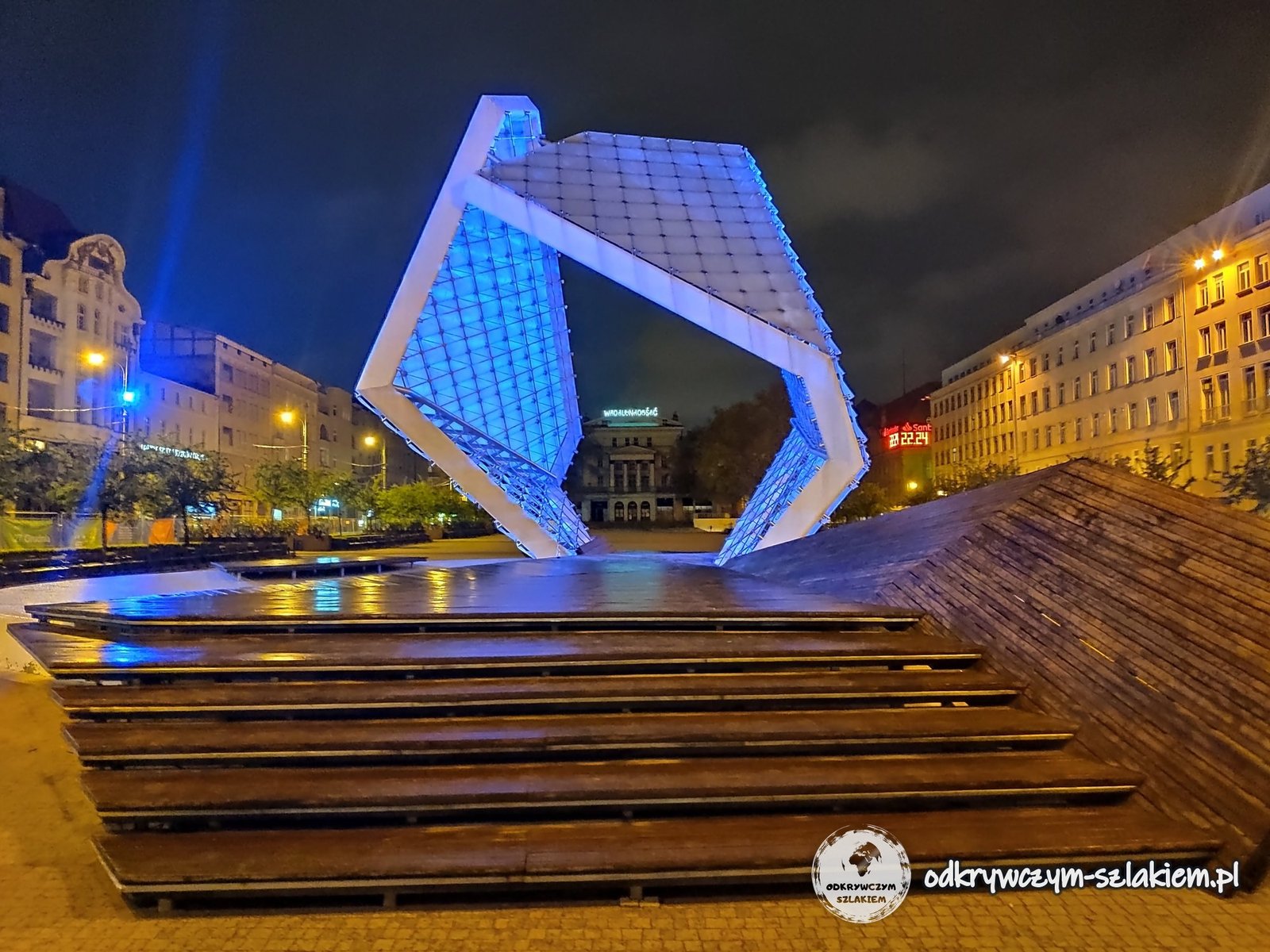
A few minutes west of the Old Market Square lies Freedom Square (plac Wolności), lined with town houses and buildings from the 19th and early 20th centuries. Its most distinctive feature is the Freedom Fountain from 2012 – a geometric structure with two 10-metre glass wings. It was designed by the architect Agnieszka Stochaj and the sculptor Rafał Nowak. In the evening the fountain is lit in changing colours – in May 2023 it glowed orange, green and blue.
The Poznań Museum of Games and Computers
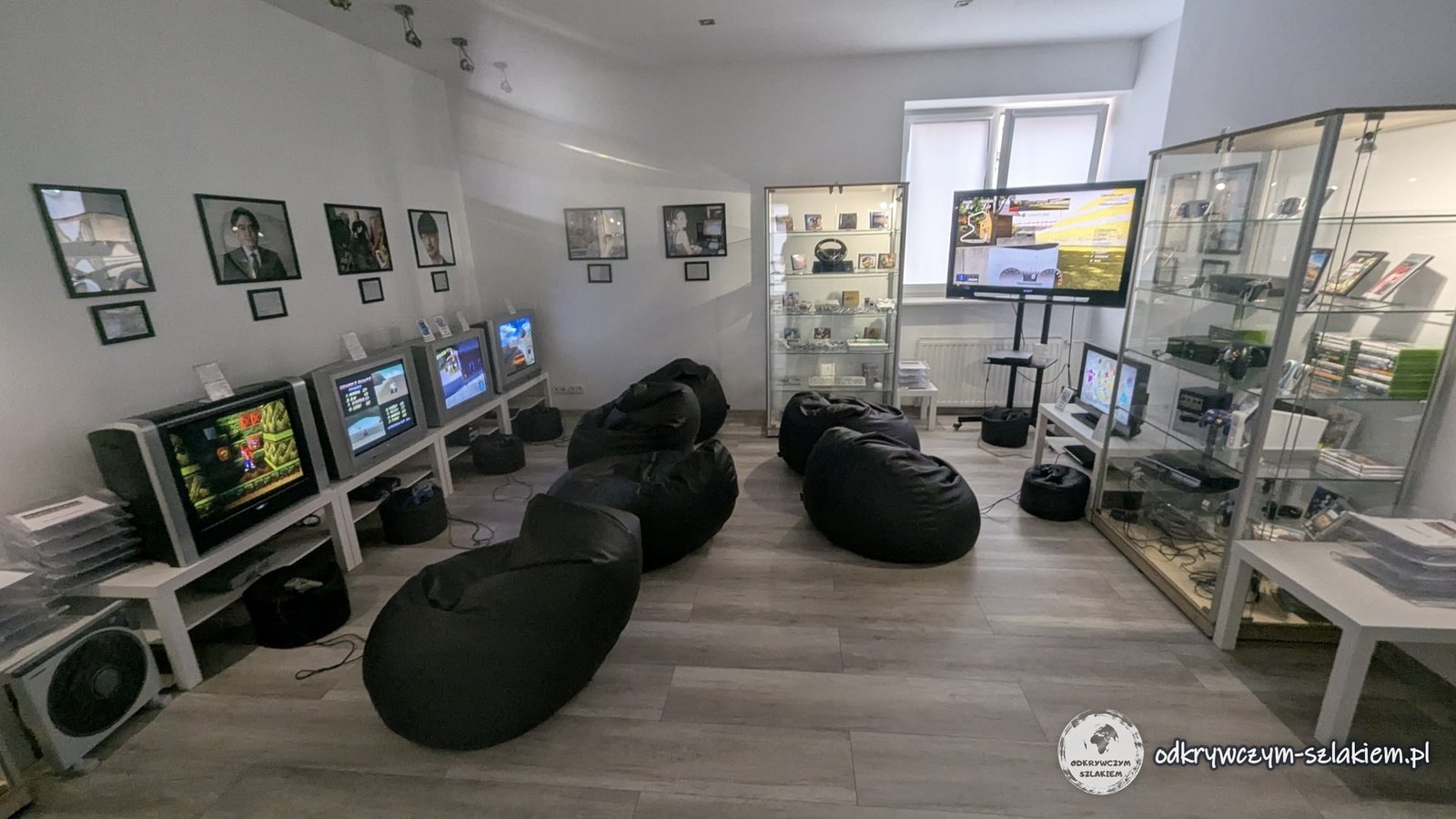
On Sunday 16 August 2026 I visited the Poznań Museum of Games and Computers (Poznańskie Muzeum Gier i Komputerów) at Półwiejska 45, on the first floor – a few steps from the Stary Browar centre. The museum has four rooms, and running through all of them is the “Wall of Legends” – 60 metres of gaming and computer history. There are hundreds of exhibits, and more than 40 of them are interactive – you can sit down and play.
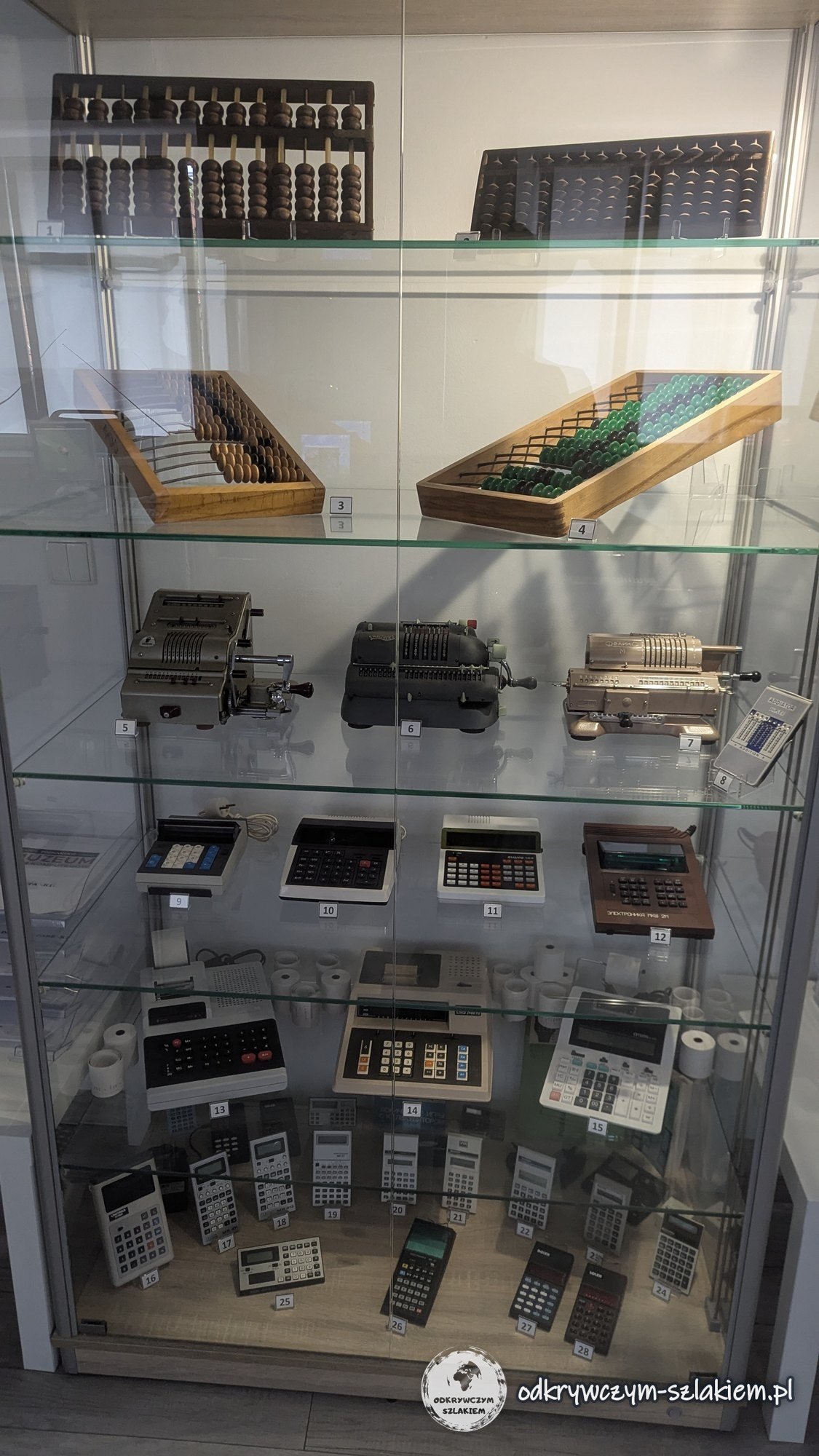
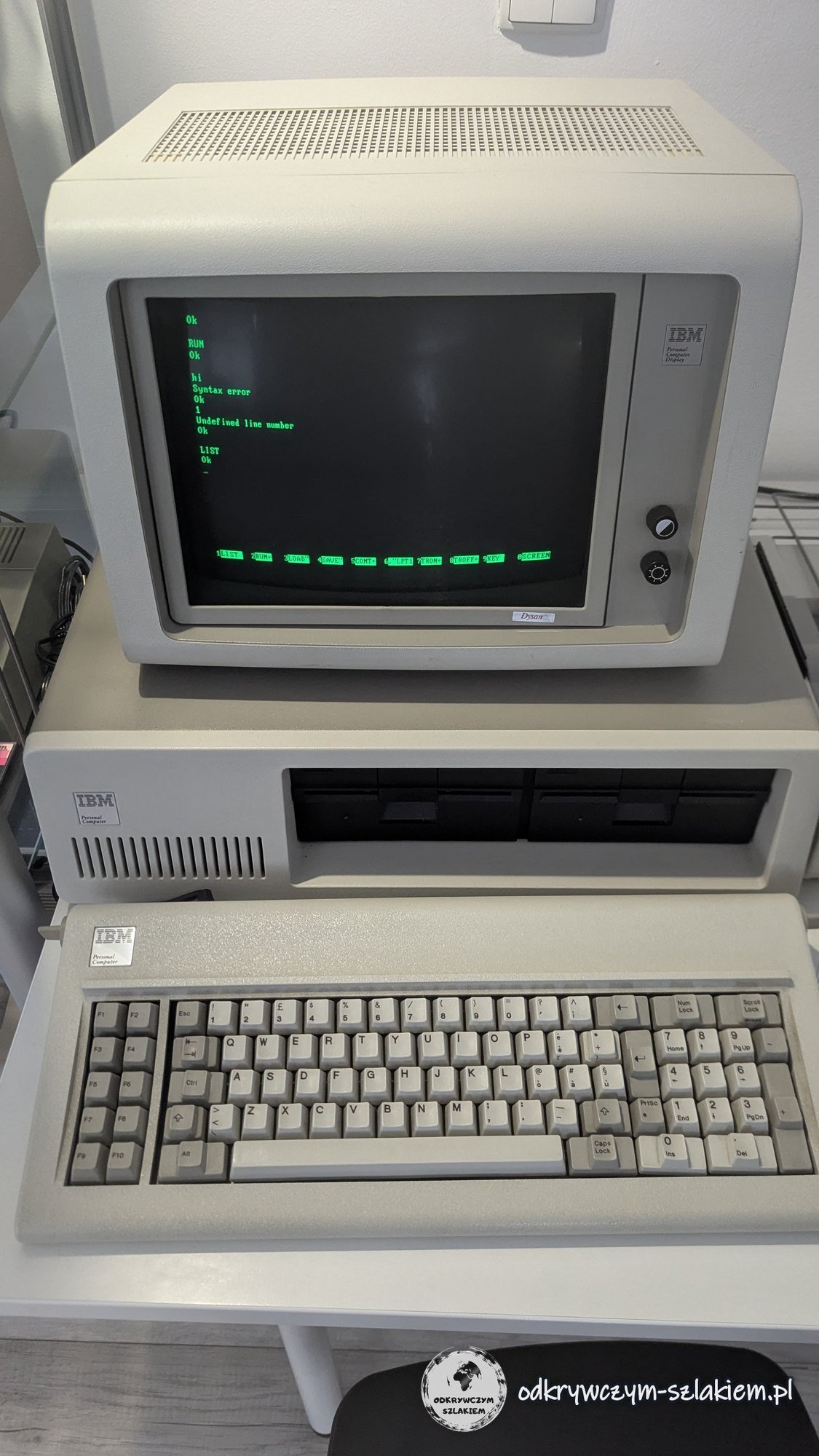
The first room covers the history of counting and writing – from wooden abacuses and mechanical calculators to the first pocket calculators and typewriters. There is also an IBM PC, which the museum presents as the first personal computer – and it still works.
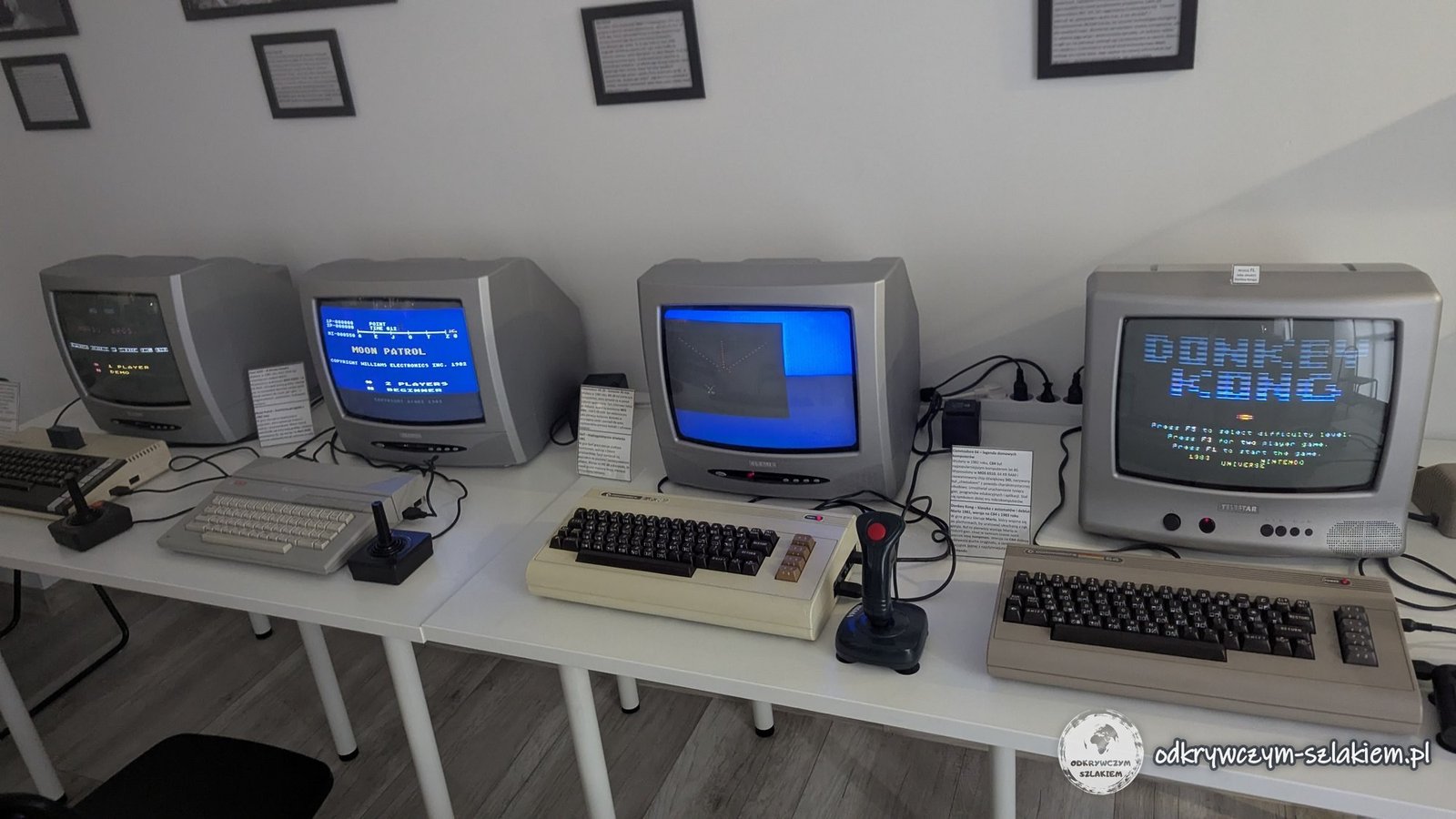
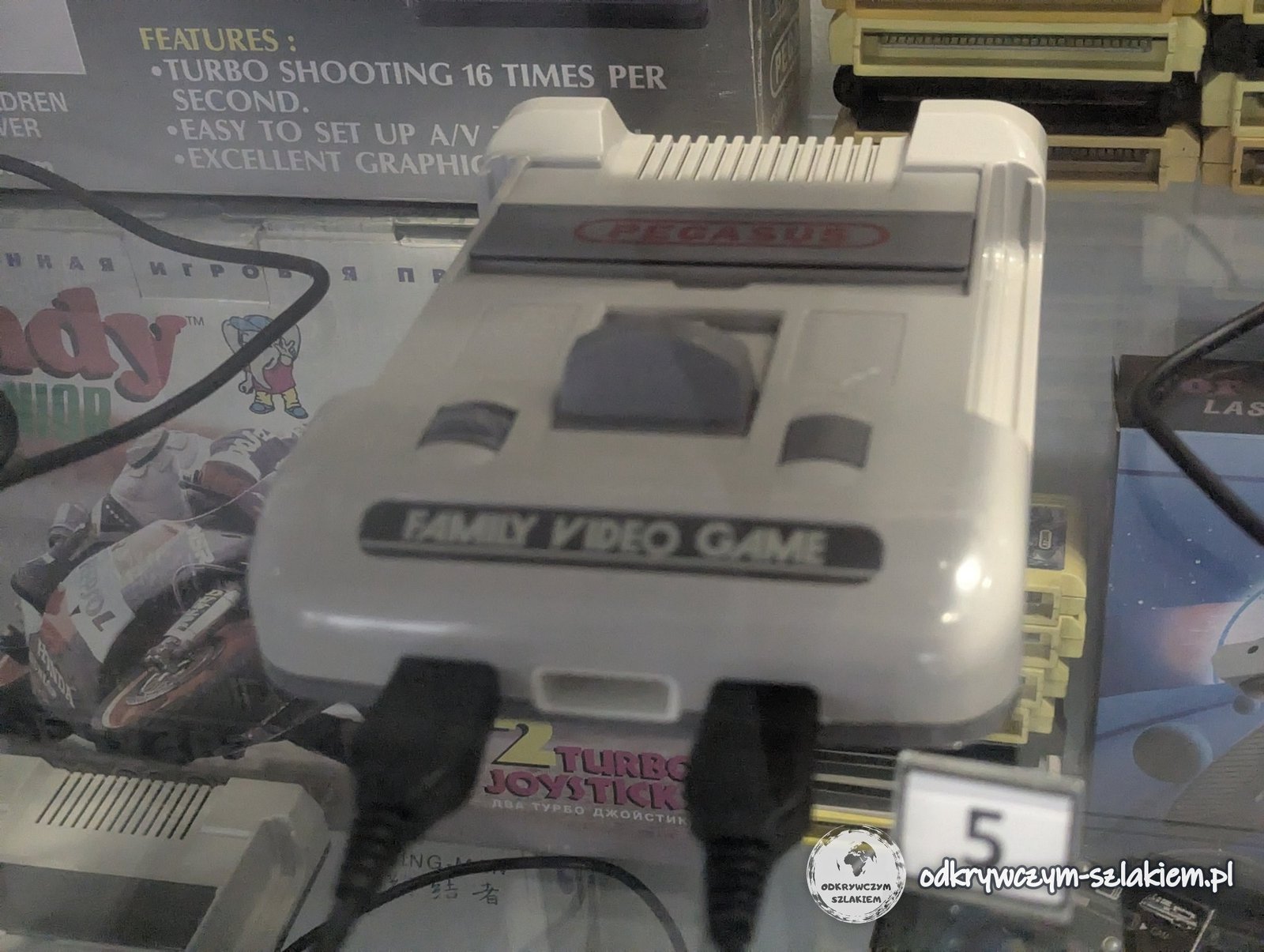
The next room holds consoles from the era of Pong and Pac-Man: among others the Atari 2600, NES, Super Nintendo and the Pegasus – a clone of the Japanese Famicom that was played in many Polish homes in the 1990s. Next to them stand 8-bit computers with joysticks, running classic games such as Donkey Kong.
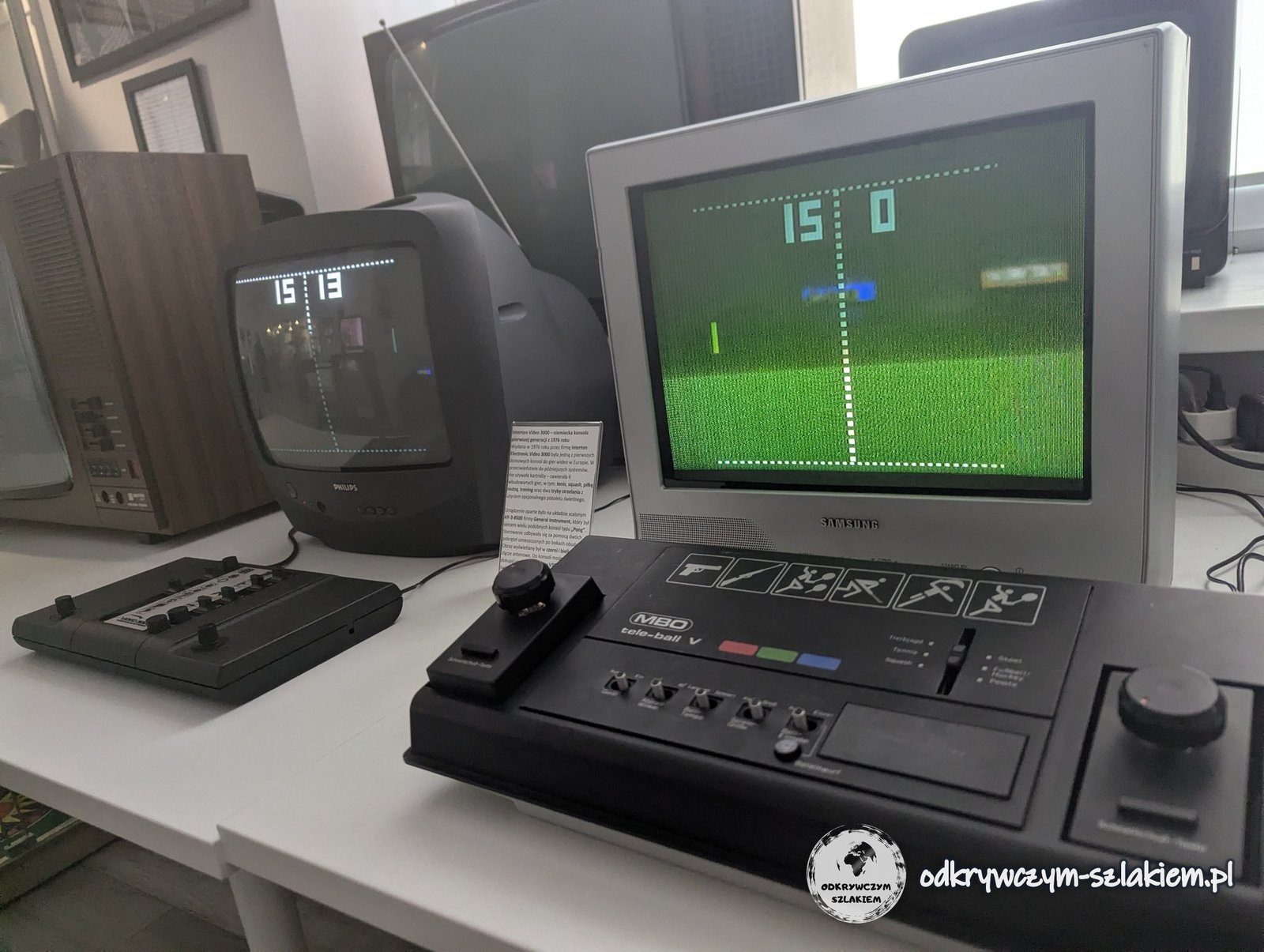
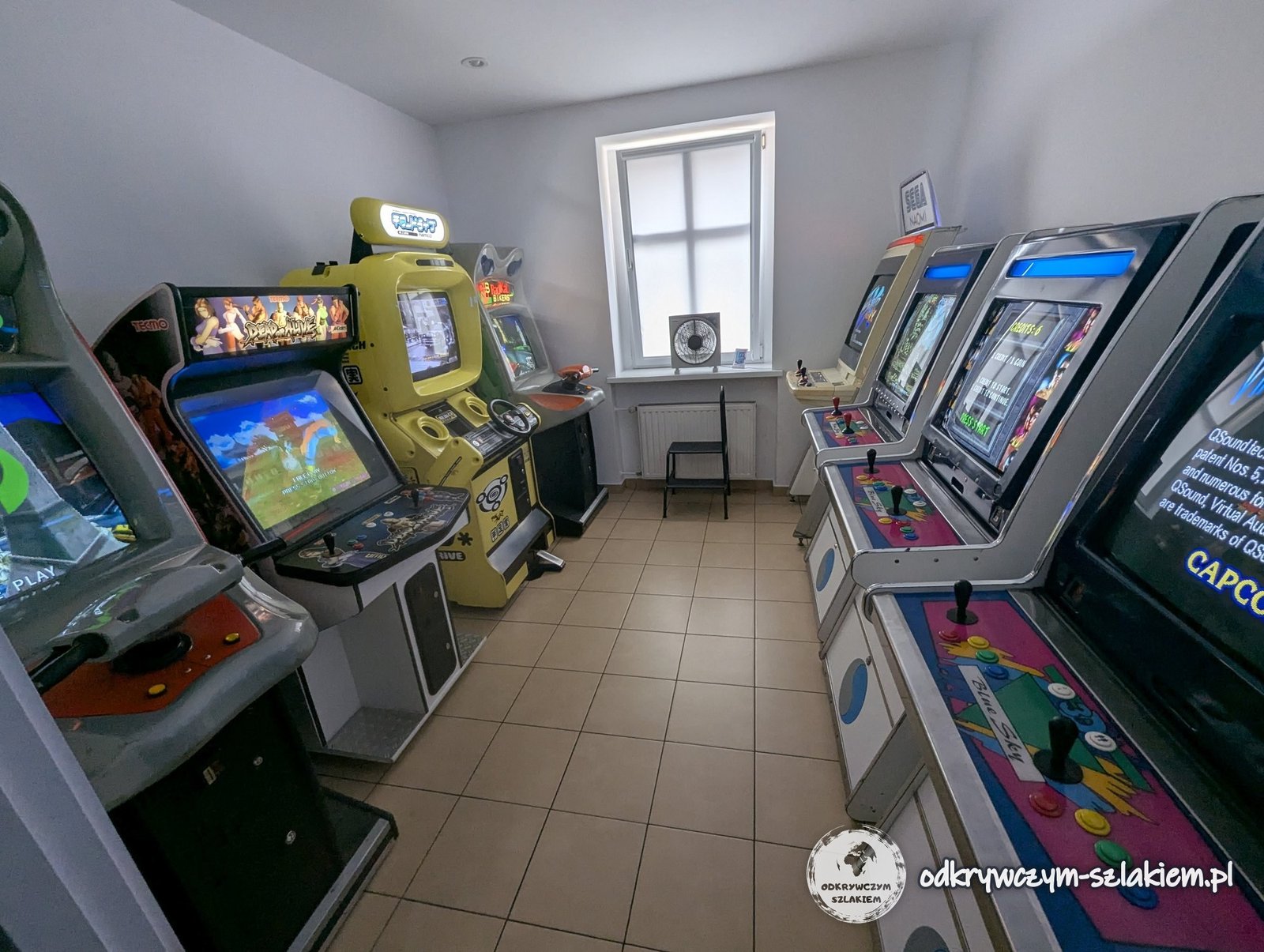
The third room is the era of 3D games – the PlayStation, Sega Dreamcast and PlayStation 2, with games on CDs and DVDs. The last one has 9 classic arcade machines, like those in the old arcades.
The Citadel – the park and military museums
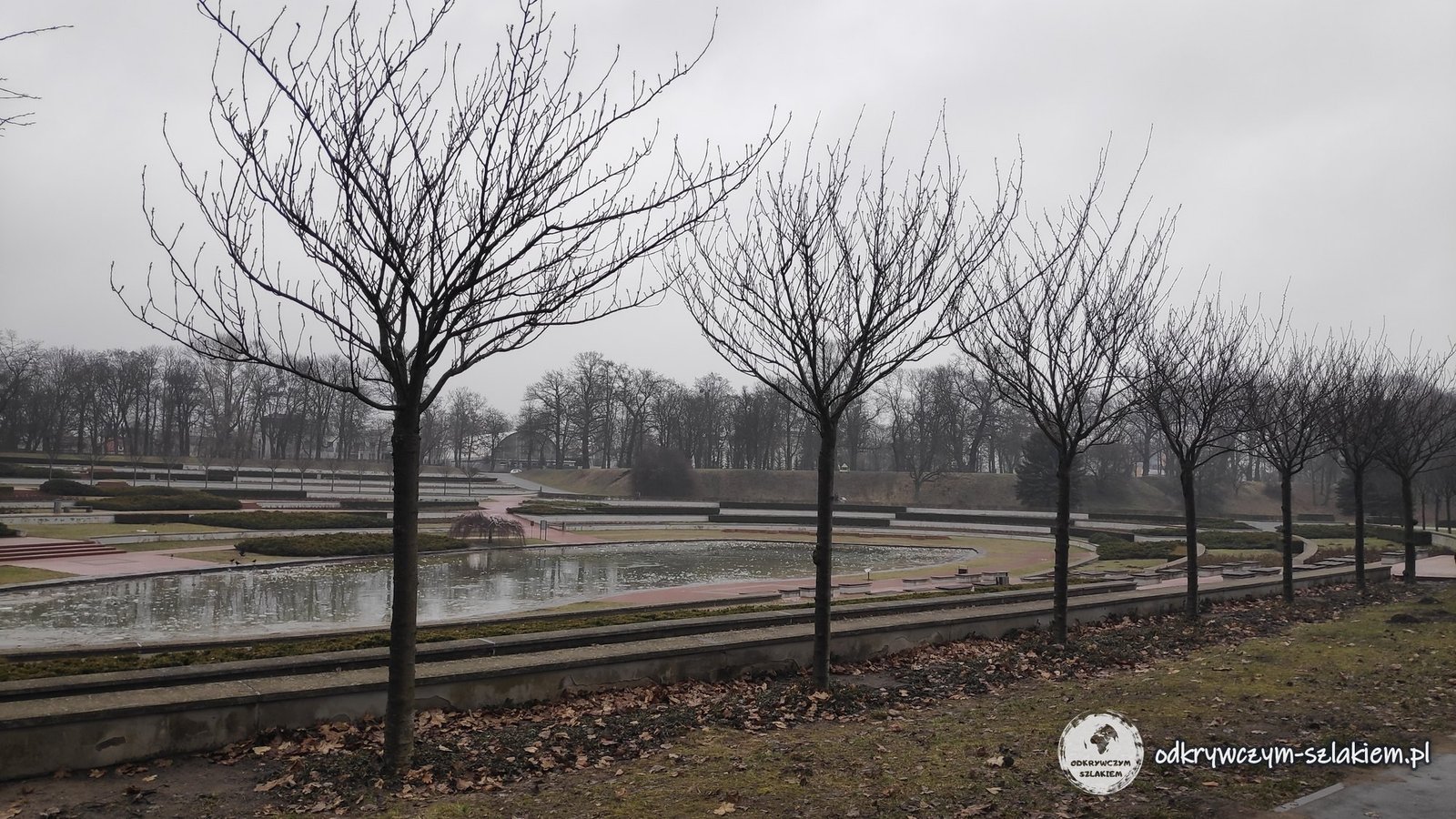
About 1.5 km north of the Old Market Square, on Winiary Hill, lies the Citadel (Cytadela). In the 1830s the Prussians built Fort Winiary here, the main stronghold of the Poznań Fortress. In February 1945 it was the Germans’ last point of resistance in the Battle of Poznań – the Red Army captured it on 23 February 1945. After the war much of the ruined fort was demolished, and in 1963–1970 a park was laid out in its place. It covers about 100 hectares, is the largest park in Poznań and has been a Monument of History since 2008. In February 2023 I spent a whole afternoon here. At the northern edge of the park there is a rose garden – terraces with a pond.
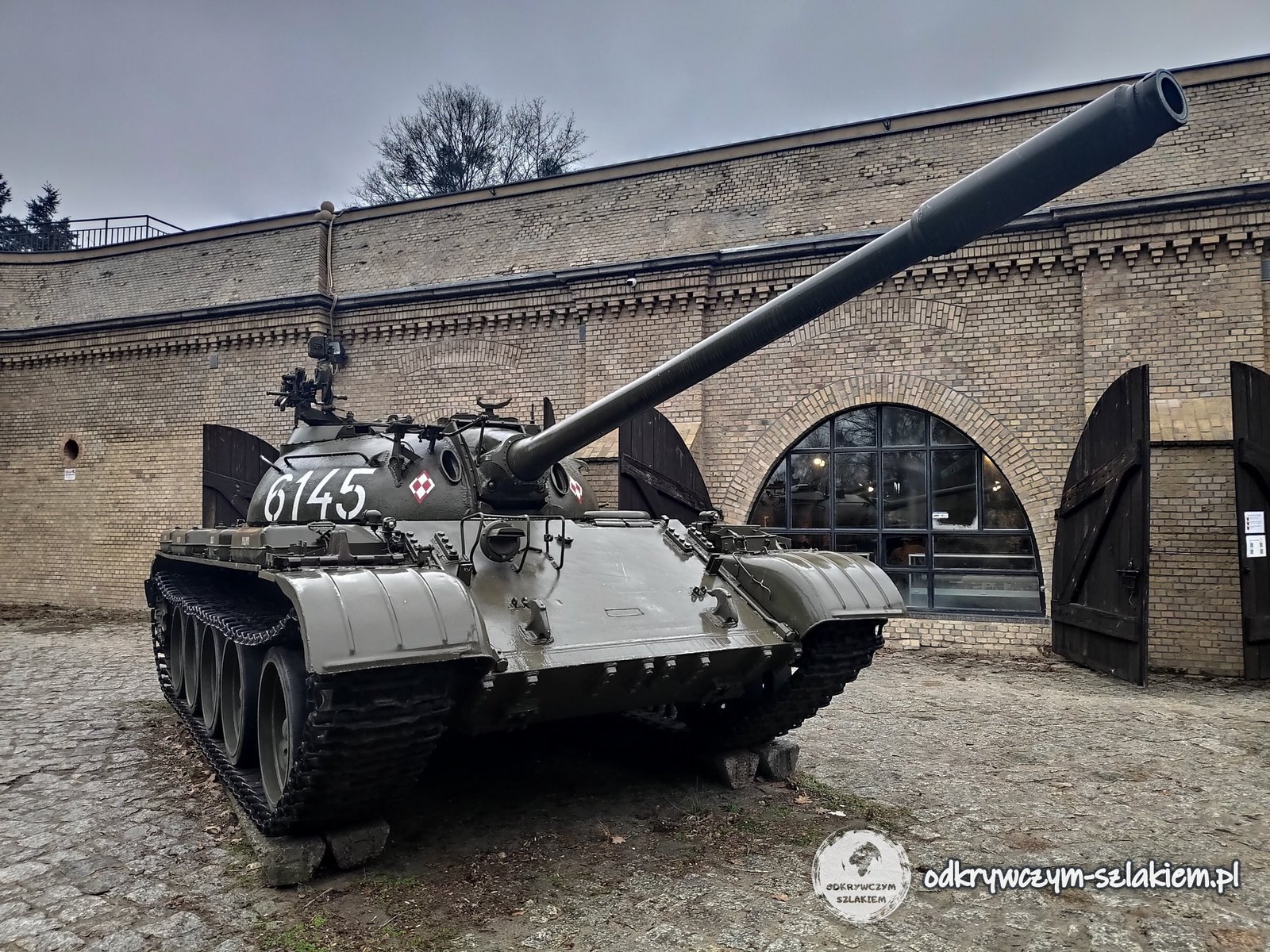
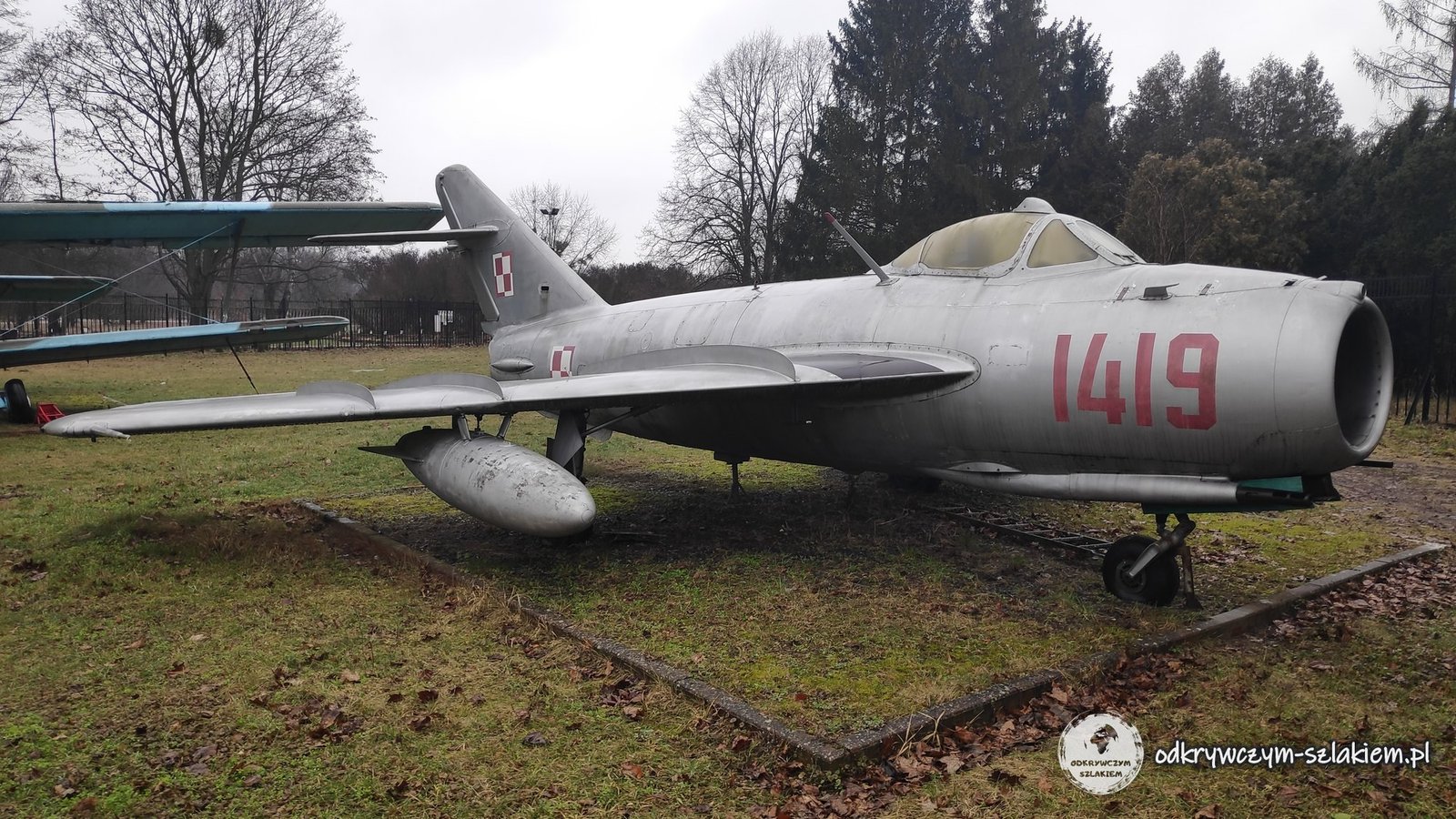
The brick buildings of the former fortress house the Armaments Museum (Muzeum Uzbrojenia), a branch of the Greater Poland Museum of Independence. In the courtyard and on the lawns stand tanks, guns, combat vehicles and aircraft from the Second World War and communist Poland – including a T-55 tank and a MiG-15 fighter in Polish Air Force markings.
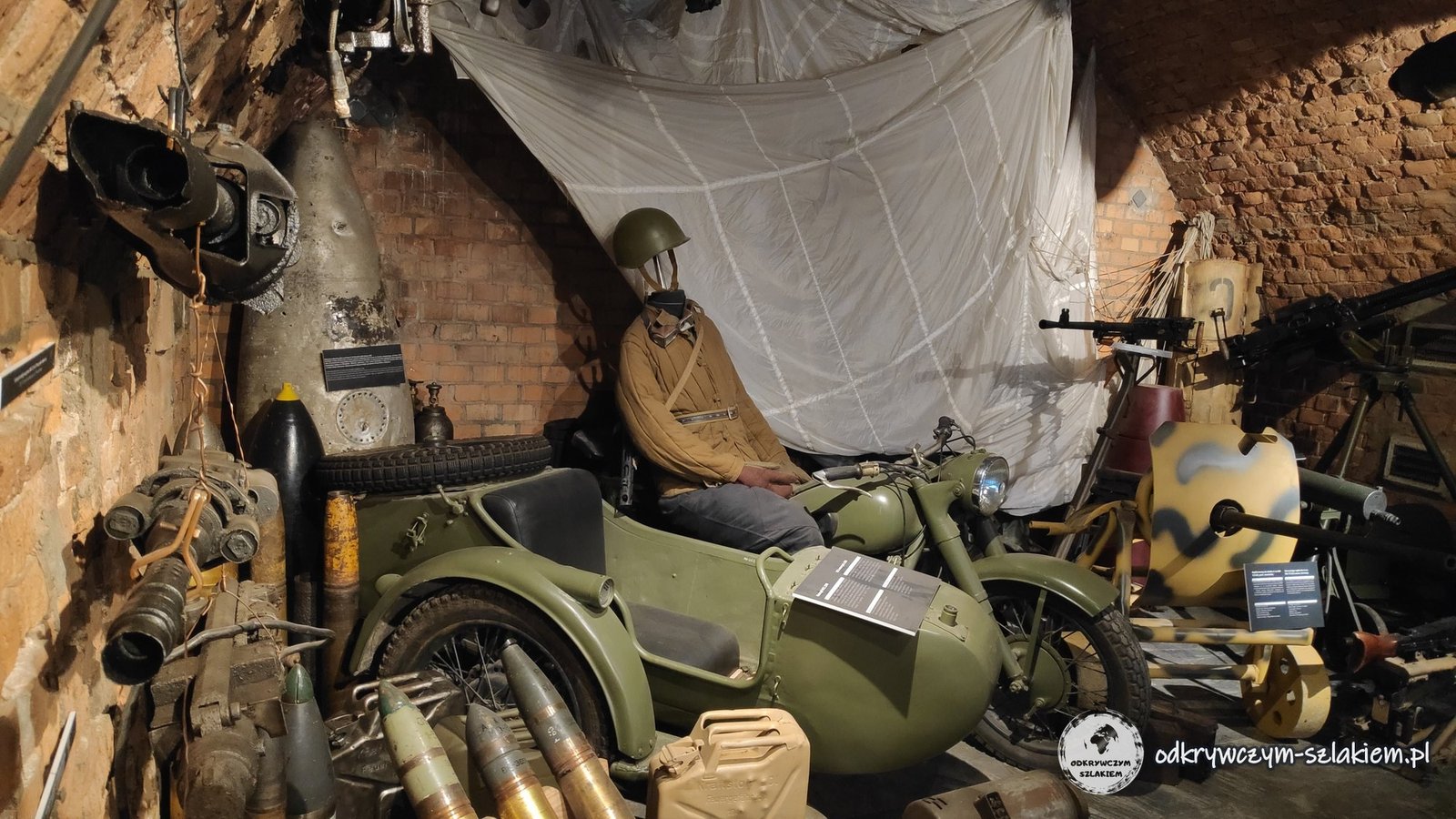
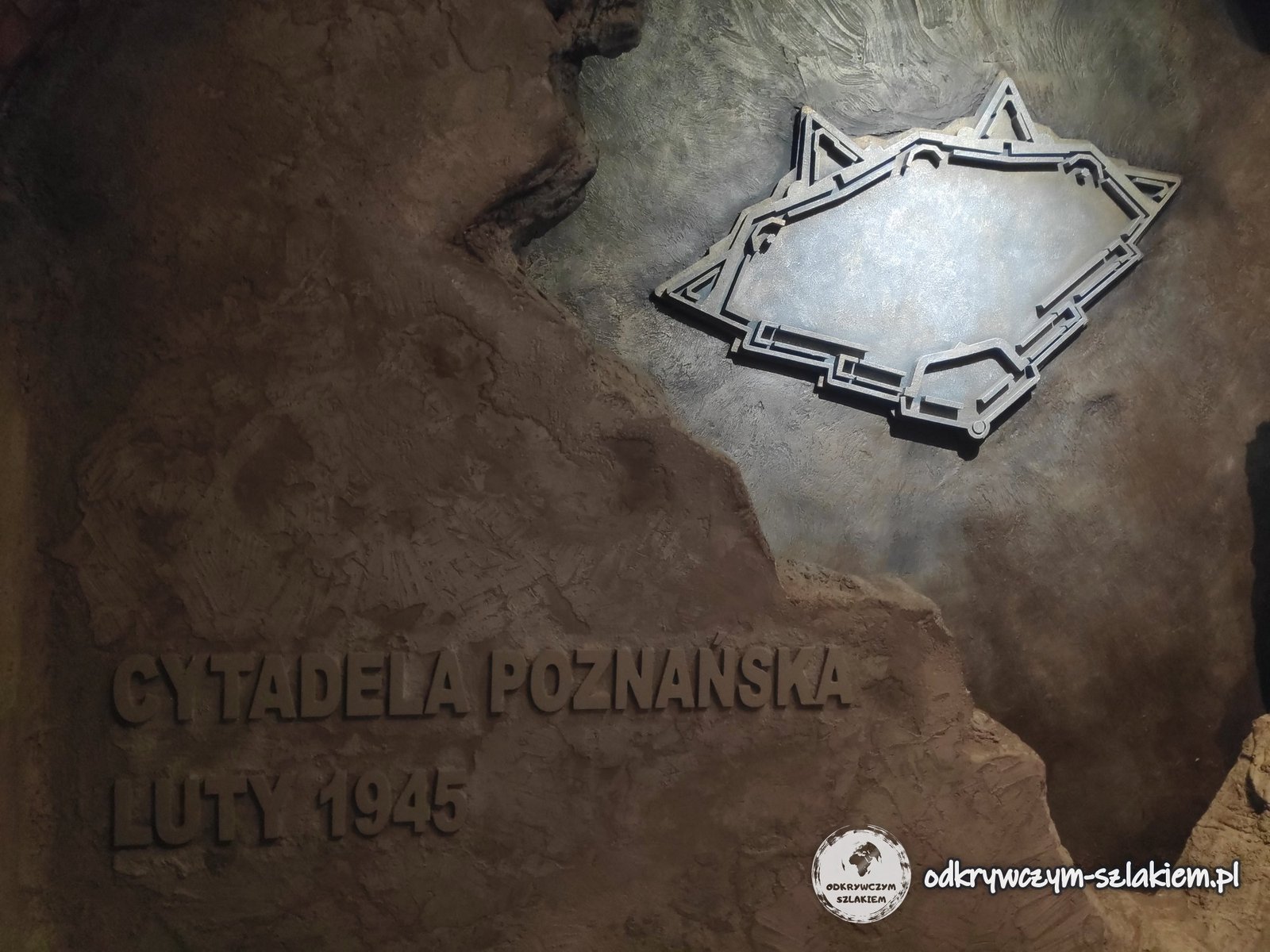
The vaulted brick rooms are filled with motorcycles, weapons and mannequins in uniform. On one of the walls there is a relief with the plan of the fort and the inscription “Cytadela Poznańska – luty 1945” (Poznań Citadel – February 1945). The Armaments Museum ticket also covers the nearby “Poznań” Army Museum, devoted to one of the armies that defended Poland in 1939.
The Citadel – cemeteries, the Peace Bell and The Unrecognised
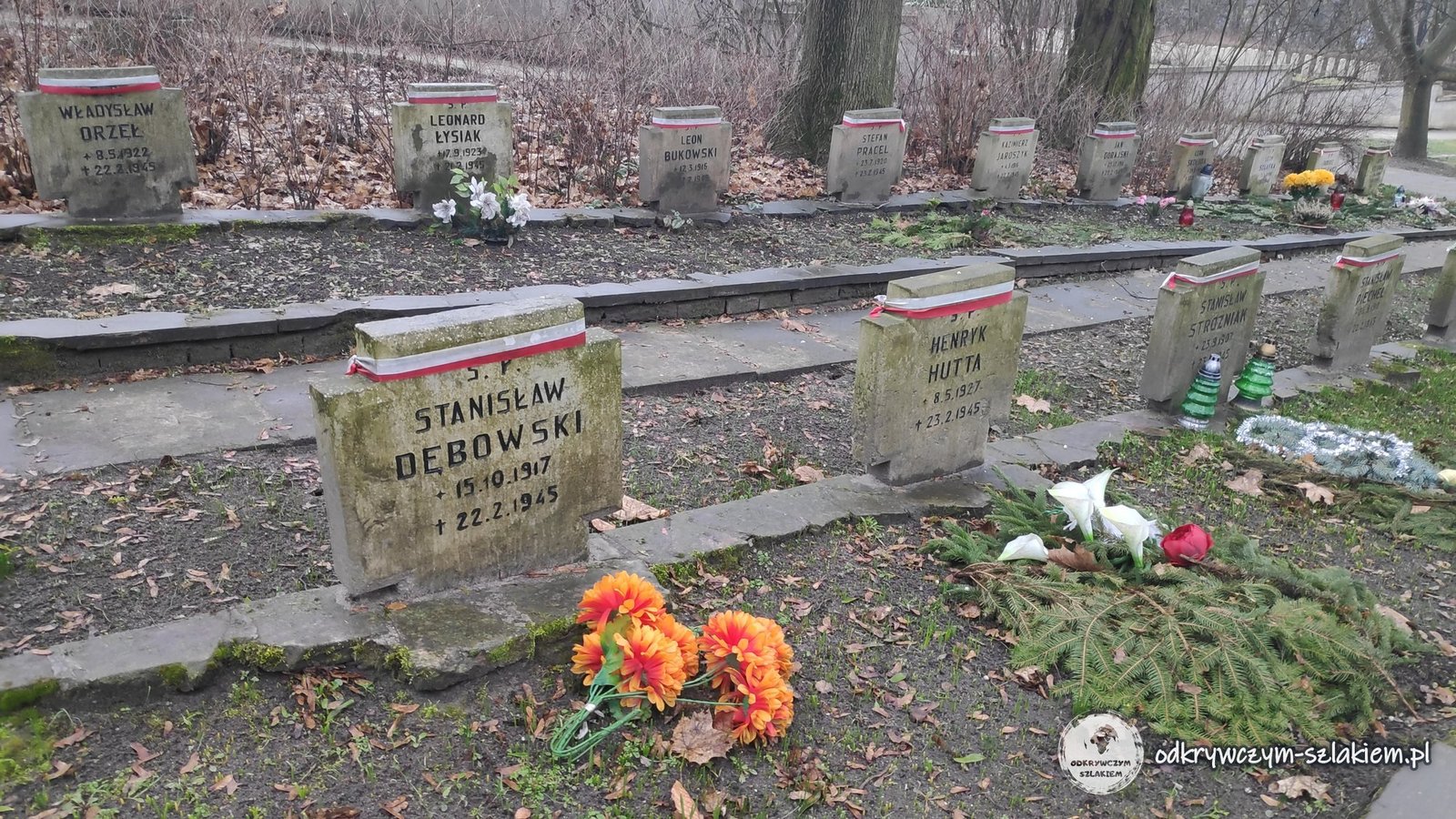
The south-western slopes of the Citadel are covered by war cemeteries: the Polish Heroes’ Cemetery, the garrison cemetery, the Commonwealth War Cemetery and the graves of Soviet soldiers. The Commonwealth cemetery holds, among others, the ashes of several dozen participants of the “Great Escape” from the POW camp in Żagań. In one of the plots lie soldiers killed in February 1945, during the fighting for the city.
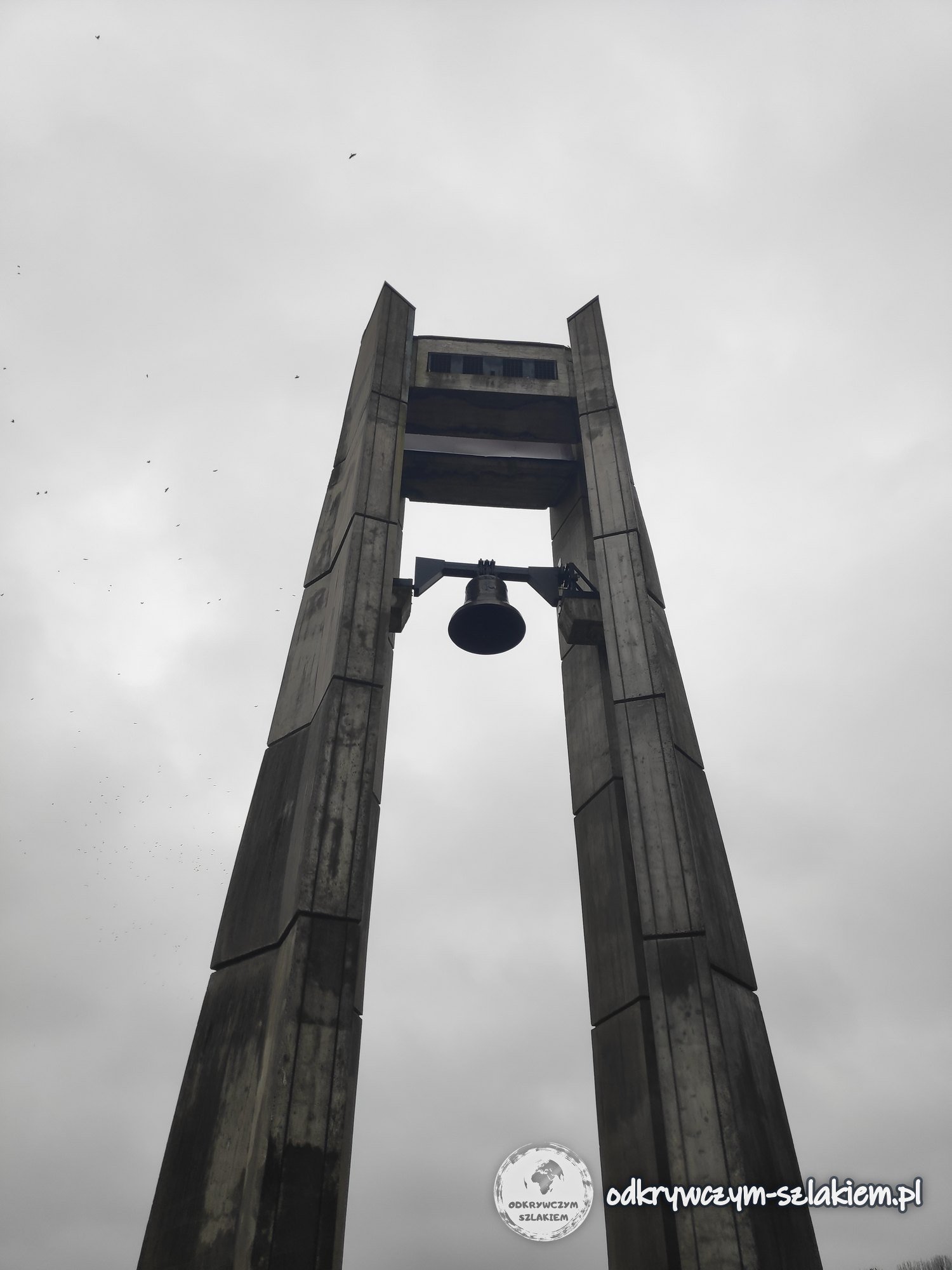
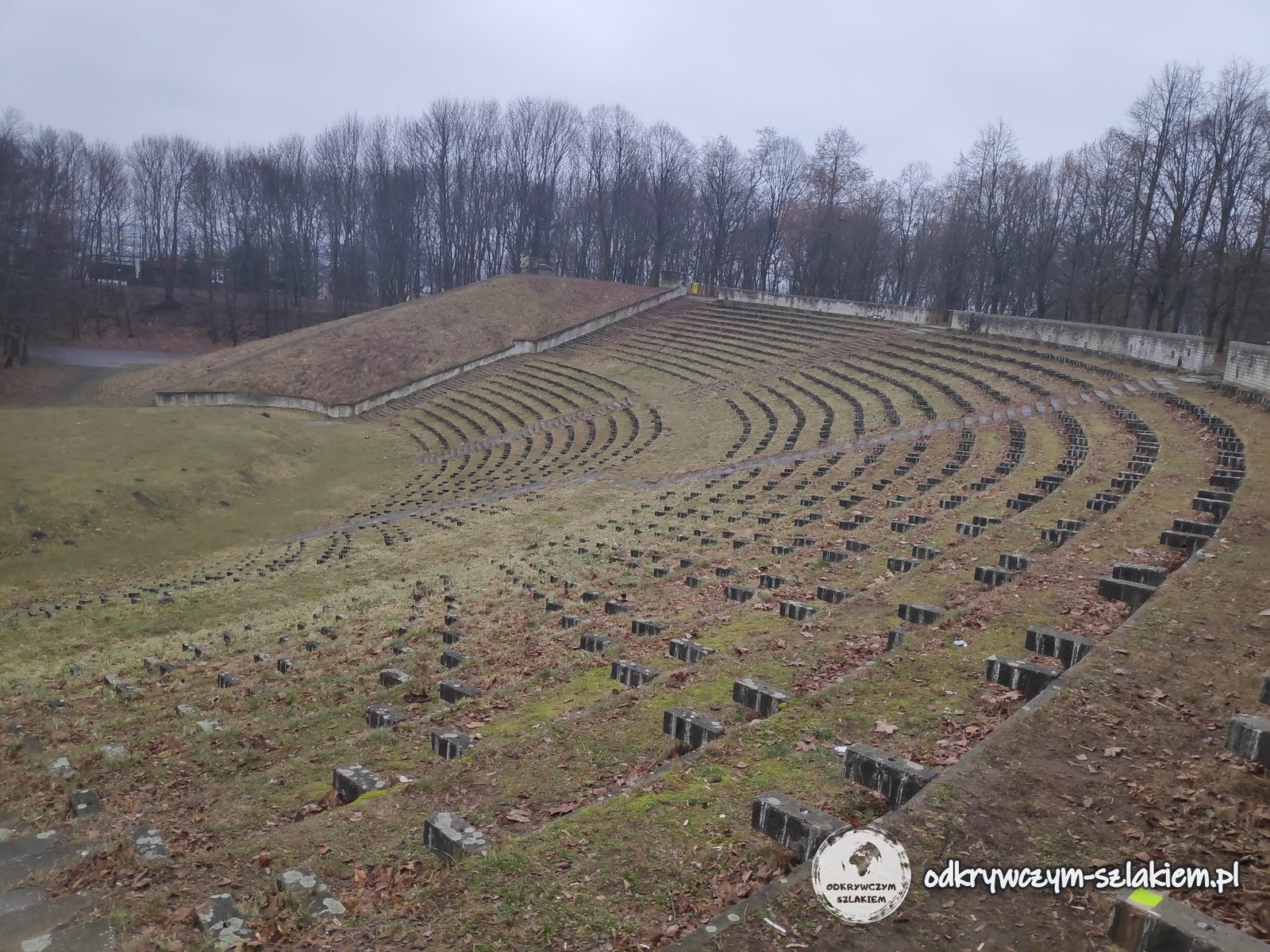
Near the cemeteries stands the Bell of Peace and Friendship Among Nations – a bell hung between two tall concrete pillars. In 2023, after Russia’s aggression against Ukraine, the anniversary ceremonies marking the end of the fighting for Poznań were moved here; before that they were held at the monument to Soviet soldiers. At the eastern end of the park, on the site of a former ravelin, there is a now disused amphitheatre with grassy rows of seats.
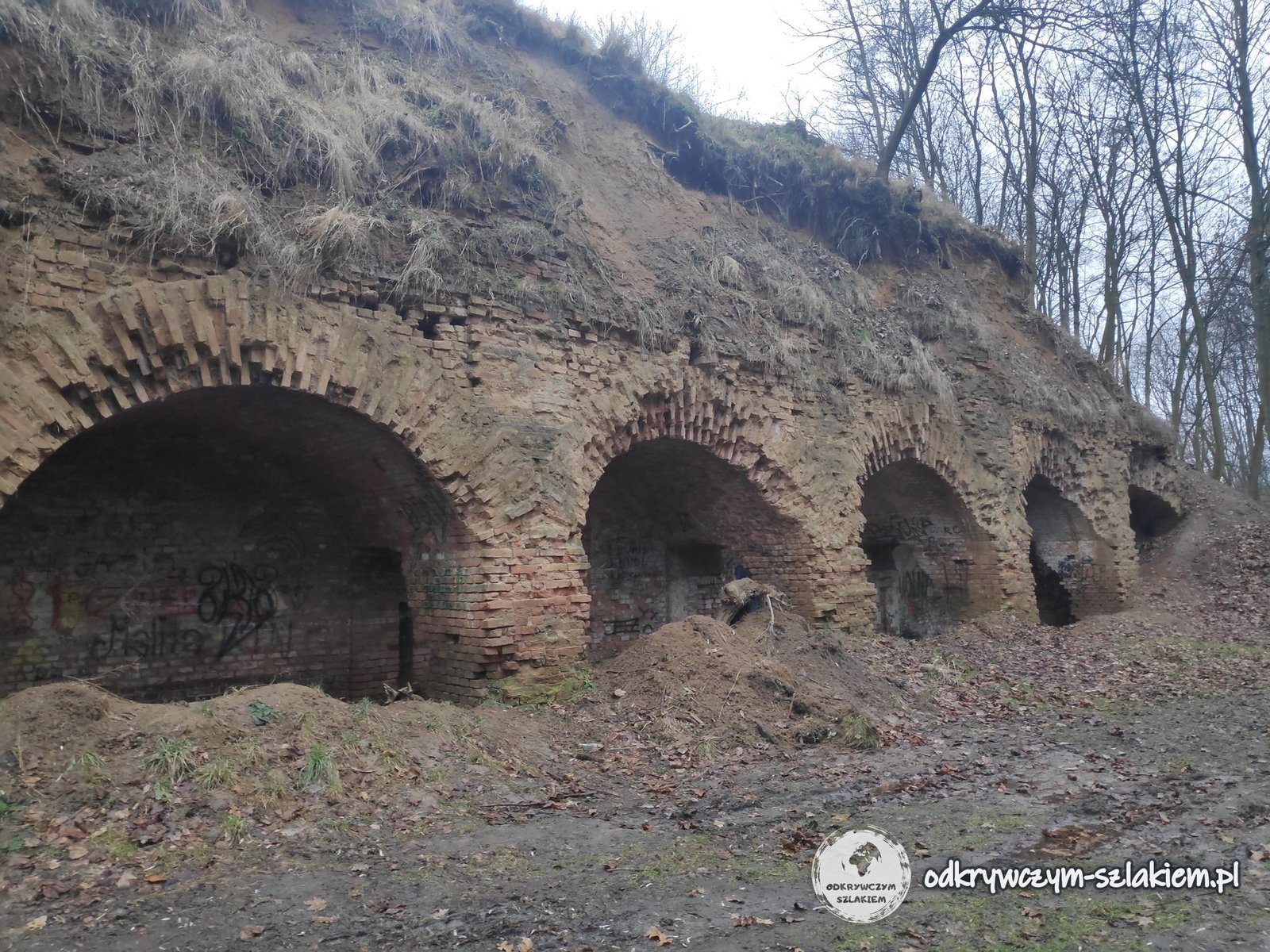
The park is simply worth a stroll – brick arches and casemates of the old fortifications survive in the thickets on the slopes.
The best-known work of art at the Citadel is The Unrecognised (Nierozpoznani) by Magdalena Abakanowicz – 112 headless figures of cast iron, each more than 2 metres tall, arranged as if walking in different directions. The sculpture was unveiled in 2002.
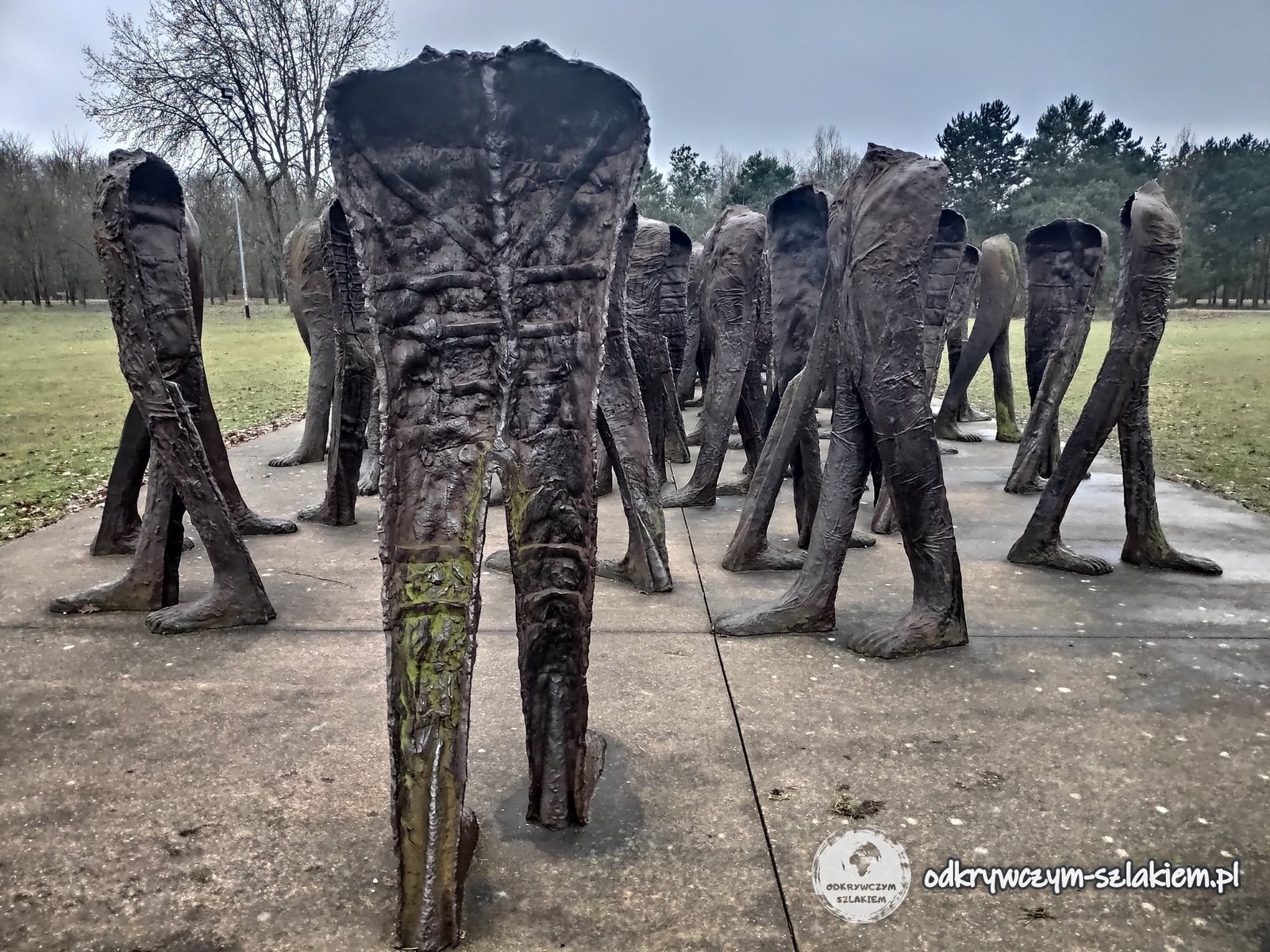
Sołacz and Winogrady – Sołacki Park and the view from the Ferris wheel
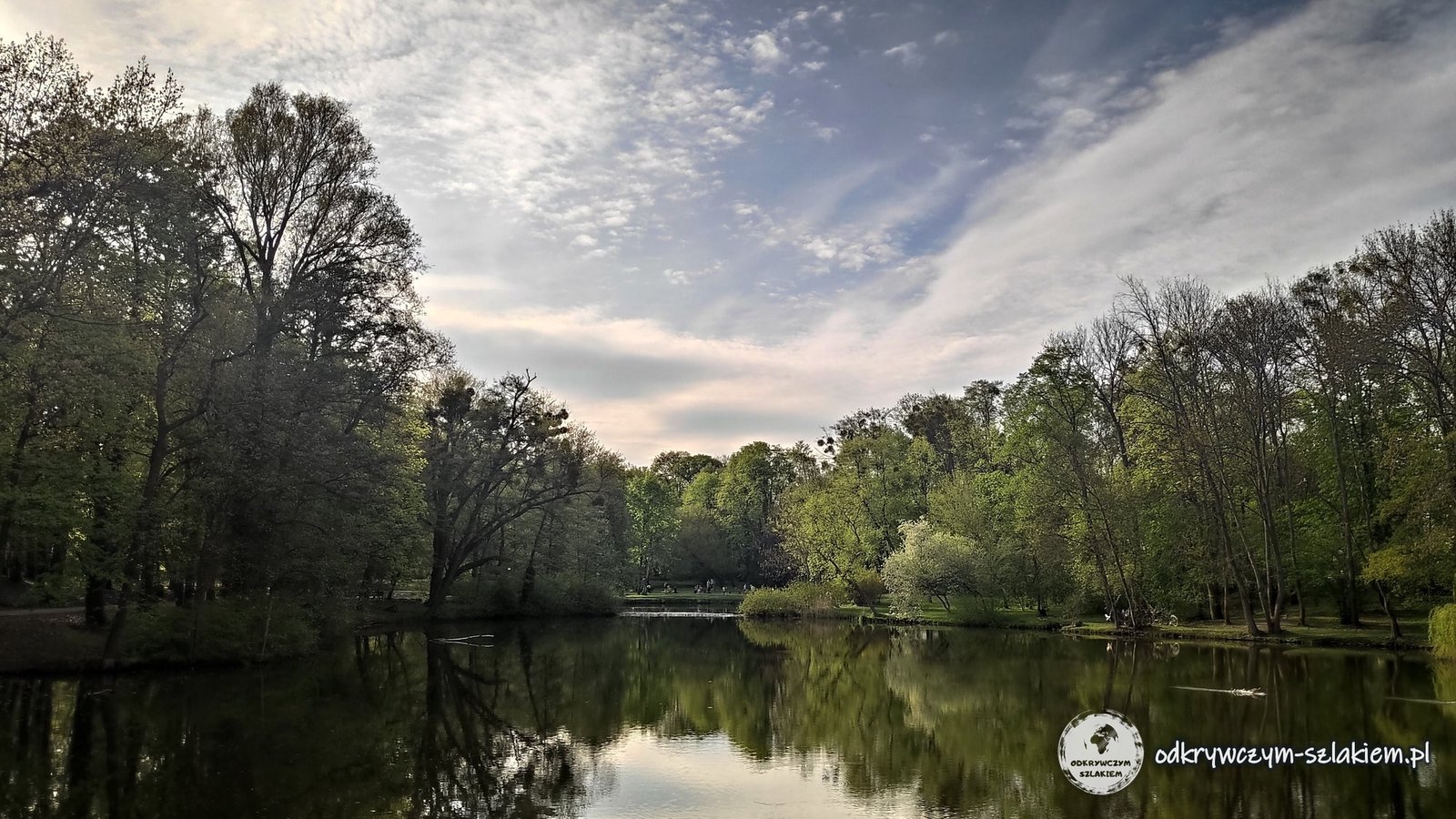
North-west of the centre lies Sołacz – a district of villas and greenery. Sołacki Park opened in 1911. It covers almost 15 hectares, and the Bogdanka stream flows through it, forming two ponds. I was here at the beginning of May 2023, towards evening – the trees by the water already had fresh leaves.
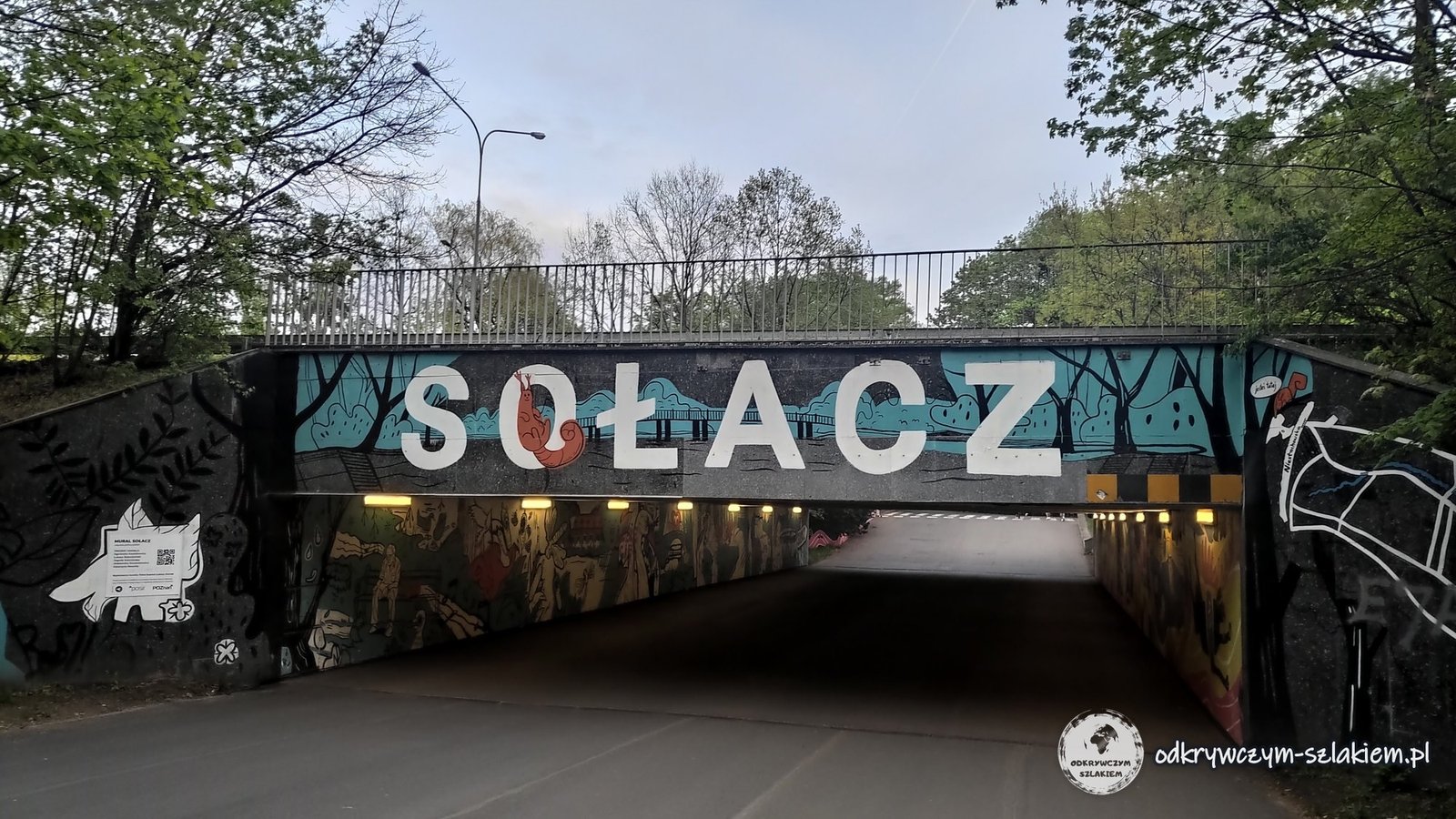
A little further on, on the way towards Lake Rusałka, an underpass beneath a viaduct is decorated with a mural with a large “SOŁACZ” sign. Rusałka is an artificial lake, created in 1943 by damming the Bogdanka.
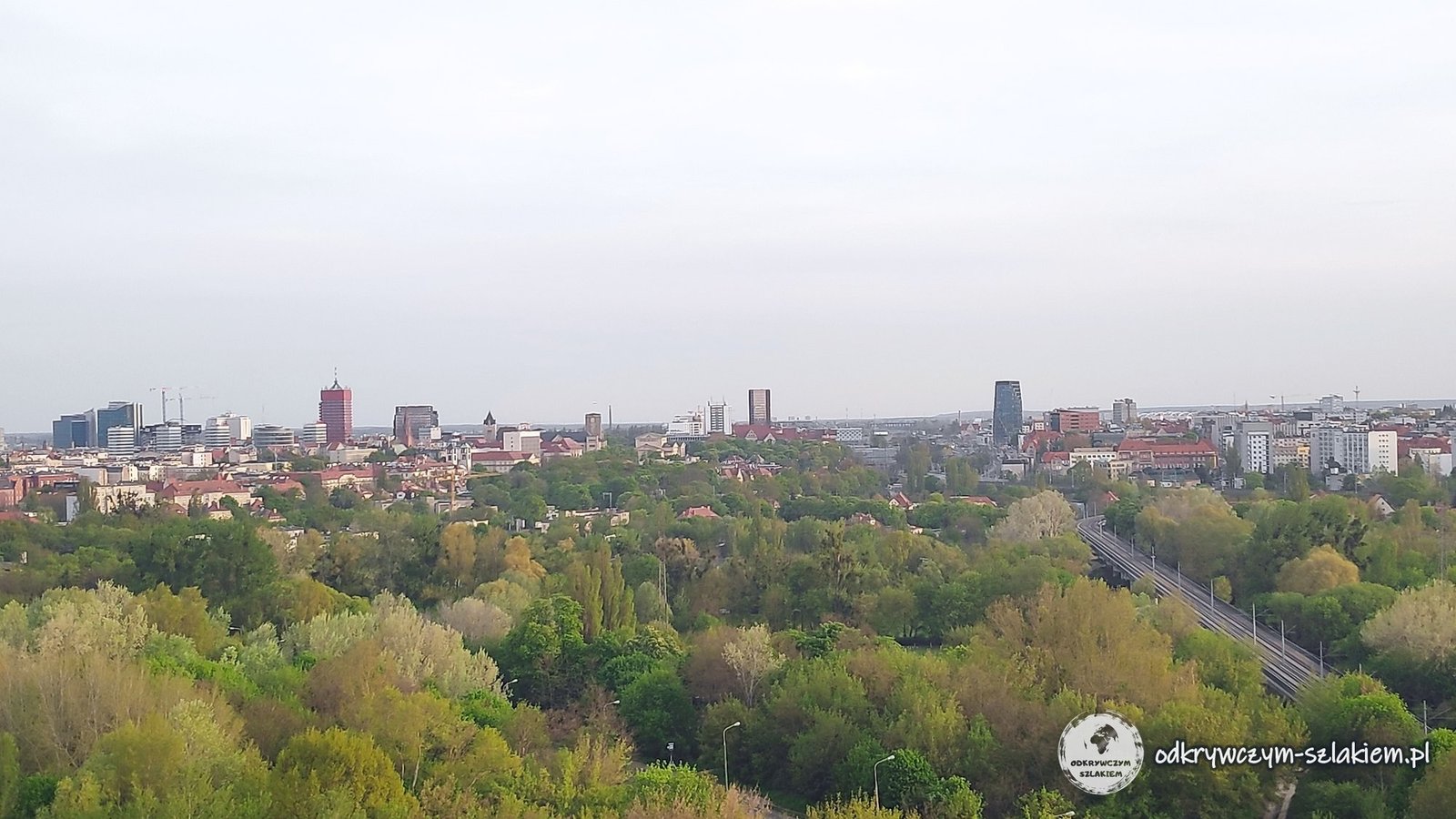
In May 2023 a tall funfair Ferris wheel stood in Winogrady, not far from the Citadel. I took a ride on it before sunset.
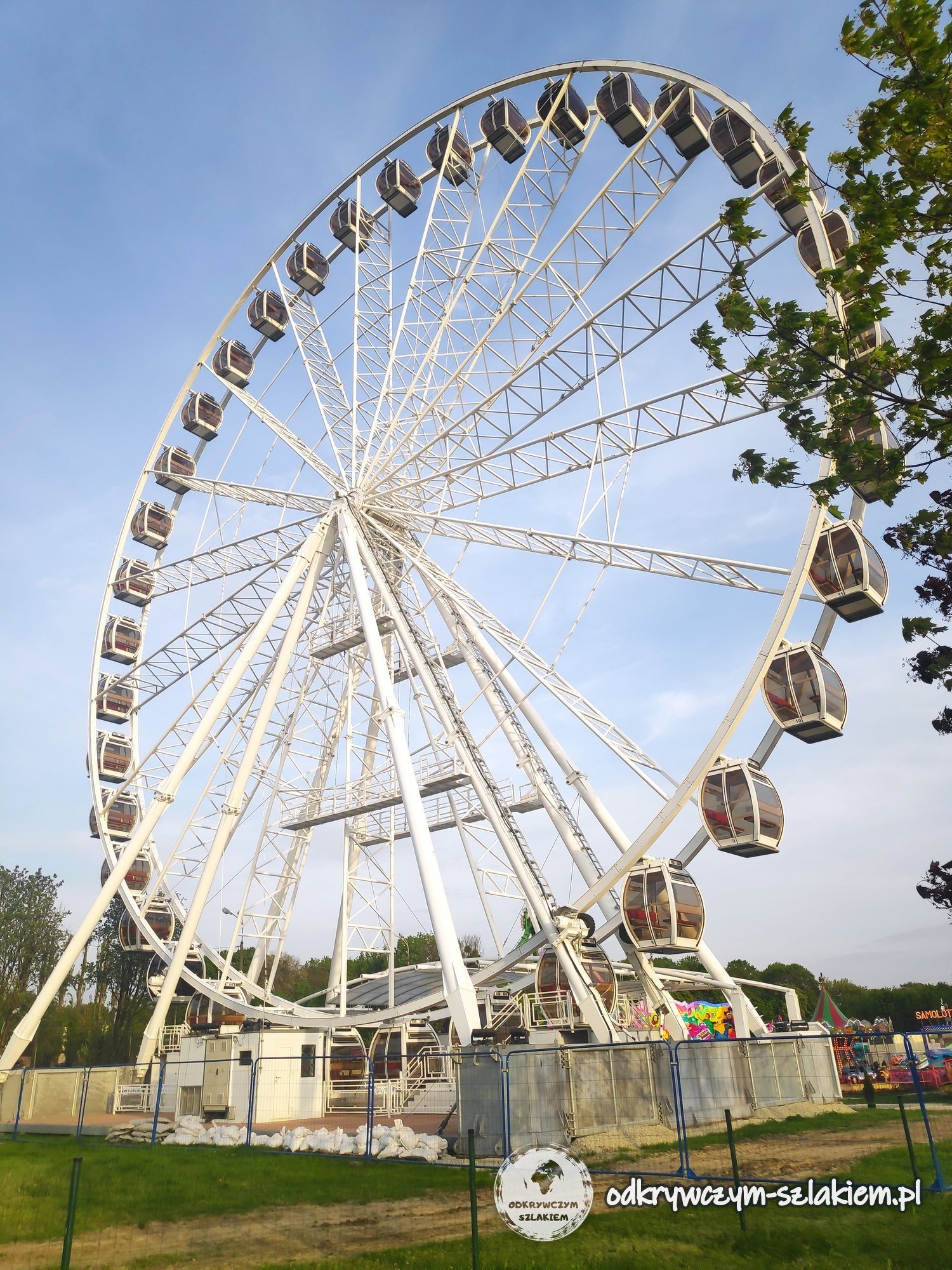
From the top I could see a sea of green, and beyond it the skyscrapers of central Poznań.
The Poznań Palm House
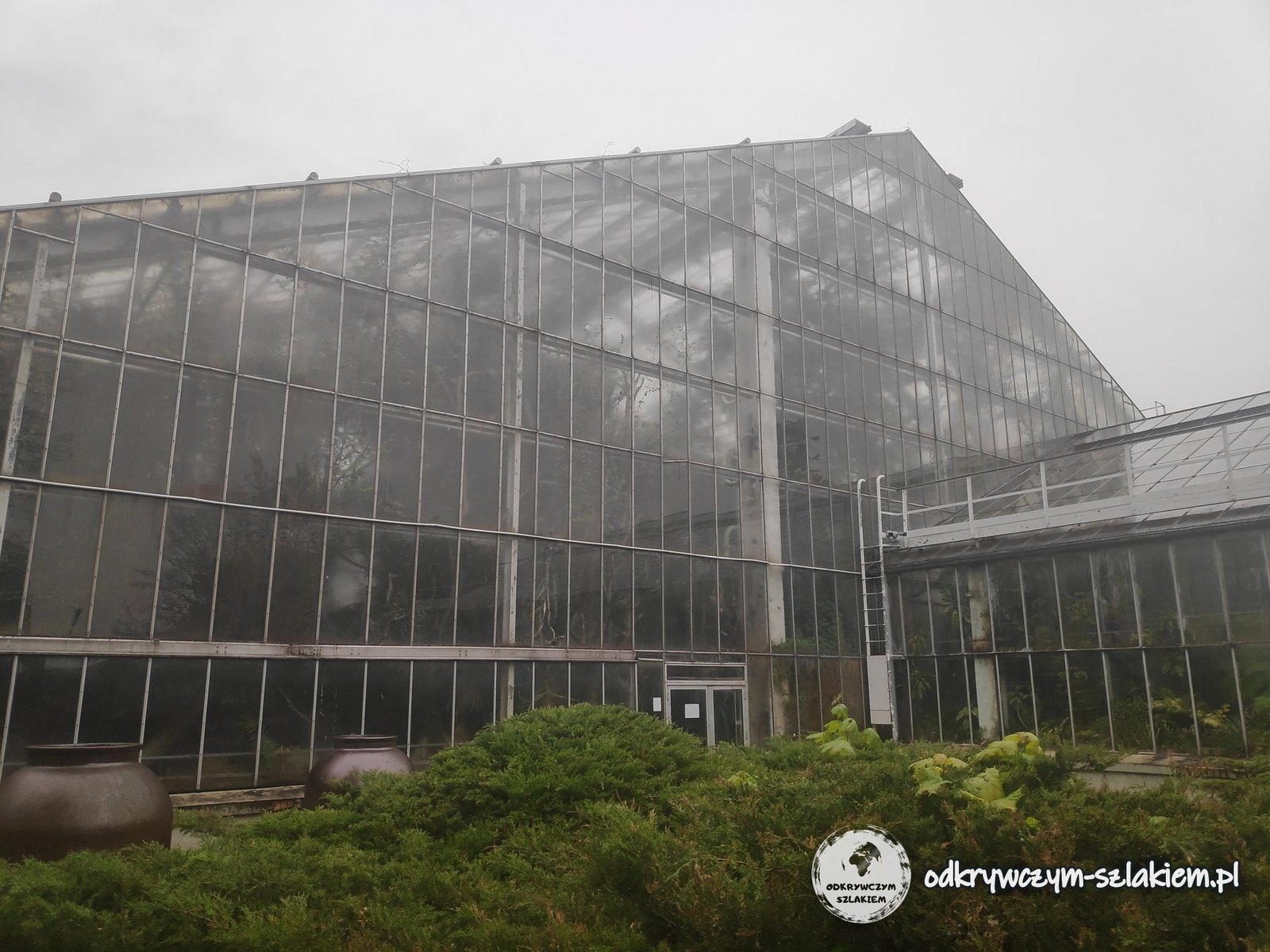
The Poznań Palm House (Palmiarnia Poznańska) stands in Wilson Park on Matejki Street, not far from Poznań Główny station, and has been open for more than a hundred years – the plaque by the entrance bears the dates 1911–2011. It is one of the largest palm houses in Europe and the largest in Poland. Plants from different climate zones grow in the glass pavilions, and the aquariums hold about 170 species of fish. I visited the Palm House in May 2023 with Artur and Kasia.
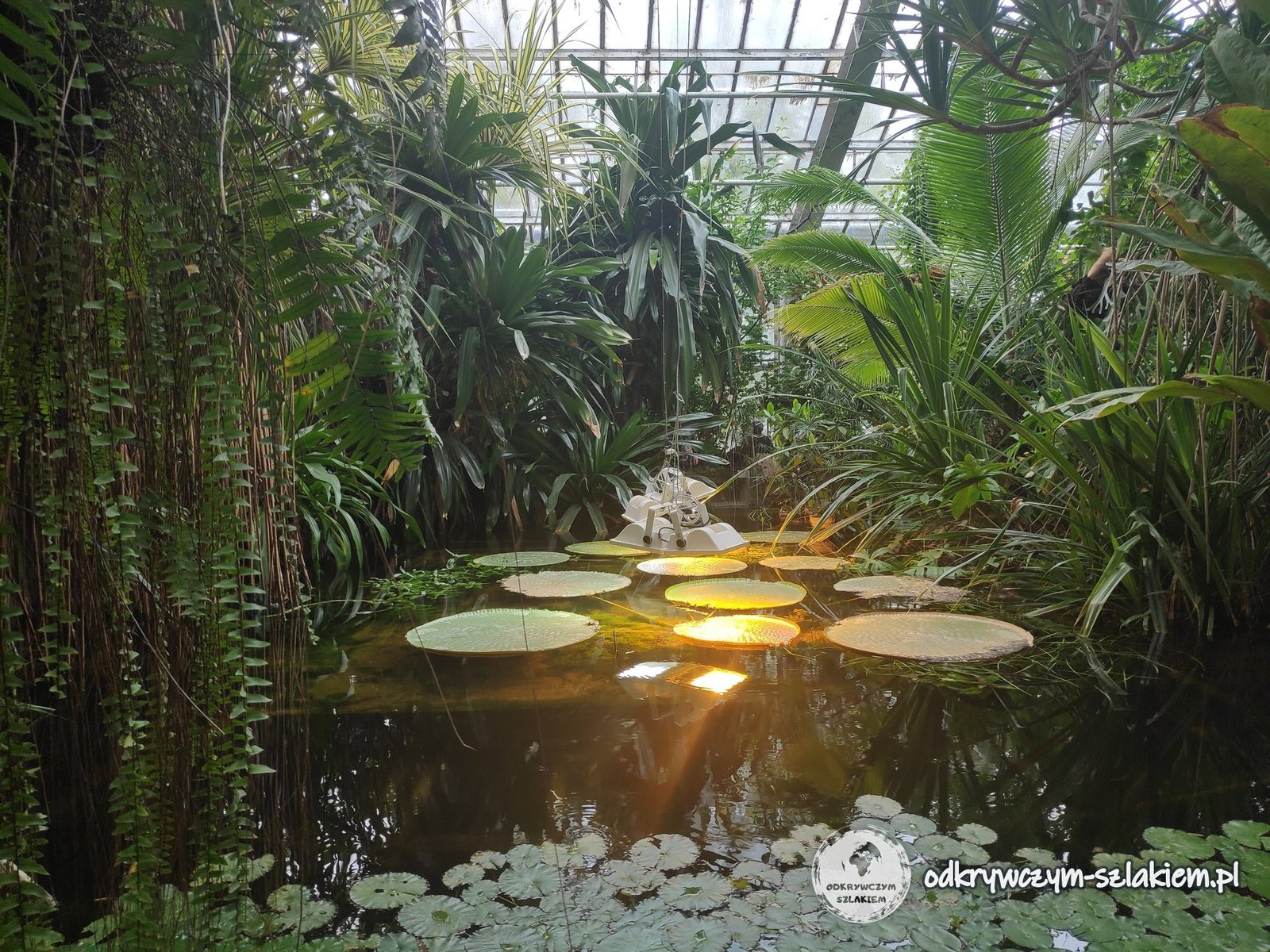
One of the pavilions has a pond with the huge, round leaves of the Victoria water lily, surrounded by palms and tree ferns.
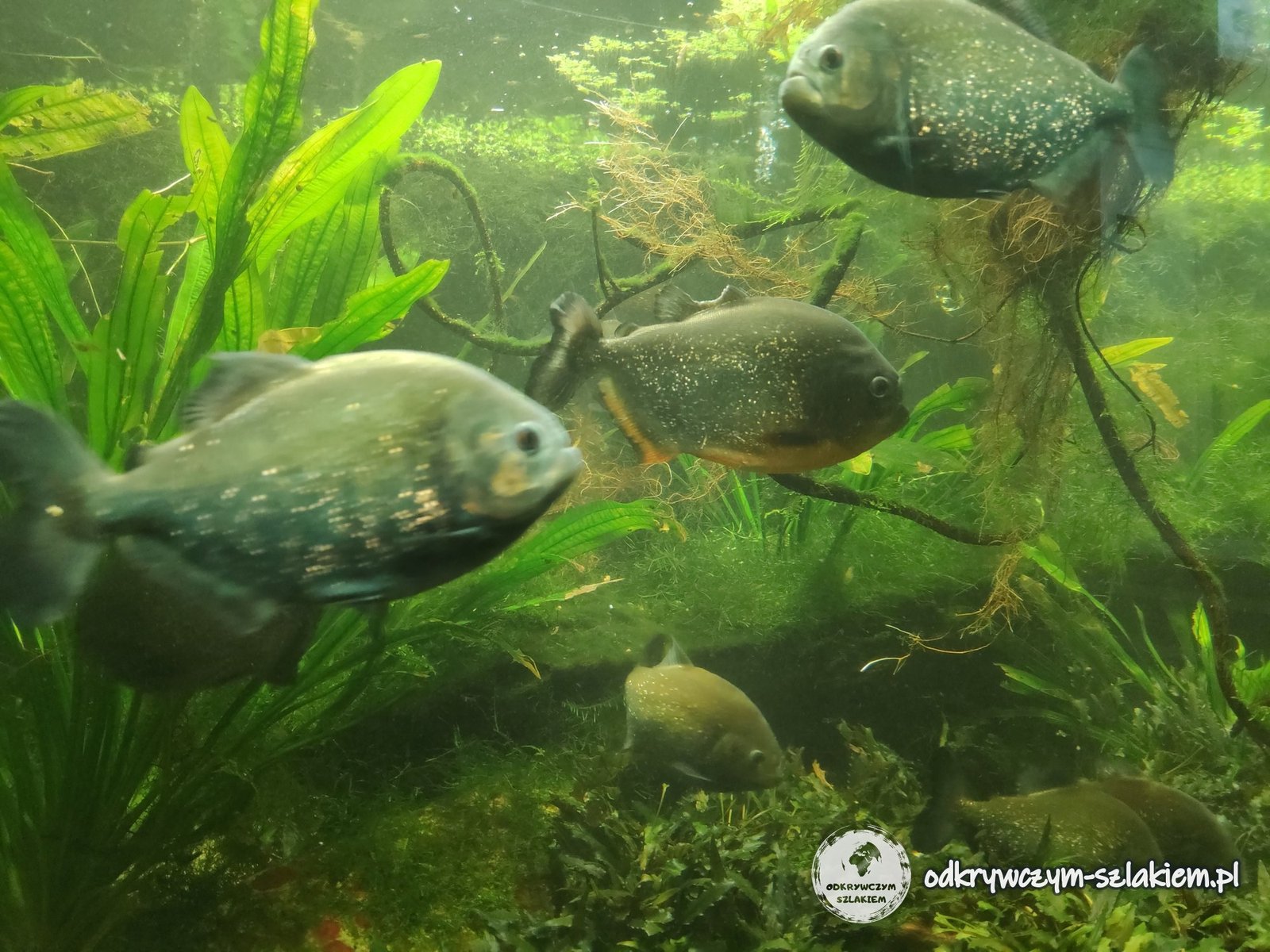
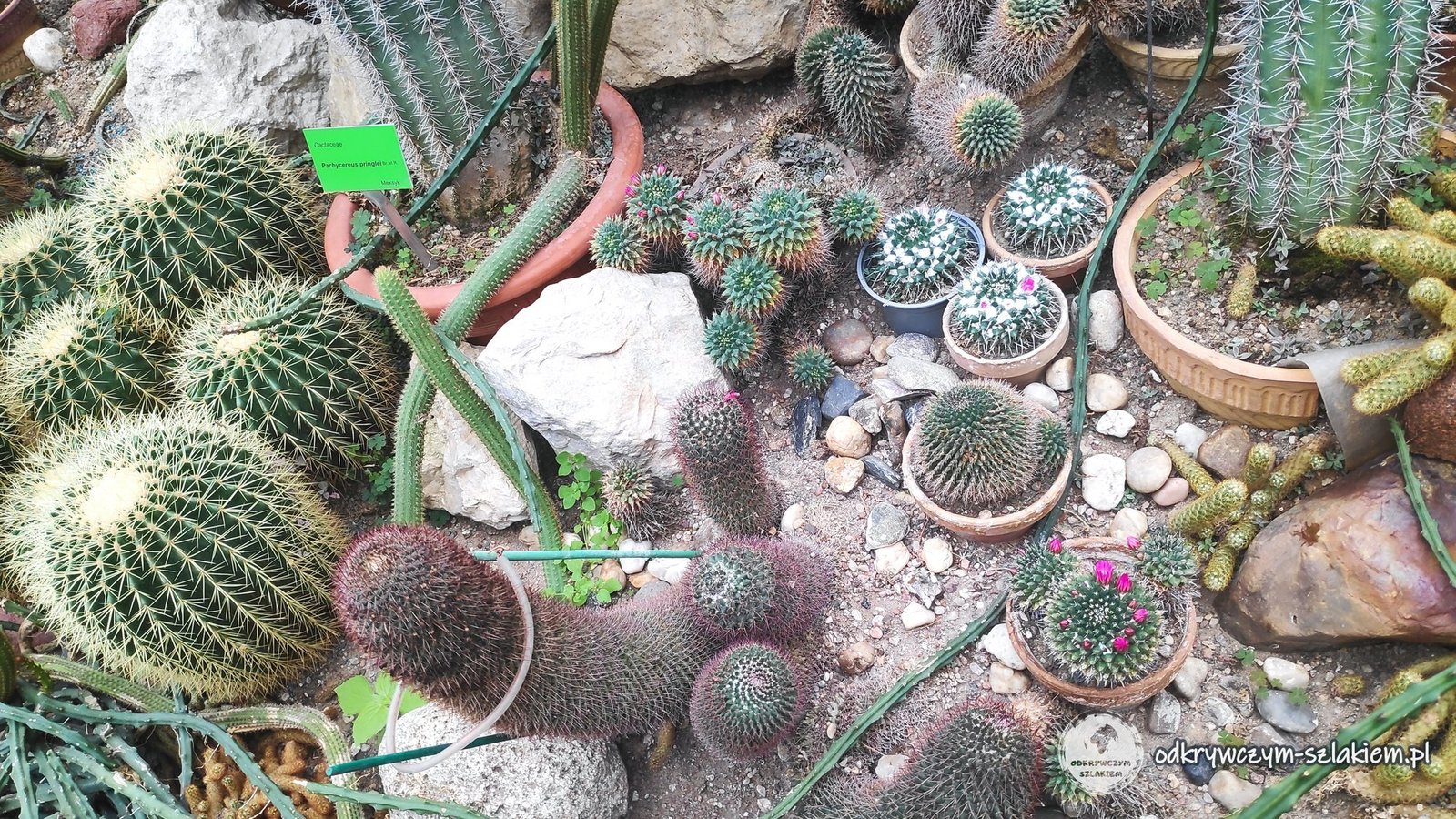
The aquariums are home to, among others, piranhas, and dozens of cactus species grow in the desert pavilion. In 2023 a regular ticket cost 16 zł.
Note: since 1 September 2026 the Palm House has been closed for its biggest reconstruction in 40 years. According to the city, some of the pavilions on the Matejki Street side are to reopen at the end of 2028, and the whole project will last until 2030.
A Lech match at the stadium on Bułgarska Street
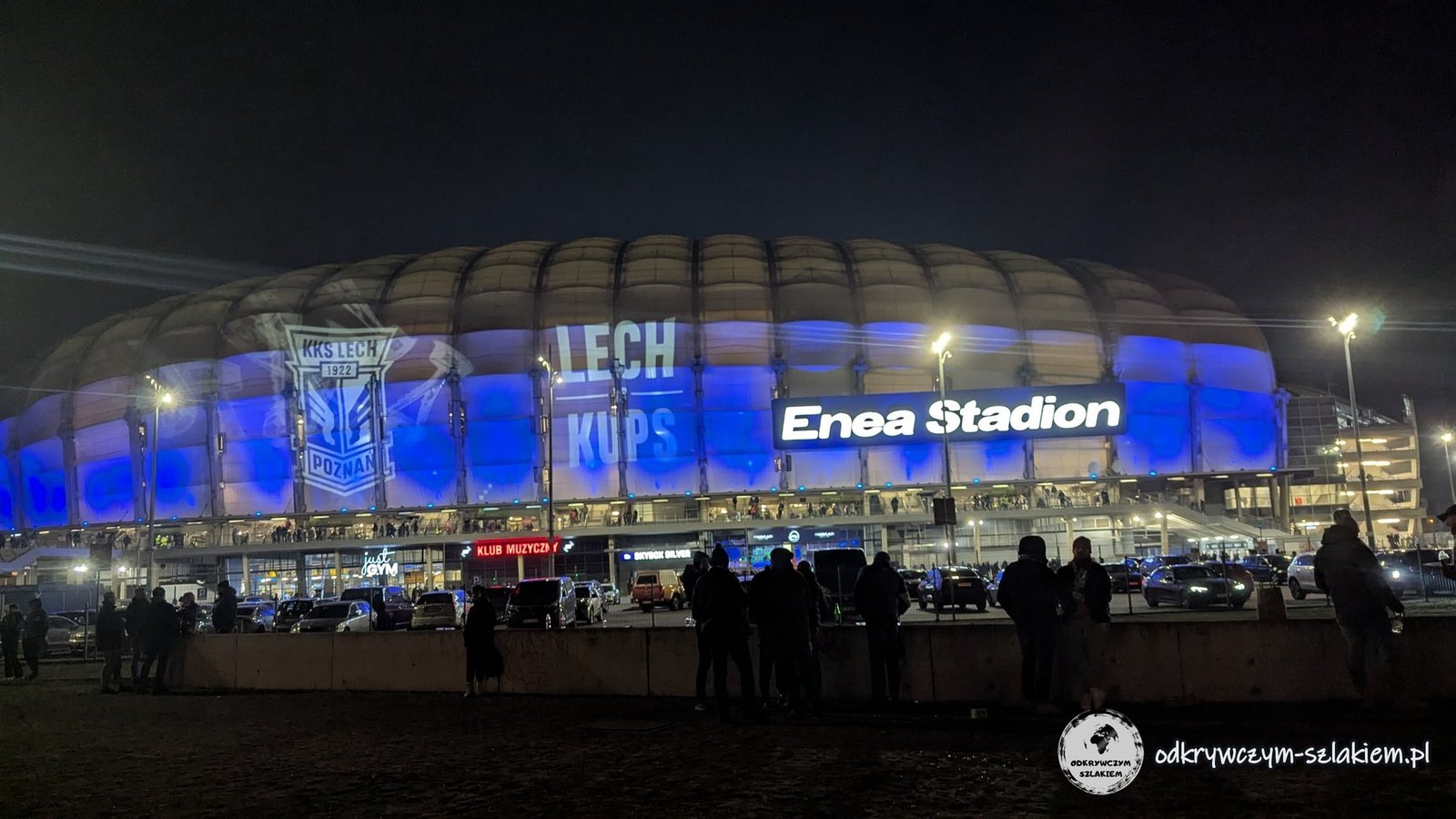
Lech Poznań play at the Municipal Stadium on Bułgarska Street, now called Enea Stadion. On 6 May 2023 I watched an Ekstraklasa match between Lech and Cracovia here. I went to Lech’s matches as a neutral fan.
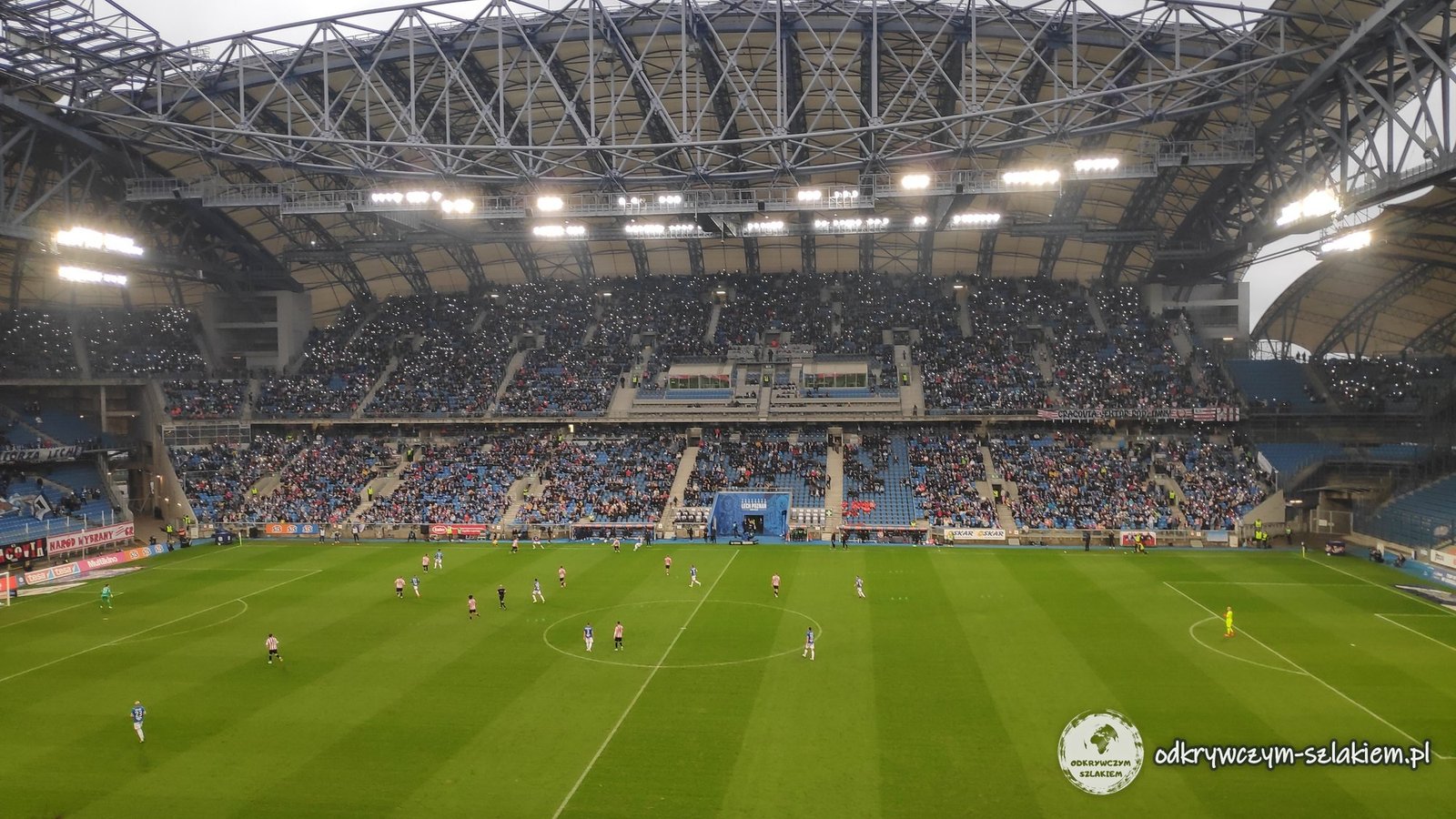
On 26 February 2026 I came back to Bułgarska Street with Artur and Krzysiek for the Conference League second leg against KuPS Kuopio from Finland. It was my debut in the stands at a European cup match. Lech won 1–0 and, after a 2–0 win in the first leg, went through to the round of 16.
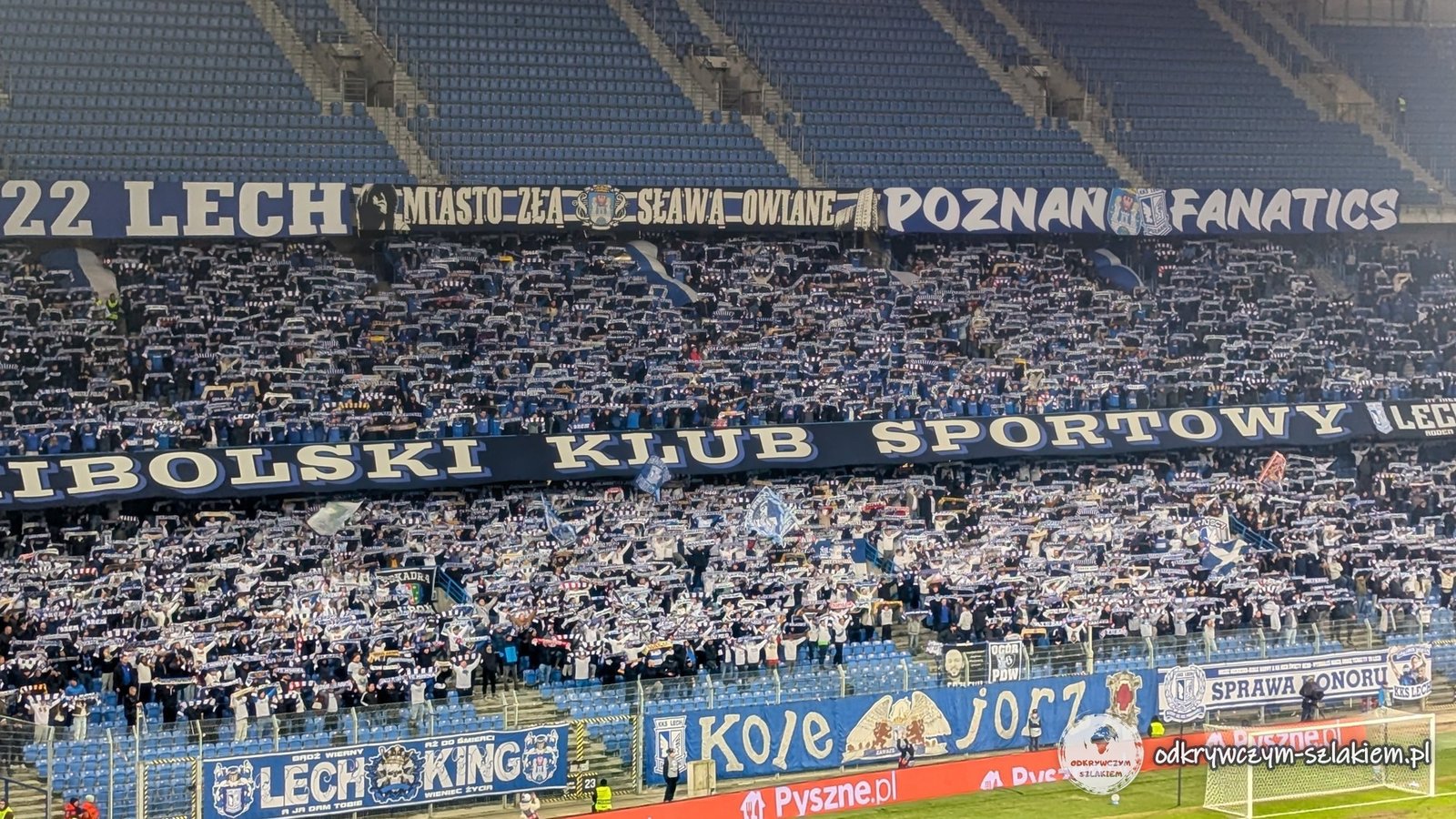
The Lech fans filled their stand – with scarves held high and banners along its whole length.
Practical information and a weekend plan
- Getting there: the main station is Poznań Główny – trains run from here to Warsaw, Berlin, Szczecin, Gdańsk and Wrocław, among others. There is a tram stop by the station, and the Old Market Square is about 2 km away. Poznań-Ławica Airport is about 5 km west of the centre.
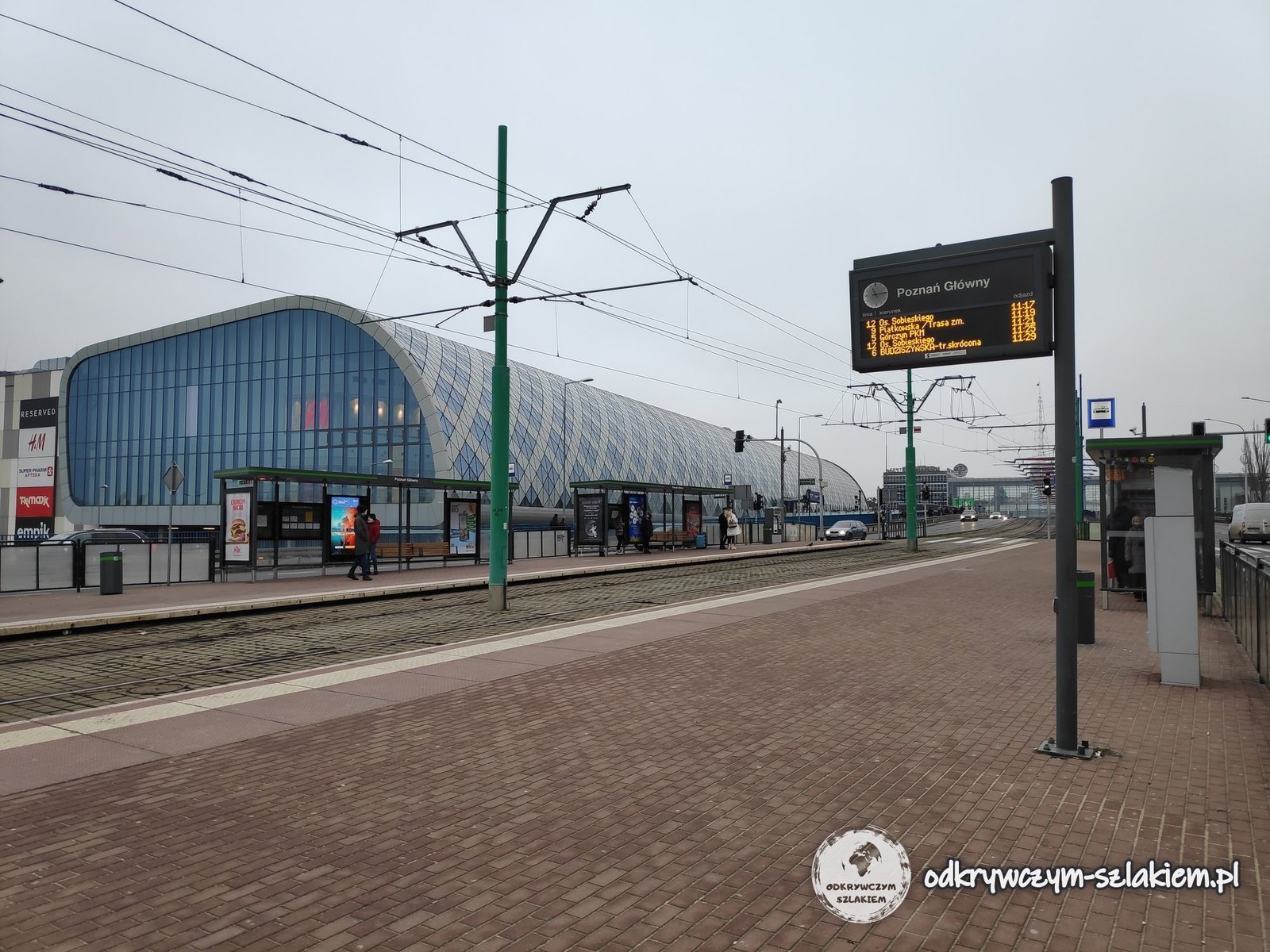
- Public transport: since September 2025 a 15-minute ticket has cost 5 zł, a 45-minute ticket 7 zł, a 90-minute ticket 9 zł and a 24-hour ticket for zone A 18 zł.
- The goats: they come out on the town hall tower every day at 12:00.
- Citadel: entry to the park is free. Check the ticket prices and opening hours of the Armaments Museum and the “Poznań” Army Museum on the website of the Greater Poland Museum of Independence before your visit.
- Palm House: closed from 1 September 2026 until the reconstruction is finished (a partial reopening is planned for the end of 2028).
- Lech match: the fixture list and tickets are on the club’s website.
- Museum of Games and Computers: Półwiejska 45 (first floor). In October 2026 it was open Tue–Sun 11:00–19:00, in August daily 10:00–20:00. A standard ticket cost 40 zł, a reduced one 30 zł; it is valid for up to 2 hours.
- Weekend plan: on Saturday the Old Market Square (the goats at 12:00), the Fara and Freedom Square, and in the afternoon the Citadel with the Armaments Museum, the cemeteries and The Unrecognised. On Sunday Sołacki Park and a walk to Lake Rusałka, in the afternoon the Games and Computers Museum, and in the evening – if Lech are playing at home – a match on Bułgarska Street. Once it reopens, add the Palm House.
- More of Poland: Warsaw in a weekend, Olsztyn, Silesia over a long weekend and Podlasie.