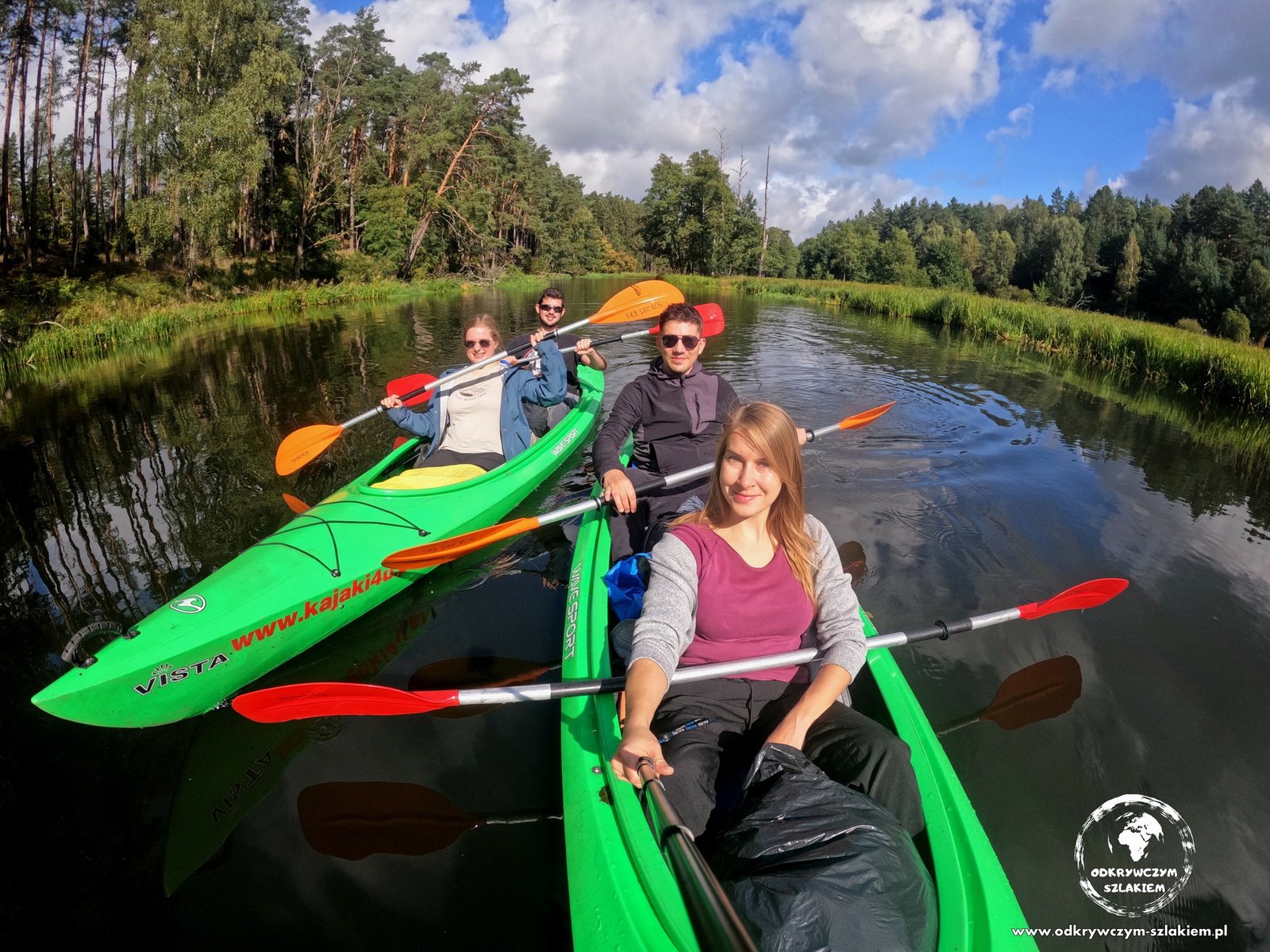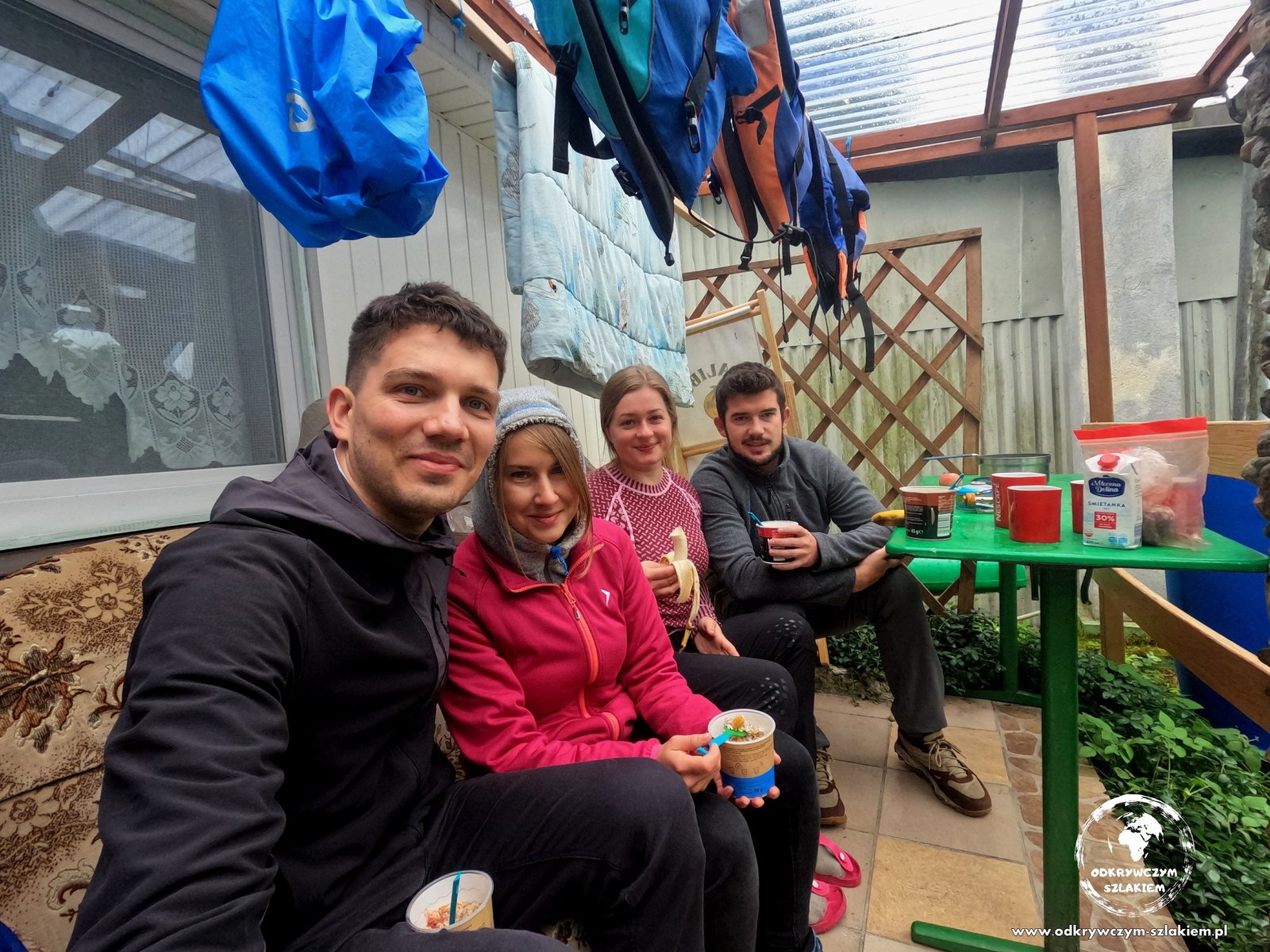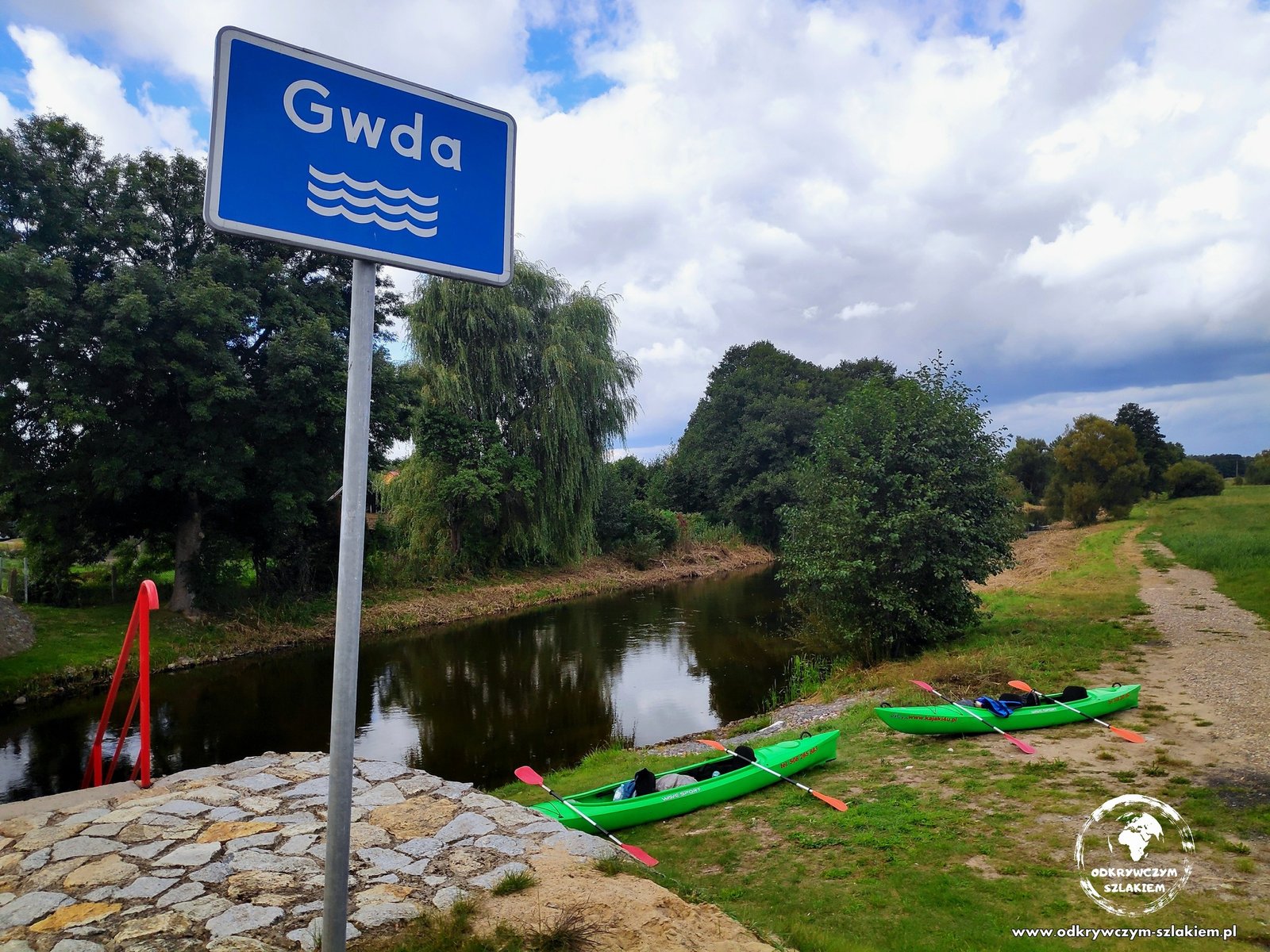
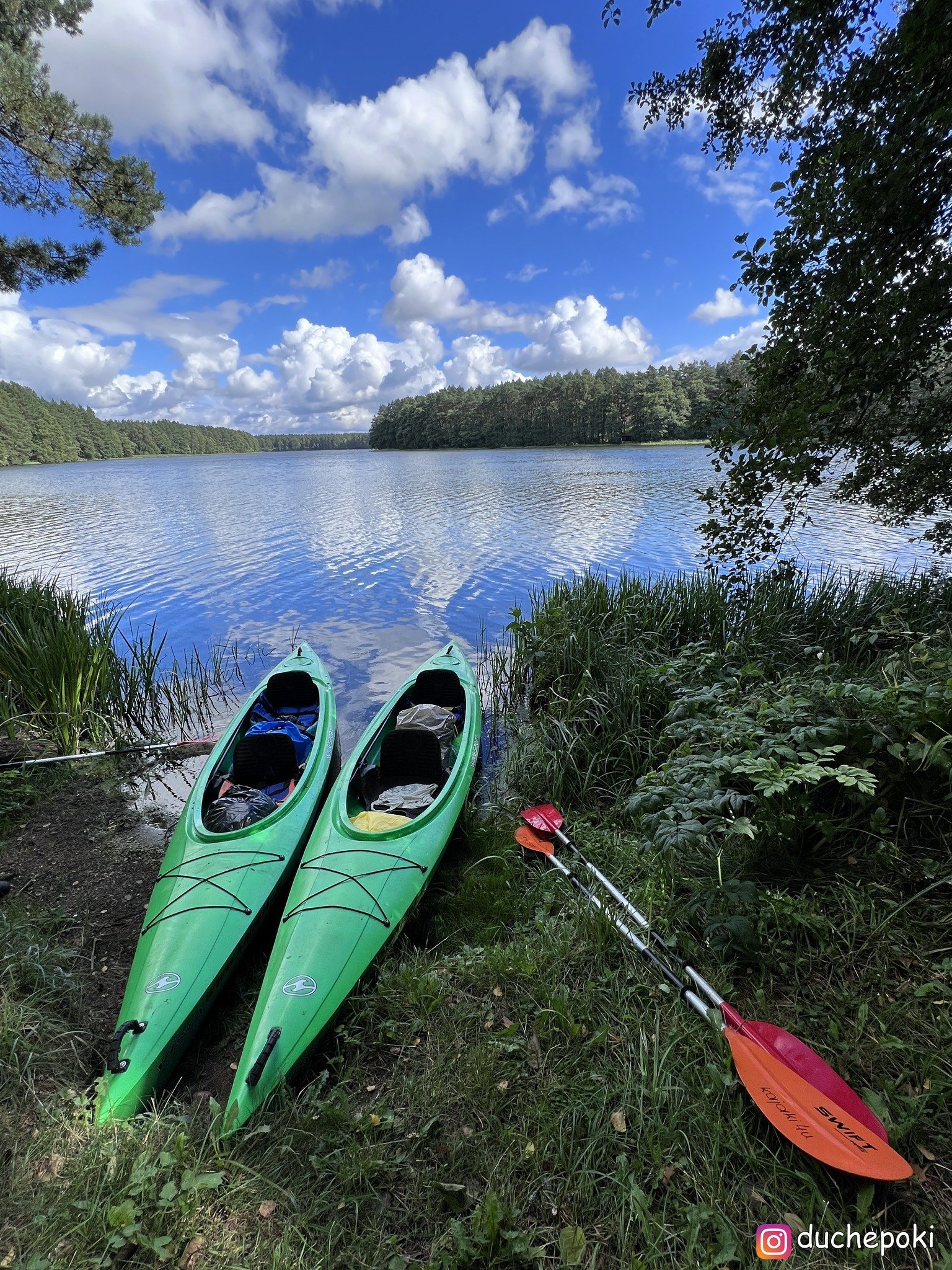
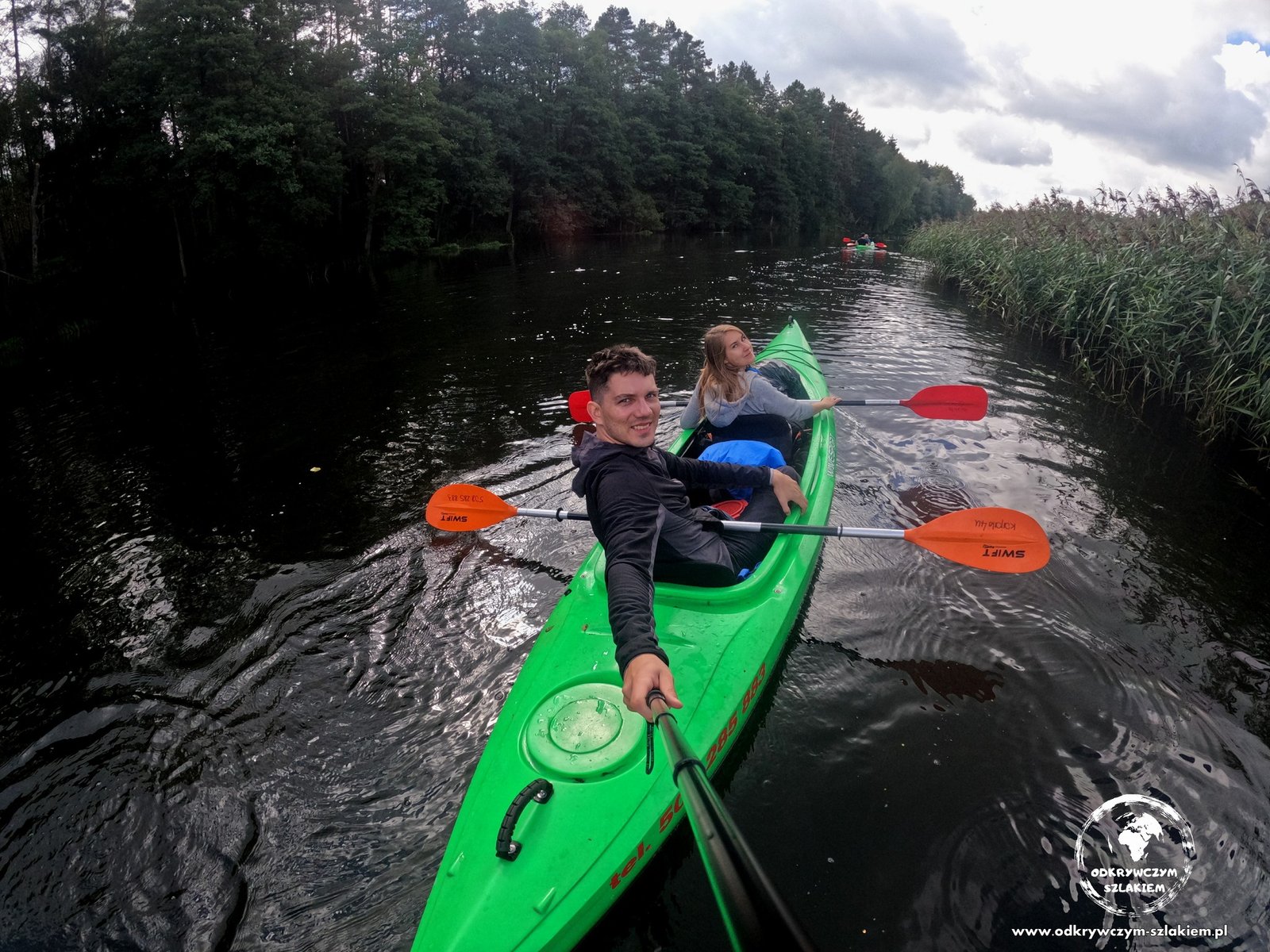
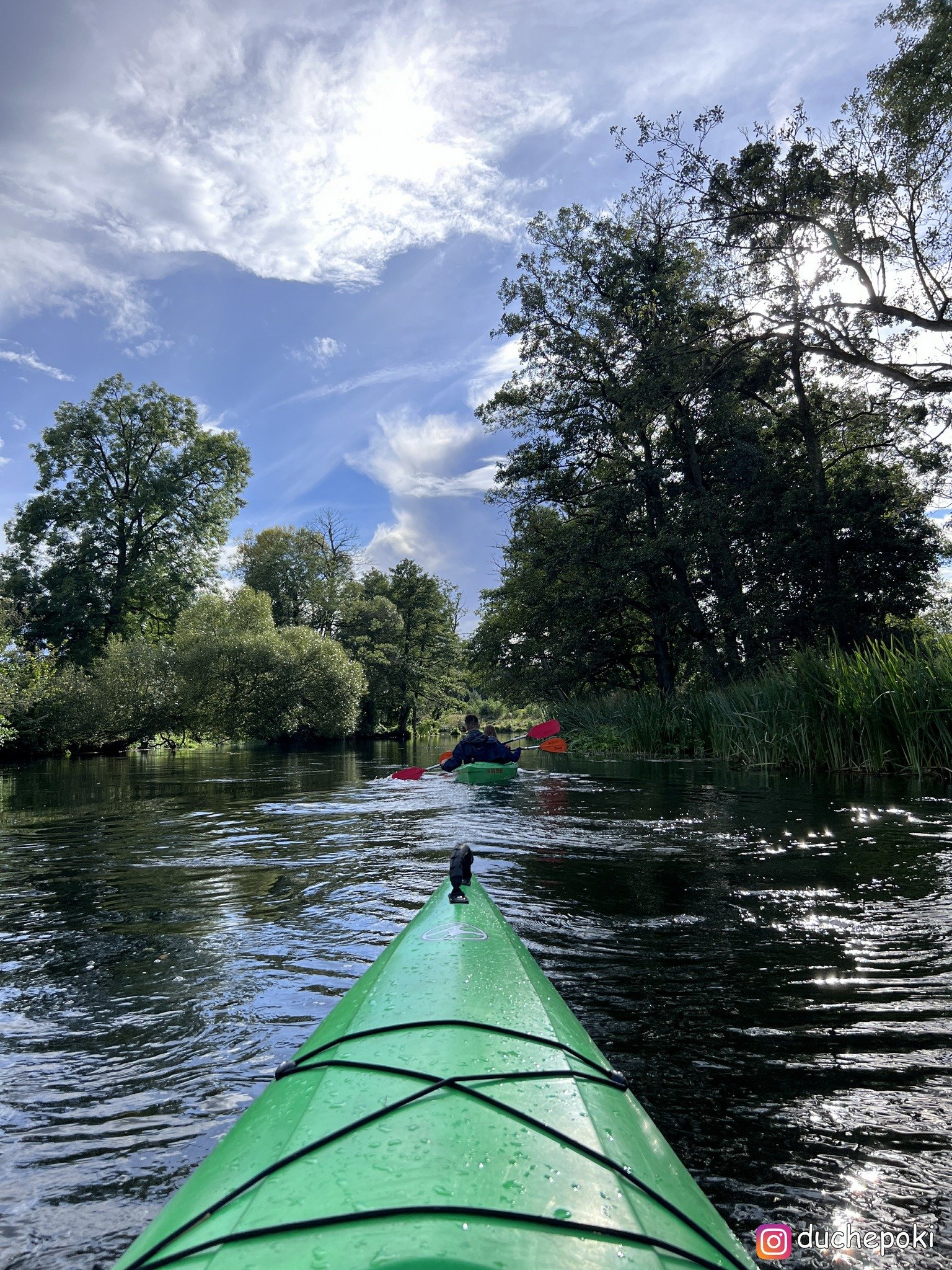
In mid-September 2022 the four of us – with Michał and Patrycja – went on a kayak trip down the Gwda, a river flowing through West Pomerania and northern Greater Poland. The plan was to cover about 108 km in 5 days, from Gwda Wielka to Piła, an average of about 22 km a day. The trip turned out to be quite demanding, mainly because of fallen trees, but all the same – “I want to do it again”. Our previous kayak trip, on the Krutynia, had been three years earlier.
Table of contents
- Organisation and costs
- Fallen trees and other obstacles
- Portages at hydroelectric plants
- Overnight stays and shopping along the way
- A semi-wild river, the weather and nature
- The finish in Krępsko and an evening in Piła
- Practical information
Organisation and costs
First we had to find a company that would rent us kayaks, drive us to the start and collect the gear at the finish. The best offer came from the Kajaki4u rental company: two double kayaks for 5 days (including a weekend), transport to Gwda Wielka and collection of the kayaks from Piła cost about €150 in total, i.e. about €37 per person.
I also had to estimate what distance we could manage each day, where along the way there were places to sleep – paid and free campsites – and shops, so that we’d know how many days of supplies to take. The day before, we met in Koszalin, did the shopping for the first two days (there was supposed to be no shop on the way) and took the train to Szczecinek. From there someone from the rental company picked us up and drove us to the put-in, on the border between Gwda Mała and Gwda Wielka.
Fallen trees and other obstacles
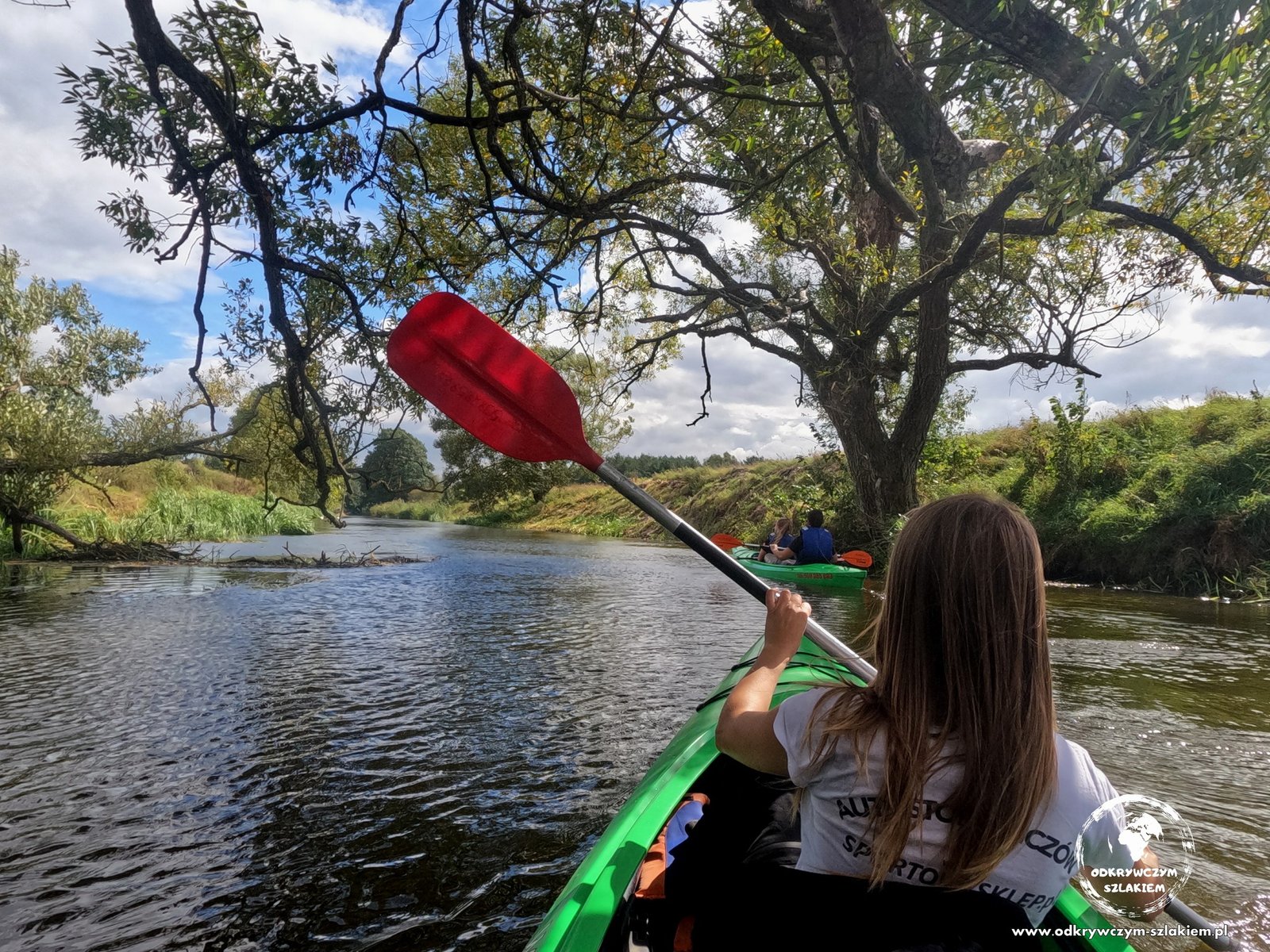
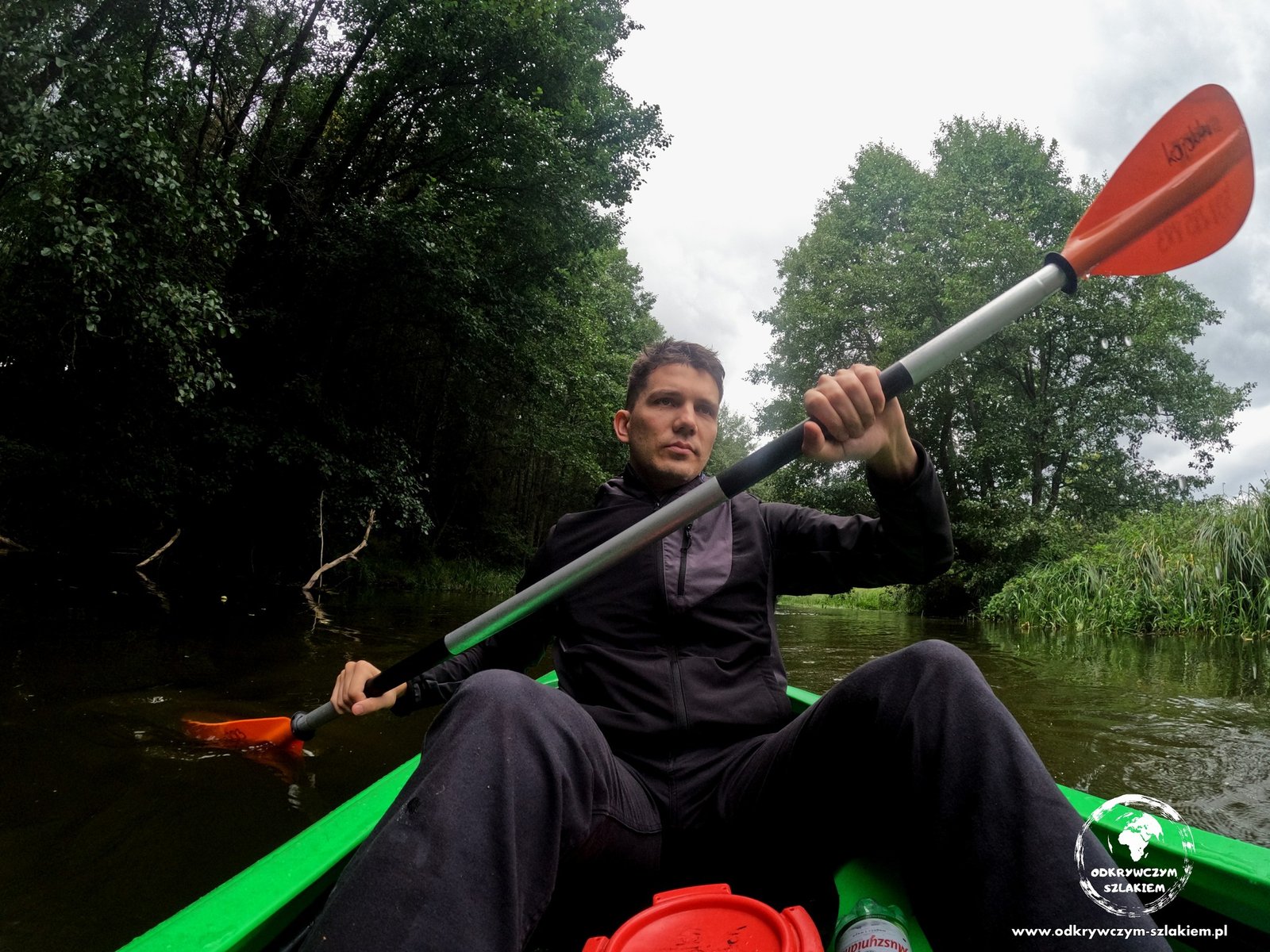
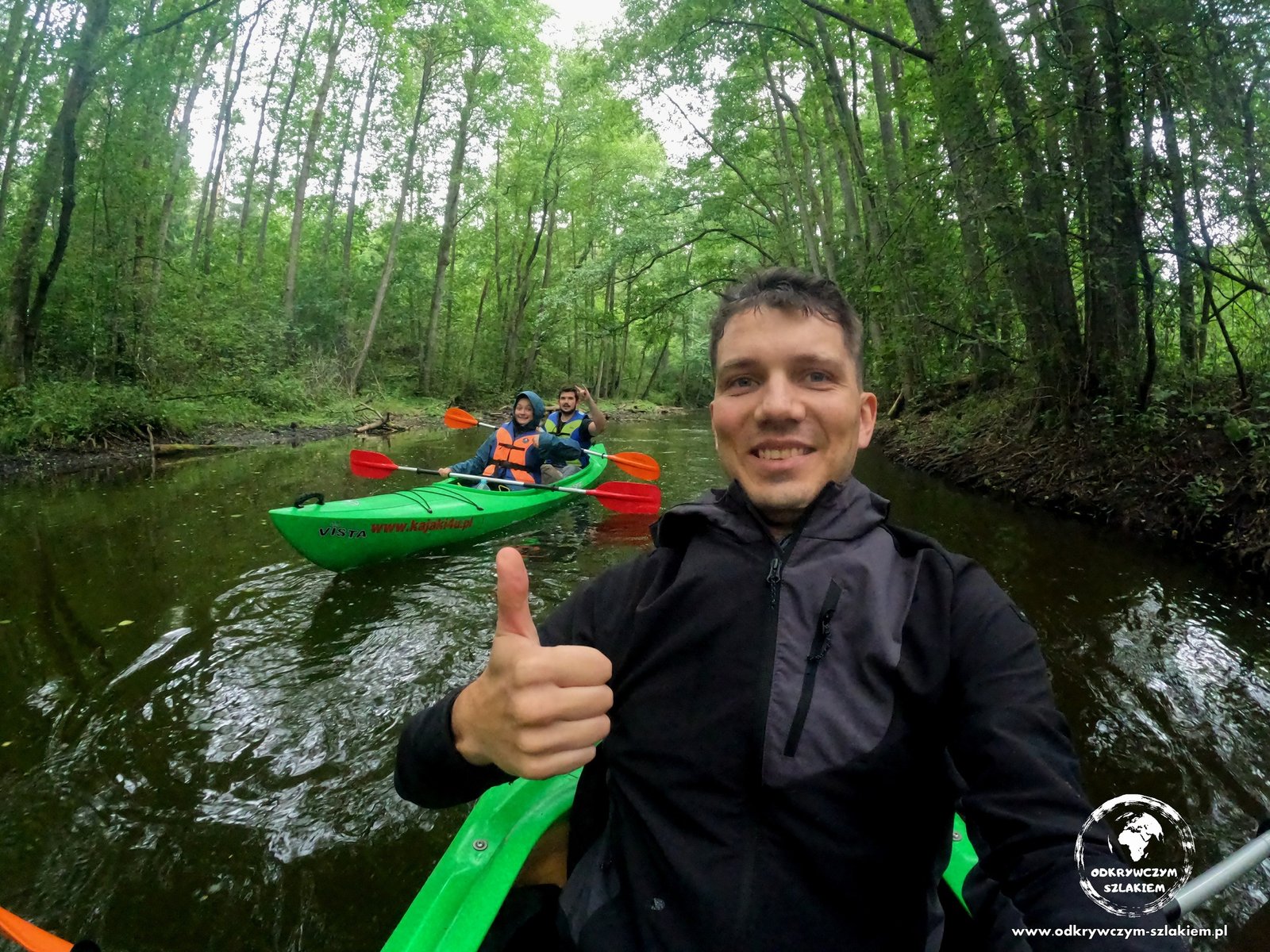
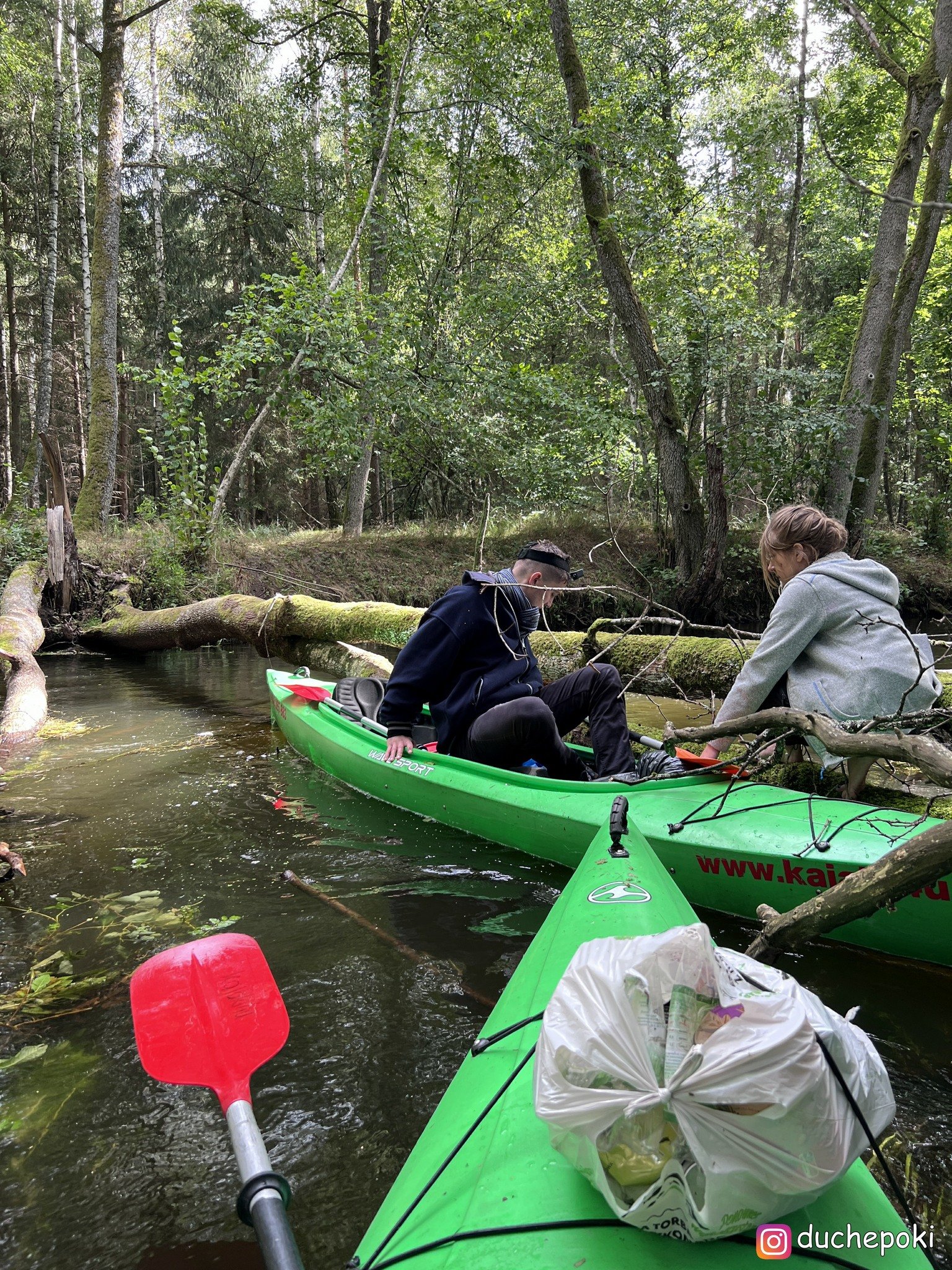
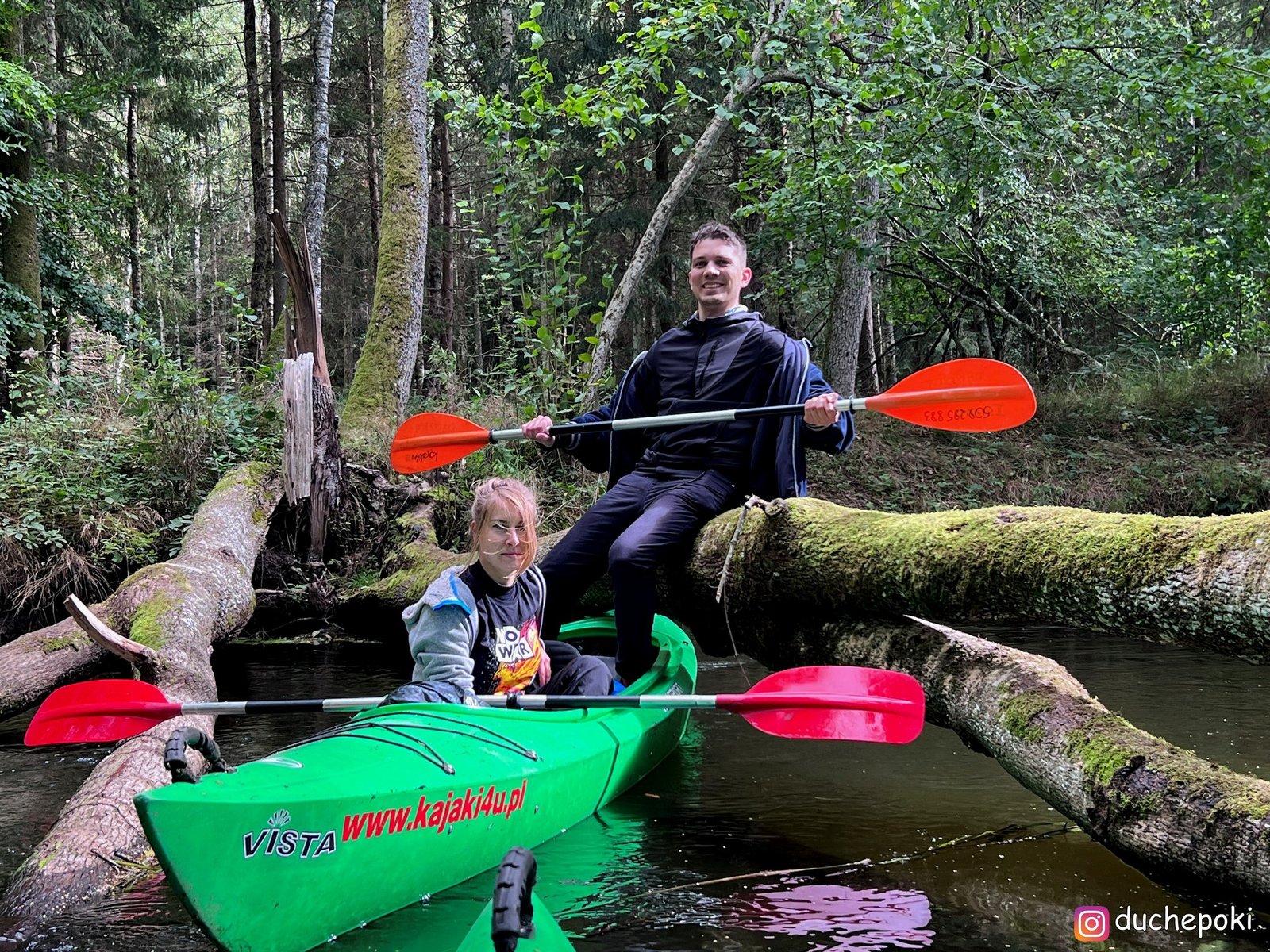
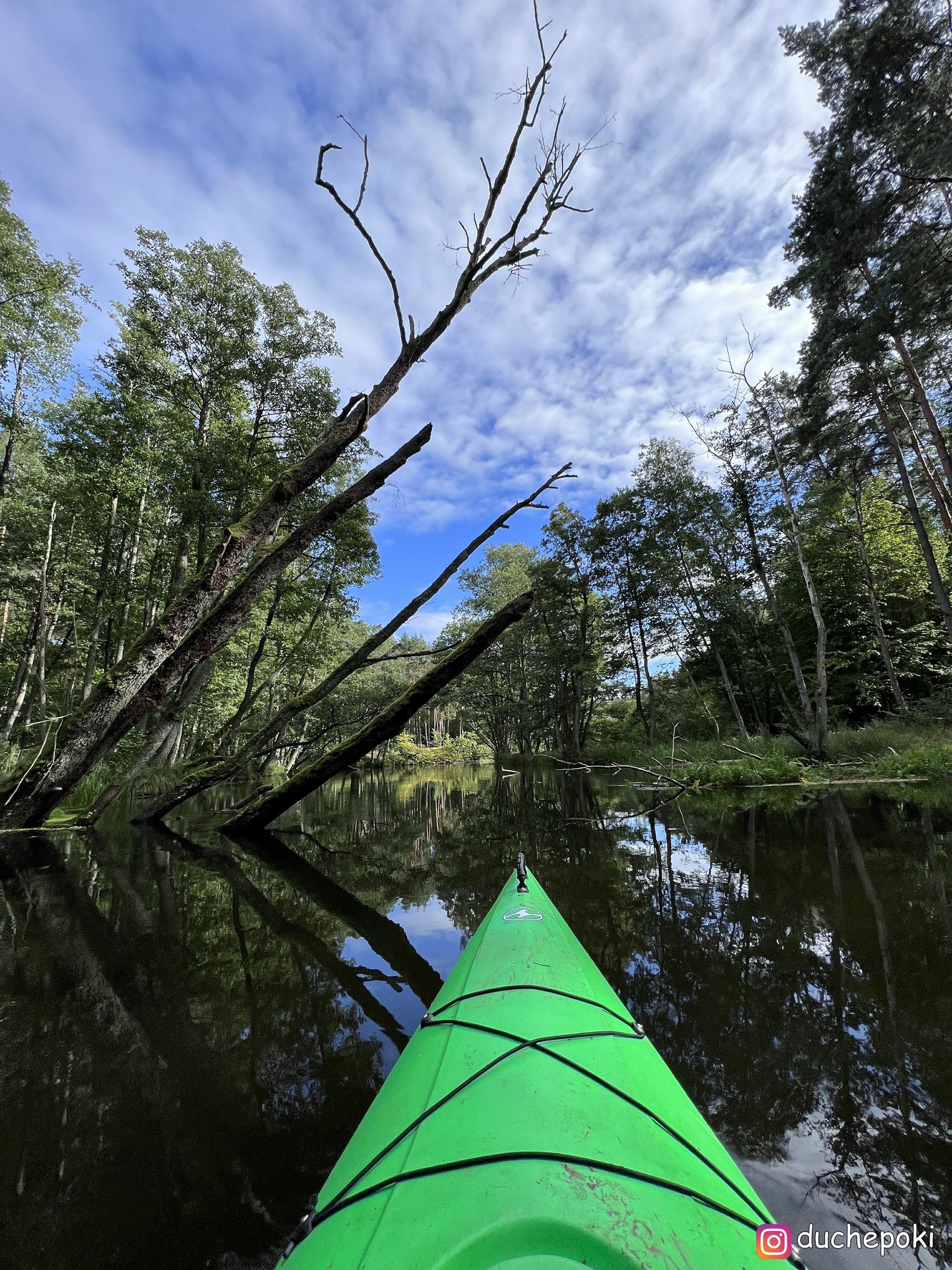
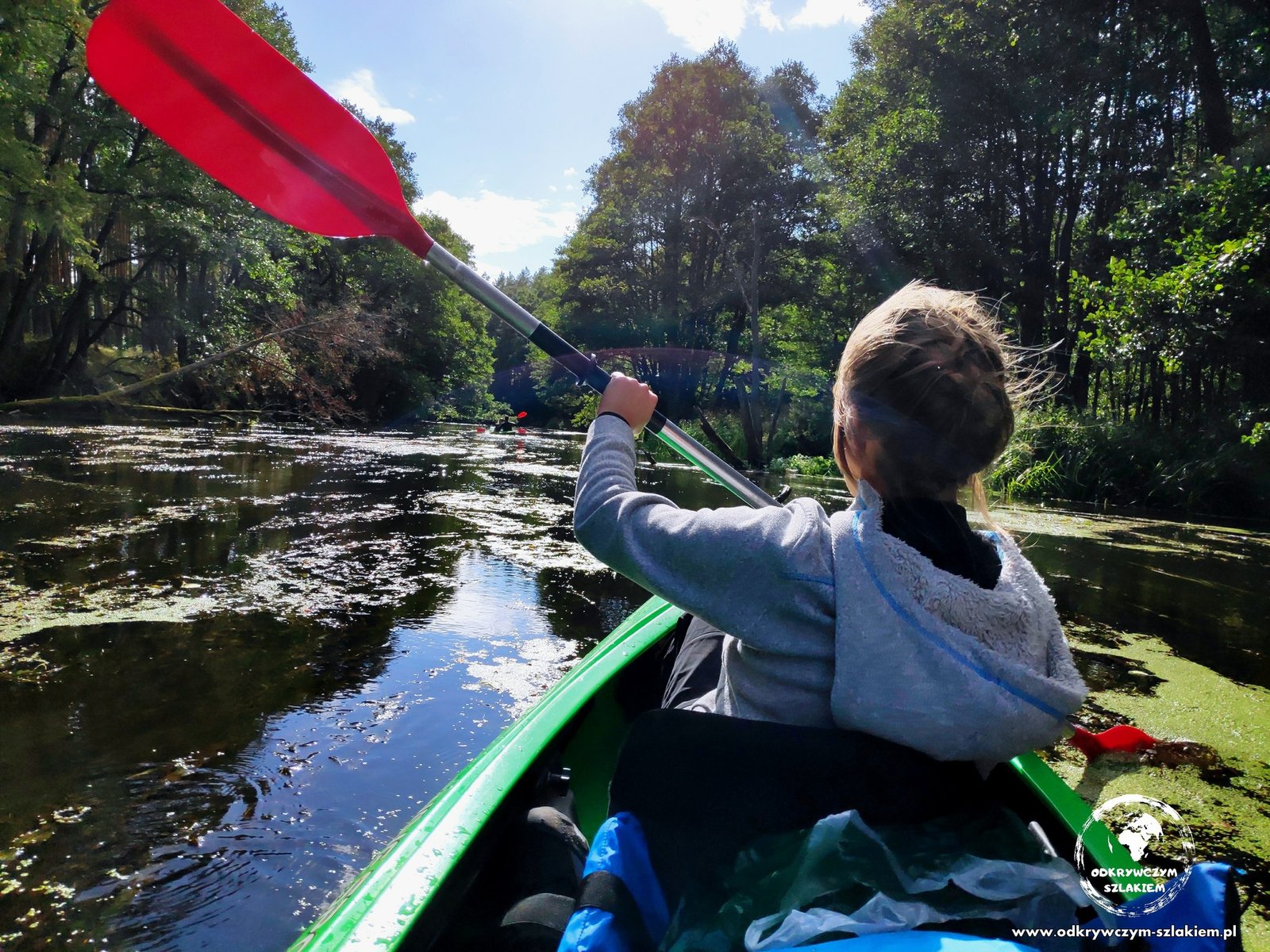
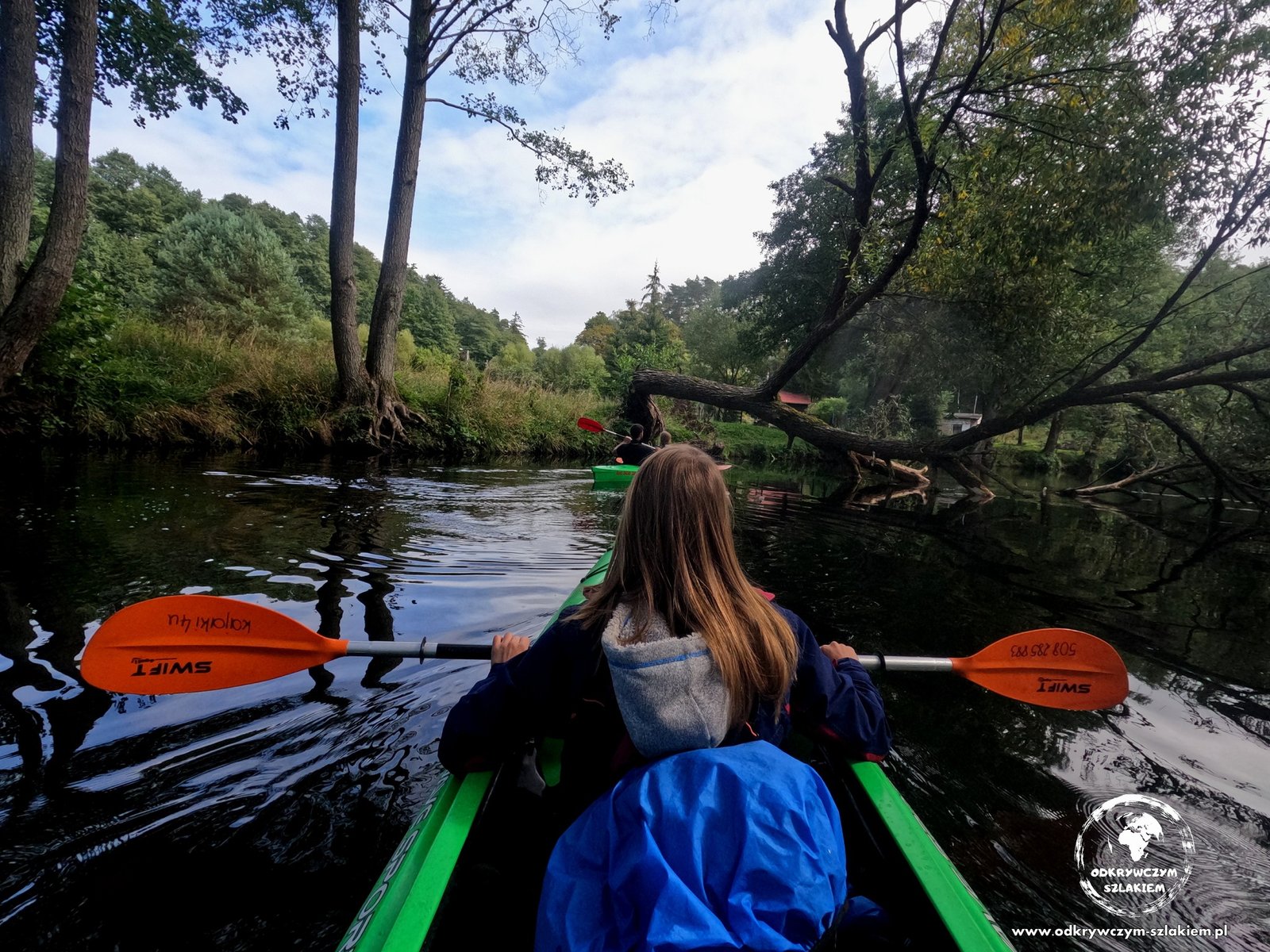
On the route – especially on the first and second days – we faced loads of obstacles, most often in the form of fallen branches and trunks. Usually we could paddle around them or slip underneath.
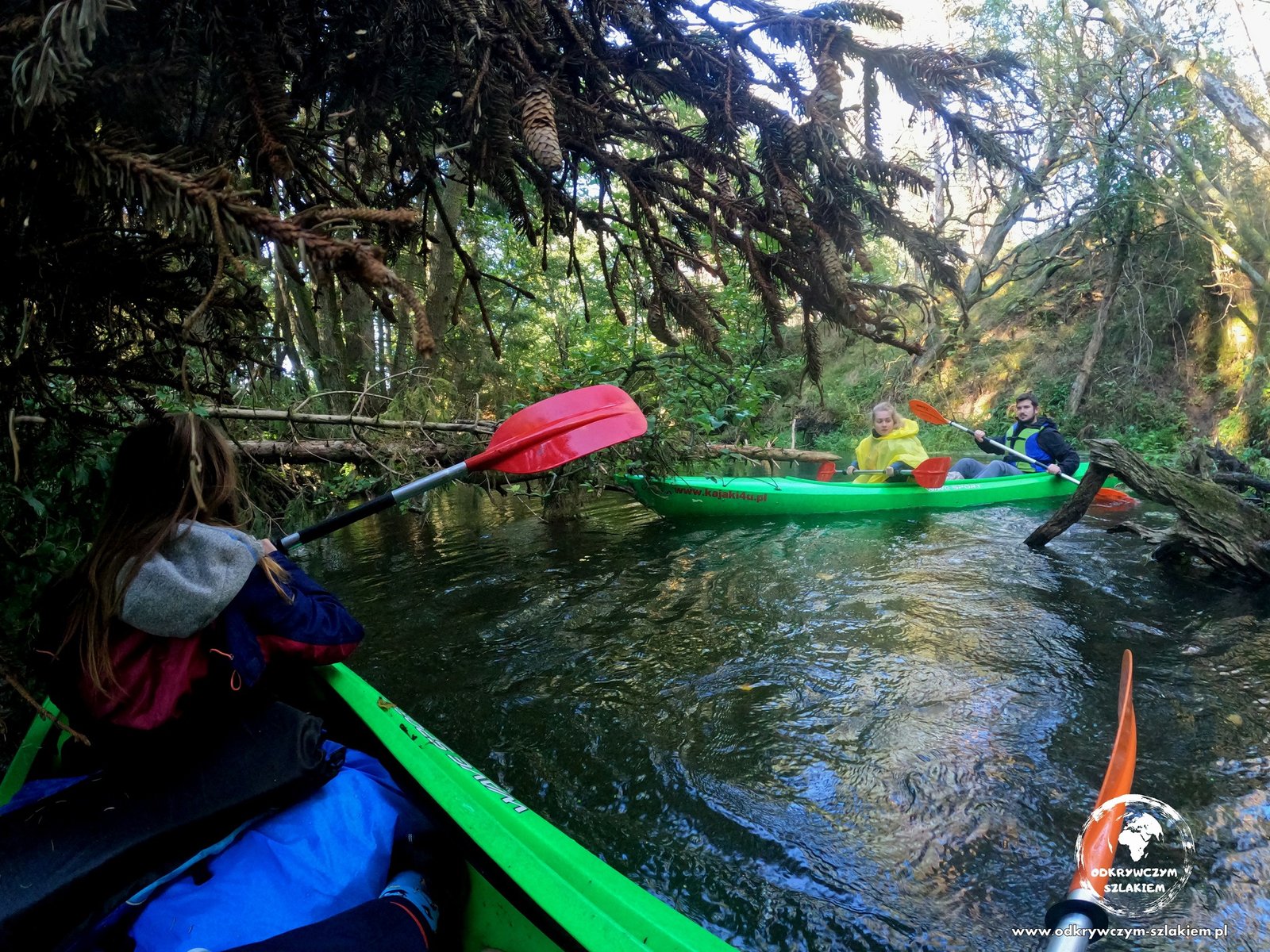
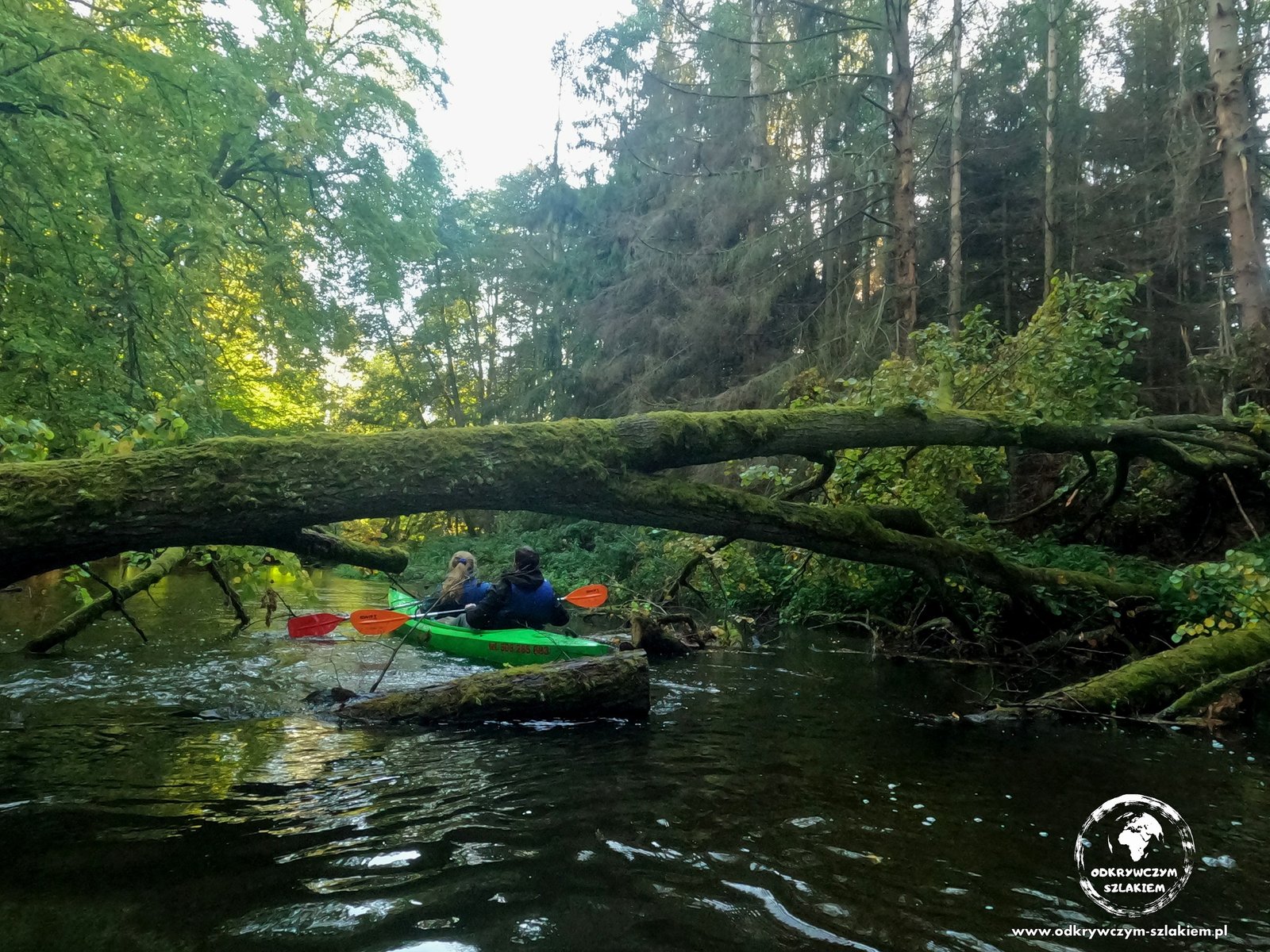
It was worse when the kayak got wedged – what mattered was how it was positioned, and sometimes it was already too late to correct it. Our record on a single obstacle was about half an hour. One manoeuvre helped: we climbed over the trunk while the kayak floated underneath it. Once it was completely impossible to get through – fortunately we could carry the kayak overland.
Portages at hydroelectric plants
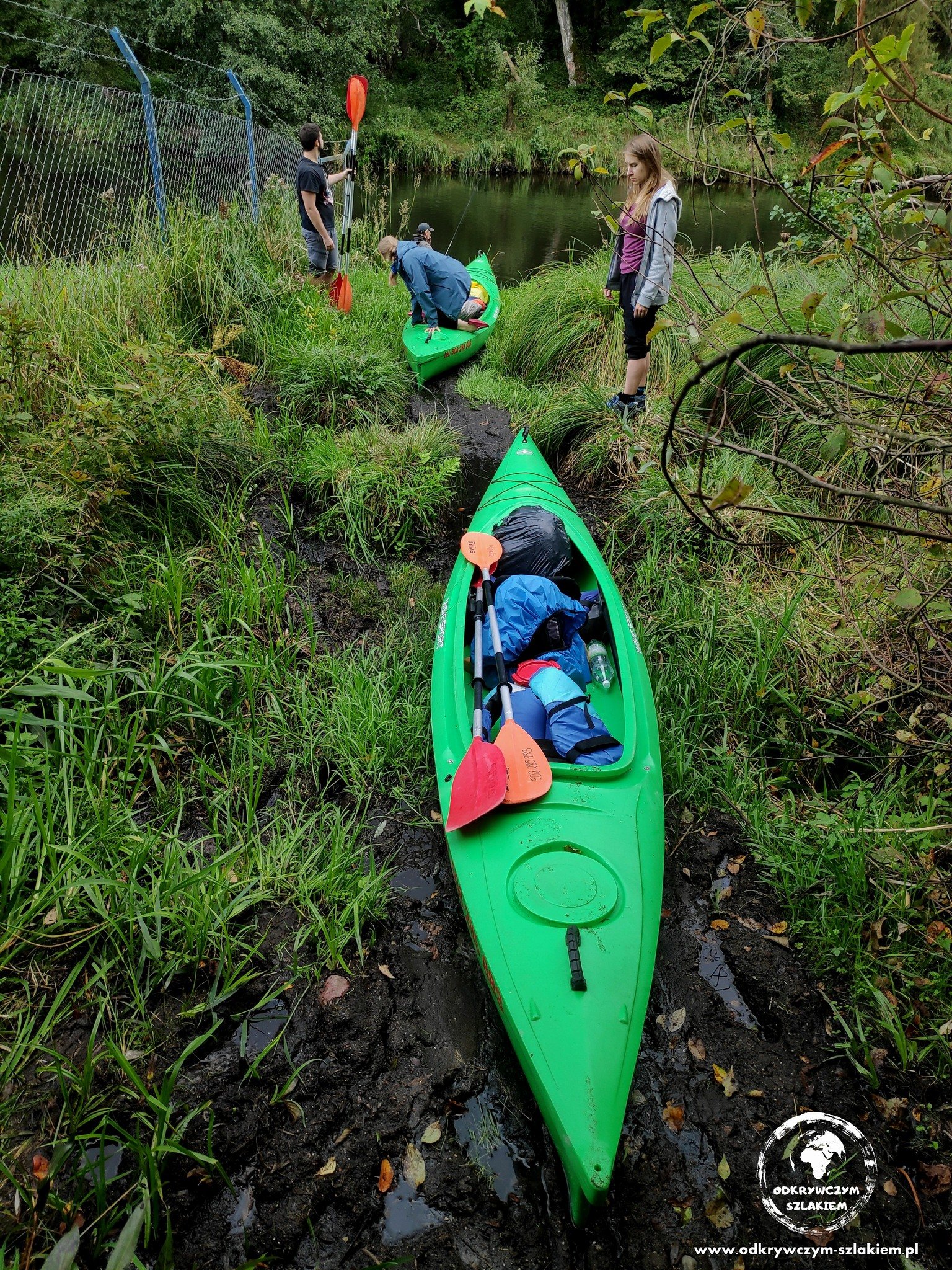
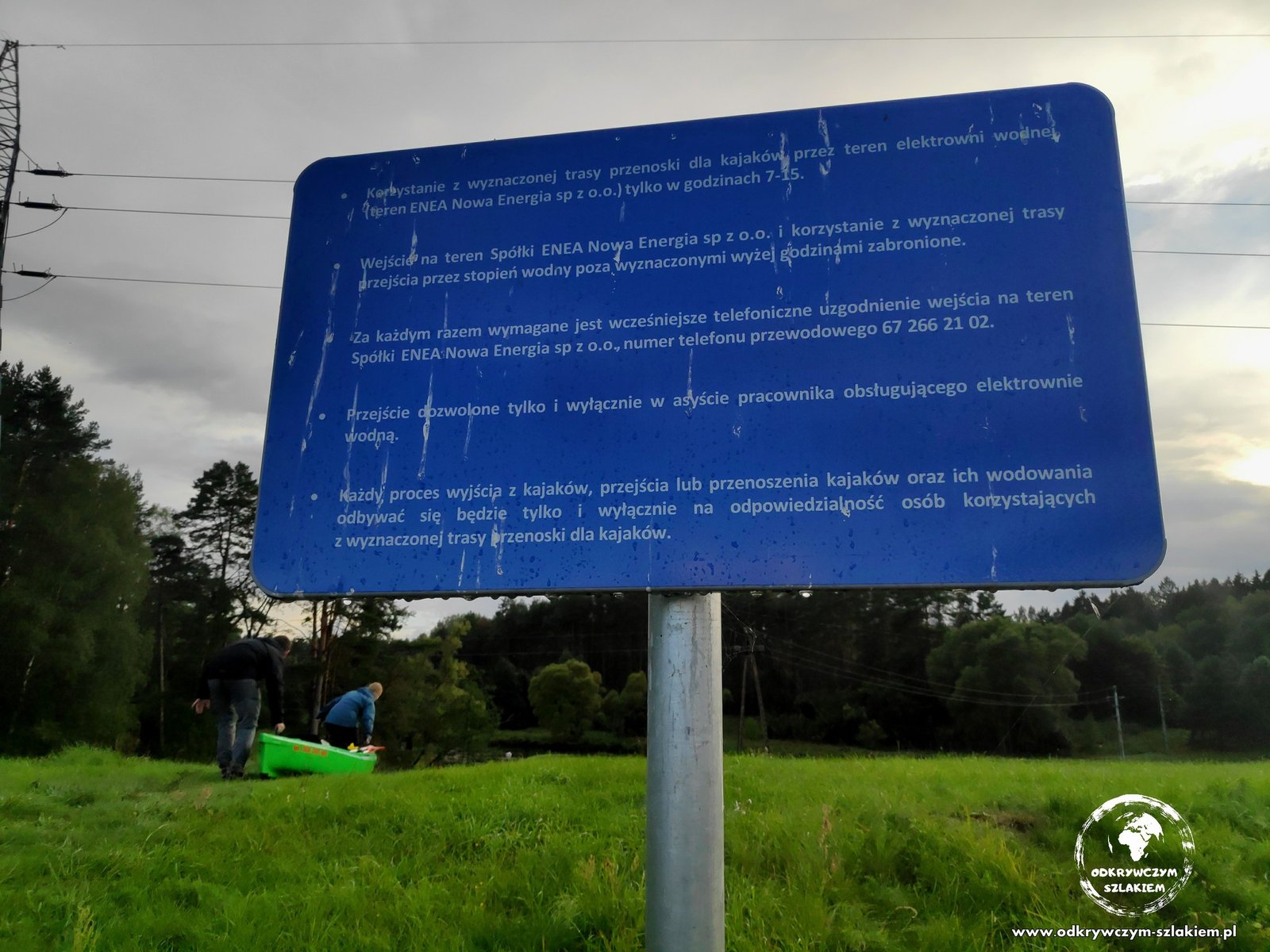
In total we had 9 portages – places you can’t paddle through, mostly at hydroelectric plants and water mills. You have to pull up to the bank and carry or drag the kayak overland. The hardest one was at the plant in Podgaje: 400–500 metres on foot, and then lowering the kayaks down a steep bank straight into mud. Another time the only way led through the grounds of a power plant – officially only accompanied by a member of staff and at set hours, which is hard to arrange without knowing in advance.
Overnight stays and shopping along the way
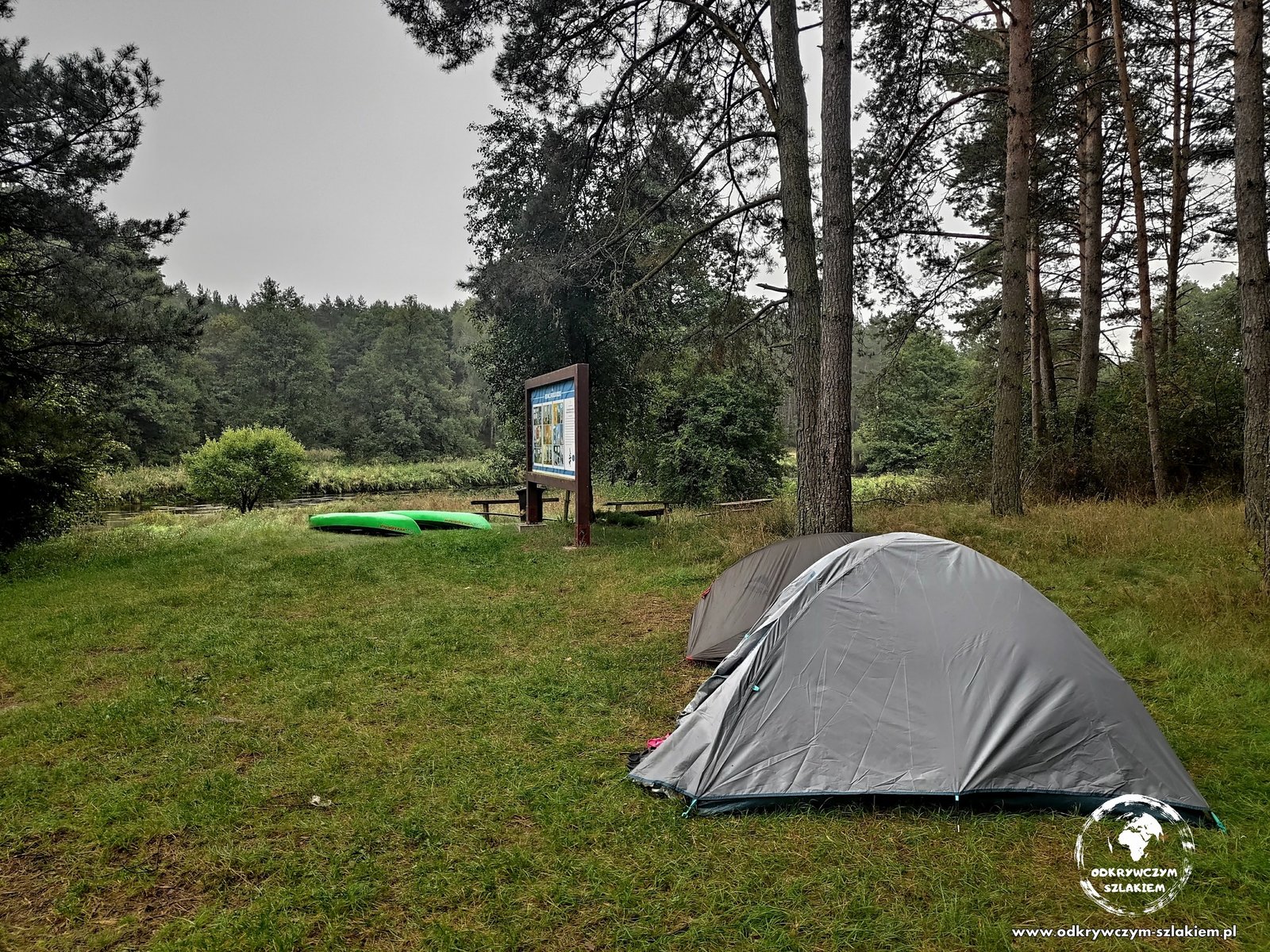
We didn’t book accommodation in advance (except the last night, in Piła), because we didn’t know how we’d get on – we only knew where we could stay. It worked out as two free nights in a tent and two paid ones under a roof. Each time we had to unload most of our things from the kayaks and pack them back in the morning.
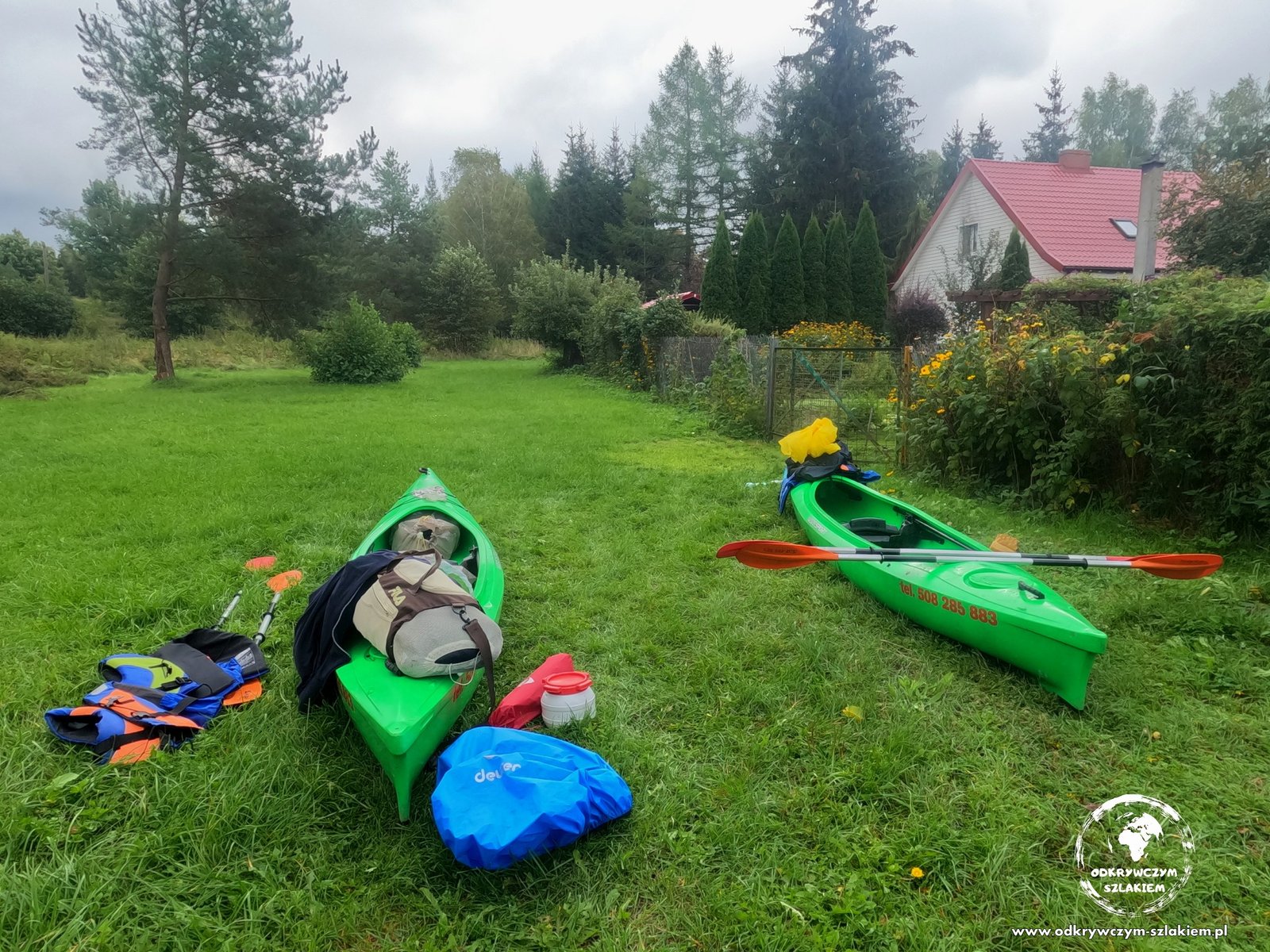
We spent the first night in a tent at Spalony Młyn (near Czarne). Unfortunately, broken glass on the ground punctured our tent and one sleeping mat – and we happened not to have any patches, so we had to improvise. On the second day we planned to camp too, but unexpectedly we were offered a cabin for about €6.50 per person – it came in very handy, because we had got pretty soaked. We learned there that the last kayakers had been seen two weeks earlier.
The third night we camped at a free site by the hydroelectric plant in Jastrowie, and the fourth we spent at a farm stay in Ptusza – we had to carry the kayaks across a field to get there. The price turned out to be clearly higher than on the website (about €15 instead of €7.50–8.50 per person); in the end we paid about €13 each, and the online price list was updated soon after. So it’s worth confirming the price before you paddle in.
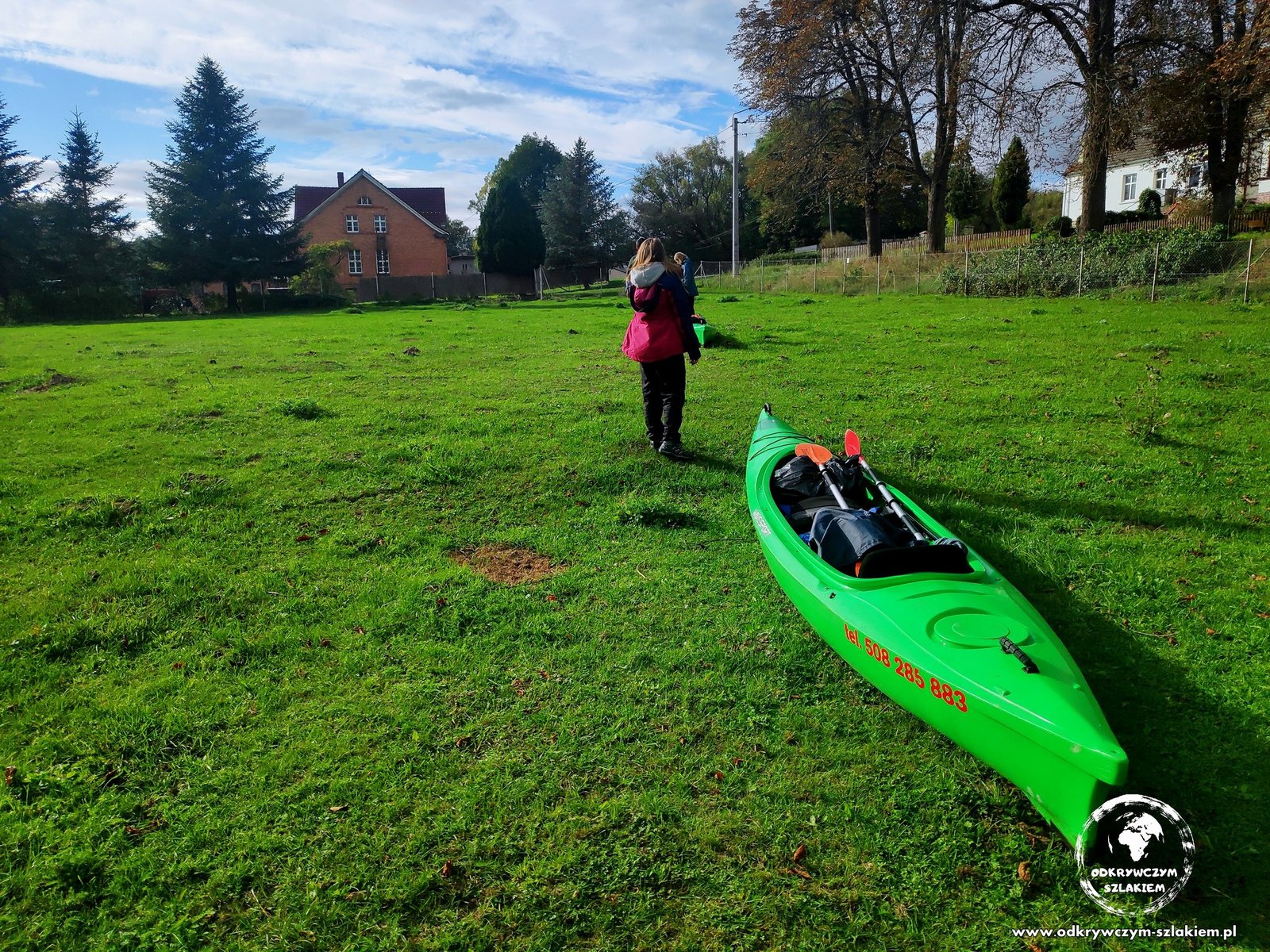
Apart from the shopping from Koszalin, on the third day you could restock at a small shop in Lędyczek and in Jastrowie – from the campsite to the supermarket it was about a 45-minute walk each way, but we still managed to grab a kebab just before the stand closed.
A semi-wild river, the weather and nature
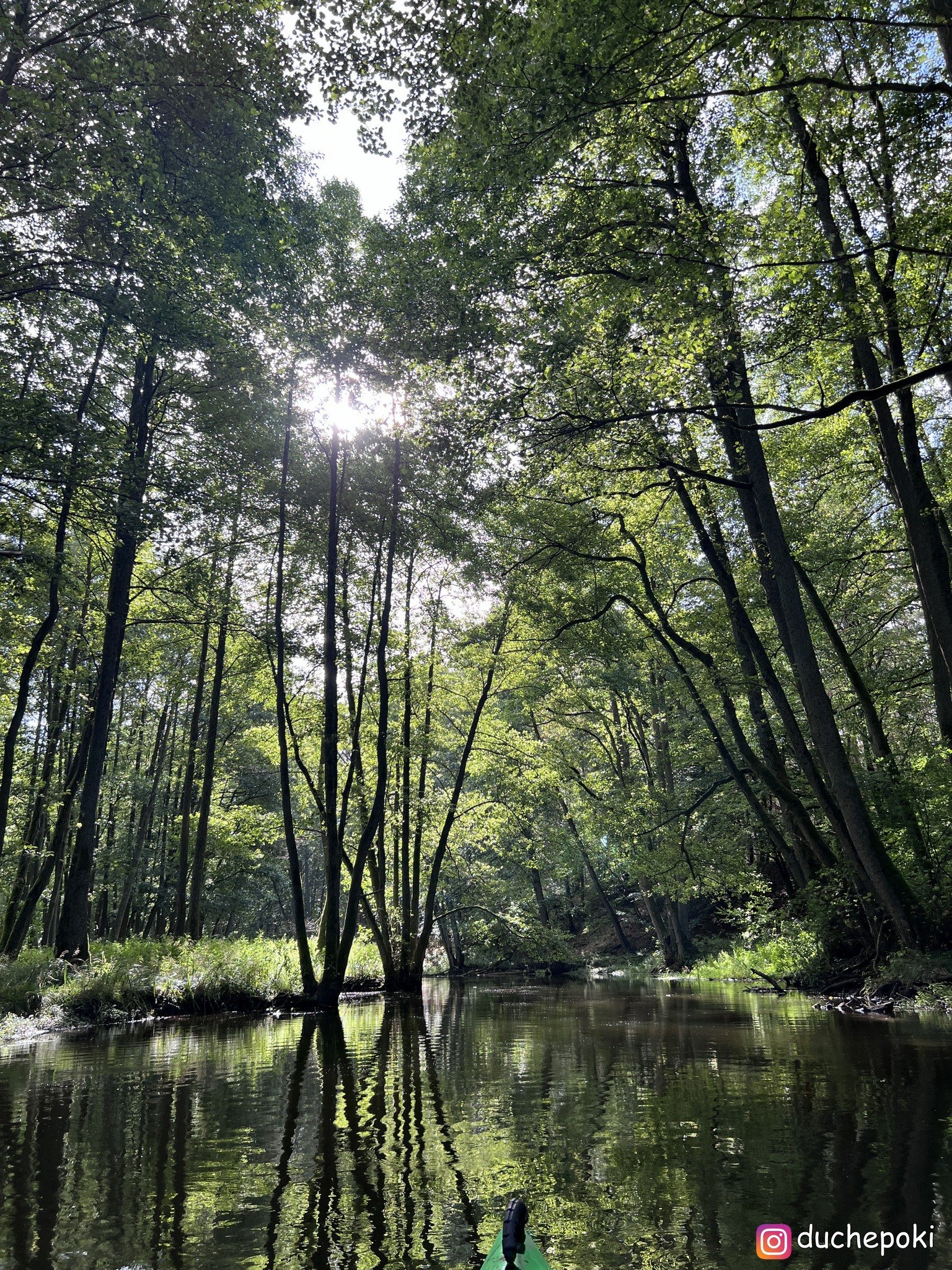
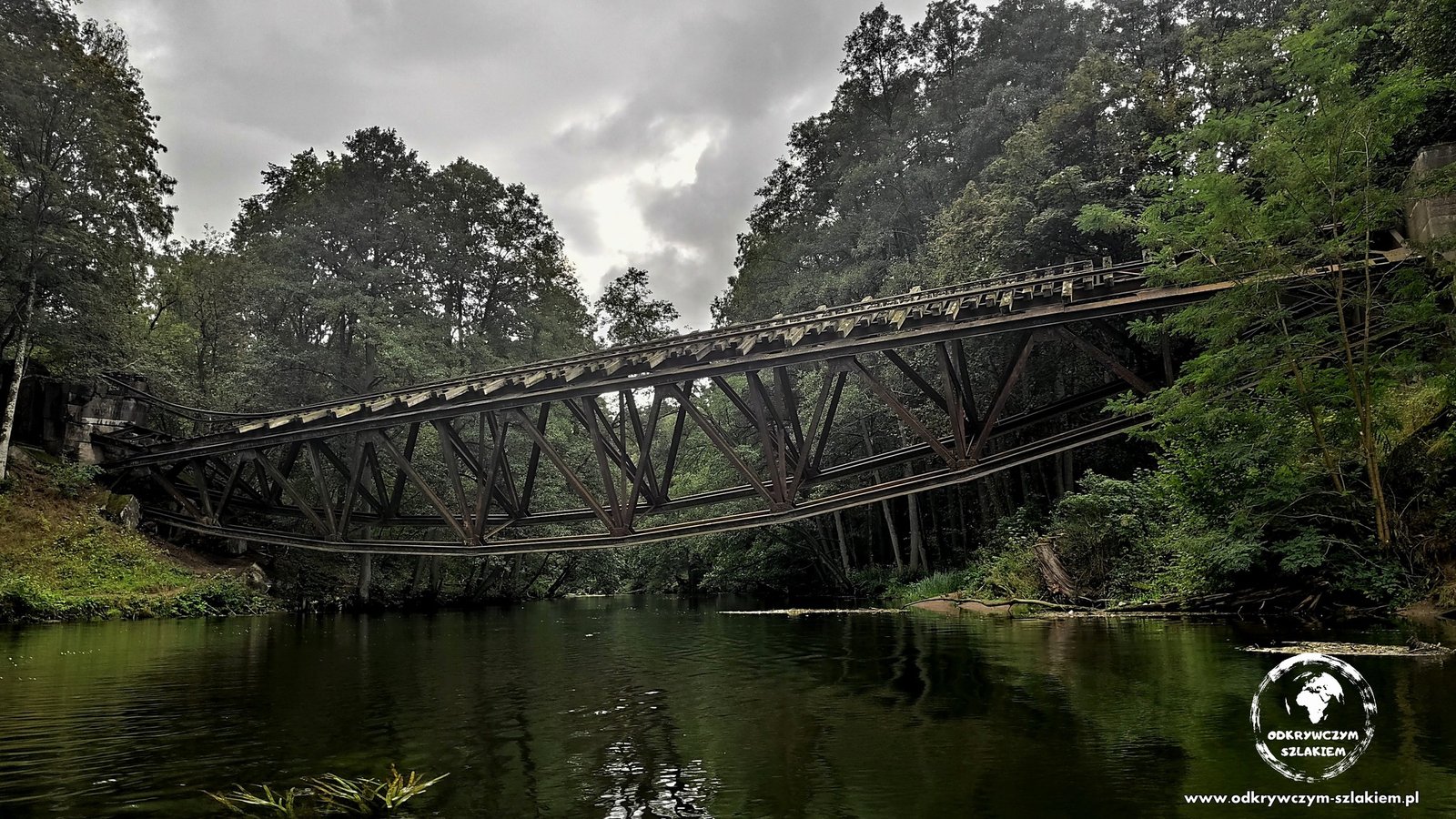
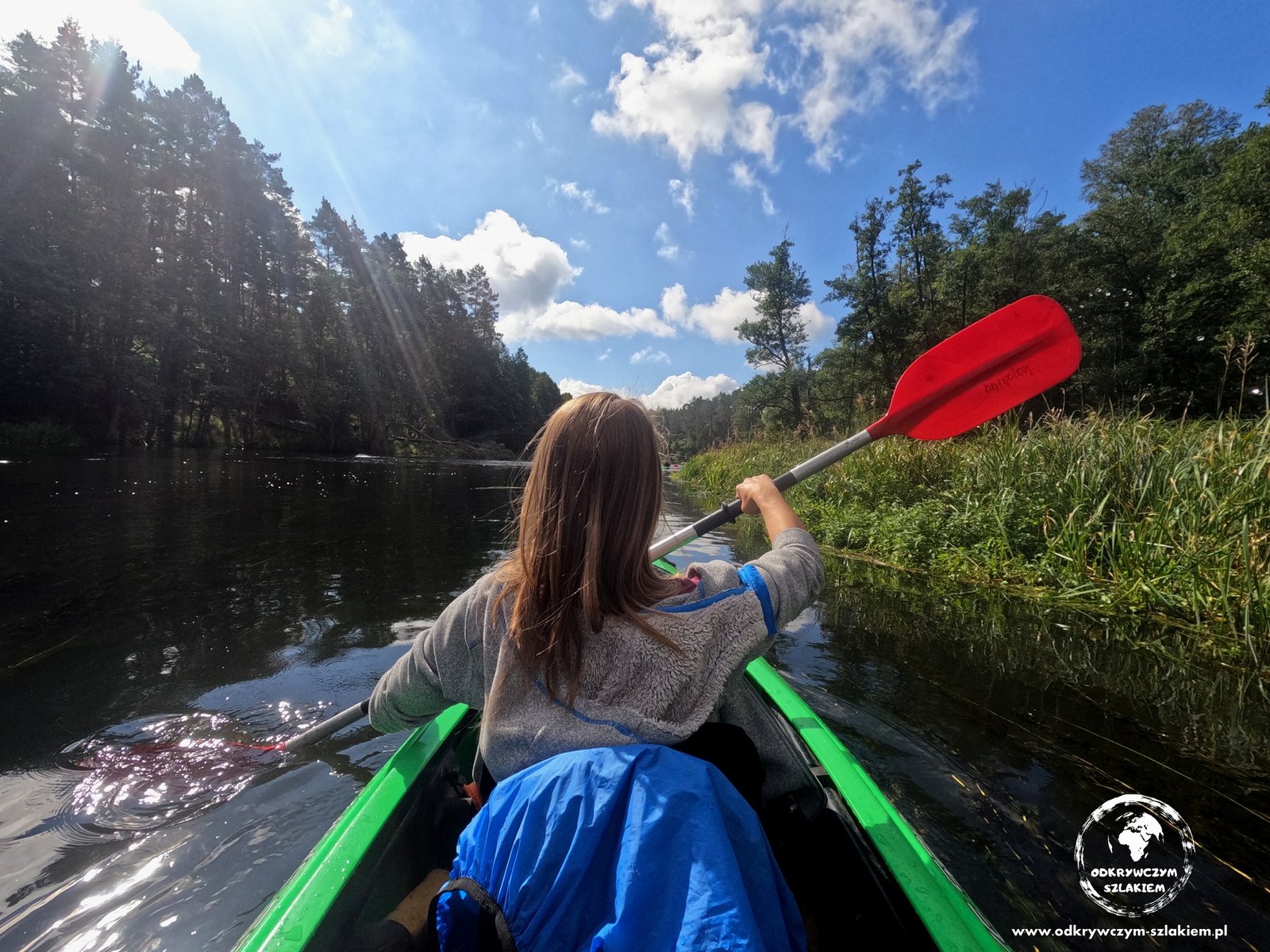
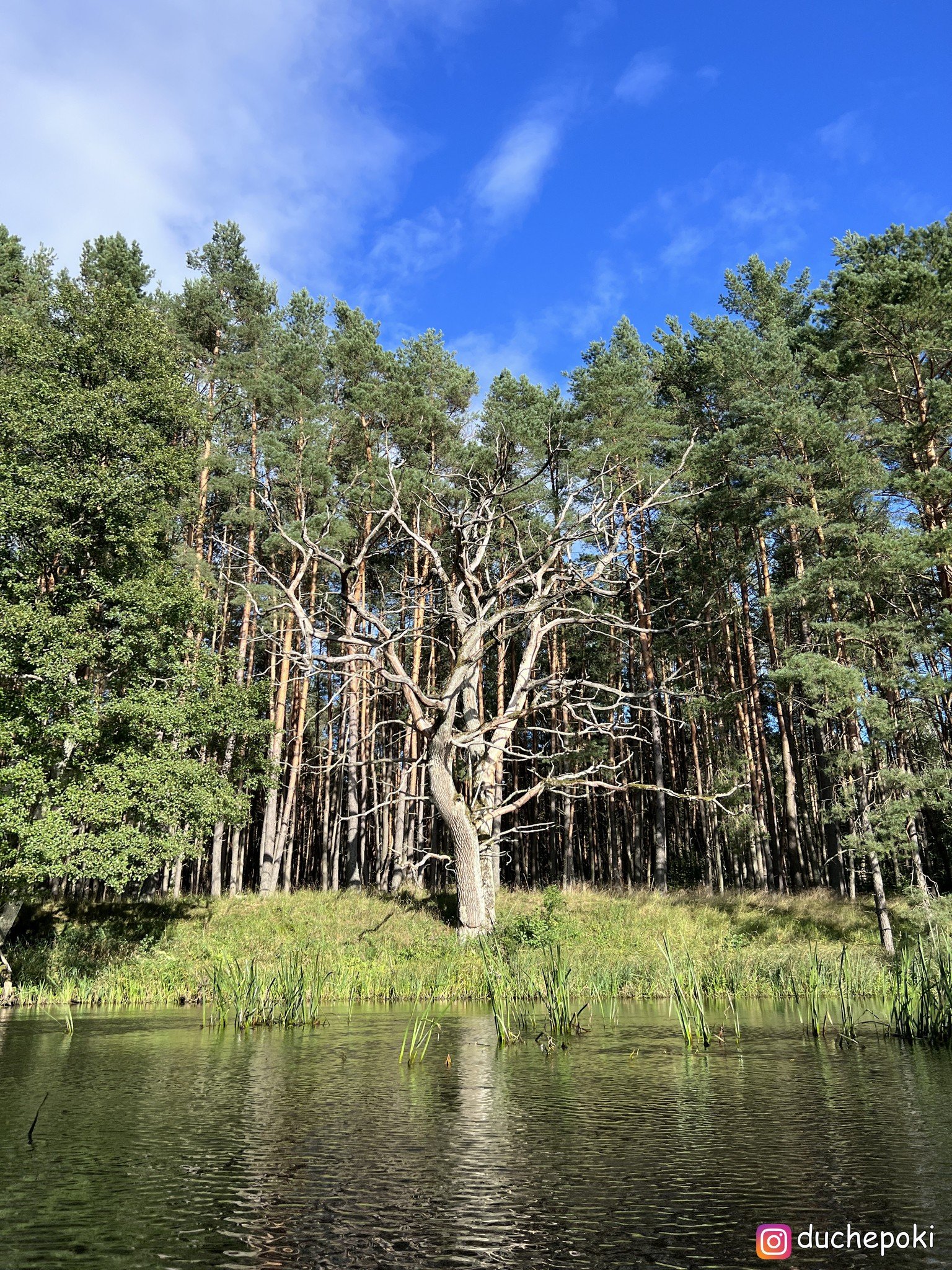
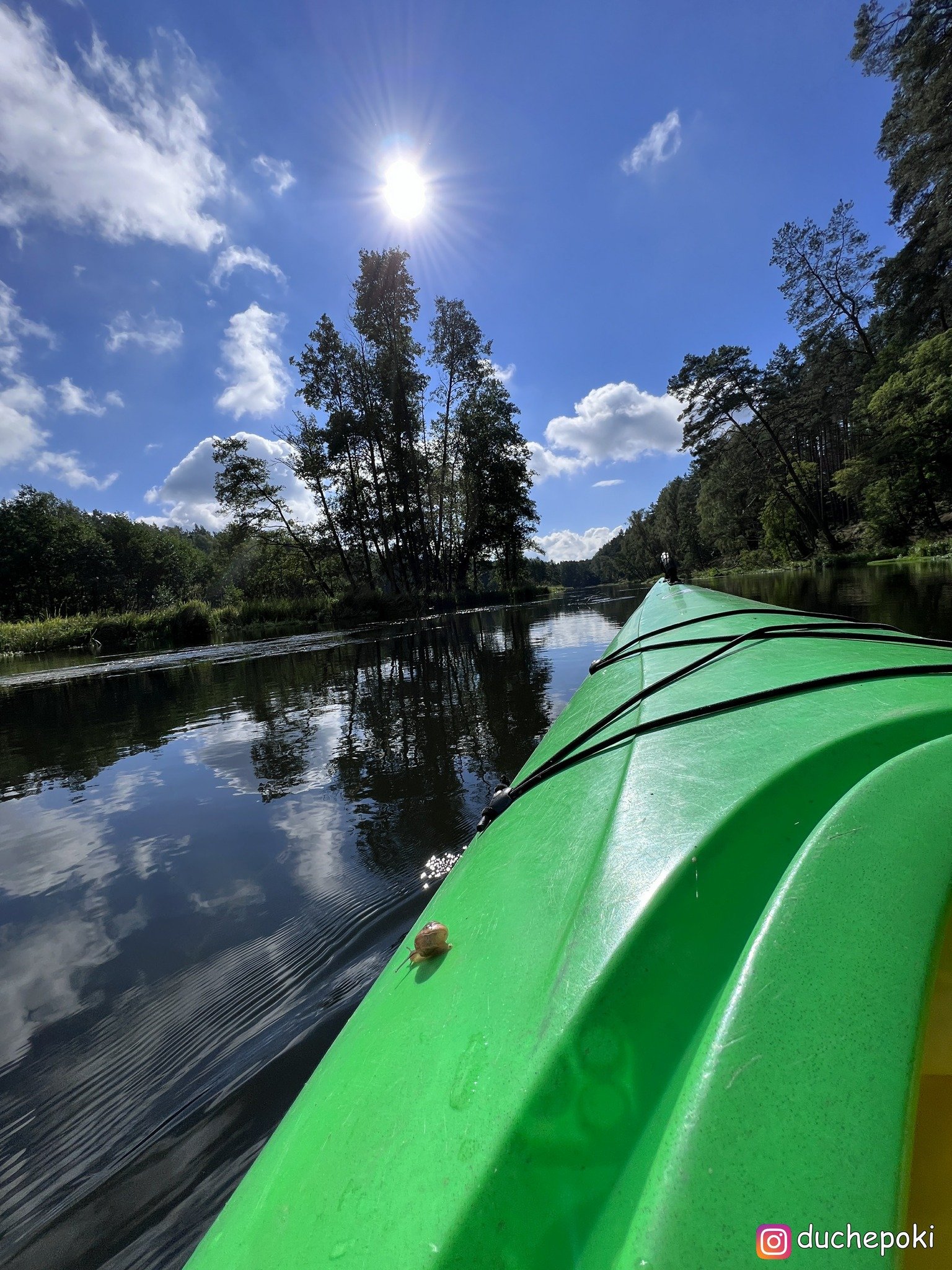
Further downstream the Gwda gets wider, and on the way you paddle through several lakes. We also passed two old railway bridges – one of them was blown up in 1945 as the German army retreated. The land along the river has little tourist infrastructure, so I’d call the route semi-wild – which has its advantages too. In September we didn’t meet any other kayakers, but lots of anglers.
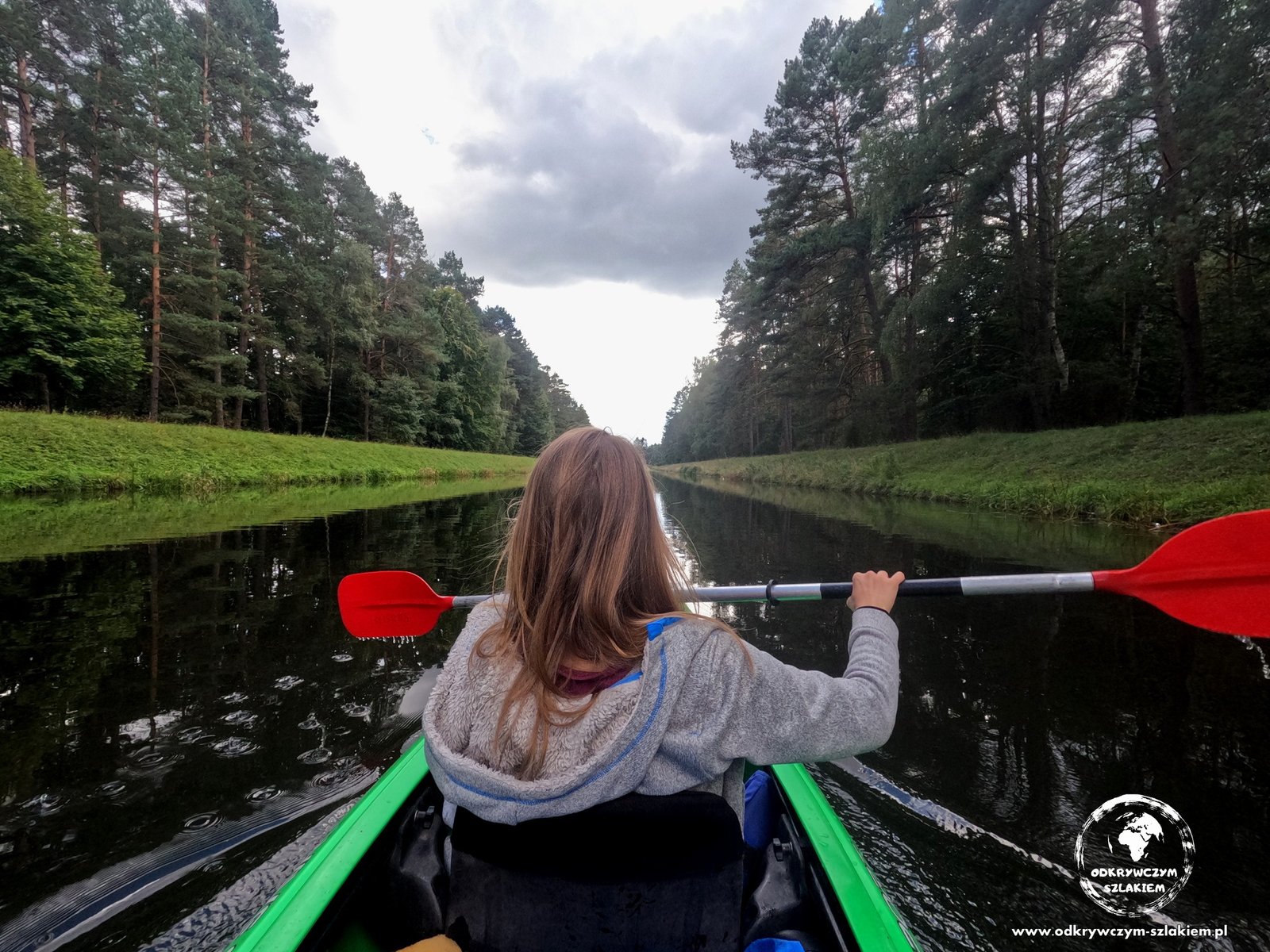
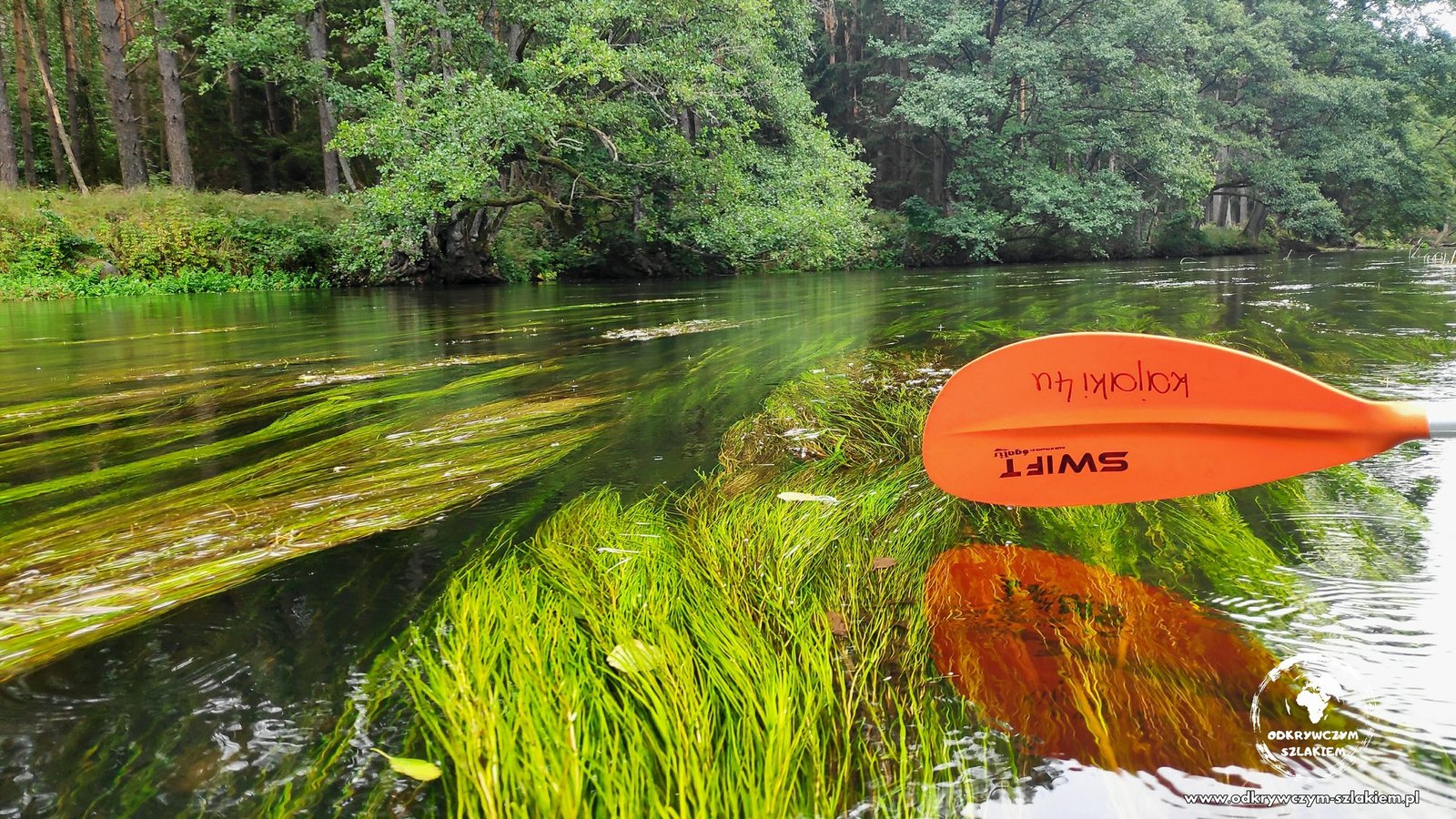
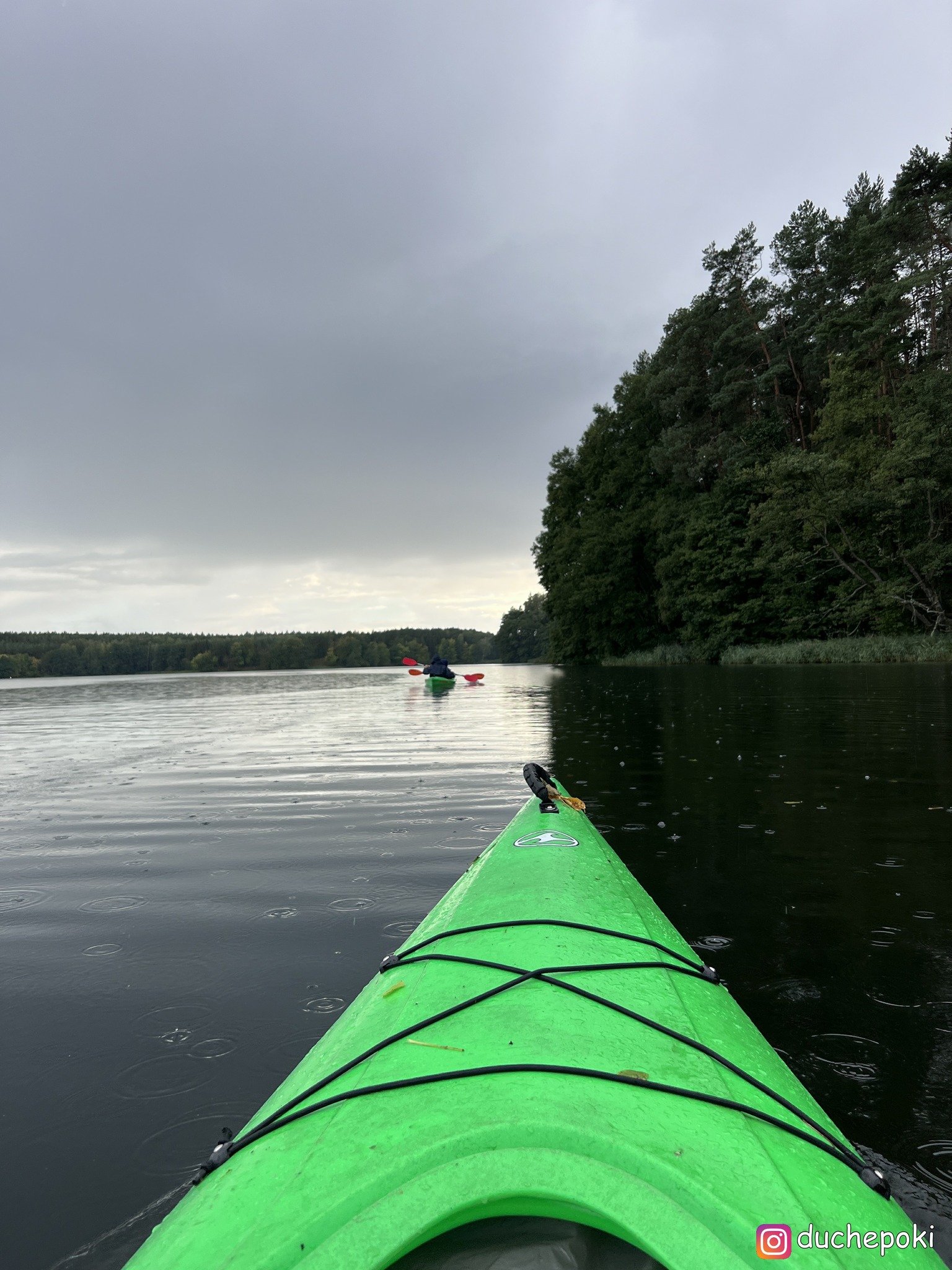
The weather was fine: up to 15–16 degrees during the day, sometimes sun, more often clouds, a light wind and light rain almost every day. Twice it rained harder – at the end of the second day we got pretty soaked. In light rain we kept paddling; in heavier rain we sheltered under the trees.
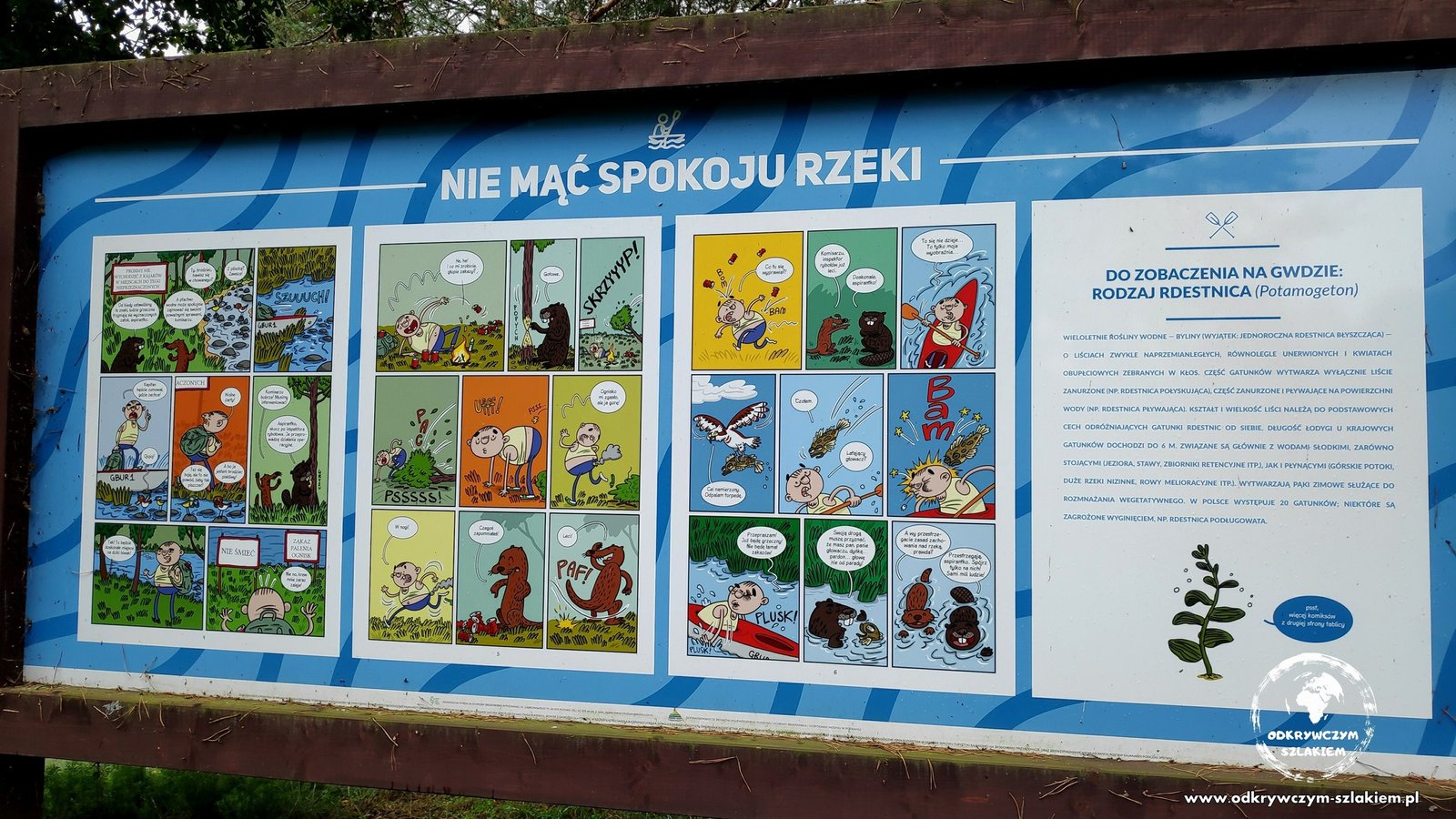
On the way we also came across boards with educational comics about the river – both informative and fun.
The finish in Krępsko and an evening in Piła
In the end, in 5 days we covered the route planned for 4 – about 90 km. What slowed us down most were the obstacles in the water, followed by the portages at the power plants and the rain. I thought aching arms would be the biggest problem, but in that respect we did very well. We paddled to Krępsko (we paid about €6.50 extra for transport from there), from where we were driven to Piła.
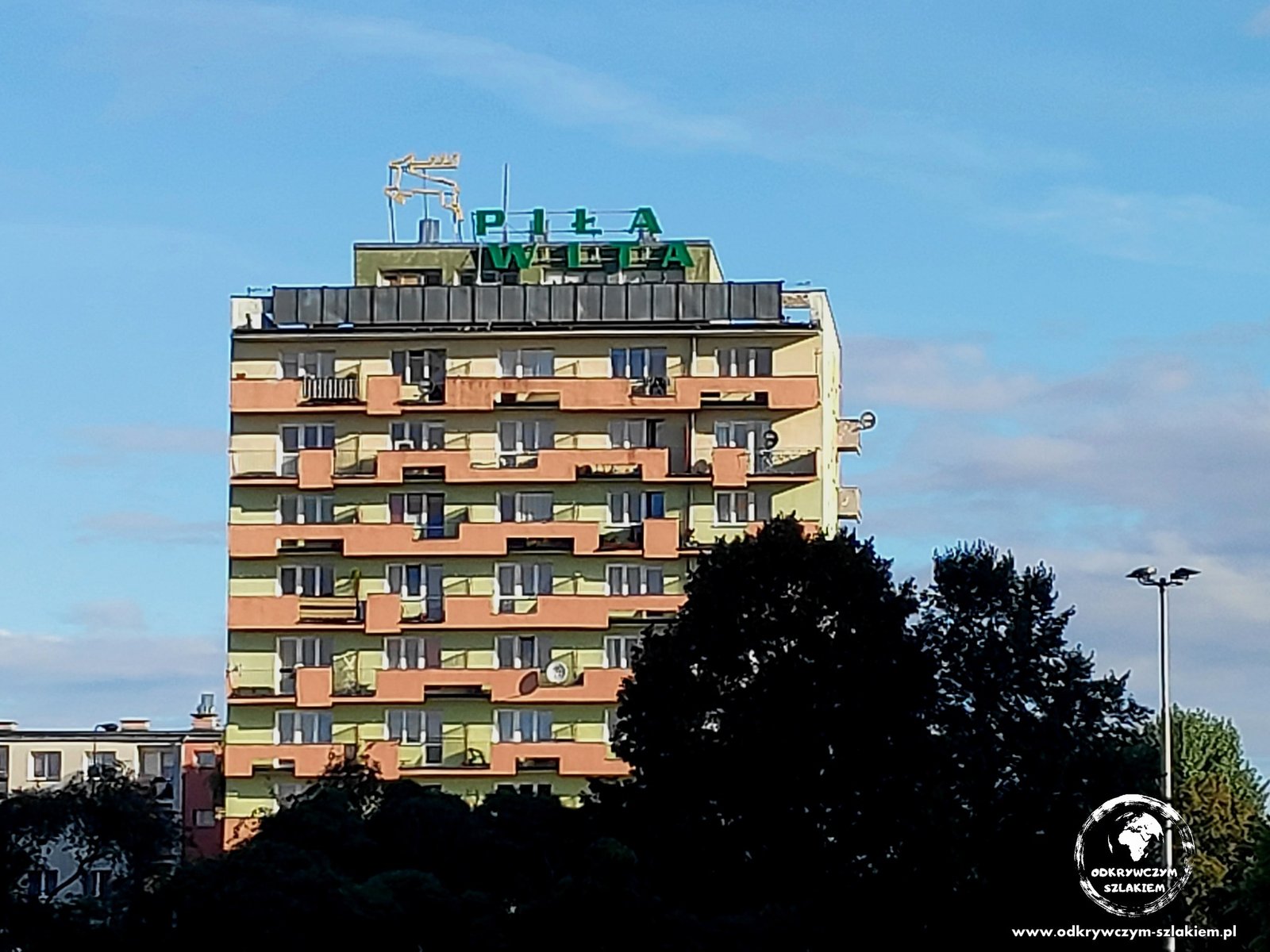
In Piła we spent a relaxed evening walking around the centre, and the night in a rented apartment. We also finally understood what the Polish singer Grabarz meant when he sang that Piła welcomed the “deer” with a stag on a skyscraper – a neon sign saying “Piła wita” (“Piła welcomes you”) with a stag shines on one of the tower blocks in the centre.
Practical information
- Route: Gwda Wielka – Krępsko (about 90 km in 5 days); the plan to Piła is about 108 km. On average we did about 18 km a day.
- Kayaks: Kajaki4u rental – 2 double kayaks for 5 days with transport to the start and collection from the finish: about €150 (about €37 per person, 2022); transport from Krępsko to Piła about €6.50 extra.
- Getting there: by train to Szczecinek, then transport from the rental company to Gwda Wielka.
- Accommodation: free campsites (Spalony Młyn near Czarne, the field by the power plant in Jastrowie), a cabin for about €6.50 per person, a farm stay in Ptusza (about €13 per person after negotiating) – 2022 prices; take patches for your tent and sleeping mat.
- Shopping: you need your own supplies for the first two days; the first shops are in Lędyczek and Jastrowie.
- Portages: 9, mainly at hydroelectric plants; the hardest in Podgaje (400–500 m and a steep bank).
- Obstacles: on the upper stretch expect lots of fallen trees – plan shorter daily stages than on a “clear” river.