The United States has a reputation for being an expensive destination – and it’s true that hotels, restaurants and city attractions can ruin a budget. But you can see the USA surprisingly cheaply, especially if you’re more interested in national parks than in cities. After Work & Travel we had a month to travel (I describe it day by day in the 30-day USA itinerary), and most of the time we slept in a tent, shared a rental car among several people and cooked for ourselves. Below is everything we learned along the way.
Table of contents
- How to plan the route
- Transport – car, plane, public transport
- Accommodation – tent, Couchsurfing, hostels
- Food
- Gear for the road
- National parks – fees and reservations
- Weather – what to keep in mind
- What this trip taught us
How to plan the route
With only a month available, you can’t plan a trip that includes every place worth seeing – the United States is enormous. That’s why it’s worth focusing on a specific area. When planning, you need to think not only about what kind of traveller you are (a “city person” or a nature lover), but above all about how much money you want to spend. Nature lovers will appreciate not only the beautiful views but also having more money left in their wallets – sightseeing in cities strains the budget far more.
Plan wisely! It’s definitely better to skip a far-flung attraction that isn’t “on the way” at all and spend more time in places close to each other. Very roughly, the country can be divided into three parts:
- The West – for people who love mountains and beautiful views. We recommend the national parks: Yosemite, the Grand Canyon, Zion, Bryce Canyon, Arches, Canyonlands, Death Valley and the area around Paria, Marble and Glen Canyon.
- The middle – among others Yellowstone National Park (ideally together with neighbouring Grand Teton) and Mount Rushmore.
- The East – mainly big cities and Niagara Falls.
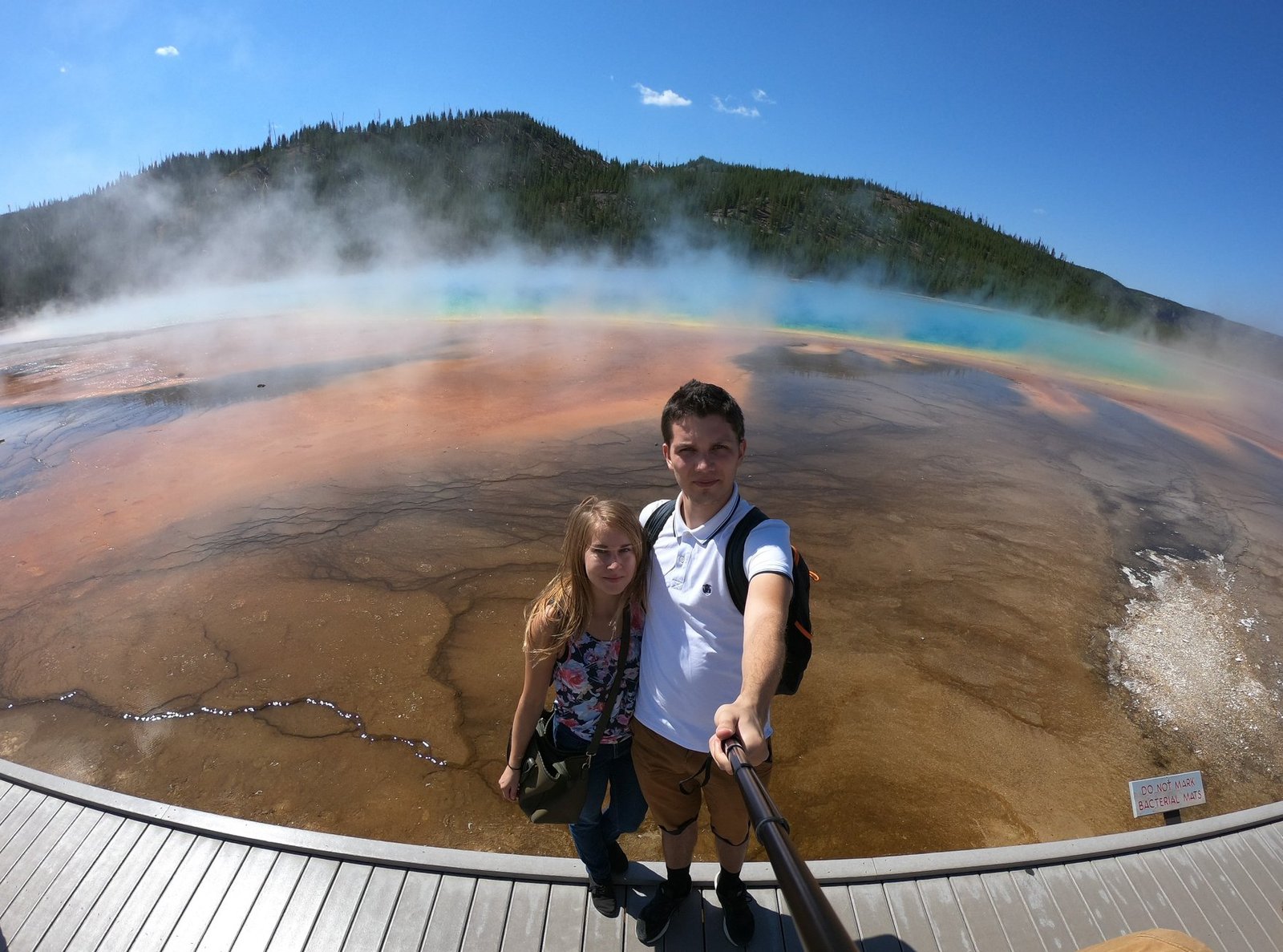
Accommodation in cities is very expensive, so we didn’t stay in them long: two days are enough for Los Angeles and San Francisco, one for Las Vegas. We drove a loop from Los Angeles through Arizona, Utah and Nevada back to California, and at the end we spent a week on the East Coast.
Transport – car, plane, public transport
Car
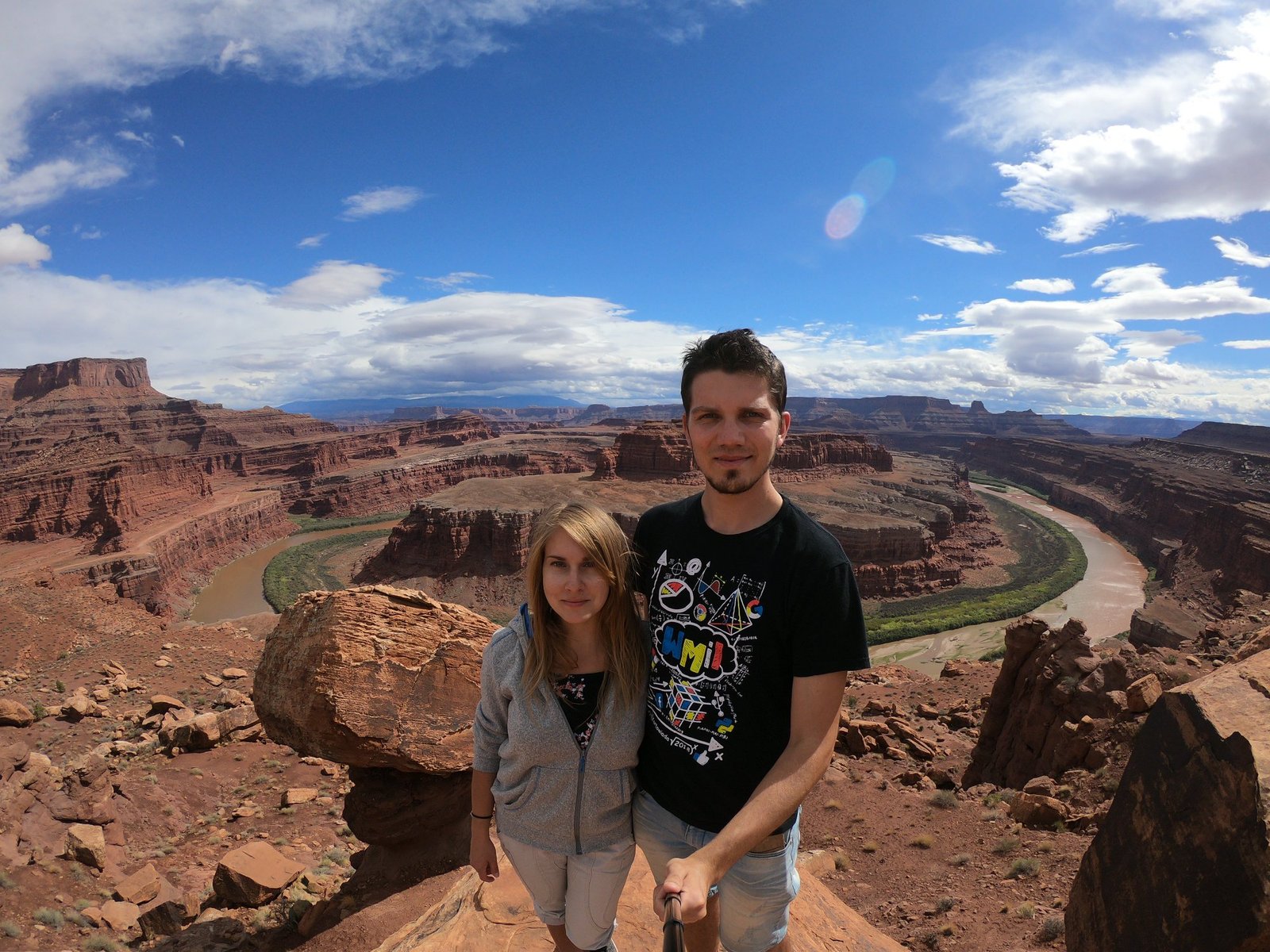
With such long distances and little time, the best solution is to rent a car. We rented one in Los Angeles for three weeks (25 September – 16 October) and returned it to the same place, which is usually much cheaper than dropping it off in another city. On top of the basic price we paid about 10 USD for extended roadside assistance (Premium Road Assistance). The more people, the bigger the savings – for most of the trip there were five of us (with Wojtek, Kasia and Karolina), and it’s worth looking for travel companions on social media. To our surprise, a car with a decent boot fitted five people, five big suitcases, several backpacks and food for the road. In total we drove 7347 km in rental cars – about 5800 km in three weeks in the West and 1530 km on the East Coast.
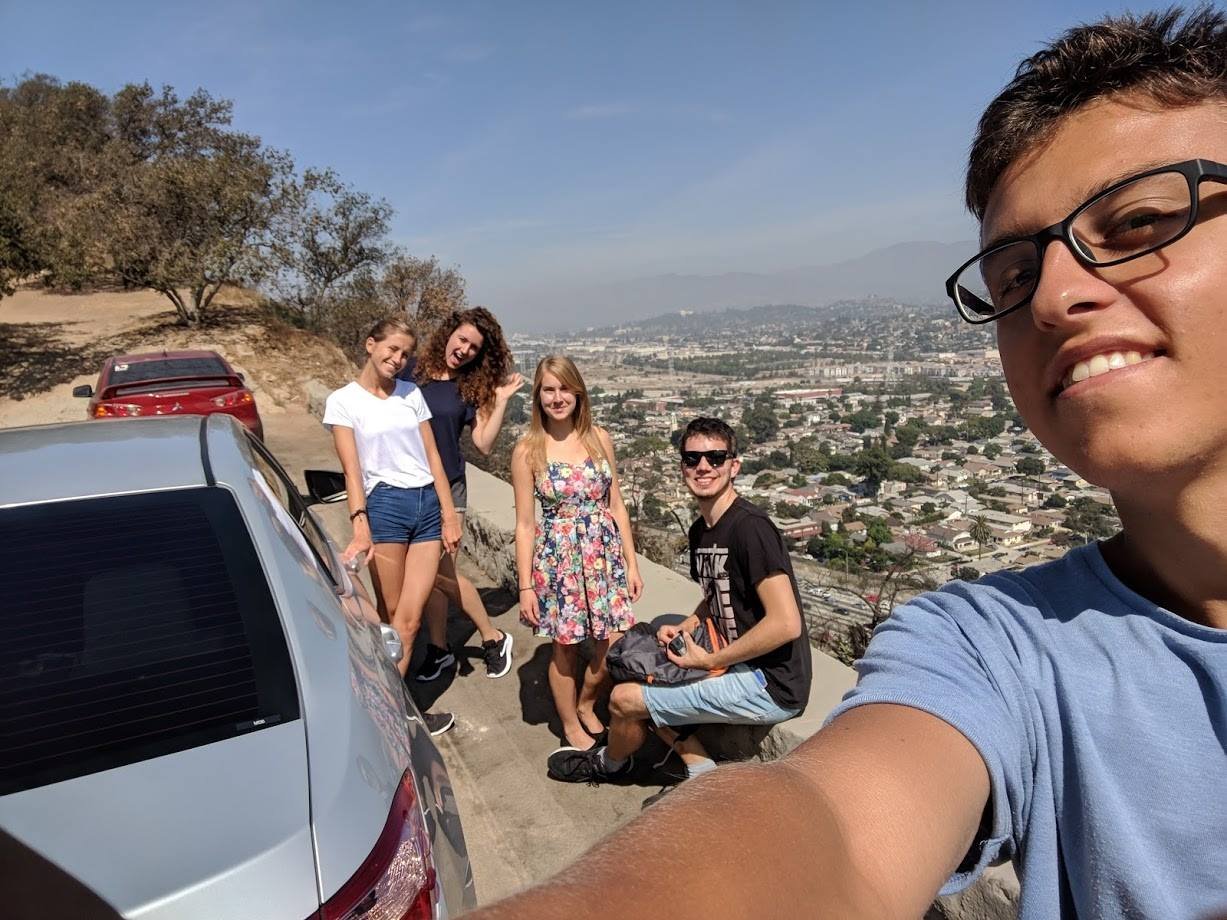
- Driver’s age – rental companies charge a hefty fee for drivers under 25. In our group only I was over 25, so the car was rented in my name – otherwise we wouldn’t have got a good price.
- Driving licence – bring your national driving licence from home (ours were Polish). The international one was of no use to us (and on its own it isn’t enough). Mine had stayed in Poland and my parents had to post it to me – it took ages: it reached Yosemite when we were already working in Grand Teton and had to be forwarded. In the end it arrived in time.
- Speed limits – they weren’t always clear to us, so keep a close eye on the signs. We were never stopped, but sometimes we were probably driving too fast.
- Road surface – the free maps handed out in the parks clearly show the type of surface, but the satnav doesn’t necessarily. Without an off-road vehicle, think twice about carrying on when the tarmac ends. To Gooseneck Overlook in Canyonlands we drove down a narrow, steep road meant for 4x4s, and we never made it to the colourful rocks of Paria Canyon and Vermilion Cliffs at all – we just drove a lot of extra kilometres.
- Cities – the biggest problem is parking, for example in Washington. You don’t really need to worry about car theft in the USA, although on the East Coast we ourselves were taken for thieves – someone called the police when they saw us repacking our things in the rental car.
Plane
A means of transport worth recommending when you have a long distance to cover – flights between cities in the USA are fairly cheap. As always with planes, though, watch out for baggage fees. From Grand Teton to Los Angeles we took a bus from Jackson to Salt Lake City (447 km) and then a plane (933 km). From Los Angeles to New York (Newark airport) we took a night flight – a full 3921 km.
Public transport
In cities you can get around by public transport: in 2018 a metro ticket in Los Angeles cost 1.75 USD, and free buses run from the airport to a metro station; a single bus ticket in San Francisco was 2.75 USD. Buses and trains (e.g. Amtrak) run between cities, but they’re not particularly cheap: from Los Angeles to Yosemite we paid about 60 USD per person, with two changes.
Accommodation – tent, Couchsurfing, hostels
- Hotel – in our opinion too expensive to consider. We slept in a hotel only once on the whole trip – in Las Vegas, where the price was decent.
- Hostel – much cheaper than a hotel, but still a considerable expense: in Sacramento the cheapest bed in a good location cost us 80 USD a night for two people.
- Airbnb – sometimes you can find something at a good price.
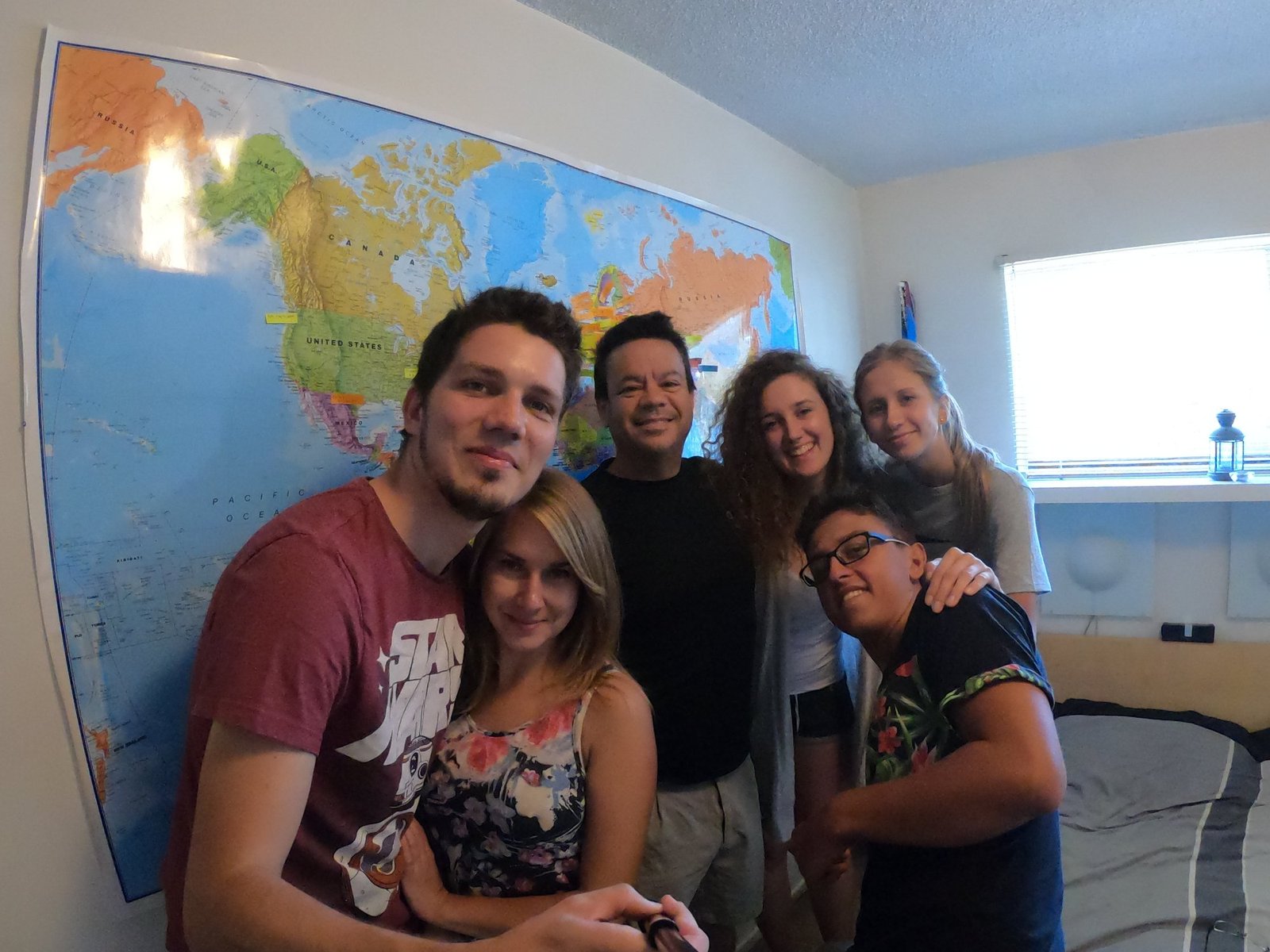
- Couchsurfing – worth trying in bigger cities. We used it successfully in Los Angeles: our host picked us up from the metro station, put us up and drove us to the bus in the morning, and in September he hosted us again at the start of our month-long trip.
- People you meet on the road – in Bryce Canyon we met a Polish couple who invited us to stay, and a dozen or so days later they really did put us up near New York – with an airport pick-up, breakfasts and dinners.
- Tent – the cheapest and, in our opinion, the best way to sleep while visiting national parks. Campsites usually had a fire pit, and firewood could be bought or was already there, so we sometimes spent the evenings by a campfire – usually roasting sausages.
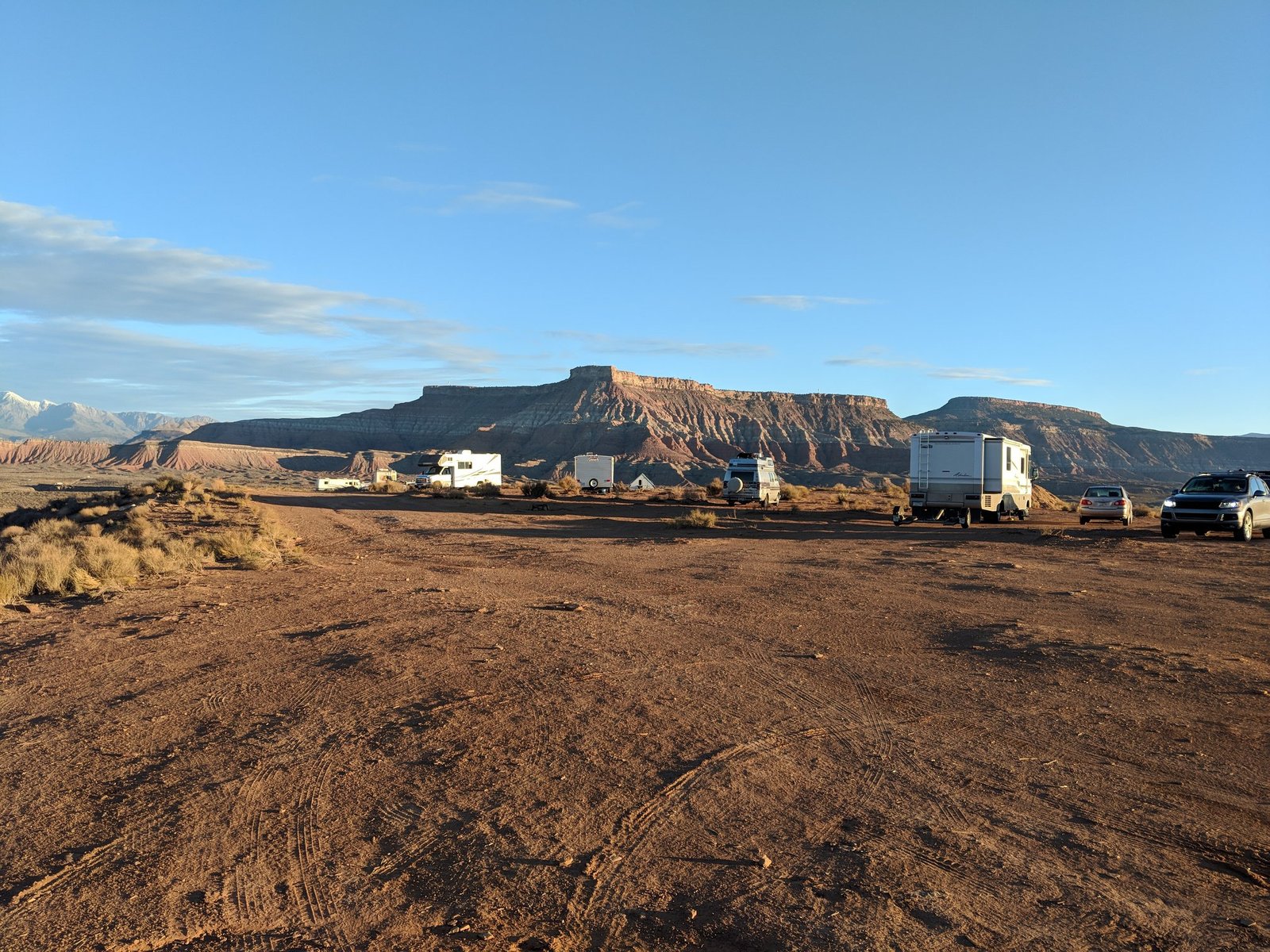
Unfortunately, in the USA you can’t pitch a tent wherever you like – in national parks you can only stay at designated campsites (this also applies to sleeping in your car), and in cities sleeping in a car is sometimes banned by local rules. You can book a campsite pitch in advance, also through apps. With more people it works out really cheap, because you pay per pitch, not per person. Paid campsites usually have showers and washing machines, although showers aren’t a given – it’s worth checking when you book. A reservation guarantees you’ll have somewhere to pitch your tent.
If you want to save money and travel spontaneously, however, we recommend not booking in advance. It’s a bit of a risk, but we generally had no trouble finding a spot – only once was everything full, and we spent the night in the car. Apps with a map of free places to sleep came in handy: in national parks they work well, in cities they can point you to a poor spot or one that no longer exists; you also have to tell parking spots apart from places where you can pitch a tent. Free campsites are less “luxurious”, but in a national park you don’t need to pay for a campsite to have access to a bathroom or shower. On the East Coast, to avoid paying for expensive accommodation in the cities, we slept in the rental car.
Food
During the trip we mainly relied on:
- roadside fast-food places – in the USA the cheapest and quickest way to eat on the road,
- Walmart – a good option for cheap groceries for the road and the quickest, cheapest way to make breakfasts and dinners at the campsite.
If you have more room in the car, it’s worth buying a gas canister with a stove – you can easily get cartridges at Walmart. Prices in the national parks can be high, so it’s best to stock up in towns along the way.
Gear for the road
Outdoor gear is well priced in the USA, so you don’t have to bring everything from home. We bought the cheapest tent at Walmart and it lasted the whole trip – it rarely rained and conditions weren’t tough. What you will need, though, is a warmer sleeping bag: in the mountains and in the desert the nights can be cold. We left the tent behind after the trip.
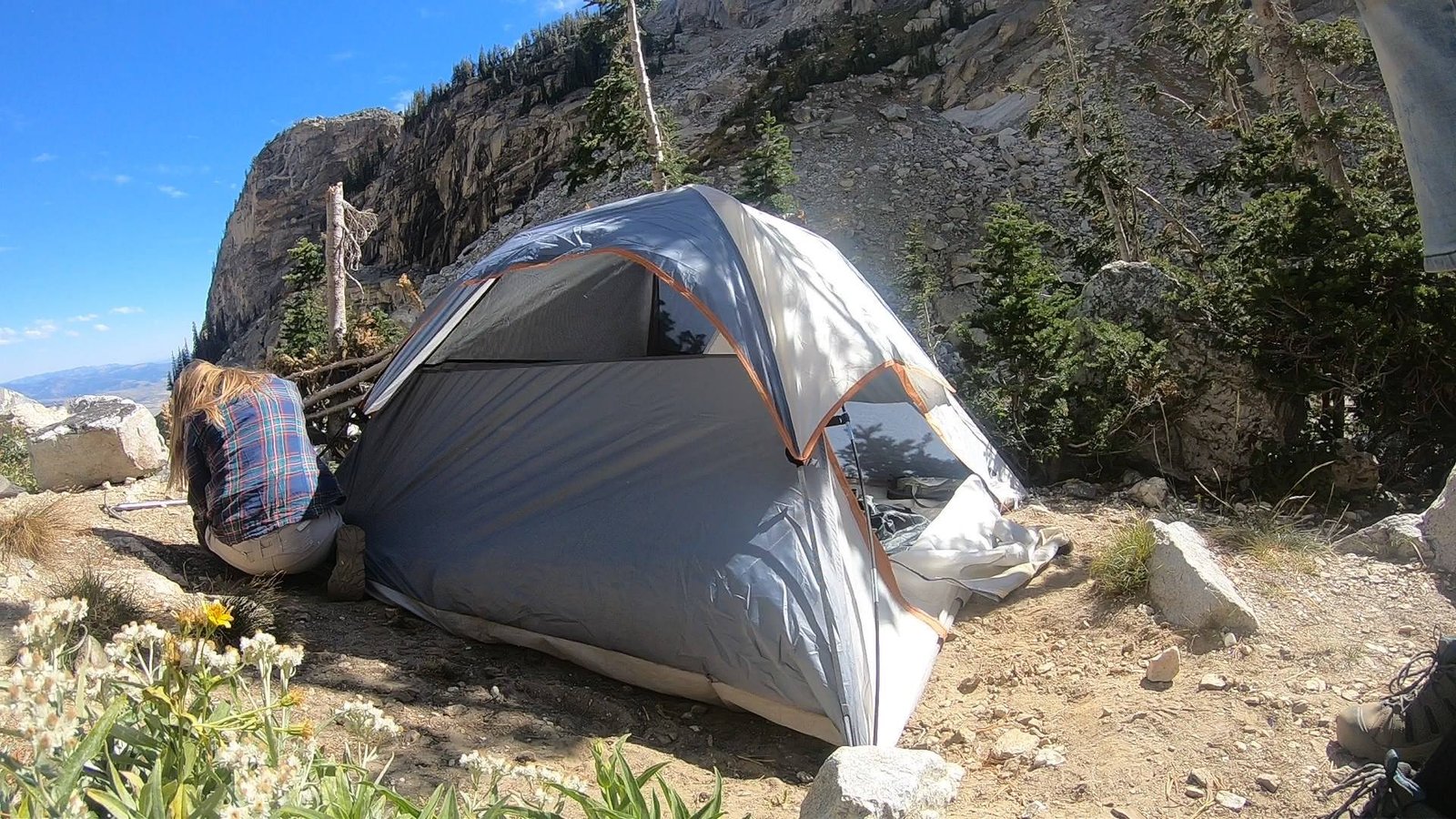
American shops also have very generous return policies – with a receipt you can return most things you’ve bought, and Americans often take advantage of it. Wojtek, Kasia and Karolina managed to return their tent after the trip, we didn’t; if one shop refuses, you may have more luck in another.
National parks – fees and reservations
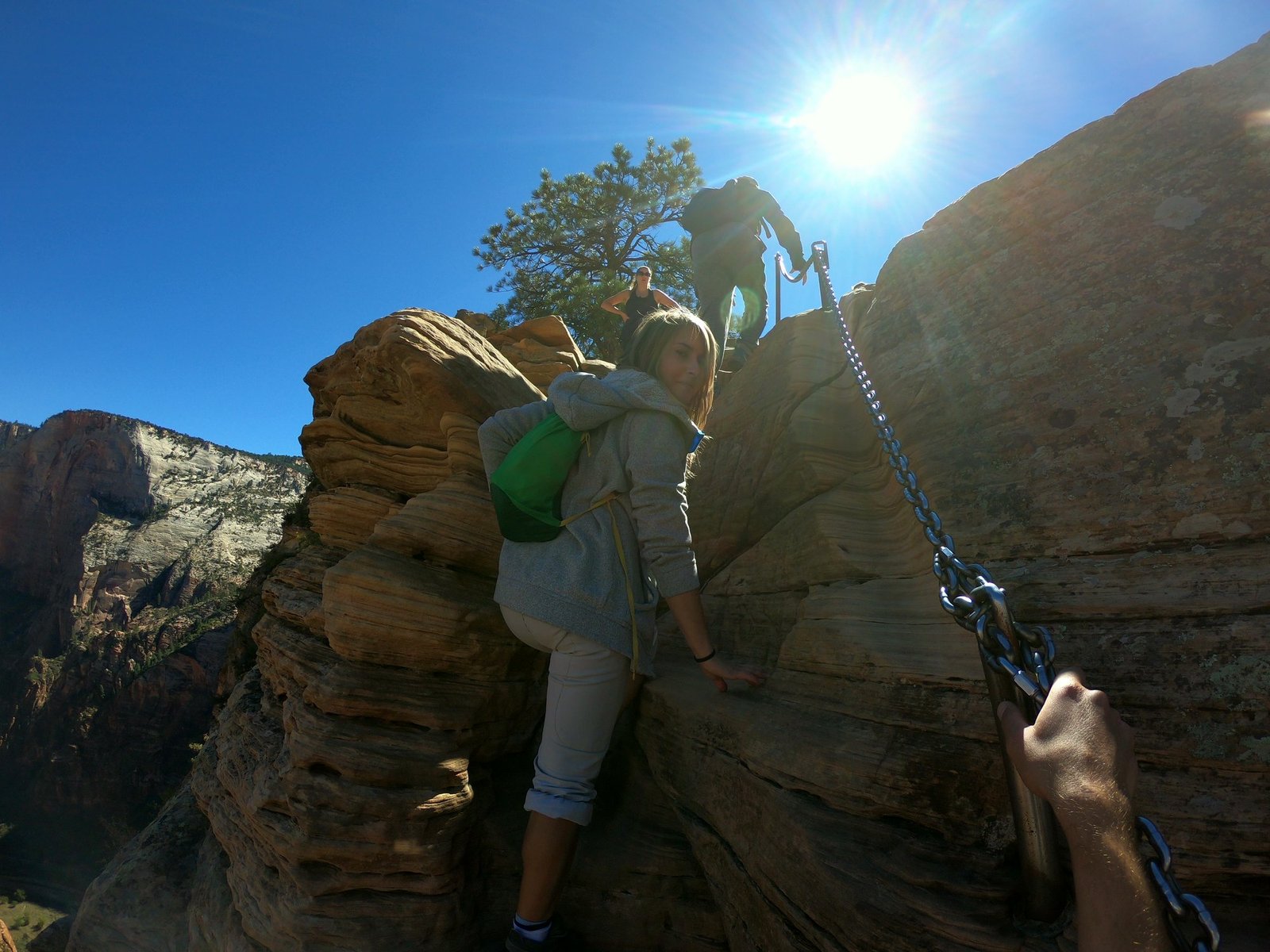
Entry to the national parks is paid – usually per car for 7 days (in 2018, for example, 35 USD in Zion). On a road trip through several parks, the annual America the Beautiful pass, valid in almost all parks, pays off very quickly. From 2026 visitors from outside the USA pay 250 USD for it, and without the pass they pay an extra 100 USD per person in the most popular parks (including the Grand Canyon, Zion, Bryce Canyon, Yosemite, Grand Teton and Yellowstone). The pass doesn’t cover land managed by Native American nations, such as Monument Valley or the canyons around Page.
In high season some parks may require an advance entry reservation (in recent years Yosemite and Arches, among others), and the most popular trails need a permit, such as Angels Landing in Zion or Half Dome in Yosemite. You can check the current rules on nps.gov. Many parks have free shuttle buses that take you to the trailheads.
Weather – what to keep in mind
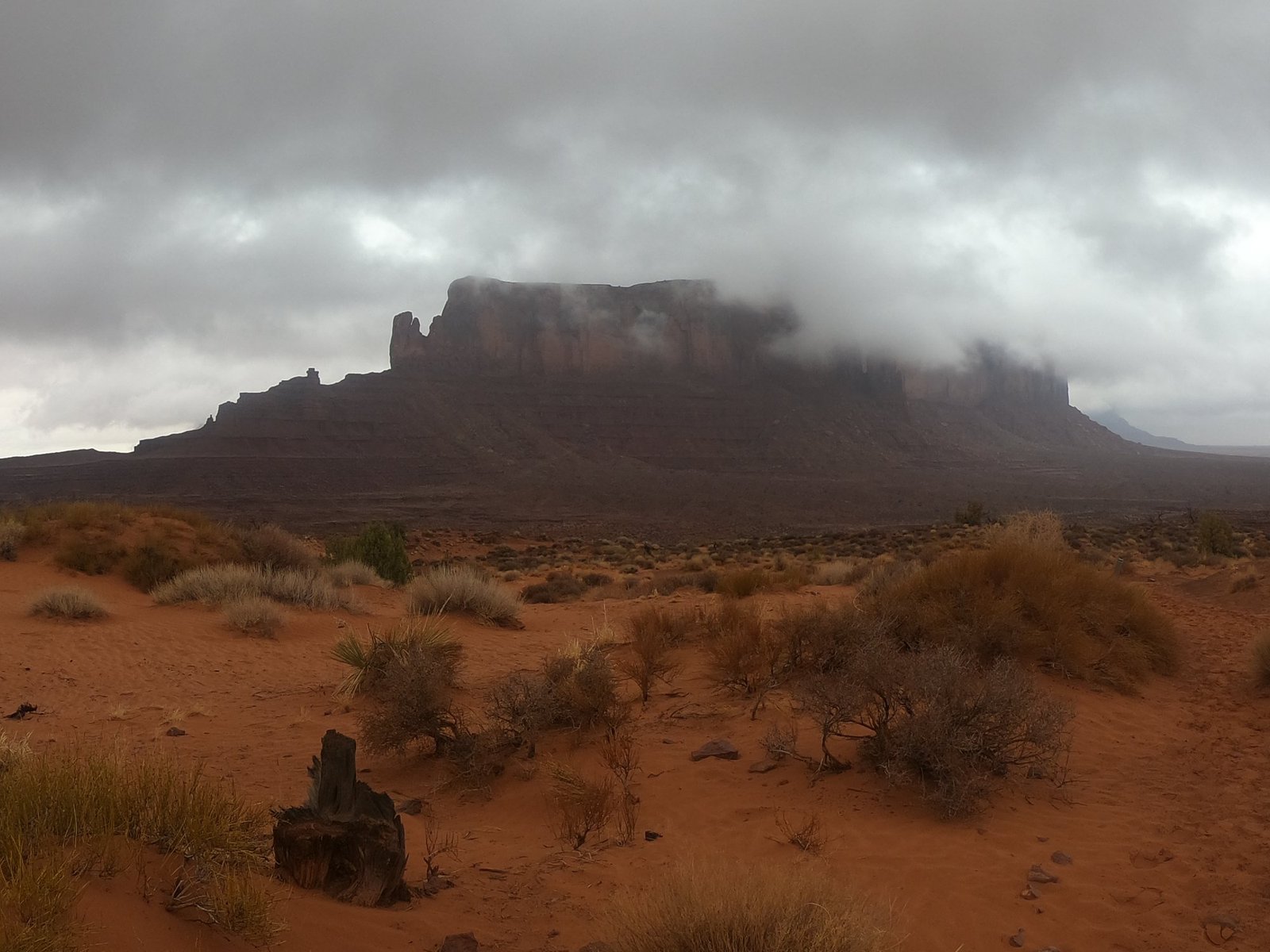
When covering long distances, you may arrive somewhere to find it as much as 10 degrees colder – which is why it’s always worth following the forecasts. The difference between day and night can also catch you out: at the Grand Canyon it was about 30°C during the day, but the nights were cold; in Bryce Canyon, at about 2400–2700 m, we froze in October, and a few days later in Death Valley it was 38°C. In Monument Valley it rained all day. In summer San Francisco greeted us with 13 degrees, wind and fog, while two hours’ drive away, in Sacramento, it was almost 20 degrees warmer.

What this trip taught us
- Planning and managing money. To see all of this and still bring home some gear, savings and souvenirs, we had to spend the money we had earned sensibly.
- Checking the type of road – before leaving the tarmac in an ordinary car.
- Overcoming our own weaknesses. In the mountains and at the amusement park I had to overcome my fear of heights several times, and in the mountains we were often utterly exhausted.
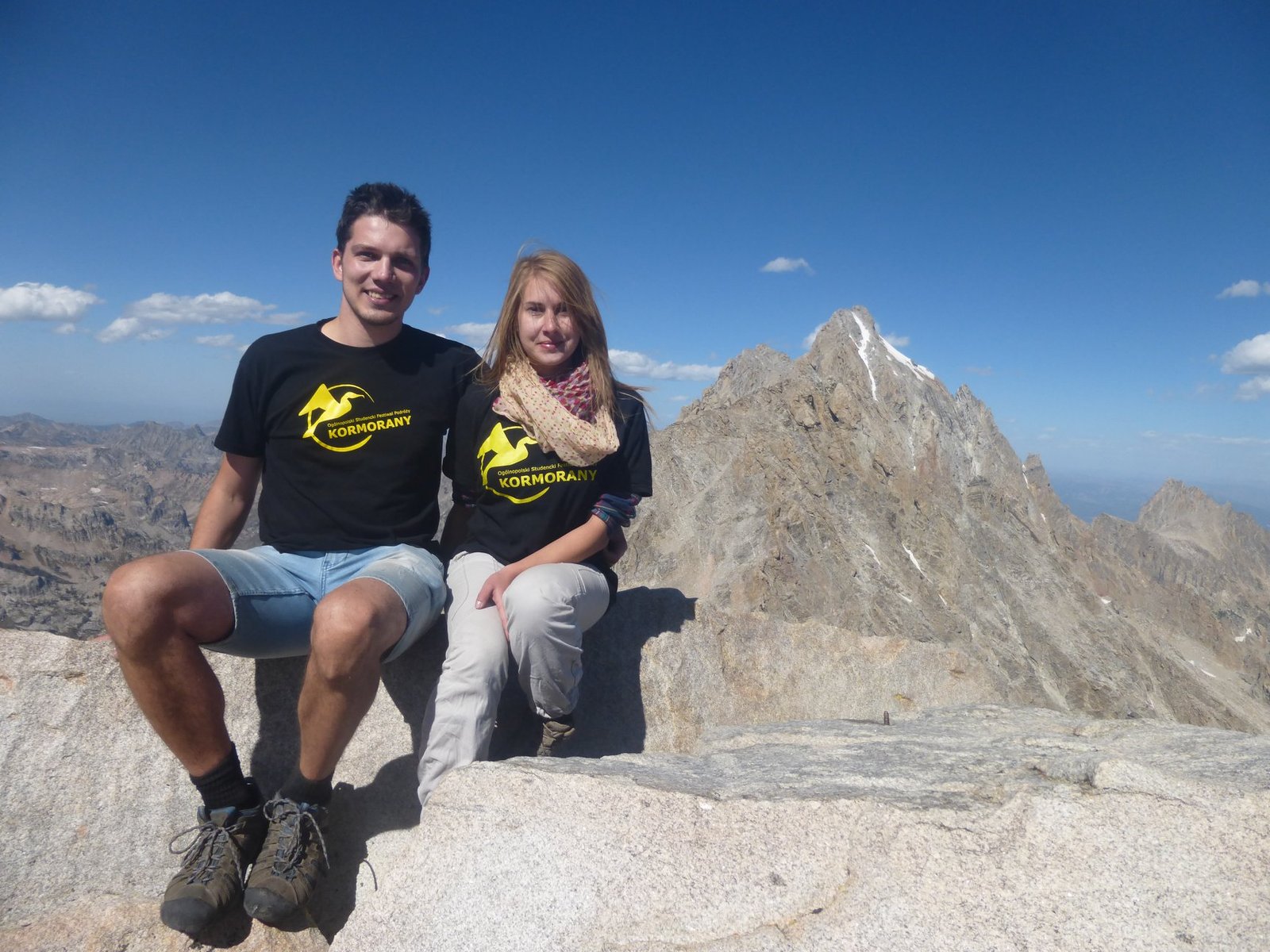
- That we’re capable of more than we thought. Several times we beat our own records: altitude – first at Amphitheater Lake (2956 m), then on South Teton (3814 m) – and distance: about 26 km in one day in the Grand Canyon.
- Making important decisions under stress. The evacuation from Yosemite during Work & Travel taught us the most about that.
- What life in America looks like. A few months of work and travel let us see everyday life in the States from the inside and learn a lot about the country itself.
- Appreciating people’s hospitality and kindness. We experienced it many times – with our Couchsurfing host in Los Angeles, with the family of Kevin, a colleague from work, after the evacuation from Yosemite, and with the Polish couple near New York.
- That some stereotypes about America have something to them. Not everyone, but some of the Americans we met knew little about other countries and continents, and the food really was often greasy – although on the road we happily ate at fast-food places ourselves.
- That spontaneity pays off. In terms of logistics and money, travelling spontaneously worked out better for us than a detailed plan – we had a list of places, but we worked out the details as we went.
I describe the whole route – from Los Angeles through the parks of Arizona and Utah to the East Coast – day by day in the 30-day USA itinerary.