
On 17 May 2024 we said goodbye to San Gil and travelled 300 km south to Bogotá. We had to trim our travel plan a little, so we left ourselves just one day for the Colombian capital – 18 May. We managed to visit the Gold Museum and the Military Museum, walk around the La Candelaria district – from Plaza de Bolívar to the colourful lanes around Chorro de Quevedo – and finally take the cable car up Monserrate. In the evening we moved on to Salento and the Cocora Valley.
Our route:
- 17 May – from San Gil to Bogotá,
- 18 May, morning – a walk around the centre, the handicraft arcade,
- 18 May, early afternoon – the Gold Museum,
- 18 May, afternoon – Plaza de Bolívar and the cathedral, the Military Museum, La Candelaria and Chorro de Quevedo,
- 18 May, early evening – the cable car up Monserrate,
- 18 May, evening – departure for Salento.
Table of contents
- Bogotá – a capital high up in the Andes
- The Gold Museum and the Military Museum
- La Candelaria and Plaza de Bolívar
- Chorro de Quevedo and chicha
- Monserrate – the best view of Bogotá
- Practical information
- Summary
Bogotá – a capital high up in the Andes
Bogotá is the third-largest city in South America and the third-highest capital in the world – it lies at over 2600 m above sea level. We felt it straight away: for the first time in ages it was this cool. During the day it was no more than 18°C, and towards evening the thermometer showed 13°C. After weeks of around 30°C almost every day, it was a pleasant change.
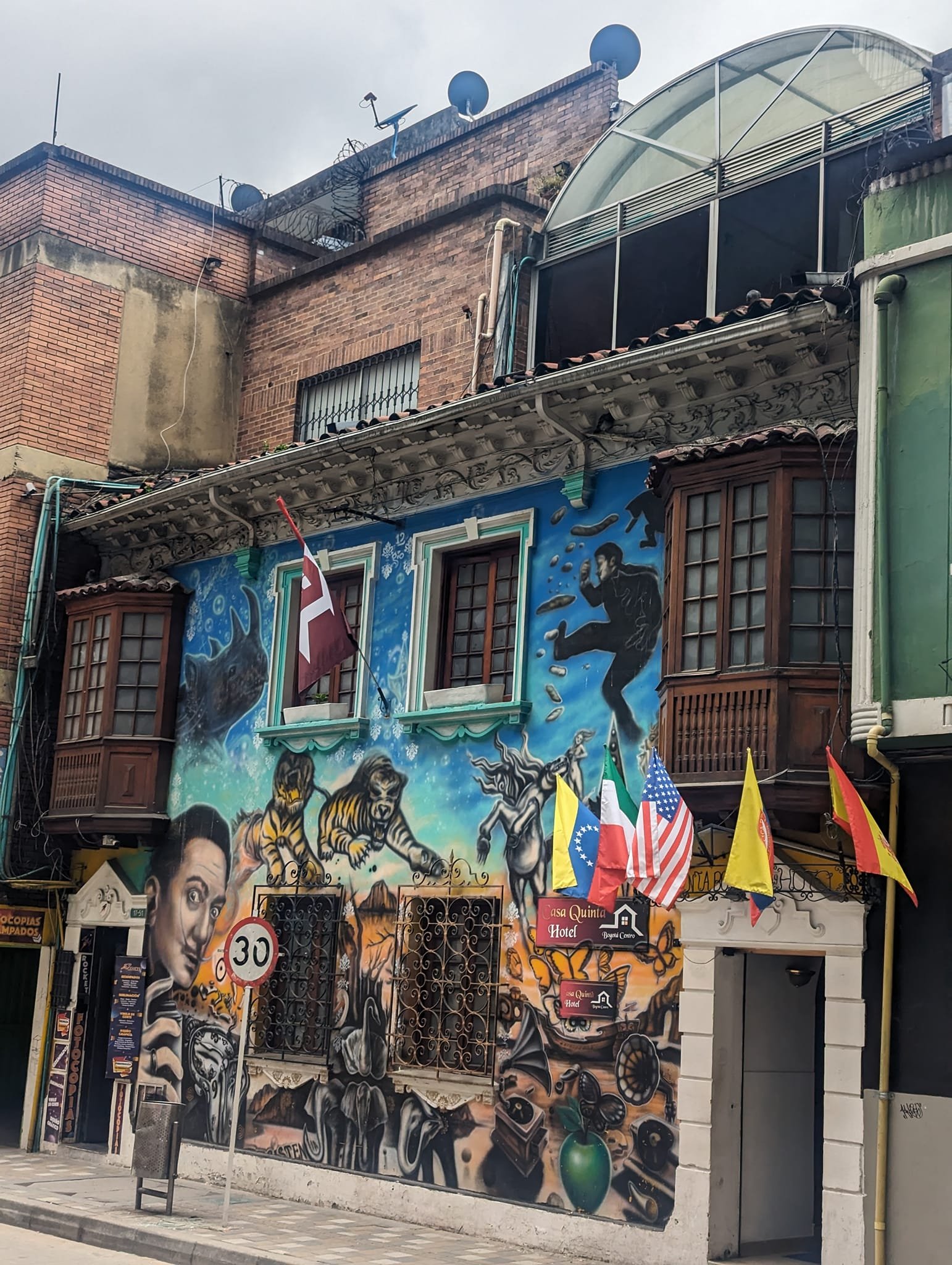
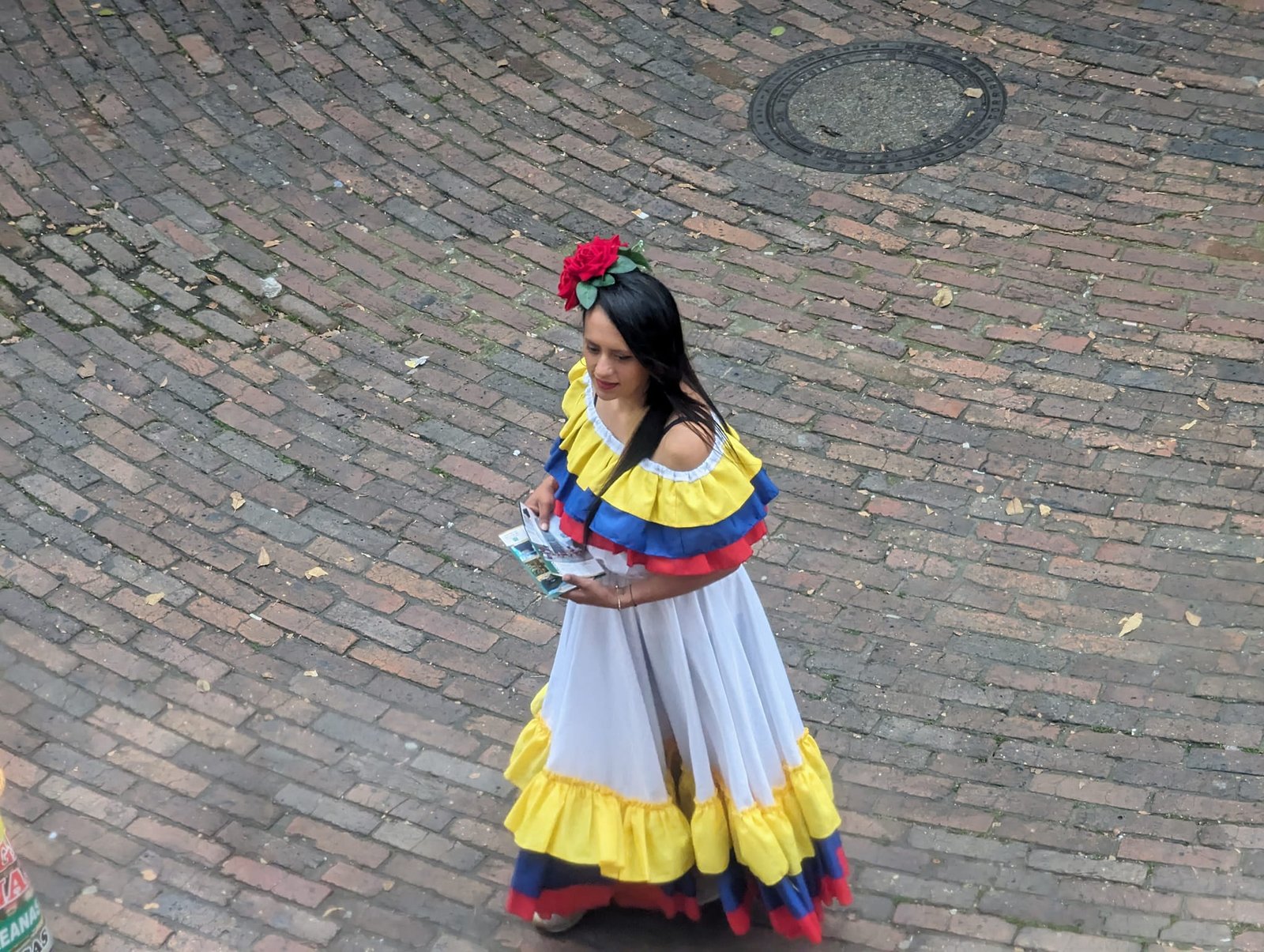
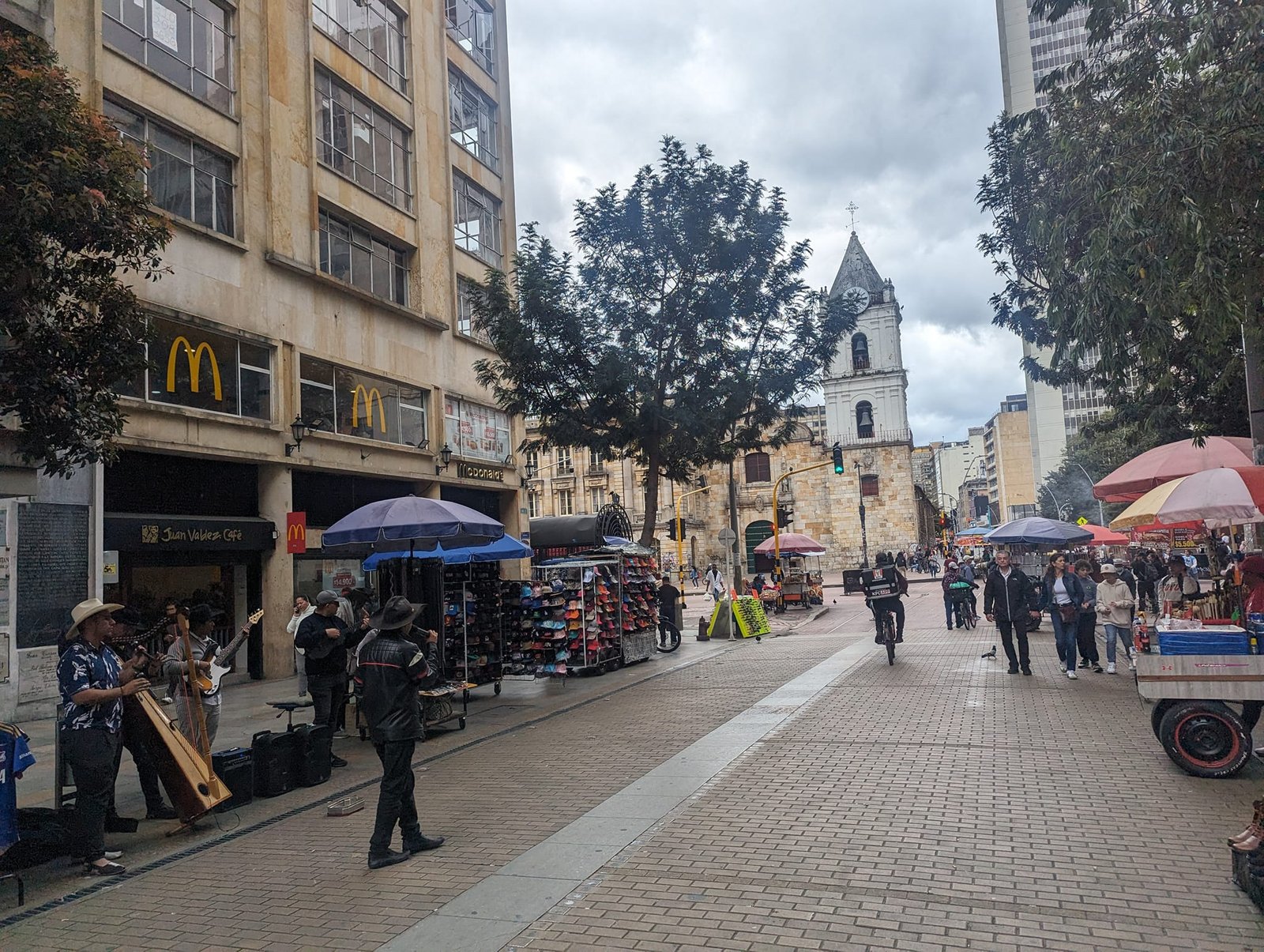
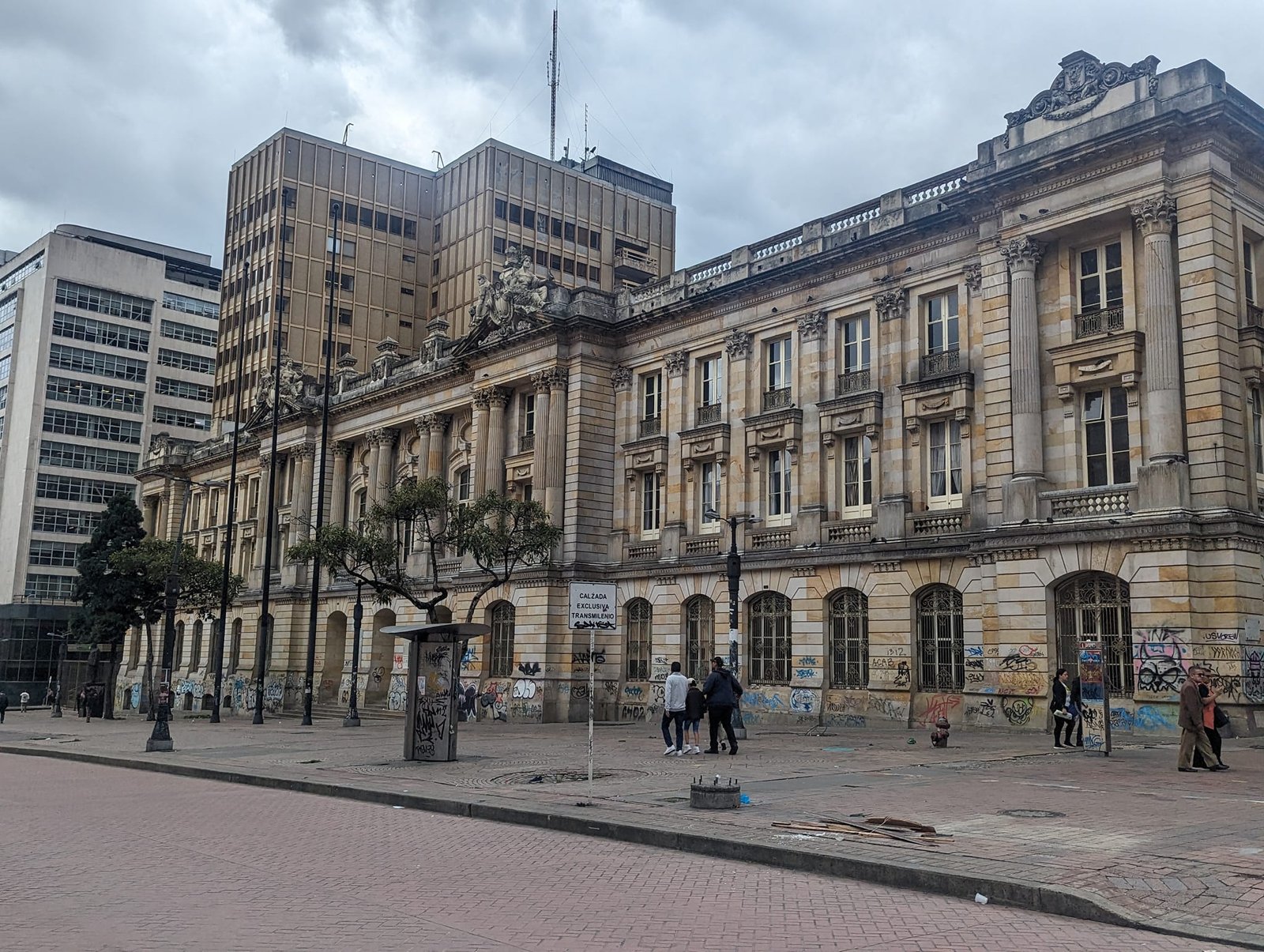
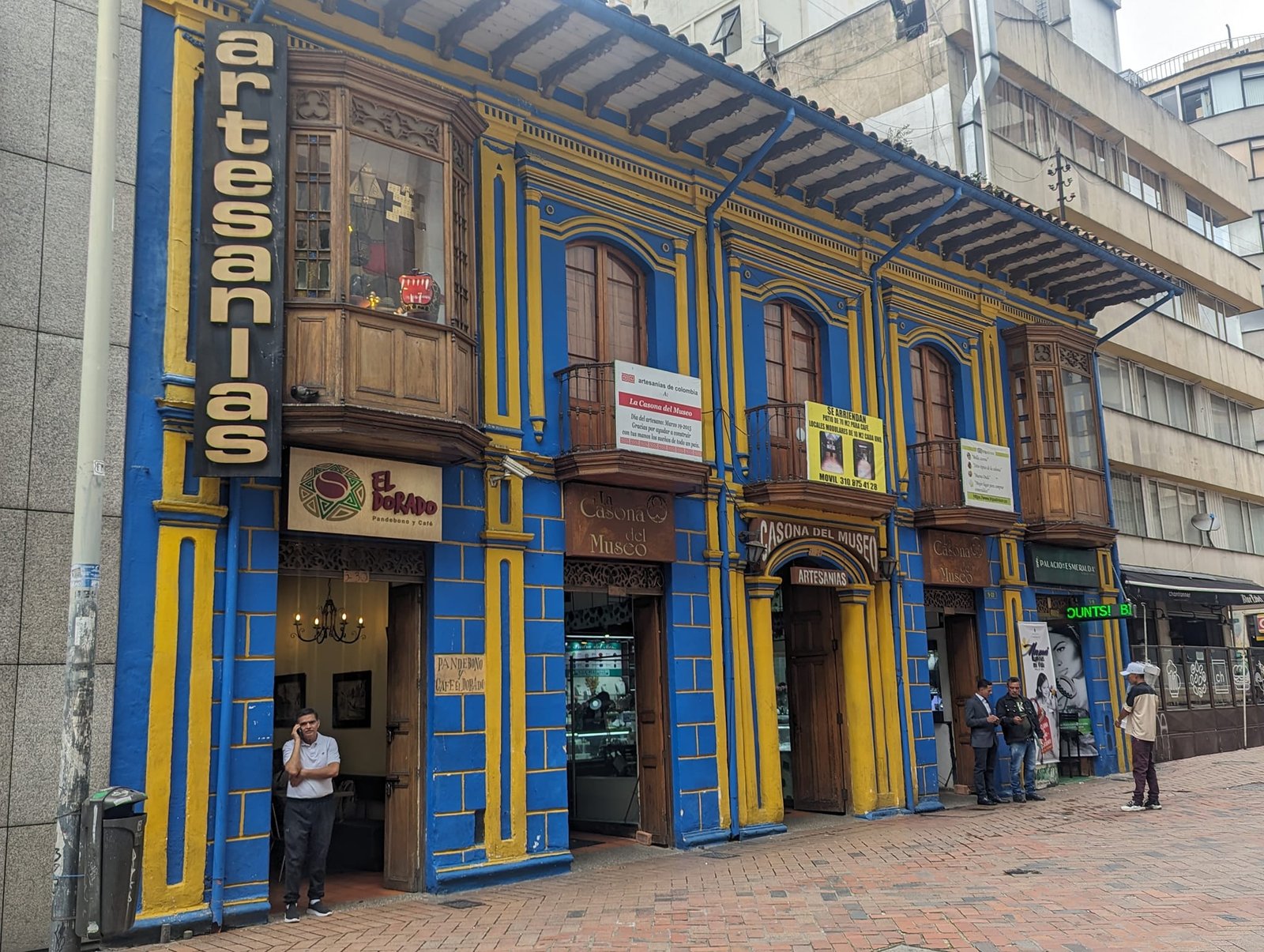
We started the day with a walk around the centre. Street musicians play on the pedestrian streets, old townhouses with wooden balconies stand between the stalls, and some of them are decorated with colourful murals. On the way we also passed a woman in a ruffled dress in the colours of the Colombian flag.
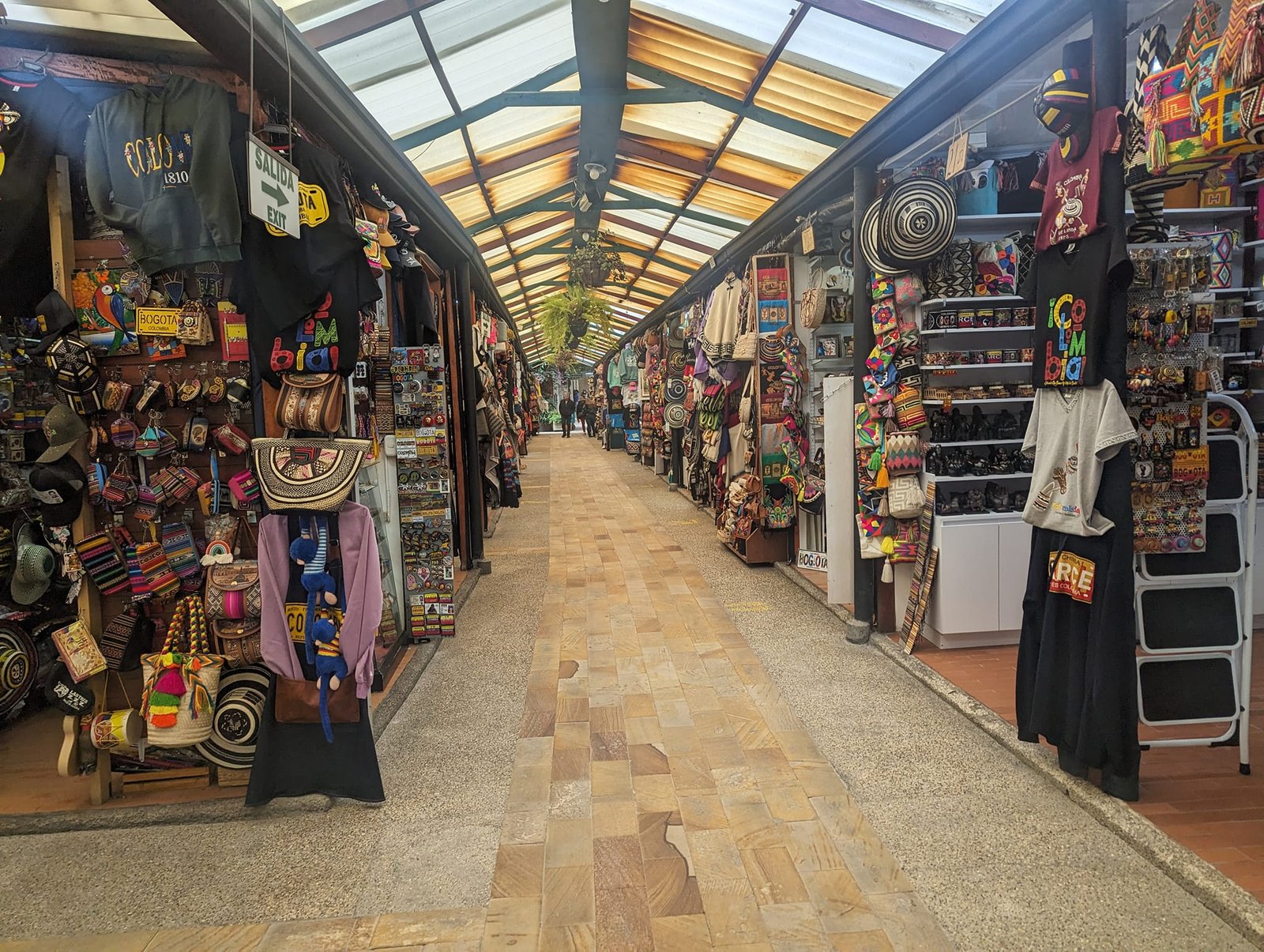
We also looked into a handicraft arcade, where bags, hats and souvenirs fill a whole long corridor.
The Gold Museum and the Military Museum
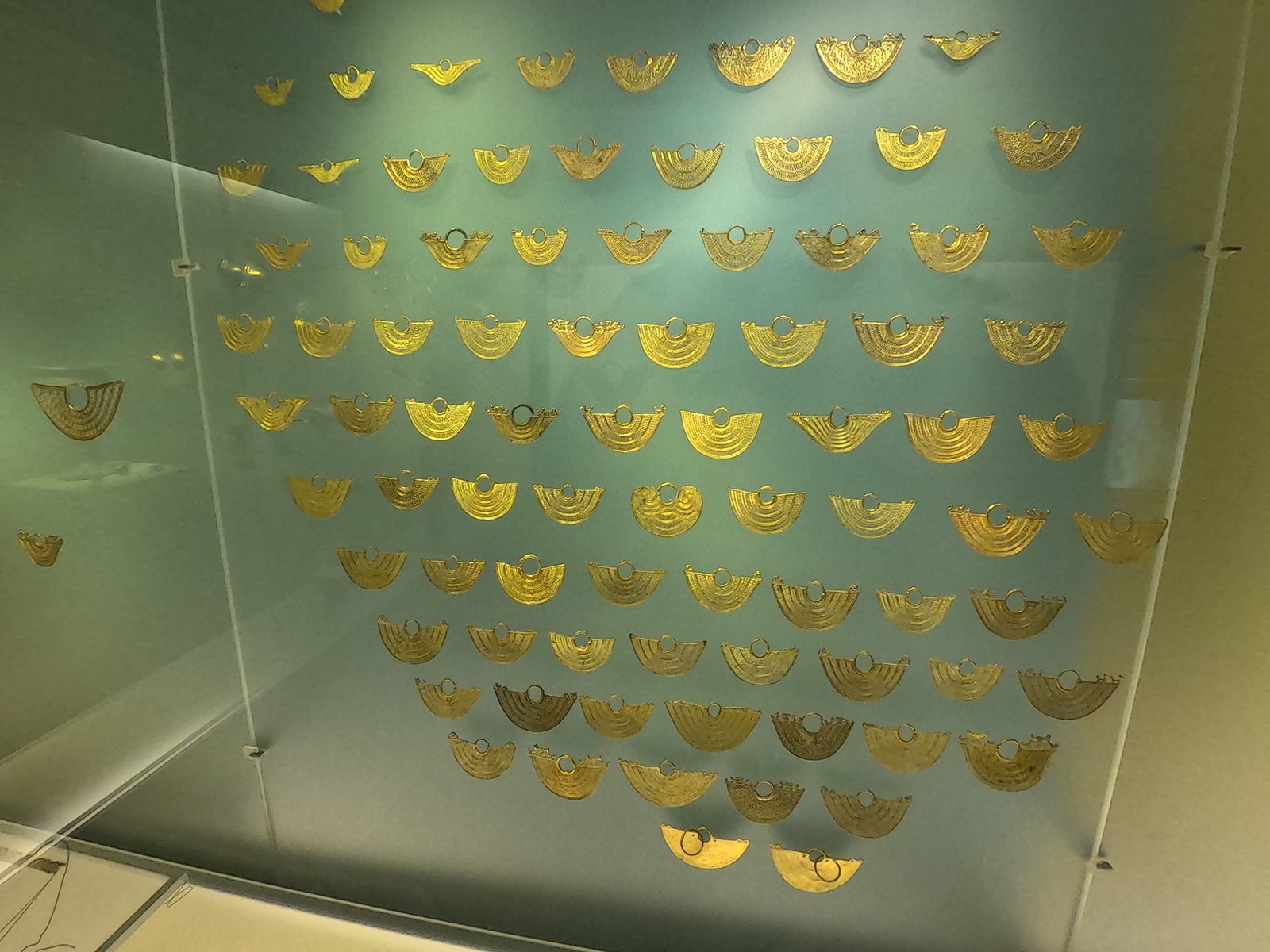
Bogotá has many free museums. We even managed to get into the Gold Museum (Museo del Oro) for free – it holds the world’s largest collection of pre-Columbian gold work. Golden masks, pendants and ornaments fill entire display cases.
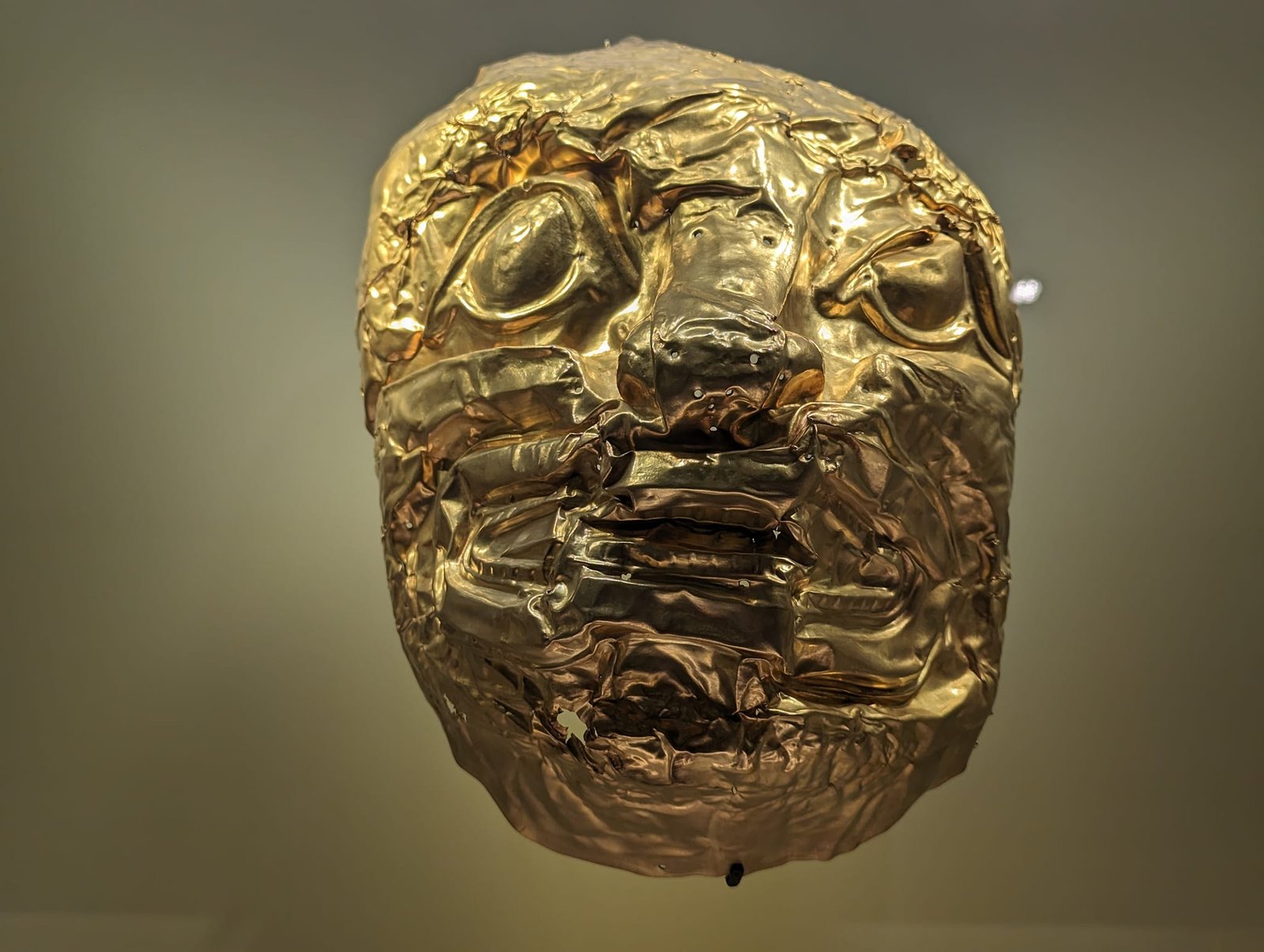
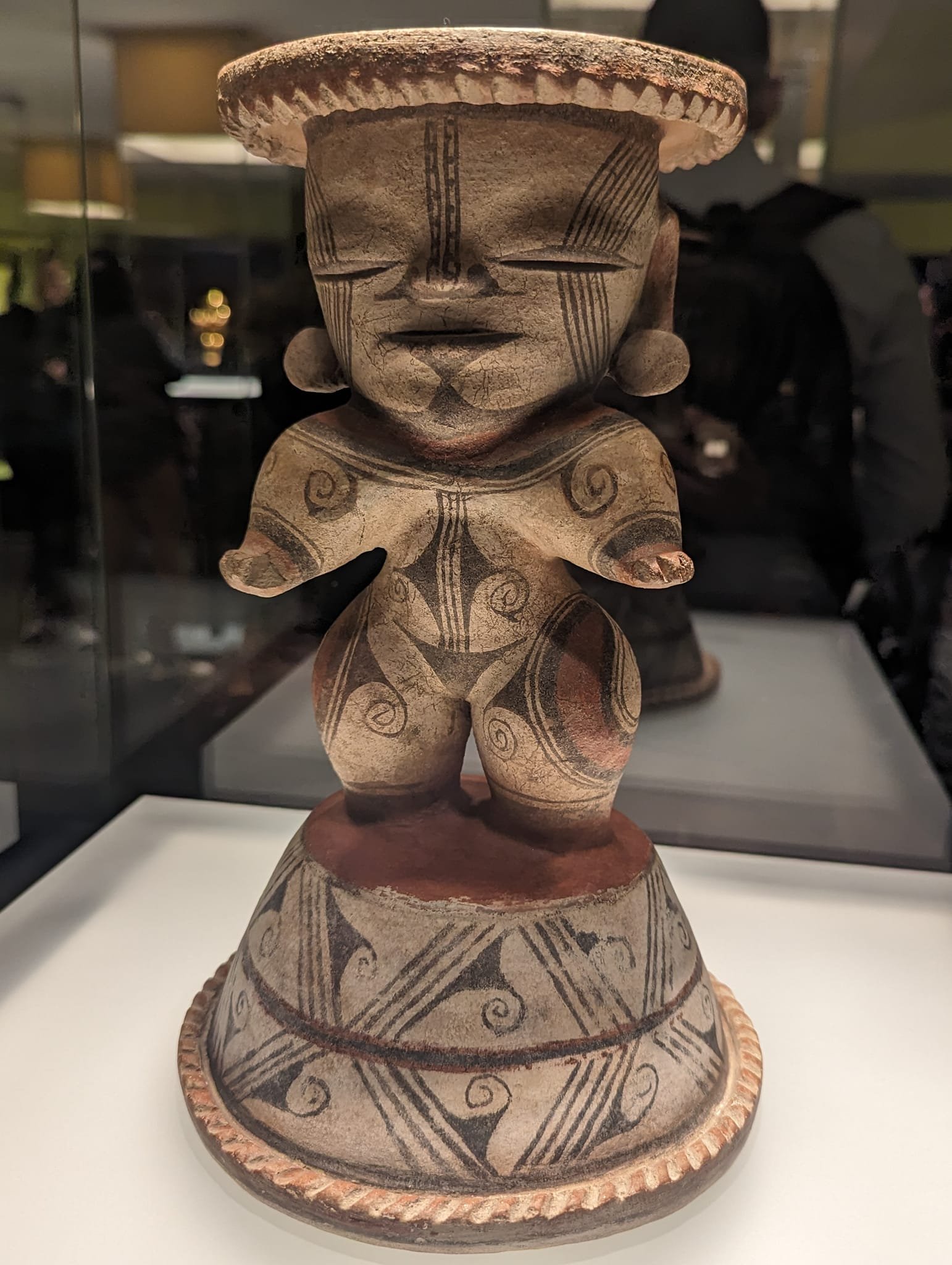
Besides gold, you can see clay figurines, among other things, and some of the gold objects are made so intricately that it is hard to take your eyes off them – like a raft with a whole group of figures.
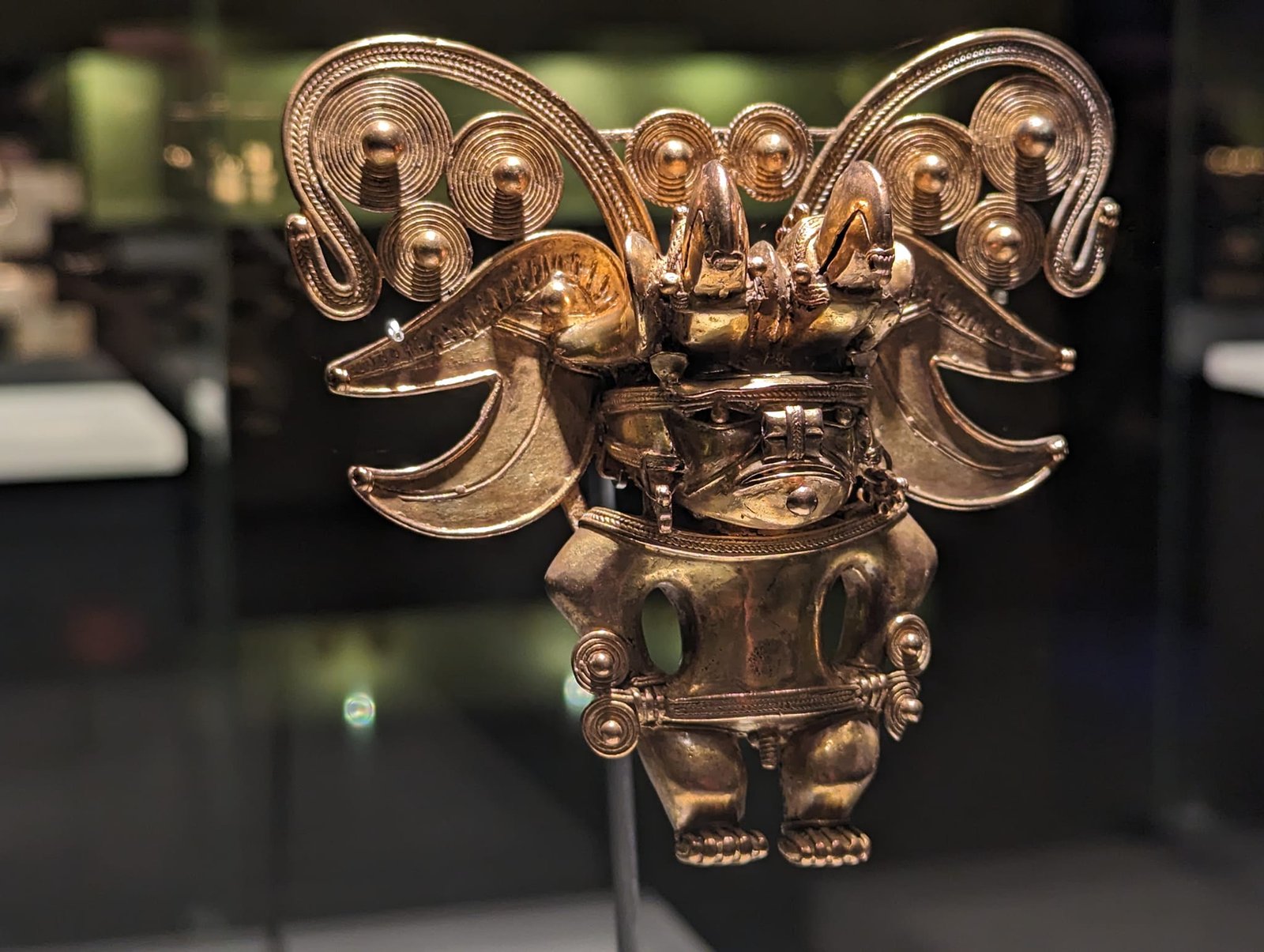
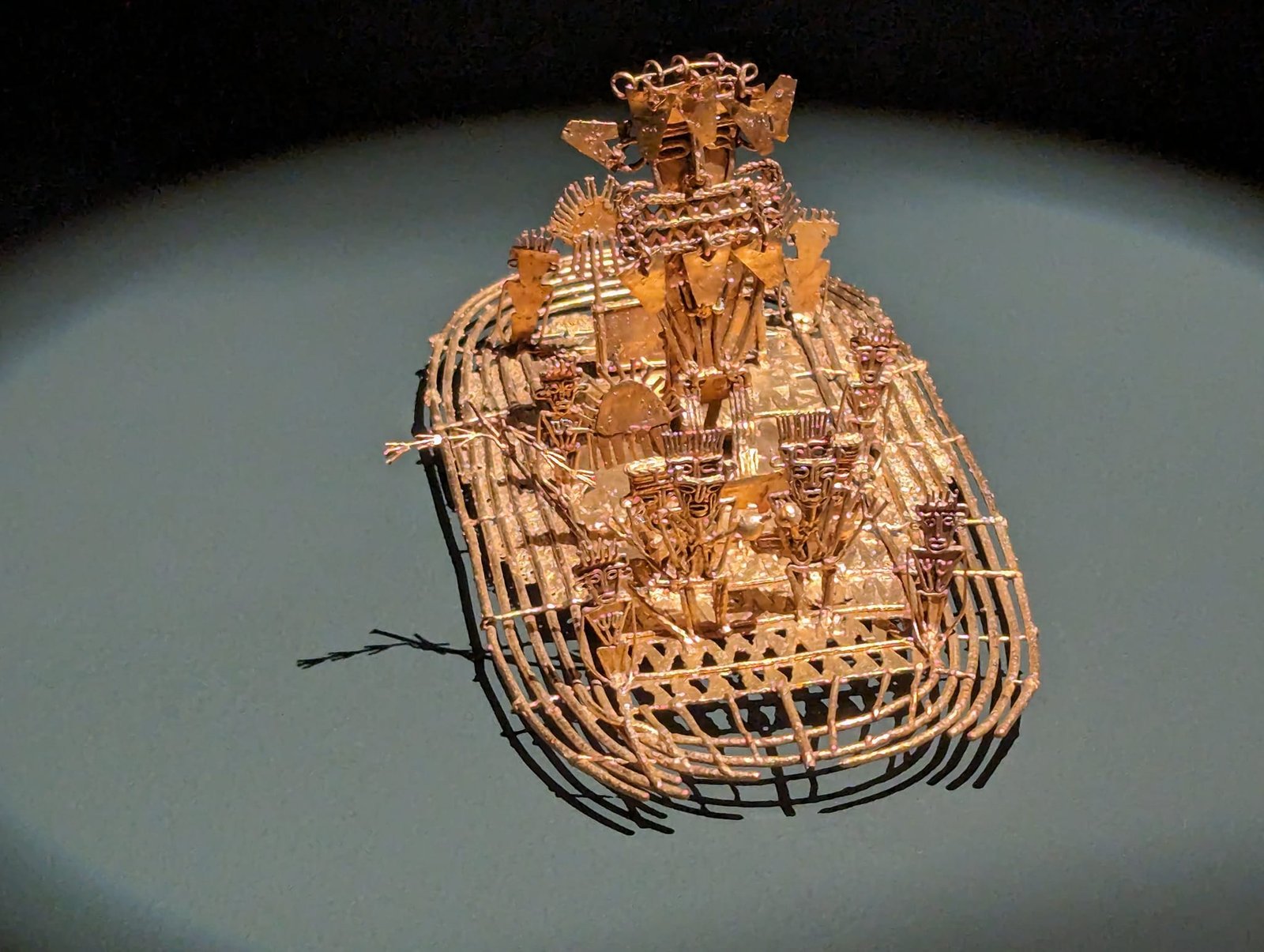
The most famous exhibit is the Muisca raft (Balsa Muisca) – a gold figure of a ruler surrounded by dignitaries. A local farmer found it in 1969 in a cave near the small town of Pasca, south-west of Bogotá. It is linked to the ceremony on Lake Guatavita, in which a new ruler, covered in gold dust, sailed out to the middle of the lake and made offerings – the origin of the legend of El Dorado. The museum was founded by the Banco de la República in 1939, and today its collection holds over 34,000 gold objects.
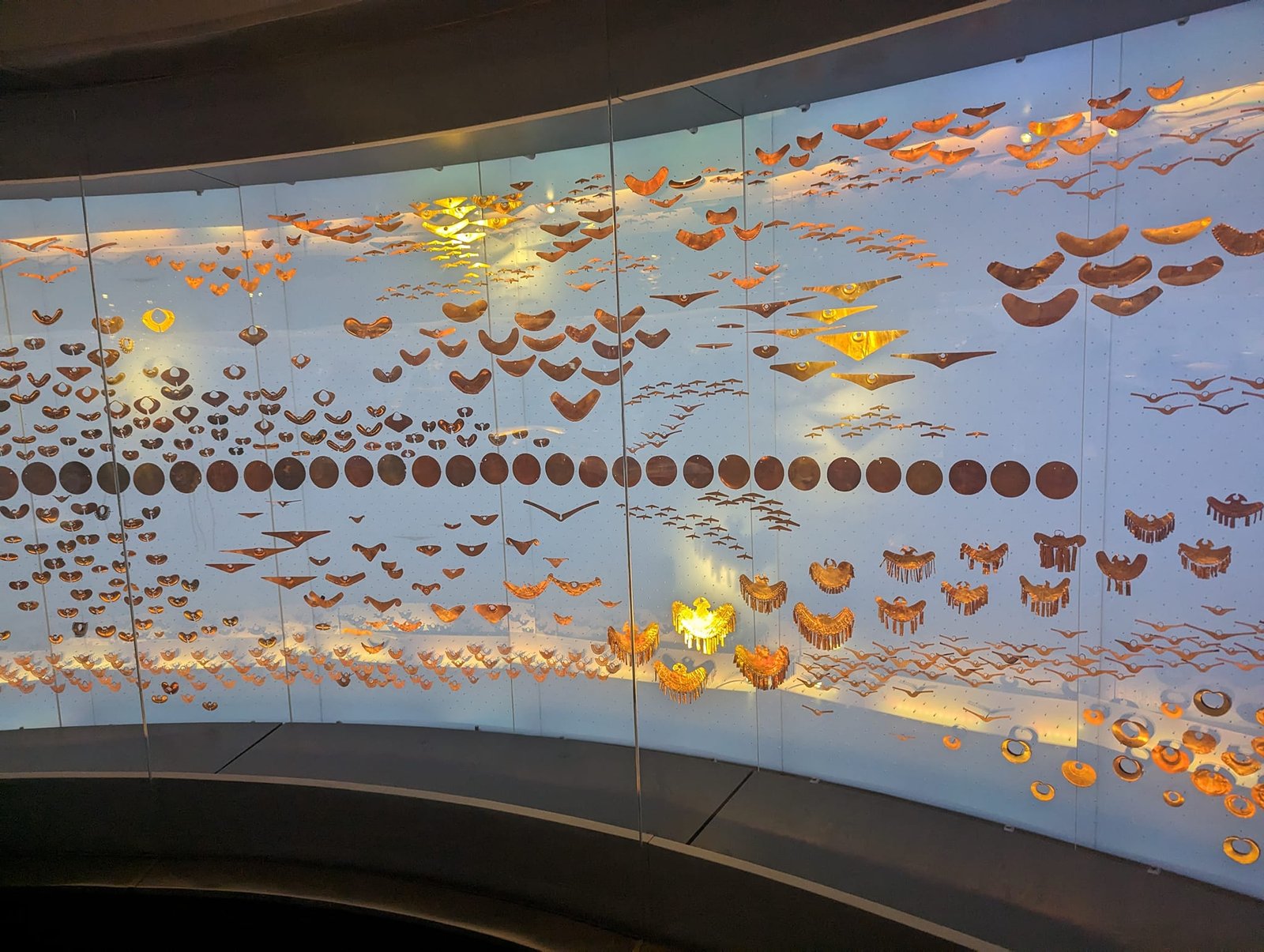
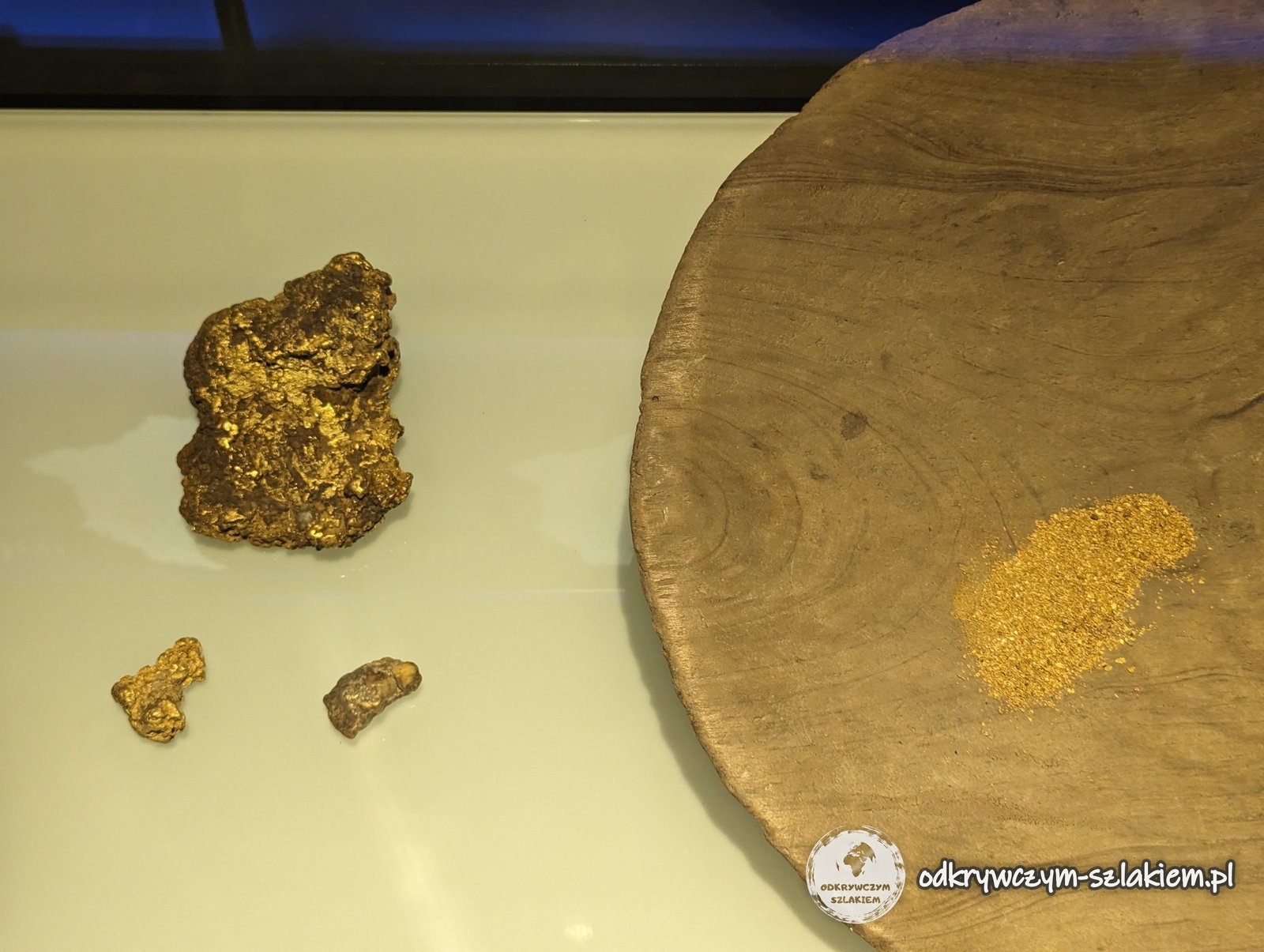
The wall with hundreds of gold objects belongs to the “La Ofrenda” (The Offering) room on the third floor. You enter it in darkness, and a light-and-sound show recreates an offering ceremony – in the middle, in a round case set in the floor, lie gold offerings. One of the first display cases in the museum shows the raw material itself: nuggets and a wooden pan with panned gold dust. That day, 18 May, Bogotá was celebrating Museum Day and many museums were free – our Gold Museum tickets showed a price of 0 COP.

We also went into the Military Museum. It is a bit of a shame we had no time left for more museums.
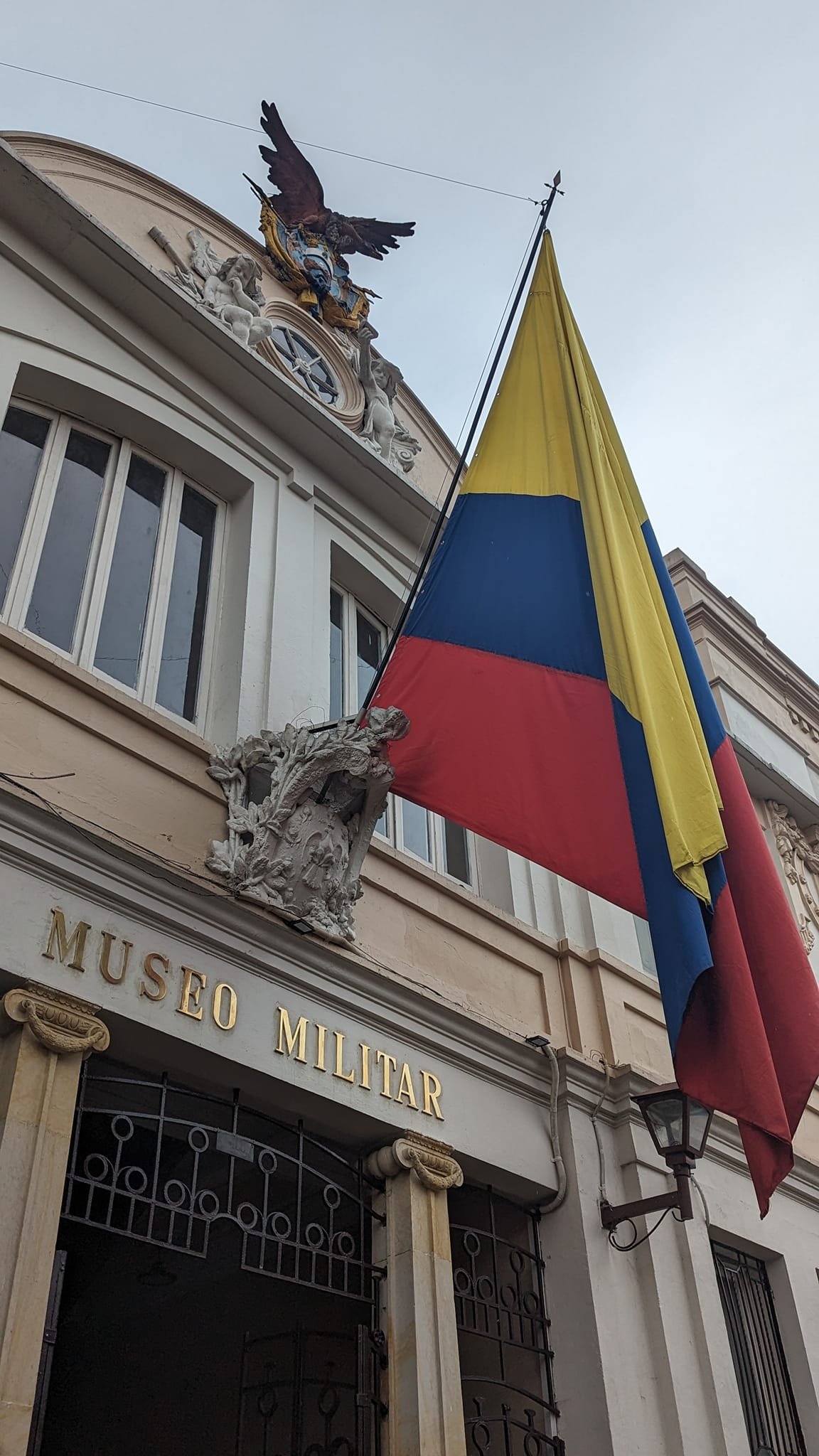
The Military Museum has been open since 1982 and belongs to the Colombian armed forces. It is on Calle 10, in a building with galleries around a courtyard, and admission is free. The rooms display weapons, uniforms and models, and in the courtyard stand, among other things, an air force helicopter marked FAC and a motorboat.


La Candelaria and Plaza de Bolívar
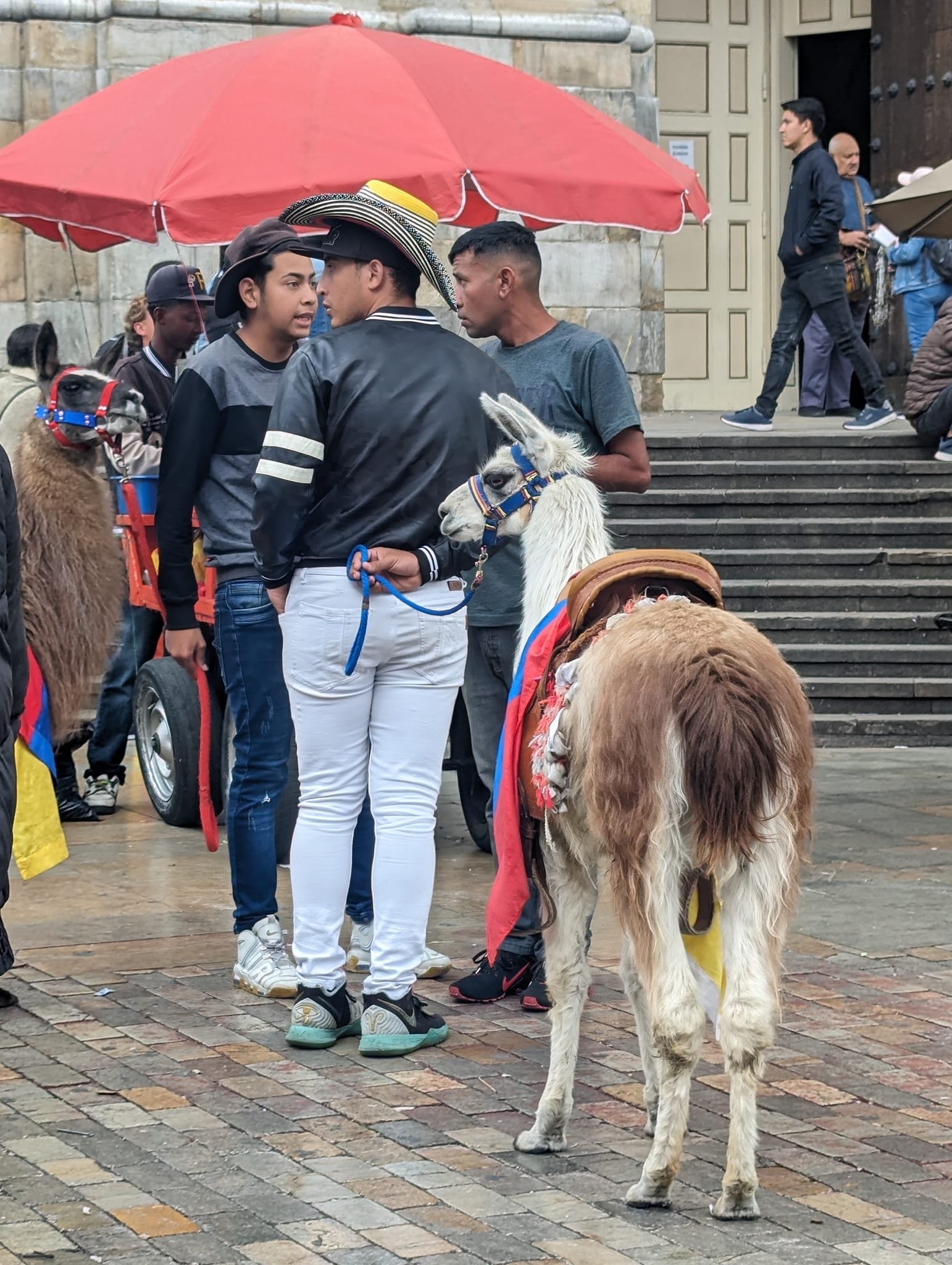
Most of Bogotá’s main sights are in the historic La Candelaria district, and its focal point is Plaza de Bolívar. There is a lot going on there: musicians play, dancers perform, and crowds of people stroll across the square. The square is dominated by the cathedral – we looked inside too.
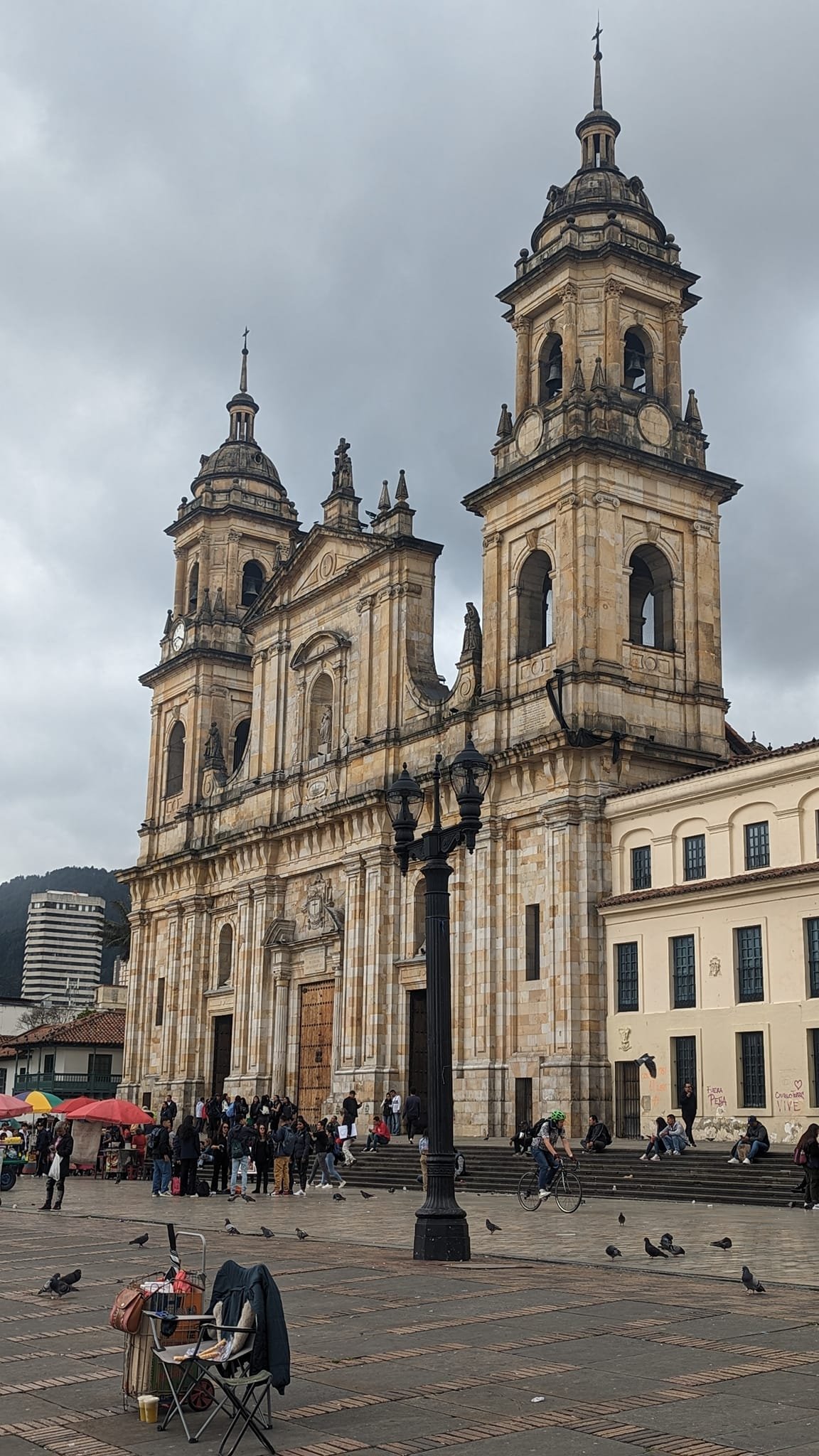
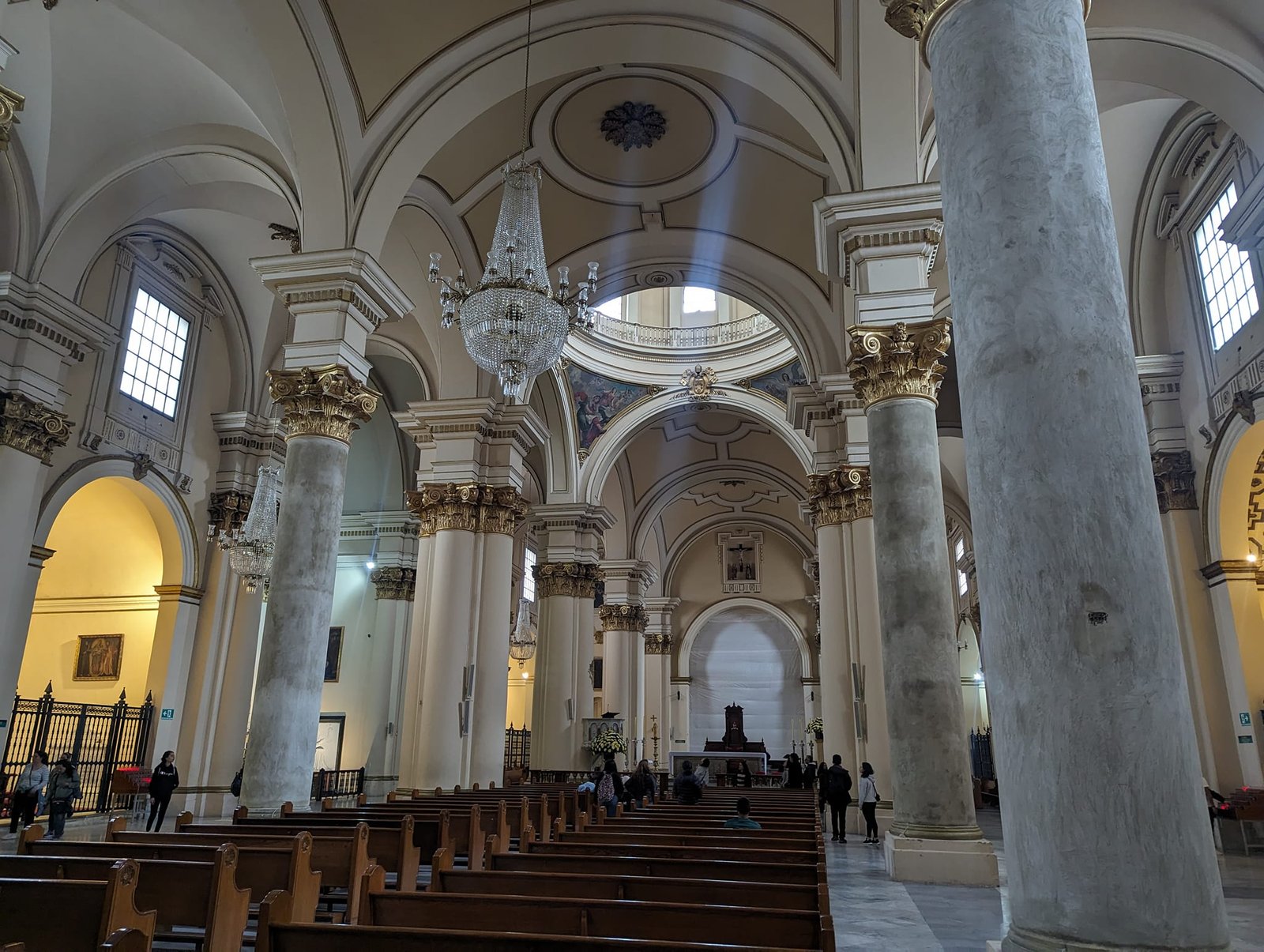
In the middle of the square stands a statue of Simón Bolívar by the Italian sculptor Pietro Tenerani, put up in 1846. The Primatial Cathedral was built in 1807–1823 to a design by the friar Domingo de Petrés, and next to it stands the smaller Capilla del Sagrario. To the south the square is closed by the colonnade of the National Capitol – the seat of the Congress of Colombia, which took 78 years to build, from 1848 to 1926. Opposite it stands the Palace of Justice, and on the west side the Palacio Liévano, the seat of Bogotá’s mayor.


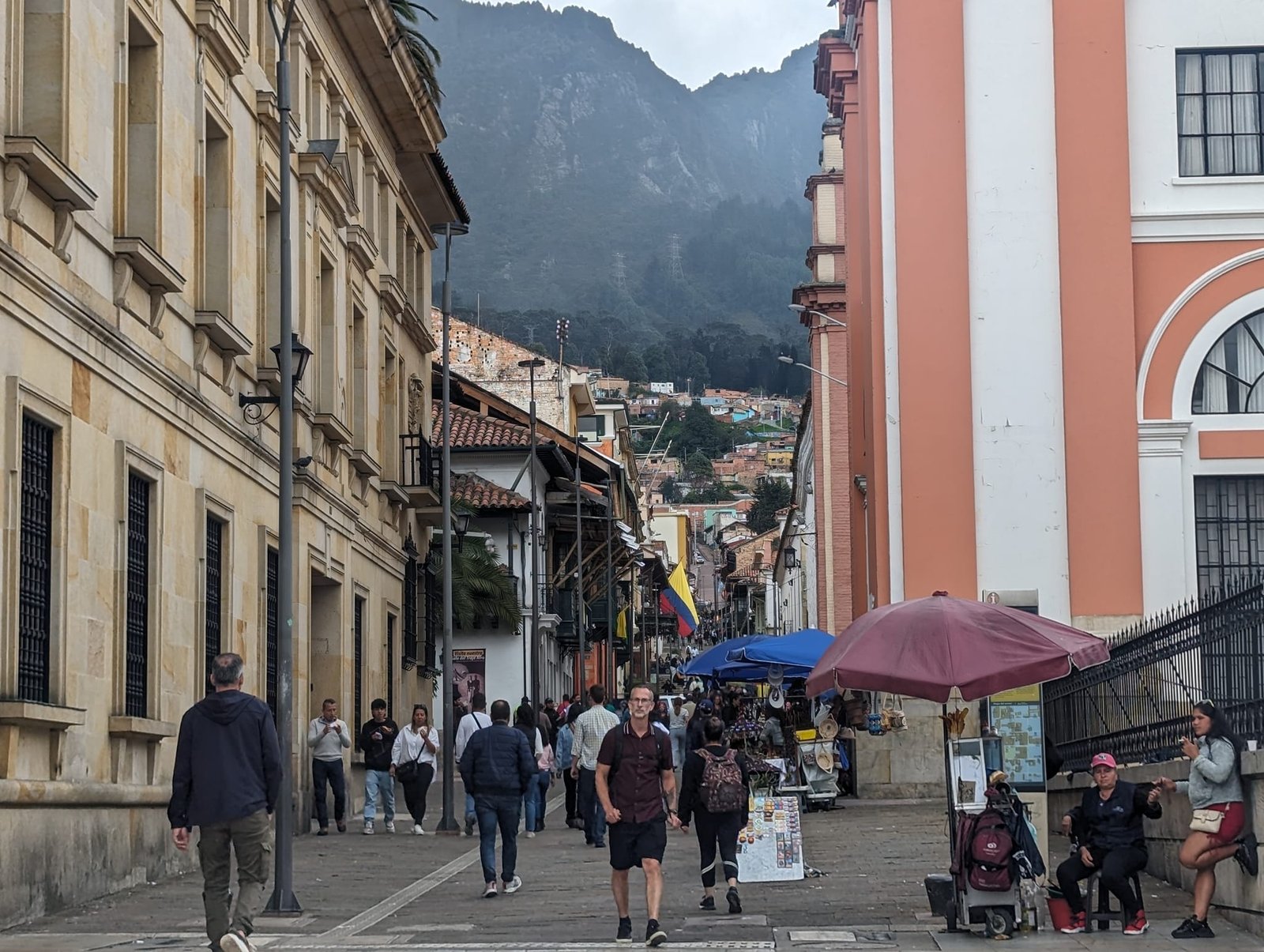
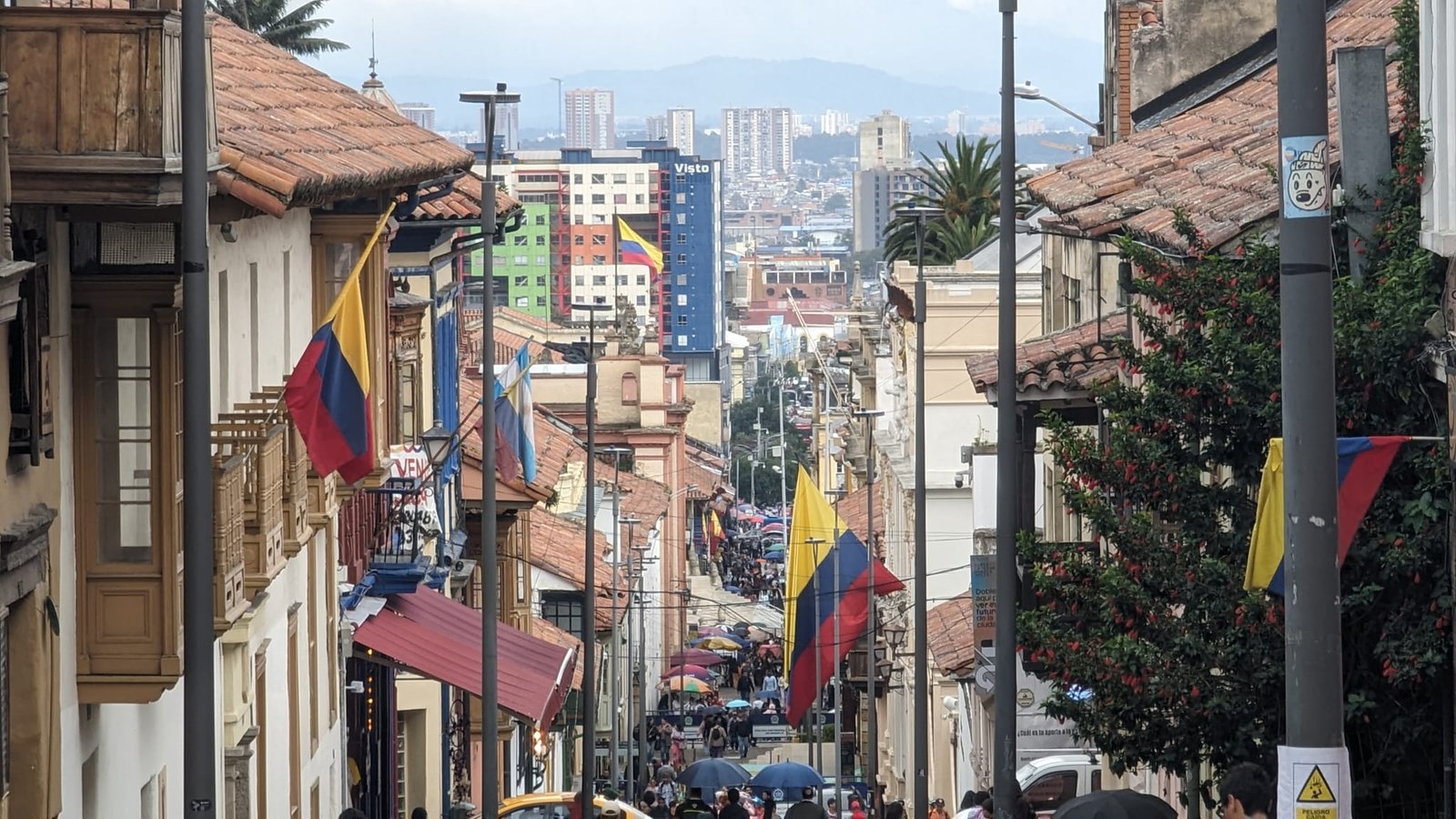
From around the square, many streets lead straight towards the green mountains that surround the city. Colombian flags flutter on the old houses, and skyscrapers can be seen below.
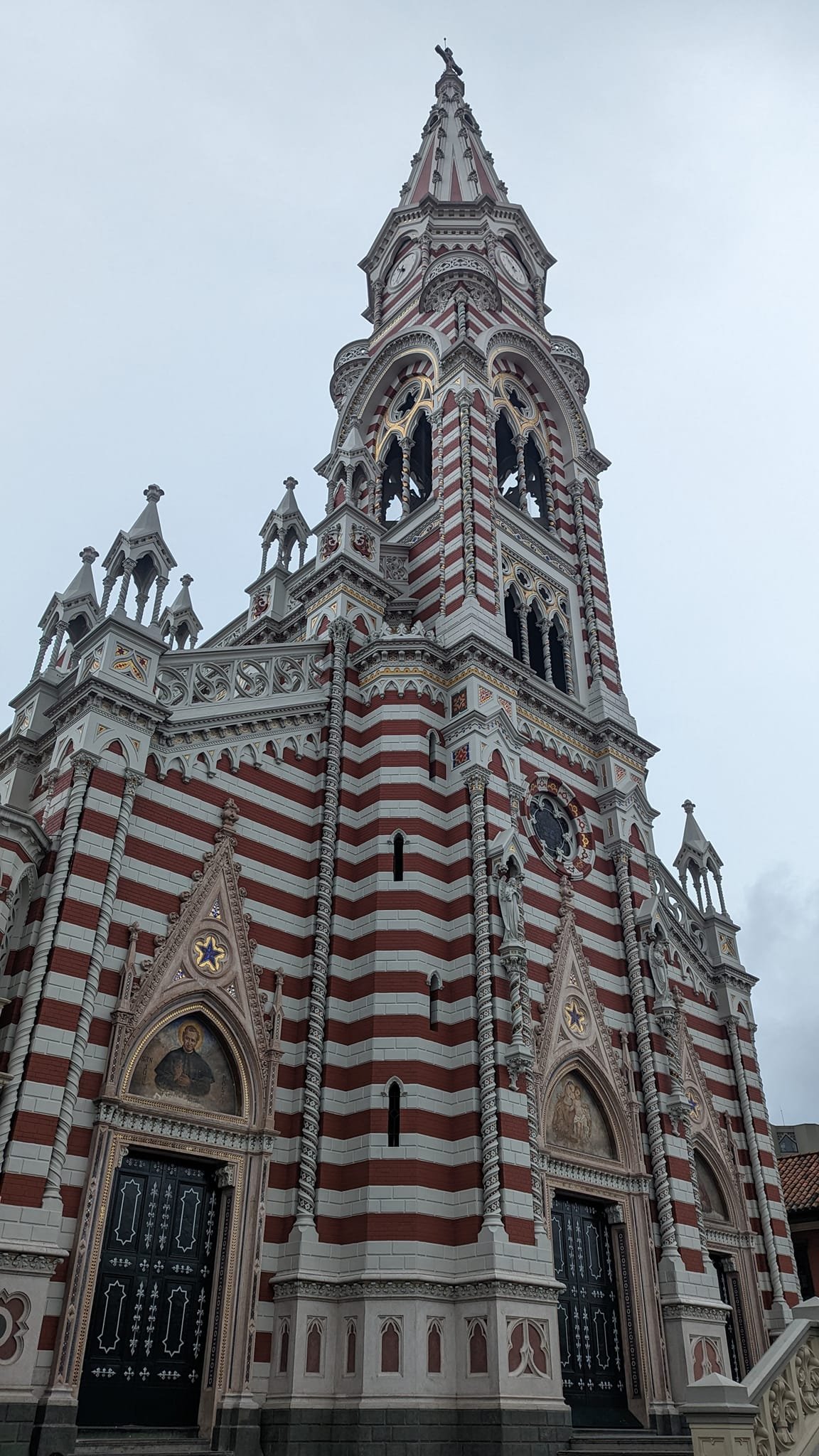
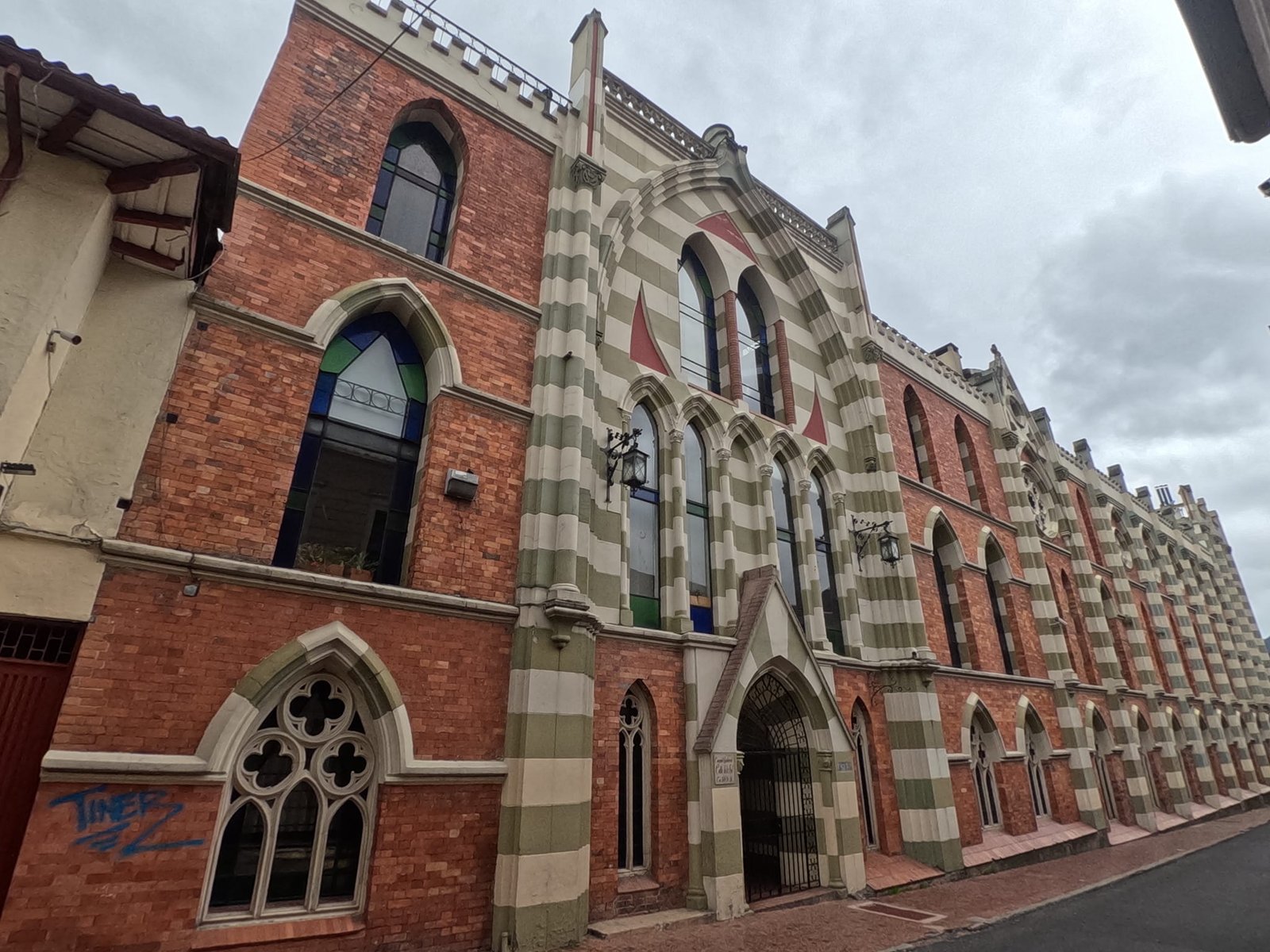
Walking around La Candelaria, we also came across the church of Nuestra Señora del Carmen with its red and white stripes. The building next door is in a similar style.
Chorro de Quevedo and chicha
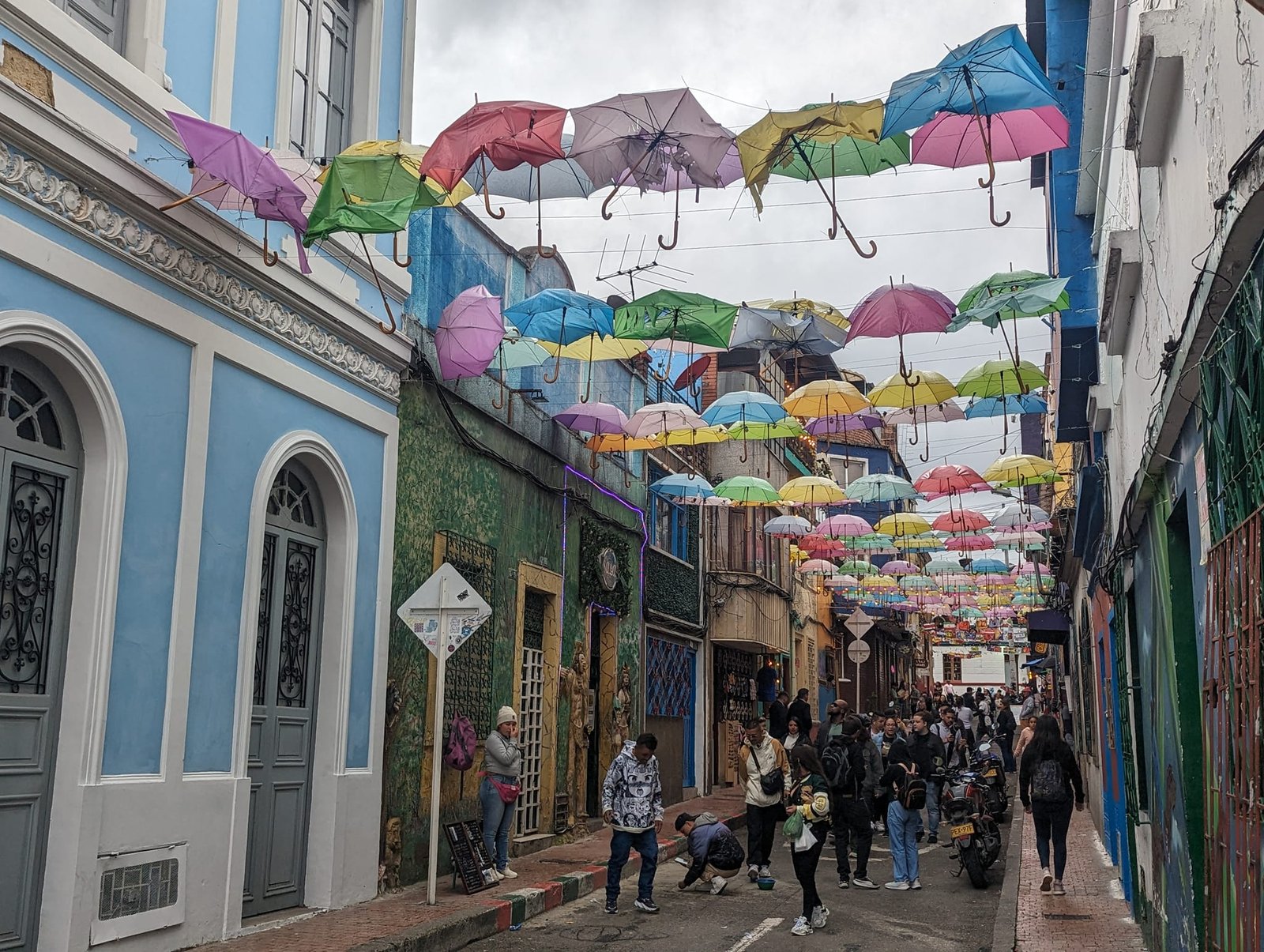
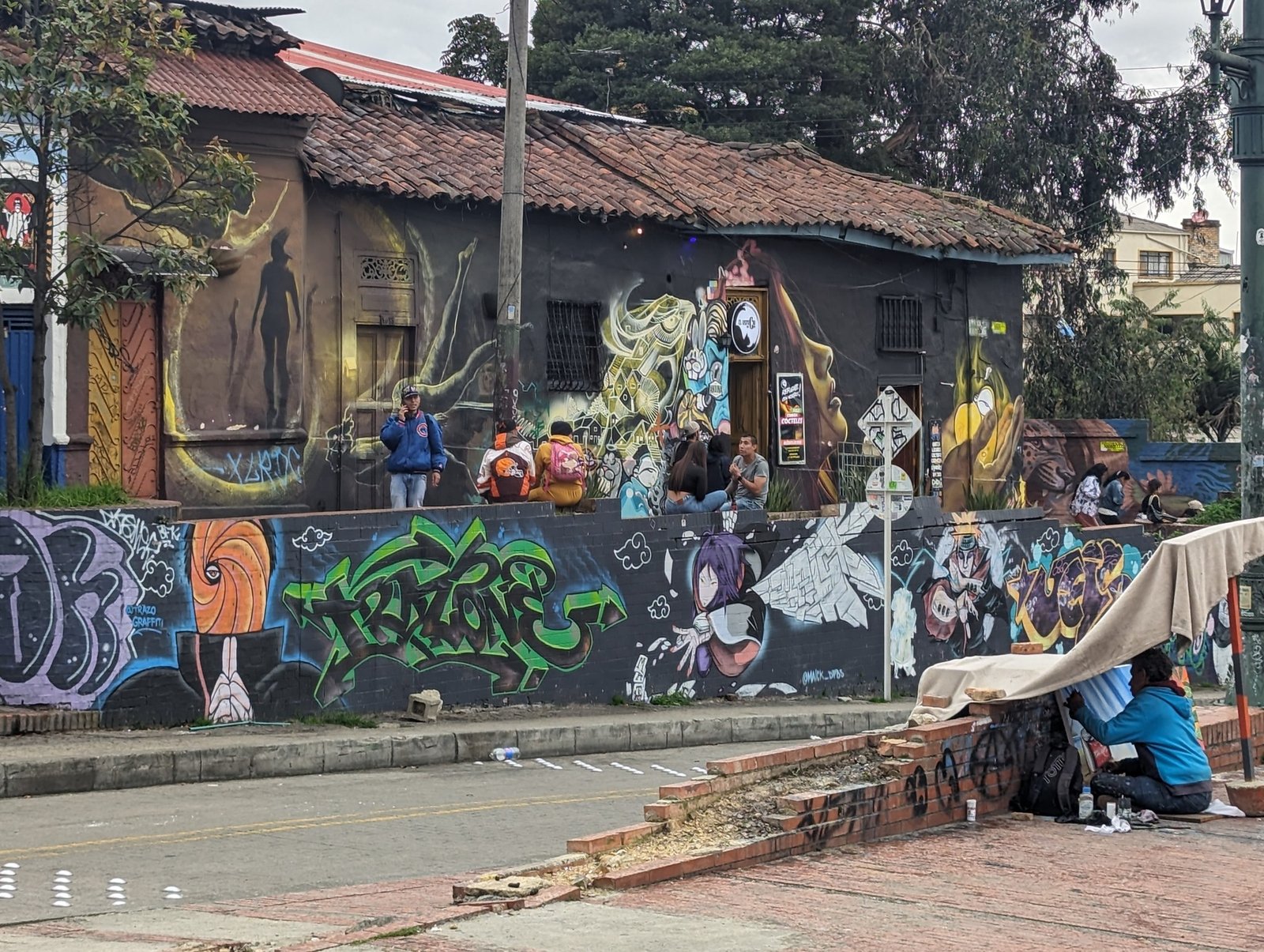
It is also worth wandering the lanes near Chorro de Quevedo – the fountain next to which the city was founded in 1538. They are very colourful: the walls are covered in murals and graffiti, and loads of umbrellas hang above one of the lanes.
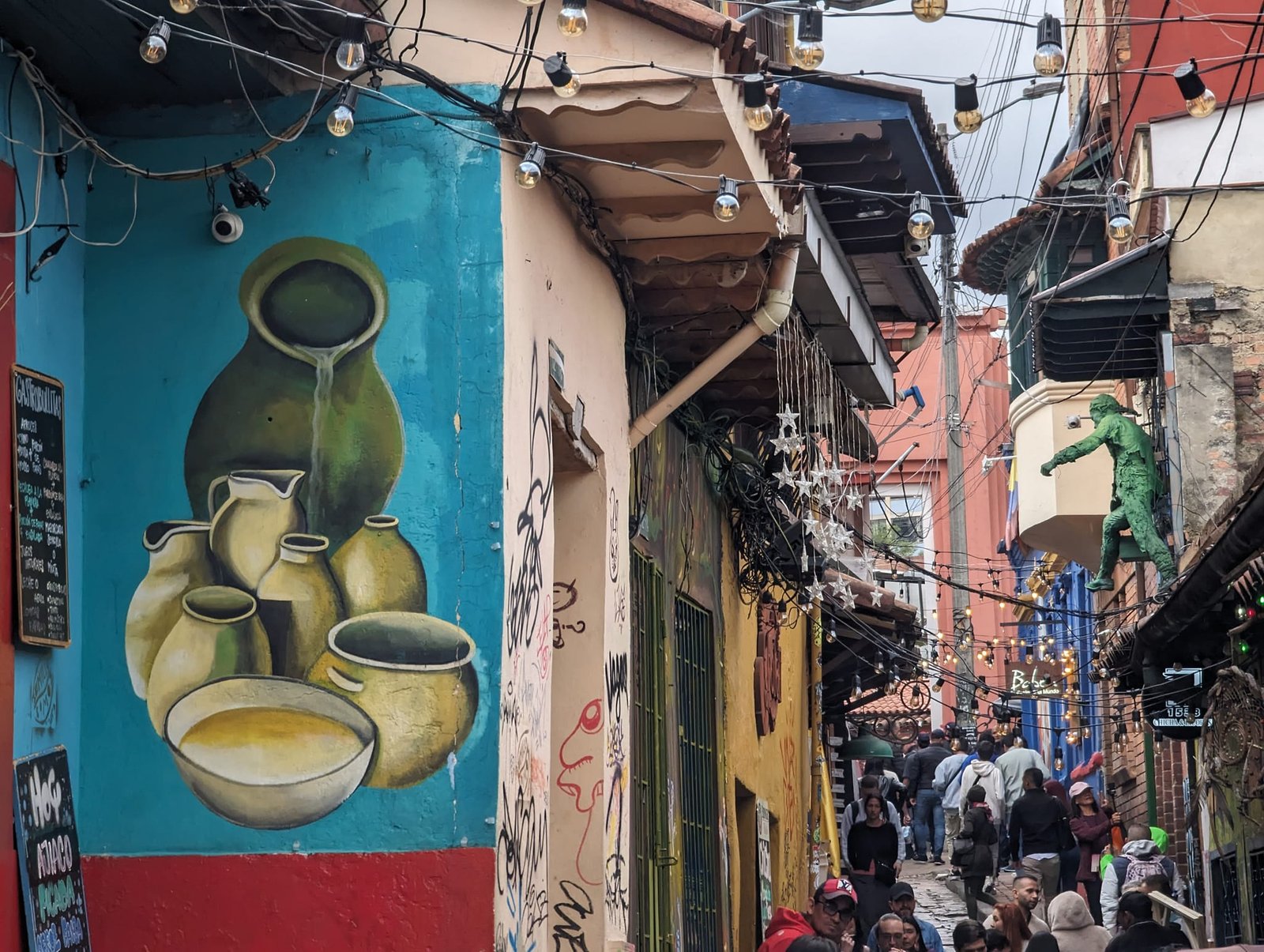
Be prepared, though, that every other person you meet here will try to sell you chicha – a weak alcoholic drink made from corn malt.
Monserrate – the best view of Bogotá
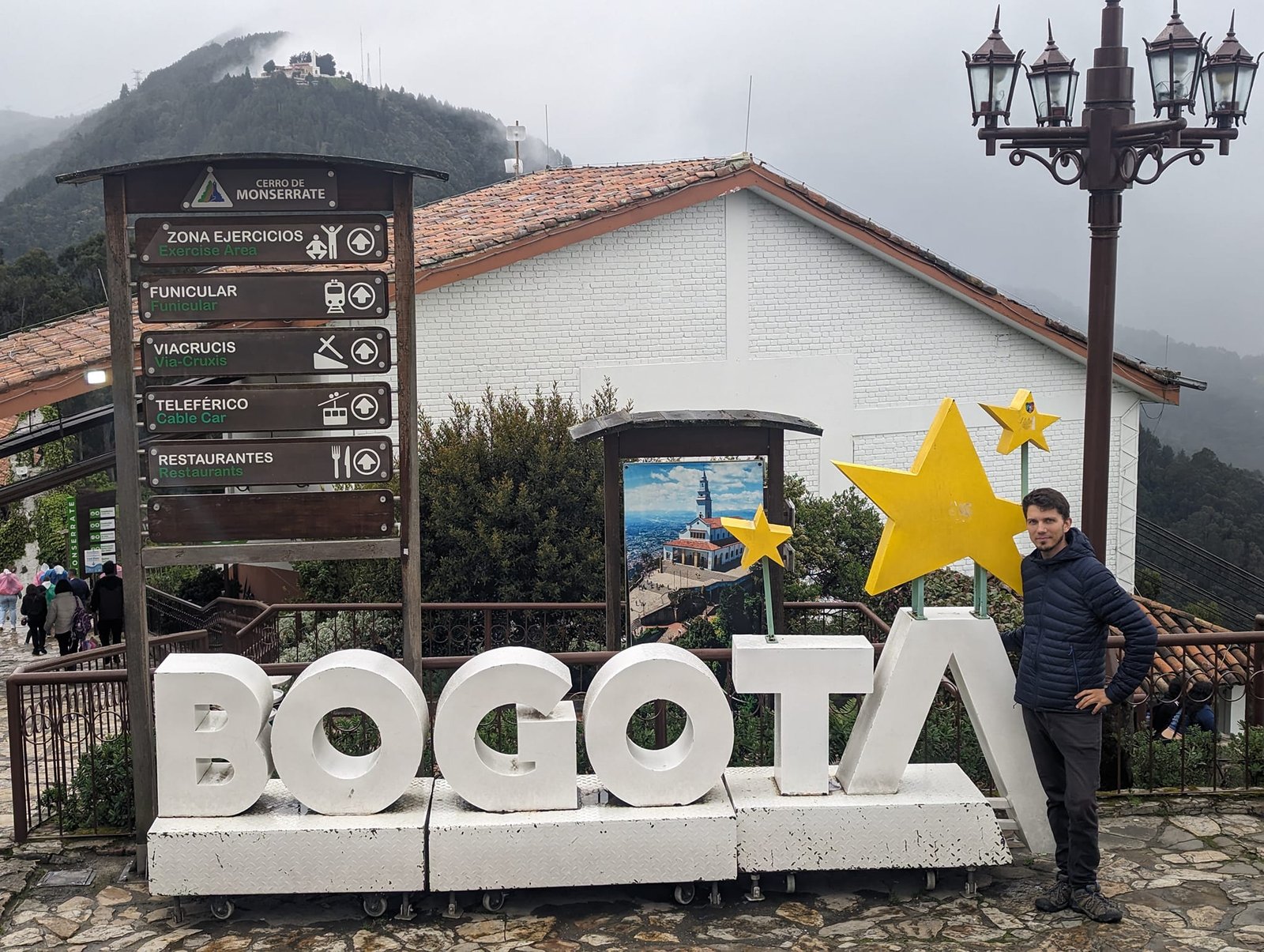
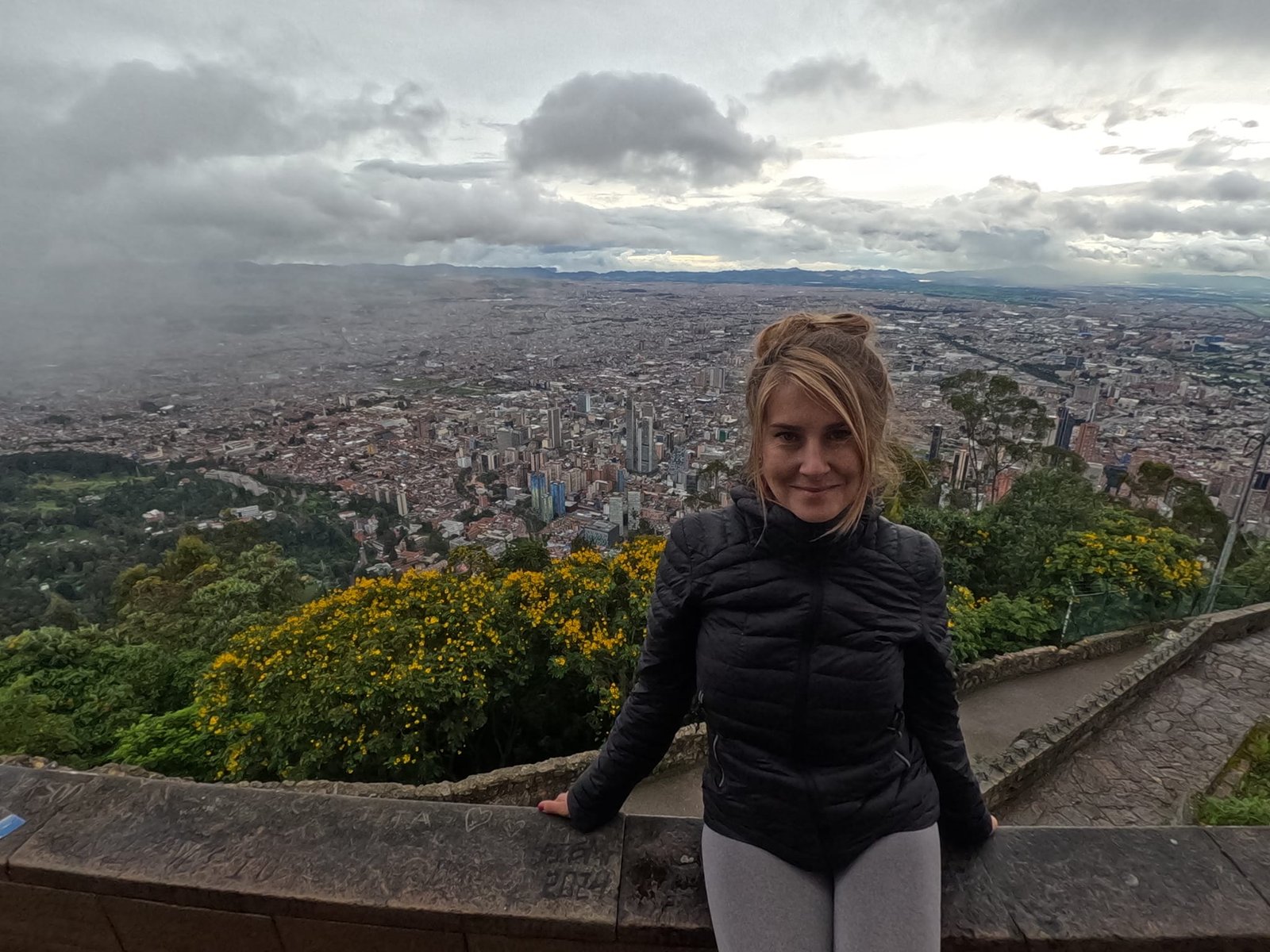
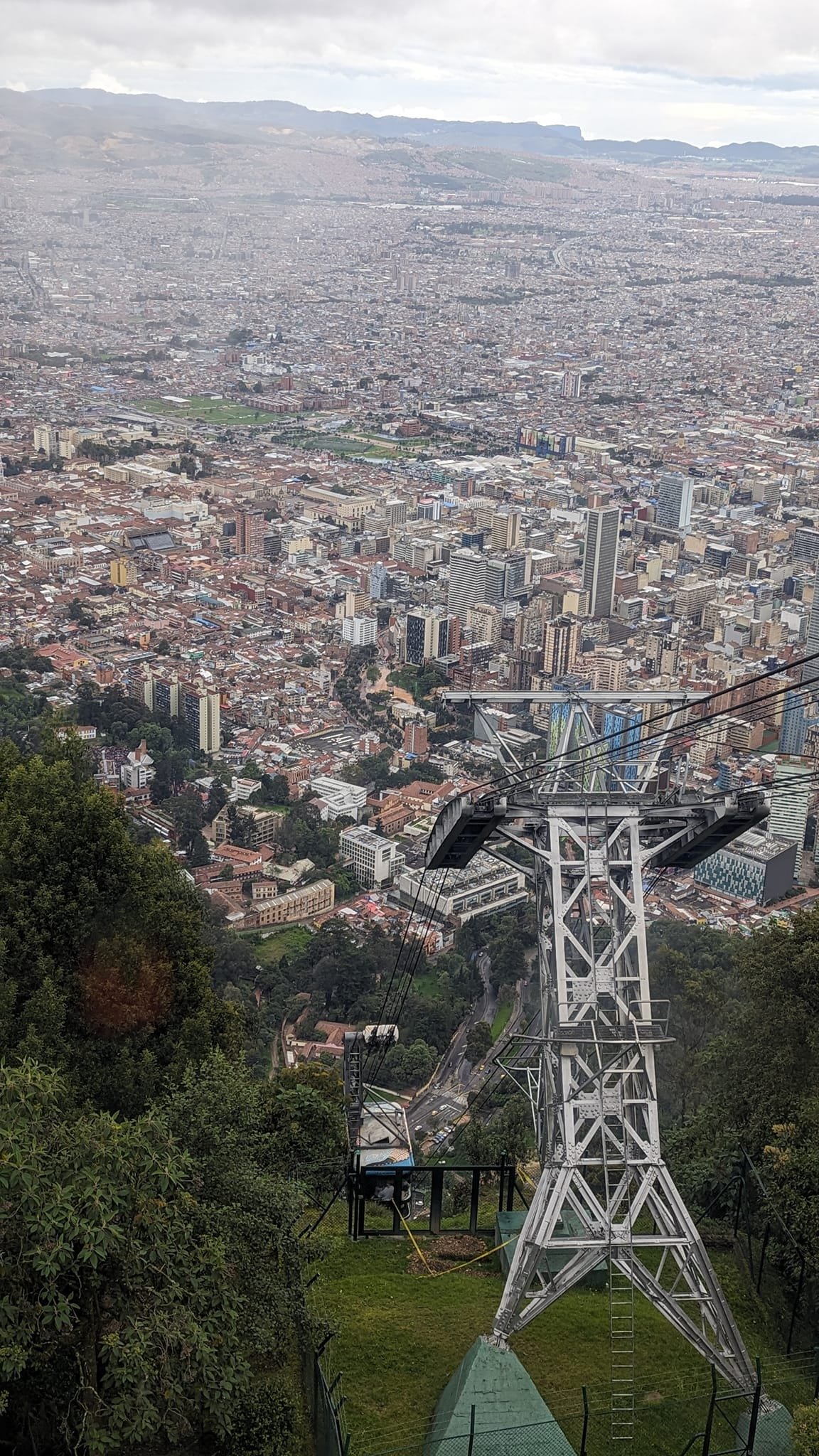
The best view of the city is from Monserrate – a holy mountain 3152 m above sea level, visited by pilgrims and plenty of tourists alike. You can go up by cable car; a return ticket cost us 29,000 COP (about €7).
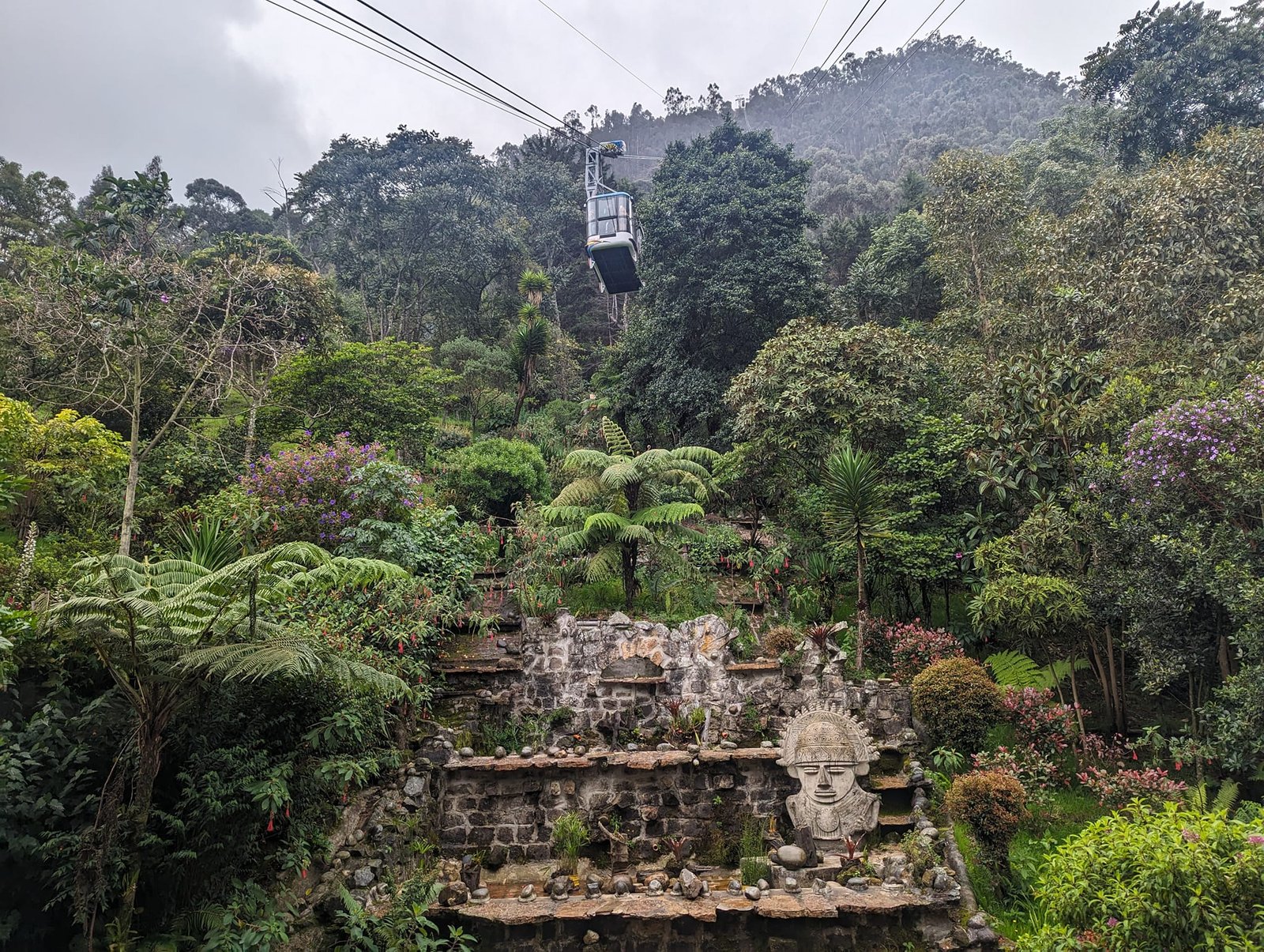
Two lines run to the top: a funicular, operating since 1929, and a cable car, since 1955. You can also walk up: the path is about 2.4 km long, with 1,605 steps and 470 m of ascent. At the top stands the white Basilica of the Lord of Monserrate with a figure of Christ fallen under the cross (Señor Caído), which draws pilgrims. The first chapel here was completed in 1657, and the present church was built after the 1917 earthquake and opened in 1920.


At the top there is a big BOGOTA sign, and from the terraces you can see the city stretching all the way to the horizon. It was a good end to our only day in the capital.
From Bogotá we went 300 km west to Salento, from where we set off to the Cocora Valley.
Practical information
- Bogotá in one day – a walk around the centre in the morning, then the Gold Museum, Plaza de Bolívar with the cathedral, the Military Museum, La Candelaria and Chorro de Quevedo, and Monserrate towards evening. It is doable, but there was no time left for more museums.
- Museums – many museums in Bogotá are free; we got into the Gold Museum for free too (May 2024).
- Monserrate – return cable car ticket 29,000 COP (about €7, May 2024); the summit is 3152 m above sea level. The best panorama of Bogotá.
- Weather – Bogotá lies over 2600 m above sea level; in May 2024 it was at most 18°C during the day and 13°C in the evening. Bring something warm.
- Chorro de Quevedo – in the surrounding lanes someone tries to sell you chicha every few steps.
- Prices – I give them in Colombian pesos with the May 2024 exchange rate (1000 COP was then about €0.23). I write more about money in Colombia in the post about Cartagena.
- As of 2026: Gold Museum – 21,000 COP for foreign visitors, free on Sundays; open Tuesday–Saturday 9:00–19:00, Sundays and holidays 10:00–17:00, closed on Mondays. Monserrate cable car and funicular – 35,000 COP return from Monday to Saturday and 21,000 COP on Sundays; the footpath is free, open for the climb from 5:00 to 13:00 and closed on Tuesdays. Military Museum – free, Tuesday to Sunday until 16:00.
Summary
One day in Bogotá is of course not enough – especially since there are far more free museums here than we had time to see. Even so, the Gold Museum, colourful La Candelaria and the view from Monserrate gave us a good idea of the Colombian capital. After weeks of heat, cool Bogotá was also a pleasant change. The next day the world’s tallest palm trees were waiting for us in the Cocora Valley.


 Guatemala

 Poland