I came back to Munich several times: in 2006 and 2007 with my sister, then in 2008 and in the winter of 2012. This post gathers what is worth seeing in the Bavarian capital: the old town from a tower, the Olympic Park, the Englischer Garten and the botanical garden. The Allianz Arena gets its own part: I saw it in 2006, toured it in 2010 and watched a Bayern match there in 2012. At the end I have left two places for a day with children: Hellabrunn Zoo and Bavaria Filmstadt. The last part of this post is about the Dachau memorial. I cover the Bavarian Alps, gorges, castles and the Danube gorge separately.
Table of contents
- The old town from the Alter Peter tower
- Stachus and the old town lanes
- The Olympic Park
- A car showroom and BMW
- The Englischer Garten and the botanical garden
- Theresienwiese and the Bavaria statue
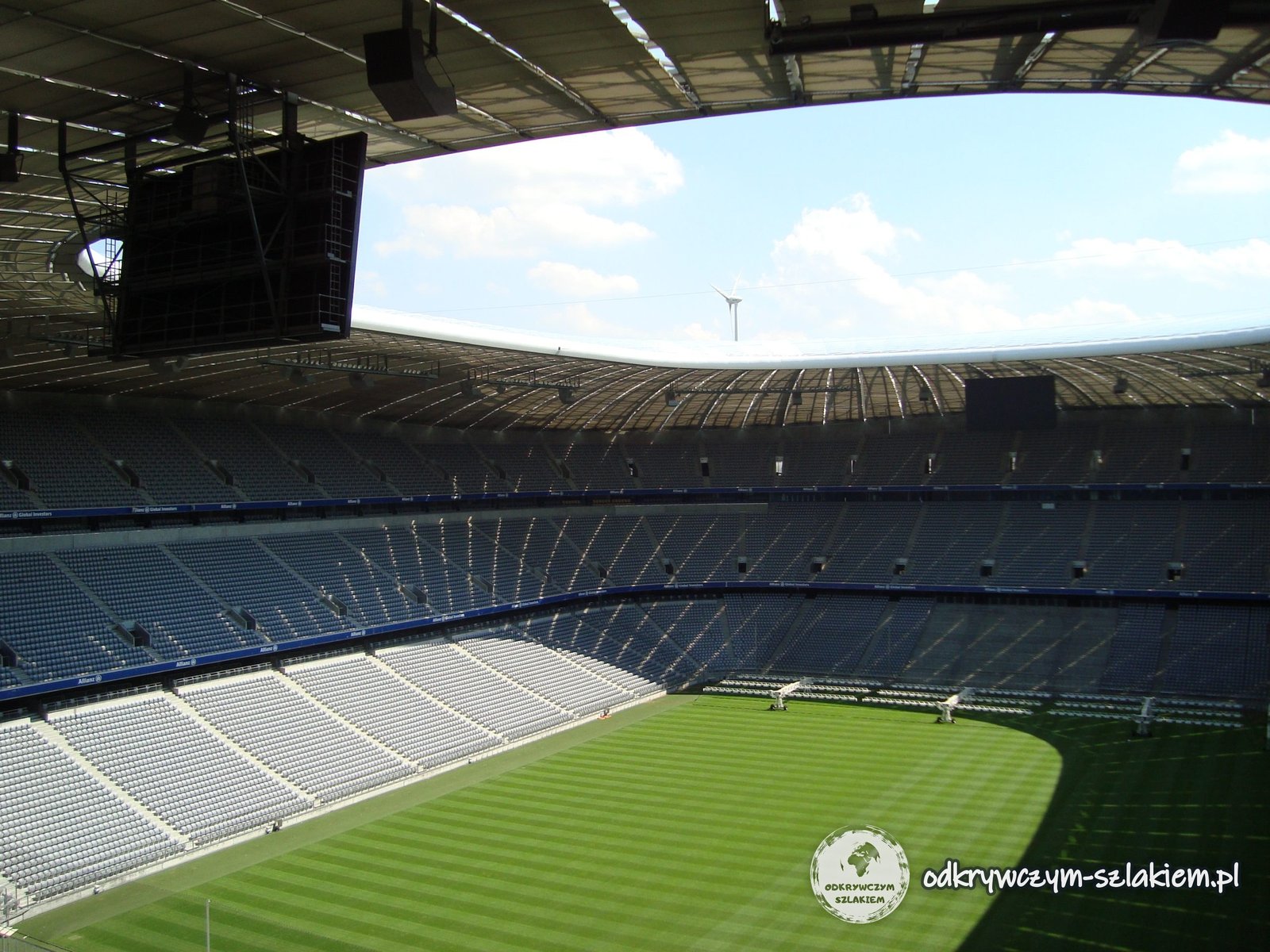
- The Allianz Arena – a stadium of cushions
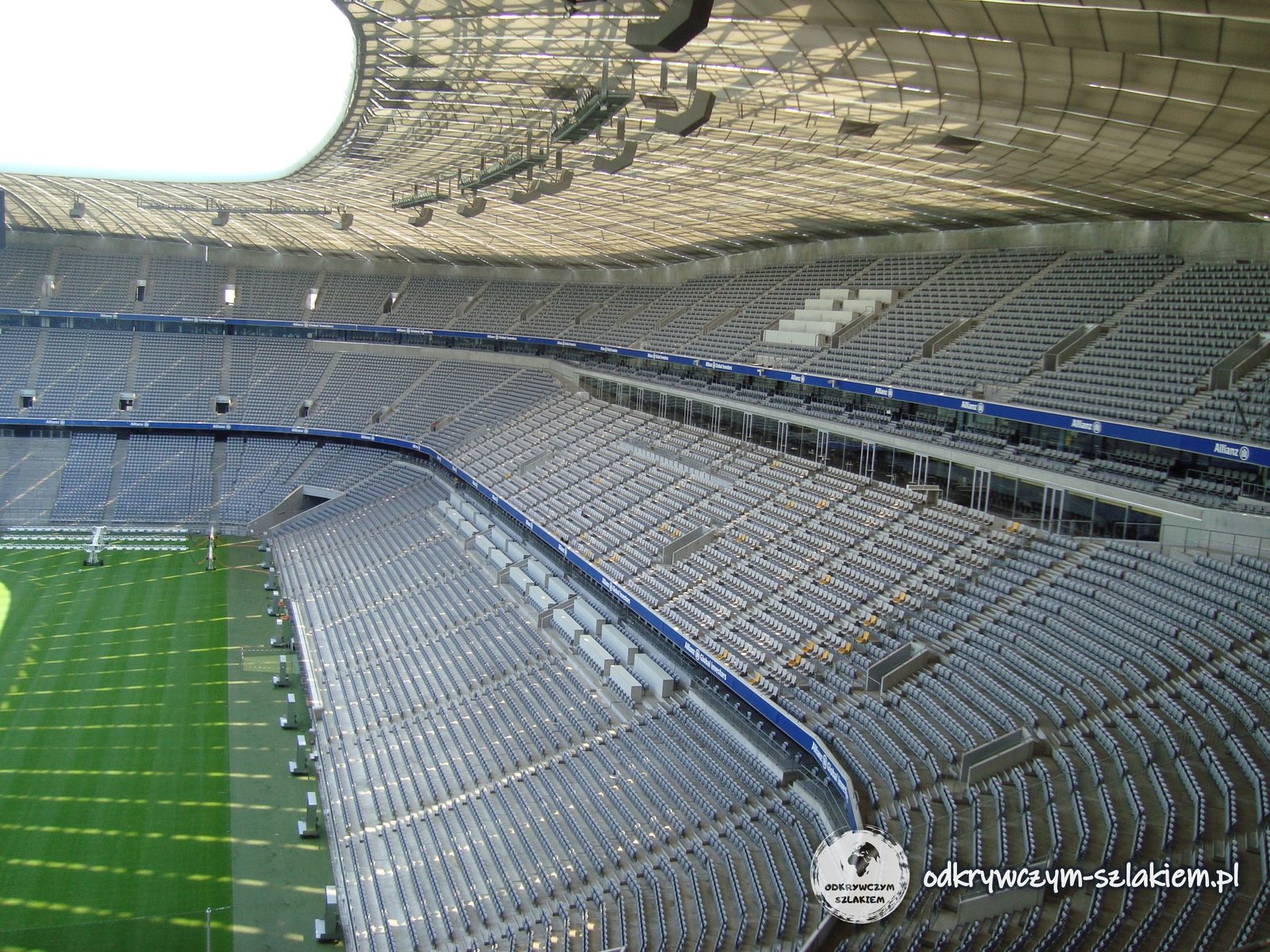
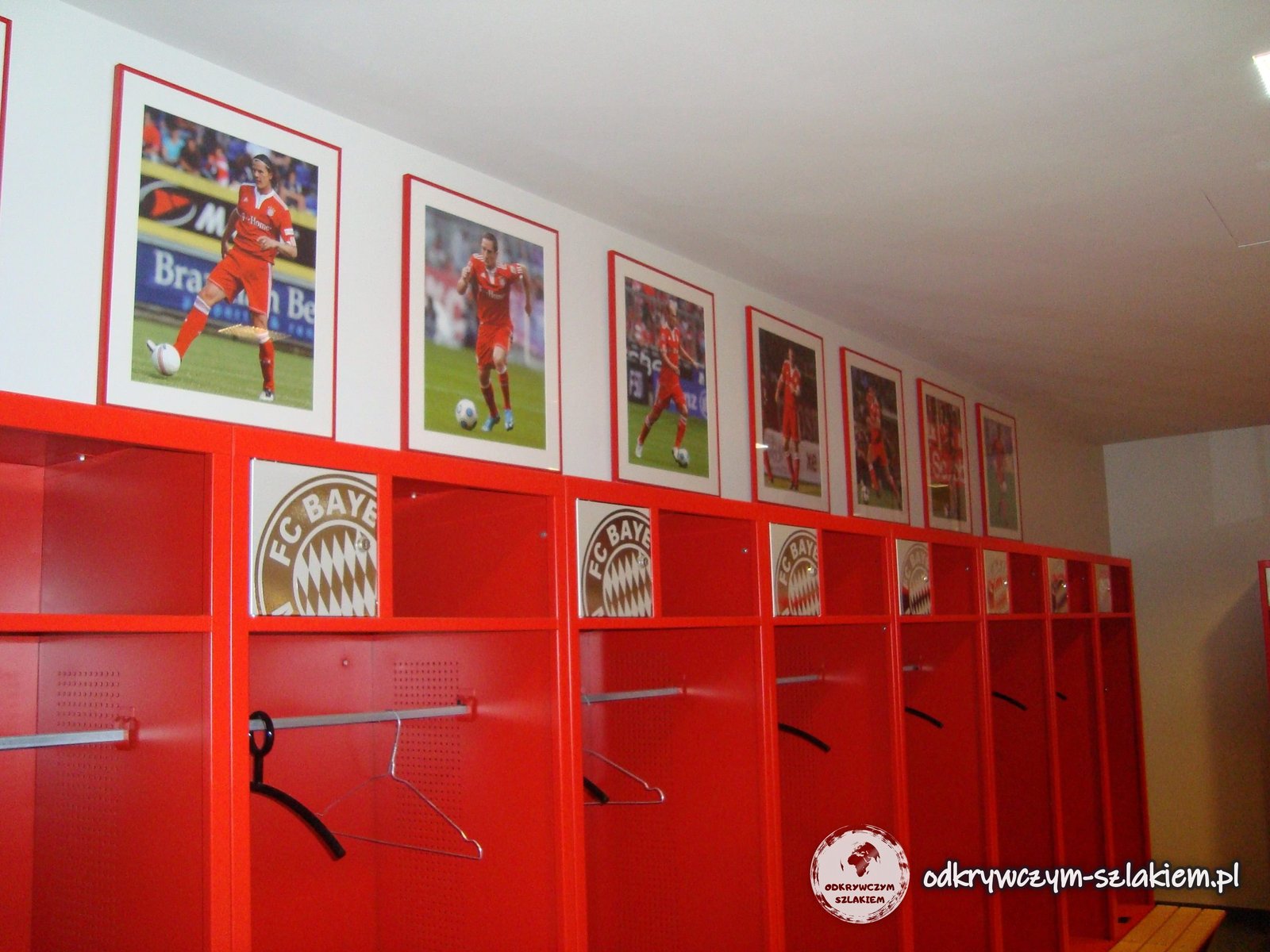
- The Allianz Arena – a stadium tour
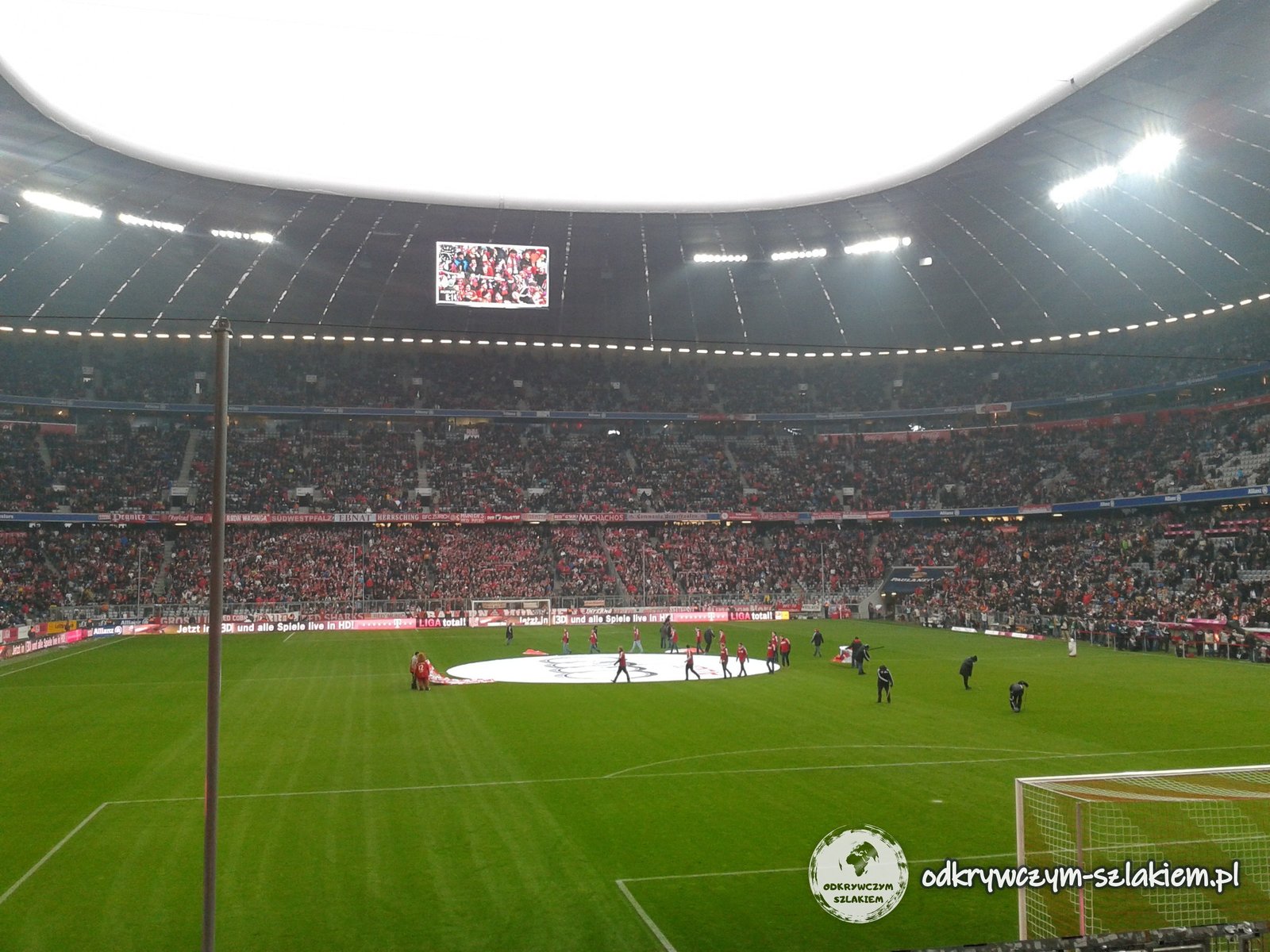
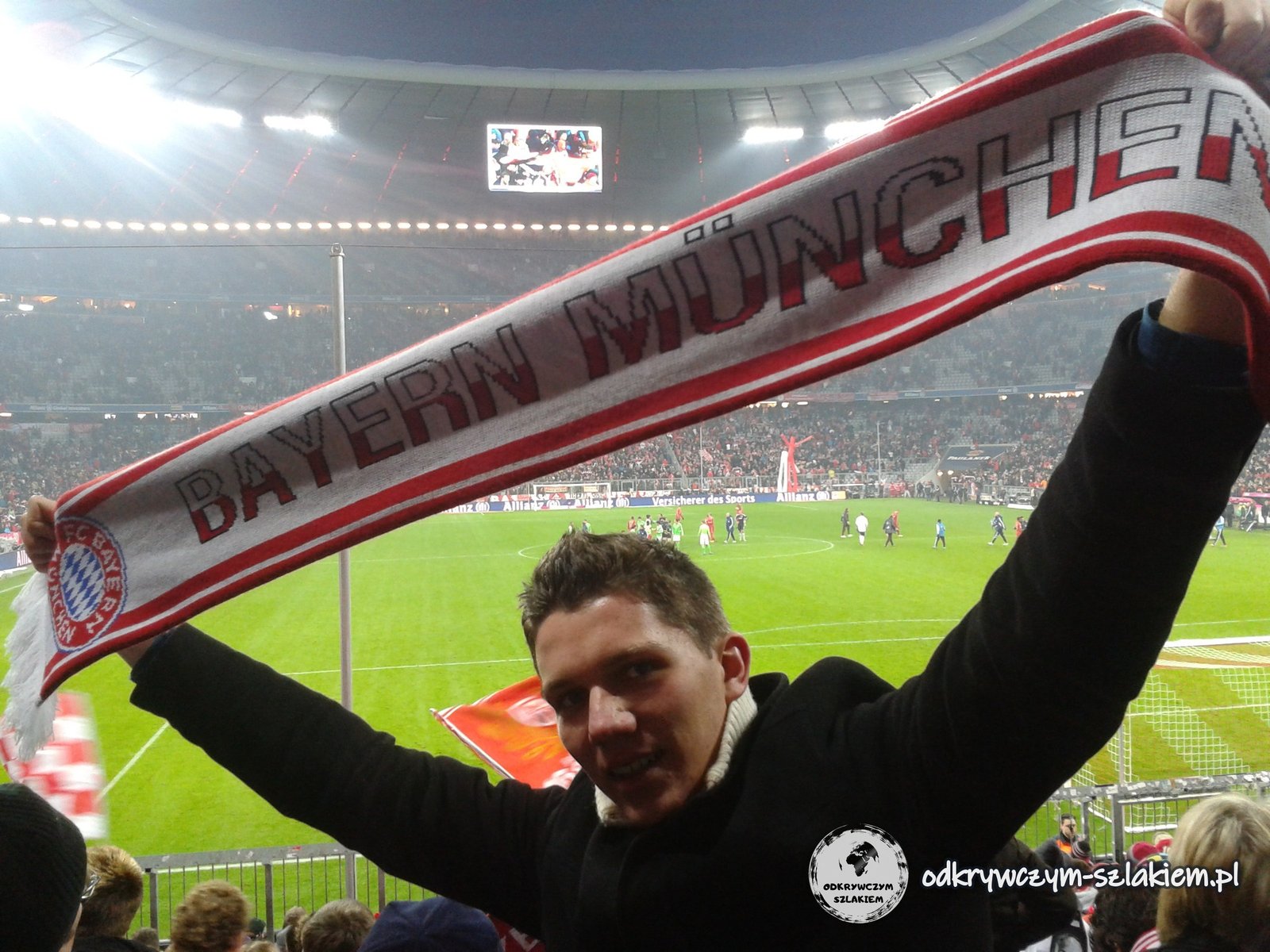
- Bayern v Wolfsburg 2–0 (28.01.2012)
- Bavaria Filmstadt
- Hellabrunn Zoo
- Dachau – the concentration camp memorial near Munich
- Practical information
The old town from the Alter Peter tower
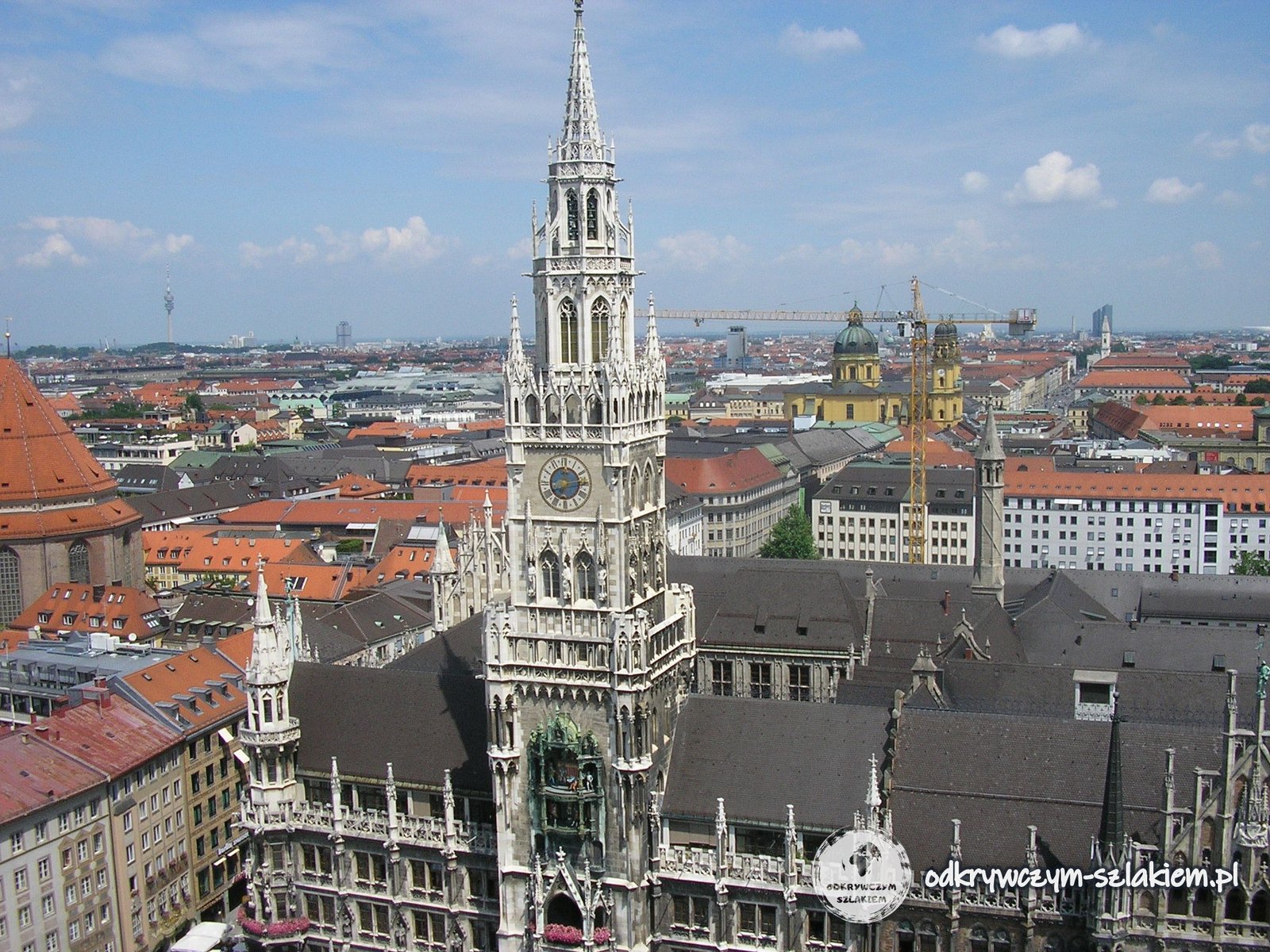
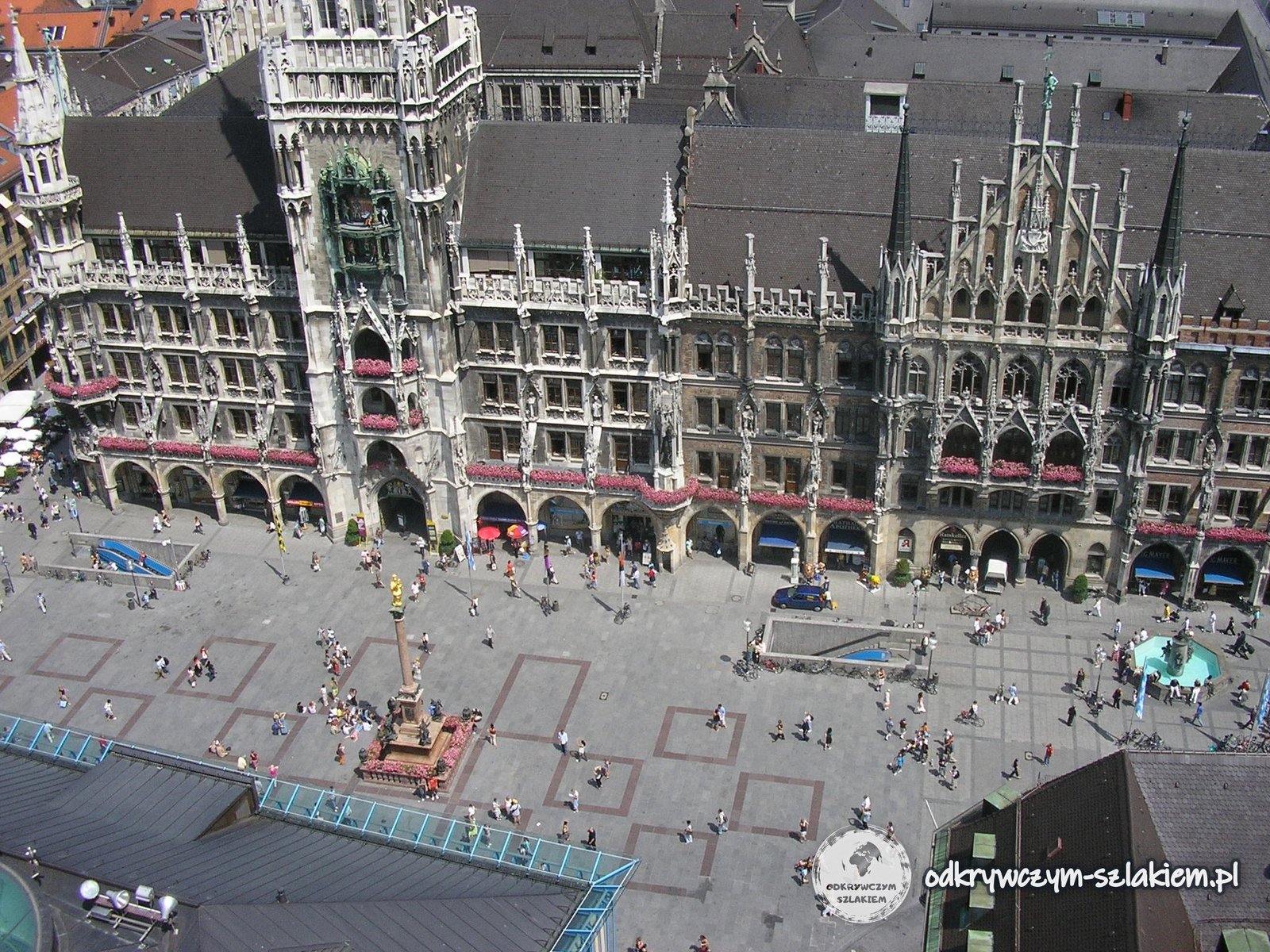
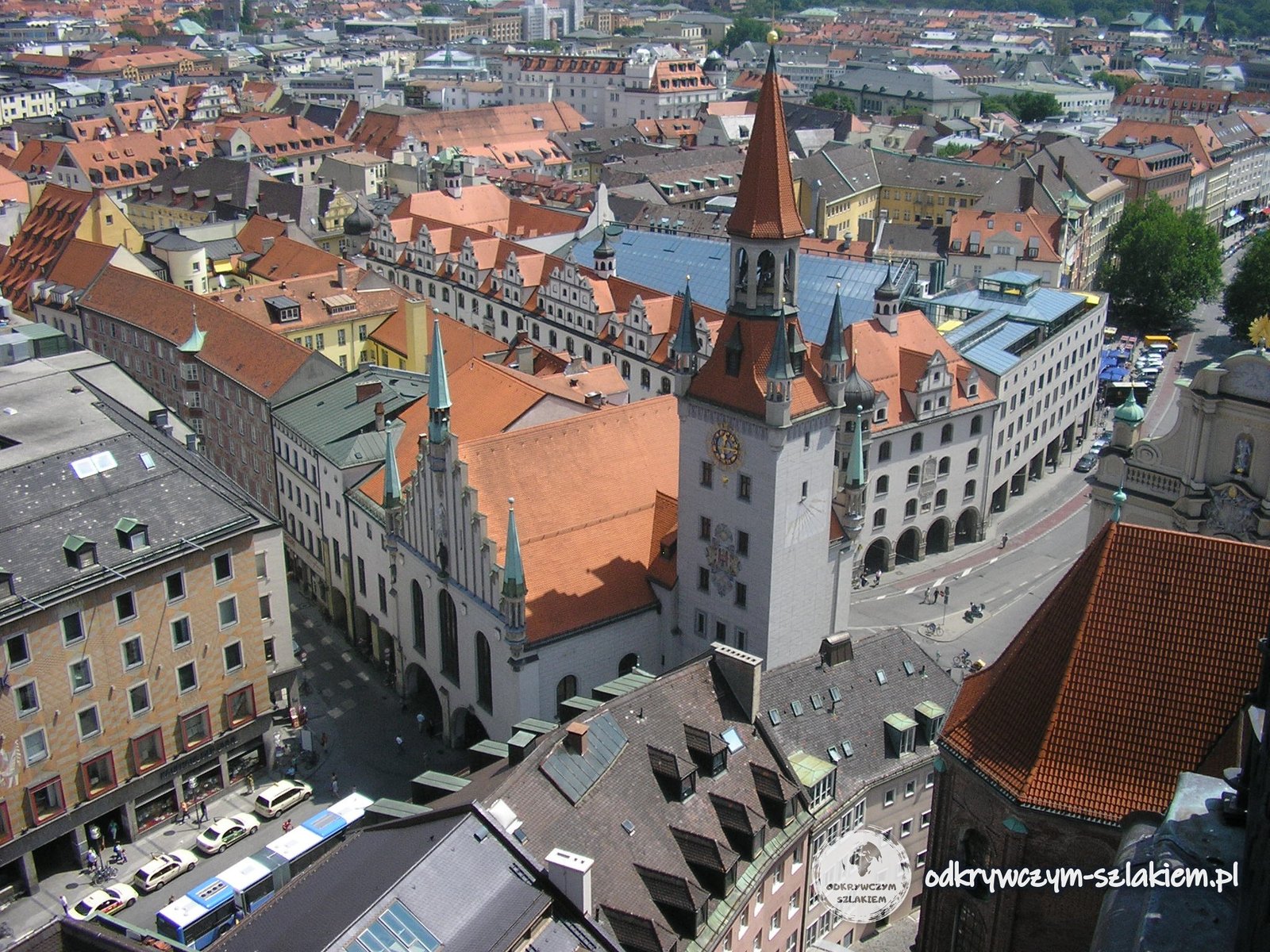
The best view of the centre is from the tower of St Peter’s Church, the oldest in the city, known as Alter Peter. It is about 91 m high, and around 300 steps lead to the platform. From the top you can see Marienplatz and the New Town Hall with its Glockenspiel, whose figures dance several times a day.
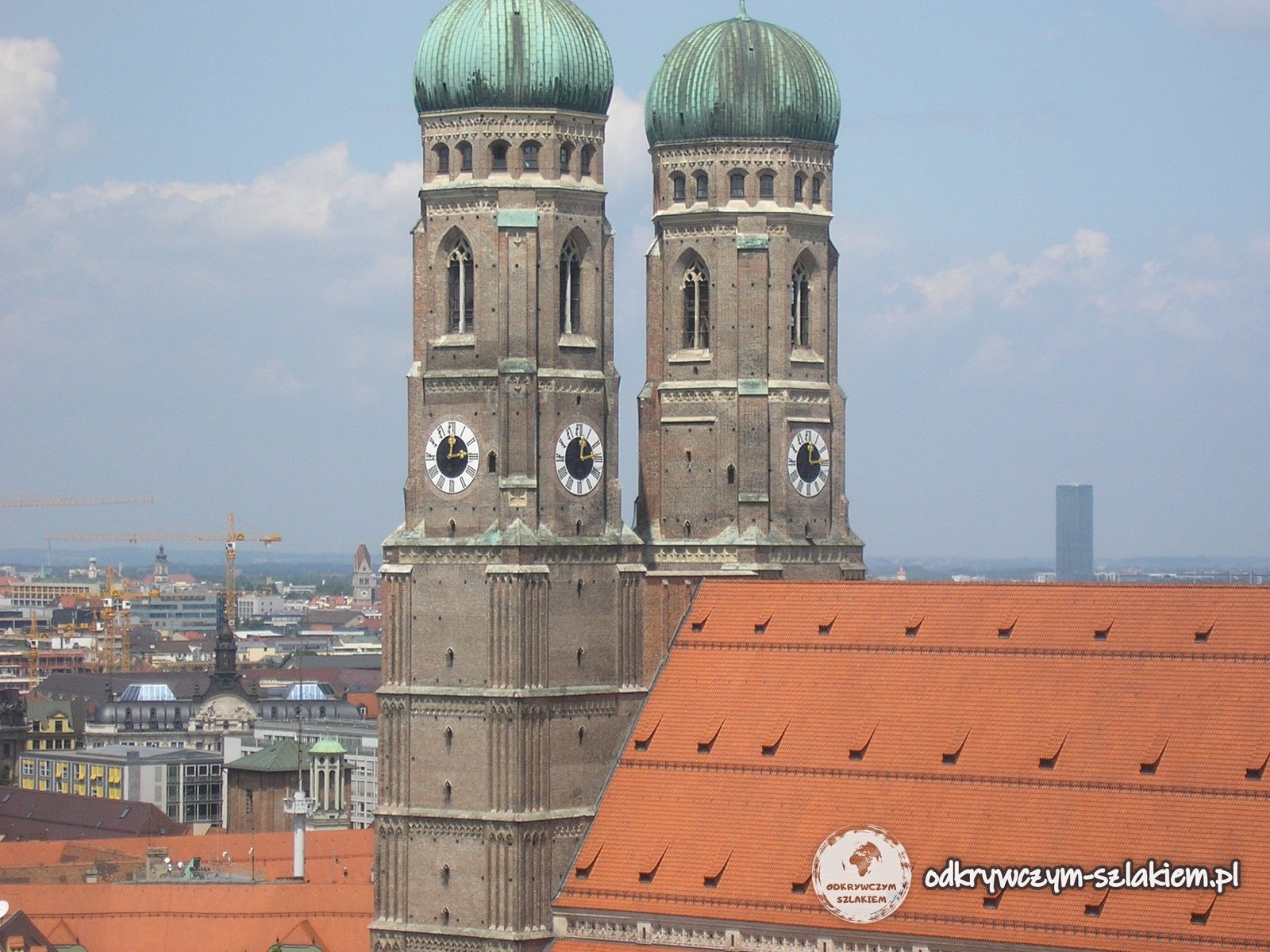
The city’s symbol is the pair of domed towers of the Frauenkirche. The cathedral was built in the 15th century and its towers are almost 100 m high.
Stachus and the old town lanes
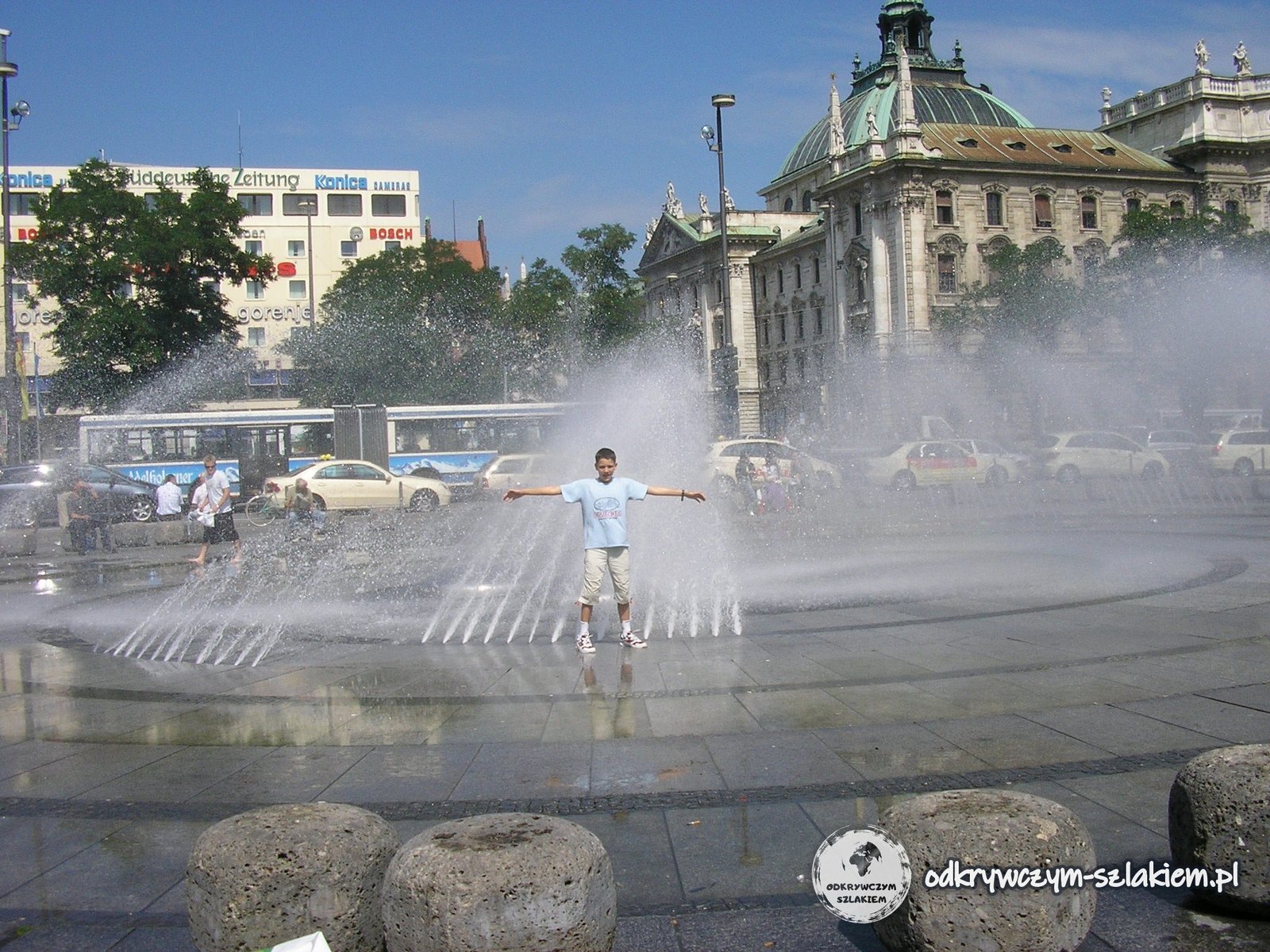
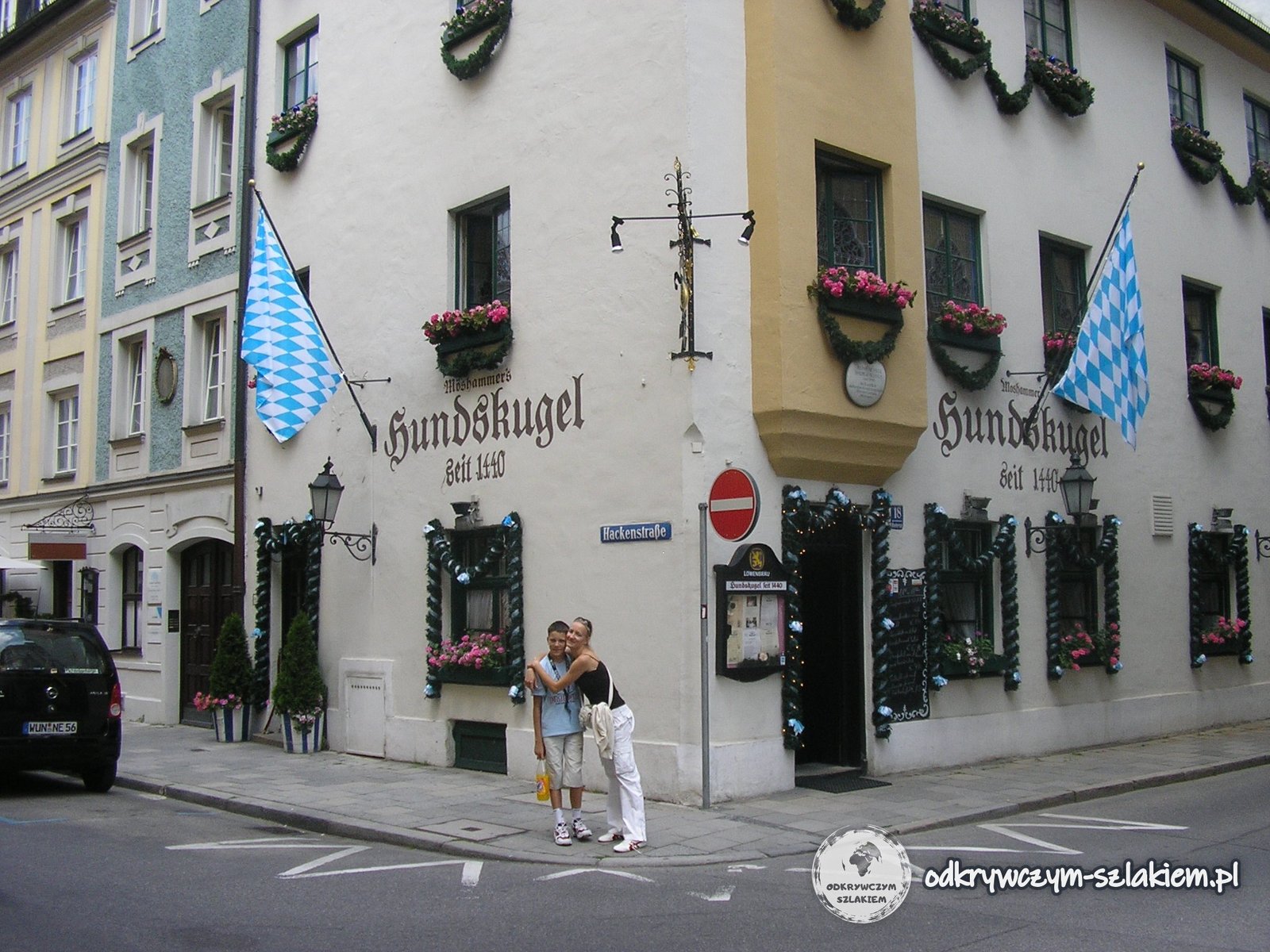
We started our walk at the fountain on Karlsplatz, which locals call Stachus. In the old town lanes stands the Hundskugel, one of the oldest inns in Munich.
The Olympic Park
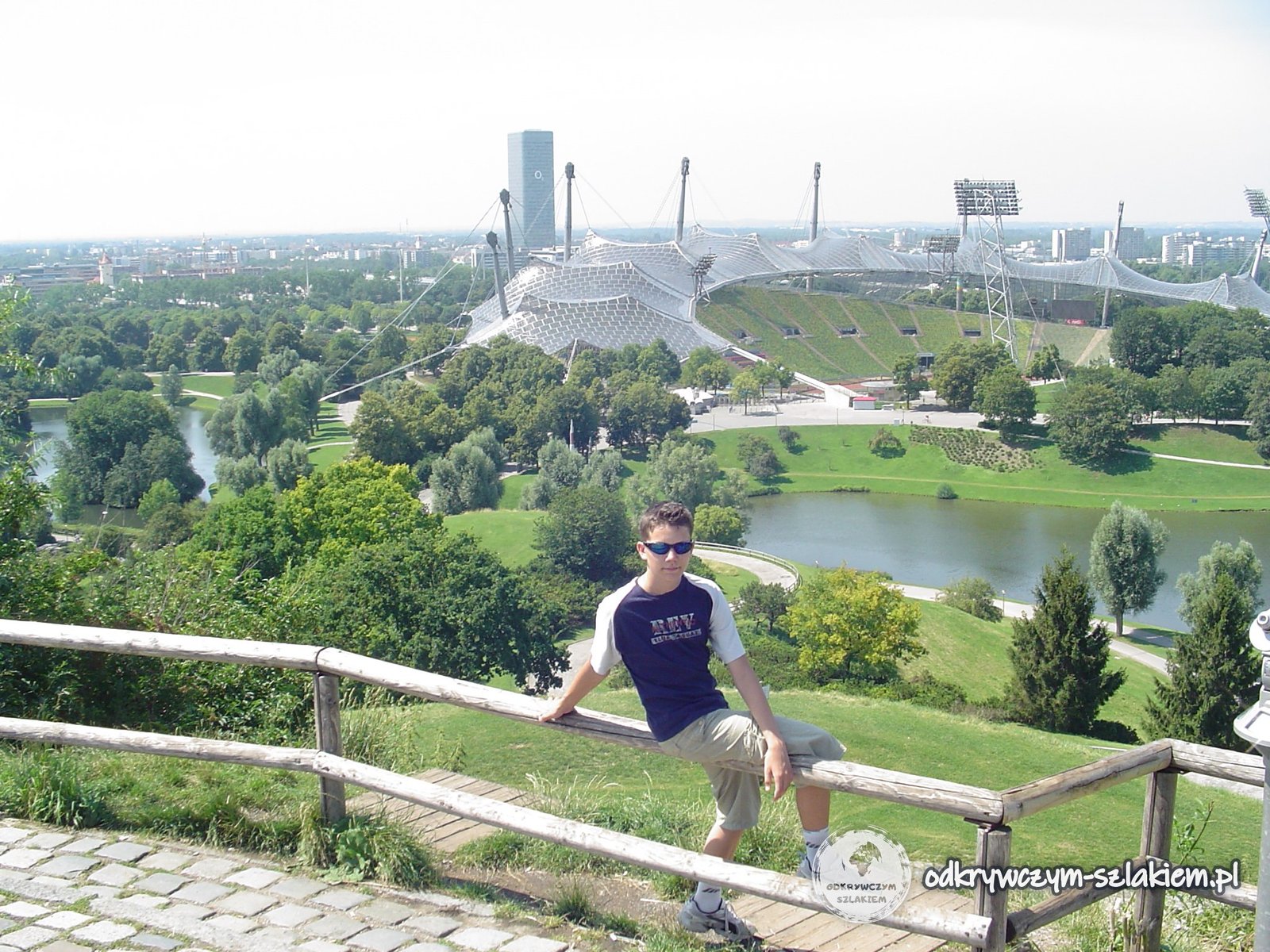
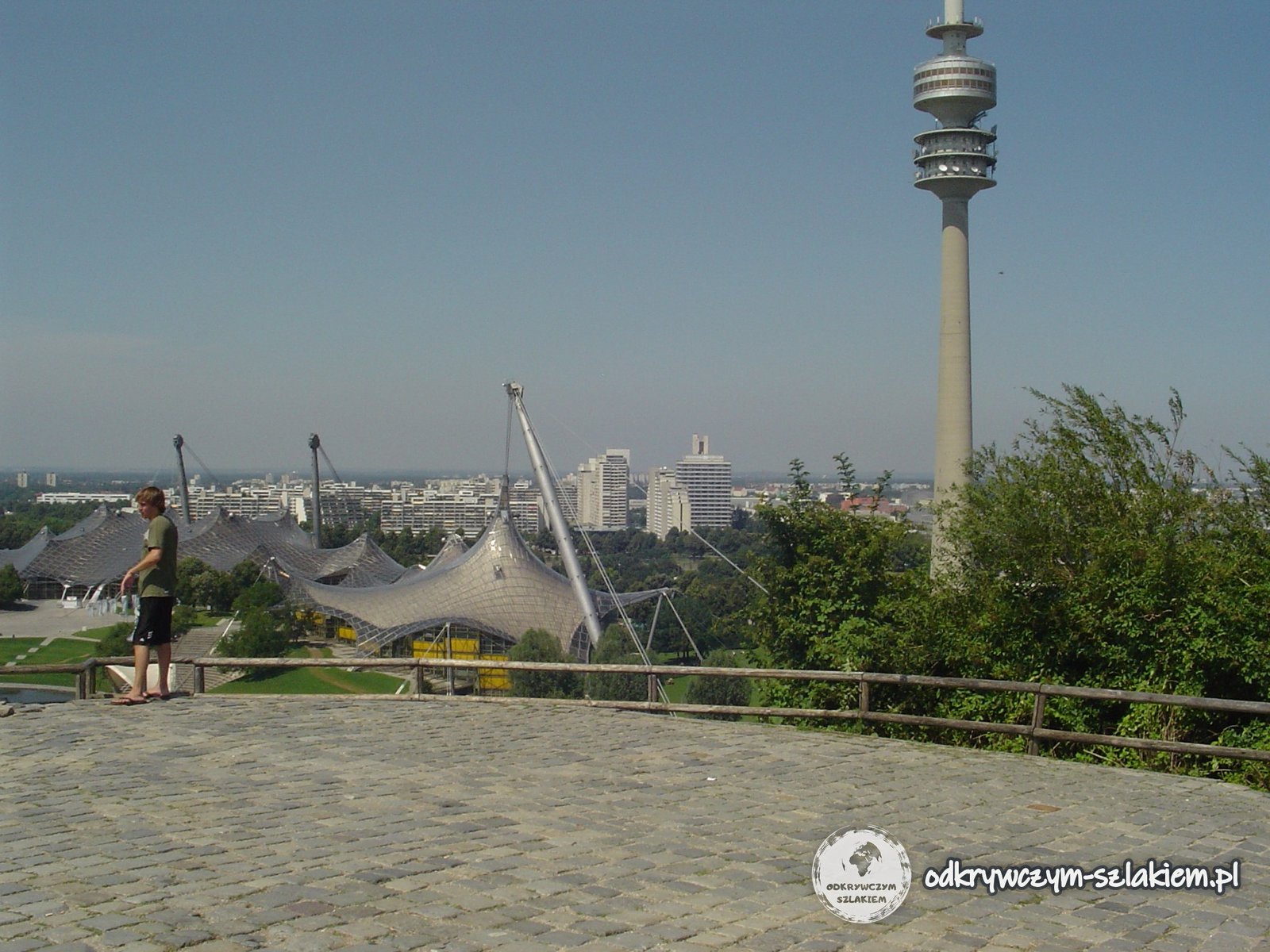
My sister and I went to the Olympiapark, built for the 1972 Games. Its trademarks are the tent-like stadium roof and the Olympiaturm, about 291 m high. The Olympiaberg hill, where we took our photos, was piled up from the rubble of the city destroyed in the Second World War.
A car showroom and BMW
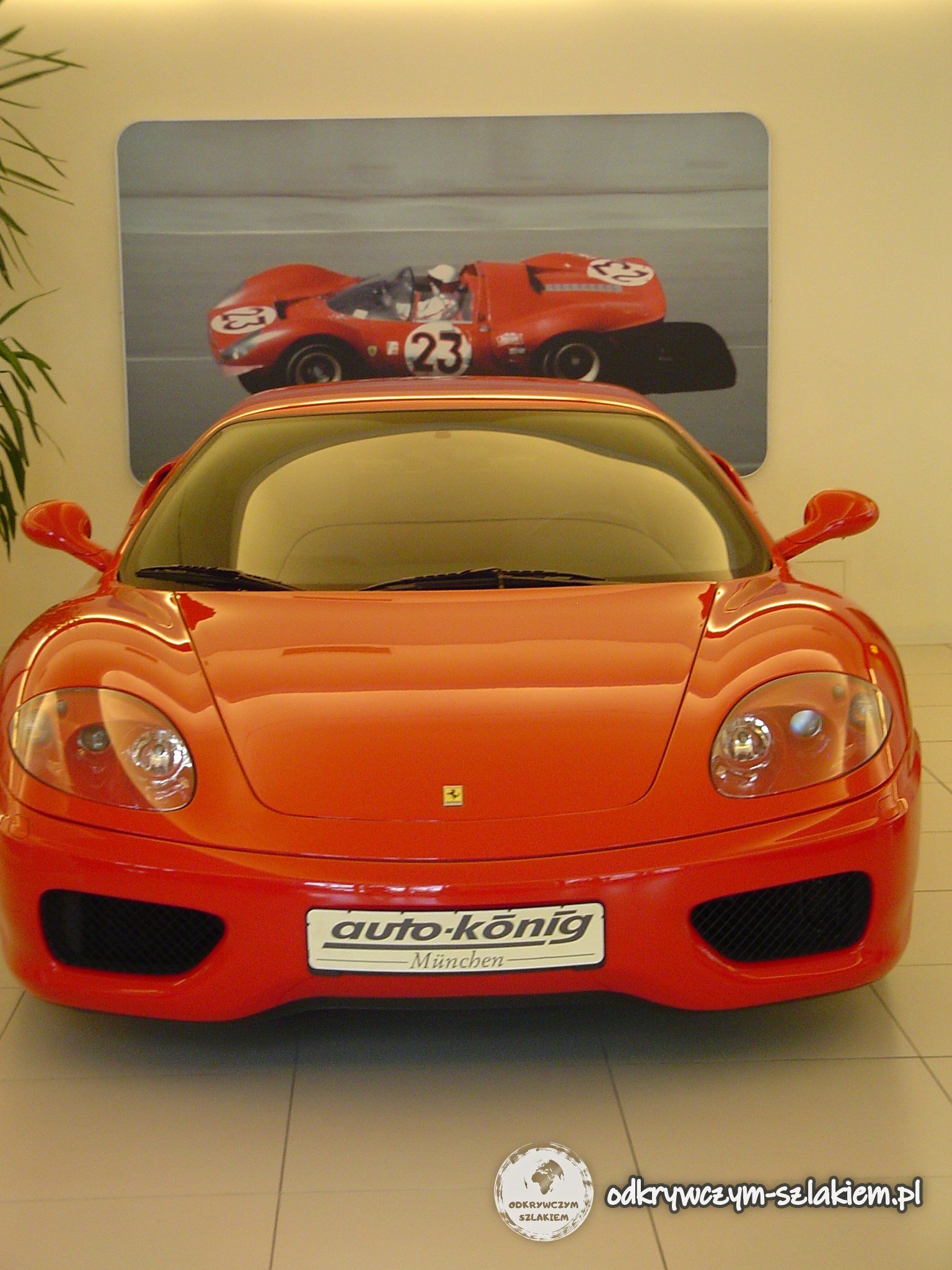
The same day we dropped into a car showroom in Munich, with Ferrari, Maserati, Bentley and Lamborghini models among others.
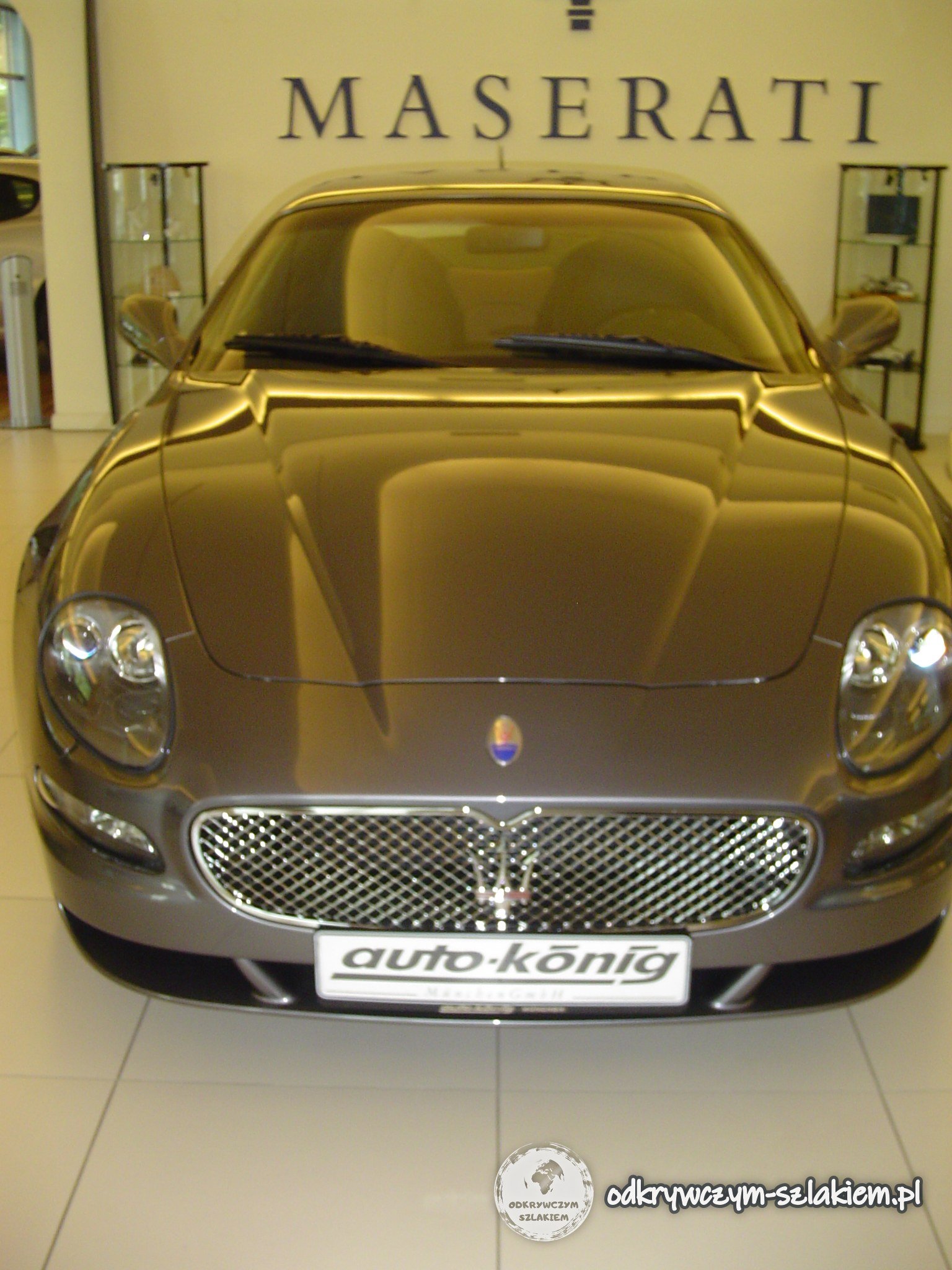
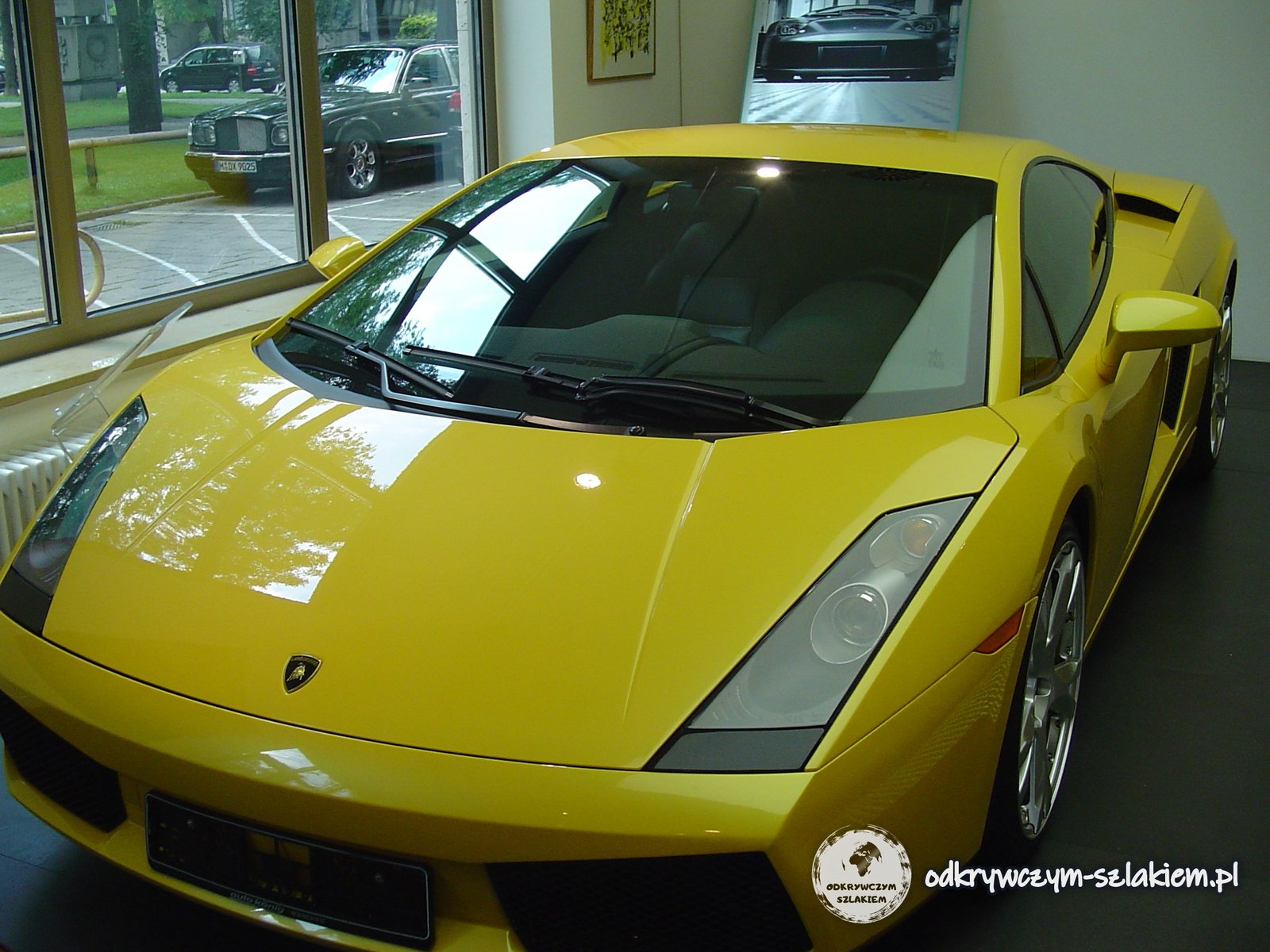
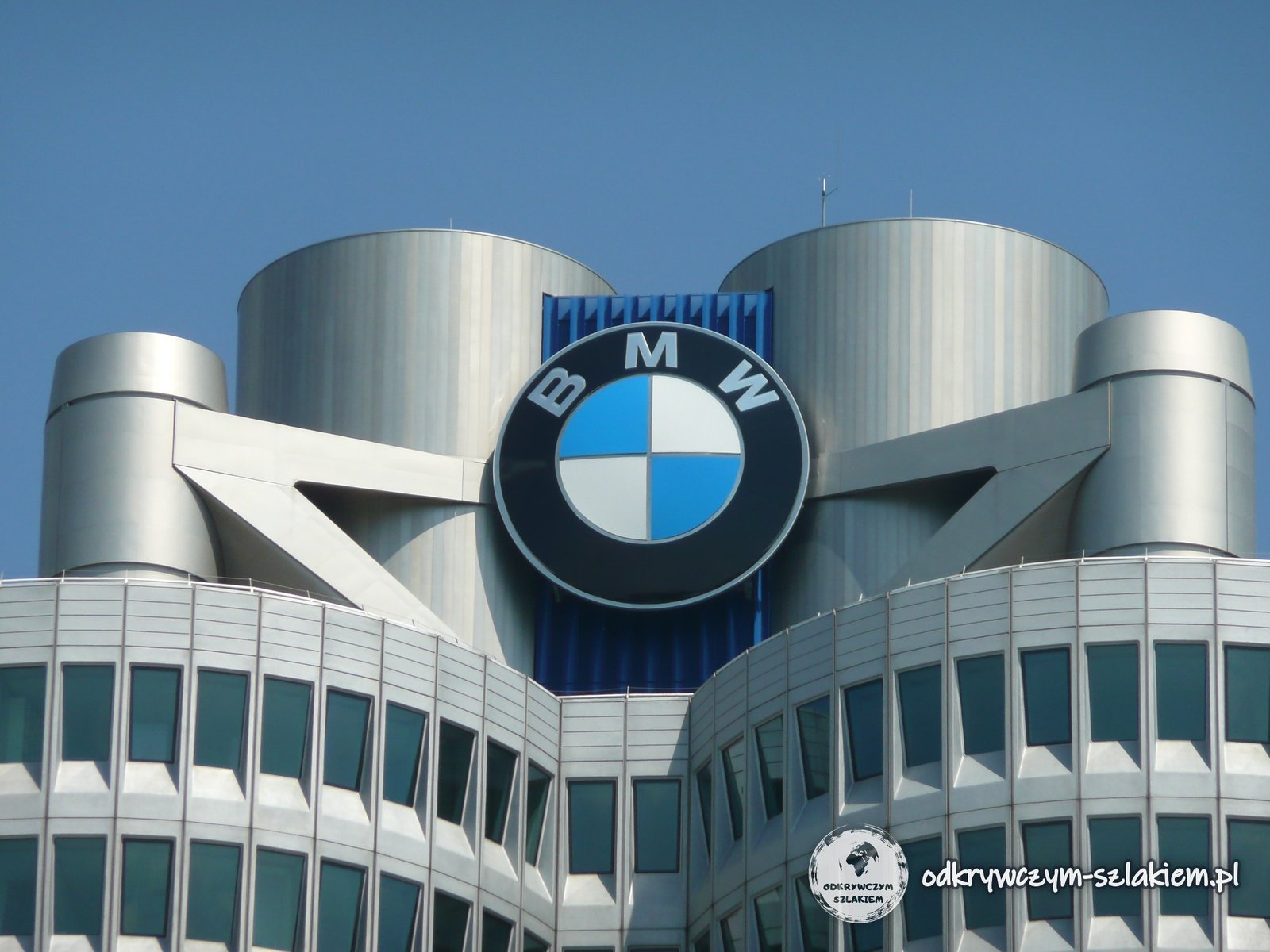
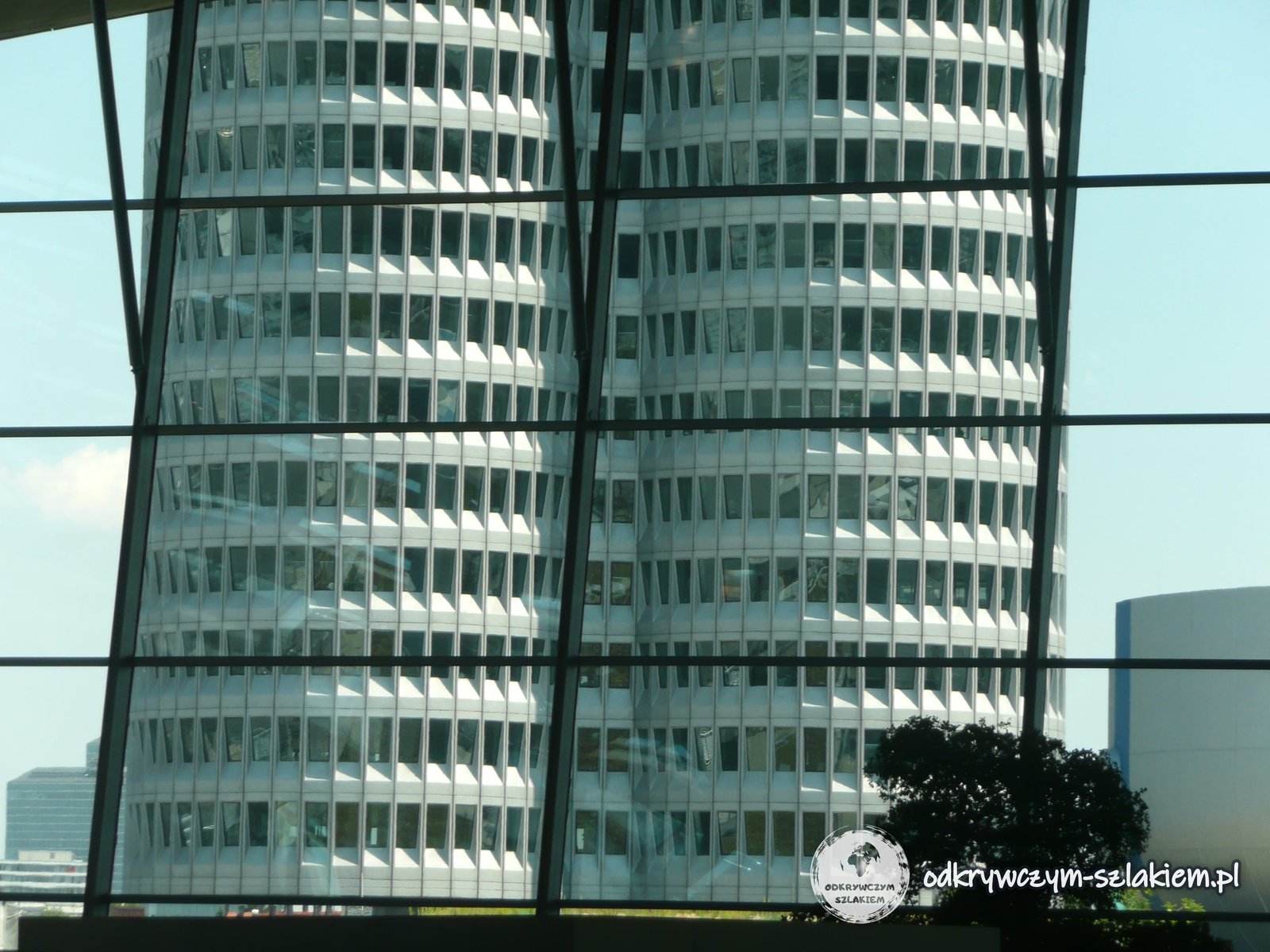
Munich is also the home of BMW. Its four-cylinder tower stands right next to the Olympic Park. It is 101 m tall, was designed by the Austrian architect Karl Schwanzer and opened in 1973, together with the neighbouring bowl-shaped BMW Museum.
Across the street stands BMW Welt, a pavilion by Coop Himmelb(l)au opened in 2007, with a striking double cone under a wave-like roof. It is a showroom and the place where customers collect their new cars. Entry to BMW Welt is free, while the museum charges admission, so you can drop in even briefly during a walk around the Olympic Park.
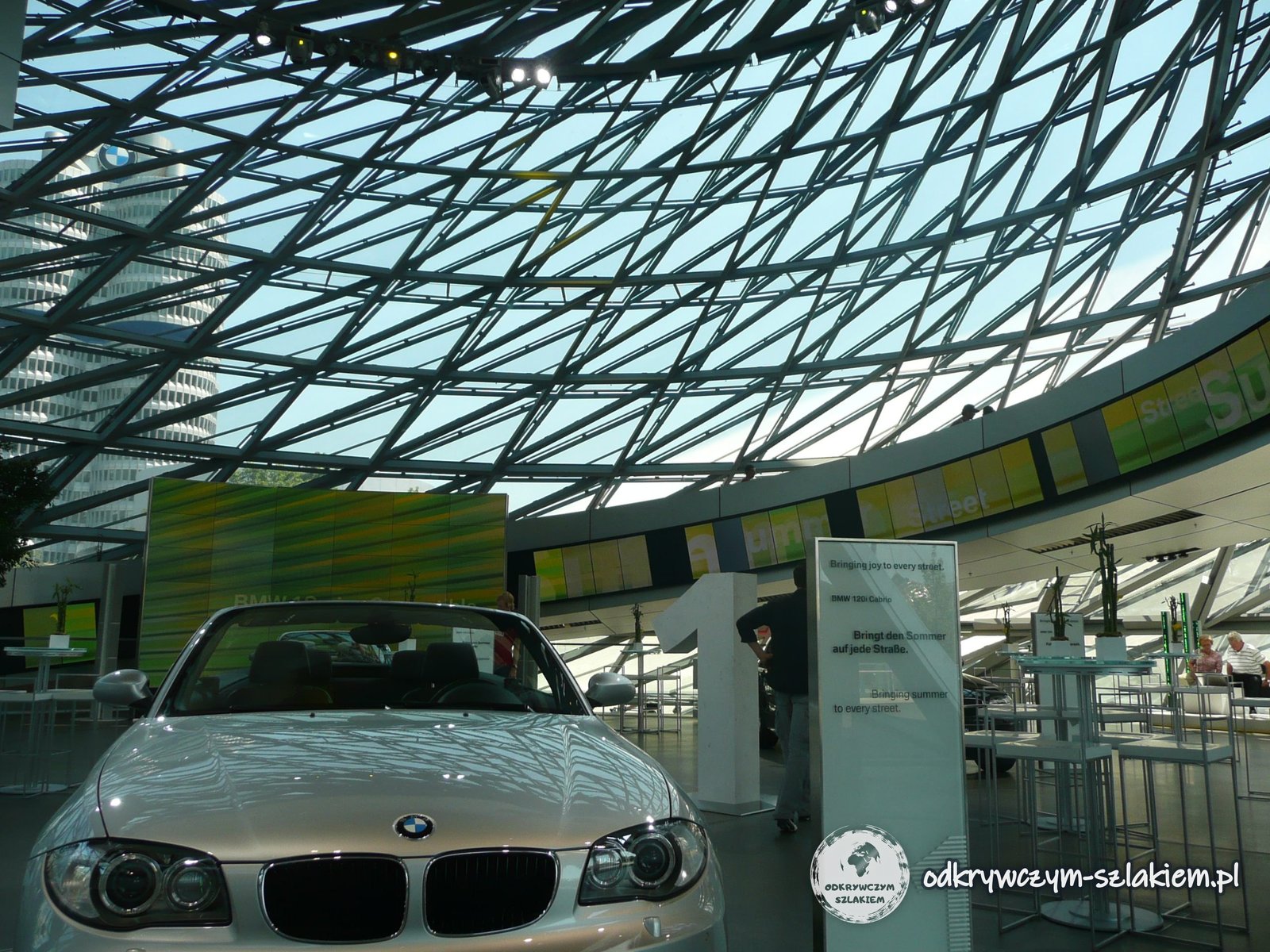
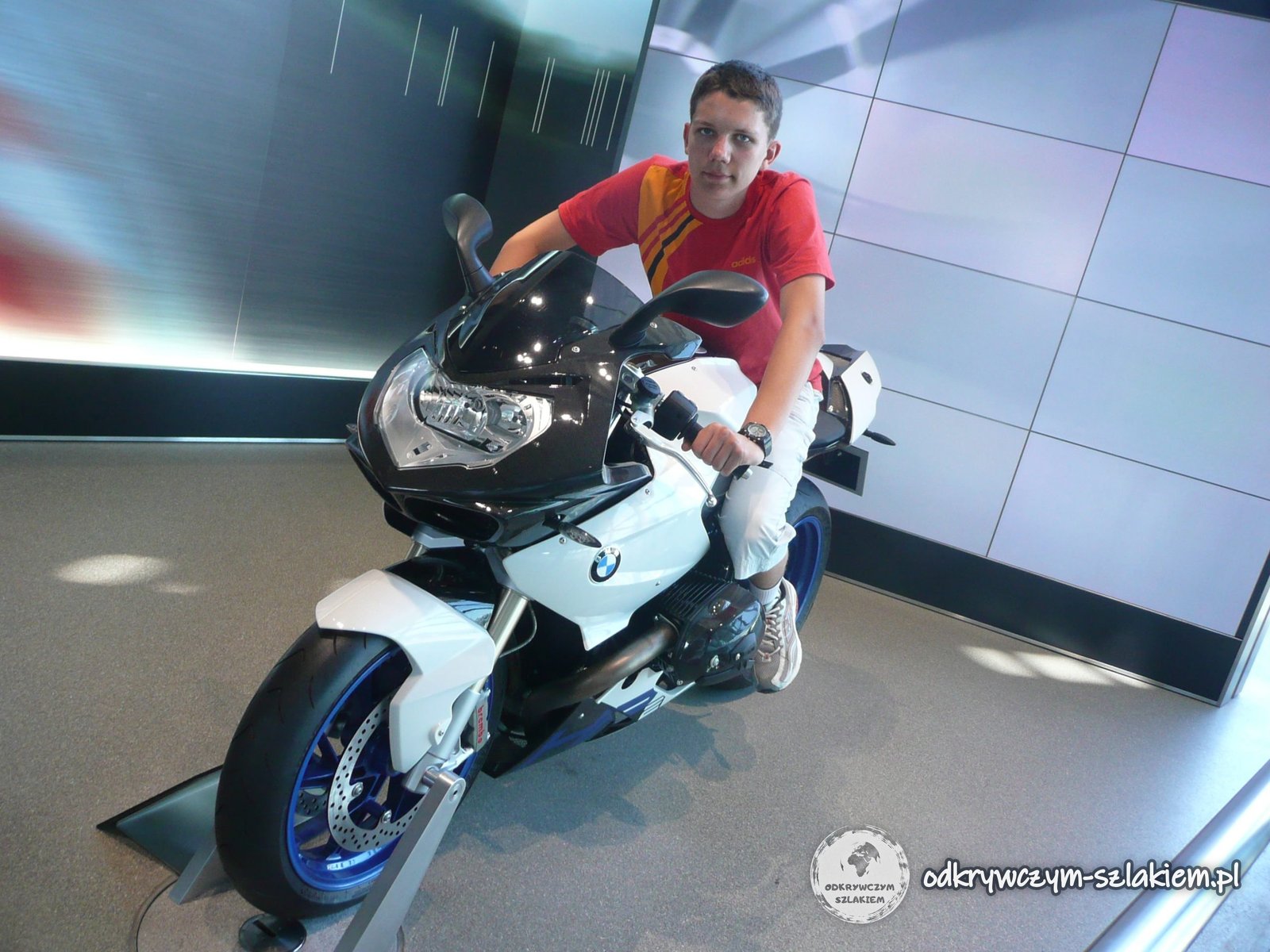
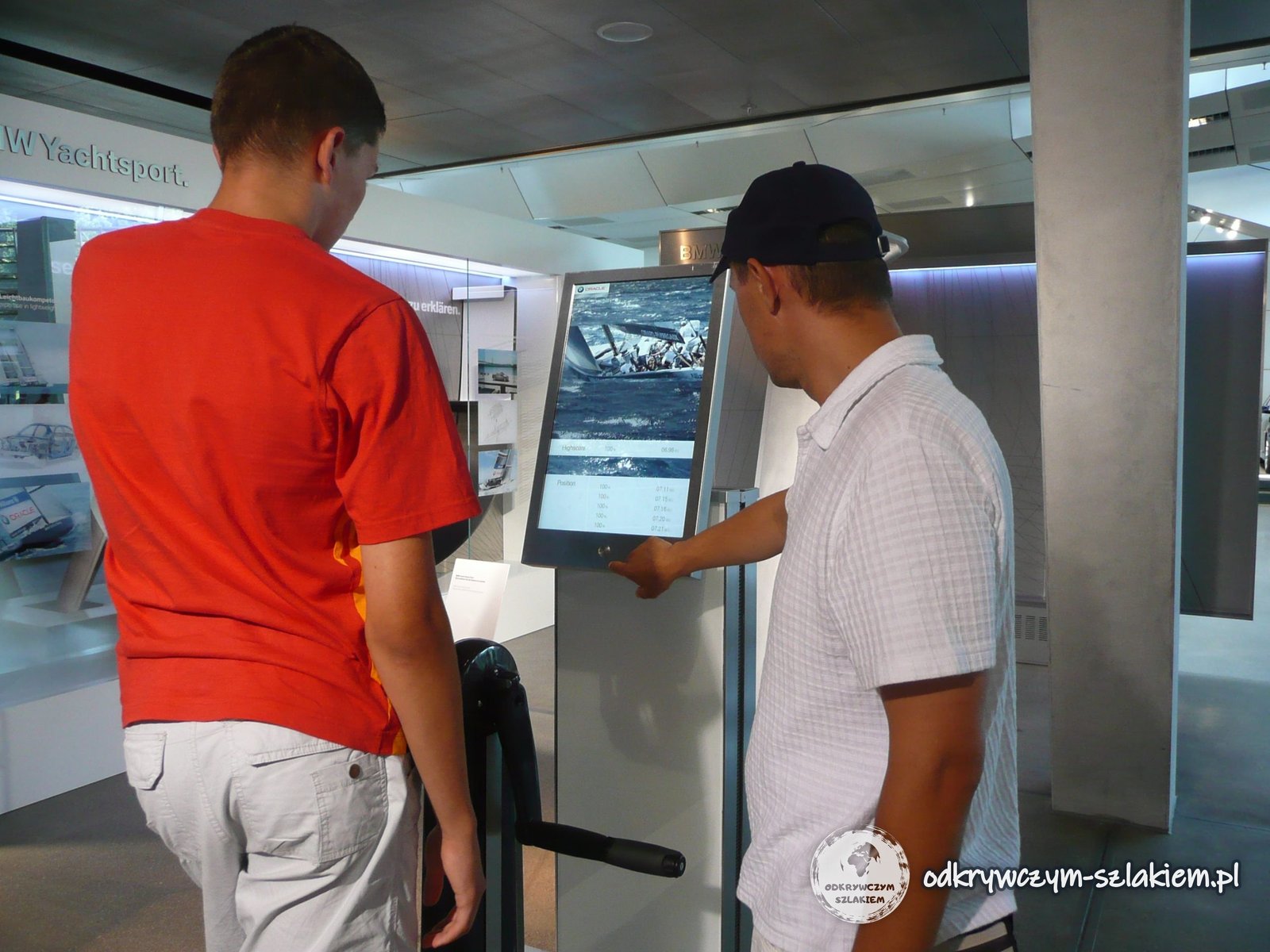
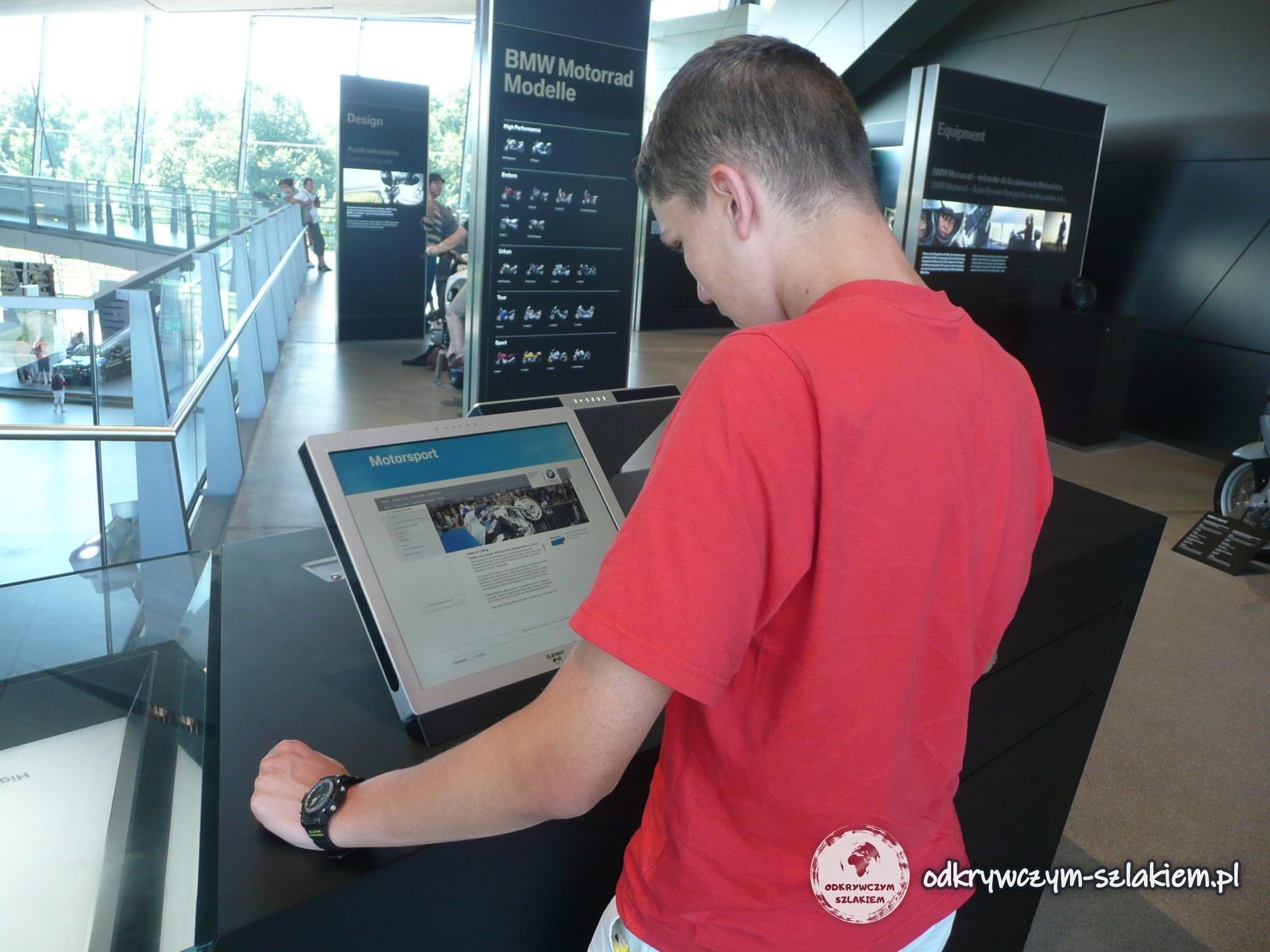
The best part is that the exhibits are not just behind glass: you can sit on the motorcycles and in many of the cars, and look around their interiors.
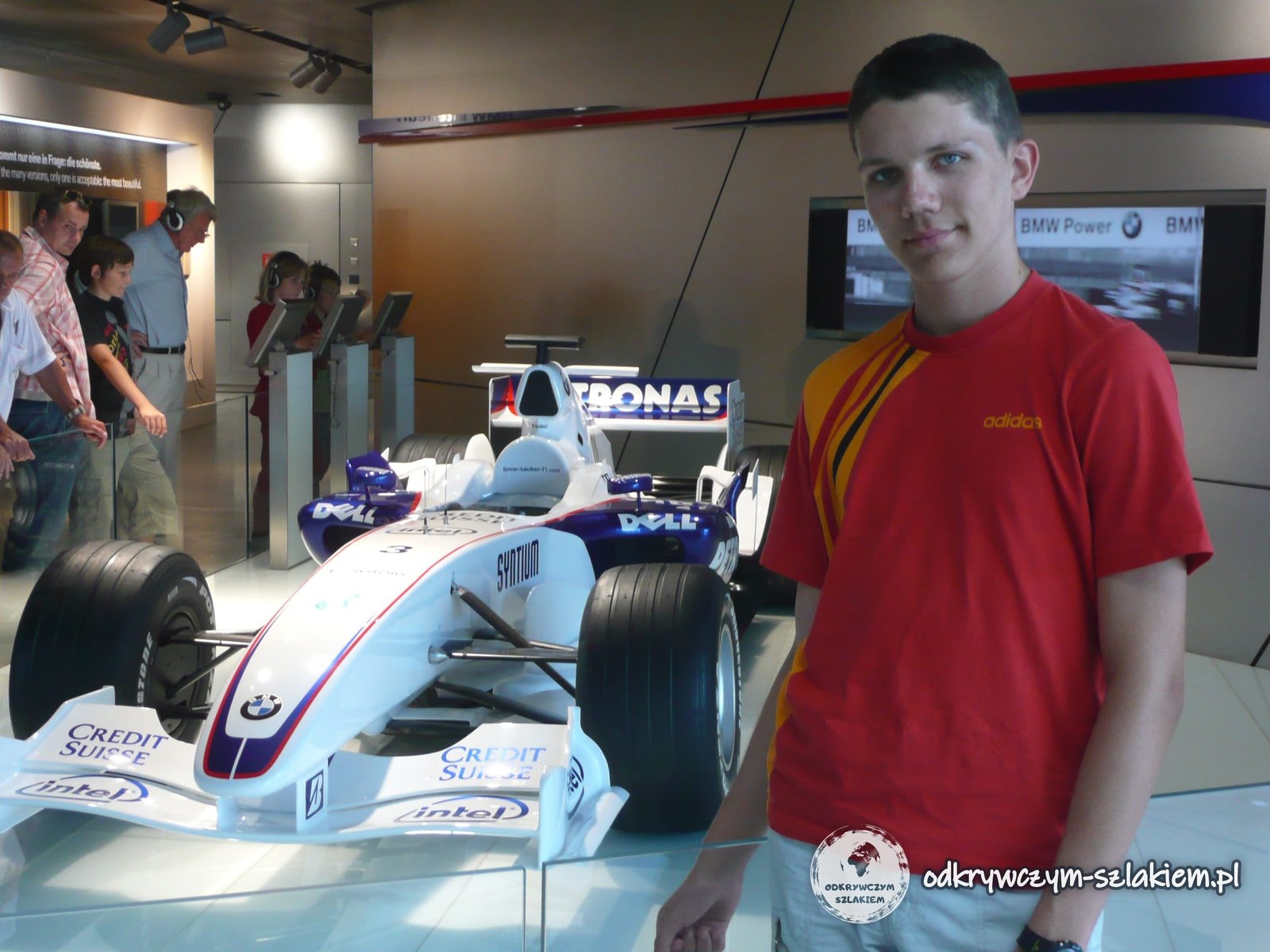
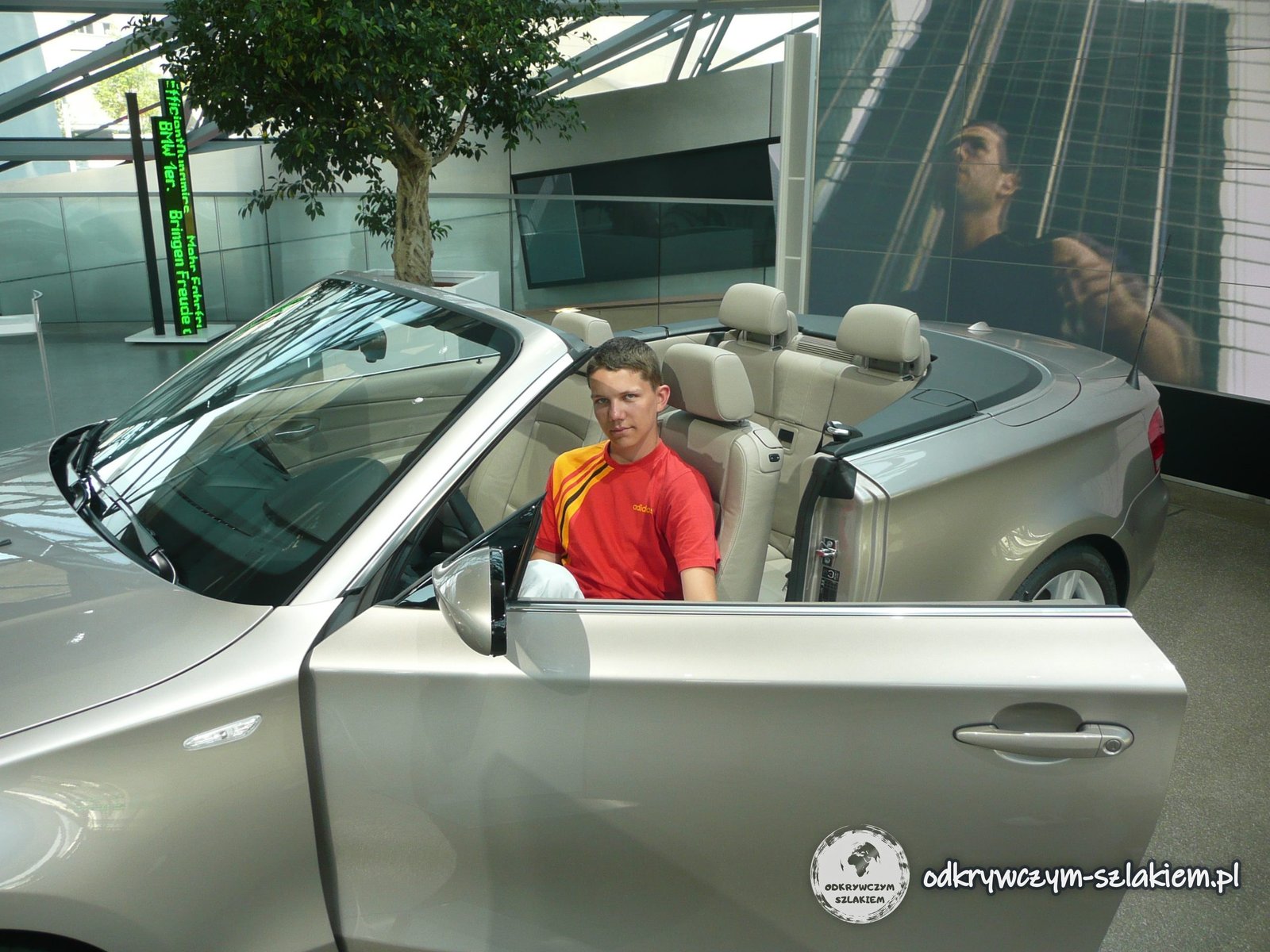
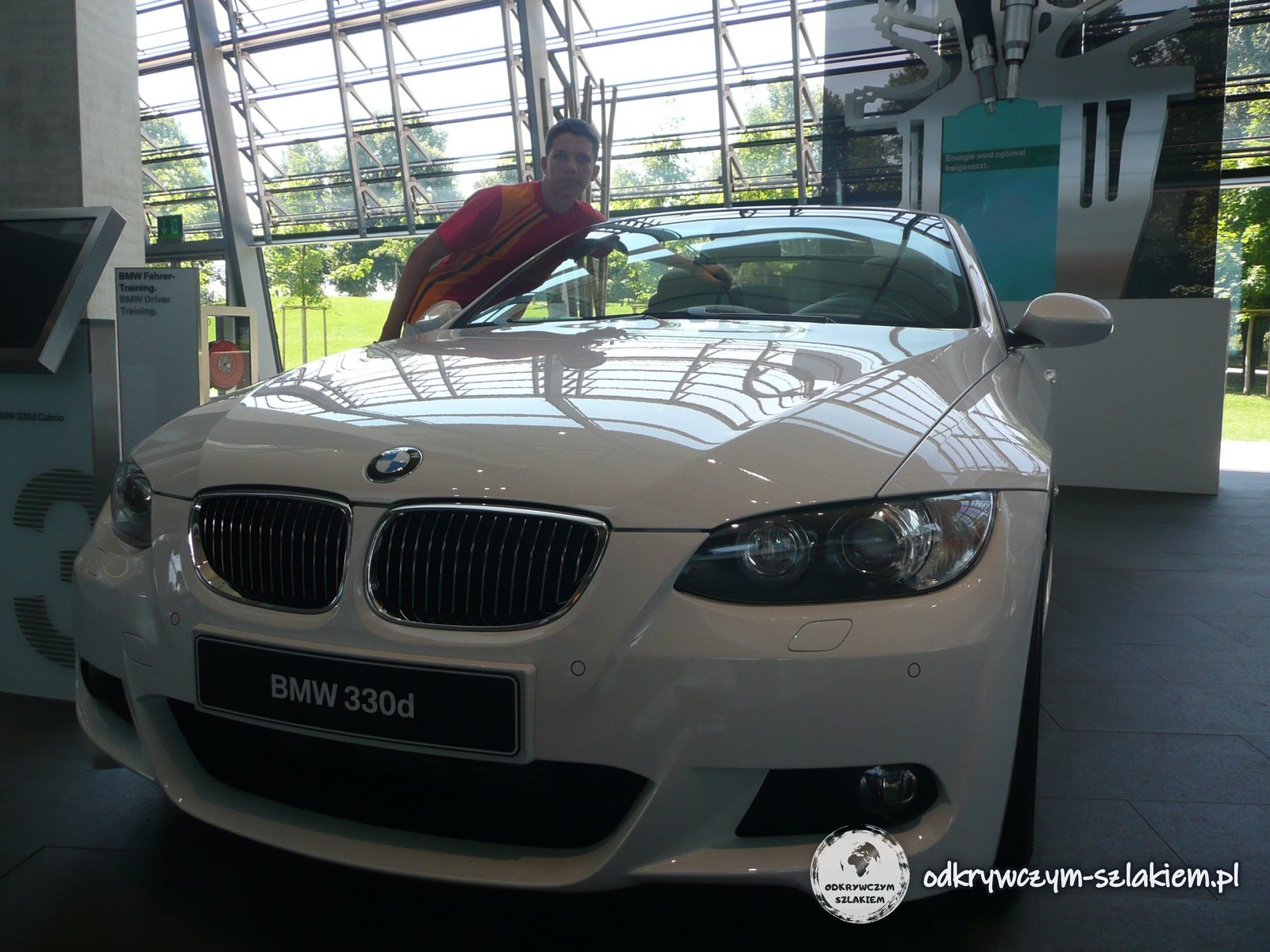
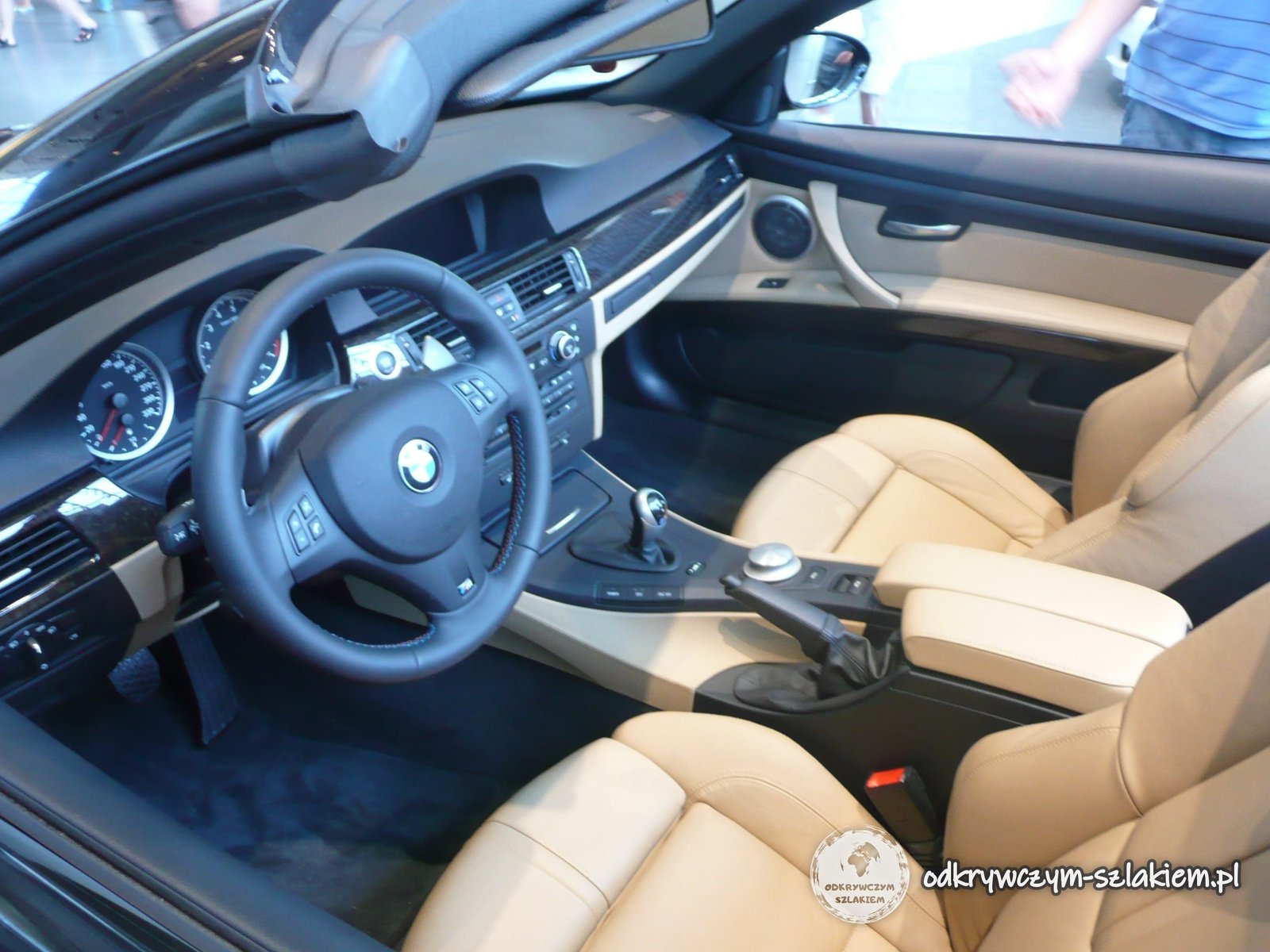
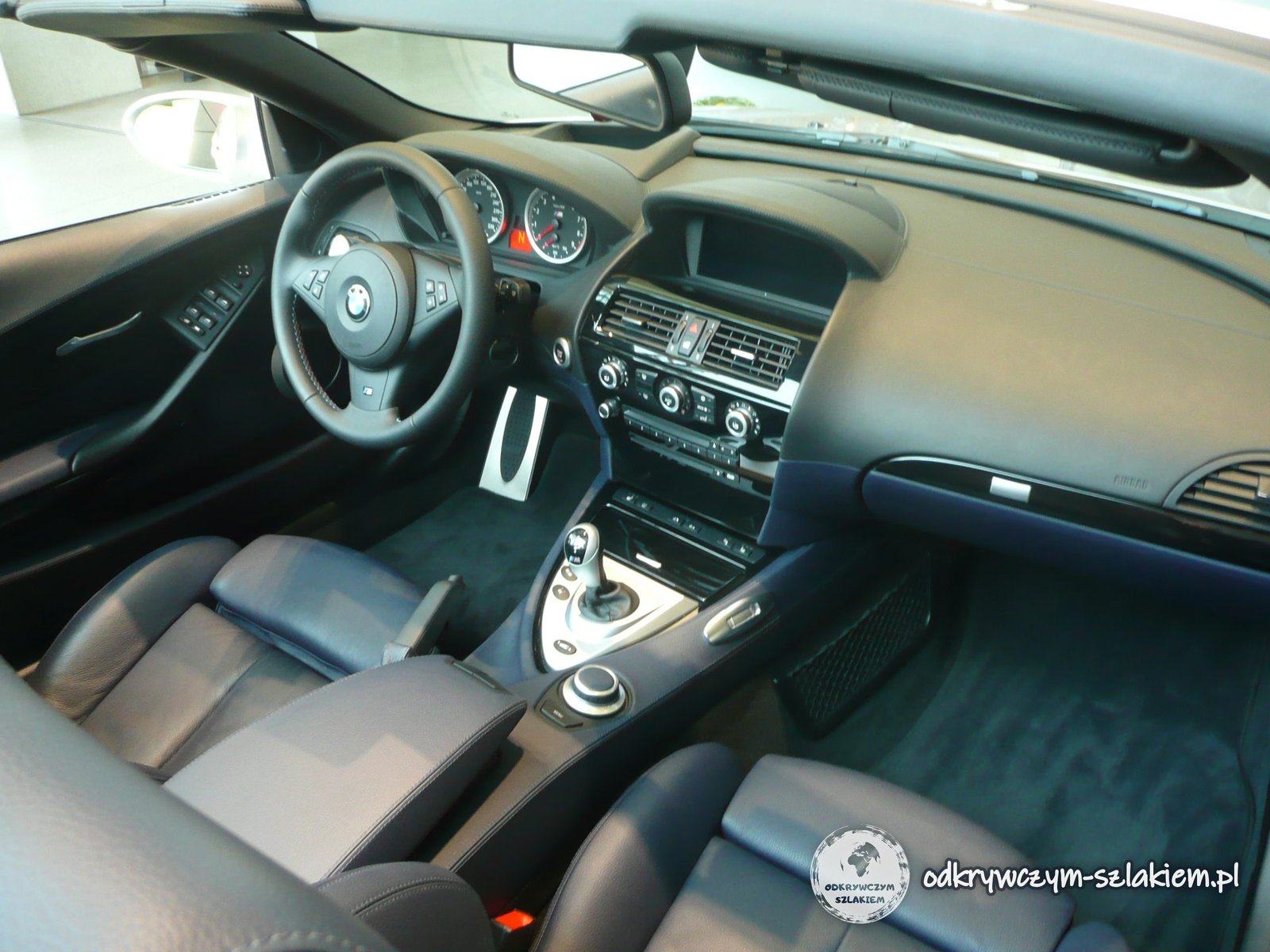
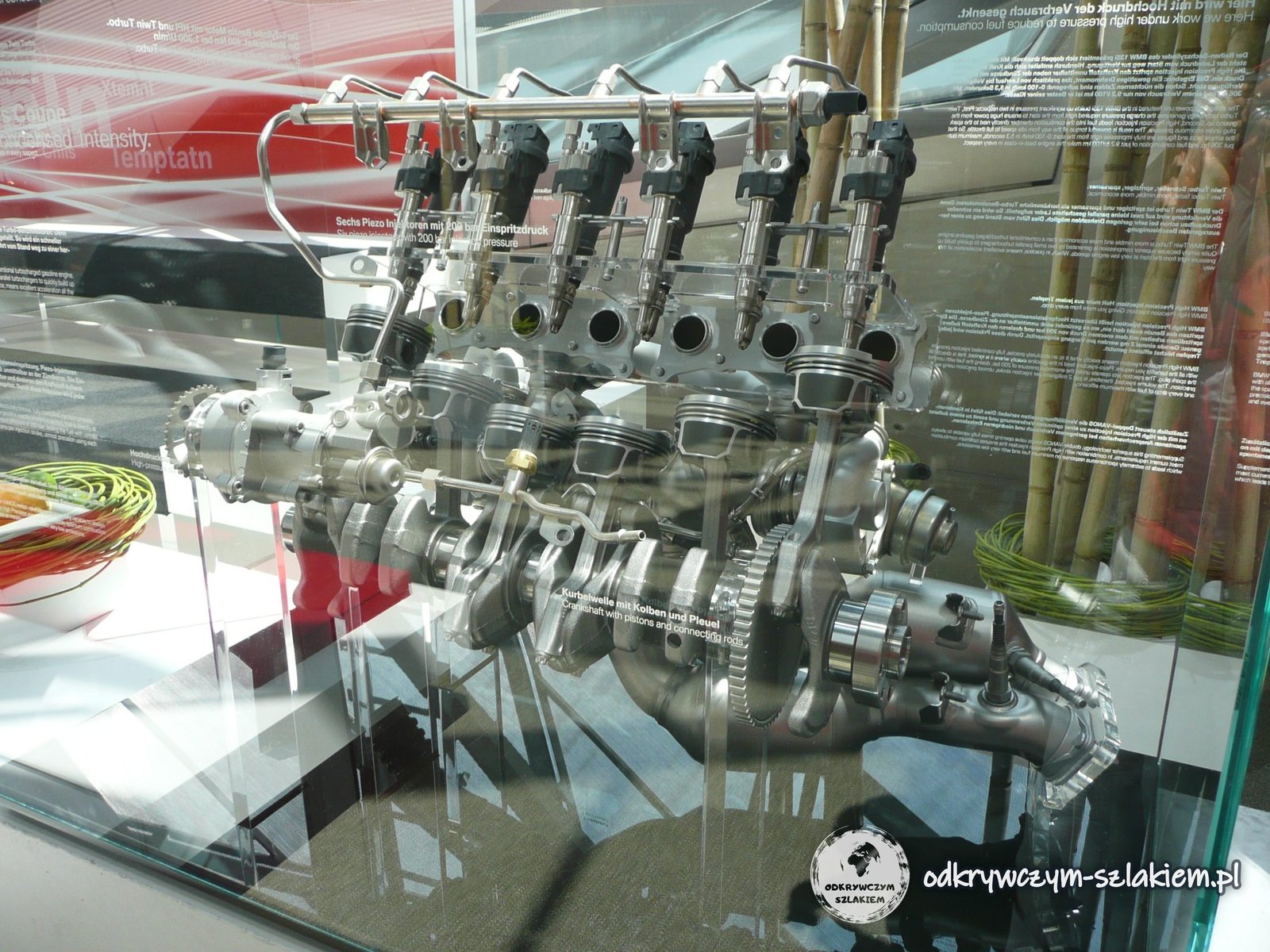
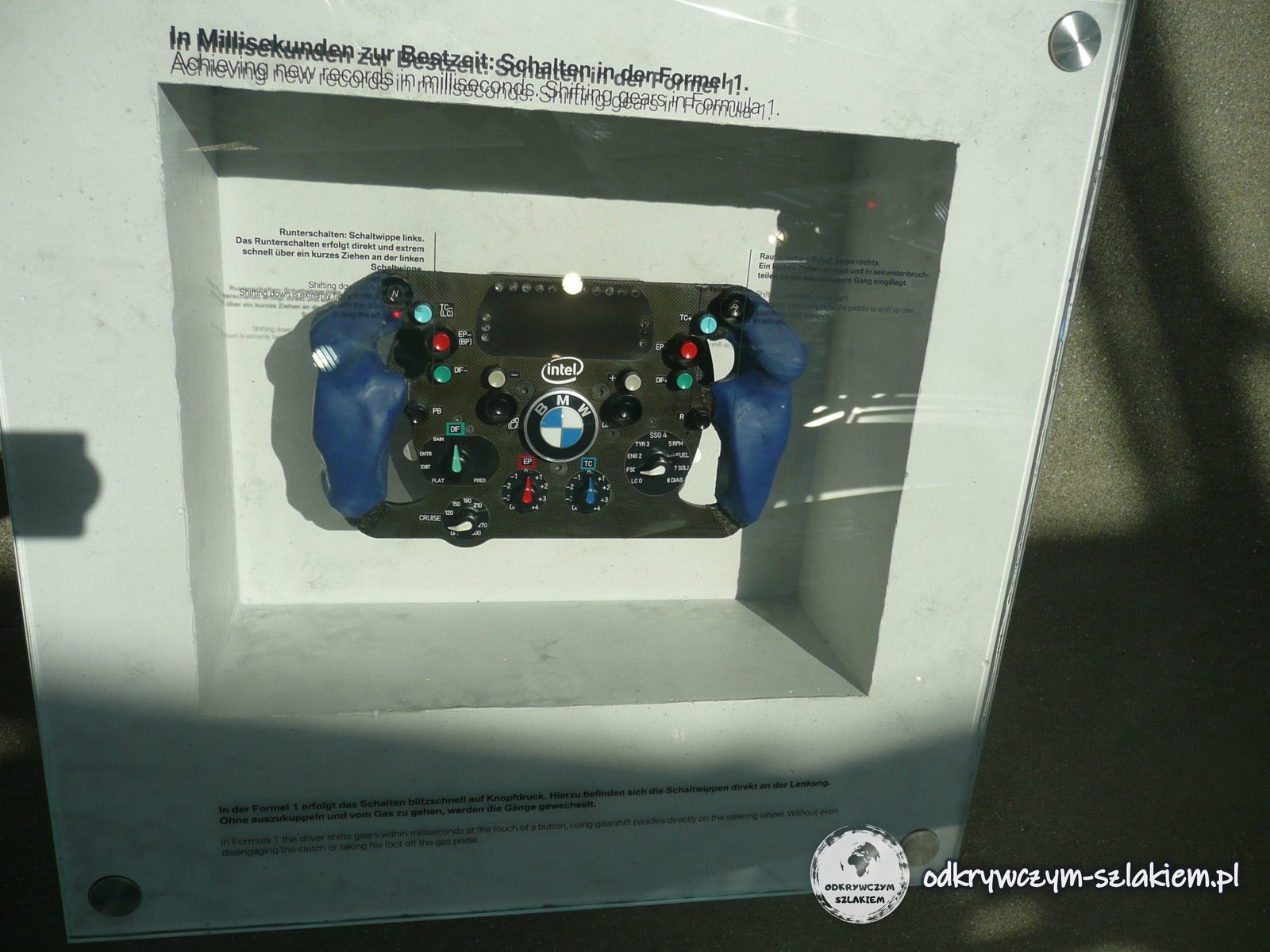
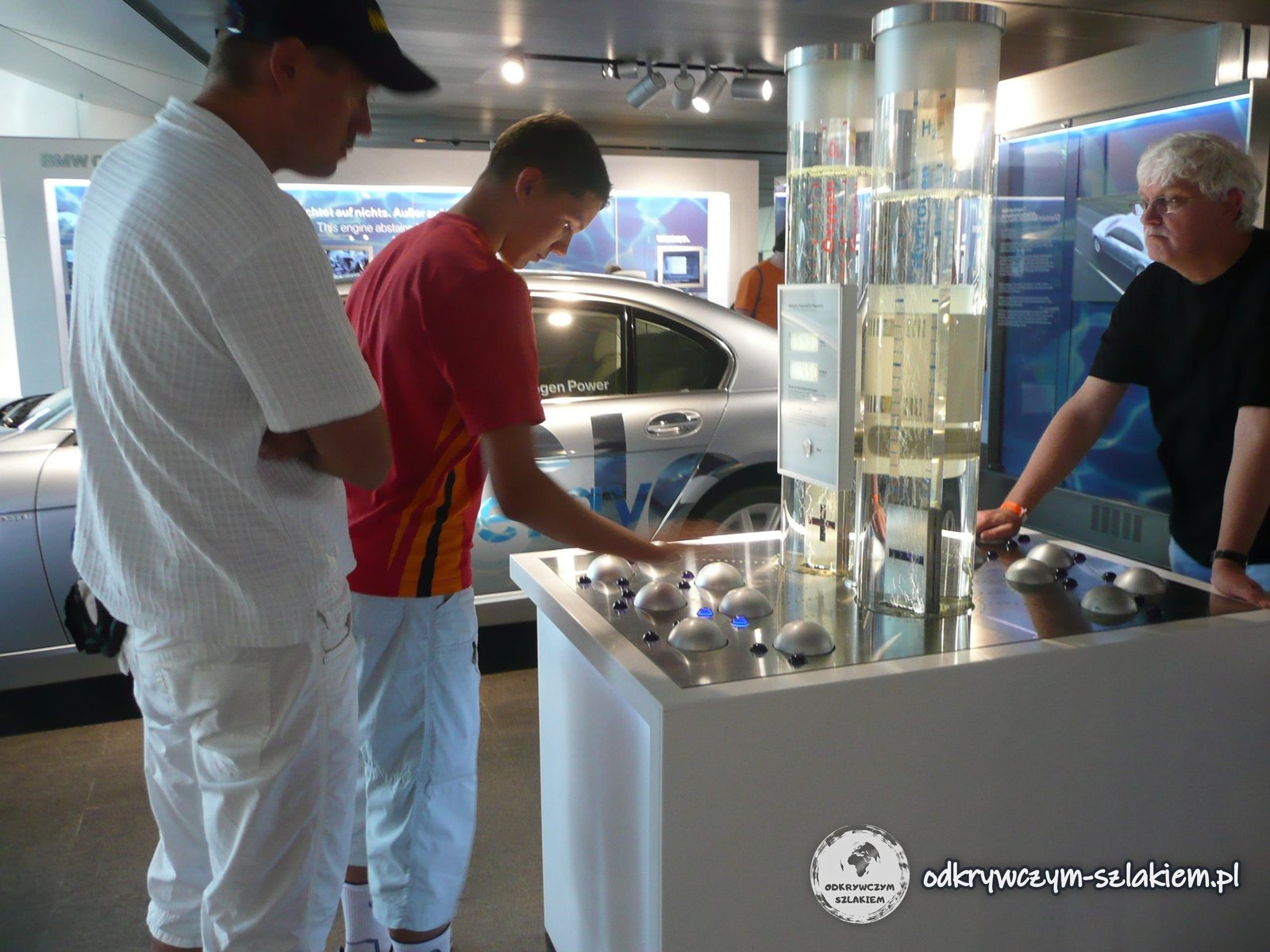
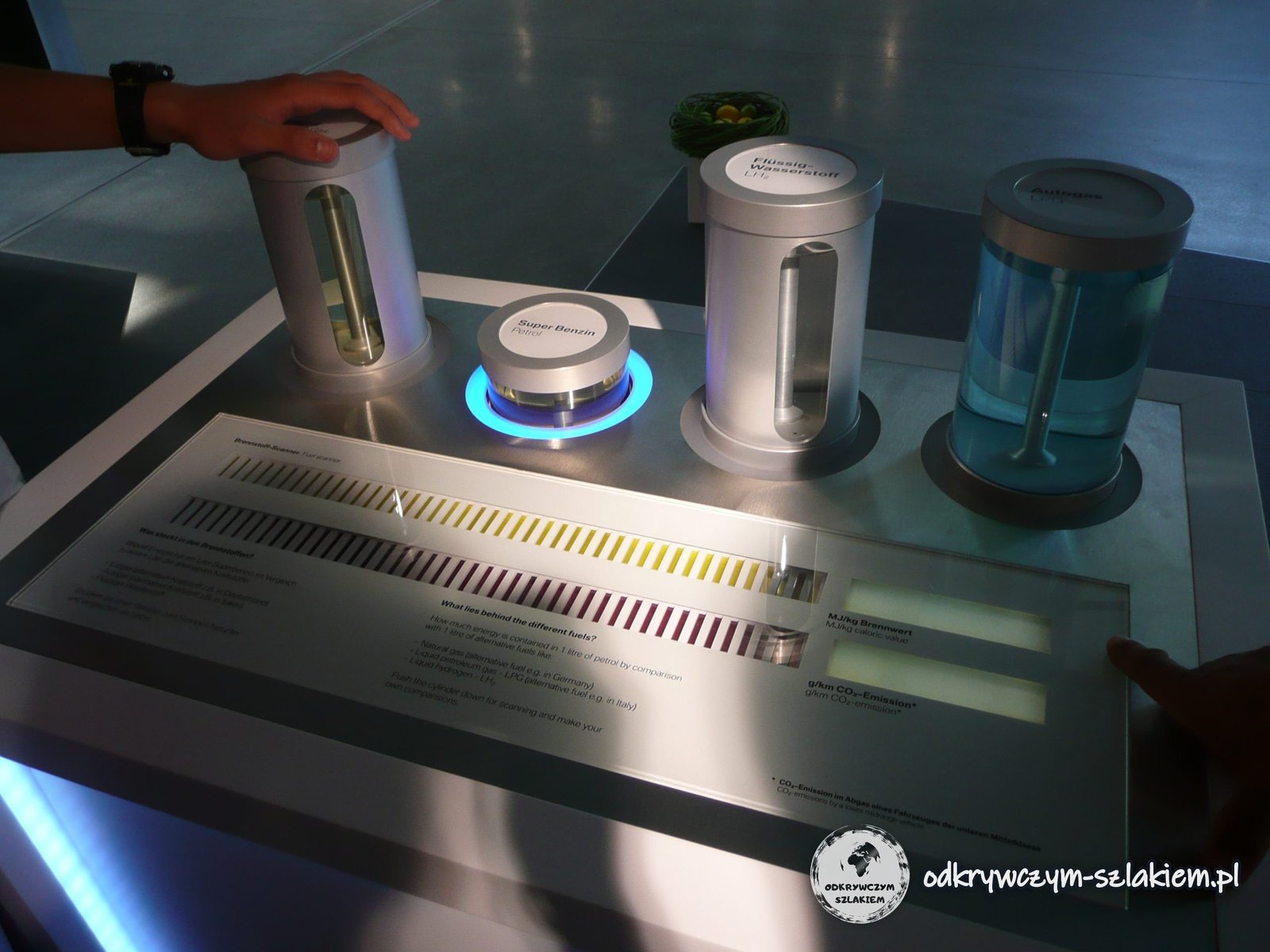
The second part of the display is about technology, with engine cutaways, a Formula 1 steering wheel and interactive stations with models and touch screens.
The Englischer Garten and the botanical garden
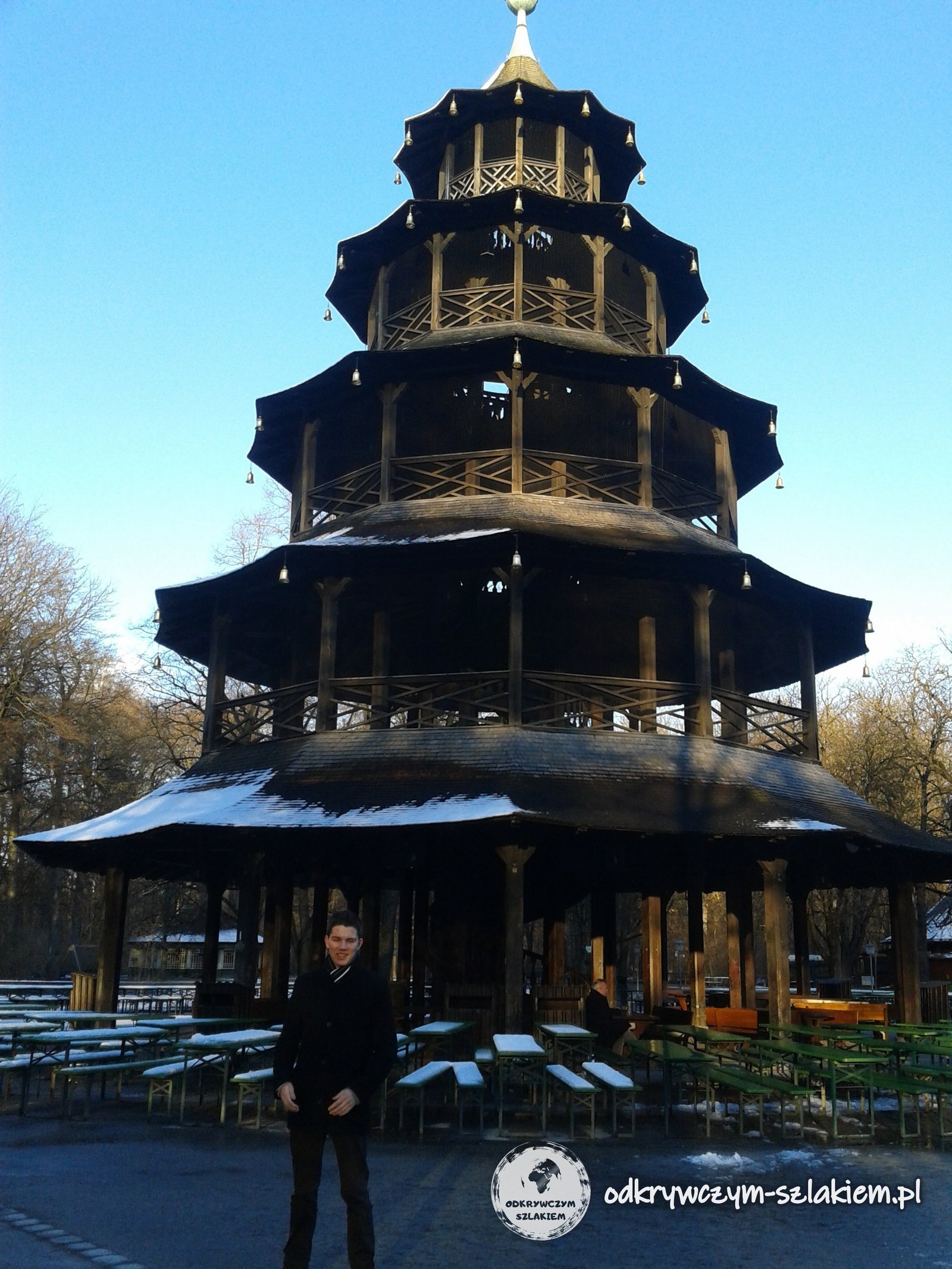
Munich is the capital of Bavaria and the third-largest city in Germany. In summer I went to the Englischer Garten – one of the largest city parks in the world (about 375 ha), laid out in 1789. In the middle of it stands the wooden Chinese Tower (Chinesischer Turm), a 25-metre pagoda from 1789–1790. It burned down after an air raid in 1944, and today’s tower is a reconstruction from 1952. Around it is a beer garden with 7,000 seats, serving beer from the Hofbräu brewery, including in one-litre mugs.

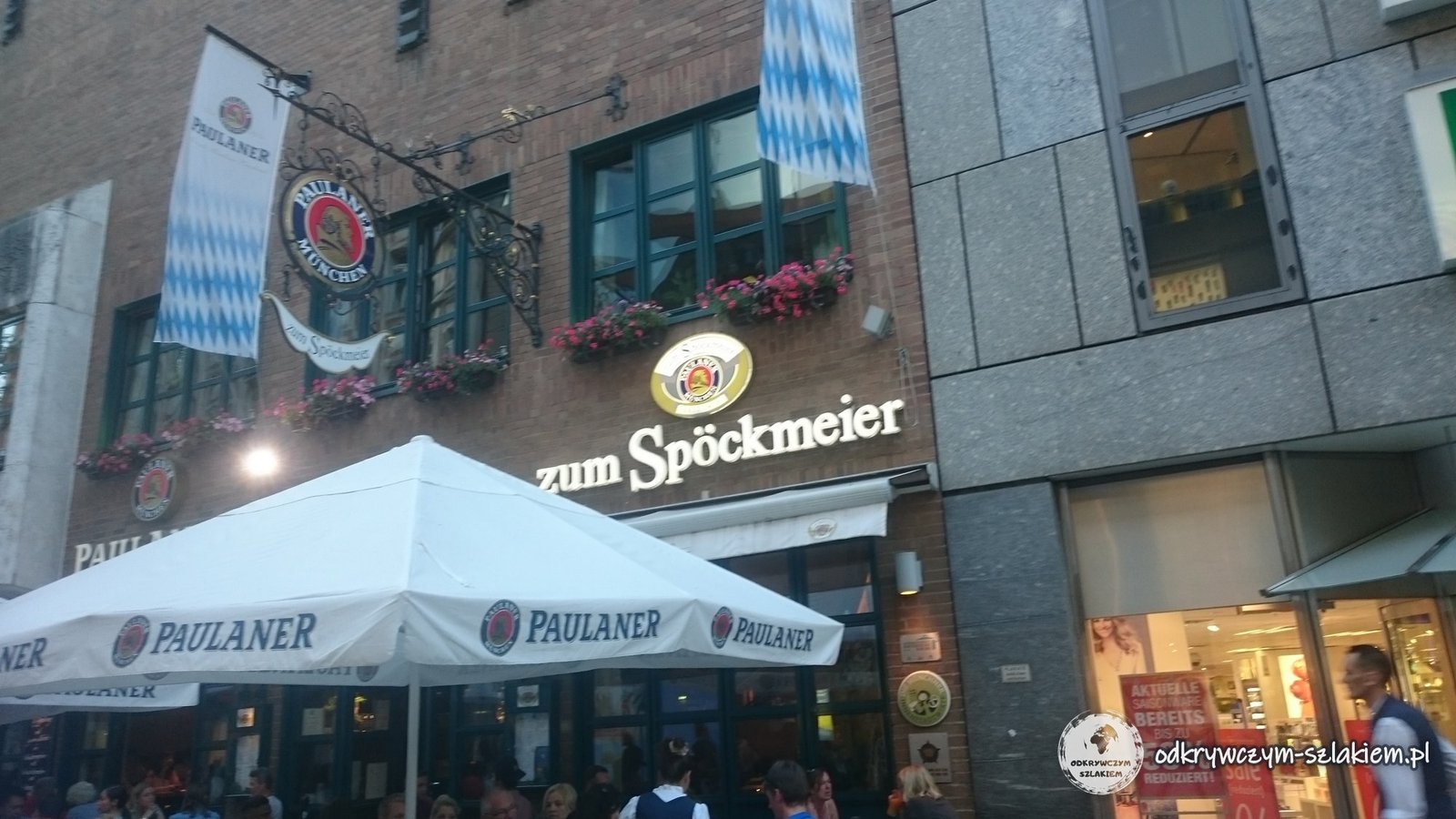
In the evening I walked around the old town. A few steps from Marienplatz is the Zum Spöckmeier restaurant, serving beer from Paulaner – one of the six Munich breweries that sell beer at the Oktoberfest.

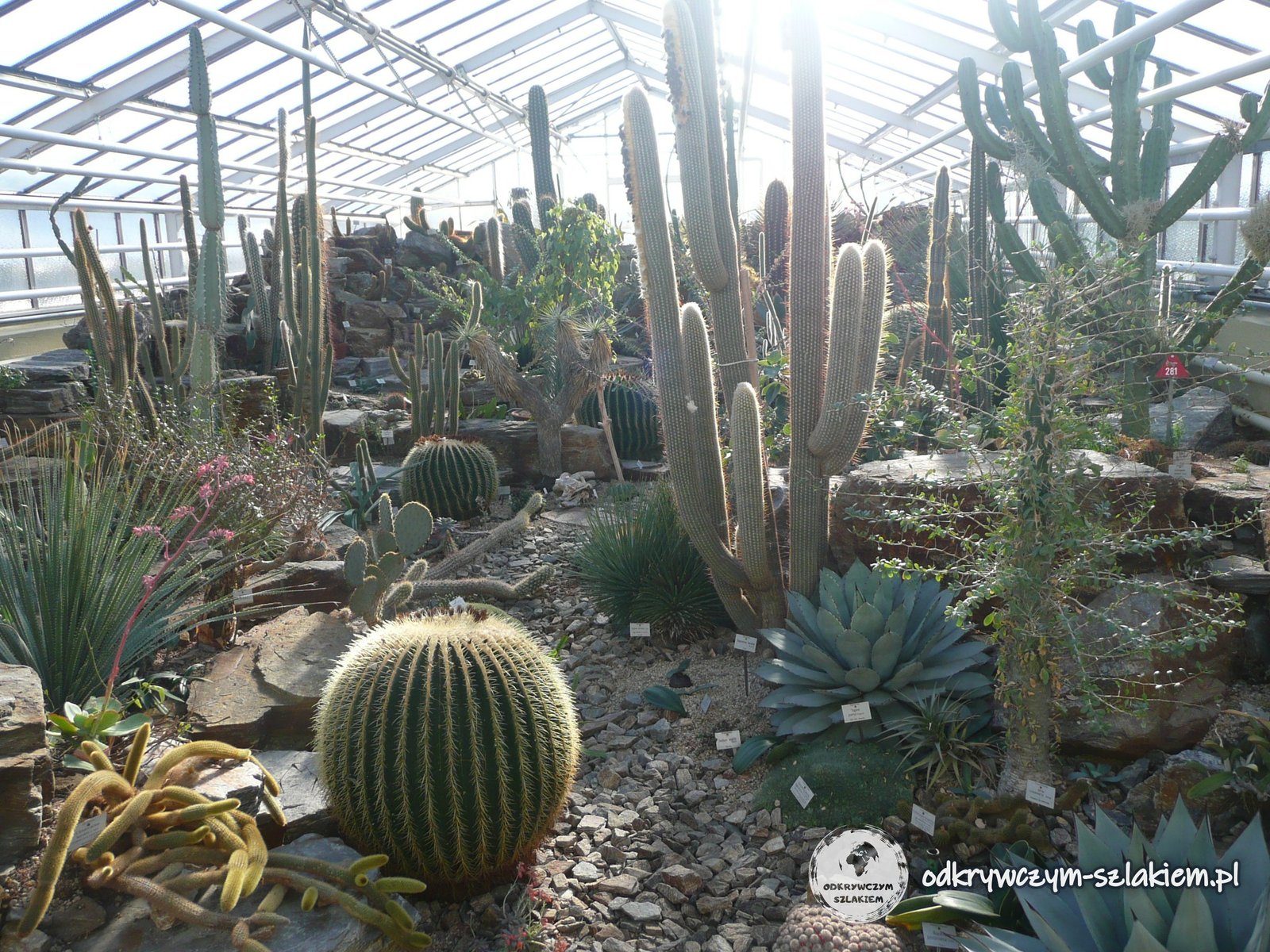
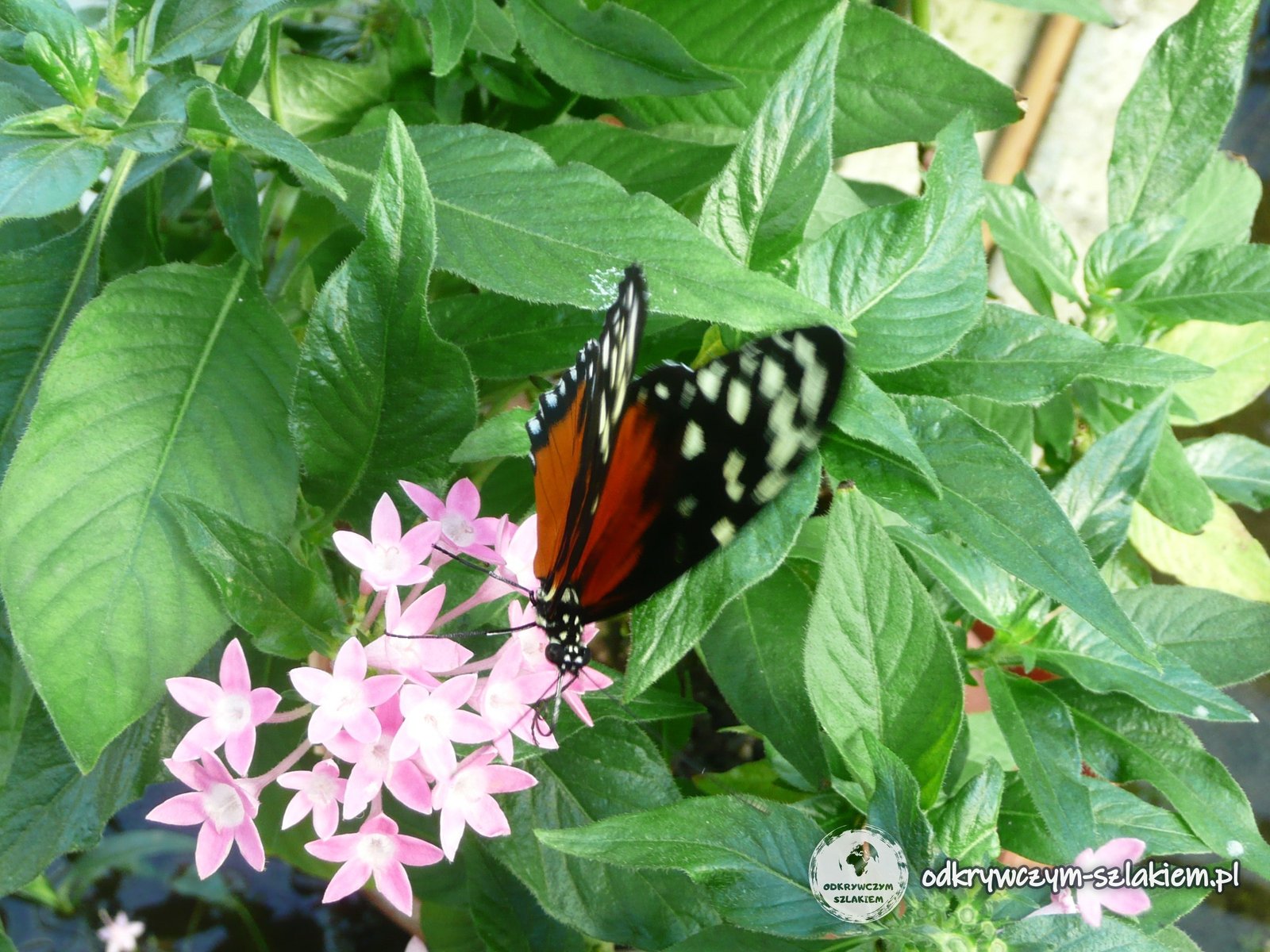
In winter the greenhouses of the Munich-Nymphenburg Botanical Garden are a good choice, with cacti, orchids and tropical butterflies.
Theresienwiese and the Bavaria statue
The next day I went to the Theresienwiese – the open ground where the Oktoberfest takes place every year. Above it stands the bronze statue of Bavaria, the personification of the state, 18.52 m tall. It was sculpted by Ludwig Schwanthaler, cast under the direction of Ferdinand von Miller and unveiled in 1850. Behind the statue is the Hall of Fame (Ruhmeshalle) designed by Leo von Klenze, with busts of distinguished Bavarians. You can climb a spiral staircase up into Bavaria’s head.

The Allianz Arena – a stadium of cushions
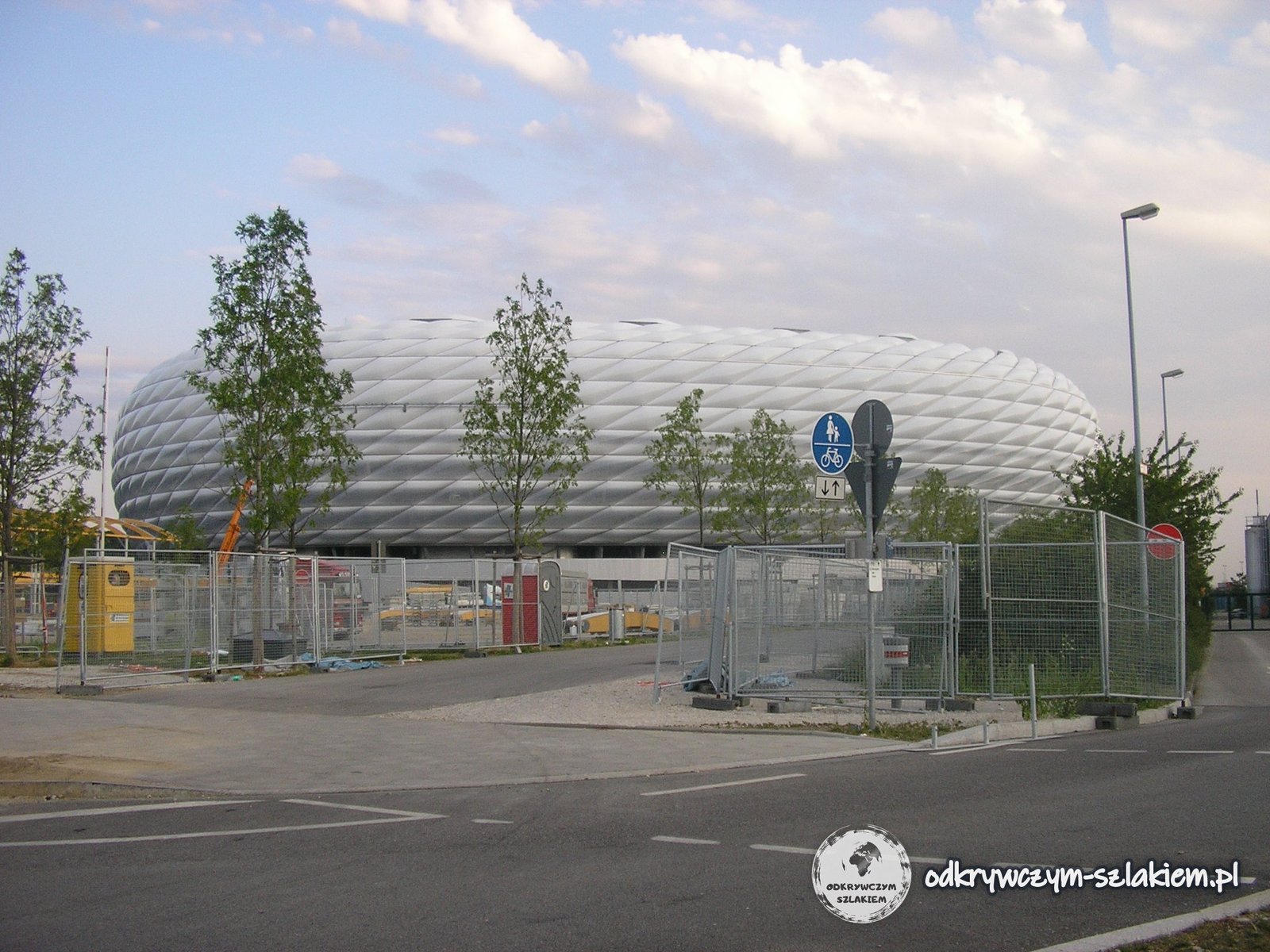
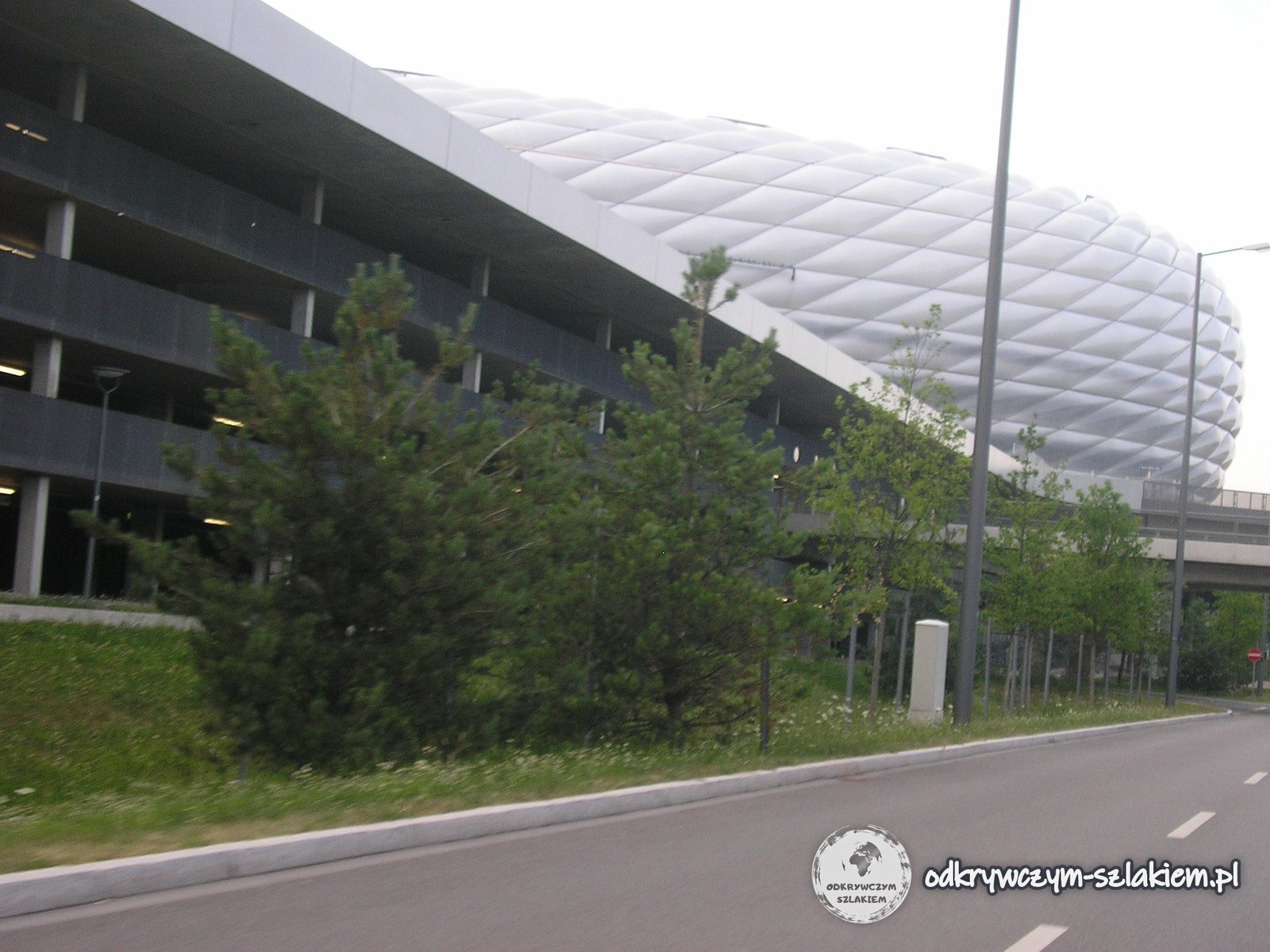
The Allianz Arena is one of the most recognisable stadiums in the world. I saw it right after the World Cup, later took a guided tour and watched a Bundesliga match here.
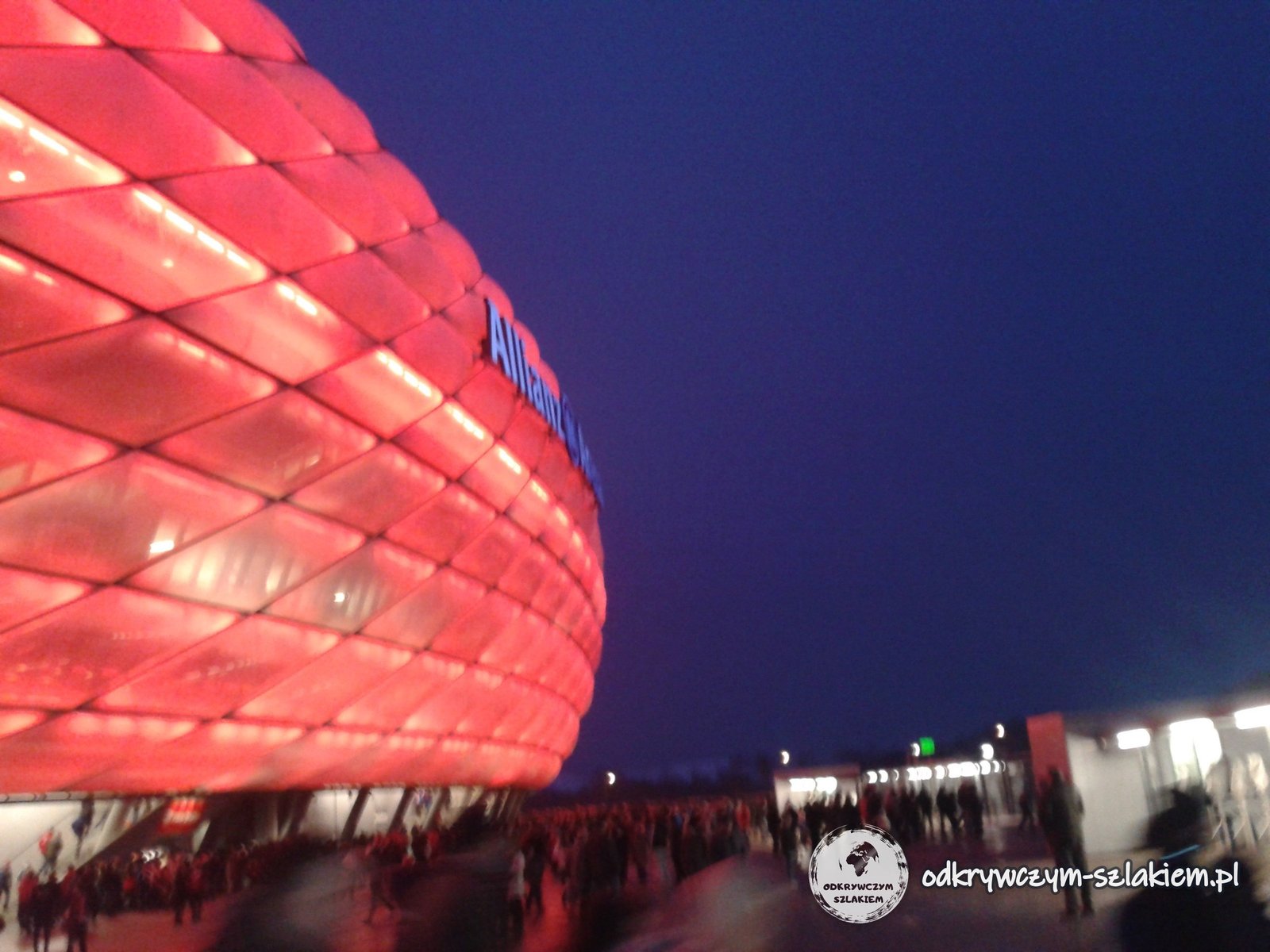
The stadium opened in 2005 in the north of Munich. It holds about 75,000 spectators, and its façade consists of nearly 3,000 plastic cushions that glow at night. It hosted World Cup games in 2006 and the opening match of Euro 2024. Until 2017 it was shared by Bayern and TSV 1860.
The Allianz Arena – a stadium tour
I took a guided tour of the stadium. The route goes through the stands and behind the scenes, including the dressing room with its red lockers.
Bayern v Wolfsburg 2–0 (28.01.2012)
On 28 January 2012 I watched the Bundesliga match Bayern v VfL Wolfsburg at the Allianz Arena, which the hosts won 2–0. After dark the façade glows red when Bayern play.

Bavaria Filmstadt
In the summer of 2006 I spent my holidays in Bavaria with my sister. Besides its sights, Munich has two places that work especially well with children or on a cloudy day: Hellabrunn Zoo and the Bavaria Filmstadt film studios.
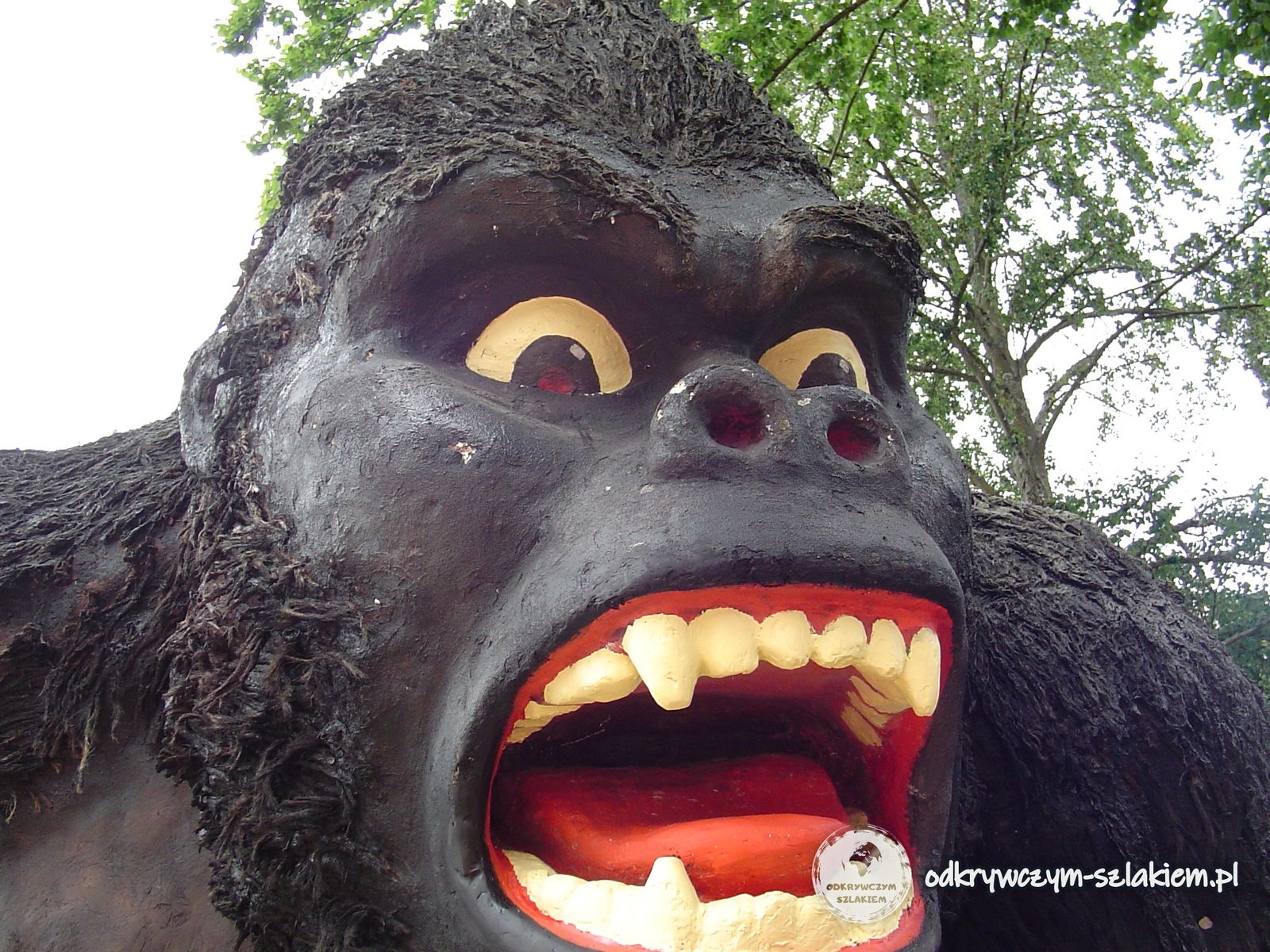
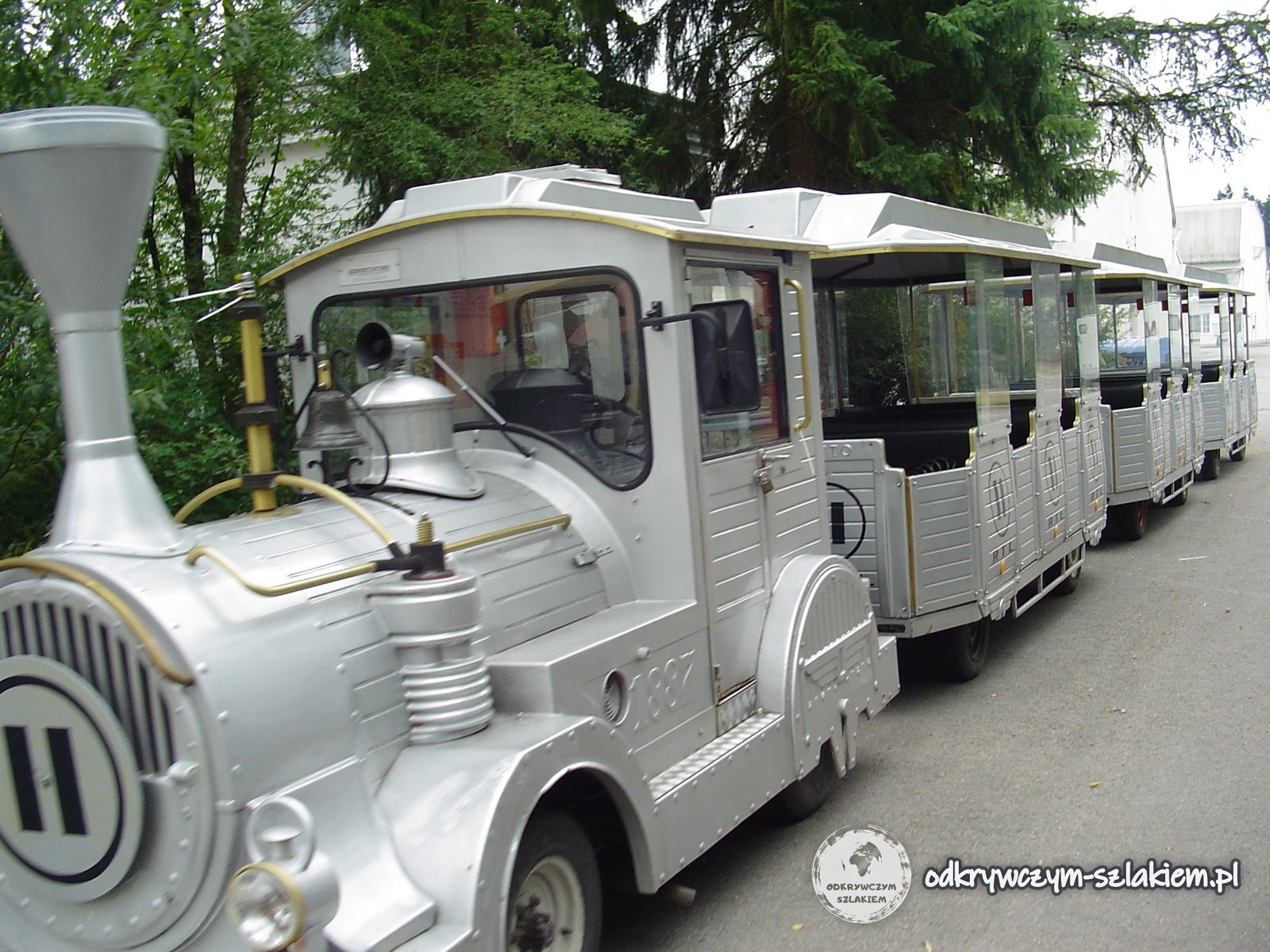
In Geiselgasteig, in the south of the city, are some of Europe’s largest film studios. “Das Boot” by Wolfgang Petersen and “The NeverEnding Story” were made here. The tour begins with a train ride.
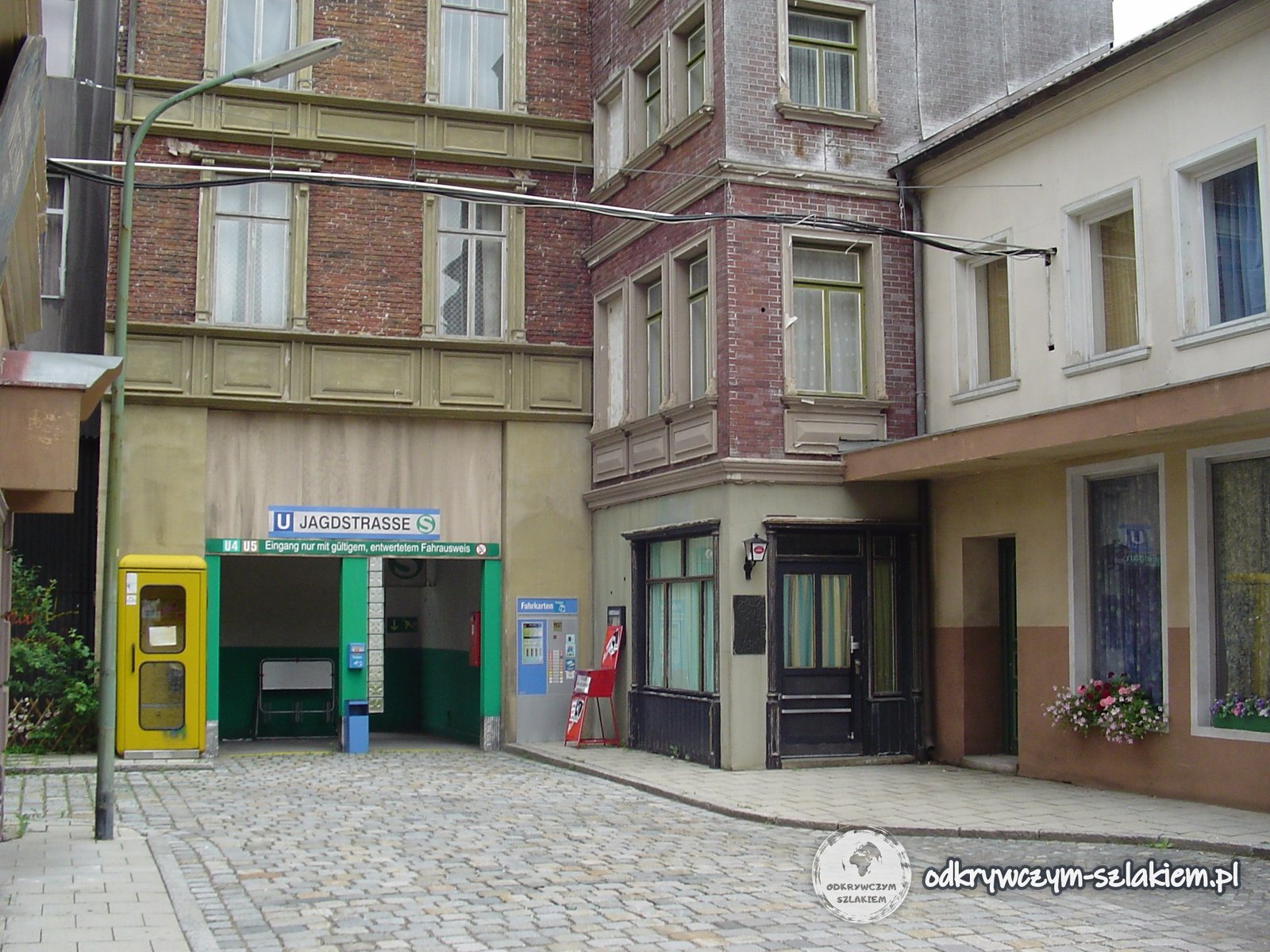
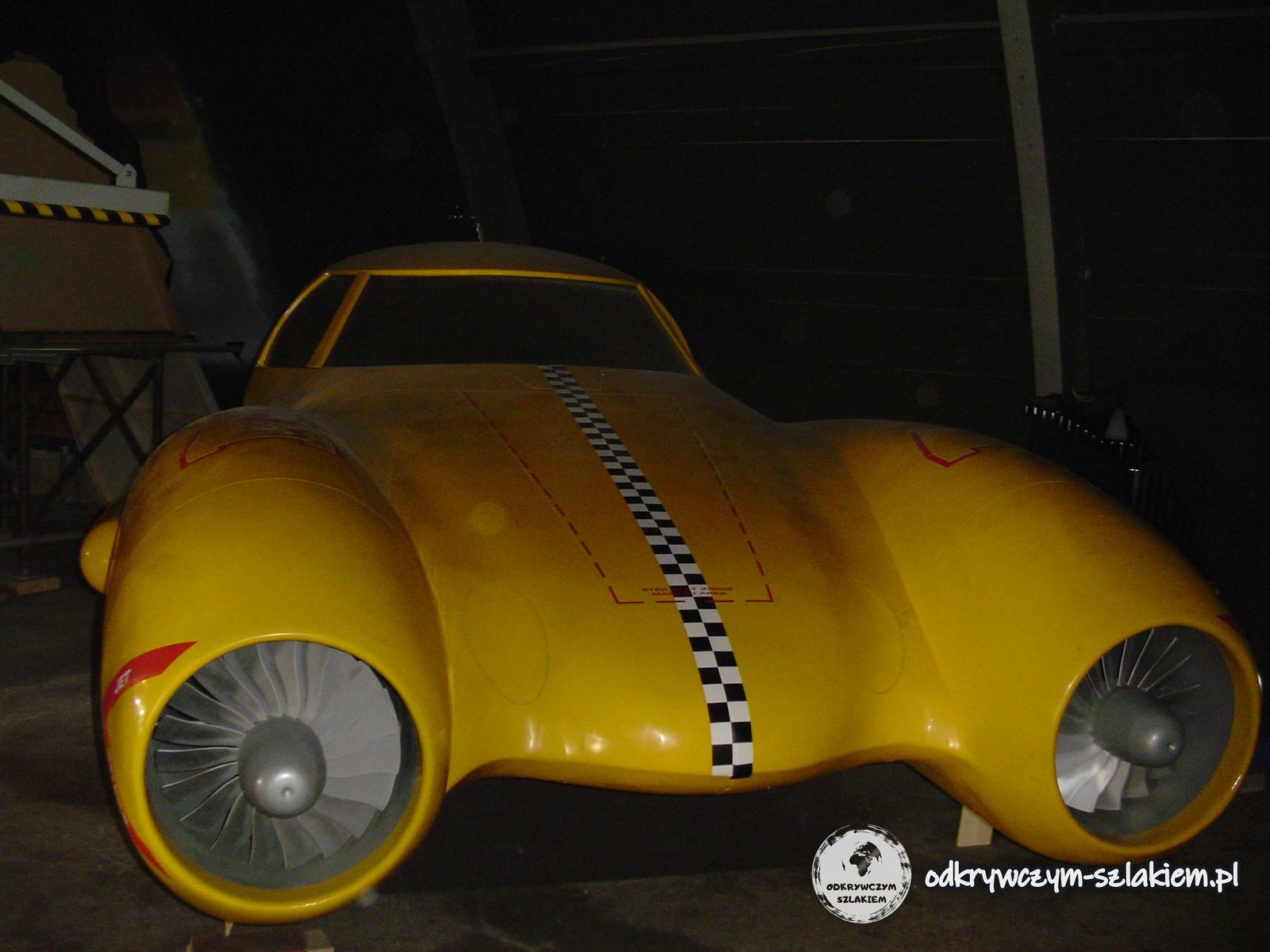
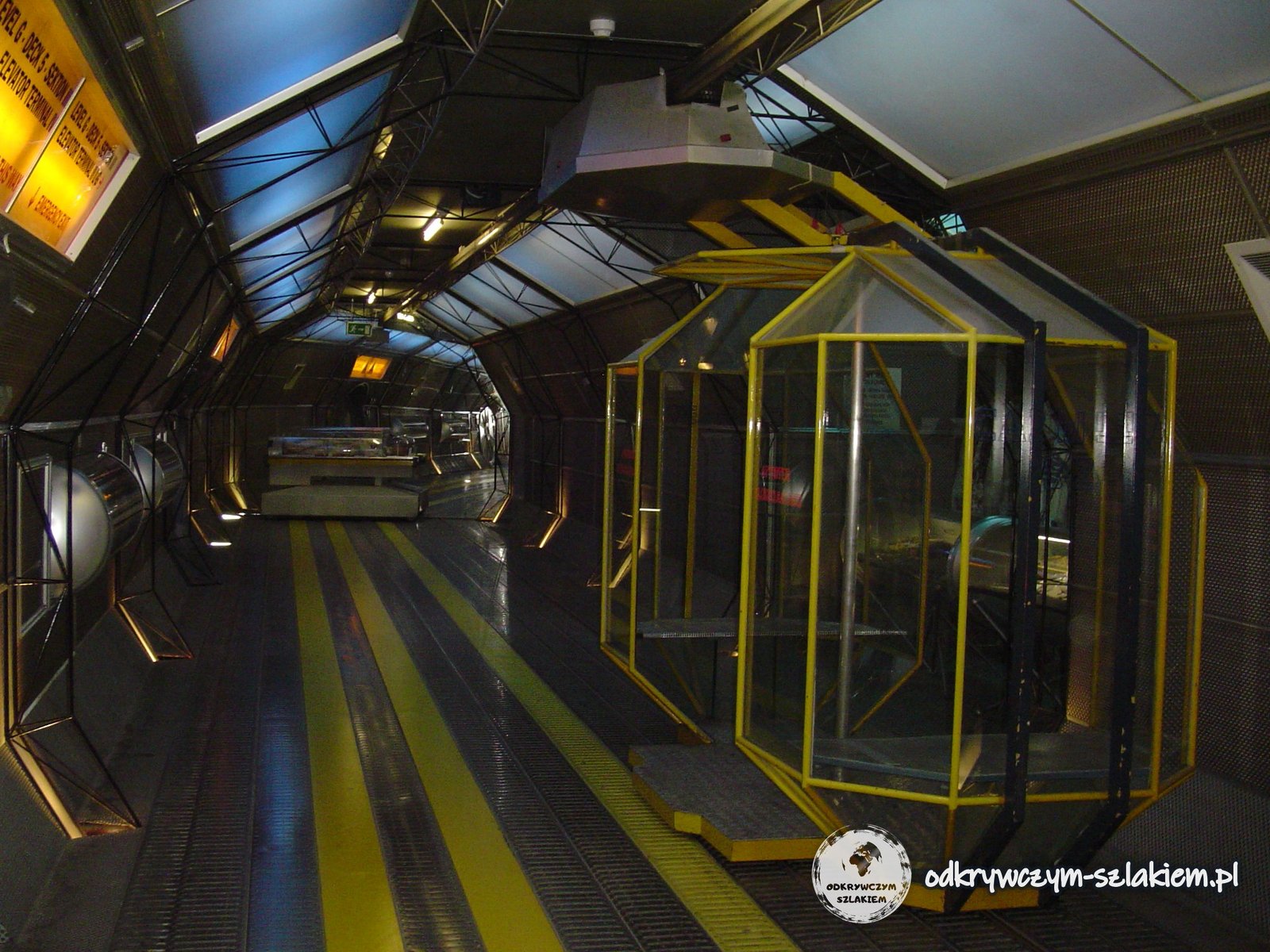
The route passes sets and props from films, including futuristic interiors and fairy-tale scenery.
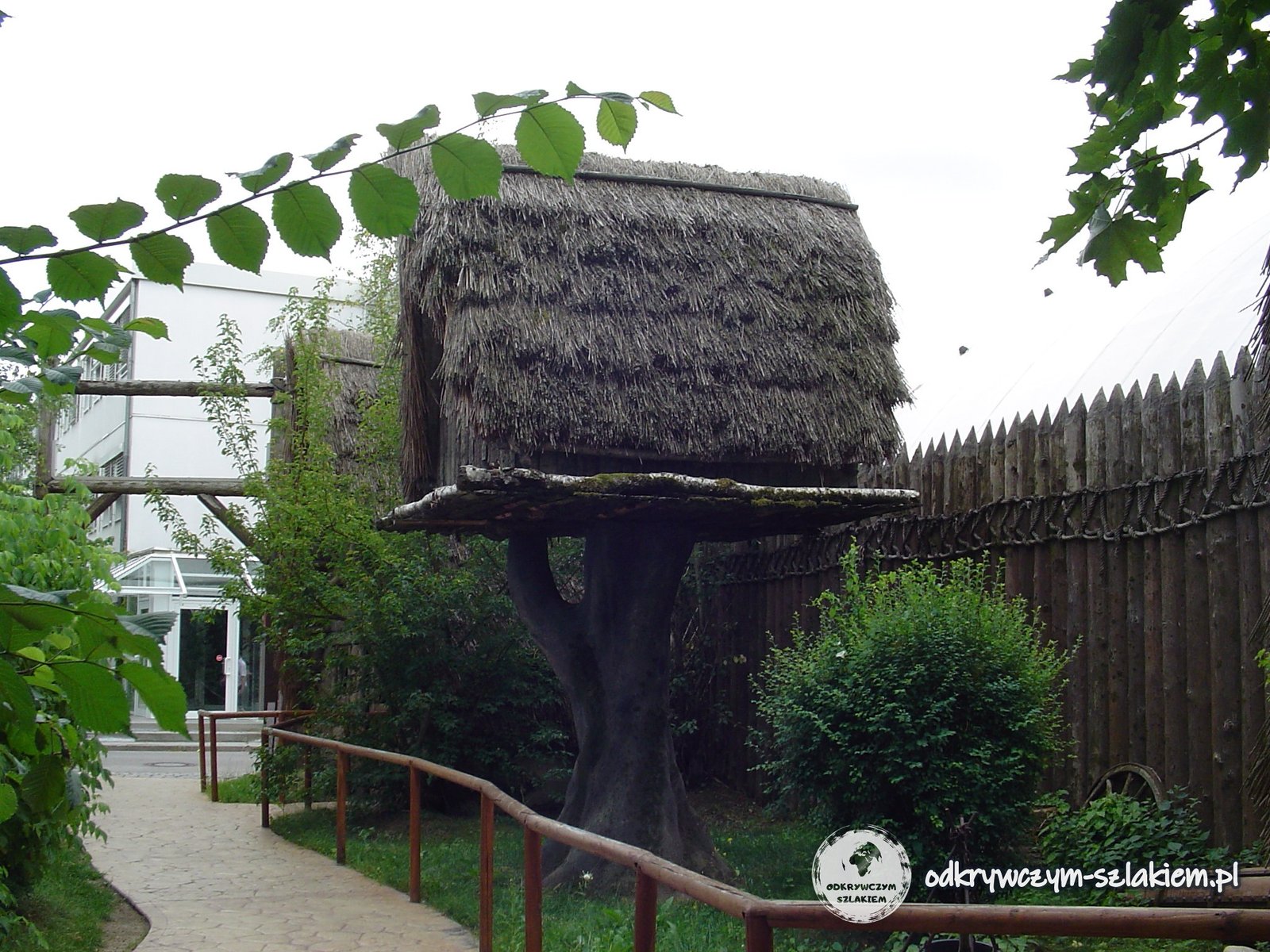
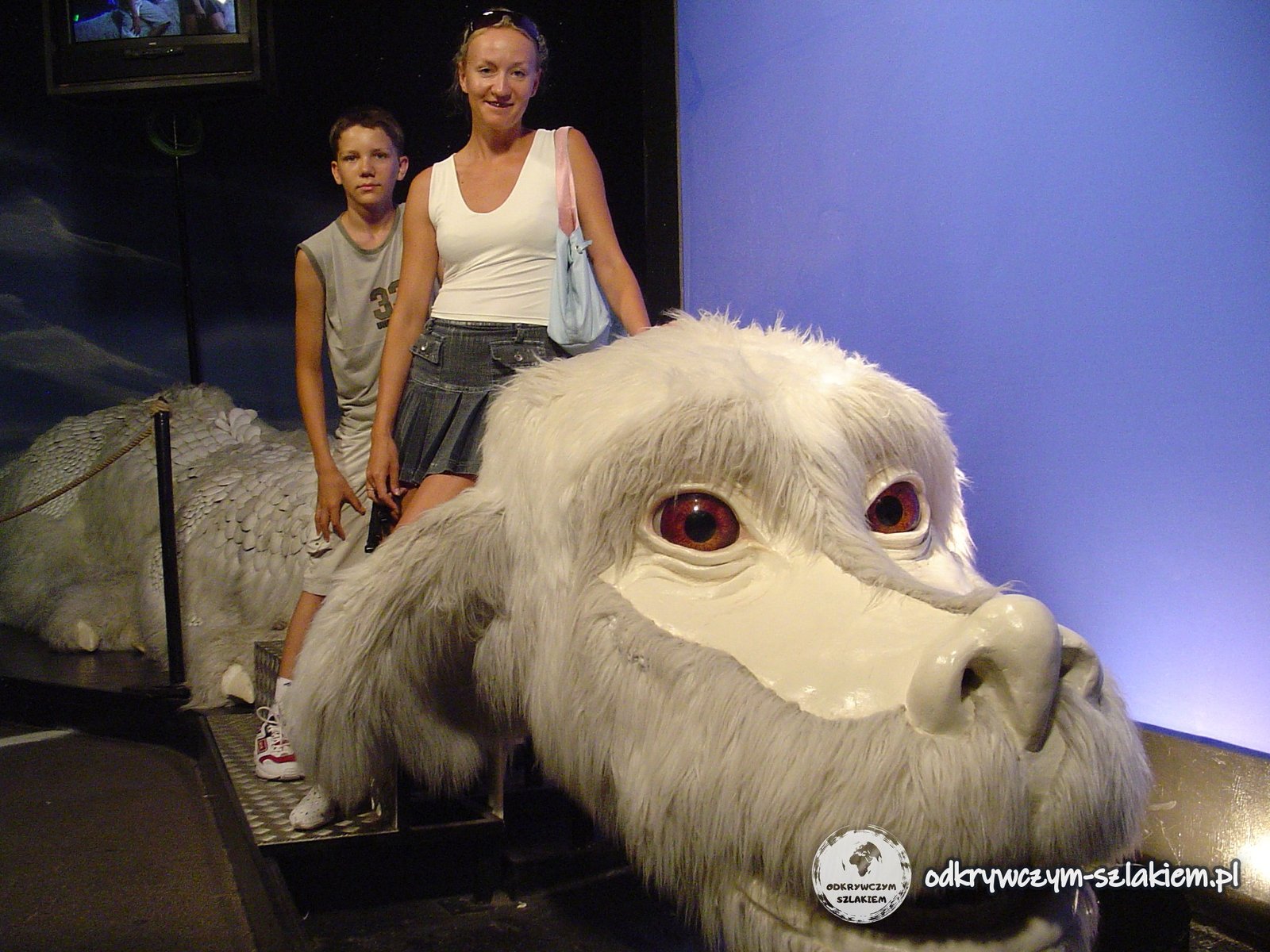
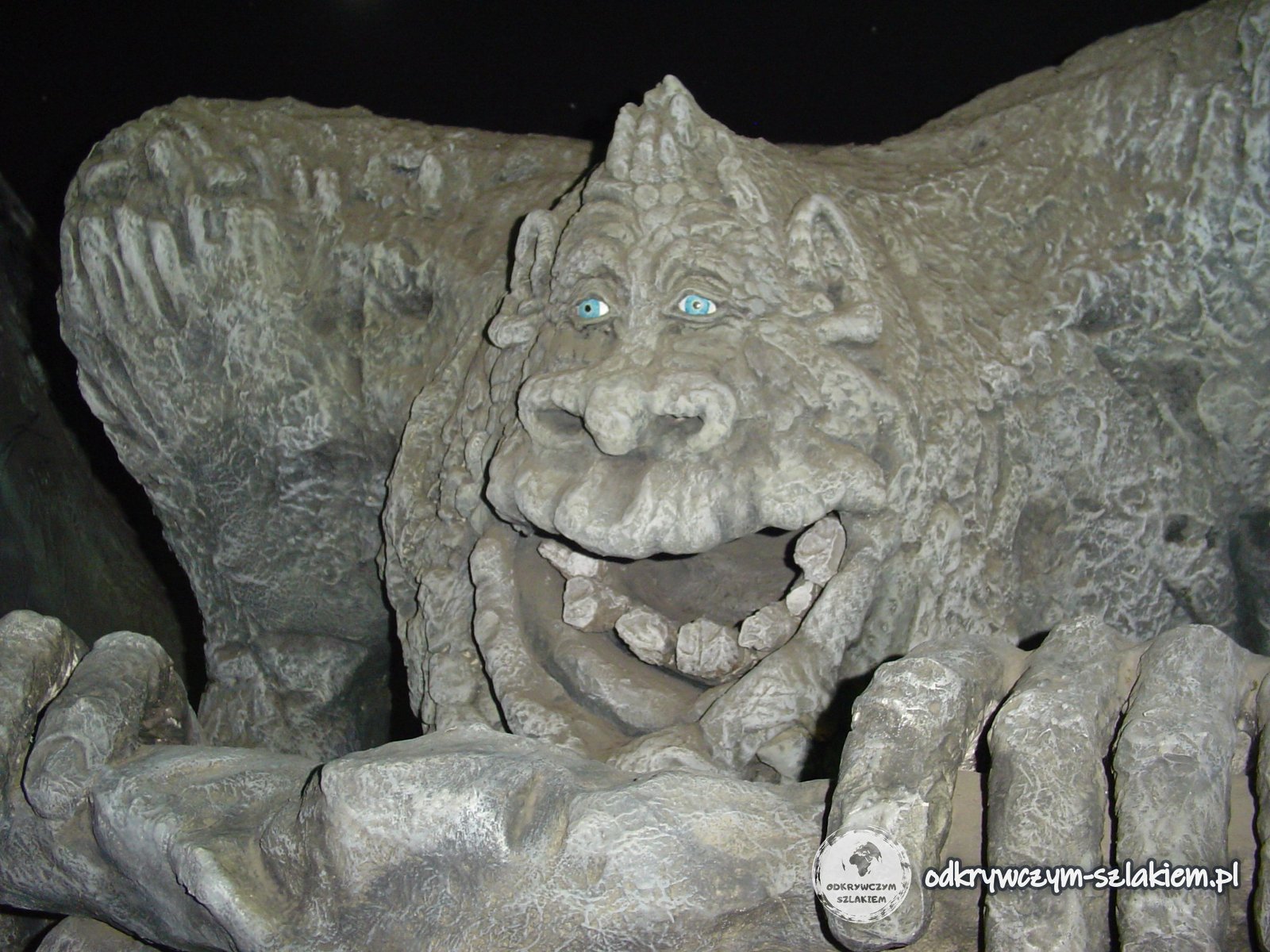
On the route you can see props from The NeverEnding Story of 1984, which was shot at these studios. You can stand next to the luck dragon Falkor, and further on sits the stone giant Pyornkrachzark, the Rockbiter.
Hellabrunn Zoo
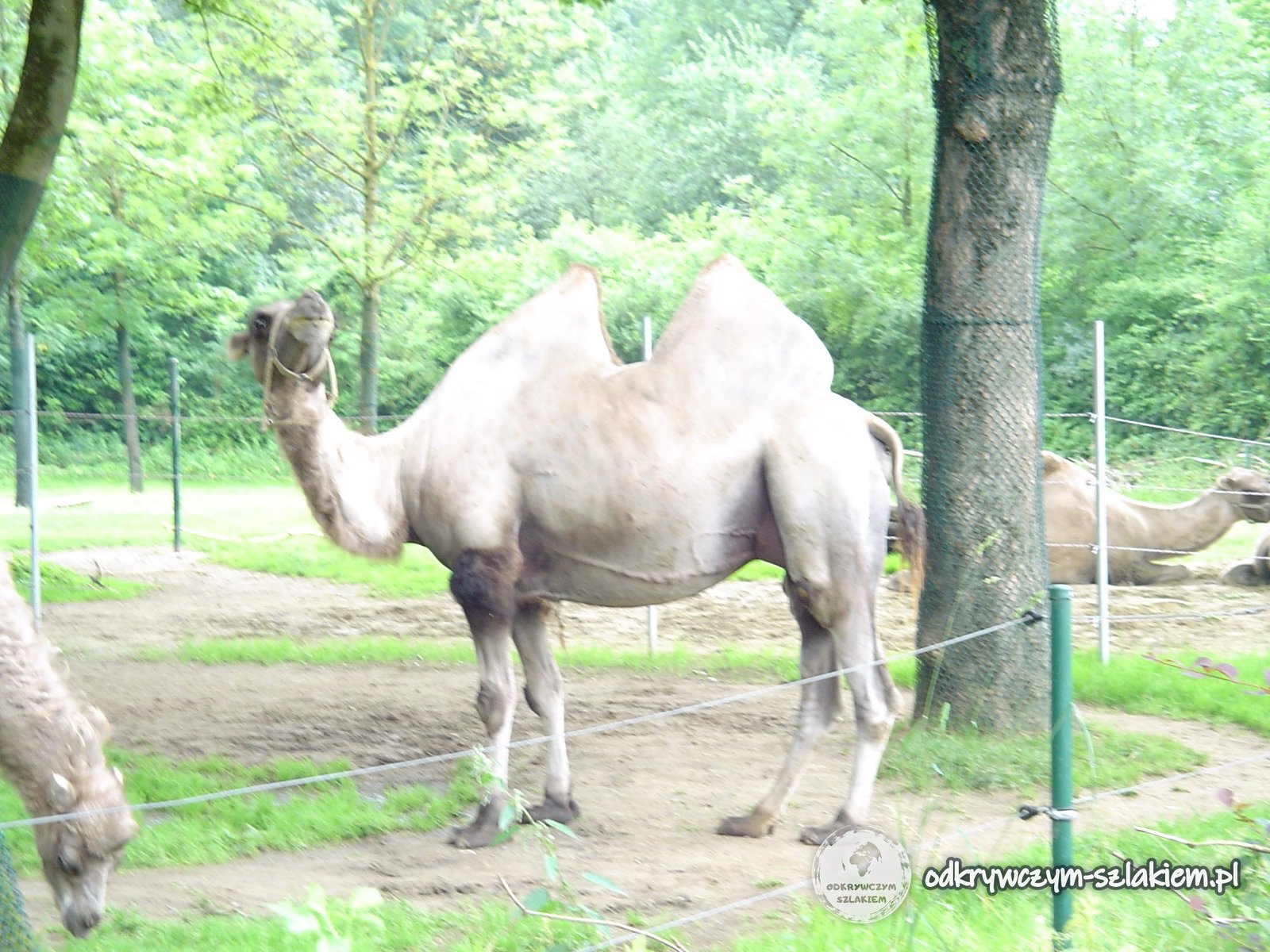
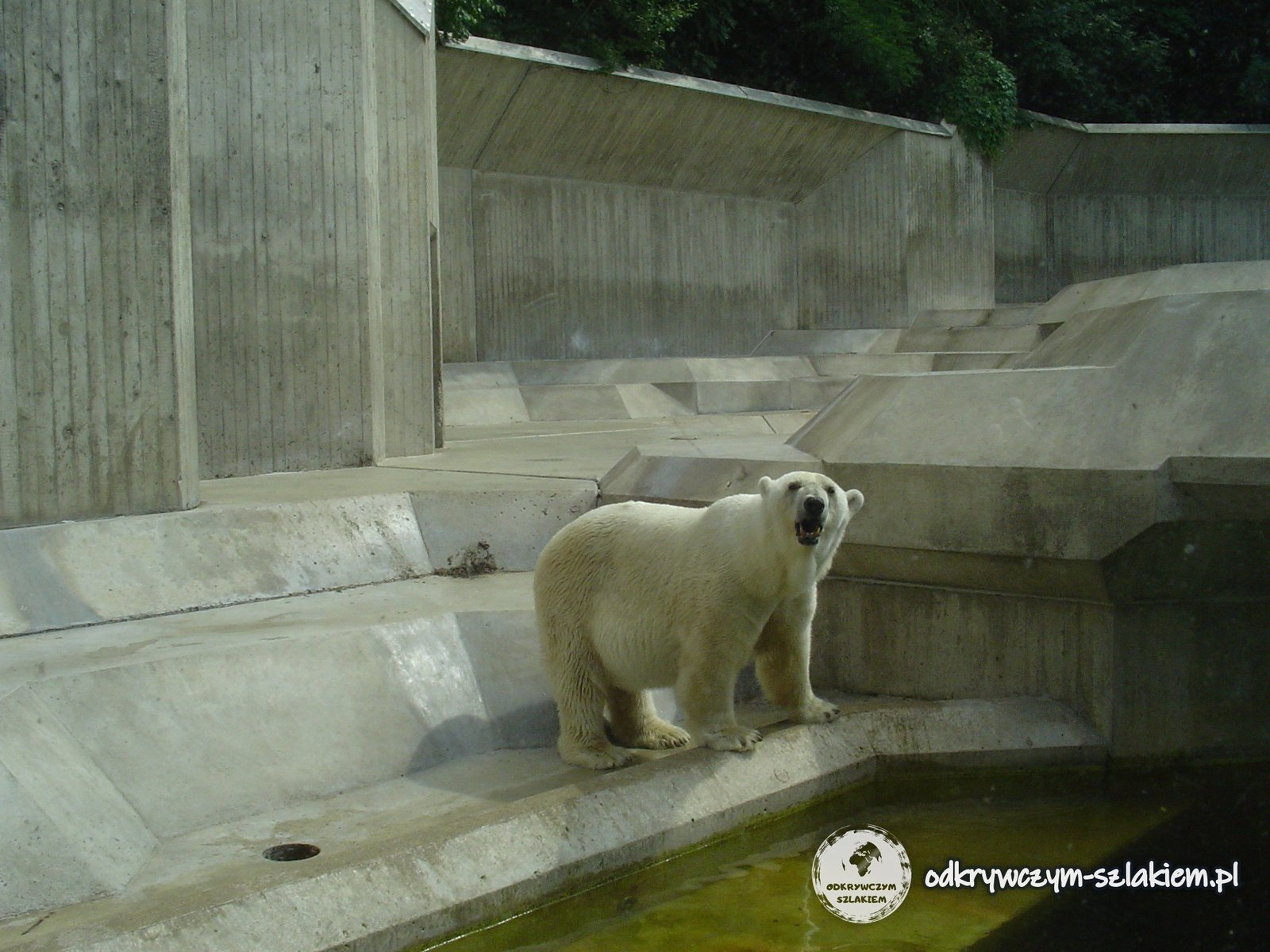
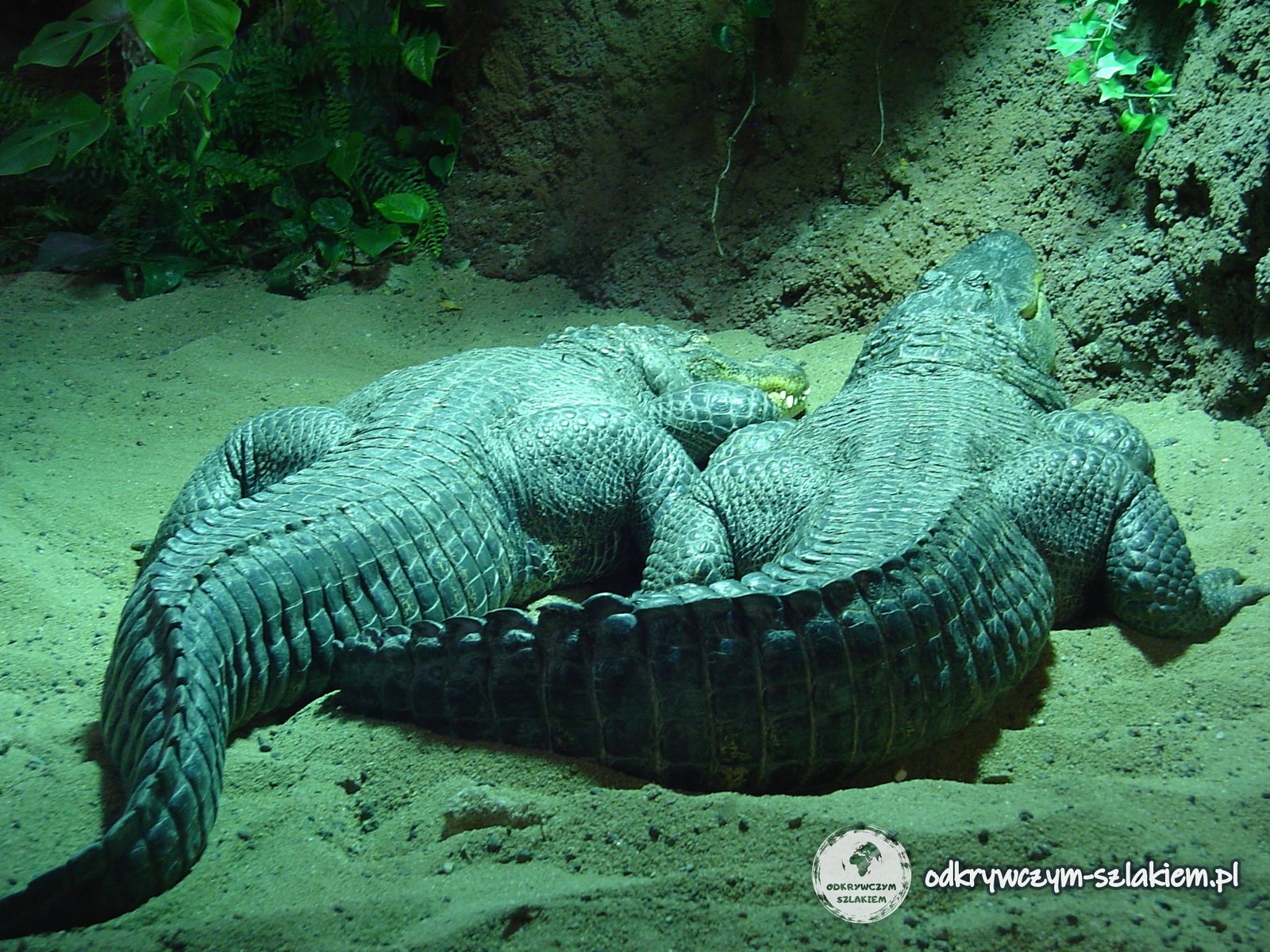
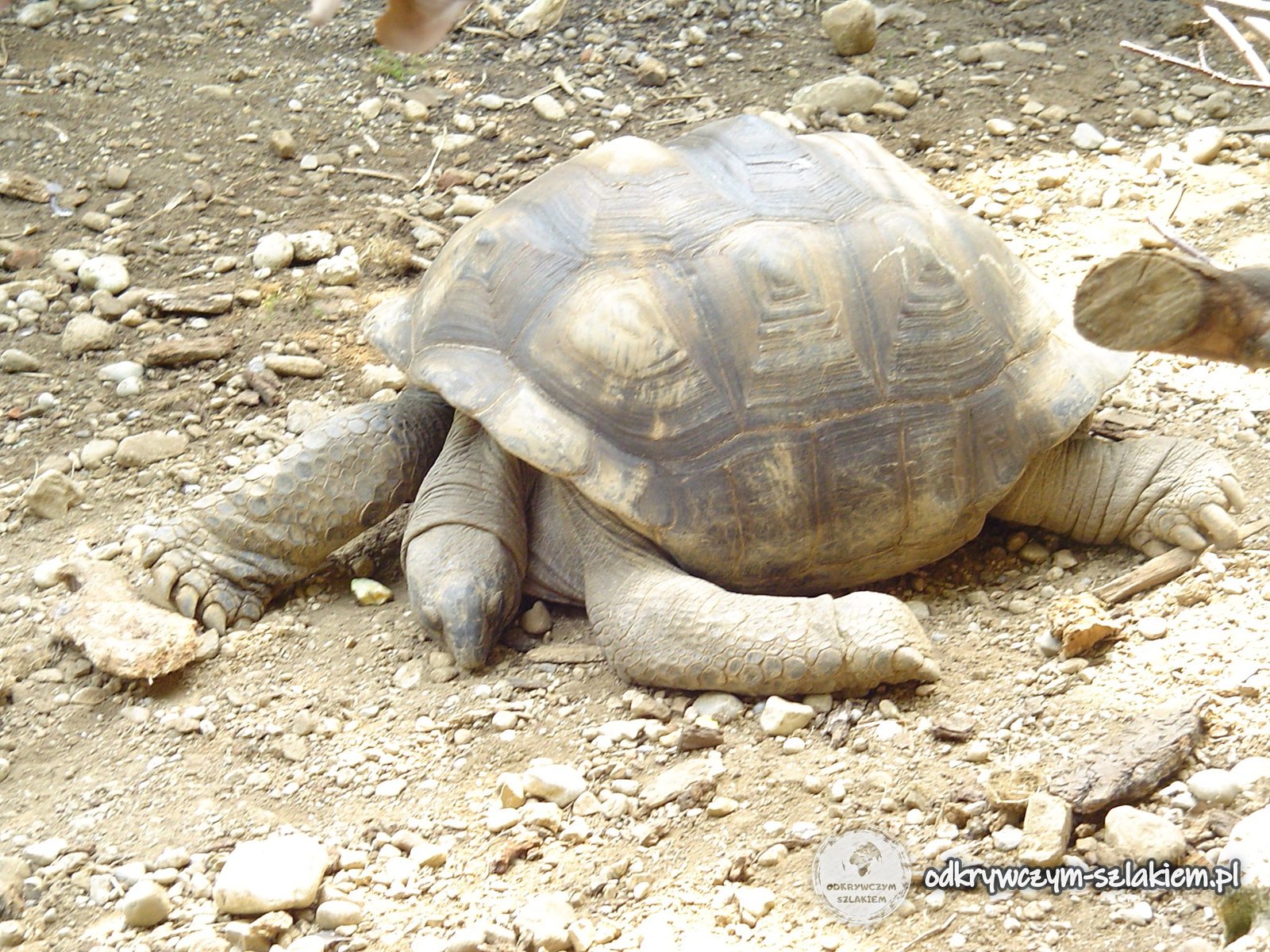
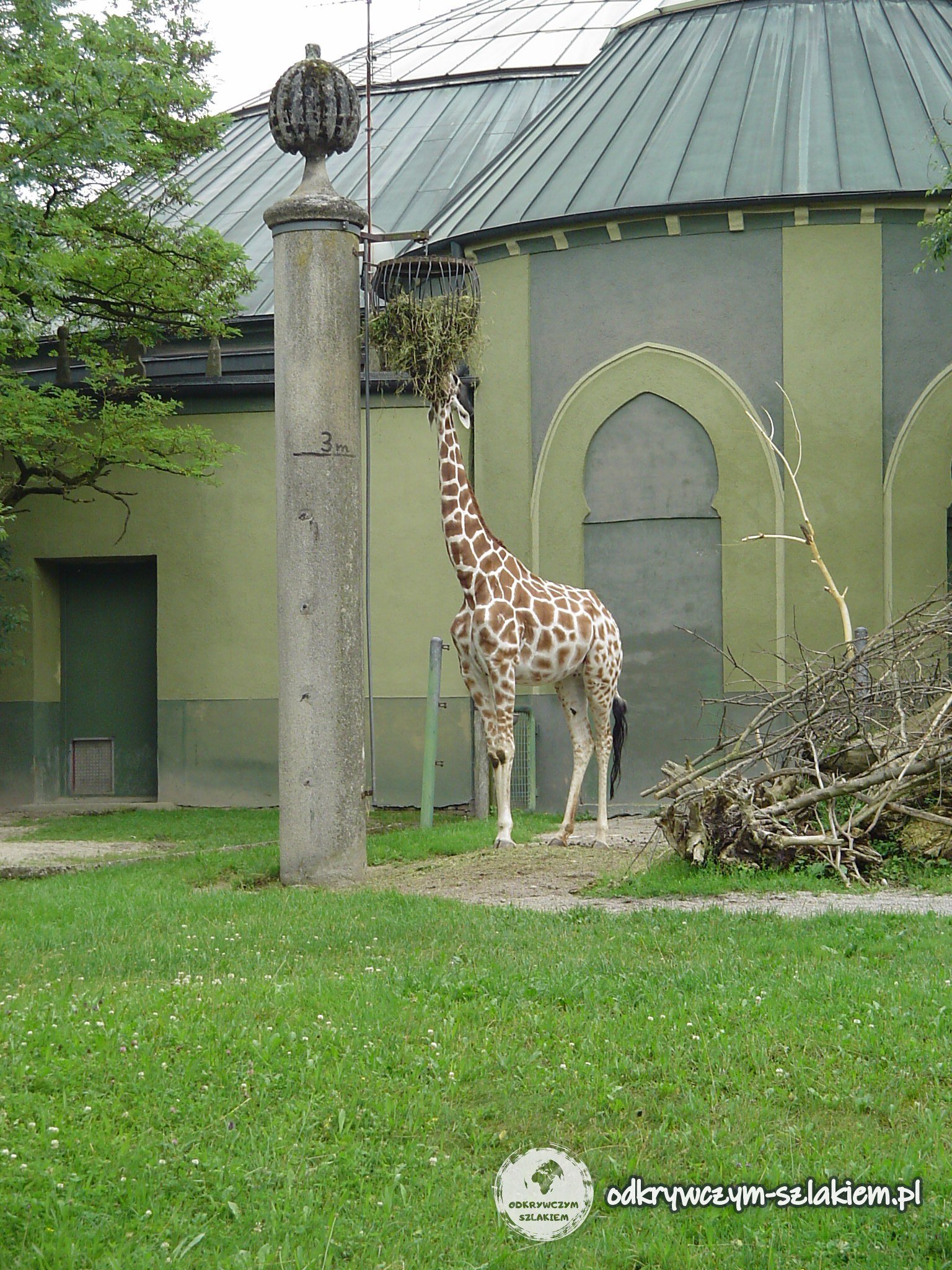
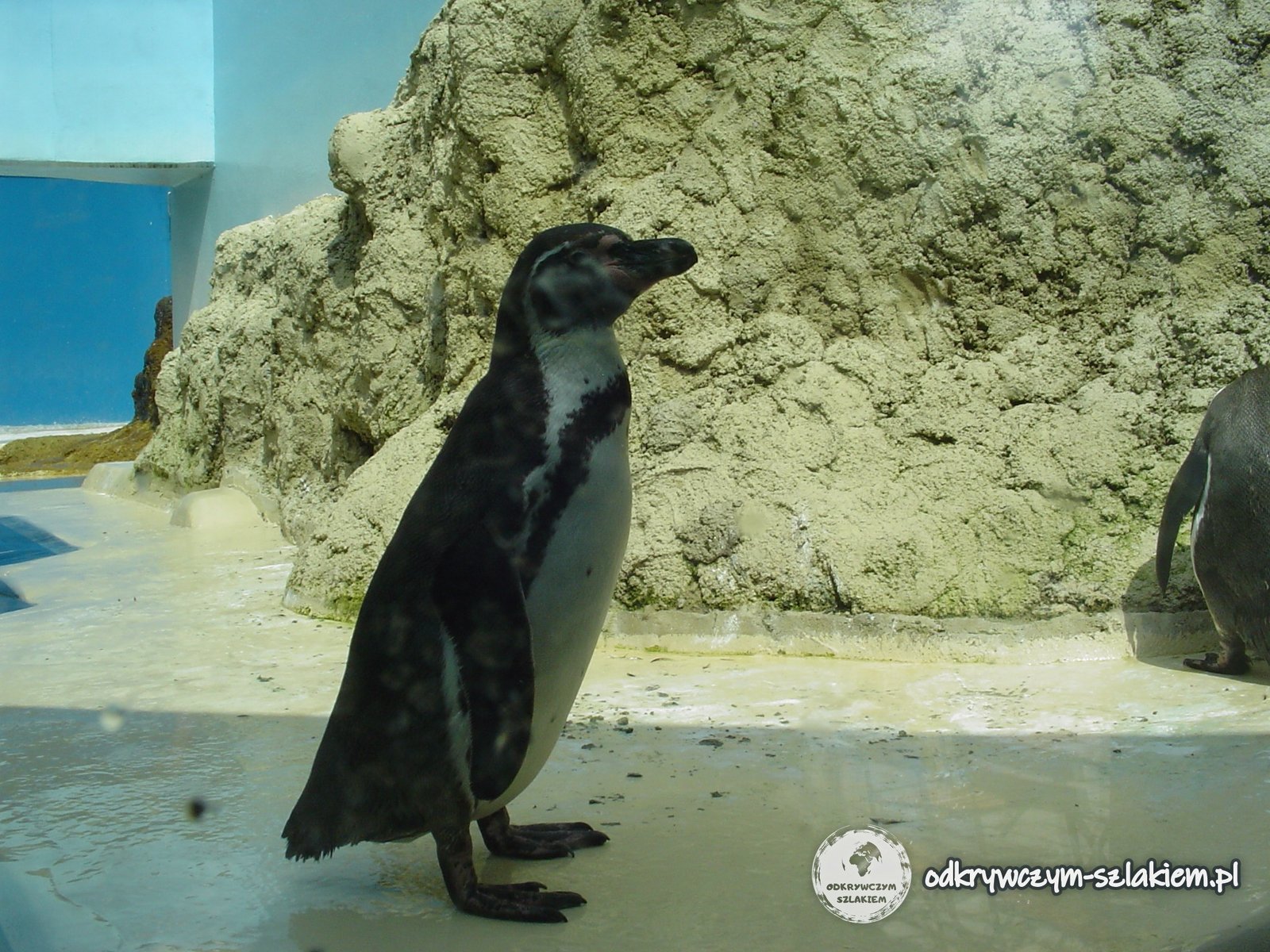
Tierpark Hellabrunn opened in 1911 on the River Isar. It is considered the world’s first “geo-zoo”, with animals grouped by continent. The grounds are green and extensive, so a walk takes up most of the day.
Dachau – the concentration camp memorial near Munich
I went to Dachau in winter. The S2 train takes about 25 minutes from Munich Central Station, and bus 726 goes on to the memorial.
The camp opened on 22 March 1933, weeks after Hitler came to power. Heinrich Himmler announced it in the press, and the first 200 or so prisoners came from Stadelheim Prison in Munich and the fortress in Landsberg. Dachau was one of the first camps in the Third Reich and a model for later ones.
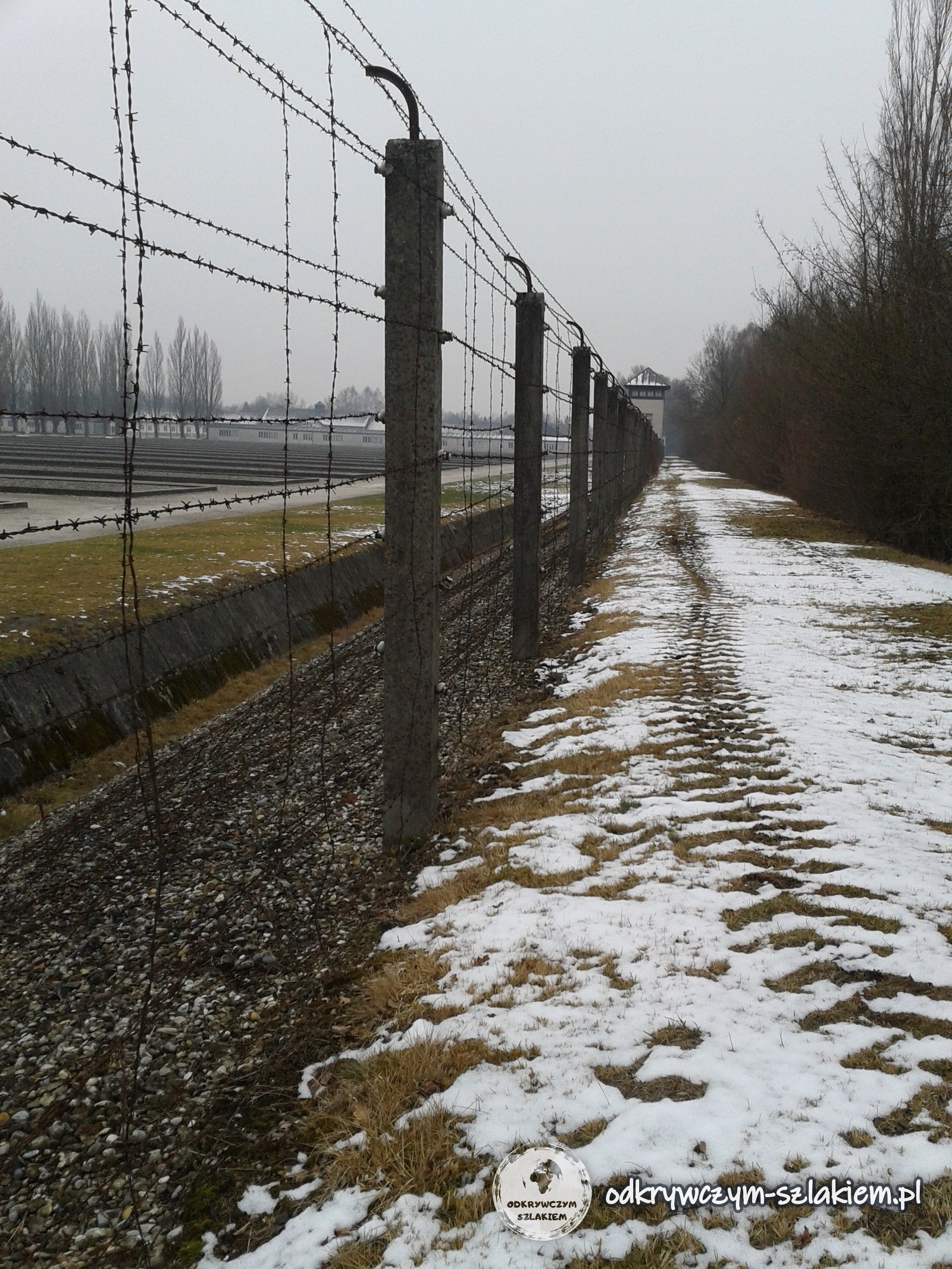
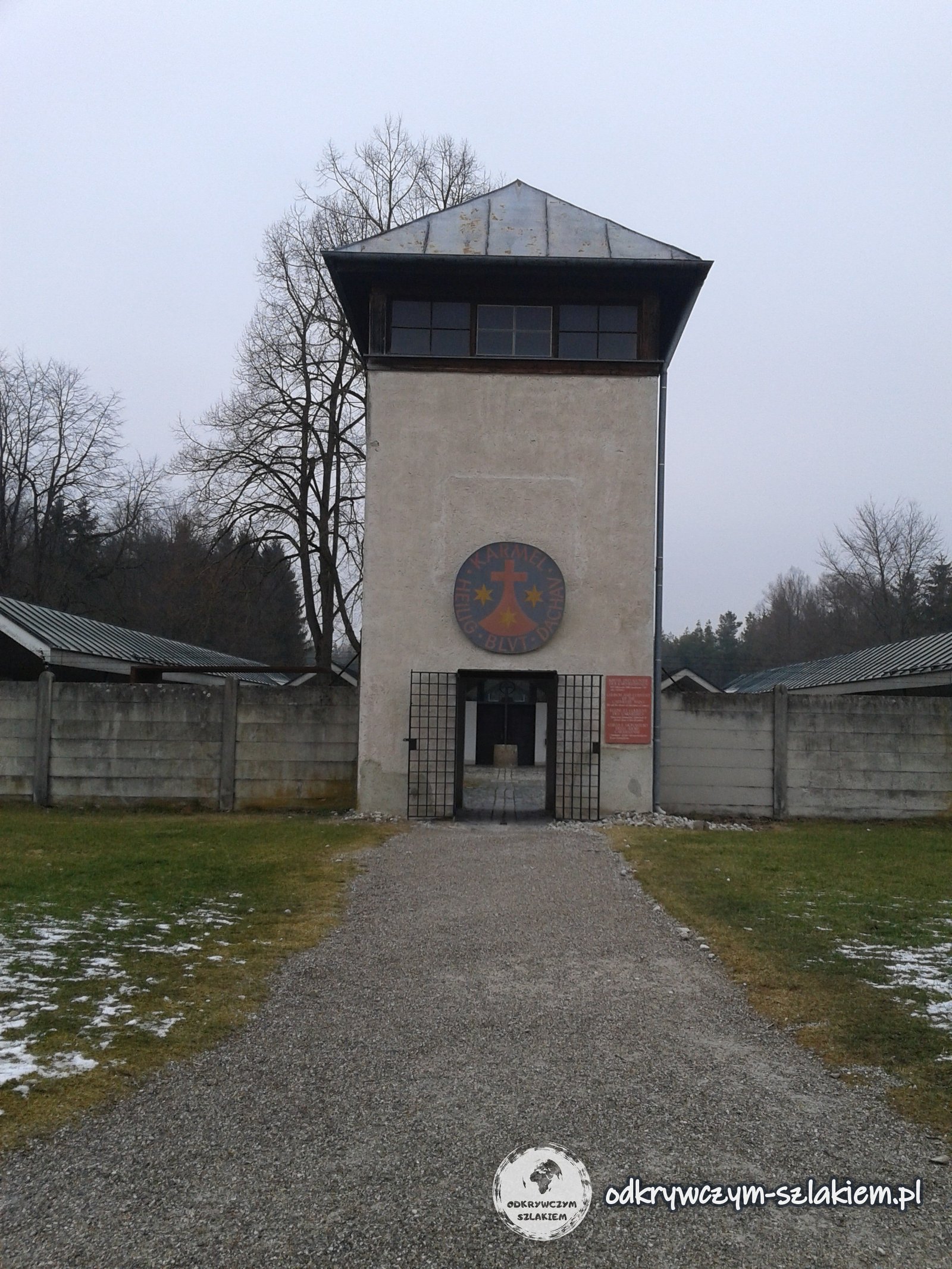
More than 200,000 people from over 40 countries passed through the camp and its subcamps, and at least 41,500 died or were murdered. During the war the largest group were Poles. Around 2,700 clergymen were also held here, most of them Polish. American troops liberated the camp on 29 April 1945.
You entered the camp through the Jourhaus building, with “Arbeit macht frei” on the gate. Only two of the barracks have been rebuilt; the others are marked by low concrete kerbs filled with gravel.
Beyond the camp fence stands the crematorium, built in 1942. The same building has a gas chamber, which according to the available sources was not used for mass killing. In front of it is a stone inscribed “Denket daran wie wir hier starben” – “Remember how we died here”.
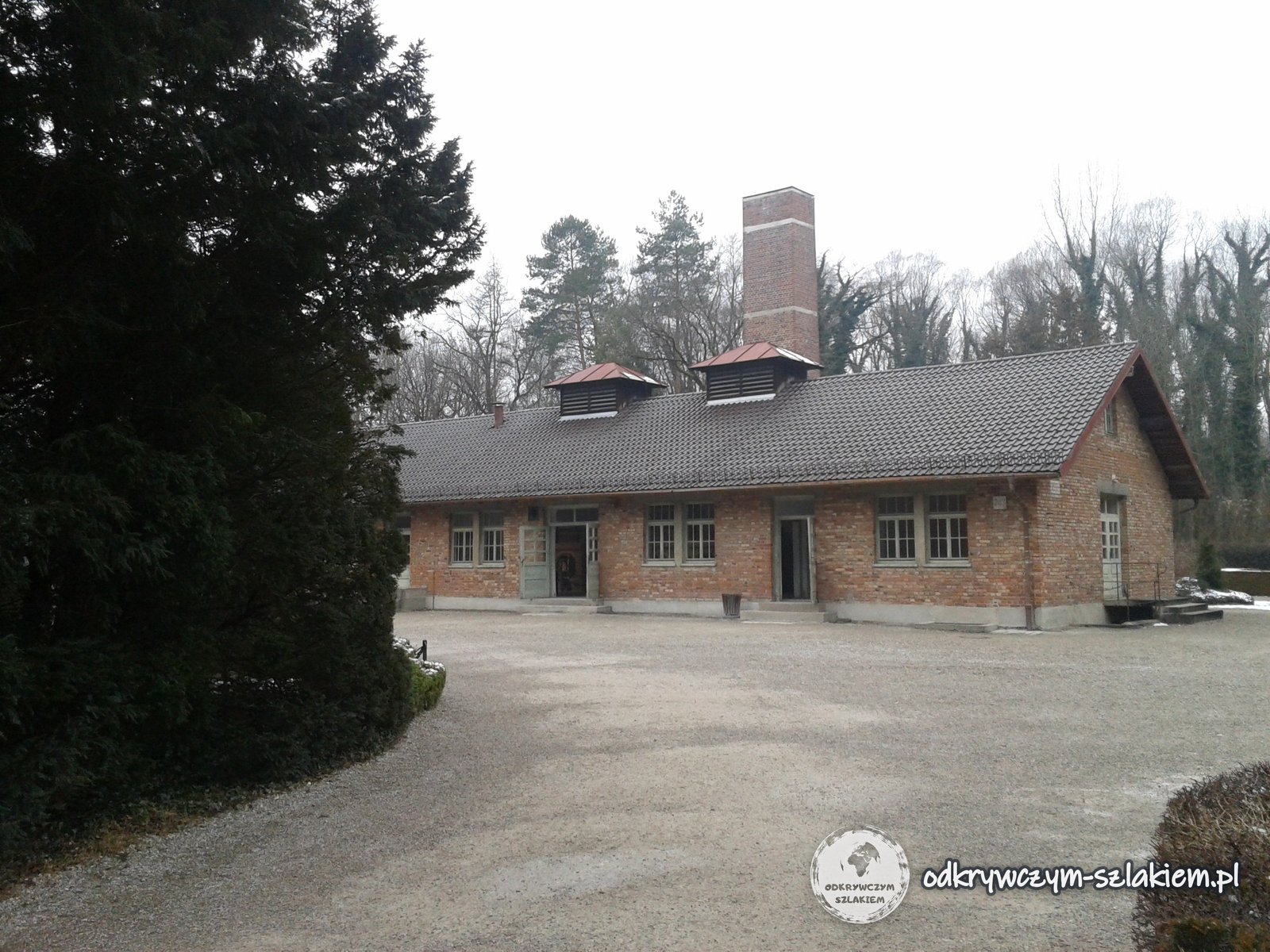
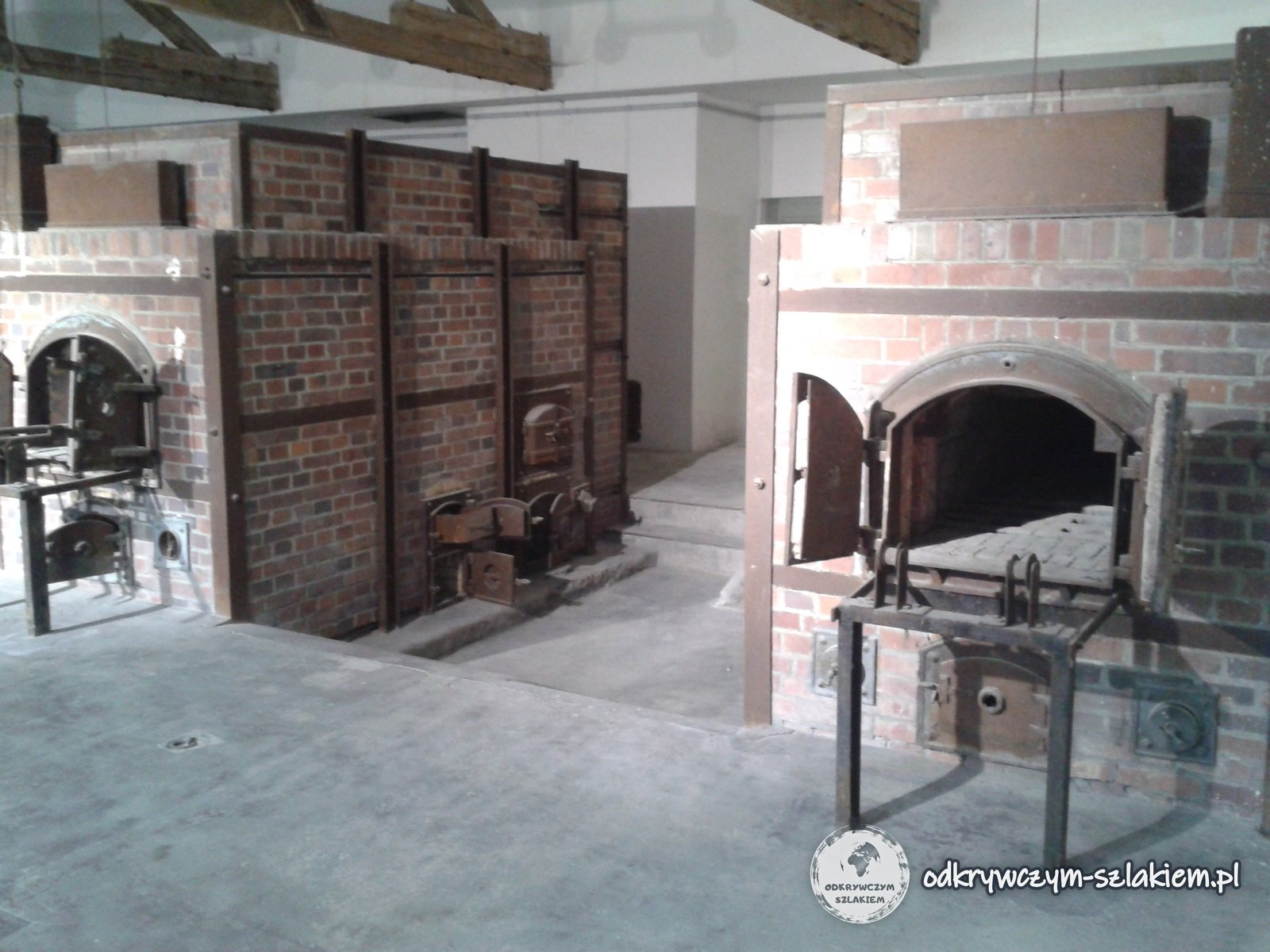
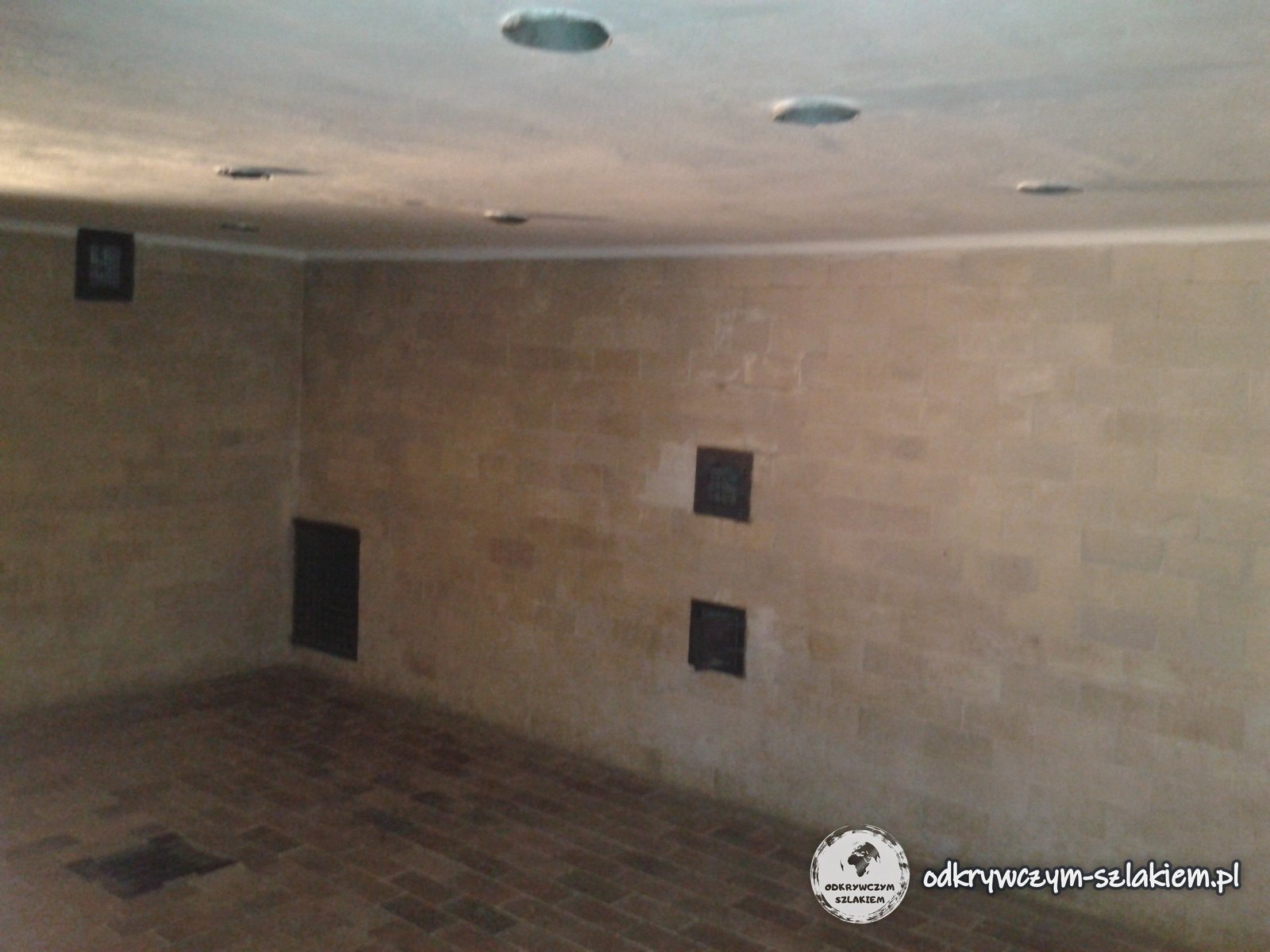
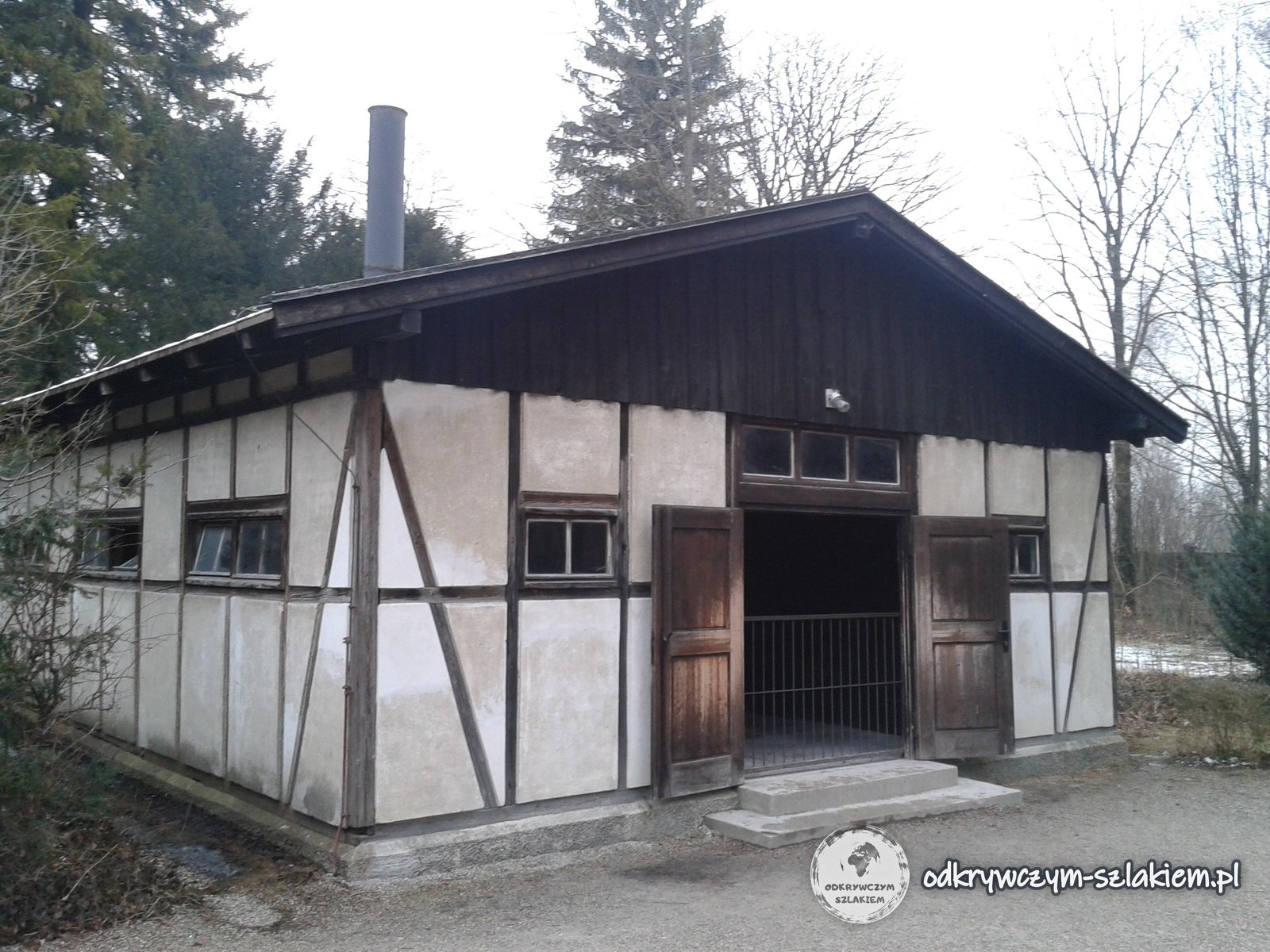
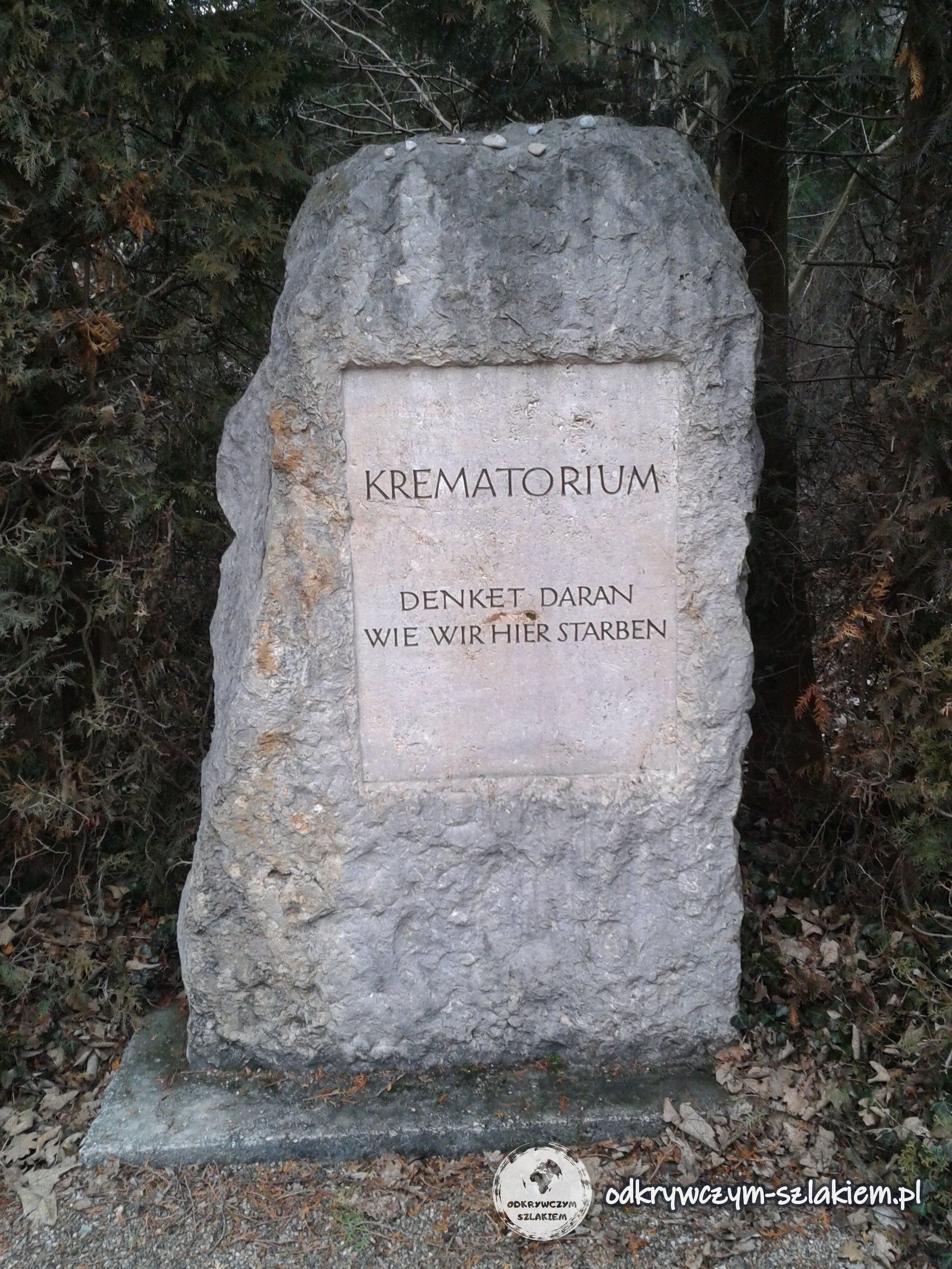
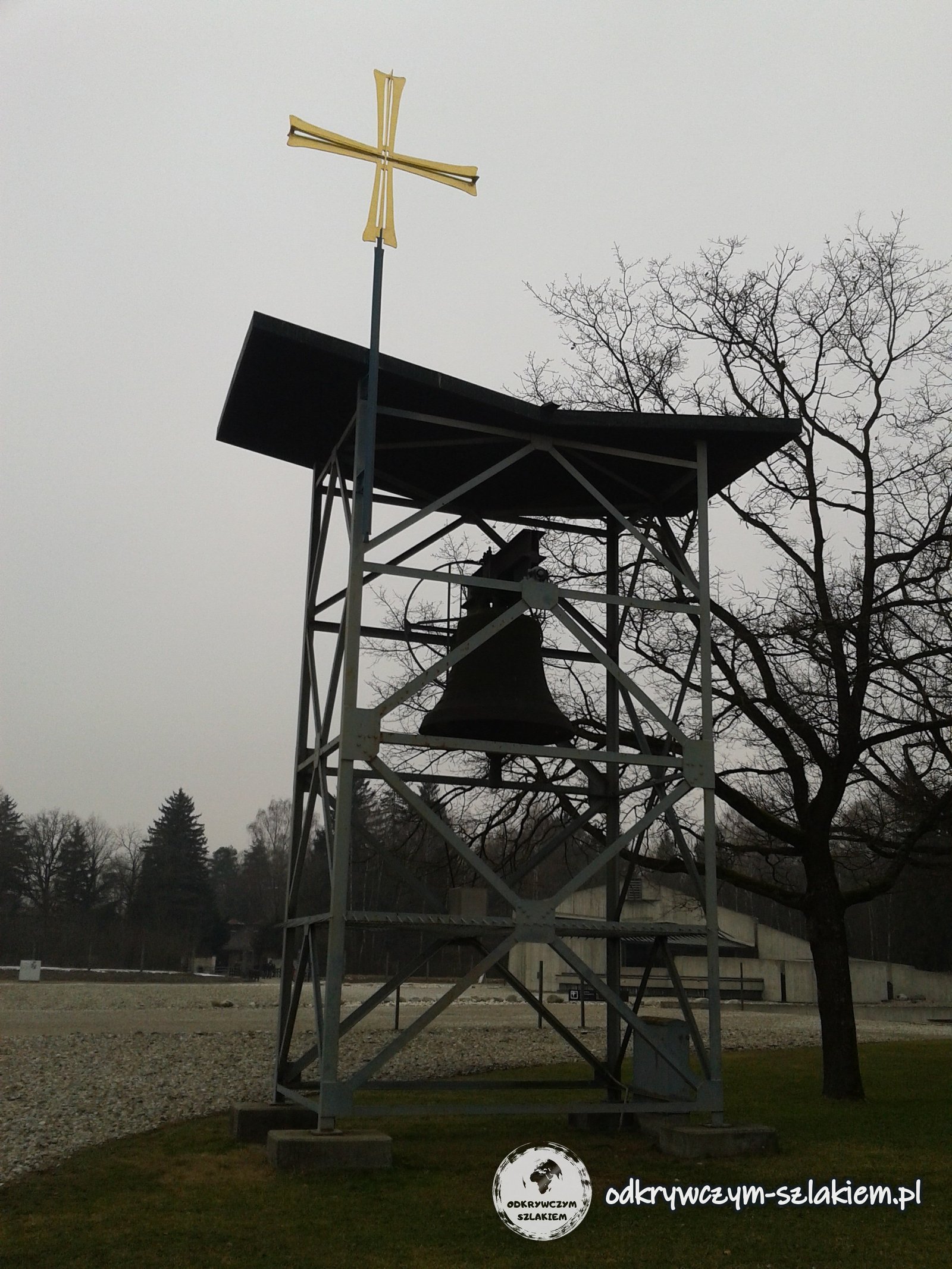
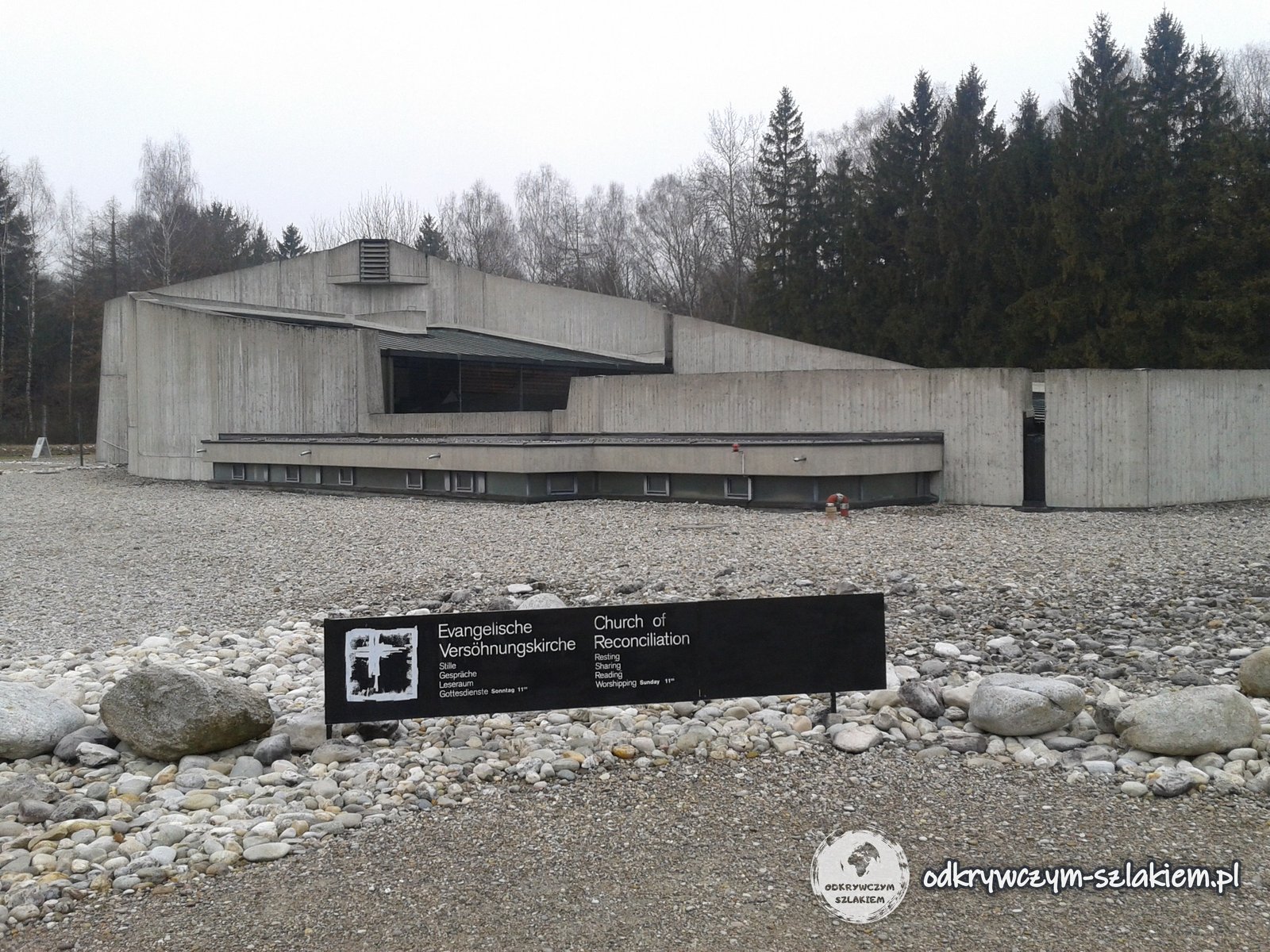
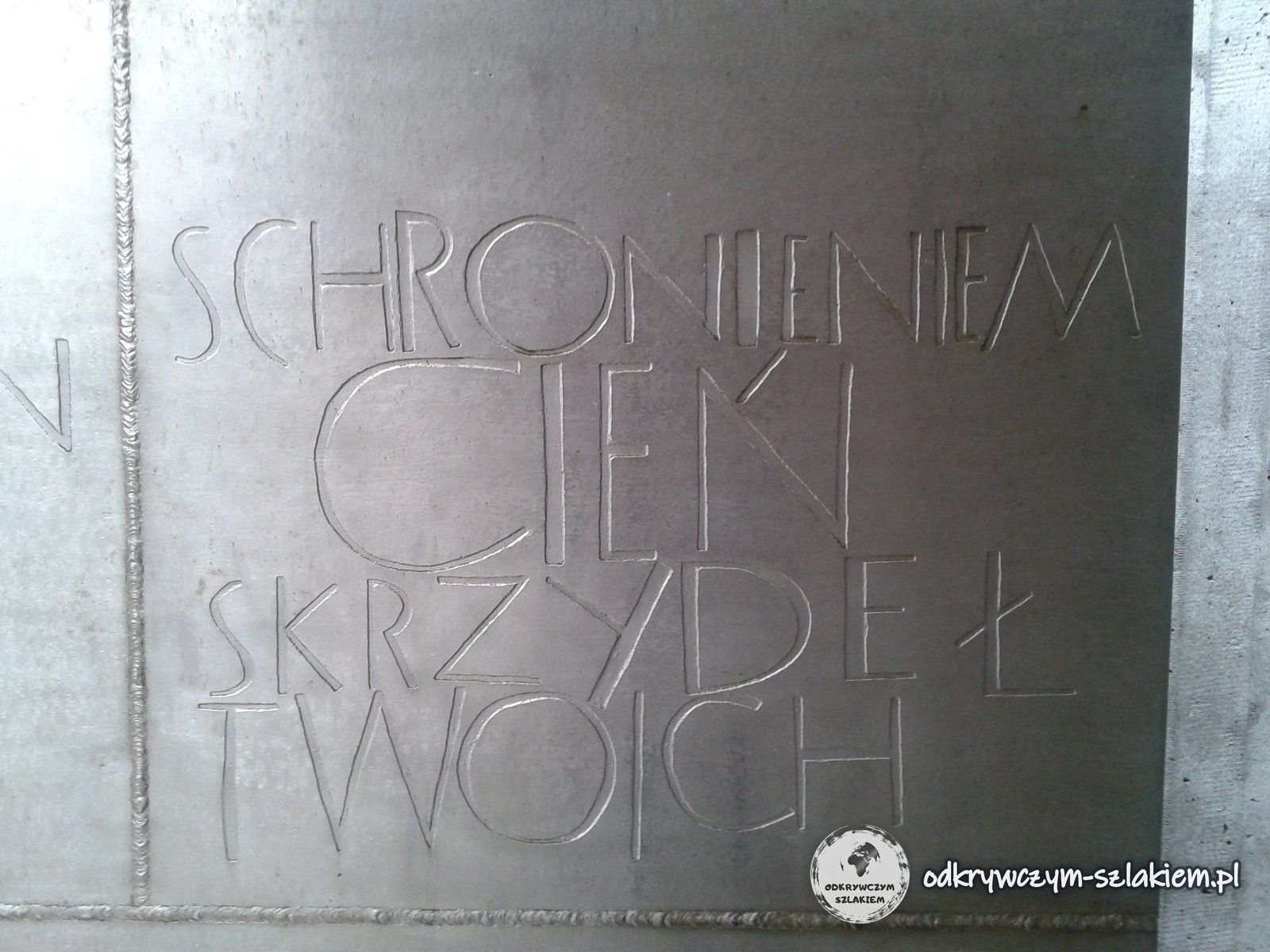
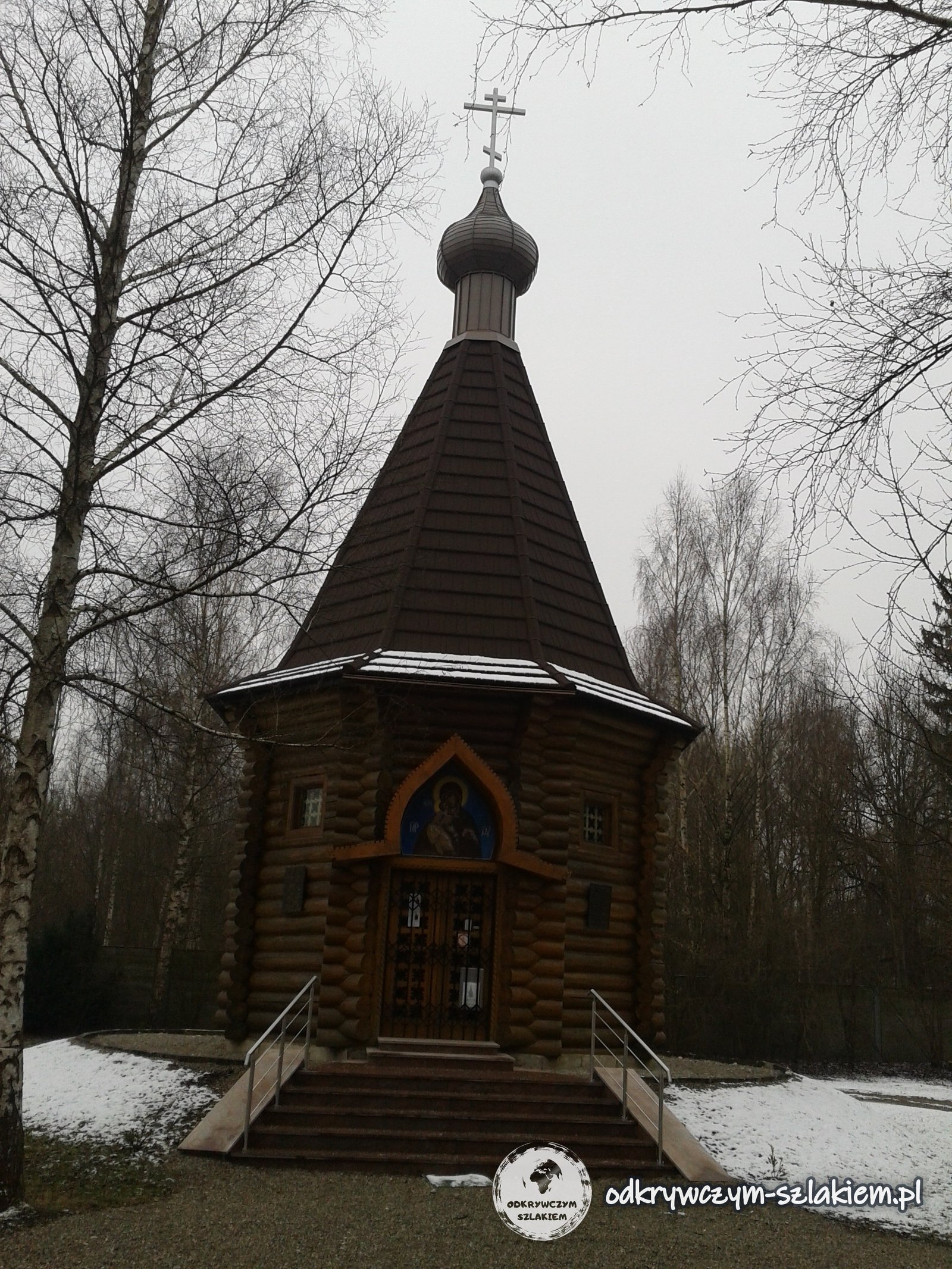
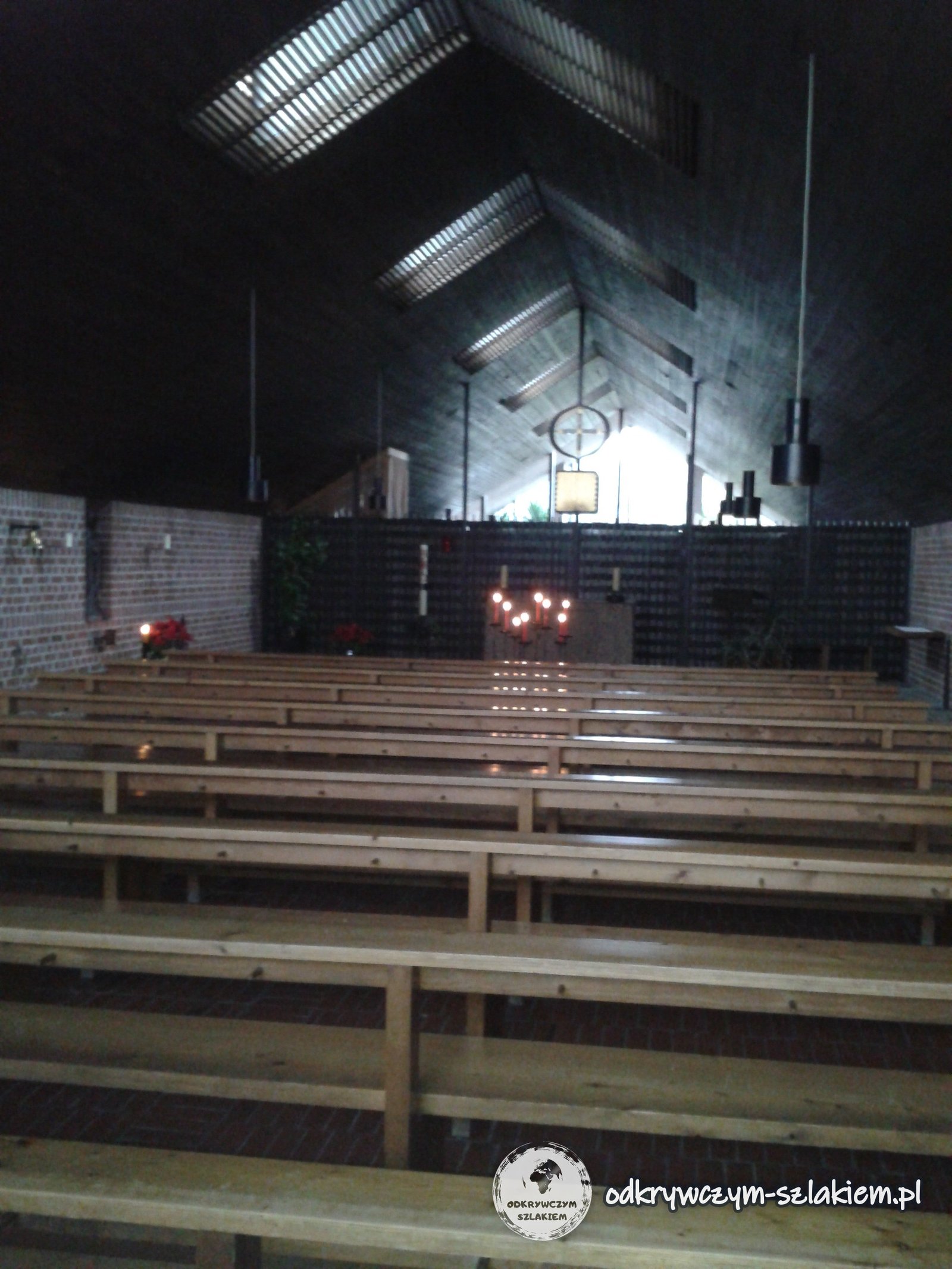
The memorial opened in May 1965 on the initiative of former prisoners. Several religious sites stand on the grounds: the Catholic Mortal Agony of Christ Chapel of 1960, initiated by former prisoner Johannes Neuhäusler, the Jewish memorial of 1967, the Protestant Church of Reconciliation and a Carmelite convent. The Russian Orthodox chapel holds an icon of Christ leading prisoners out through the camp gate.
Practical information
- Alter Peter: there is no lift up the tower, and entry is paid.
- Olympiapark: take the U3 underground to Olympiazentrum.
- Hellabrunn: take the U3 underground to Thalkirchen.
- Bavaria Filmstadt: check tour times on the studio’s website.
- Munich: the beer garden at the Chinese Tower in the Englischer Garten charges no admission. The Oktoberfest takes place on the Theresienwiese, below the Bavaria statue, from mid-September to early October.
- Allianz Arena, getting there: take the U6 underground to Fröttmaning, then walk for about 15 minutes.
- Allianz Arena, tours: check dates and tickets on the stadium website; on match days the route may be limited.
- Dachau memorial: entry is free. From Munich take the S2 to Dachau, then a bus.