Łańcut Castle is one of the best-known aristocratic residences in Poland. For more than three hundred years it belonged to the Lubomirski and Potocki families, and since 1944 it has been a museum. I was here in July 2016, on my way to the Bieszczady Mountains. I describe the history of the castle, the moat and the avenue leading to the gate, the interiors, the Orangery and gardens, the park with the Riding School and the Orchid House, the Stables and Coach House with the carriage collection, and finally practical information and ticket prices.
Table of contents
- History of the castle – from the Lubomirskis to the Potockis
- The moat, the bridge and the yew avenue
- The castle interiors
- The Orangery and the gardens by the castle
- The park – the pergola, Riding School and Orchid House
- The Stables and Coach House – the carriage collection
- Practical information
History of the castle – from the Lubomirskis to the Potockis
The first building here was a defensive tower of the Pilecki family from the second half of the 16th century. Around 1610 the Stadnicki family extended it into a horseshoe-shaped castle. In 1629–1641 Voivode Stanisław Lubomirski rebuilt it to a design by Maciej Trapola as a palazzo in fortezza – a four-sided palace with corner towers, surrounded by bastion fortifications and a moat. The fortifications, attributed to Krzysztof Mieroszewski, protected the castle from the Swedes in 1655 and from Rákóczi’s Transylvanian army in 1657.

At the end of the 18th century the castle was transformed by Izabela Lubomirska, née Czartoryska. After her husband’s death in 1783 she carried on the work alone, employing among others Christian Piotr Aigner, Jan Christian Kamsetzer and the stucco artist Fryderyk Bauman. She turned the earthen fortifications into gardens, so they lost their defensive role. After her death in 1816 Łańcut passed to her grandsons from the Potocki family, and in 1830 Alfred Potocki made it an entailed estate.

The biggest changes came at the turn of the 20th century under Roman Potocki and his wife Elżbieta, née Radziwiłł. The castle got electricity, running water, sewers and central heating, and the French architect Amand Louis Bauqué replaced the neo-Gothic decoration of the façades with neo-Baroque ornament. During the Second World War the castle housed a Wehrmacht headquarters. In the summer of 1944, before the Red Army arrived, Alfred Potocki left for the West and, with German permission, took many of the castle’s collections with him. As early as the beginning of September 1944 the castle opened to visitors as a museum.
The moat, the bridge and the yew avenue
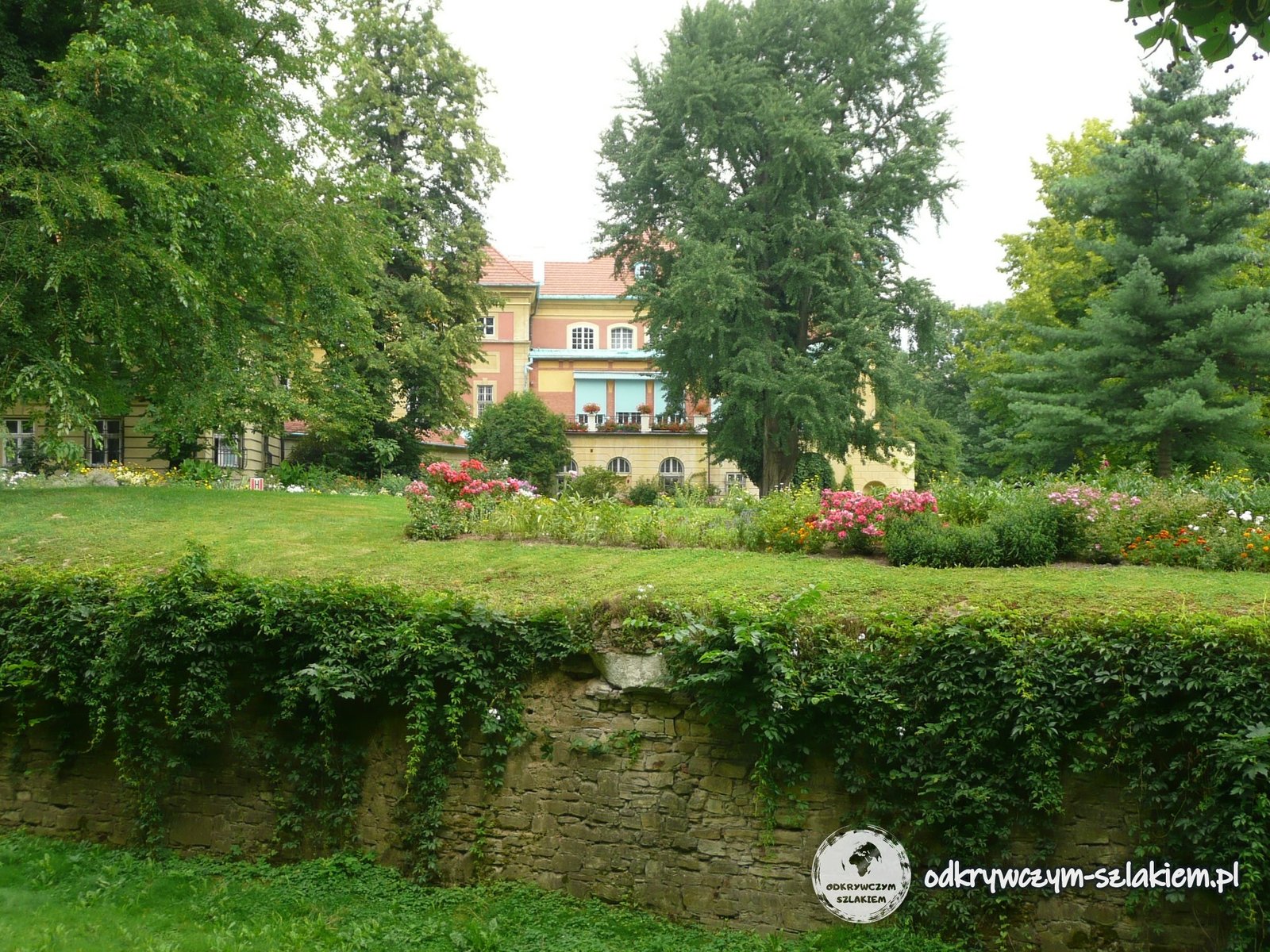
The castle is still surrounded by a moat with stone walls – now dry and covered with grass. A bridge with a stone balustrade and vases full of flowers leads across it to the gate.

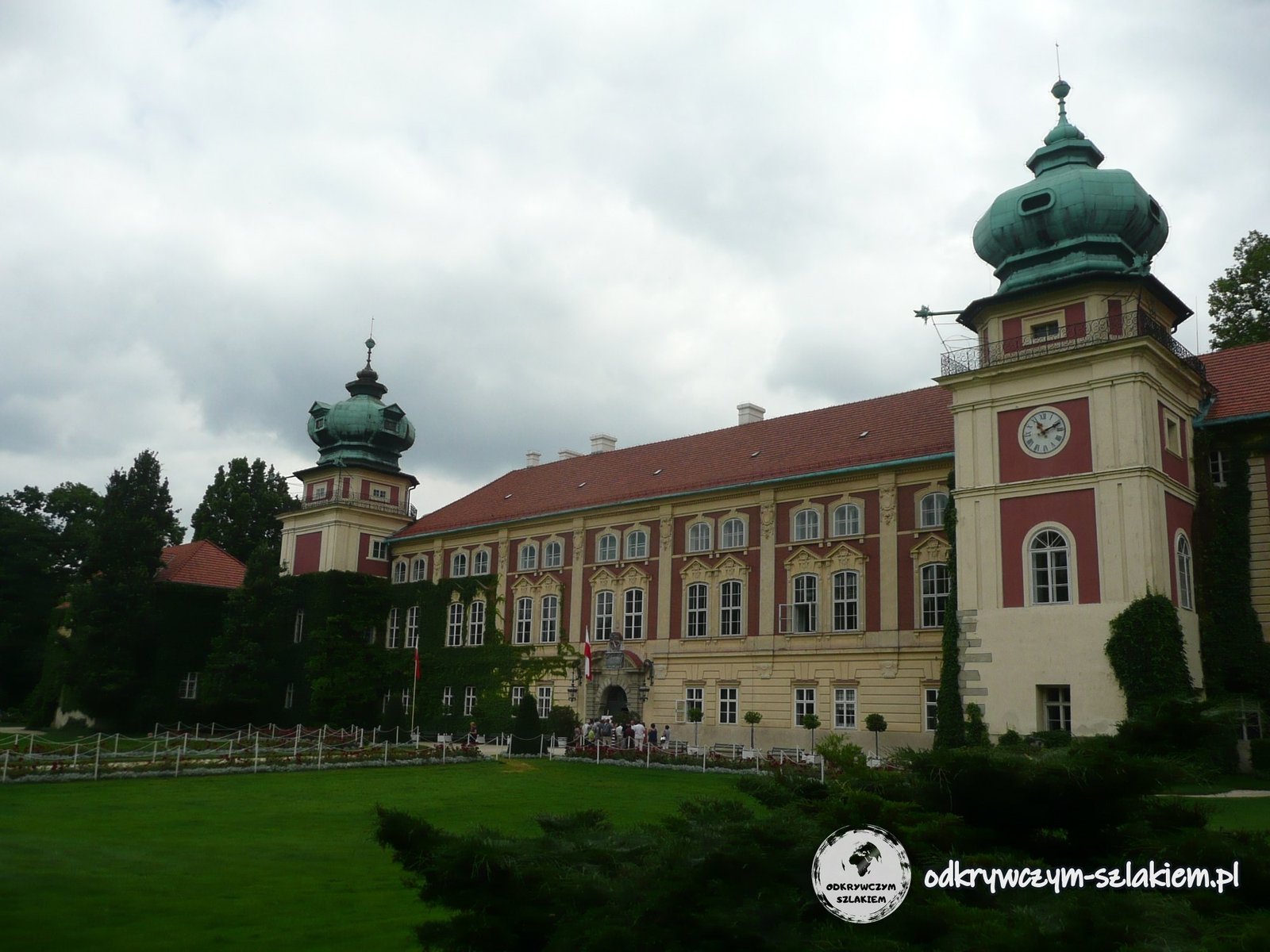
The main avenue from the western bridge to the castle is lined with four yews clipped into cones – you can see them in the first photo. White sculptures on pedestals stand in front of the façade, and the corners of the castle end in towers with green cupolas. One of them has a clock.

From the park side you can see red roofs, the green cupolas of the towers and ivy on the castle walls.
The castle interiors
The main exhibition covers the ground floor and the first floor of the castle. It includes the Great Hall with the coats of arms of the Potocki wives, the apartments arranged for Izabela Lubomirska, the Chinese Apartment and the Sculpture Gallery created after 1791. Its walls and ceiling are covered with illusionistic paintings that make the gallery look like a romantic ruin turned into a bower.

The largest classicist interior is the two-storey Ballroom with five crystal chandeliers. There are also the Great Dining Room from 1802–1805 and the Column Room from 1783–1785. The Court Theatre, added to the west wing before 1784, is one of only two surviving palace theatres in Poland. The library holds about 22,000 volumes – the largest and best-preserved aristocratic library in Poland.
The most valuable works in the collection include a self-portrait by Sofonisba Anguissola from 1556 and Antonio Canova’s sculpture of Henryk Lubomirski as Cupid.
The Orangery and the gardens by the castle
Right next to the castle stands the classicist Orangery, built in 1799–1802 to a design by Christian Piotr Aigner, with stucco work by Fryderyk Bauman. Around 1900 it was linked to the castle by an arcaded passage. On its south side it has a row of arched windows overgrown with ivy.
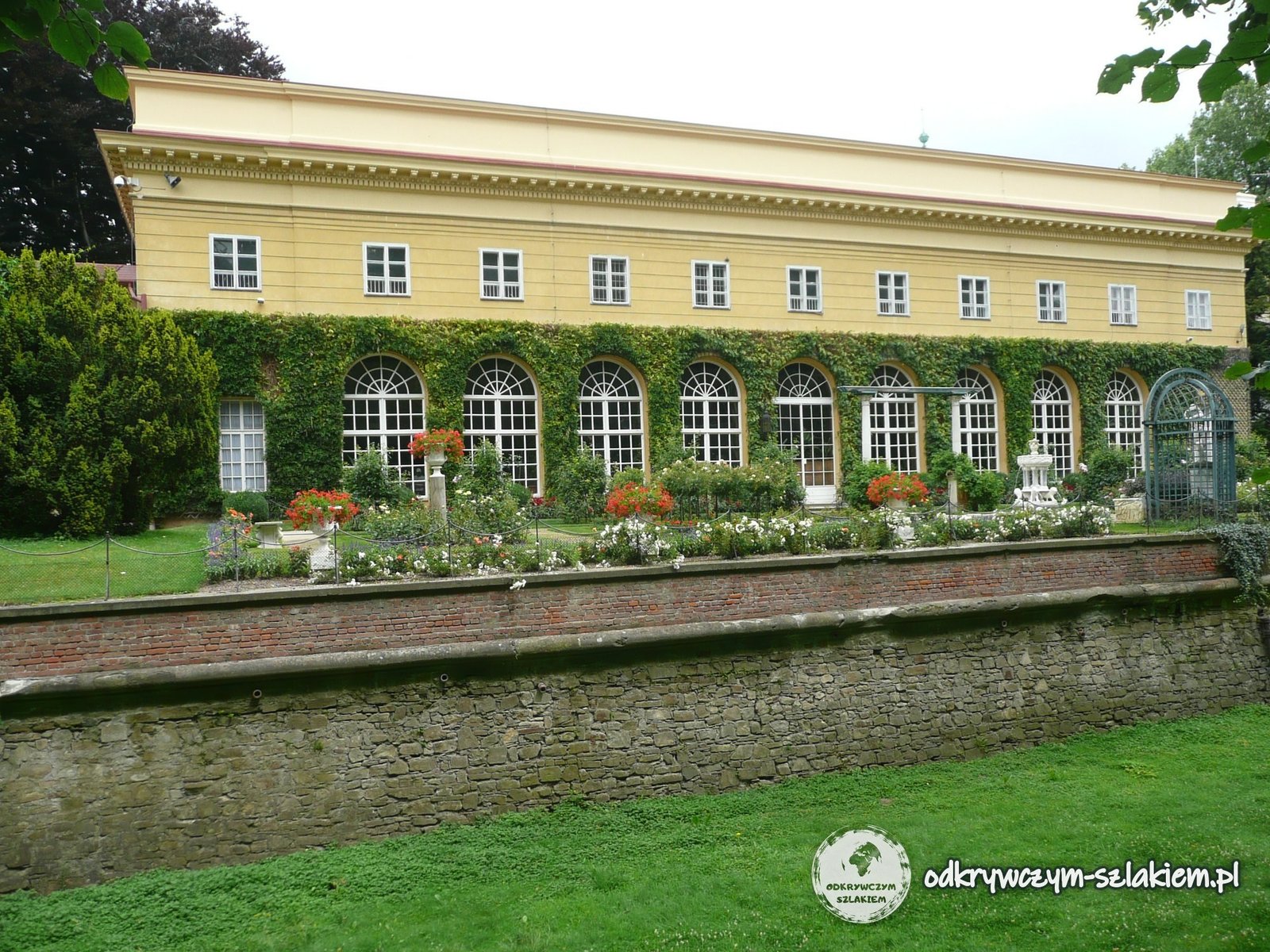
In 2016 the Orangery had exotic plants, parrots behind glass and aquariums with fish. Today the former Orangery houses the museum’s Centre for Tradition Education.


Several gardens were laid out within the moat: the Italian Garden in front of the castle’s east façade, the Rose Garden in front of the south façade of the Orangery, and the Perennial Garden. On the north-western bastion stands a gloriette designed by Aigner around 1810.

The park – the pergola, Riding School and Orchid House
Around the castle lies an English-style landscape park of about 36 ha – the inner park within the moat and the outer park beyond it, to the east of the castle. It owes its present shape mainly to Roman and Elżbieta Potocki, who made it almost twice as large.
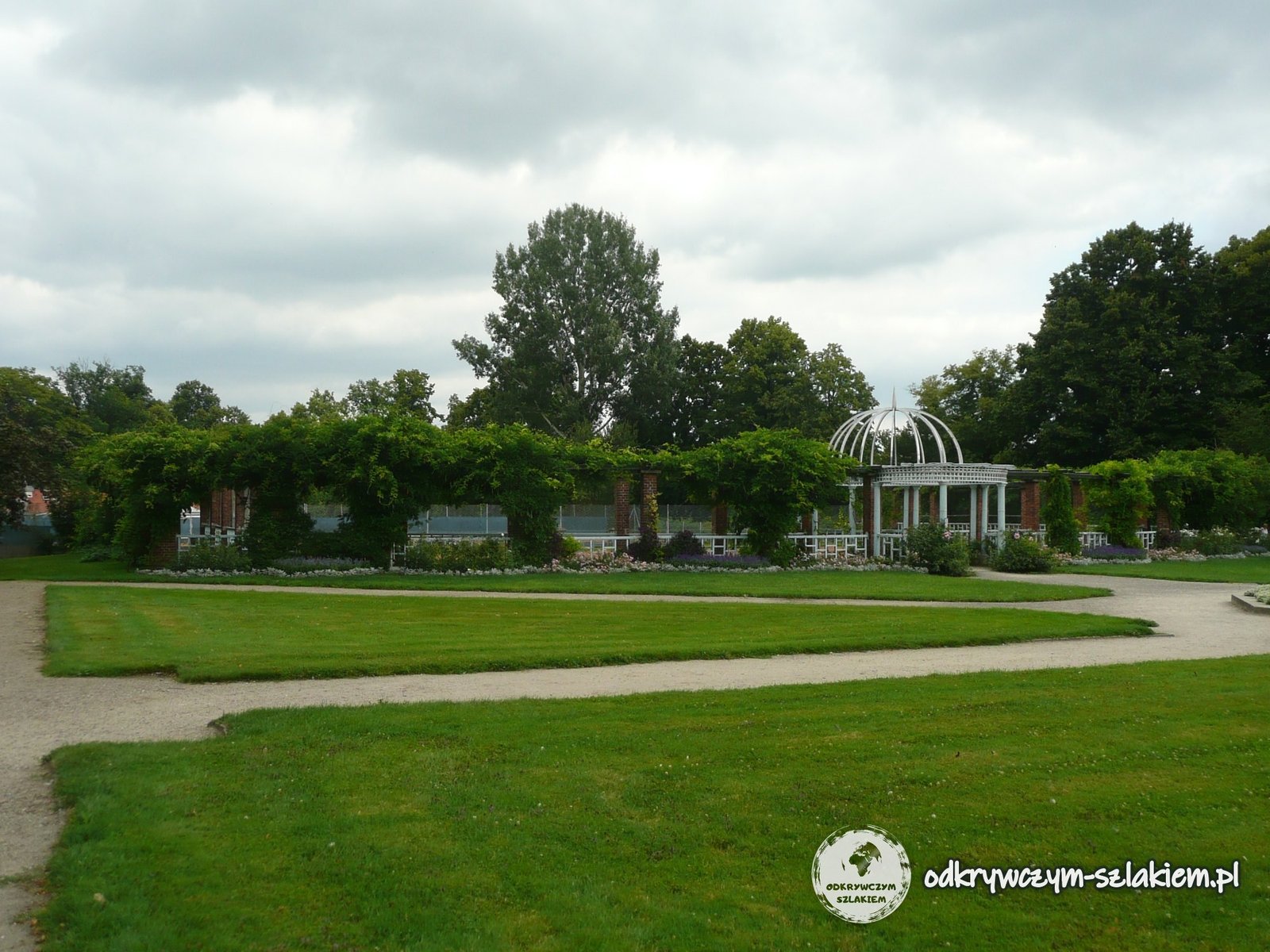
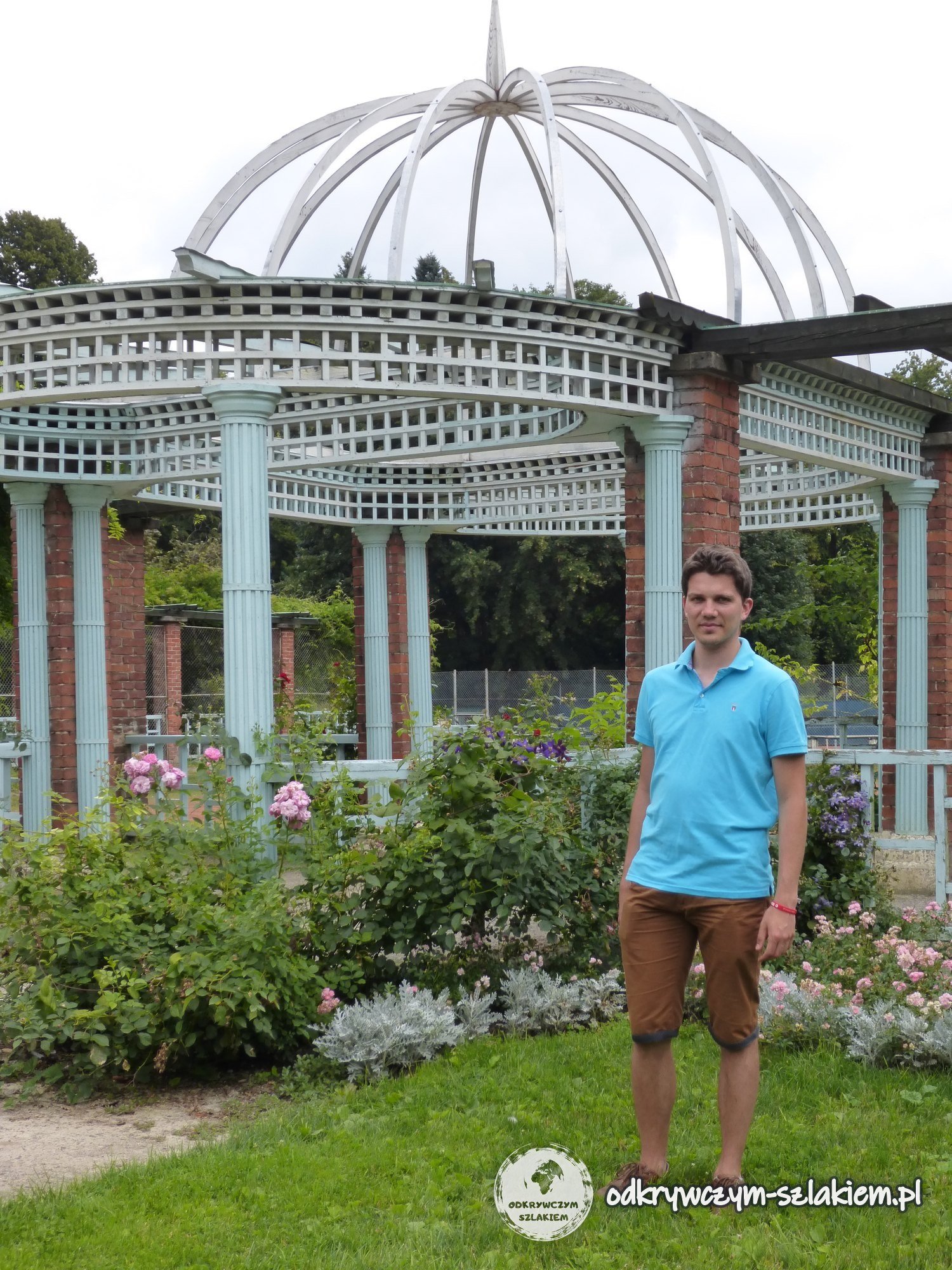
In 1893–1904 the Viennese firm Griedl built a Palm House opposite the Riding School; it was pulled down after the First World War. A tennis court was laid out in its place, and on the Riding School side a pergola on brick pillars, with an openwork wooden dome over the entrance and covered with wisteria.
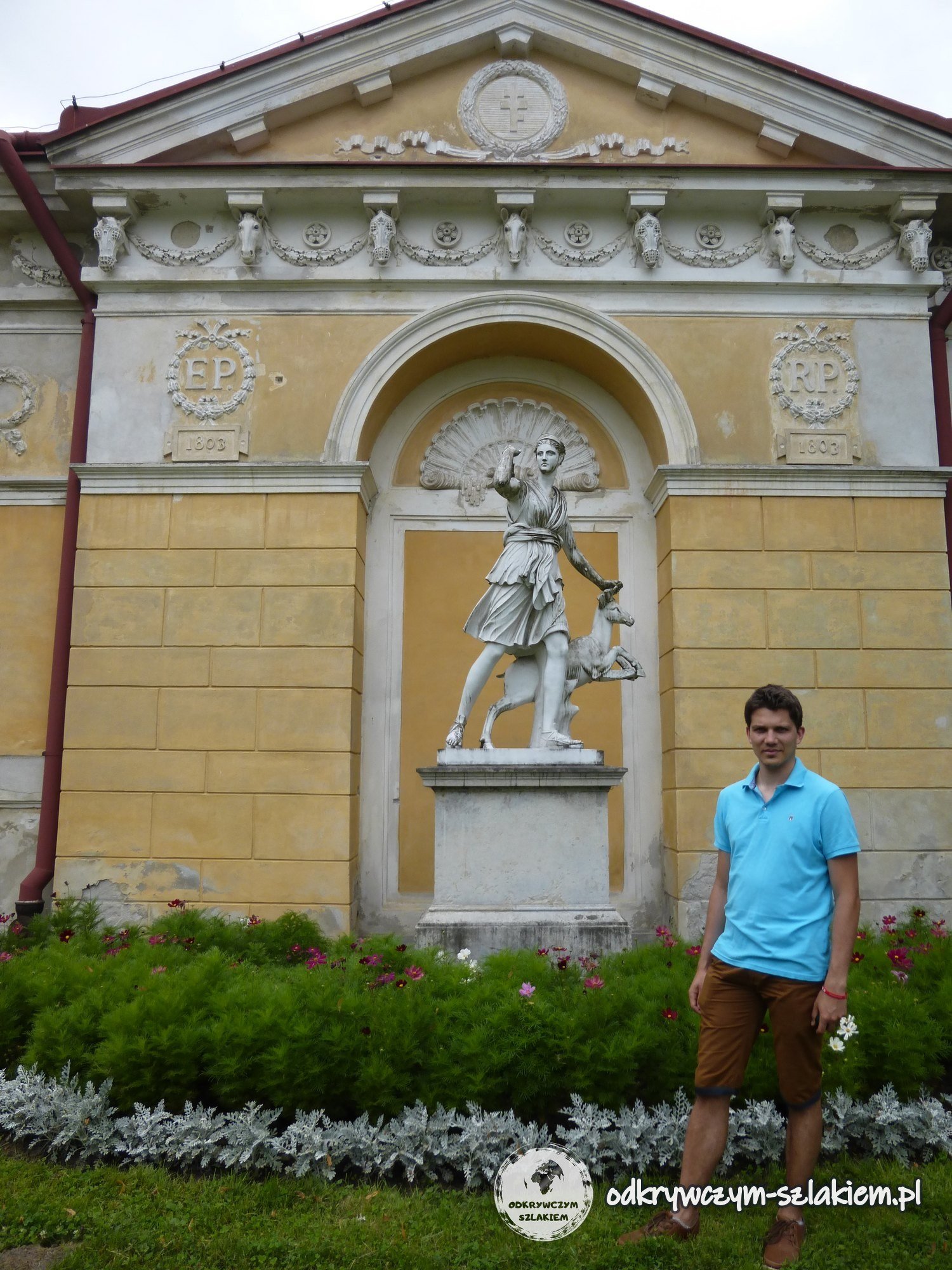
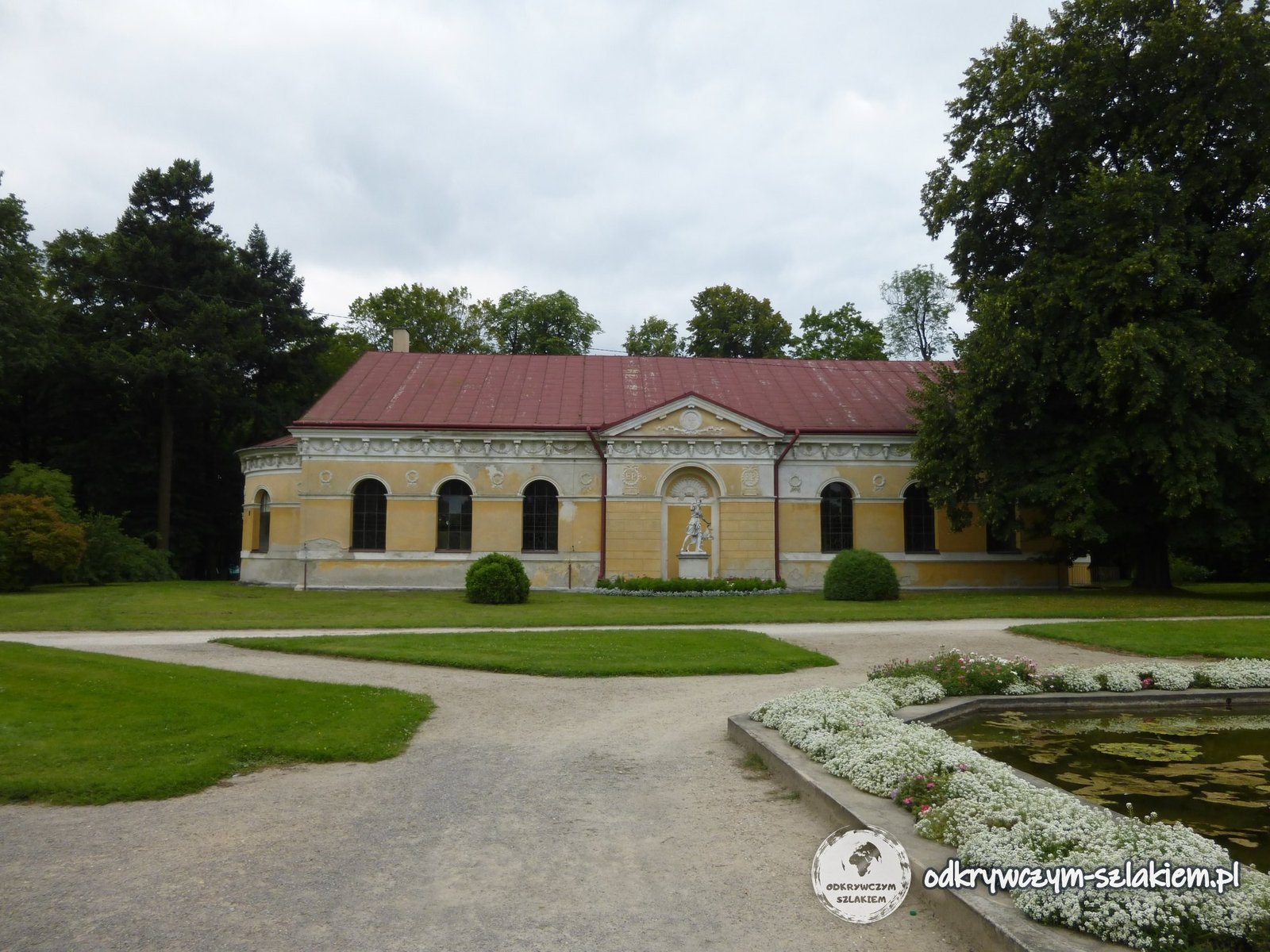
The Riding School was built in 1830. A sculpture of Diana with a hind stands in a niche in its façade, flanked by the monograms EP and RP – for Elżbieta and Roman Potocki – with the date 1903. Today the former Riding School, known as the Maneż, houses the Podkarpackie Heritage Centre with the museum’s main ticket office.
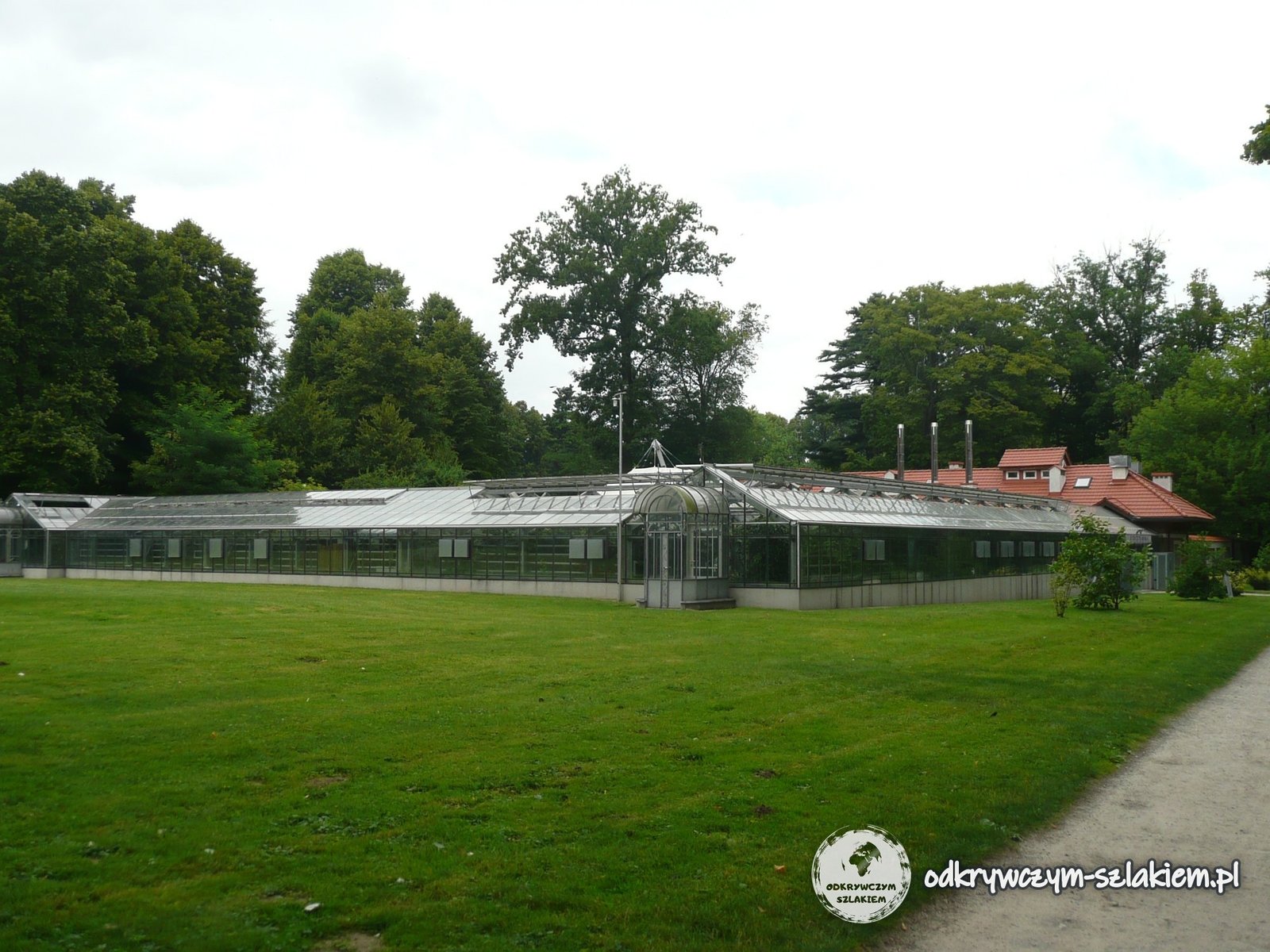
Behind the former Palm House the gardener Alois Philipp built a greenhouse where orchids, among other plants, were grown – hence the name Orchid House. After the Second World War a state farm kept growing orchids there until the 1980s; later the greenhouses fell into ruin. The museum took them over in 1994 and rebuilt them in 2007–2009. Today there is an orchid exhibition and a summer café.

The Stables and Coach House – the carriage collection
Not far from the castle stand the Stables from 1898 and the Coach House from 1902, both designed by Amand Bauqué. The Stables are neo-Baroque, while the Coach House is modernist with classical elements. They hold the largest carriage collection in Poland: the historic Potocki collection numbers 55 vehicles, and the museum collection, assembled after the Second World War, almost 80.

The Potocki carriages stand in the Yellow and Black Coach Houses, and the glass-roofed Harnessing Hall also displays vehicles from the museum collection. Among them are luxury carriages from makers such as Lohner, Labourdette and Rothschild. Palms grow in the hall, and hunting trophies hang on the walls.

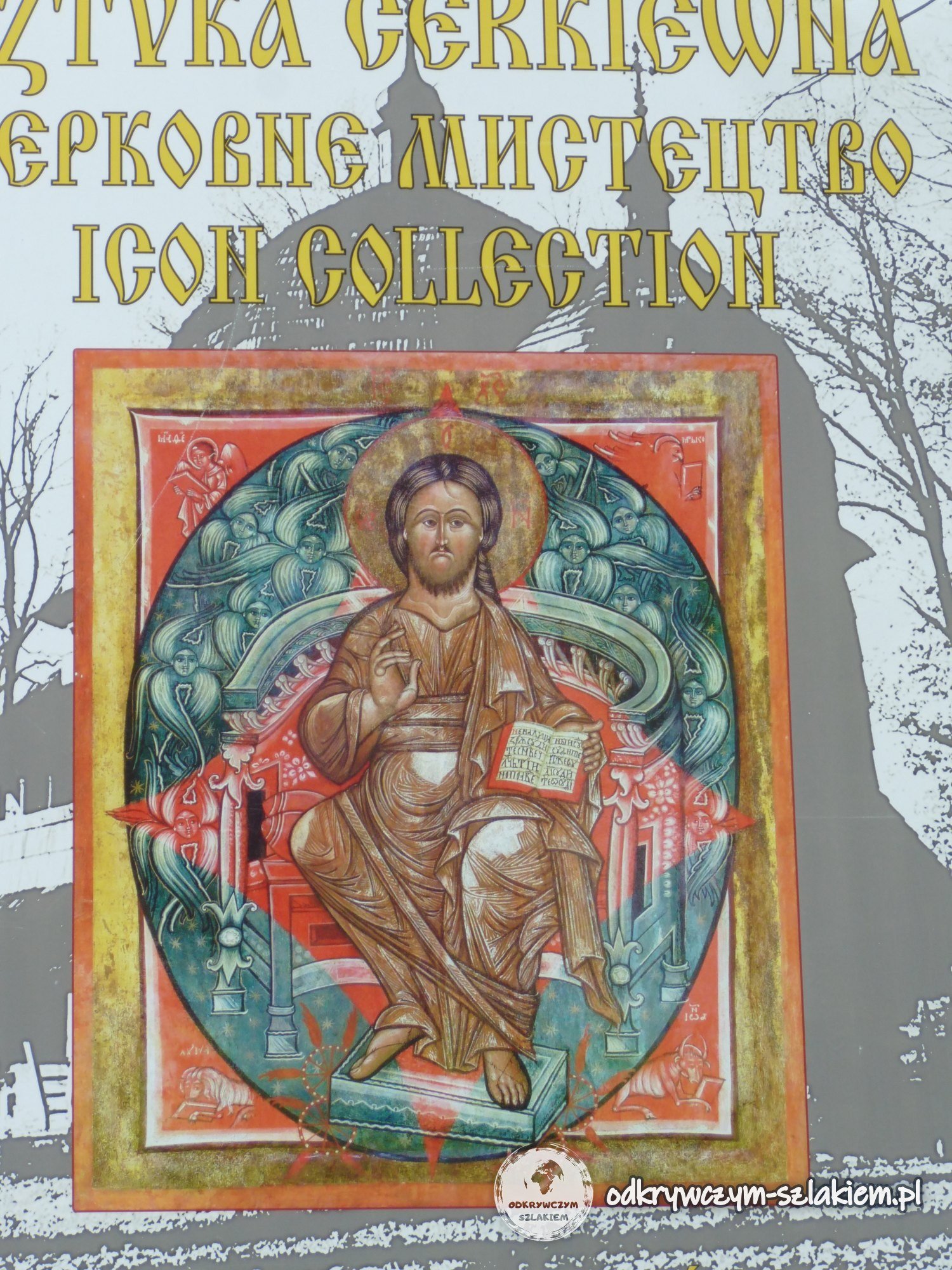
A wing of the former coach-horse stables houses the Orthodox Church Art exhibition – a collection of more than 1,000 icons from the 15th to the 20th century. It has been assembled since 1960, when museum staff rescued works of art from Orthodox and Greek Catholic churches that were being destroyed after the deportations of the Ukrainian population in 1945 and 1947. This exhibition needs a separate ticket.
Practical information
- Getting there: Łańcut lies 16 km east of Rzeszów, on the A4 motorway and the Kraków – Medyka railway line.
- Tickets (2026): the castle (ground and first floor), Stables and Coach House on one ticket – PLN 48 full price and PLN 38 reduced, with an audio guide. Orthodox Church Art – PLN 15 (reduced PLN 10), the park – PLN 3 (reduced PLN 2). Tickets are sold at the main ticket office in the Maneż (ul. 3 Maja 10) and at bilety.zamek-lancut.pl.
- Mondays: admission to the permanent exhibitions is free – you visit on your own, without an audio guide and without booking, but the number of tickets is limited.
- Opening hours: they depend on the season. In 2026 the castle, Stables and Coach House are open Tuesday to Friday 9:00–16:00, on Mondays 12:00–16:00, and on Saturdays and Sundays – depending on the season – until 16:00–18:00. The park opens at 8:00. Groups of up to 25 people enter the castle every 10 minutes, so in high season it is worth buying a ticket in advance.
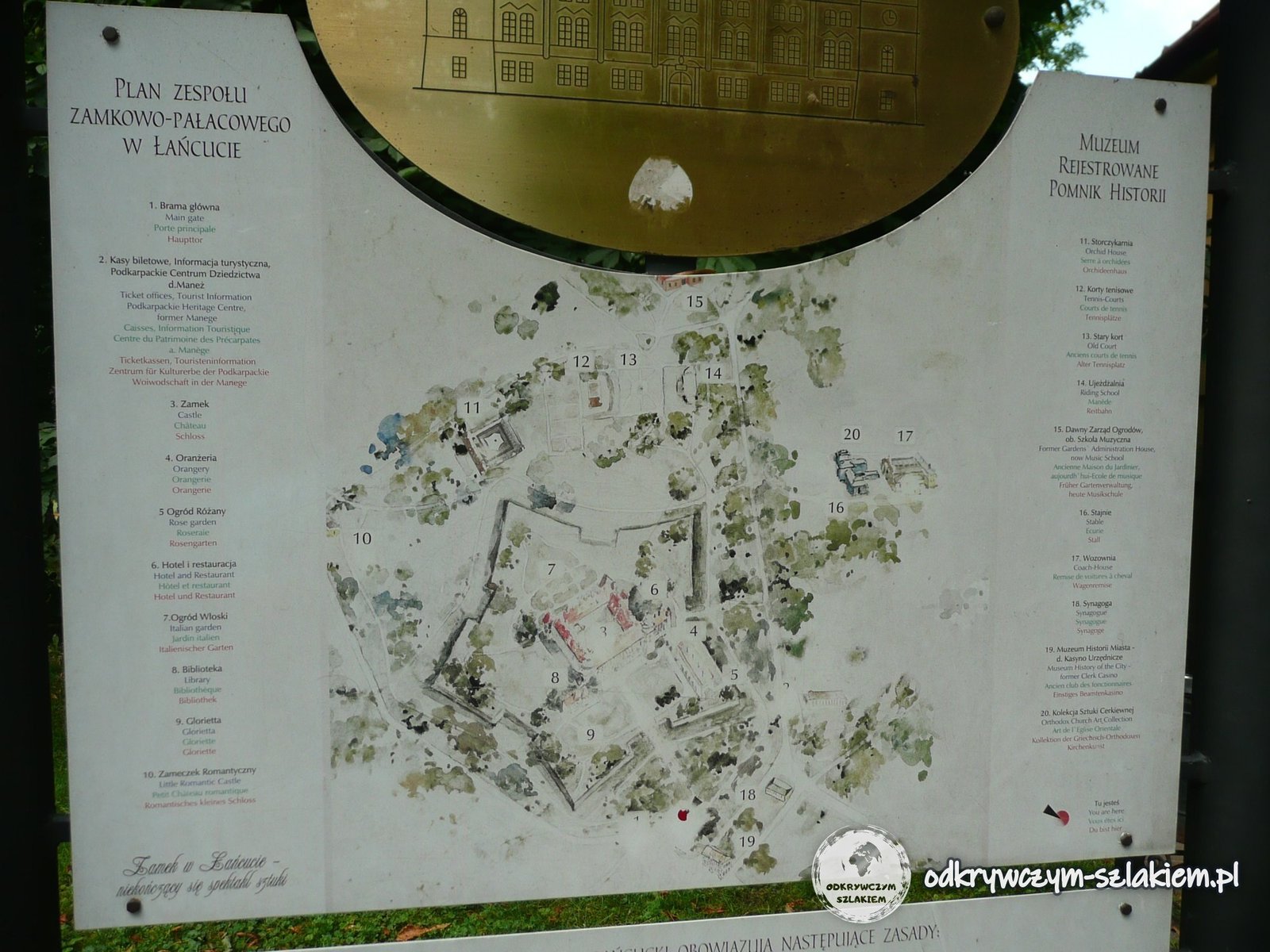
- Map: at the park entrance there is a board with a map of the castle and park complex.
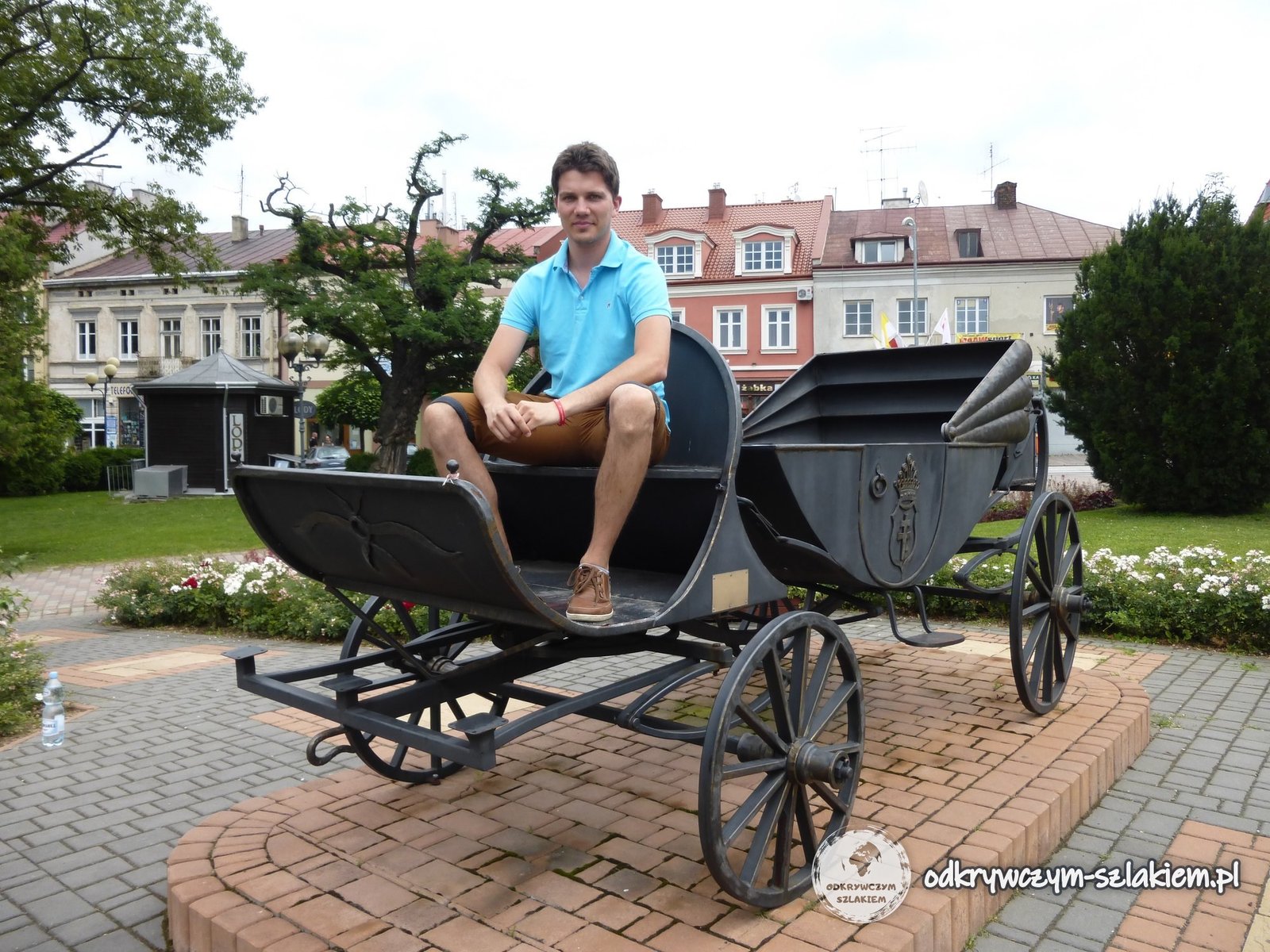
- The town: in the centre of Łańcut, on a small square, there is a metal sculpture of a carriage that you can sit on.
- More of Poland: Bieszczady – Połonina Caryńska, Tarnica and Solina and Kraków in a weekend.
Photo gallery