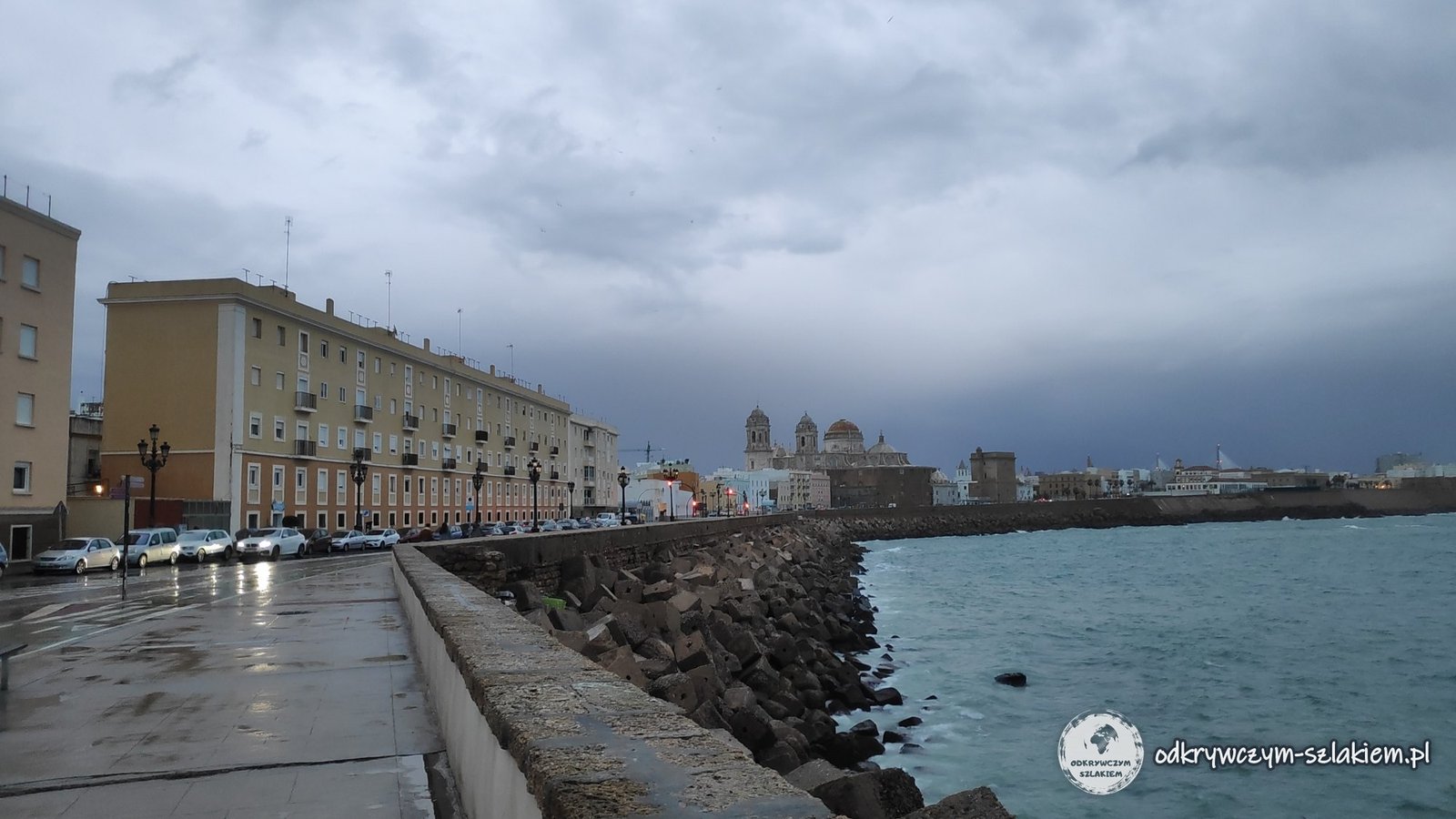


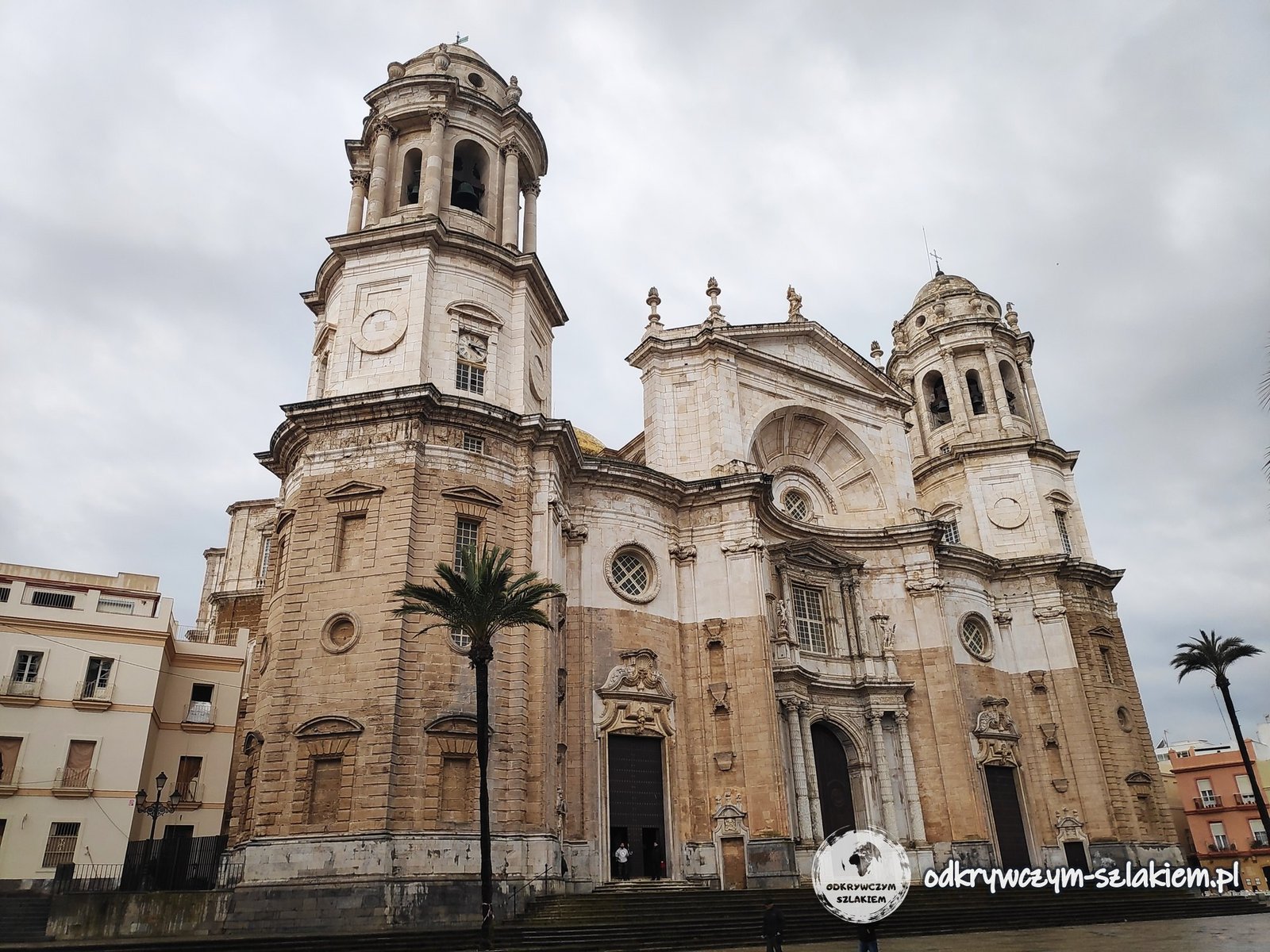
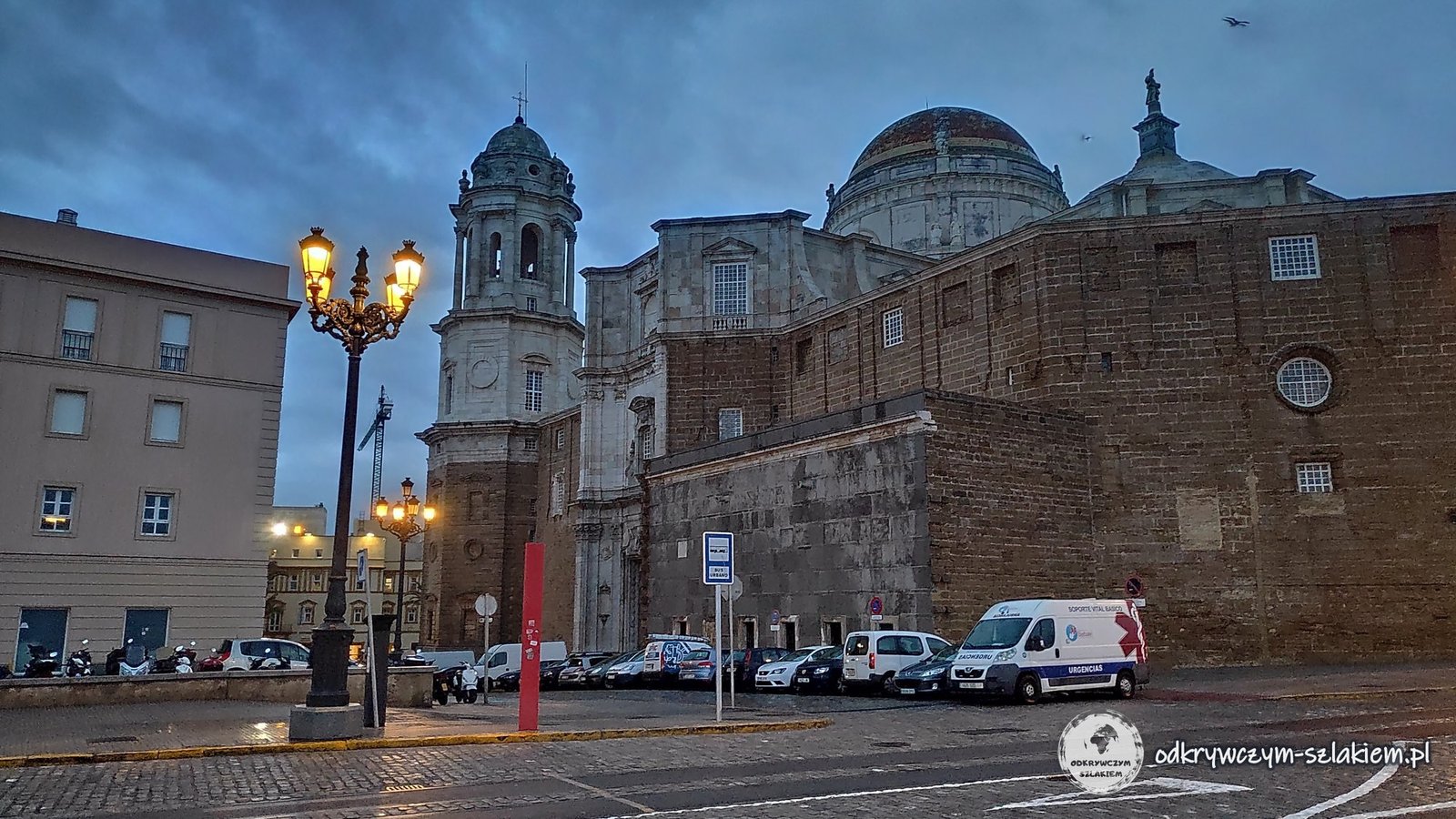

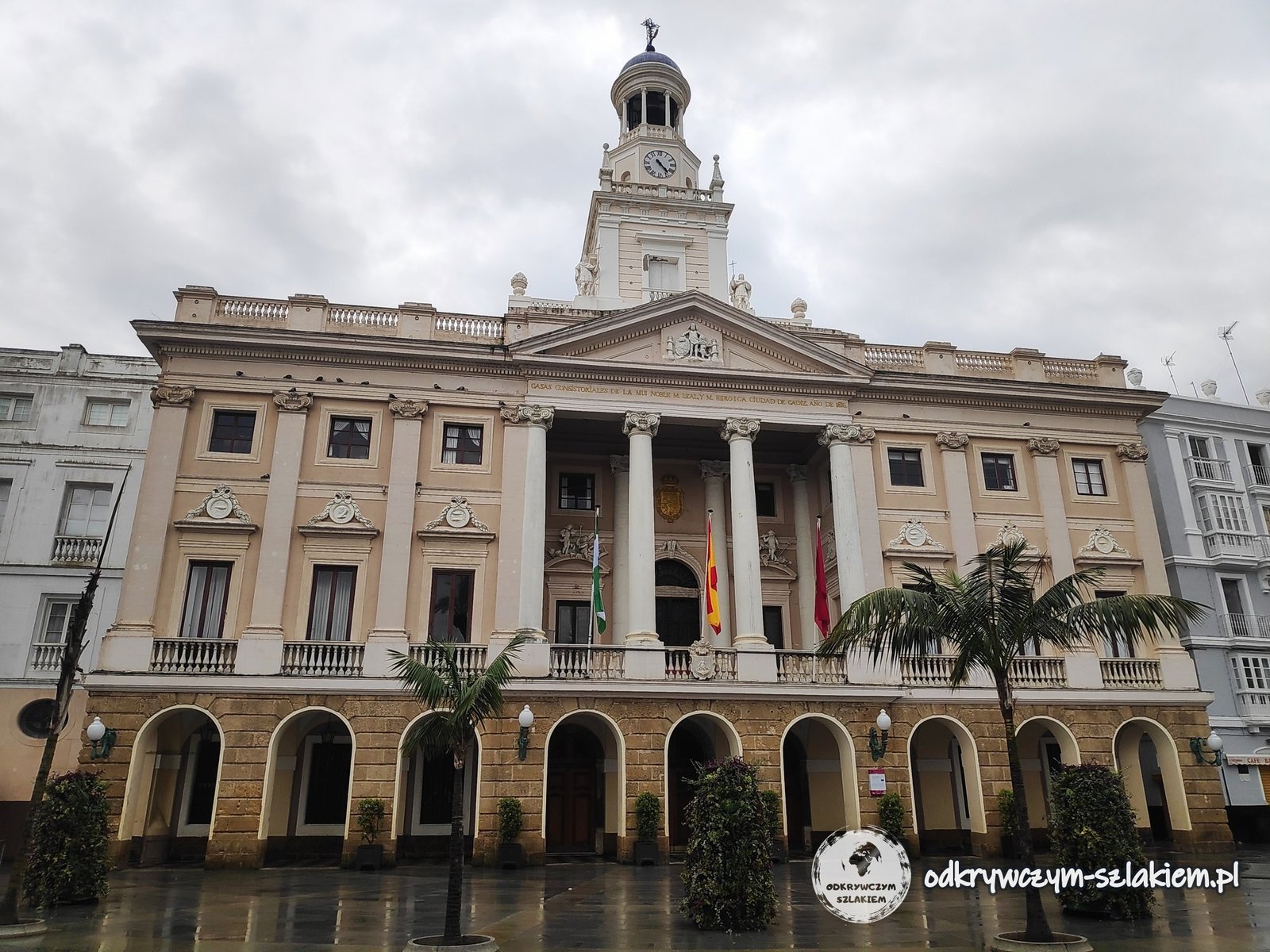

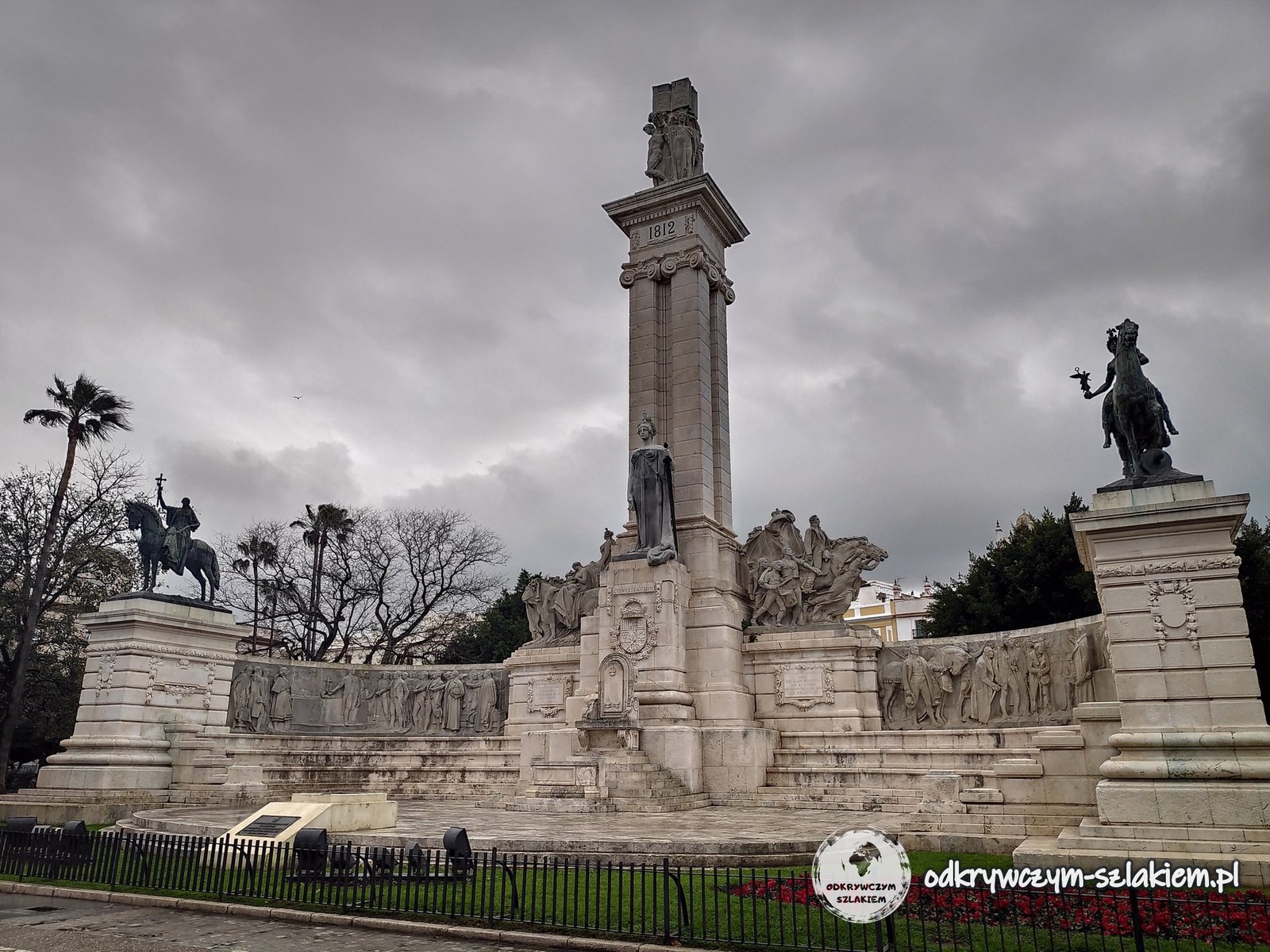

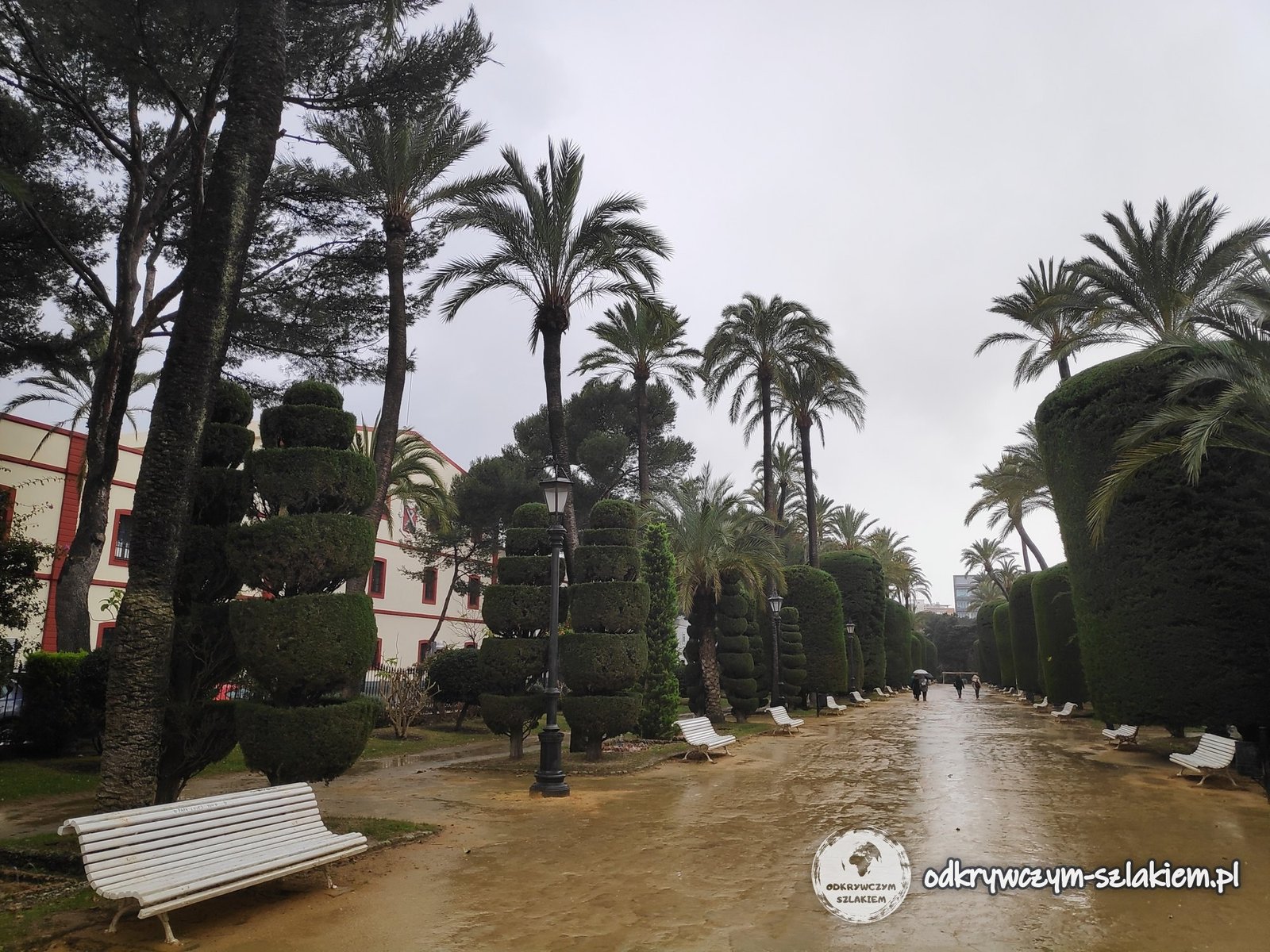


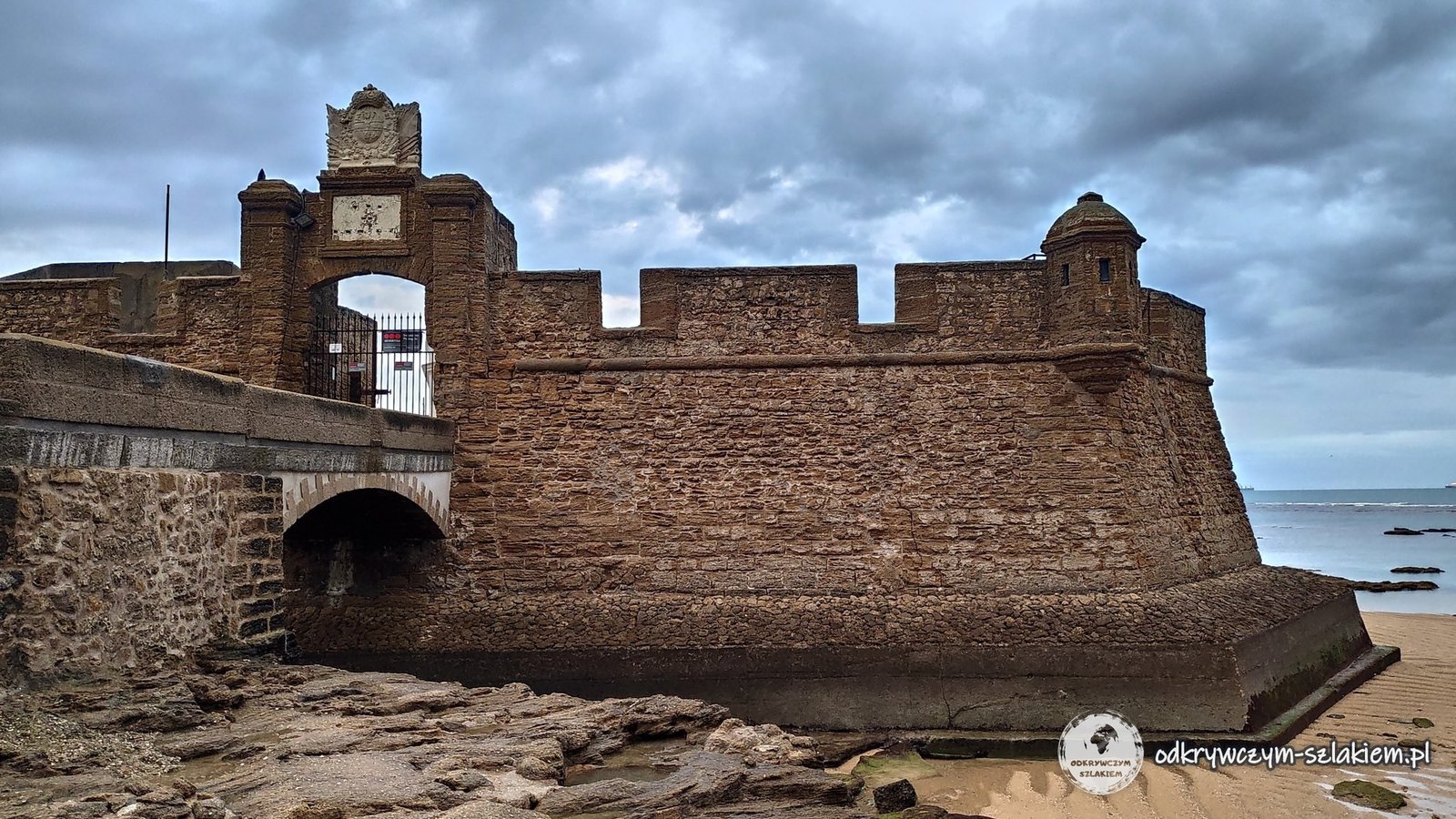



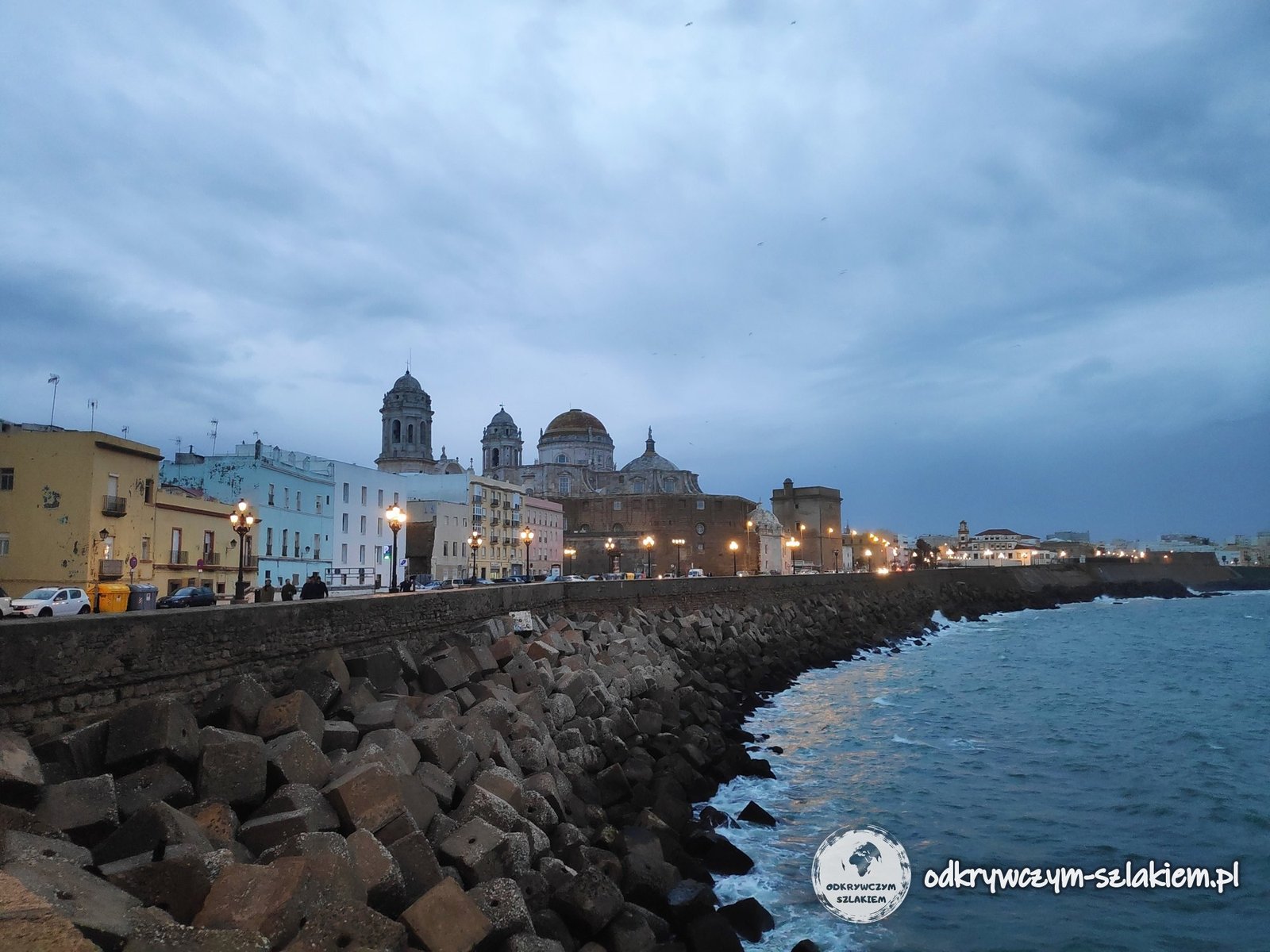


Cádiz is the oldest city in Western Europe. It was founded around 1100 BC by the Phoenicians. It’s famous for its beautiful weather, which lasts most of the year. The day we went sightseeing, however, was rainy and cold, as you can see in the photos. The city has a lot to offer, so it’s worth staying here for at least a few hours, walking through its beautiful squares as well as the parks and fortifications along the coast.
The map shows our sightseeing route. Because of the bad weather, we skipped a few places in the centre of the old town. They are described at the very bottom of the post.
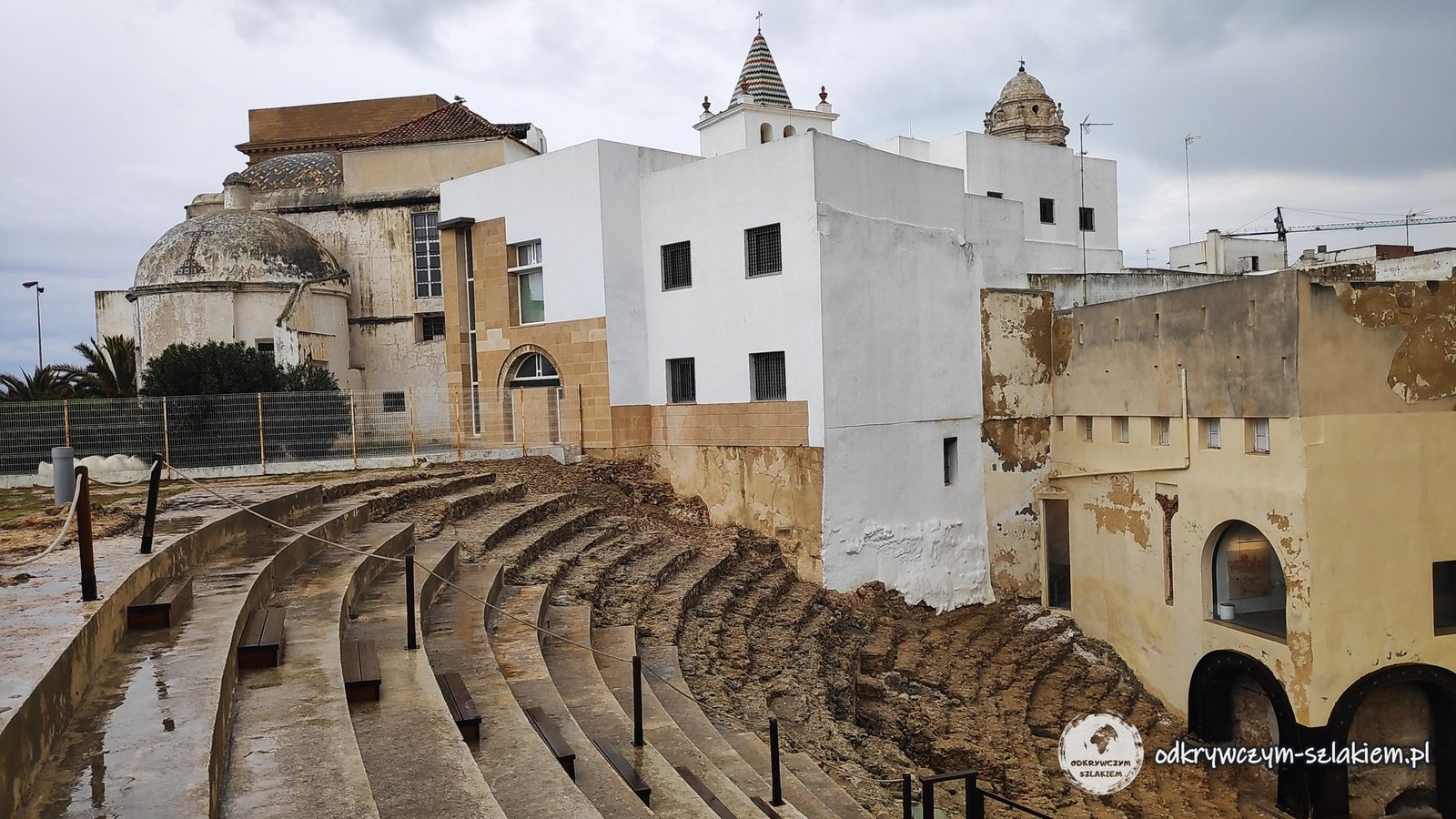
It was built in the 1st century BC. It was one of the largest Roman theatres. In the 13th century a fortress was built on its site. The Roman Theatre of Cádiz is so far the oldest theatre discovered on the Iberian Peninsula and the second oldest in the whole Roman Empire. Fun fact – it’s a fairly “young” monument – it was only discovered in 1980 during archaeological work nearby.
Visiting is free – it includes both the modest museum inside and the theatre itself outside.
Opening hours (as of 01.10.2021) :
1 April to 30 September:
1 October – 31 March:
It’s a beautiful park with wide paths and neatly trimmed bushes. You can also see small waterfalls and a cave here.
It was built on rocky cliffs. Jutting out into the sea, the fortification protected the northern part of the city. In the 17th century the building served as a military prison. Today it’s a venue for cultural events. Entry is free from 11:00 to 19:00 (as of October 2021).
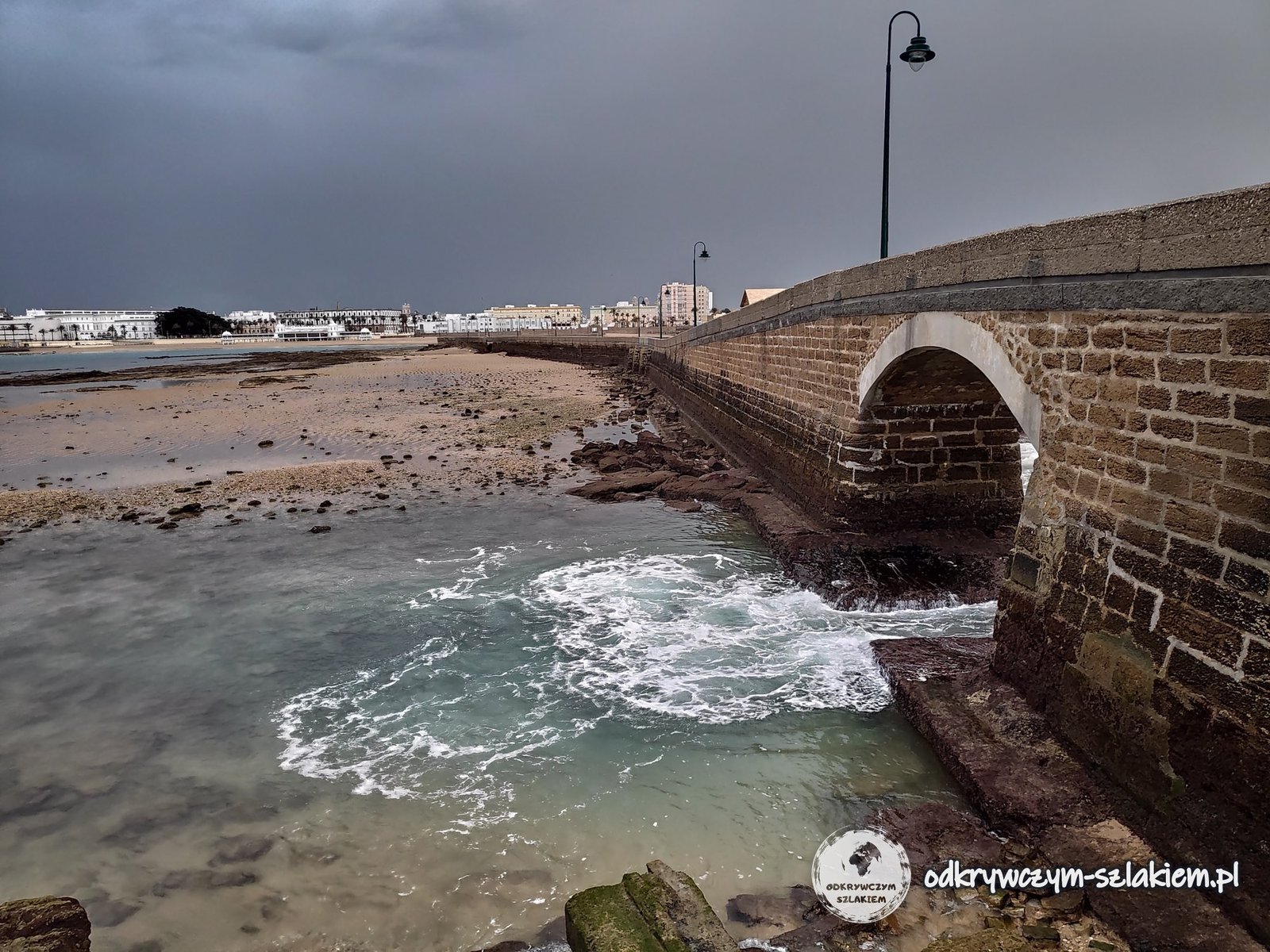
It stands on a small island at one end of La Caleta beach, reached by a promenade over 500 metres long, which links the island with the city. Its unusual appearance and special location have made it the setting for scenes in several films. A temple of Kronos is said to have stood here in the past. Today there is a lighthouse from 1908 on the site. In 1985 it was declared a cultural heritage site.
Unfortunately, the castle is closed and it’s not known when (or if) it will reopen to visitors (as of October 2021). So we could only admire it from the outside.
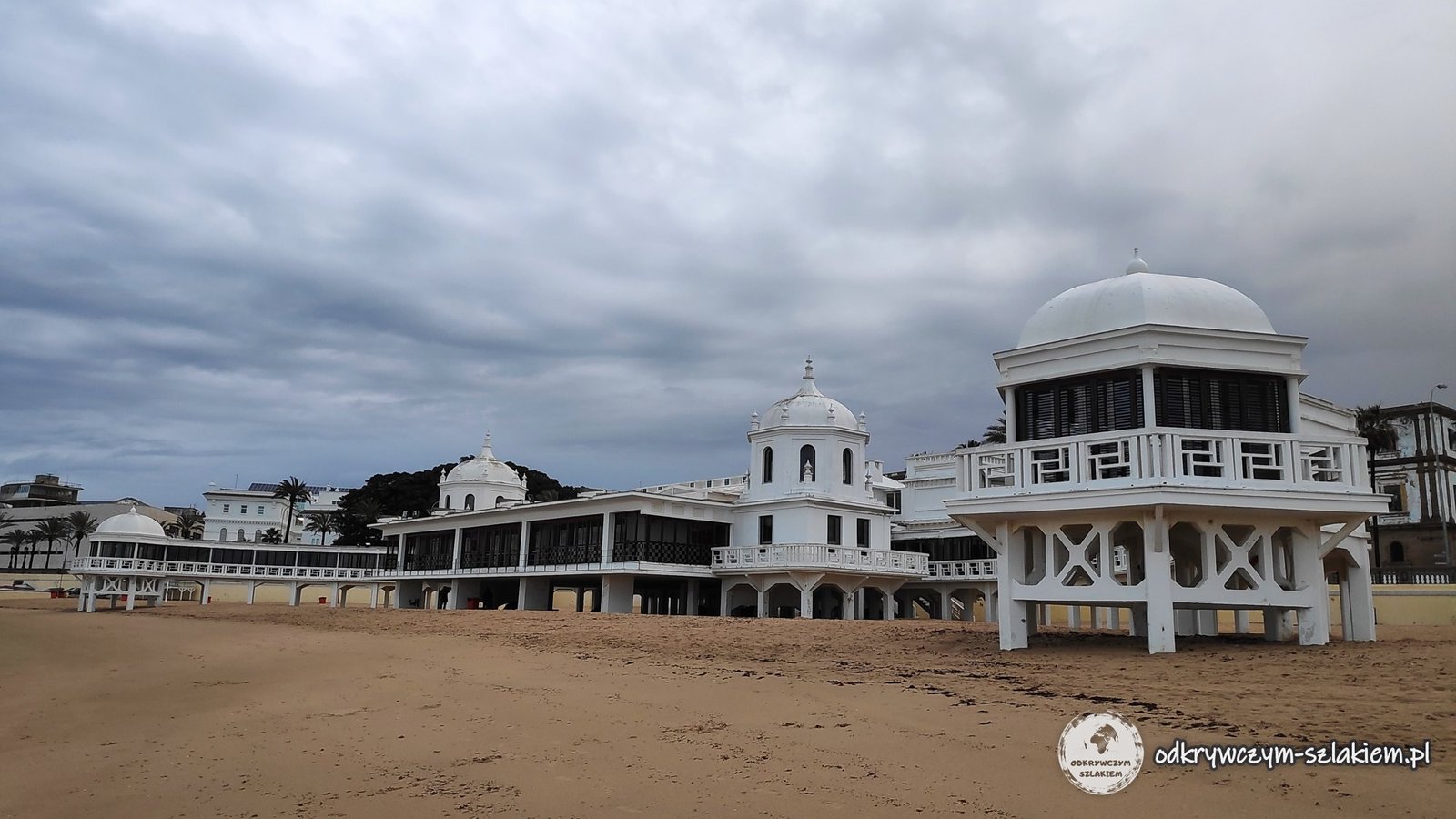
This is the best-known beach in Cádiz, home to the Balneario, which now houses the Underwater Archaeology Centre (Centro de Arqueología Subacuática). Some people pitch a tent under it, where it can be sheltered from the sun/rain/wind.
This Baroque church is where the first Spanish constitution was signed on 19 March 1812 (it was however annulled in 1823). That’s why Cádiz can be considered the cradle of Spanish democracy.
The church can be visited Monday to Friday from 9:00 – 15:00. A standard ticket costs €4, groups (15+), the unemployed, pensioners and young people (aged 10 to 18) – €2 (as of October 2021). You’ll find up-to-date information here.
Arriving by car around 3 pm, we already got free parking. It was only paid 10:00 – 14:00, Monday to Friday. The spot is marked on the map above, and the price list is below (January 2020). Further into the centre of the old town, different rules applied. We didn’t notice at the time, but you could only park for a maximum of 3 hours there. In the end we spent about 4 hours sightseeing.
Stay with me on the road – follow me wherever you like best.