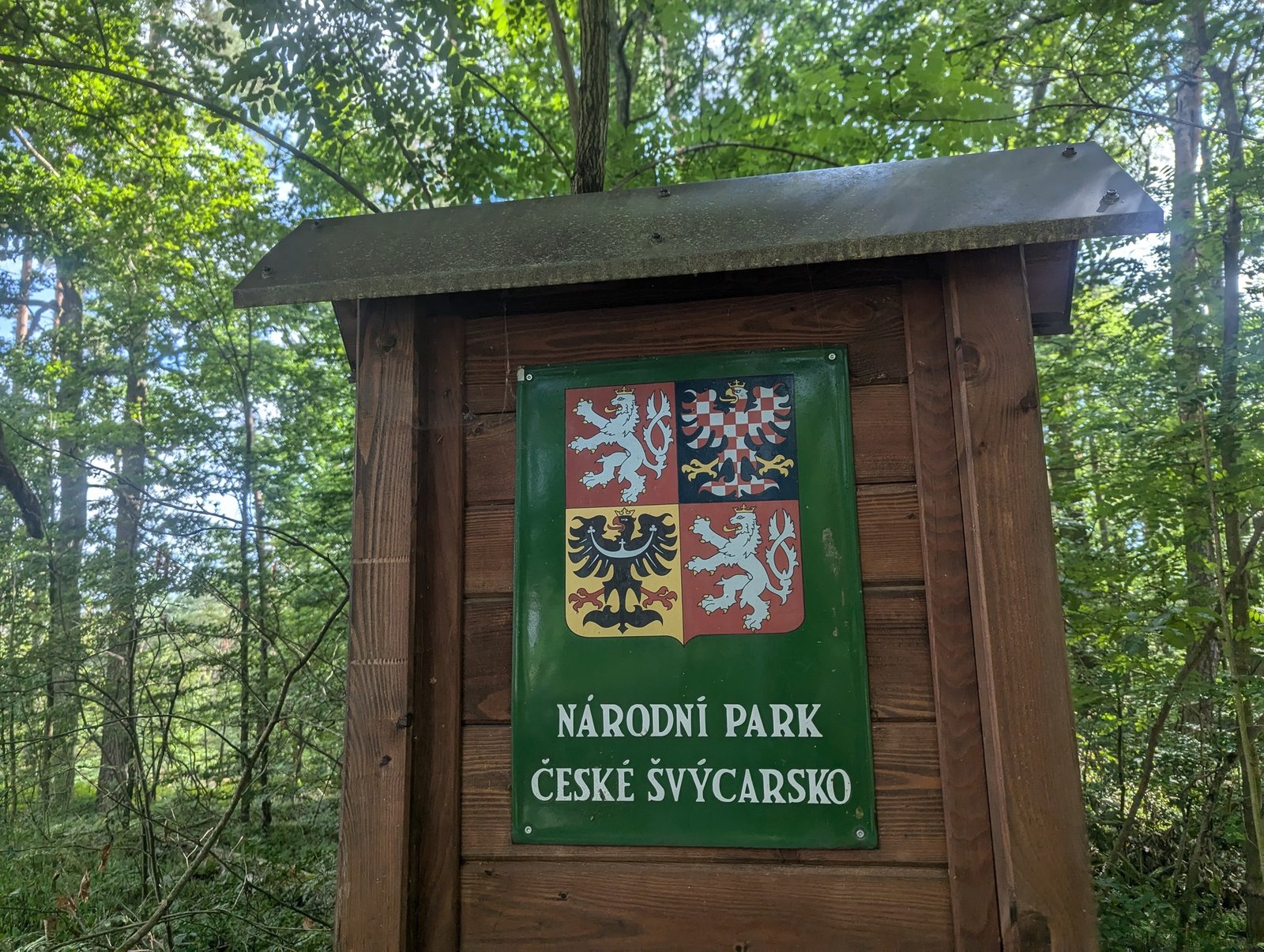
Straight after Prague we headed for the mountains on the German border – to Bohemian Switzerland (České Švýcarsko). Those four days, from 21 to 24 July 2025, were really the highlight of our whole trip around Czechia. After Prague Michał went back home, and we were joined by Mateusz – until the end of the trip – and by Filip and Wiktoria for two days. Our base was Děčín on the Elbe, and from there we set off on the trails: to Pravčická Gate, up Růžovský vrch, to rocky viewpoints and to the ruins of rock castles.
I had learned about this park a few years earlier, when I was on the other side of the border – in Saxon Switzerland. Now I could finally see what these mountains look like from the Czech side.
Table of contents
- The Elbe Sandstone Mountains – table mountains like Poland’s Table Mountains
- Děčín – the castle and a walk around town
- Pravčická Gate – the symbol of the park
- Růžovský vrch – “our” mountain
- Viewpoints, stairs and ladders
- The rock castles of Šaunštejn and Falkenštejn
- Děčín from above – viewpoints over the Elbe
- Bohemian or Saxon Switzerland?
- Practical information
The Elbe Sandstone Mountains – table mountains like Poland’s Table Mountains
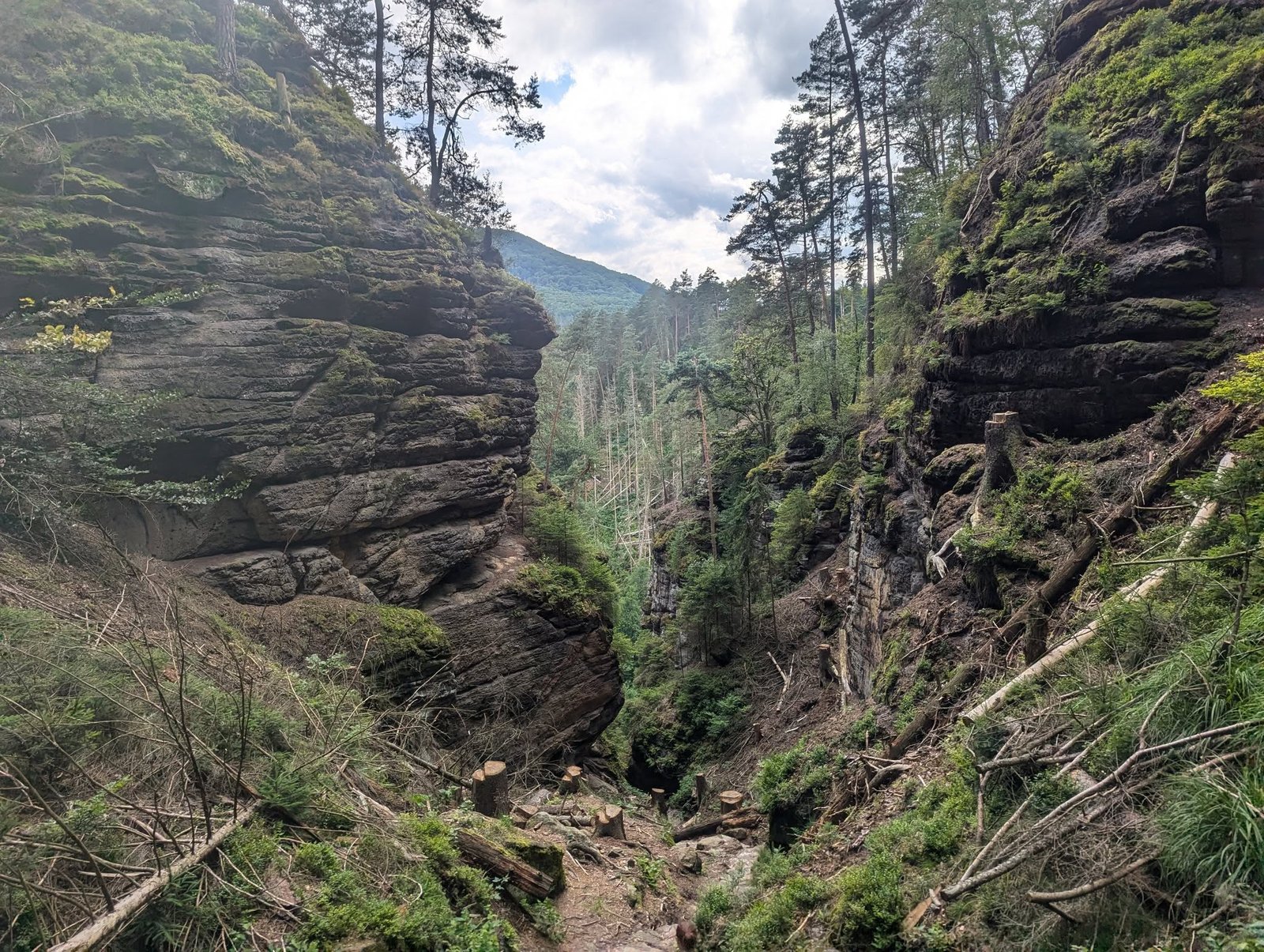
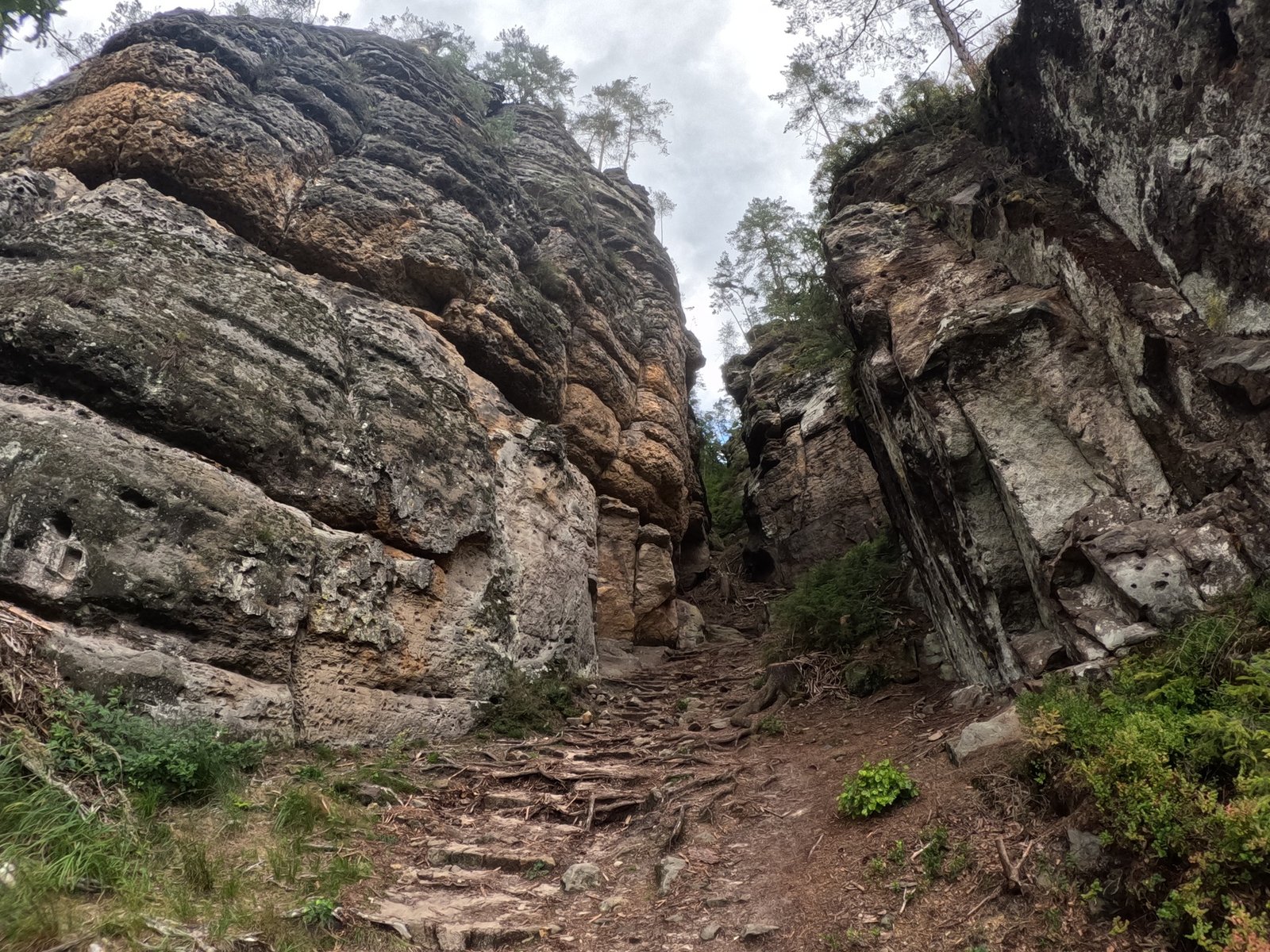
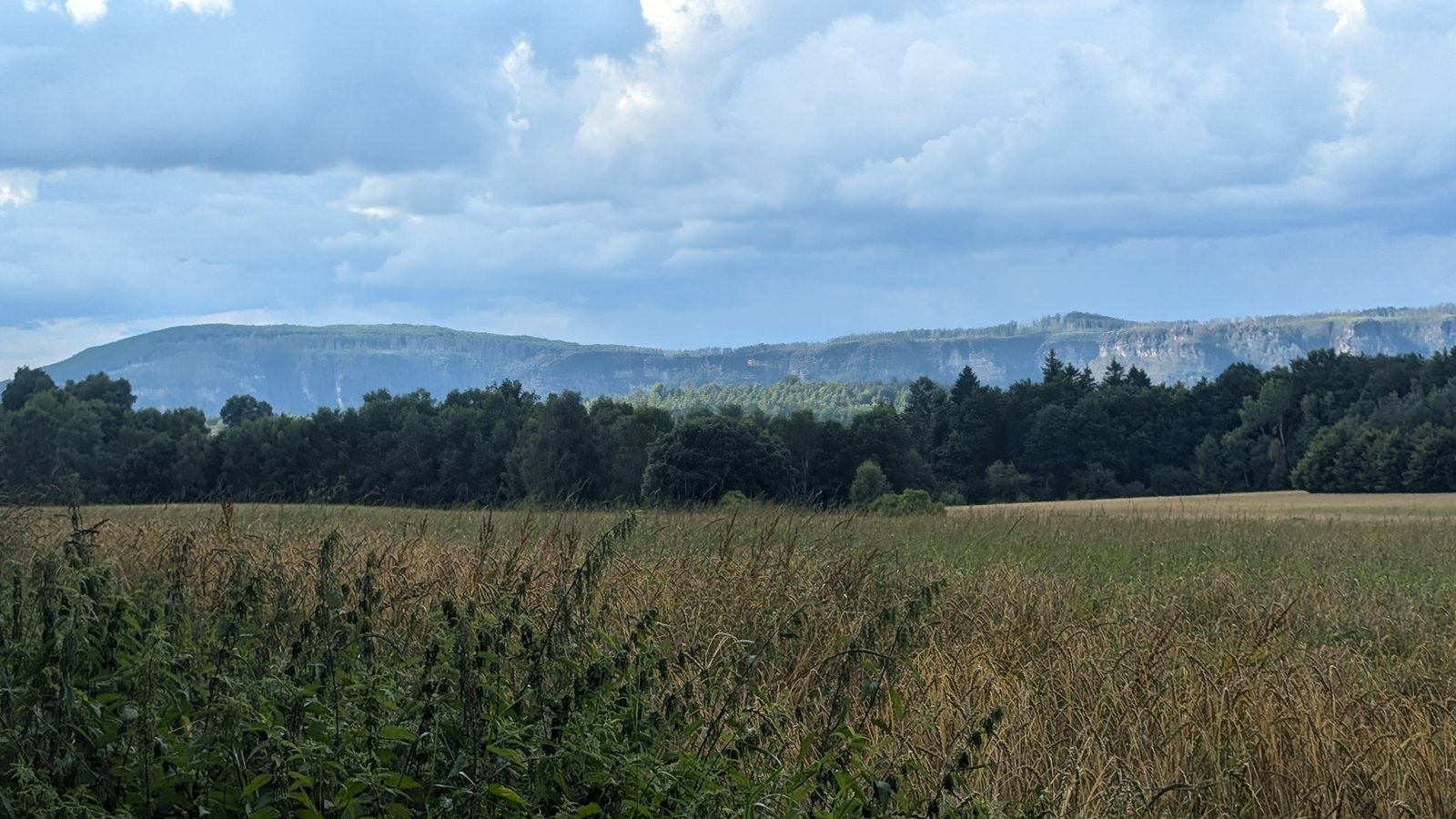
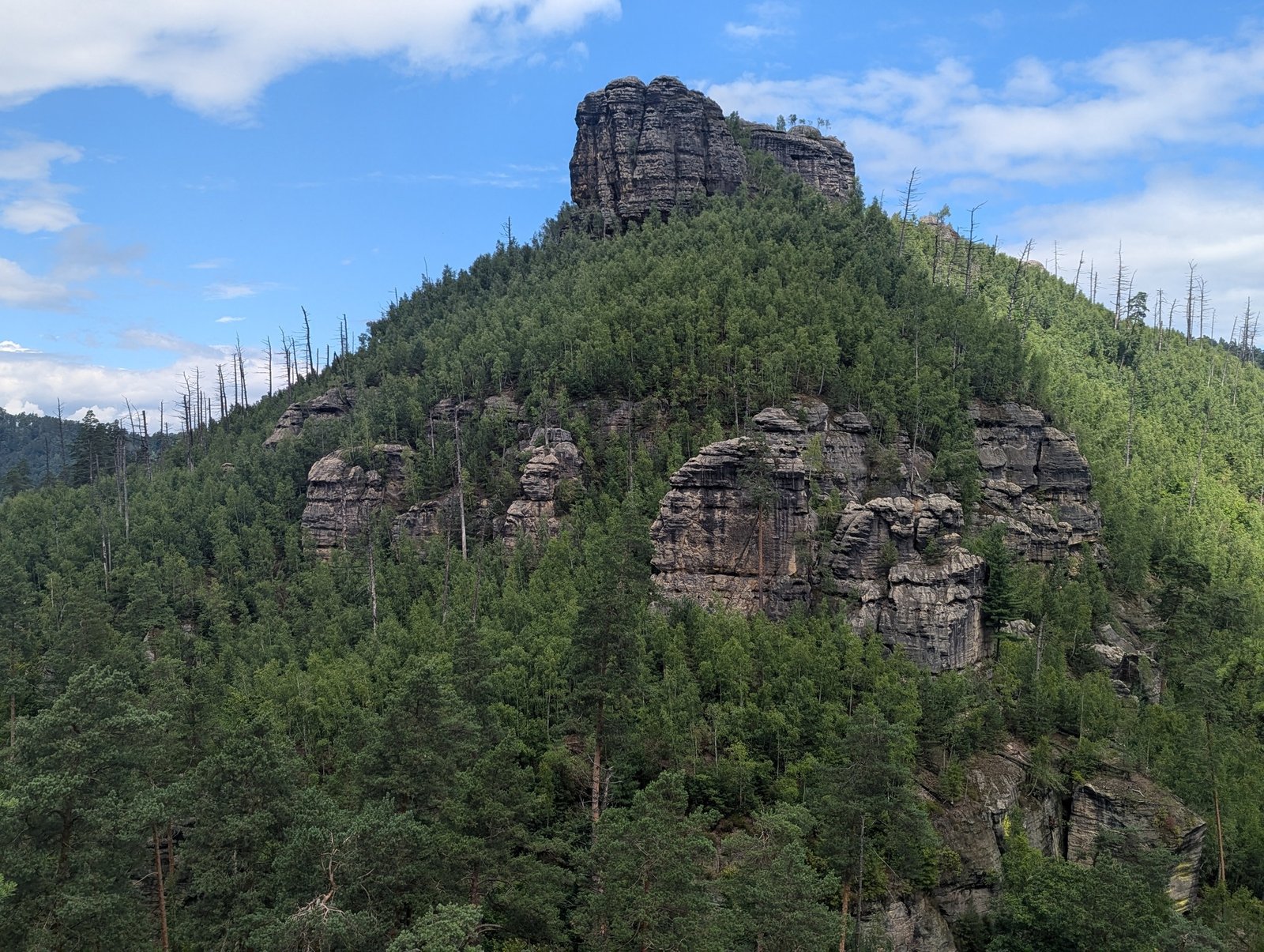
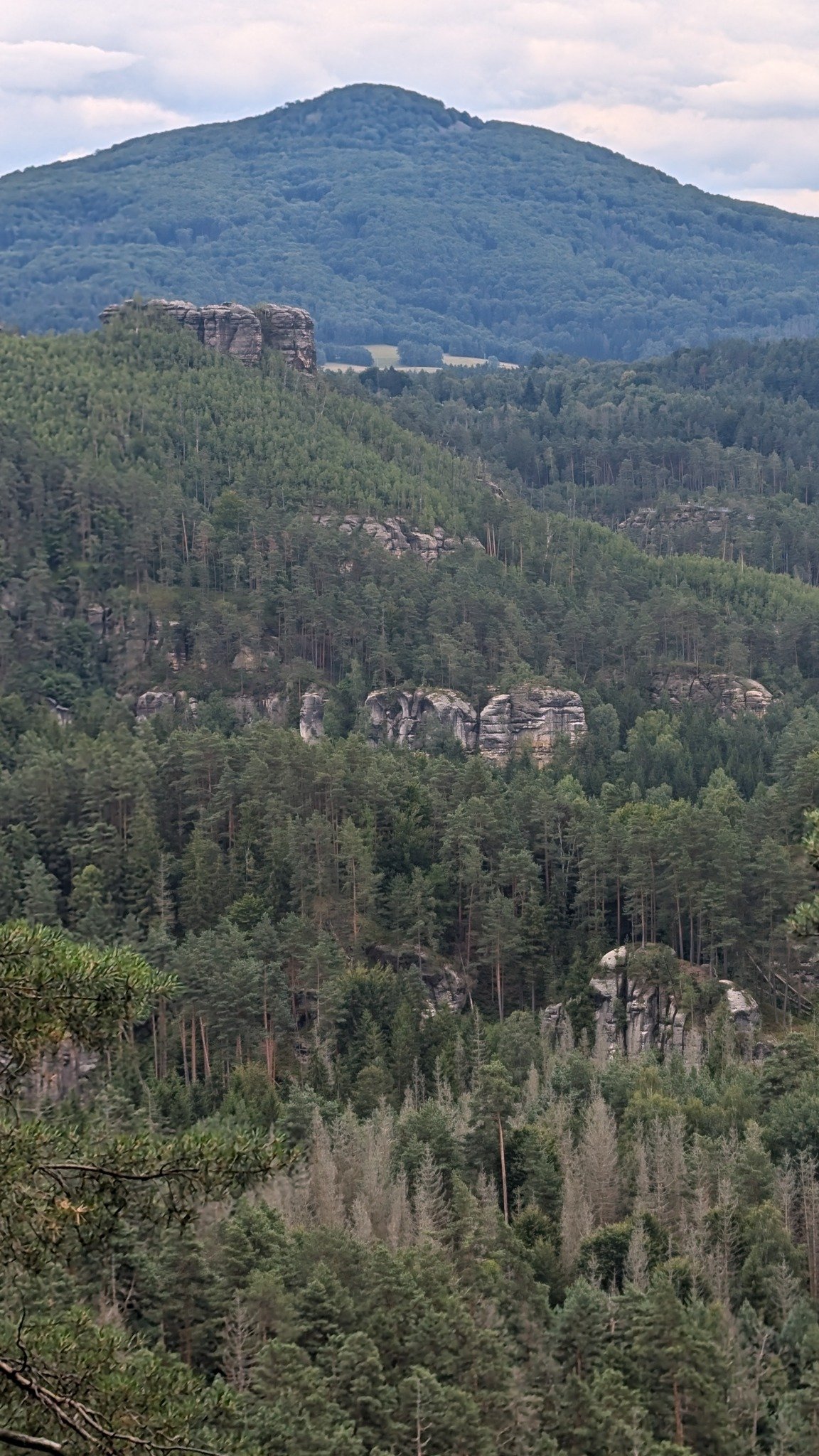
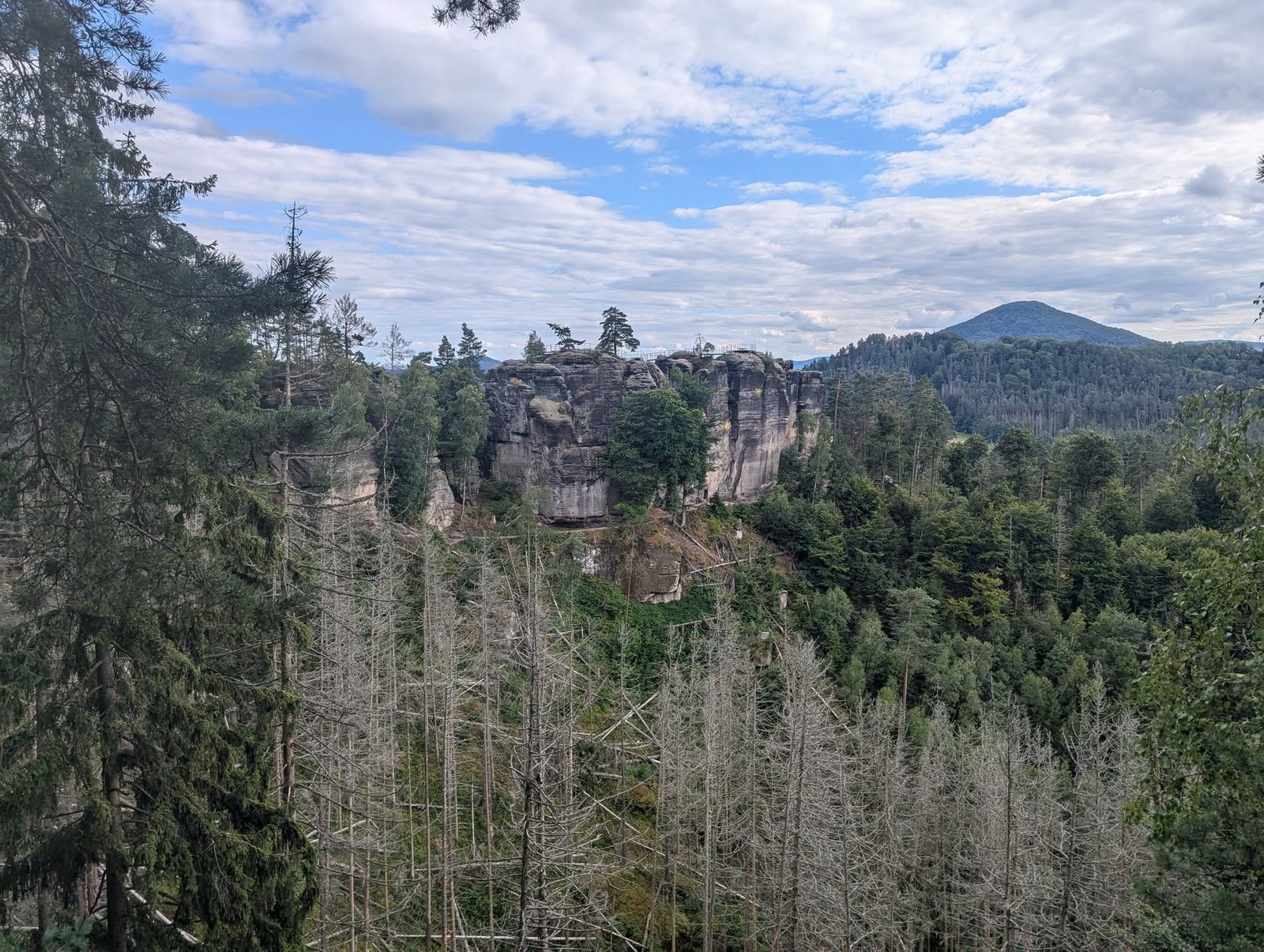
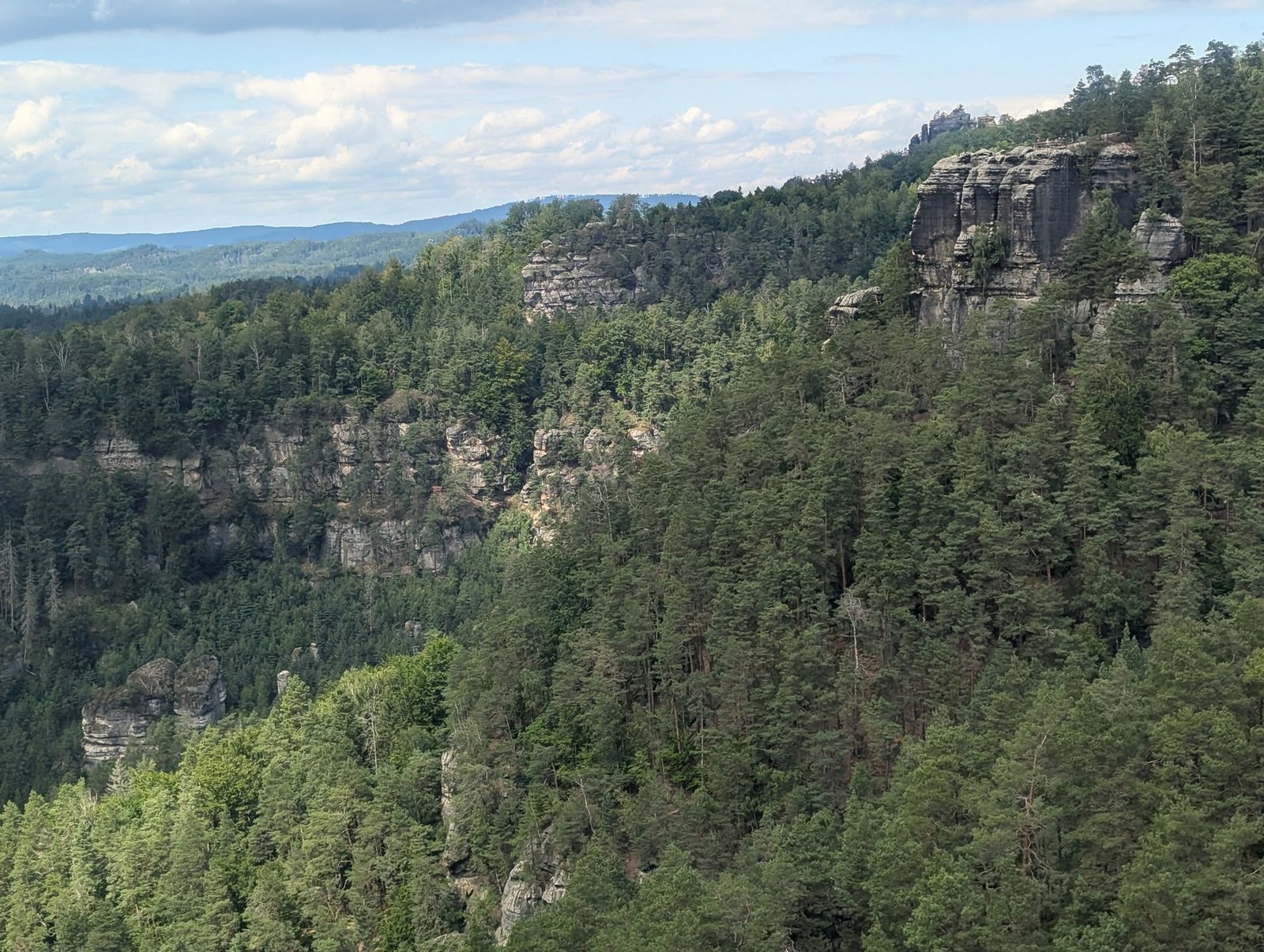
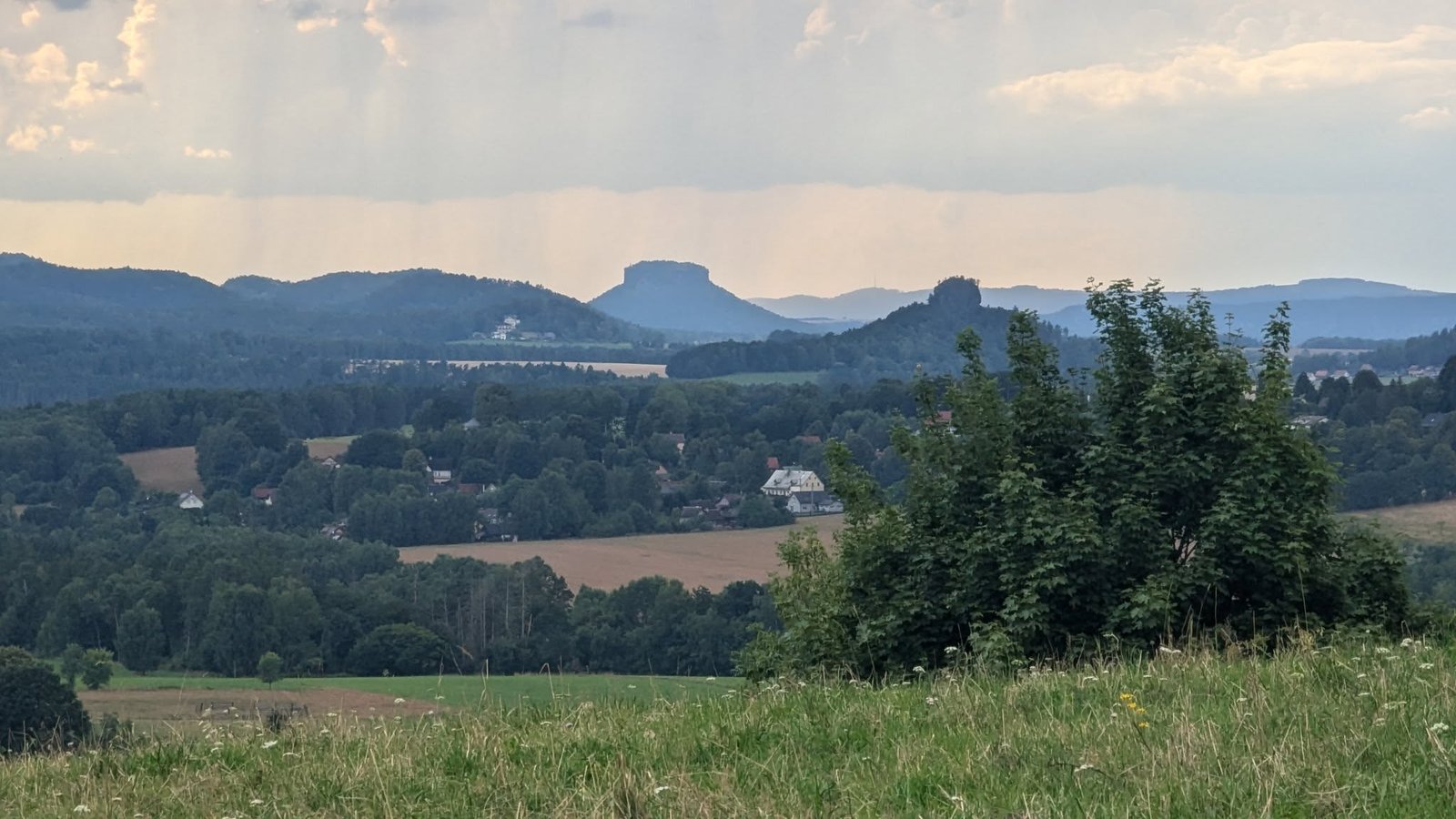
The Elbe Sandstone Mountains (Labské pískovce), where we hiked, are table mountains, very similar to Poland’s Table Mountains. They are made of sandstone, which is why you keep passing rock walls, towers, arches and narrow crevices. They are not high, but that does not make them any less charming. On no day did we exceed 1000 m of elevation gain or 20 km of walking, although some sections could be a bit of a workout.
The Czech part of these mountains is Bohemian Switzerland National Park, and on the other side of the border lies Saxon Switzerland. The weather was mixed – it rained a little pretty much every day. We spent the first day sightseeing in Děčín anyway, and on the following days we somehow managed to dodge the rain, so it did not really bother us on the trails.
Děčín – the castle and a walk around town
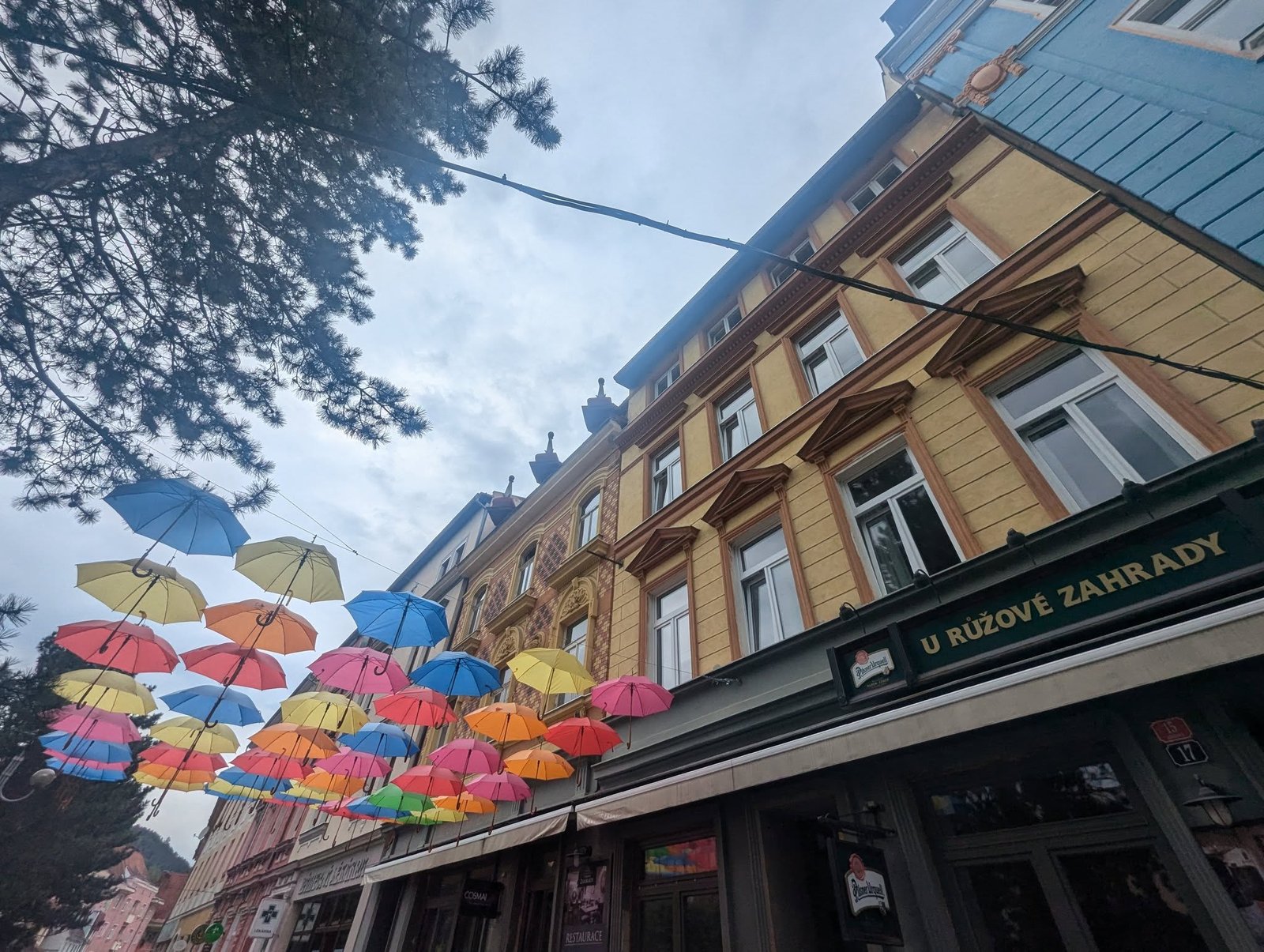
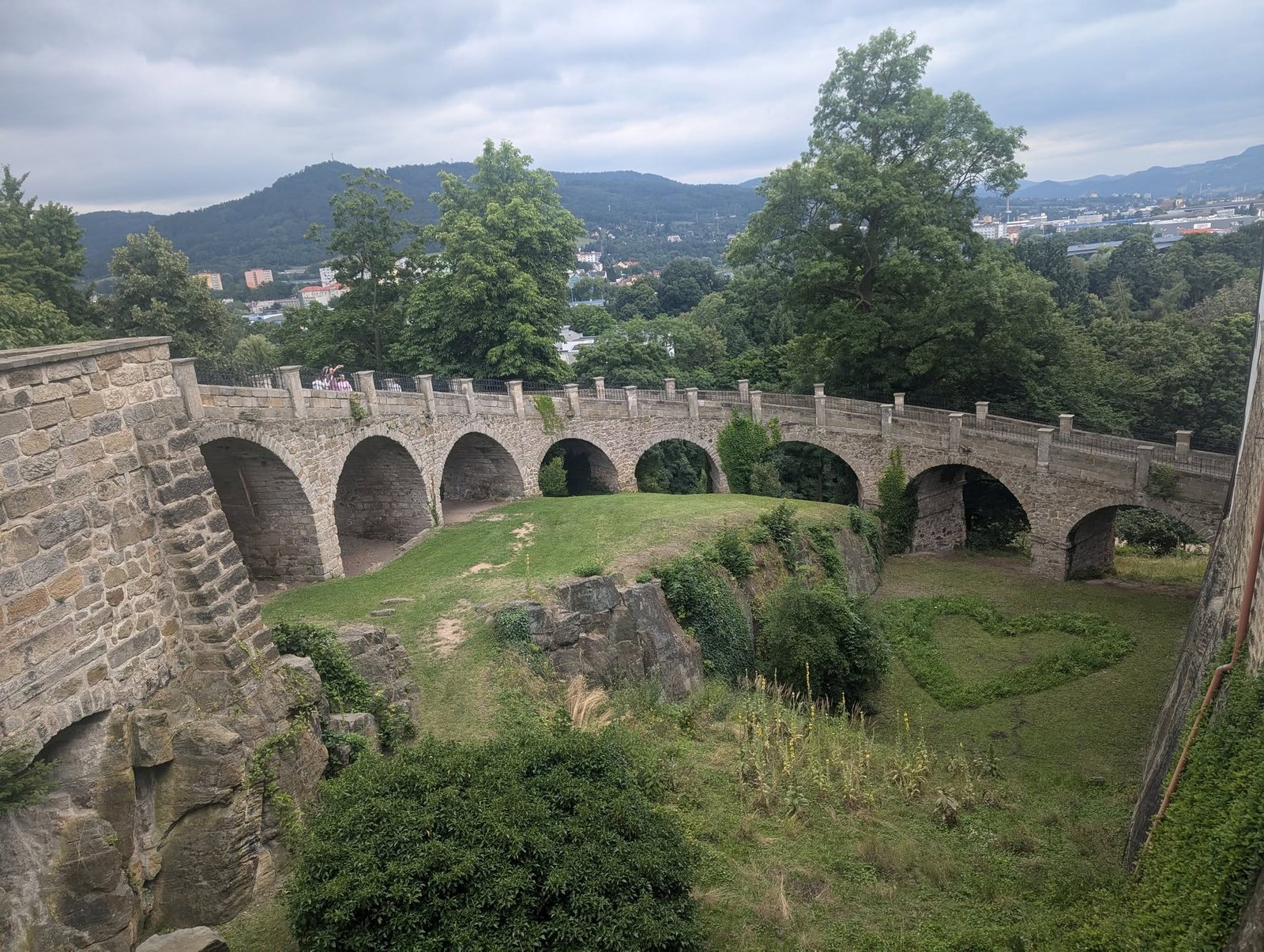
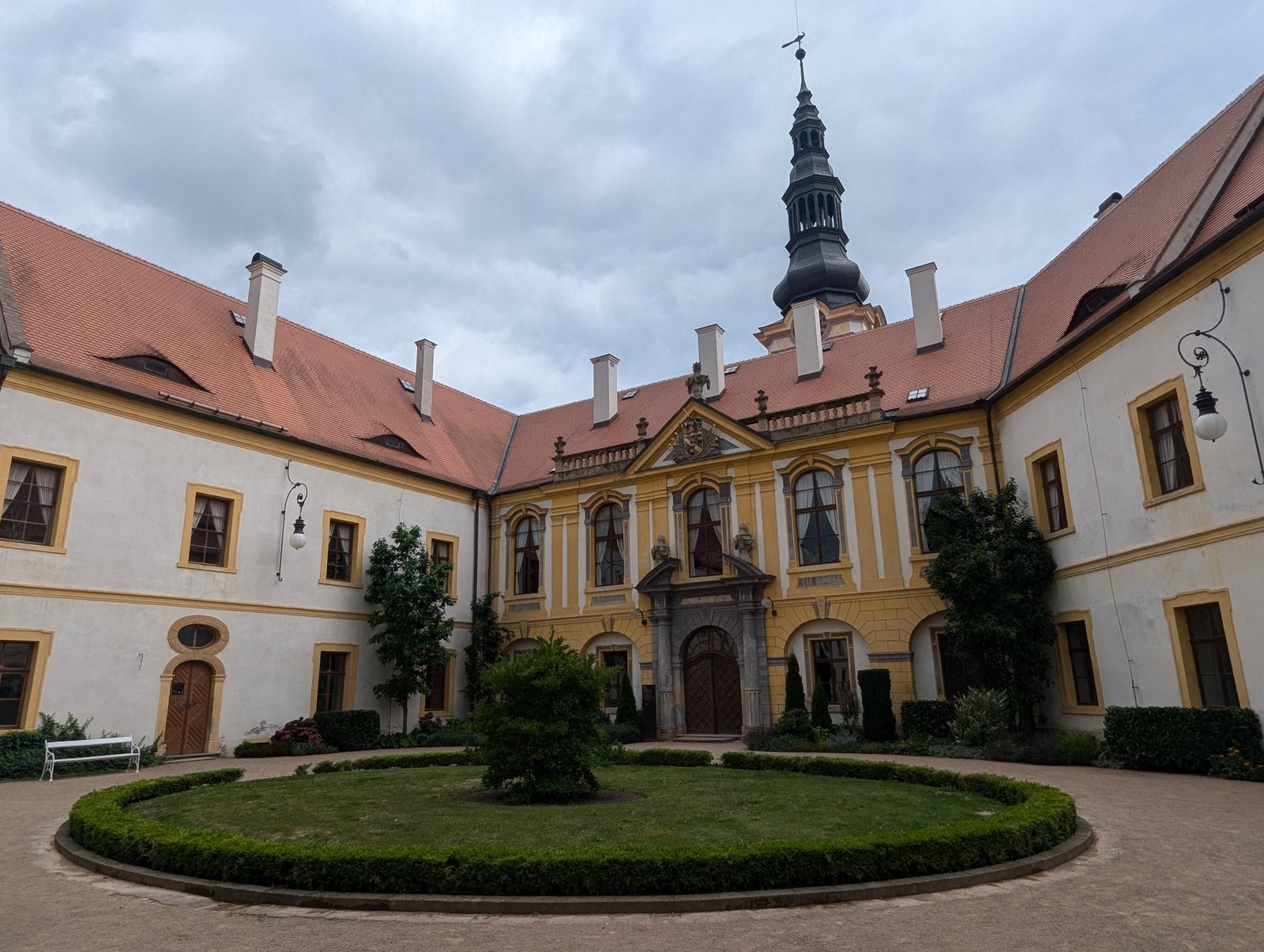
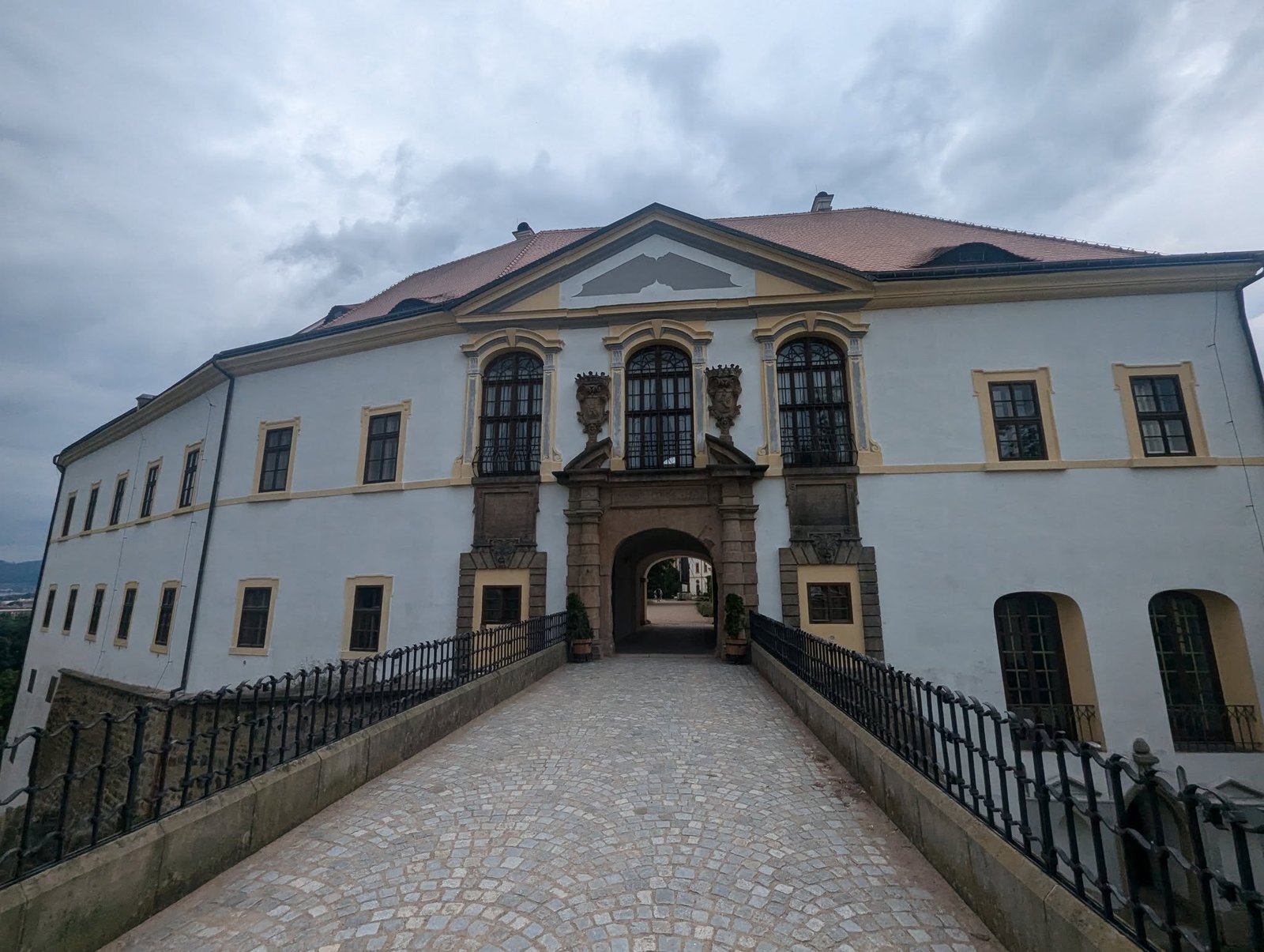
Děčín, our base, was not crowded with tourists and prices were reasonable, so it is definitely worth spending a day there. The town’s main attraction is the well-preserved Renaissance-Baroque Děčín Castle, which we visited on a guided tour.
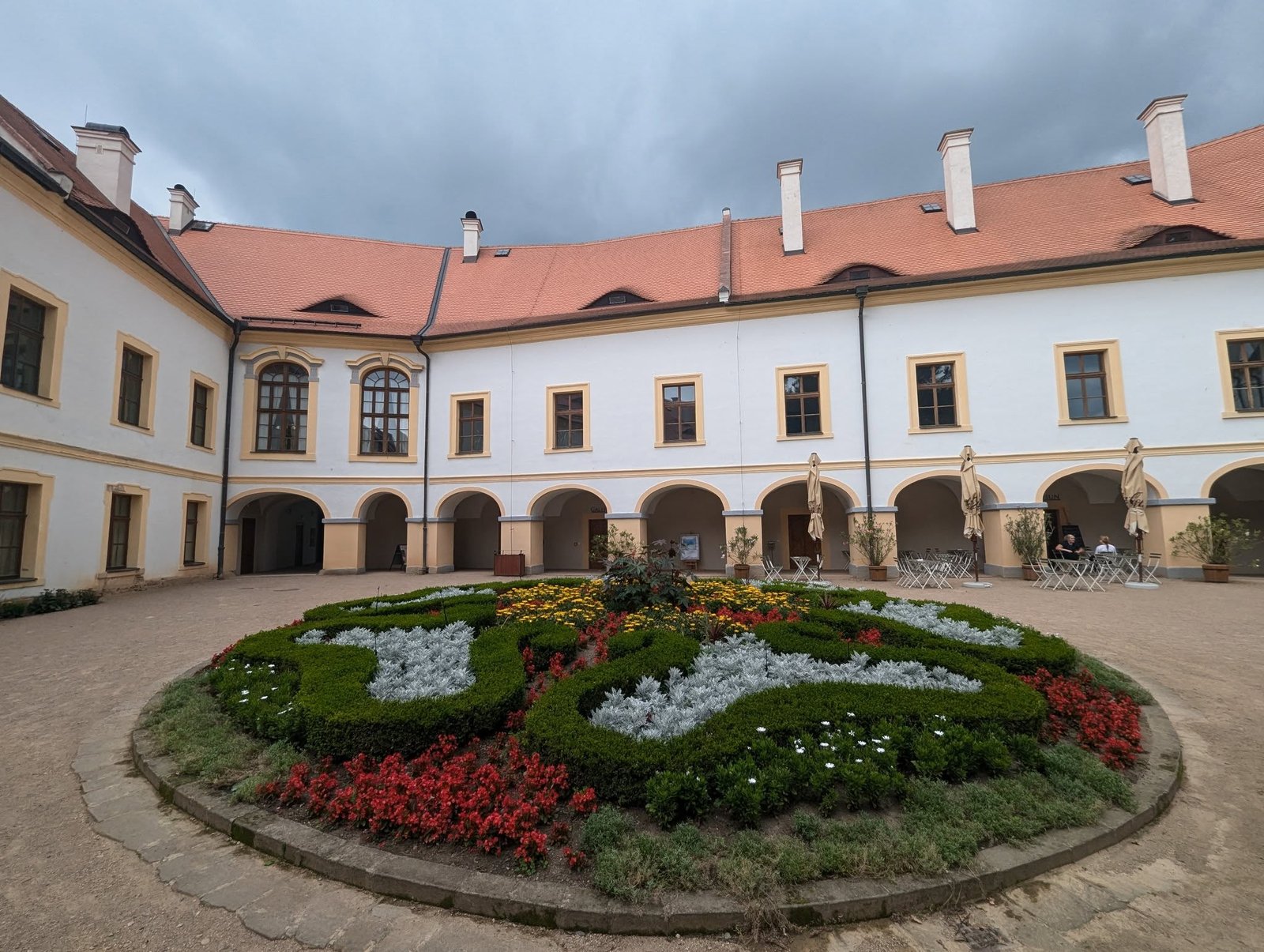
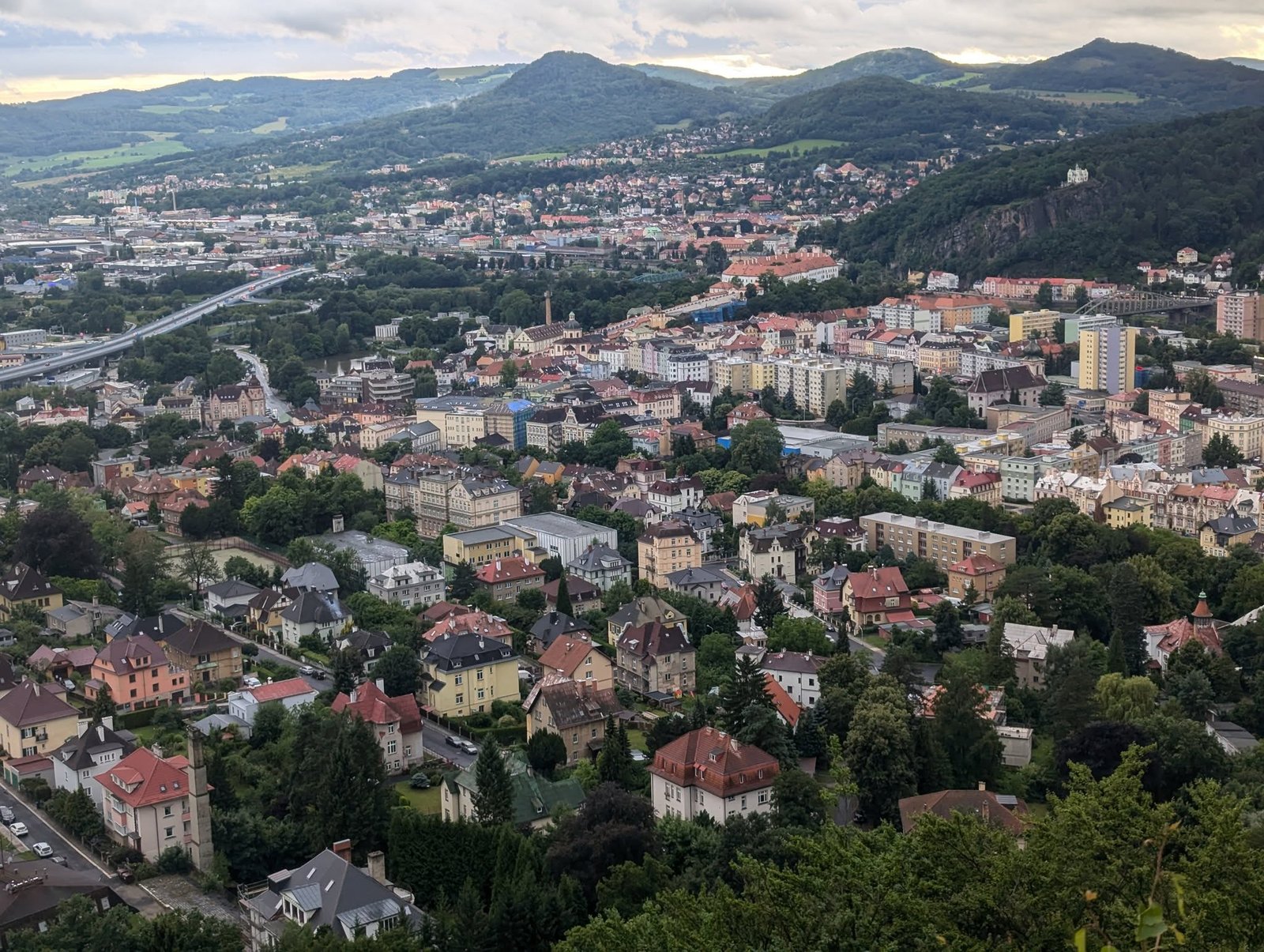
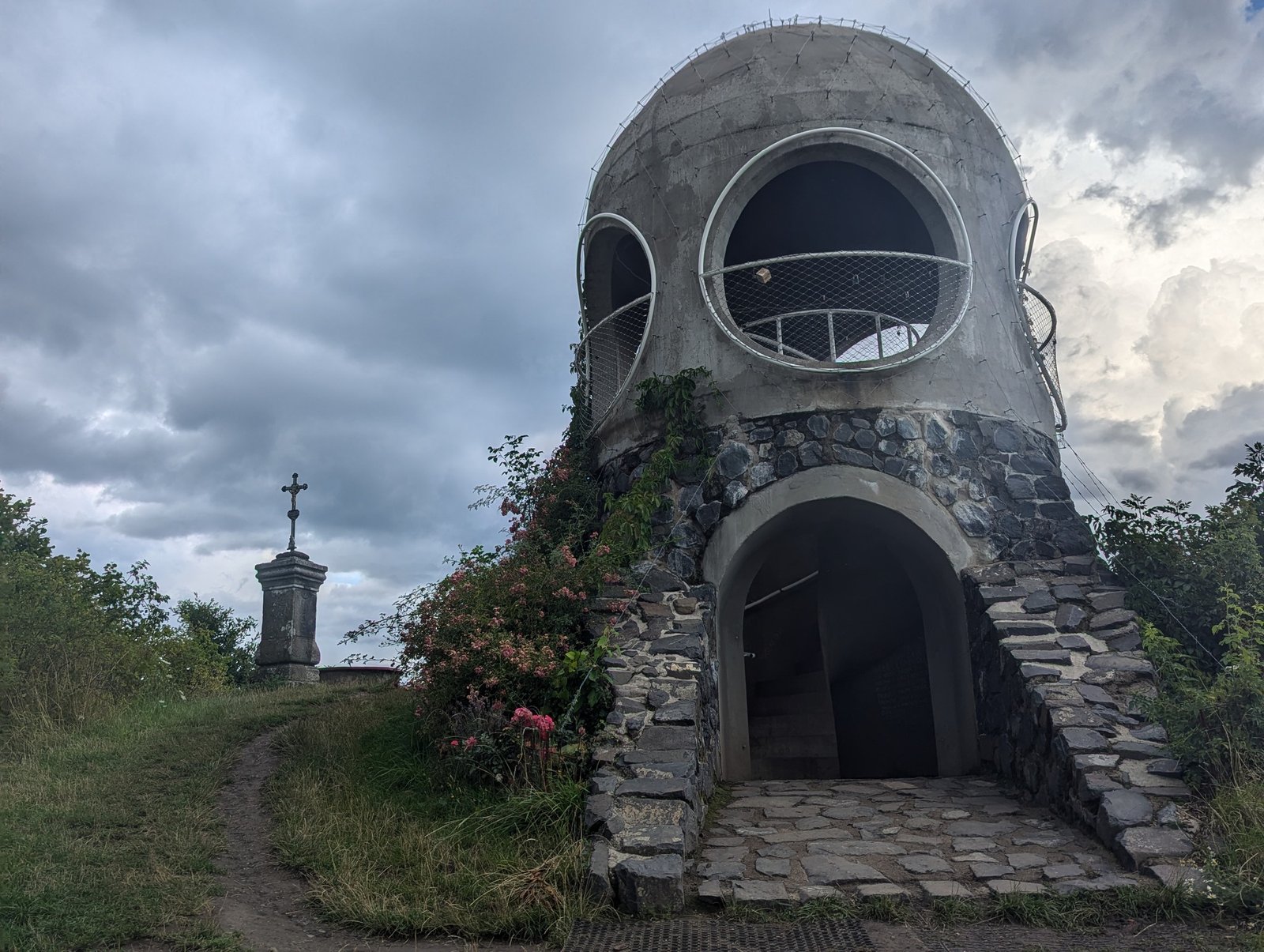
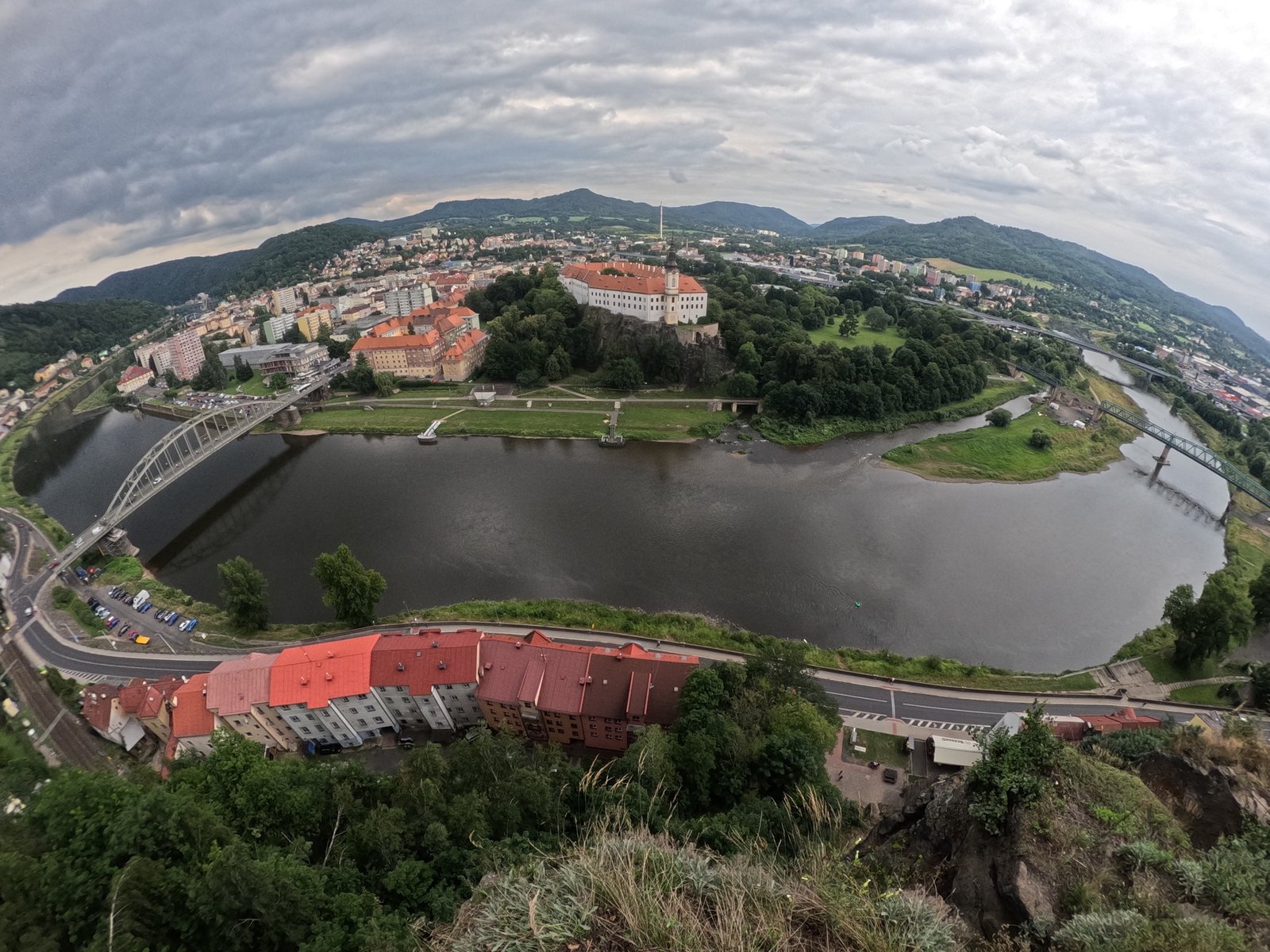
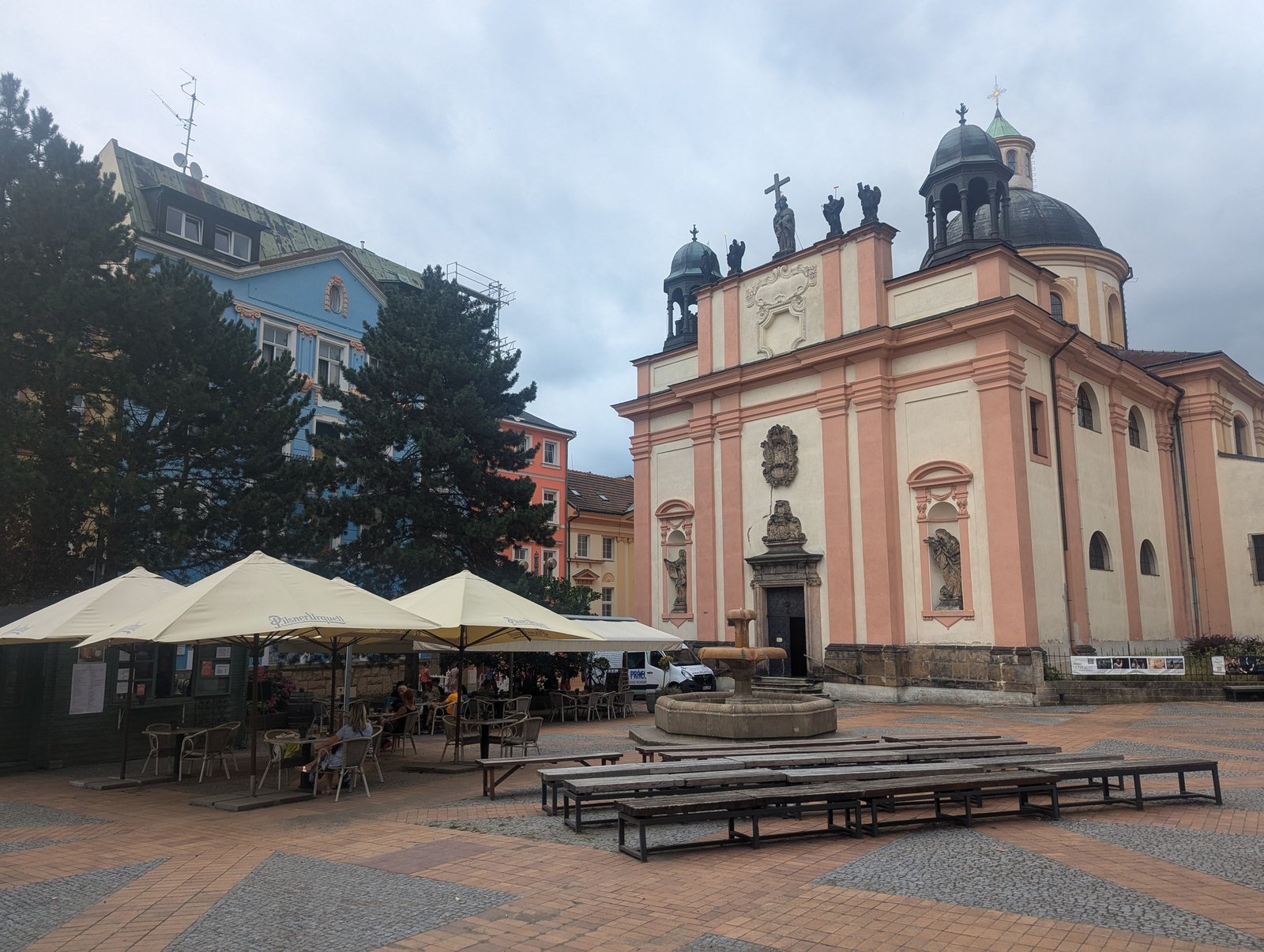
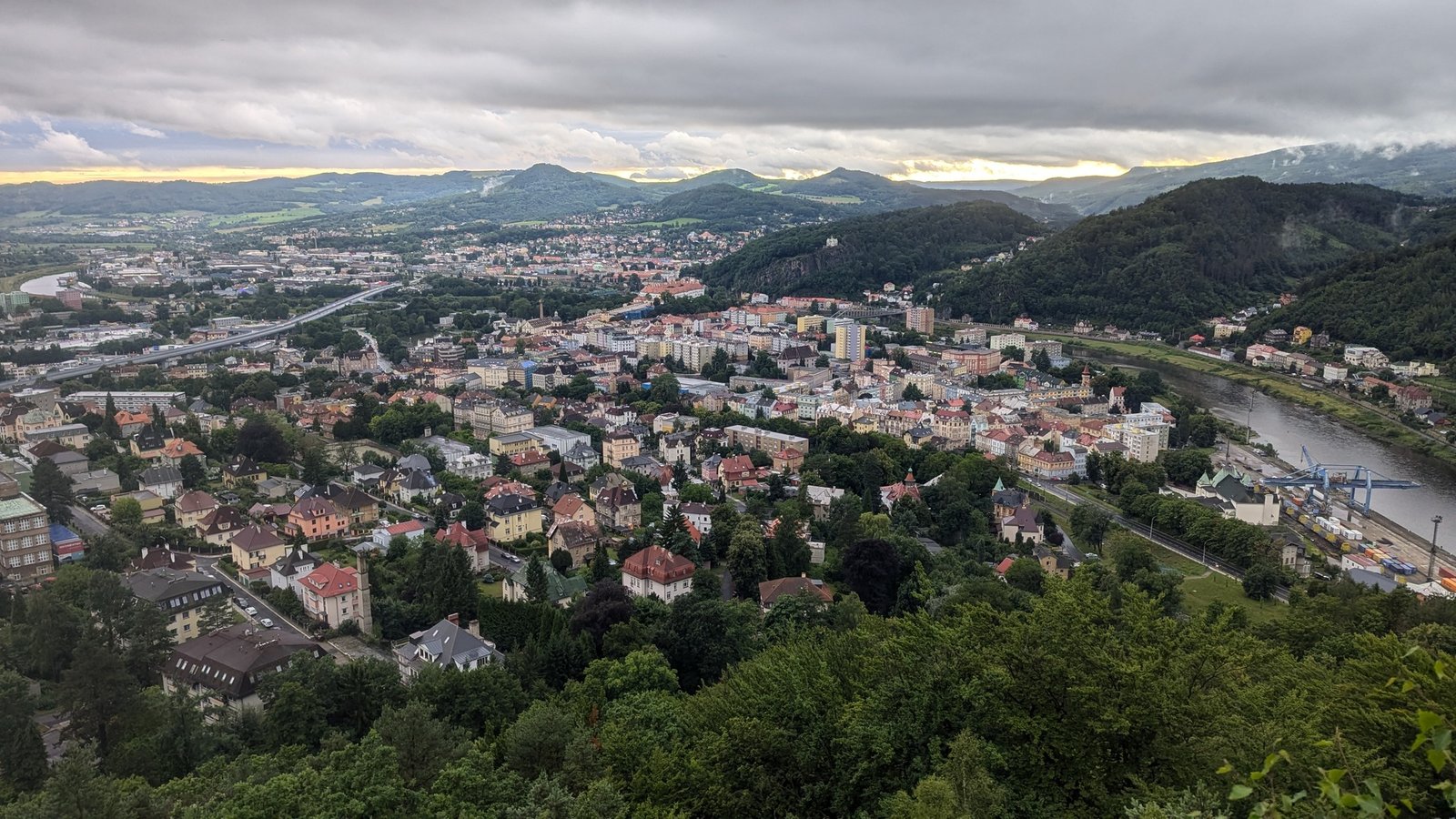
After the castle we strolled around the centre, and in the evening we climbed one of the nearby hills with a viewpoint. From there you can see the whole town spread out in the Elbe valley and the forested mountains around it.
Pravčická Gate – the symbol of the park
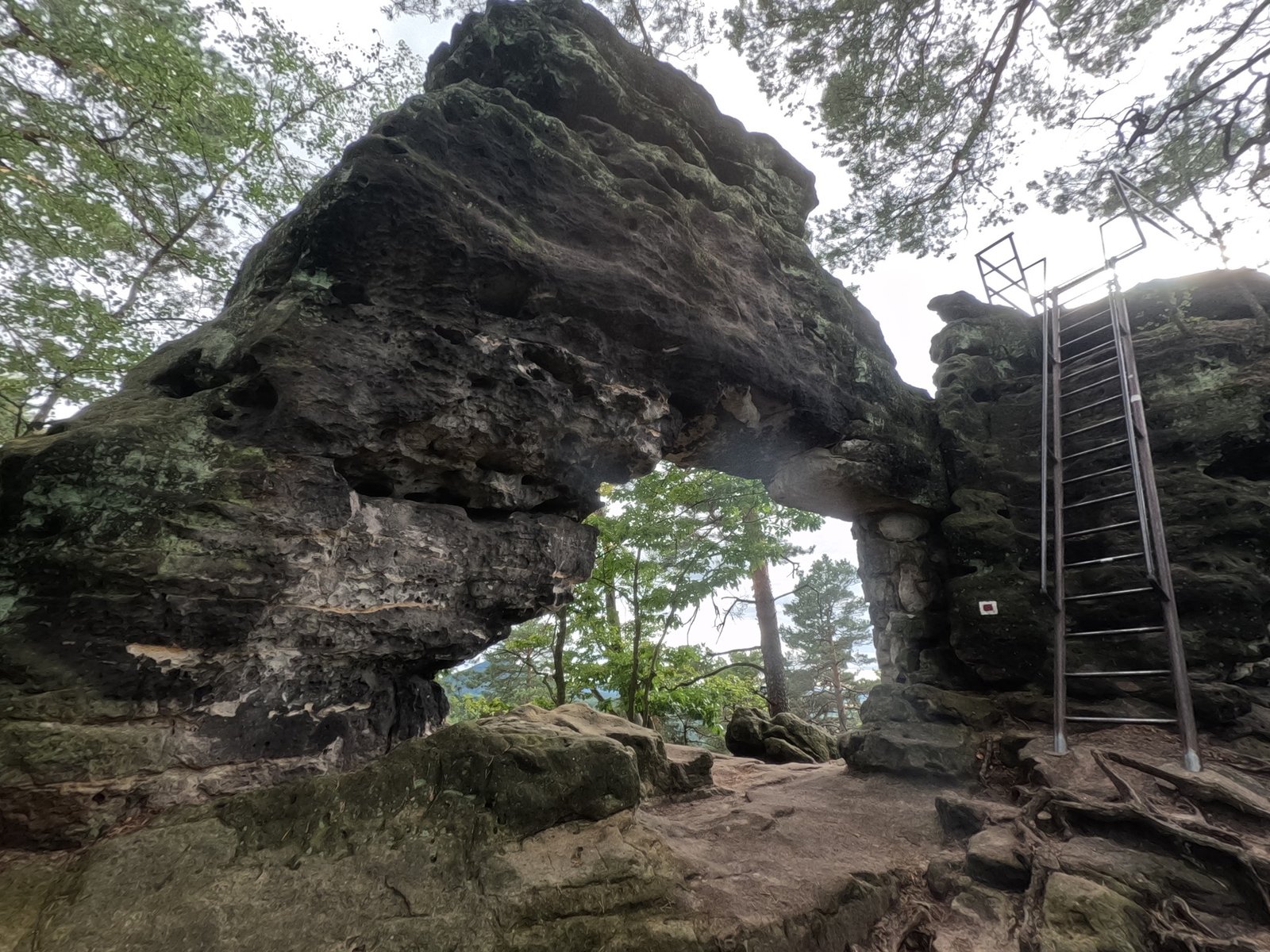
The park welcomed us with its symbol – Pravčická Gate (Pravčická brána), the largest natural rock arch in Europe. The span of the arch at its base is 26.5 m, and its height 16 m. It is the perfect spot for the photo that serves as the “postcard” of the whole park.
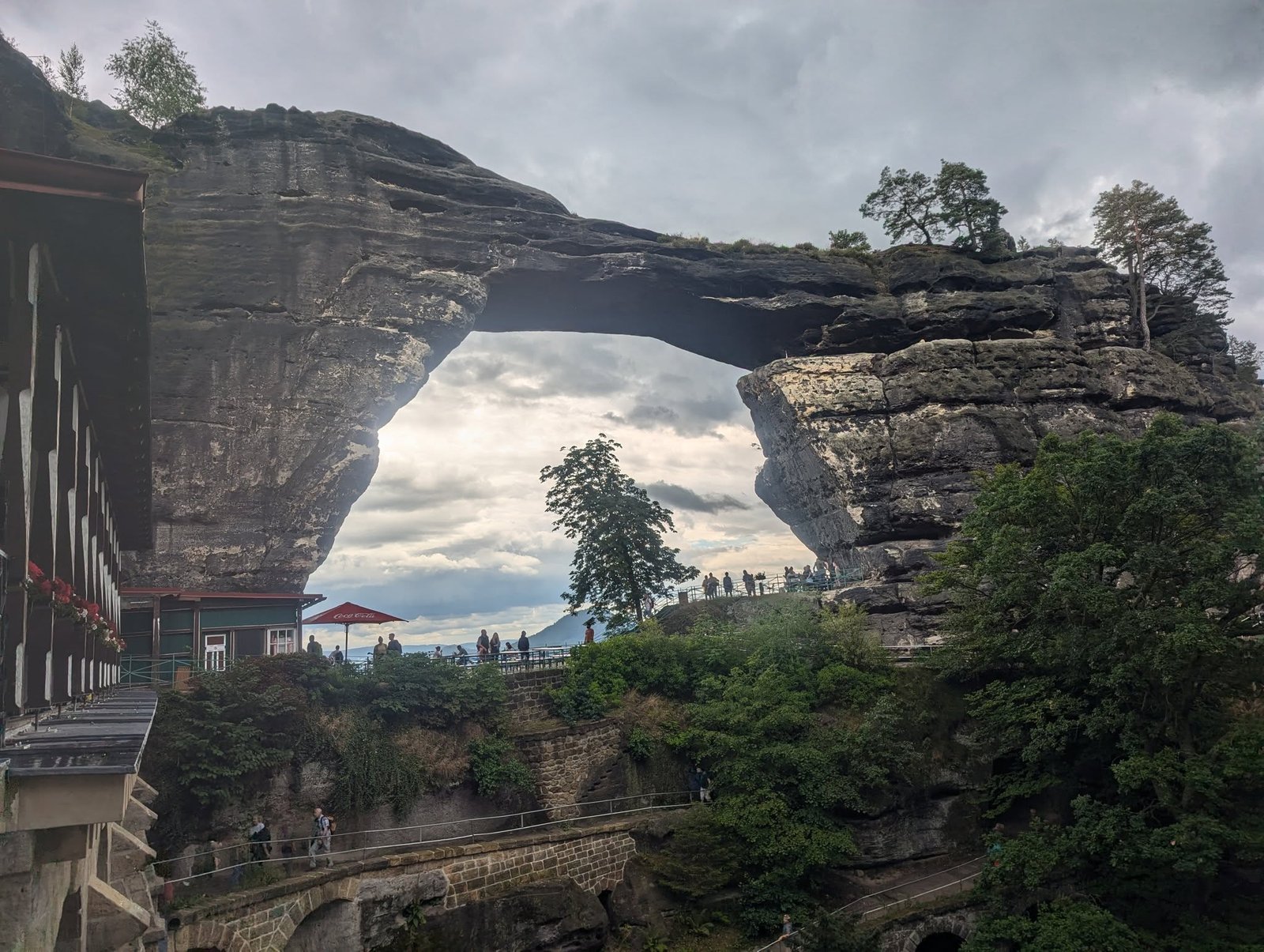
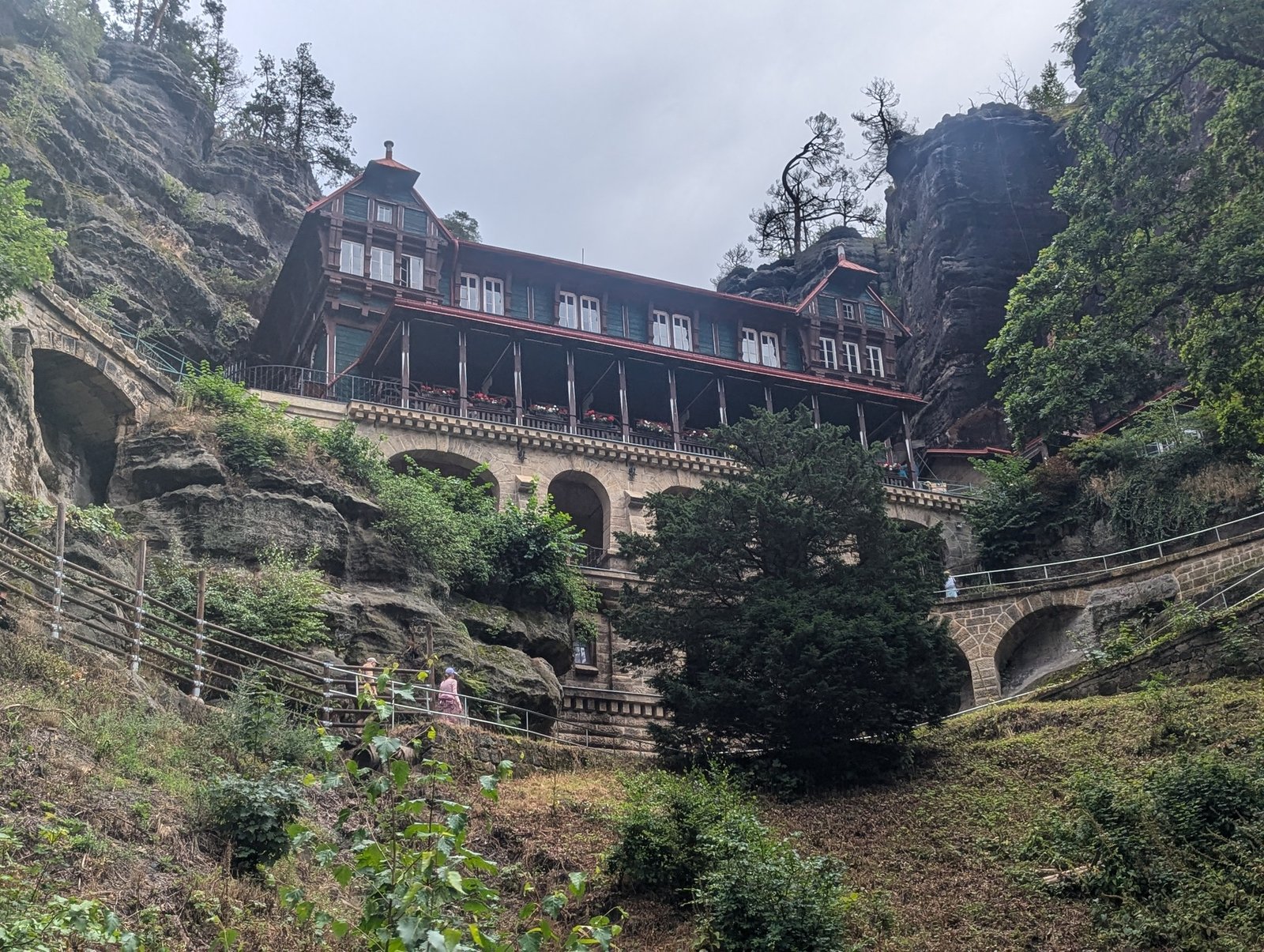
Right below the arch, squeezed between the rocks, stands the old Sokolí hnízdo building (Falcon’s Nest). The viewpoints next to it look out over sandstone walls, forests and the cone of Růžovský vrch on the horizon.
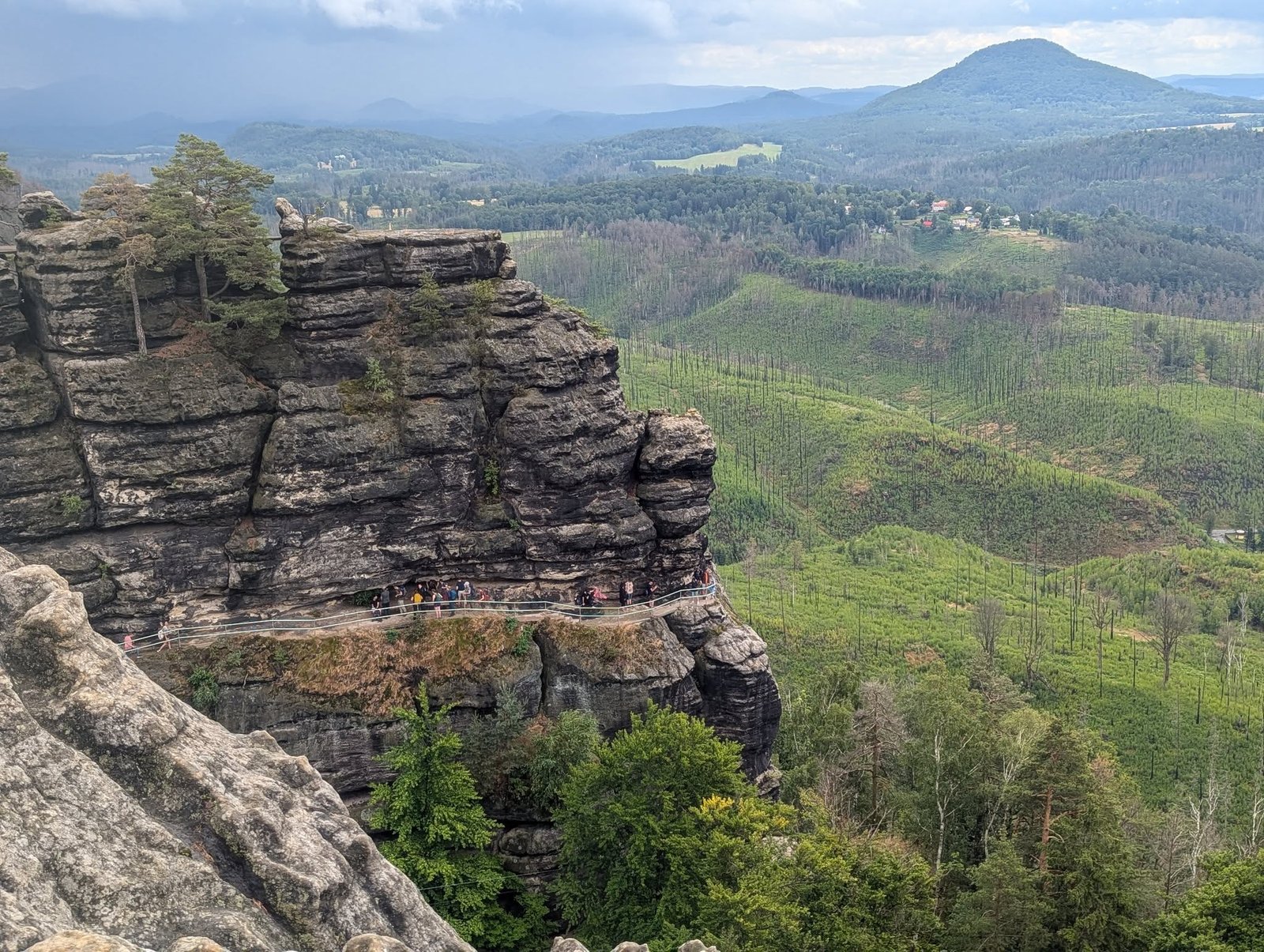
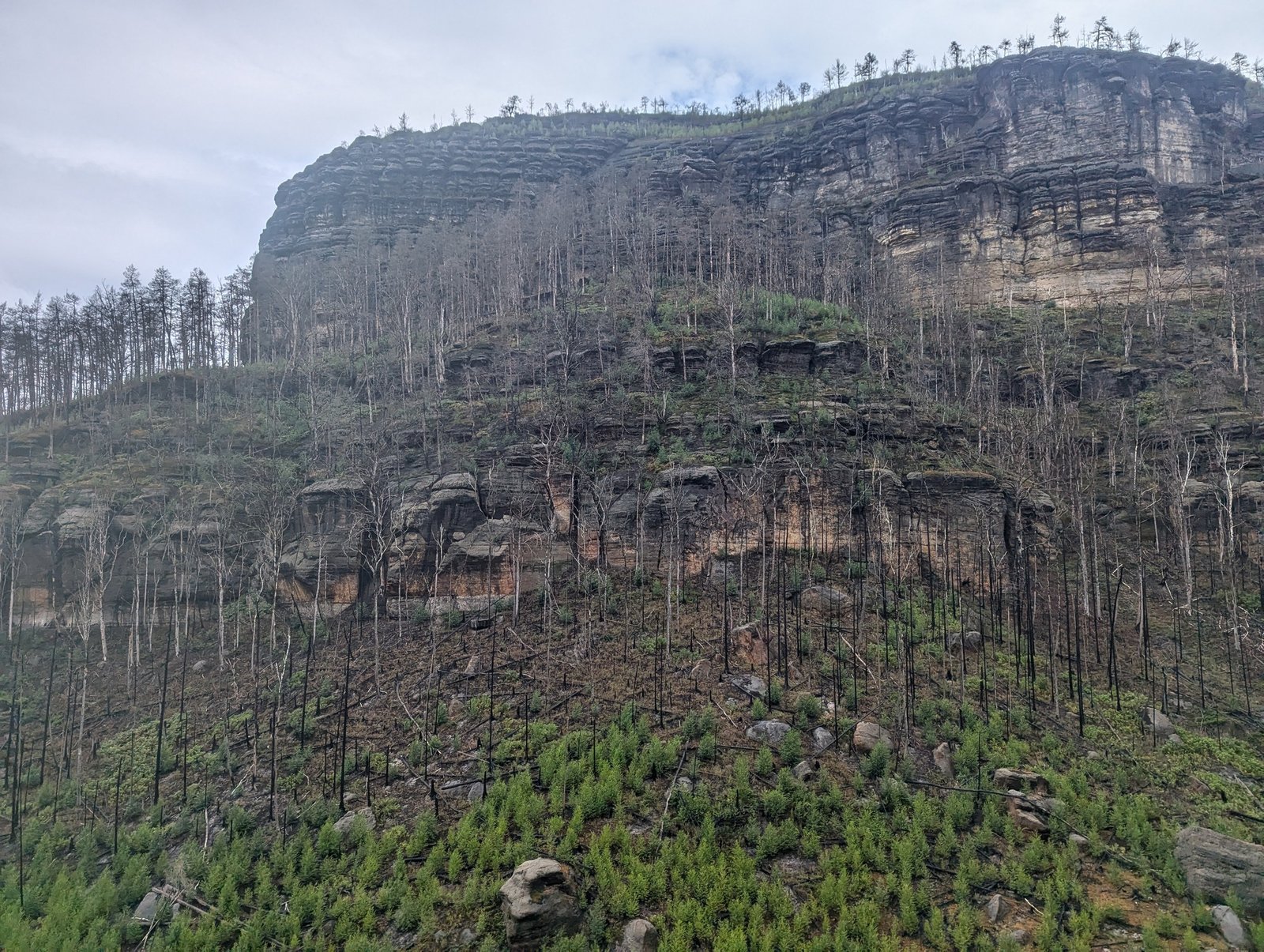
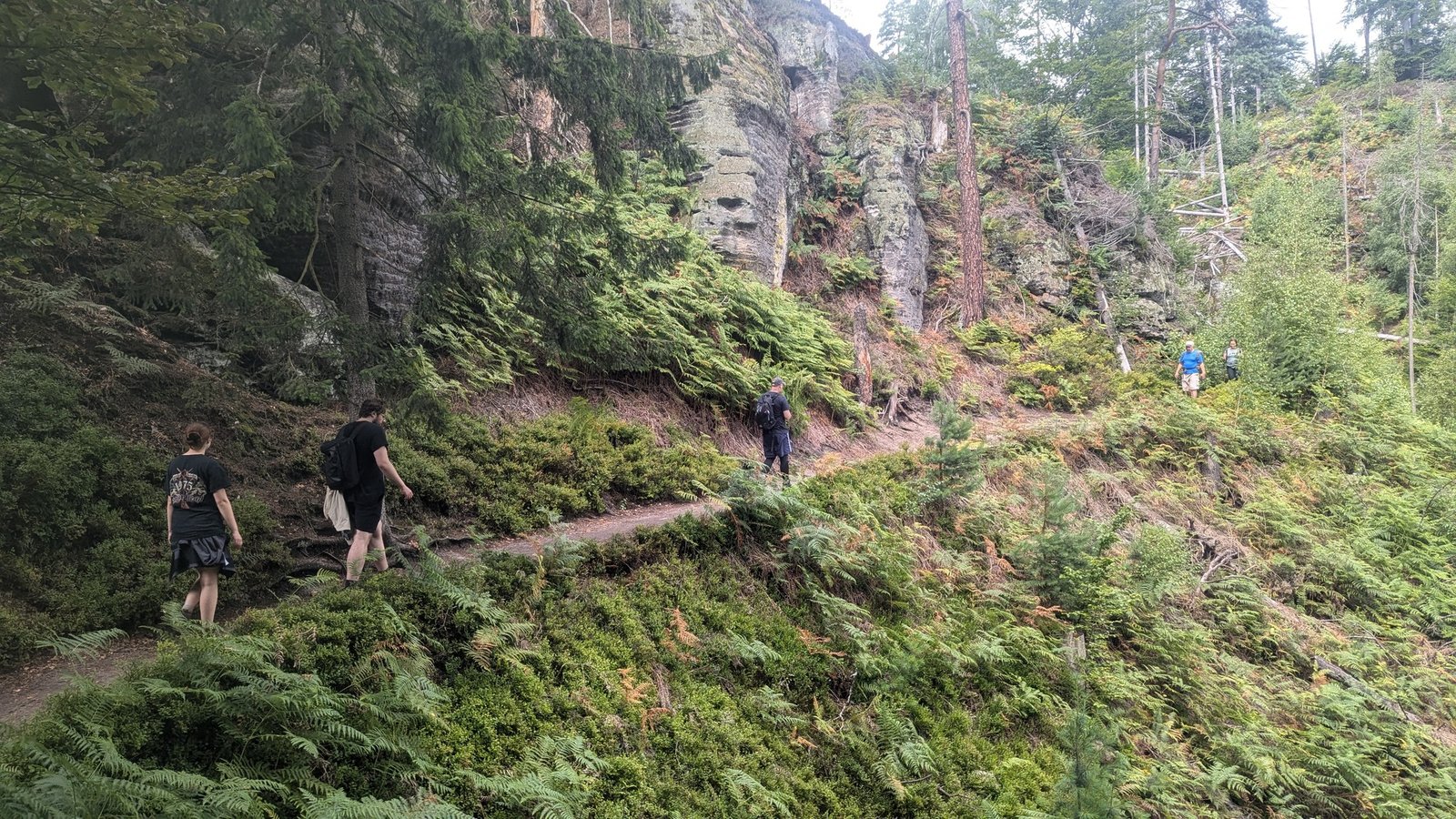
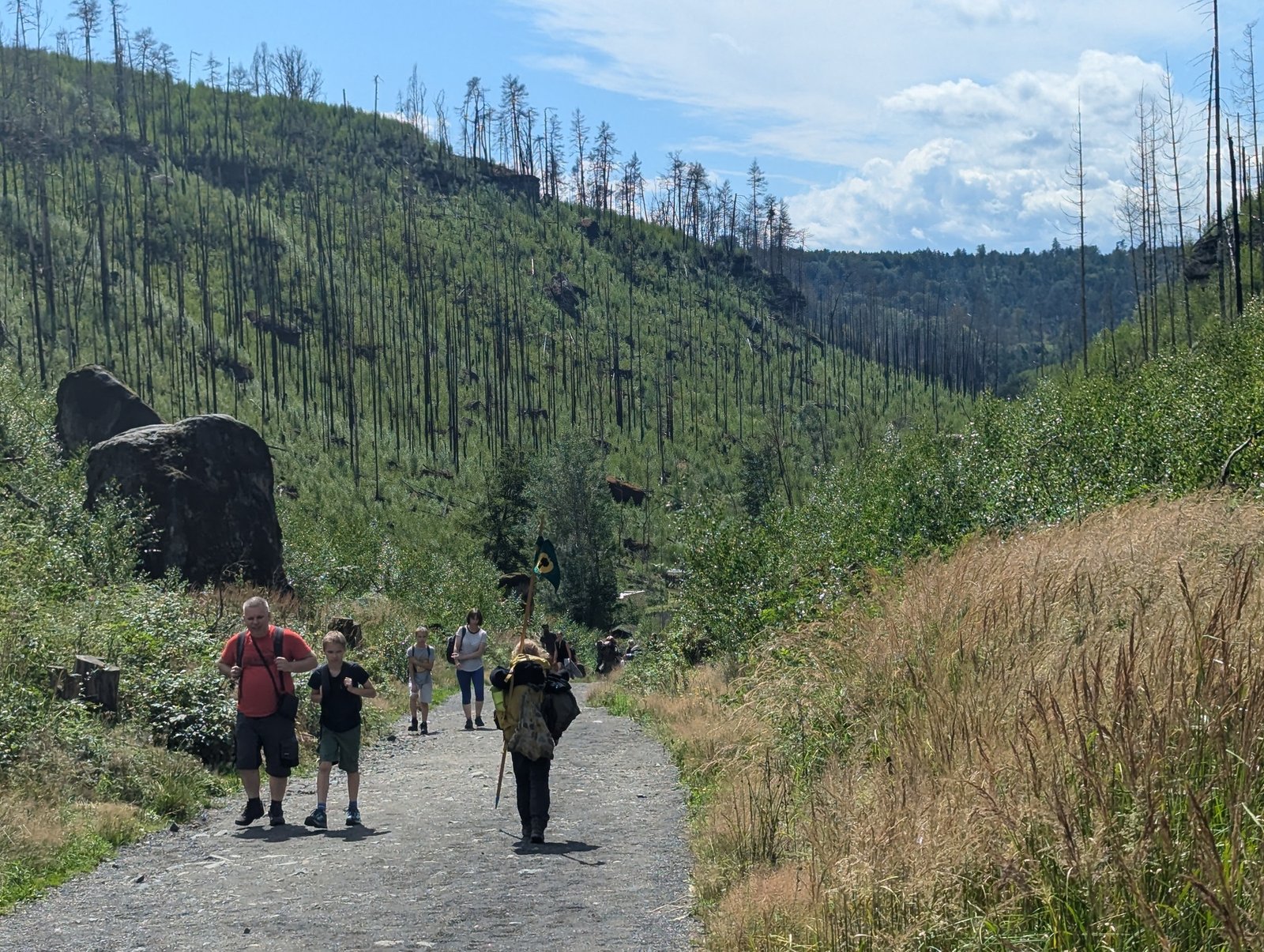
Further on, the trail led along the valley floors and through narrow passages between the rocks. Many slopes here are covered with dead, grey tree trunks, with young forest already growing between them.
Růžovský vrch – “our” mountain
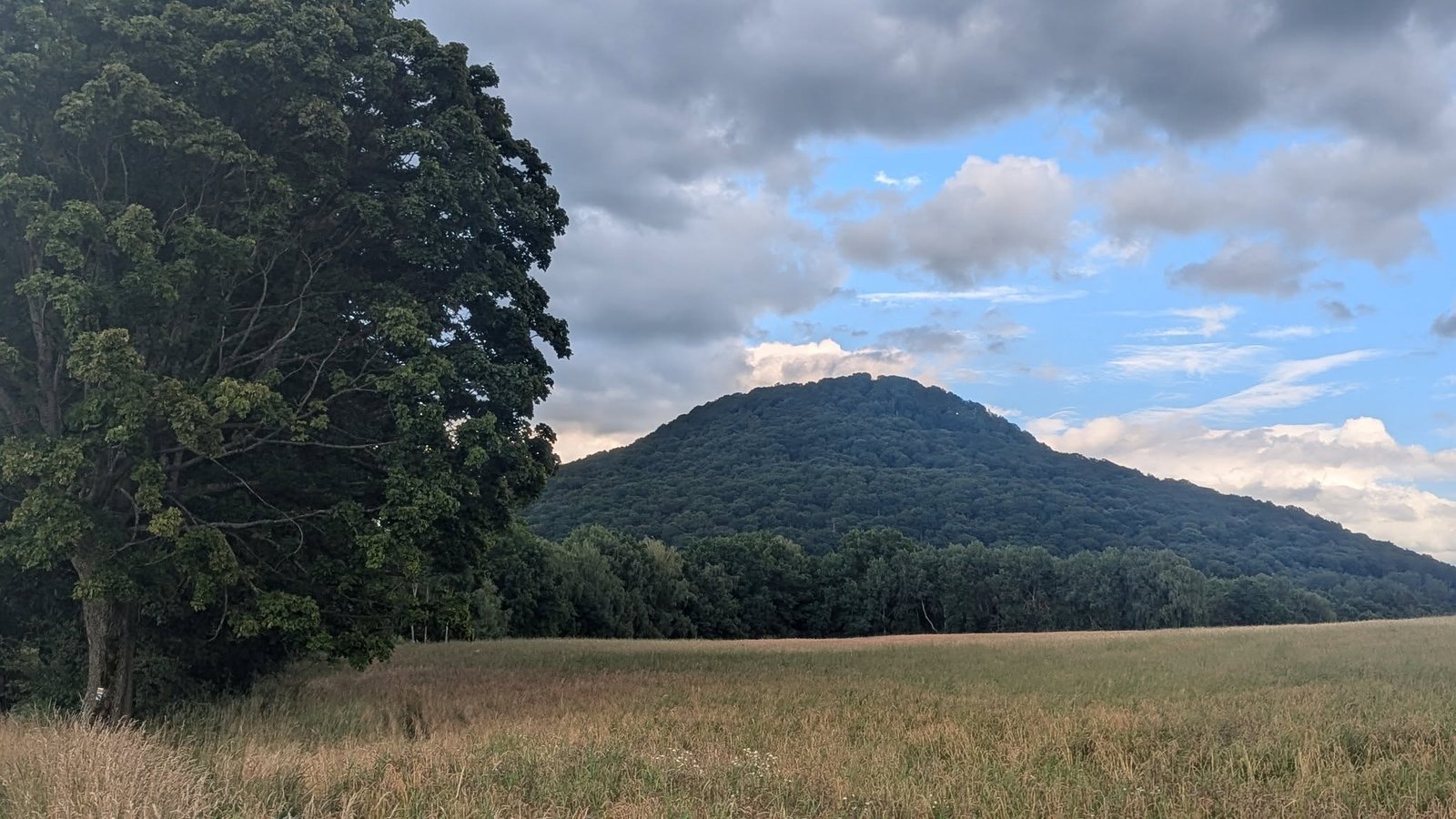
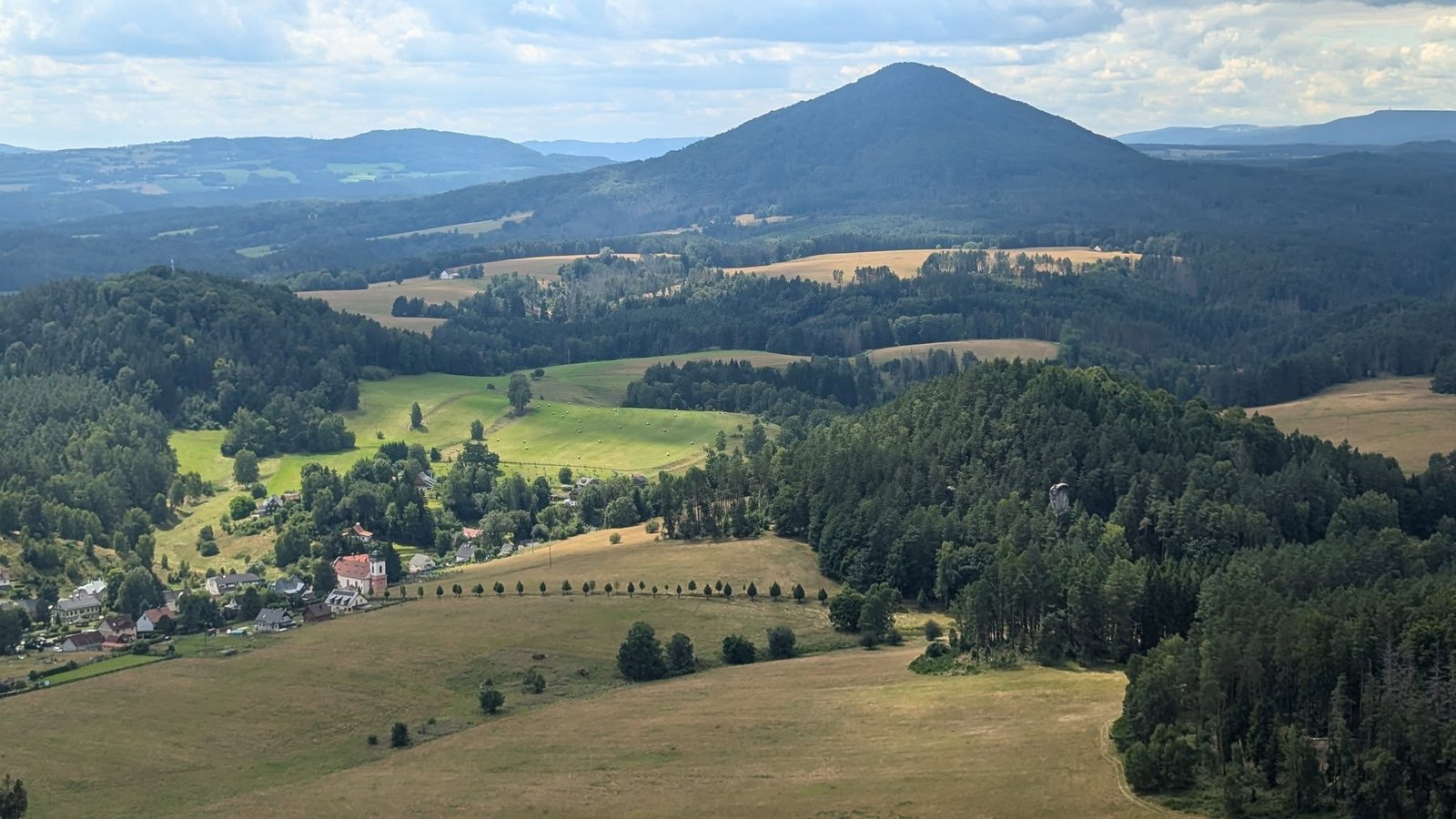
We also climbed Růžovský vrch (619 m) – the highest peak of Bohemian Switzerland National Park. It is a conical volcanic hill, visually a little different from the other destinations of the trip: instead of sandstone rocks, a forested cone visible from far away. The view from the top was limited by trees, but every time we looked at this mountain from a distance, we could proudly say it was “our” mountain.
Viewpoints, stairs and ladders
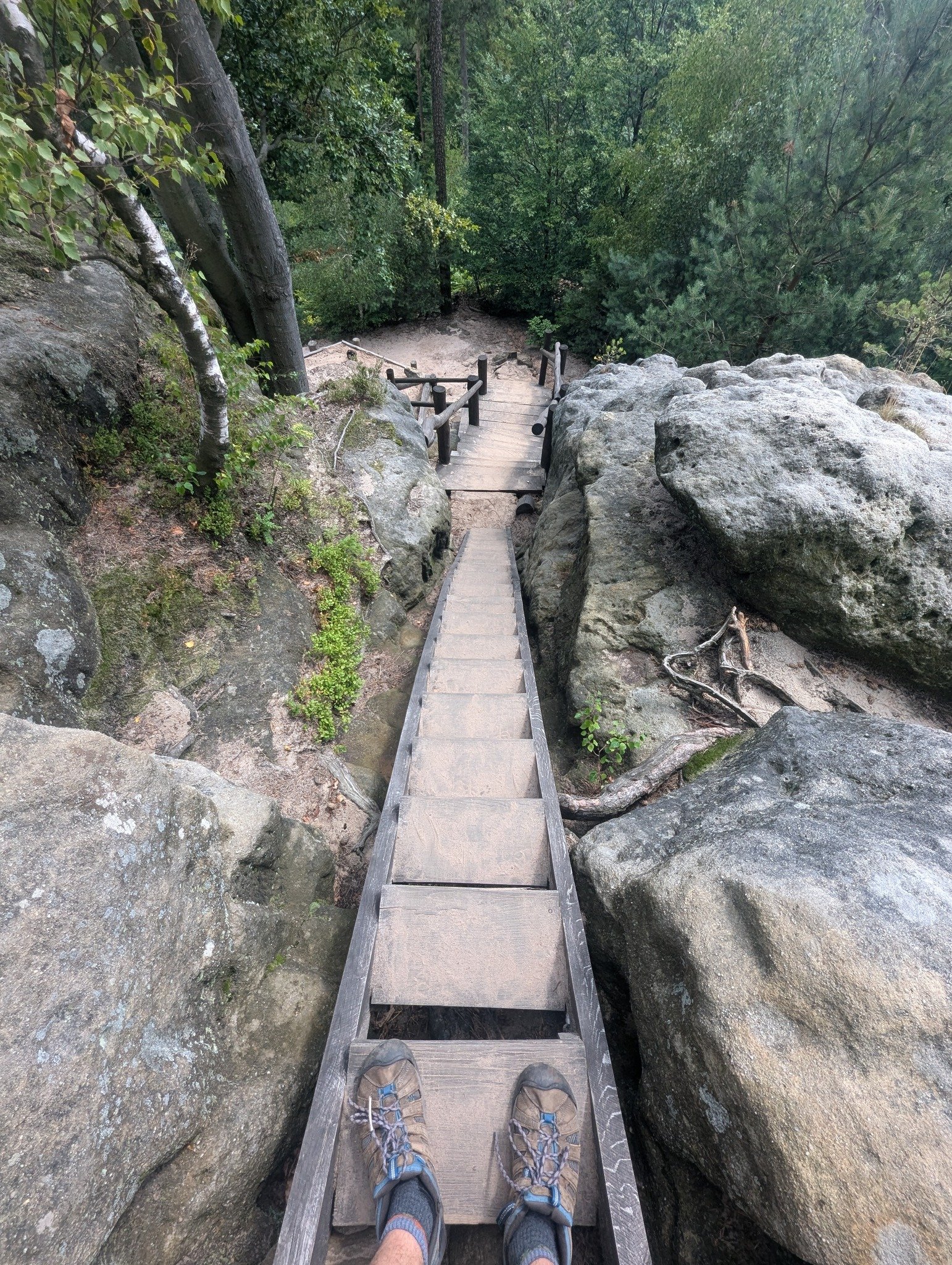
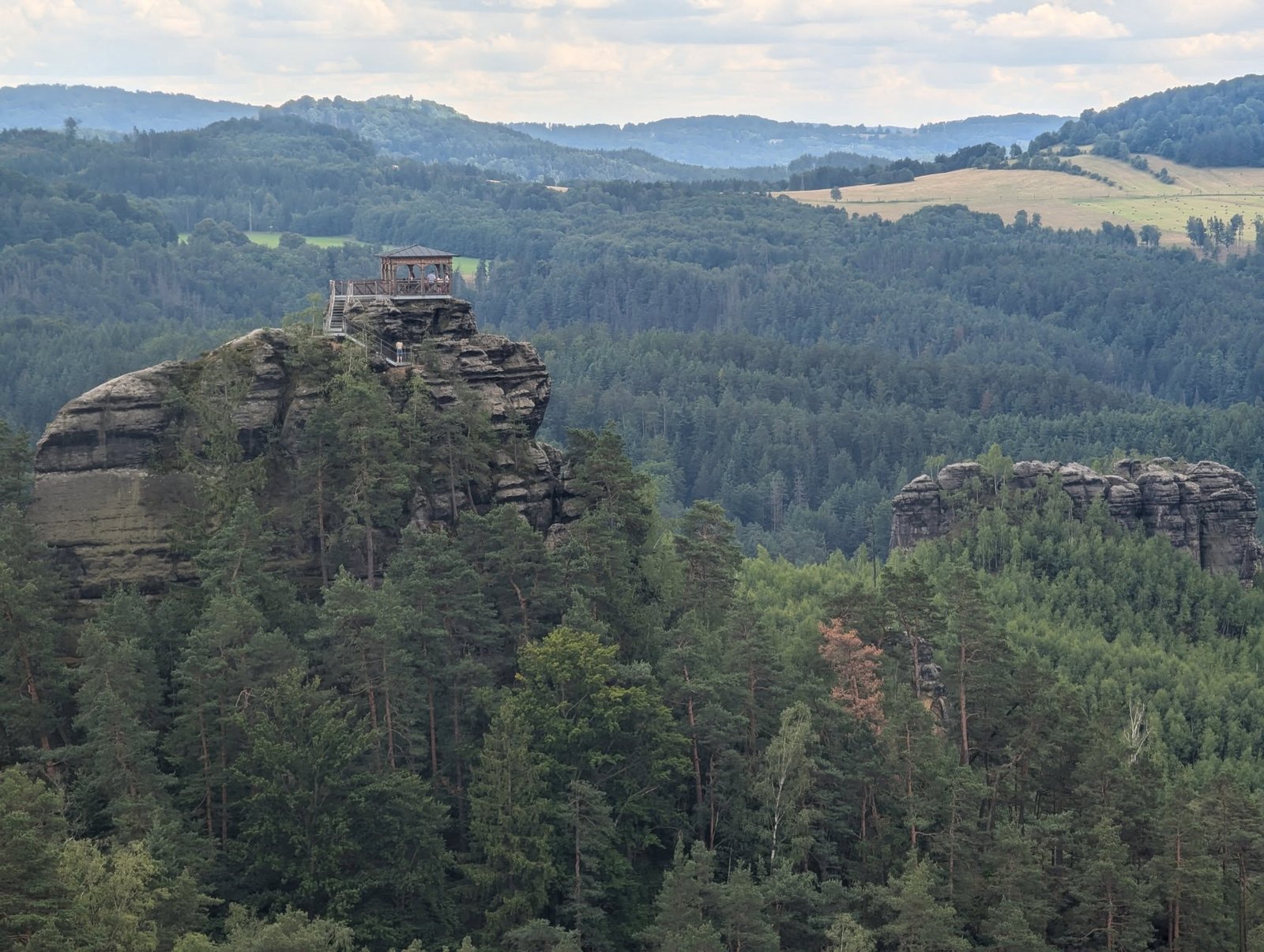
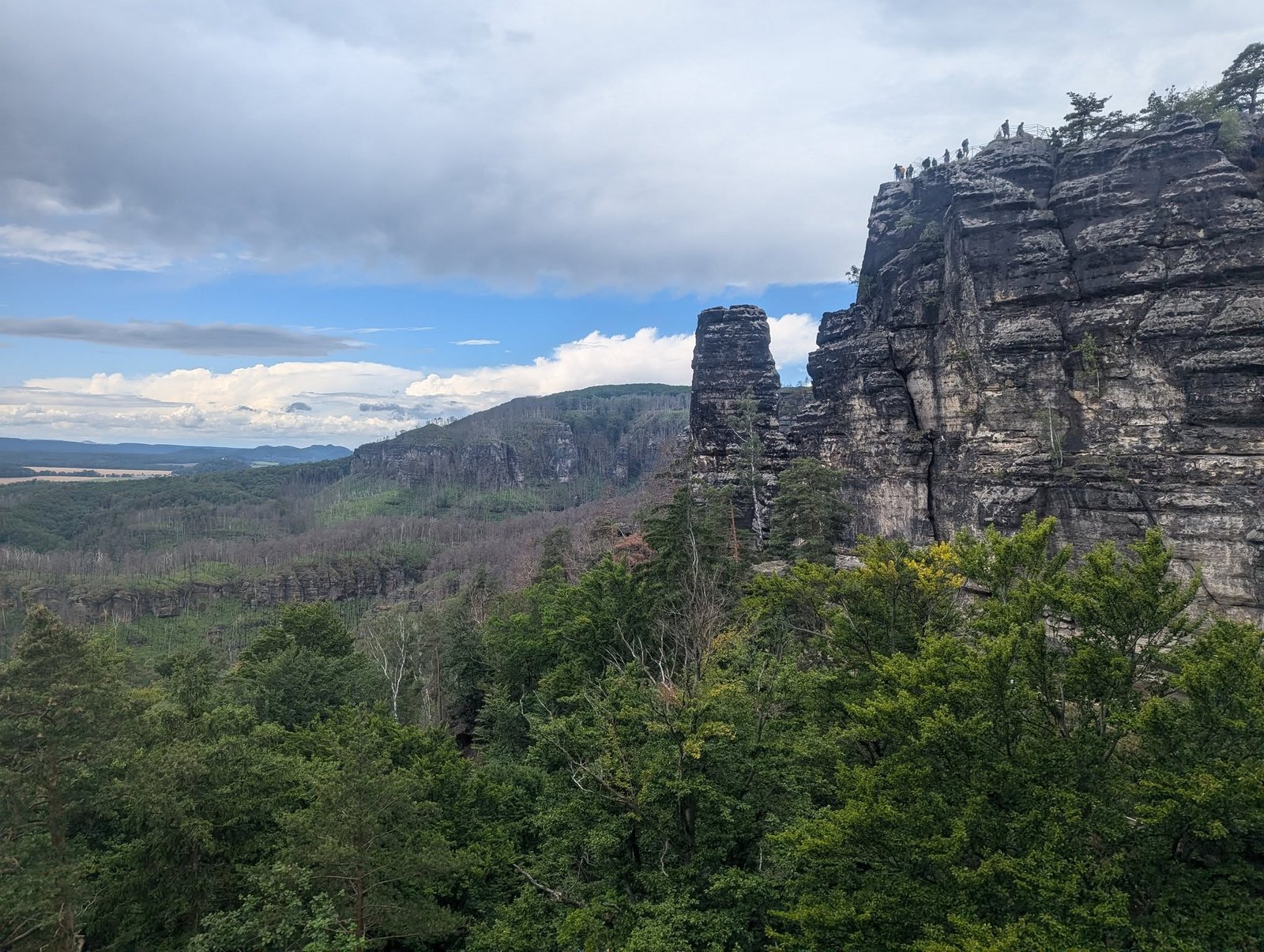
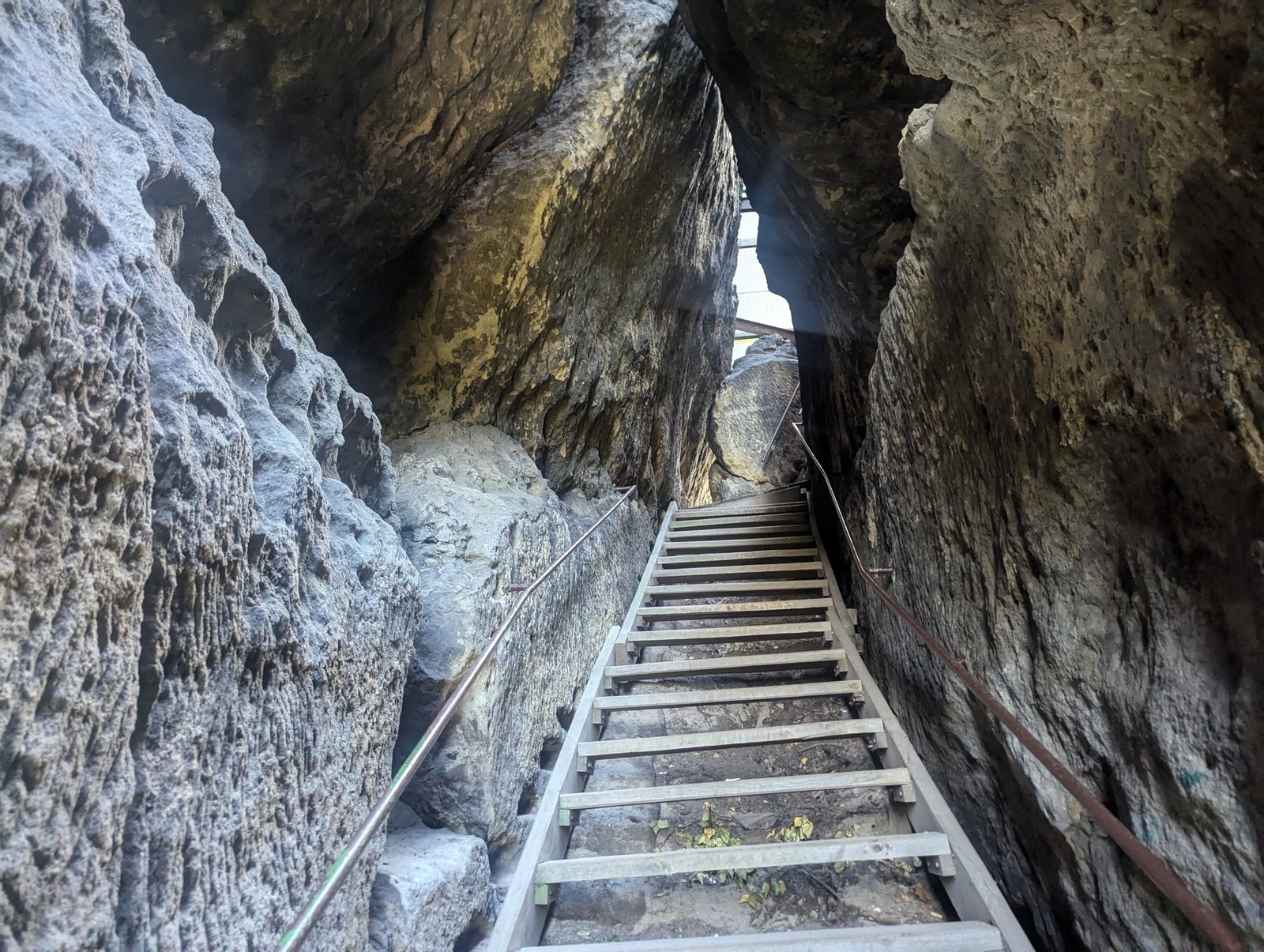
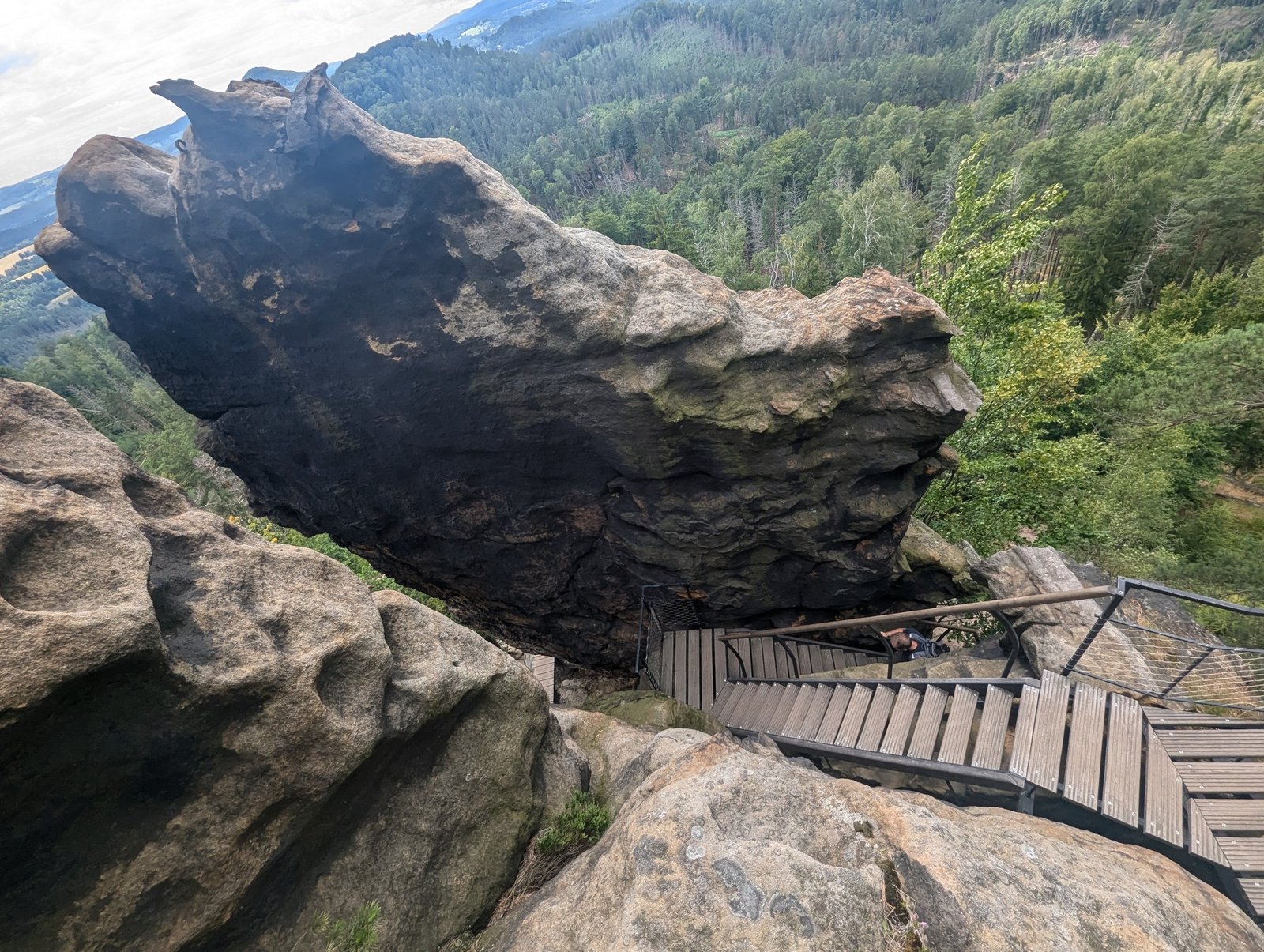
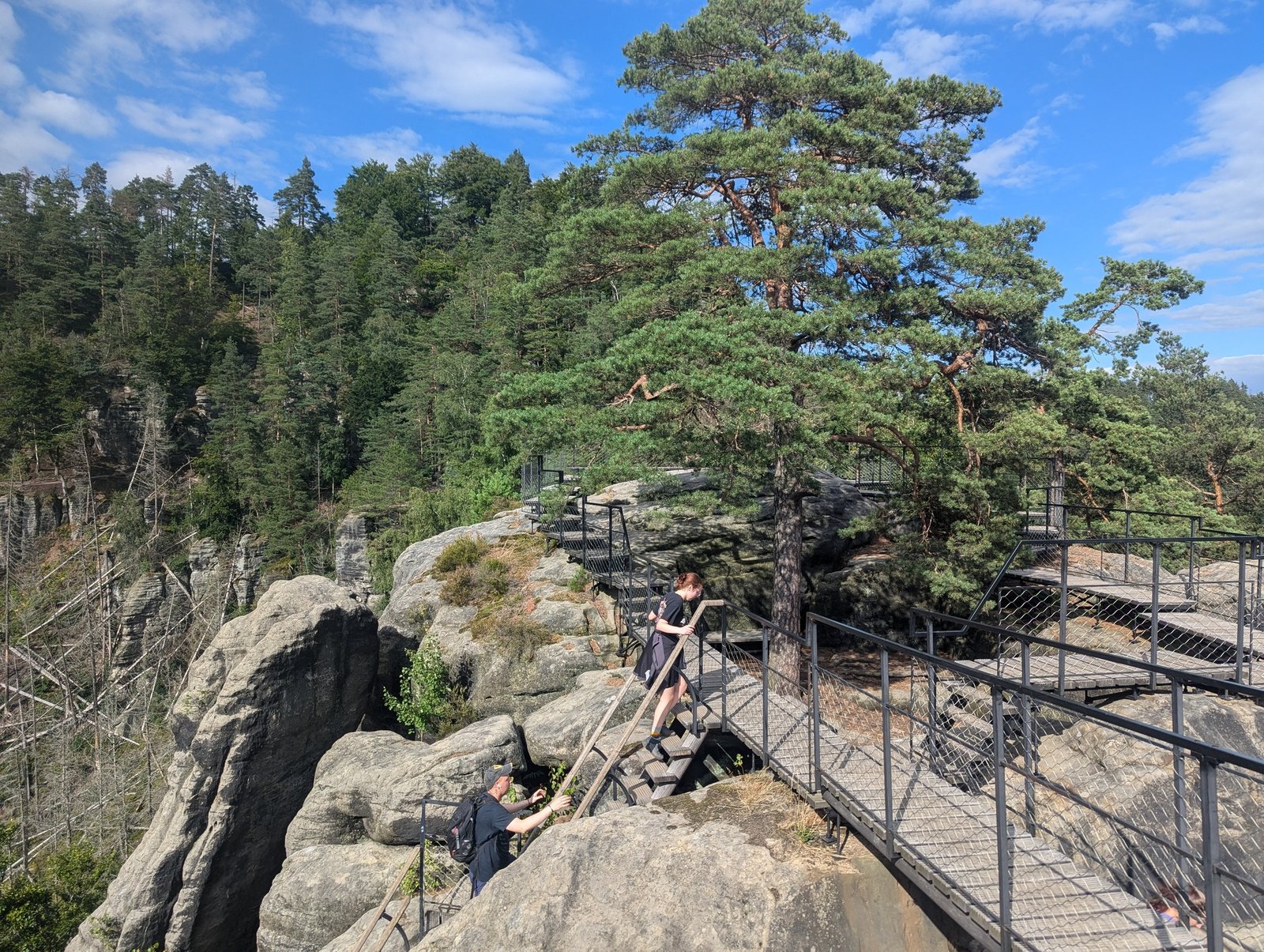
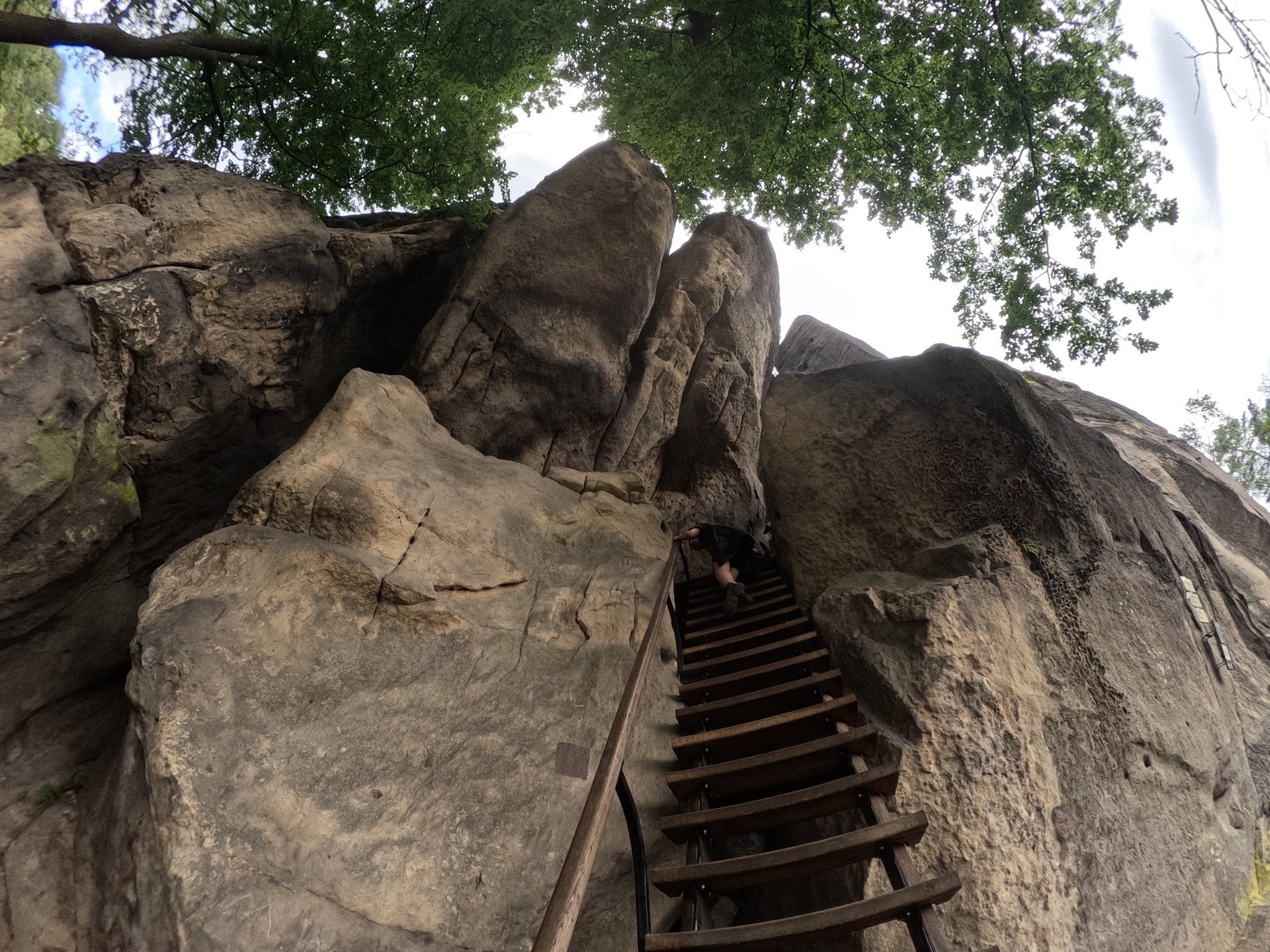
Typical of the park are its viewpoints – usually on top of rocks, reached by stairs, ladders and metal walkways, sometimes squeezed into narrow crevices. They can be steep, which may be a challenge for people afraid of heights. For a moment that was the case for us too, but the crisis was quickly averted – once you are up, you have to come down as well.
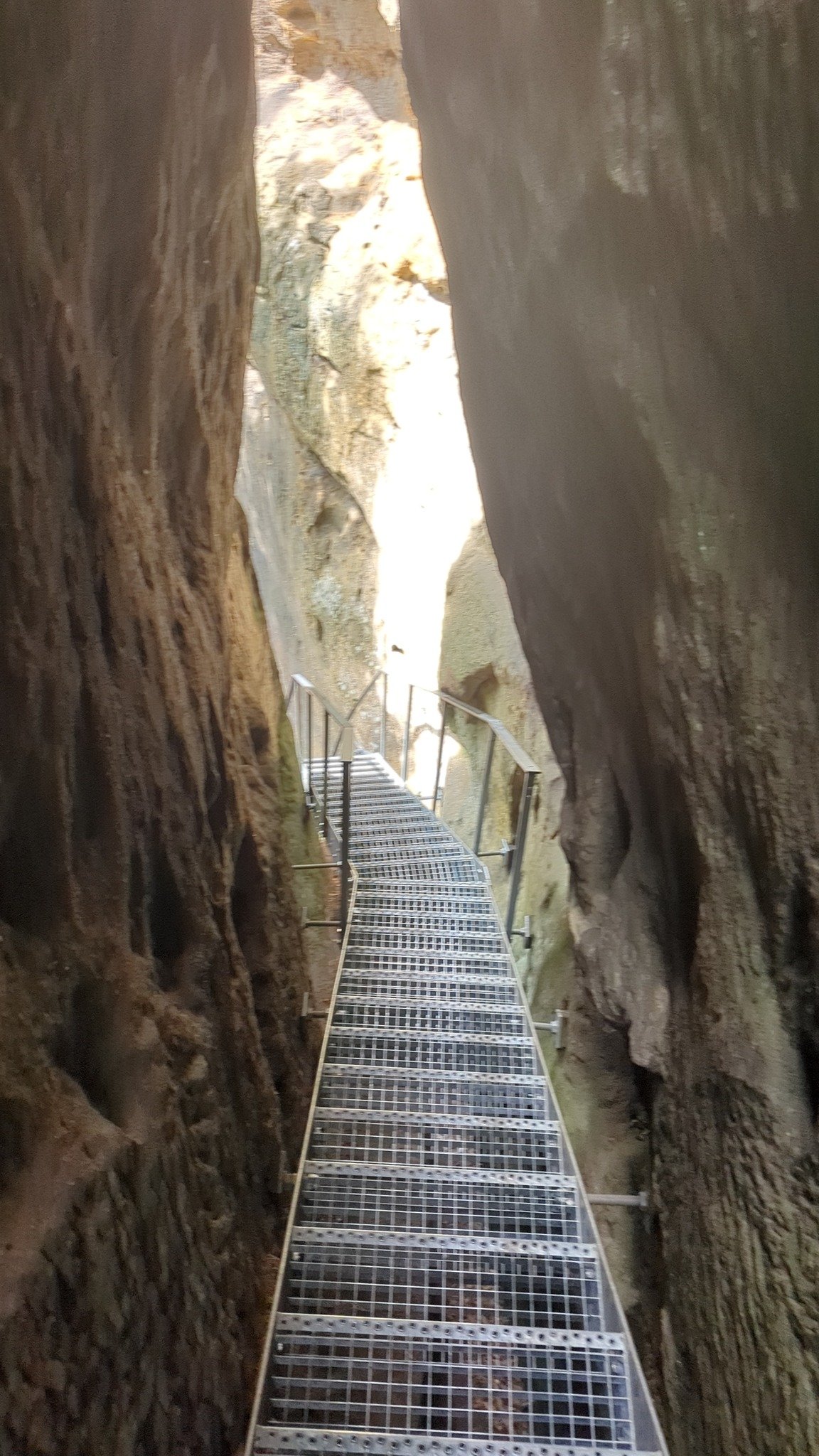
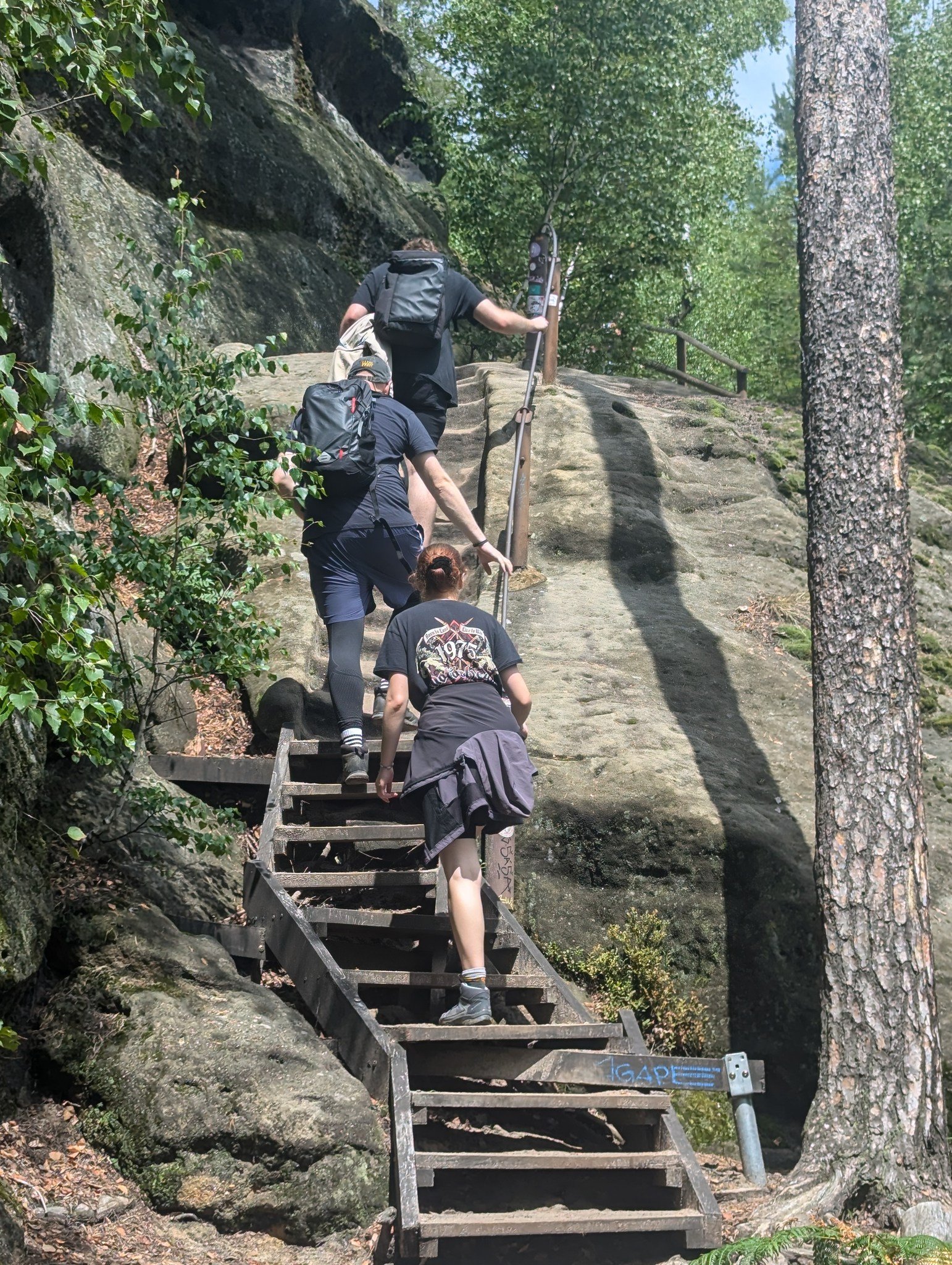
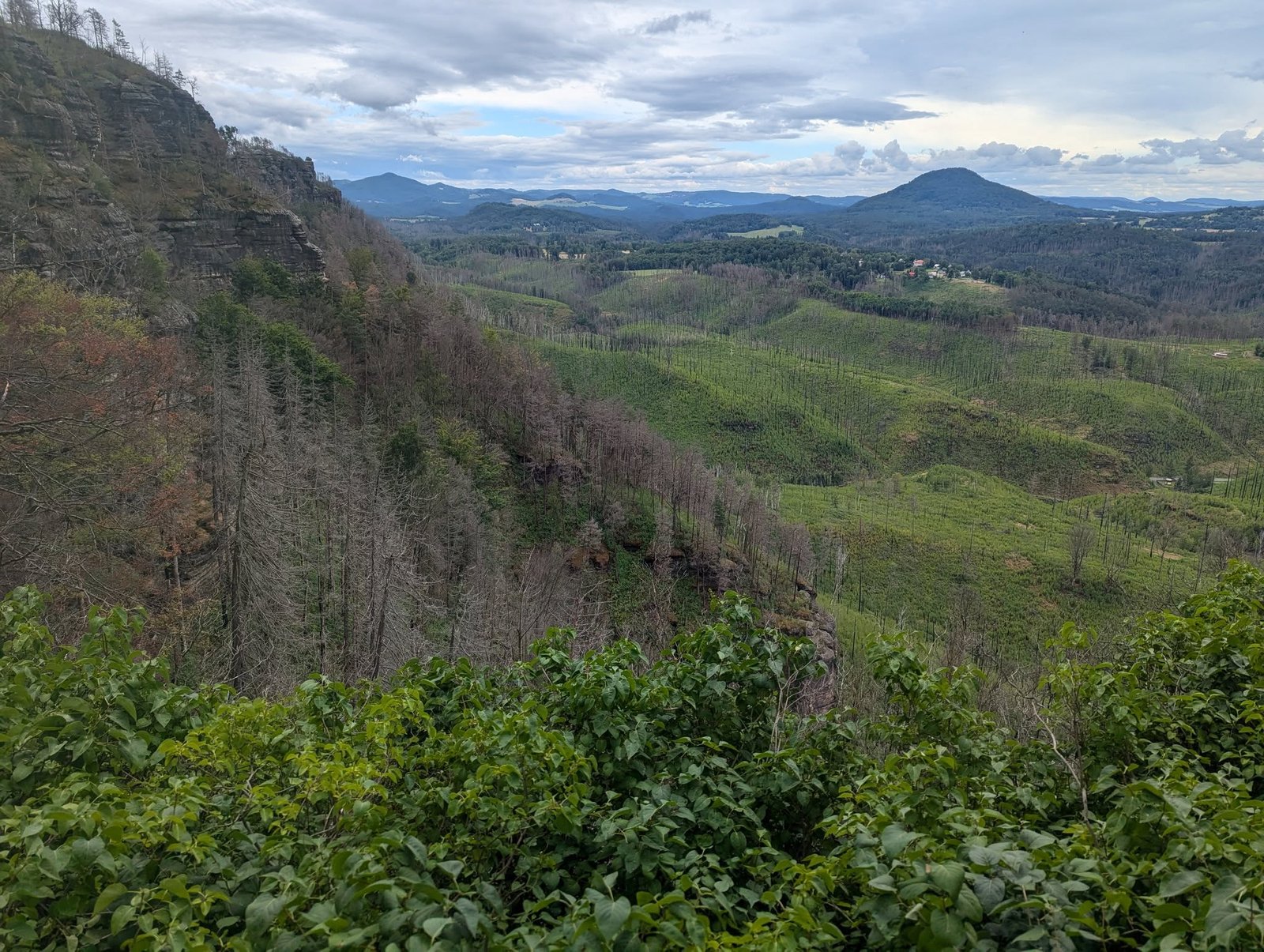
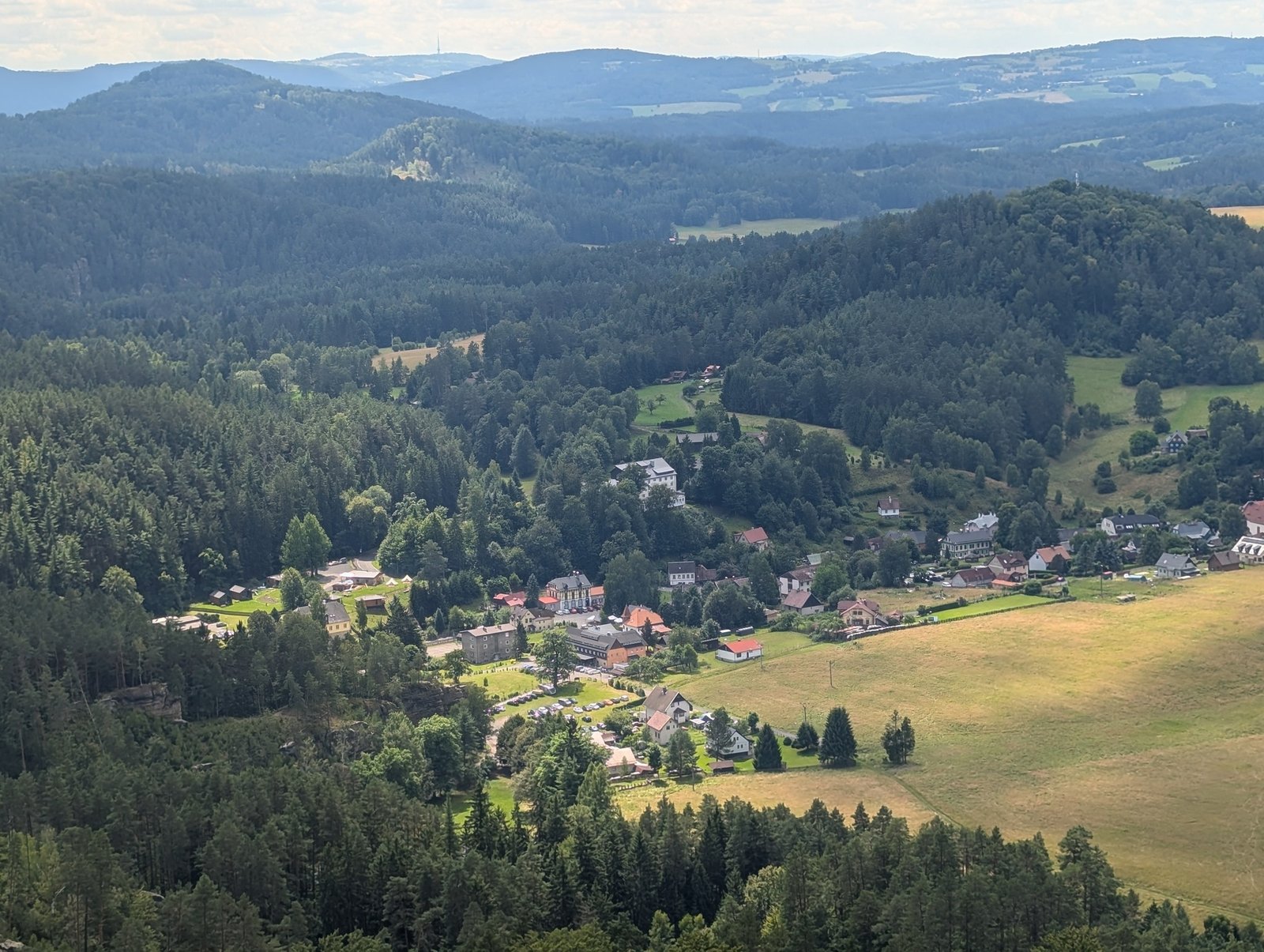
The reward is views of forested valleys, villages and neighbouring rock walls.
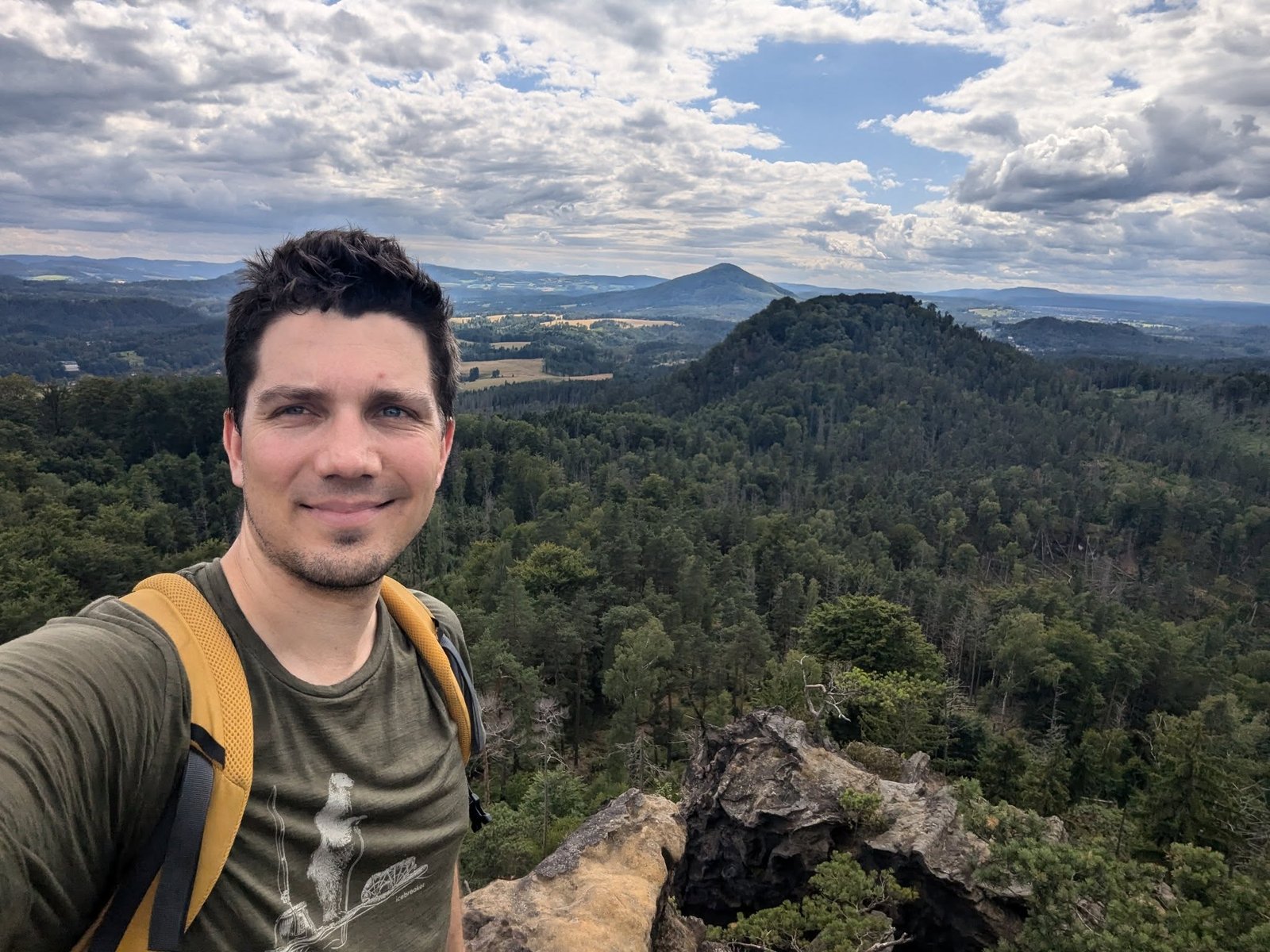
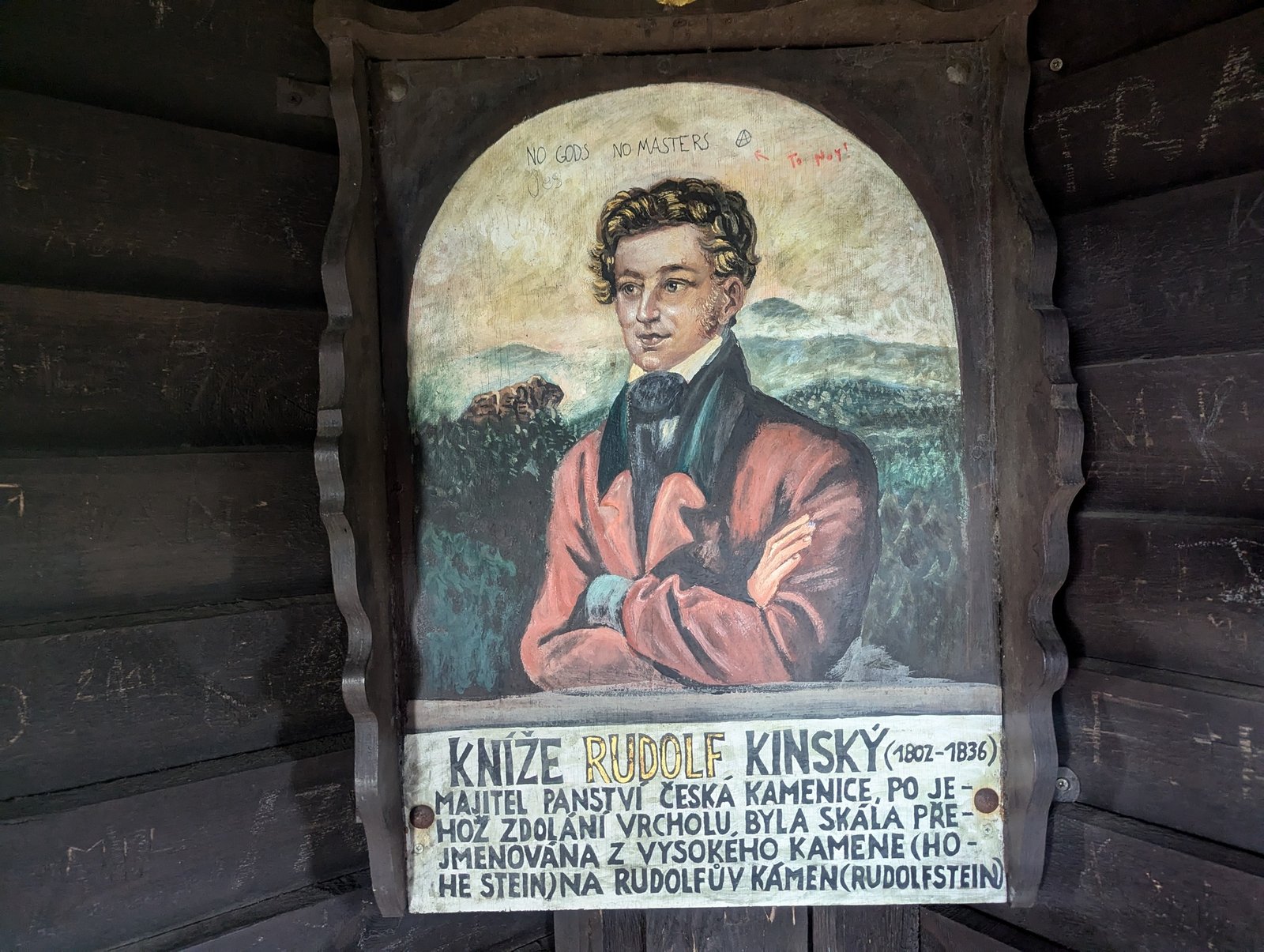
On one of the rocks, Rudolfův kámen, a portrait of Prince Rudolf Kinsky (1802–1836), owner of the Česká Kamenice estate, hangs in a wooden gazebo. According to the plaque under the portrait, the rock used to be called Vysoký kámen (Hohe Stein) and got its new name after the prince climbed to its top.
The rock castles of Šaunštejn and Falkenštejn
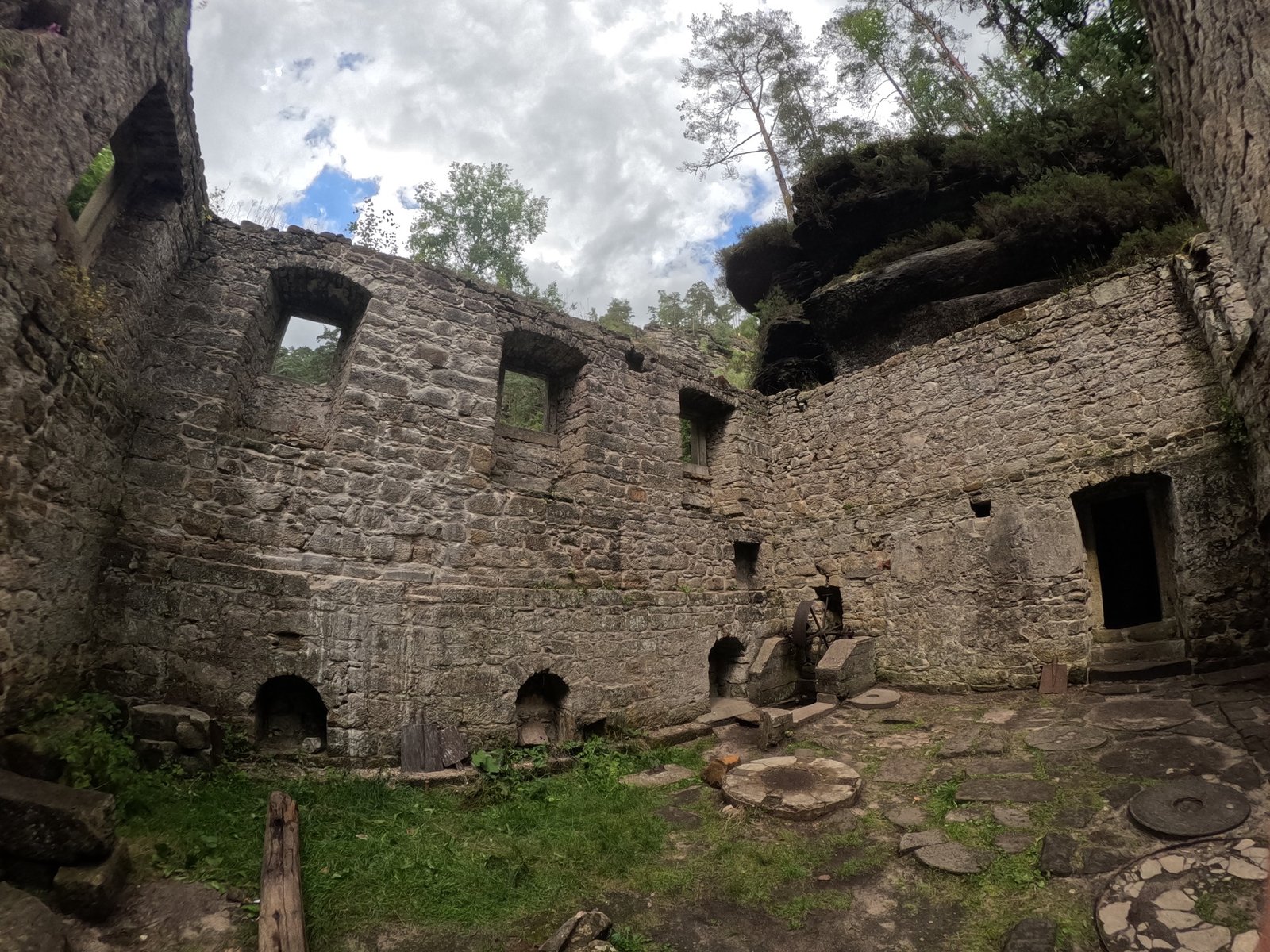
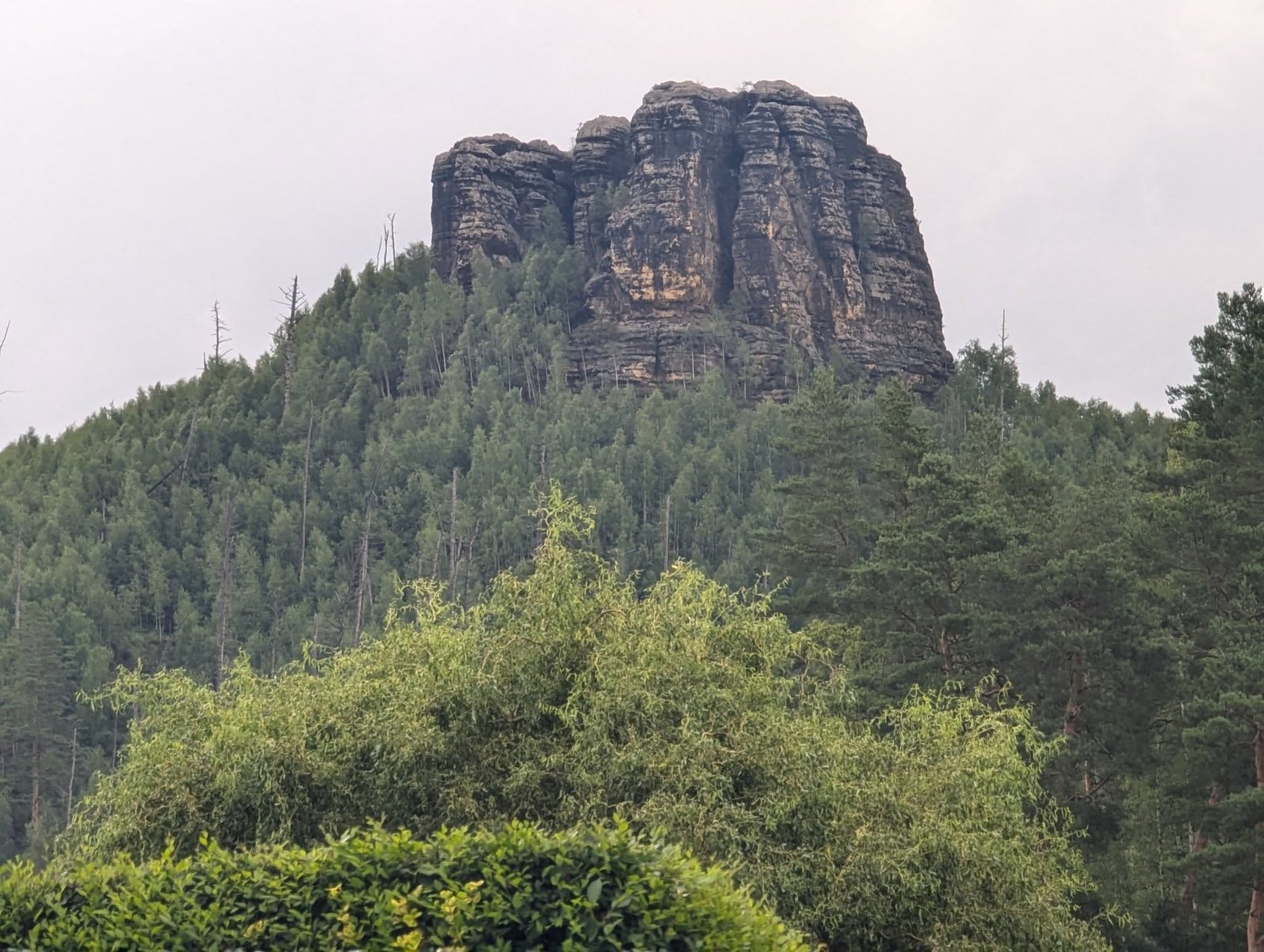
Castles once stood on some of the rocks, for example Šaunštejn and Falkenštejn. Today practically nothing is left of them – only fragments of walls and rooms carved into the rock. But the climb to the top itself, on stairs, ladders and walkways, is an attraction.
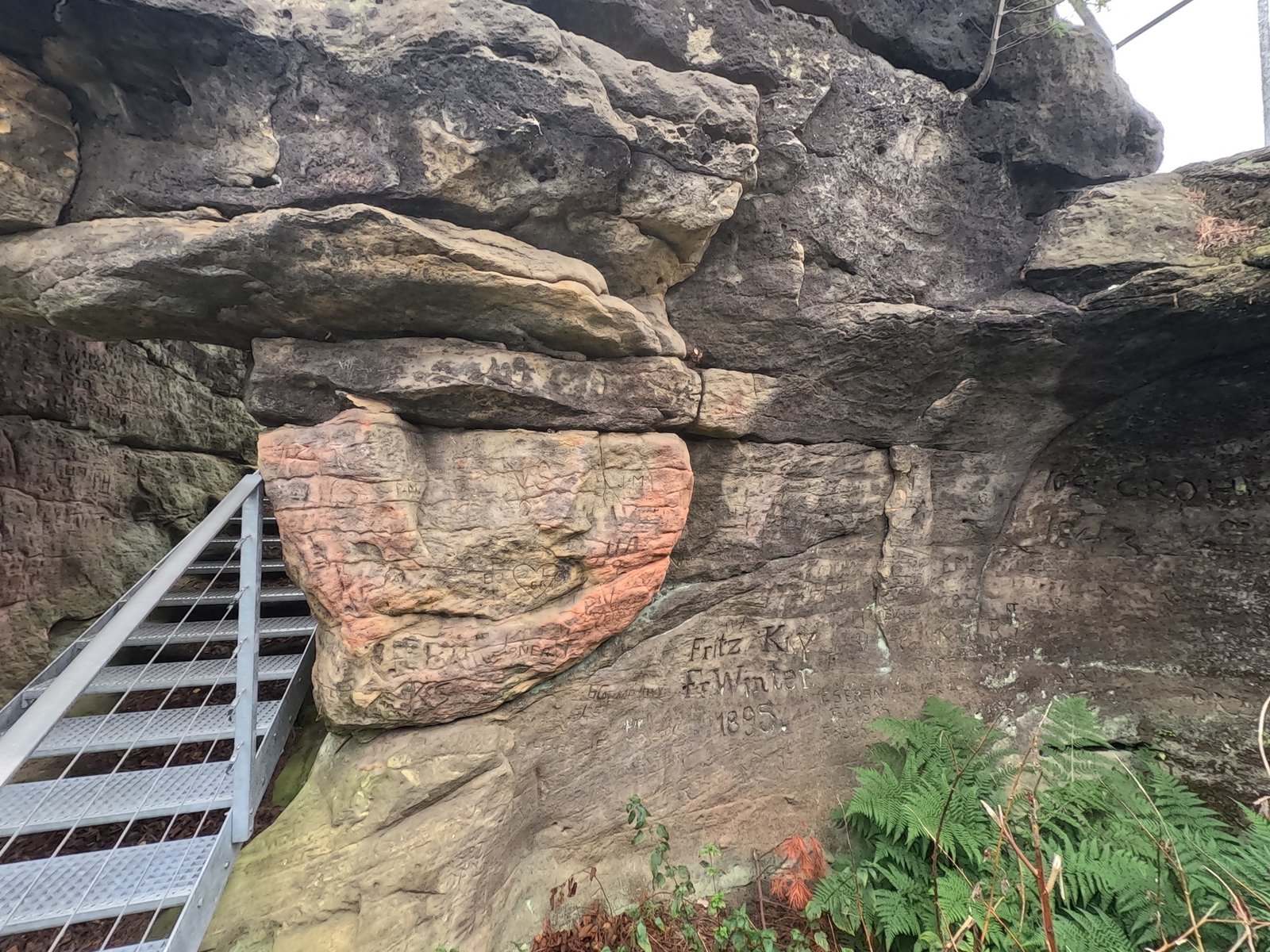
Old inscriptions carved into the sandstone by the stairs have also survived – one of them is dated 1895.
Děčín from above – viewpoints over the Elbe
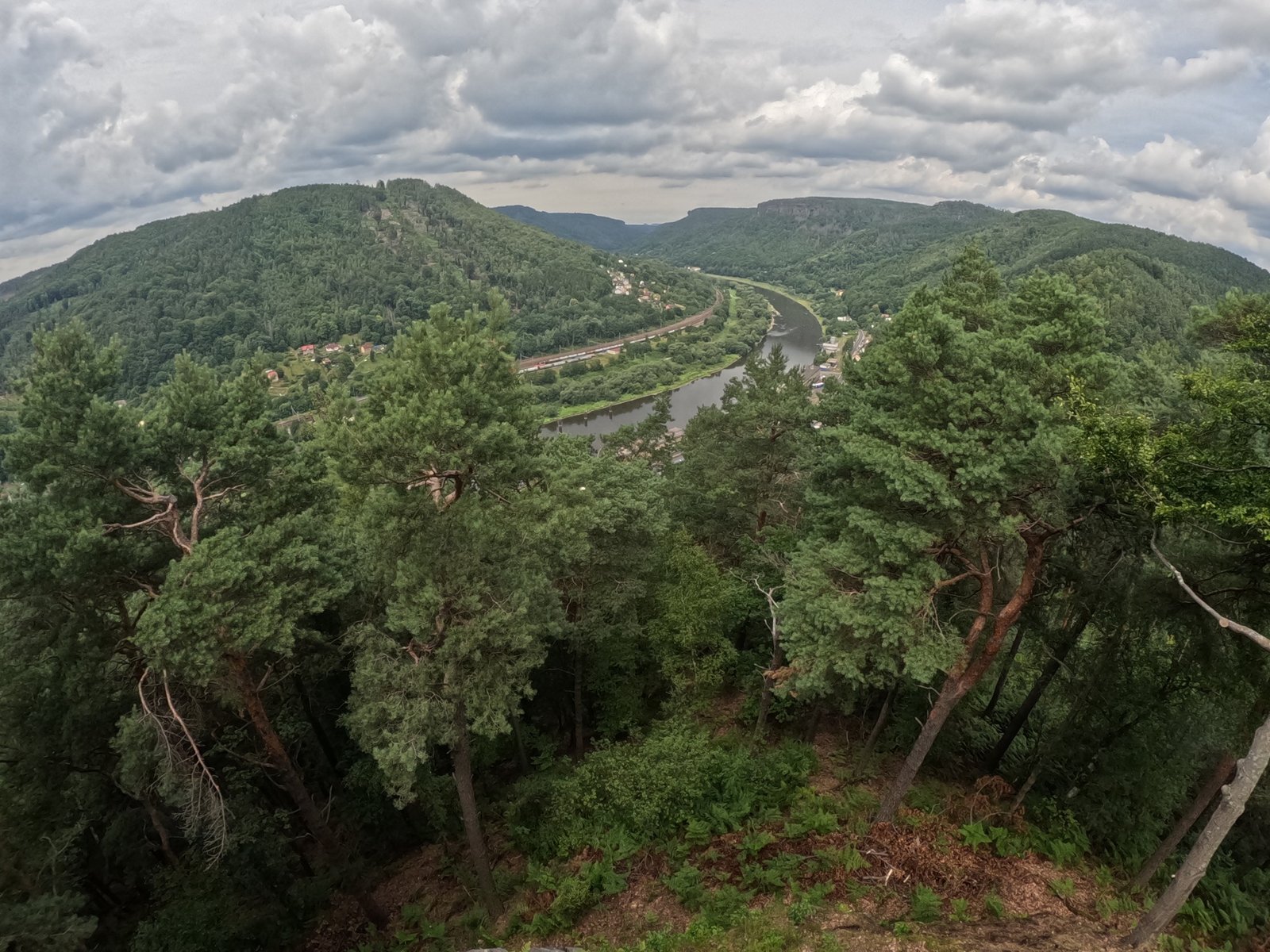
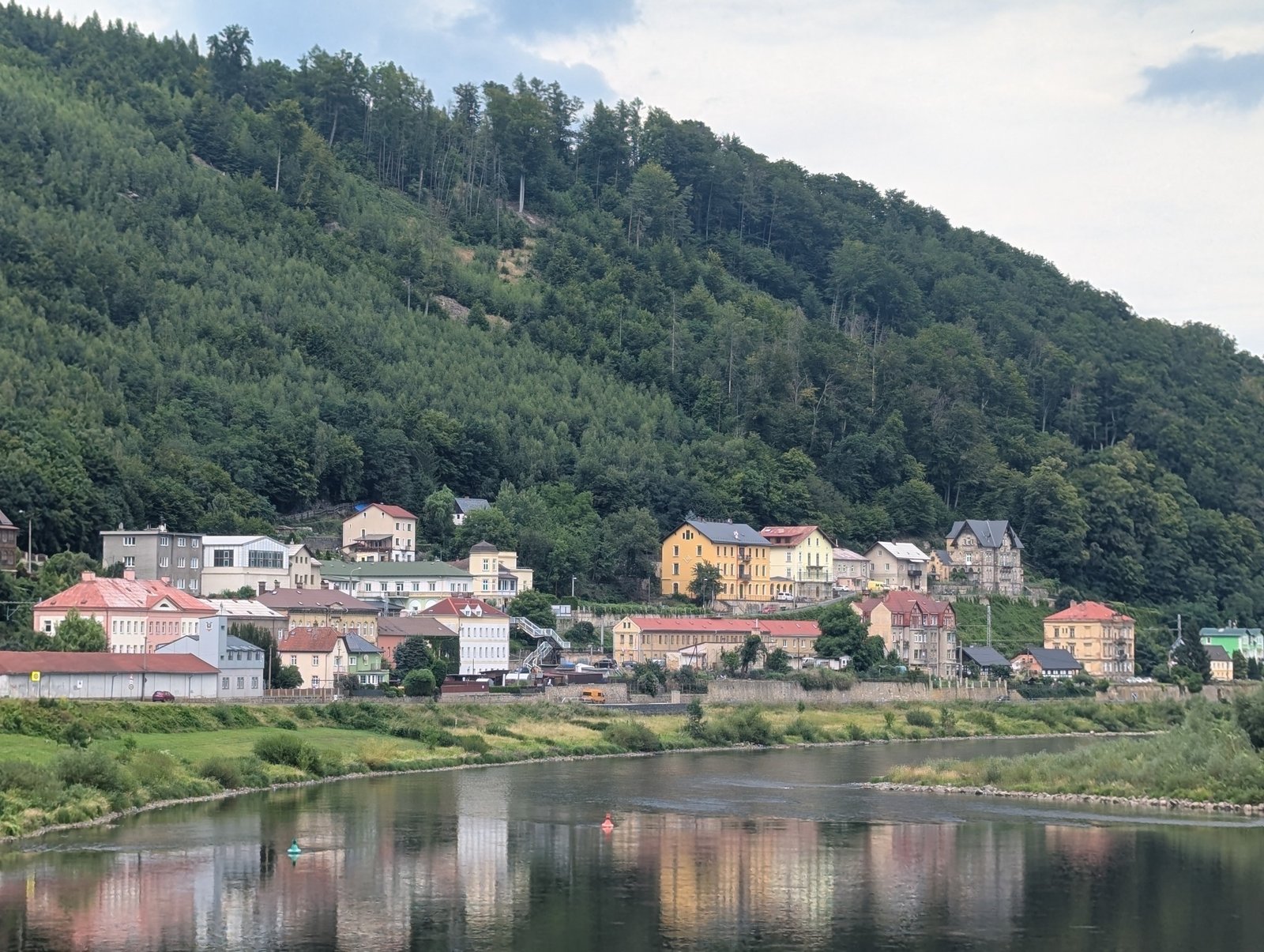
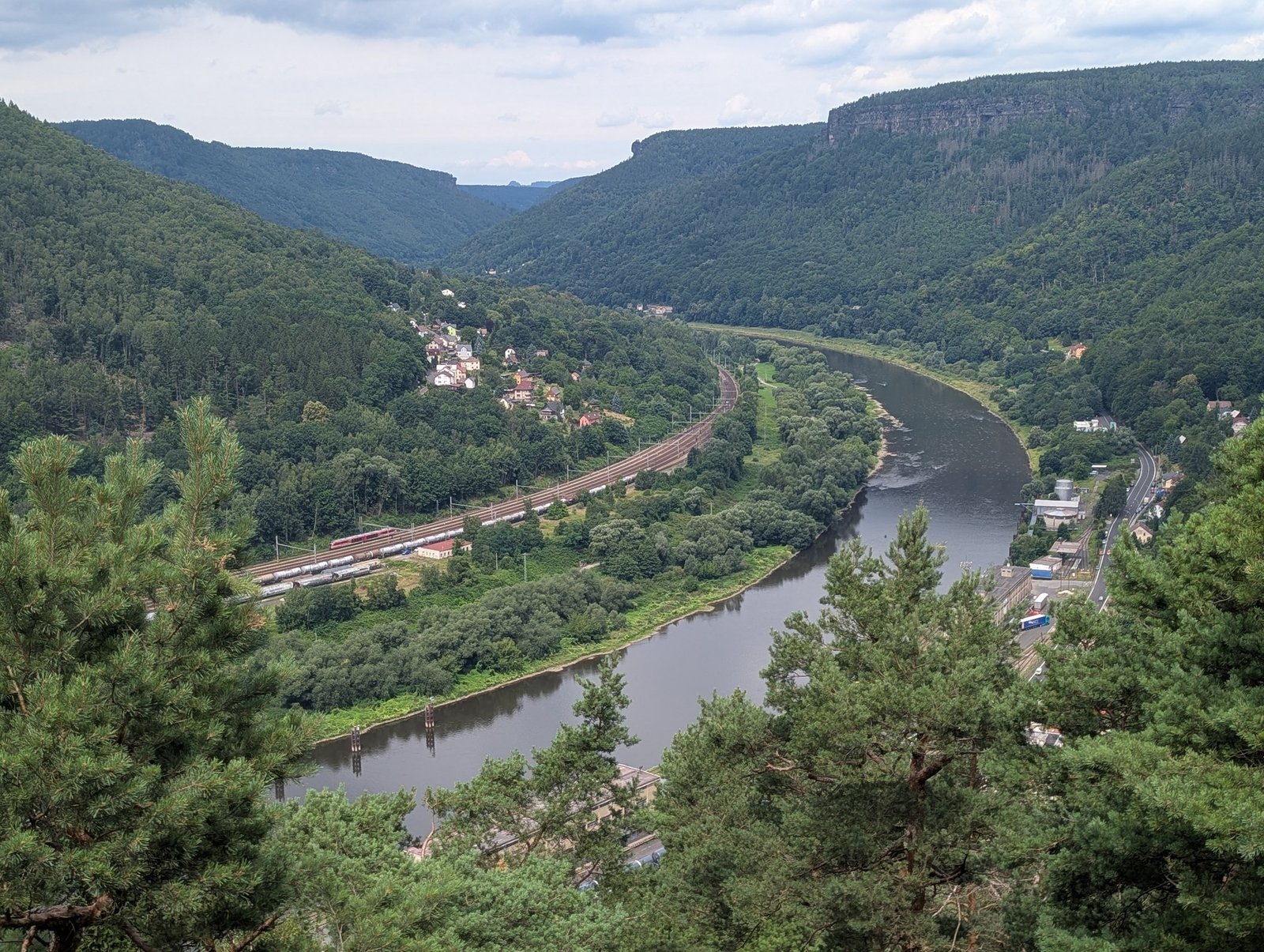
On the last day we stayed around Děčín and walked over the hills above the Elbe. Here the river flows through a deep valley between forested slopes, and from the viewpoints you can see its bends, the railway running along the bank and the villages by the water.
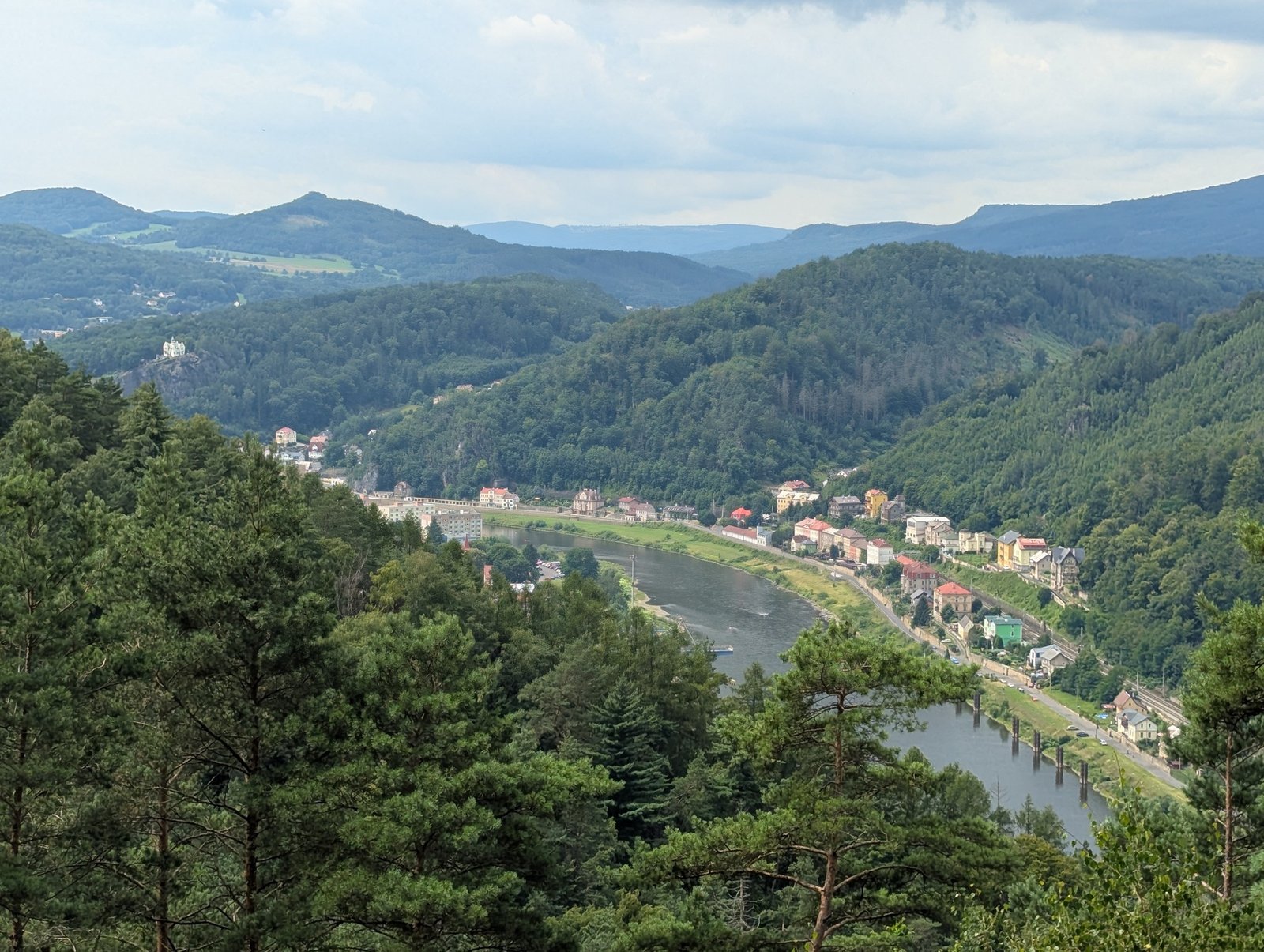
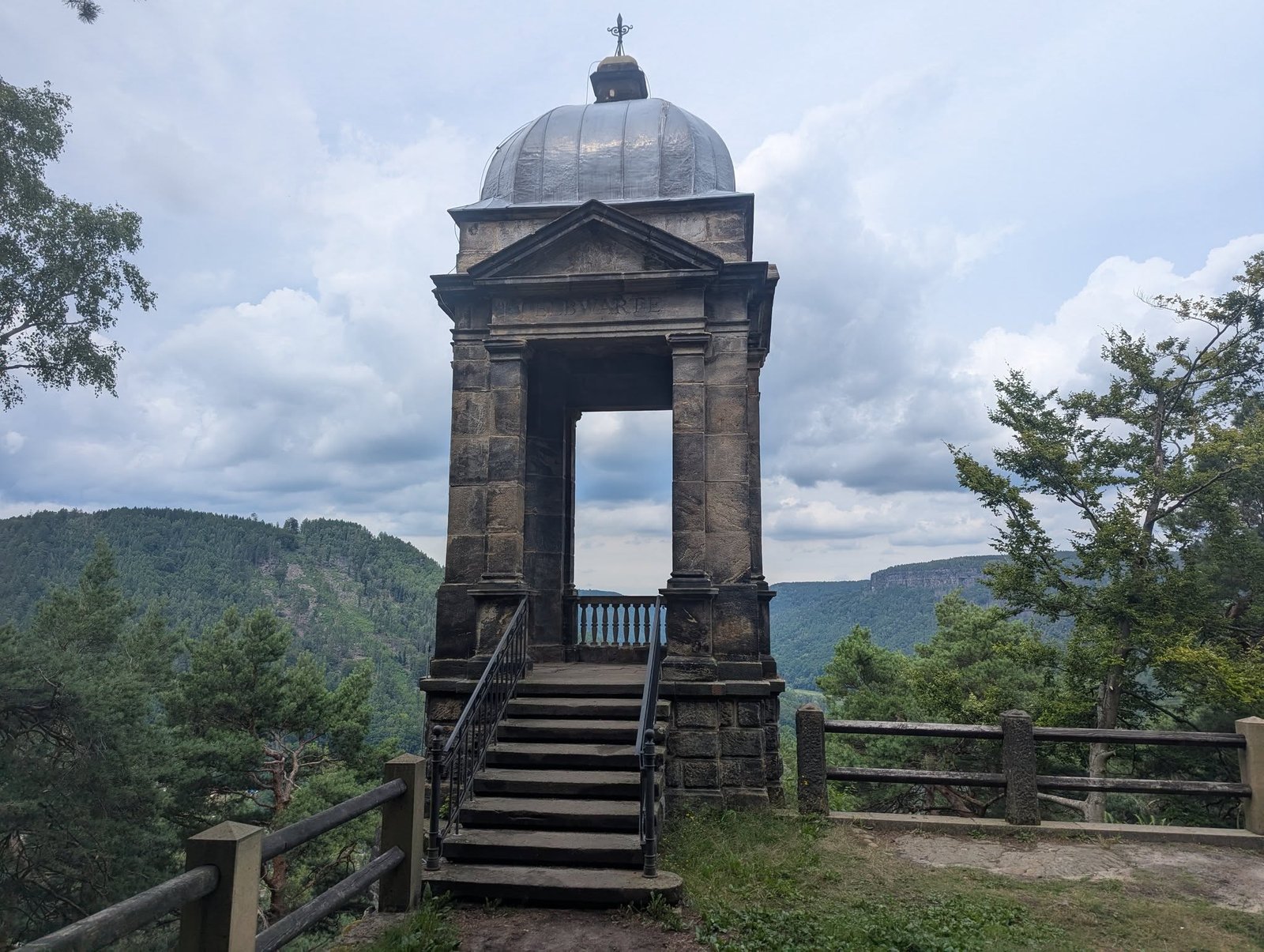
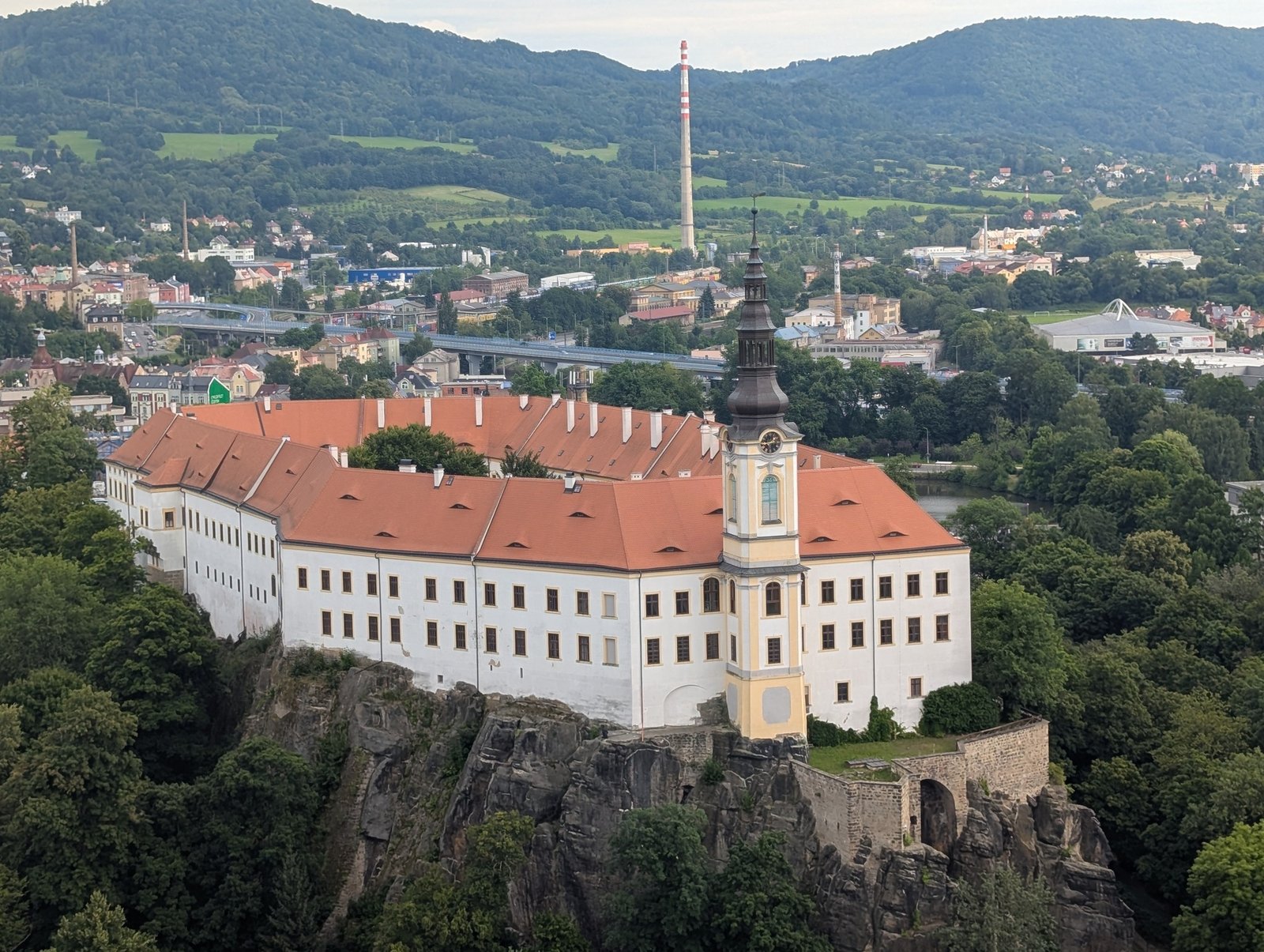
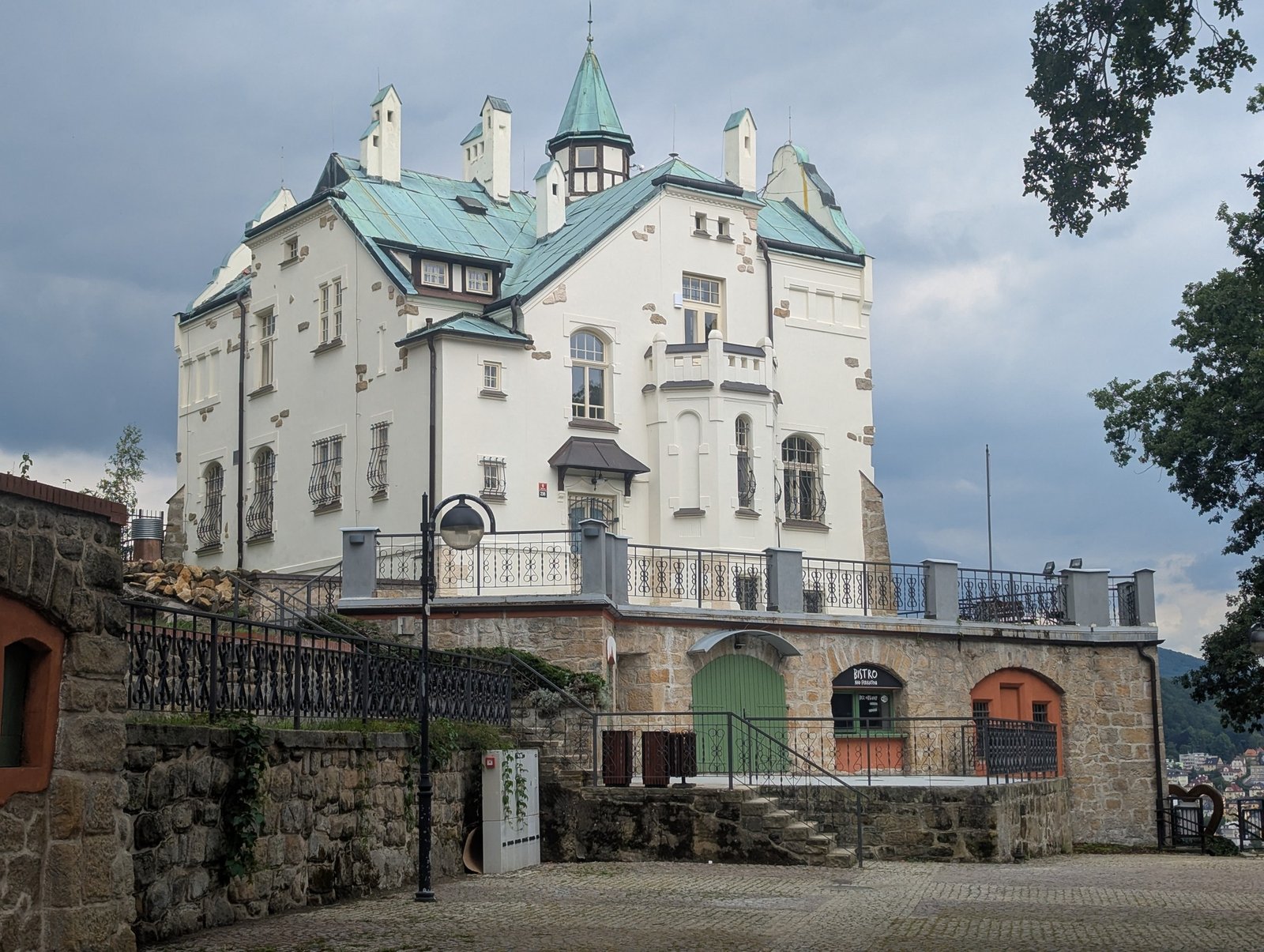
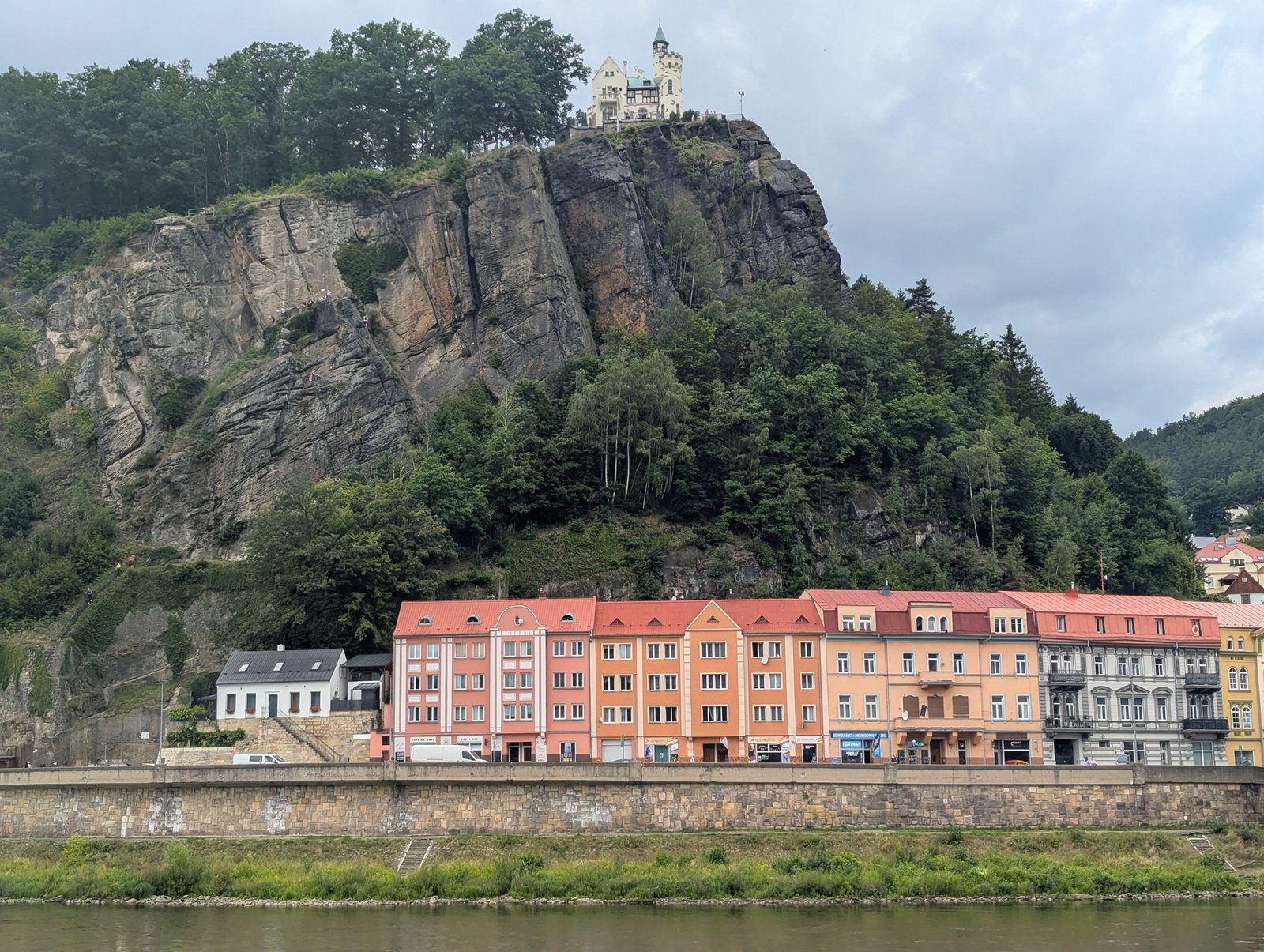
The best view of the town itself was from the Pastýřská stěna viewpoint – a rock face above the Elbe with a small castle-like building on top. From above, the most impressive sight is Děčín Castle, standing on a rock above the river.
Bohemian or Saxon Switzerland?
Although the park lies relatively close to the Polish border, it is a rather unobvious destination for a trip. From the Czech side we could sometimes see the rocks and table mountains on the German side in the distance. In my opinion Germany still wins, but both places are really worth visiting. The Bastei Bridge, Lilienstein and the Schrammsteine are covered in a separate post about Saxon Switzerland.
From Bohemian Switzerland we travelled on to Karlovy Vary and Pilsen.
Practical information
- How long – 4 days are enough for Děčín, Pravčická Gate, Růžovský vrch, the rock castles and the viewpoints over the Elbe.
- Base – Děčín: the town was not crowded and prices were reasonable. It is worth setting aside one day for Děčín itself – the castle (we visited it with a guide) and the surrounding hills with viewpoints.
- Routes – on no day did we exceed 20 km or 1000 m of elevation gain, but some climbs can be a bit of a workout.
- Stairs and ladders – steep stairs and ladders lead to many viewpoints and rock castles. People afraid of heights should be prepared for this.
- Weather – in July 2025 it rained a little almost every day, but we usually managed to dodge the rain. It is worth keeping your plans a bit flexible.
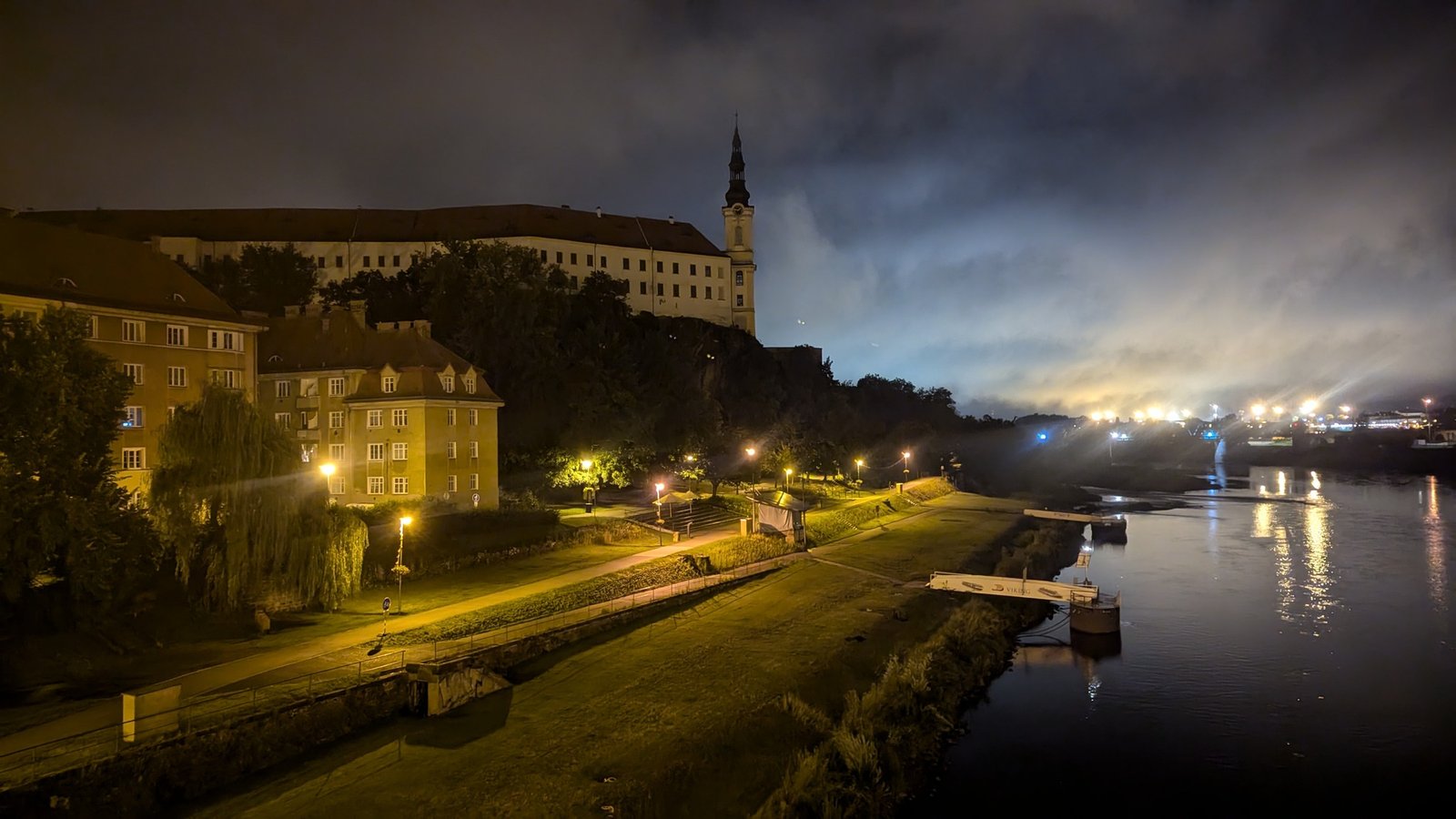
Photo gallery