On 9 August 2016, during a few days with my parents around Kraków, after visiting the Auschwitz-Birkenau Museum we went on to two places connected with John Paul II. First to Wadowice, where Karol Wojtyła was born – about 50 km south-west of Kraków – and then to Kalwaria Zebrzydowska, whose Bernardine sanctuary is on the UNESCO World Heritage List. In the evening we were already in the Wieliczka Salt Mine – I describe it in my post about Kraków. Practical tips are at the end.
Table of contents
- John Paul II Square and the basilica in Wadowice
- Inside the basilica and Karol Wojtyła’s baptismal font
- John Paul II’s Family Home
- Papal cream cakes
- Kalwaria Zebrzydowska – the basilica and the Bernardine monastery
- The war cemetery of 1915
- Practical information
John Paul II Square and the basilica in Wadowice
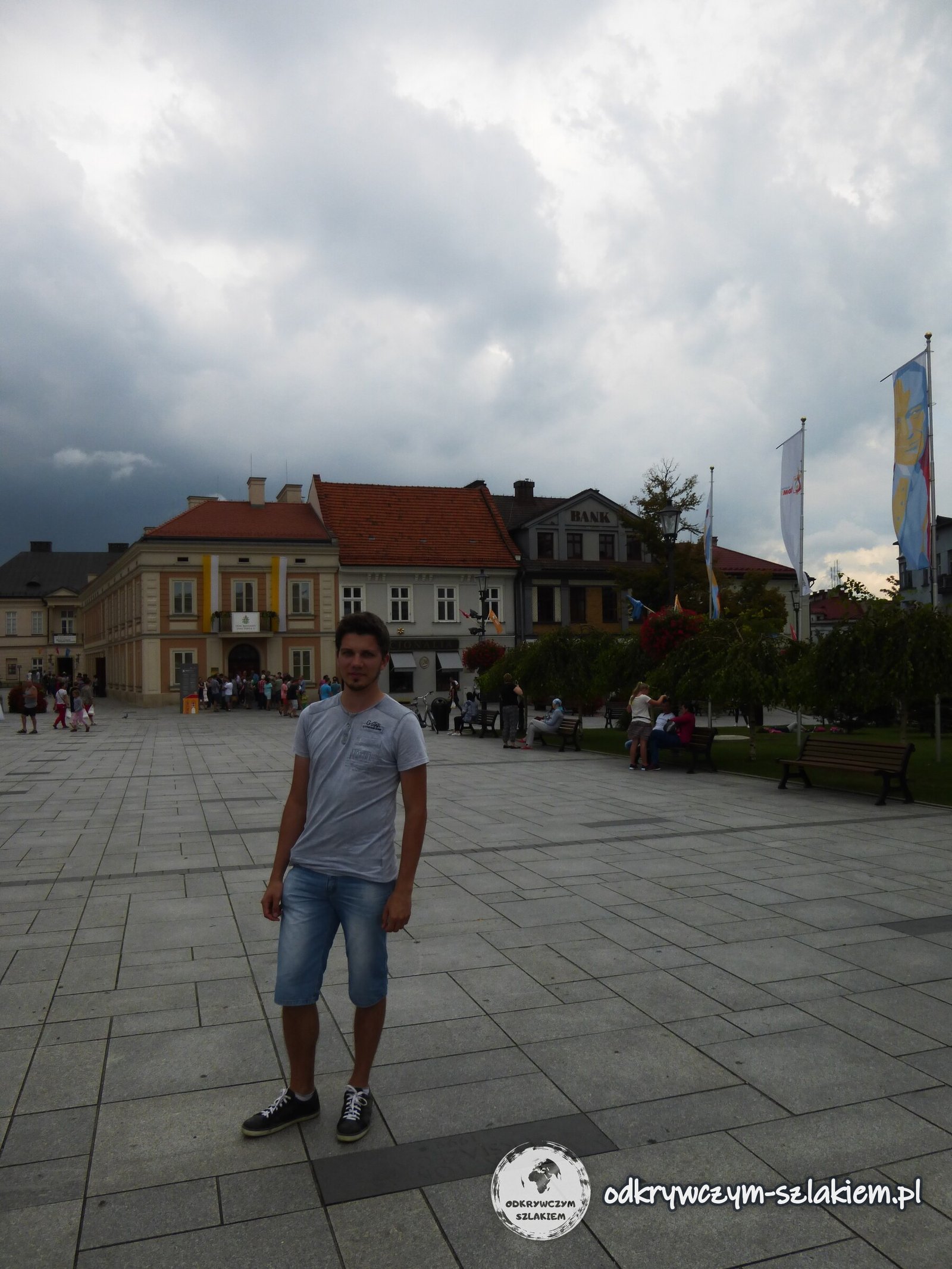
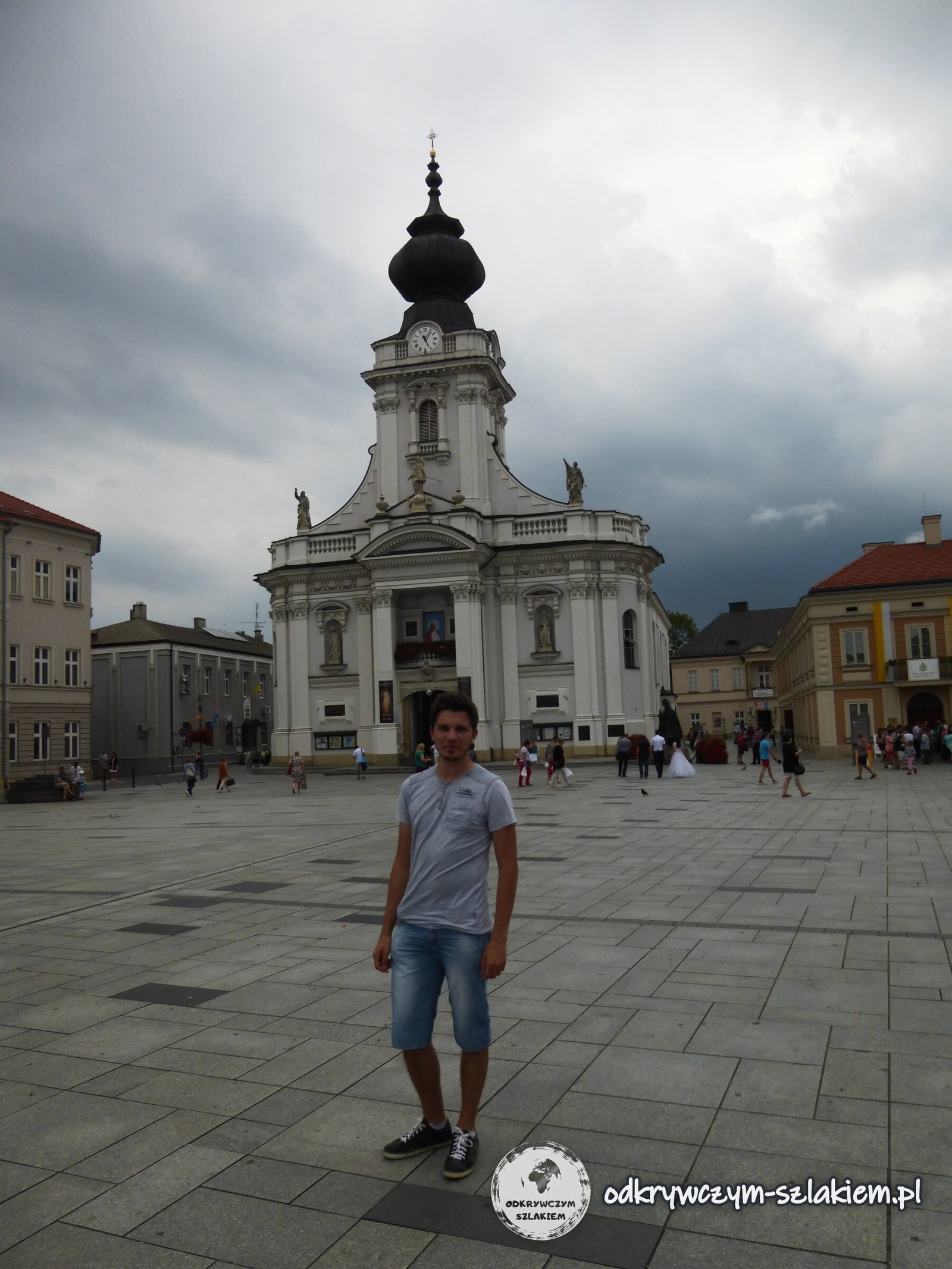
Wadowice is a town of about 17,000 people on the Skawa river, at the foot of the Beskid Mały hills. Its centre is the market square, John Paul II Square, dominated by the Basilica of the Presentation of the Blessed Virgin Mary – the parish church where Karol Wojtyła was baptised.
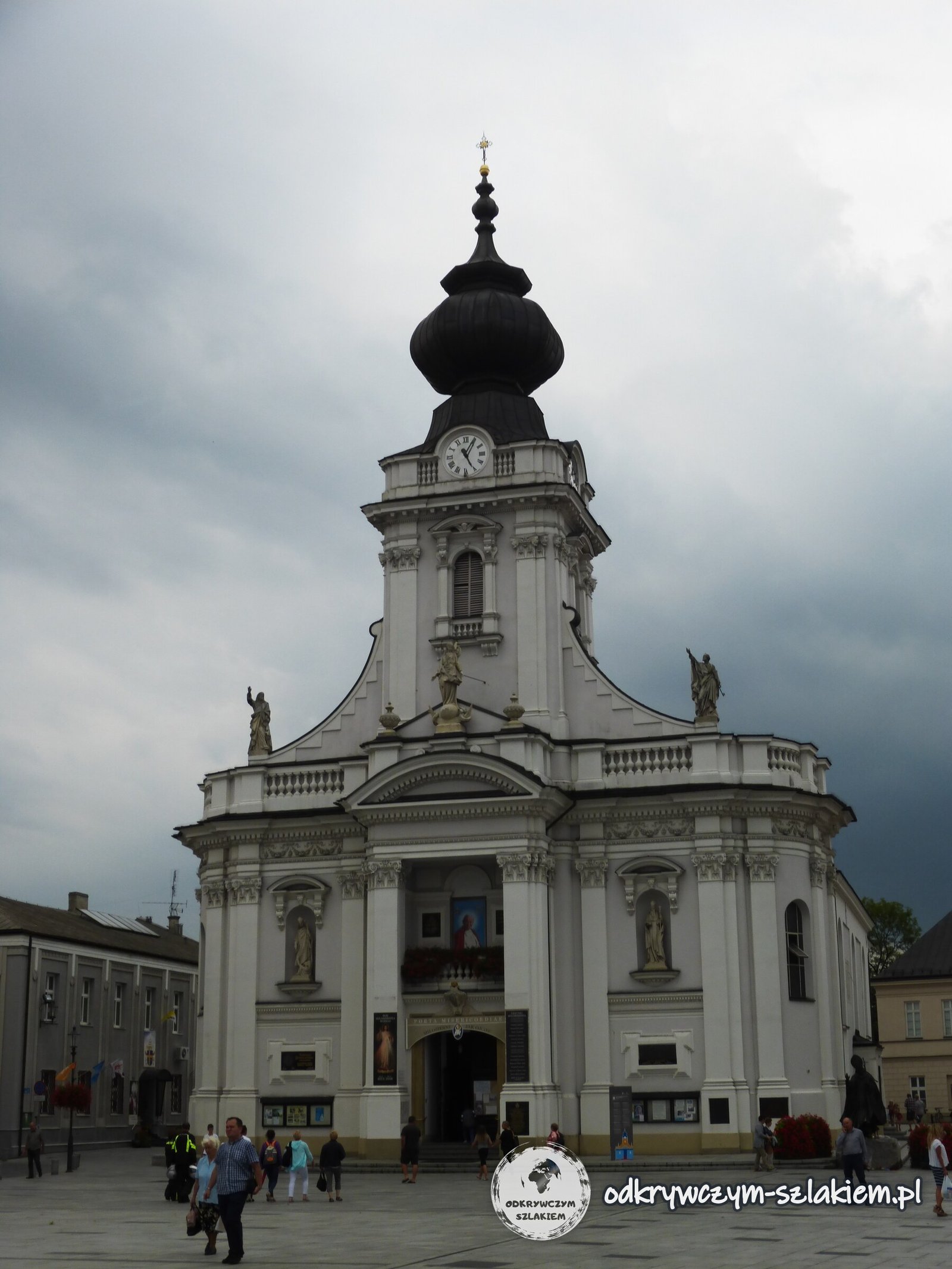
The church is first mentioned in 1325. The oldest part is the Gothic chancel from the mid-15th century, built after the town fire of 1440. The present late-Baroque body dates from 1792–1798, and at the end of the 19th century the Kraków architect Tomasz Pryliński rebuilt the façade in Neo-Baroque style. The portico with a balcony above the entrance and the distinctive onion-shaped cap of the tower also date from that time.
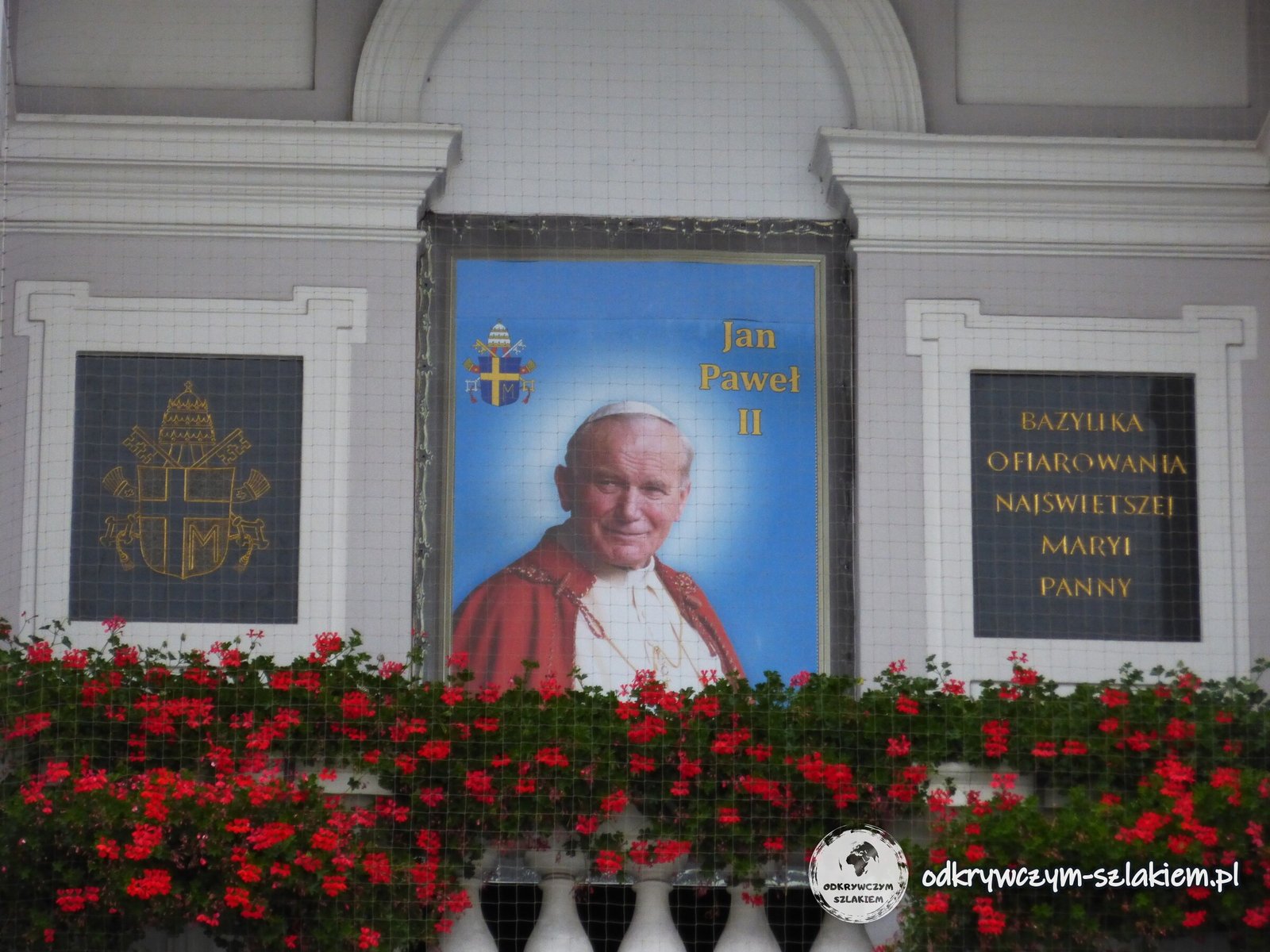
On the balcony above the entrance hung a portrait of the Pope among red geraniums, flanked by plaques with the papal coat of arms and the name of the basilica. John Paul II granted the church the title of minor basilica in 1992.
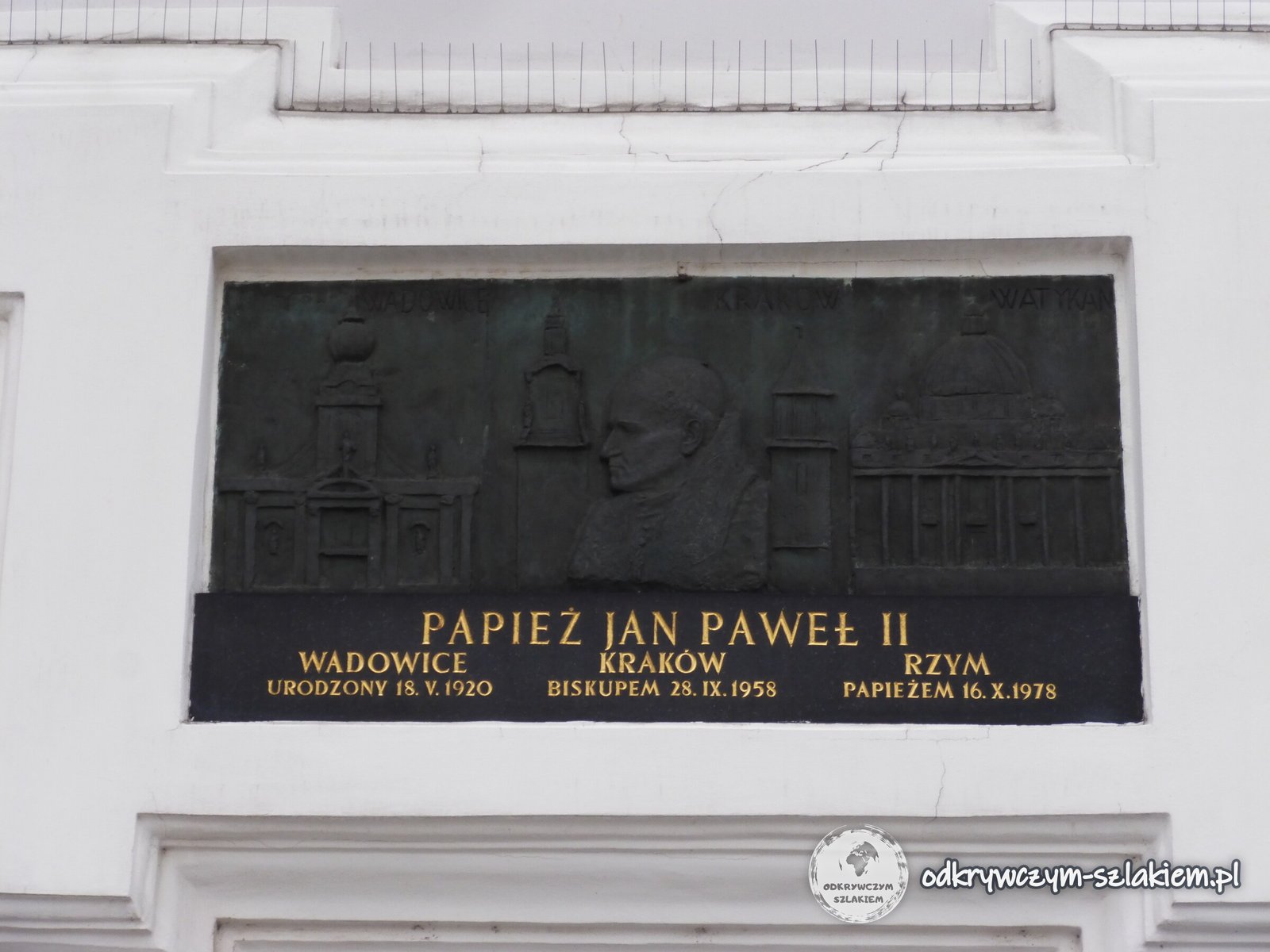
On the wall of the basilica there is a relief plaque with three stages of the Pope’s life: Wadowice – born on 18 May 1920, Kraków – bishop on 28 September 1958, Rome – pope on 16 October 1978. On the south wall there is also a sundial with the motto “Czas ucieka, wieczność czeka” (Time flies, eternity awaits).
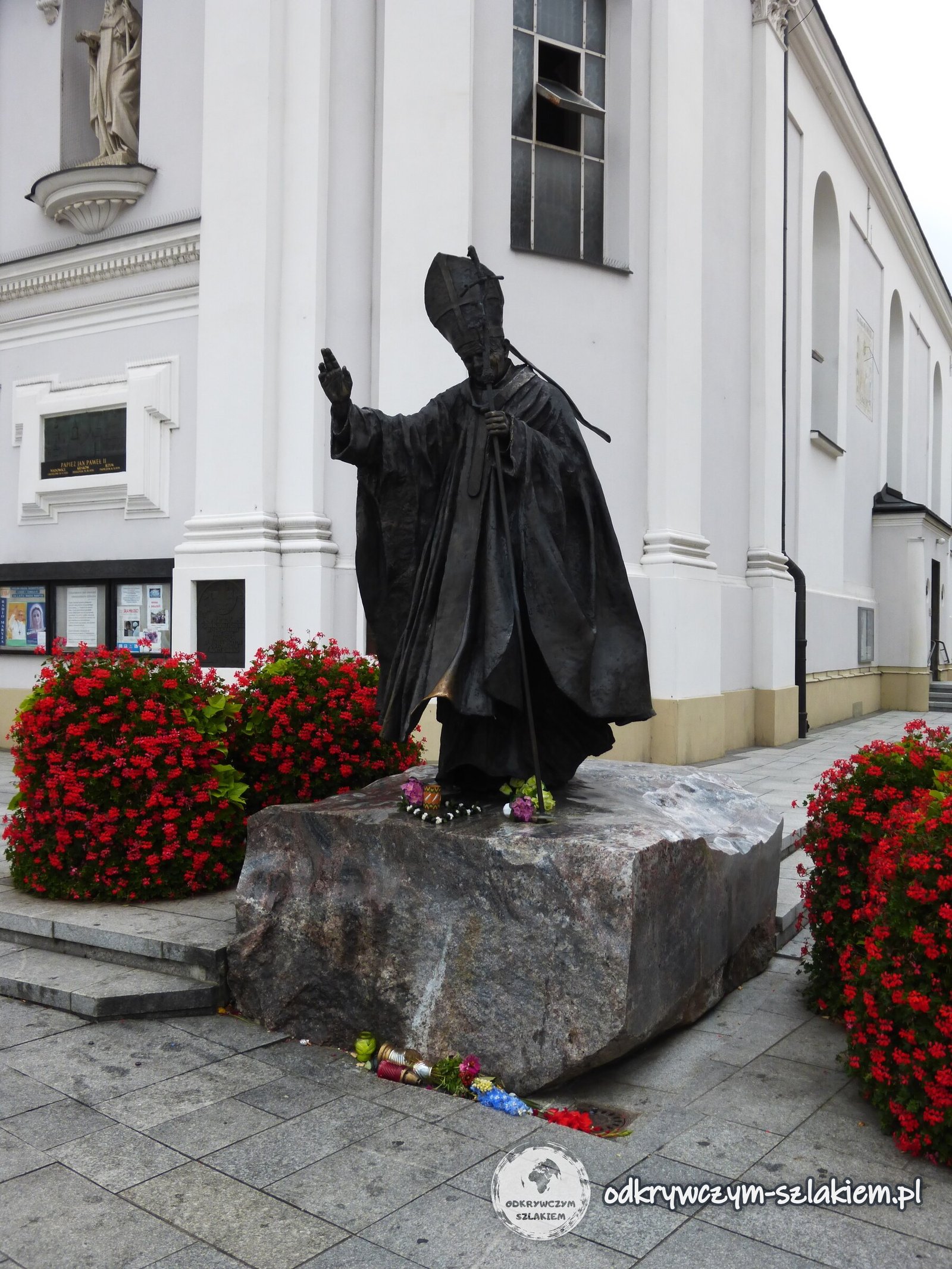
In front of the basilica stands a bronze monument to John Paul II by Maksymilian Biskupski. The Pope stands on a rock like St Peter, holding a crozier in his left hand and blessing pilgrims with his right. Cardinal Stanisław Dziwisz unveiled and blessed it on 30 June 2006.
Inside the basilica and Karol Wojtyła’s baptismal font
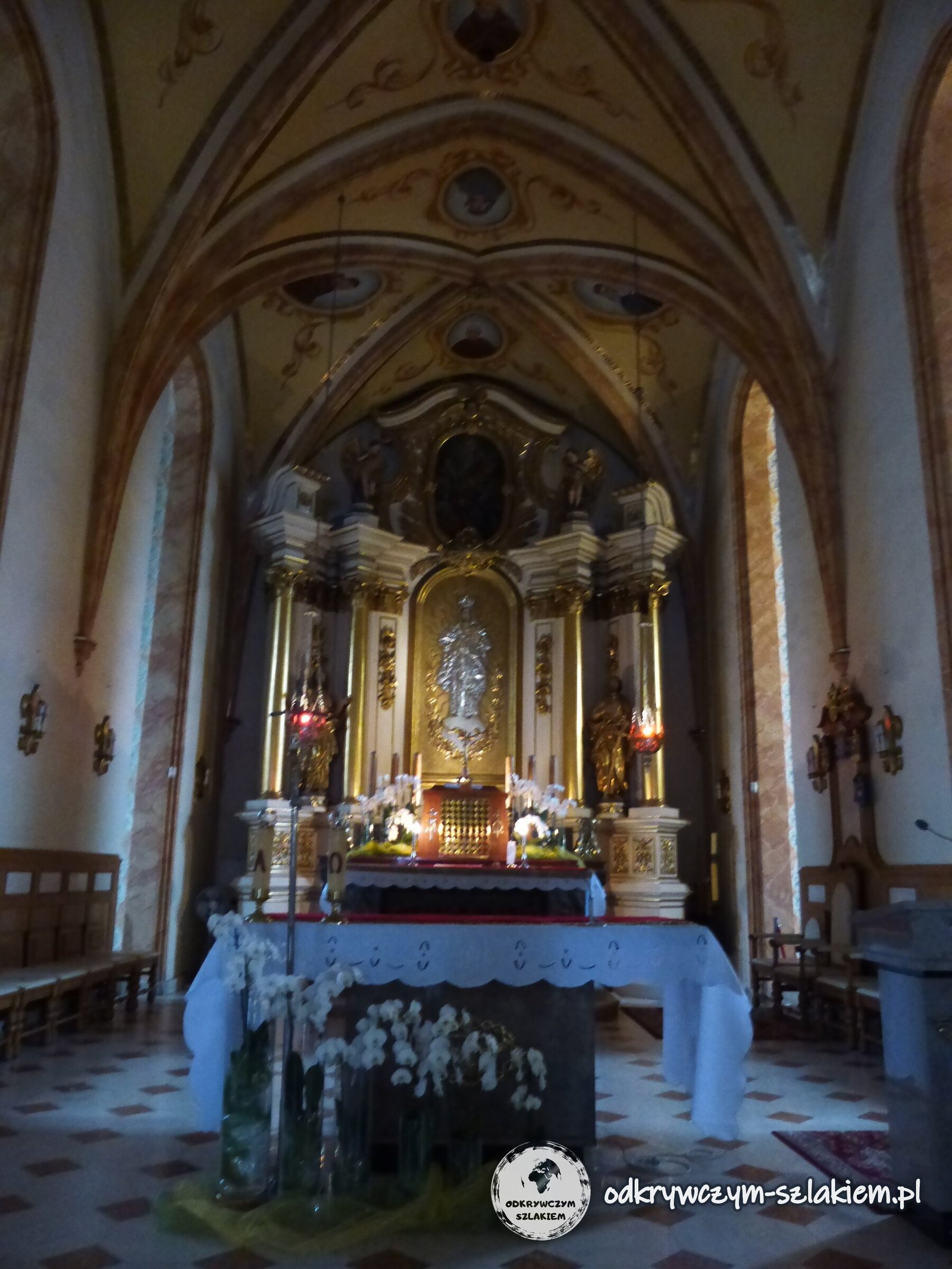
Inside, the oldest part is the Gothic chancel with a rib vault and a gilded Baroque high altar with paintings of the Mother of God and the Transfiguration. The chancel walls have frescoes of eight Polish saints linked to southern Poland, including St Faustina, St Maximilian Kolbe and St Brother Albert, and the vaults of the nave are painted with scenes referring to the Pope’s teaching.

In the Chapel of the Crucifixion, the figure of Christ on the cross stands against a fresco of Golgotha and Jerusalem. For pilgrims, though, the most important is the Chapel of the Holy Family with a Baroque stone font with a golden lid – here, on 20 June 1920, the army chaplain Fr Franciszek Żak baptised Karol Wojtyła.
The Chapel of Our Lady of Perpetual Help holds the image before which young Karol prayed every day before school. John Paul II crowned it with papal crowns in the Wadowice market square on 16 June 1999.
John Paul II’s Family Home
Right next to the basilica, in the house at 7 Kościelna Street, lived the Wojtyła family. From 1919 to 1938 they had a flat with two rooms and a kitchen on the first floor – this is where Karol was born on 18 May 1920. After his final school exams, in 1938, he moved to Kraków with his father.
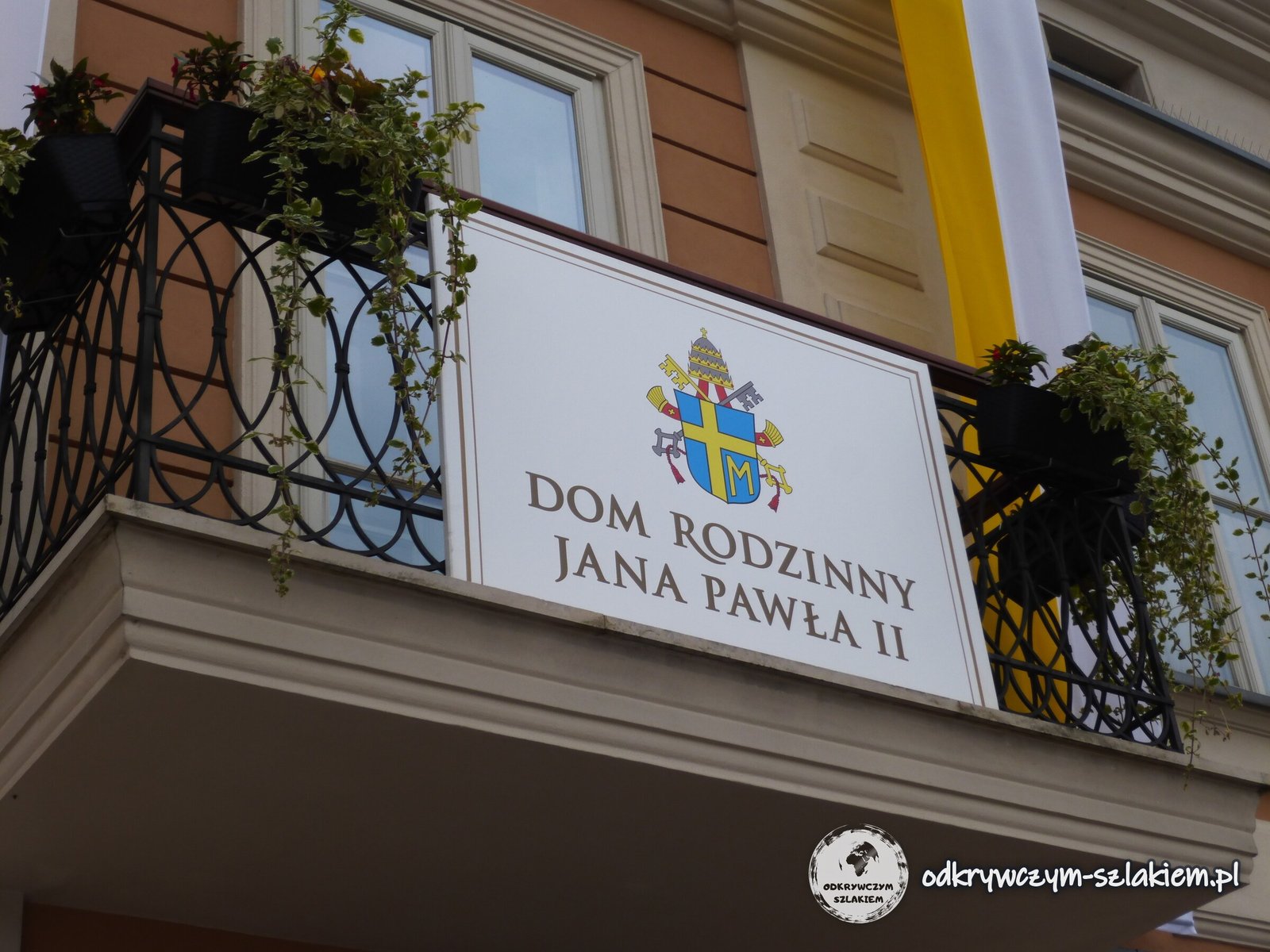
A papal exhibition had been open here since 1984. In 2010 work began on turning the whole house into a museum, which opened in 2014. The John Paul II Family Home Museum covers his whole life, from his childhood in Wadowice to his pontificate, and a visit takes about 1.5 hours – prices and opening hours are in the practical information. In Kraków, Wojtyła later lived on Kanonicza Street, among other places – I write about it in my post about Kraków.
Papal cream cakes
Wadowice is famous for kremówki – cream cakes made of two layers of puff pastry with a cream filling. They owe their fame to the Pope’s words of 16 June 1999. At a meeting with the townspeople he recalled: “And over there was a cake shop. After our final exams we went there for kremówki.”
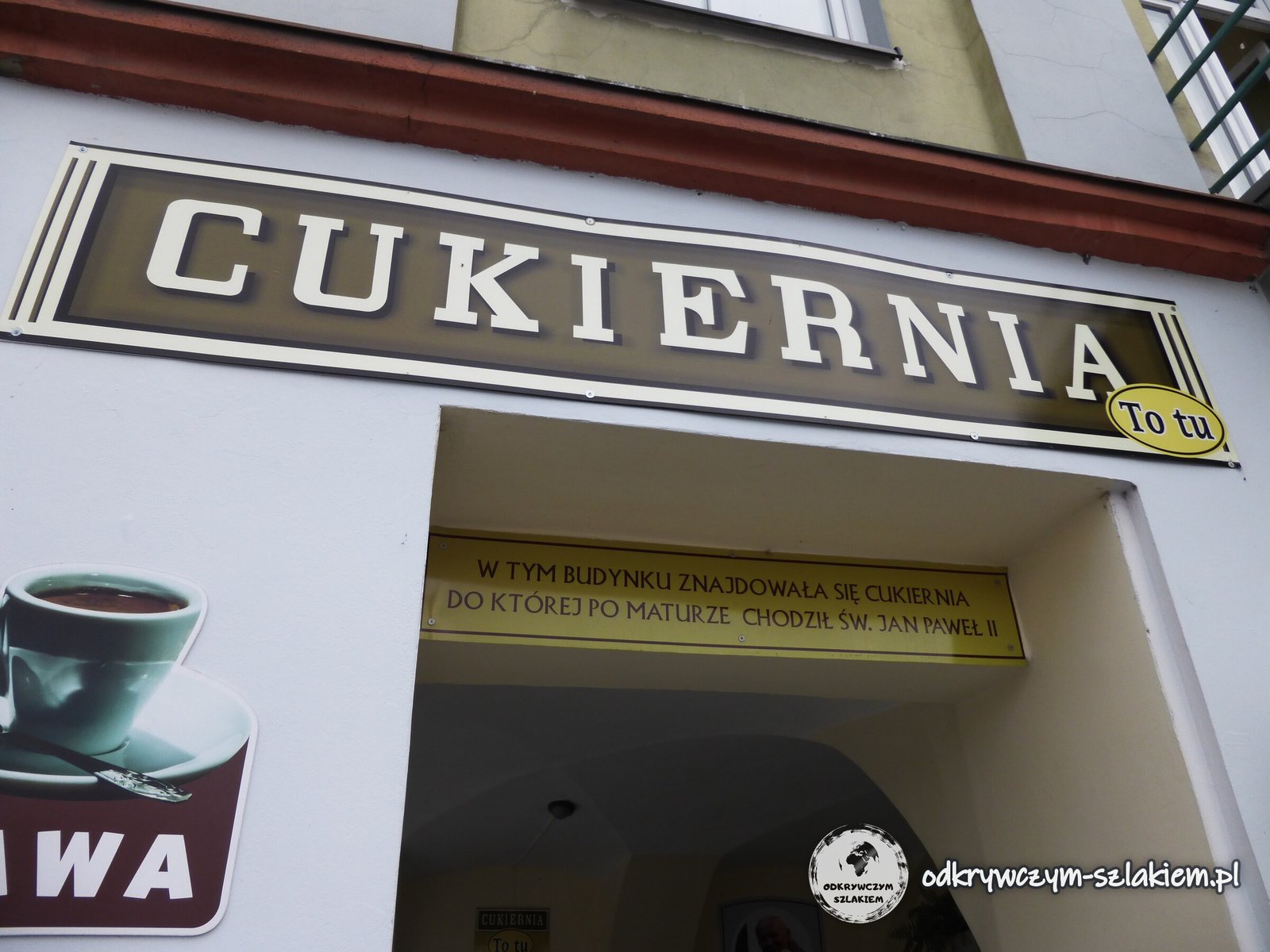
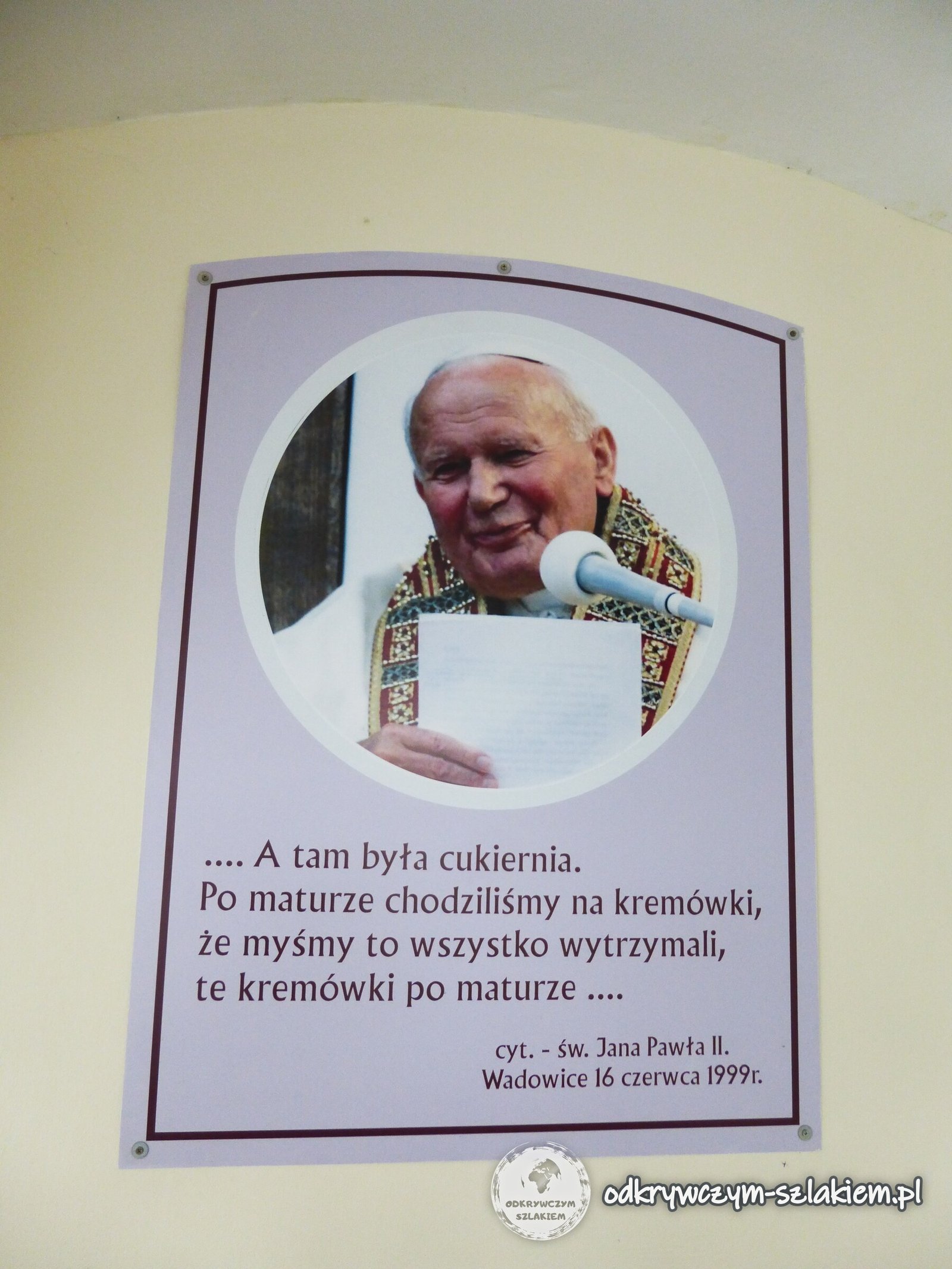
The cake shop was run by Karol Hagenhuber, who came to Wadowice from Vienna in 1936. It stood on the corner of the market square and Mickiewicza Street. The original shop is long gone, but there is a cake shop in the building again, and a plaque above the entrance recalls that Karol Wojtyła came here after his final exams. Next to it hangs a board with a longer passage from the Pope’s memories.
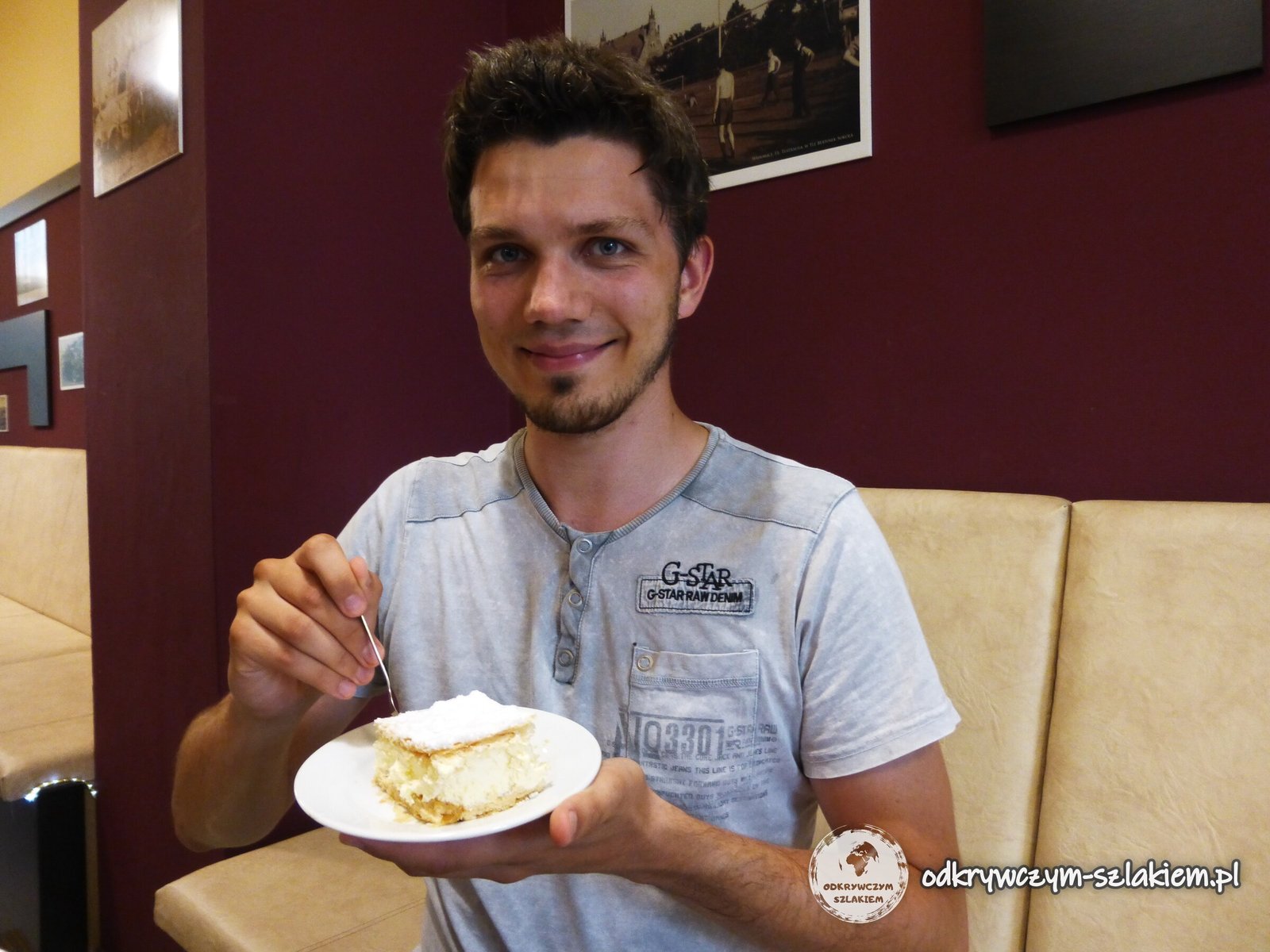
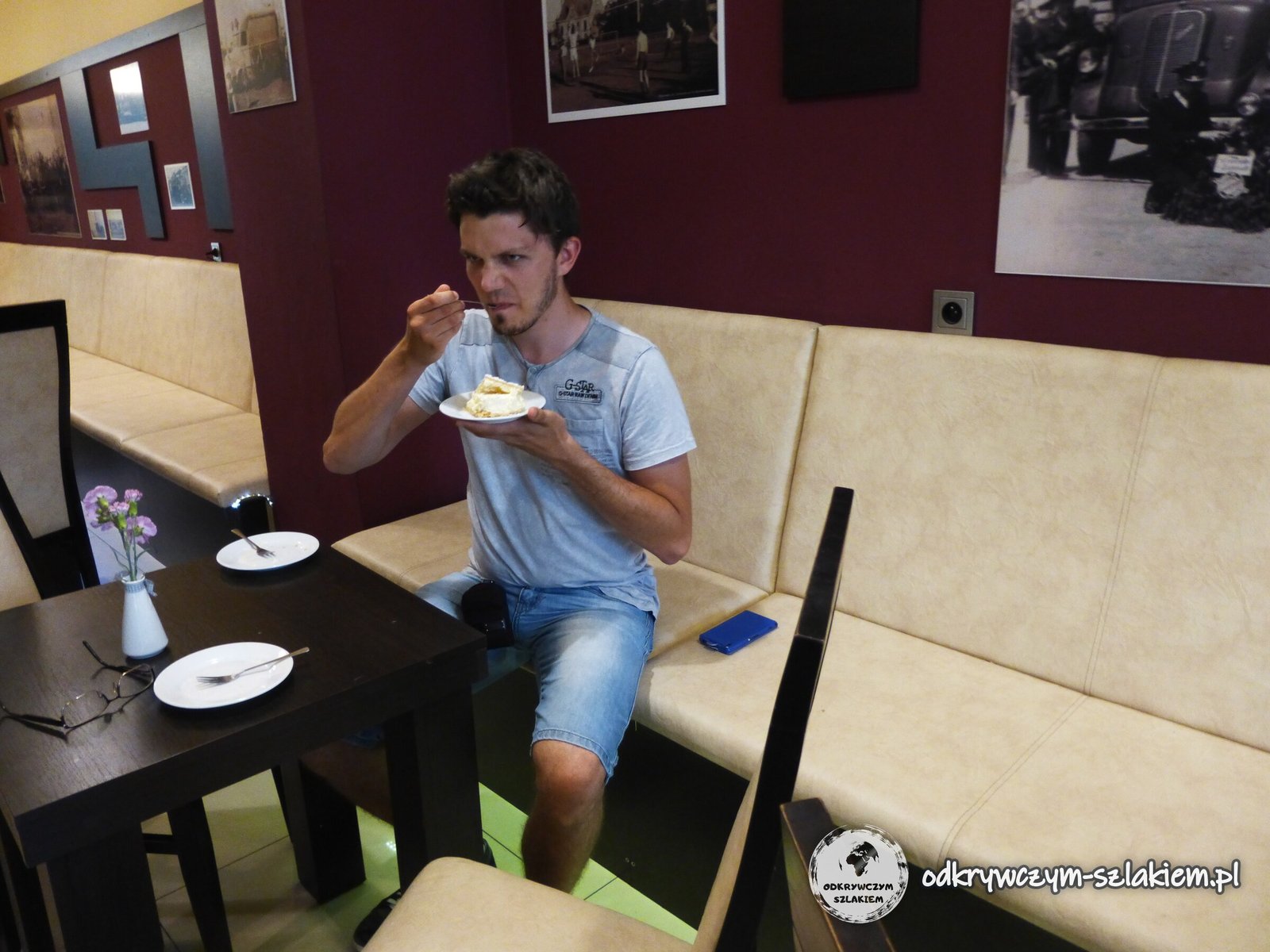
I had my kremówka right after we arrived, in a café in the centre. Many cake shops in Wadowice now sell kremówki called “papal”.
Kalwaria Zebrzydowska – the basilica and the Bernardine monastery
From Wadowice we went about 15 km east to Kalwaria Zebrzydowska, a small town about 30 km south-west of Kraków. It is home to the Bernardine Passion and Marian sanctuary, which in 1999 was added to the UNESCO World Heritage List as a Mannerist architectural and park landscape complex and pilgrimage park.
The sanctuary was founded by Mikołaj Zebrzydowski, the voivode of Kraków. In 1600 he built the Chapel of the Crucifixion on the hill, and on 1 December 1602 he signed the foundation act of a monastery for the Bernardine friars. The chapels and churches were laid out over the surrounding hills on the model of Jerusalem – there are 42 of them along the Calvary paths, and the Paths of Our Lord alone are more than 8 km long.
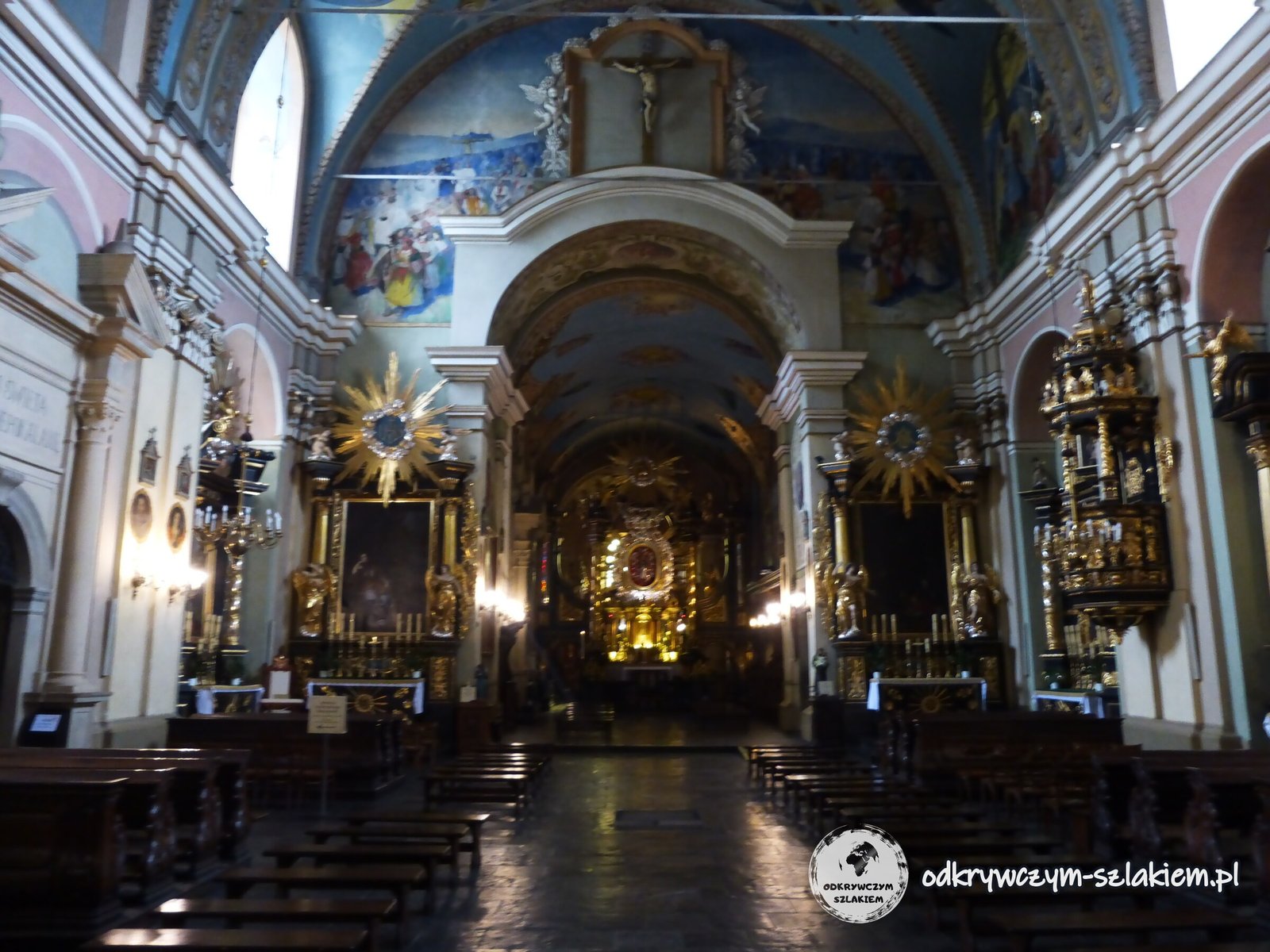
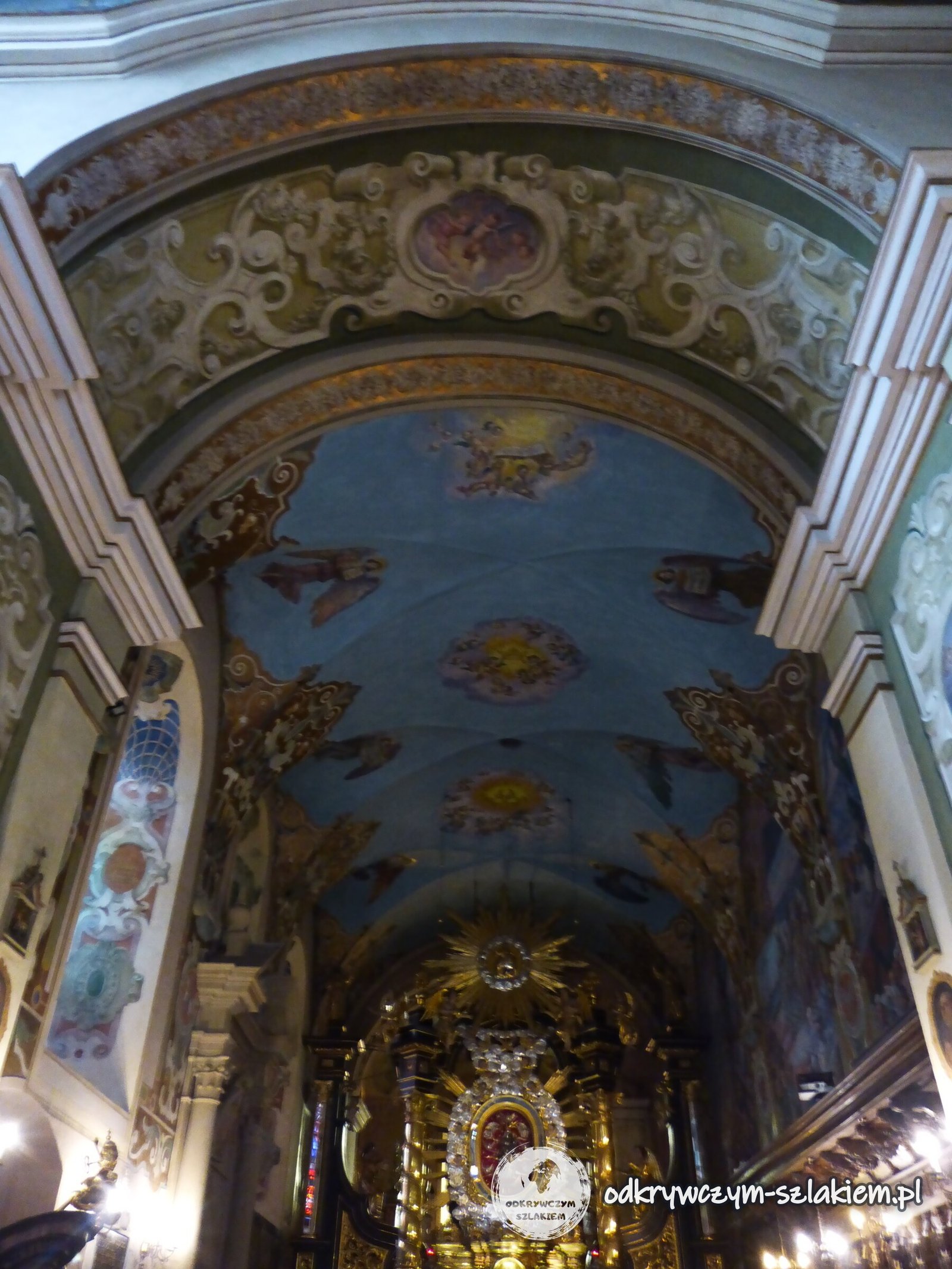
The monastery church was built in 1603–1609 to a design by Giovanni Maria Bernardoni, with Paul Baudarth from Antwerp in charge of construction. It was later enlarged – the façade with two towers was finished in 1702. The interior is Baroque, with painted vaults and gilded altars. John Paul II gave the Church of Our Lady of the Angels the title of minor basilica on 7 June 1979, during his first pilgrimage to Poland.

In 2016 the Extraordinary Jubilee of Mercy was under way, and the entrance under the organ loft was marked as a Door of Mercy. The loft balustrade bears John Paul II’s coat of arms, and a banner of World Youth Day, held in Kraków at the end of July, was still hanging on the tower.

Karol Wojtyła came to Kalwaria from childhood, and later as a priest and a bishop. He often walked the paths alone – he said that Kalwaria “has this about it, that you can easily hide here”. As pope he came in 1979 and in August 2002, on his last pilgrimage to Poland, for the 400th anniversary of the sanctuary.
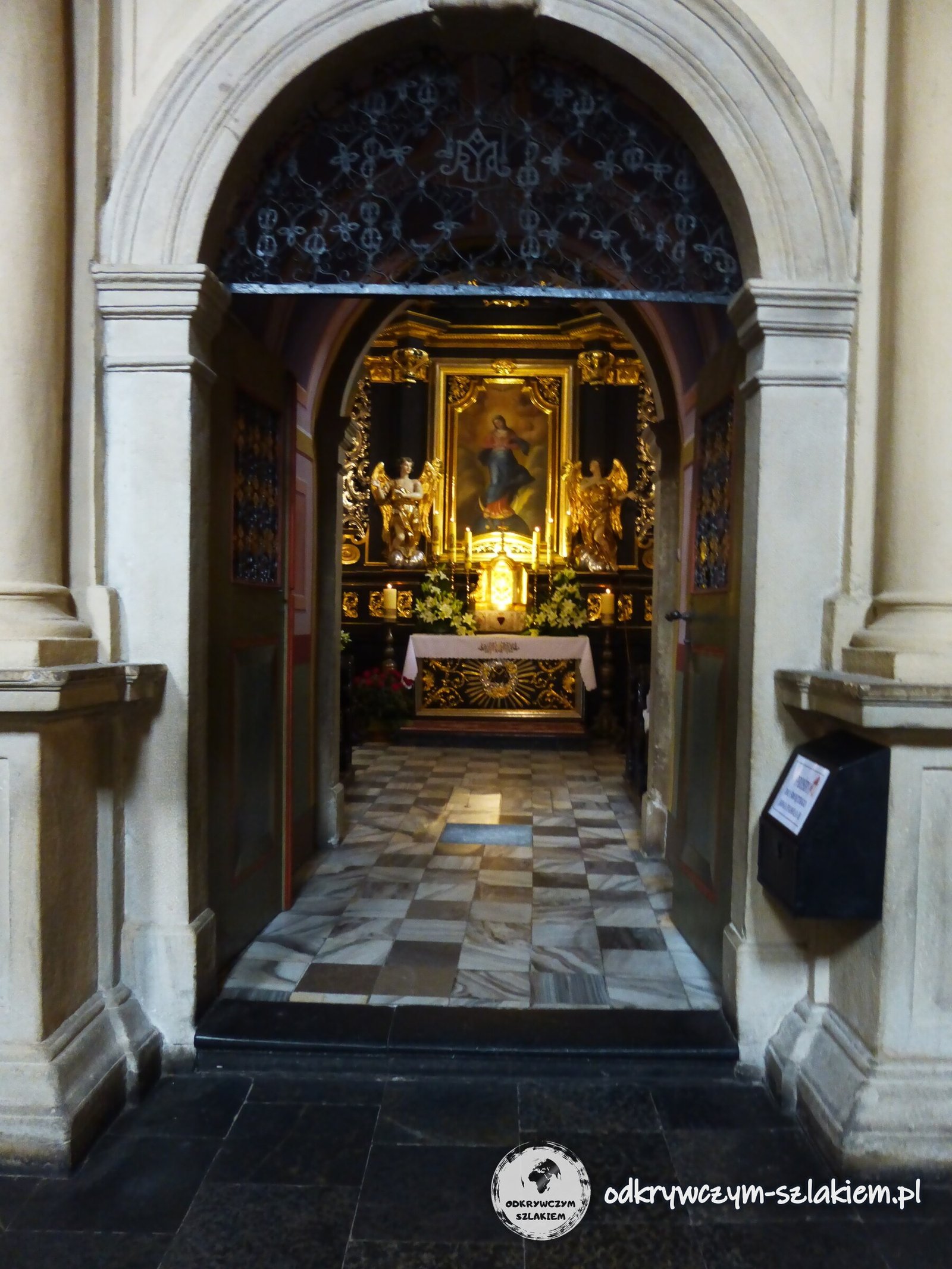
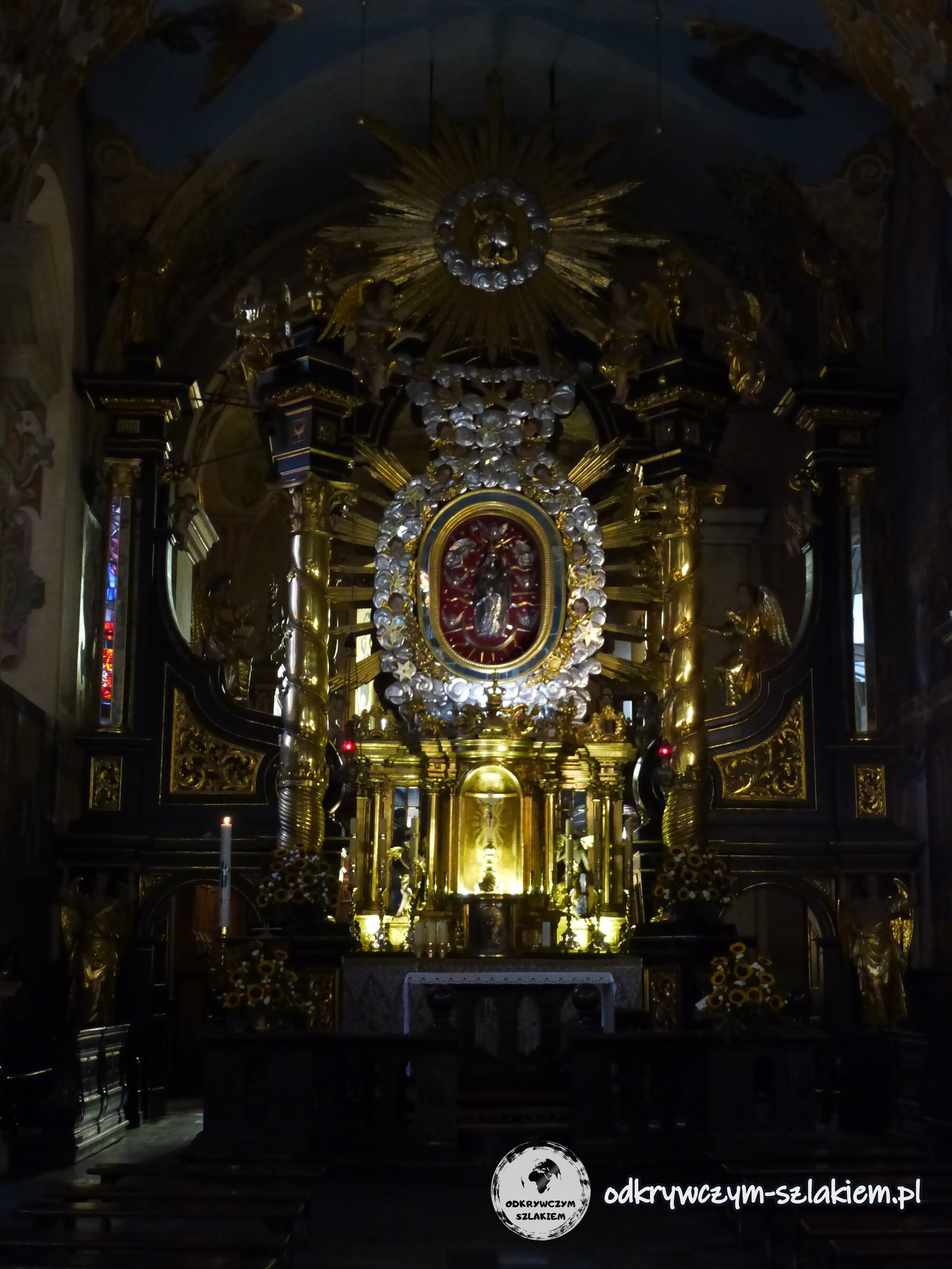
The high altar is decorated with an oval medallion amid silver clouds and golden rays. The miraculous image of Our Lady of Kalwaria hangs in a separate chapel to the left of the chancel. According to tradition, on 3 May 1641 it wept tears of blood in the manor house of Stanisław Paszkowski in Kopytówka, who a few days later gave it to the sanctuary. Michał Zebrzydowski, the founder’s grandson, funded the chapel for the image in 1658–1667, and the image was crowned in 1887.
The war cemetery of 1915
Next to the monastery there is a small First World War cemetery: rows of wooden crosses under the trees and, beside them, a stone tomb with the figure of a friar in a habit. The inscription on the slab reads: “Here rest 57 Catholic soldiers and a Muslim of the Austrian army, names unknown. Grant them peace, O Lord.”
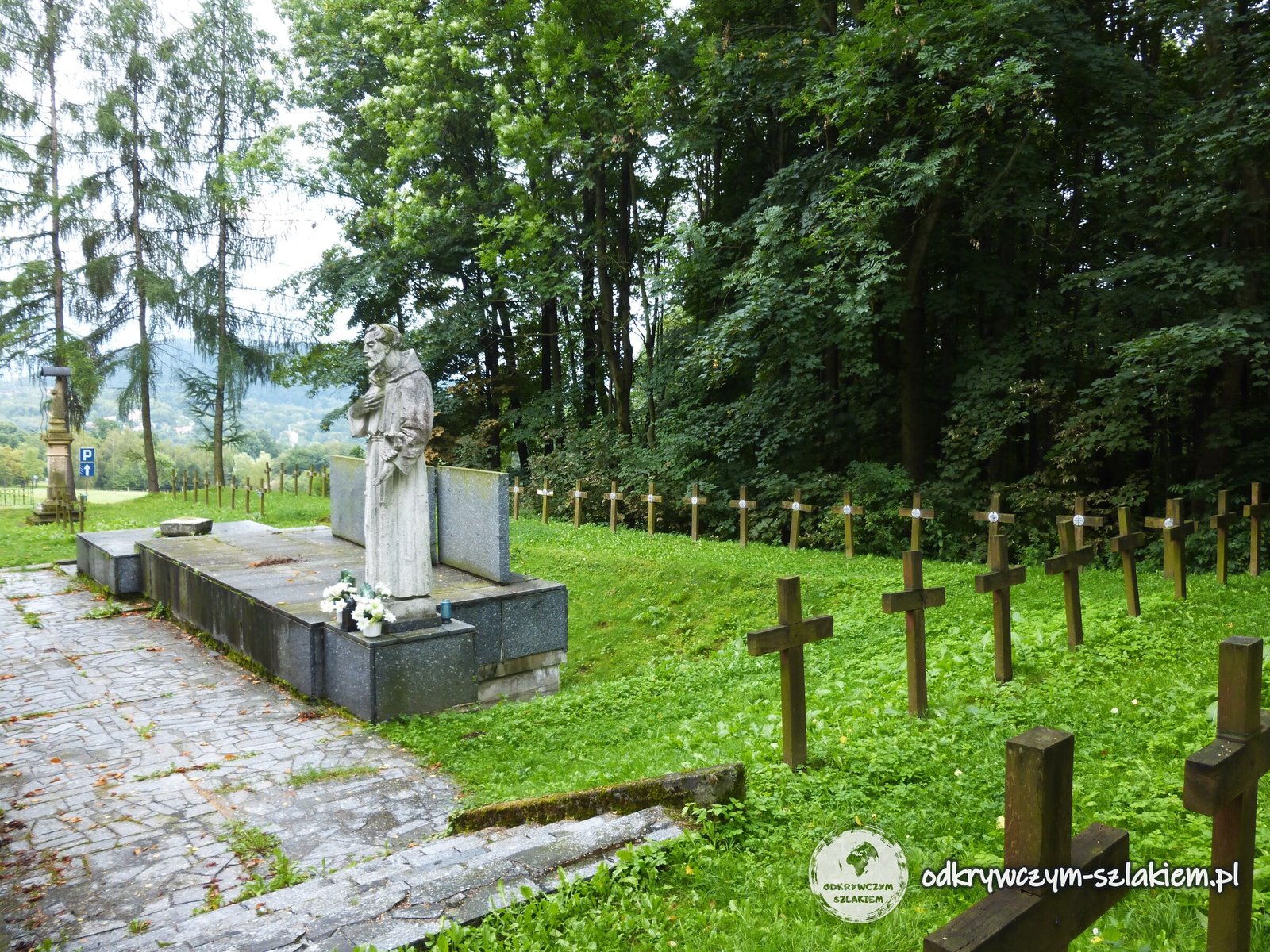
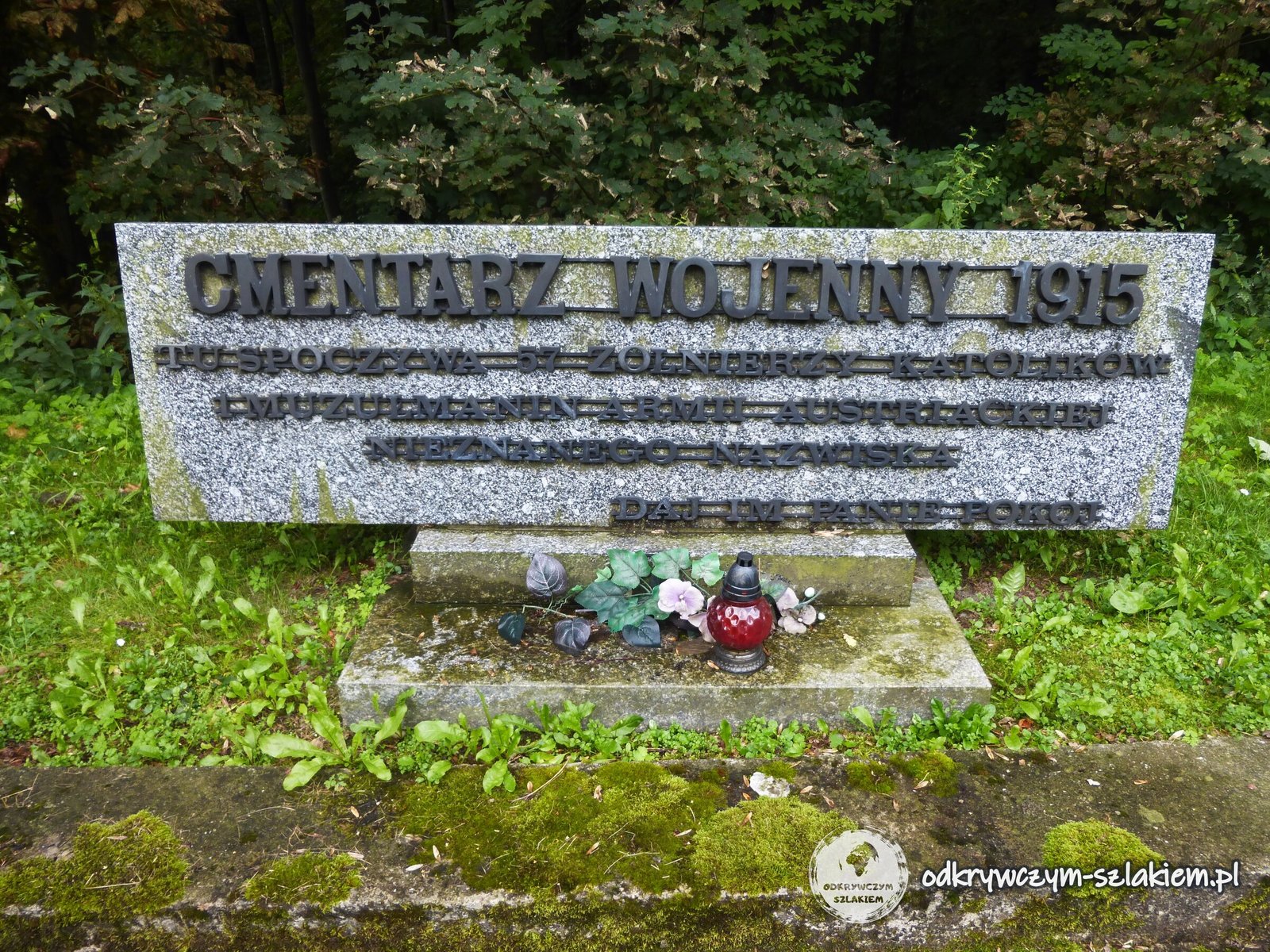
Soldiers of many faiths served in the Austro-Hungarian army – the Muslims came mainly from Bosnia and Herzegovina, which the monarchy had occupied in 1878. There are several hundred war cemeteries from 1914–1915 in Lesser Poland.
Practical information
- Getting there: Wadowice is about 50 km south-west of Kraków and Kalwaria Zebrzydowska about 30 km; the two are about 15 km apart. A car is the most convenient – then both towns are easy to combine in one day with the Auschwitz-Birkenau Museum in Oświęcim. You can also get there by train from Kraków: Kalwaria Zebrzydowska Lanckorona and Wadowice stations are on the line towards Bielsko-Biała – check the timetable before you go.
- John Paul II Family Home Museum: 7 Kościelna Street; since April 2026 the ticket office has been at 2 Kościelna Street, in the Pilgrim’s Garden behind the museum. A standard ticket costs 34 zł, reduced 27 zł, with an audio guide 44 zł / 37 zł, and a family ticket (up to 5 people) 85 zł – as of November 2026. Admission is free on Tuesdays: free tickets for a given Tuesday can be booked online from the Tuesday two weeks before.
- Museum opening hours: May to September 9:00–18:00 (Fridays to Sundays until 19:00), April and October 9:00–18:00, November to March 9:00–16:00; on Tuesdays from 12:00. Last entry is about 1 h 15 min before closing, and on the last Tuesday of the month (maintenance day) the museum is closed. Allow about 1.5 hours for the whole exhibition.
- Parking: the museum is on the market square and has no car park of its own – leave the car in one of the car parks in the centre, some of which charge a fee.
- The Calvary paths: walking the Paths of Our Lord (28 stations, more than 8 km) with prayers takes about 5 hours, and the shorter Roman Way of the Cross, starting at the “U Piłata” (Pilate’s) chapel, about 2 hours. An hour is enough for the basilica and the area around the monastery.
- When to go: Kalwaria gets the most pilgrims for the Passion Play in Holy Week and for the August celebrations of the Dormition and Burial of the Virgin Mary – expect crowds then.
- How much time: the market square and basilica in Wadowice and the basilica in Kalwaria can be seen in one afternoon. With the museum and the Calvary paths, plan a whole day.
Photo gallery


 Spain