Beneath Szczecin lies a whole network of shelters, bunkers and corridors from the Second World War, and a dozen or so kilometres to the north, in Police, stand the ruins of one of the Third Reich’s largest synthetic fuel plants. Between 2017 and 2020 we came back to this area many times, and almost every time we went looking for more abandoned places – from the underground passages beneath the Quistorp Tower, through a former mortuary, to an artificial fibre factory and abandoned railway carriages. Every exploration became a video on my YouTube channel – you will find them in the relevant sections.
Note: this post describes the situation in 2017–2020. Some of these places no longer exist – they have been demolished or rebuilt (for example, the Fabryka Wody aquapark now stands where one of the shelters used to be, and the area around the Pogoń stadium changed with its reconstruction) – and the entrances to others may have been closed or bricked up. Treat it more as a story about the history of Szczecin and Police than as a guide.
Table of contents
- What the Szczecin underground is
- The Quistorp Tower (November 2017)
- Three shelters in one day (13 February 2018)
- A flooded ammunition depot and the Bismarck Tower (14 February 2018)
- The stadium, the mortuary and a shelter in the woods (15 February 2018)
- The synthetic fuel plant in Police (2018–2019)
- The artificial fibre factory and old railway carriages (March 2019)
- Buildings by the paper mill (June 2020)
- Urbex – a few rules
What the Szczecin underground is
The Szczecin underground consists mainly of former bunkers and air-raid shelters built by the Third Reich during the Second World War. The builders made use of the city’s 18th-century fortifications – the corridors of the Szczecin Fortress – and dug passages in tenement cellars to connect neighbouring buildings. Today some of them are bricked up, barred, filled in or flooded. The air-raid shelter by the Main Railway Station – five storeys, up to 18 metres underground – can be visited with a guide as part of the Szczecin Underground Routes (entrance from platform 1). That is the place to start if the subject draws you in.
The Quistorp Tower (November 2017)
Our first underground exploration – and also my first video focused on urban exploration – took place on 10 November 2017, when Patrycja, Agnieszka and I went to the ruins of the Quistorp Tower. The tower opened in 1904 as an observation tower and was a popular place for walks and social gatherings. In 1942 a radar station and an anti-aircraft observation post were installed at the top. To this day nobody knows for sure whether it was destroyed by an Allied air raid in 1944 or blown up by the Germans in 1945.
Earlier we had tried to look into the underground passages between the Pomeranian Dukes’ Castle and the Chrobry Embankment, but that entrance was barred. Under the tower everything went to plan. We also wanted to see the abandoned “haunted manor” on Strzałowska Street – a former kindergarten with stories of strange noises and lights – but it had already been demolished.
 9:13
Three shelters in one day (13 February 2018)
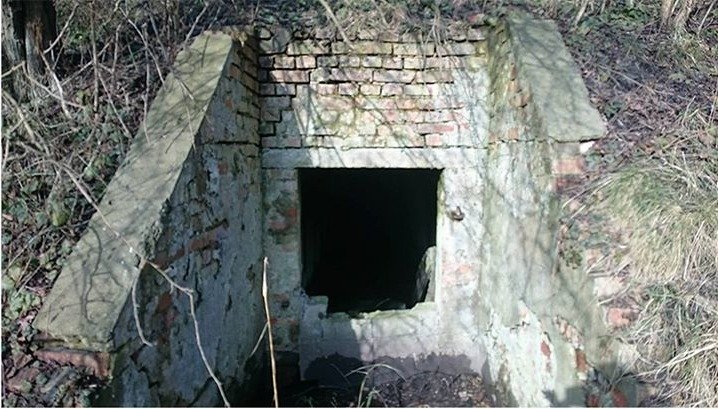
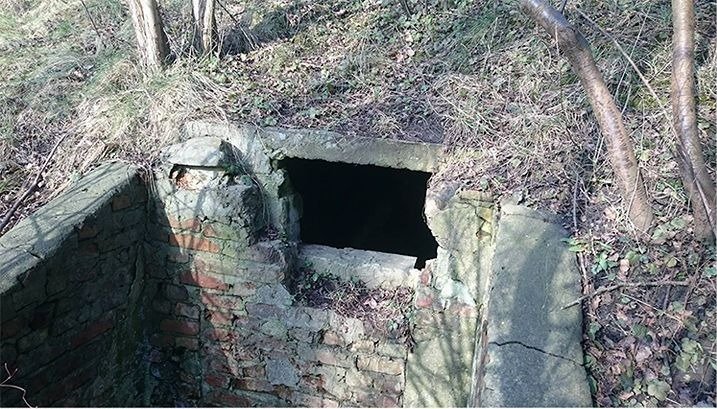
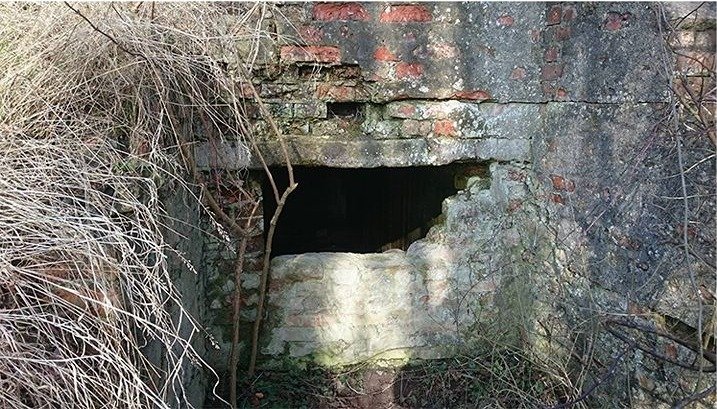
In February 2018 Patrycja and I decided to look for more underground places, starting on the left bank of the Oder. In three days, from 13 to 15 February, we found nine open entrances – and plenty of bricked-up or barred ones. On the first day we started with three entrances right next to each other; they probably once formed one larger shelter. Behind the second one we were surprised by a lot of water, but that was the end of our problems. It was also the first time I used my new Olight S2 Baton torch (up to 950 lumens) – after the poor footage from Berlin I had decided to invest in a decent light, and the difference in the videos is obvious straight away.
 5:17
A few minutes later, on the other side of a large clearing, we found the concrete shelter we had been looking for. It was in quite good condition – all the high-ceilinged rooms were accessible. That is how we finished the day with three shelters under our belt. Today the Fabryka Wody aquapark, opened in June 2024, stands on this spot on Sczanieckiej Street.
 2:36
A flooded ammunition depot and the Bismarck Tower (14 February 2018)
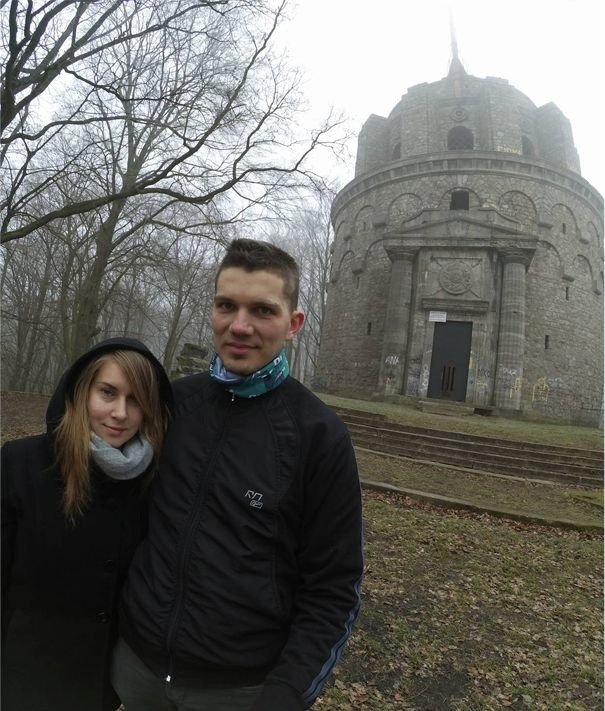
On the second day we mostly came across locked entrances, but our failures were made up for by the Bismarck Tower – one of many towers built in honour of the chancellor all over what was then Germany – and an open entrance to the underground in a completely different part of the city.
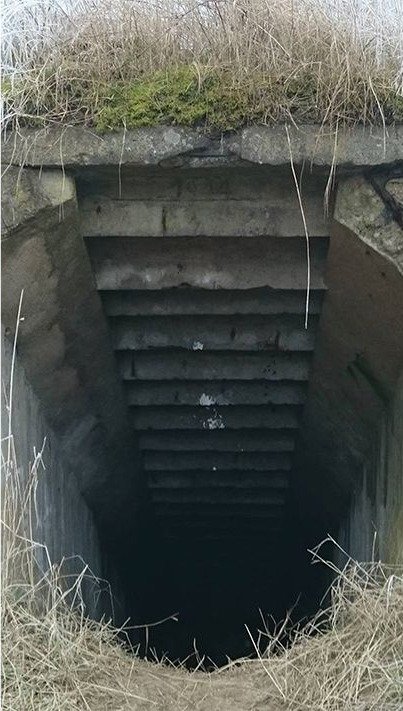
The most interesting part, though, were the corridors of a former ammunition depot – an ammunition factory once operated in the area, and its products were stored in the tunnels connected to it. The underground passages are right next to blocks of flats and easy to find, so they are also full of rubbish. A large part of the corridors is flooded, and the ever-present damp has left rusty deposits on the walls. Despite my initial reluctance, I waded through the water. On the lowest level, among tyres, buckets and collapsed sections of wall, there were bricked-up passages – perhaps to cellars or to the ruins of the factory. I took a mound of silt at the end of the corridor for an impassable obstacle; only from other people’s videos did I learn that it was possible to go further. My clothes and shoes were soaked, but it was worth it.
 3:17
The stadium, the mortuary and a shelter in the woods (15 February 2018)
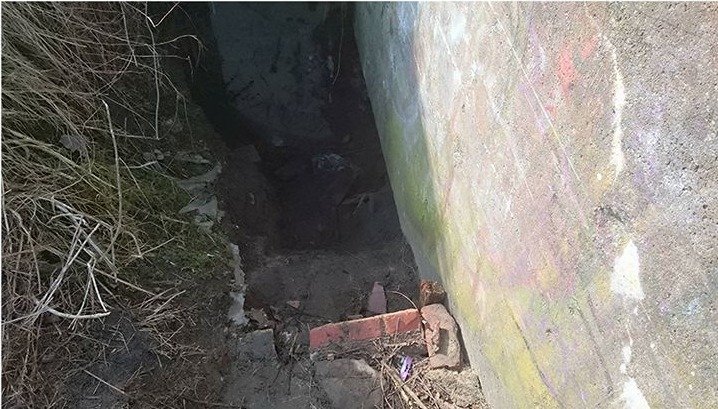
The last day was the busiest: six entrances to the underground, four of which we managed to get into, and one we discovered completely by chance, spotting it from the car on the way home. We started near the Pogoń stadium – winding stairs, similar to the ones under the Quistorp Tower, led to a tunnel that was filled with sand in one direction and ended in a bricked-up room in the other. Two more entrances near Szczecin Pogodno station were completely bricked up. The stadium has since been rebuilt (2019–2022), so that entrance is most likely gone.
 2:14
Next came the old mortuary – a neo-Romanesque building from 1900 in the former village of Niemierzyn, now part of Szczecin. It stood in a Protestant cemetery (1871 – c. 1945, 17 ha) and until the Second World War served as the chapel of the Kückenmühler Anstalten care institution. In the late 1960s it was taken over by the Pomeranian Medical Academy; after renovation, until 2001, it housed the dissecting room of the Department of Forensic Medicine. The building has stood empty ever since. Unfortunately it is only beautiful from the outside – inside there are wrecked rooms, graffiti and rubbish, and downstairs a few dissecting tables and an old toilet. We had already tried to get in back in August 2017, without success. Right next to it there was another underground passage – a flat, slightly flooded corridor, closed at the other end.
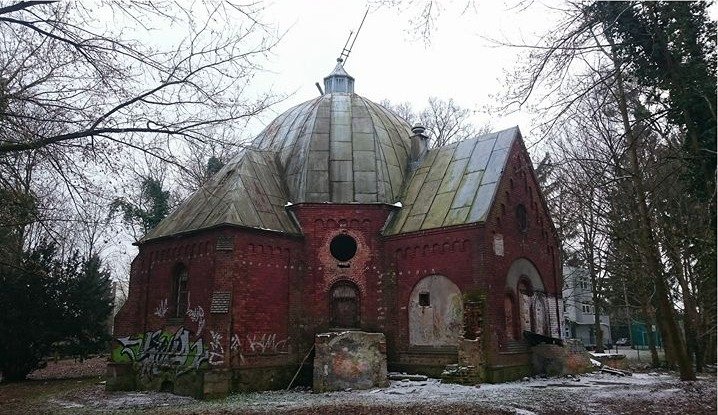
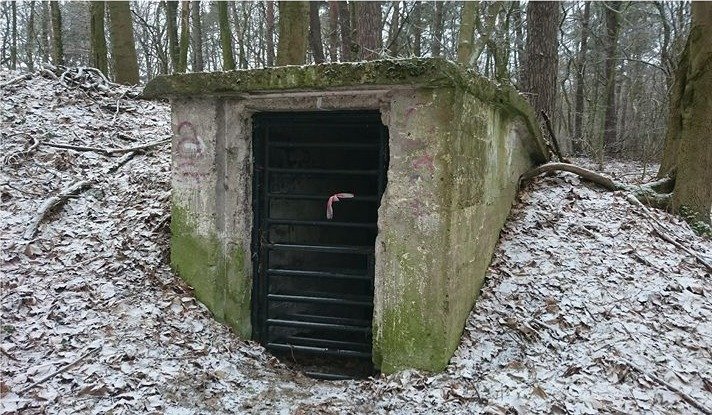
 4:41
To end the day: the underground passages by one of the hospitals – a long and unusually clean corridor with alcoves and solid doors, behind which there is supposedly a ladder up to a mushroom-shaped ventilation shaft – and a completely unplanned shelter in the woods, spotted from the car on the way back. Inside: a collapsed section of tunnel and a locked gate at the end.
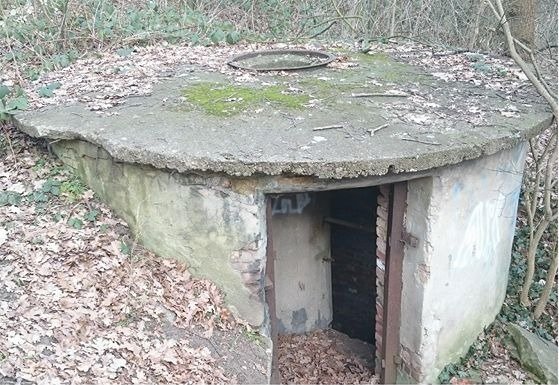
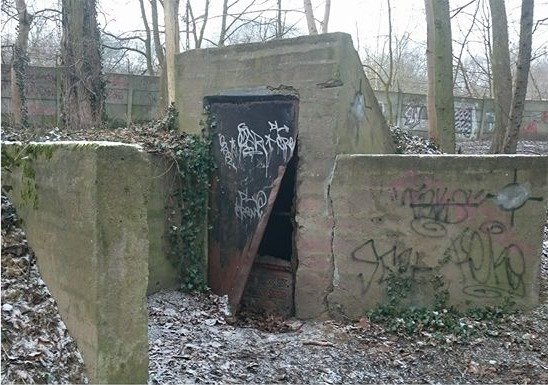
 4:12
The synthetic fuel plant in Police (2018–2019)
The most moving place on this list. We visited the ruins of the former synthetic fuel plant in Police three times – between January 2018 and March 2019. The Nazi plant Hydrierwerke Pölitz AG operated from 1938 to 1945, and from 1940 it produced fuel for the German army – at its peak in 1943, about 600,000 tonnes. The fuel was made from hard coal and lignite, coal tar and occasionally crude oil by hydrogenation (the so-called Bergius process), which requires high pressure and temperature. On the western side there was a sister plant, Norddeutsche Mineralölwerke, which produced lubricants and engine oils.
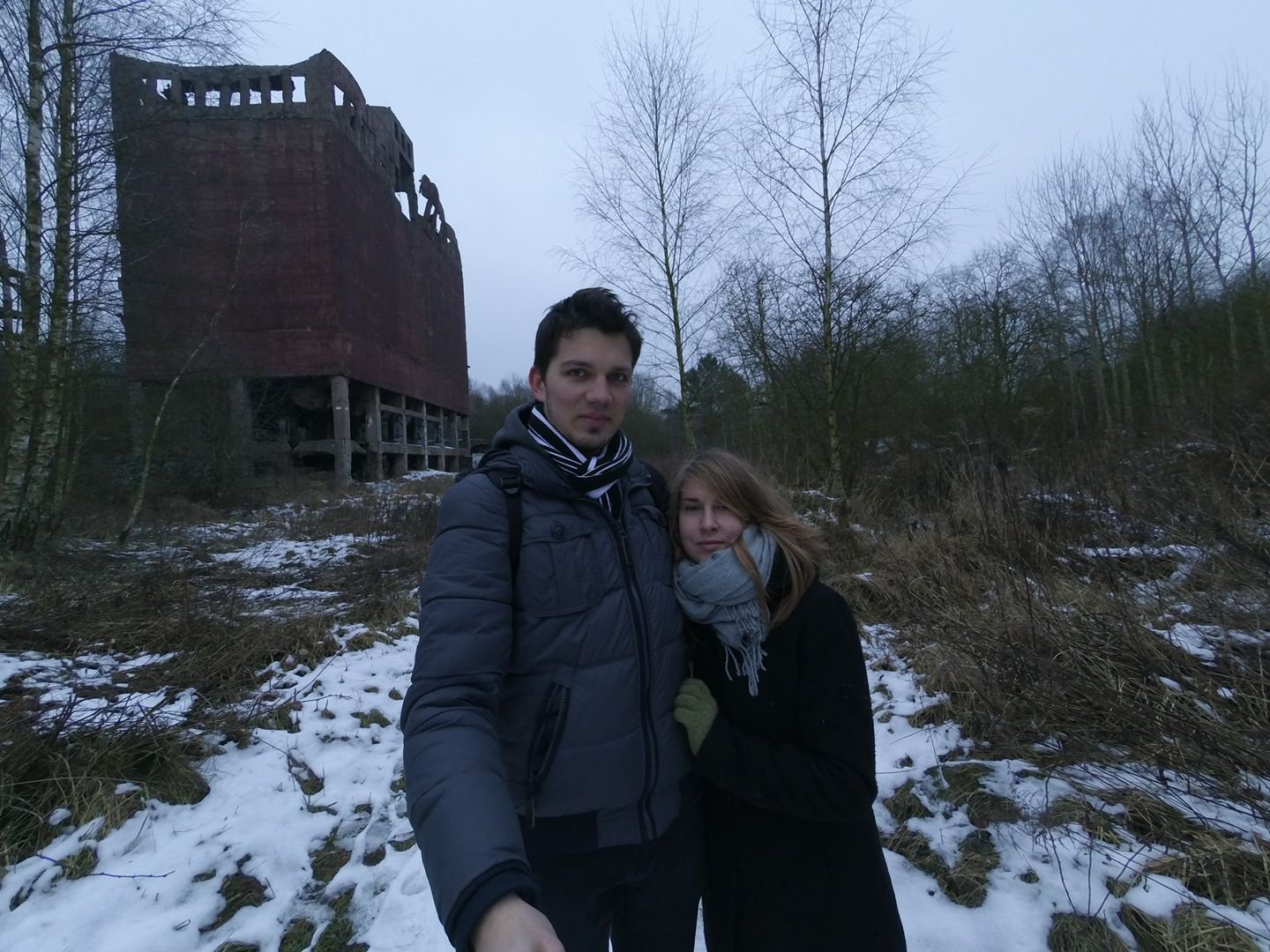
The two plants covered 200 hectares. In total about 30,000 people worked there – civilian workers, forced labourers, prisoners of war and concentration camp prisoners – housed in camps around the plants, including Nordlager, Pommernlager, Tobruklager and a subcamp of KL Stutthof. It is estimated that during the war about 13,000 people, mostly Poles, died in the town and the plants from hunger, disease, exhaustion and at the hands of their tormentors. The plants were bombed by the Allies many times, and production stopped at the turn of March and April 1945.
What survives includes coal elevators, fuel tanks, the skeletons of production halls, a guard tower, a toppled chimney, above-ground air-raid bunkers, one-person shelters (Splitterschutzzelle), tunnels and underground shelters. Along the way we also came across an abandoned building that may once have been a warehouse. The historical information comes from the Friends of the Police Land Association “Skarb” and from Wikipedia.
Today: since 2006 the site of the former plant and its memorial have been looked after by the “Skarb” Association, which organises guided tours of the ruins – the best way to see them and learn their history.
 22:03
The artificial fibre factory and old railway carriages (March 2019)
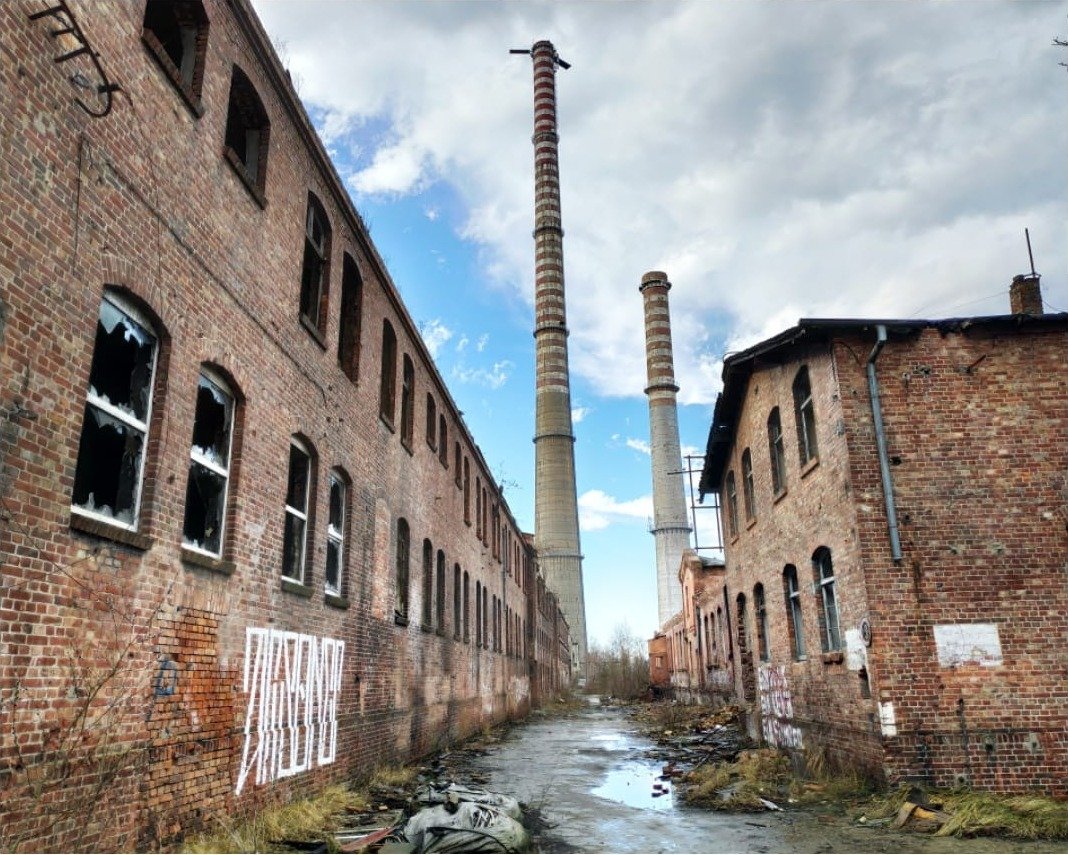
On 4 March 2019, after the Włóczykije travel festival in nearby Gryfino, Michał, Patrycja and I went on two explorations in Szczecin. The first was an old artificial fibre factory, which also made audio cassettes (the photo at the top of this post), founded in 1901. At its peak it employed about 2,800 people, and in 2000 it went bankrupt because of financial problems. Today it is a ruin – most of the rooms are empty and wrecked, although here and there old furniture, documents, electronic equipment, clothes and even chemicals have been left behind. The most interesting parts were a shooting range in the upper part of the building and a slide pole like in a fire station – perhaps for quick evacuation?
In places it was not safe: the floors were sometimes unstable or had caved in. At one point a strong wind came up with a downpour, so we waited it out inside – a moment later the sun came out. The two chimneys are impressive, especially the one visible from far away, 250 metres tall and now used for radio communications. The site turned out to be bigger than we had expected – we spent several hours there and still did not see everything.
 14:14
Then we drove to two abandoned carriages near one of the railway stations – compartment passenger carriages like the ones still running on Polish tracks. One is almost completely burnt out; in the other, six-seat compartments with seats, small rubbish bins and folding tables by the windows have survived, along with the toilets and warning signs on the doors. The structure is badly damaged and eaten away by rust.
 3:11
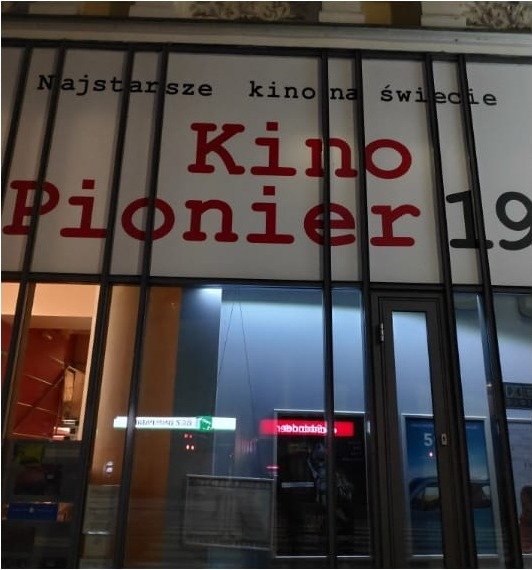
We ended the day at the Pionier cinema – one of the longest-running cinemas in the world.
Buildings by the paper mill (June 2020)
Over time we explored less and less often, but on 15 June 2020, during a visit to Poland, we still looked into two old buildings by Szczecin’s revived paper mill. In the first, tall one you can climb several floors up – the most impressive part are the huge, almost empty halls. The second, single-storey one hid, among other things, old health and safety instructions. It is just a pity that because of wrong microphone settings my commentary was not recorded – and I talked quite a lot.
 2:50
Urbex – a few rules
Urbex, or urban exploration, means discovering places that are normally hidden or off-limits – most often abandoned buildings. The most important rule is: urbex is not vandalism – you do not damage, paint or take anything. It is also good practice not to give exact locations or tips on how to get in – this protects the places that are still standing from scrap thieves and vandals. Remember too that many abandoned sites have an owner – it is always worth checking whether entry is allowed and, where possible, choosing a guided tour, as in the shelter by the Main Railway Station or in the ruins of the plant in Police. And safety always comes first: collapsed floors, glass, flooded corridors – never alone, with a good torch and in sturdy shoes.
You will find more abandoned places – an anatomy institute, Johannisthal airfield and the BLUB water park – in the post Berlin: abandoned places, and in Masuria – an abandoned manor house by the pyramid in Rapa.