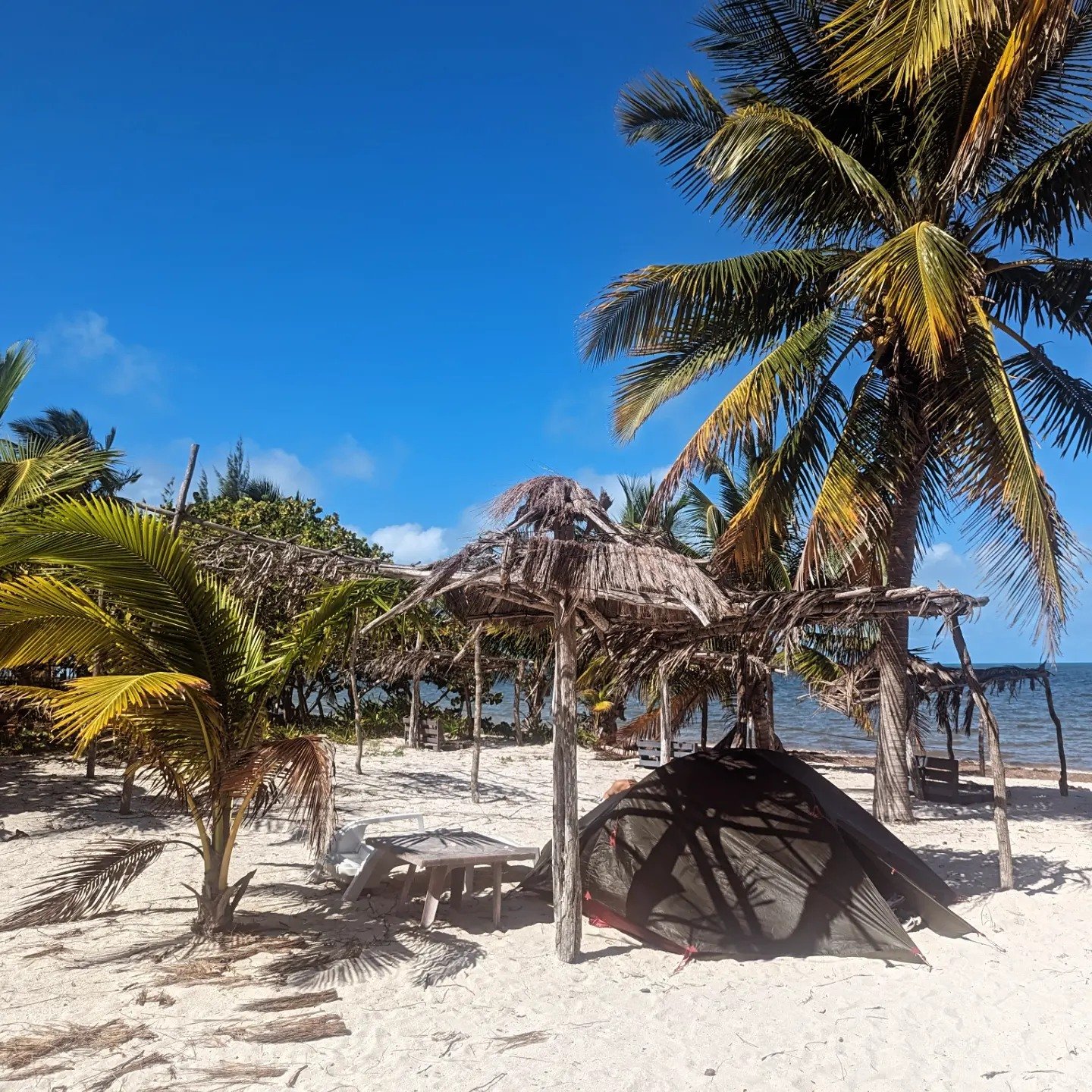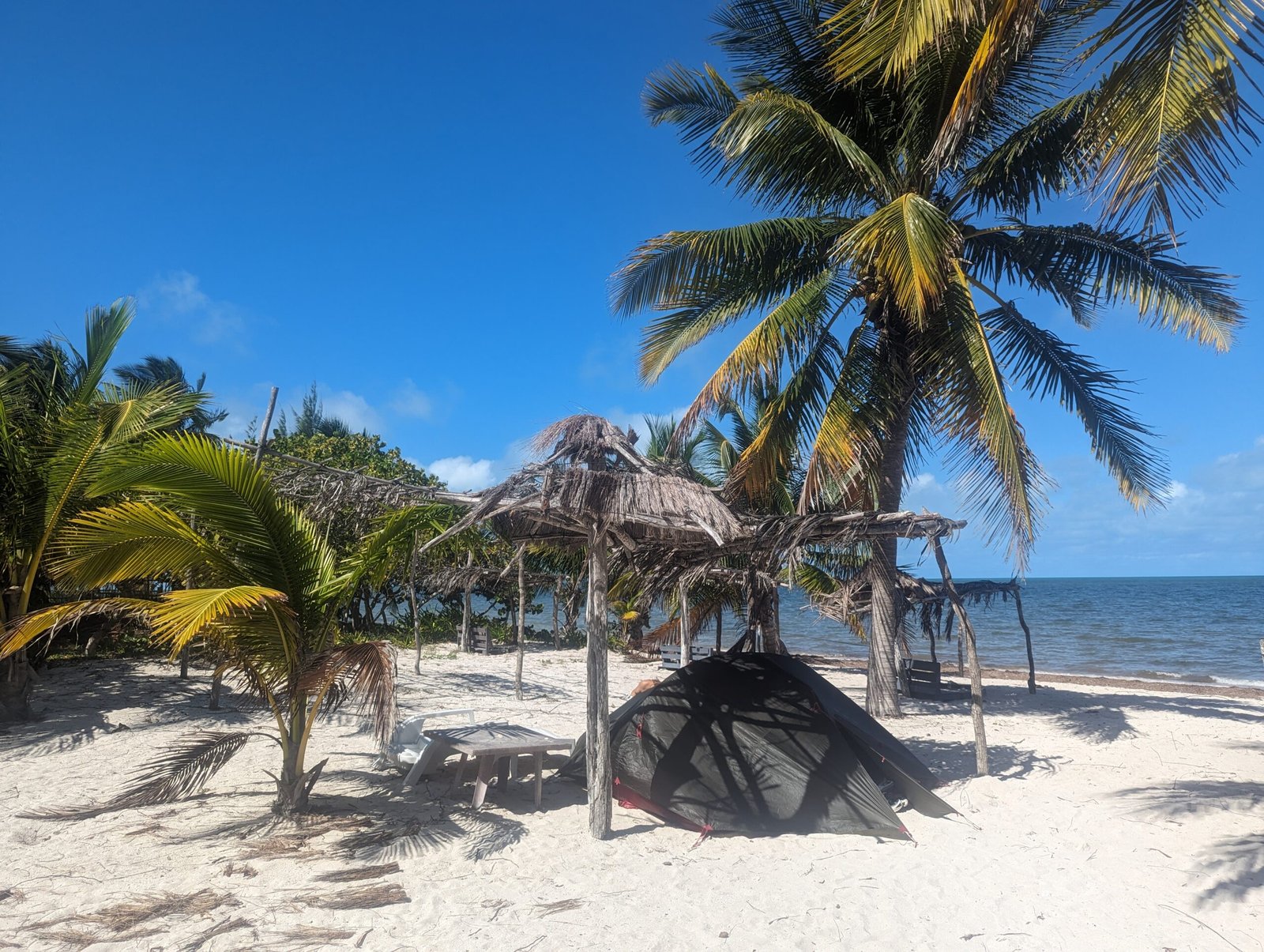
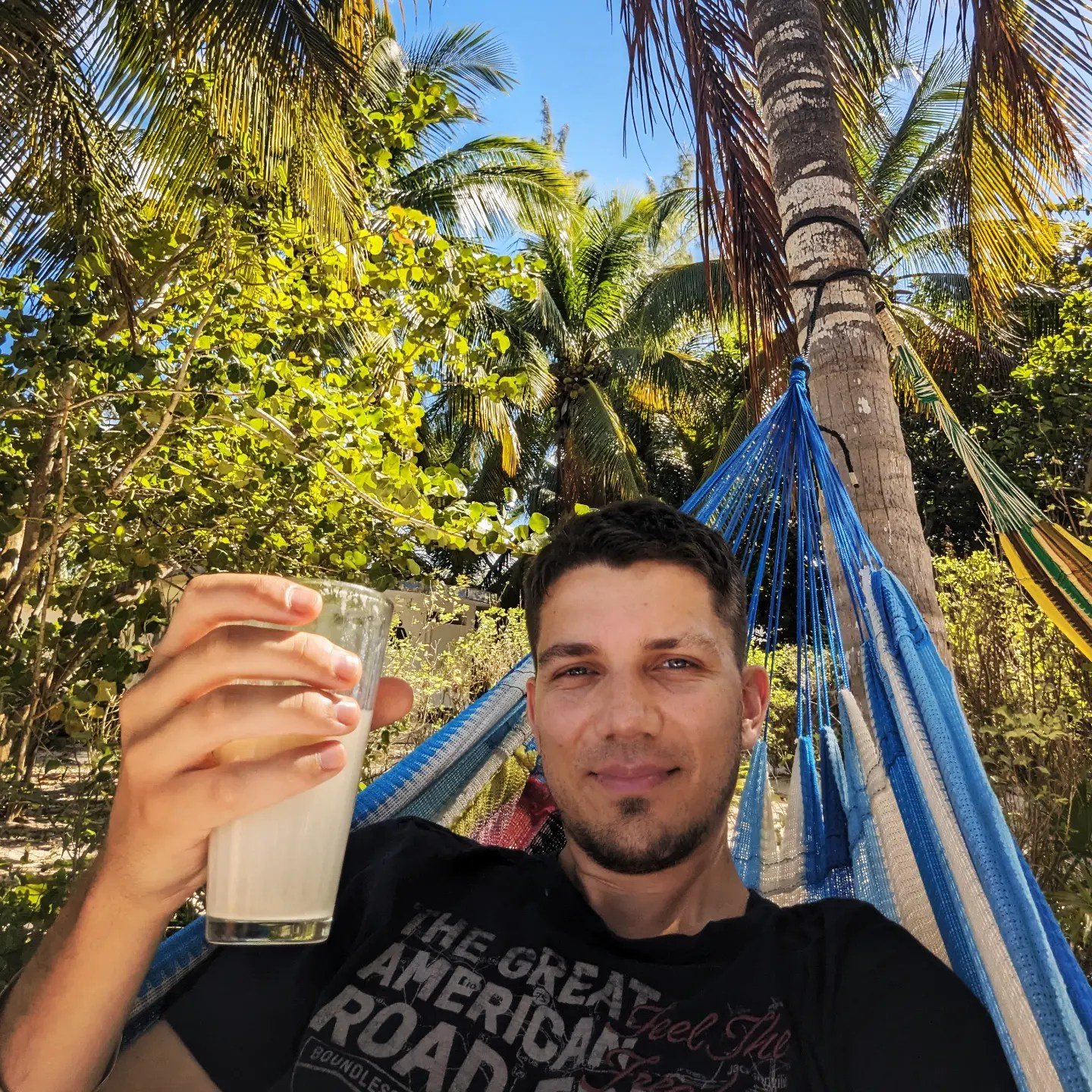
After one day in Mérida we headed to the Gulf of Mexico, to the tiny village of San Crisanto in northern Yucatán. We spent a few relaxing days here (14–18 November 2023) at the Palula Beach campsite – with our tent pitched a few steps from the water, hammocks under the palm trees and flamingos in the nearby reserve.
 7:02
Table of contents
- Palula Beach campsite – a tent right by the water
- San Crisanto and the flamingos
- Snakes, scorpions and insects – how was sleeping in a tent?
- Telchac Puerto and the onward journey
- Practical information
Palula Beach campsite – a tent right by the water
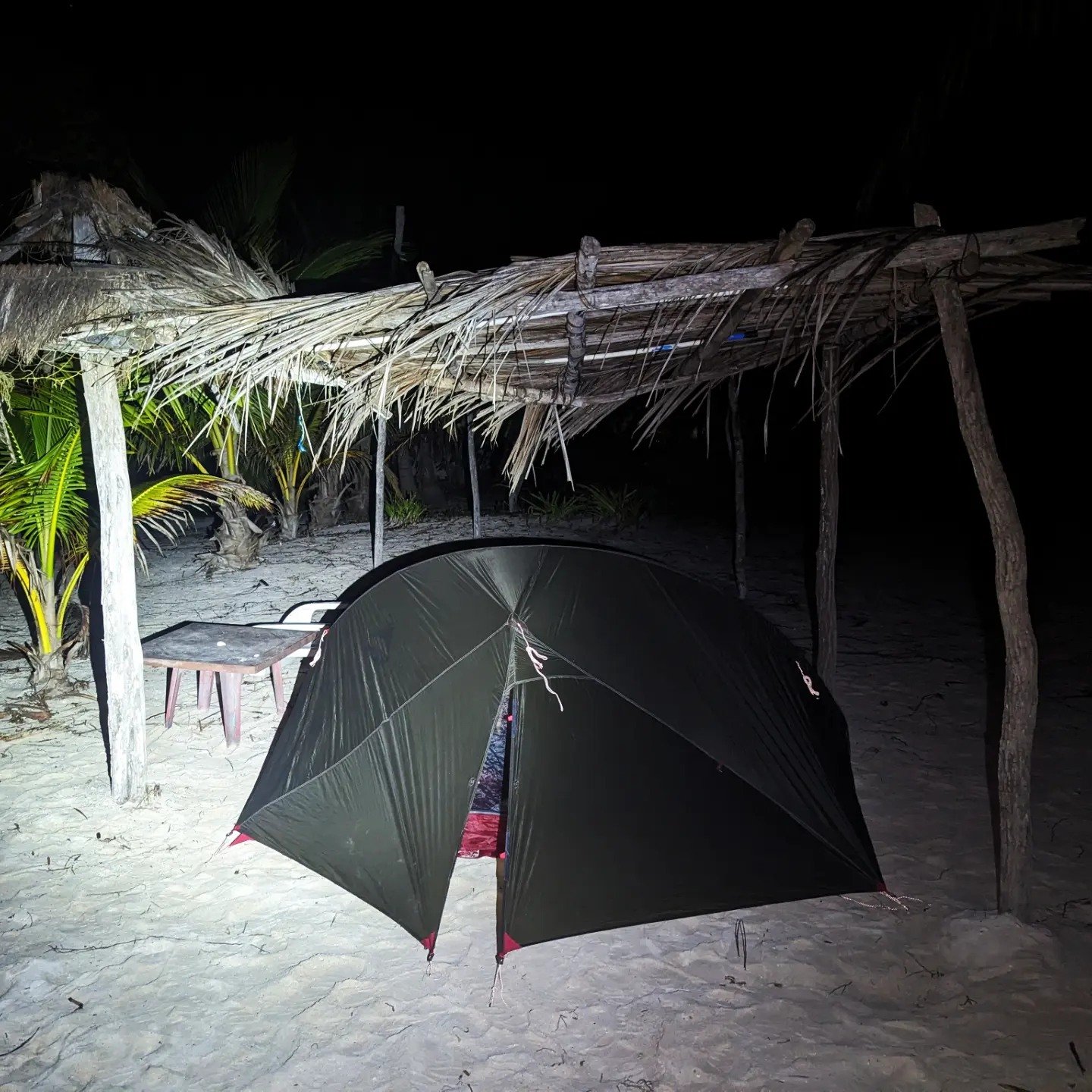
It turned out that mid-November is the tail end of the rainy season and still the off-season. Apart from us, the only other guests at the campsite were a couple with a child, sleeping in a room. We pitched our tent, which costs half as much as a room – it was the first time on this trip that we had put it up – we had been carrying it since the start and, as it later turned out, it was stolen from us in Costa Rica. Basically we had the whole beach to ourselves, and the bathroom and showers too. There is a kitchen, hammocks, covered seating areas and direct access to the water.
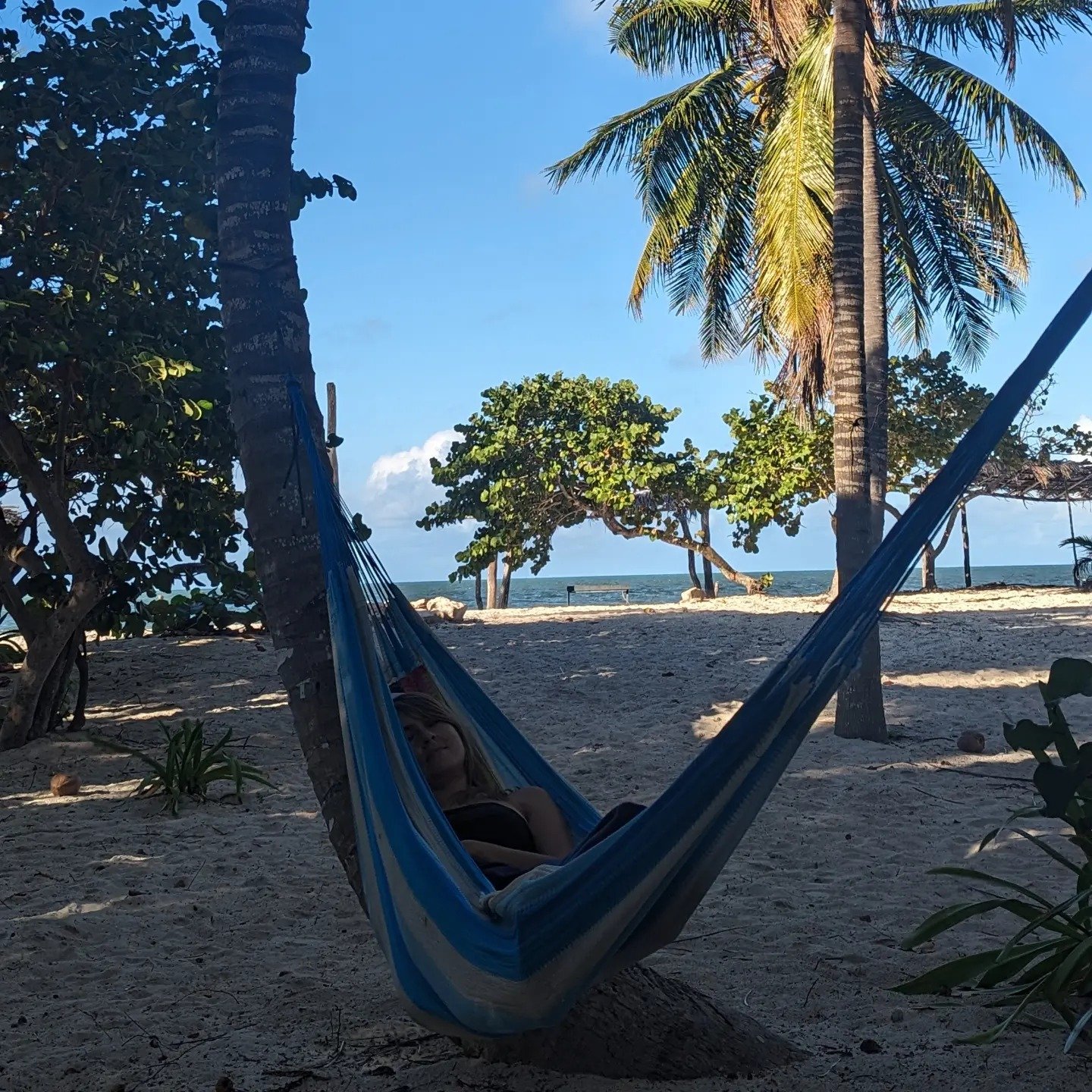
During the day it was about 26–27 degrees, and not much less at night. It rained a few times – mostly in the evenings and mornings – but rain here means an intense, short downpour: it lasts 20 minutes or less, and then the sun comes straight back out. In the evenings the tent stood under a roof of palm leaves.
San Crisanto and the flamingos
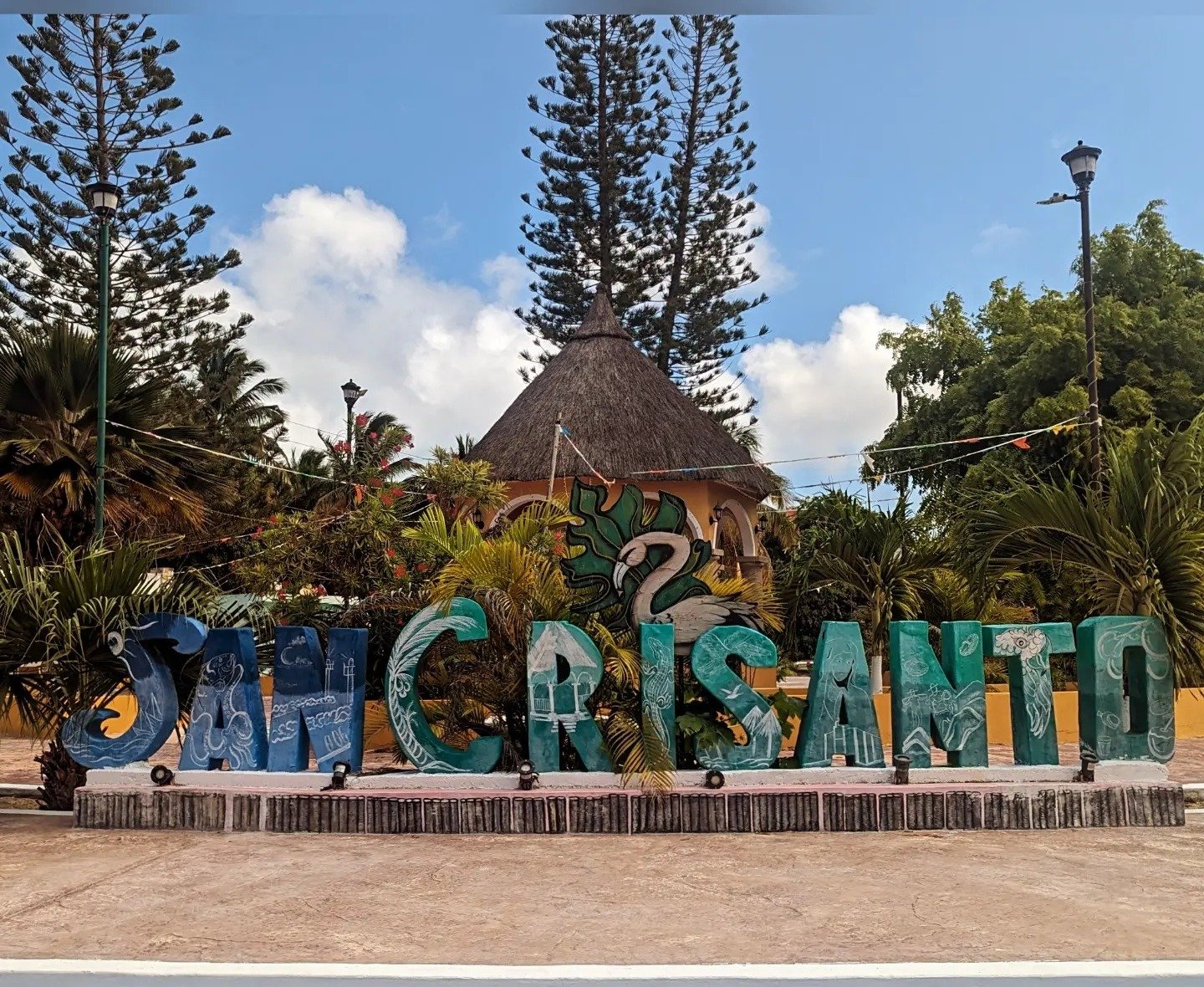
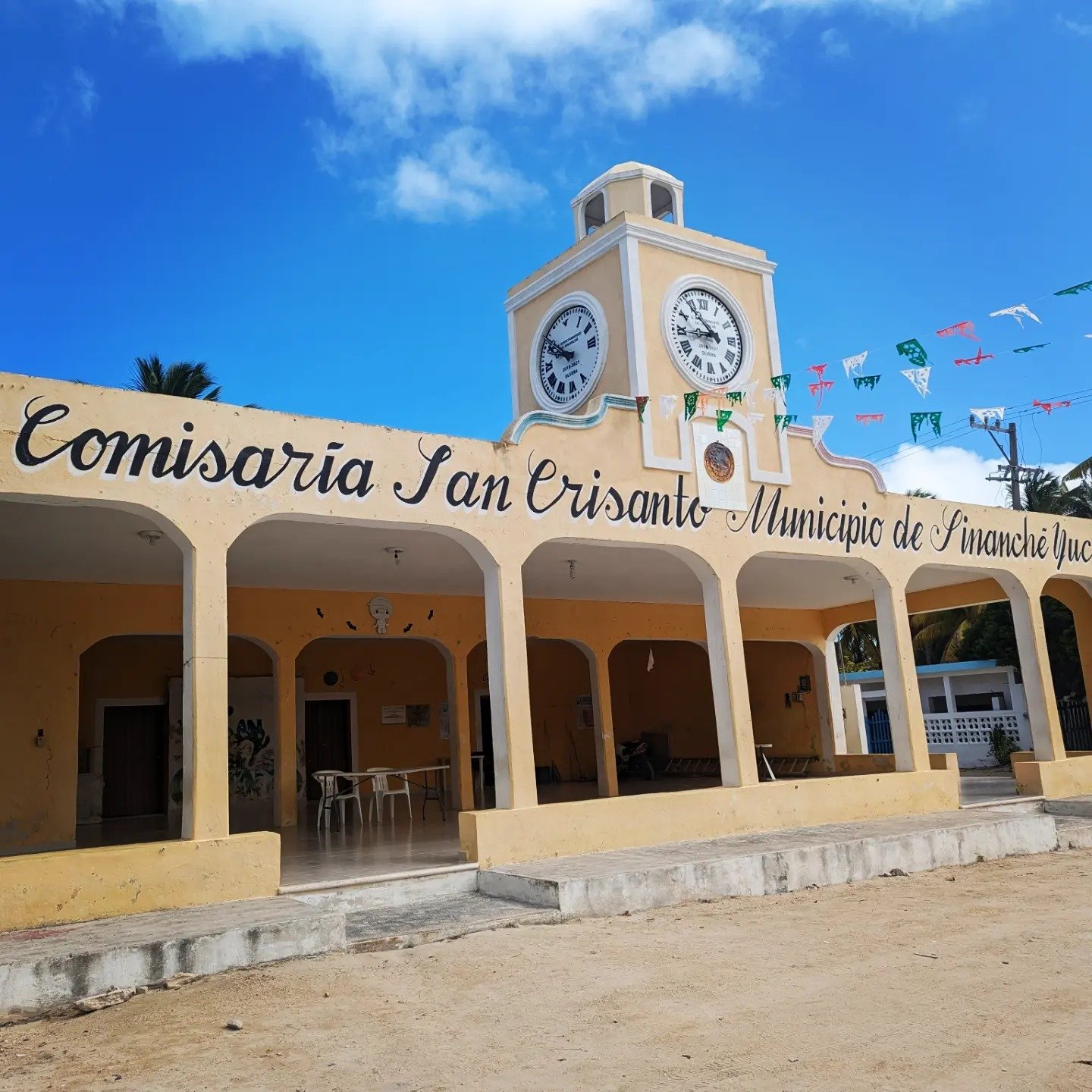
The village itself is very small: one small school, a few shops, a square with a colourful sign and a football pitch that you can walk across without even realising it is a pitch. There are so few inhabitants that the village looks deserted.
We really wanted to see the flamingos. They live in a nature reserve that starts not far from the campsite. Walking along the road, you can find gaps in the bushes and – depending on where the birds happen to be standing – photograph them up close.
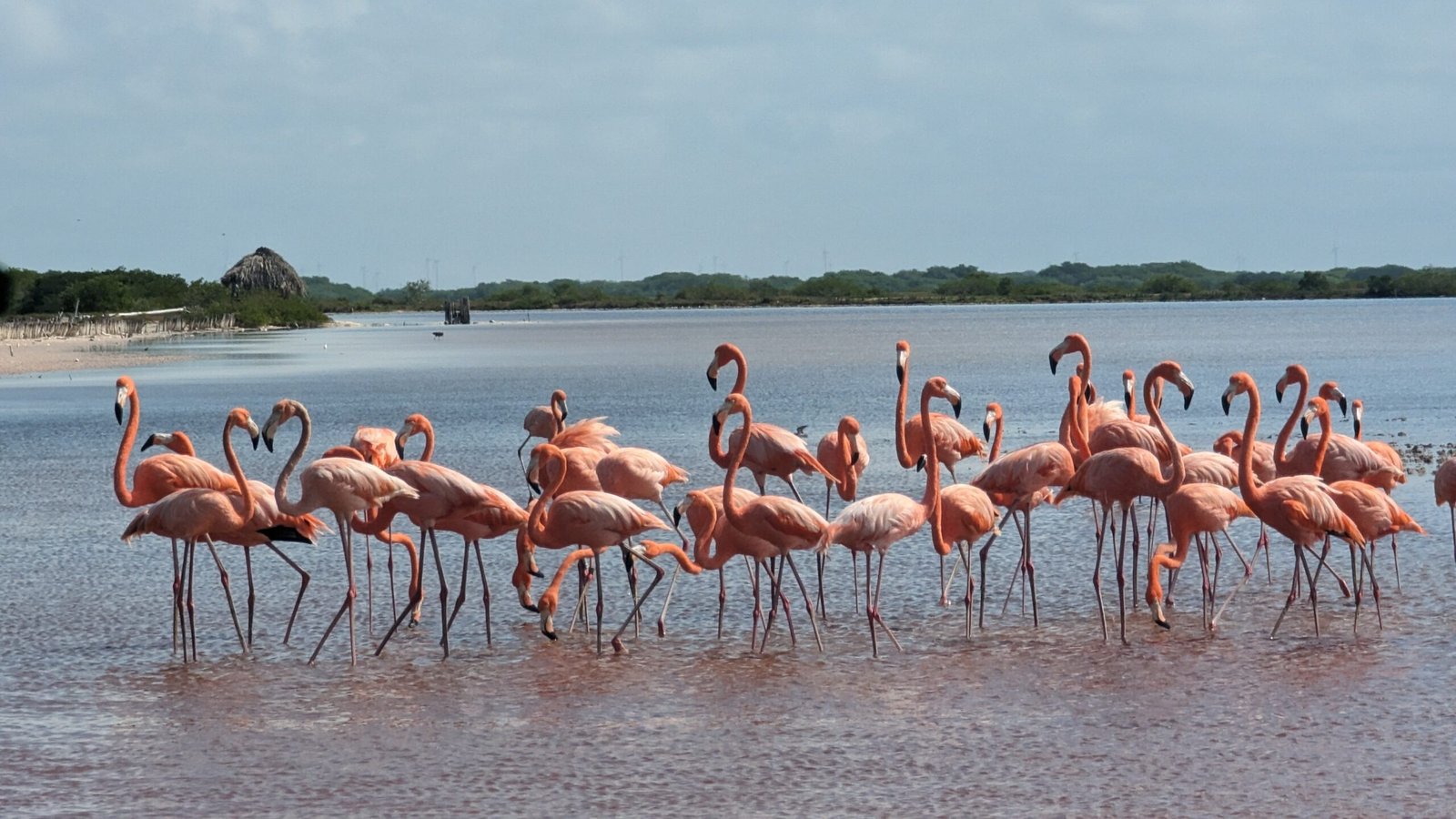
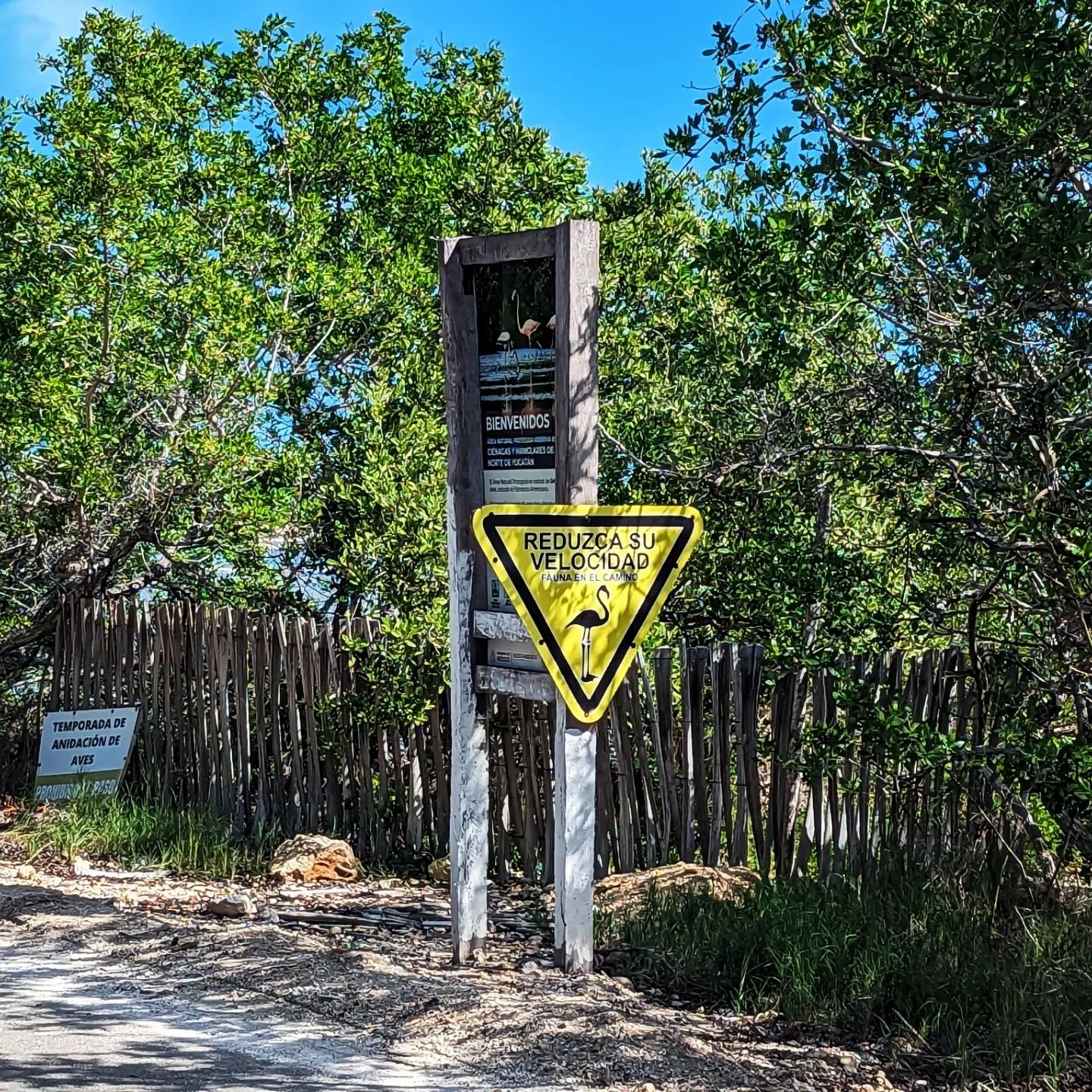
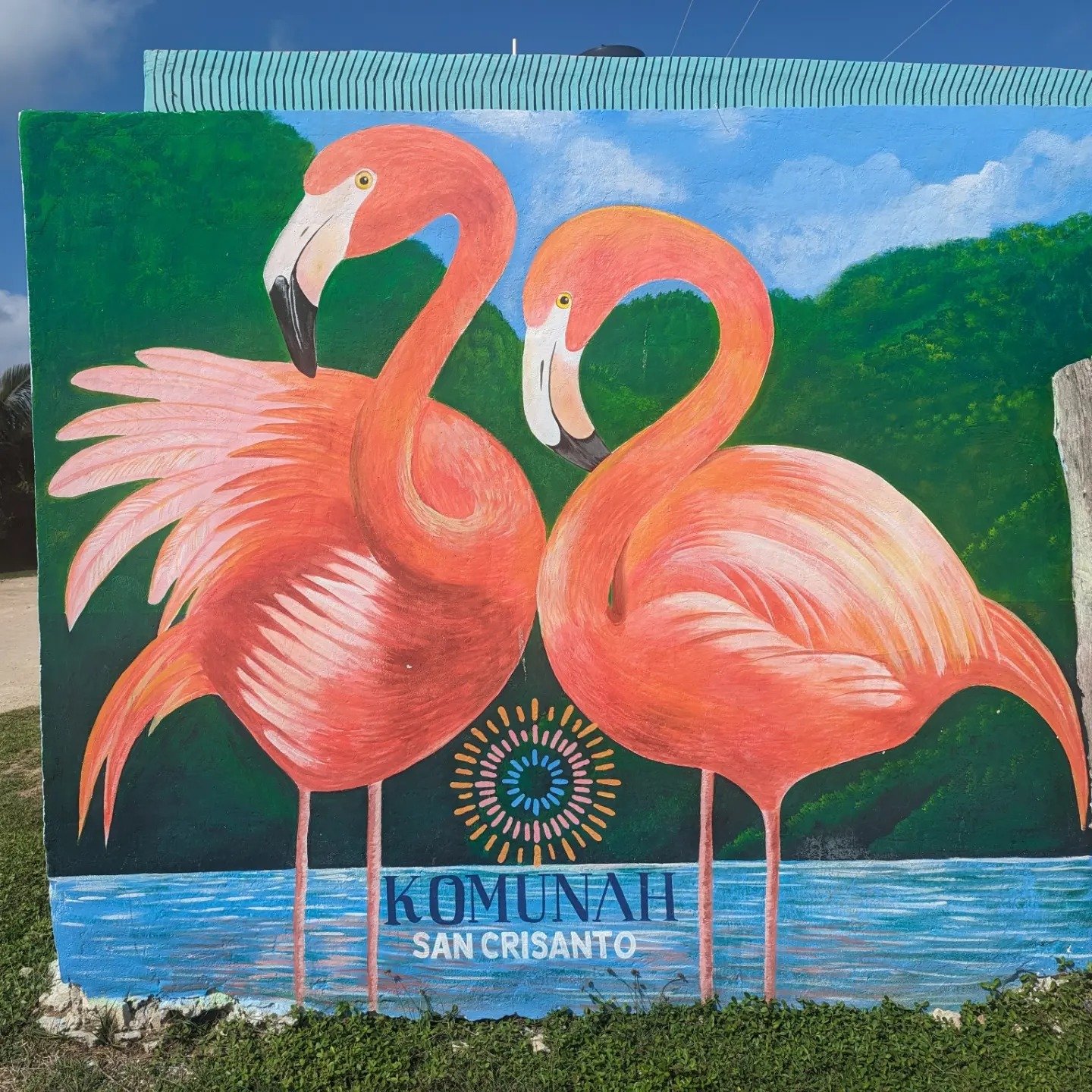
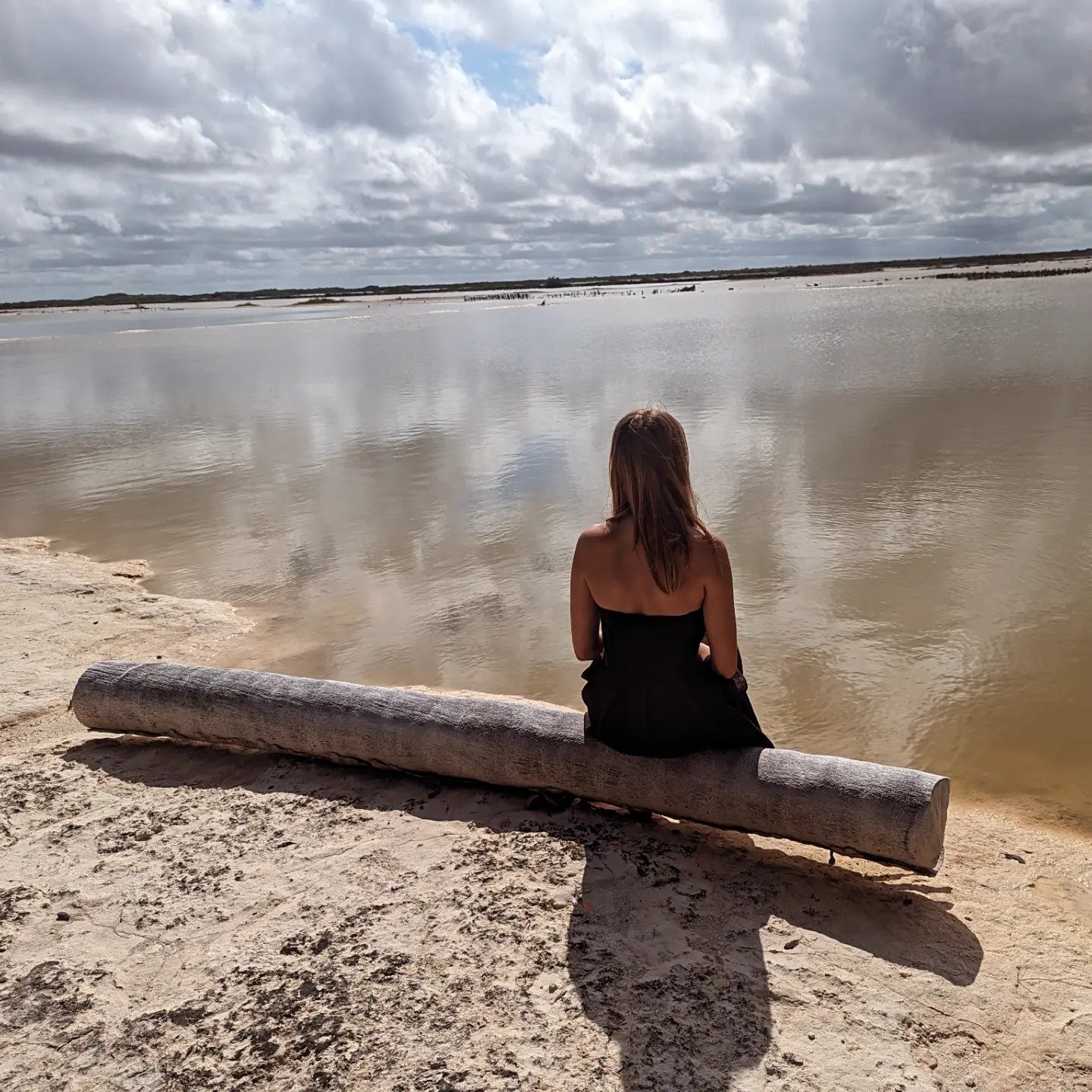
Apart from that, time passed slowly here – the beach, the hammock and walks by the calm lagoon.
Snakes, scorpions and insects – how was sleeping in a tent?
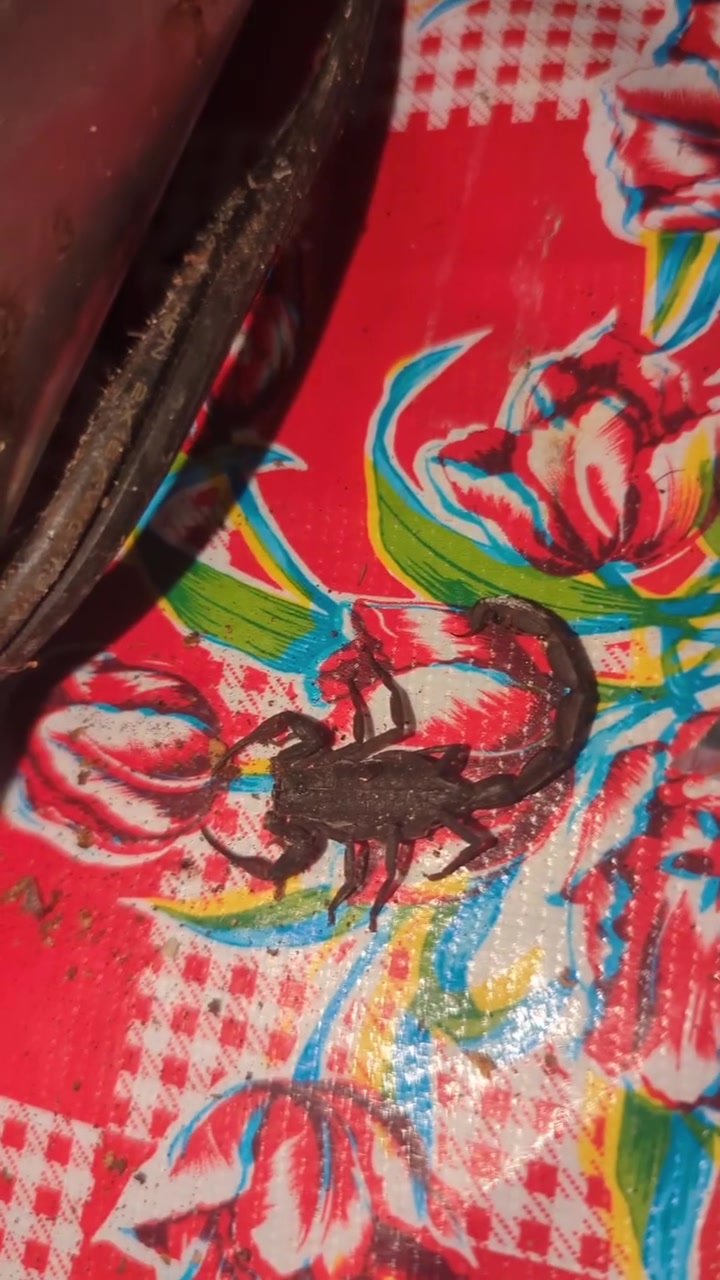
You asked us about this during the trip. The campsite owner told us that snakes are rare here – in the last few years he had seen only five on the grounds and had removed each one right away for the guests’ safety. The village is close to the jungle, so their presence is no surprise, but snakes do not seek contact with people. Scorpions are said to be more common, but not very dangerous – we only saw one, and it was dead.
We tried to always keep the tent closed and to use a torch after dark. Shoes left outside need to be checked before you put them on (ours only ever had sand in them). Insects are the biggest nuisance: even with repellent spray you cannot avoid bites – besides mosquitoes, ants and flies make life miserable too.
Telchac Puerto and the onward journey
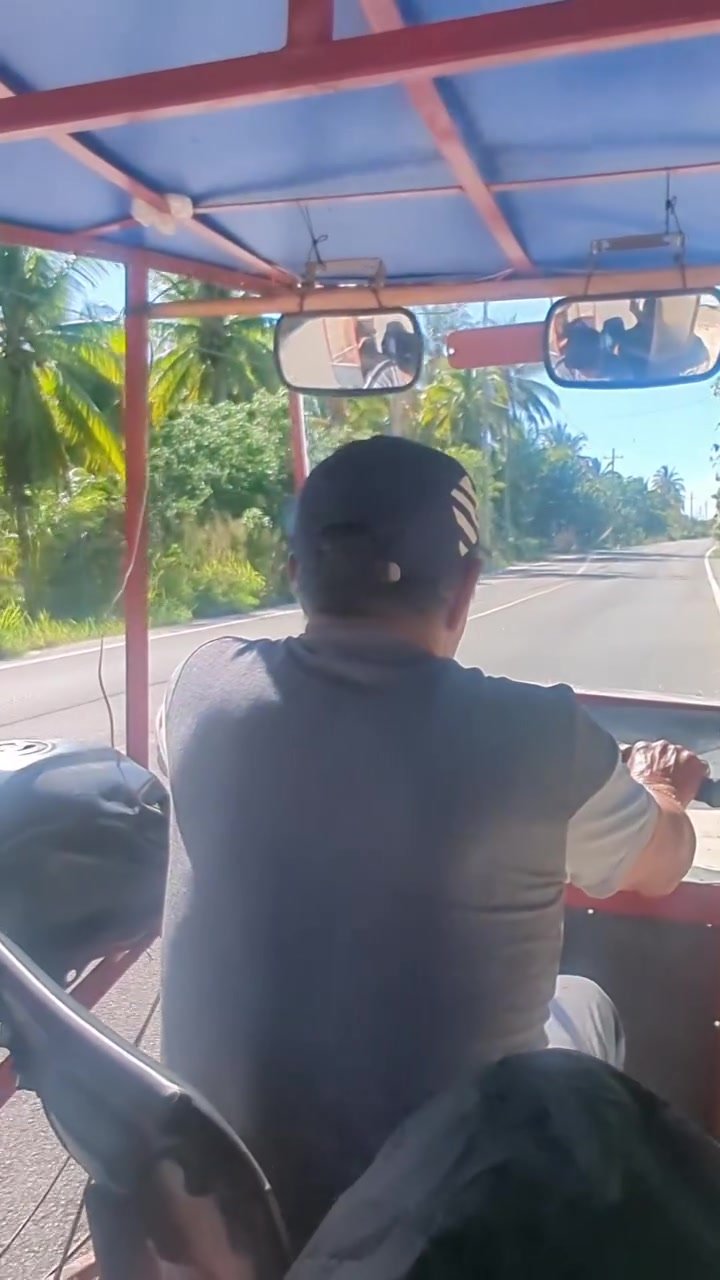
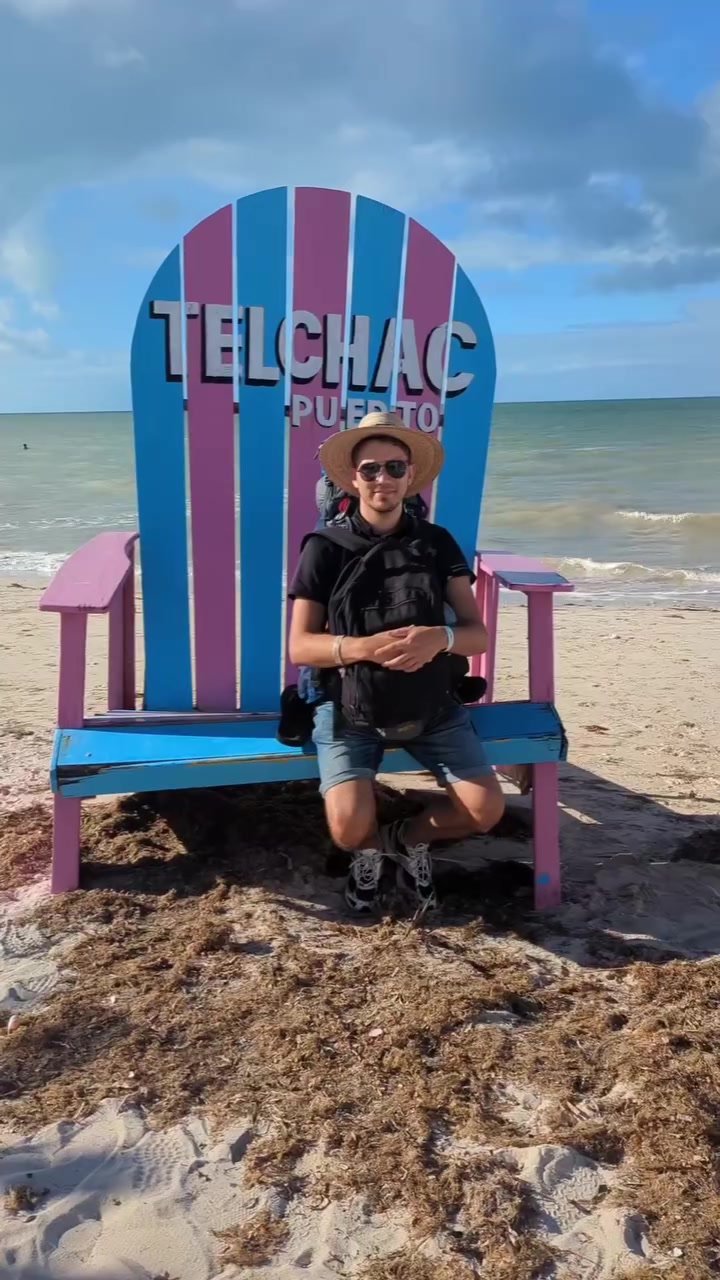
Leaving San Crisanto turned out to be a challenge. The online timetable did not work properly, nobody answered the helpline, and the information from locals turned out to be wrong. In the end we took a tuk-tuk to neighbouring Telchac Puerto (100 MXN for two people) – there is a proper bus station there with a timetable and many more connections. From there we took a bus to Mérida (65 MXN), and then an ADO bus to Valladolid, our base for visiting the cenotes and Chichén Itzá.
Practical information
- Getting there – by bus from Mérida, about €4.50 per person, 2–3 hours’ ride.
- Palula Beach campsite – about €8 per person per night with your own tent (November 2023). You need your own gear; the rooms on site are about twice as expensive. We wholeheartedly recommend the campsite.
- When – in mid-November the rainy season is ending: downpours are short and there are hardly any tourists.
- Getting back – best via Telchac Puerto (tuk-tuk 100 MXN for two people), from where buses run to a timetable.