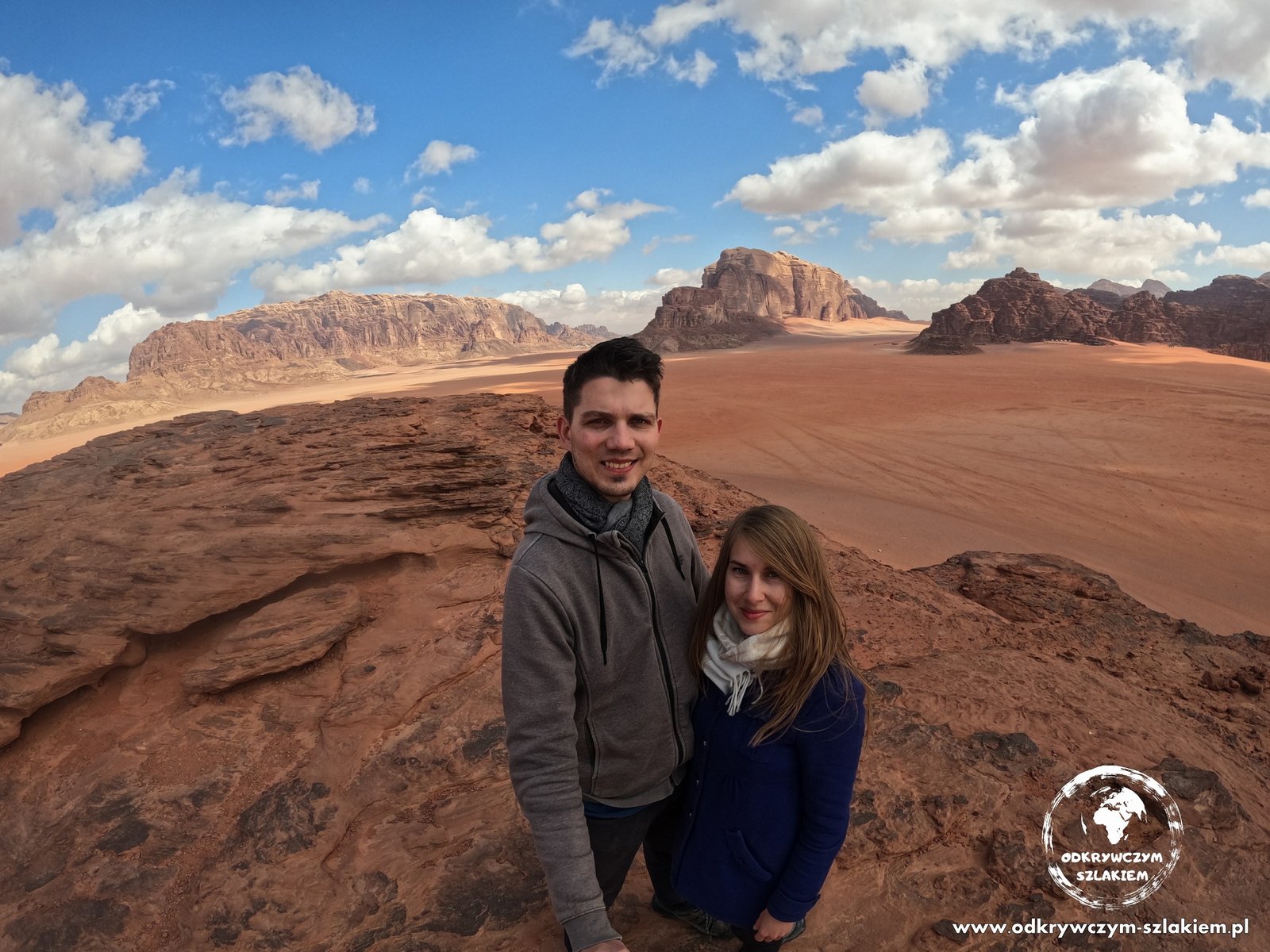
Wadi Rum is a desert in southern Jordan – red sand, sandstone and granite massifs, narrow canyons and natural rock bridges. The landscape is so “Martian” that films such as “Dune”, “Star Wars”, “Prometheus”, “The Martian” and “Transformers” were shot here, and the whole area is a UNESCO World Heritage Site. Together with Petra, for us it is the place in Jordan you simply must see – and it is absolutely worth spending a night here to feel the real atmosphere of the desert. We came here at the end of our week in Jordan: two nights in a camp and a full-day tour by off-road vehicle (24–26 March 2022).
Table of contents
- Getting to the camp
- The desert camp – what it’s like
- A full-day desert tour
- Meals and evenings in the camp
- Weather, price and booking
Getting to the camp
We drove to Wadi Rum from Madaba – about 330 km, and the last stretch was in the rain. We had arranged to meet the camp staff at the Visitor Center in Wadi Rum Village, where we left our car in the car park. It was already dark when we arrived – our host took us deep into the desert to the camp in an off-road pick-up. He drove us around the desert in the same vehicle the whole of the next day.
The desert camp – what it’s like
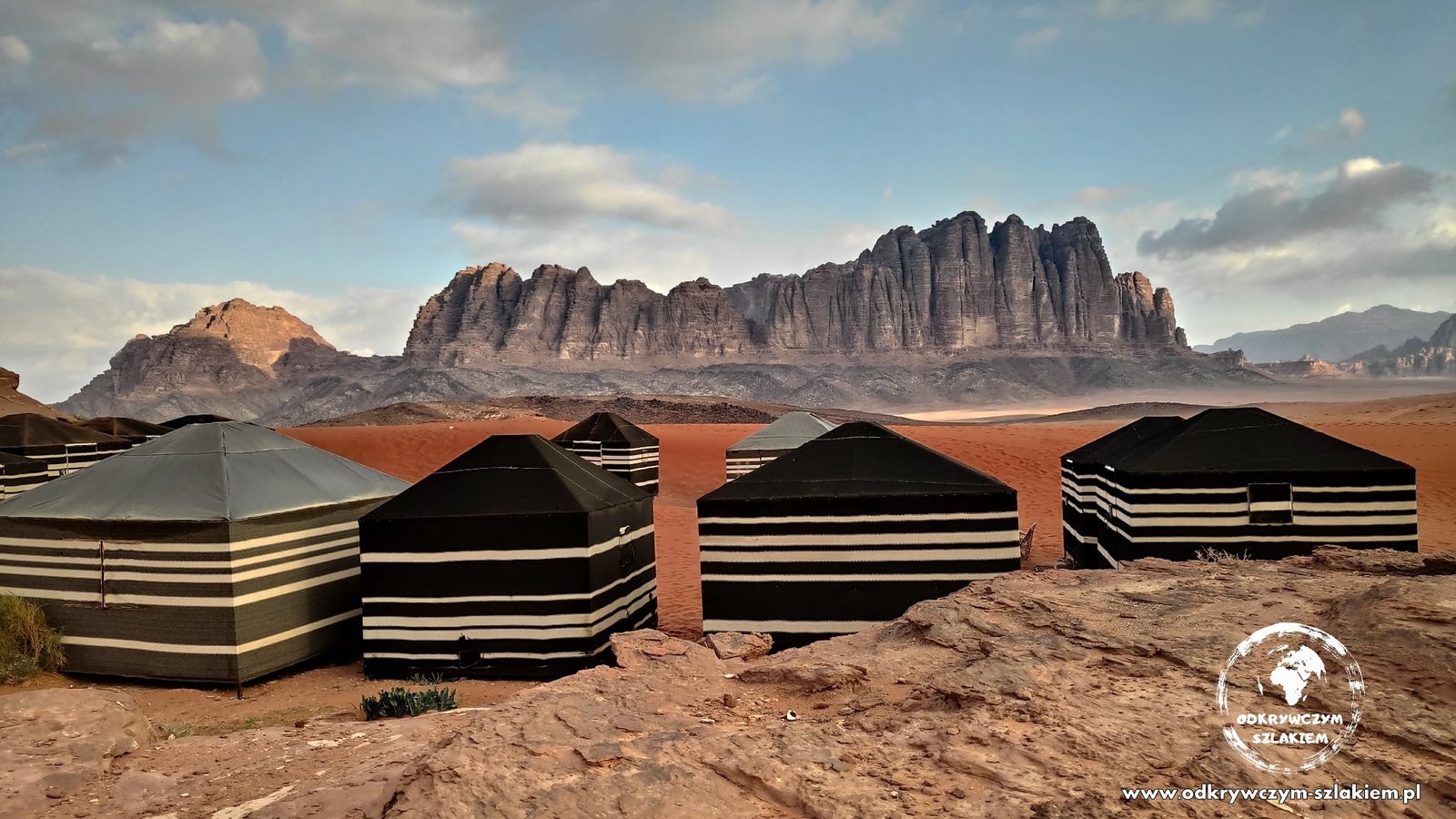
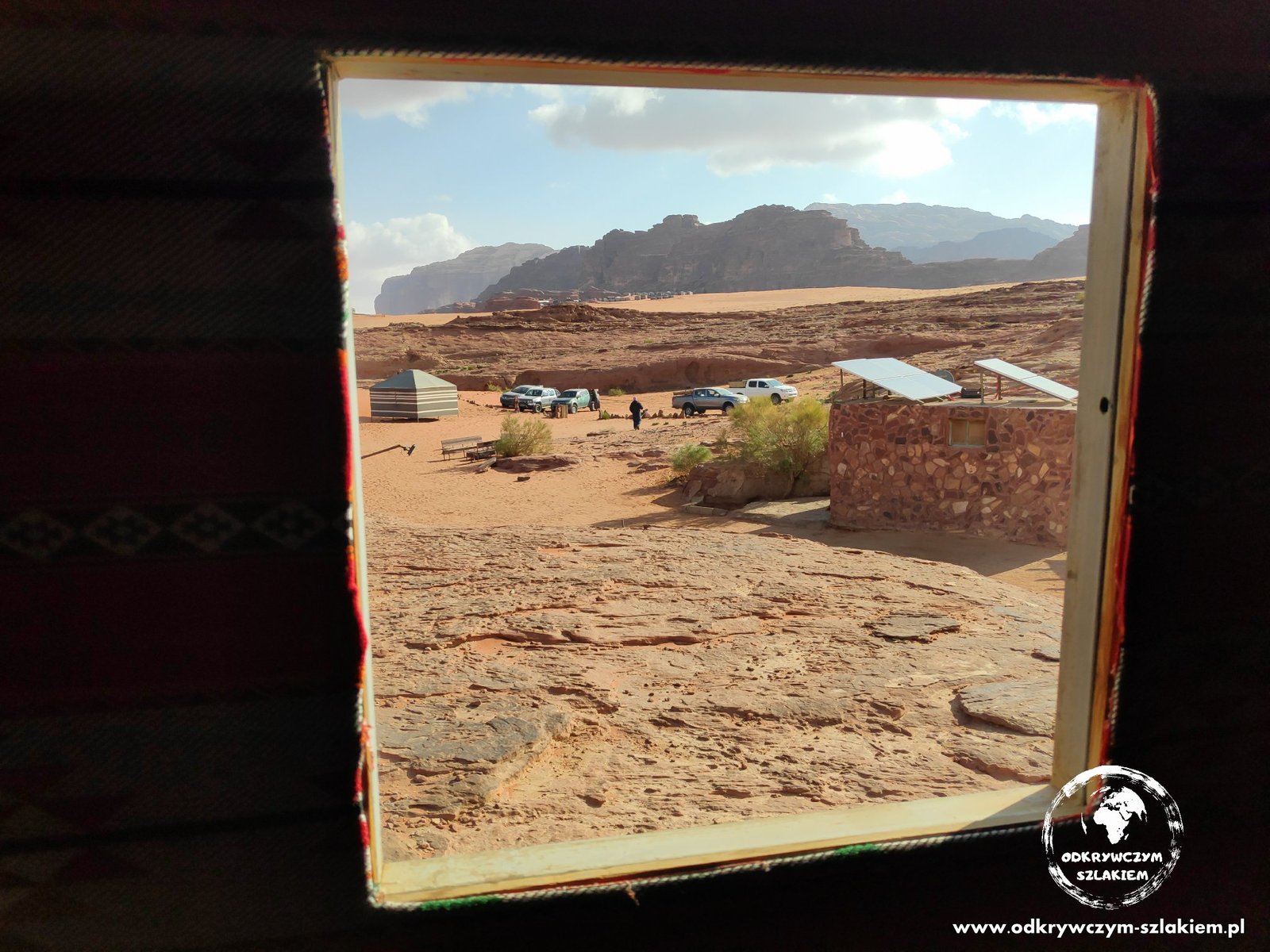
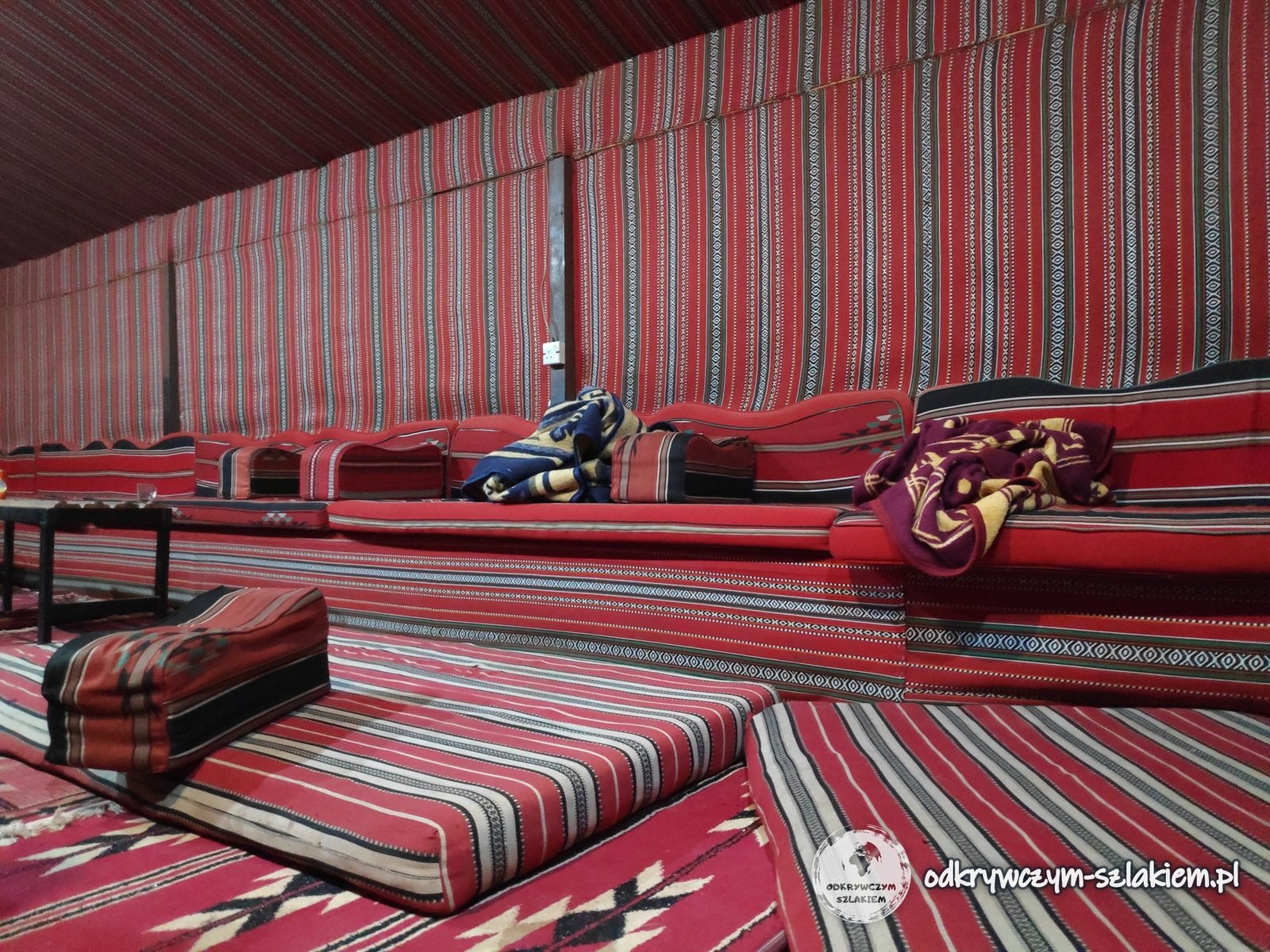
We stayed at Fire Camp. The camp consisted of sleeping tents (we slept in one of the tent cabins), a common tent, a dining tent and a building with toilets and showers, separate for women and men. The toilets were clean and warm inside. The water, however, was cold – it is heated by the sun, so there was no chance of a warm shower in the morning, and at a temperature of about 0 degrees we did not fancy a cold one. Electricity only worked until 22:00. We got extra blankets and slept comfortably in the tent.
A full-day desert tour
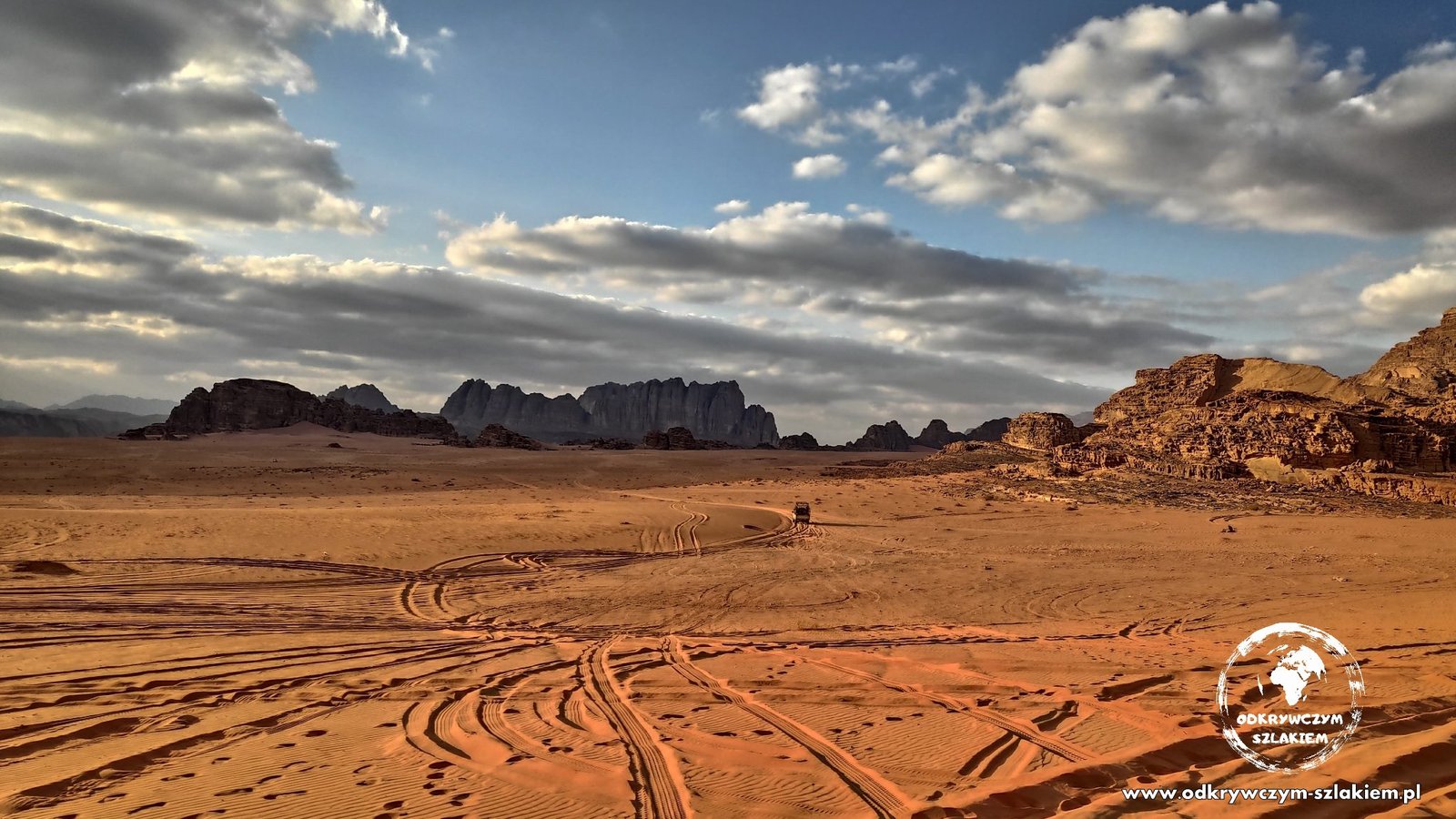
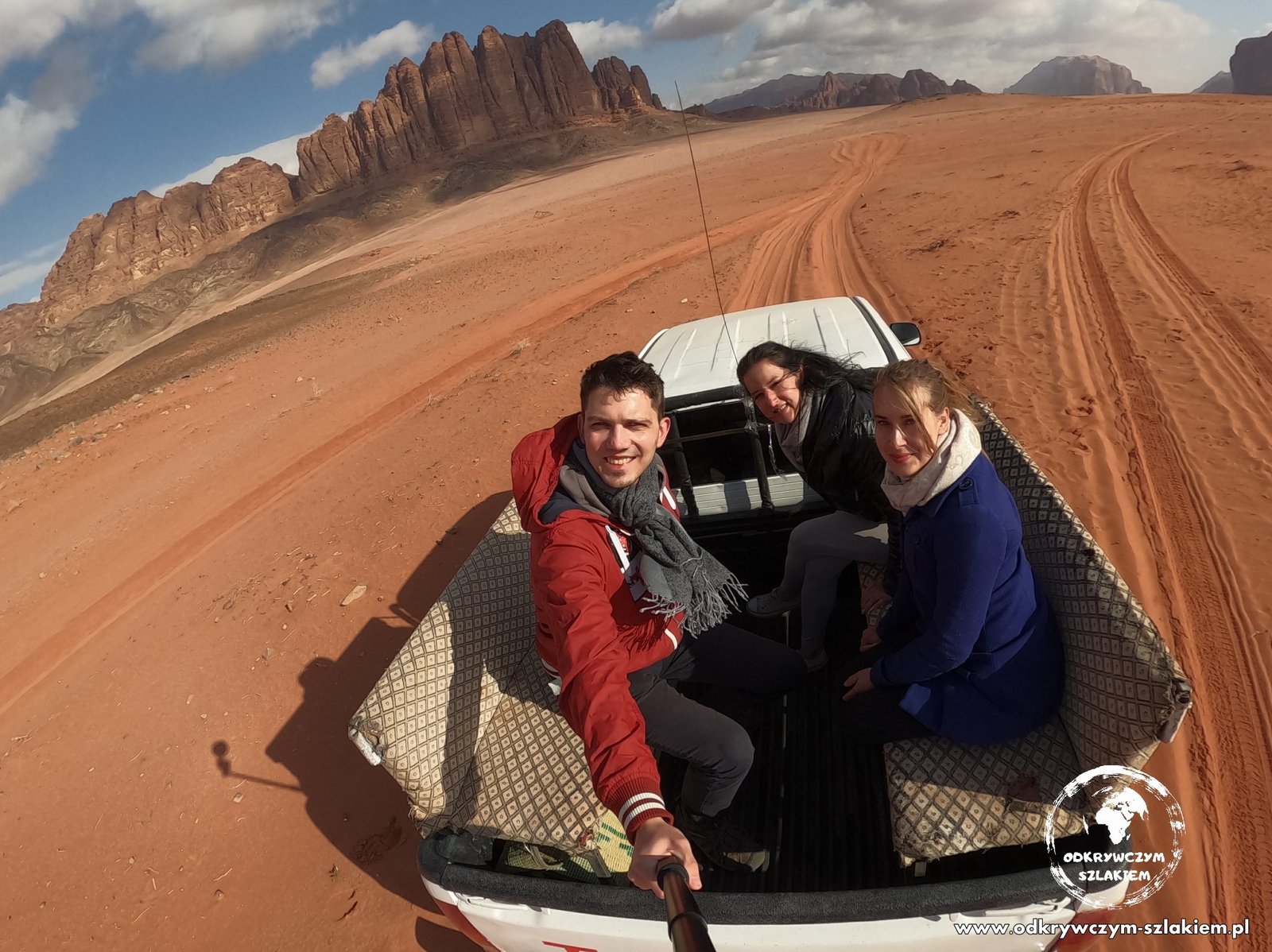
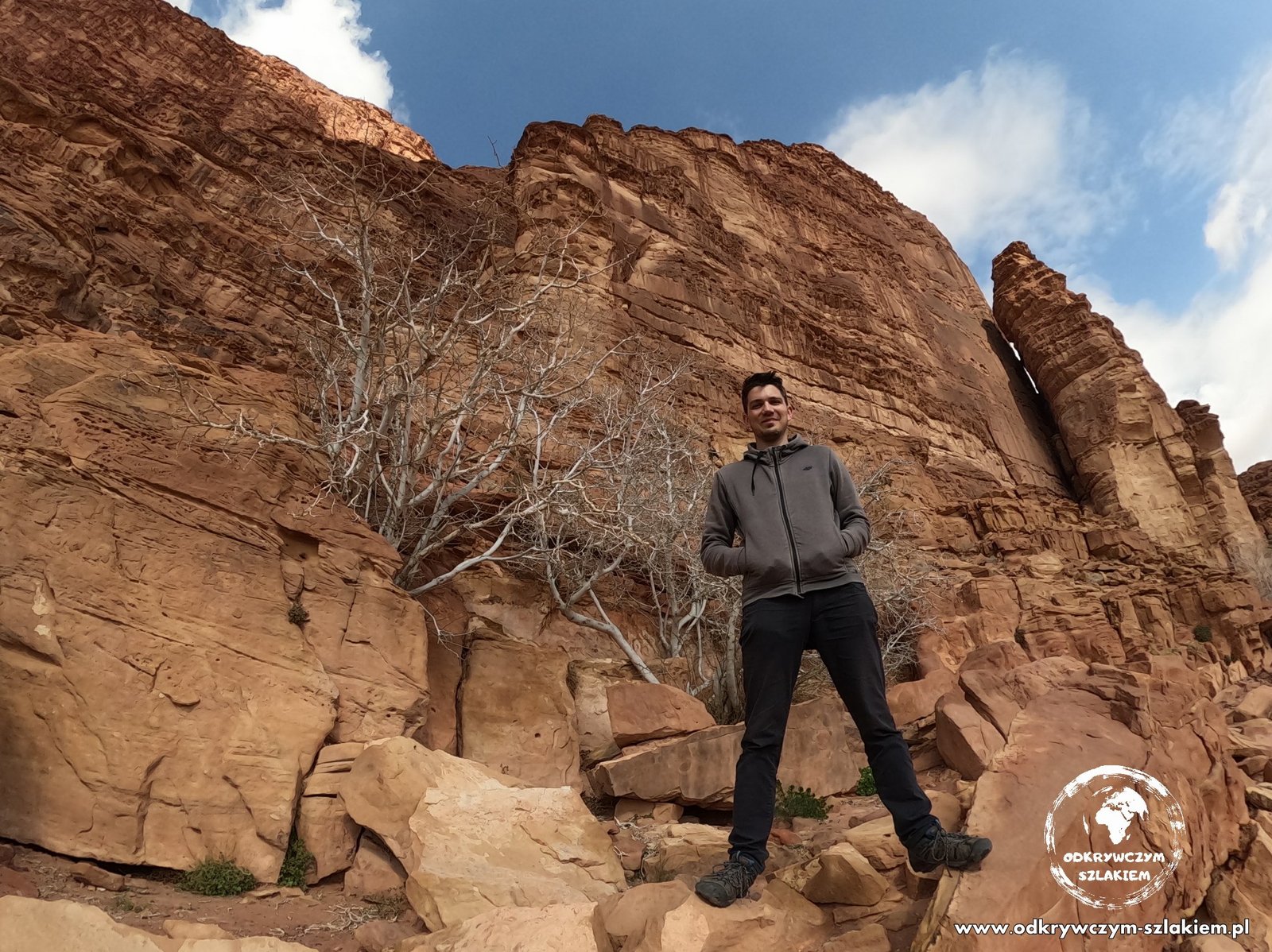
The next day we spent the whole day driving around the desert with a guide in an off-road vehicle – in the back of a pick-up, with the wind in our hair. The guide stopped at one canyon and rock formation after another, and above all we admired the unique red sand. The route of such tours usually includes the Lawrence’s Spring and Ain al-Kattar springs, the red dunes, the so-called Lawrence’s House, the Khazali, Burrah and Abu Khashaba canyons, the Little Bridge and Burdah rock bridges, the Um Frouth arch, and Mushroom Rock and Chicken Rock. Many places are named after T.E. Lawrence – “Lawrence of Arabia”, who was active here during the Arab Revolt of 1916–1918.
Springs and red dunes
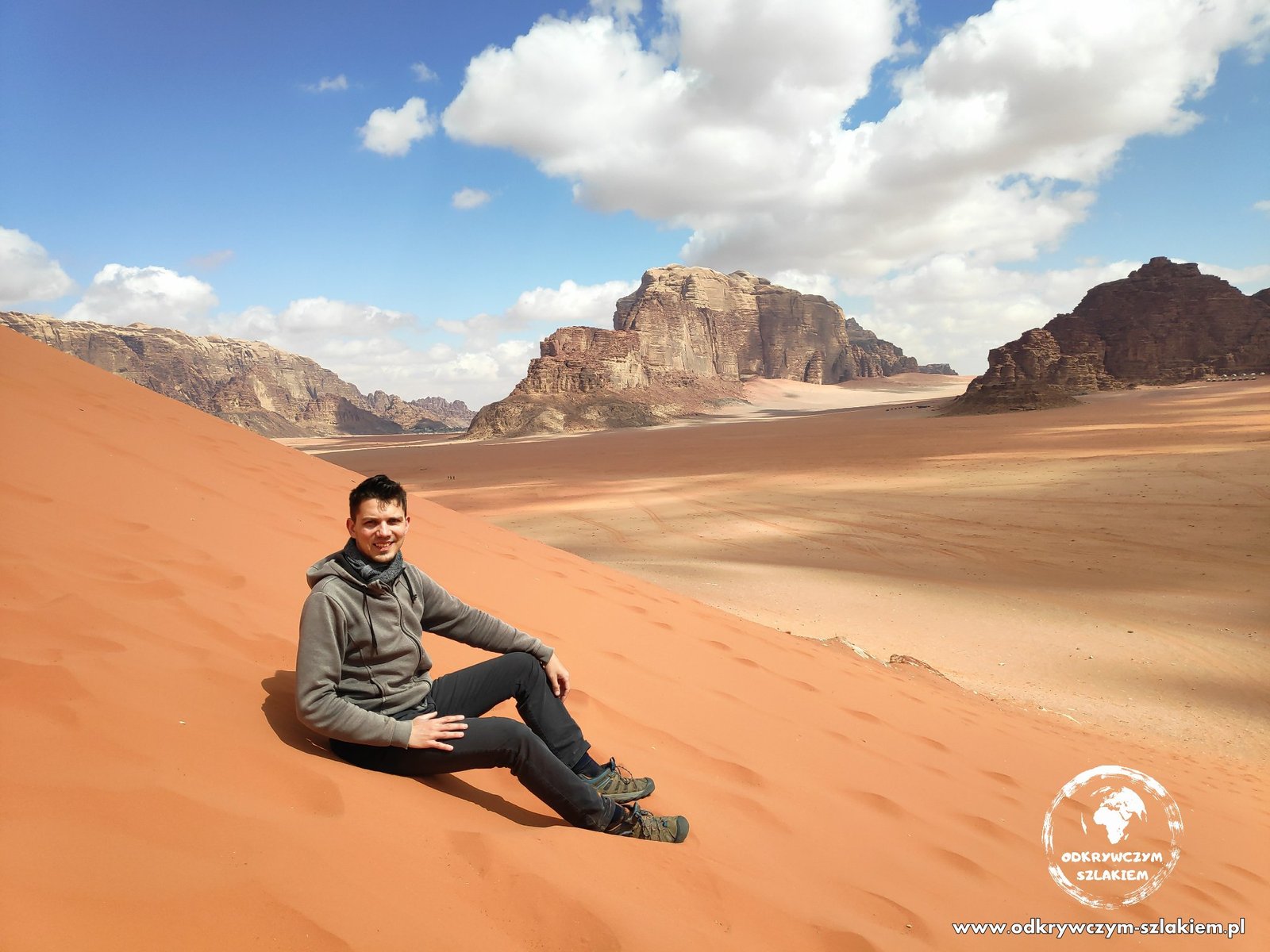
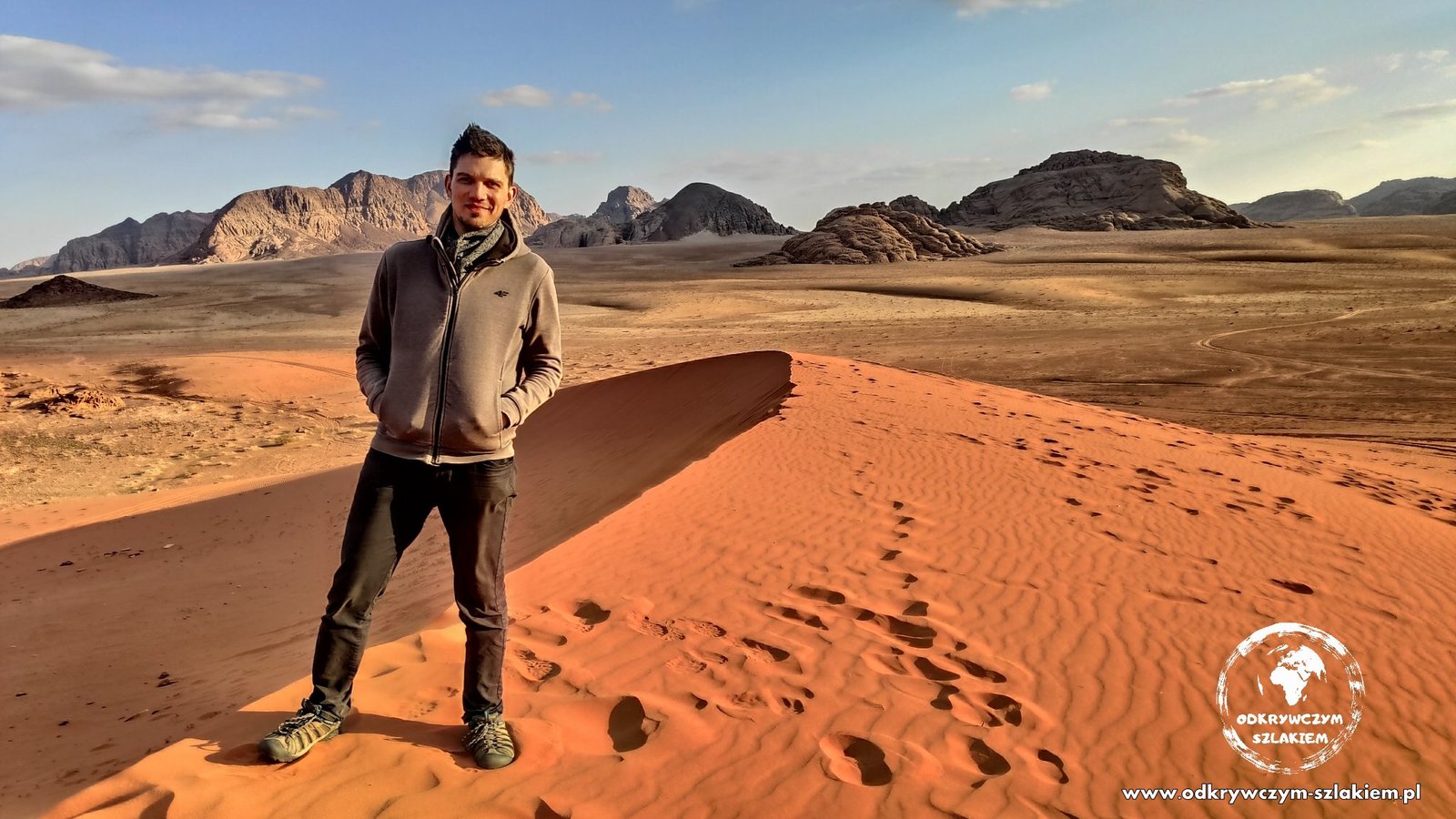
There are springs in the desert where Bedouins and caravans have stopped for centuries – where water seeps from the rocks, a little greenery grows. What impressed us most, though, were the red dunes (Red Sand Dunes): soft, rusty-red sand that is hard work to climb, with a view from the top of the rock massifs rising out of the desert.


Rock bridges
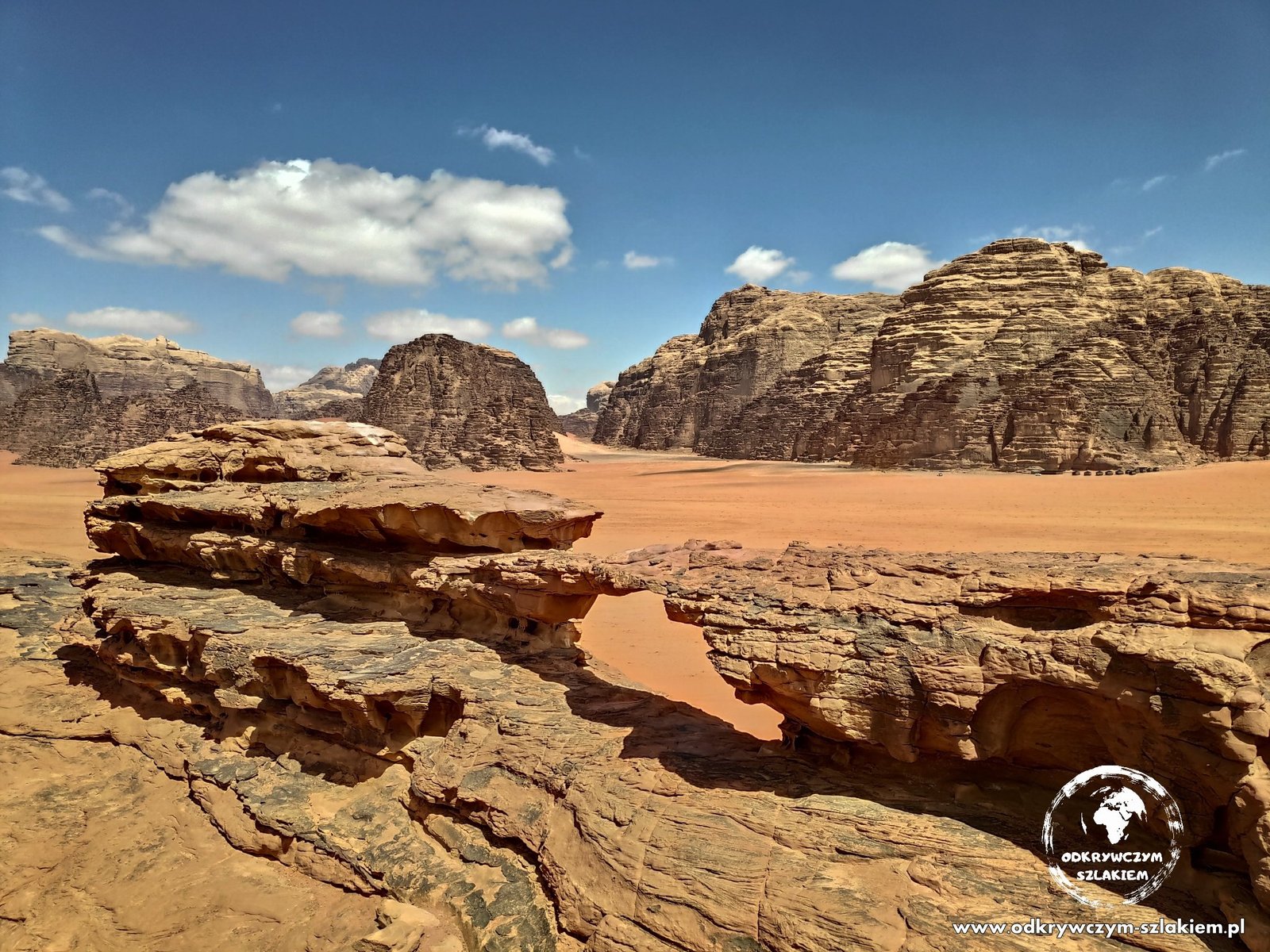
Wind and water have carved many natural arches and rock bridges in Wadi Rum. The most accessible is the low Little Bridge, which you can walk onto without climbing. The famous Burdah bridge is much higher and requires a climb with a guide.
Khazali Canyon

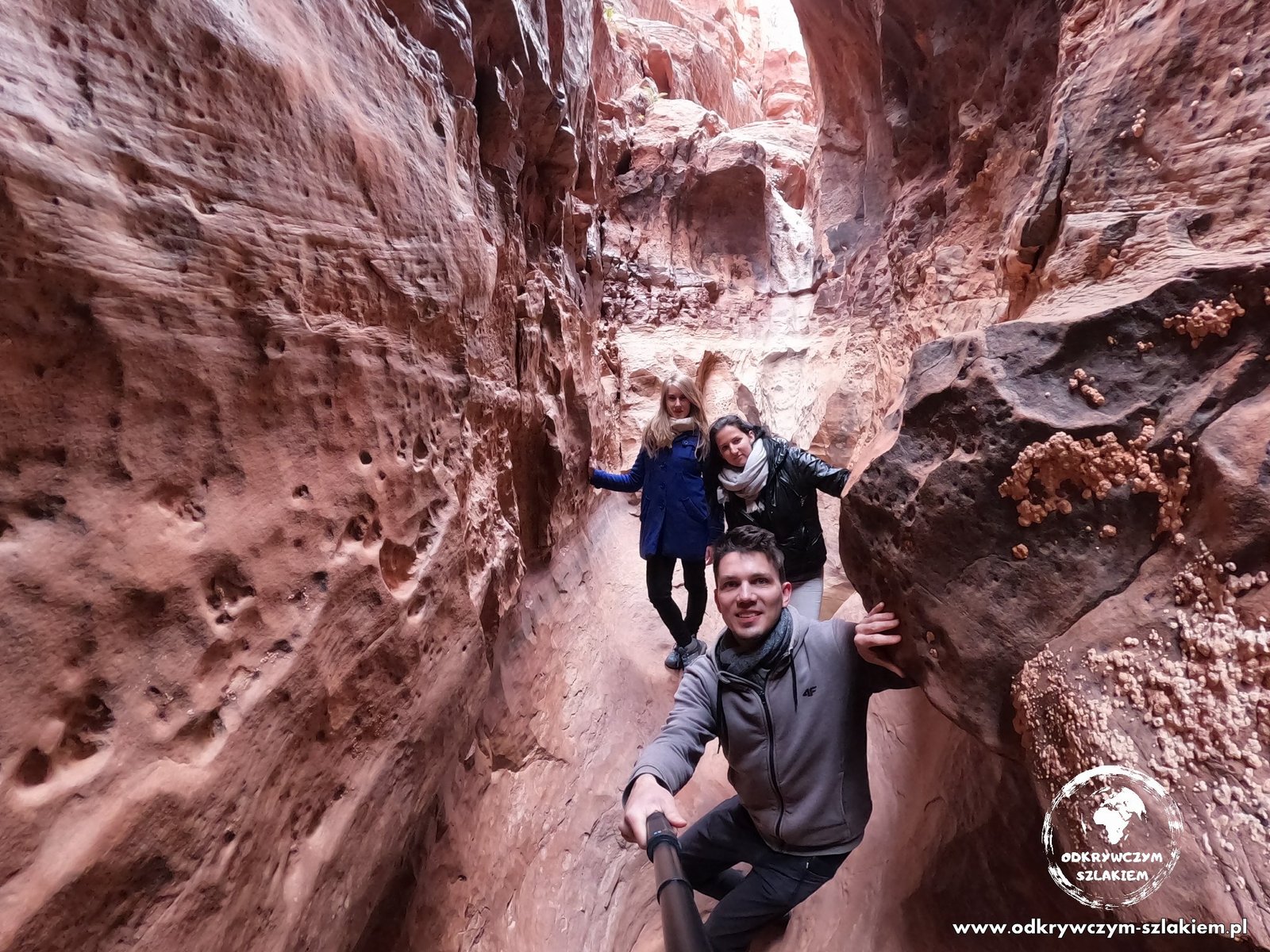
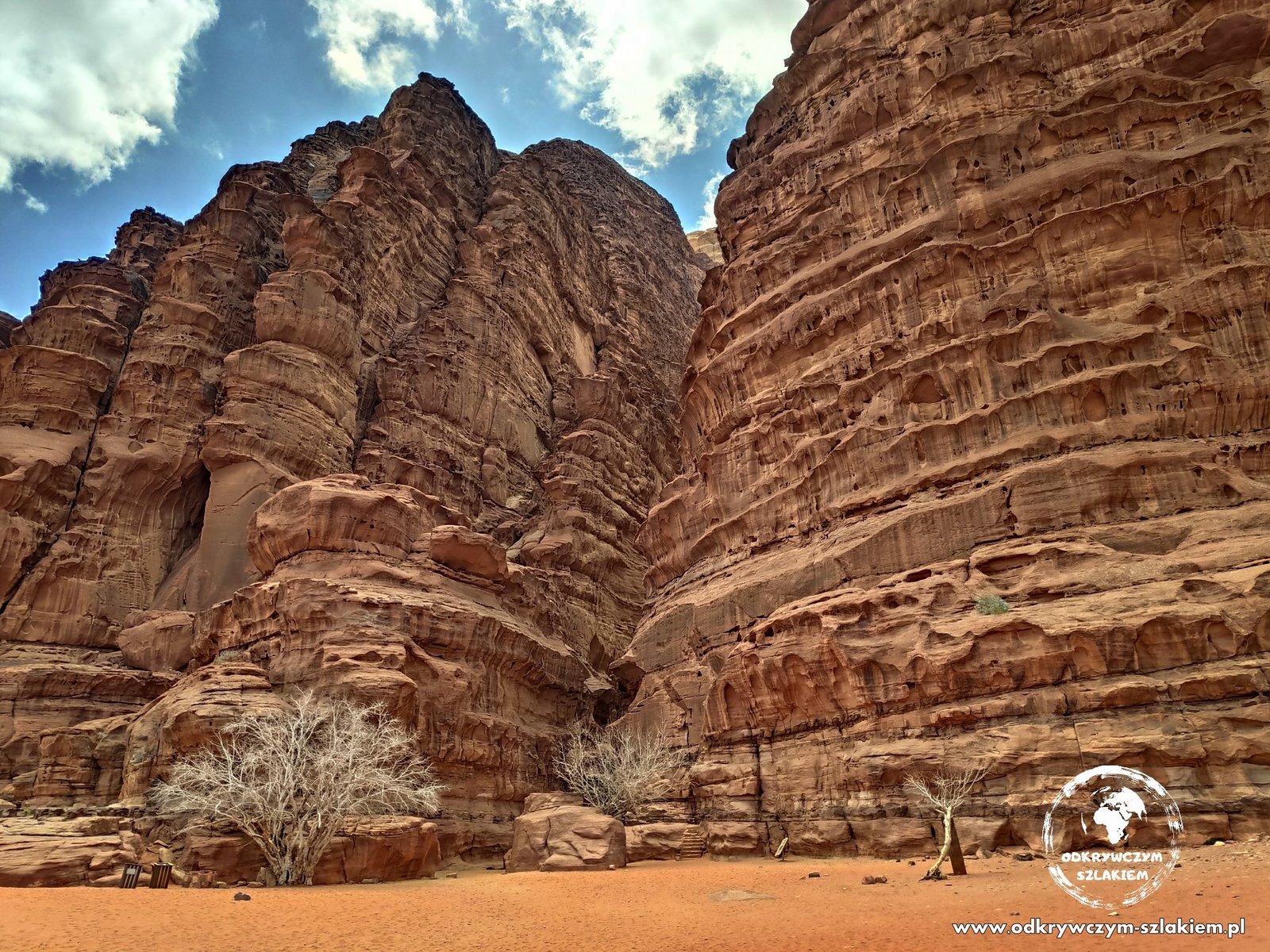
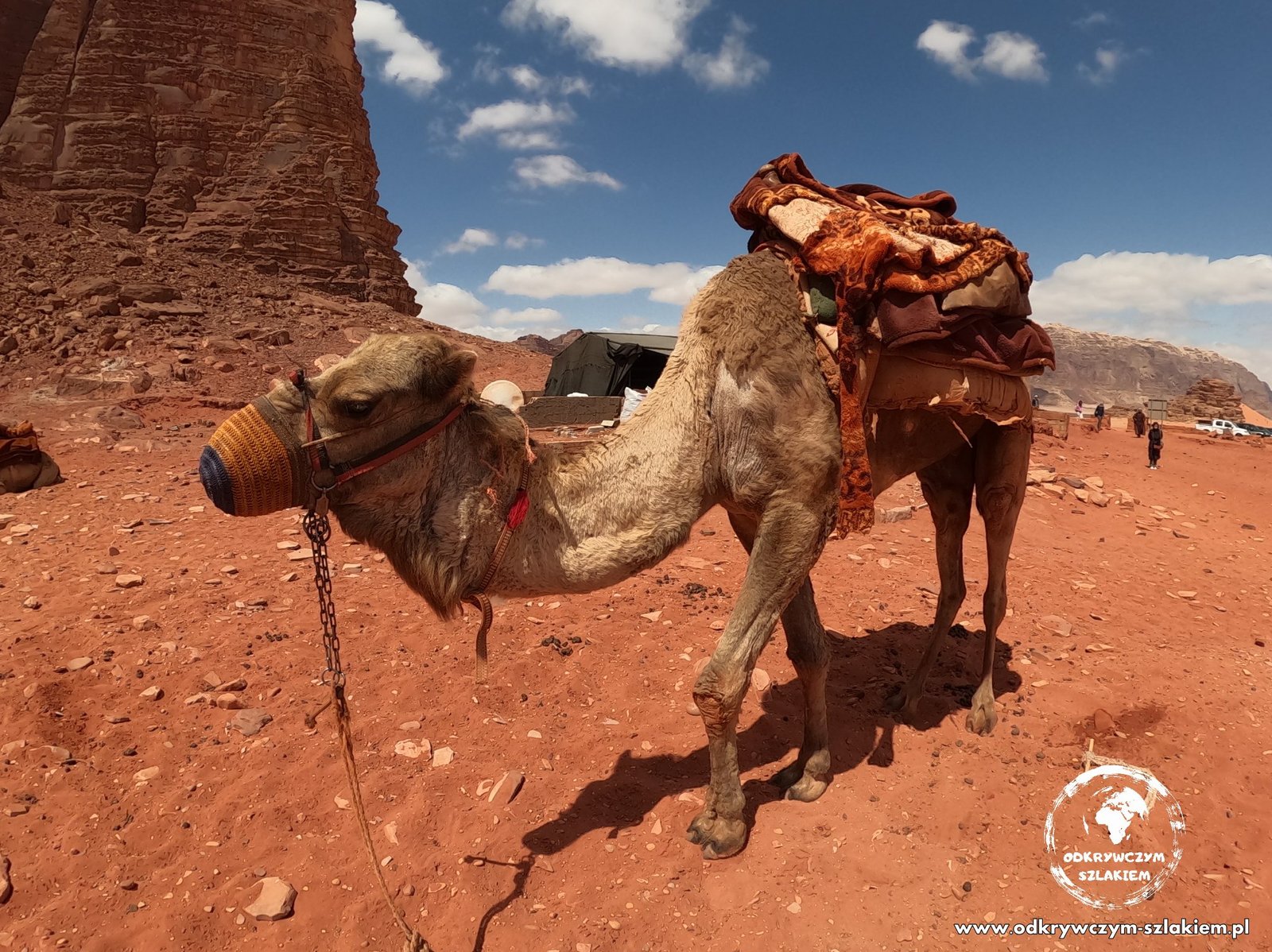
Khazali Canyon is a narrow crevice in a rock massif, known for its ancient rock carvings. Most tours stop at its entrance, and Bedouins with camels wait nearby. You can only walk a short way into the crevice, but the high, folded walls are very impressive.
Lunch from the campfire
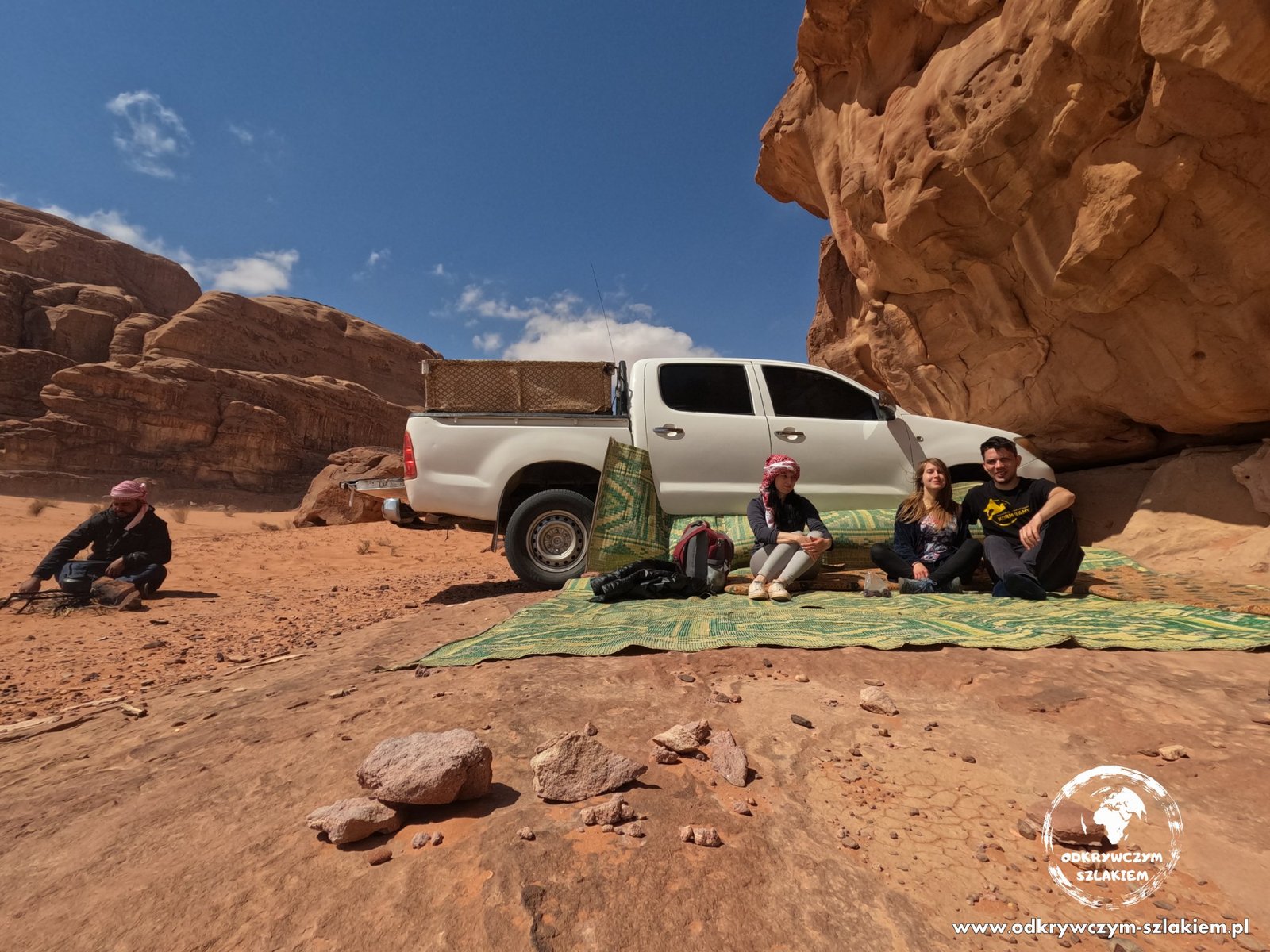
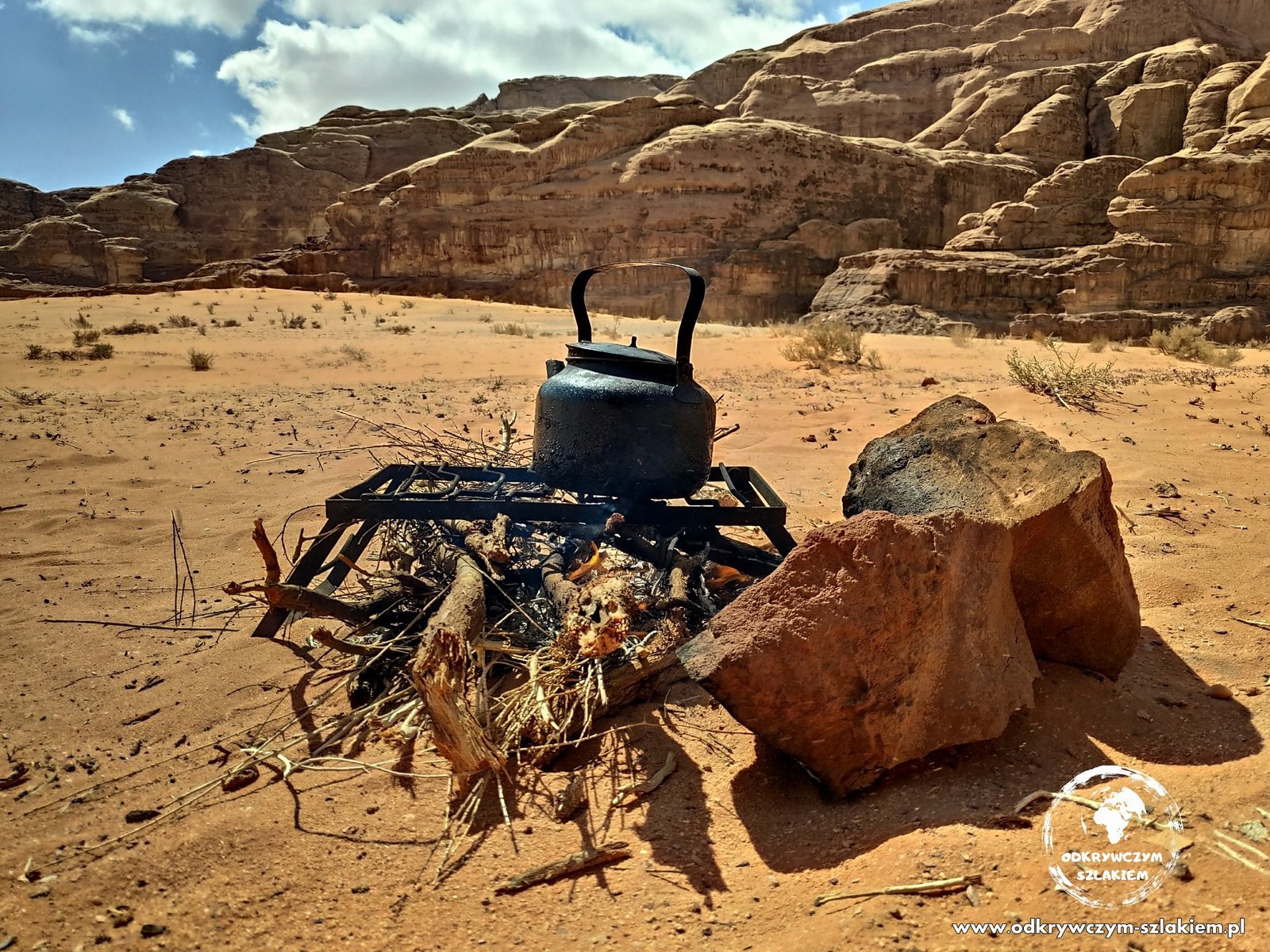
In the middle of the day we stopped in the shade of a rock for lunch. First we all gathered sticks for the fire, then it was time for some tea, and finally our Bedouin cooked a delicious main course over the fire. We had plenty of water all day.
The end of the tour – around Chicken Rock
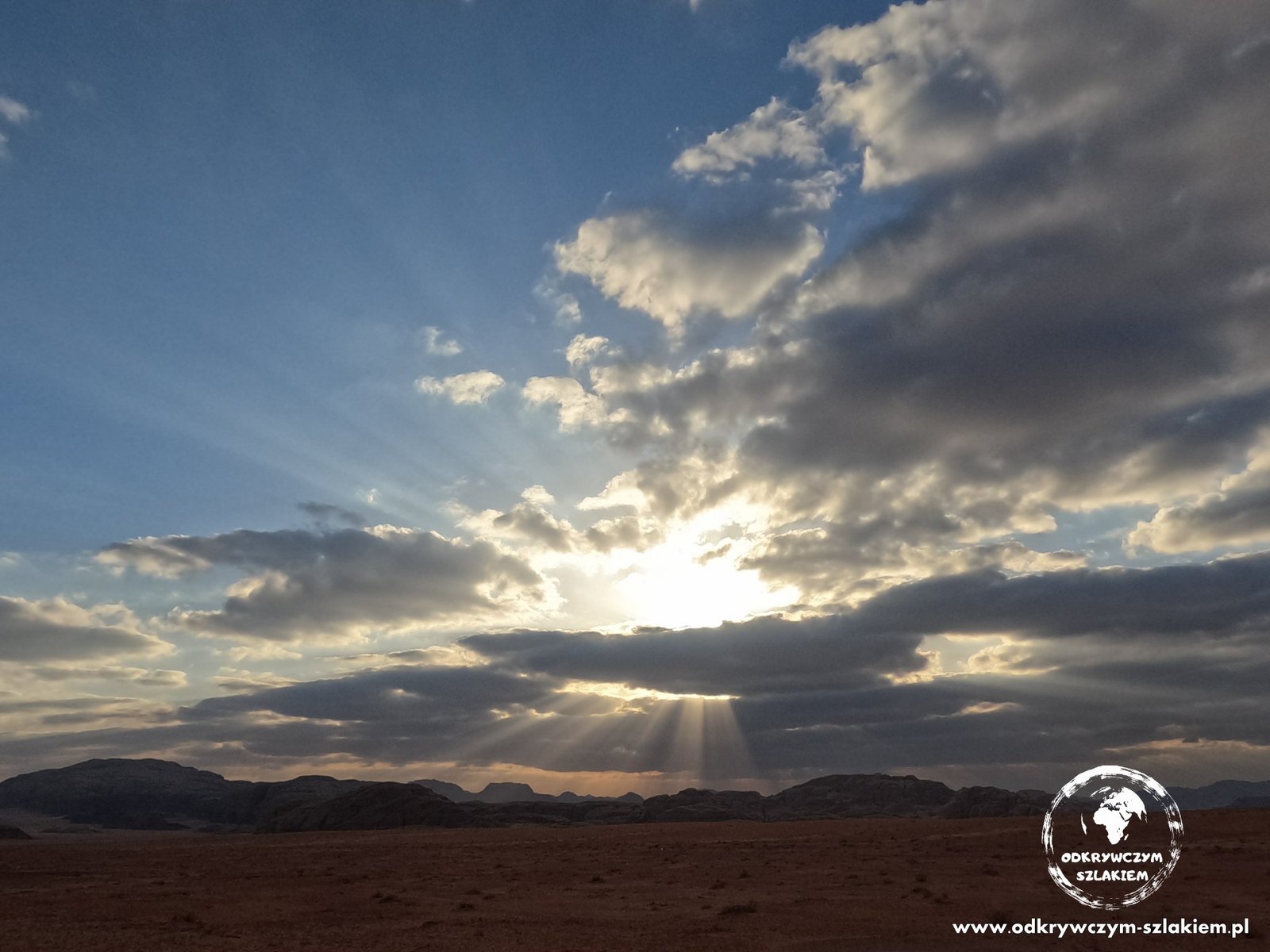
We finished the tour near Chicken Rock, on another red dune. Towards evening the sun came out, and its rays breaking through the clouds over the desert were the perfect farewell to Jordan.
Meals and evenings in the camp
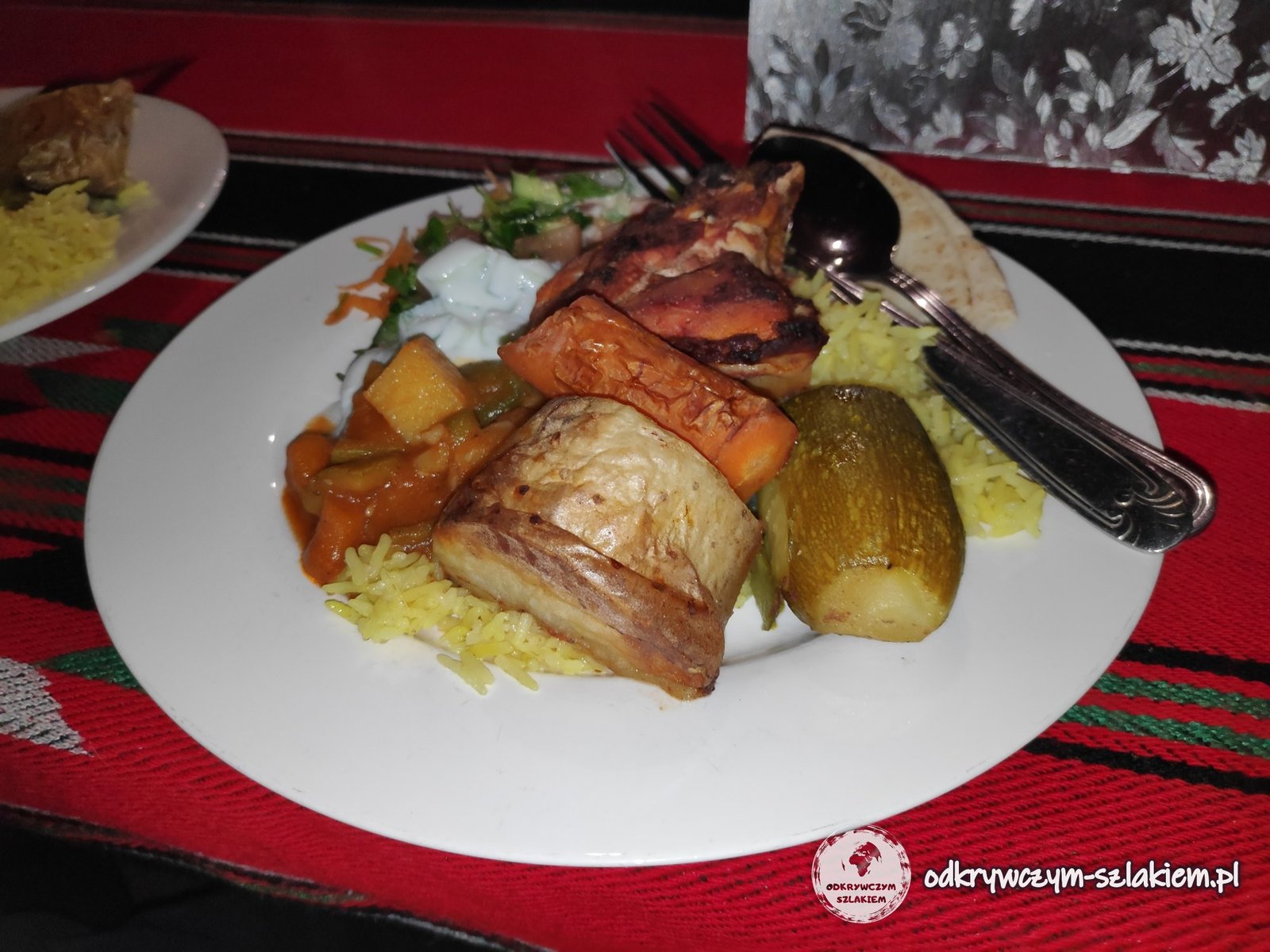
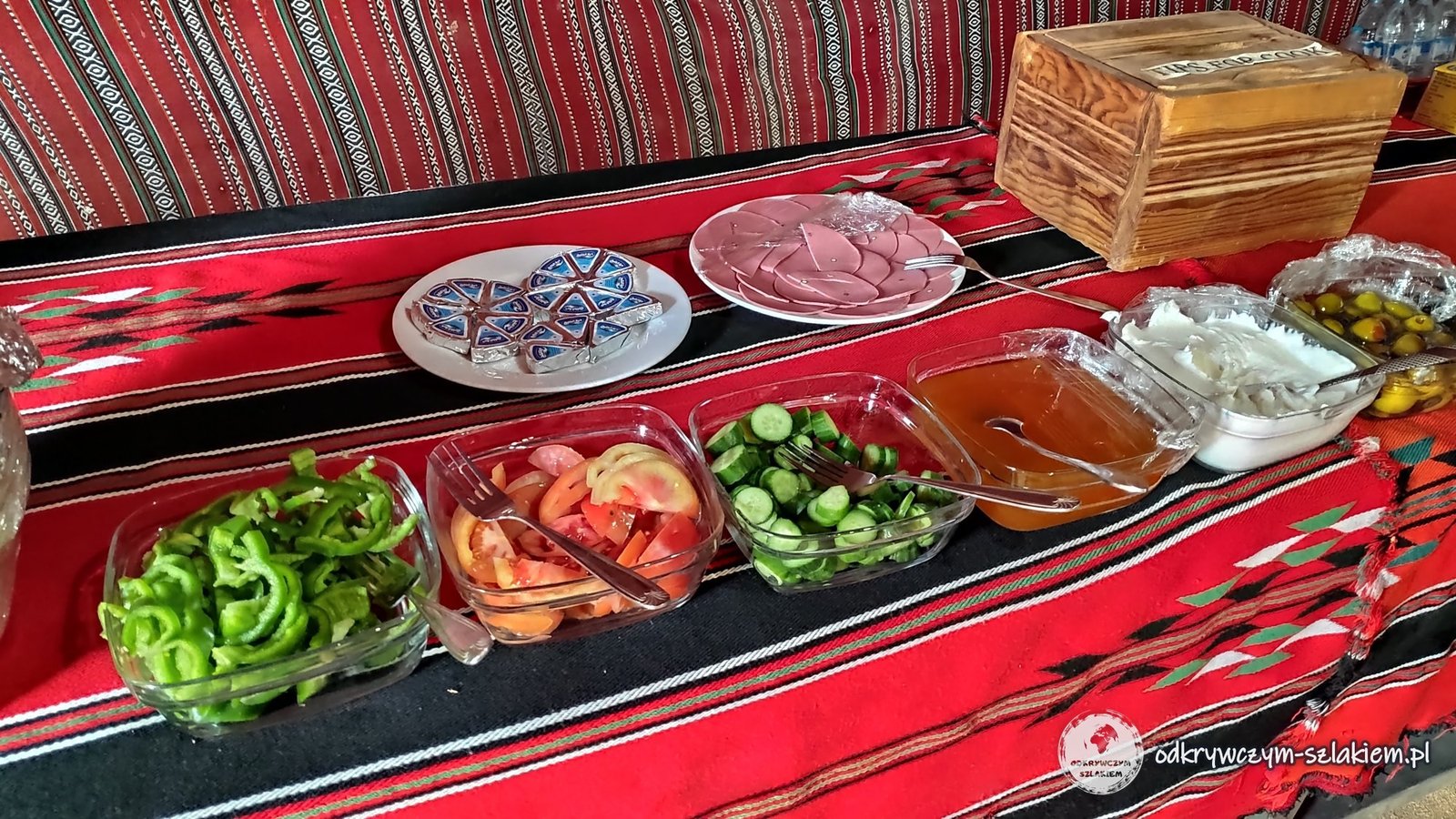
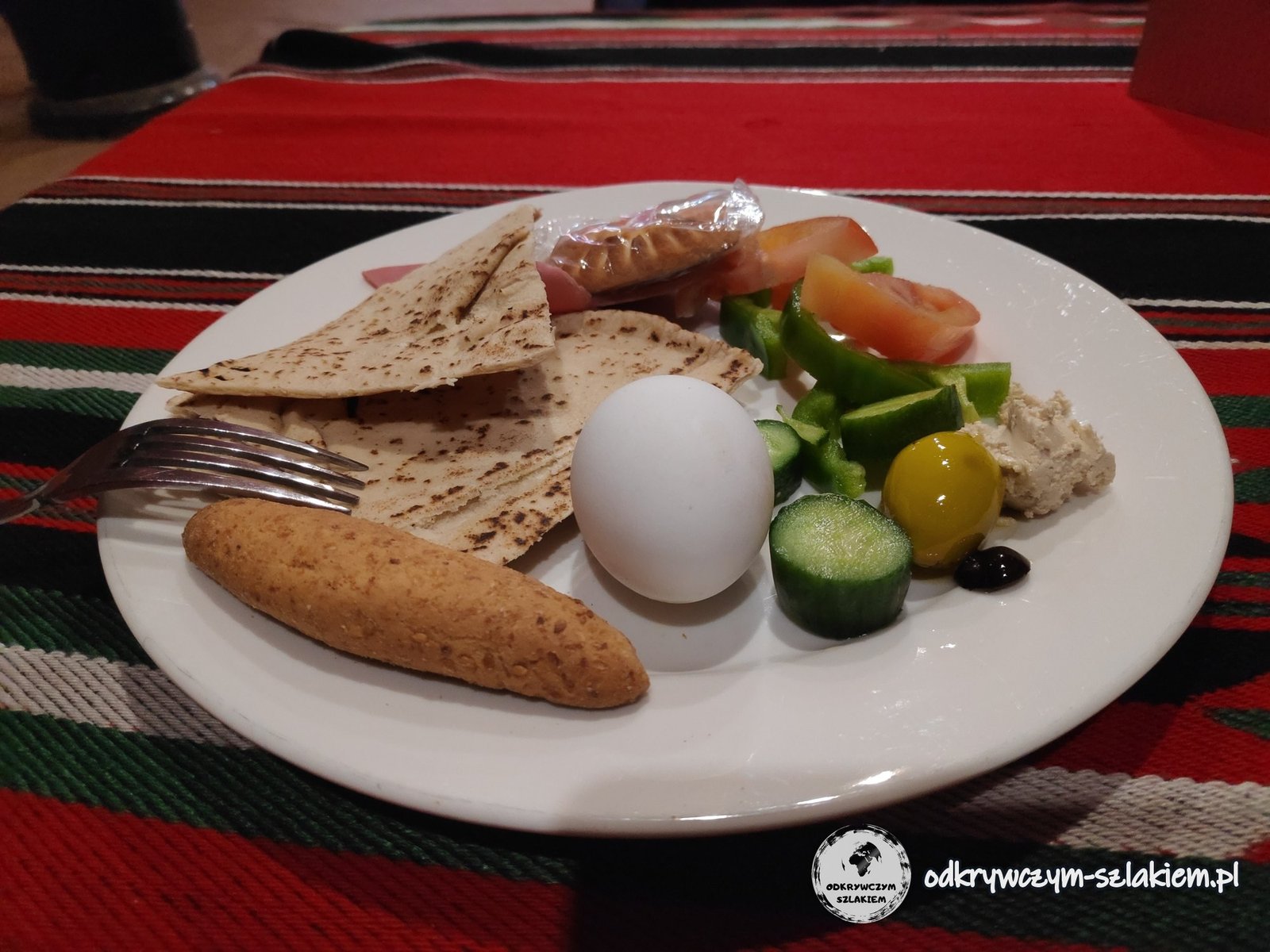
Meals are usually included in the price of the accommodation and the tour. Since we arrived the day before the tour, we already had dinner on the first evening. Dinner in the camp is quite a show: the Bedouins cook the food the traditional way, burying it in a specially dug pit in the ground (zarb). Before the meal everyone gathers in a circle to watch the food being lifted out of the ground, and then everyone helps themselves buffet-style in the dining tent (in good weather you eat outside). After returning from the tour we also watched the evening performances.
Weather, price and booking
- Weather – nights in the desert are always cold, but we hit an exceptionally cold front: at night the temperature dropped to about 2 degrees, and in the evening, as we drove to the camp, it rained – a rarity in the desert. Bring warm clothes for the evening and the night.
- Which offer – the desert is best explored with a local operator. There are lots of offers: from rides of a few hours to full-day tours with an overnight stay. We recommend a full-day tour with at least one night – prices depend on the standard of the camp (we chose a cheaper option and were really happy). It is worth booking online in advance.
- Entrance – the fee for entering the Wadi Rum protected area is covered by the Jordan Pass.
- Getting there – it is about 60 km from Aqaba and about 100 km from Petra. You leave your car in Wadi Rum Village, and from there the camp staff drive you.
From Wadi Rum it was not far to the airport in Aqaba, from where we flew back to Berlin the next day. The whole one-week plan – with Crusader castles, Jerash, Amman and Madaba – can be found in the post Jordan in a week – itinerary and practical information.