Petra – the ancient capital of the Nabataeans, carved into pinkish-red rock – is Jordan’s top attraction and one of the New Seven Wonders of the World. Most of you have surely seen a photo of its best-known monument, the Treasury, which in “Indiana Jones and the Last Crusade” played the temple guarding the Holy Grail. We visited it on 20 March 2022, the second day of our week in Jordan. In one day we walked about 14 km – along the gorge, past tombs, temples, palaces and the theatre, all the way to the Ad Deir monastery – and it took us about 10 hours. Unsurprisingly, Petra takes first place for us in the whole of Jordan.
Table of contents
- The main trail: the Siq and the Treasury
- The Al-Khubtha Trail – a viewpoint above the Treasury
- The Ad Deir monastery
- Bedouins, vendors and donkeys
- Practical information
The main trail: the Siq and the Treasury
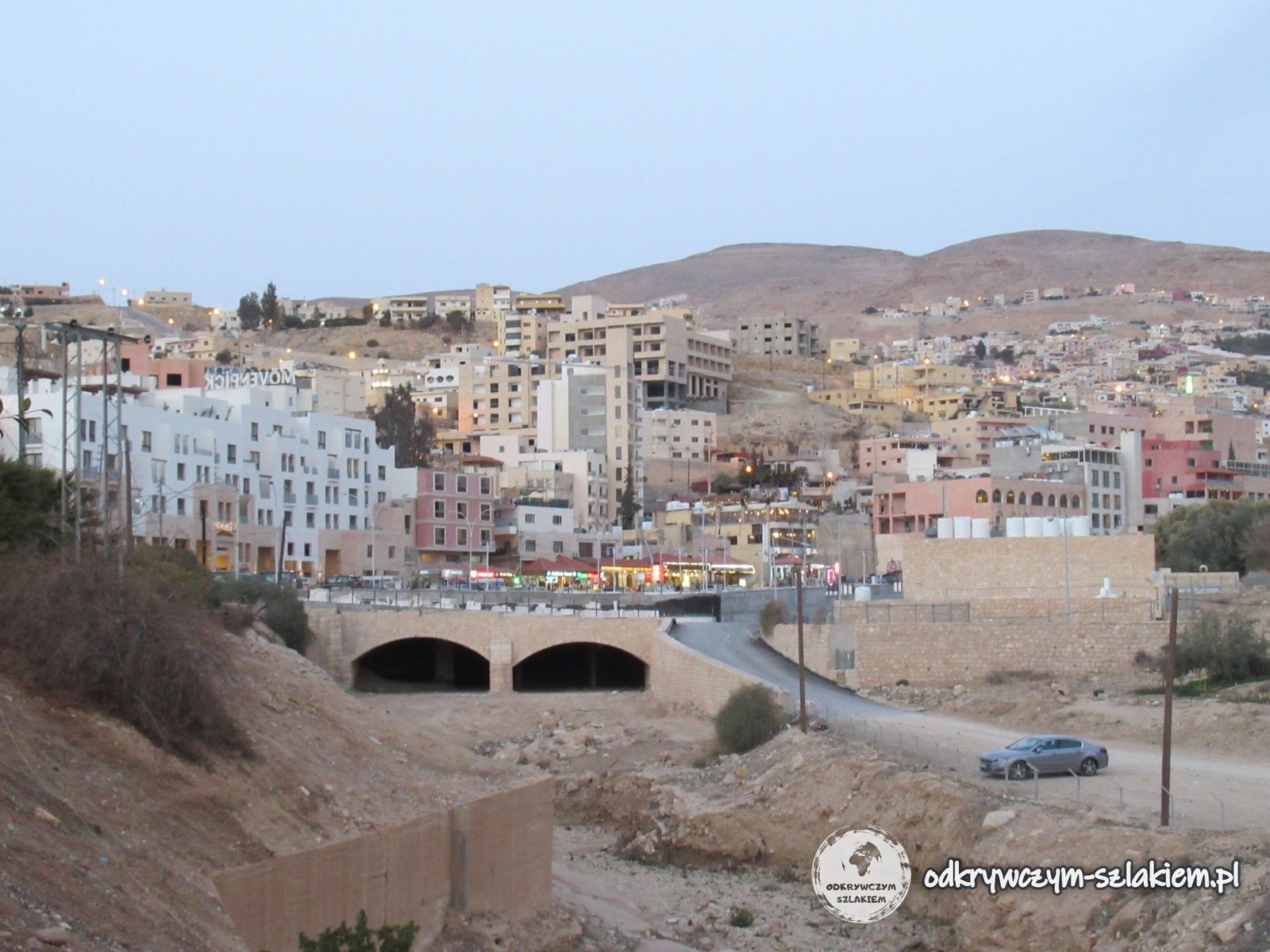
We stayed in the small town of Wadi Musa, right by the entrance to Petra. We started with the main, red trail (about 4 km one way, about 2 hours at a leisurely pace).
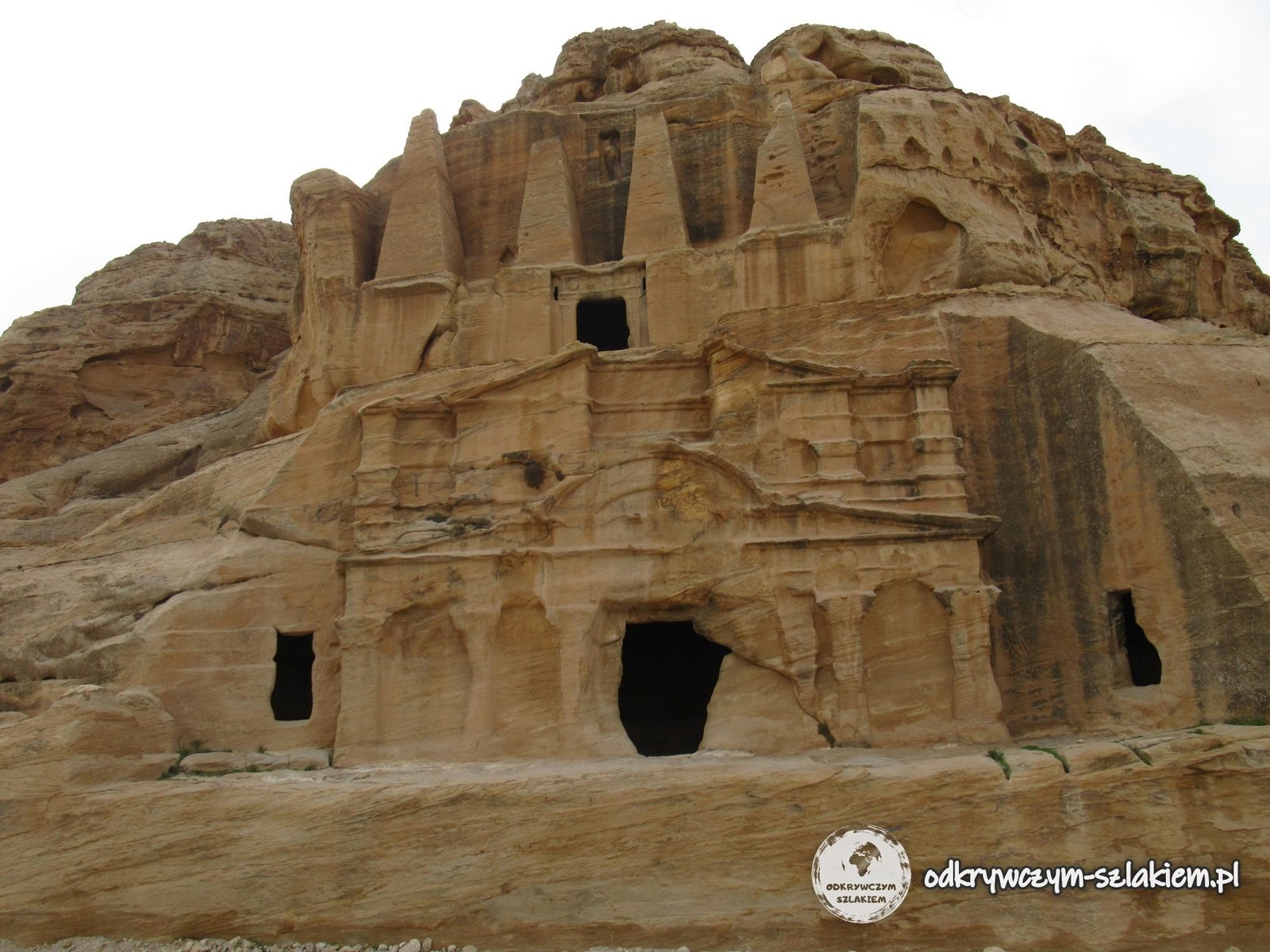
It leads past the Visitor Center and the museum, the Djinn Blocks and the Obelisk Tomb into the Siq – a narrow, winding crack between rock walls several dozen metres high.
Next to the visitor centre is the Petra Museum – finds from the area, 3D animations and reconstruction models tell the history of the region from the Stone Age onwards (in 2022 a sign at the entrance announced free entry). About 400 m further on, in the Bab as-Siq valley, stand three Djinn Blocks – cube-shaped monuments carved from solid rock, probably Petra’s oldest monumental tombs, from the 2nd century BC. The four elongated pyramids on the Obelisk Tomb are nefesh – Nabataean symbols of the dead.
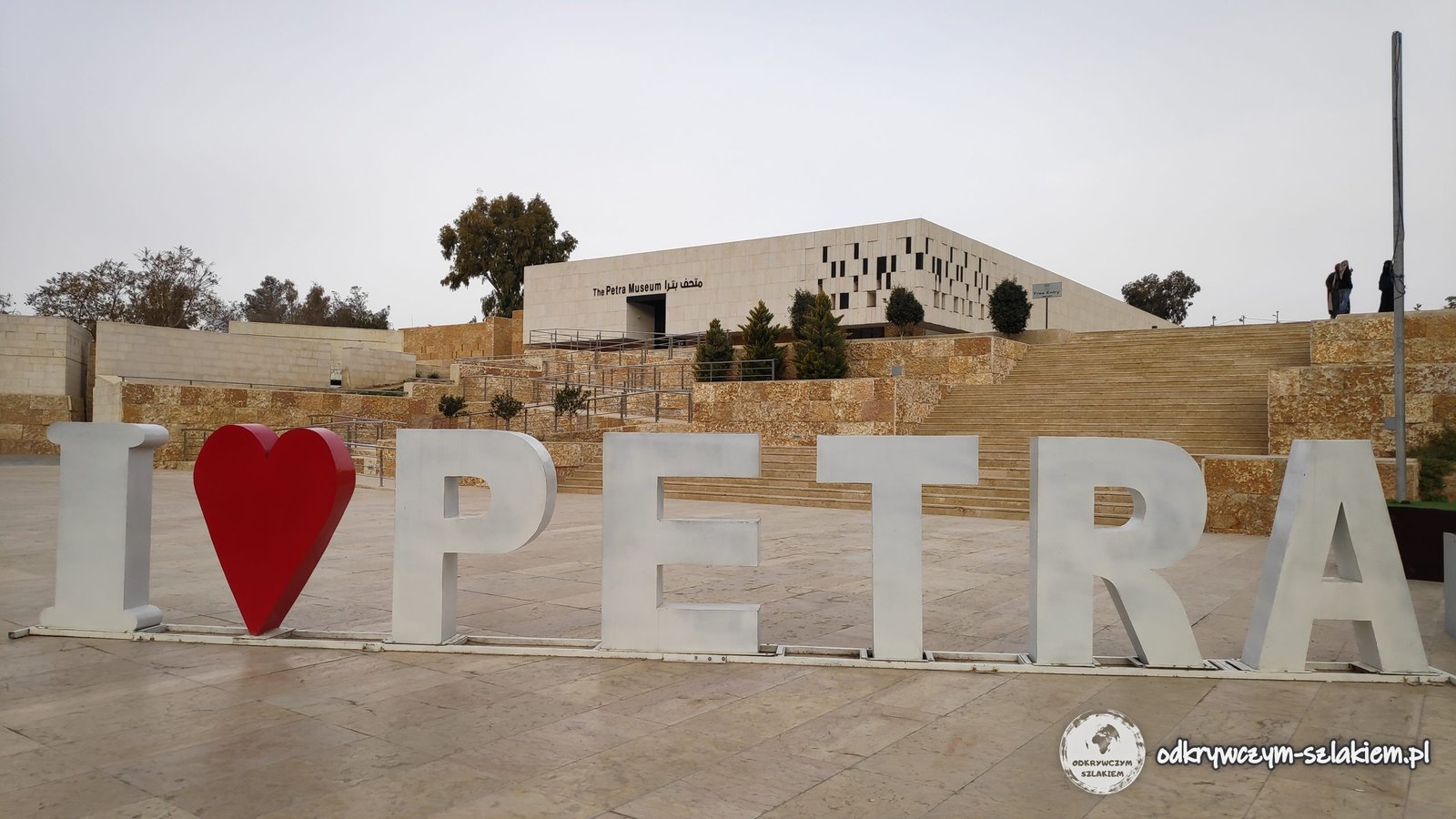
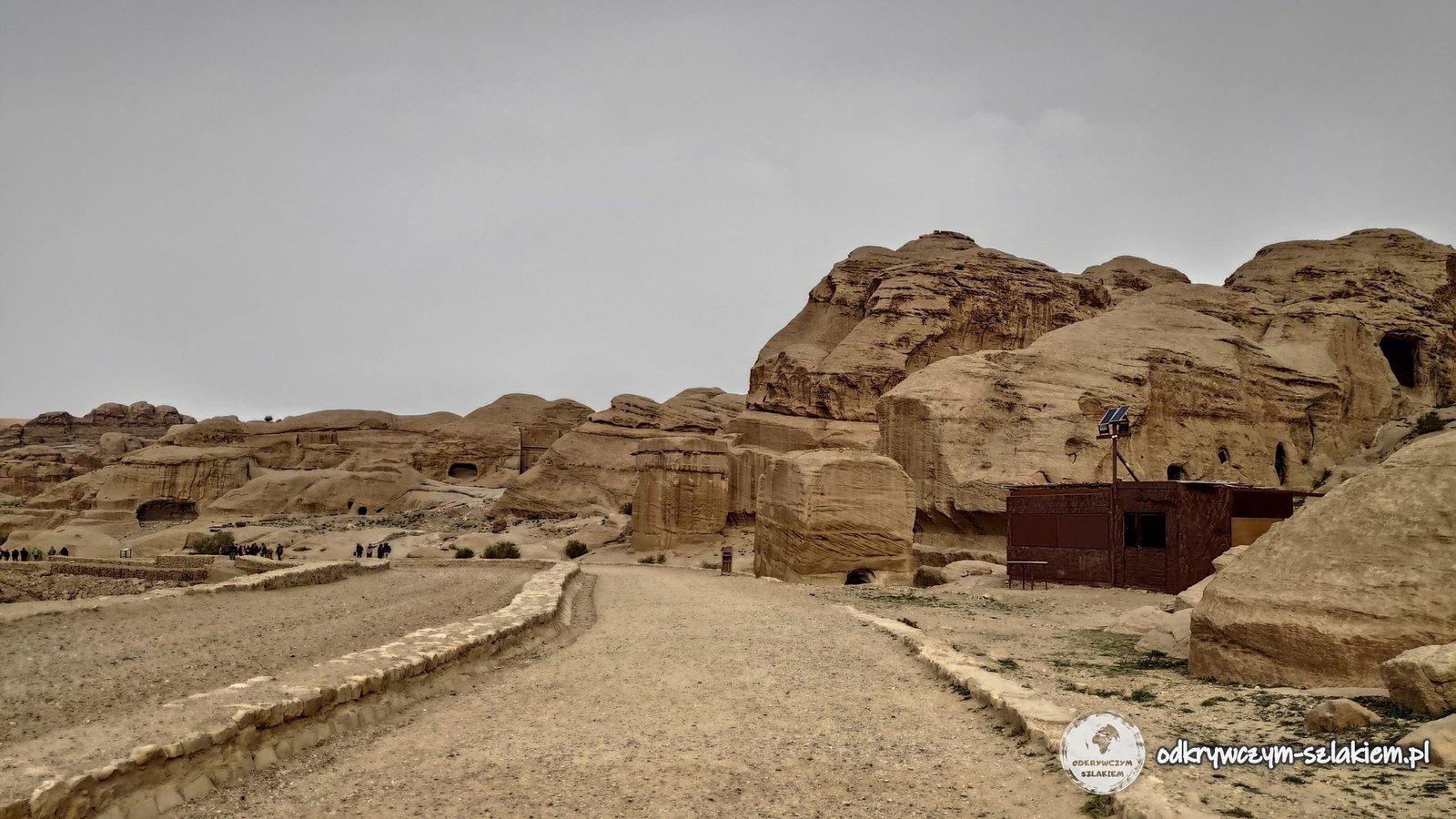
Before the entrance to the gorge the Nabataeans built a dam and cut an 88-metre tunnel through the rock, which diverted flash floods from the Wadi Musa valley away from the Siq (today’s dam dates from 1964). Channels that carried water to the city run along both walls of the gorge, and carved niches hold betyls – sacred stones in whose form the Nabataeans worshipped their gods. The Siq itself is just over 1 km long and was not carved by a river – it is a fissure created when the rock massif split apart, later only smoothed by water.
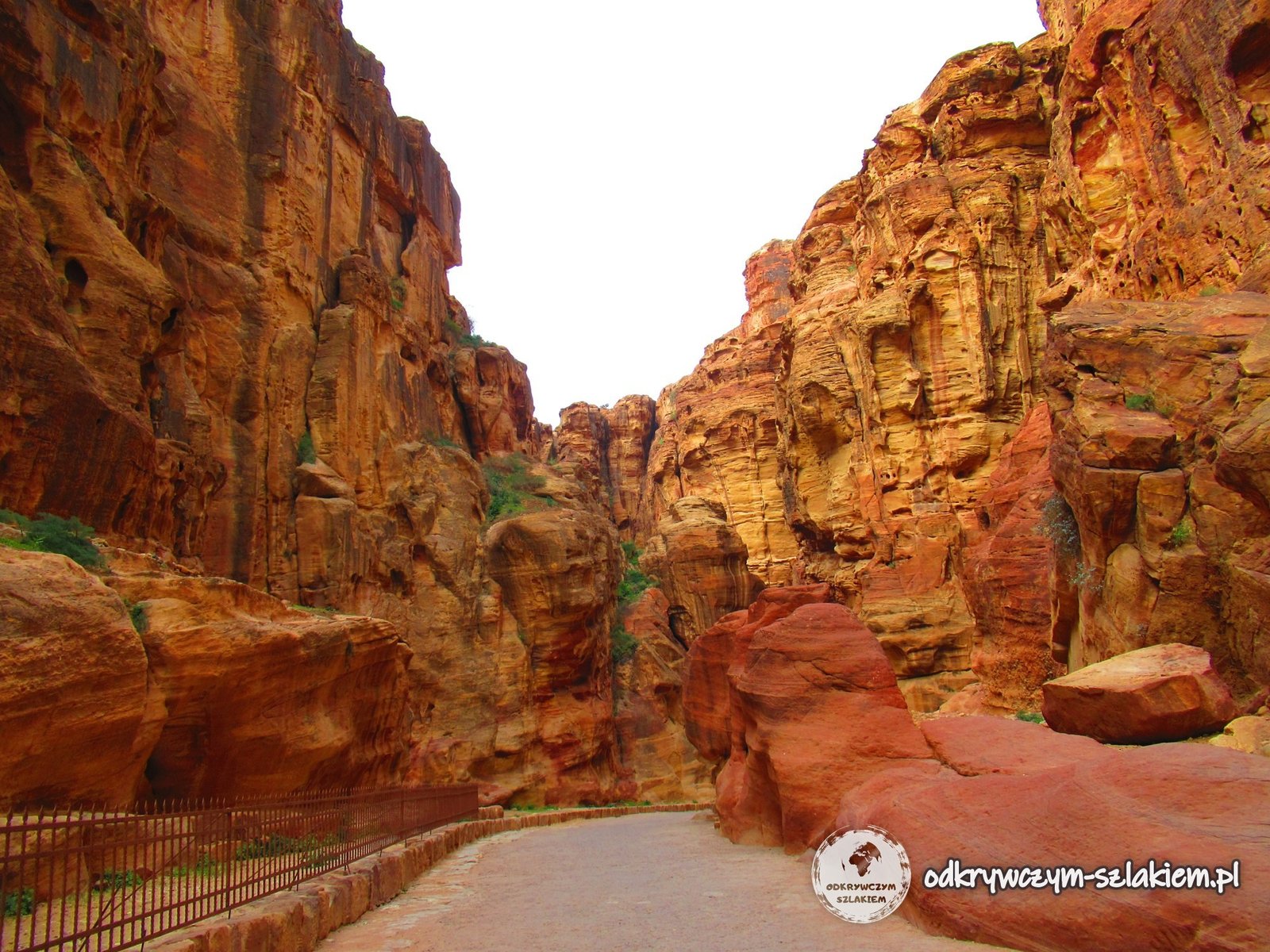
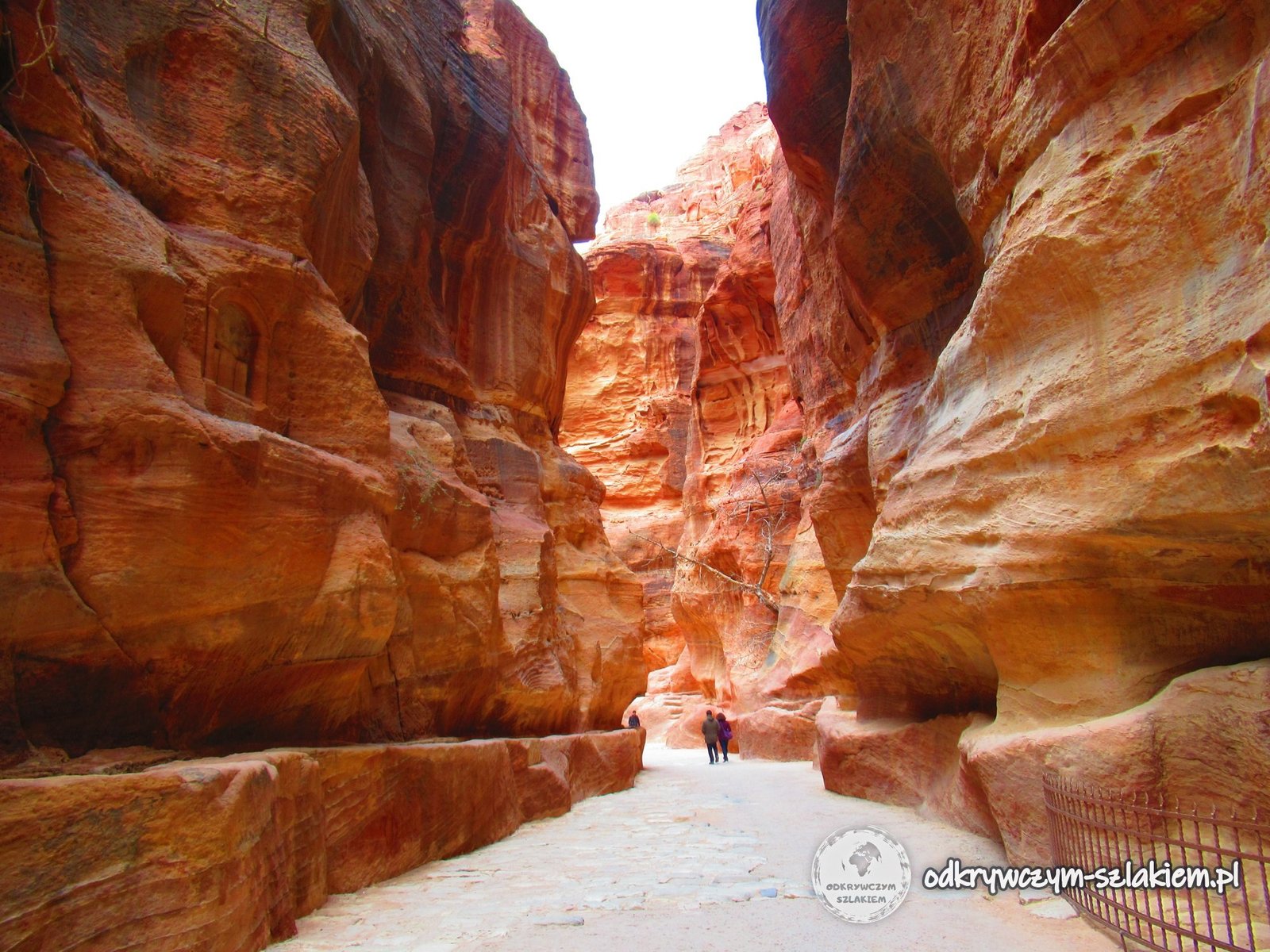
At its end, through a narrow gap, the façade of the Treasury (Al-Khazneh) suddenly appears. This section is relatively easy.
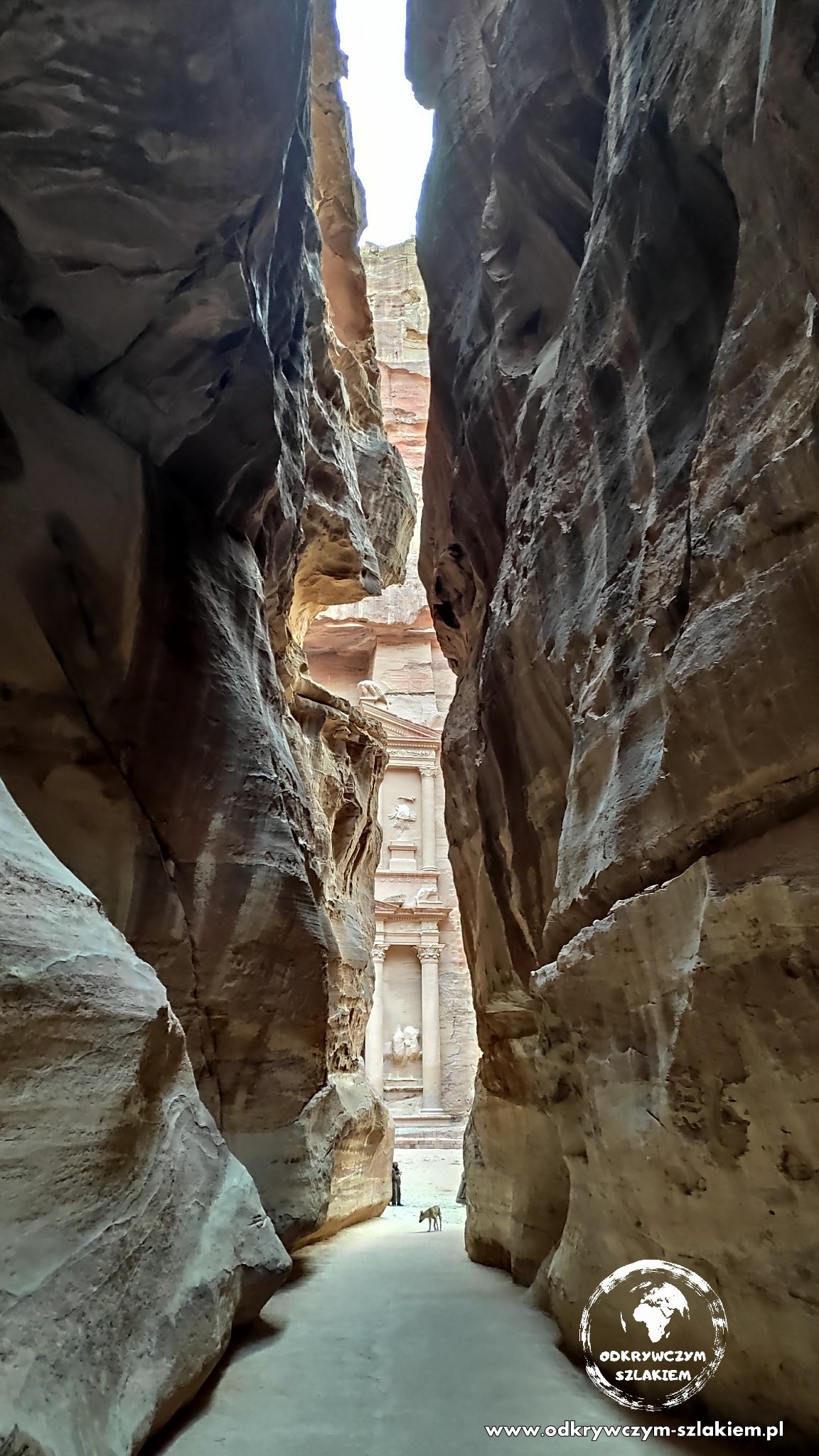
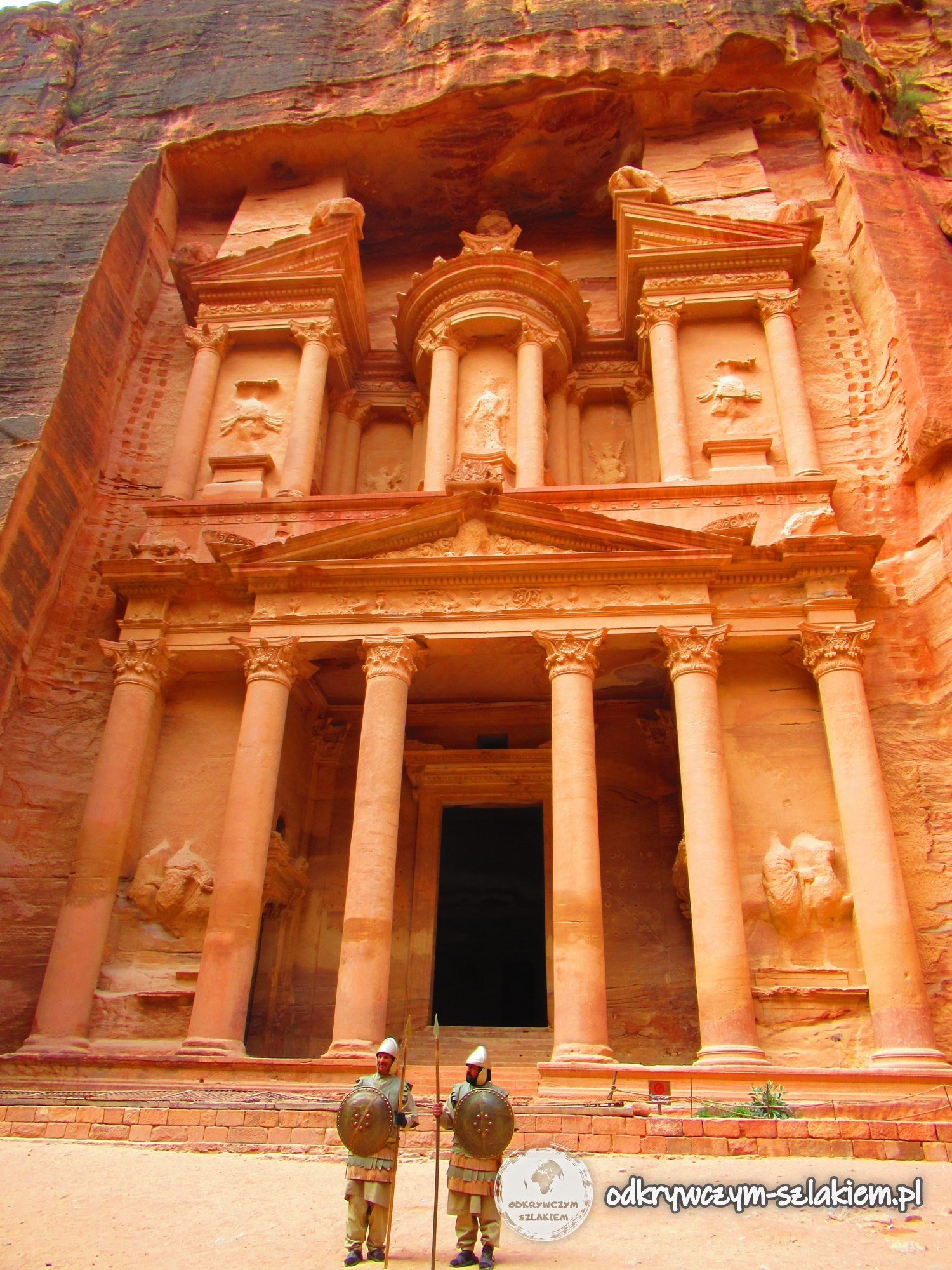
The Treasury is 39.5 m high and is in fact a mausoleum – most likely from the reign of King Aretas IV (9 BC – AD 40). It owes its name to a Bedouin legend about a pharaoh’s treasure hidden in the urn at the top of the façade – the bullet marks on the urn are left over from attempts to “retrieve” it.
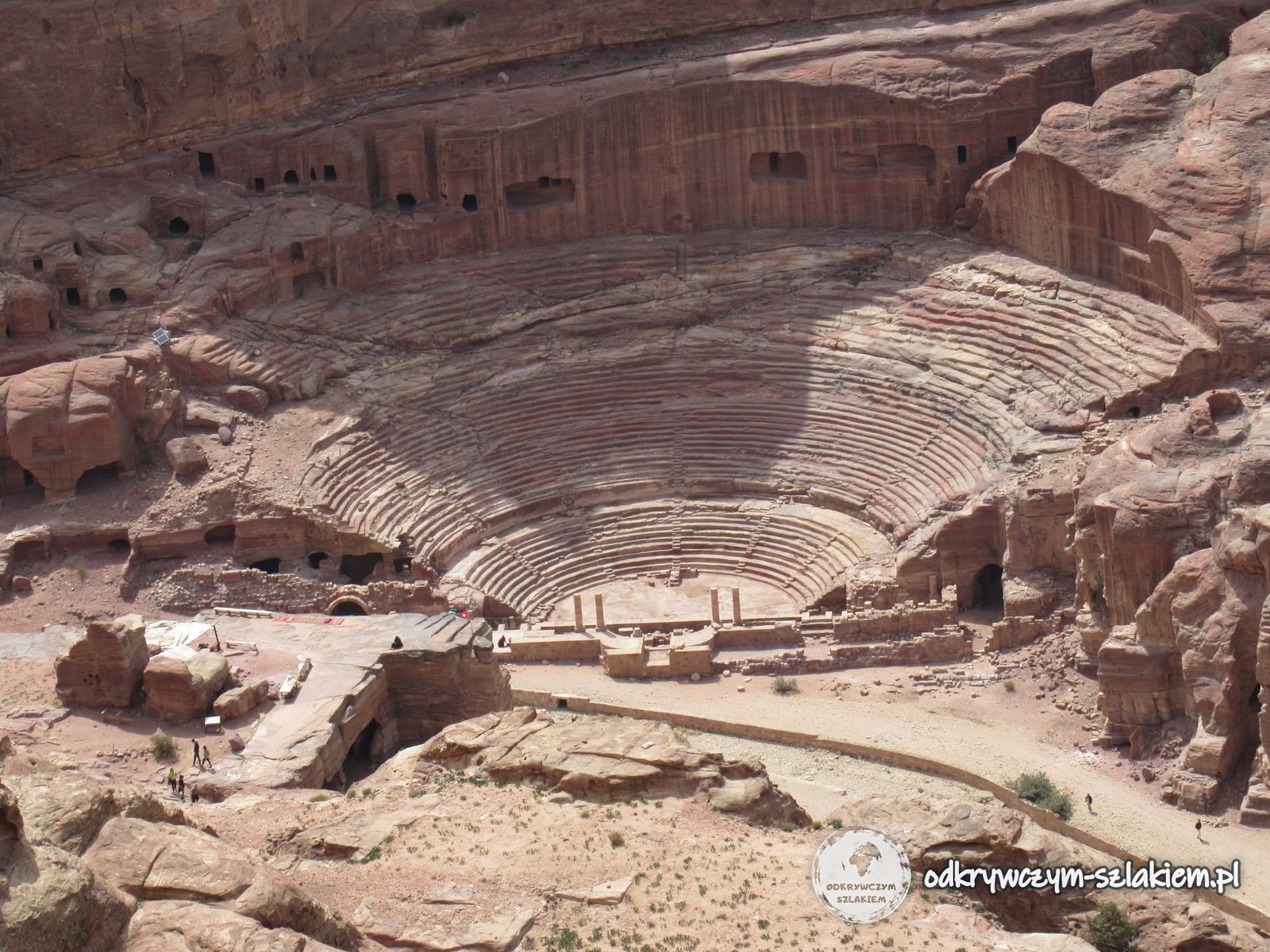
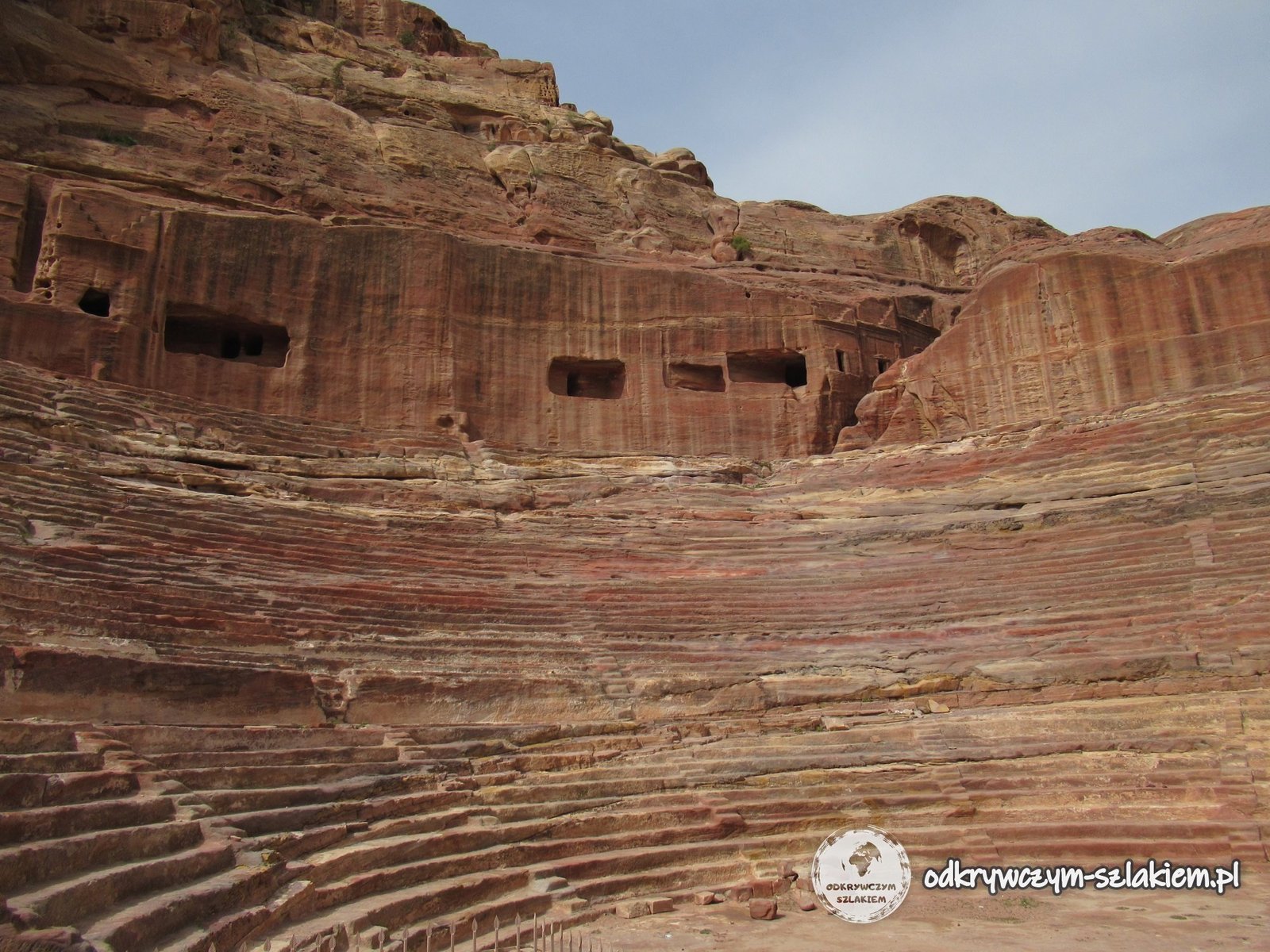
The theatre was carved entirely out of the rock, probably in the early 1st century AD under Aretas IV. To make room for it, older tombs were destroyed – their remains can be seen in the back wall of the auditorium. According to excavations it held up to 6,000 spectators; the stage wall was added by the Romans.
The Al-Khubtha Trail – a viewpoint above the Treasury
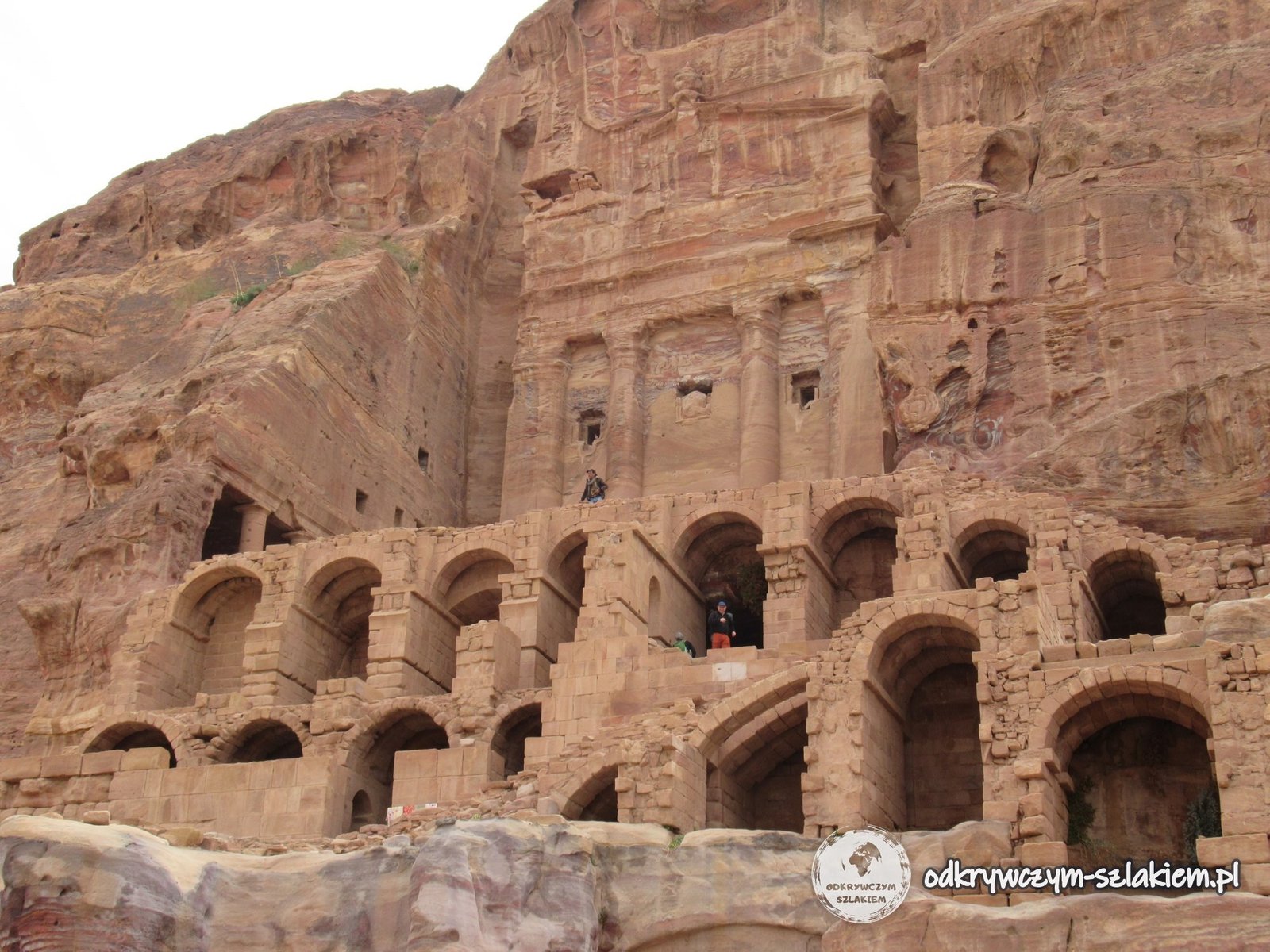
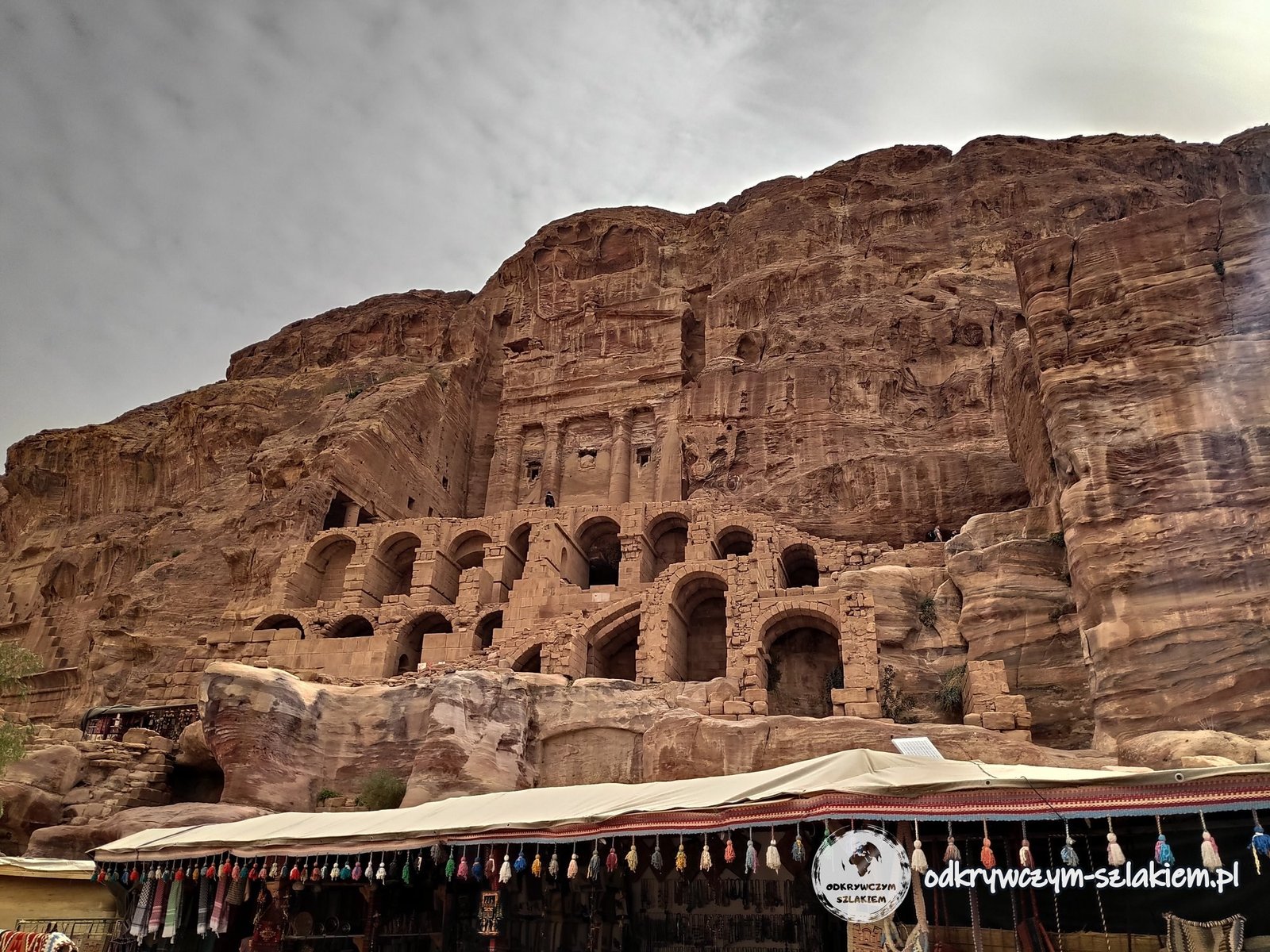
On the slope of the Al-Khubtha mountain, above the city centre, four Royal Tombs were carved – their size and position suggest that rulers or Petra’s wealthiest families were buried in them. From the right they are: the Urn Tomb, the smallest Silk Tomb with its colourful bands of sandstone, the Corinthian Tomb modelled on the Treasury, and the largest, the Palace Tomb – a five-storey façade 49 m wide.


The Urn Tomb stands on a terrace supported by two levels of vaults – the Bedouin took the underground chambers for a prison and the tomb itself for a courthouse. Behind the façade there is a single hall measuring about 19 × 17 m. According to a Greek inscription, in AD 447 Bishop Jason turned it into a church – that is when the apses were carved into it.
Roughly halfway along the main trail, past the Royal Tombs, we turned onto the green Al-Khubtha trail, which leads to a viewpoint above the Treasury. It’s about 3.5 km and up to 3 hours of walking – a demanding trail, with long, steep climbs up steps carved into the rock. On the way you pass Bedouin “cafés” in makeshift tents, where you can have coffee or tea, rest and chat with the locals.
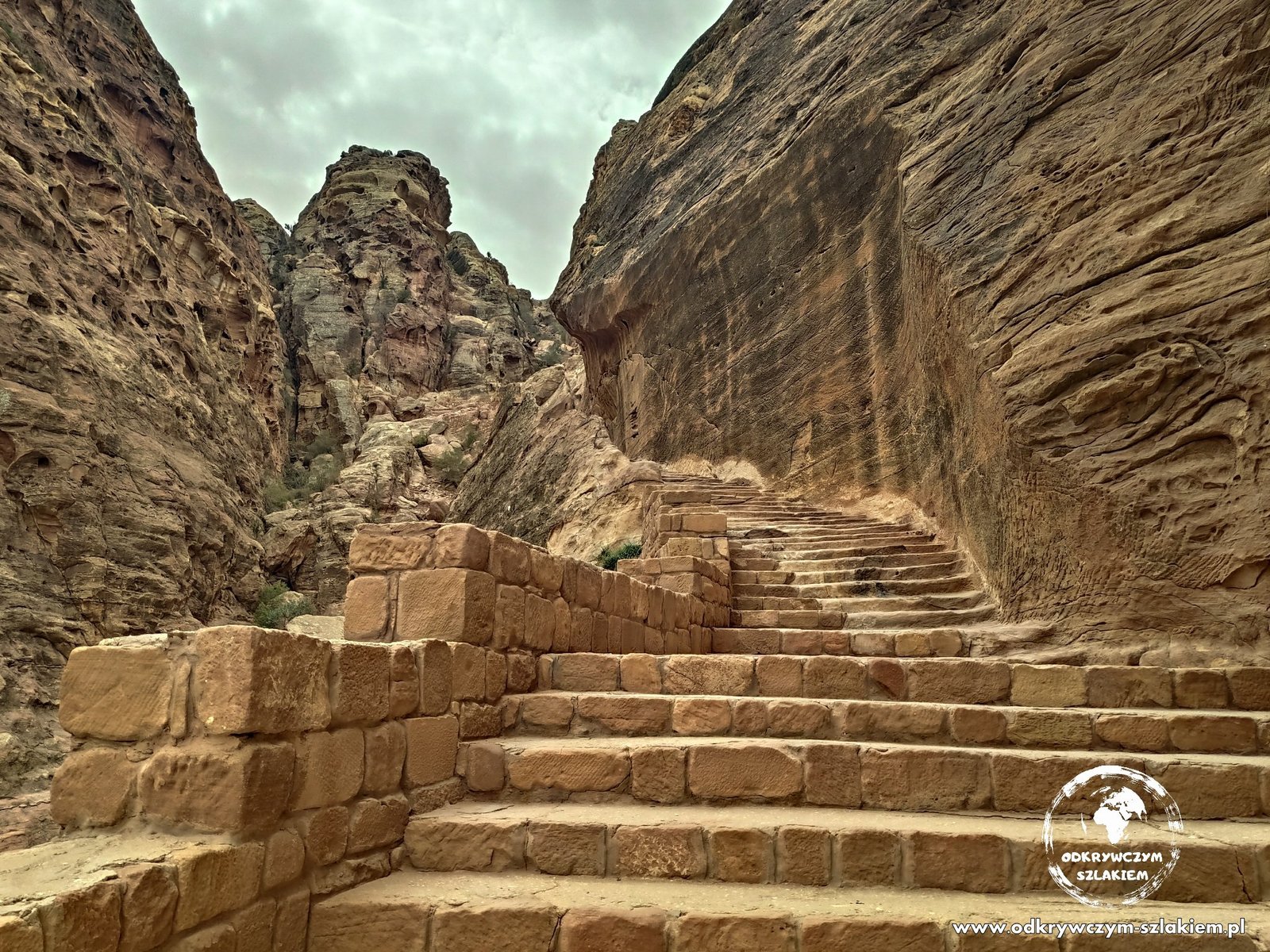
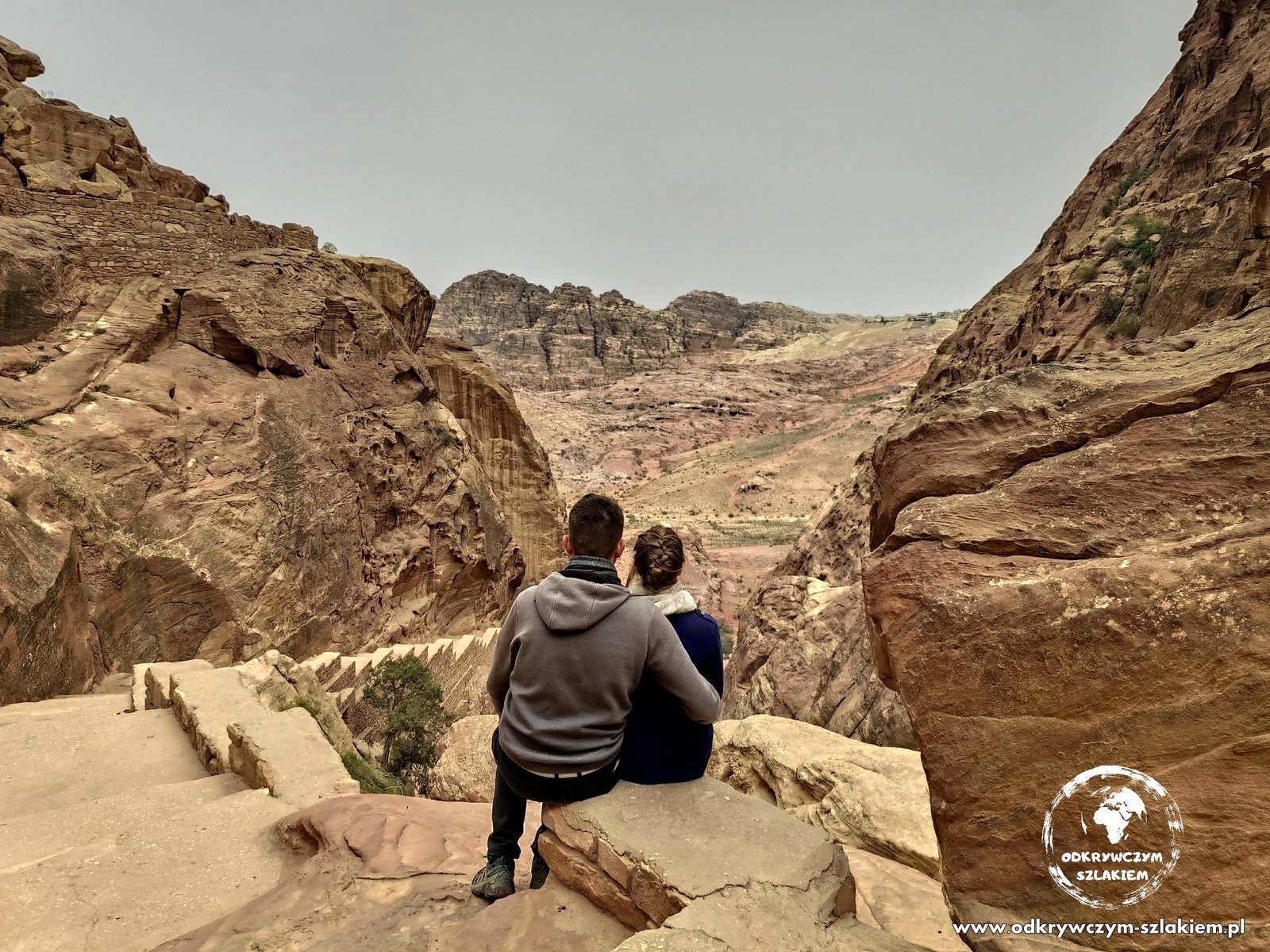
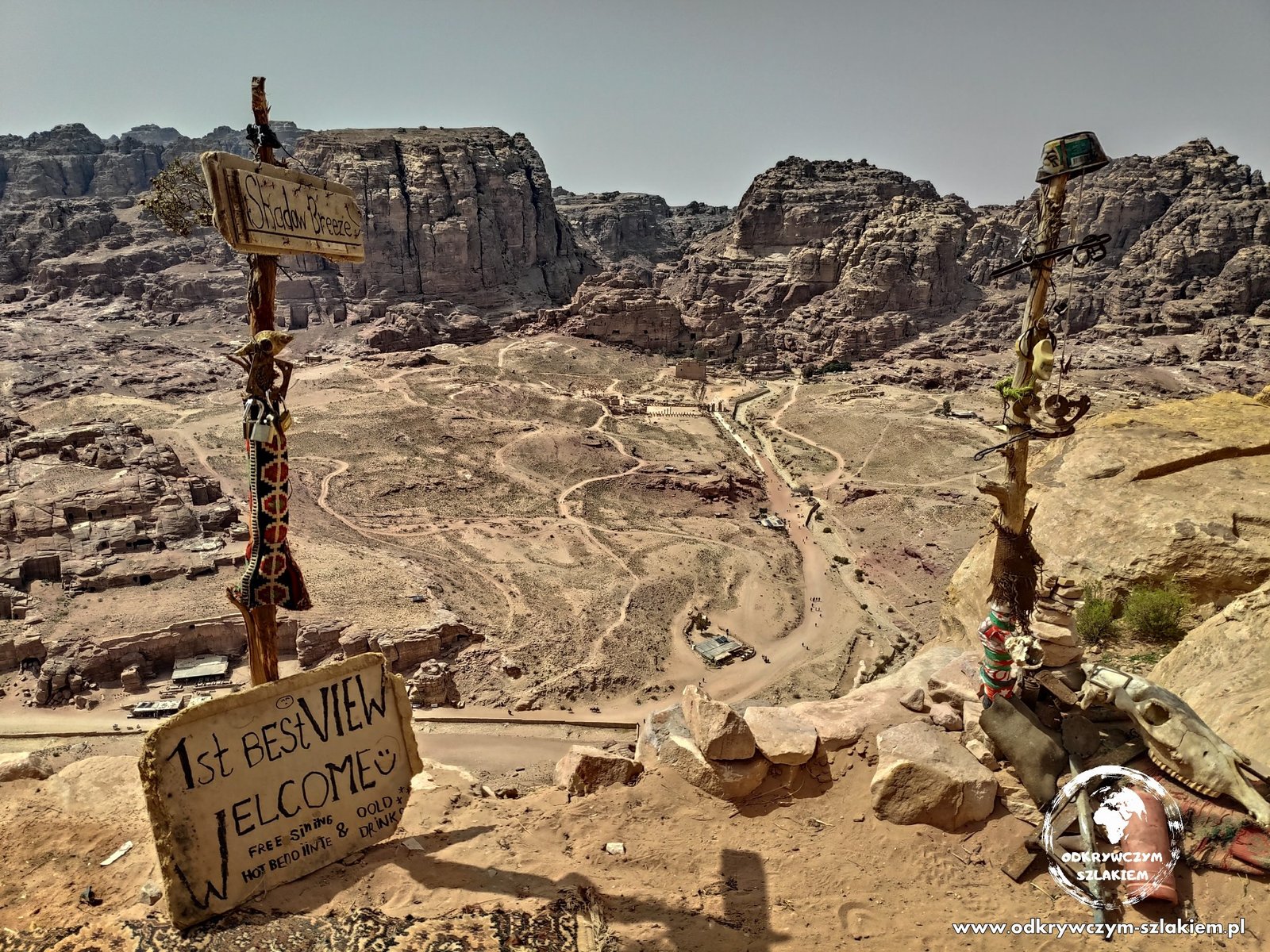
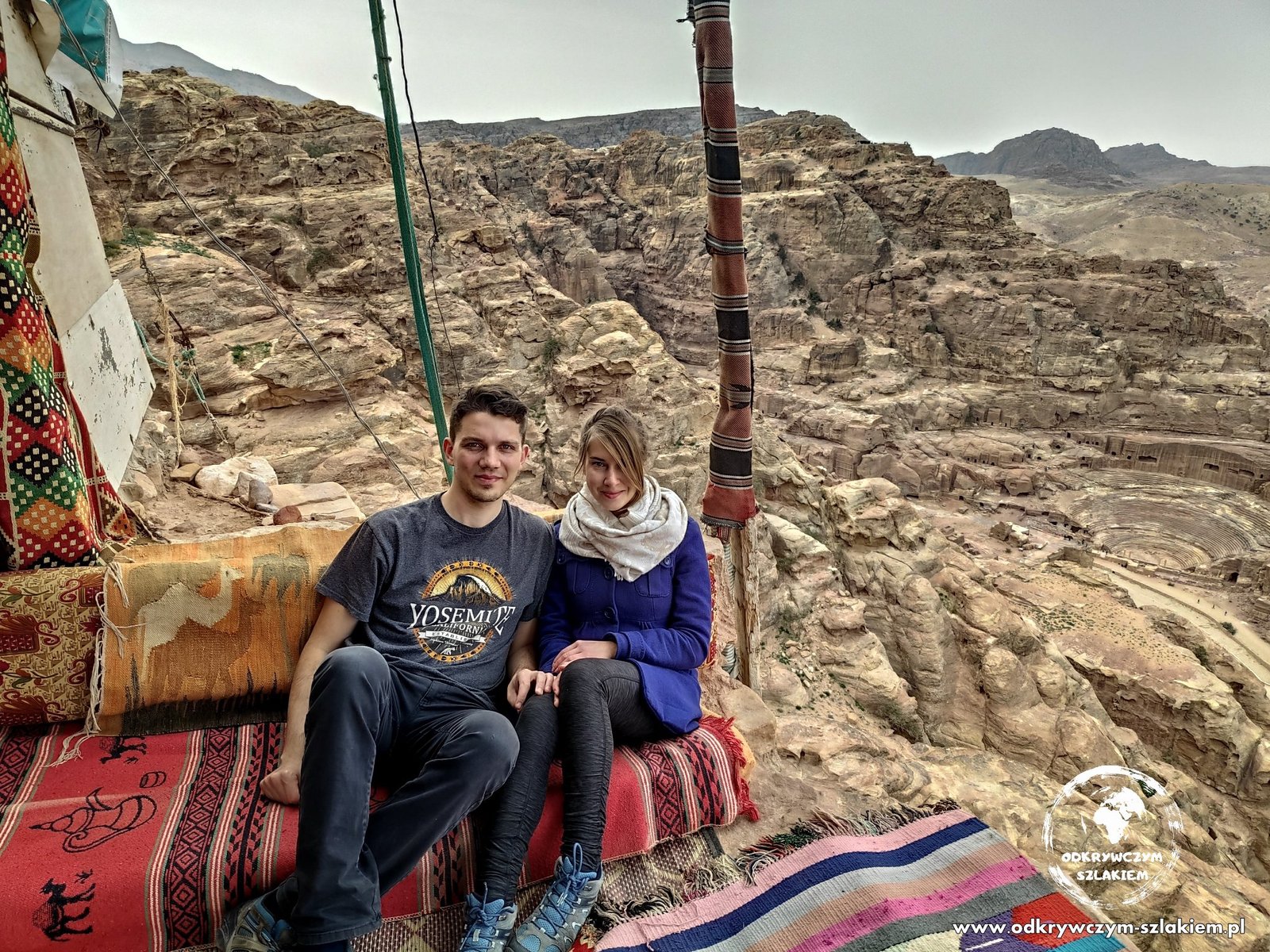
The effort pays off: from above you see the Treasury from a completely different perspective than from below, and all around – the whole Petra valley. At the viewpoint itself there’s a bar run by one of the Bedouins: as well as taking a photo, you can sit on the carpets, drink fresh orange juice and chat with the vendor, who lives here.


The Ad Deir monastery
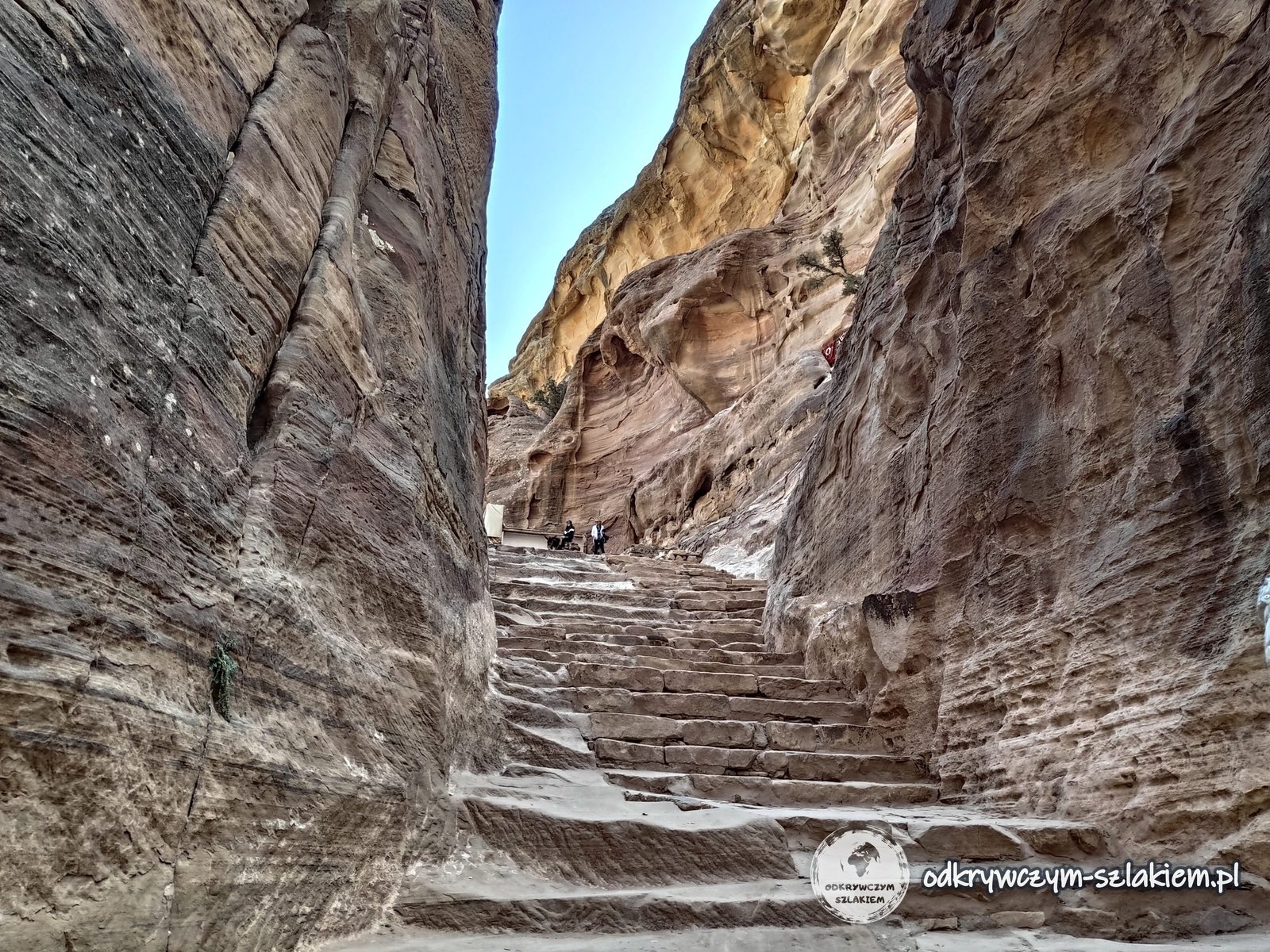
After coming down from the Al-Khubtha trail we returned to the main trail and followed it further – past the theatre, the Nymphaeum and the Colonnaded Street – to its end. That’s where the trail to the Ad Deir monastery (the Monastery) begins: about 2.5 km there and back, which takes 2.5 to 3 hours, because it climbs several hundred steps. You return the same way.
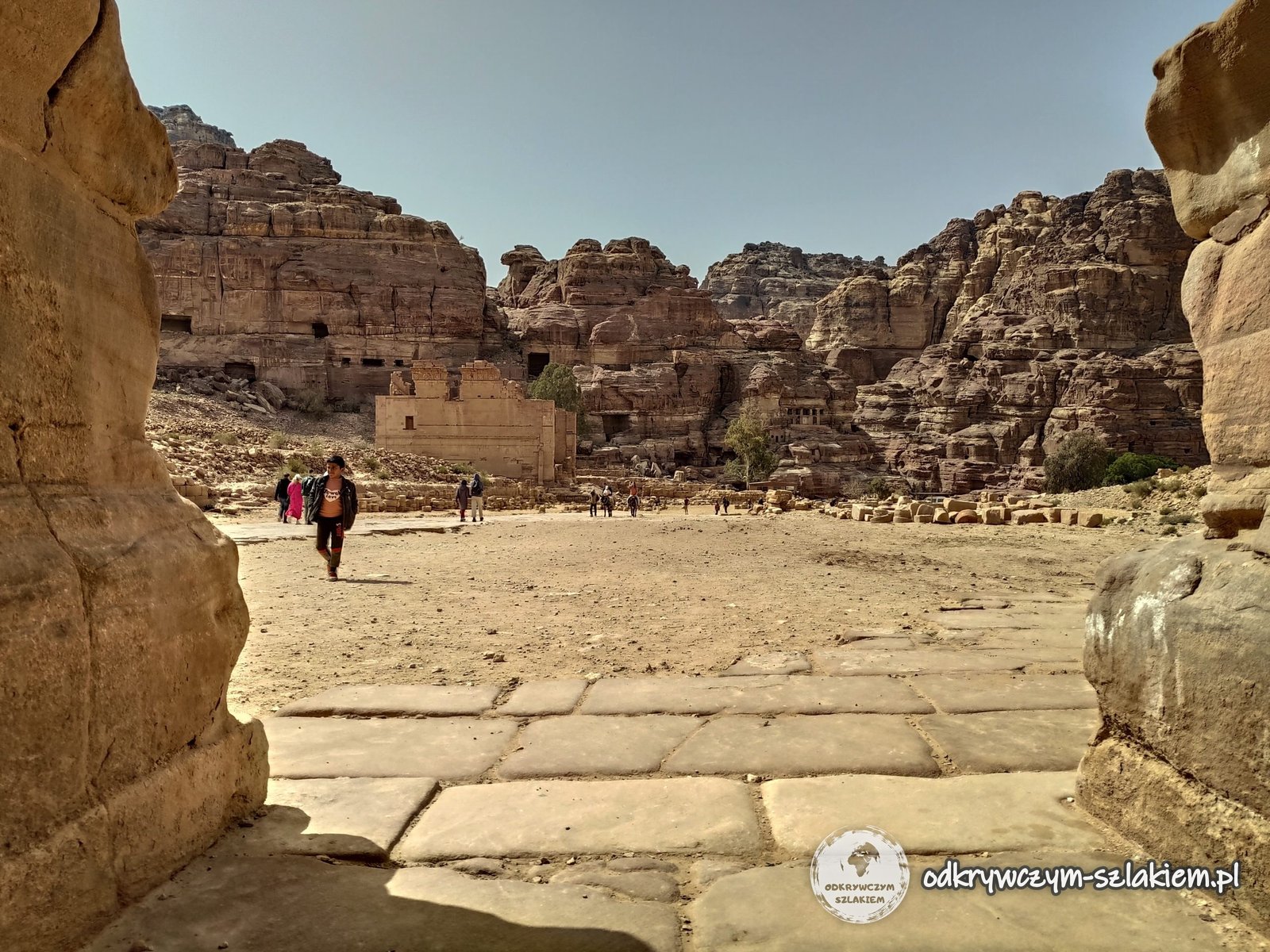

The Colonnaded Street was built by the Romans in the 2nd century AD in place of a winding Nabataean road along the Wadi Musa – they straightened and paved it, lined it with a double row of columns and added shops on the south side. The earthquake of 363 toppled the colonnades – the nine columns standing today were re-erected. The street ends at the Temenos Gate, beyond which stands Qasr al-Bint – Petra’s oldest and main temple, from the 1st century AD, probably dedicated to Dushara, the chief Nabataean god. Its name (“Palace of the Pharaoh’s Daughter”) comes from a legend about a pharaoh who promised his daughter’s hand to whoever could bring water to his palace.

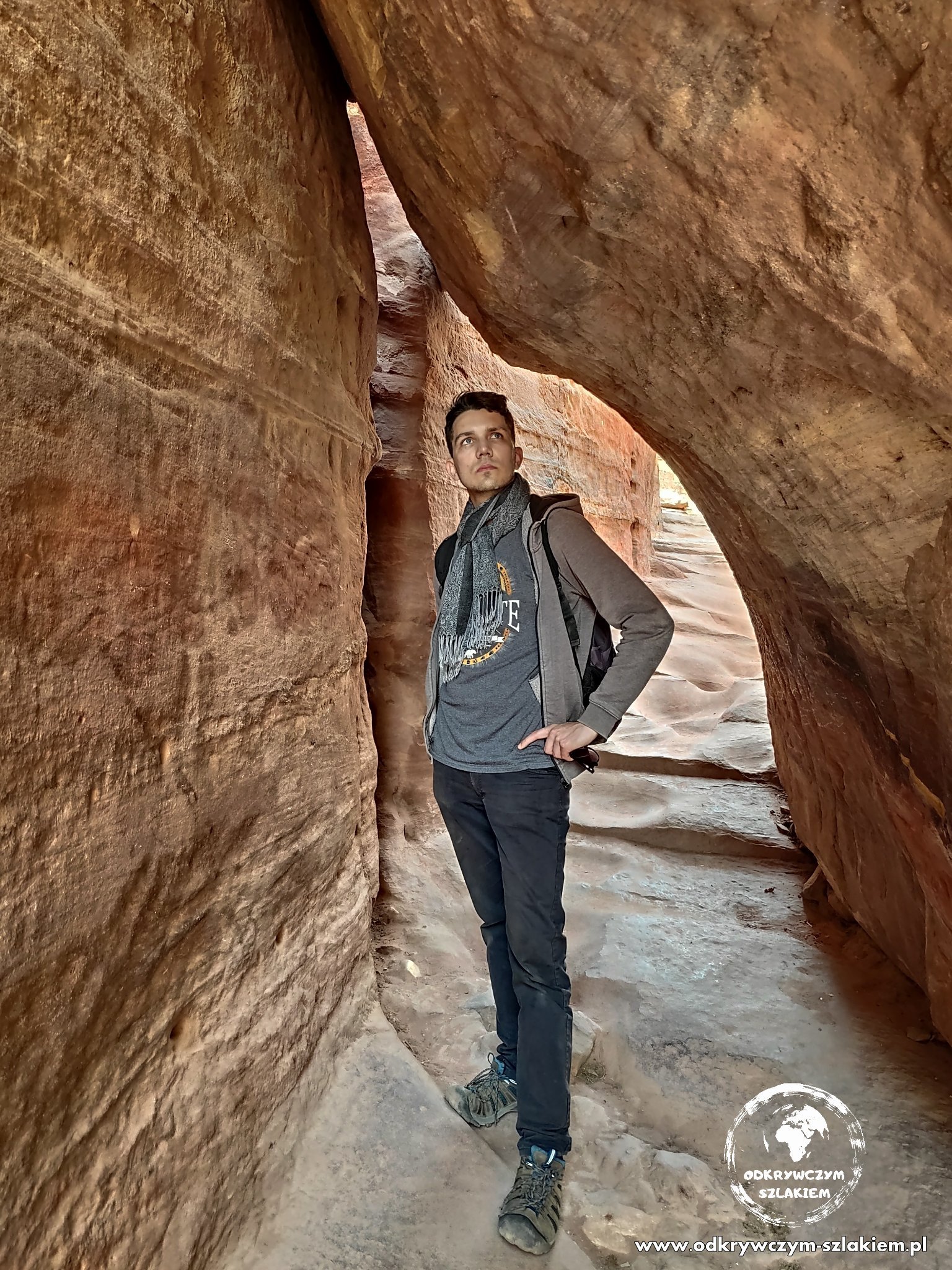
Ad Deir is one of the largest monuments in Petra – its rock-cut façade is about 47 m wide and about 48 m high. Despite our tiredness it was worth it: it’s much quieter here than at the Treasury, and the nearby viewpoints look out over the surrounding mountains.
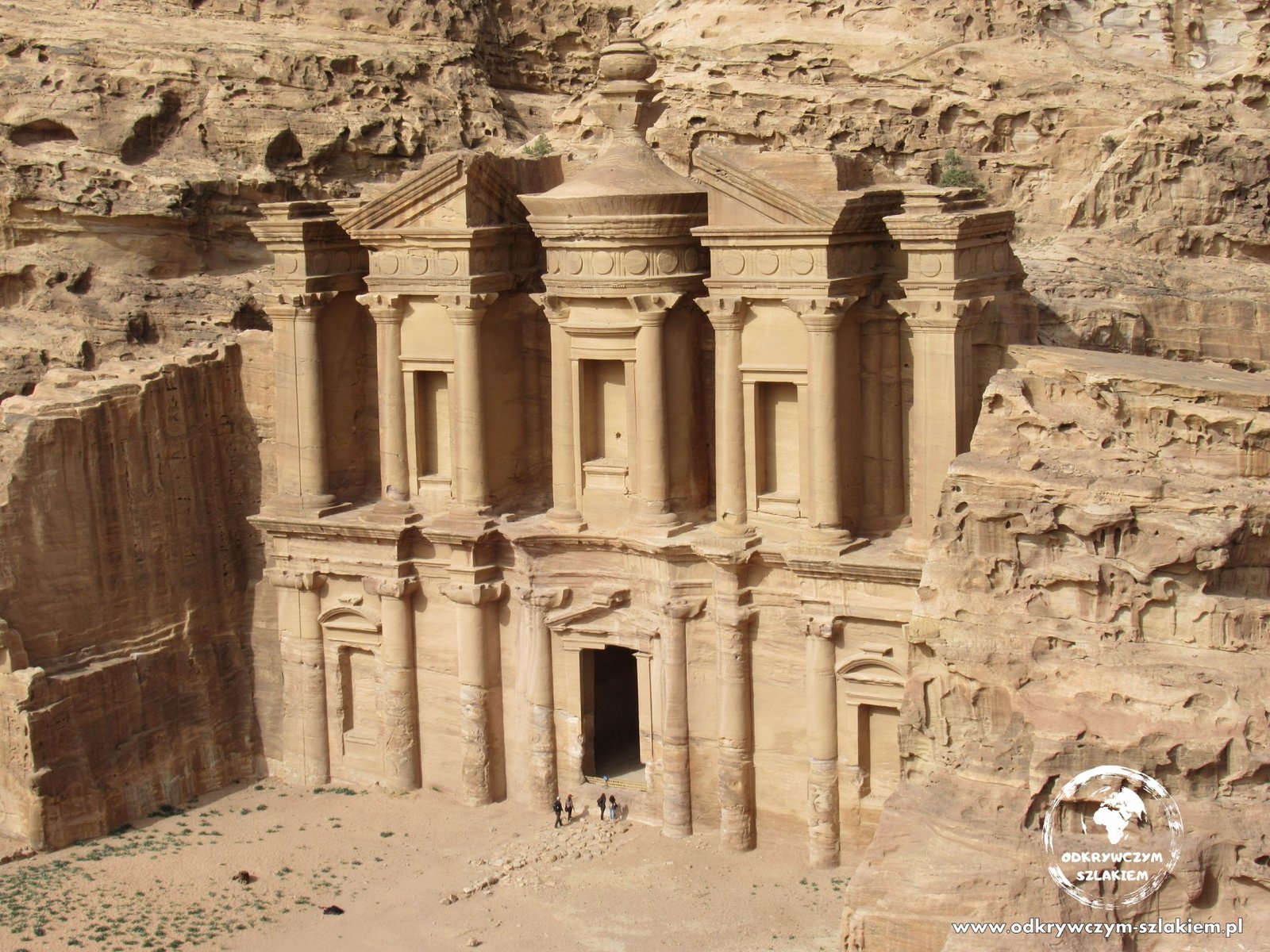
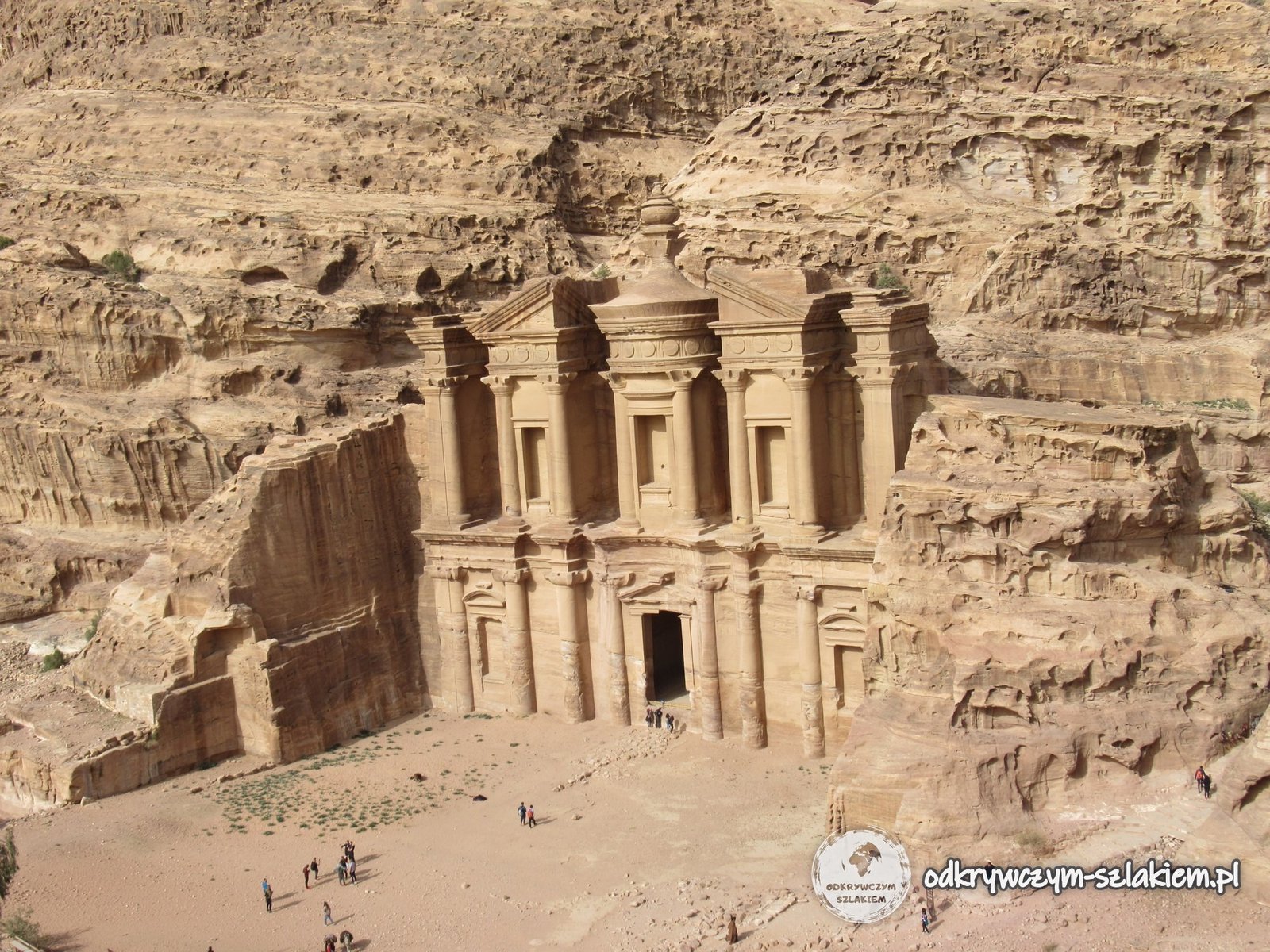
Ad Deir was modelled on the Treasury, but instead of reliefs its façade has niches for statues. Inside there is a single hall with benches along the walls and an altar – religious associations probably met here. It was most likely built in the early 2nd century AD under King Rabbel II, and an inscription found nearby suggests it commemorated the deified King Obodas I. Later a chapel was set up inside and crosses were carved – hence the name, as dayr means “monastery” in Arabic. The path from the city centre has nearly 800 steps.

You can also leave Petra on the orange trail past the tombs (including the Soldier’s Tomb and the Renaissance Tomb) – about 5 km, but uphill and much harder, so it takes 2–4 hours. To fit in this trail on the same day as well, you need a really good pace.
Bedouins, vendors and donkeys
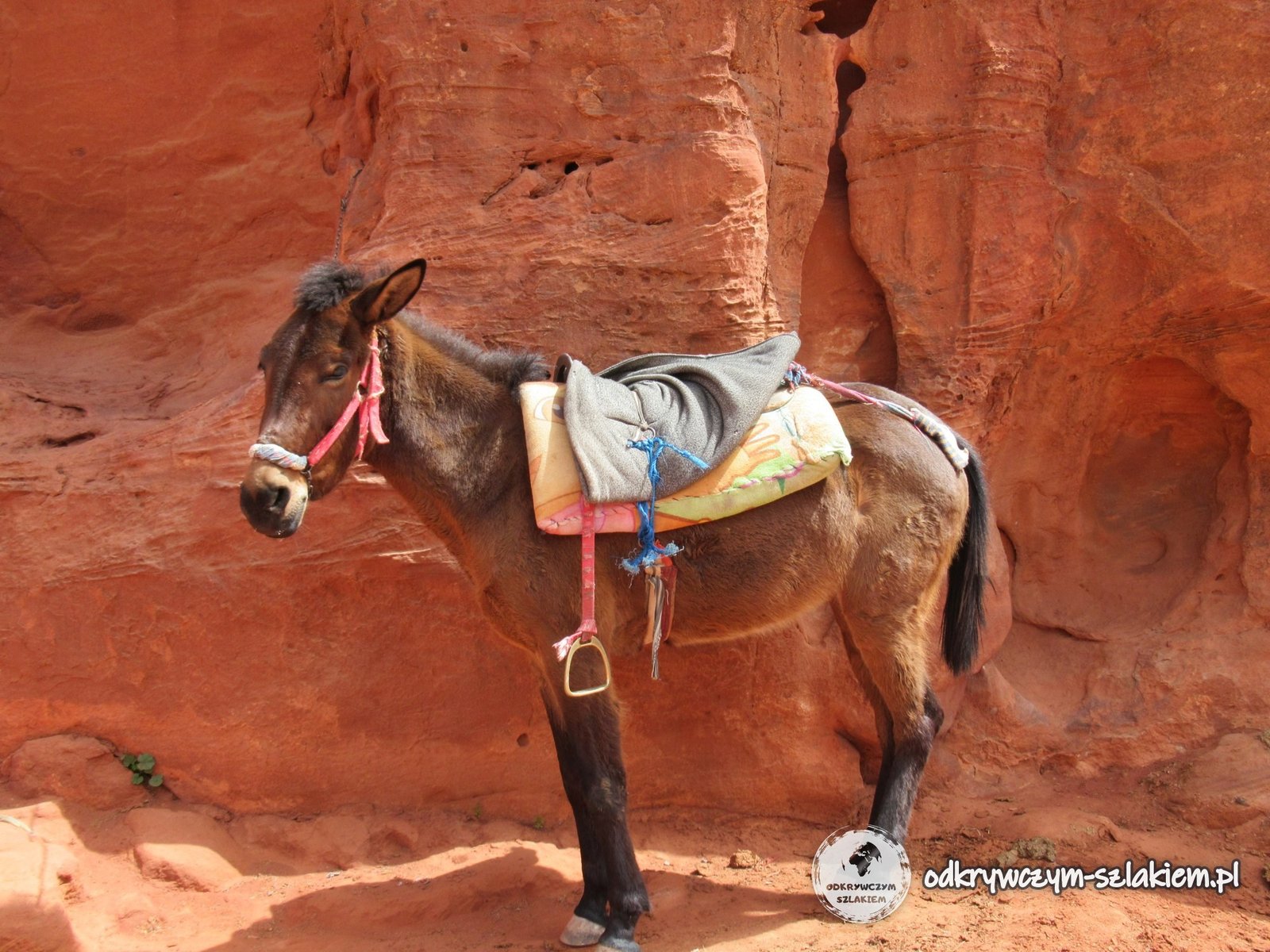
Many Bedouins still live in Petra – some of them lived in caves until recently. Along the way to most of the sights there are stalls, and there’s no avoiding them. Their presence alone didn’t bother us, but pushy vendors can spoil the visit – as can people offering rides on a donkey or in a carriage, or to “take you” to a viewpoint. It’s sad to watch the animals carrying tourists up steep steps all day – we walked everywhere.
One of the locals told us that there were about 7 times fewer tourists at the time than before the pandemic – worse for them, because they earn less, better for us, because we could explore more freely.

After Petra we headed north – to the Crusader castles, the Dana reserve and the Wadi Numeira canyon – and we ended the week in the desert: Wadi Rum – a night in the desert and a jeep tour.
Practical information
- Ticket – entry to Petra is included in the Jordan Pass, which comes in three versions depending on the number of days in Petra: 1 day – 70 dinars, 2 days – 75, 3 days – 80 (2022 prices). The pass also covers the visa and entry to more than 40 other attractions – I write more about it in the practical information on Jordan.
- Tickets in 2026 – without the Jordan Pass, entry costs 50 JD for 1 day, 55 JD for 2 days and 60 JD for 3 consecutive days (prices for visitors staying overnight in Jordan); children under 12 enter free. The Petra by Night show (Sunday to Thursday, 20:30–22:30) costs 30 JD – it is not covered by the Jordan Pass, and you also need a daytime ticket.
- How much time – if you’re fit, one full day is enough to see the vast majority of the sights: the main trail, Al-Khubtha and Ad Deir. For a relaxed visit, two days are better.
- Opening hours – in winter (November–April) entry from 6:00 to 16:30 (sign at the entrance, 2022; in the 2025/26 season the visitor centre was open 6:30–17:00 in winter), in summer from 6:00 to 18:00. Current hours: visitpetra.jo. It is worth arriving as early as possible.
- Accommodation – most convenient in Wadi Musa, a few hundred metres from the entrance.
- What to bring – comfortable shoes, water and something to eat, and in winter also a warm sweatshirt – in March it can be chilly and windy.