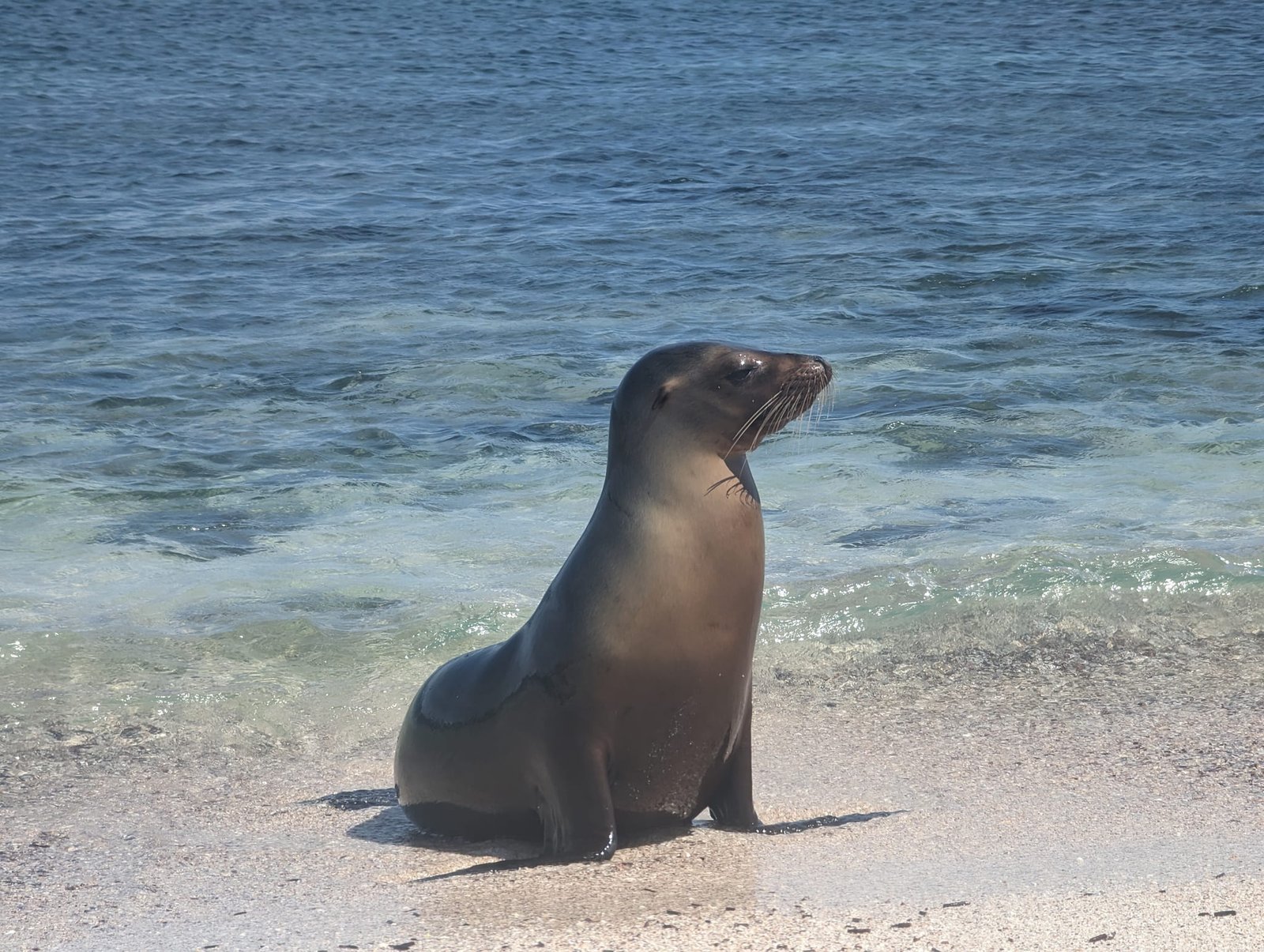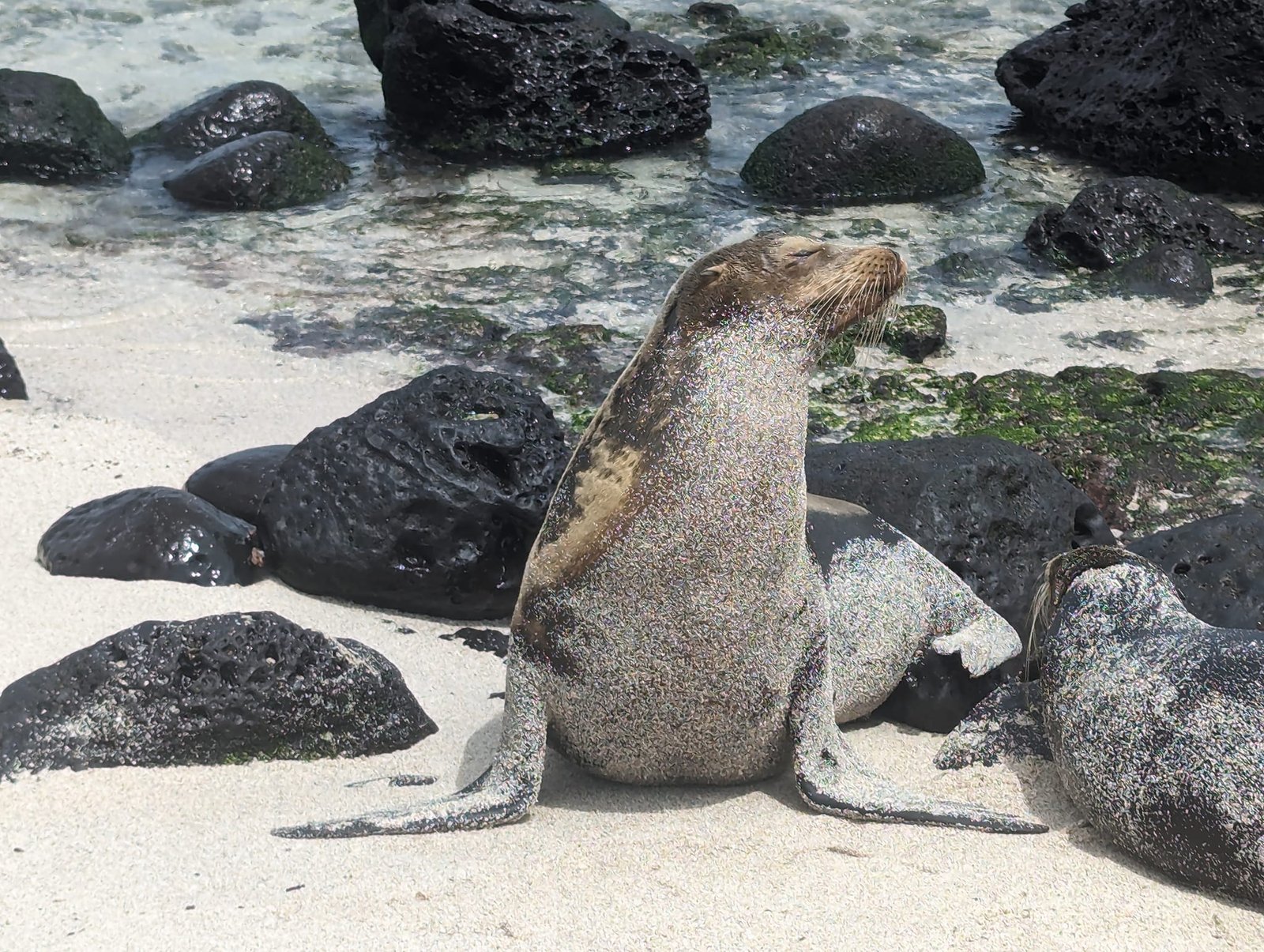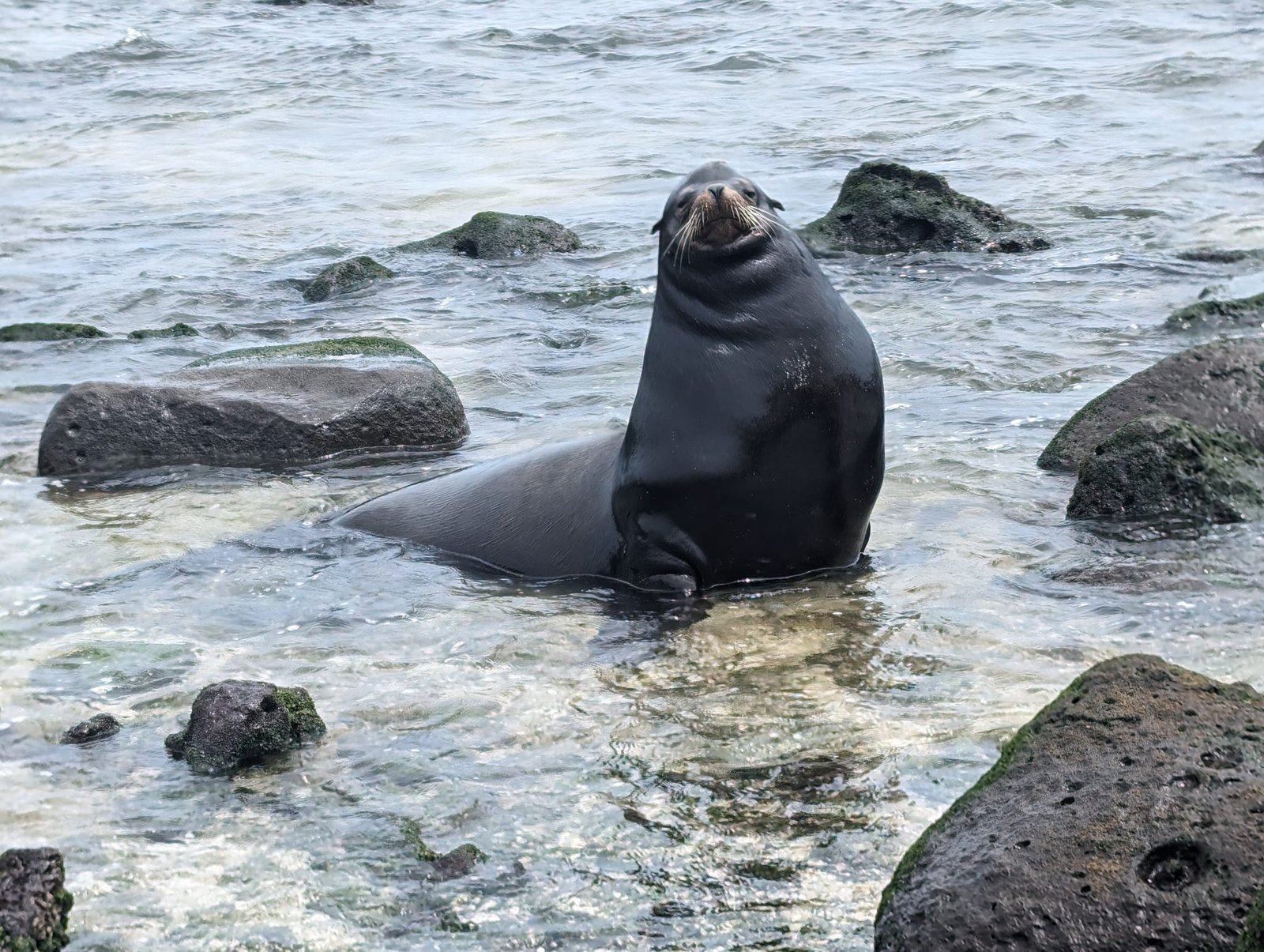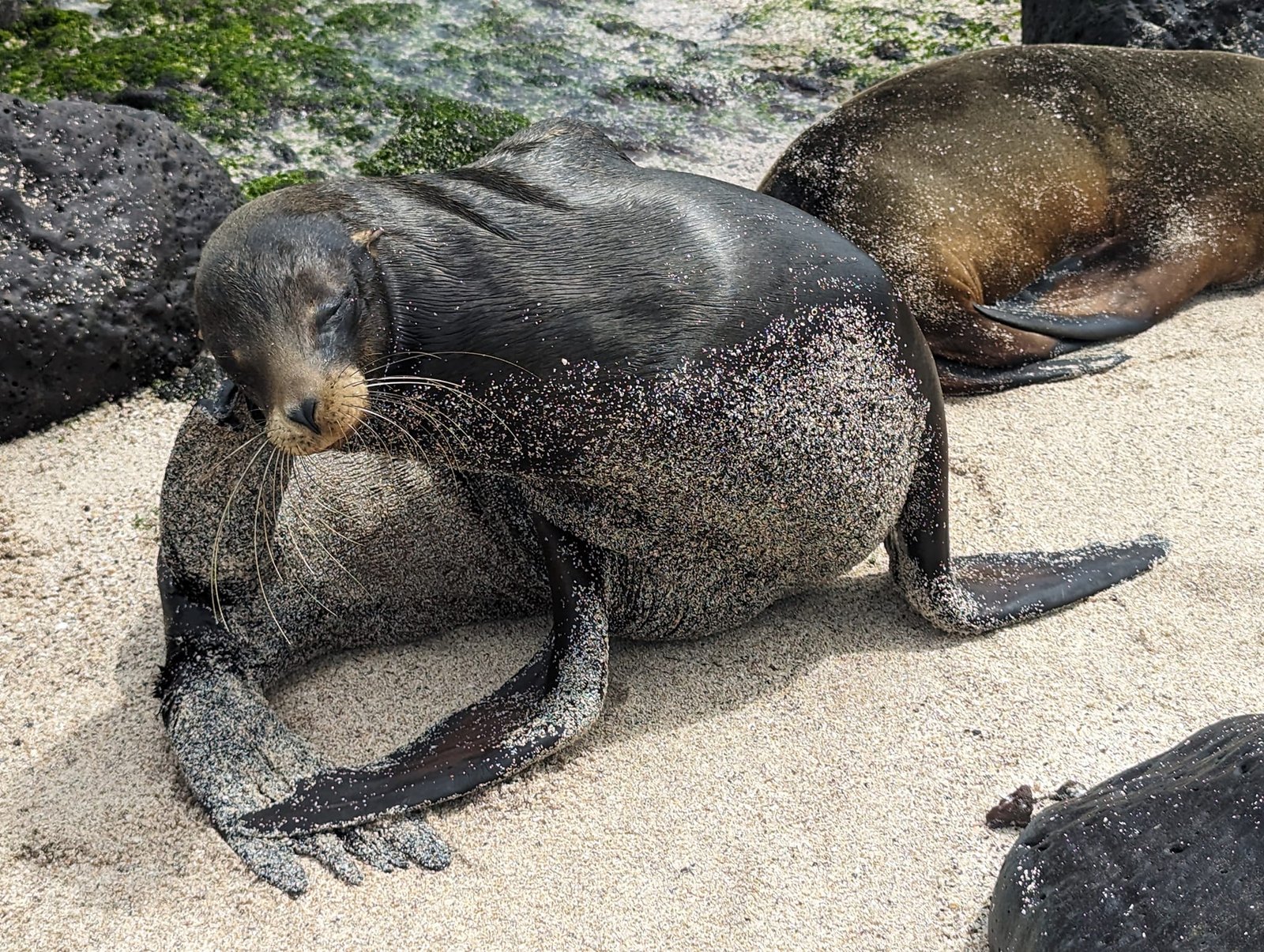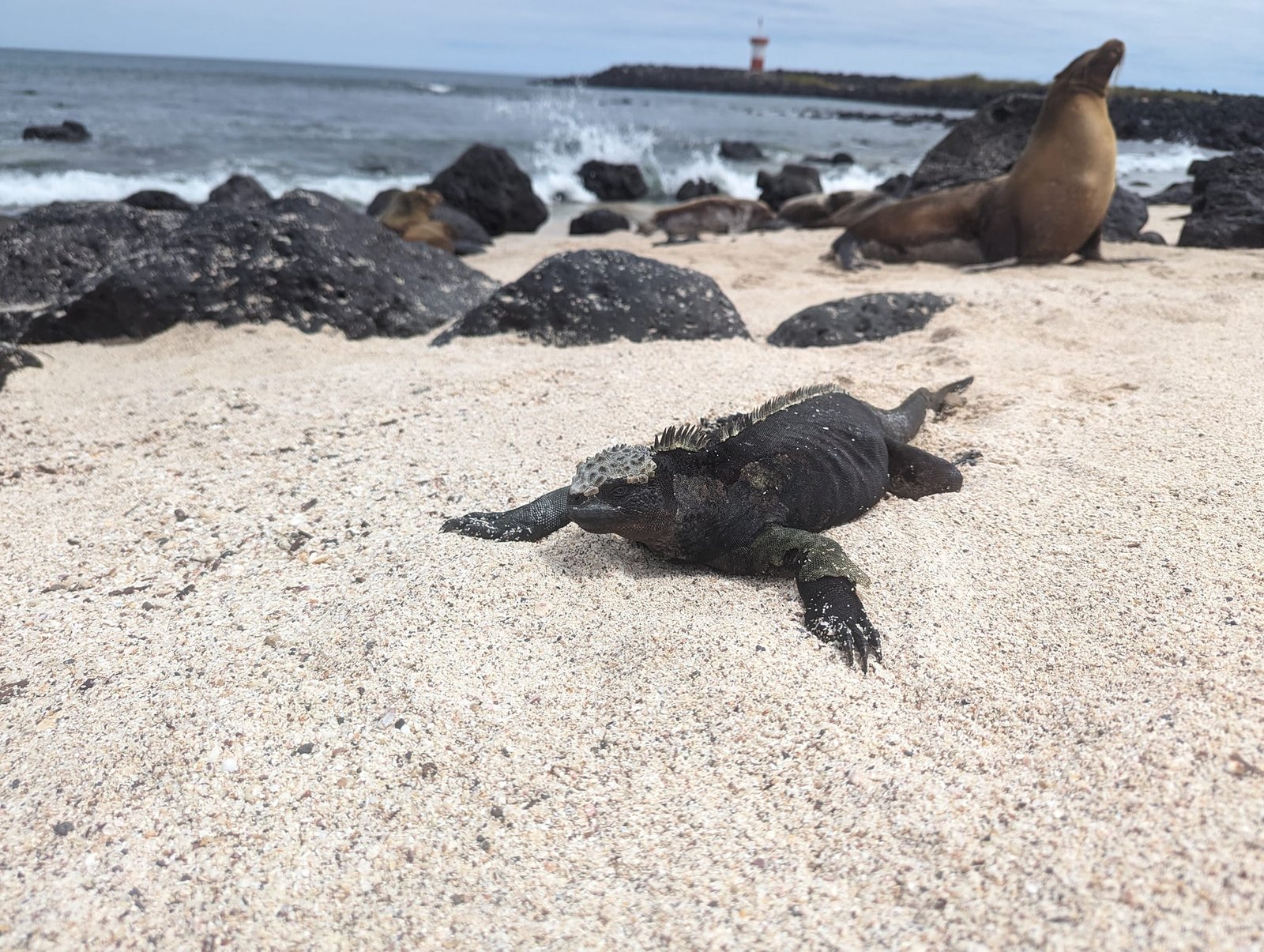
The Galápagos were one of the highlights of our trip through Latin America – especially for Patrycja. We bought the tickets while still in Colombia, less than a week before the flight, and on 28 May 2024 we flew from Quito to the island of Baltra. We stayed 10 days, until 6 June, and organised everything on our own – no cruise, just regular ferries between the islands. We visited three of the four inhabited islands: Santa Cruz, San Cristóbal and Isabela, splitting our time between them more or less equally.
Everyone says the Galápagos are very expensive. You really do have to pay for this paradise and its uniqueness – fees, ferries and tours add up to a considerable sum. It turned out, however, that you can explore the islands on a low budget, and many animals can be seen, and even swum with, completely for free. Sea lions, iguanas and tortoises within arm’s reach, and snorkelling with turtles, sharks and penguins, are among the most beautiful memories of the whole nine-month journey. Below I describe what we saw on each island, and in the practical information I have gathered everything that will help if you organise the trip yourself: flights, fees, ferries, accommodation, food and prices from 2024.
Our route:
- 28 May – arrival on Baltra and transfer to Puerto Ayora on Santa Cruz,
- 29–31 May – San Cristóbal: beaches full of sea lions and diving at Kicker Rock,
- 1 June – Santa Cruz: Tortuga Bay in the morning, ferry to Isabela in the afternoon,
- 2–4 June – Isabela: the giant tortoise trail, flamingos, Concha de Perla and Las Tintoreras,
- 5 June – back to Santa Cruz and giant tortoises at the Primicias ranch,
- 6 June – flight from Baltra to Quito.
Table of contents
- The Galápagos in a nutshell – history and nature
- Santa Cruz – arrival, iguanas and tortoises in Puerto Ayora
- San Cristóbal – beaches full of sea lions
- Diving at Kicker Rock – is it worth it?
- Tortuga Bay – baby hammerhead sharks by the shore
- Isabela – the giant tortoise trail and flamingos
- Concha de Perla – the best free snorkelling
- Las Tintoreras – penguins, boobies and sharks
- Rancho Primicias – giant tortoises in the wild
- Practical information – the Galápagos on your own
- Summary – is it worth it?
The Galápagos in a nutshell – history and nature
The Galápagos are an archipelago in the Pacific Ocean, straddling the equator and belonging to Ecuador. It consists of 13 main islands (ranging from 14 to 4588 km²), 6 smaller ones and dozens of islets and rocks – only four are inhabited. In 1978 the islands were added to the UNESCO World Heritage List, because they are a true nature sanctuary, home to a host of species found nowhere else on Earth.
The islands were discovered by chance in 1535 by the Bishop of Panama, Tomás de Berlanga, whose ship drifted off course on its way to Peru. He called them Las Encantadas (“The Enchanted Ones”) and marvelled at thousands of huge tortoises. Over the following centuries they were visited mainly by whalers, seal hunters and pirates, who used the islands as a base to attack Spanish ships carrying gold and silver from South America. Ecuador took over the archipelago in 1832, and colonisation began on the island of Santa María (Floreana); three years later Charles Darwin sailed in. During the Second World War the United States had a military base on the islands, and today the Galápagos are a national park.
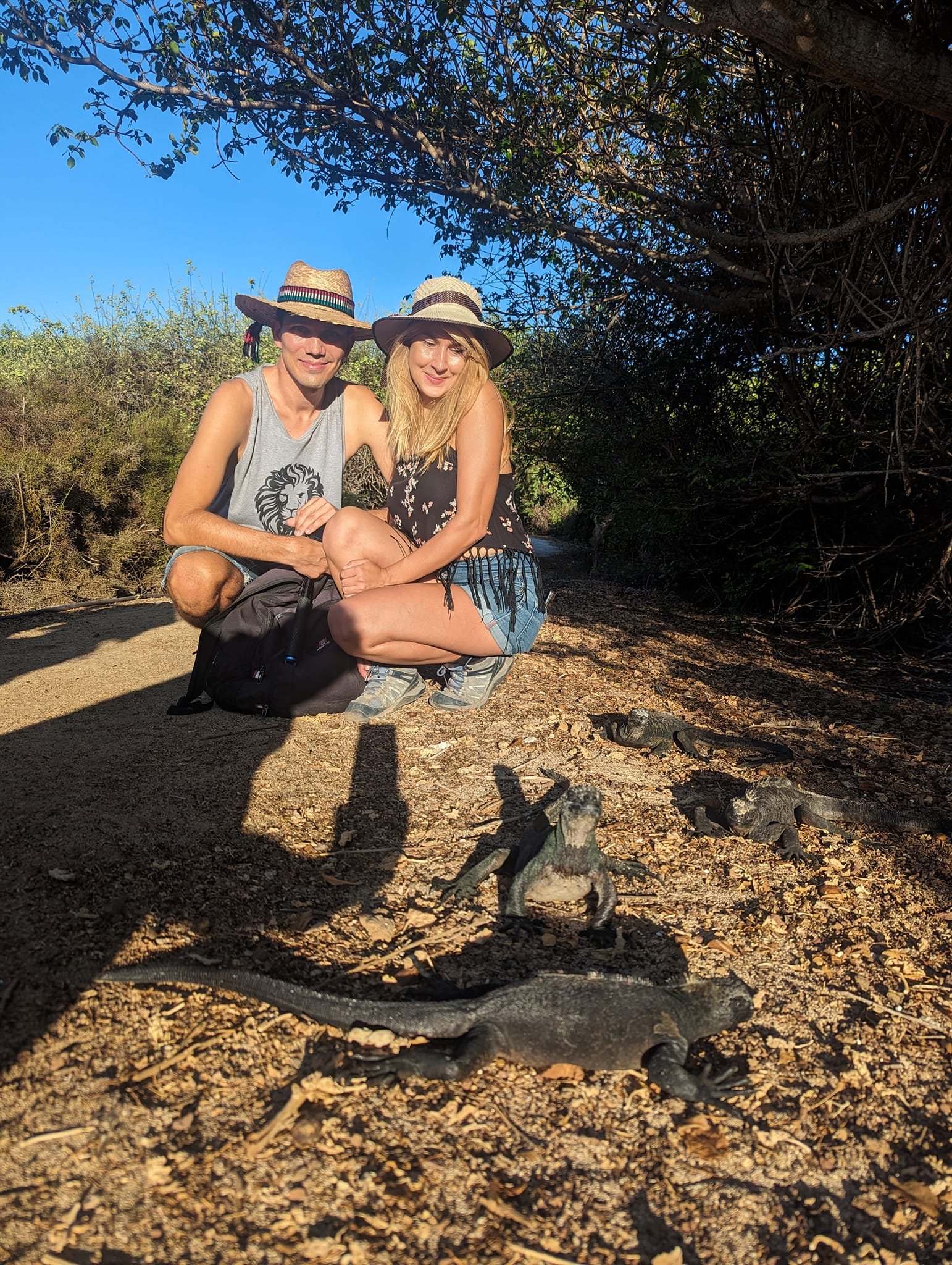
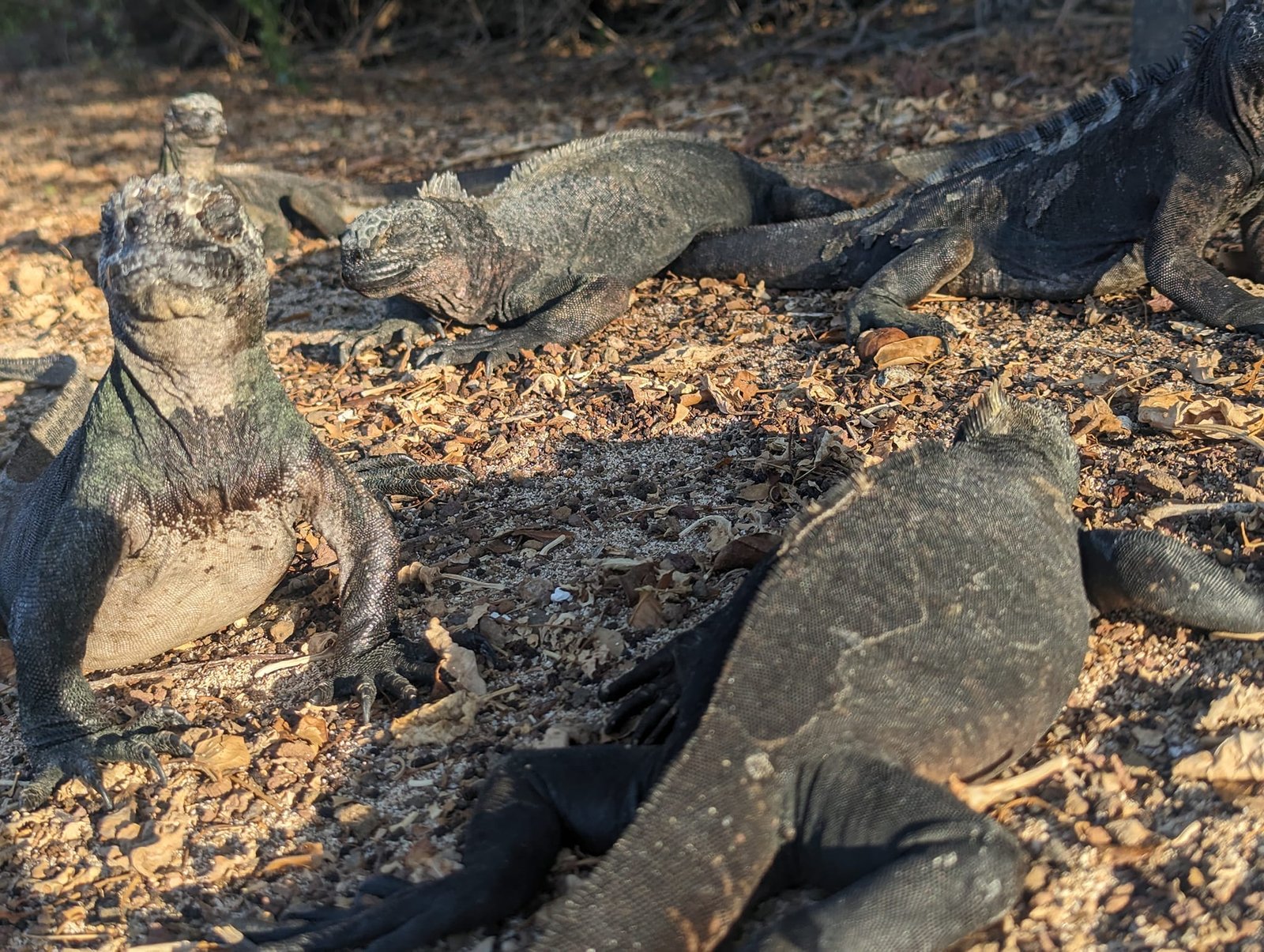
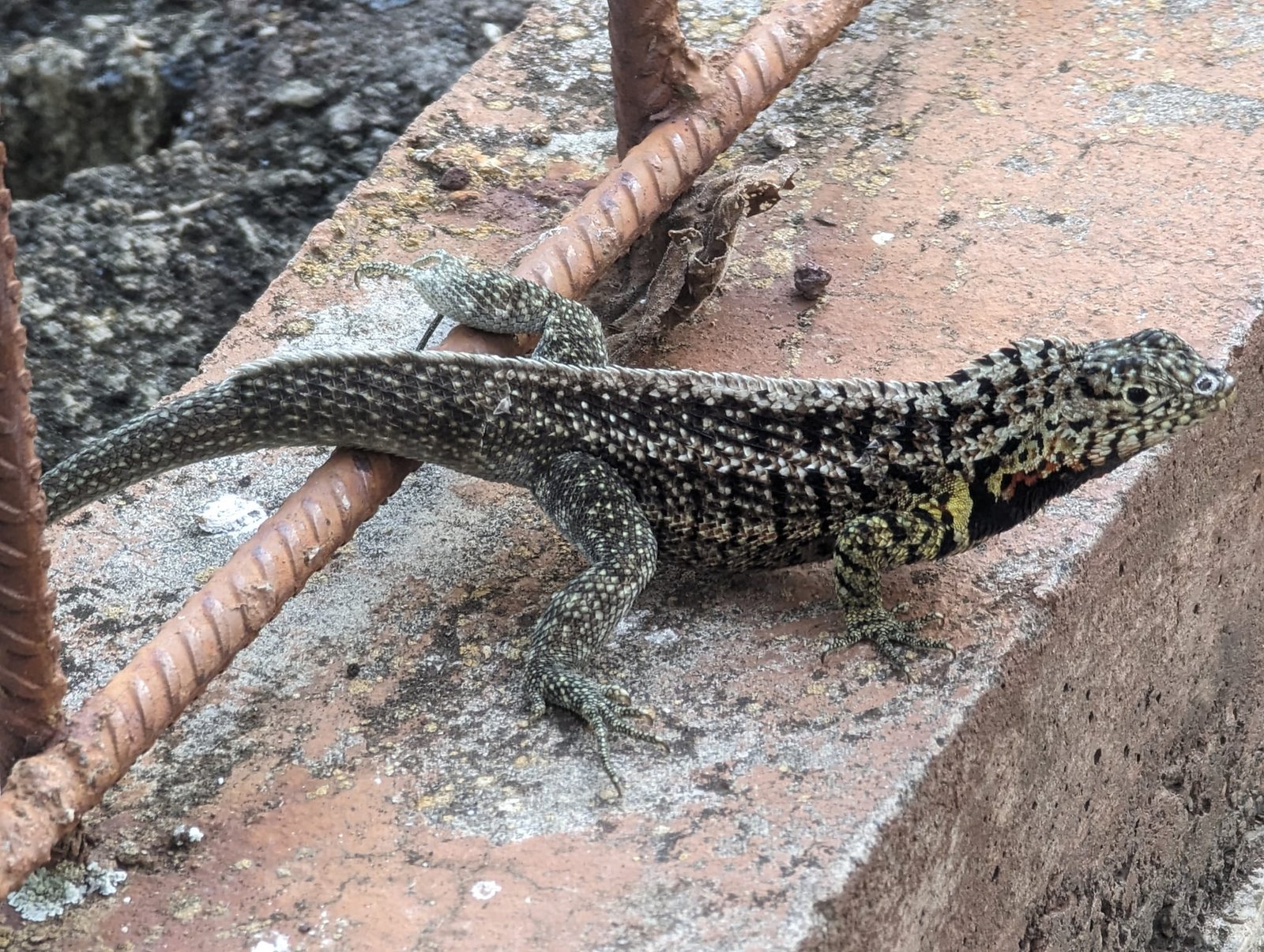
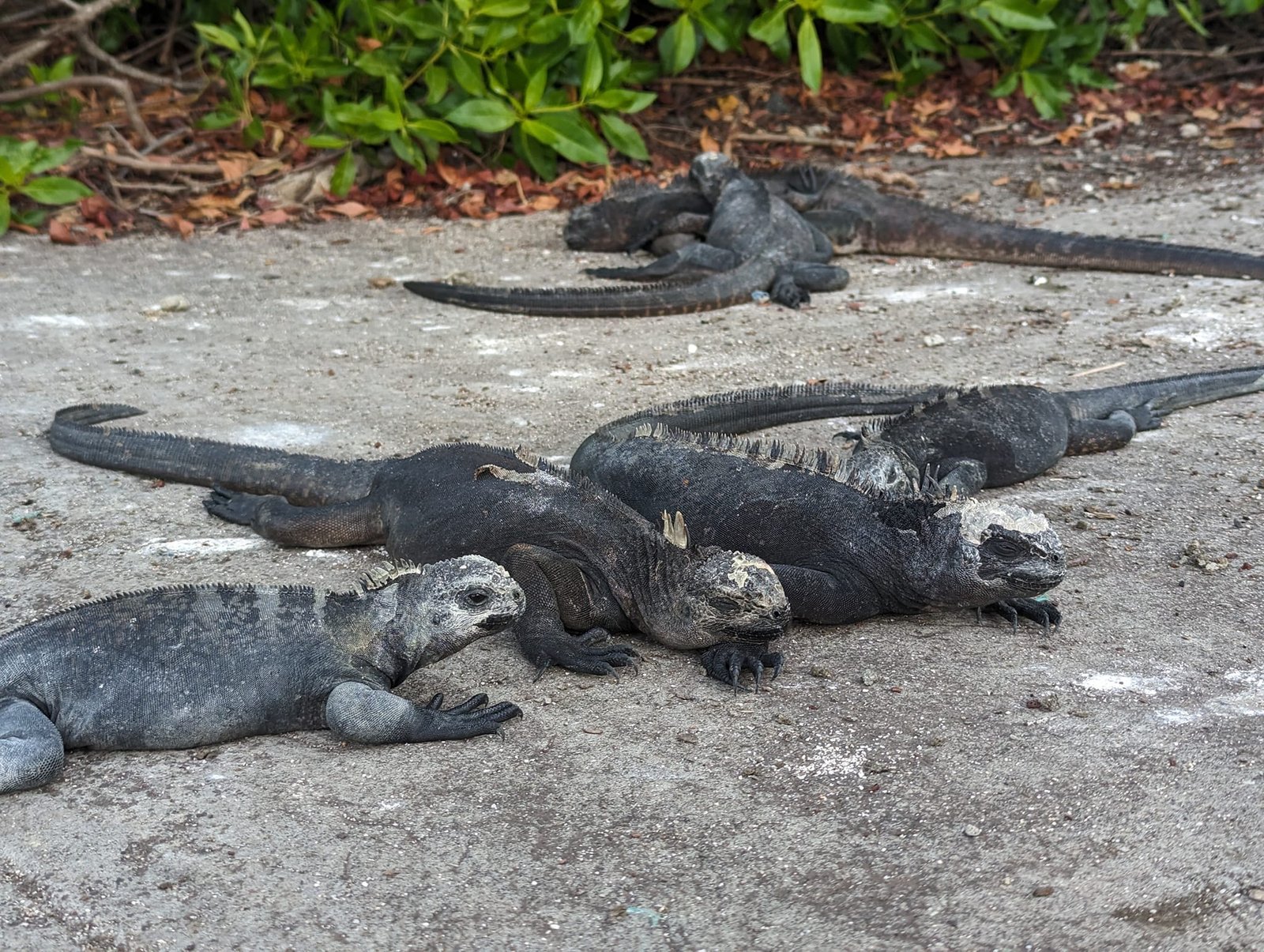
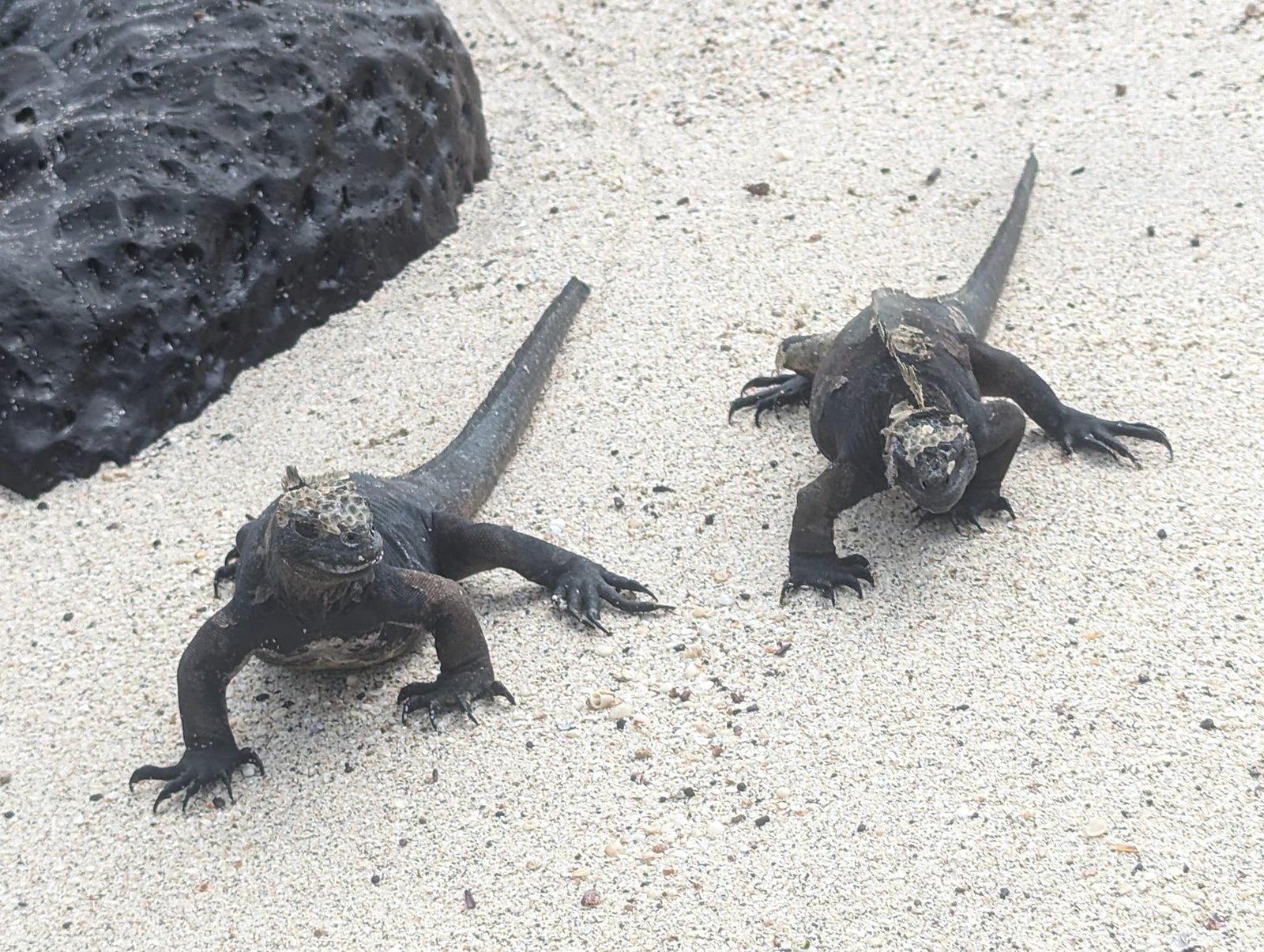
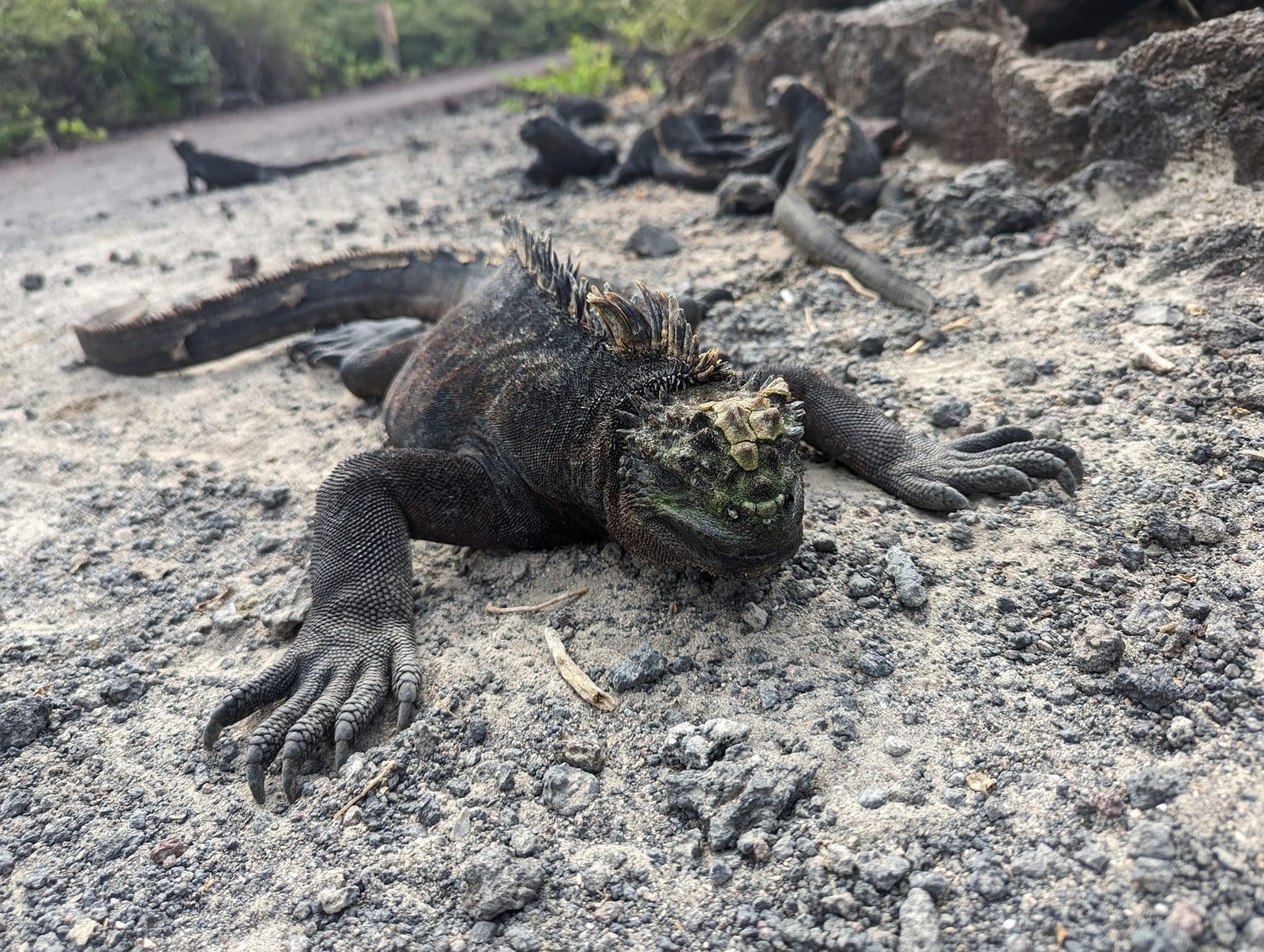
It was here that Darwin noticed that the finches from different islands – later named Darwin’s finches – have different beaks, adapted to different food, and that the giant tortoises look different depending on the island they live on. These observations inspired him to develop the theory of evolution. The iguanas are endemic too, and there are as many as four kinds: marine iguanas, which, unable to find food on land, learned to swim and feed in the sea; land iguanas; Santa Fe iguanas; and pink iguanas. We saw marine iguanas on every island, and a land iguana right after landing.
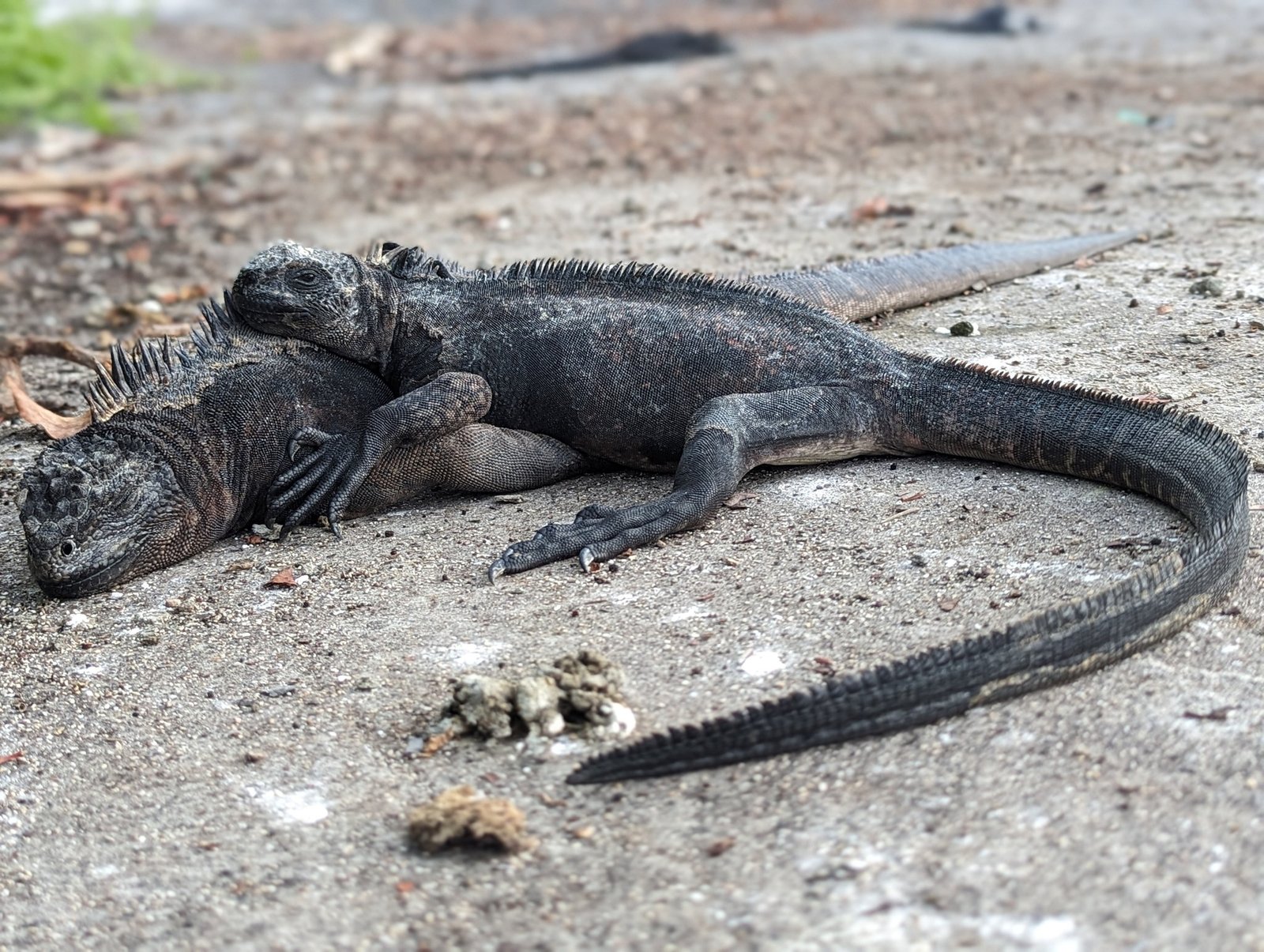
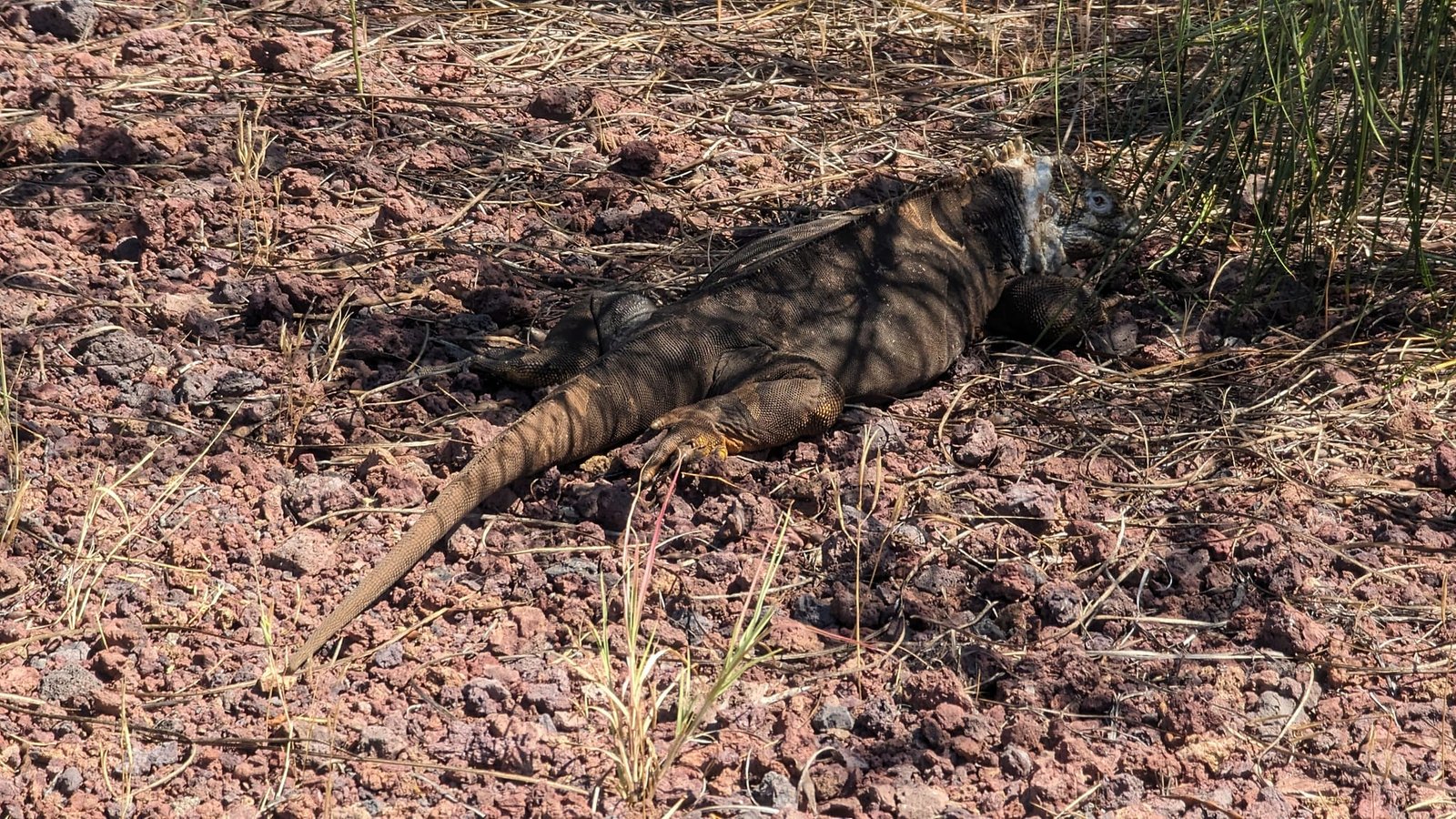
On the Galápagos, animals have the right of way. They live right next to people – sleeping on benches, lounging on piers and beaches – and couldn’t care less about tourists. You could stand there for hours taking photos of them, but eventually you have to move on. Many places can only be visited with a guide: partly so that nobody does anything stupid, and partly… because it is a great excuse to make money.
Santa Cruz – arrival, iguanas and tortoises in Puerto Ayora
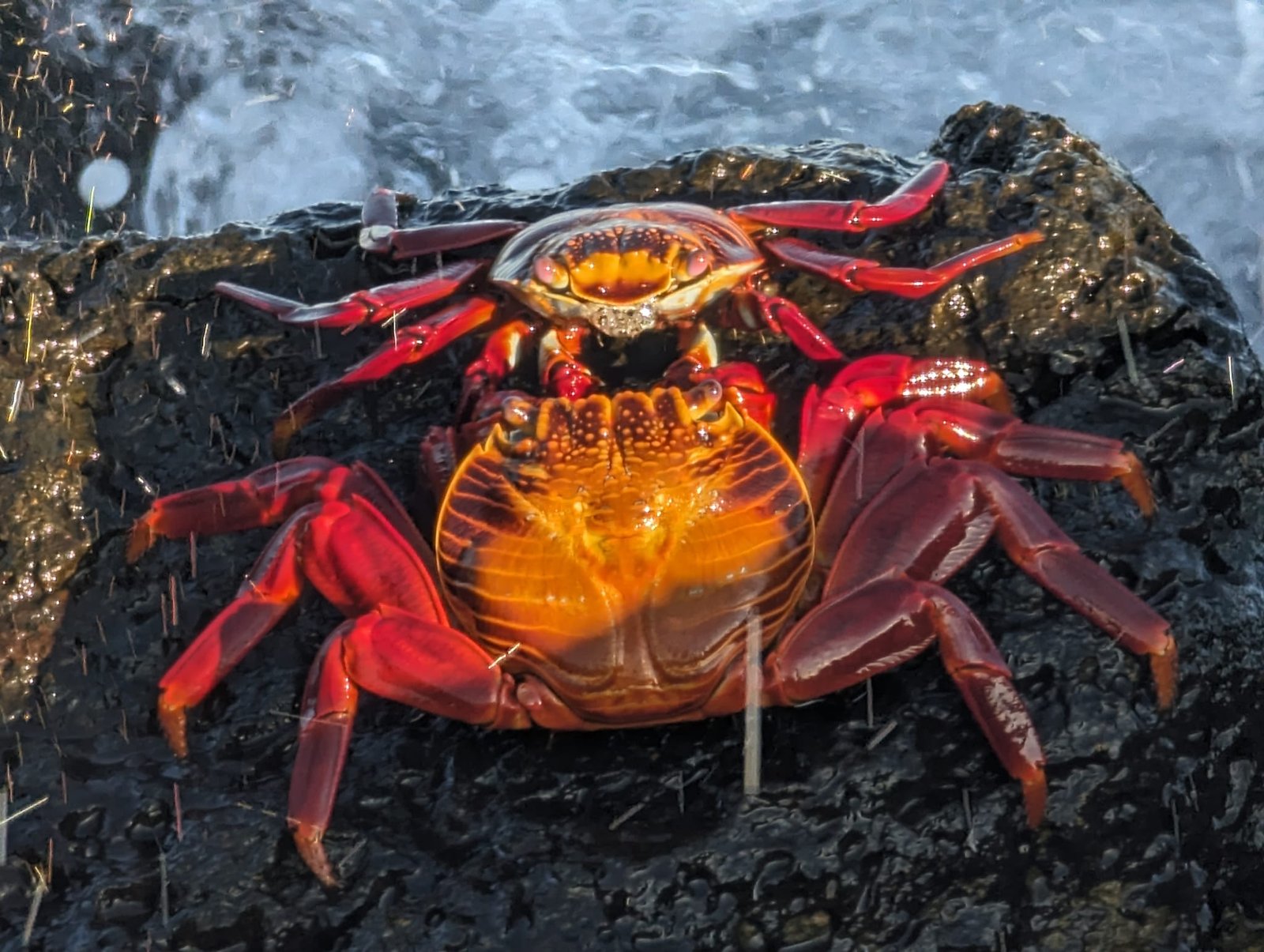
The main airport of the Galápagos is on the small island of Baltra, right next to Santa Cruz. Getting from there to Puerto Ayora, the main town of Santa Cruz, is quite tiring: a bus, a ferry across the channel and another bus – about an hour in total and 11 dollars per person. On the very first day we found out that the animals are at home here: sea lions slept wherever they pleased, and marine iguanas and red Sally Lightfoot crabs walked along the shore and the rocks.
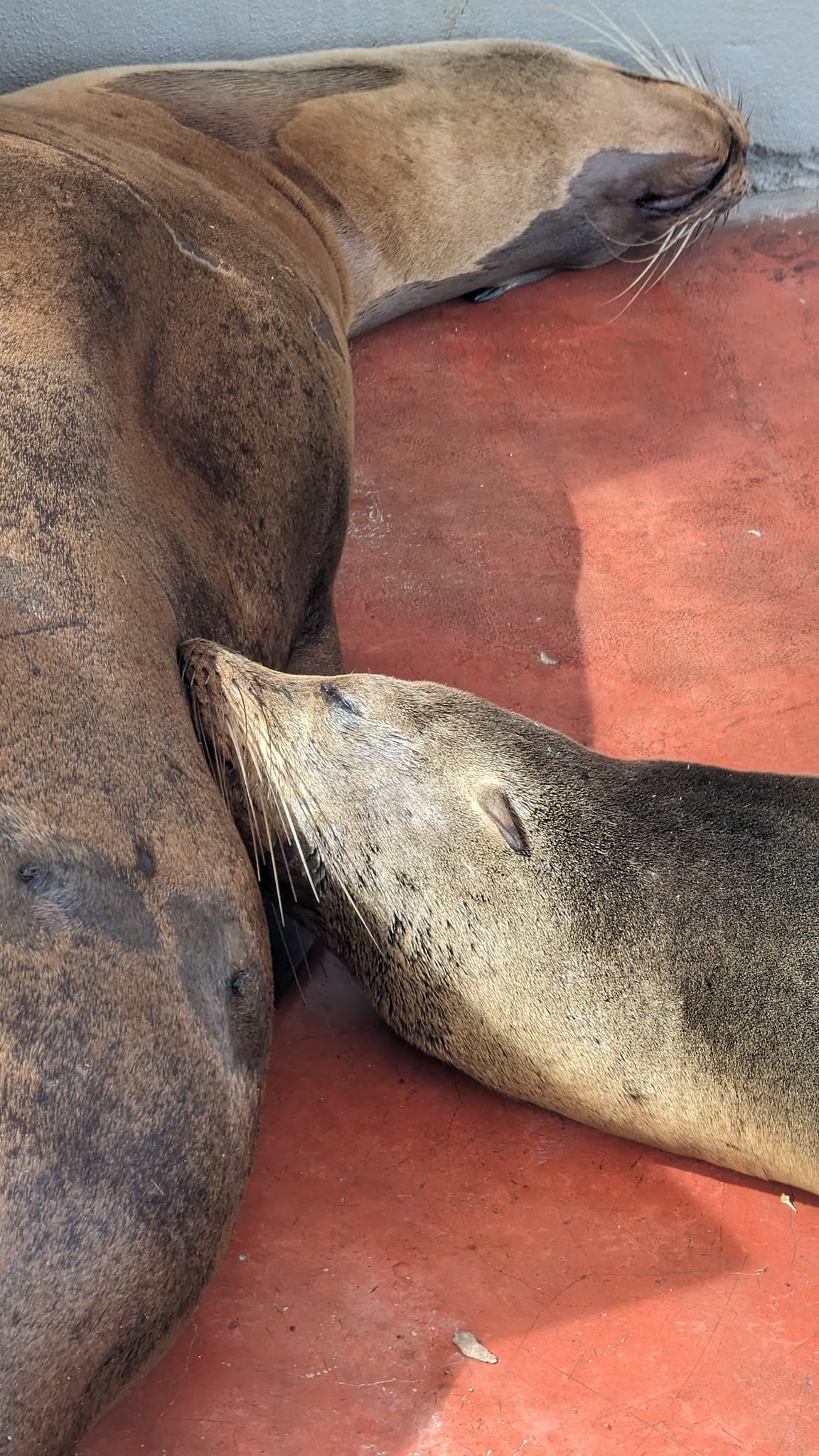
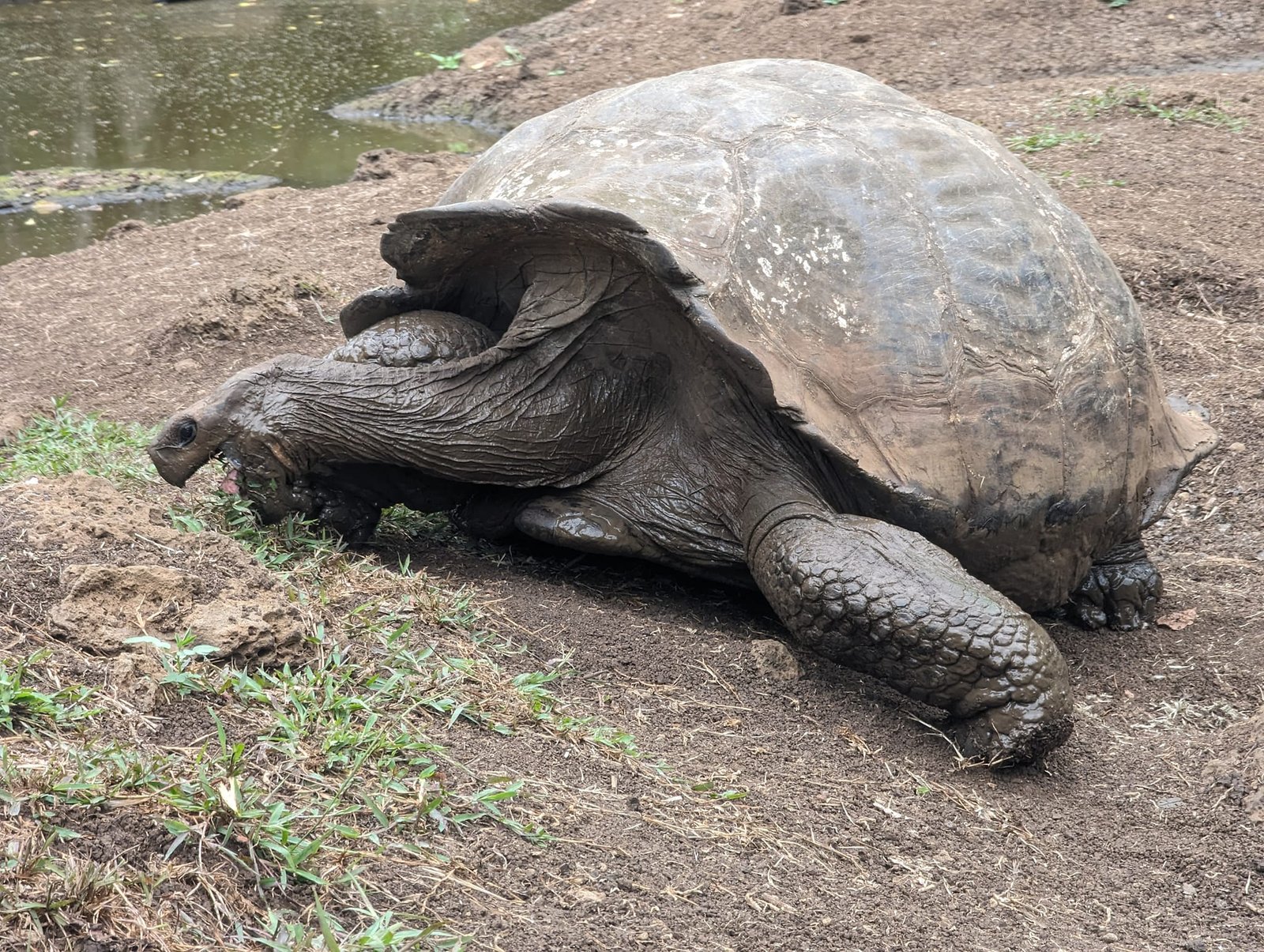
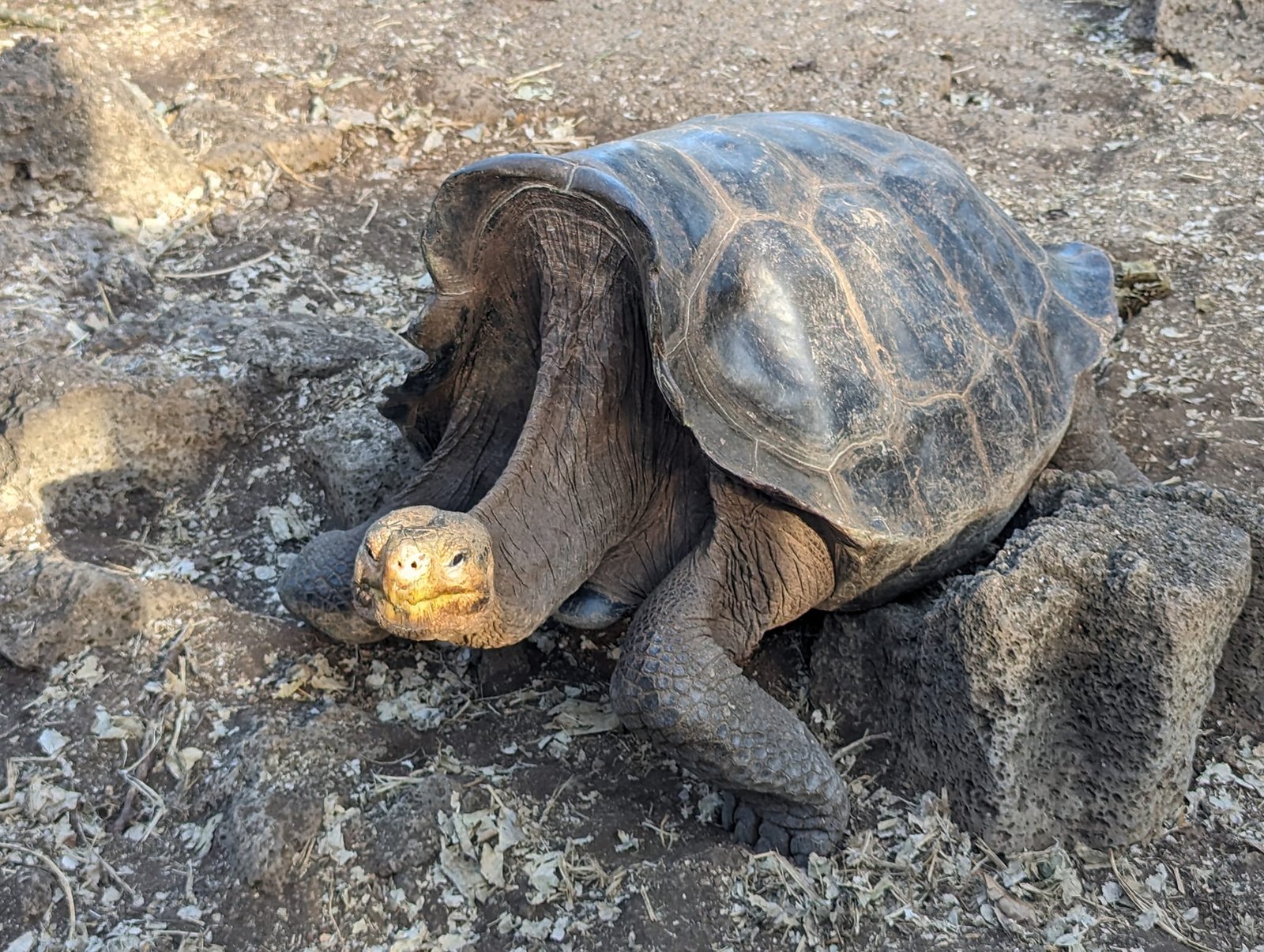
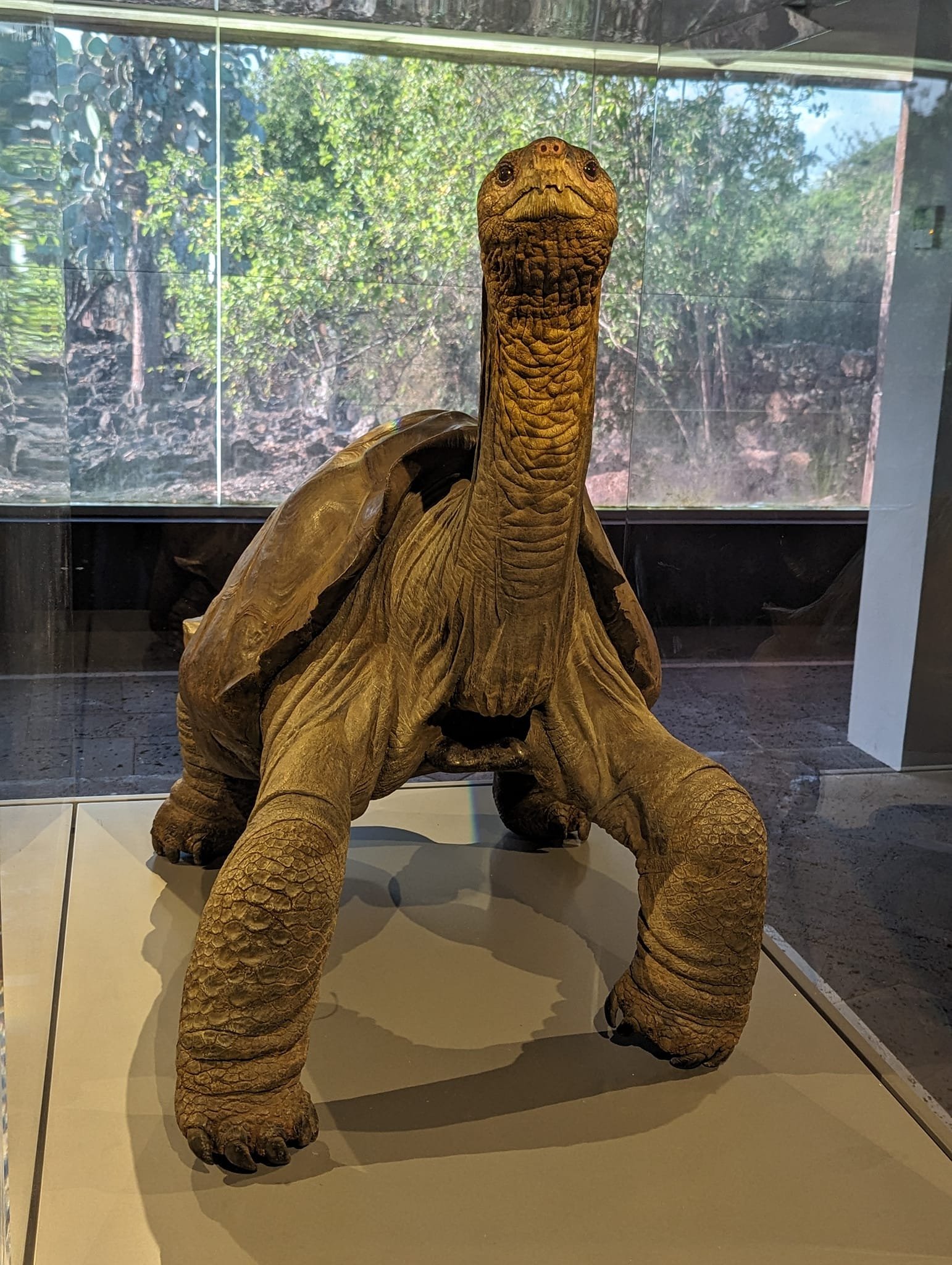
In the afternoon we went to the Fausto Llerena giant tortoise breeding centre. The tortoises live in enclosures, lava lizards run along the low walls, and in a separate room, behind glass, stands the preserved Lonesome George. Entry to the breeding centres on Santa Cruz and Isabela cost 10 dollars, with a compulsory guide. We only saw tortoises living in the wild at the end of our stay – more on that below, at the Primicias ranch.
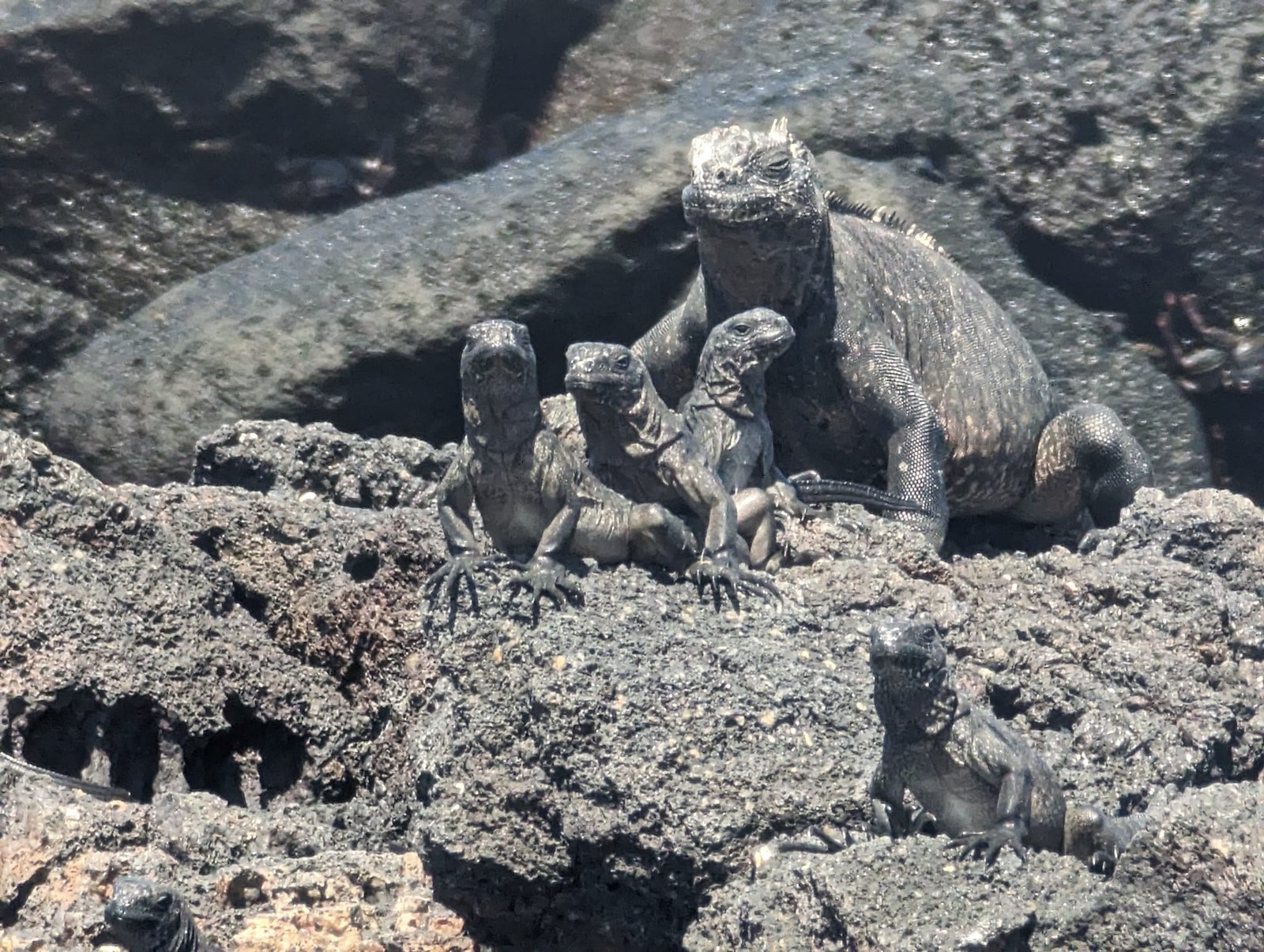
Towards evening, whole groups of marine iguanas were basking by the water. They lie side by side, sometimes on top of each other, and only move when they really have to.
San Cristóbal – beaches full of sea lions
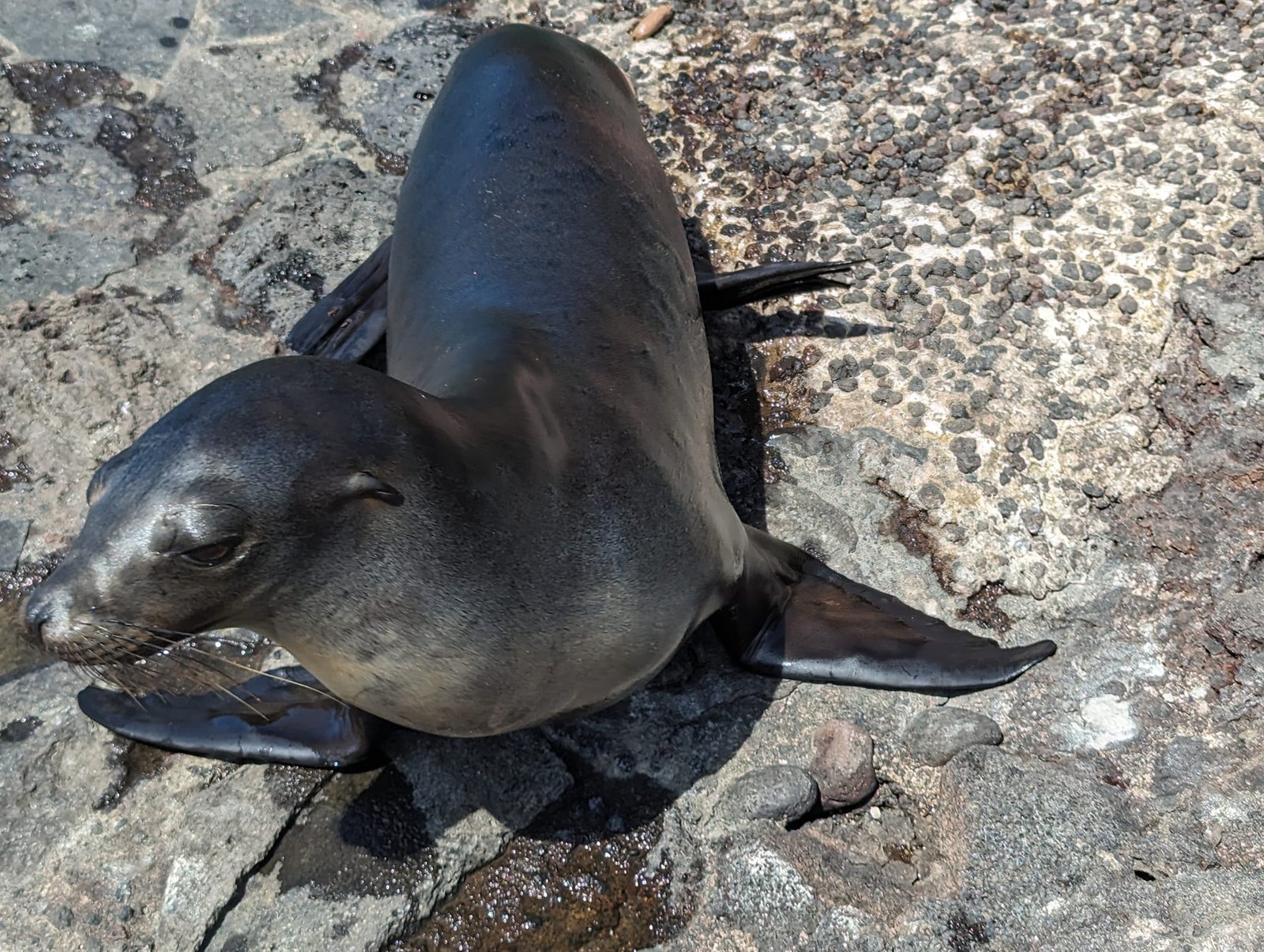
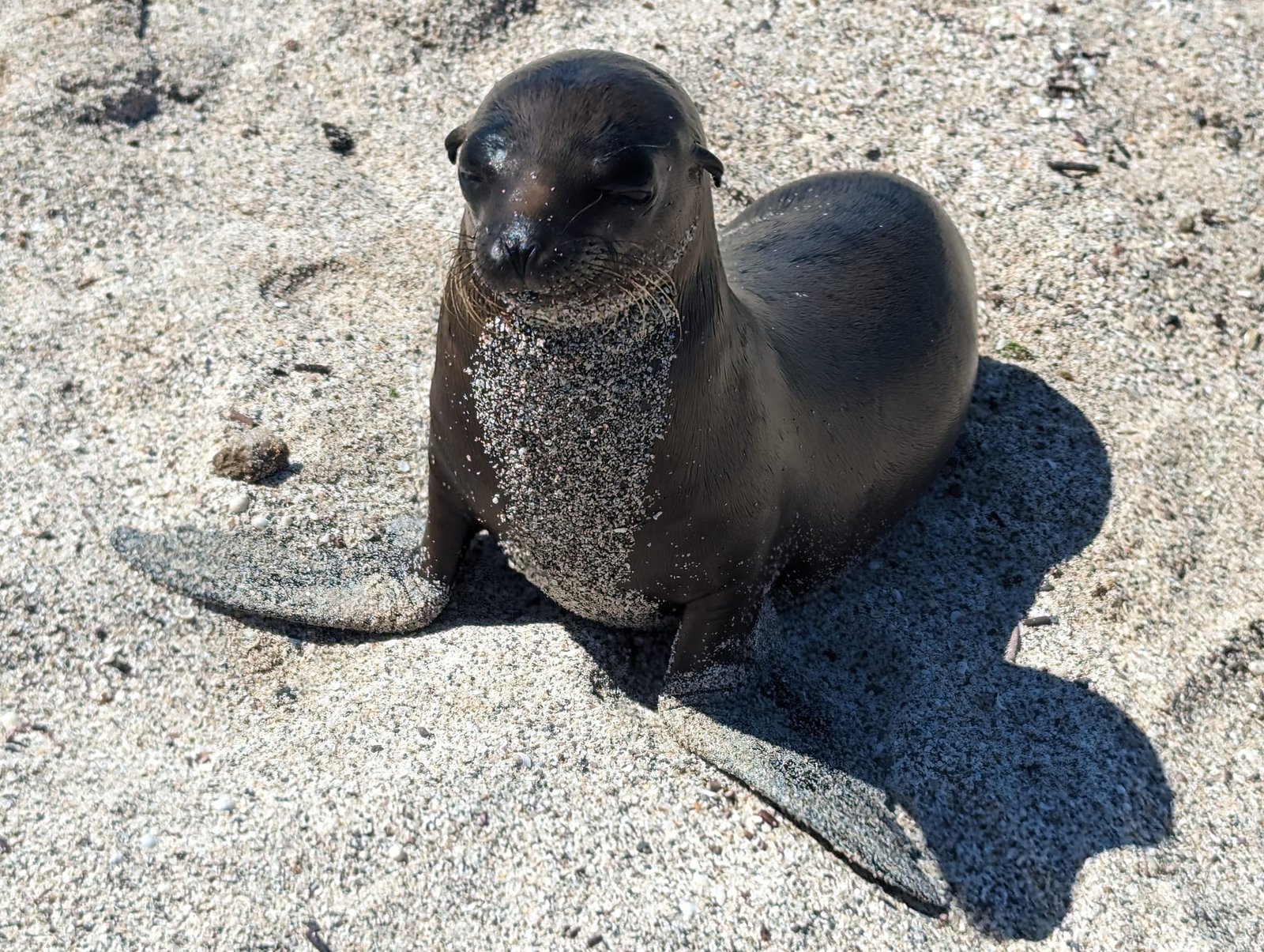
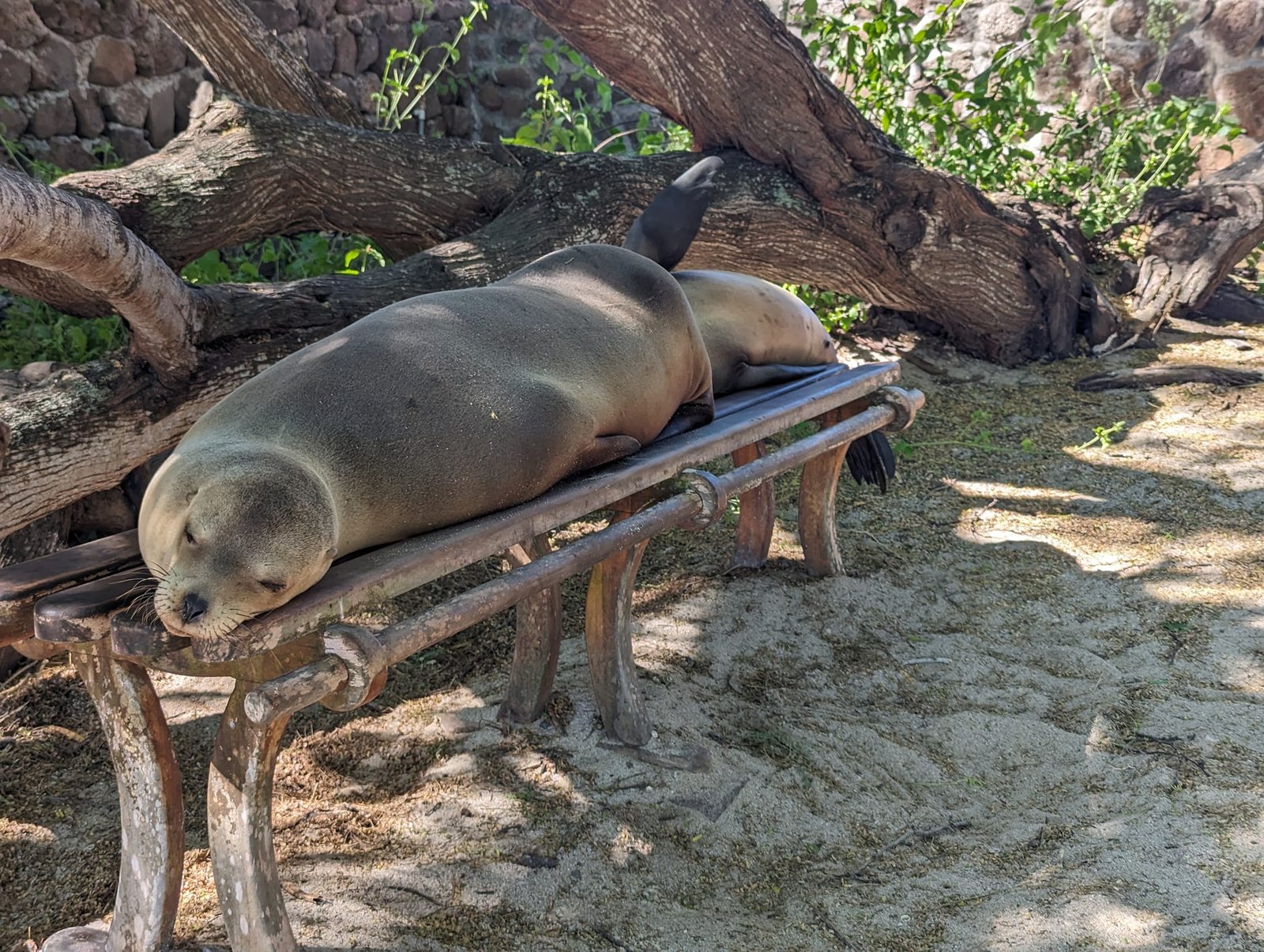
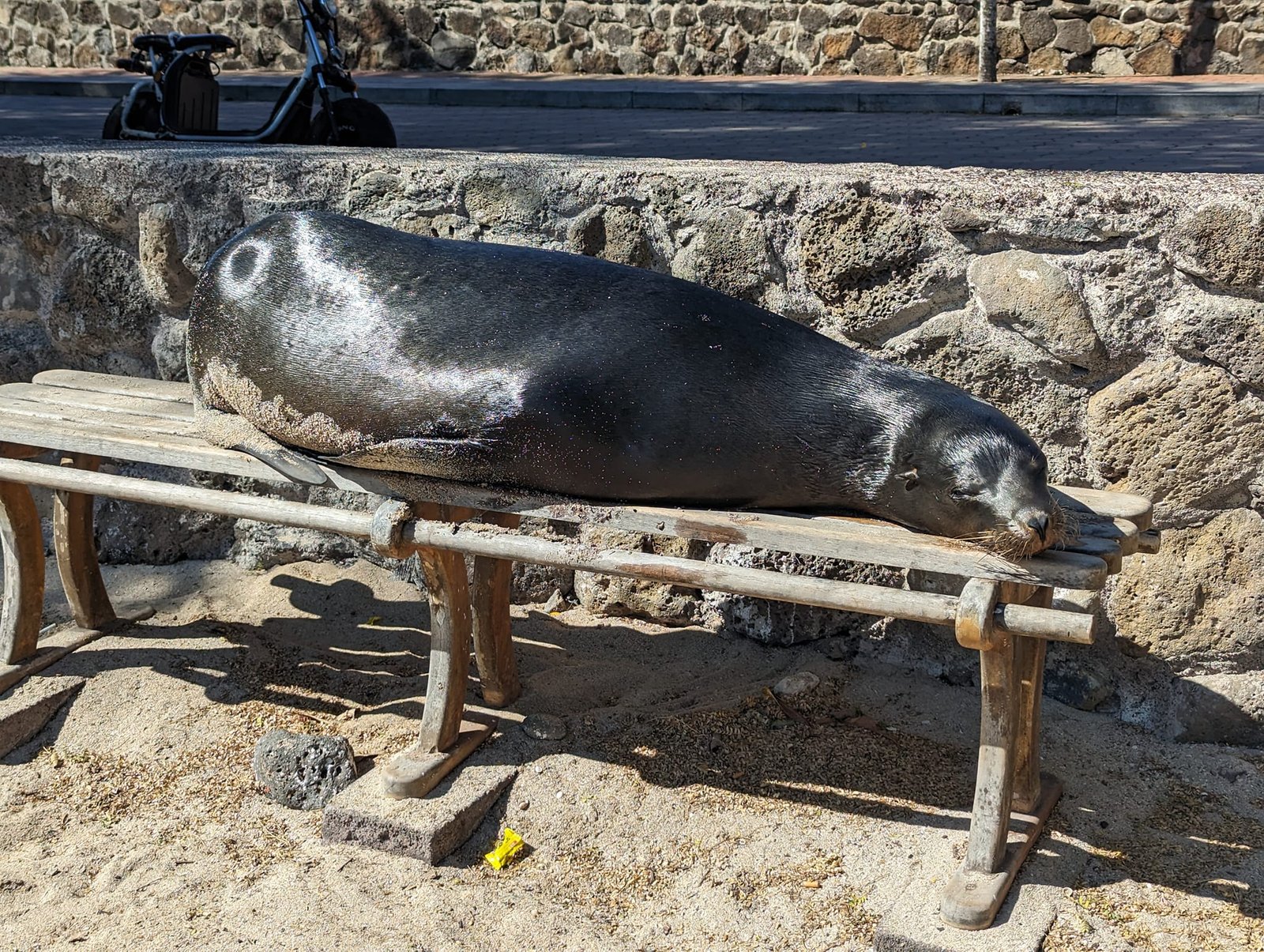
On the morning of 29 May we took the ferry to San Cristóbal. It’s hard to say which island we liked best, but probably this one. San Cristóbal is above all about sea lions – they lie literally everywhere: on beaches, on rocks, in the water and even on benches in town. The best beaches for them are Playa Lobería, Playa Mann and Playa Punta Carola, all free of charge.
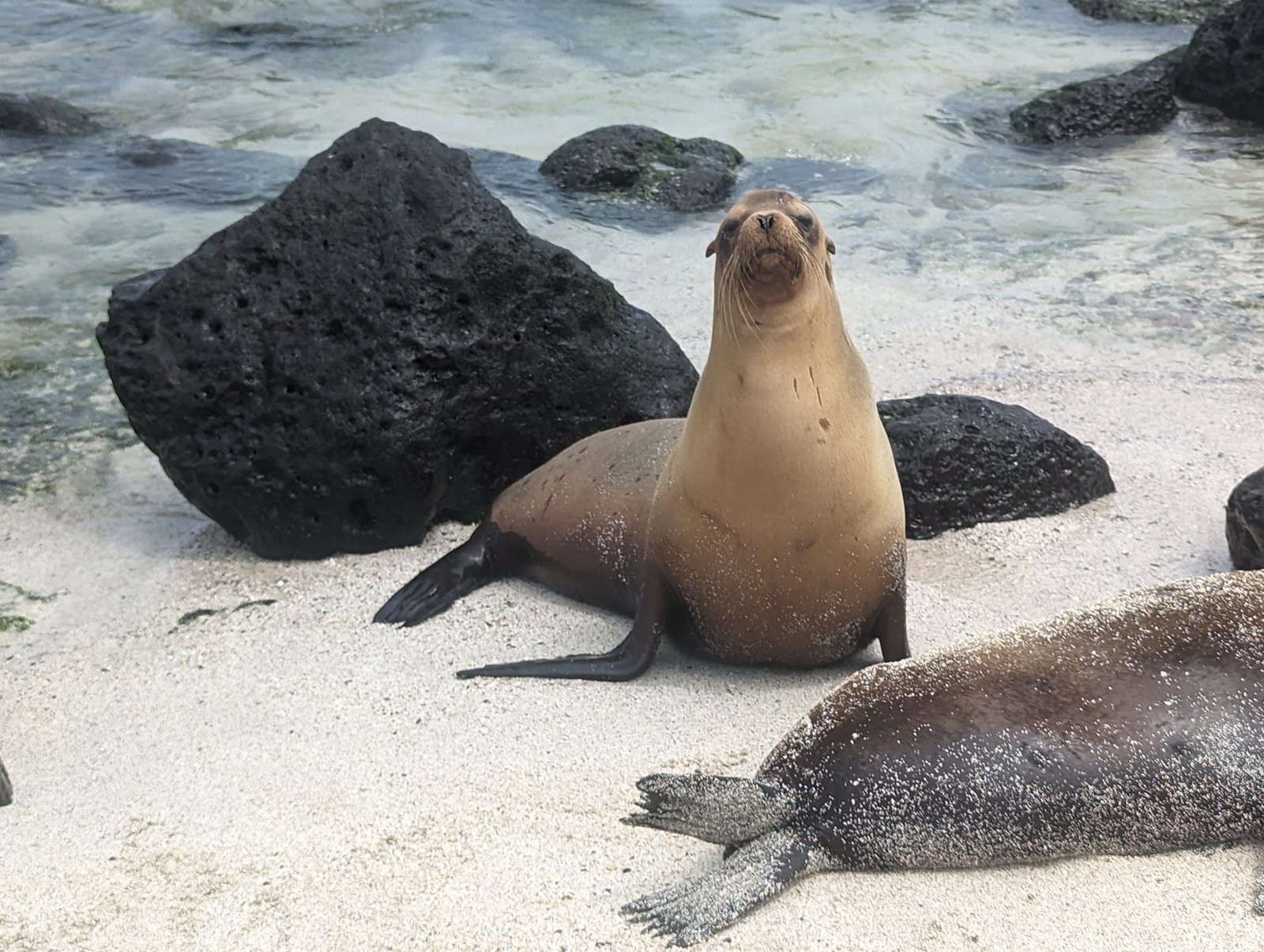
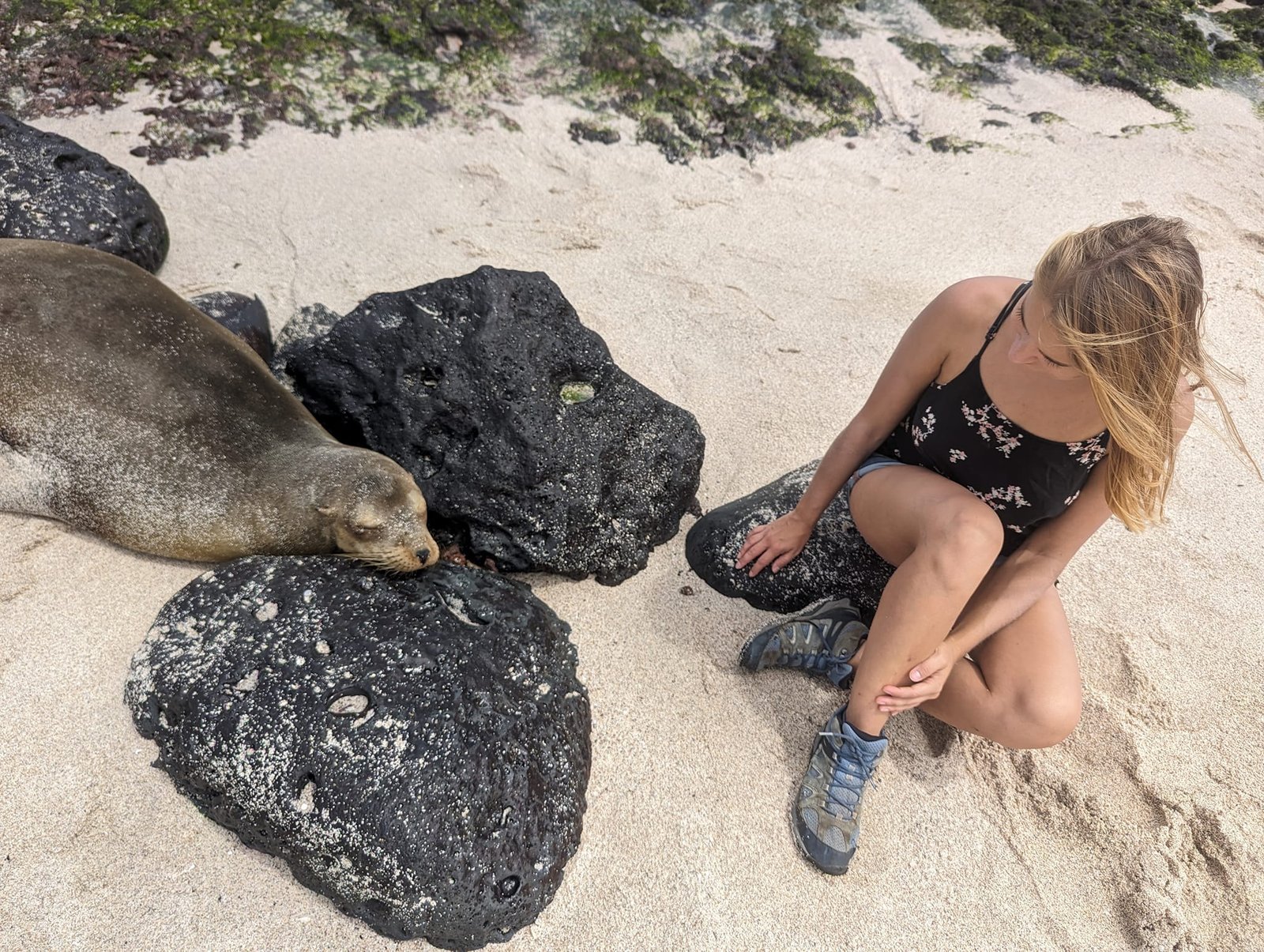
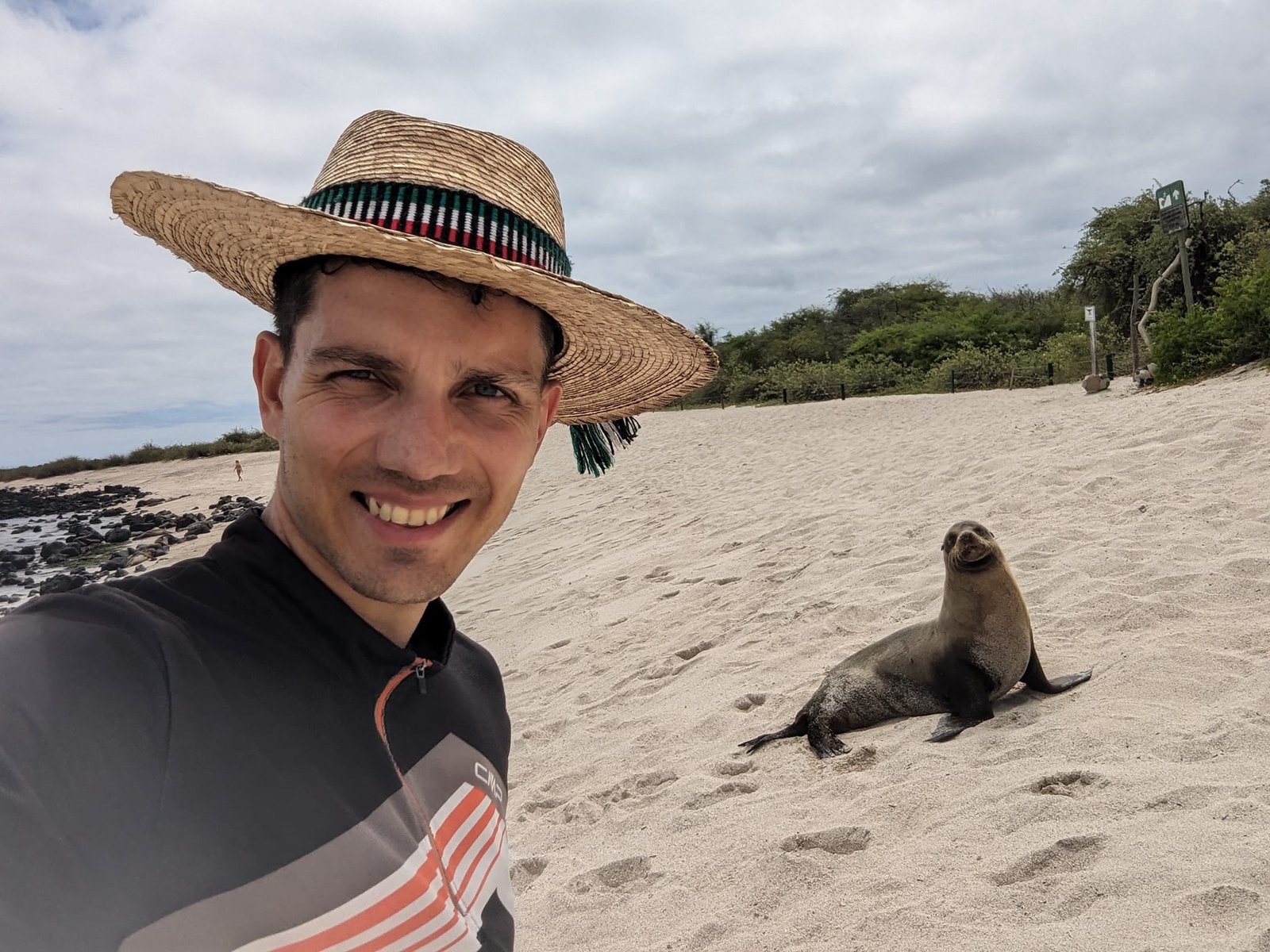
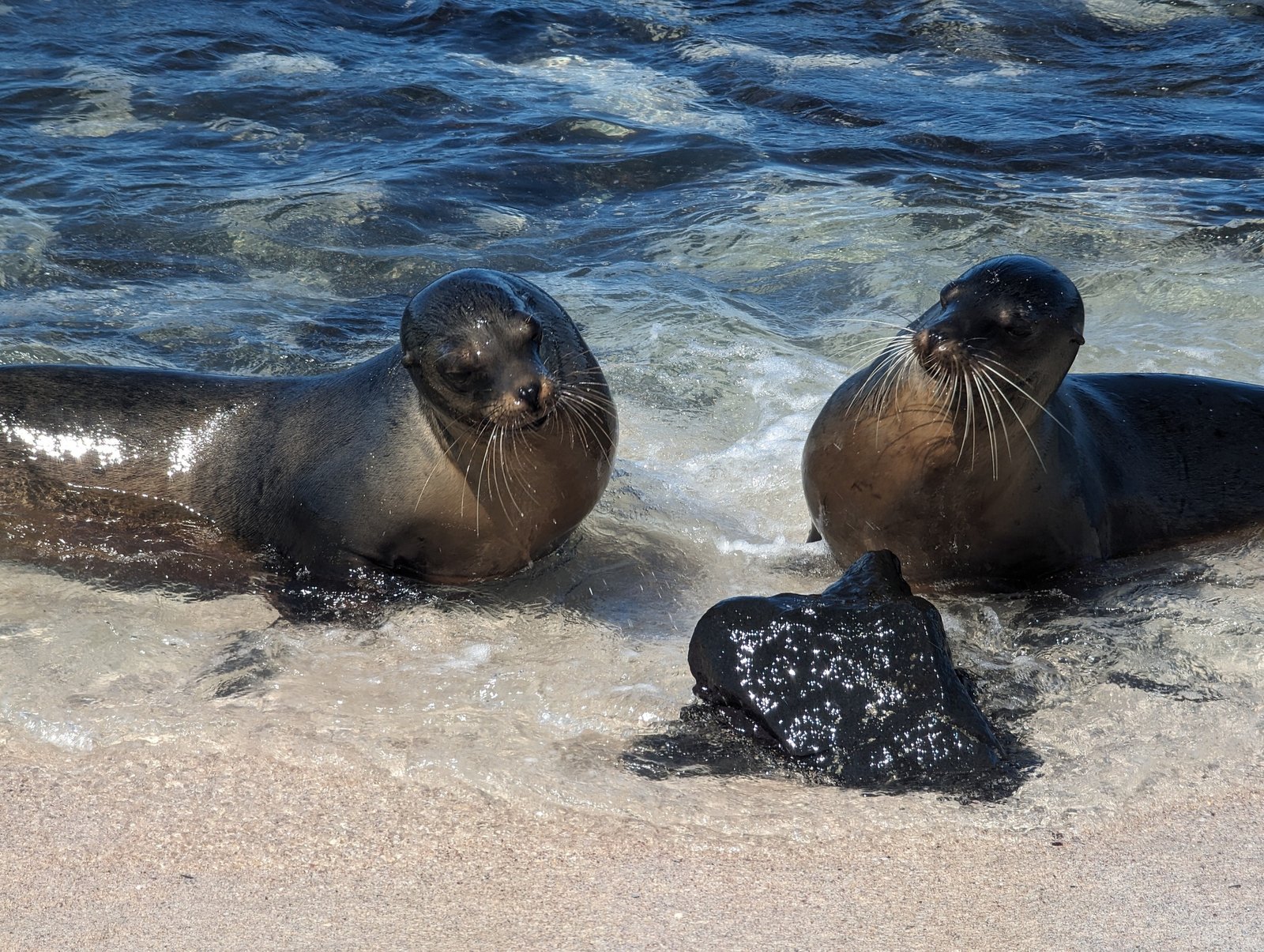
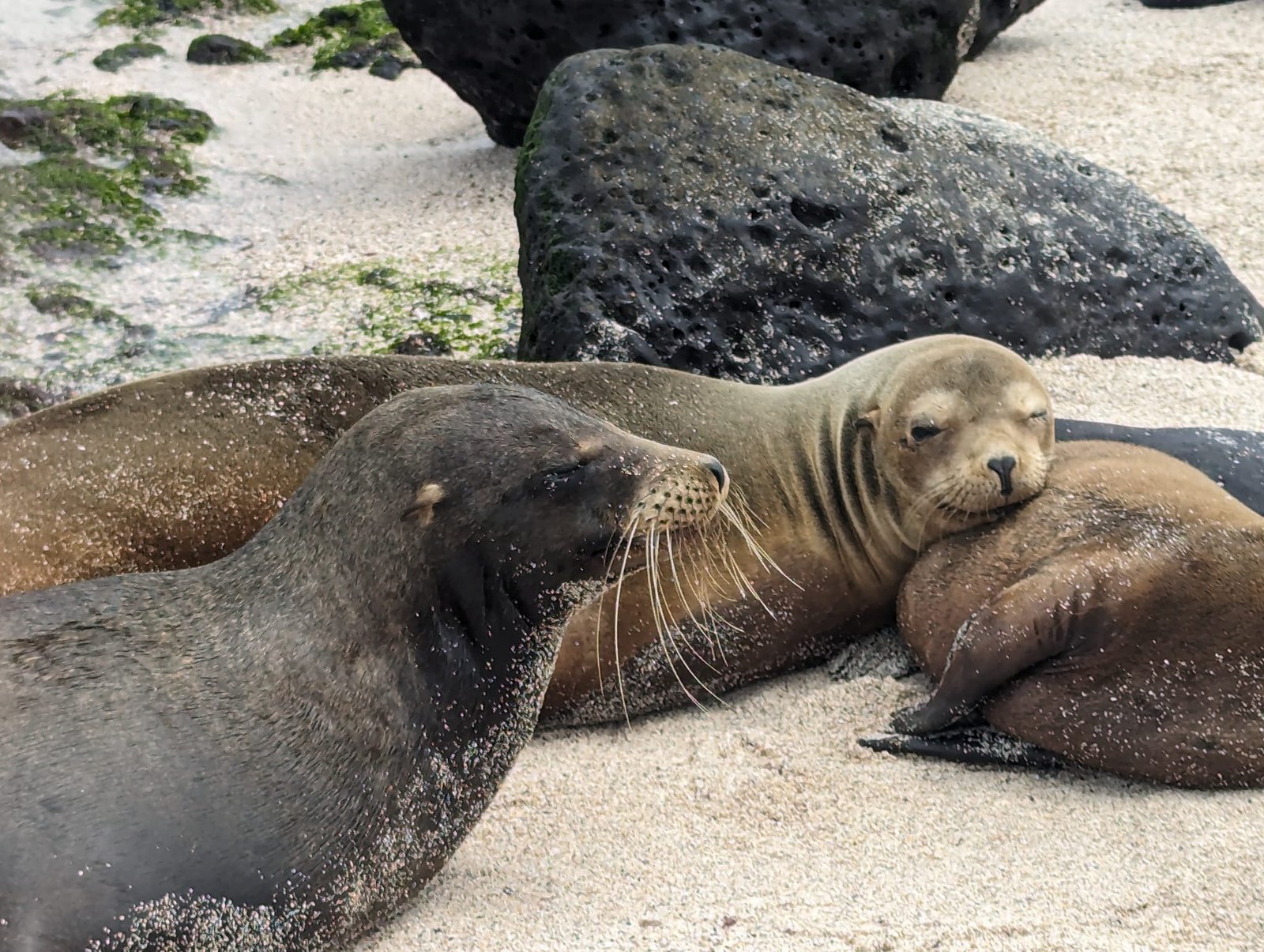
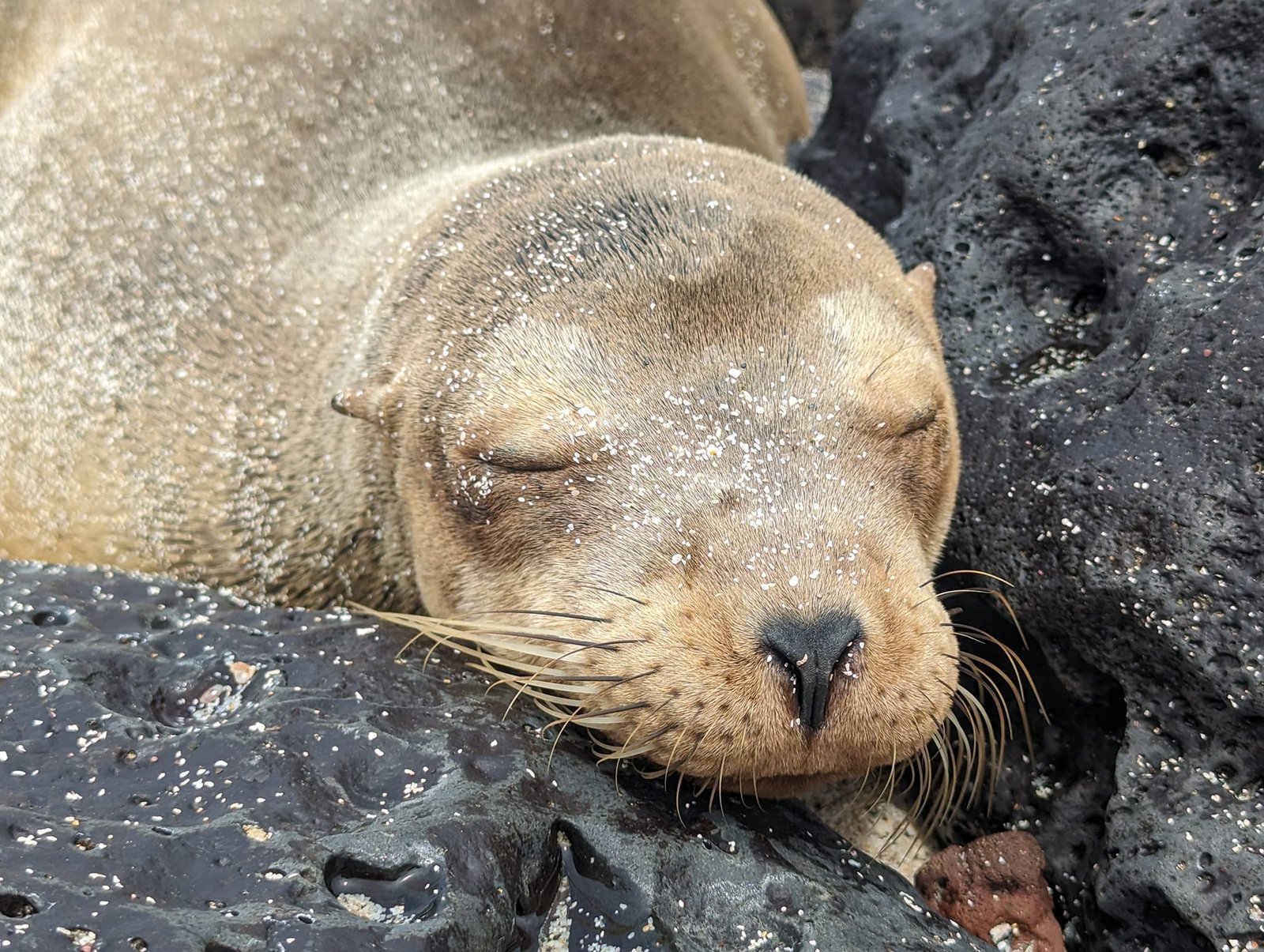
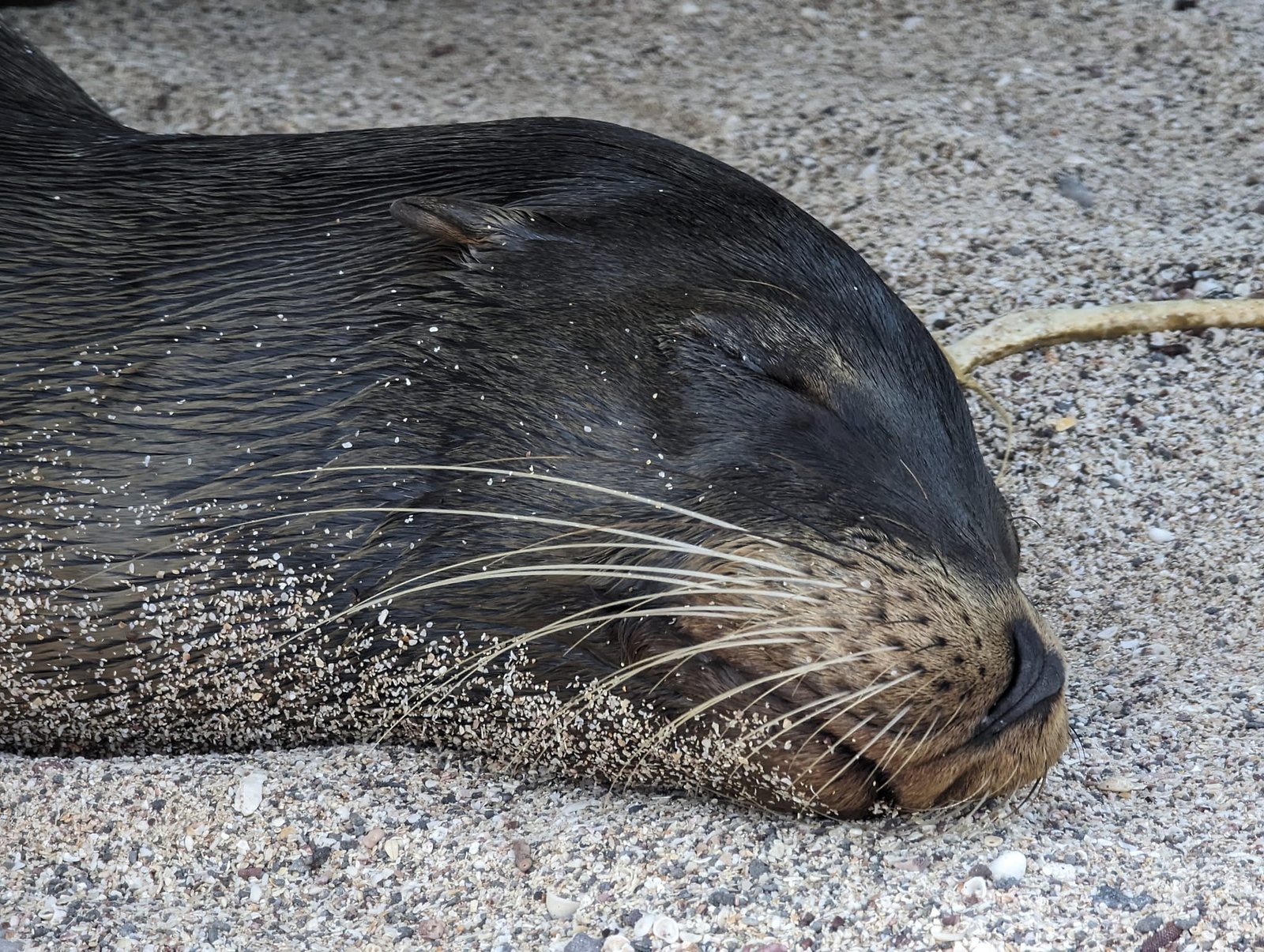
Marine iguanas stroll along the beach between the sea lions, and in Puerto Baquerizo Moreno, the island’s capital, sea lions sleep on benches along the waterfront and the streets. Some yawn, others don’t even open their eyes when someone walks past.
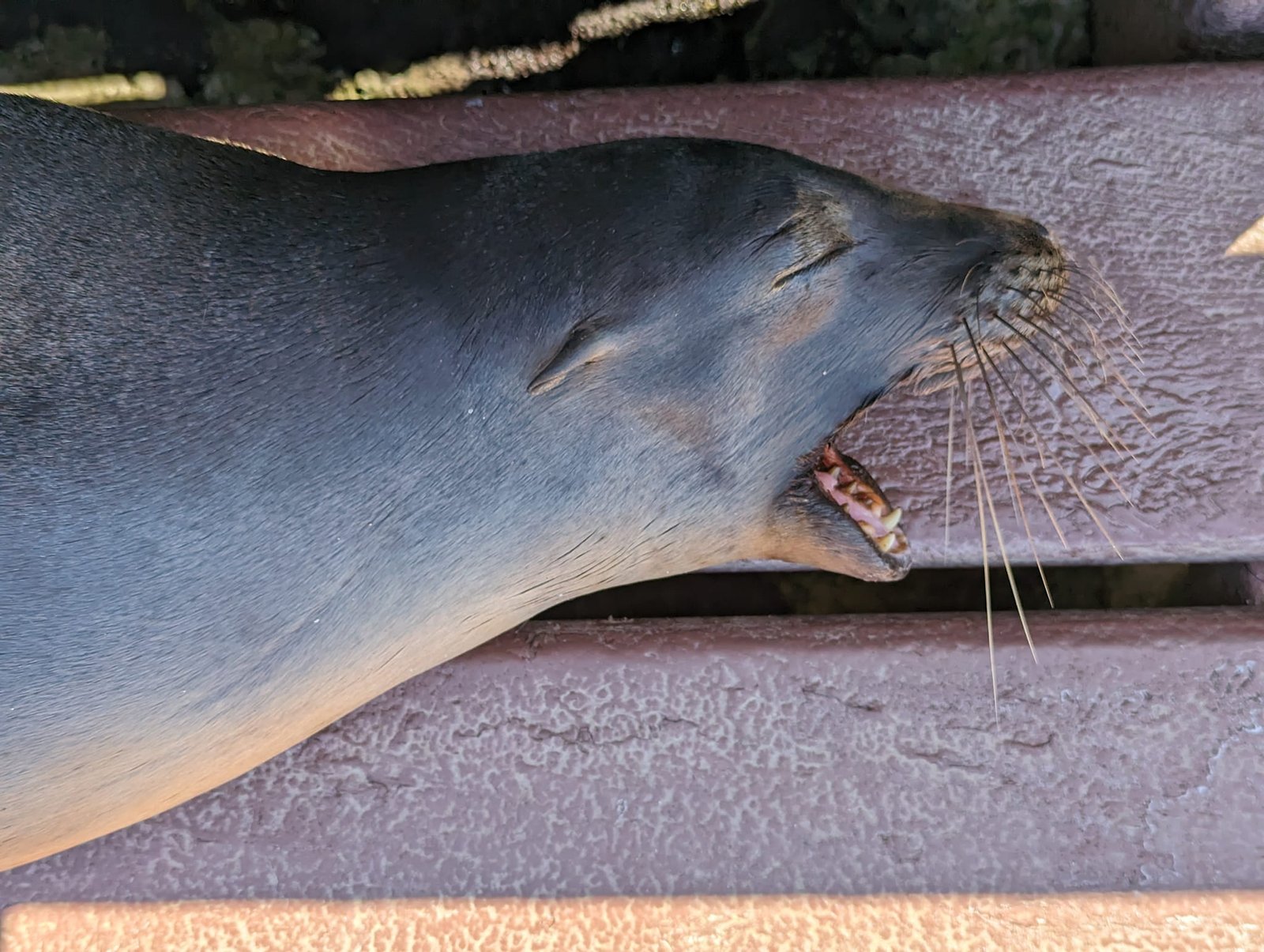
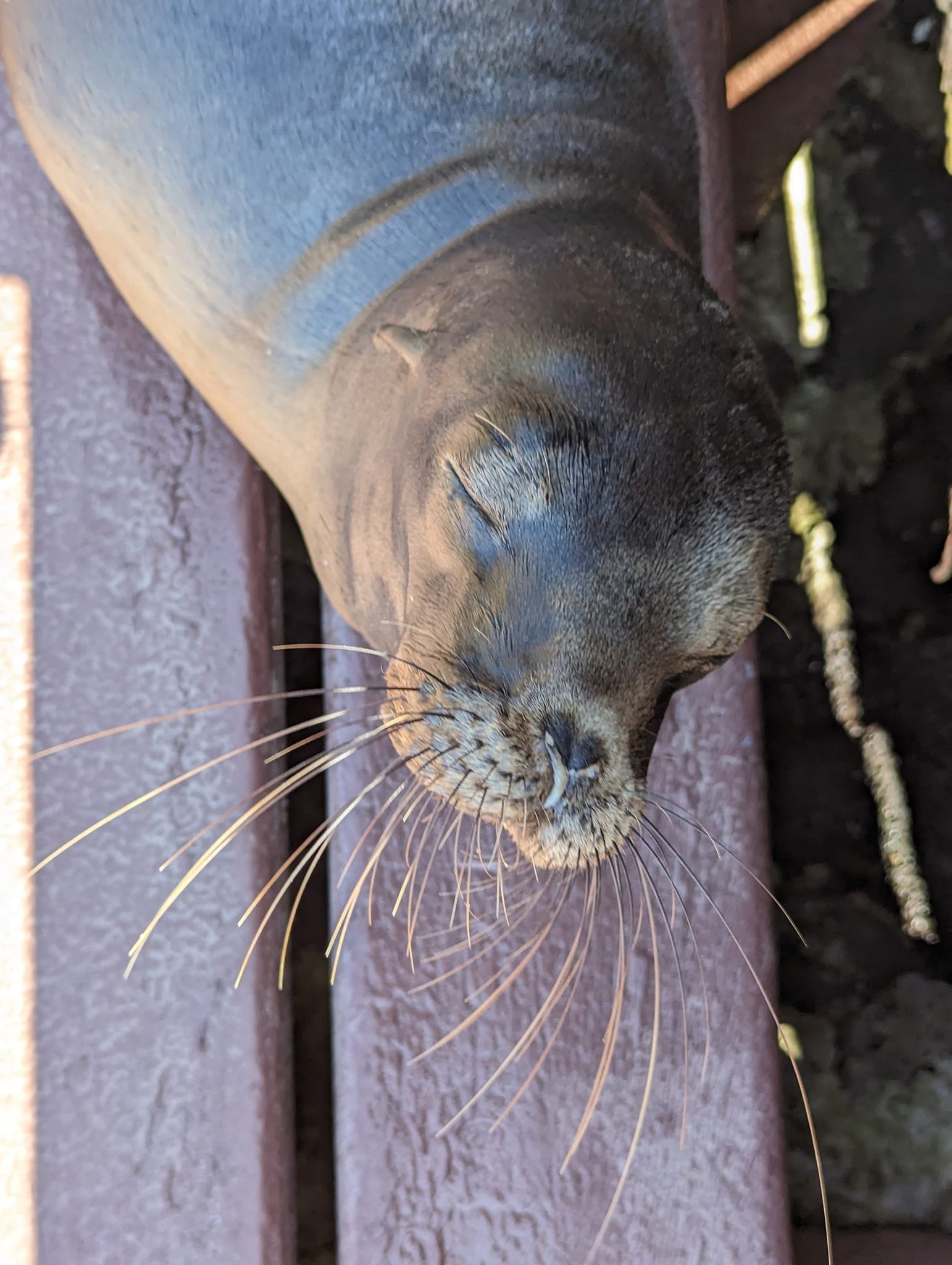
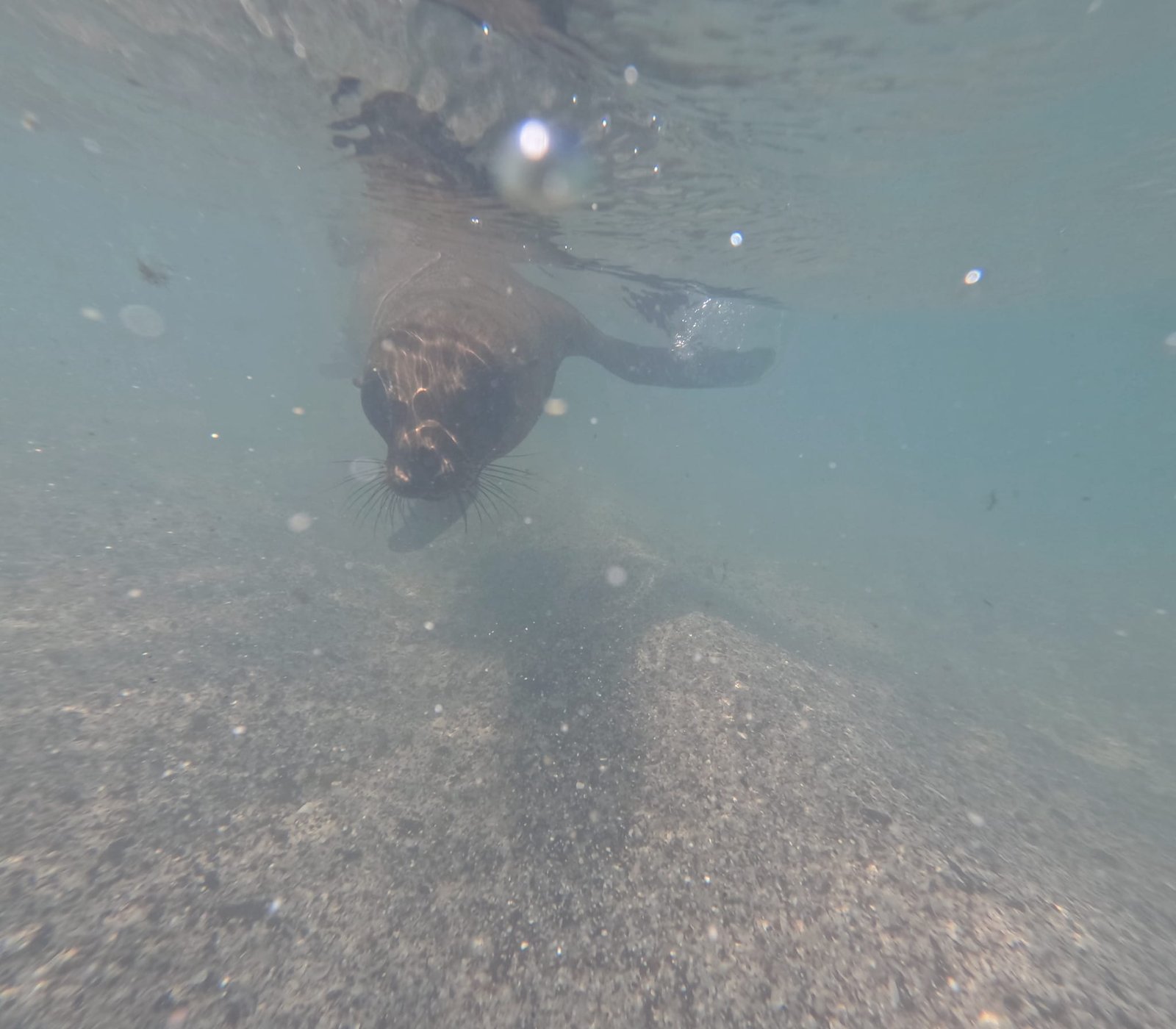
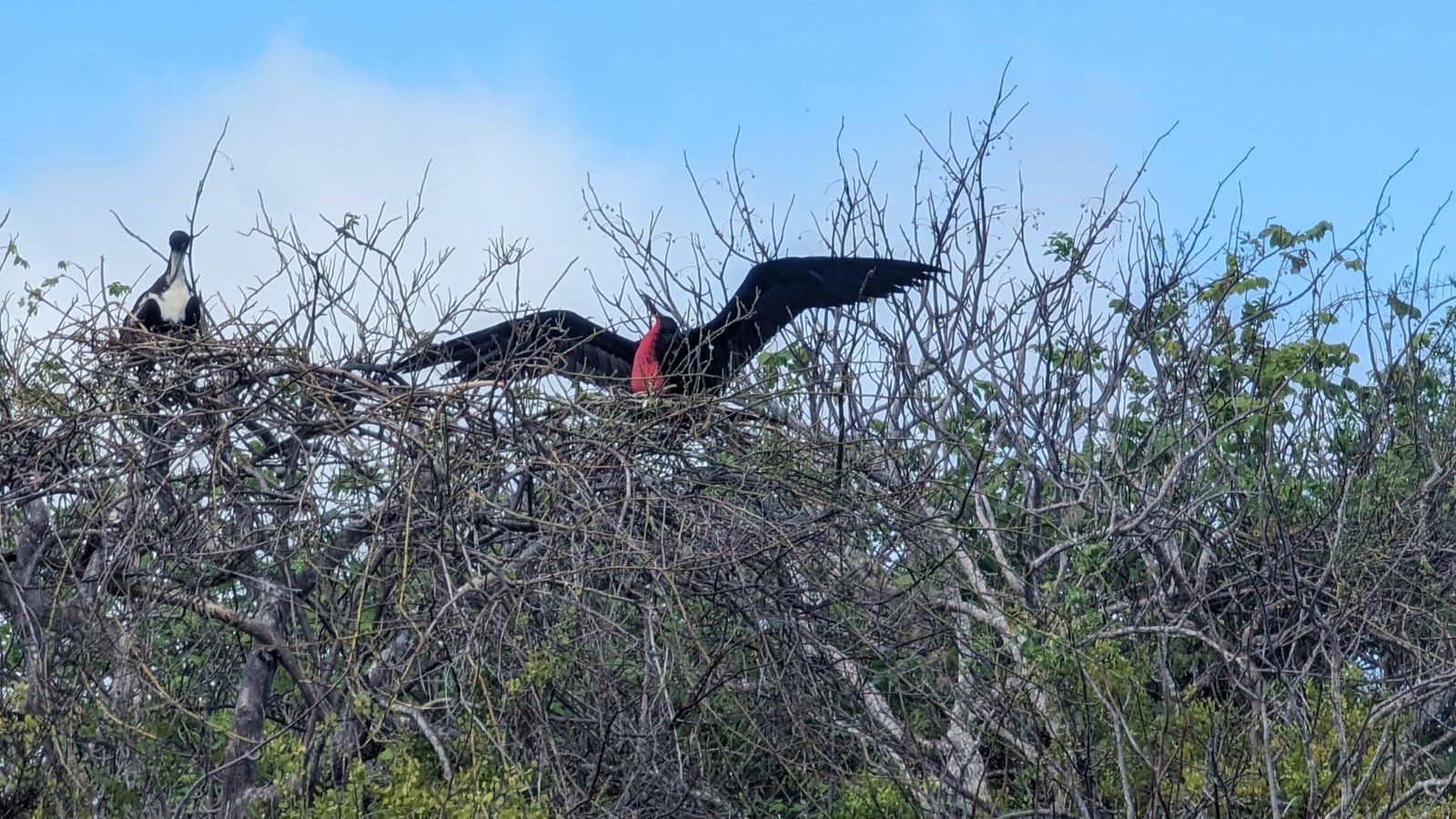
You can also swim with the sea lions – for free, walking into the water straight from the beach. In the bushes, in turn, sat frigatebirds, and one of the males inflated his red throat pouch.
Diving at Kicker Rock – is it worth it?
The best-known dive site in the Galápagos is Kicker Rock (León Dormido in Spanish) off San Cristóbal, where you can meet hammerhead sharks, among others. We had got our diving certificates a few months earlier on Utila in Honduras, so on 31 May we went there with Pelican Tours. We paid 195 dollars each, which included two dives, lunch, snacks, drinks and an hour on a beach that can only be reached from the sea.
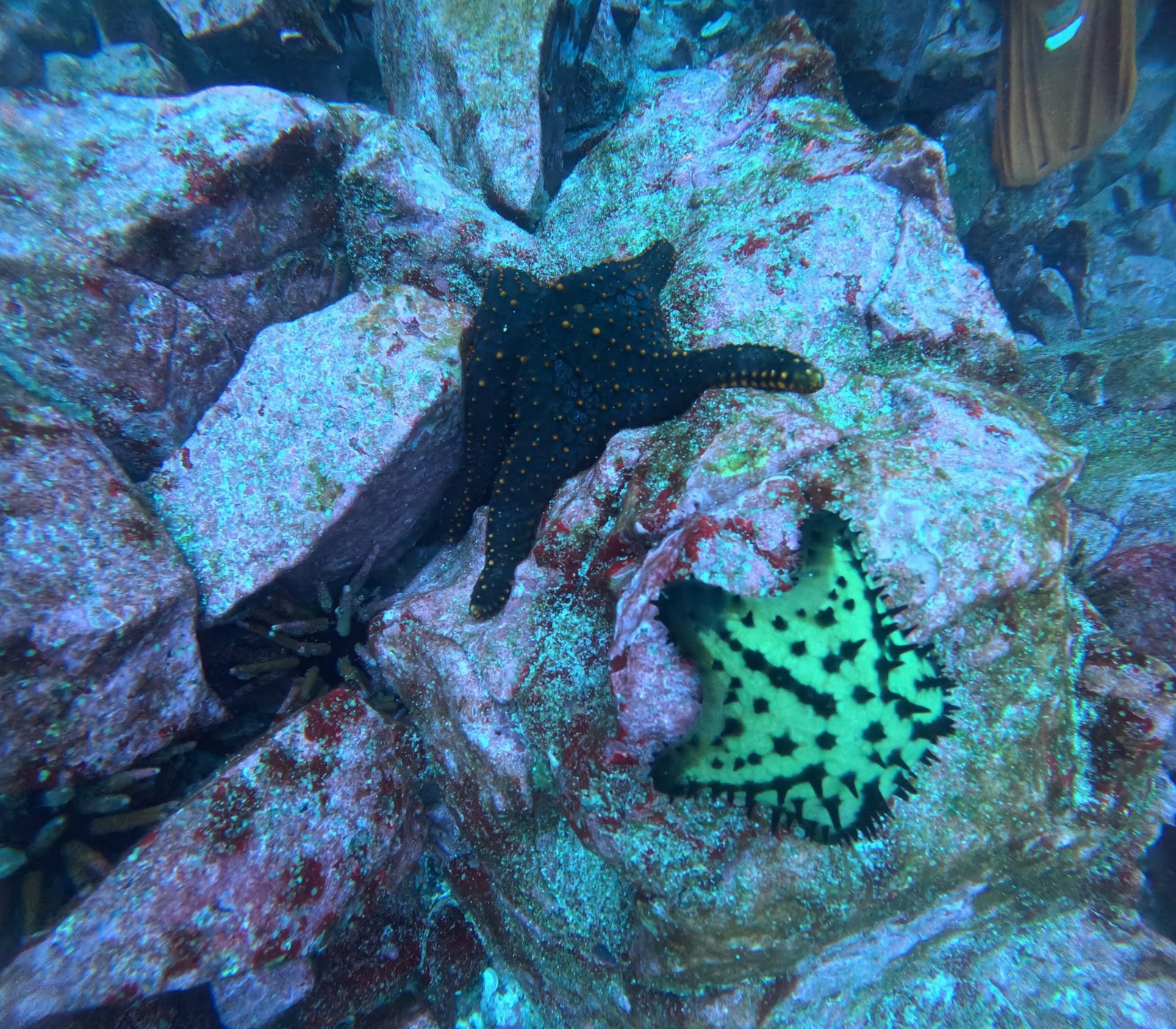
Underwater there were turtles, sea lions and lots of colourful fish, but we didn’t see a hammerhead and came back slightly disappointed. That day was rather average compared with what it could have been, and the cloudy morning made the visibility even worse. Every dive is different – sometimes you see much more, sometimes much less – and I guess we were just a bit unlucky. For me the dive turned out to be the only disappointment in the Galápagos: it wasn’t worth spending 195 dollars on, whereas 40–50 dollars for snorkelling elsewhere – absolutely (more on that at Las Tintoreras).
Diving at Kicker Rock has to be booked at least two days in advance – the day before it’s hard to find free places. A popular alternative is the 360 Tour, a boat trip around the island with a short snorkel at Kicker Rock – there was no problem getting places for that one. All the companies offer basically the same thing; they only differ in price.
Tortuga Bay – baby hammerhead sharks by the shore
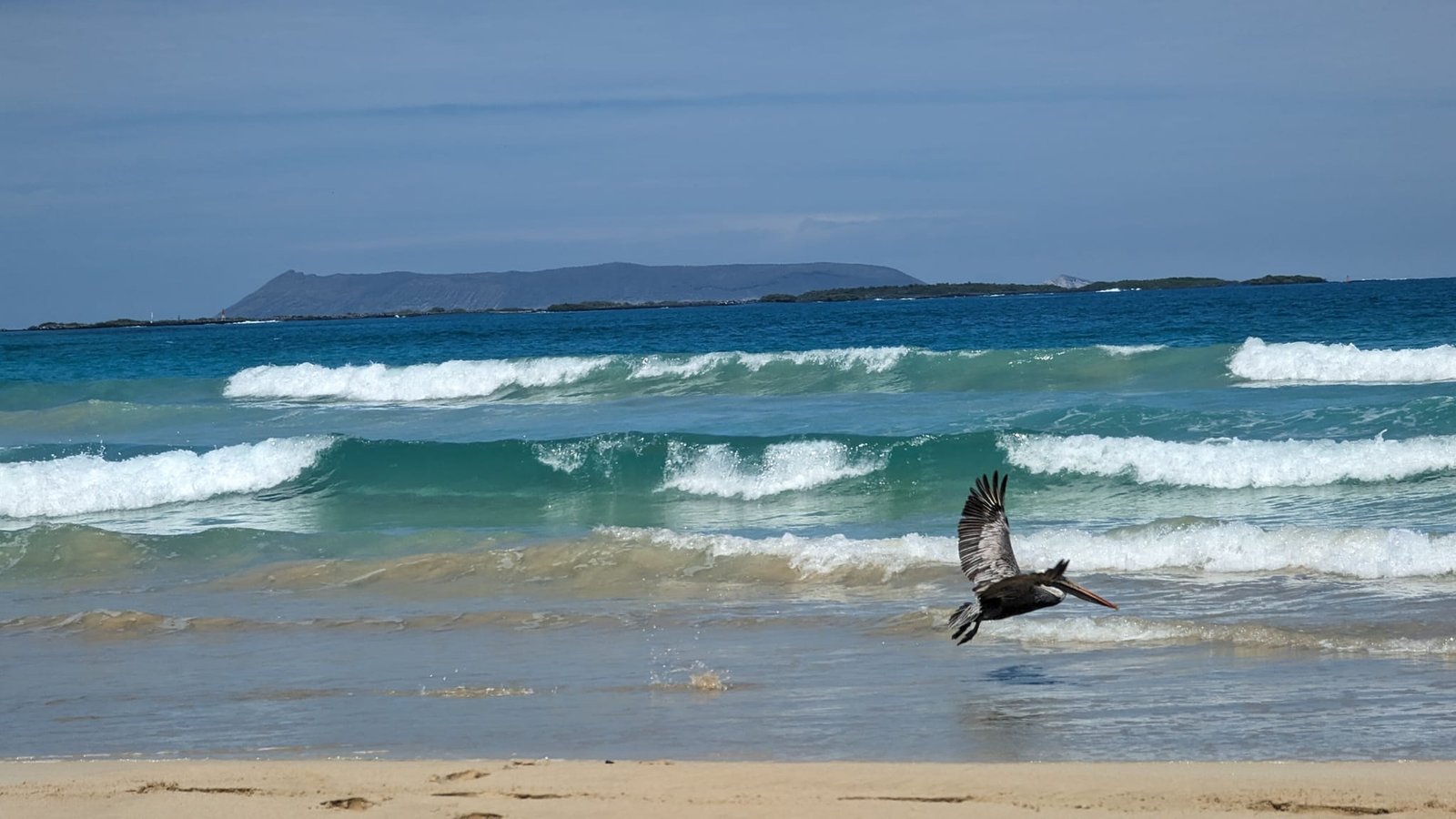
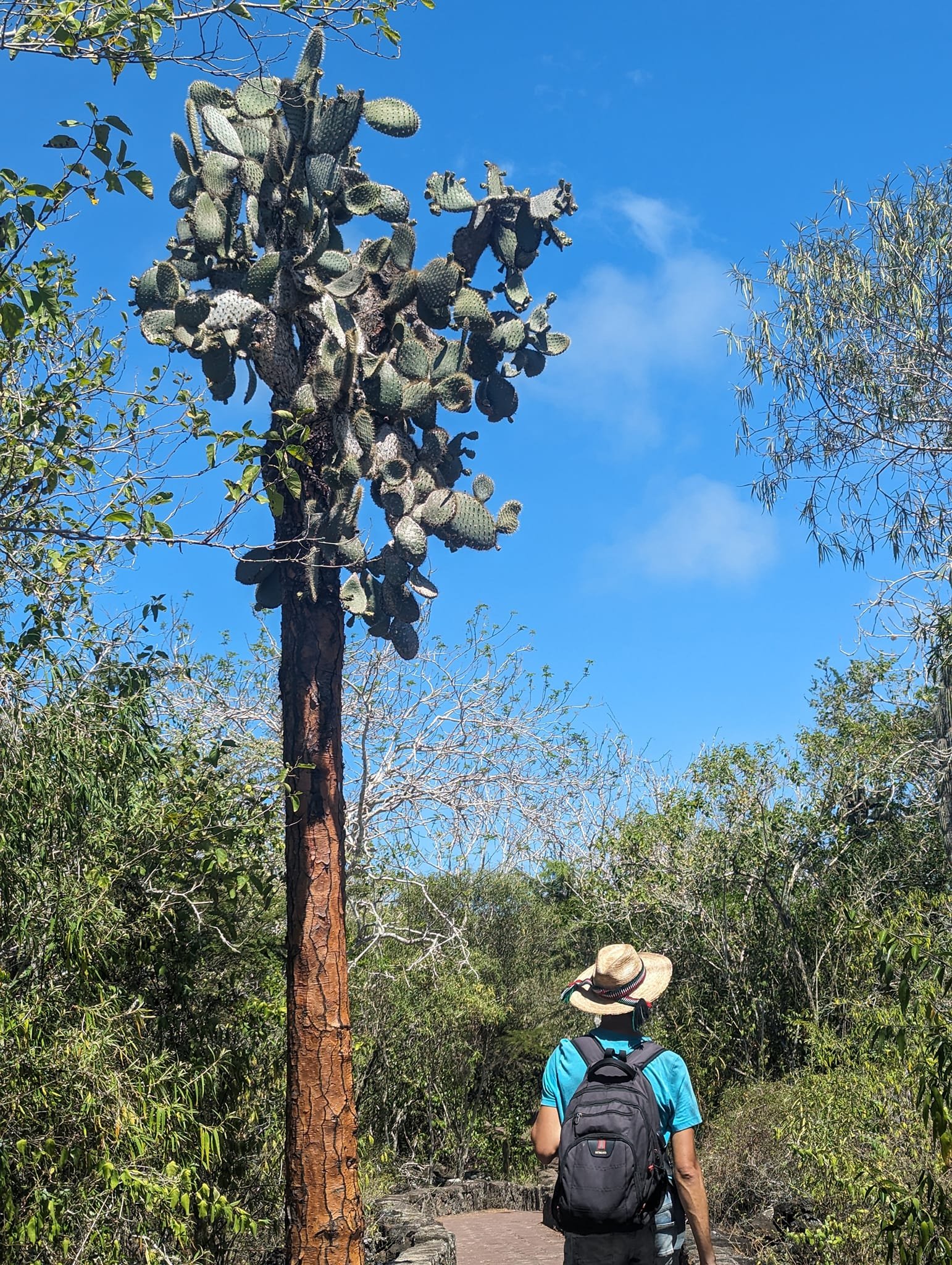
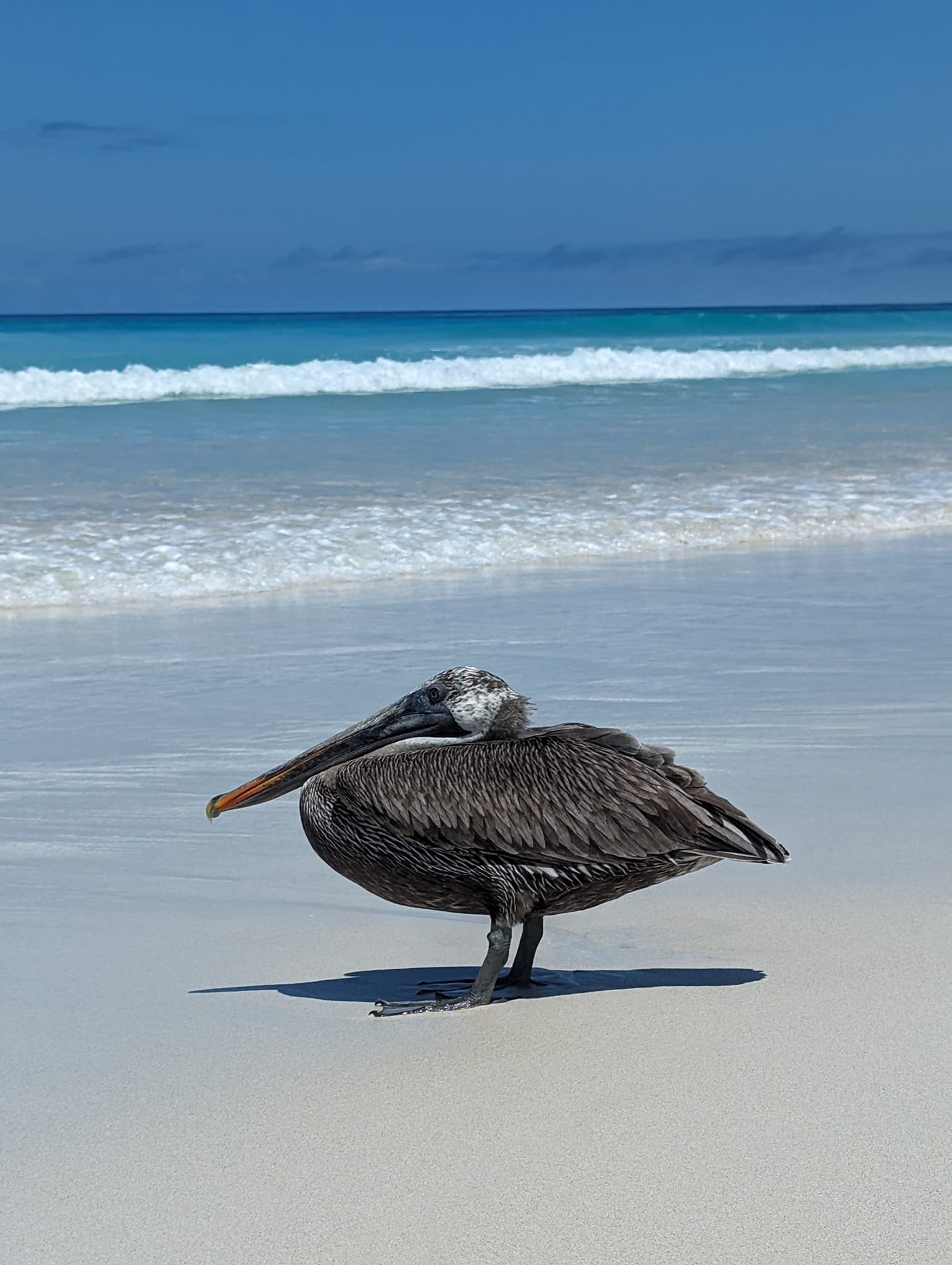
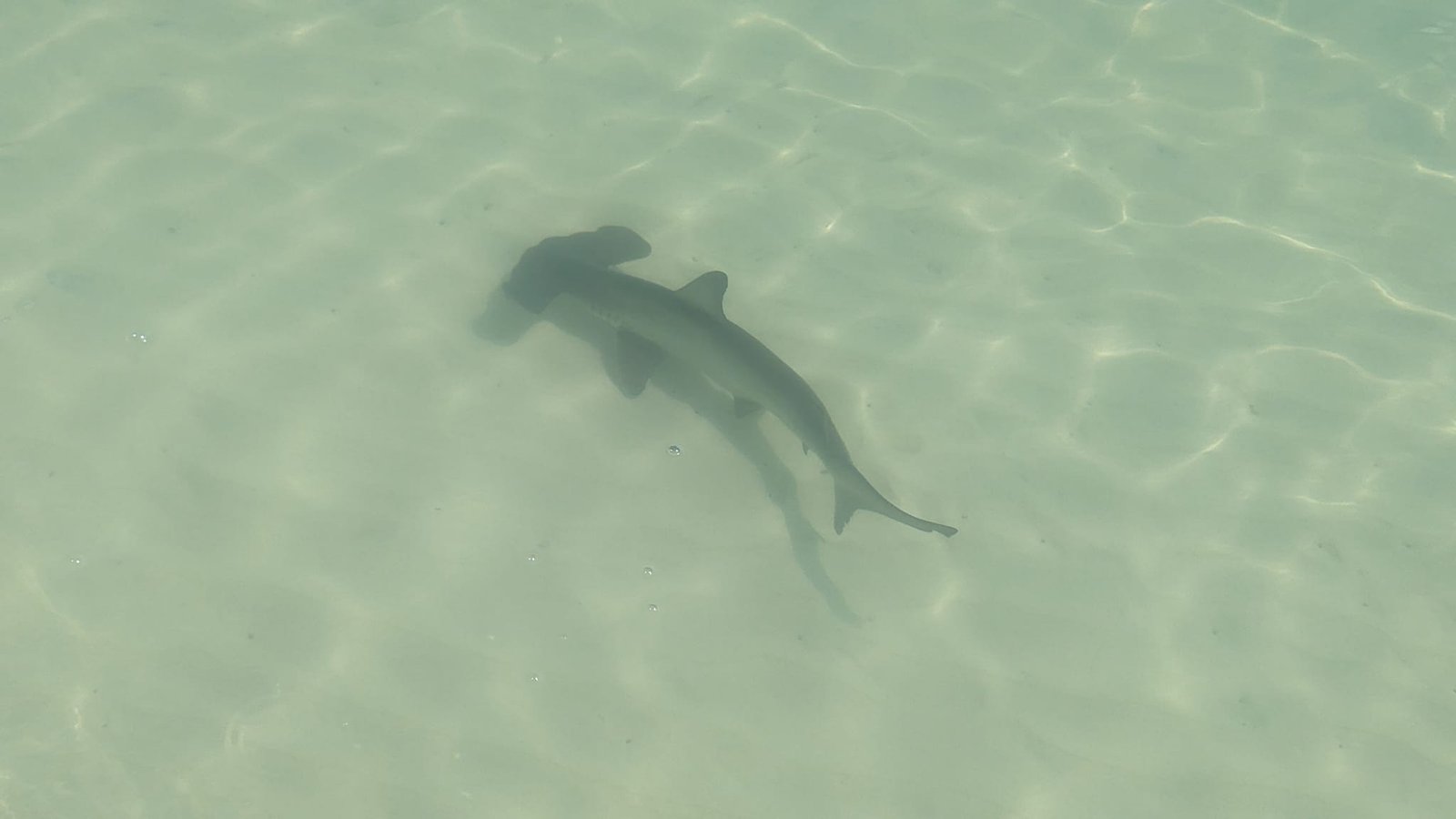
From San Cristóbal we returned to Santa Cruz, and on the morning of 1 June we walked to Tortuga Bay beach. A path leads there among tree-like prickly pears, and pelicans stroll along the wide beach with its waves. The most interesting part, however, is a little further on, in the part of the bay where you can swim. Sharks live there – reef sharks, which love the mangroves by the shore, and small hammerheads. We hadn’t seen a hammerhead at Kicker Rock, but here, for free, we spotted a young hammerhead in the shallow water.
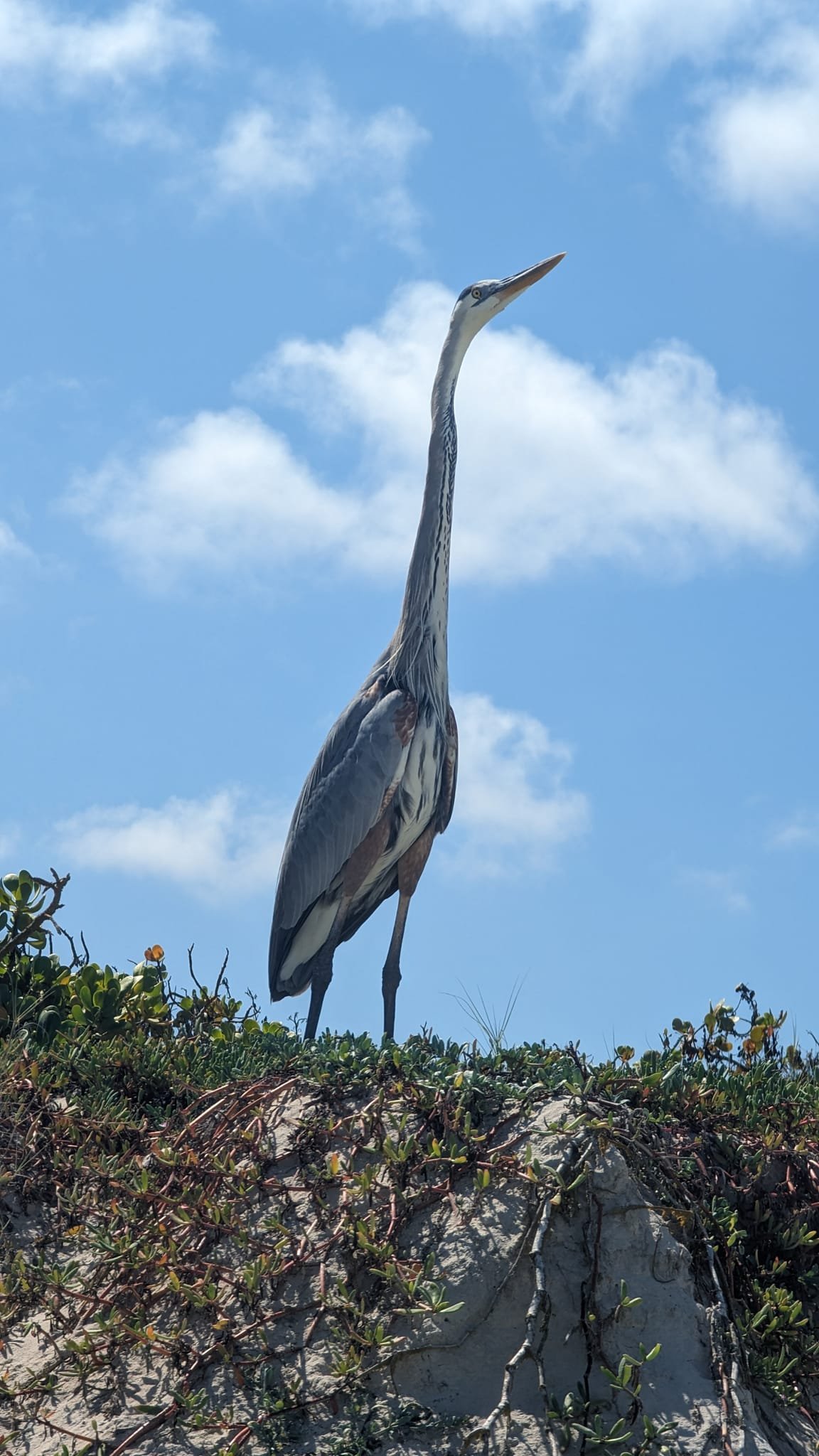
A great blue heron was also standing on the rocks above the bay. In the afternoon we took the ferry to Isabela – there is no direct ferry from San Cristóbal to Isabela; you always have to go via Santa Cruz.
Isabela – the giant tortoise trail and flamingos
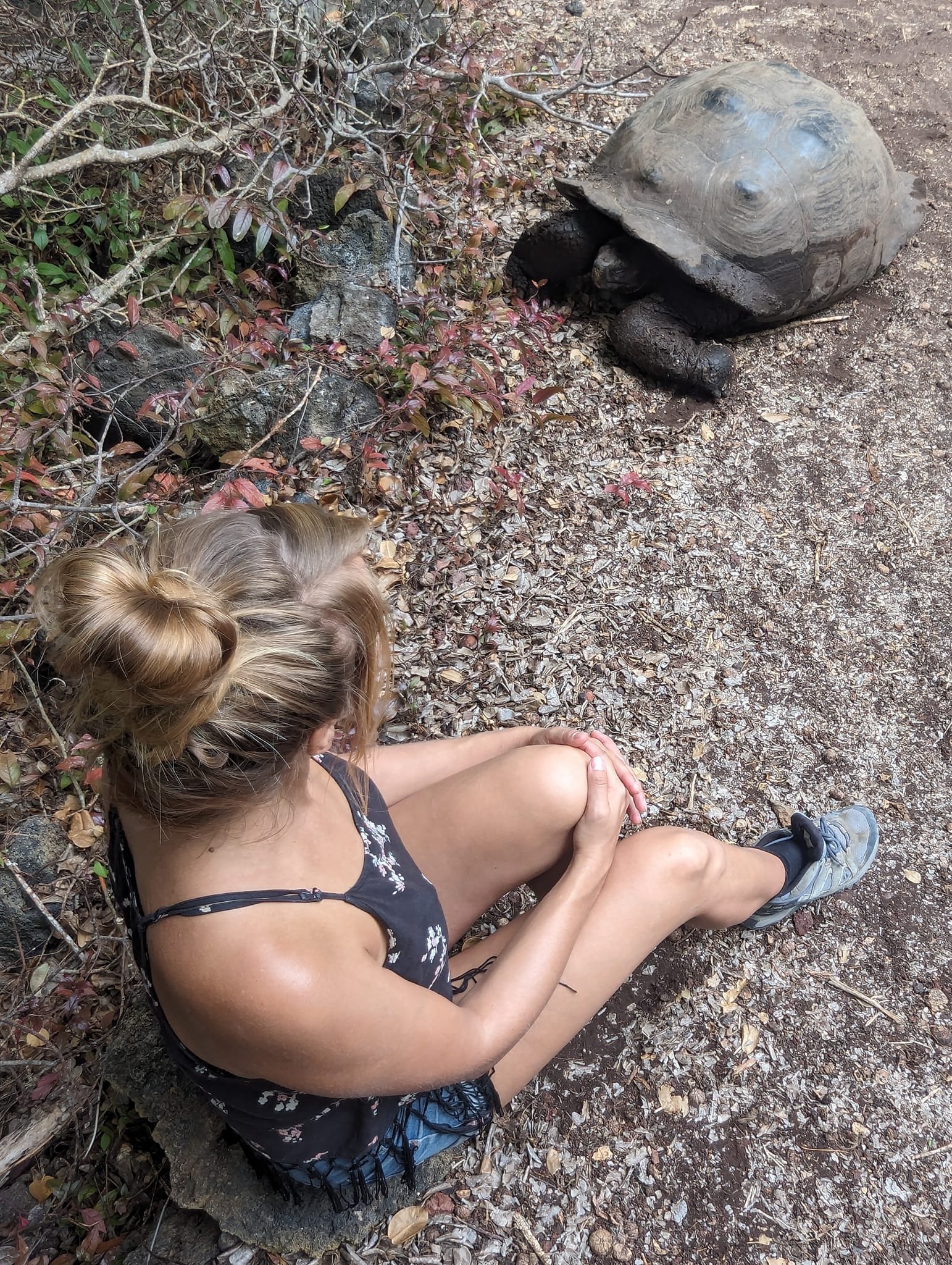
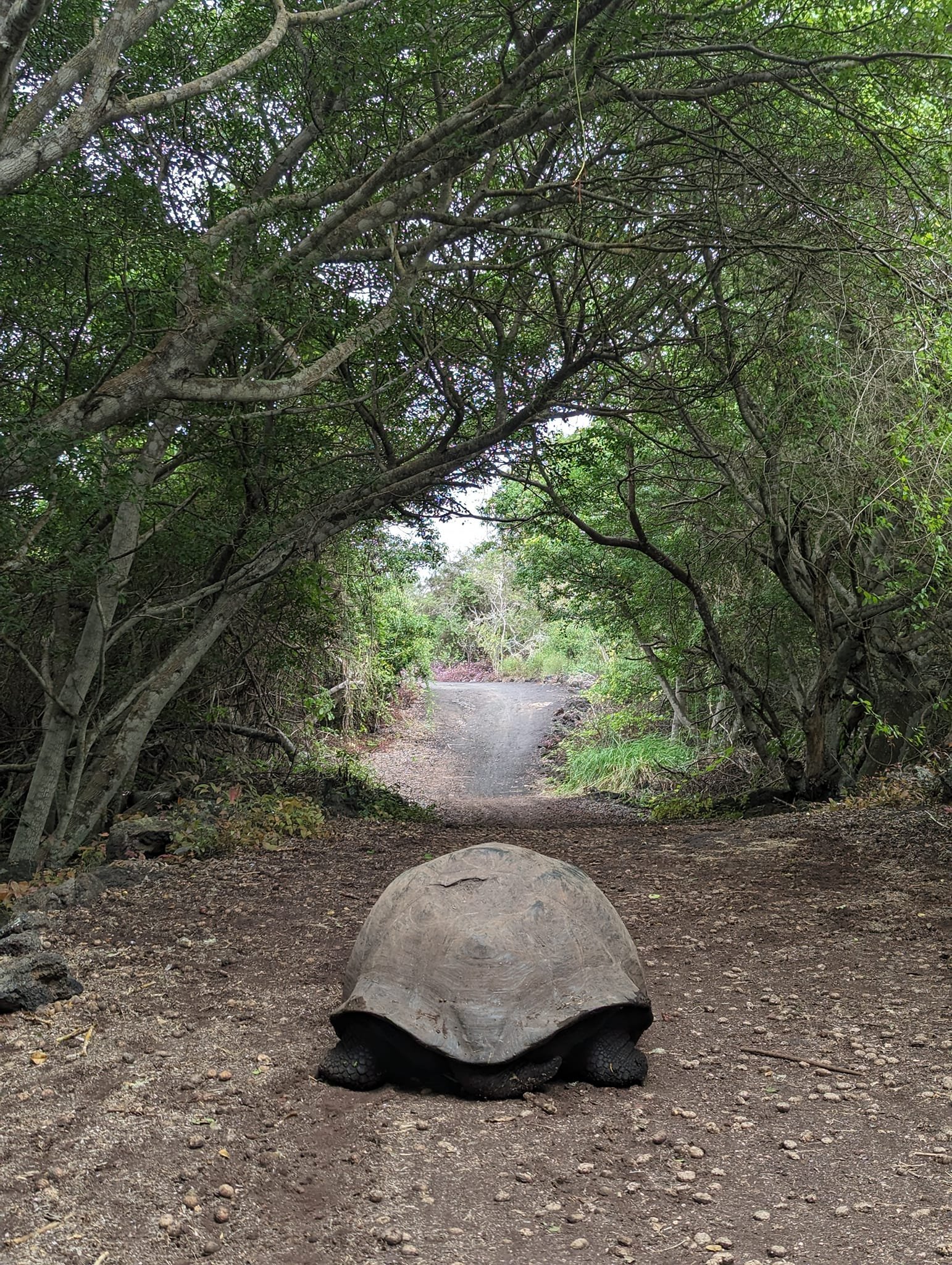
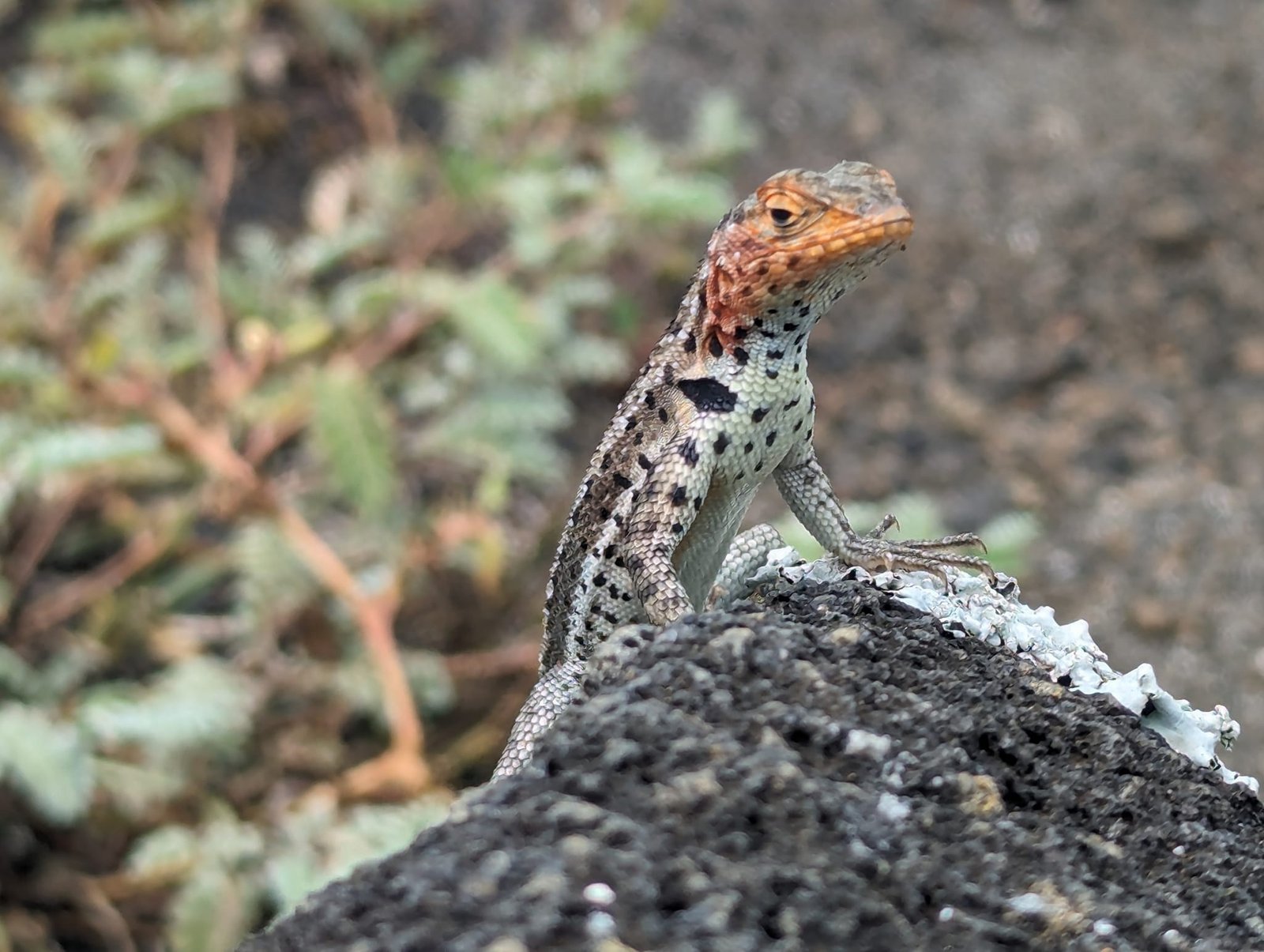
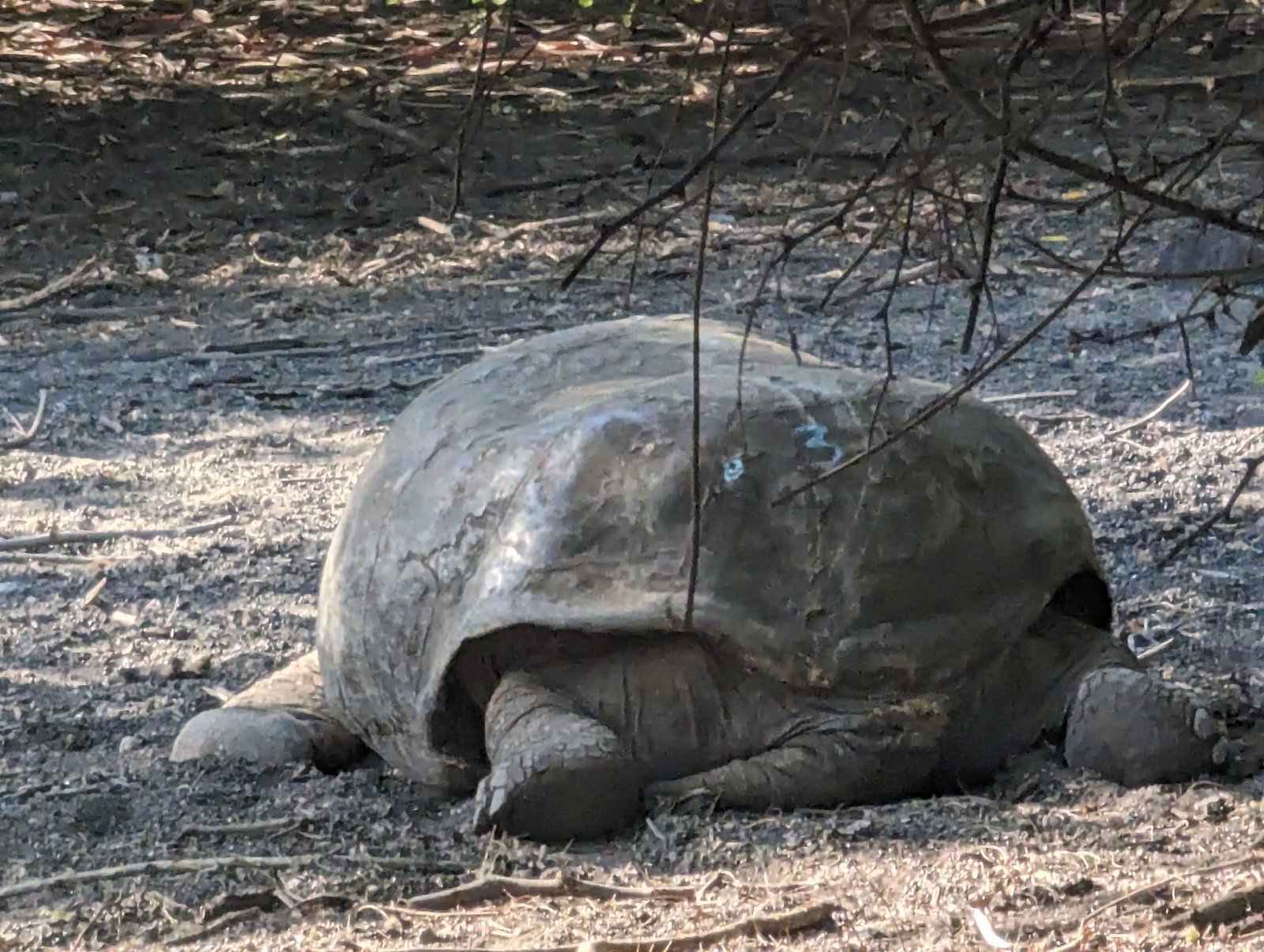
Entry to Isabela is a one-off fee of 10 dollars. Here you can see giant tortoises for free on the trail leading to the Muro de las Lágrimas (Wall of Tears) – the Camino de Tortugas Gigantes. There is no guarantee, though: on the way there we met one tortoise, while people coming back from the trail had seen more. Along the way, marine iguanas were basking on the beach and the rocks, and lava lizards scurried over the stones.
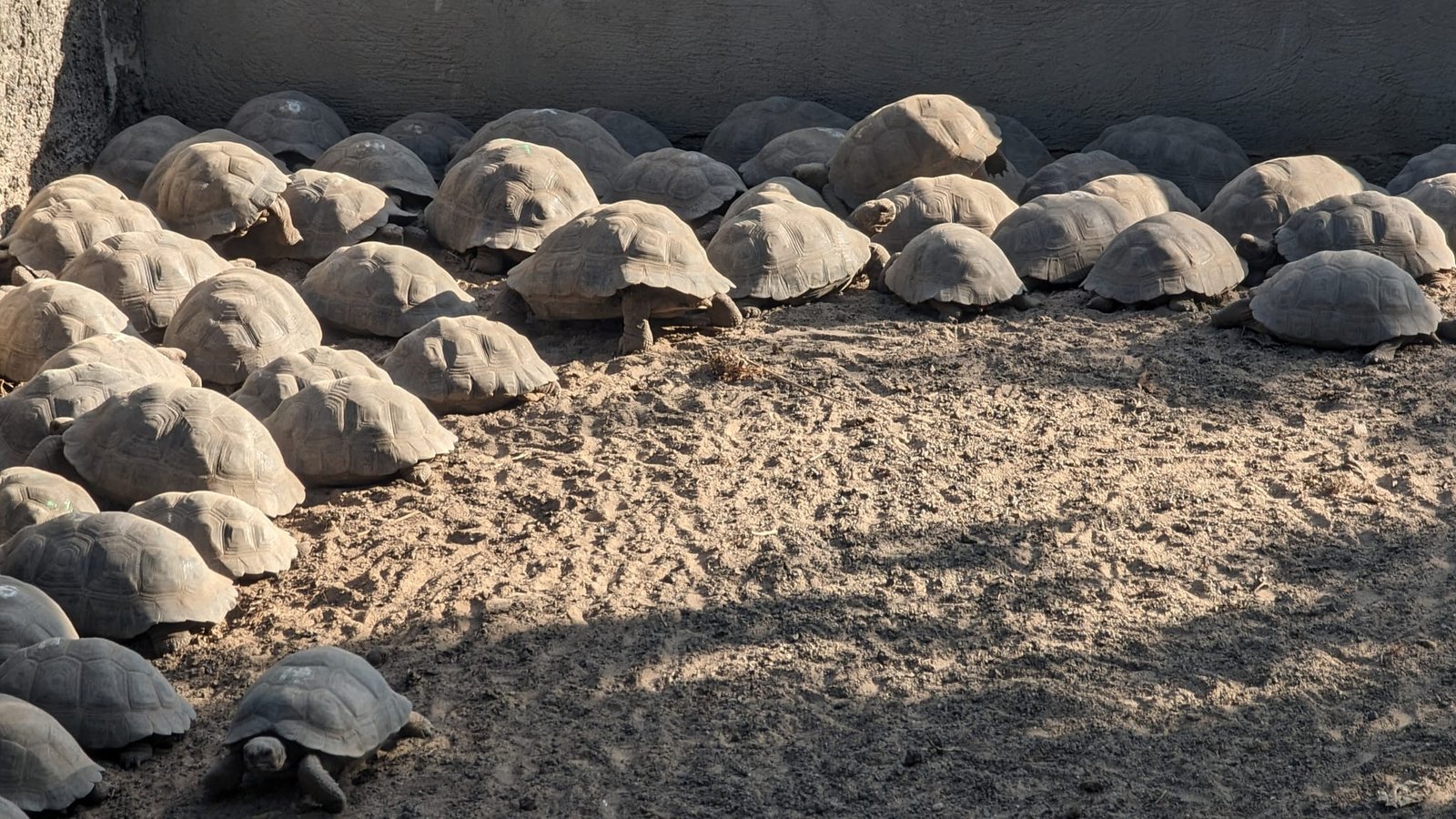
Isabela also has a giant tortoise breeding centre, Arnaldo Tupiza Chamaidan – as on Santa Cruz, entry costs 10 dollars with a guide, and the tortoises are kept in enclosures. In one of them dozens of baby tortoises are growing up.
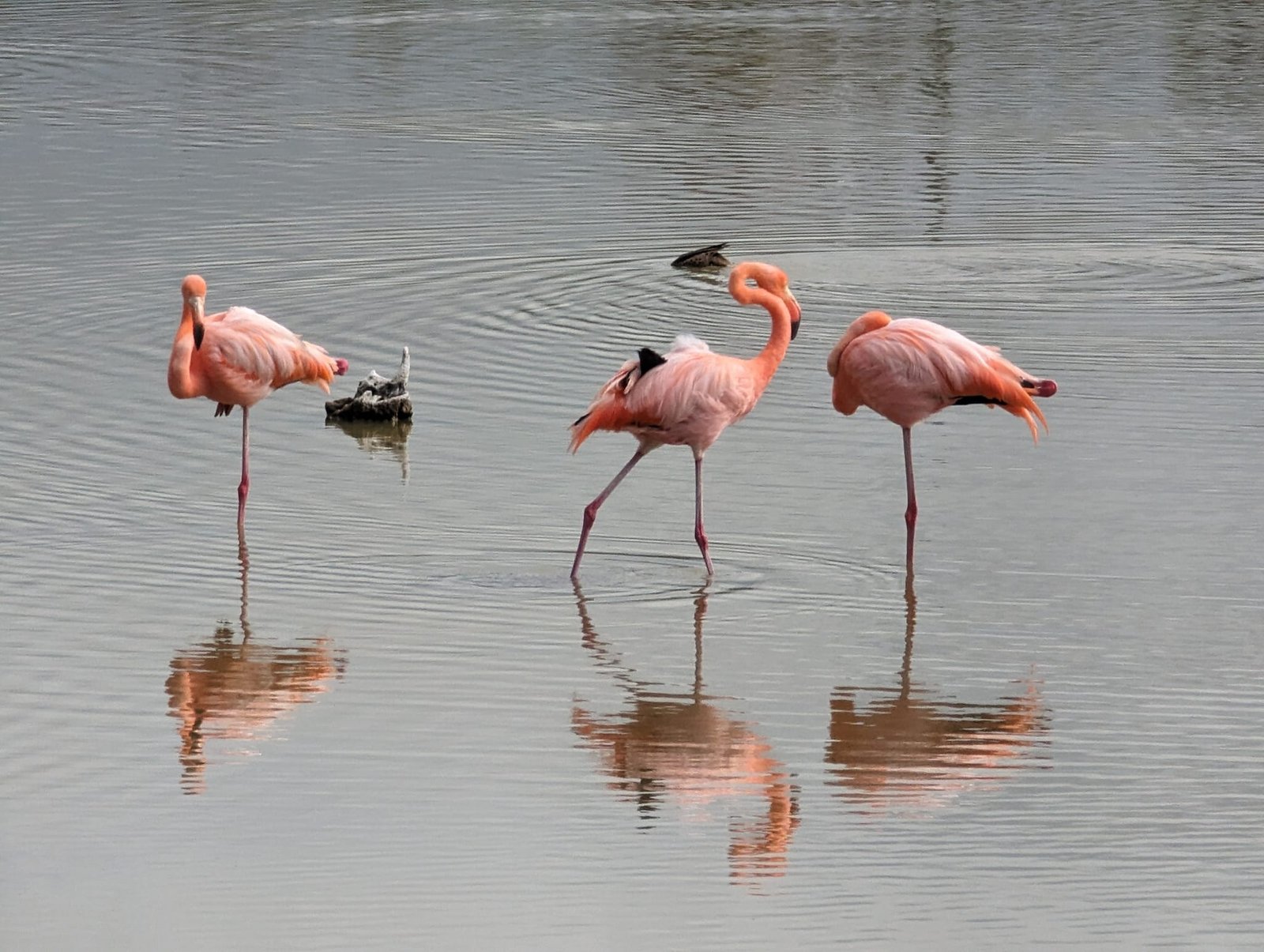
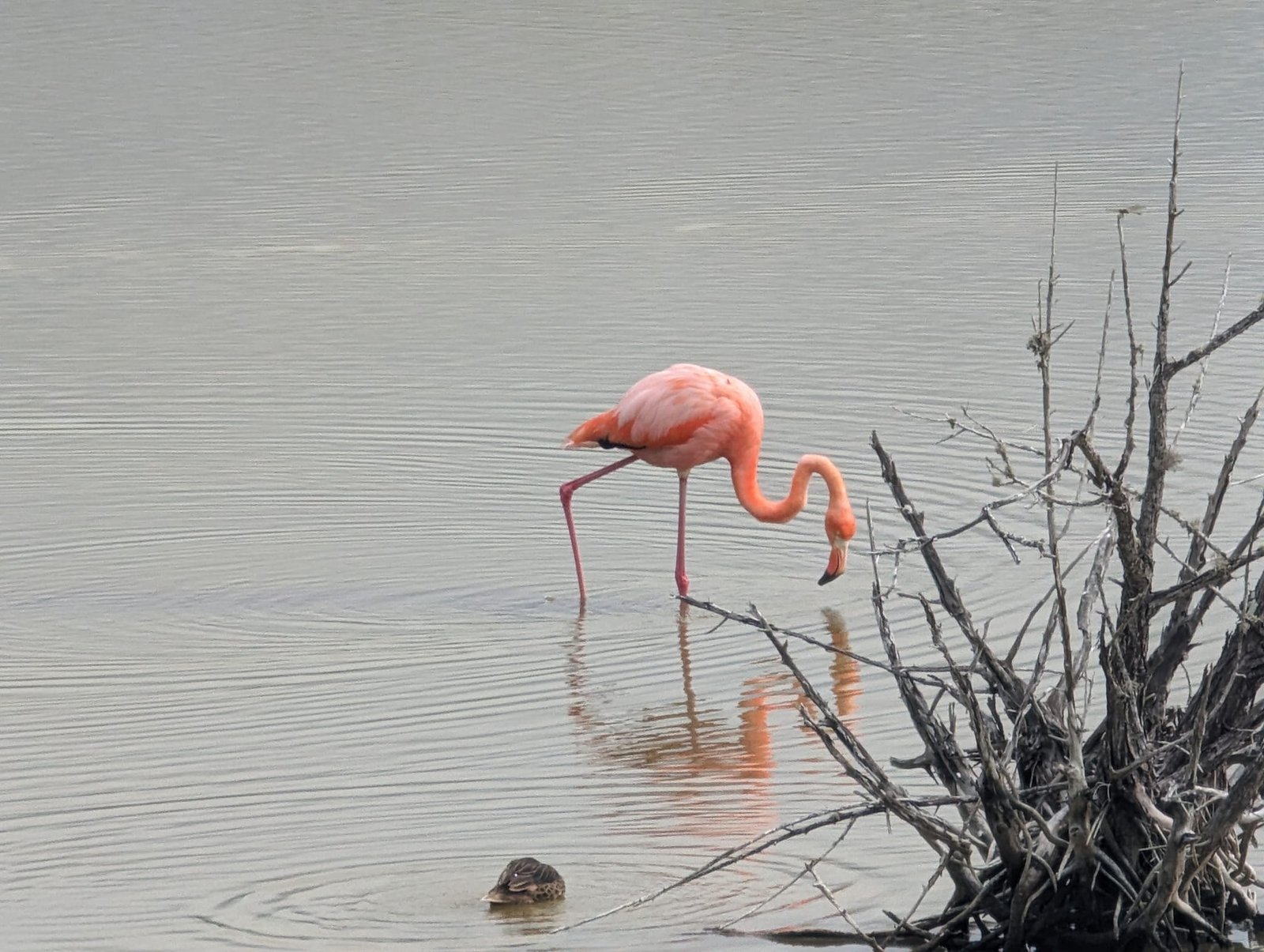
Flamingos live on Isabela too. We watched them in the Poza de los Flamingos lagoon, where they waded through the shallow water looking for food.
Concha de Perla – the best free snorkelling
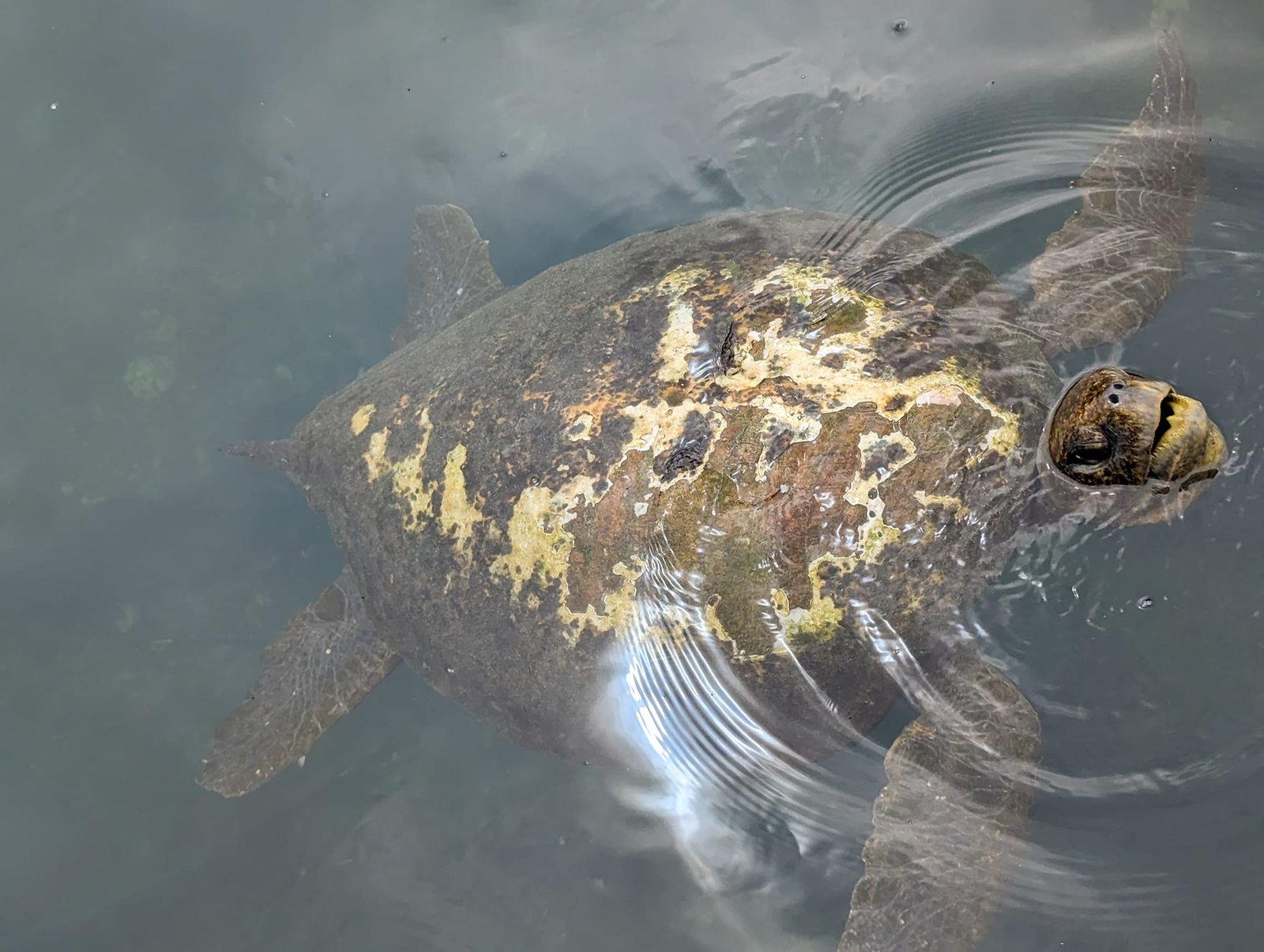
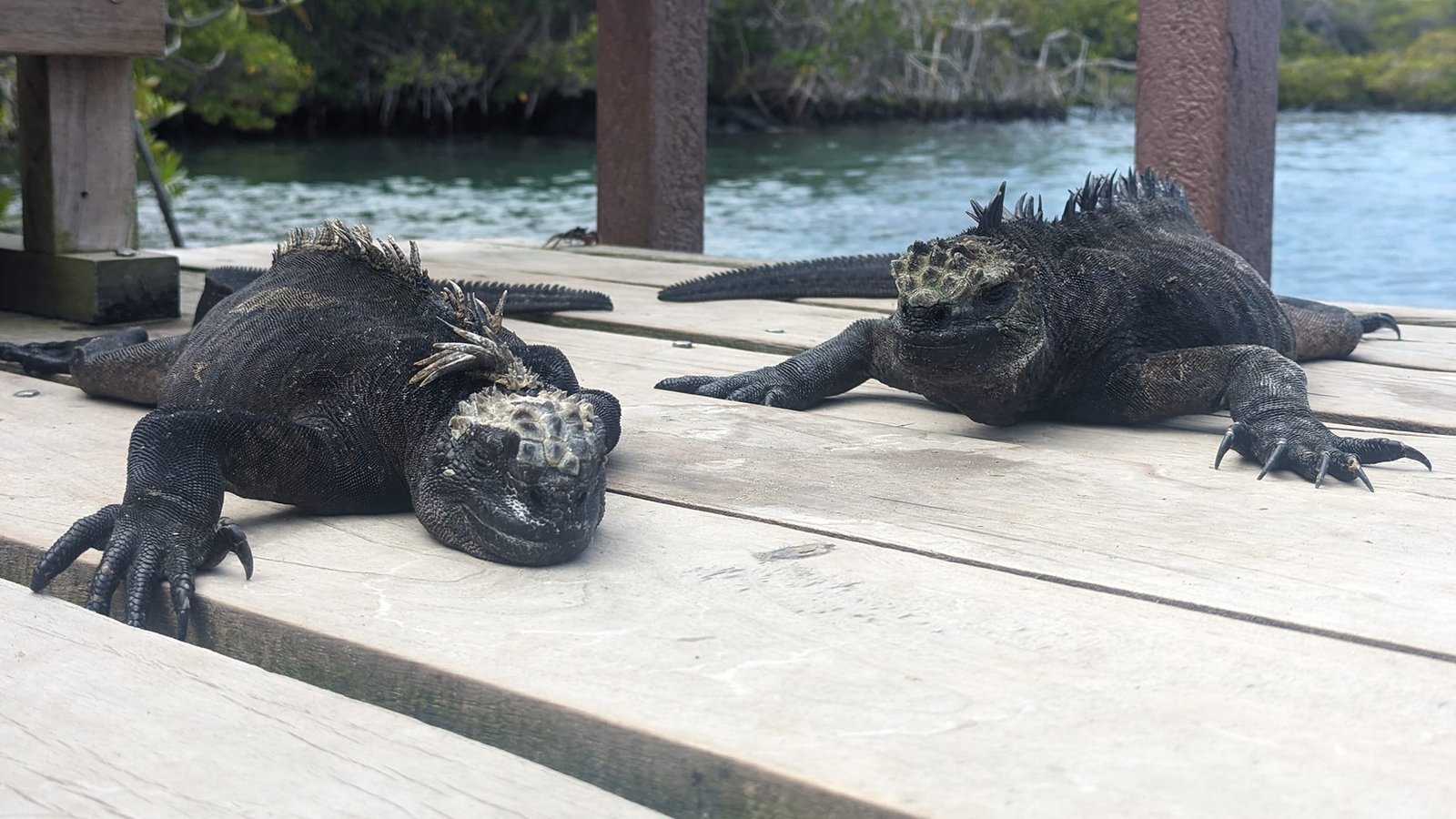
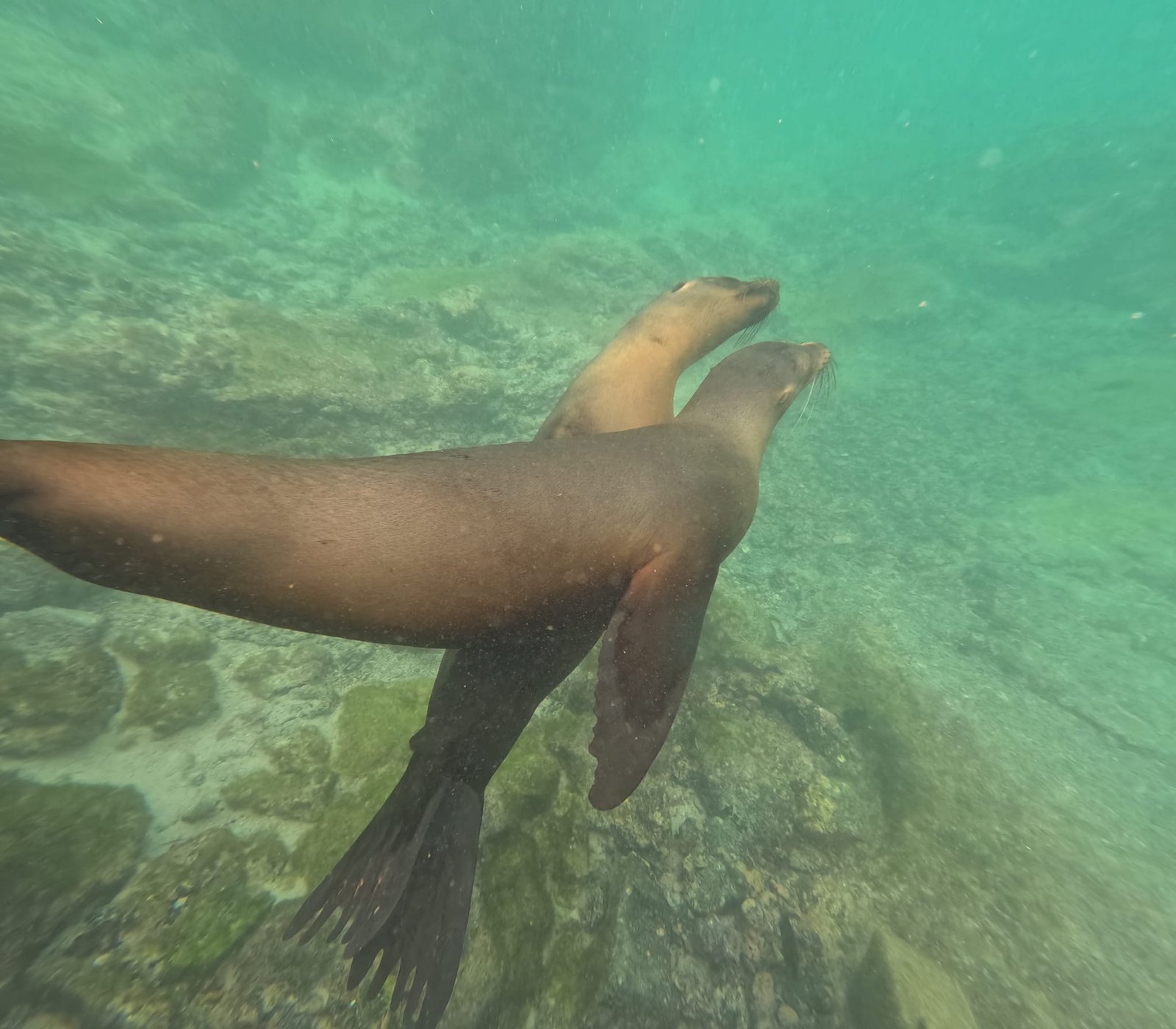
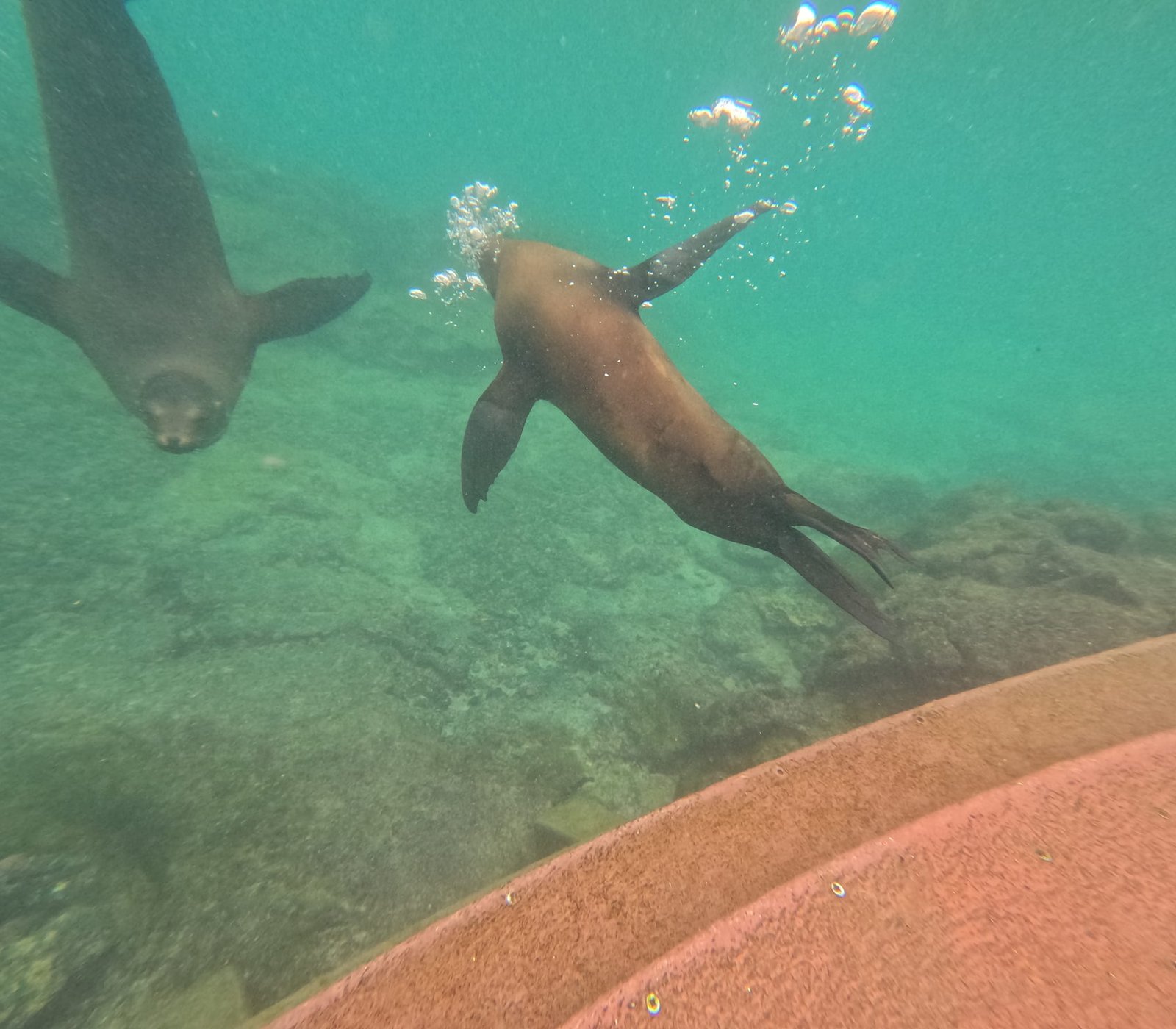
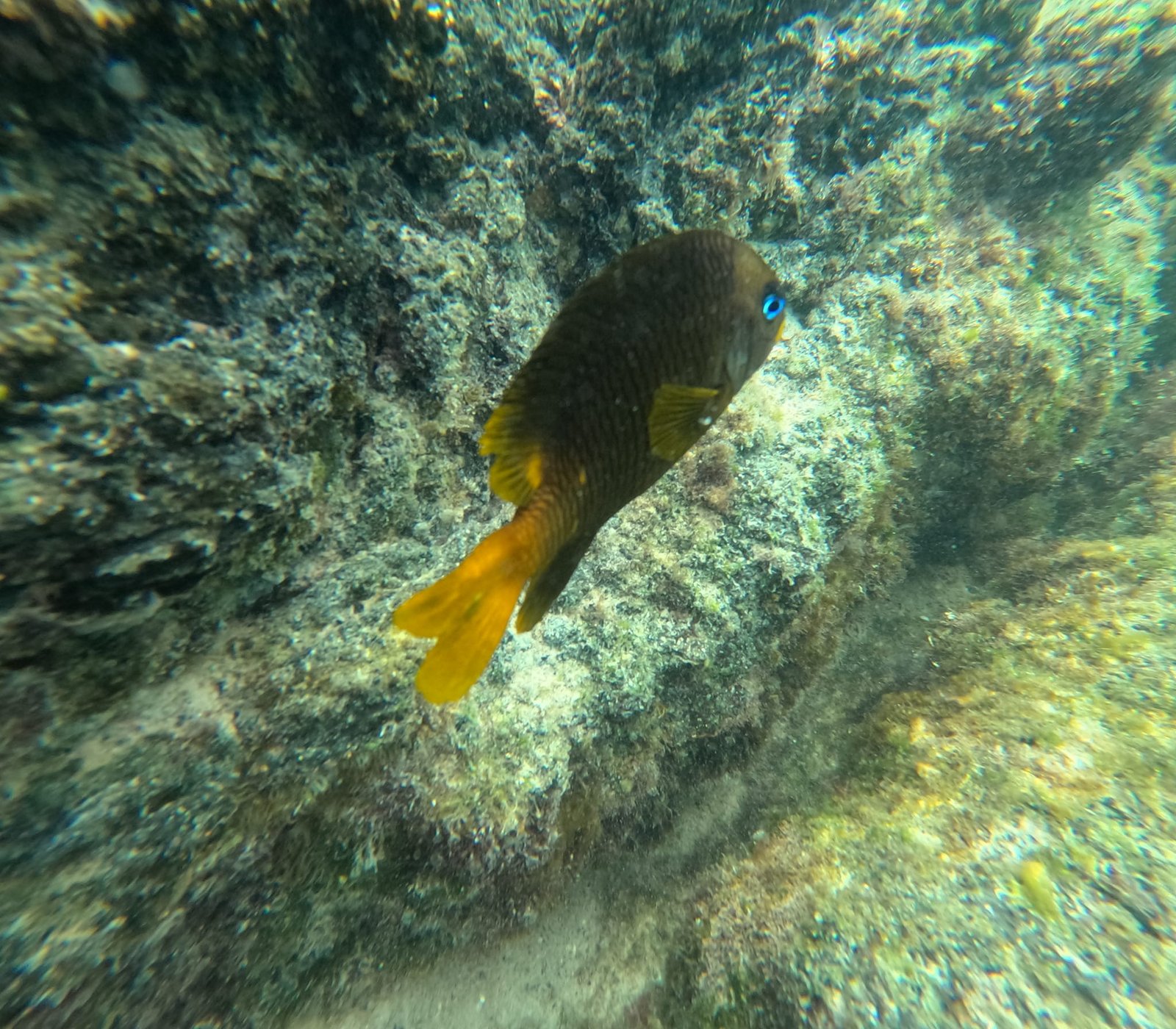
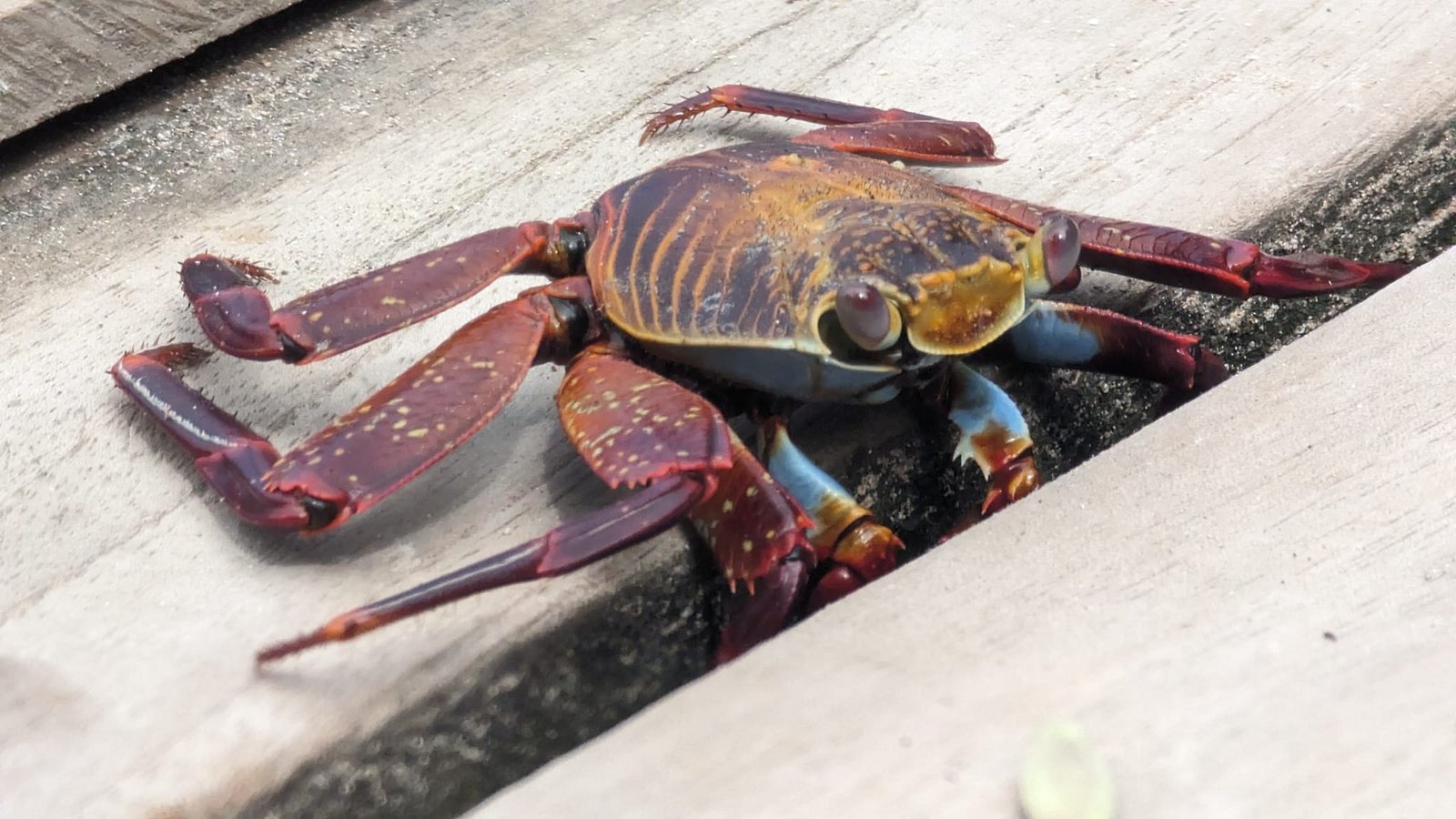
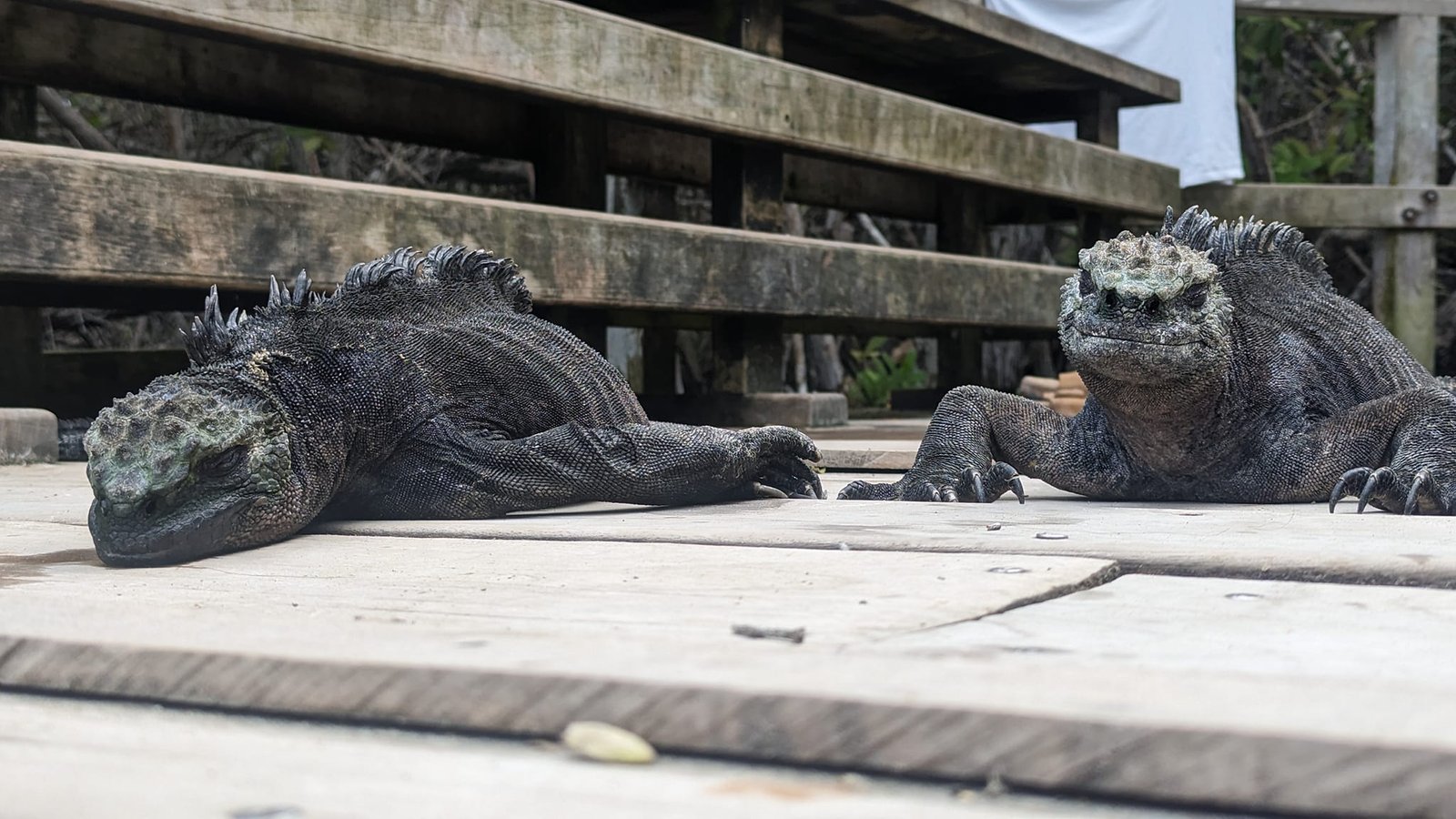
Our best free snorkelling in the Galápagos was on Isabela, in the cove of Concha de Perla (Pearl Shell). A wooden boardwalk leads to it, where marine iguanas and crabs lounge in the sun. In the water you can swim with most of the local animals: sea lions, iguanas, turtles and colourful fish. You may also come across a starfish or a ray, but nothing is 100% certain. What delighted us most were the sea lions playing in the water right next to us.
Las Tintoreras – penguins, boobies and sharks
Of the paid snorkelling tours, Las Tintoreras – a group of islets off Isabela – is a must. We went there on 4 June with Blue Sky. Prices ranged from 45 to 60 dollars; we paid 45 dollars with the wetsuit included, while other companies charged an extra 5 dollars (short sleeves) or 10 dollars (long sleeves) for it.
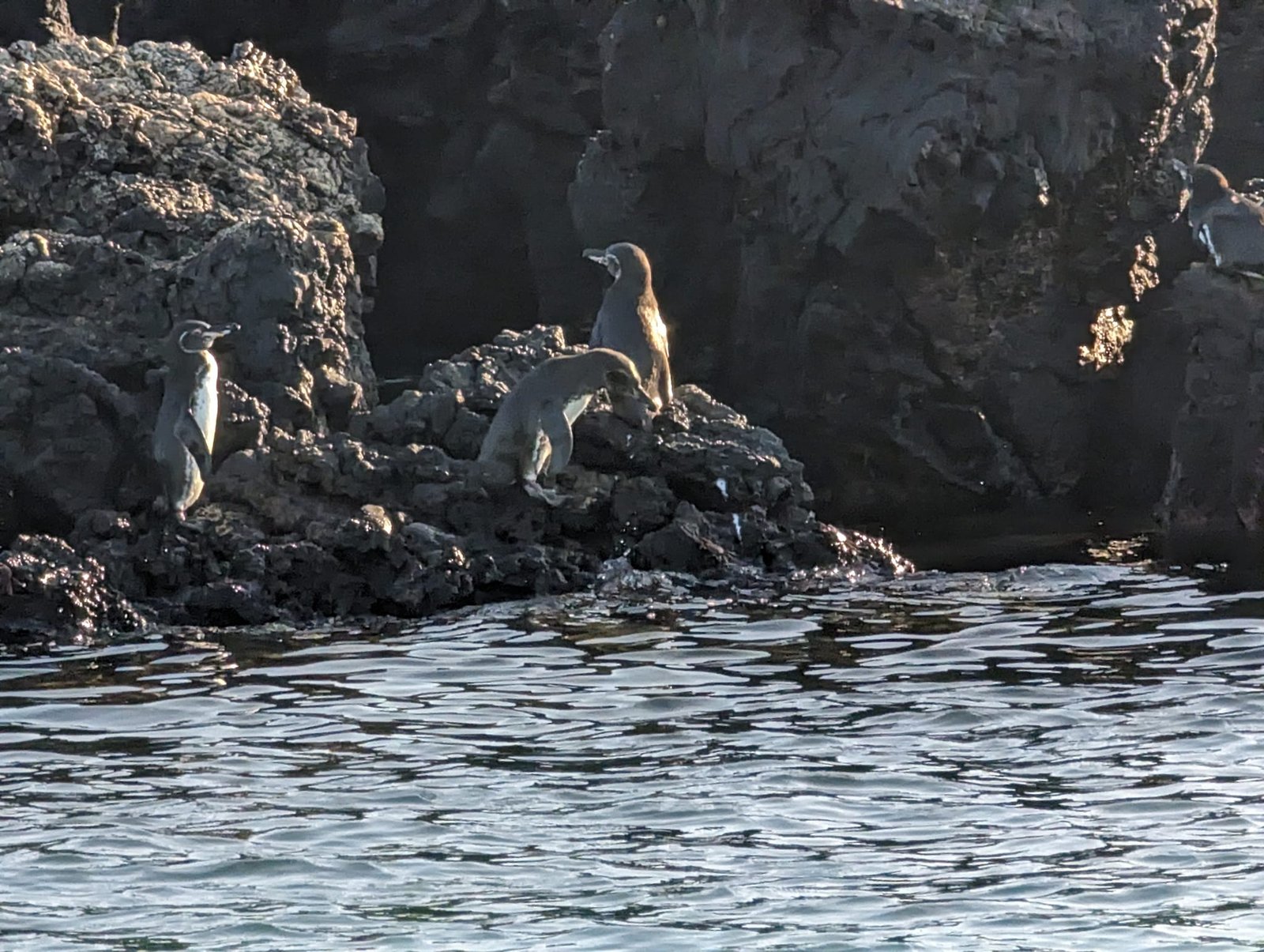
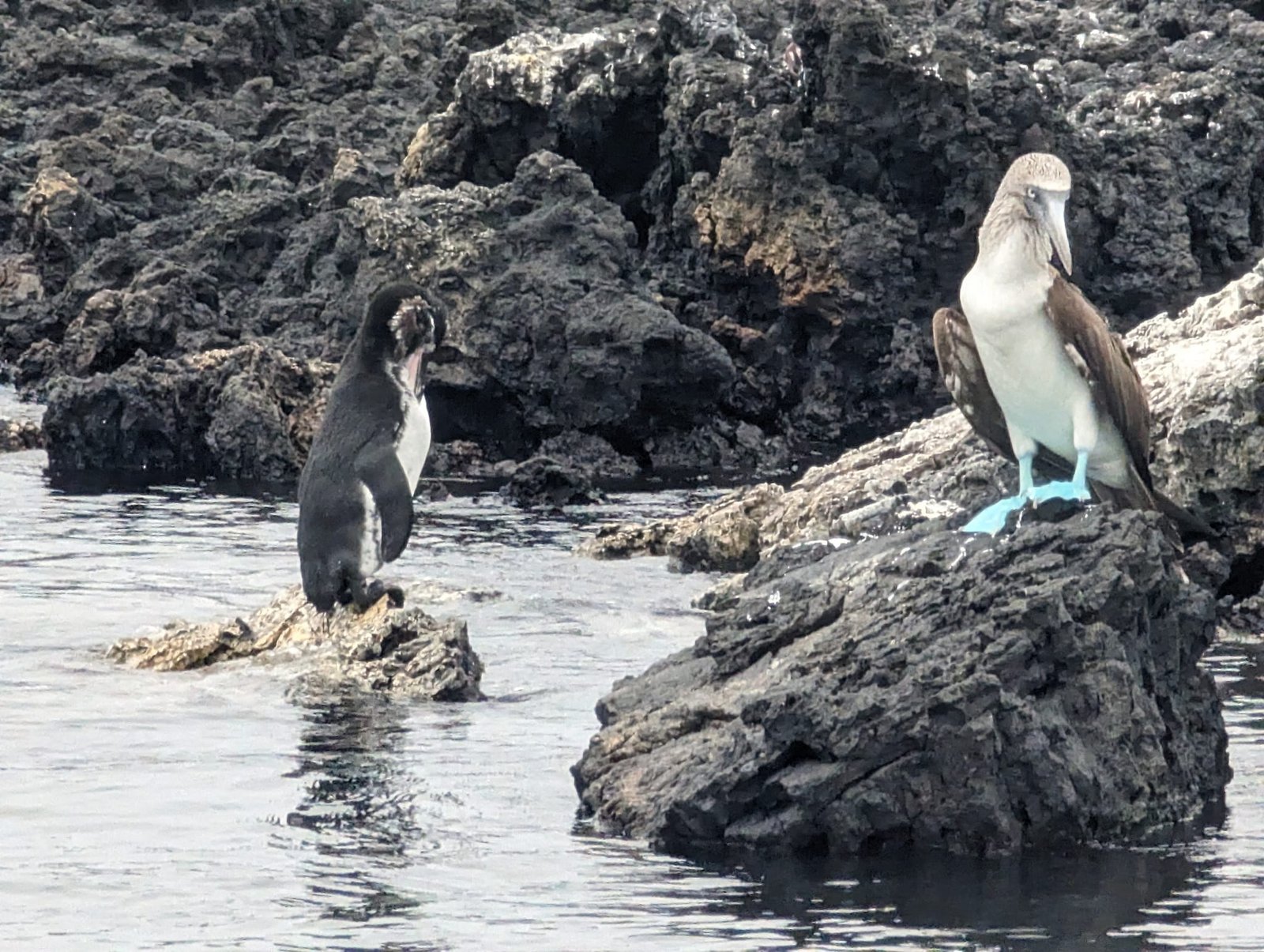
First, from the boat, we looked at several rocky islets with birds, including blue-footed boobies, and penguins. Then came a guided walk on one of the islets, where iguanas basked among the lava rocks and a shark swam in a narrow channel.
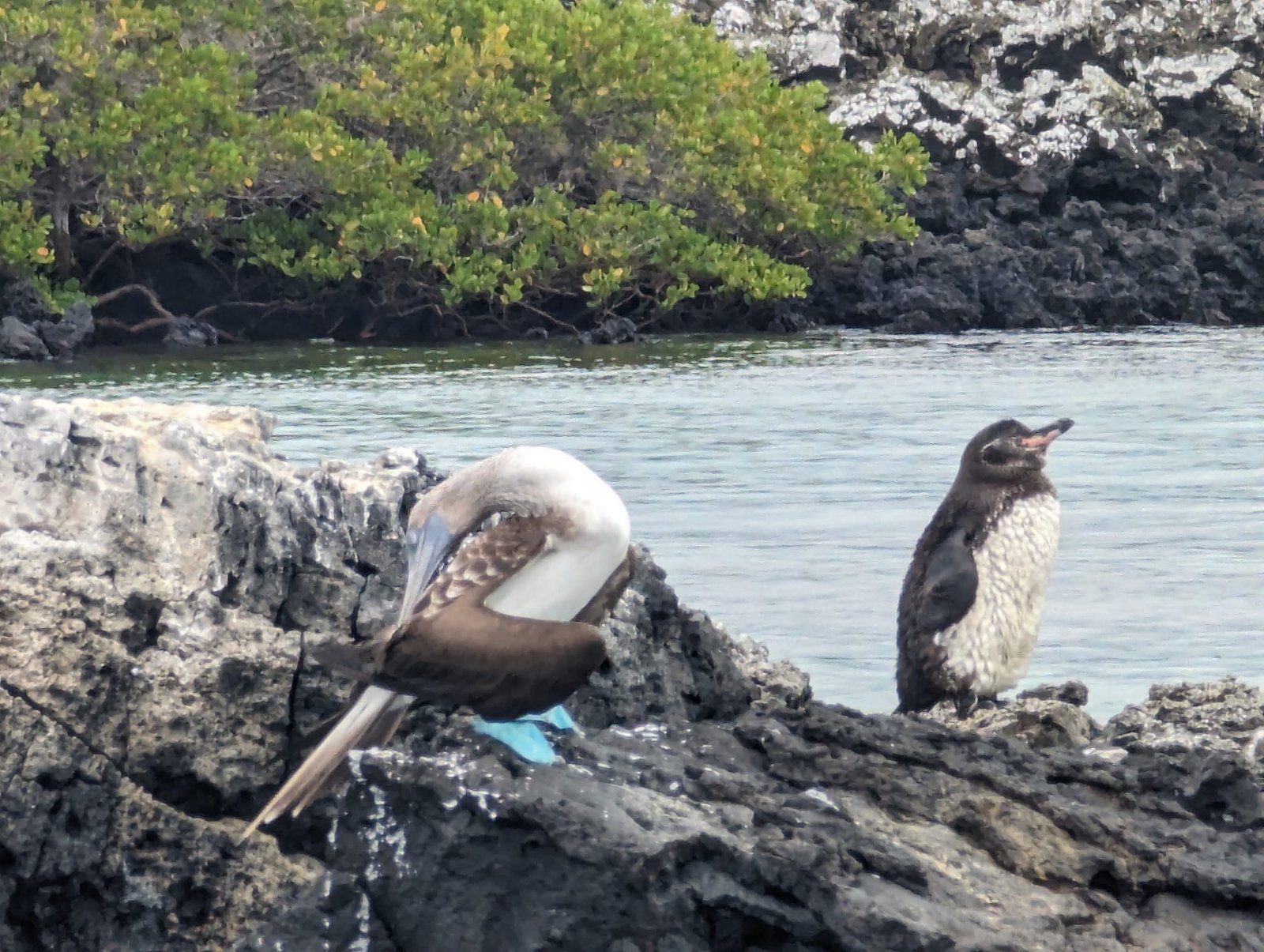
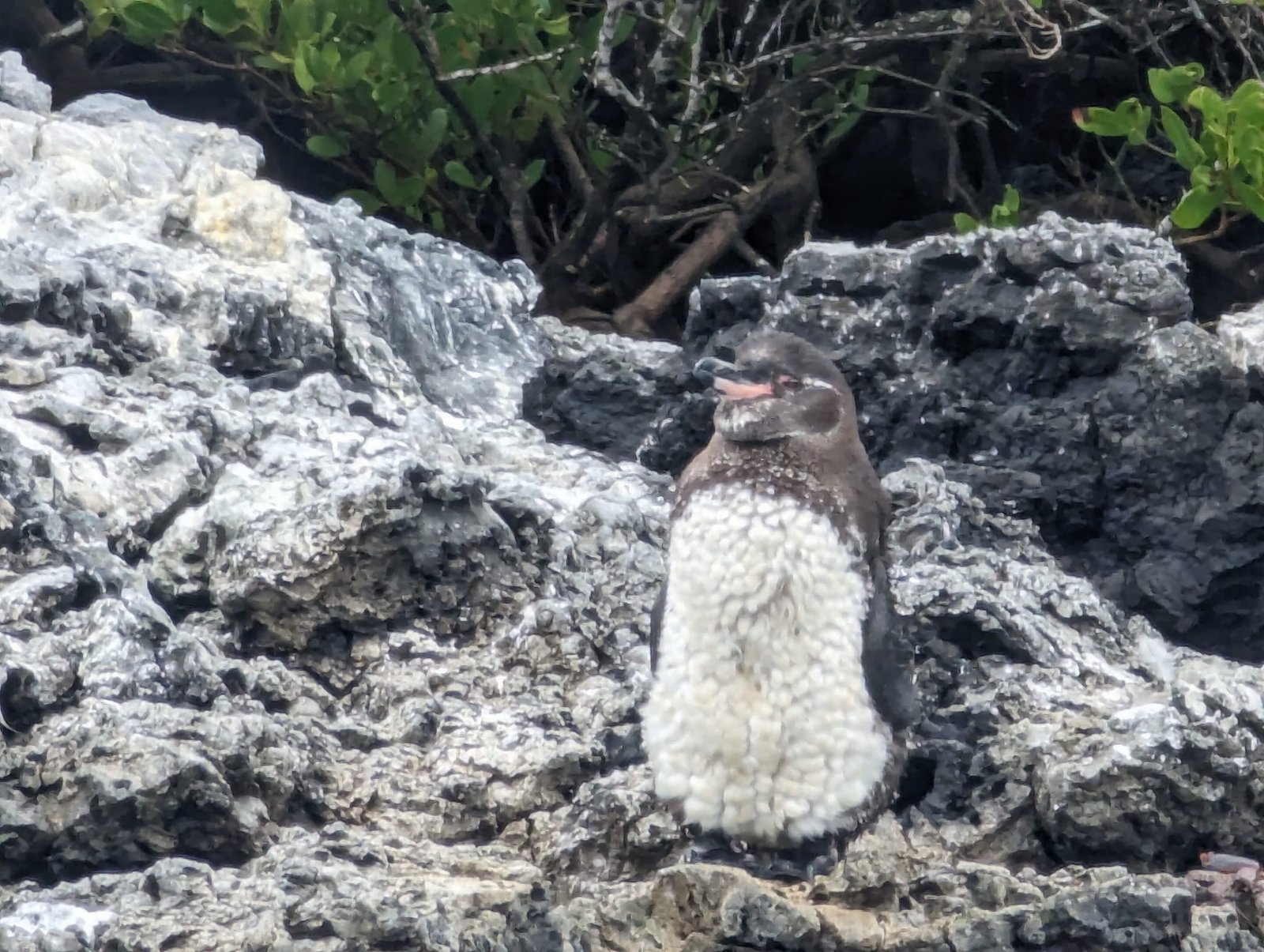
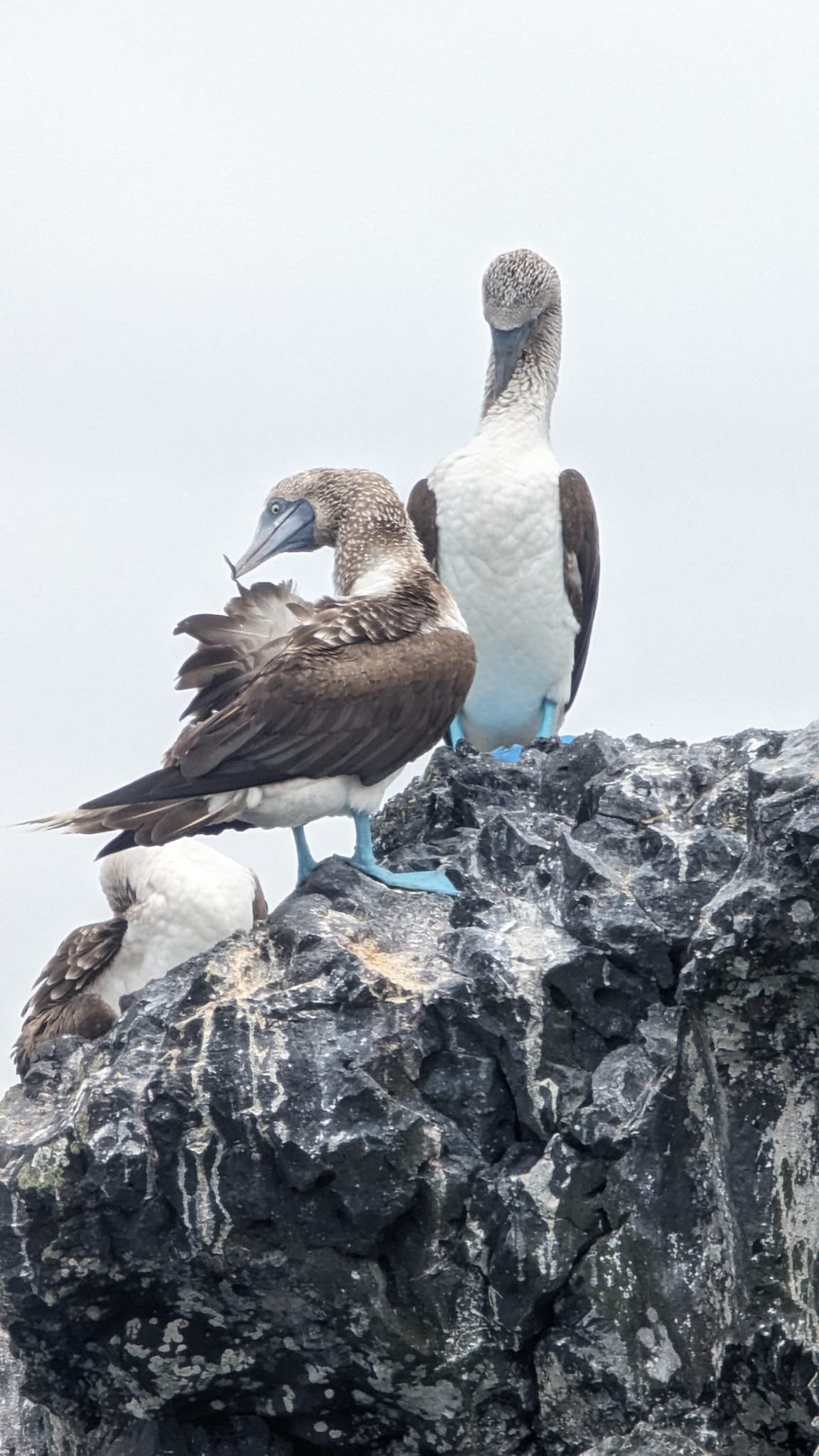
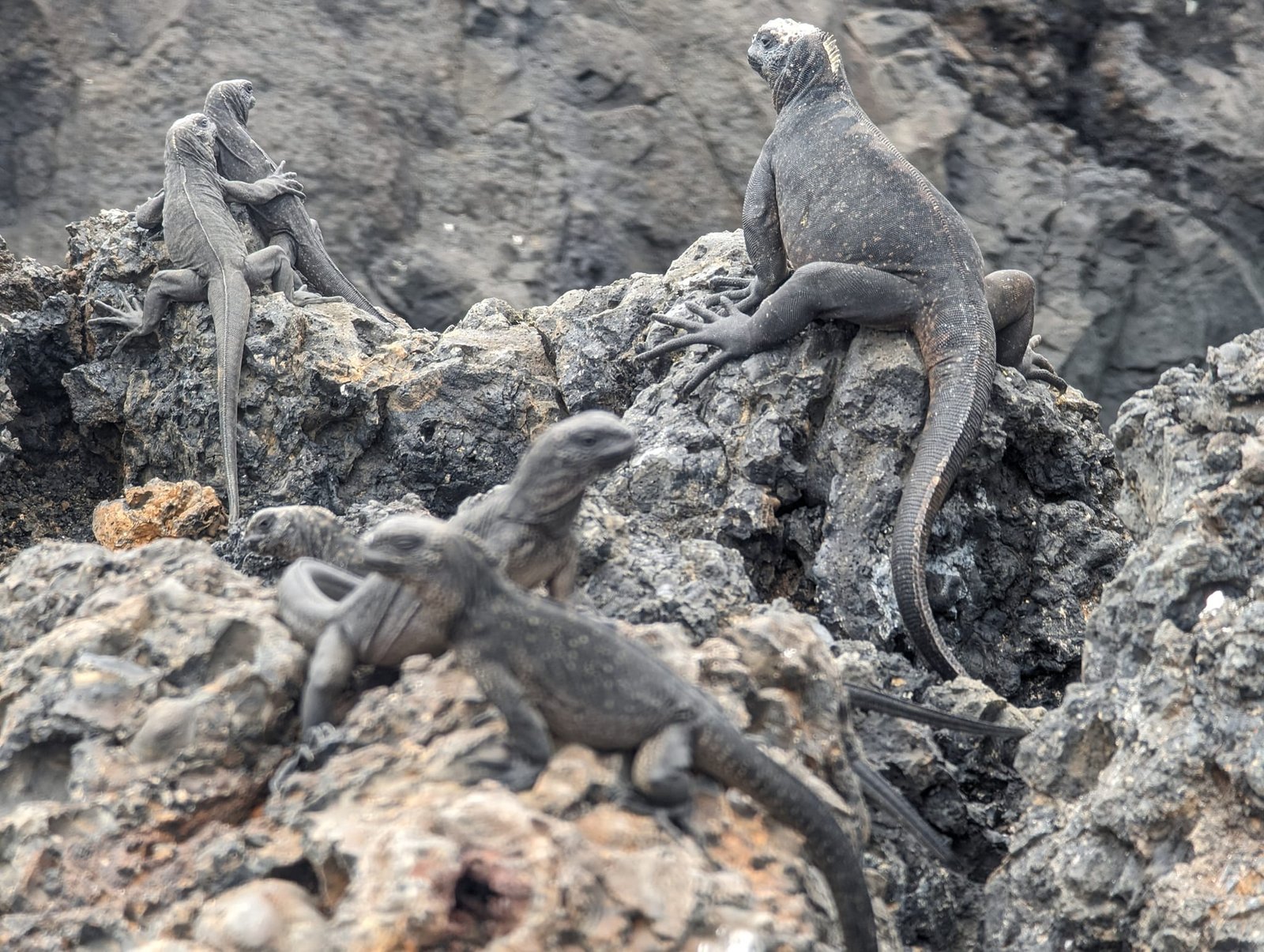
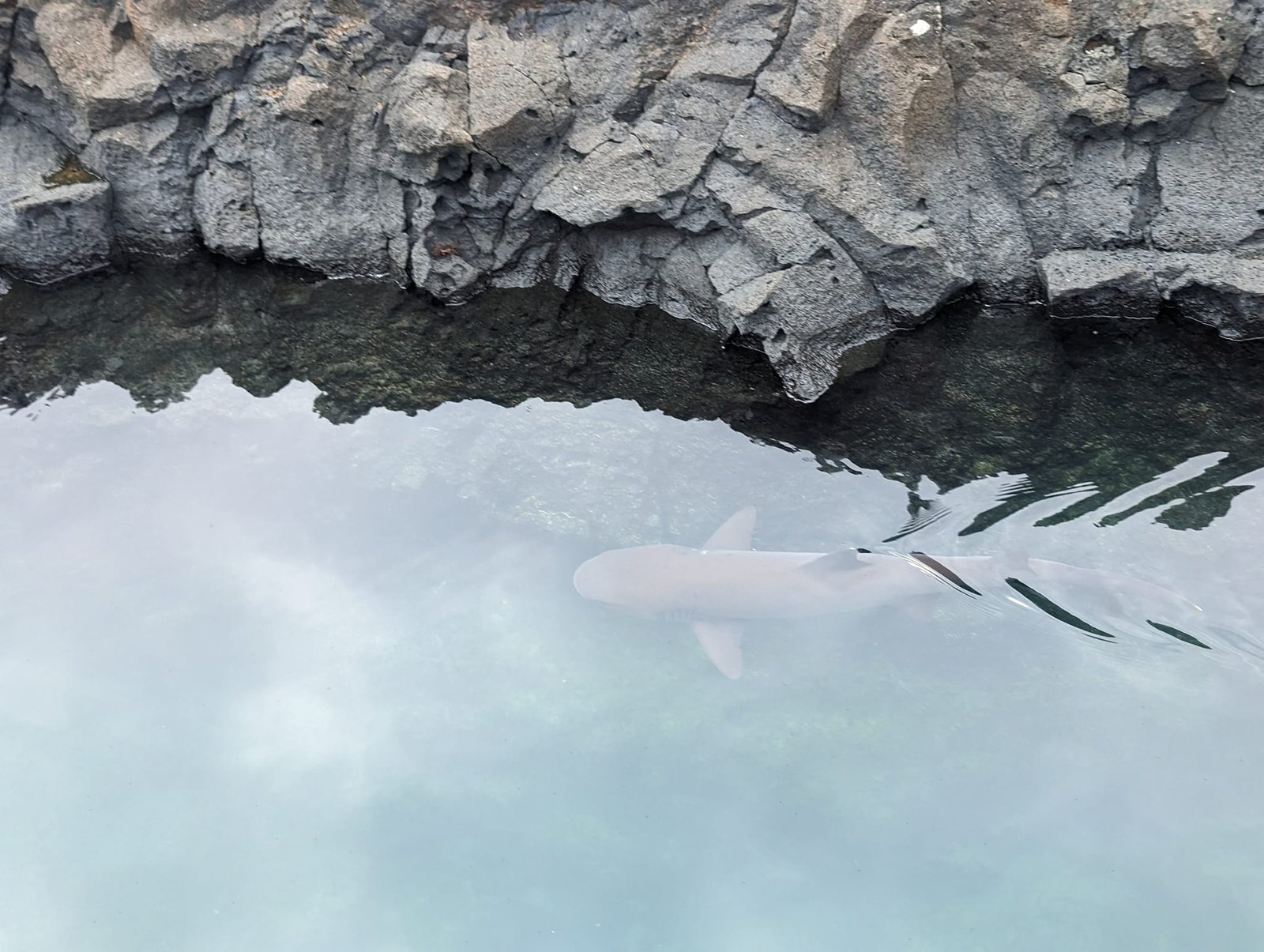
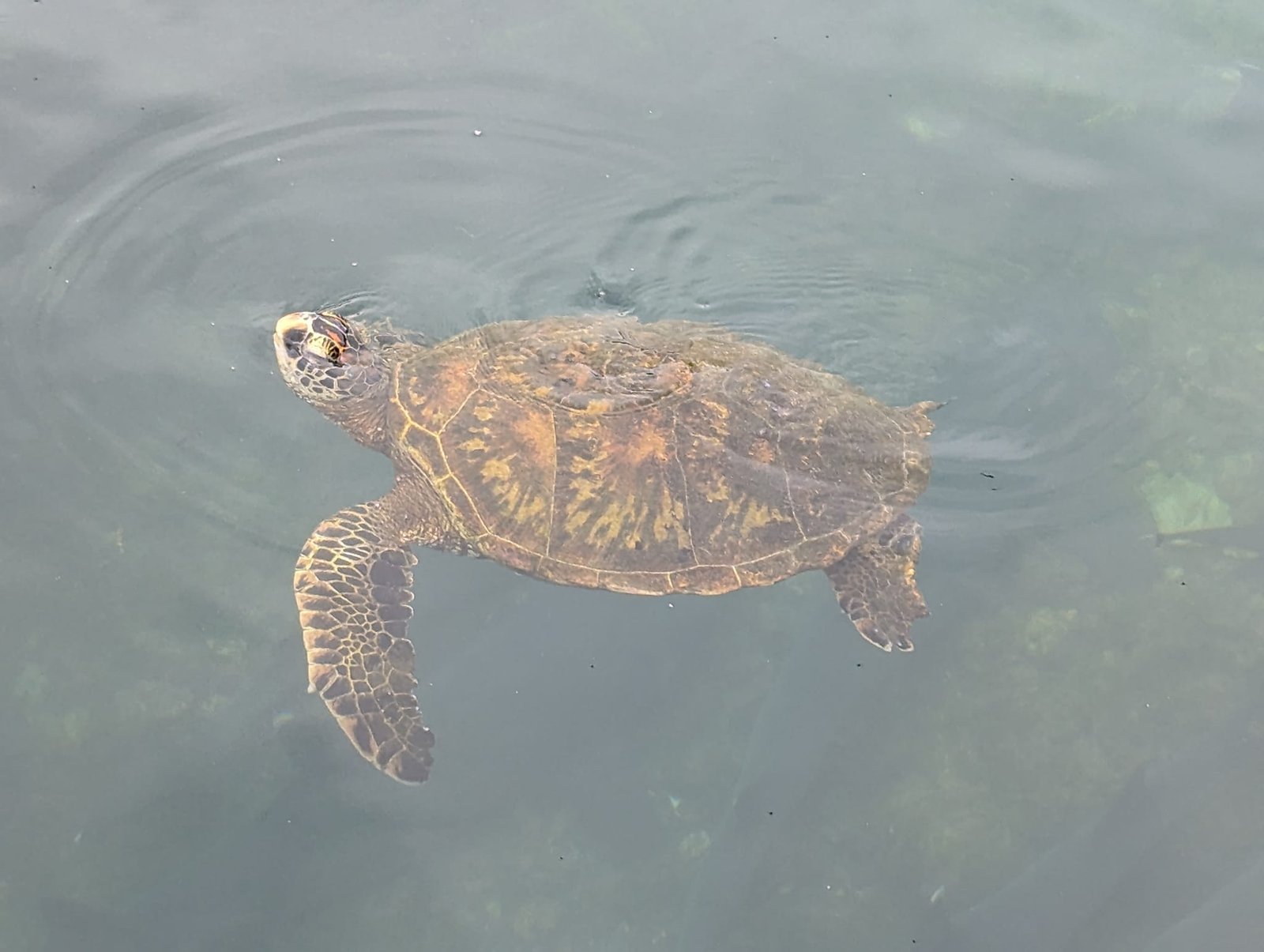
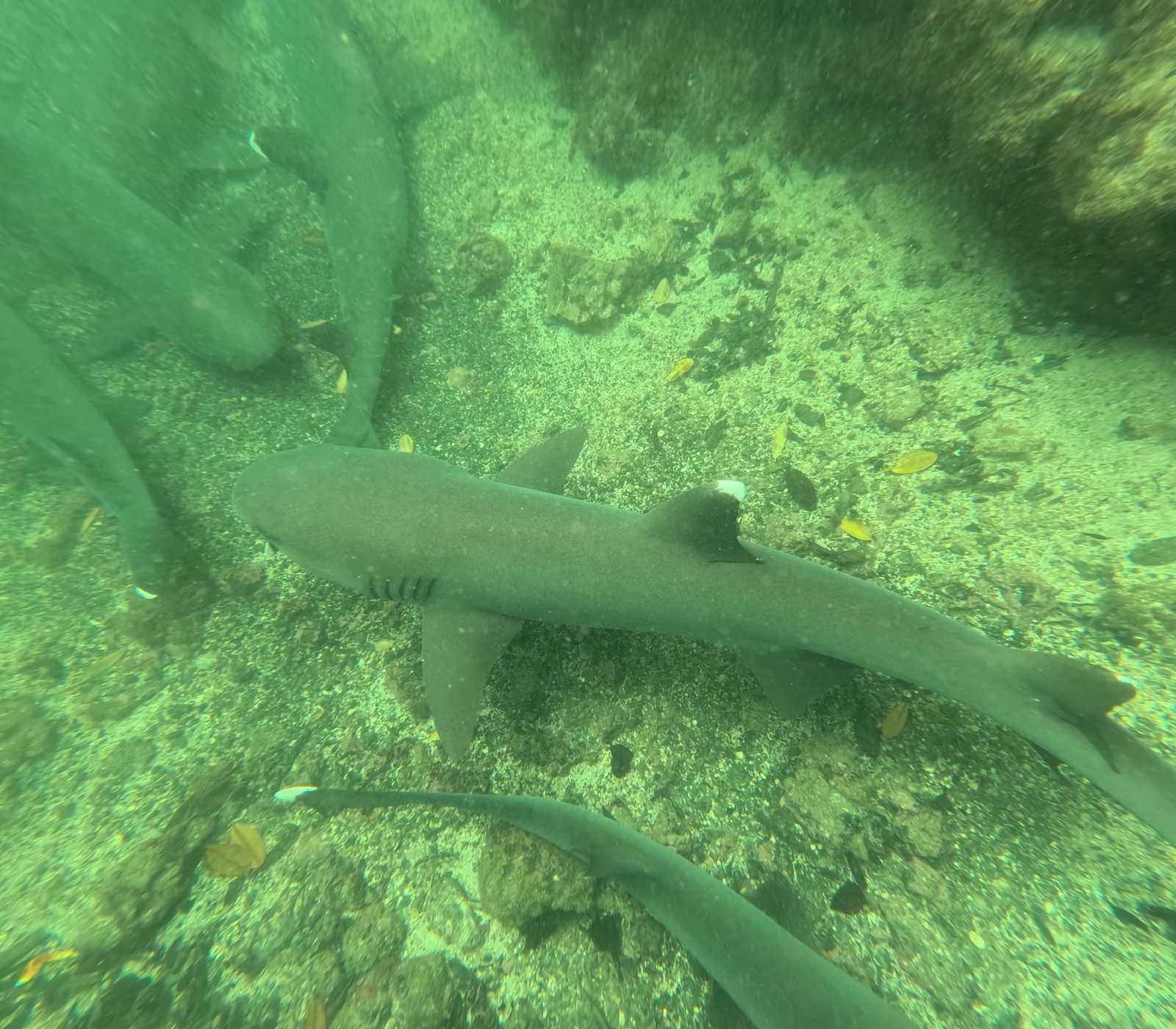
Finally there was the snorkelling. Although it was quite short, we were very happy, because in one spot we swam with sea lions, turtles, penguins and sharks – whitetip reef sharks. On the paid tours we saw more fish, turtles and sharks than on our own, plus swimming penguins and birds we would never have reached by ourselves.
Rancho Primicias – giant tortoises in the wild
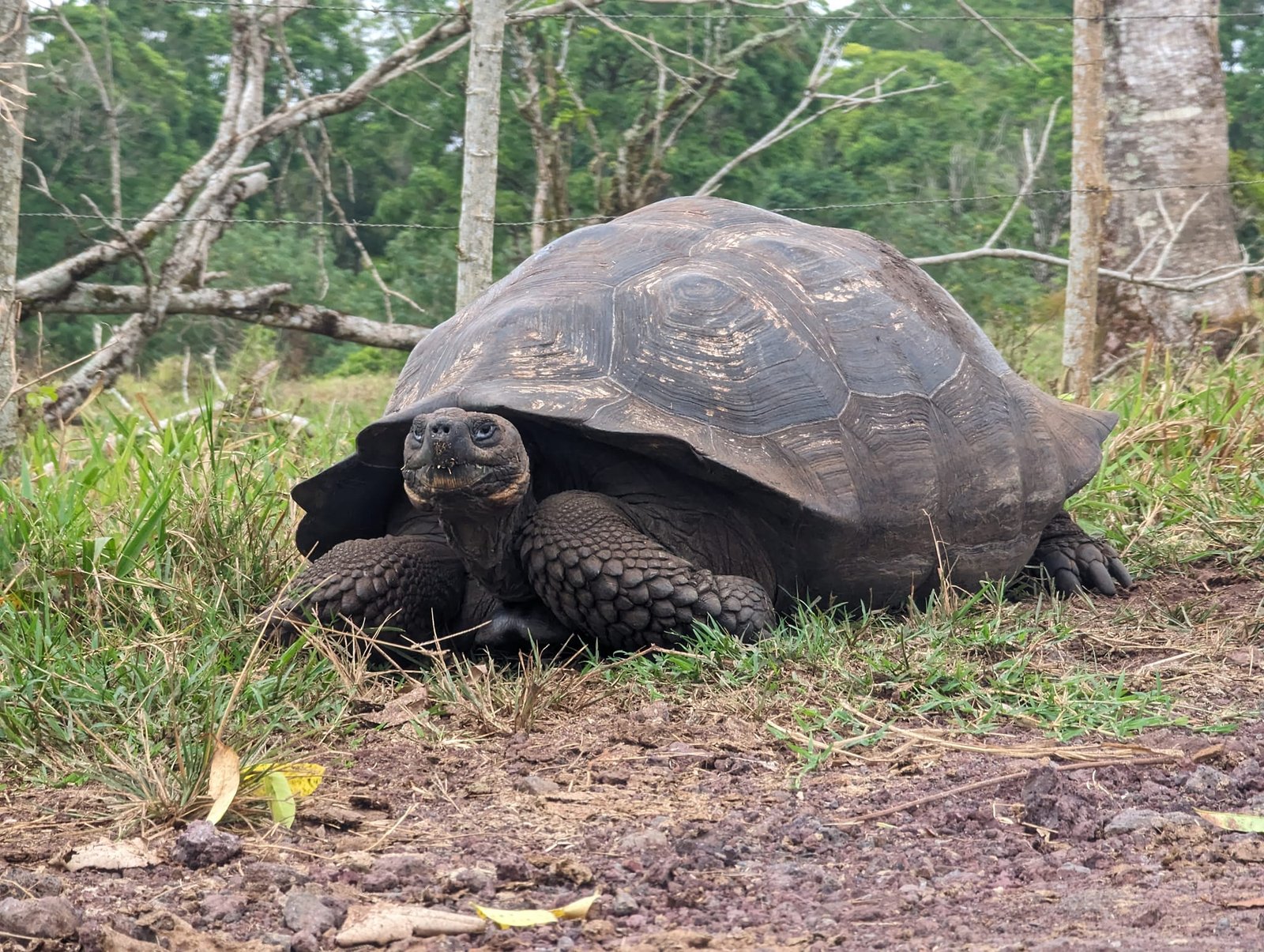
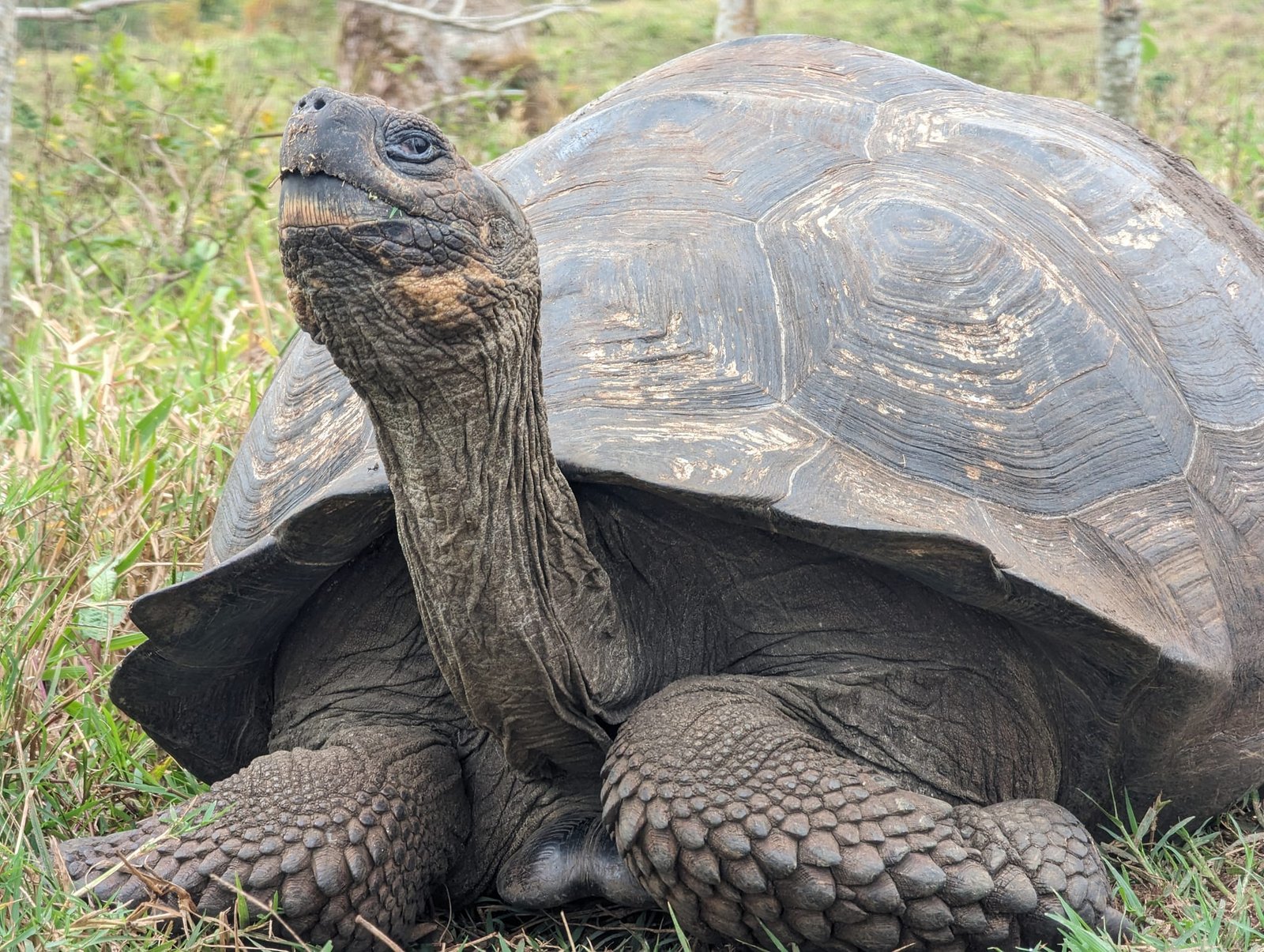
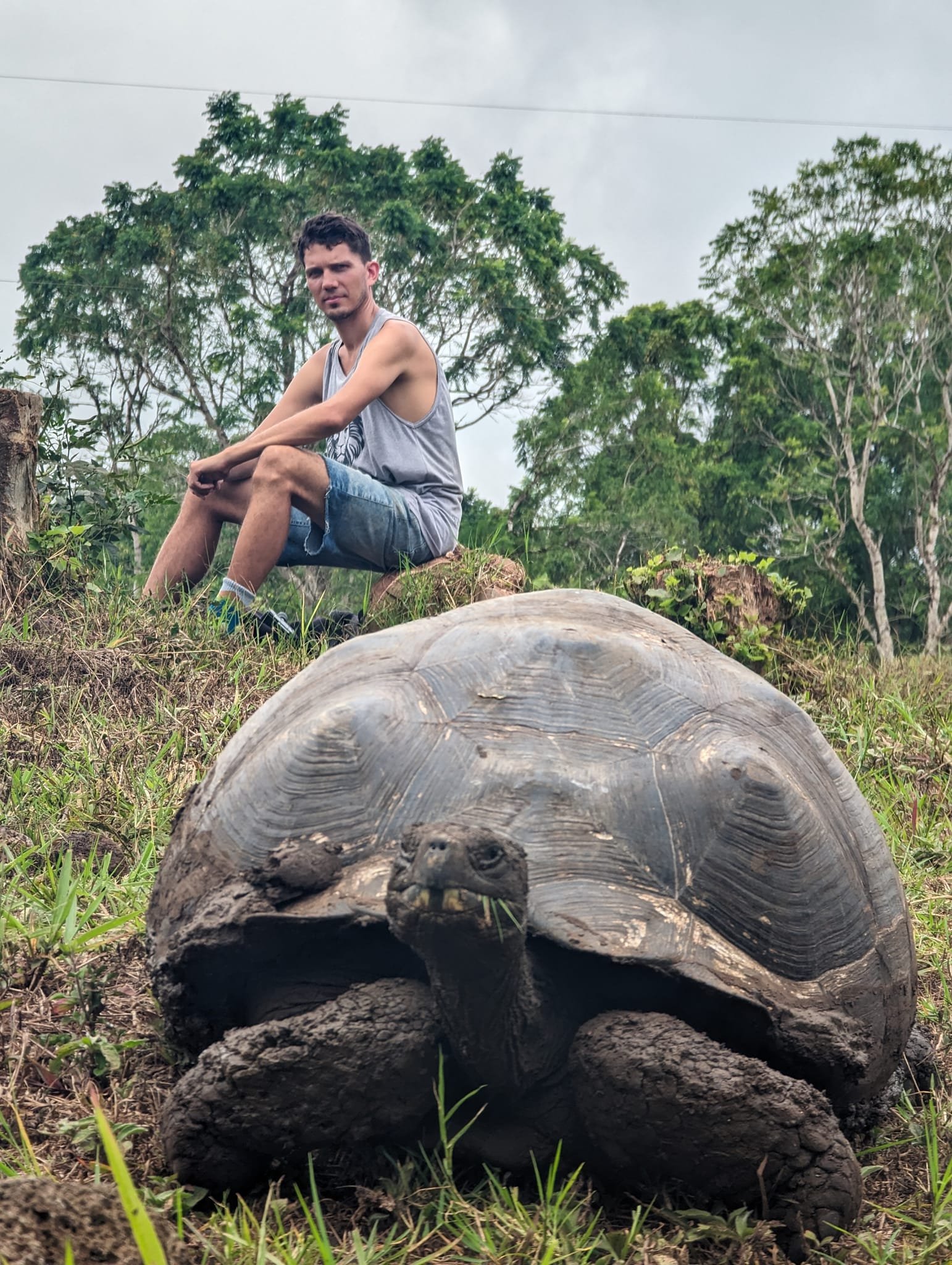
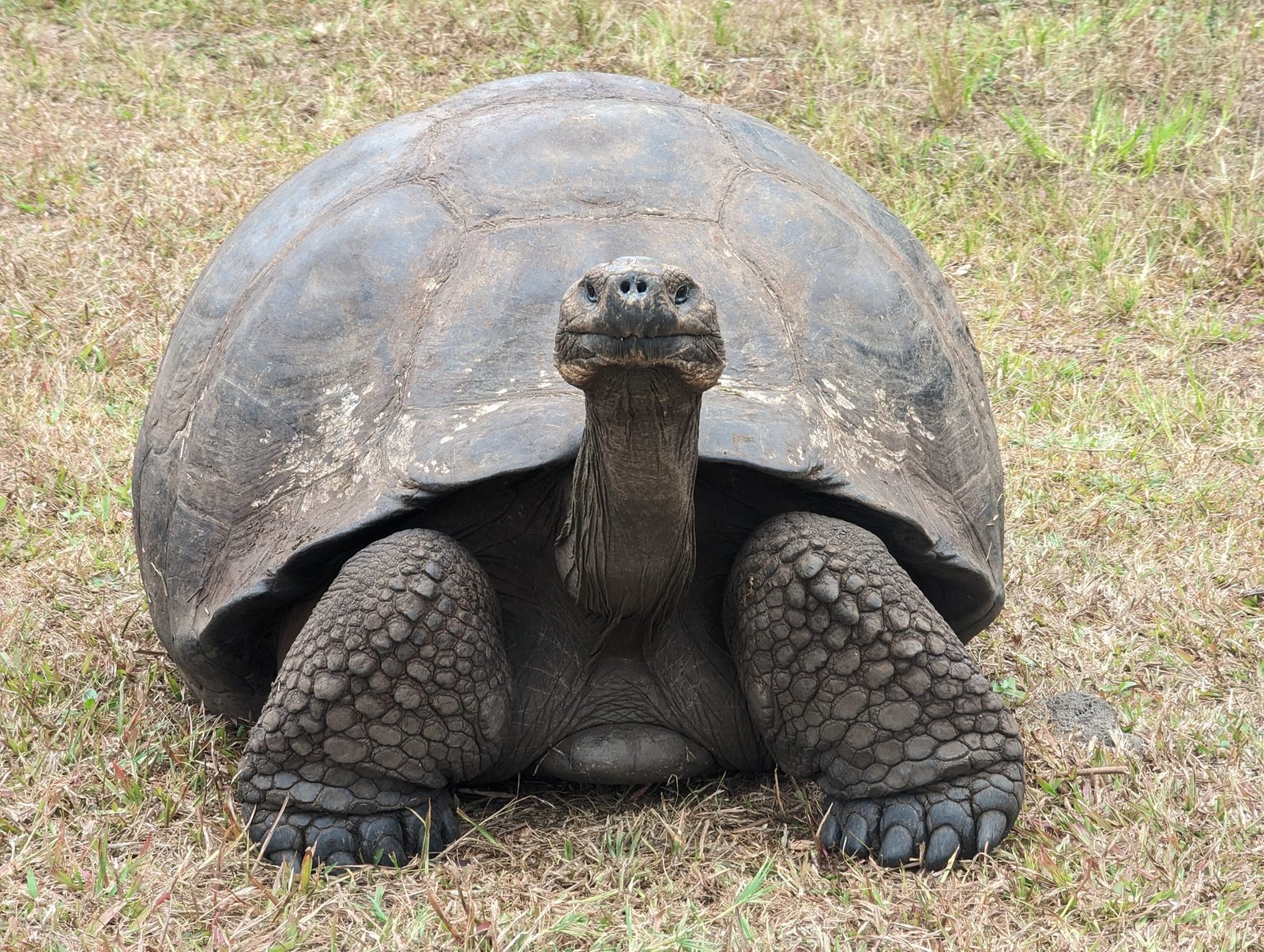
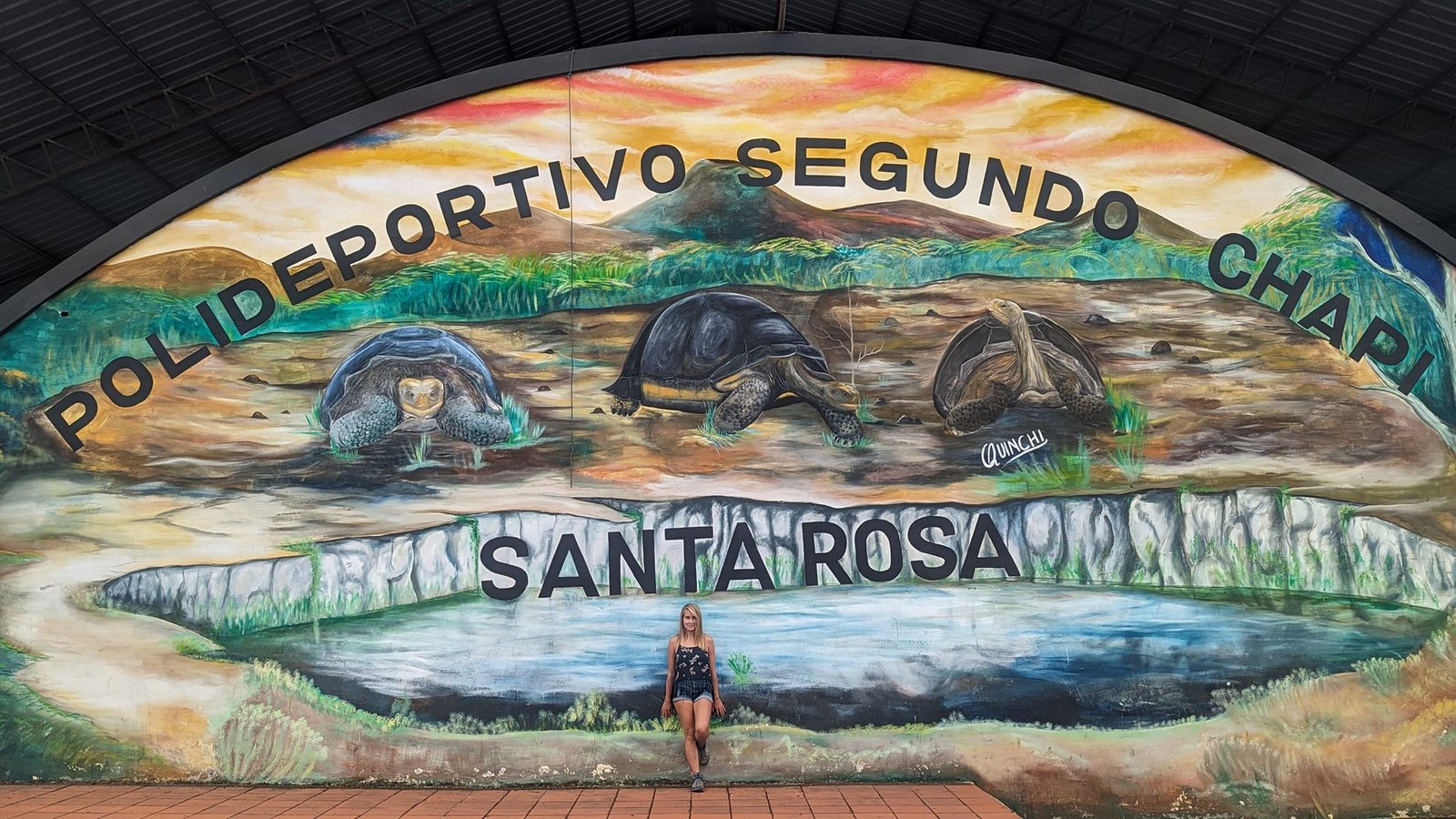
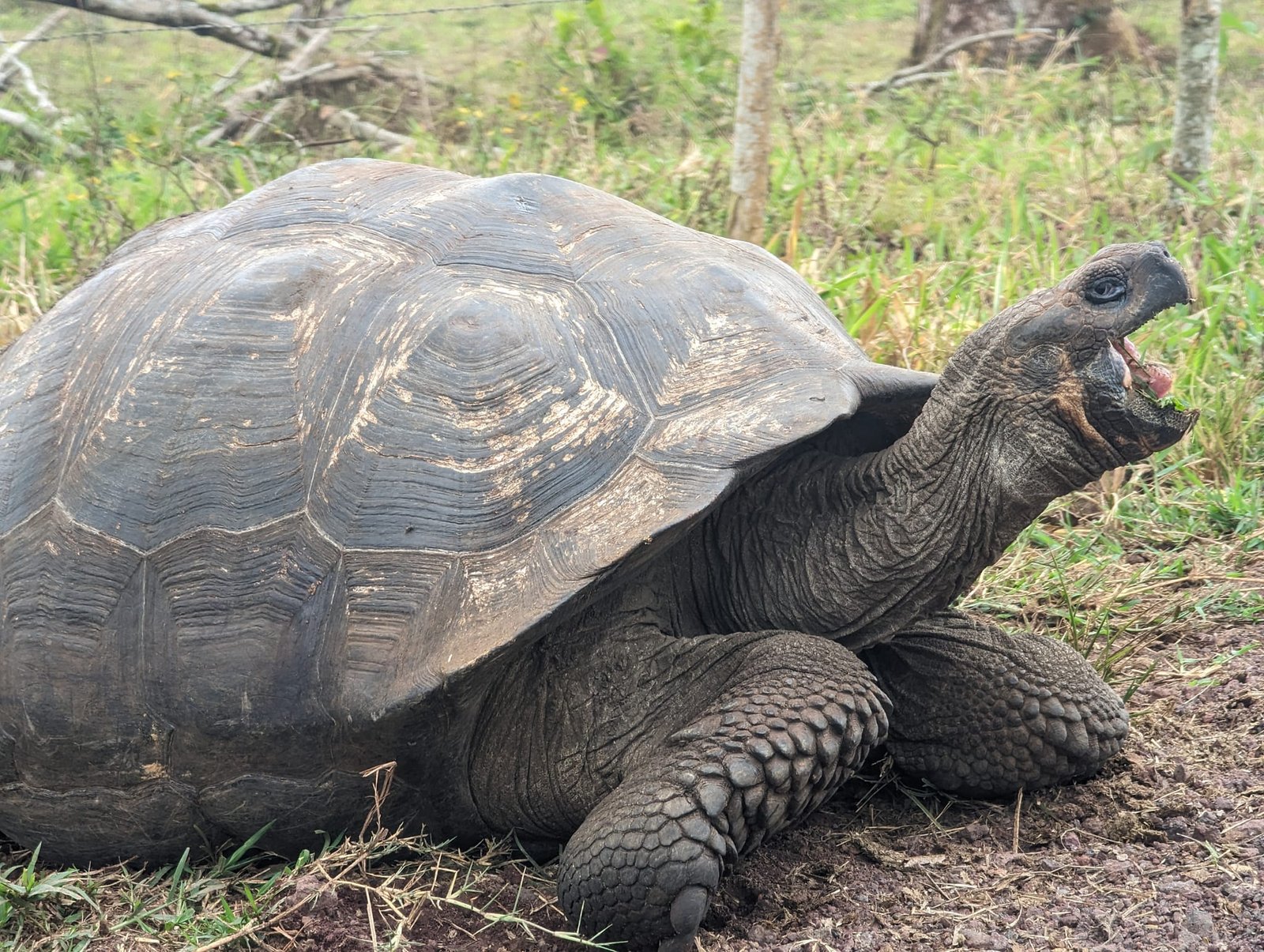
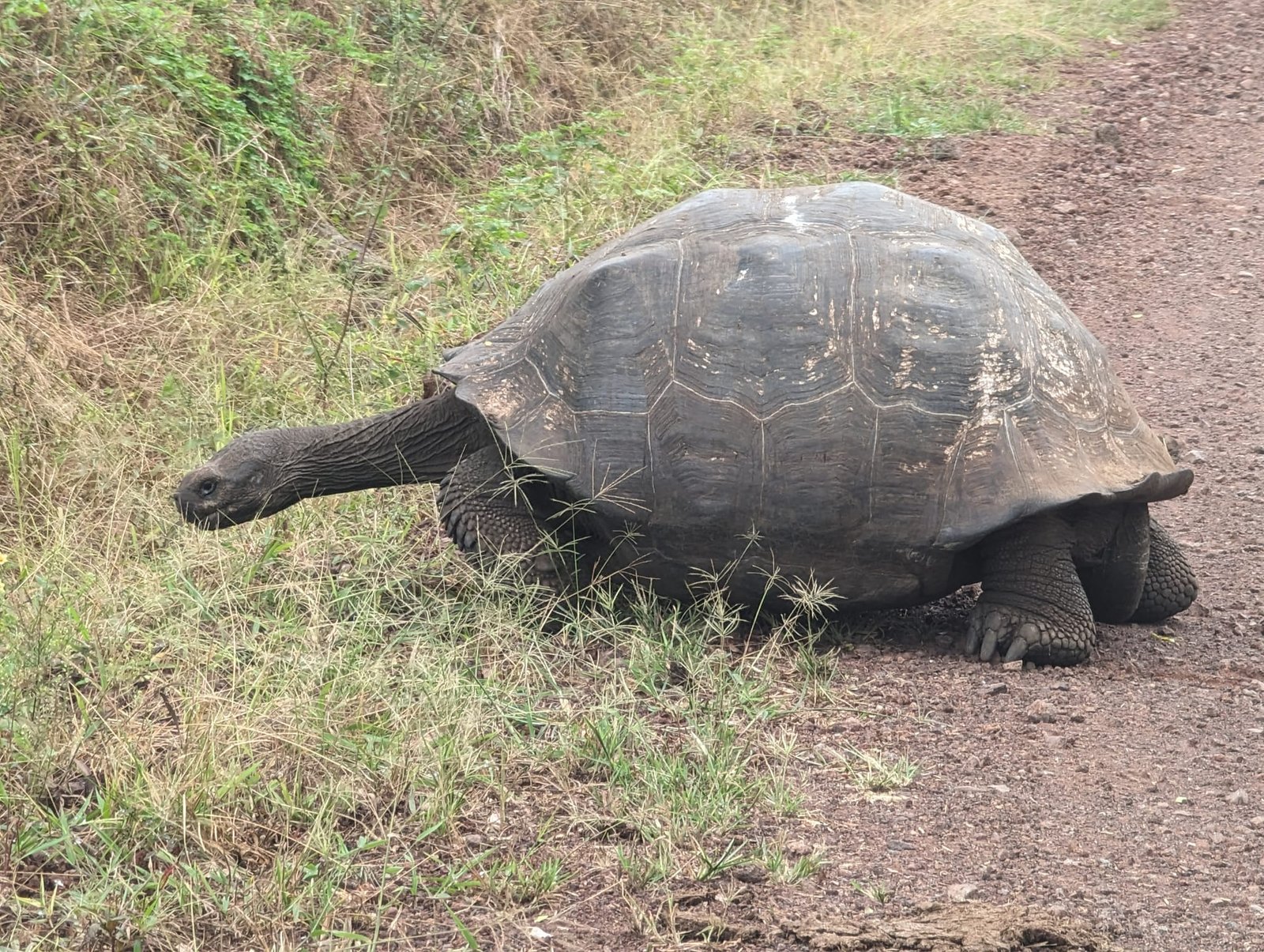
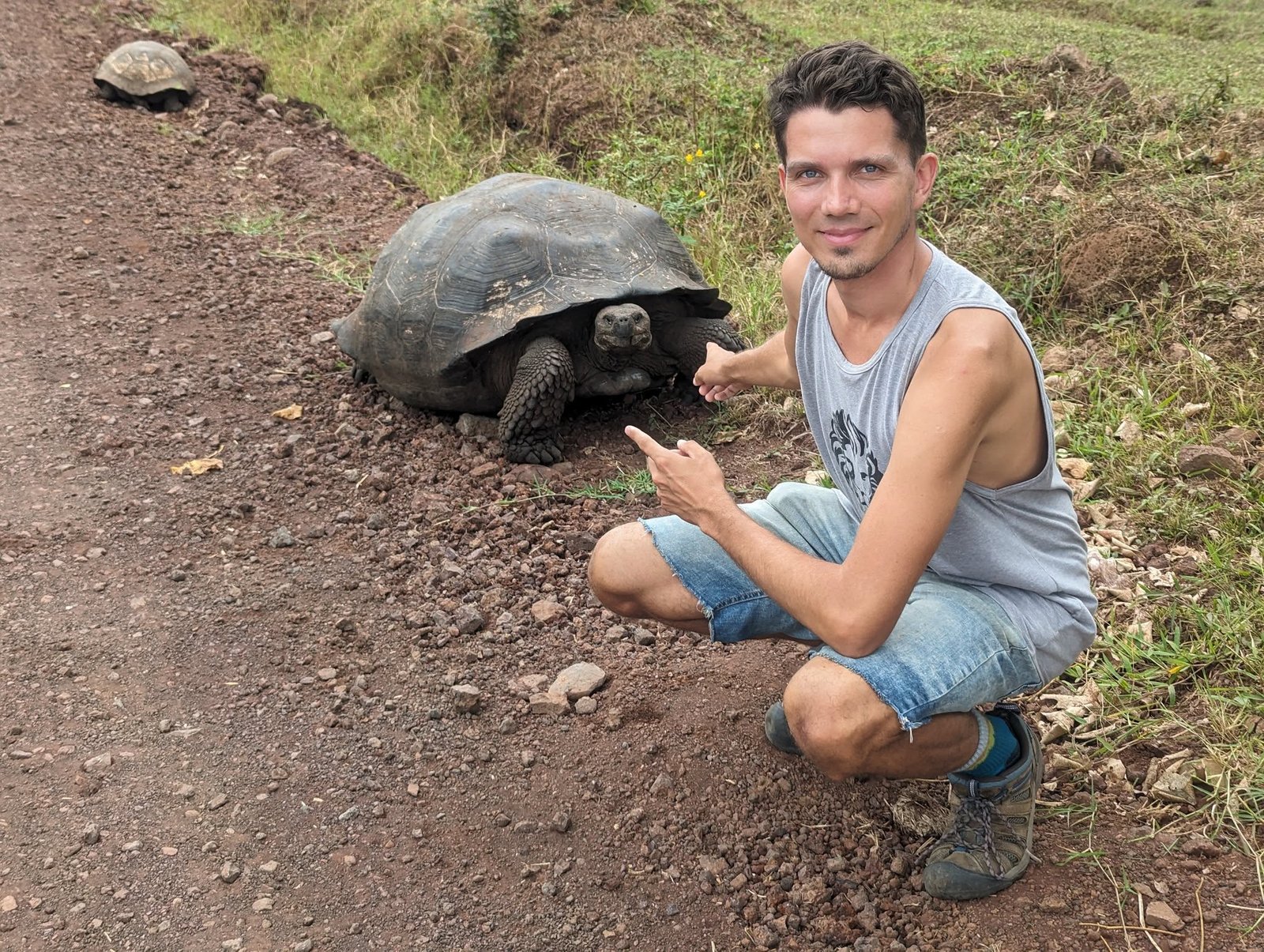
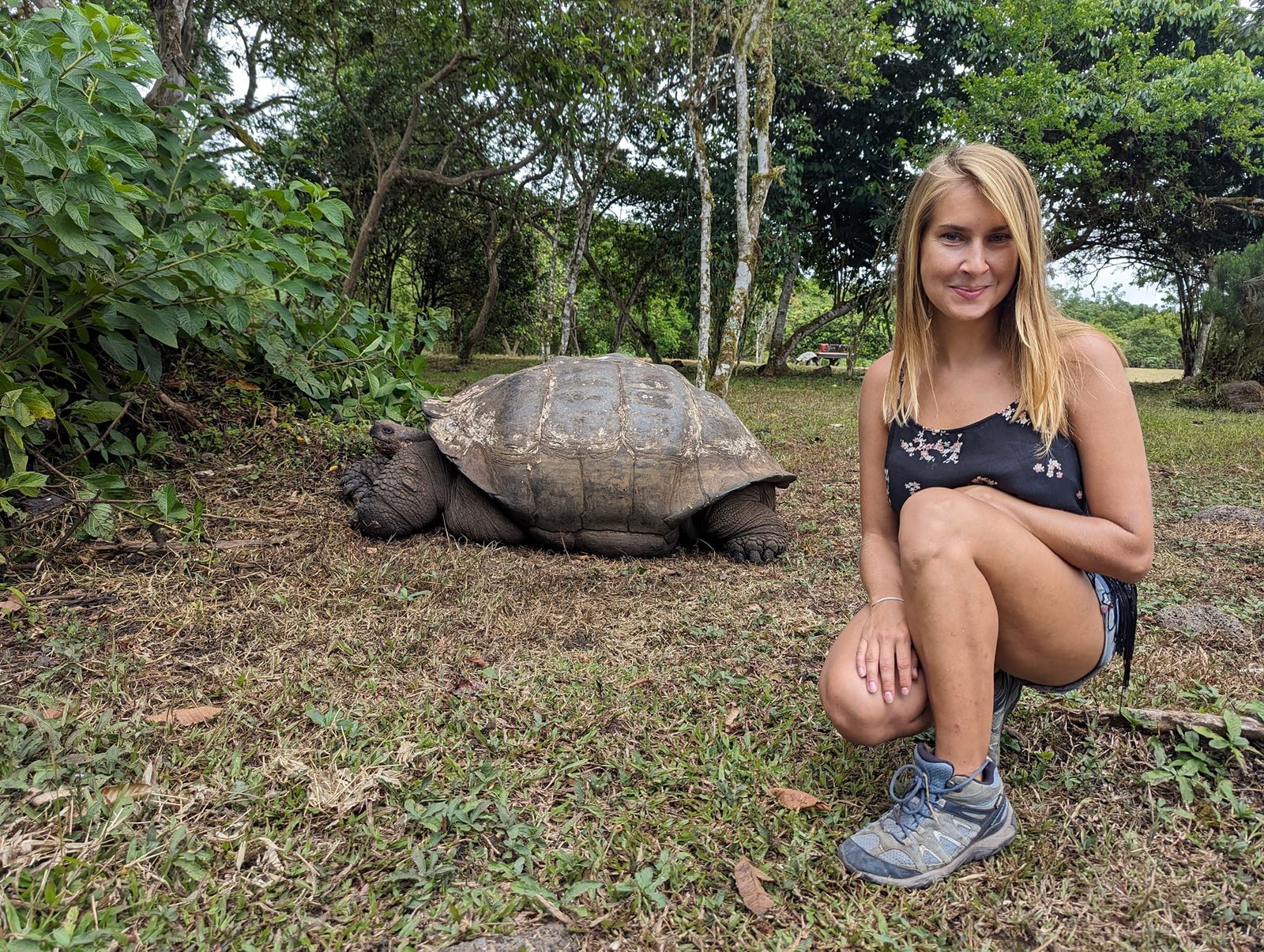
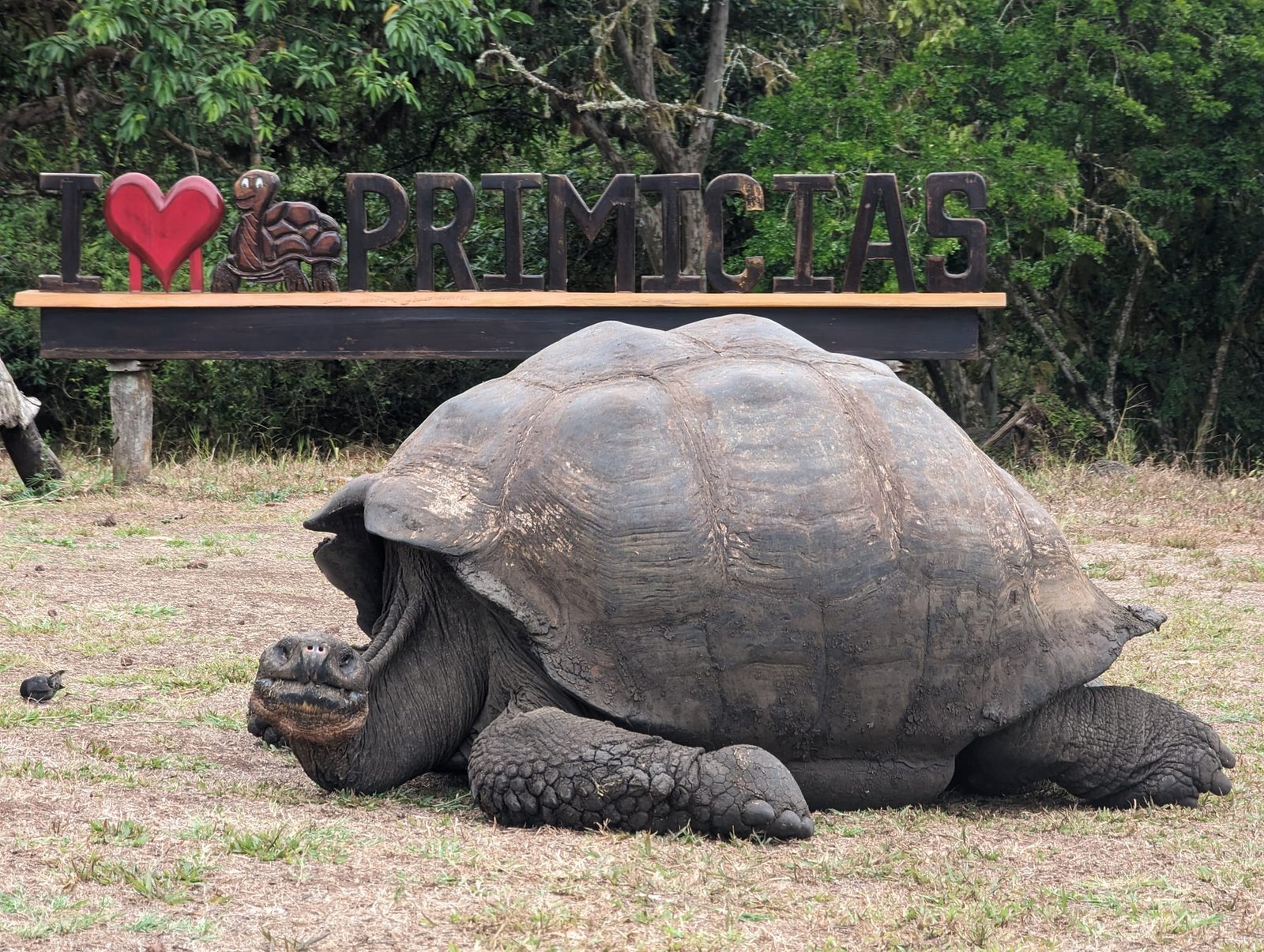
Early in the morning of 5 June we took the ferry back to Santa Cruz to see giant tortoises once more – this time in the wild. By far the best place is Rancho Primicias (Giant Tortoise Reserve) in the Santa Cruz highlands, where the tortoises roam completely freely. From Puerto Ayora you can take a taxi for 20 dollars, but it is much cheaper to take a bus for 1 dollar (it leaves opposite the Mercado Municipal) to the village of Santa Rosa and walk about an hour from there. In Santa Rosa the tortoises even appear on a mural.
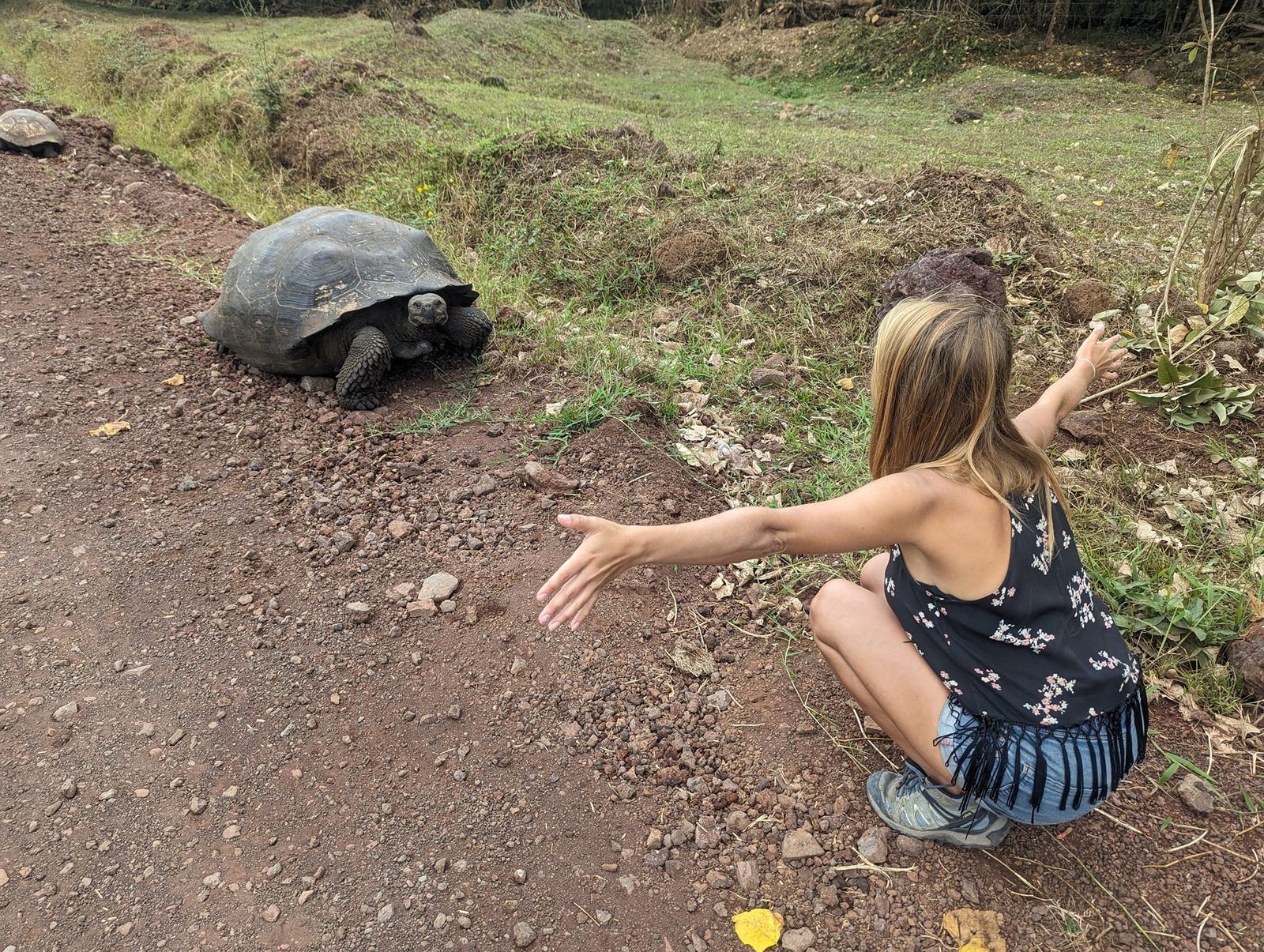
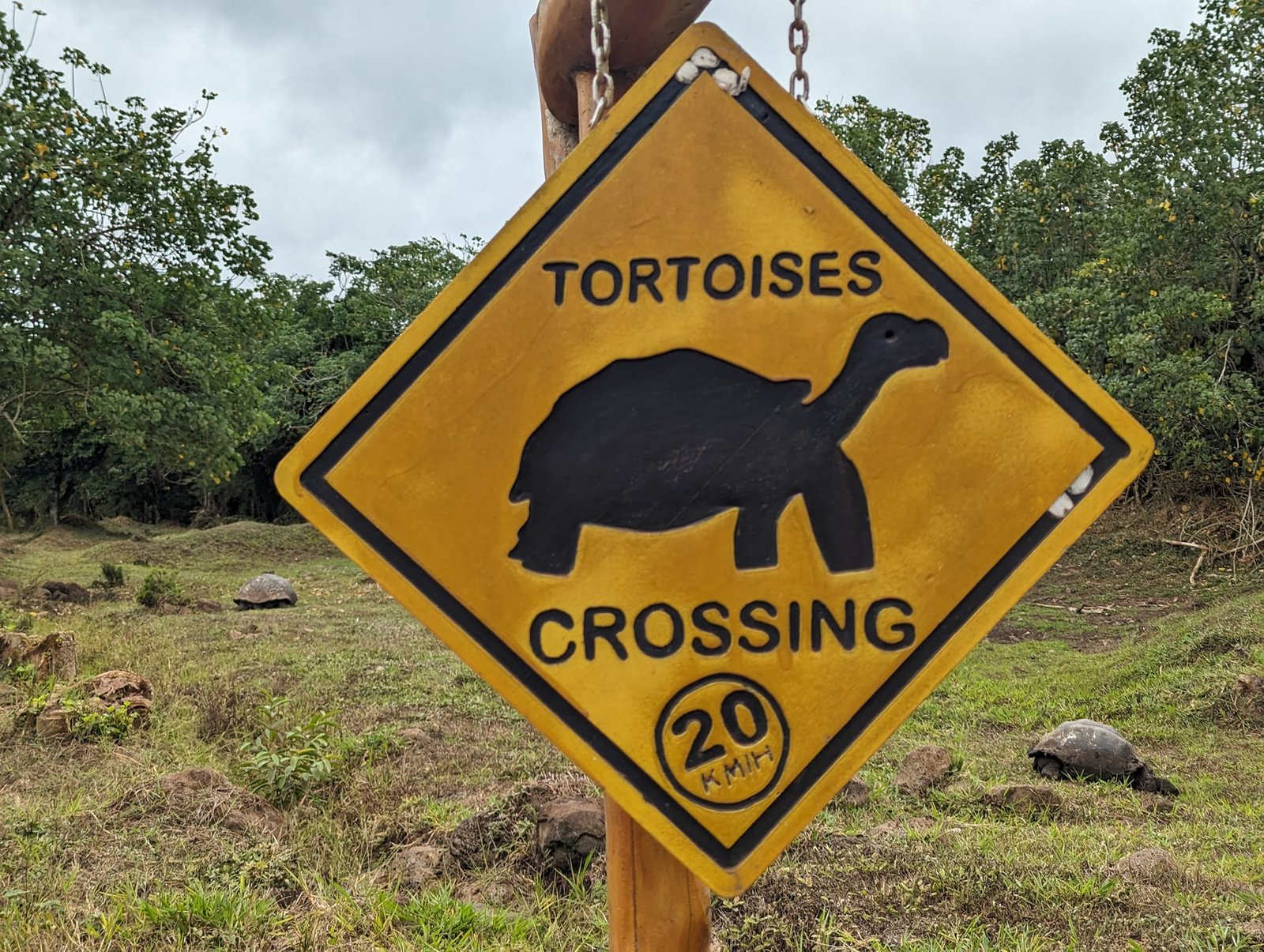
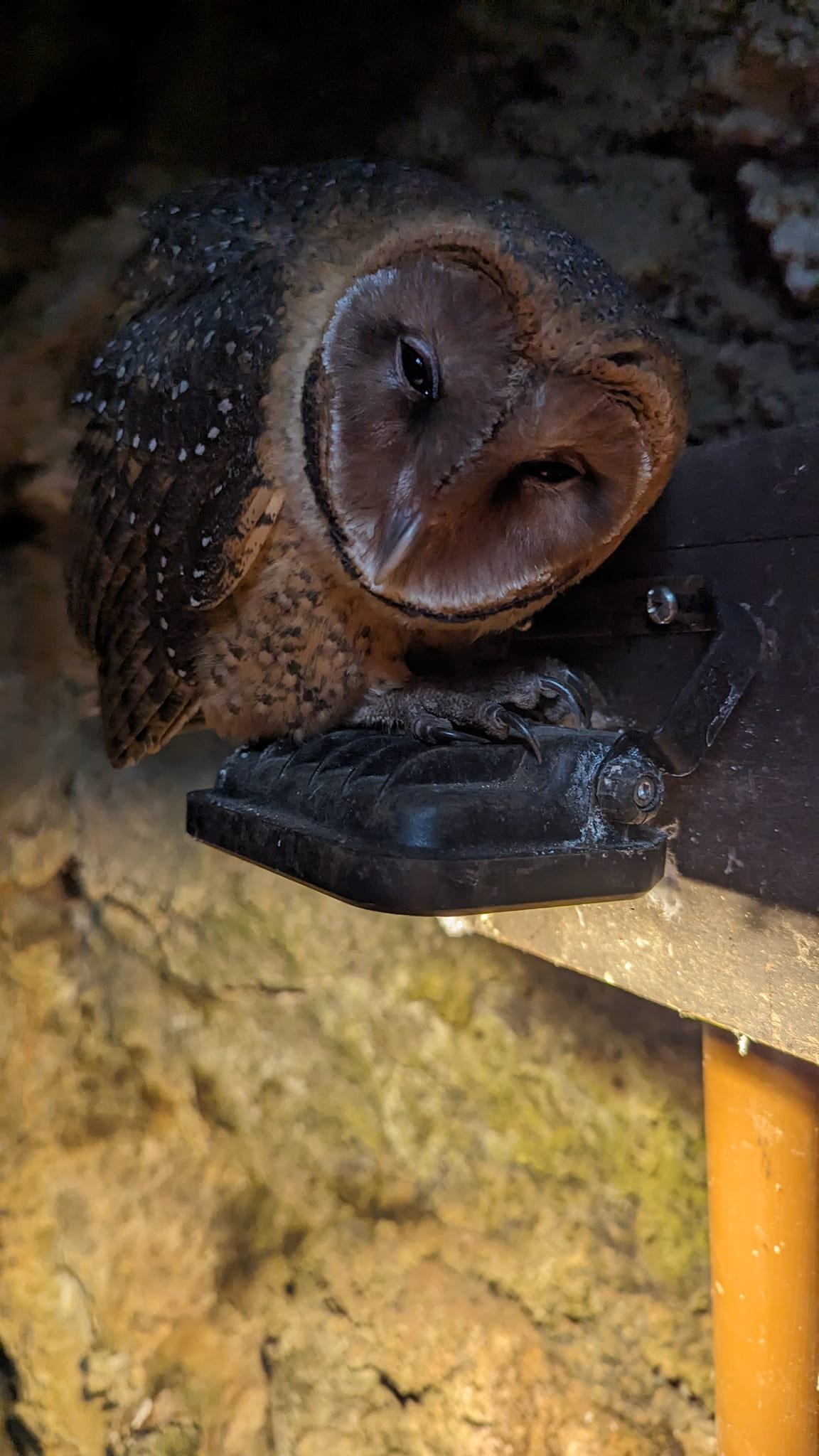
You can meet many tortoises on the way – they cross the roads, and there are “Tortoises crossing” signs by the meadows. Entry to the ranch costs 8.5 dollars, which includes a guided tour and a walk through a lava tunnel. In the tunnel, on one of the lamps, sat a barn owl.
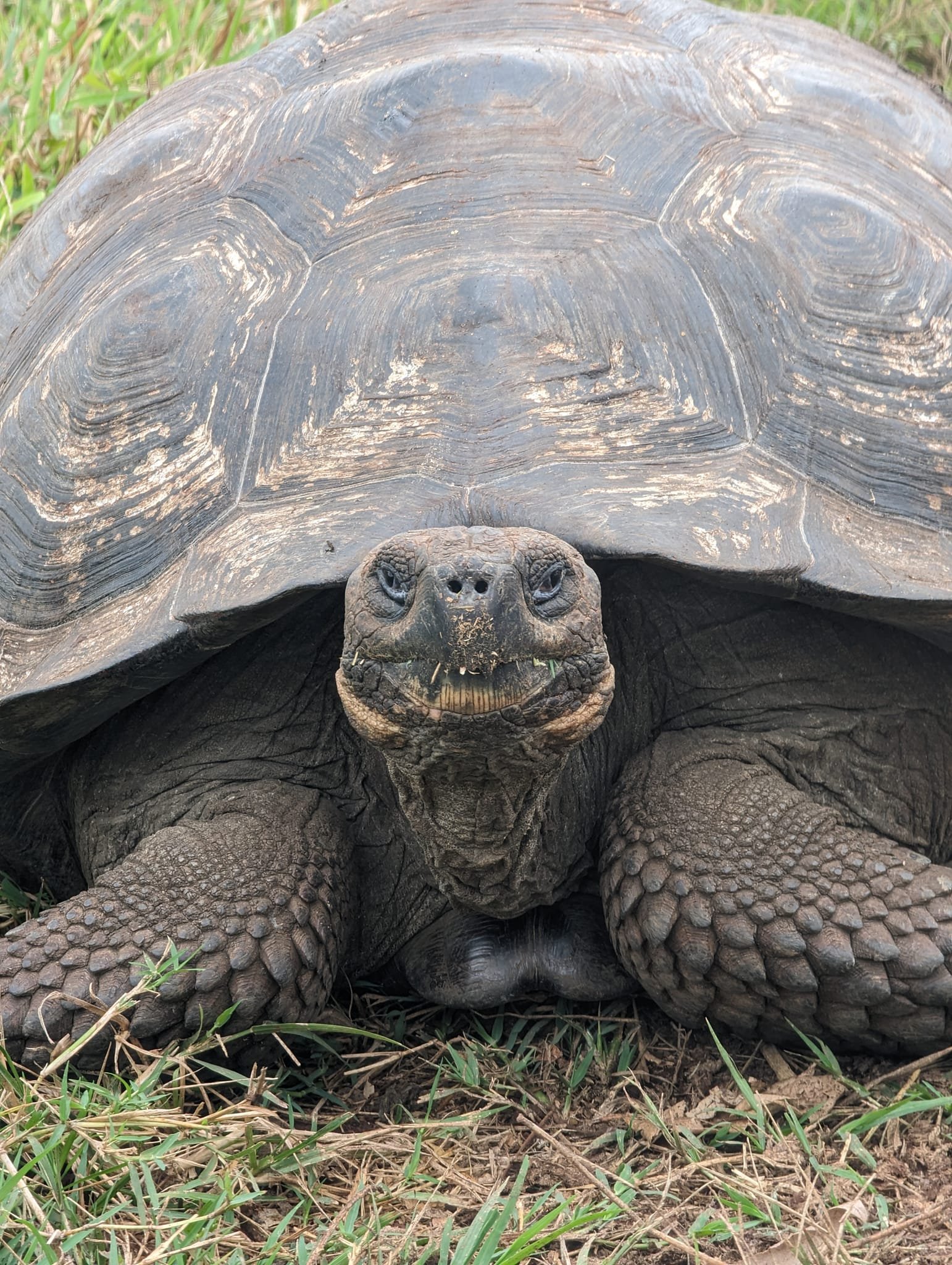
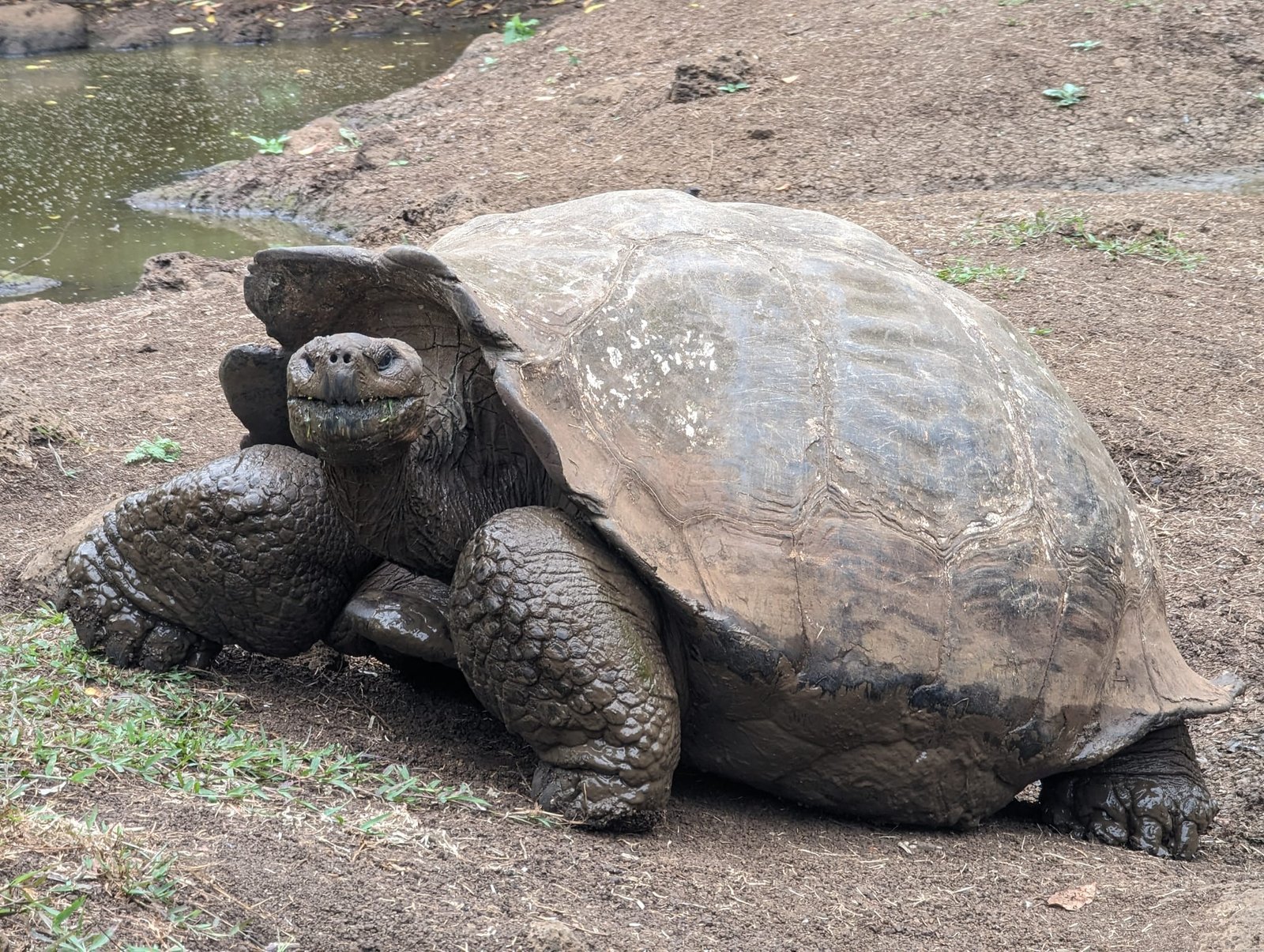
Giant tortoises in the wild are something completely different from those in the breeding centres’ enclosures. They wander across meadows and roads, stretch their necks and couldn’t care less about the people crouching next to them for a photo.
Practical information – the Galápagos on your own
Below is everything worth knowing when planning the Galápagos on your own. Prices are from late May and early June 2024 (a US dollar was worth about €0.93 at the time) – some of them, such as the islands’ entry fee, have gone up since then.
Flights to the Galápagos
From mainland Ecuador you fly from Quito to Baltra (the airport for Santa Cruz) or from Guayaquil – or from Quito with a connection – to San Cristóbal. We paid about 250 dollars per person for a return flight from Quito, which is cheap for this route, as you usually have to reckon with 300–500 dollars. We flew with hand luggage only to keep the tickets cheaper – we left our big backpacks in Quito with Edwin, whom we had stayed with through Couchsurfing.
If flight prices don’t differ much, it’s worth flying into one island and out of another – for example, arriving on San Cristóbal and leaving from Baltra (or the other way round). That saves money and time on one ferry. The airport on San Cristóbal is within walking distance of town. From Isabela there are only flights to other islands of the archipelago, and they are very expensive.
From Baltra airport to Puerto Ayora
You need to take a bus, a ferry across the channel and a second bus – 11 dollars per person in total (bus 5 dollars, ferry 1 dollar) and about an hour’s journey. Instead of the bus from the channel you can take a taxi for 25 dollars, but it doesn’t save much time.
Entry fees
- Transit control card – USD 20, paid before departure from mainland Ecuador.
- Galápagos entry fee – in May 2024 USD 100 per person, from August 2024 USD 200. It allows you to stay on the islands for up to two months.
- Isabela entry – a one-off USD 10.
- Puerto Ayora pier – USD 1 every time you leave and arrive.
This is how the authorities try to keep casual tourists away from the islands.
Ferries between the islands
A ferry between the islands costs USD 30 one way. On every crossing you also pay for the water taxi that takes you from the pier to the ferry, and on the other island from the ferry to the pier – USD 1 each, so USD 2 per crossing. Add USD 1 for the pier in Puerto Ayora, and in practice each ferry costs USD 33 per person. There is no direct ferry between San Cristóbal and Isabela – you have to go via Santa Cruz, i.e. pay twice. We took the ferry four times: from Santa Cruz to San Cristóbal, back to Santa Cruz, to Isabela and again to Santa Cruz.
Accommodation
None of our places to stay cost more than 25 dollars per room for two people, and the conditions were decent. Of course you can spend much more – on the islands we met an older couple who were paying 300 dollars a night for a hotel and 30–40 dollars for lunch. It all depends on how you want to spend your money. The islands are also very calm and very safe.
Food and shop prices
The best budget option – which doesn’t mean bland or meagre – is the menú del día, available on all three islands. For lunch (almuerzo) it’s usually a soup or another starter, a proper main course and a drink for 4–10 USD. Our cheapest meal cost 5 dollars and the most expensive 8:
- Santa Cruz – a row of cheap eateries on Charles Binford street, near the junction with Avenida Baltra: lunch for USD 5, similarly cheap breakfasts.
- San Cristóbal – cheapest at Restaurante Maria (USD 5), nearby easily for 6–7 USD.
- Isabela – cheapest at Hornados Albita (USD 6), around the main square about USD 10.
Shops are more expensive than on the mainland, but manageable – for a dollar we bought, for example, 5 eggs or three plantains. Bakeries have reasonable prices; we recommend Panadería Rico Pan on Santa Cruz. A lunch we cooked ourselves (potatoes, eggs, plantains) cost us about USD 2. Alcohol, on the other hand, is expensive: a 0.5 l bottle of beer cost about USD 3 in a shop and USD 6 in a bar. For comparison, bars and shops were still cheaper than on the “paradise” islands of Belize and Honduras.
What’s free and what you have to pay for
Free:
- snorkelling at Concha de Perla on Isabela – sea lions, iguanas, turtles and colourful fish,
- the sea lion beaches on San Cristóbal – Playa Lobería, Playa Mann and Playa Punta Carola (you can swim with them too),
- Tortuga Bay on Santa Cruz – sharks by the mangroves and baby hammerheads,
- the Camino de Tortugas Gigantes trail to the Muro de las Lágrimas on Isabela – wild giant tortoises, but no guarantee,
- flamingos in the Poza de los Flamingos lagoon on Isabela.
Paid (prices per person, June 2024):
- tours – from about USD 40 for snorkelling to USD 250 for diving,
- diving at Kicker Rock – USD 195 (Pelican Tours, two dives with lunch; book at least two days in advance),
- snorkelling at Las Tintoreras – 45–60 USD (Blue Sky – USD 45 with wetsuit); wetsuit rental USD 5 (short sleeves) or USD 10 (long sleeves),
- the Fausto Llerena (Santa Cruz) and Arnaldo Tupiza Chamaidan (Isabela) tortoise breeding centres – USD 10 with a compulsory guide,
- Rancho Primicias – USD 8.5 with a guide and the lava tunnel; taxi there USD 20, or a bus to Santa Rosa for USD 1 and an hour on foot.
How much do the Galápagos cost on your own?
Our fixed costs per person (May–June 2024):
- flight Quito – Baltra – Quito: about USD 250,
- transit card and entry fee: 20 + 100 USD (from August 2024, 20 + 200 USD),
- transfer from Baltra airport to Puerto Ayora and back: 2 × 11 USD,
- four ferries with water taxis and pier fees: 4 × 33 USD,
- Isabela entry: USD 10.
That makes about USD 530 for transport and fees alone (with today’s entry fee – about USD 630). On top of that come accommodation (up to USD 12.5 per person per night), food (lunch for 5–8 USD, or USD 2 if you cook yourself) and tours – we spent USD 195 on the dive and USD 45 on Las Tintoreras, plus a few small entry fees.
Summary – is it worth it?
Was it worth spending so much money on the Galápagos? Definitely yes. Almost everything was a plus: animals within arm’s reach – iguanas, sea lions and tortoises – and snorkelling with turtles, sharks and penguins. The only disappointment was the dive at Kicker Rock. We didn’t see everything either – for example, we skipped the volcano trek, which was shrouded in clouds every day anyway. You can explore the islands without an expensive cruise: with cheap accommodation, menú del día and free beaches, the biggest expenses are the flight, the fees, the ferries and the tours.
On 6 June we returned to Quito and that same day travelled on to Latacunga, from where we set off on the three-day Quilotoa Loop trek.
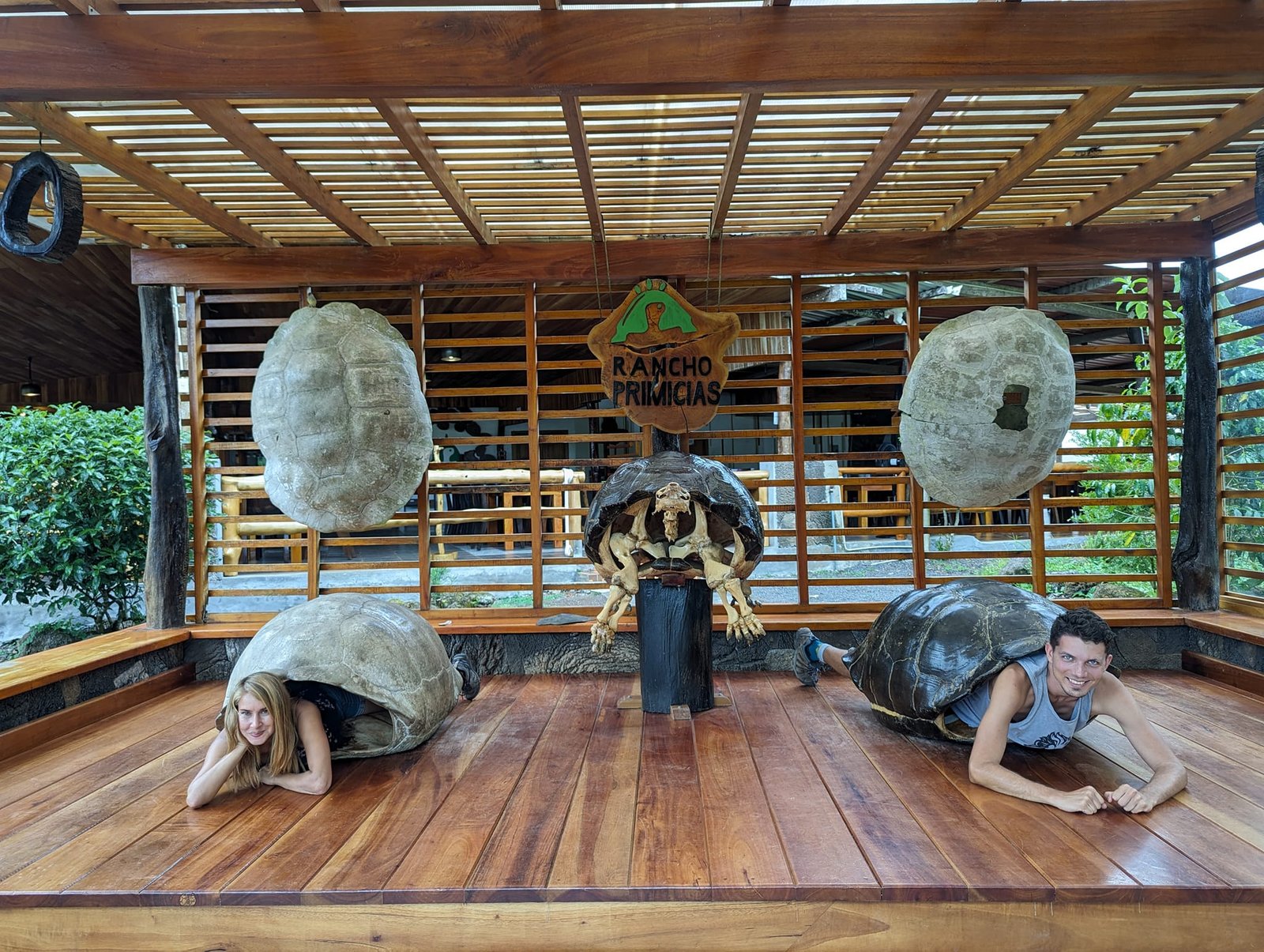
Photo gallery