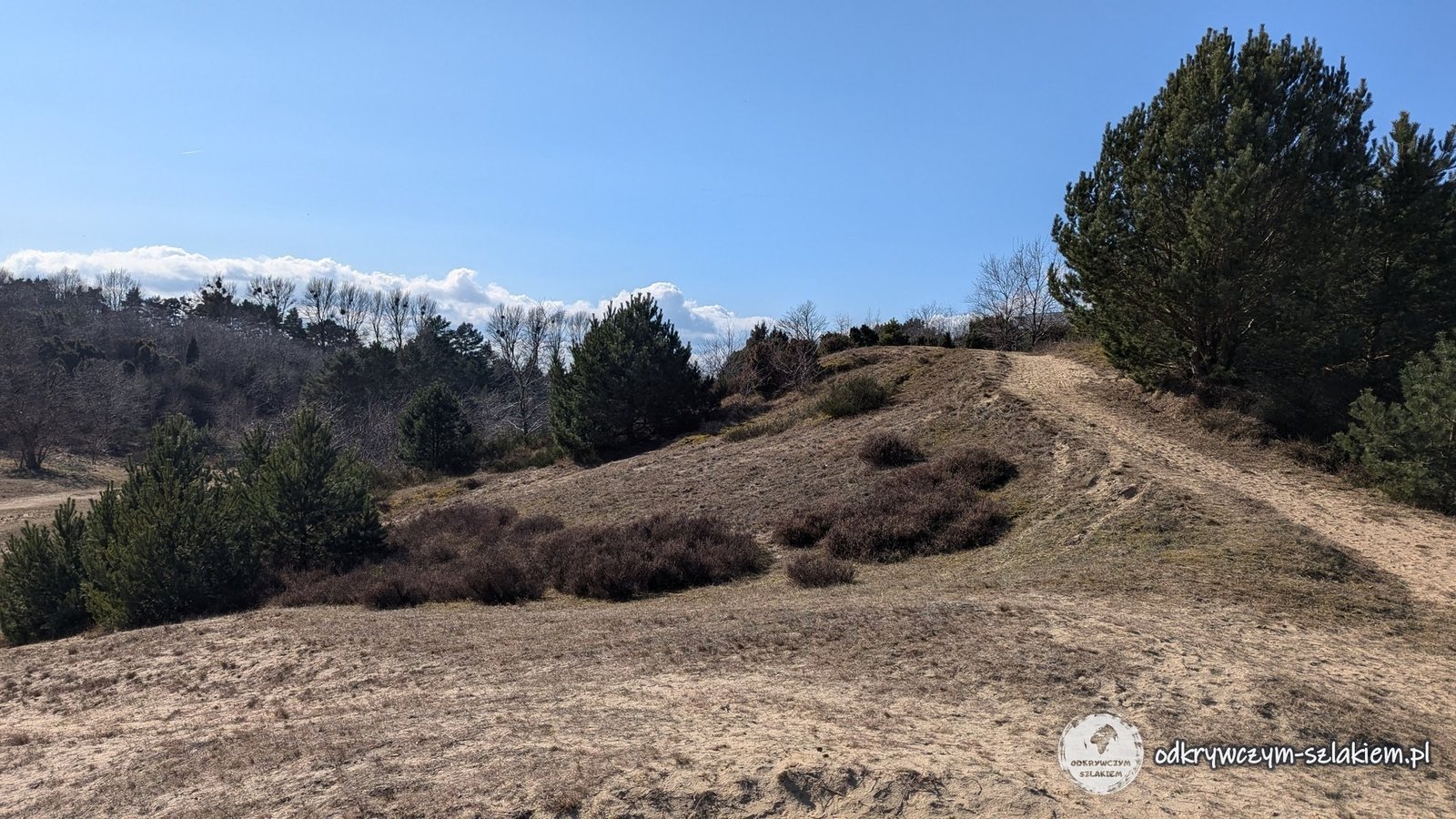
In mid-March 2025 I spent a weekend on the Bay of Puck. On Saturday the sun was out, so I went to the cliff in Jastrzębia Góra and then through the Lisi Jar ravine to Cape Rozewie with its two lighthouses. Sunday was cloudy and wet – that was the day for Puck: the market square, the Gothic parish church and the harbour where Poland’s wedding to the sea took place in 1920, and finally the Avenue of Sports Stars in Władysławowo. At the end of the post you will find practical information and a plan for an off-season weekend.
Table of contents
- Jastrzębia Góra – the cliff, the beach and the North Star
- Lisi Jar and the Sigismund III Vasa obelisk
- Cape Rozewie and its two lighthouses
- Puck – the market square, the town hall and the lion in the coat of arms
- The Church of Sts Peter and Paul and Puck’s ramparts
- Puck harbour – the wedding to the sea, the pier and the marina
- Władysławowo – the Avenue of Sports Stars and the Crown of the Himalayas
- Practical information and a weekend plan
Jastrzębia Góra – the cliff, the beach and the North Star
Jastrzębia Góra is a seaside resort in the municipality of Władysławowo, set on the high Baltic shore. The cliff here is more than 30 m high. Stairways lead from its top down to the beach, and the paths along the edge run through the forest.
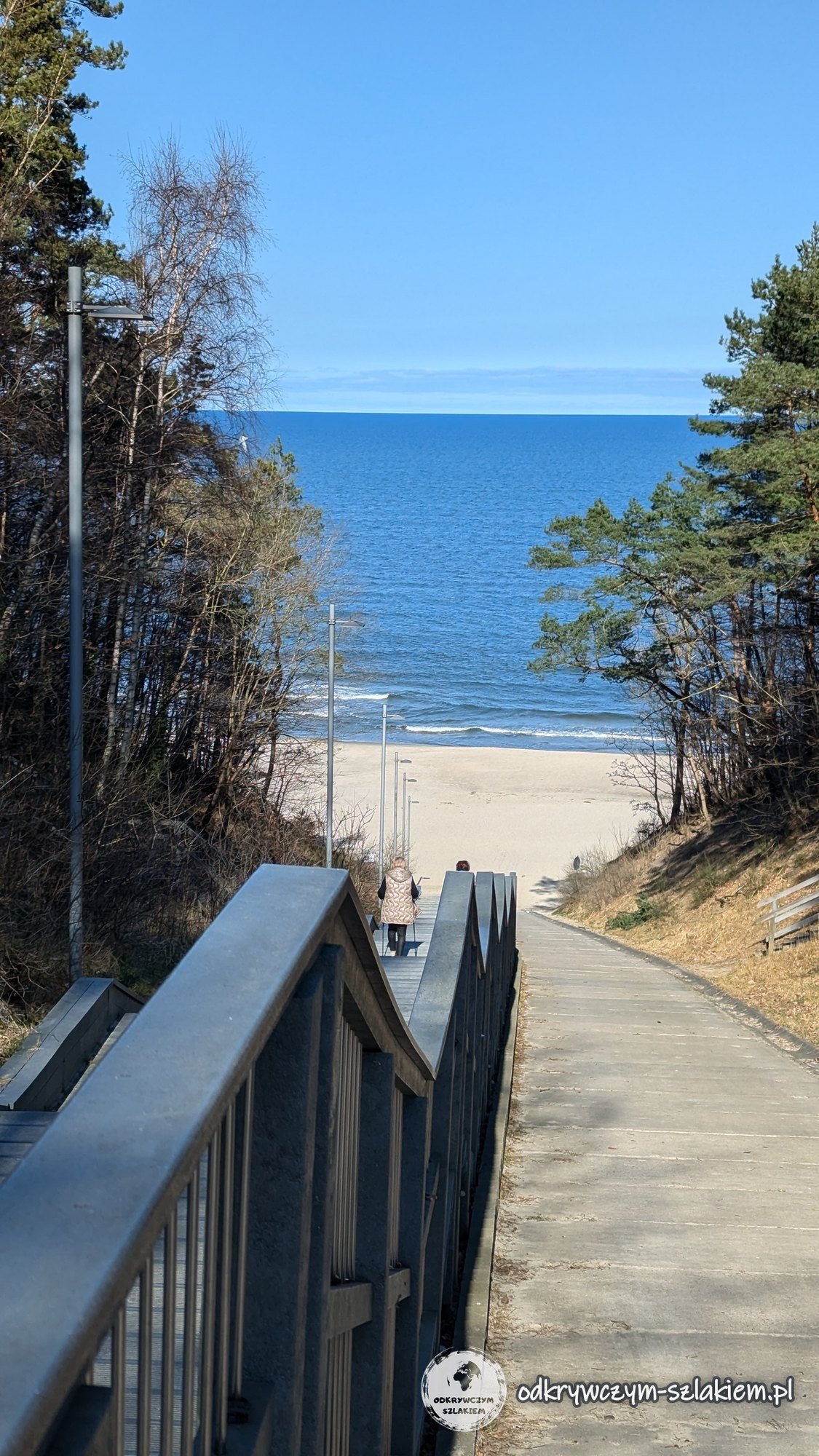
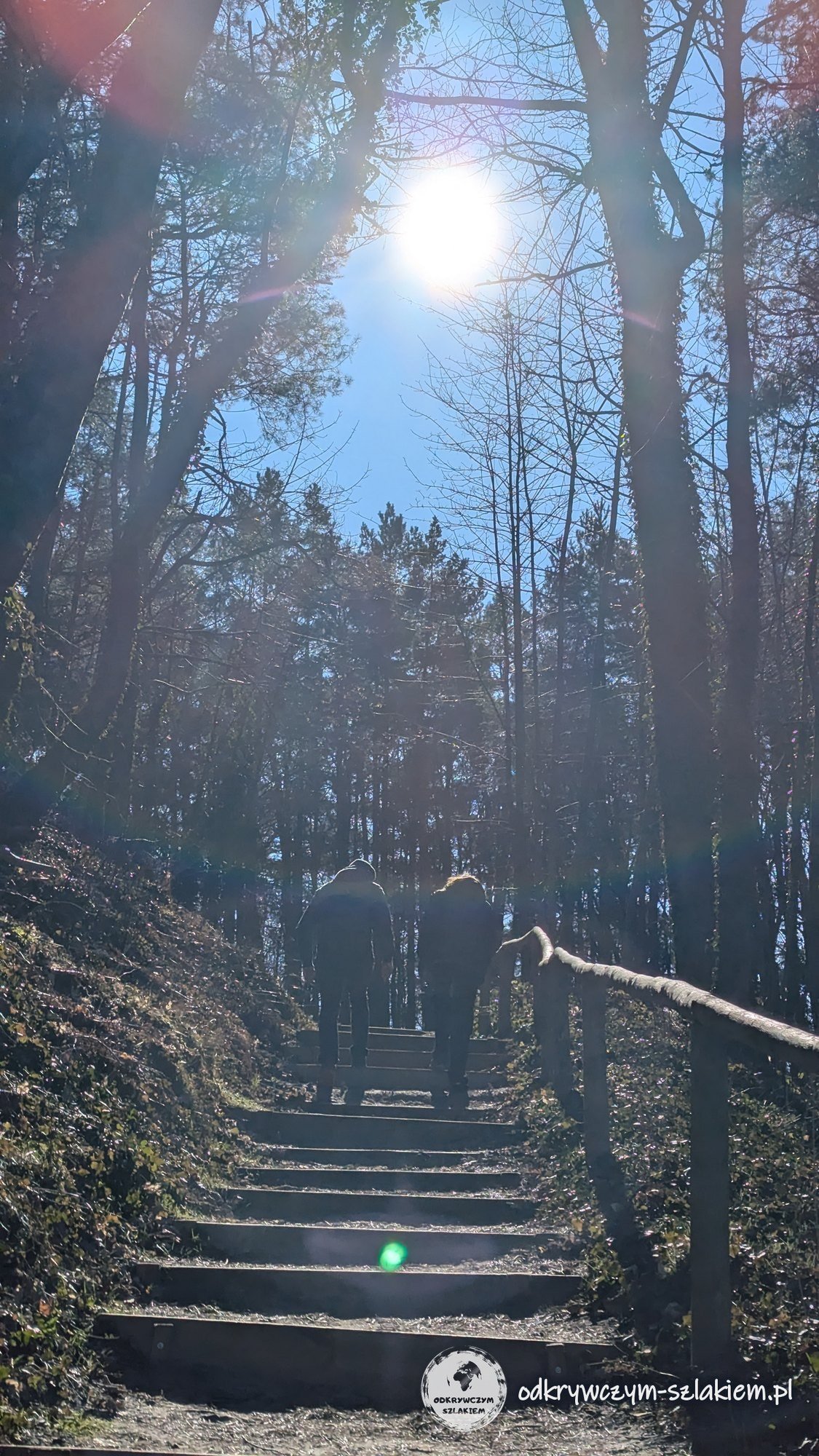
On top of the cliff stands a granite obelisk called Gwiazda Północy (the North Star), put up on the initiative of the Society of Friends of Jastrzębia Góra. It marks the northernmost point of Poland. For years Rozewie was thought to hold that title, but geodetic surveys in the early 21st century pointed to the shore at Jastrzębia Góra. The point itself (54°50′08.8″N, 18°18′00.6″E) lies on the beach at the foot of the cliff and is marked with a red-and-white post.
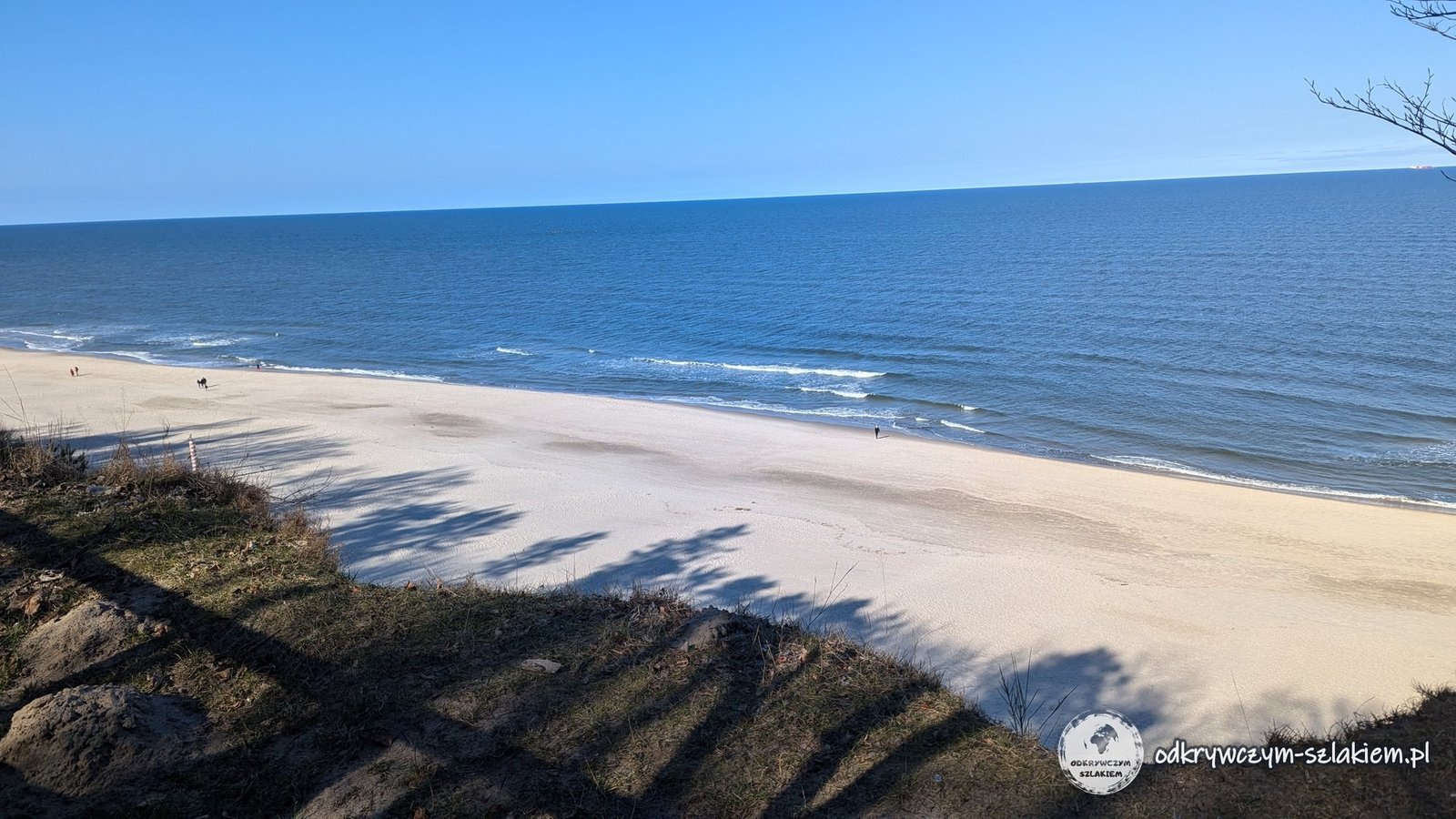
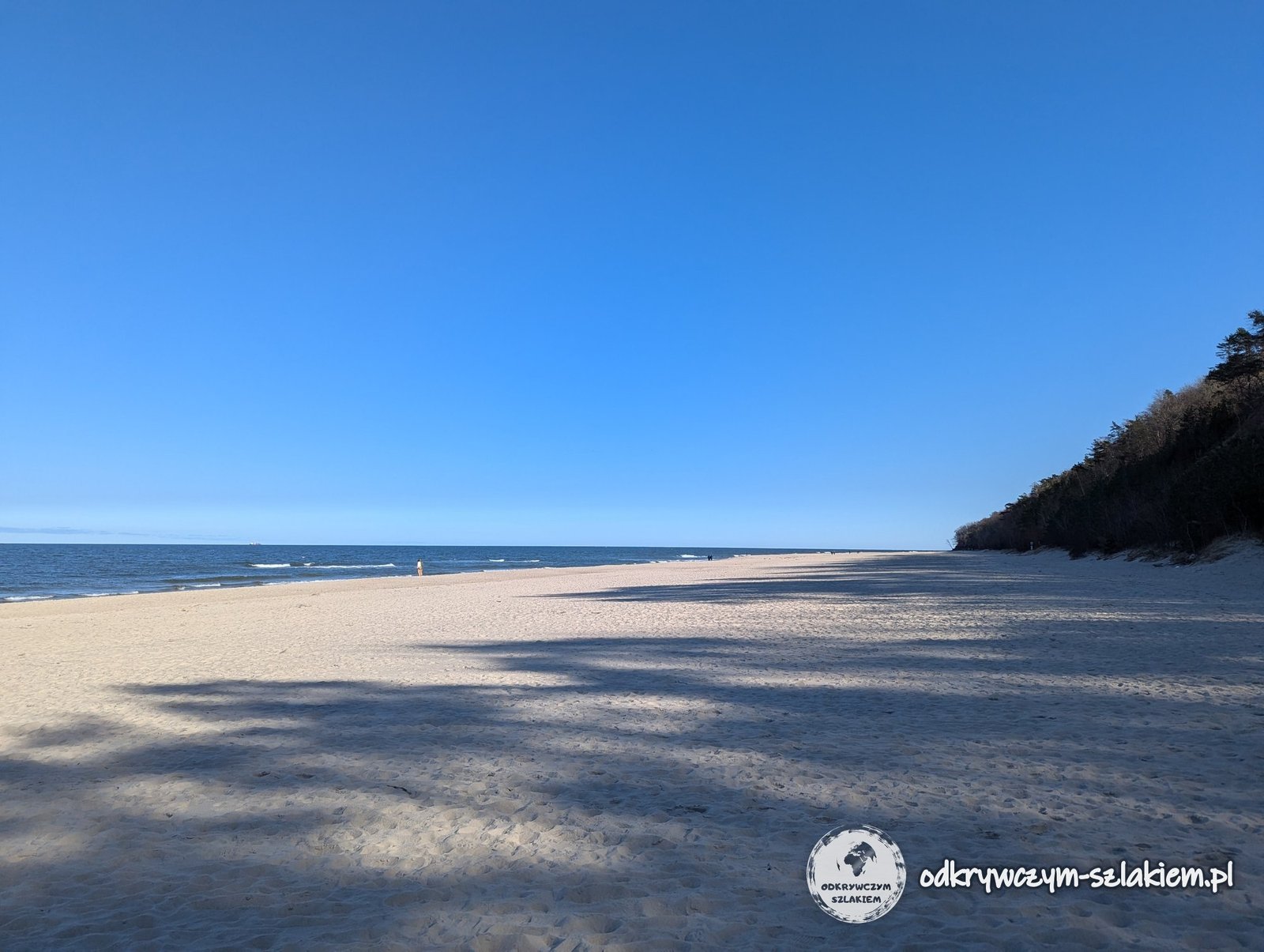
I went down to the beach a few hundred metres east of that spot. In March it was almost empty, with the forested wall of the cliff rising above it.
A path along the top of the cliff leads east towards Rozewie – the sea keeps showing between the trees.
Lisi Jar and the Sigismund III Vasa obelisk
Between Jastrzębia Góra and Rozewie the cliff is cut by Lisi Jar (Fox Ravine) – a gorge about 350 m long, with steep slopes covered in beech trees. The beech forest on the cliff is protected by the Przylądek Rozewski nature reserve.
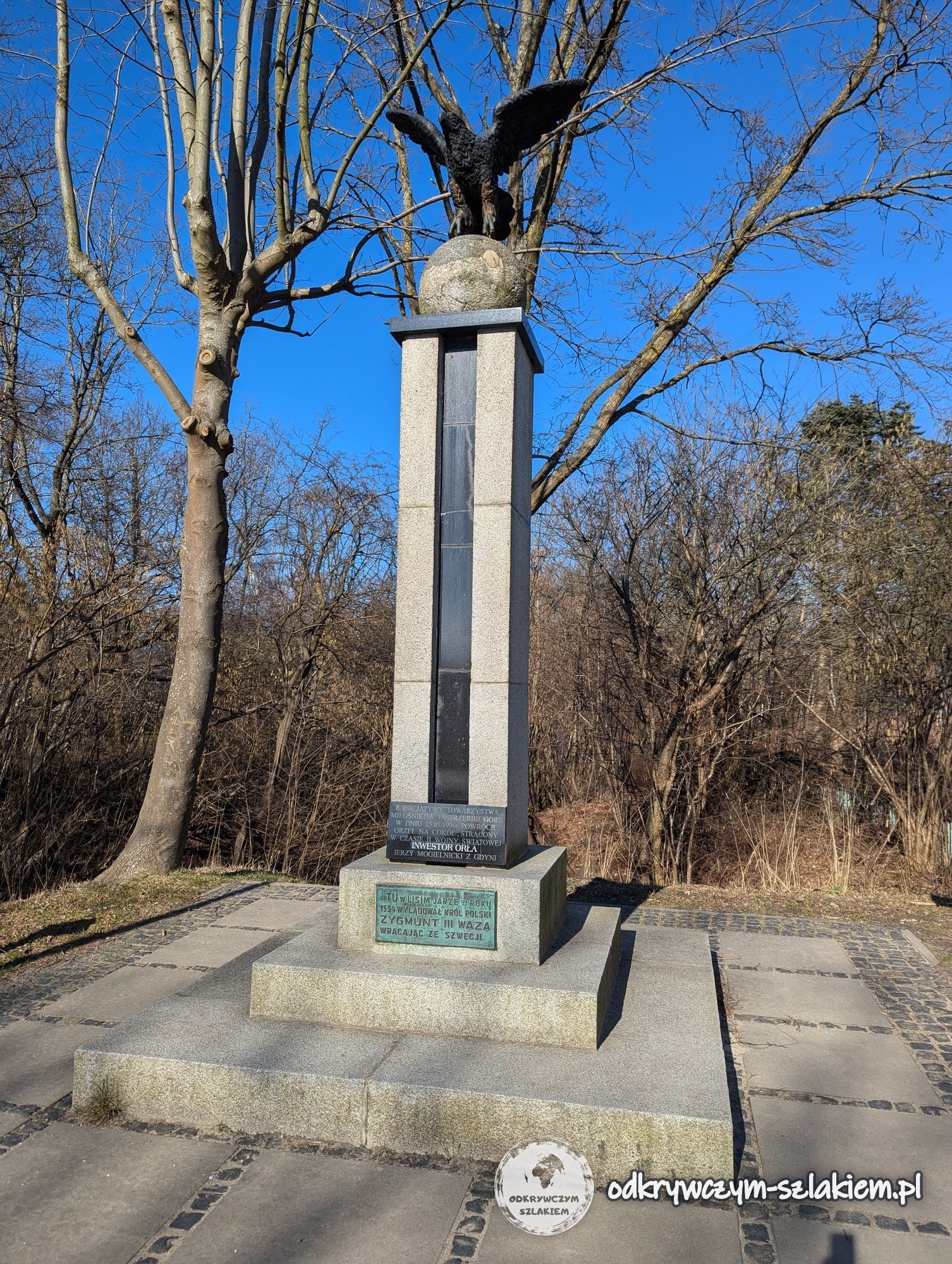
At the entrance to the ravine stands an obelisk with an eagle on a globe. The plaque on its base says that in 1594 King Sigismund III Vasa landed here on his way back from Sweden. The eagle was knocked down during the Second World War and returned to the pedestal on 25 May 1996, on the initiative of the Society of Friends of Jastrzębia Góra.
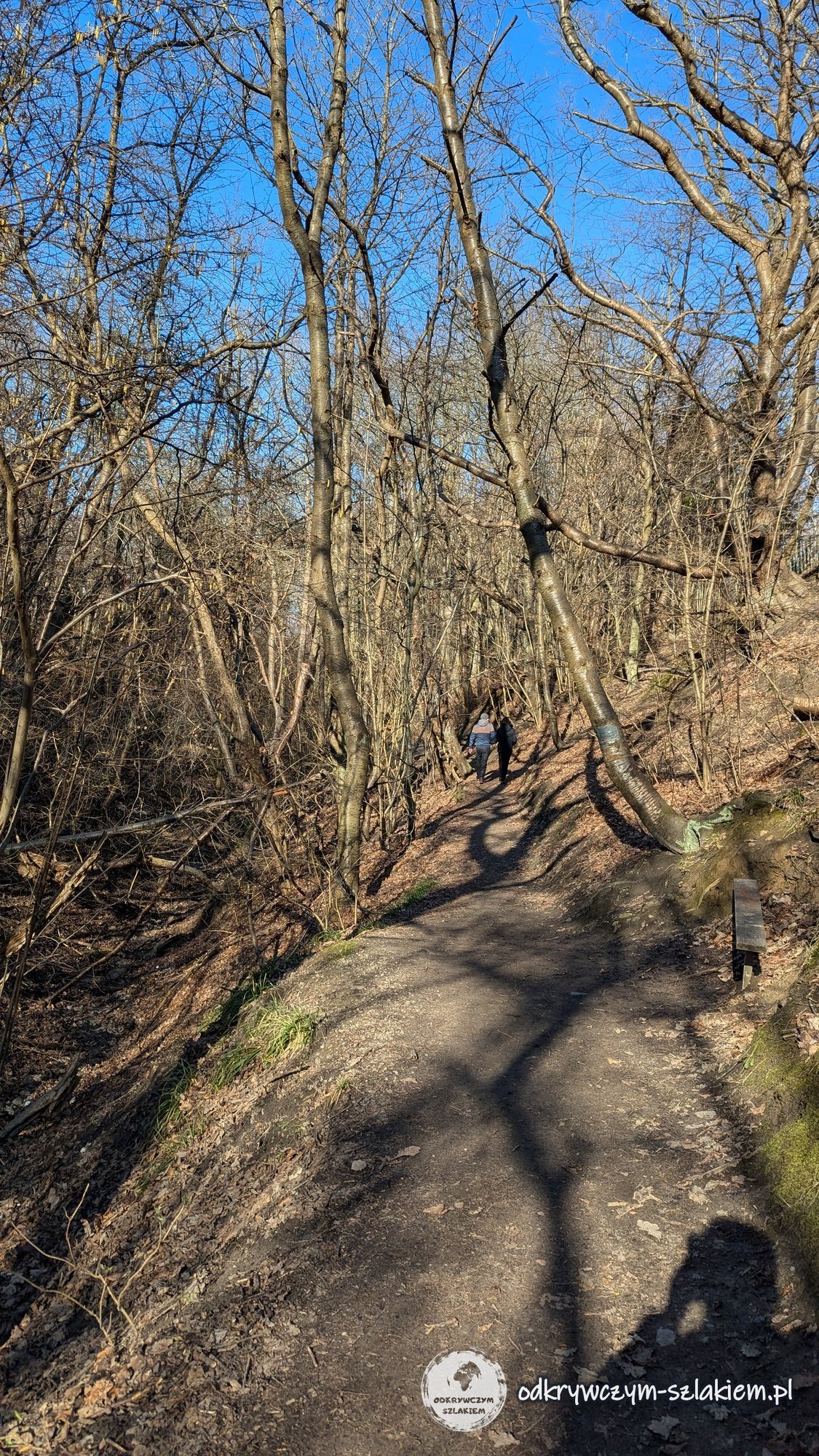
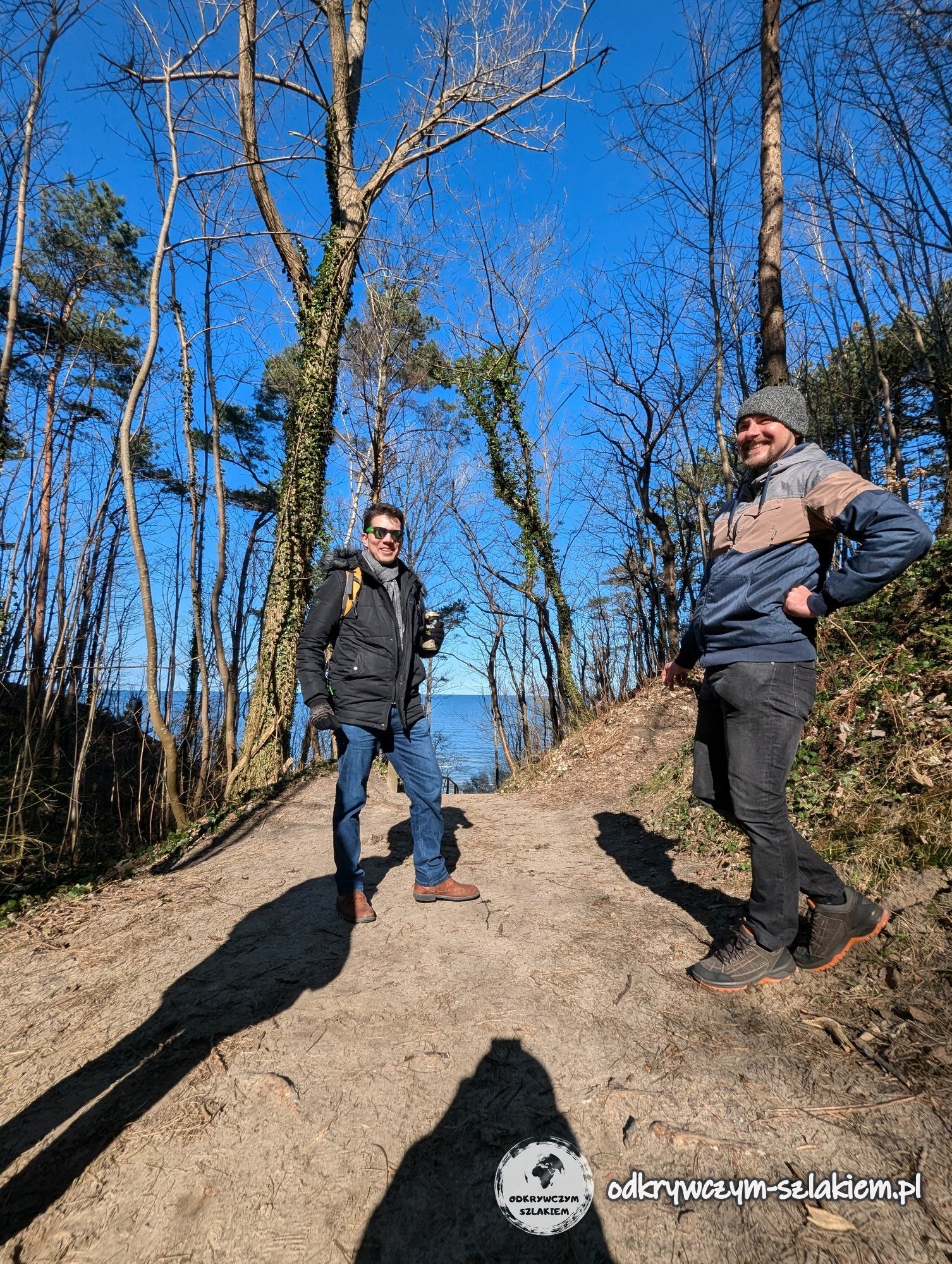
The path follows the bottom of the ravine towards the sea. In March the beeches had no leaves yet, so the steep slopes were easy to see.
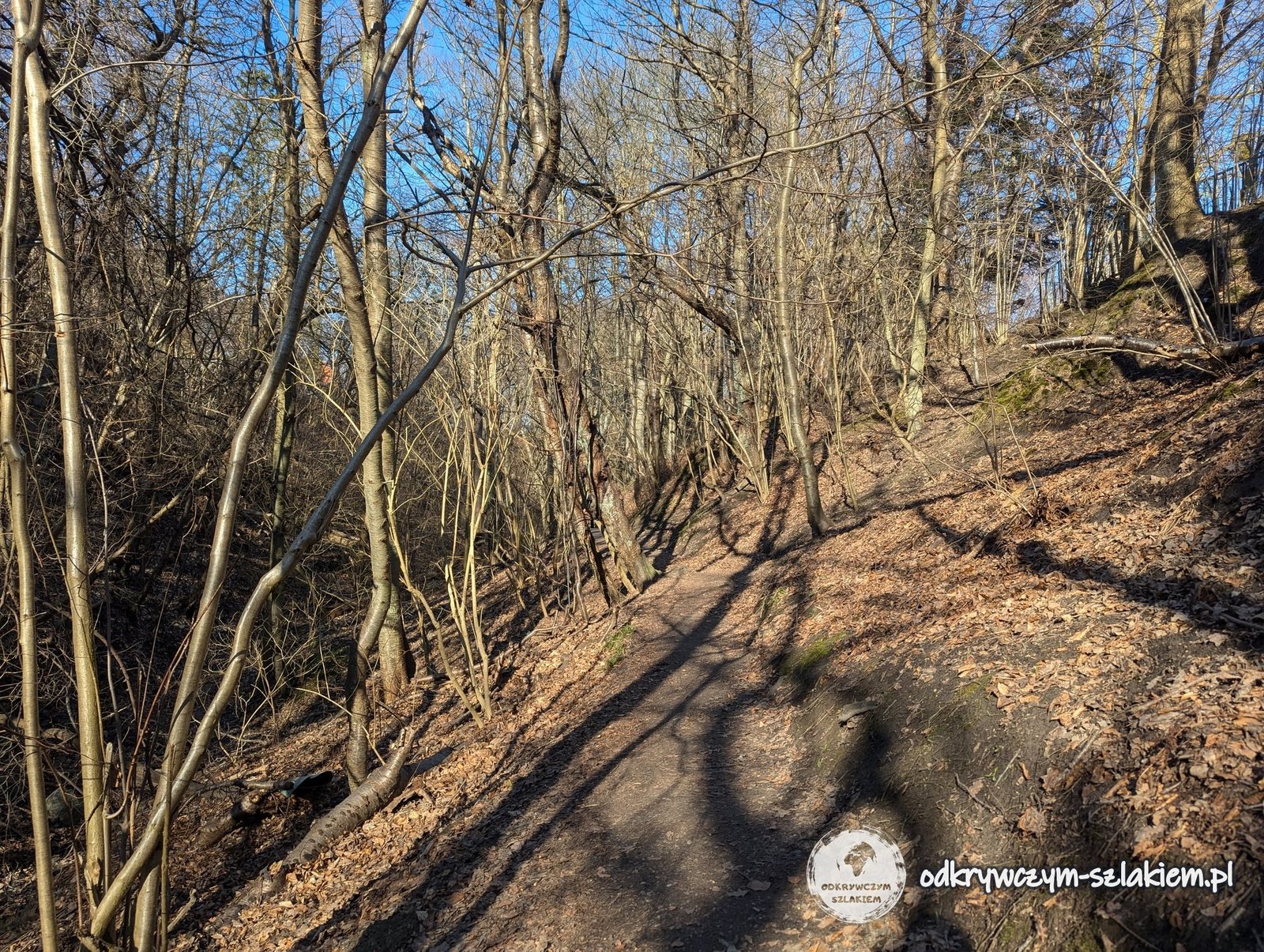
Some beeches grow right on the slopes and have thick, exposed roots.
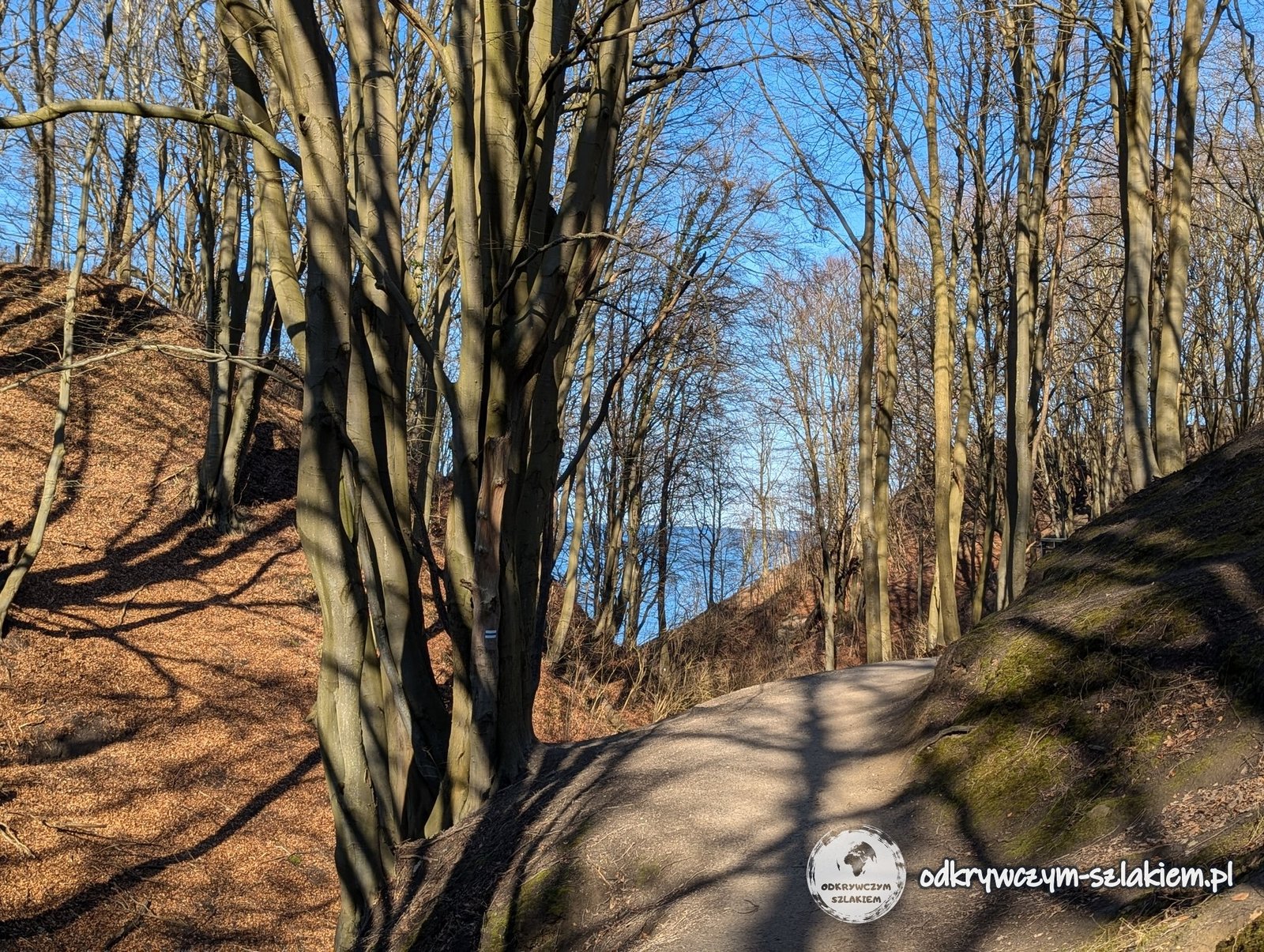
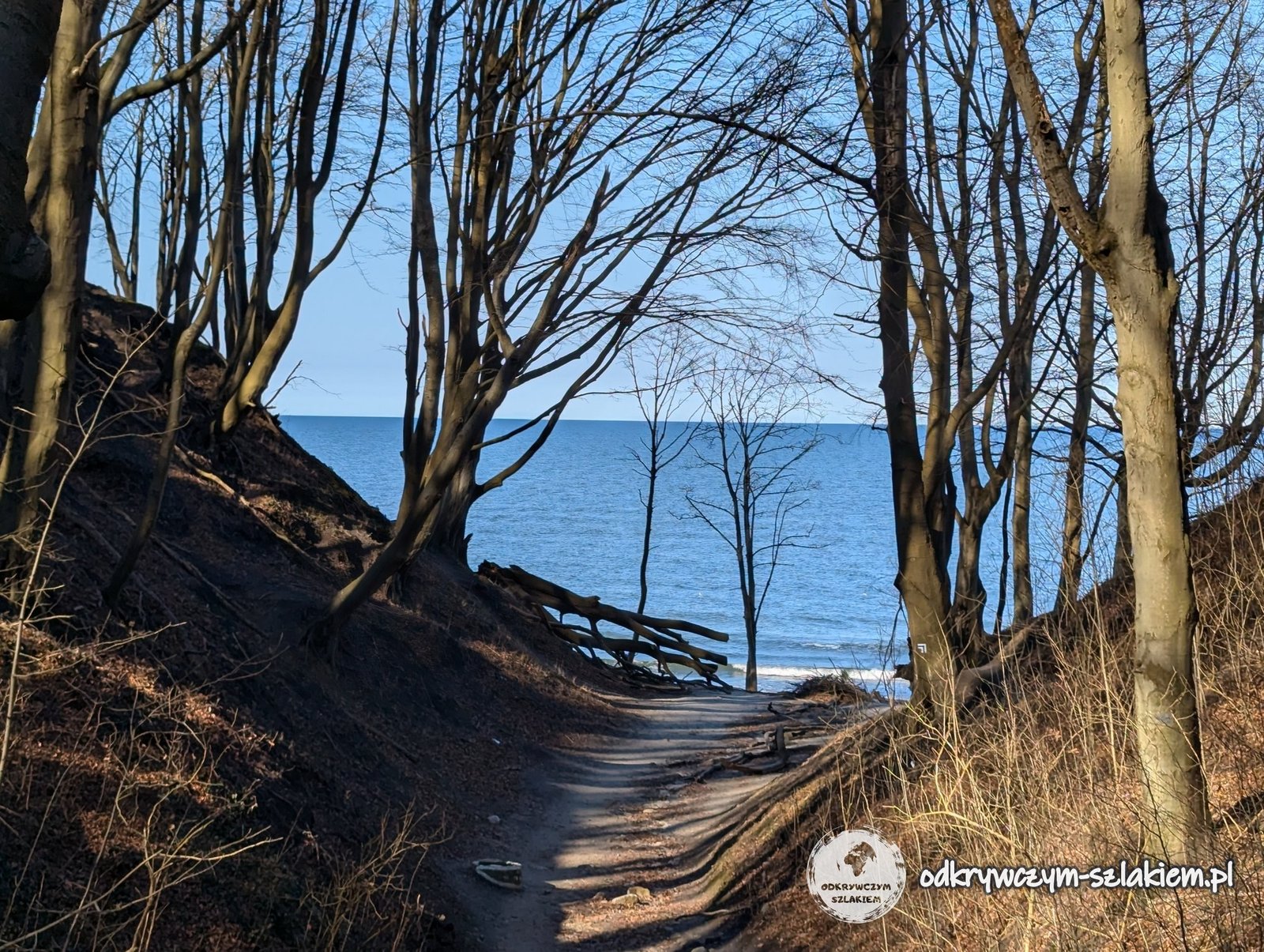
At its mouth, Lisi Jar opens onto the beach and the sea.
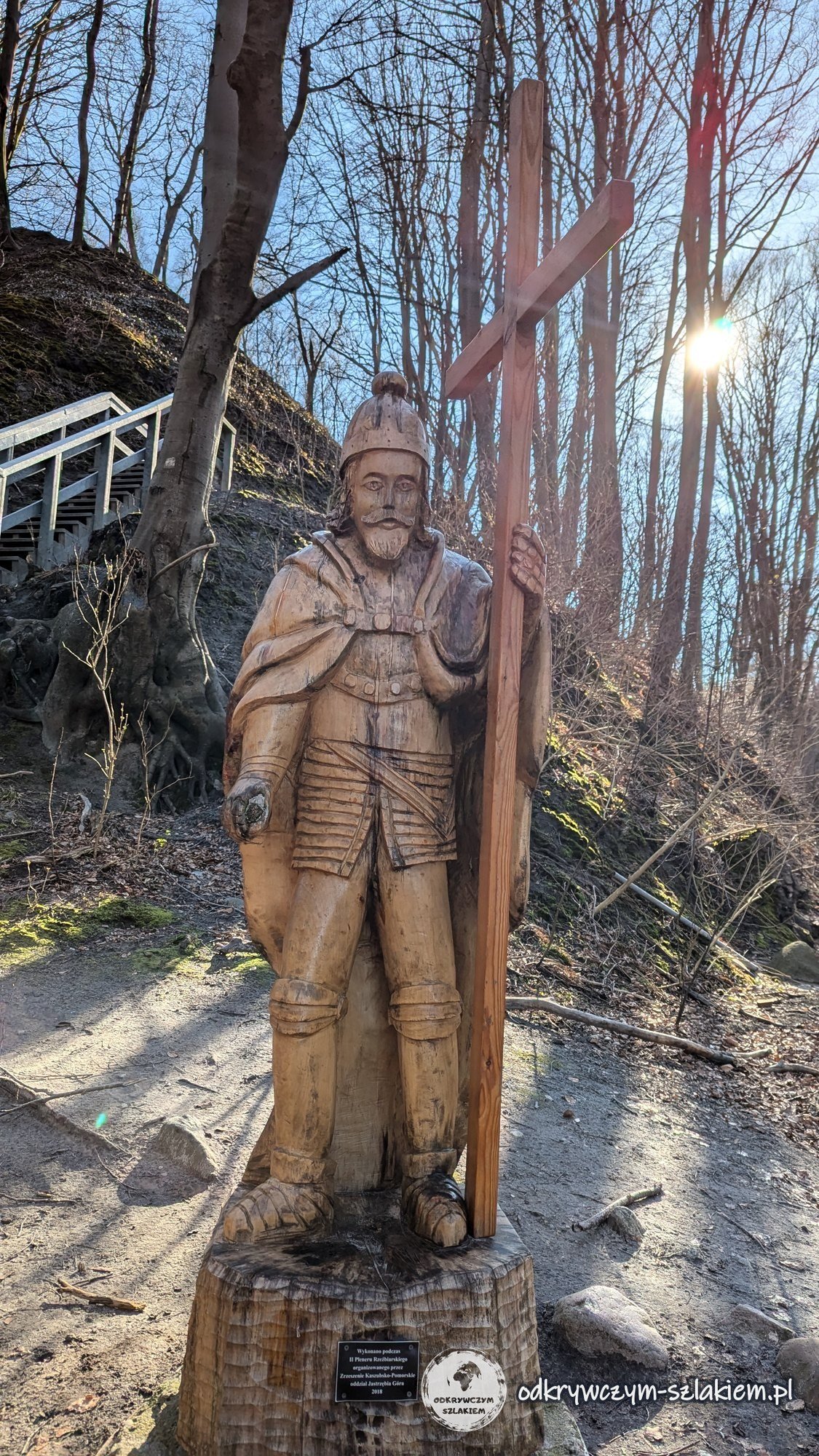
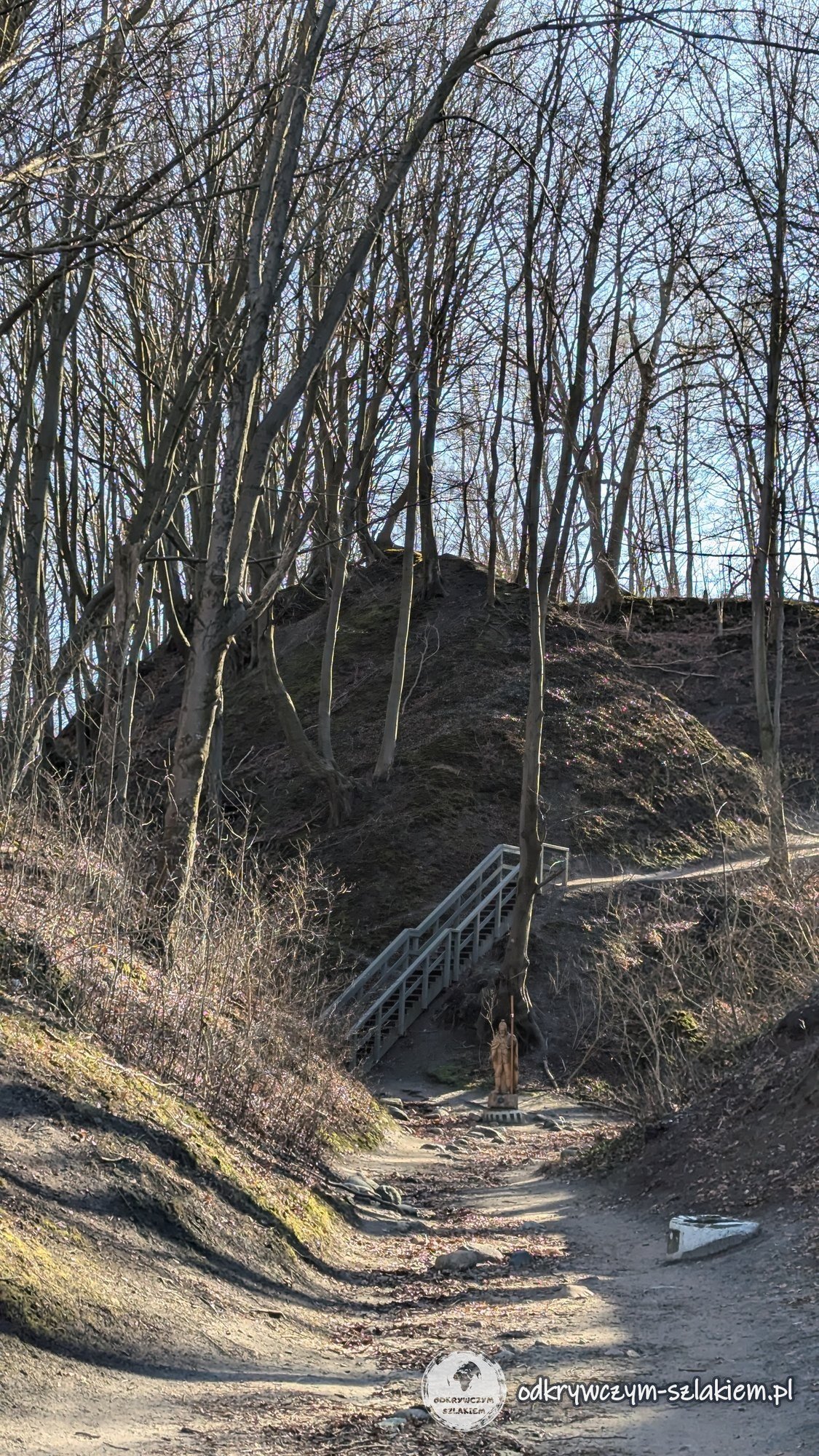
By the path stands a wooden sculpture of a knight holding a cross. According to the plaque, it was carved in 2018 during the 2nd Sculpture Plein Air organised by the Jastrzębia Góra branch of the Kashubian-Pomeranian Association. Stairs lead from the slope of the ravine up to the top of the cliff.
Cape Rozewie and its two lighthouses
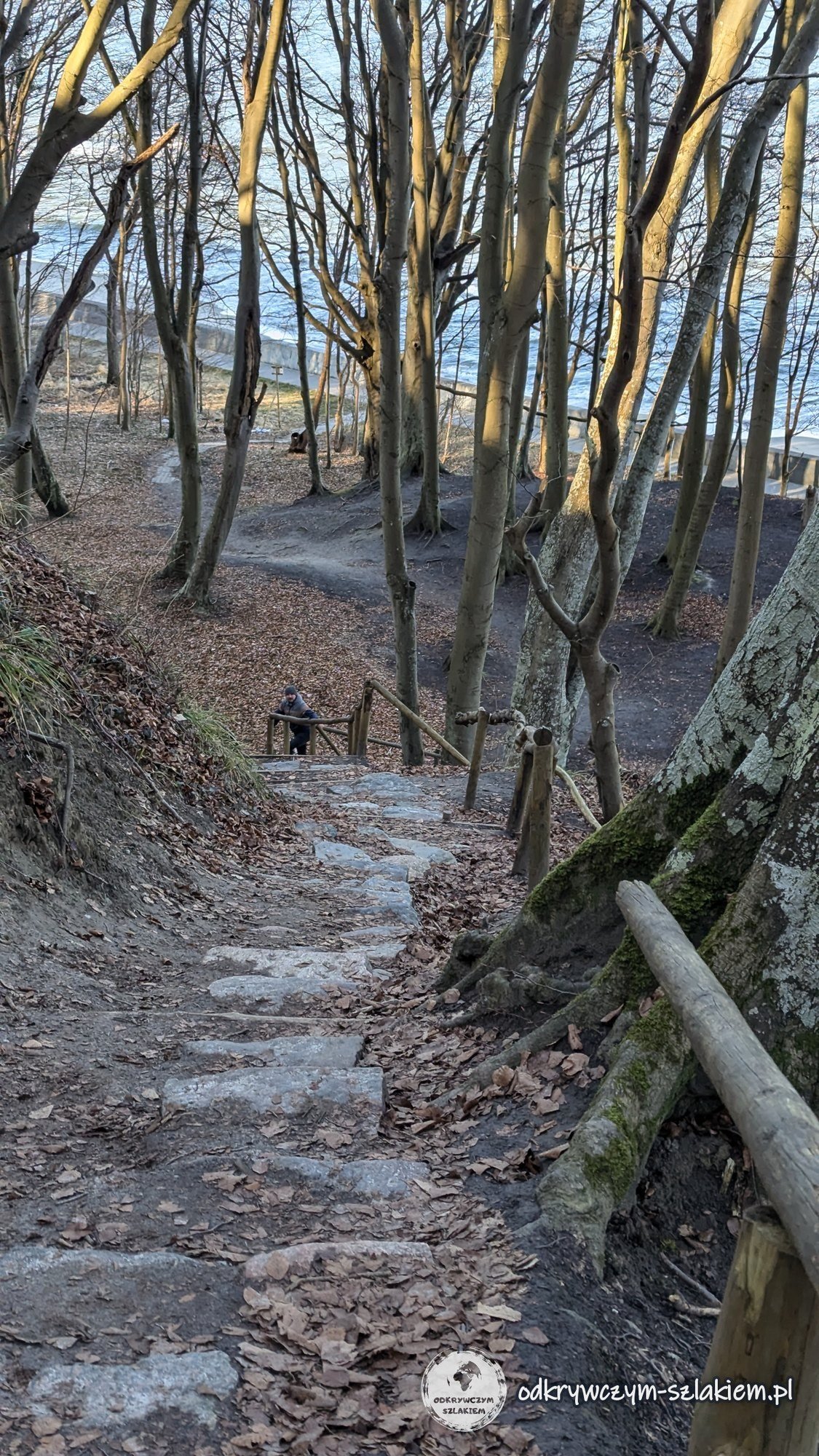
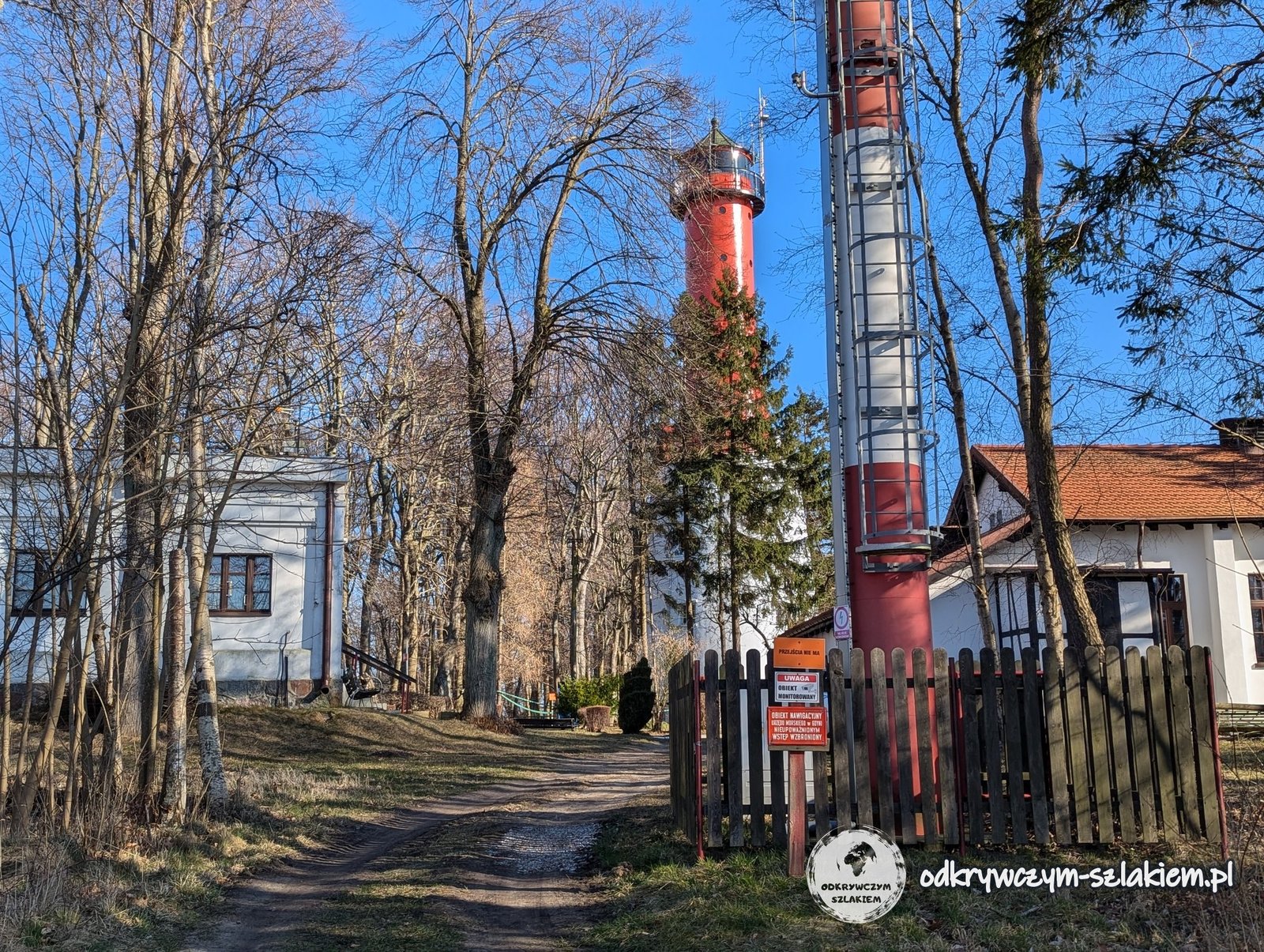
Stone stairs lead from the beach through a beech forest up to Cape Rozewie. On the hill, about 52 m above sea level, stand two lighthouses. The older one, Rozewie I, has been shining since 15 November 1822. Its stone tower was raised with a steel top section in 1910 and by another 8 m in 1978. Today it is 33 m high, and its light can be seen from 26 nautical miles away.
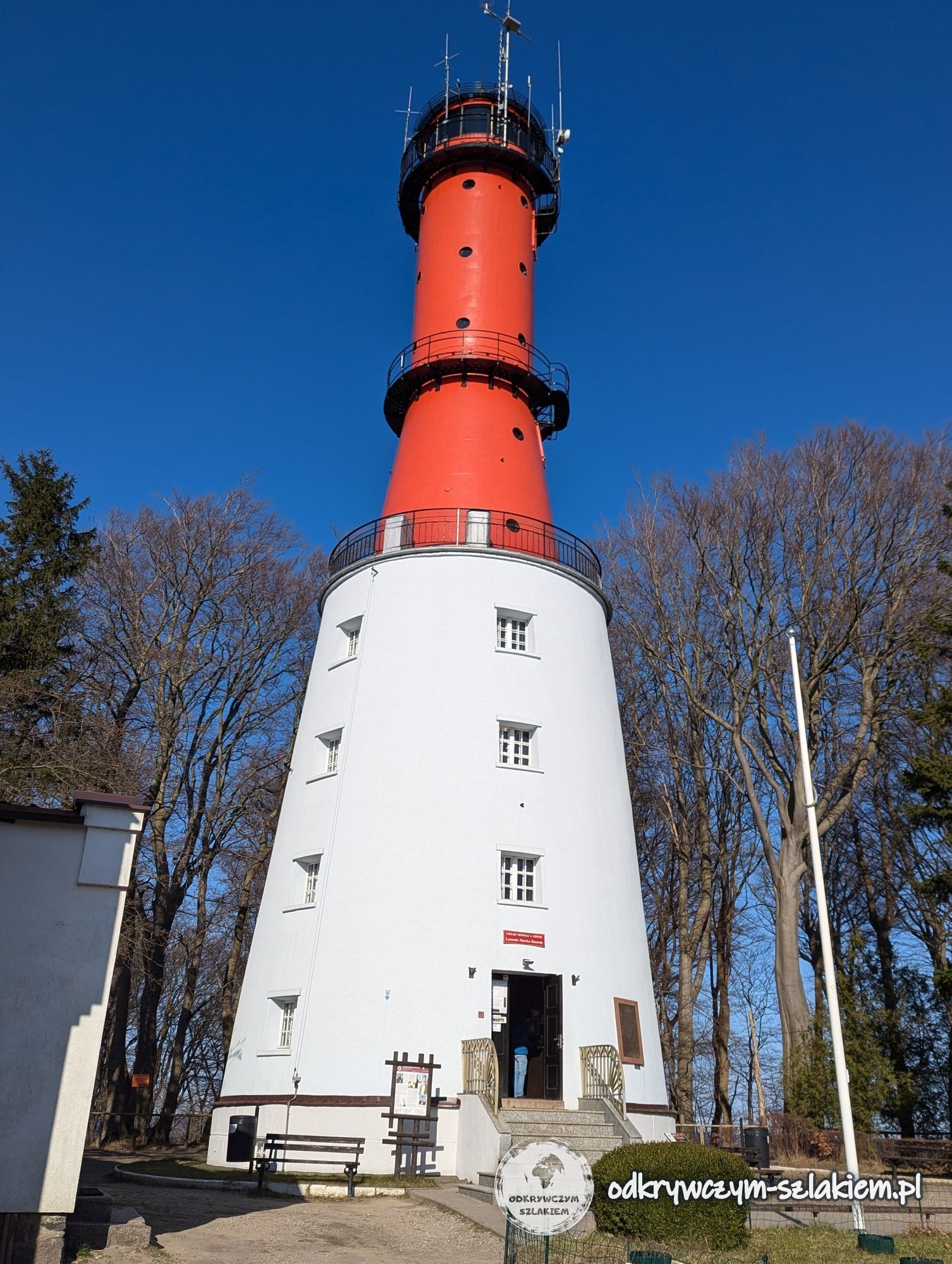
In 1933 the lighthouse was named after Stefan Żeromski, who worked here on his novel “Wiatr od morza” (The Wind from the Sea). Since 1963 the tower has housed an exhibition on lighthouses, looked after by the Society of Friends of the National Maritime Museum.
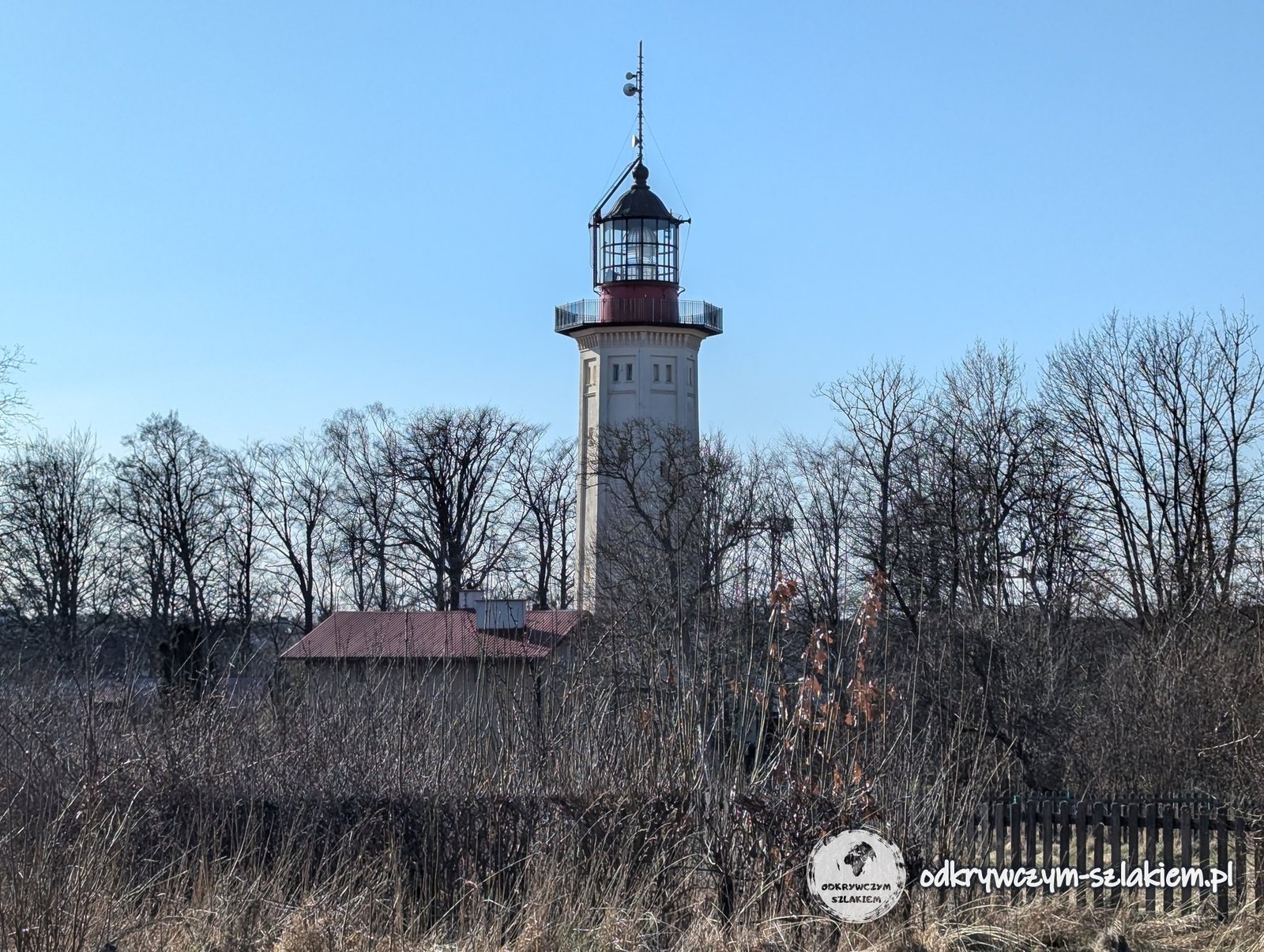
Next to it stands the white, octagonal tower of Rozewie II. It was first lit on 1 January 1875, and both lighthouses worked together until 1910, when Rozewie II was switched off after the older lighthouse had been modernised. From the 1950s it served as a Navy observation post. After restoration in 2014–2015 it has been open to visitors since 1 May 2022.
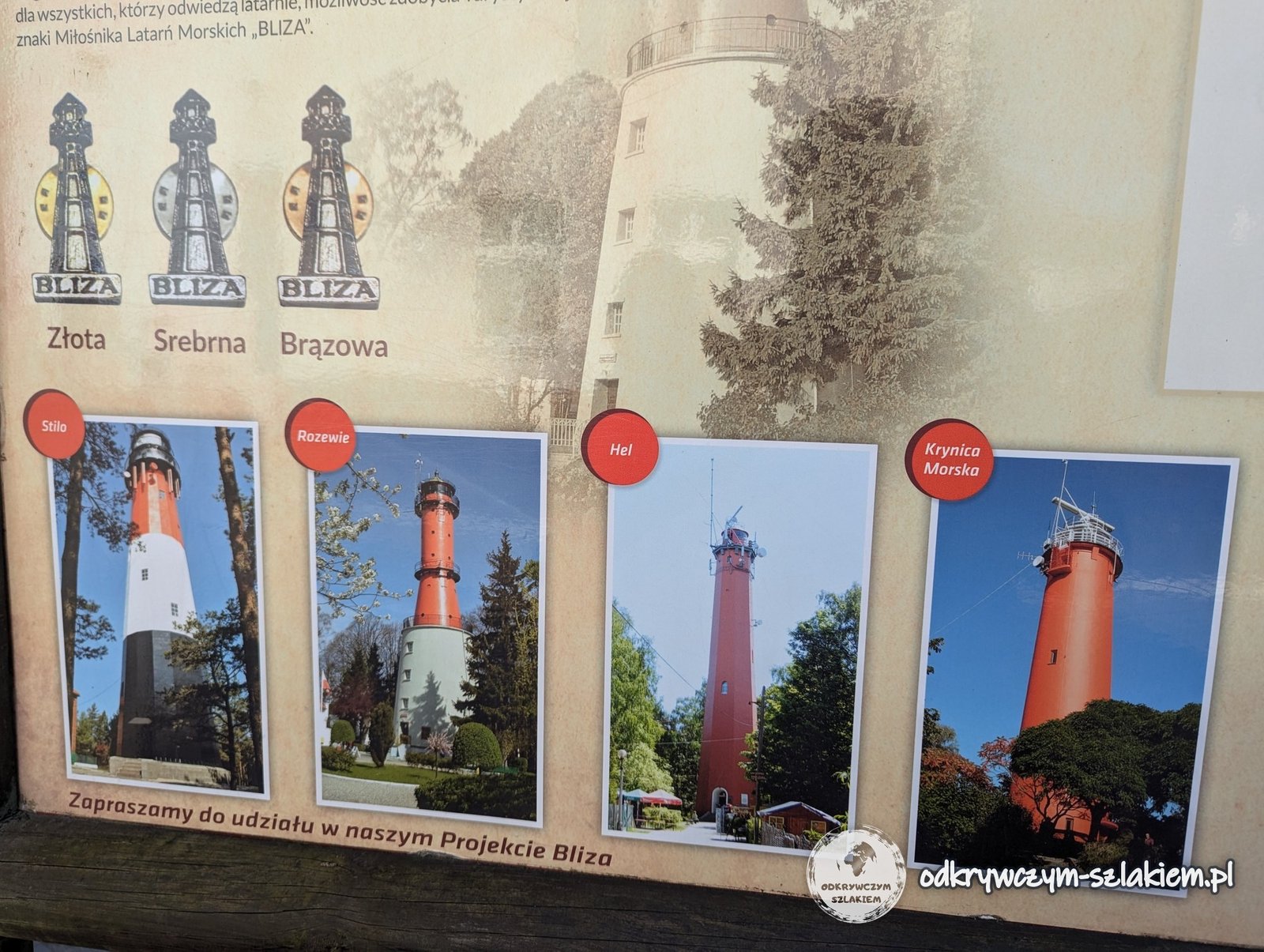
By the lighthouse hangs a board about the “Bliza” tourist badge for lighthouse lovers. Anyone who visits 5 Polish lighthouses within 2 years and collects stamps – “visas” – in a special passport gets a bronze badge. All 13 Polish lighthouses earn the silver one, and 3 more abroad the gold one. In March 2025 the passport cost 20 zł.
Puck – the market square, the town hall and the lion in the coat of arms
Puck lies on the Bay of Puck. It received its town charter in 1348. Under Sigismund Augustus, Stephen Báthory and Władysław IV it was a fortress and, at times, a base of the Polish fleet – it is called the first Polish naval port.
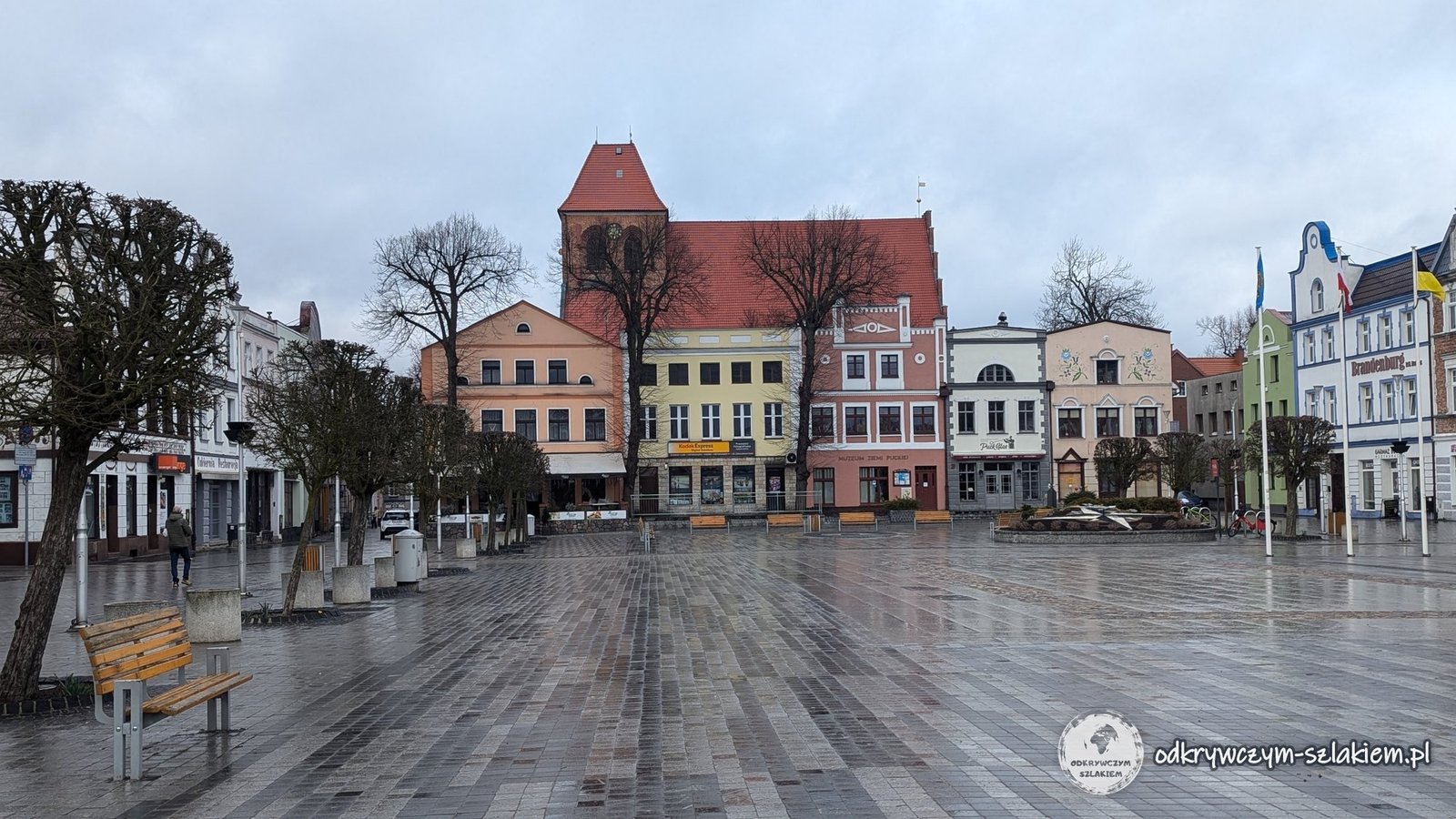
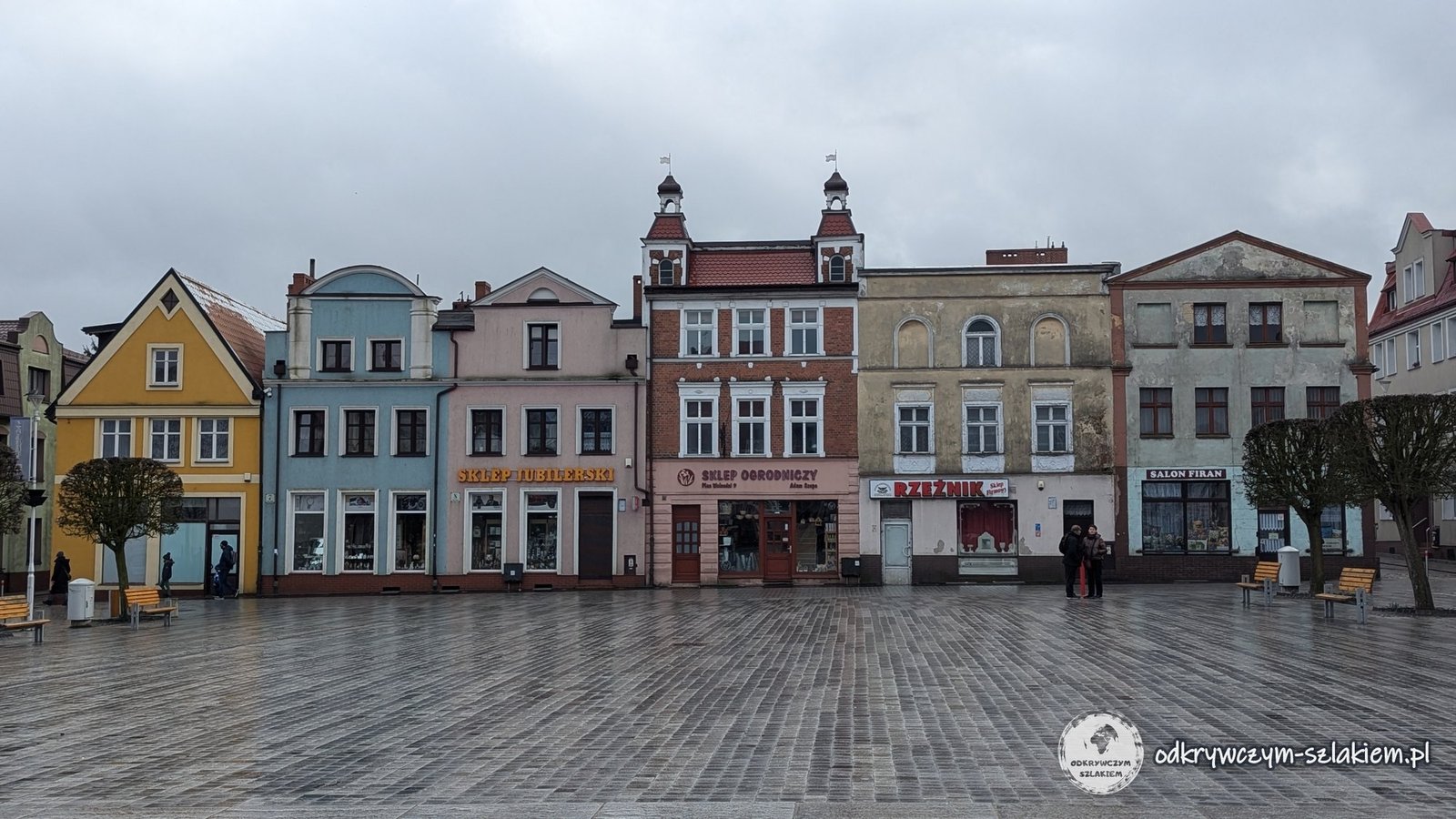
The heart of the town is the market square – Plac Wolności (Freedom Square) – with colourful townhouses from the second half of the 19th century and a neo-Gothic town hall from 1865. On Sunday afternoon, after the rain, it was almost empty.
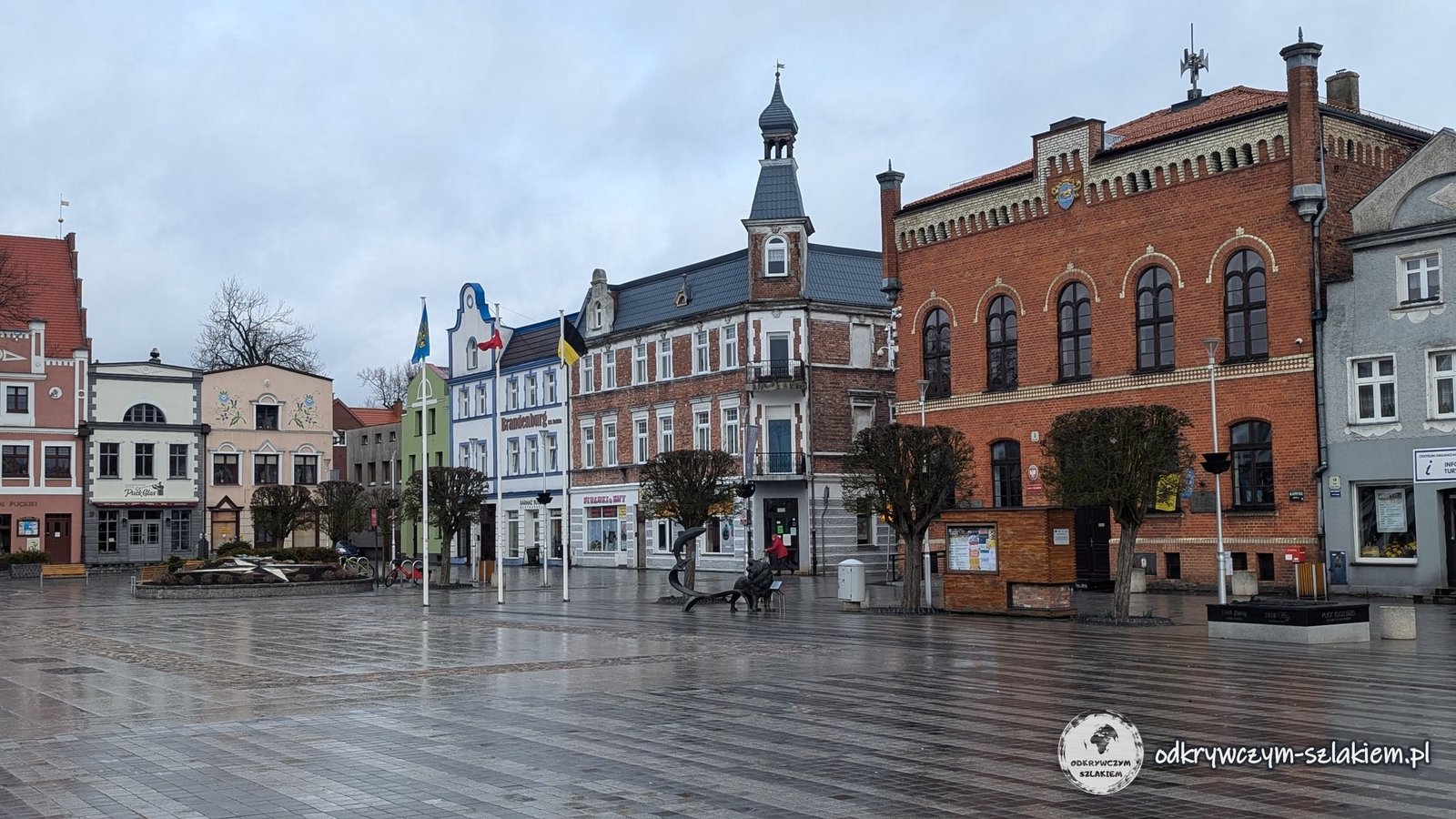
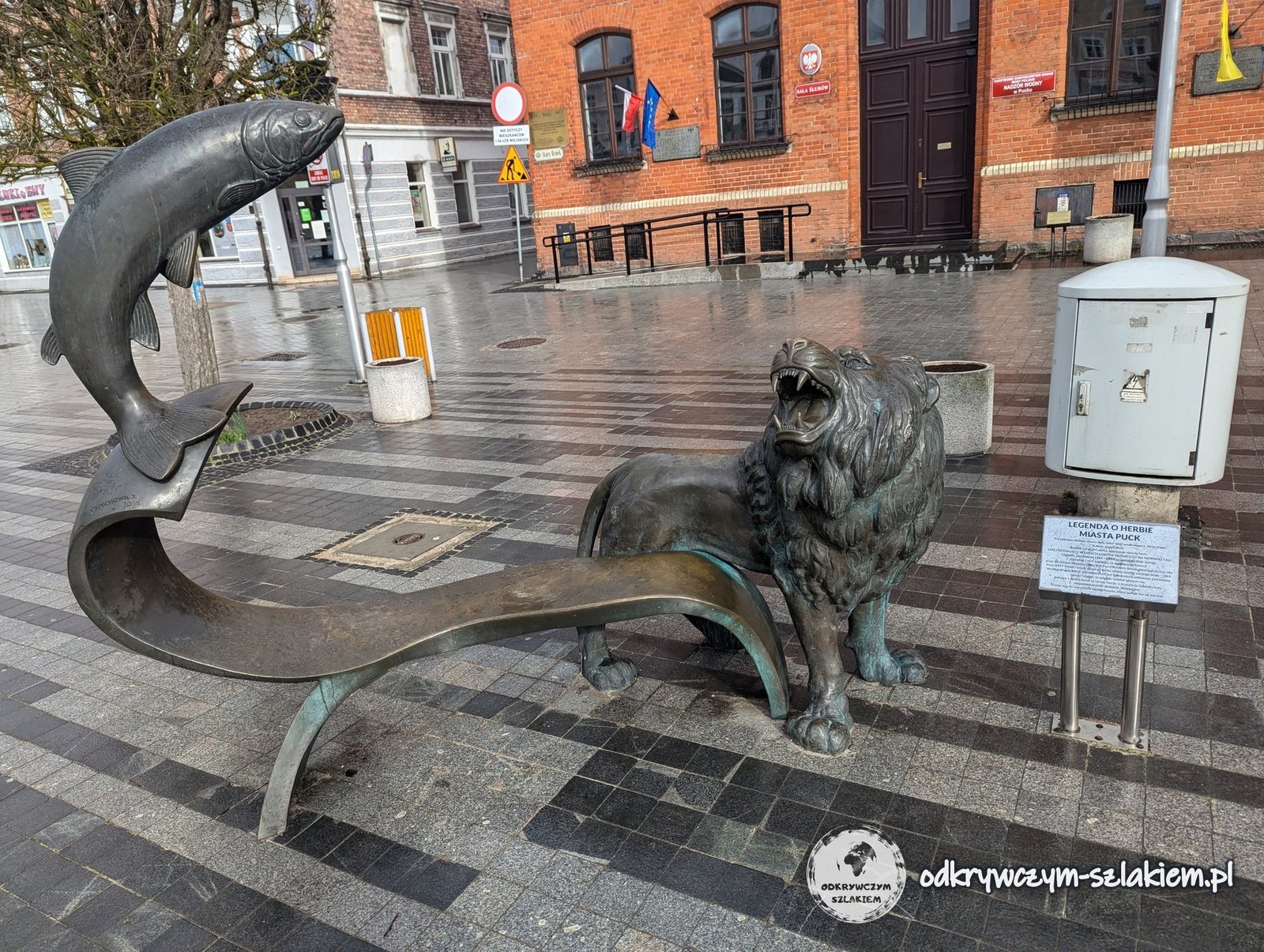
On the square there is a bench with sculptures of the lion and the salmon from the town’s coat of arms. A plaque next to it tells two legends. According to the first, the lion was added by the Swedish king Charles Knutsson Bonde, who was given Puck for three years (1457–1460). According to the second, the lion was lent by Gdańsk, to which Puck was pledged several times – which is why the lion holds tight to the salmon trying to wriggle free.
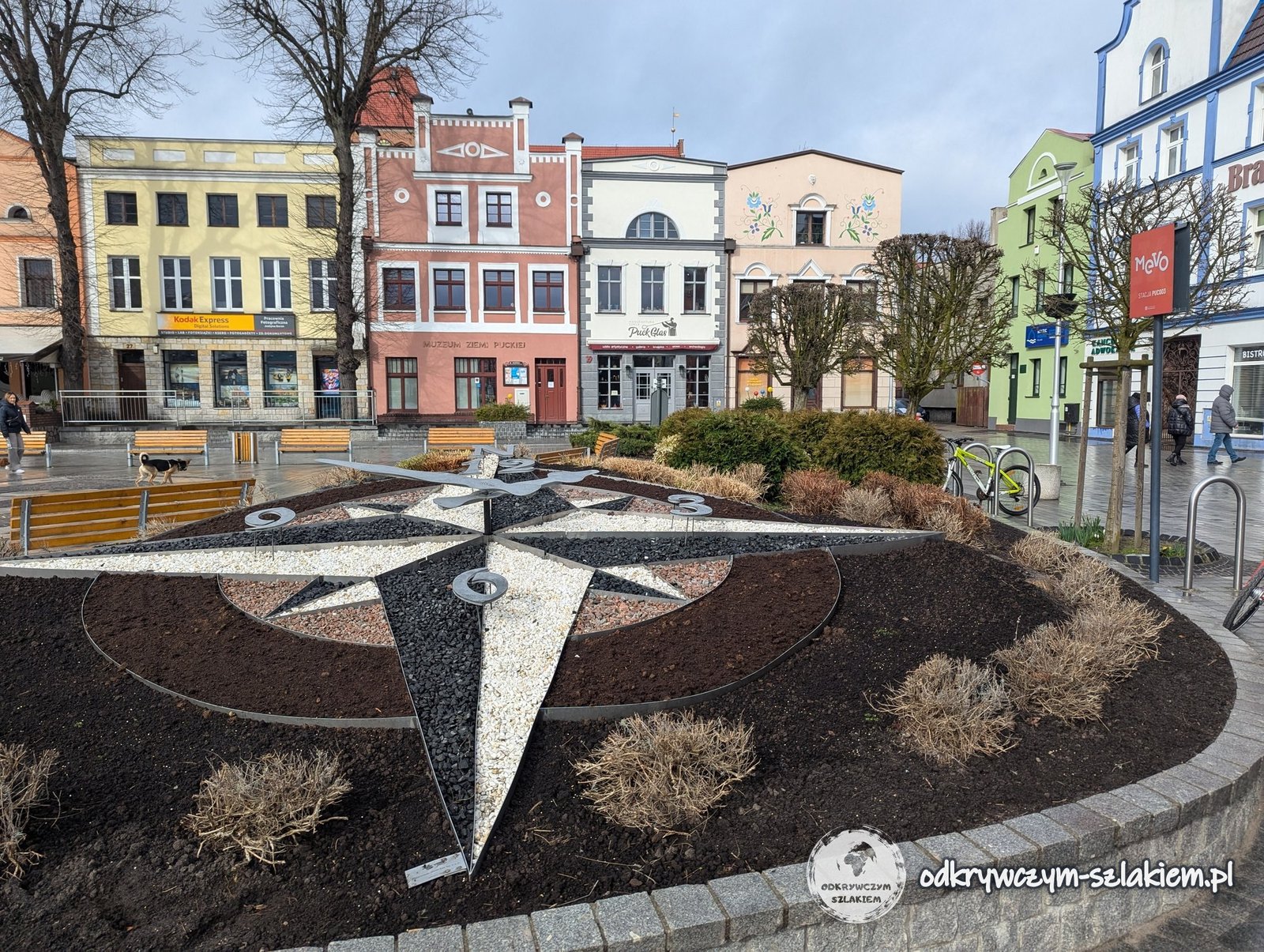
Next to the bench there is a flowerbed in the shape of a compass rose.
The Church of Sts Peter and Paul and Puck’s ramparts
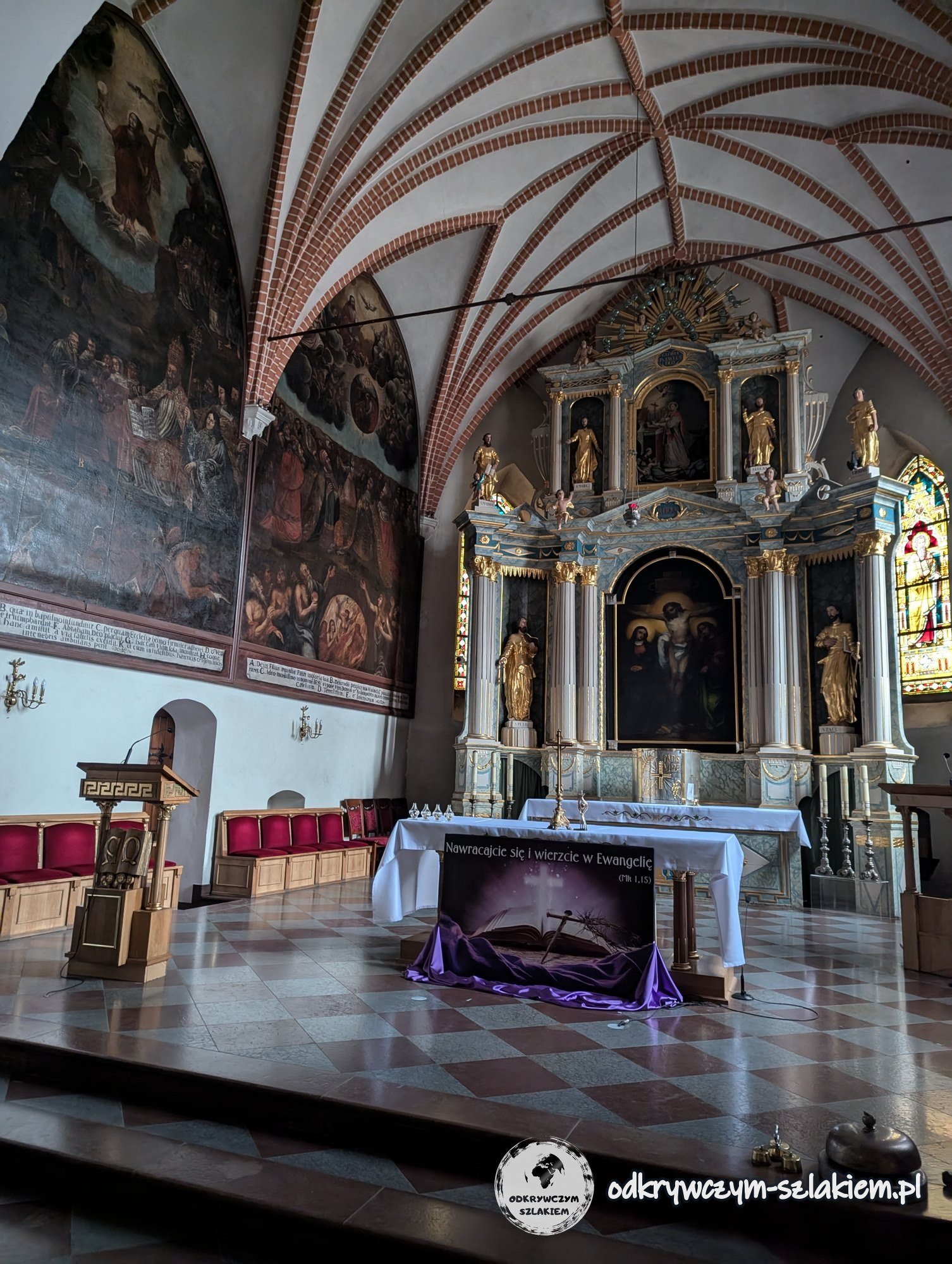
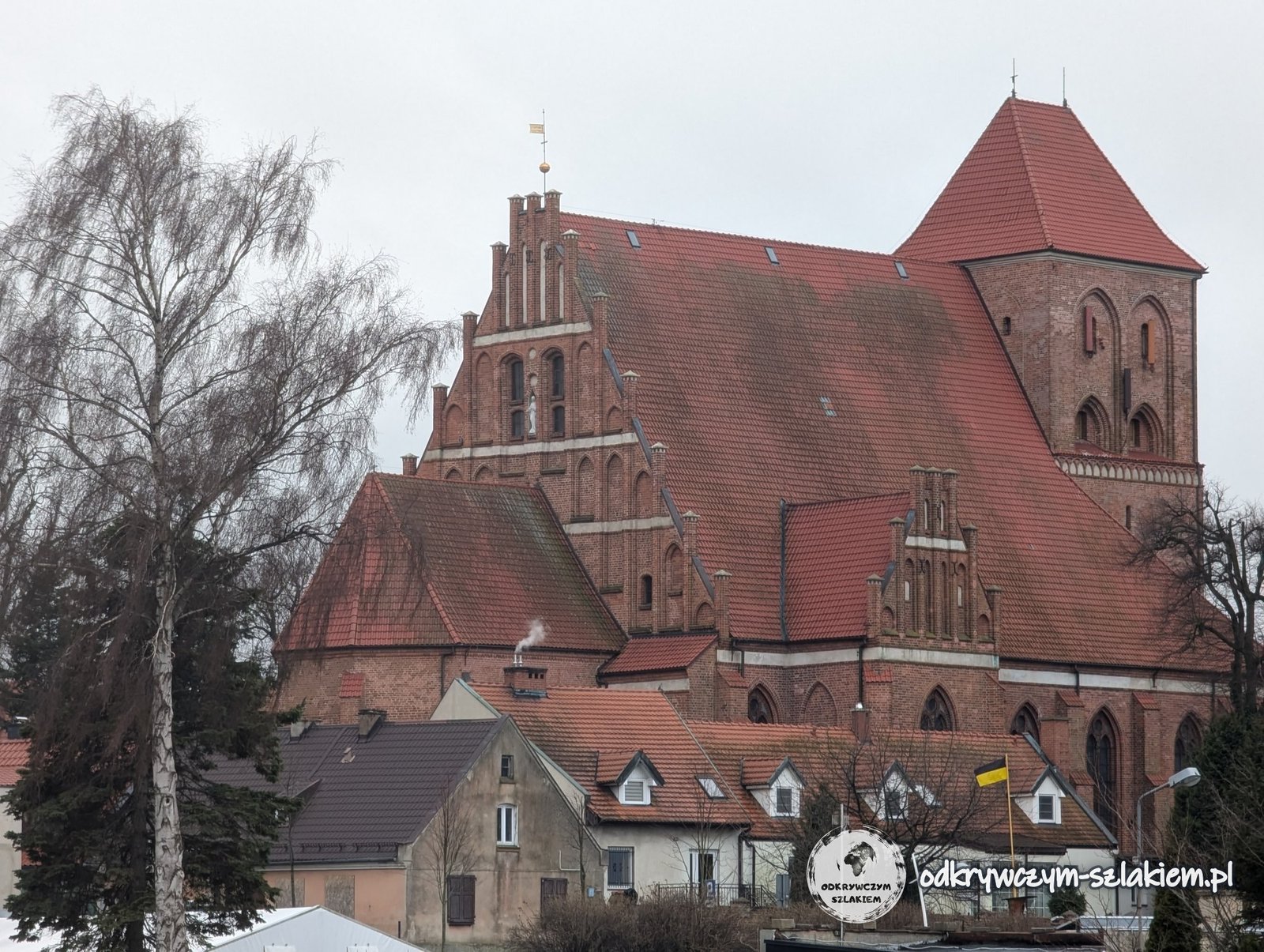
A few minutes from the square stands the Gothic parish church of the Apostles Peter and Paul with a brick tower. It was built in the 14th–15th centuries on the site of a 13th-century church. Inside are, among other things, an 18th-century high altar and the Wejher family chapel.
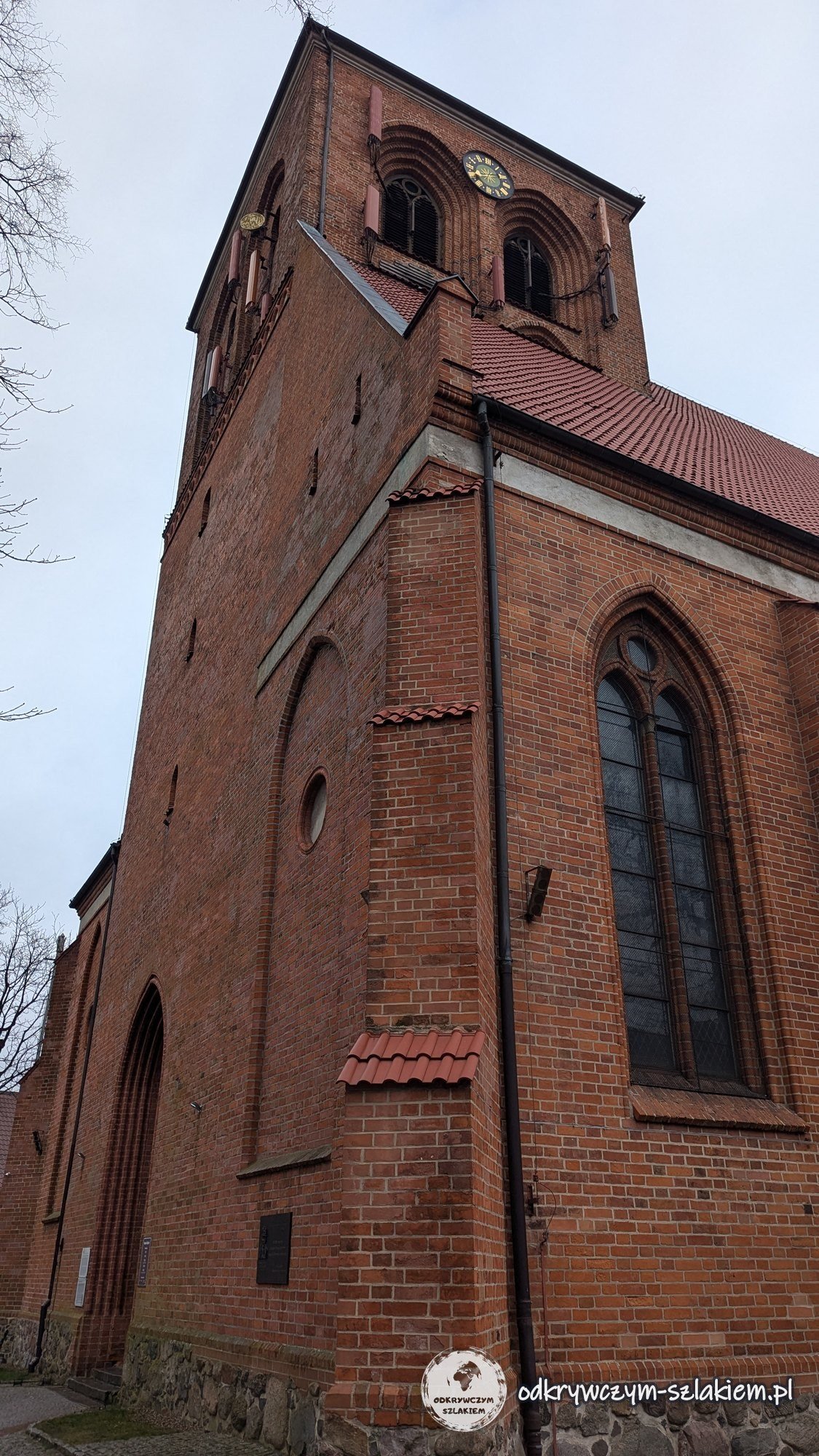
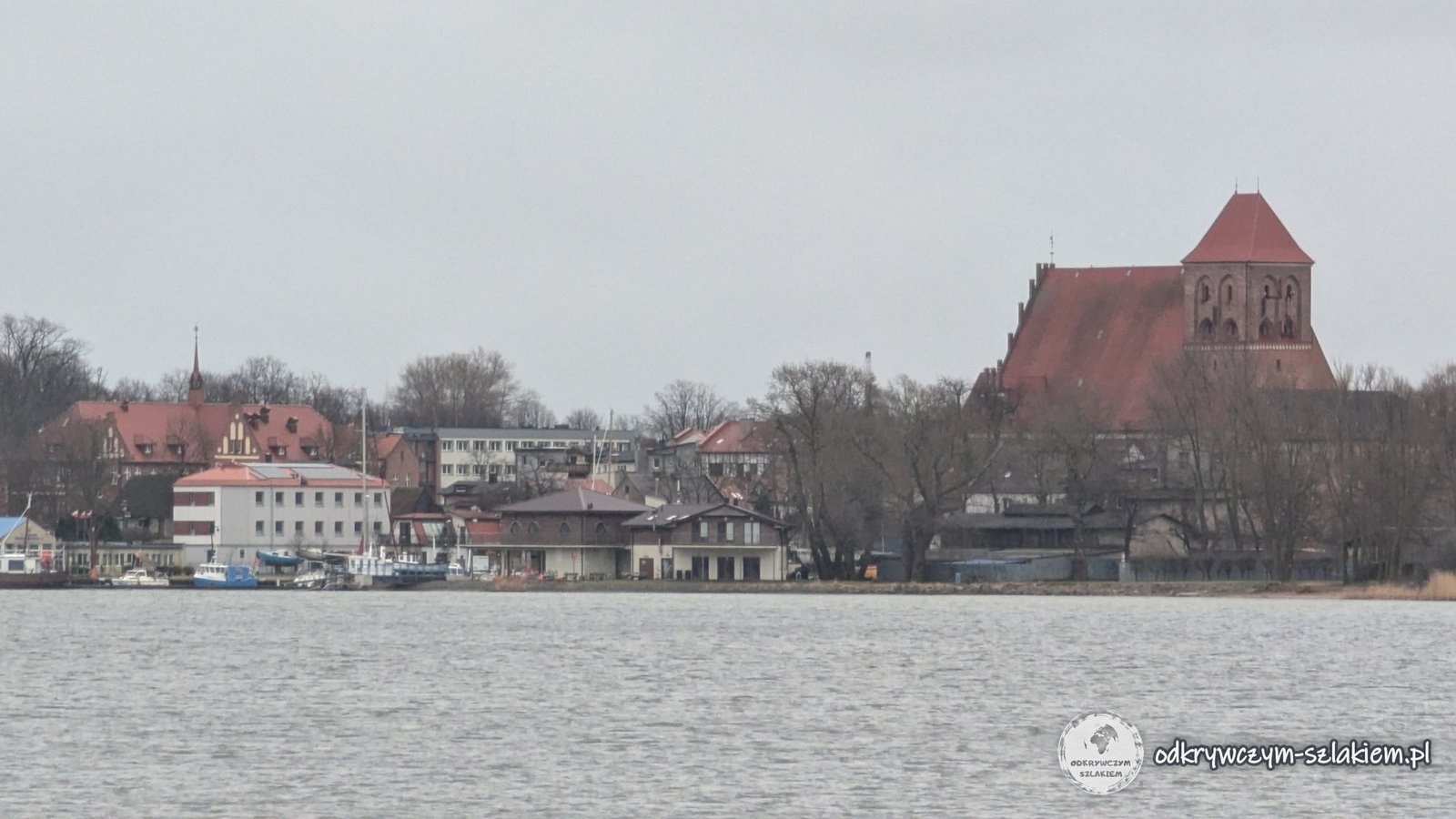
Seen from the harbour, the church towers over the roofs of the old town.
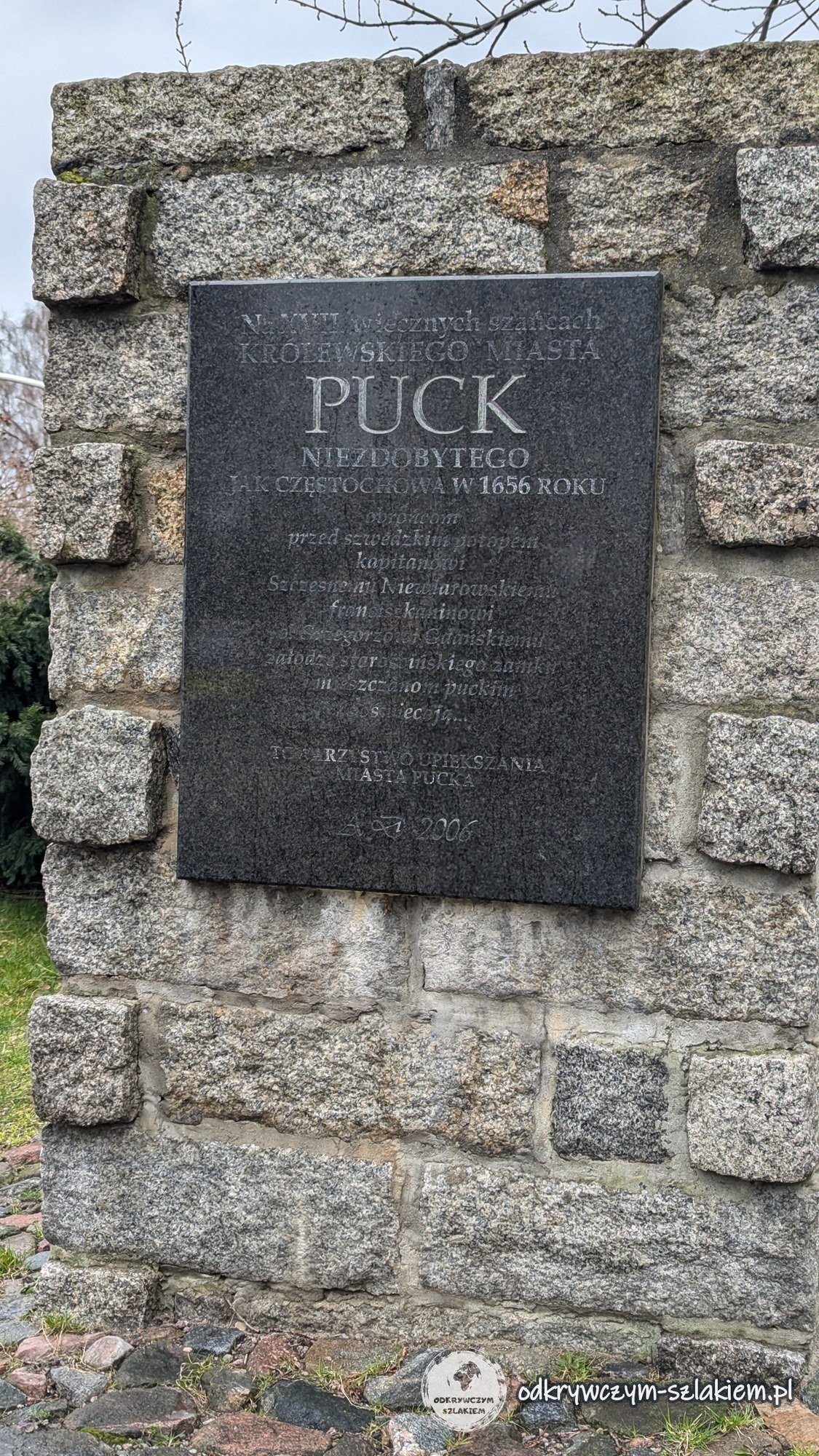
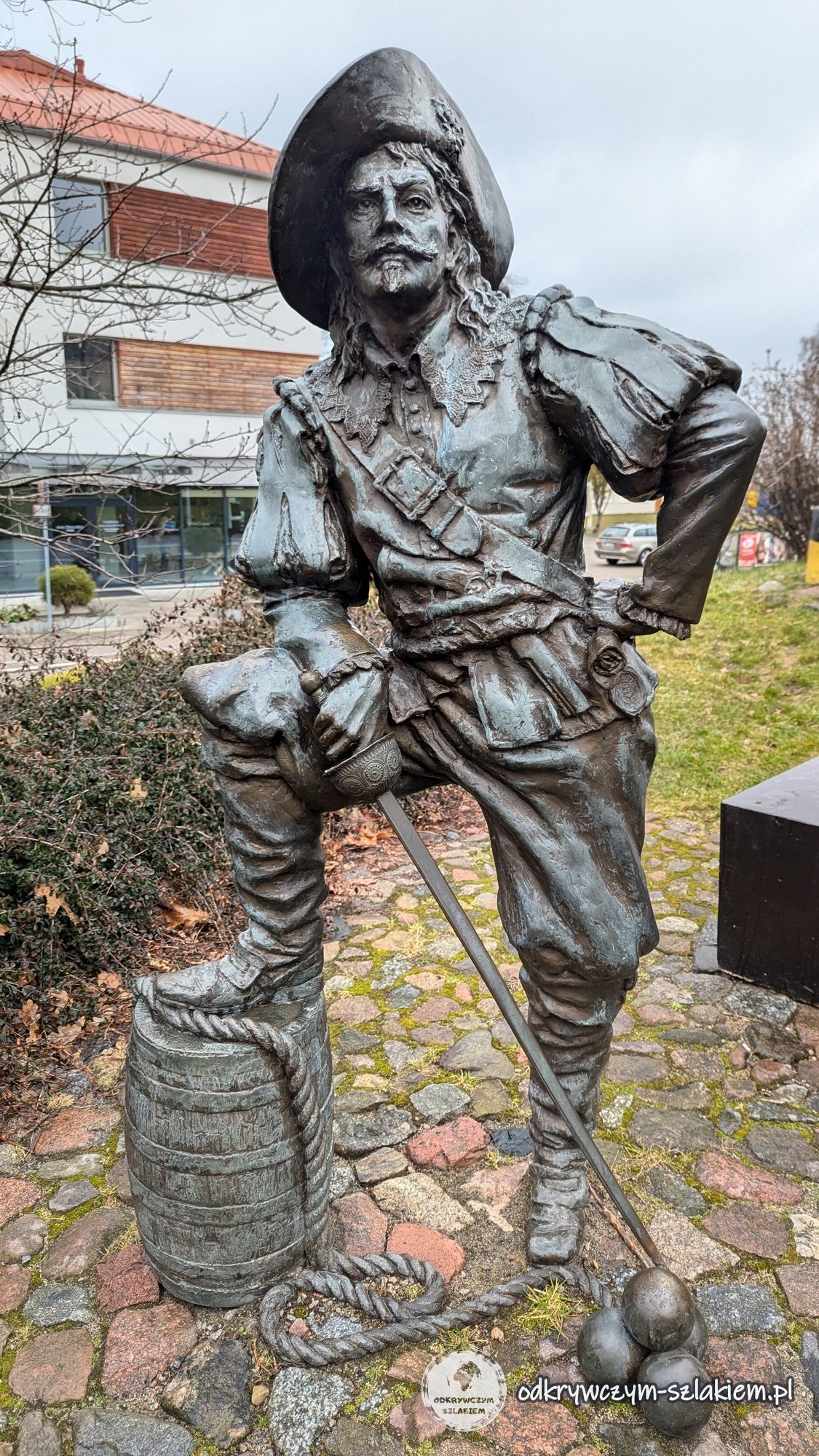
Near the harbour, on the 17th-century ramparts, stands a stone with a plaque put up by the Puck Beautification Society in 2006. It recalls that during the Swedish Deluge Puck was never captured – the plaque compares it to Częstochowa. It names the defenders: Captain Szczęsny Niewiarowski, the Franciscan friar Grzegorz Gamiński, the castle garrison and the townspeople. Next to it stands a sculpture of a man in period dress, with a barrel and cannonballs.
Puck harbour – the wedding to the sea, the pier and the marina
In Puck’s fishing harbour, on 10 February 1920, General Józef Haller performed Poland’s wedding to the sea – he threw a platinum ring into the bay. On the quay stands a bust of the general from 2002 by Stanisław Szwechowicz. Every year on 10 February the anniversary of the wedding is celebrated here. In the following years Poland built a port in Gdynia.
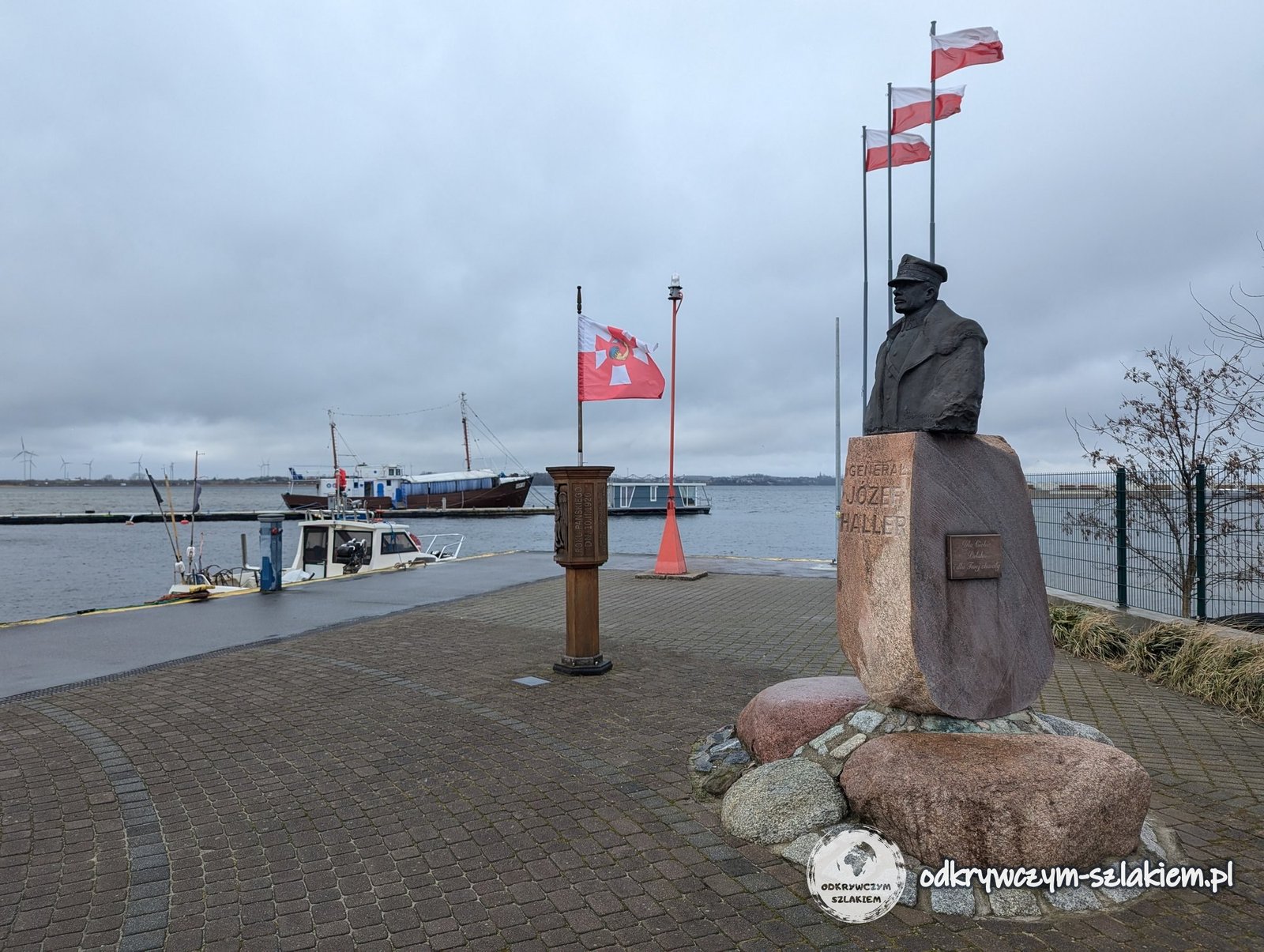
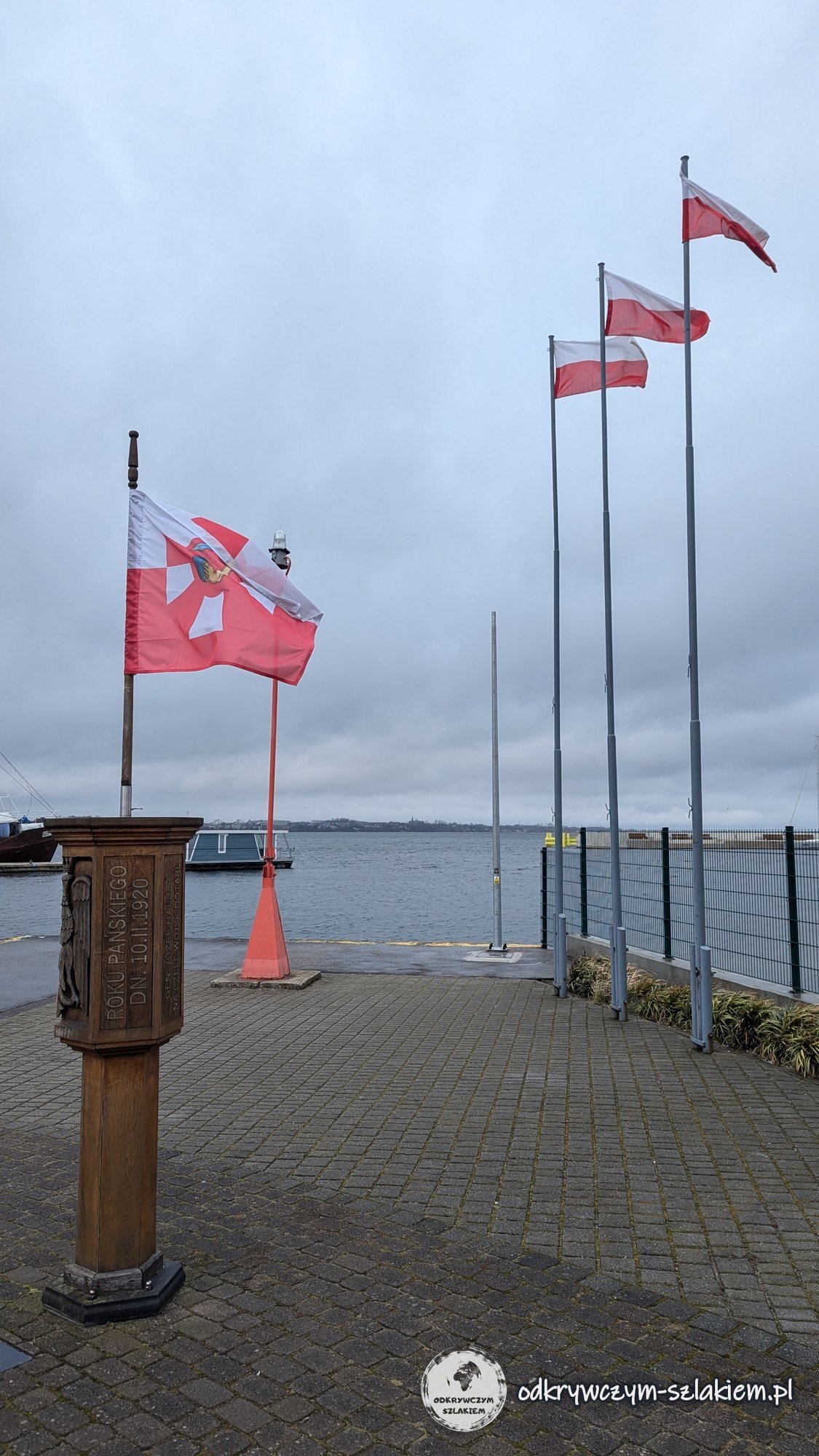
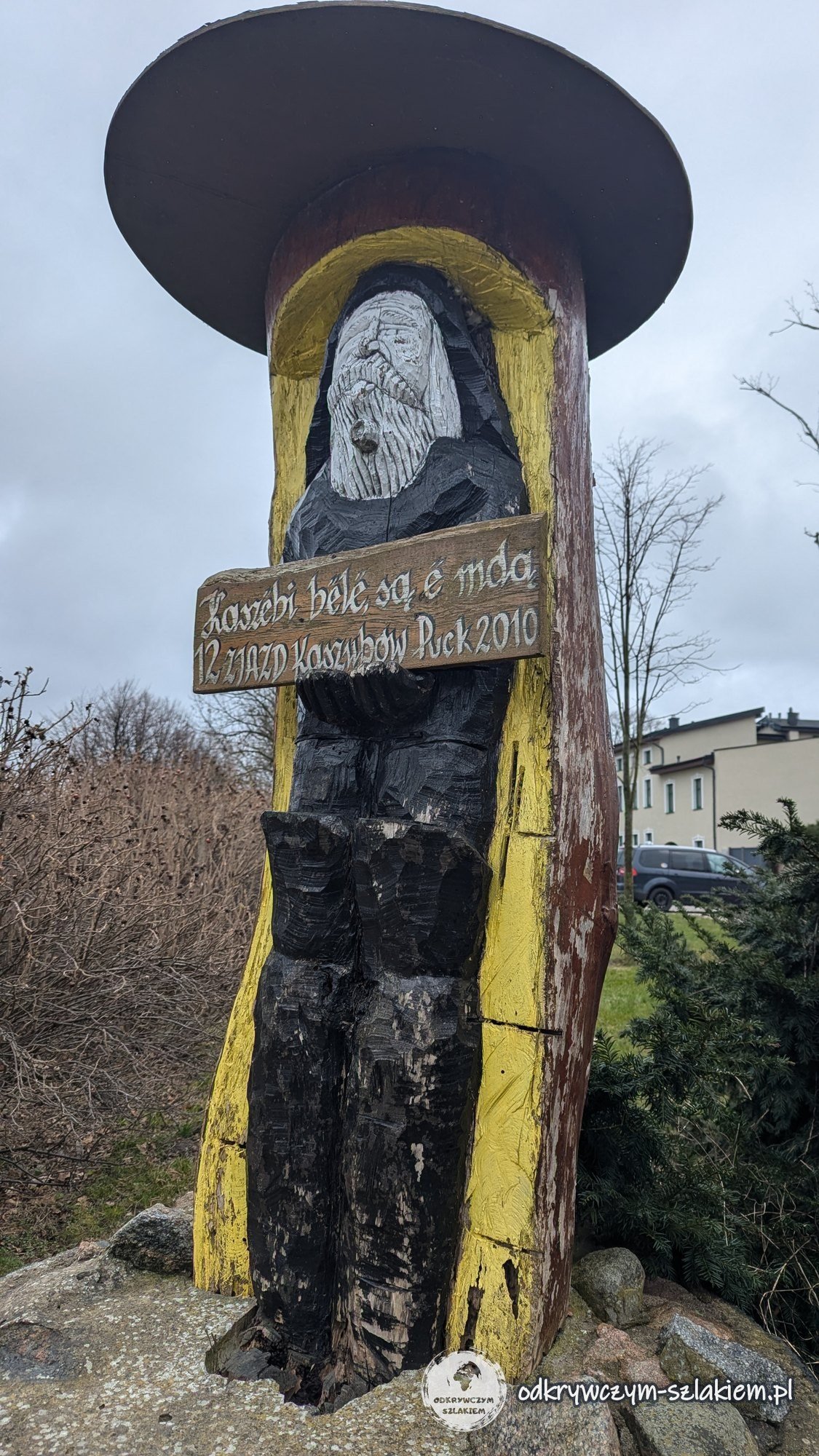
Next to the bust stands a wooden wedding post with the date 10 February 1920 – a copy of the post destroyed in 1939. Nearby there is also a wooden sculpture of a Kashubian with a pipe and the inscription “Kaszëbi bëlë, są ë mdą” (“The Kashubians were, are and will be”) – a souvenir of the 12th Kashubian Congress in Puck in 2010.
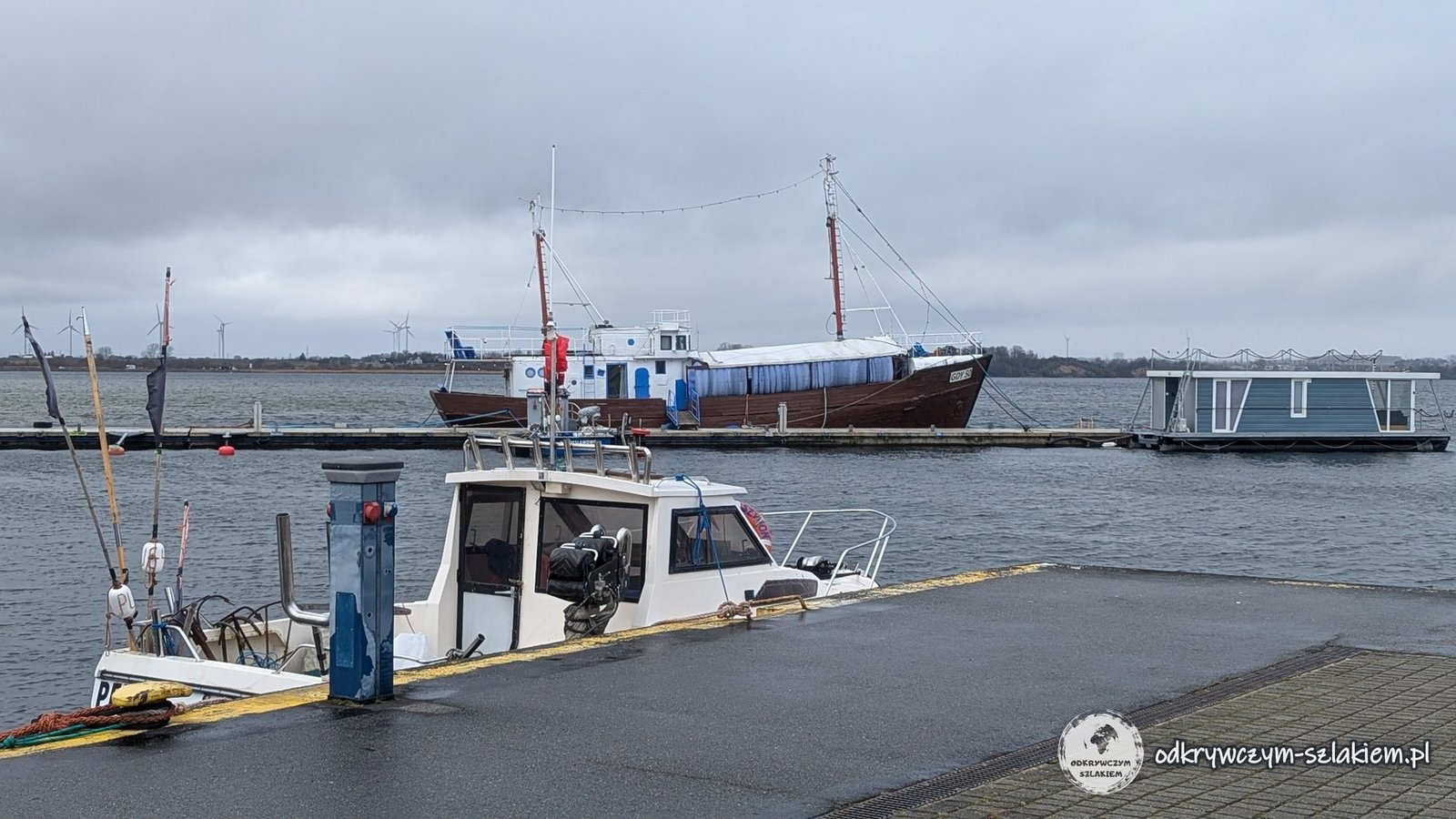
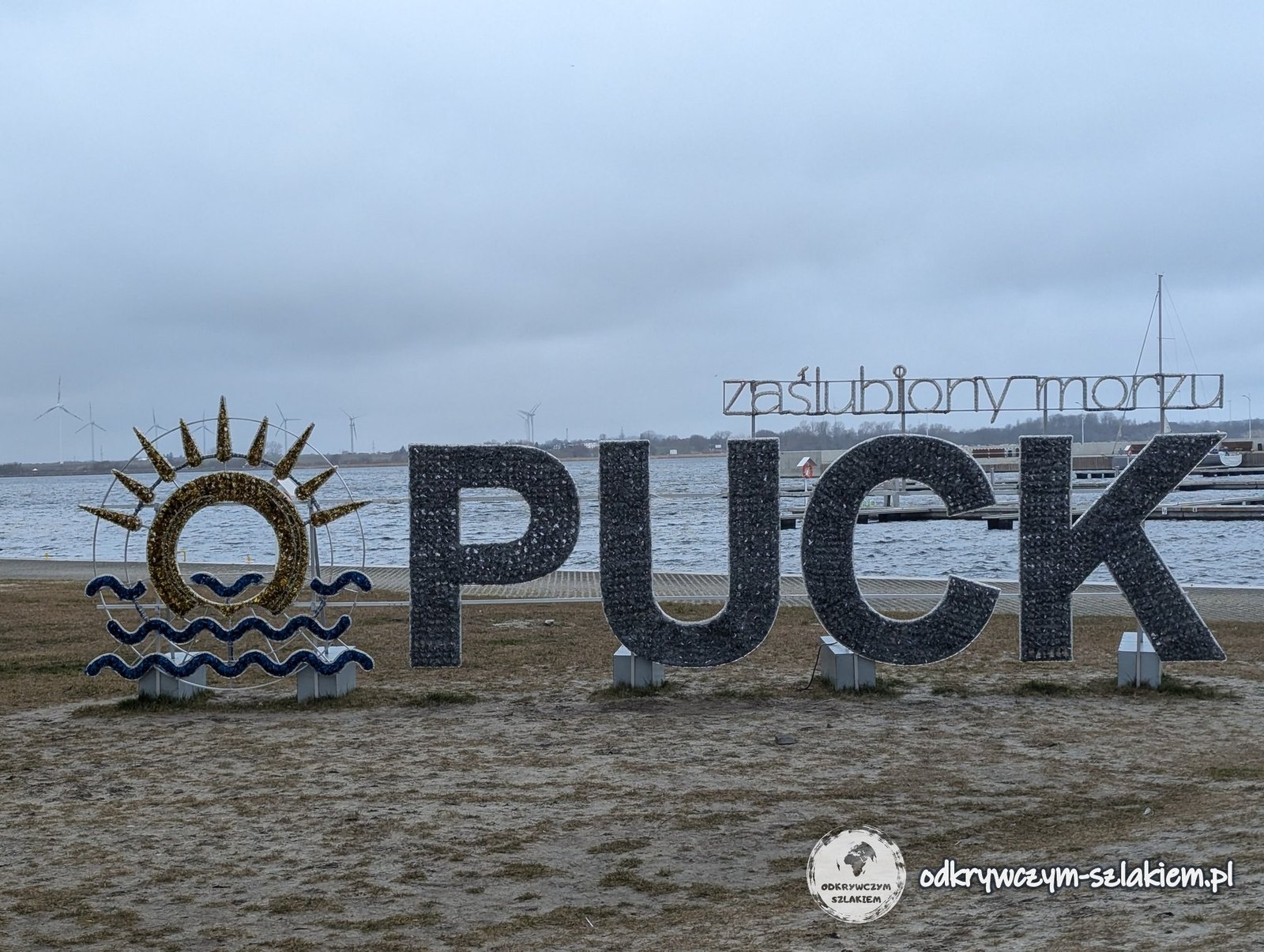
Fishing boats are moored in the harbour, and by the beach next to it stands a large PUCK sign with the words “zaślubiony morzu” (wedded to the sea).
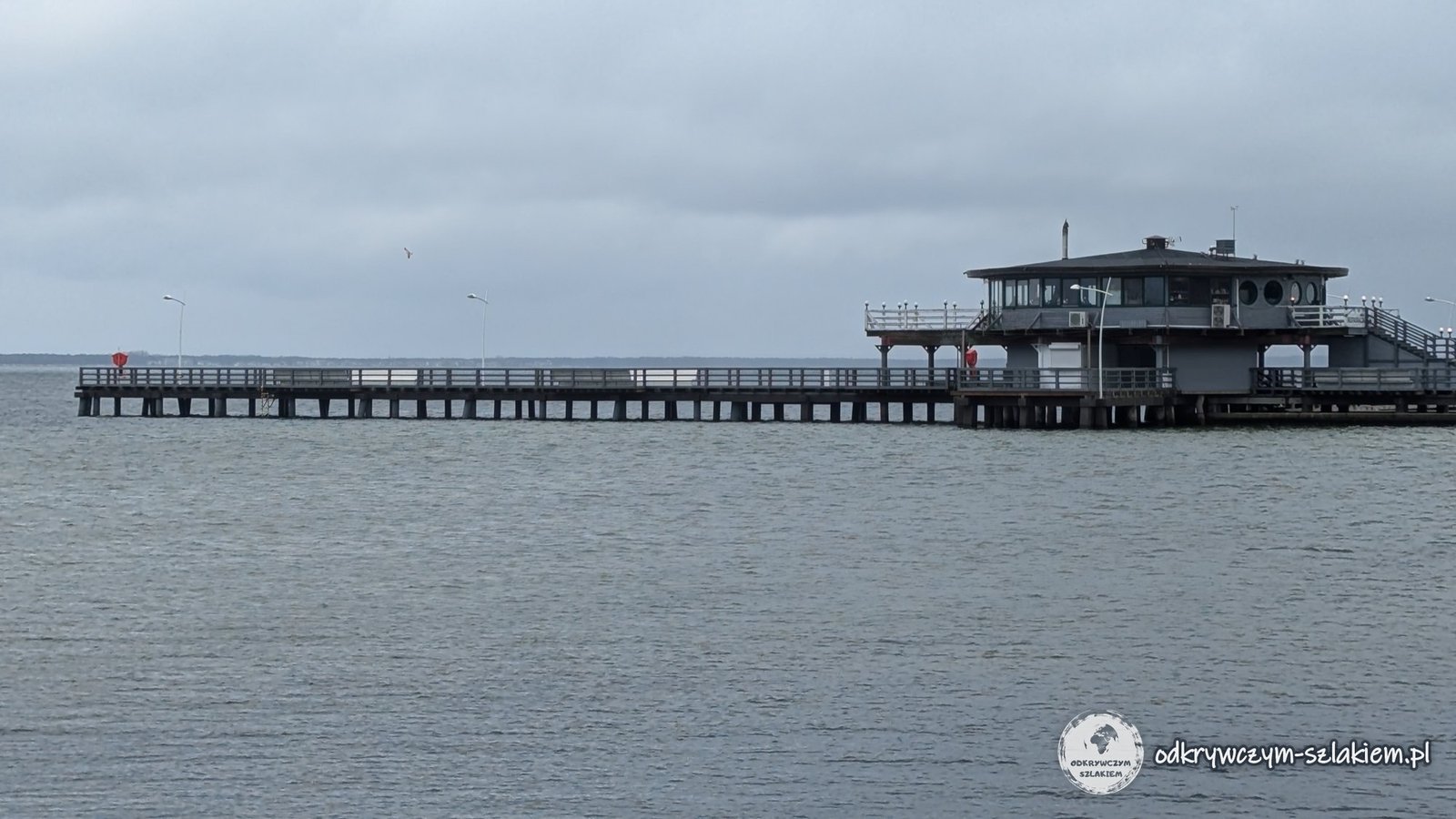
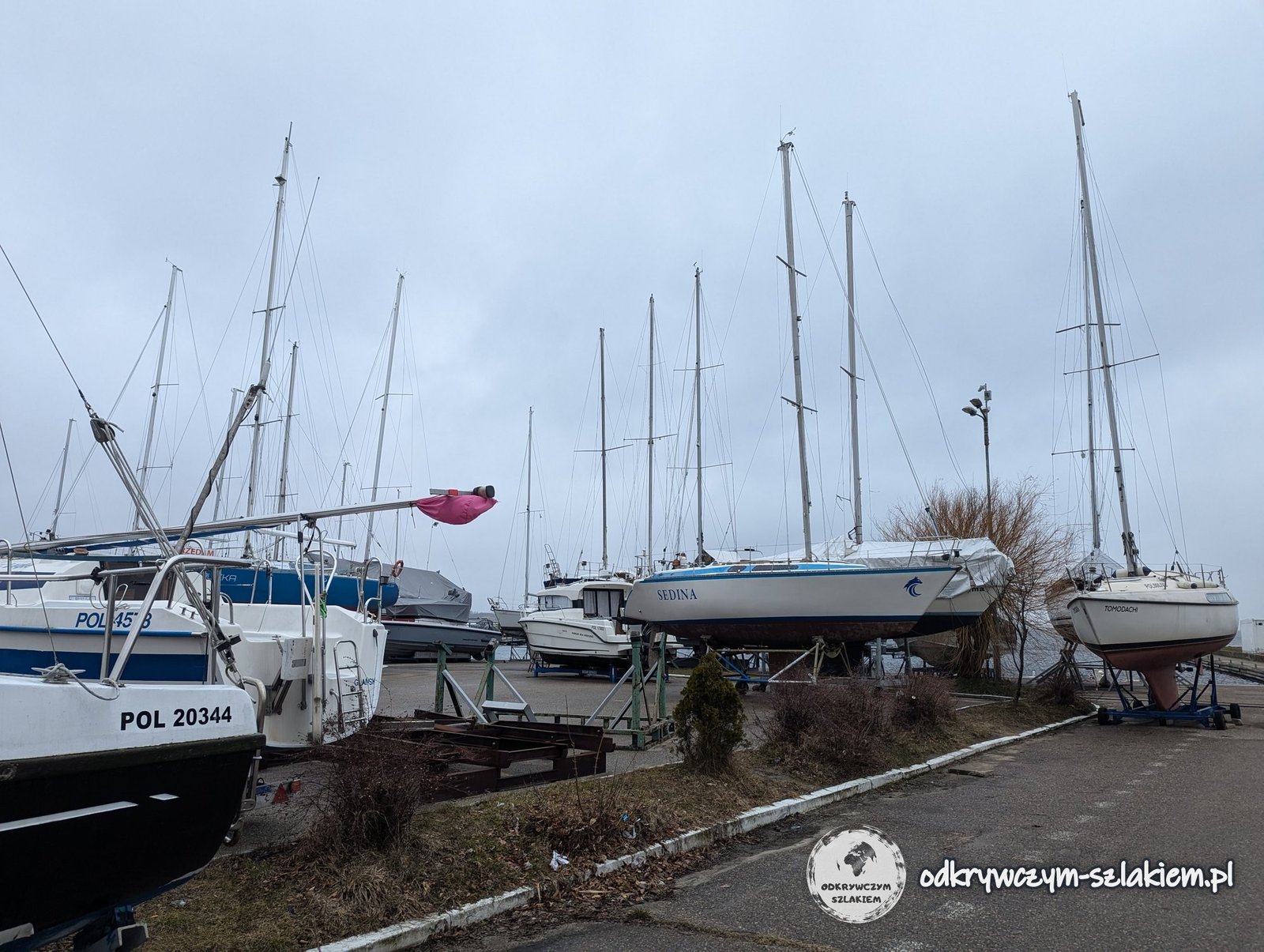
A pier with a restaurant at its end runs out into the bay – it was built before 1927. Further on is the marina; in March the yachts were still on land.
A little north of the town, by a path along the shore of the bay, there are boards about the ducks and swans that winter on the Bay of Puck. From there you can see the panorama of Puck with its parish church.
Władysławowo – the Avenue of Sports Stars and the Crown of the Himalayas
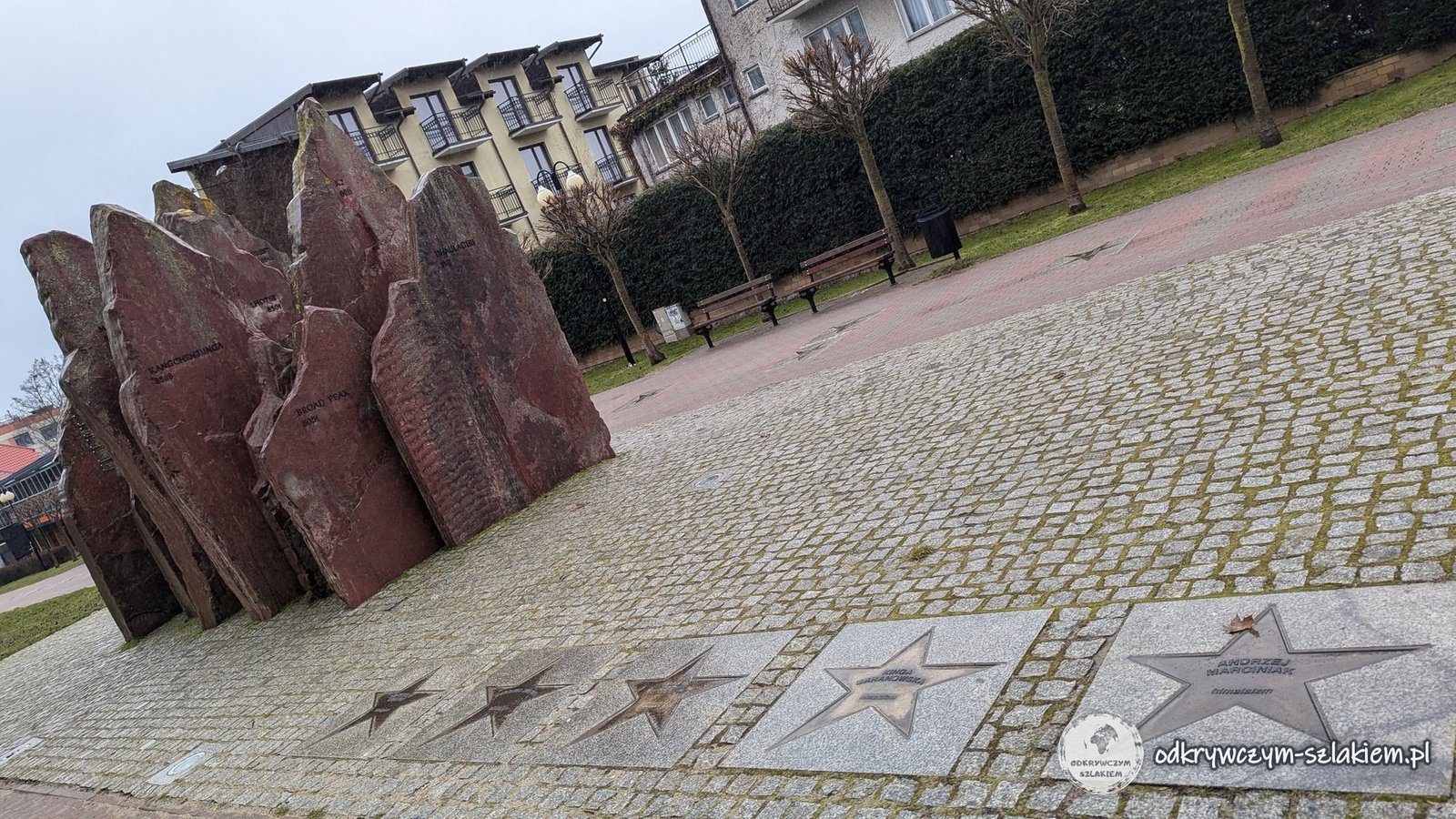
The last stop was Władysławowo. The Avenue of Sports Stars was created here in 2000. Set in the pavement are stars of Polish athletes – among them Irena Szewińska, Kazimierz Deyna, Jerzy Kulej and Robert Korzeniowski. New stars are unveiled during an annual sports festival.
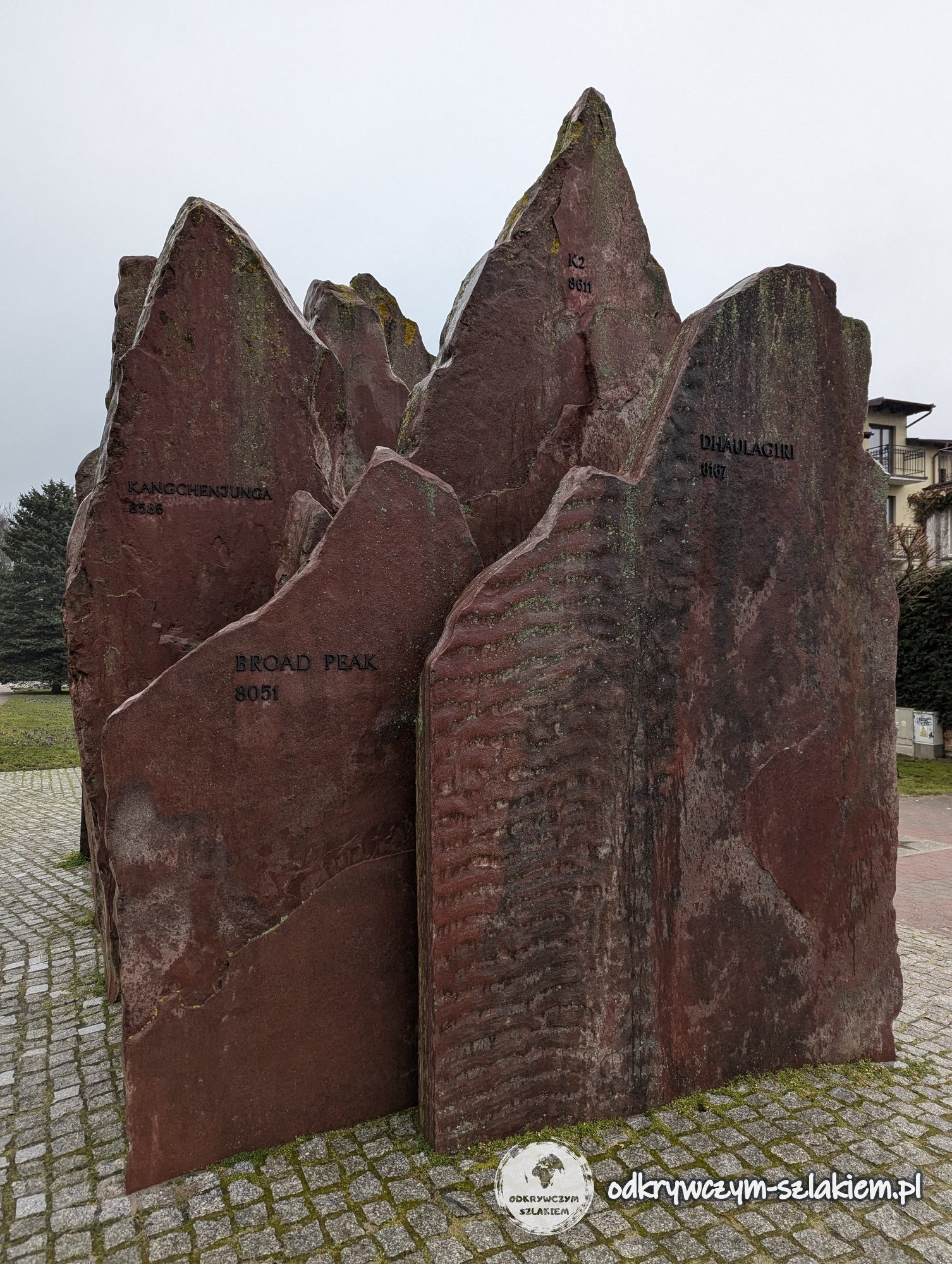
By the avenue stands the Crown of the Himalayas monument, unveiled on 28 June 2014. 14 sandstone blocks, brought from Sweden, stand for the 14 eight-thousanders.
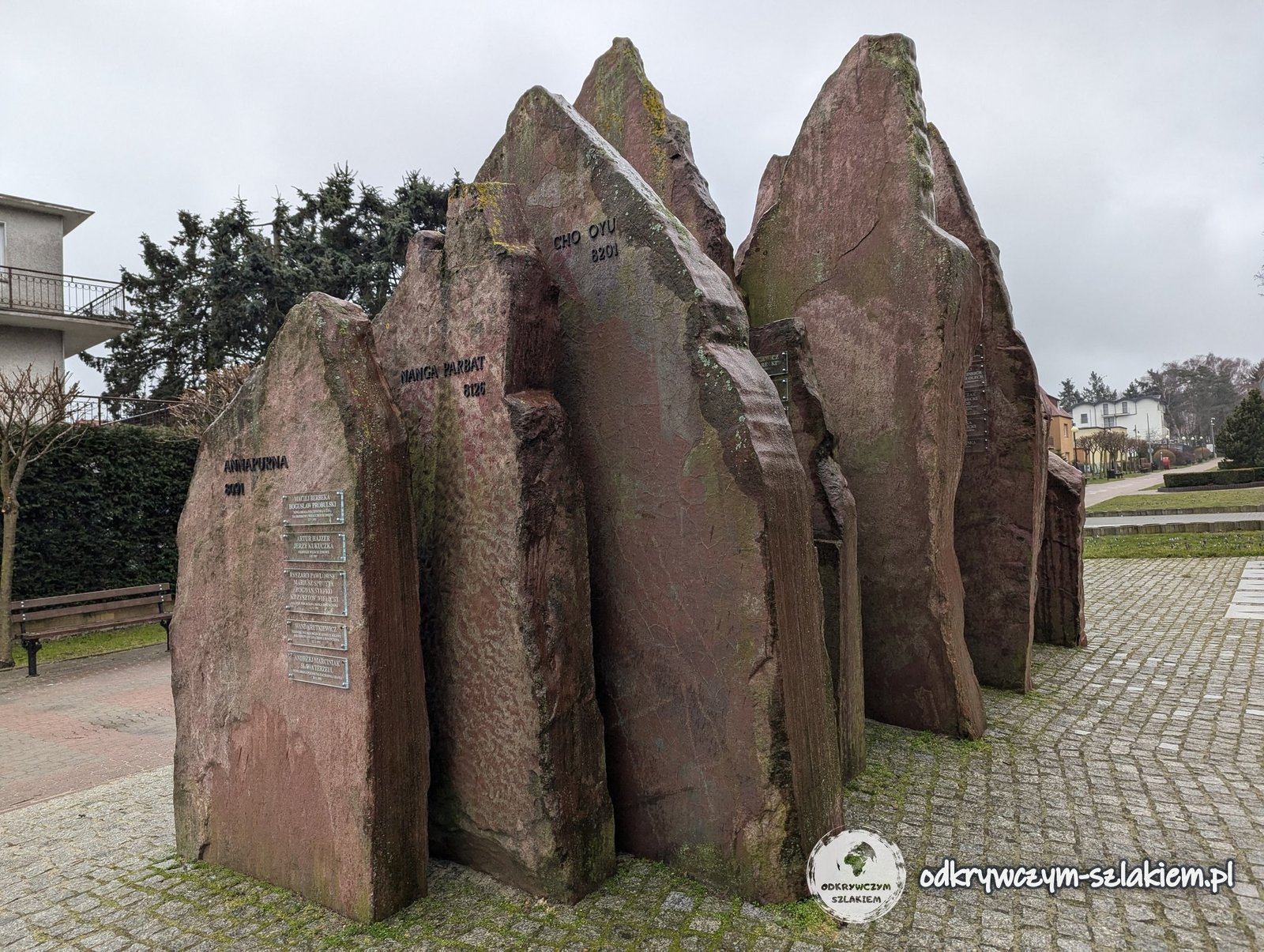
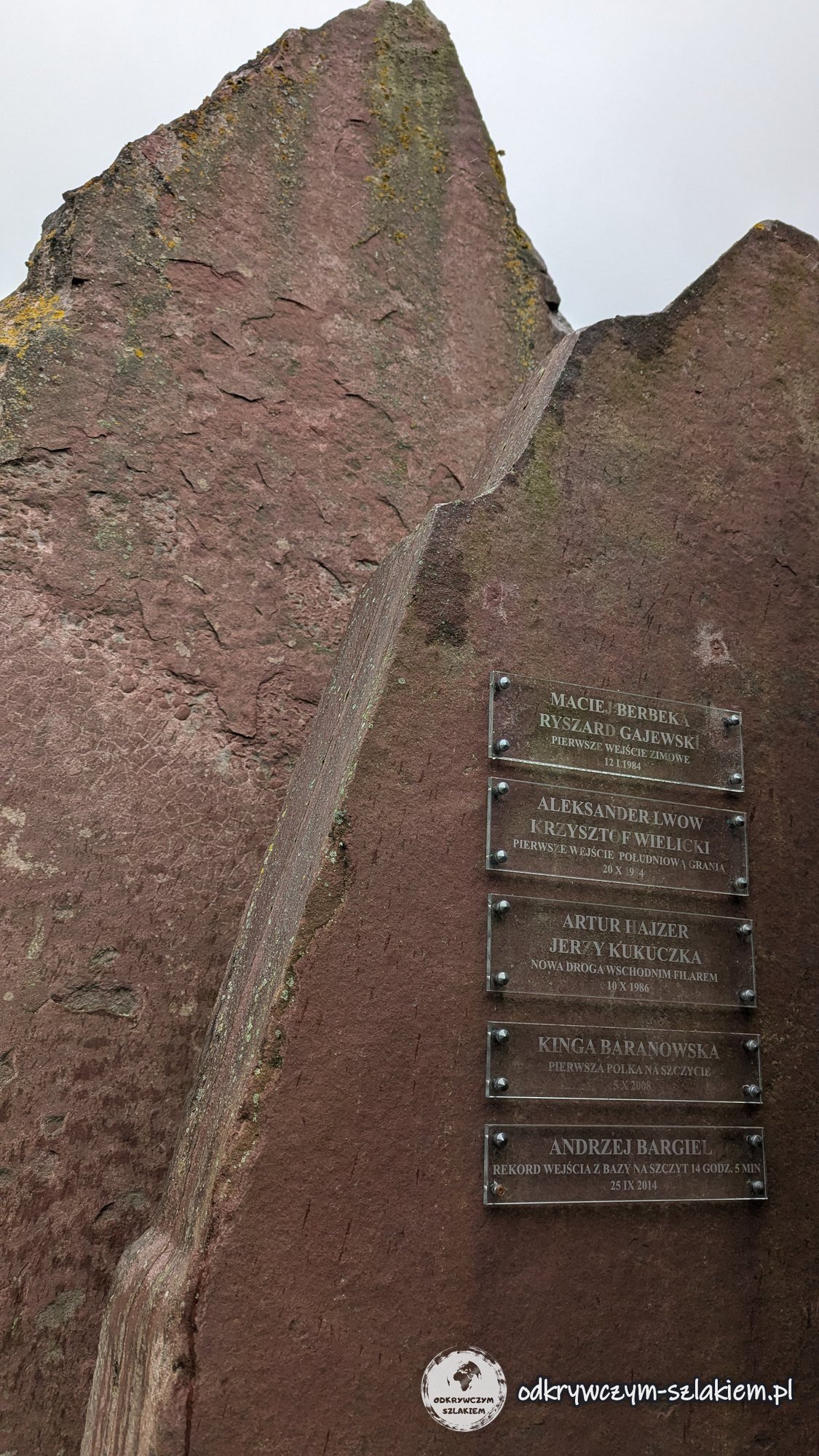
The blocks carry plaques with the names of Polish Himalayan climbers and the dates of their ascents. The Manaslu block lists, among others, the first winter ascent by Maciej Berbeka and Ryszard Gajewski (12 January 1984) and Andrzej Bargiel’s 2014 record – 14 hours and 5 minutes from base camp to the summit.
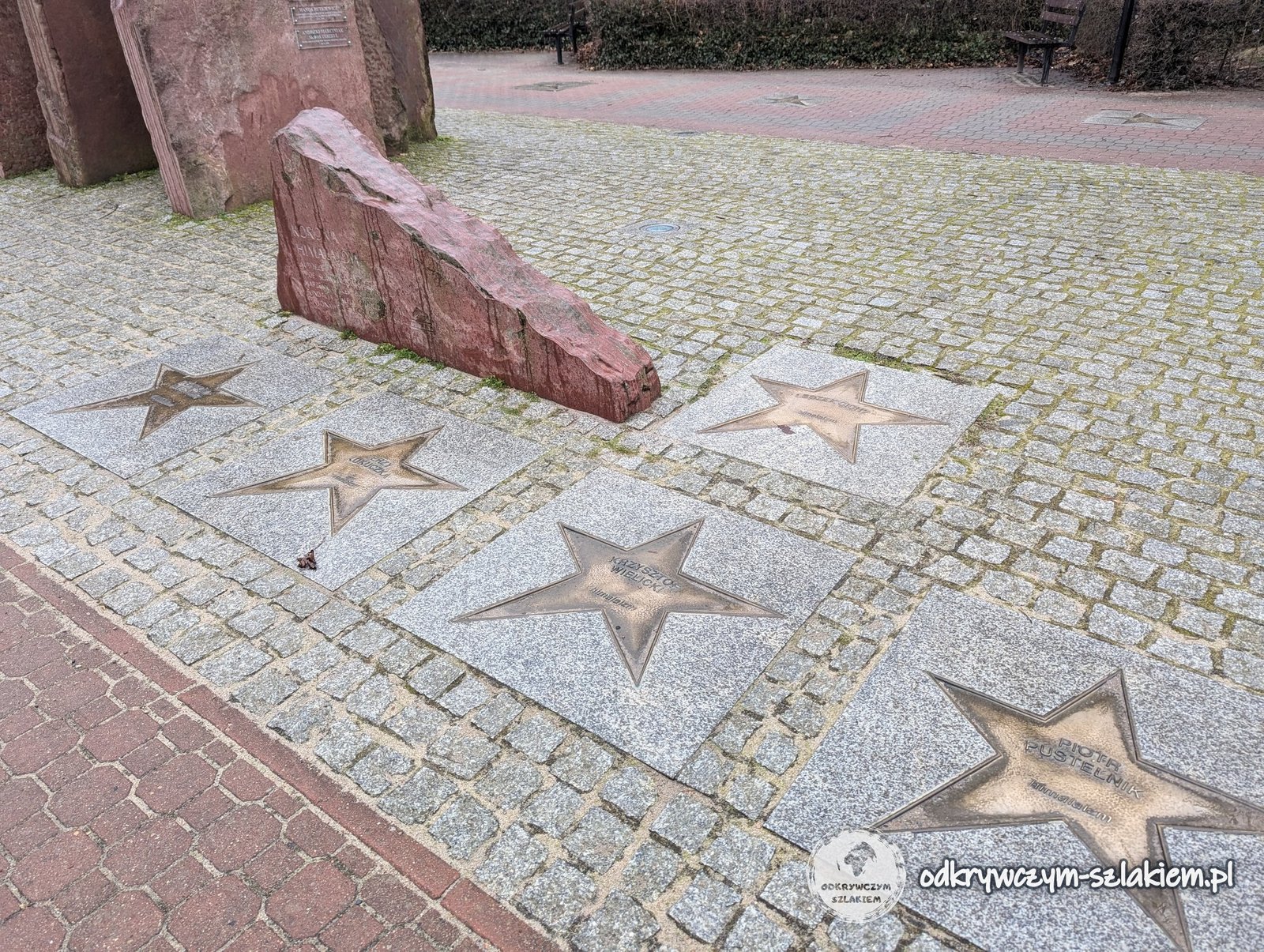
In the pavement by the monument there are stars of Himalayan climbers, including Krzysztof Wielicki, Piotr Pustelnik and Leszek Cichy.
Władysławowo is also home to Hallerówka – a wooden villa from 1924 that belonged to General Józef Haller and his family. Since 2013 it has been a branch of the Florian Ceynowa Museum of the Puck Region, with an exhibition about the general and the Blue Army. In 2017 the neighbouring Adiutantówka – the former summer villa of Haller’s adjutant – was opened as well.
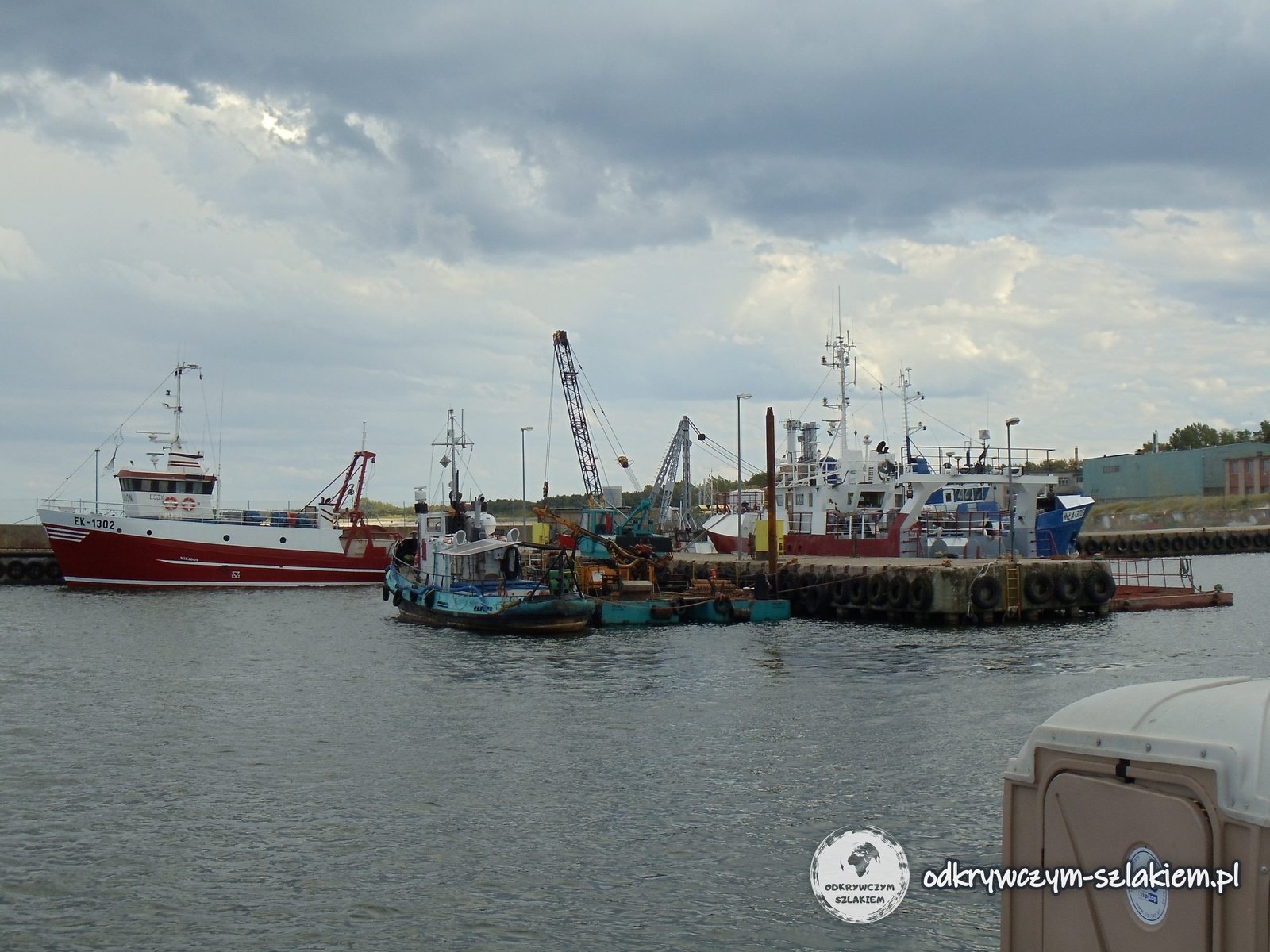
I was also in Władysławowo in August 2014. The most impressive sight here is the fishing port, built in 1936–1938, with dozens of boats along the quay.
Practical information and a weekend plan
- Getting there: Puck and Władysławowo lie on the railway line from Gdynia to Hel. Jastrzębia Góra and Rozewie are easiest to reach by car or by bus from Władysławowo. The trip combines well with Gdynia and Gdańsk.
- On foot: from Jastrzębia Góra to Rozewie it is just under 3 km – along the cliff-top path or the beach, passing through Lisi Jar.
- Rozewie lighthouses: open from May to September – in May, June and September 9:30–13:45 and 15:00–16:45, in July and August 9:30–19:00. Tickets in 2026: Rozewie I – 19 zł (reduced 13 zł), Rozewie II – 16 zł (reduced 12 zł). Children under 105 cm may not climb the towers. Out of season the lighthouses can only be seen from outside.
- Hallerówka: check opening hours and prices on the website of the Museum of the Puck Region before your visit.
- Weekend plan: on Saturday the cliff and beach in Jastrzębia Góra, Lisi Jar and the Rozewie lighthouses. On Sunday Puck – the square, the parish church, the harbour and the pier – and then the Avenue of Sports Stars and Hallerówka in Władysławowo.
- More of Pomerania: Kashubia – Szymbark, Wieżyca and the Radunia Gorge.
Photo gallery