Gdańsk is the largest city in Pomerania and one of the oldest cities in Poland – it celebrated its millennium in 1997. I have been here many times: for Lechia matches, for concerts and when flying out of Gdańsk airport. In this post I have gathered the places I photographed between 2018 and 2026 and arranged them into a weekend plan. Day one is the Main Town, the Motława and Gradowa Hill; day two is the Gdańsk Shipyard, Wrzeszcz with the beach in Brzeźno, and an evening in Sopot.
Table of contents
- The Main Town – Long Market, the Town Hall and St Mary’s Basilica
- On the Motława – the Crane and Ołowianka
- Gradowa Hill – the Hevelianum and a panorama of the city
- The Gdańsk Shipyard and the European Solidarity Centre
- The University of Technology, Brzeźno beach and the stadium
- Sopot – the pier, Monciak and the Crooked House
- Practical information
The Main Town – Long Market, the Town Hall and St Mary’s Basilica
The best-known part of Gdańsk is the Main Town (Główne Miasto). Right through its middle runs the Royal Route – Długa Street and Long Market (Długi Targ), along which Polish kings used to enter the city. It ends at the Green Gate, and just beyond it flows the Motława.
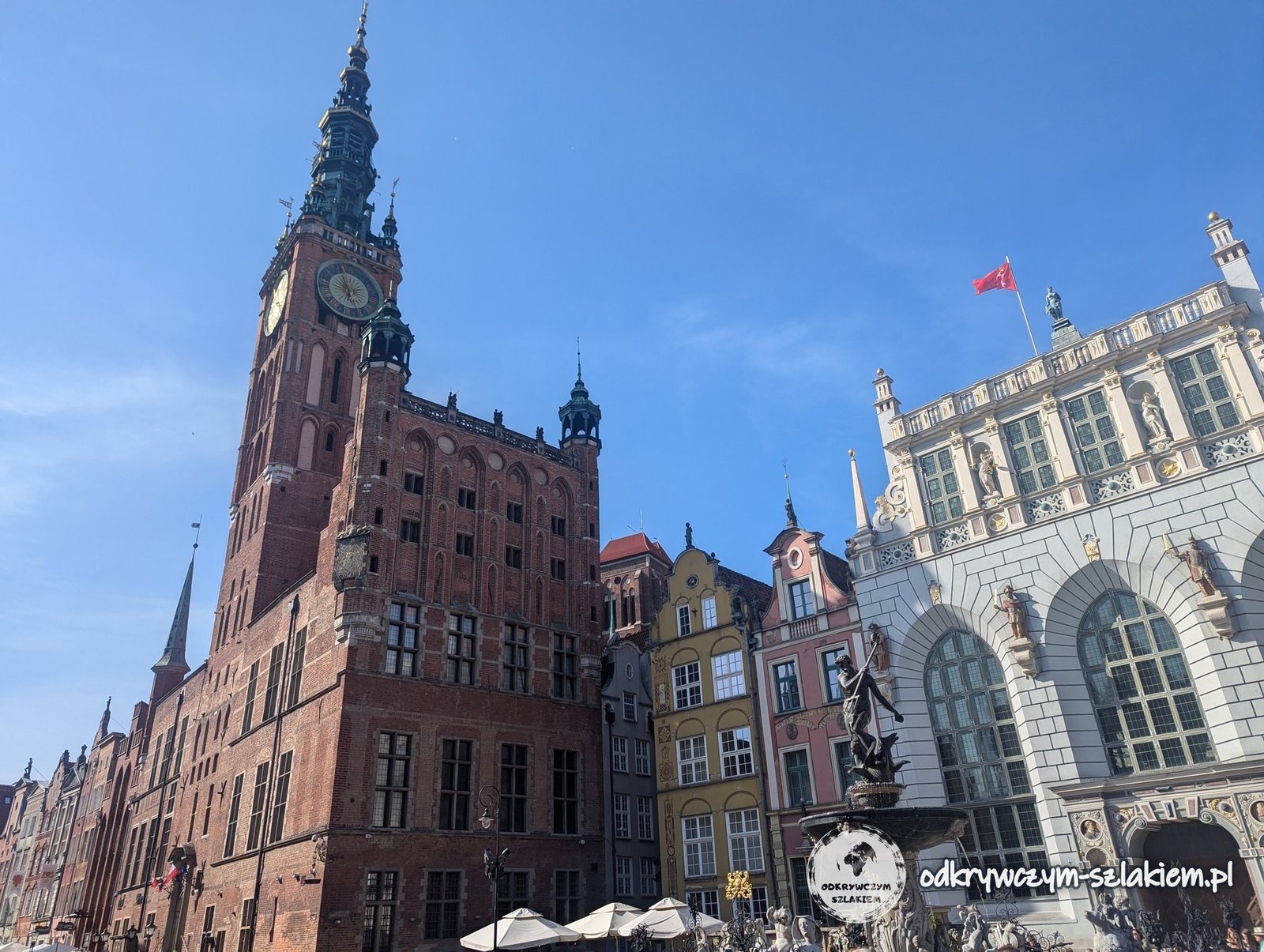
Long Market is dominated by the Main Town Hall, whose tower is about 80 metres high. Next to the town hall, in front of Artus Court – once the meeting place of Gdańsk’s merchants – stands Neptune’s Fountain, set up on Long Market in 1633. On the Saturday afternoon of 14 June 2025 the square was packed with people.
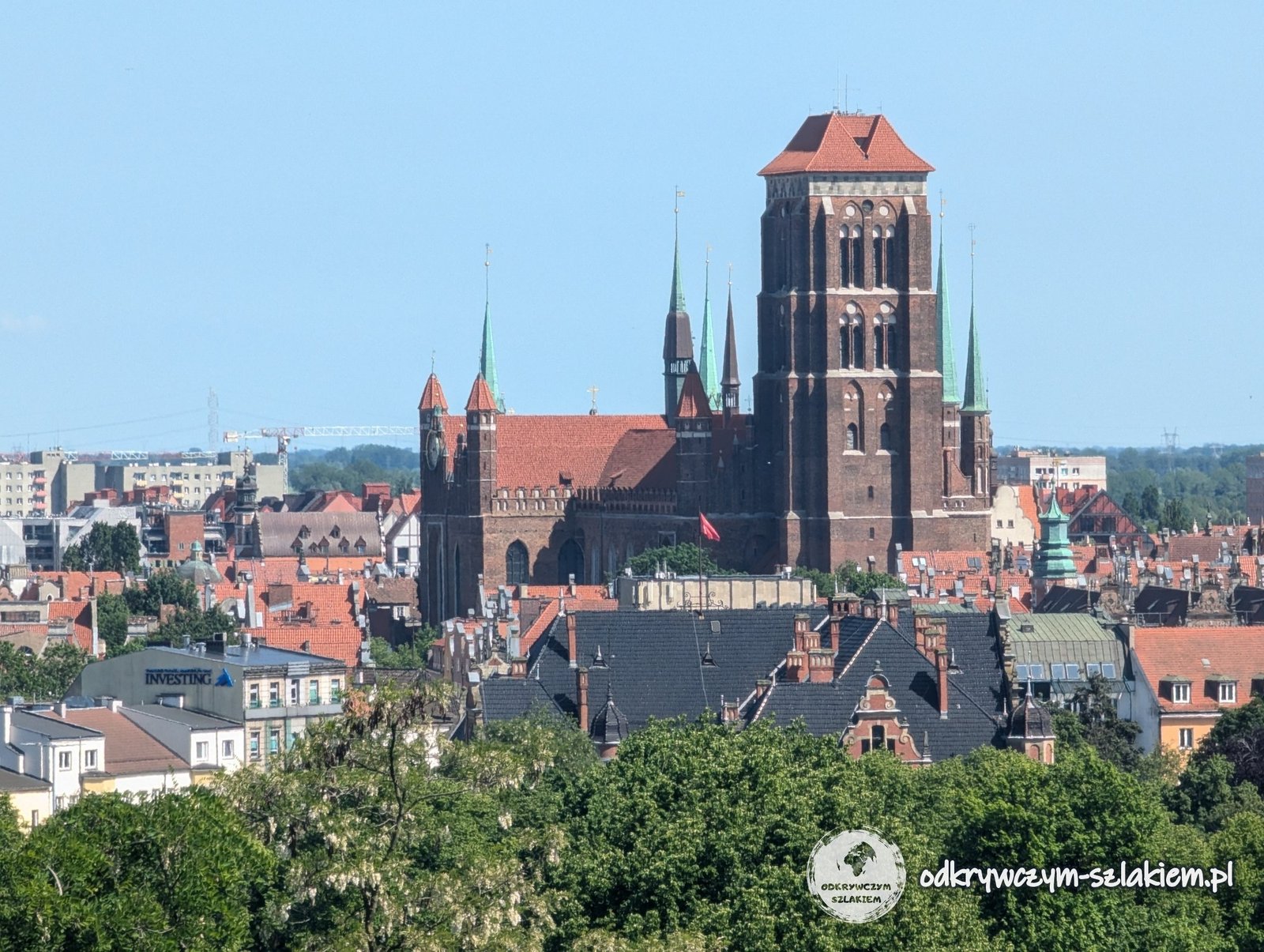
A few minutes north of Long Market stands St Mary’s Basilica, often called the largest brick church in the world. More than 400 steps lead up its tower, and there is a viewing platform at the top. Right next to the basilica is the Royal Chapel – a Baroque church built in 1678–1681 for Gdańsk’s Catholics, because St Mary’s belonged to the Protestants at the time. It was funded by Primate Andrzej Olszowski and King John III Sobieski. I took this photo in March 2026.

On the Motława – the Crane and Ołowianka
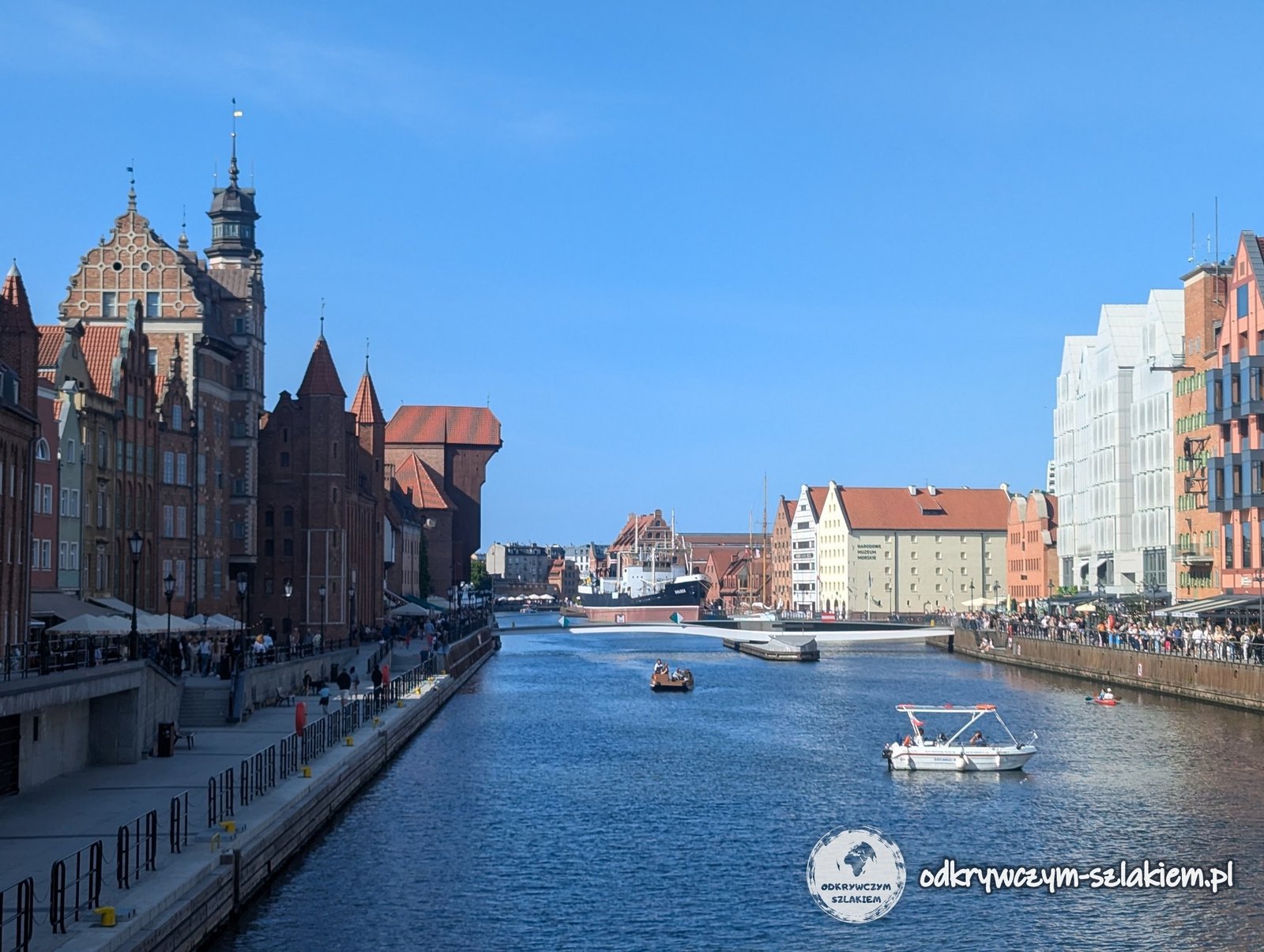
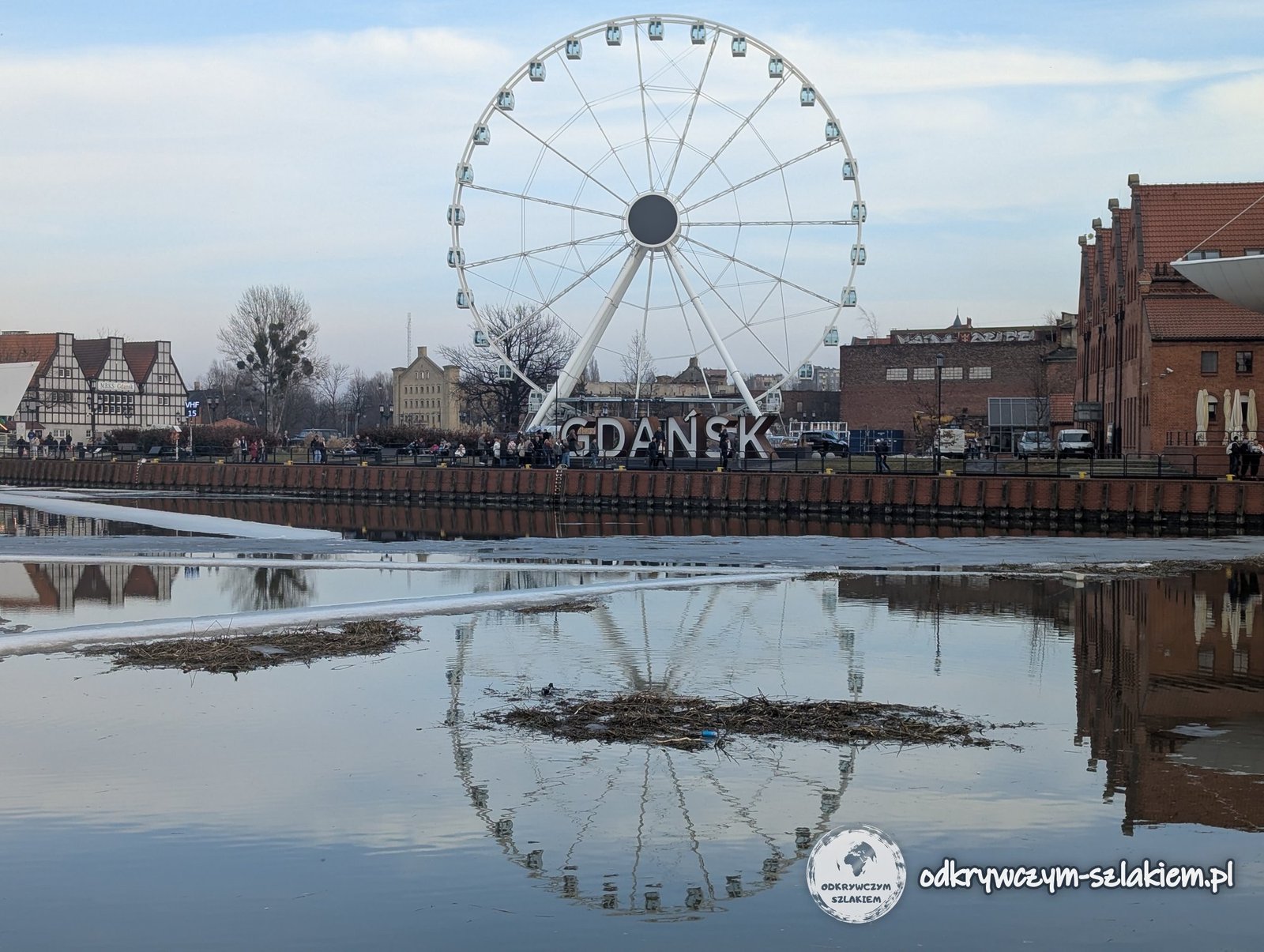
Along the Motława runs Długie Pobrzeże – a waterfront lined with restaurants and landing stages for tour boats. I took the opening photo of this post from the Green Bridge: on the left bank you can see the Crane, on the right the buildings of Granary Island.
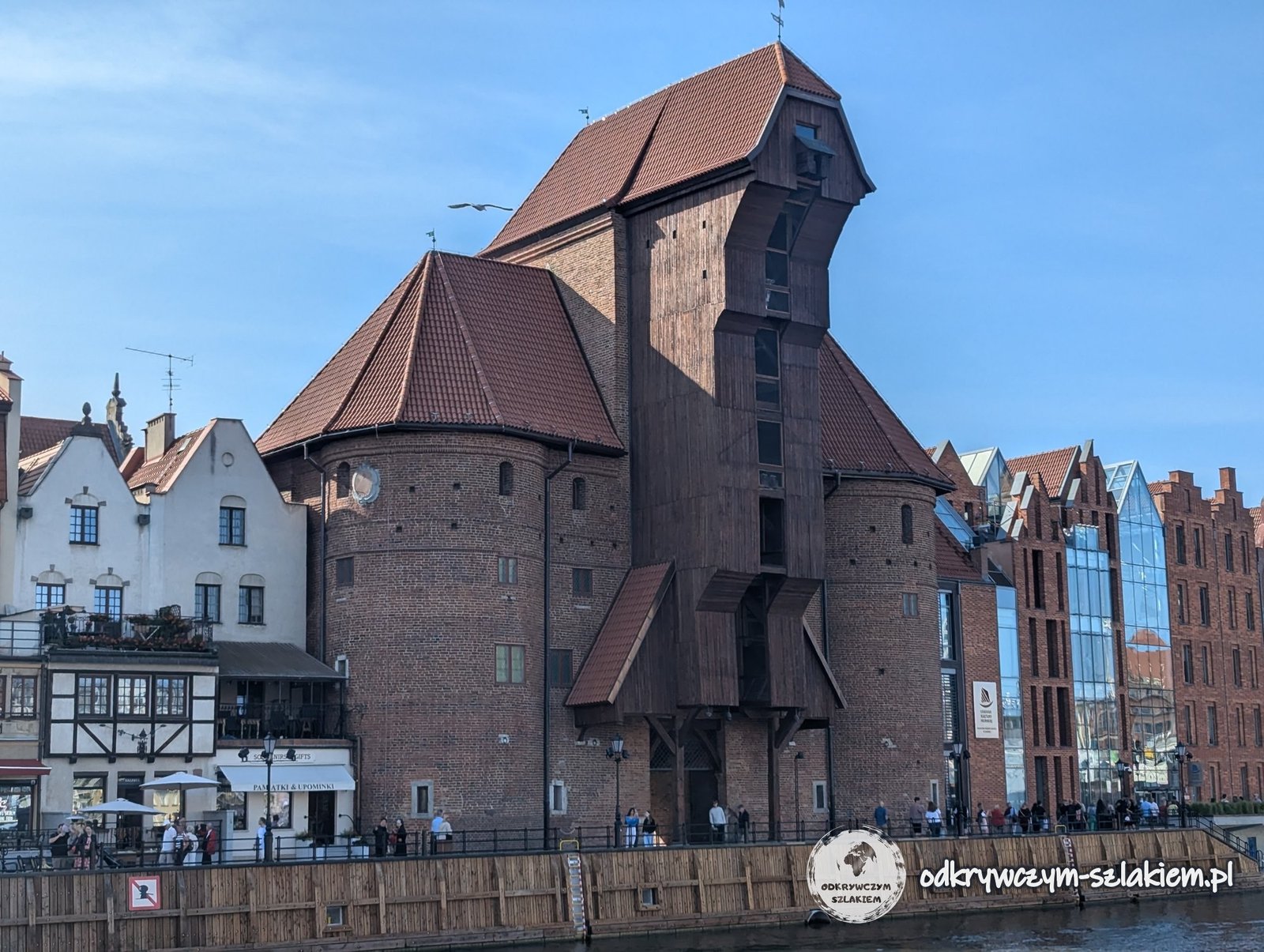
The Crane (Żuraw) is a medieval port crane that also served as a city gate. The present structure was built in 1442–1444, after a fire destroyed the earlier wooden crane. Workers walking inside huge wooden wheels used it to lift cargo and to step masts on ships. Since 1977 the Crane has been a branch of the National Maritime Museum.
Further north, on the other side of the Motława, lies the island of Ołowianka. In June 2025 it was home to the 50-metre AmberSky Ferris wheel and a large GDAŃSK sign. In March 2026 there was still ice along the bank, and the water reflected the new wheel that had replaced the old one.
Gradowa Hill – the Hevelianum and a panorama of the city
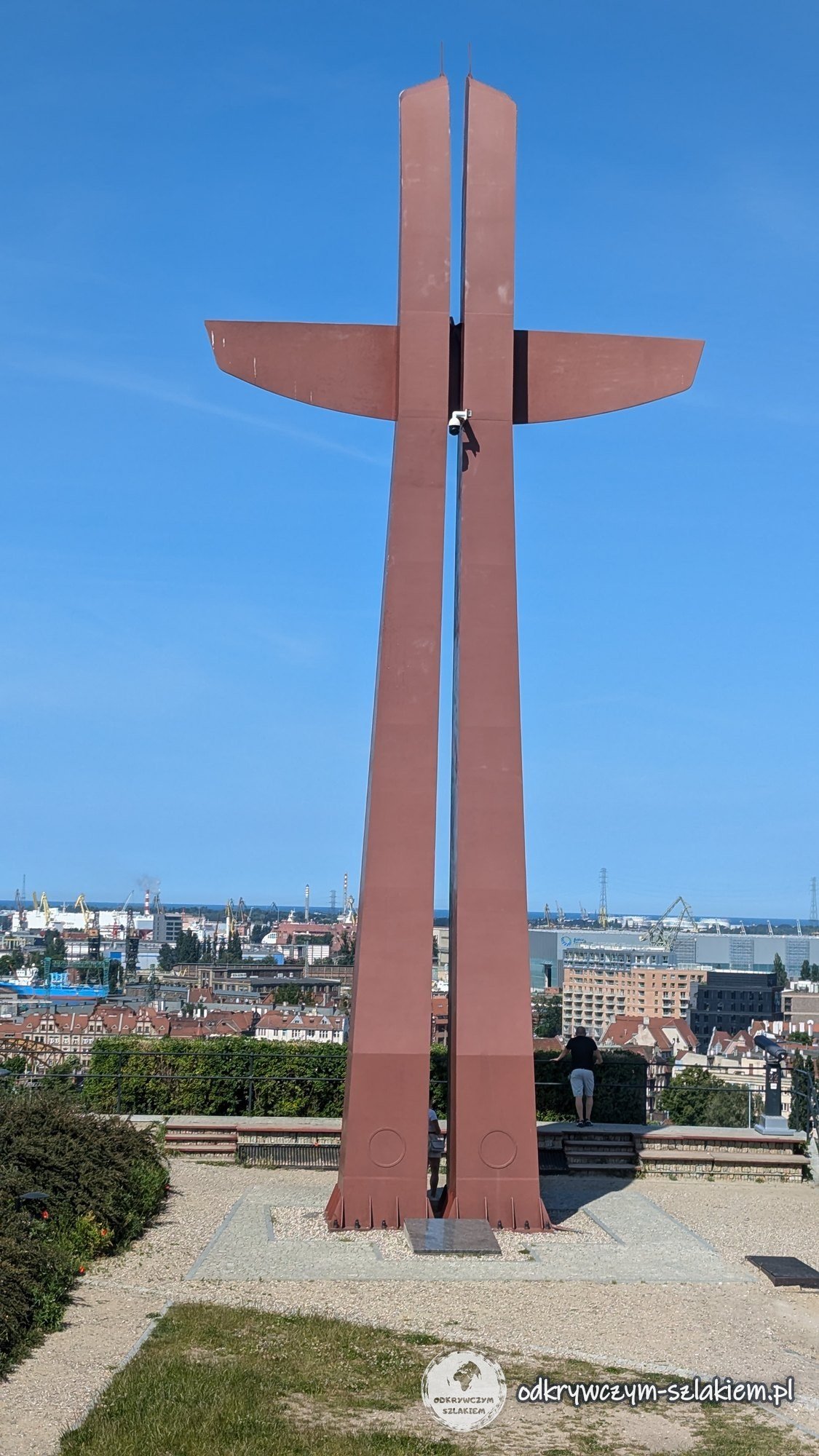
Gradowa Hill (Góra Gradowa) rises to 46 metres above sea level, right behind Gdańsk Główny station. On its summit a 19th-century fort has survived, now home to the Hevelianum science centre. Brick tunnels run through the fort’s ramparts, and next to the fort stands the Millennium Cross, erected in 2000.

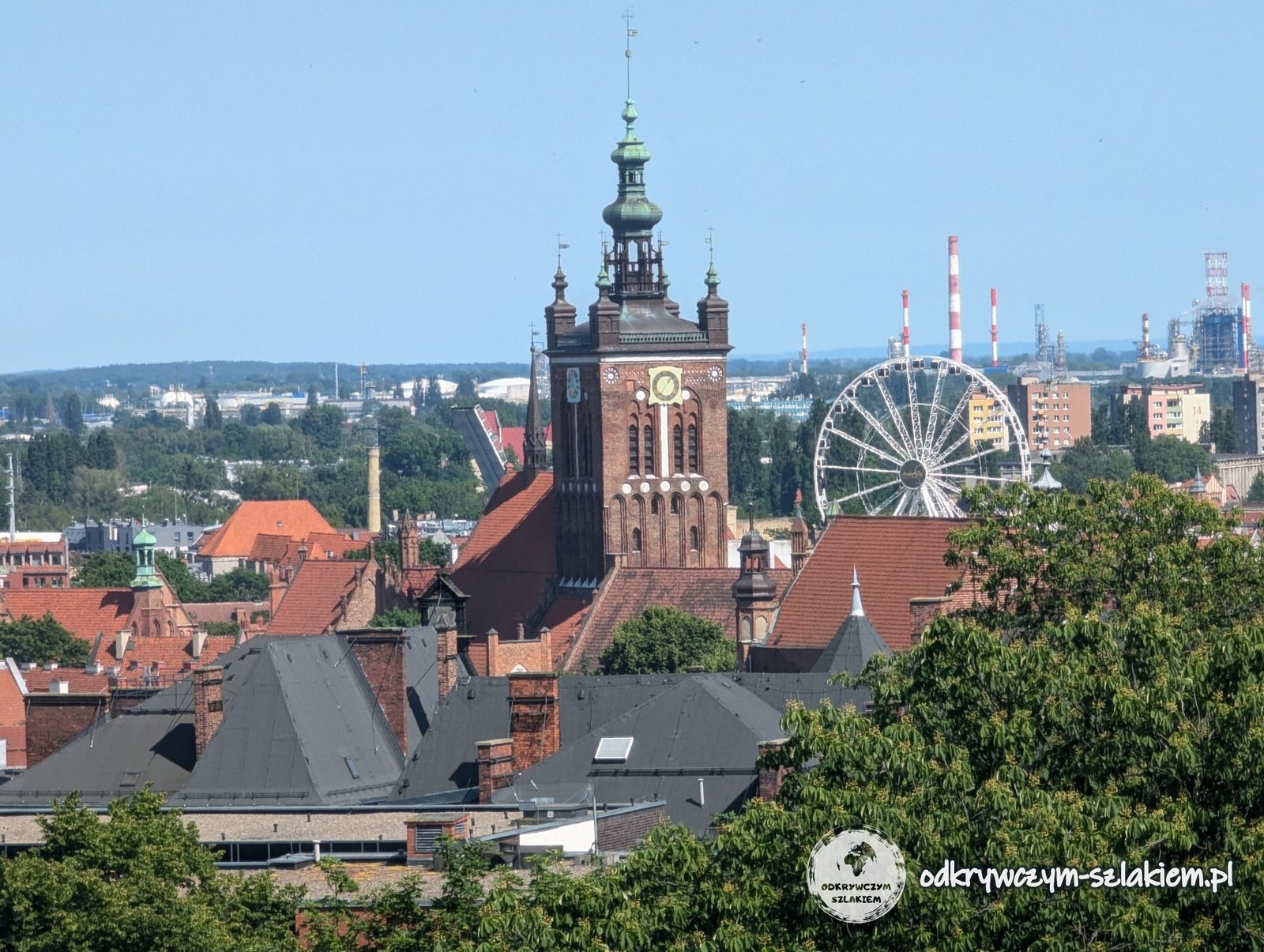
From the cross you can see the whole Main Town. St Mary’s Basilica rises above the roofs of the town houses, and closer to the hill stands St Catherine’s Church, one of the oldest churches in Gdańsk. The astronomer Johannes Hevelius is buried there. In June 2025 the Ferris wheel from Ołowianka stood behind the church.
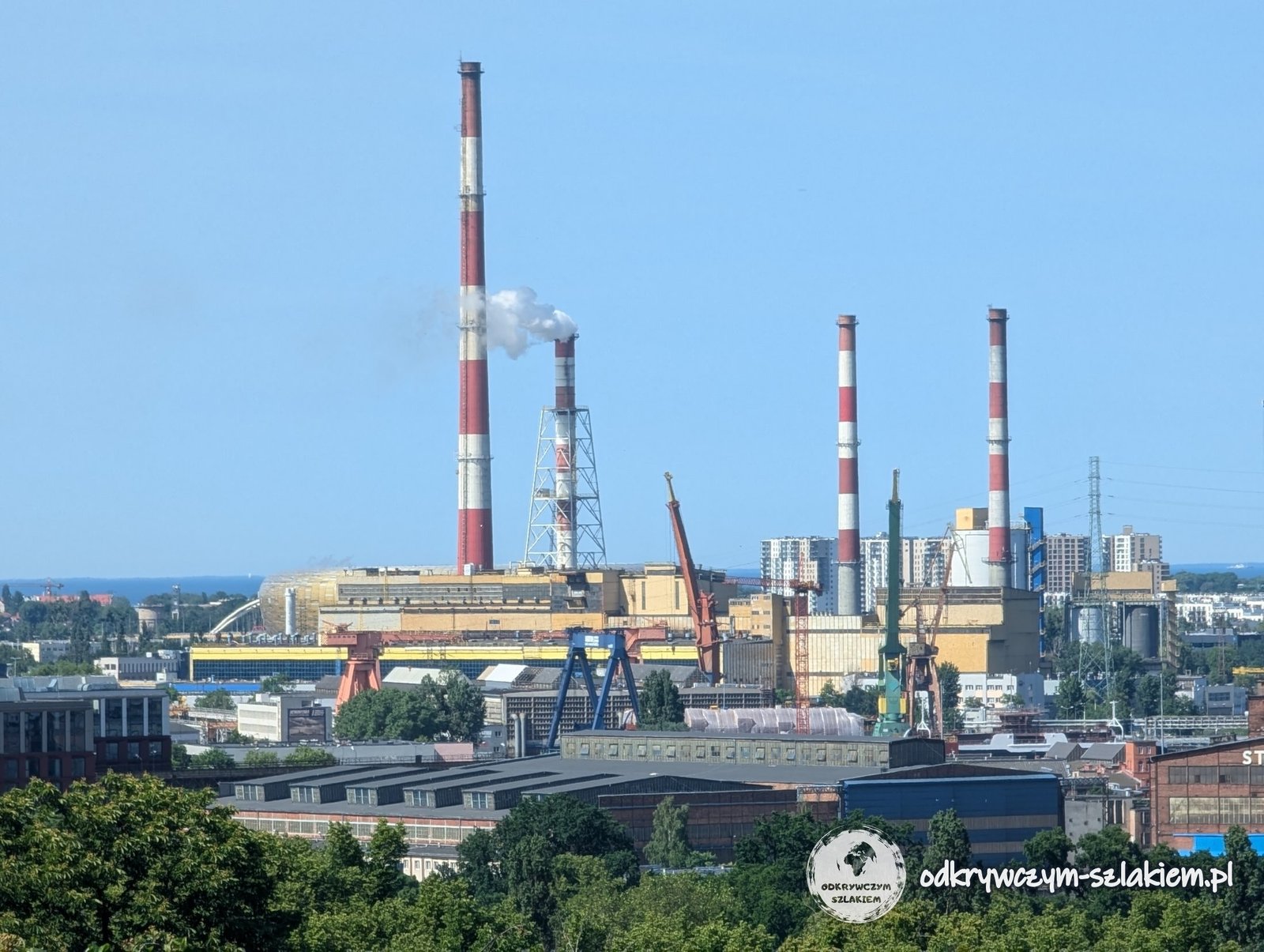
Looking towards the sea from Gradowa Hill you can see power station chimneys and shipyard cranes.
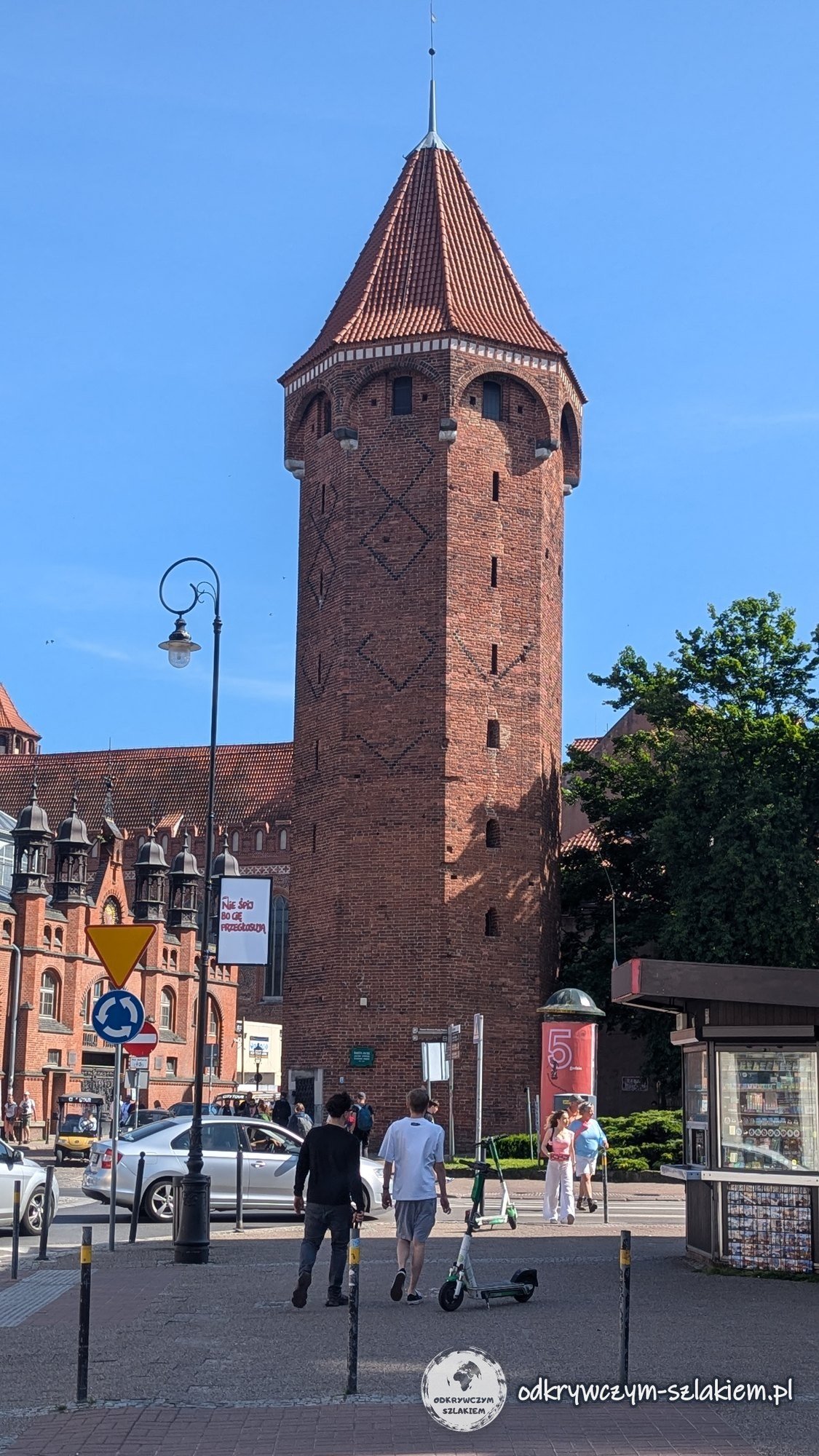
From the hill I walked down towards the Old Town. By the Market Hall stands the Jacek Tower – a Gothic tower from the turn of the 14th and 15th centuries, 36 metres high. It stood at the corner of the Main Town’s defensive walls, and after the walls were demolished it remained as a free-standing building.
The Gdańsk Shipyard and the European Solidarity Centre
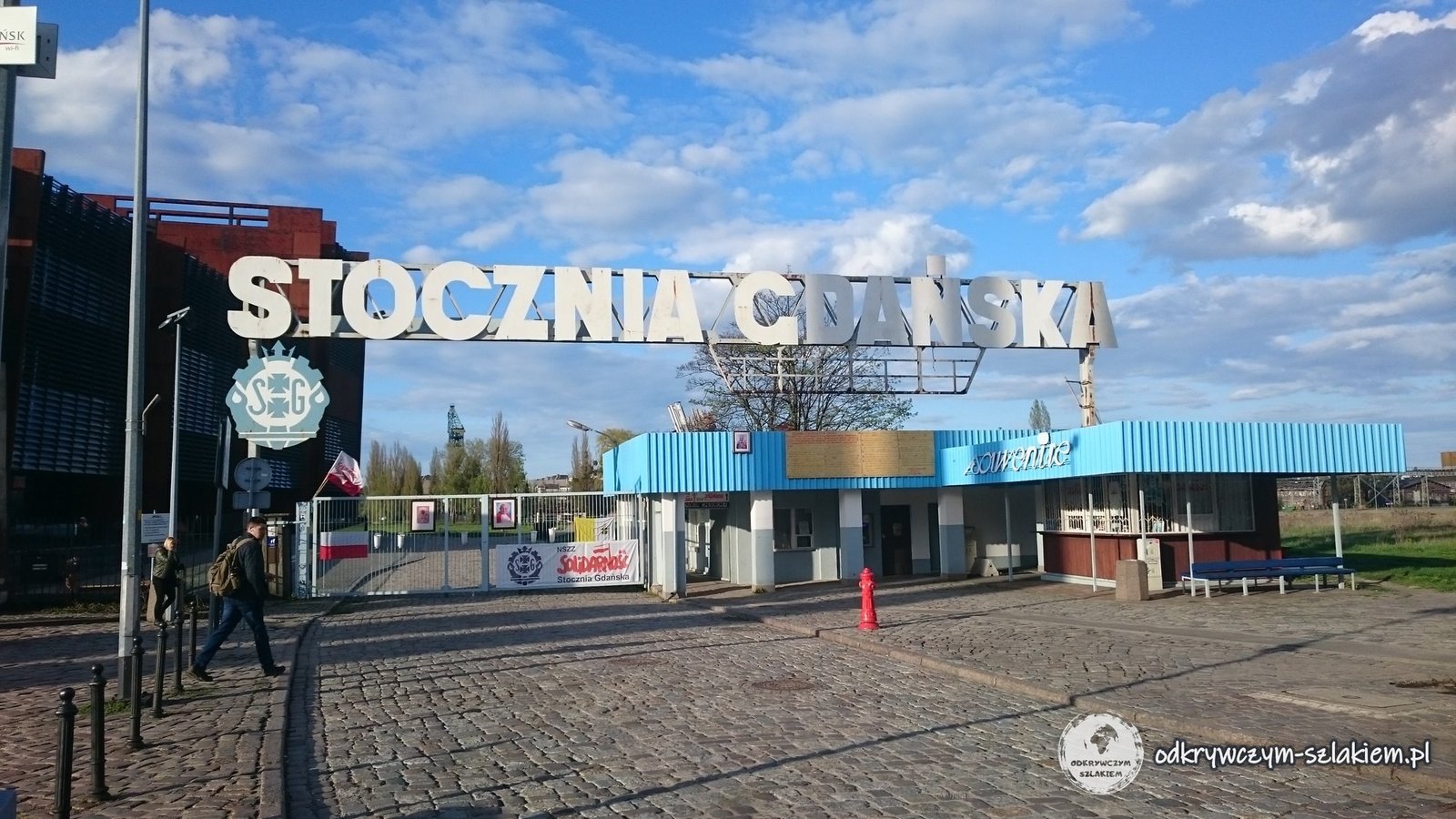
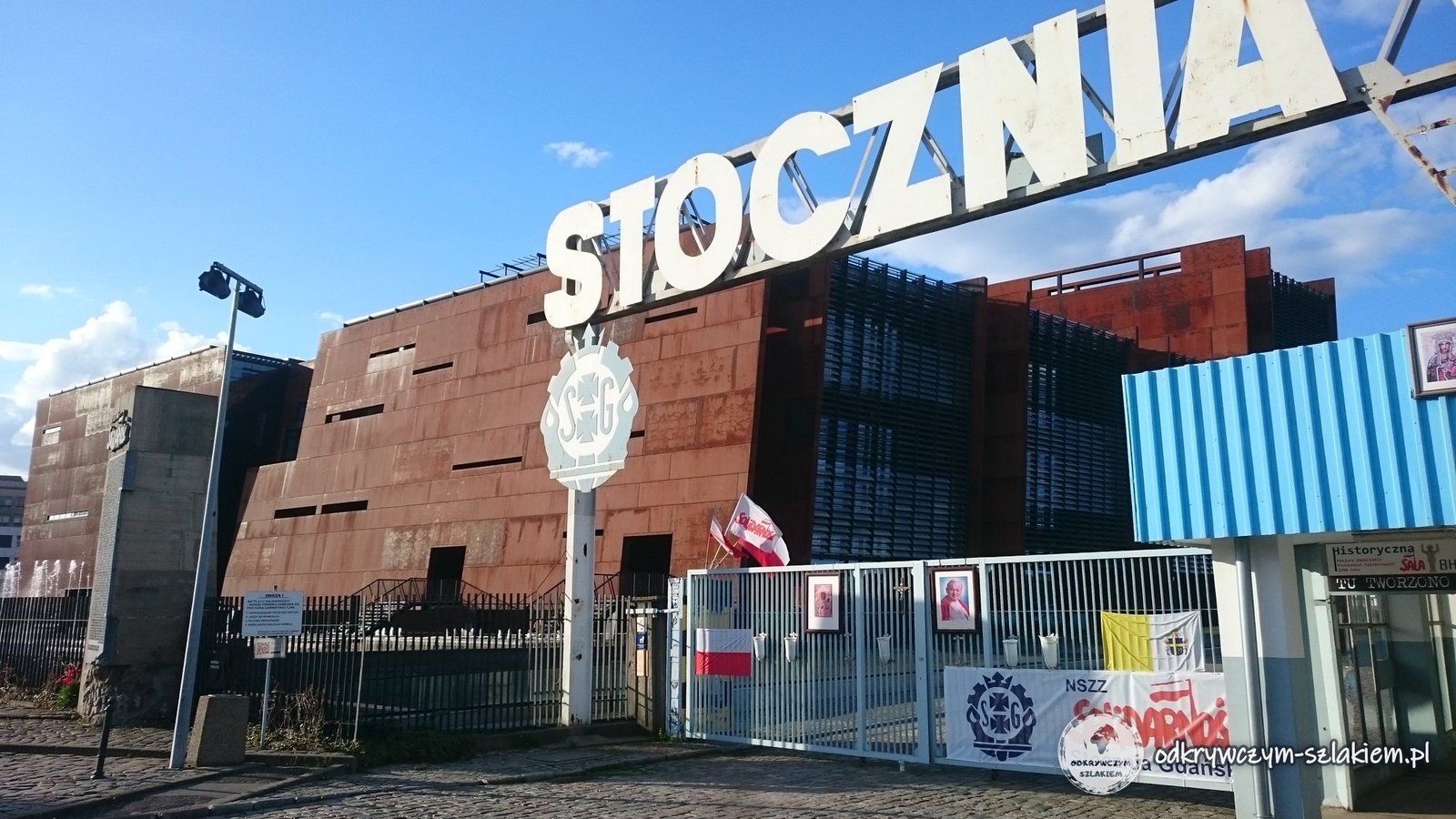
A quarter of an hour’s walk north of the station lies the site of the Gdańsk Shipyard. In August 1980 a strike broke out here that ended with the signing of the August Agreements and the birth of “Solidarity”. I was here in April 2018 – Gate No. 2 was hung with a portrait of John Paul II and a banner of the NSZZ “Solidarność” trade union. Next to the gate stands the Monument to the Fallen Shipyard Workers of 1970: three crosses, each 42 metres high, unveiled on 16 December 1980.
Behind the gate stands the European Solidarity Centre (ECS), opened on 30 August 2014. Its walls are clad in rust-coloured Corten steel sheets that resemble the hulls of ships. Inside there is a permanent exhibition on Solidarity and recent Polish history, and on the roof a terrace overlooking the shipyard.
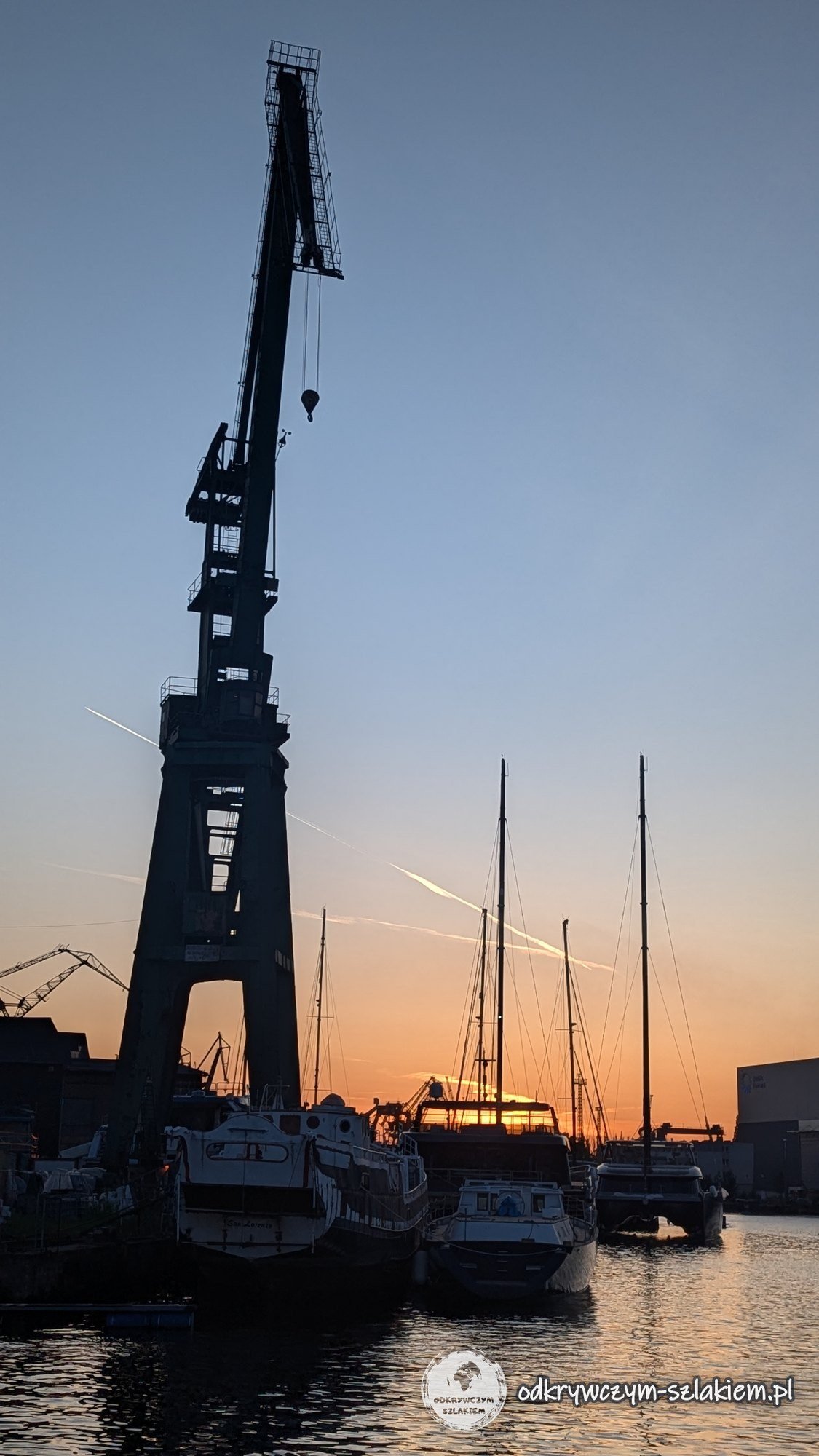
The oldest part of the shipyard is the Imperial Shipyard (Stocznia Cesarska). It was founded in 1844 as workshops of the Prussian navy and from 1871 was called the Kaiserliche Werft. In June 2025 I was here one evening for an event – yachts were moored at the Imperial Dock, with an old shipyard crane above them.
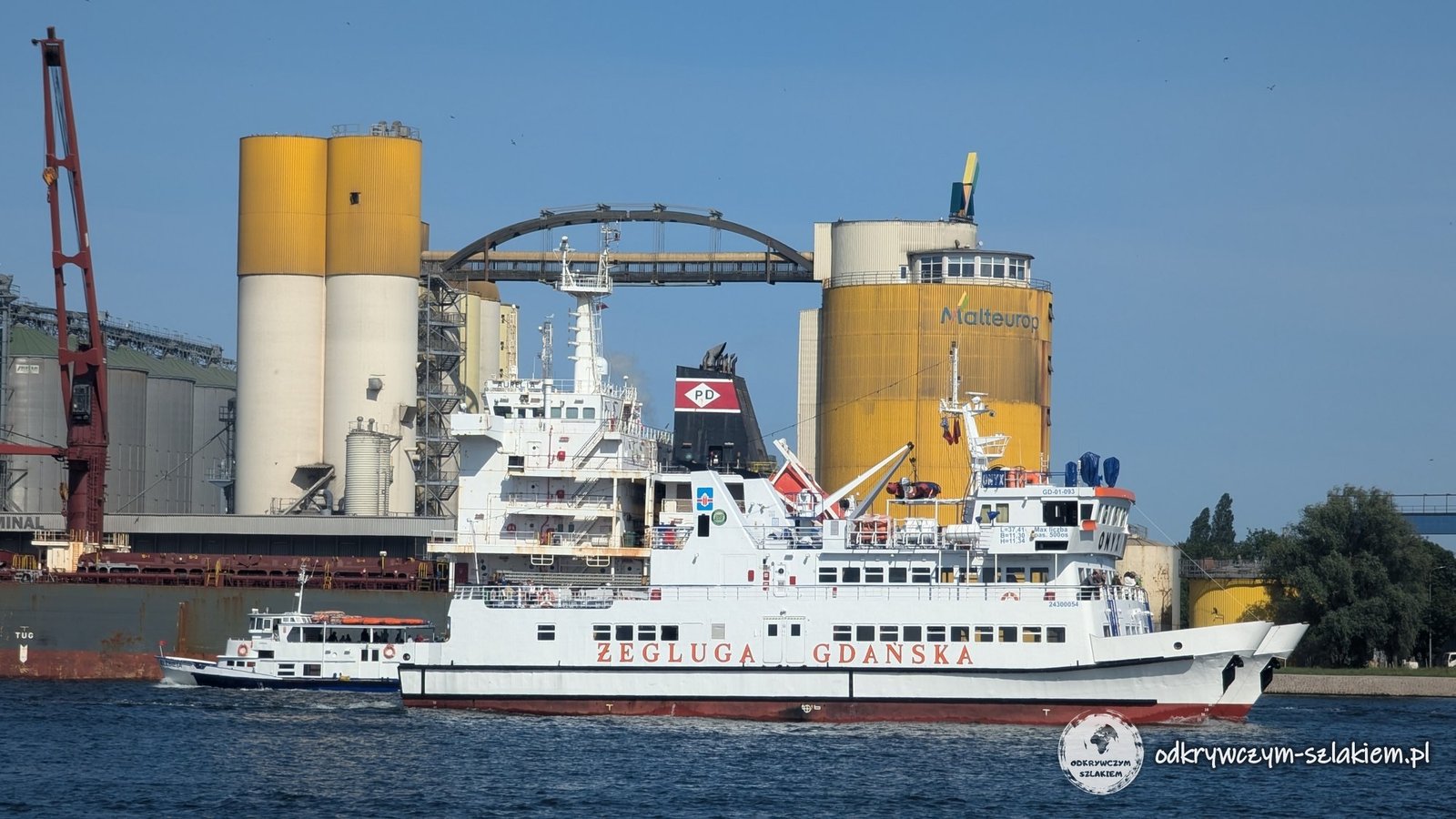
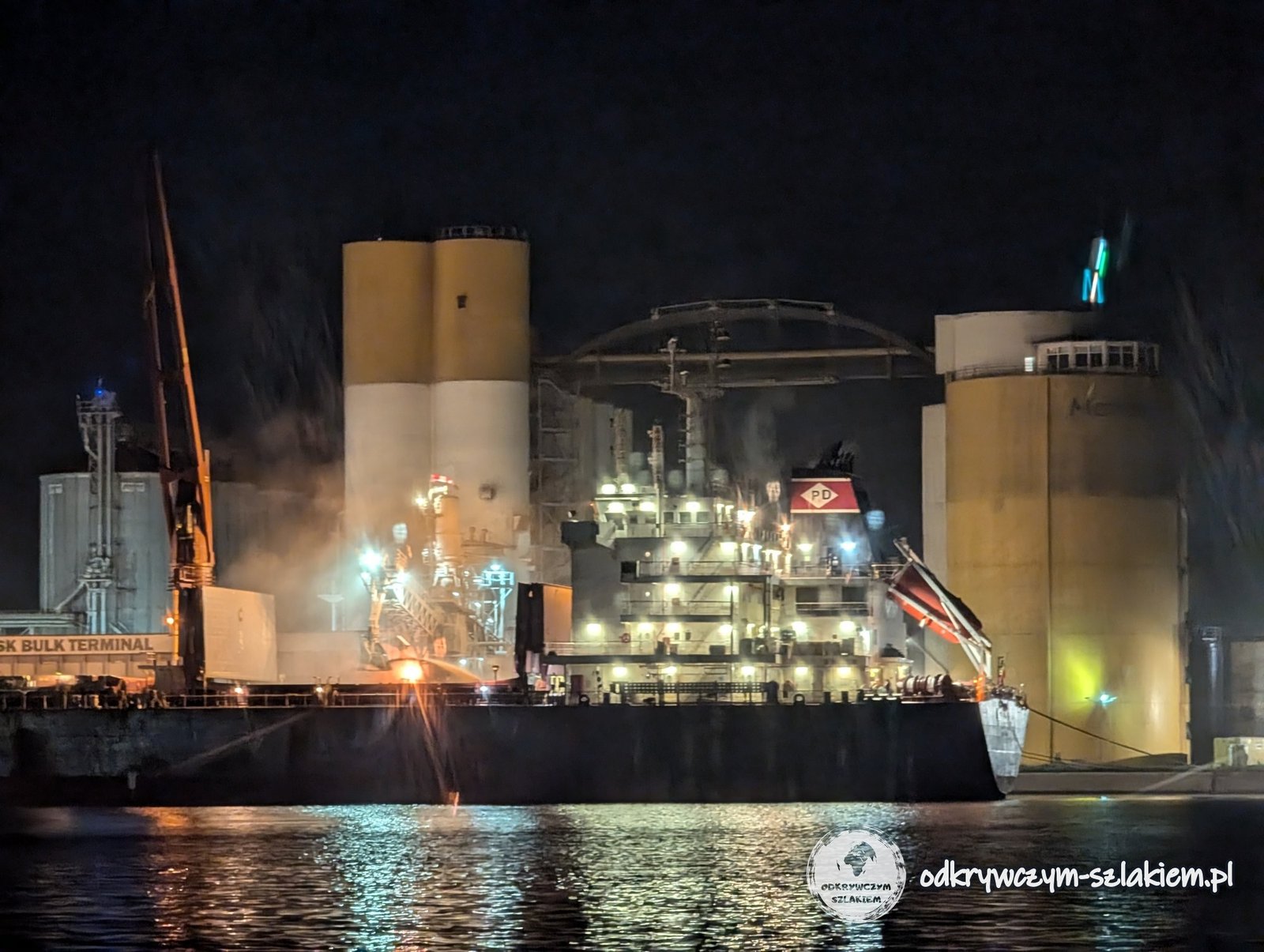
Next to the shipyard flows the Dead Vistula (Martwa Wisła). On the other side of the river stand the silos of a port terminal. In the afternoon a Żegluga Gdańska excursion boat sailed past them, and late in the evening an illuminated bulk carrier was moored at the quay.
The University of Technology, Brzeźno beach and the stadium
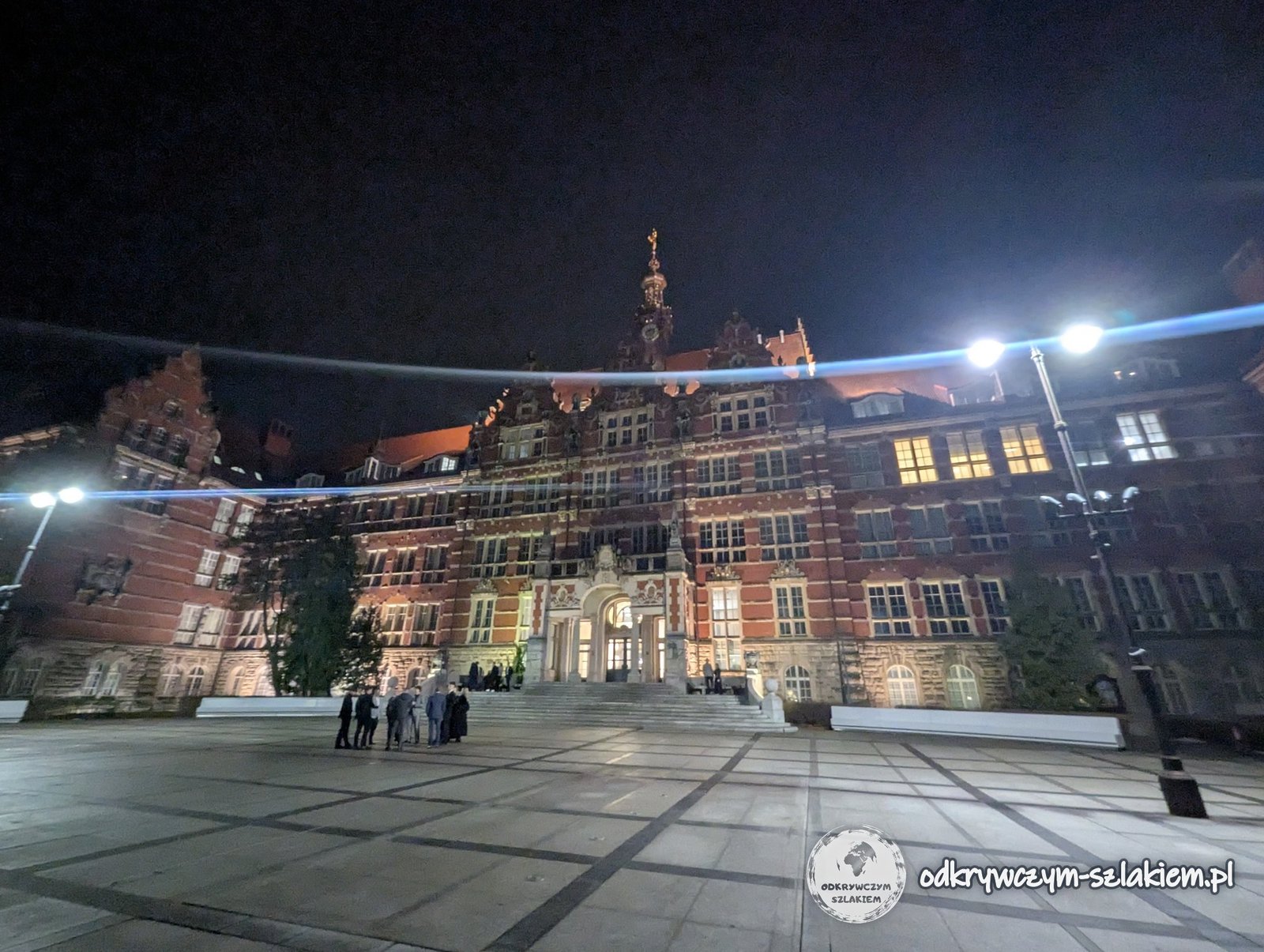
North-west of the centre lies the district of Wrzeszcz. Here stands the Main Building of Gdańsk University of Technology – a red-brick and grey-sandstone building in the Dutch Renaissance Revival style, opened together with the university on 6 October 1904. In the evening the facade is lit up.
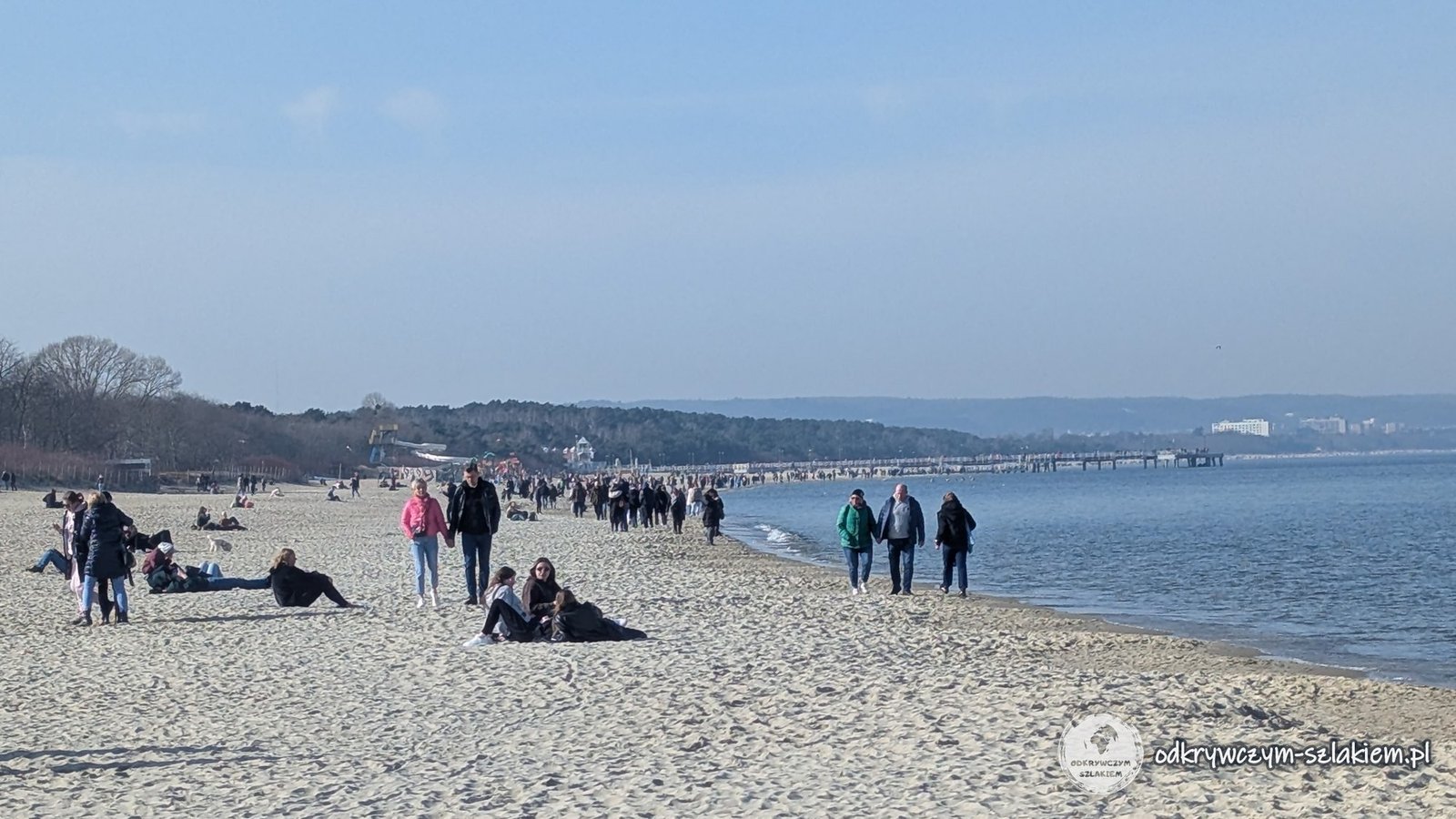
Gdańsk also has beaches of its own. The closest to the centre is Brzeźno – a former seaside resort where the Spa House from 1893 has survived. On the sunny Saturday of 7 March 2026 quite a few people were walking along the beach.
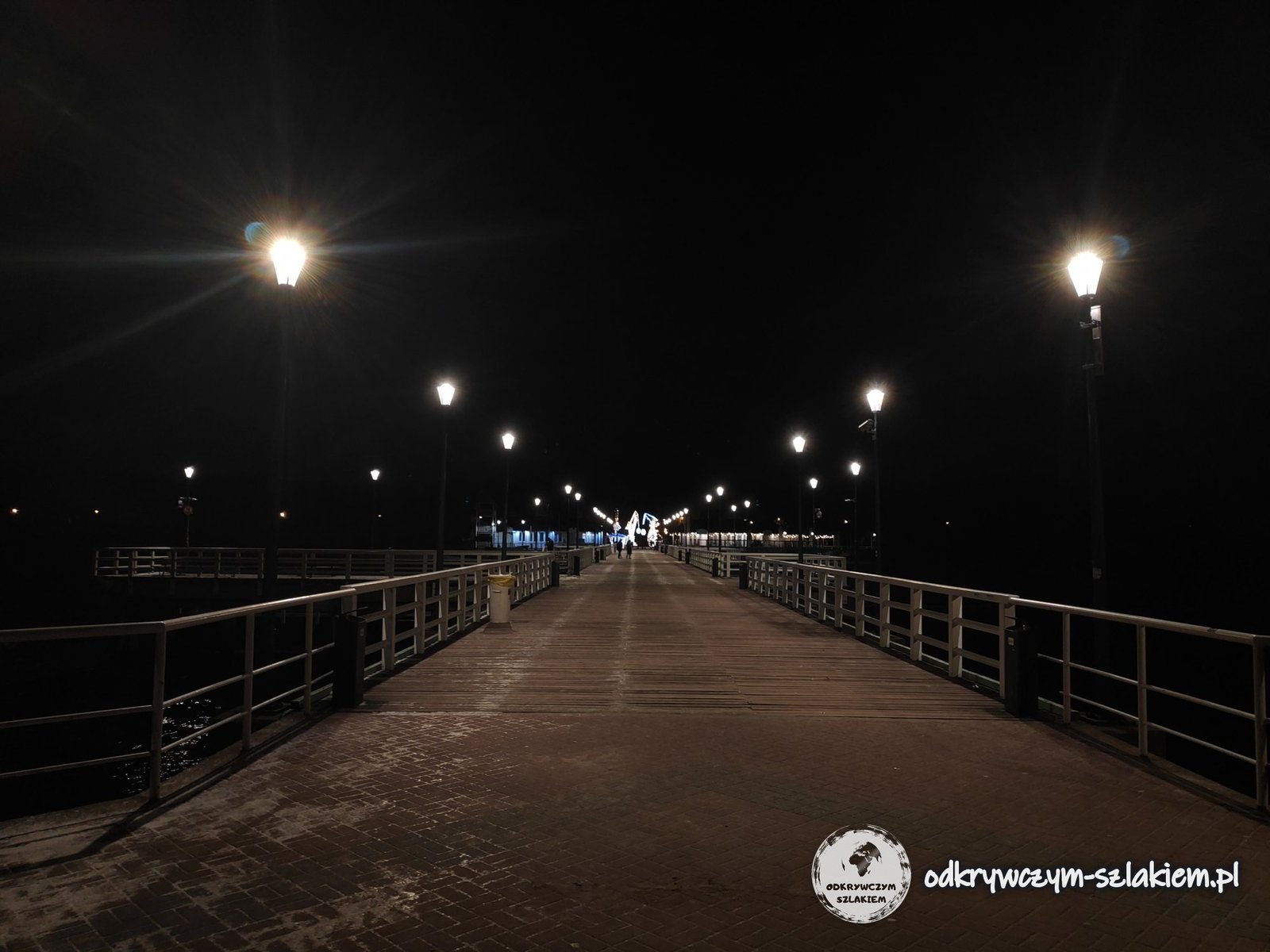
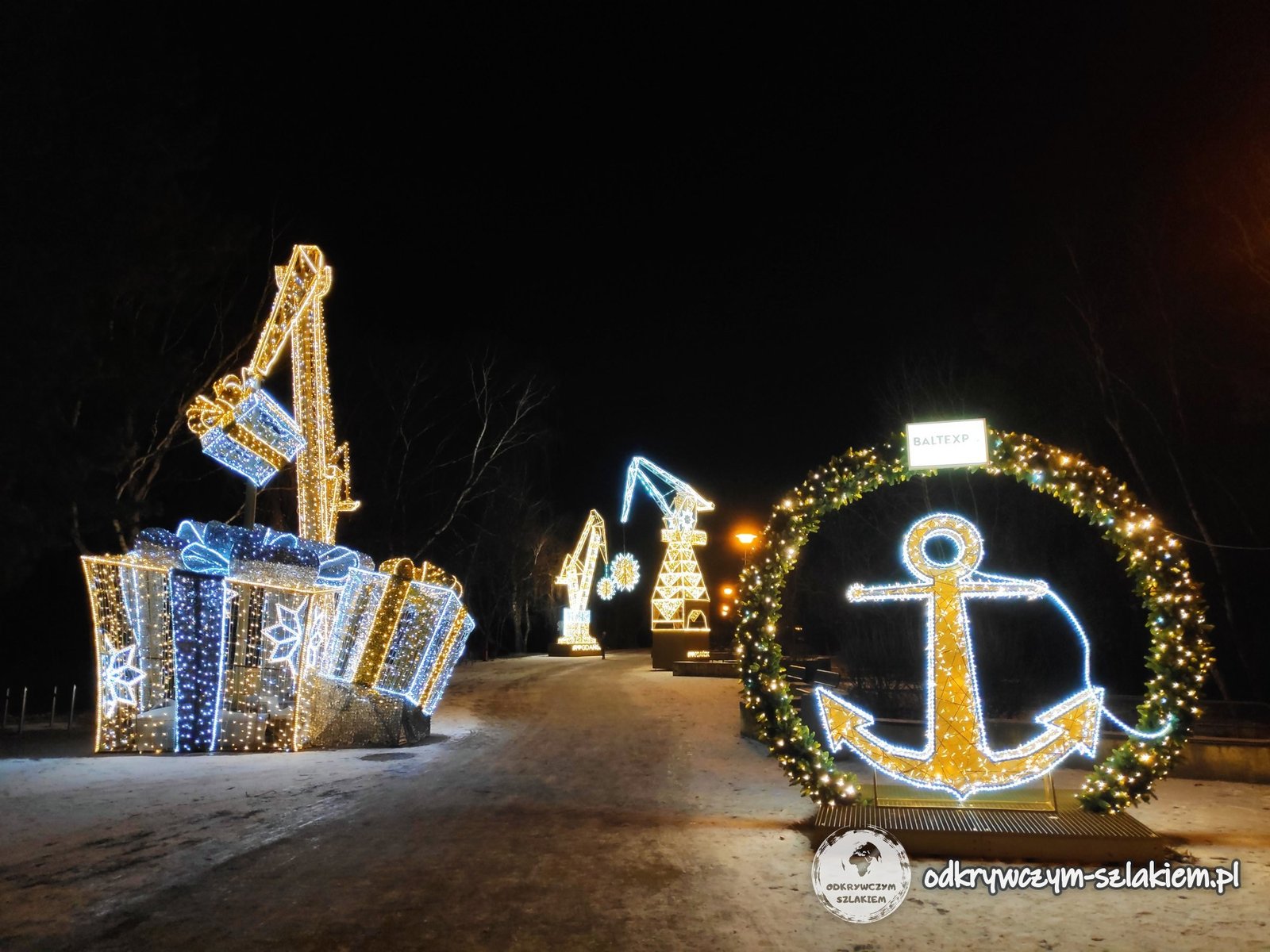
From the beach in Brzeźno a pier 136 metres long runs out into the sea. In December 2022 I came here one evening – by the entrance to the pier there were light decorations with an anchor and shipyard cranes.
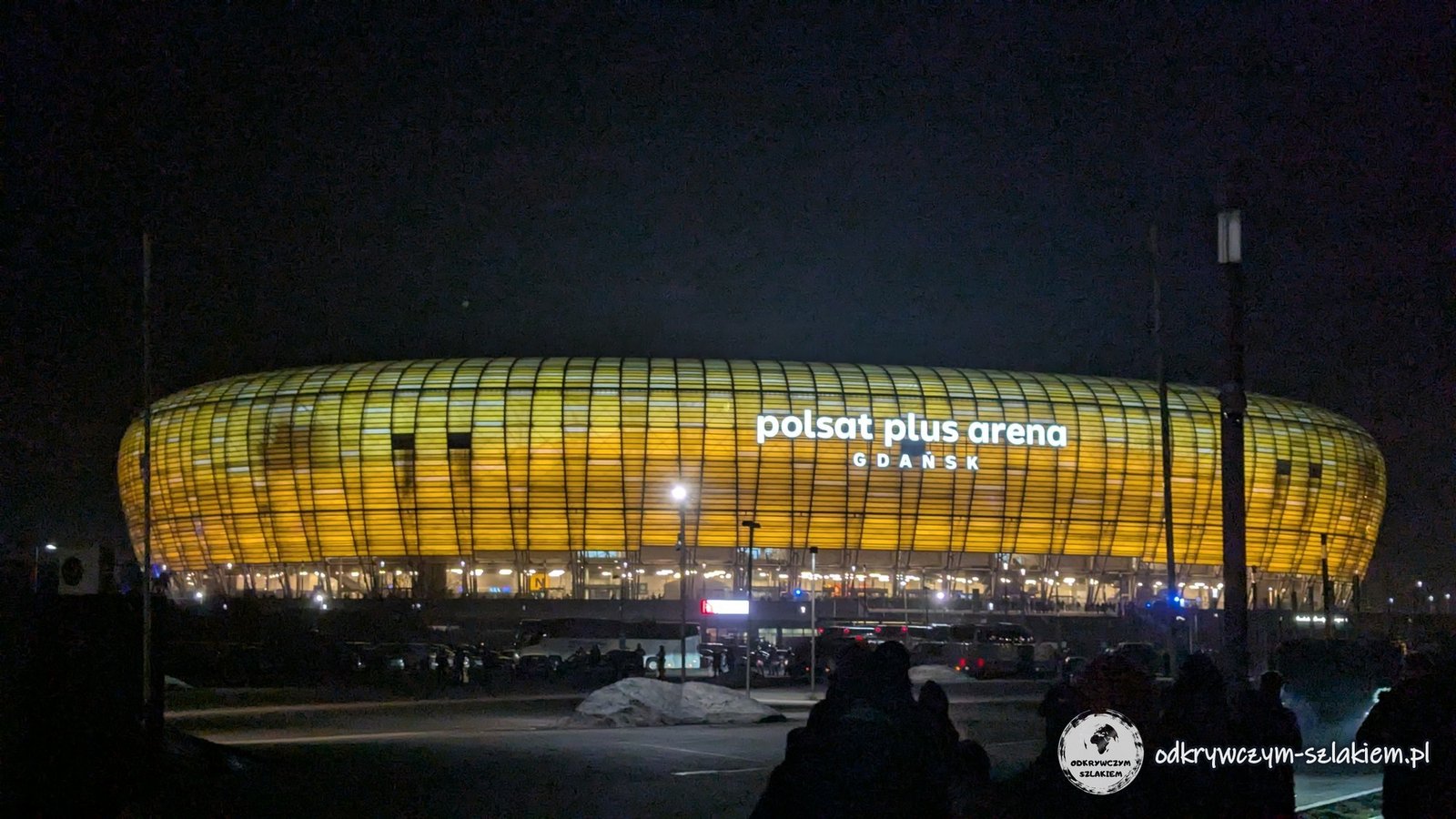
In the Letnica district stands Polsat Plus Arena – a stadium built for Euro 2012, with seats for 41,620 spectators. Its facade is made of 18,000 amber-coloured panels. Lechia Gdańsk play here. I have been to many Lechia matches here – it is the club I support.
Sopot – the pier, Monciak and the Crooked House
The SKM commuter train takes about 20 minutes from Gdańsk to Sopot. Sopot’s best-known sights lie along the Bohaterów Monte Cassino promenade, known as Monciak, which leads down to the pier. Sopot Pier is 511.5 metres long – the longest wooden pier in Europe. In March 2025 the view from the pier showed an almost empty beach and the buildings around Plac Zdrojowy.
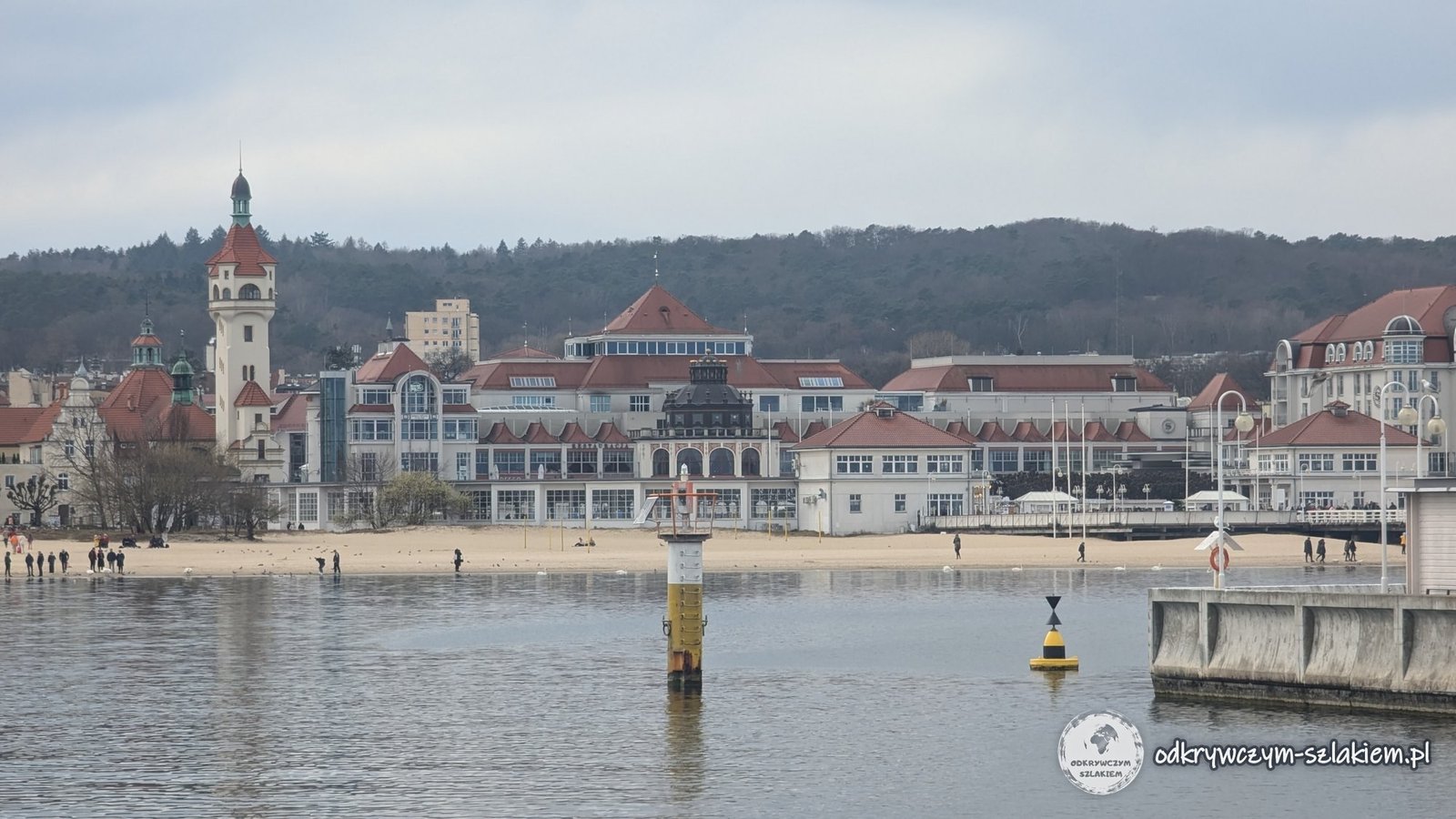
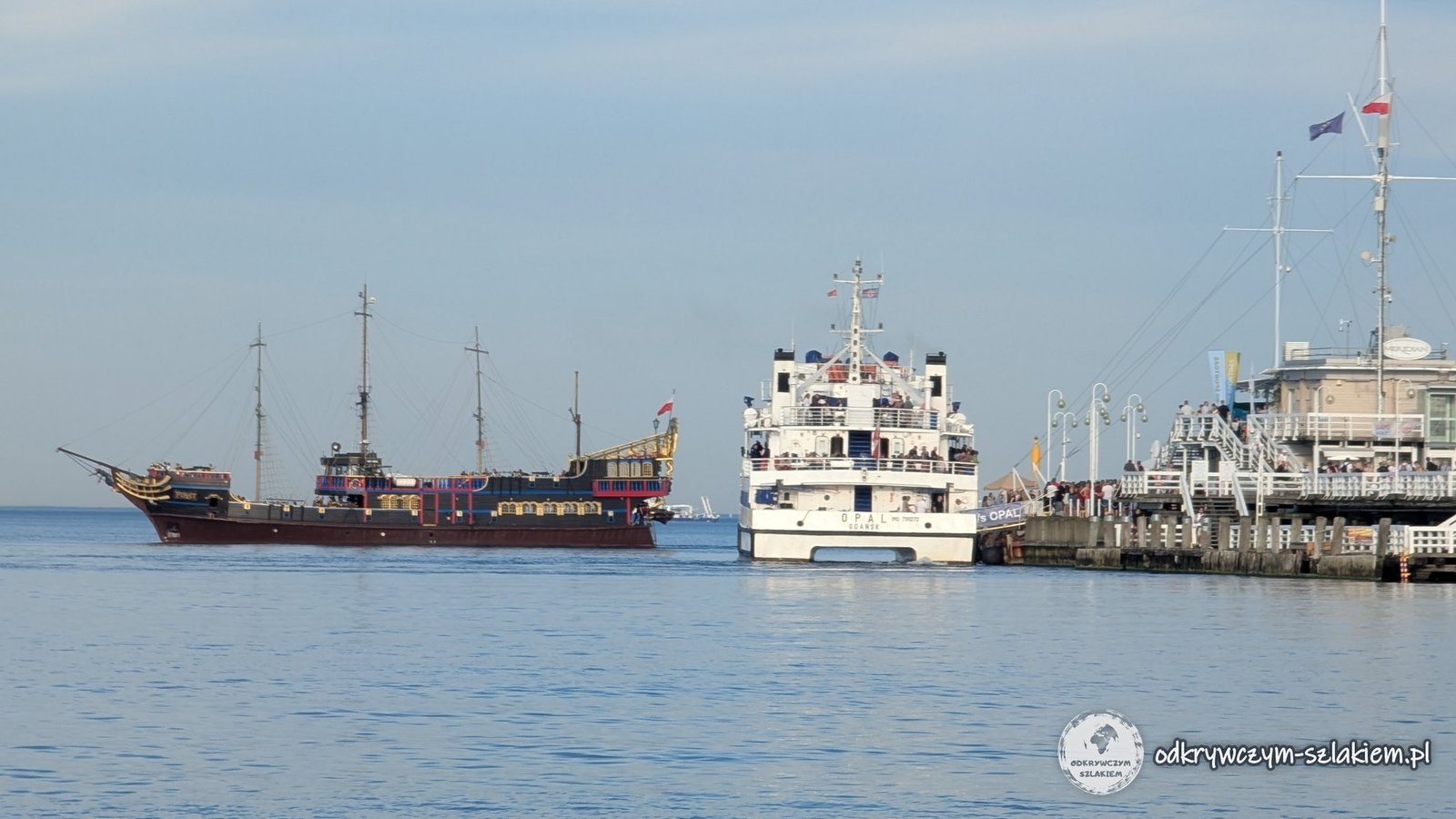
At the entrance to the pier lies Plac Zdrojowy (Spa Square) with its lighthouse. Excursion boats call at the pier – in September 2025 they included a sailing ship styled as a pirate ship.

On Monciak stands the neo-Gothic St George’s Church, built in 1899–1901 as a Protestant church. After the Second World War it was taken over by Catholics.

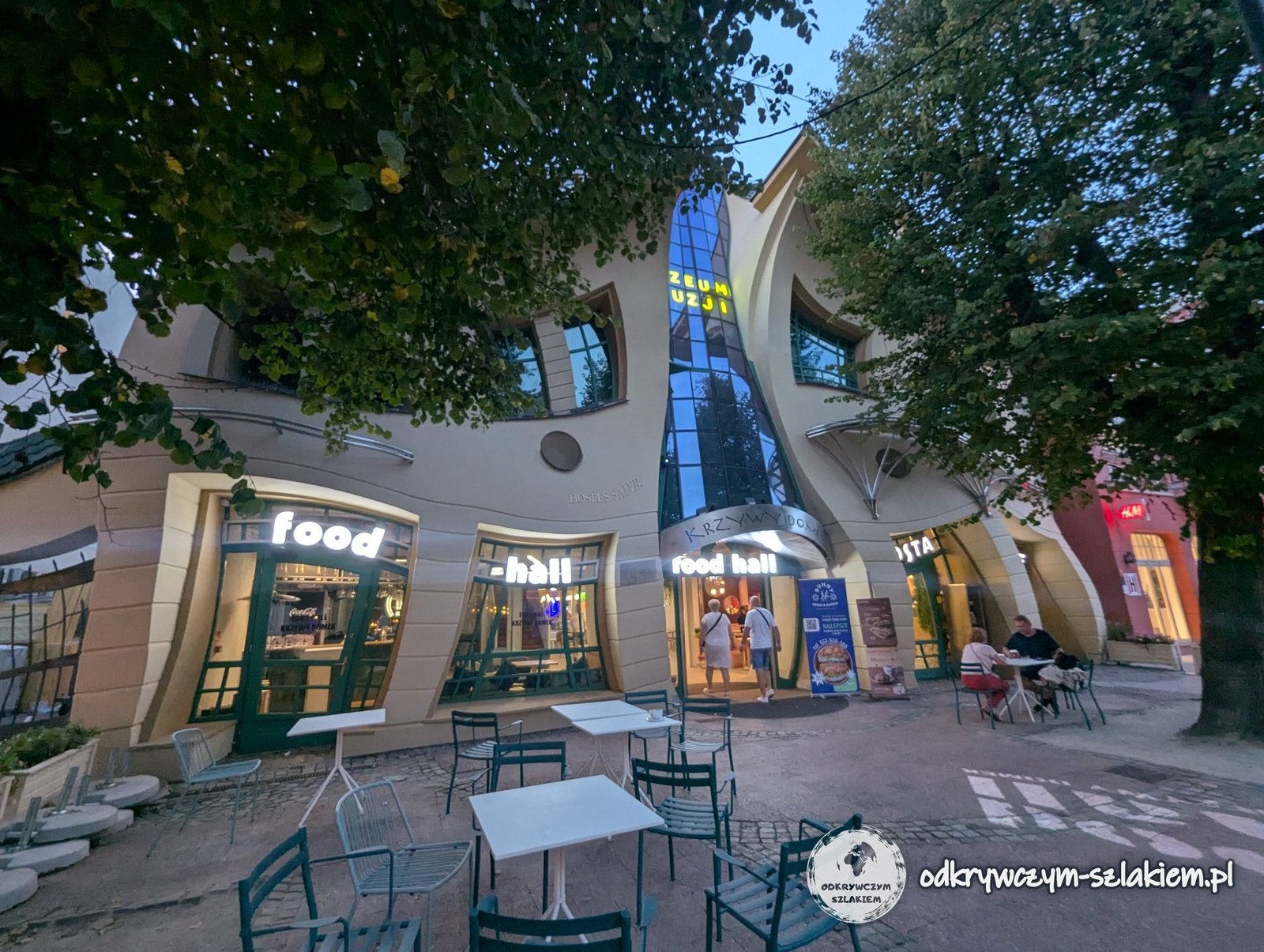
A little further on stands the Crooked House (Krzywy Domek) – a building from 2004 with wavy walls, designed after the fairy-tale drawings of Jan Marcin Szancer and Per Dahlberg. Today it houses shops, cafés and restaurants.

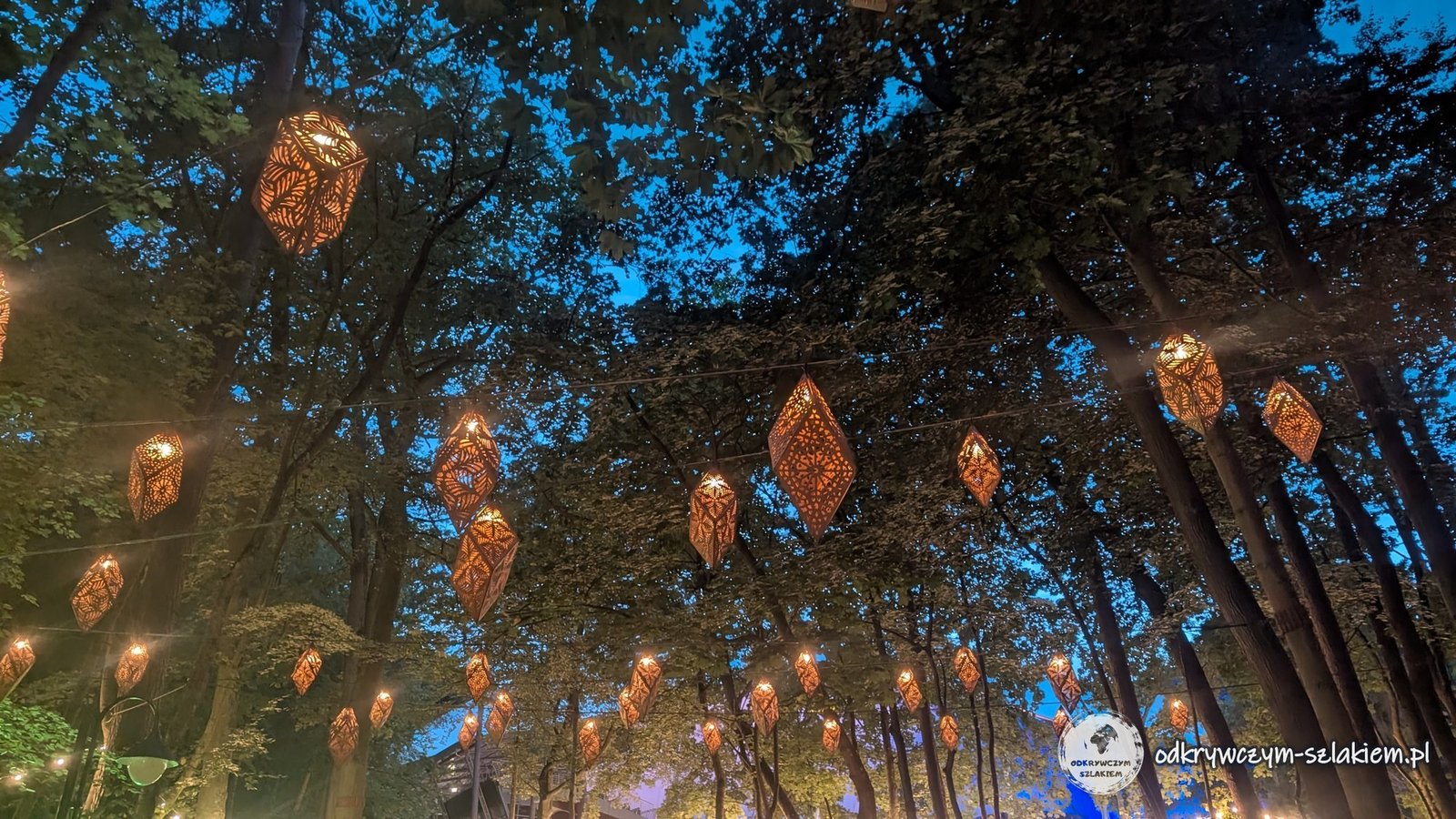
In the forest above Sopot lies the Forest Opera (Opera Leśna) – an amphitheatre opened in 1909, with a roofed auditorium for more than 5,000 people. In September 2025 I came here for a rock concert with a symphony orchestra. The way to the amphitheatre was lit by lanterns hanging in the trees.
Practical information
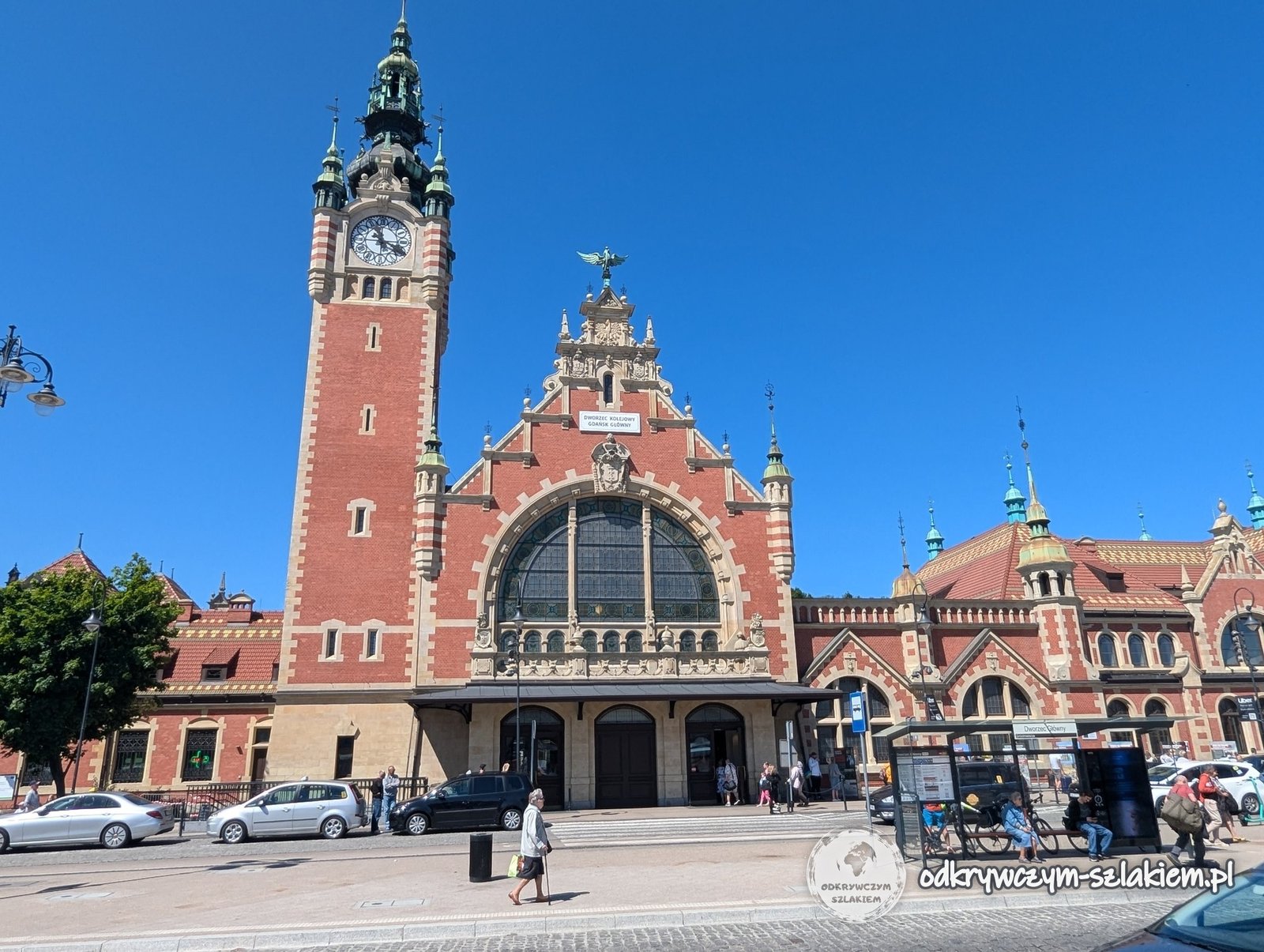
- By train: the main station is Gdańsk Główny – opened in 1900, with a 48-metre clock tower. There are direct trains from Warsaw, Olsztyn and Szczecin, among other cities. In front of the station stands a Kindertransport memorial by Frank Meisler, similar to the one I described in my post Berlin: memorial sites.
- By plane: from Lech Wałęsa Airport (Gdańsk Port Lotniczy station) you can take a PKM train to Gdańsk Wrzeszcz, or bus 210 to the city centre. I have flown from Gdańsk to places such as Stavanger.
- Getting around: Gradowa Hill, the Main Town, the Motława and the shipyard are all within about 2 km of Gdańsk Główny station, so you can do them on foot. Trams will take you to Wrzeszcz and Brzeźno.
- To Sopot and Gdynia: the SKM commuter train links Gdańsk, Sopot and Gdynia and runs every 10–15 minutes during the day. Check current fares on the SKM and ZTM Gdańsk websites. I described the third city of the Tricity in a separate post: Gdynia – Orłowo, Orłowo Cliff, Dar Pomorza and the aquarium.
- St Mary’s Basilica: the tower with its viewing platform is open daily from 10:00; in 2026 a ticket costs 20 zł (reduced 10 zł). The tower is closed during storms and bad weather.
- Sopot Pier: there is an entrance fee from April to the end of September – in 2025 a standard ticket cost 10 zł and a reduced one 5 zł.
- Weekend plan: on day one Gradowa Hill, the Jacek Tower, the Main Town and the Motława; on day two the shipyard and the ECS, then the beach in Brzeźno or an afternoon and evening in Sopot.
- More of Pomerania: Kashubia – Szymbark, the Wieżyca tower and the Radunia Gorge.