At the end of October 2020 we spent a week in Malta – it was the last trip abroad in that intense travel year, and our second time that year in the very south of Europe, right next to Africa. Malta is a small country with an area smaller than Warsaw. It consists of three main islands: the largest, Malta, is about 27 km long and just under 15 km wide, Gozo is almost four times smaller, and Comino covers barely more than one percent of the main island.
Despite its small size, Malta is exceptionally rich in sights. Its history goes back more than 7000 years – its megalithic temples are older than the Egyptian pyramids and are among the oldest free-standing buildings in the world, and the capital, Valletta, a UNESCO World Heritage Site, is one of the most monument-packed places on earth. Add to that grottoes with blue water, cliffs, beautiful beaches, catacombs, citadels, salt pans, fishing villages and places where “Game of Thrones” was filmed. Below is our day-by-day plan (from 22 to 29 October) and practical information.
Table of contents
- Day 1: arriving in Malta
- Day 2: southern Malta – the Mnajdra and Ħaġar Qim temples, the Blue Grotto, Marsaxlokk
- Day 3: Rabat, St Paul’s Catacombs, Mdina and the Dingli Cliffs
- Day 4: the west coast – beaches and the trail to Popeye Village
- Day 5: Comino island
- Days 6–7: Gozo island
- Day 8: Valletta
- Practical information
Day 1: arriving in Malta
The first day went on the flight from Berlin. On arrival, as was usual in 2020, our temperature was taken as we got off the plane – anyone with a fever would have had to take a test and wait for the result. Paradoxically, it was precisely because of the pandemic that sightseeing was so easy: there were few tourists, as hardly anyone was travelling anywhere at the time.
Day 2: southern Malta – the Mnajdra and Ħaġar Qim temples, the Blue Grotto, Marsaxlokk
On the second day we toured the south of the island: first the prehistoric temples by the sea, then the cliffs with the Blue Grotto, and finally the fishing village of Marsaxlokk.
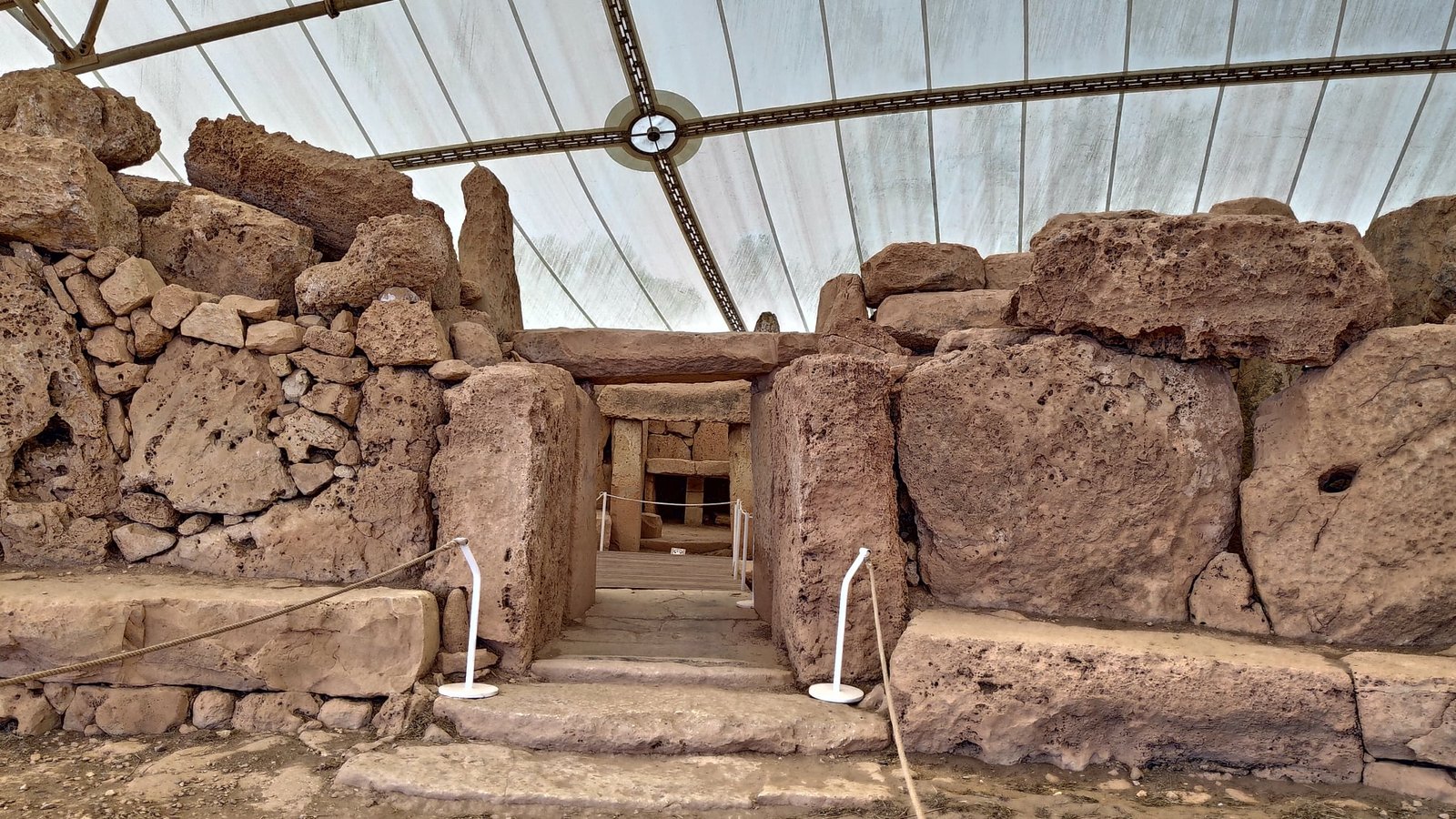
The megalithic temples of Mnajdra and Ħaġar Qim
We started with the island’s oldest history. Mnajdra and Ħaġar Qim are two complexes of prehistoric temples, a few hundred metres apart above the south coast – the best-preserved sites of this kind in Malta. Today the stone blocks are protected by a huge canopy overhead. The combined ticket cost us €10 (as of October 2020); in winter the complex is open from Thursday to Sunday, 10:00–16:30.
The Blue Grotto
Not far from the temples lies the Blue Grotto – a complex of picturesque sea caves in the cliffs. They are best seen up close from a boat: a 20-minute trip costs €8 per person. In winter the boats run from 9:00 to 15:30, in summer until 17:00.
Marsaxlokk
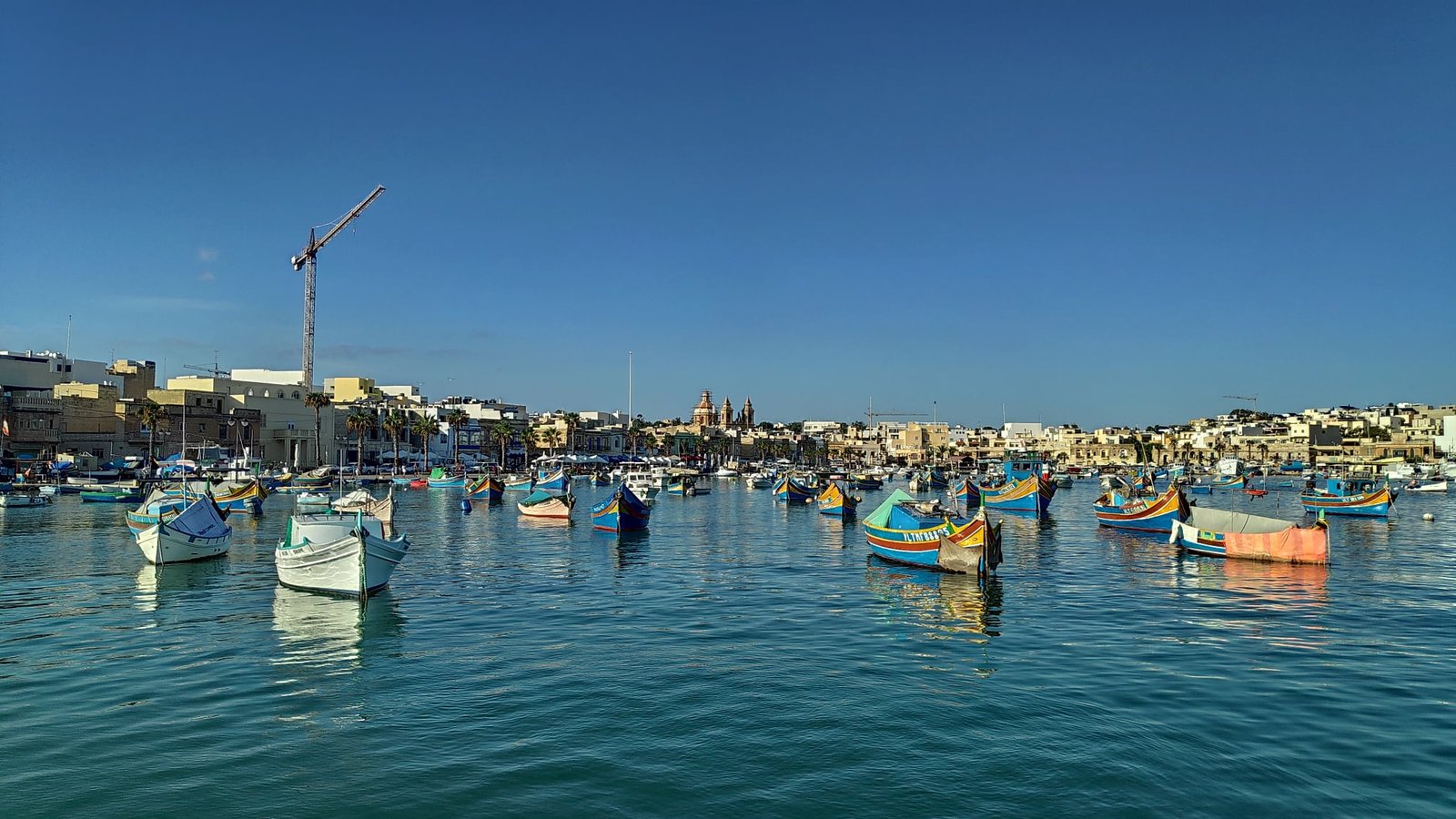
Marsaxlokk is a fishing village with a harbour full of colourful luzzu boats – with an eye painted on the bow which, according to tradition, protects the fishermen. Nearby there is also a natural rock pool, St. Peter’s Pool, and in neighbouring Marsaskala, by the harbour, salt pans that are easy to reach along a wide promenade and down some steps.
Day 3: Rabat, St Paul’s Catacombs, Mdina and the Dingli Cliffs
On the third day we headed inland: to Rabat with St Paul’s Catacombs, to the former capital, Mdina, and at the end of the day to the Dingli Cliffs.
Rabat
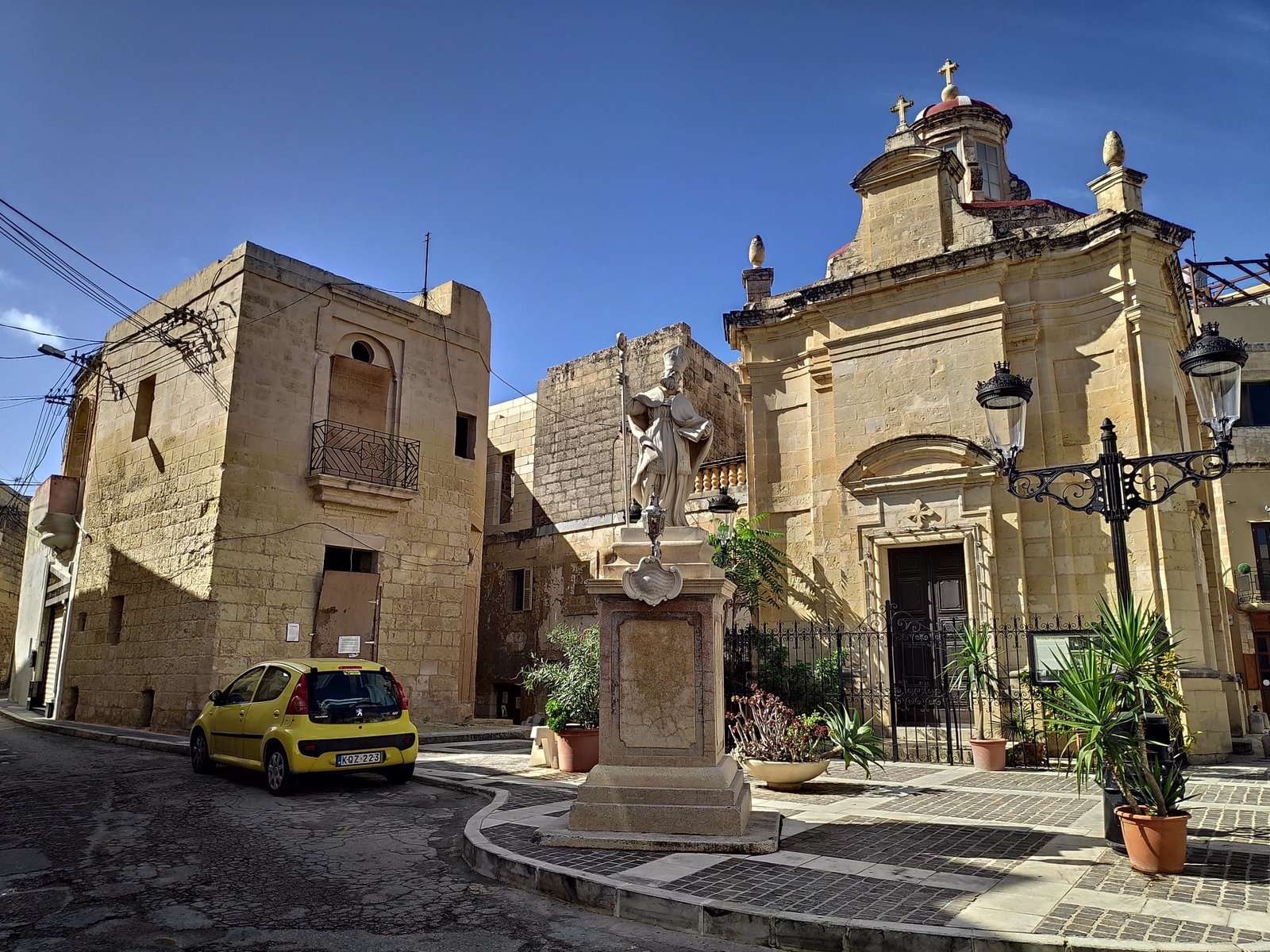
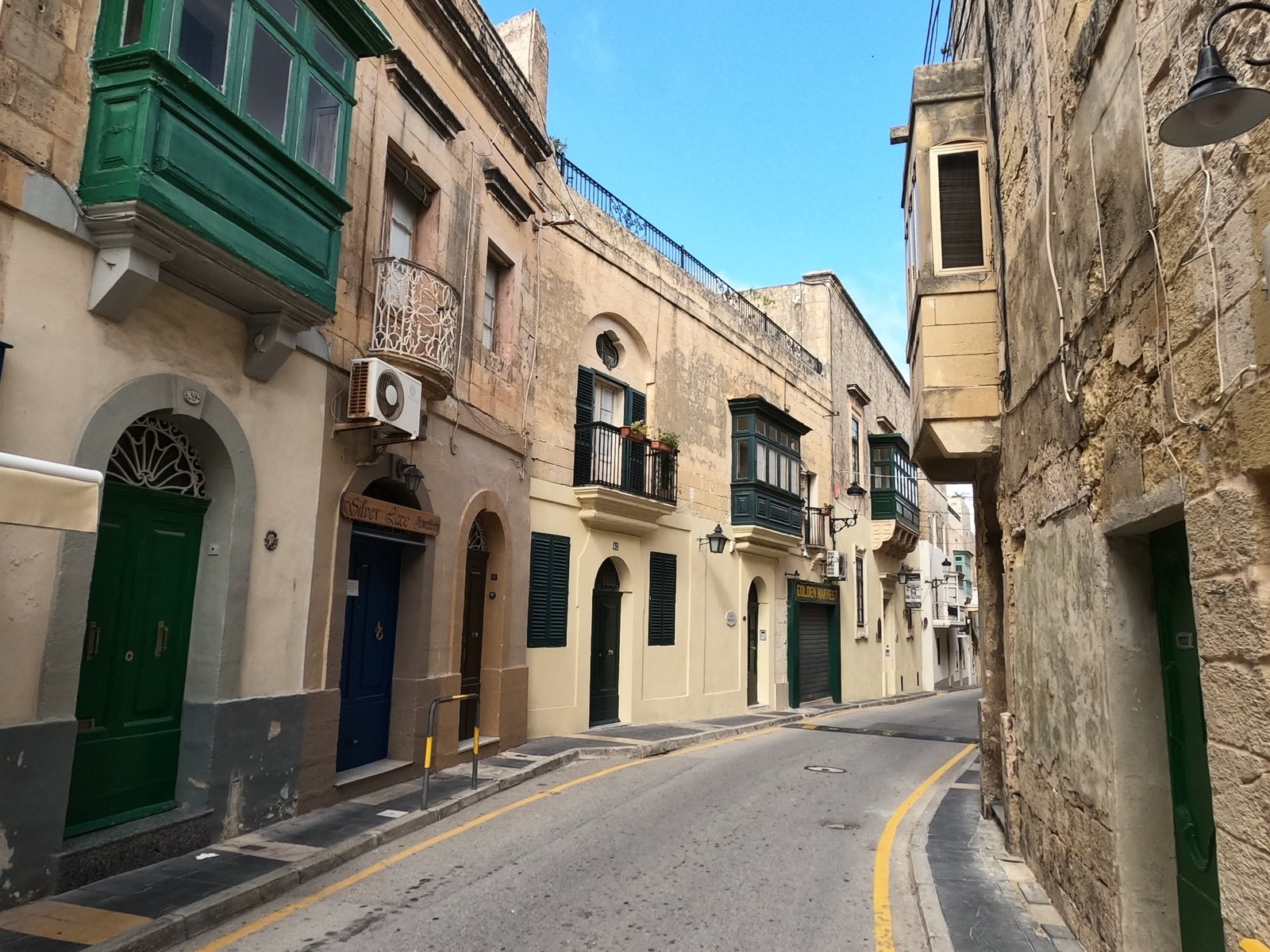
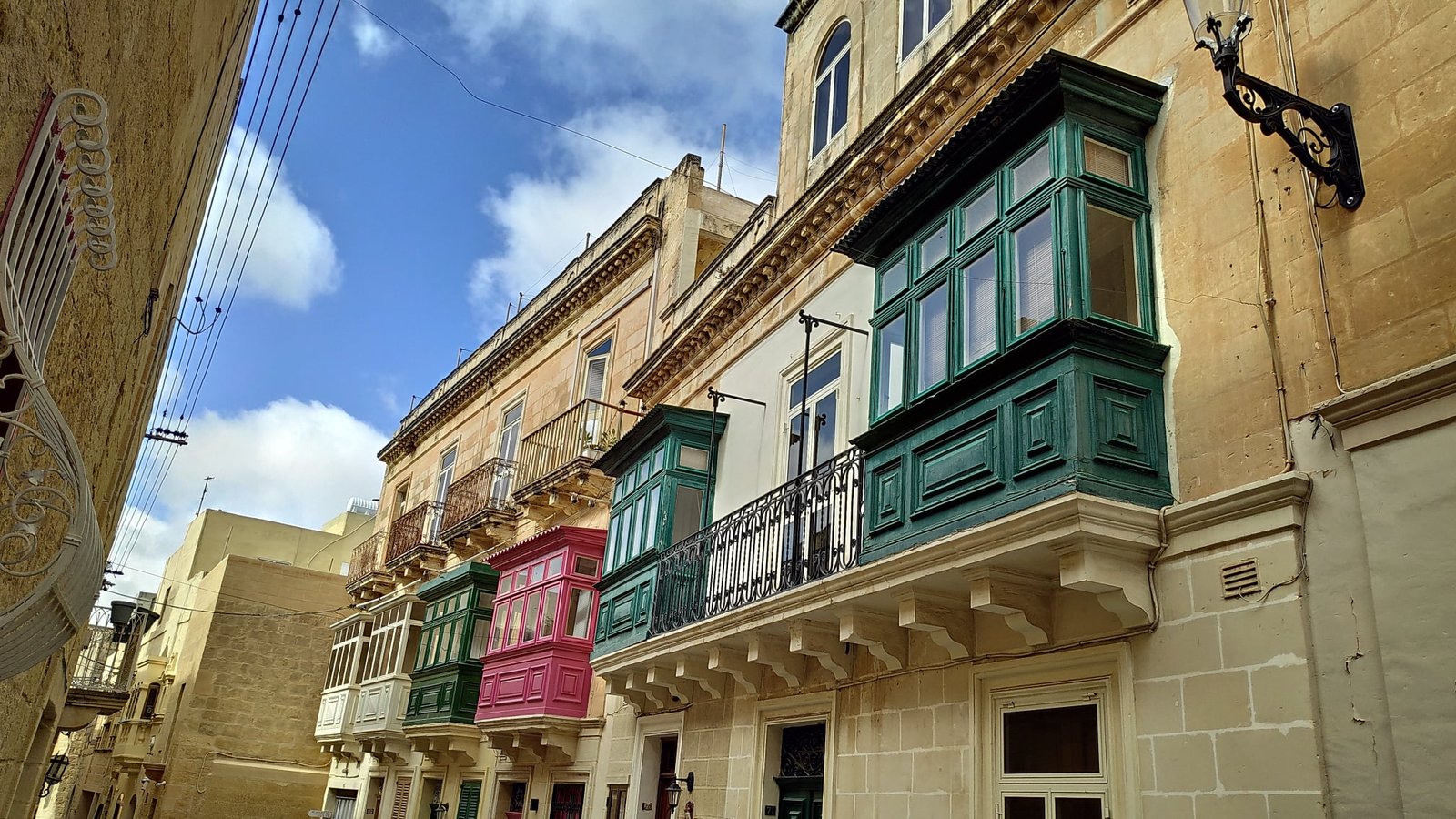
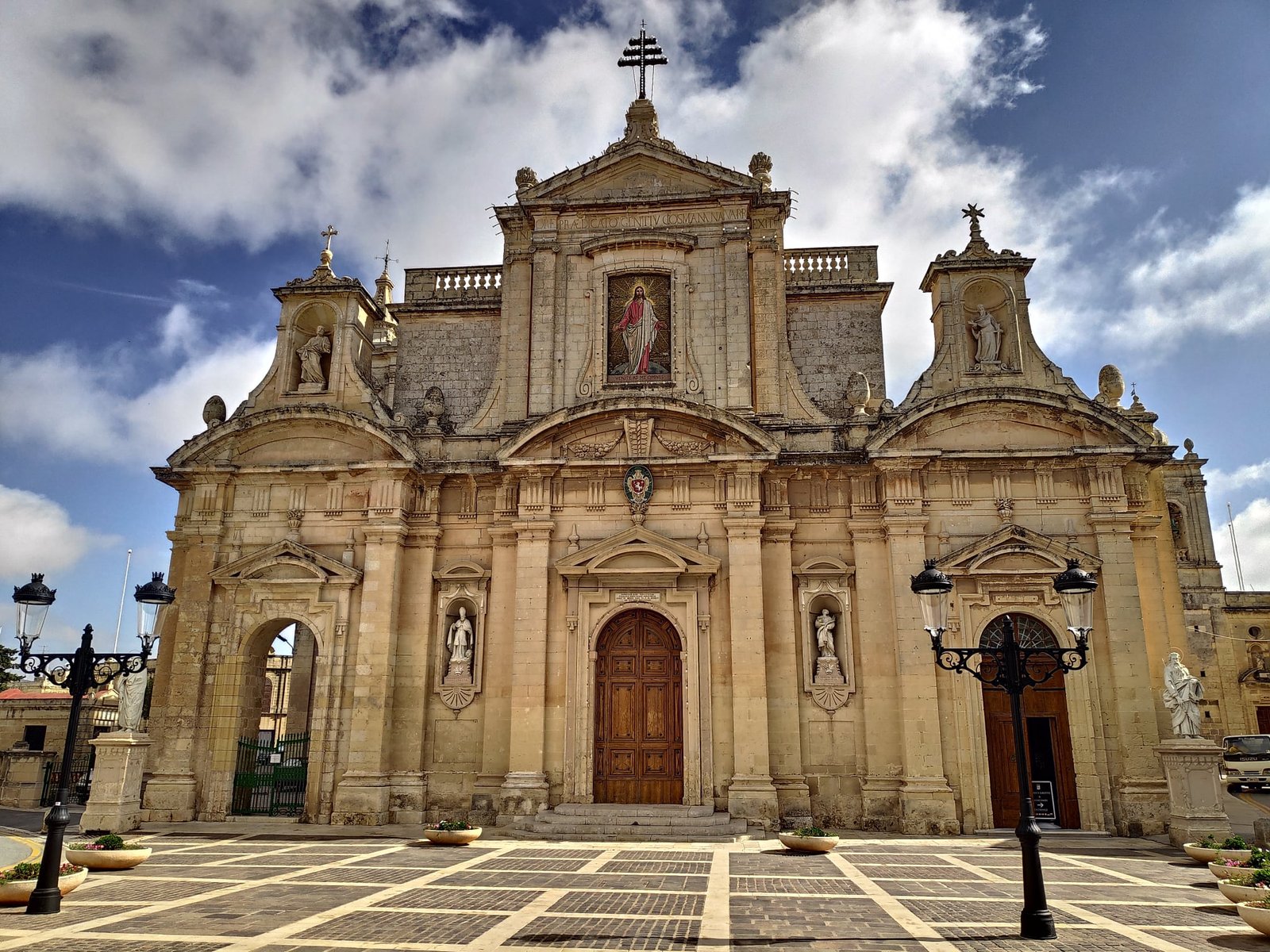
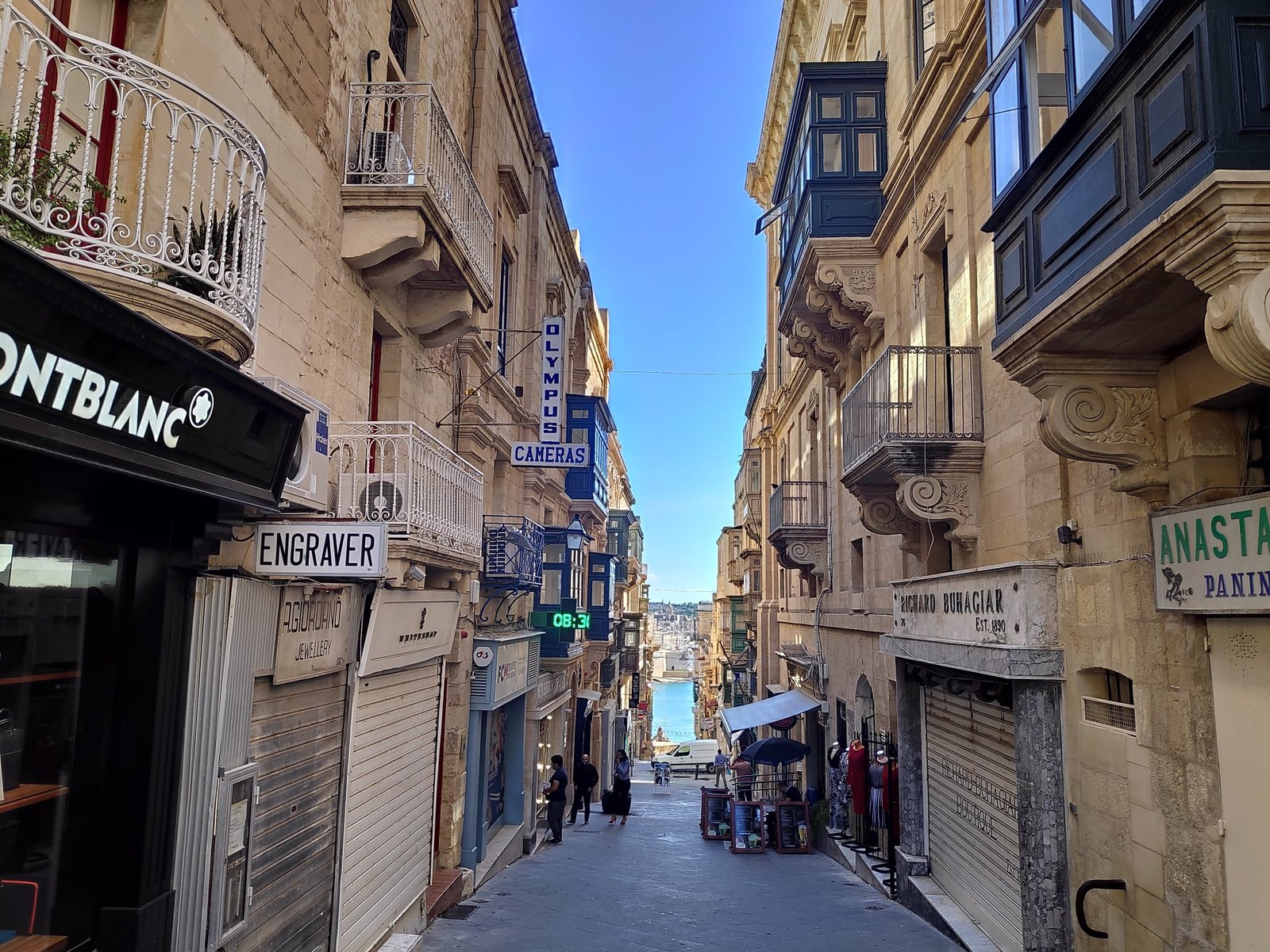
Rabat is a small town just outside the walls of Mdina. We began our walk at the small church of St Cataldus and then wandered through narrow streets with the typical colourful Maltese balconies. Rabat’s most important church is the baroque parish church of St Paul.
St Paul’s Catacombs
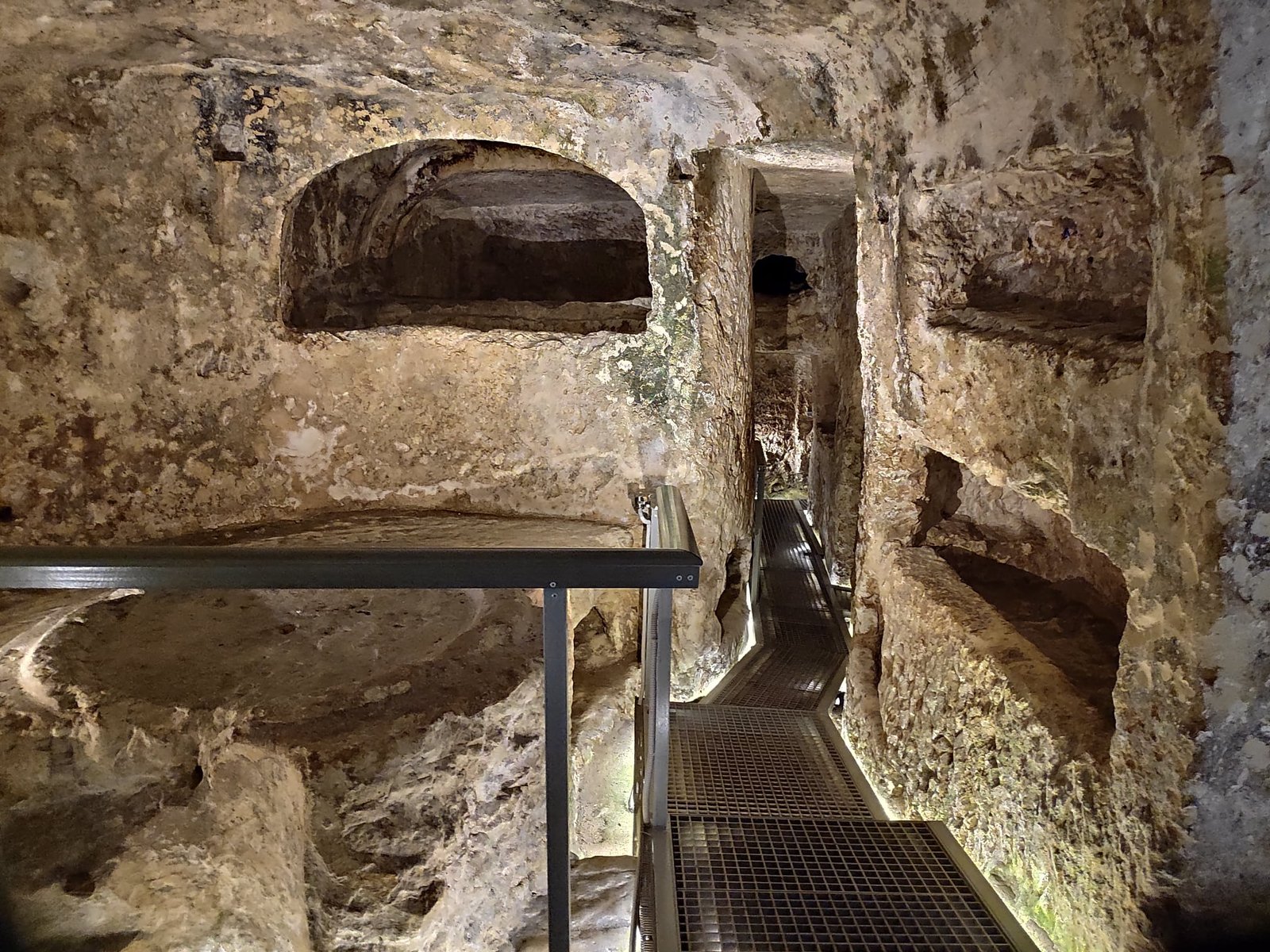
Rabat is also home to St Paul’s Catacombs – a very well-preserved labyrinth of underground tombs cut into the rock. They are open daily from 9:00 to 17:00, and admission cost €5 (as of October 2020). You can also visit the nearby St Agatha’s Catacombs – going by online reviews, we chose only St Paul’s.
Mdina
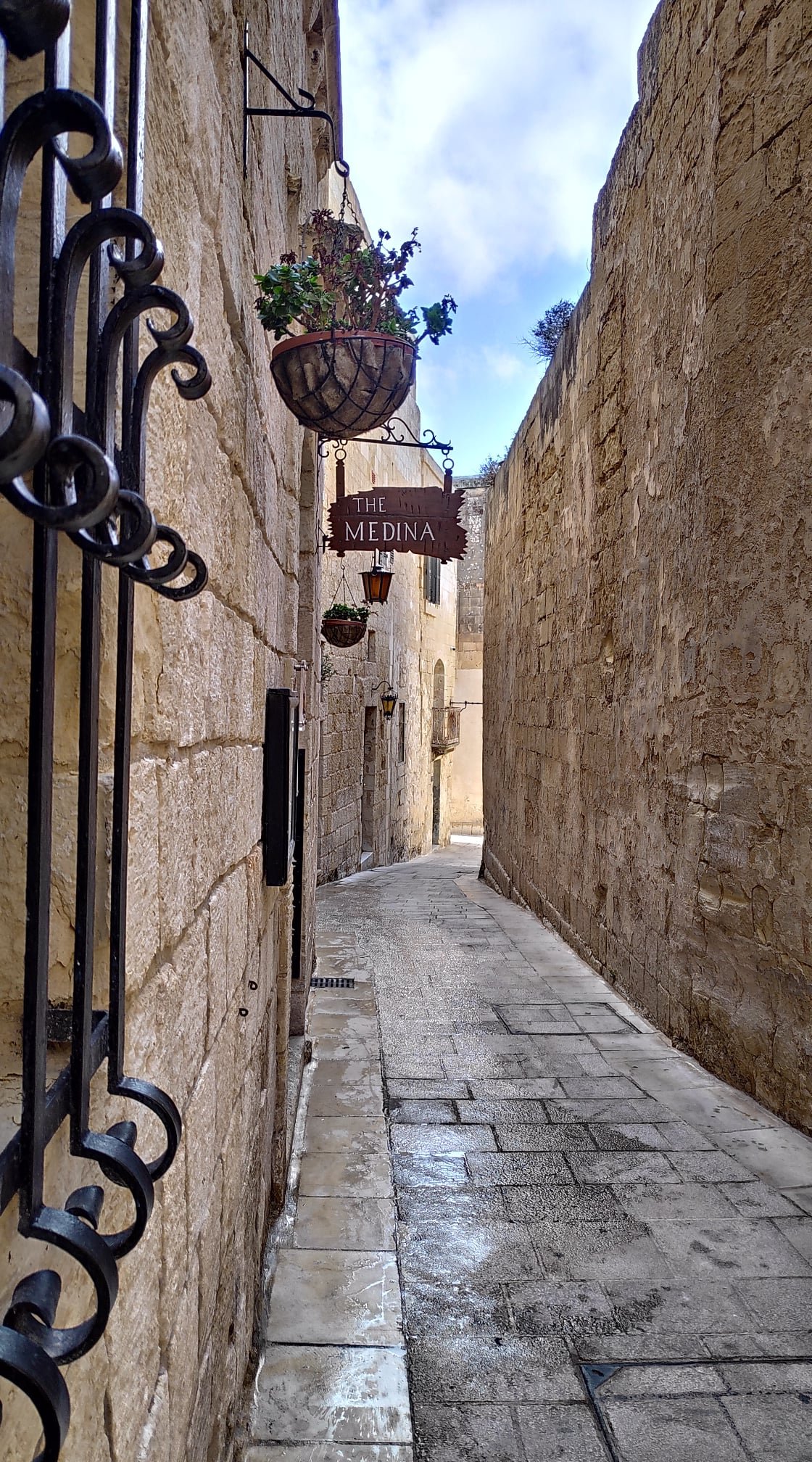
Mdina, the island’s former capital, is a charming walled medieval town known as the “Silent City” – there are hardly any cars here, just narrow, winding lanes. Scenes for the first season of “Game of Thrones” were filmed at the city gate. We saw Mdina in a few hours, but museum lovers should set aside a whole day for it.
The Dingli Cliffs
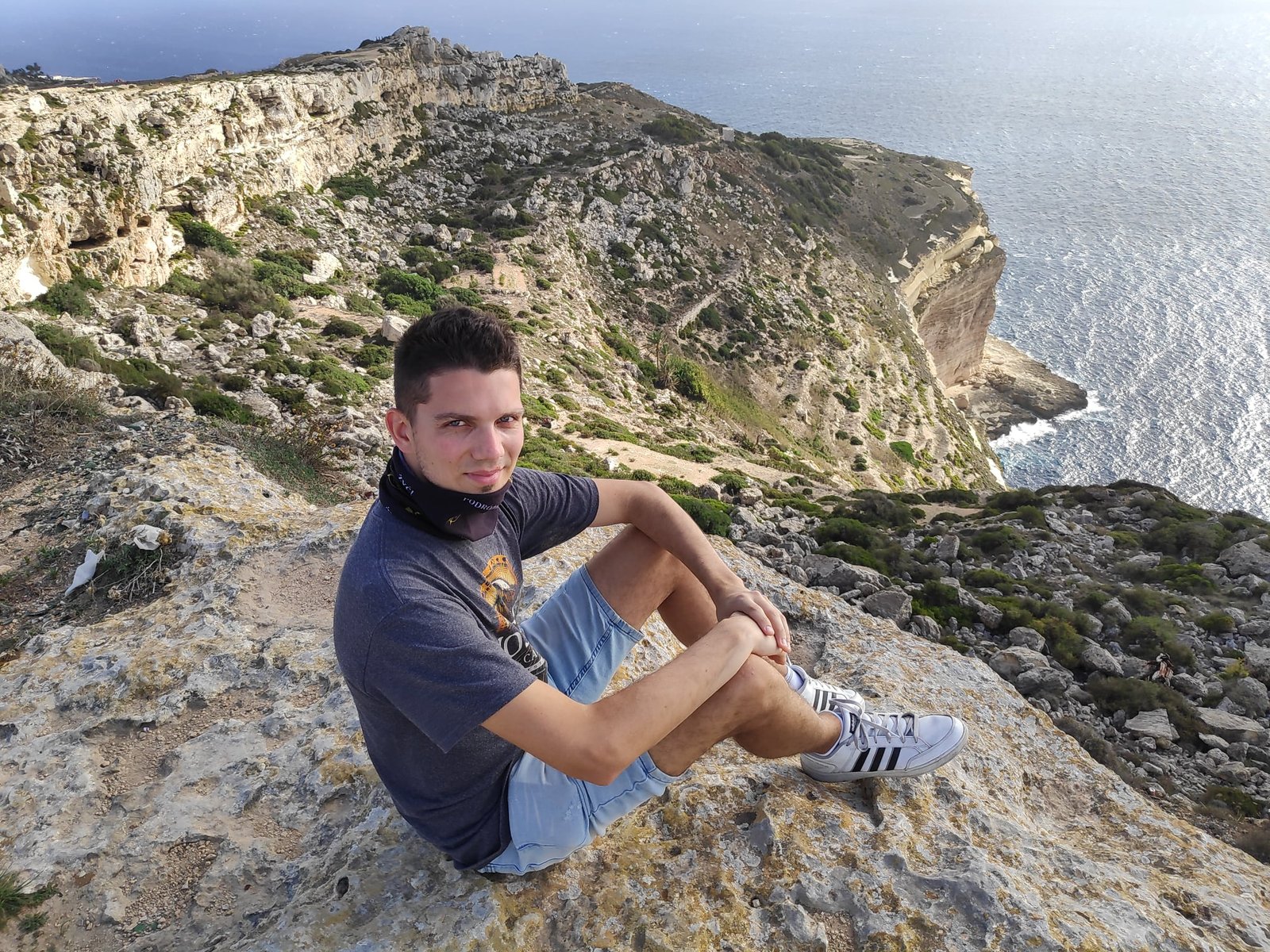
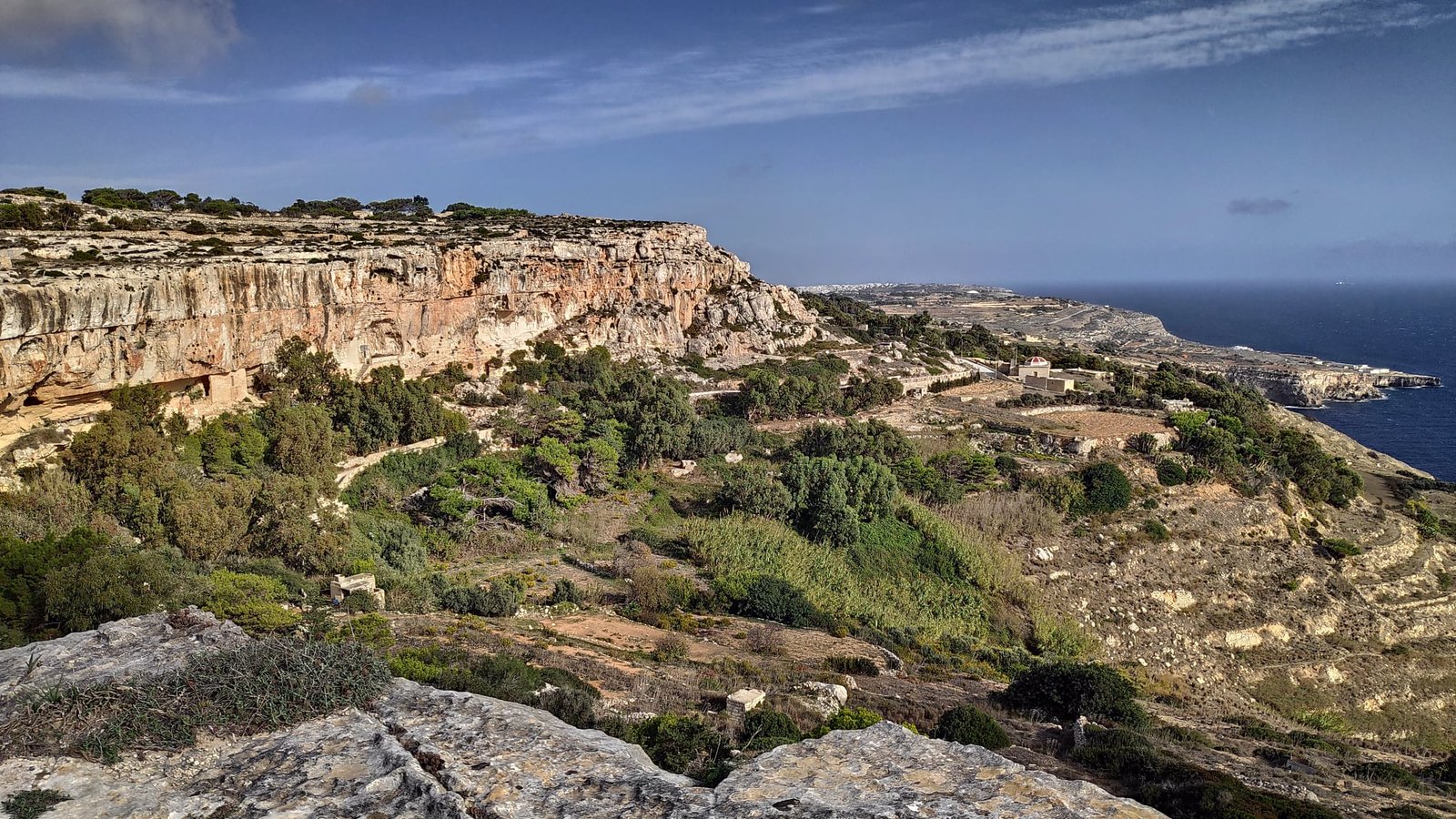
We ended the day at the Dingli Cliffs – the highest point on Malta’s coast, with a beautiful view of the cliffs dropping straight into the sea. Bring something with long sleeves, because – as is usual on cliffs – it is incredibly windy here.
Day 4: the west coast – beaches and the trail to Popeye Village
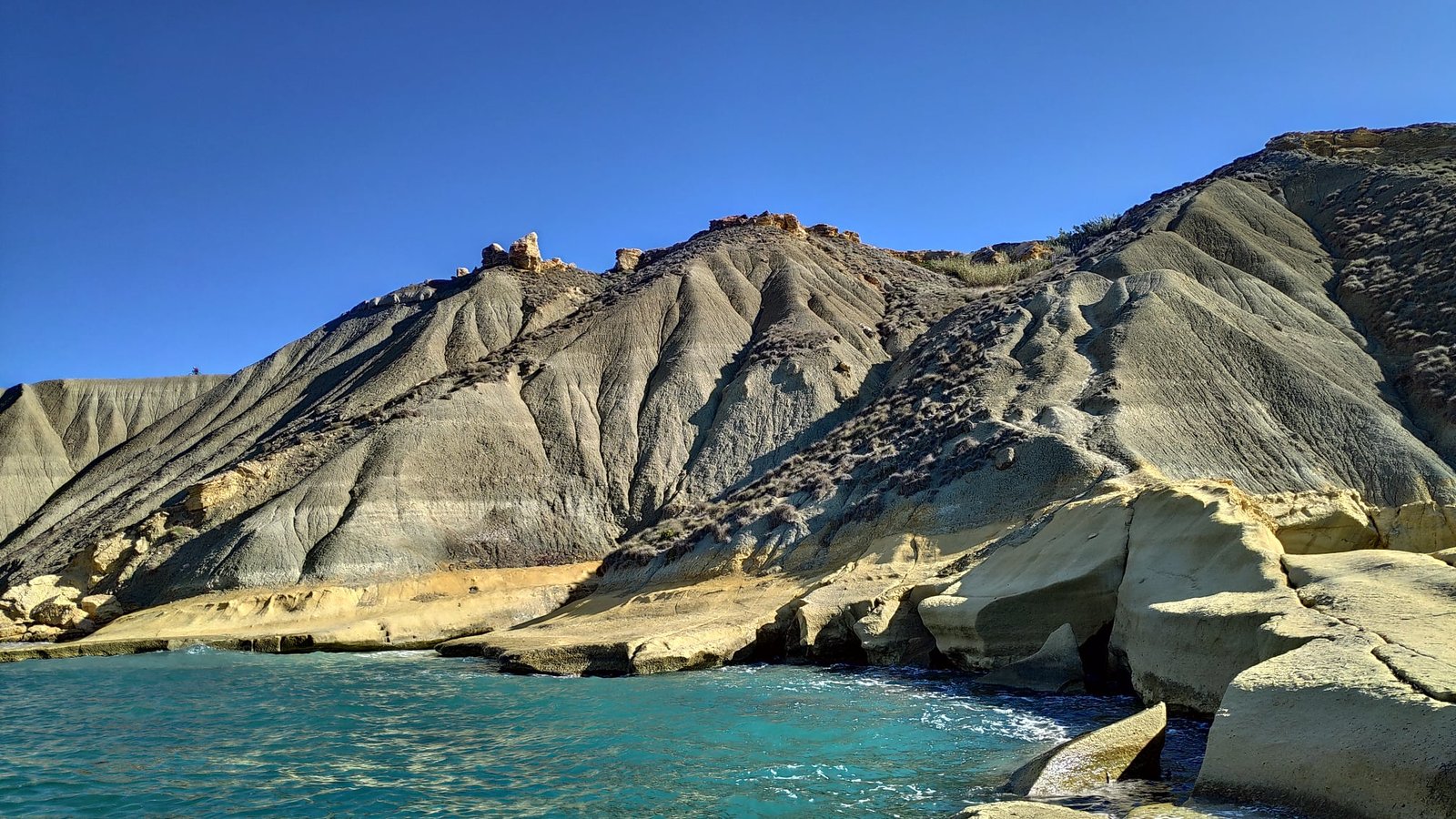
The fourth day was all about the beaches and cliffs of the west coast. We combined relaxing on the beaches with a hiking trail along the coast, which kept opening up views of cliffs and bays. In the morning we started at the Clay Cliffs – soft grey slopes that drop straight into the turquoise water.
Gnejna Bay, Riviera Beach and Golden Bay
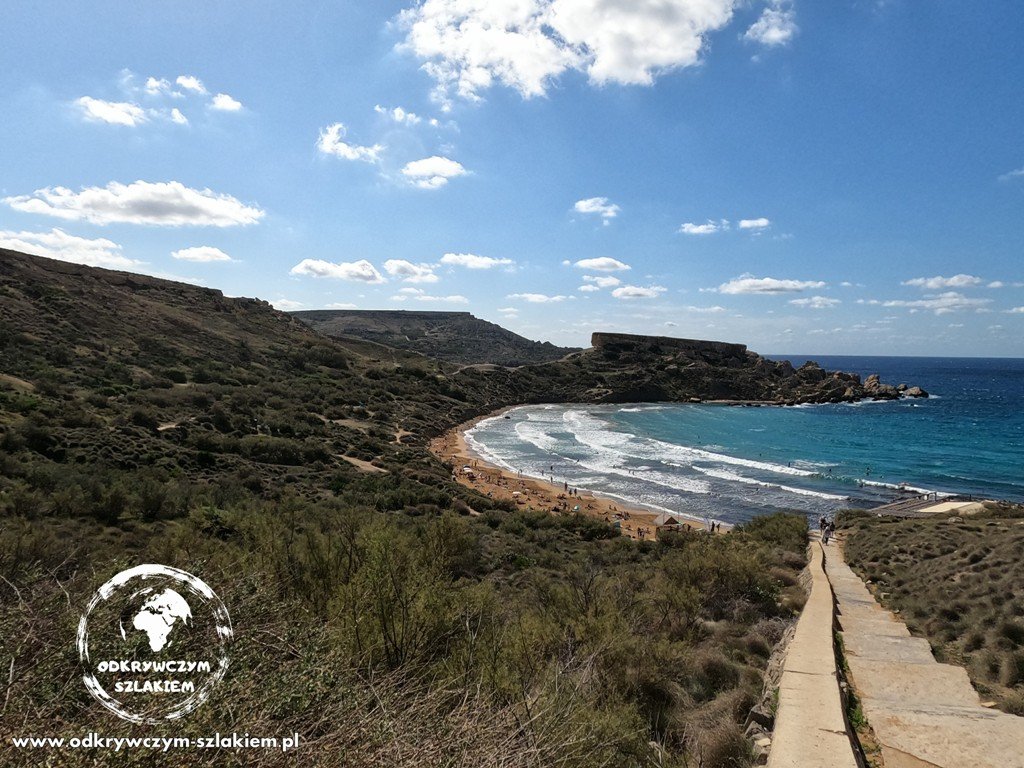
These are some of the most beautiful beaches on this coast, and each one is worth a stop. Gnejna Bay is a quiet, undeveloped beach, though it does have food and drink kiosks and toilets. At Riviera Beach in Għajn Tuffieħa Bay you walk down the cliff on a long flight of steps; you can rent water sports equipment there and sit in a bar.
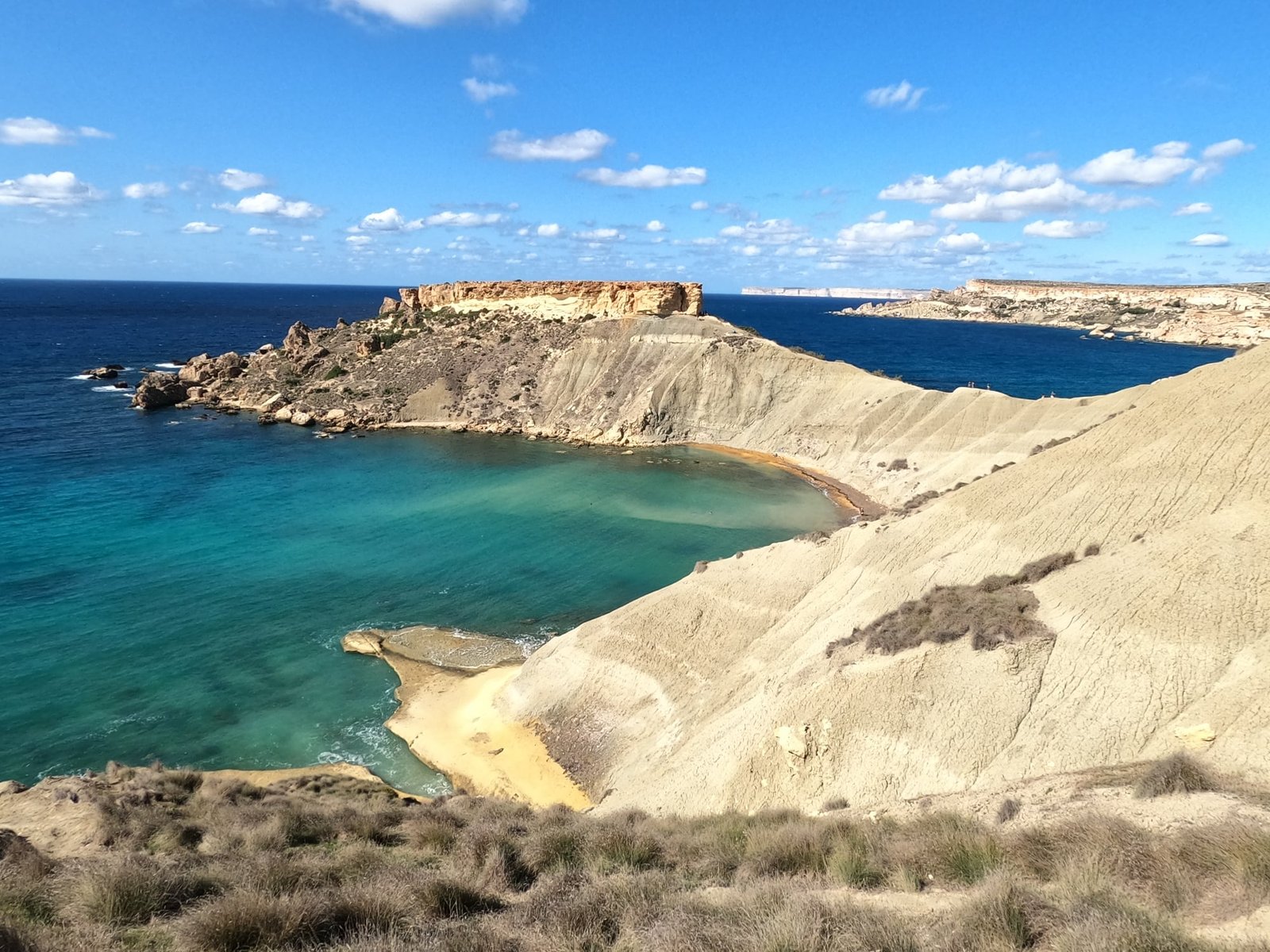
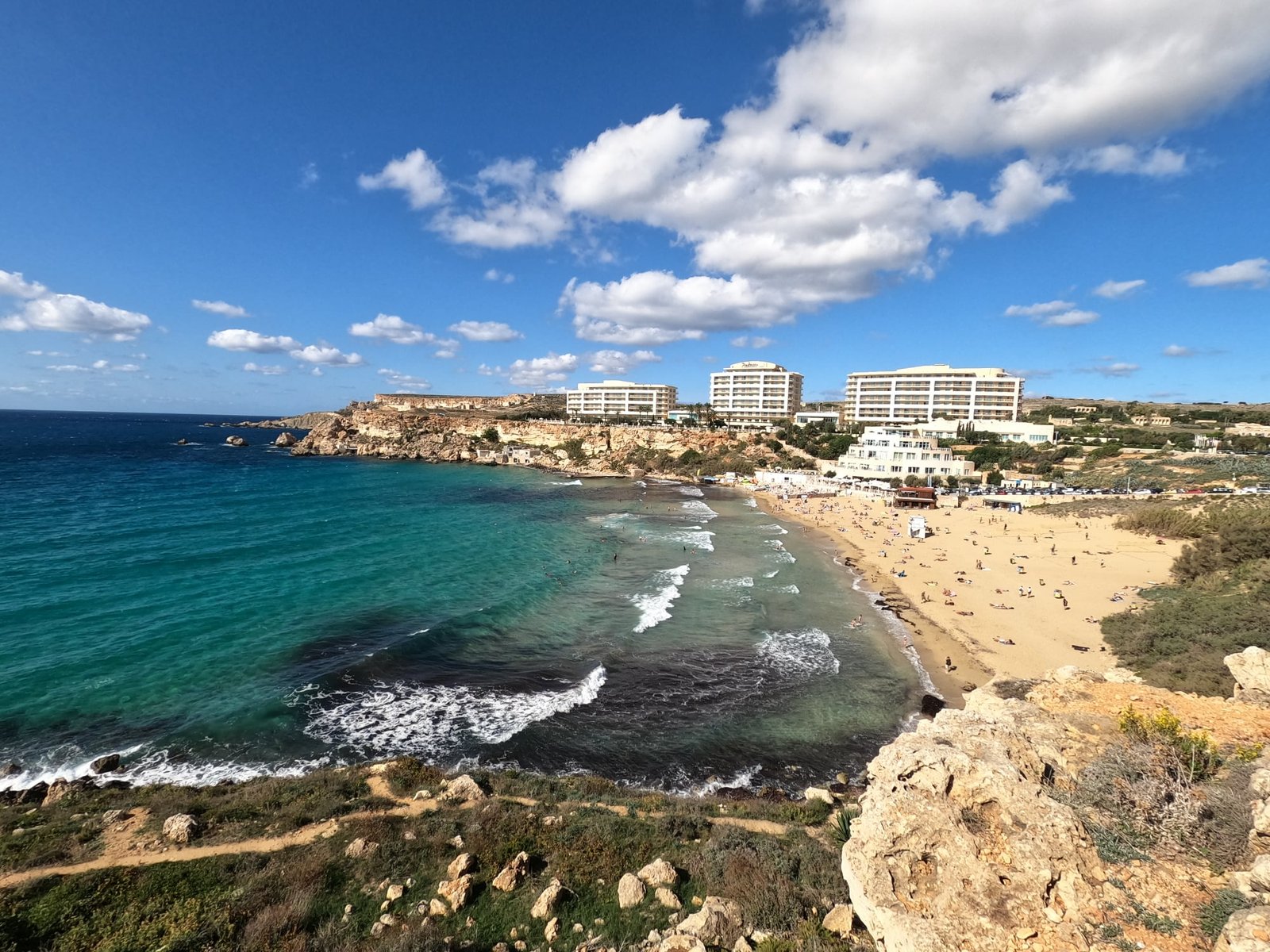
The neighbouring Golden Bay is more popular – with a café-restaurant, sunbed and parasol rental and a good choice of water sports equipment.
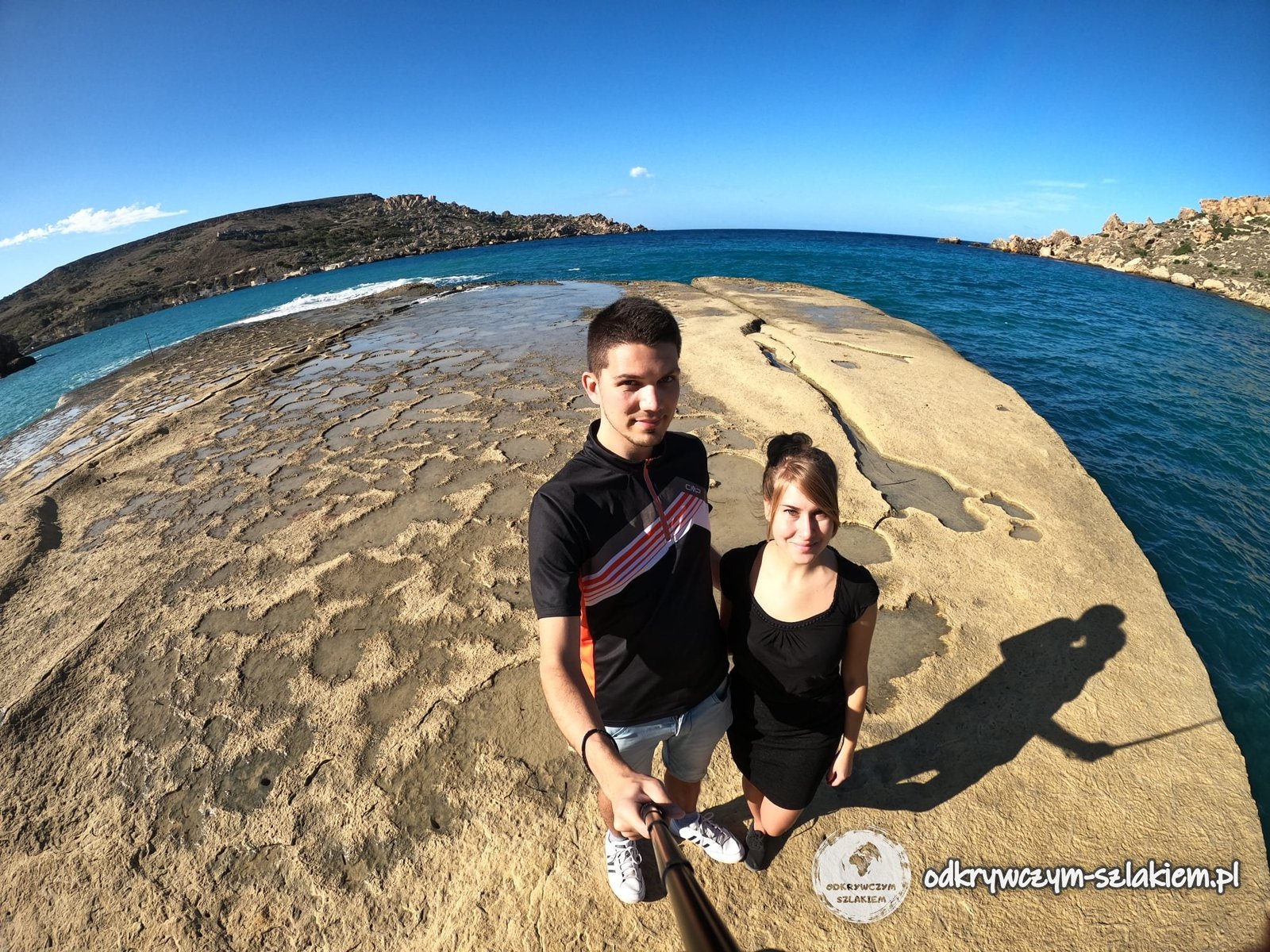
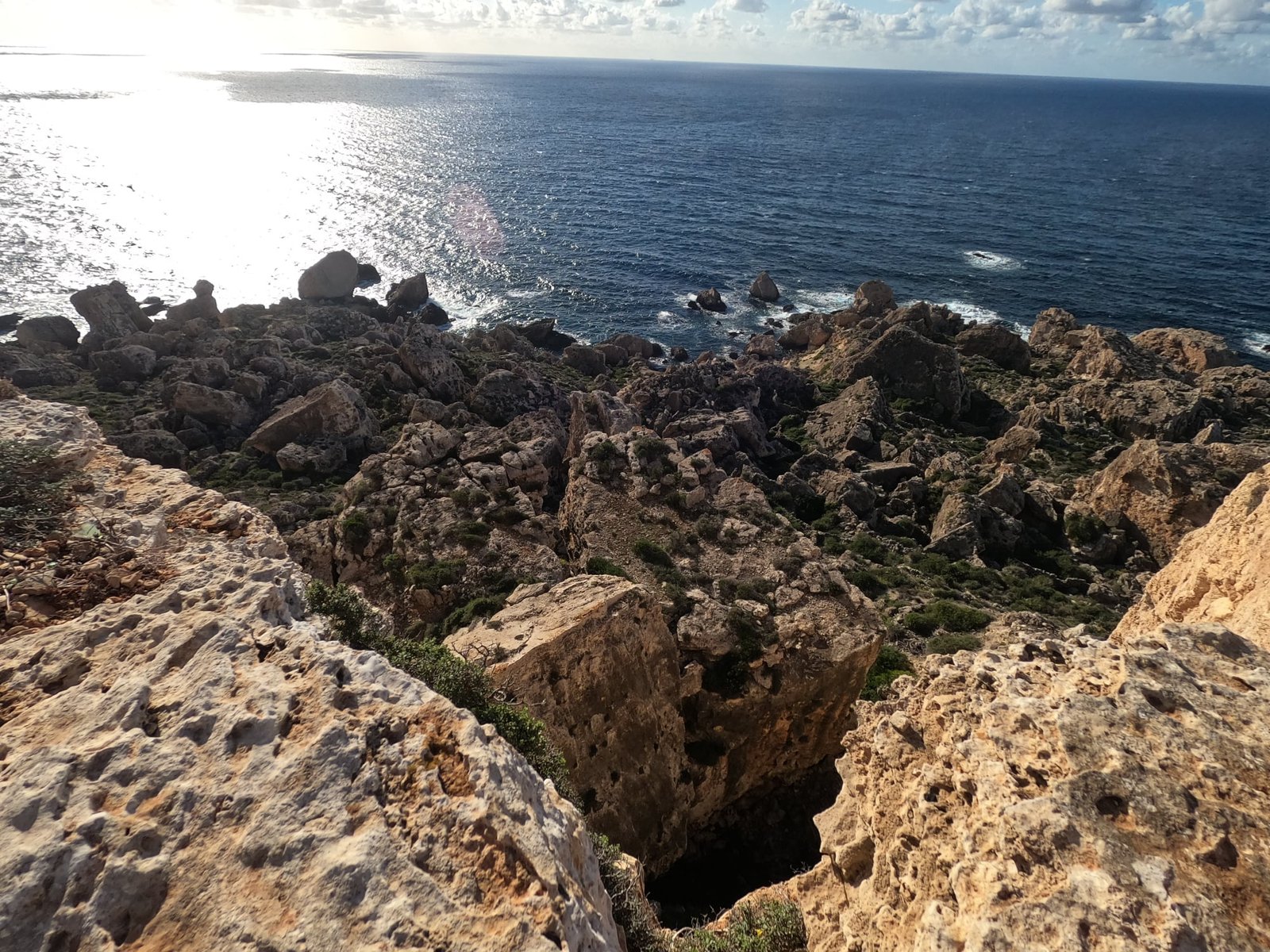
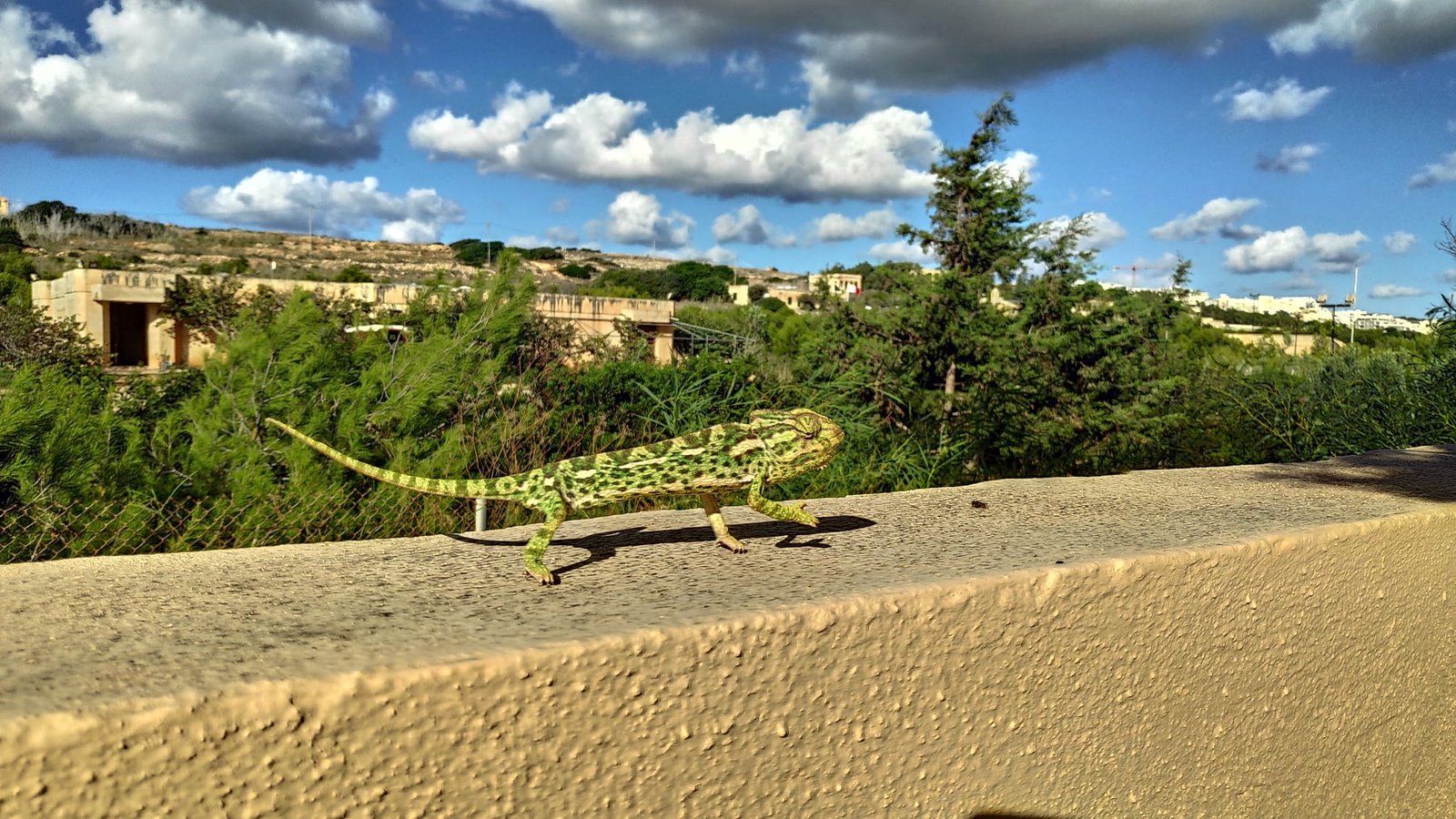
Further on, the trail crosses a rocky plateau above the sea, past the former Rock Cut Observation Post. On the way, a chameleon was basking on a low wall by the path.
Popeye Village
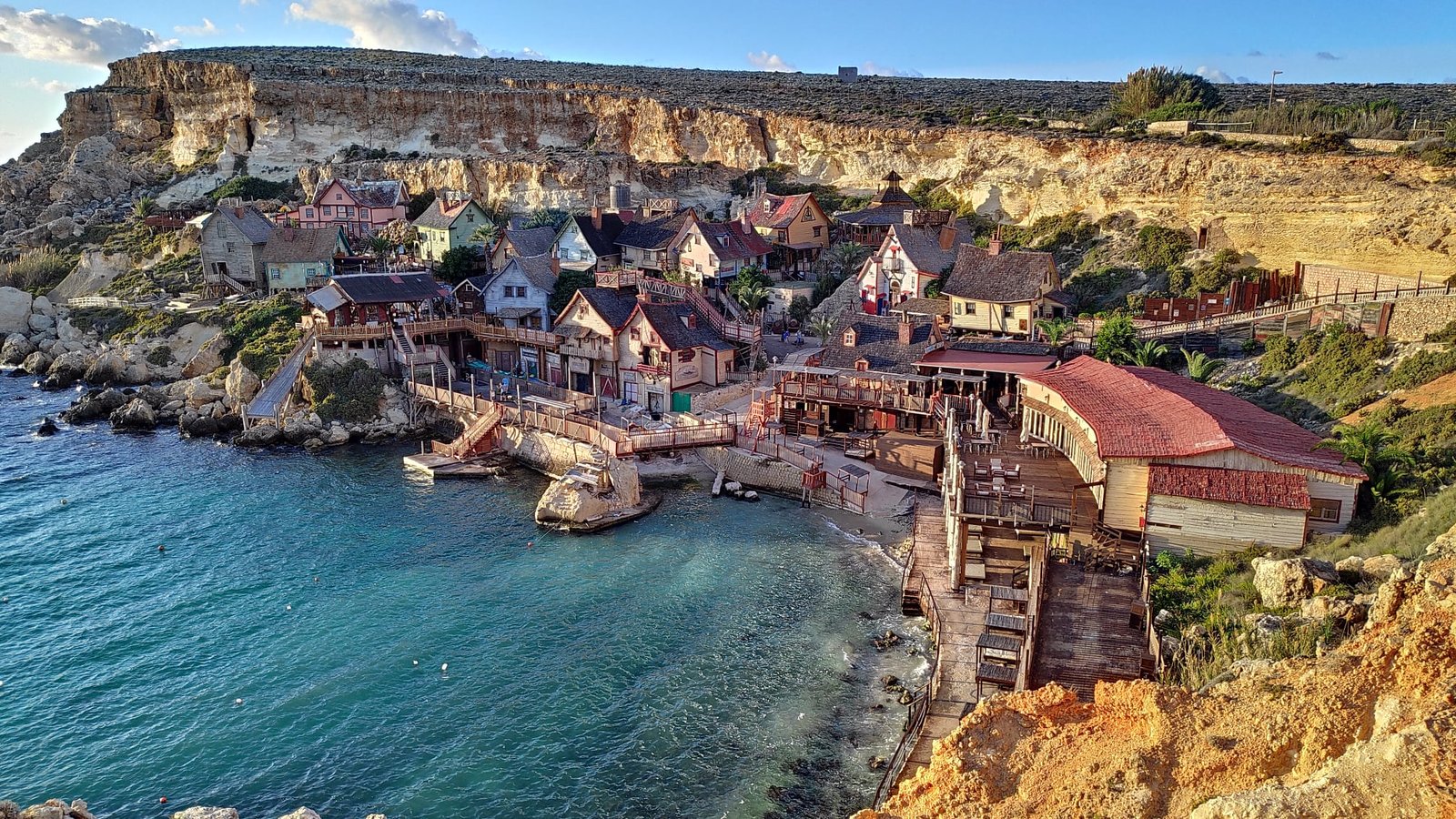
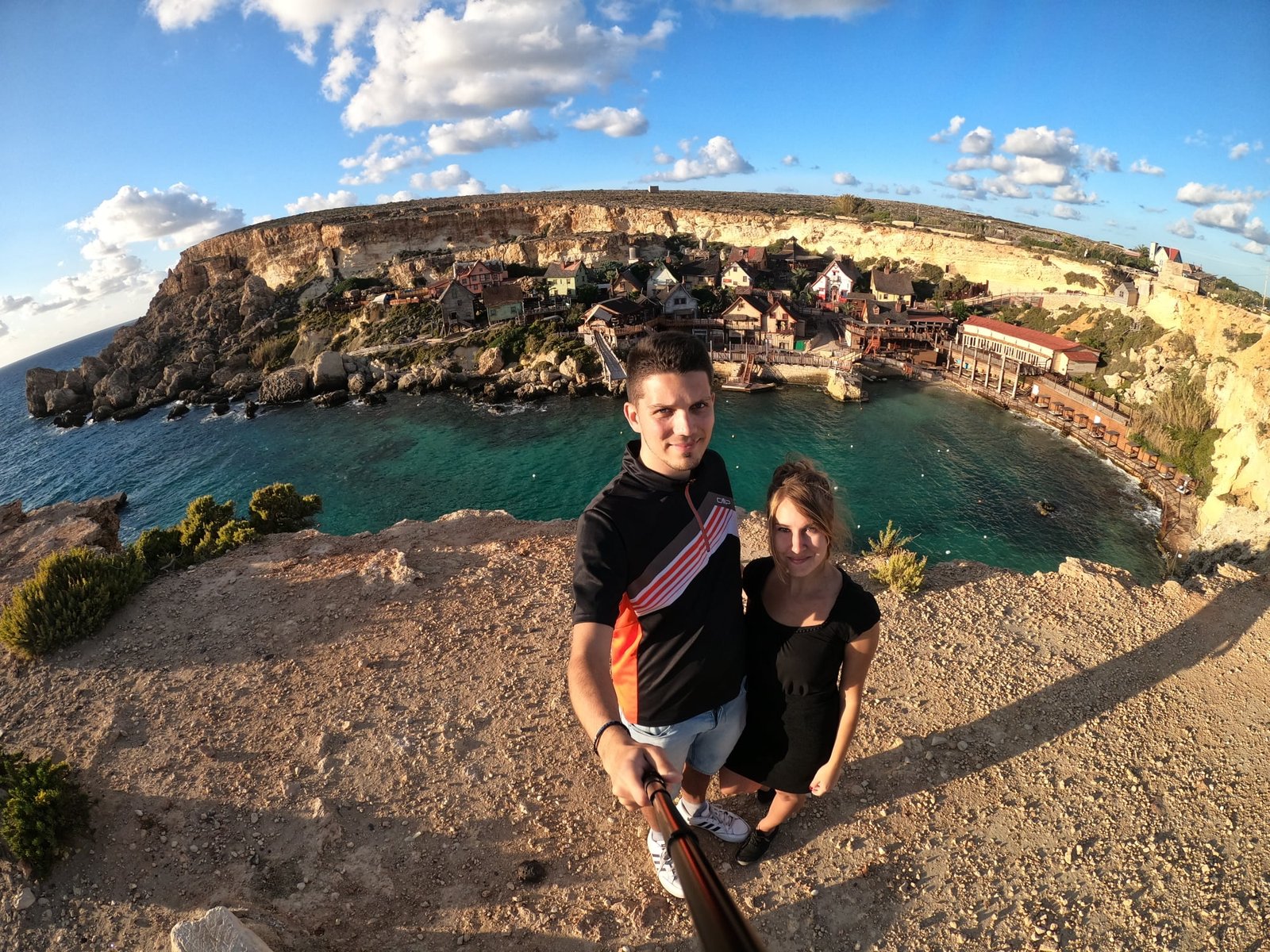
We finished the trail above Anchor Bay, home to Popeye Village – a village built for the film “Popeye” from 1980, today an amusement park. You can visit it inside or admire it from the cliff on the other side of the bay. Because of our tight schedule we had to settle for a photo from the viewpoint – had we had even one more day, we would definitely have gone in.
Day 5: Comino island
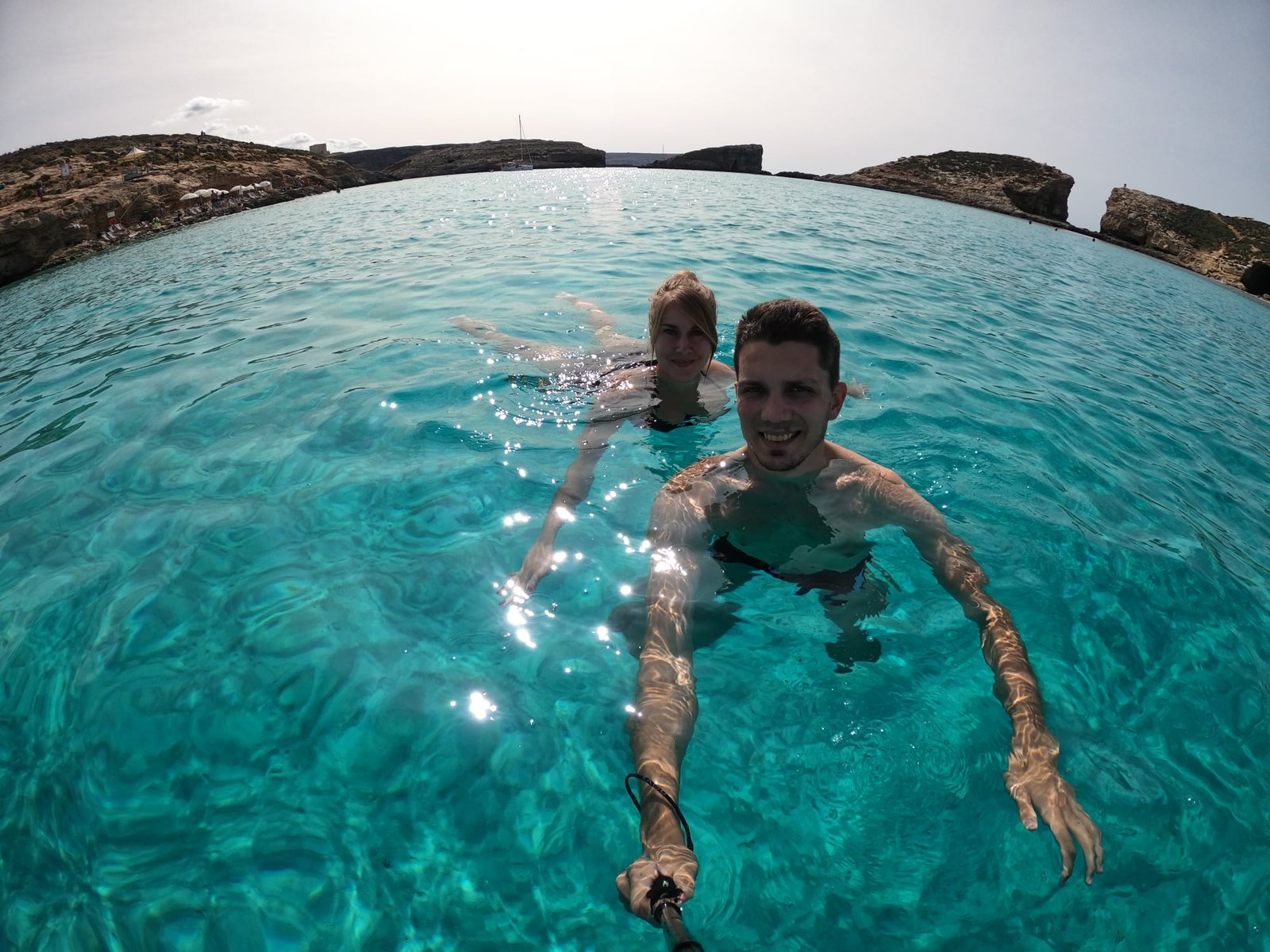
Comino has a completely different character from the two larger islands – almost nobody lives here permanently, and there is just one hotel and two camping spots. The main attractions are places to relax, above all the Blue Lagoon – Comino’s calling card and, for many, the symbol of all of Malta. It usually draws crowds of tourists; we had no trouble finding a spot on a tiny beach. More about this day – the Blue Lagoon, Crystal Lagoon and St Mary’s Tower – in a separate post: Malta: Comino island – the Blue Lagoon and Crystal Lagoon.
Days 6–7: Gozo island
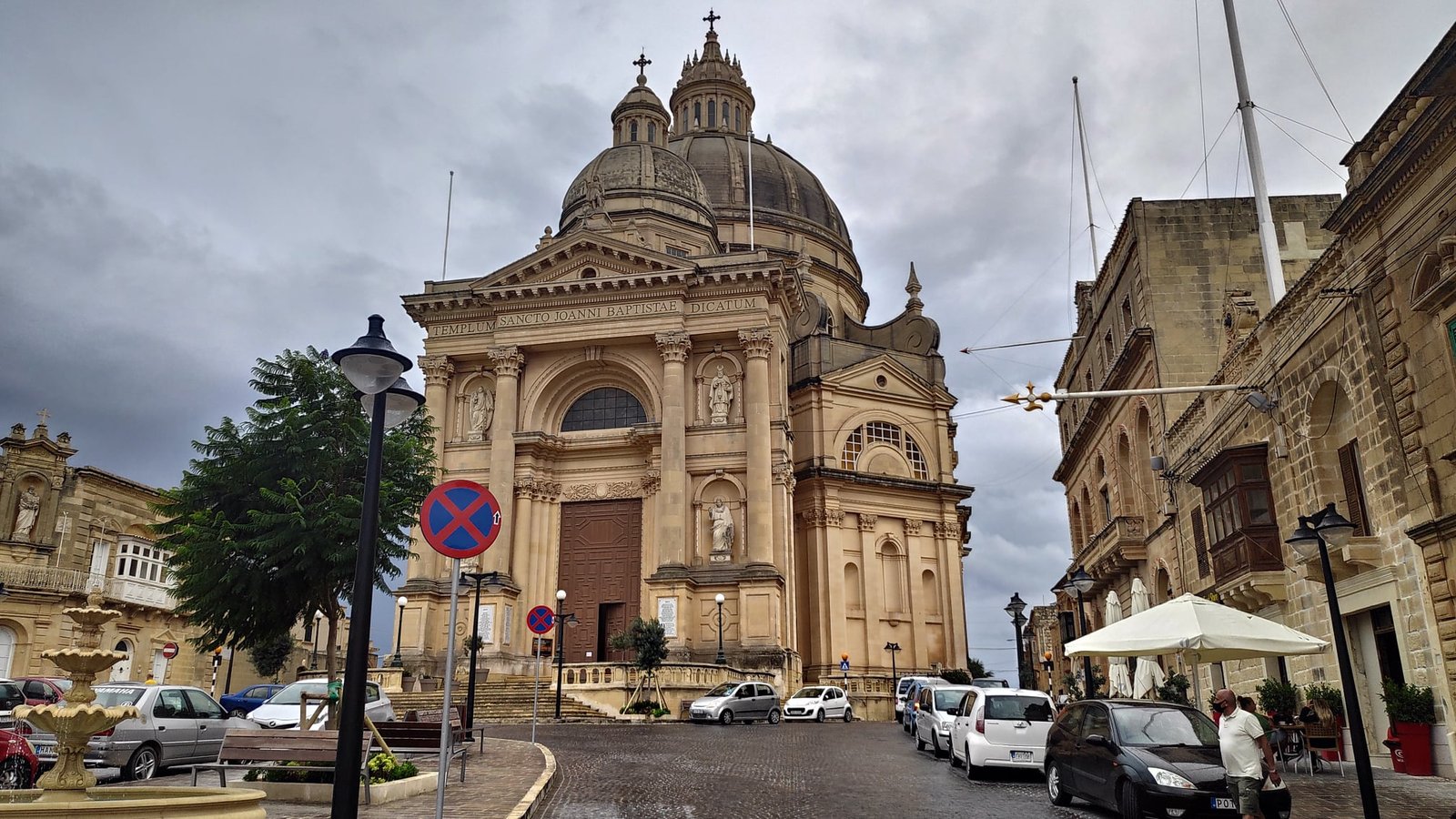
Gozo is Malta’s second-largest island – in a way a smaller, calmer version of the main island, with many historic sites and places worth seeing. We spent two days here. On the first we stopped in Xewkija, home to the Rotunda of St John the Baptist – a church with a huge dome visible from far away.
Victoria and the Citadel
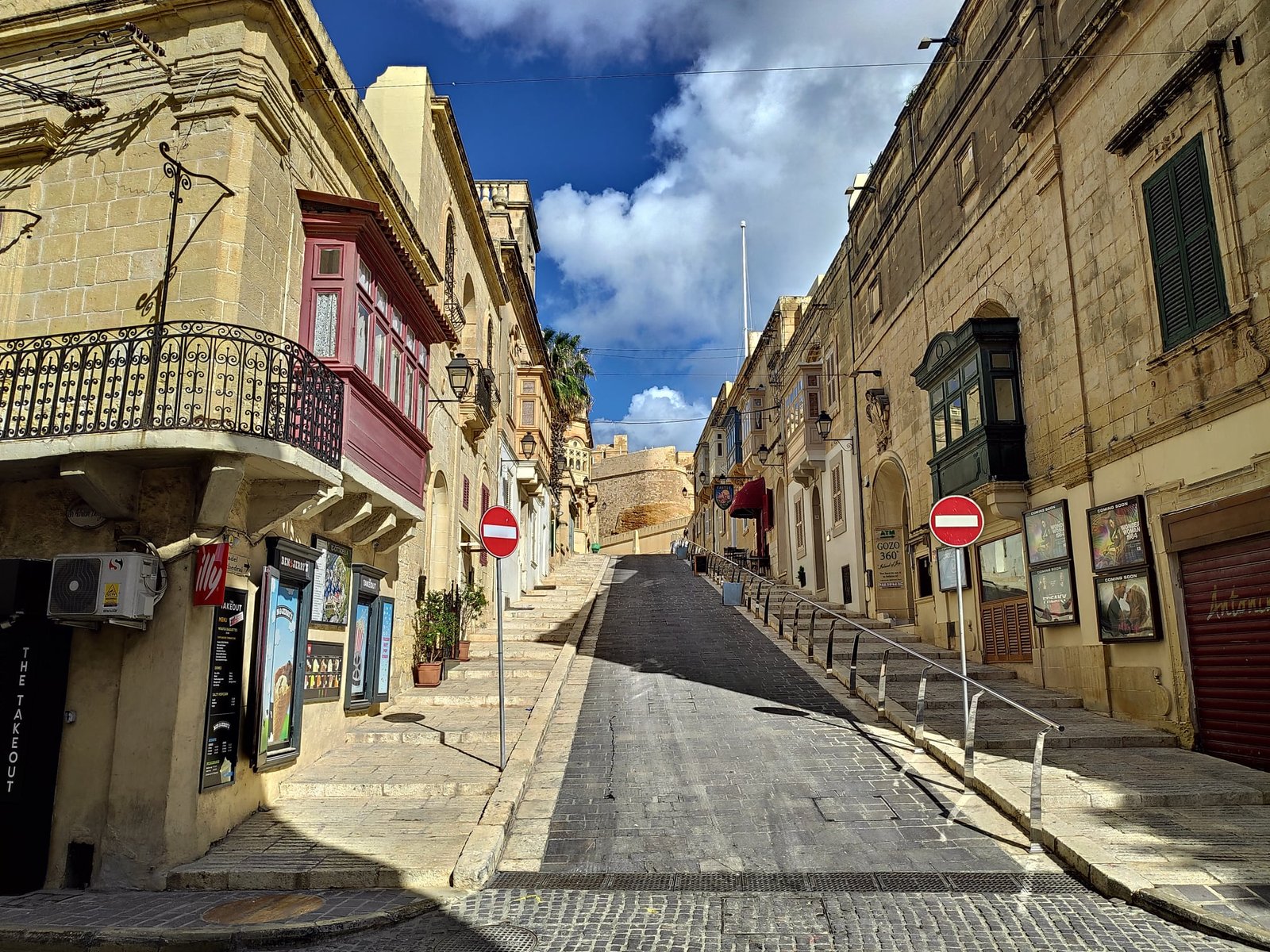
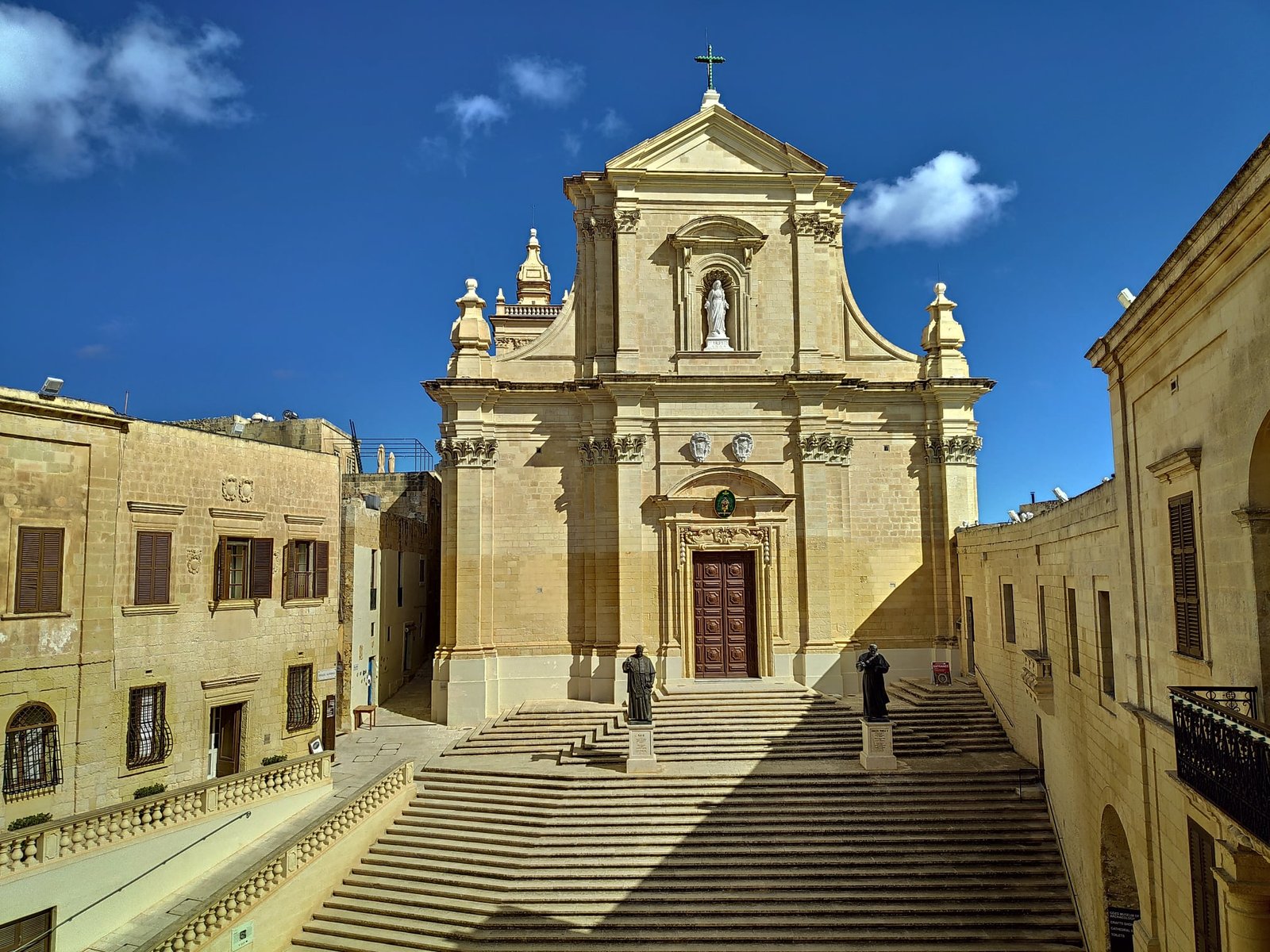
On the second day we started with the island’s capital, Victoria (Rabat in Maltese). Towering over the town is the Citadel with the Cathedral of the Assumption; from its walls you can see almost the whole island.
The cliffs of Dwejra Bay
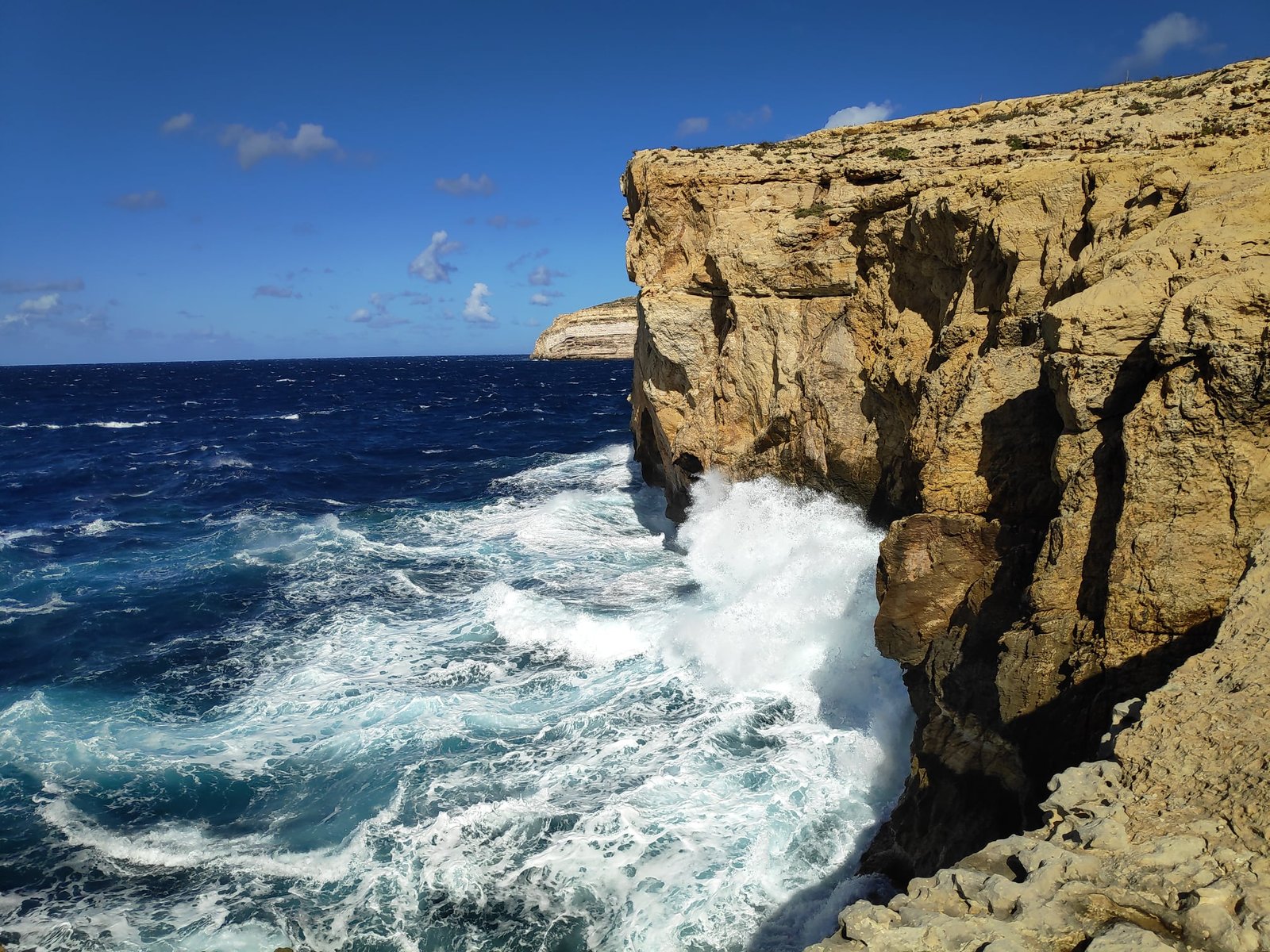
On the west coast, in Dwejra Bay, mighty waves were crashing against the cliffs. This is where the famous Azure Window stood until 2017 – a rock arch that collapsed during a storm; what remains are the cliffs, the Inland Sea and Fungus Rock.
The salt pans at Xwejni Bay
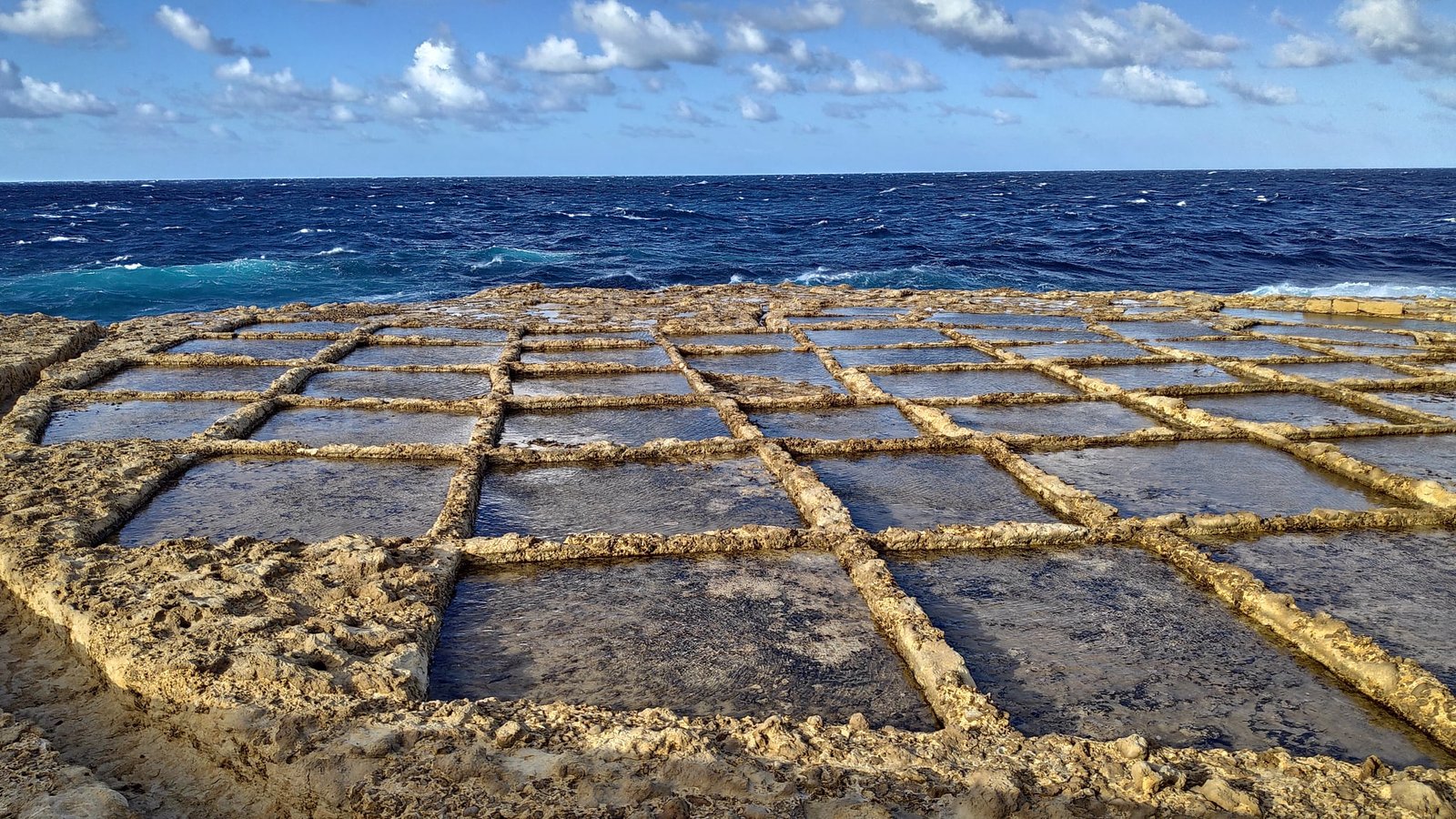
In the north of the island, at Xwejni Bay, rectangular salt pans cut into the rock stretch along the shore – salt has been harvested here from seawater for hundreds of years. That day it was very windy: waves were washing over the rocks, and a rainbow appeared above the cliffs.
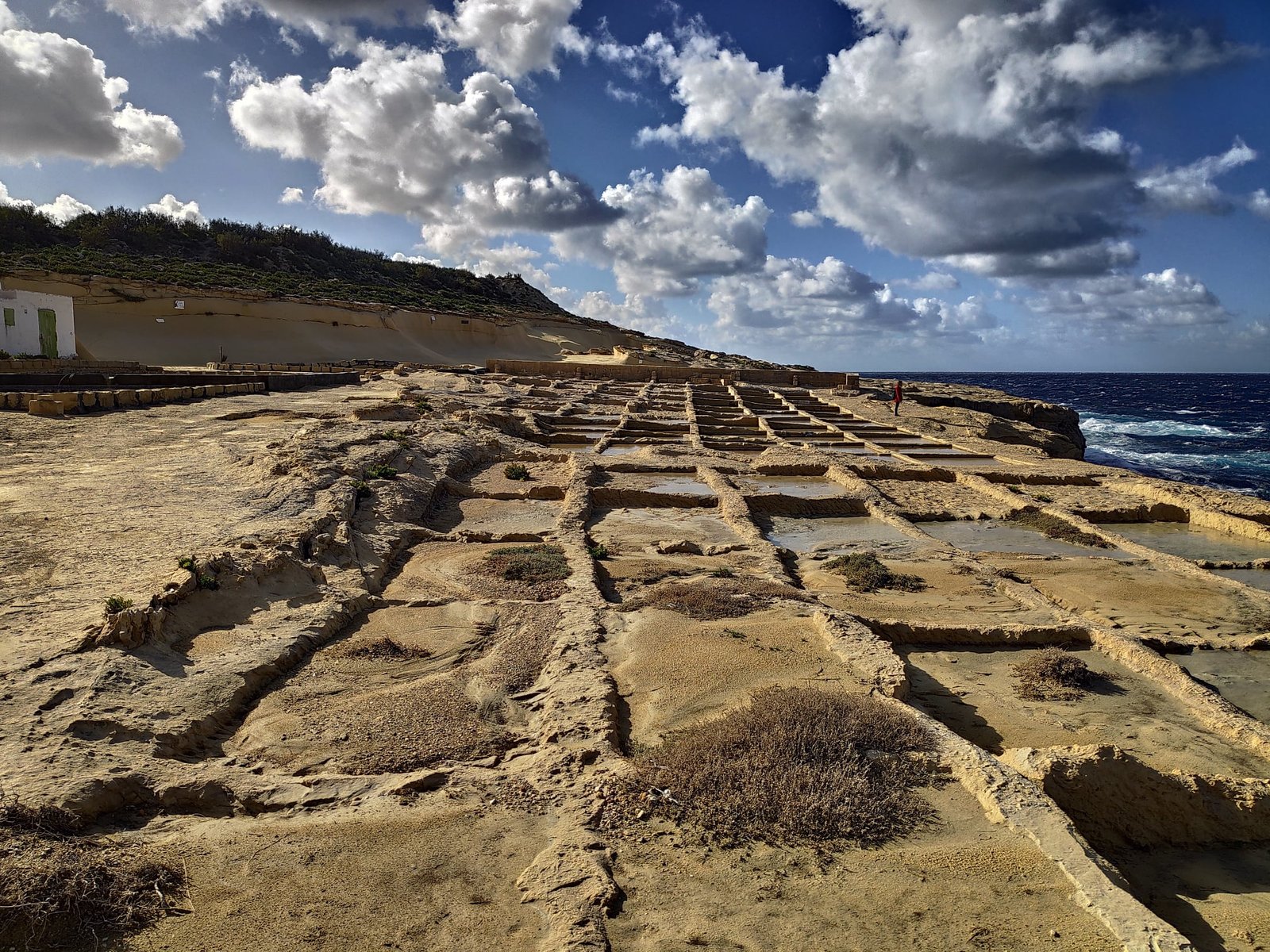
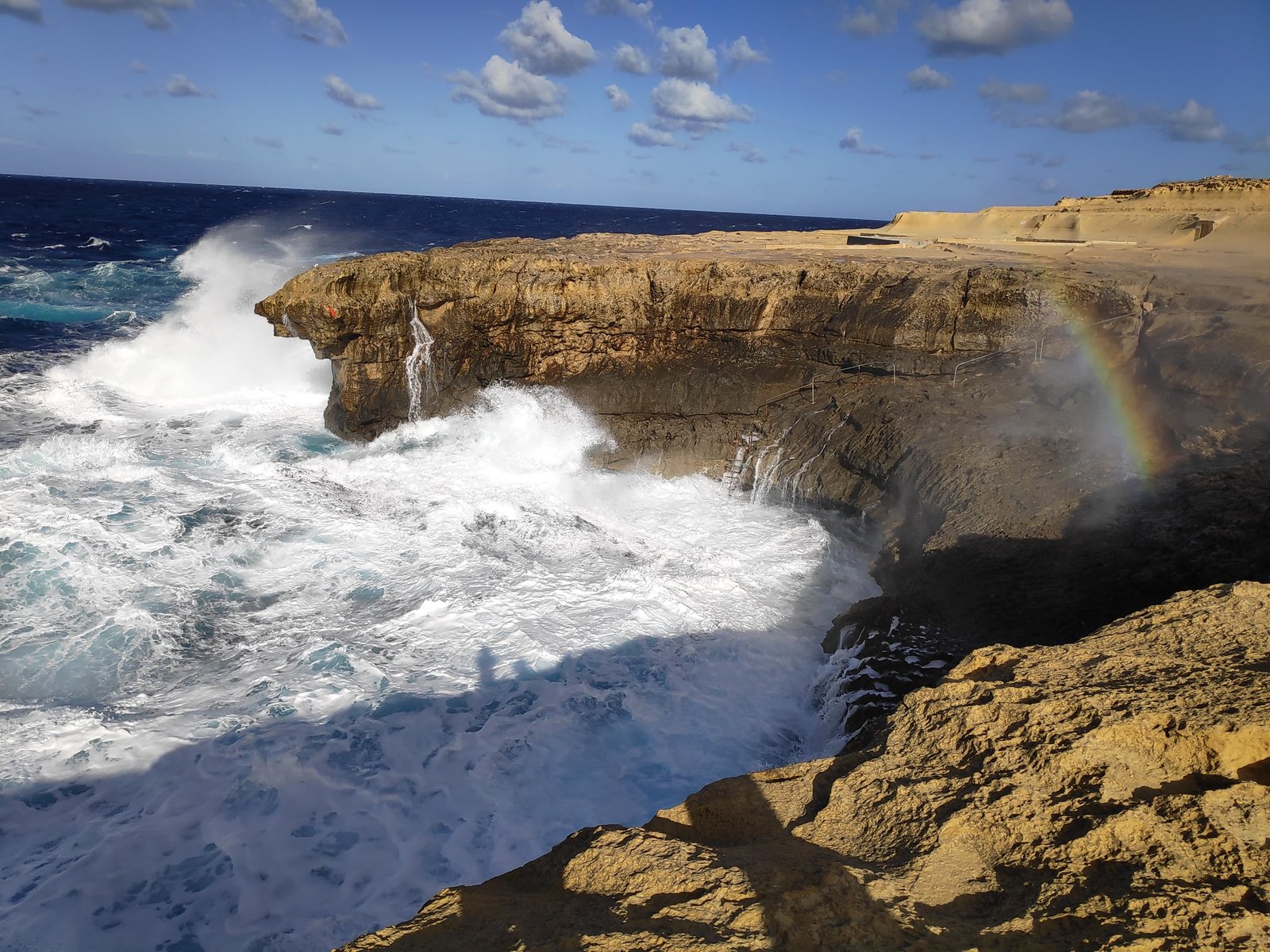
Also worth seeing on Gozo: Dwejra Bay with the Inland Sea, the Ta’ Ċenċ and Sanap cliffs, the Ta’ Pinu basilica, the Ta’ Kola windmill and the Ġgantija megalithic temples. One day is enough just to see the island, but if you want to visit museums, it may not be enough.
Day 8: Valletta
We spent the last day in the capital. Valletta is a UNESCO World Heritage Site – a tiny city with a huge number of historic sights. Most of them are close together and can be seen by walking along the main street and the side streets sloping down towards the sea.
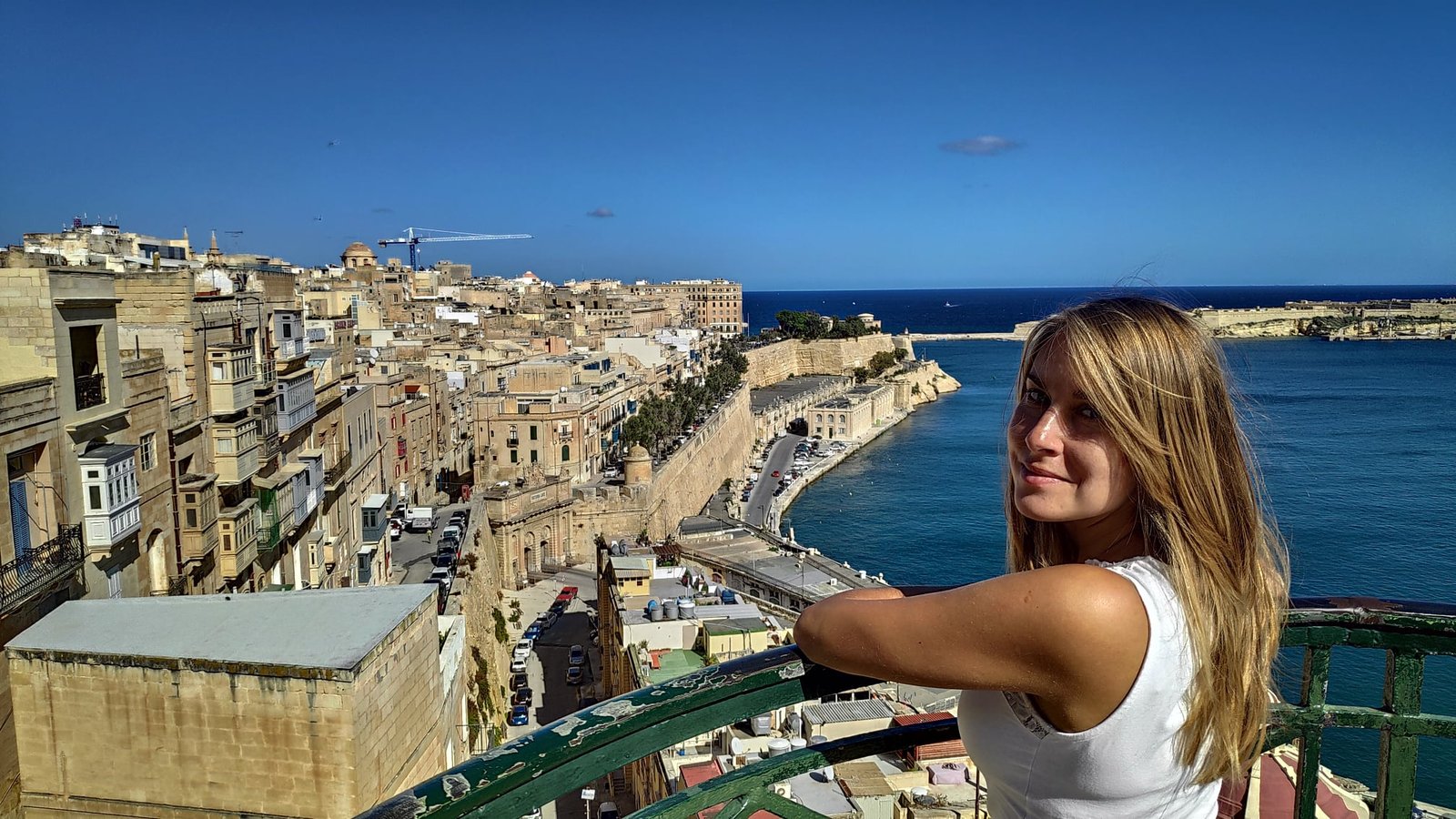
- City Gate – the main entrance to Valletta; right in front of it stands the Triton Fountain with three tritons – in Greek and Roman mythology, creatures that were half man, half fish.
- Pjazza Teatru Rjal – an open-air theatre on the site of the former 19th-century Royal Opera House, destroyed during the Second World War. The theatre built on its ruins symbolises the heroism of the Maltese during the war.
- National Museum of Archaeology – Maltese artefacts from the Neolithic (around 5000 BC) to the Phoenician period.
- St John’s Co-Cathedral – a baroque church with works by Caravaggio and Mattia Preti; the entrance ticket costs €15.
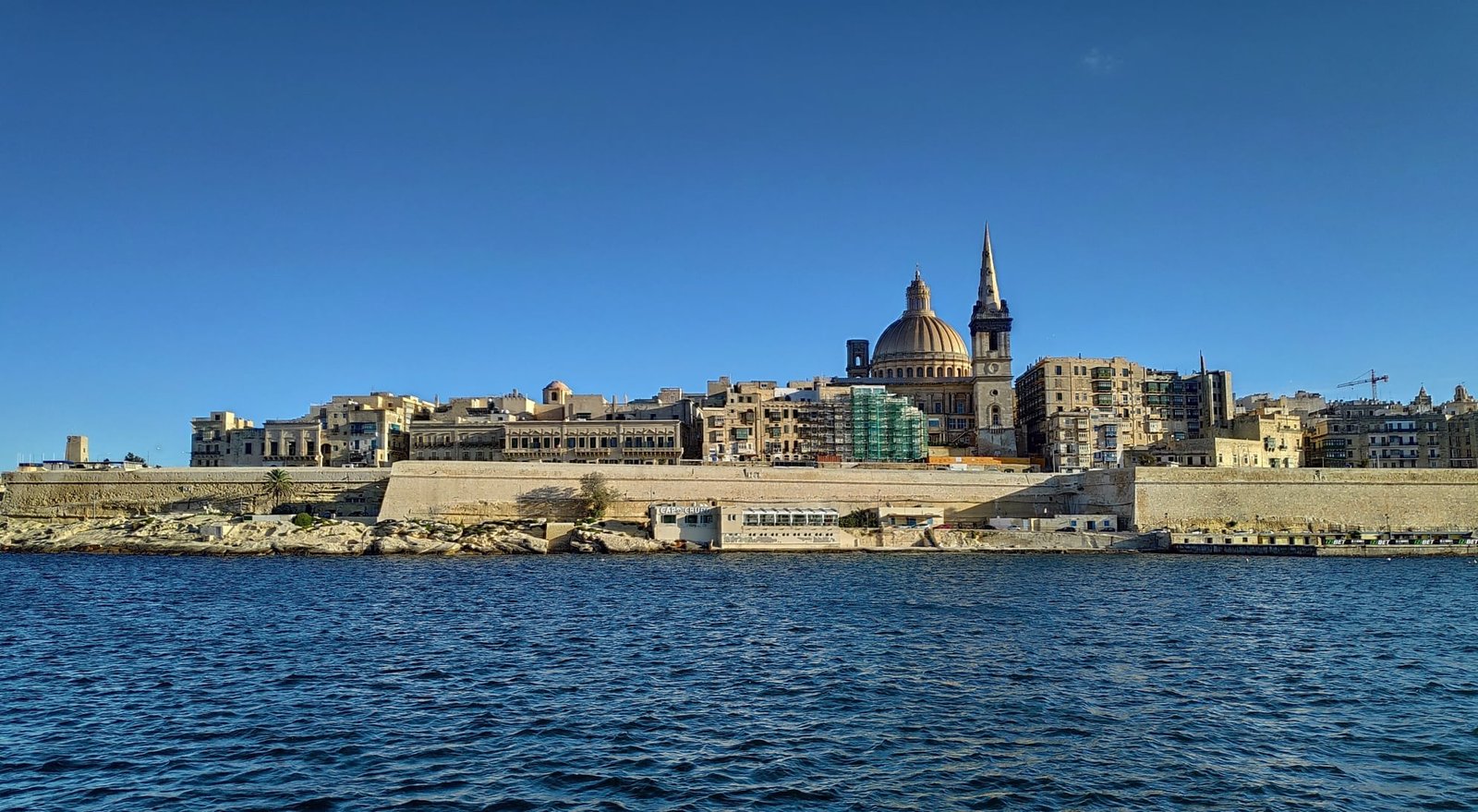
- St Paul’s Anglican Pro-Cathedral – a church from the mid-19th century; its roughly 60-metre spire is one of the most recognisable features of the Valletta skyline (you can see it in the photo at the top of the post).
- Republic Square – with a statue of Queen Victoria and the National Library of Malta.
- Grandmaster’s Palace – one of the first buildings in Valletta, from the time of the Knights of St John; today the seat of the President of Malta. In front of it lies St George’s Square with cafés and the Main Guard building (Guardia della Piazza) from 1603.
- Upper Barrakka Gardens – a park overlooking Malta’s Three Cities: Birgu, Senglea and Cospicua. On the lower terrace, at the Saluting Battery, a cannon-firing ceremony takes place every day at 12:00 and 16:00. Nearby there is a plaque commemorating the Polish destroyer ORP Kujawiak, sunk off the coast of Malta in 1942.
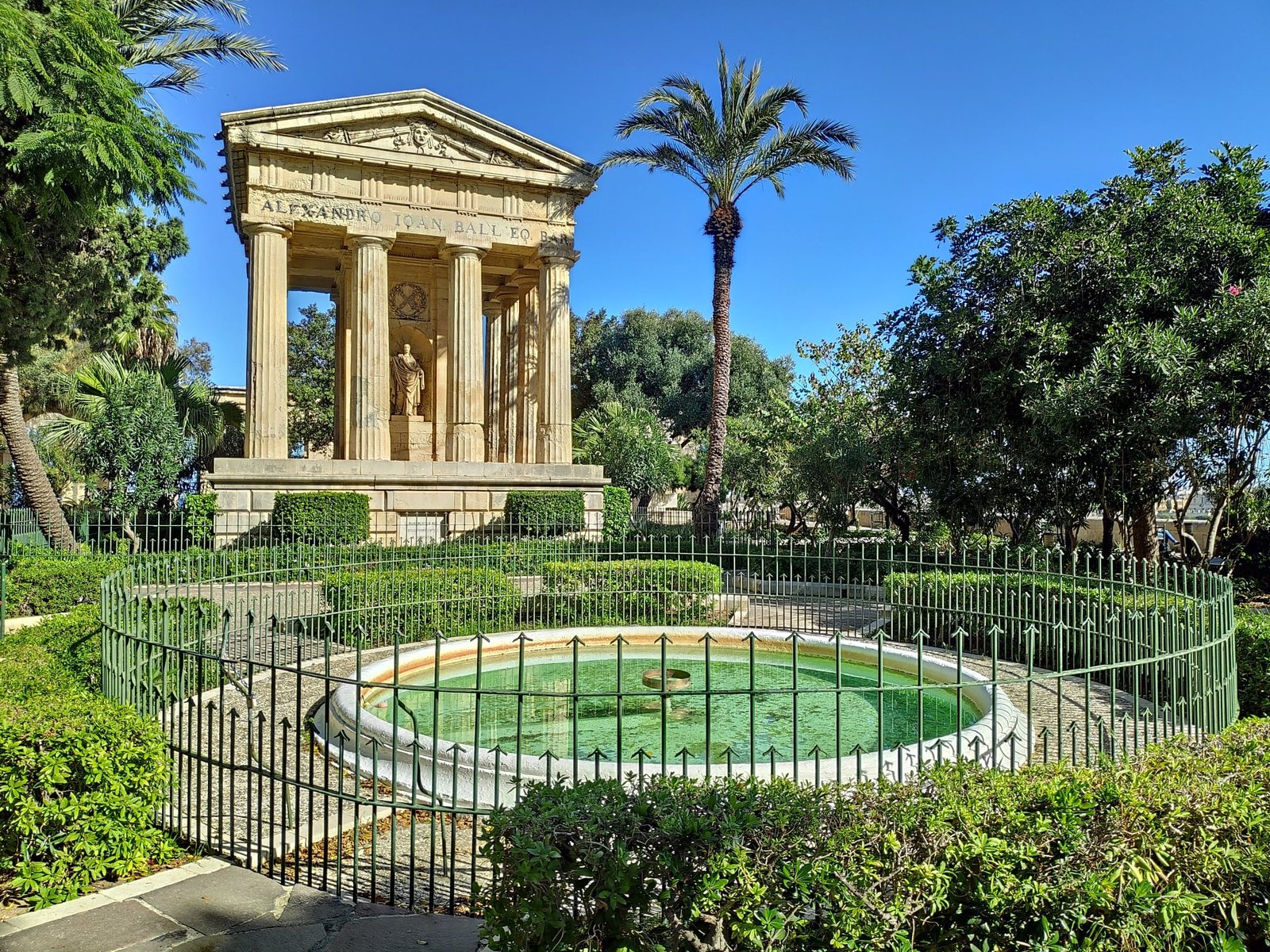
- Lower Barrakka Gardens – a smaller, quiet garden with a monument to Alexander Ball in the form of a Greek temple.
- Fort St. Elmo – one of the most important forts of the Order of Malta, at the entrance to the Grand Harbour; it played a key role during the Great Siege of Malta in 1565.
To finish, it is worth taking the ferry from Valletta to Sliema – the view of the capital’s skyline is best from the water (photo at the top of the post). The crossing is not included in the Tallinja Explore card, but it is in Explore Plus. You buy the ticket in cash when boarding the ferry: €1.50 one way or €2.80 return (as of October 2020).
Practical information
- How much time? To see all three islands, about 7 days is enough; if you also want to lie on the beach, add a few days. Our plan was tight and we did not manage to see everything.
- When to go? Malta is a good destination almost all year round. At the end of October we had 20–24 °C – it rained a little one day and was very windy for two days, but otherwise we walked around in short sleeves until the evening. We even had a bit of a swim in the sea. The average annual temperature is about 23 °C during the day and 16 °C at night. July and August are said to be unbearable – summer is best for the beach, while spring, autumn and winter are best for sightseeing and hiking (in spring and autumn the water is still fine for swimming). In autumn the days are short, and after the clocks go back the sun sets early – you need to get up early to see everything.
- Language and currency – Maltese is close to Arabic, with many loanwords from Italian and English. English is the second official language, because until independence in 1964 Malta was a British colony – hence driving on the left and phone boxes that look as if they came straight from London. The vast majority of people speak English (although we did manage to meet a Maltese man who didn’t). The currency is the euro.
- Sockets – all over Malta there are type G sockets with three rectangular pins, like in the UK, so you need an adapter.
- Buses – bus routes reach practically every part of Malta and Gozo. The best option is a weekly ticket for €21 (the Tallinja Explore card). All stops are request stops: you have to flag the bus down by holding out your hand, and press the stop button before getting off. Buses are often late or come too early – where only one route runs, you may wait for more than an hour.
- Car – in our opinion it is not worth renting one: Malta is crowded with cars, there are traffic jams in the evenings and parking is hard to find.
- Ferries – boats to Gozo and Comino leave from the port of Ċirkewwa in the north of Malta. The ticket to Gozo cost €4.65 during the day and €4.05 at night (from 20:00). In winter crossings are sometimes cancelled because of storms.
- Flights and accommodation – we search for flights on Skyscanner. For Malta we booked all our accommodation right after buying the plane tickets; the cheapest option was Airbnb.
- Food – in almost every bakery you can buy delicious pastizzi (puff-pastry parcels filled with ricotta or peas), qassatat and ftira.
- The pandemic (2020) – during our stay, masks became compulsory outdoors as well, with fines of up to €100. Malta was not a risk zone at the time, so after returning home we did not have to take tests or quarantine.
It was a great trip to end the year. If there weren’t so many wonderful places in the world to visit, we would happily return to Malta – if only to finally go inside Popeye Village.