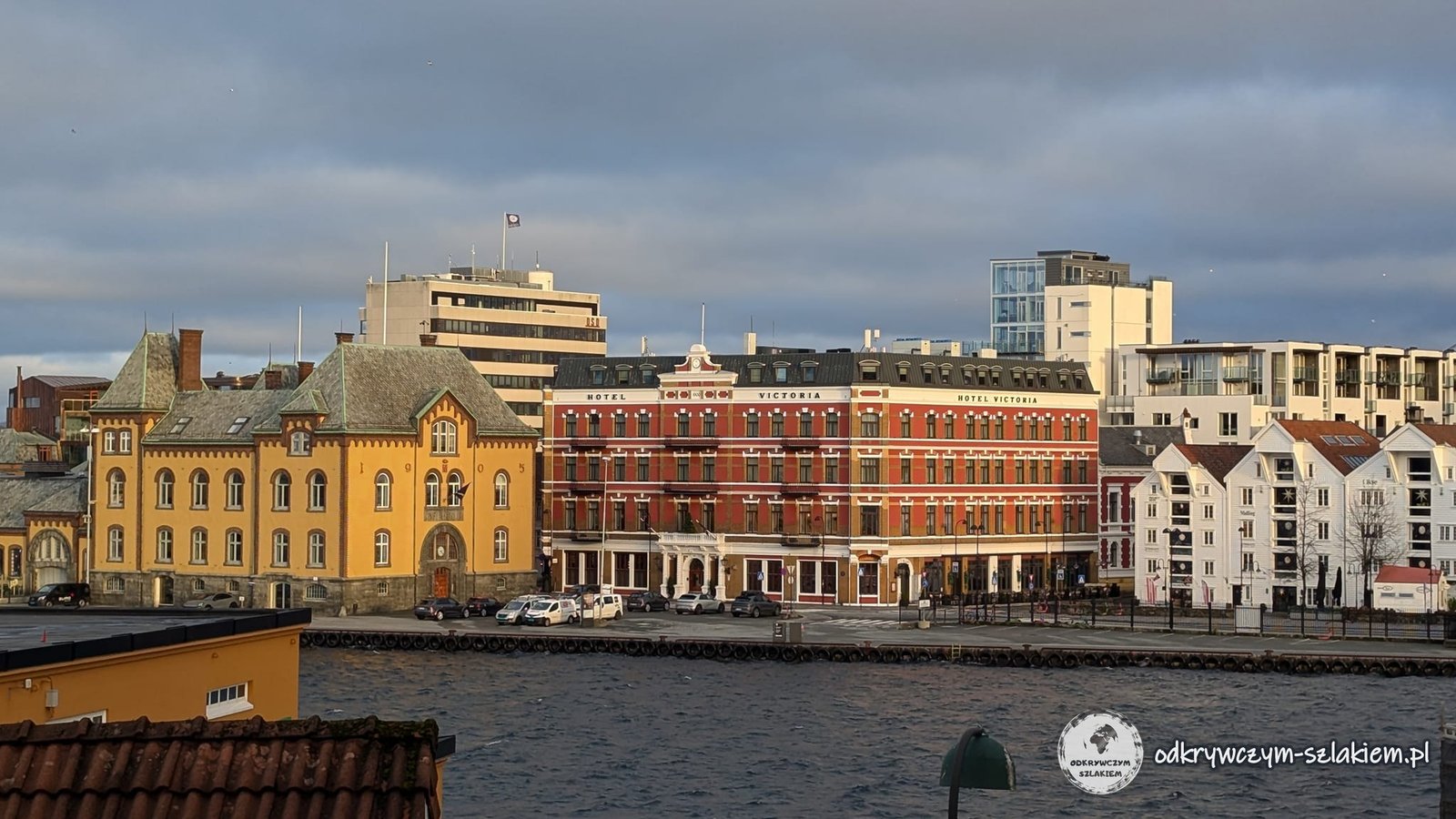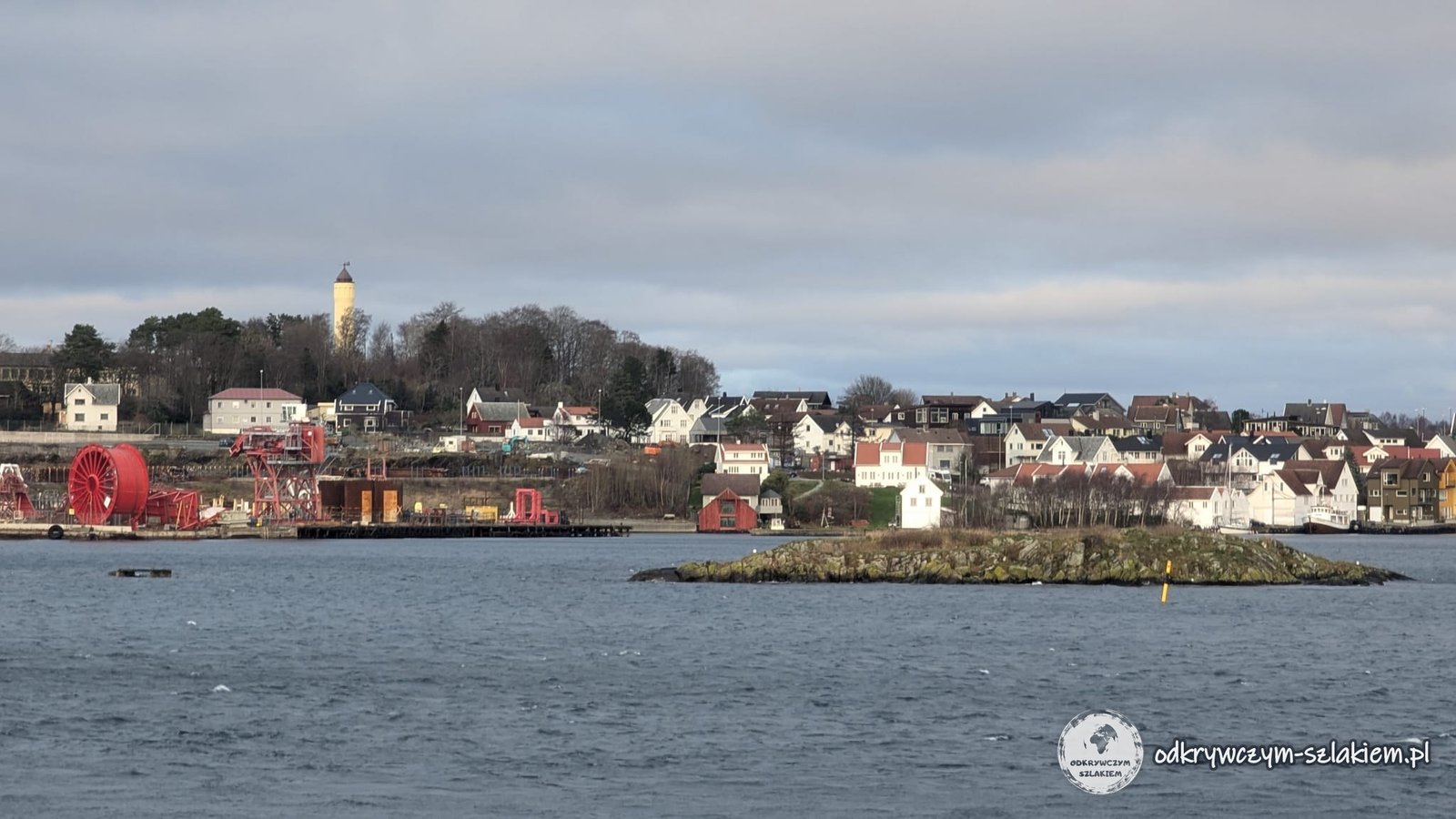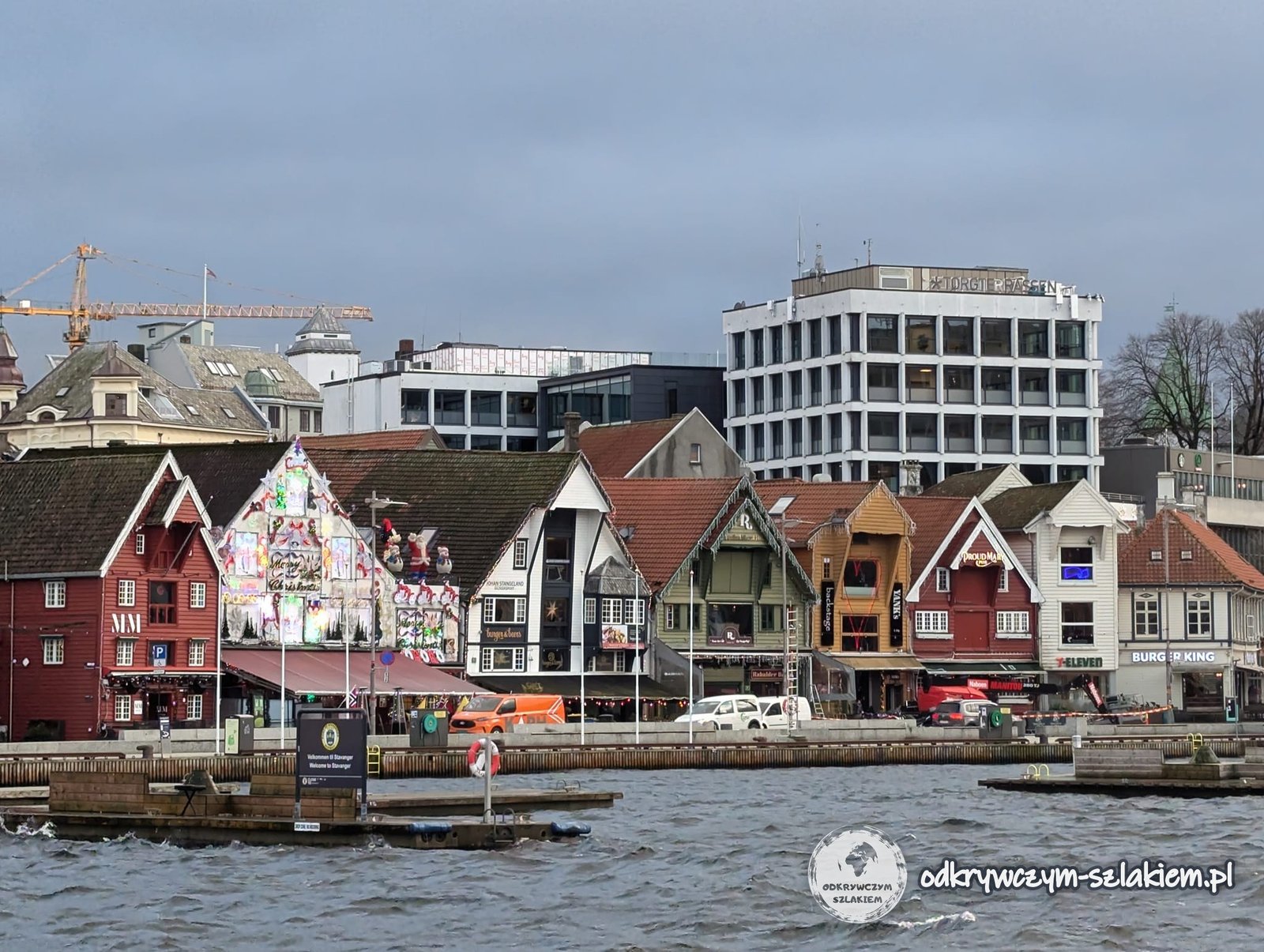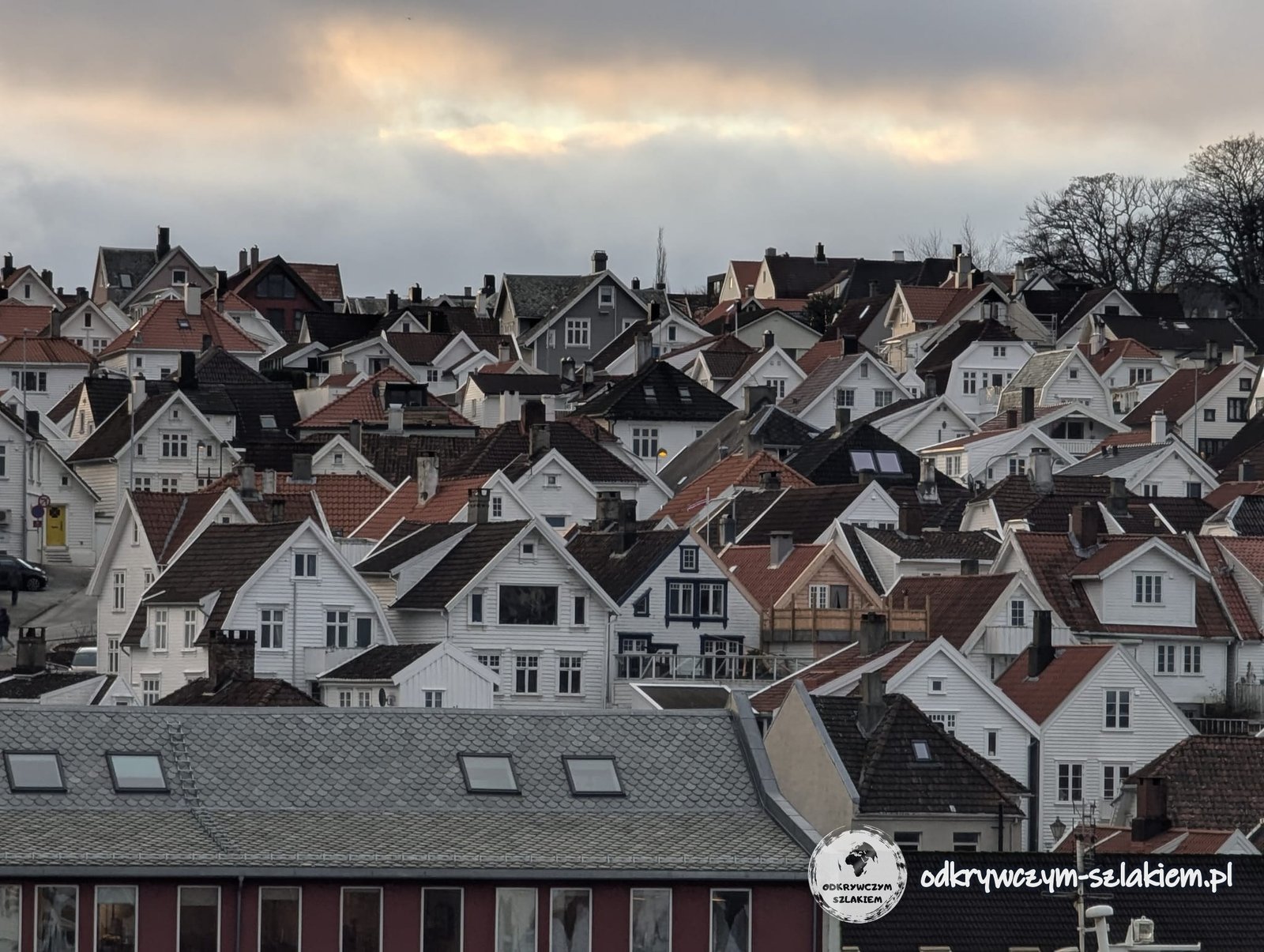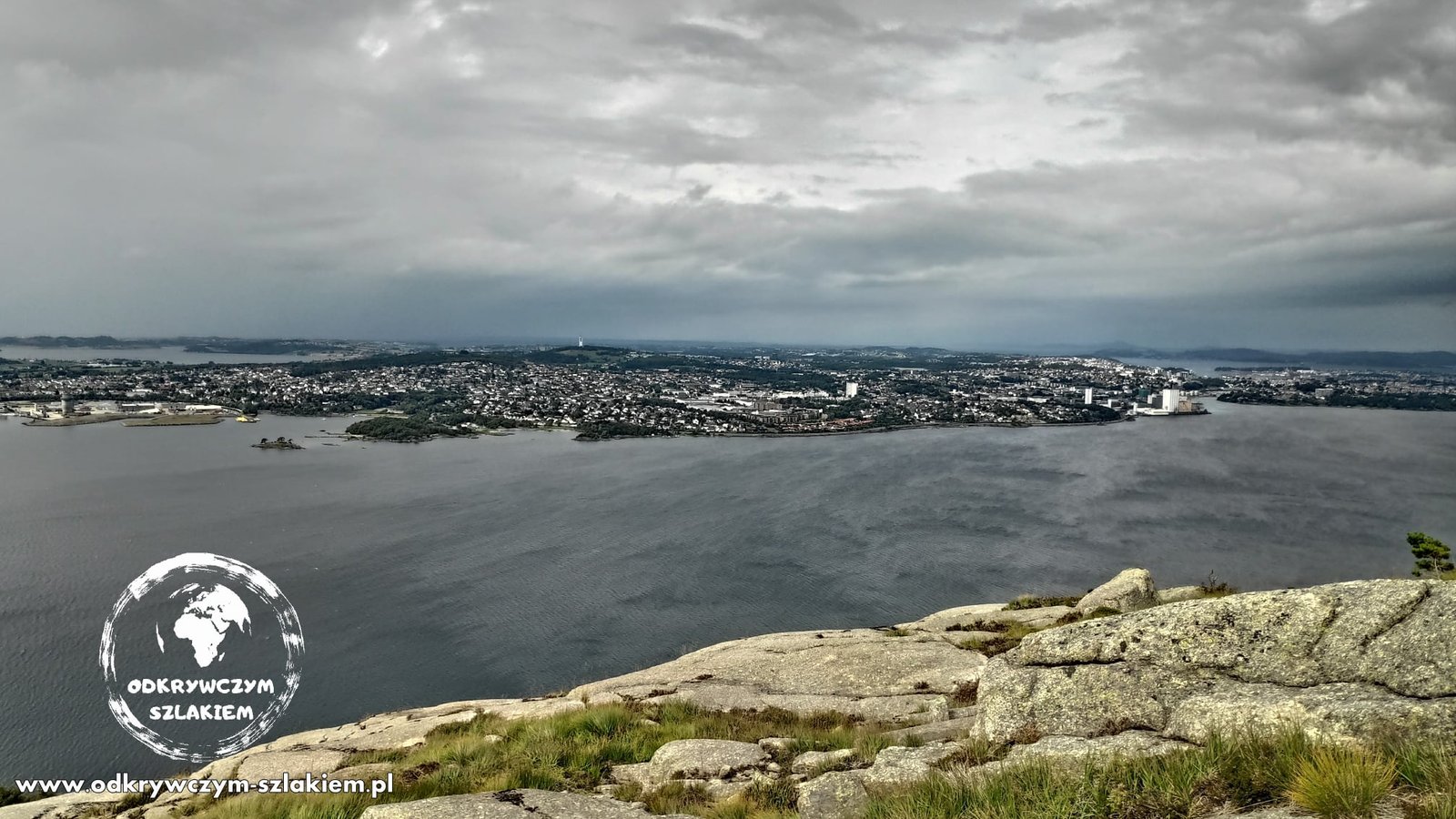
Stavanger, on the west coast of Norway, is the foreign city I return to most often, even though I have never lived there – between 2017 and 2026 I visited it seven times. The first time, in September 2017, we flew in mainly to climb Preikestolen – we saw the city itself in a rush and in the rain. Every visit after that was above all a trip to see Michał and Patrycja, who live here, and to go out together: around the wooden centre, to the swords above Hafrsfjord and up the nearby hills, with views of the fjords, the lakes and the whole city.
Stavanger is one of Norway’s largest cities, although it has only about 150,000 inhabitants, and it is best known for its oil industry. Instead of describing each stay separately, I have grouped everything by place: the Sverd i fjell monument, Gamle Stavanger and the centre (including its Christmas version), the Norwegian Petroleum Museum, the lakes with their lookout towers, Lifjell and the short trails around the city – from Dalsnuten to the island of Rennesøy – and a Viking FK match. At the end you will find practical information and prices from the different years.
My visits to Stavanger
- September 2017 – a trip mainly for Preikestolen; the city in a downpour and the Valbergtårnet tower.
- August 2021 – more than a week in the city. During the day I mostly worked remotely, so I went sightseeing in the afternoons and on the last days of the stay (Sverd i fjell, Gamle Stavanger, the Petroleum Museum, the lakes, Lifjell), and we spent the weekend in a cabin near Lyngdal, in the south of the country.
- June 2023 – combined with Trolltunga: Dalsnuten and the Ullandhaugtårnet tower.
- 30 November – 7 December 2024 – a week: the Christmas centre, Sørmarka forest and the trail from Dale.
- 8–12 May 2025 – Preikestolen after eight years, Lifjell from Dale and a day and a half in the city in full sunshine.
- 7–10 November 2025 – a long weekend: Vedafjell near Sandnes, a Viking FK match and Sverd i fjell from the boardwalk side.
- 21–24 May 2026 – the last mountain training before Kilimanjaro: Bjørndalsfjellet and the island of Rennesøy.
Table of contents
- Sverd i fjell – three swords above Hafrsfjord
- Gamle Stavanger and the wooden centre
- The centre in autumn and winter – lights, hearts and mulled wine
- The Norwegian Petroleum Museum
- Lakes and lookout towers
- Lifjell, Dale and Sørmarka forest
- Trails around Stavanger – Dalsnuten, Bjørndalsfjellet, Vedafjell and Rennesøy
- A Viking FK match and board game evenings
- Practical information
Sverd i fjell – three swords above Hafrsfjord
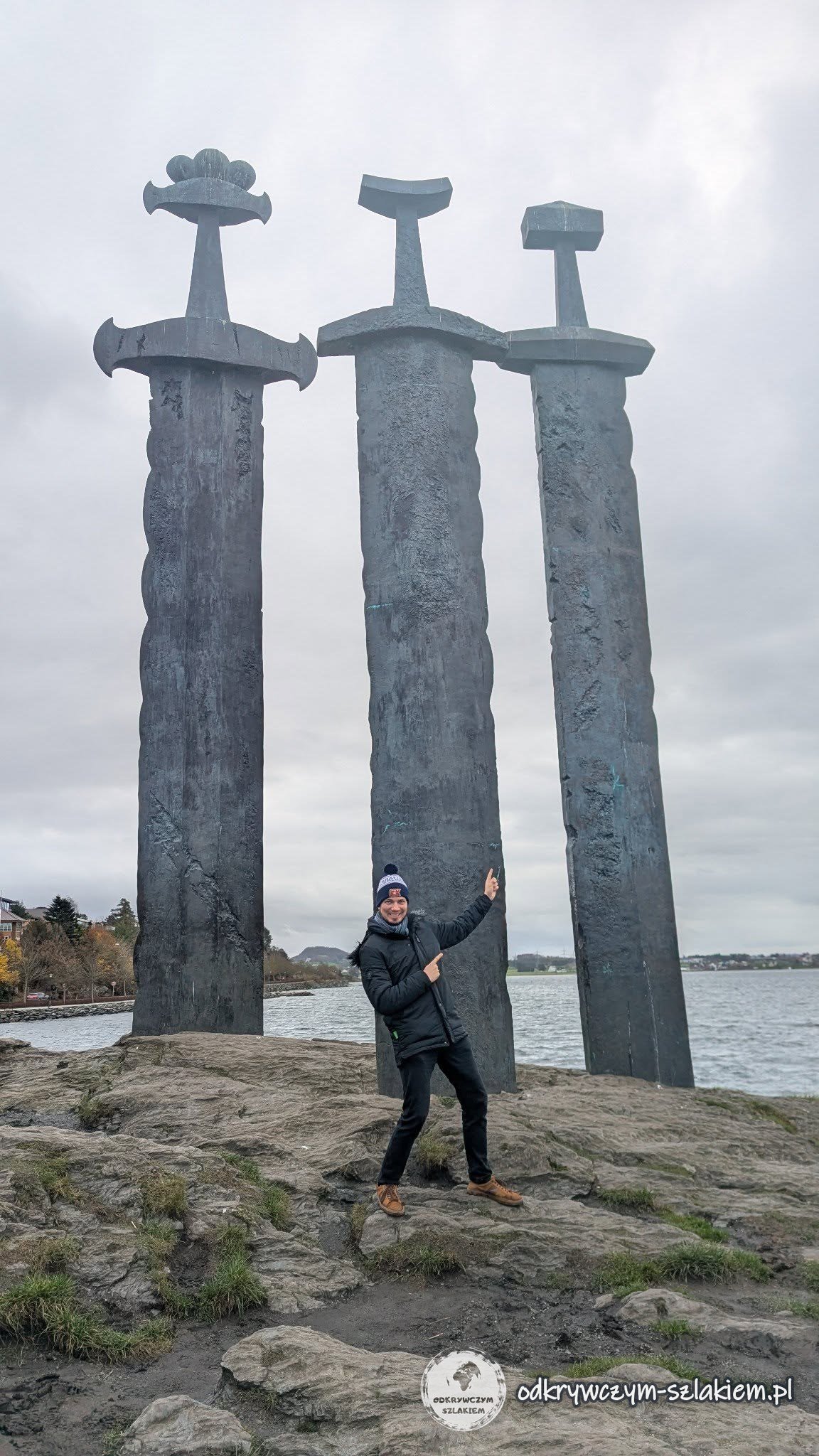
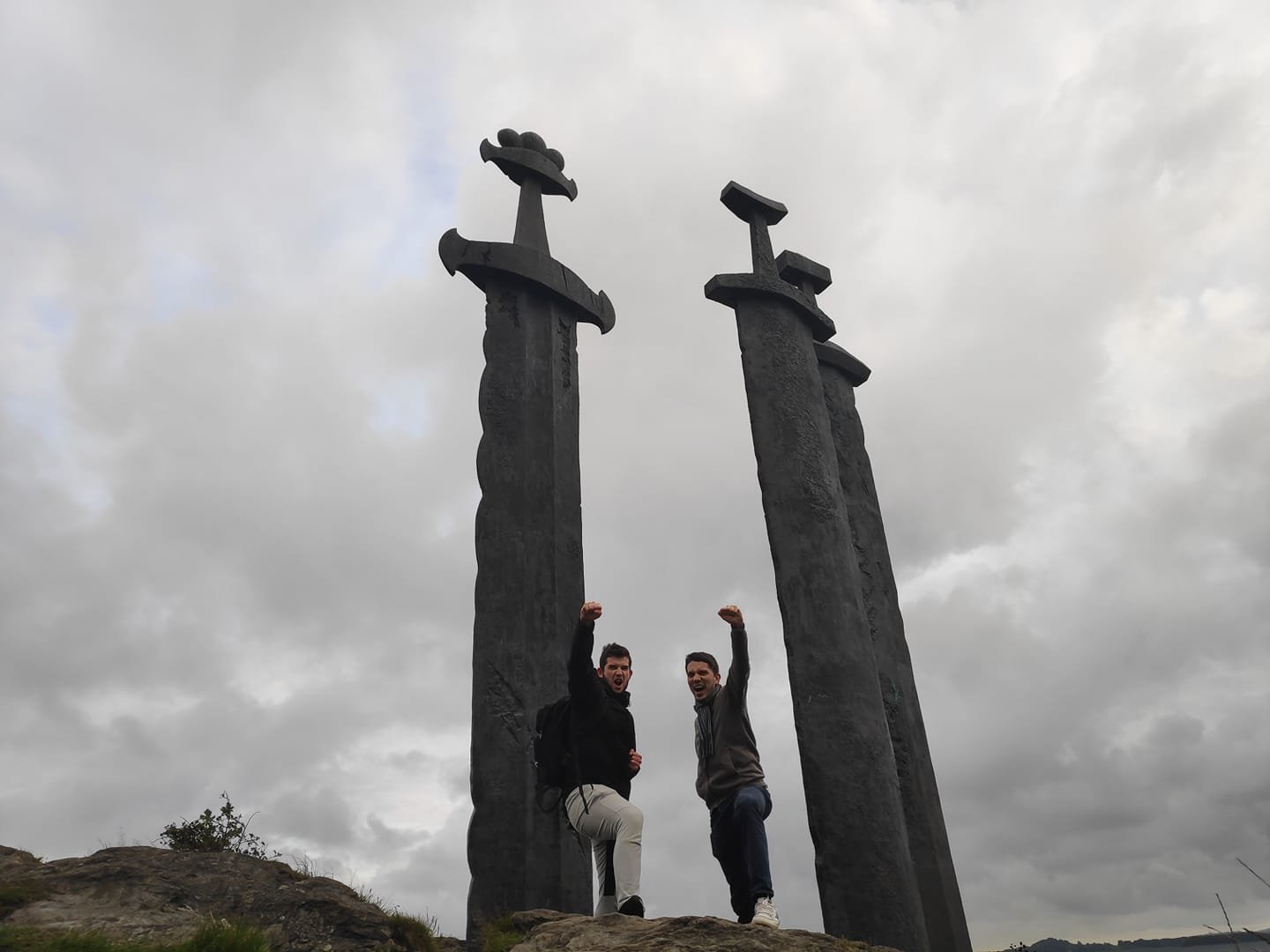
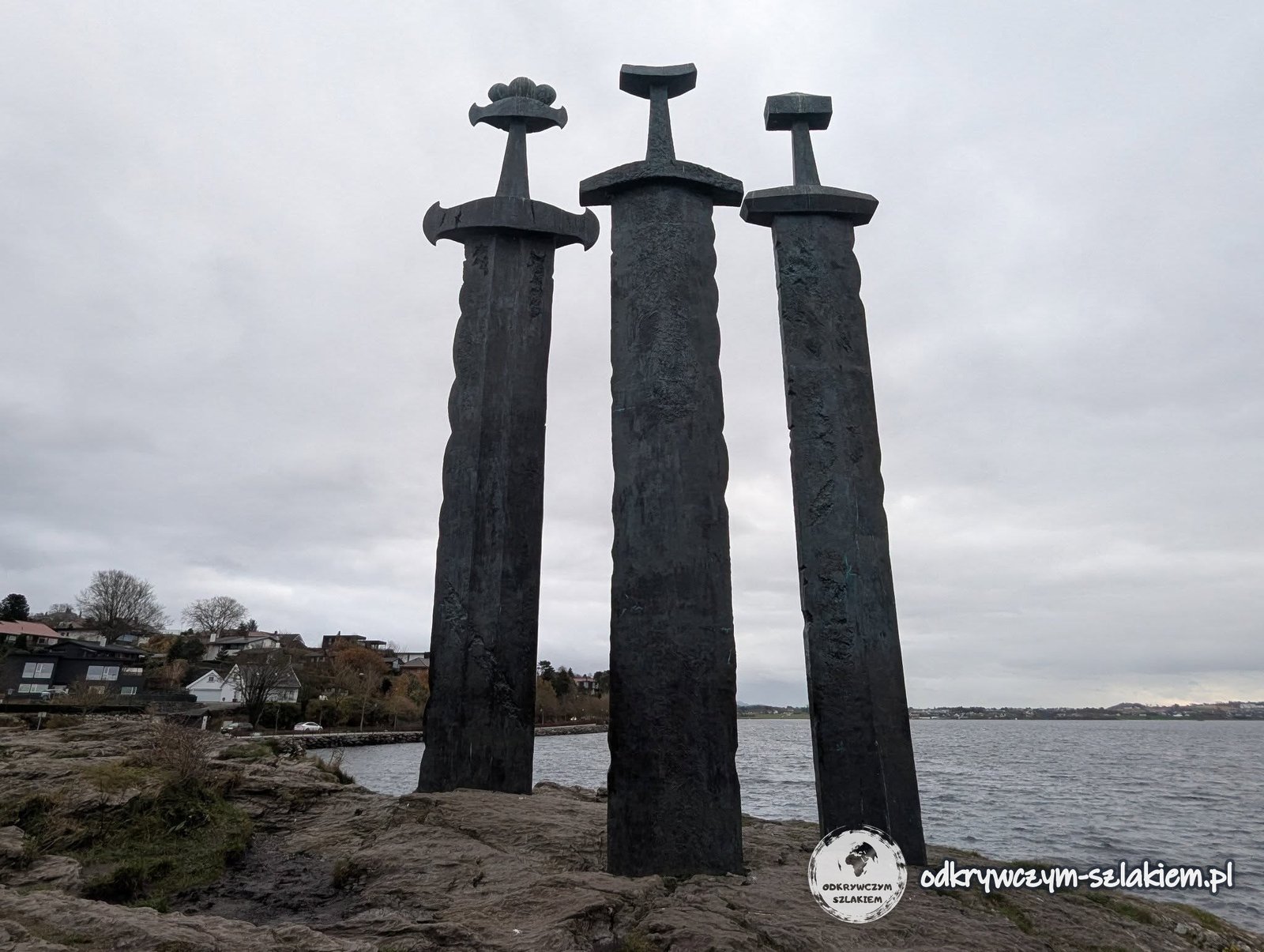
In 2021, on the very first day, we went after work to Sverd i fjell (“Swords in Rock”) – Stavanger’s best-known monument, a few kilometres from the centre, on the shore of Hafrsfjord bay. Three ten-metre bronze swords driven into the rock commemorate the Battle of Hafrsfjord in 872, after which Harald Fairhair united Norway under one crown. The largest sword stands for the victorious king, the two smaller ones for the defeated local rulers. Swords set in solid rock are also meant to symbolise peace: no one will ever pull them out again.
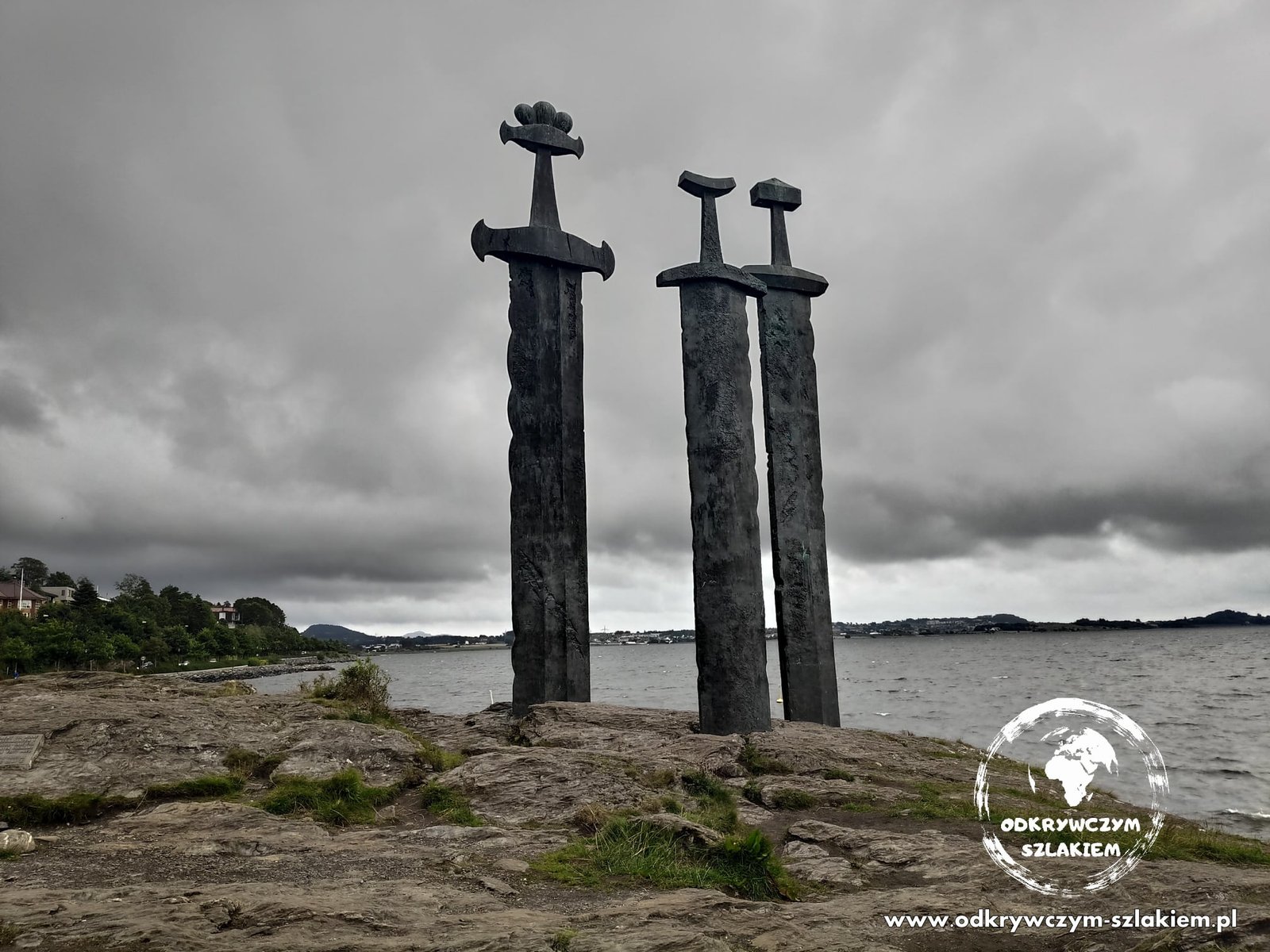
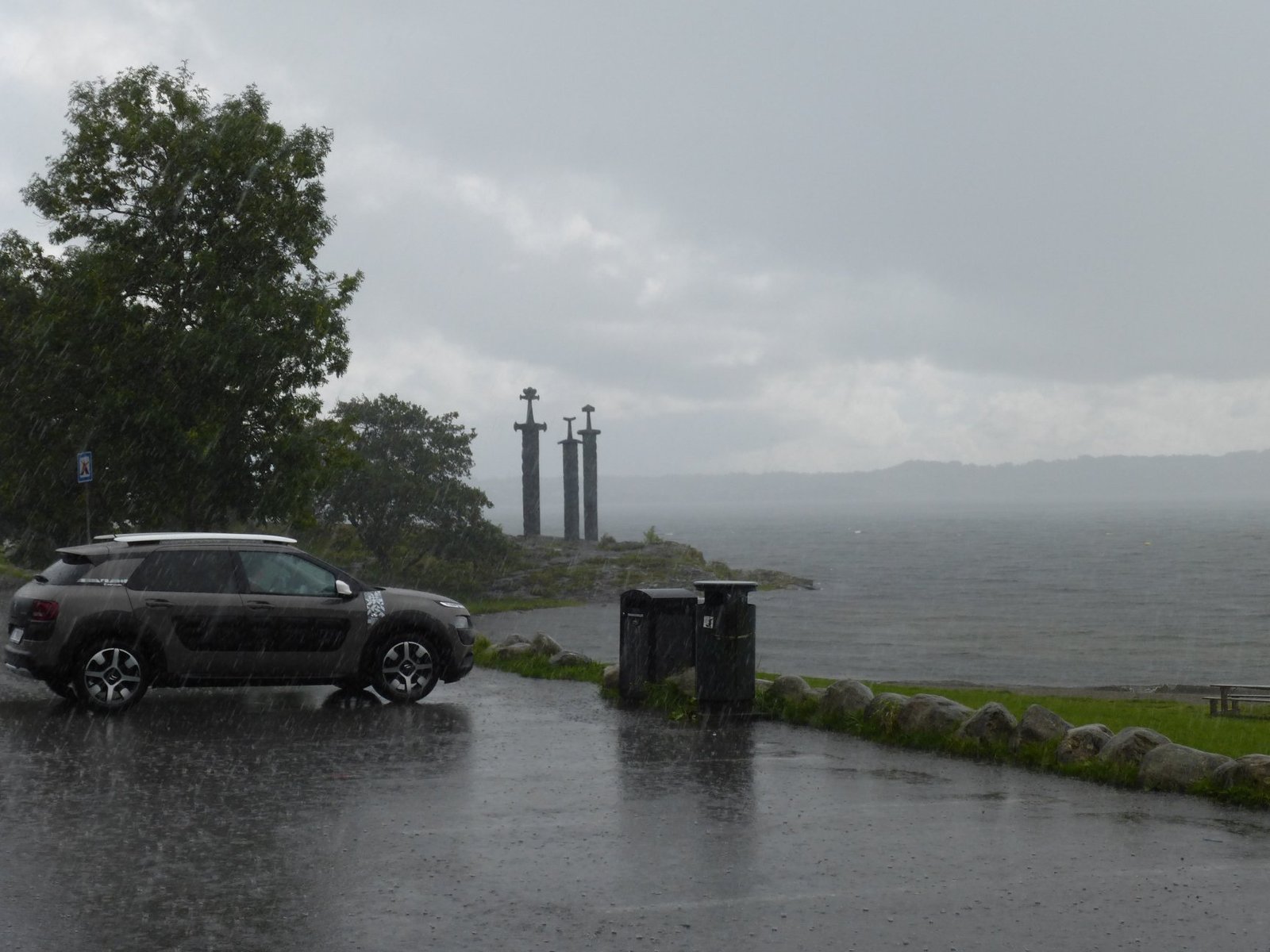
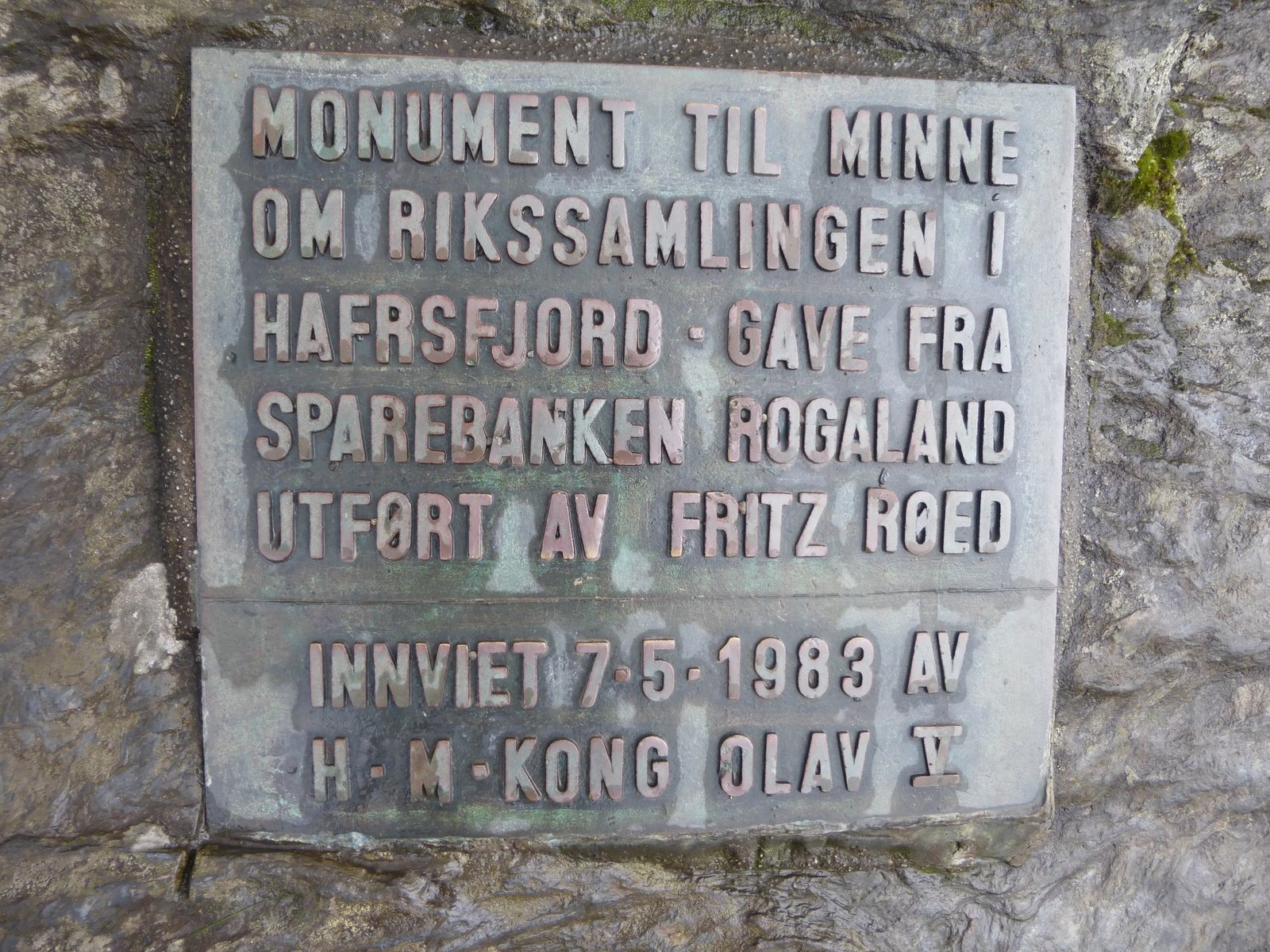
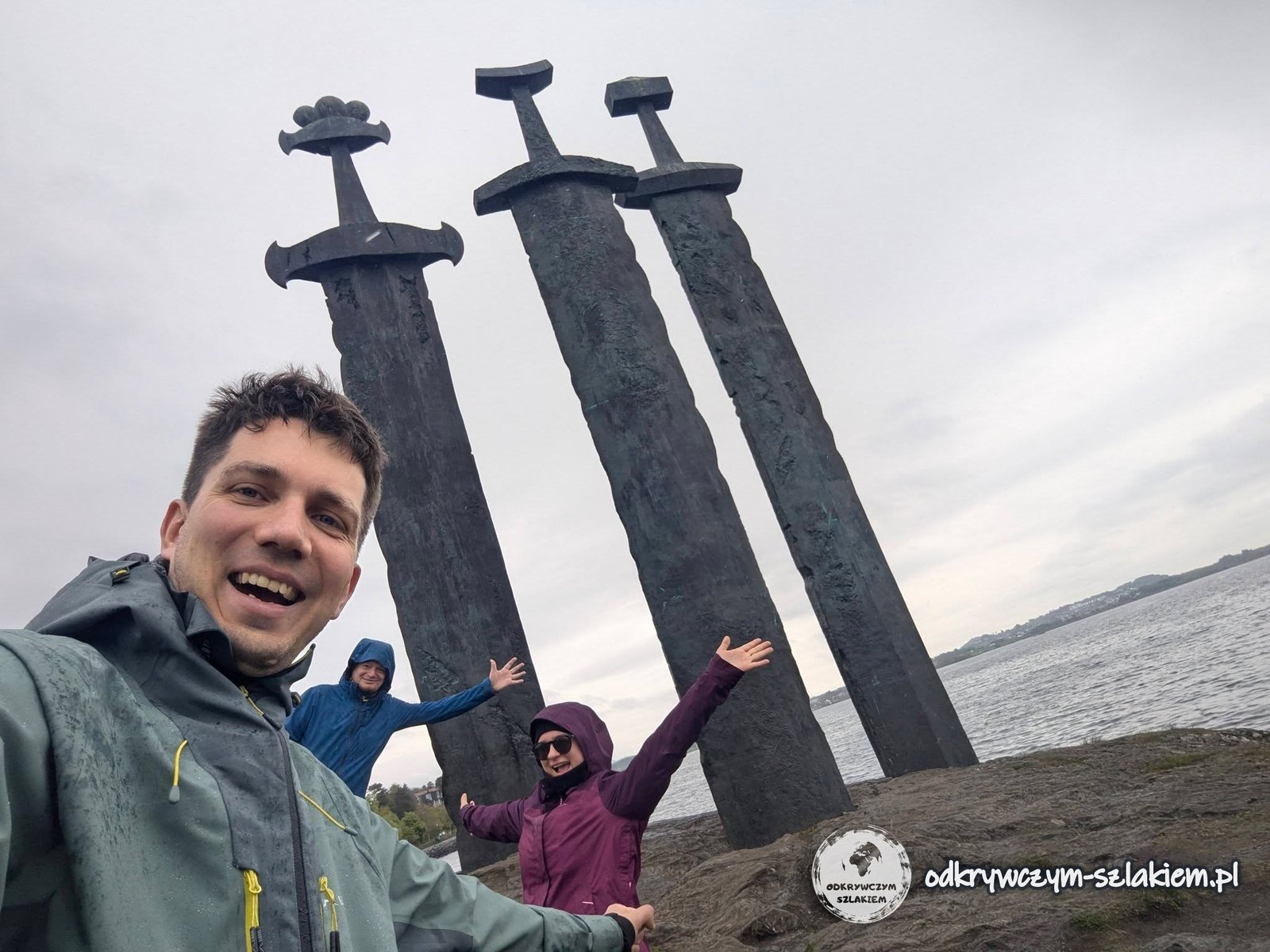
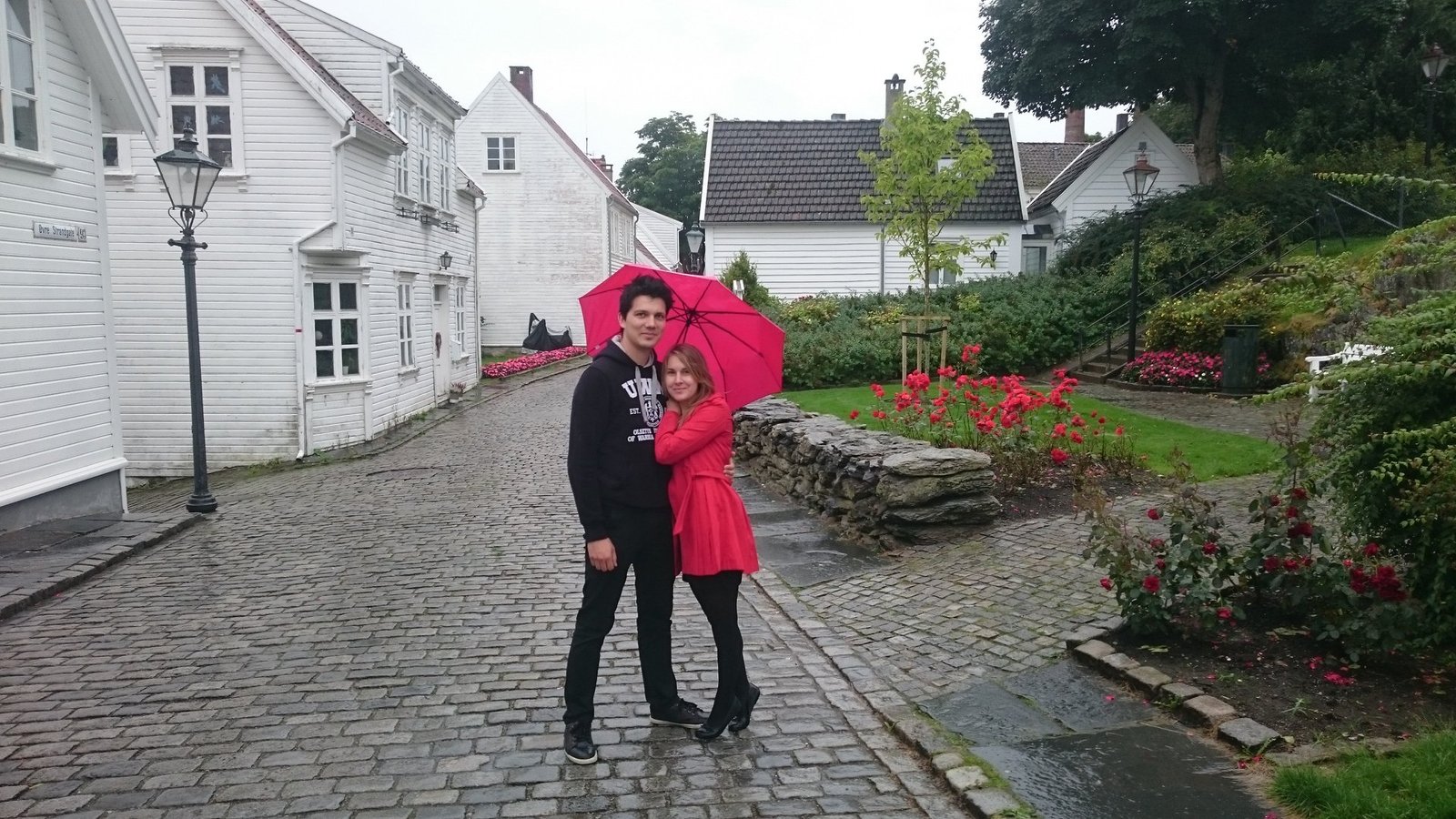
The weather immediately showed what western Norway is like – within an hour the sunshine turned into rain and back again several times. In 2017 we came here in a downpour (photo on the right), in 2021 under clouds with spells of sunshine. On the rock next to the monument there is a plaque: the swords are the work of the sculptor Fritz Røed, and King Olav V unveiled them in May 1983.
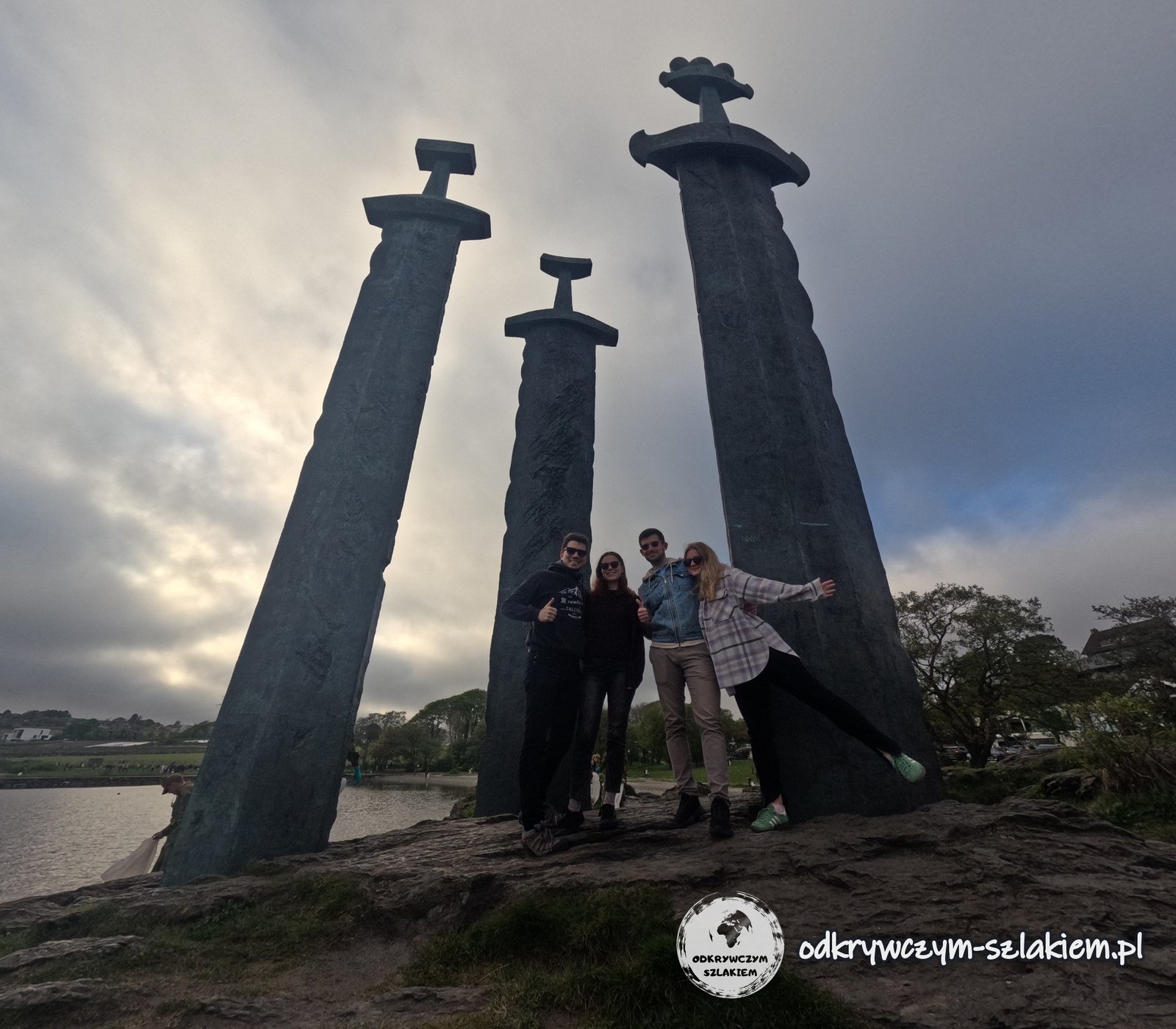
Since then Sverd i fjell has been a must on every visit – and each time in different weather. In May 2025 the swords stood in full sunshine, and the four of us lined up beneath them for a photo against the light.
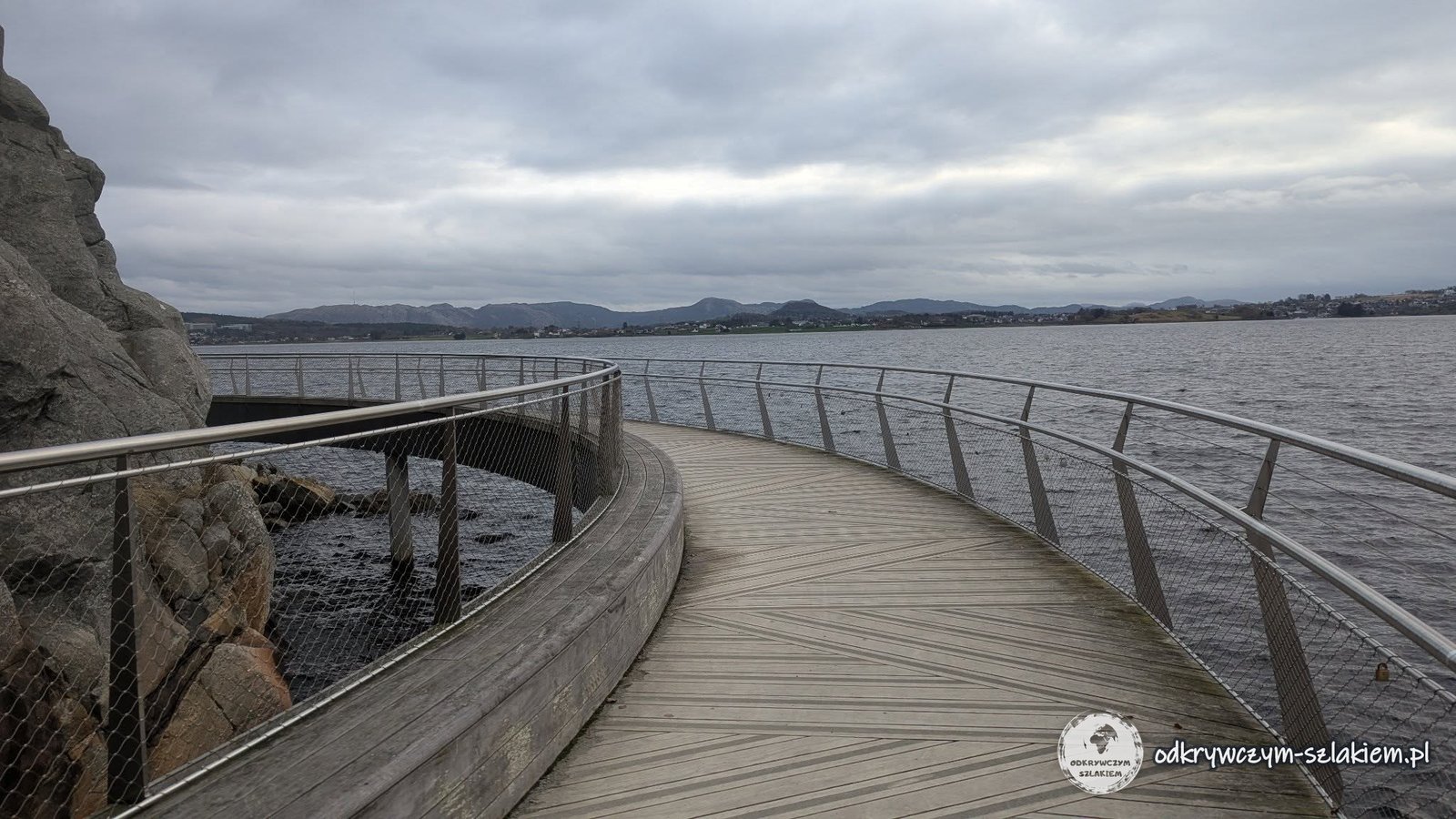
In November 2025 we came from the other side – a walk of about 5 km, partly along a wooden boardwalk built right above the water, along the rocks.
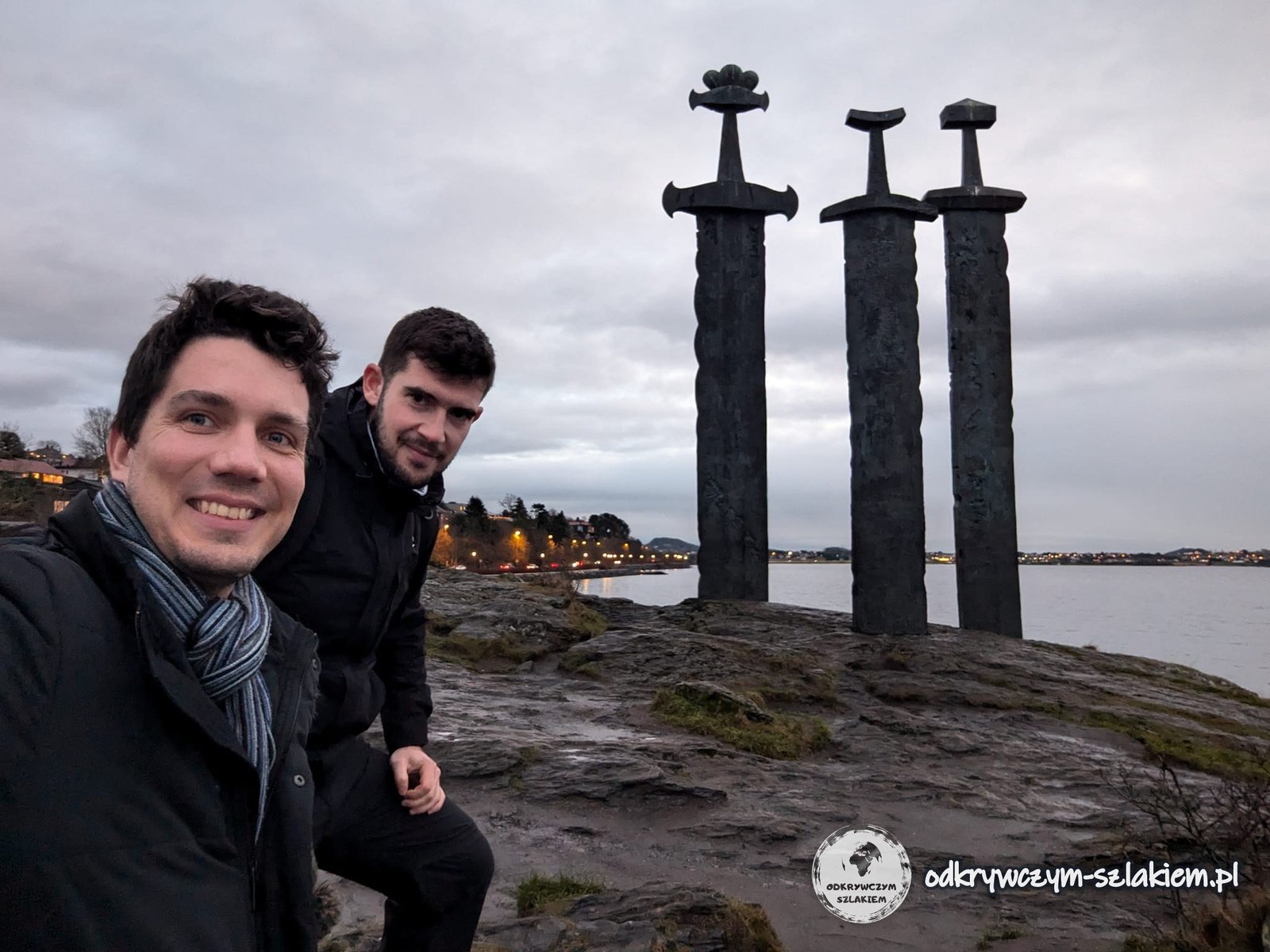
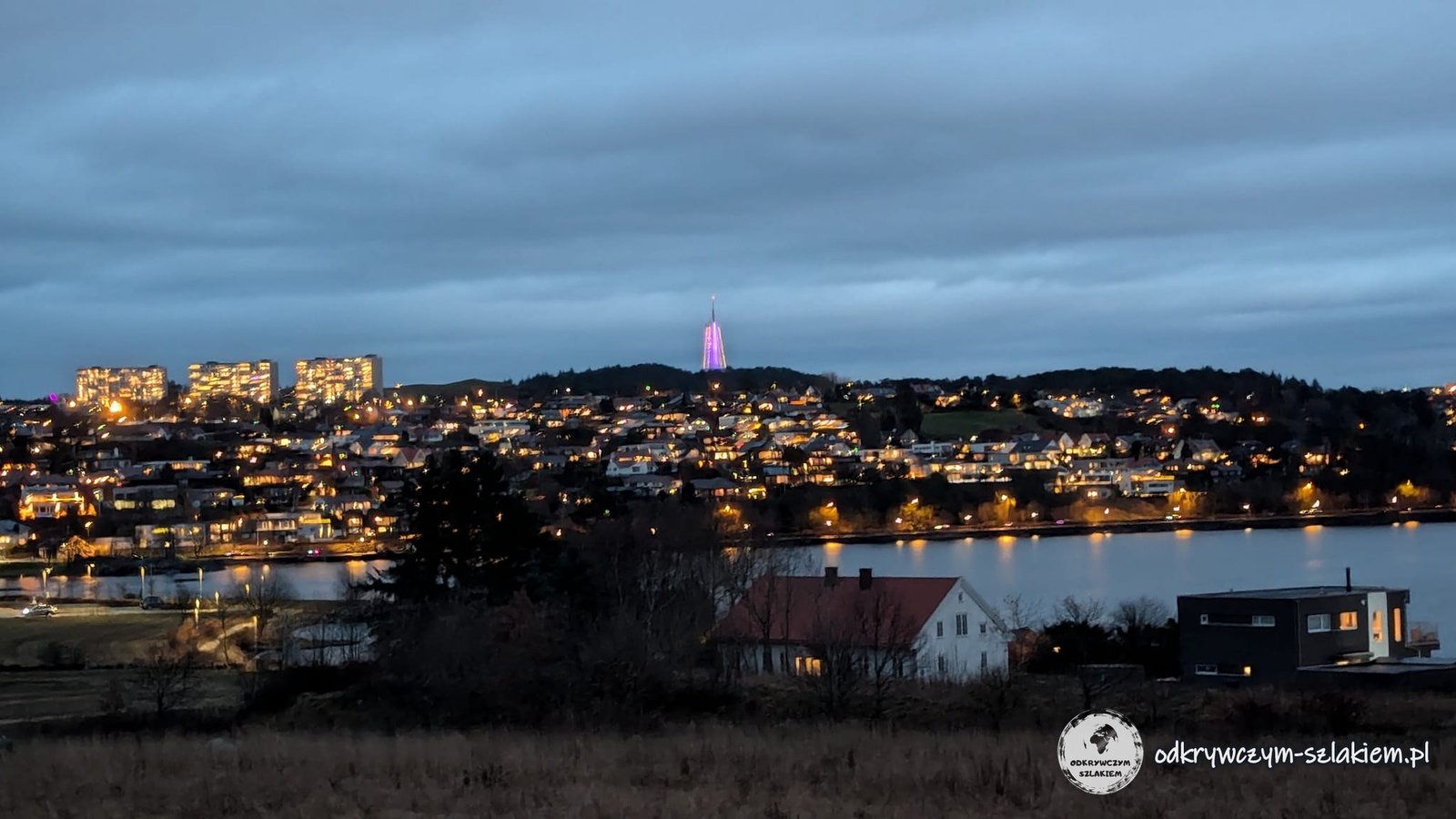
In December 2024, after returning from the trail in Dale, Michał and I drove to the swords at dusk. In the December half-light the three swords above Hafrsfjord look even starker than in summer, and the lights of the houses were coming on across the water.
In May 2026, on the other hand, we got a rainy Friday. It was Łukasz’s first time in Stavanger, and what kind of visit would it be without Sverd i fjell – so we went to the swords despite the rain.
Gamle Stavanger and the wooden centre
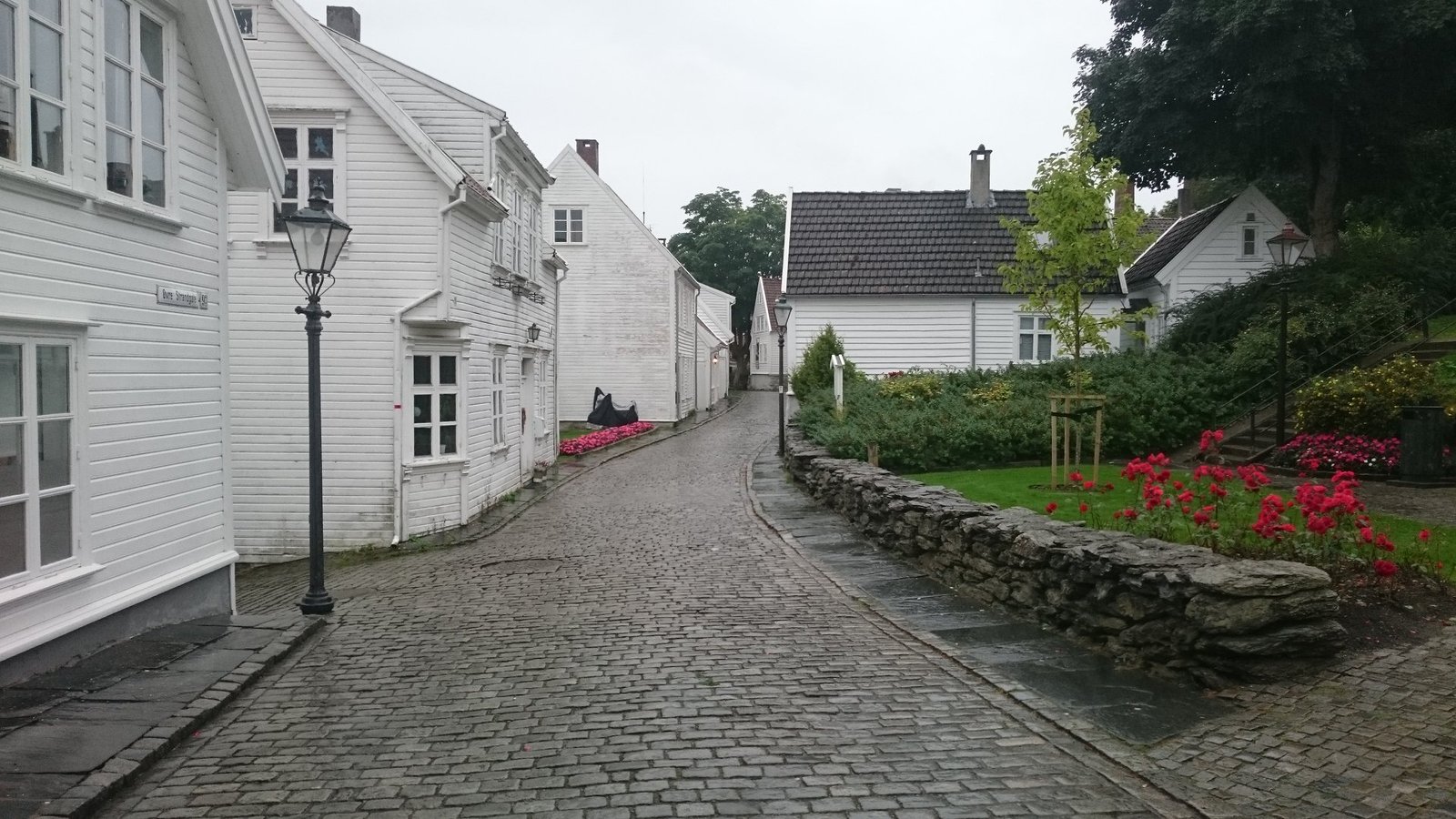
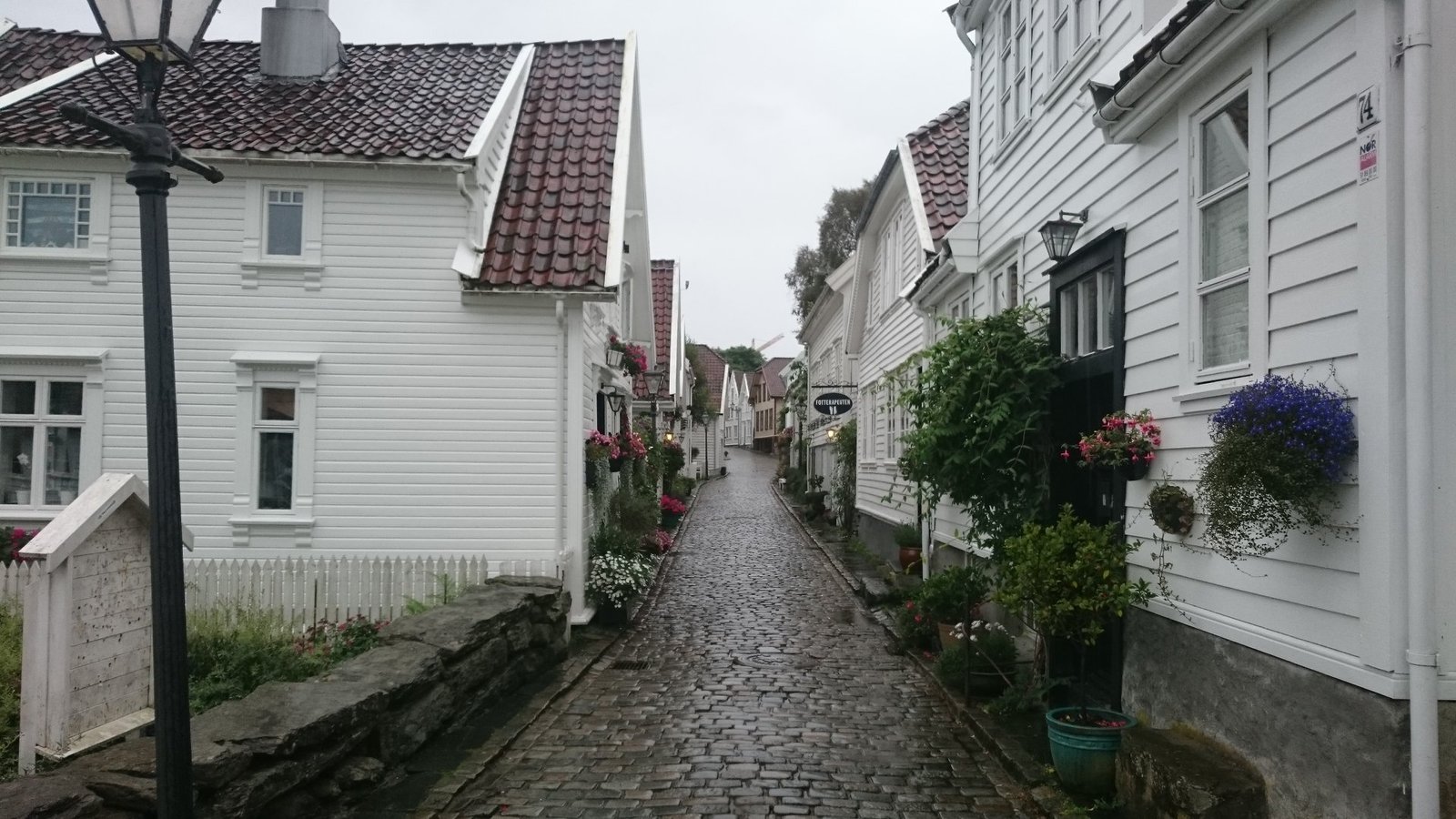
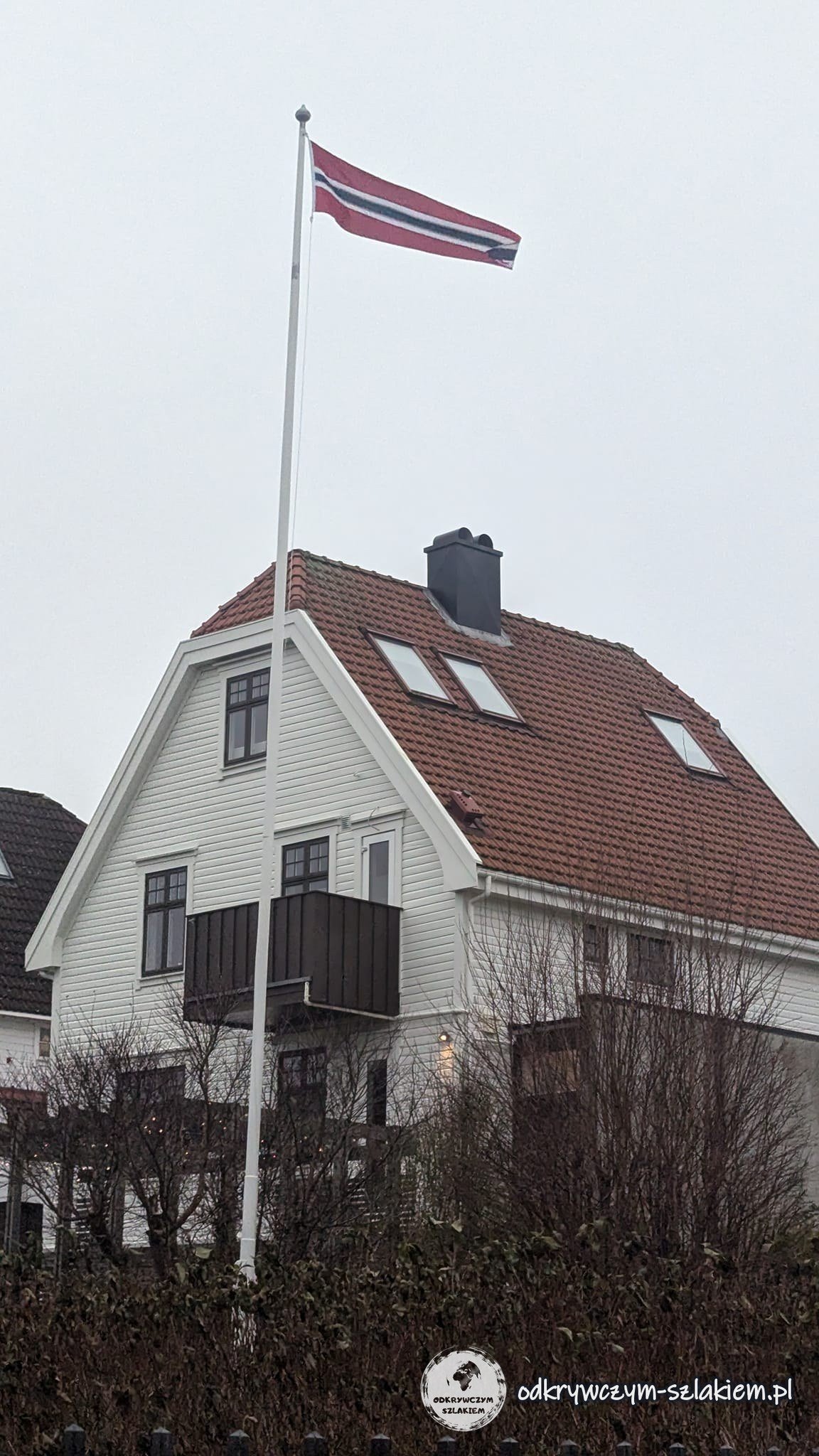
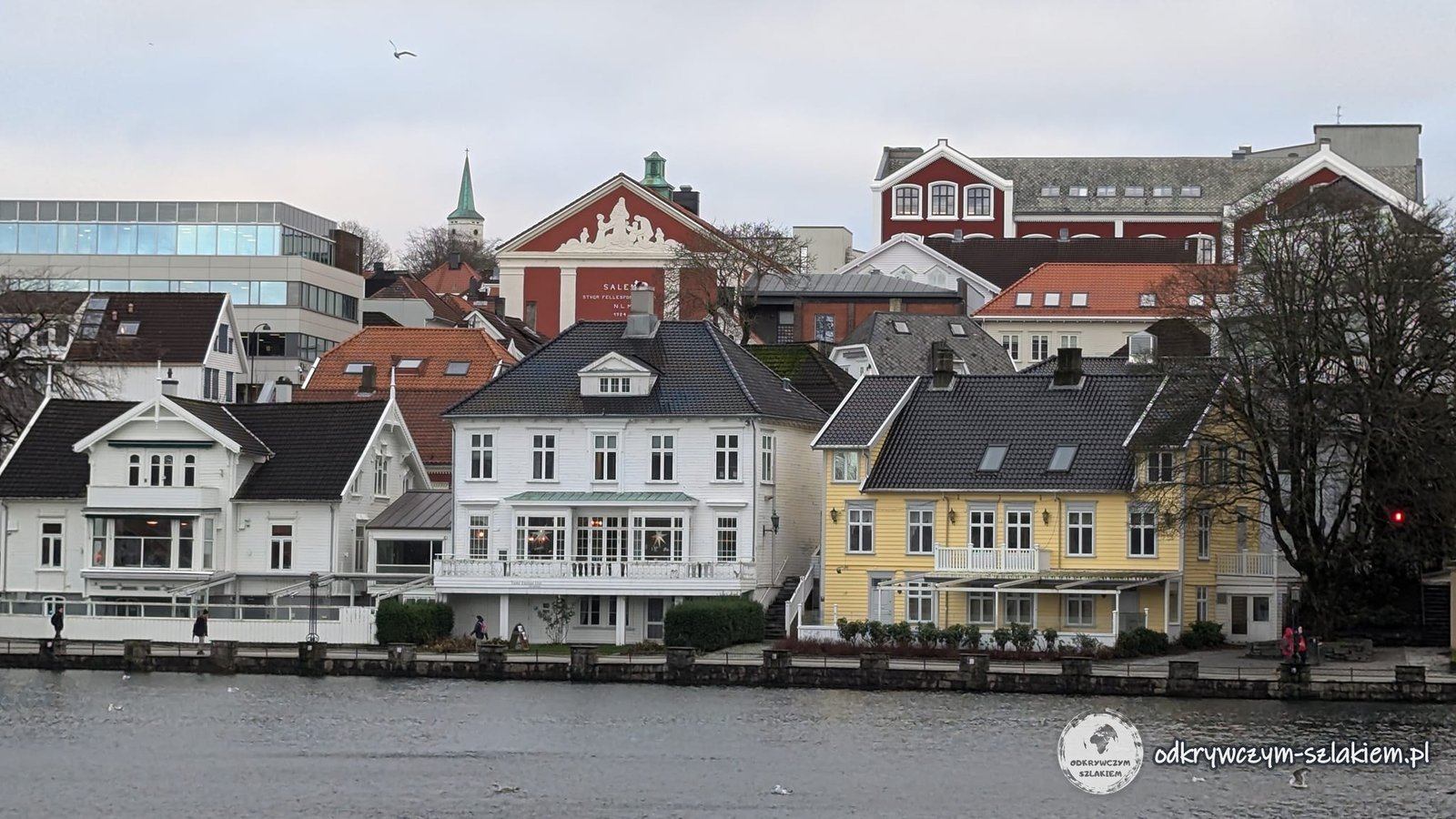
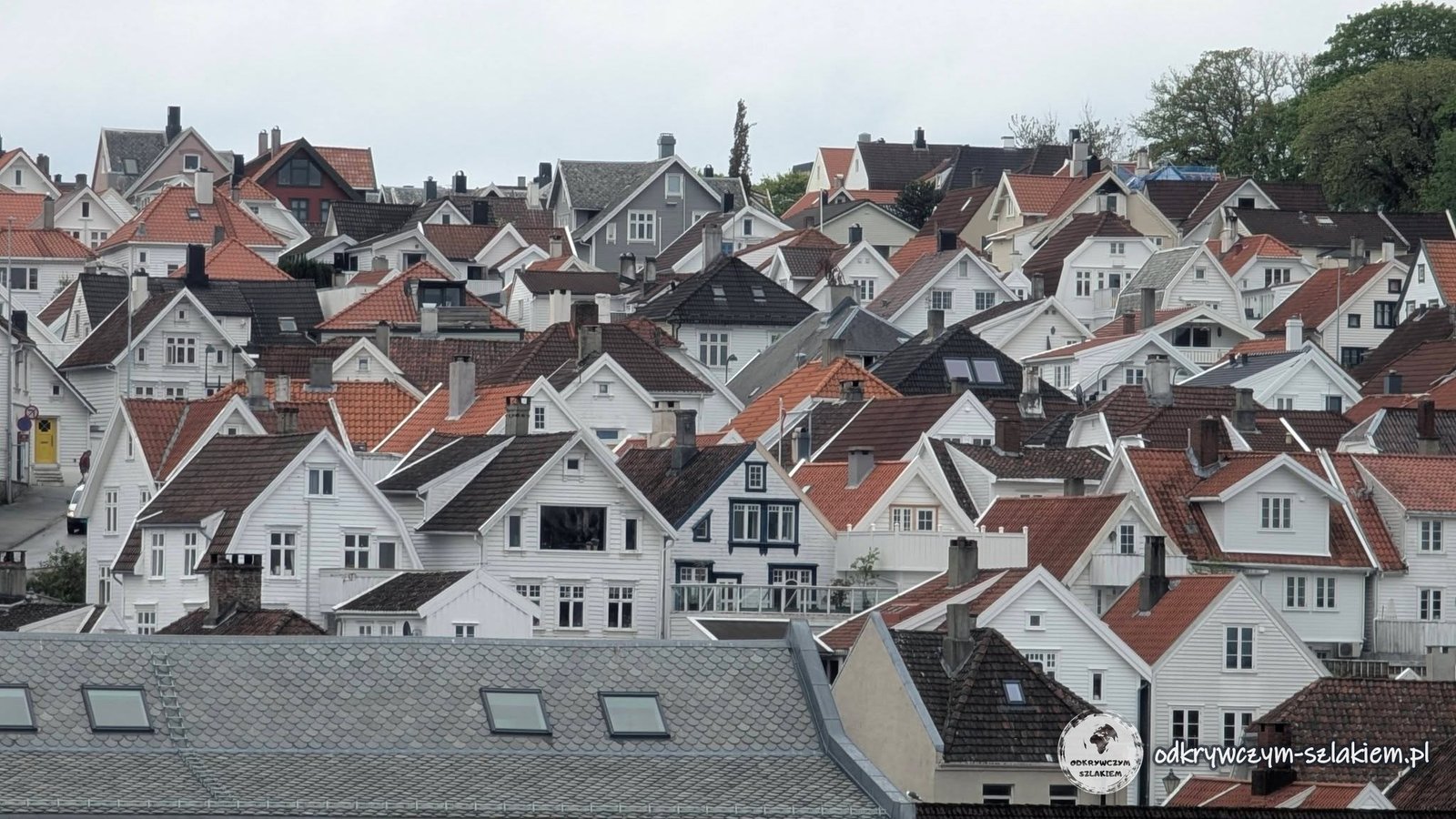
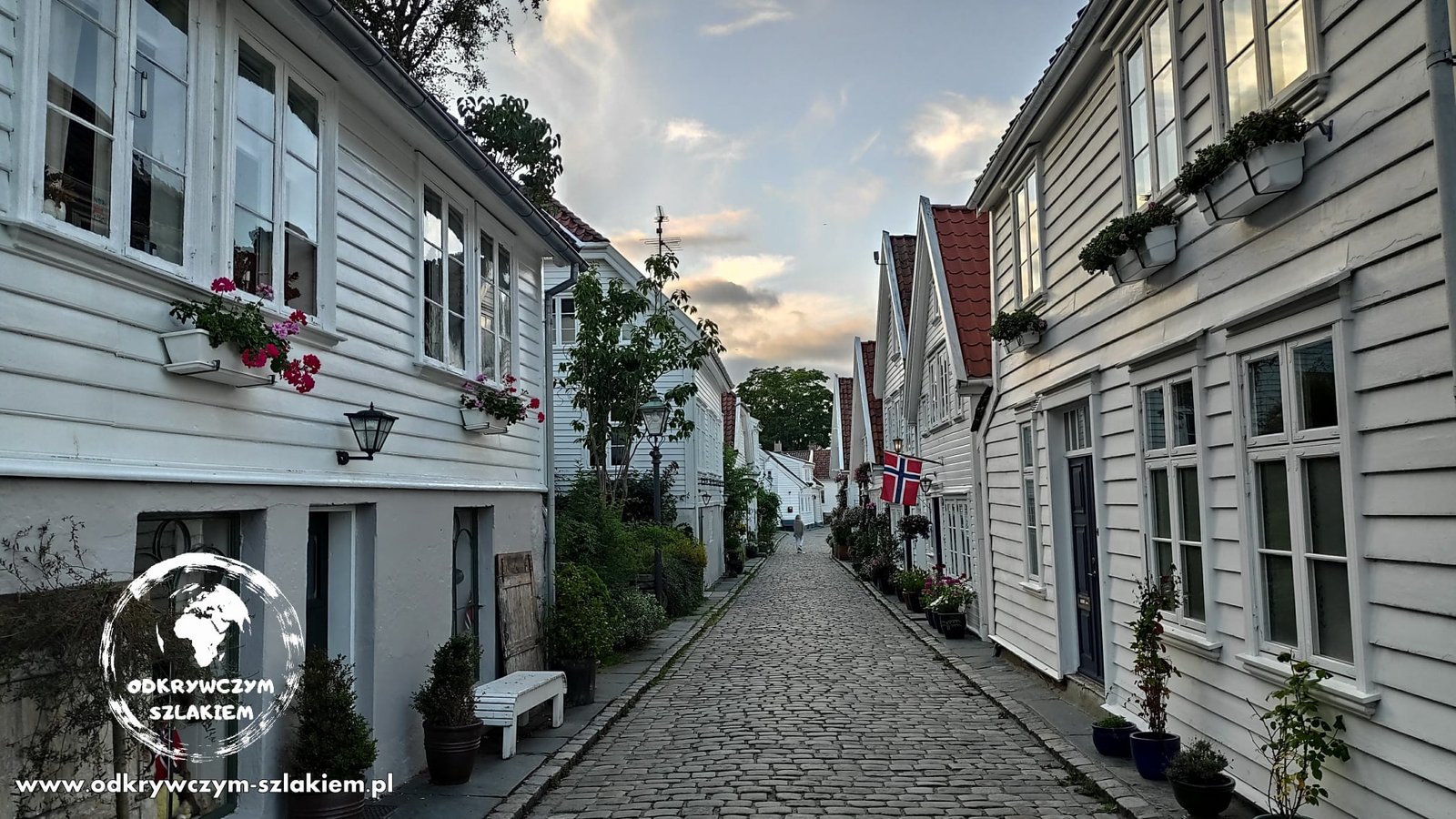
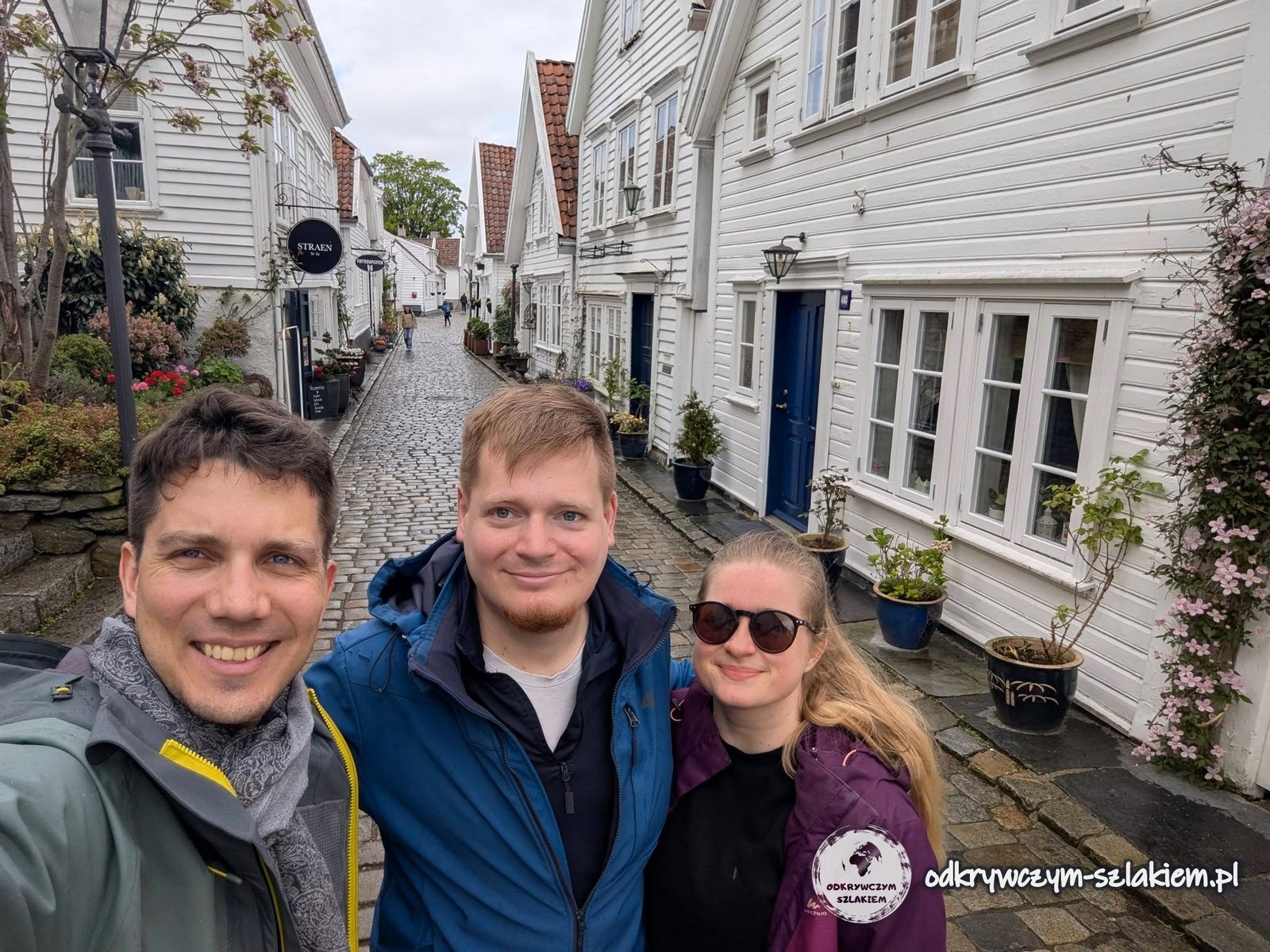
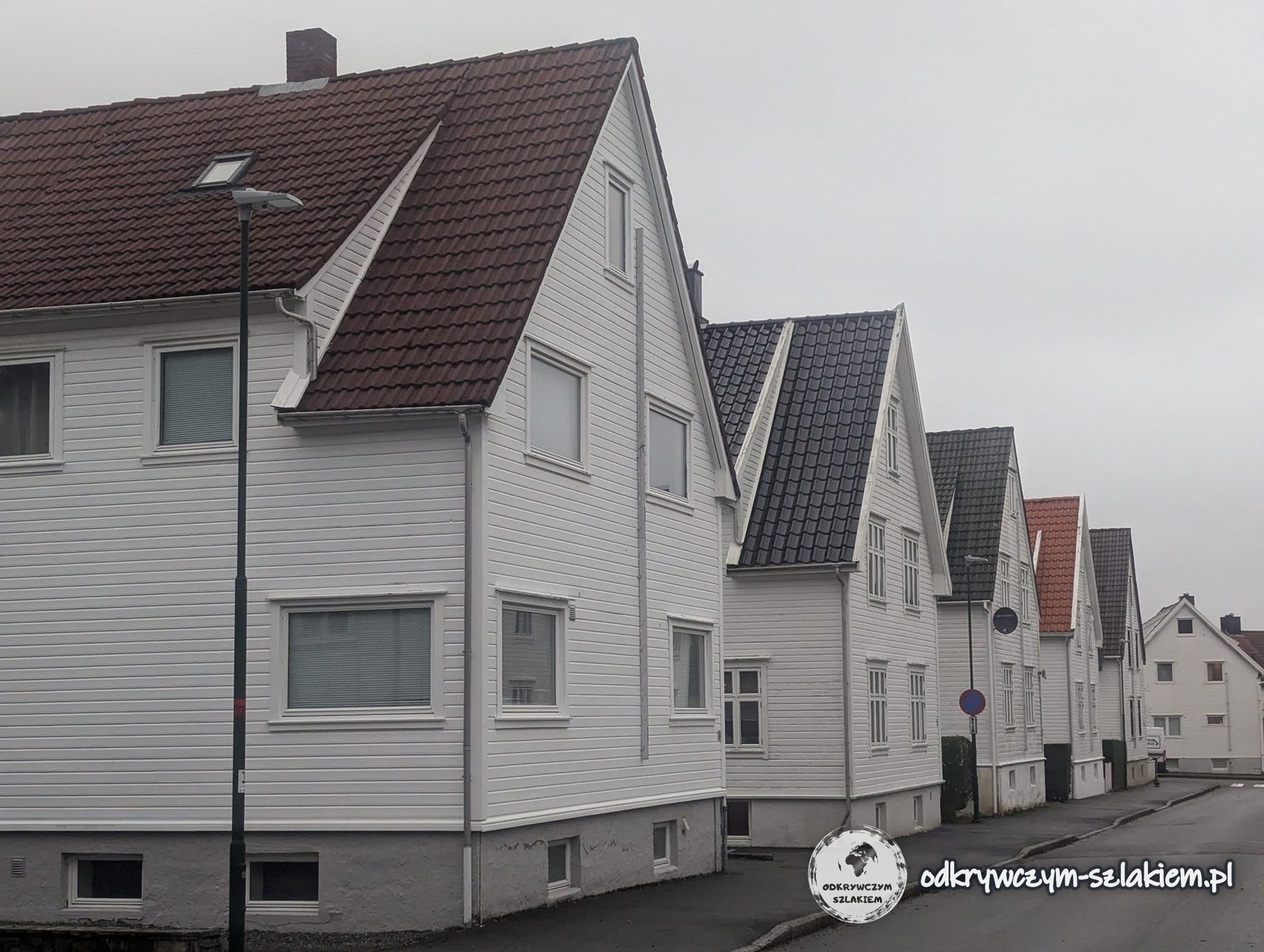
The most picture-postcard part of the city is Gamle Stavanger, Old Stavanger, on the western side of Vågen harbour. It consists of 173 wooden buildings from the turn of the 18th and 19th centuries – mostly small white houses along cobbled lanes, with flowers in the windows and lanterns by the doors. In 2017 we walked here under an umbrella, in 2021 in full sunshine, and the impression is completely different.
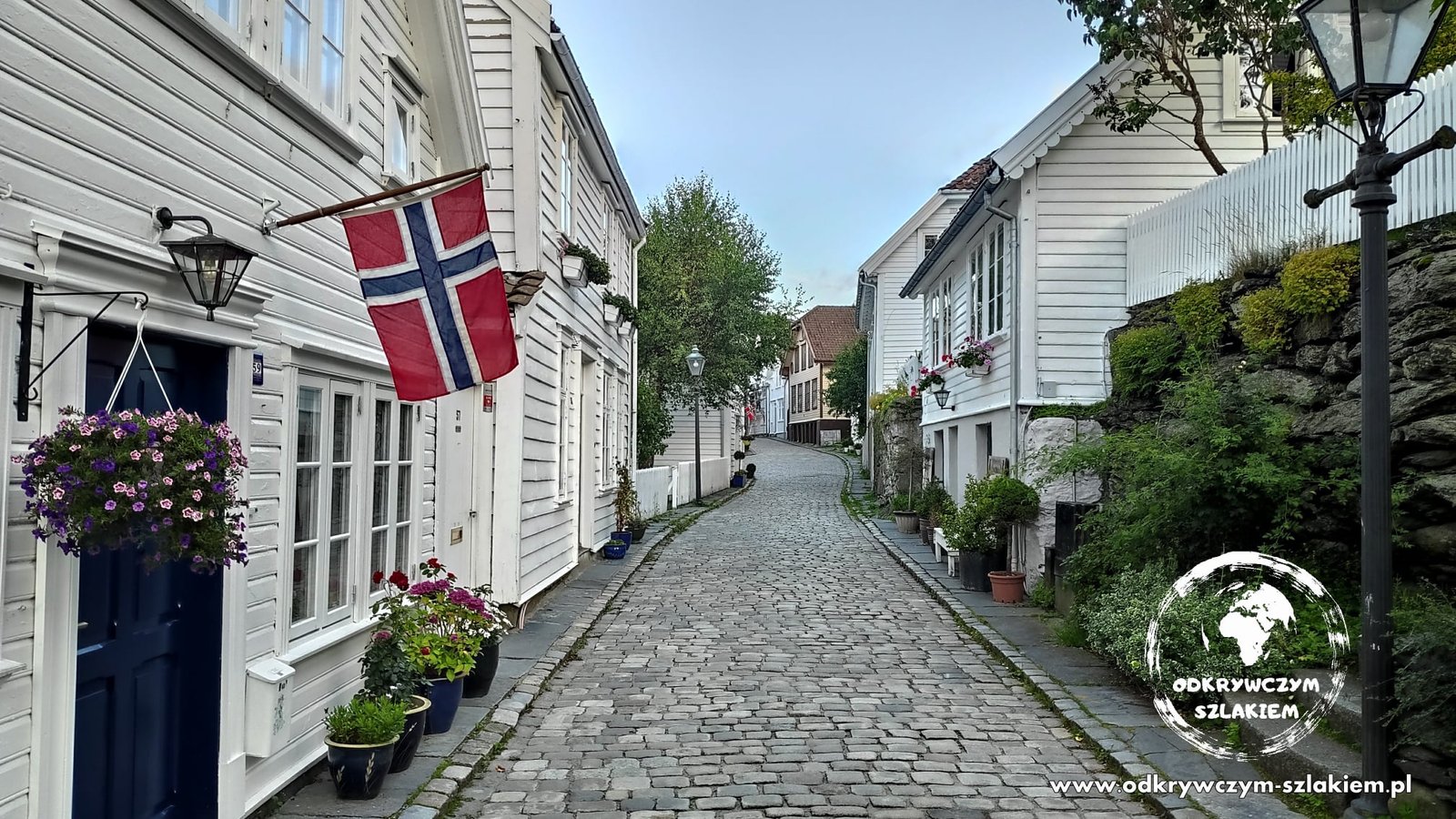
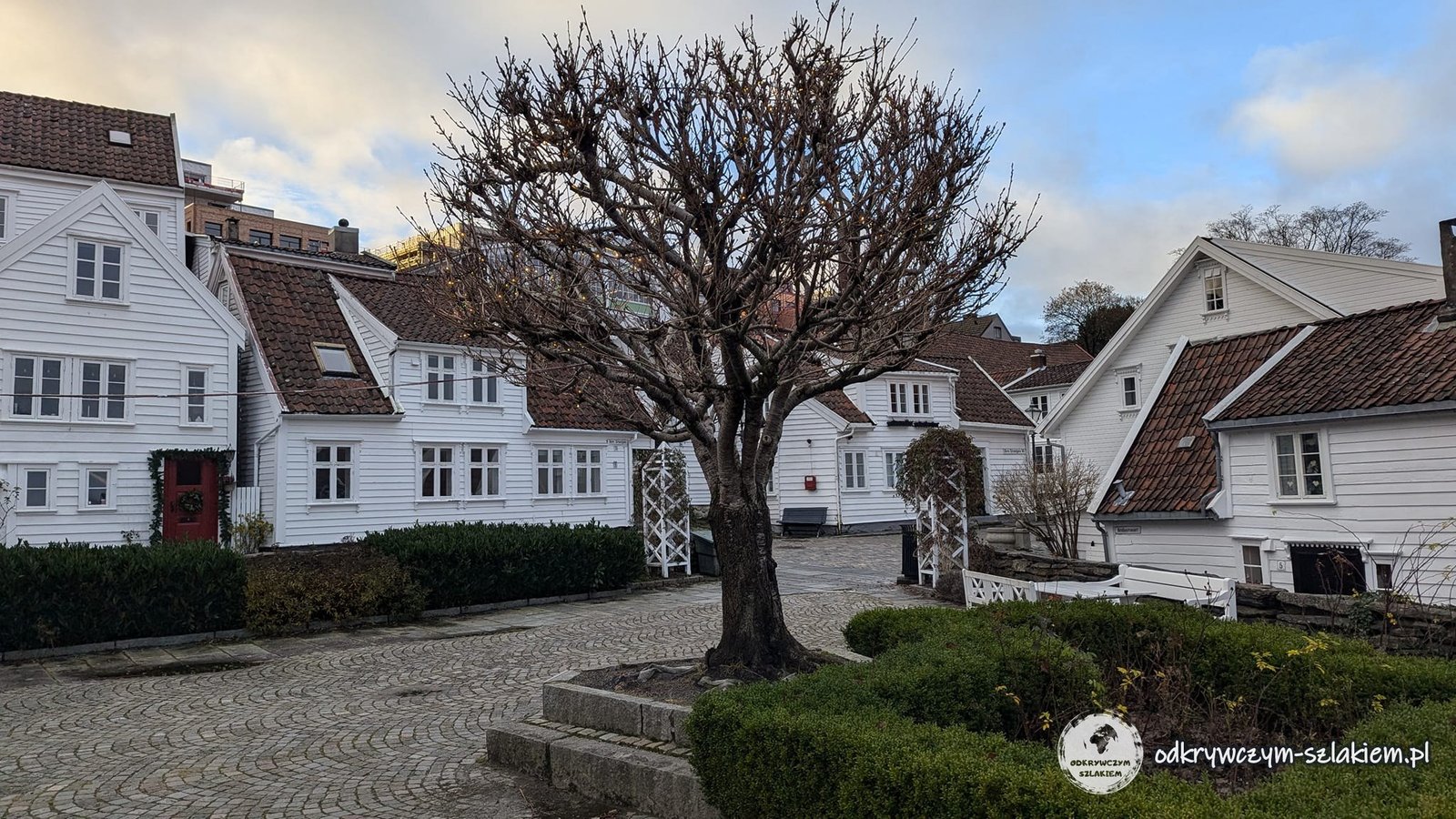
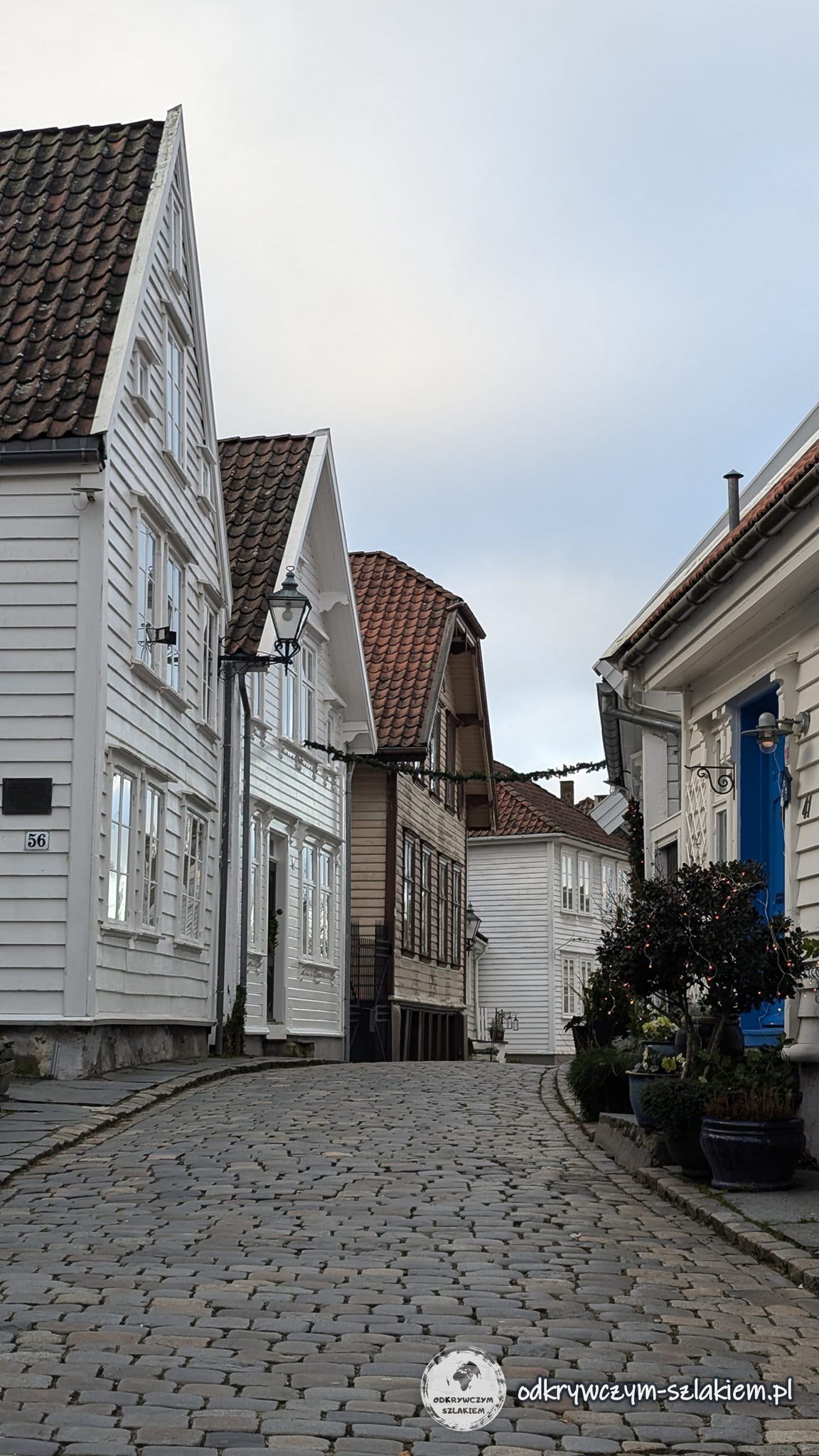
In December 2024 the white houses were decorated with Christmas garlands. Under a grey sky the old town lacks the postcard glow it has in the August sun, but on a December afternoon it is almost empty.
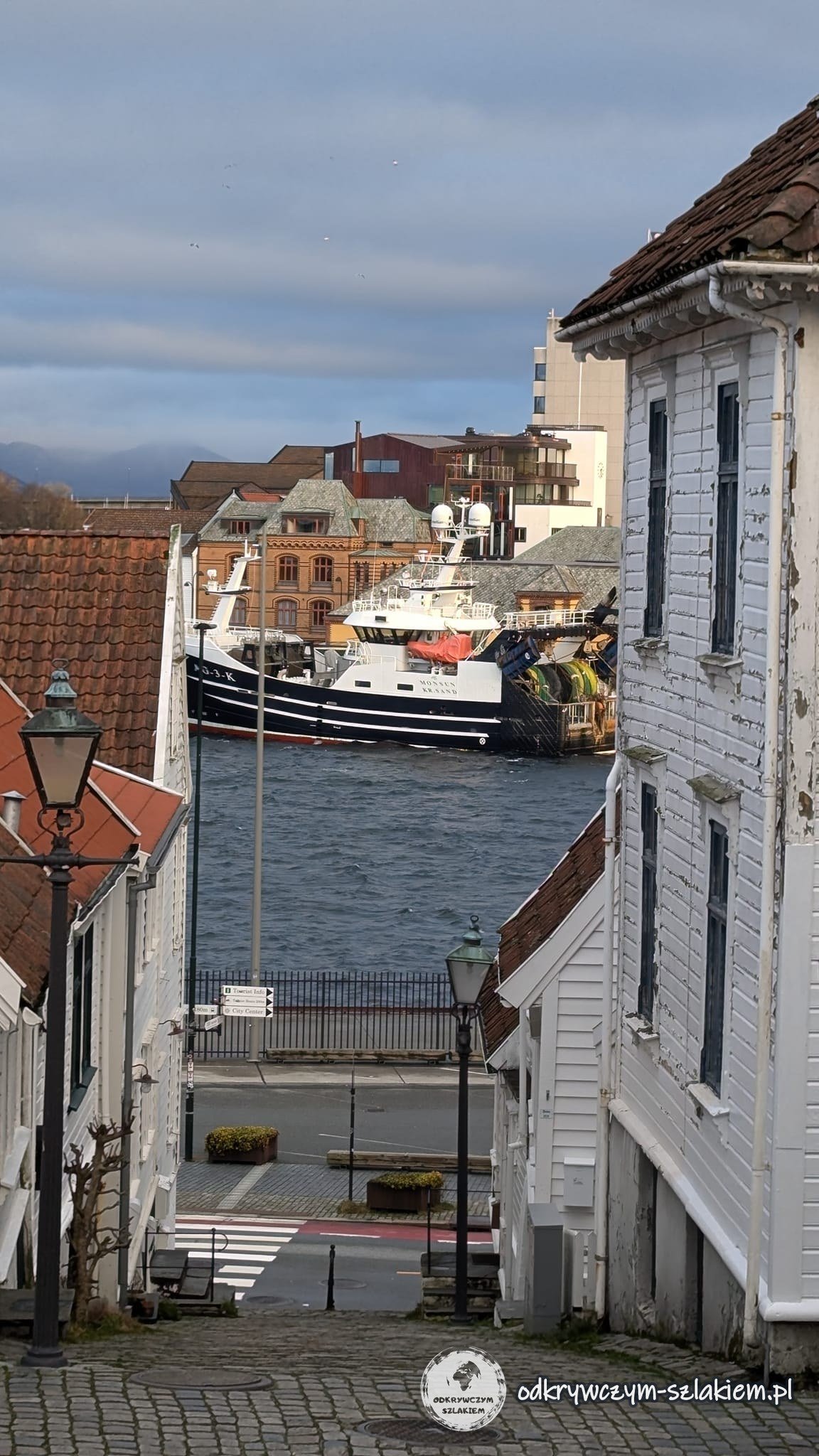
Cats often lounge on the stone steps in front of the houses – in December 2024 I came across a black-and-white one, and in May 2025 a fluffy Persian that paid no attention whatsoever to passers-by. In May 2026 we showed Łukasz around Gamle, as it was his first time here.


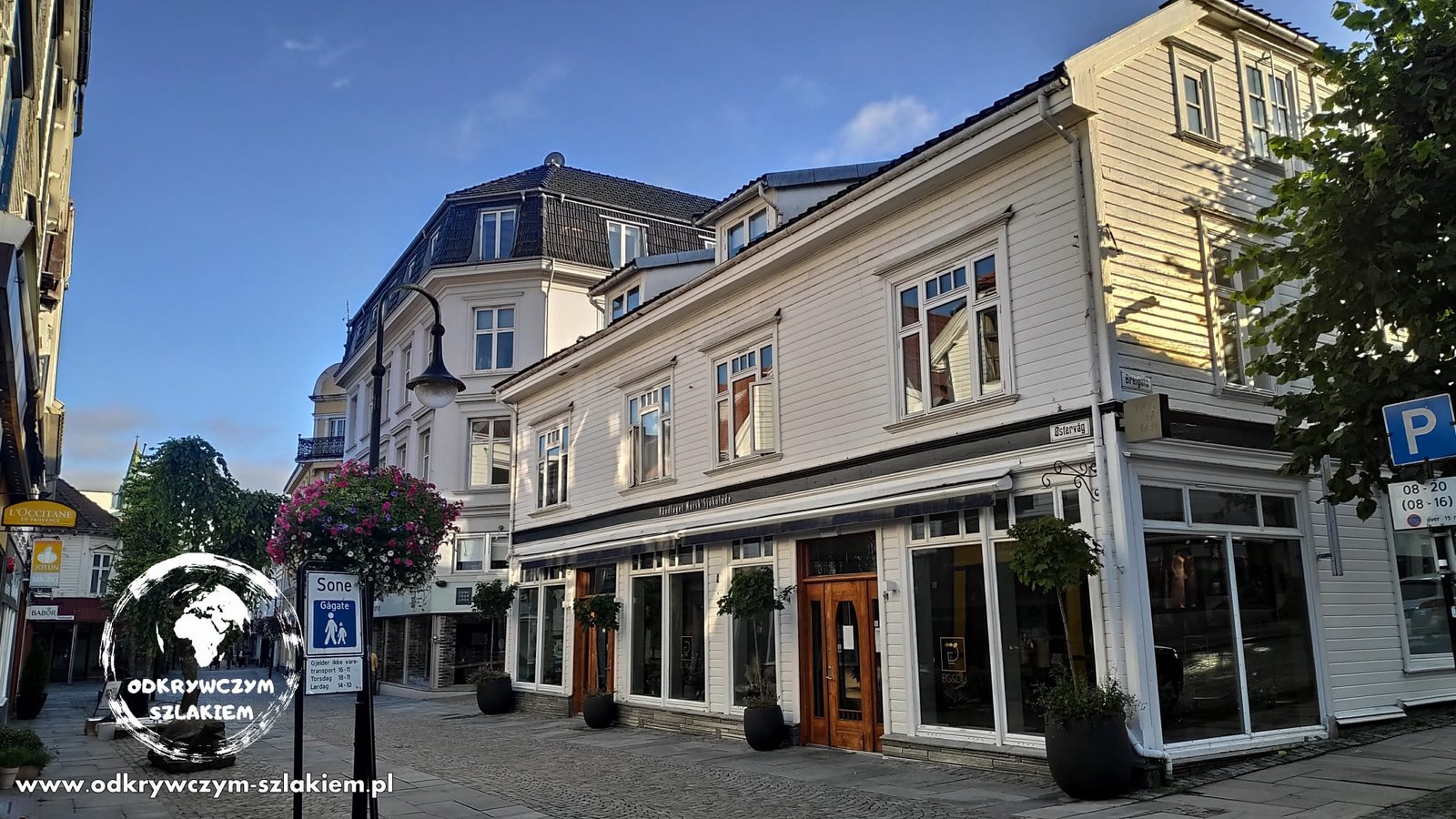
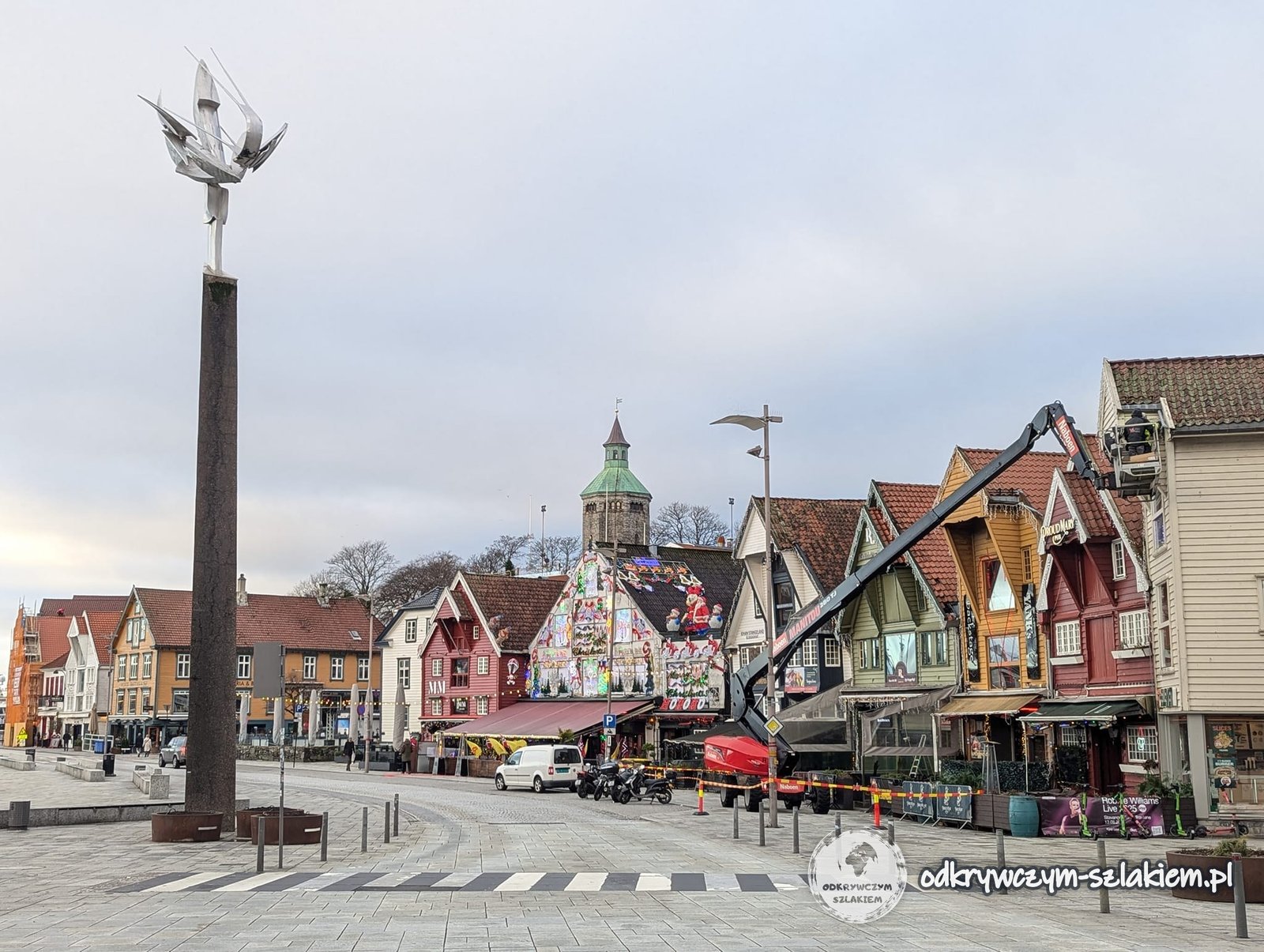
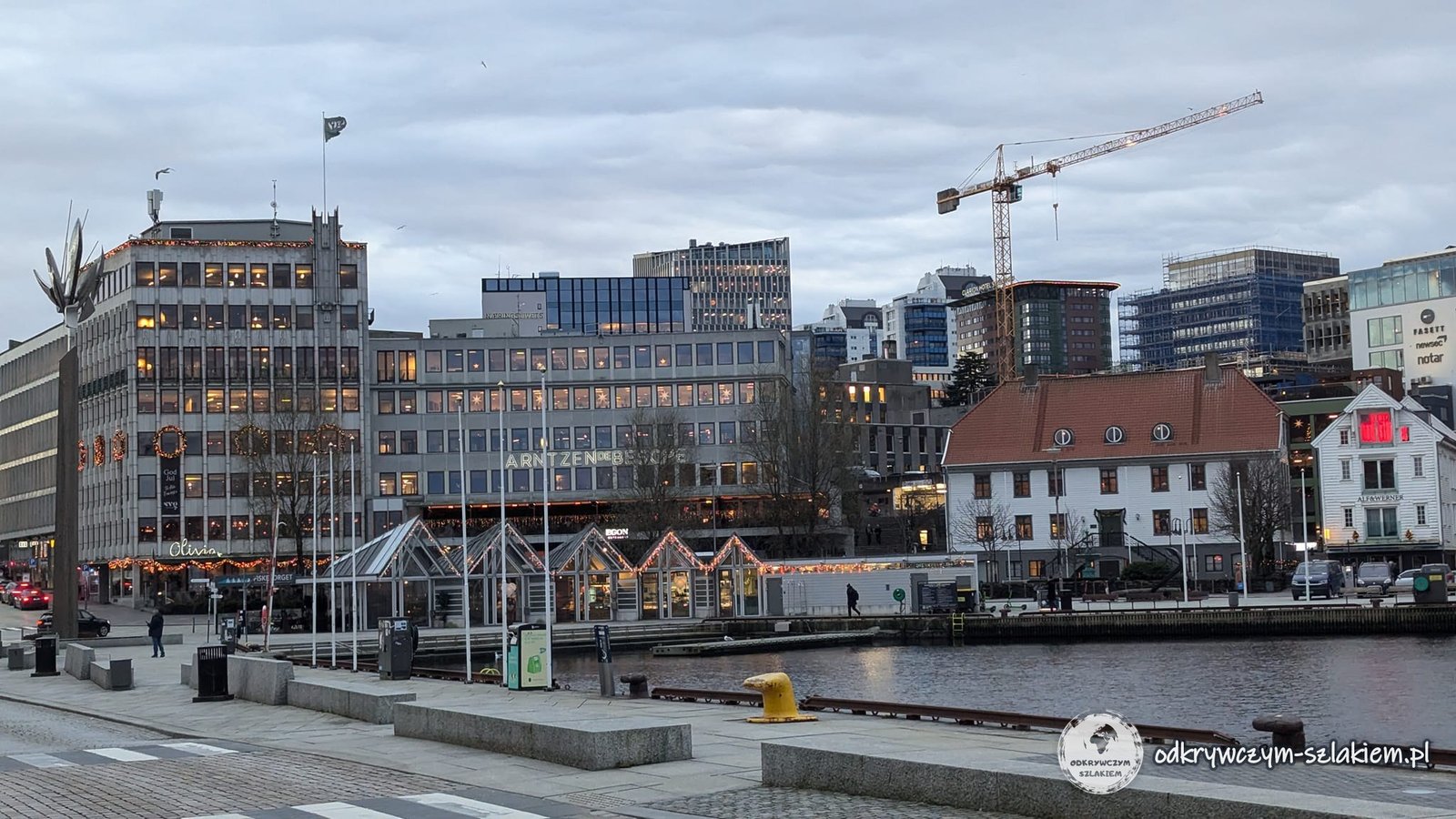
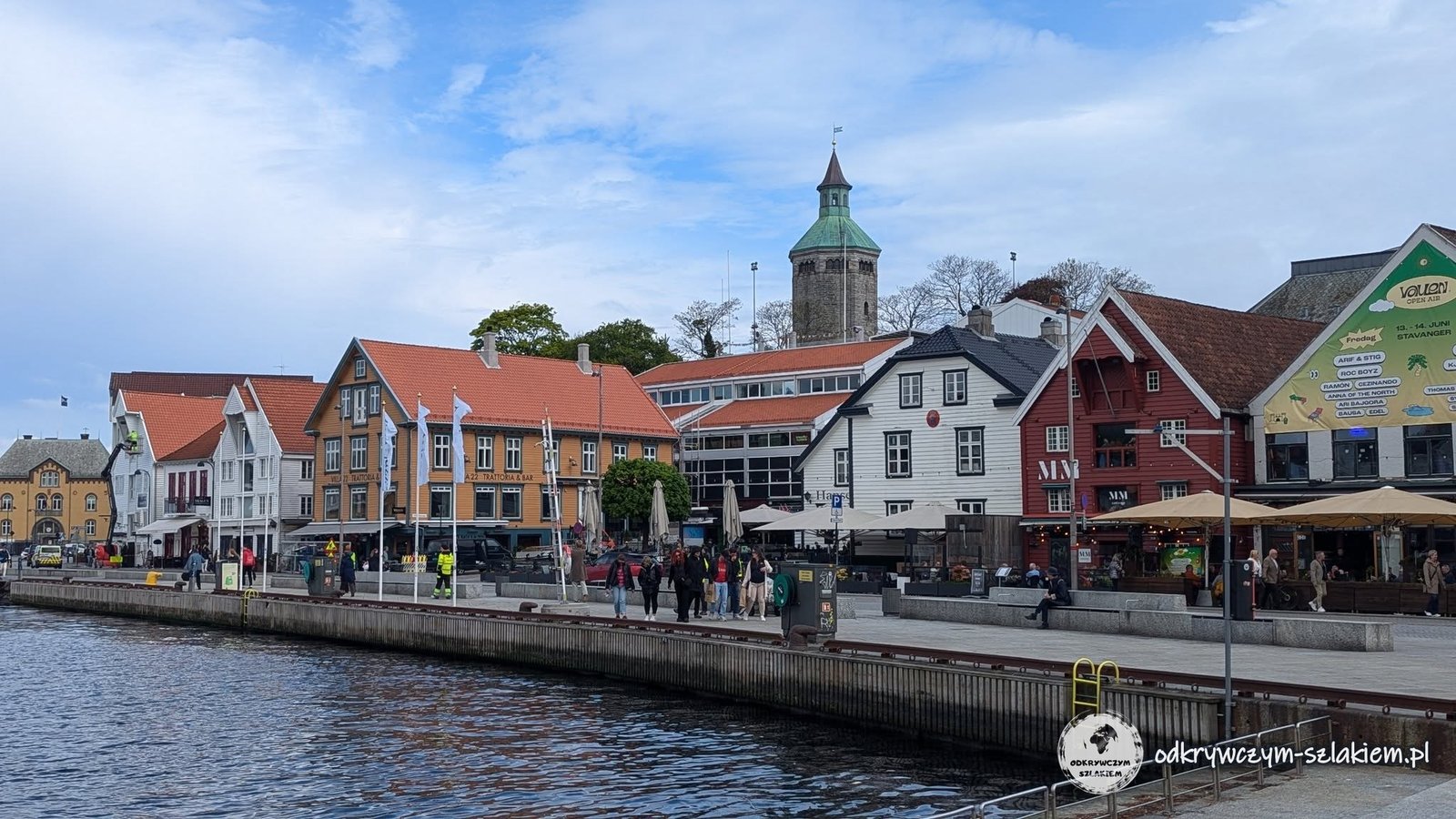
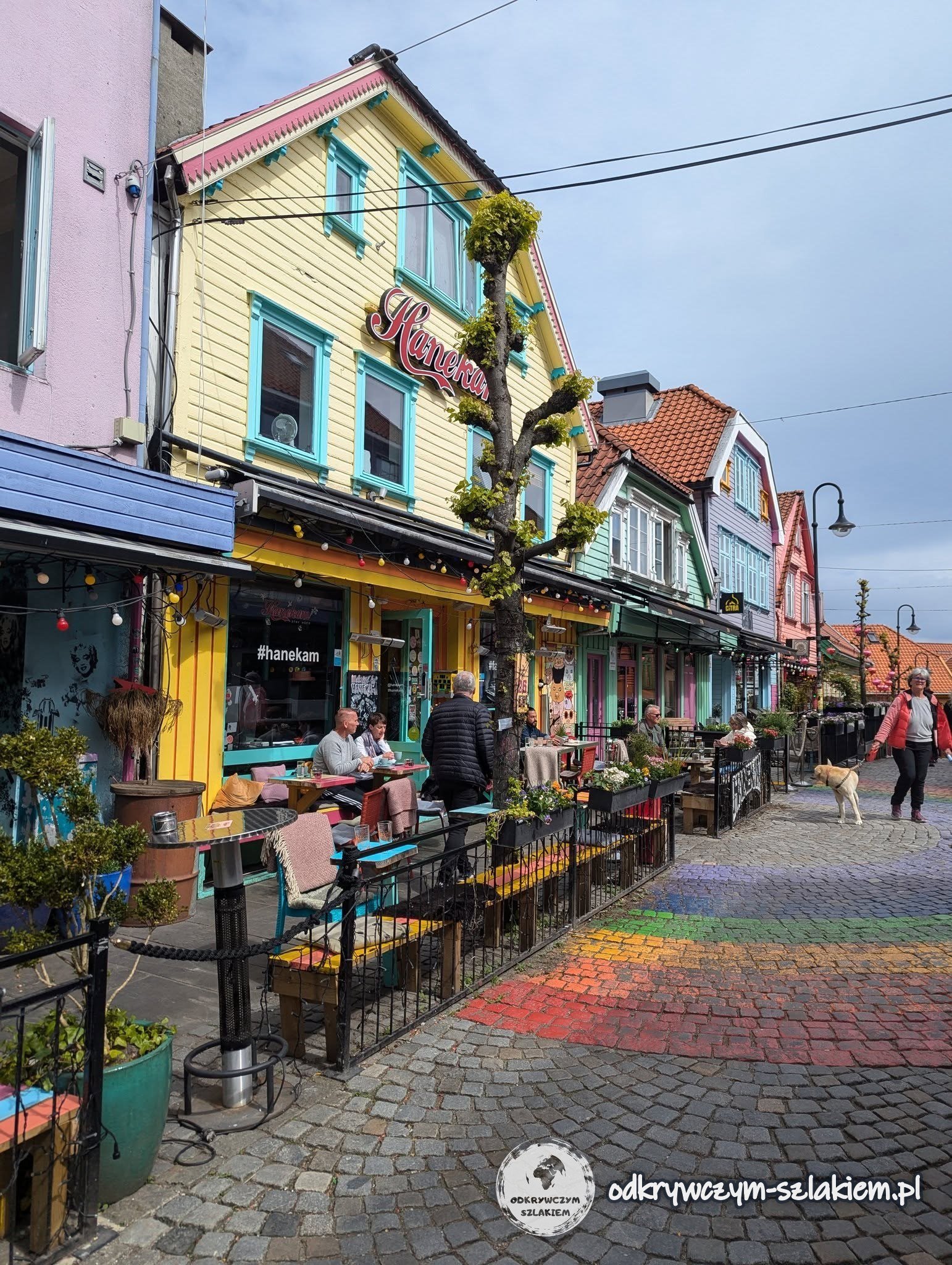
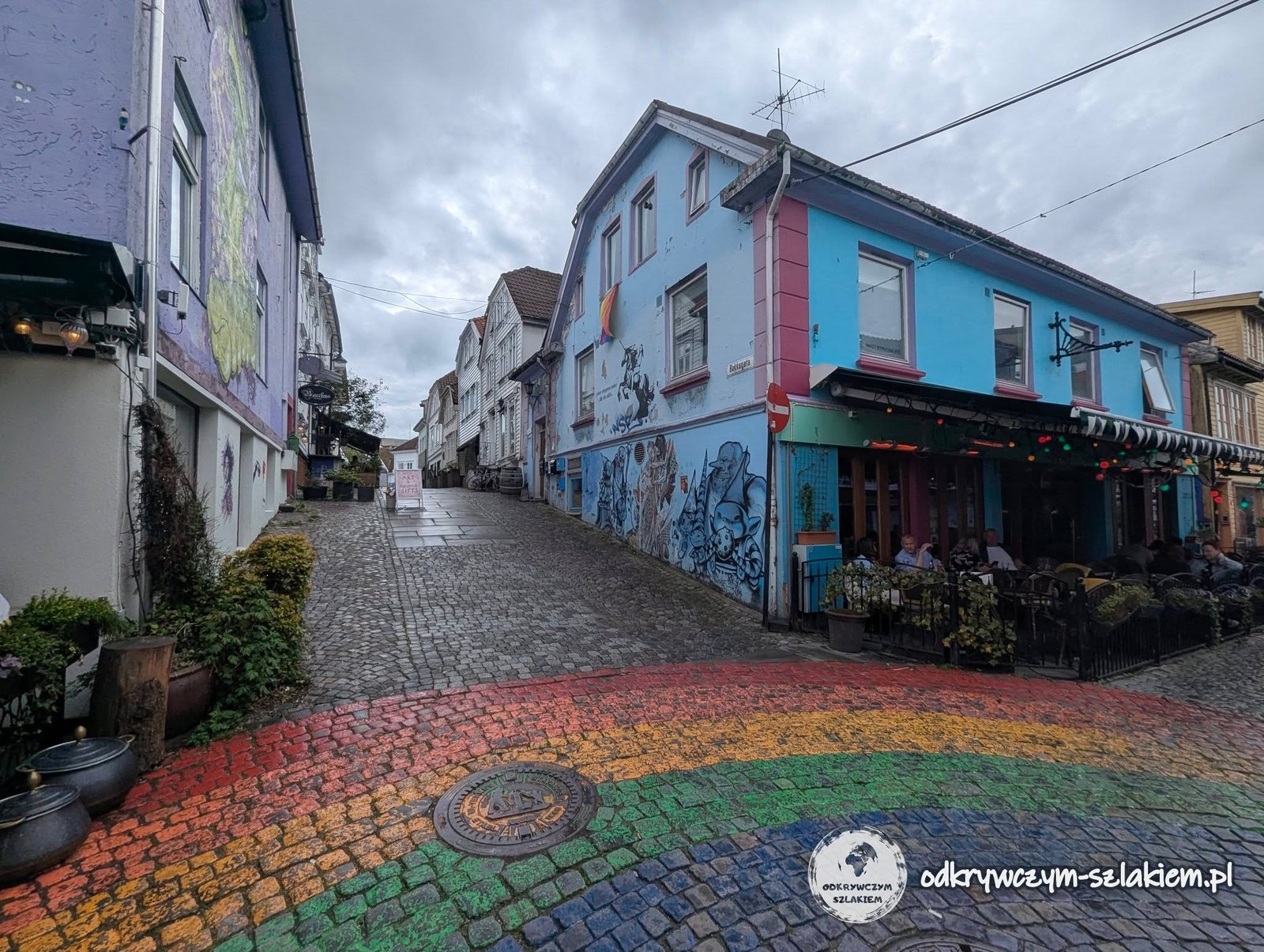
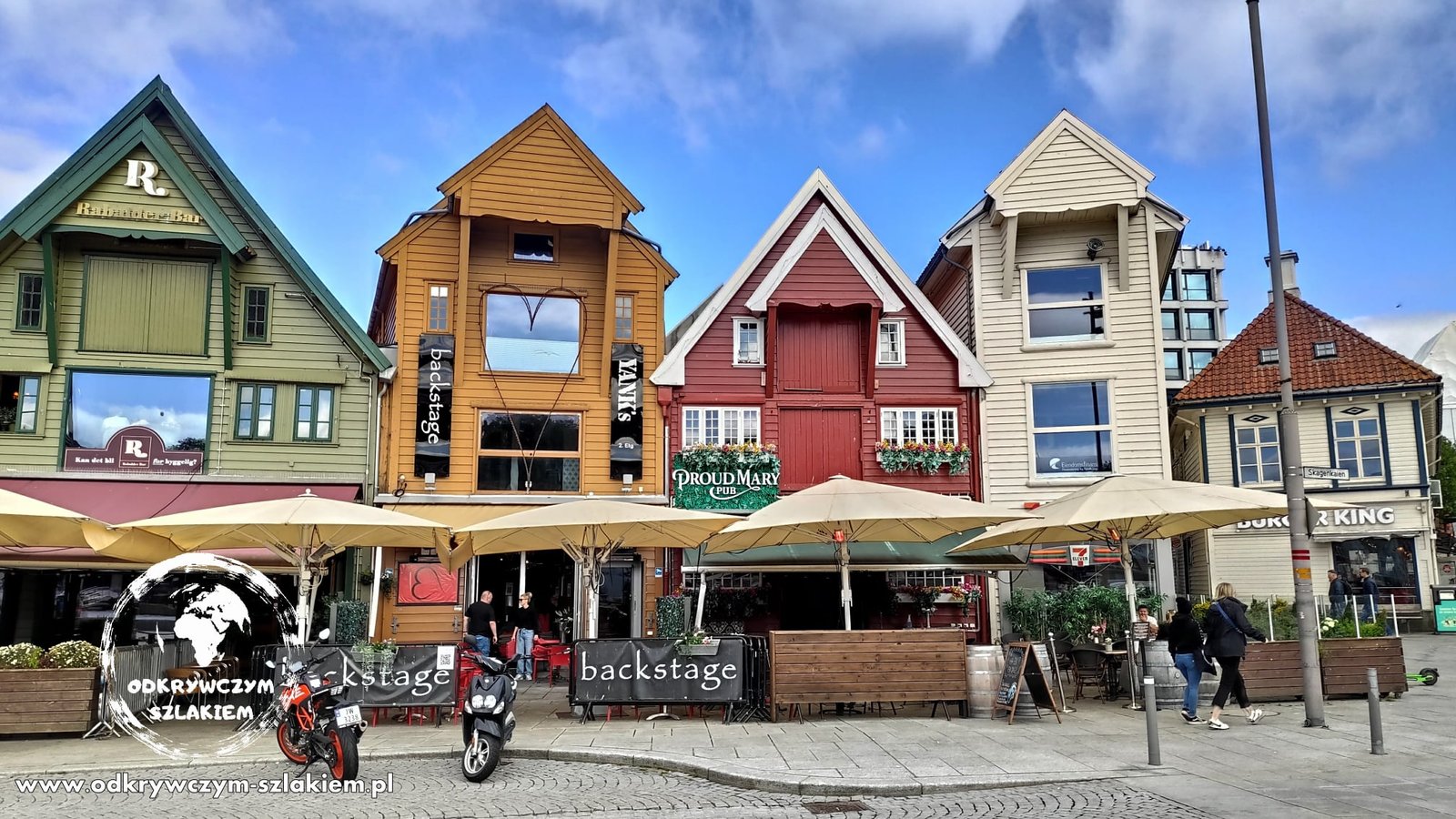
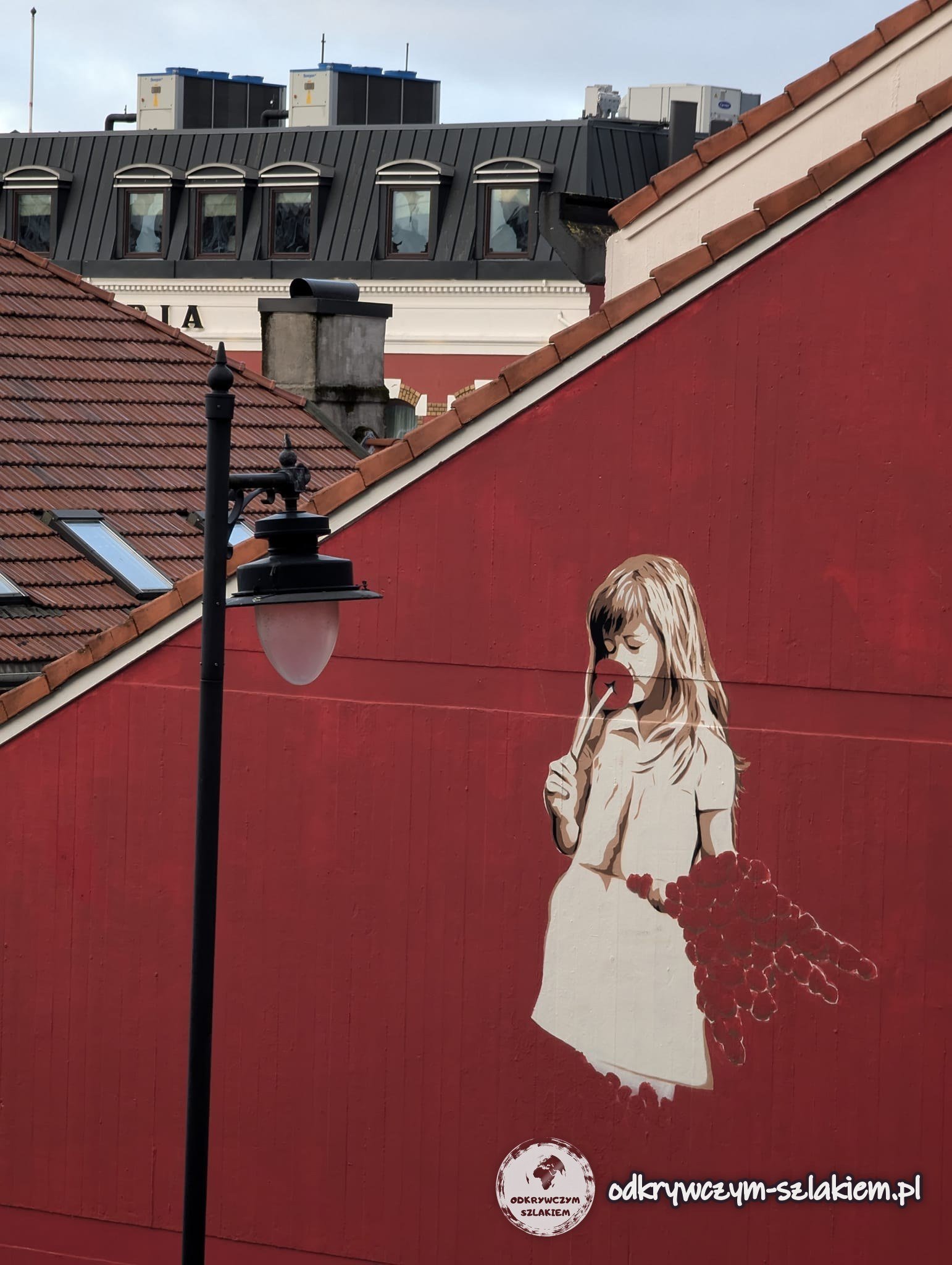
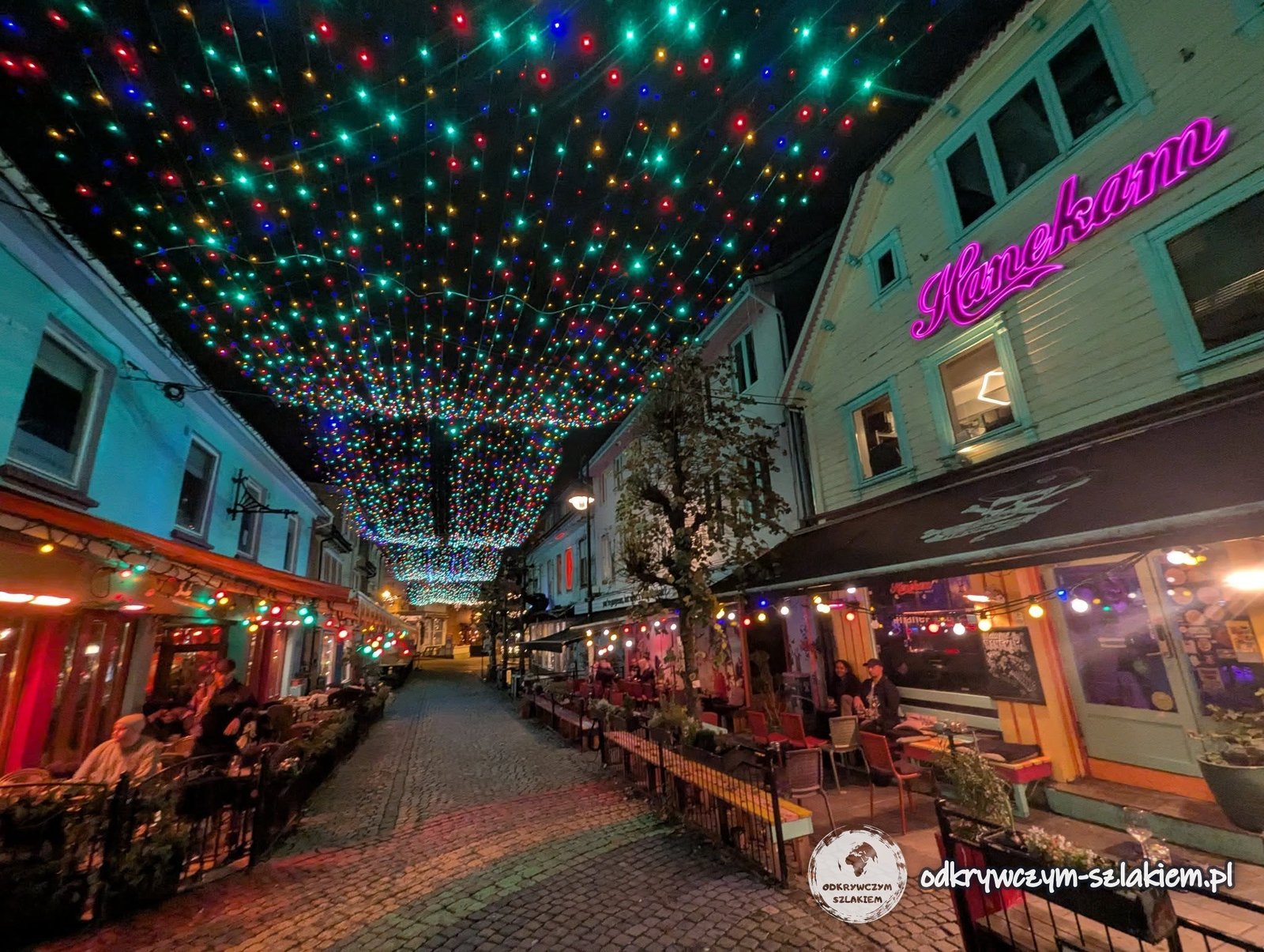
The wooden buildings don’t end with the old town – the whole centre is made up of wooden houses, often in bright colours. The most colourful street is Øvre Holmegate, with its rainbow paving, cafés, bars and small shops, and around the harbour there are plenty of restaurants with outdoor seating. On the walls of the buildings by the harbour you will also find artworks that blend in nicely with their surroundings.
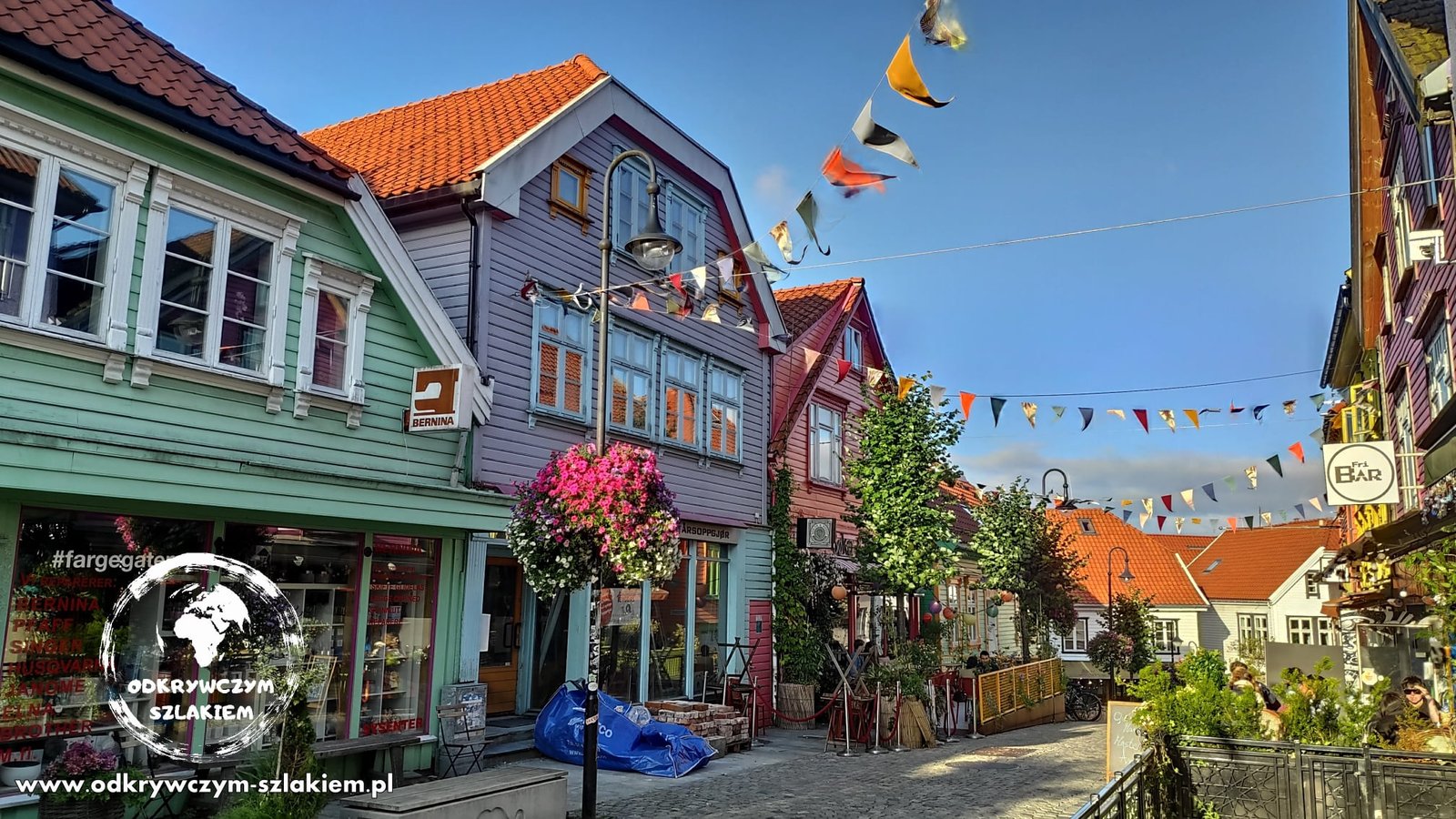
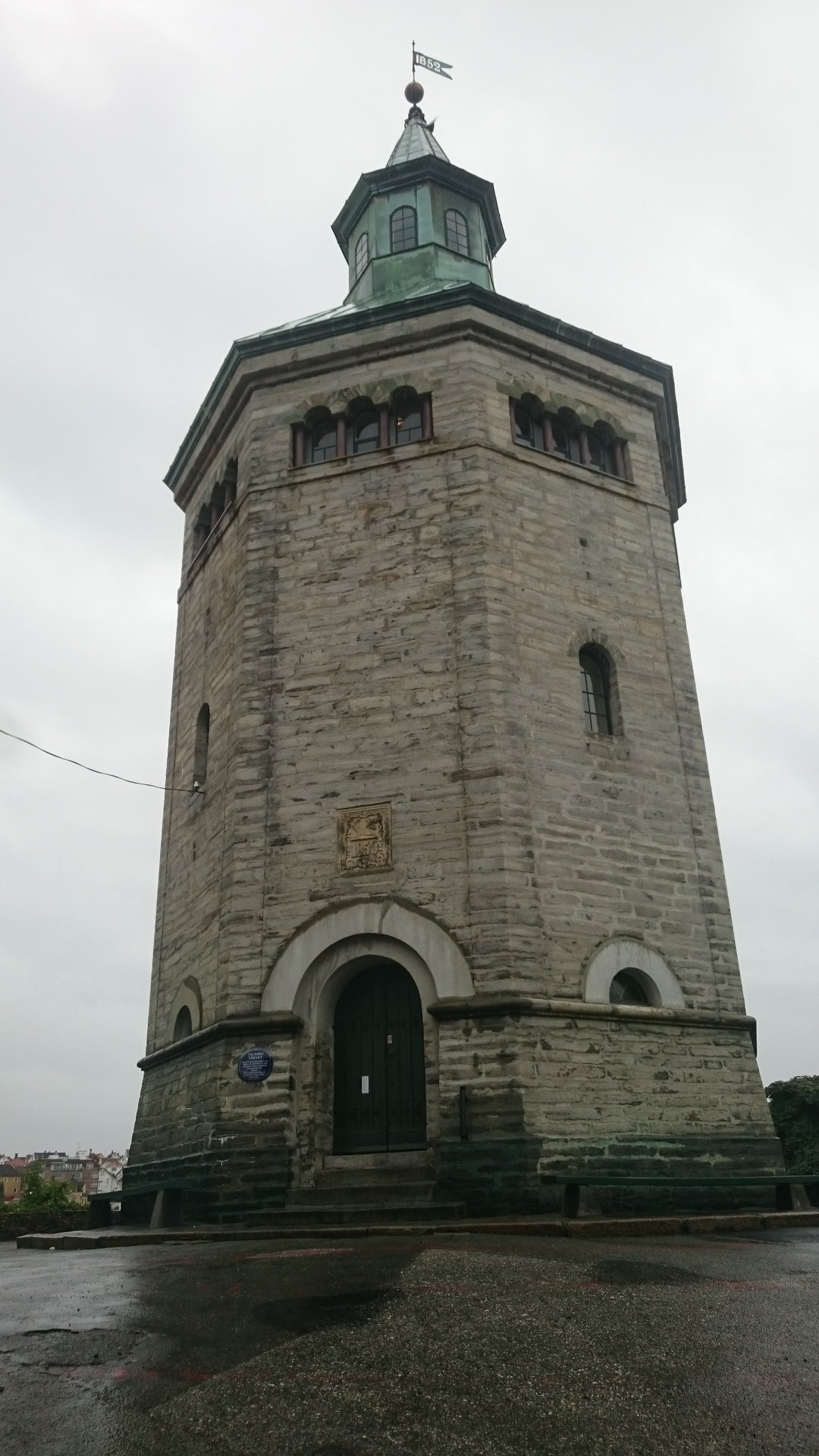
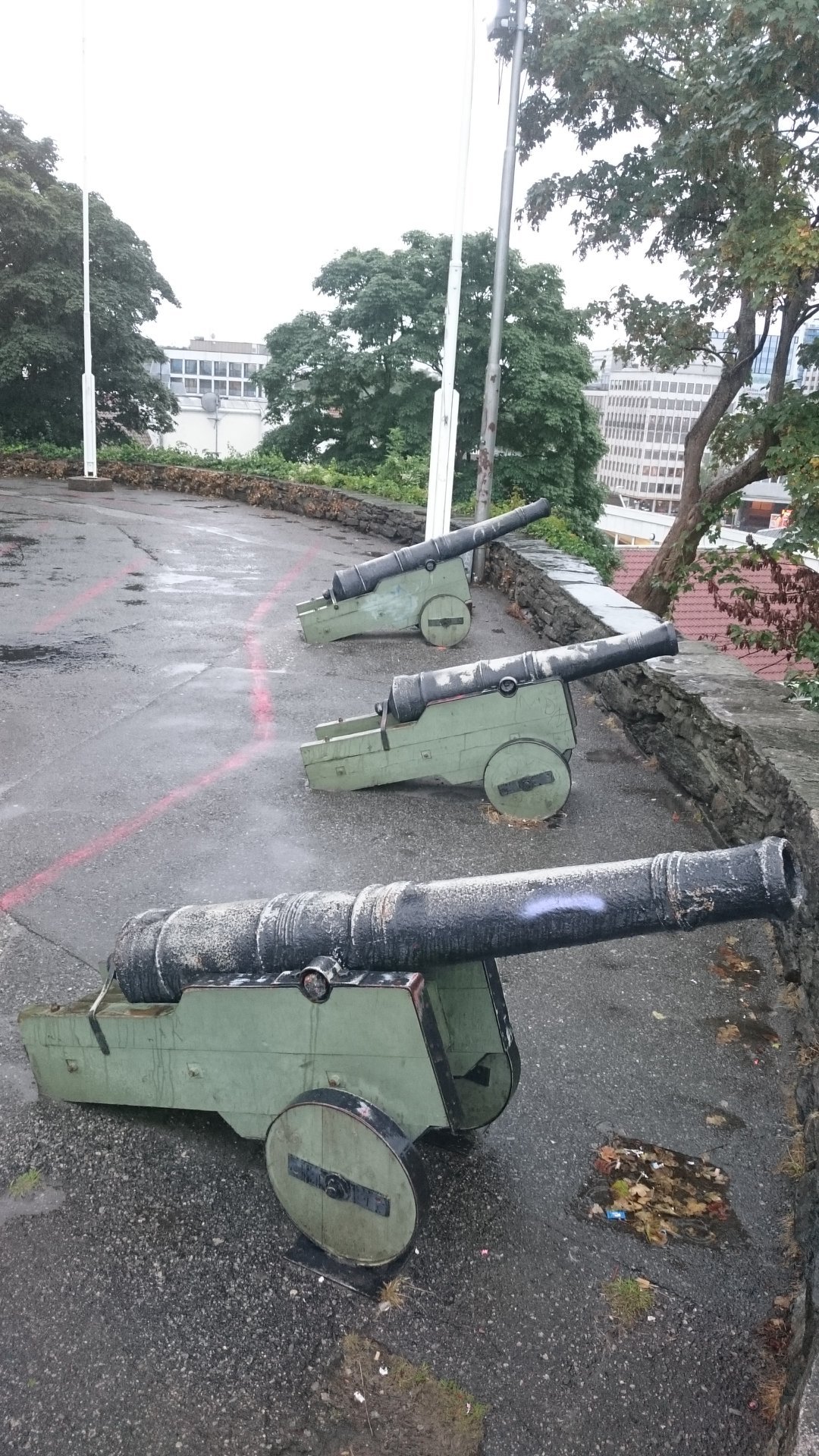
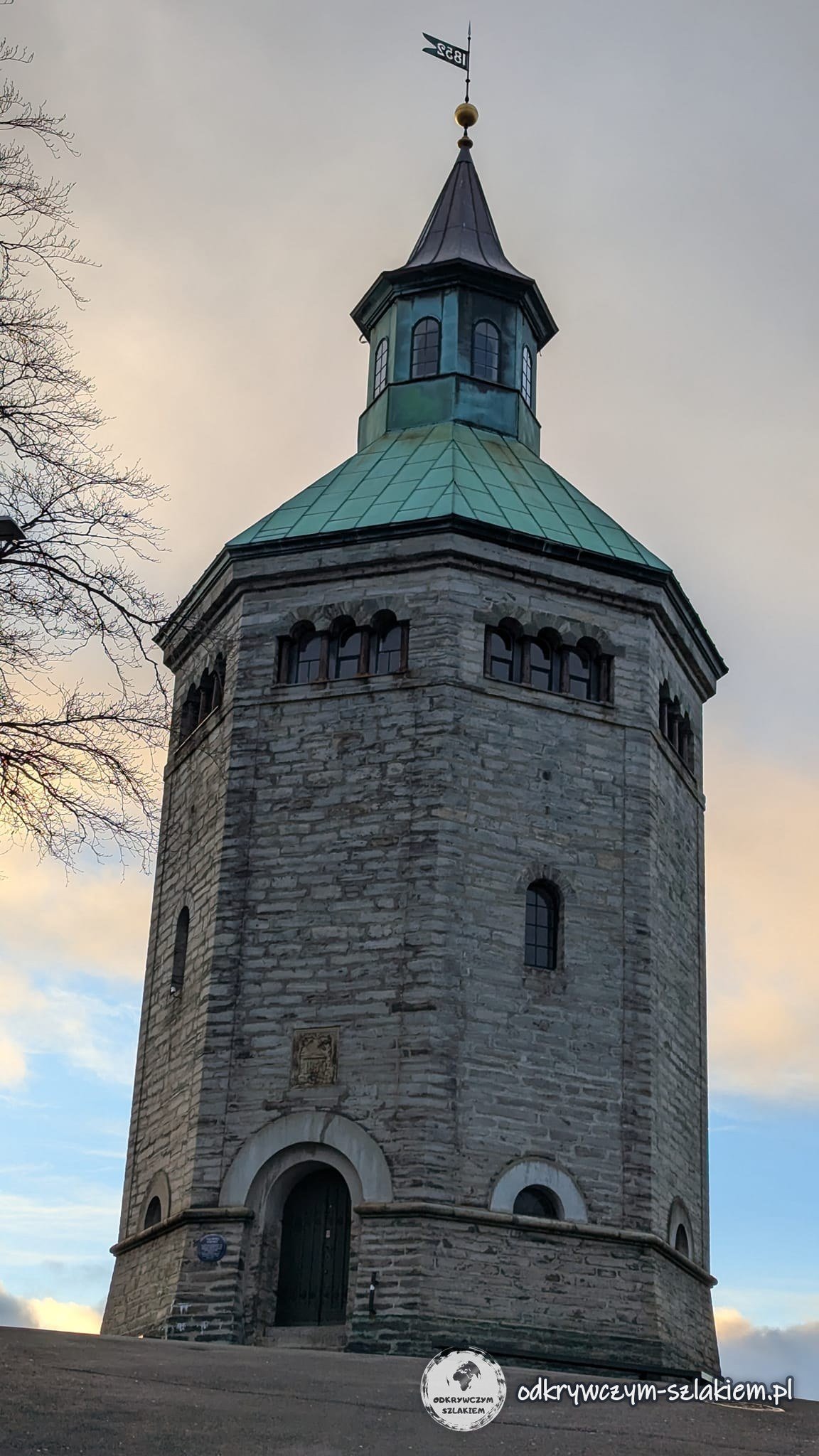
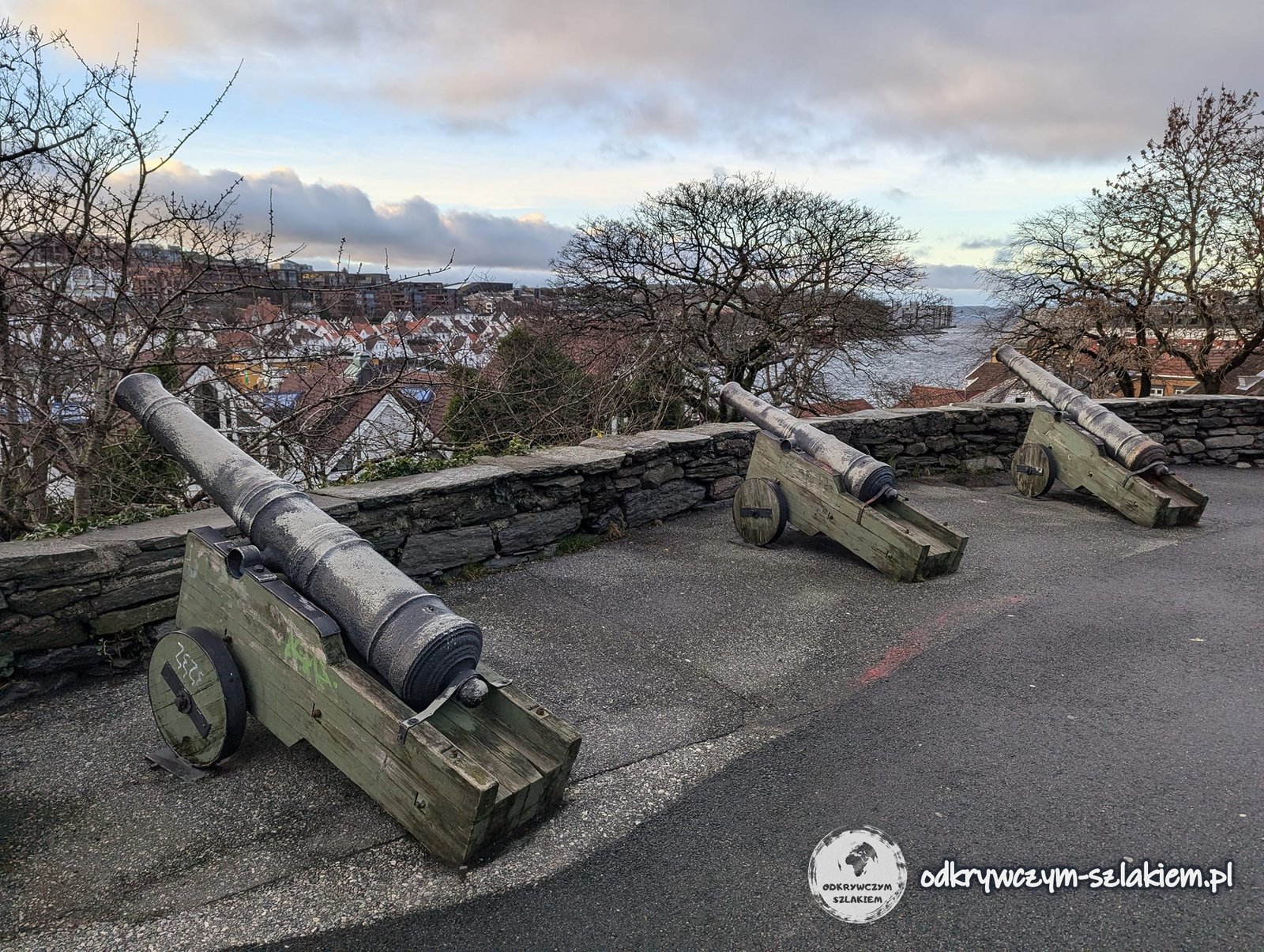
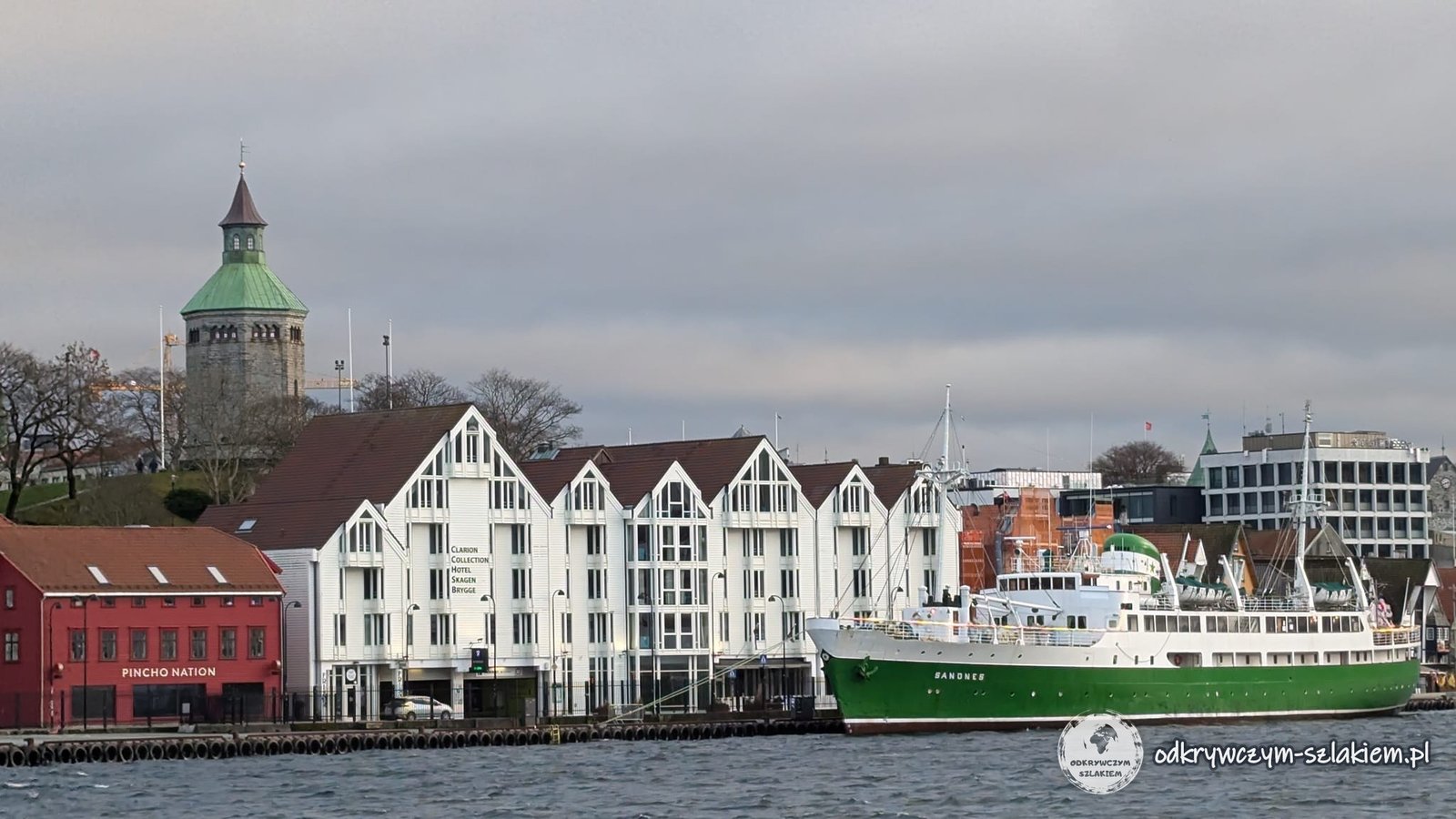
A few minutes from the harbour, on Valberget hill, stands Valbergtårnet – a watchtower from 1850–1853. Watchmen lived in it, looking out for fires and alerting the residents of the wooden town; today there is a small watchmen’s museum inside. Old cannons stand next to it. We saw the tower on our very first visit in 2017, and in December 2024 I went back up the hill – from the cannons you can see the roofs of the wooden houses and the harbour.
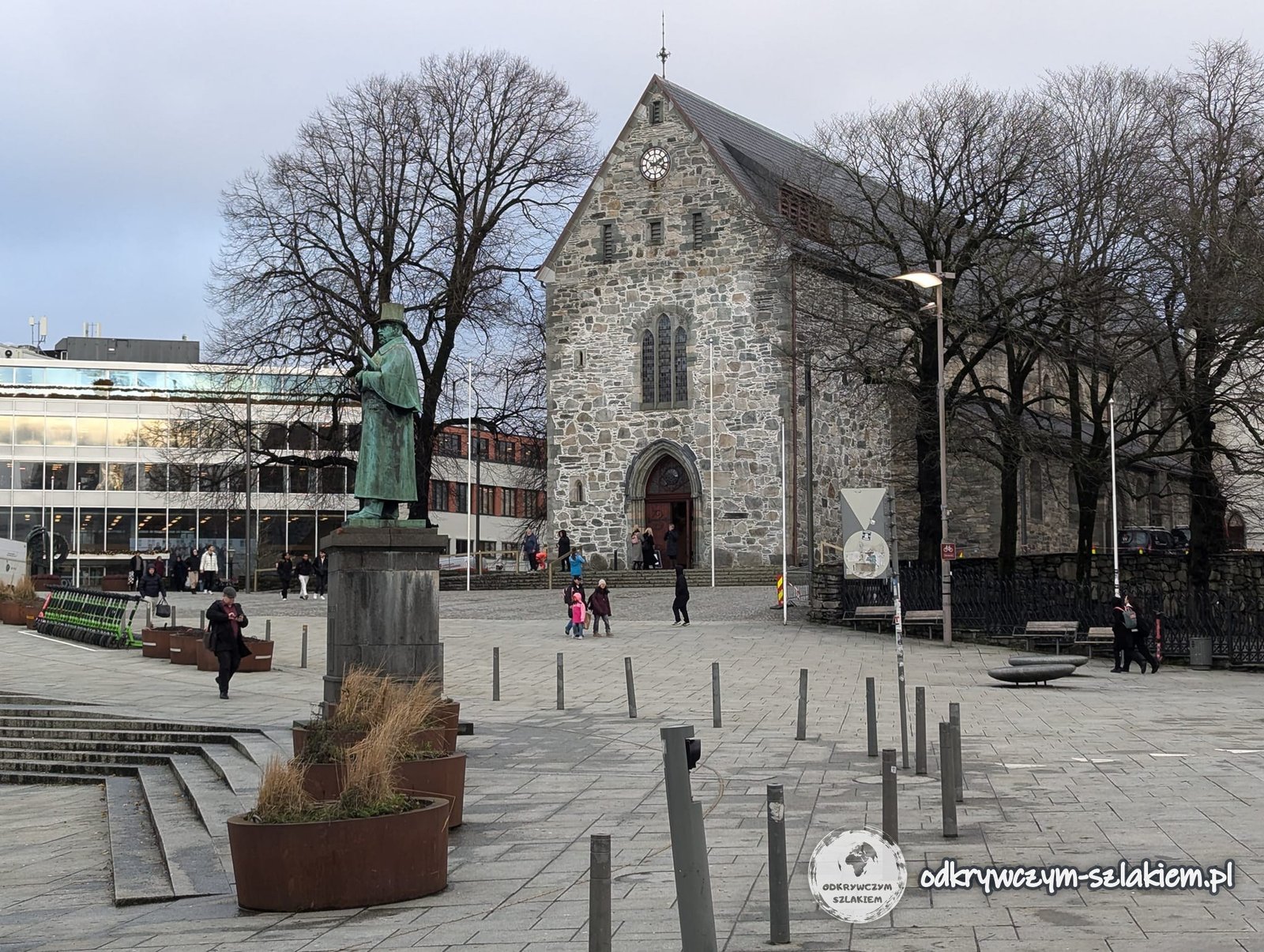
On Torget square, a few steps from the harbour, stands Domkirken cathedral, with a statue of Alexander Kielland in front of it. In May 2025 tulips were blooming on the lawns in the centre.
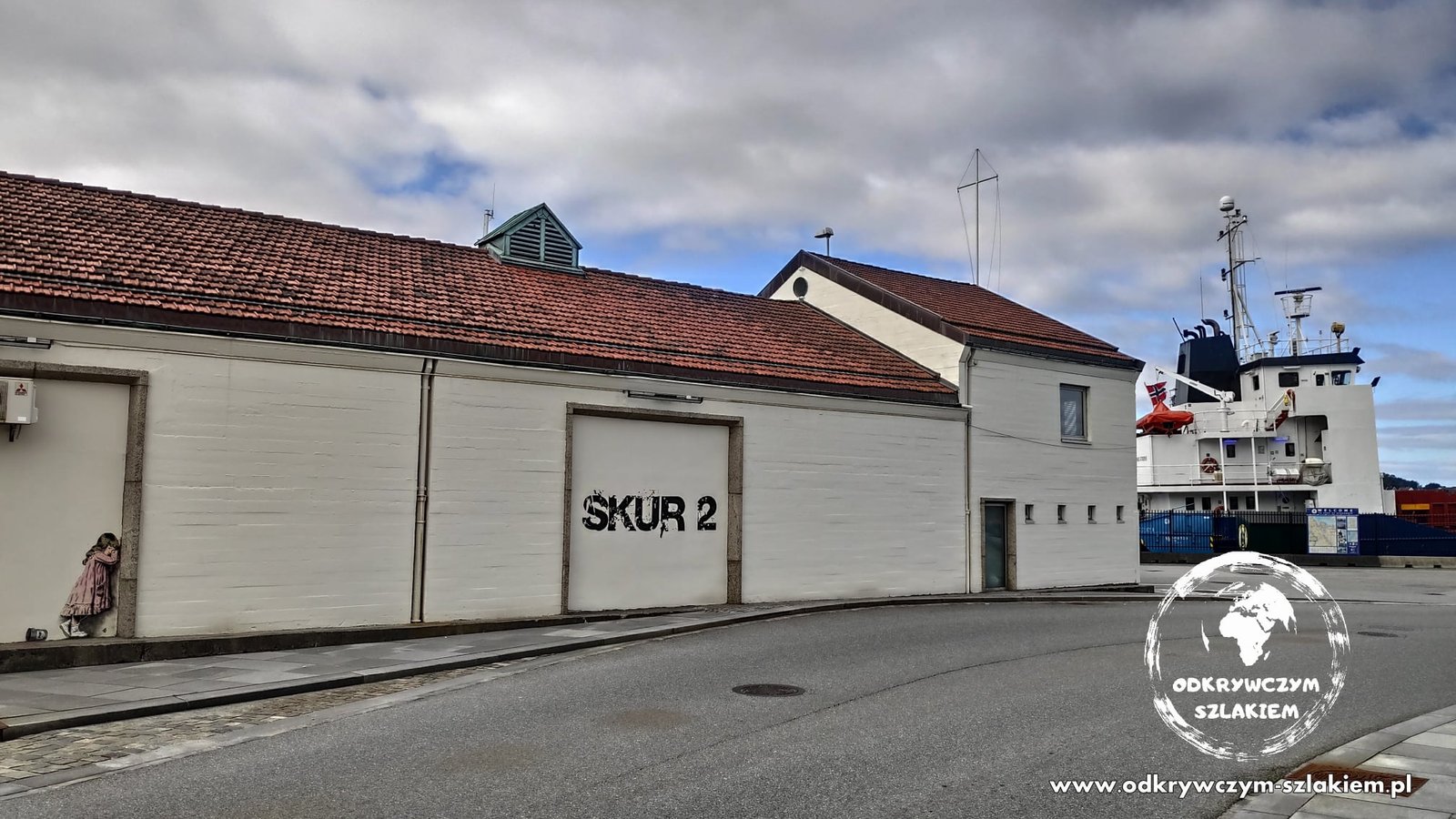
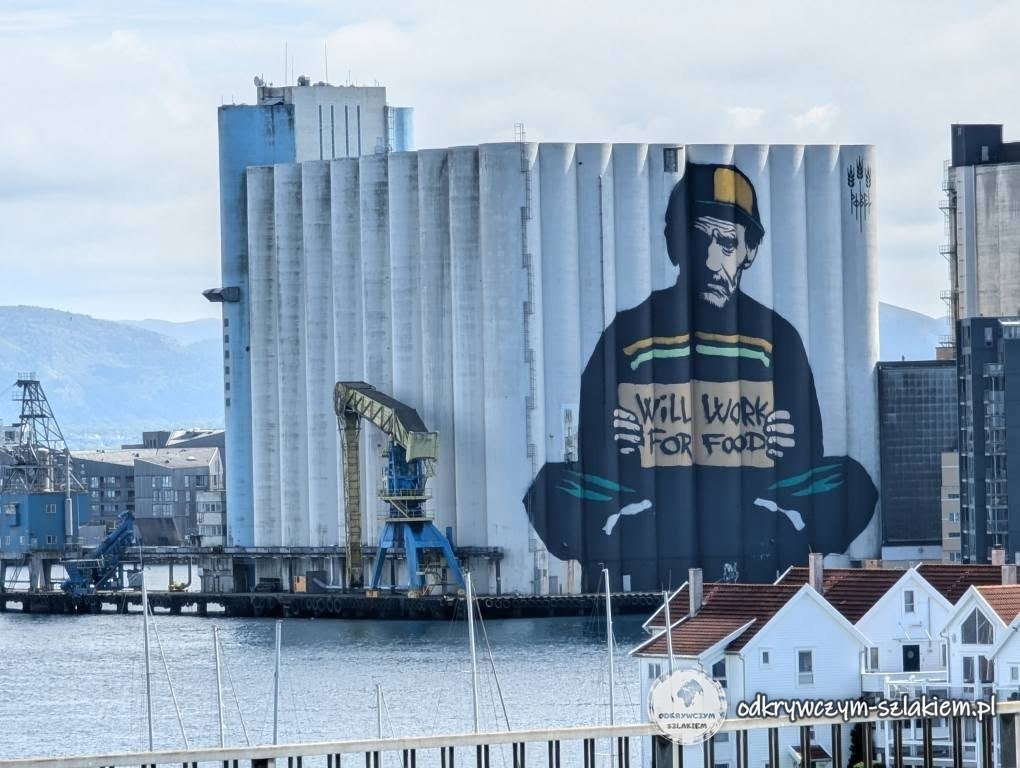
It is also easy to come across street art in the centre – from a big mural with gnomes on Øvre Holmegate to smaller artworks on the walls of houses. The biggest one catches the eye from afar: on a silo in the harbour someone has painted a man holding a sign saying “Will work for food”.


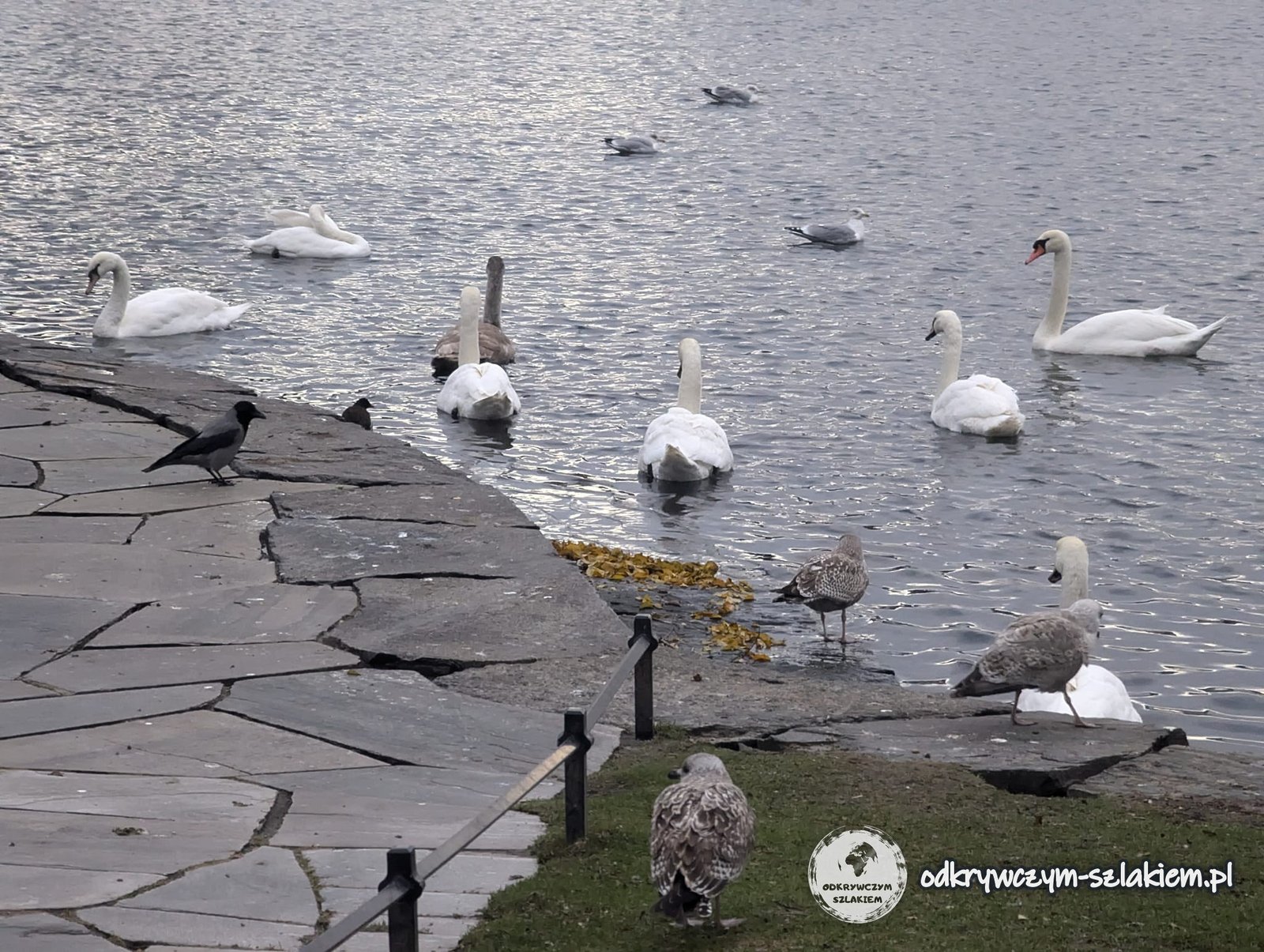
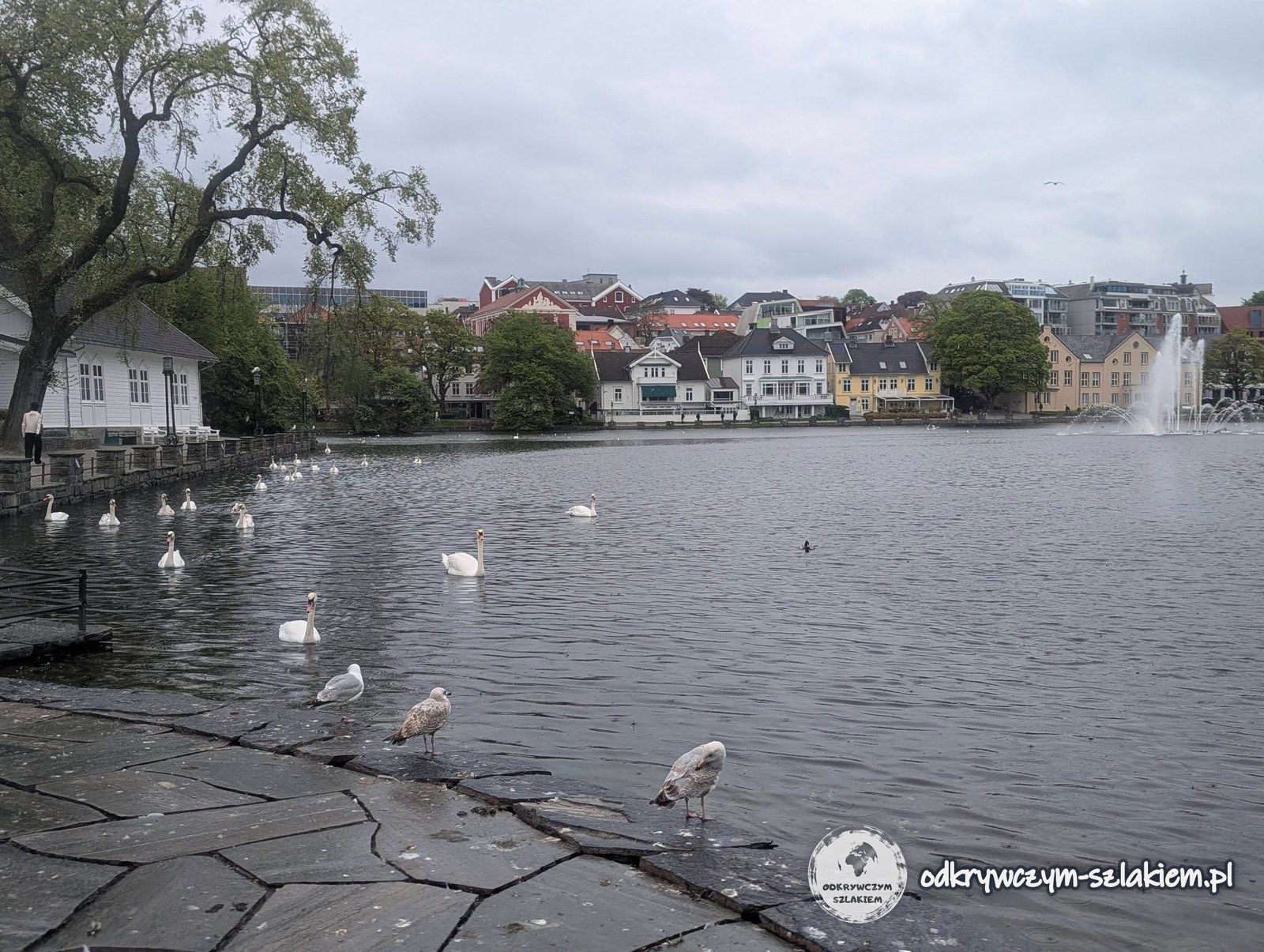
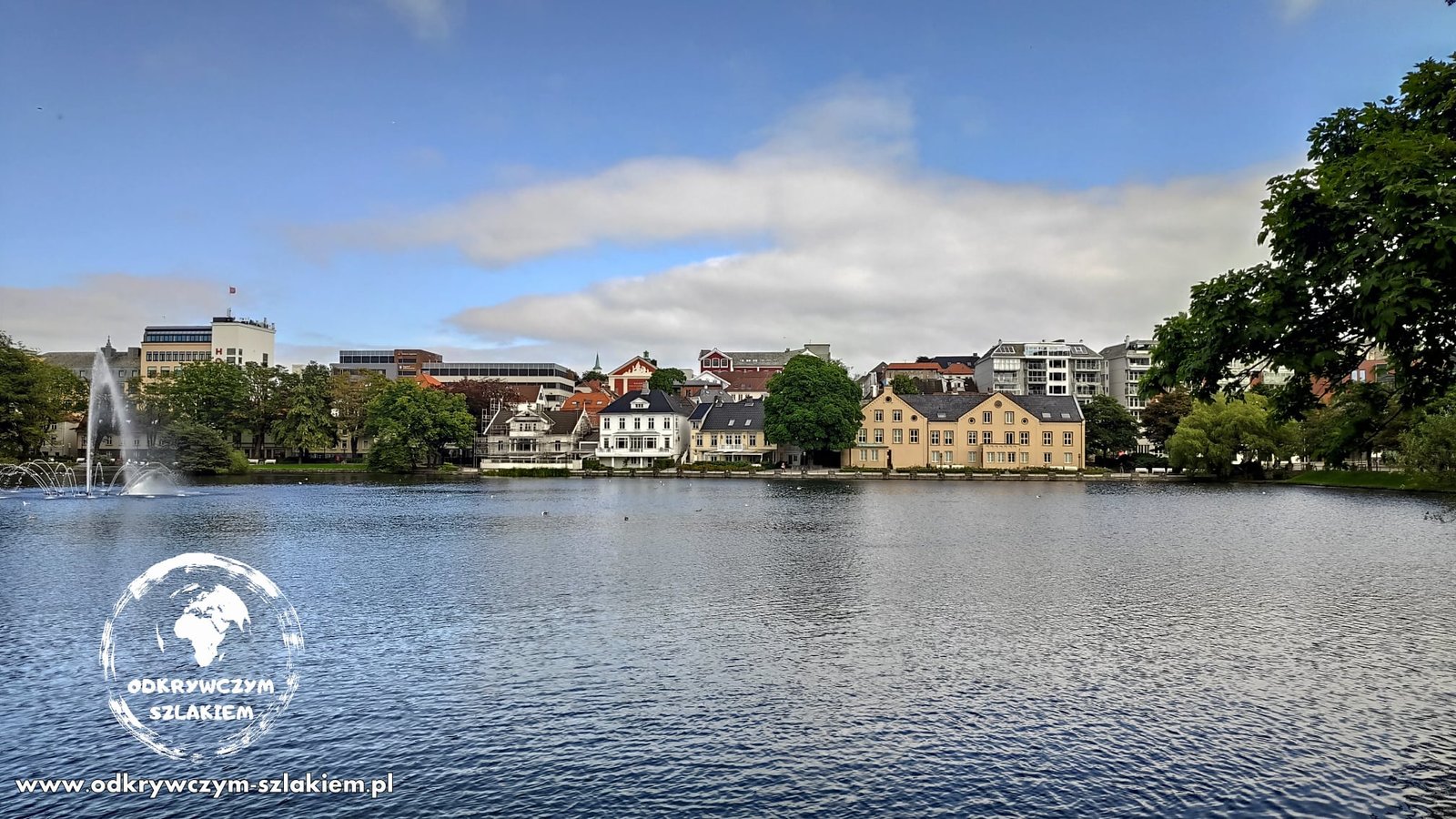
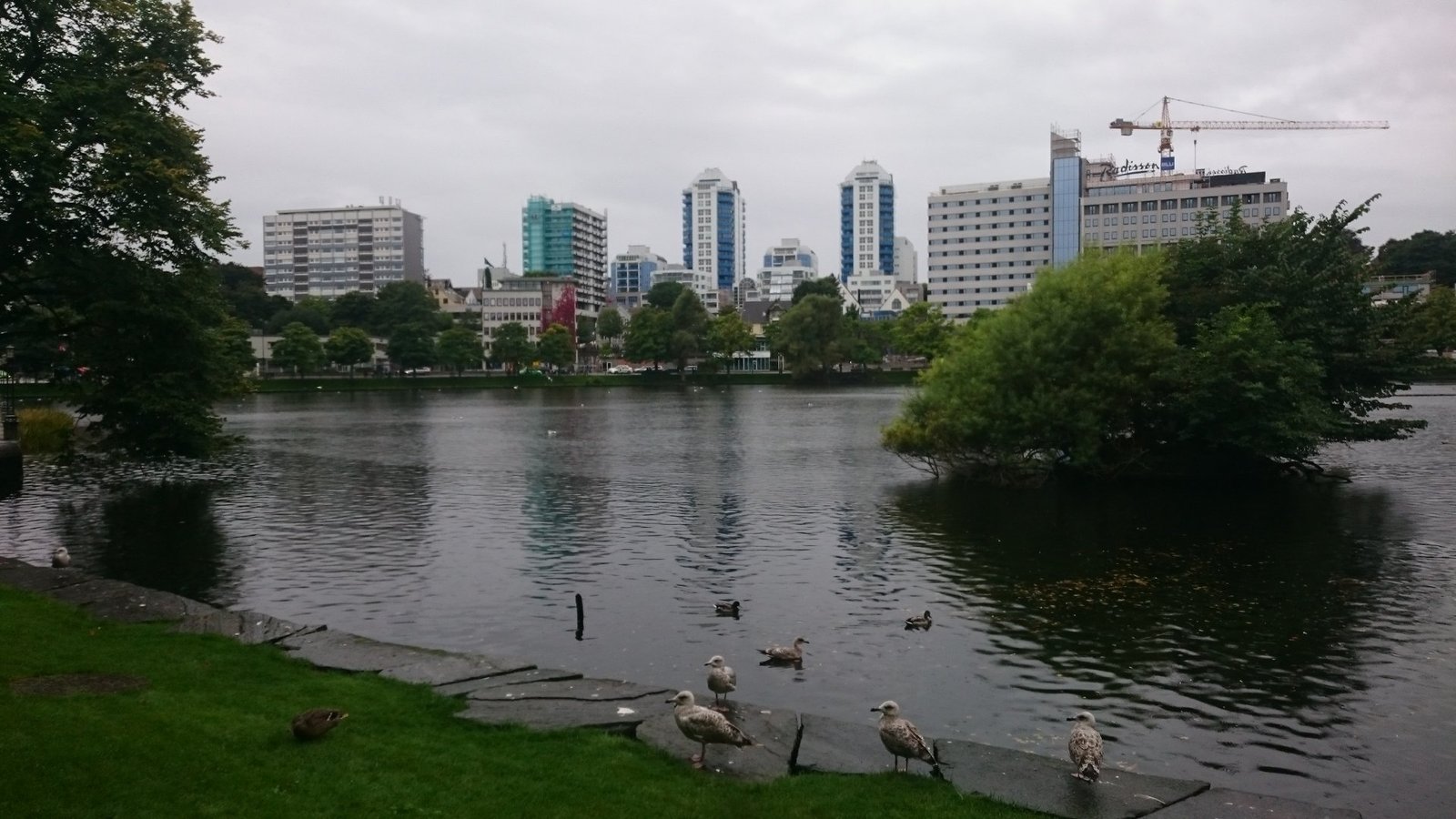
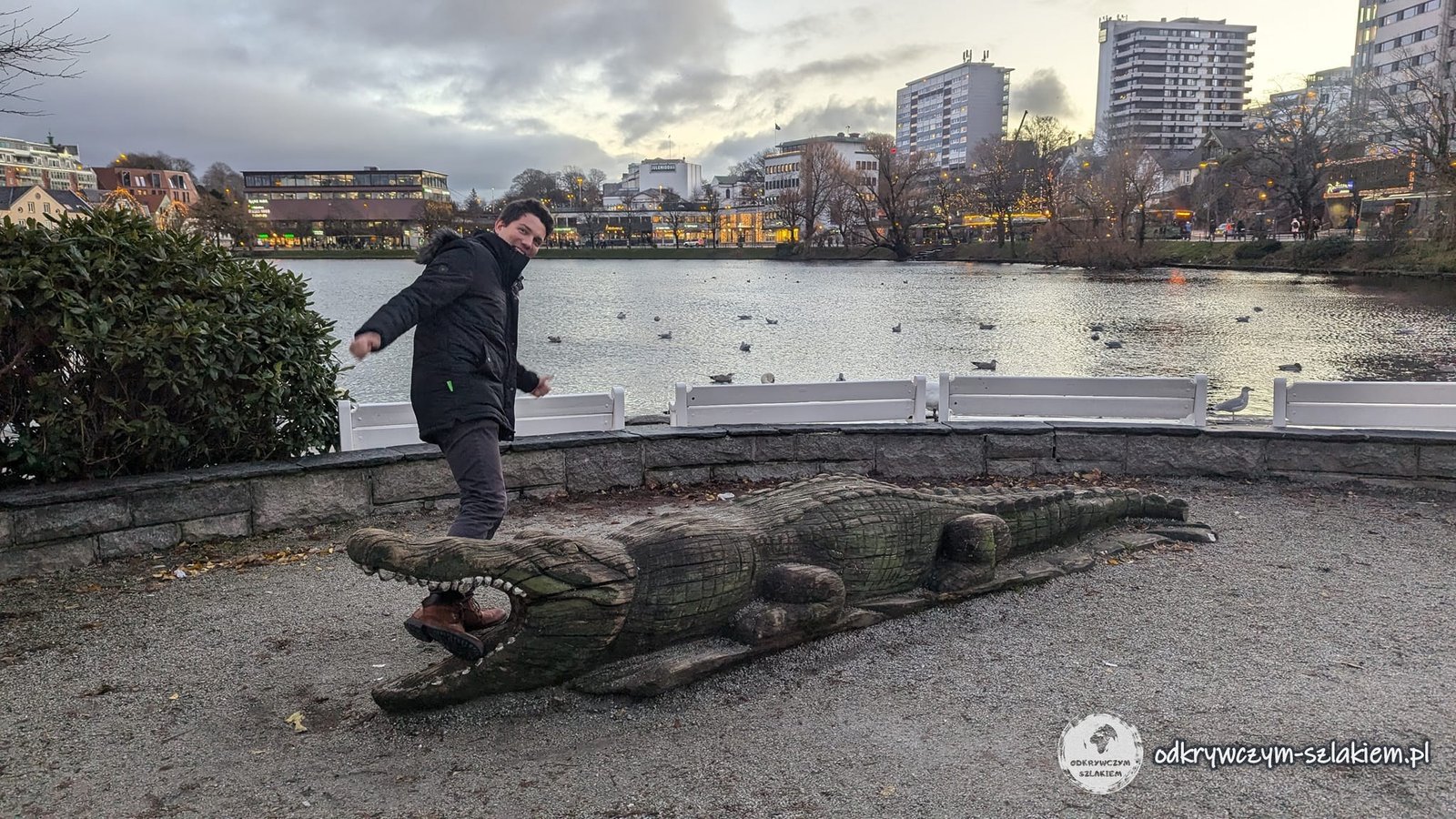
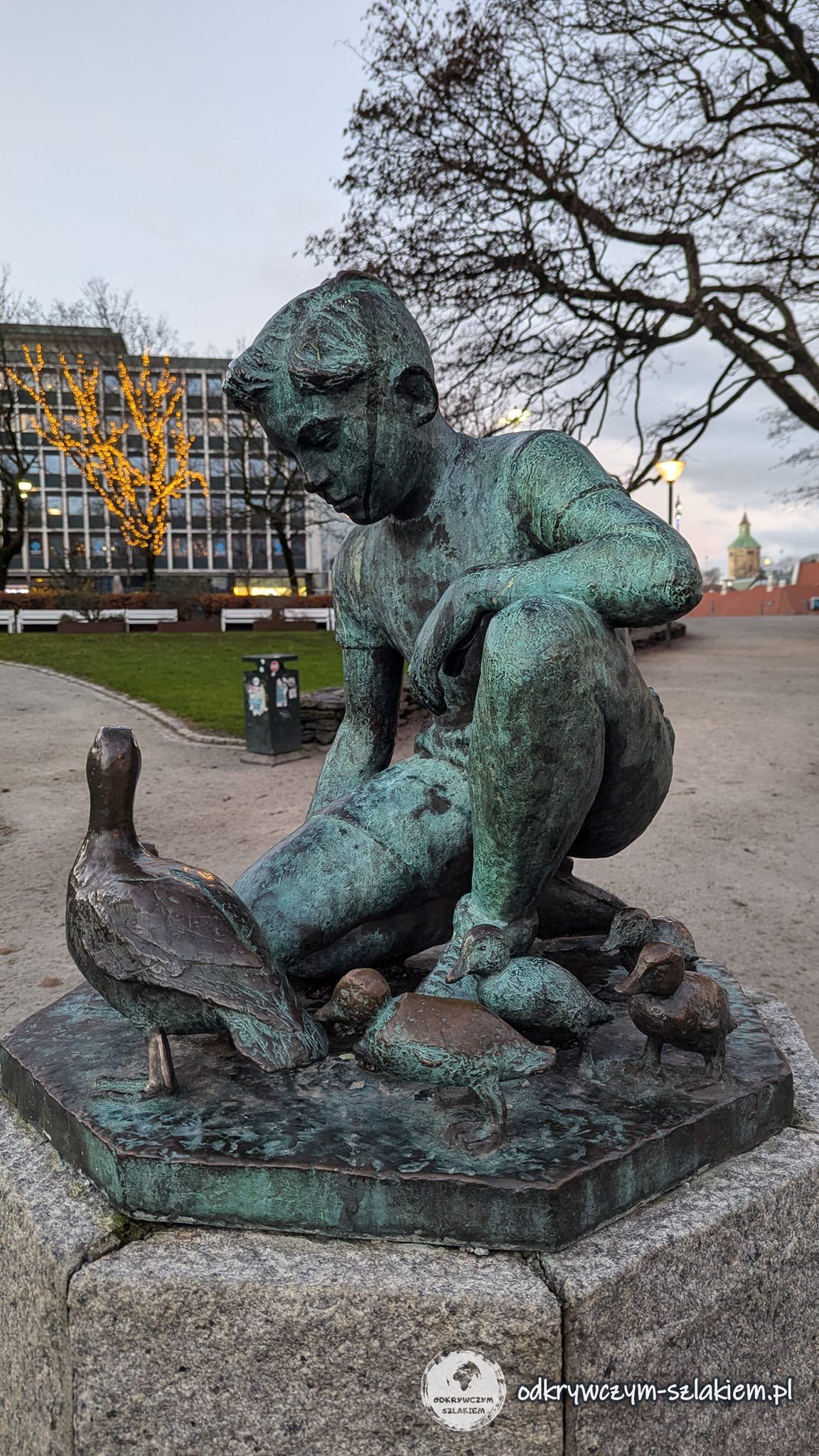
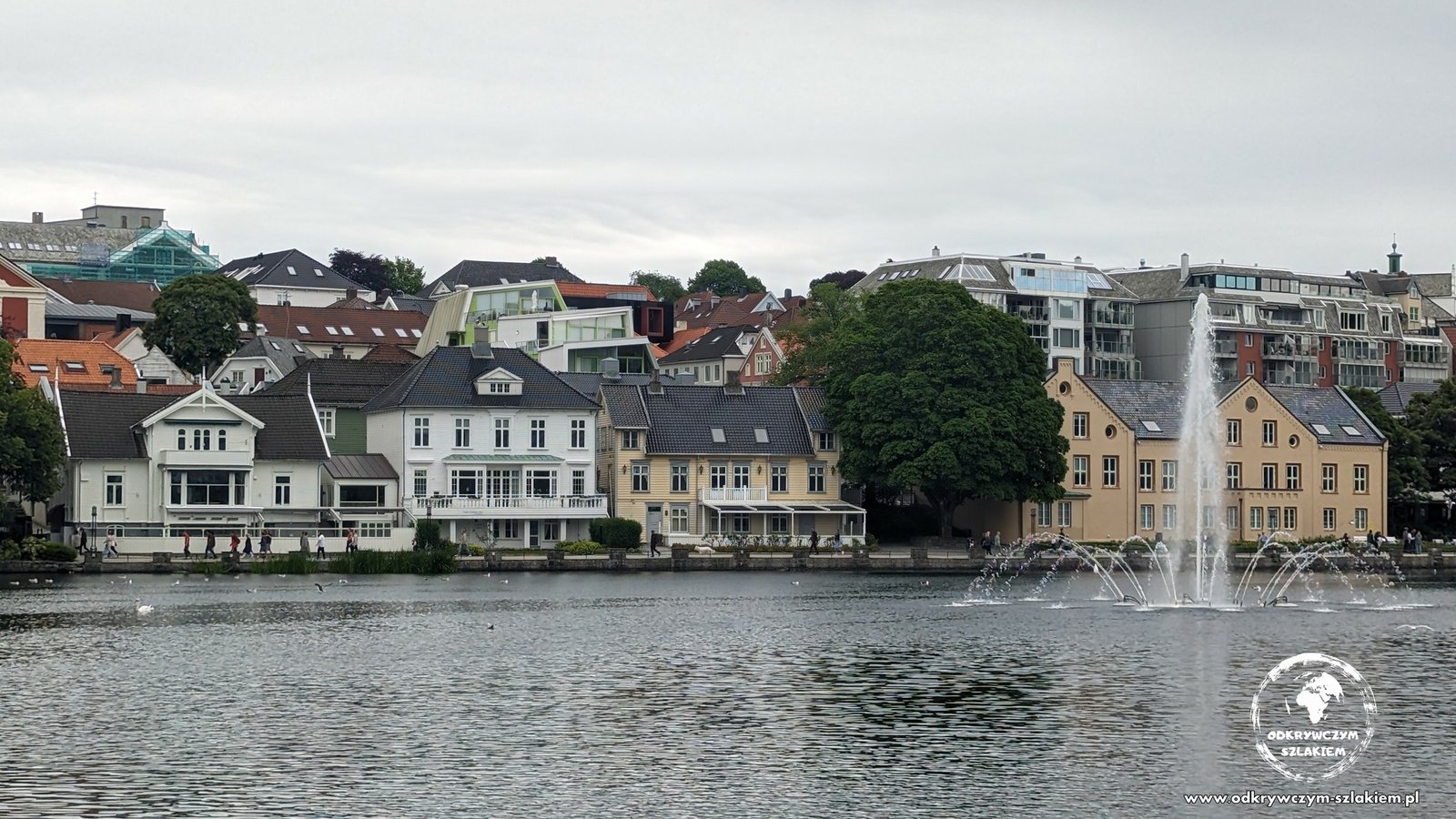
Right in the middle of the city there is also Breiavatnet lake with a fountain, surrounded by Byparken park – a good place for a break from sightseeing. On one side you see wooden houses, on the other modern office buildings, and swans swim on the water. By the lake and in the park there are sculptures, including a wooden crocodile and a boy with a bird.
The centre in autumn and winter – lights, hearts and mulled wine
Twice I have been to Stavanger in late autumn and winter. At the turn of November and December 2024 I flew in for a week – more to visit Michał and Patrycja than for serious sightseeing, because we had managed to find dates that suited everyone and the flights were cheap. In winter the city looks completely different than in summer: the days are short and the sky is usually grey, but the centre is decorated for Christmas.
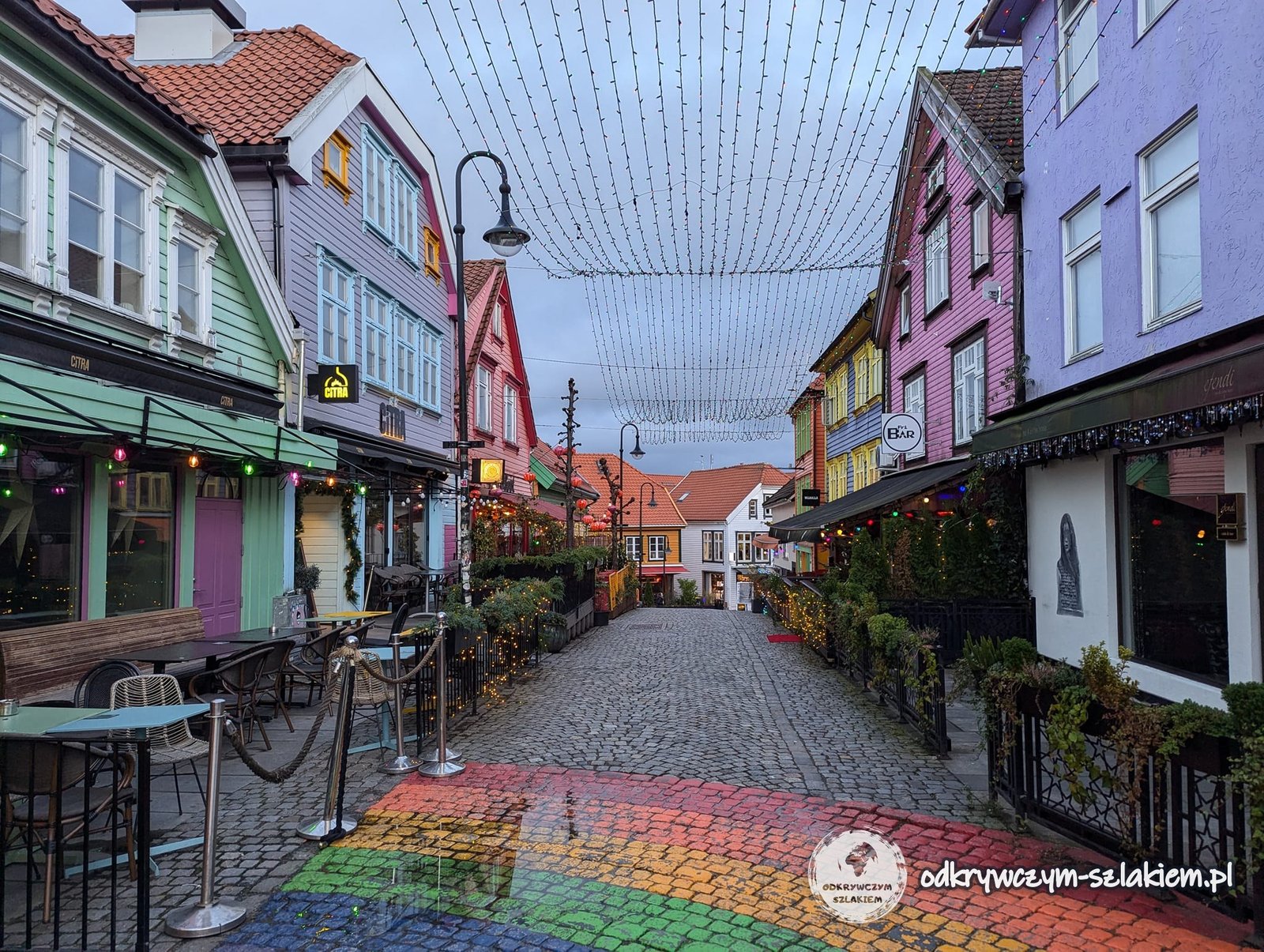
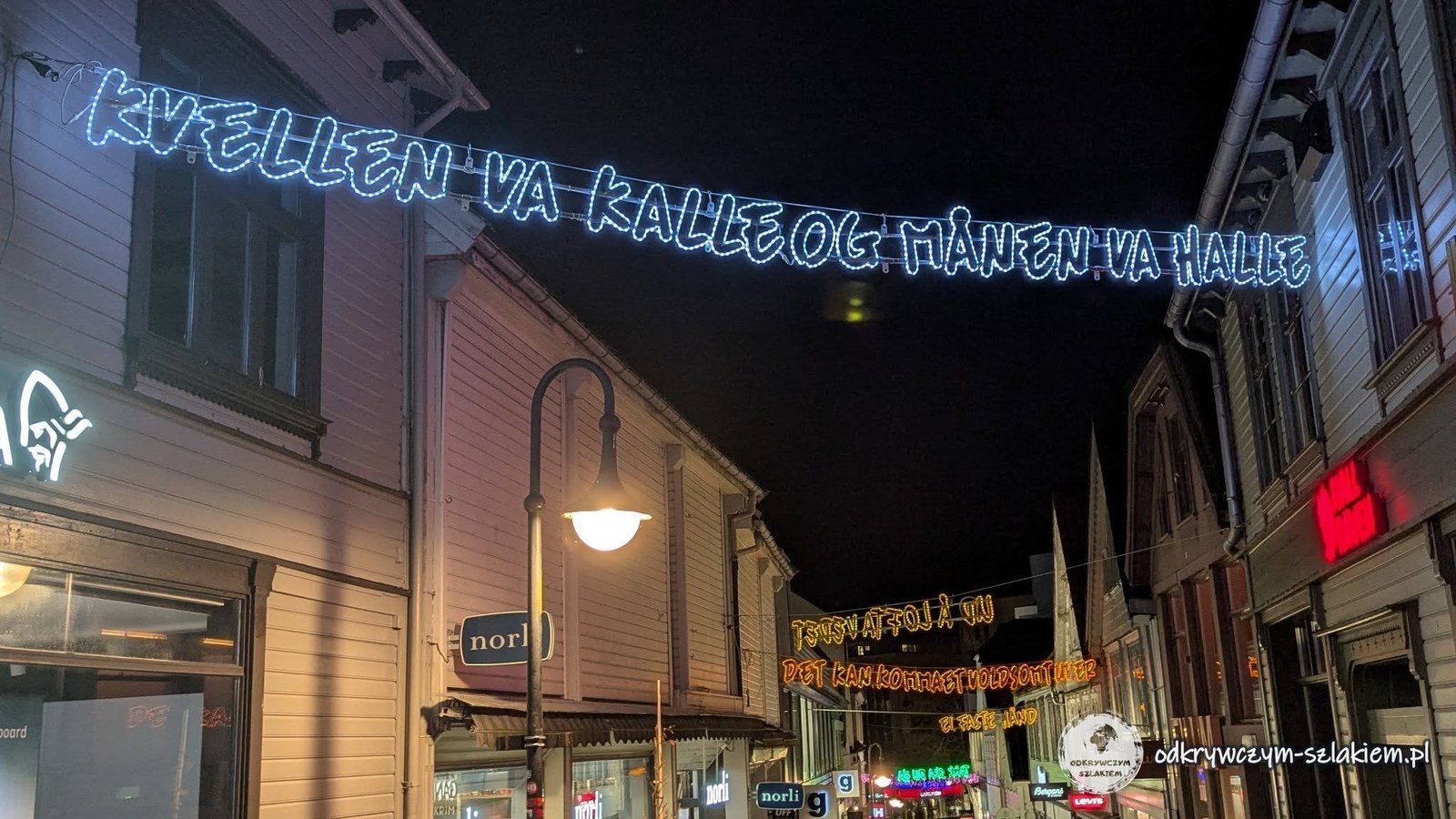
Garlands of red hearts hung over the lanes, and over colourful Øvre Holmegate a whole net of lights. With its rainbow paving, cafés and bars, the street looks really cosy in this setting, so we stopped at one of the cafés for something warm.
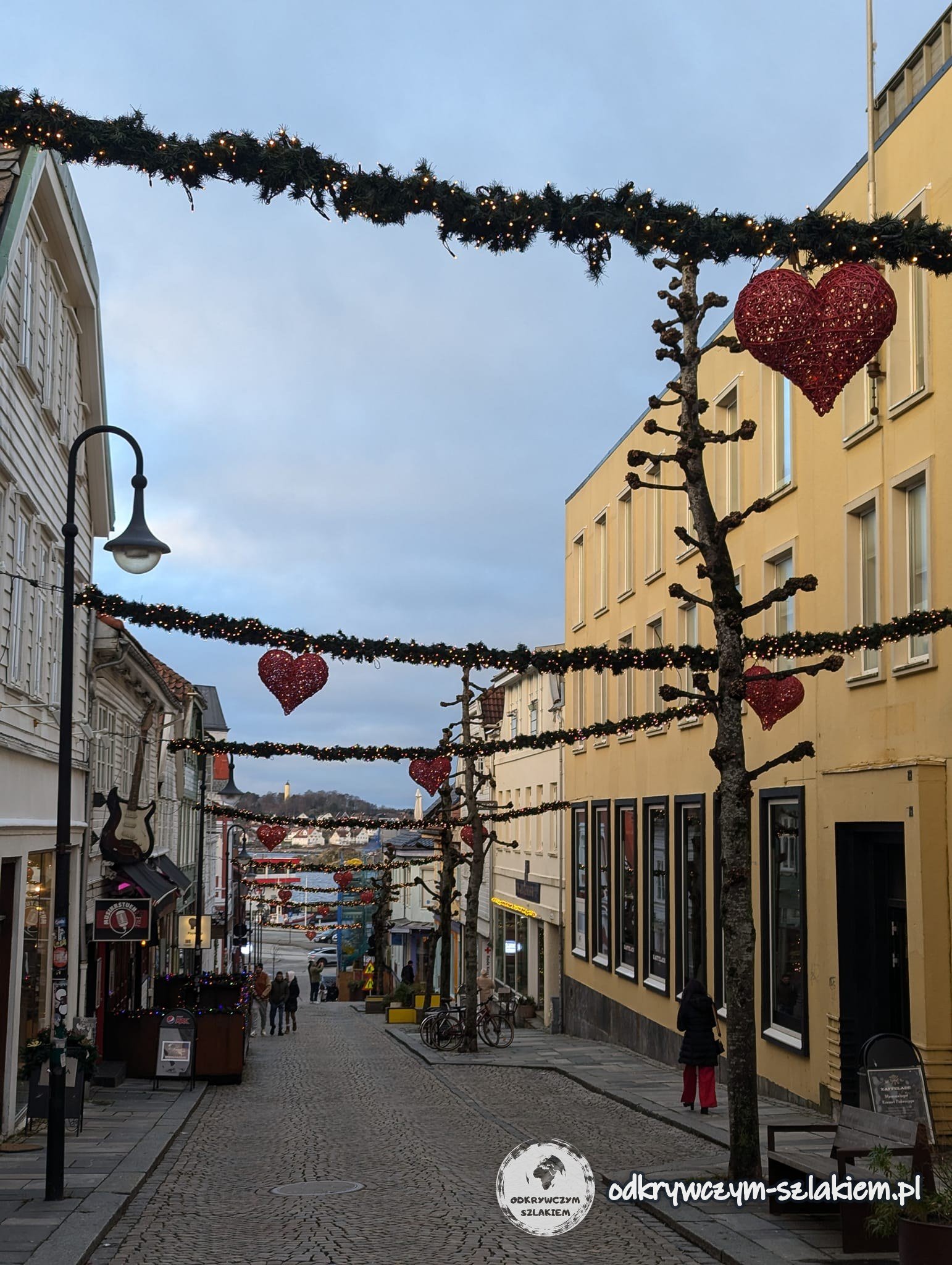
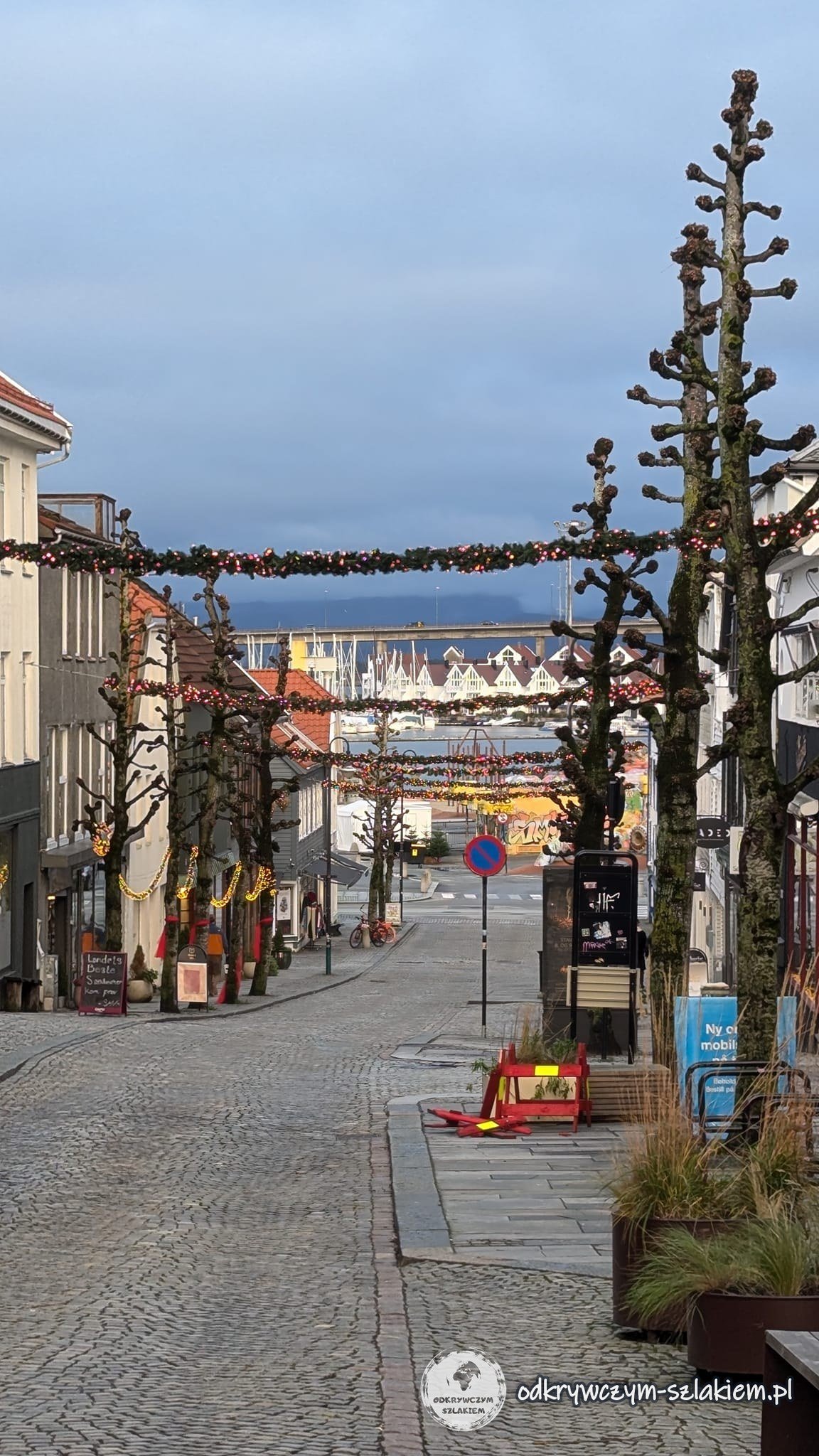
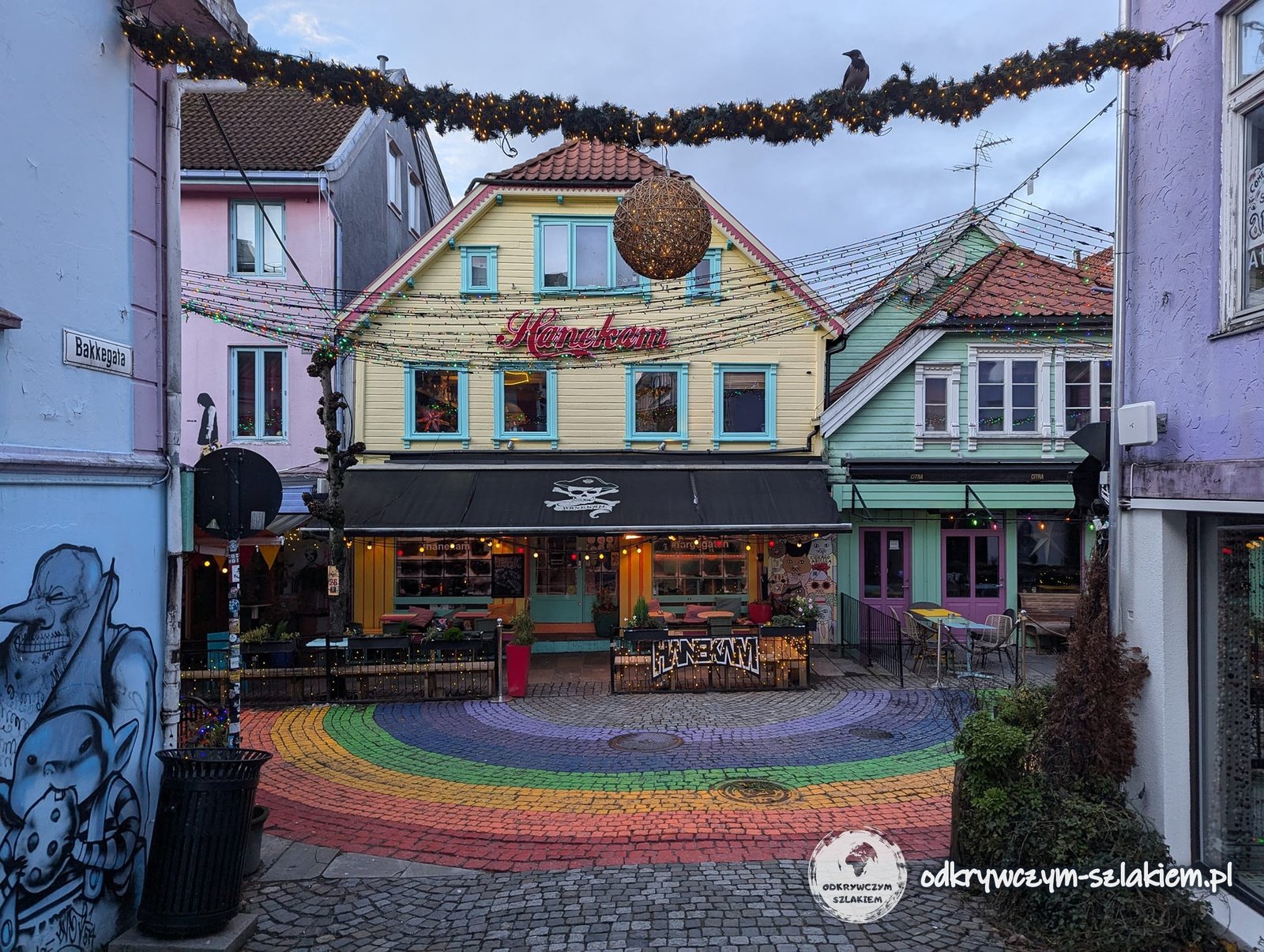
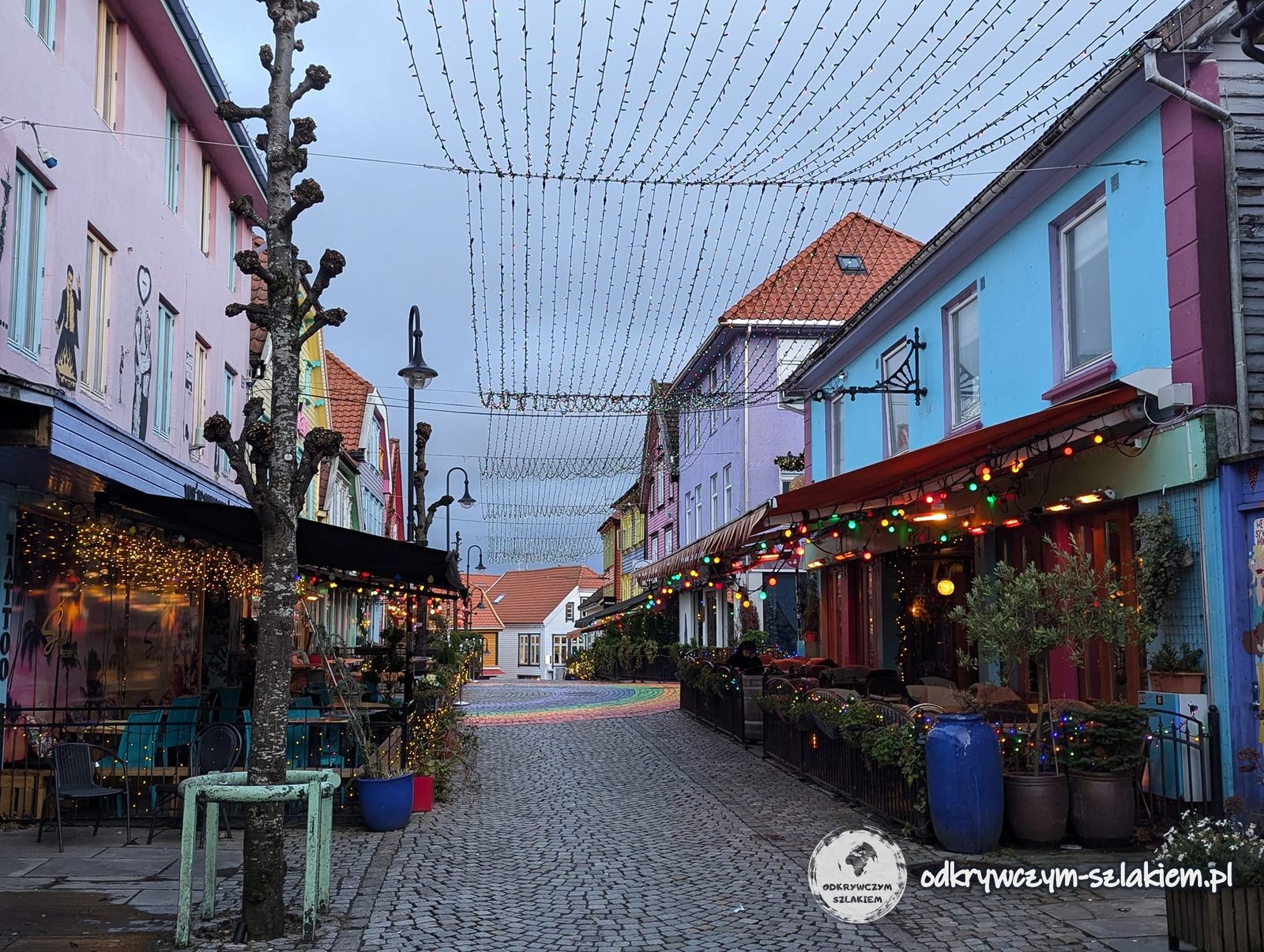
In November 2025 I flew in for a long weekend, from 7 to 10 November. On Sunday we took a lazy walk around the centre, checking how the Christmas decorations were coming along – some lights were already hanging over the streets, and red hearts were glowing above Breiavatnet lake. To finish, we went for mulled wine at one of the bars.


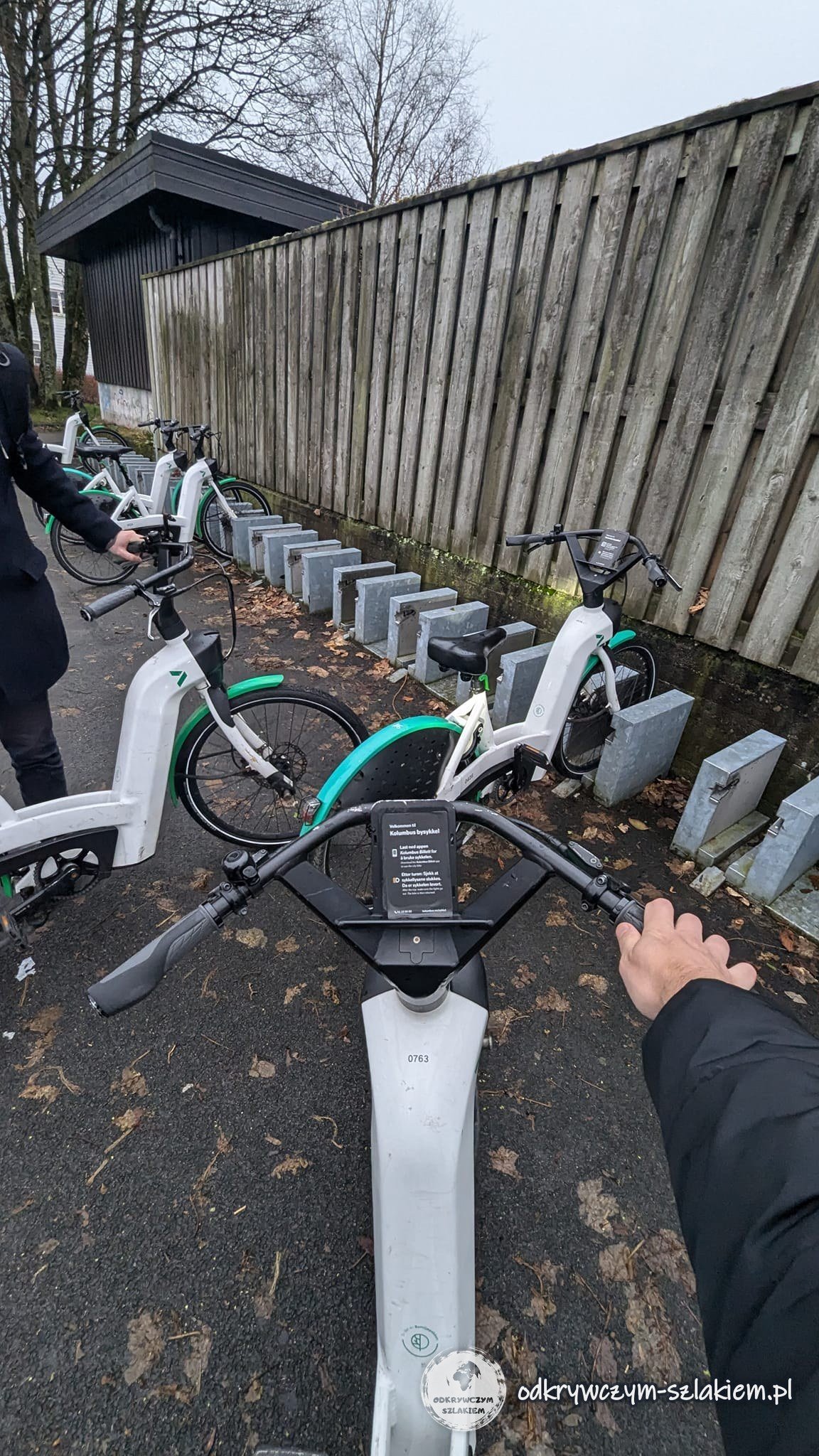
Something new for me in December 2024 was an e-bike – it was the first time I had ridden one. The thing has a hell of a kick, and cycling has never been so easy. You can also see along the way that white wooden houses are not just the old town – whole residential districts look the same.
Norway being Norway, in December it rained on most days, though not very heavily, and temperatures were a little higher than in Poland at the same time. The Norwegian krone was weak back then, so it was a good time for a visit. I have added the prices from both trips to the practical information.
The Norwegian Petroleum Museum
After my first visit, Michał and Patrycja told me that the Norwegian Petroleum Museum (Norsk Oljemuseum) is a must in Stavanger – in 2021 I finally made it, on the last day of my stay. Stavanger is Norway’s oil capital, and the museum, opened in 1999, stands right by the harbour; seen from the sea, the building looks like a small oil platform.
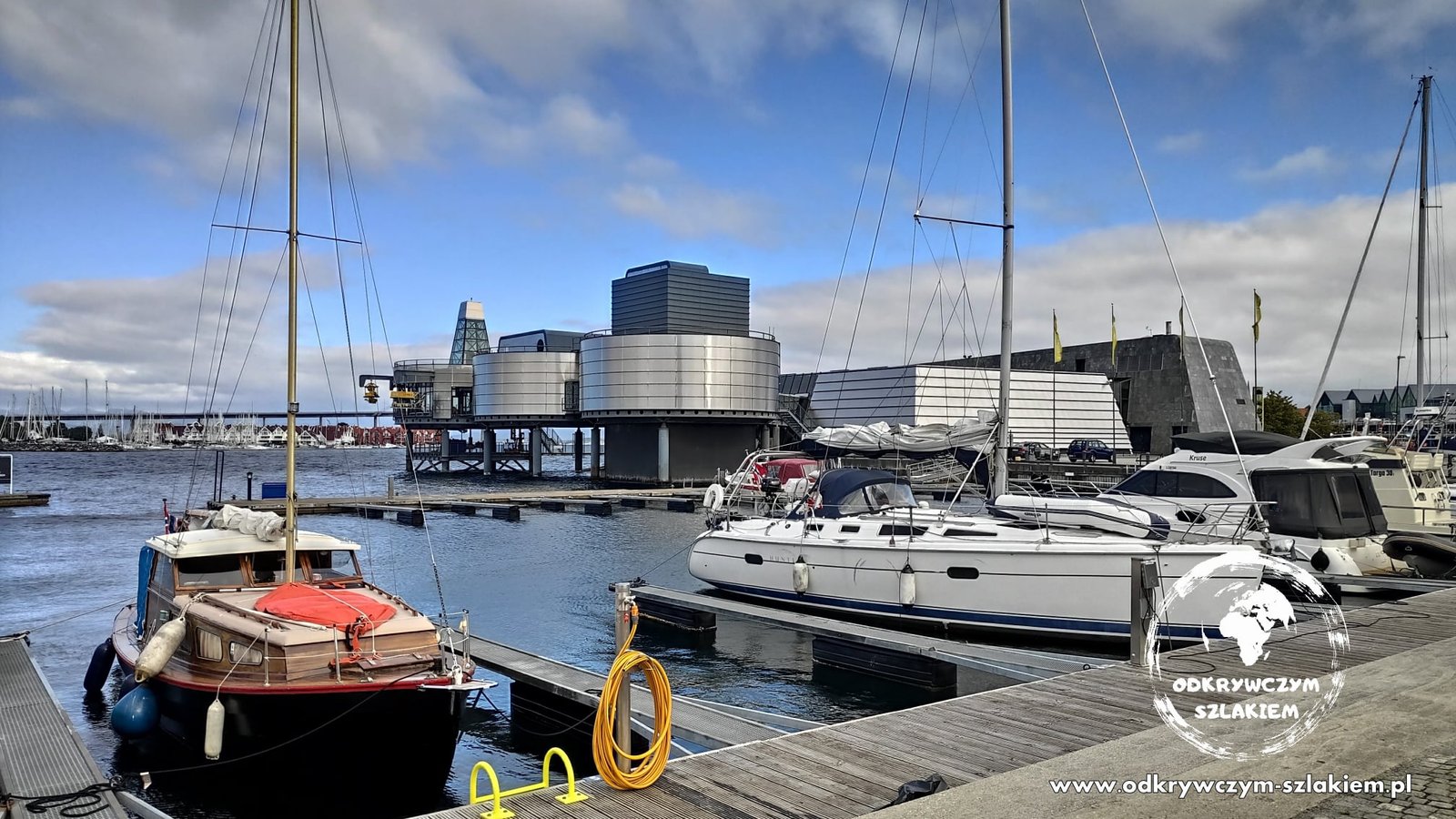
The exhibition tells the story of oil and gas extraction from beneath the North Sea and of how the whole process works – from exploration and building the platforms to working offshore. There are models of ships and platforms, real equipment (a lifeboat capsule, a diving suit used when the platforms were being built) and plenty of interactive stations. We spent two and a half hours here and it still wasn’t enough – I would happily come back next time.



After a quiz at one of the stations you can take a souvenir photo with a speech bubble whose text you choose yourself – we went for “I want my part of the petroleum fund now”. It refers to the state oil fund into which Norway puts its oil revenues.

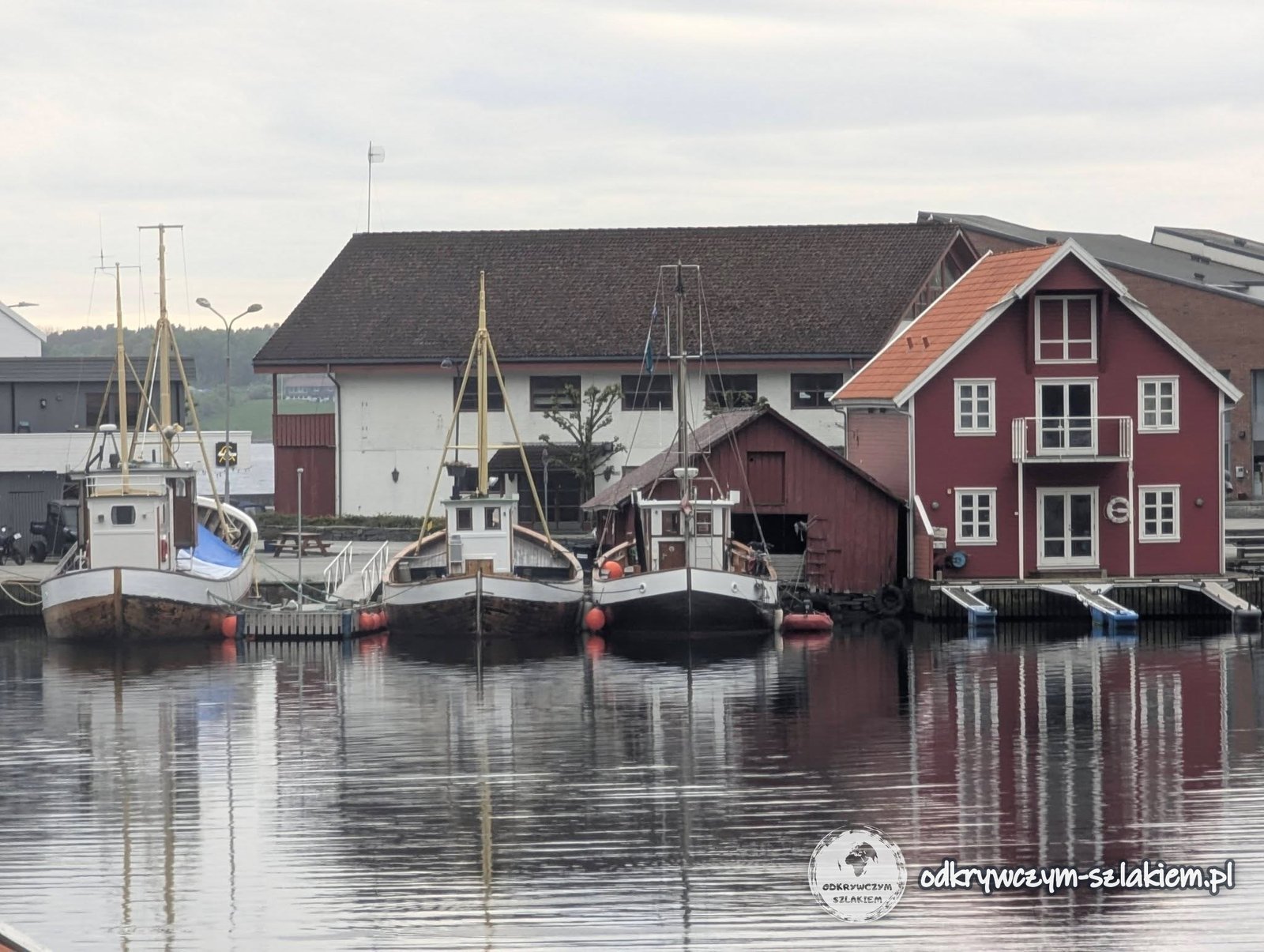
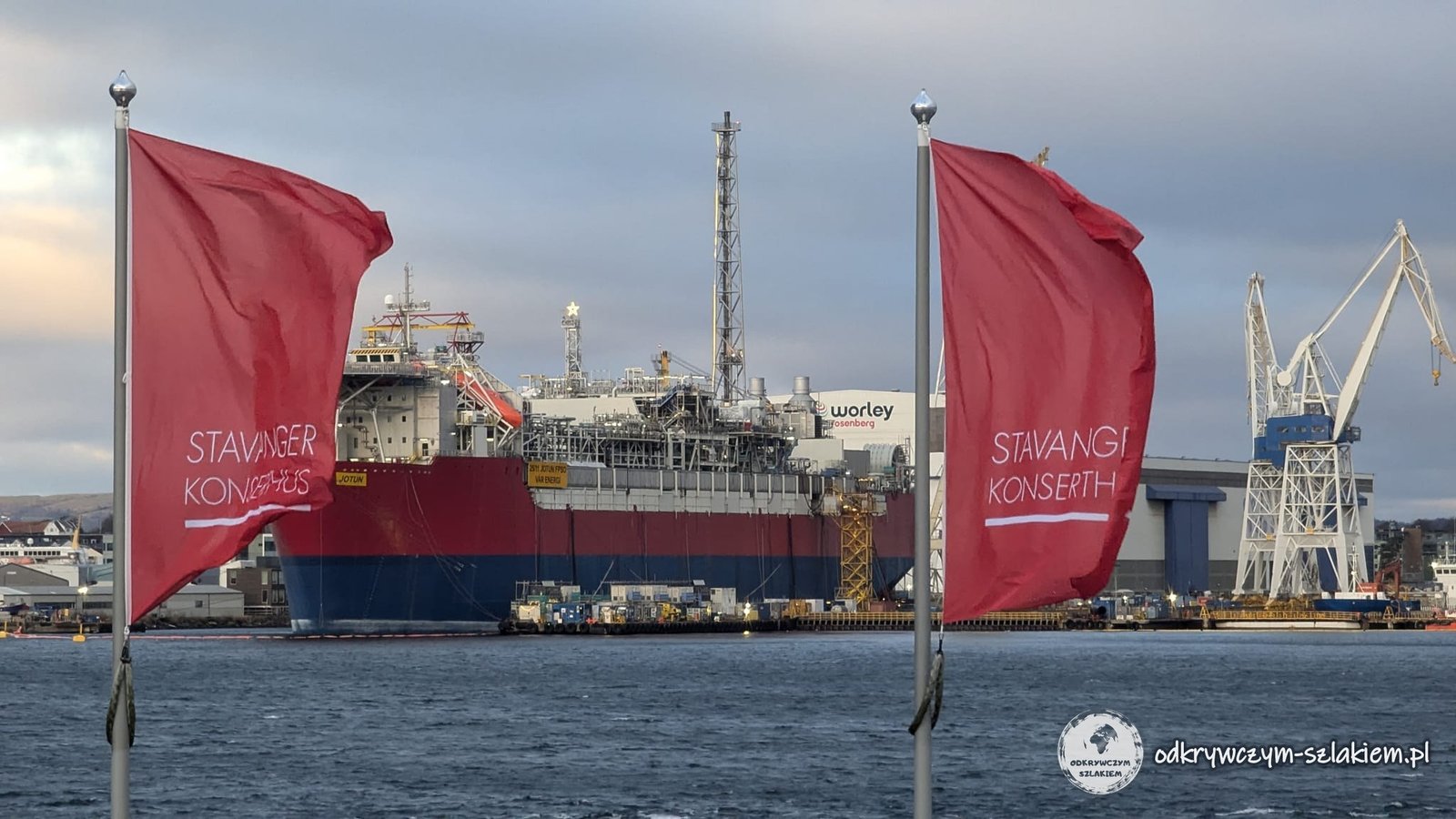
You can see the oil industry all over the harbour anyway – right behind the flags of the Stavanger Konserthus concert hall, huge industrial ships are moored at the quay.
Lakes and lookout towers
Within the city limits Stavanger has several lakes with comfortable paths around them – after work, that is the best way to go for a walk. The biggest is Stora Stokkavatnet in the west of the city; the loop around it is about 8.6 km long. When the weather was nicer, we simply sat on the shore.
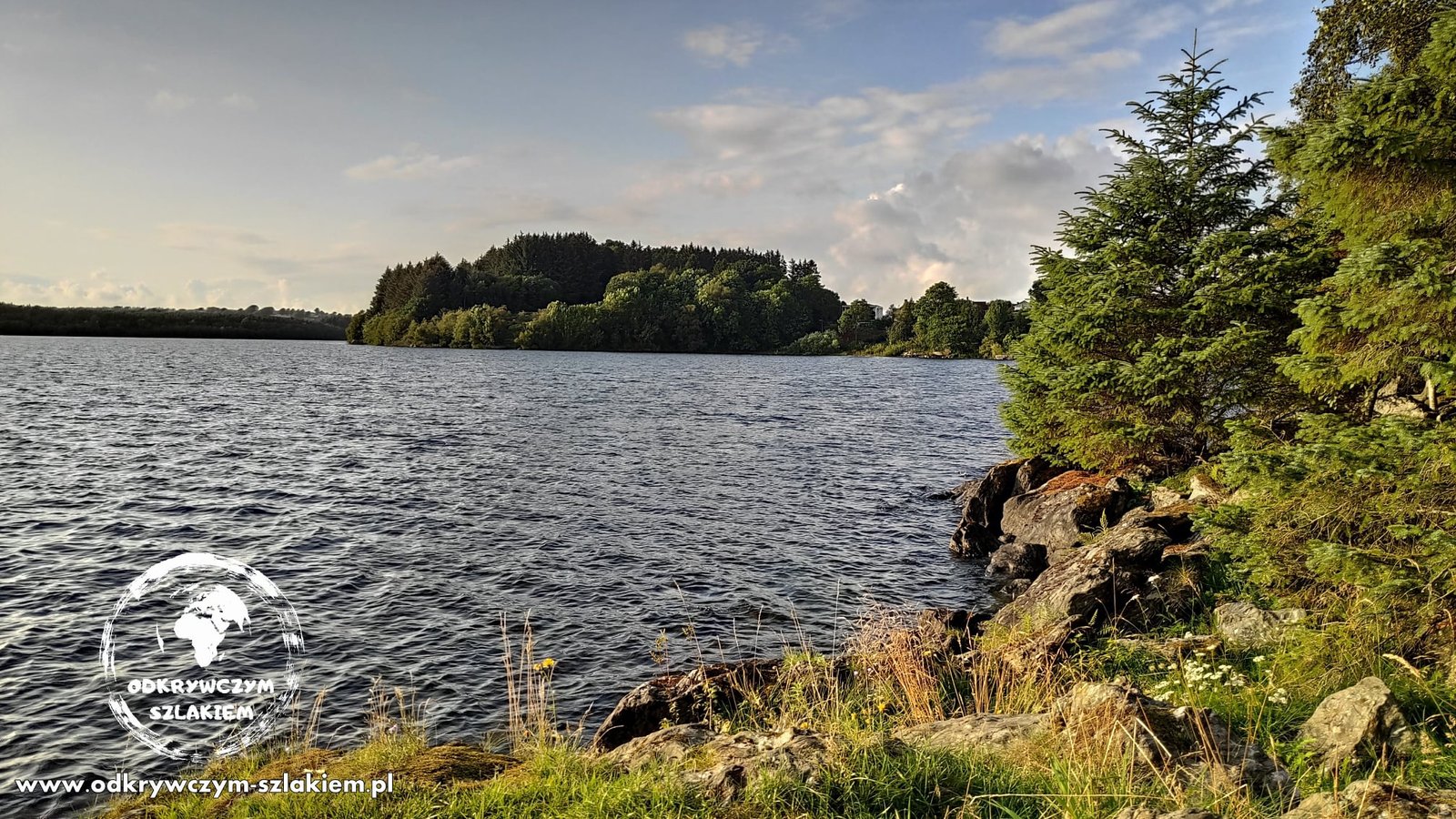
On the second-to-last day in 2021 we walked around Mosvatnet lake, closer to the centre, and climbed Våland hill to the Vålandstårnet tower. Built in 1895, the tower was once part of the city’s water supply system, and today it is a viewpoint. Through the observation telescopes you can see the harbour, the bridges and the islands around the city, and in good weather also distant land further inland.
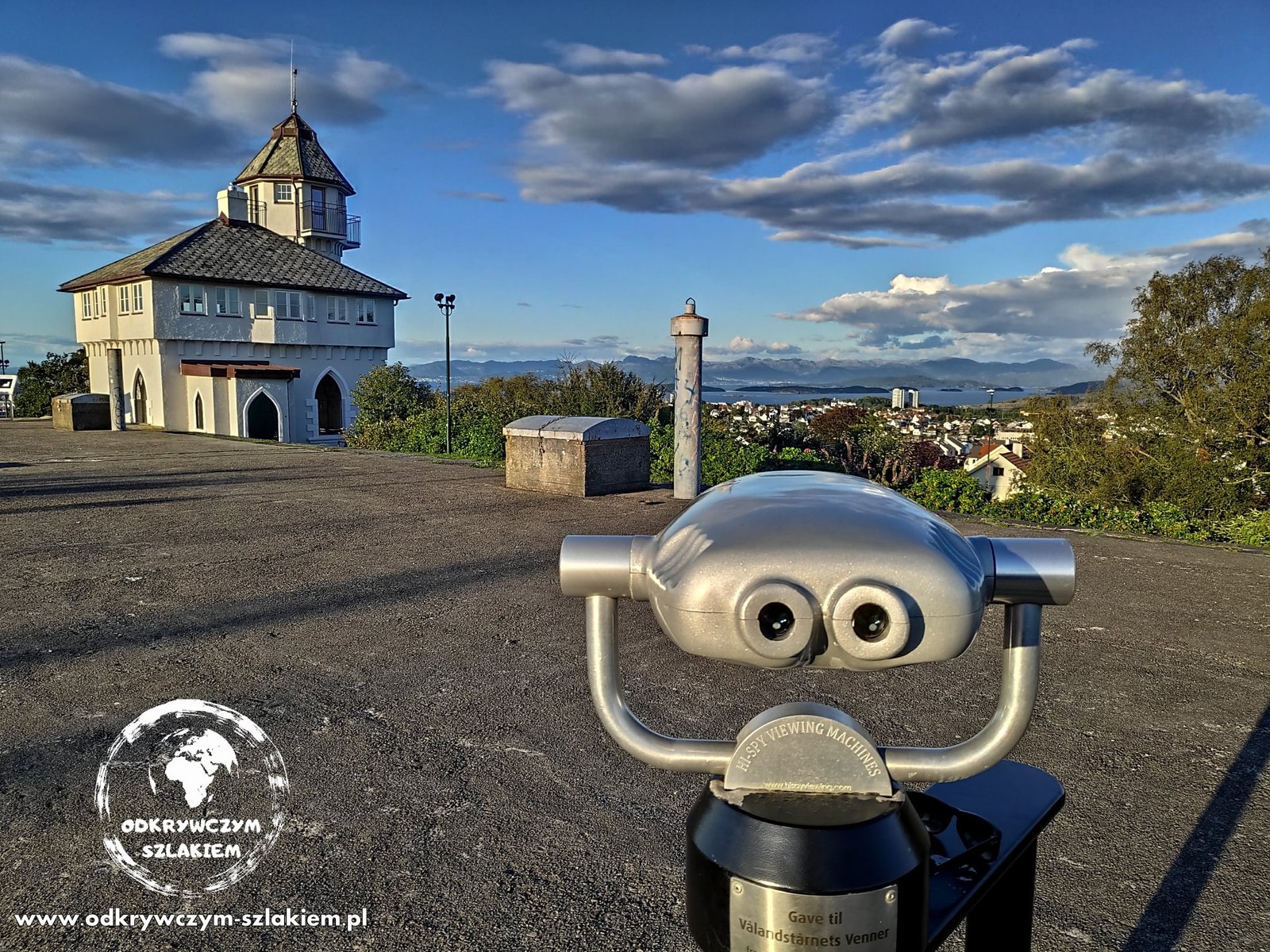
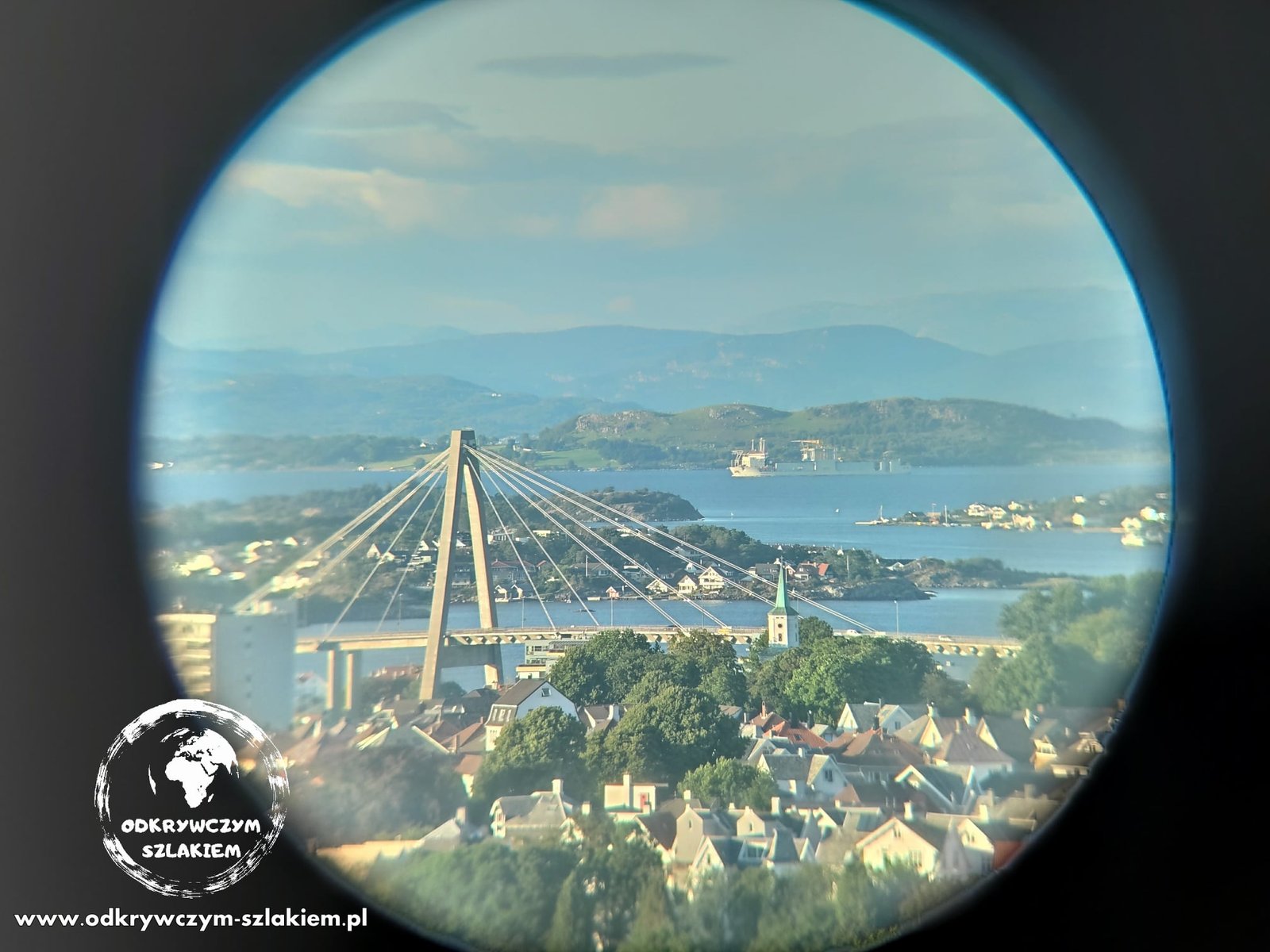
In June 2023 we also walked around the centre and saw the city from above from the Ullandhaugtårnet tower.
Lifjell, Dale and Sørmarka forest
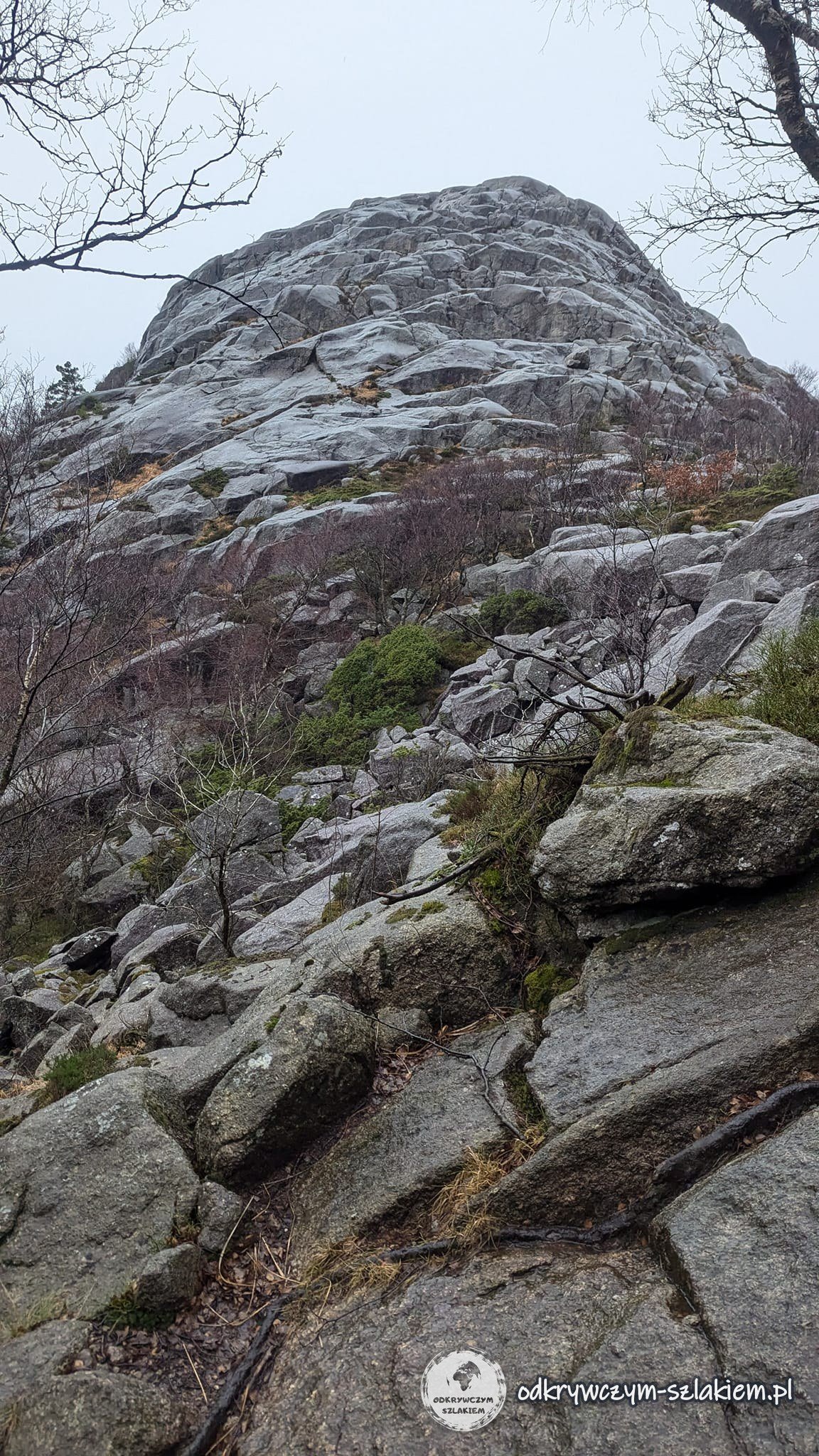
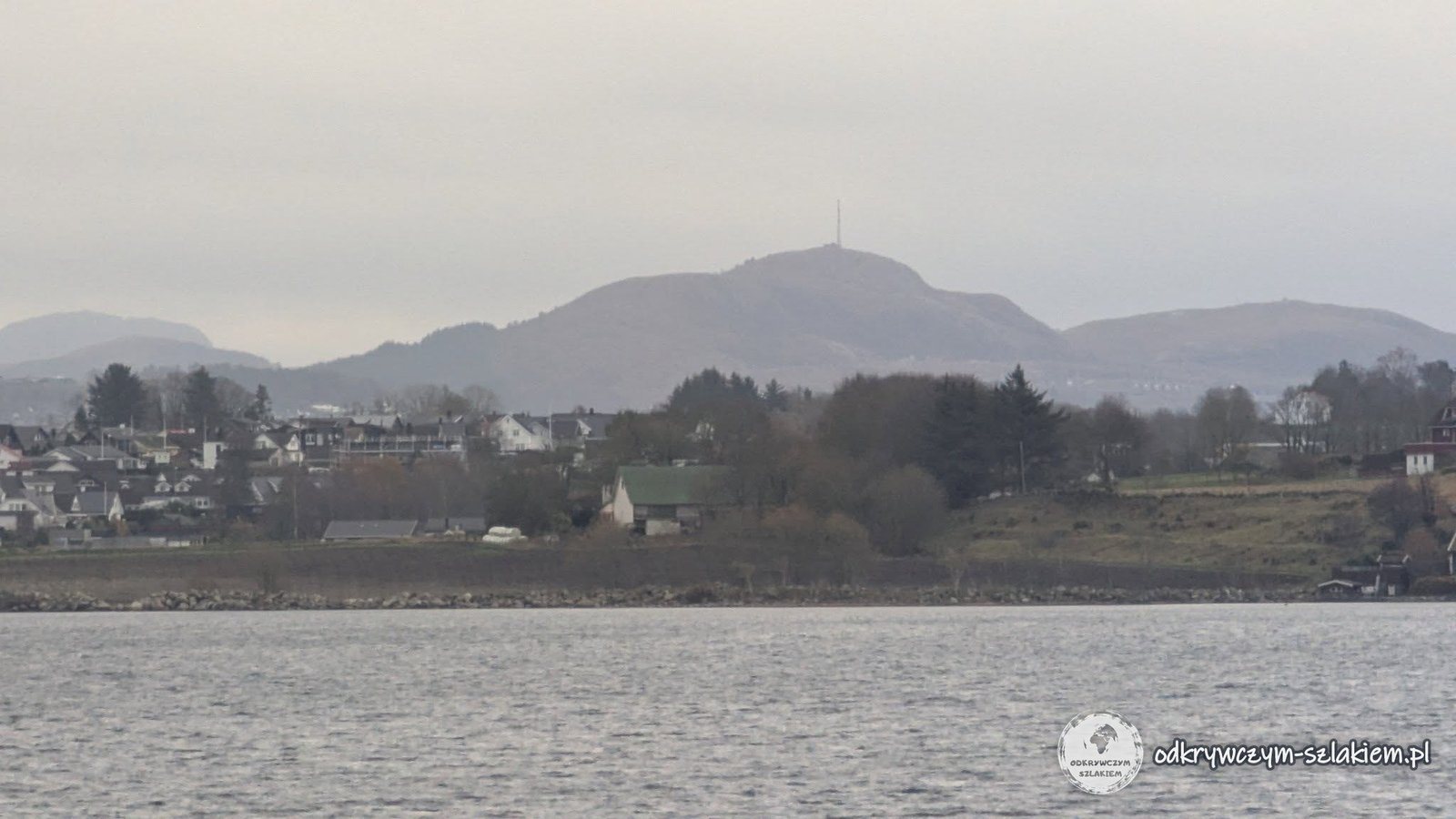
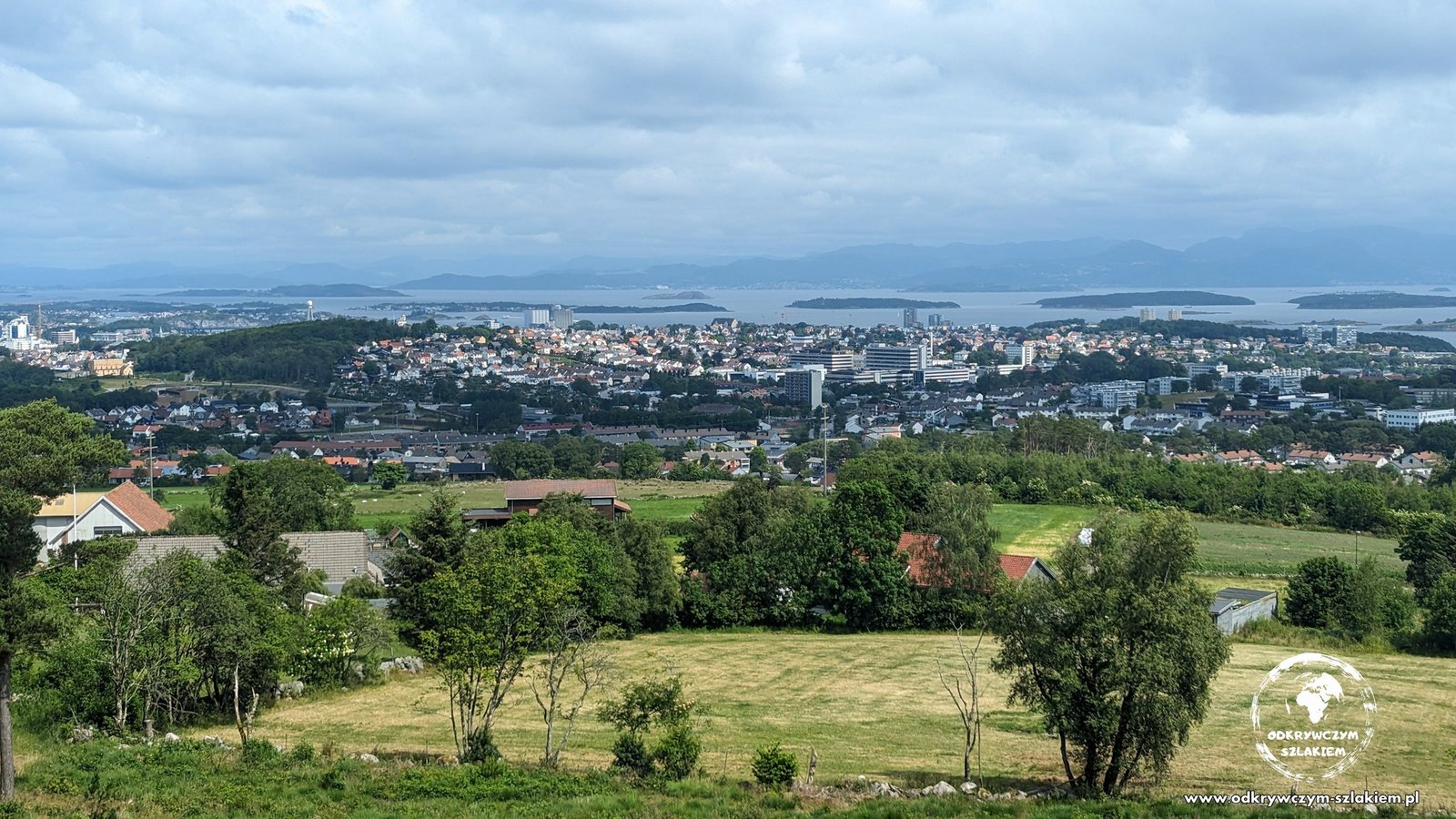
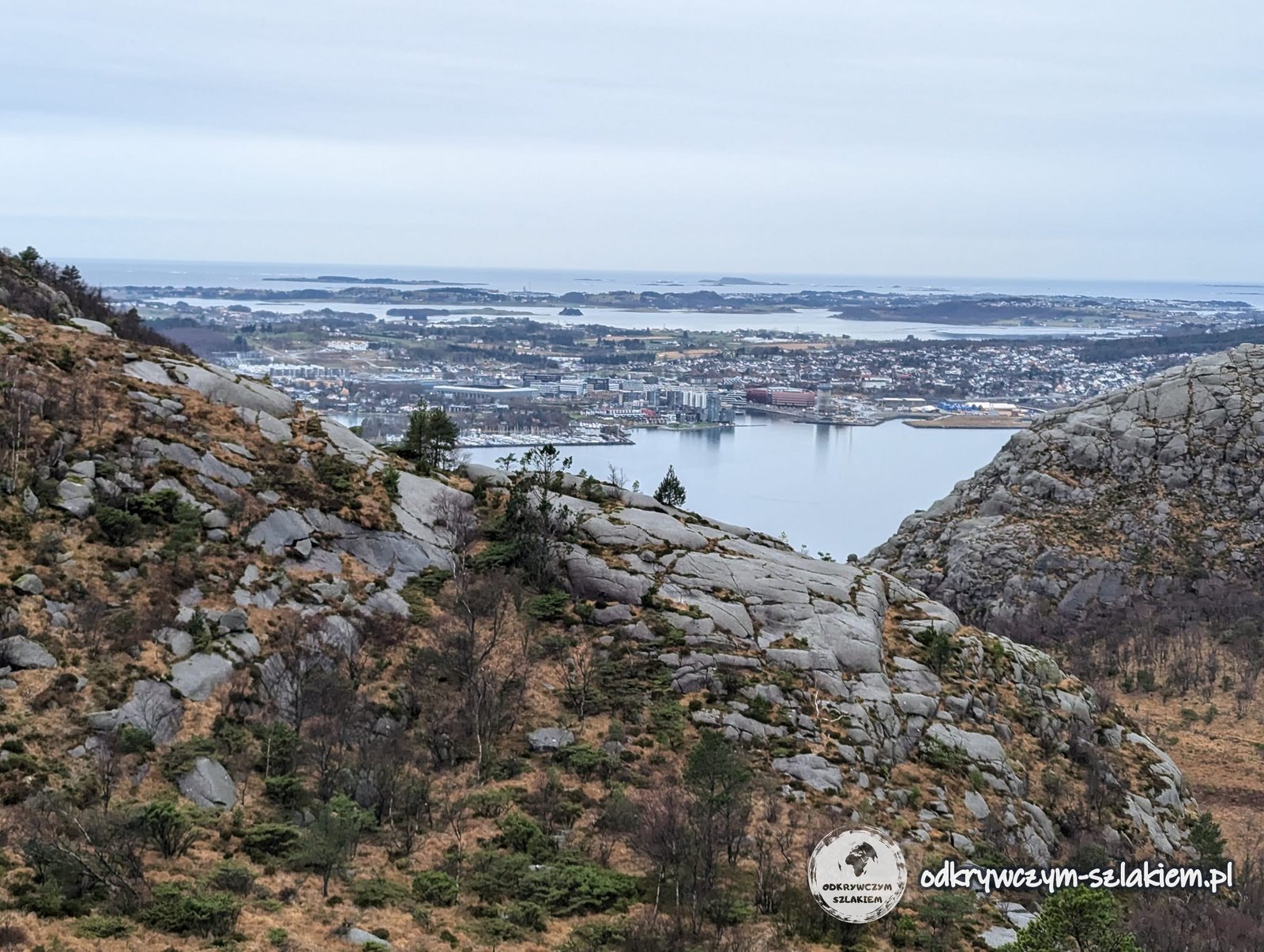
The best view of Stavanger, however, I had from the other side of the fjord. In 2021, on a Thursday, we took public transport (about an hour) to the village of Dale on Gandsfjord, the starting point for Lifjell – a hill of just under 300 m above sea level, considered one of the best viewpoints in the area. The trail starts in tall forest and wears you out right away: the climbs are steep, over stones and roots, and after rain it can be slippery.
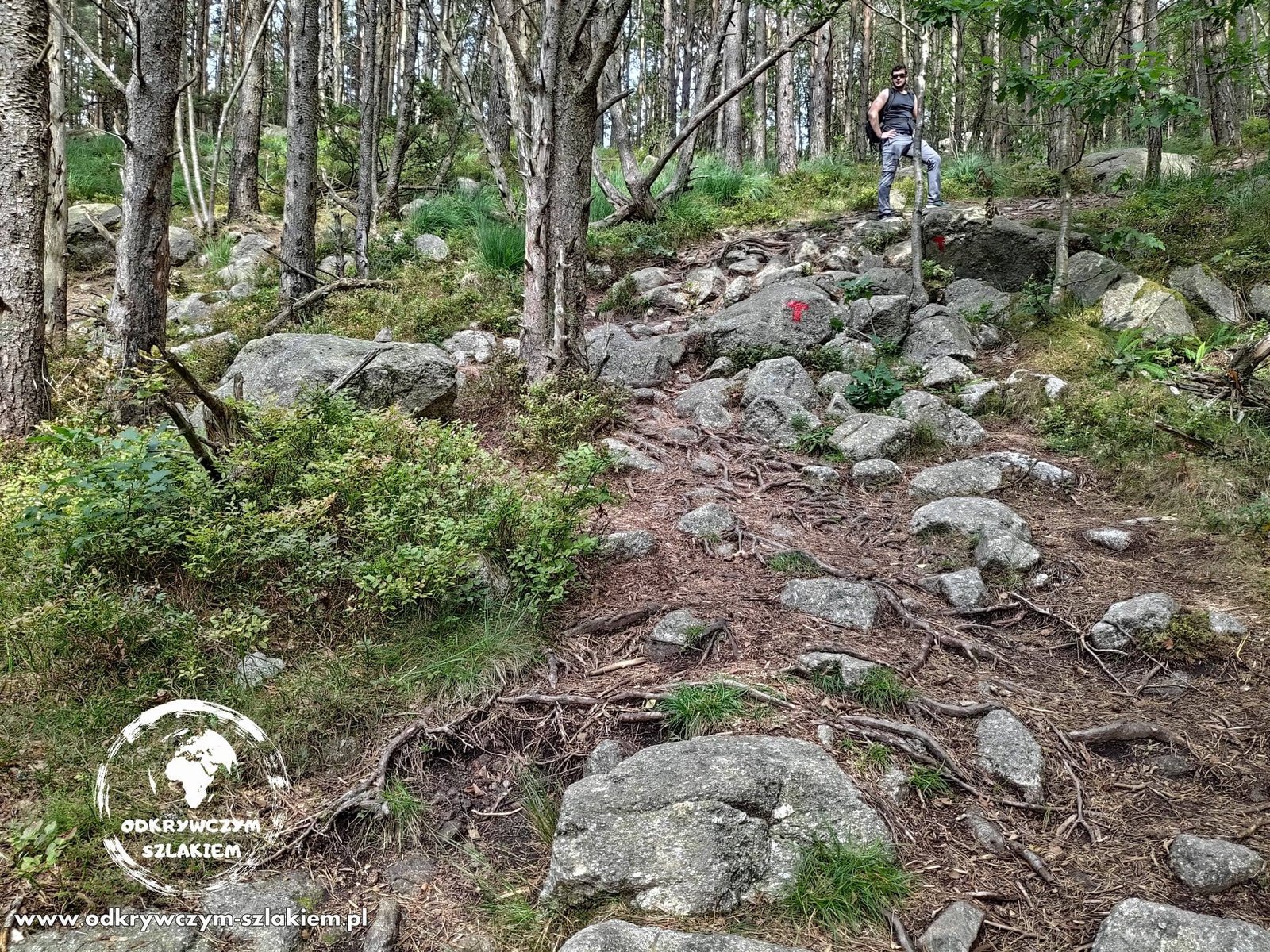
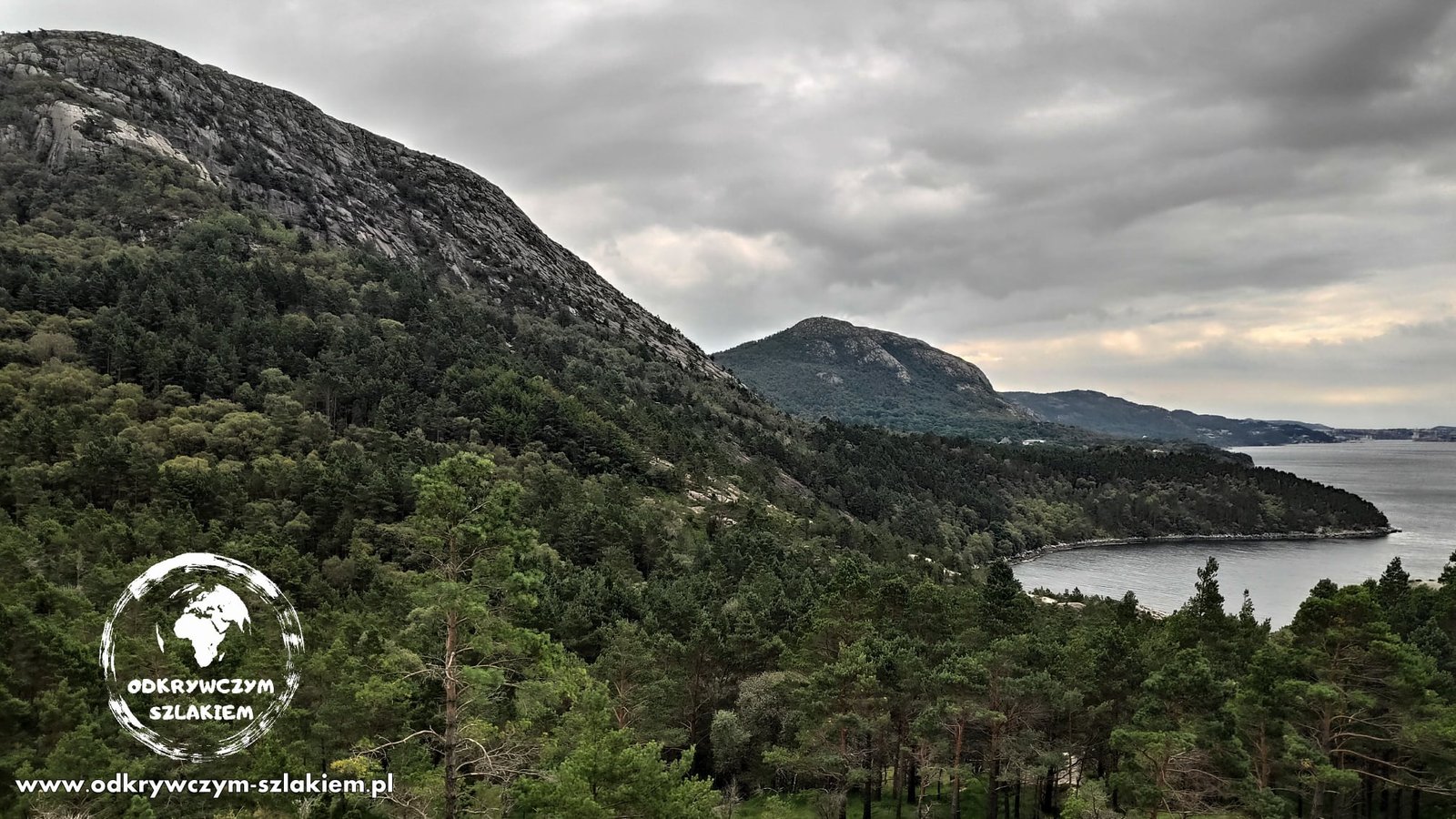
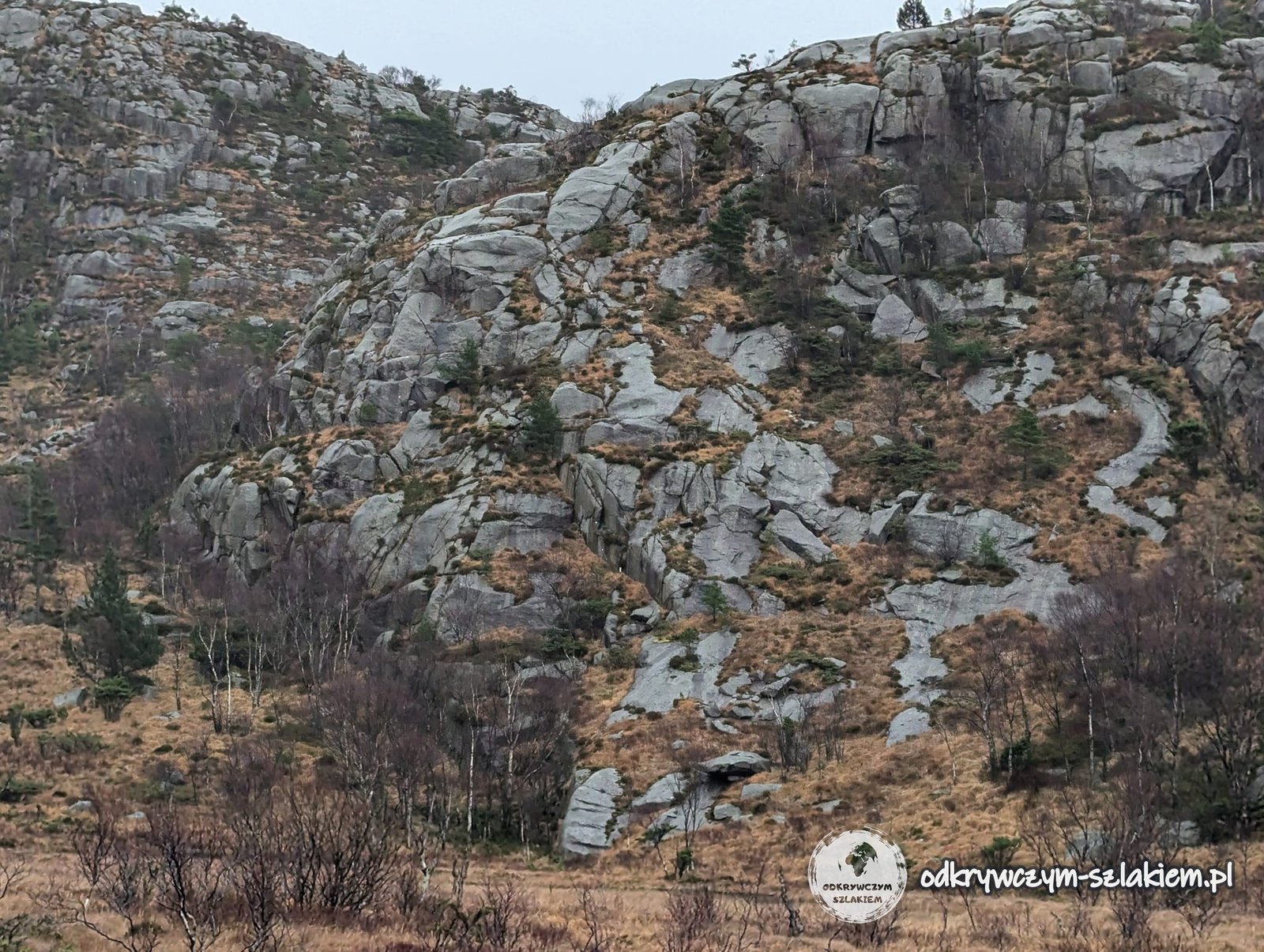
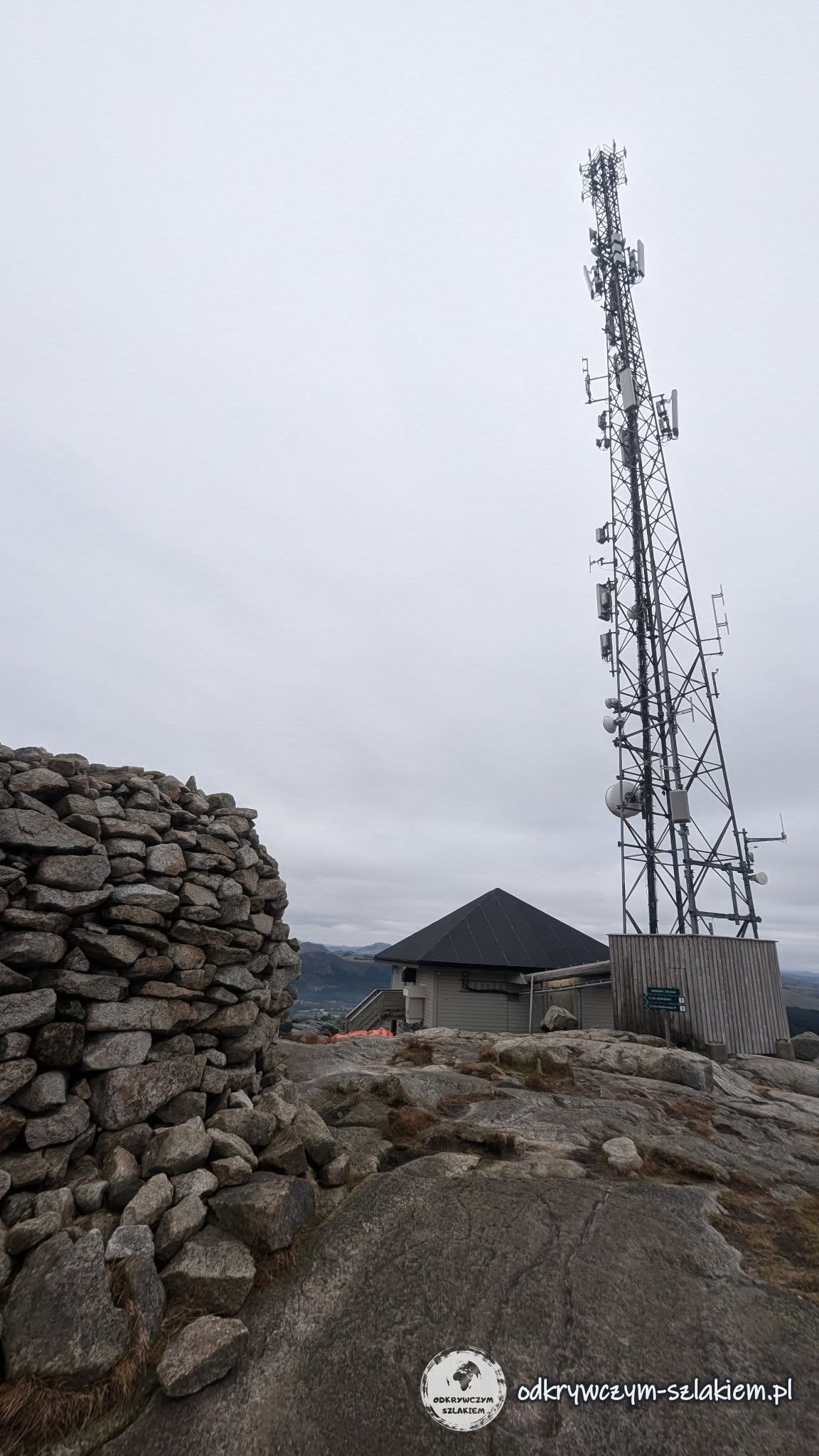
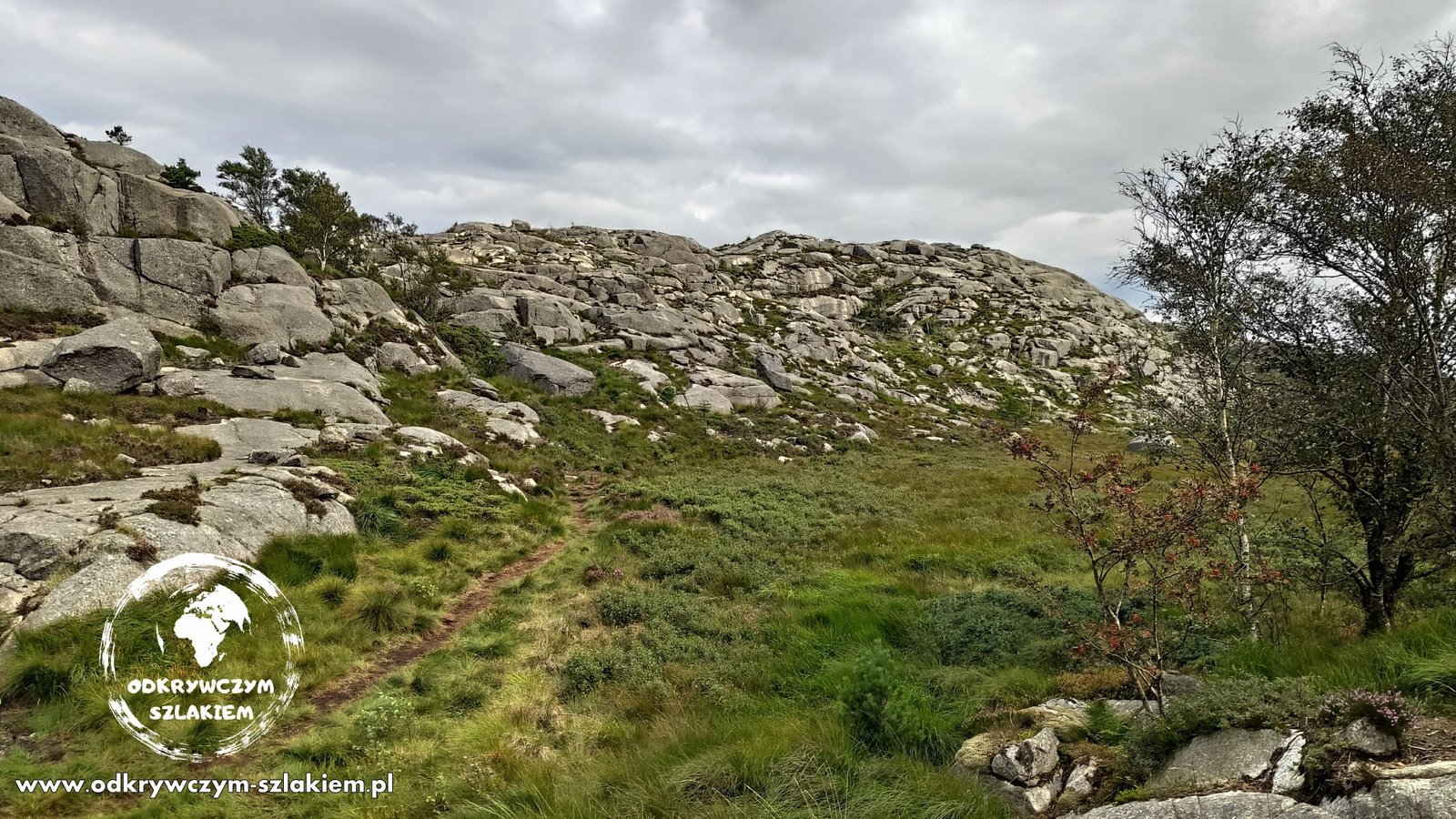
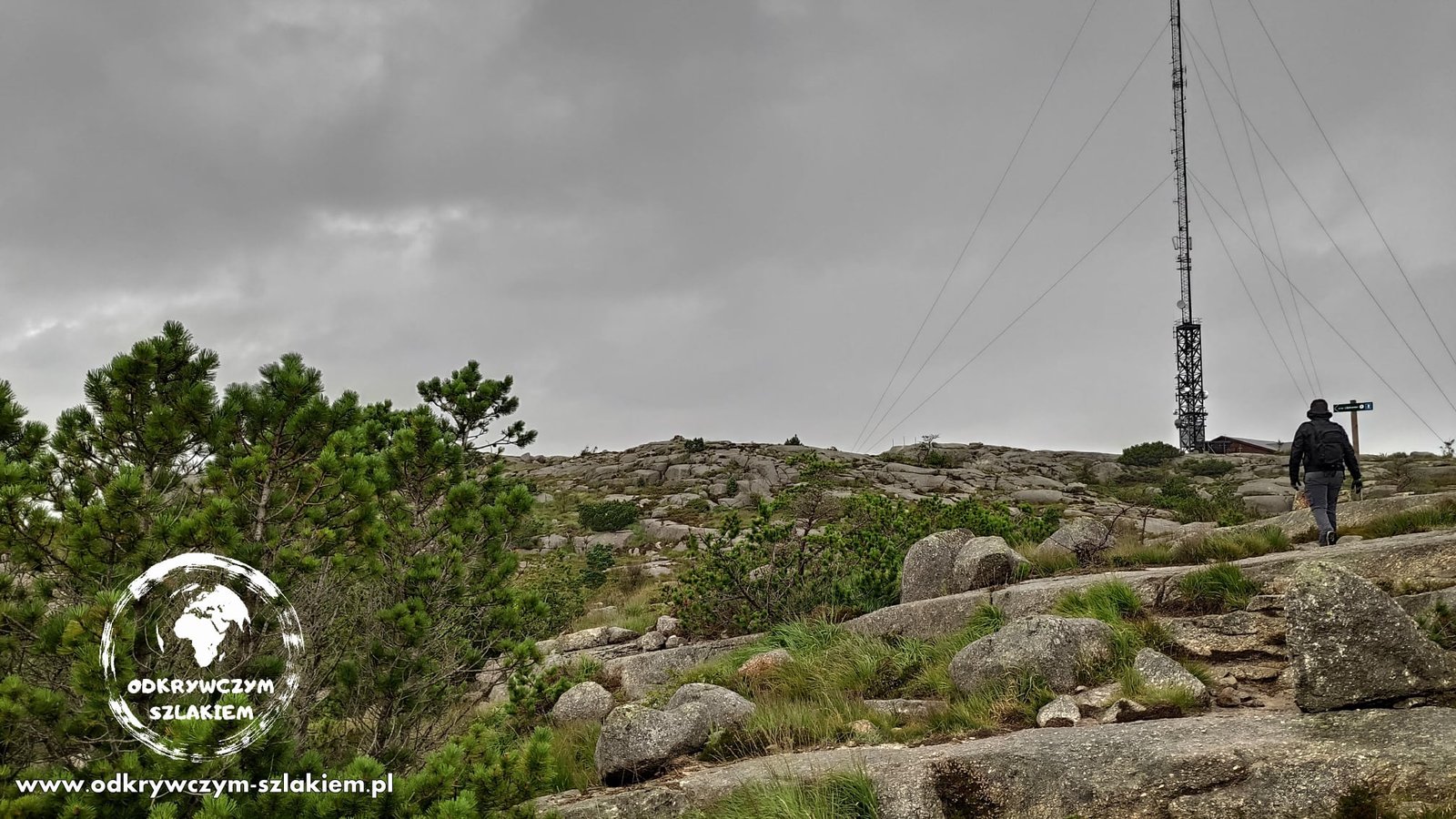
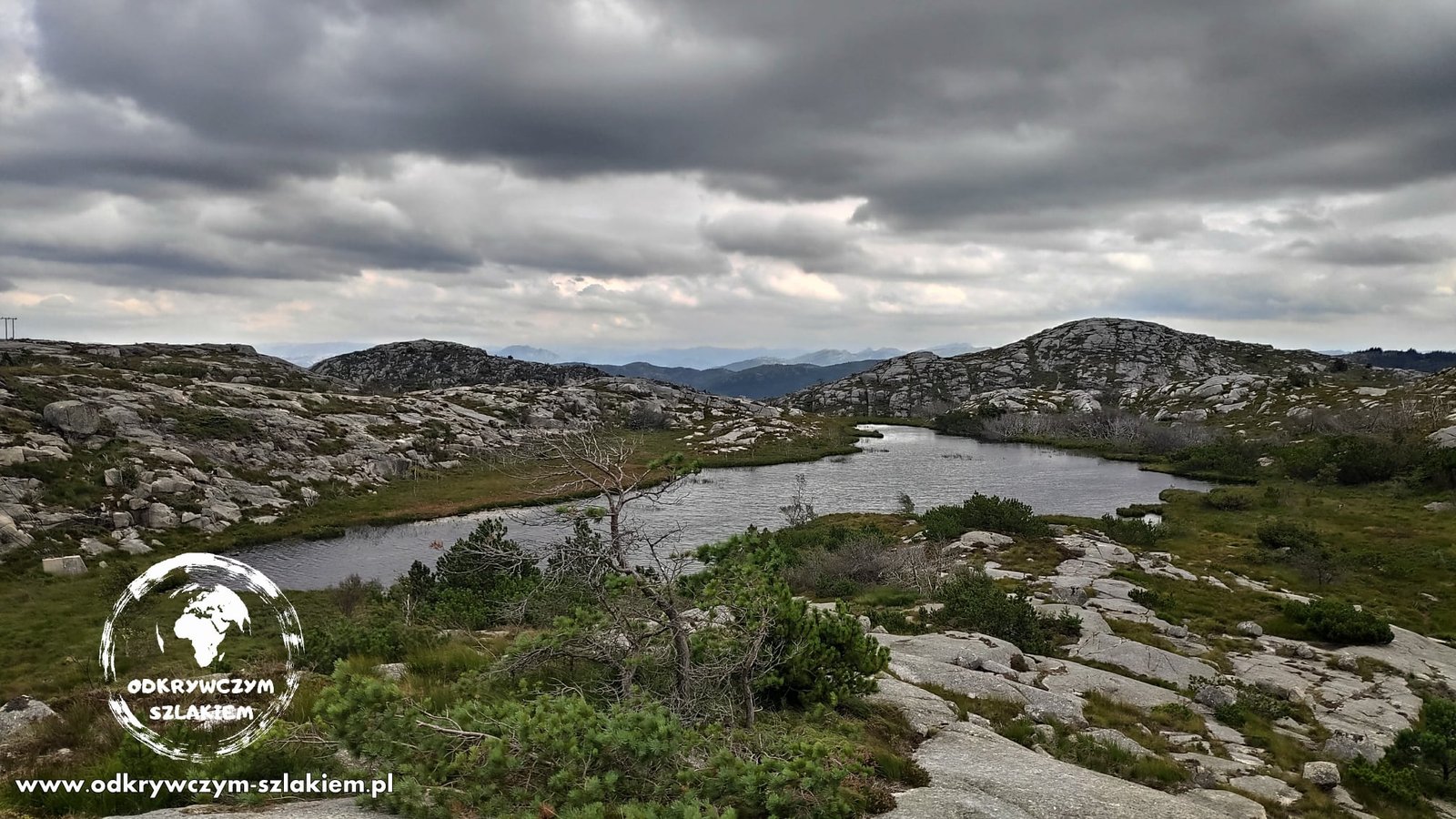
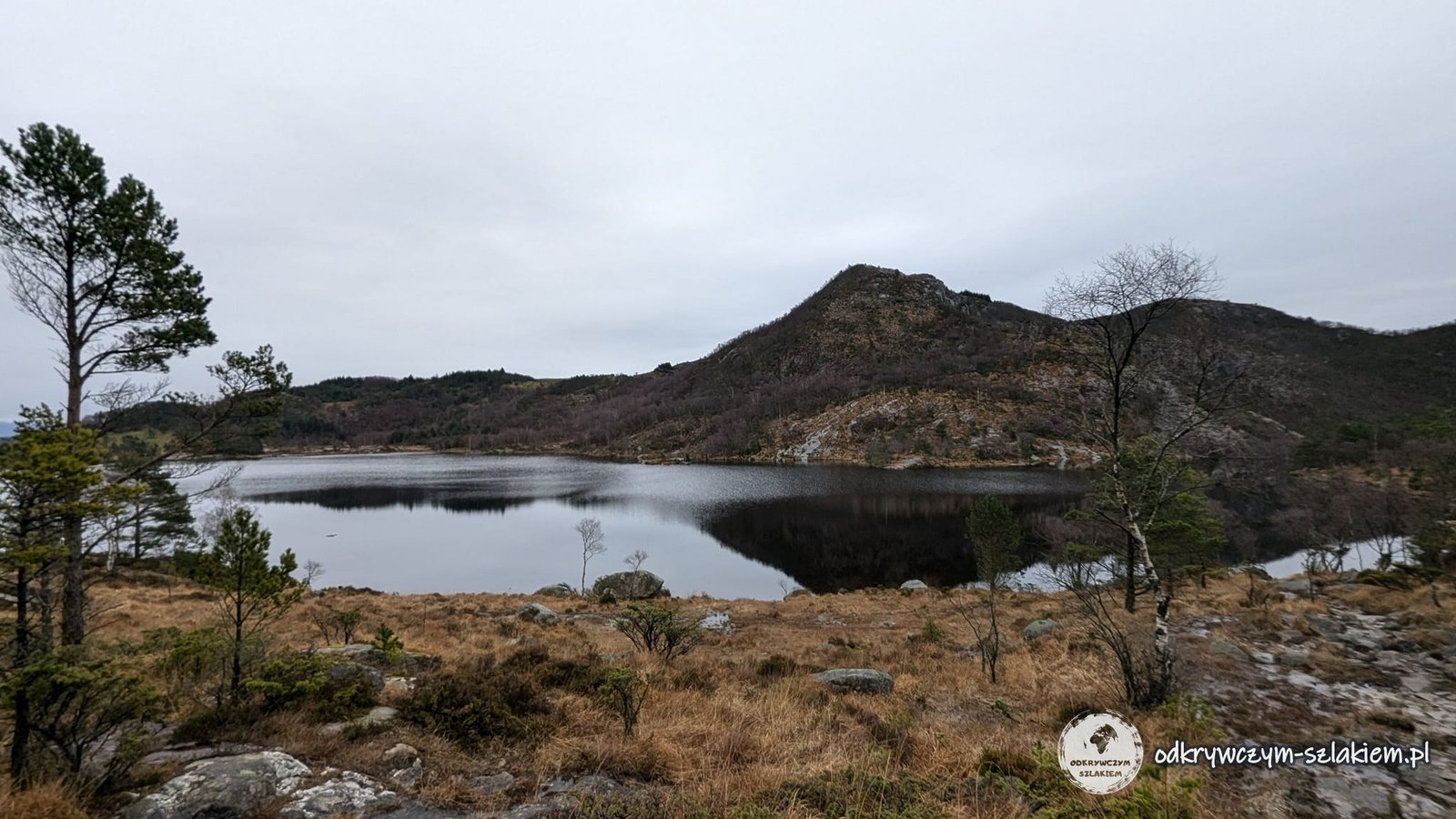
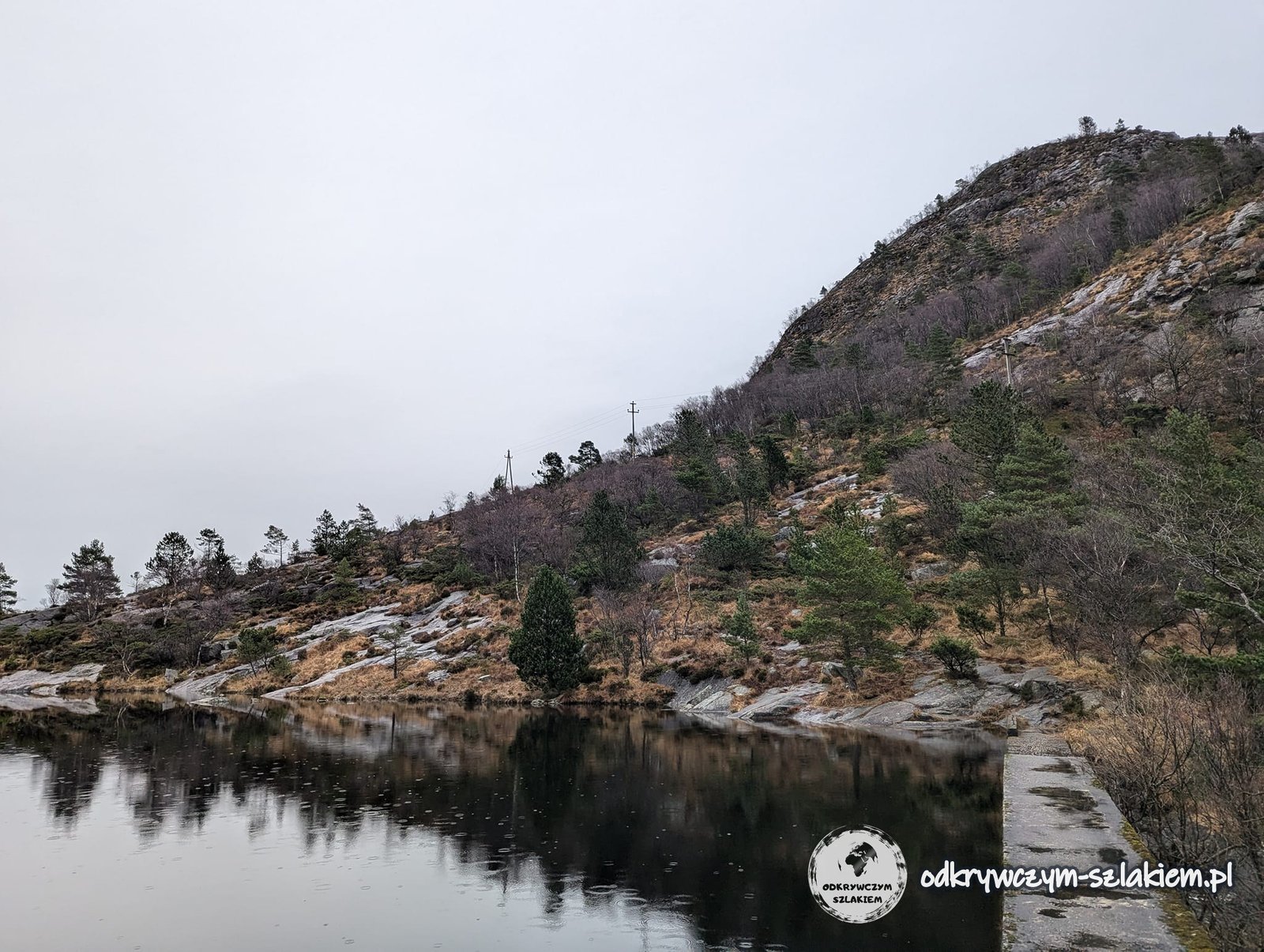
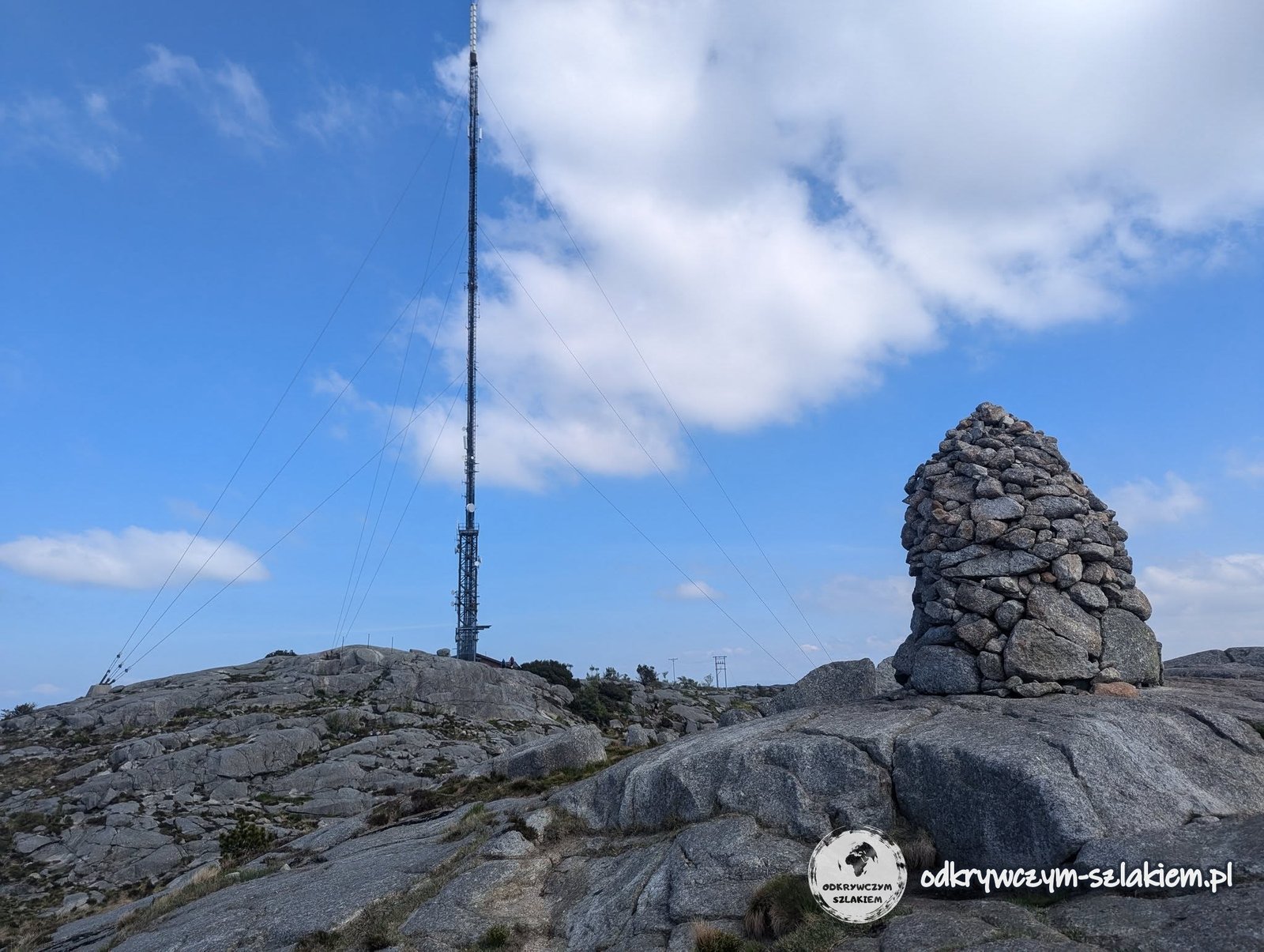
Higher up the forest ends and a rocky plateau begins, with grasses, heathland and small lakes, and near the summit there is a mast with an antenna. Along the way, views of the fjord and the city kept opening up.
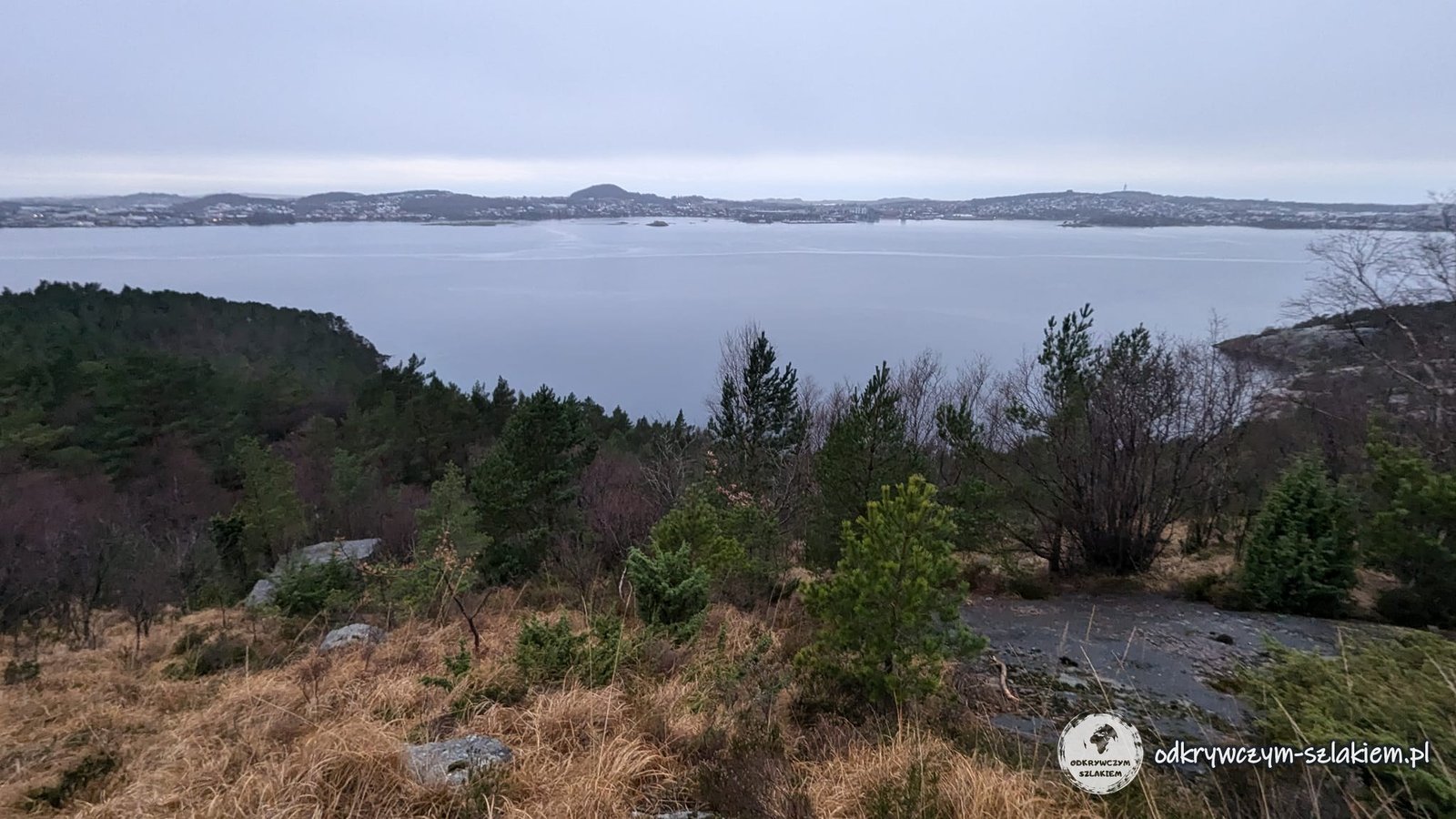
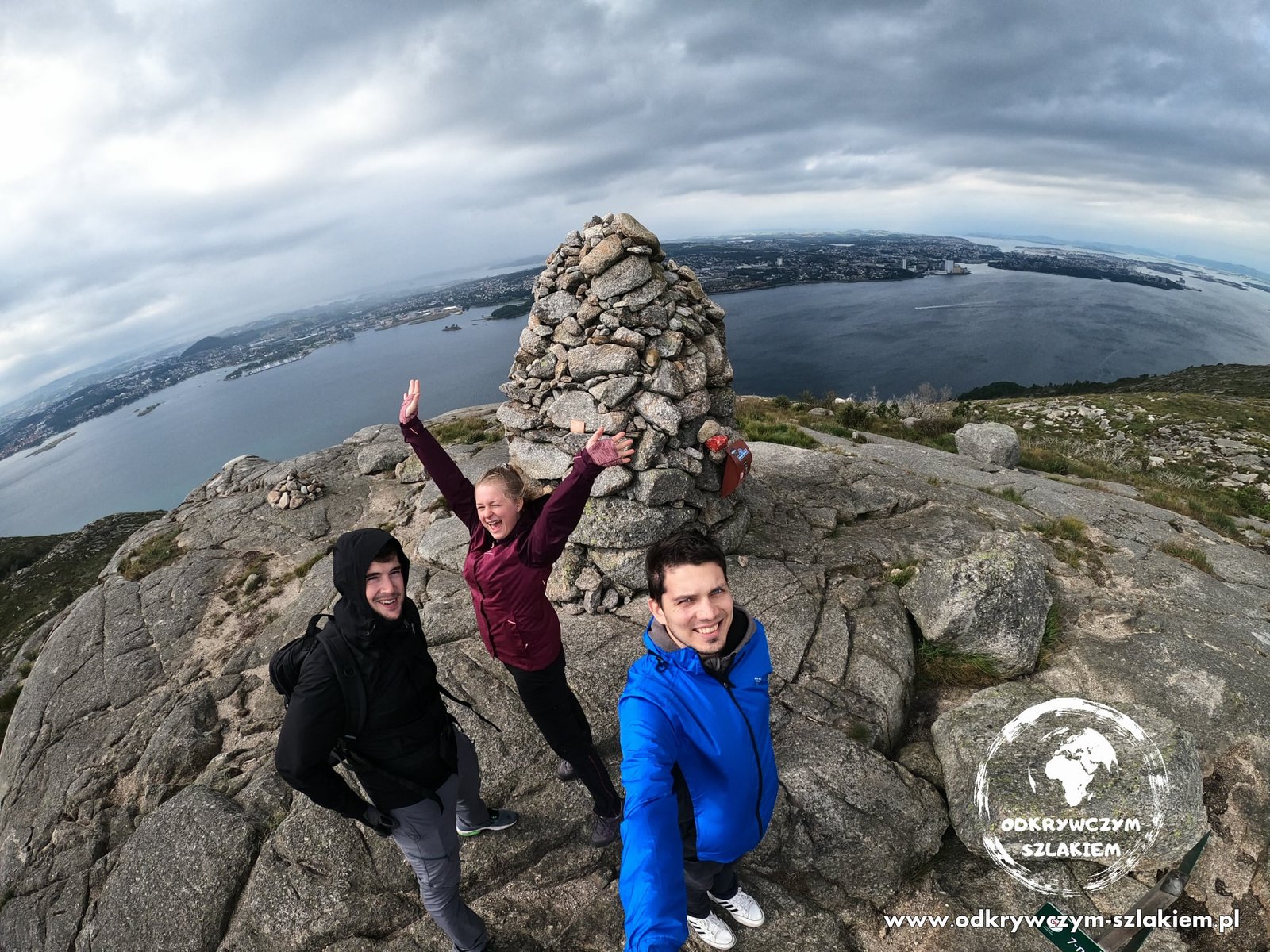
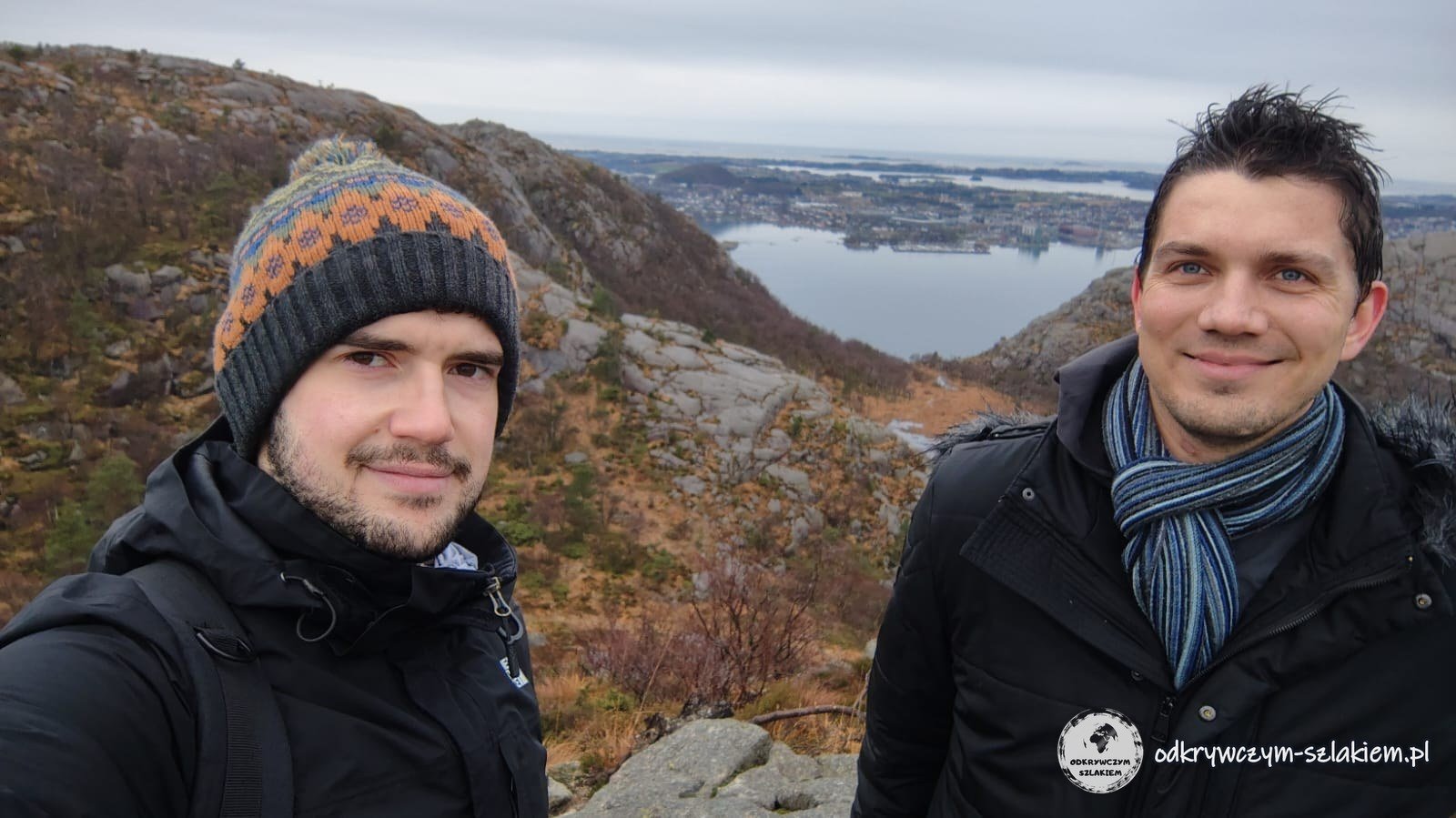
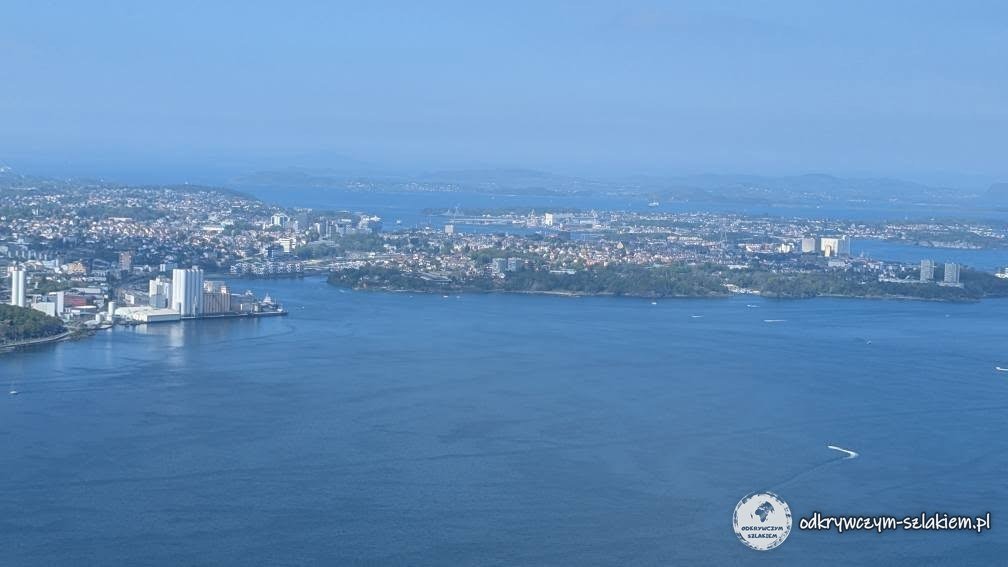
From the summit of Lifjellvarden, next to a large stone cairn, Stavanger on the opposite side of the fjord, the islands and the open sea are laid out before you. We were a bit lucky – the rain only caught us on the way back.
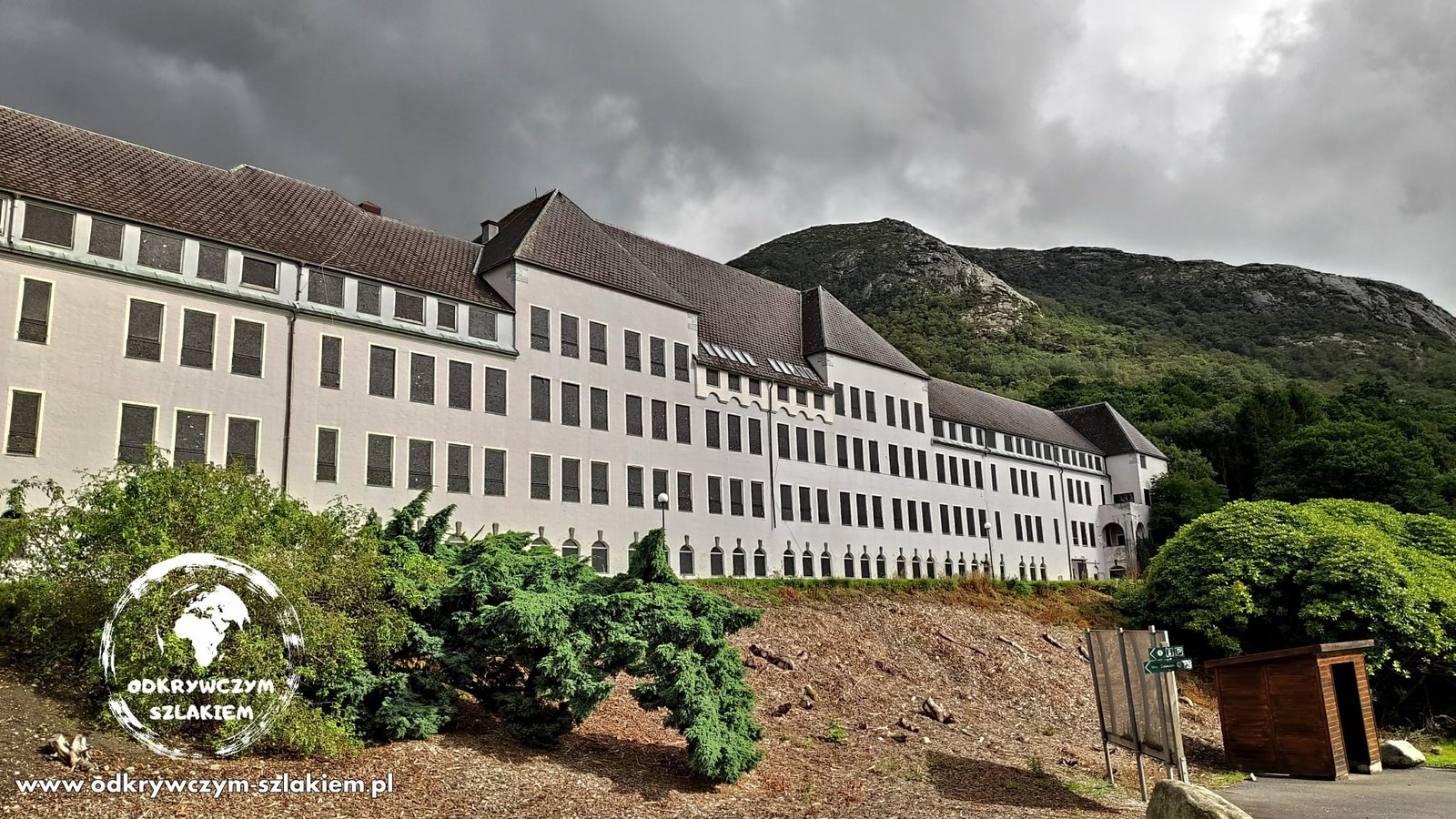
In Dale itself there is a huge building of a former psychiatric hospital – abandoned today and tightly boarded up, so we only saw it from the outside.
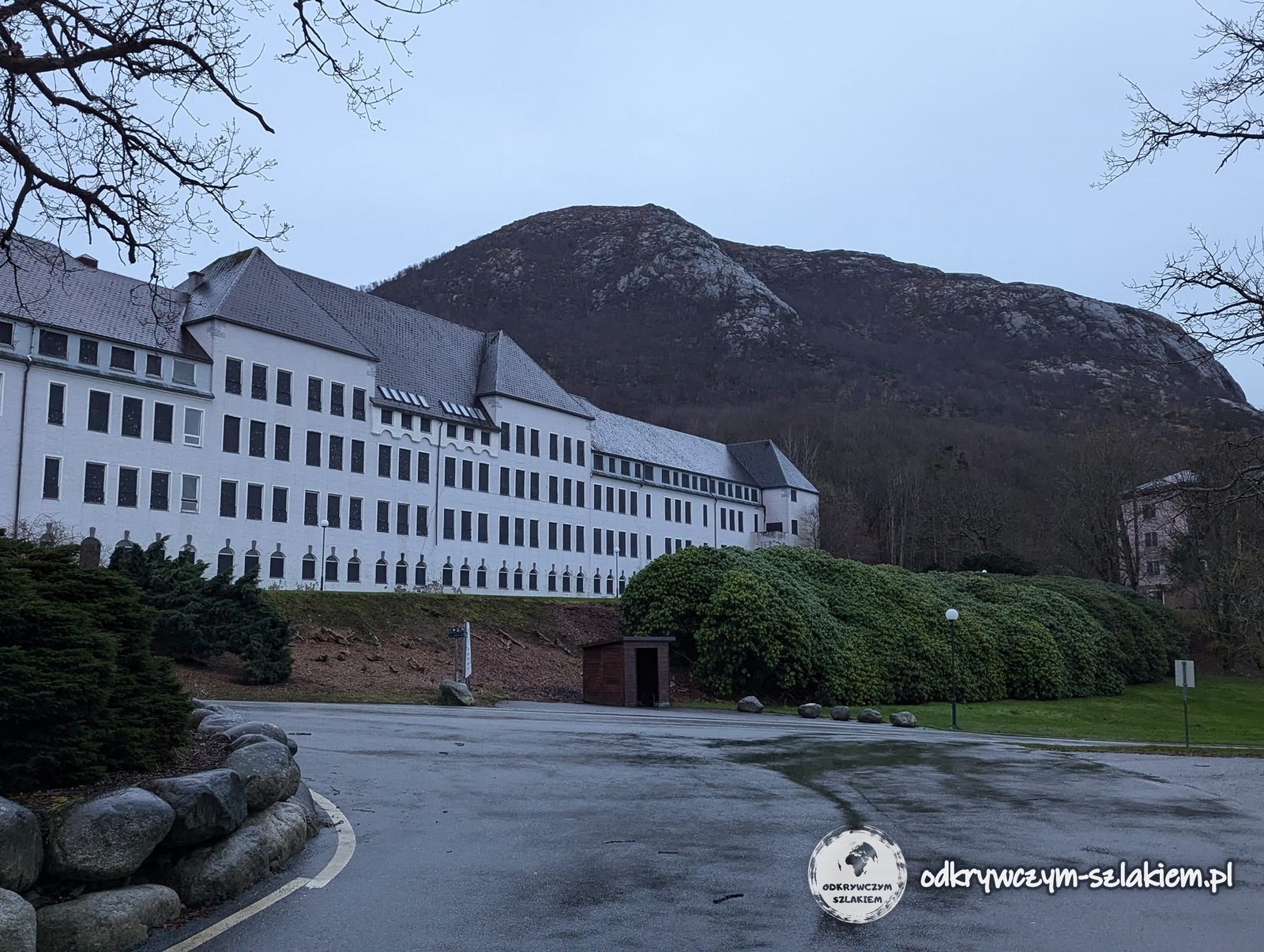
Dale in December 2024
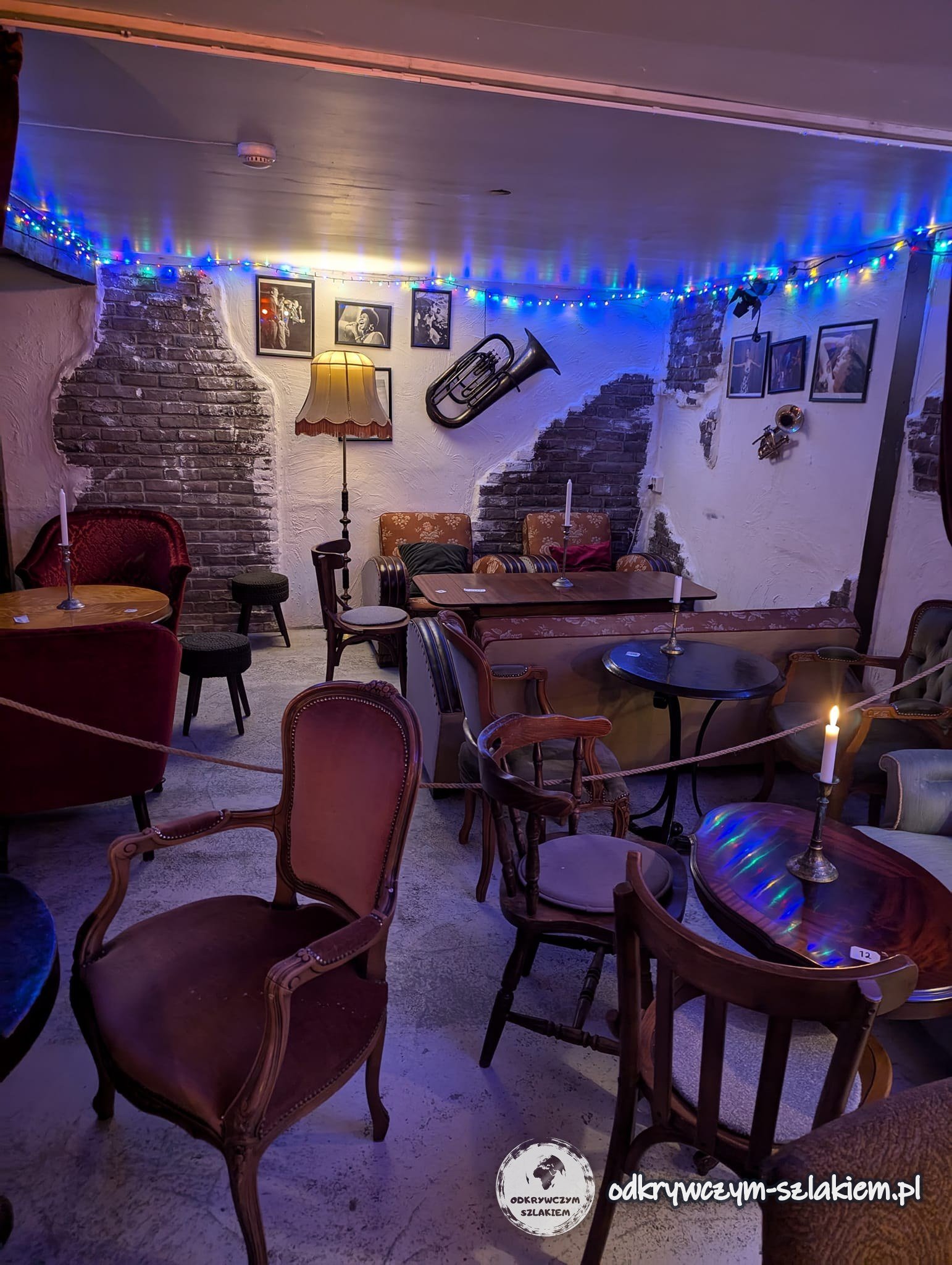
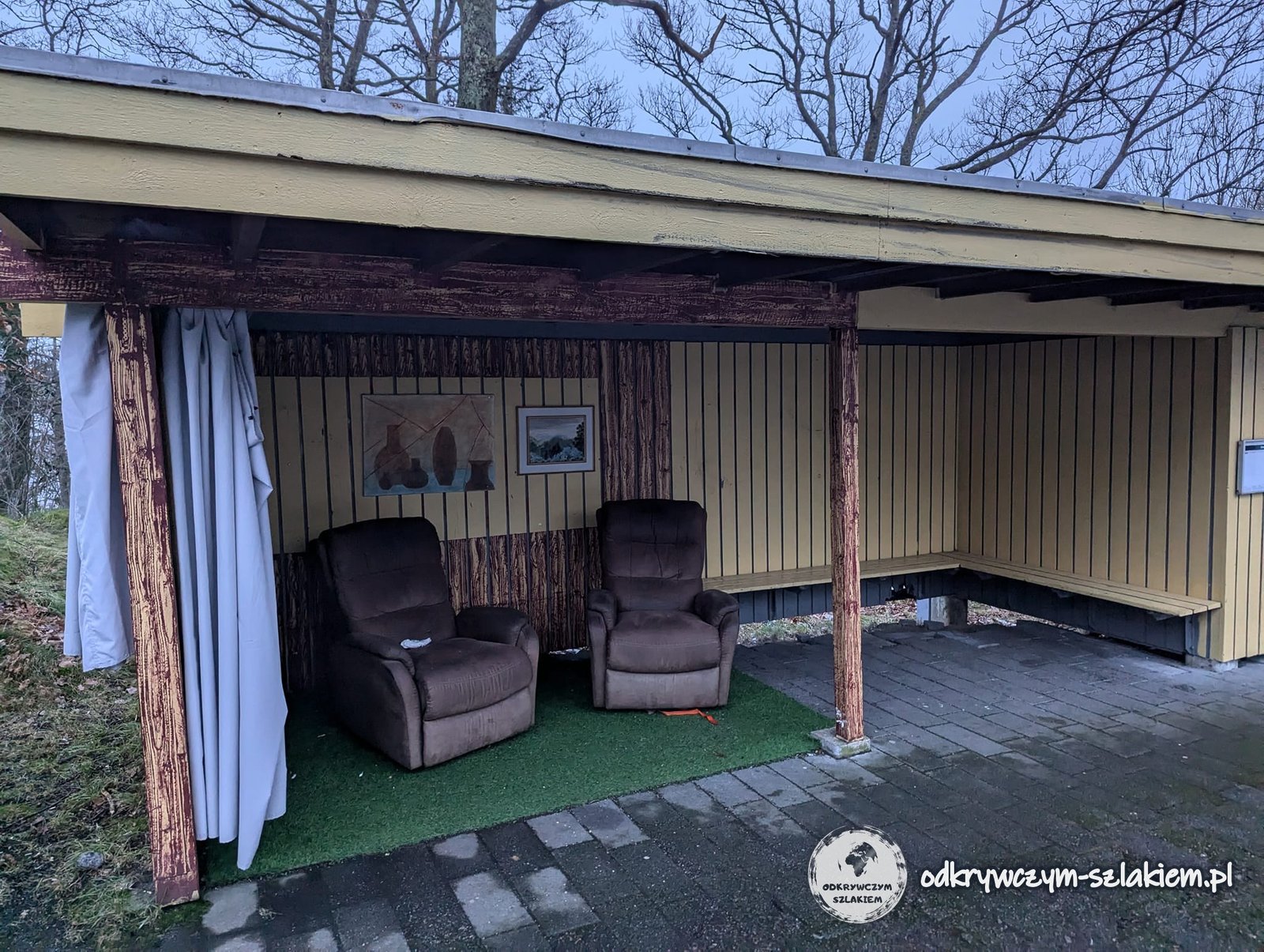
On the last day of my stay in December 2024 I went back to Dale with Michał. Right at the start, next to the former hospital building, a shelter furnished like a living room caught our attention: with armchairs, curtains and pictures on the wall.
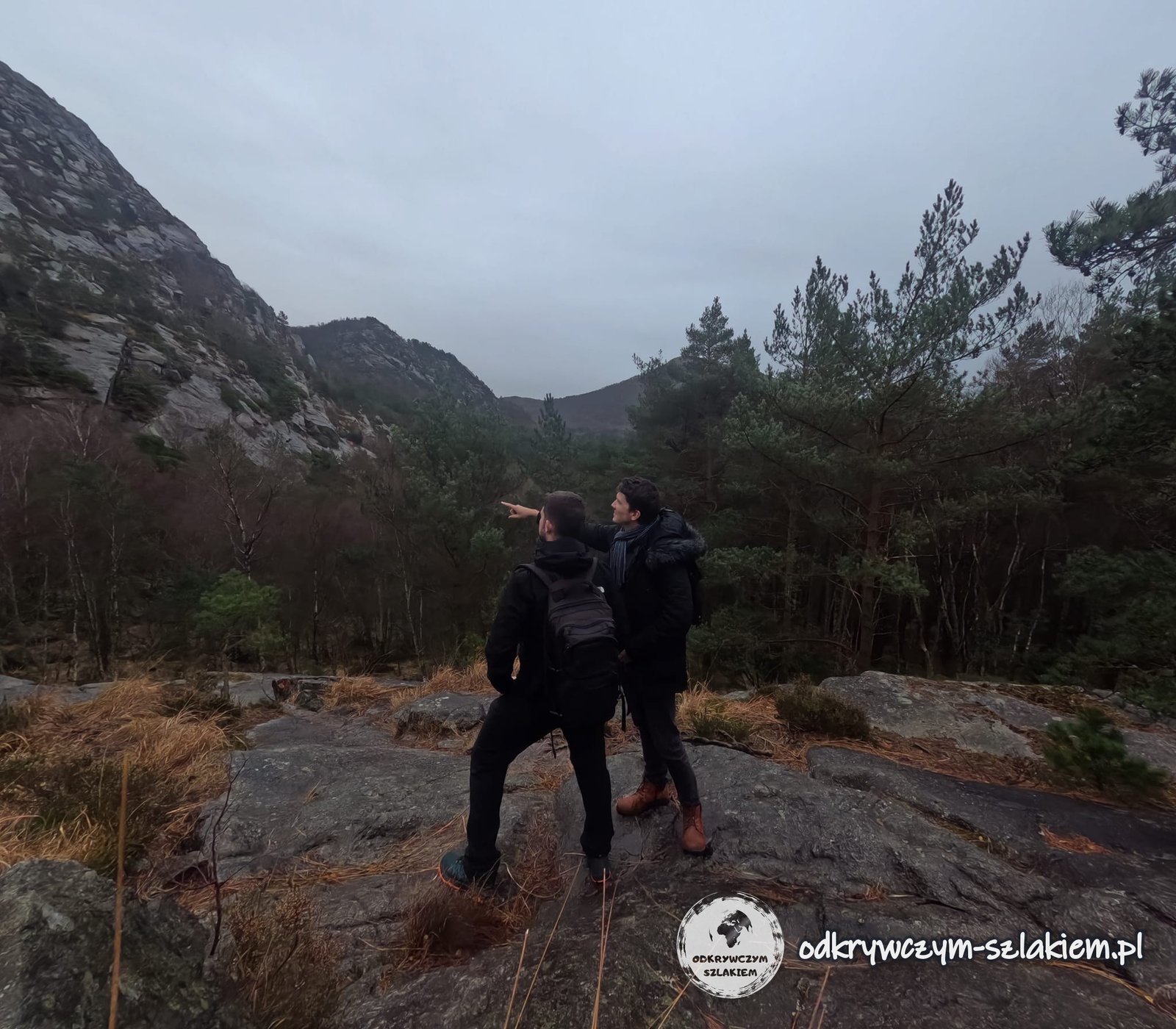
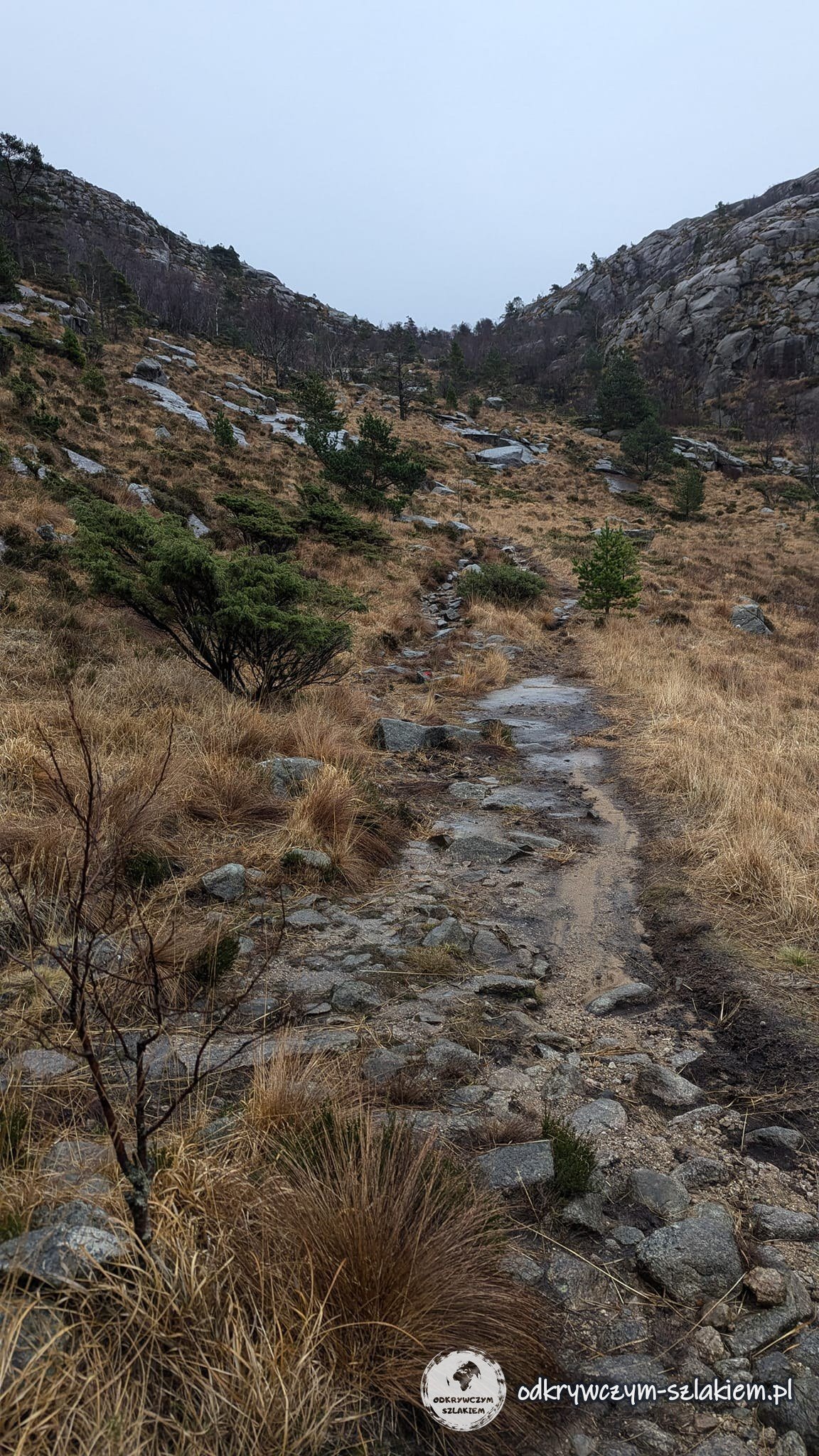
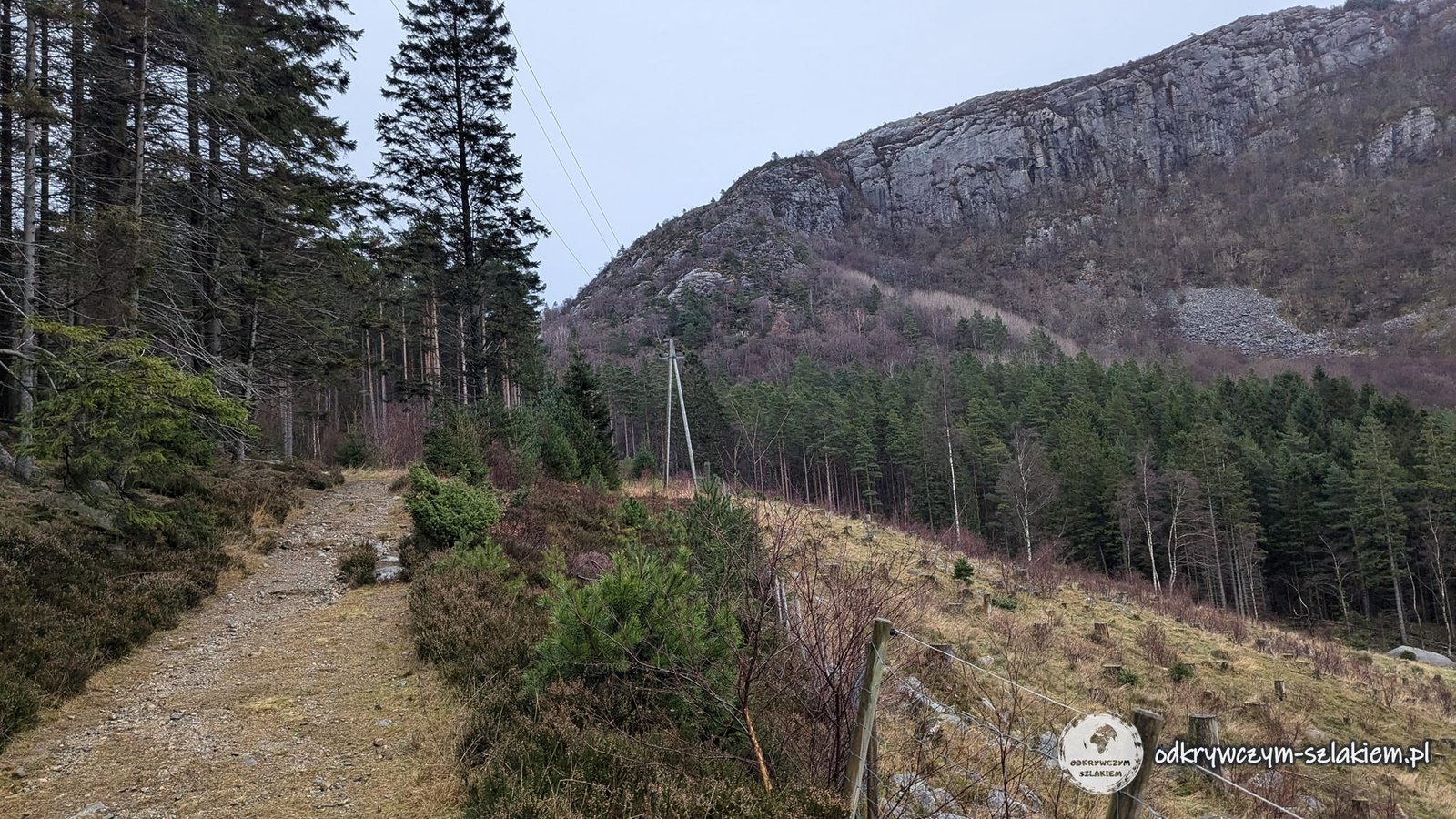
We started practically at sea level and climbed to about 300 m above sea level. The trail first leads through the forest, over stones and roots, in places along wooden boardwalks and over wet rock with a rope handrail, and higher up across rocks, dry grass and heathland with small lakes.
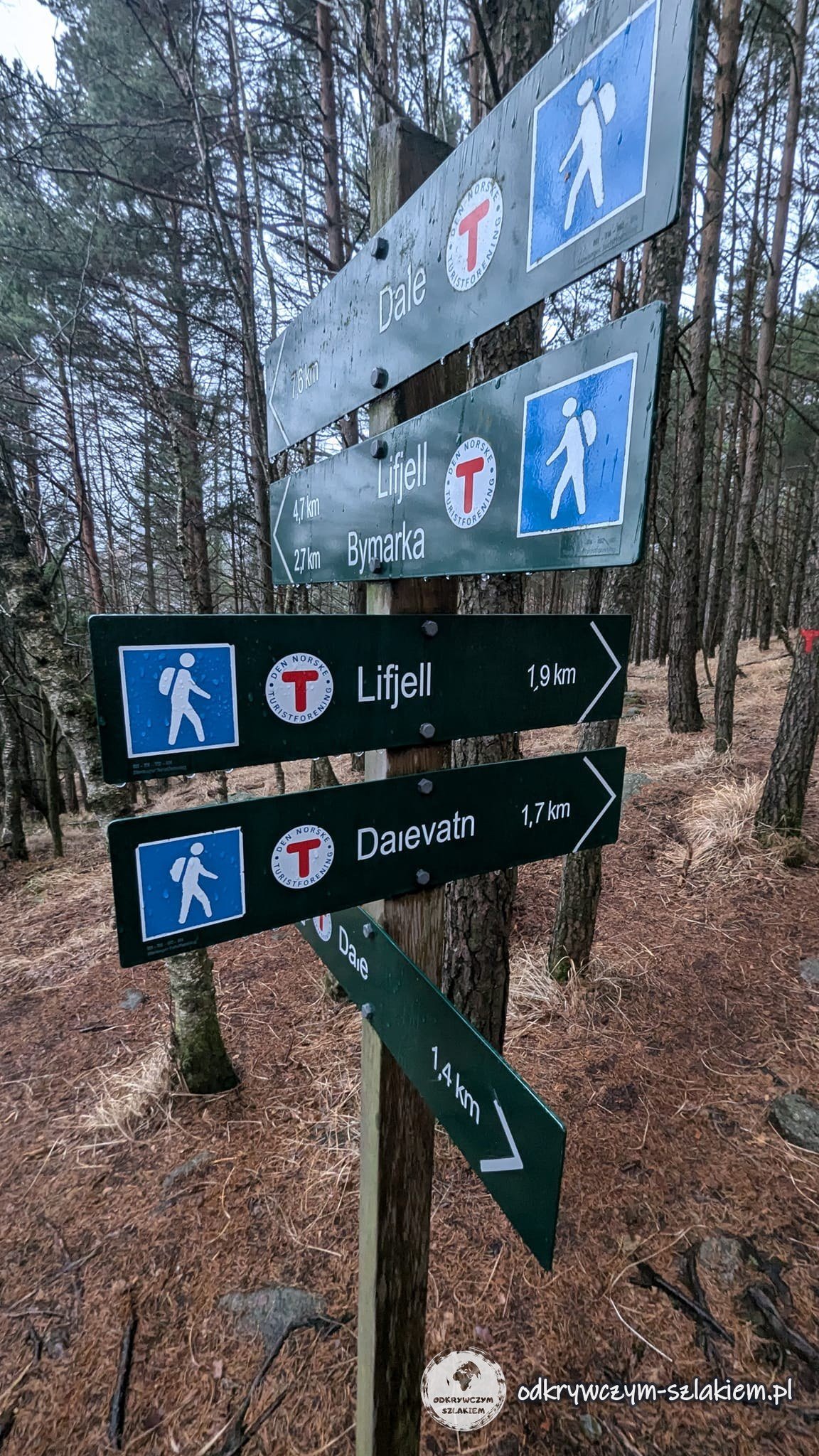
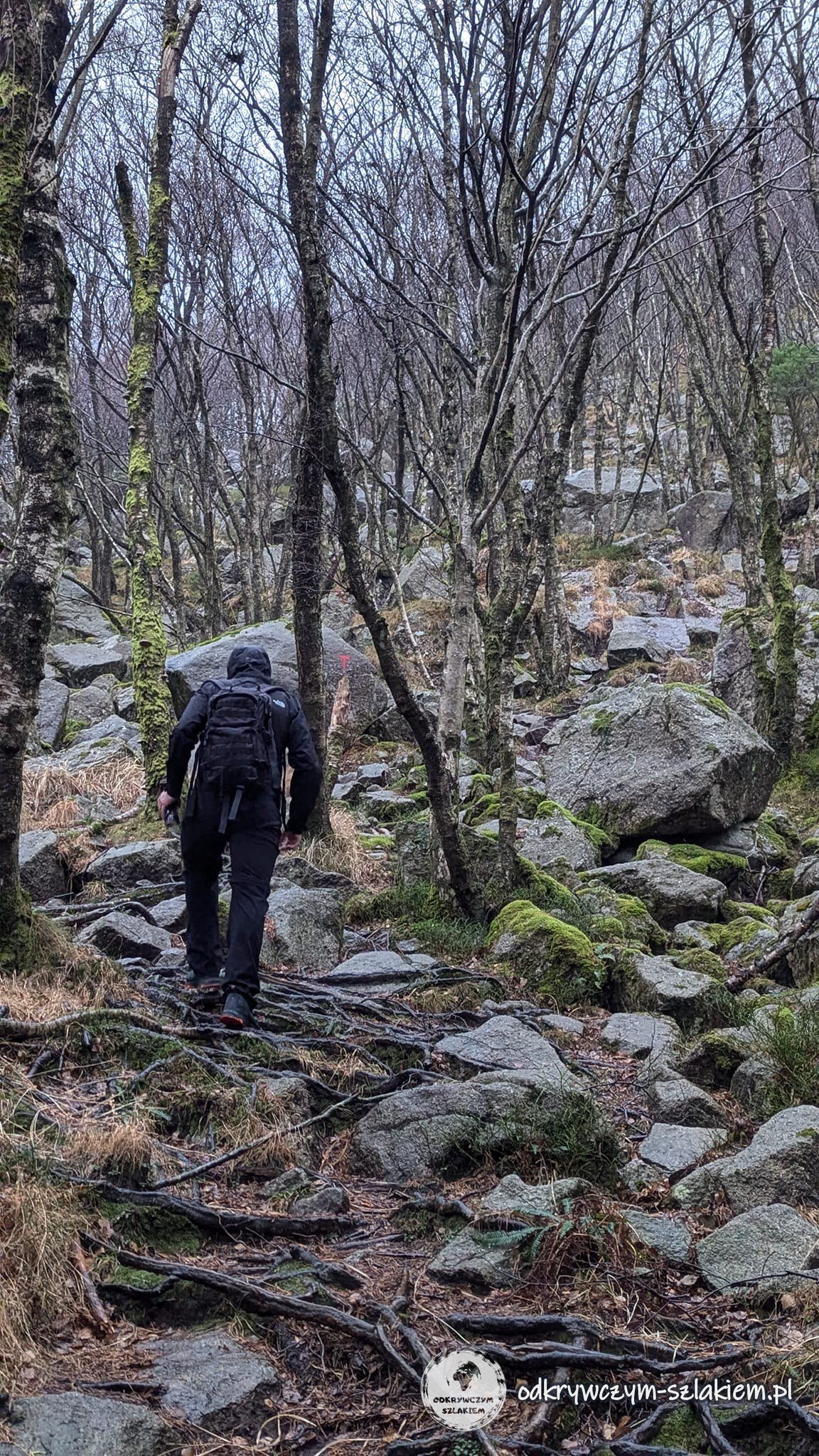
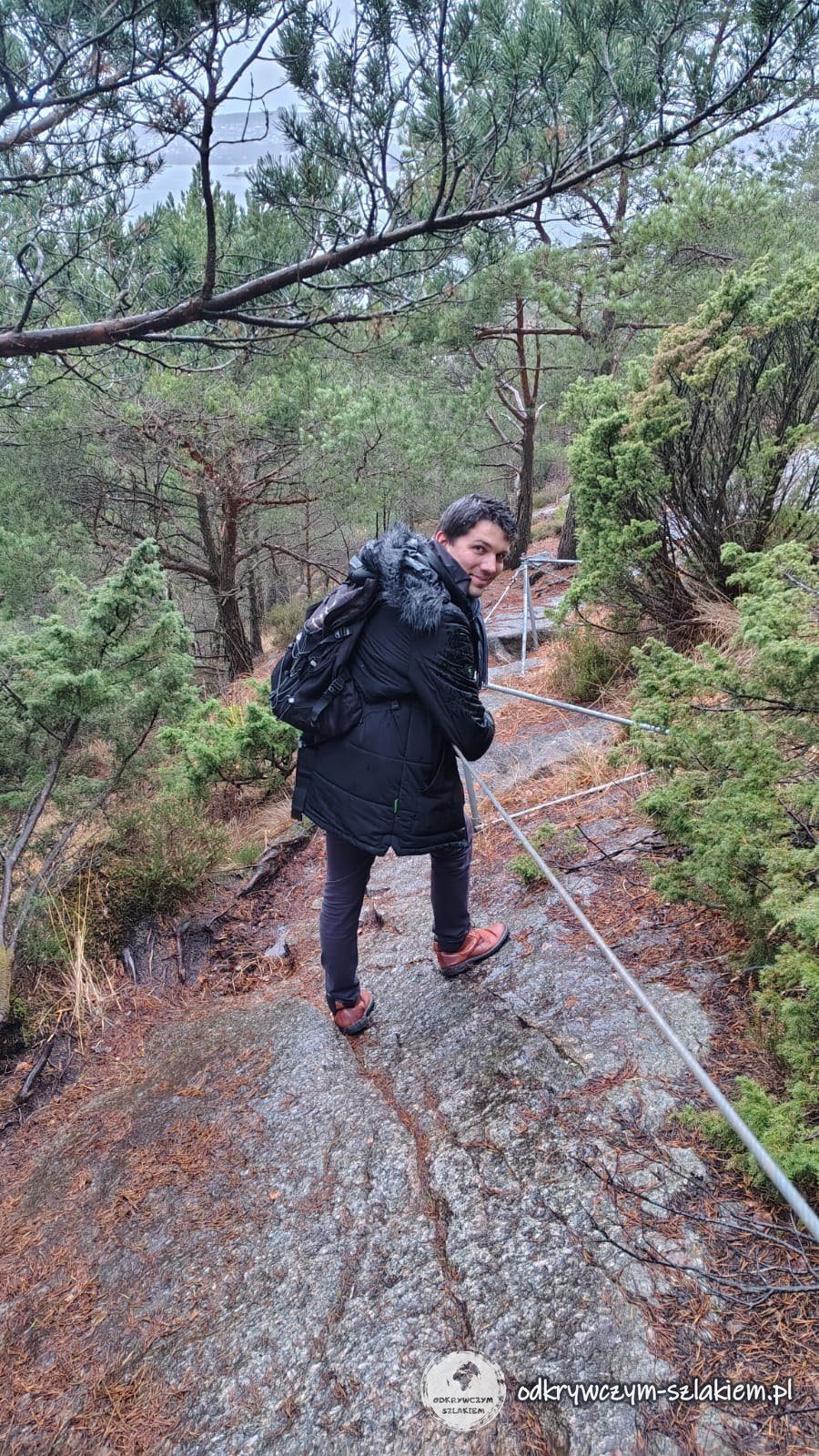
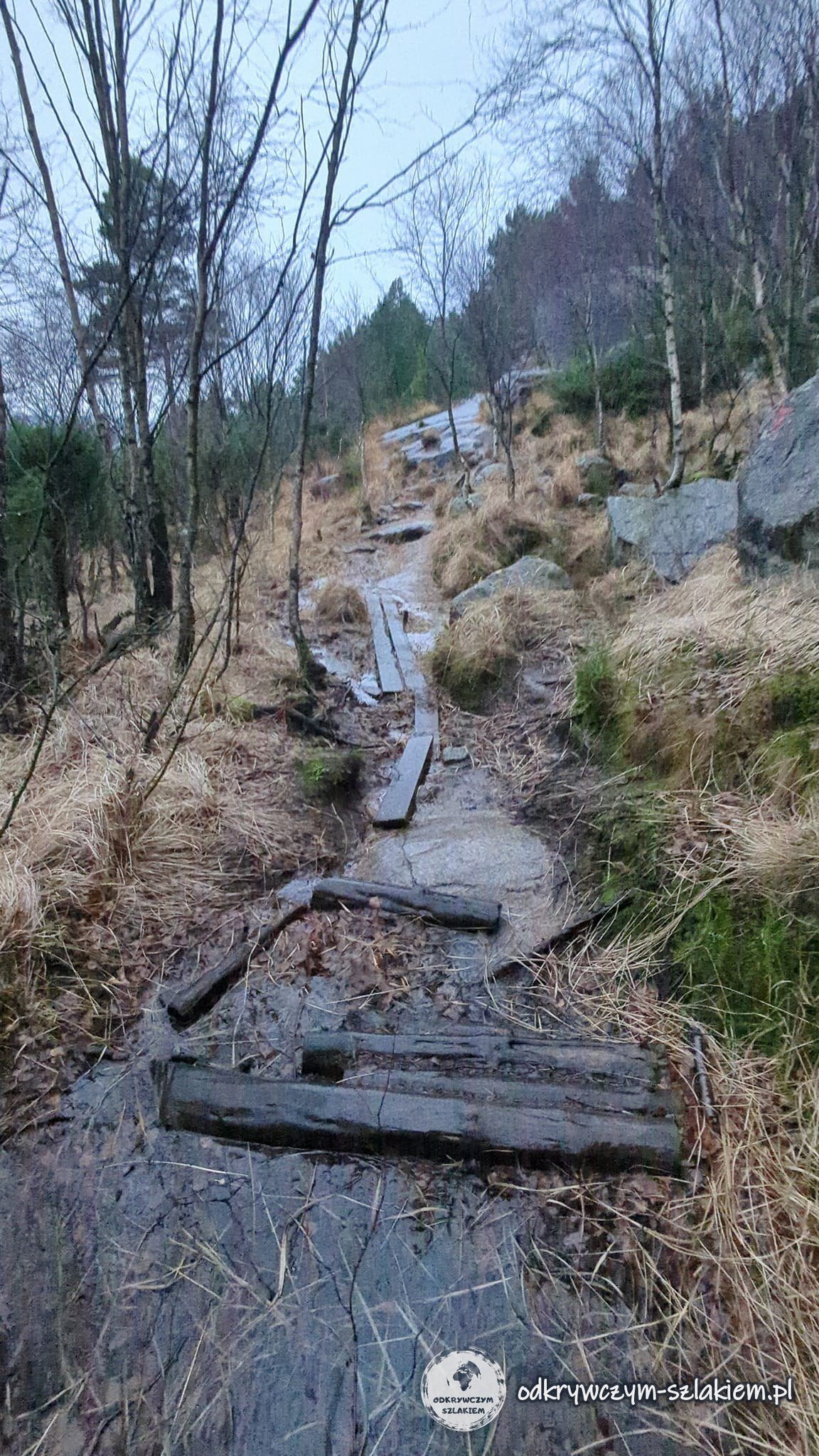
The visibility was not the best and our view of Stavanger was so-so, but at least halfway through it stopped raining completely. On the roughly 6 km route we met only four other hikers.
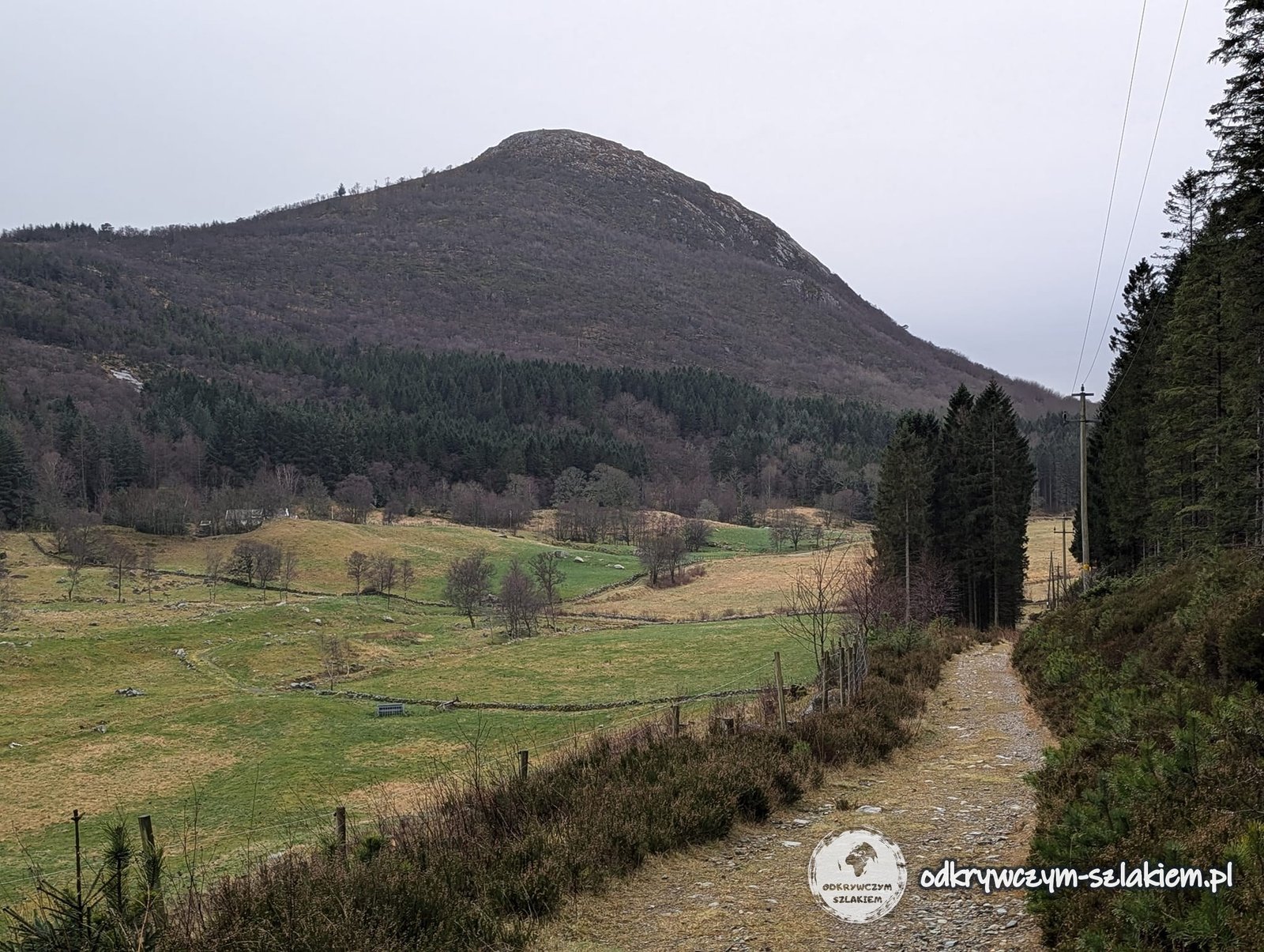
Lifjell in the May sunshine (2025)
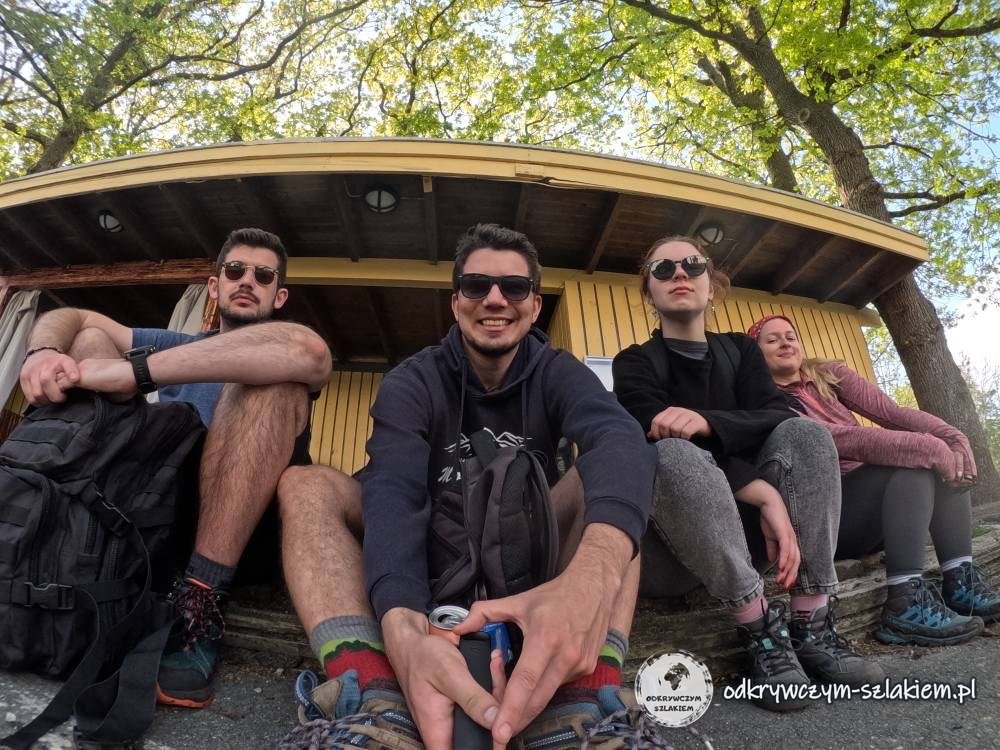
In May 2025, the day after Preikestolen, the four of us did a more relaxed, local hike – again from Dale up Lifjell (about 297 m above sea level). It came to about 8 km and about 400 m of elevation gain. The weather was perfect: full sunshine, little wind and a maximum of 13°C, and yet we often walked in T-shirts. We joked that we had “escaped to warmer countries”, because it was colder in Poland at the time. At the start, a photo in the living-room shelter was a must.
This time we reached the cairn and the mast on the summit in full sunshine, and Stavanger on the other side of the fjord was much easier to see than in December.

Sørmarka forest
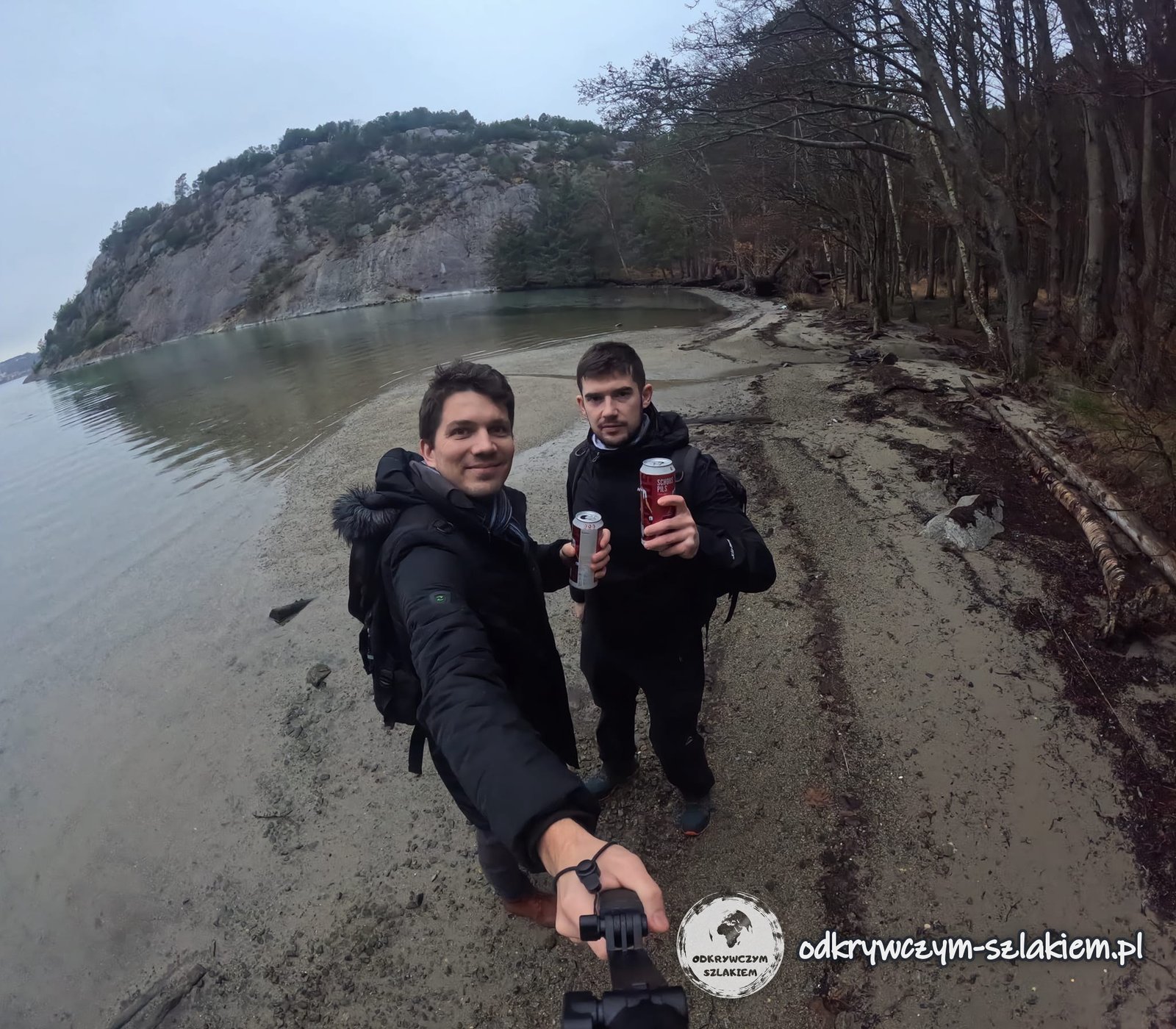
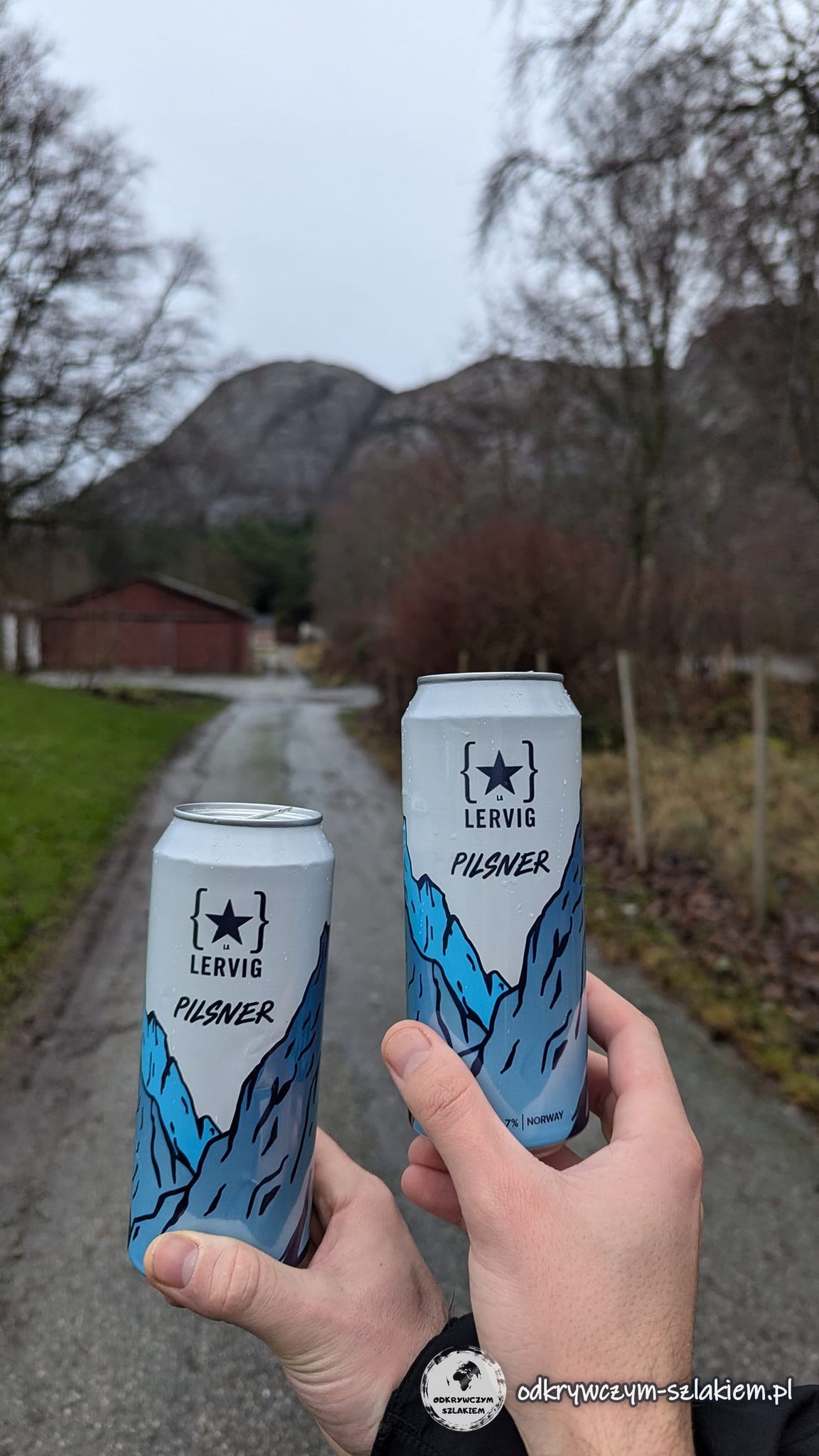
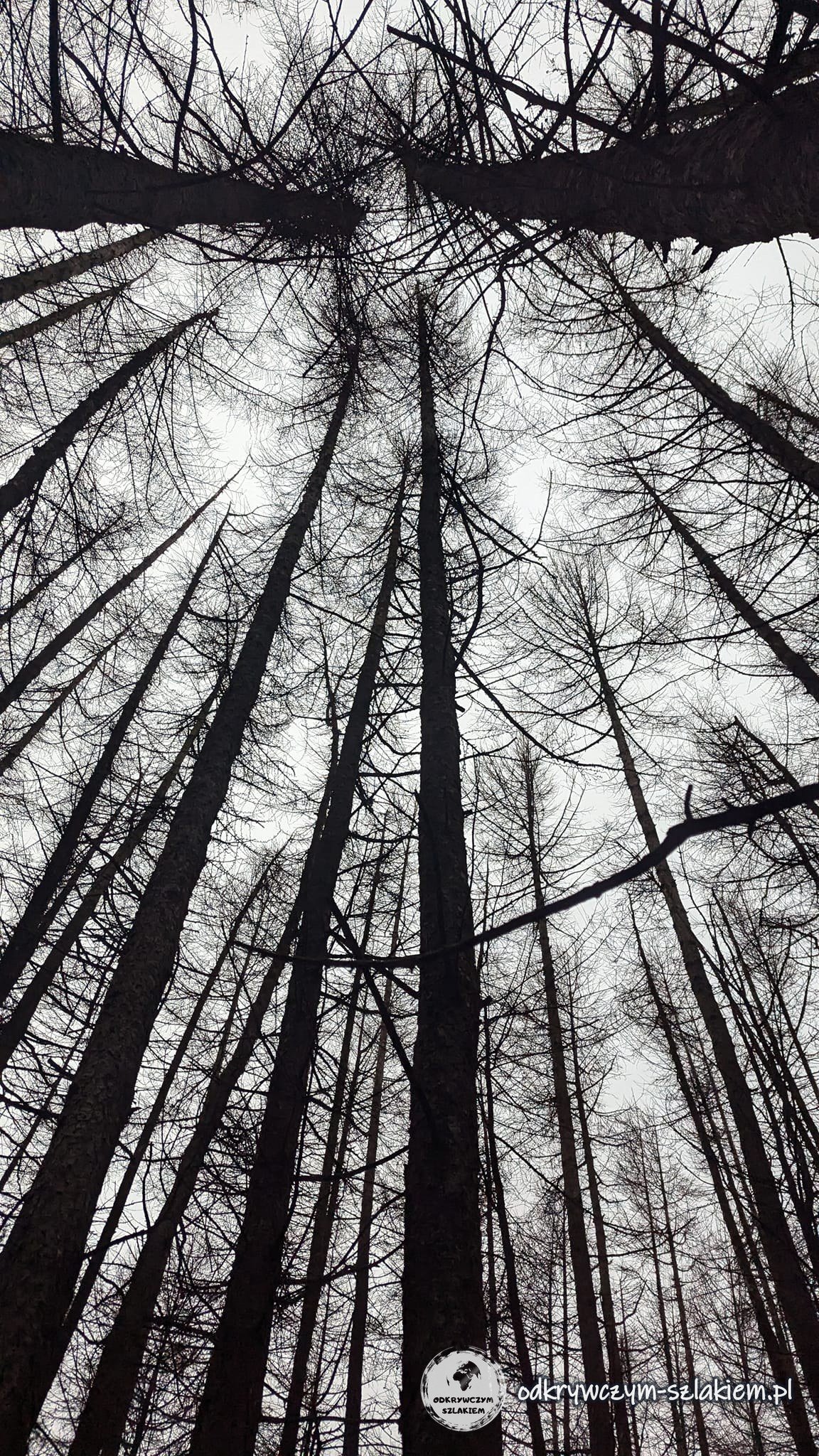
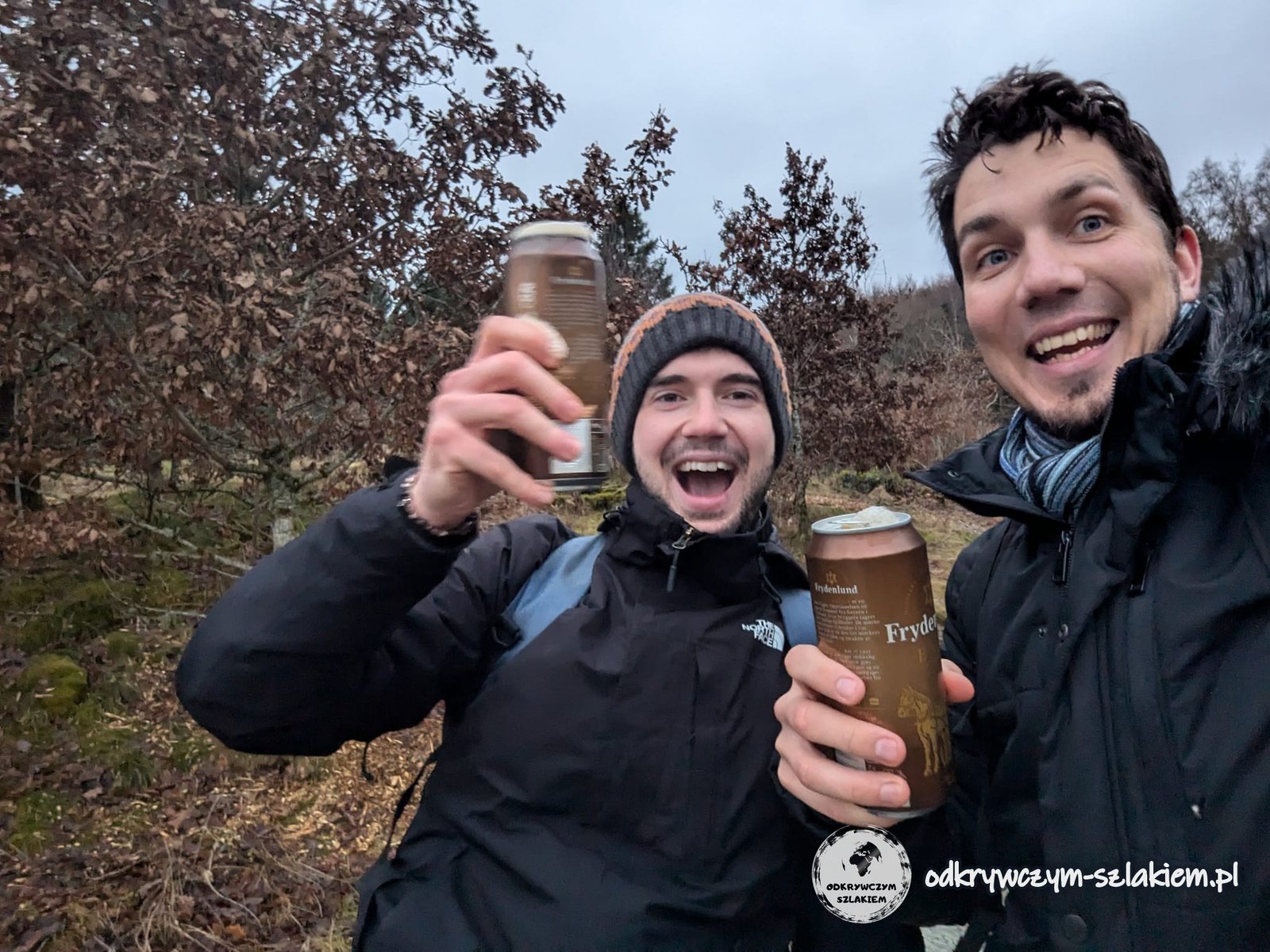
Closer to the centre, in December 2024, we walked a forest trail of a few kilometres in Sørmarka. In December the forest was already grey and leafless, and at the end of the walk Michał and I raised a toast with a can of beer.
Trails around Stavanger – Dalsnuten, Bjørndalsfjellet, Vedafjell and Rennesøy
Around Stavanger you don’t have to climb high to get beautiful views – the routes are a few kilometres long and easily fit into half a day. The best-known trail in the area, to Preikestolen, has its own post – in May 2025 I went back there after eight years, this time via the new route through the undersea Ryfylketunnelen tunnel (more in the post about Preikestolen). Below are the short routes I walked on my later visits.
| Trail | When | Route | What to see |
|---|---|---|---|
| Lifjell from Dale | 2021, Dec 2024, May 2025 | about 6–8 km, about 400 m up | Stavanger across Gandsfjord |
| Dalsnuten (324 m) | Jun 2023 | about 2 hours there and back | Øvre Eikenuten (239 m), the fjord |
| Bjørndalsfjellet (362 m) | May 2026 | two summits: 362 and 346 m | Dalsnuten, Lifjell, lakes |
| Vedafjell near Sandnes | Nov 2025 | 5 km, more than 200 m up | mast and cairn, a valley with lakes |
| Rennesøy island | May 2026 | an upland trail, reached by bus | pastures, sheep and cows |
| Sørmarka forest | Dec 2024 | a few kilometres | a forest within the city limits |
| Sverd i fjell from the boardwalk | Nov 2025 | about 5 km | boardwalk above Hafrsfjord, the swords |
Dalsnuten (2023)
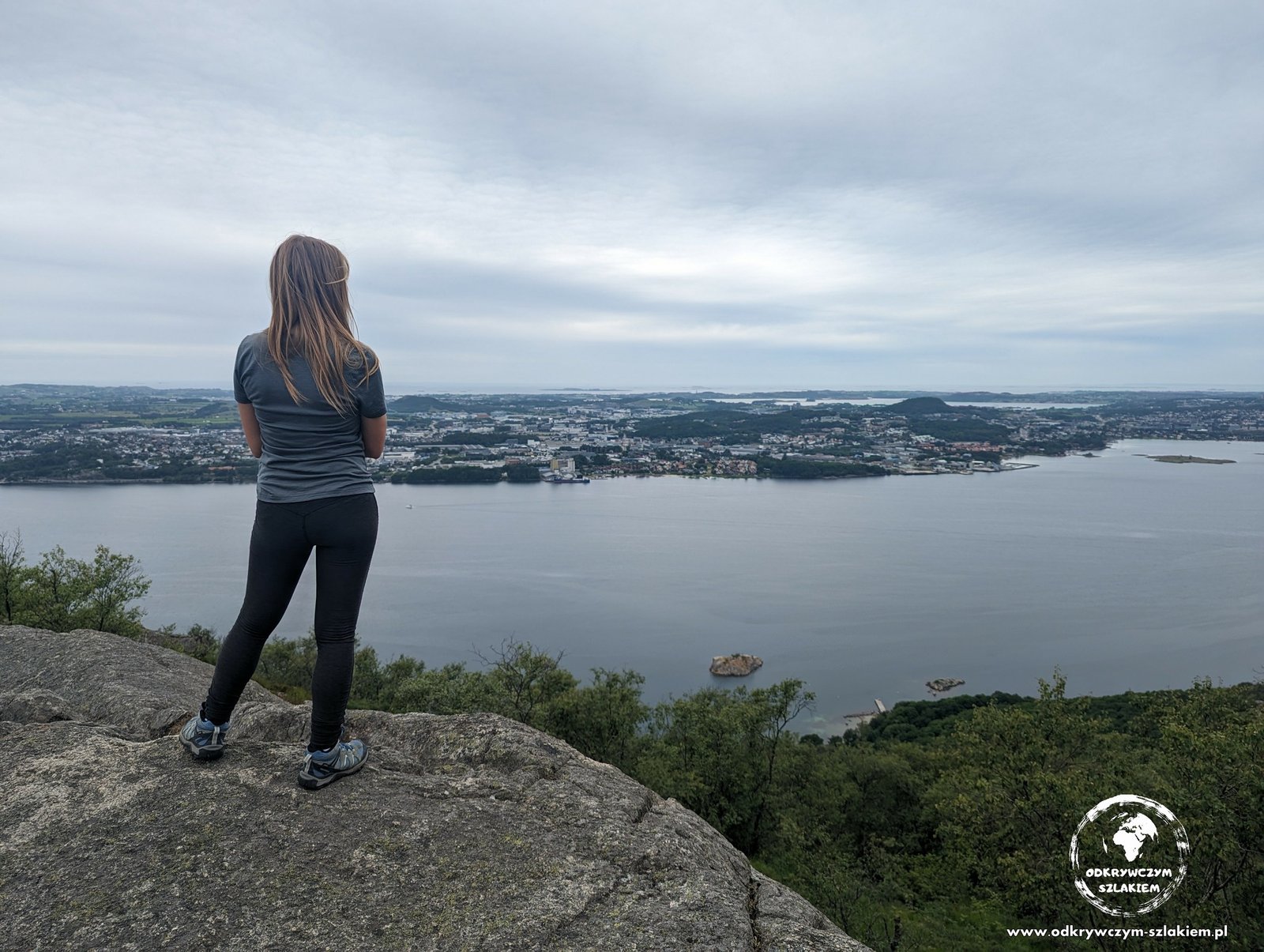
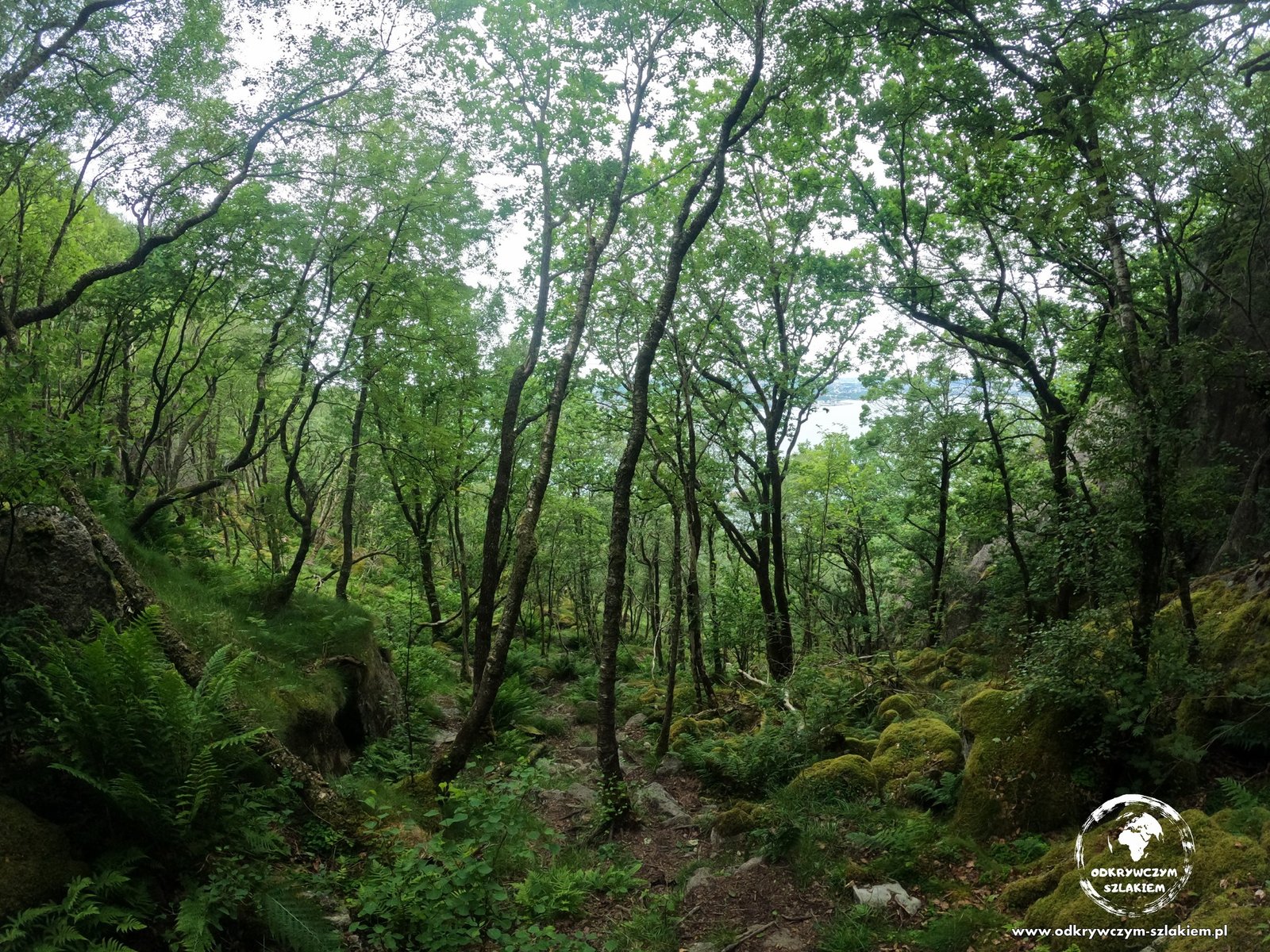
In June 2023 we flew to Stavanger together, again as guests of Michał and Patrycja – mainly to hike the trail to Trolltunga. On another day we climbed Dalsnuten (324 m above sea level) – a small mountain near Stavanger with a trail of about two hours (there and back). On the way you pass the summit of Øvre Eikenuten (239 m), with a view of the fjord.

Bjørndalsfjellet (2026)
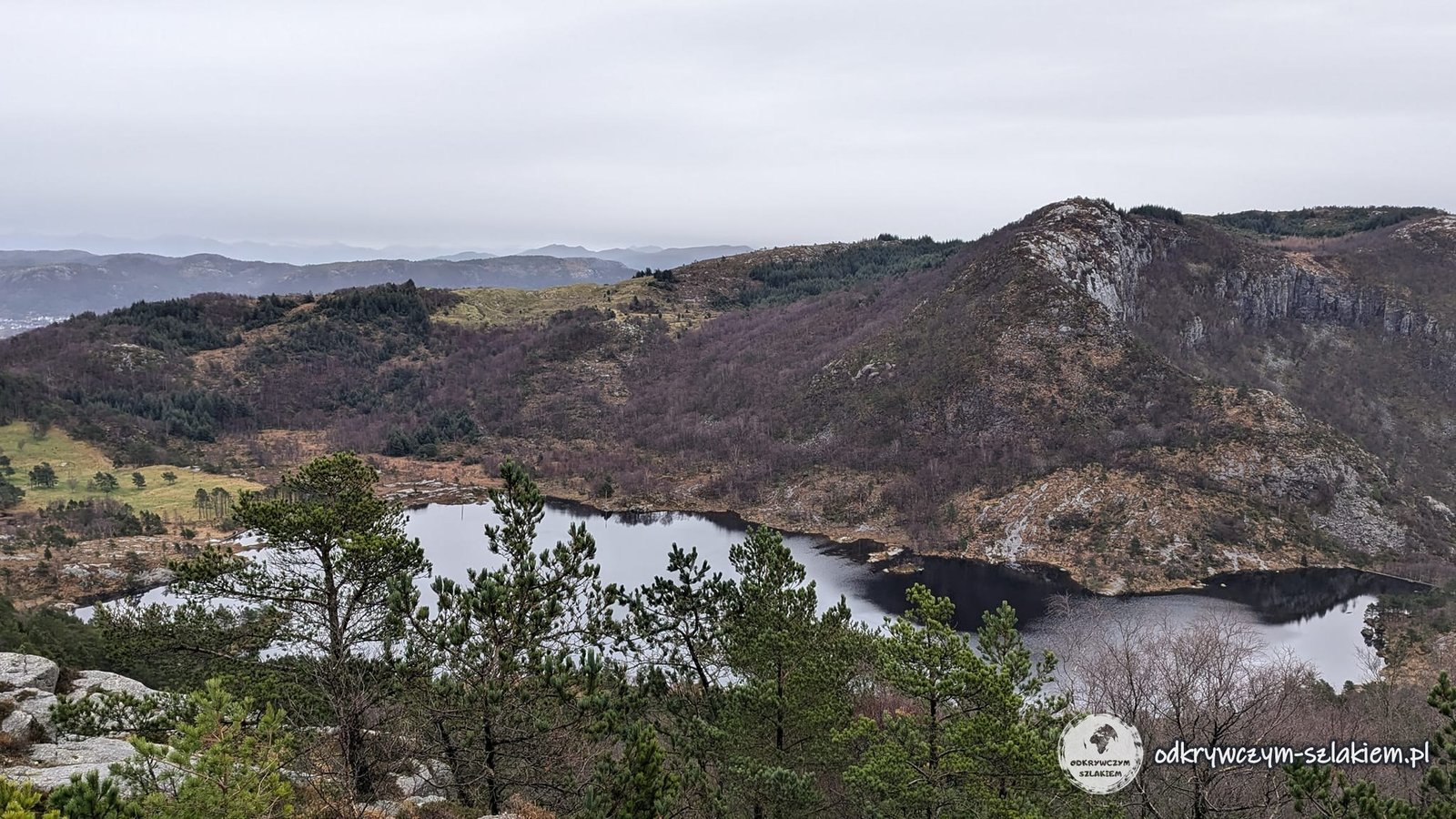
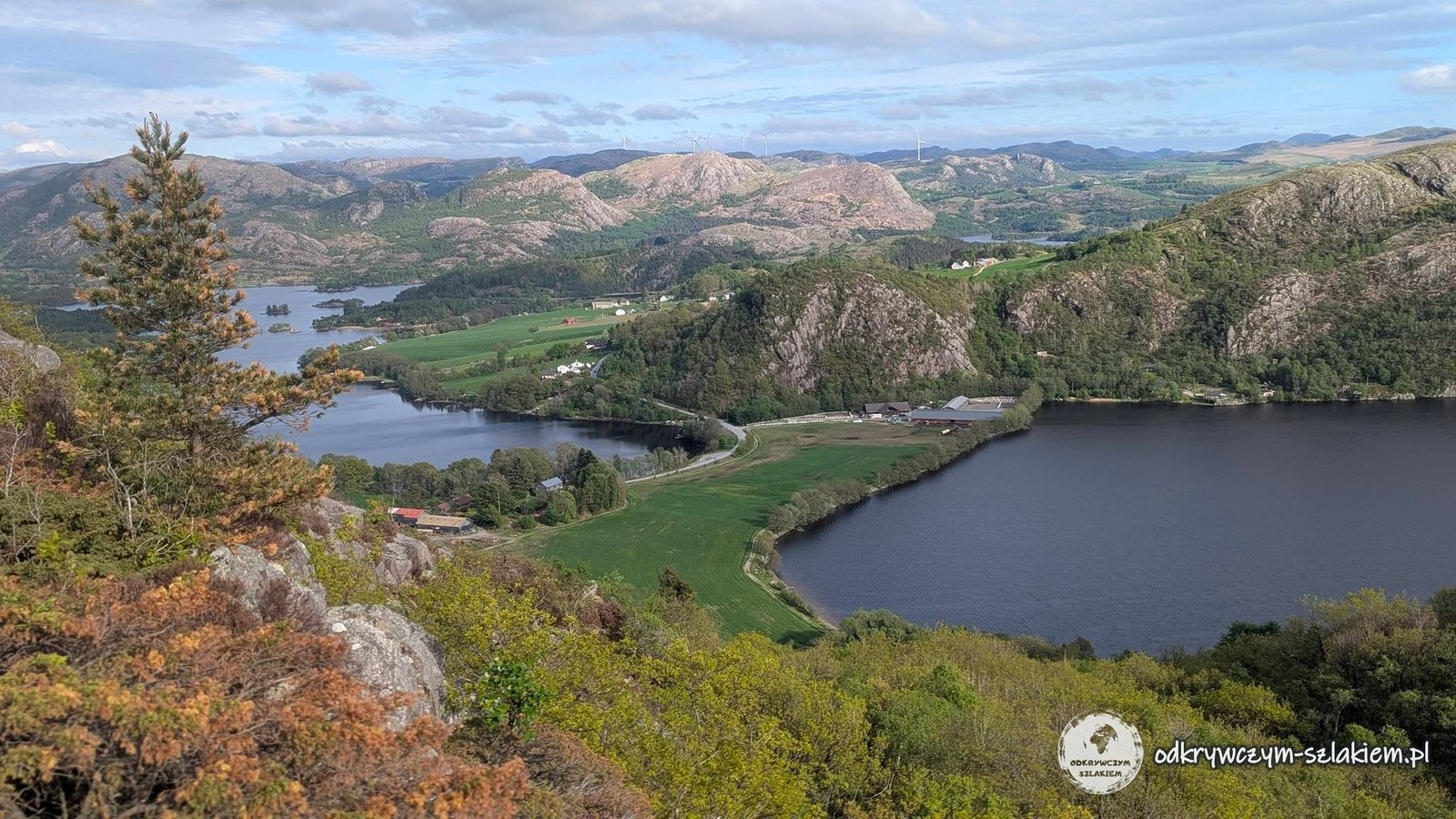
In May 2026 I flew in with Łukasz – it was our last mountain training before Kilimanjaro. The plan may have been a bit more ambitious, but we did manage to explore some new hiking terrain. With Łukasz and Michał we climbed, among others, Bjørndalsfjellet: on the summit there is a tall stone cairn with a sign reading 362 m above sea level, and on the neighbouring top, Mattirudlå, the sign shows 346 m.
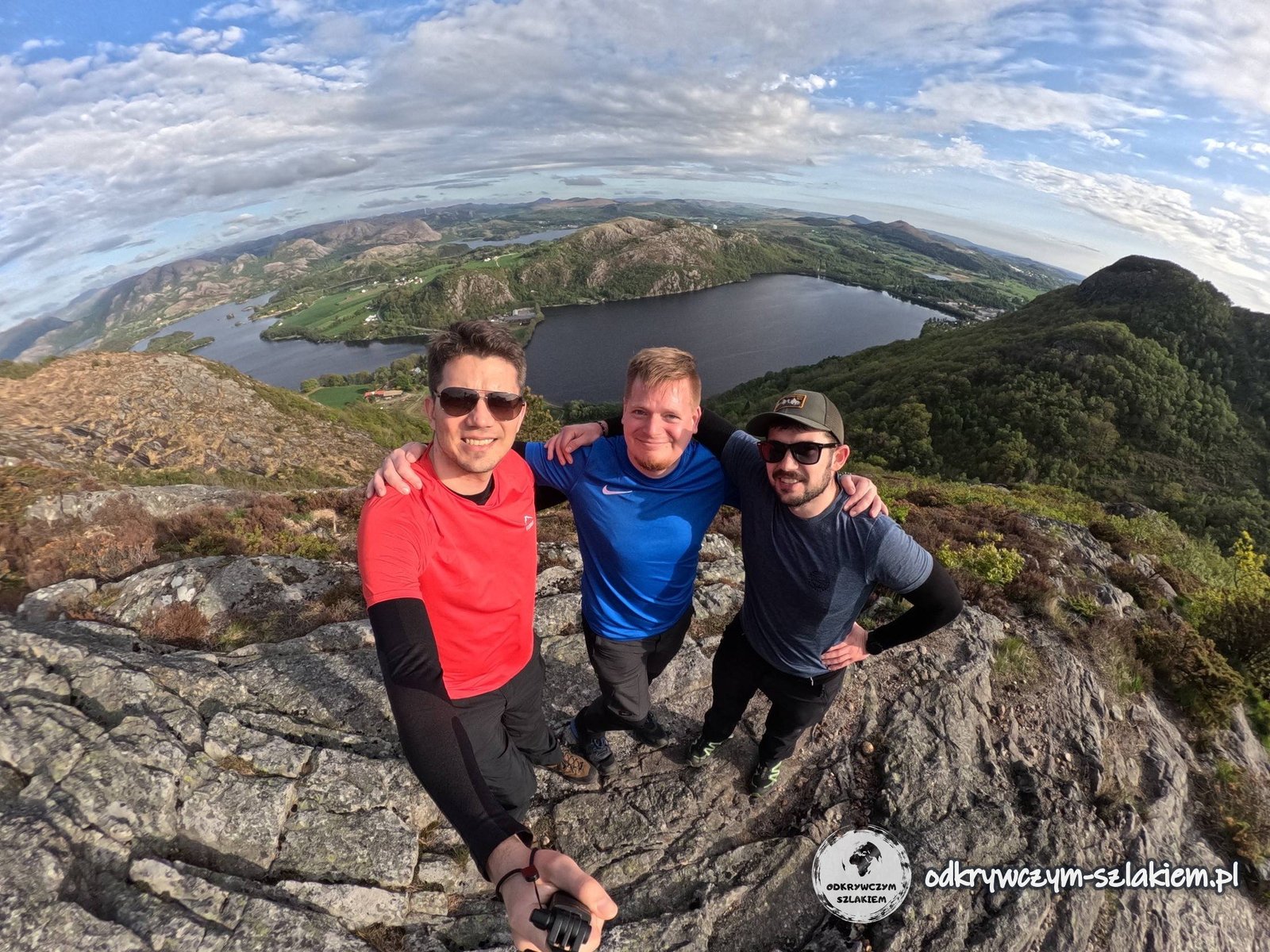
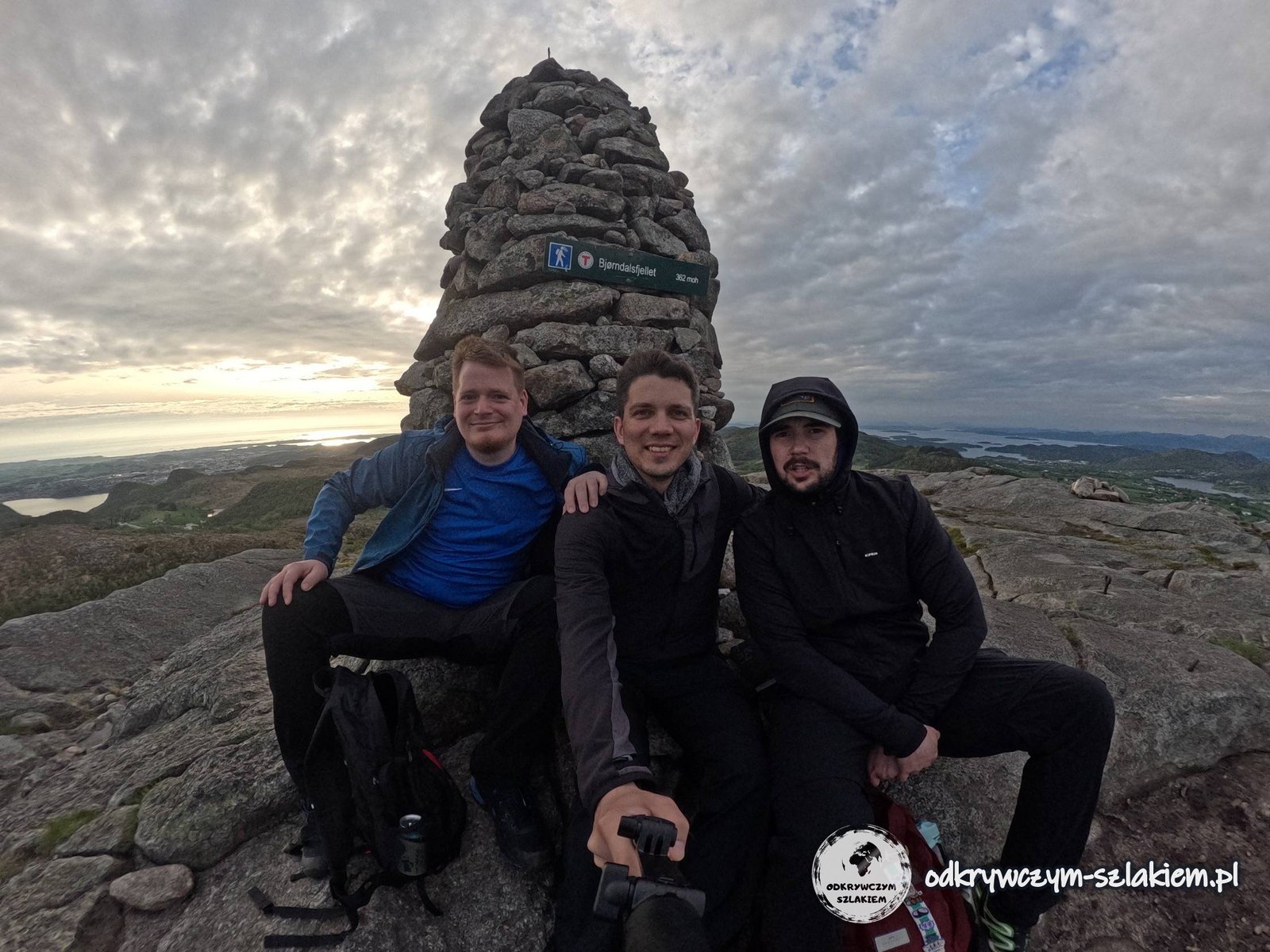
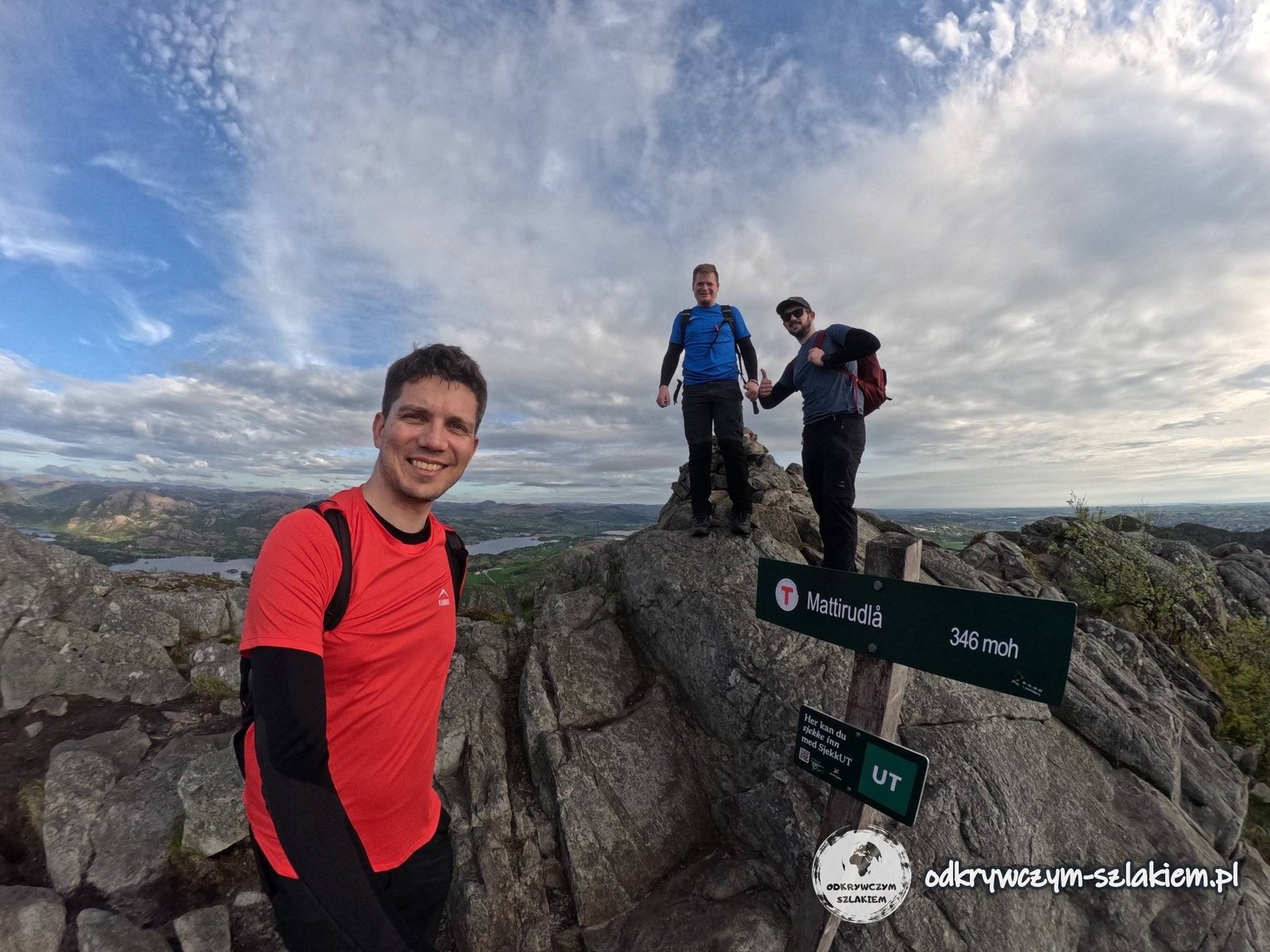
From the top you get a nice view of Dalsnuten and Lifjell, which we know well by now, and of lakes and fields in the valleys. Yet another example that you don’t need to climb very high to get beautiful views.
Vedafjell near Sandnes (2025)
In November 2025 we were supposed to get away to a cabin for two days, but this time it didn’t work out. Instead we went for a nice mountain walk somewhere we hadn’t been yet – Vedafjell near Sandnes. It came to about 5 km and more than 200 m of elevation gain. On the summit there is a mast and a stone cairn.
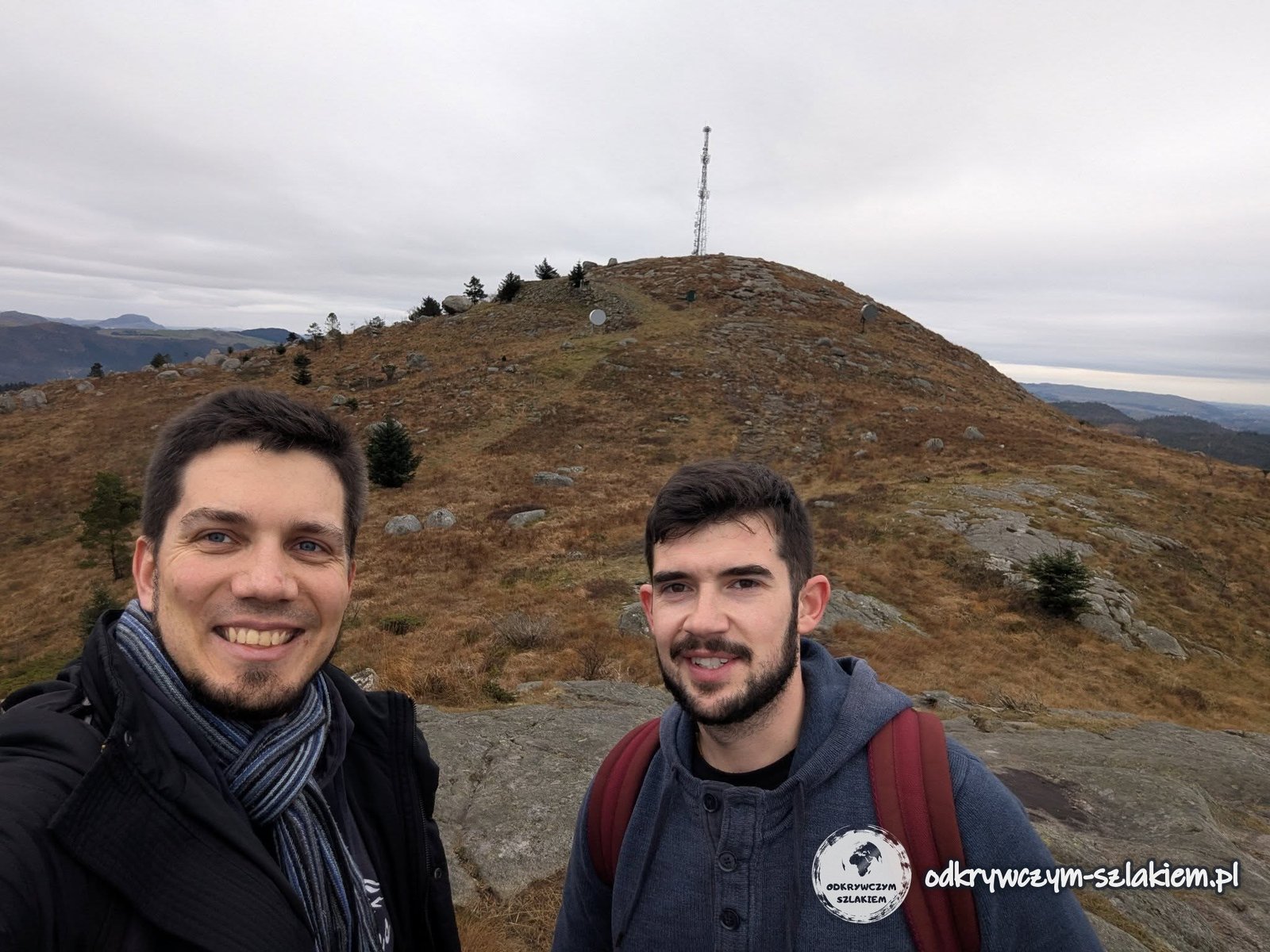
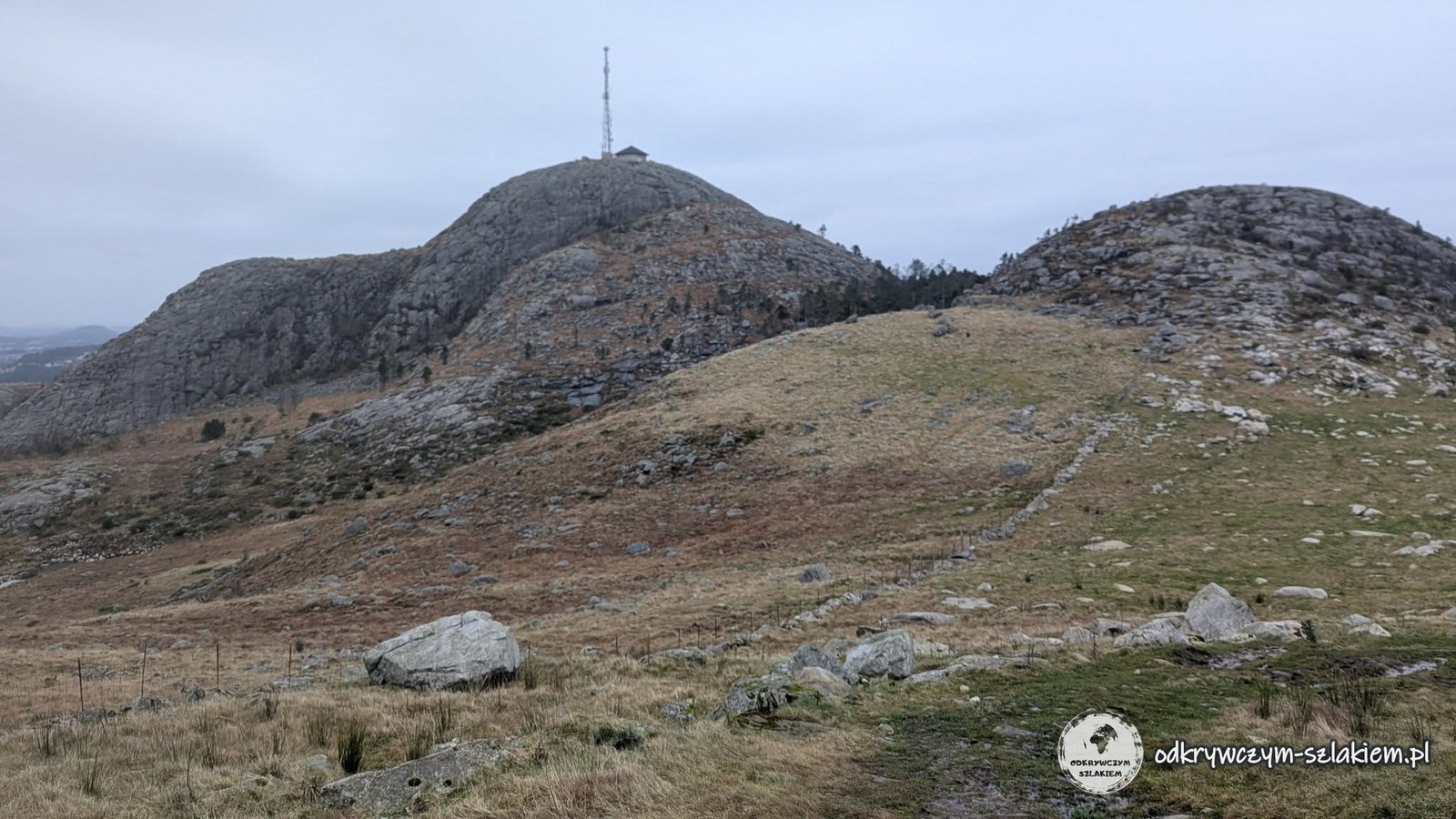
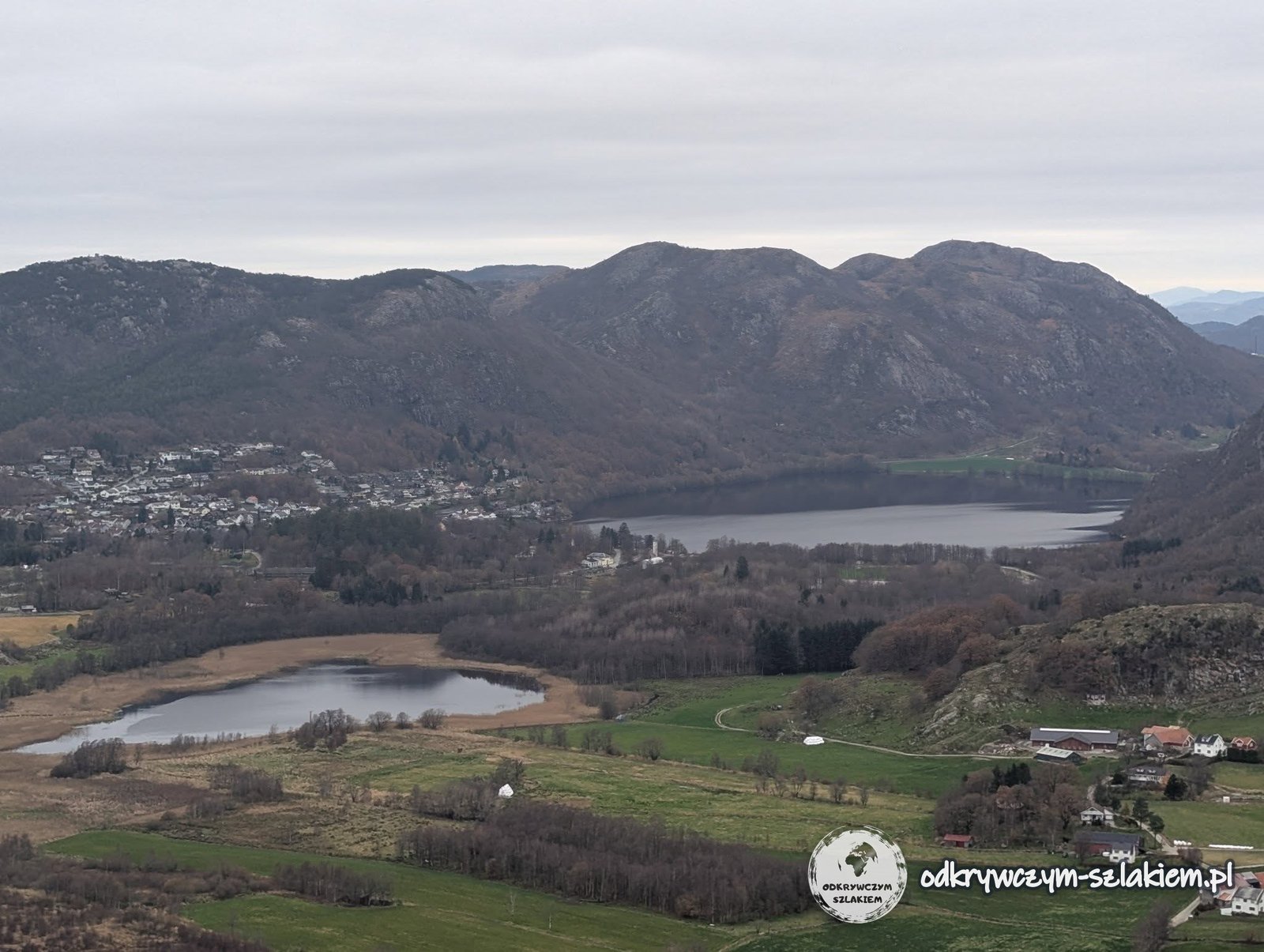
November had done its thing – the grass was already russet and the sky grey, but from the top you can see the whole valley with its lakes and the houses below.
Rennesøy island (2026)
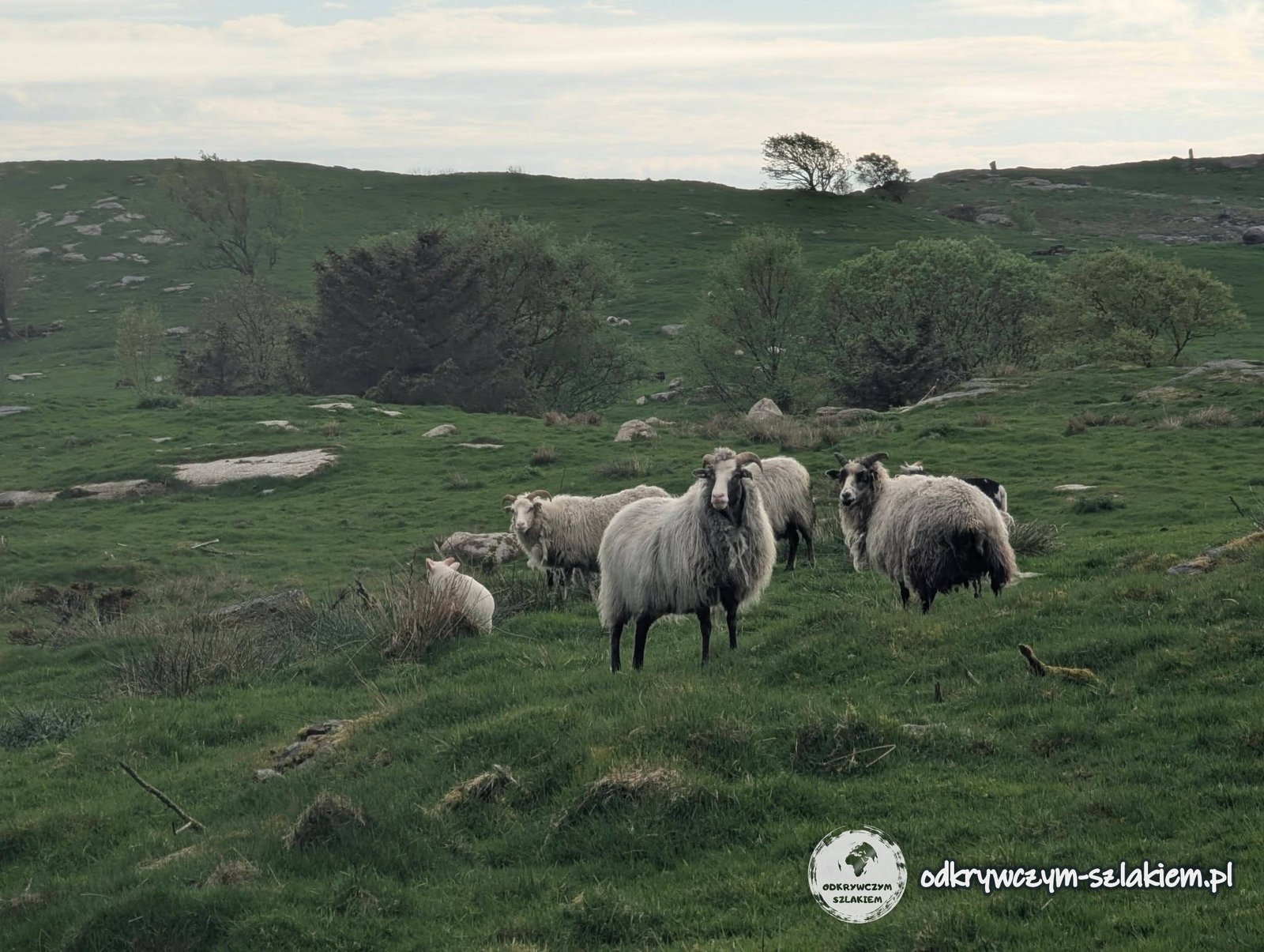
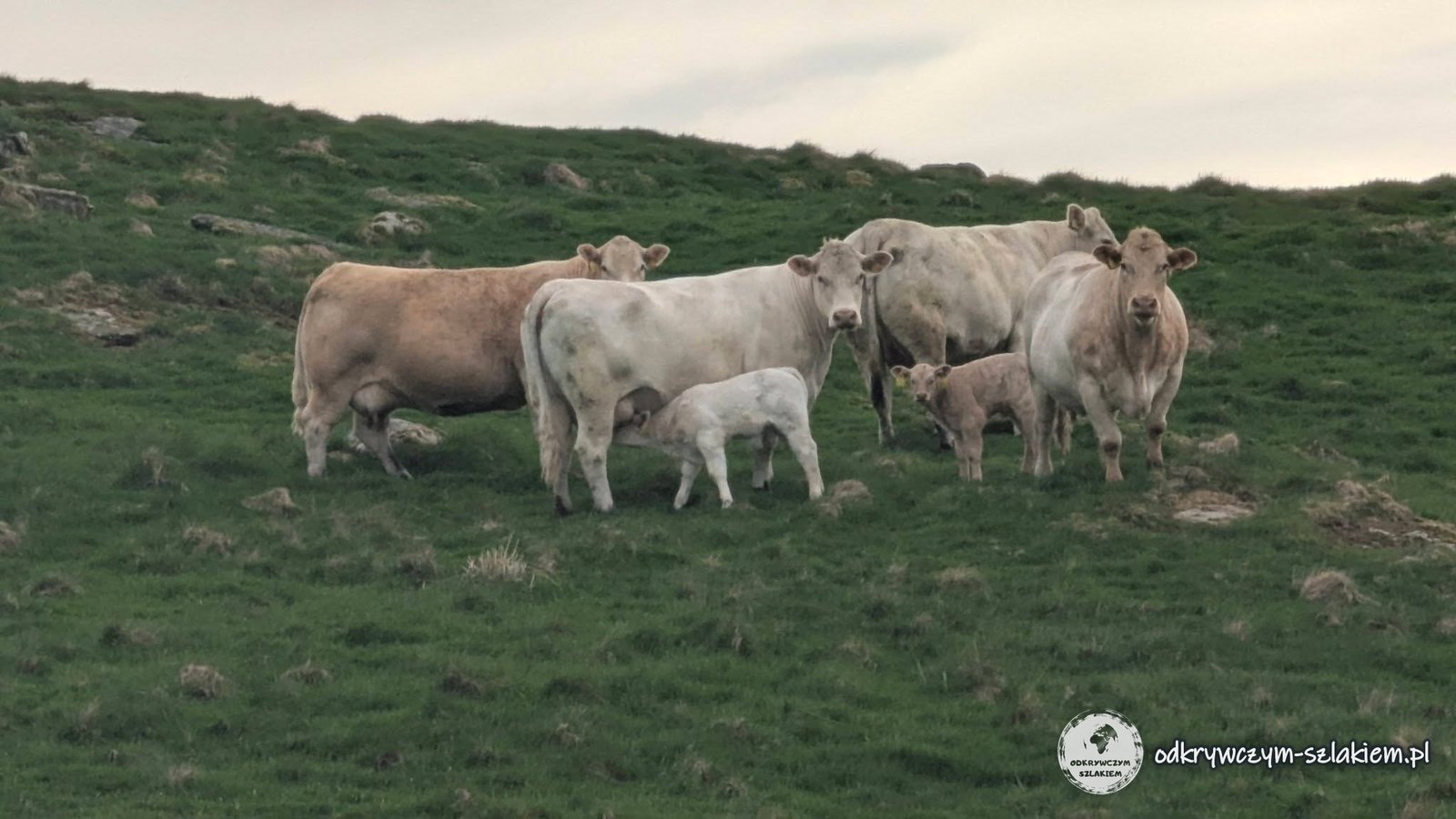
On another day the four of us – Łukasz, Michał, Patrycja and I – went to the island of Rennesøy. The trail reminded me more of the fairly flat Scottish or Irish uplands than of steep Norwegian crags – grassy hills, heathland and pastures with sheep and cows.
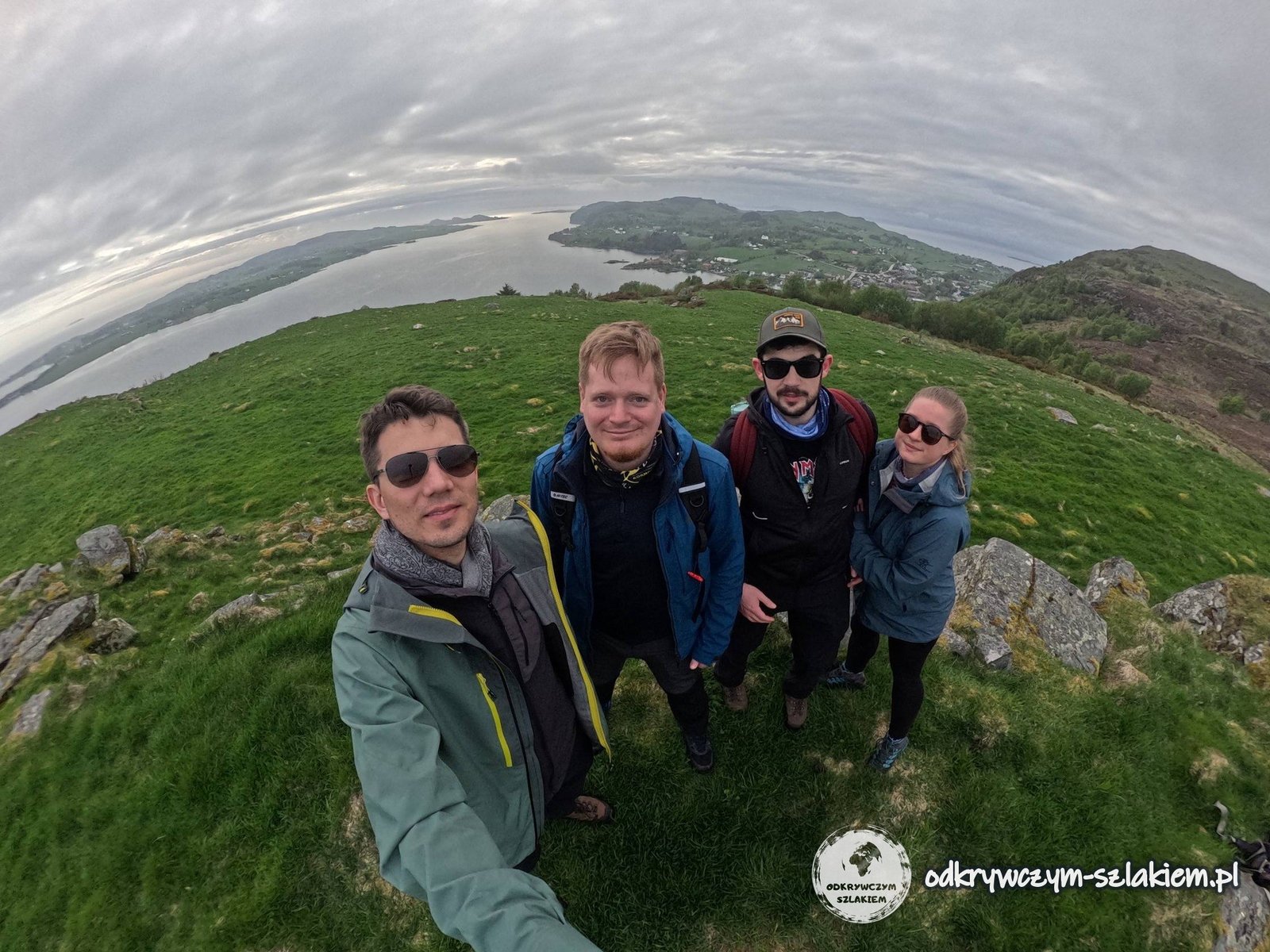
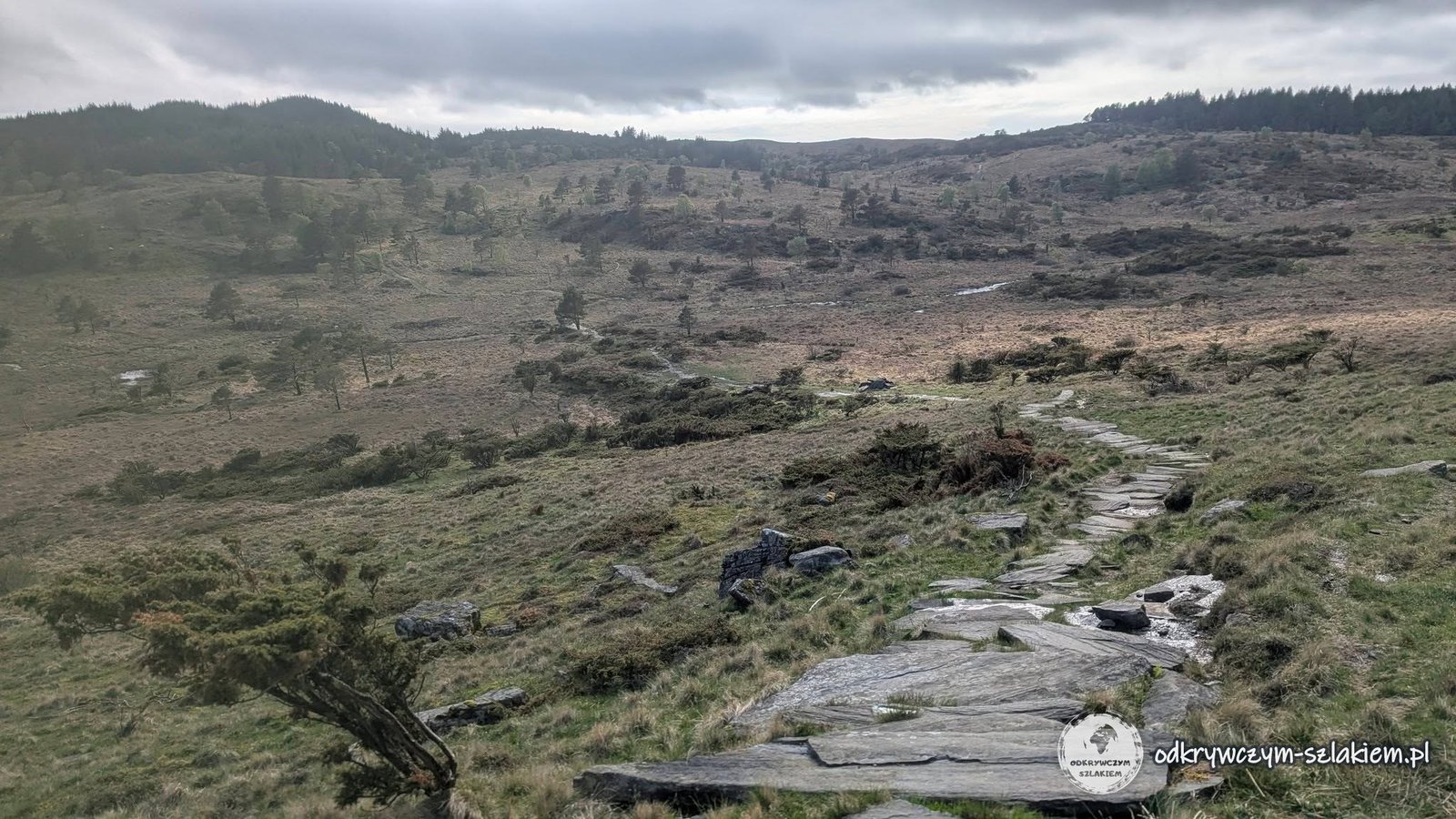
At one point we came across a sign saying that the trail was closed because of an “incident” between a cow and a hiker. The alternative was terrible, so we took the risk. In the end we missed the bus anyway, but while waiting for the next one we were given bread by the owner of a local bakery, who was just closing up.
A Viking FK match and board game evenings
The icing on the cake of the November weekend in 2025 was a Viking FK match, which I went to with Michał. The league leaders beat Hamarkameratene 3–0 and, with two rounds to go before the end of the season, were one point ahead of FK Bodø/Glimt. Stavanger had been waiting 34 years for the title – and this time it happened: Viking became Norwegian champions for the ninth time in their history.


Staying with Michał and Patrycja is not just about trails and sightseeing, though. When the rain spoiled our hiking plans in 2023, we largely replaced them with playing board games together (which turned out well too), and in May 2026, on a grey Saturday, there were games again. It is always great to come back and have a good time both sightseeing and over a board game.

Practical information
- Weather – Stavanger has an oceanic climate: it rains at any time of year, and sunshine and downpours can alternate several times within an hour. A rain jacket comes in handy even in August. In September 2017 we got a downpour, at the beginning of December 2024 it rained on most days (but it was a little warmer than in Poland), in May 2025 we had full sunshine and up to 13°C, and in May 2026 it was fifty-fifty: a rainy Friday and a grey Saturday, while Poland was having a really nice weekend.
- Snow in the mountains – higher up the snow lingers for a long time, so in spring you have to reckon with it on the higher trails.
- Krone exchange rate and prices – on my earlier visits (2017–2023) 1 NOK was worth roughly €0.11, and in December 2024 only about €0.08, so it was a good time to come. Even so, it was still expensive: the cheapest beer in a shop cost about €2.30, and a good loaf of bread roughly twice as much. In September 2017 a double room in Stavanger cost at least about 600 NOK (about €70) a night, and bread or the most basic beer in a shop cost at least 20 NOK (about €2.30). In November 2025 the krone was still low – mulled wine in a bar is a pricey business in Norway, but at that exchange rate it hurt a little less.
- Alcohol – supermarkets sell only beer and drinks up to 4.7% alcohol, during limited hours; anything stronger you can only buy in the state-run Vinmonopolet shops.
- Accommodation – since 2021 I have always stayed with Michał and Patrycja and gone on all the outings with them, so my stays were done “at cost”. Flights are cheap, but things are expensive on the spot – if Michał and Patrycja didn’t live here, I’m not sure I would have been to Stavanger even once.
- Getting there – low-cost airlines fly to Stavanger from Poland (in 2021 I flew from Gdańsk, and in September 2017 the flight from Gdańsk to Stavanger and back to Szczecin cost us under €35 each); it is worth buying tickets well in advance. Sola airport is a dozen or so kilometres from the centre; it is served by the Kolumbus city bus (in 2017 a single ticket cost 40 NOK, about €4, and a 24-hour ticket 60 NOK, about €6) and by a much more expensive private coach. Around the city and the surrounding area, including Dale, the Kolumbus public transport network is convenient. Since 2019 the way to Preikestolen has led through the undersea Ryfylketunnelen tunnel – details in the post about Preikestolen.
- Petroleum Museum – set aside at least three hours; the exhibition is large and largely interactive.
- Lifjell – the trail from Dale has steep sections that are slippery after rain, so shoes with a good sole will come in handy. The full waymarked loop from Dale via Lifjell takes more than five hours.

My conclusions? In Norway it often rains and things are expensive, and it can be a bit boring, but the nature is beautiful. I wouldn’t want to live here permanently, but for a few days – with a fjord, mountains and a wooden city close at hand – Stavanger works brilliantly.
Photo gallery