Toruń lies on the Vistula and is the town where Nicolaus Copernicus was born. Its medieval town complex – the Old and New Town with the ruins of the Teutonic castle – has been on the UNESCO World Heritage List since 1997. In April 2018 I stopped here during the Kortowo Hitchhiking Rally, and this post is from the first weekend of January 2025. There was snow on the roofs and the boulevards at the time. I describe the Old Town Square with the Town Hall, the view from the Town Hall tower, Copernicus House, the Leaning Tower and the gates by the Vistula, the ruins of two castles, the churches and the panorama of the town from the other bank of the river.
Table of contents
- The Old Town Square and the Town Hall
- The view from the Town Hall tower
- Copernicus House and the Old Town streets
- By the Vistula – the Leaning Tower, the Bridge Gate and the water gauge
- The ruins of the Teutonic castle
- Churches and the New Town Square
- Dybów Castle on the left bank of the Vistula
- The panorama of Toruń from the Vistula
- Practical information
The Old Town Square and the Town Hall
The centre of the Old Town Square is taken up by the Gothic Old Town Hall. Construction began in the mid-13th century, and its present four-wing form was built at the end of the 14th century. Today it houses the main branch of the District Museum. I reached the square on 4 January 2025 at noon.
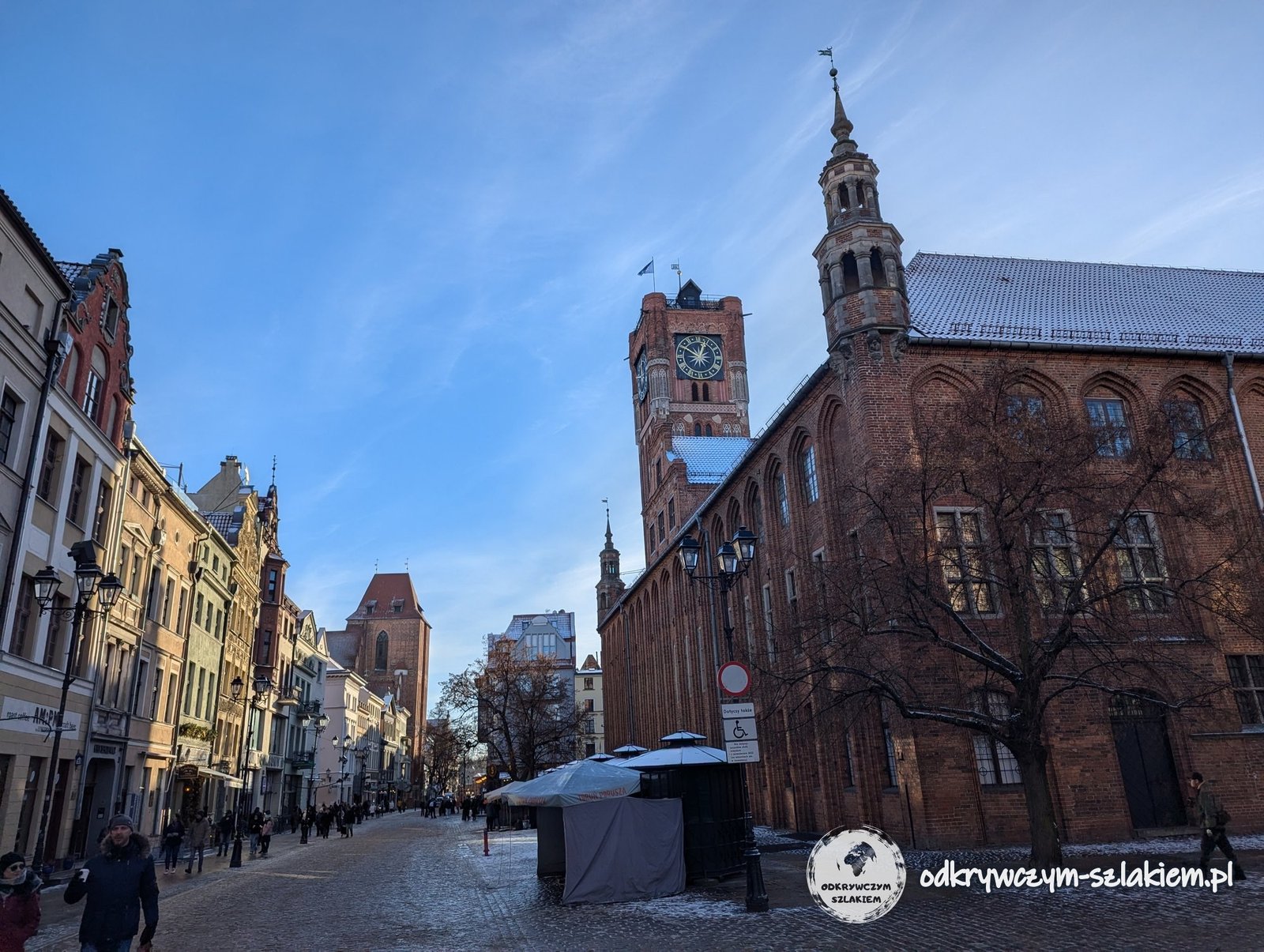
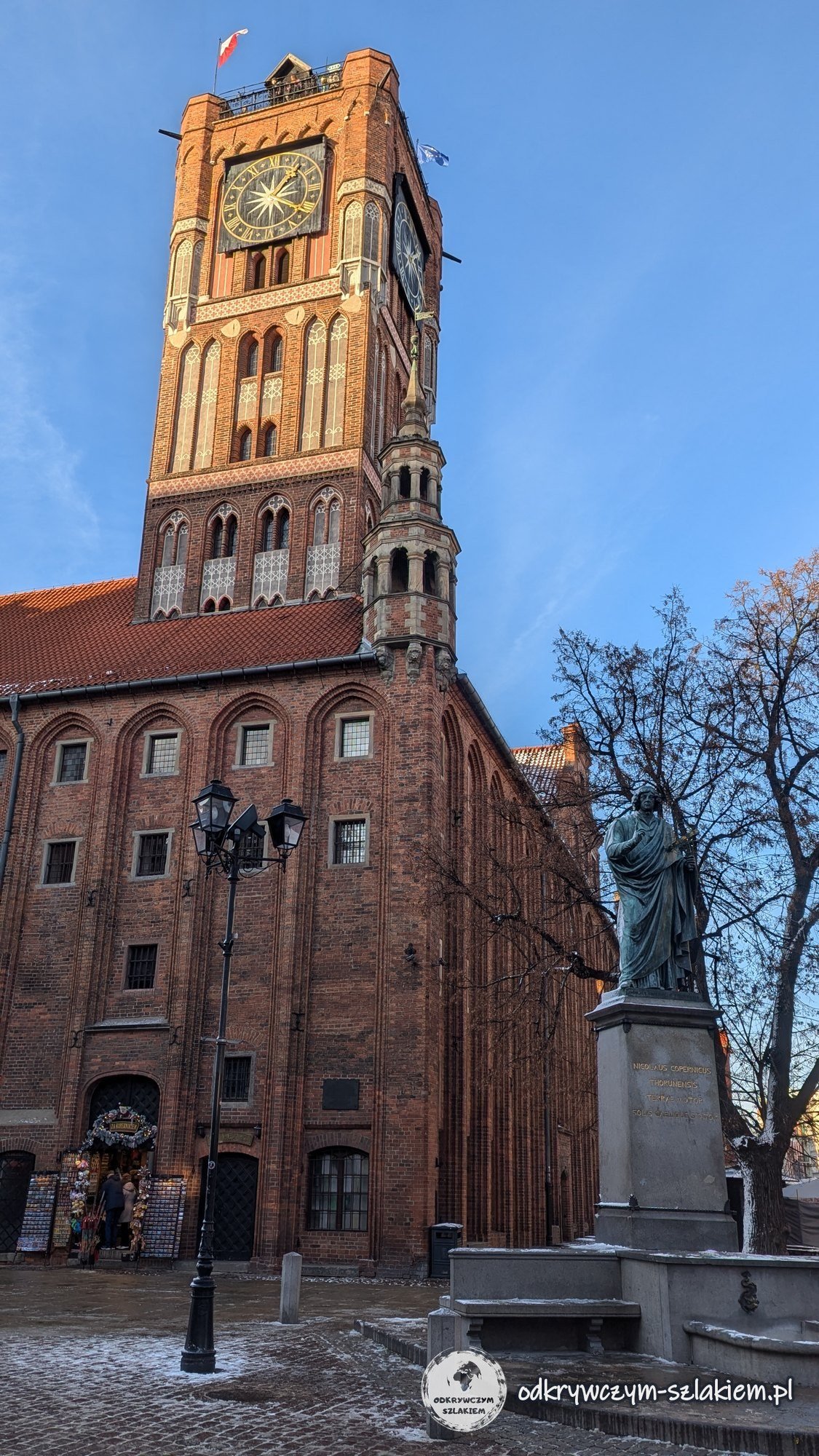
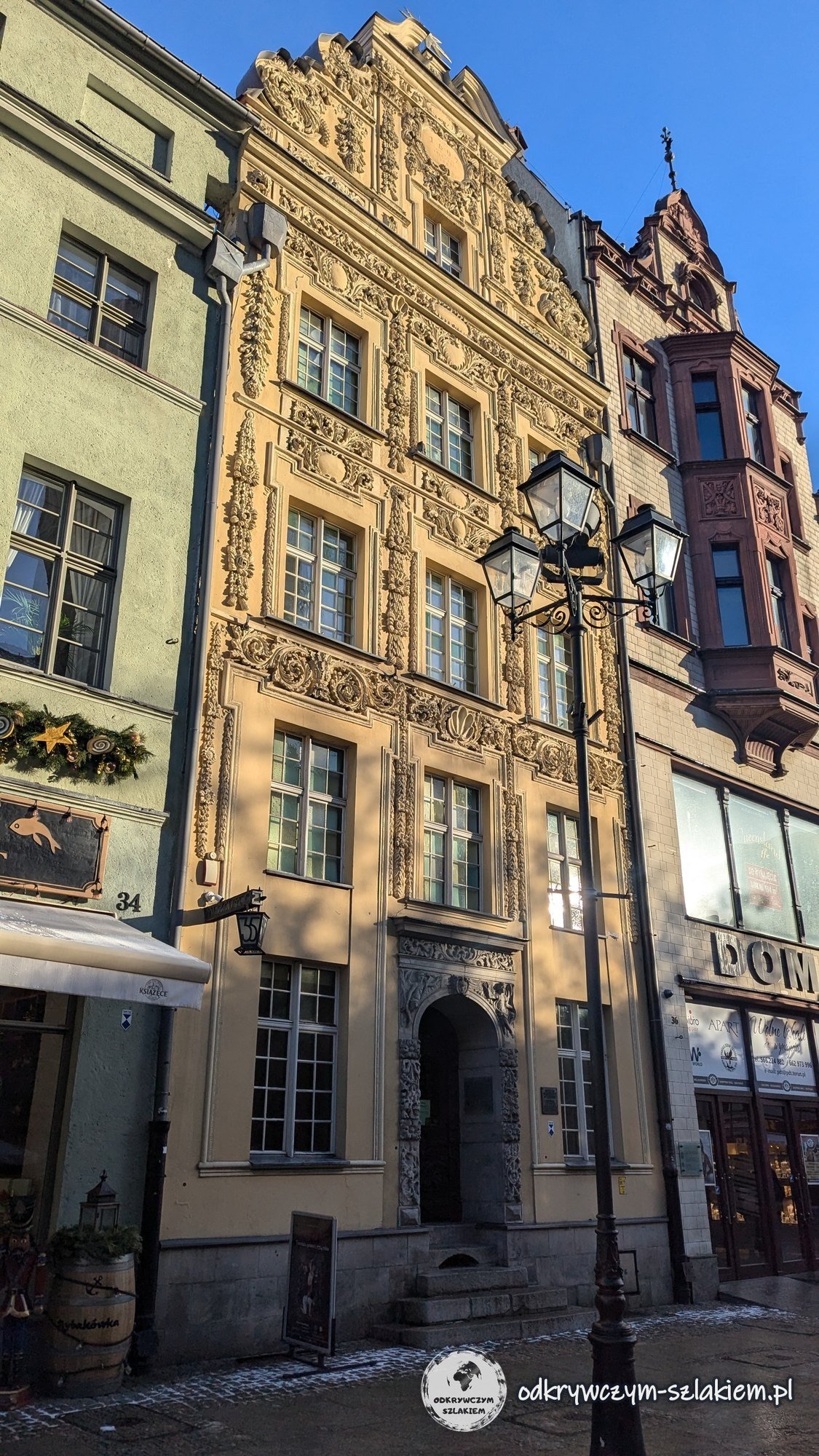
In front of the Town Hall stands the Nicolaus Copernicus Monument, and on the east side of the square the House Under the Star with its richly decorated Baroque façade. Today it is home to the Museum of Far Eastern Art.
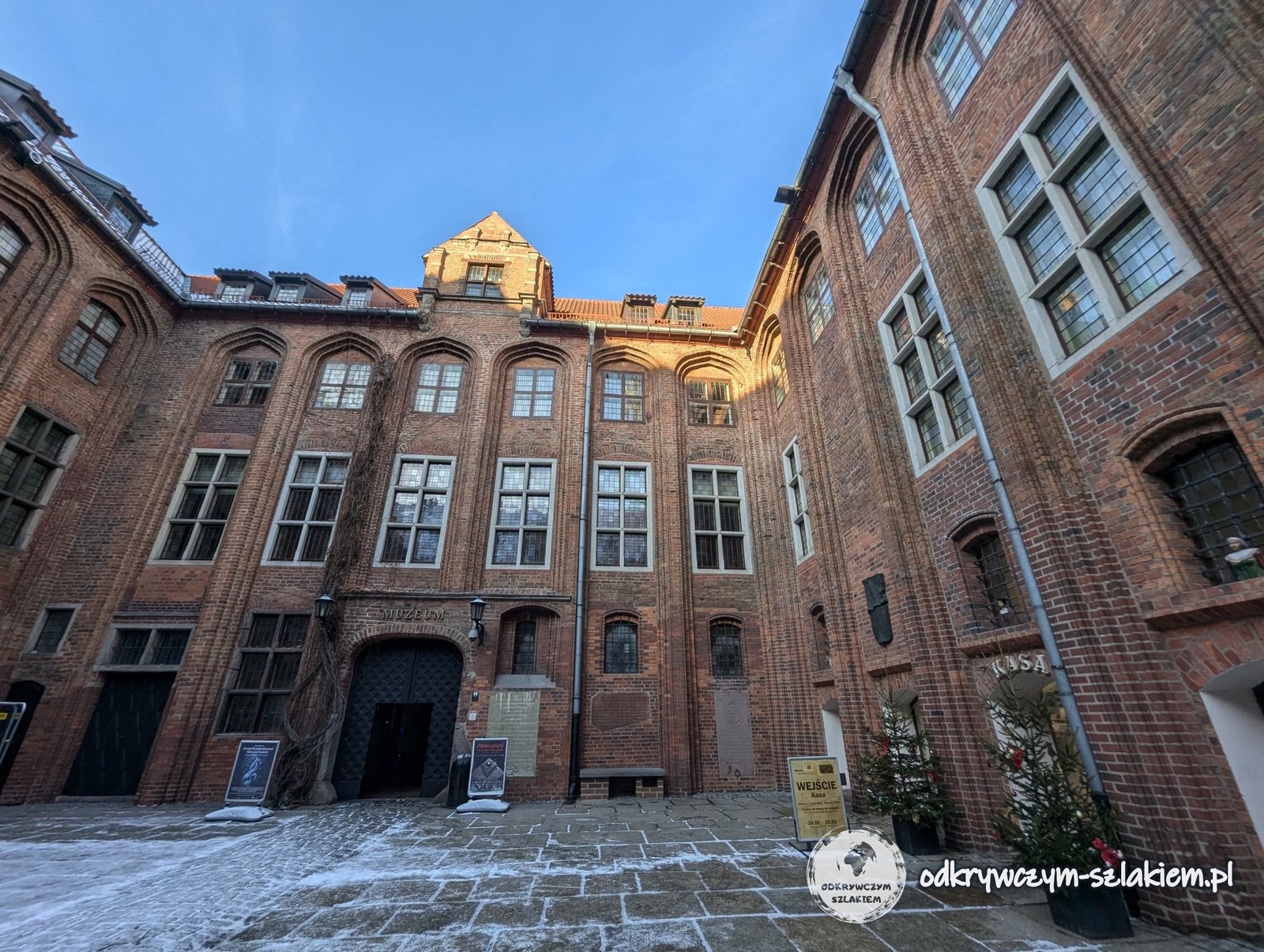
Four passages lead into the inner courtyard of the Town Hall – one in the middle of each wing.
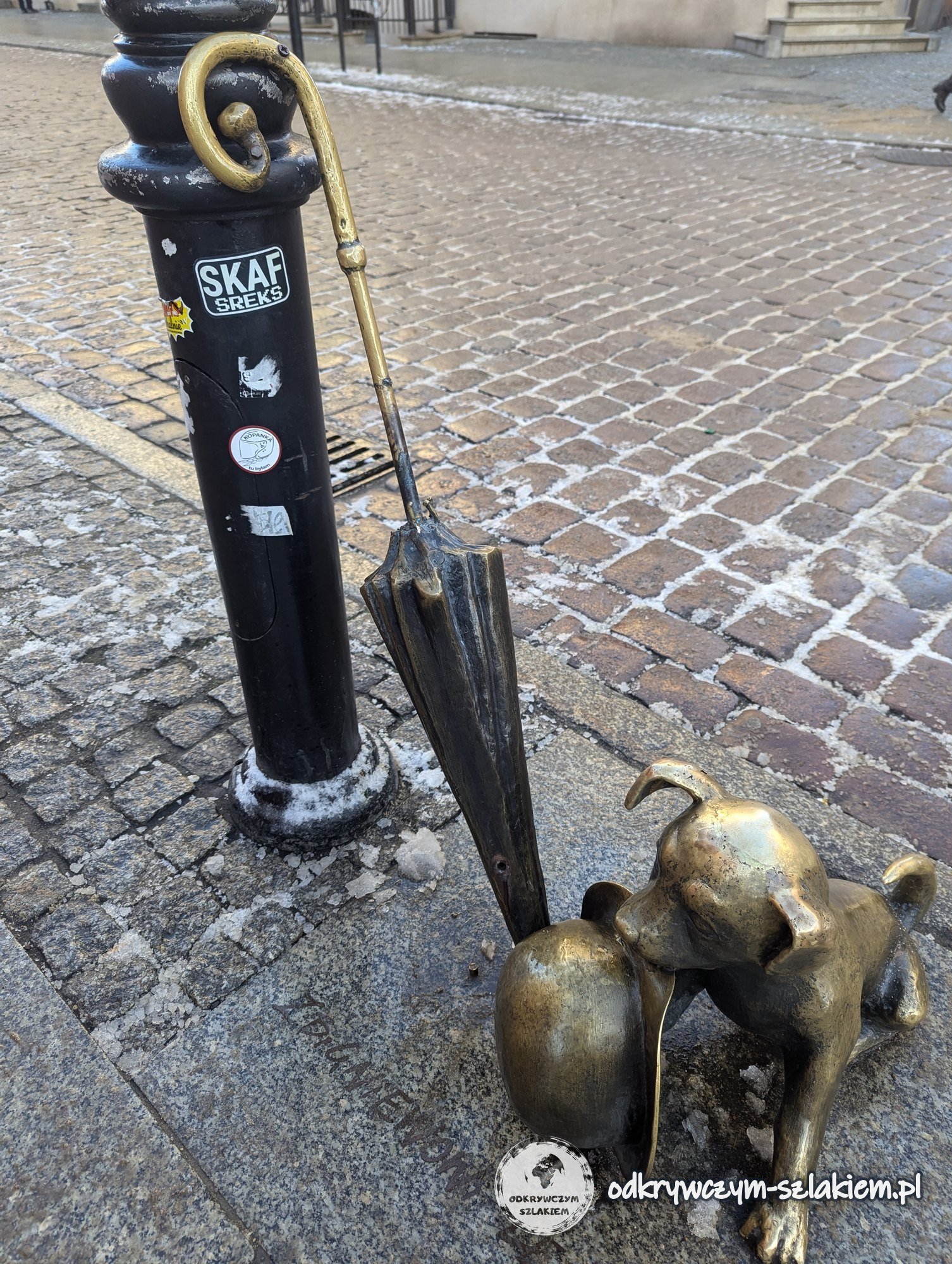
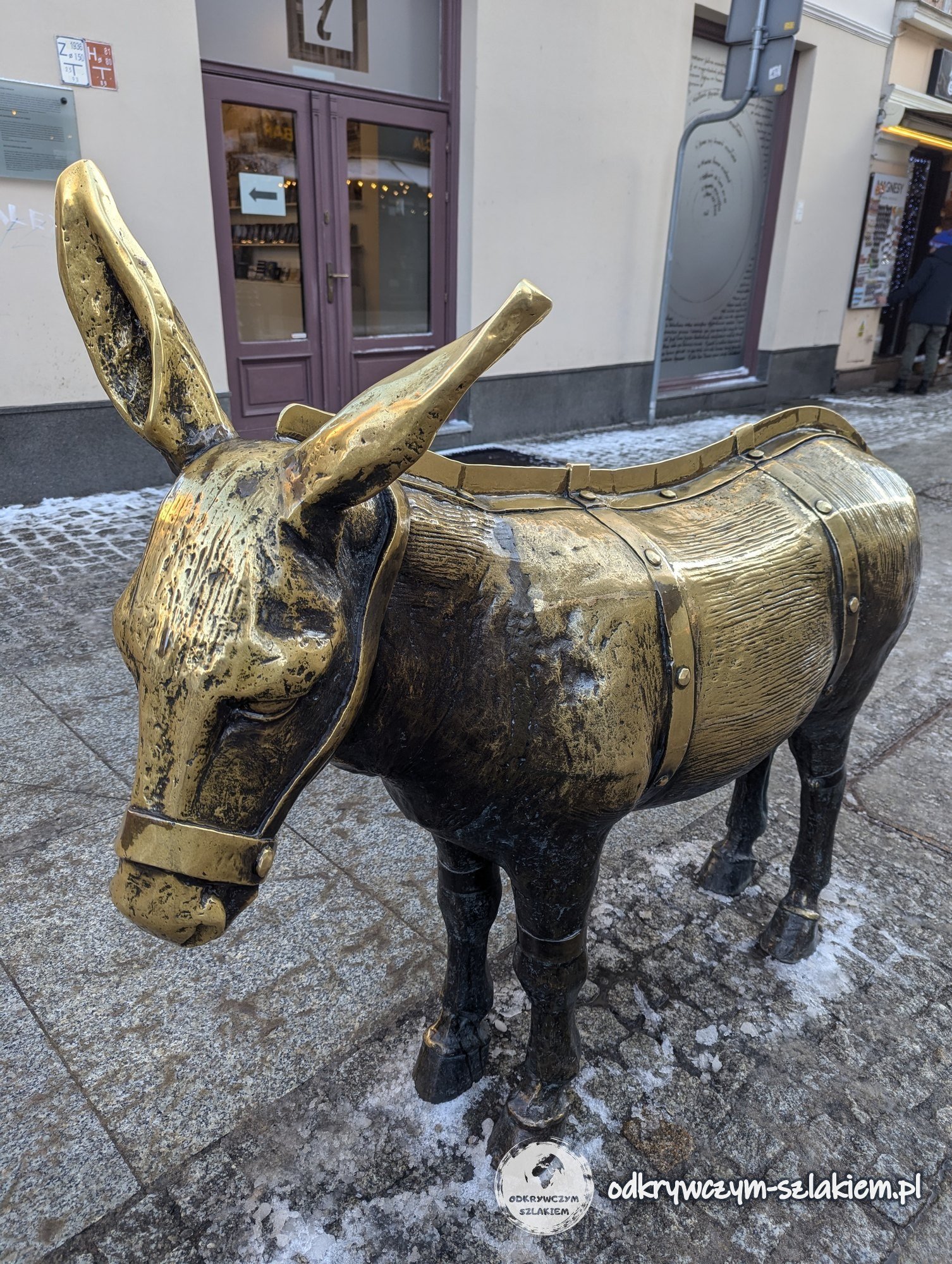
Small bronze sculptures stand around the square. On Chełmińska Street sits Filuś – the dog from the Professor Filutek cartoons, which Toruń-born Zbigniew Lengren published in the magazine “Przekrój” from 1946. Next to him, propped against a post, stands the professor’s umbrella. By the entrance to the tourist information office stands a metal figure of a donkey.
The view from the Town Hall tower
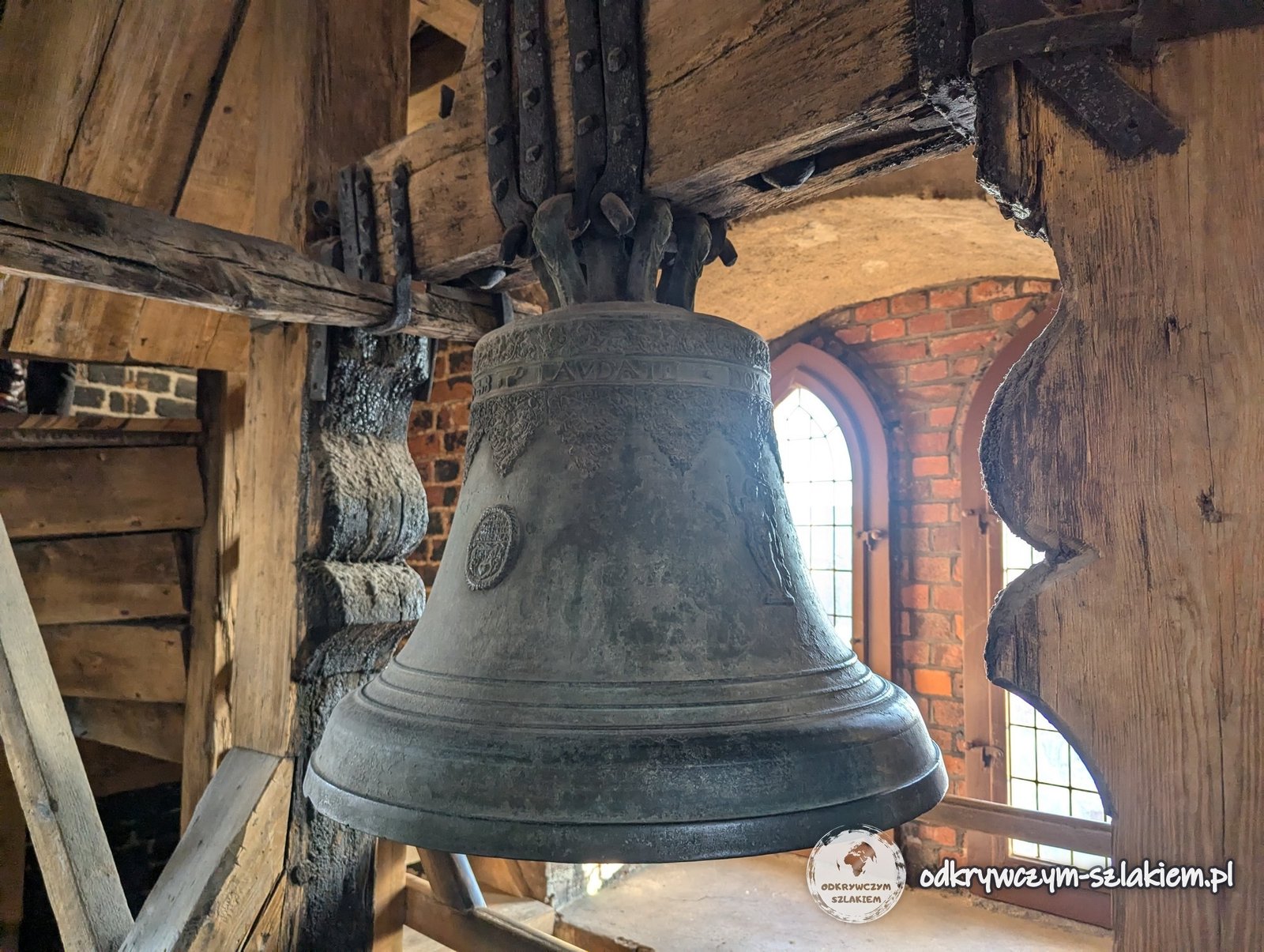
At the top of the roughly 40-metre Town Hall tower there is a viewing terrace. On the way up you pass the bells – four hang in the tower, the oldest from 1648. Admission is paid.
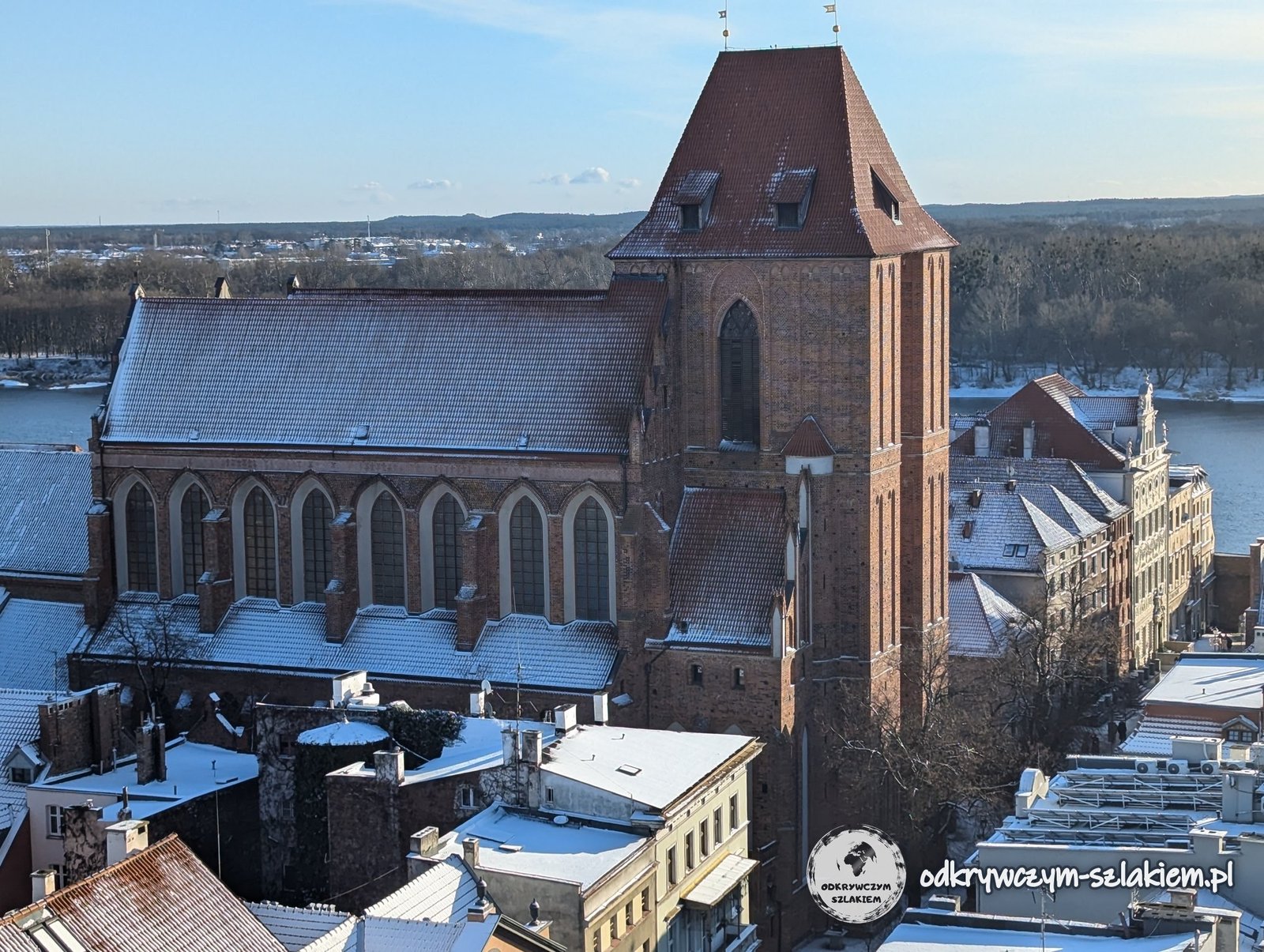
From the terrace you can see the Gothic St Mary’s Church with its tall roof, and towards the Vistula St Johns’ Cathedral with its massive tower. In January a thin layer of snow covered the roofs of the houses.

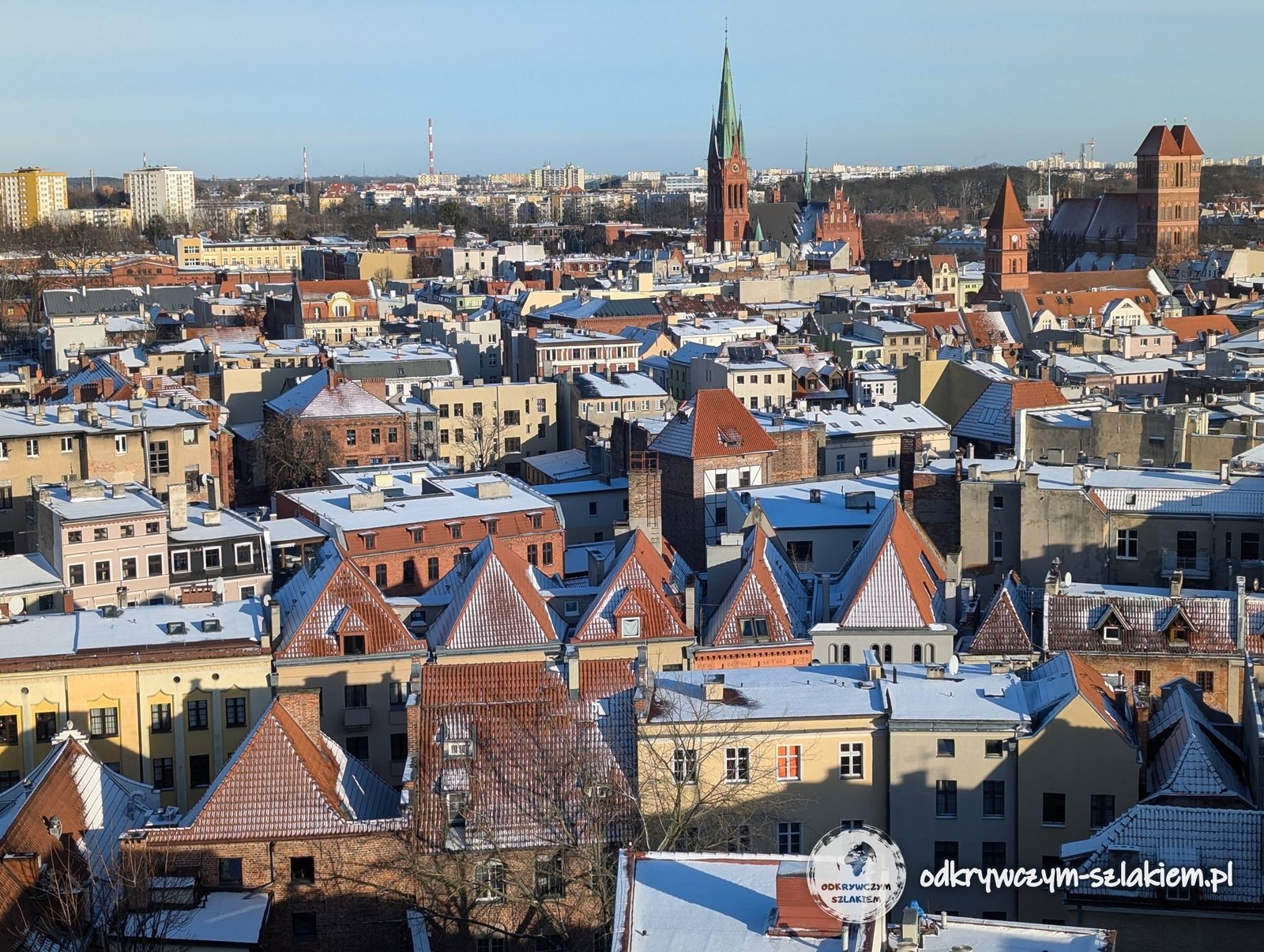
Towards the New Town you see red roofs with the towers of St James’s and St Catherine’s churches above them.
Copernicus House and the Old Town streets
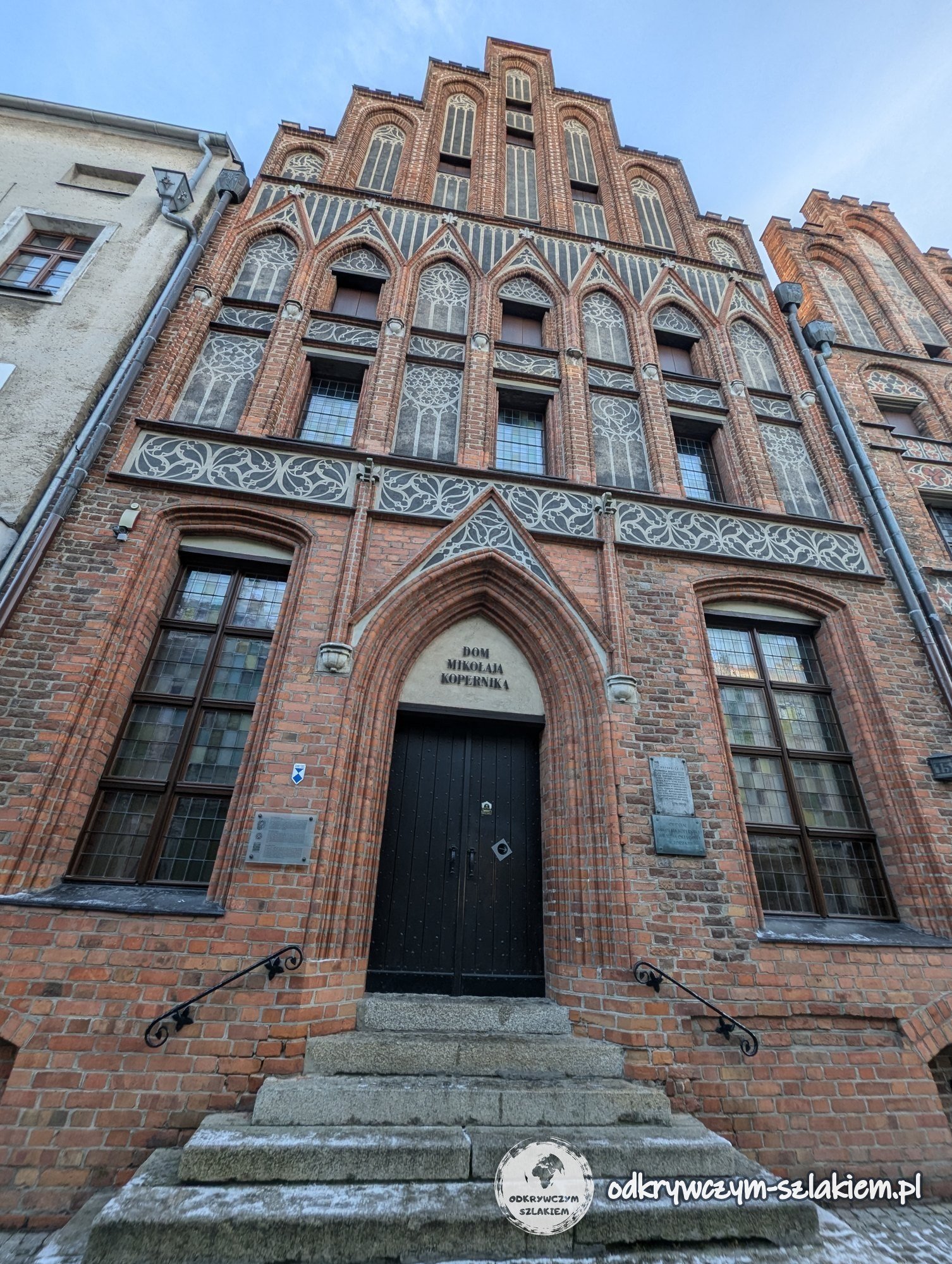
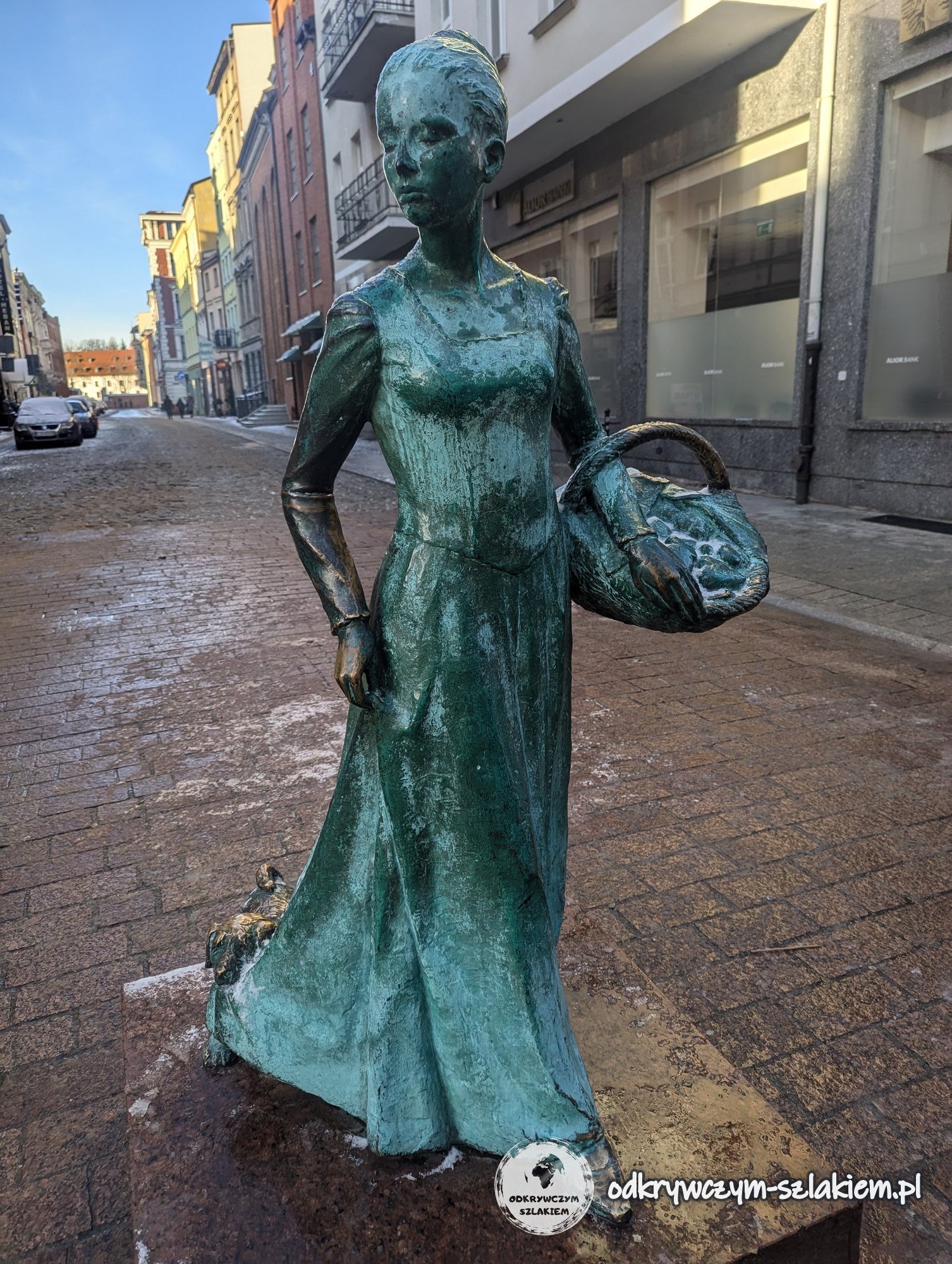
On Kopernika Street stands a Gothic house with a stepped gable – the Nicolaus Copernicus House. It is a branch of the District Museum devoted to the astronomer. Toruń is also famous for its gingerbread – in the Old Town there is a sculpture of the Toruń Gingerbread Seller with a basket, and the town has several gingerbread museums.
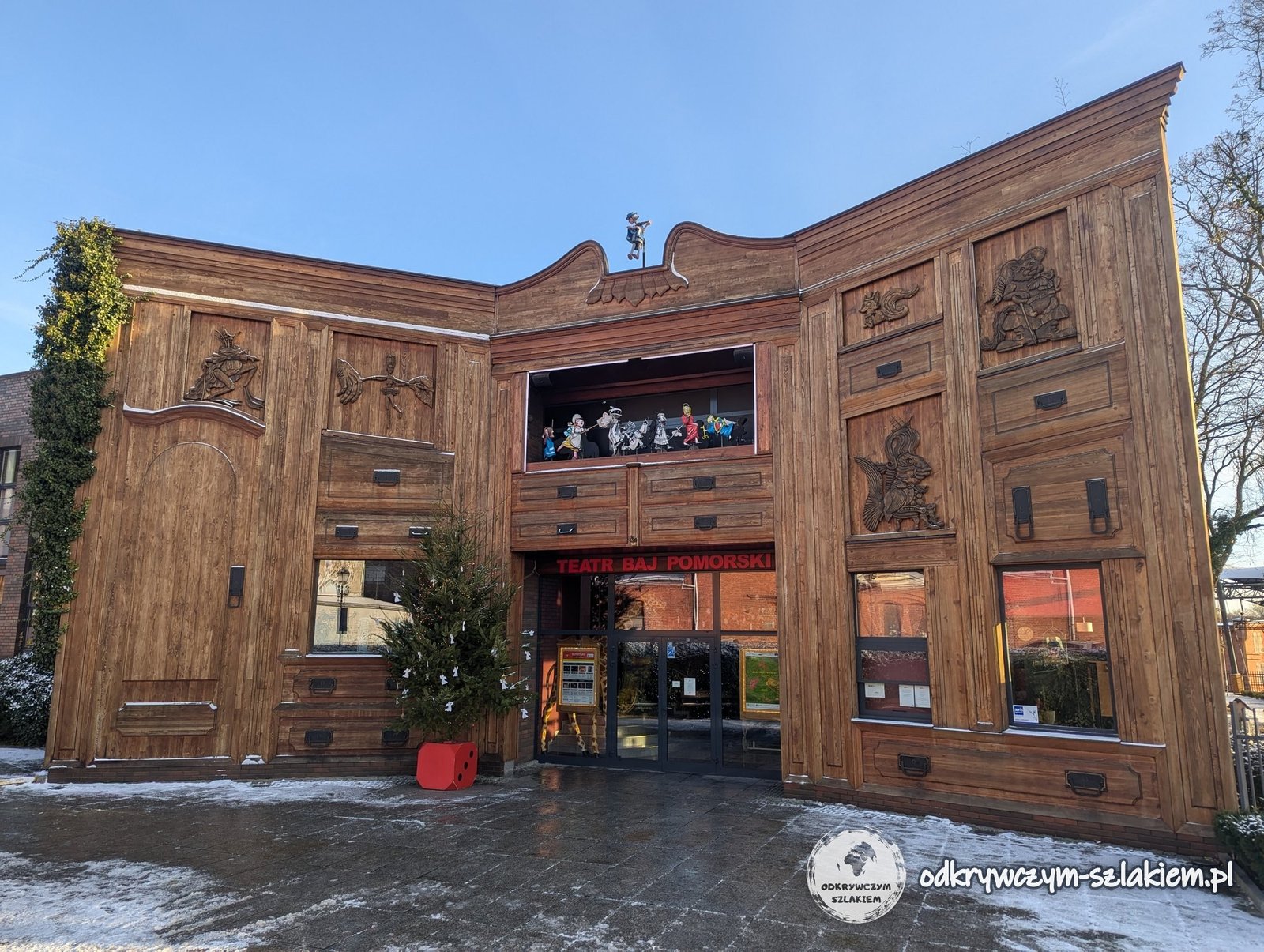
The Old Town is also home to the Baj Pomorski puppet theatre. Its façade is clad in wood with carved panels, and puppets sit in the window above the entrance.
By the Vistula – the Leaning Tower, the Bridge Gate and the water gauge
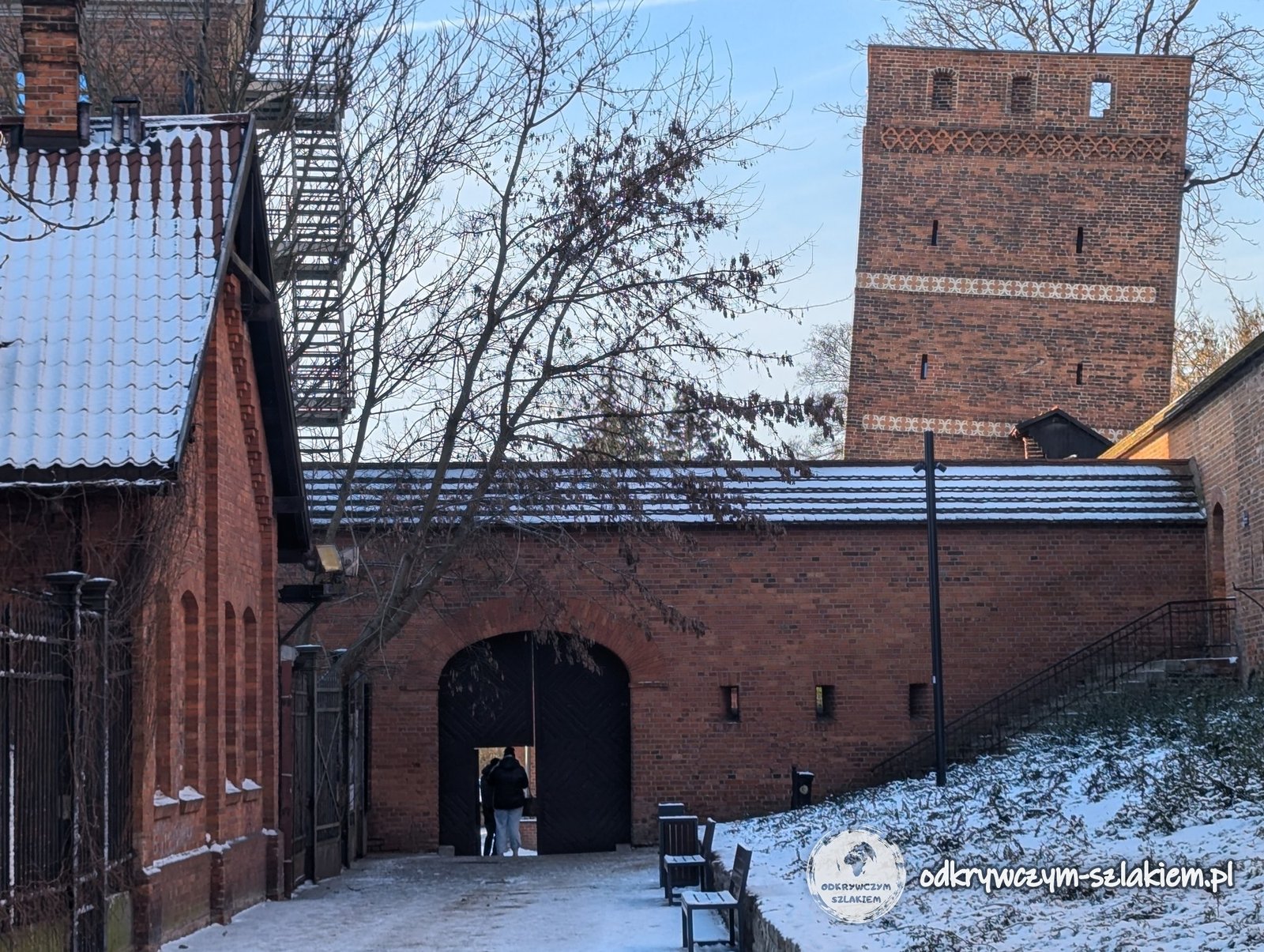
On the Vistula side the Old Town is surrounded by medieval walls with towers and gates. The best known tower is the Leaning Tower – it is about 15 metres high, and its top leans about 1.46 metres off the vertical. This is usually put down to the ground subsiding, while a legend tells of a Teutonic knight who had to build a crooked tower as a punishment.
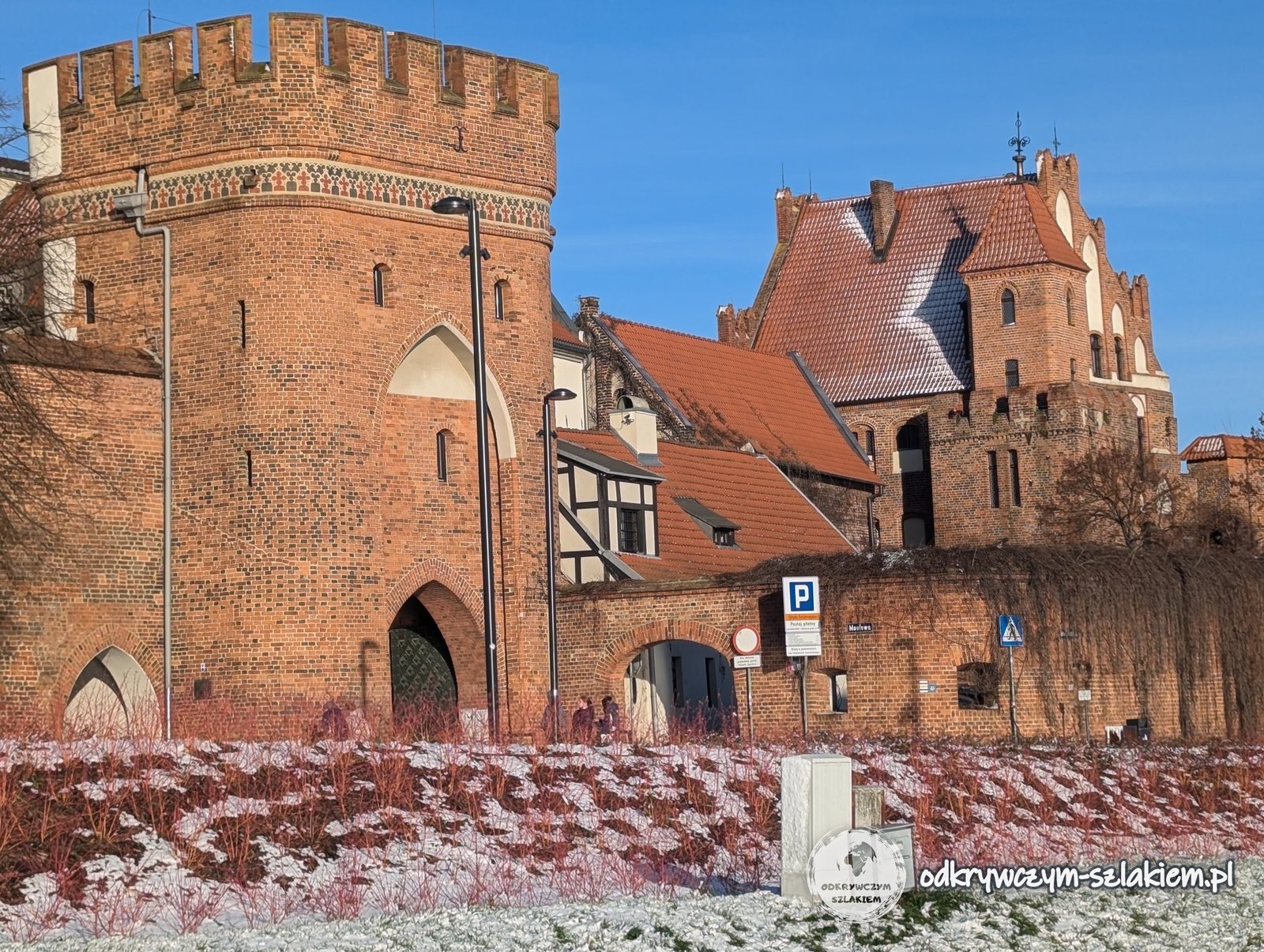
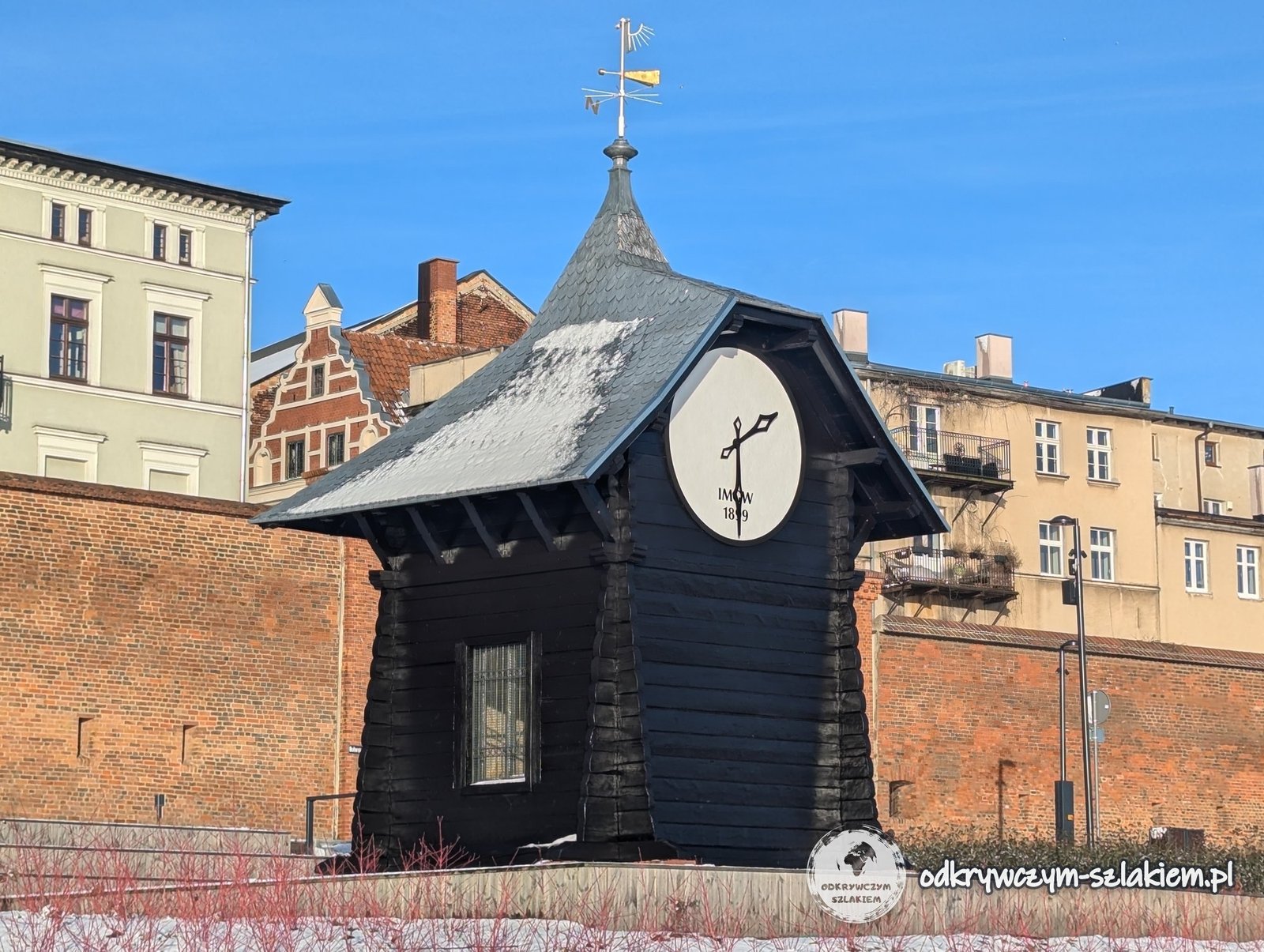
Along the walls runs Philadelphia Boulevard, named in 1976 after the partner city of Philadelphia. Above the boulevard stands the Gothic Bridge Gate, and a little further on a wooden water gauge with a clock-like dial that shows the water level of the Vistula.
The ruins of the Teutonic castle
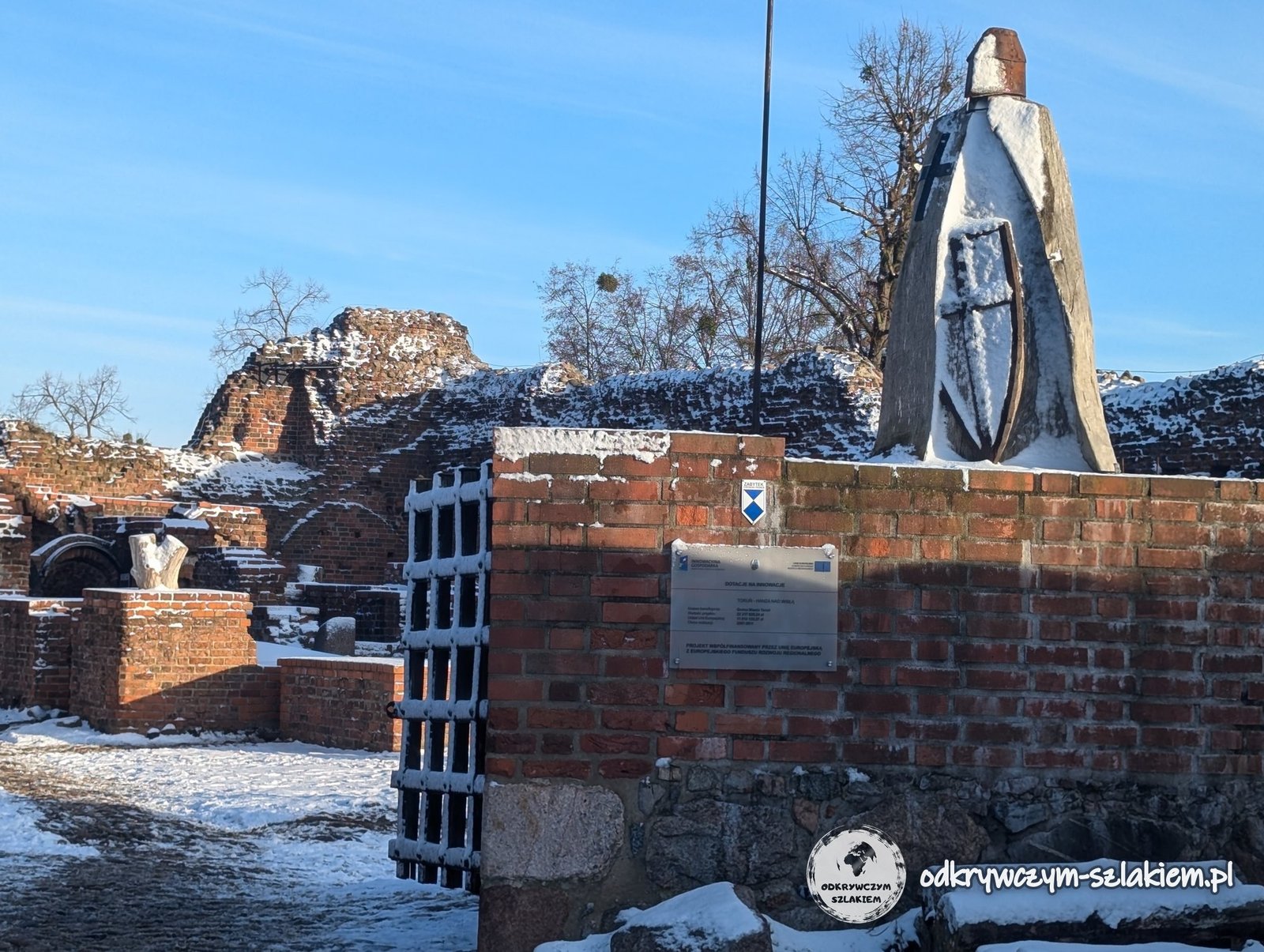
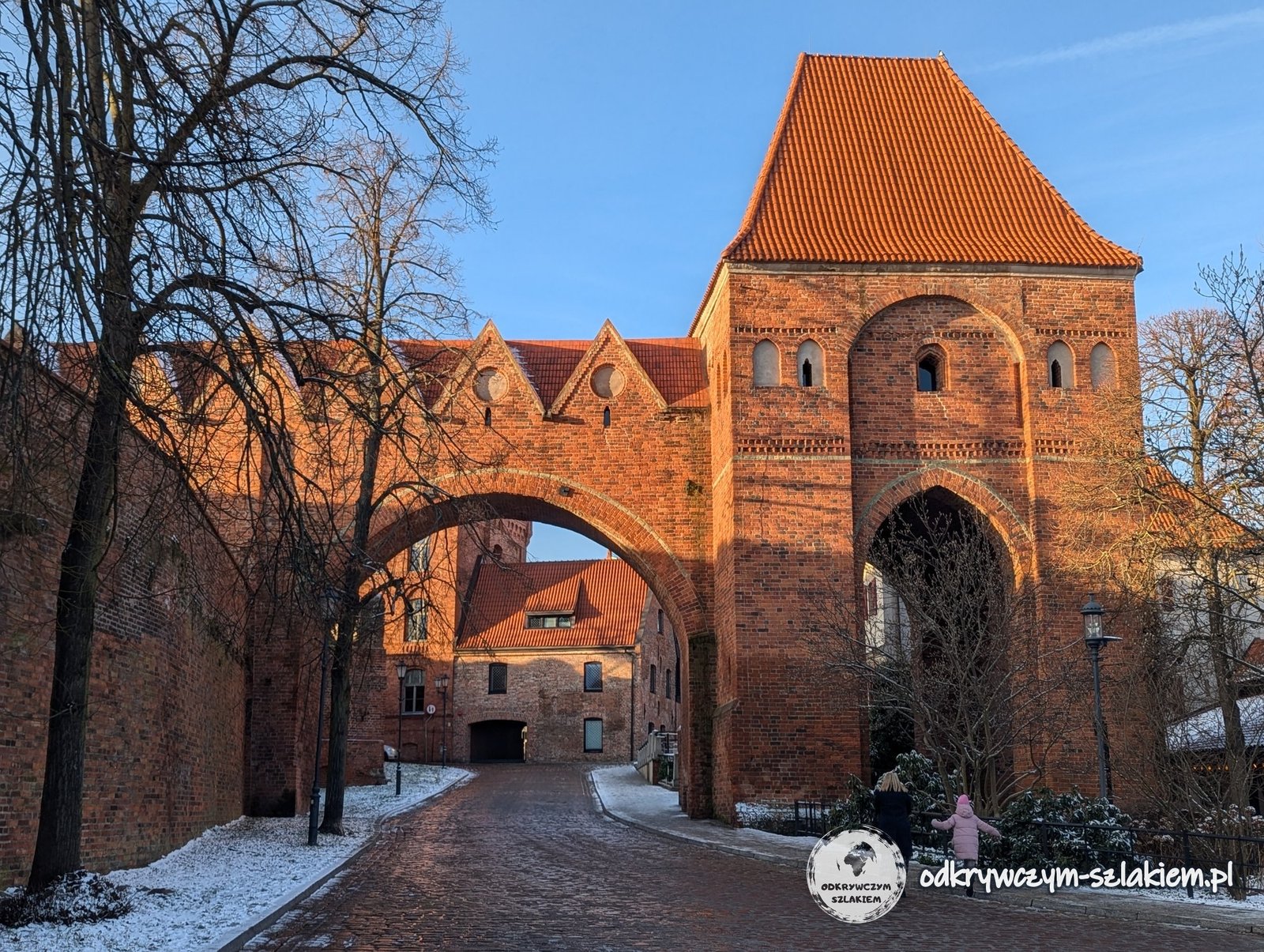
Between the Old and New Town lie the ruins of the Teutonic castle, built from the mid-13th century. In February 1454 the townspeople rebelled against the Order, took the castle and decided to demolish it – this event opened the Thirteen Years’ War. What survives are the cellars, which now hold an exhibition, and the Gdanisko – the latrine tower linked to the castle by an arcaded passage.
Churches and the New Town Square
I started my sightseeing at the Neo-Gothic St Catherine’s Garrison Church, just beyond the New Town. It was built in 1894–1897, and its tower is 86 metres high.

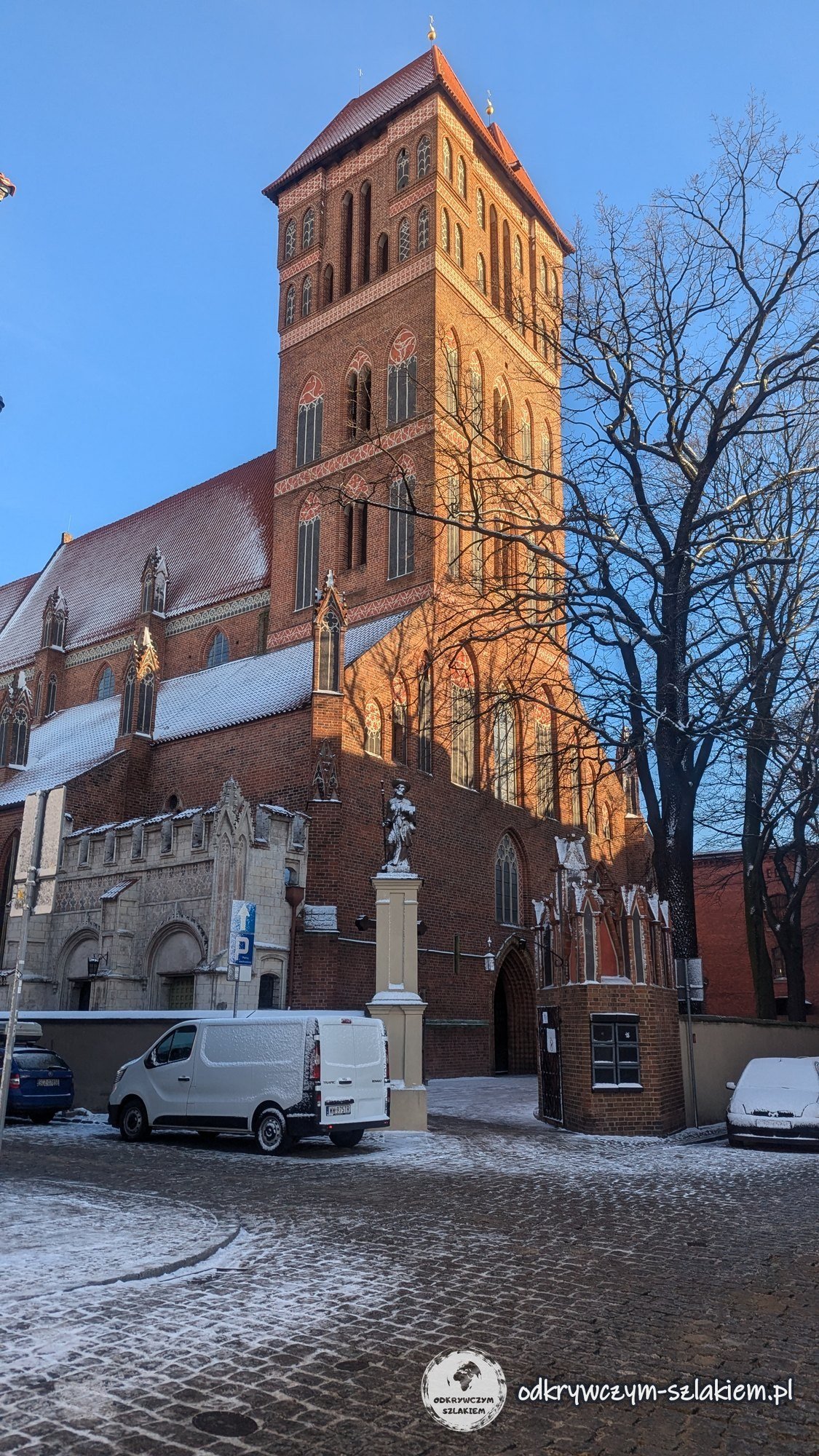
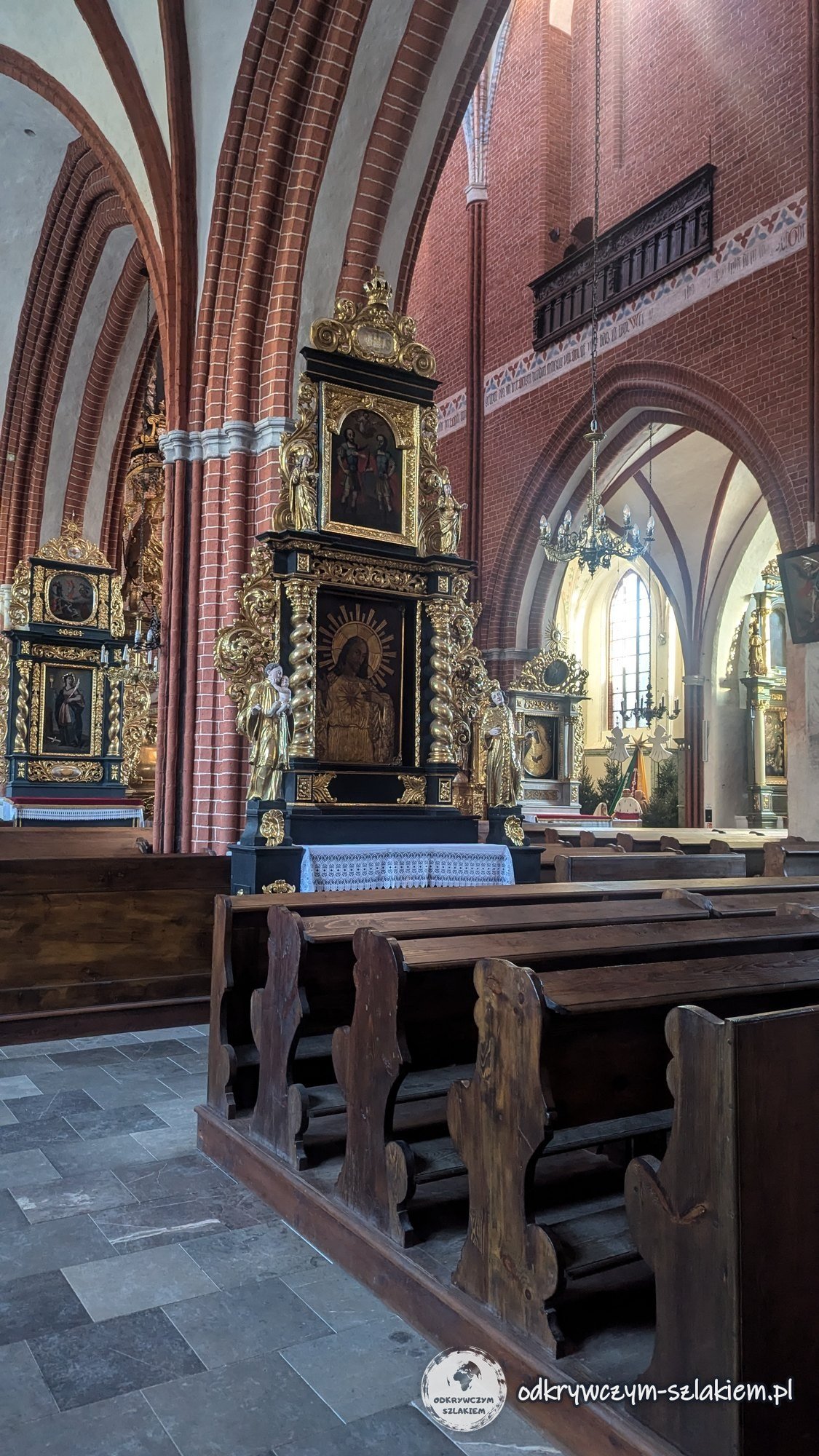
In the New Town stands the Gothic St James’s Church. I also looked inside – under the brick vaults there are wooden pews and richly decorated altars.
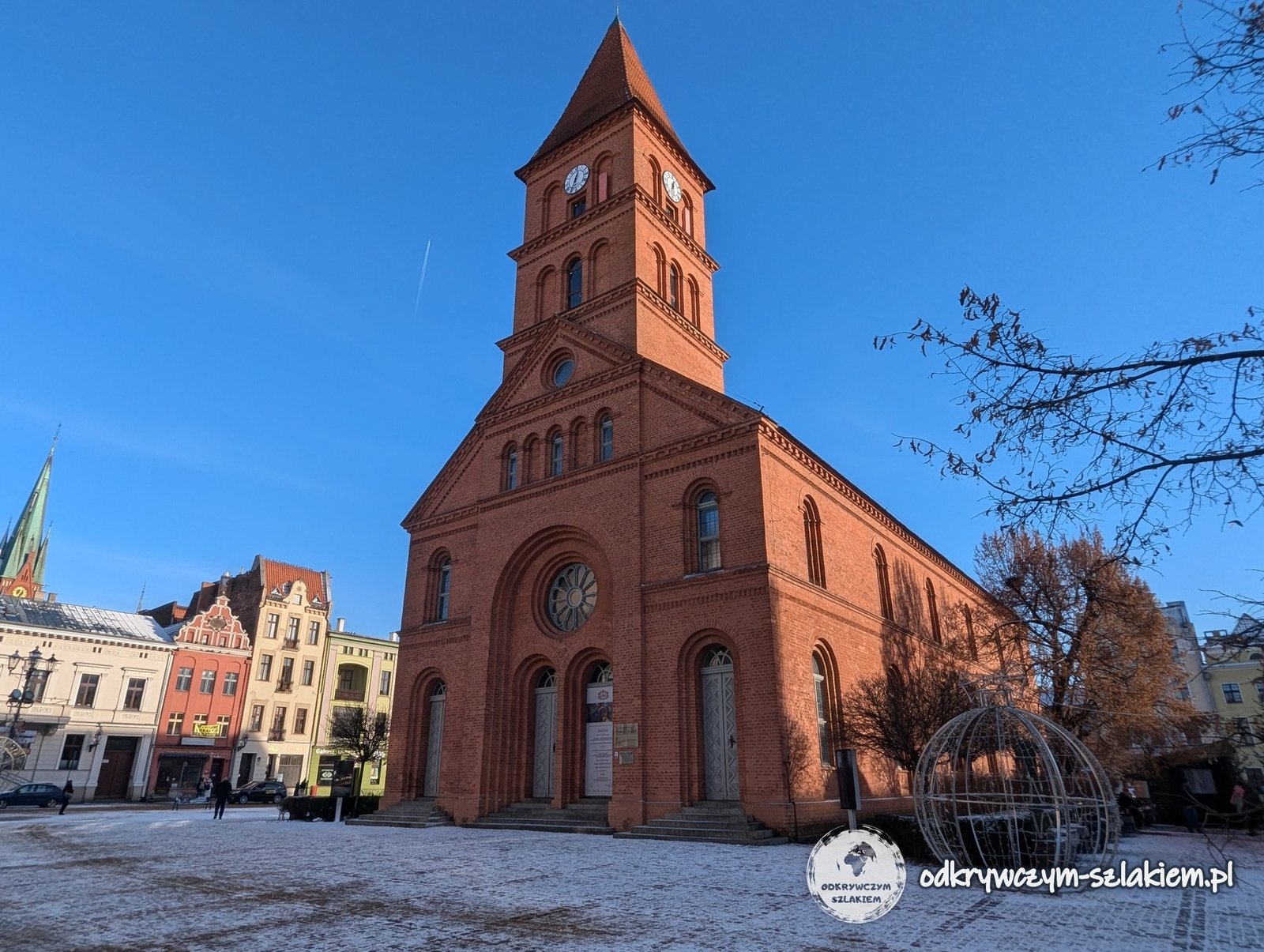
In the middle of the New Town Square there once stood the New Town hall. From 1668 it housed a Lutheran church, and in 1824 the Neo-Romanesque Holy Trinity Church, designed by Karl Friedrich Schinkel, was completed in its place. Today it is the seat of the Tumult Foundation.
Dybów Castle on the left bank of the Vistula
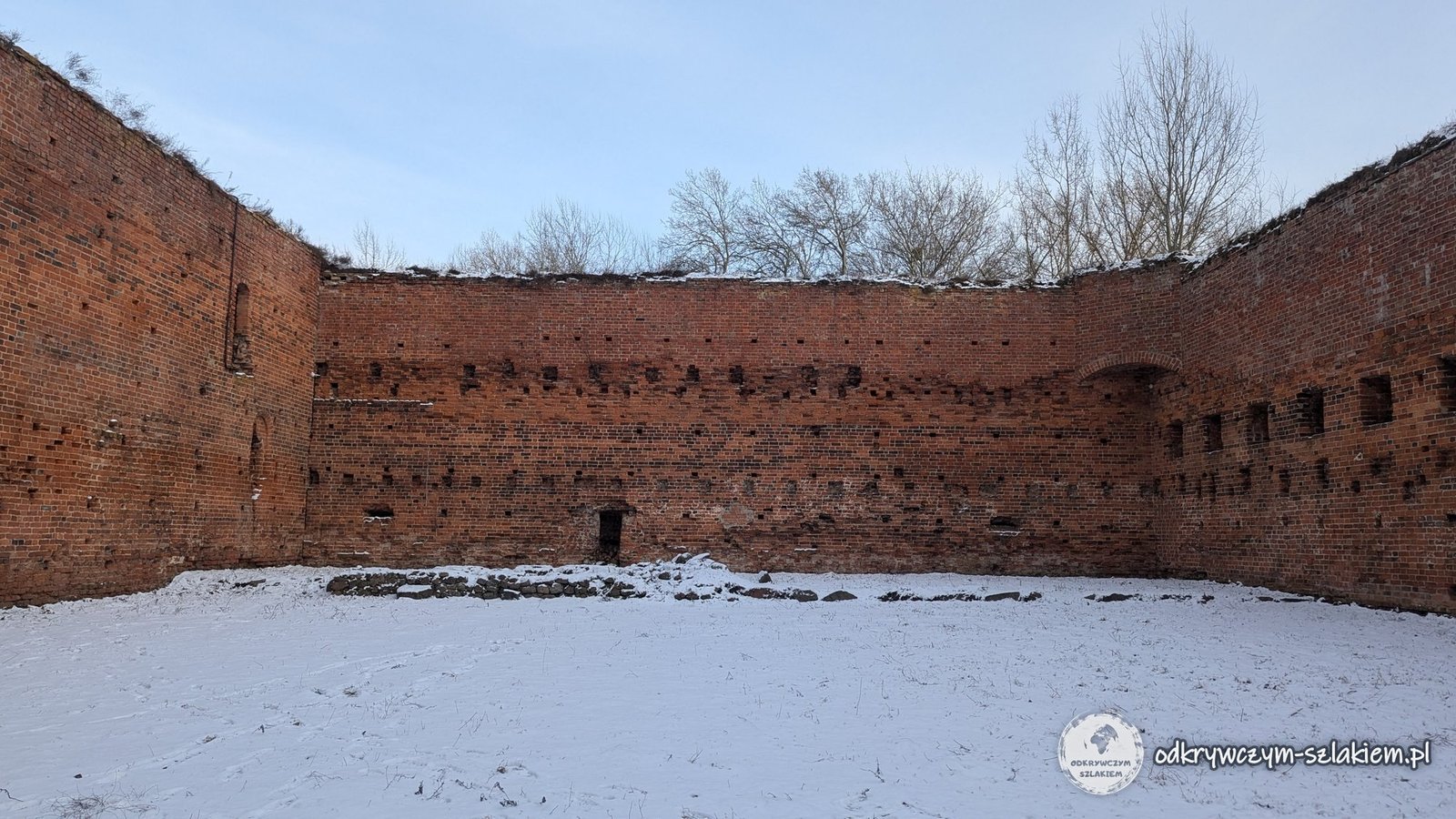
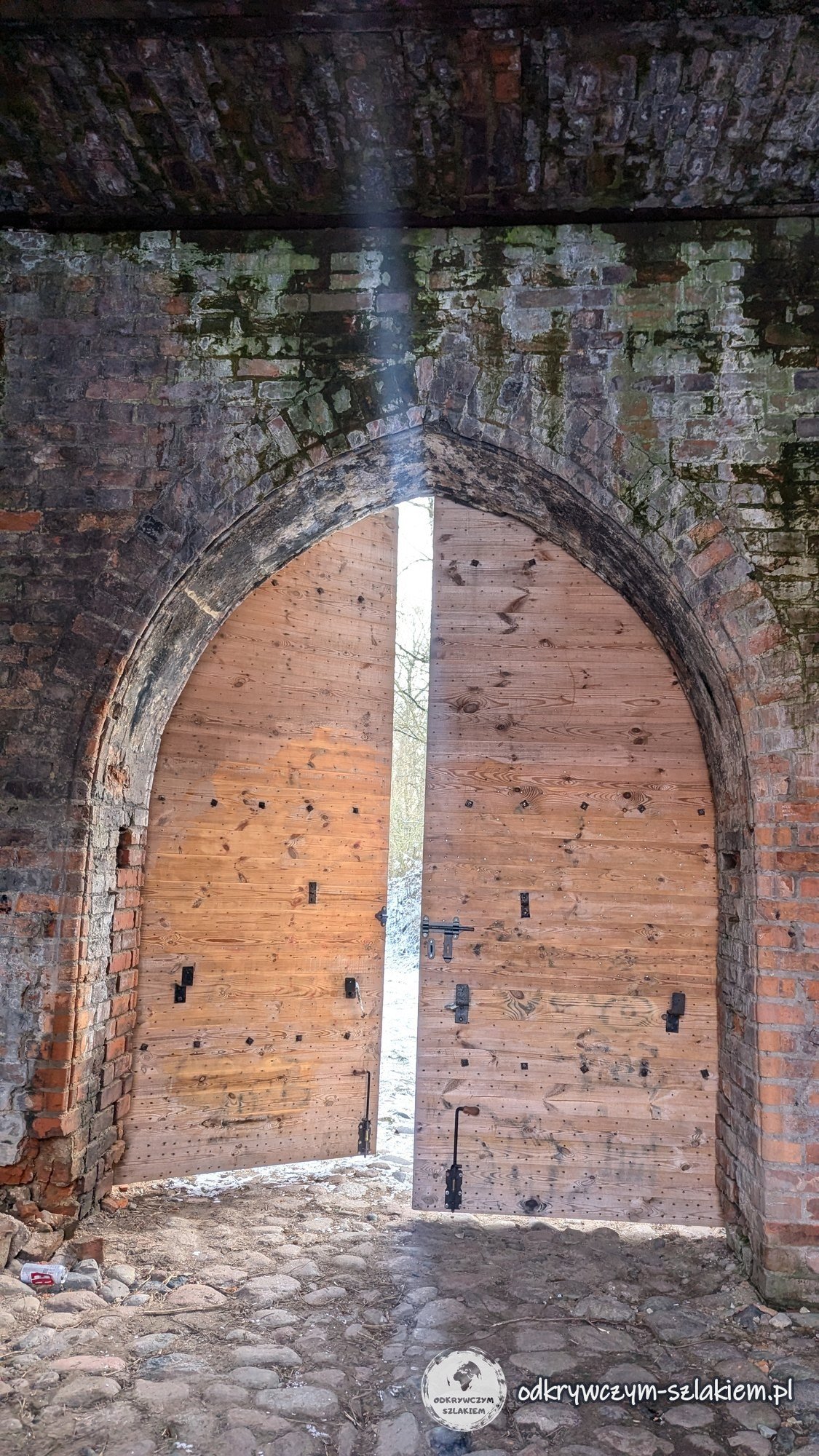
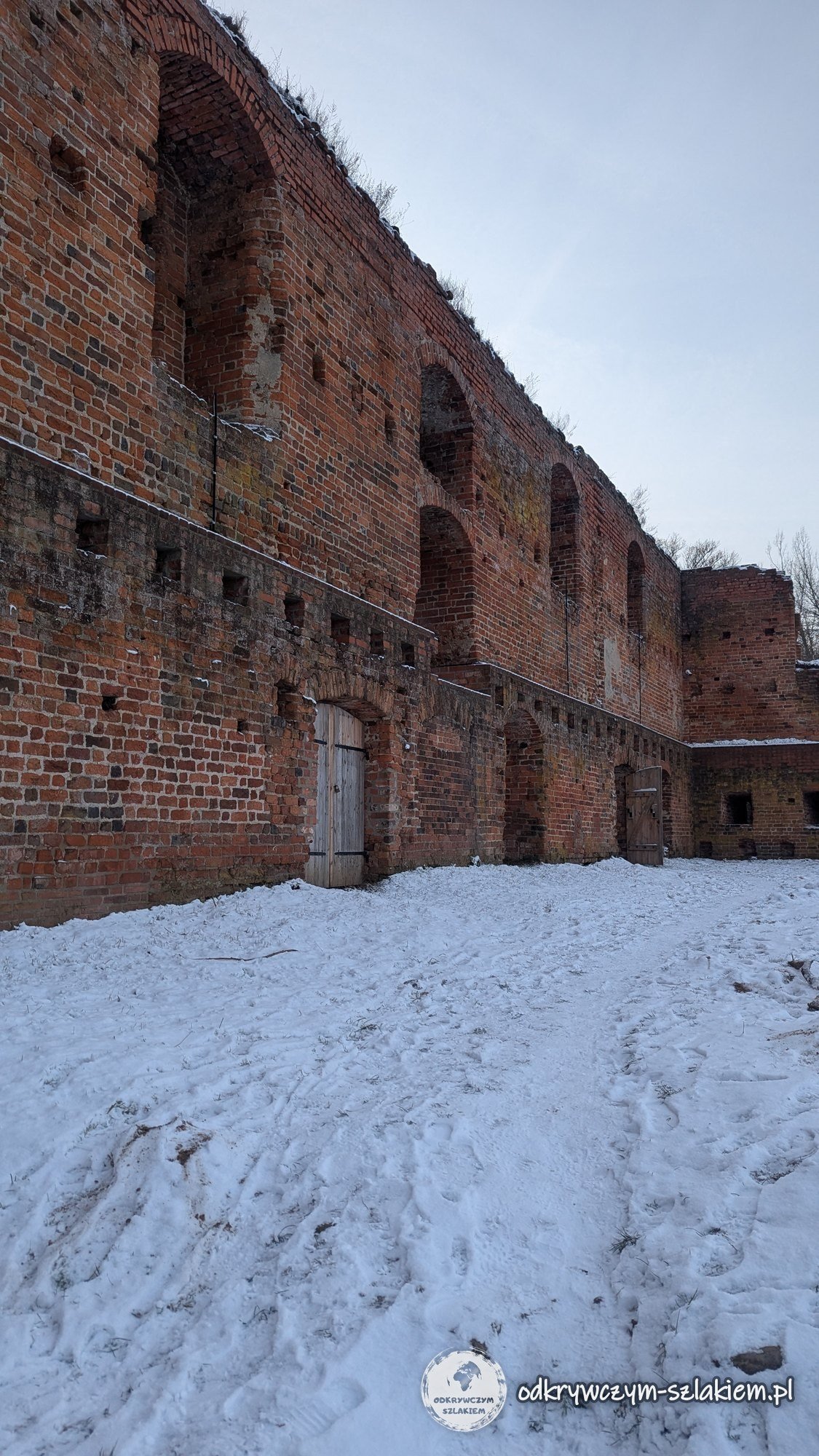
On the other side of the Vistula, opposite the Old Town, stand the ruins of Dybów Castle. King Władysław Jagiełło built it in 1424–1425, and the castle served as a customs post on the border with the Teutonic state. In 1431 the Teutonic Knights took it together with the burghers of Toruń, and in 1656 the Swedes burned it. The perimeter walls and a two-storey gate tower have survived. I was here on 5 January 2025 – there was snow inside the walls.
The panorama of Toruń from the Vistula
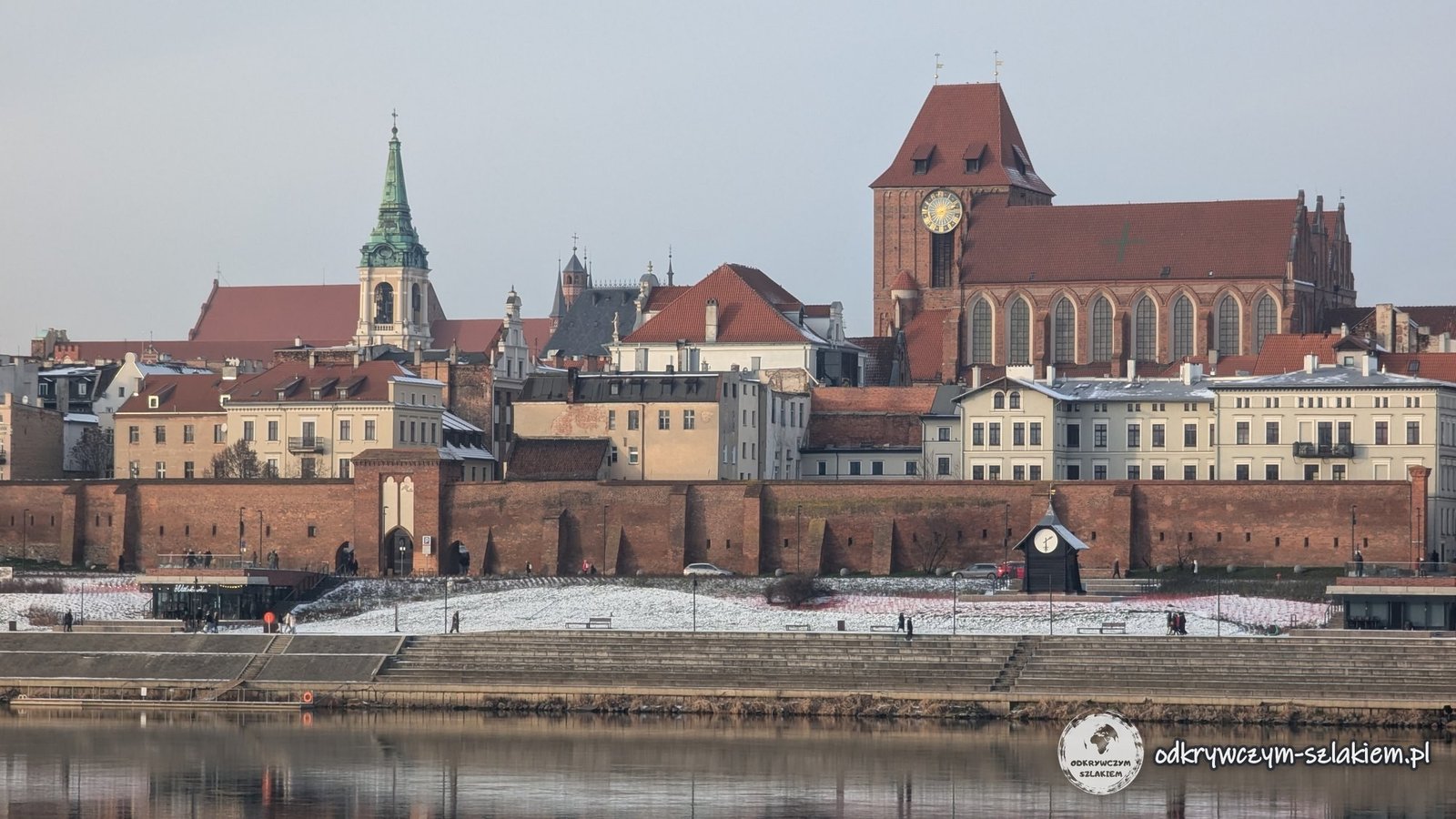
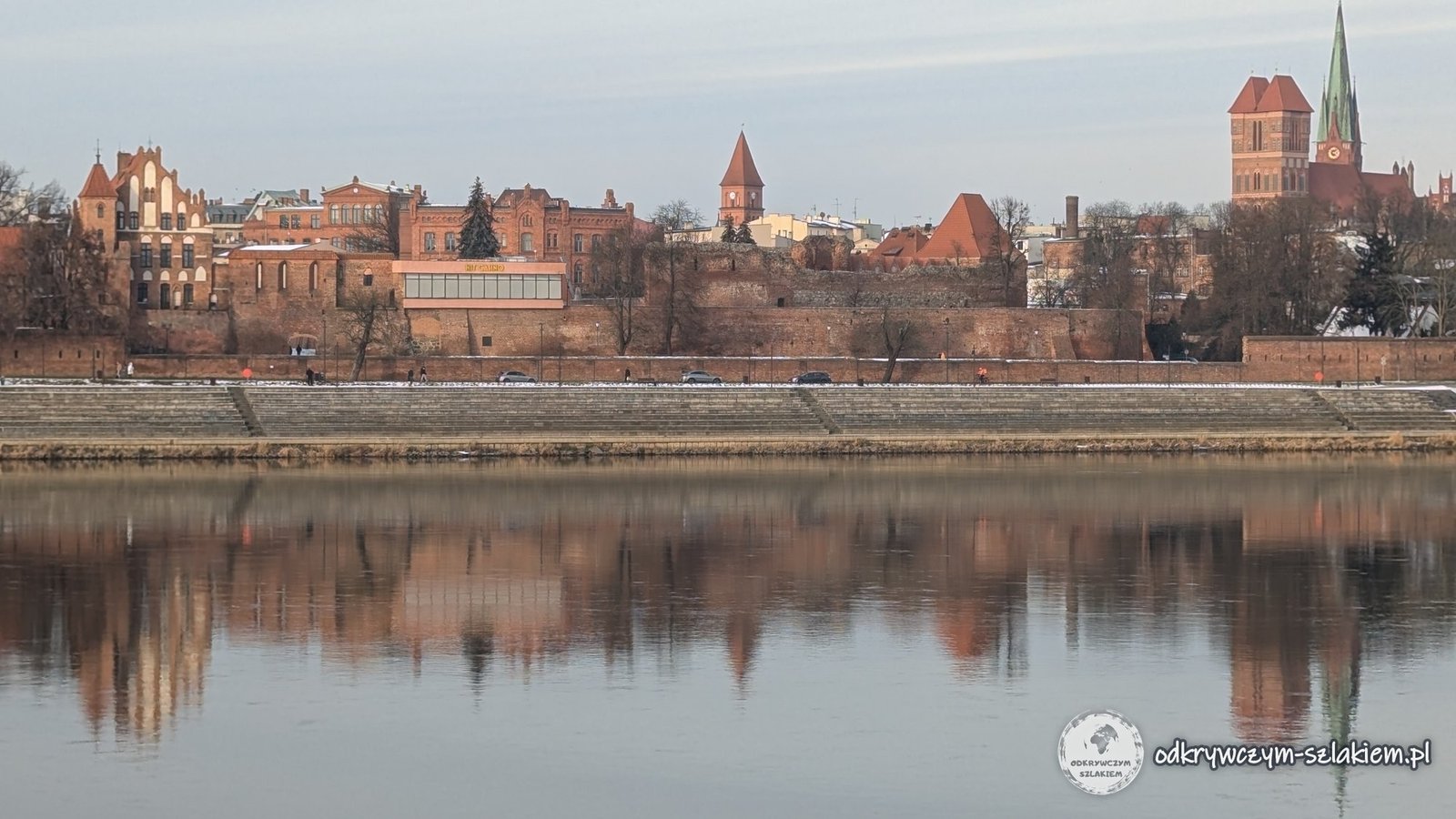
The fullest view of the Old Town panorama is from the left bank of the Vistula, opposite the Bridge Gate. This stretch of the panorama is framed by two bridges: the Józef Piłsudski road bridge and the railway bridge. On the afternoon of 5 January 2025 the water was calm, and the walls, the Town Hall tower and St Johns’ Cathedral were reflected in it.
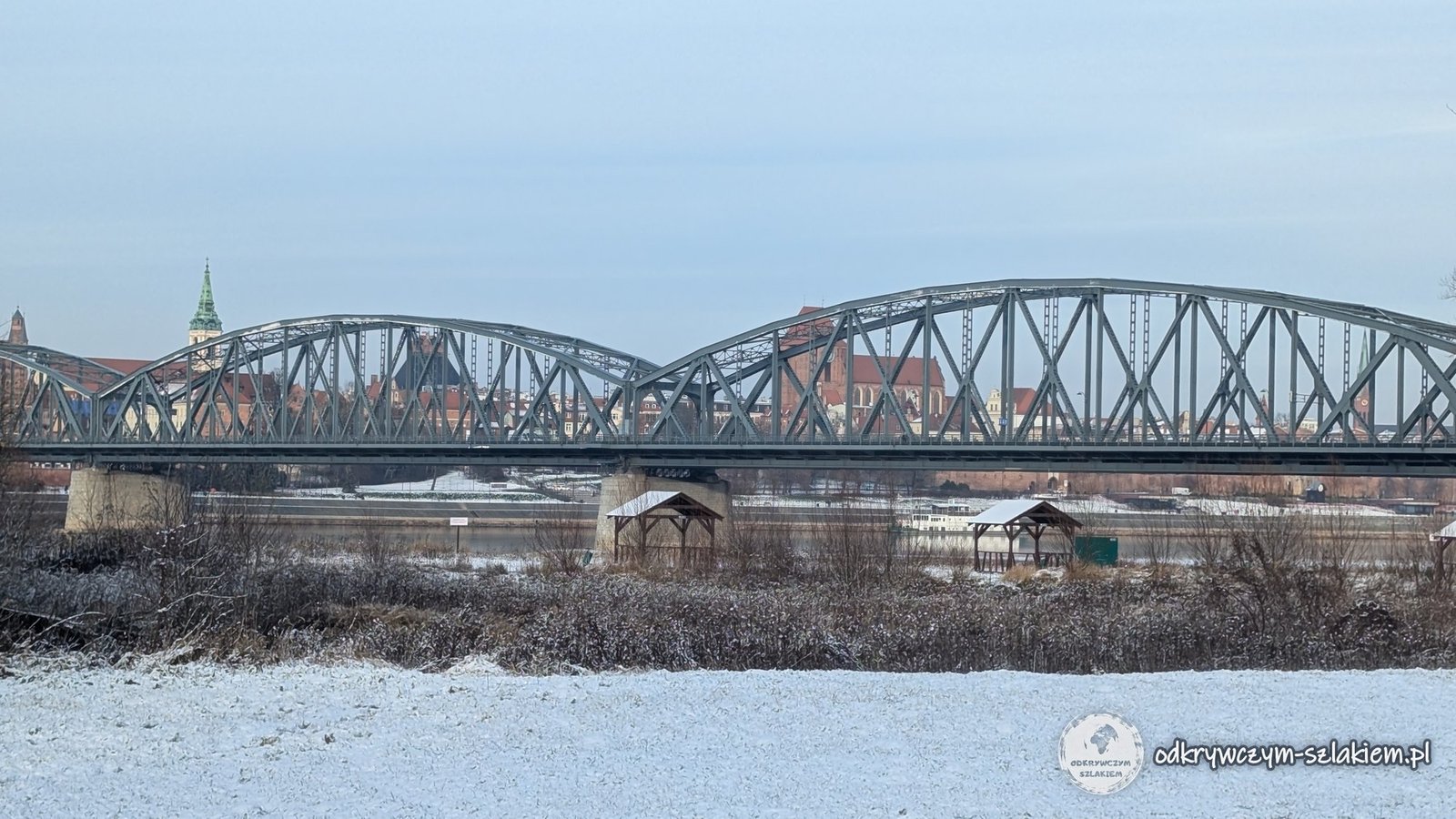
The Piłsudski Bridge is a steel truss over the wide Vistula. You can walk across it from the left bank to the Old Town.
Practical information
- By train: Toruń Główny station is on the left bank of the Vistula – from there it is about 2 km on foot to the Old Town via the Piłsudski Bridge. About 1 km east of the Old Town is Toruń Miasto station.
- Dybów Castle and the panorama: the castle ruins and the riverside with the view of the Old Town are close to Toruń Główny station, so you can see them right after arriving or before leaving.
- Town Hall tower: admission is paid – check current prices and opening hours on the website of the District Museum in Toruń. The stairs up the tower are narrow and steep.
- On foot: the square, Copernicus House, the Leaning Tower, the boulevard and the Teutonic castle ruins are a few hundred metres apart.
- In winter: in early January the sun sets here before 4 pm, so it is better to come to the left bank for the panorama earlier.
- How much time: one day is enough for the Old and New Town with the Town Hall tower, and a few hours on a second day for the left bank with Dybów Castle and the panorama.