Kraków is Poland’s former capital and one of the most visited cities in the country. In 2024–2025 I came here three times: for concerts, and in November 2025 to give a talk at a travel festival. In this post I have gathered the places I photographed on those trips and arranged them into a weekend plan. Day one is the Royal Route from the Barbican through the Main Market Square to Wawel, with the Vistula boulevards and Kazimierz in the evening. Day two is Podgórze with the Krakus Mound, the Zakrzówek lake and the abbey in Tyniec.
Table of contents
- The Barbican and St Florian’s Gate
- The Main Market Square – the Cloth Hall, St Mary’s Basilica and the Town Hall Tower
- Grodzka Street and the Papal Window
- Wawel and the Wawel Dragon
- The Vistula boulevards and the Bernatek Footbridge
- Kazimierz
- Podgórze – KL Plaszow, the Liban quarry and the Krakus Mound
- Zakrzówek and Twardowski Rocks
- The Benedictine Abbey in Tyniec
- Practical information
The Barbican and St Florian’s Gate
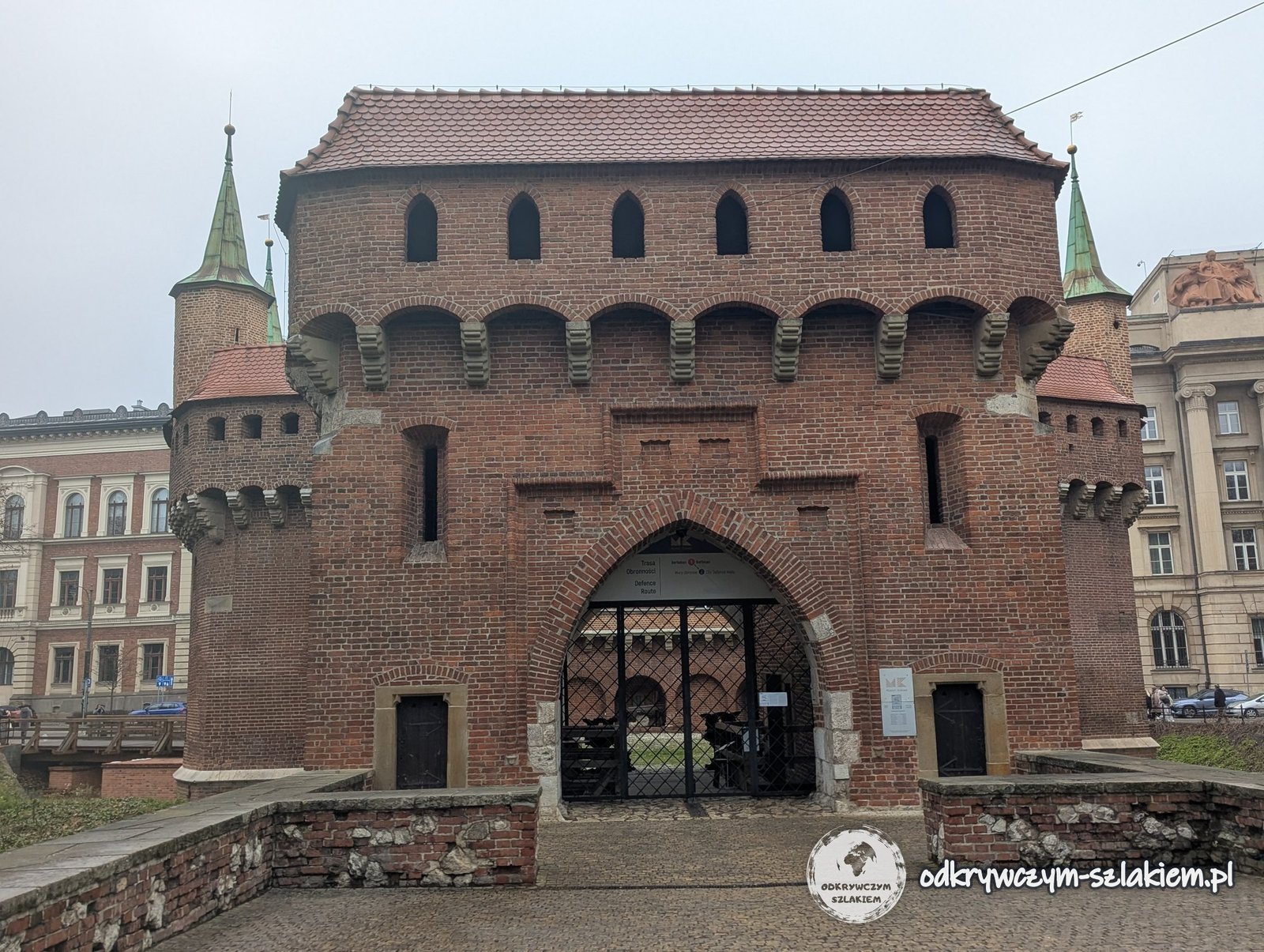
The Royal Route starts at the Barbican and leads through the Old Town all the way to Wawel. The Barbican is a brick fortification from 1498–1499, considered the largest surviving barbican in Europe. It was once linked to St Florian’s Gate by a bridge over the moat.
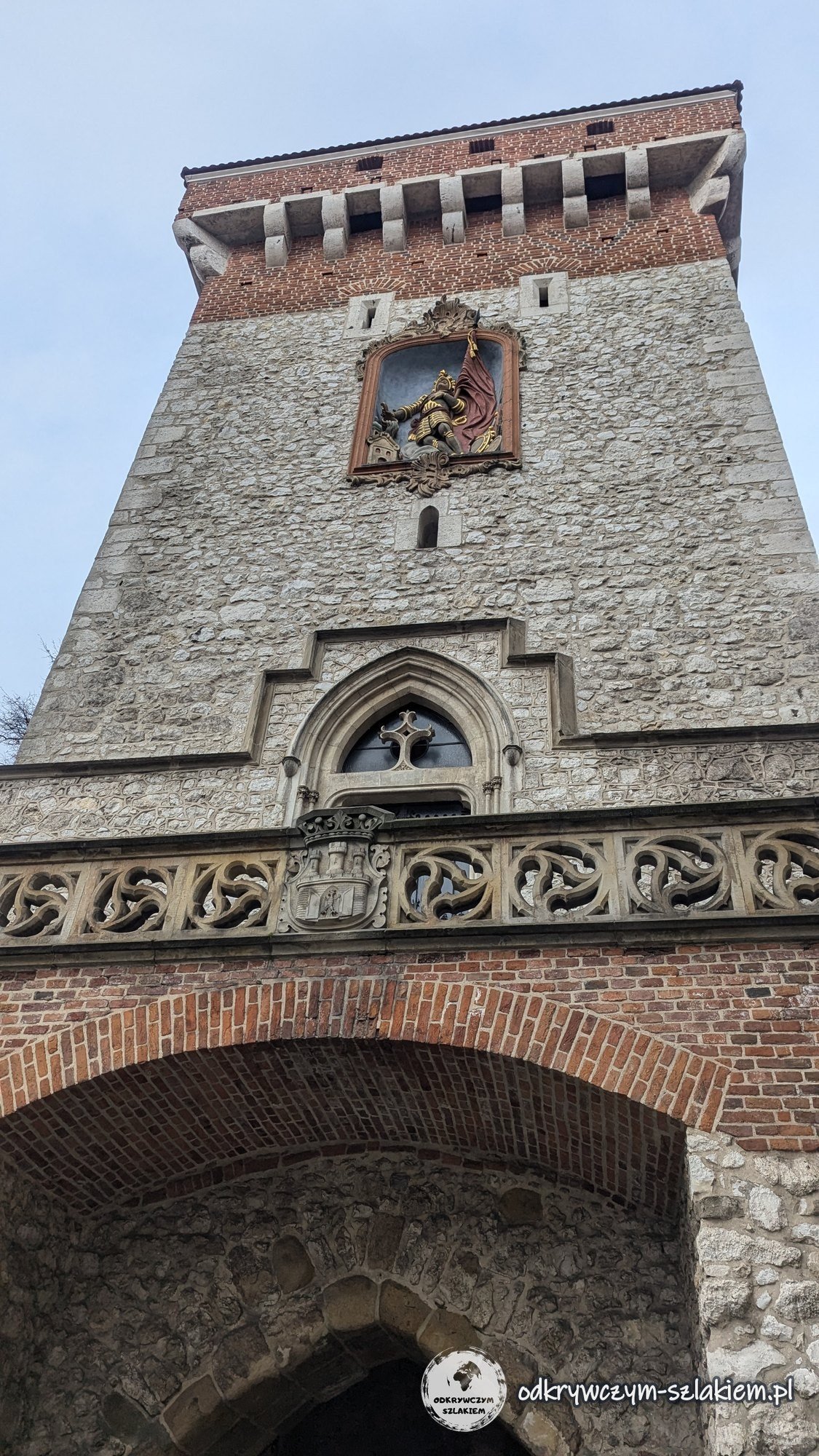
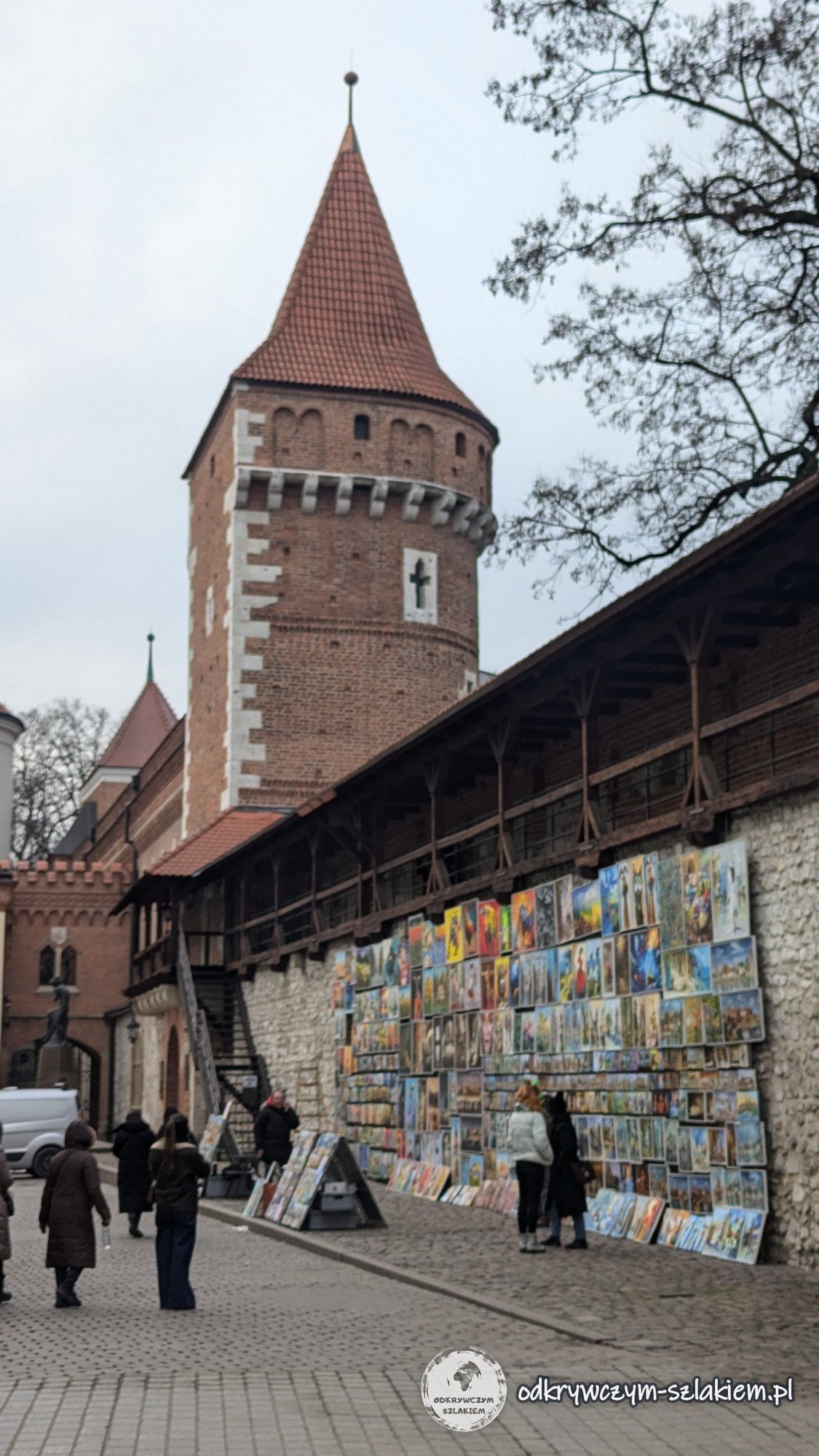
St Florian’s Gate is the only surviving gate of the old city walls. Its oldest part dates from the turn of the 13th and 14th centuries. Next to the gate a stretch of the defensive walls with towers has survived – in February 2025 it was hung with paintings for sale. Beyond the gate begins Floriańska Street, which leads straight to the Market Square.
The Main Market Square – the Cloth Hall, St Mary’s Basilica and the Town Hall Tower
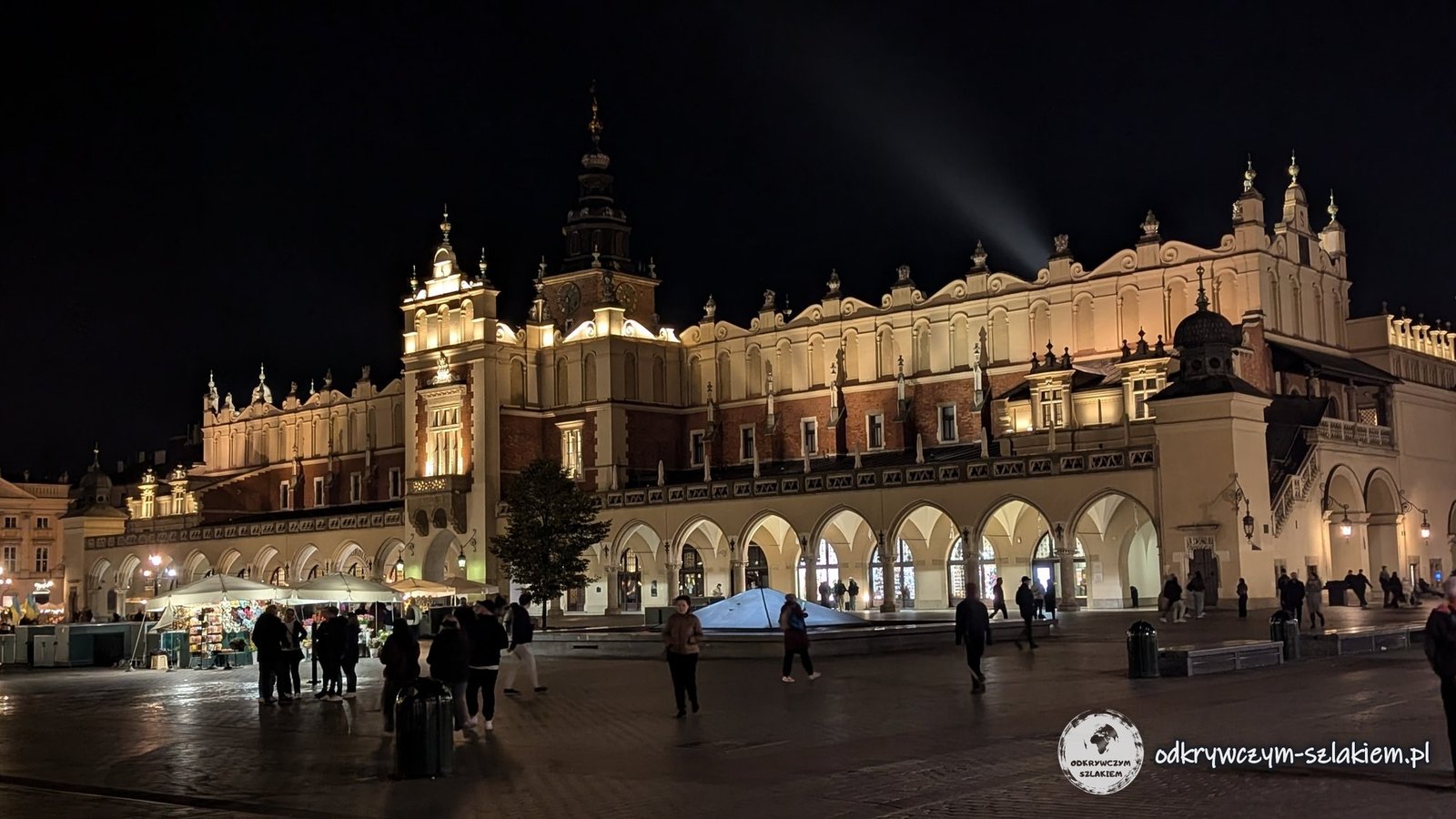
The Main Market Square (Rynek Główny) measures about 200 by 200 metres and is one of the largest medieval squares in Europe. In its middle stands the Cloth Hall (Sukiennice) – a 13th-century market hall, later rebuilt in Gothic and then Renaissance style. The ground floor is full of souvenir stalls, and upstairs is the National Museum’s Gallery of 19th-Century Polish Art. I took this photo one evening in October 2024.
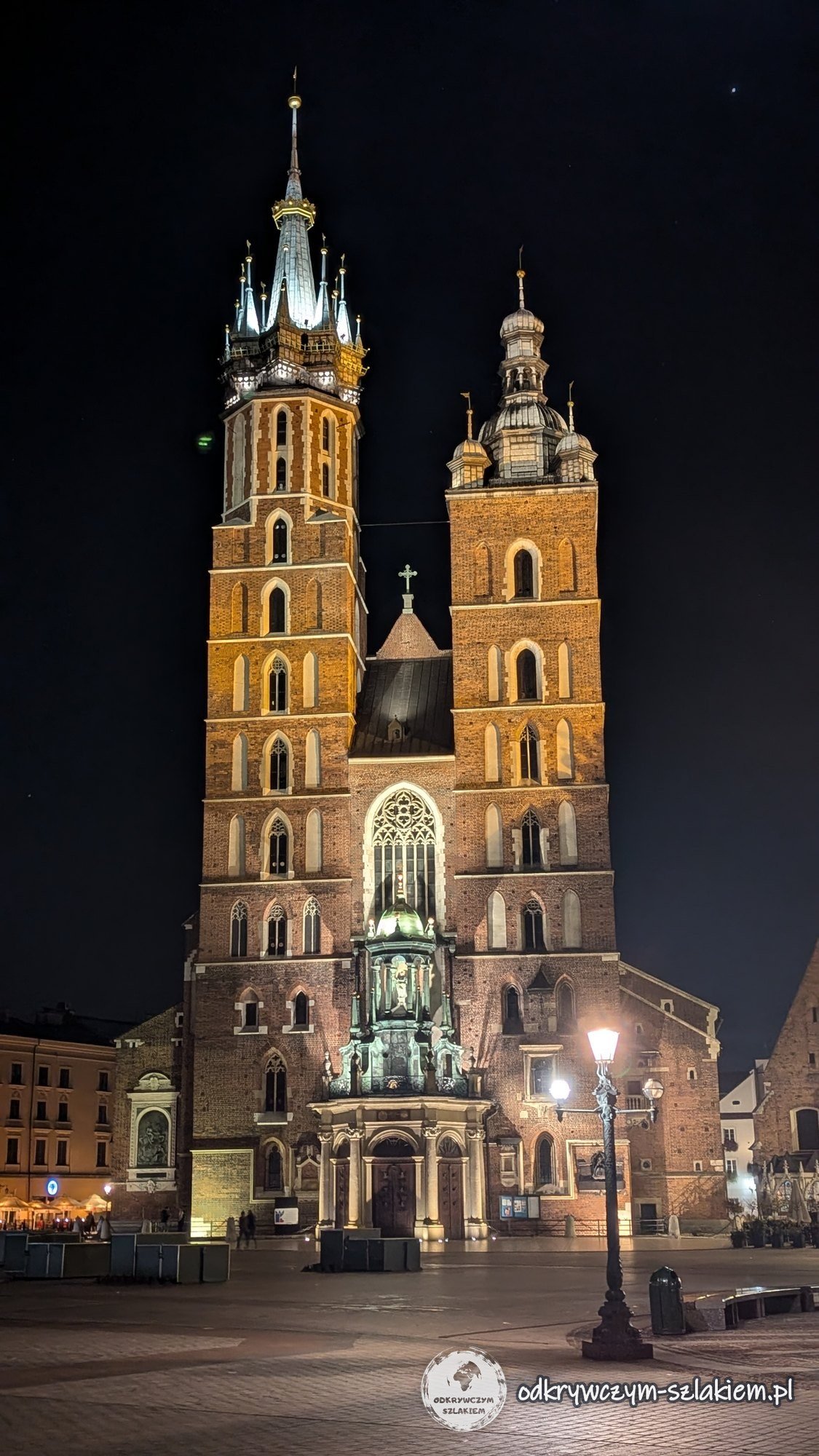
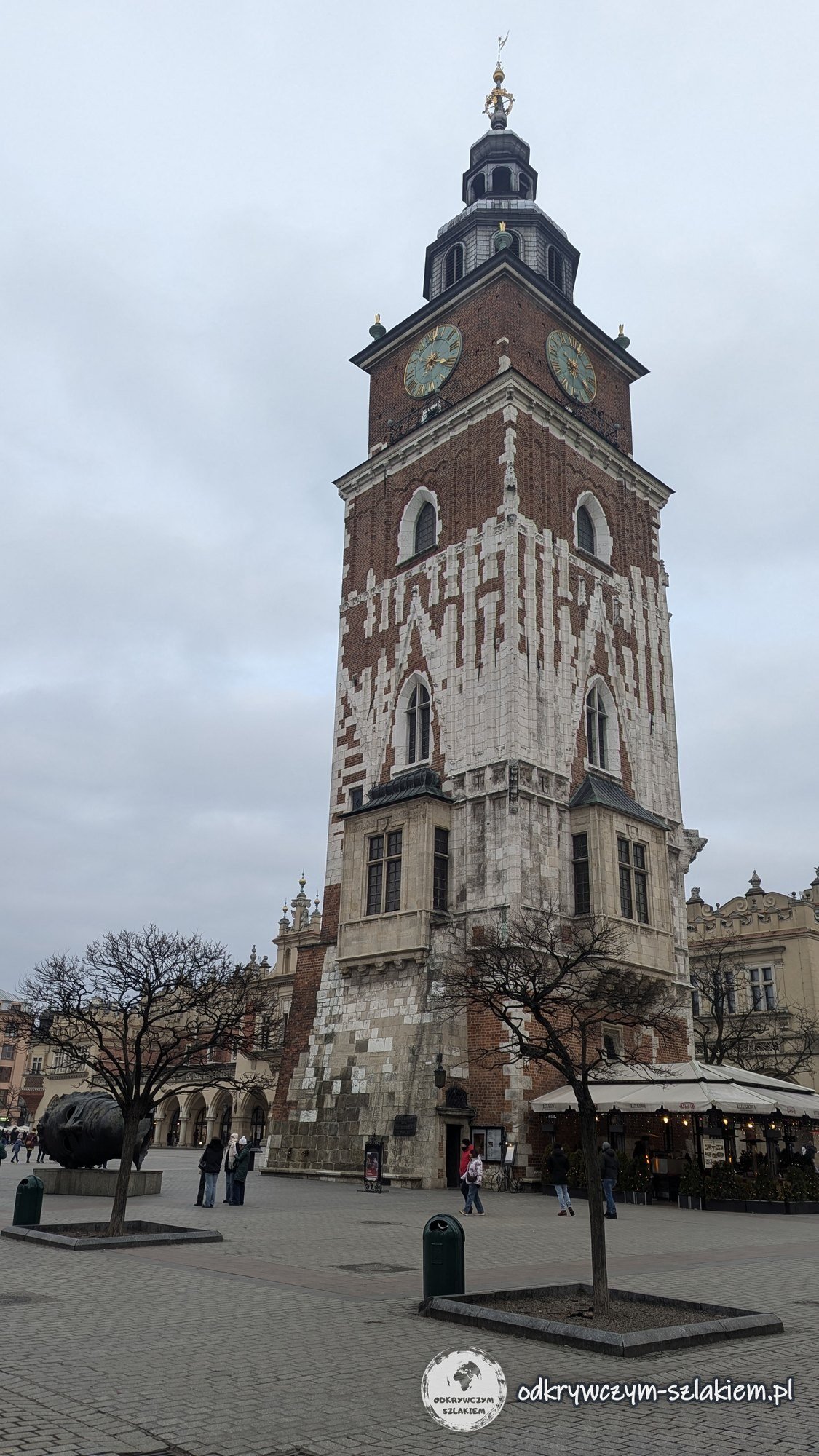
The square is dominated by St Mary’s Basilica, with two towers of different heights. Every hour the Hejnał trumpet call is played from the taller one, breaking off in the middle of the tune. Inside is Veit Stoss’s Gothic altarpiece. On the other side of the Cloth Hall stands the 70-metre Town Hall Tower – all that is left of the town hall demolished in 1820.
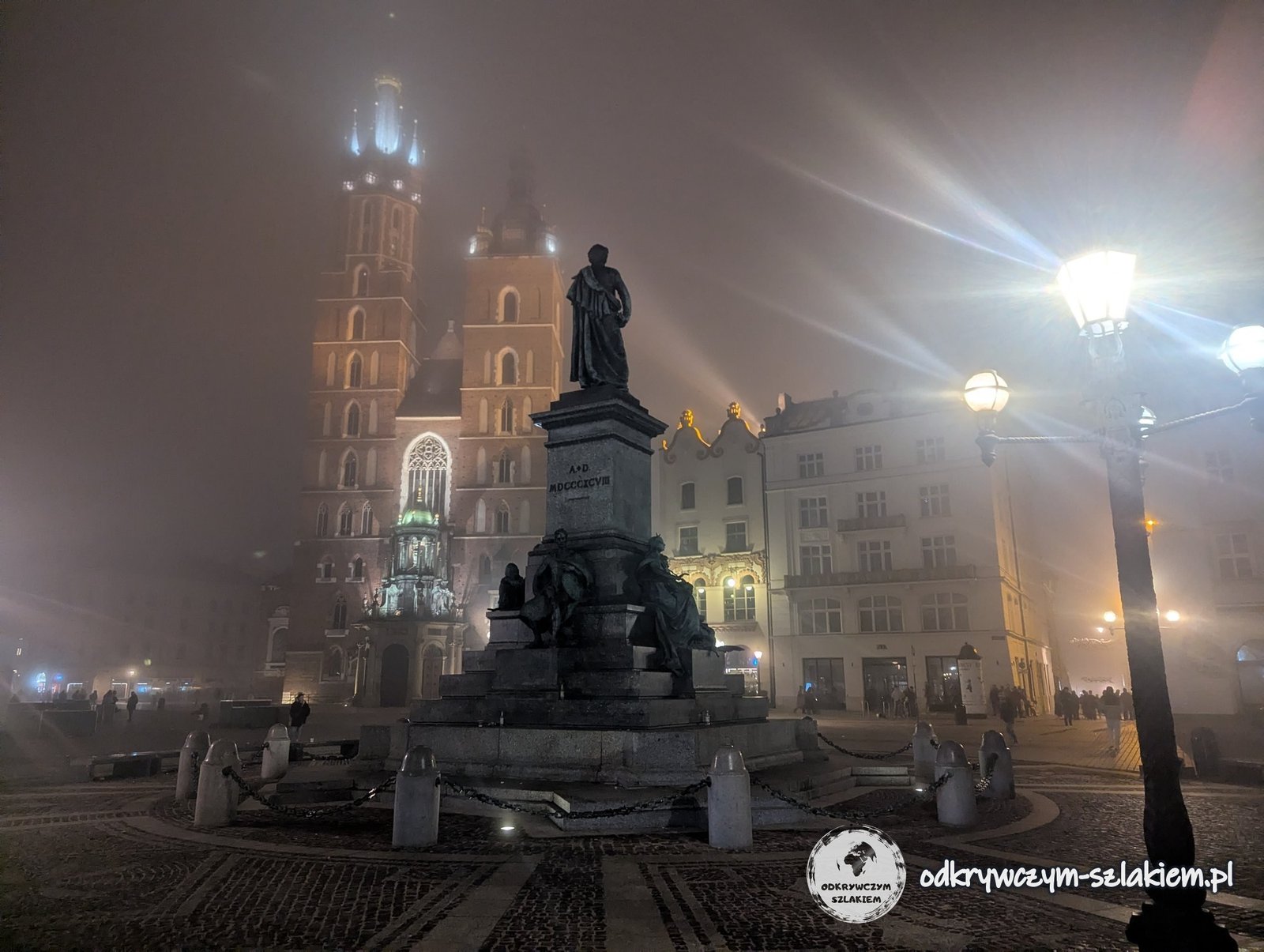
Between the Cloth Hall and St Mary’s stands the monument to Adam Mickiewicz. On the night of 29–30 November 2025 the square was wrapped in thick fog, and the Christmas decorations were already up.
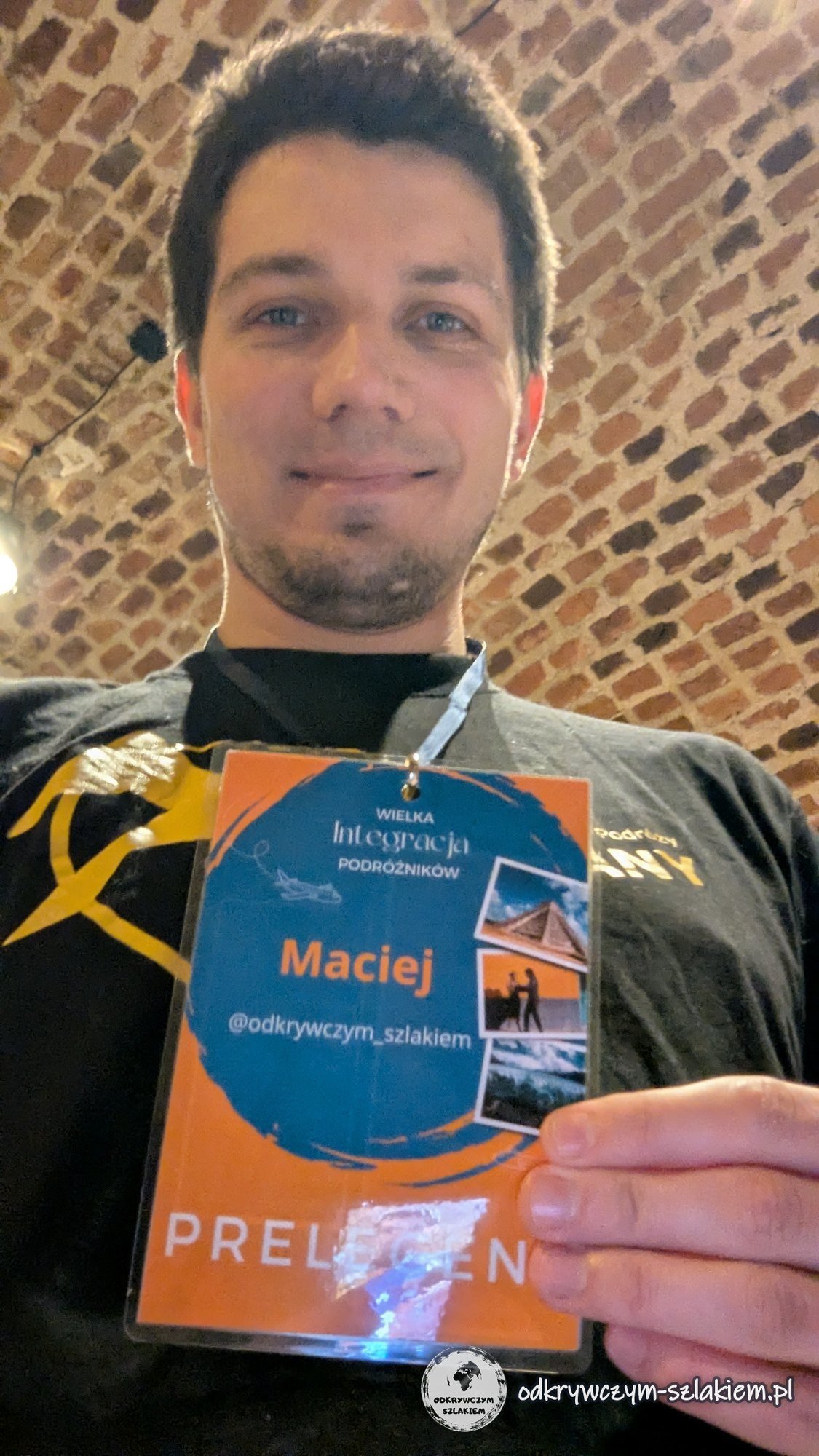
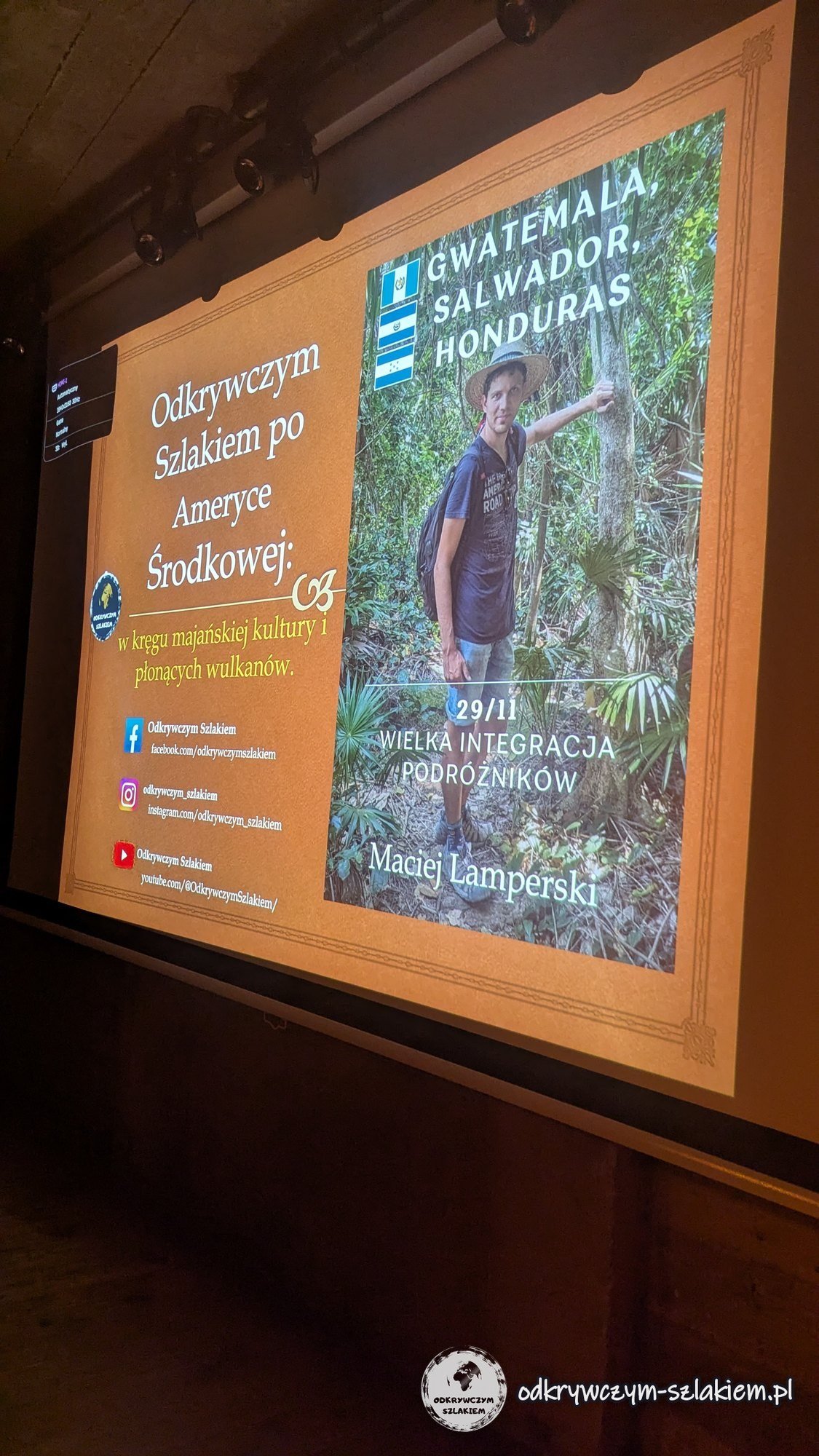
A few minutes from the square is Klub Re. On 29–30 November 2025 it hosted the Wielka Integracja Podróżników travel festival, devoted to Latin America. I opened the Saturday programme with my own talk (in Polish) about Guatemala, El Salvador and Honduras – I write more about that trip in my post Guatemala in 58 days.
Grodzka Street and the Papal Window
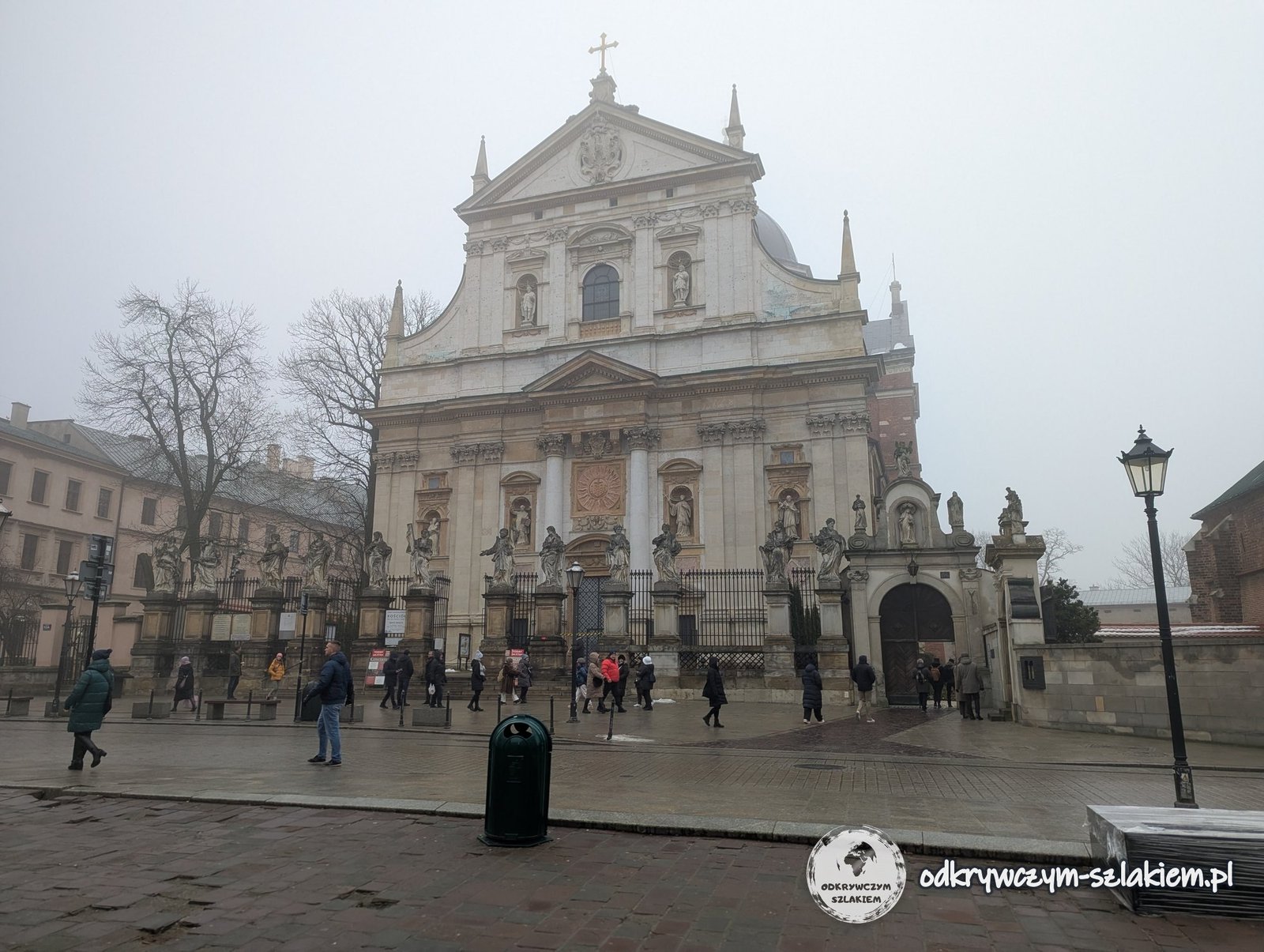
Grodzka Street leads from the Market Square to Wawel. Along it stands the Baroque Church of Saints Peter and Paul, built in 1597–1619 for the Jesuits. In front of it, on the fence, stand statues of the twelve apostles. Next door is the Romanesque St Andrew’s Church with its two white towers. At night in October 2024 the street was almost empty.

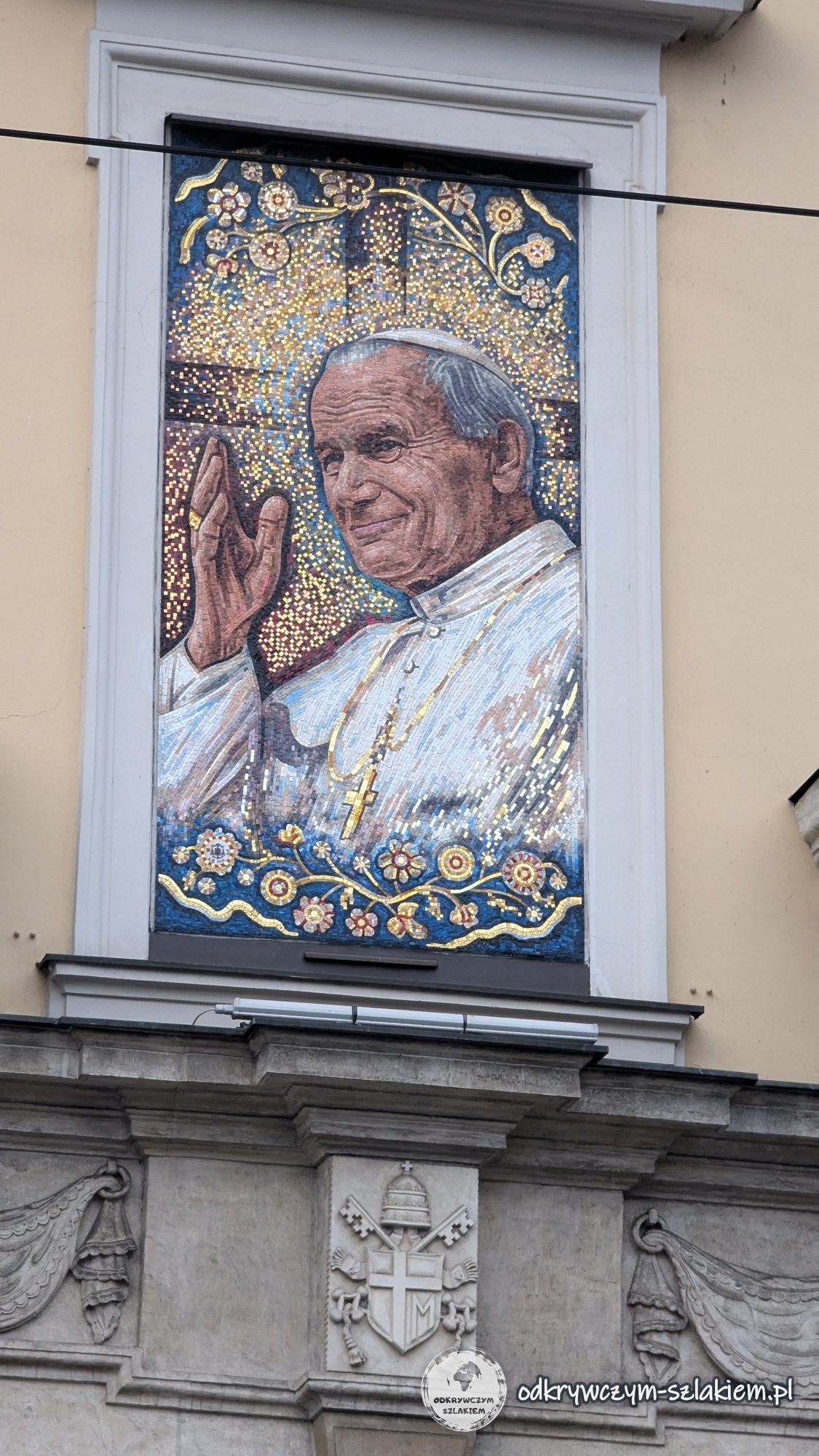
At Franciszkańska 3, in the Bishops’ Palace, is the Papal Window. During his pilgrimages to Poland, John Paul II spoke from it in the evenings with the young people gathered below – for the first time in 1979. In February 2025 the window held a mosaic portrait of the pope.
Wawel and the Wawel Dragon
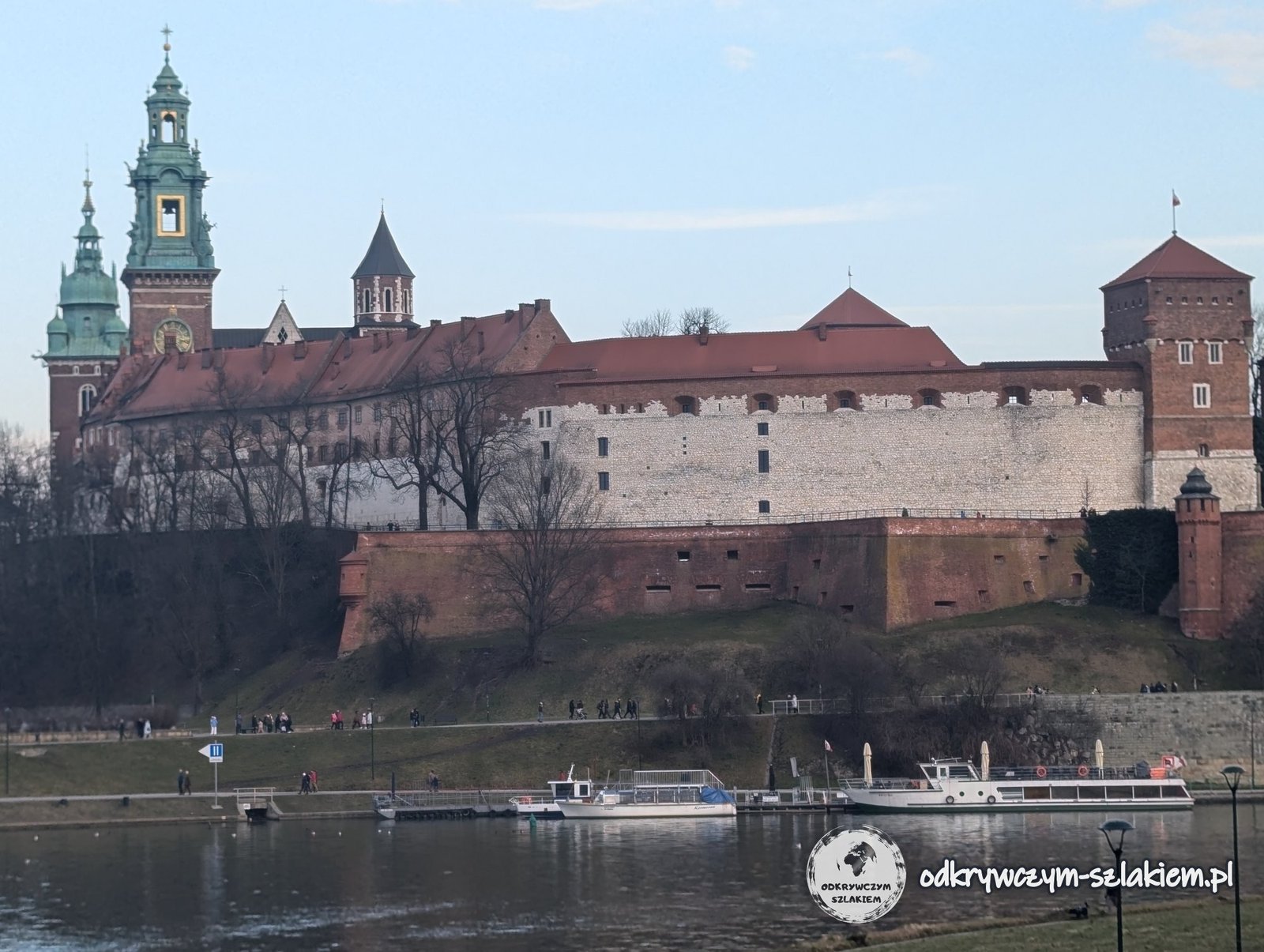
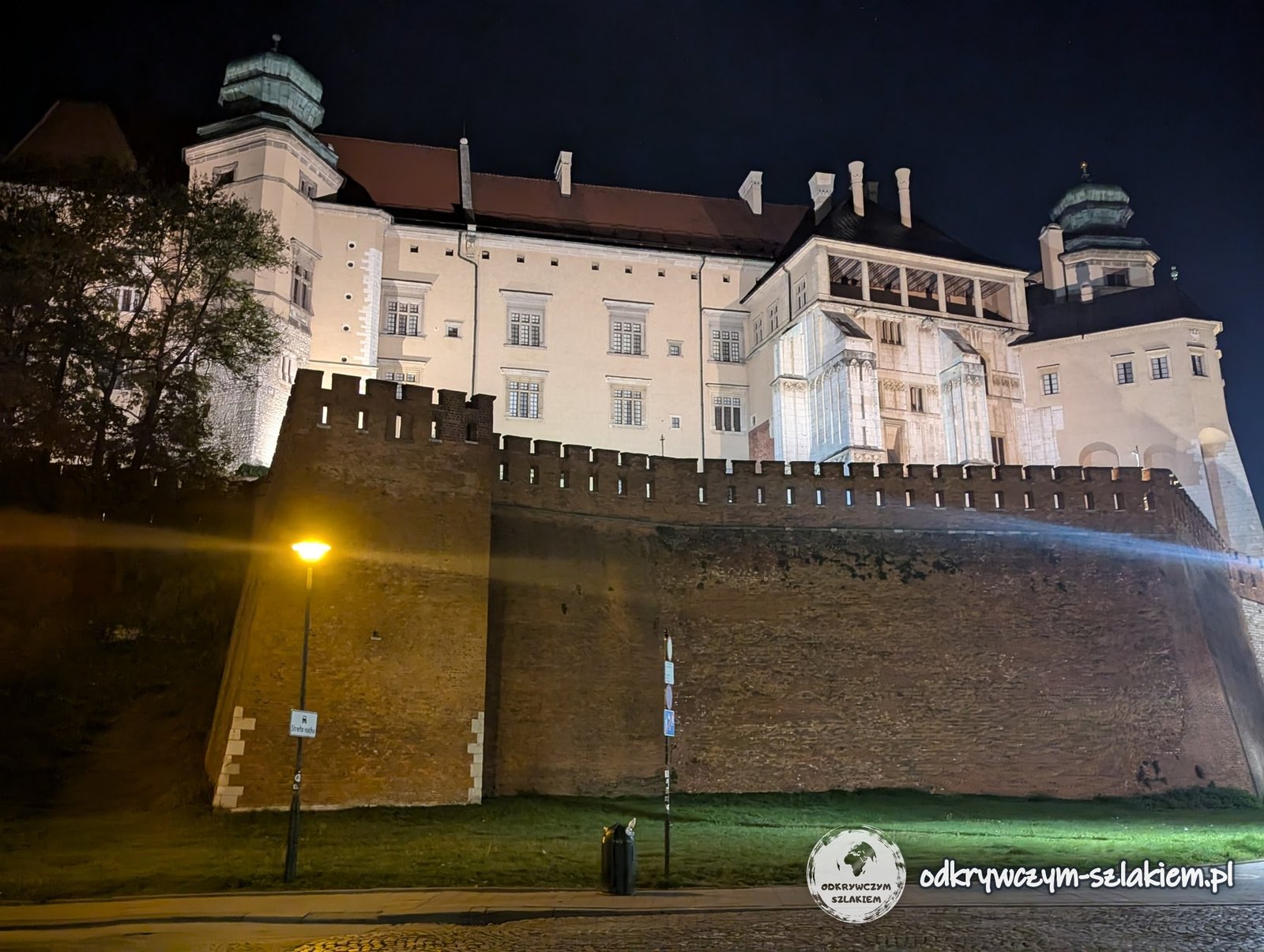
On the hill above the Vistula stand Wawel Royal Castle and the cathedral where Polish kings were crowned and buried. Entry to the hill and to the castle’s arcaded courtyard is free; the exhibitions inside the castle and the cathedral are ticketed. I took the opening photo of this post in February 2025 from the opposite bank of the Vistula, by the Dębnicki Bridge, and this one at night in October 2024.
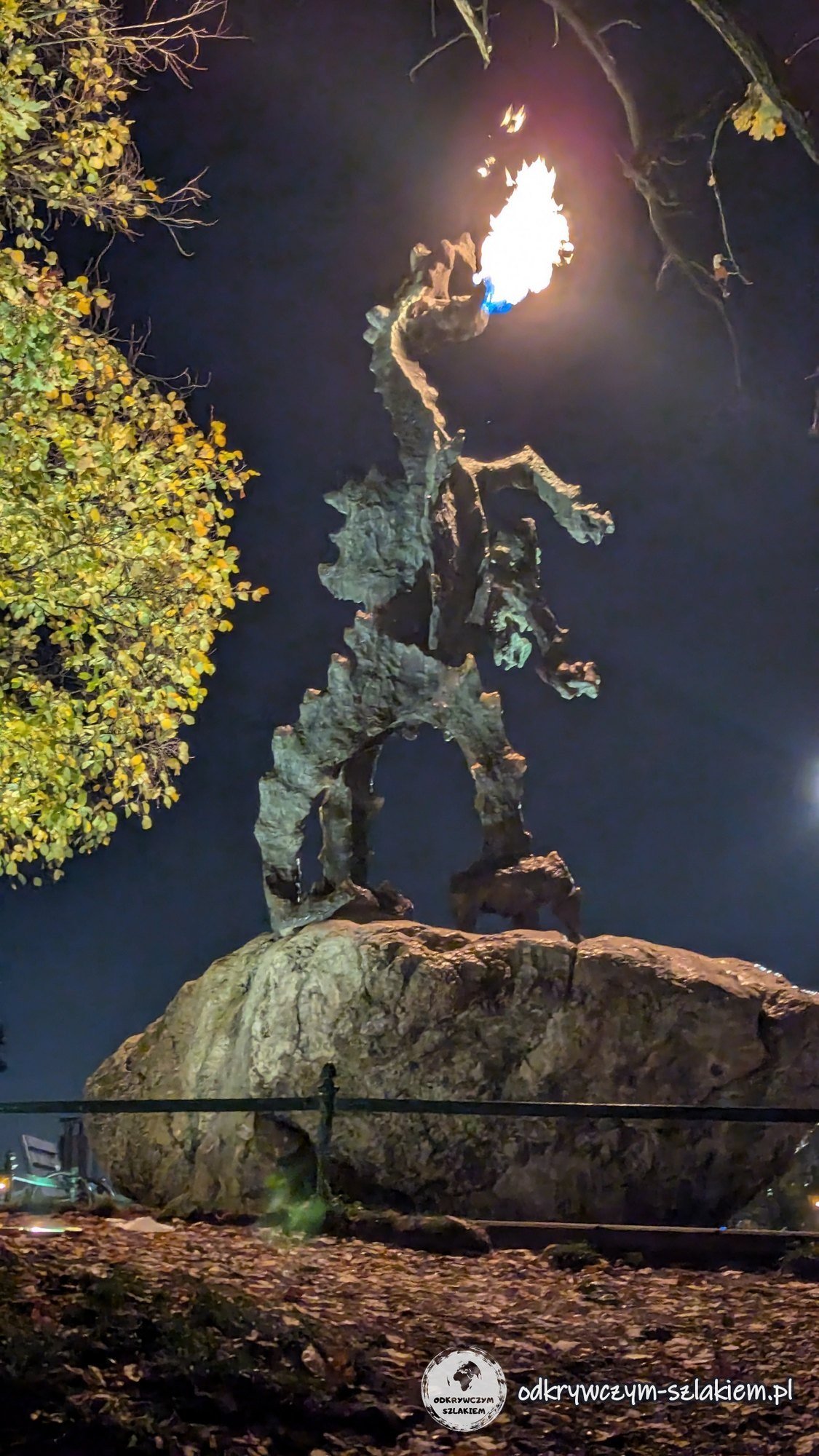
At the foot of the hill, by the exit from the Dragon’s Den, stands the Wawel Dragon – a sculpture by Bronisław Chromy from 1972. The dragon breathes fire thanks to a gas installation hidden in its jaws. I took this photo after midnight in October 2024.
The Vistula boulevards and the Bernatek Footbridge
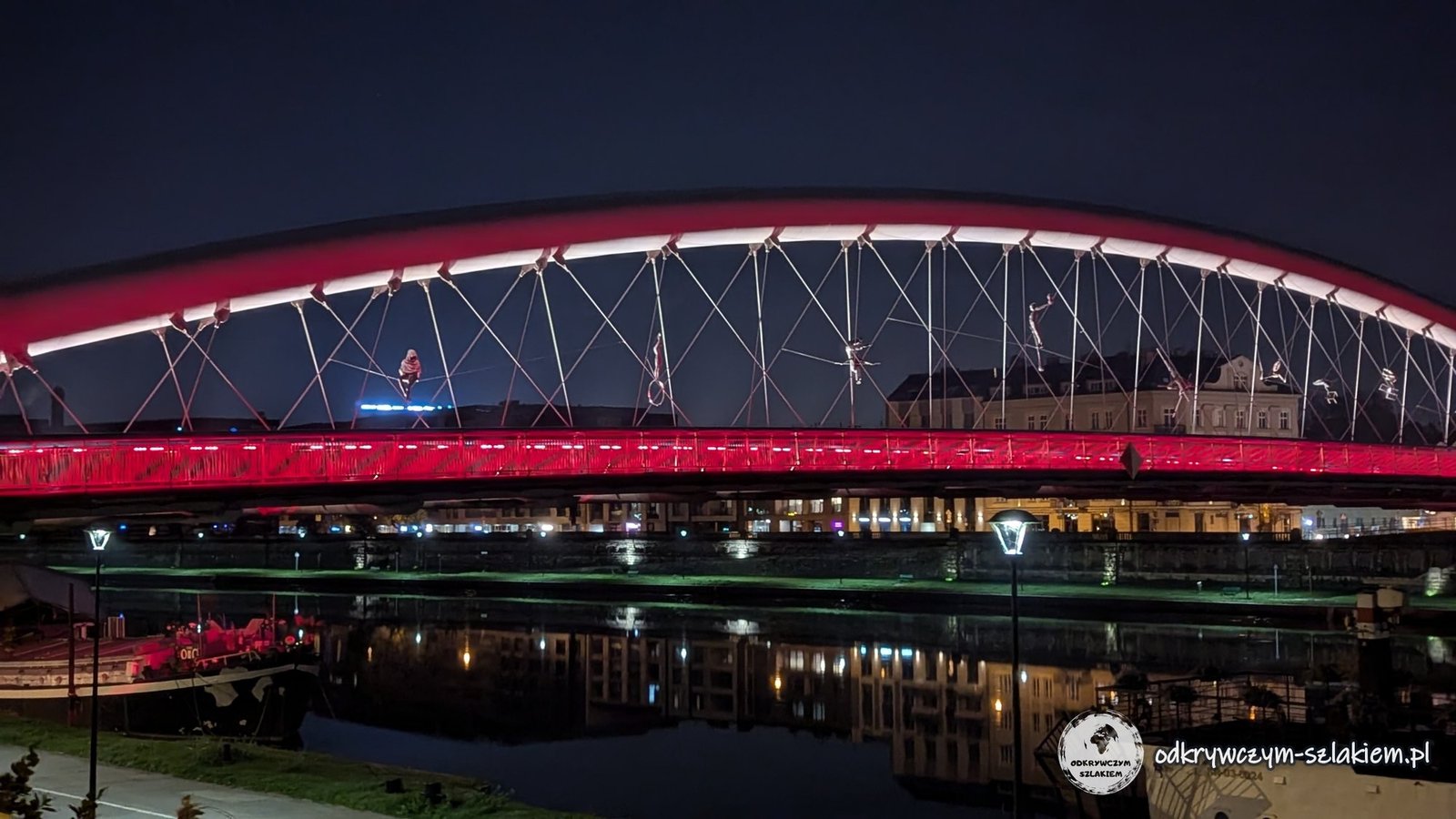
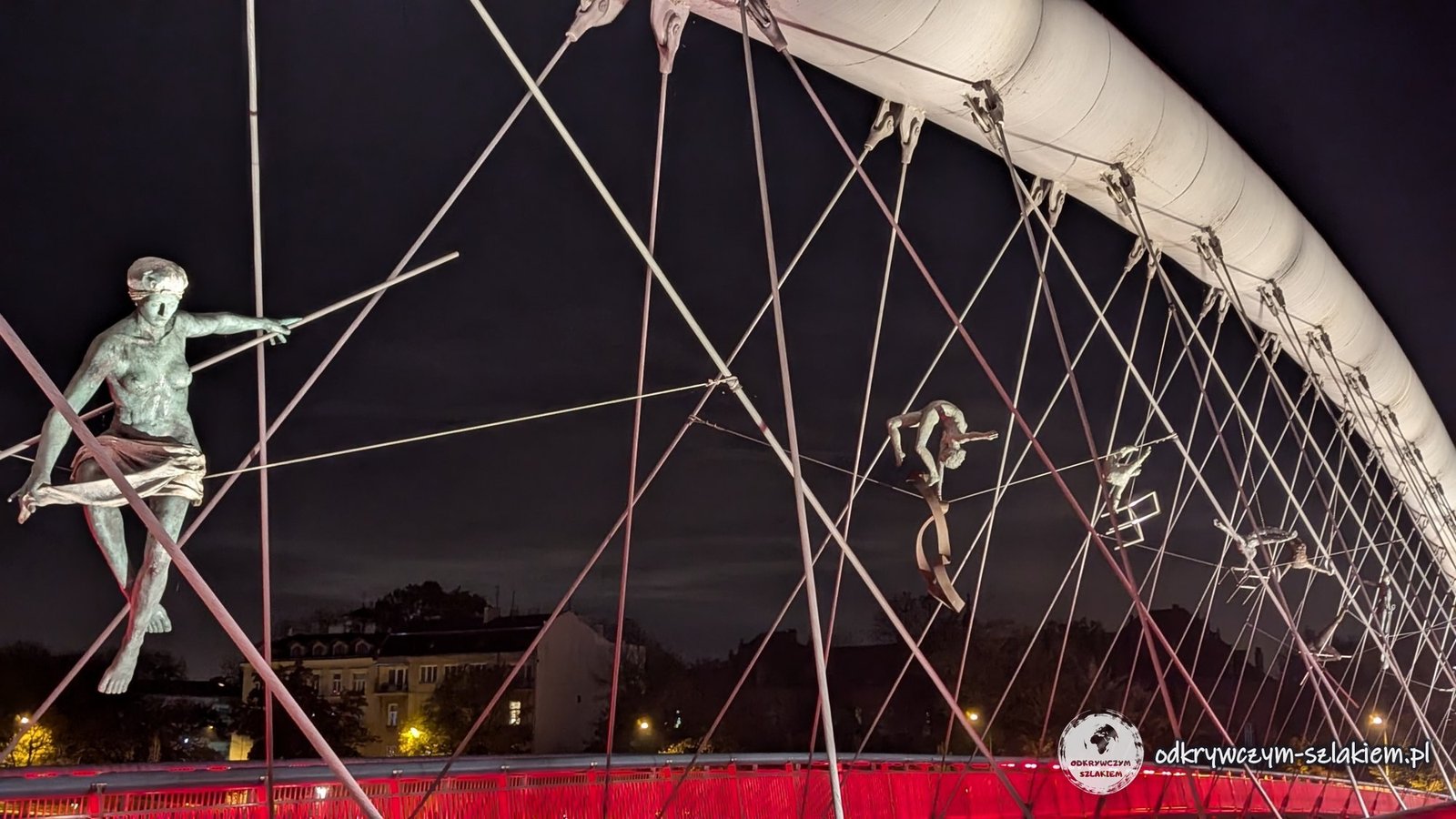
The boulevards run along the Vistula, and you can follow them on foot from below Wawel to Kazimierz. Between Kazimierz and Podgórze the river is crossed by the Father Bernatek Footbridge, opened on 30 September 2010. Above its deck hang Jerzy Kędziora’s sculptures of balancing acrobats. At night in October 2024 the footbridge’s arches glowed red.
Kazimierz
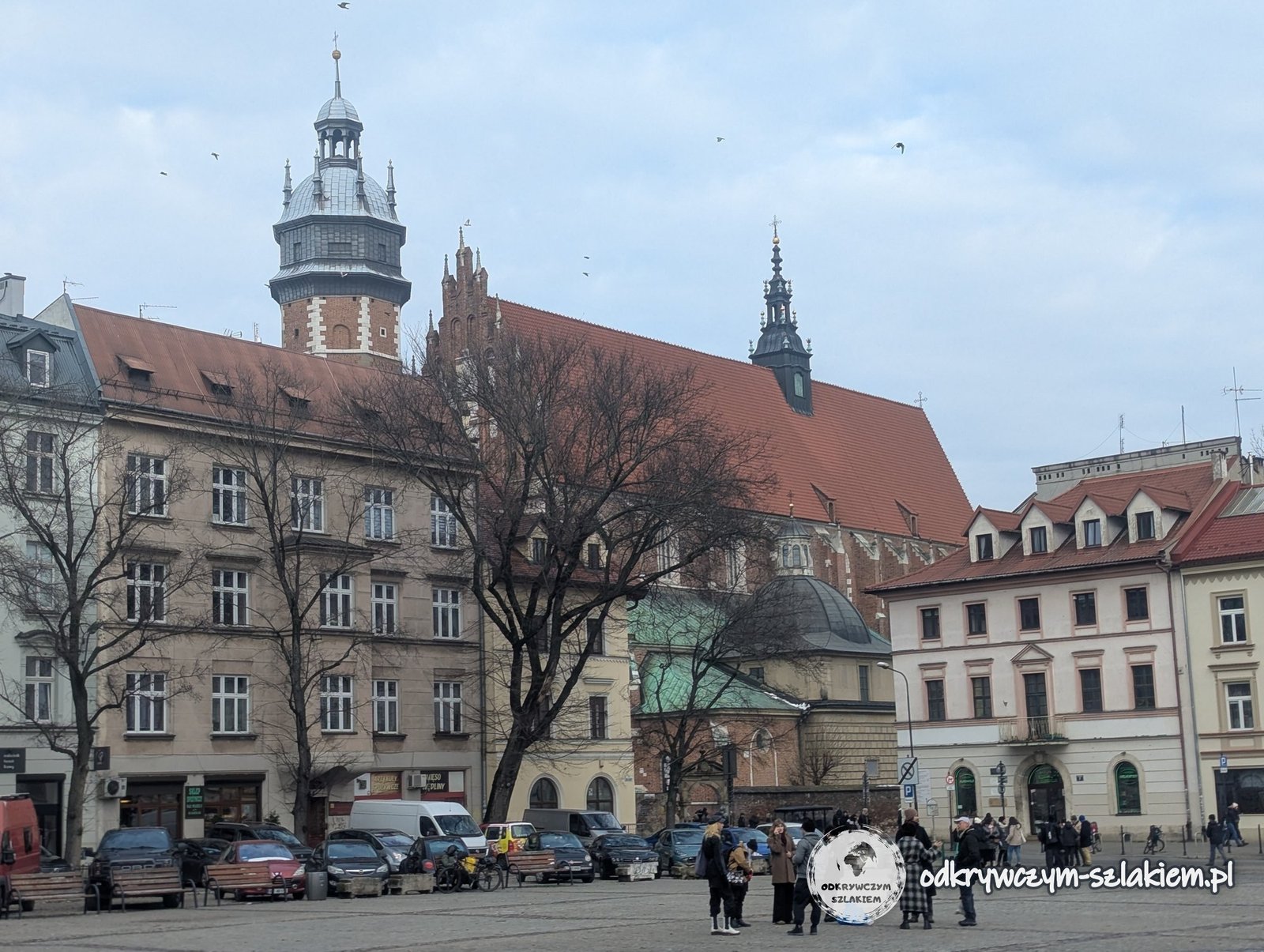
Kazimierz was a separate town for centuries; today it is a district of Kraków with churches, synagogues, cafés and bars. On Wolnica Square stands the old Kazimierz town hall, now home to the Ethnographic Museum, and behind it the Gothic Corpus Christi Basilica.
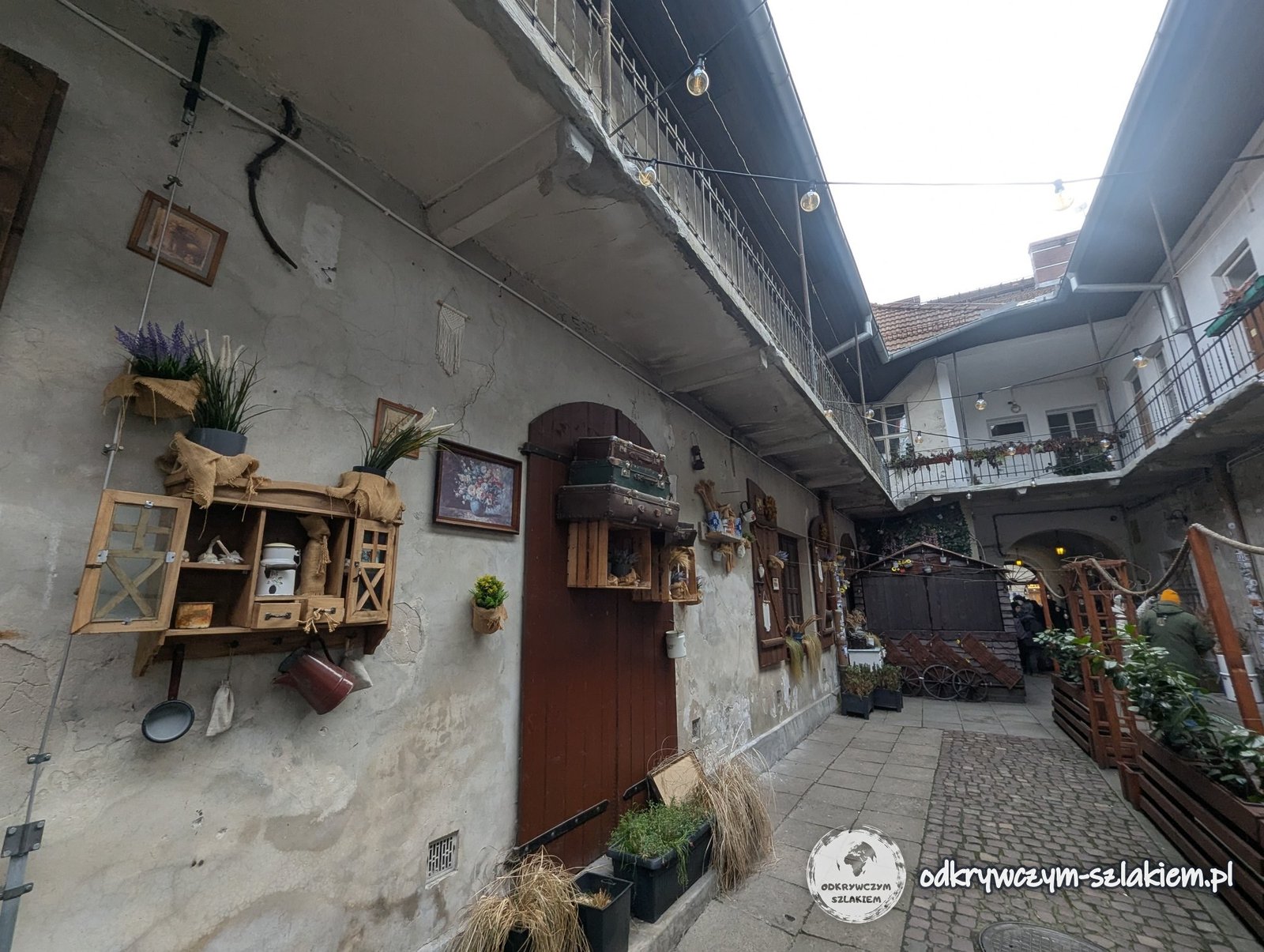
A few minutes away, at Józefa 12, there is a courtyard with wooden galleries. The eviction scenes of “Schindler’s List” were filmed here. In November 2025 the courtyard was hung with boards about the history of Jewish Kazimierz.
Podgórze – KL Plaszow, the Liban quarry and the Krakus Mound
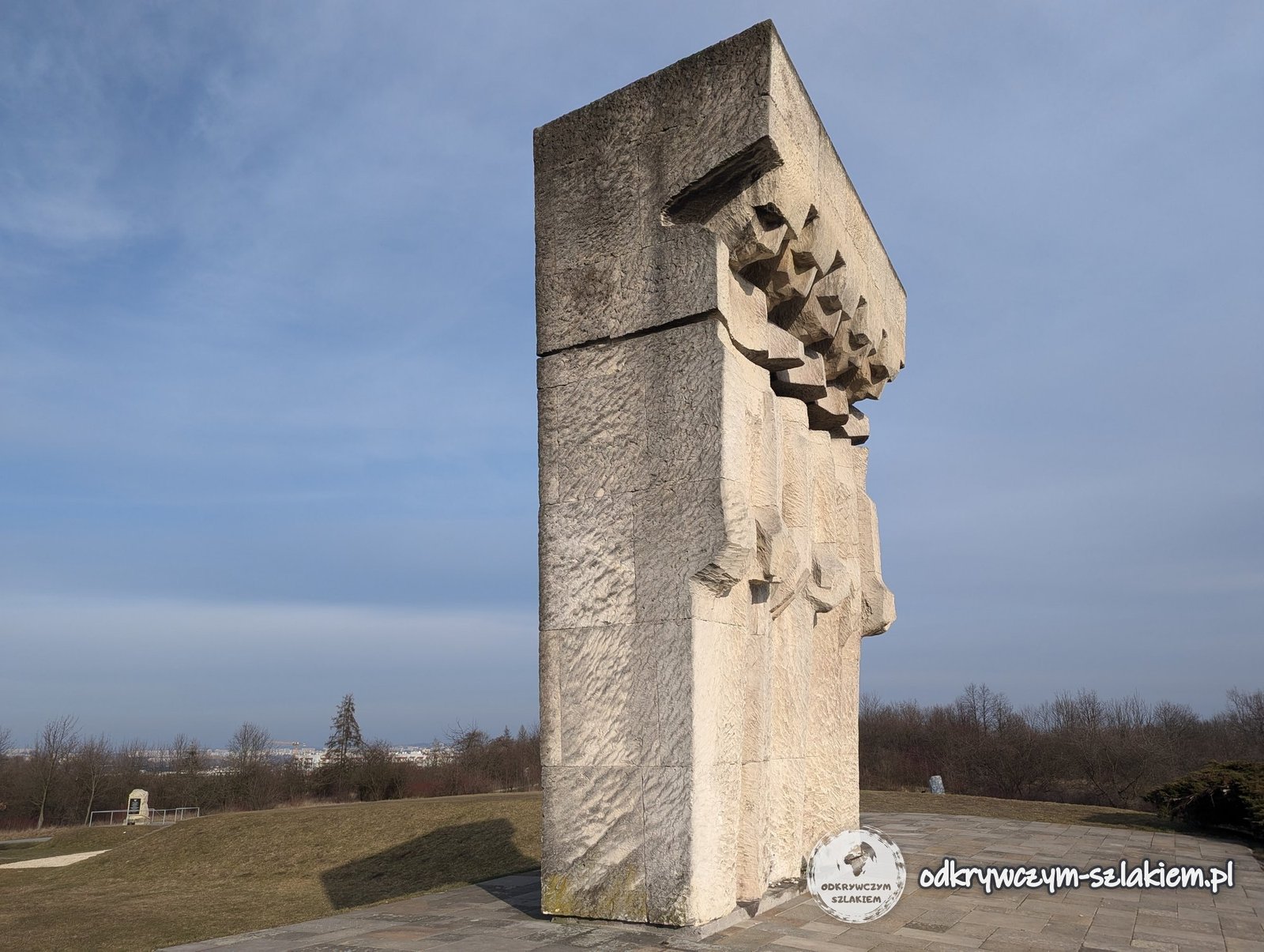
South of the Vistula, in Podgórze, lies the site of the former German camp KL Plaszow. From 1942 to 1945 it was a labour camp and a concentration camp, run by Amon Göth. Today it is an open, grassy area with boards telling the camp’s history and Witold Cęckiewicz’s Monument to the Victims of Fascism from 1964. I was here in October 2024 and in February 2025.
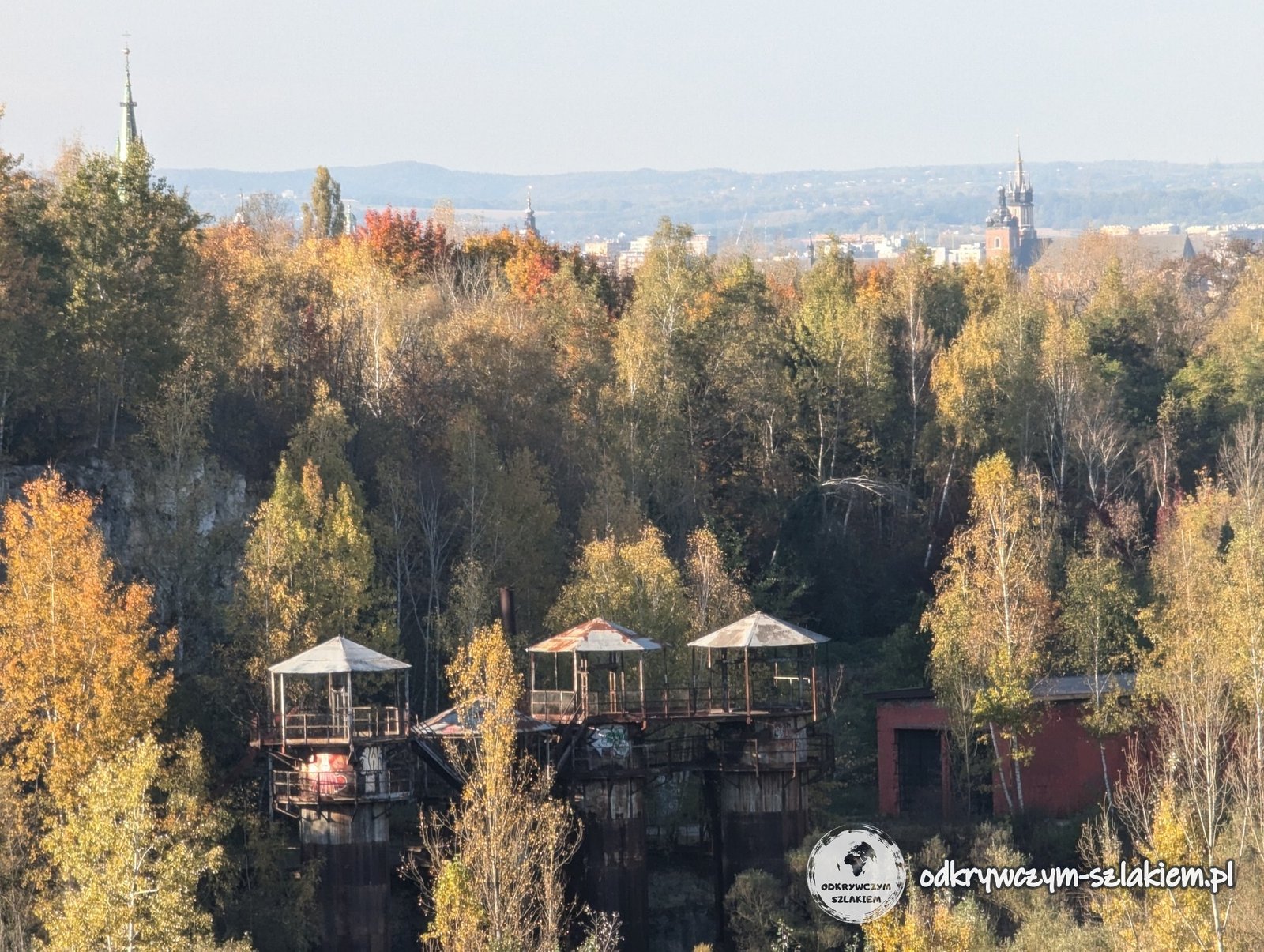
Next to it lies the former Liban quarry, where limestone used to be mined. During the war the Germans set up a forced labour camp here, and in 1993 sets for “Schindler’s List” were built in it. The quarry floor is overgrown with woodland, which had already turned yellow in October.
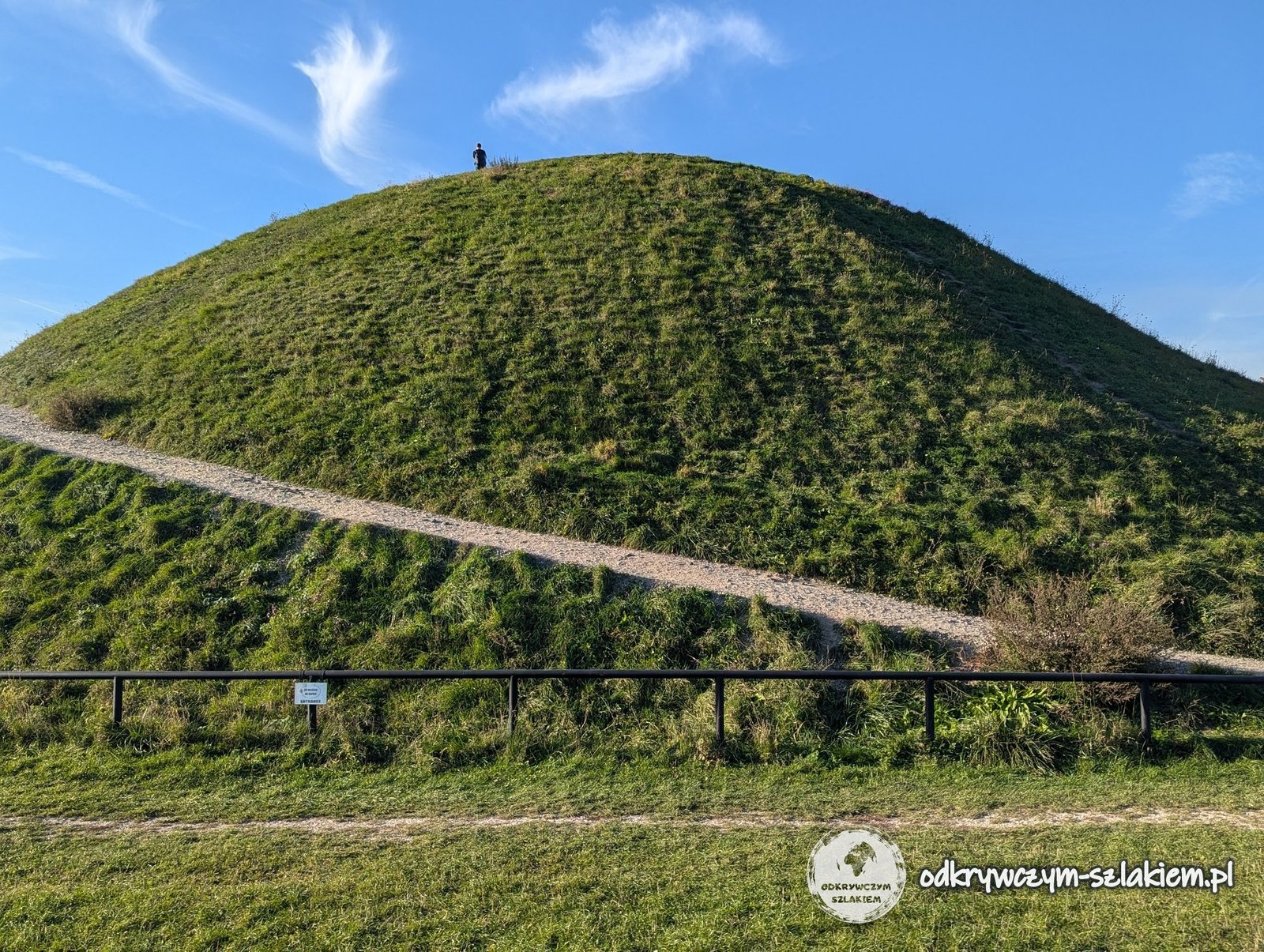
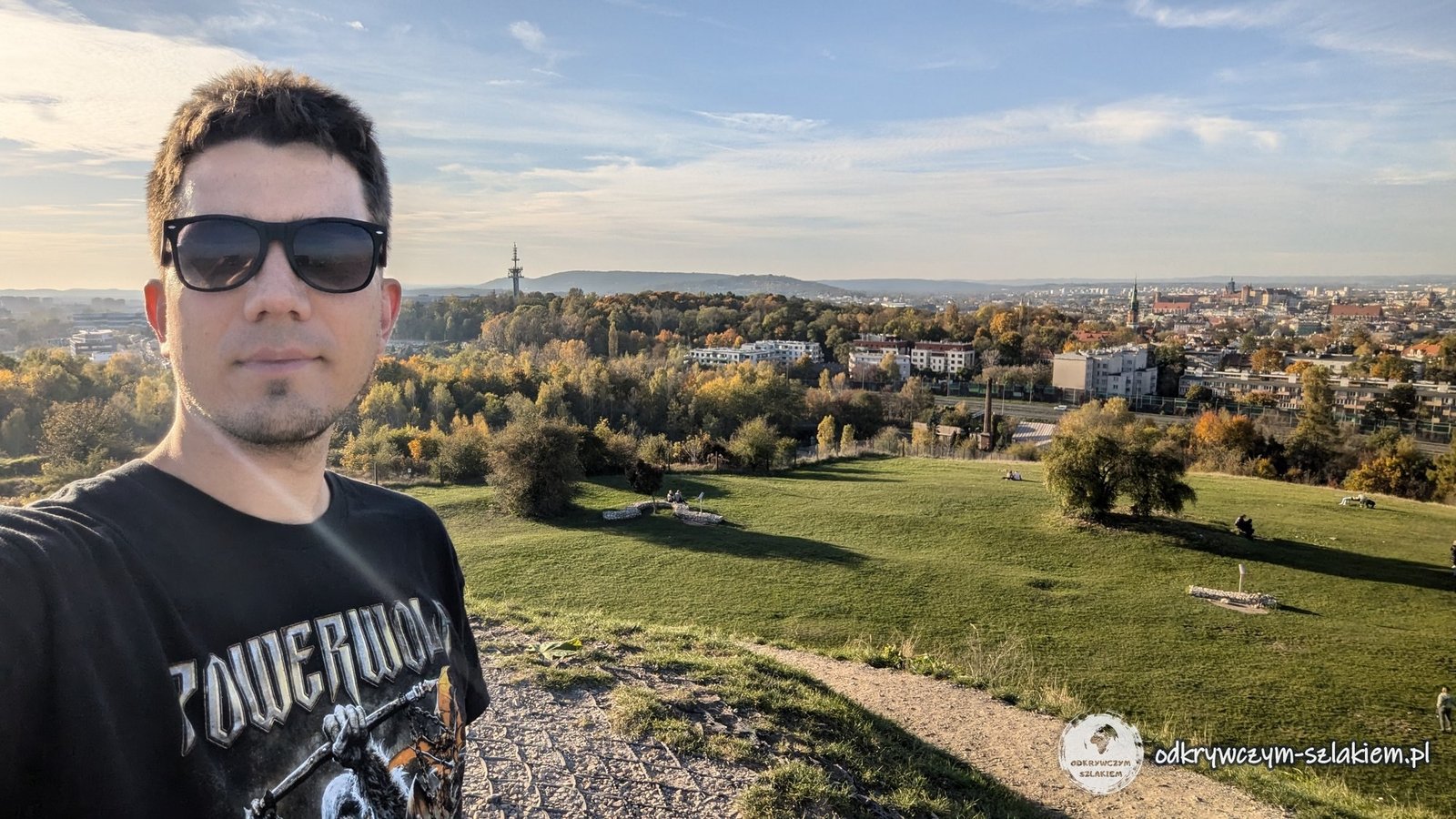
Above the quarry rises the Krakus Mound – according to the legend recorded by Jan Długosz, the grave of Krak, the city’s founder. Entry to the mound is free, and from the top you can see the whole Old Town and Wawel.
Zakrzówek and Twardowski Rocks
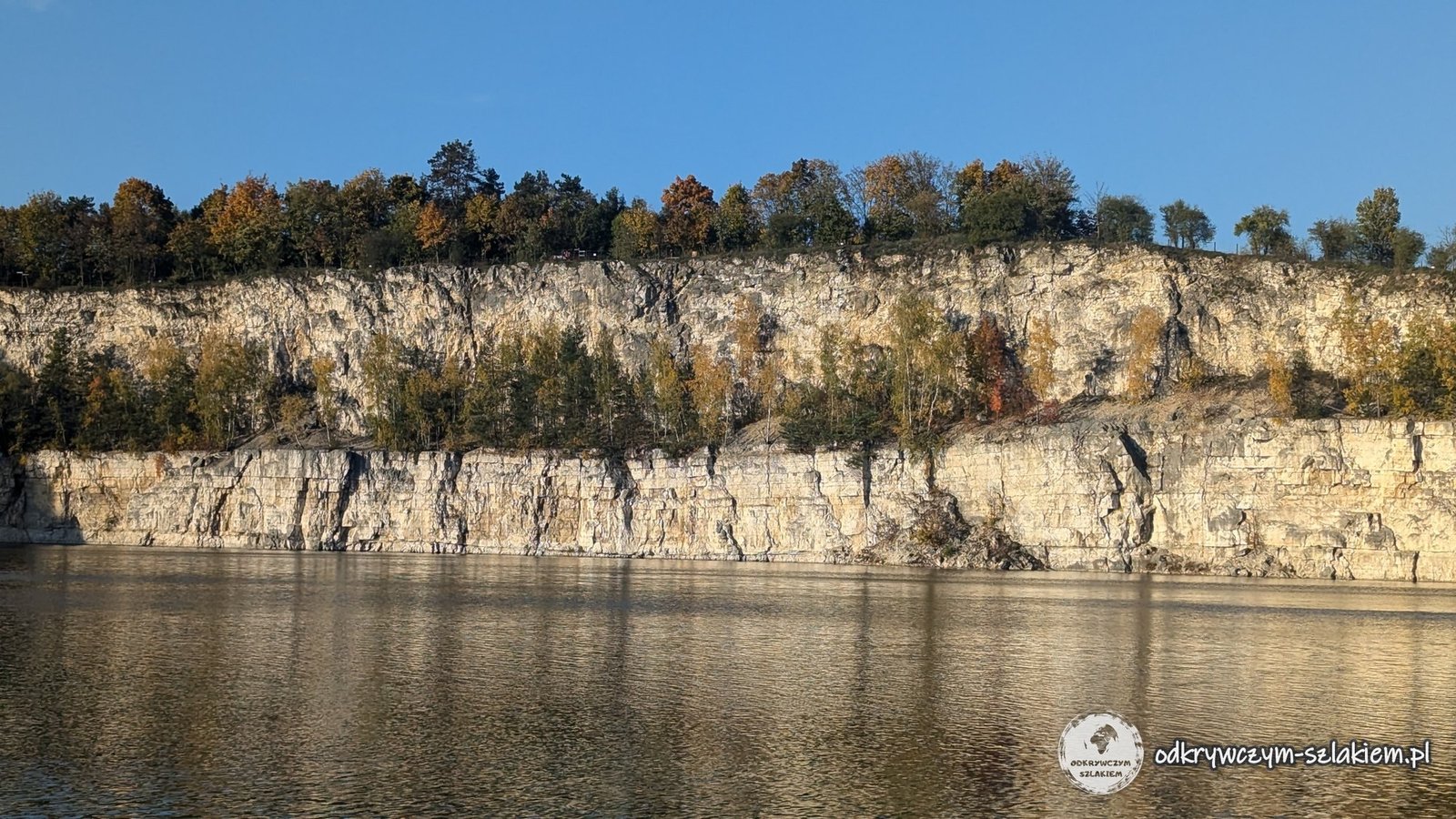
West of the centre, in Dębniki, lies Zakrzówek – a flooded former limestone quarry with blue water and vertical rock walls. The area around the lake is now a park, and in summer there is a bathing area with floating pools. I was here on a sunny afternoon in October 2024.
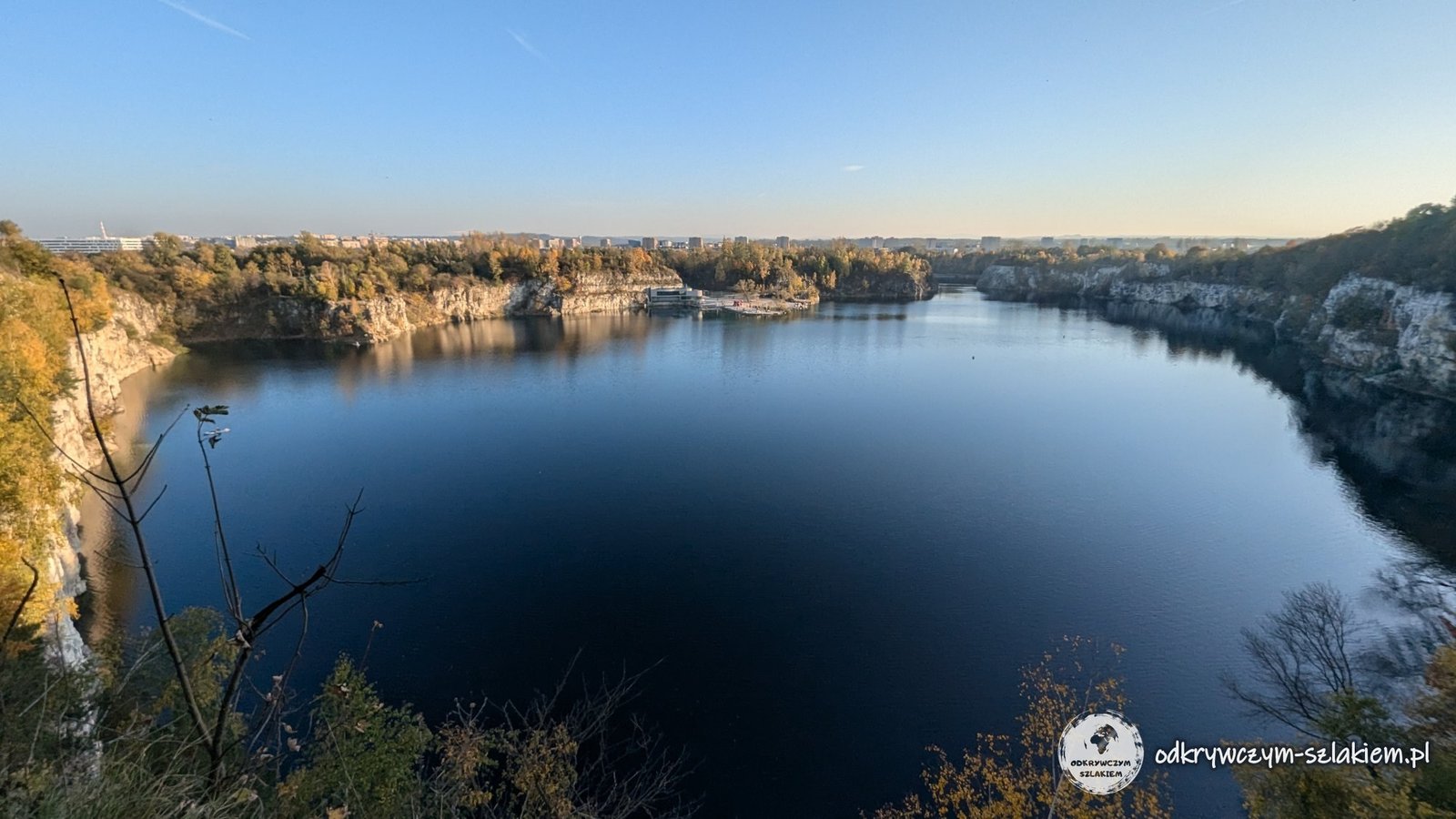
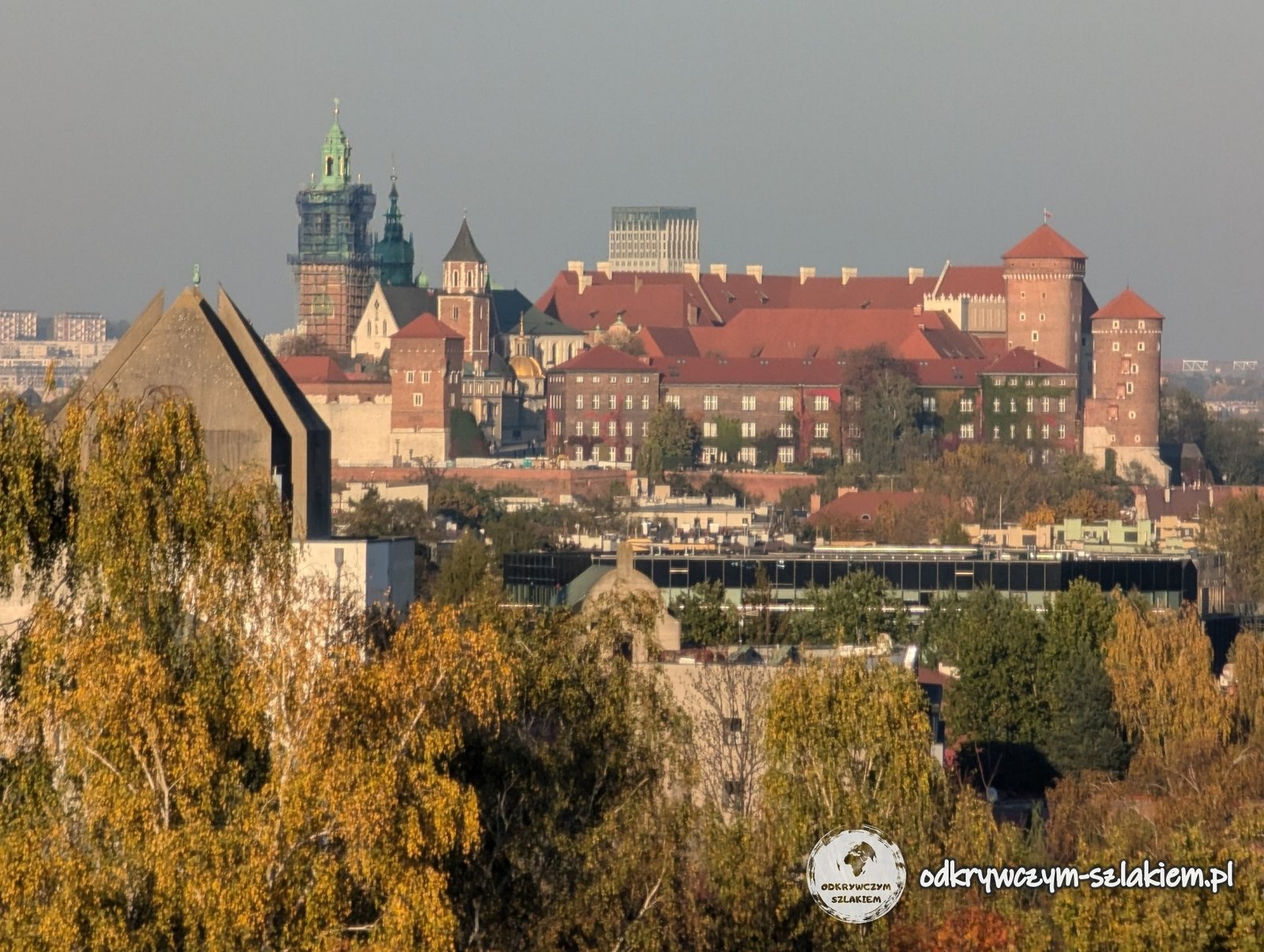
From the higher spots above Zakrzówek you can see Wawel in the distance.
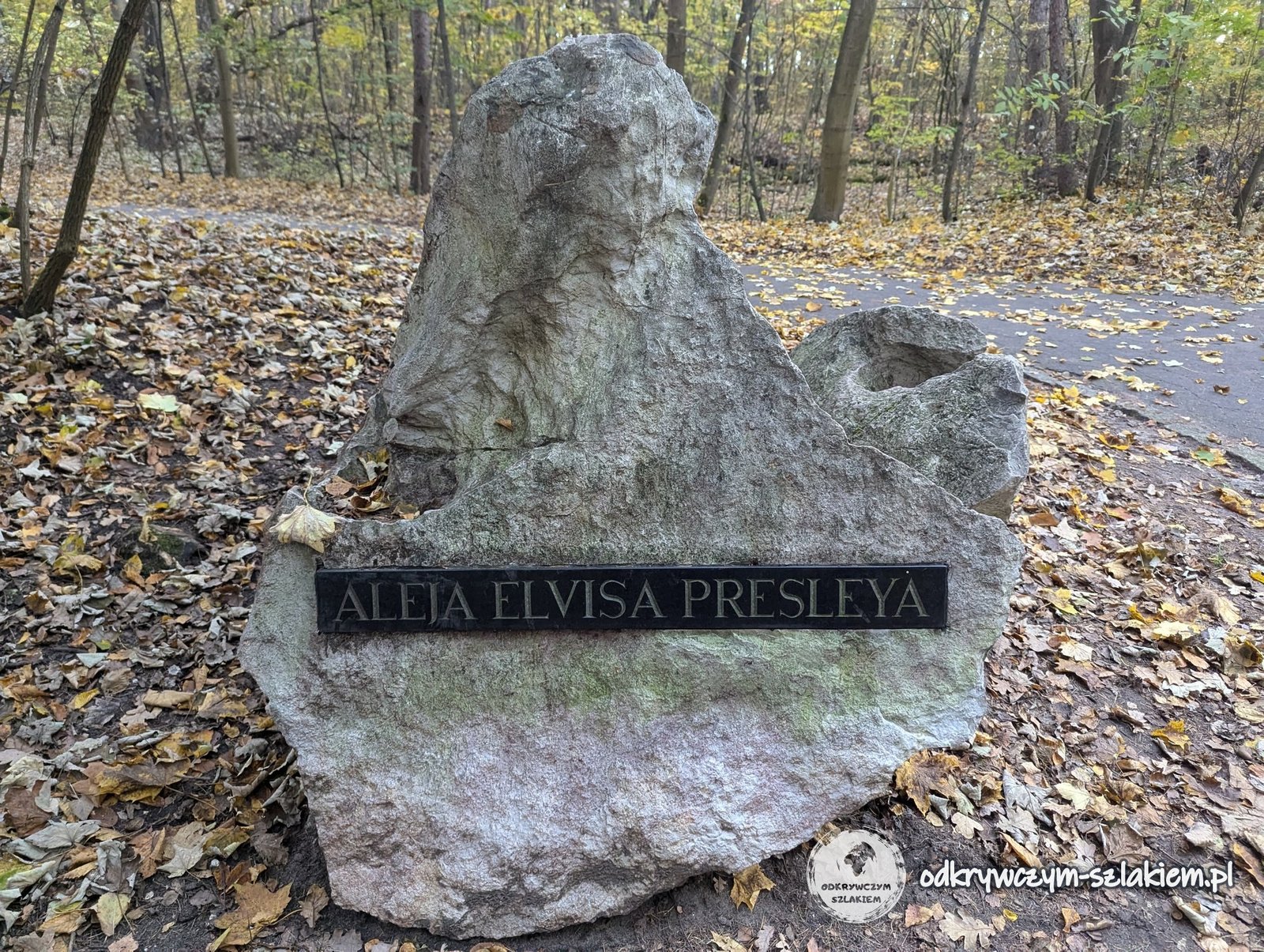
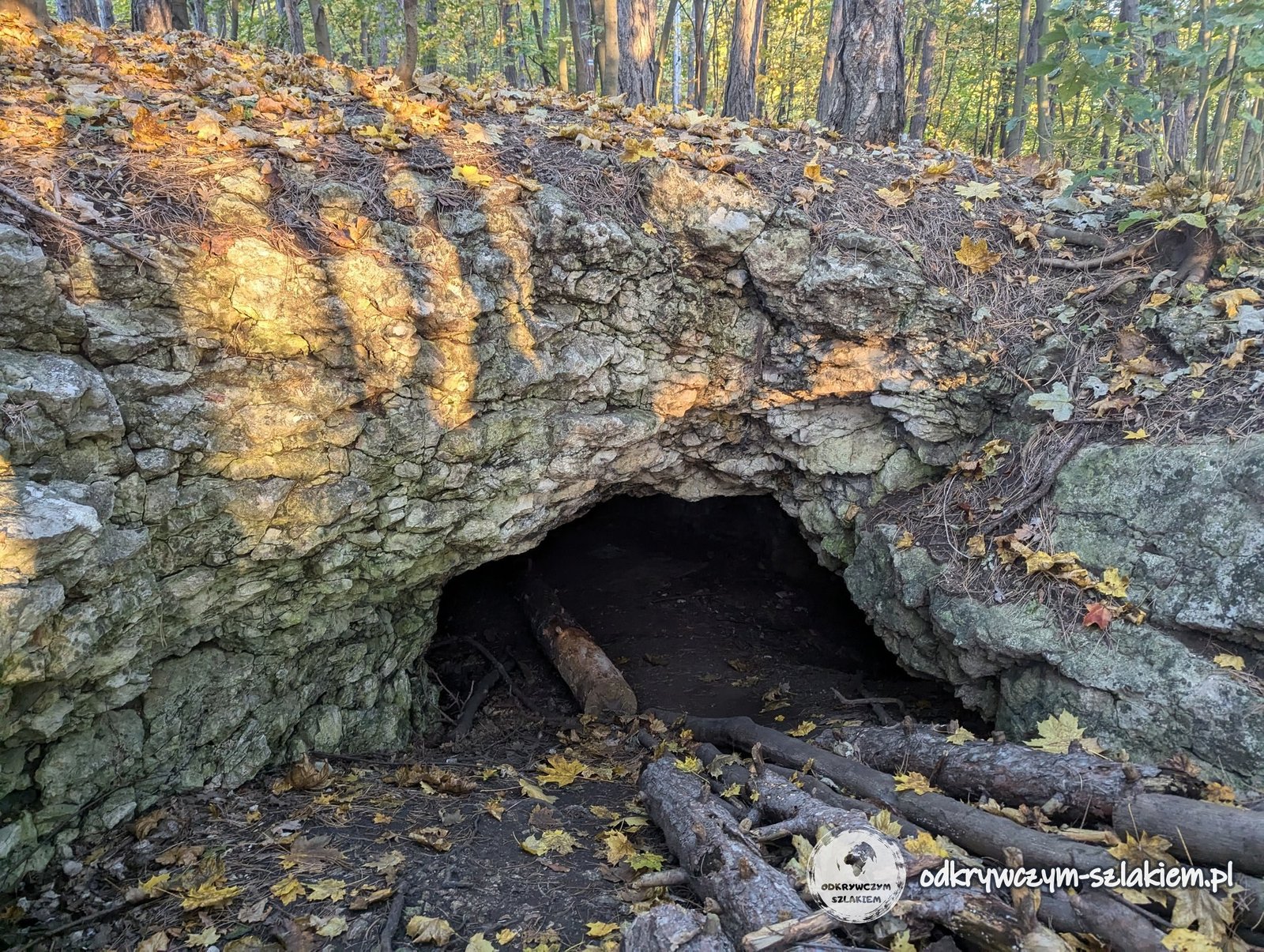
Next to the lake are Twardowski Rocks (Skałki Twardowskiego) – limestone outcrops with several caves which, according to legend, were the laboratory of the alchemist Master Twardowski. One of the paths in the woods is called Elvis Presley Avenue – a plaque with its name is fixed to a rock by the path.
The Benedictine Abbey in Tyniec
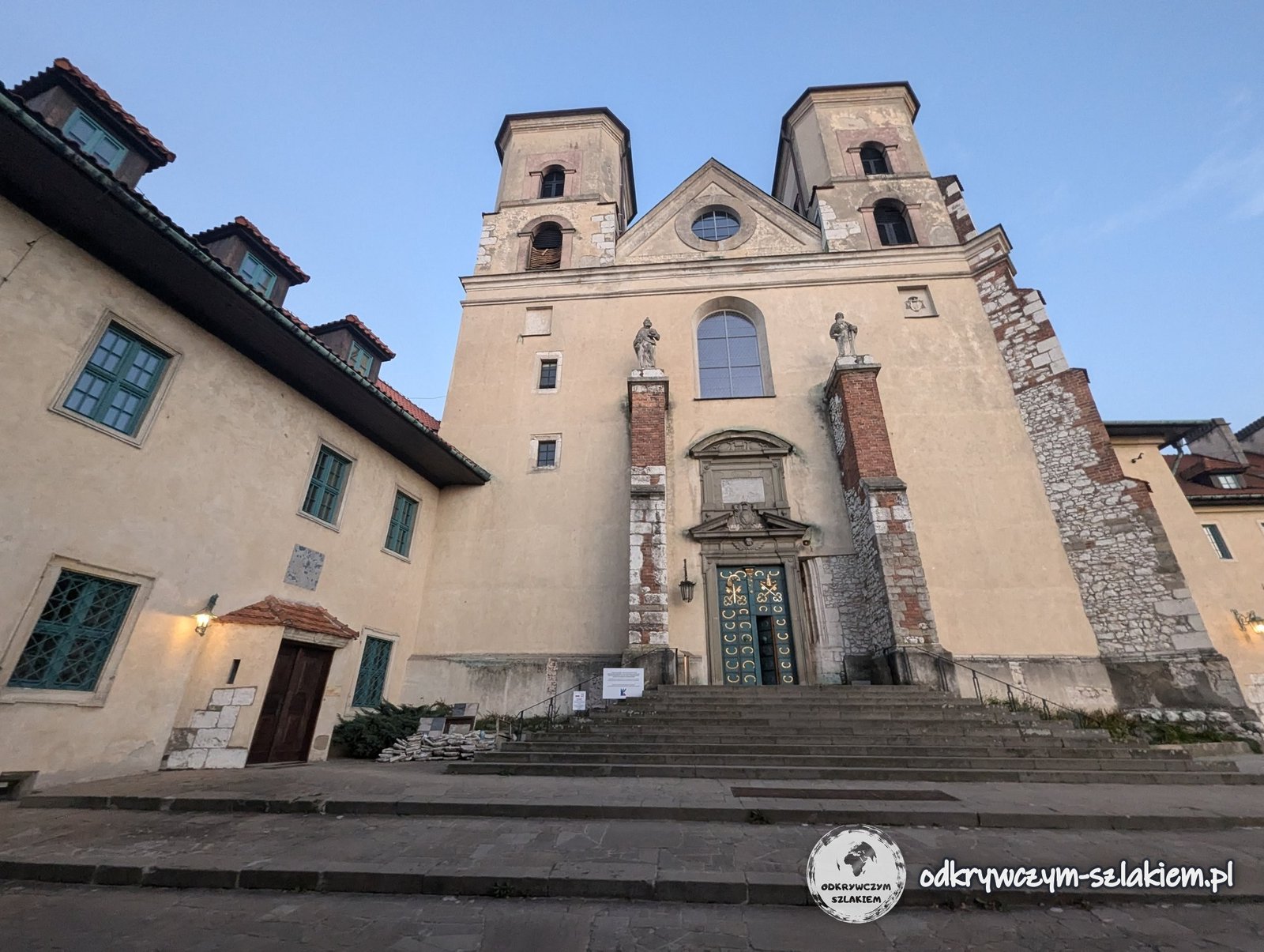
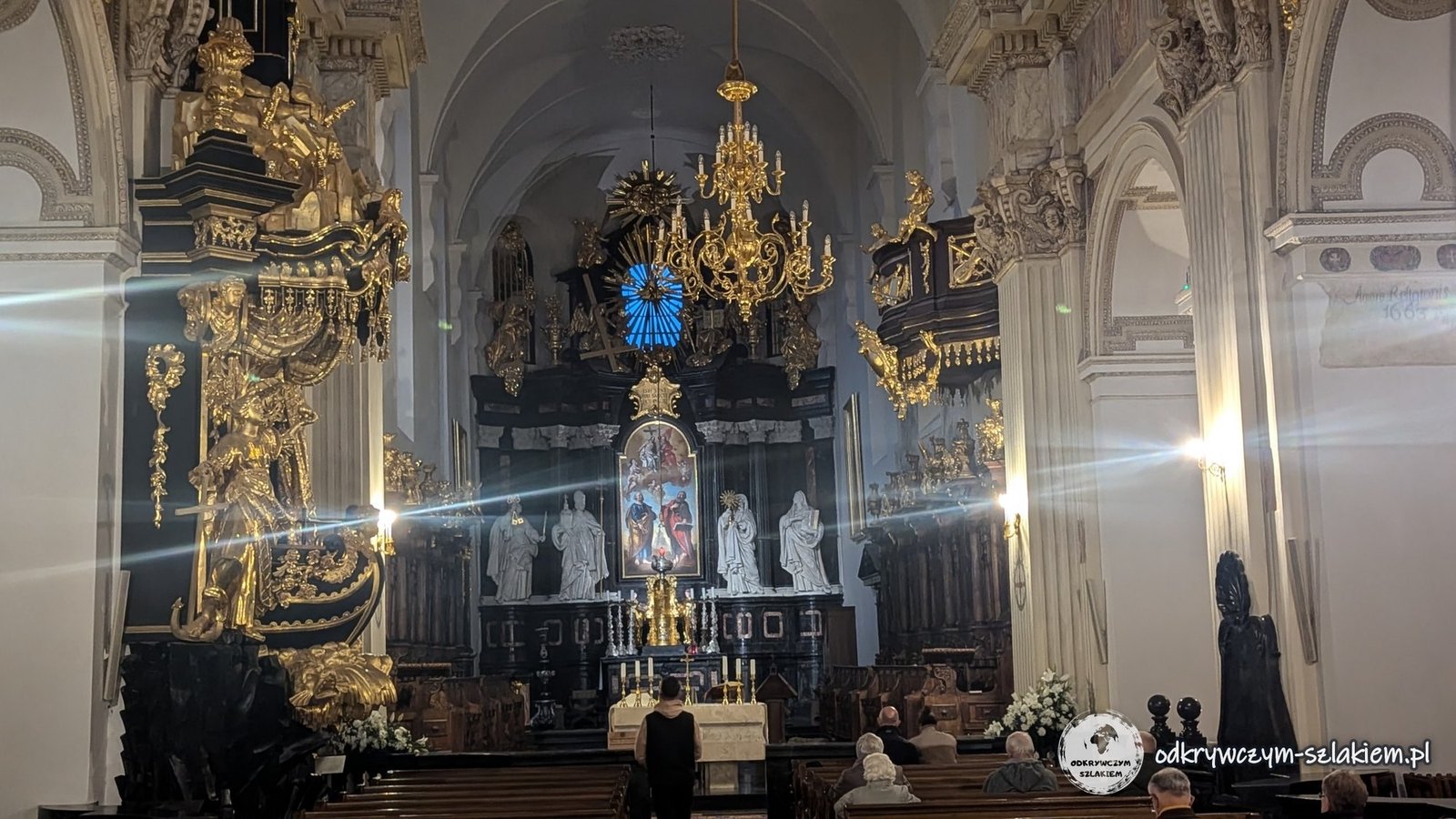
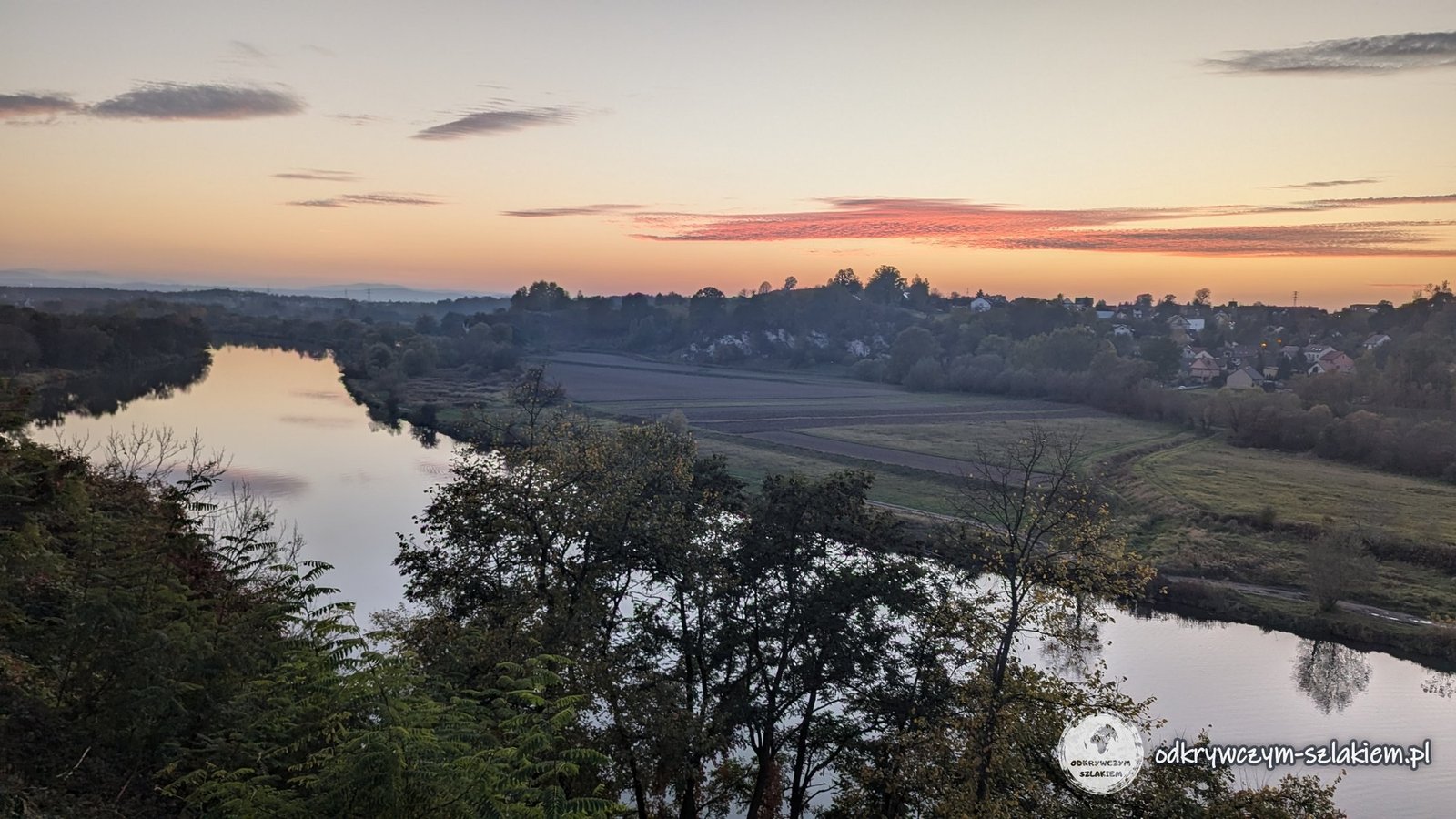
About 13 km south-west of the Old Town, on a limestone hill above the Vistula, stands the Benedictine Abbey in Tyniec. Tradition attributes its founding to Casimir the Restorer and dates it to the mid-11th century. I got here towards evening in October 2024 – just in time to look into the church and watch the sunset over the Vistula.
From below the abbey walls you can see a bend of the Vistula and the fields on the other side of the river.
Practical information
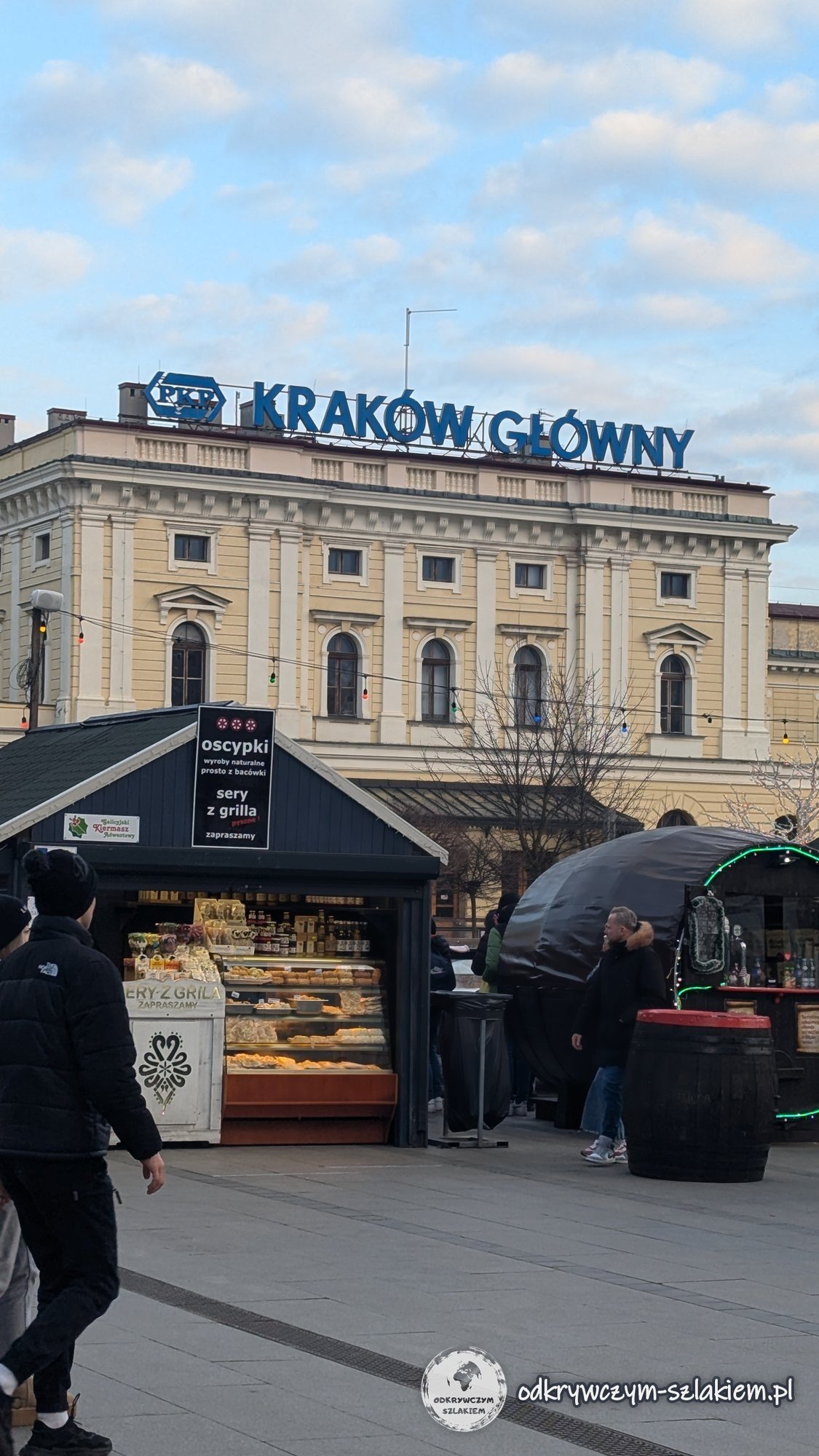
- By train: the main station is Kraków Główny, a few minutes’ walk from the Barbican and the Market Square. The station hall is underneath the platforms, next to the Galeria Krakowska shopping centre, and nearby stands the historic building of the old station from the mid-19th century.
- By plane: the train from Kraków-Balice airport to Kraków Główny takes about 20 minutes.
- Getting around: the Barbican, the Market Square, Grodzka Street, Wawel, the boulevards and Kazimierz are close together, so you can do day one on foot. Zakrzówek, Płaszów and the Krakus Mound are easier to reach by tram.
- To Tyniec: bus 112 runs from Rondo Grunwaldzkie – check the current timetable before you go.
- Wawel: the hill and the arcaded courtyard are open without tickets; tickets for the castle exhibitions are sold at bilety.wawel.krakow.pl, and for the cathedral on the cathedral’s own website.
- Zakrzówek: in the 2025 season (19 June – 7 September) the bathing area was free, with a limit of 600 people at a time.
- Weekend plan: on day one the Barbican, the Market Square, Grodzka Street and Wawel, then the boulevards and Kazimierz in the evening; on day two Płaszów, Liban and the Krakus Mound in the morning, Zakrzówek in the afternoon and Tyniec for the sunset.
- More of southern Poland: a week in the Tatras and the Holy Cross Mountains on the May long weekend.