Table of contents
Practical information in brief
Price (March 2021)
- Parachute jump + equipment hire: 1250 UAH (~€38)
- Bus transport from Lviv: 60 UAH (~€2)
- Jump certificate: a small extra charge (optional)
- Fun fact – in July 2017 for the jump we paid only 760 UAH (~€25), and together with transport and the certificate it came to about €30. For comparison: in Poland a jump with an instructor cost about €185 at the time – Ukraine was incredibly cheap.
Jump site
- Name: Tsuniv Aerodrome (30 km west of Lviv)
- Address: Aerodrome “Tsuniv” Gorodok district Lviv region
- How do I get there? Best by the organiser’s bus (see meeting point) or by car. Public transport only goes as far as the town of Horodok, from where you would have to take a taxi for about 7 km.
- Can I see the jump site on a map? Sure, expand the information below.
Requirements
- body weight – between 45 and 100 kg,
- age – at least 14 (parental consent required until you come of age)
- no cardiovascular diseases
- clothes – comfortable, with long sleeves
- shoes – with thick soles and no heels; they should support the ankle (so-called ankle boots). You could hire shoes like that on site
Meeting point
- Place: BRSM Oil petrol station (АЗК БРСМ-Нафта) – opposite the Skrynia shopping centre
- Address: Horodotska St, 116, Lviv, Lviv Oblast, Ukraine, 79000
- Departure time: Fridays at 17:00, Saturdays and Sundays at 8:00
- Purpose: minibuses leave from here and take participants to the aerodrome
- Should I book a seat on the bus? Yes – contact the organiser in advance.
- Can I see the meeting point on a map? Sure, expand the information below.
Jump details
- Altitude: 800 m
- Flight time: about 2 minutes 30 seconds
- Descent speed: about 3 m/s
- Parachute opening: automatic, 2–3 seconds after jumping out
- Parachute type: DU-1-5U (Soviet military)
- Reserve parachute: smaller, on your stomach – if the main one didn’t open, you’d have to open it yourself (apparently that has never happened)
First steps

The day before, we booked the jump and seats on the bus by writing to the organiser via their Facebook page (see the external links). On the day of the jump, around noon, we still managed to visit Insomnia – a horror house and escape room in Lviv (more in the post about Lviv). Towards evening we took an Uber to the meeting point at the petrol station (over 2 km for about €1 for four people), from where minibuses laid on specially – two or three in the end – took everyone to the aerodrome. Damian, whom we had met the day before, came with us. Piotrek was supposed to join us too, but he didn’t manage to get to the aerodrome – we only met up later.
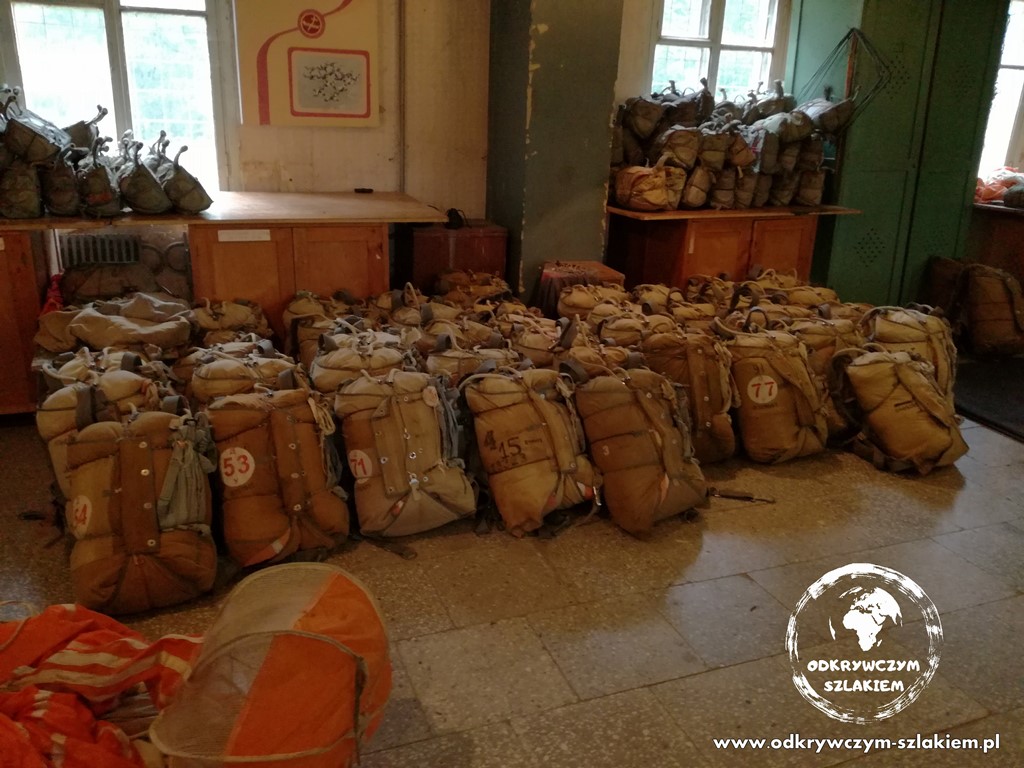
The road there is “paved” with potholes, and when we arrived I felt as if time had stopped here back in the communist era. At first glance the aerodrome itself looks like something from the “good old days” – old post-communist buildings, old planes, grey, dirty military parachutes, helmets (one even had USSR written on it, but unfortunately someone had reserved it before me). After arriving, you have to queue at the payment office, where you also have to sign some document (we don’t even really know what, because everything was in Ukrainian). After that we went to the briefing, where we were the only foreigners. Even so, we were counting on the training being in English as well – the organiser’s website was in English and looked professional. Imagine our surprise when it turned out that it was only in Ukrainian.
– And you Poles, do you understand?
– Yes, more or less.
– Kharasho, moving on!
Training
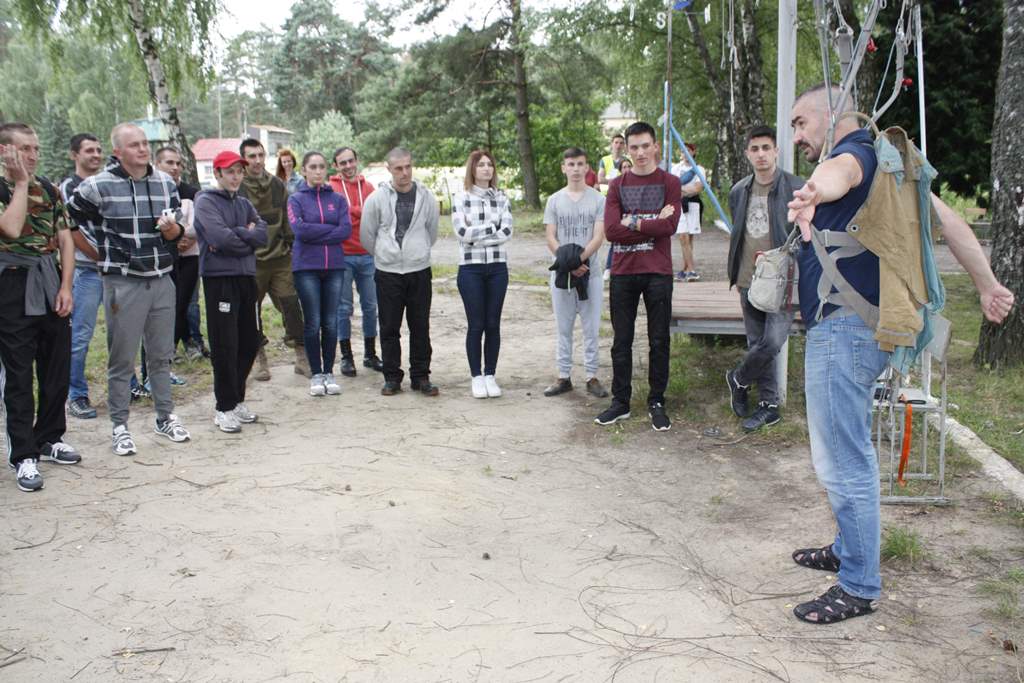
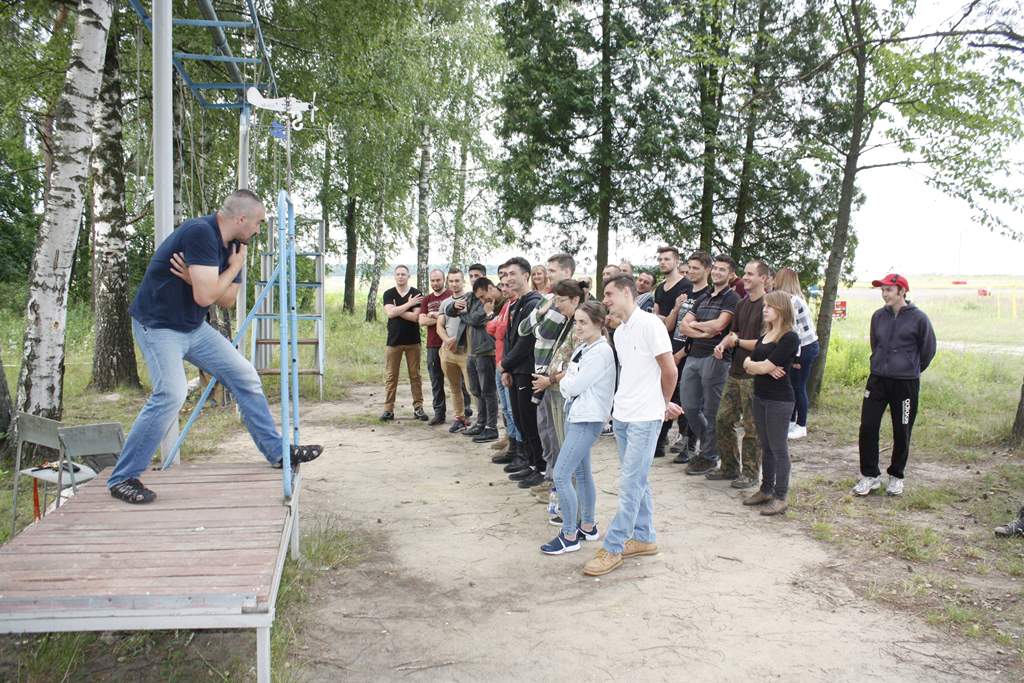
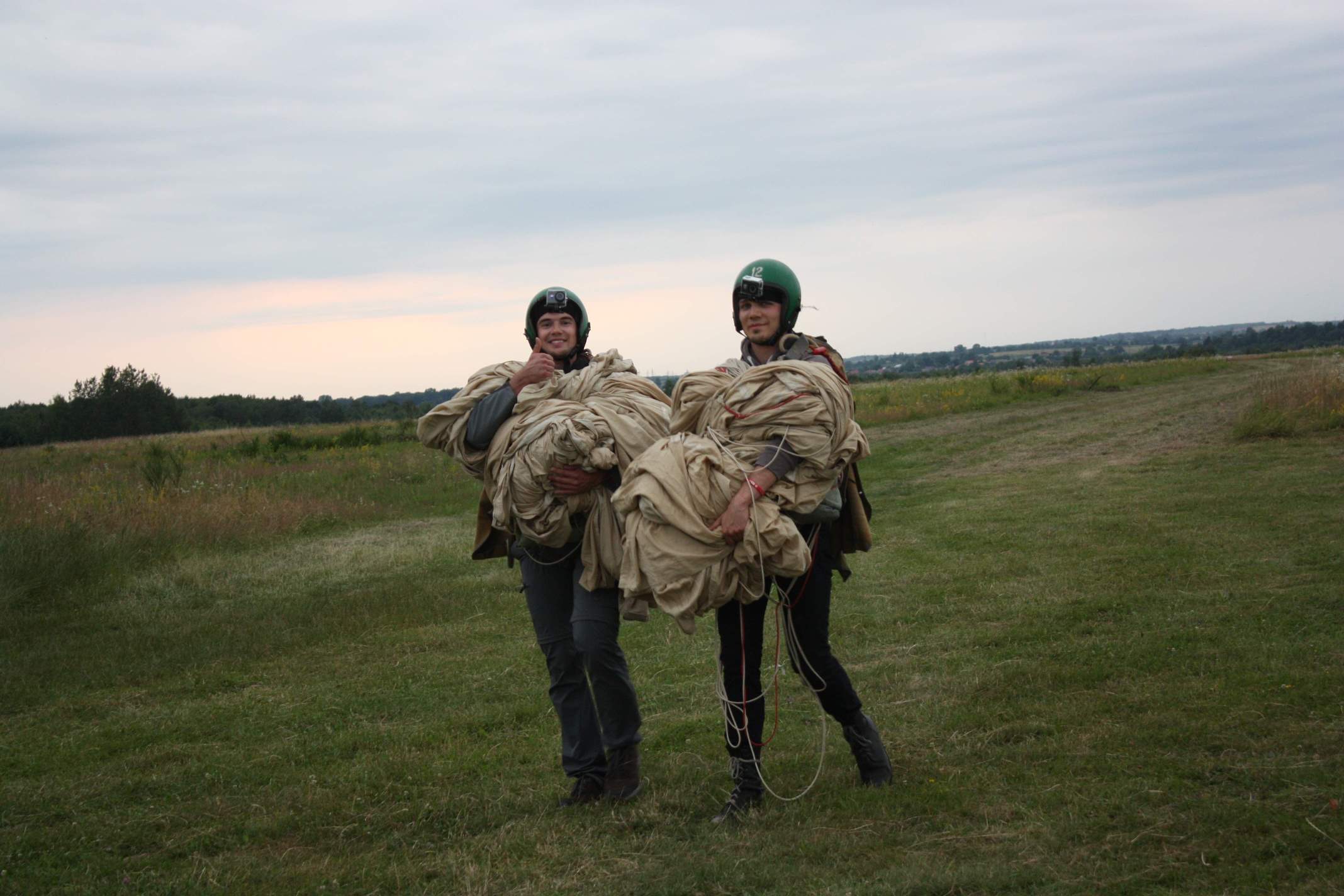
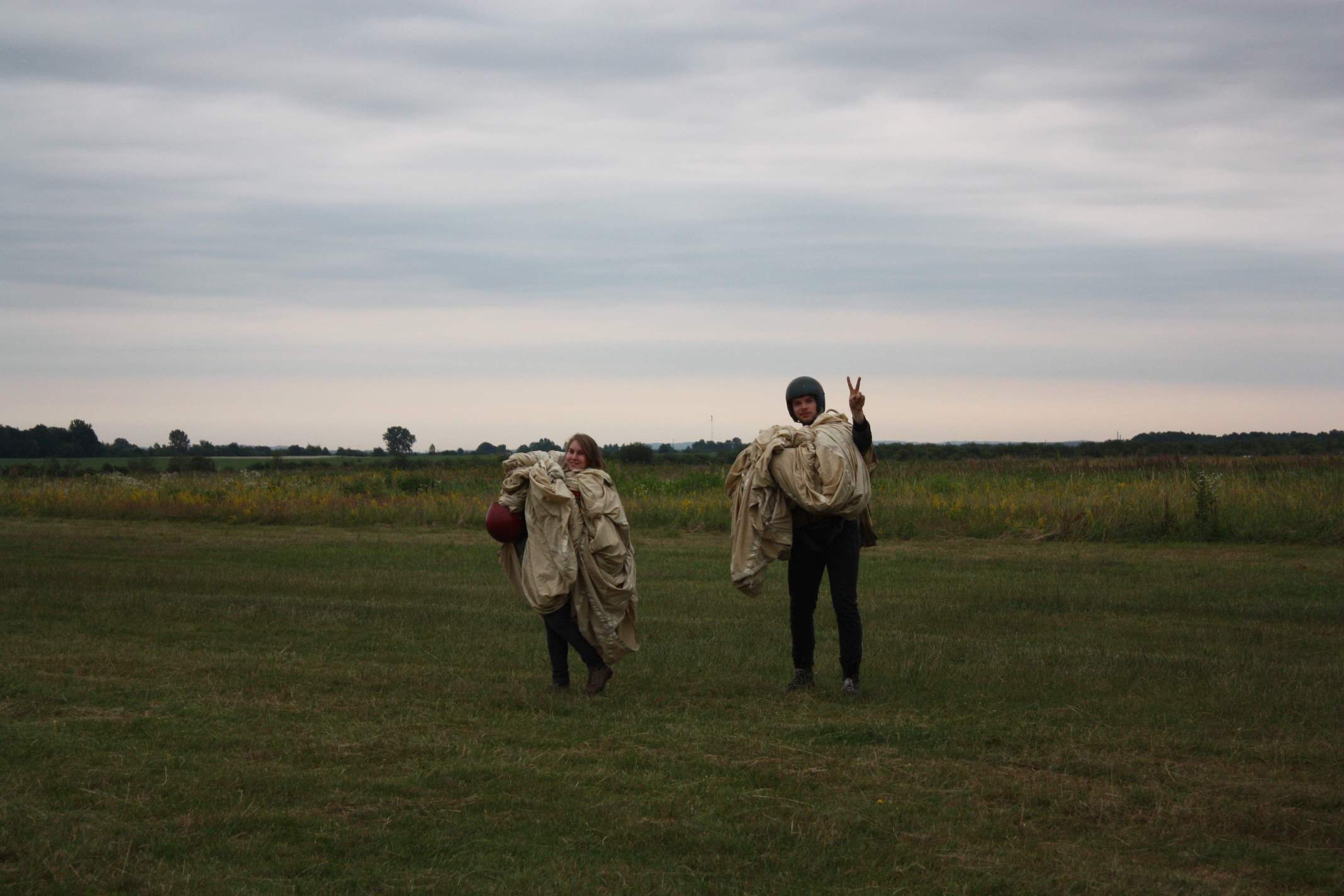
(watch the video above from the beginning) Luckily, Ukrainian is very similar to Polish, so we could understand a bit. The instructor was great – he lightened the mood and looked like a commando. After the theory came the practice – first we learned to land properly by jumping on the spot, and then by jumping off a small platform. During the descent you fall at about 3 m/s, so if you land badly you can break a leg. Landing is the most important part of the jump – a bit like jumping down from three metres. We practised it until everyone got the hang of it. We were also trained in packing the parachute – each of us had one to fold. After landing you have to gather it up off the ground somehow and carry it back. After the theory and practice we went to the storeroom to put on a helmet, the main parachute and the reserve parachute and strap everything up properly (the instructors took care of that). Then we carried all the gear out onto the airfield. The parachute weighed about 23 kg, so walking with that weight was really hard work. Even more so for Patrycja, for whom it was about half her body weight.
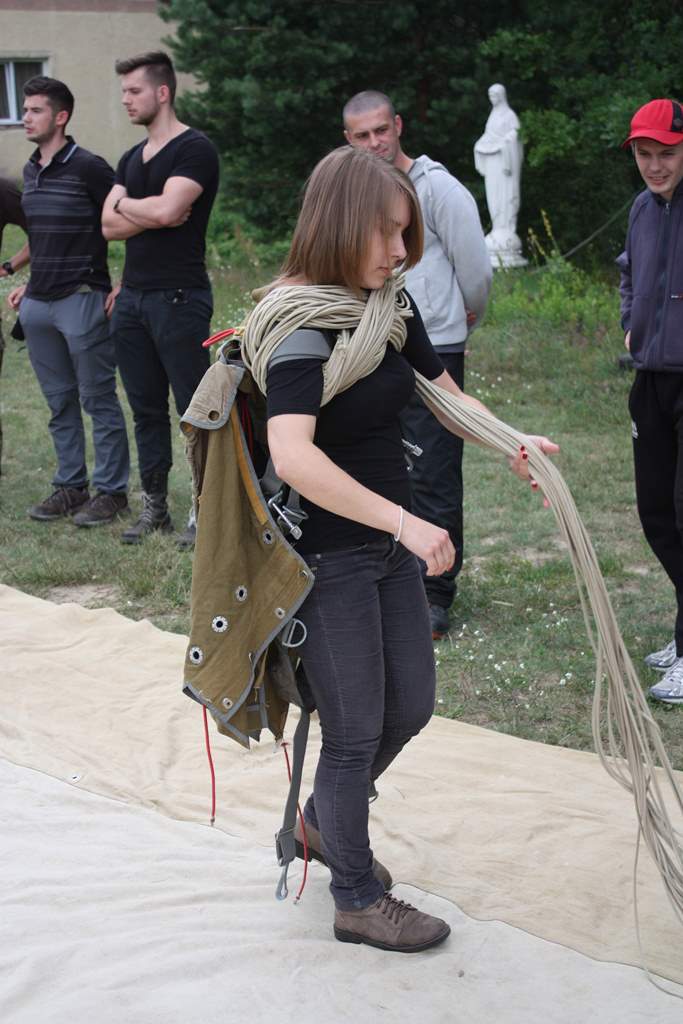
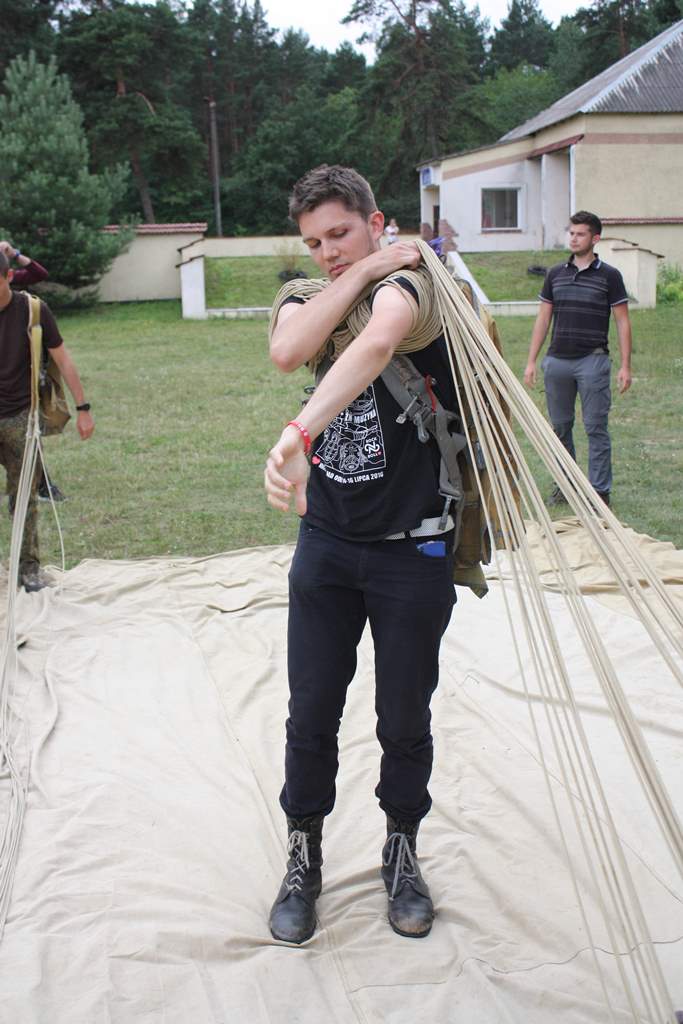
The parachute jump
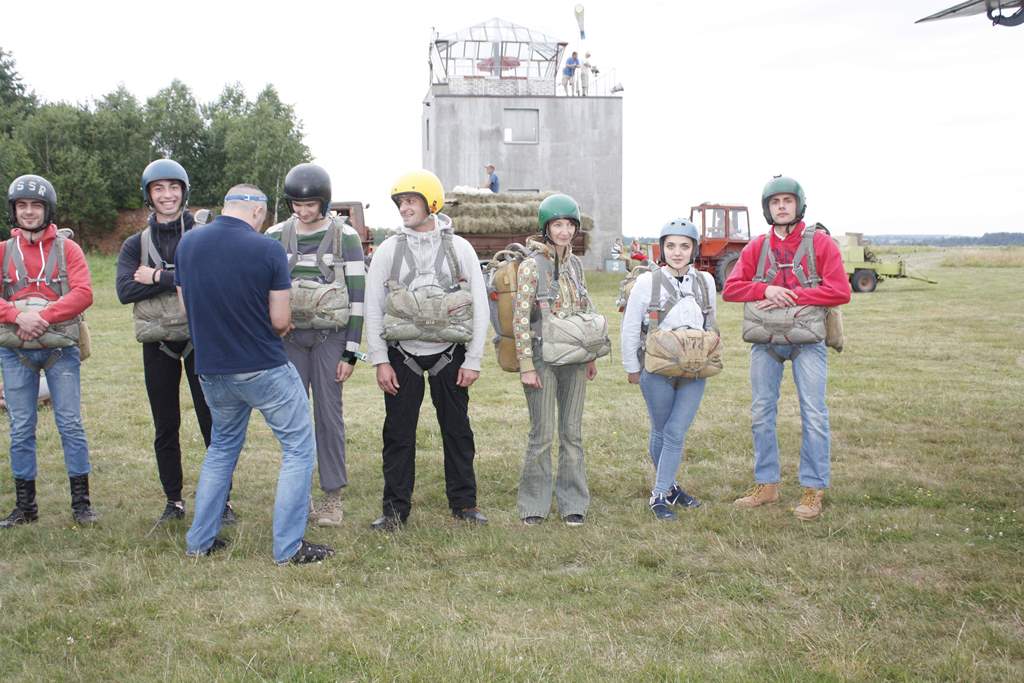
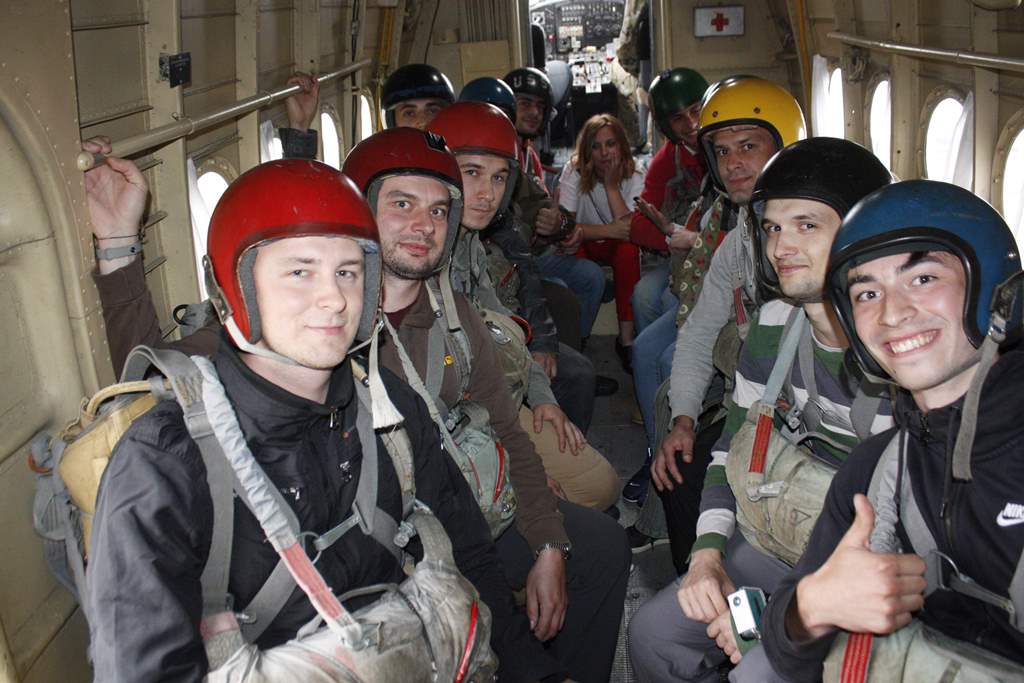
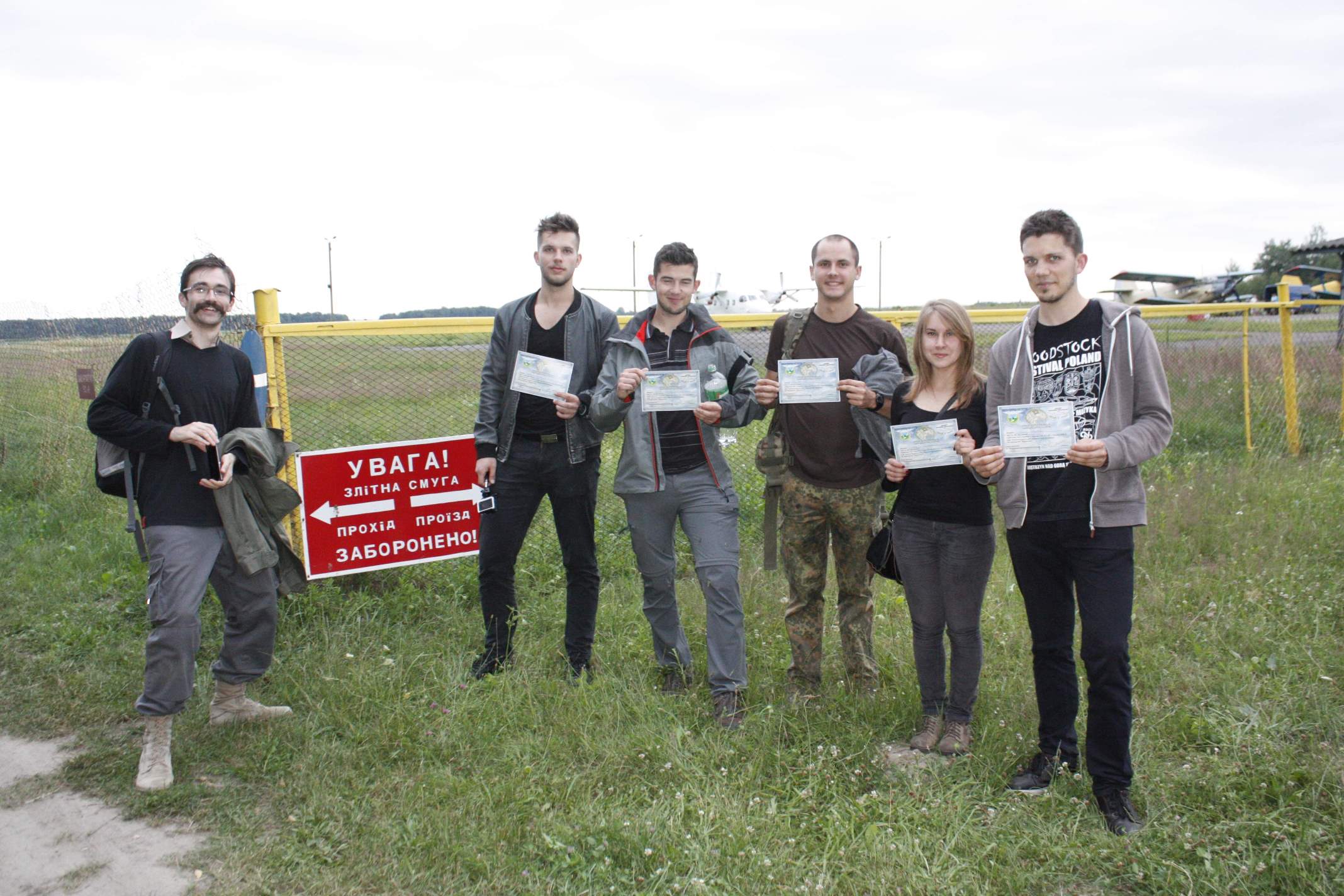
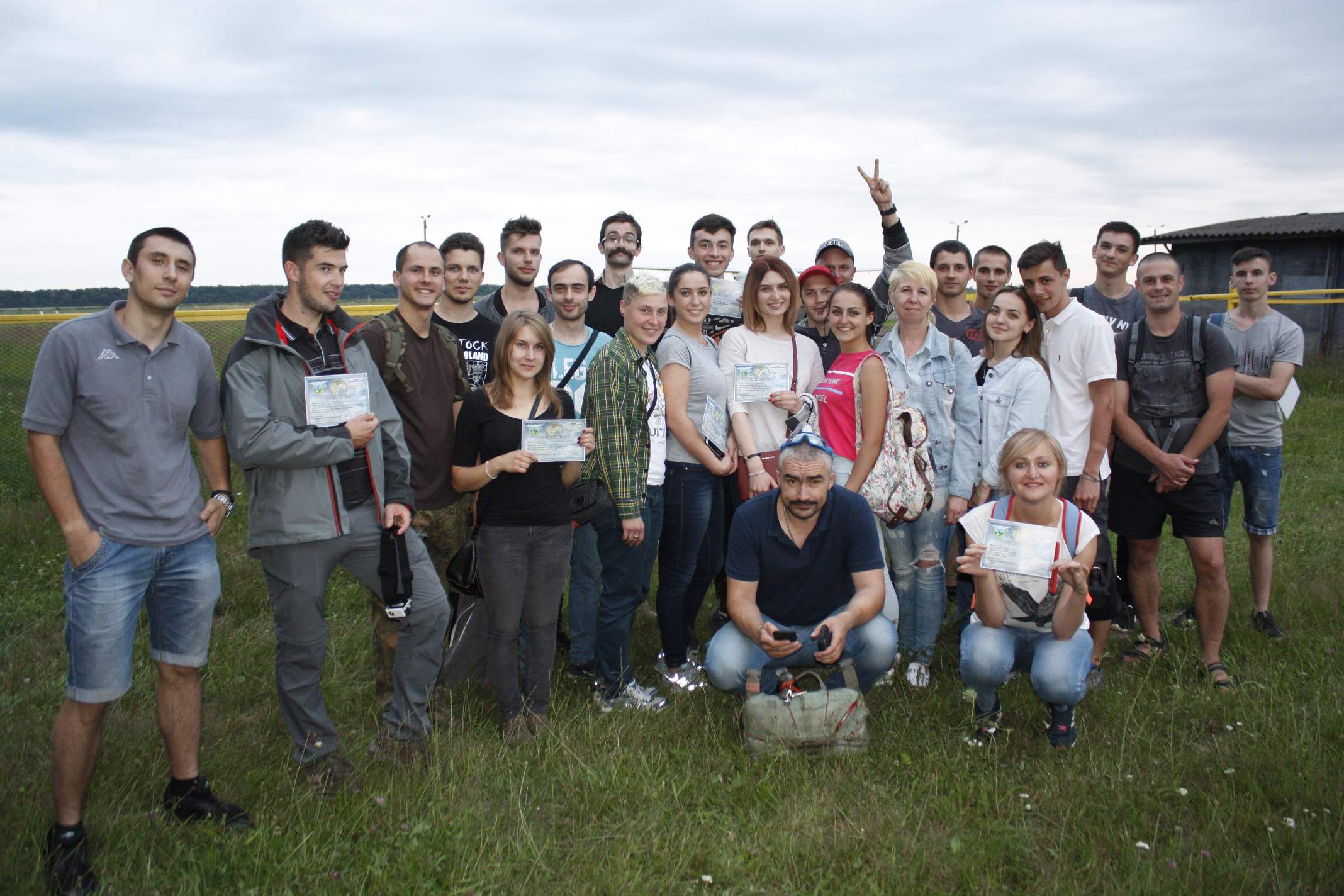
(Watch from 2:05) The jump was done the military way. We were clipped by a static line to a fitting in the plane, and after 2–3 seconds this mechanism opened the parachute – until it did, you felt an enormous acceleration as you jumped out. During the training we had already been put in a set order for the jump – everyone had their own number. Each flight carried two teams of six people. The system was that the team closer to the door jumped first, then the other one (us). This system enforces the order – if someone didn’t jump, the rest wouldn’t be able to jump either, so anyone hesitating would simply be pushed out. In theory, while descending under the parachute, we were supposed to make sure the forest was on our side, and we were guided by a megaphone, through which the instructors called out our numbers and told us which way we should turn. In practice, at that height it was hard to make out which jumper’s number and which direction they meant, so most people just went their own way. To land properly you had to bend your knees, keep your feet flat and look towards the horizon. After landing we rolled up our parachutes and went to the club building. Back there we ticked our names off the list, handed in the gear, got our jump certificates and took a photo. At the end there was a kind of jumpers’ initiation – the chief instructor gave us a light “treatment” with a reserve parachute, after which everyone did a jump forward. It turned out that a photographer was included in the price too, thanks to whom we have lots of souvenir photos from that evening.
We went back to Lviv and spent the evening in a bigger group, including Lev, whom we had met after the jump. For me, this jump was above all a victorious battle with my fear of heights.