Table of contents
Krościenko (the border)
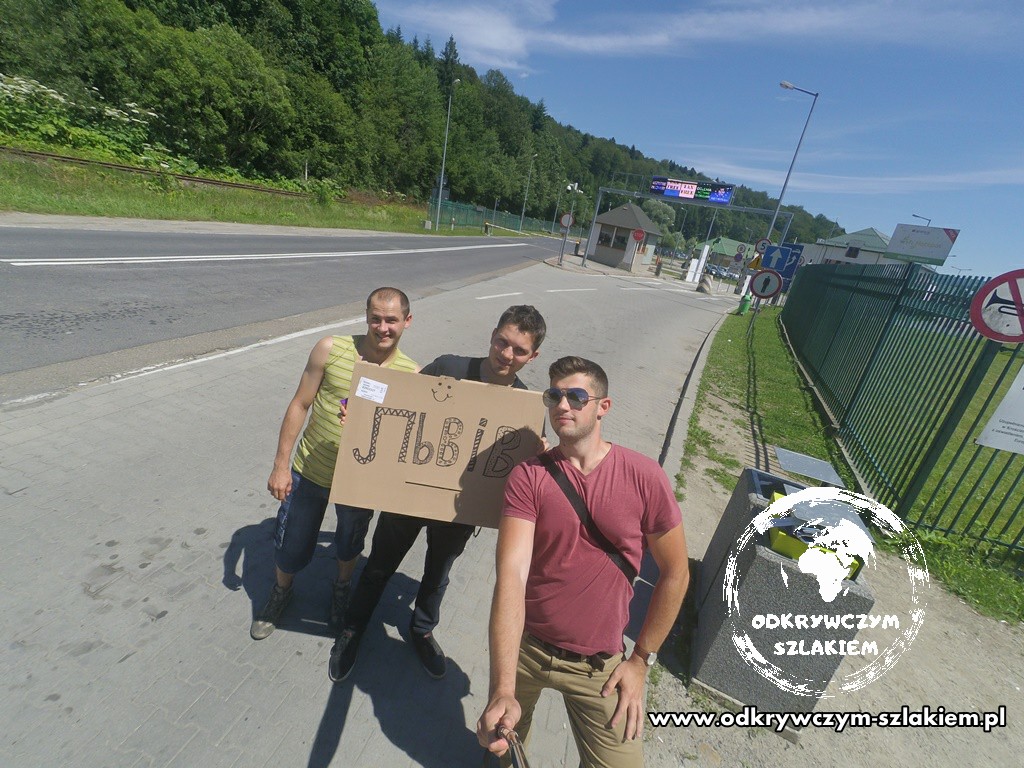
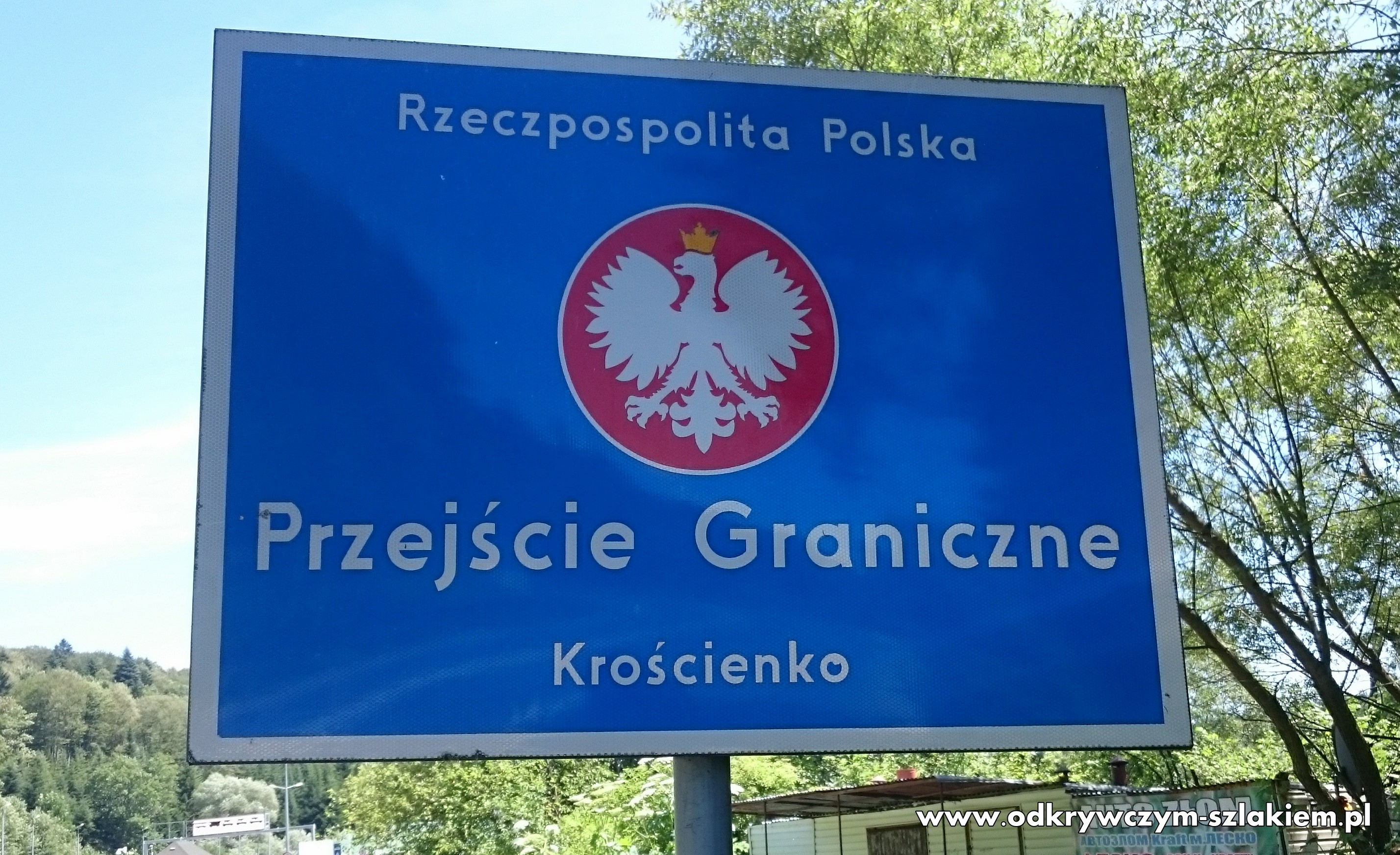
Our adventure with Poland’s eastern neighbour began on 4 July 2017 (watch the video above from the beginning). We wanted to get to Ukraine by hitchhiking (Michał, Wiktor and I – Patrycja came a few days later by bus), and our destination was Lviv. To do that, we got a lift from Polańczyk (read the earlier post about the Bieszczady Mountains) to the border at Krościenko. On the way we did a bit of shopping in Ustrzyki Dolne – in front of the shop we were approached by Ukrainians who wanted to sell us sweets, among other things. There’s relatively little traffic there, so a shorter wait at the checkpoint, but also less chance of catching a ride. A huge amount of Sosnowsky’s hogweed grew around the crossing – I had never before (or since) seen such a dense patch of it. At the crossing the border guards came up to us. They asked for our passports and what we were planning to do. They said we had practically no chance of hitching a ride there and that, in general, it wasn’t a safe idea. They warned us to be careful with our money and not to show off expensive things too much. In the end, after a dozen or so minutes, two Ukrainians drove up who were ready to take us to the nearest “bigger” town – Sambir. They also pointed out that crossing the border would take a bit longer. Why? Read the fun fact below.
The Ukrainians wanted to get a tax refund on electrical appliances bought in Poland – a fridge and a microwave – so they had to go through an additional inspection. Even though the exchange rate is very unfavourable for them, it still pays off better to buy electronics in Poland than at home (in Ukraine most such equipment is imported from Poland anyway, and this way they avoid customs duty). Traffic was so light that we waited maybe only half an hour longer.
Sambir
In a delivery van with a fridge and a microwave we covered about 50 km. My memories of the first minutes in Ukraine are terrible roads, wonderful landscapes and Orthodox churches, Polish inscriptions on buildings just past the border, and UPA flags hanging in various places.
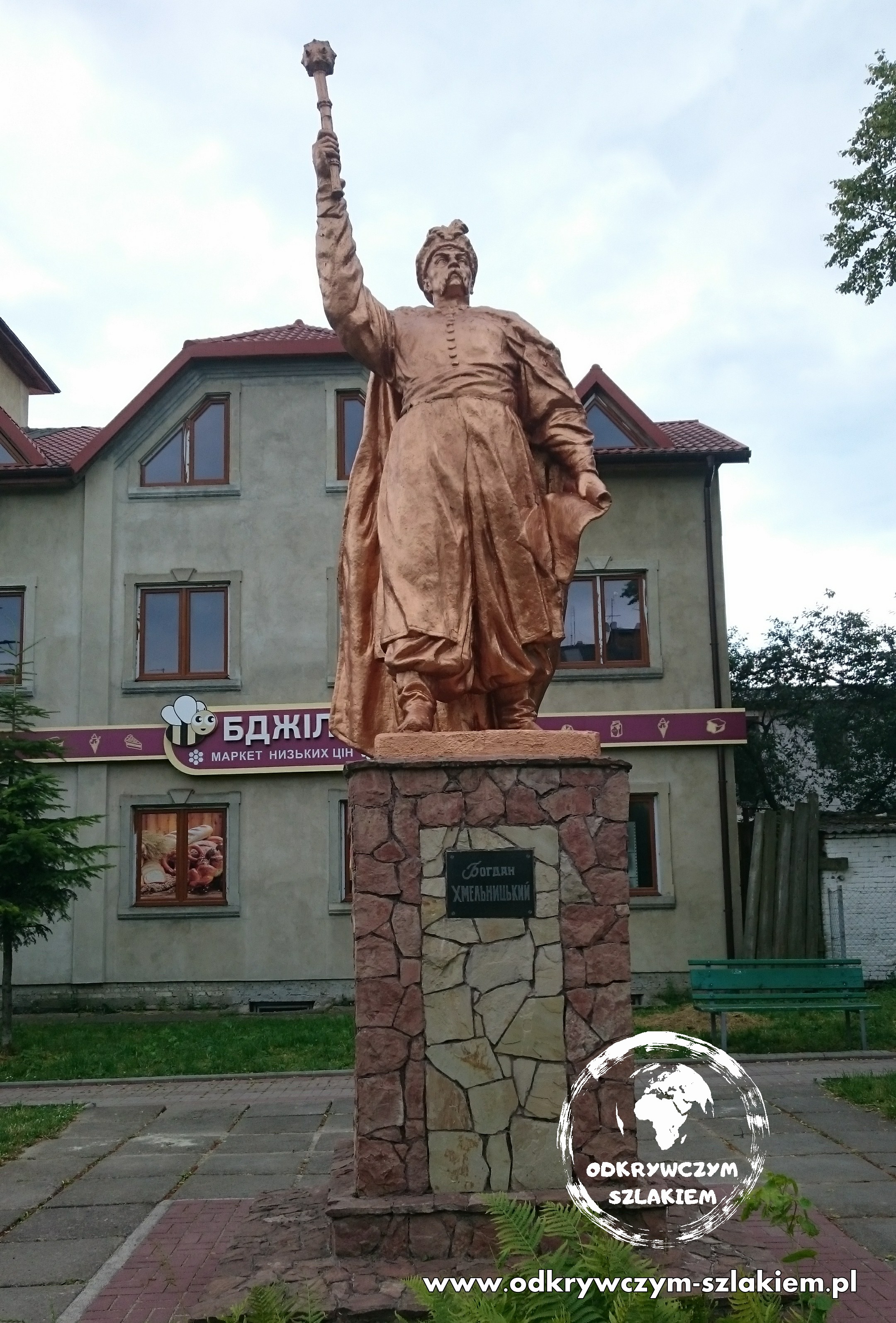
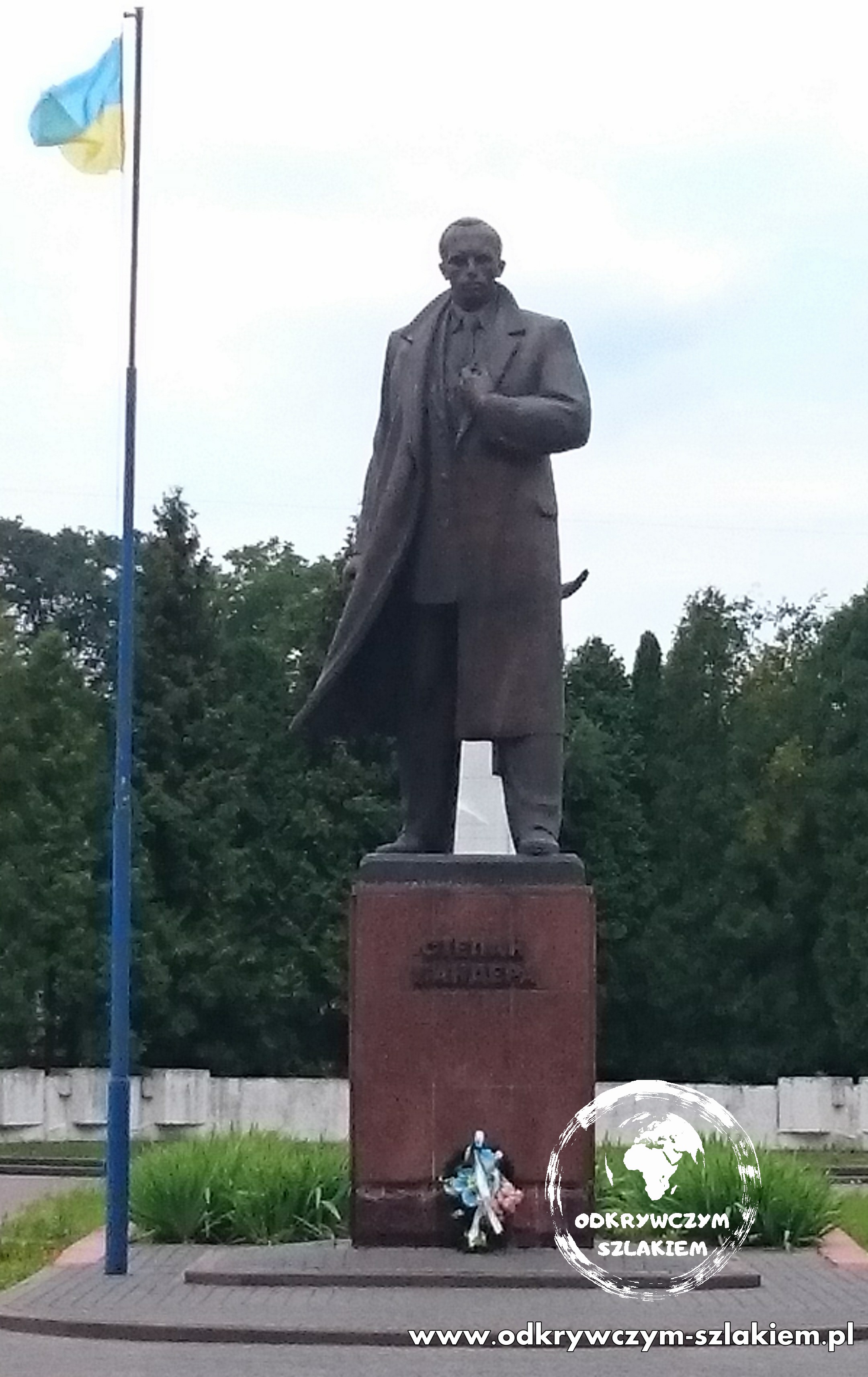
In Sambir itself we passed monuments to Khmelnytsky and Bandera, and lots of people stared at us. To me everything was fine – only Wiktor felt uneasy. A few days later Lev, a Ukrainian we met after our skydive, explained that this is quite a specific region of Western Ukraine: Sambir is the only bigger town in the area, and three smiling visitors with backpacks simply stood out a lot here – hence the looks. Elsewhere, in fact, we mostly met with friendly curiosity.
While trying to get from the town to the road out, we were told more than once where the bus stops for Lviv were. The locals didn’t quite get the idea of hitchhiking. After about half an hour of waiting, a man took us right to our apartment in Lviv (about 75 km).
Lviv
Just as we drove into Lviv, there was a huge downpour. All the more reason to be glad we could settle into our wonderful and not too expensive apartment. Before we got out, the driver did warn us about the neighbourhood, but we never witnessed a dangerous situation there. More information below or in the video above (from 0:52).
Address: Leontovycha 3, Lviv, 79000, Ukraine (near the Lviv Opera). It is no longer listed on Booking.com, though.
Neighbourhood: an ugly staircase and a courtyard surrounded by four four-storey buildings – probably from before the war. In the middle stood an old fountain, split apart by a chestnut tree growing out of it – it must have been beautiful here once. Unlike Wiktor, I wasn’t put off by the surroundings.
Number of nights: 5 (4–9 July 2017) Cost per night: UAH 815 (about €26) Cost per person per night (4 people): UAH 204 (about €6.50)
Facilities: private bathroom • balcony • terrace • shower • kitchen • washing machine • toilet • wooden or parquet floor • towels • bed linen • cleaning products • TV • fridge • ironing facilities • iron • microwave • heating • flat-screen TV • hairdryer • kitchenware • kitchenette • electric kettle • cable channels • wardrobe or closet • stovetop • dining table • clothes rack • camp bed • drying rack for clothing • toilet paper
Fun fact: the building dates from the “Polish” times. The letter and newspaper box, for example, still had a Polish inscription:
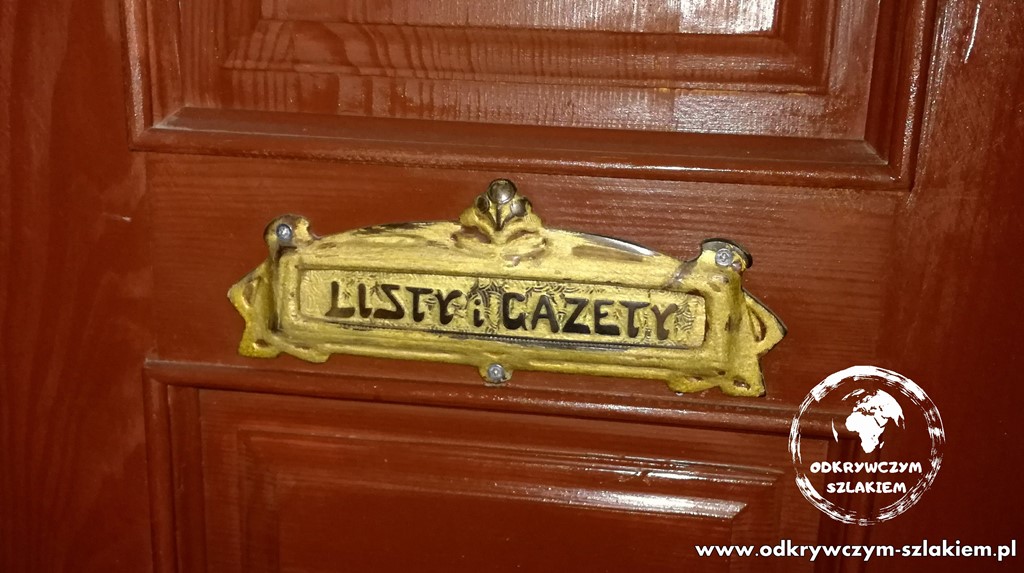
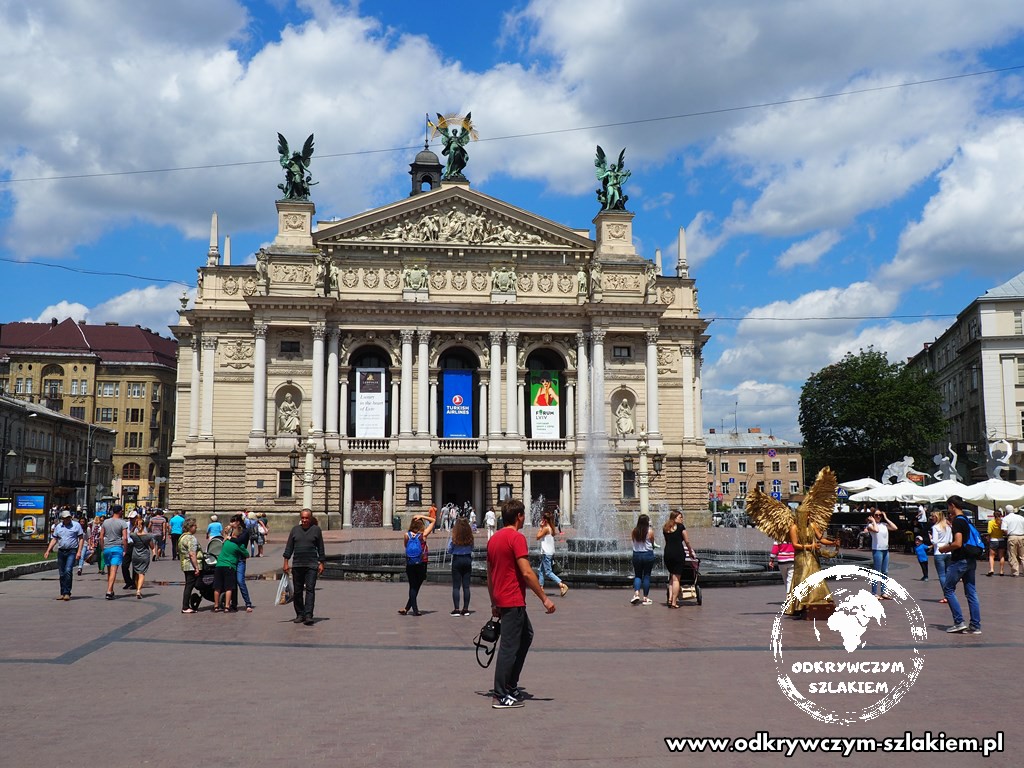
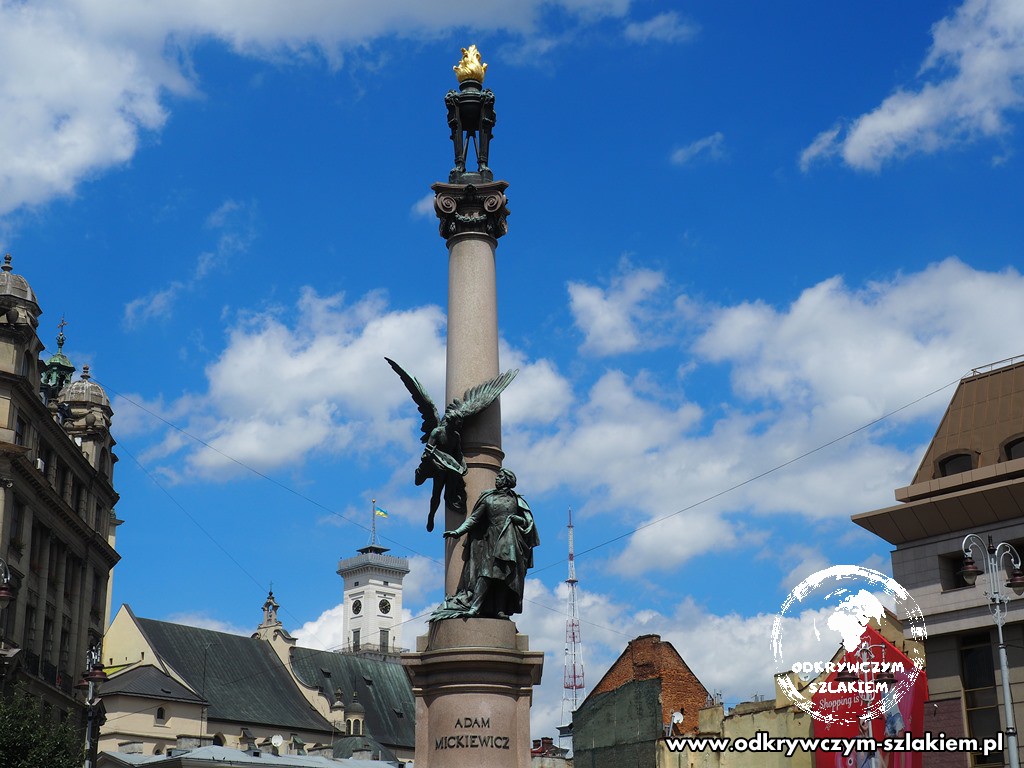
Polish letterbox in a Lviv apartment buildingThe next day we explored the city centre (including the Lviv Opera, the Adam Mickiewicz monument, the old town and a flea market). See it in the video above from 1:24. We waited for Patrycja before seeing the rest of the sights – there was no point in sightseeing earlier without the whole group. In the meantime we also discovered a wonderful, cheap bar (information below).
Address: 11 Sichovykh Striltsiv St, Lviv, Lviv Oblast (Street View – click)
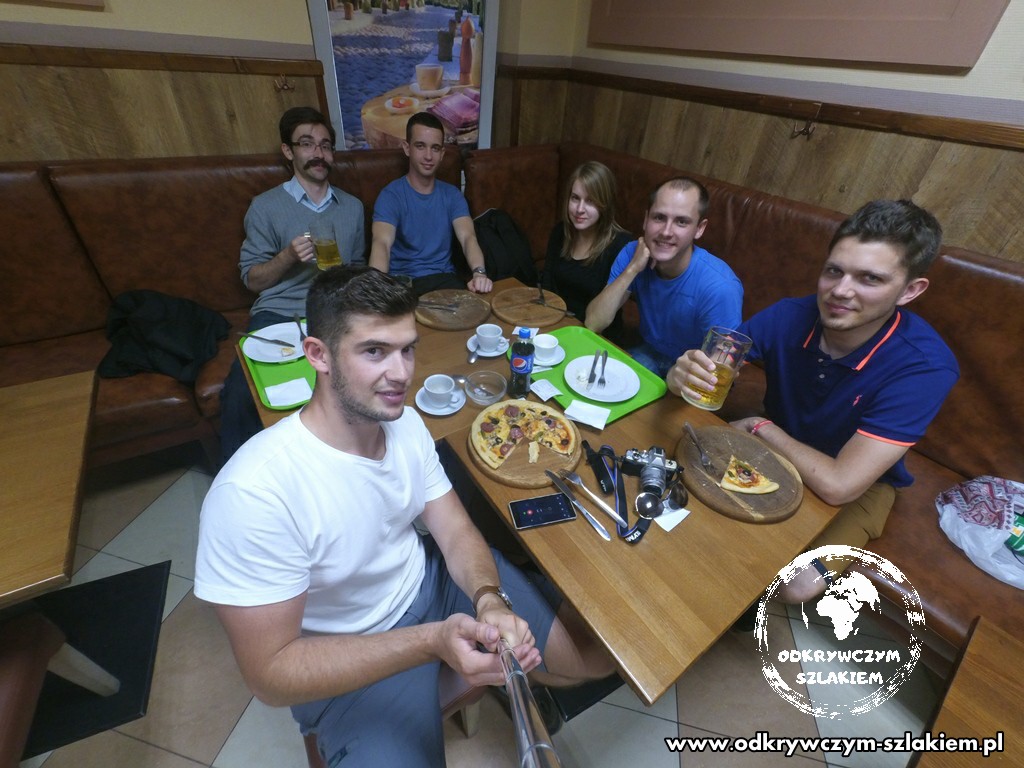
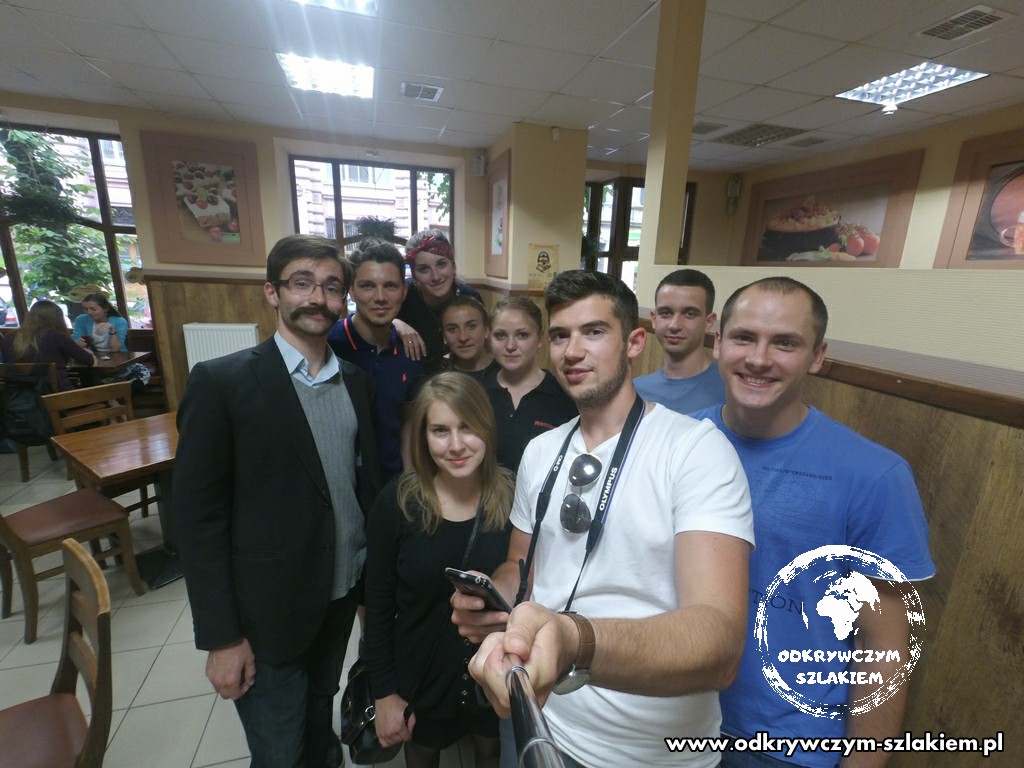
I hope the place is still open (they never had a website). For a few euros you could order a pizza, a beer and a big piece of cake. It was hard to communicate in English, but with Wiktor, who knew basic Russian, we managed somehow. We went there regularly – you could say we were regulars. There’s also a funny story connected with the place. Once, a Ukrainian man came up to Michał, took the cake off his plate and stuffed it into his mouth by hand in just two moves. Michał was so confused he didn’t even know how to react. Below you’ll find photos and the place marked on the map.
Cemetery of the Lwów Eaglets
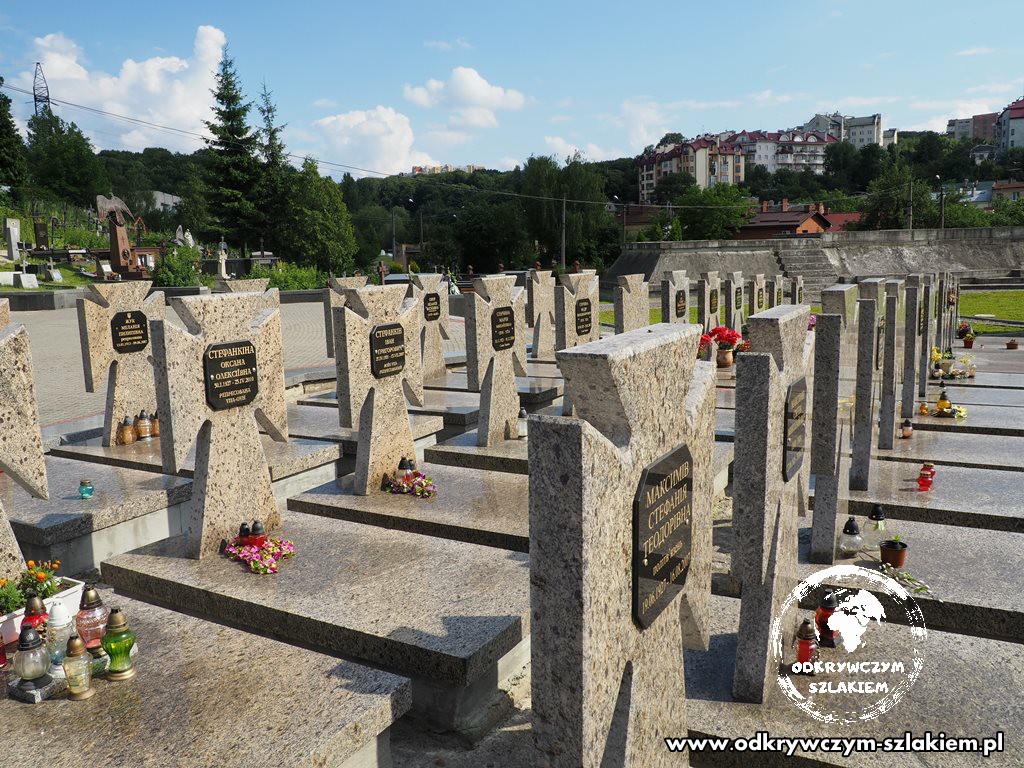
On the third day (6 July), in the morning, Patrycja joined us – she couldn’t come earlier because of other commitments, and she waited five hours at the border. That day we saw much more – including Lychakiv Cemetery, the resting place of many people who rendered great service to Poland and Ukraine. See it in the video above from 2:52. Within it is the Cemetery of the Lwów Eaglets, especially important for Poles, which commemorates the Defenders of Lwów. Buried here are those who fell in the fighting for Lwów (Lviv) and Eastern Lesser Poland during the Polish-Ukrainian and Polish-Soviet wars. The Lwów Eaglets were young or very young people – very many of them hadn’t reached the age of 25, and the youngest was only 9. On the other hand, there are also graves of, for example, soldiers of the Ukrainian National Army, which fought for the Third Reich. We got there by taxi, which was very cheap – later, though, it turned out that getting around Lviv by Uber is even more convenient and cheaper (more in the practical information). Admission cost us very little. However, prices have been rising steadily since 2017, so you should check the current one. Reportedly, since 2020 an adult ticket has cost 50 UAH, and students and children pay 40 UAH.
Shevchenkivskyi Hai
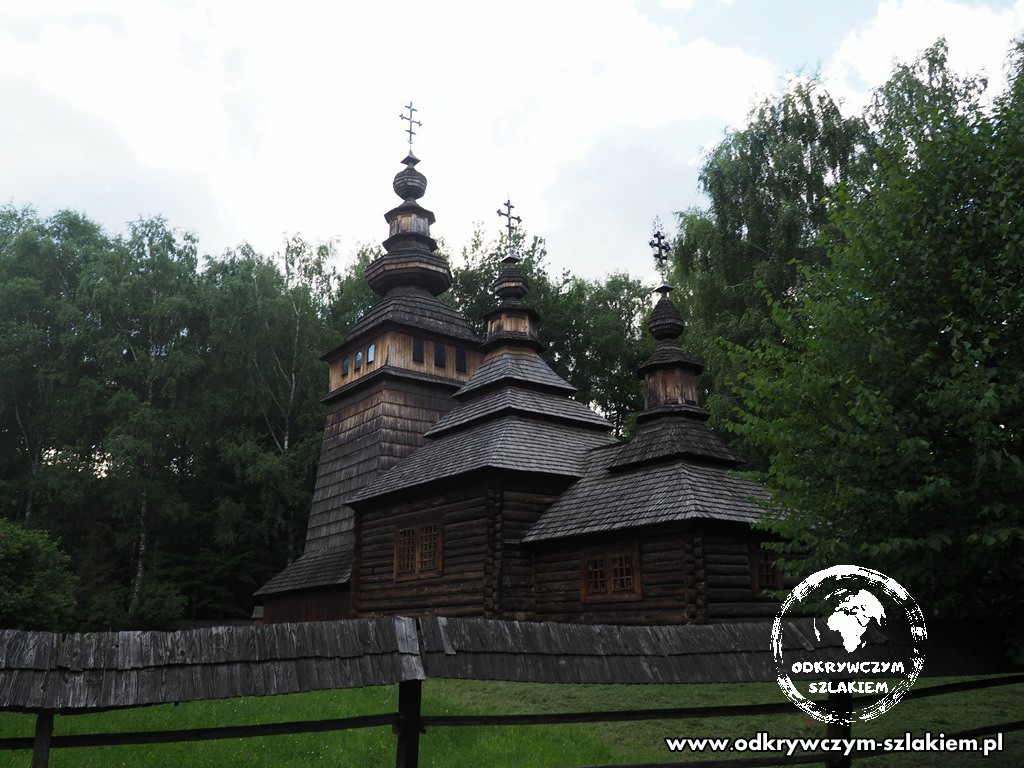
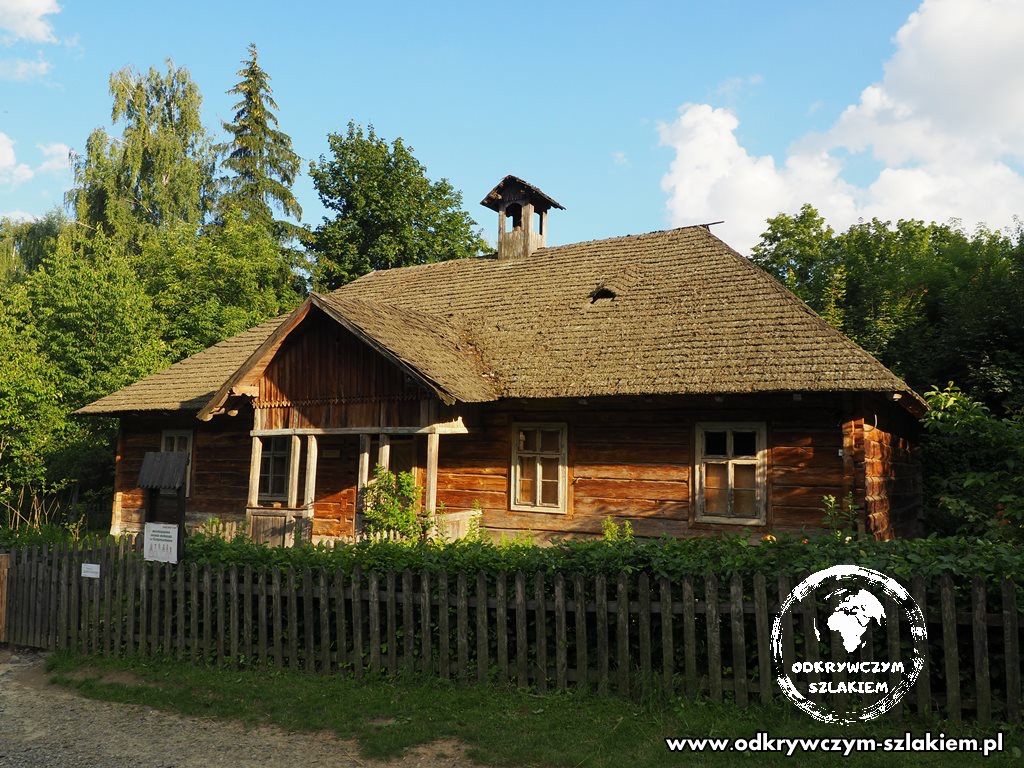
We also visited Shevchenkivskyi Hai. It’s the Museum of Folk Architecture and Rural Life in Lviv. It was created to preserve architectural monuments, household items and folk art objects of all the historical and ethnographic groups of Western Ukraine from the late 19th and early 20th centuries. Some buildings were even moved here from Poland. On the way back we took a Ukrainian minibus for the first time – old and very crowded. See it in the video above from 3:53.
High Castle
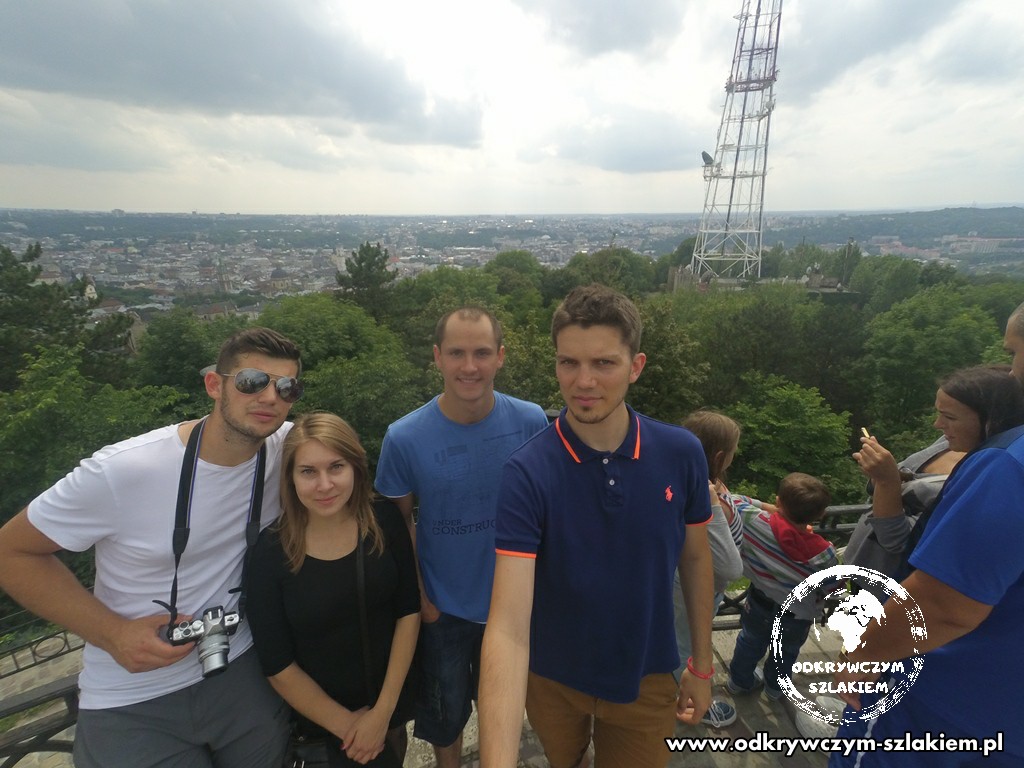
On 8 July we first picked up from the post office our playing cards, which Ivan had sent us – a Ukrainian we’d met on the train to Rzeszów (we forgot to take them when we got off). Then we went to the “High Castle”, a hill on which a Gothic royal castle stood from the 14th to the 18th century. On it is the Union of Lublin Mound, raised in the 19th century for the 300th anniversary of the union (1569). Its summit is at 413 m above sea level, and from there you can also admire a panorama of the city. Watch the video above from 0:20.
House of Legends
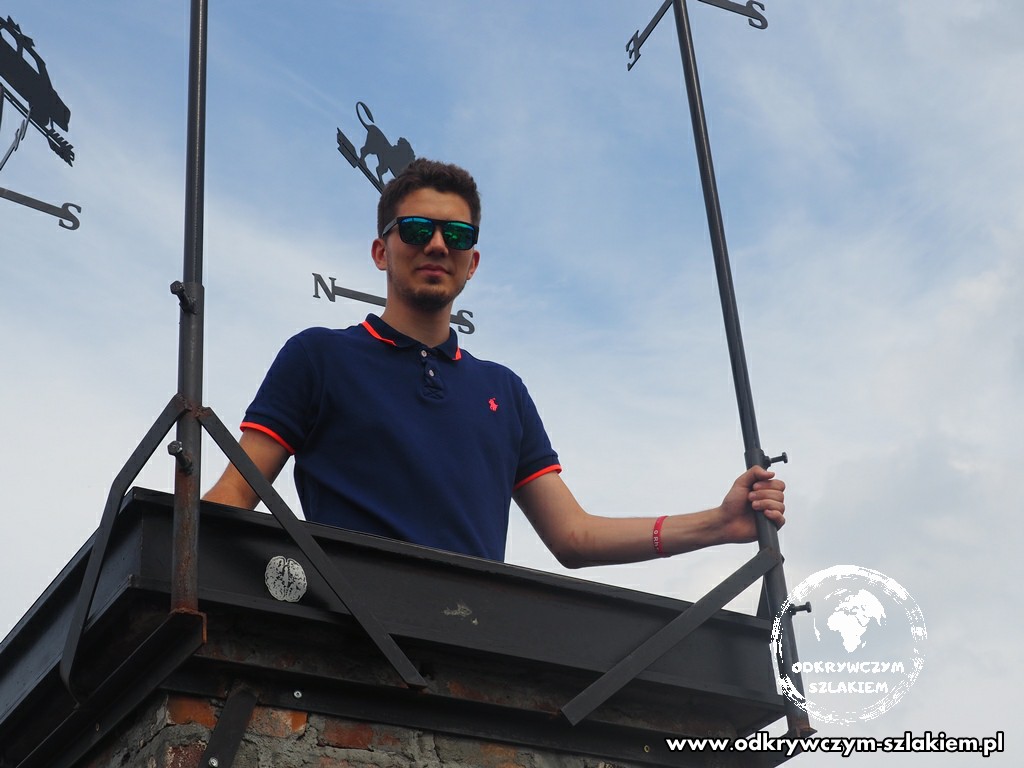
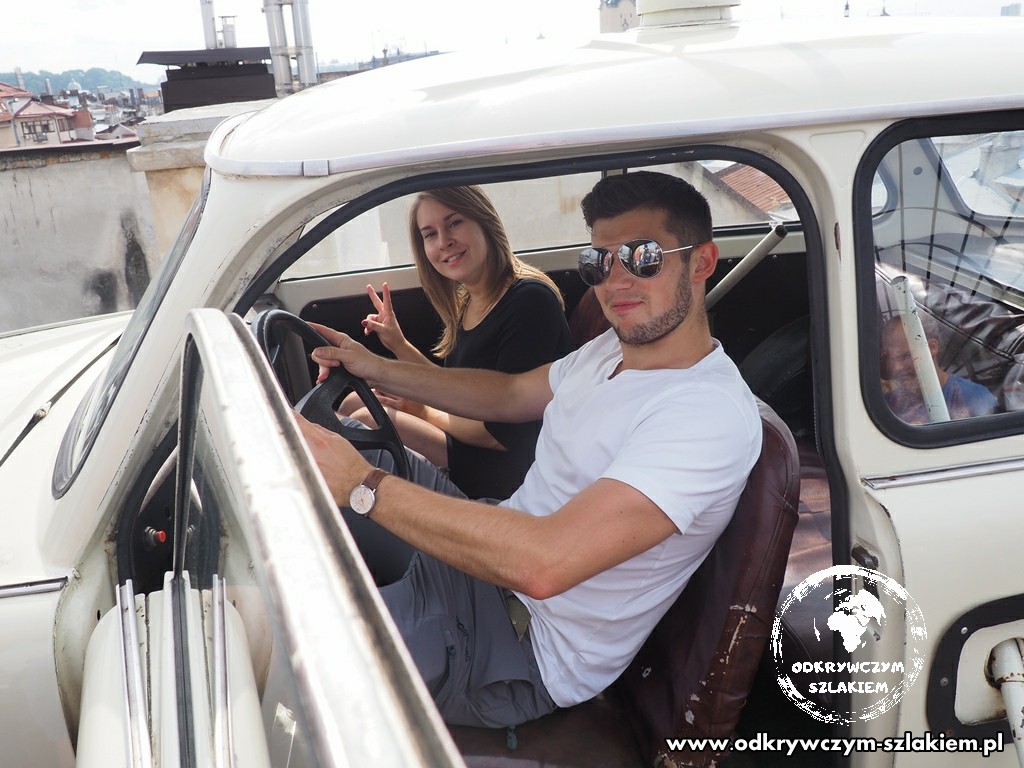
We also visited the “House of Legends” – a restaurant taking up a whole tenement building. It was one of the best-known places in Lviv. It spread over several floors and had lots of rooms, each decorated around a different legend. You could go up a spiral staircase onto the roof. There, a few attractions awaited us – including a Trabant, a ladder up a chimney and a statue of a chimney sweep – you can try to throw a coin into his hat. Unfortunately none of us managed it, although it was close at times – to console ourselves, we had a beer on the roof. Apparently, every now and then the legends in this place “come to life”. We didn’t get to see that, so we don’t know exactly what this attraction involves. Watch the video above from 1:46. I’m writing in the past tense because, from what I read online, the place has closed – a pity…
A controversial Banderite bar in the heart of Lviv
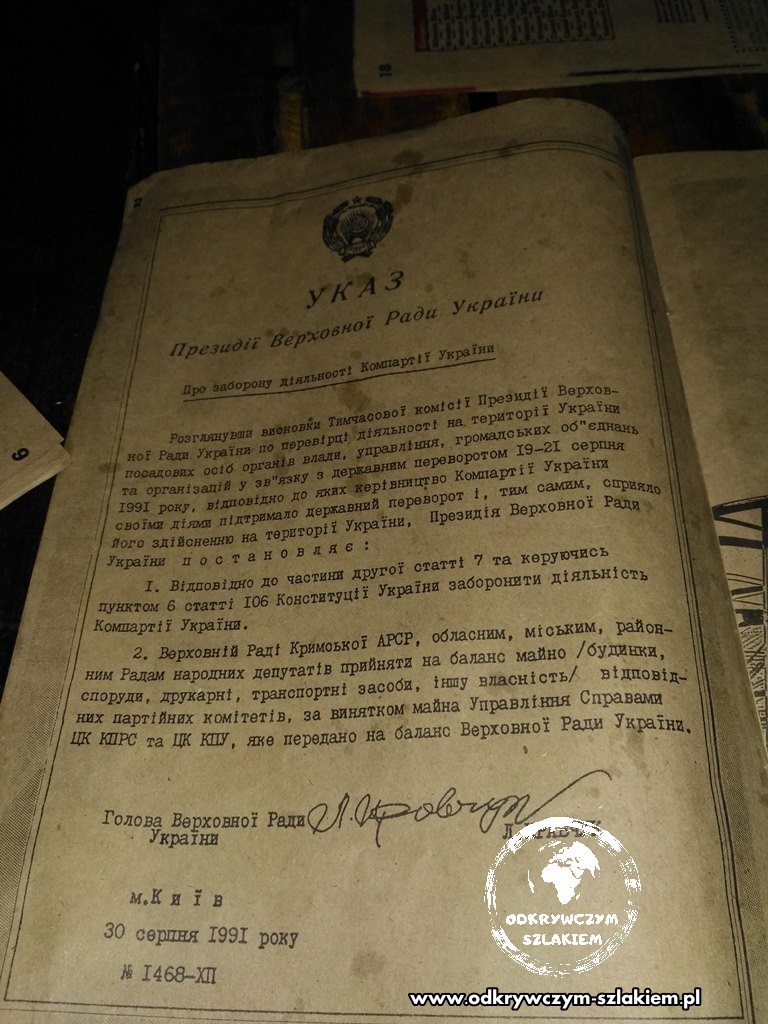
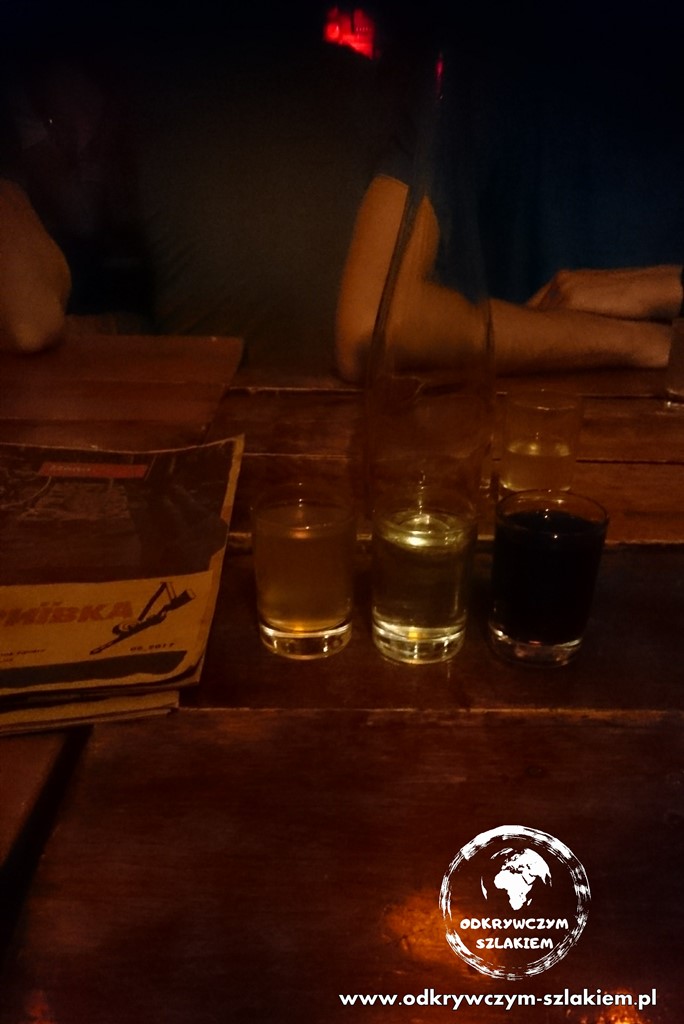
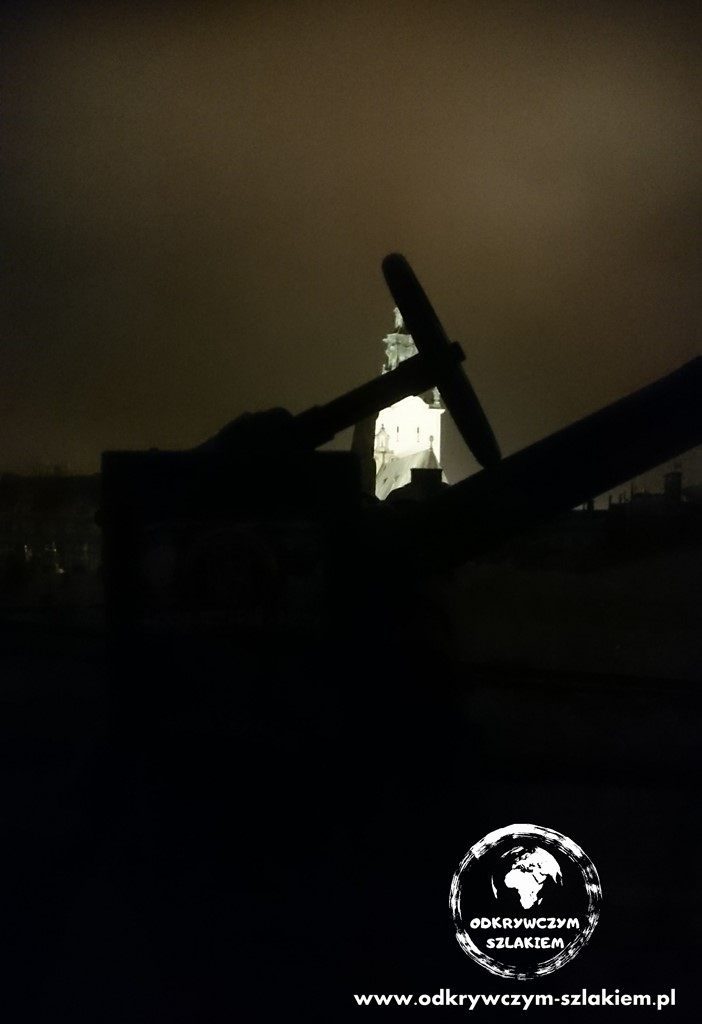
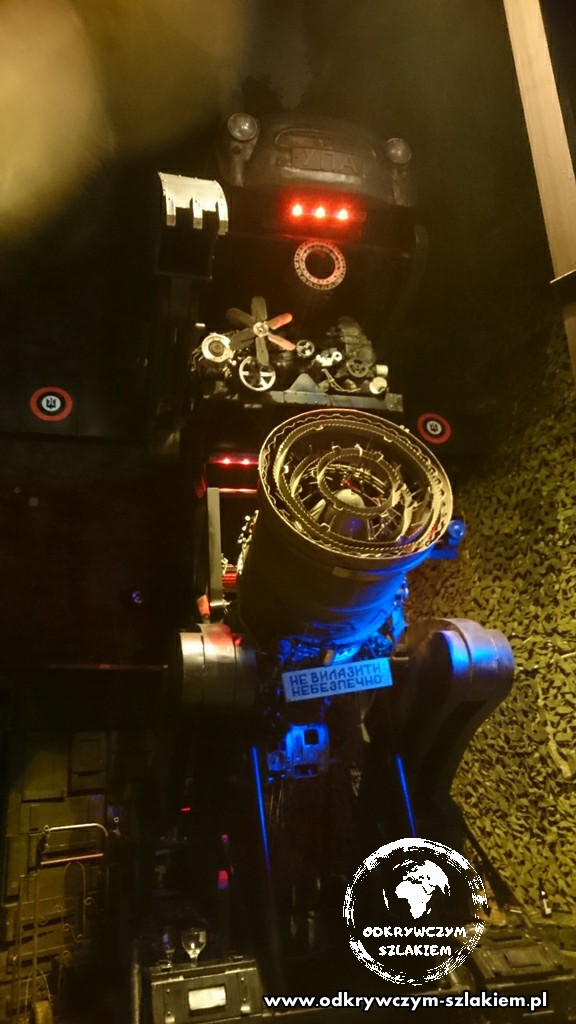
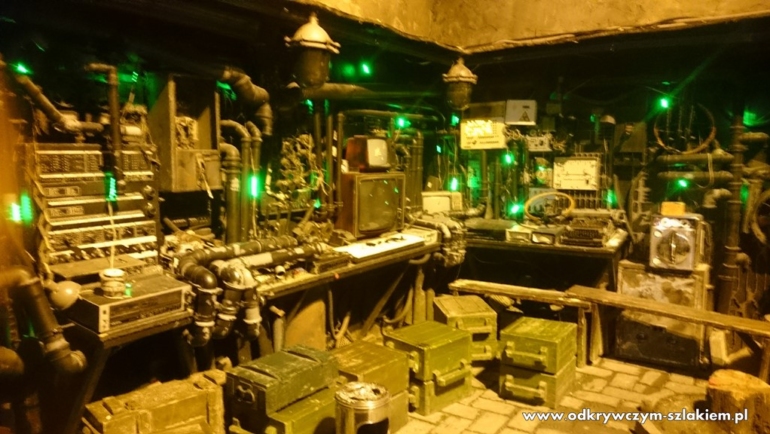
On our last day in Lviv we met up with Piotrek and Lev – together we went to our favourite Bistro Bar, then to the apartment, and we ended the evening at Kryjivka. The place is controversial because of its décor, themed around the UPA. At first I wasn’t keen to go, but given the others’ interest and their attitude, I changed my mind – we saw it more as a historical venue than one promoting nationalism. There’s usually a queue at the entrance. You have to give a password, everyone is asked where they’re from and whether there are any Russians among you, and then each of us got a really tasty free cinnamon shot called “poison for the Moskal” (a derogatory word for Russians). The “guard” asks over a walkie-talkie whether there are free seats and then leads you to your table. Inside you could see archive photos, replica weapons and other military decorations. “Atmospheric” music was playing, and you could even hear the sound of gunfire. Outside there was a sort of command centre, and on the roof an anti-aircraft gun that could be moved up and down and side to side. It’s worth mentioning that a large part of Ukrainians don’t associate the Banderites with the Polish nation at all, only with soldiers fighting for their homeland.
Other bars and restaurants in Lviv
Address: Valova St, 31, Lviv, Lviv Oblast, Ukraine, 79000
We went there on 7 July around noon, before heading off for our skydive. The horror house and the escape room are run by the same organiser in the same building, so we did both. One was a typical Escape Room, specifically the Insidious scenario (back then it was called Astral Quest), in which our task was to return to our own body, which was in a coma after a car accident. We had 60 minutes to do it. For this we had to solve a series of puzzles. Unfortunately we didn’t make it – it was the hardest escape room we’ve ever done. Sometimes, even when we’d chosen a good strategy, it was hard to carry out our idea, although we did solve a few of the harder puzzles. For a group of 4 people we paid a total of 500 UAH.
Arriving at 11:30 we found out it was “Happy Hours” time and we could do another attraction for half price. It was a walk through lots of dark rooms with actors whose job was to scare us (horror house). We chose what was supposedly the scariest scenario, but it didn’t give us any trouble. It was OK, although I’ve experienced more interesting scenarios in Poland, and I already knew many elements from other places like this – a big plus, though, was the actors kidnapping members of the group, which I had never come across before or since. I can see, however, that they have expanded their offer since 2017, so next time I’ll gladly check what it’s like now.
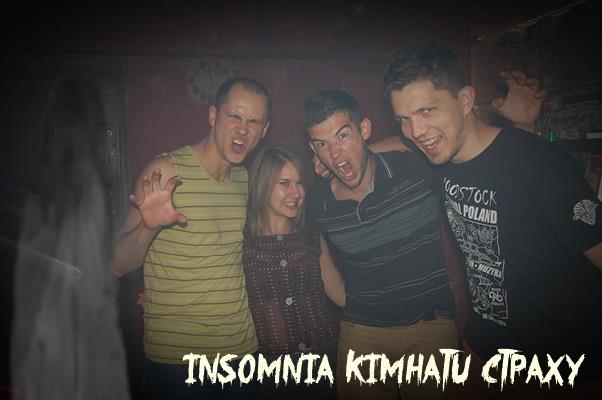
- Insomnia – The Haunted House Lviv
Click here to go to the organiser’s website. It has information about the current scenarios and prices.
Address: Kryva Lypa Passage, 7, Lviv, Lviv Oblast, Ukraine, 79000
Description: Here a litre of beer cost about €1.20, and a pizza no more than about €4. We went there two or three times. Tasty and decent!
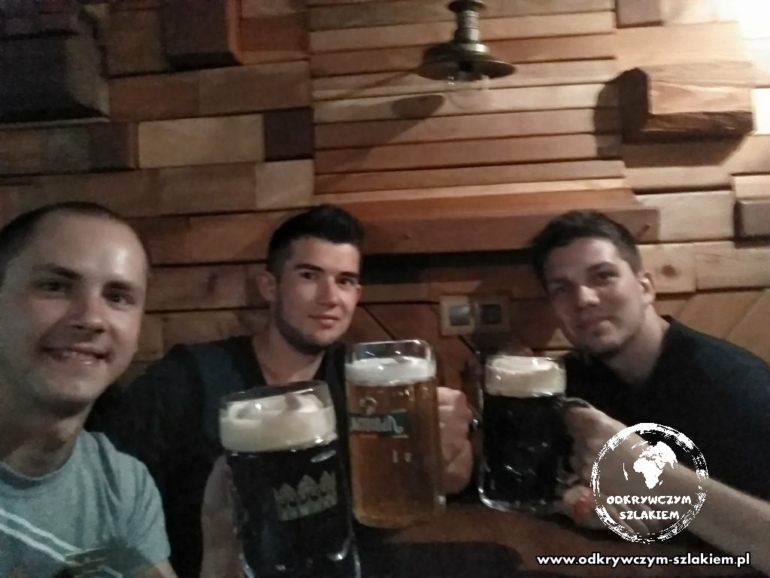
Pizzeria PinokkioAddress: Svobody Ave, 22, Lviv, Lviv Oblast, Ukraine, 79008
Website: https://www.da-vinci.lviv.ua/en/menu-2/
Short description: Good shisha, relatively expensive beer
Address: Brativ Rohatyntsiv St, 27, Lviv, Lviv Oblast, Ukraine, 79000
Short description: we went there for the music; they also had shisha. A positive place, and so were its guests.
Map of attractions
Fun facts
- The saying “Russia is a different state of mind” applies in a way to Ukraine too (although some might be offended by the comparison). More than once we were offered vodka (even in a shop), and you can meet drunk people everywhere – e.g. on buses or in taxis – so nobody bats an eyelid. A Ukrainian won’t be surprised by cold water in a hostel or a hole in the roof of a marshrutka either. Most people don’t pay attention to it – they think it’s normal.
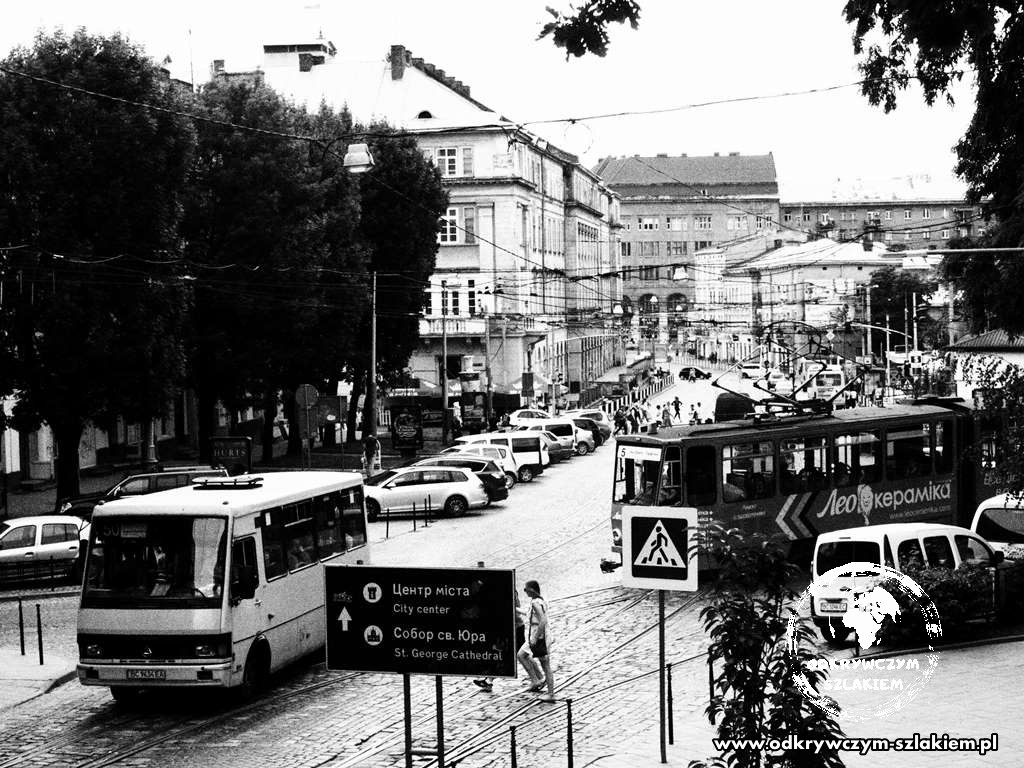
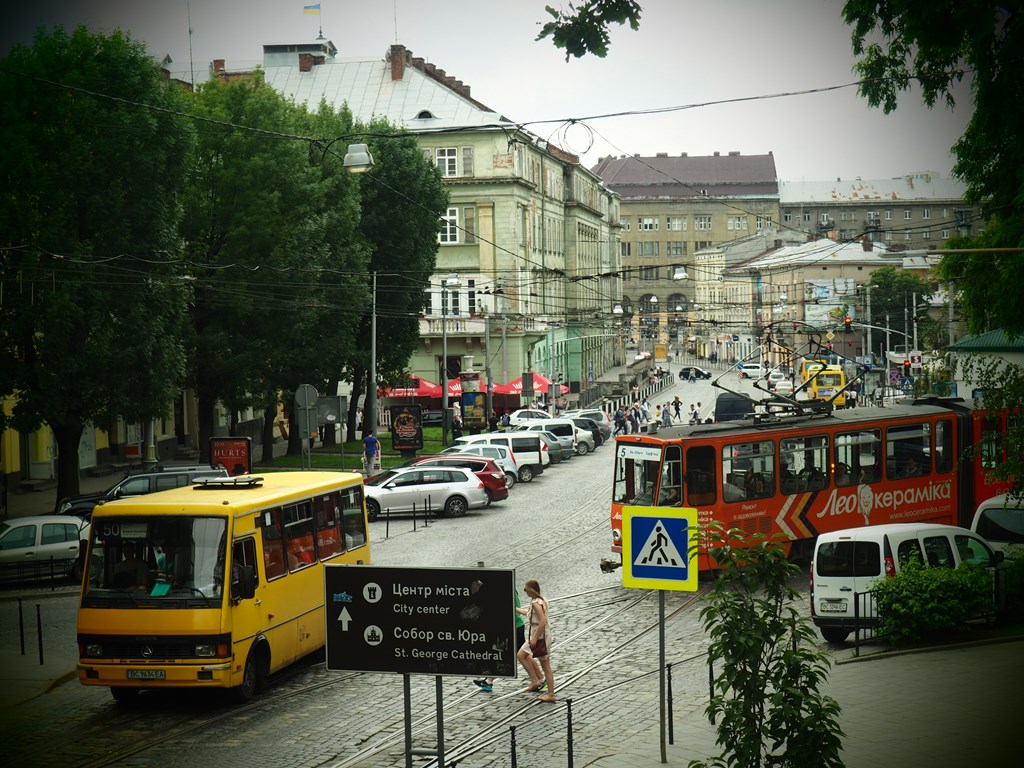
- The stereotype of potholed roads is sadly true. I’m not sure I’d want to drive my own car on roads like these – especially since traffic in Lviv looks as if there were no rules and the law of the strongest applied. The streets are narrow, cars drive bumper to bumper, and the buses often look like scrap, but they run and are packed to bursting.
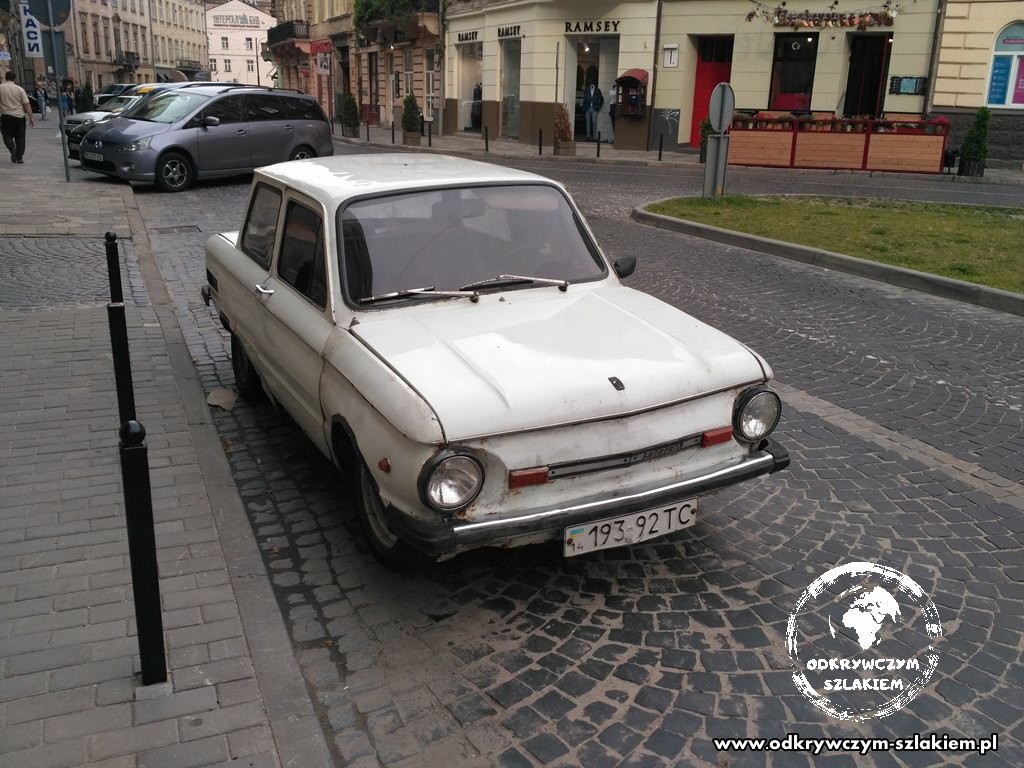
- Many cars on Ukrainian roads have foreign number plates. This is directly linked to the high customs duties on Ukrainian-registered cars. Owning a foreign car currently costs half as much. With such a car you have to leave Ukraine once every two months, but as you can see, that doesn’t put most people off. The Ukrainians are so desperate that the man from BlaBlaCar who gave us a lift tried to talk his friend into a certain deal: the friend would register the Ukrainian’s car in Poland in his own name.
- The stereotype that Ukrainians dislike Poles rather doesn’t hold true. There’s constant talk of conflict between the two nations, but in reality the vast majority were friendly to us and even tried to speak Polish. The cult of the UPA in the west of the country is very strong – monuments and flags are everywhere – but the Ukrainians we met didn’t link it to hostility towards Poles. Especially in the provinces, we were more of an attraction for the locals than they were for us.
- “Poland as a land of plenty” – that was the impression you got listening to the locals. In their eyes it’s a modern, economically developed country with lots of prospects. After all, Poland is a member of the European Union, and Ukraine, although it would very much like to be (or at least a large part of its citizens would), has no chance of joining. In their opinion Poles have decent wages and living conditions. To them we’re a bit like older brothers – more than once we heard that it would be great if Ukraine were like Poland. What an irony of fate – plenty of Poles complain about the situation in their own country.
- In our view, marshrutkas are part of Ukrainian culture. They’re outdated, full of holes and damaged, but it’s hard to be surprised – on roads like these, who would dare invest in modern buses? They look like little boxes, but the driver always takes more passengers than the vehicle can hold. If the door doesn’t close – no problem. Health and safety? Sanitary inspection? Does anything like that even exist there?
Practical information:
- Don’t bother paying attention to timetables for marshrutkas (shared minibus taxis). You don’t necessarily have to get on at a stop, because the driver also stops when you wave him down.
- Hitchhiking works very well, Ukrainians are very kind and helpful. Many of them don’t speak English, which is no problem at all. Polish and Ukrainian are so similar that we could make ourselves understood everywhere.
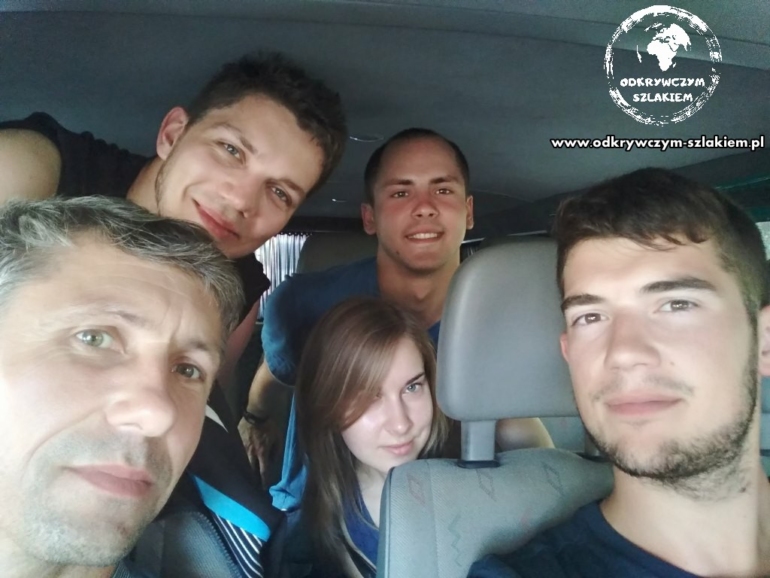
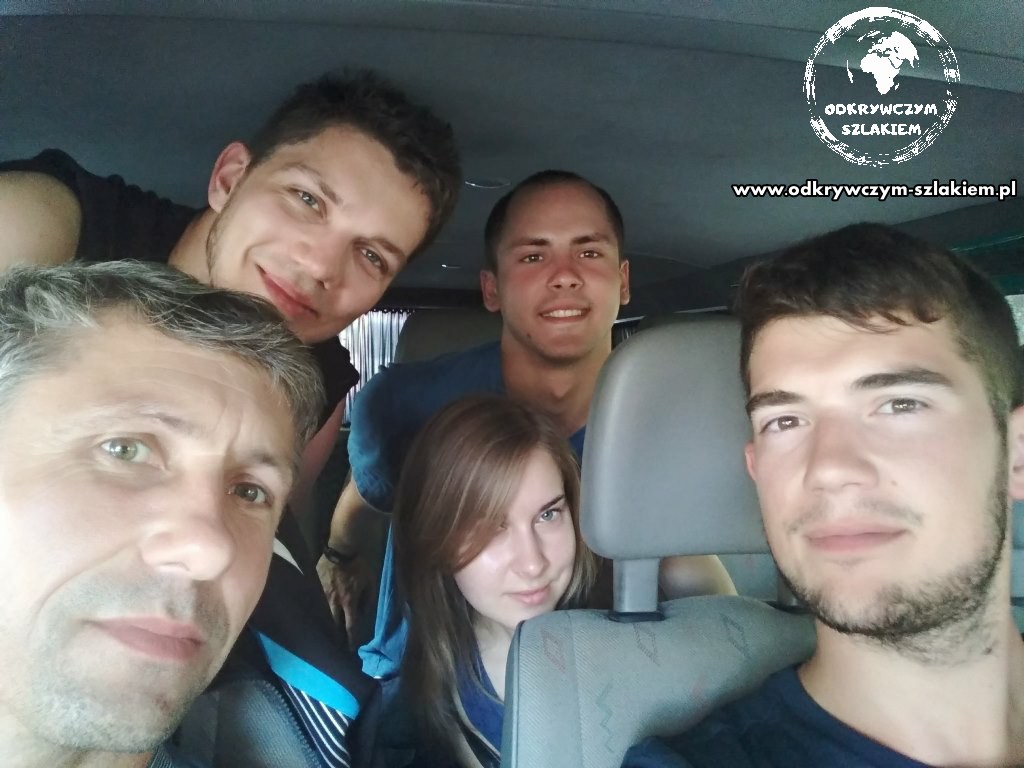
We managed to hitch rides even as a group of 4 - It’s very cheap. For a few euros you can have a nice lunch – read about the Bistro Bar, where we ate for four days. Once, a Ukrainian man came up to Michał, took the cake off his plate and stuffed it into his mouth by hand in just two moves :D.
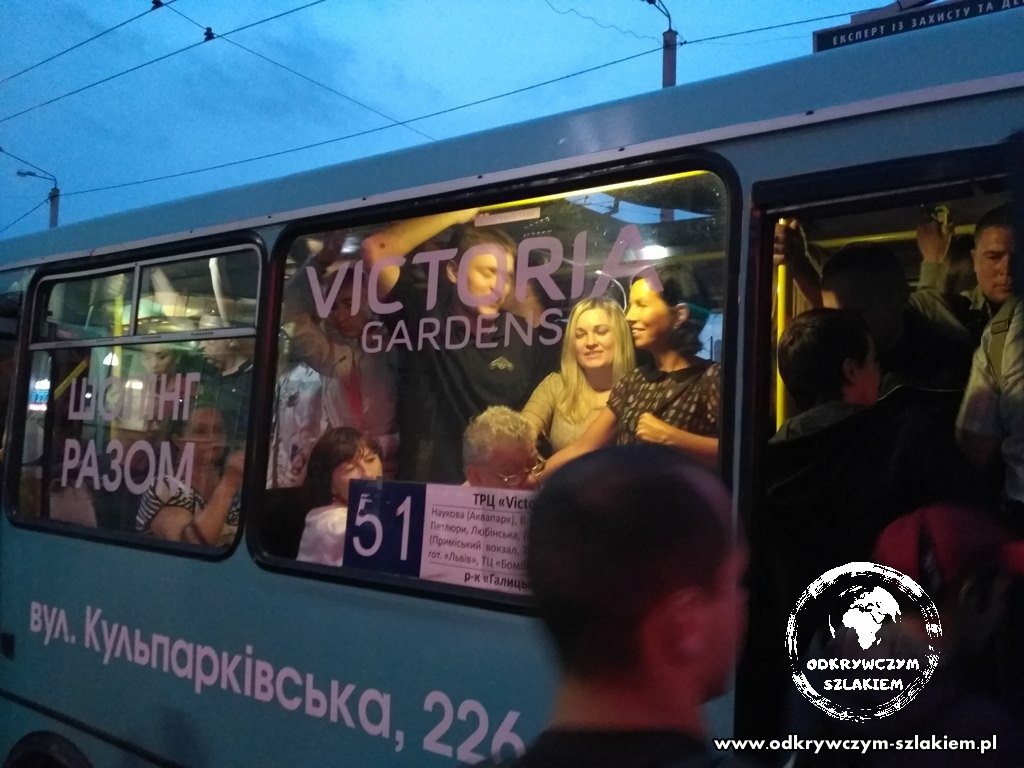
- Riding marshrutkas is a real challenge. They’re usually so crowded that the doors don’t close. In the crush there’s no way to buy and validate a ticket, so the fare reaches the driver via the passengers, who pass the money along between them – and interestingly, it never went missing on the way.
A packed bus in Lviv - The most convenient way to get around the city is by Uber – it was even cheaper than taxis: for a ride of over 2 km we paid about €1.20 in total for four people.
- It’s not worth taking a bus from Poland, because crossing the border can take at least several hours. It’s also uncomfortable – the buses are packed to the limit, and most Ukrainians take huge bags of food and who knows what else as hand luggage. A flight, on the other hand, is quick, comfortable and hassle-free.
Summary
Travelling around Ukraine by hitchhiking, you can see its true face. In the big cities Ukraine’s poverty and backwardness are somewhat “covered up”, although the look of some apartment blocks and the marshrutkas on the roads certainly won’t let you forget the communist era. Nothing has changed in the country for many years. Most villagers live in appalling conditions, and talking to the locals you can hear how bad they feel in their own country. This is due both to the Russian-Ukrainian conflict and to generally poor living conditions.
And Lviv itself? A huge old town and beautiful tenement houses, although many of them look as if no one has looked after them. The tourist spots, on the other hand, are well kept, and I felt safe here throughout our stay. Did we see everything we wanted? You could say so – I was also thinking about the catacombs, but maybe another time.