After a few days in Cartagena, on 7 May 2024 we continued along the coast to Santa Marta. The city and the nearby Tayrona National Park were our last stops on the Caribbean Sea – in total we spent ten days on the Colombian coast, from 3 to 12 May. Santa Marta was mainly a base for us: from here we went to the fishing village of Taganga and the mountain town of Minca, and finally for two nights to Tayrona – the most popular national park in Colombia, famous for its almost paradise-like beaches.
Our route:
- 7 May – from Cartagena to Santa Marta, a night in the Rodadero district,
- 8 May – Taganga and sunset in Rodadero,
- 9 May – the historic centre of Santa Marta and the town of Minca,
- 10–12 May – two nights by Tayrona National Park, with 11 May spent entirely on the trail and the beaches.
Table of contents
- Santa Marta – staying in Rodadero
- Taganga – a fishing village on a bay
- The historic centre of Santa Marta
- Minca – an unexpected meeting by a waterfall
- Tayrona National Park – the El Zaino entrance and the trail
- The beaches and Cabo San Juan
- Tayrona’s wildlife
- A night by the park and a storm
- Practical information
- Summary
Santa Marta – staying in Rodadero
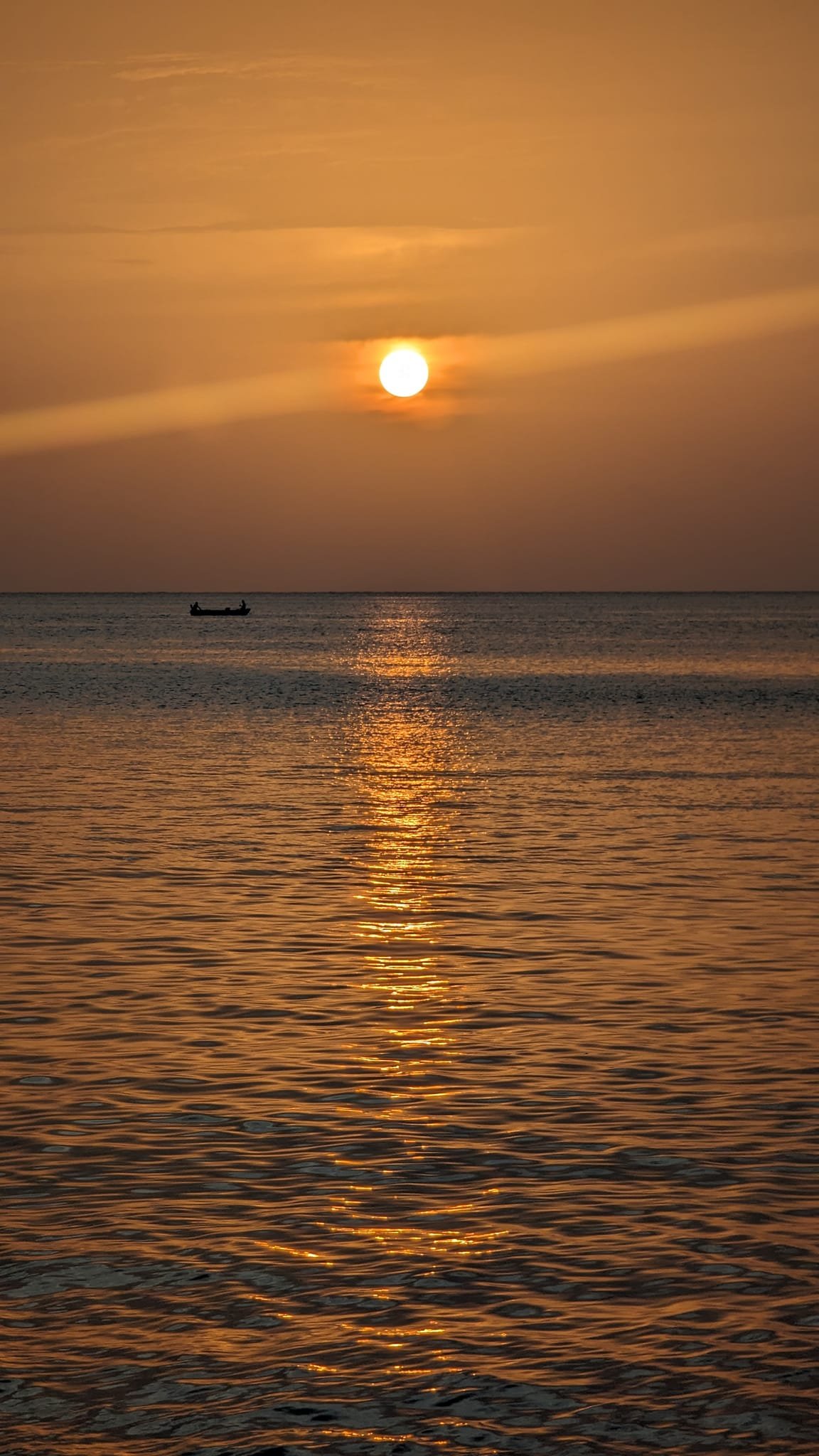
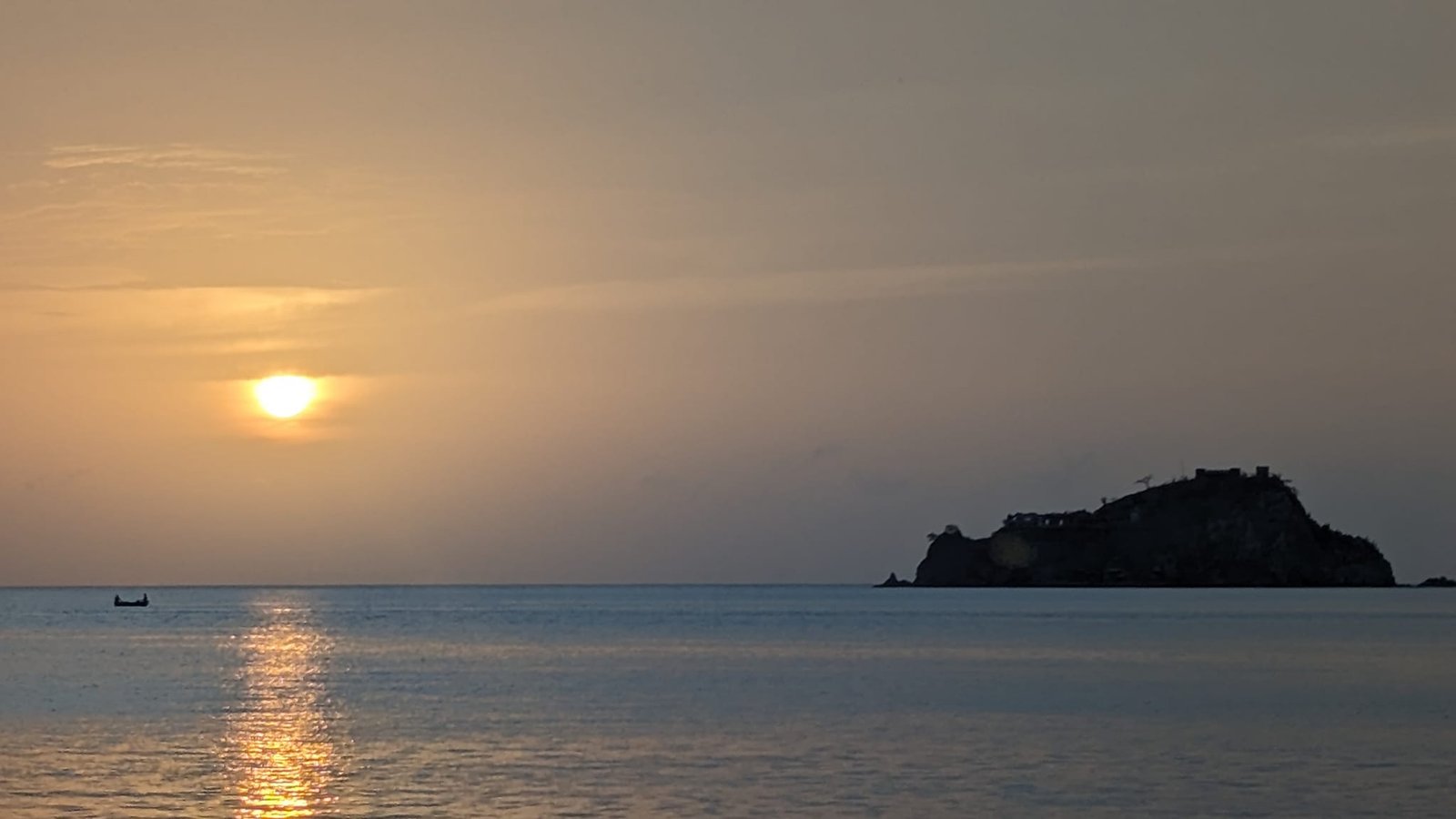
In Santa Marta we stayed in Rodadero – a district considered safer than the rest of the city. It also has a very nice beach, from which in the evening you can watch the sun set straight into the sea.
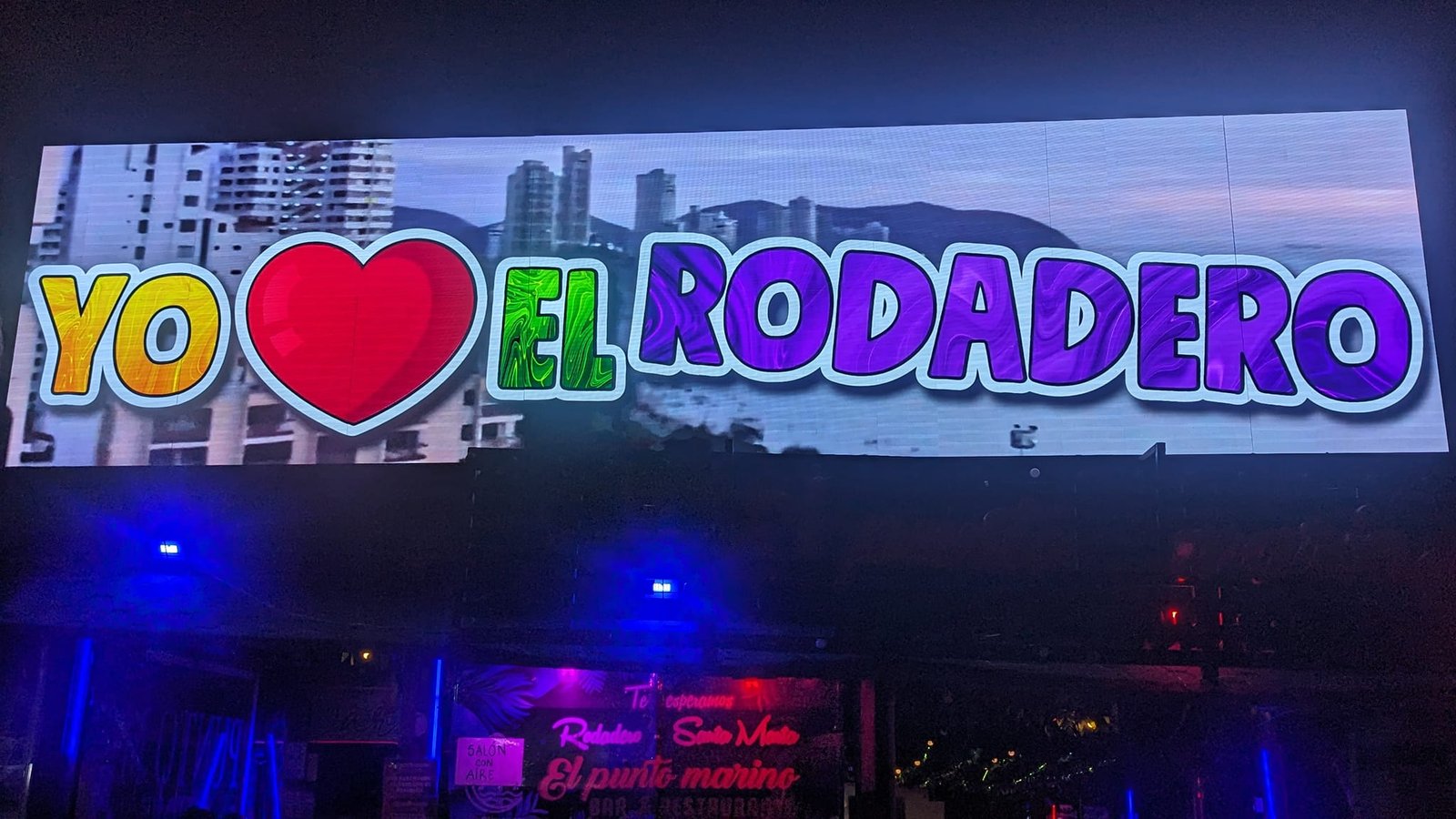
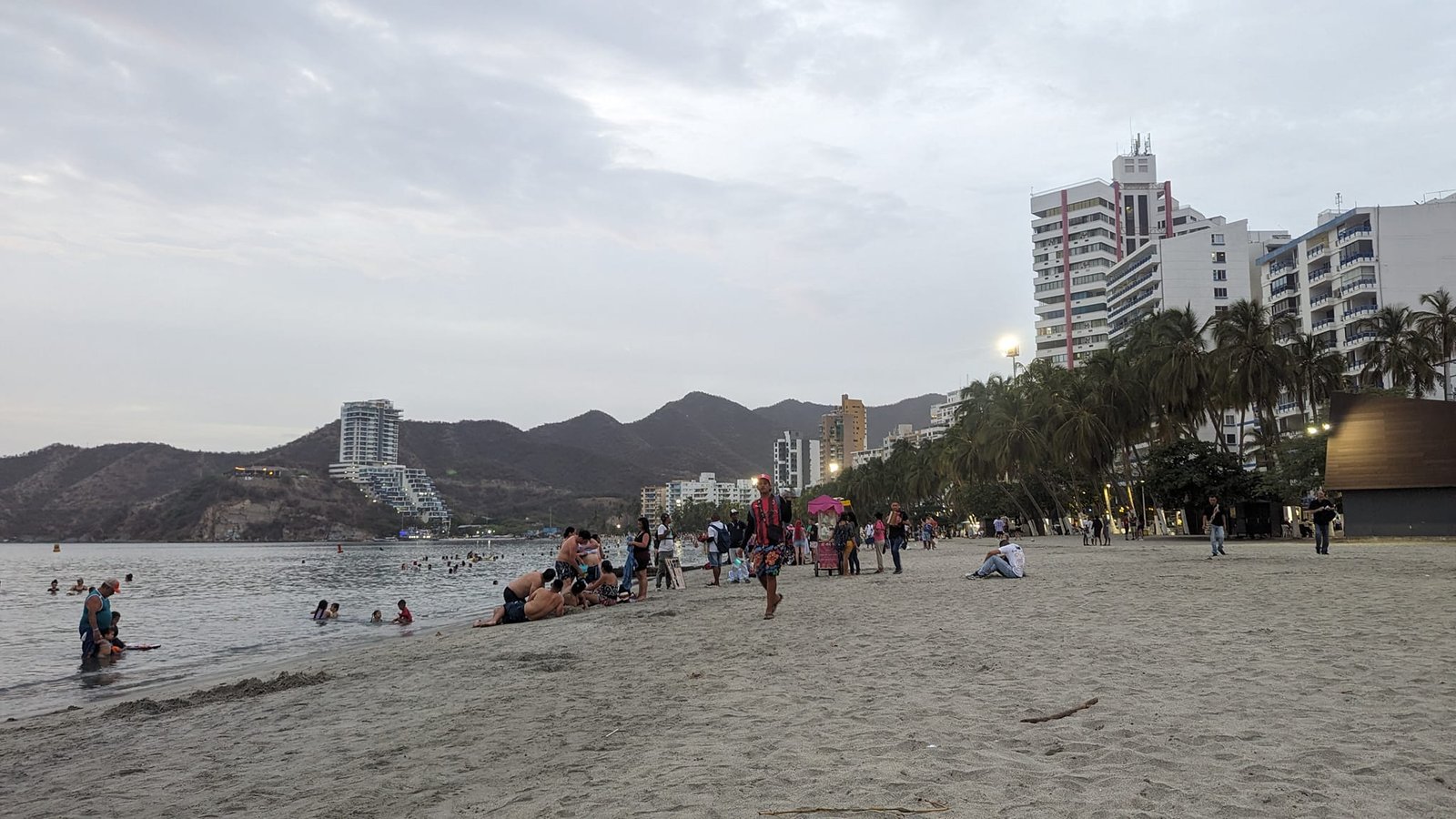
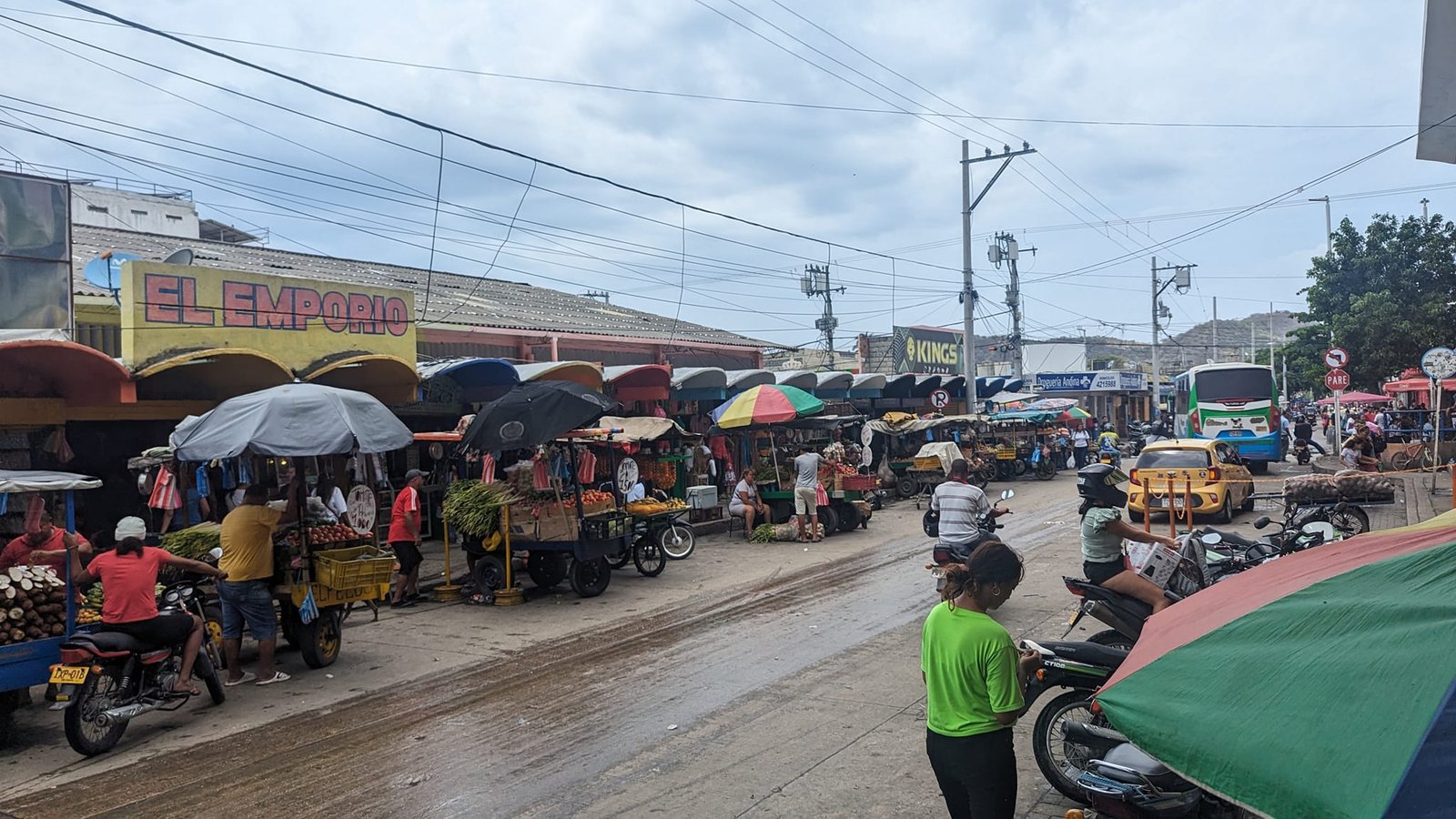
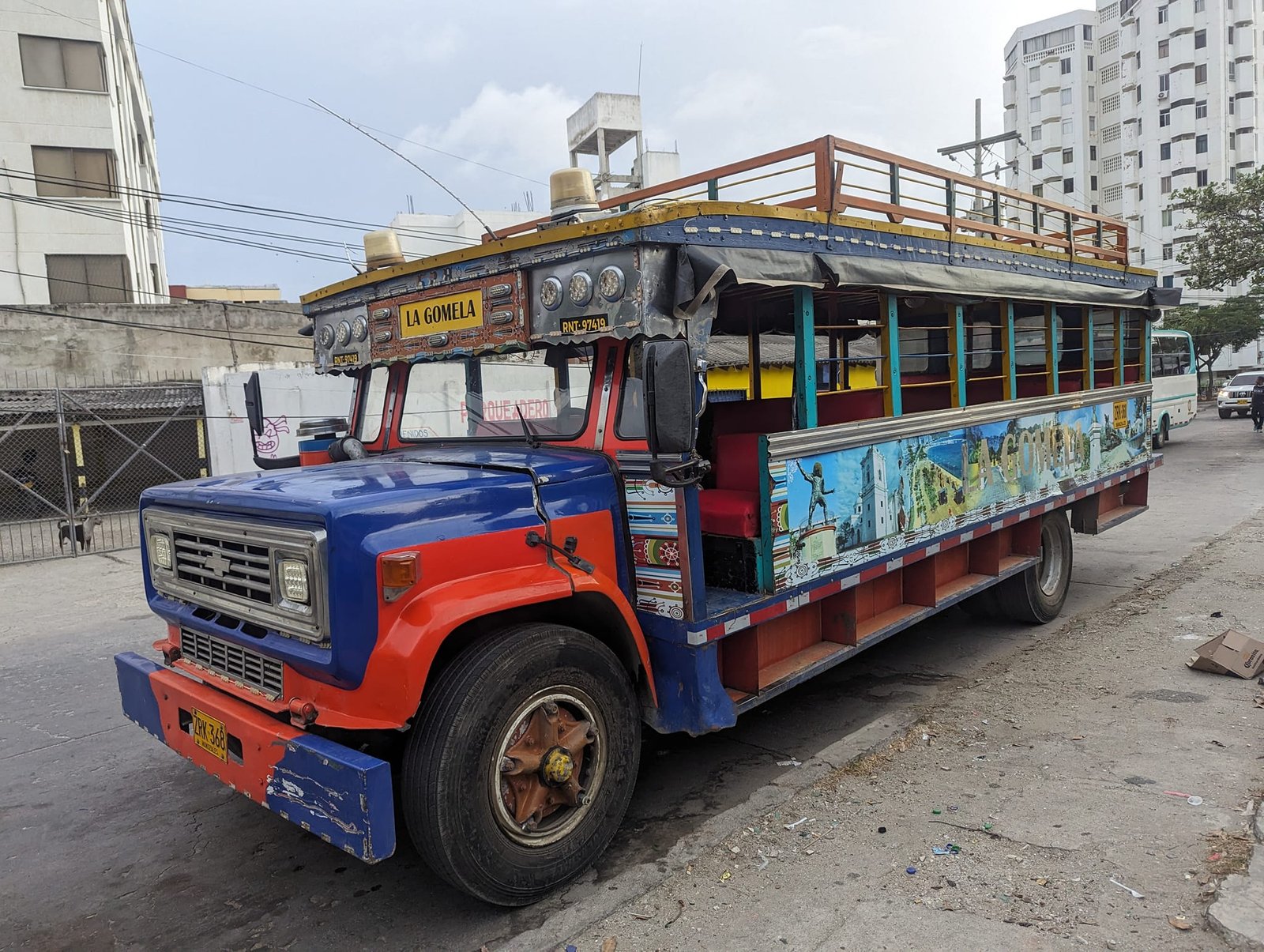
Colourful chiva buses drive around the streets of Rodadero. Unfortunately, just like in Cartagena, you cannot walk even a short way in peace without vendors accosting you. We had the same problem in every seaside town, and not just on the beach – in this respect the Colombian coast outdid even the Arab countries.
Taganga – a fishing village on a bay
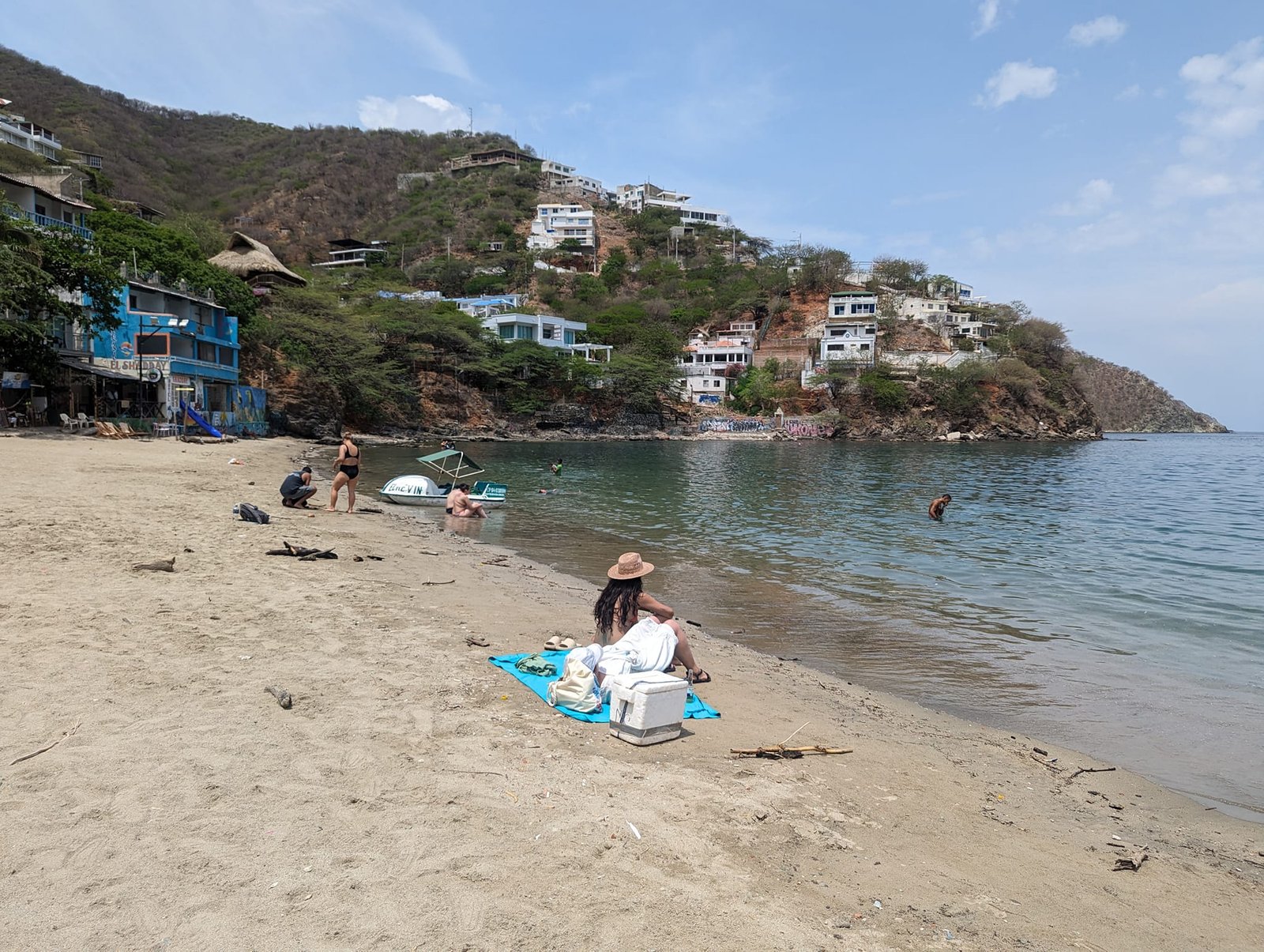
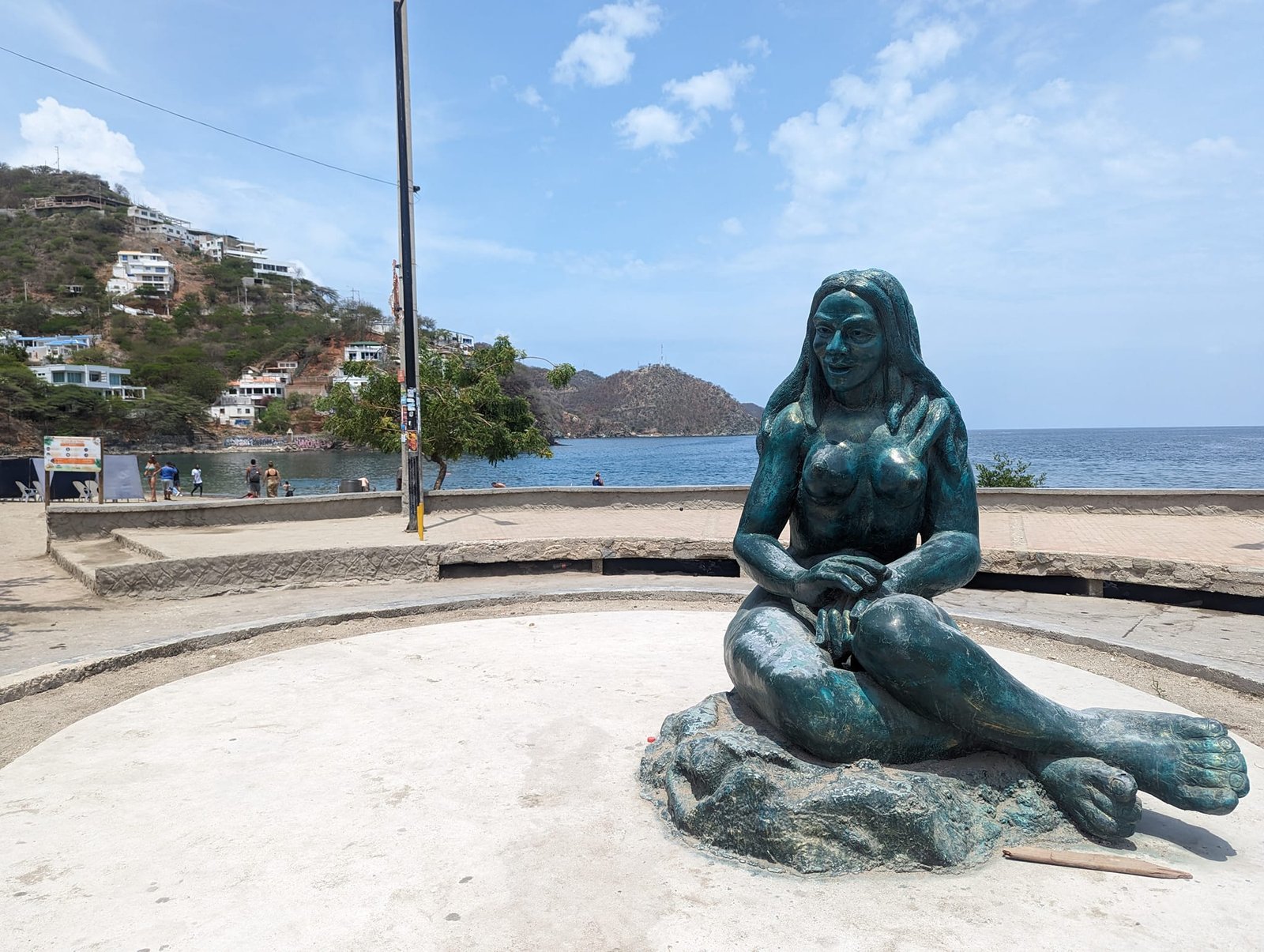
Not far from Santa Marta lies Taganga – a fishing village on a small bay surrounded by dry hills with houses on the slopes. We went there on 8 May. There is a beach and a waterfront promenade, but in our opinion it is not a place you absolutely have to see.
The historic centre of Santa Marta
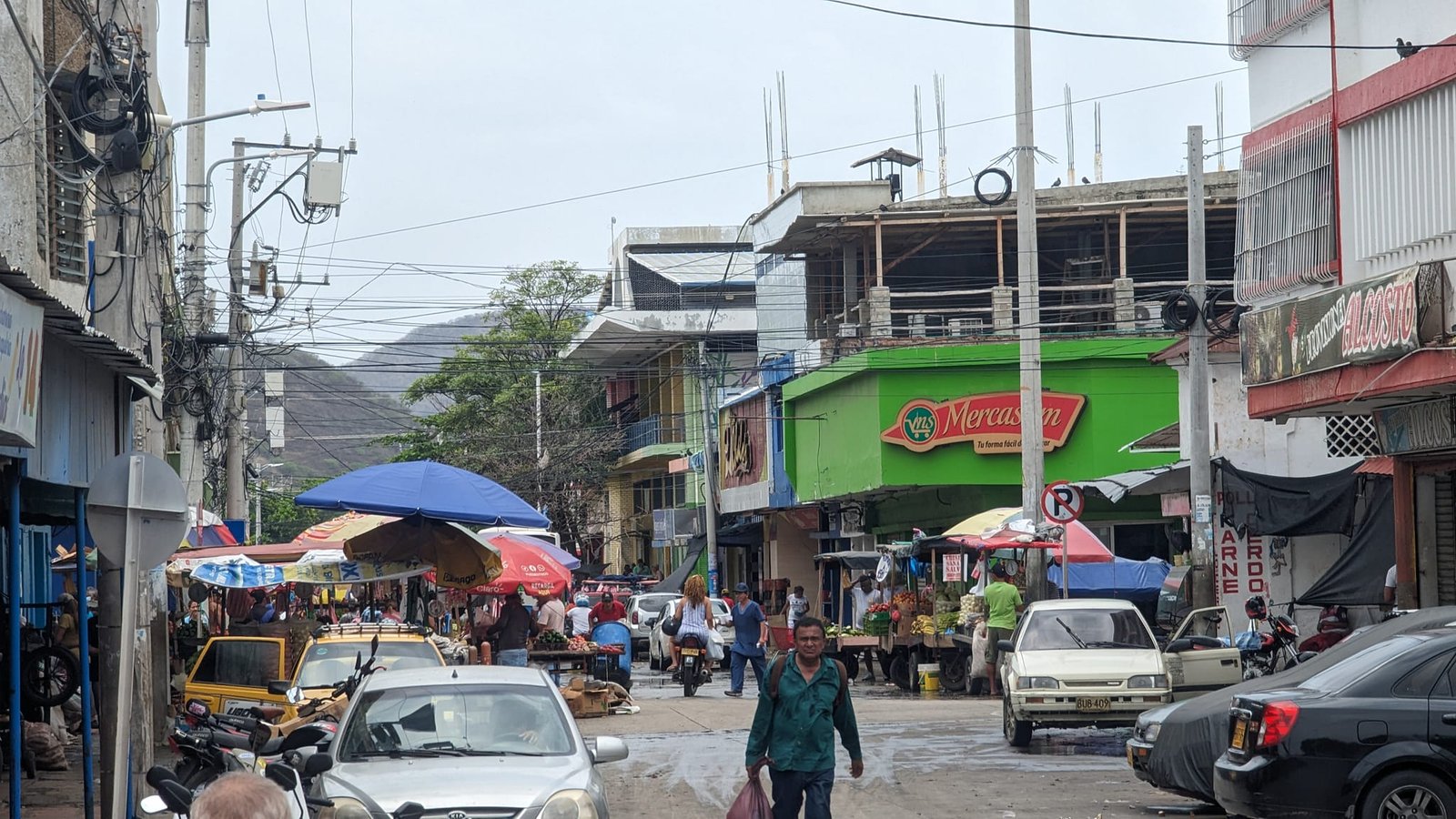
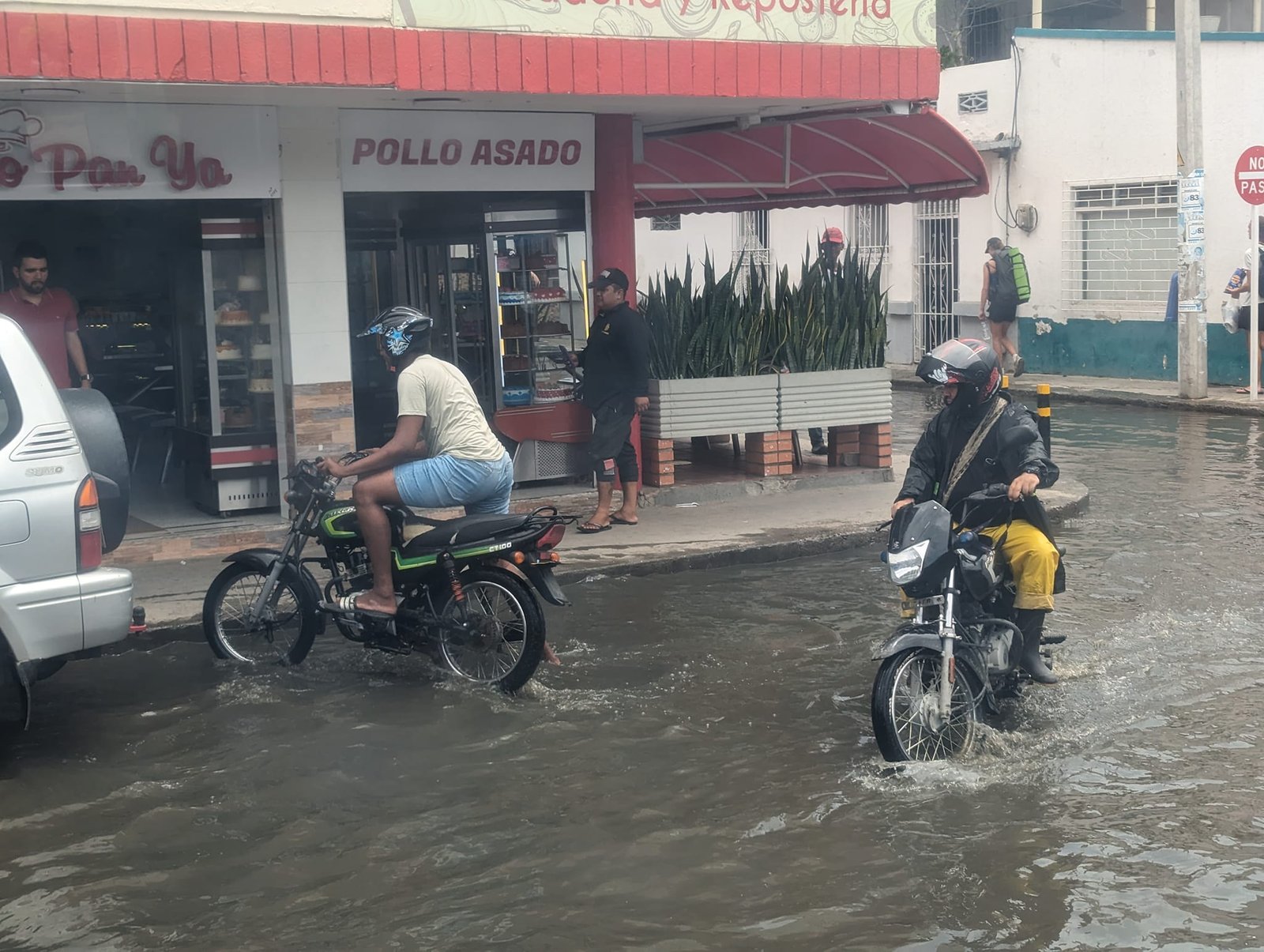
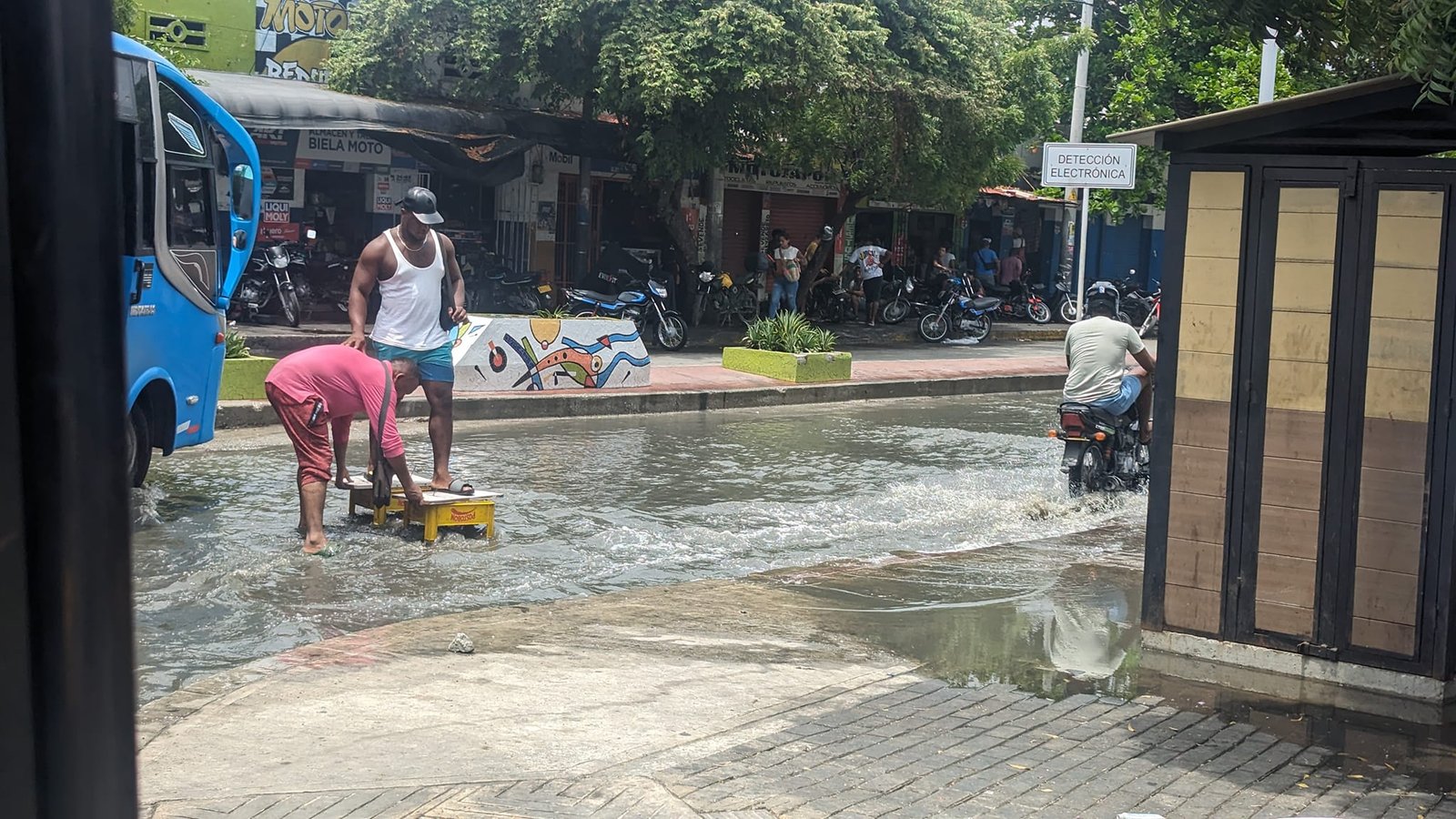
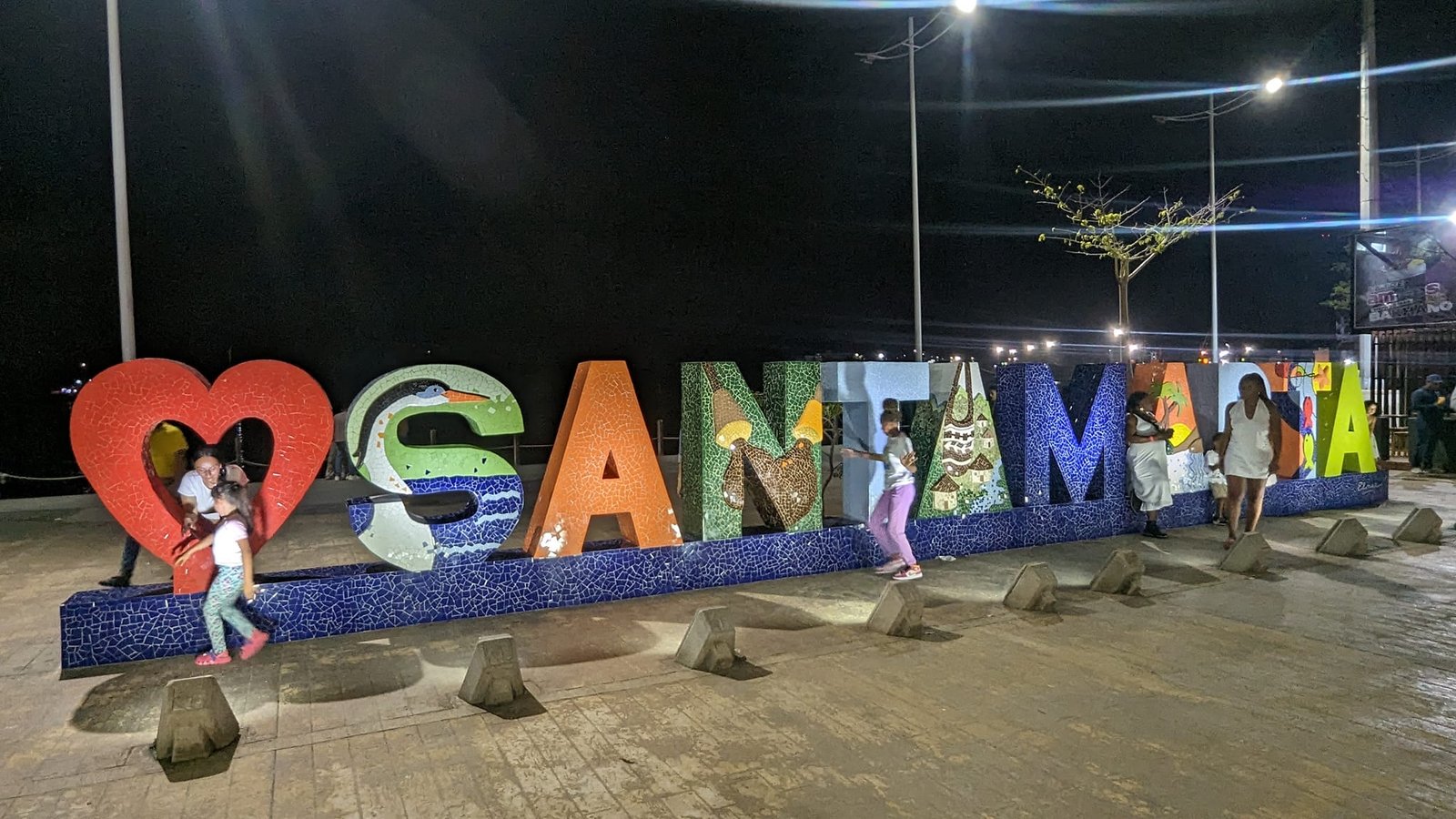
We also explored the historic part of Santa Marta. We got caught in a downpour – afterwards the streets in the centre turned into rivers, and motorbikes rode through water up to half their wheels.
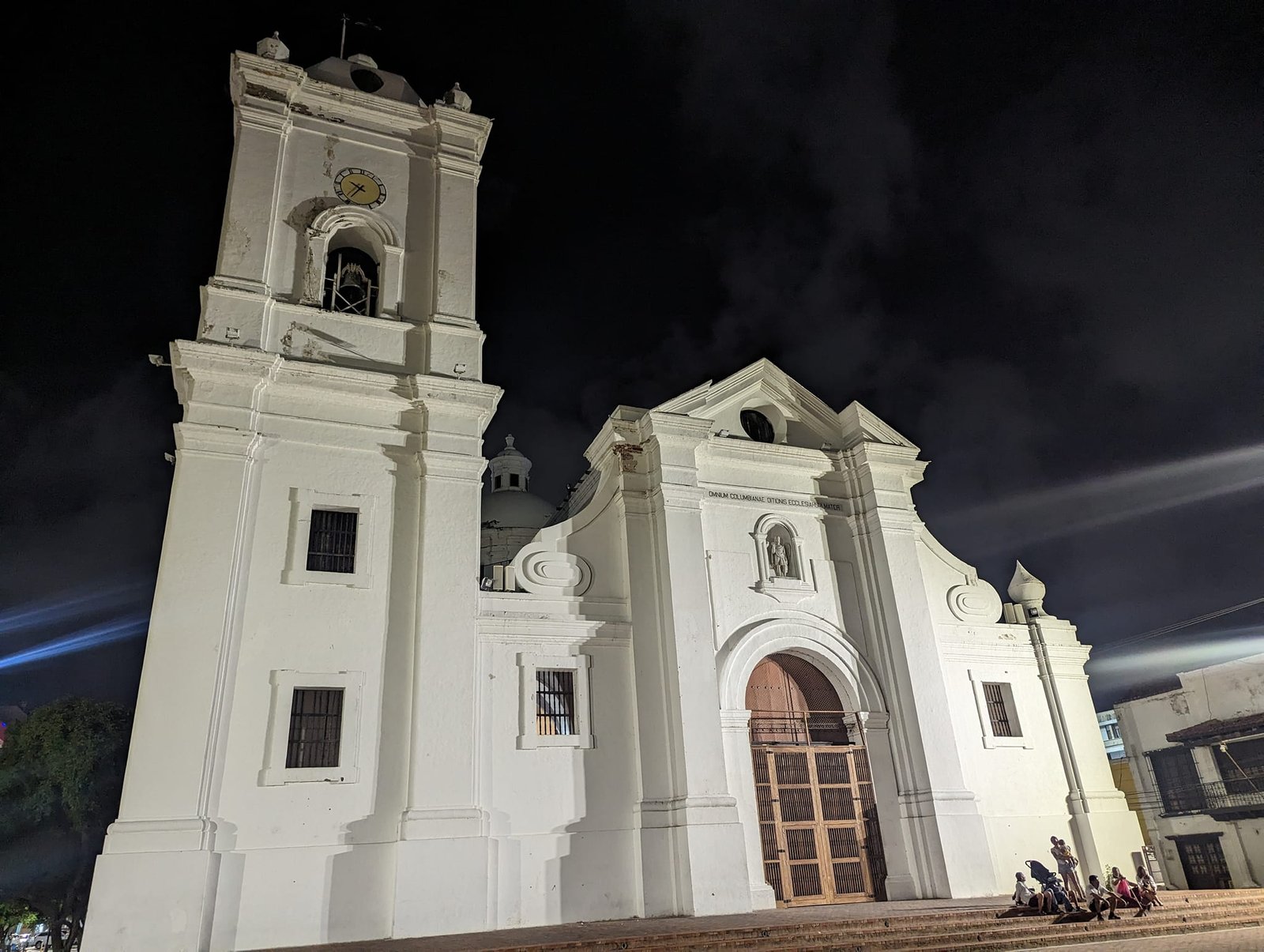
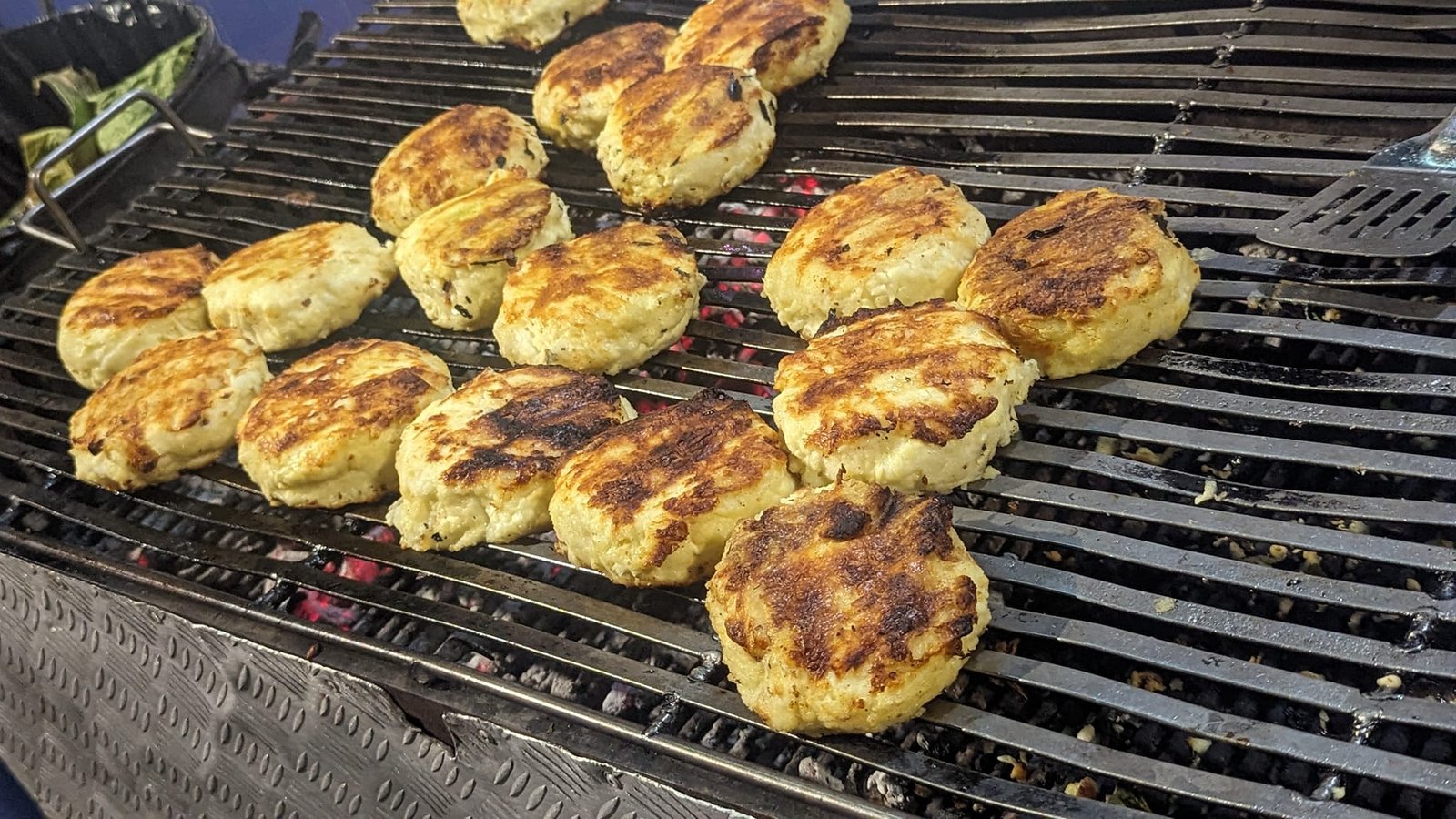
In the evening we looked at the illuminated white cathedral, and in the streets people were grilling arepas – corn cakes, which in Colombia we ate with cheese.
Minca – an unexpected meeting by a waterfall
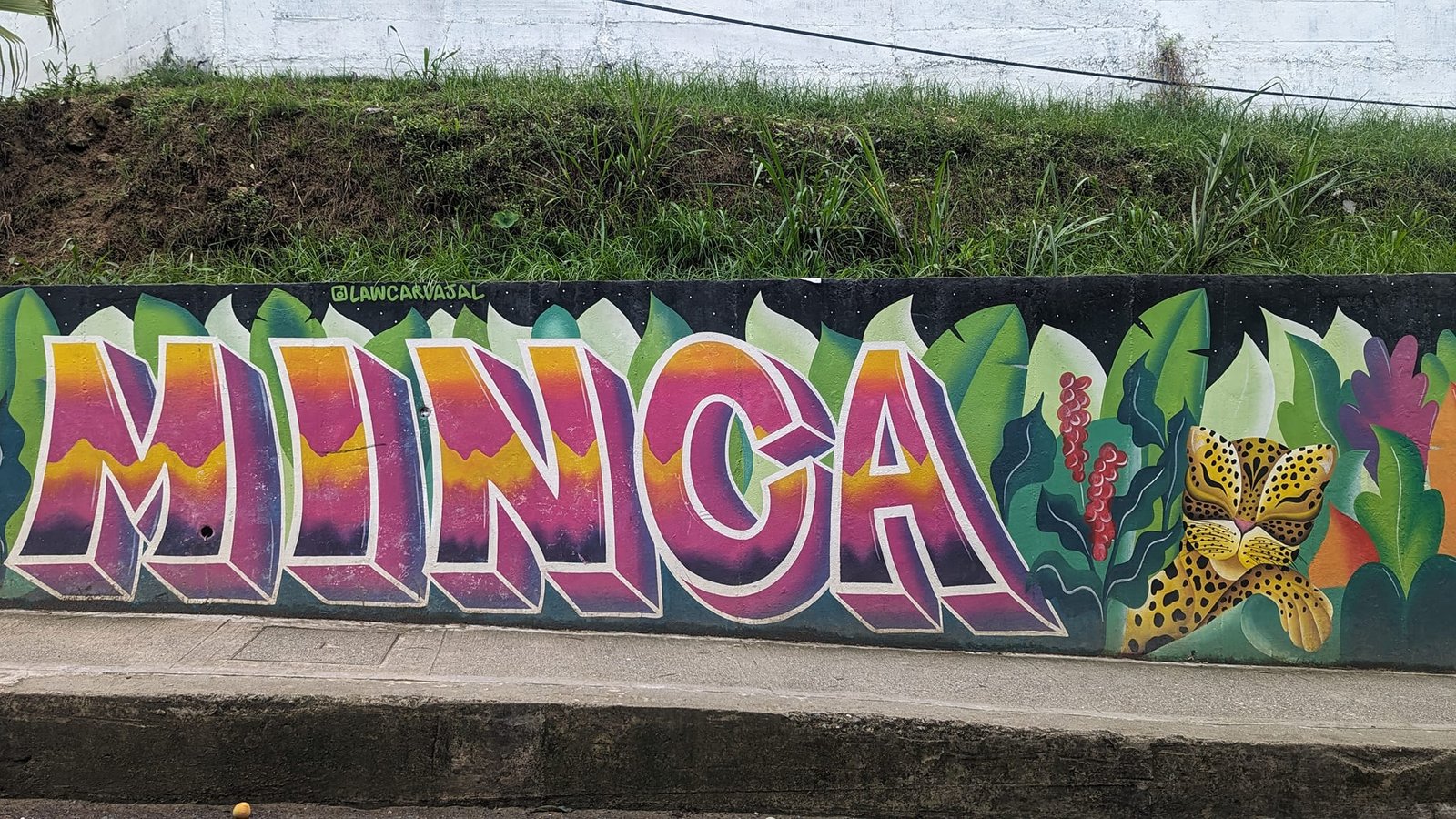
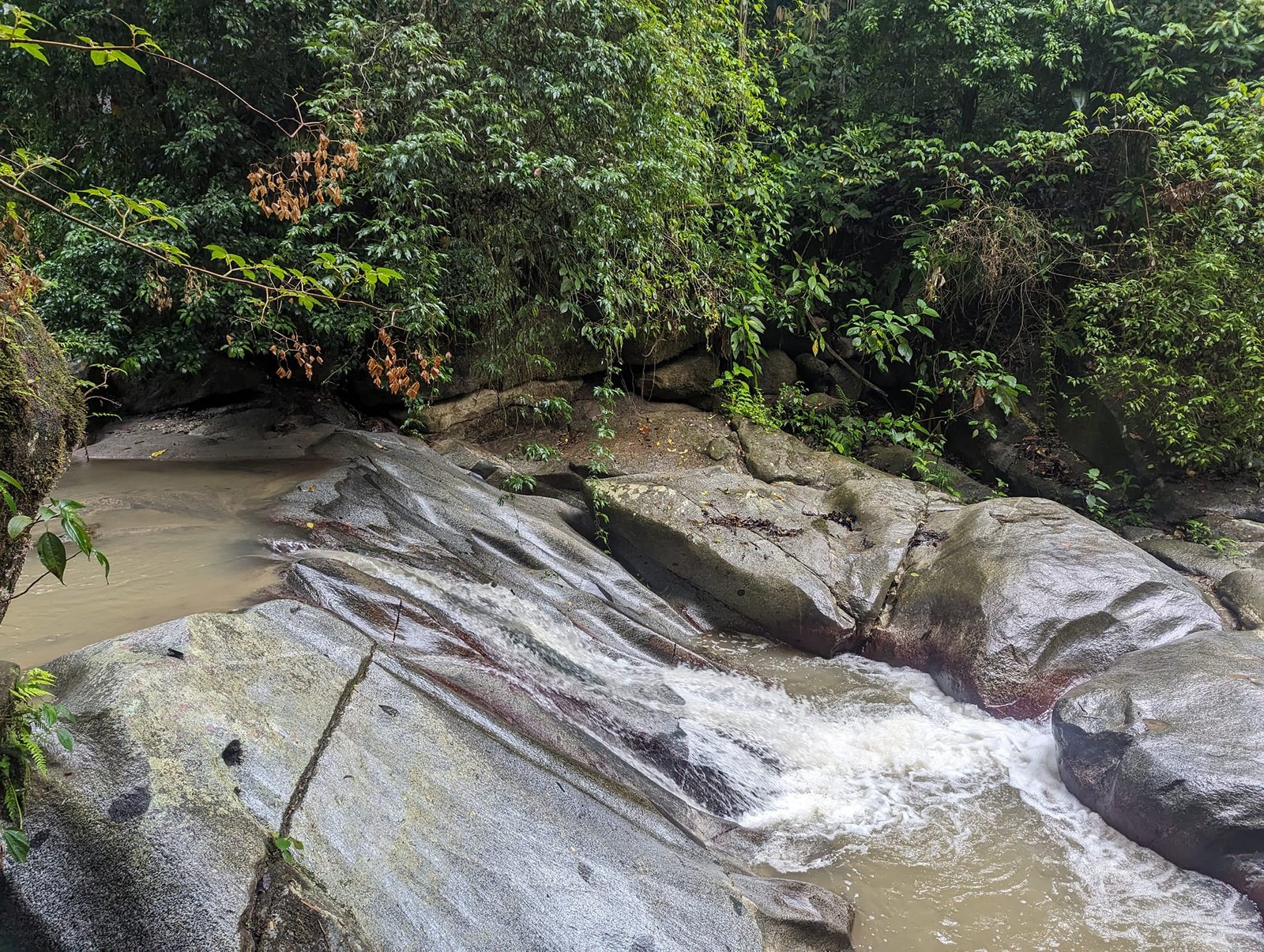
Our next trip from Santa Marta was to Minca – a small town in green hills, known as a trekking base. Like Taganga, it did not impress us enough to recommend it as a must-see.
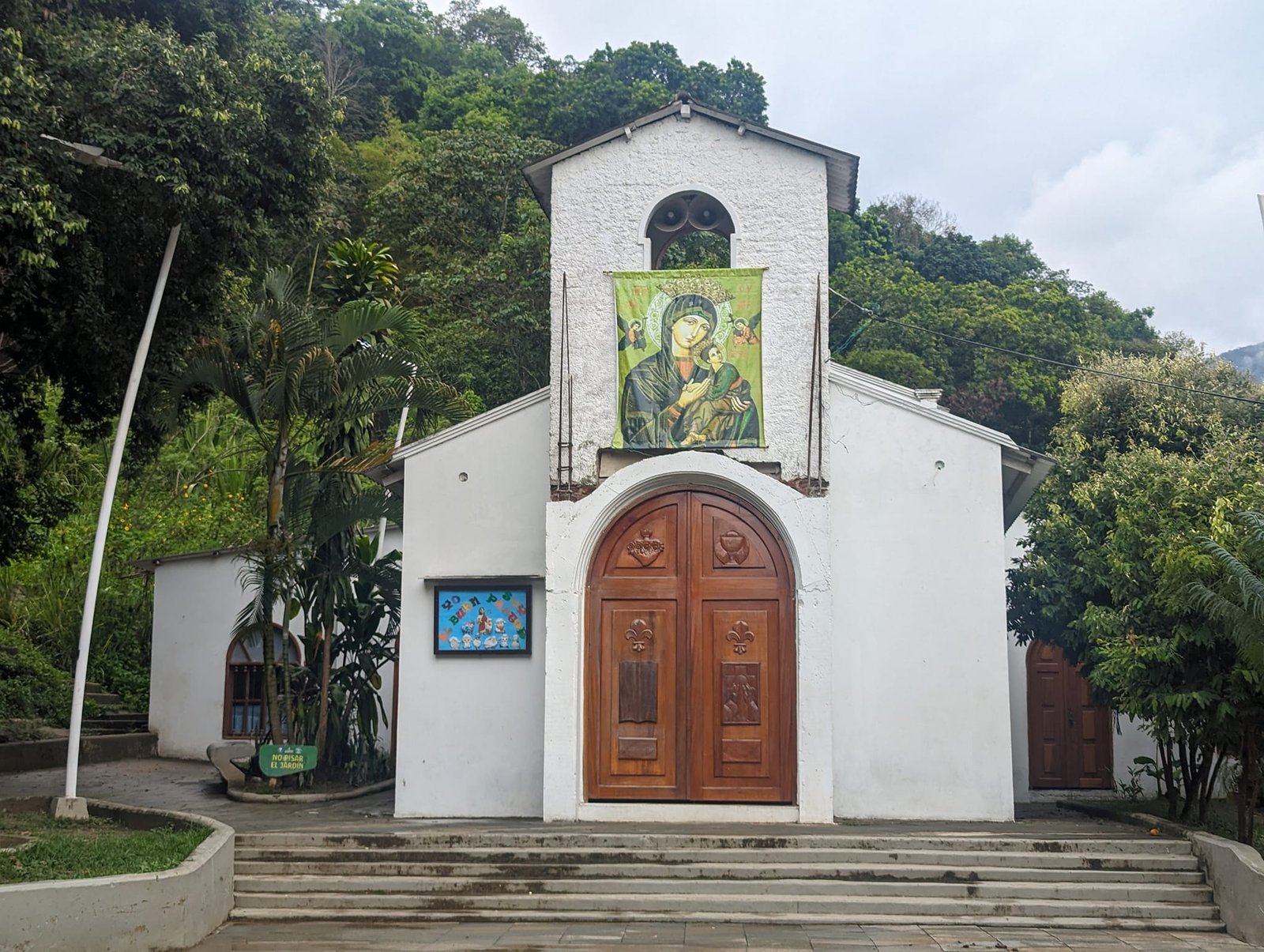
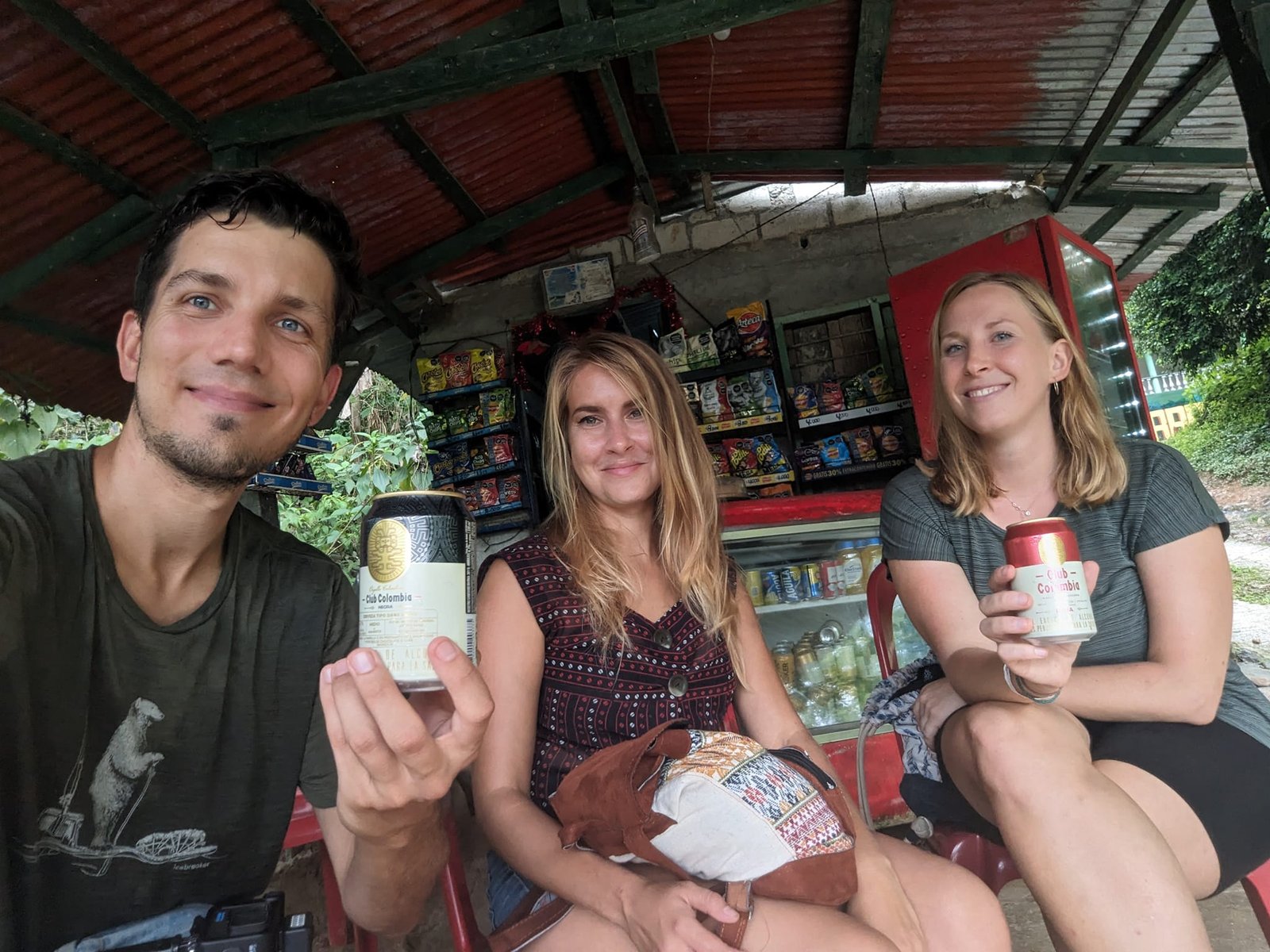
But even on such an ordinary trail, going down to an even more ordinary waterfall, you can see a familiar face. Completely by chance we met Karina there – we had seen her two months earlier on Utila in Honduras, and in Guatemala we had studied at the same language school. Travelling is full of curious coincidences.
Tayrona National Park – the El Zaino entrance and the trail
Tayrona is the most popular national park in Colombia. This is mainly thanks to its beautiful, almost paradise-like beaches, which are not that easy to reach at all. The park covers a huge area and there are several ways to get inside – the most common choice is the El Zaino entrance.
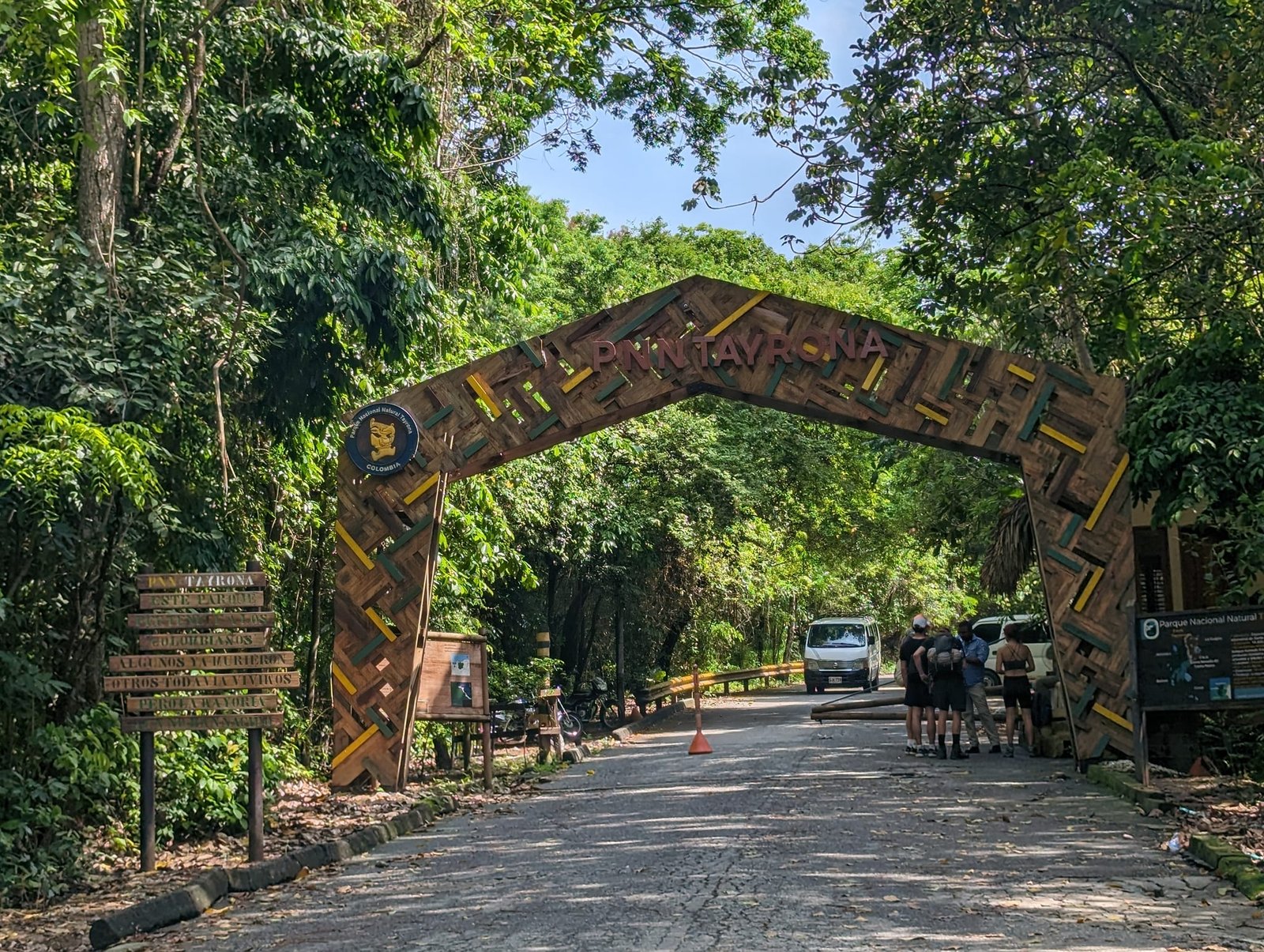
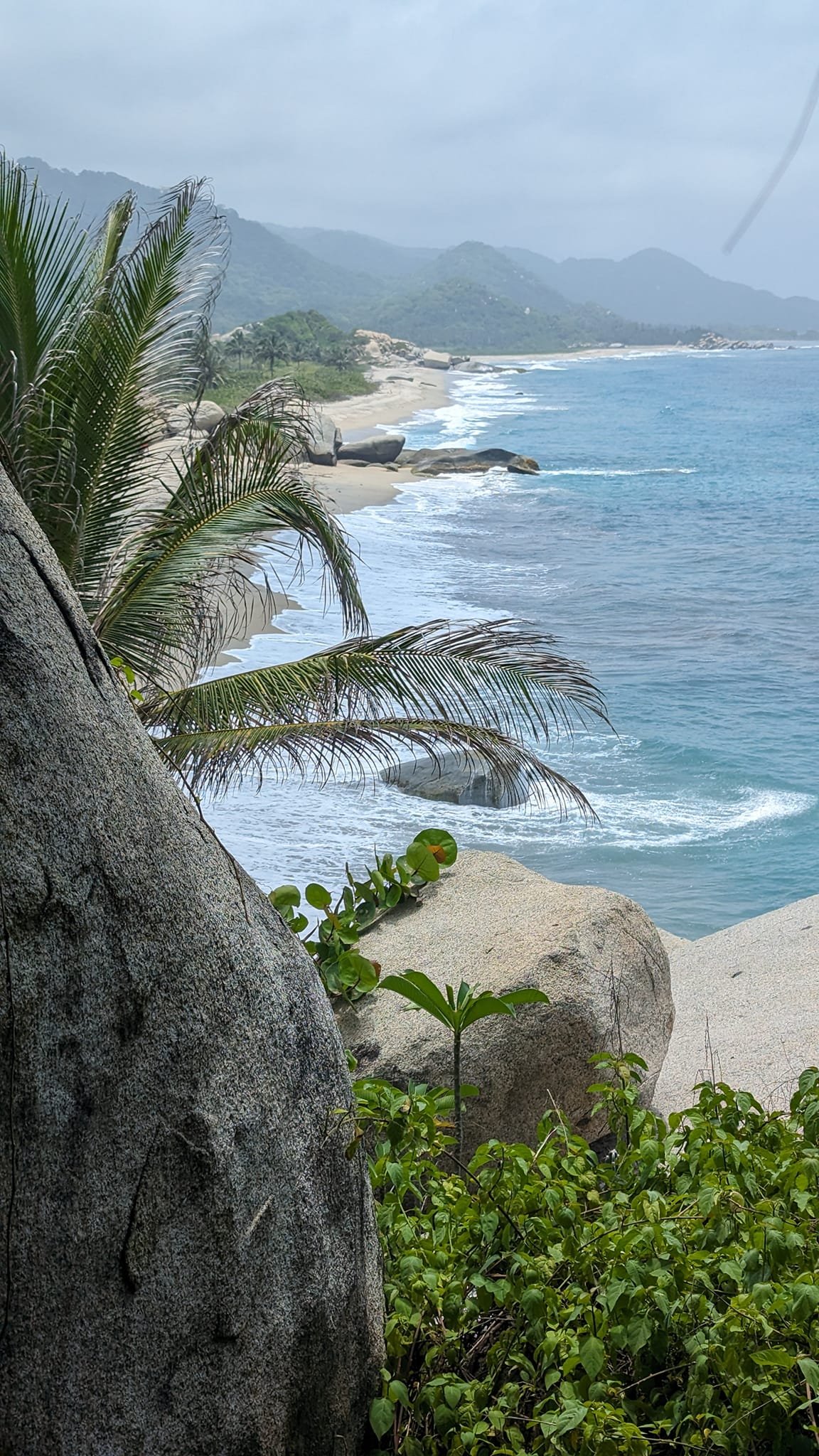
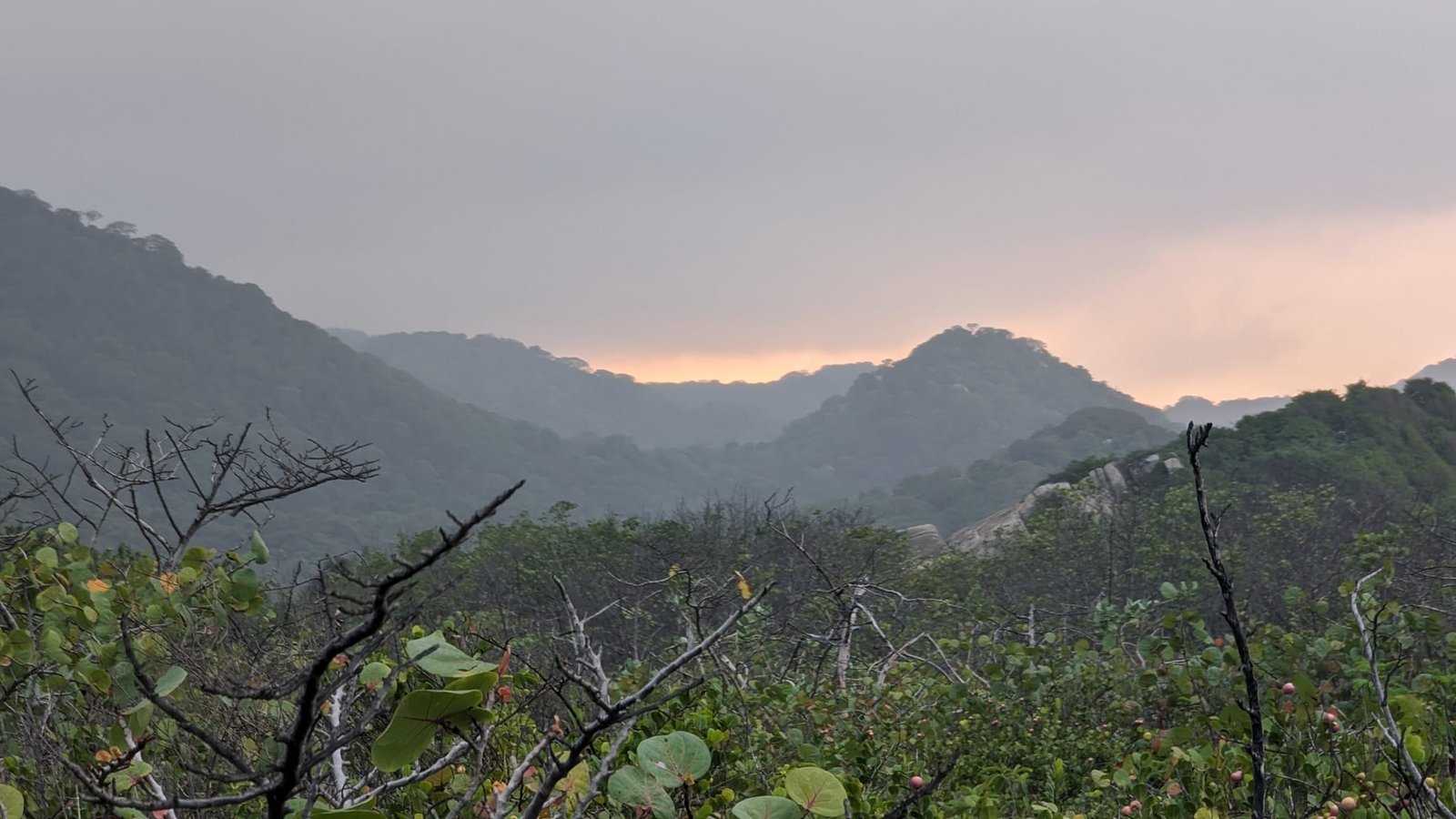
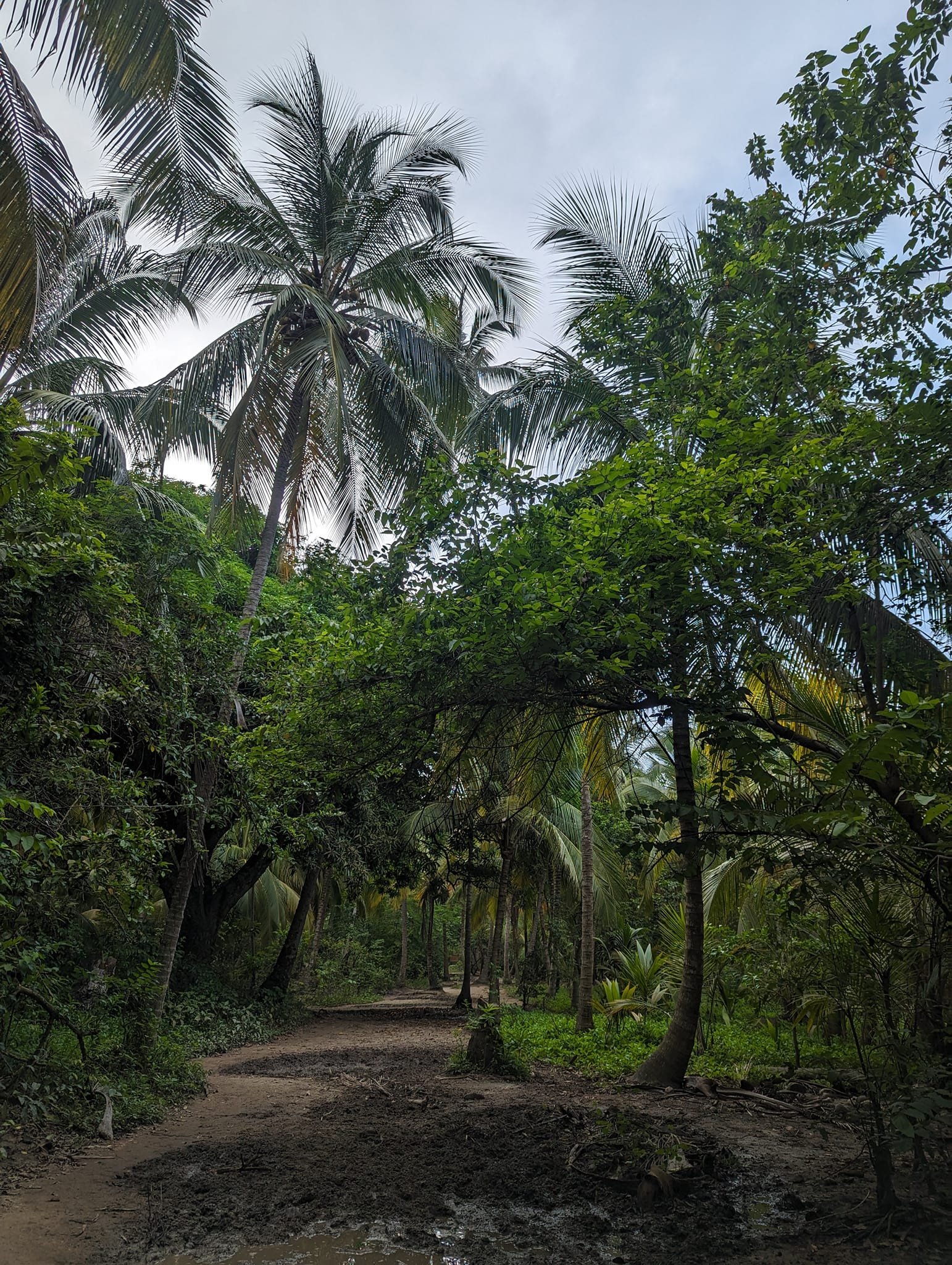
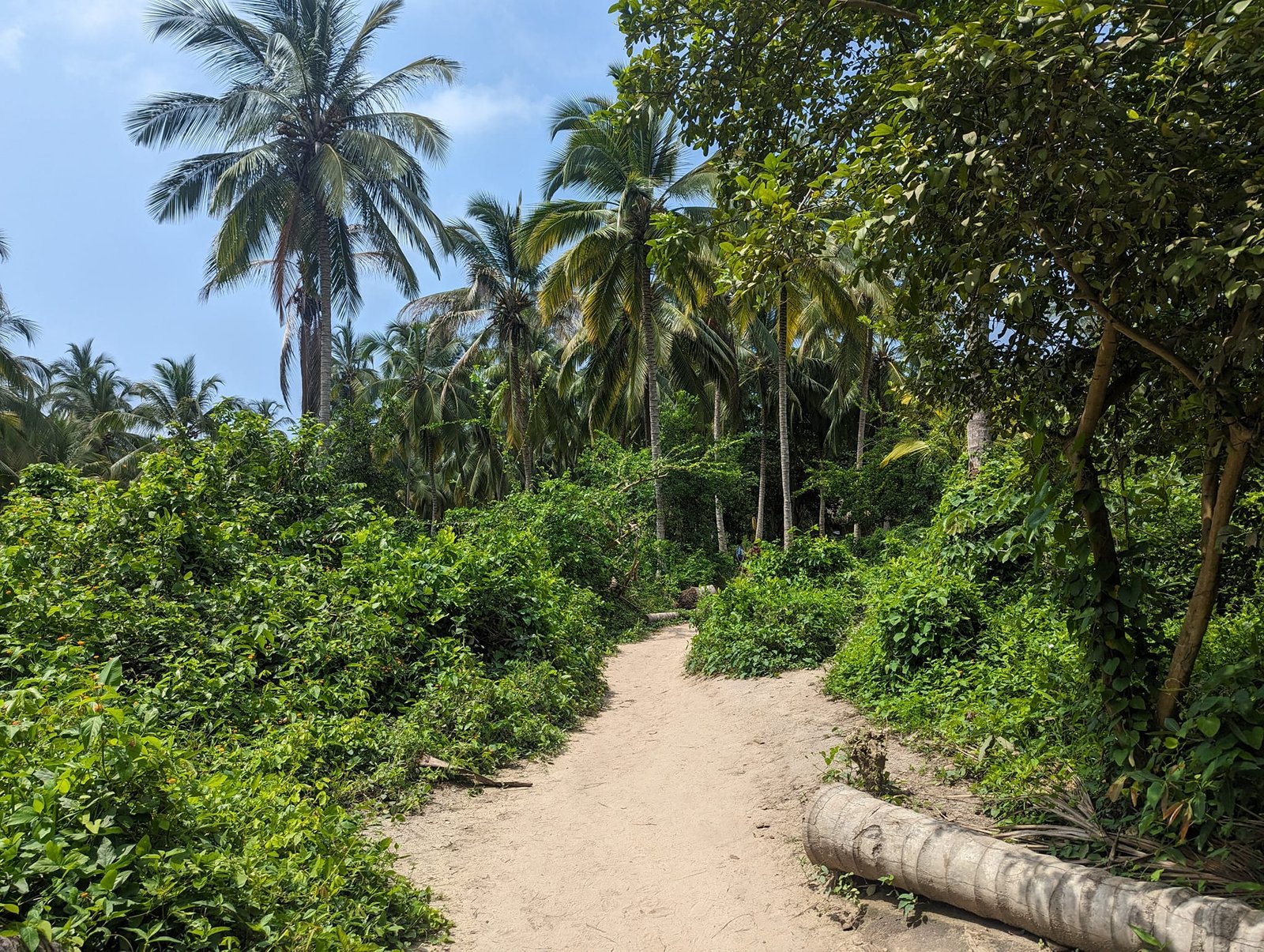
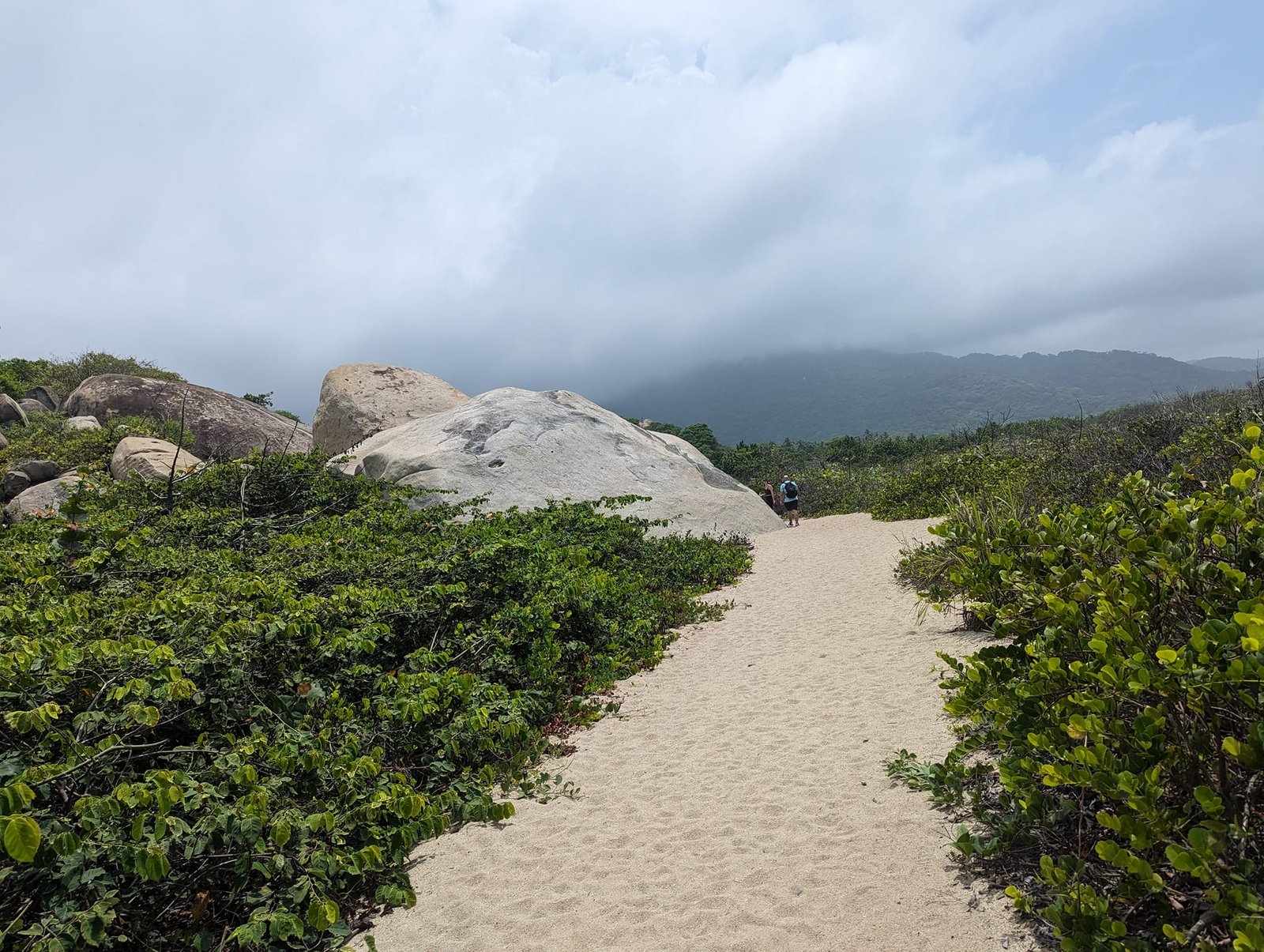
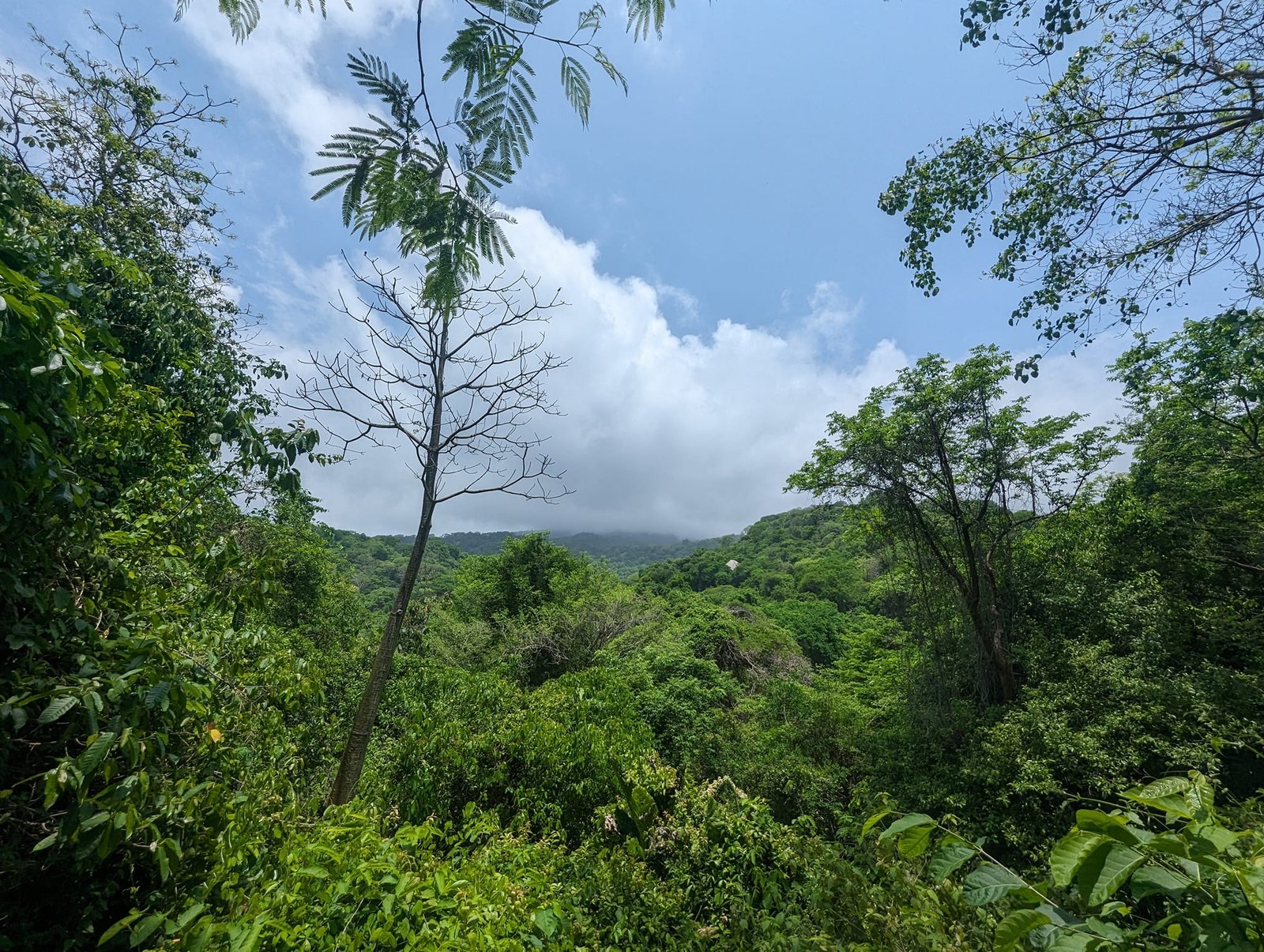
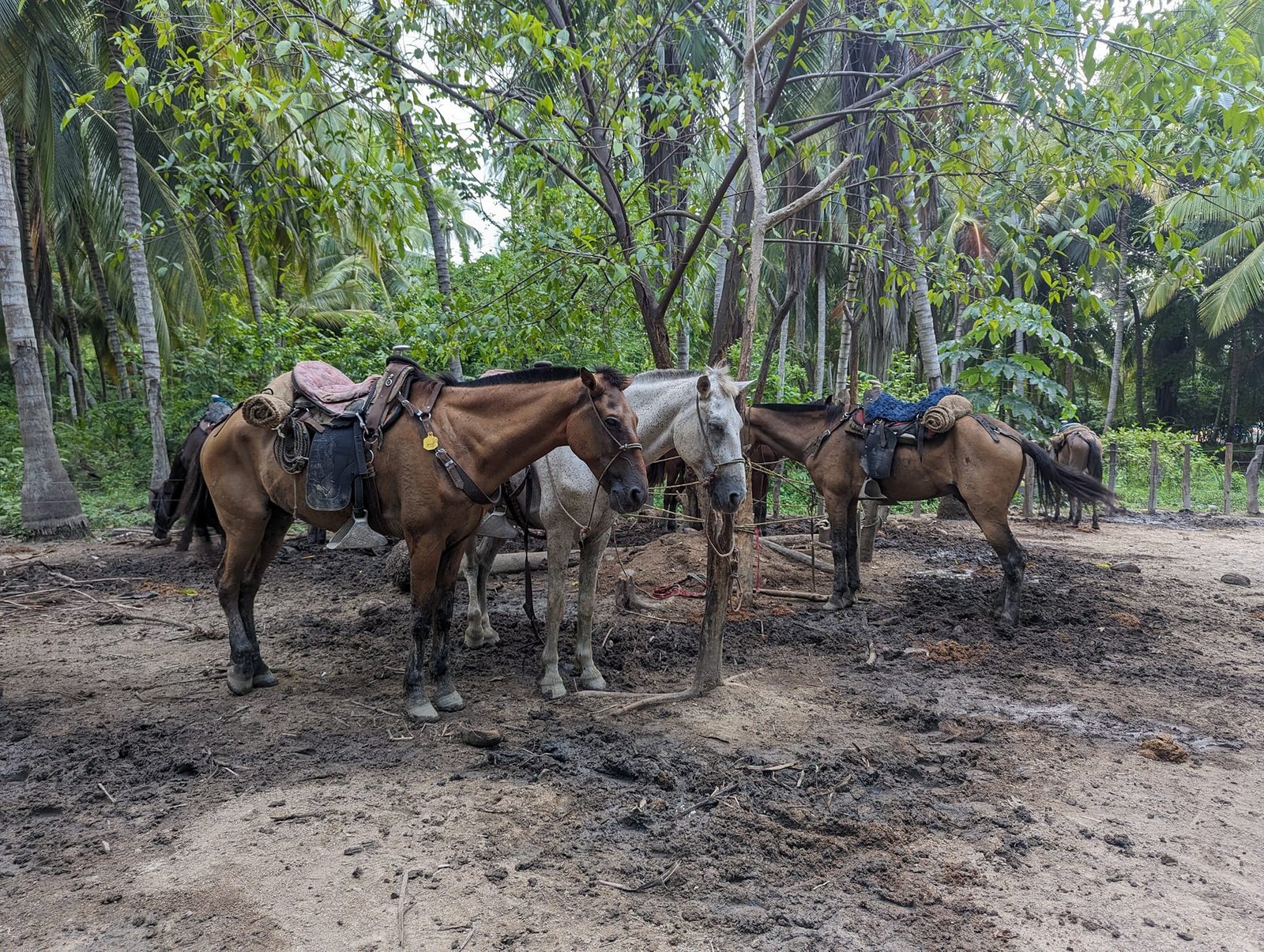
From the car park, i.e. the furthest point the bus goes, to what is supposedly the most beautiful beach – Cabo San Juan – it is at least two hours on foot. The trail follows the coastline the whole way, but it is not flat: sometimes you walk through tropical forest, sometimes along a sandy path between huge boulders. The beaches can only be reached on foot or on horseback.
The beaches and Cabo San Juan
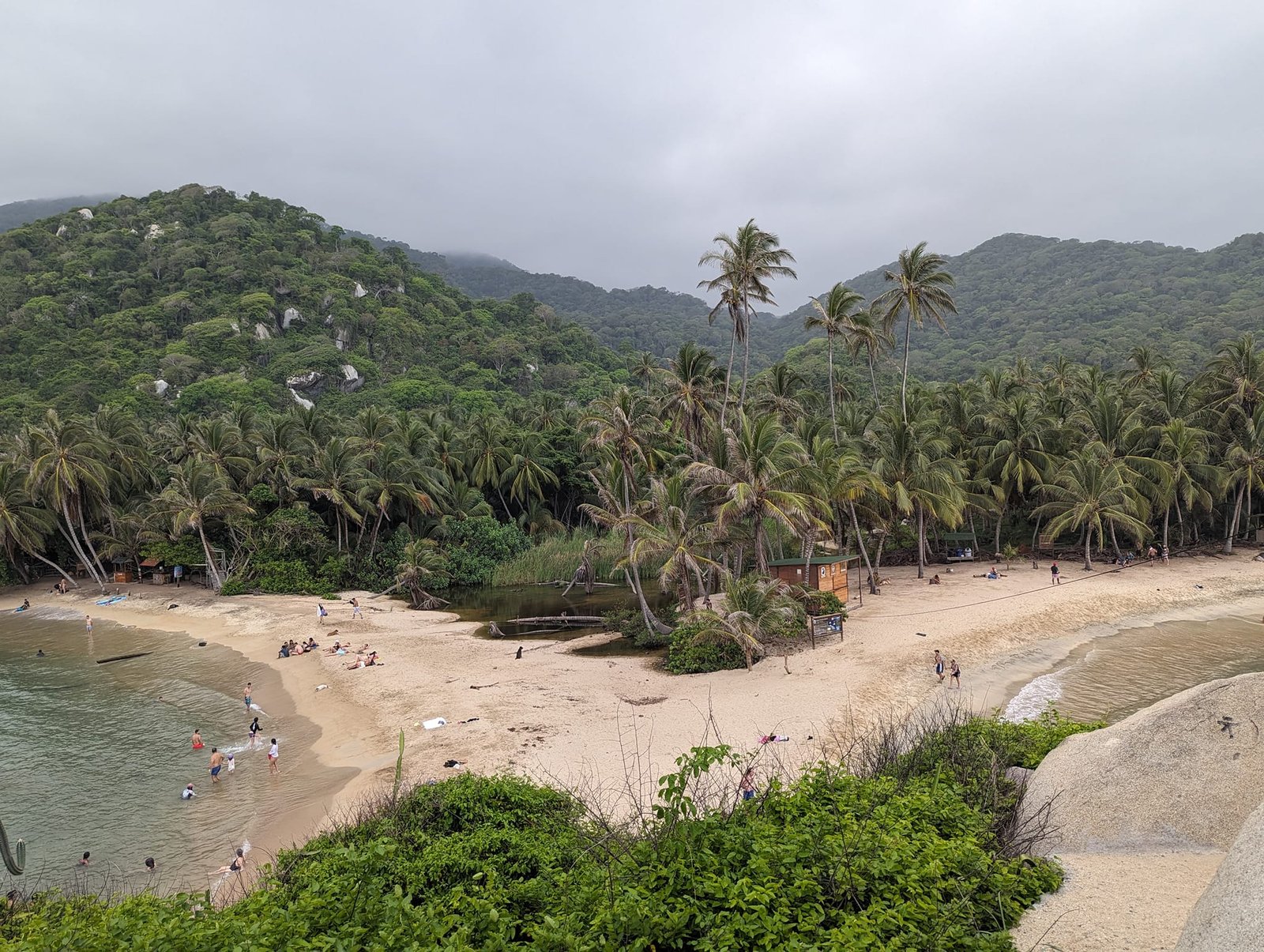
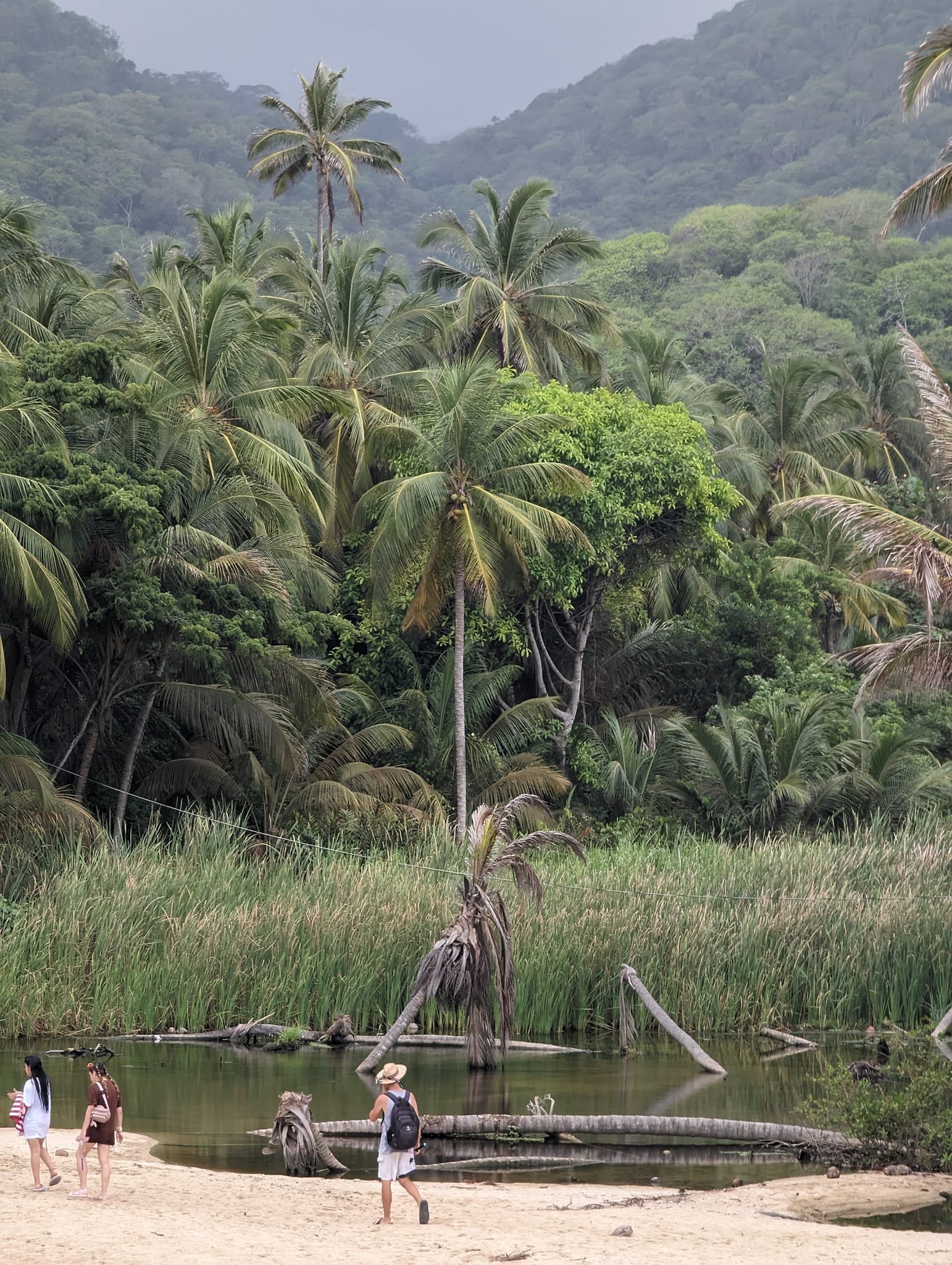
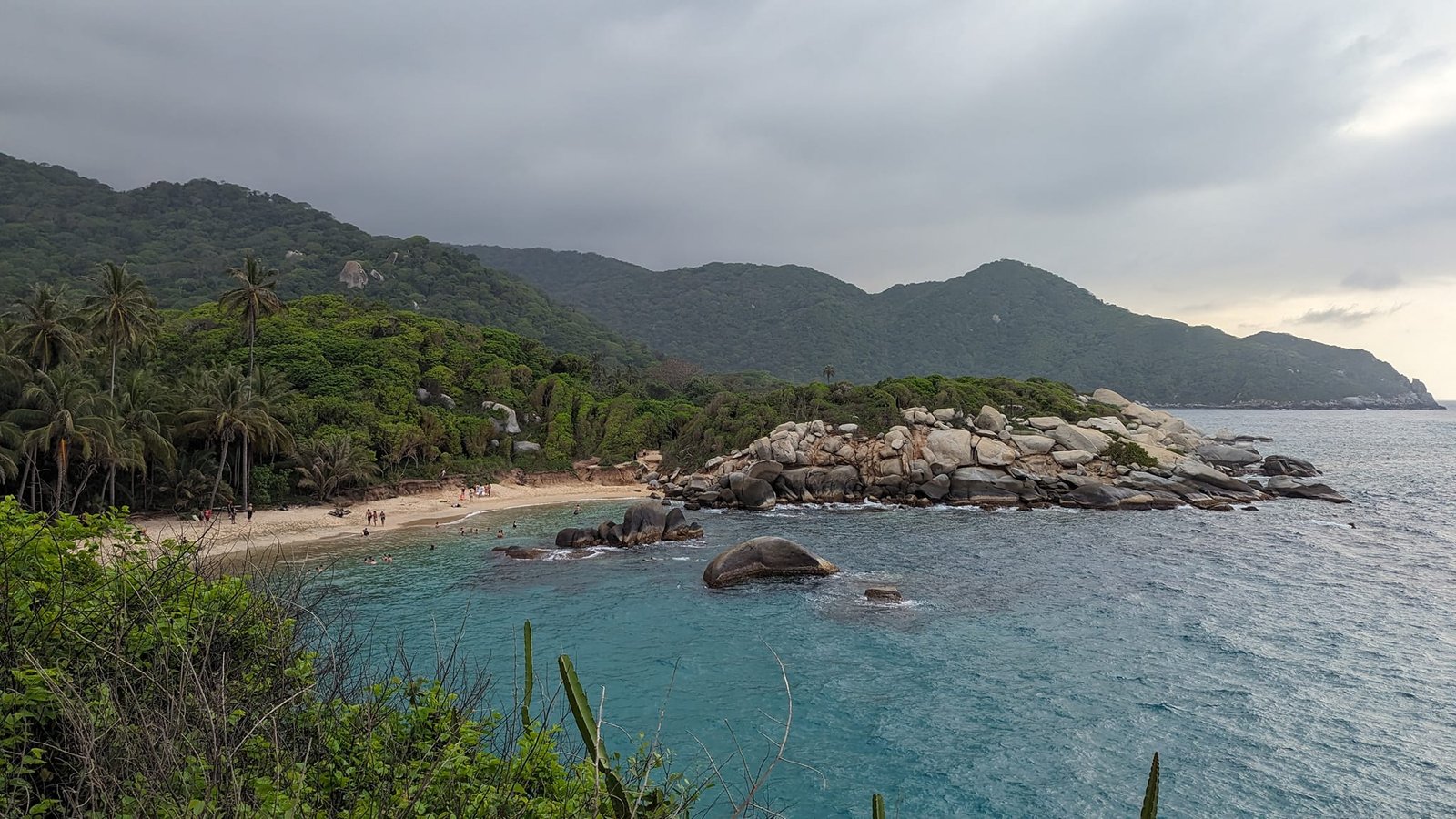
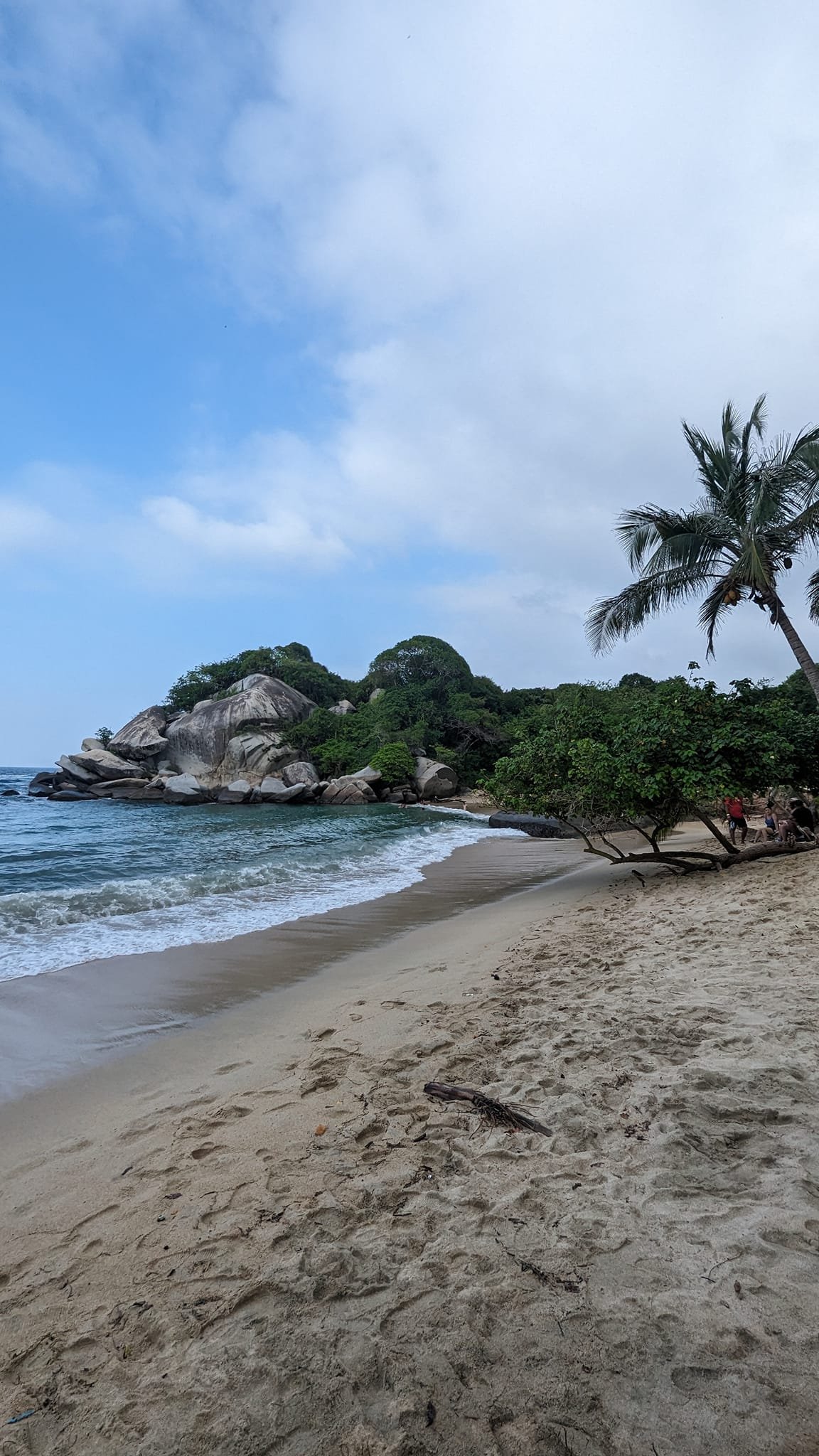
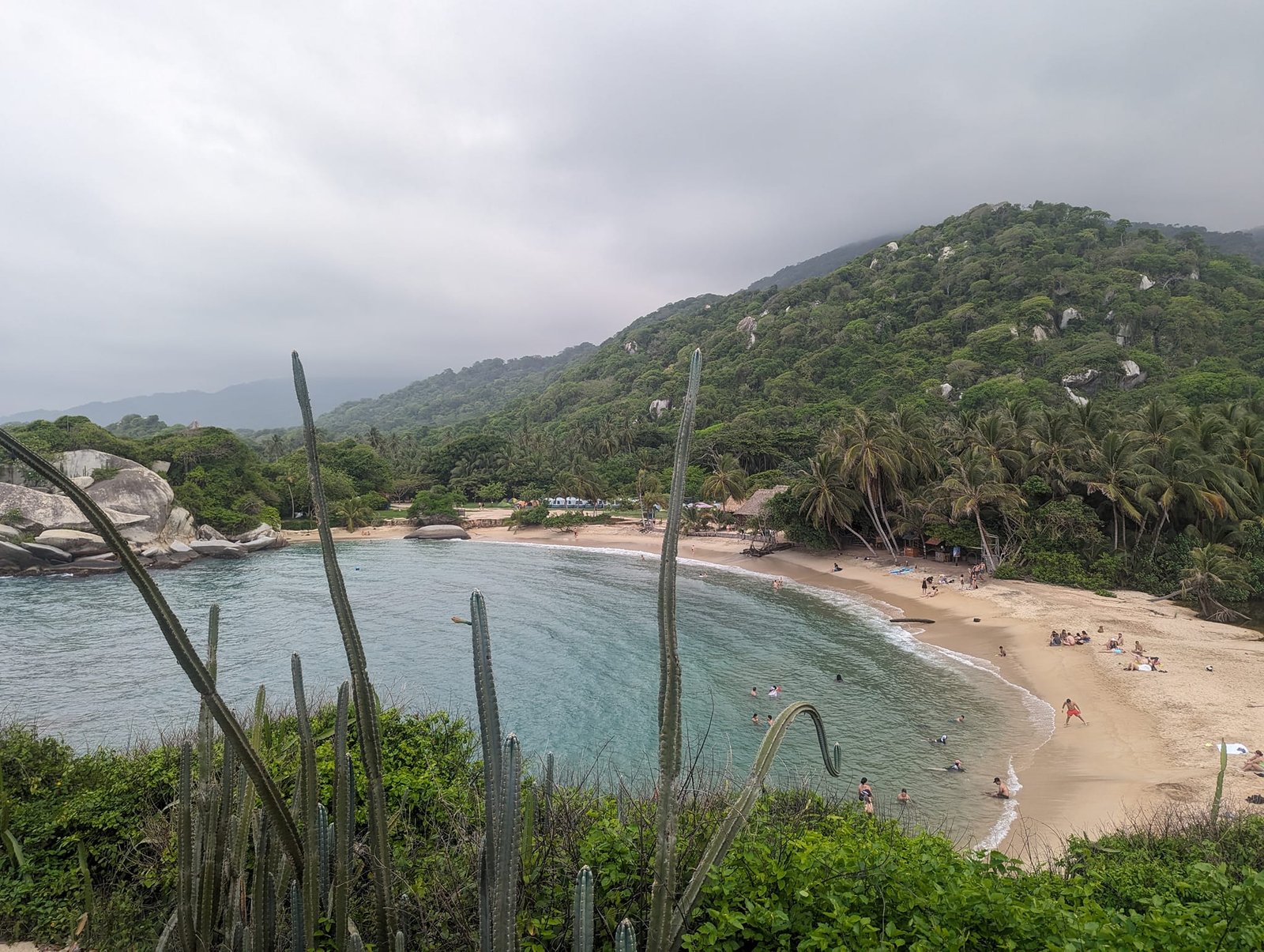
Along the way you pass one beach and cove with turquoise water after another, and just behind the sand – lagoons with palm trees. Because of dangerous currents, swimming is not allowed in some places, so keep an eye on the signs. We were a bit lucky, because on the day we went to the beaches the weather was really good.
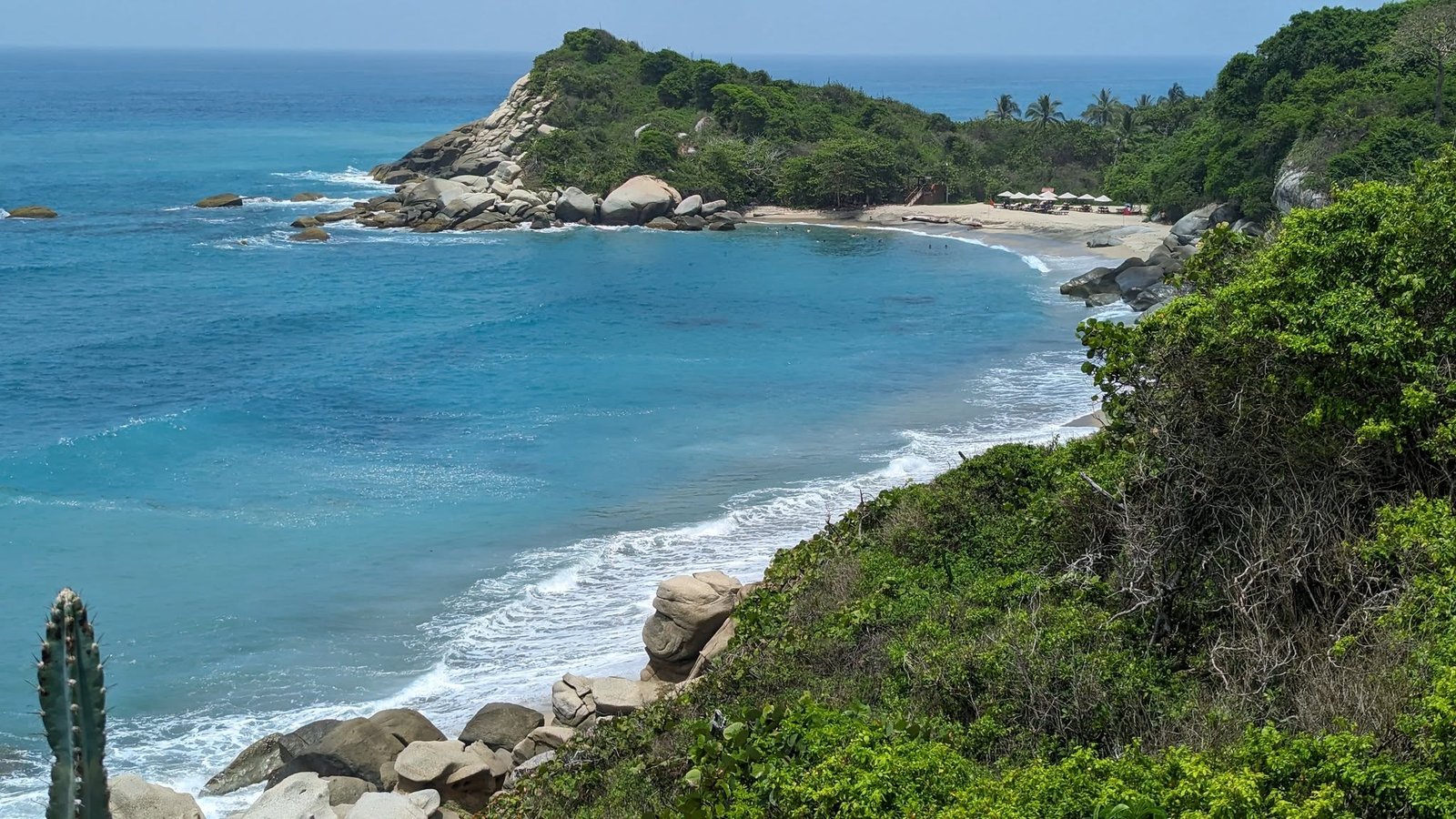
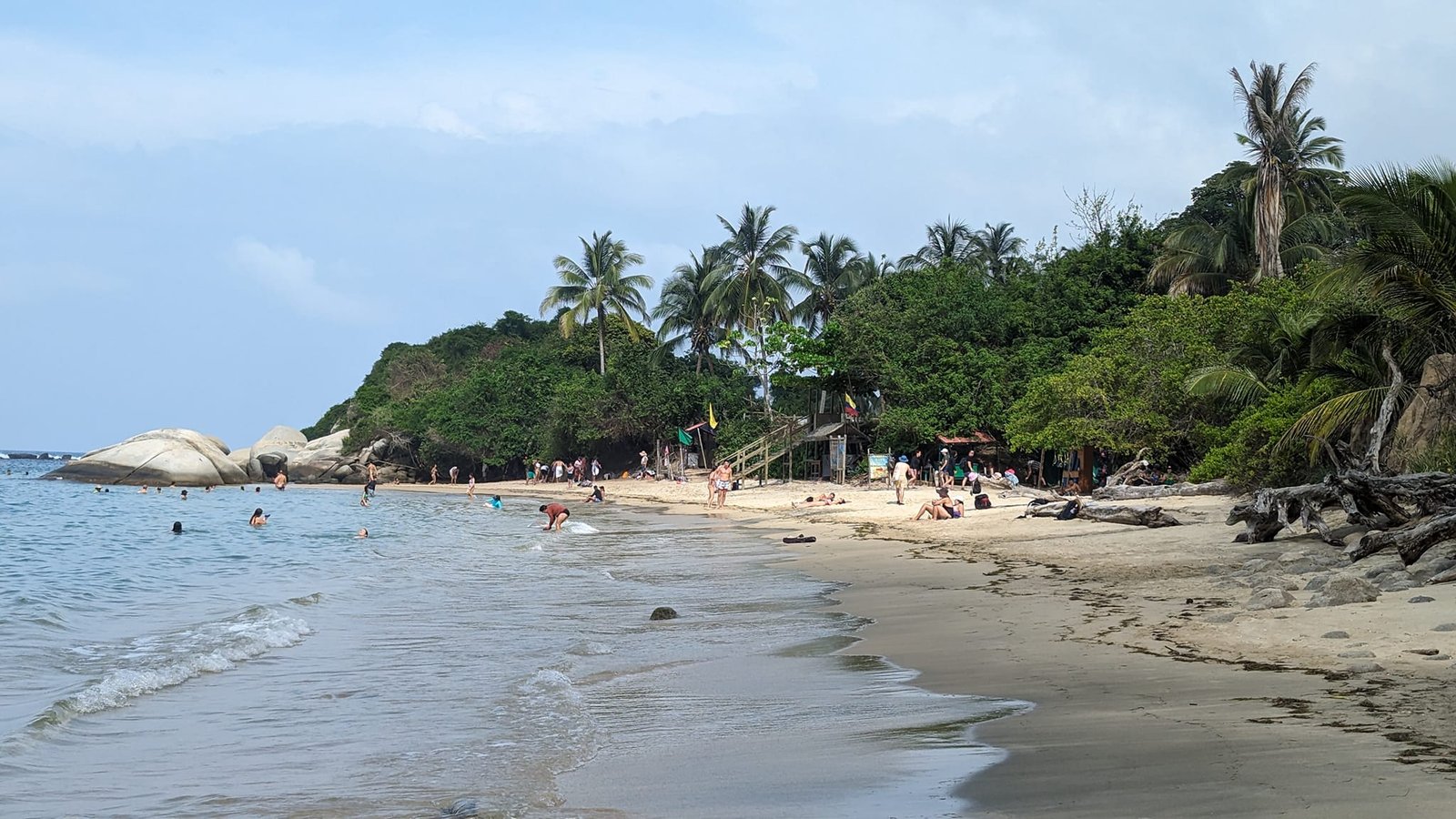
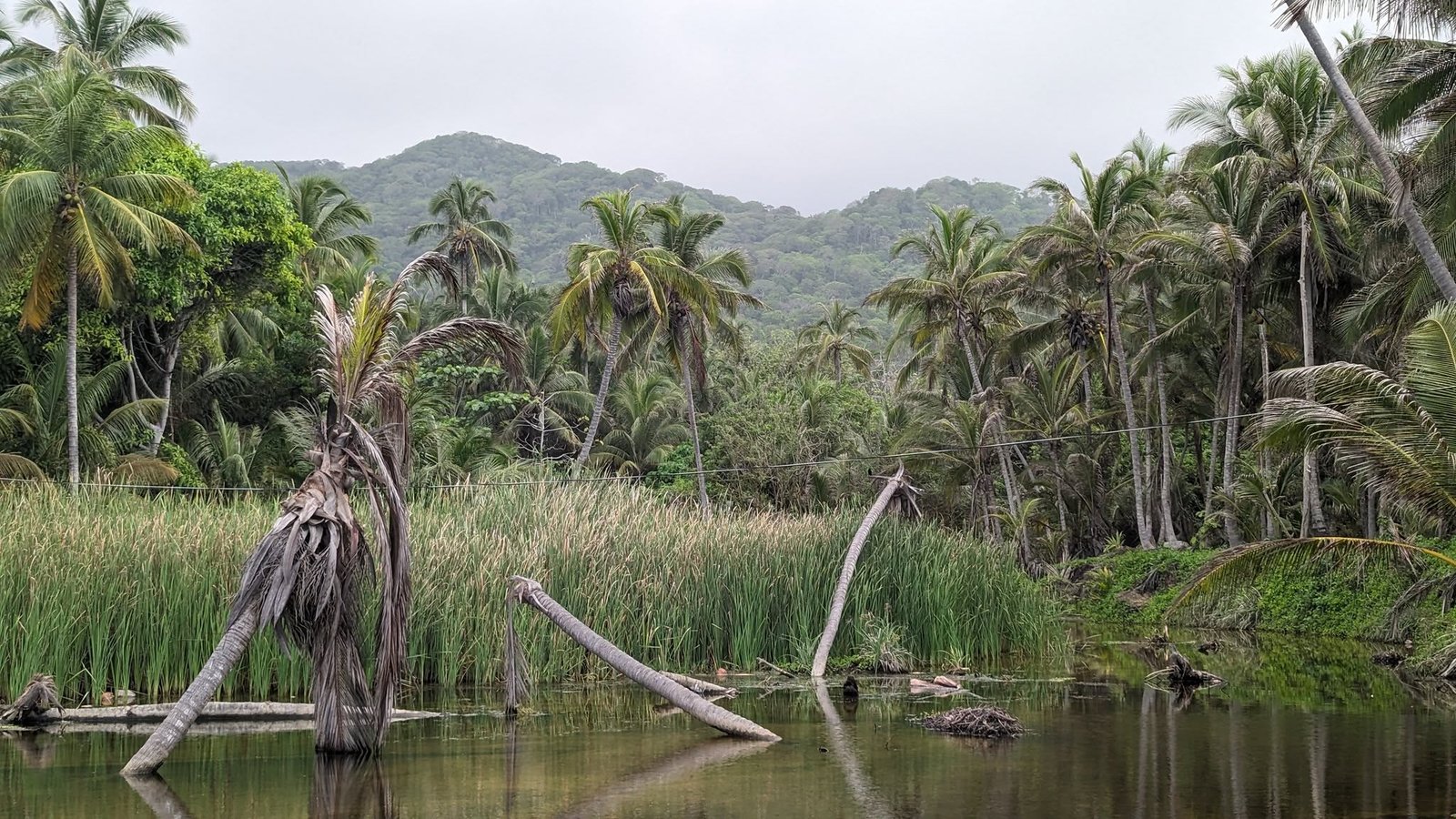
The goal of our walk was Cabo San Juan – a bay with a rocky headland topped by a wooden gazebo. In theory it is the most beautiful beach in the park, and it really is impressive.
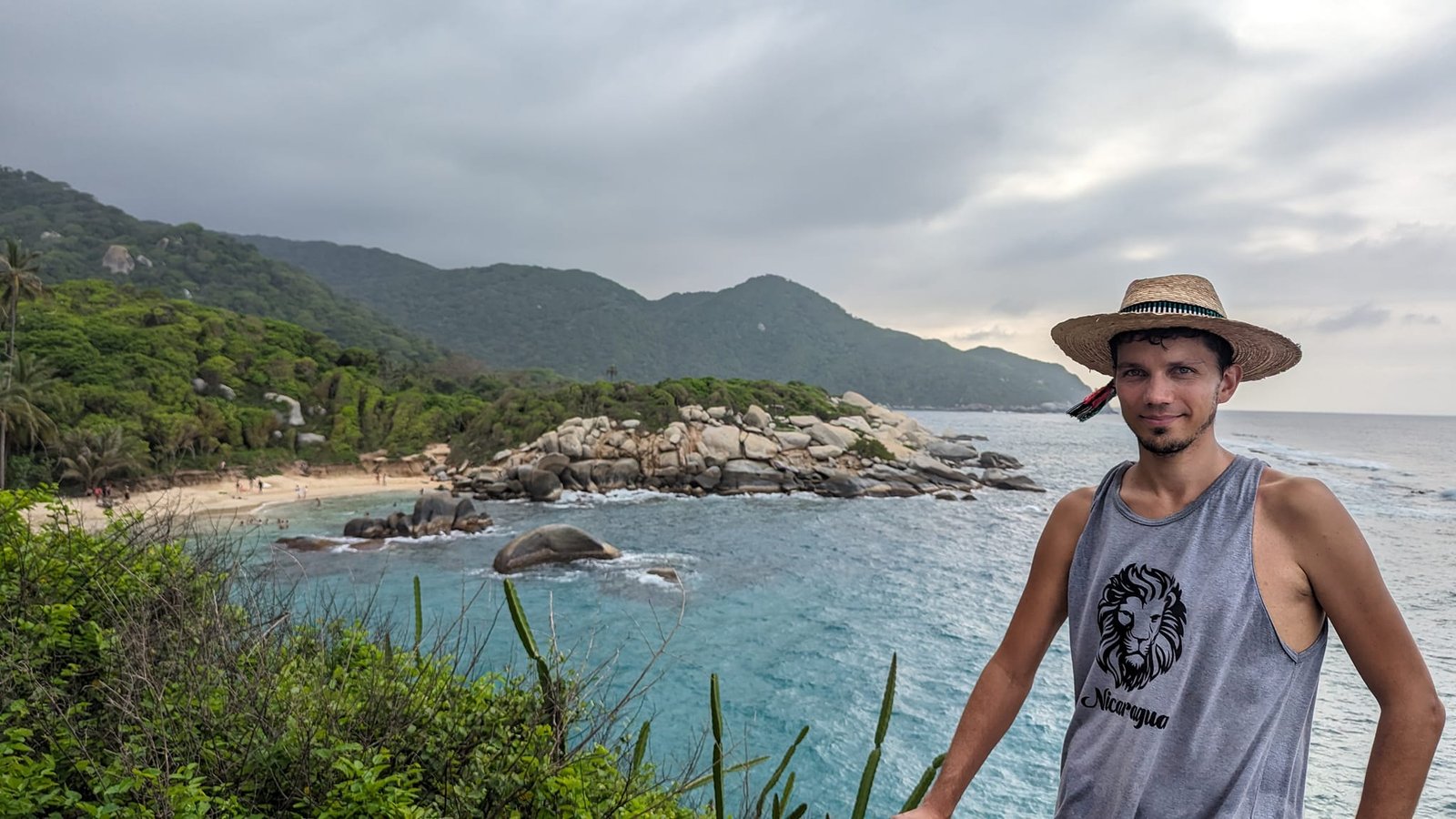
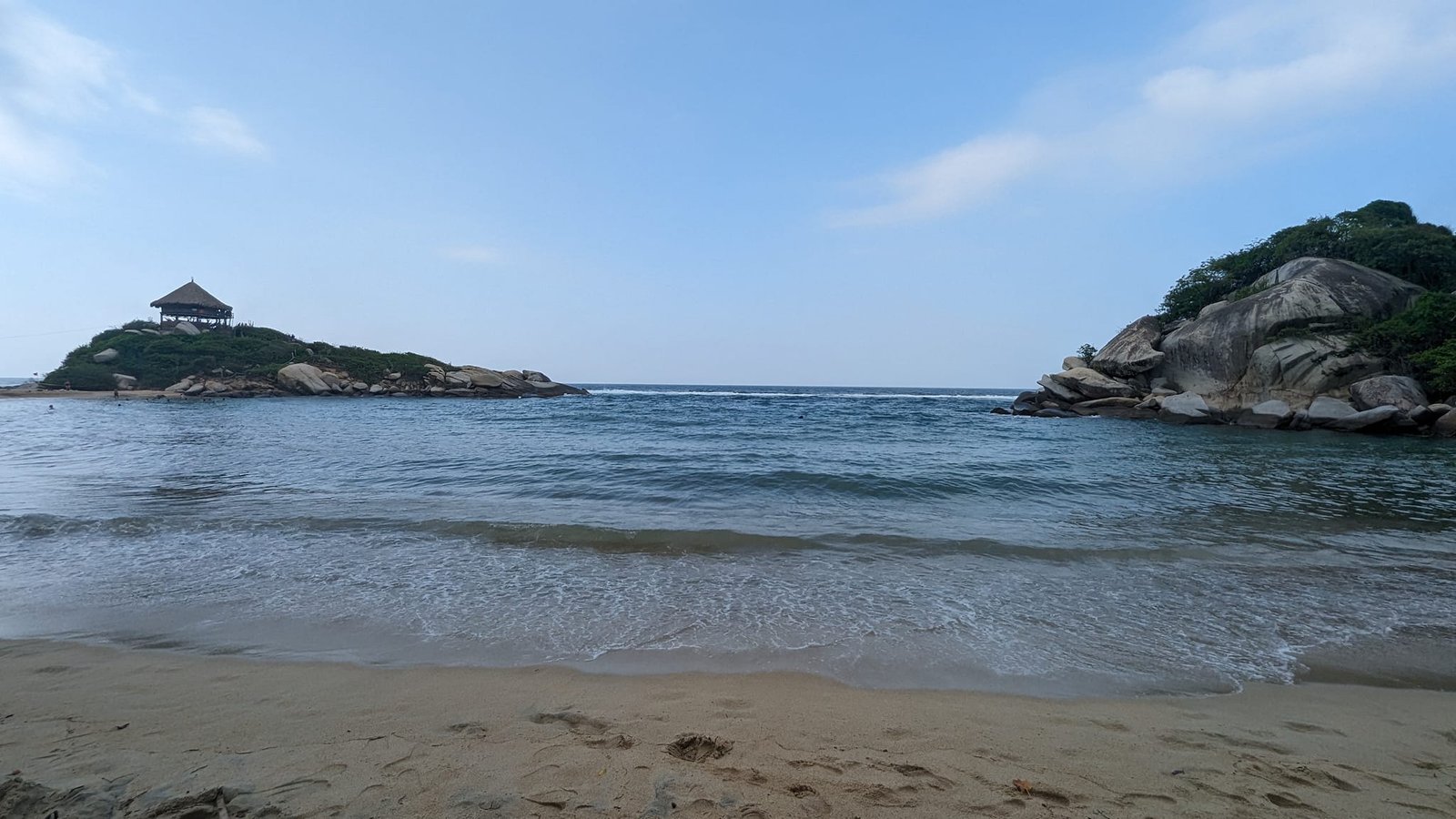
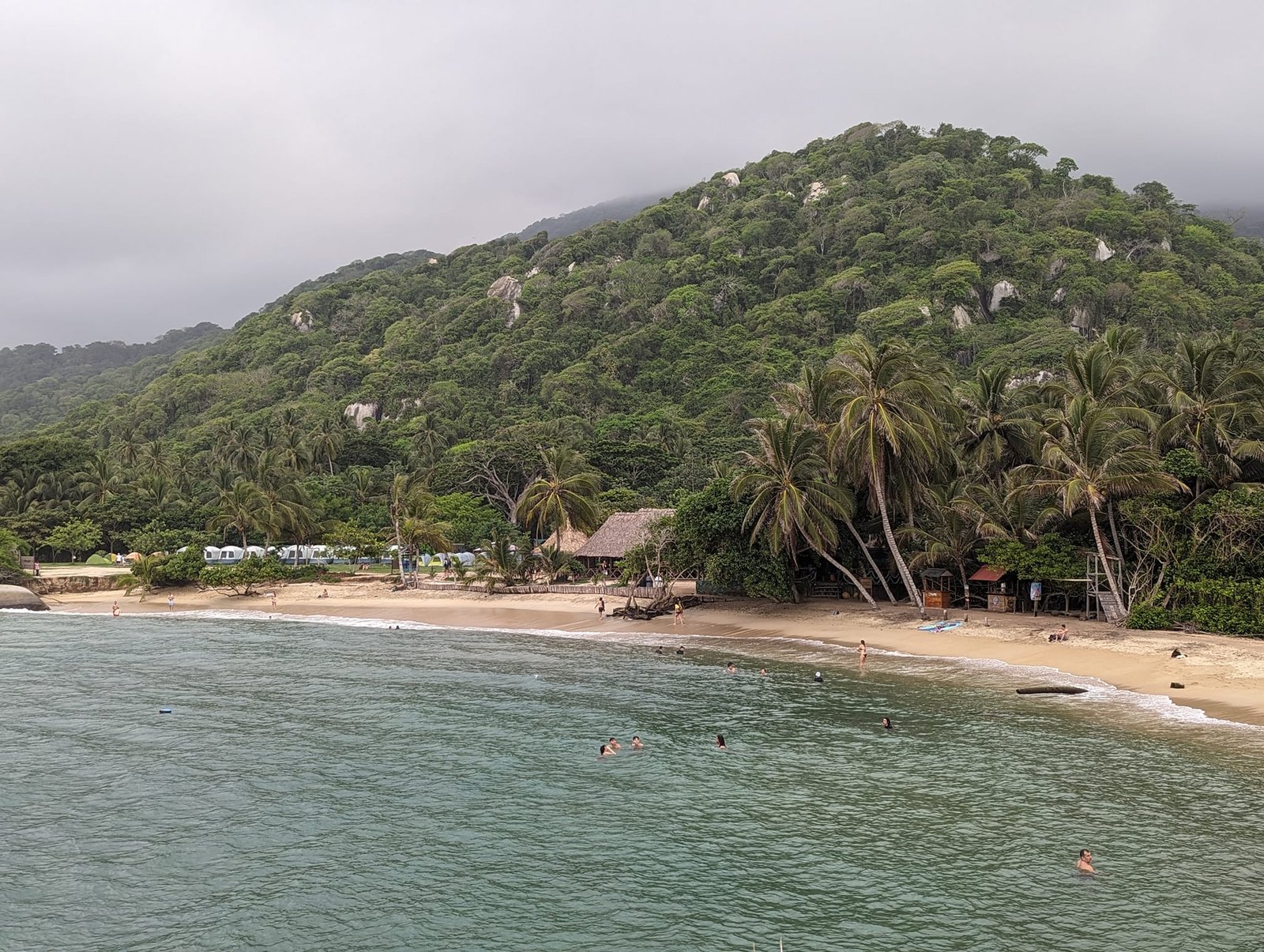
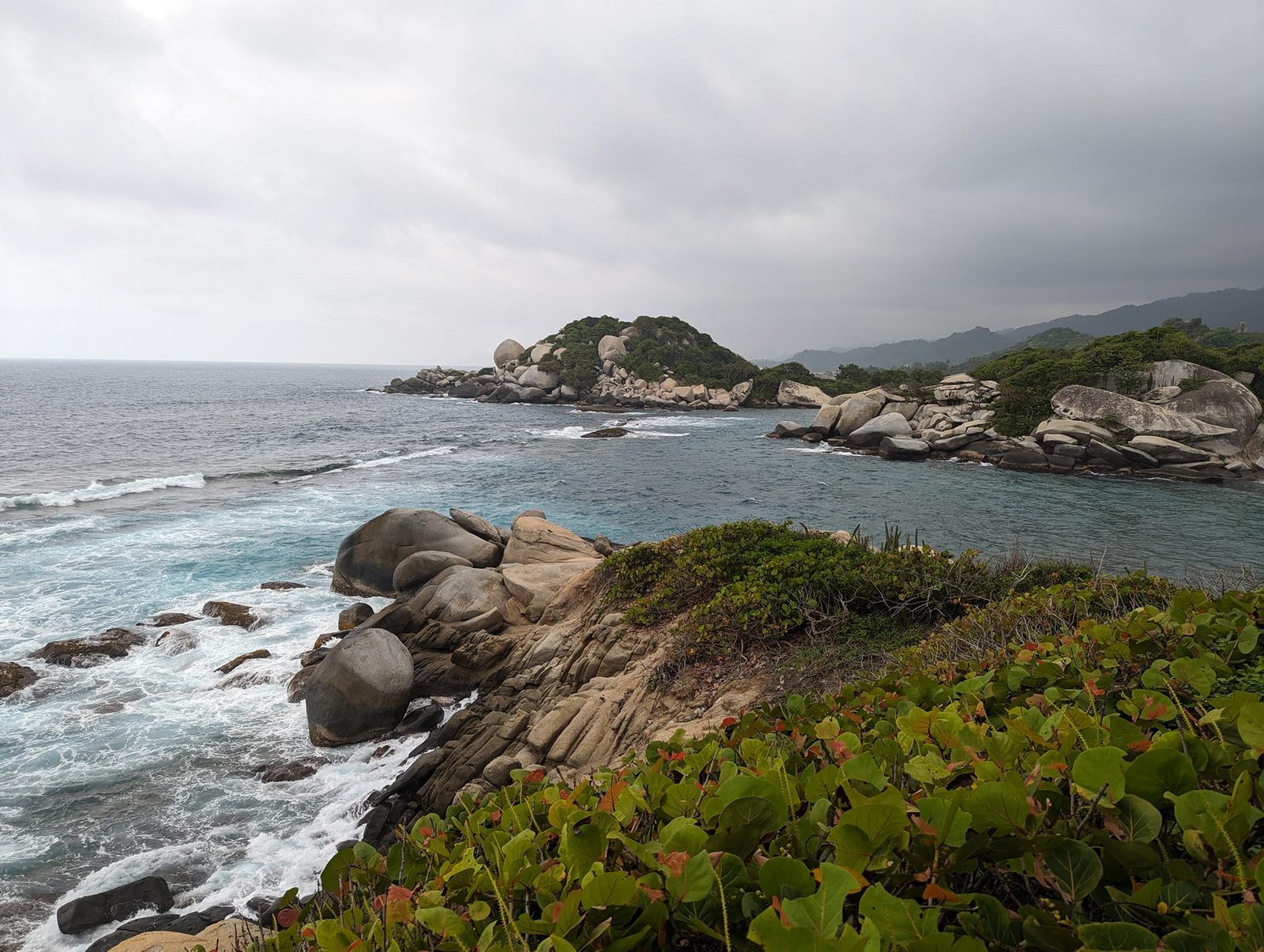
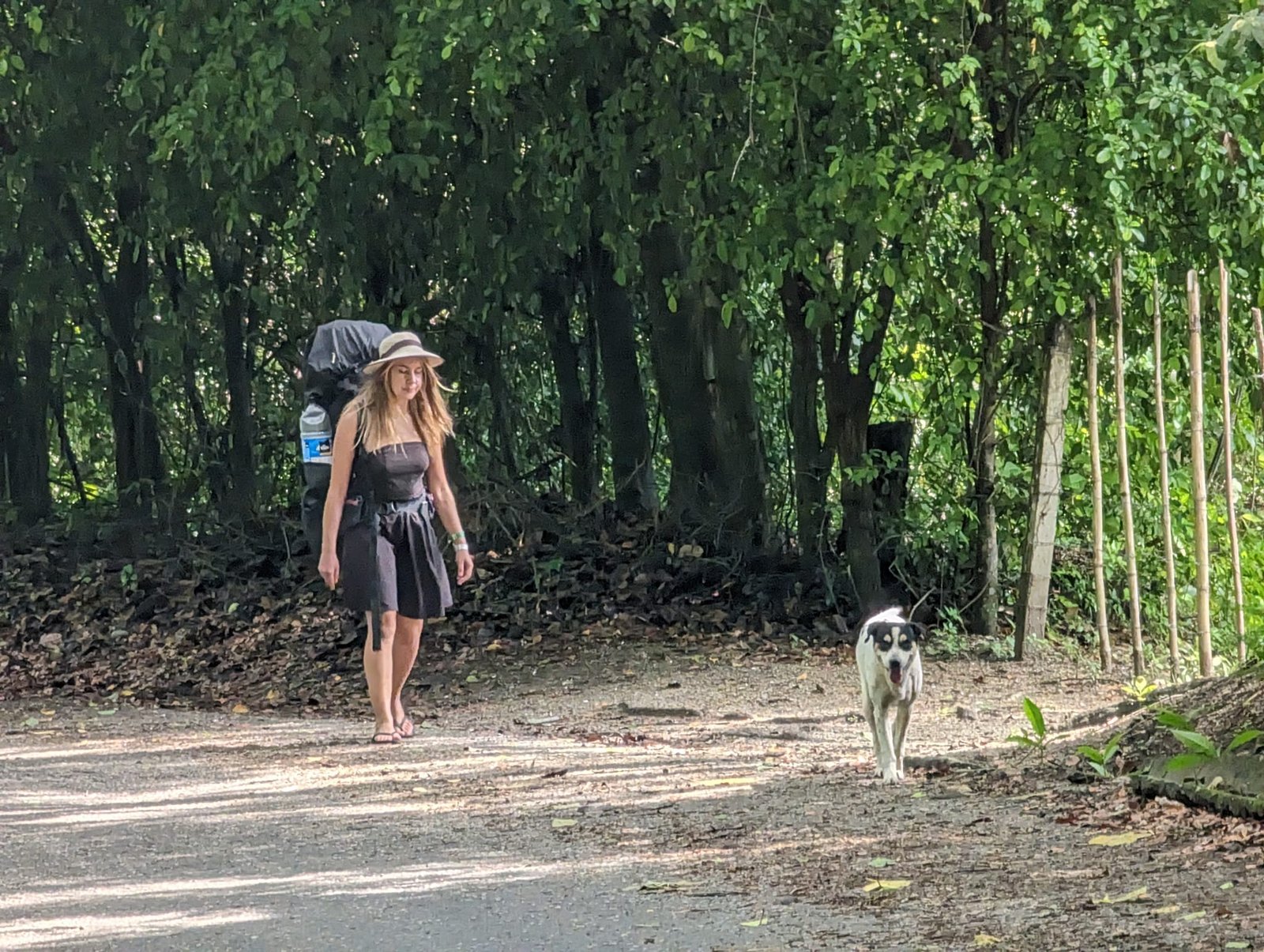
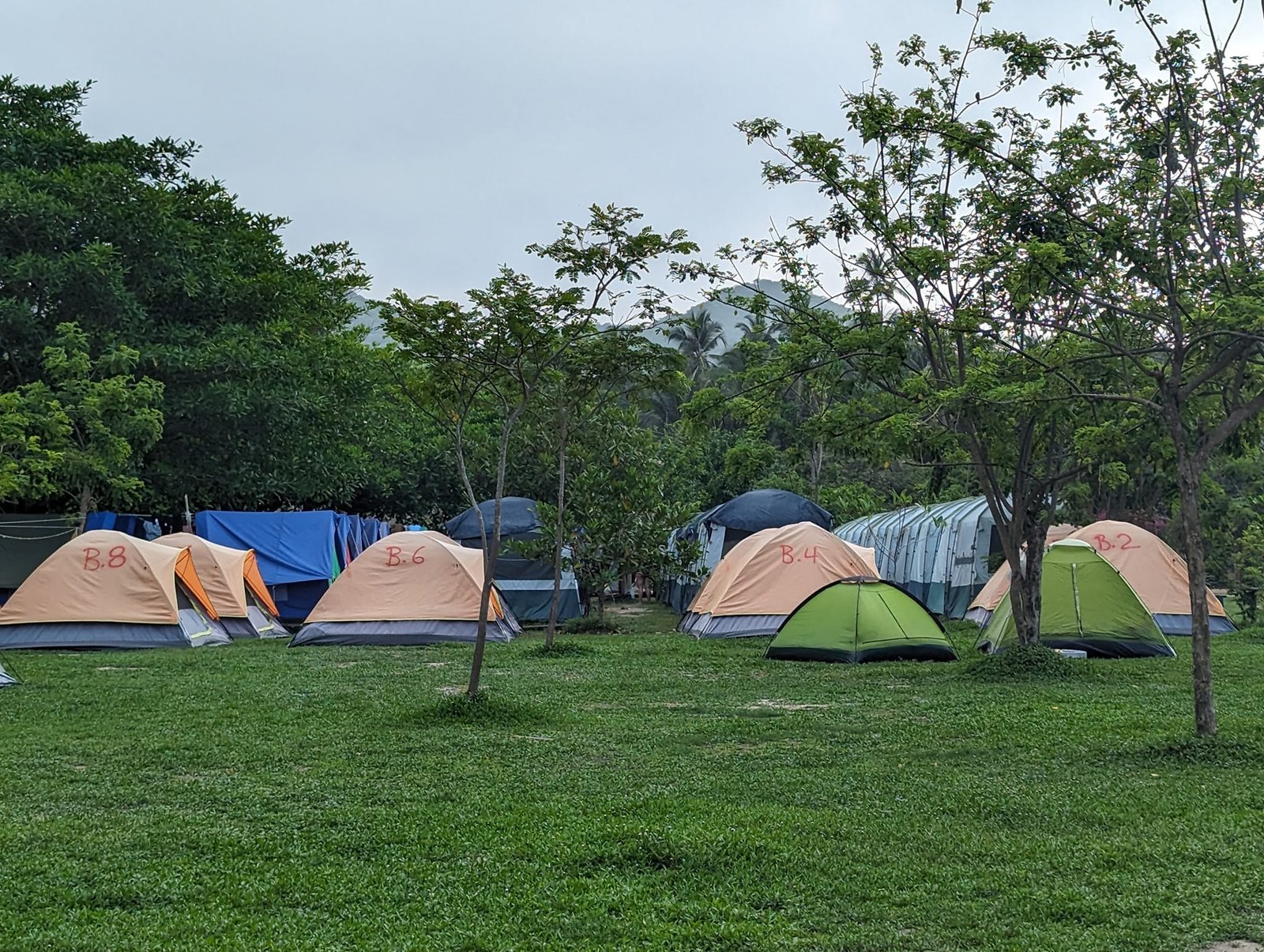
By the beaches you can spend the night in a tent or a hammock. We wondered how people carry all their “belongings” there, since you can only get there on foot or on horseback. Maybe most people travel light.
Tayrona’s wildlife
Tayrona is also a place where you can see lots of wild animals. We managed to spot loads of crabs, agoutis, a monkey and even a crocodile, among others. Crabs are everywhere – they come out of their burrows in the sand, and after dark they stroll along the paths.
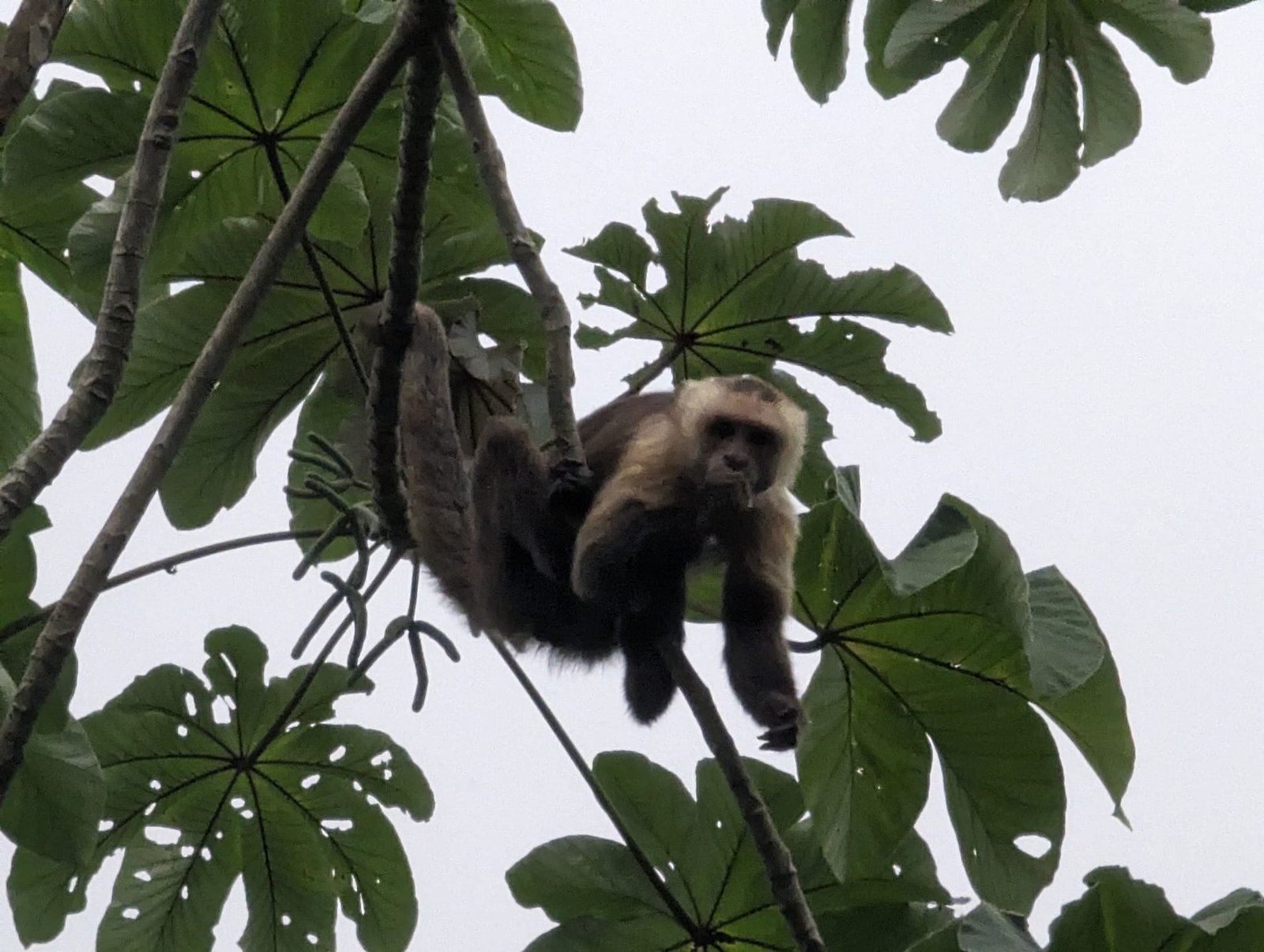
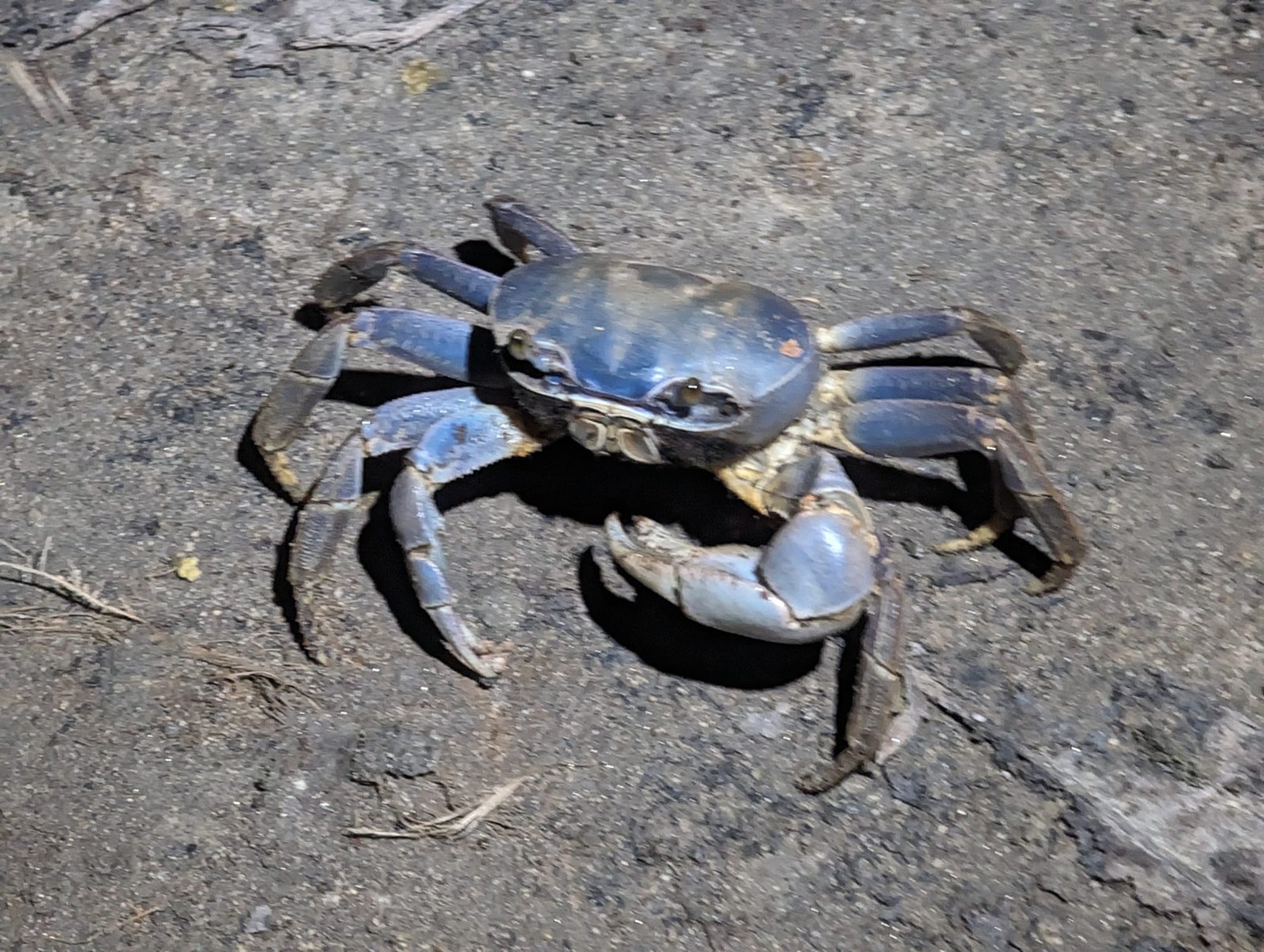
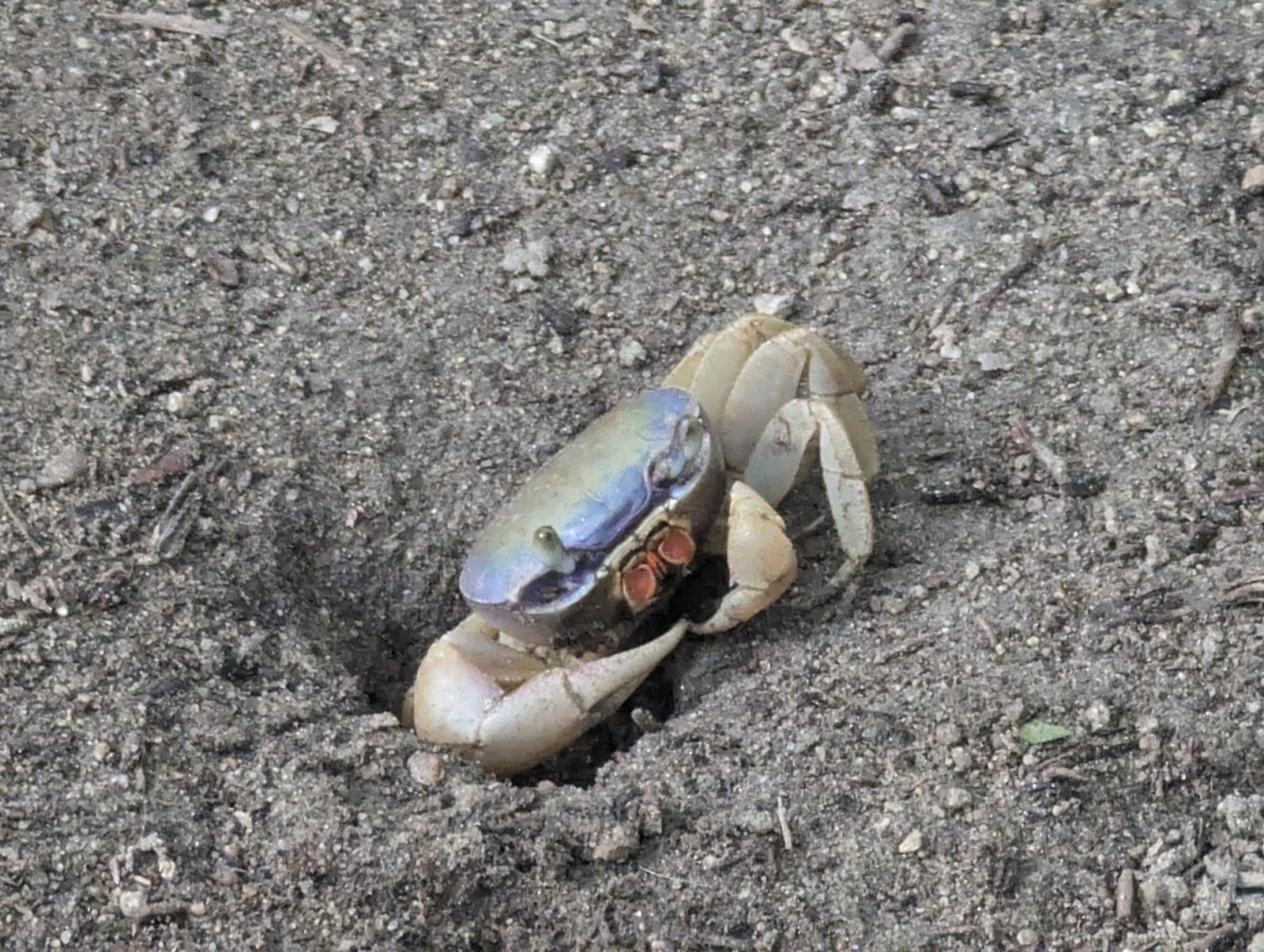
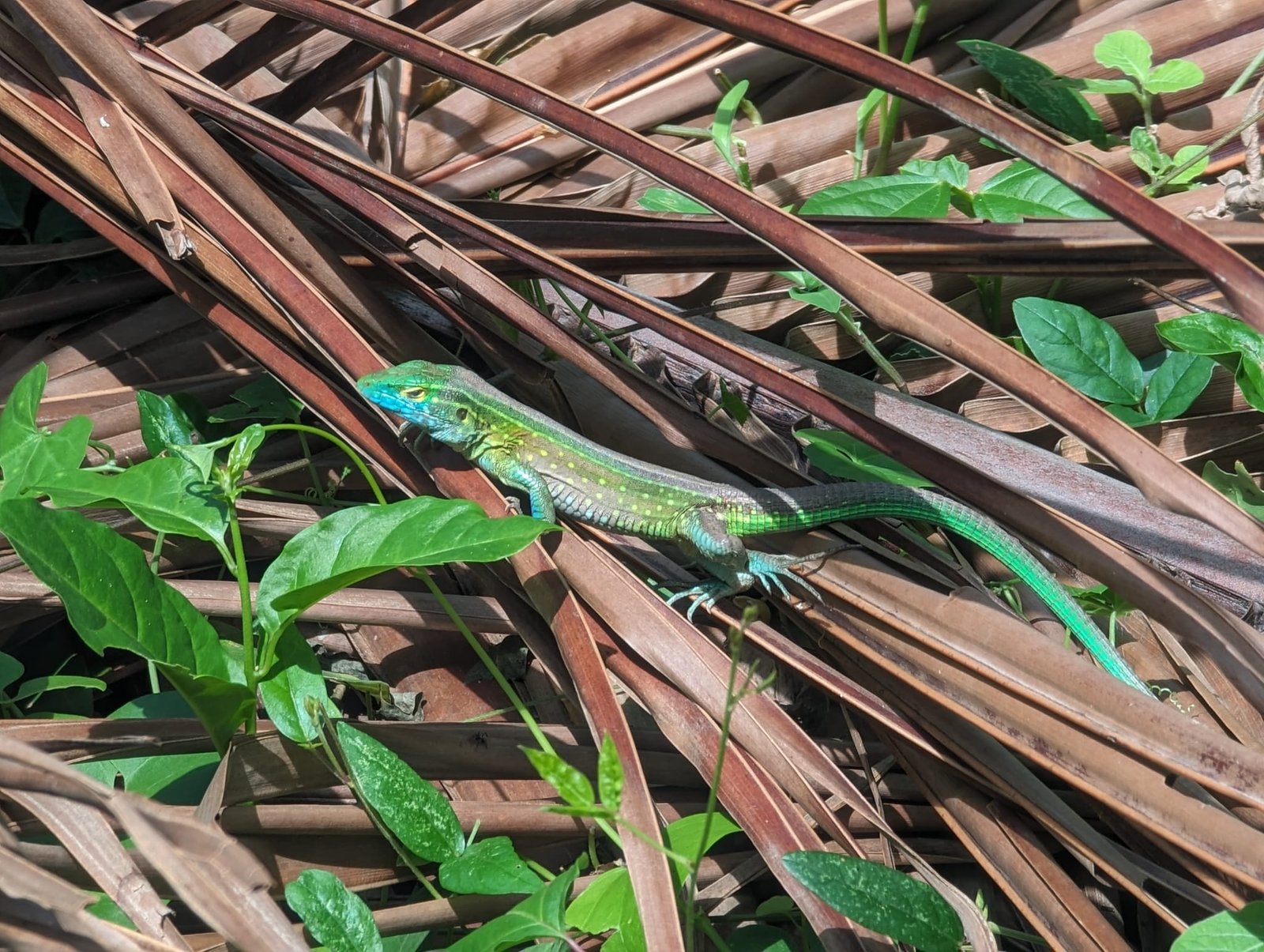
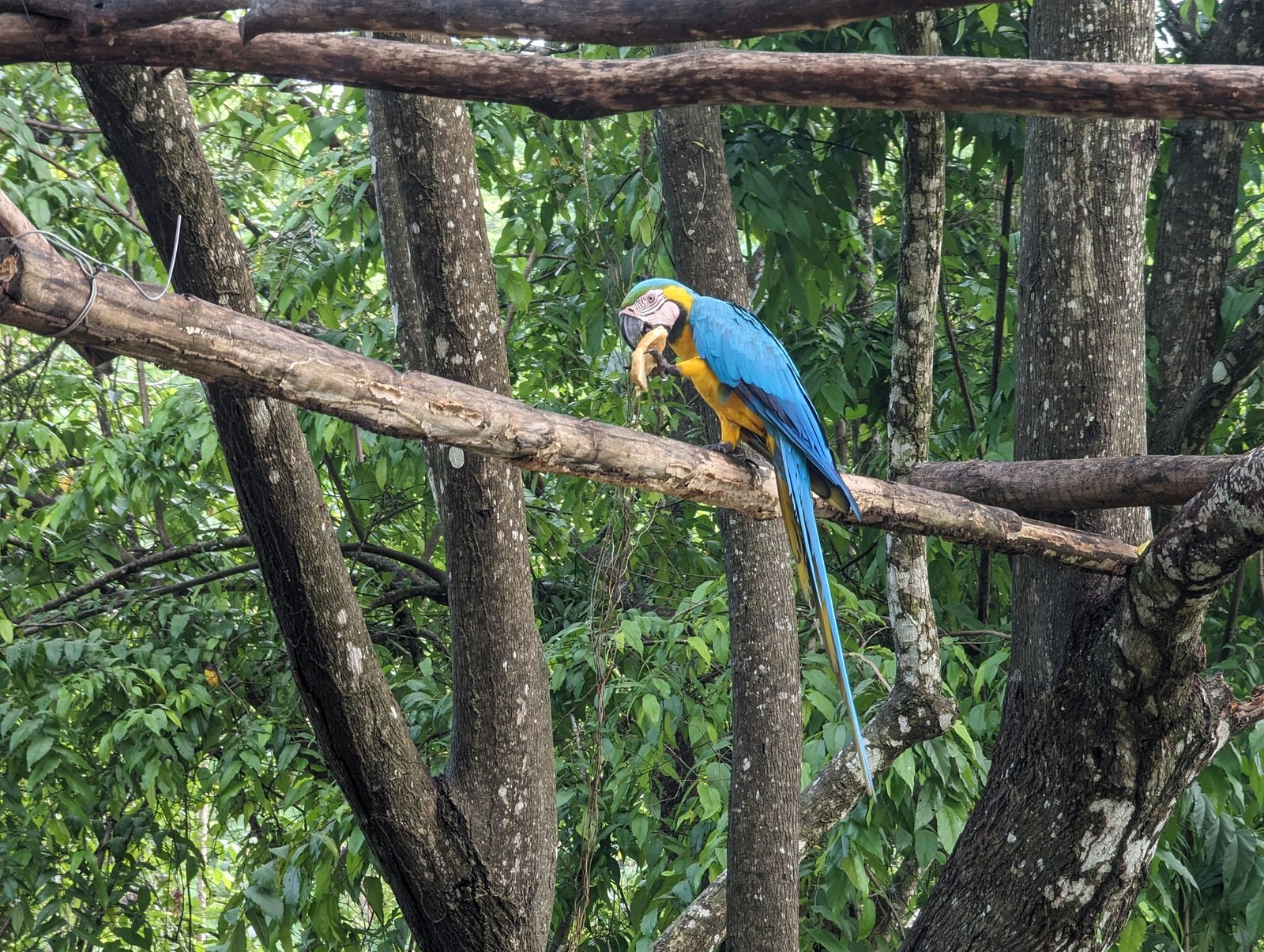
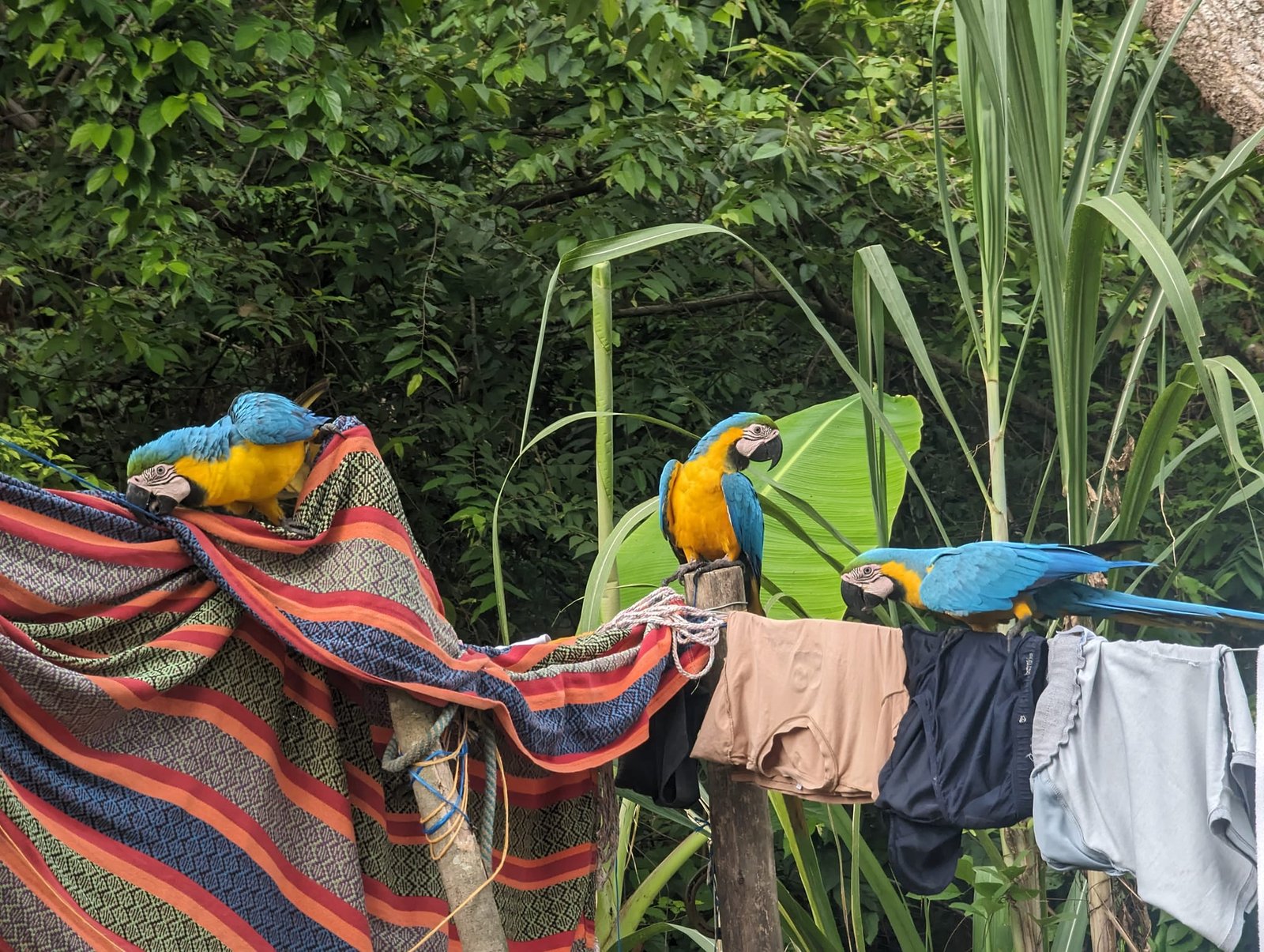
Green-and-blue lizards basked among the palm leaves, and blue-and-yellow macaws hung around the cabins where we stayed.
A night by the park and a storm
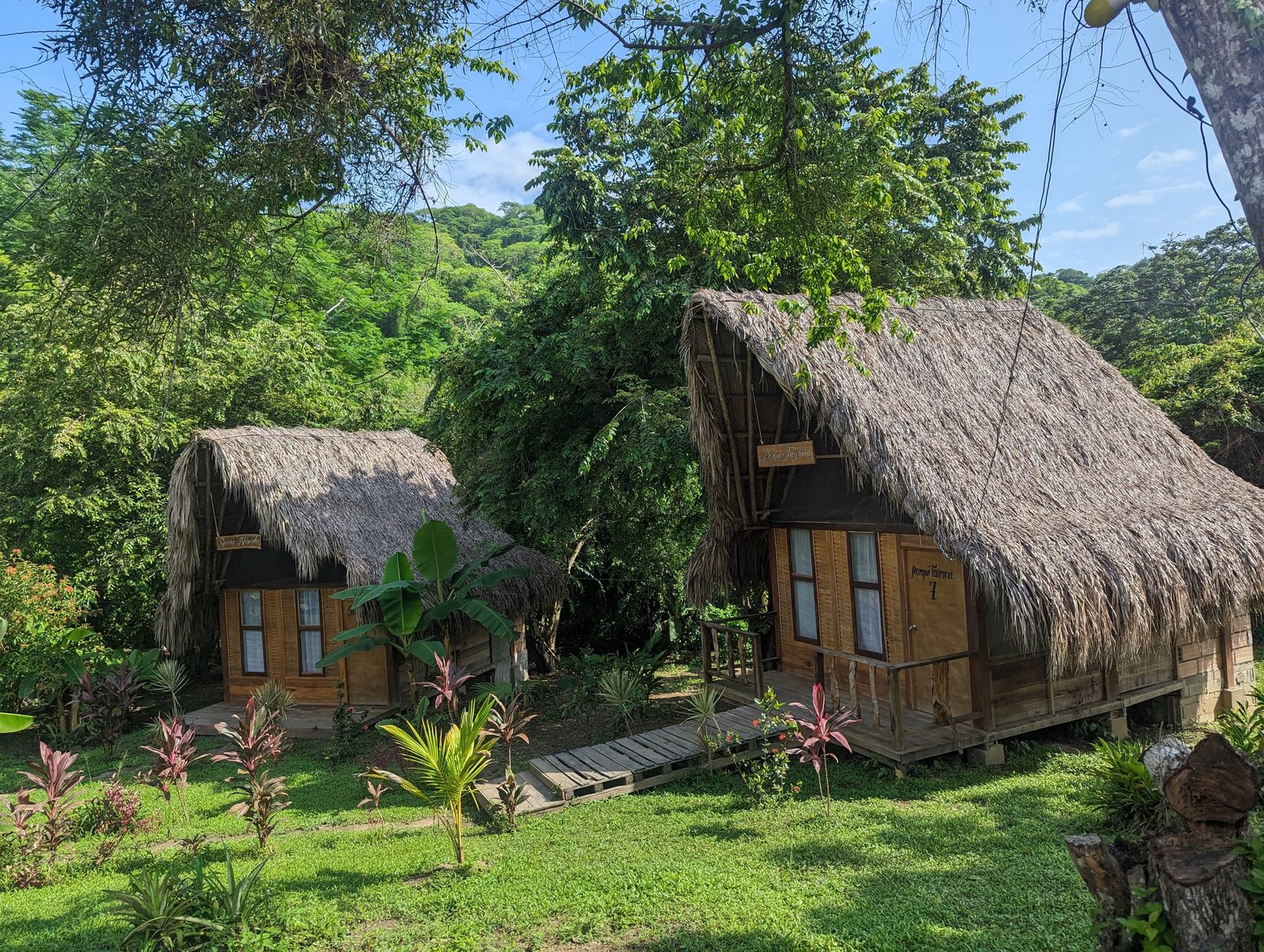
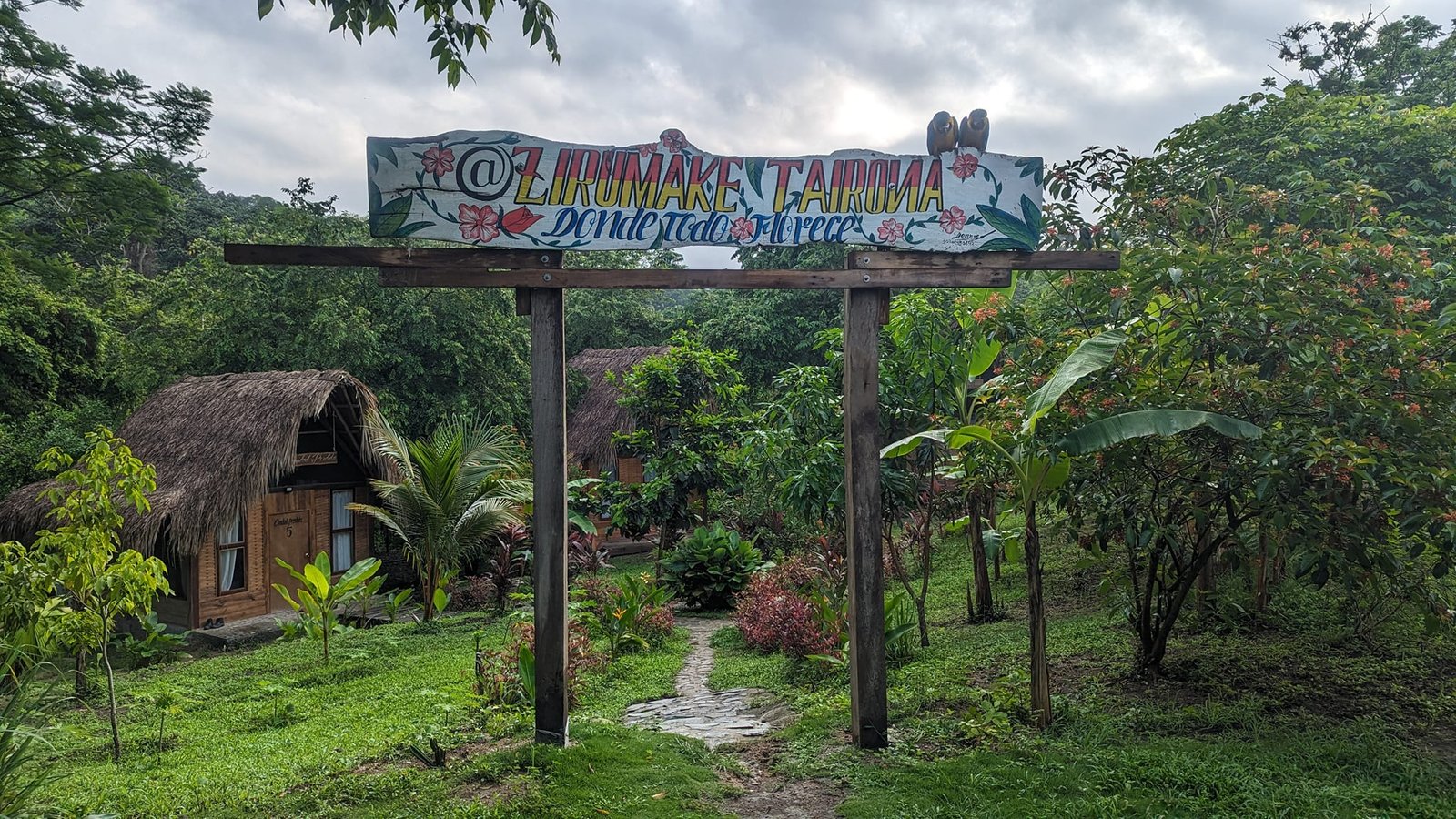
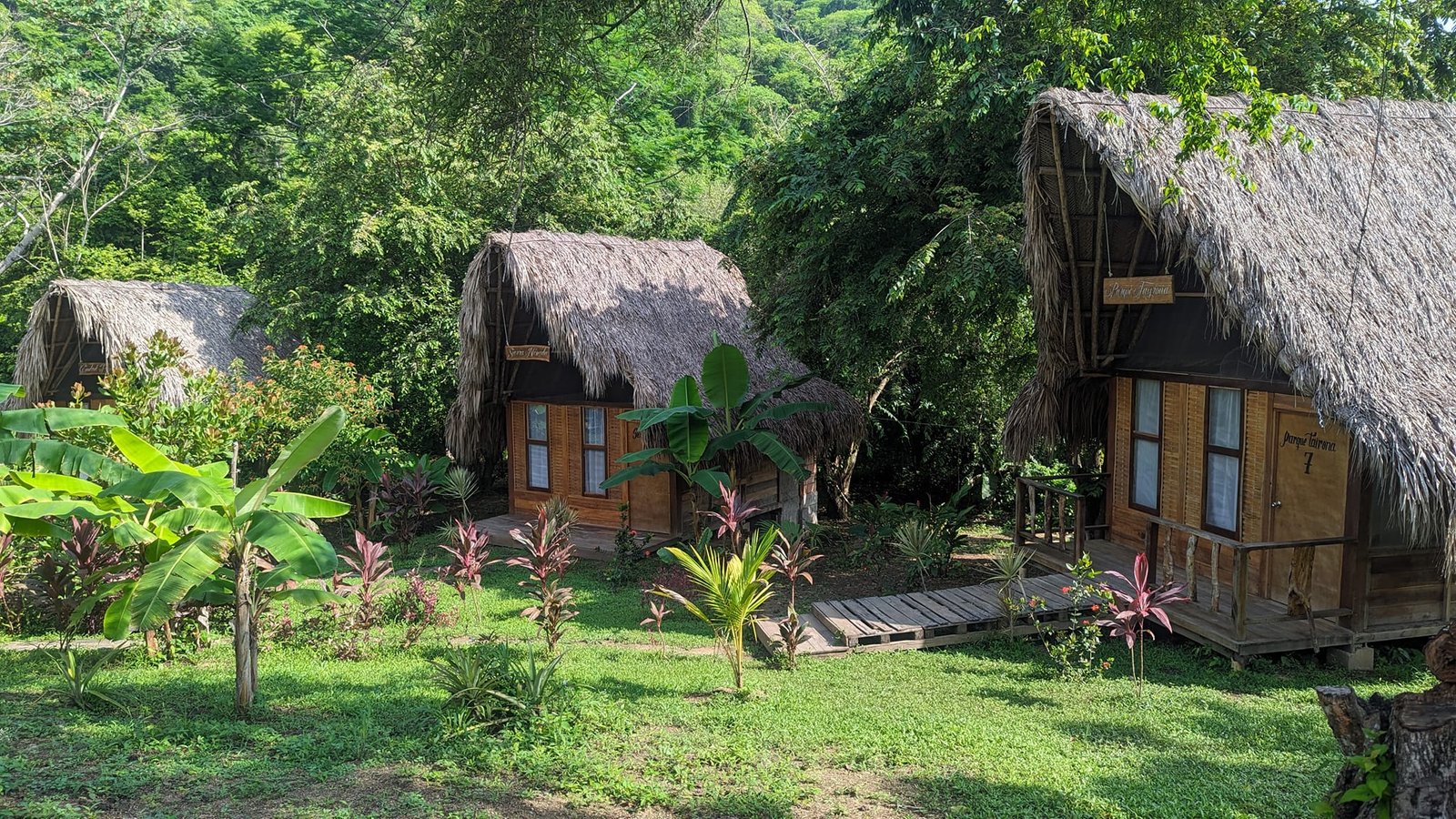
We had two nights in thatched wooden cabins at Zirumake Tairona, for about €12 per person – in a green garden, but far from the beaches. In the morning the macaws perched on the washing line.
Because of the rain we had no internet at all, and the storm that swept through the park on the second night cut our power. Inside the park there are very few places to buy anything, so prices are clearly inflated – although we paid €7–8 for a proper dinner.
Practical information
- Tayrona National Park entrance ticket – in May 2024 high-season prices applied: 87,000 COP (about €20) for a foreign visitor. Luckily you pay once for your whole stay, no matter how many days.
- Insurance – for every day in the park, additional insurance is compulsory (about €1.40 a day).
- Getting to the beaches – the most popular entrance is El Zaino; from the car park the bus goes to, it is at least 2 hours’ walk over uneven ground to Cabo San Juan. Beyond that you can only walk or ride a horse.
- Accommodation – we slept far from the beaches for about €12 per person. Right by the beaches you could rent a two-person tent for €19–23 or a hammock for €9–12 (May 2024).
- Food – it is more expensive in the park than in town and there are hardly any shops; a proper dinner cost us €7–8. Bring water and snacks with you.
- Internet and electricity – when it rained there was no signal, and the storm cut the power – be prepared for that.
- Swimming – in some places swimming is banned because of dangerous currents.
- Santa Marta – we chose the safer Rodadero district with its nice beach to stay in. All along the Caribbean coast, be prepared for pushy vendors.
- Currency – the Colombian peso (COP); in May 2024, 1000 COP was worth about €0.23.
Summary
Tayrona Park was the highlight of our time on Colombia’s Caribbean coast: wonderful beaches, warm water, jungle reaching down to the sea and animals at every turn. In our opinion Santa Marta, Taganga and Minca were not “must-see” attractions – Santa Marta was above all a base for us. Palomino was also on the plan, but we cut our sightseeing short and on 12 May headed inland – to San Gil.
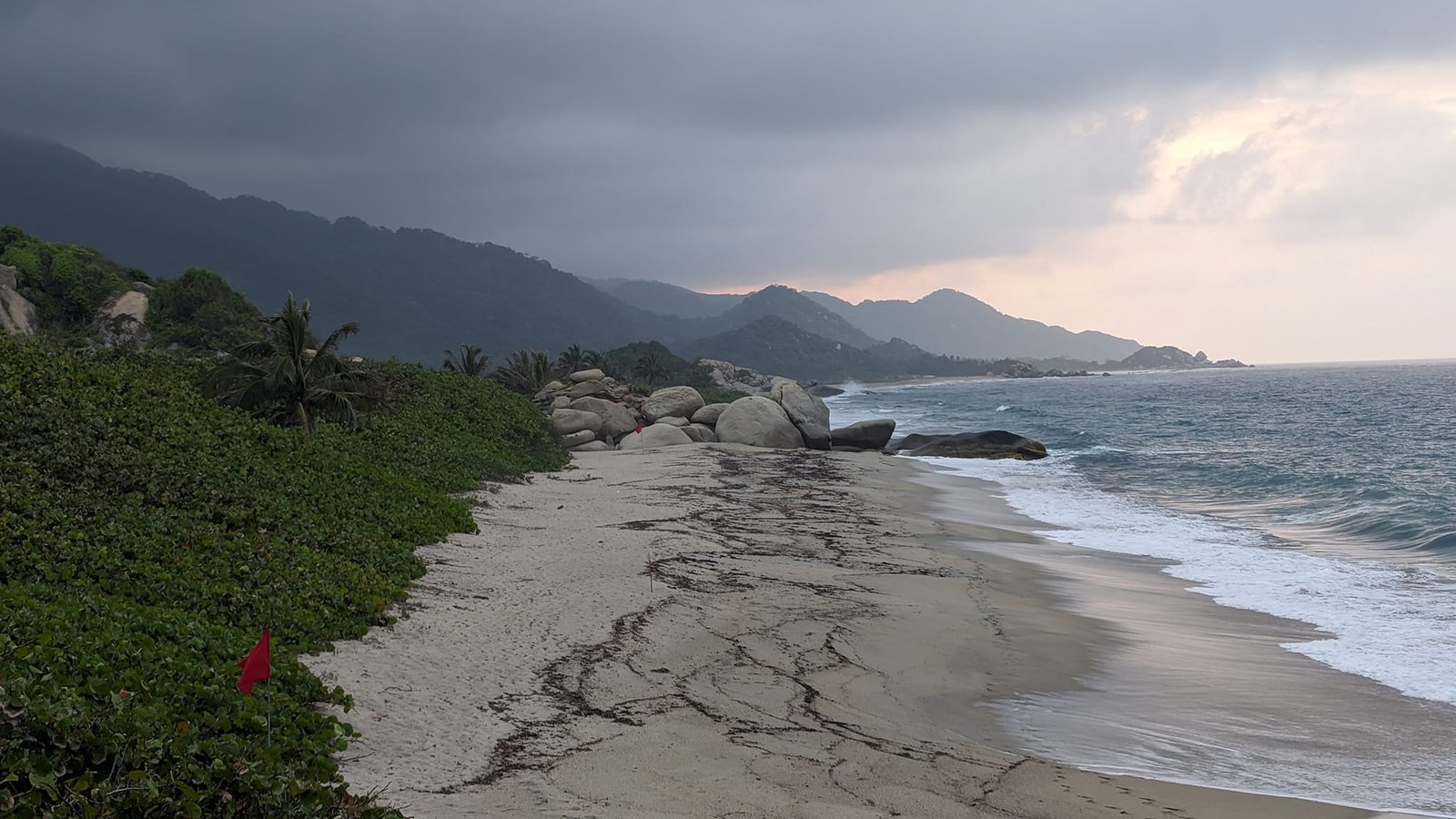
Photo gallery