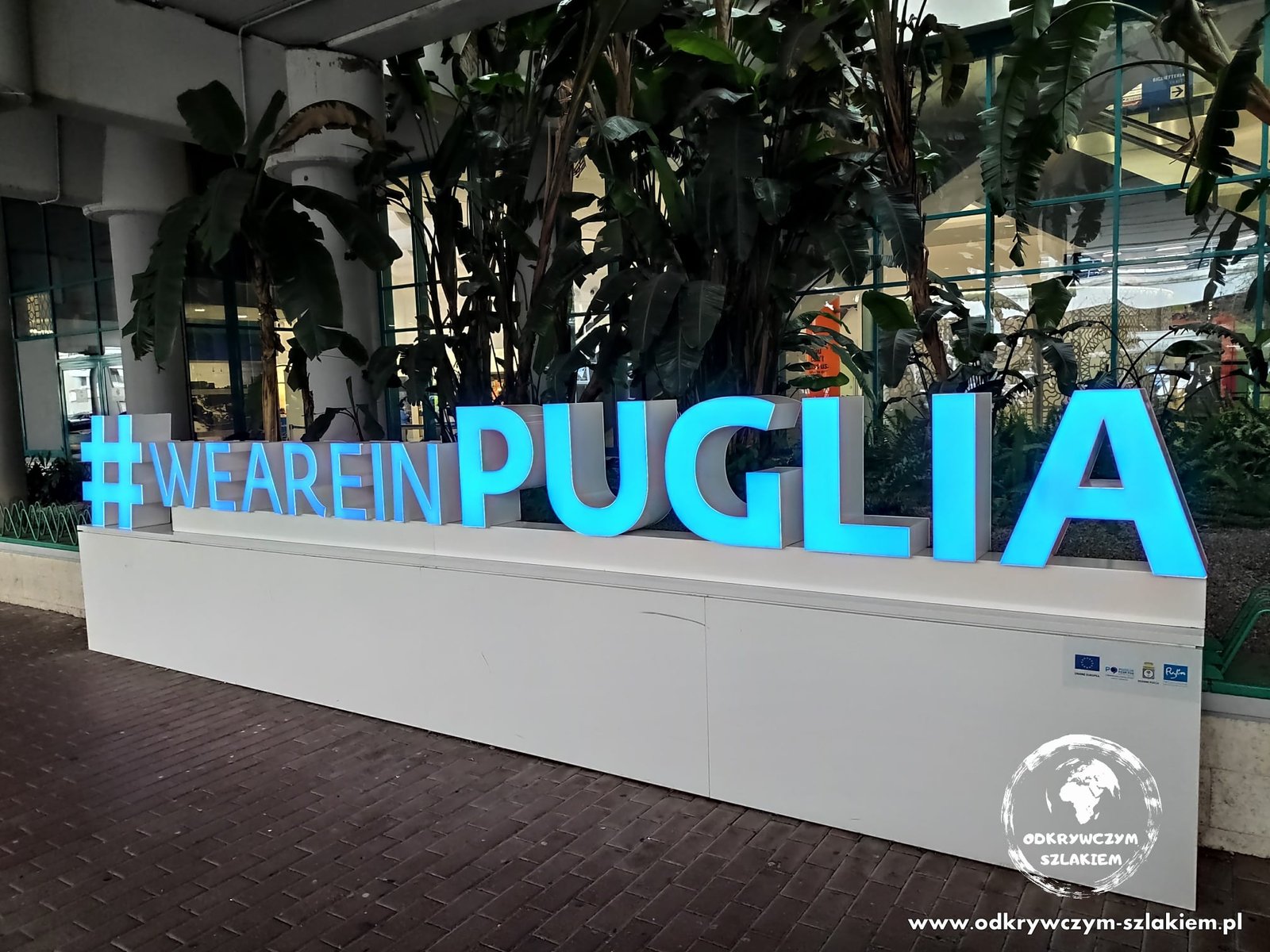
In mid-December 2021 we flew for a weekend to Apulia (Puglia) – the region on the very “heel” of the Italian boot. Originally we were going to fly to Odesa, but because of strict Covid restrictions we chose Bari. It was our last trip abroad that year, and a very intense one: in two and a half days we saw Alberobello with its trulli houses, the seaside towns of Monopoli and Polignano a Mare, Matera in neighbouring Basilicata and Bari itself. The weather turned bad exactly on the day we arrived and improved on the day we flew home. Luckily there was no heavy rain while we were sightseeing – at most the cold (6–12°C) and a strong, rather annoying wind. On the other hand, we came during the run-up to Christmas: every town had its Christmas market, and the streets and buildings were decorated, which created a special atmosphere especially in the evenings, when all the lights came on.
Table of contents
- Alberobello – the town of trulli
- Monopoli – the ancient harbour and a beach below the walls
- Polignano a Mare – a beach between cliffs
- Matera – the rock city of the Sassi
- The Gravina gorge, the Tibetan bridge and the caves
- Bari – Christmas lights and the old town
- Practical information
Alberobello – the town of trulli
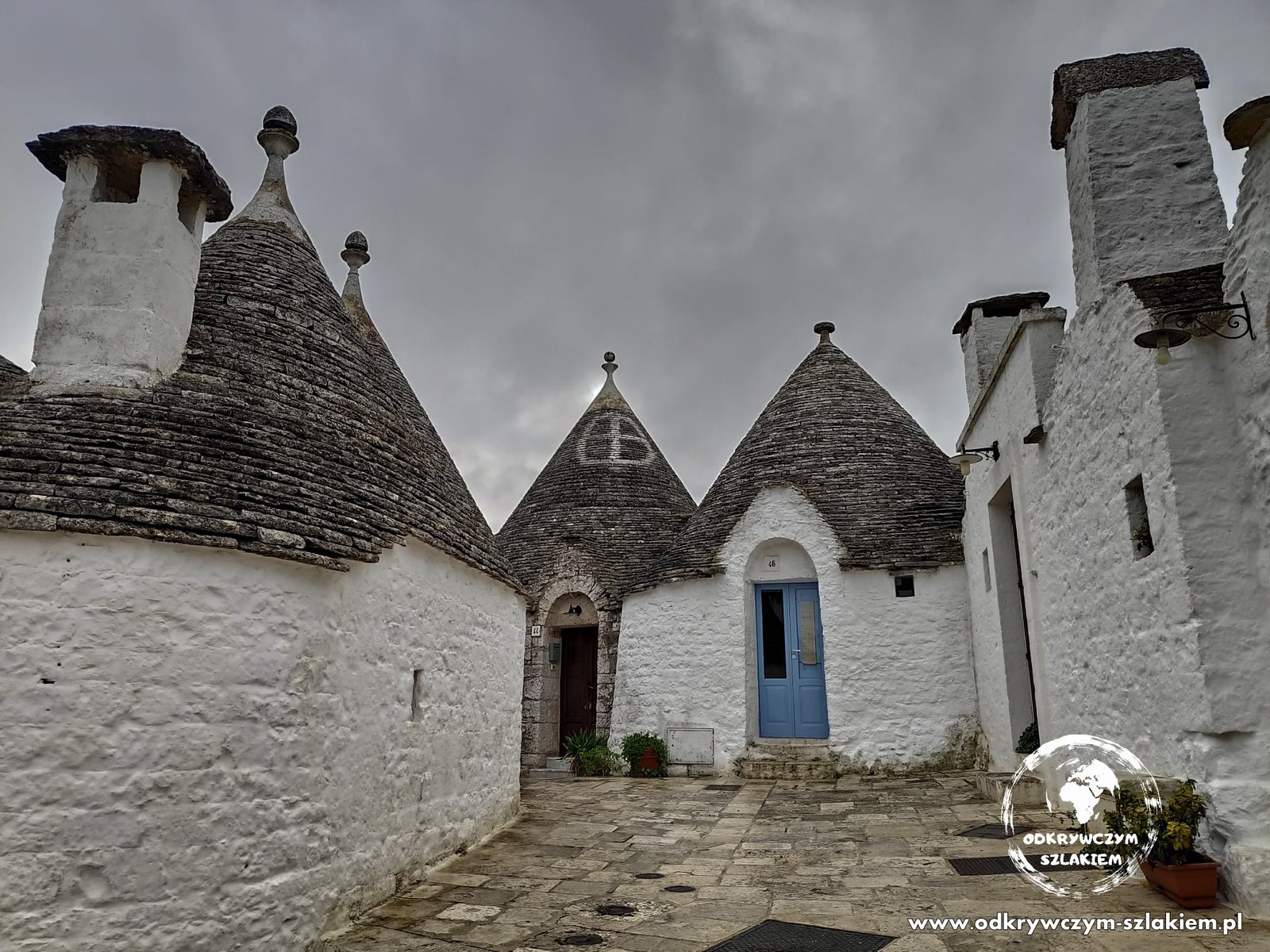
We started sightseeing on Saturday morning with Alberobello – by far the most recognisable place in the area. The town is famous for its trulli: small, whitewashed limestone houses topped with conical roofs made of flat stones. About 1500 of them have survived here, and in 1996 the trulli of Alberobello were added to the UNESCO World Heritage List. Most of them are in the Rione Monti district, where they line entire streets, and many of the cones are painted with white symbols.
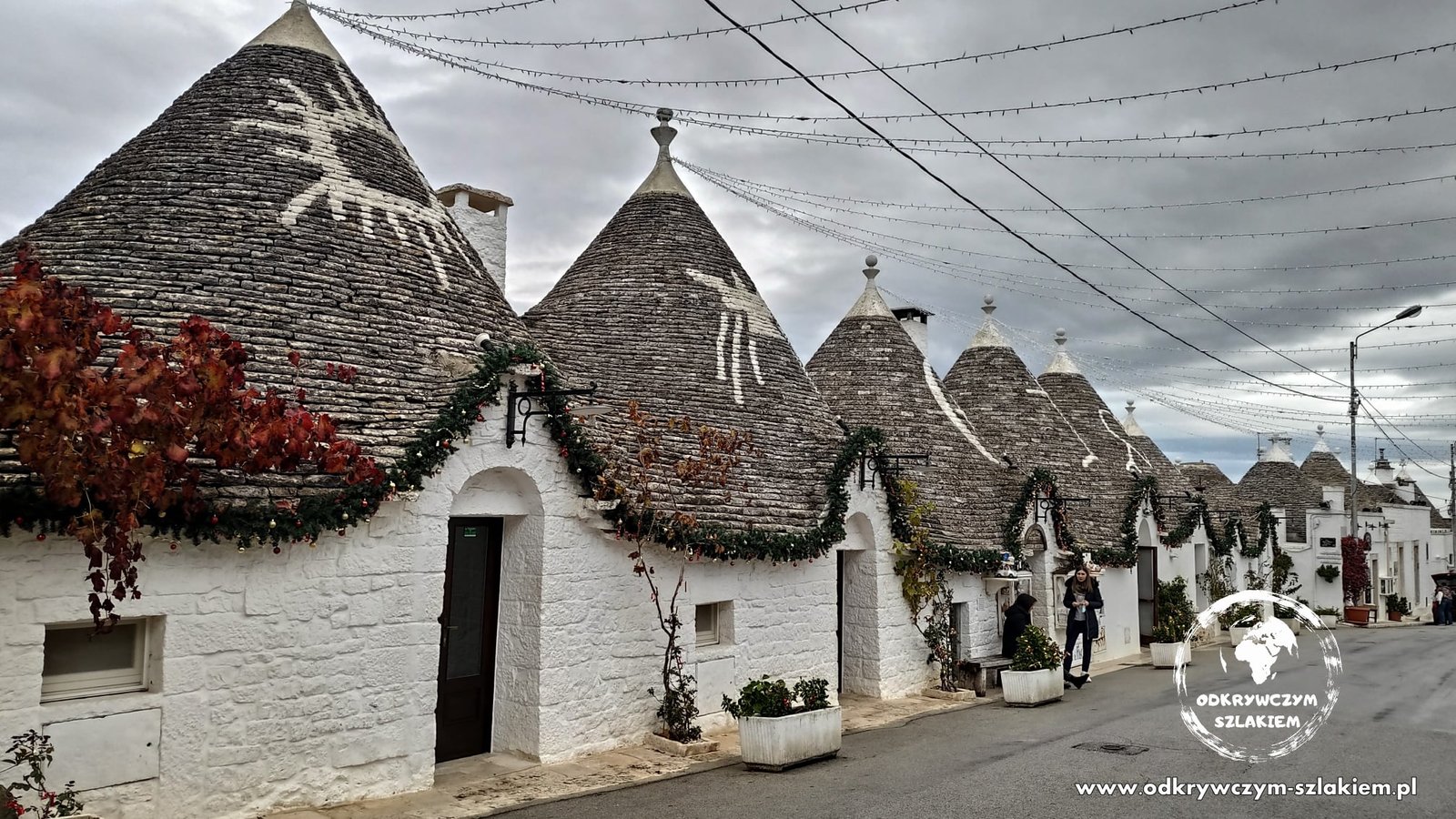
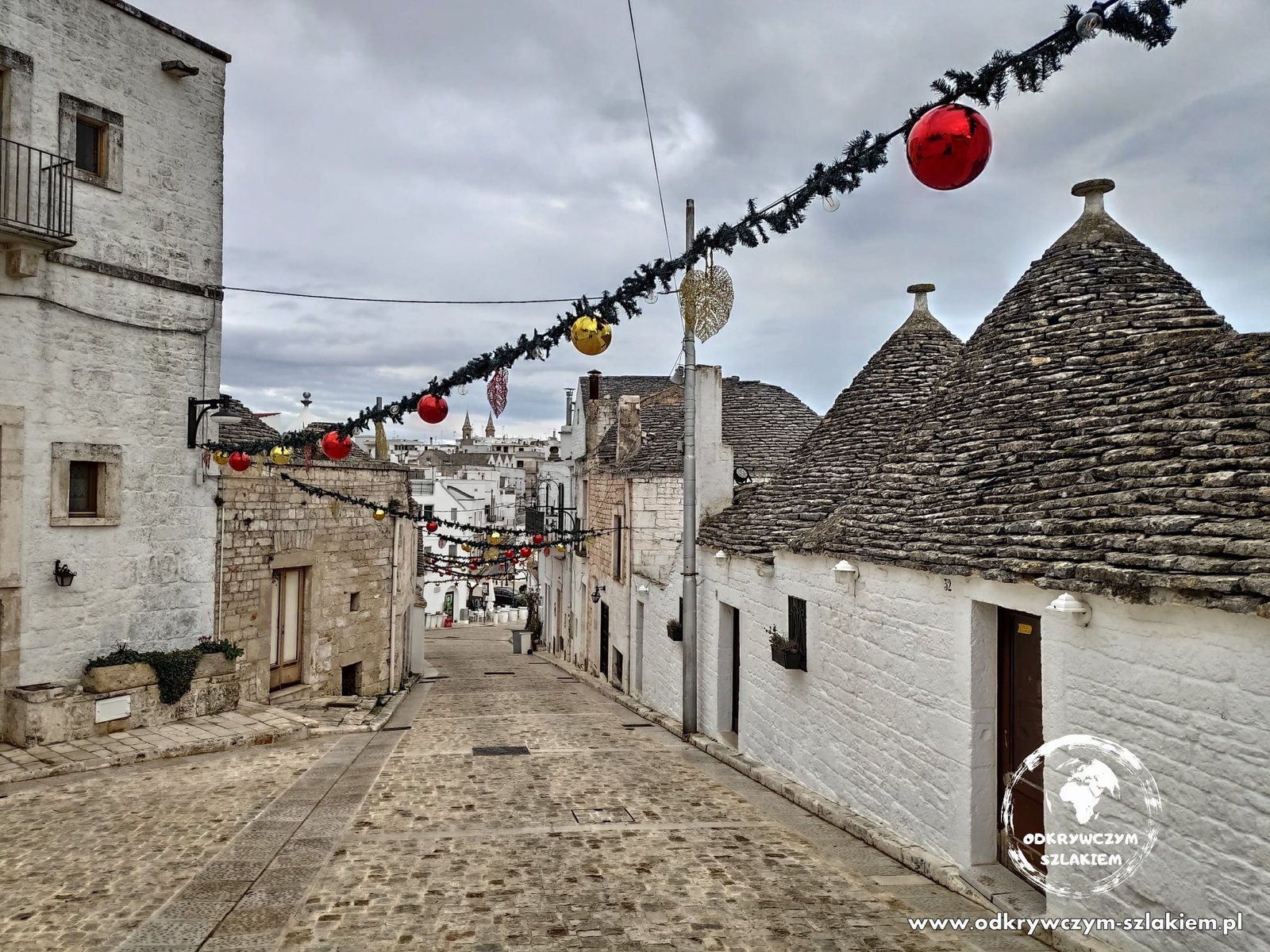
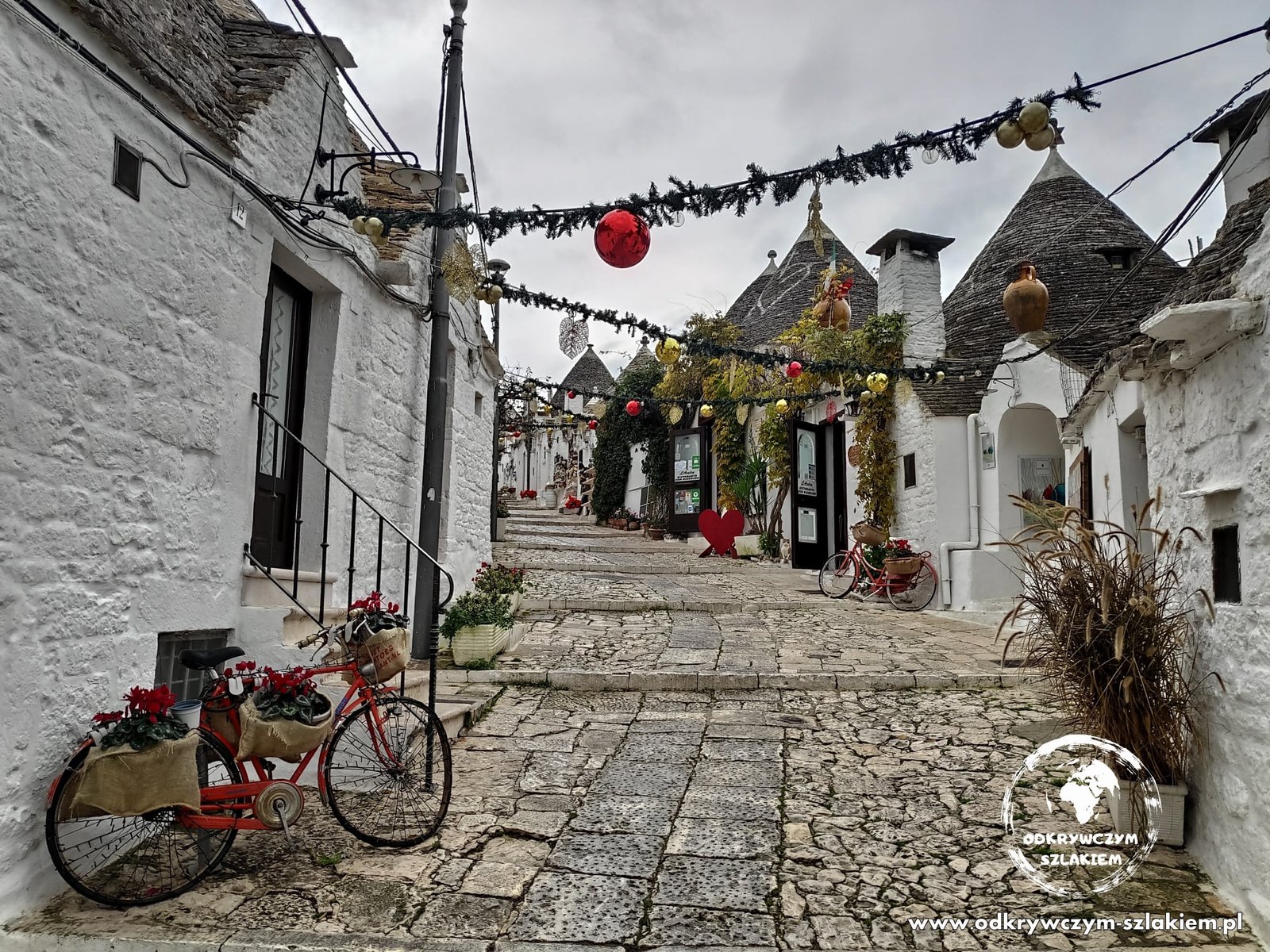
In December the narrow, steep streets of Rione Monti were decorated with garlands, baubles and flowers – it was hard to take a few steps without stopping for a photo.
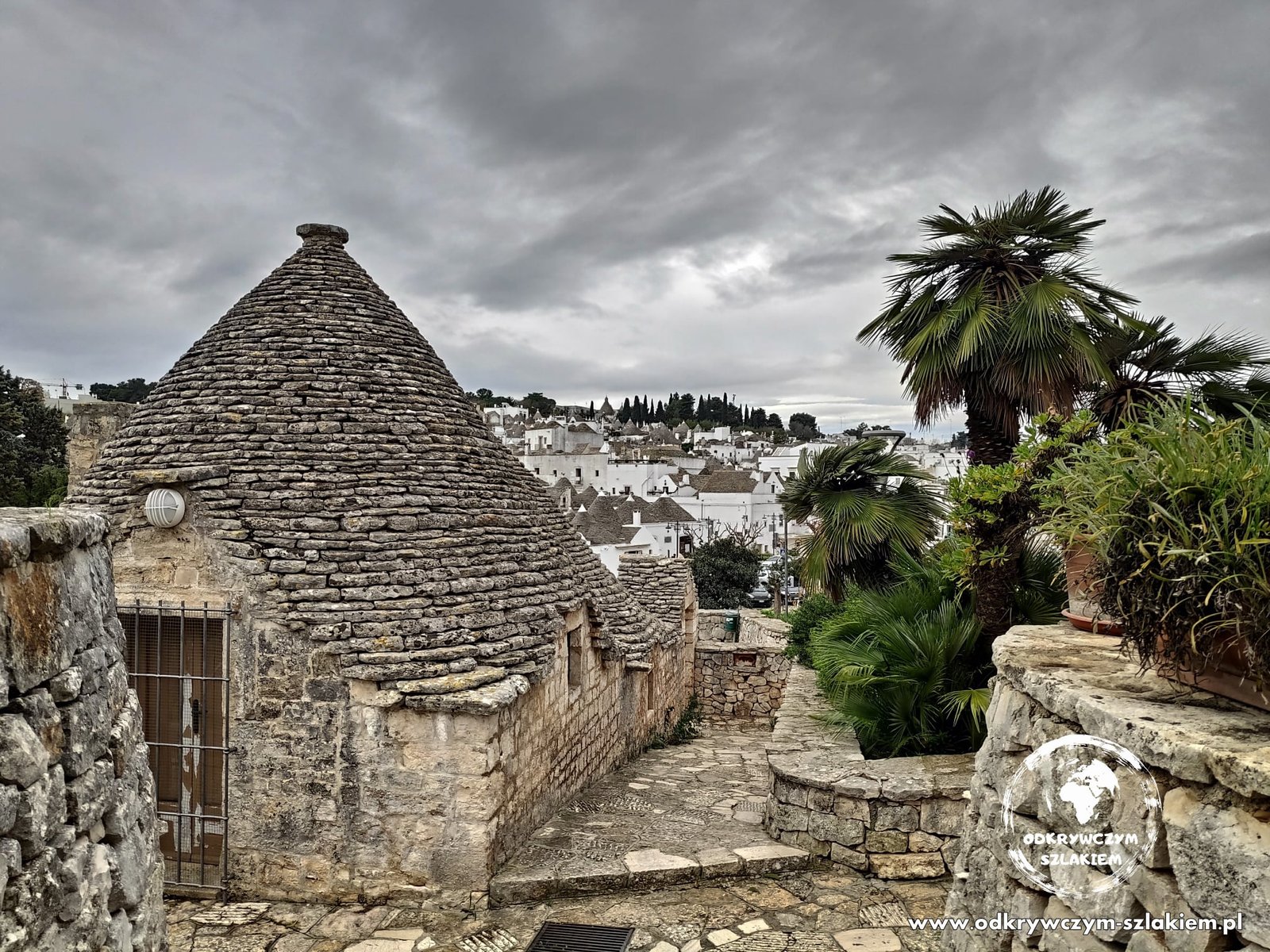
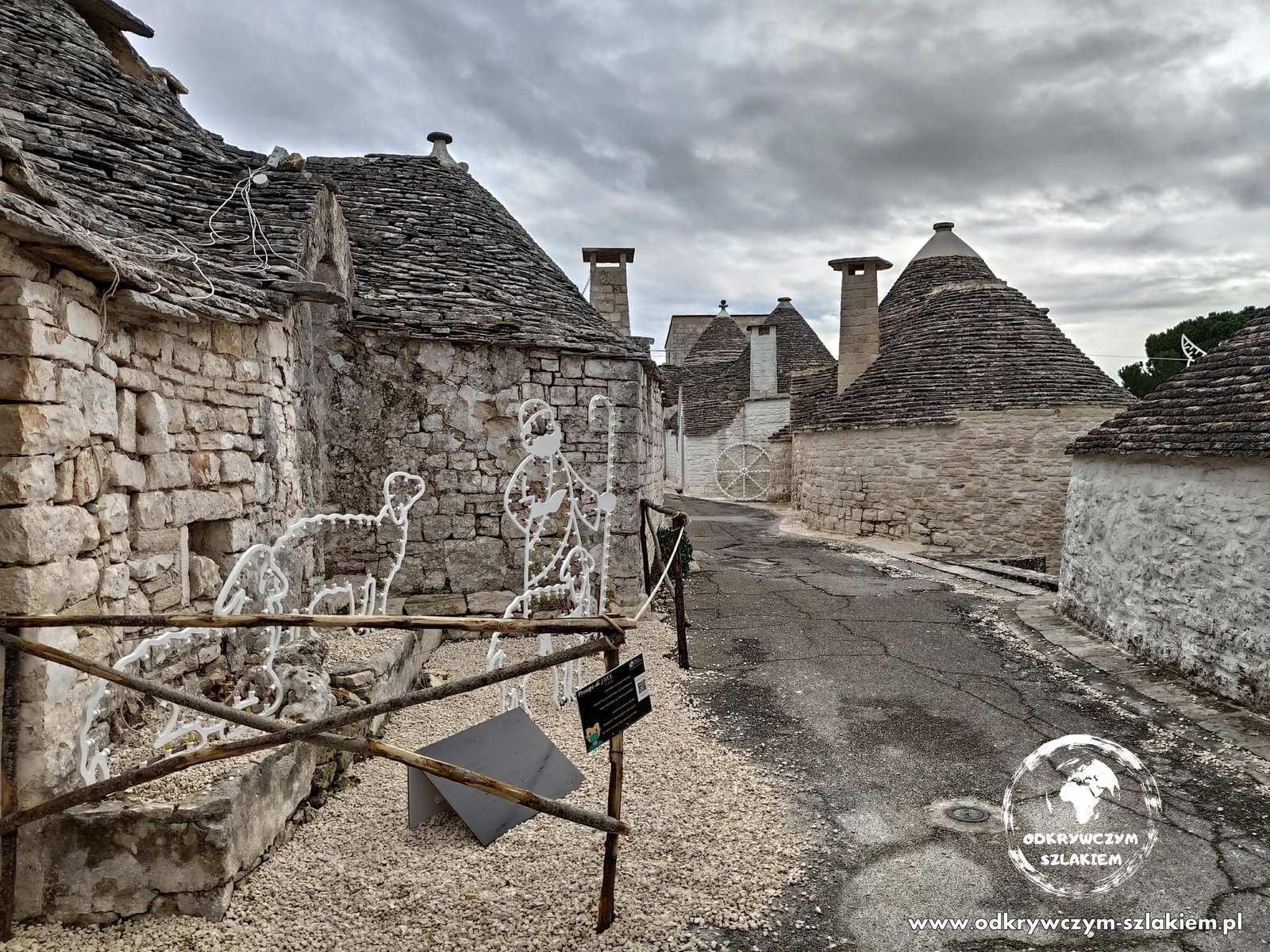
From the upper part of the district you can see how the trulli mix with the ordinary white buildings of the town. Christmas figures made of lights had also been set up among them, and they must have looked even better in the evening.
Monopoli – the ancient harbour and a beach below the walls
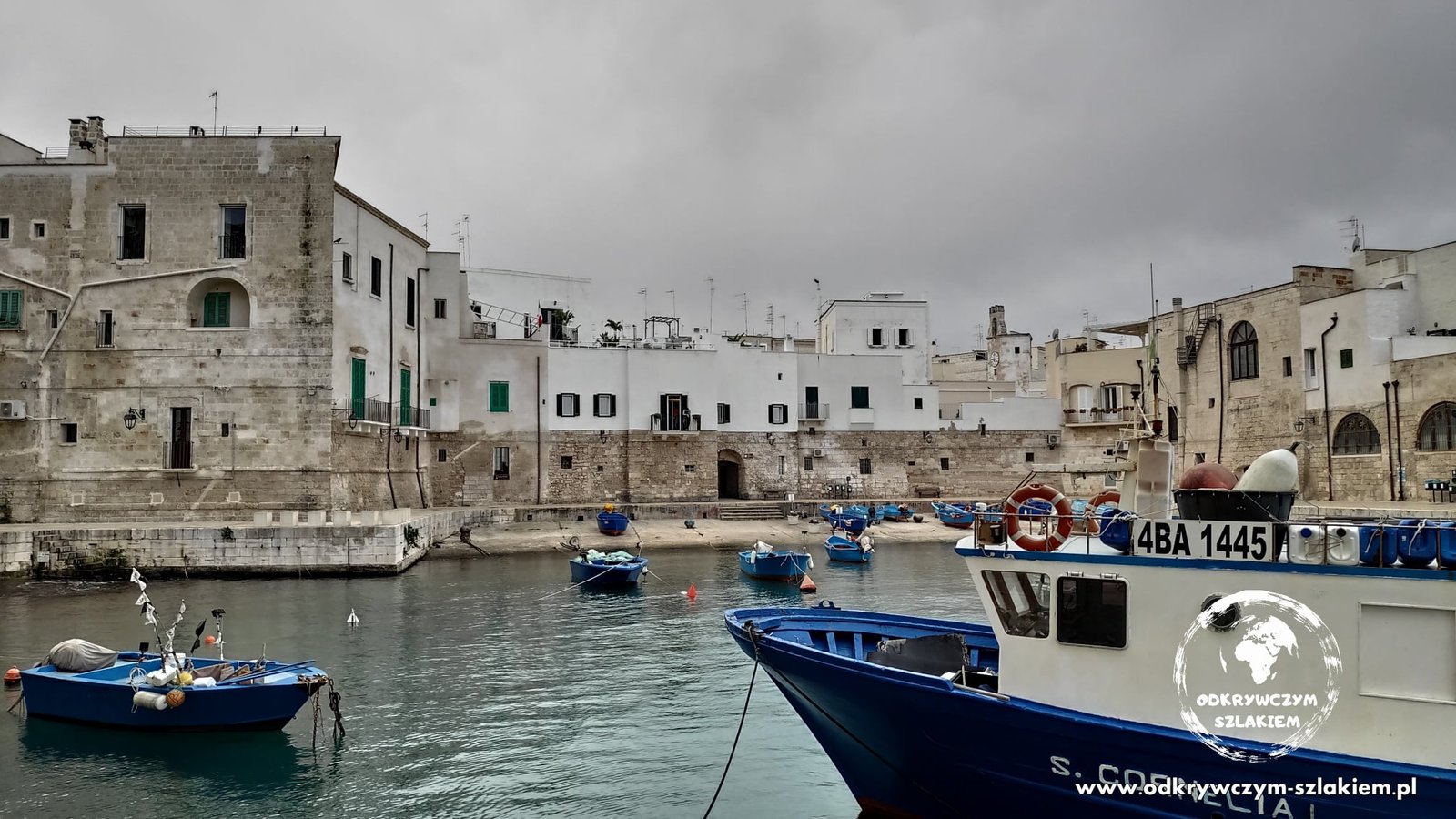
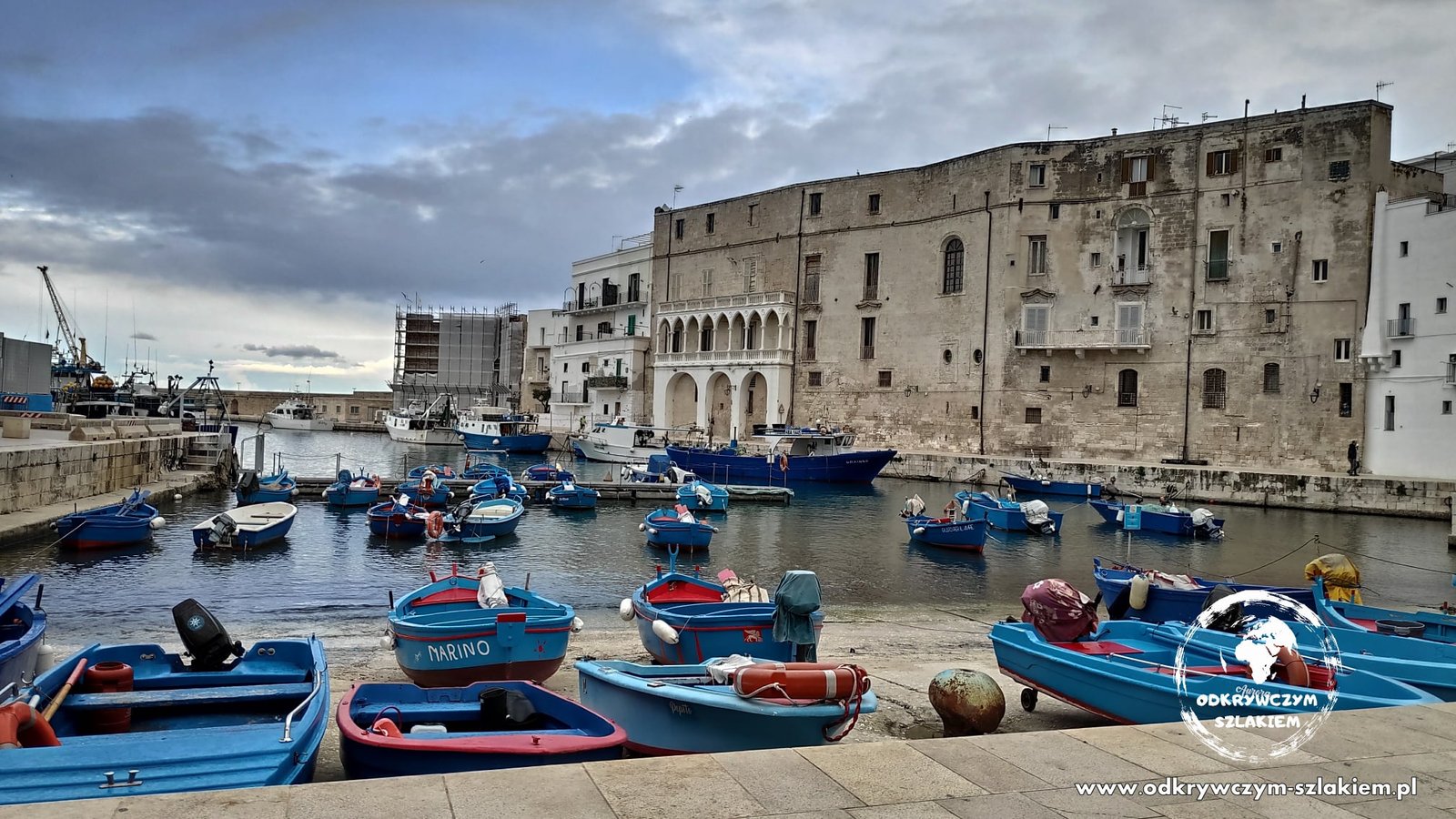
Along the coast south of Bari there are several small but very atmospheric towns. After Alberobello we visited two of them. The first was Monopoli with its ancient harbour (Porto antico), where blue fishing boats bob on the water and the stone houses of the old town stand by the sea.
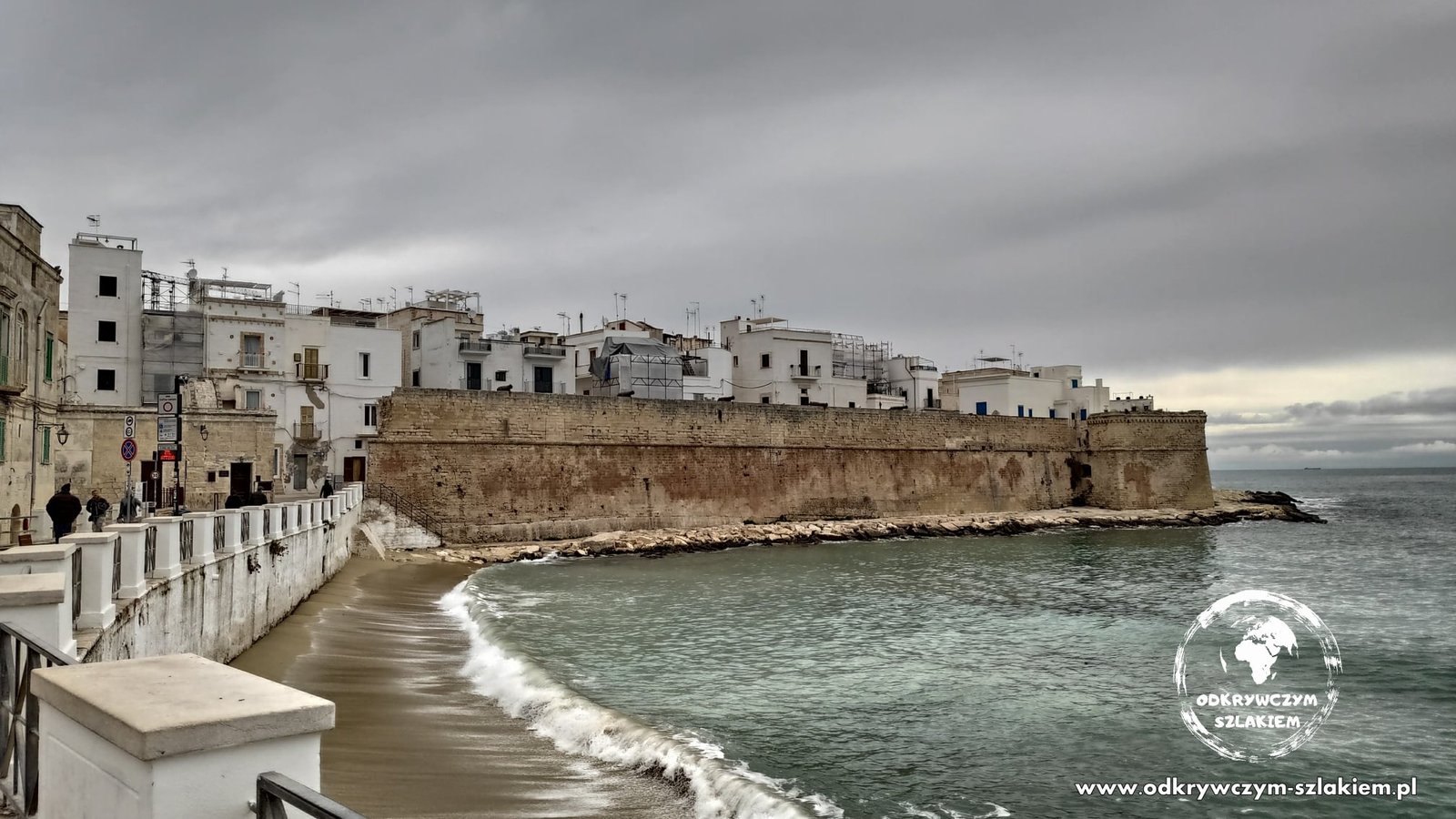
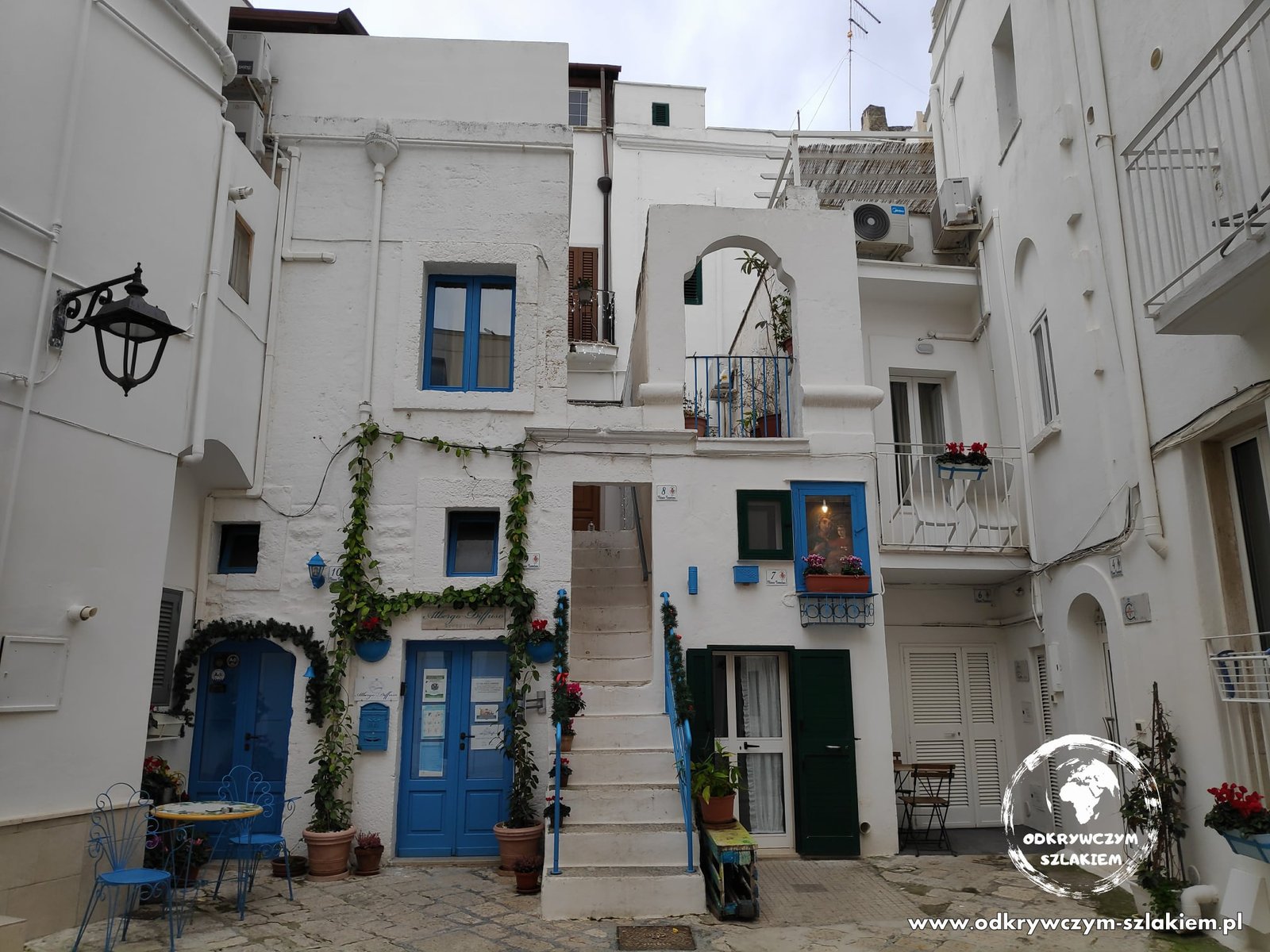
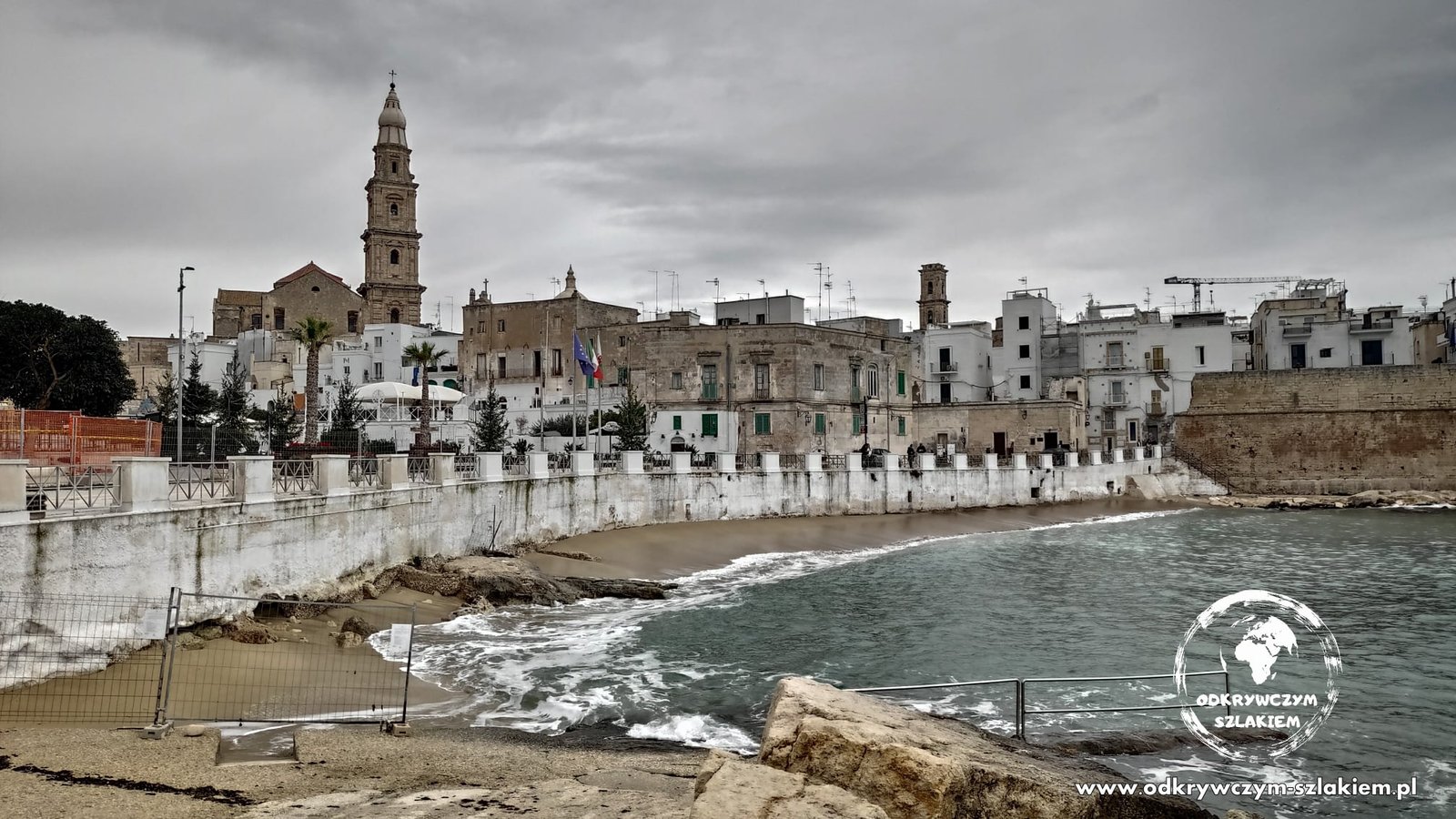
The old town (centro storico) is a maze of white alleys, steps and courtyards decorated with plants. Right below the walls there is a small beach, Cala Porta Vecchia – empty in December, of course, but with a view of the walls and the cathedral tower.
Polignano a Mare – a beach between cliffs
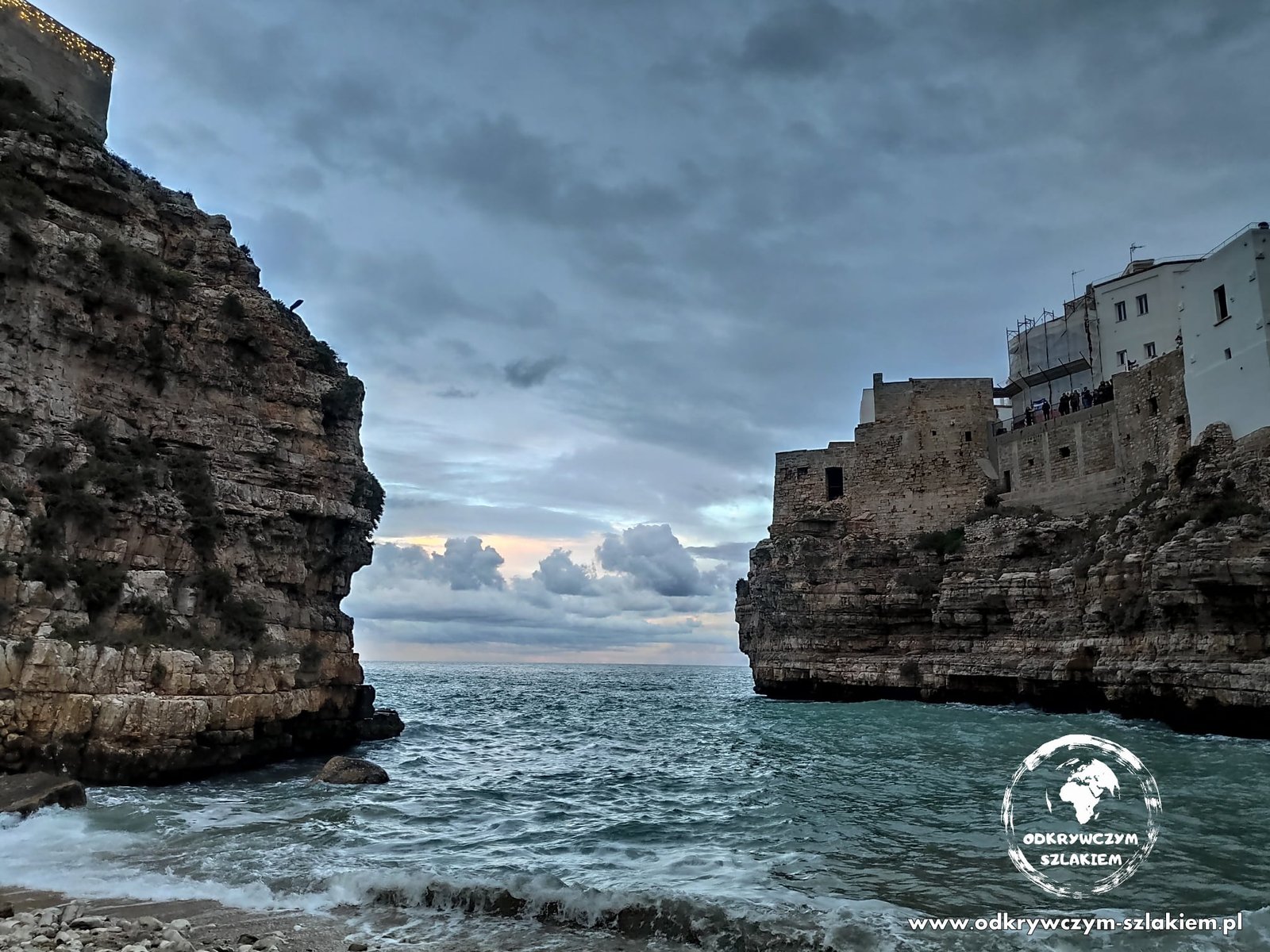
In the afternoon we reached Polignano a Mare, a town built on limestone cliffs above the Adriatic. Its showpiece is Lama Monachile – a very famous small beach squeezed between two steep cliffs. It is best seen from above, but it is also worth going all the way down to the water – from there the houses of the old town look as if they grow straight out of the rock.
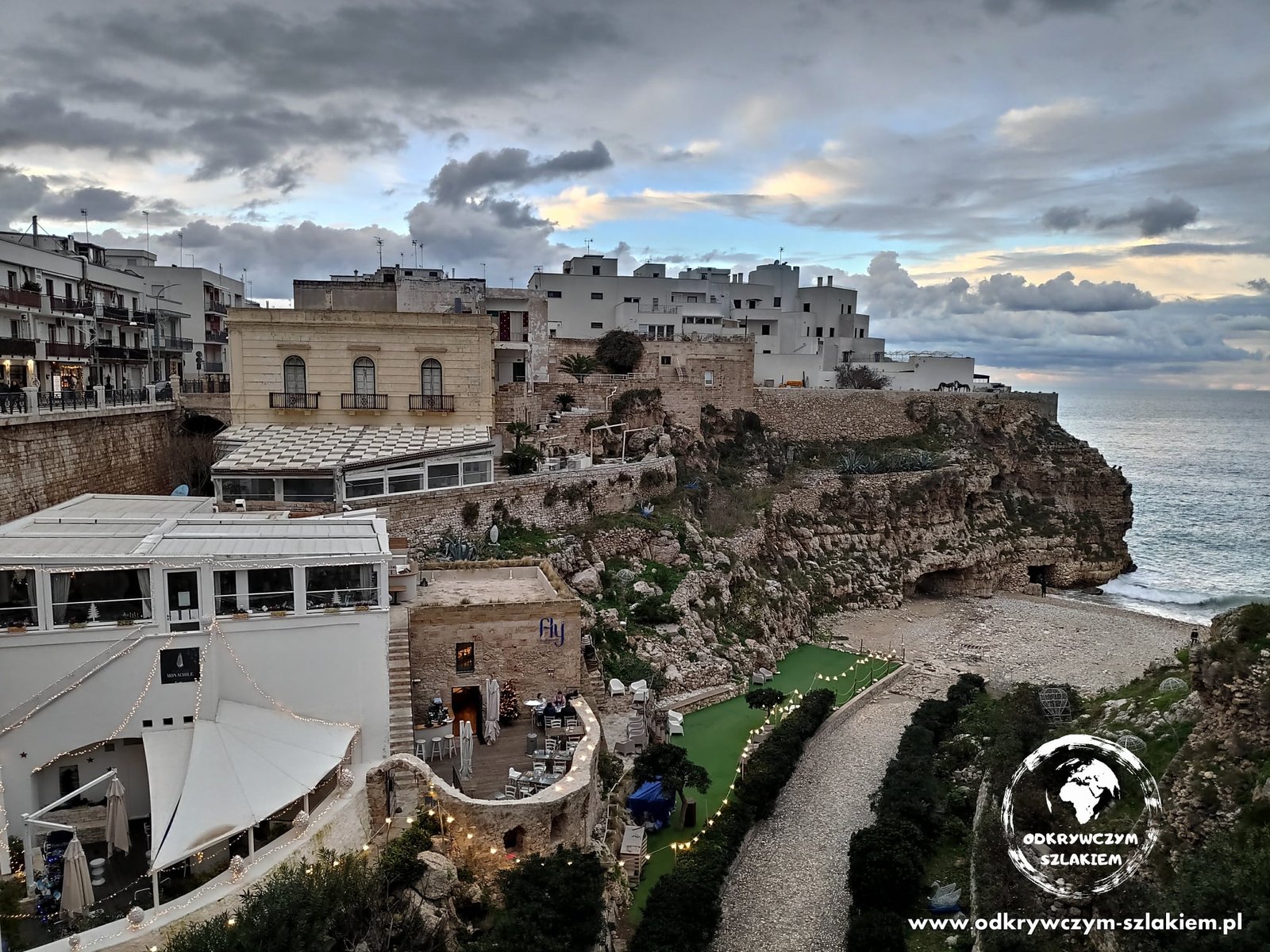
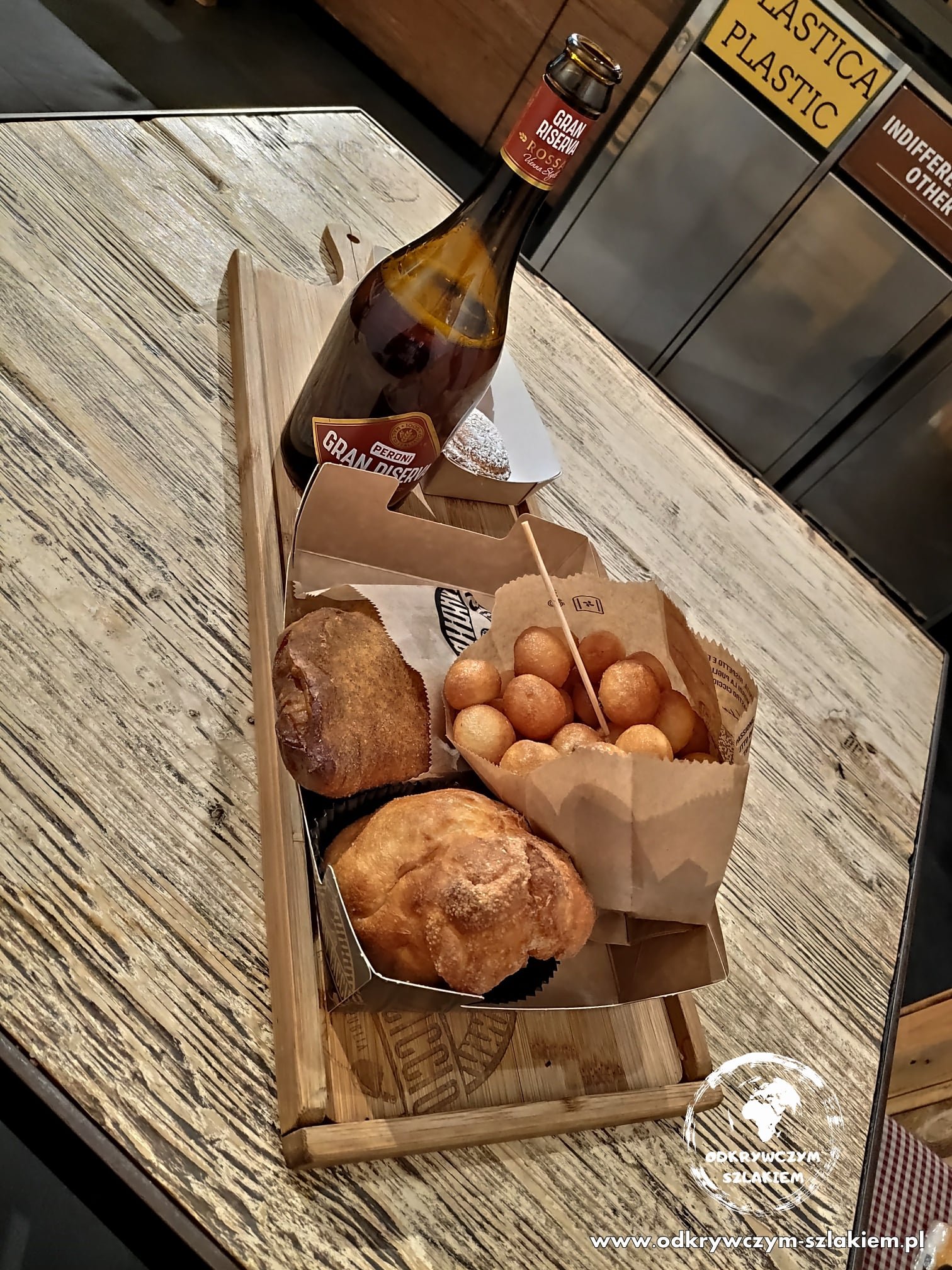
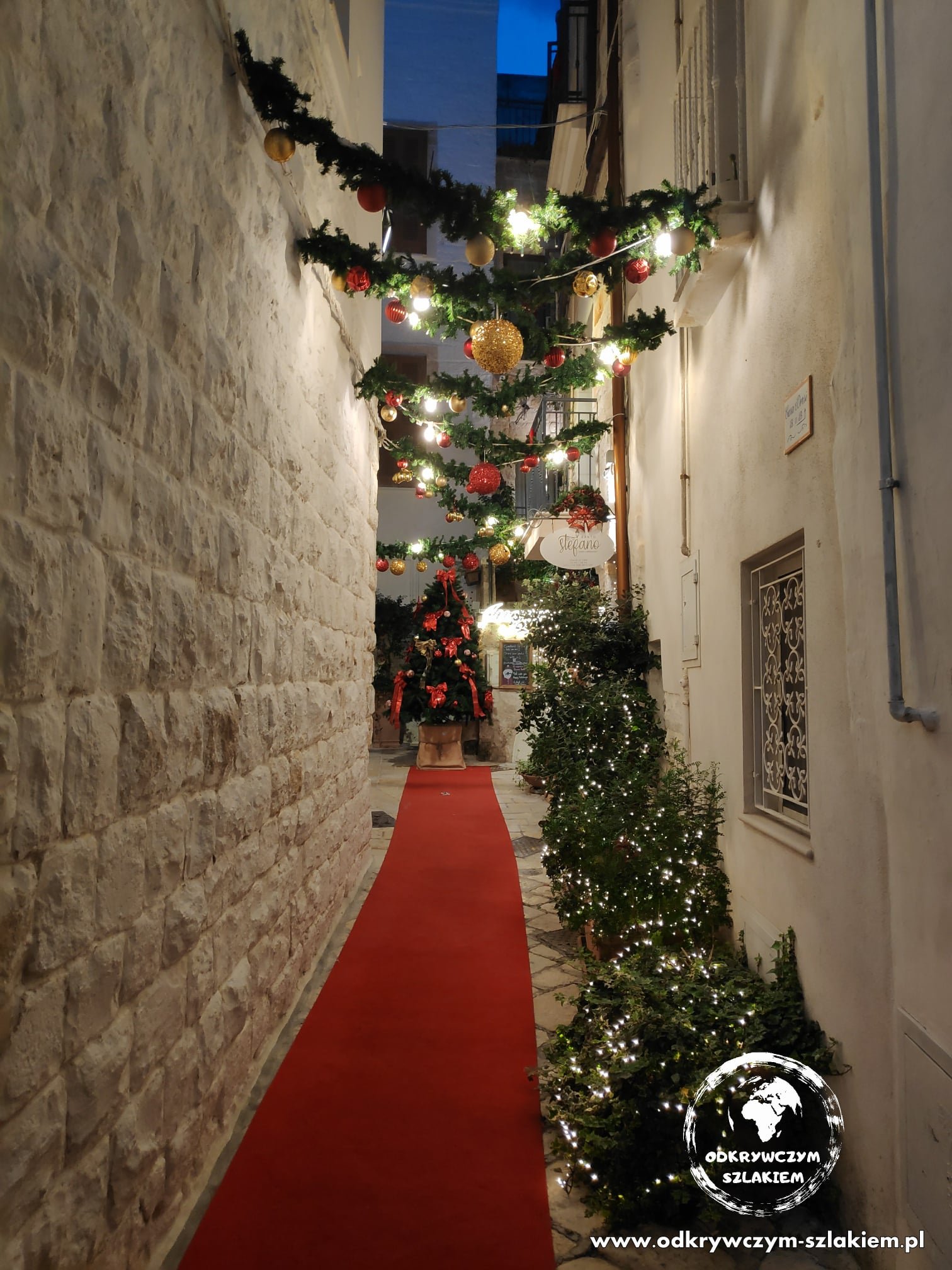
In December the sun sets around 16:30, so we saw the old town of Polignano at dusk. The narrow alleys were beautifully decorated for Christmas – some even had a red carpet laid out. In the evening we went back to Bari and got snacks for dinner from the Mastro Ciccio bar.
Matera – the rock city of the Sassi
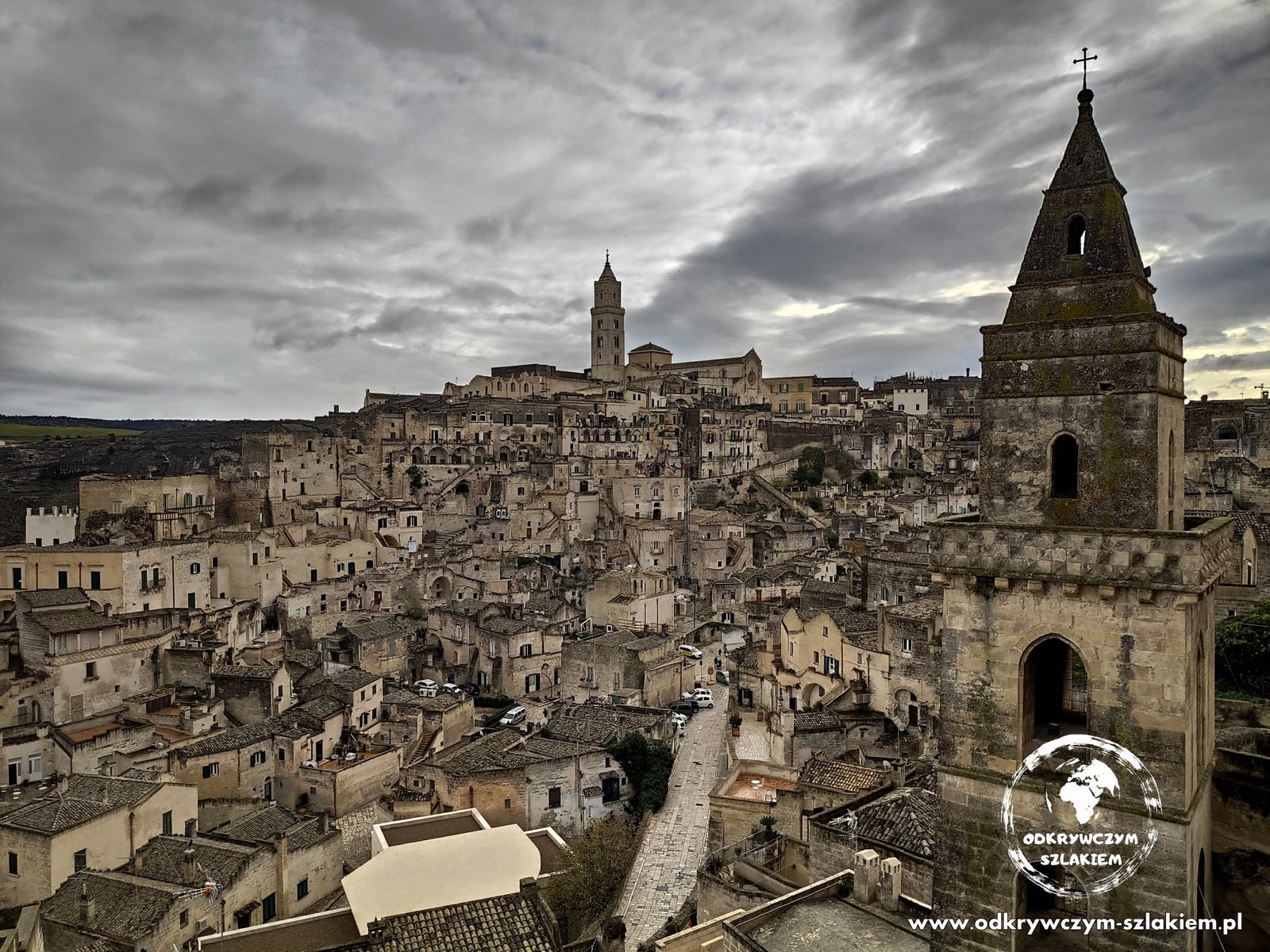
We set aside Sunday for Matera. Formally it is no longer Apulia but the neighbouring region of Basilicata, but it is close to Bari, so it is a natural day trip. Matera is considered one of the oldest cities in the world. Its historic part – the Sassi di Matera – consists of houses, churches and cellars carved into the soft rock above a gorge. As late as the mid-20th century living conditions in the Sassi were so bad that the inhabitants were resettled to new districts; today the rock houses are home to hotels, restaurants and museums. Together with the rock churches on the other side of the gorge, the Sassi have been on the UNESCO list since 1993, and in 2019 Matera was the European Capital of Culture.
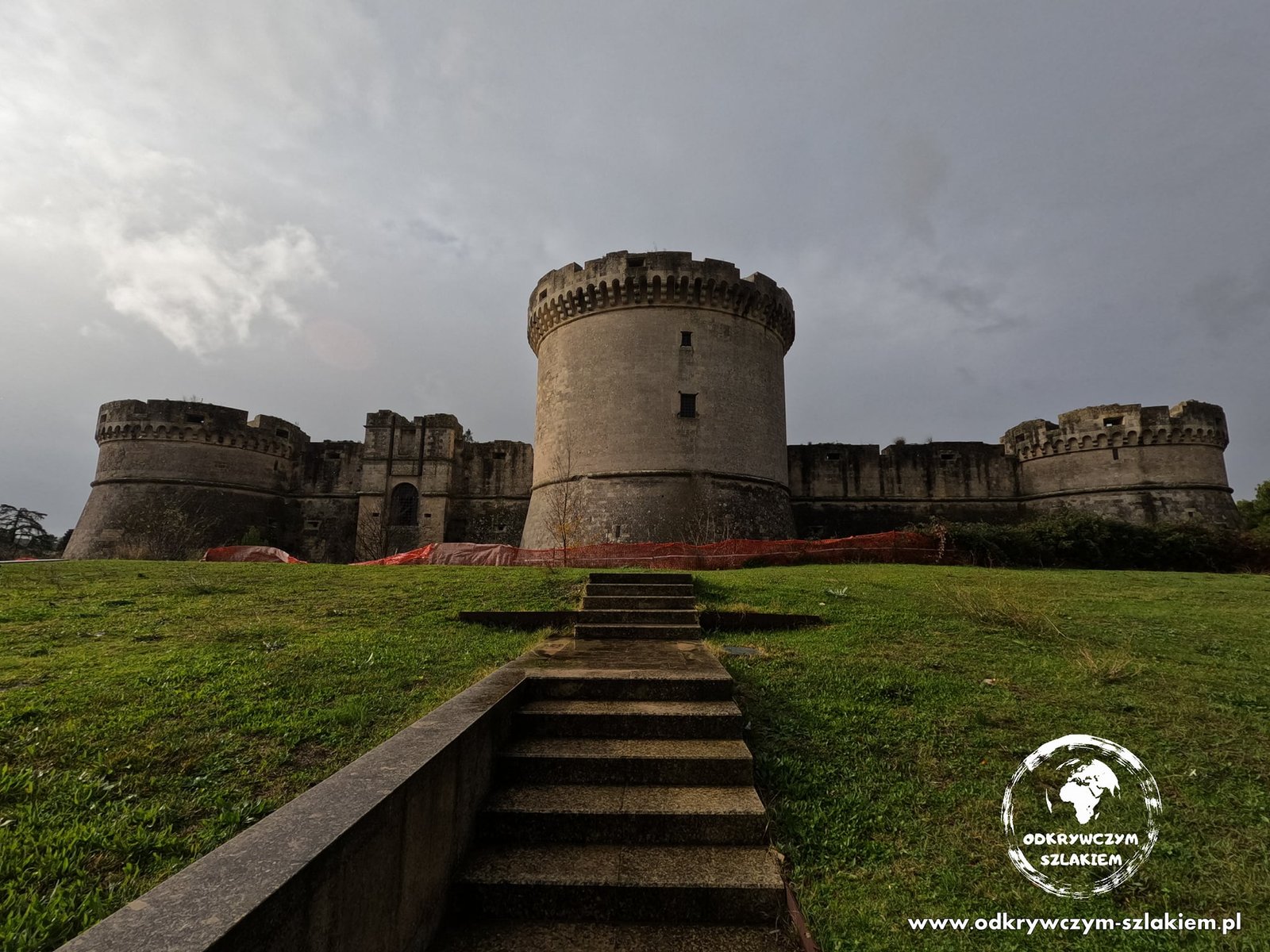
We began our walk in the upper, “ordinary” town. On its edge stands the 16th-century Tramontano Castle (Castello Tramontano), with a massive round tower in the middle – it was never finished.
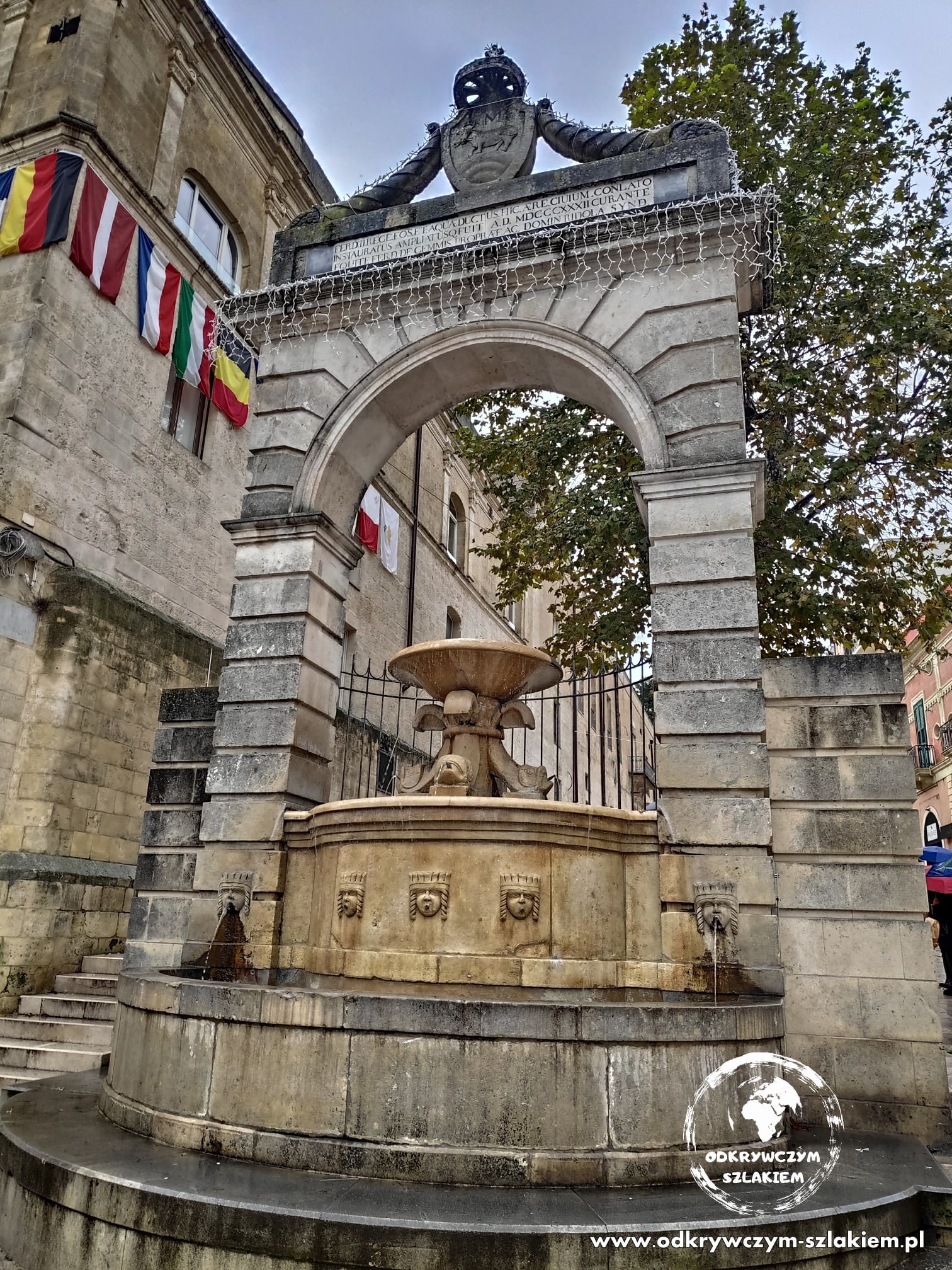
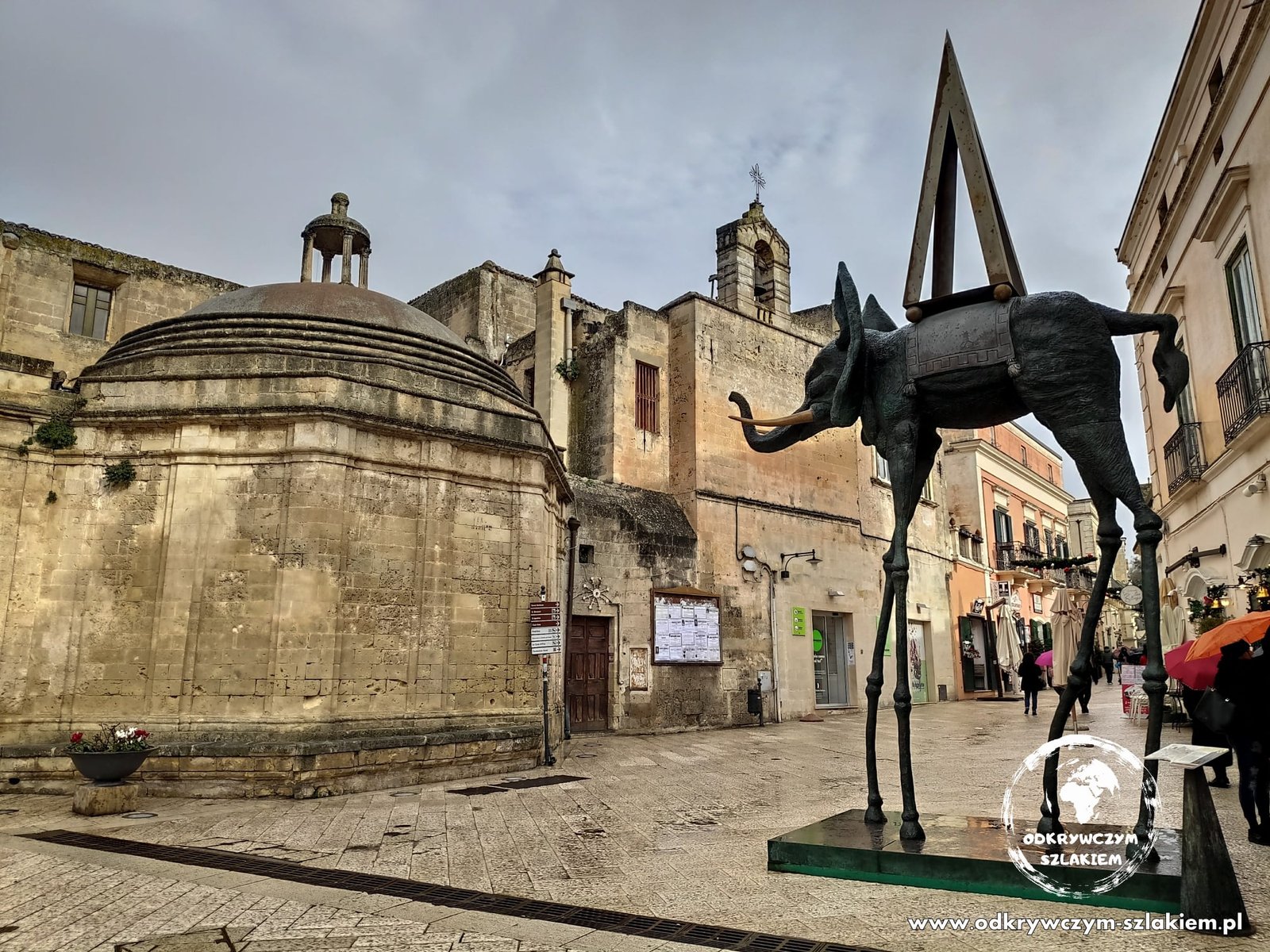
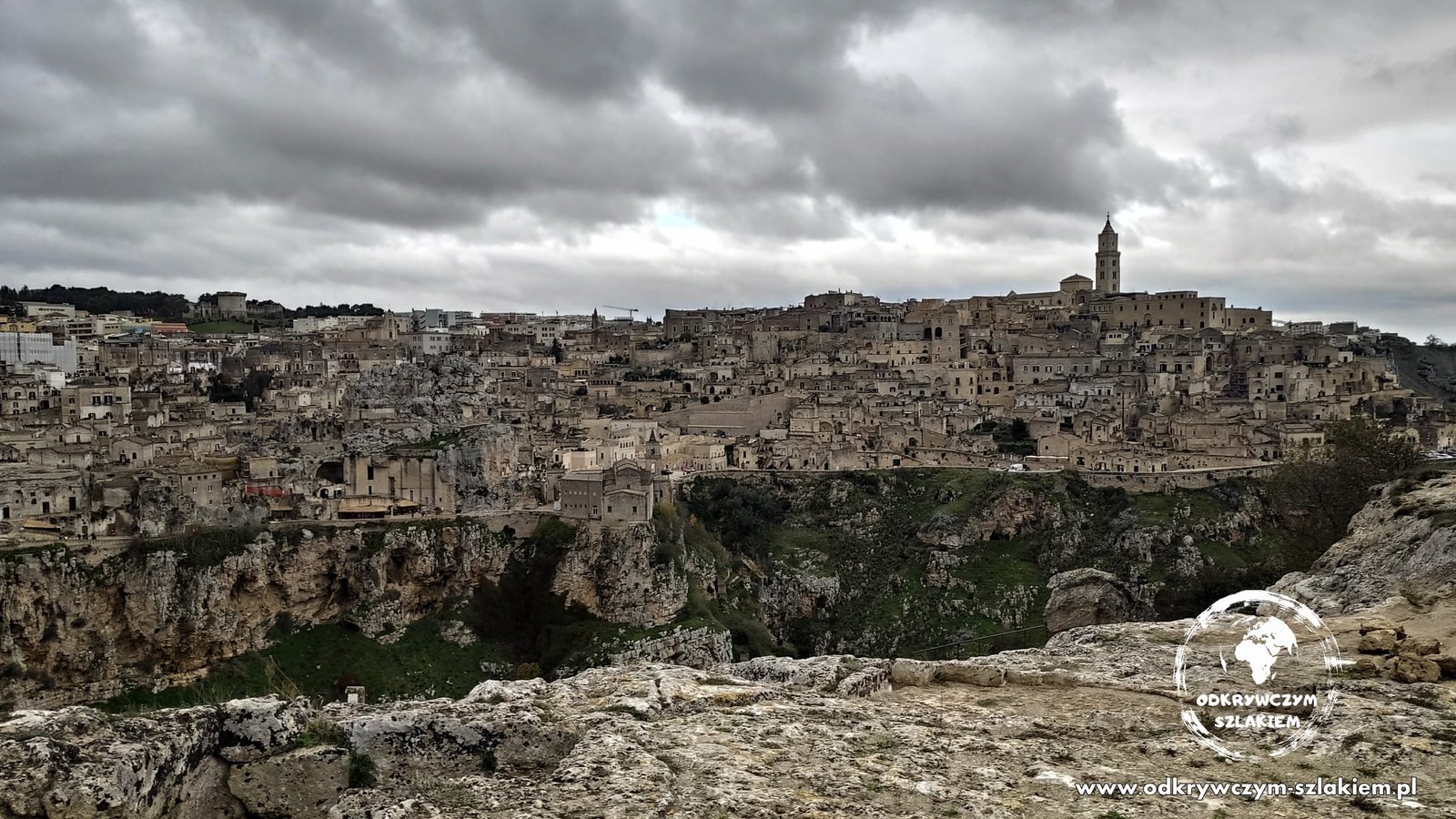
Next we walked past the Fontana Ferdinandea and the church of San Domenico, next to which stood a sculpture of an elephant on long, thin legs, to the Belvedere dei Tre Archi viewpoint. From here we saw the Sassi in all their glory for the first time.
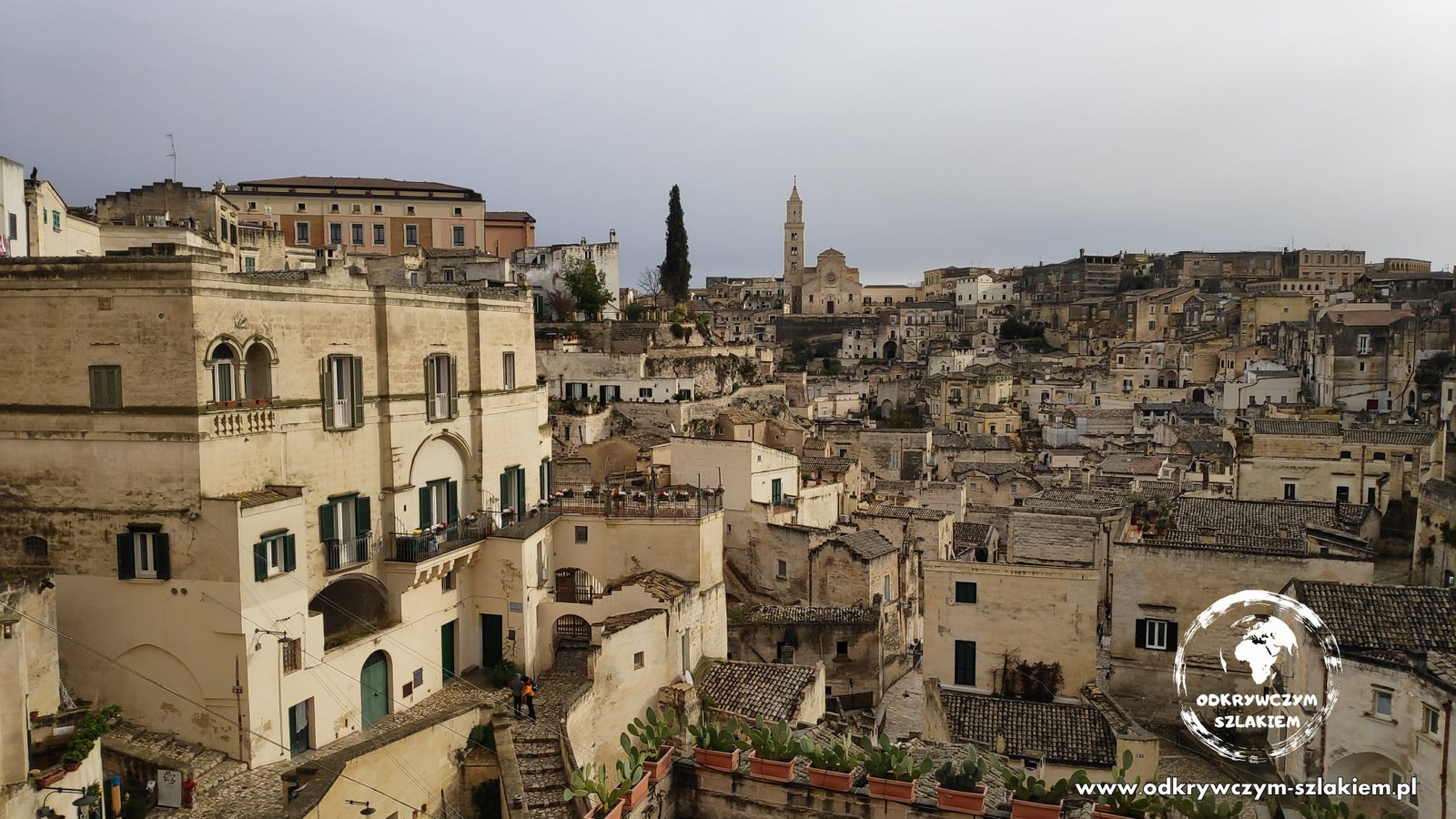
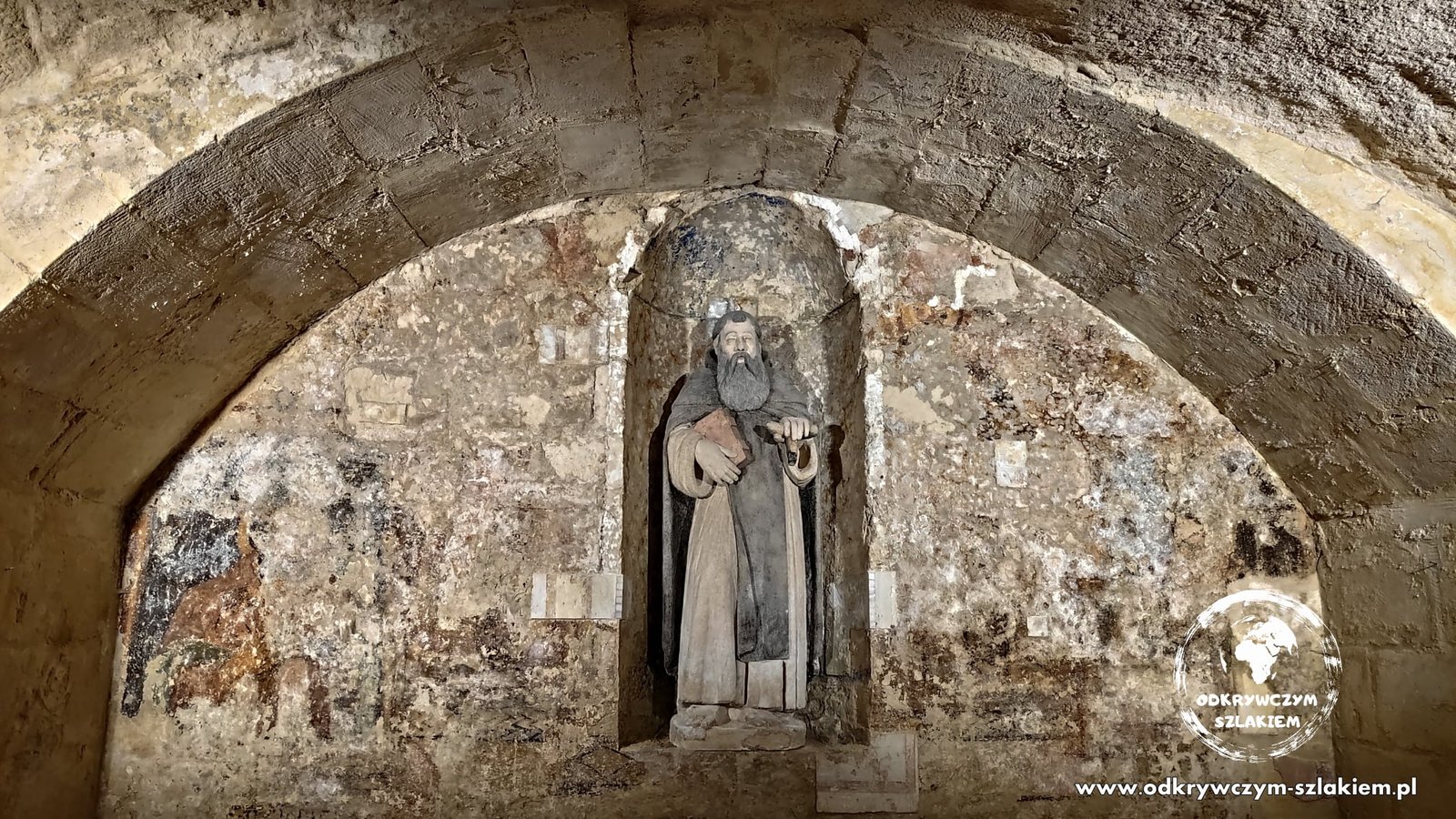
Then we went down into the Sassi. Stone alleys and stairs lead up and down, and the houses rise one above the other – the roof of one is sometimes the street for the next. On the way we looked into the rock church of Sant’Antonio Abate in Sasso Barisano, with a statue of the saint in a niche and remains of frescoes on the walls.
The Gravina gorge, the Tibetan bridge and the caves
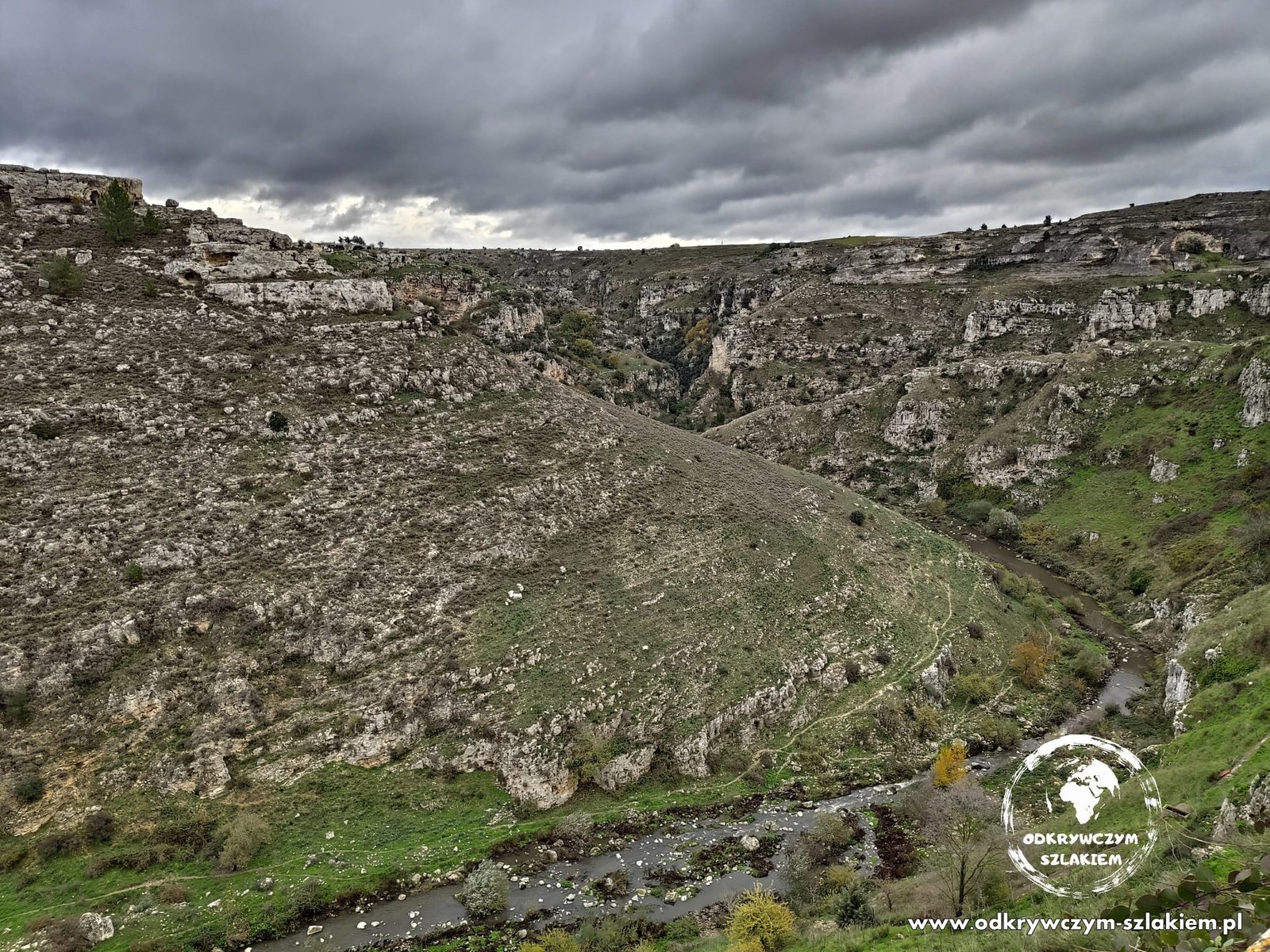
The rock city stands on the edge of a deep gorge through which the Torrente Gravina stream flows. On the other side stretches a wild, rocky plateau – the Murgia Materana park – with dozens of caves and rock churches.
After lunch we went further down to the bottom of the gorge, to the Tibetan bridge (Ponte Tibetano della Gravina) – a suspension footbridge over the stream. From above it looks unremarkable, but crossing it is great fun.
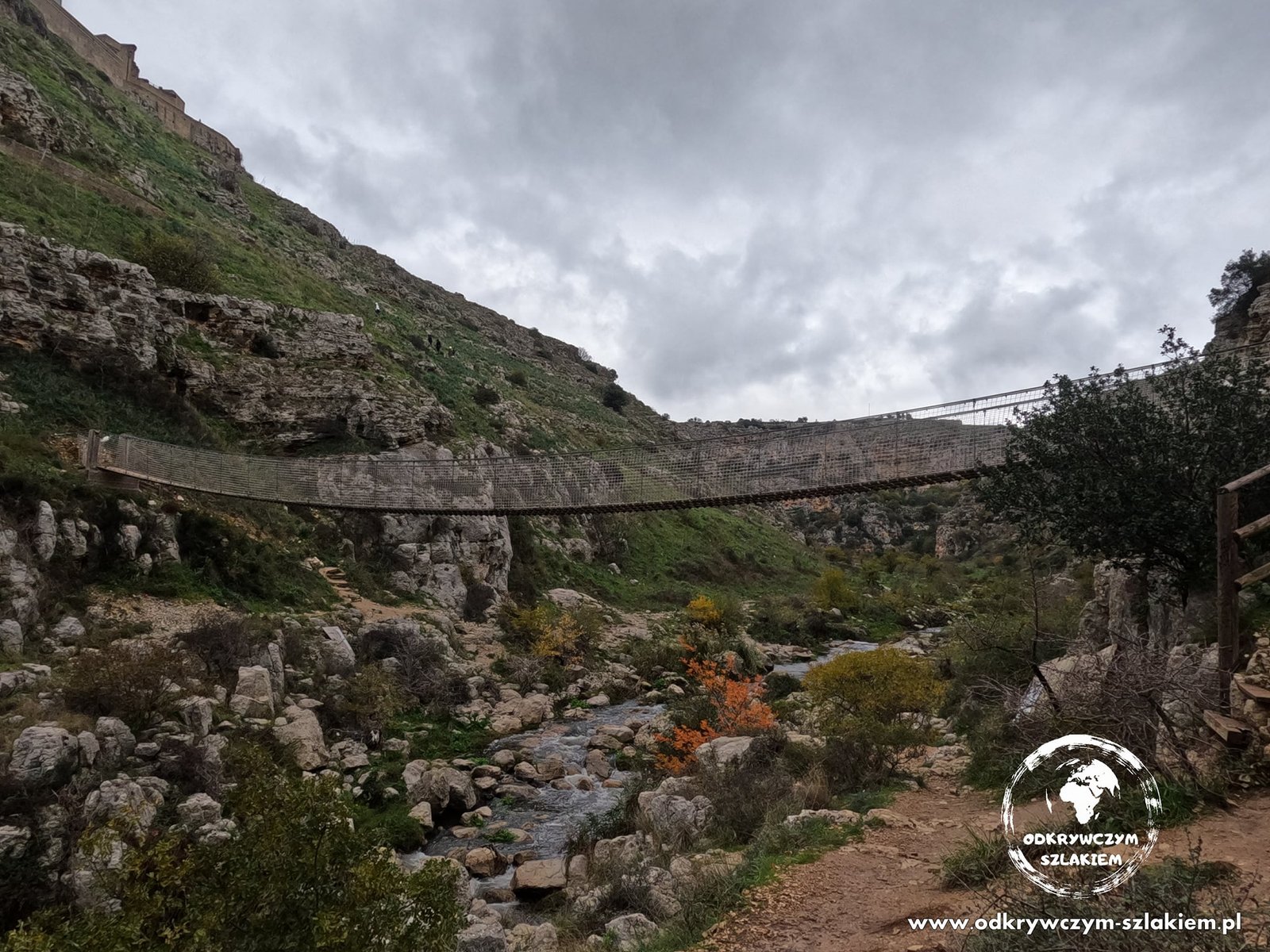
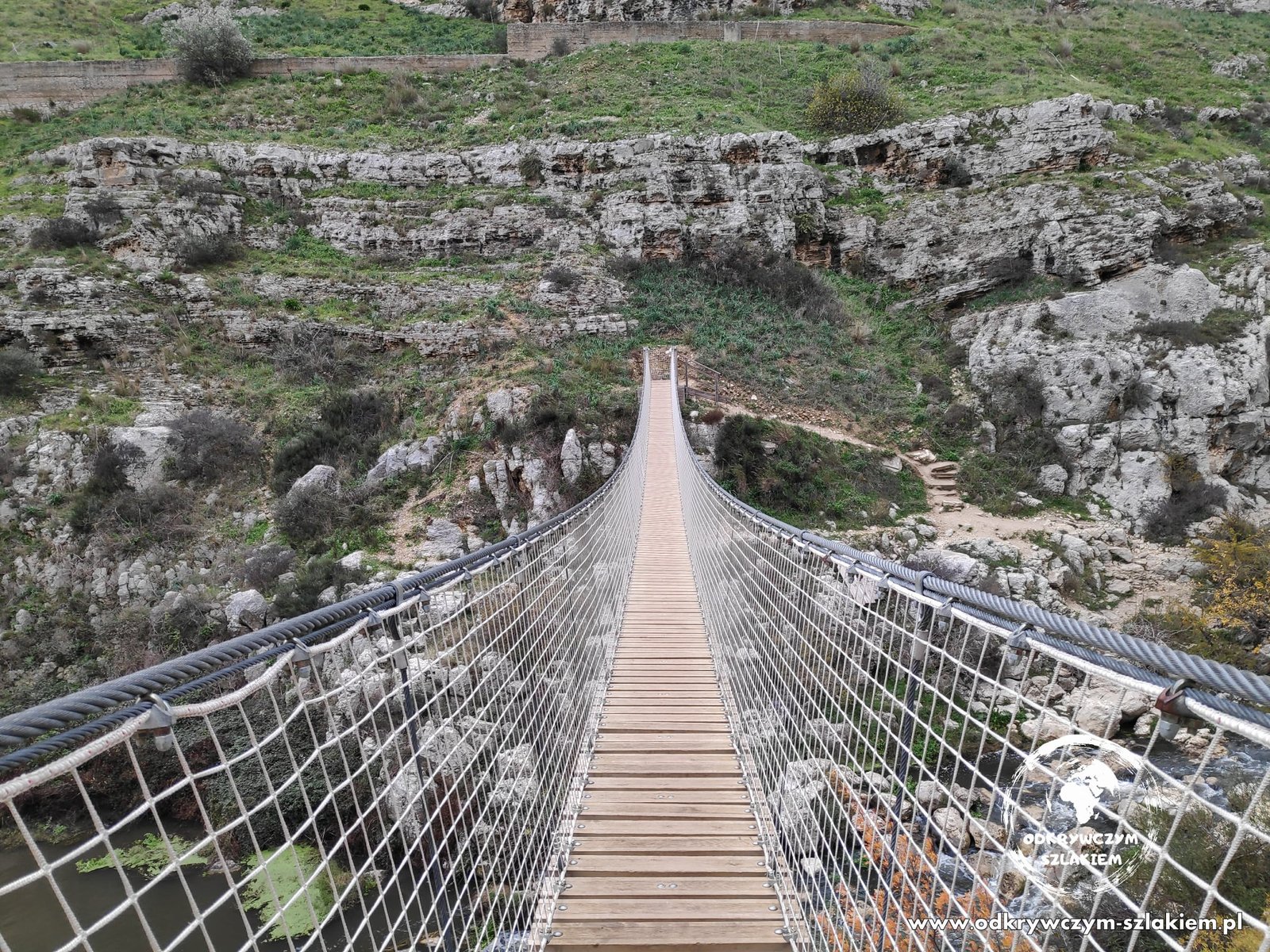
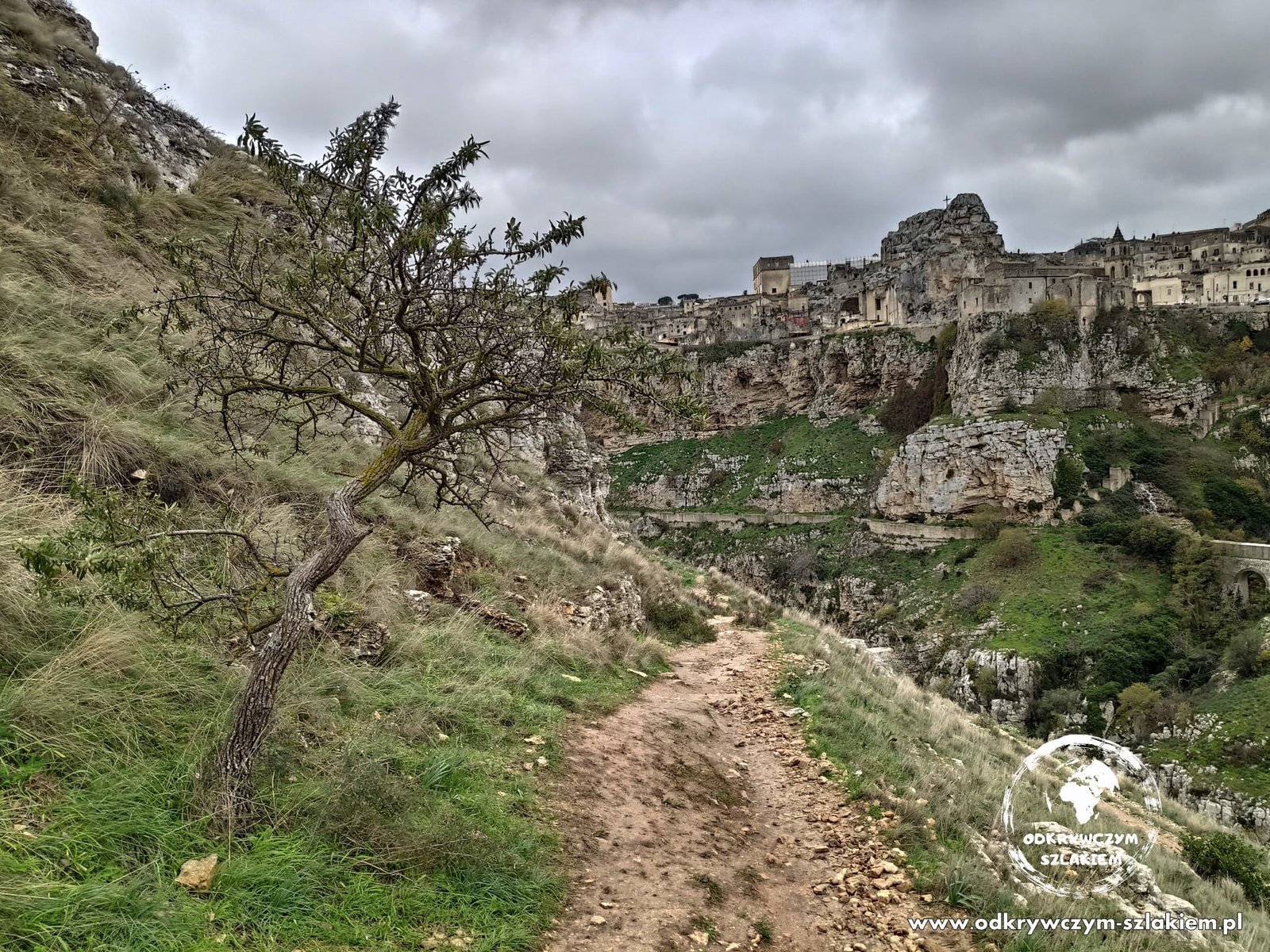
Beyond the bridge a mountain path begins, leading along the slope to many caves. Some of them once sheltered shepherds and animals, others were churches – like the rock church of Sant’Agnese.
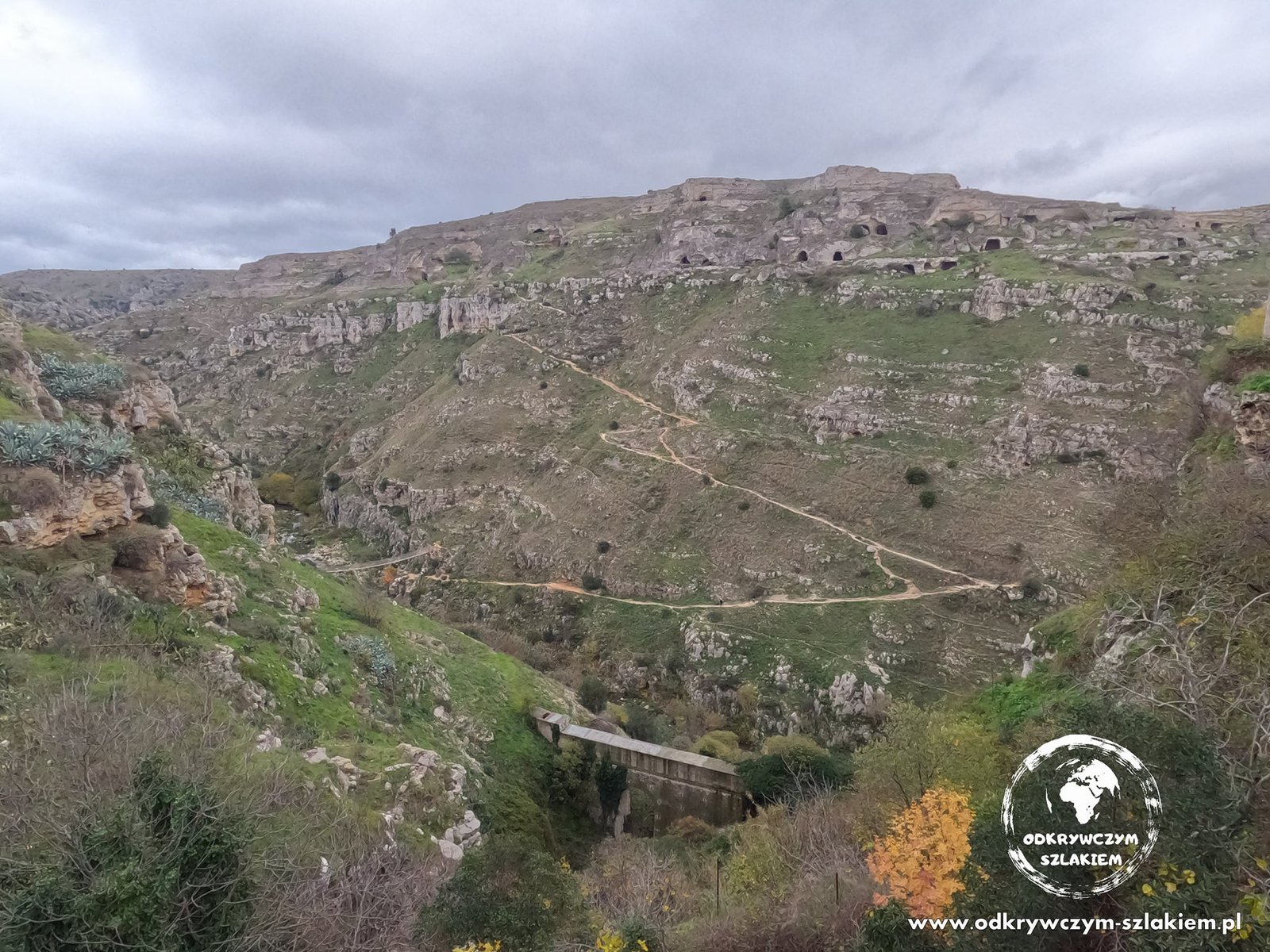
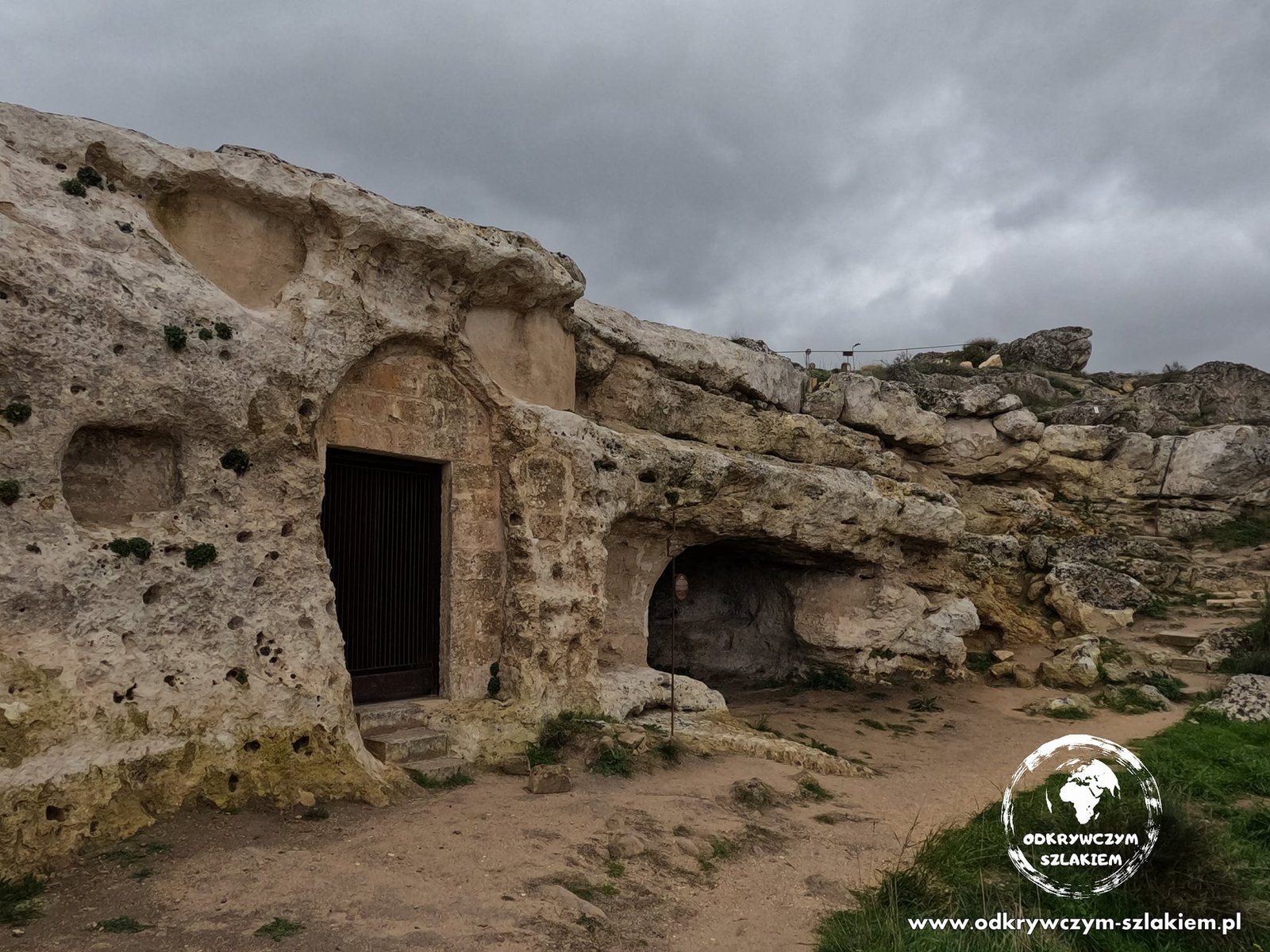
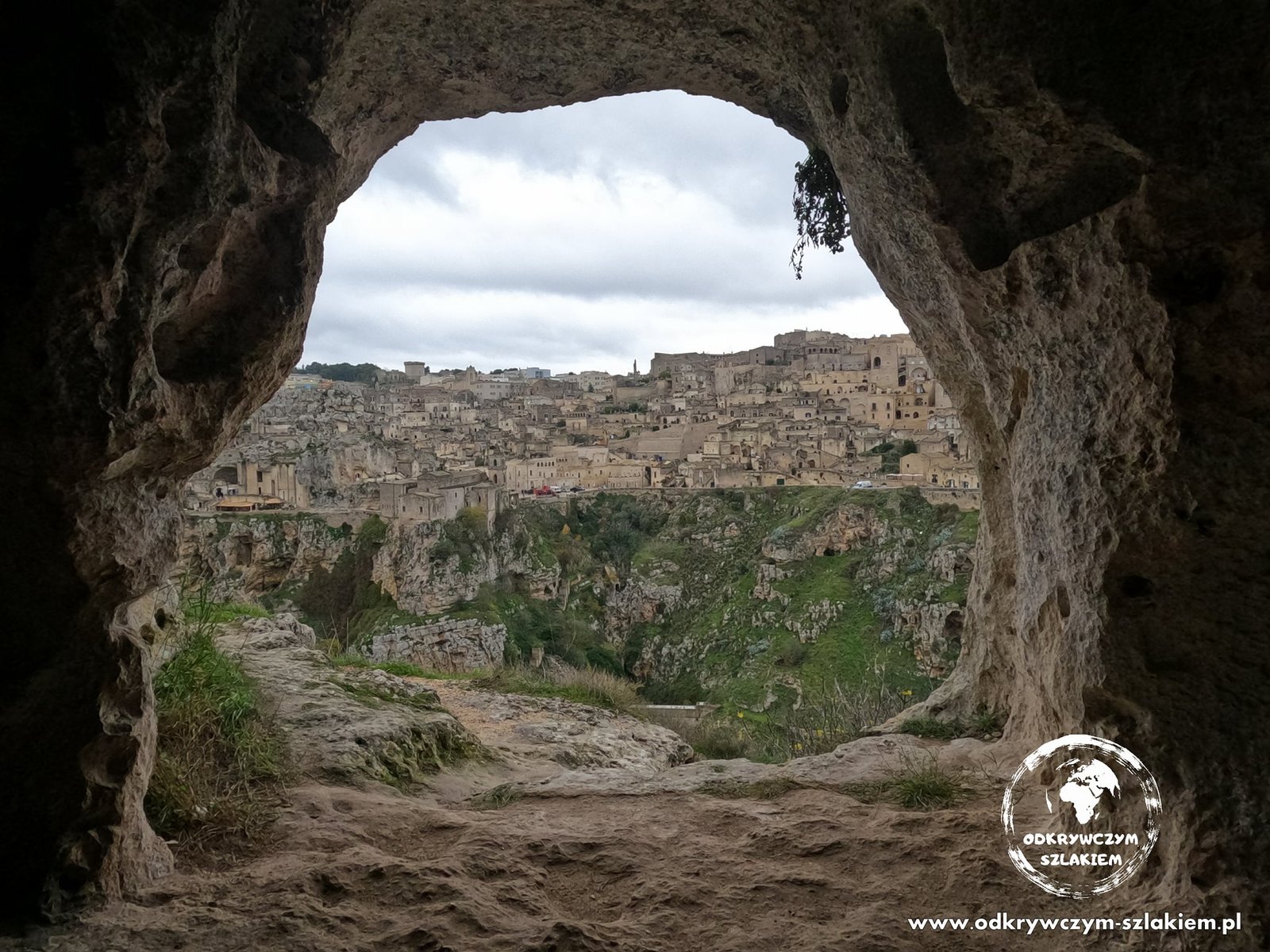
It is from this side of the gorge that you get the most beautiful view of Matera – the whole of the Sassi is laid out before you, including through the opening of a cave. We returned to Bari in the evening.
Bari – Christmas lights and the old town
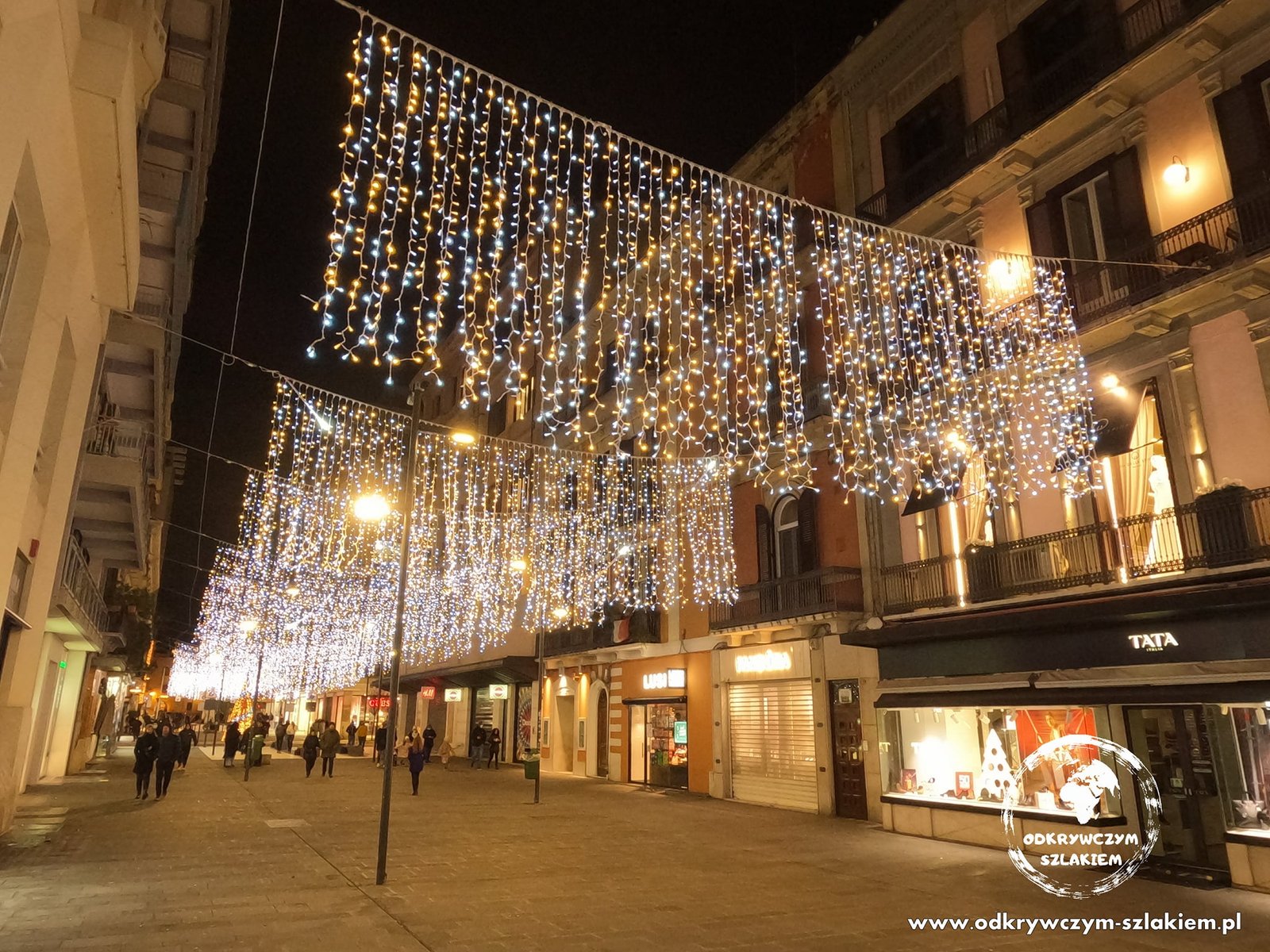
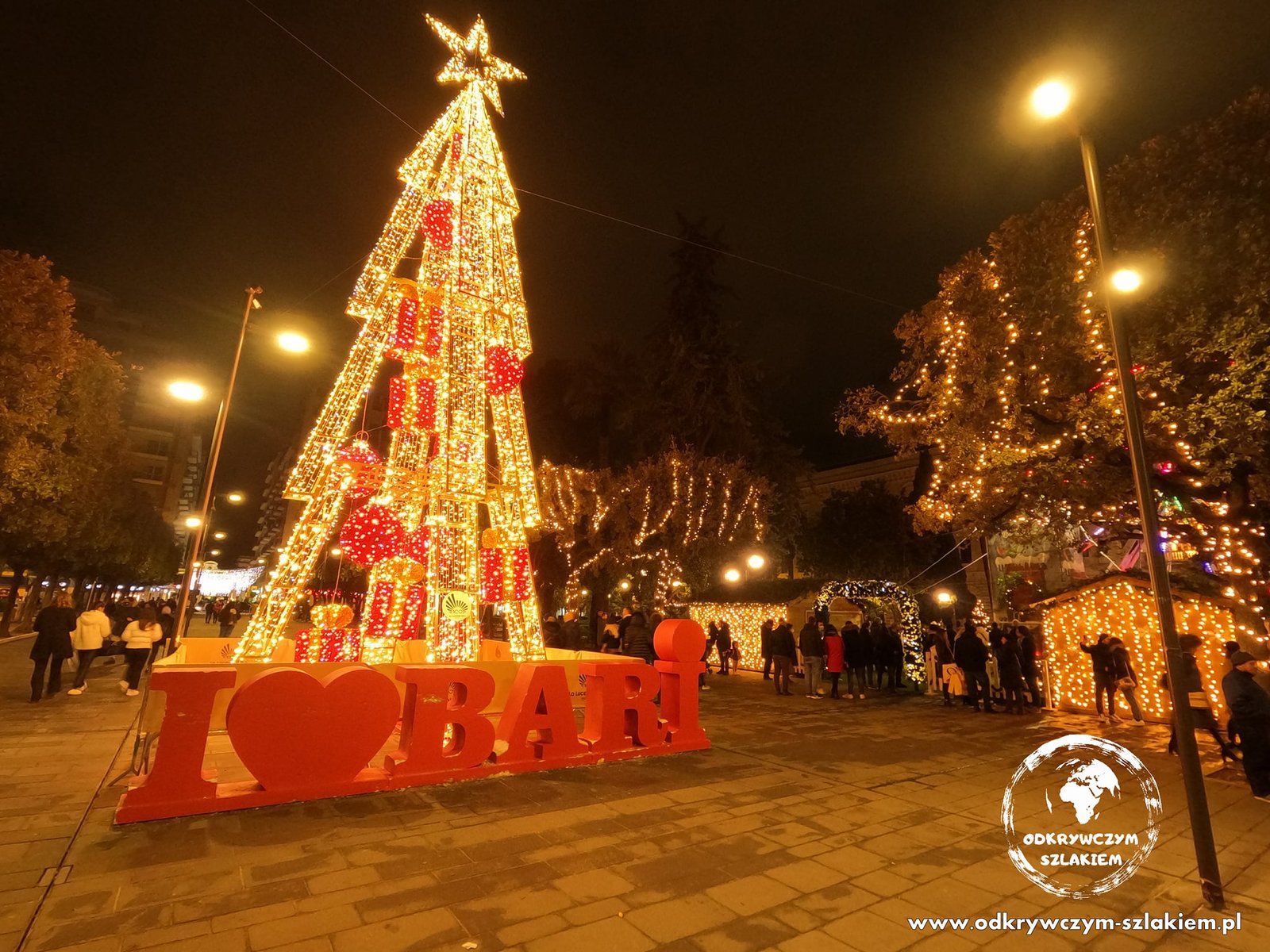
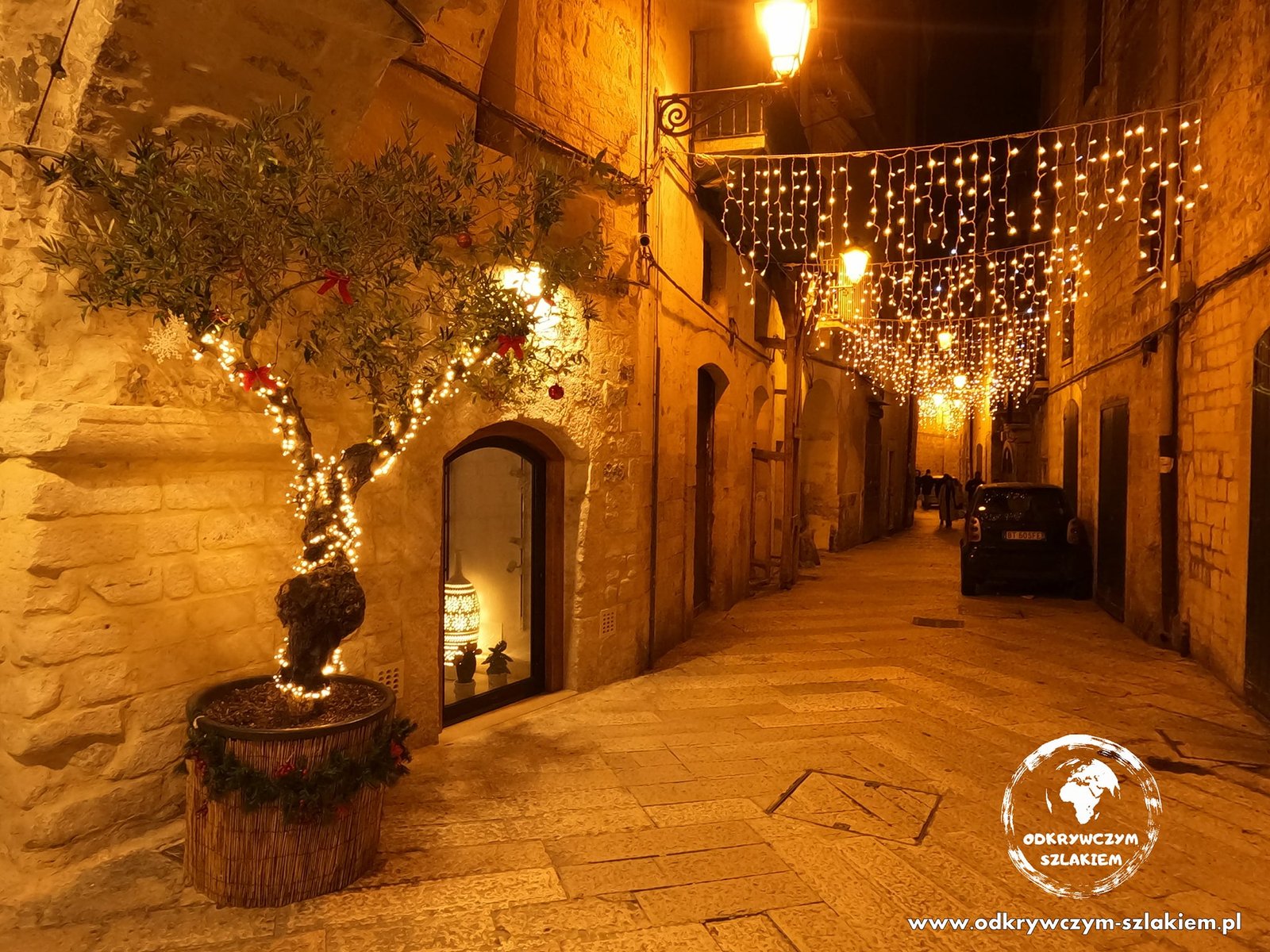
On Sunday evening we took a walk around Bari. The city was beautifully lit: in Piazza Umberto I there was a huge Christmas tree made of lights and an “I ❤ Bari” sign, curtains of lights hung over the main shopping street, Via Sparano, and even the narrow streets of the old town (Bari Vecchia), such as Strada Boccapianola, were decorated with fairy lights.
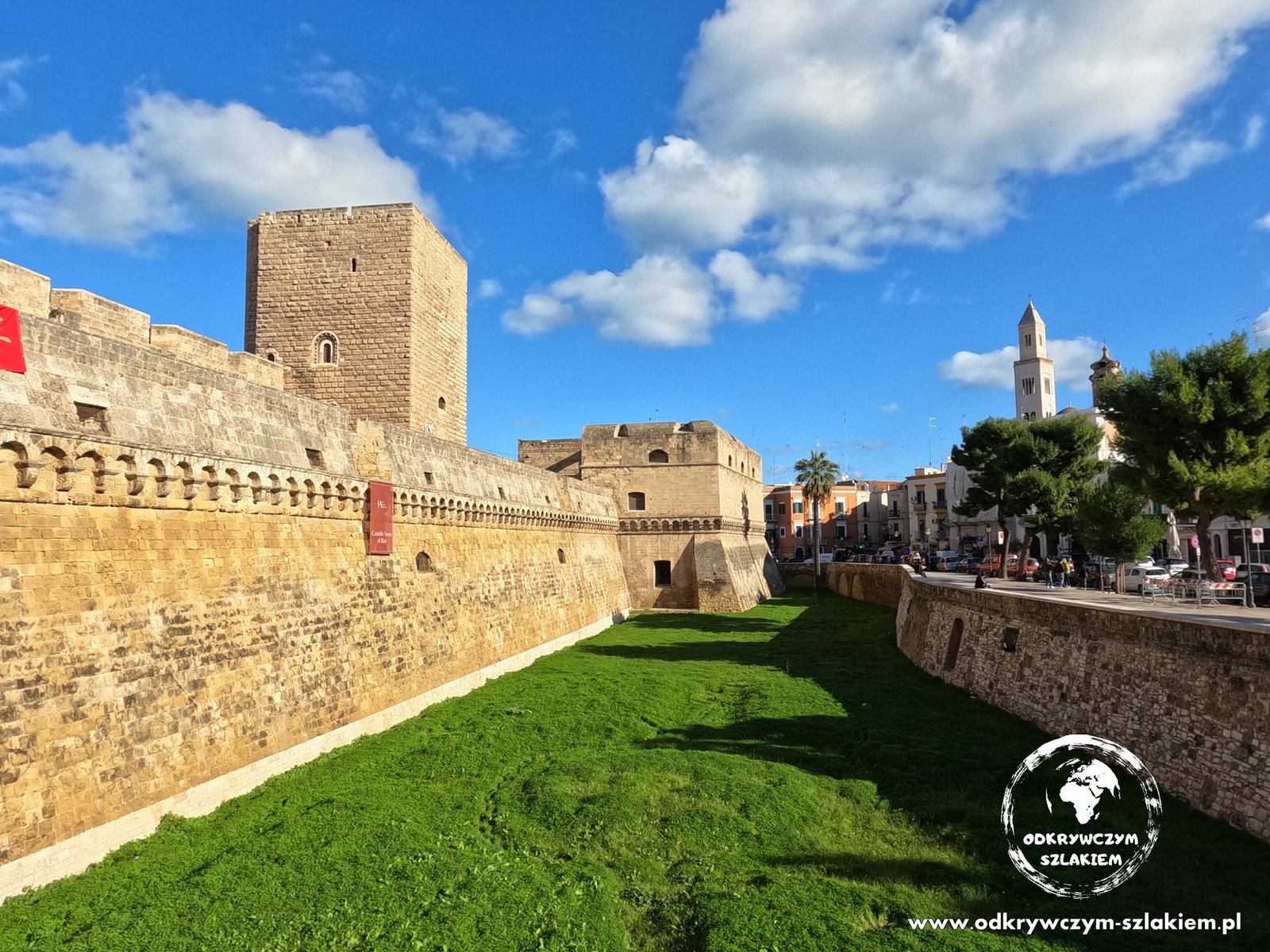
On Monday morning, before our flight, we still managed to see the most important sights – and in full sunshine. On the edge of the old town stands the Norman-Swabian Castle (Castello Normanno-Svevo), rebuilt in the 13th century under Emperor Frederick II.
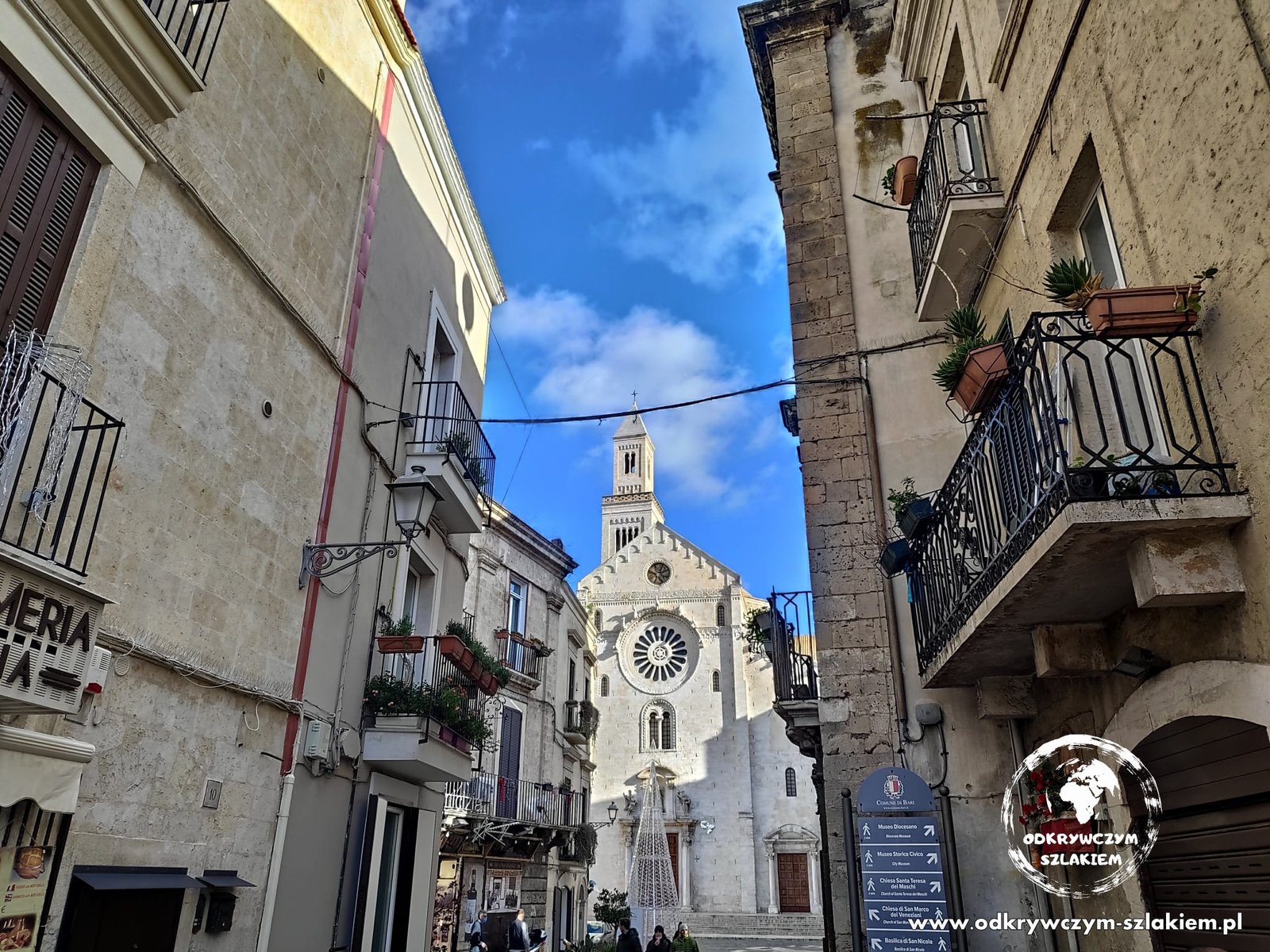
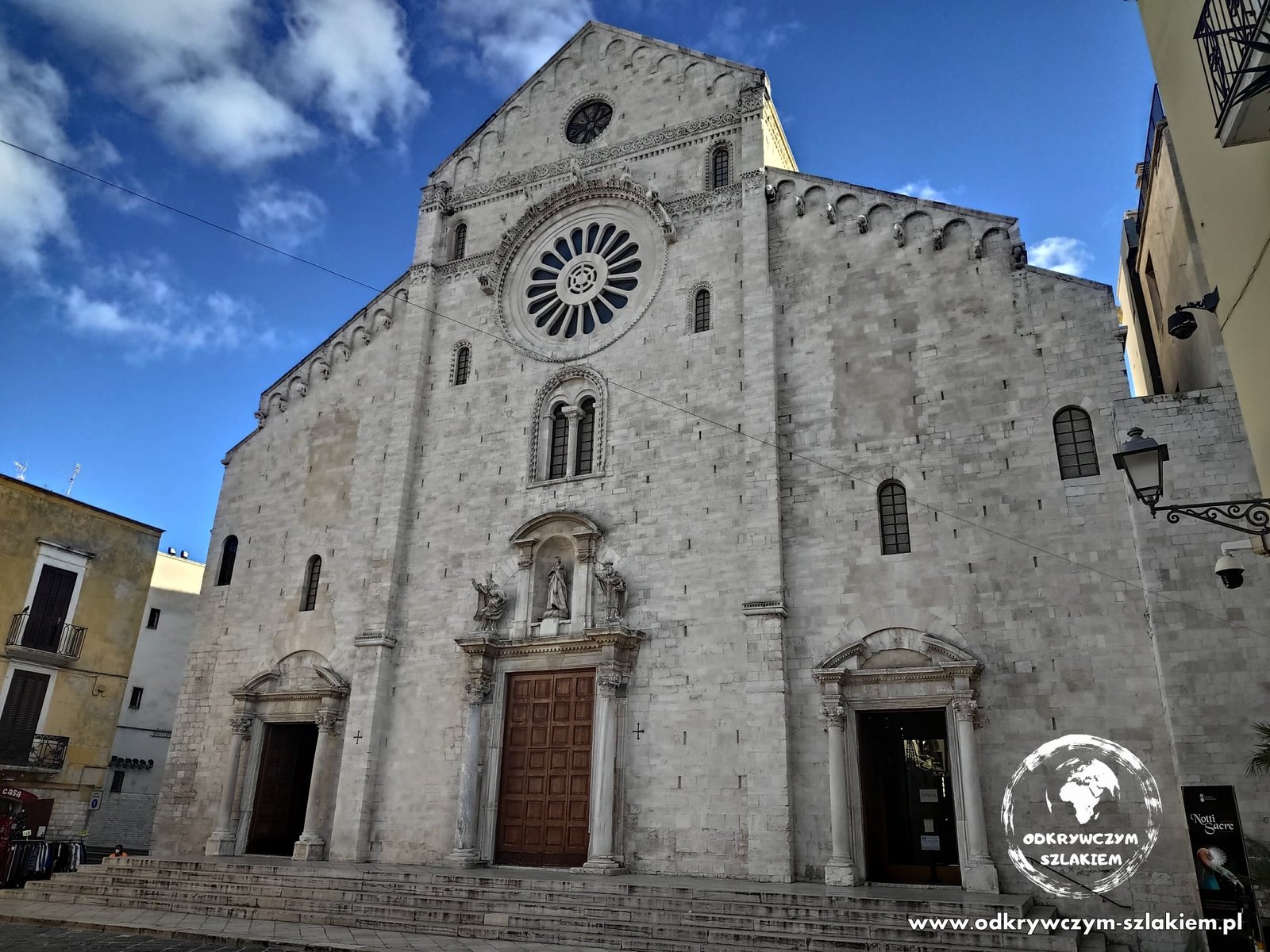
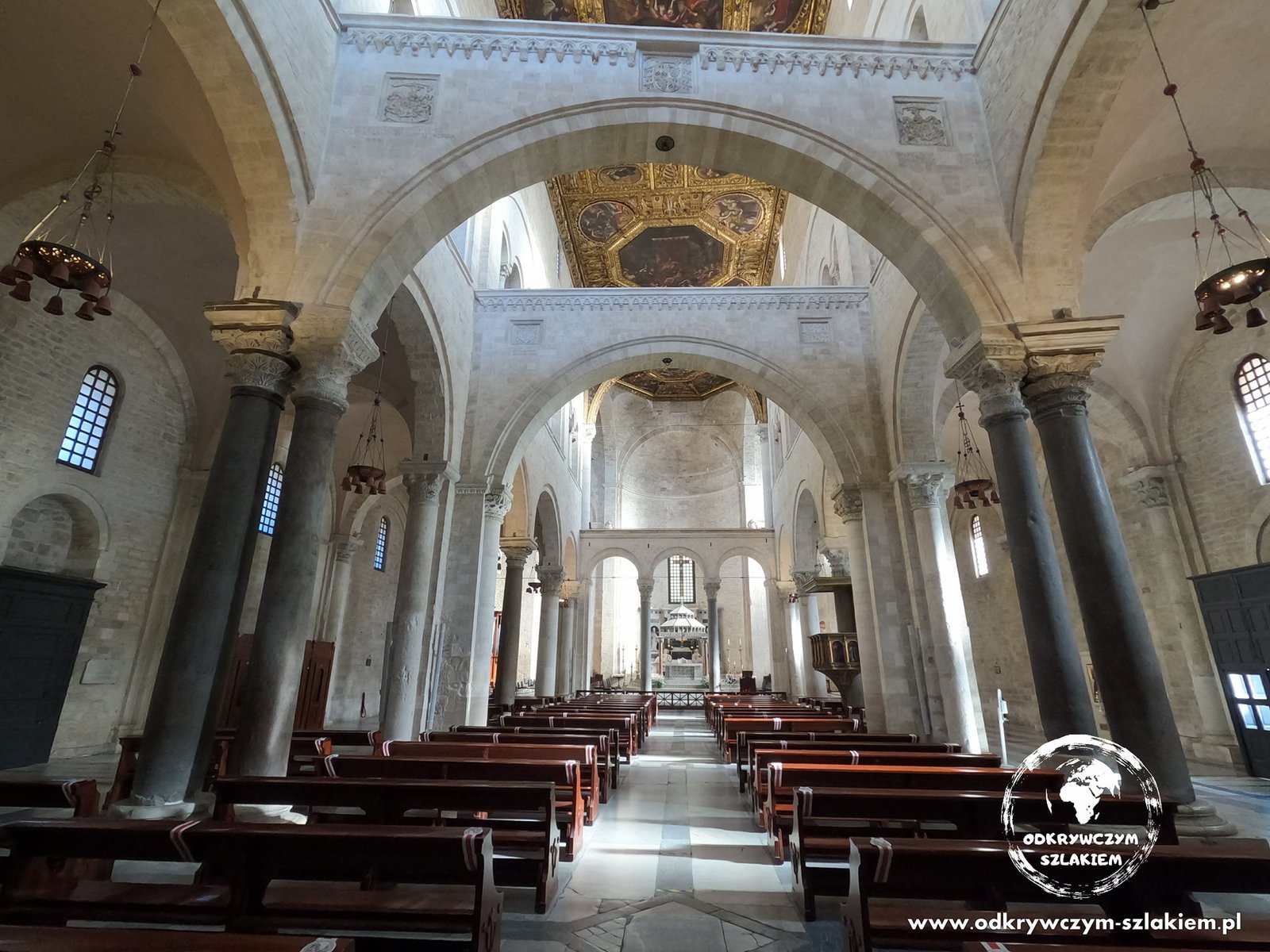
In the heart of Bari Vecchia stands the Romanesque Cathedral of San Sabino, and a few streets further on is the Basilica of Saint Nicholas (Basilica di San Nicola), where the saint’s relics have been kept since the 11th century.
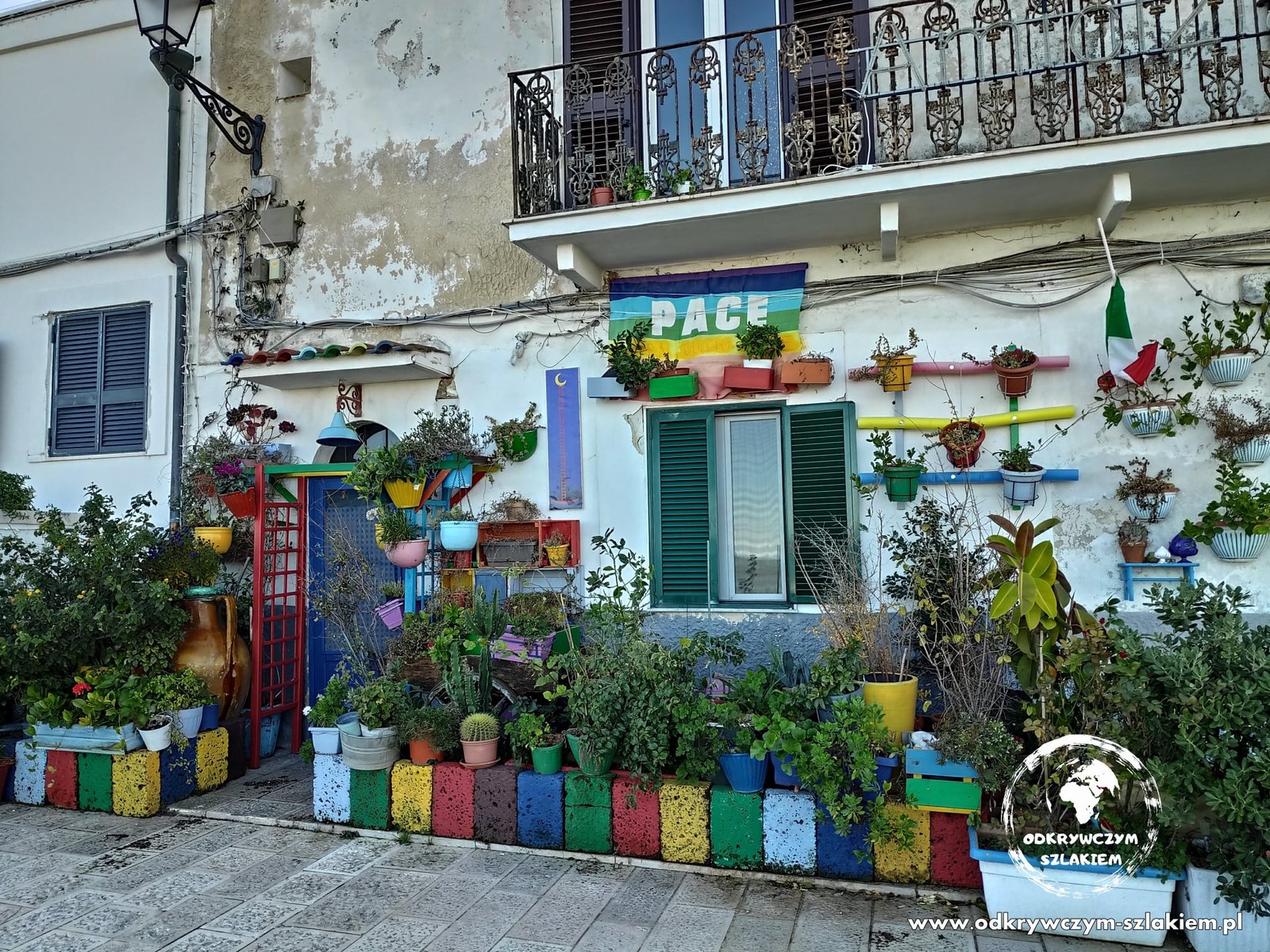
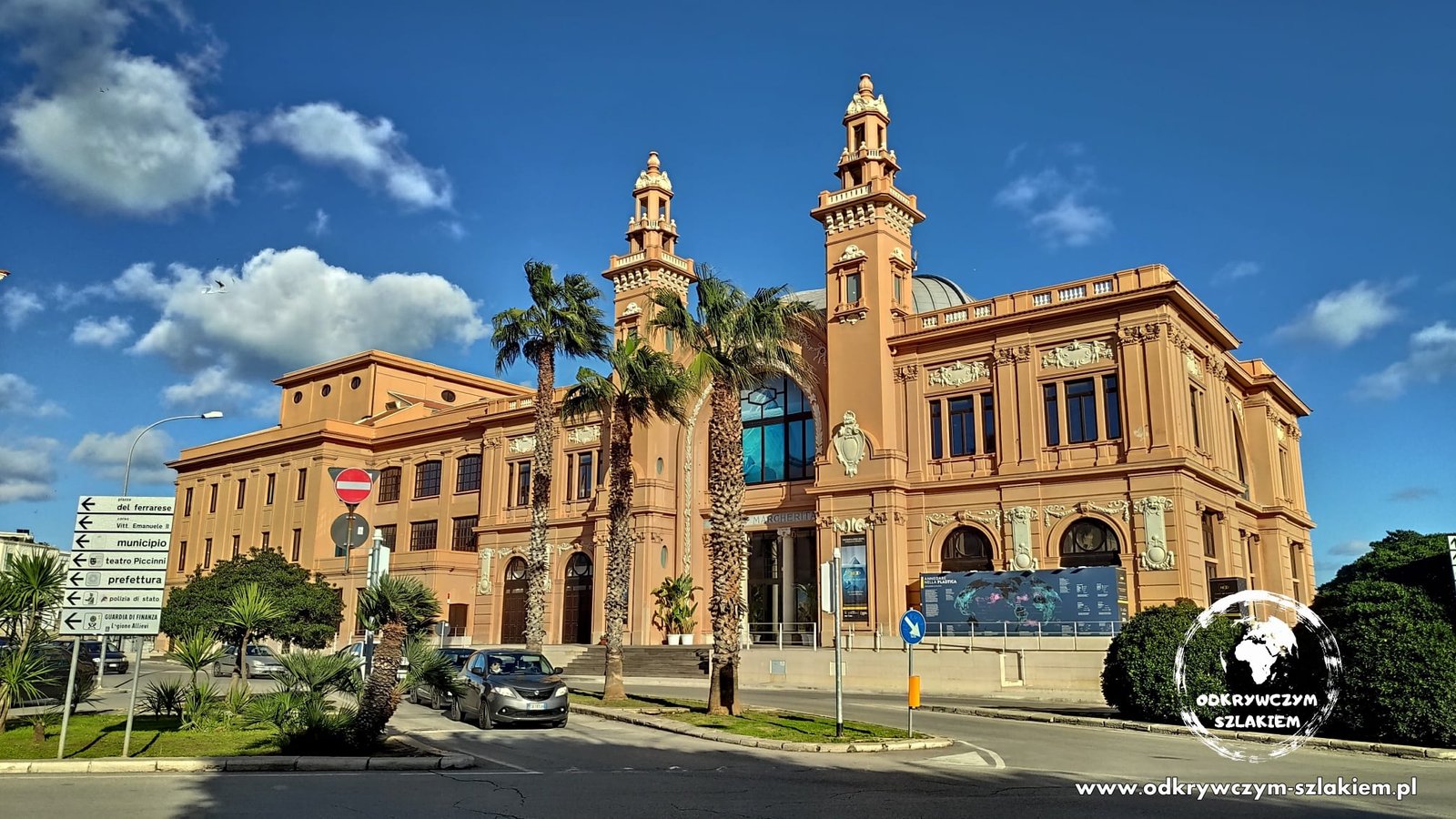
On the sea side the old town is surrounded by walls, along which runs Via Venezia – with a view of the Adriatic and colourful houses full of flowers. We finished our walk at the Teatro Margherita, a theatre built on stilts over the sea, which today hosts exhibitions.
Practical information
- How much time – we had just two and a half days and squeezed the most out of them: the first day for Alberobello, Monopoli and Polignano a Mare, the second for Matera, half of the third for Bari. It is an intense plan, especially in winter.
- Weather in December – 6–12°C, often cloudy and windy; the sun sets around 16:30, so the sightseeing day is short. In return, in the evenings you can enjoy the Christmas lights and the markets in the old towns.
- Matera – it already lies in Basilicata, but close to Bari. It is worth setting aside a whole day for the Sassi and the descent into the gorge with the Tibetan bridge, and wearing comfortable shoes – the paths on the other side are rocky and steep.
- Old towns – each of the places we visited has an old town with narrow streets and many churches; they are best explored on foot.
- Flights – Ryanair, among others, flies to Bari, so you can find tickets at a good price. Fun fact: Bari airport is named after Karol Wojtyła, i.e. Pope John Paul II.
- Transport – we did not rent a car: we travelled between Bari, Alberobello, Monopoli, Polignano a Mare and Matera by bus.
- Covid (December 2021) – you had to show proof of vaccination to enter indoor spaces, and shortly after we got back Italy also introduced a mandatory test before flying.
The blog also has a post from an earlier trip around the north of the country: From Bergamo to Ljubljana via Lake Garda and Venice.
Photo gallery