





Seville is the capital of Andalusia, and of flamenco too. The city has many beautiful, distinctive buildings. To make the most of all its sights and attractions, it’s worth setting aside a few days.
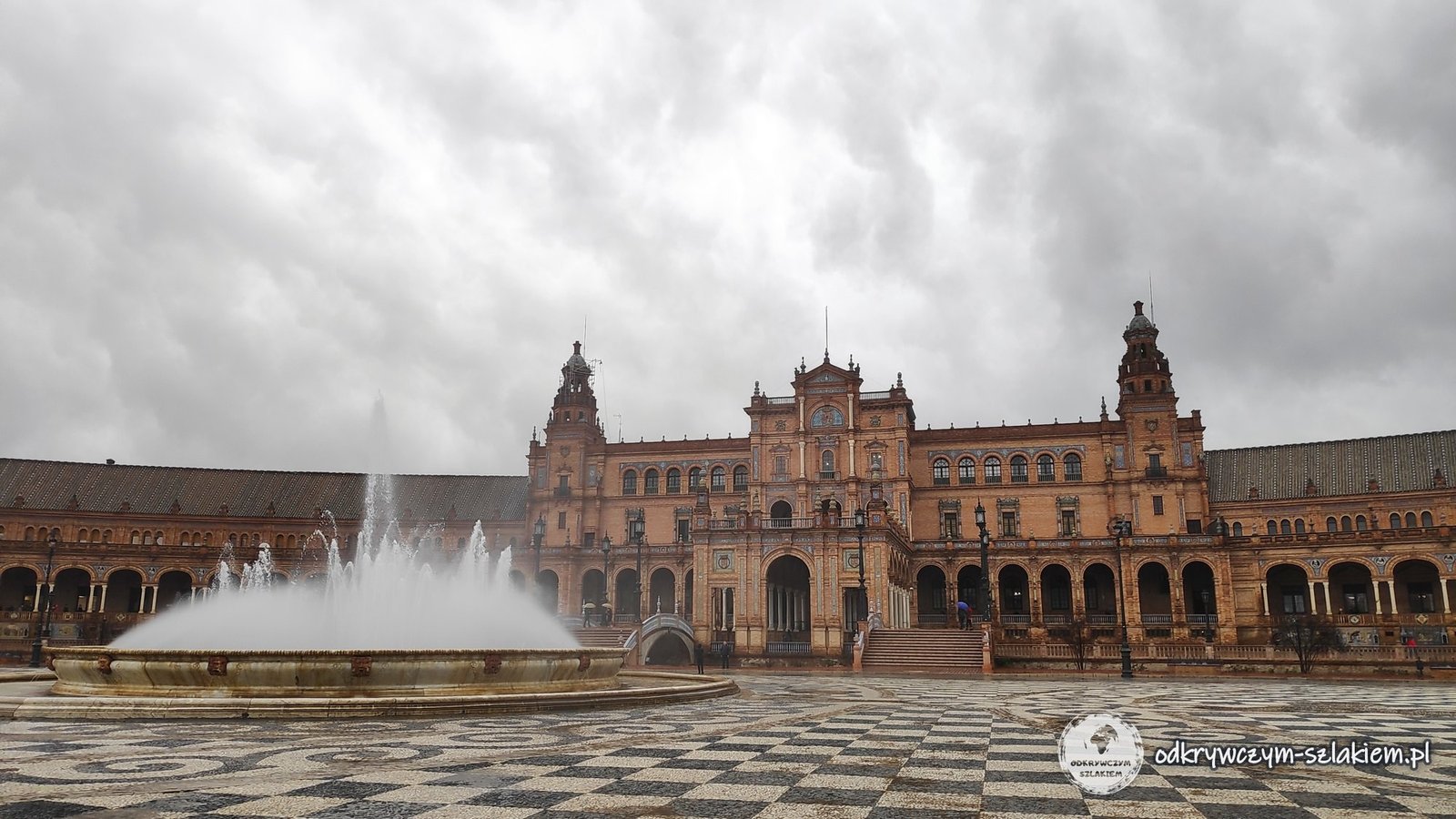
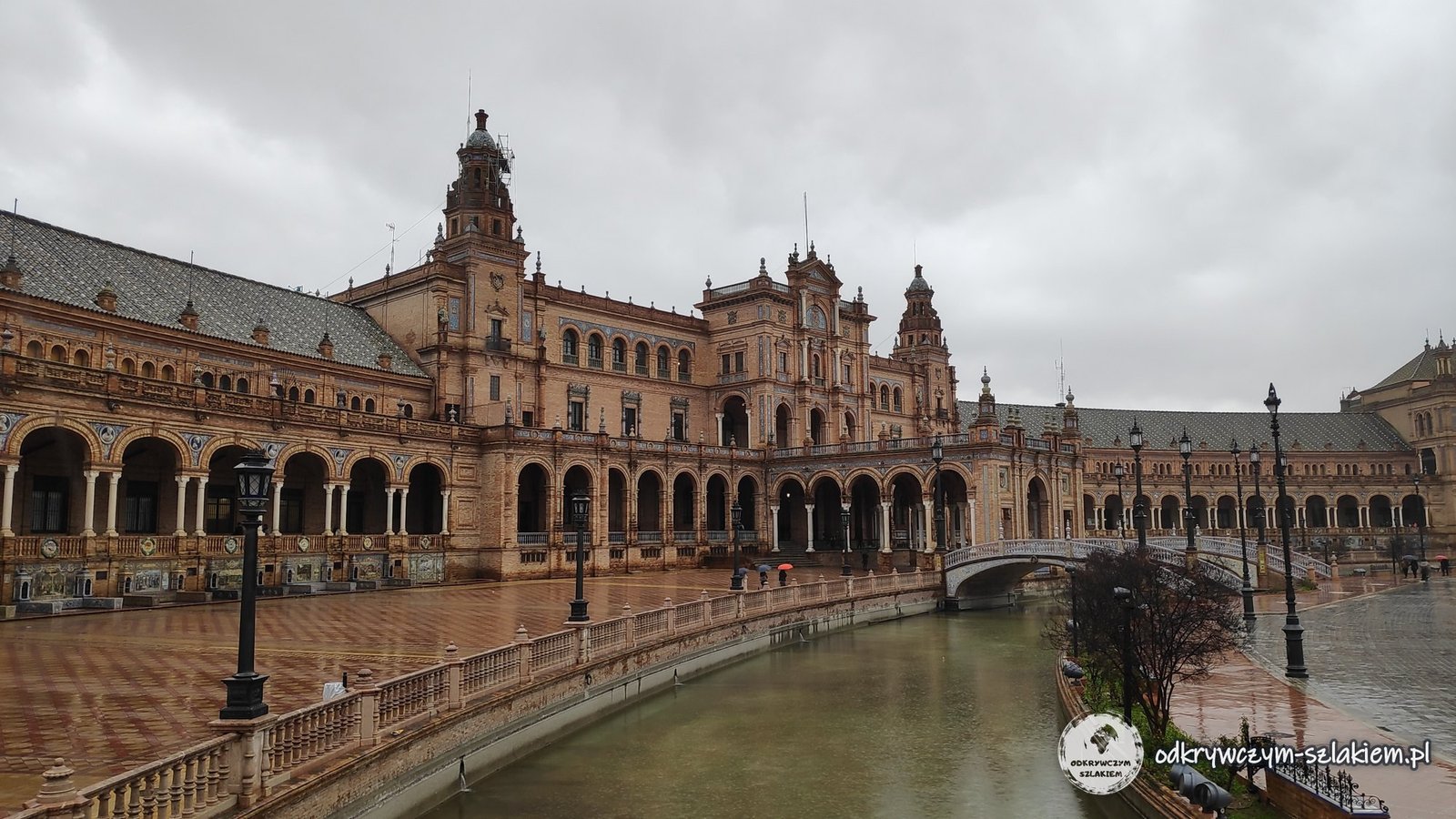
The square was built in 1928 for the Ibero-American Exposition. It is inspired by various architectural styles. Along the “arms” run benches that represent the Spanish provinces. In the middle of the square there is a fountain, with a canal around it. You can take a boat ride on it. The building itself mainly houses government offices, and on dry days you can also take a walk in the Parque de María Luisa, which lies in front of the square. Visiting is free.
Fun fact: scenes from films such as “Star Wars: Episode II – Attack of the Clones” and Sacha Baron Cohen’s “The Dictator” were shot here.
The palace complex consists of several parts built in different periods – its beginnings go back to the 11th century. The building was meant to follow the Gothic style, but the Mudéjar style was used when it was extended. That’s why the place reflects the region’s Arab heritage. Apart from its stunningly decorated rooms and patios (courtyards), the palace also has beautiful large gardens (unfortunately they may be closed on rainy days – which is exactly what happened to us).
On site you can admire many ceramic pieces and azulejo tiles (often blue) from the collection of Vicente Carranza and his son Miguel Ángel. This collection is considered one of the most important of its kind in Spain.
The palace is open 9:30 – 17:00 from October to March, and from April to September until 19:00. A ticket currently costs €14.50 (as of October 2021), which is €3 more than when we visited (January 2020). You’ll find the current prices and entry times here.
The entrance is at the Puerta del León, close to Plaza del Triunfo, and the exit is through the Patio de Banderas.
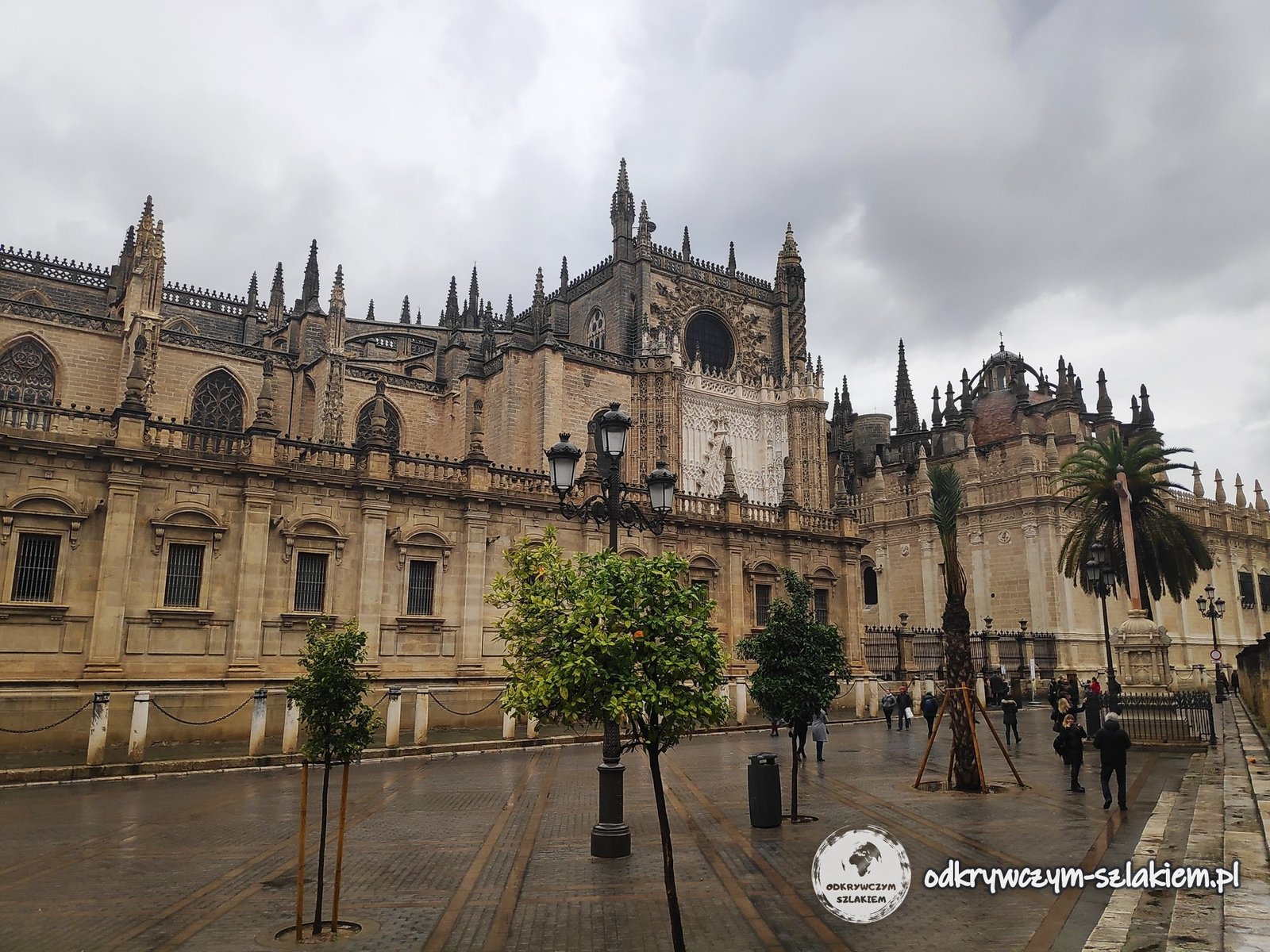
The Cathedral of Saint Mary dates from the early 16th century and is the largest Gothic cathedral in the world. It was built on the site of a 12th-century mosque, but almost nothing of the original building has survived (apart from the tall tower and part of a column). Inside you can admire a wide range of exhibits and religious art (including the tomb of Christopher Columbus),
The Giralda is a bell tower that originally served as a minaret (from which Muslims are called to prayer). It is 104 metres tall. The Giralda has no stairs; instead there are 35 ramps wide enough for the sultan to ride up on horseback. At the top we admired the panorama of the city. Fun fact – one of the buildings inspired by the Giralda is the Palace of Culture and Science in Warsaw.
A ticket costs €10 (as of October 2021). It also lets you visit the Church of the Divine Saviour (Iglesia del Salvador).
You’ll find the current prices, entry times and the ticket shop here.
This is a courtyard with the Puerta del Perdón gate – a garden with orange trees and a fountain with a basin where Muslims washed their hands and feet before praying in the mosque. You can get into the cathedral from the courtyard through another gate – the Puerta de la Concepción.
It is a Baroque church whose interior is filled with gold decoration, yet it looks completely different from the cathedral. It was built at the turn of the 17th and 18th centuries. A mosque used to stand here – part of the old minaret, among other things, has survived. Later the building was turned into a church.
A collection of documents relating to the Spanish colonies. The archive was established by decree of King Charles III in 1785. Visiting is free.
Opening hours:
It’s a well-known symbol of Seville. A unique structure that looks like giant mushrooms. It measures 150 by 70 metres and is about 26 metres high. It’s said to be the largest wooden structure in the world.
It is open 10:00 – 24:00 (November – March), and half an hour longer in summer (last entry one hour before closing). A standard ticket to the viewpoint costs €5 (as of October 2021). Current prices and opening hours are available here.
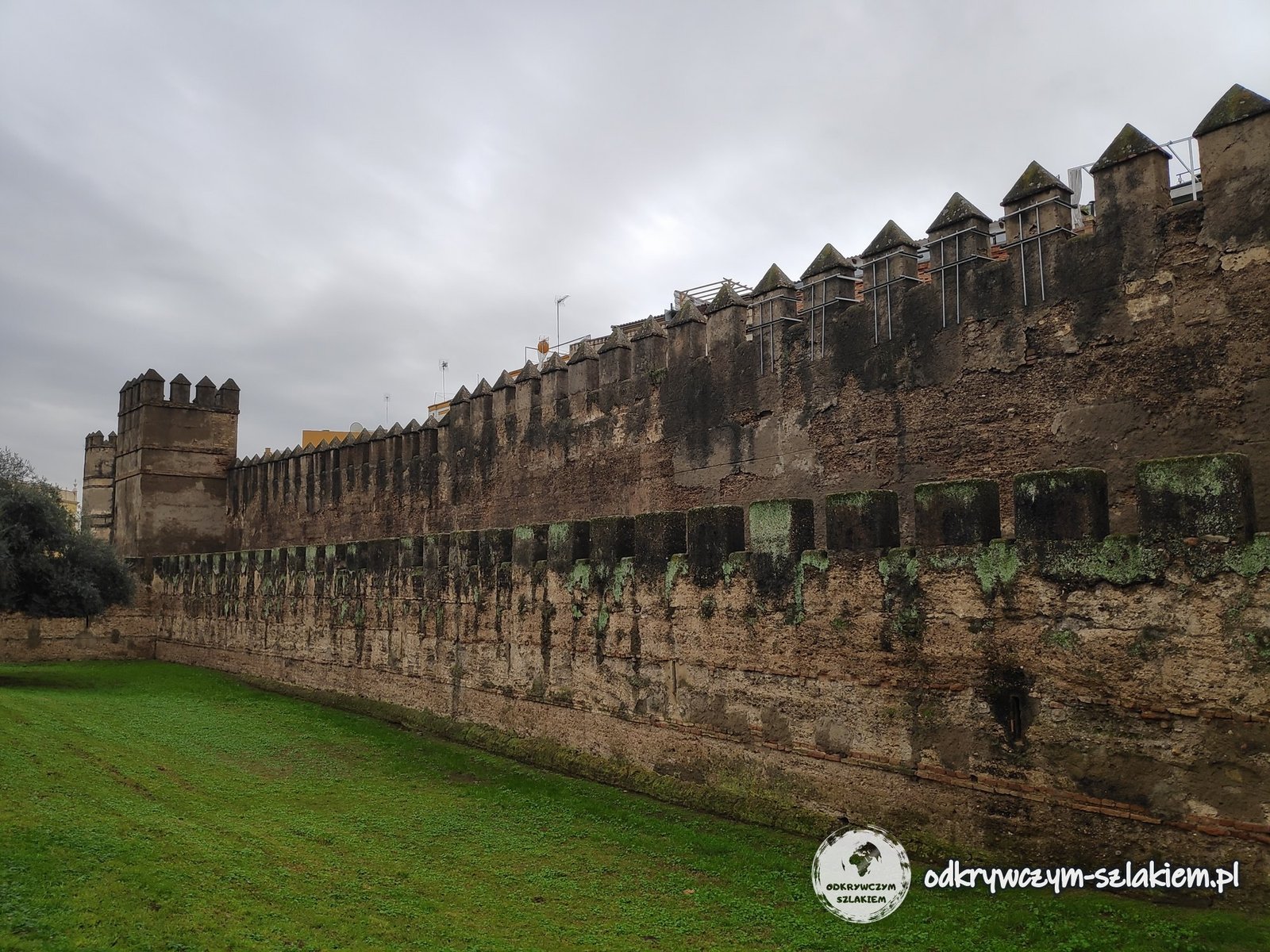
It is the northernmost part of the old town. This is where you’ll find a long stretch of the city walls dating back to Arab times (12th century)
The oldest square in the Old Town, from the 16th century, with a statue of Ferdinand III the Saint in the middle. Next to it is an important building – the town hall (Ayuntamiento de Sevilla). Behind it lies St Francis Square (Plaza de San Francisco). The building was built in 1534 and adjoined the Franciscan monastery. In the 19th century, after the monastery was demolished, the authorities decided to build a new town hall with a neoclassical façade. When designing the new town hall, the original building was incorporated into the new structure – it is in the south wing.
From the time the Inquisition tribunal was established, starting in the 15th century and for the next three centuries, public autos-da-fé were held on Plaza de San Francisco – the burning of heretical works, and of people who preached heresy. The last victim was burned here in 1781. As a rule, the accused were not acquitted. There are also some distinctively trimmed trees here.
The oldest bullring in Spain. The best-known event is the bull festival – the Feria de Abril, held two weeks after Easter.
Stay with me on the road – follow me wherever you like best.