

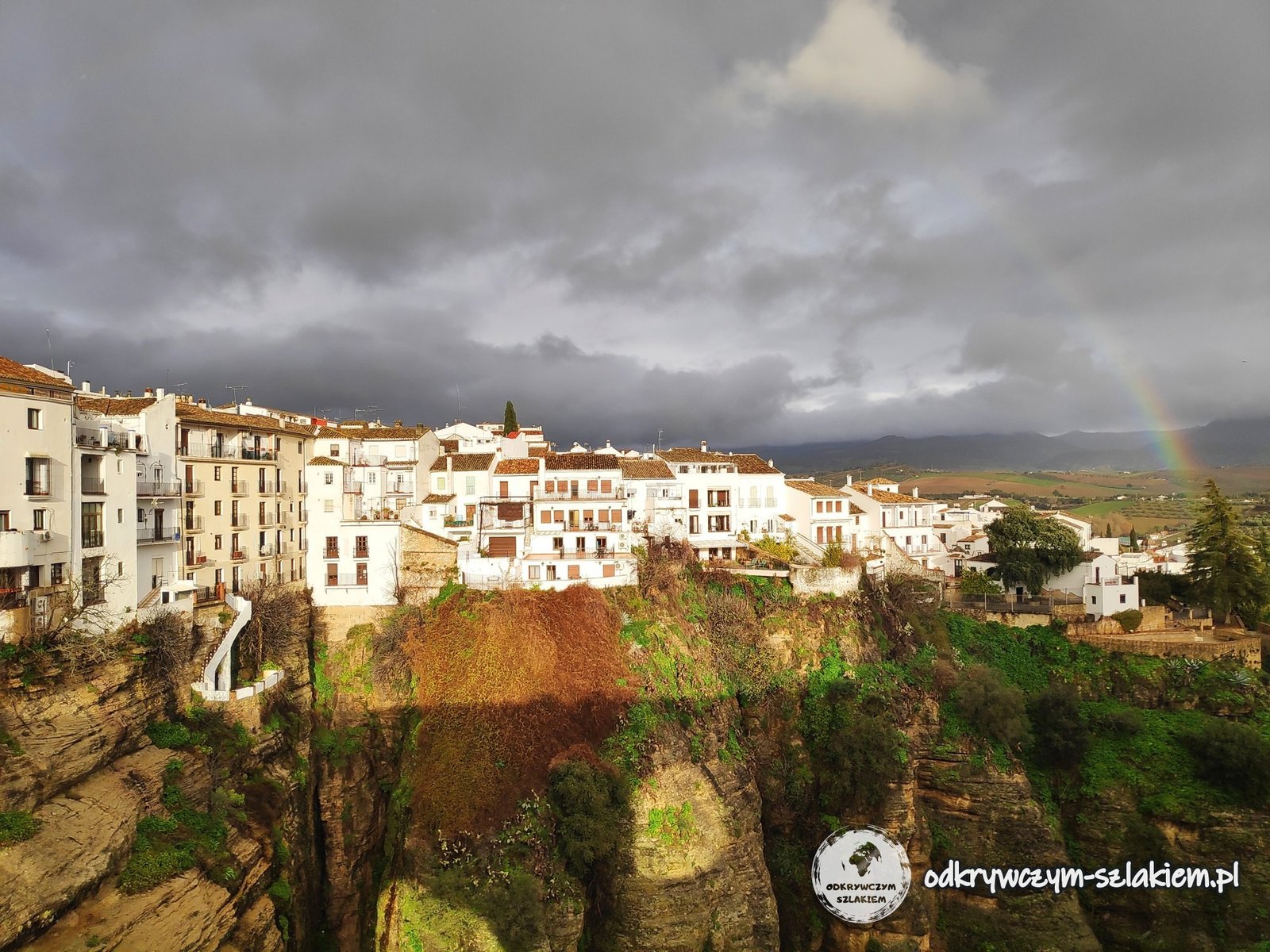


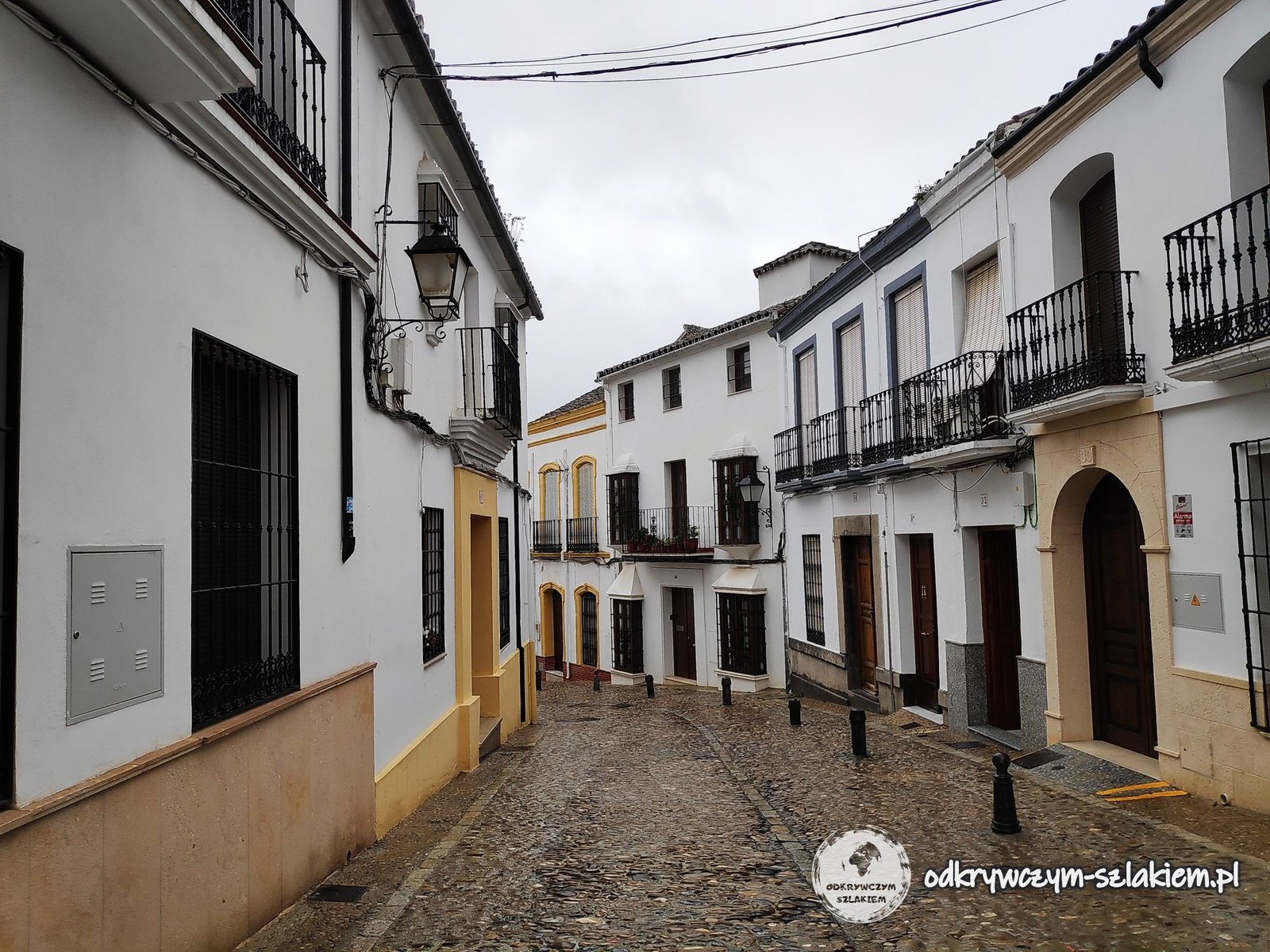
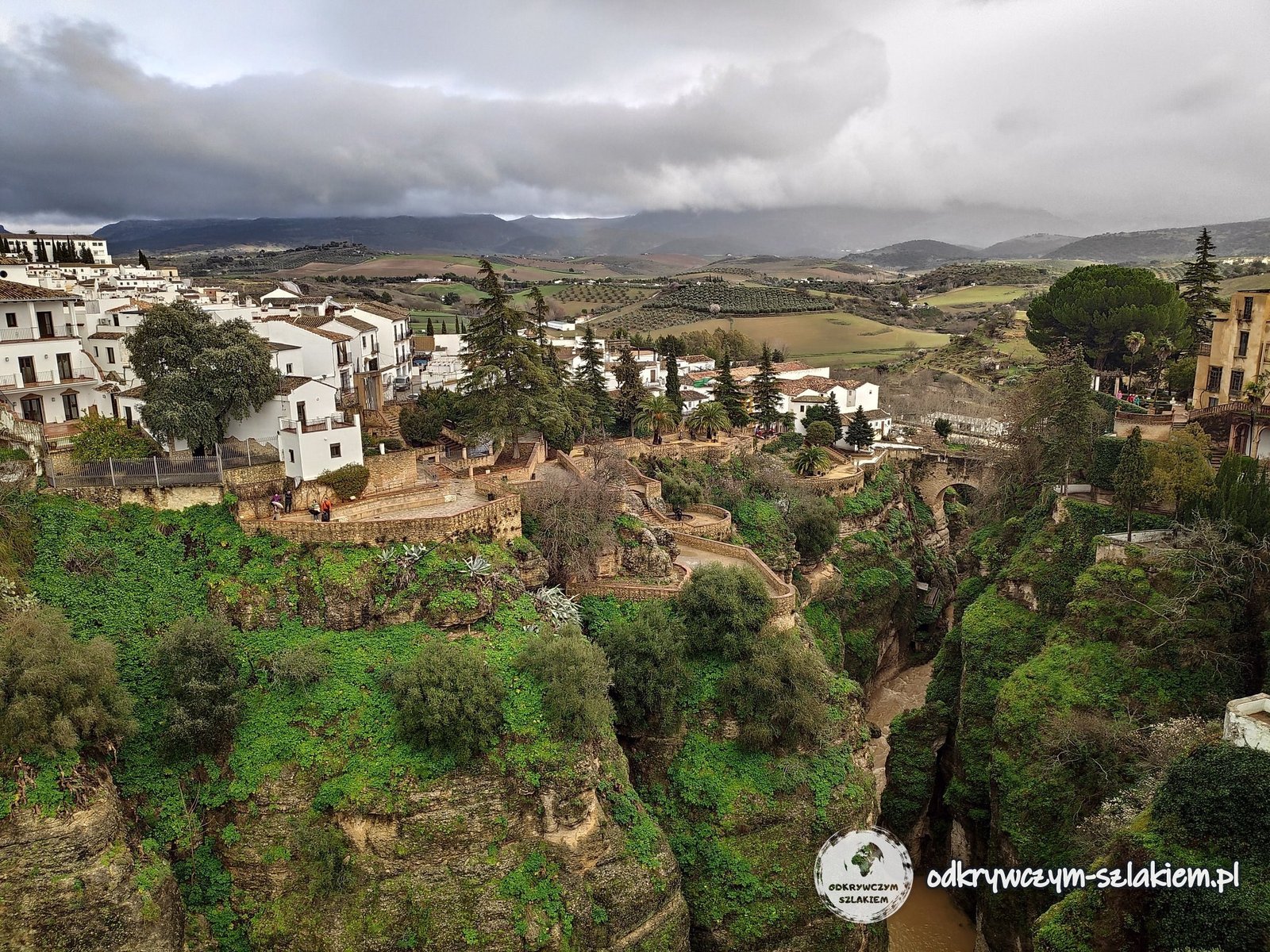

It is one of the oldest towns in the whole of Spain. It owes its charm to its extraordinarily picturesque location. Apart from the beautiful landscape, the town offers remains of many civilisations: prehistoric, ancient and medieval (the Moors). There are also monuments linked to the country’s modern Christian culture. All this put Ronda on our “must see” list for Andalusia. Ronda consists of the Arab quarter – Ciudad – and the quarter built after the Reconquista – Mercadillo. They are divided by the Guadaletin (Guadalevín) river, which, together with the gorge, forms a natural border between them.
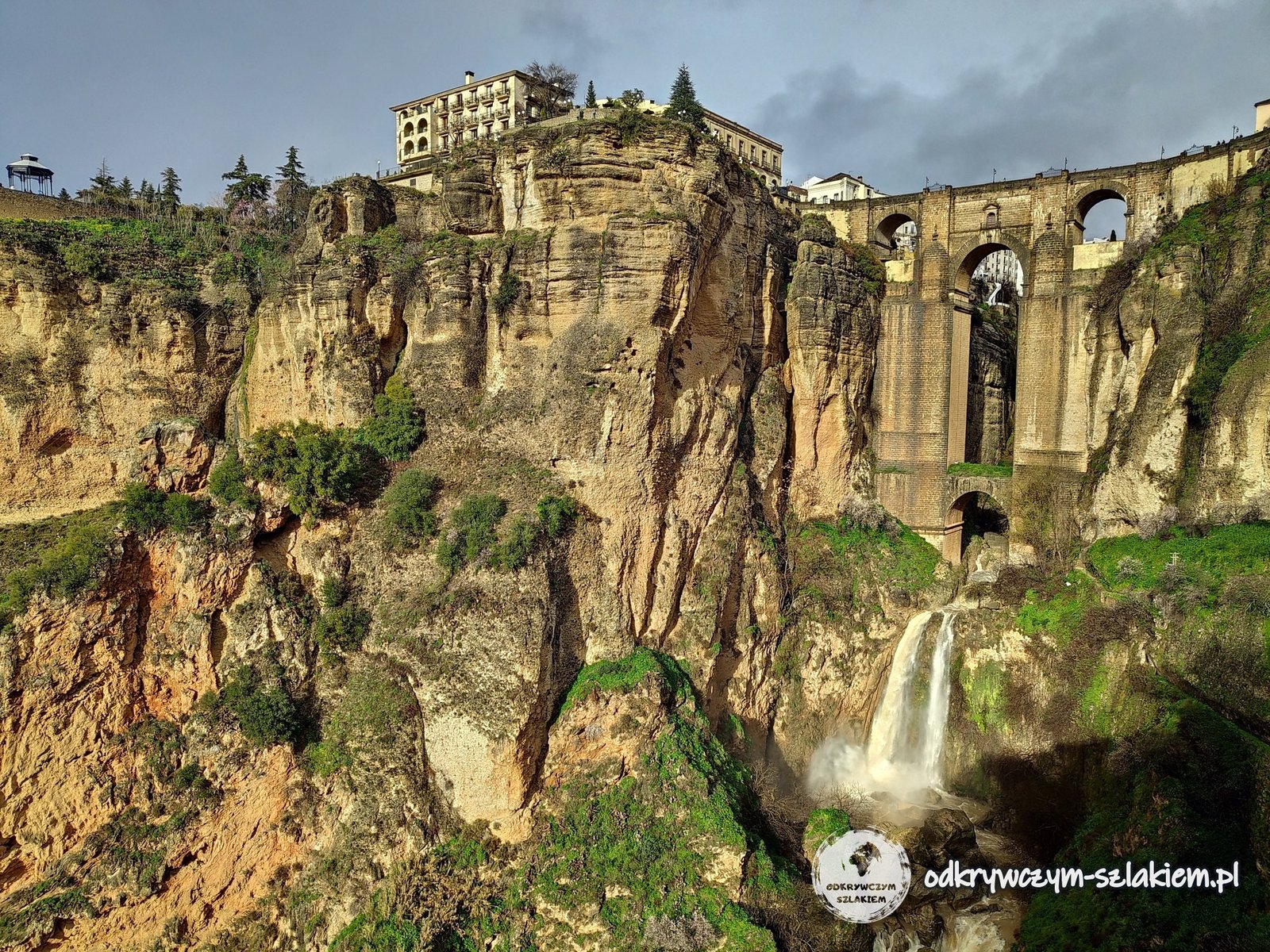
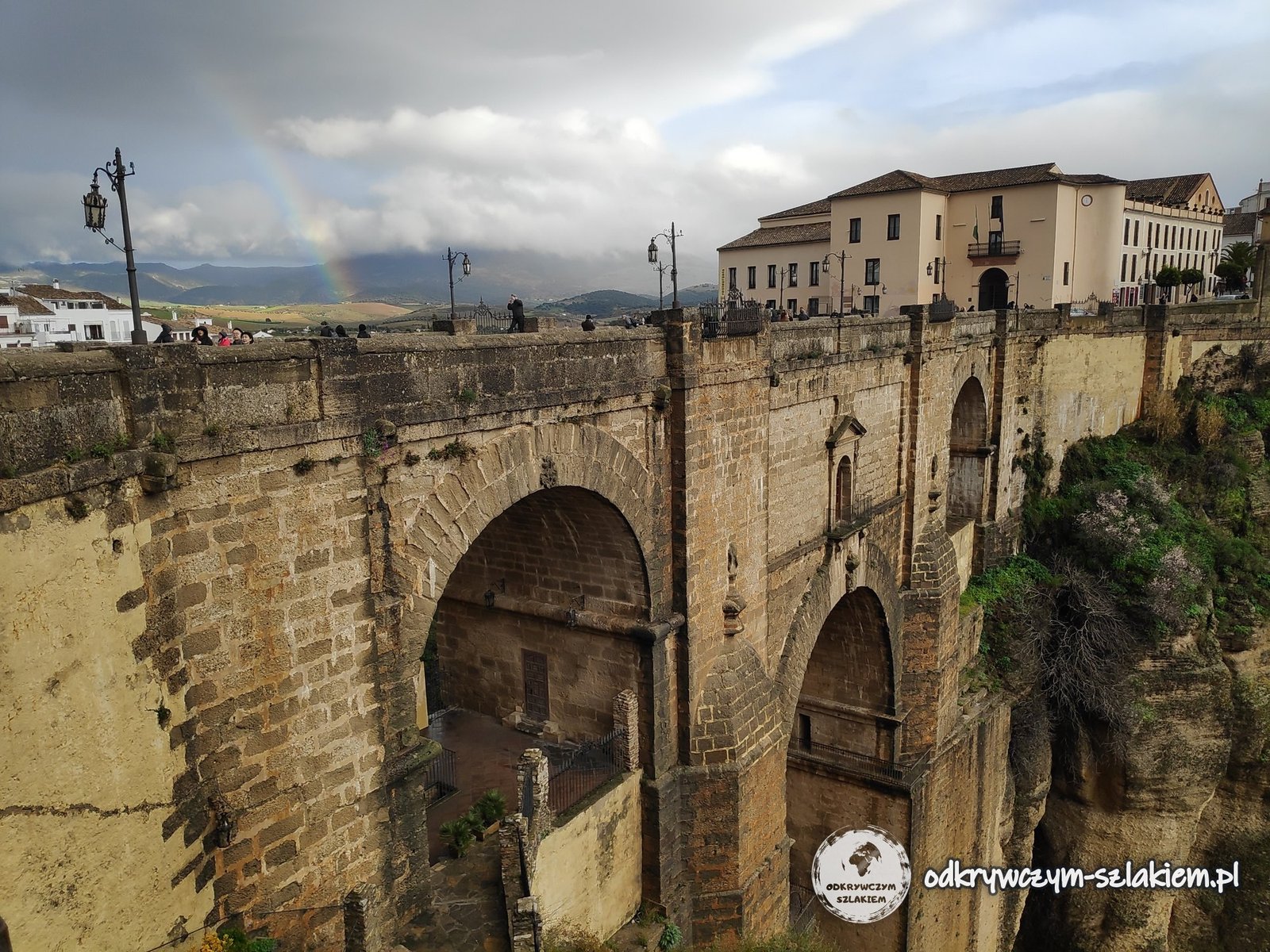
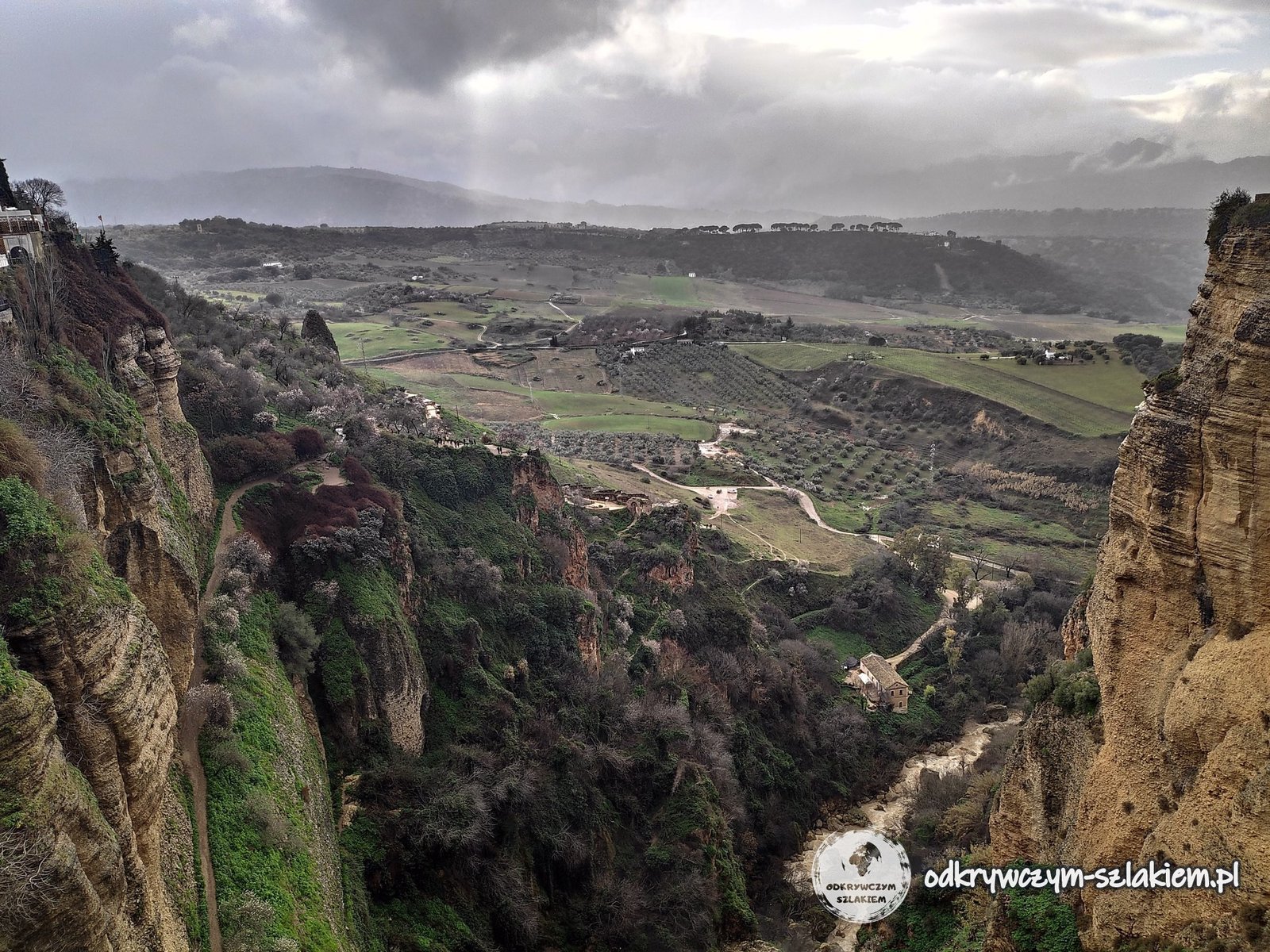
The town is split into two parts by a huge chasm. This long gorge is called El Tajo de Ronda. Above it stands the 18th-century Puente Nuevo bridge, which has become one of Ronda’s most important monuments. It is almost 100 metres high, and under its central span there is a chamber that was once a prison. Above the central arch you can see a small window.
The bridge was built in 1735, and construction took only eight months. Unfortunately, six years later the bridge collapsed, killing around 50 people. Rebuilding it took as long as 42 years.
The Puente Nuevo bridge is the most photographed sight in Ronda. To admire it from the bottom of the gorge, you can go to the Water Mine (see La Casa del Rey Moro). The bridge itself is an excellent viewpoint over the houses hanging on the cliffs (Spanish: casas colgadas).
In our opinion, the best view of the bridge is from the west, from the Mirador Puente Nuevo de Ronda viewpoint or from the Arch of Christ (Arco del Cristo), which is a bit lower down.
The best view of the El Tajo gorge in Ronda is from the small park Jardines de Cuenca. The park’s terraces are built into the rock faces. From the terraces you can see the back of Puente Nuevo, Puente Viejo, the bottom of the gorge and, on the opposite side, the palace of the Moorish king.
A bridge 120 m long, 10 m wide and 31 m high, connecting the two parts of Ronda. Nobody knows when it was built or exactly by whom – the Romans or the Arabs. Most sources, however, say that the bridge was built during the period of Muslim rule and was rebuilt several more times by the Christians after the Reconquista. Today Puente Viejo is used only by pedestrians.
The complex was built in the 13th–14th century and is one of the best-preserved monuments of its kind on the Iberian Peninsula. The baths are divided into three main parts: with cold water, with warm water and with hot water. The complex’s hydraulic system has survived almost intact.
The entrance fee is at least 3.5 euros (no newer information online). The opening hours are also irregular – it’s worth checking Google Maps.
A historic palace with a Baroque façade. Your eye is drawn to the wide balcony resting on Corinthian columns. Above it are distinctive sculptures referring to traditional Inca art. Above them you can see the coat of arms of the noble Salvatierra family.
The Minaret of San Sebastián (Alminar de San Sebastián) is a small tower that was originally part of one of Ronda’s mosques. Later it served as the bell tower of the no longer existing Church of San Sebastián. The tower was declared an artistic and historic monument in 1931.
The church was built on the ruins of a 14th-century mosque and a former Roman temple. It stands on the small square Plaza Duquesa de Parcent. An entrance ticket costs 4 euros.
Opening hours (as of October 2021):
This town hall is distinctive thanks to its arcaded façade. Elements of the Mudéjar style have survived in it. Nearby are Ronda’s fortifications – the town walls and gates, which you will come across more than once while walking around this part of town (Ciudad).
The building was put up in 1314 for an Arab ruler. After the Reconquista it was turned into a Renaissance residence with Mudéjar elements. Today it is the Archaeological Museum. Its main attraction is a beautiful garden on a rock terrace with a magnificent view.
It’s worth checking the opening hours and prices on site, as there is no up-to-date information online.
This museum in the old part of town is the result of a private initiative by Juan Antonio Lara Jurado, who created his collection here. It includes, among other things, 18th- and 19th-century clocks and weapons, exhibits related to cinema and photography, old scientific instruments, and an exhibition devoted to the Inquisition and witches.
An entrance ticket costs 4 euros. The museum is open 11:00–19:00, or until 20:00 from June to October (as of October 2021). You can find up-to-date information here.
The Plaza de Toros de Ronda is Ronda’s bullring. It is considered one of the oldest and one of the most beautiful of its kind. The round and in many ways well-thought-out building is considered a model for most bullrings in the world. Except on bullfight days, it is open to visitors every day. You can find current prices and opening hours here.
This is a garden in Ronda. Its biggest attraction is a long viewing terrace. It is high up. From it you can see the nearby mountains and, far below, fields and buildings. A little further on you can step onto a viewing platform suspended over the chasm, from which you can see the famous El Tajo canyon.
Stay with me on the road – follow me wherever you like best.