I flew to Kilimanjaro at the beginning of June 2026 as part of a ten-person team. Before we set foot on the trail, though, we had five eventful days behind us: a cancelled flight, a night at Zurich airport, accidentally taking part in the inauguration of a new air route to Tanzania, a day in the city of Arusha, a visit to the Cemetery of Polish Exiles in Tengeru and a briefing in Moshi. Once there, I joked that just getting to Tanzania had been so eventful that Kilimanjaro would really have to make an effort.
This post covers days 0–4, i.e. 1–5 June 2026 – from leaving Olsztyn to the evening before the first day of the trek. Kilimanjaro is also the subject of my talk “Odkrywczym Szlakiem to the roof of Africa – Kilimanjaro, the promised mountain” (in Polish), which premiered on 11 September 2026 at the 17th Polish National Hitchhikers’ Rally in Kostkowice.
Table of contents
- Preparations – the promised mountain
- Days 0–1: from Olsztyn via Warsaw to Zurich airport
- Day 2: the inaugural flight Brussels – Kilimanjaro
- Day 3: Arusha
- Day 4: the Cemetery of Polish Exiles in Tengeru
- Moshi – briefing and a birthday before the expedition
- Practical information and costs
Preparations – the promised mountain
The idea of Kilimanjaro came up in 2023, and a year later Africa’s highest peak became my “promised mountain” – I made a pact to climb it with Michał and Filip. The trip was not cheap, but in 2026 the circumstances were finally right. The breakthrough came when the trip was announced: the leader of our group found the cheapest option with a trusted organiser, and that is how a ten-person team came together.
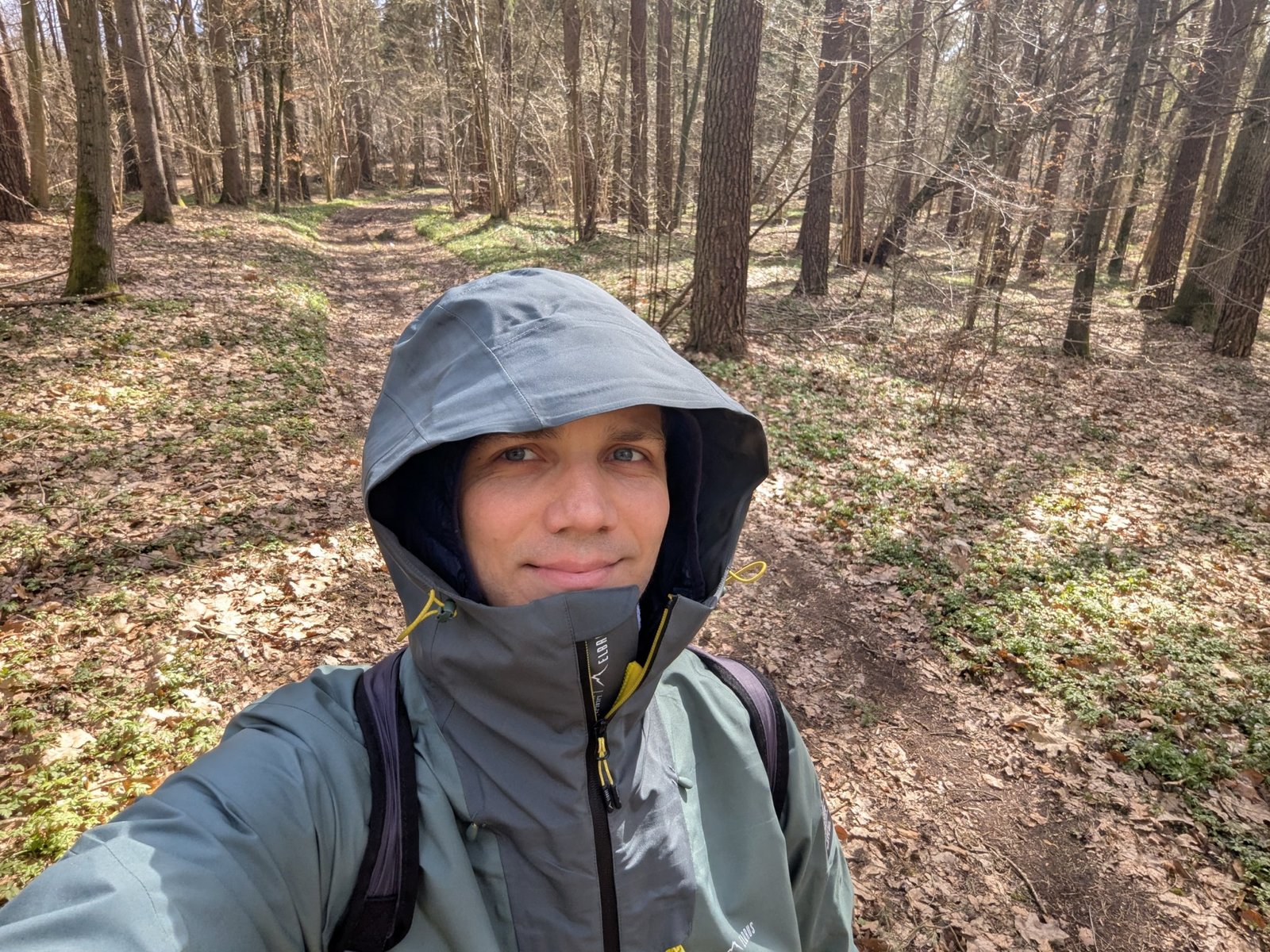
Then it was time to prepare. I trained mainly with longer walks around Olsztyn and the surrounding area, including the Łynostrada trail along the Łyna river, and broke in my new hiking boots. My last mountain training was a May trip to Norway with Łukasz – more about the area in a separate post about Stavanger.
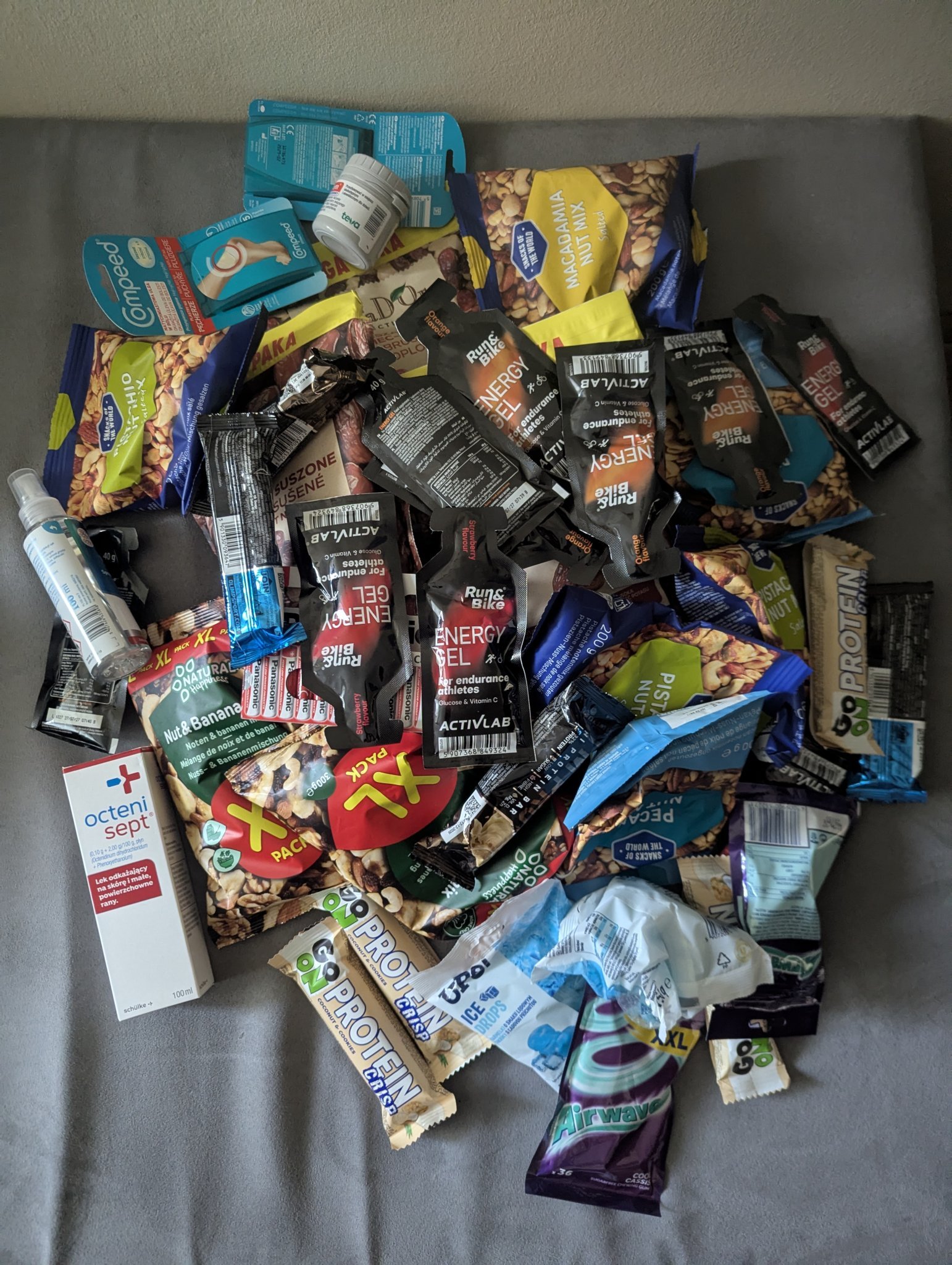
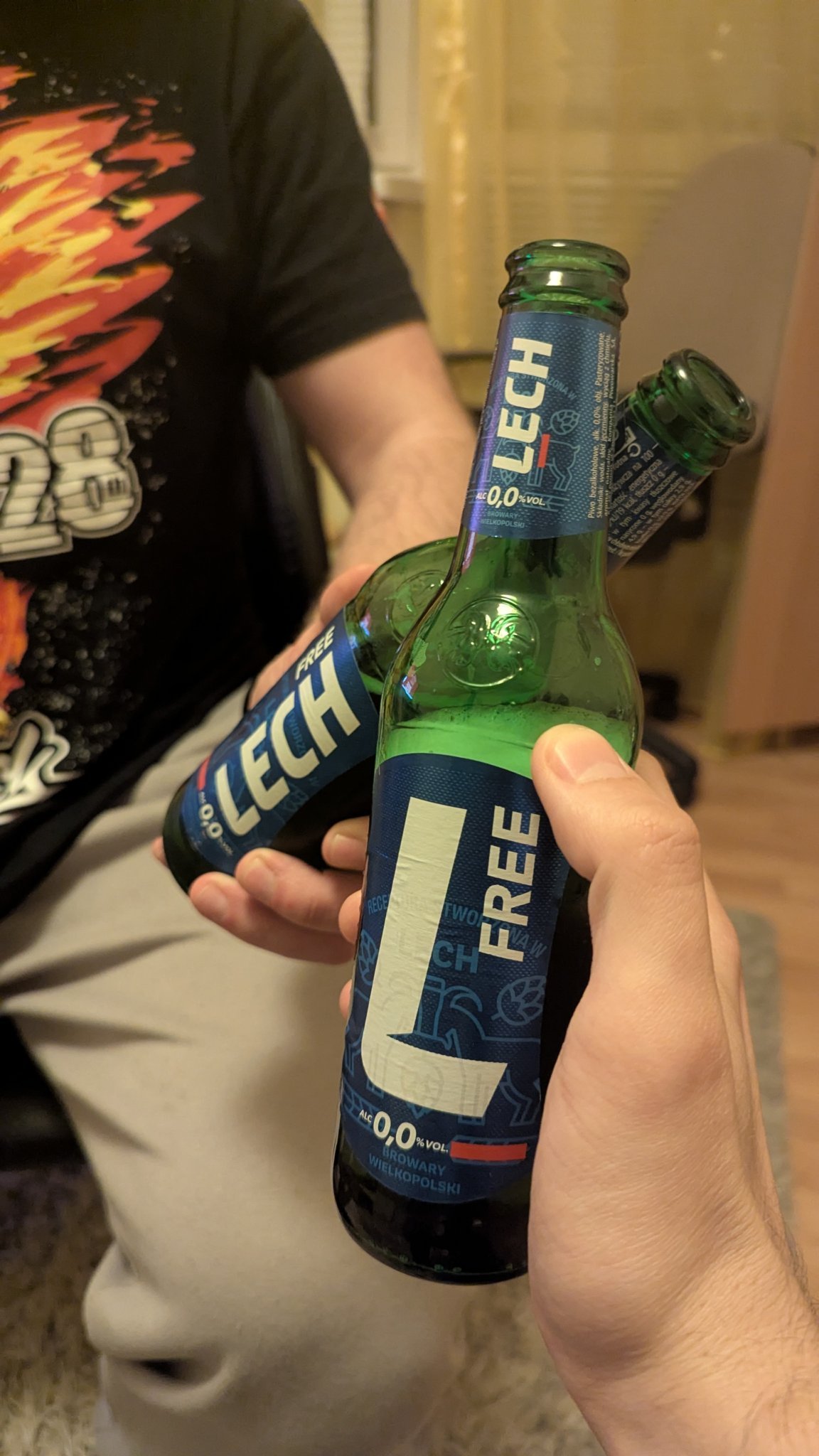
On top of that came putting together the gear, buying snacks for the trail and cutting down on alcohol – in the last weeks before the trip it was mostly alcohol-free beer for me. We bought the flights about three months before departure.
Packing dragged on until late at night on 31 May, because at the same time we were still sorting out the logistics of another trip. I ended up with two or three hours of sleep – before leaving for Warsaw I decided not to waste a day of leave and went to work anyway.
Days 0–1: from Olsztyn via Warsaw to Zurich airport
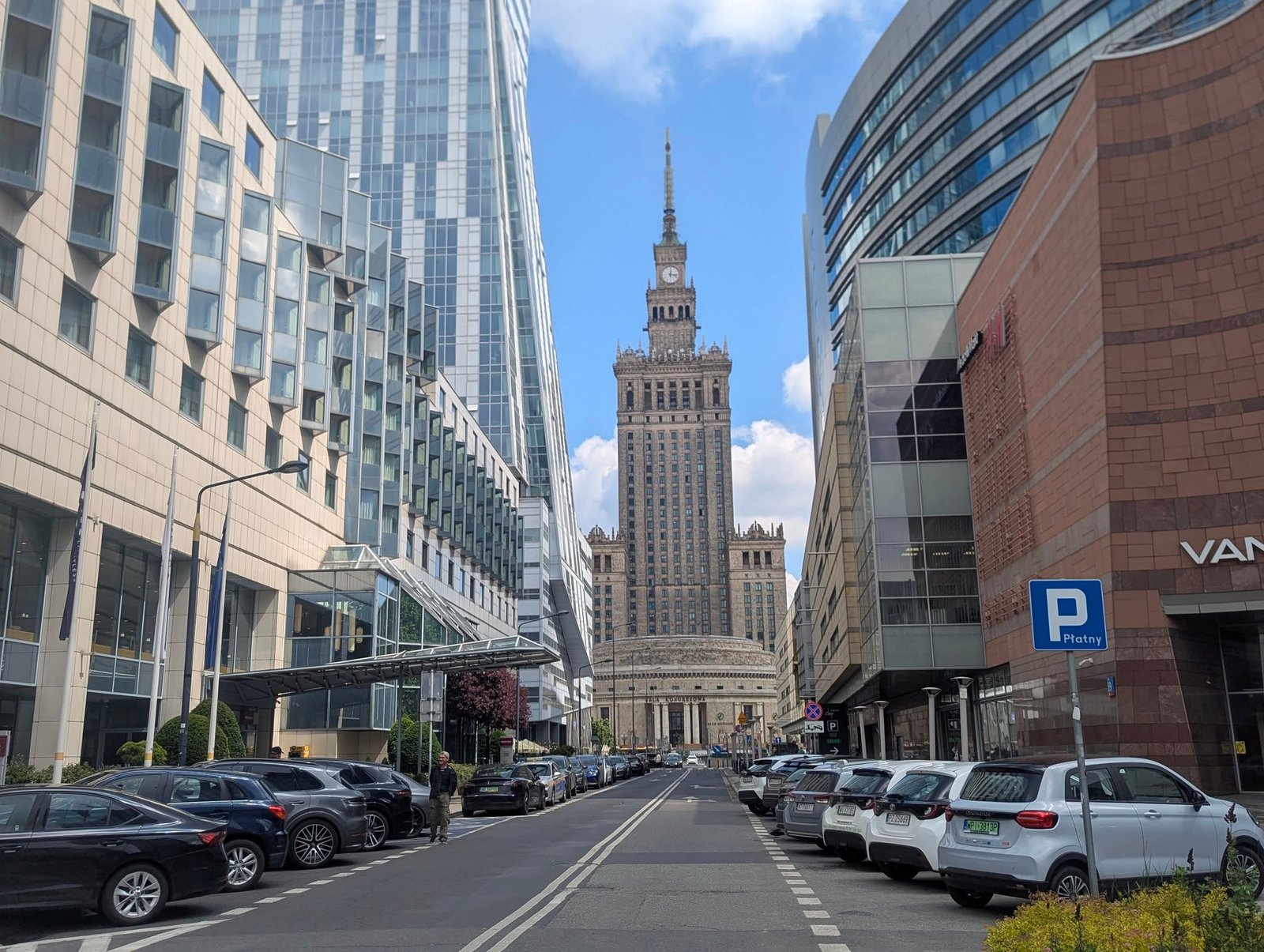
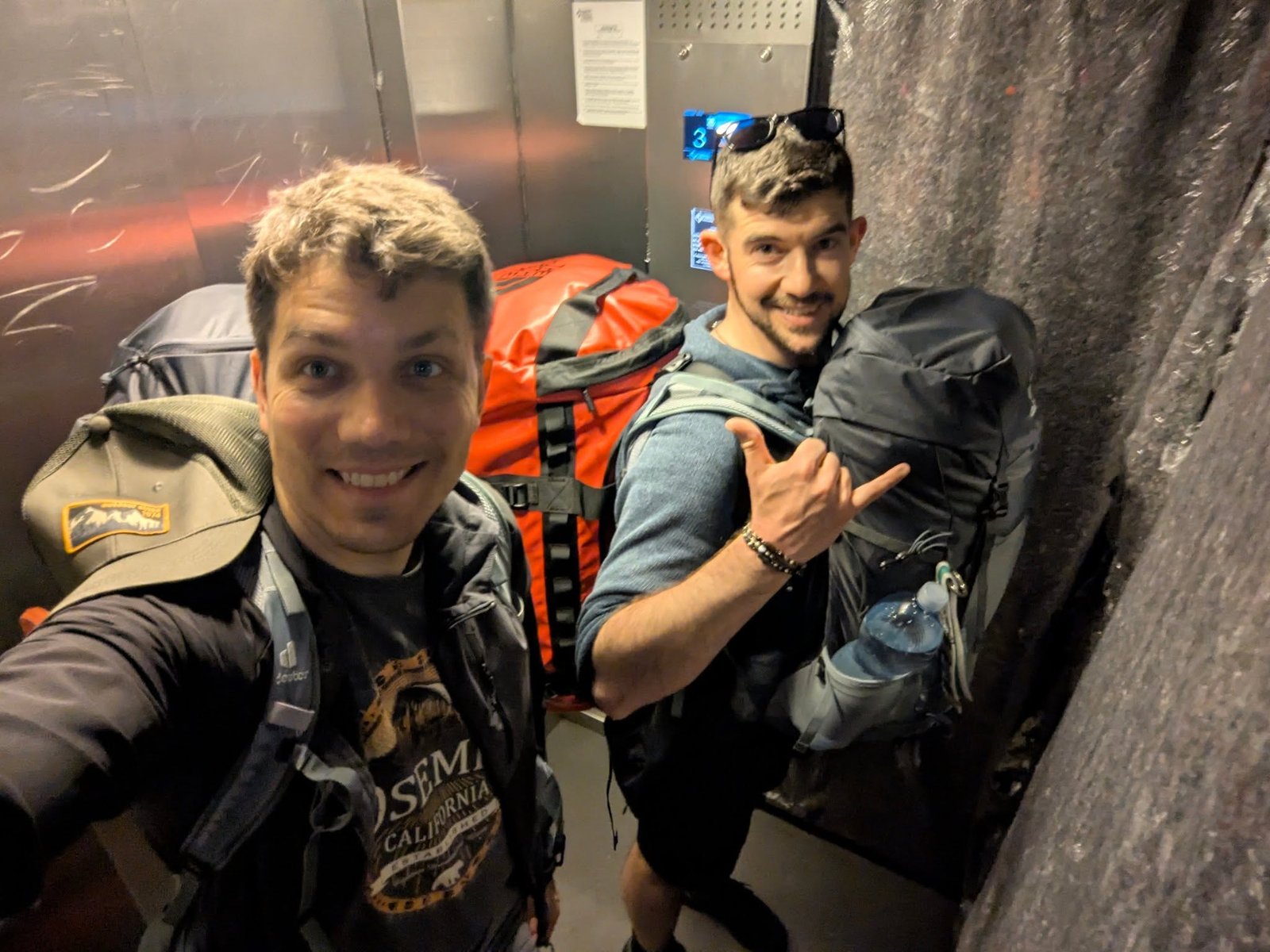
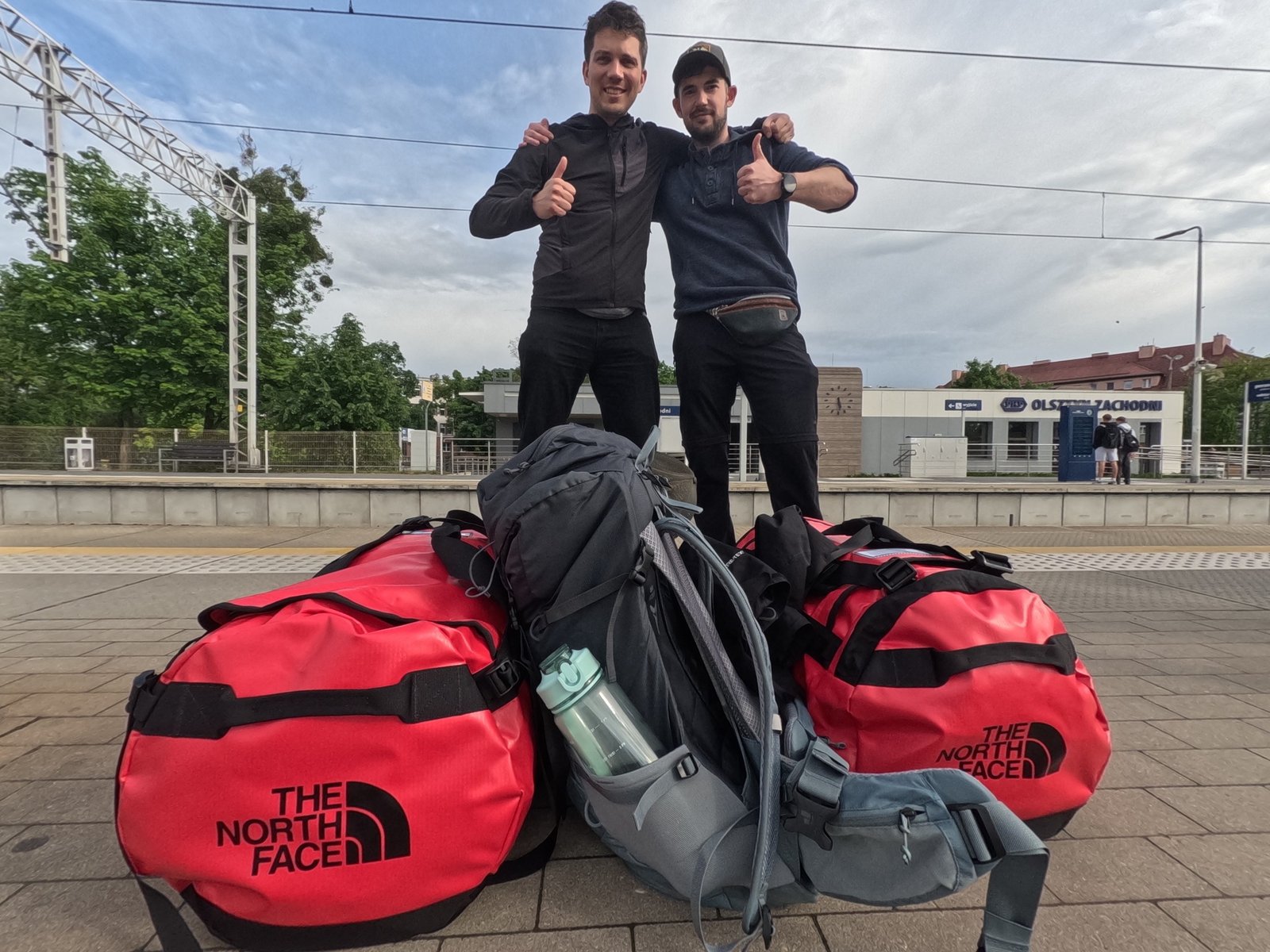
On Monday 1 June Michał and I set off from Olsztyn to Warsaw, where we had a place to sleep before the flight.
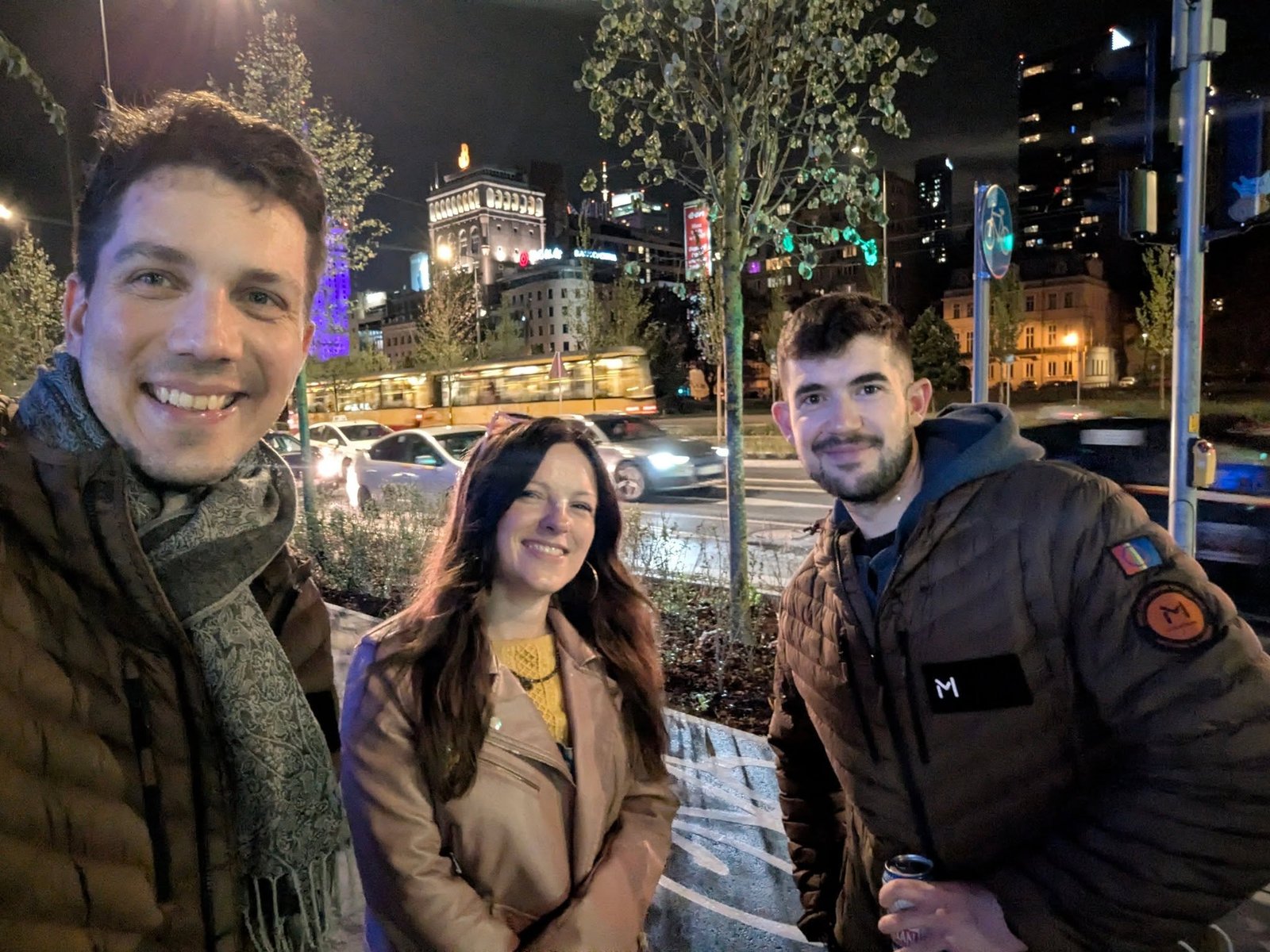
We arrived late in the evening but still managed to meet Anita, who happened to be in the capital. She gave me a scallop shell of St James from the Camino de Santiago, which she had walked herself. It was a big gesture for me – I felt looked after, and the shell stayed with me for the rest of the expedition.
On Tuesday it turned out that our 18:05 flight to Brussels had been cancelled. We took an alternative connection – via Zurich, departing at 19:40. At Chopin Airport we met Filip and Piotrek, and soon afterwards Paweł, Asia and Łukasz joined us. Everything went according to plan, and at around 22:00 we landed in Zurich.
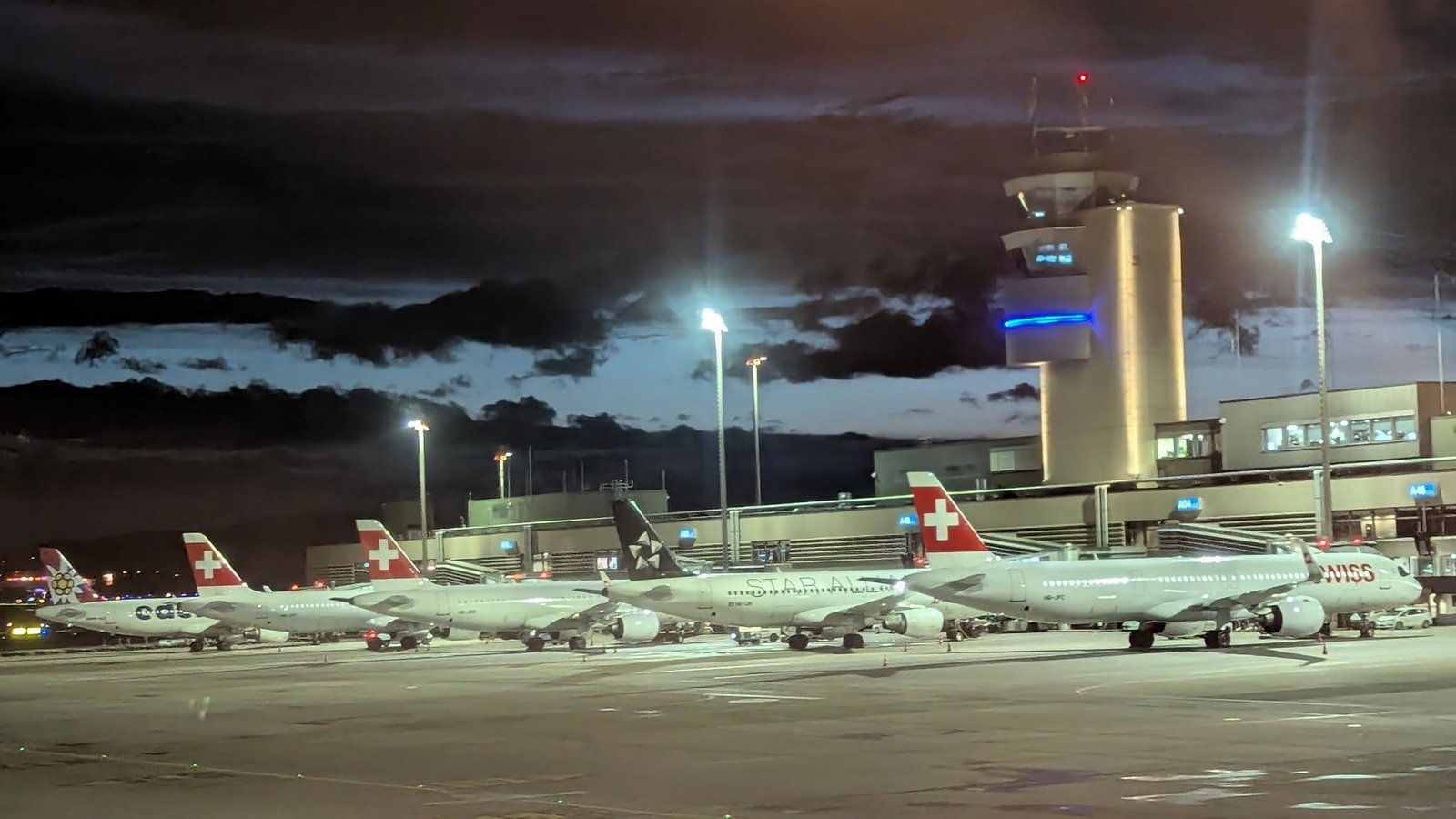
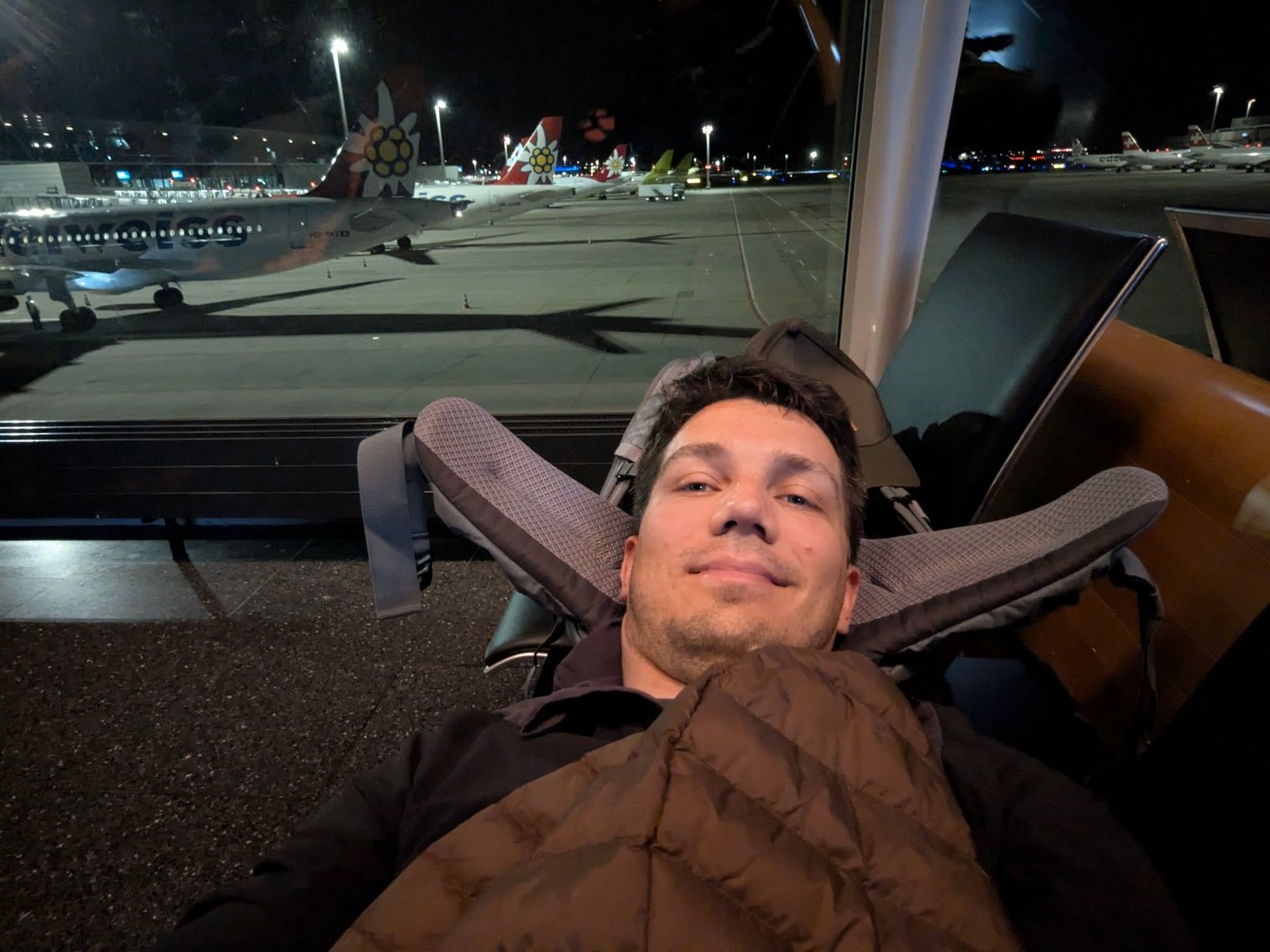
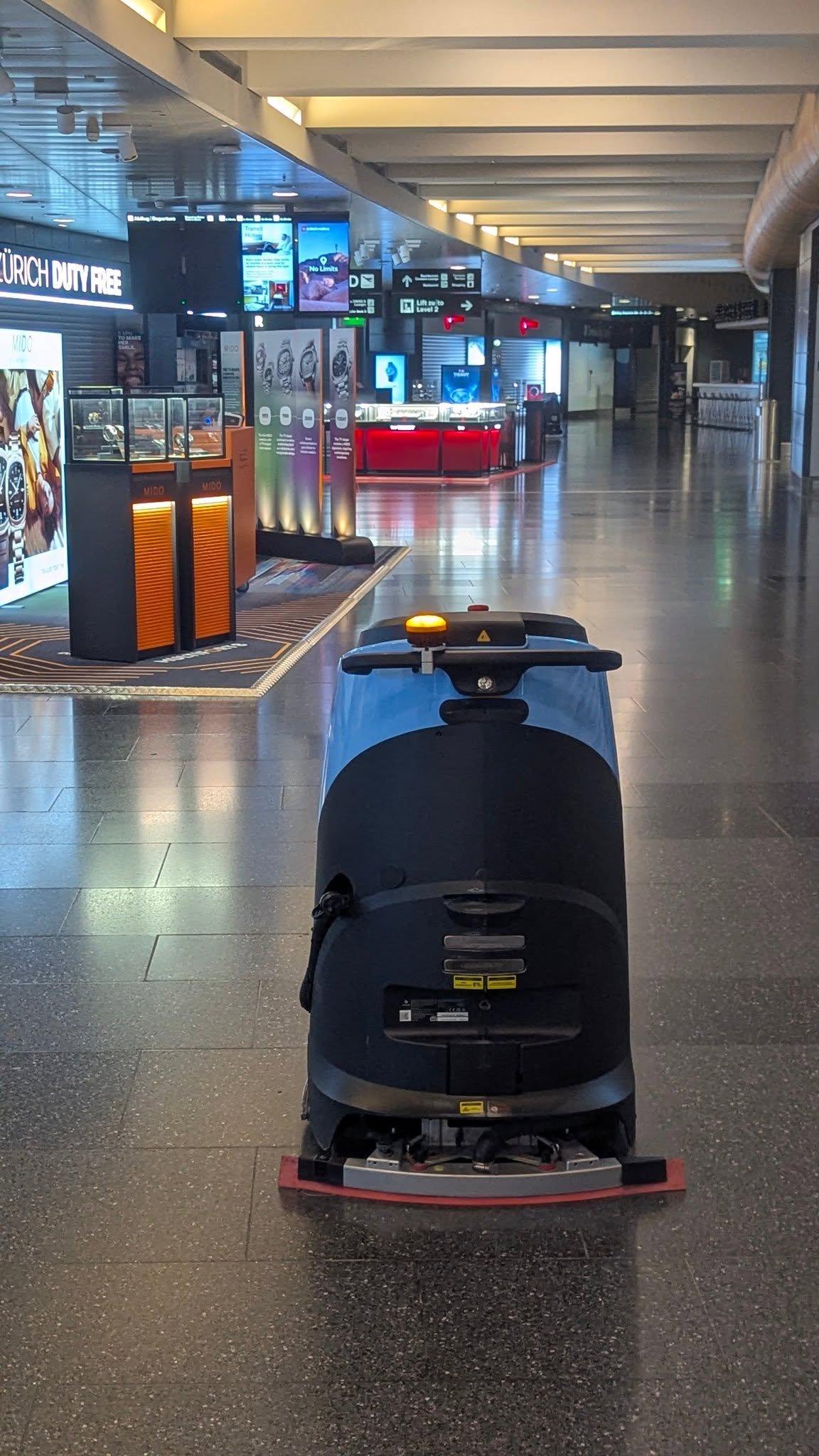
We spent the night at the almost empty airport and – interestingly – slept quite well. We were alone, or so it seemed, but not quite: a self-driving floor-cleaning robot kept us company.
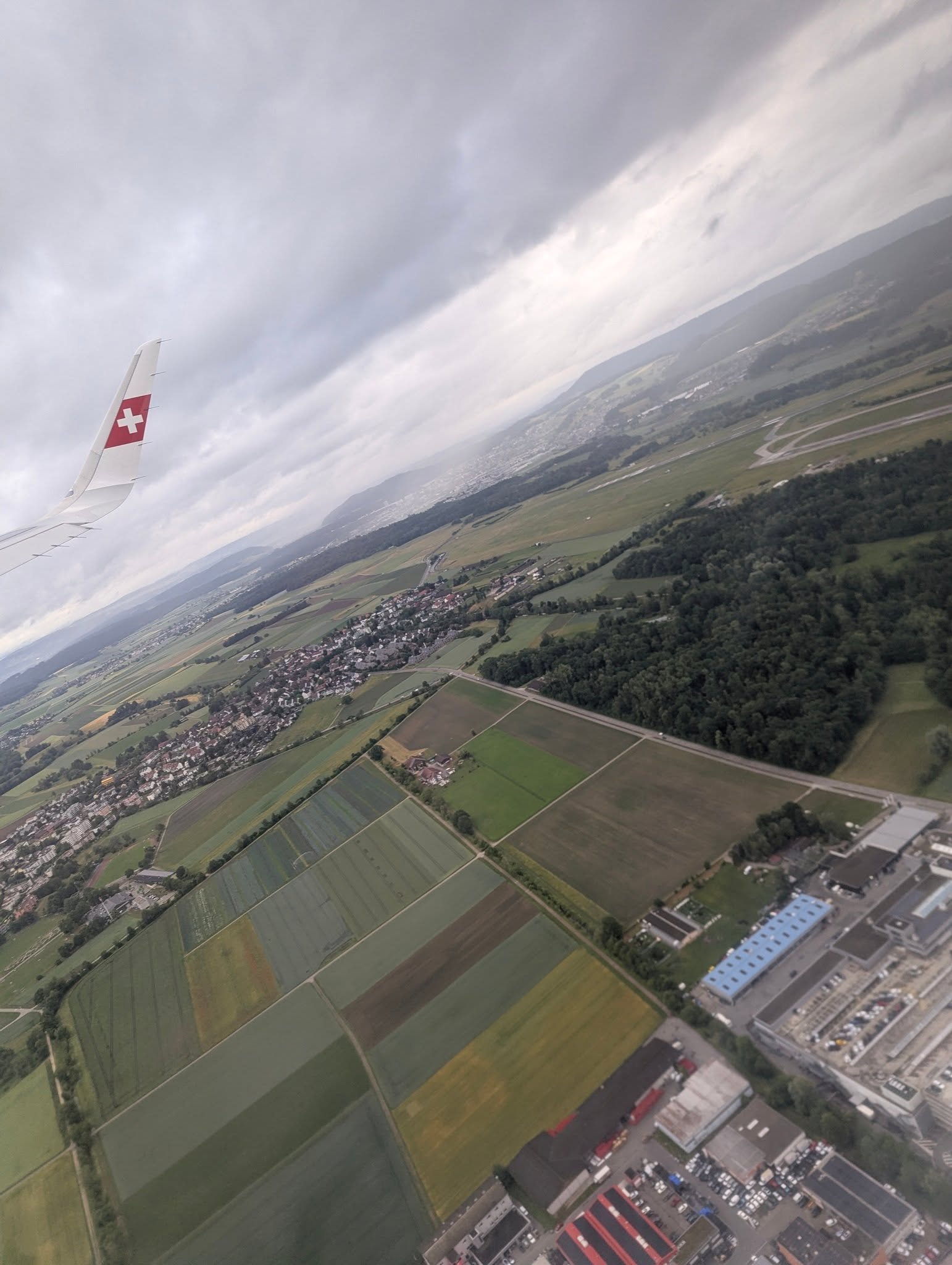
In the morning we bought the most expensive coffee of my life: 8.5 CHF, about €9 (luckily for two). At 7:25 we flew to Brussels.
Day 2: the inaugural flight Brussels – Kilimanjaro
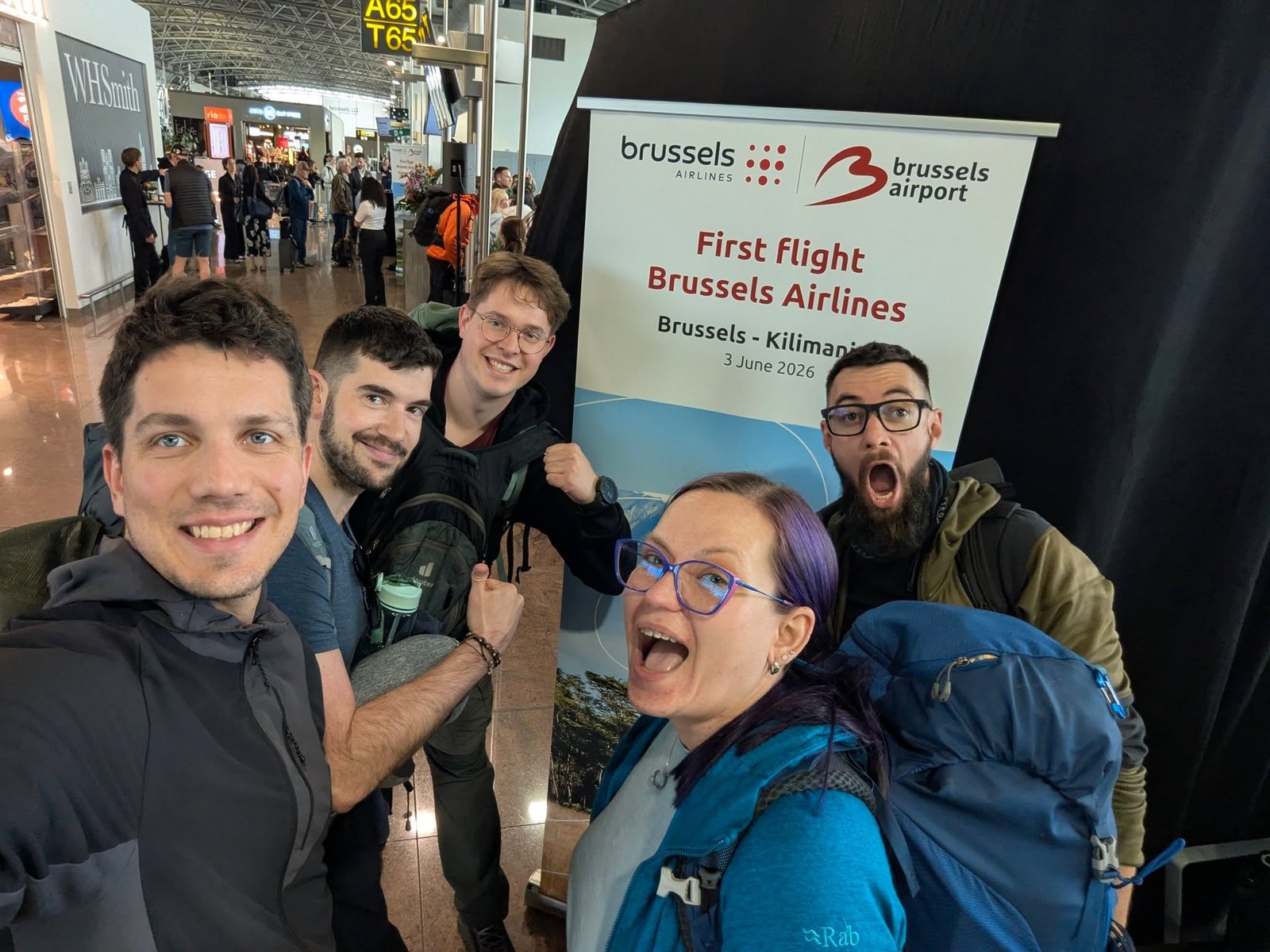
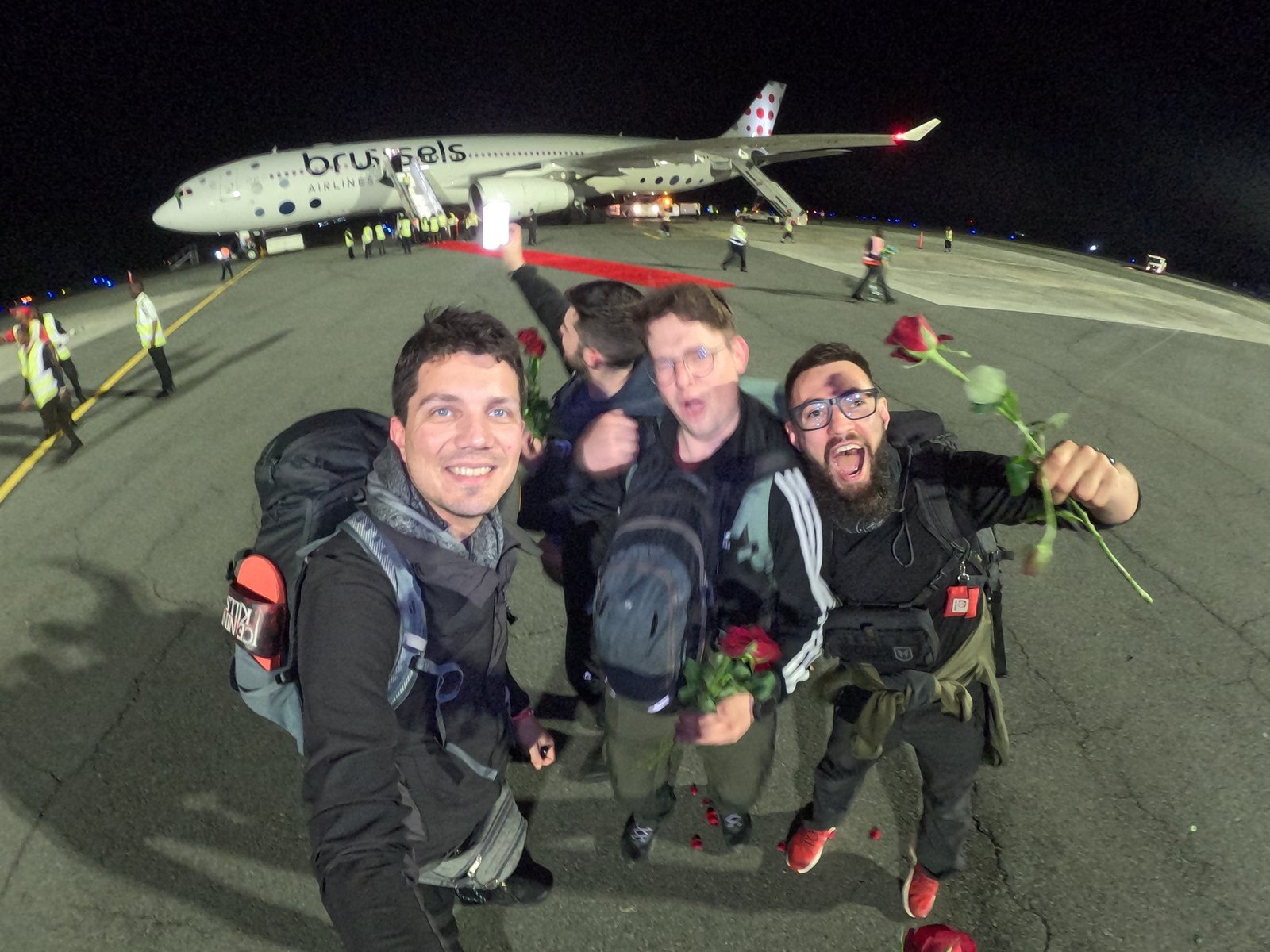
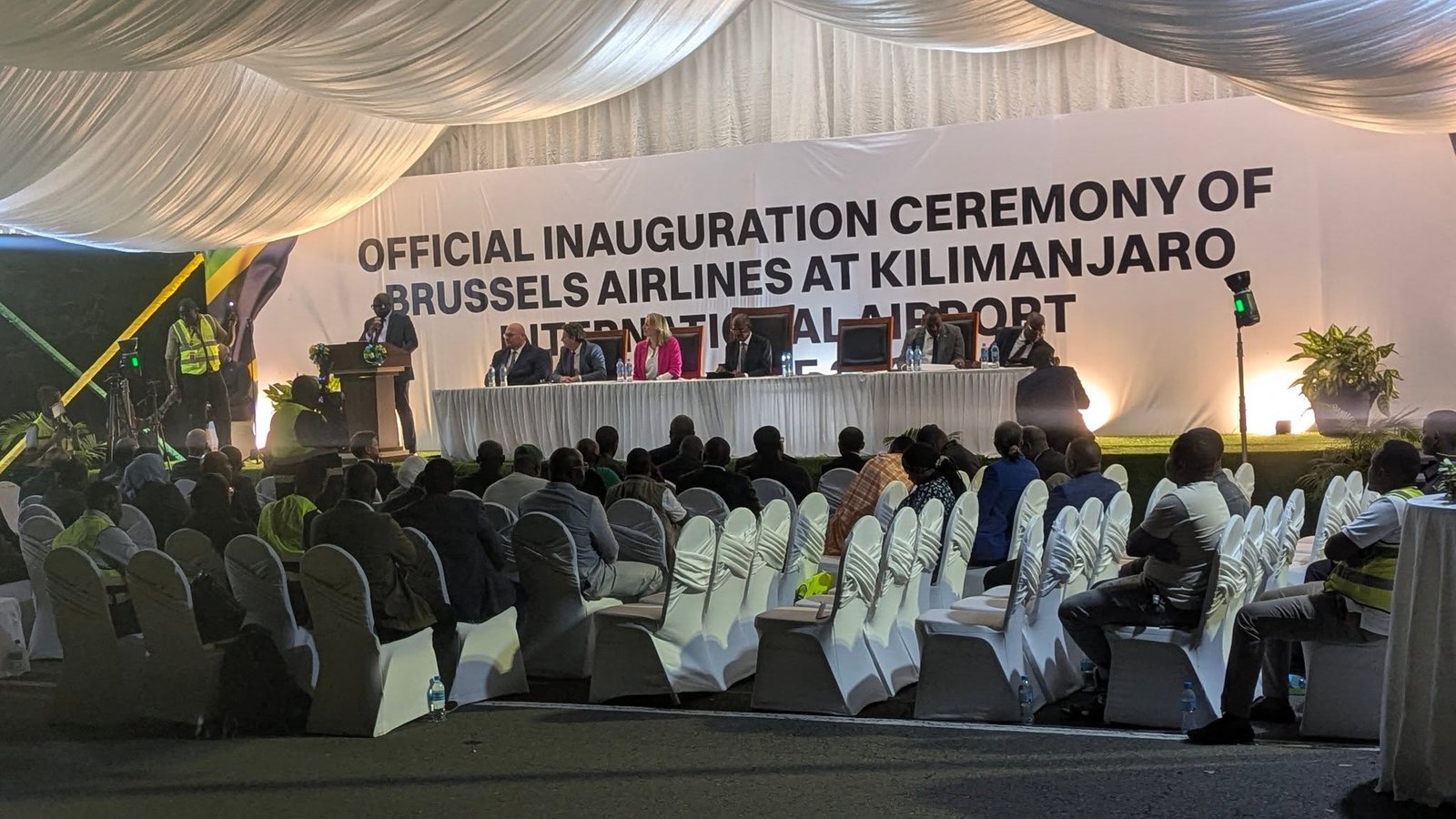
We landed in Brussels at 8:50, and only there did we find out that our flight to Tanzania was the first flight of the new Brussels Airlines route from Brussels to Kilimanjaro airport. So we got to join the whole official event, attended by representatives of Tanzania.
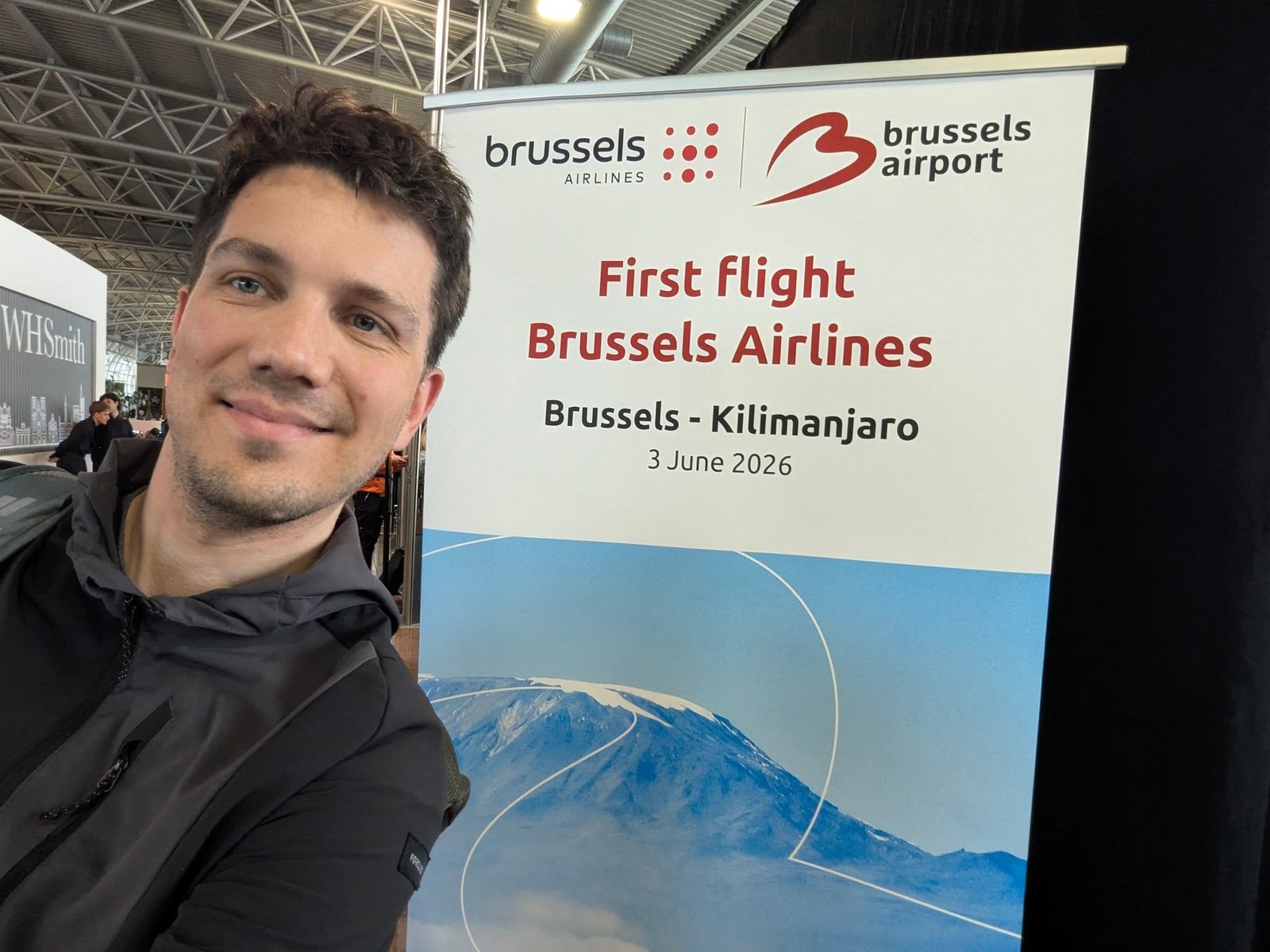
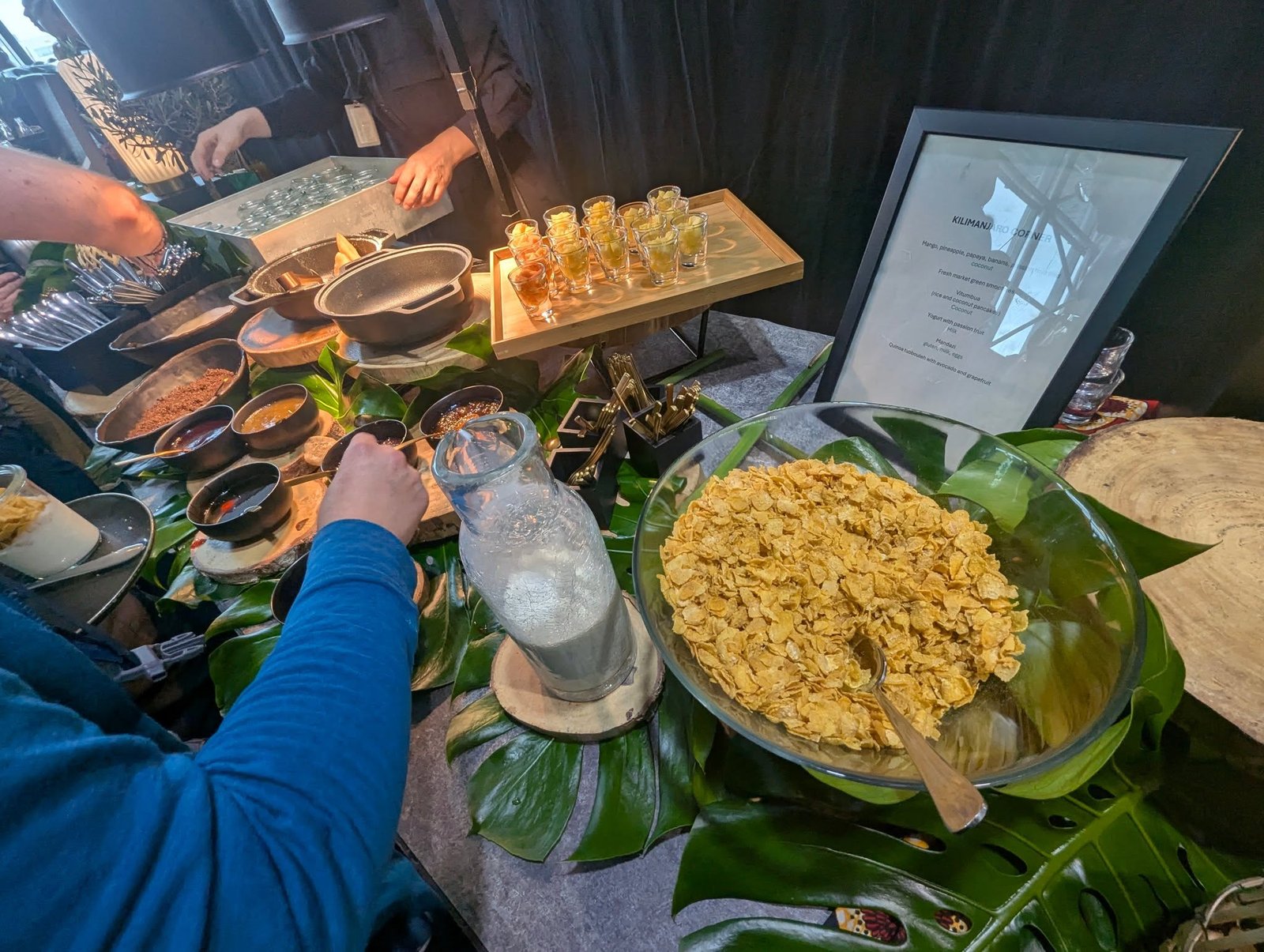
We were hungry, so the free refreshments came in very handy – they served as our breakfast.
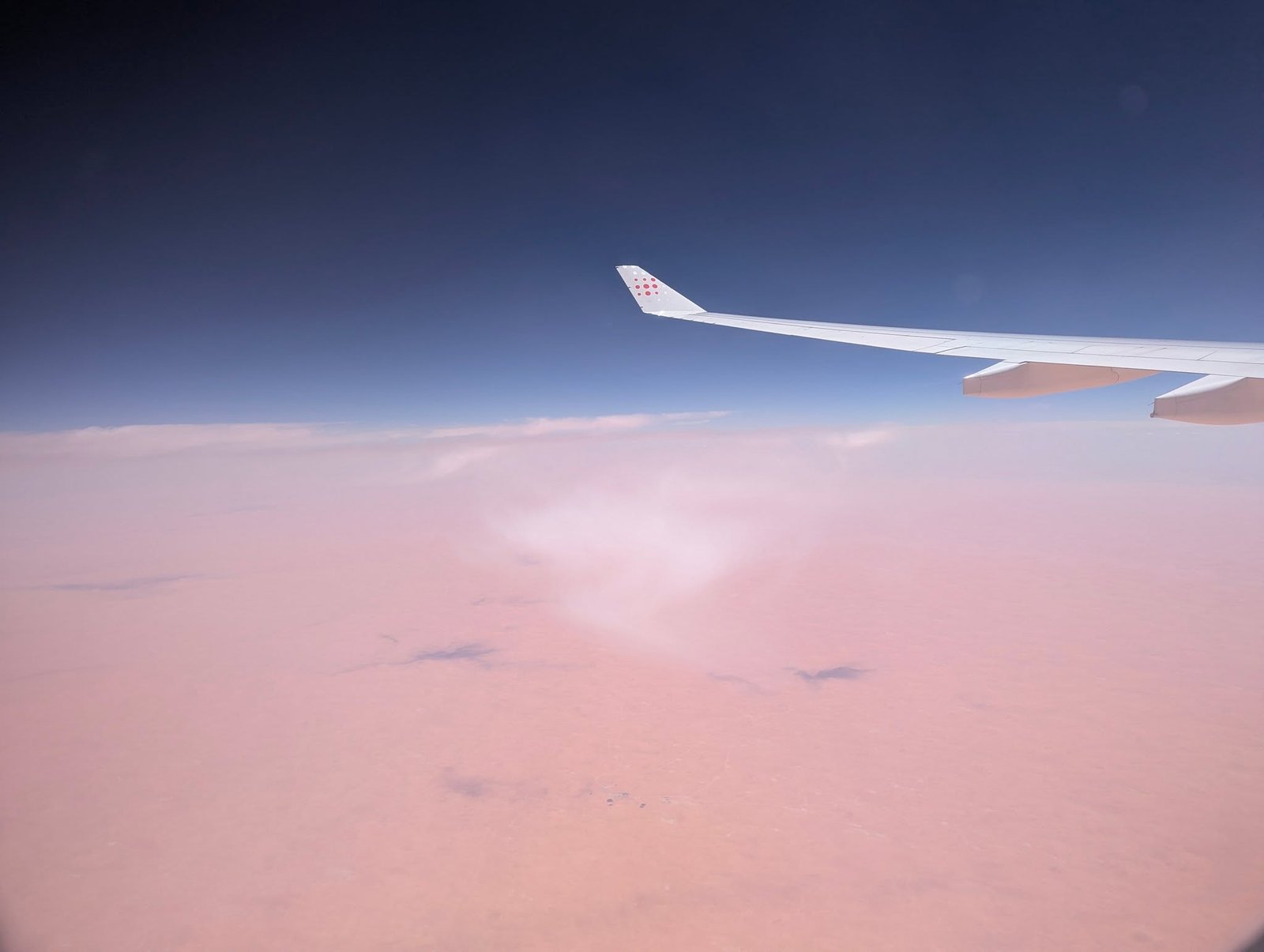
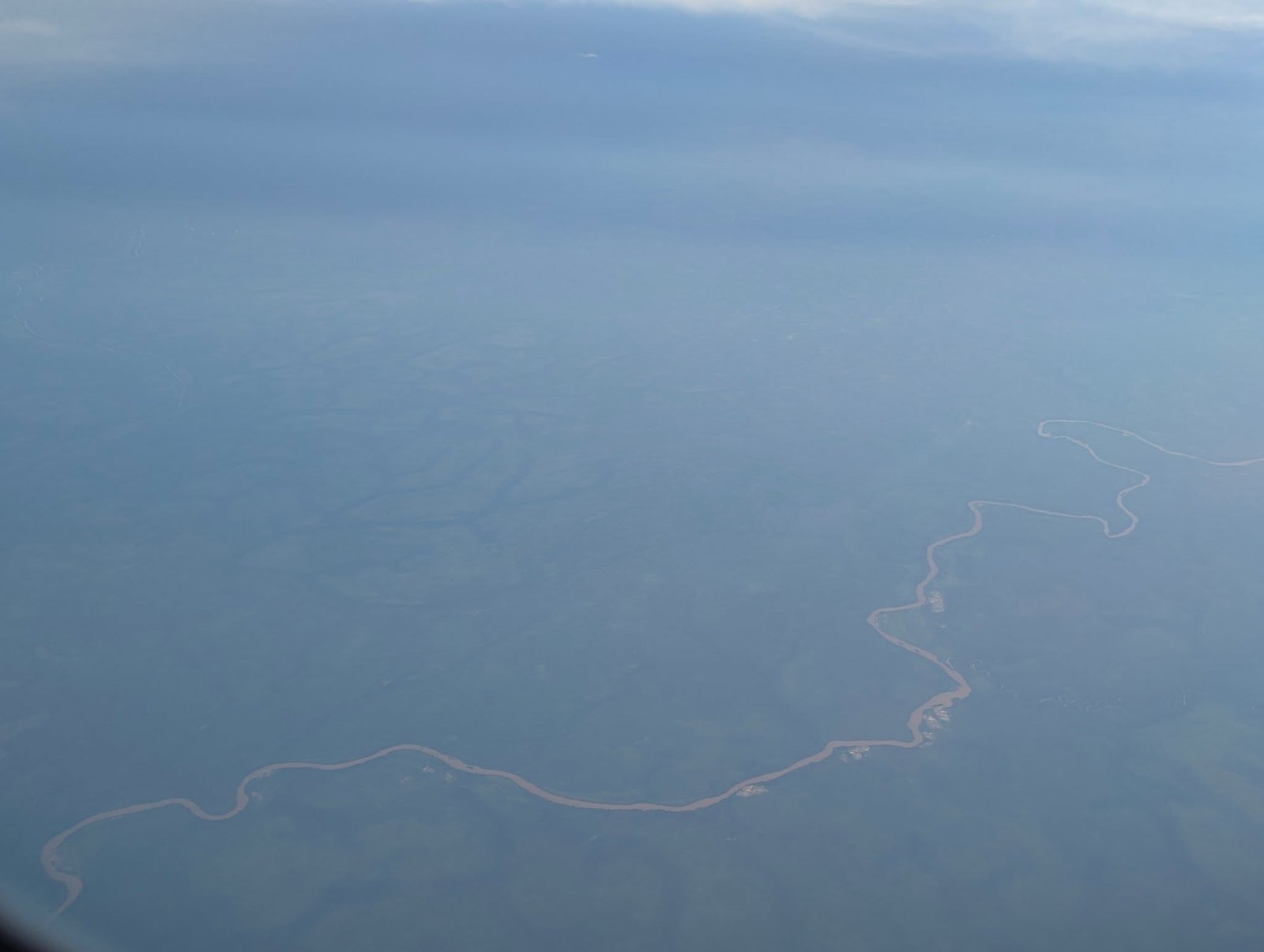
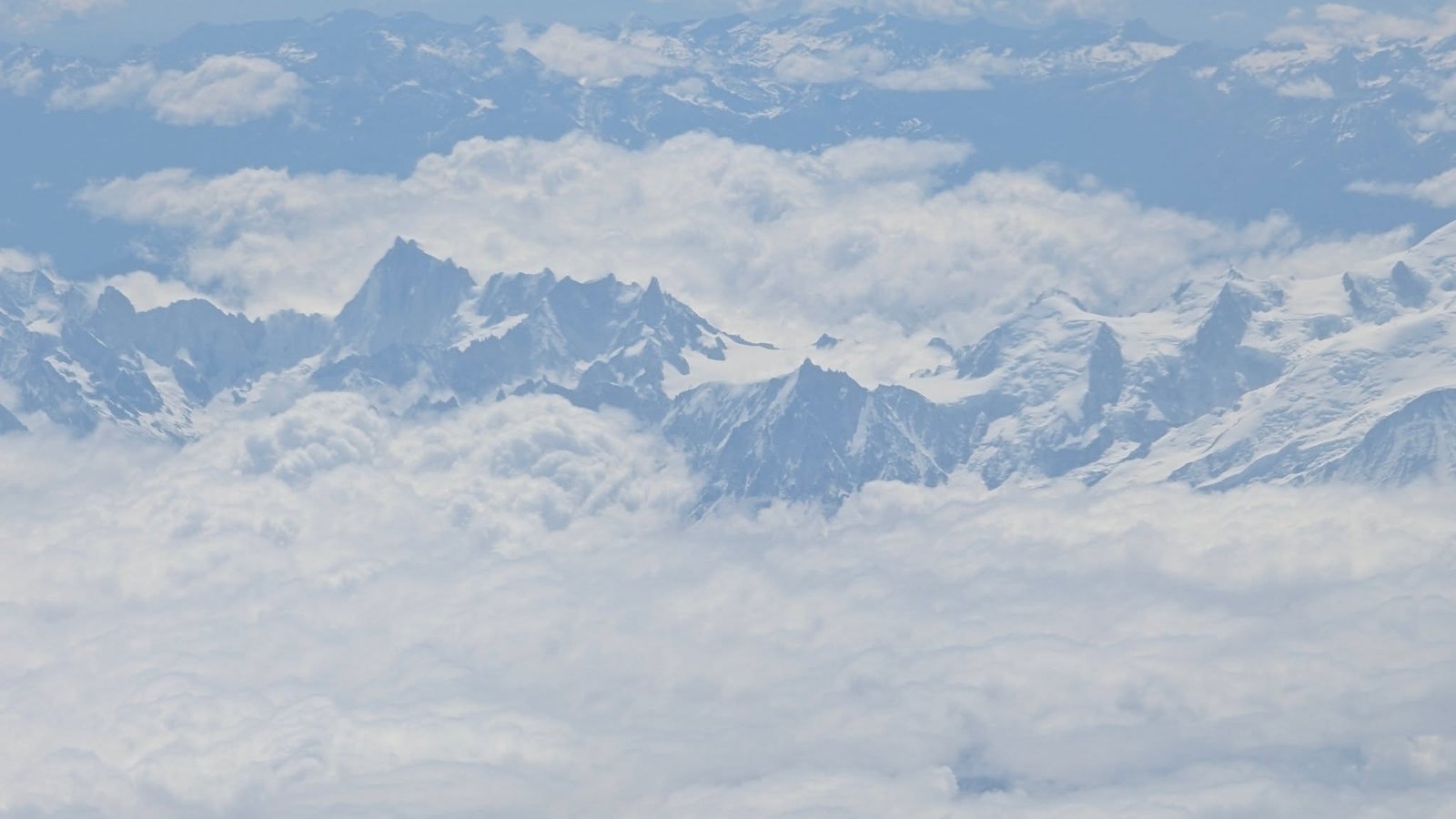
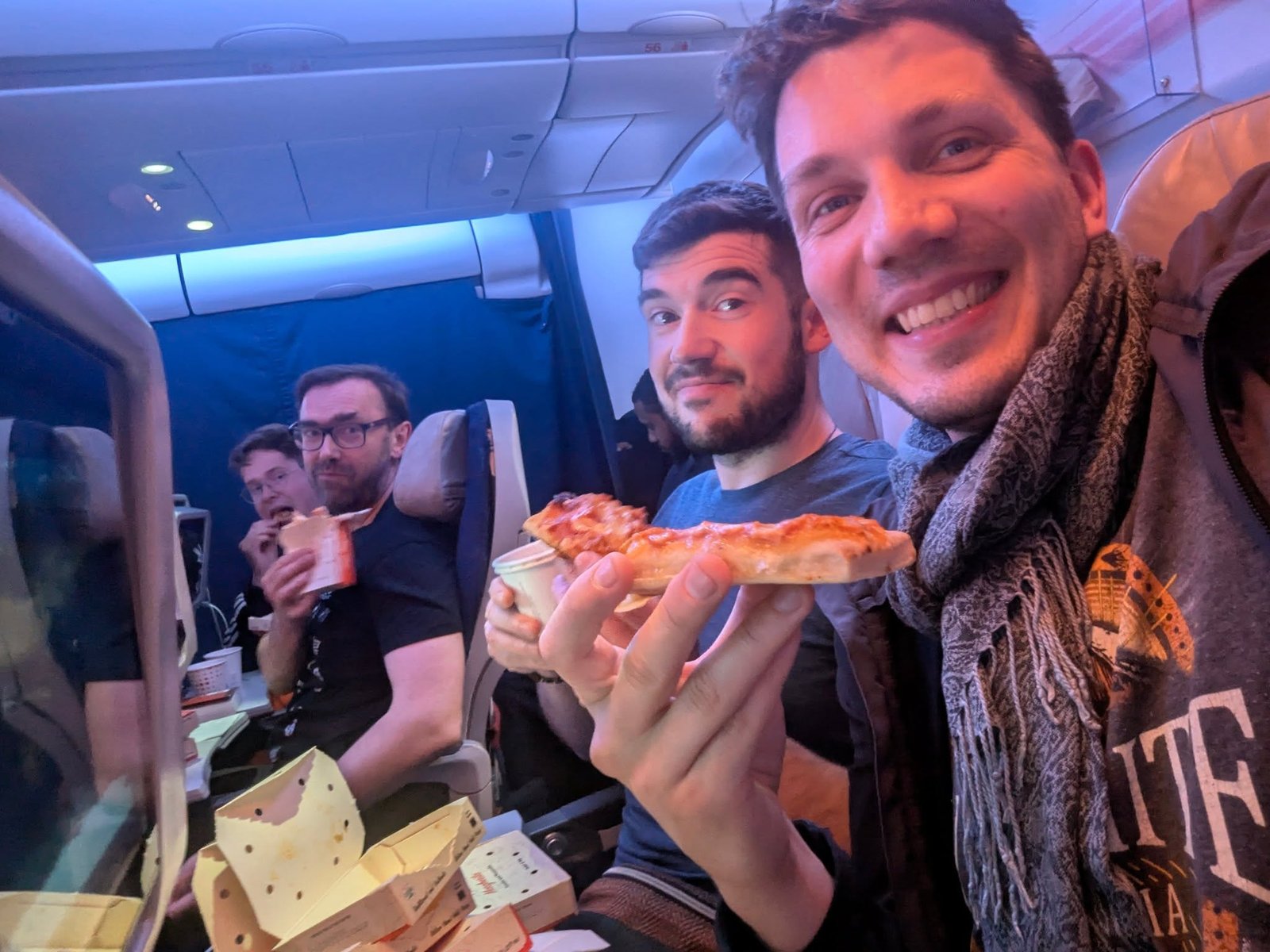
The plane took off at 10:20. On long flights I like the meals on board, and here we got them twice. There were still free seats at the back, so we moved to sit with Filip and Paweł. Thanks to that we had beautiful views of the Alps, and since we were sitting right at the back, we also got second helpings of the mini pizzas that were left over.
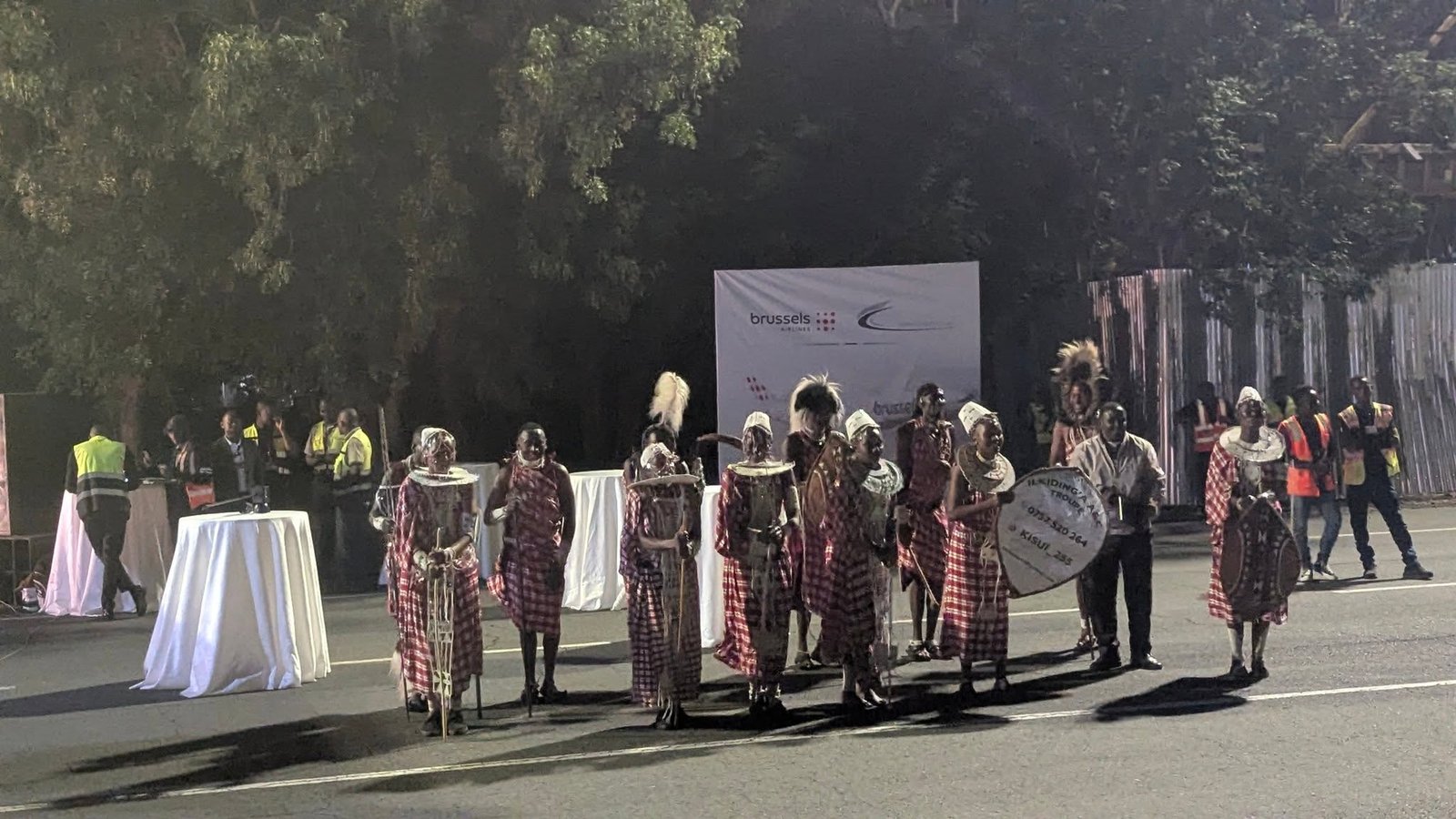
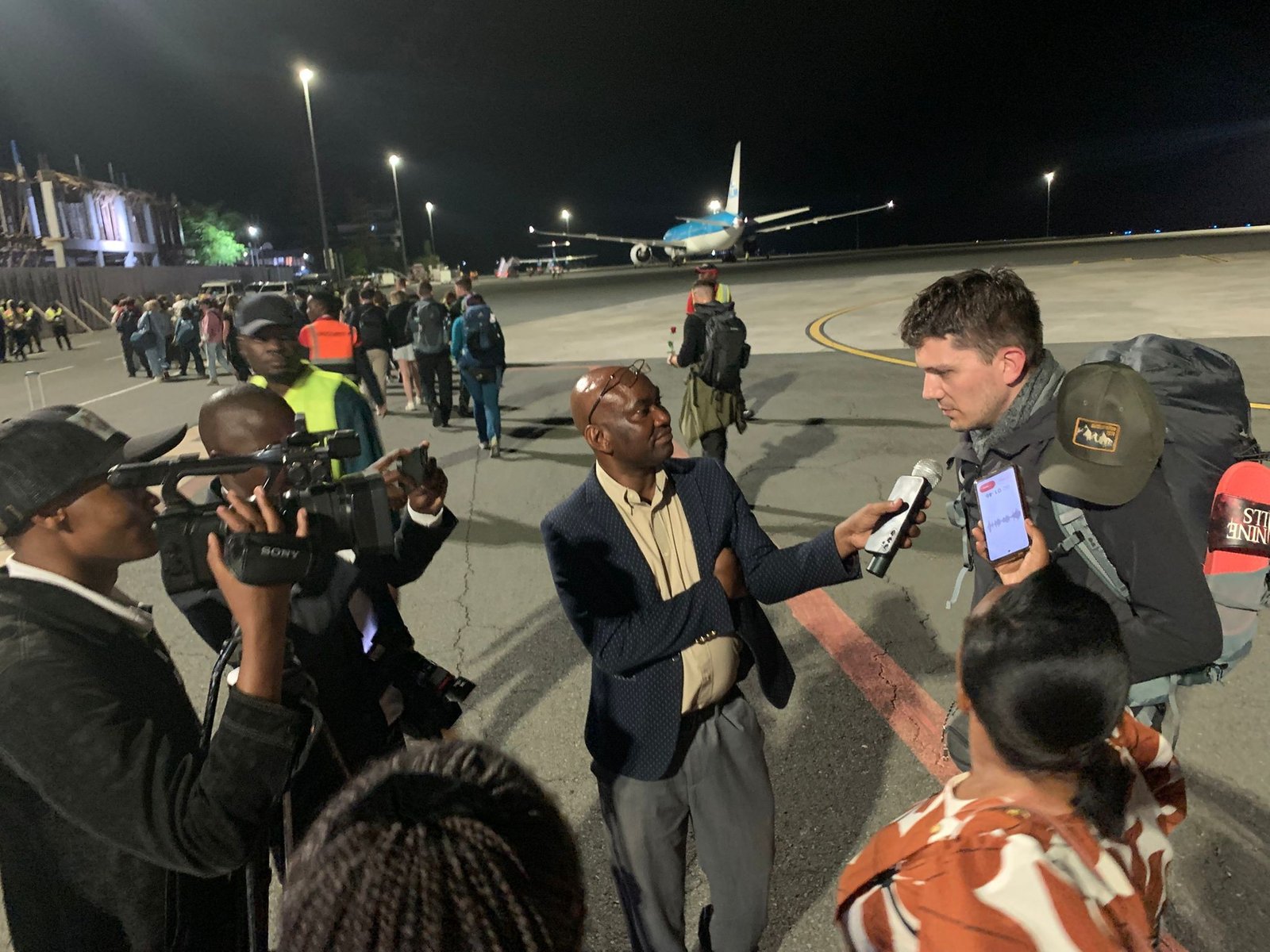
We landed at Kilimanjaro airport at 20:35 local time and were given a very warm welcome: the plane was sprayed with water from fire engines, a red carpet was rolled out, we received roses and key rings, there were traditional dances, and I even gave an interview to a TV camera. Tanzania lives off tourism, so the locals were very happy about the new air link.
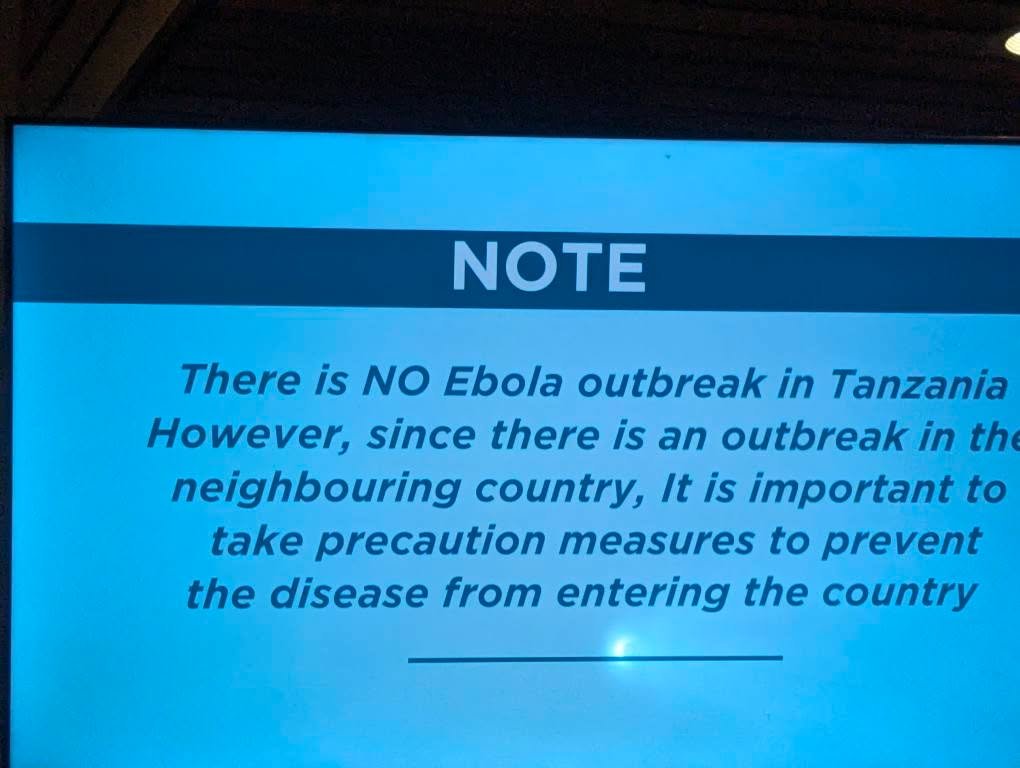
The airport also had notices about Ebola: there was no outbreak in Tanzania, but there was one in a neighbouring country, so precautions were in place.
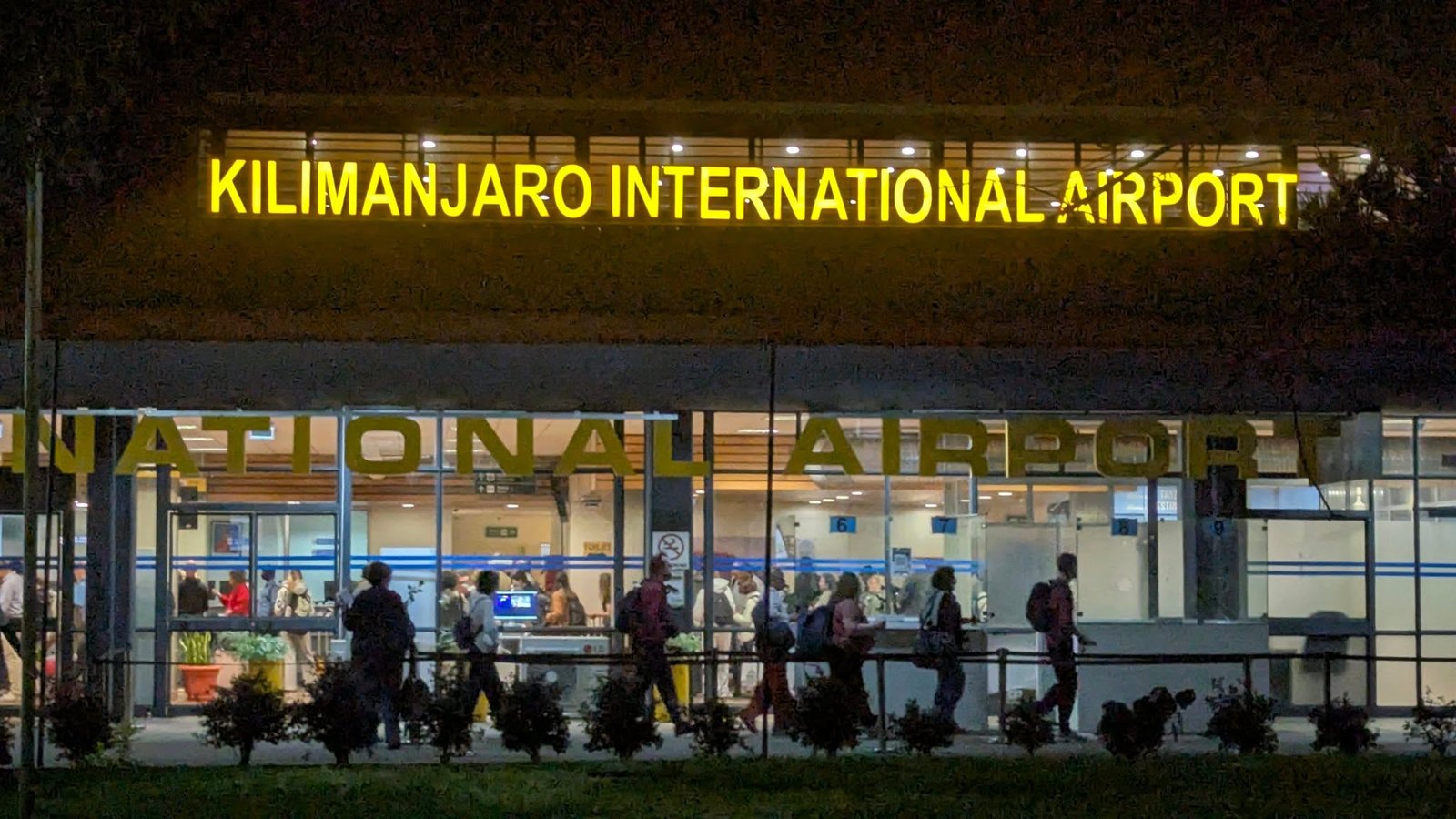
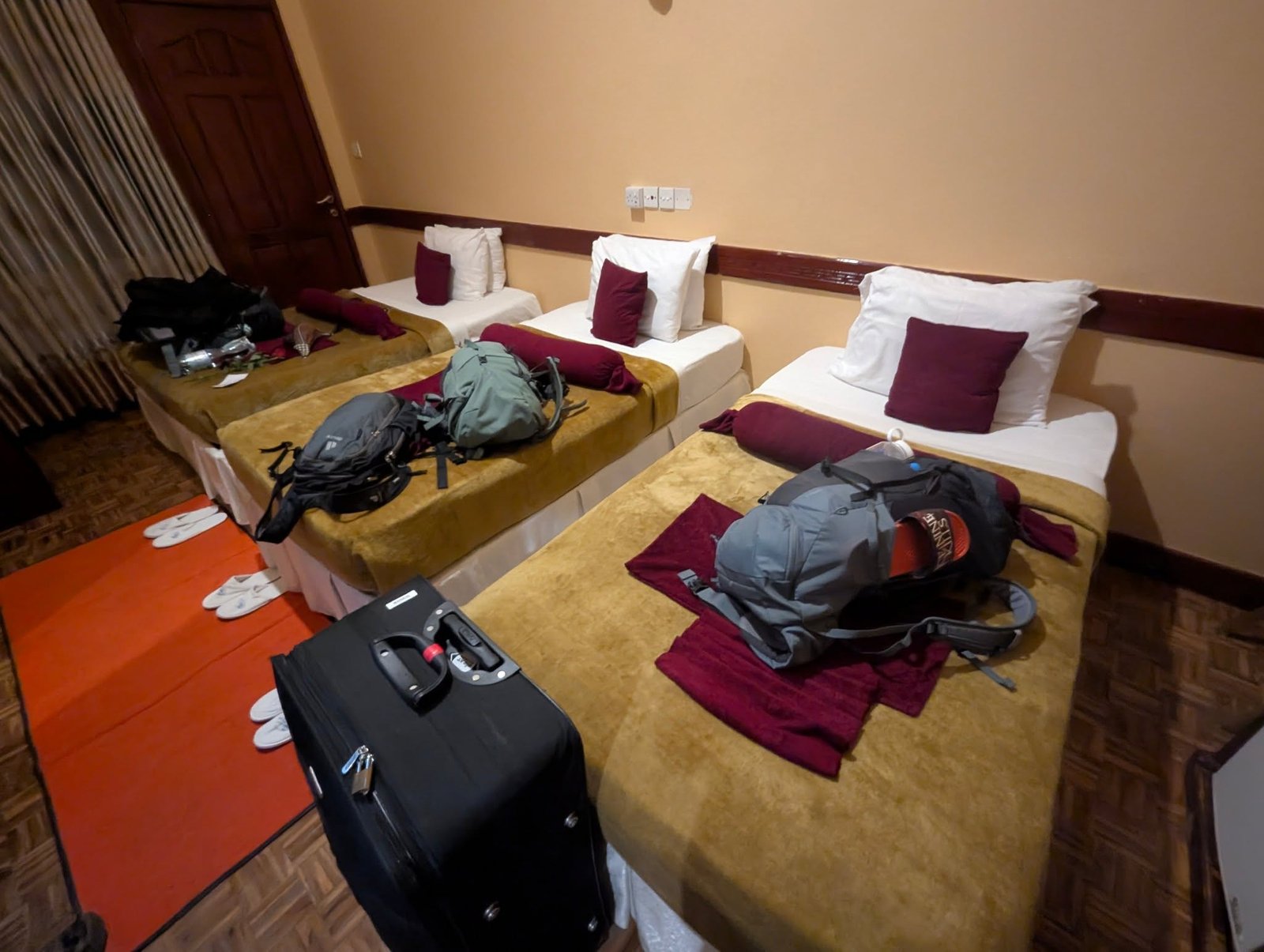
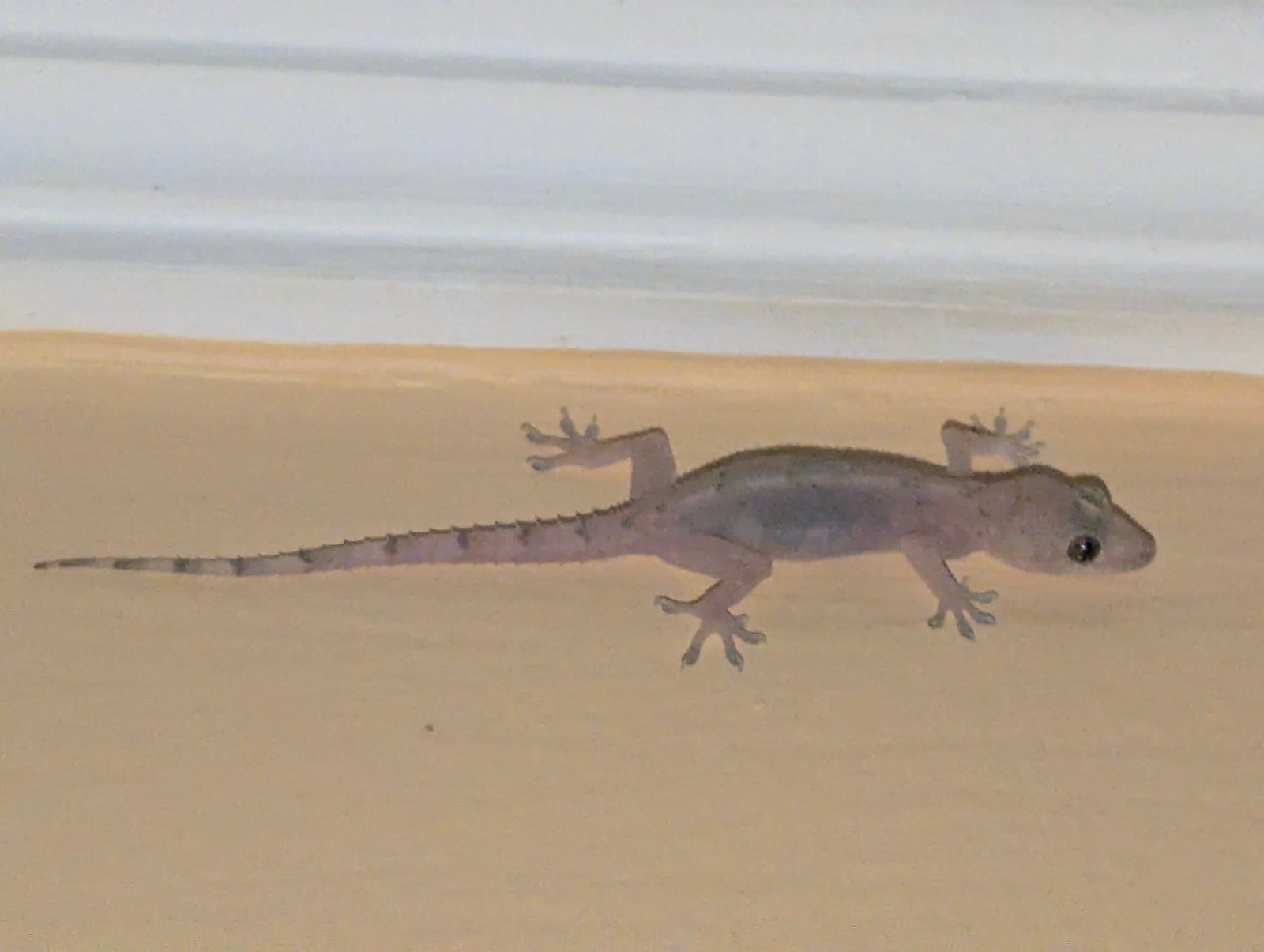
Unfortunately, right at the start one of the airport staff in the toilet expected a tip for basically nothing. We got through the formalities quickly and took pre-booked transport straight to our hotel in Arusha. Tanzania drives on the left, and the roads were so full of potholes that we drove slowly – the Tanzanian way, “pole pole”, which is Swahili for “slowly, slowly”. One resident was already waiting for us in our room.
Day 3: Arusha
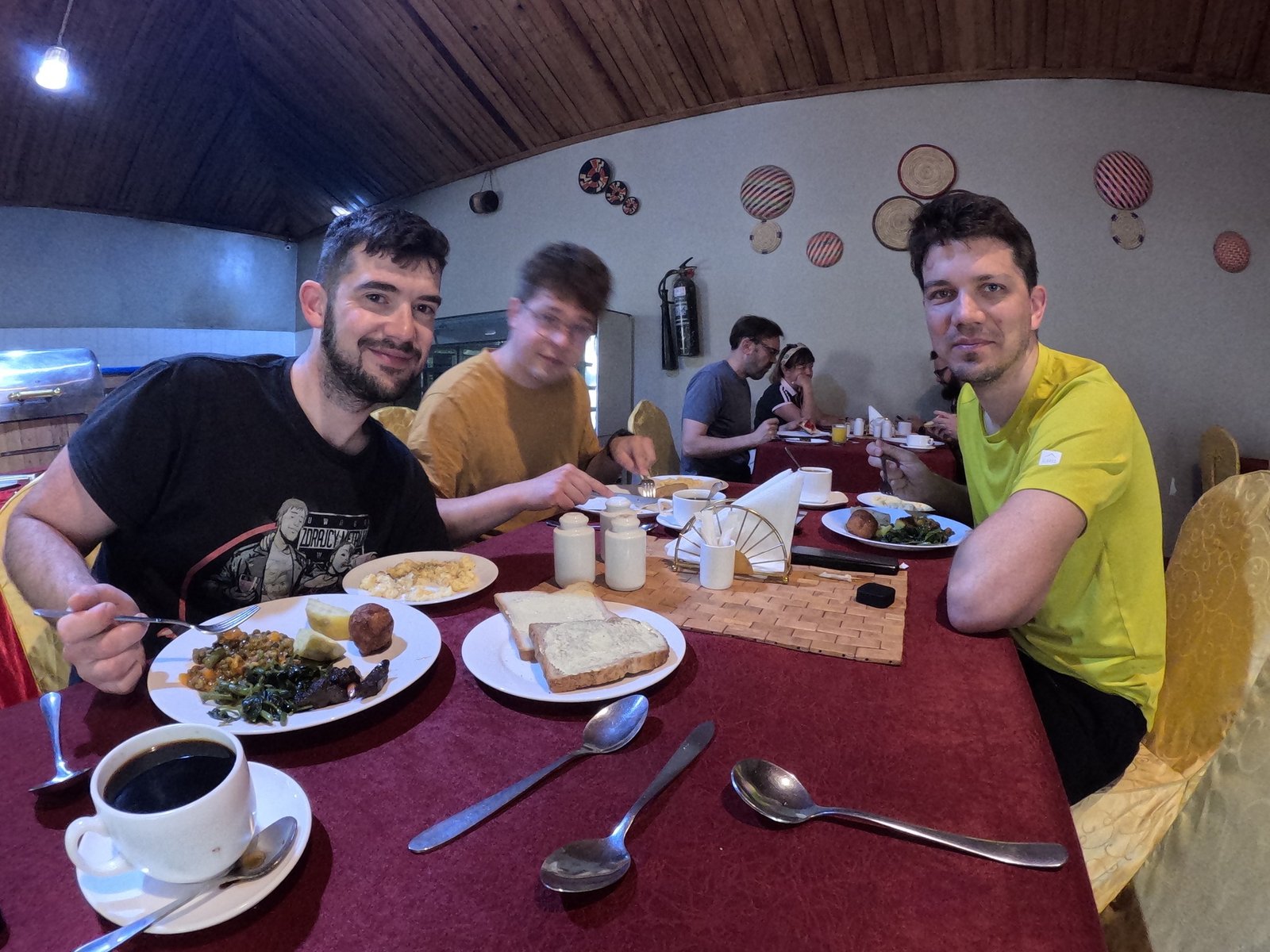
Arusha is Tanzania’s fourth-largest city. On Thursday we could finally get a decent amount of sleep, and then a hearty breakfast awaited us at the hotel.
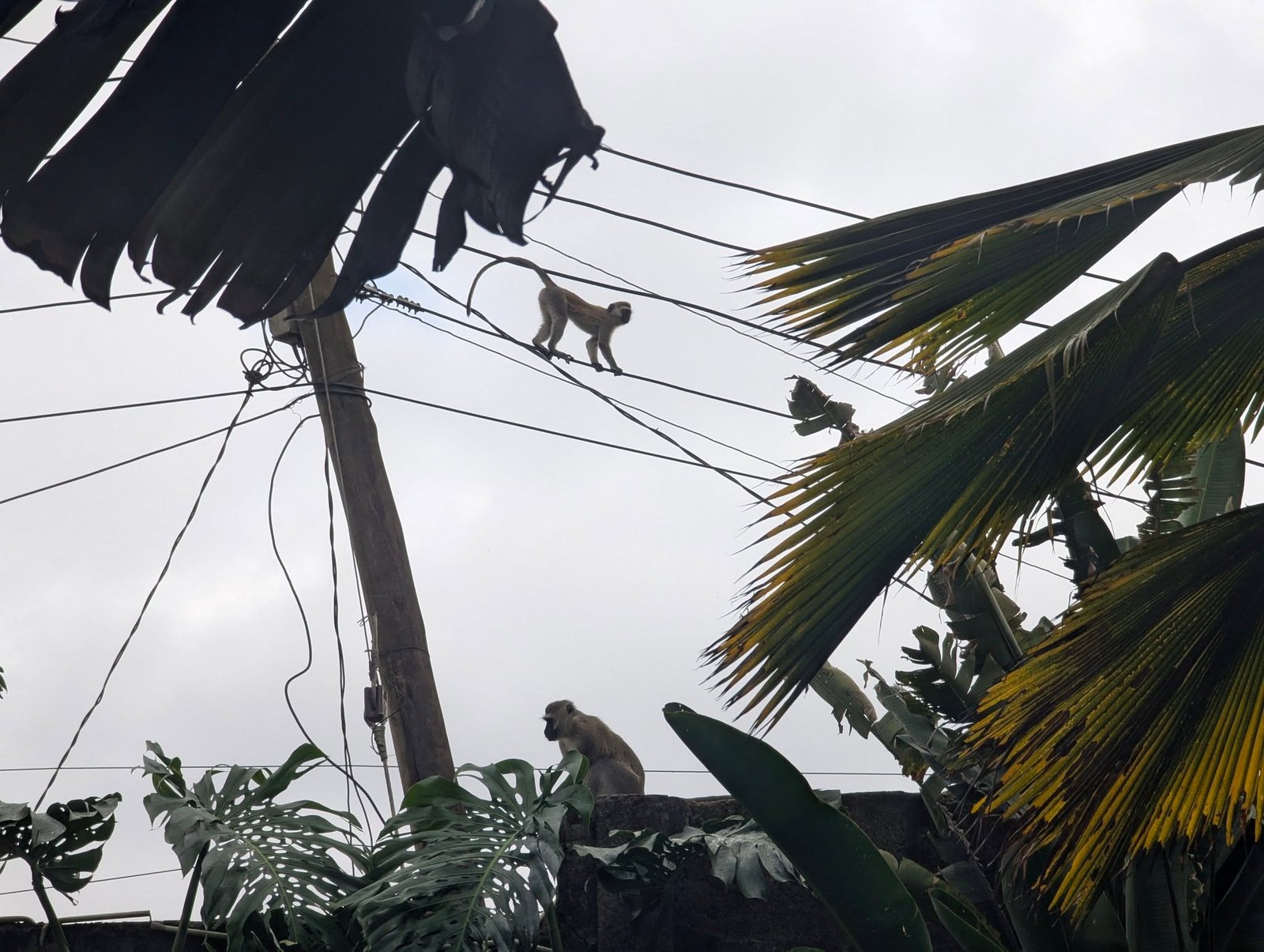
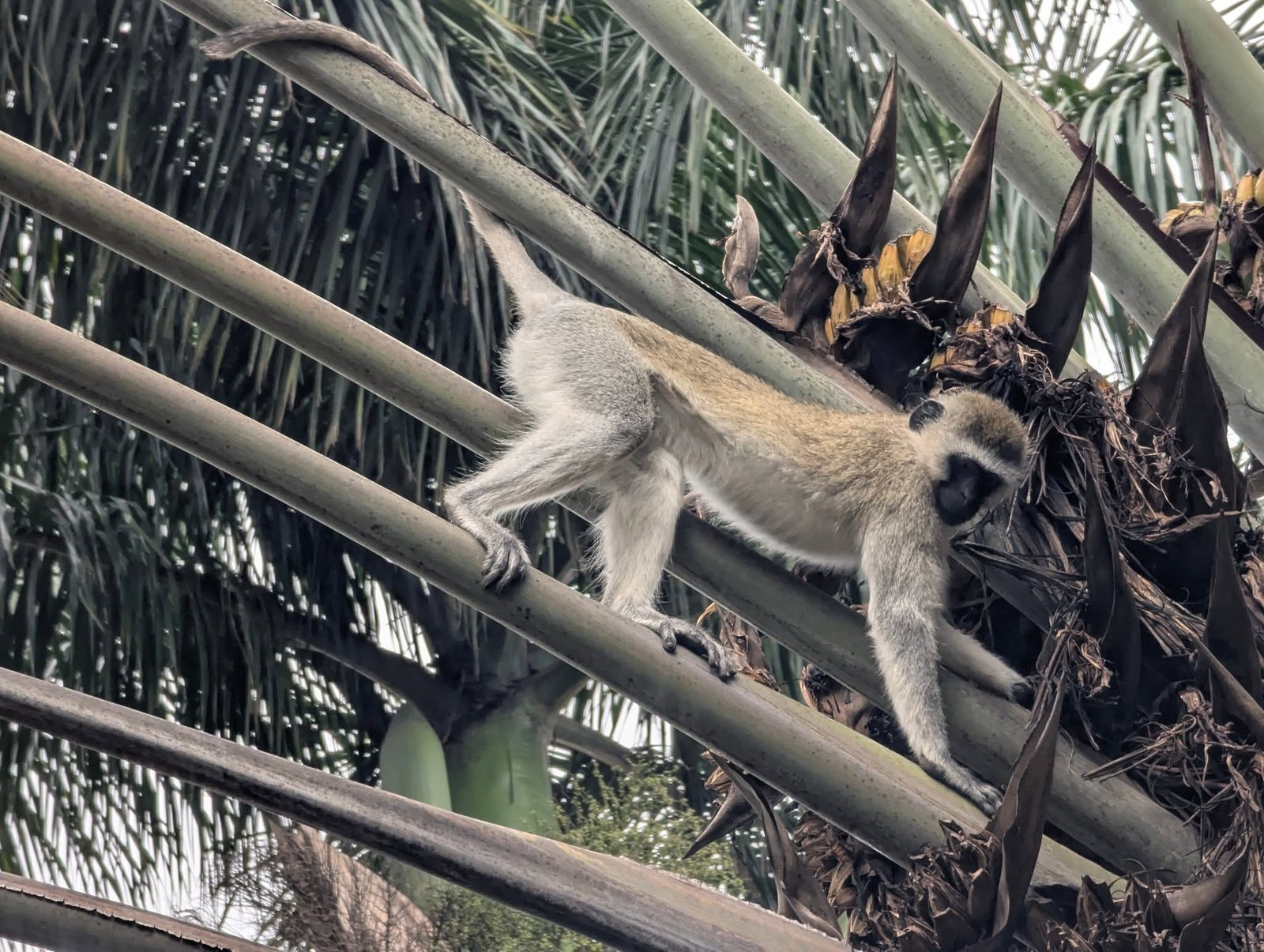
Little monkeys jumped around the trees by the hotel, hoping for leftovers – they cleverly turned up right at breakfast time. The hotel itself was fine, but the road leading to it was in poor condition, and Arusha has plenty of those. The view from the balcony looked a bit like a war zone, but it was simply an unfinished hotel.
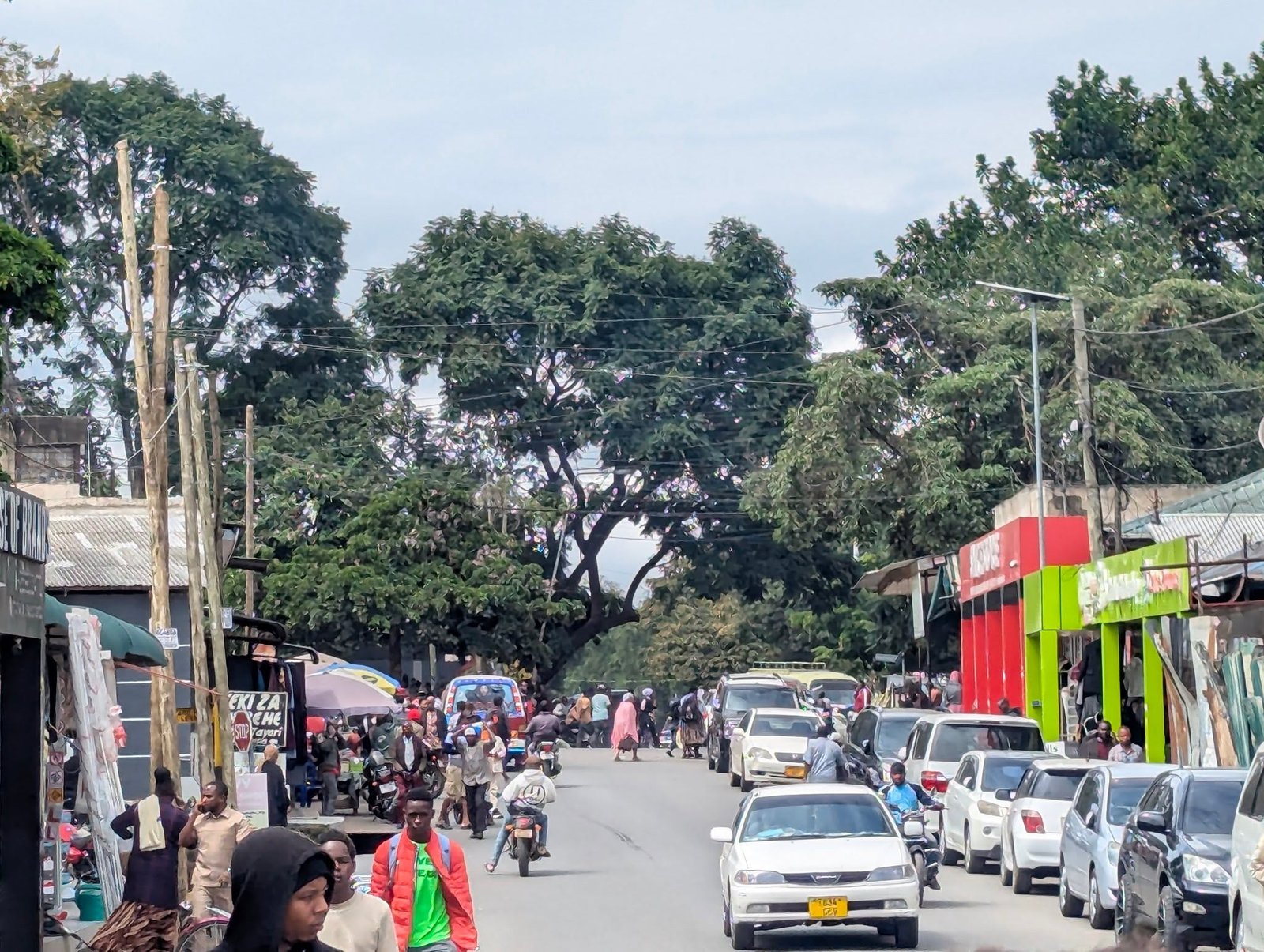
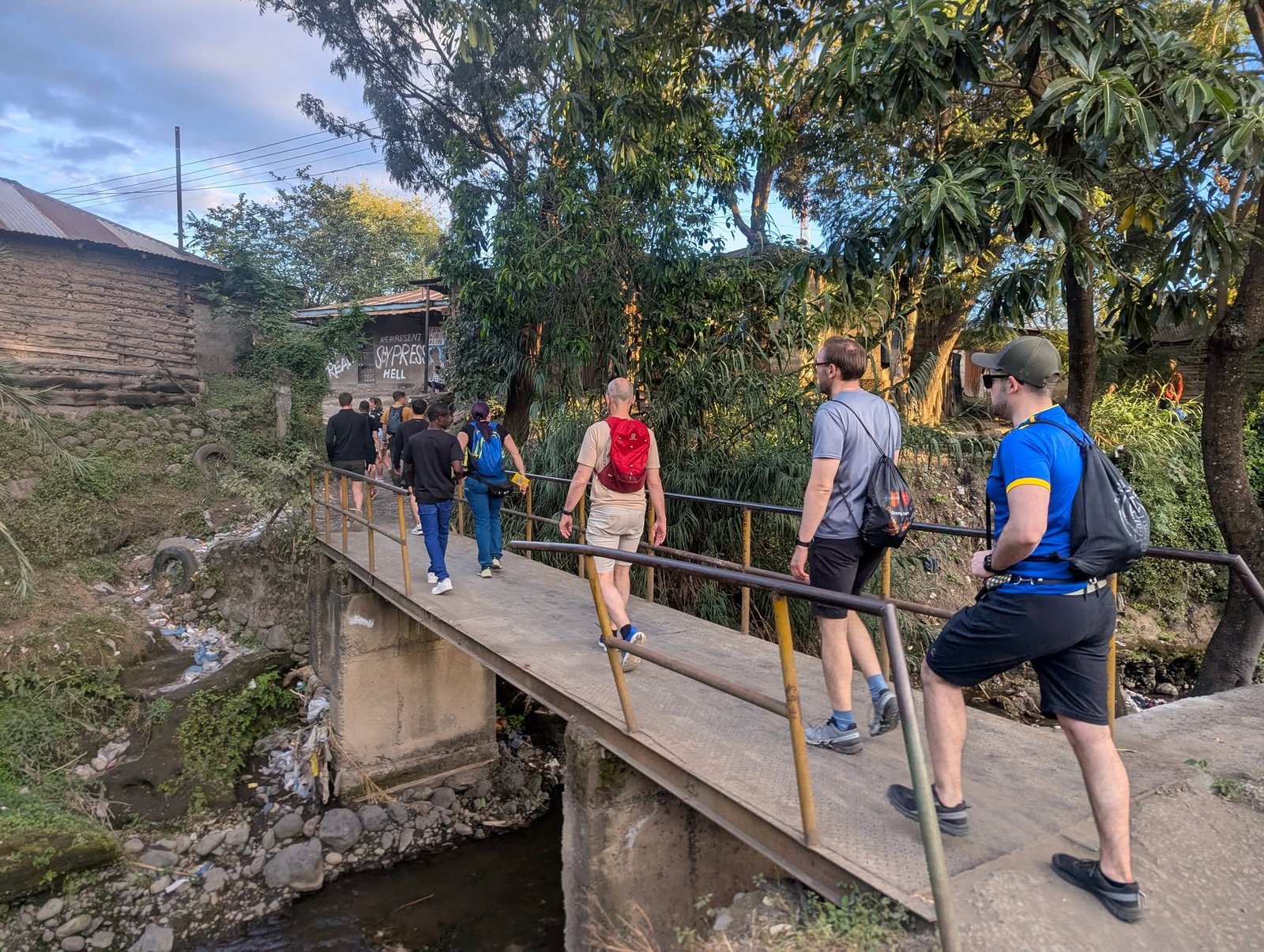
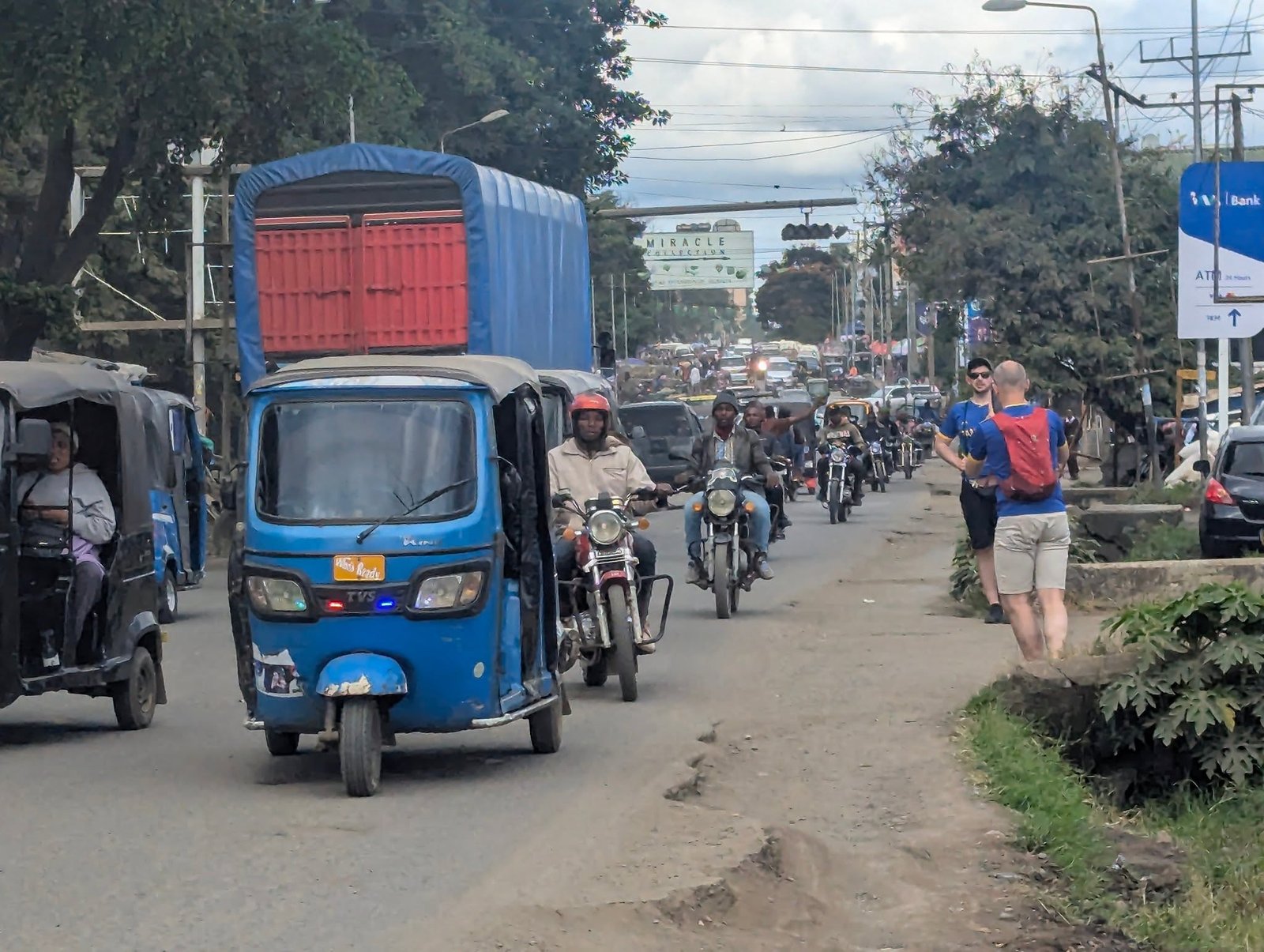
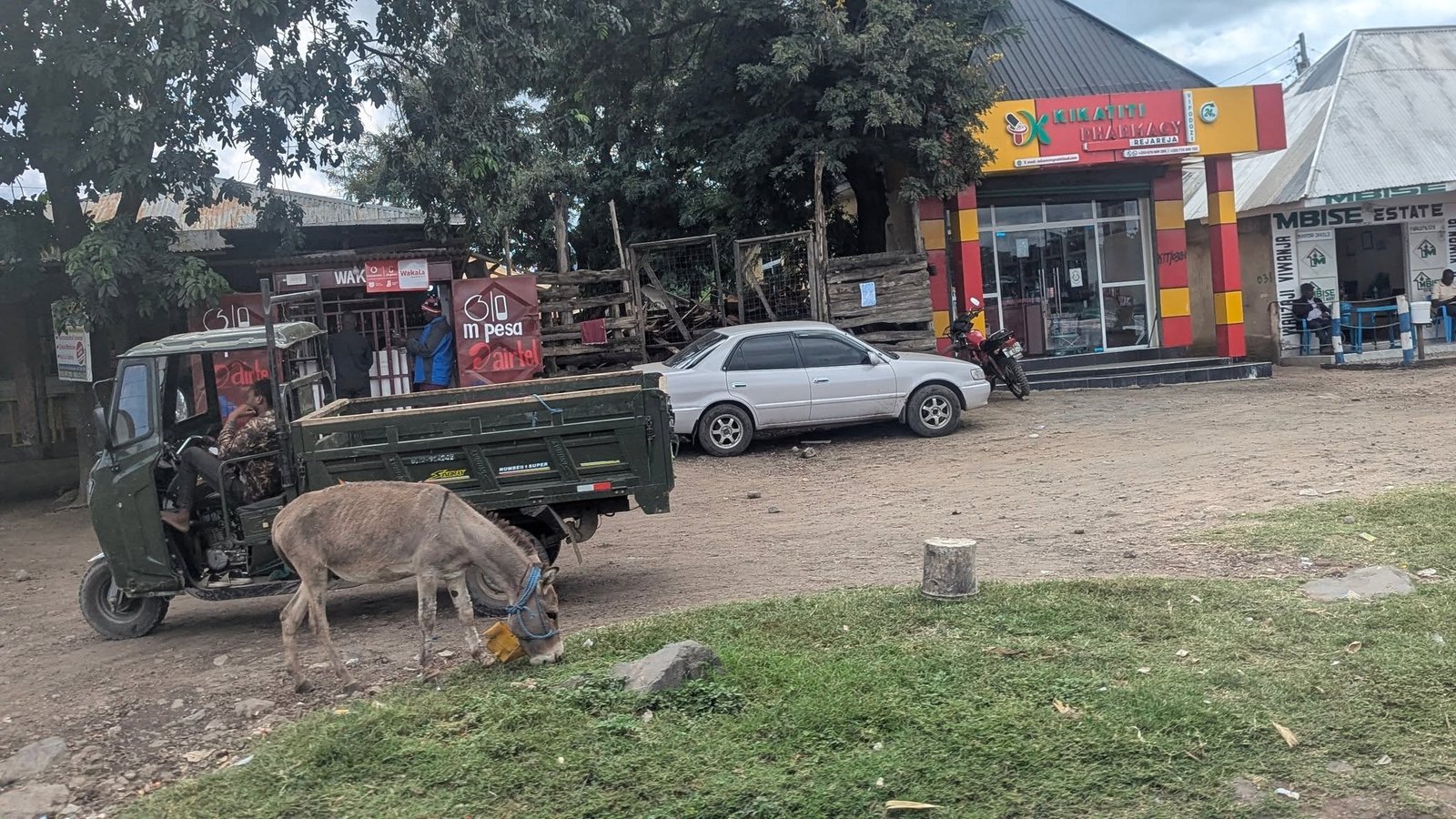
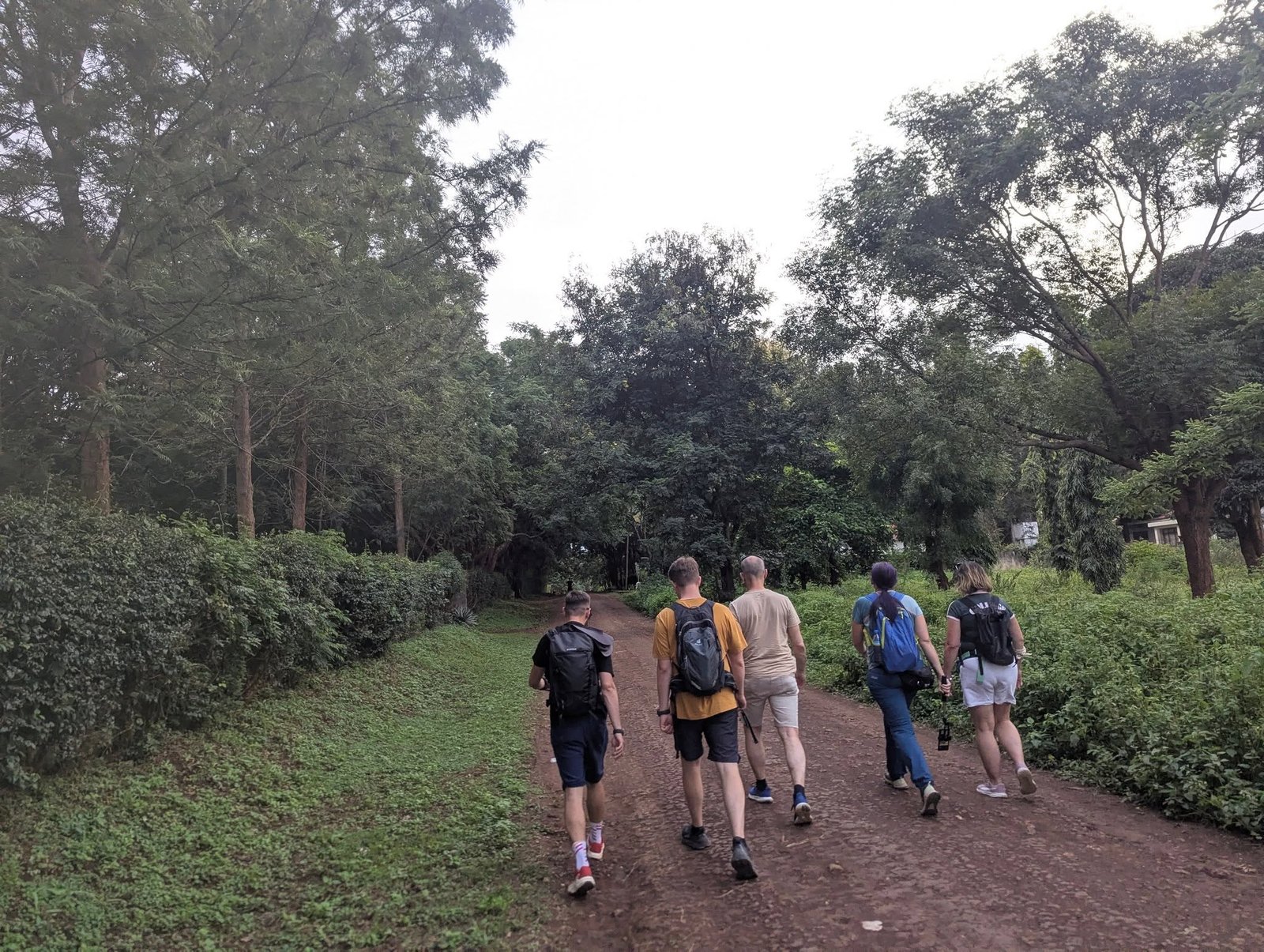
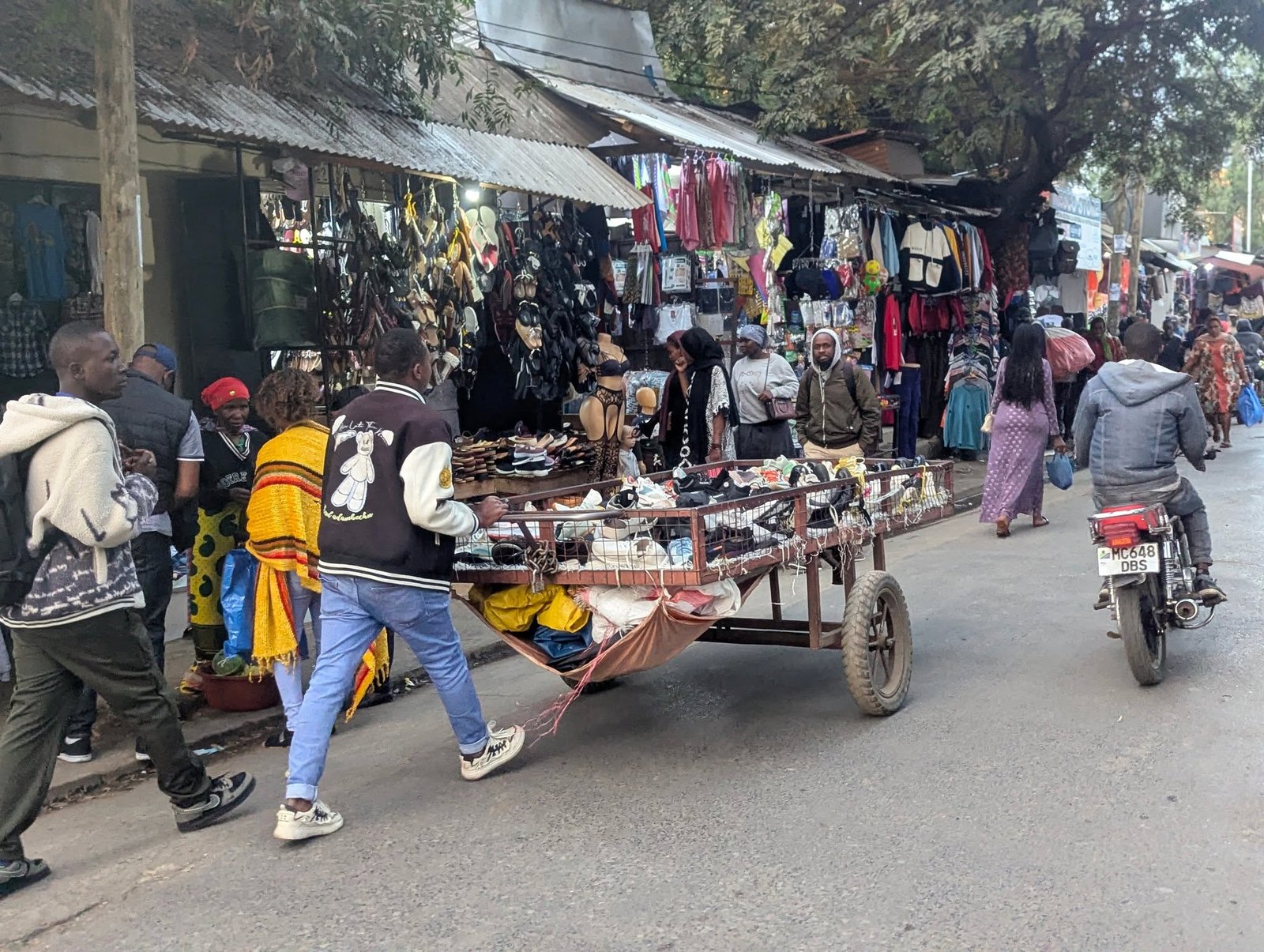
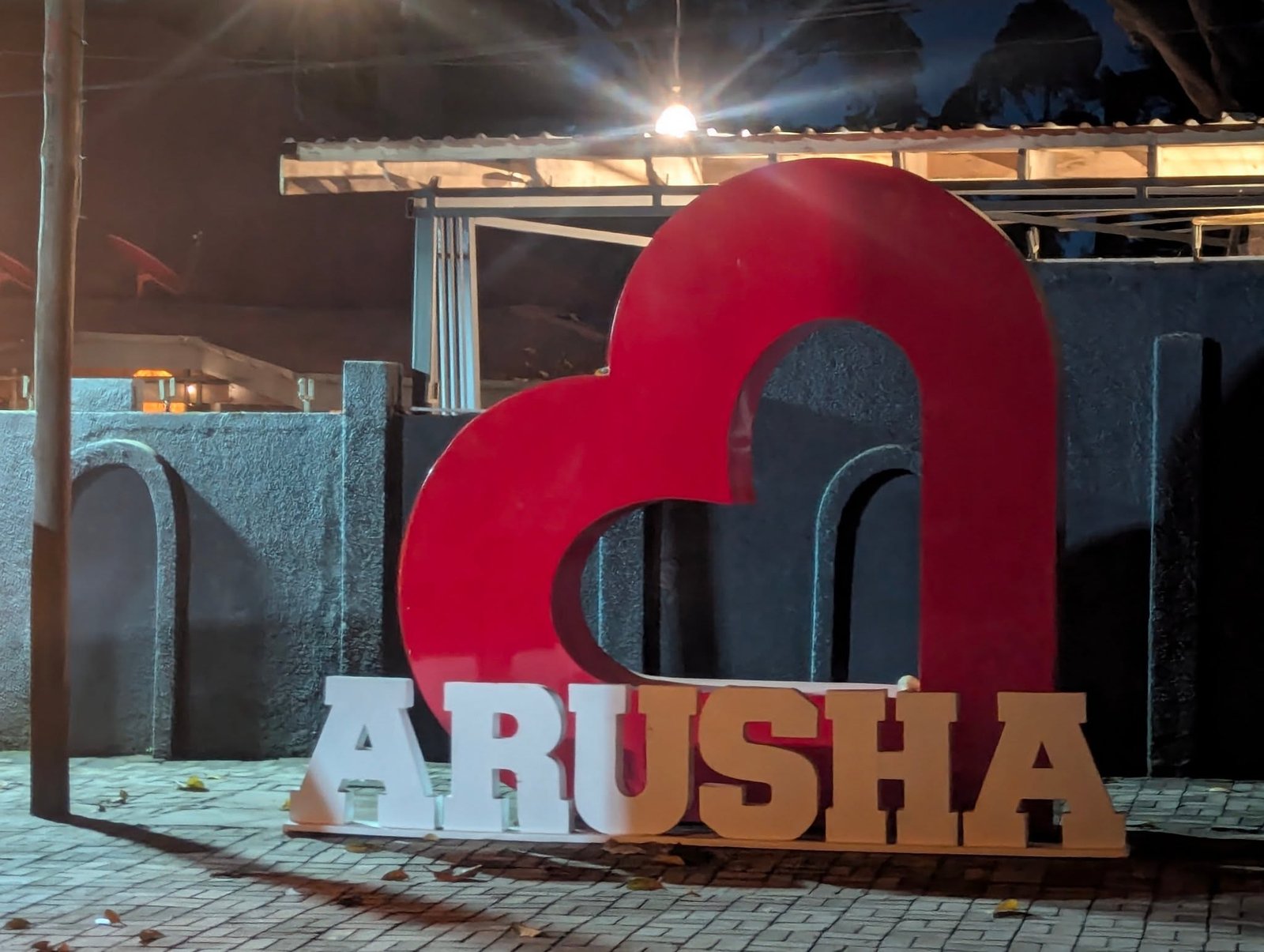
We took a long walk around the city. Many people chatted to us and waved (especially children) – all in all, very friendly. Everywhere, though, there was chaos on the streets and pavements, noise and a lot of exhaust fumes in the air, and in some places the crowds were simply overwhelming. It has its own atmosphere, but it was good to sit down somewhere quieter afterwards.
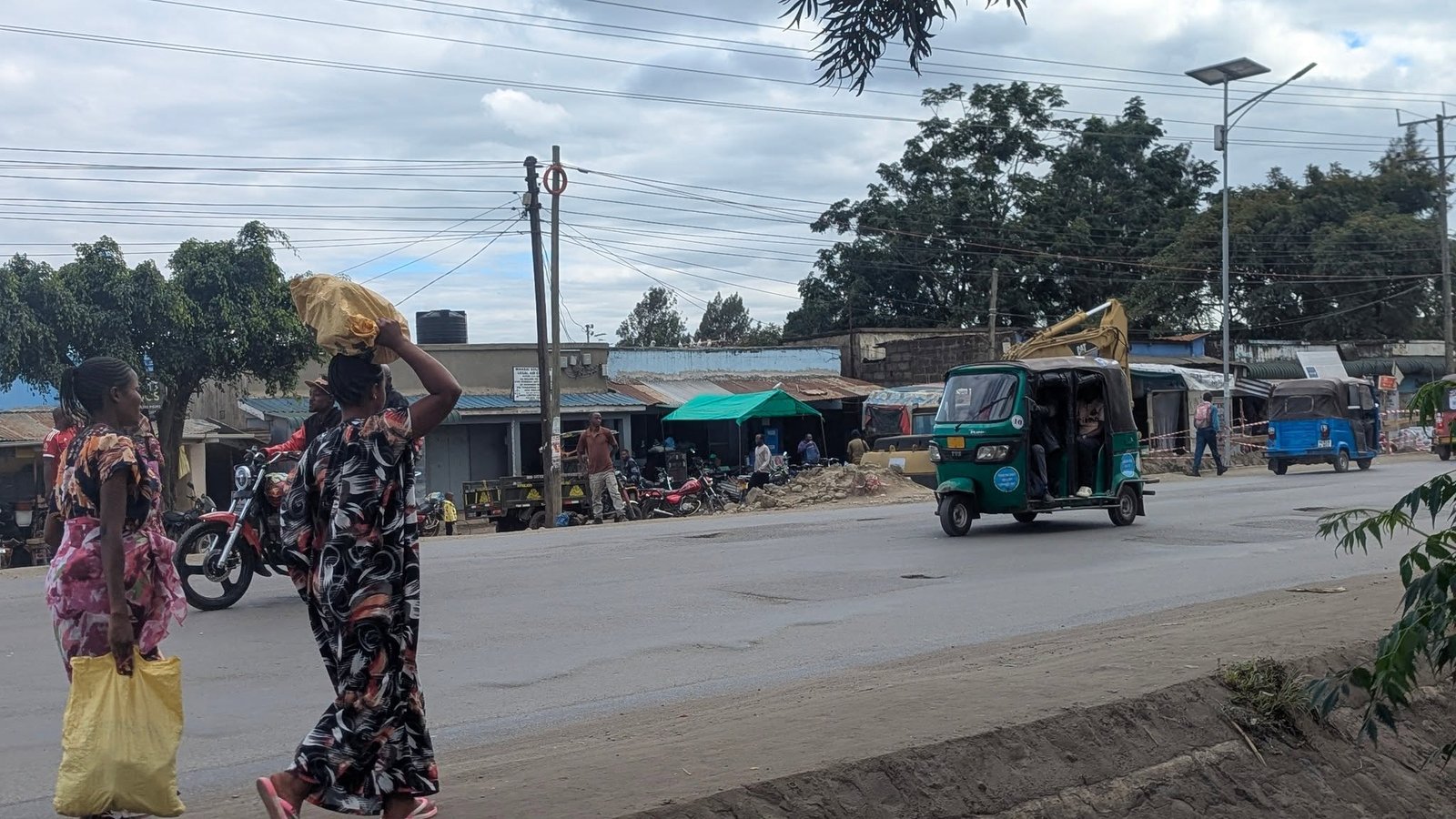
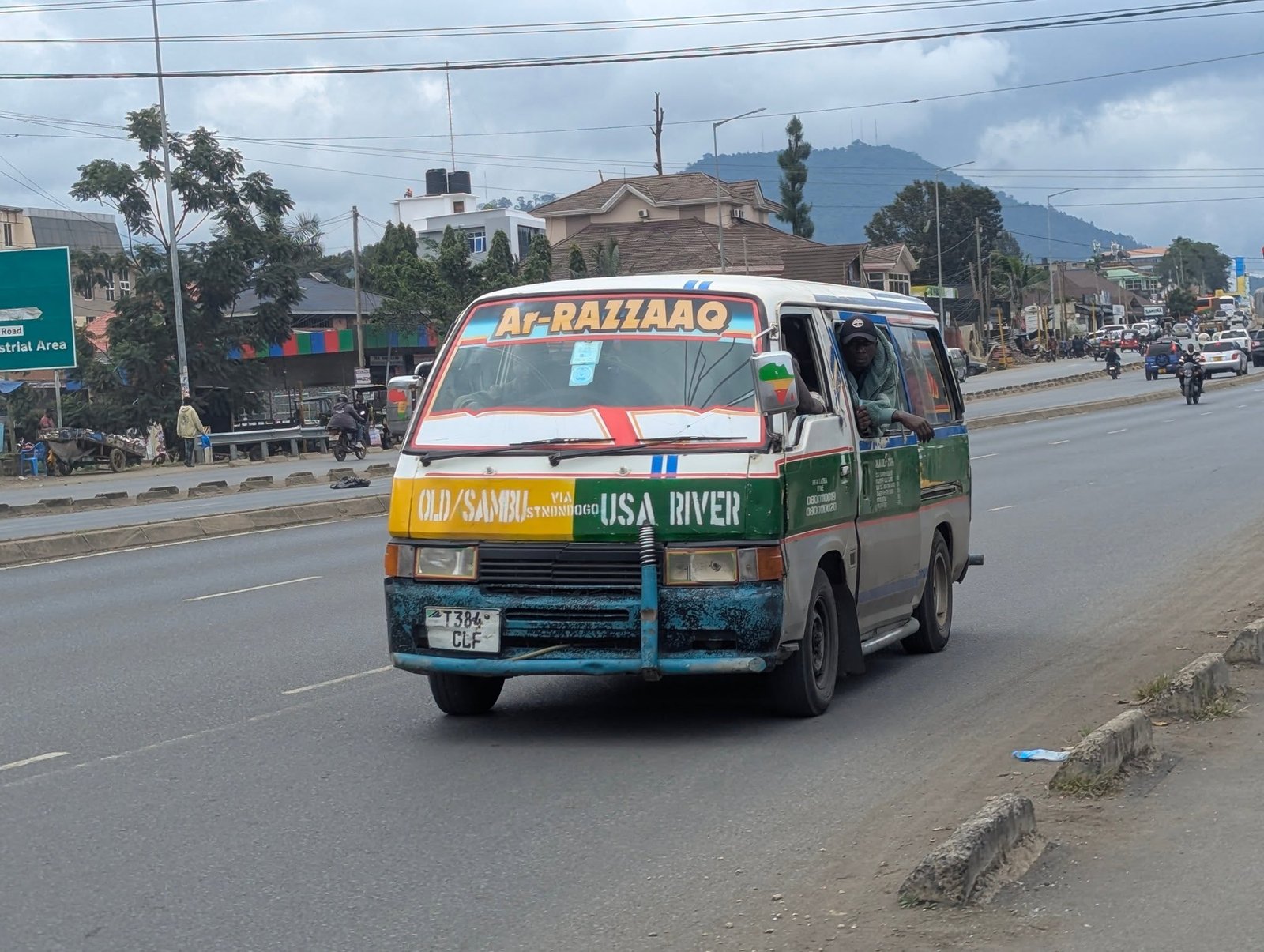
On the whole, I felt something like an “African” version of Central America here, only safer – especially when we moved around as a larger group. Even the city minibuses looked like the “colectivos” of Latin America.
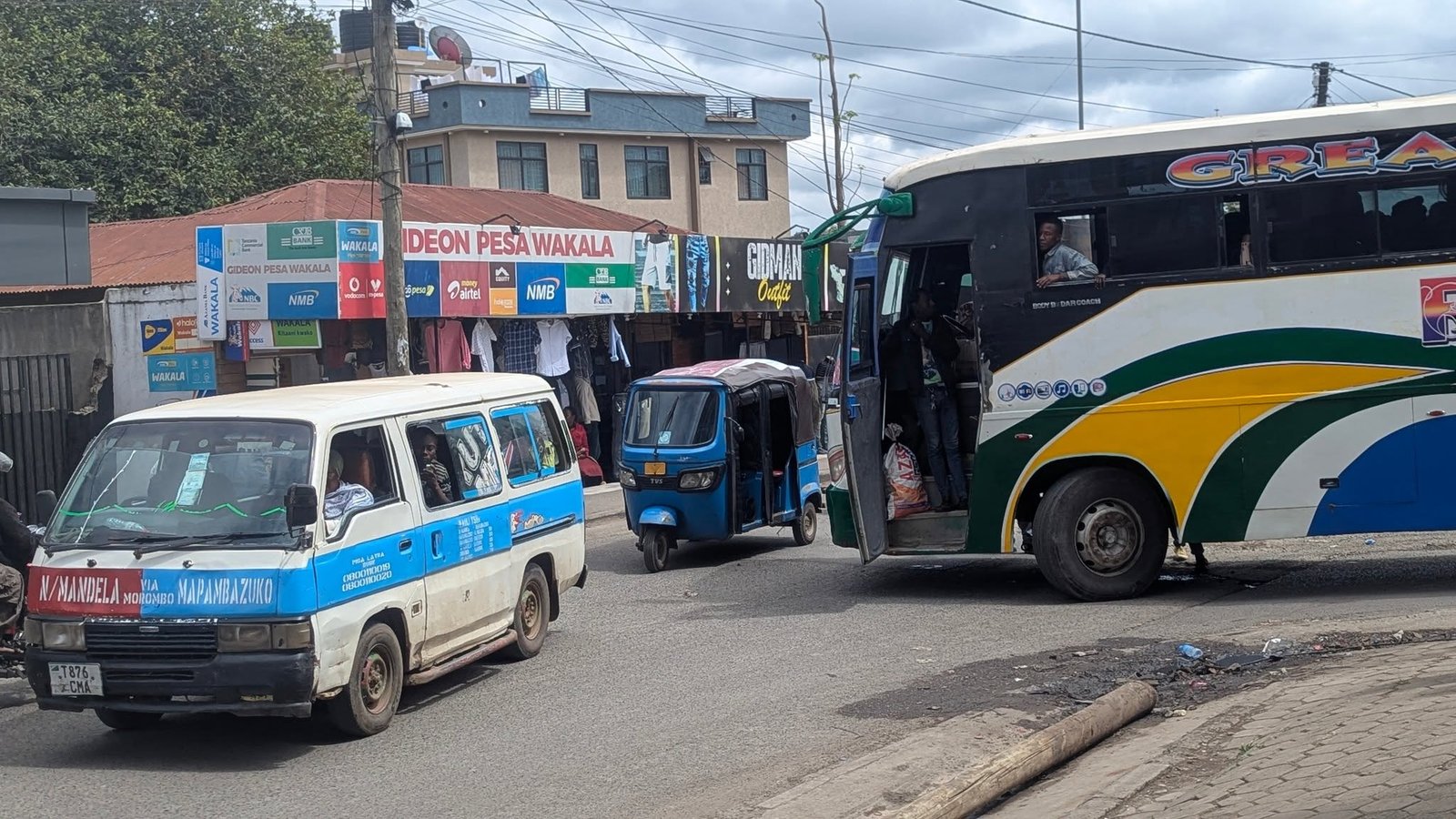
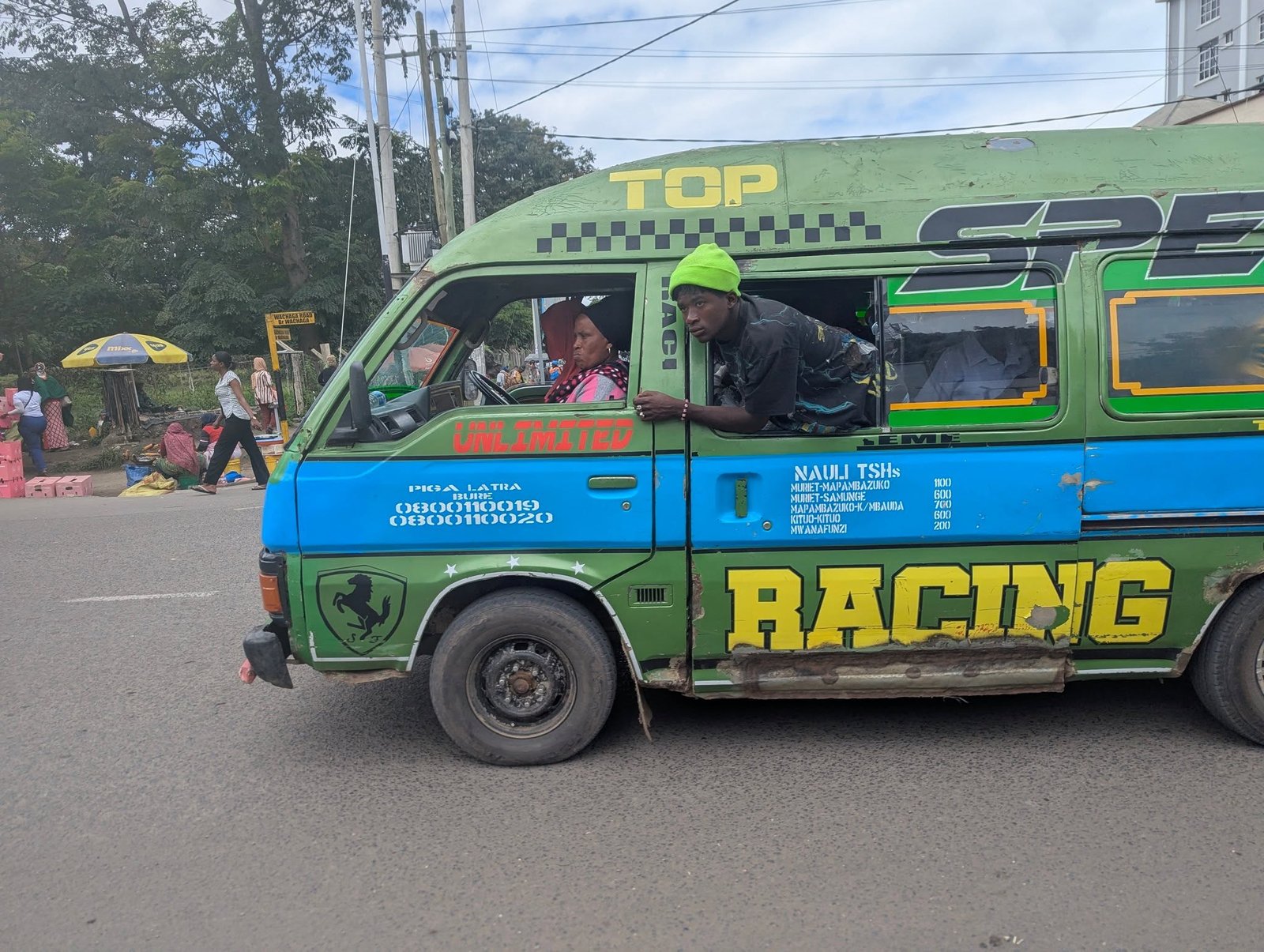
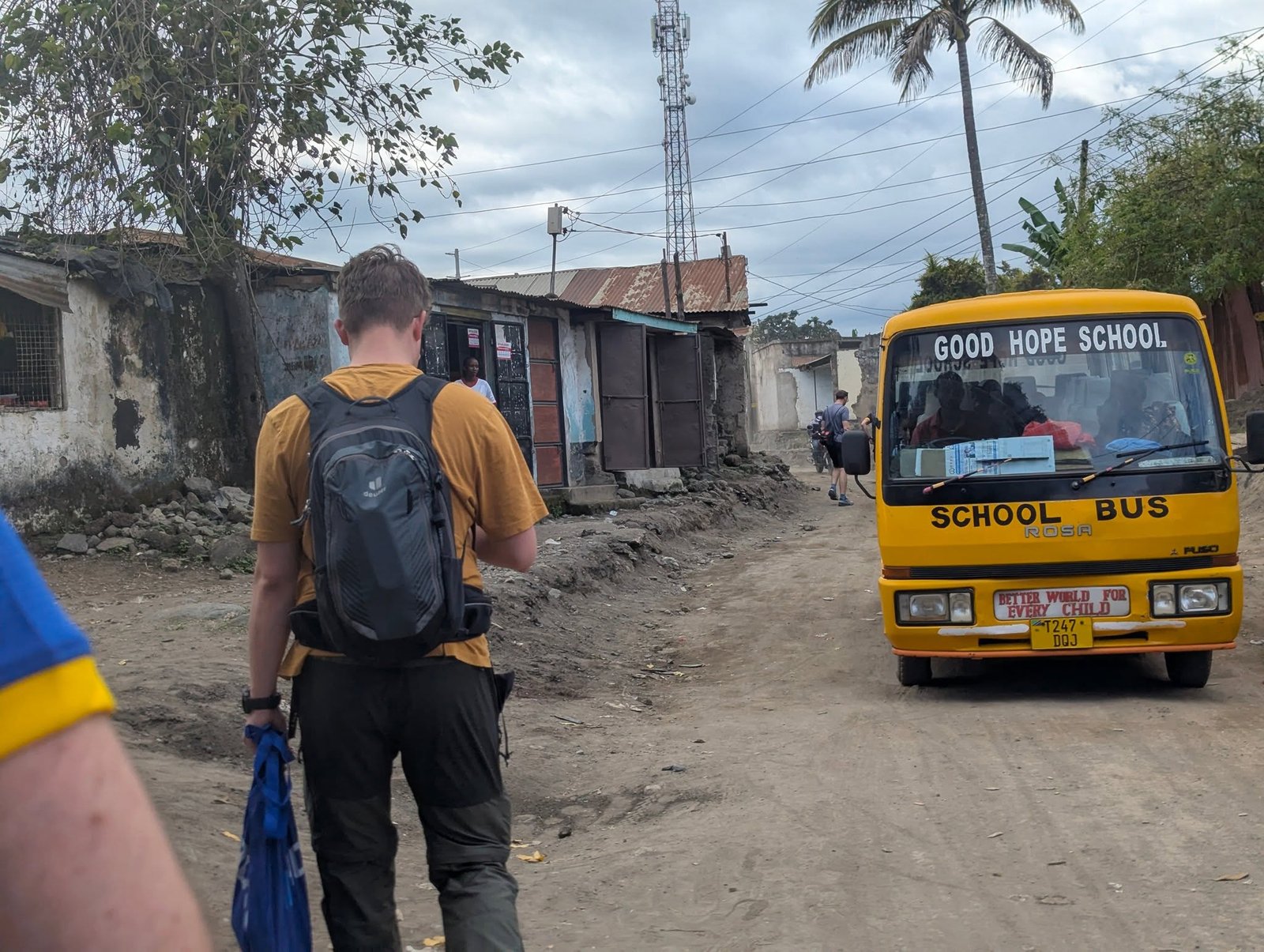
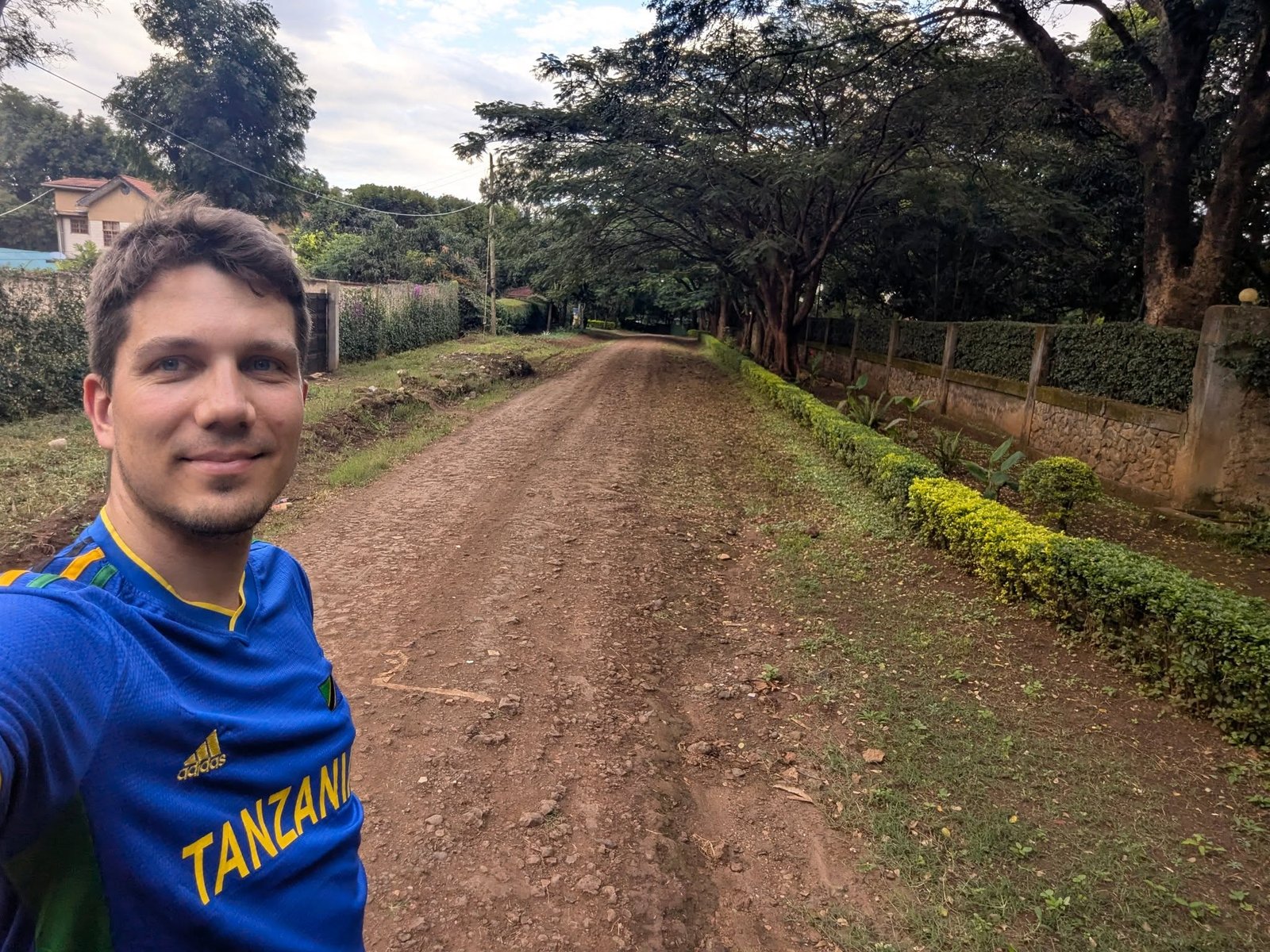
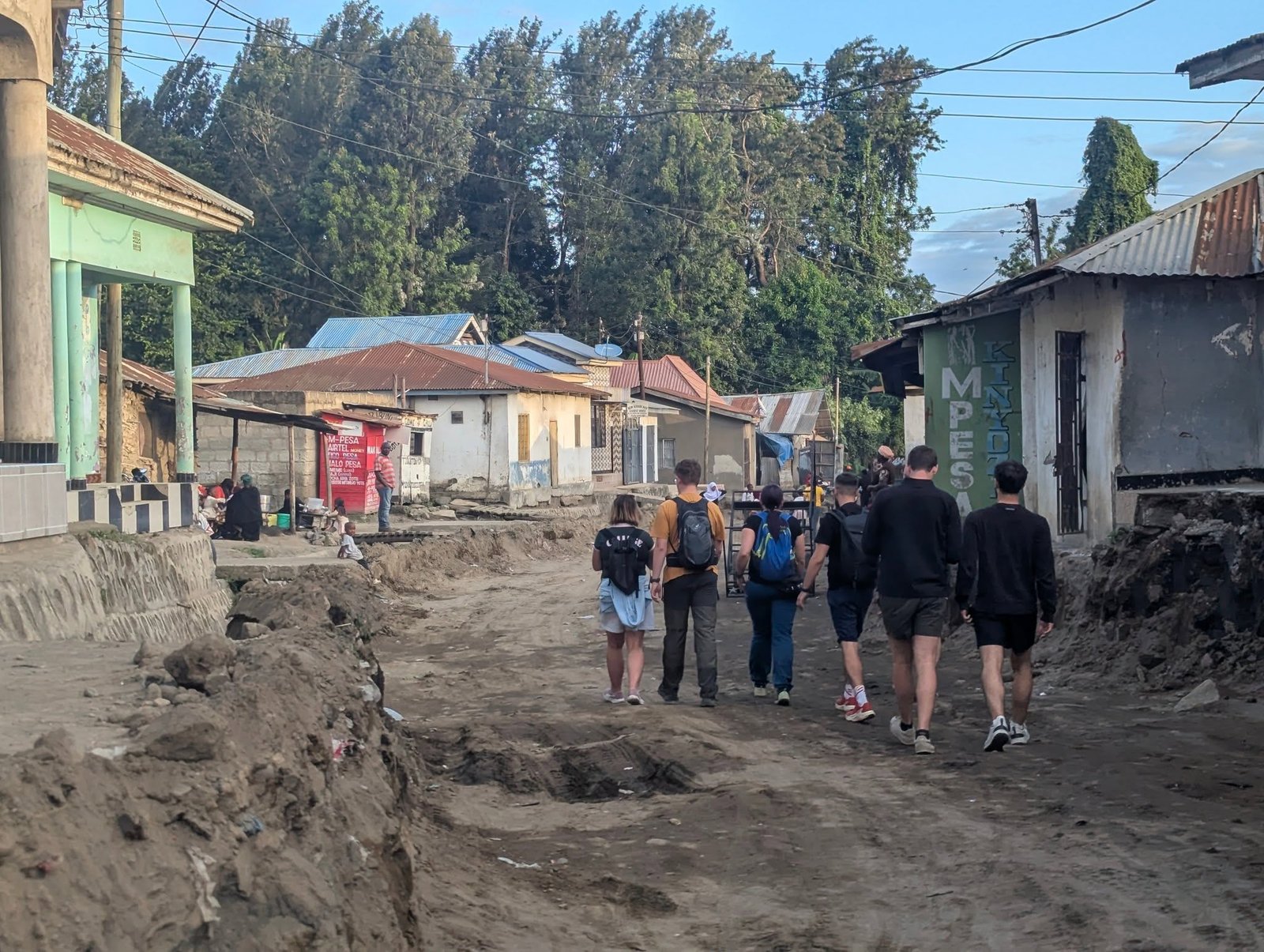
Apart from the main streets, most side roads are unpaved and in rather poor condition – you have to watch your step so as not to fall into a hole.
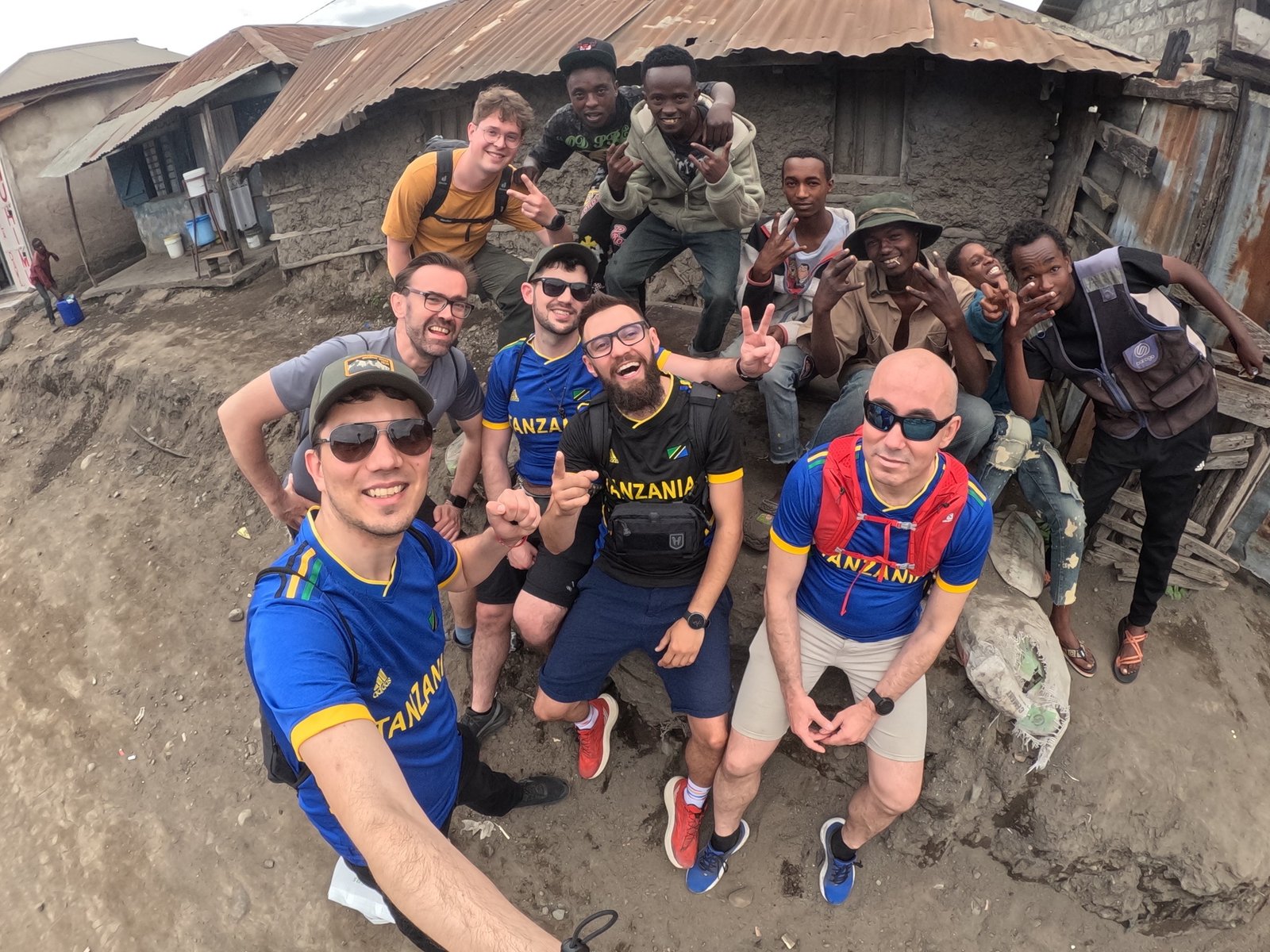
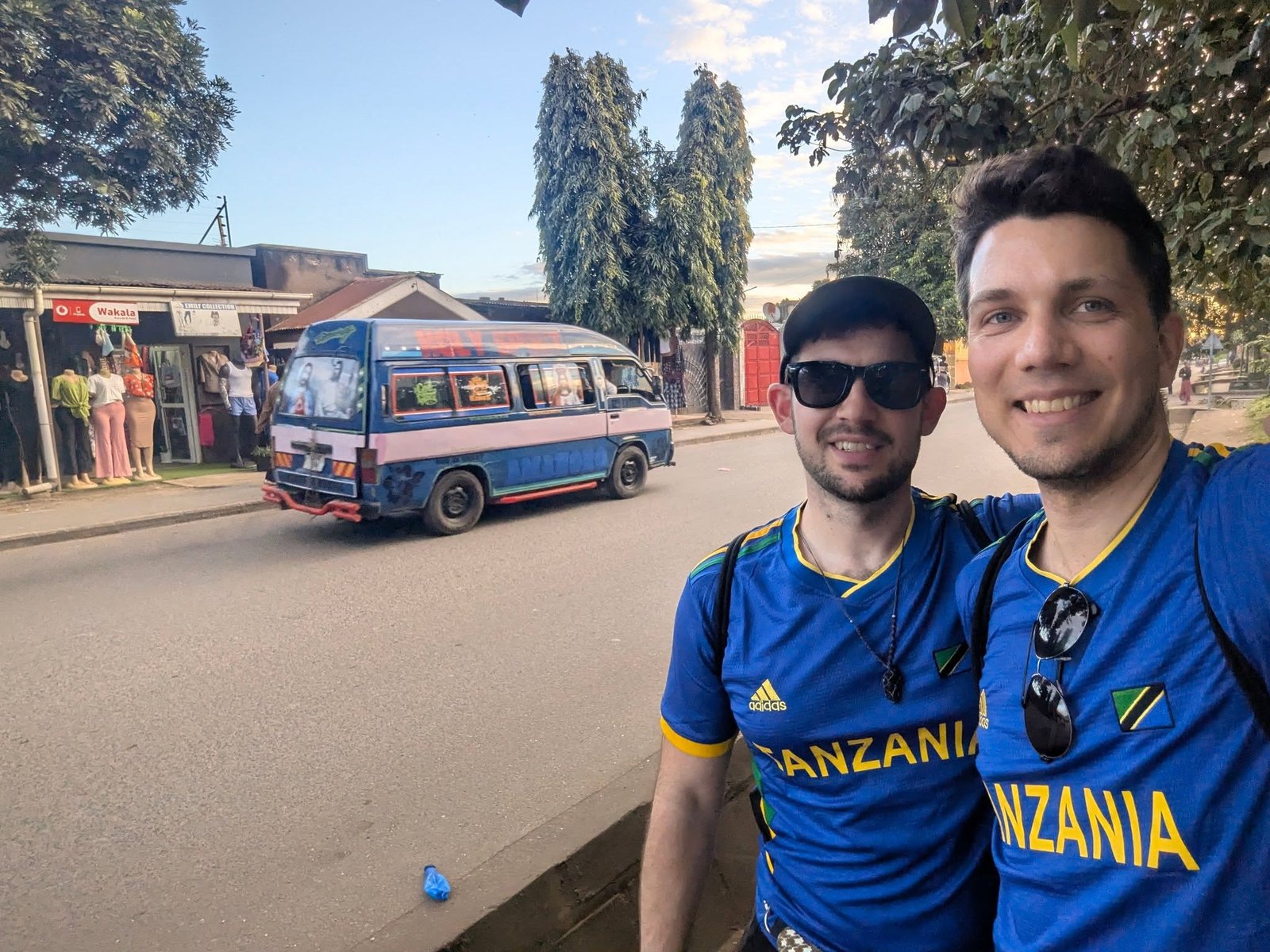
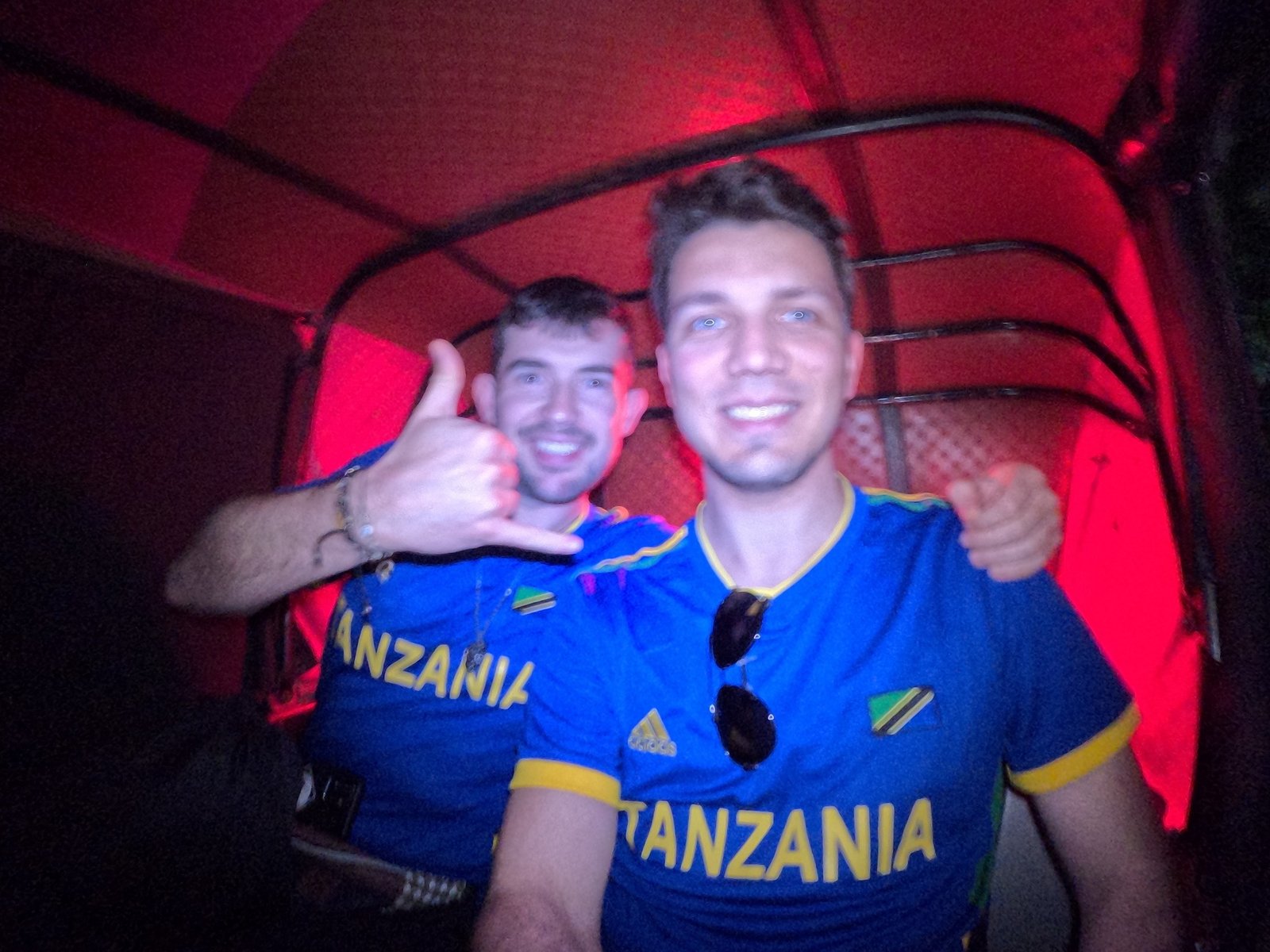
We bought ourselves Tanzanian football shirts. The first seller wanted 15 USD for them, the second 10 USD, so we bought from the second one. When the first one came back, he took offence that we had not bought from him, since he had come to us first.
We also had a beer and some pizza. For two beers and about four slices of pizza I paid the equivalent of about 7 USD.
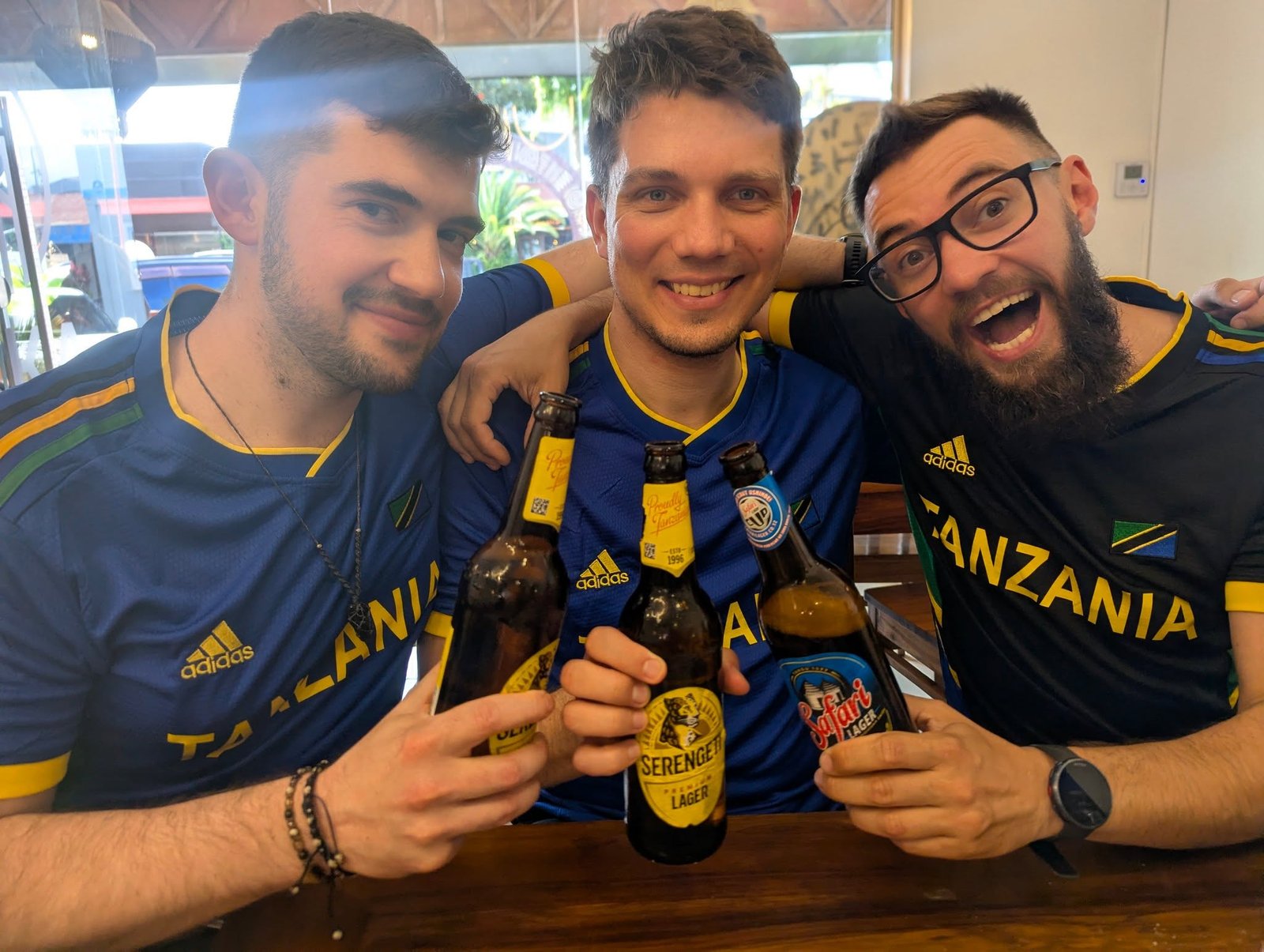
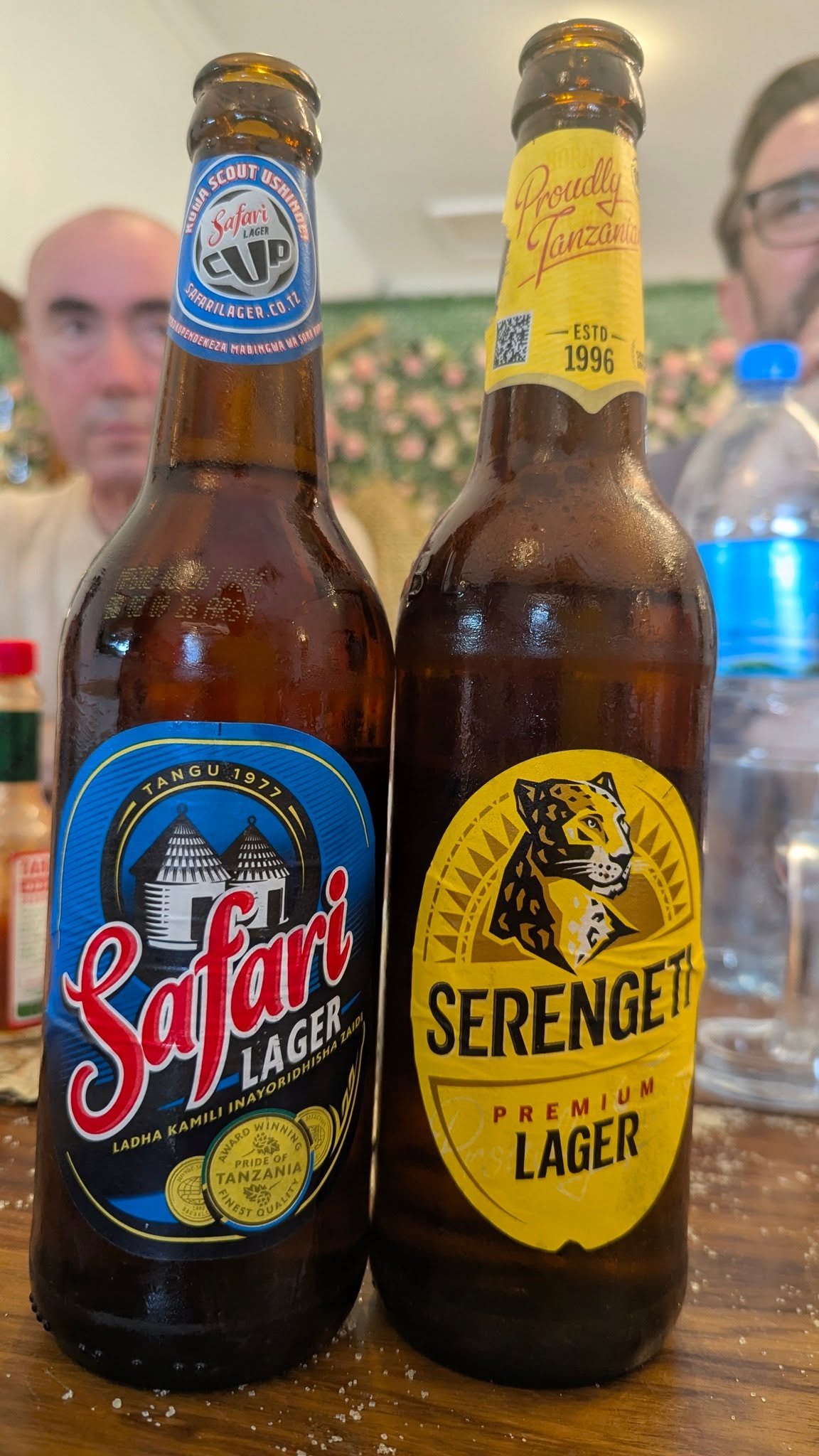
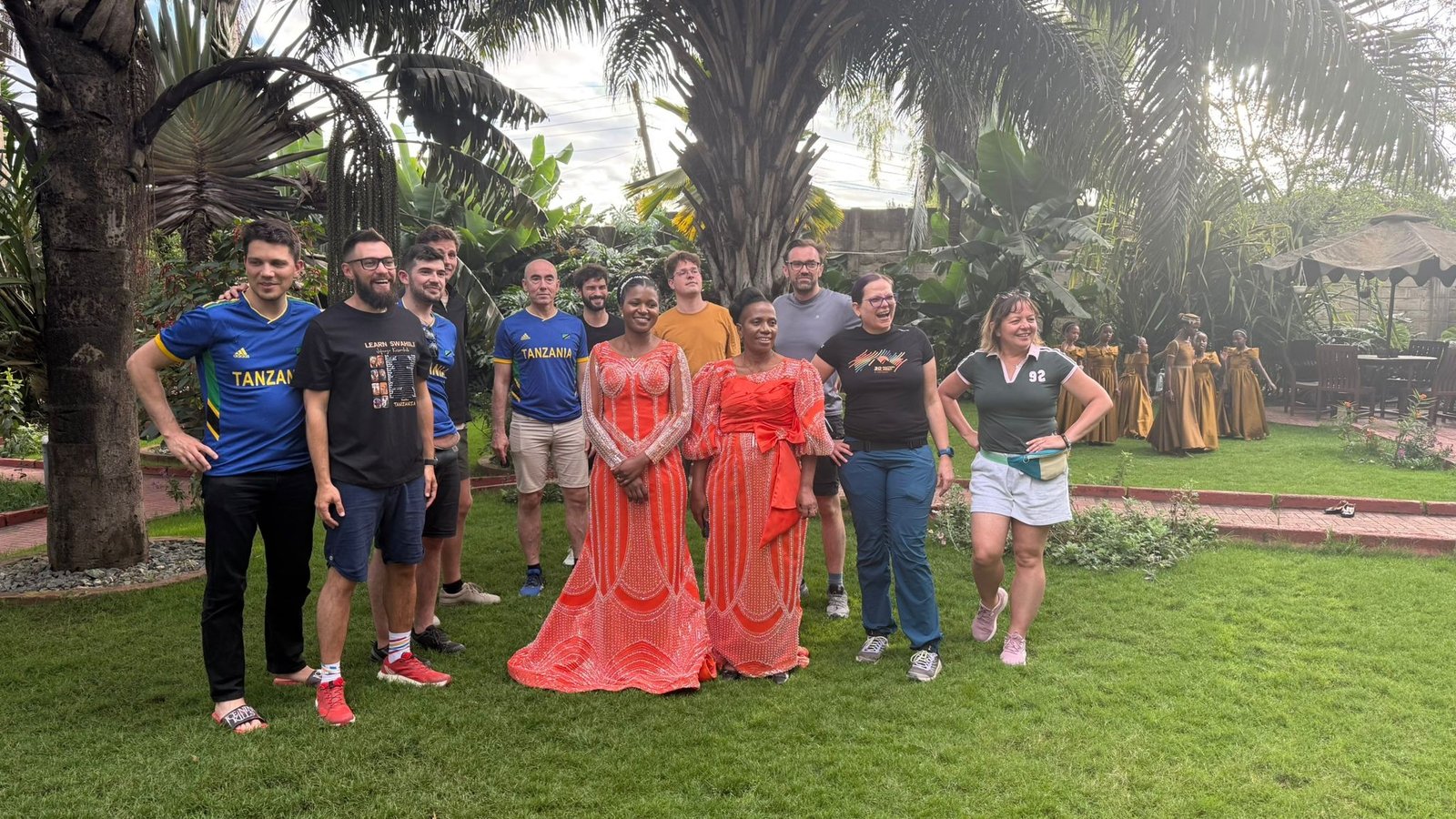
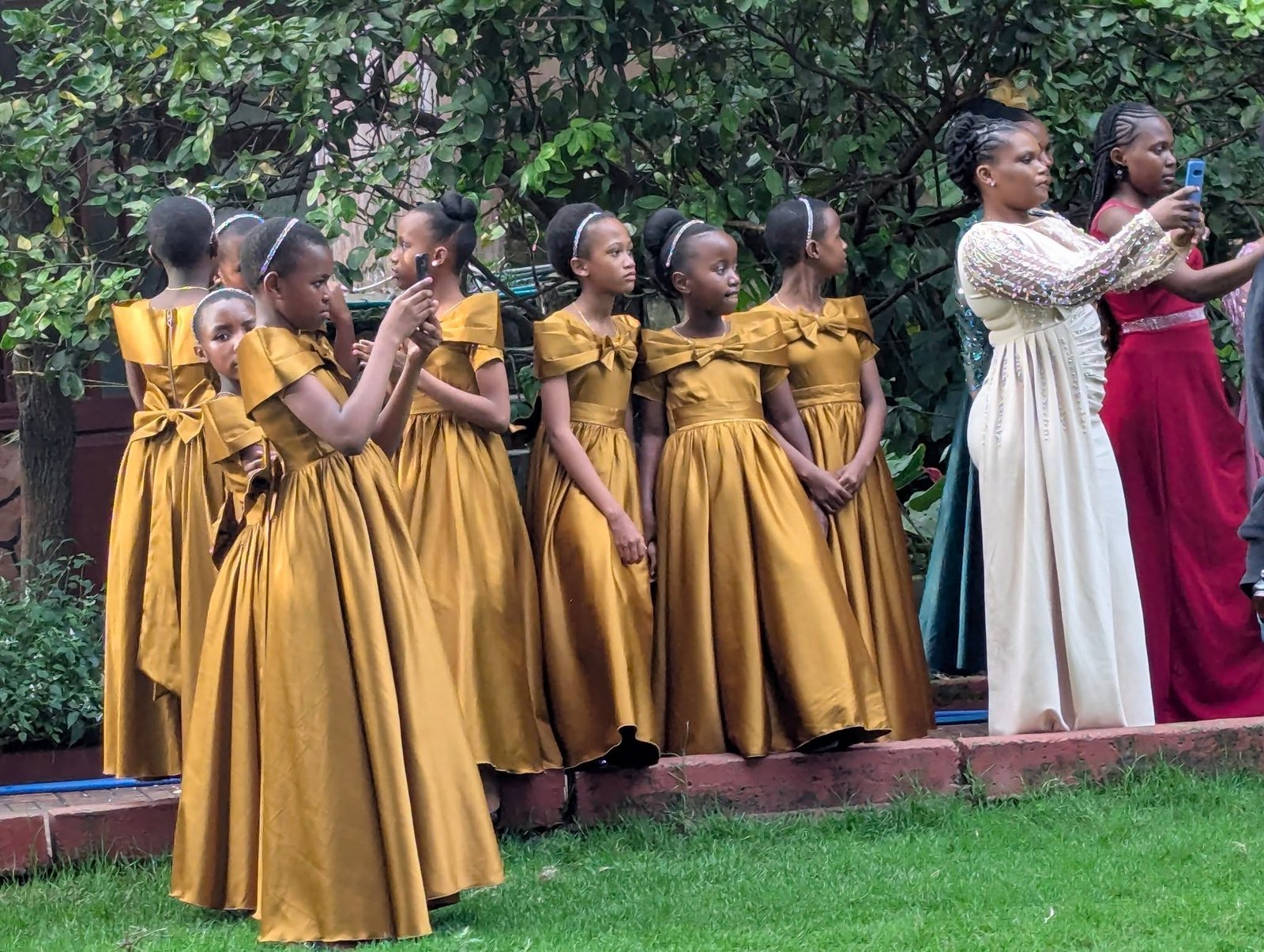
Back at the hotel we met the rest of the group, who had arrived that day. By chance we also stumbled upon a wedding taking place at our hotel and got roped into the photo shoot – so we have group photos from the celebration.
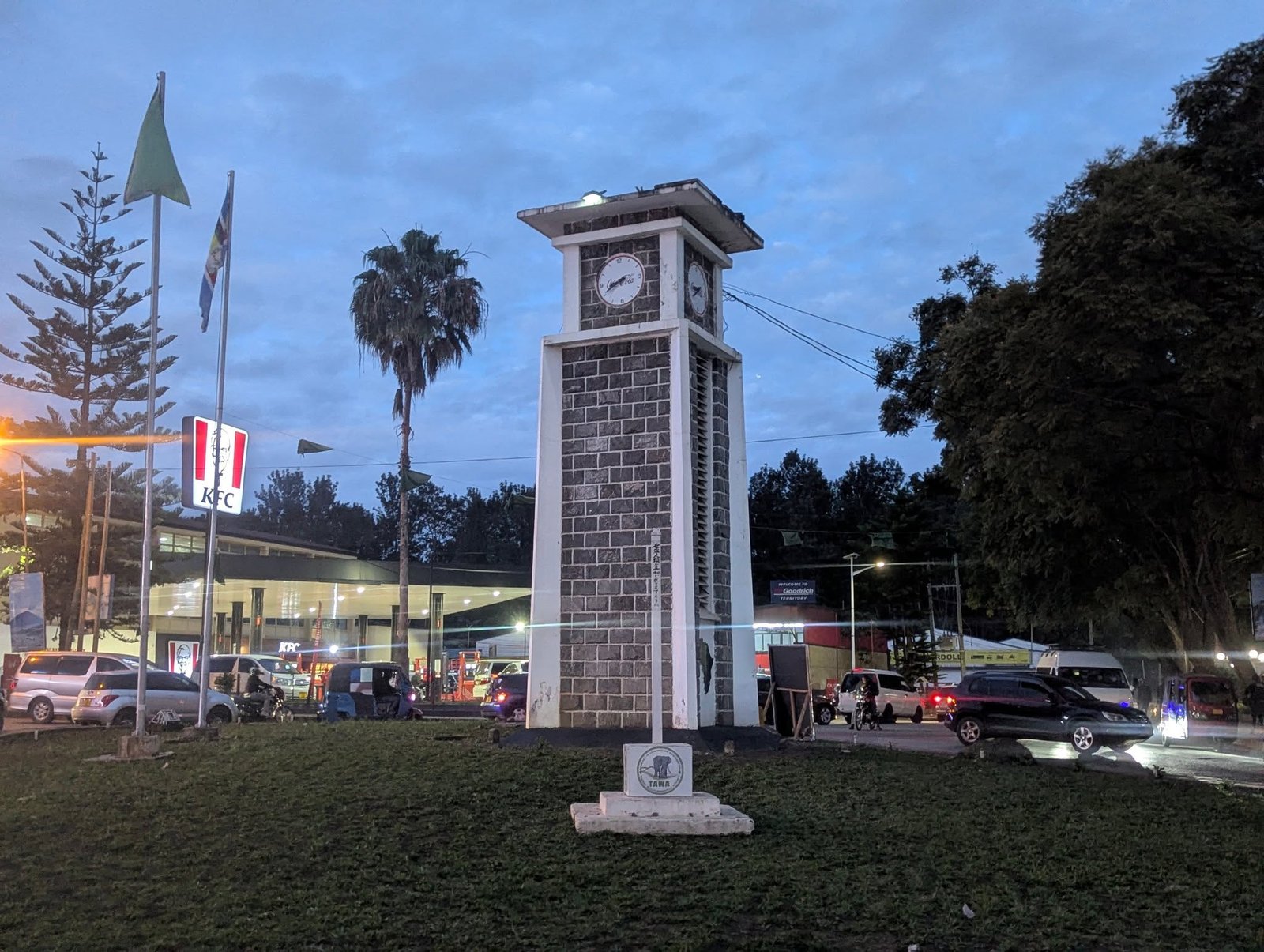
Later we set off on a second walk and stopped by the famous clock tower. It is said to stand halfway between Cairo and Cape Town, which is why the spot is called the centre of Africa – but only symbolically. Both cities really are roughly equally far from here (in a straight line about 3760 and 3890 km), but the true halfway point lies about 1300 km to the west, in the Democratic Republic of the Congo, in Maniema Province.
Someone also tried to charge us for using a street scale – another lesson that you should not agree to everything and need to stay alert. At the end of the day we had our first meal together as the full ten-person team. Half of the group went back to the hotel by tuk-tuk, while the other half walked after dark with a local “bodyguard” armed with a machete.
Day 4: the Cemetery of Polish Exiles in Tengeru
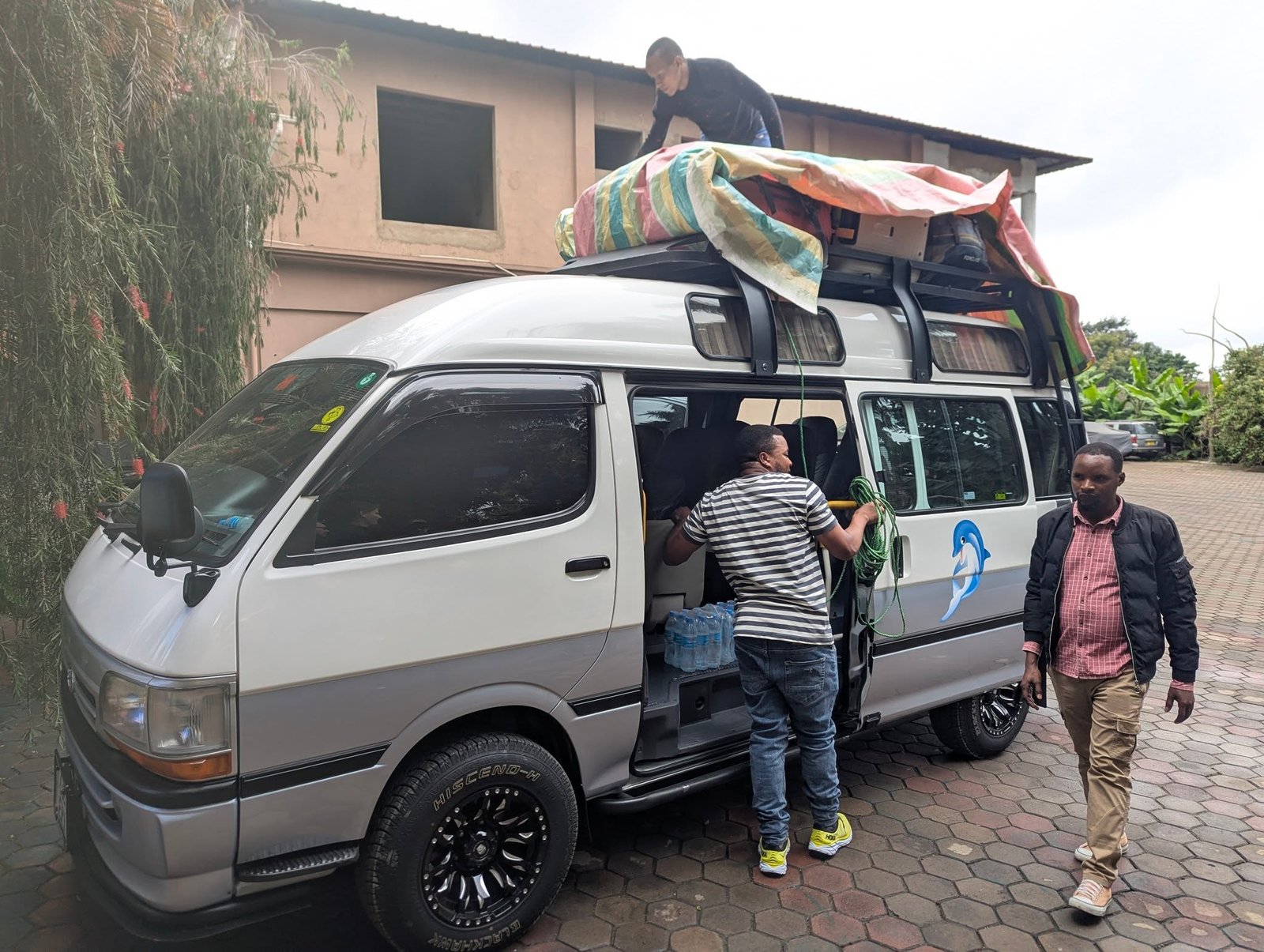
On Friday 5 June the whole team set off by minibus towards Moshi. The luggage travelled on the roof.
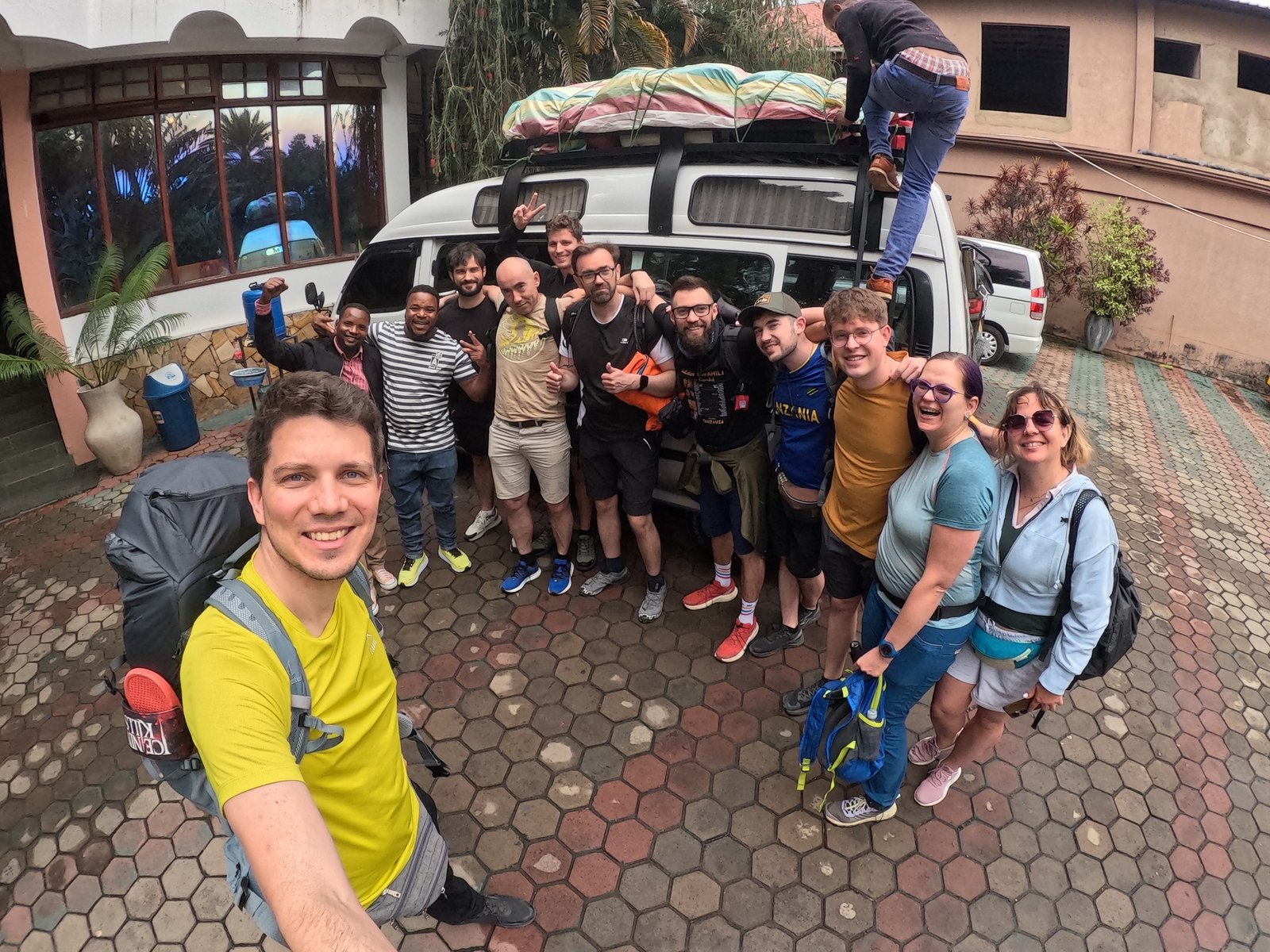
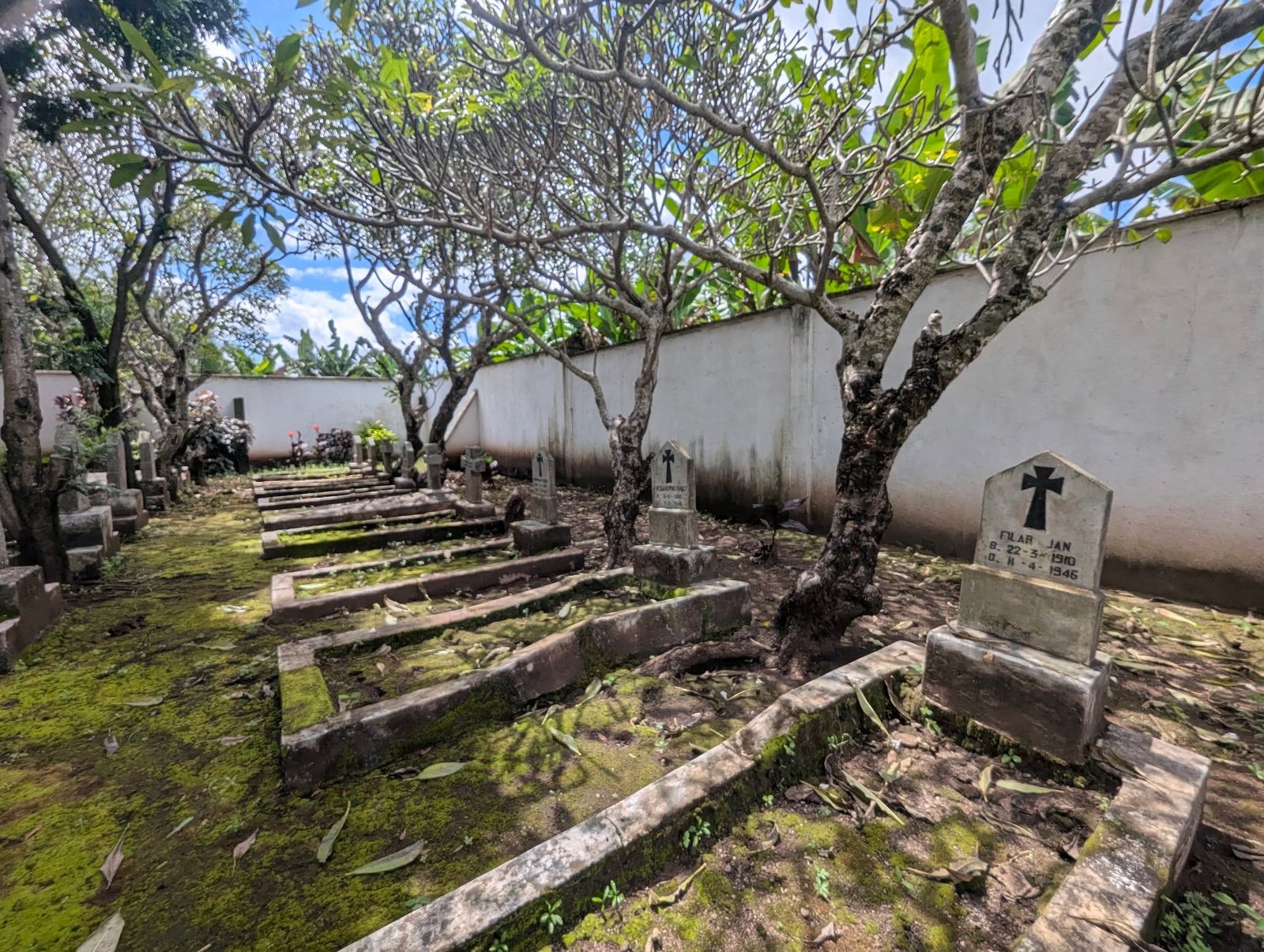
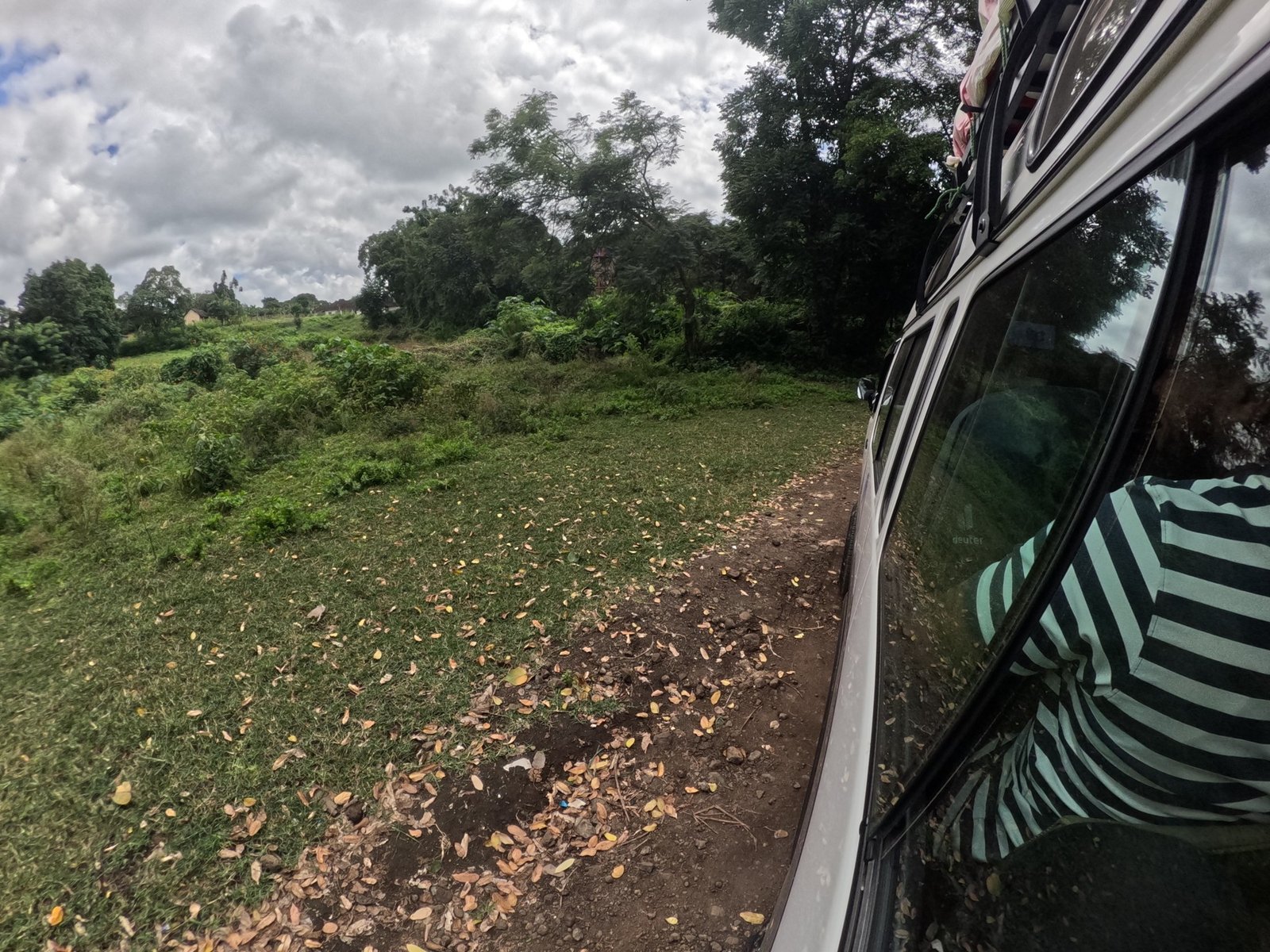
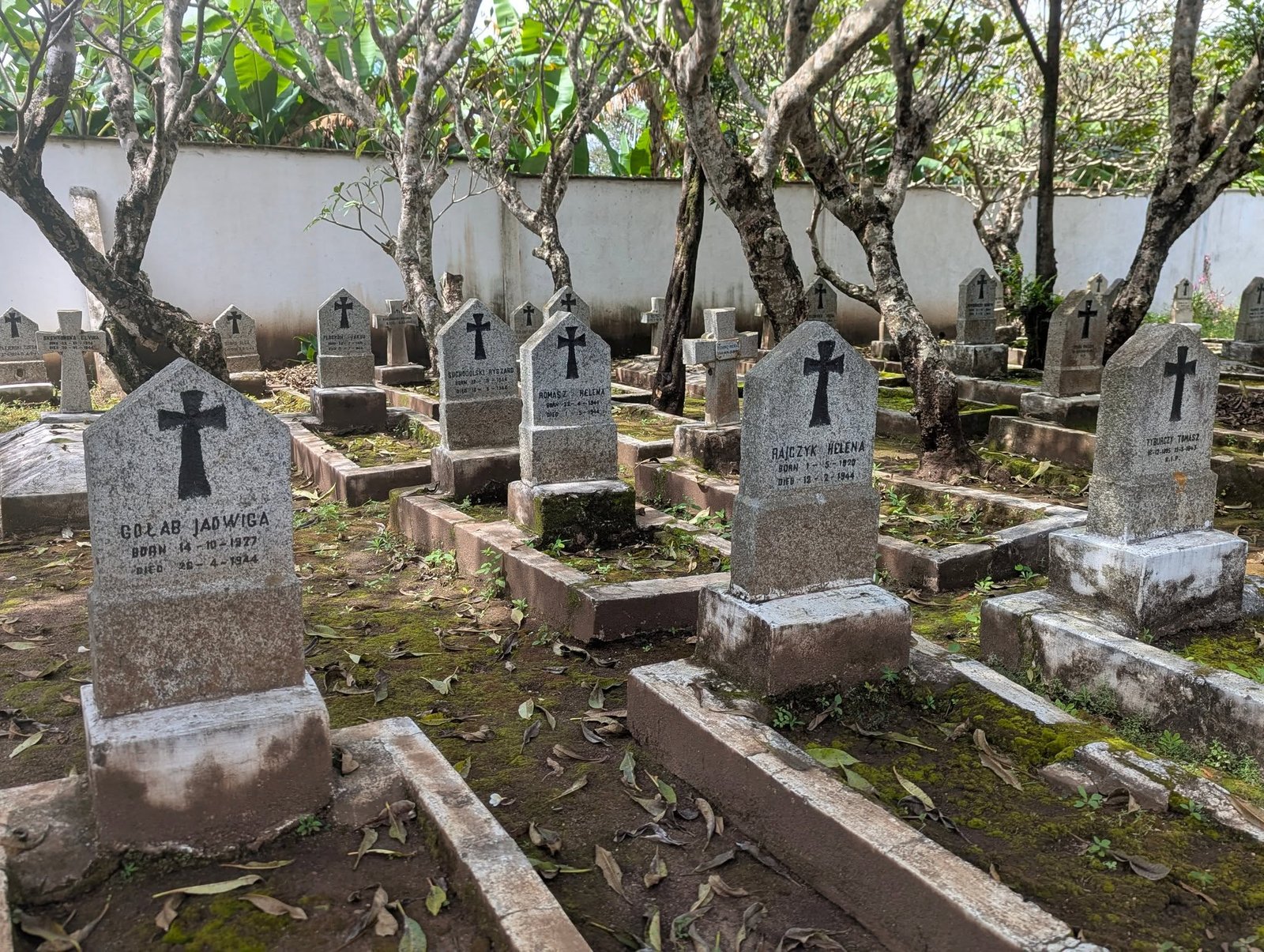
A surprise awaited us at the very start of the day – we visited the Cemetery of Polish Exiles in Tengeru, not far from Arusha. The idea came up spontaneously after we landed, thanks to the commitment of part of the team – above all Paweł, who wrote to the Polish embassy that very night. The cemetery lies far from the main routes, and getting there turned out to be quite demanding: the last kilometres were on poor roads, so the journey was long and at times not very comfortable.
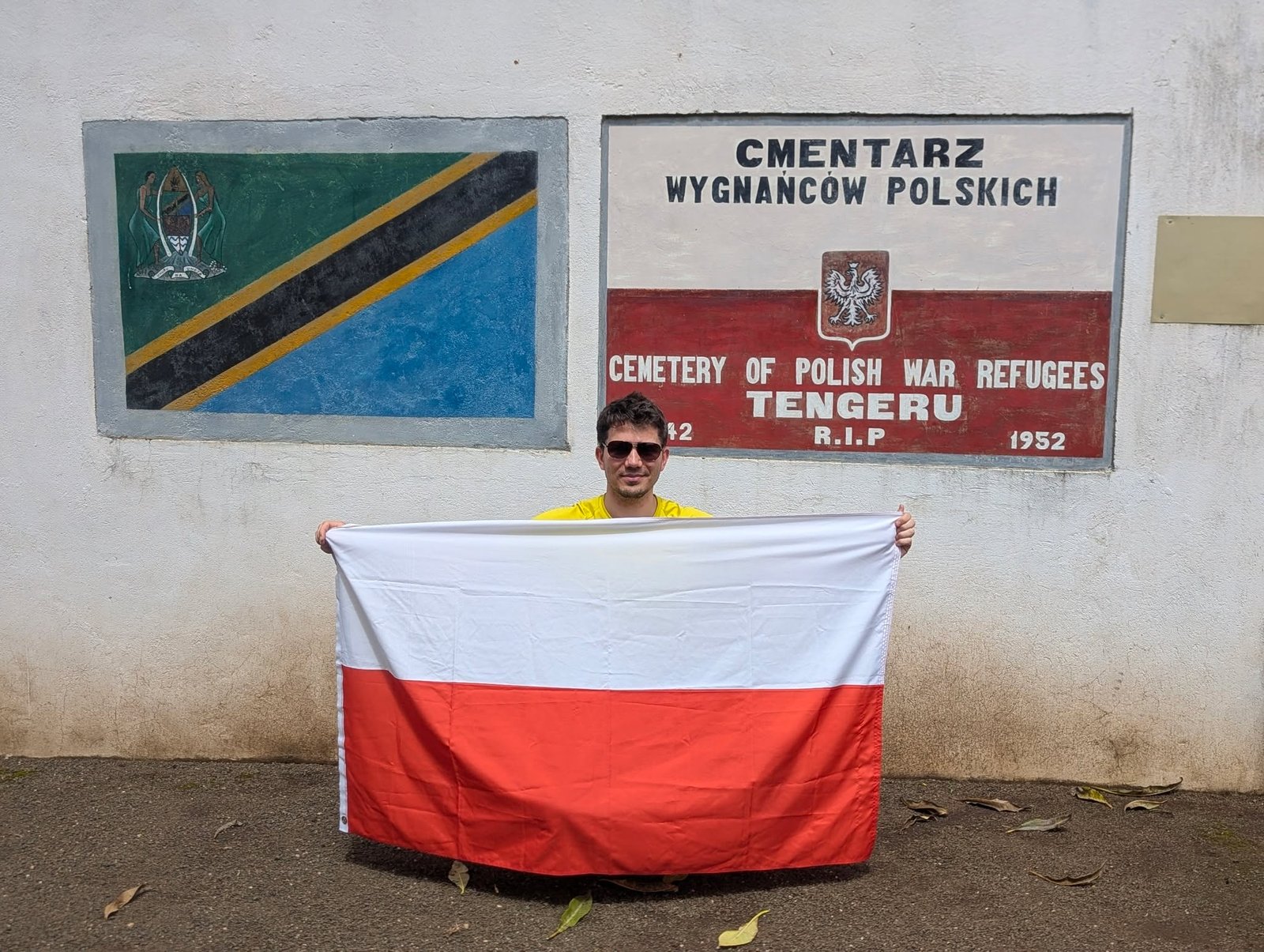
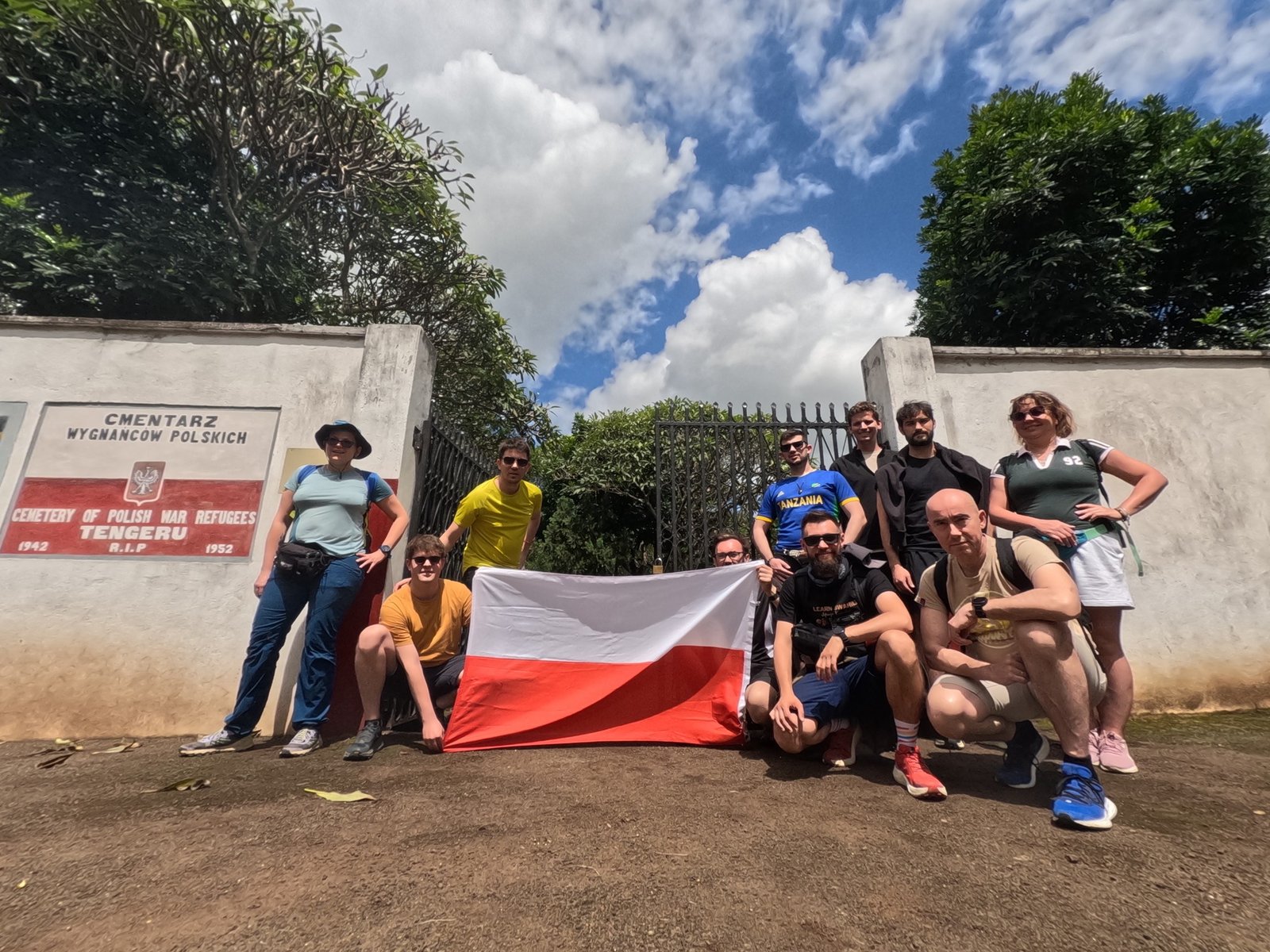
The visit itself, however, made a big impression. Buried here are Poles who, after being deported to Siberia, got out of the USSR with Anders’ Army and travelled via the Middle East all the way to East Africa. The inscription on the wall gives the years 1942–1952. It is one of the lesser-known chapters of Polish history.
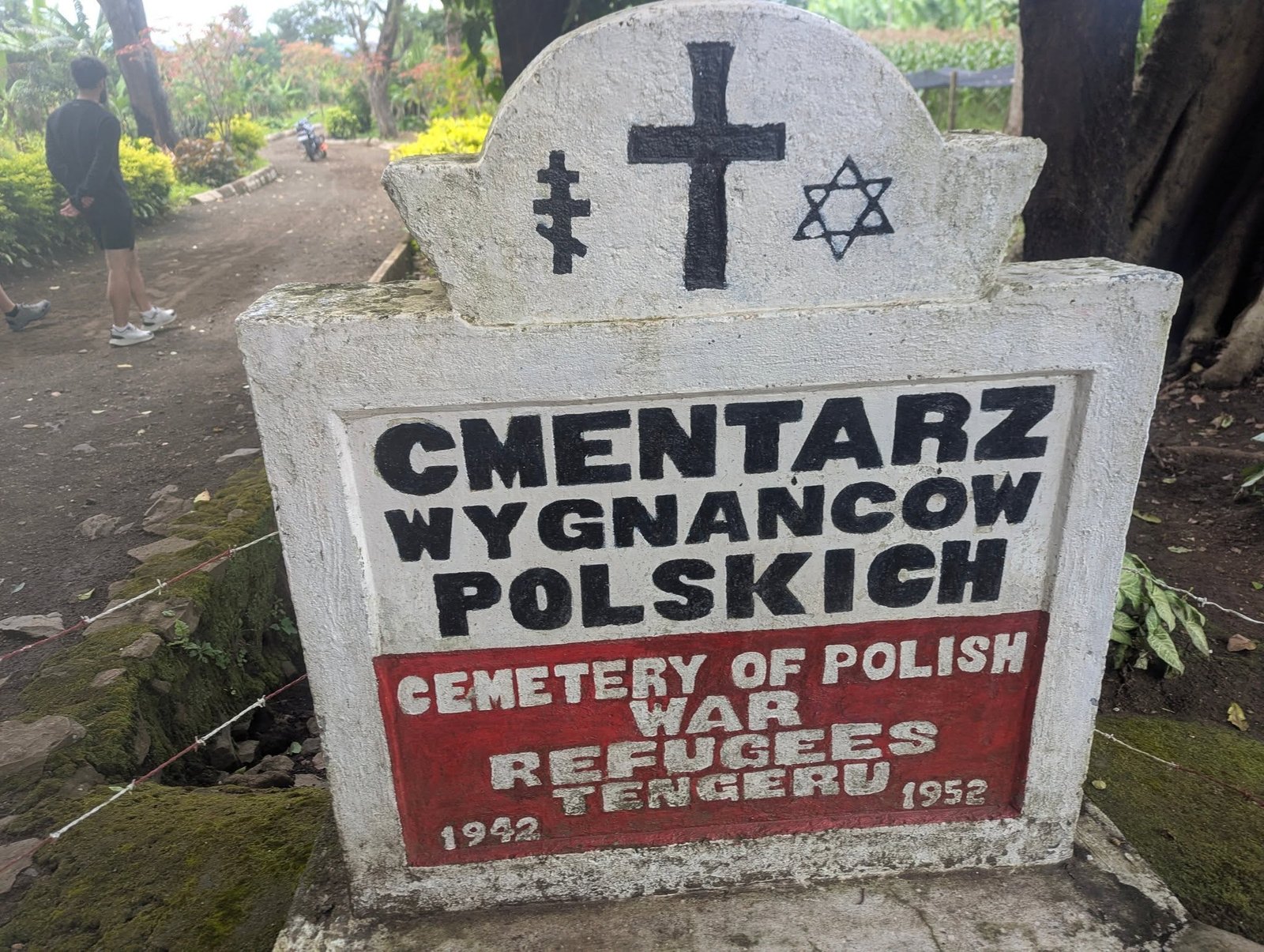
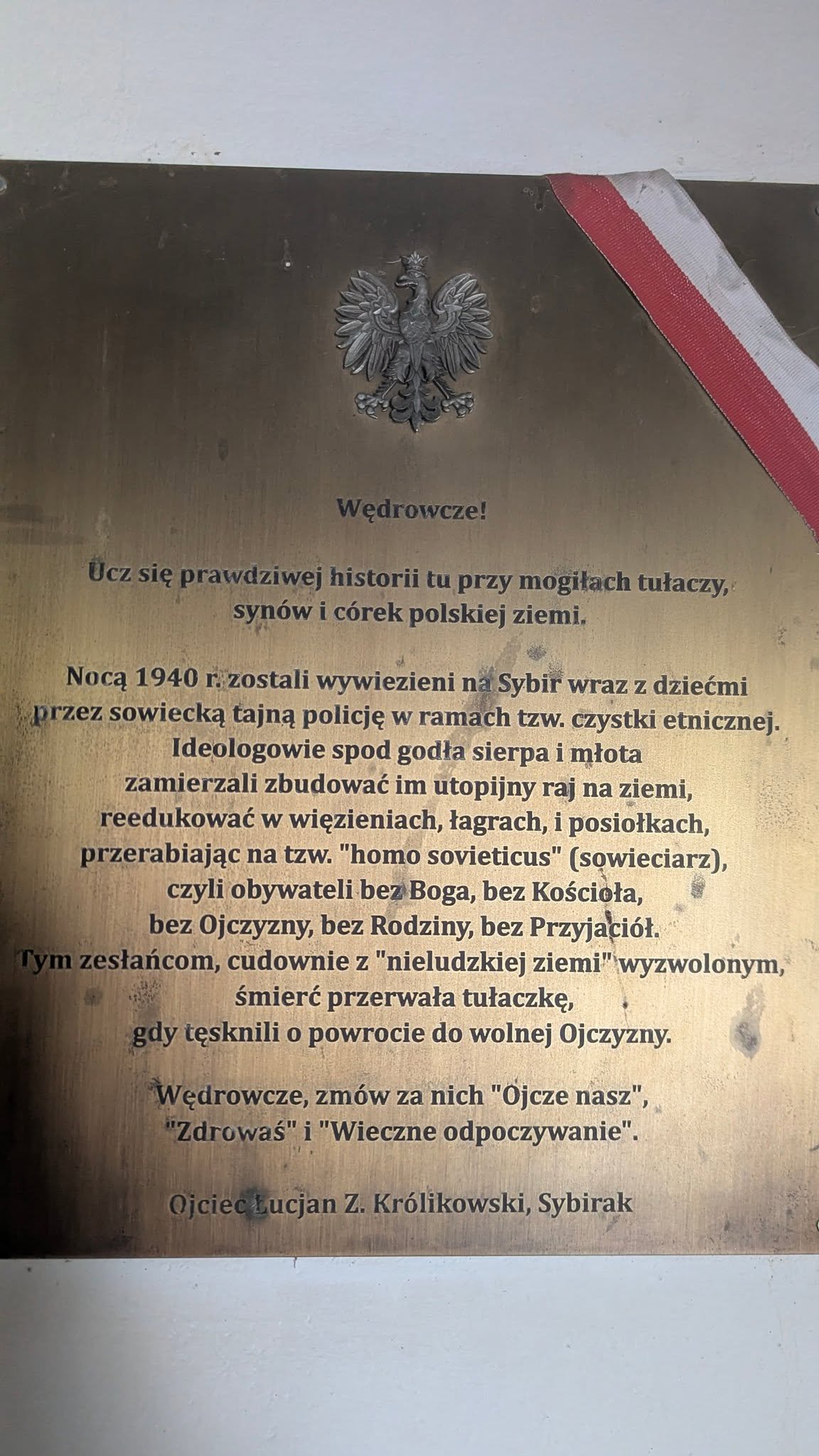
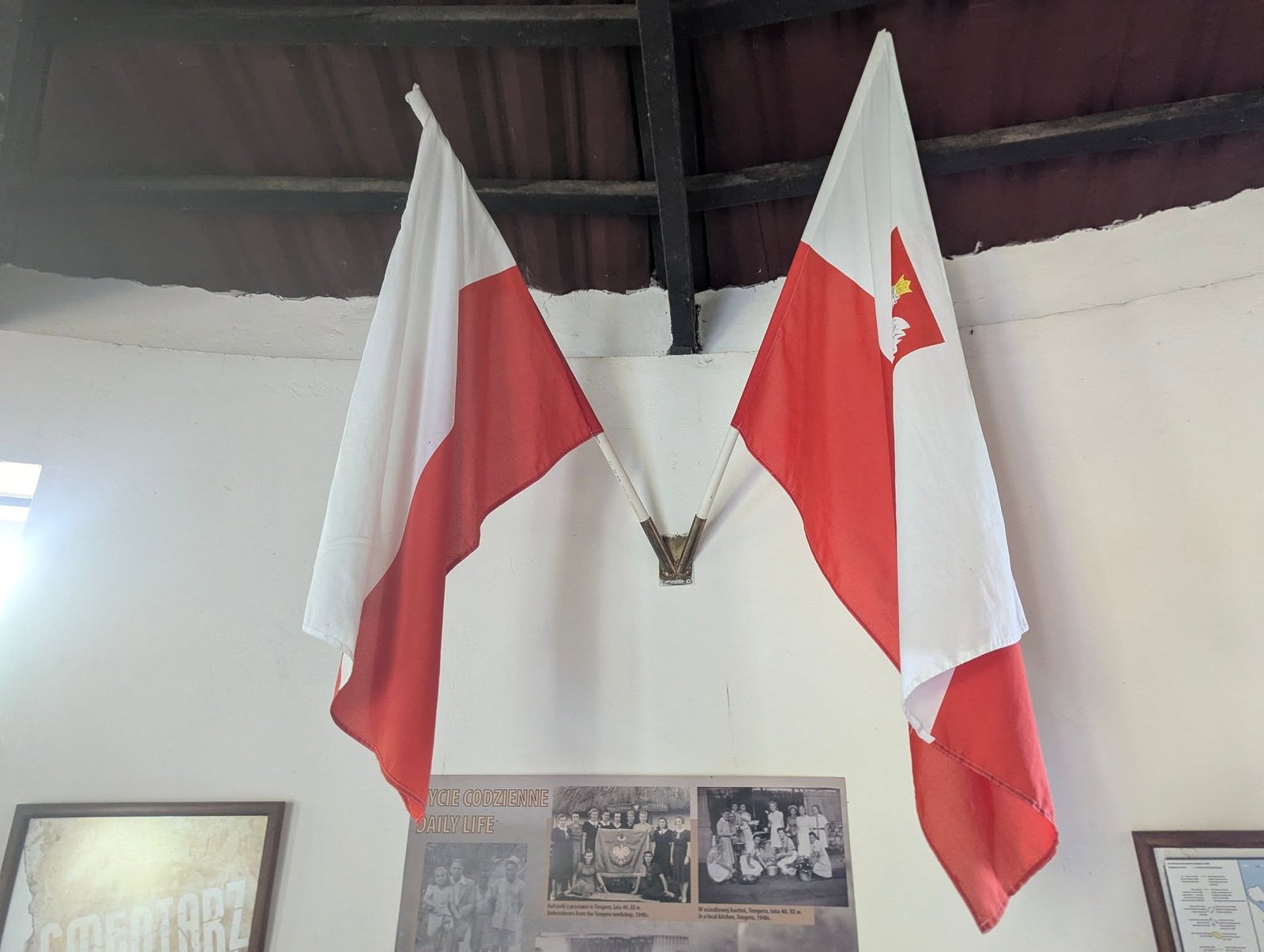
In the building next to the cemetery hang Polish flags and old photographs, and a plaque with the eagle begins with the words: “Wanderer! Learn the true history here at the graves of the exiles, sons and daughters of the Polish land”.
We paused for a moment of reflection, and at the end we took a group photo with the flag in front of the gate.
Moshi – briefing and a birthday before the expedition
Further along the way we watched everyday life in Tanzania: farm fields, small villages, roadside stalls and crowds of people getting around on foot, by bike and by motorbike.
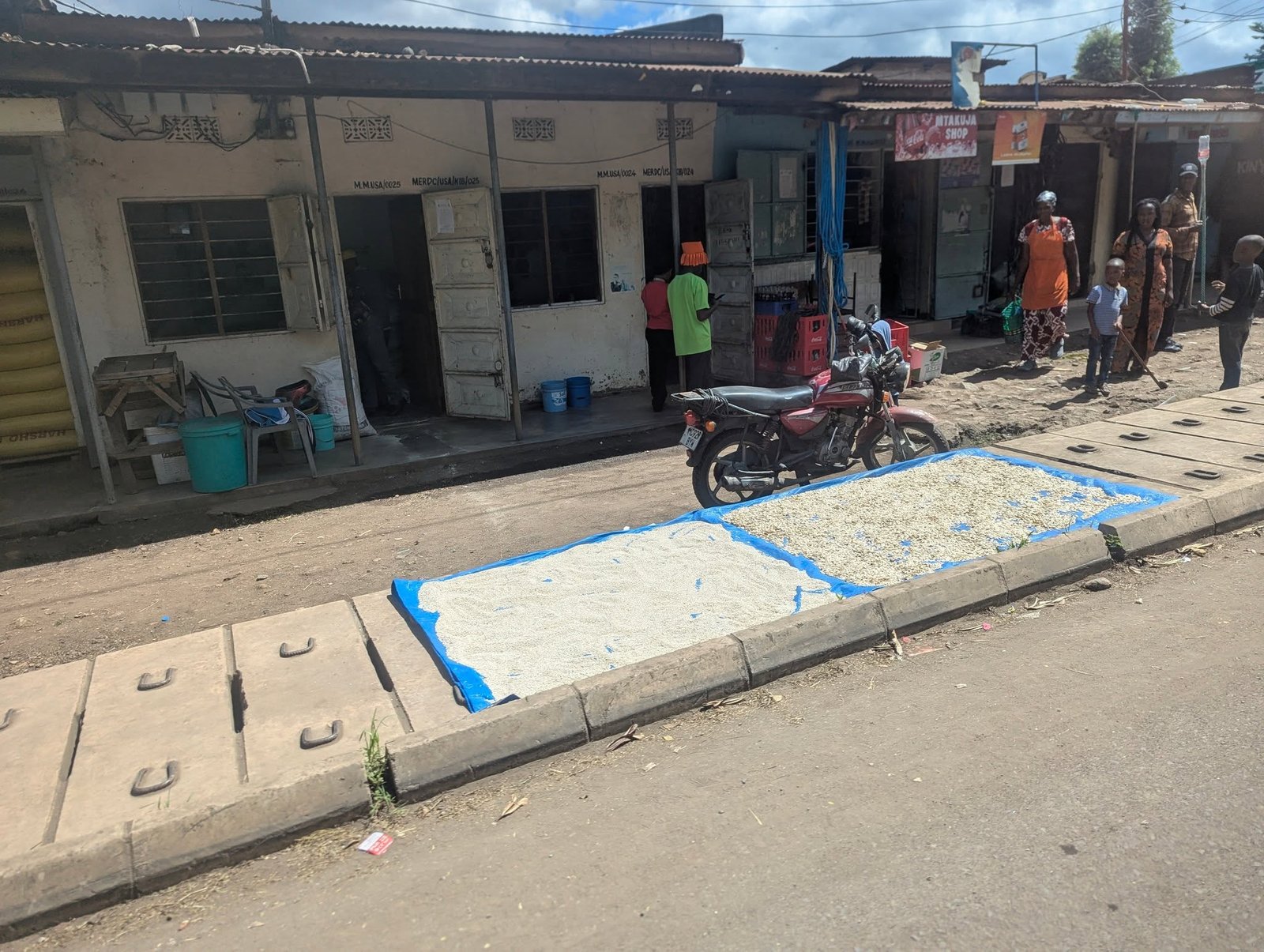
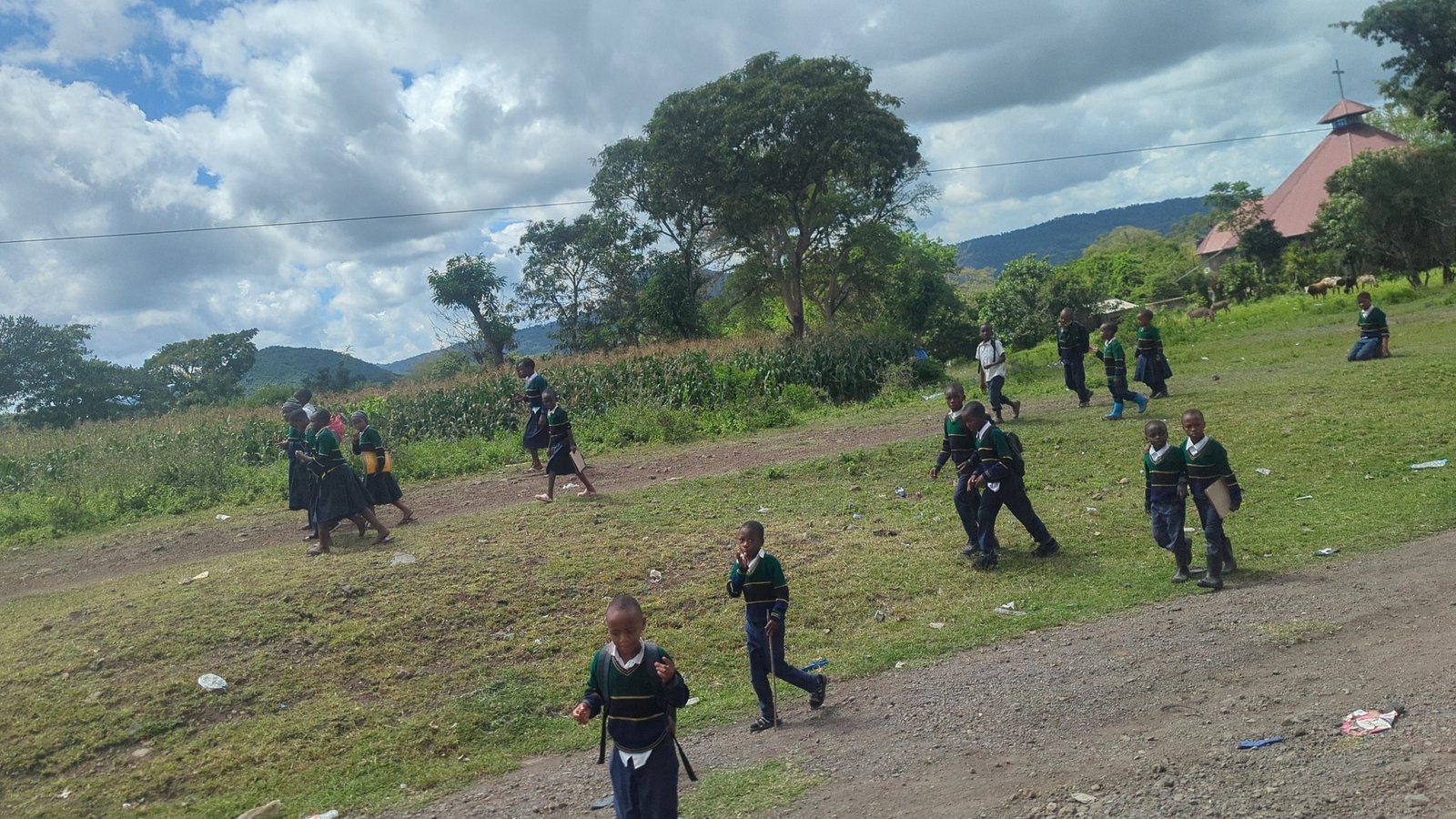
In theory, on the way we should have been able to admire Mount Meru (4566 m above sea level) and Kilimanjaro (5895 m above sea level). Unfortunately, both peaks were well hidden in the clouds.
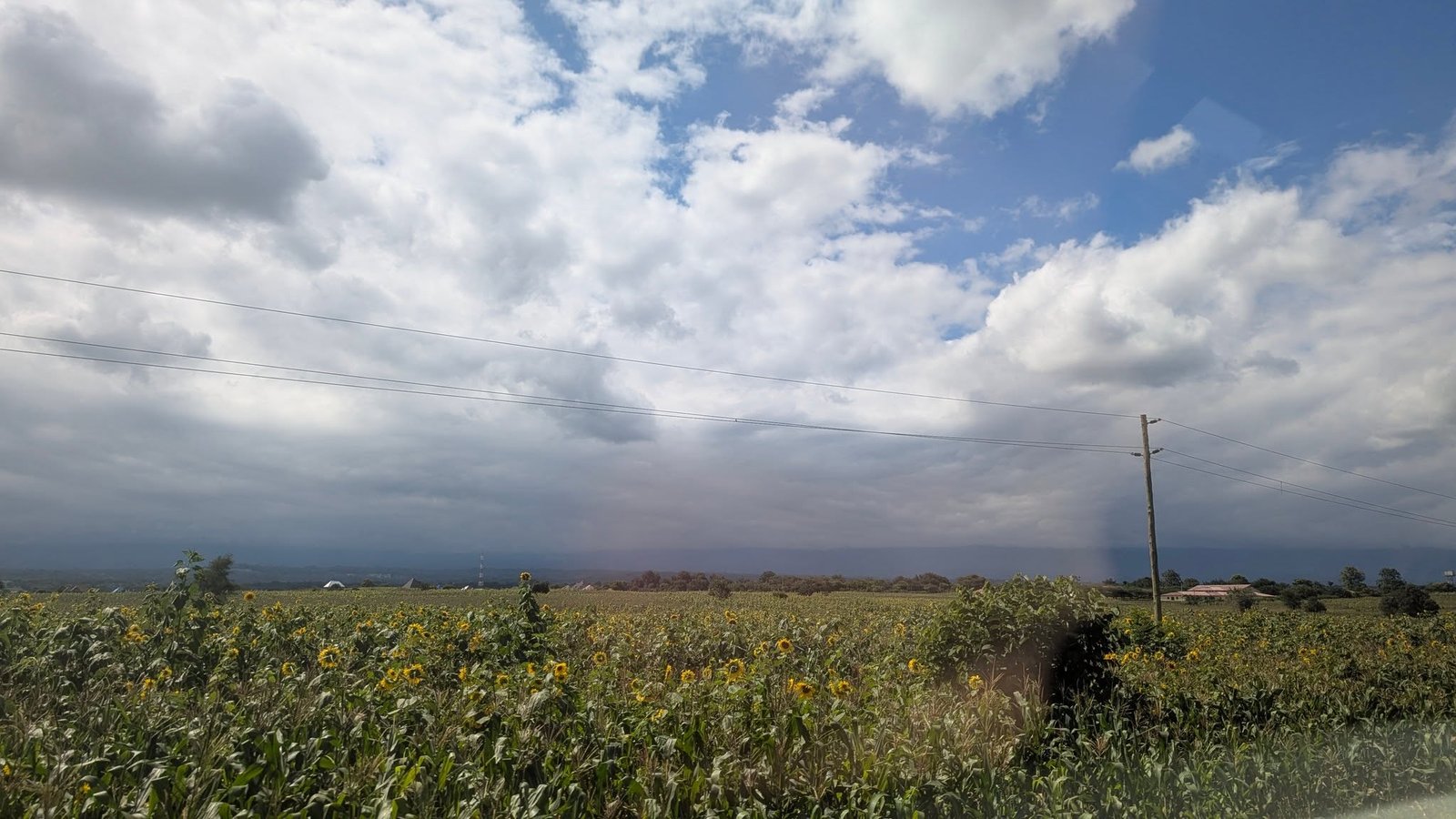
In the afternoon we reached Moshi – a town at the foot of Kilimanjaro and our last stop before the expedition. It was definitely warmer and more humid here than in Arusha, around 28°C.
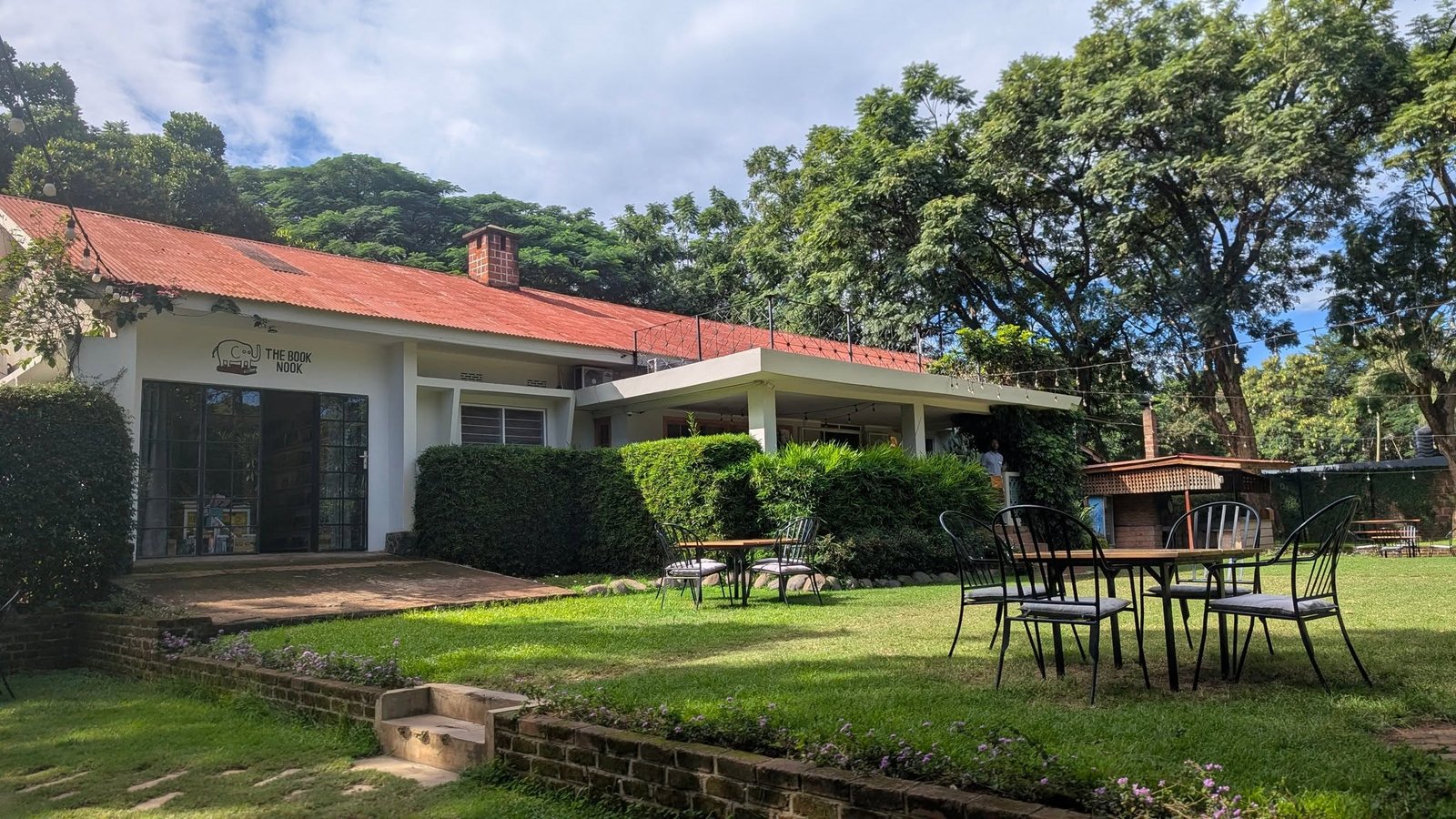
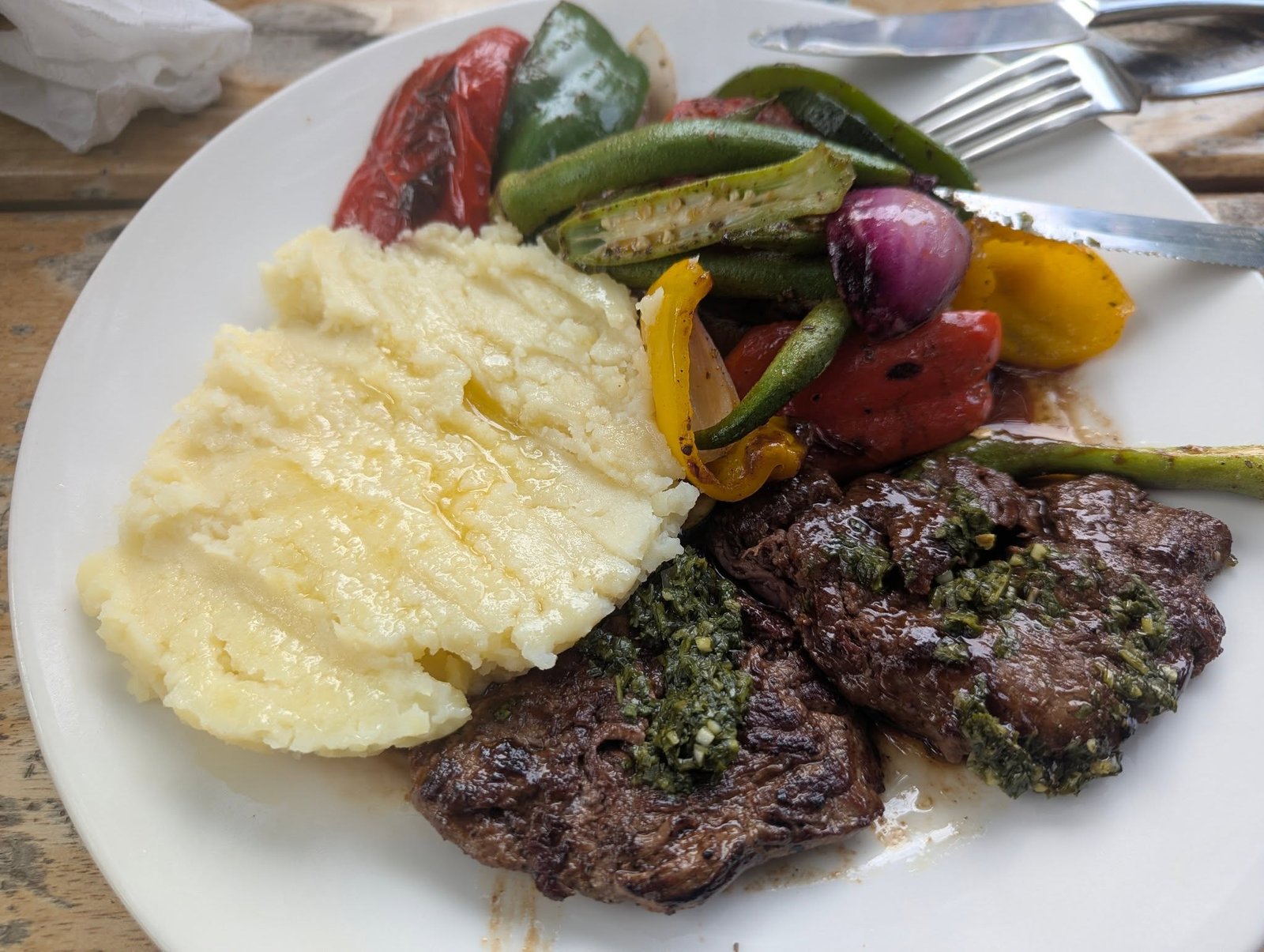
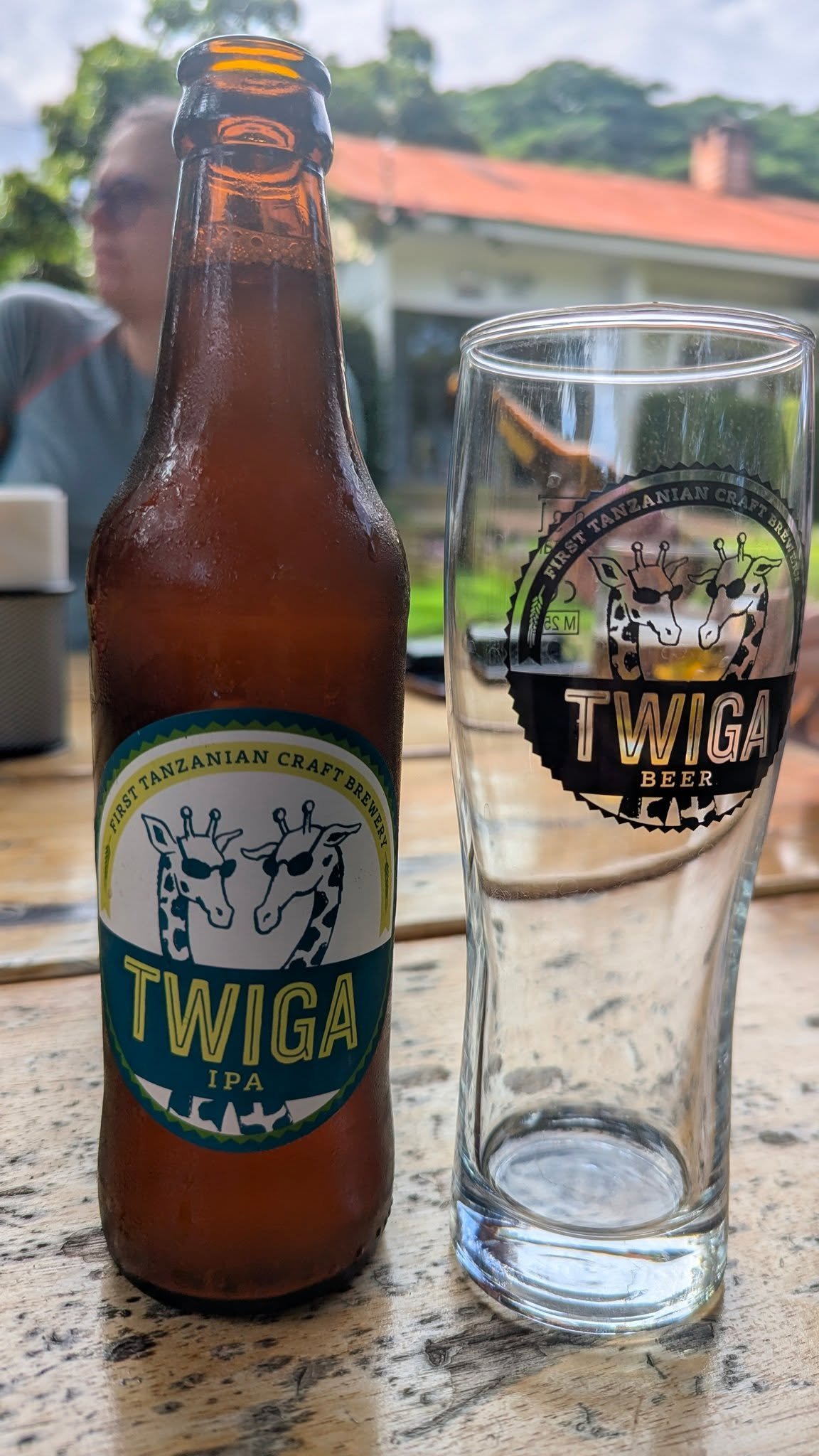
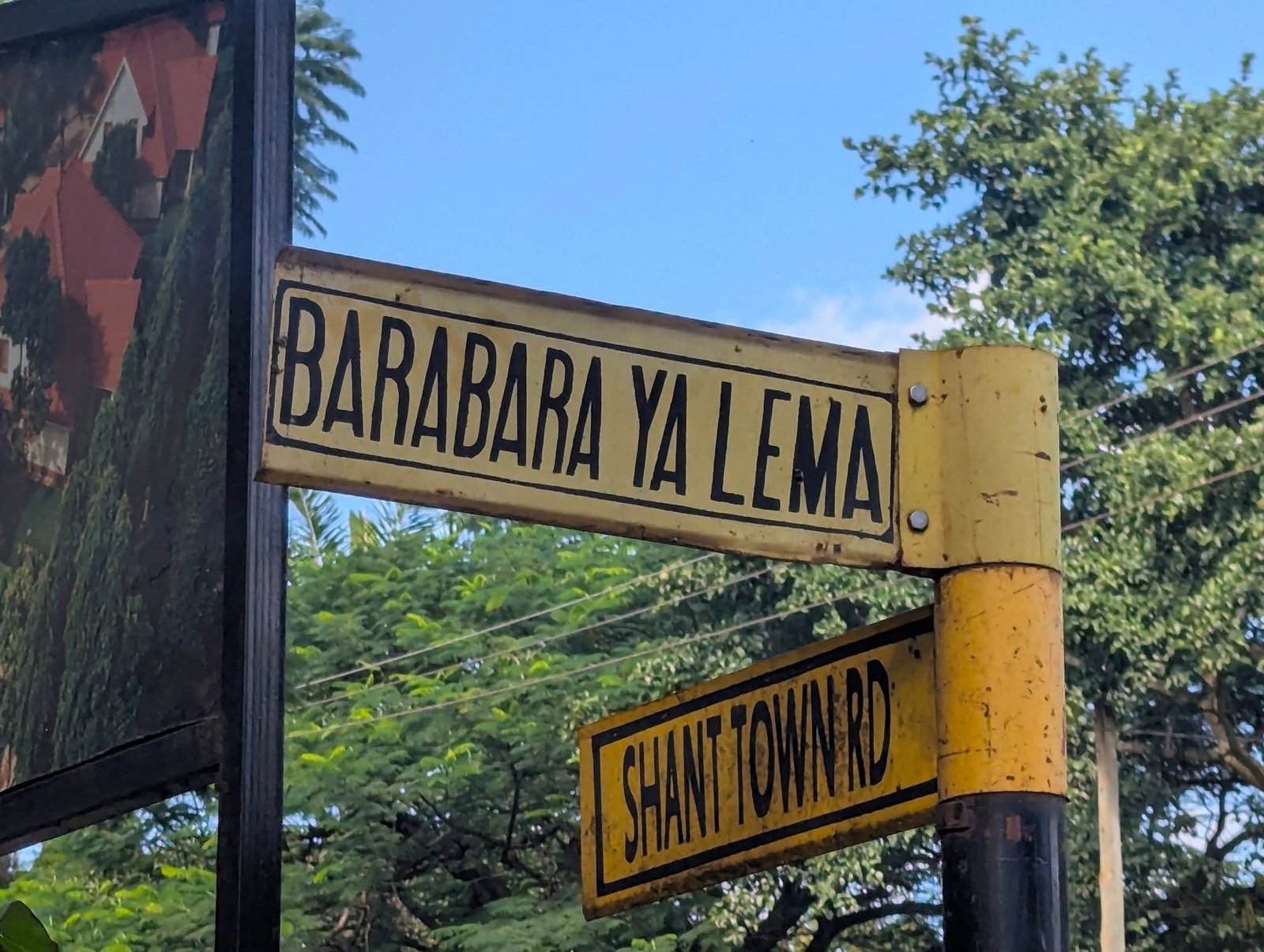
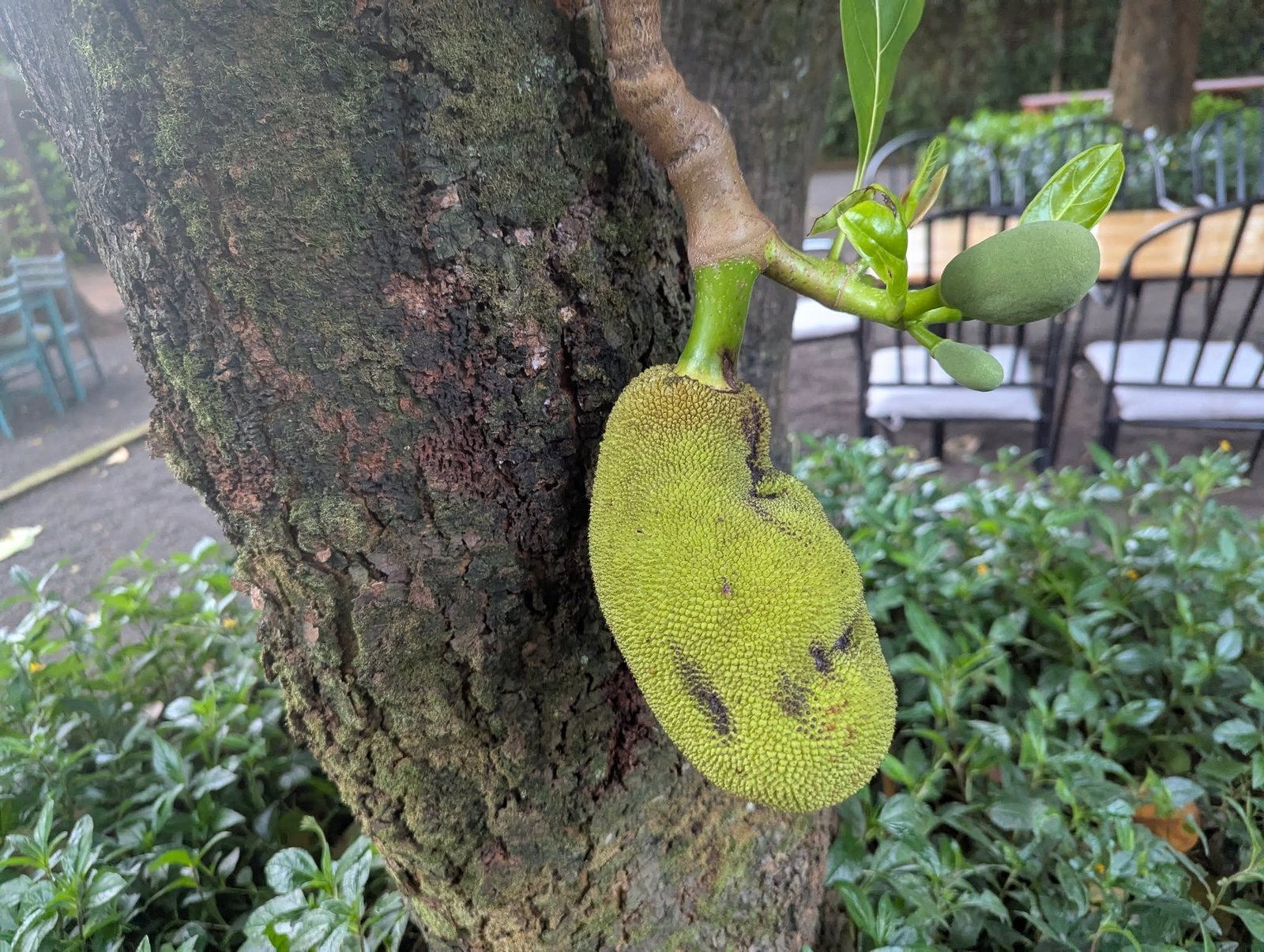
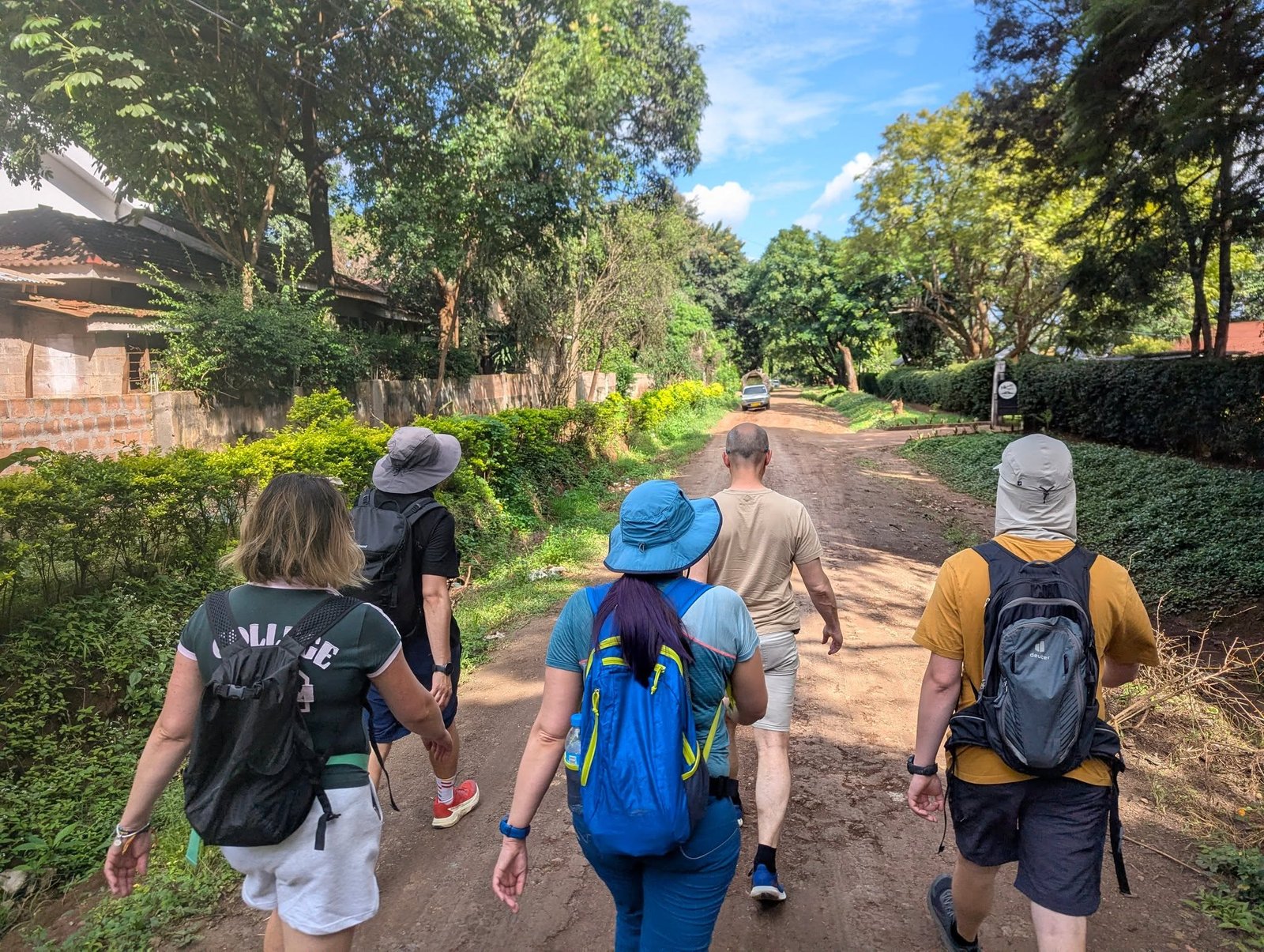
After checking in we found a moment to rest and get something to eat, and then we walked around the area. The street name signs say “barabara”, which is simply Swahili for road, and a breadfruit tree grew next to the hotel, with huge fruits growing straight out of the trunk.
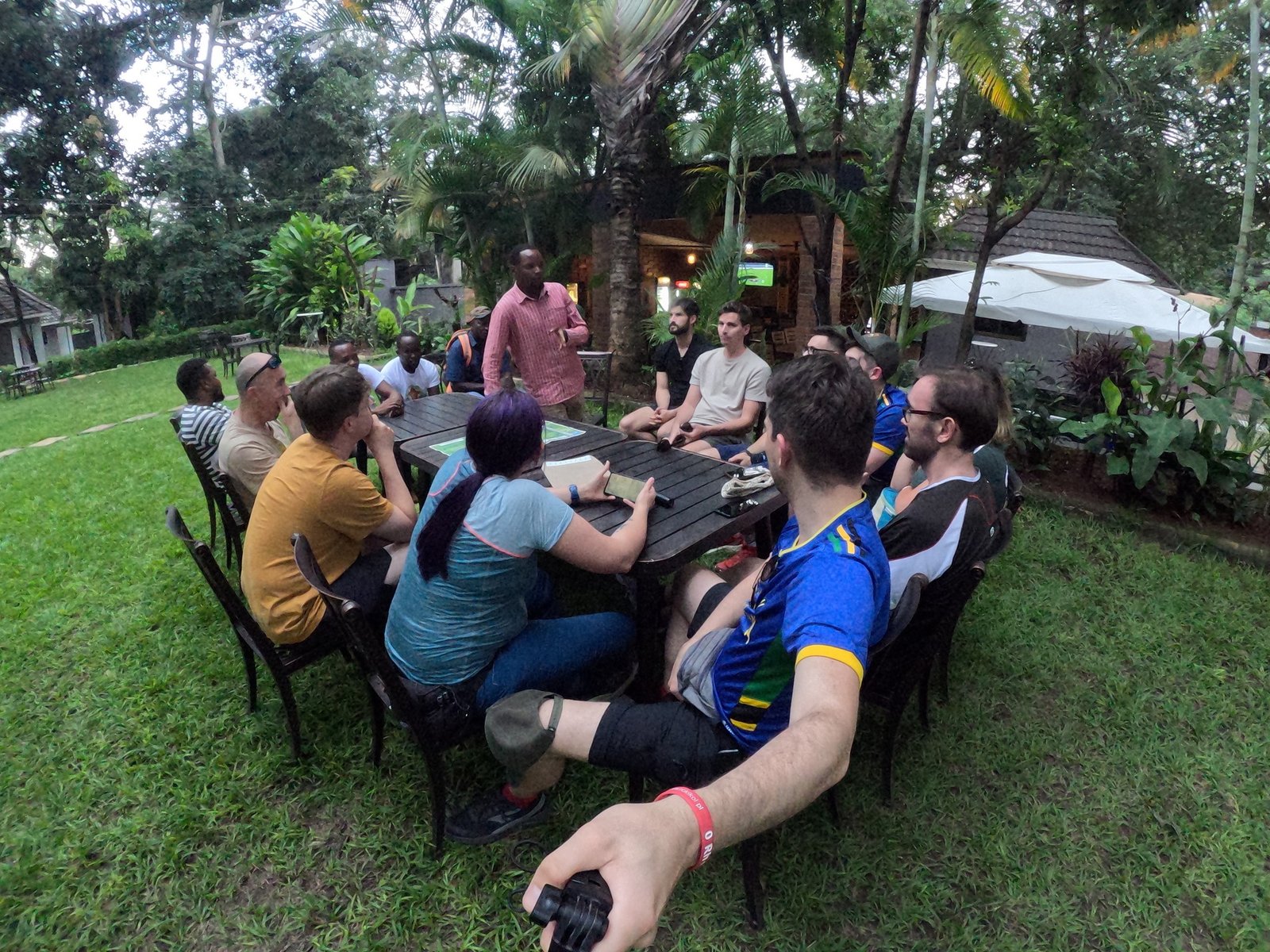
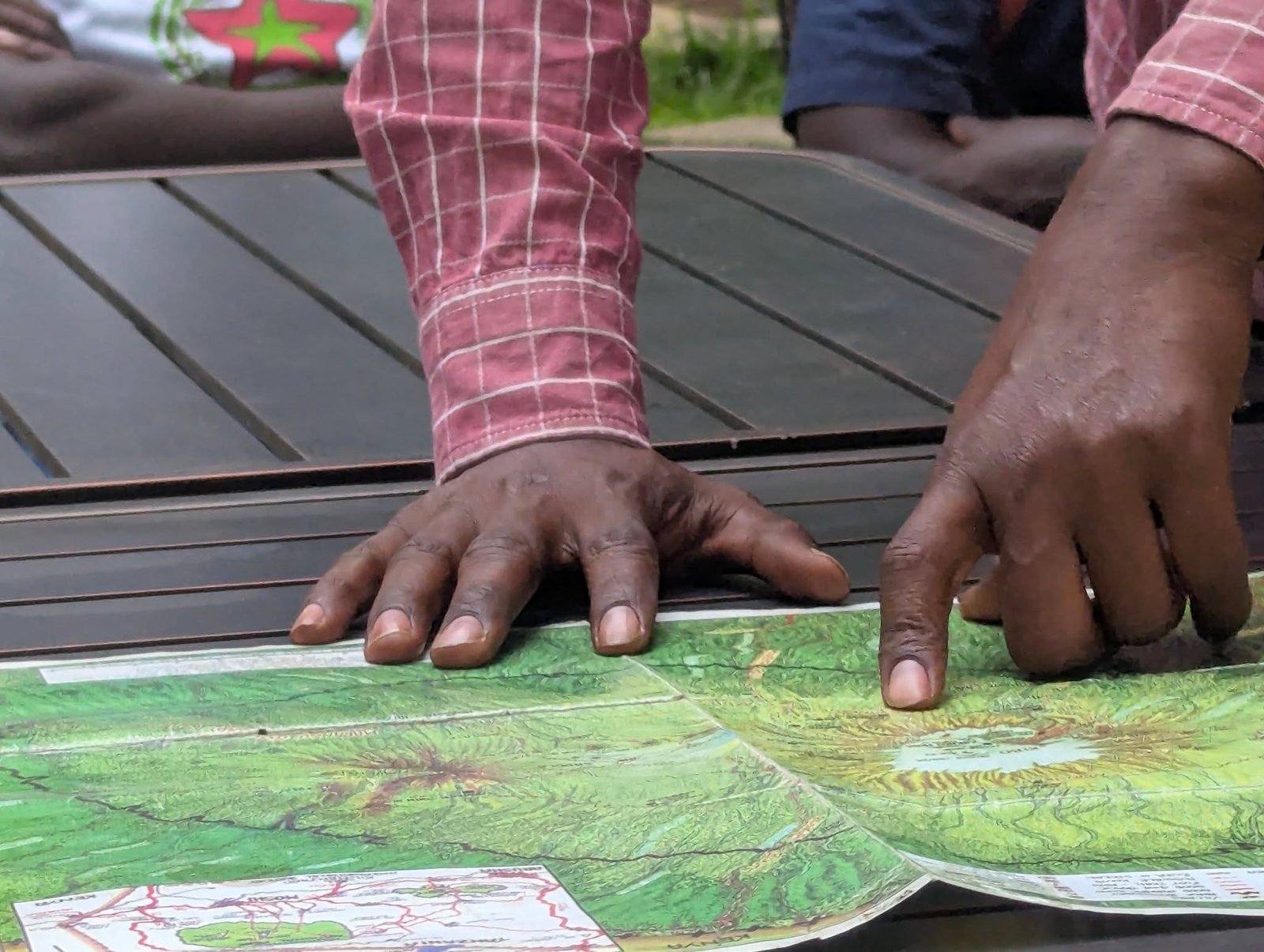
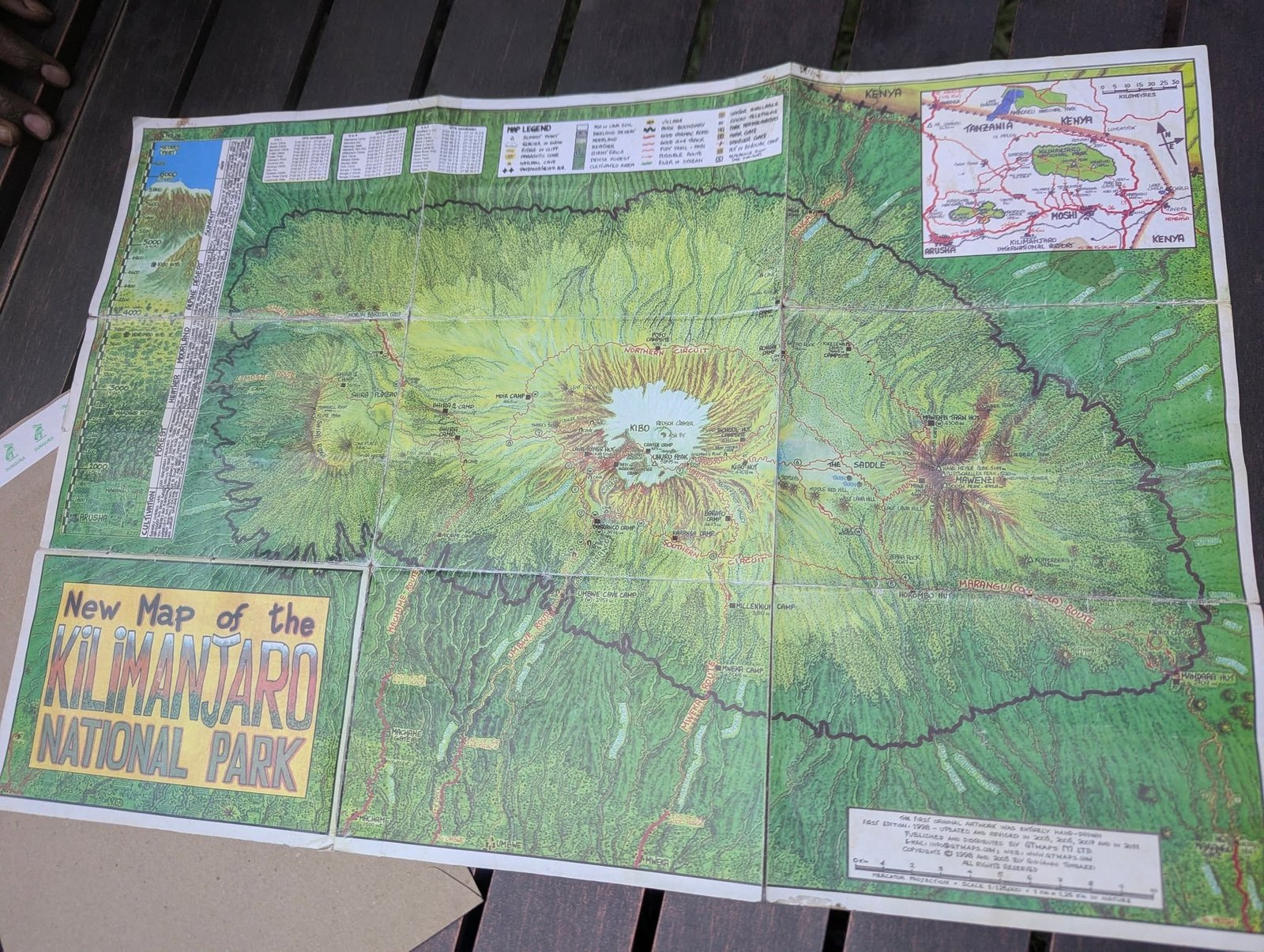
Next came the briefing with the guides and the other members of our team. We went over the course of the expedition, the equipment and the most important safety rules. We were setting off at the end of the rainy season – in theory, at the start of the dry one. It was slowly sinking in that we were starting the next day.
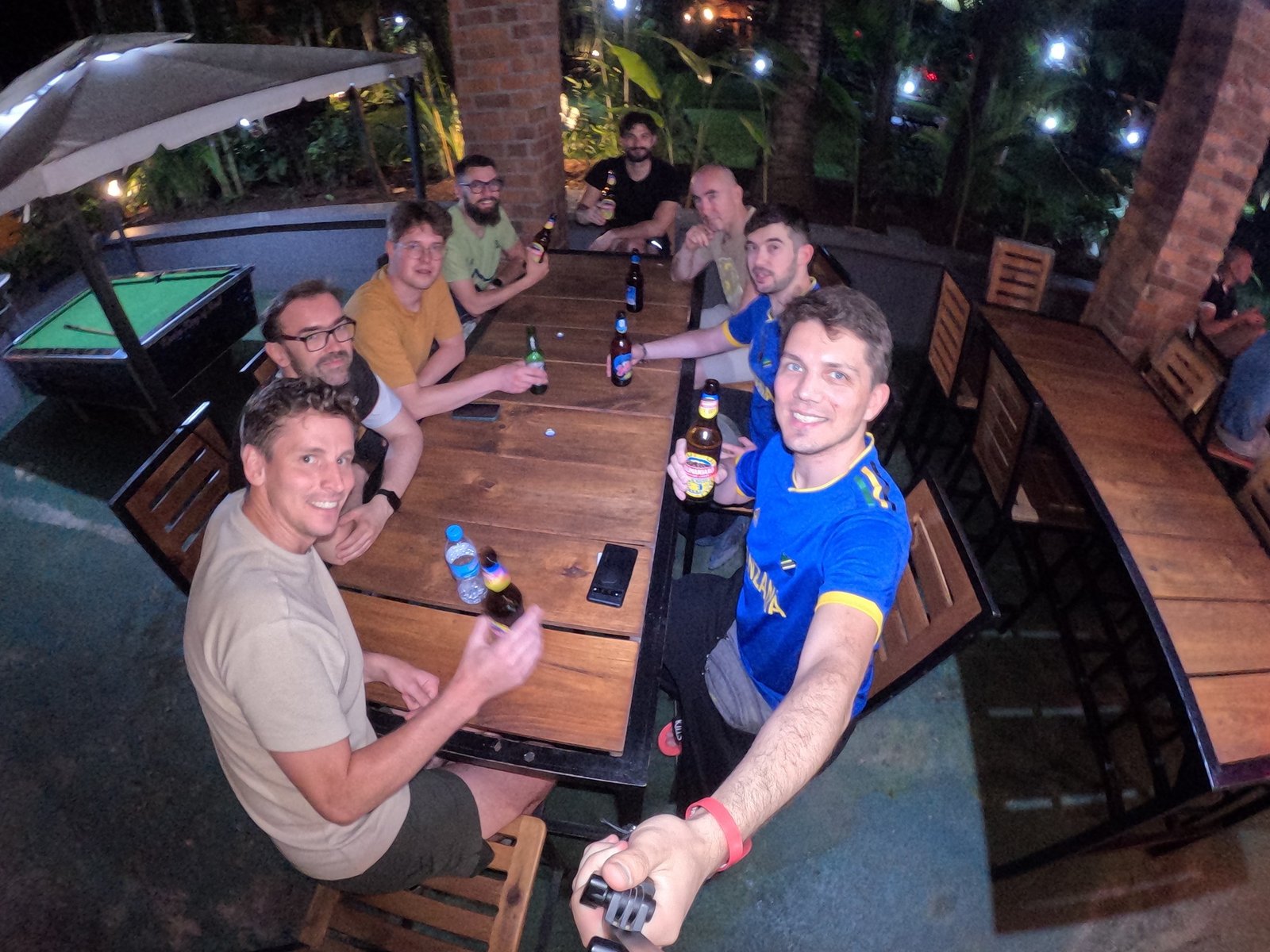
The day had one more special touch – I celebrated my birthday with the whole team. It was a really nice way to spend the evening before the start of the trek.
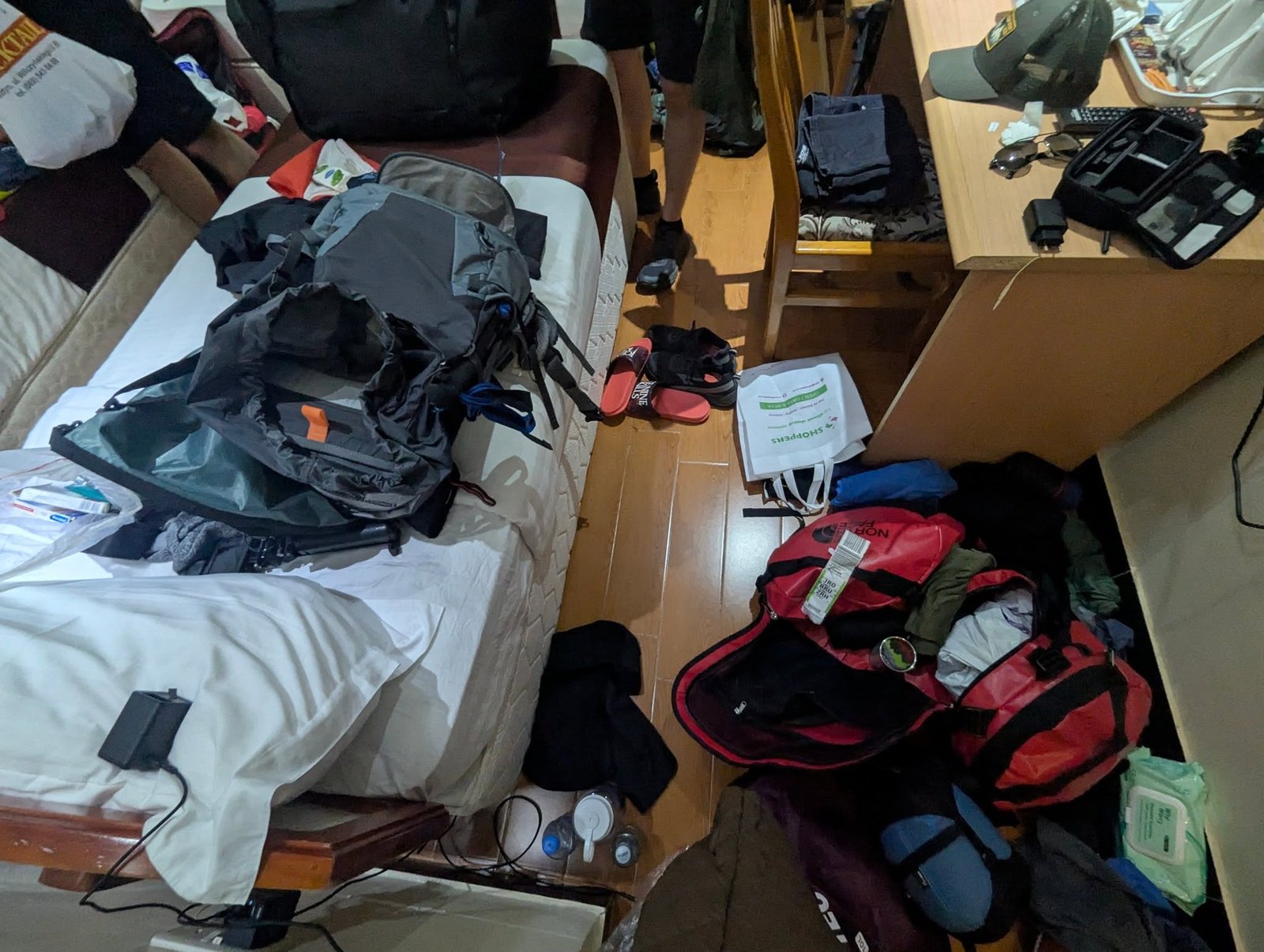
In the evening it was time to repack our bags: one pile for the main duffel, one for the daypack, and one for things staying at the hotel until we got back. The next day we were setting off for Kilimanjaro.
Practical information and costs
The key information from the first days in Tanzania – prices from June 2026.
- Flights – from Warsaw via Zurich and Brussels (originally only via Brussels) to Kilimanjaro International Airport (KIA), which lies between Arusha and Moshi. We bought the tickets about three months before departure; they cost about €830 (about 958 USD).
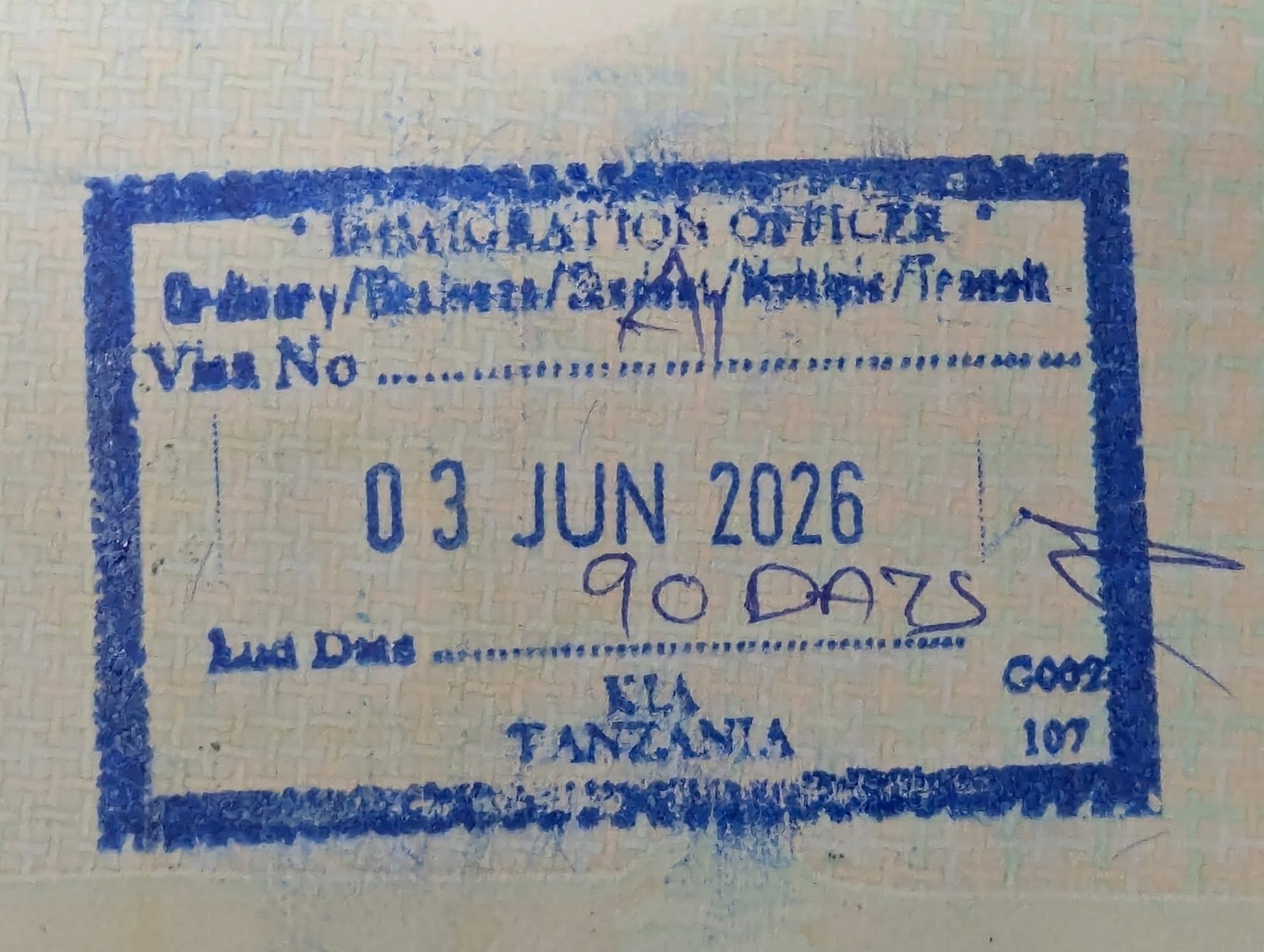
- Visa – 50 USD (about €43); I got a stamp allowing a stay of up to 90 days at Kilimanjaro airport.
- Organisation – we booked the expedition as a ten-person group with the Polish travel agency Gonna Travel; on the ground we were looked after by a local agency with guides, and we used pre-booked transport from the airport to the hotel and on to Moshi.
- Prices on the spot – often given in dollars: a football shirt 10 USD, two beers and about four slices of pizza in Arusha about 7 USD. It is worth haggling and comparing offers.
- Tips and scams – there are attempts to get a tip for nothing (e.g. in the airport toilet) or a fee for little things like a street scale. After dark we got around by tuk-tuk or in a larger group.
- Roads – driving on the left, lots of potholes and unpaved side roads; journeys take longer than the distance would suggest.
- Weather in early June – the end of the rainy season; about 28°C and humid in Moshi, cooler in Arusha. Mount Meru and Kilimanjaro often hide in the clouds.
- Internet – an eSIM for 20 USD (about €18).
- Cost of the whole trip (1–16 June 2026) – in total about €4450 (about 5163 USD): the Gonna Travel base price about €2960 (about €1580 + 1600 USD – including the trek with park fees, a safari and insurance; excluding flights, visa and tips), flights about €830, visa about €43, tips for the agency crew about €110 (130 USD), spending on the spot by card about €235 (271 USD) and in cash about €260 (300 USD), eSIM about €18.
The climb to the summit itself is described in a separate post.
Photo gallery