On 3 May 2024, after almost two weeks in Panama City, we flew to Colombia. We decided that from Panama there is only one sensible way onwards – by plane – and bought tickets with Wingo. That is how the second part of our trip through Latin America began – South America. Our first stop on the map of Colombia was Cartagena (Cartagena de Indias): a port city with a walled colonial old town, the mighty San Felipe fort, the colourful Getsemaní district and a park where sloths sleep in the treetops above passers-by.
We stayed here until 7 May. From the start we liked the relatively low prices, but the scammers and pushy vendors bothered us. All the same, Cartagena is worth a visit – it has a rich, though often painful history, a beautiful old town and nice beaches. From Cartagena we continued along the coast to Santa Marta and Tayrona National Park.
Table of contents
- Flying in from Panama and first impressions
- Pirates and 11 kilometres of walls
- Castillo San Felipe de Barajas
- The old town – Torre del Reloj and Plaza de los Coches
- Palenqueras and the history of runaway slaves
- Centenario Park – sloths and tití monkeys
- Getsemaní – murals, umbrellas and evenings on the street
- Bocagrande and sunsets
- Practical information
- Summary
Flying in from Panama and first impressions
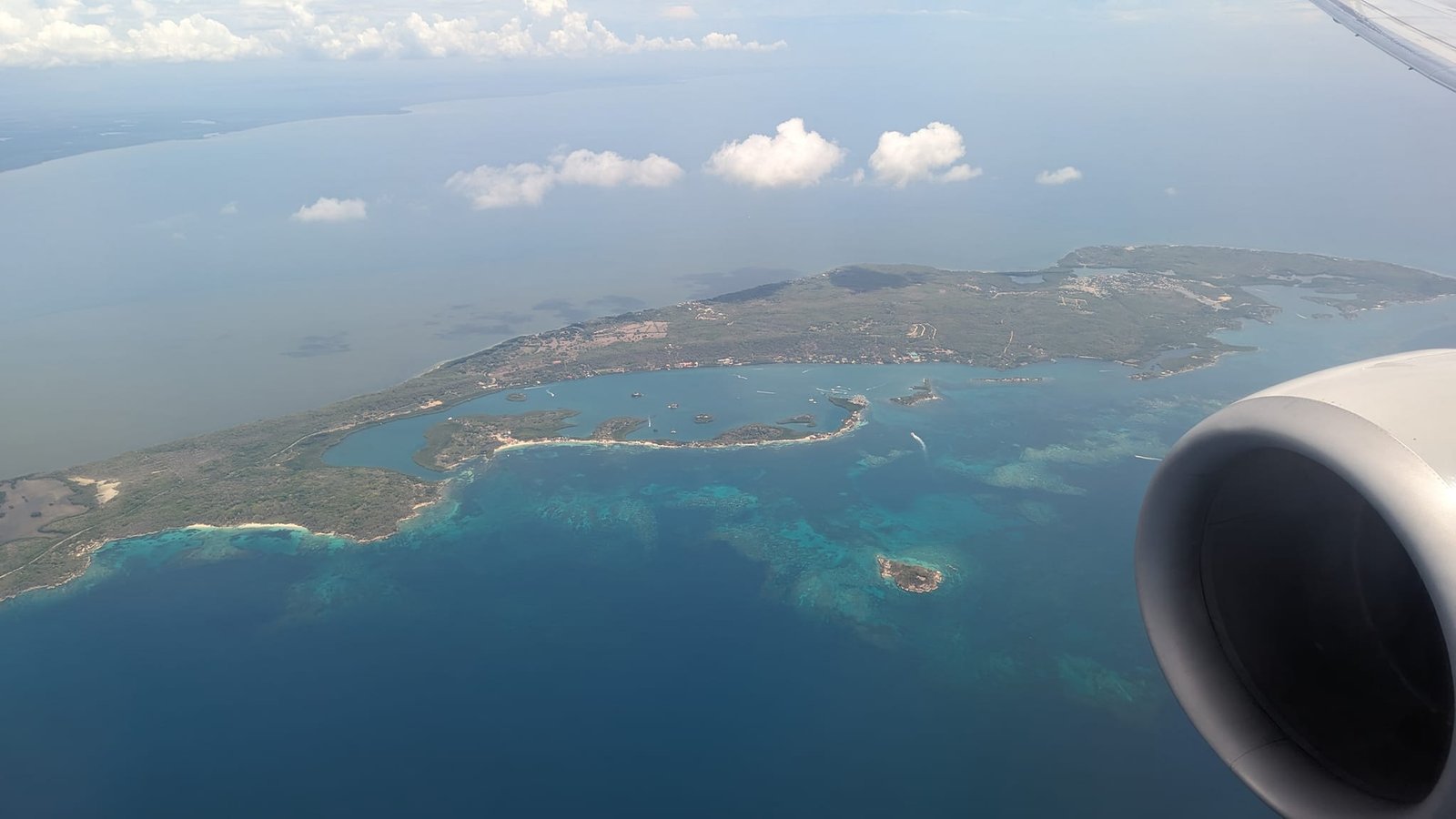
We flew from Panama City with Wingo. We chose this airline because the ticket price included one change of date or destination, and the fares were fixed regardless of the date. Just before landing we could see islands and turquoise shallows off the Colombian coast from the plane window.
Colombia’s currency is the Colombian peso (COP): in May 2024, 1000 COP was worth roughly €0.23. You can also hold Colombian pesos on a Revolut card, which makes things even easier.
The people are a different matter. In Cartagena vendors and touts are pushy to the point of excess – you only have to stop for a moment or walk past a stall and they immediately “attack”. Musicians playing for a larger crowd are not insistent, but sometimes someone comes up and starts rapping without asking, and since it was a “private concert”, they want money at the end. It happened to us on the very first day. We did not have any cash yet, so the rappers suggested we go and withdraw some from an ATM. It is best to say goodbye to such artists quickly and firmly.
Pirates and 11 kilometres of walls
The Spanish founded Cartagena in 1533. It quickly became an important port from which silver from what is now Bolivia, among other things, was shipped to Spain. Because of its wealth the city fell prey to pirates more than once. But it was only the sacking of Cartagena by the English commander Francis Drake in 1586 that made the Spanish take defence seriously. Engineers were brought from Europe to oversee the construction of a whole system of fortifications meant to protect the city from further attacks.
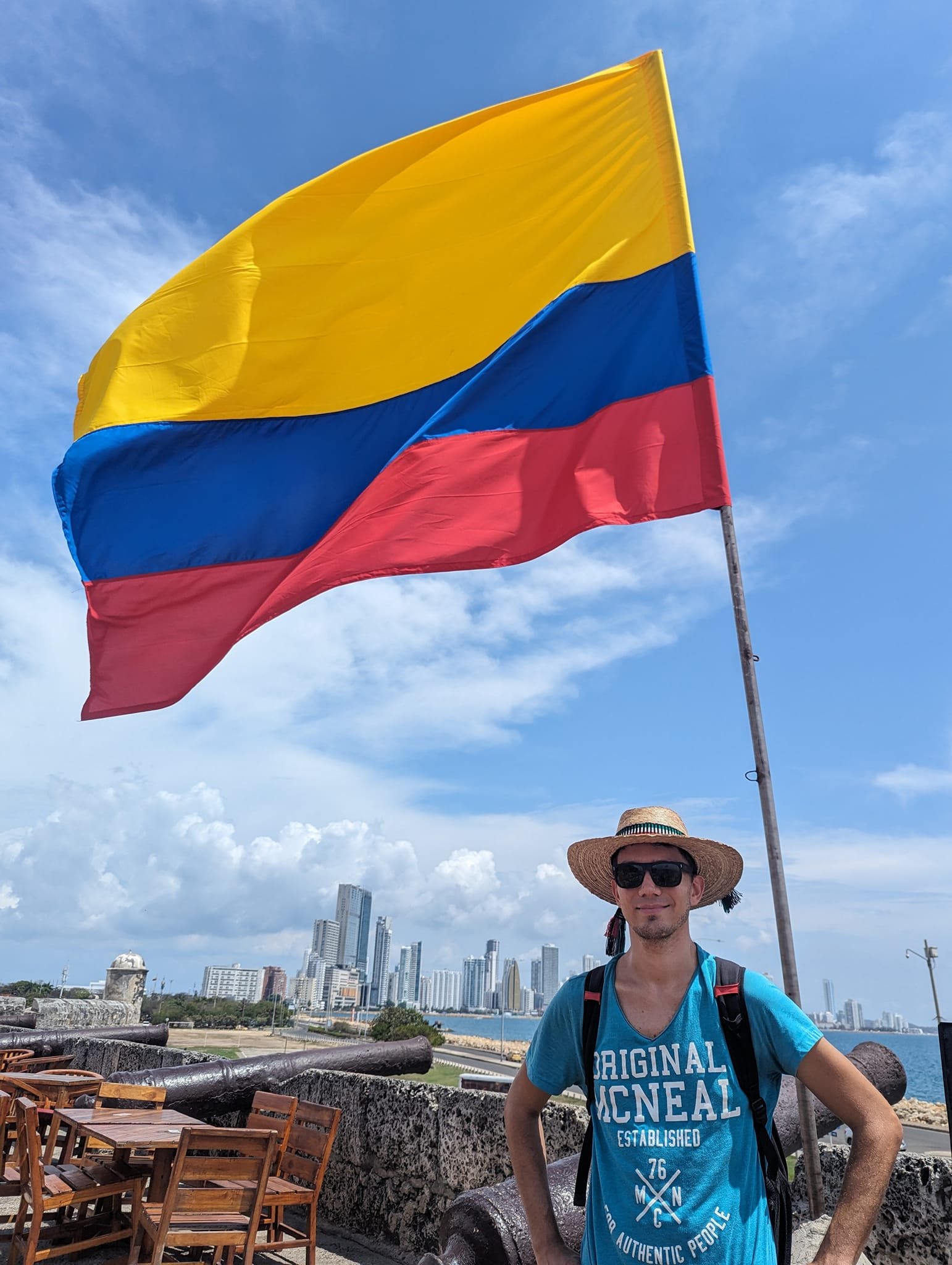
The first major part of the walls was the Baluarte de Santo Domingo, the Santo Domingo bastion. Its construction began in 1602 at the spot where Drake’s troops had entered the city. Today there is a café on top of the bastion, Café del Mar, and from the walls, between the old cannons, you can see the skyscrapers of the modern Bocagrande district.
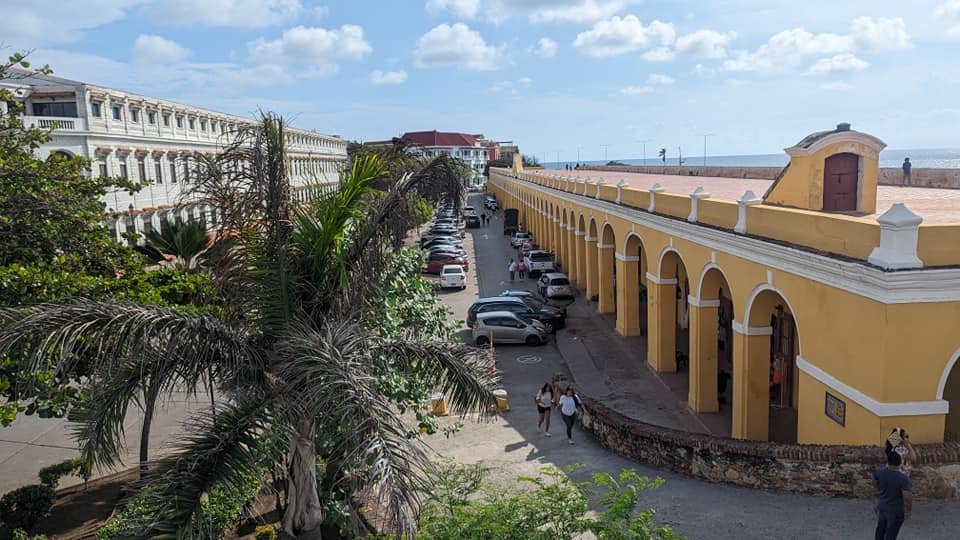
A great deal of the old fortifications has survived to this day – together with the whole historic district they are one of Cartagena’s most important attractions. The walls alone are about 11 kilometres long. Along one section runs the yellow arcade of Las Bóvedas.
Castillo San Felipe de Barajas
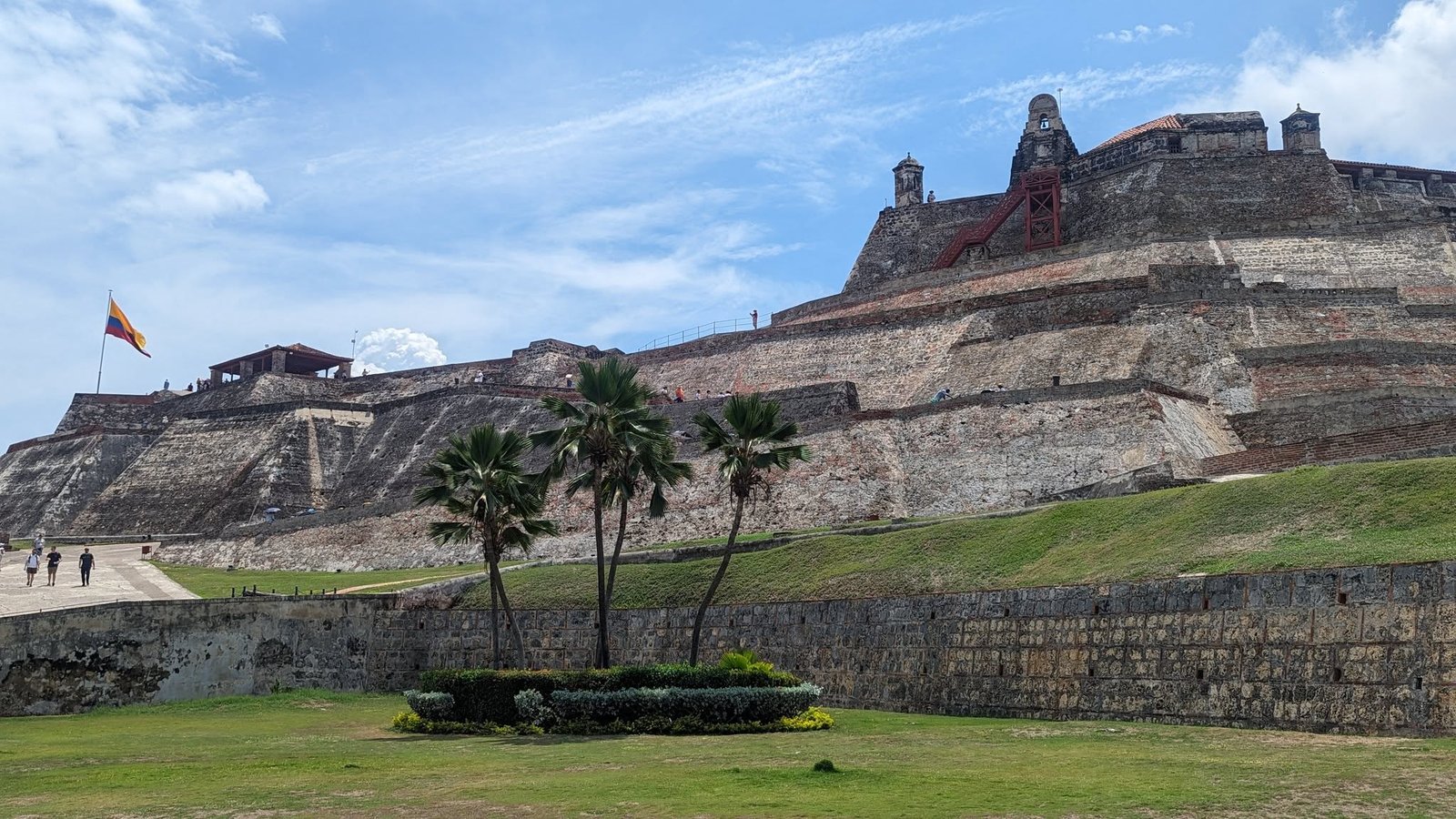
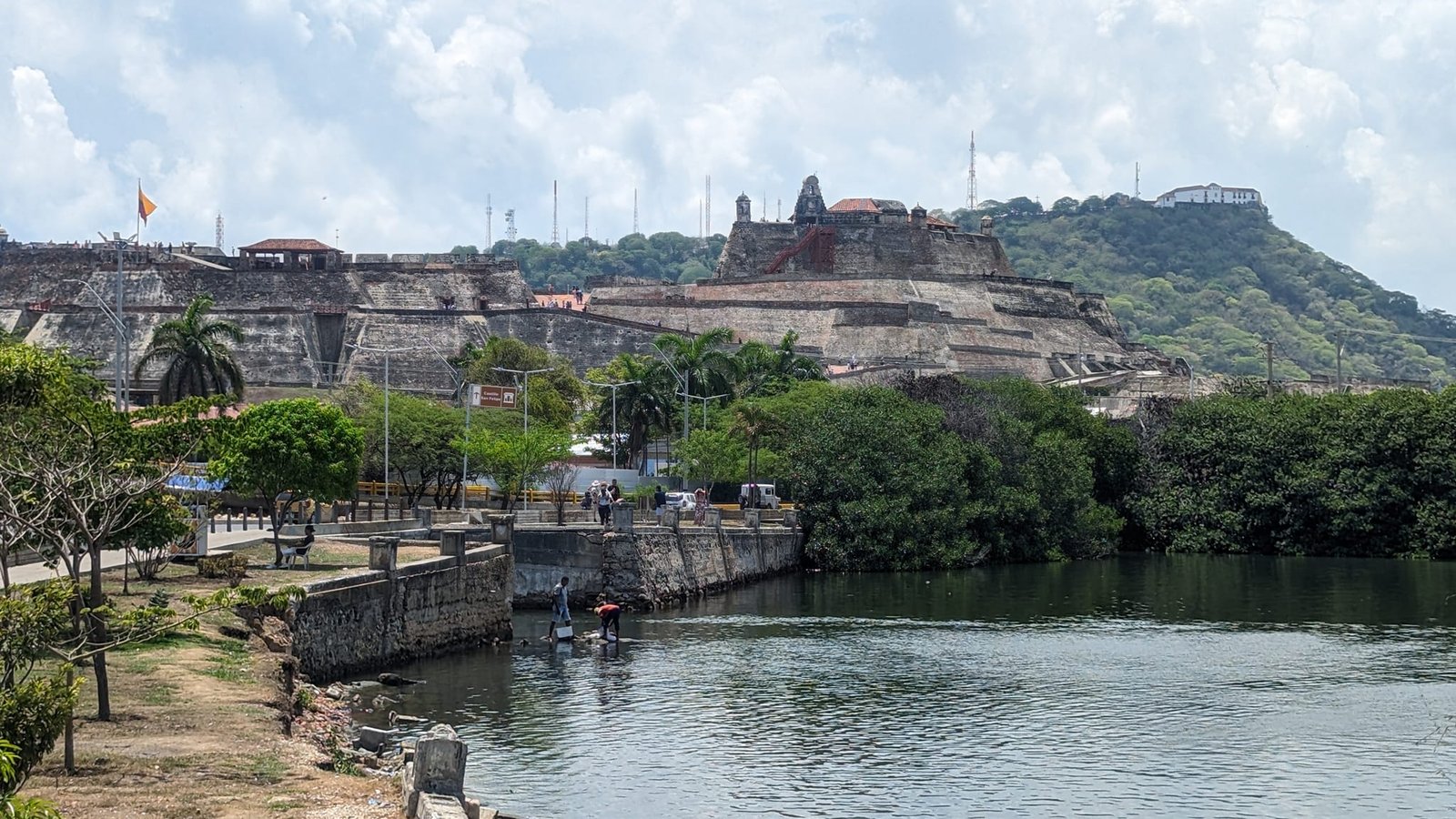
The most impressive part of Cartagena’s fortifications is the Castillo San Felipe de Barajas fort, which rises on a hill outside the old town. The fort was extended gradually and took on its present massive appearance in the 1760s. Entry cost 33,000 COP (about €8).
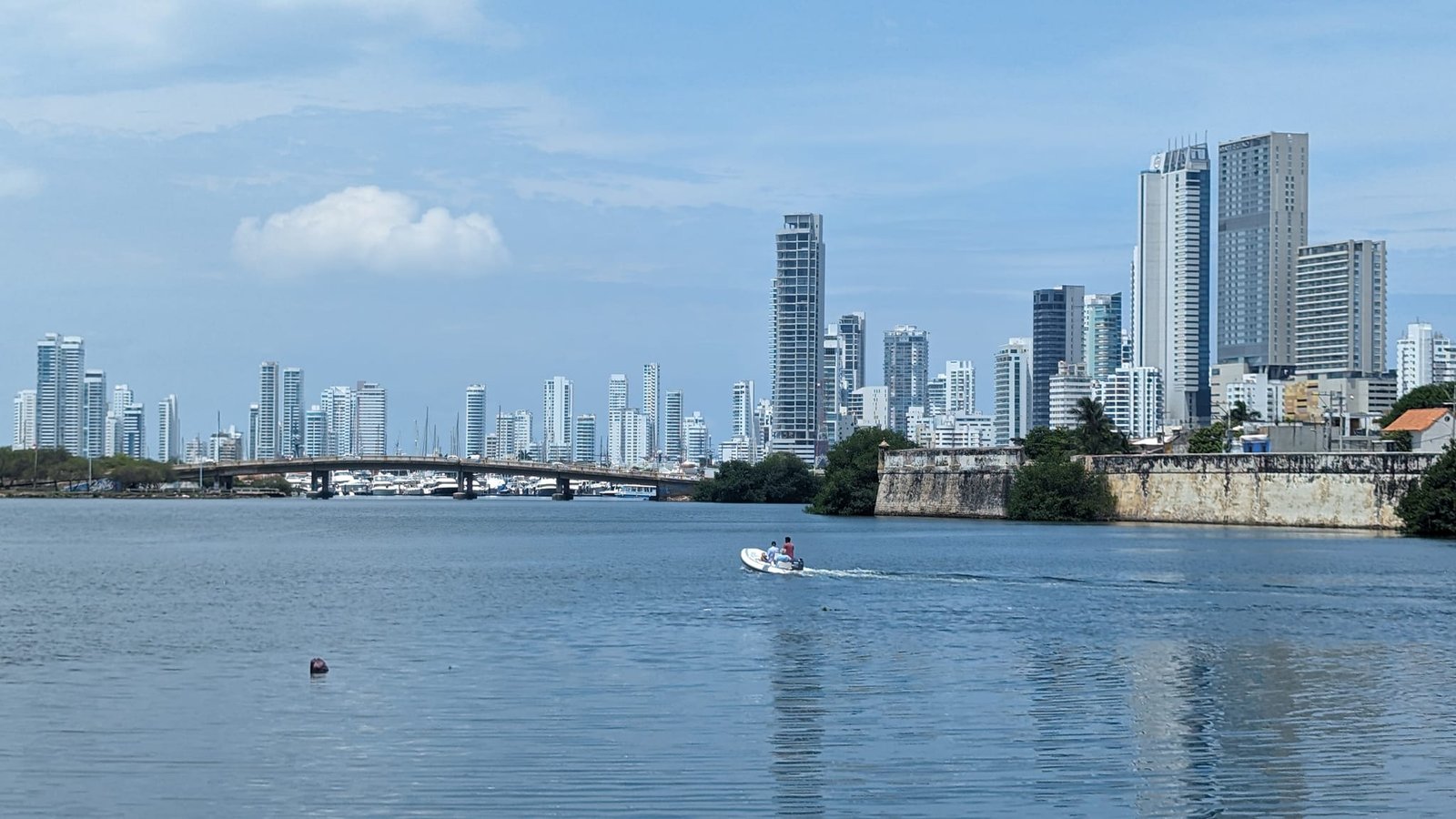
The fort is also easy to see from a distance, from across the water.
The old town – Torre del Reloj and Plaza de los Coches
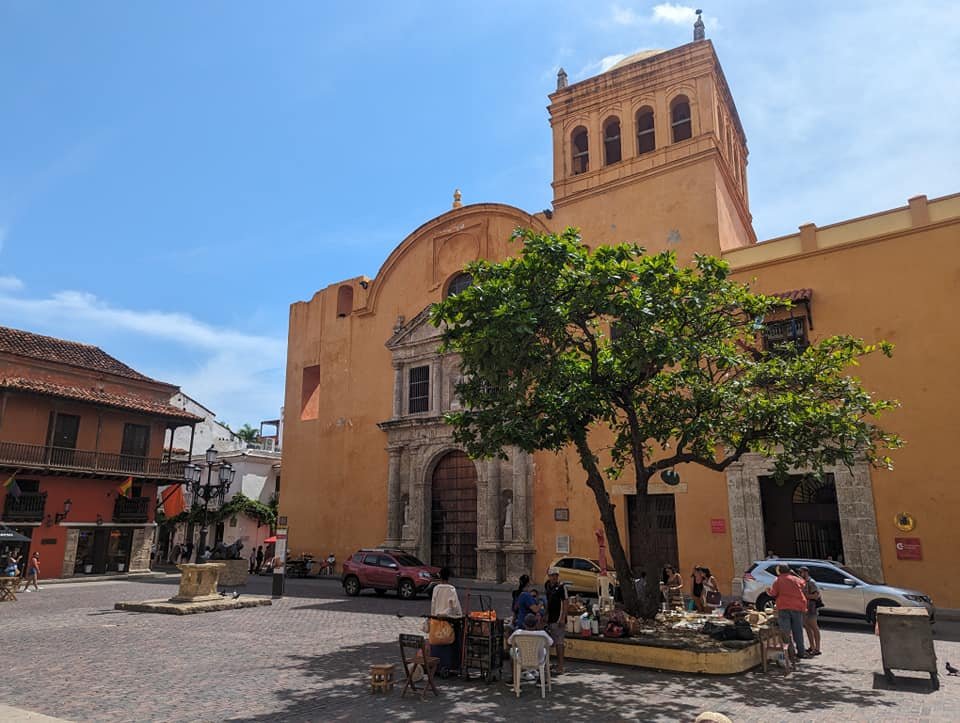
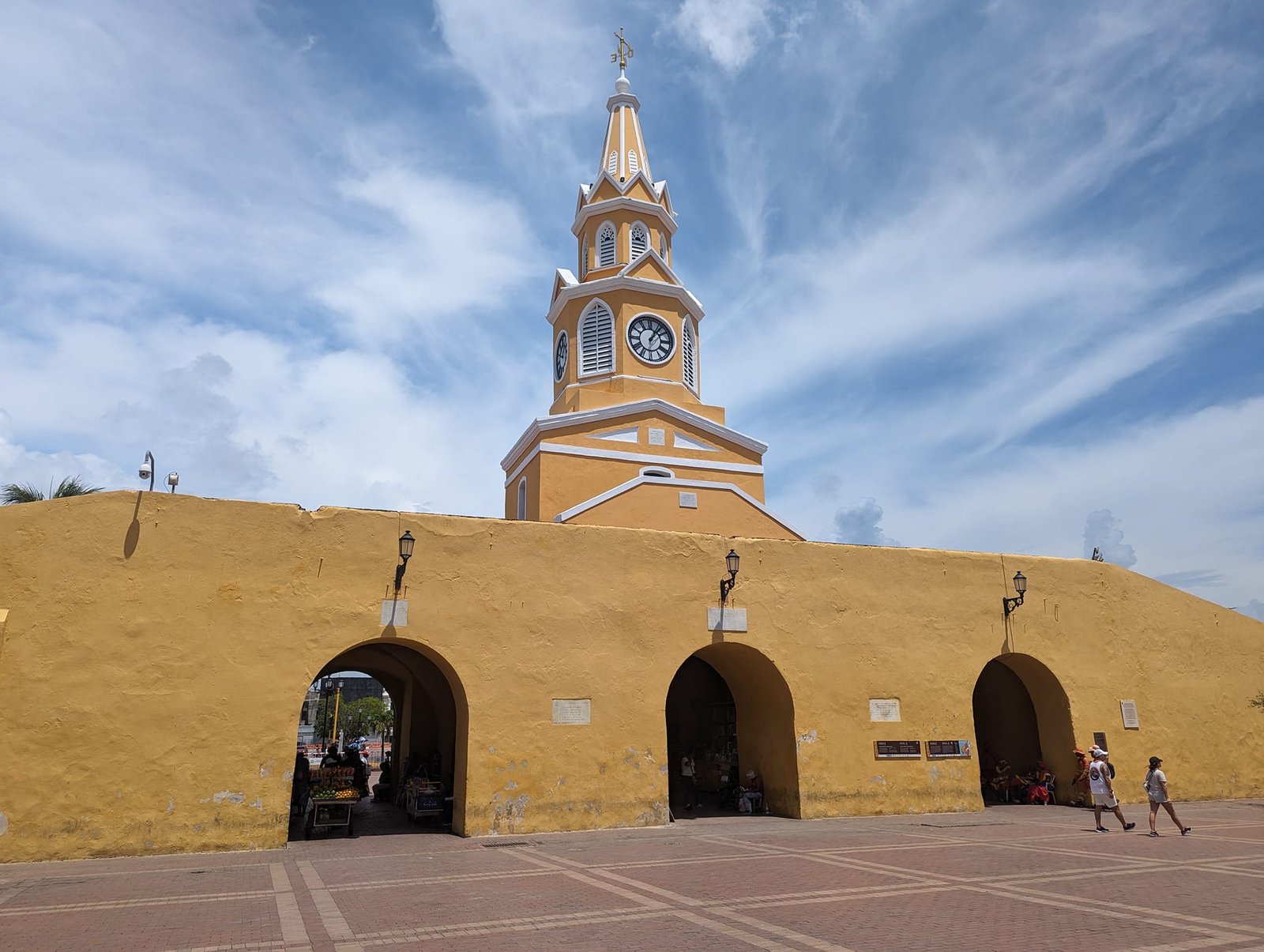
You enter the historic district through the gate under the Torre del Reloj clock tower. Right behind it the first thing you see is the Plaza de los Coches, surrounded by colourful arcaded townhouses. This is where slaves were once sold – Cartagena was an extremely important centre of the trade in people brought from Africa.
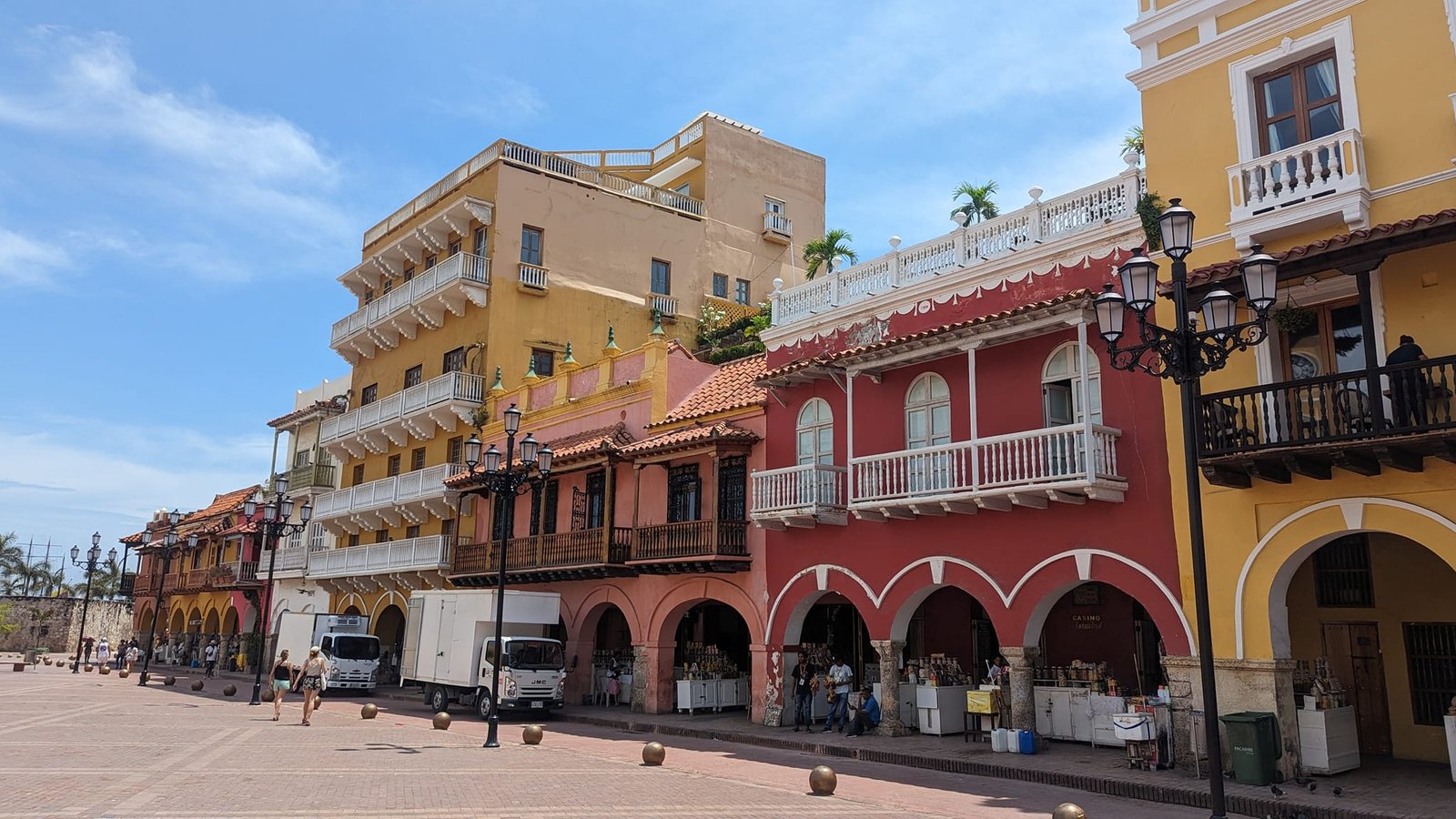
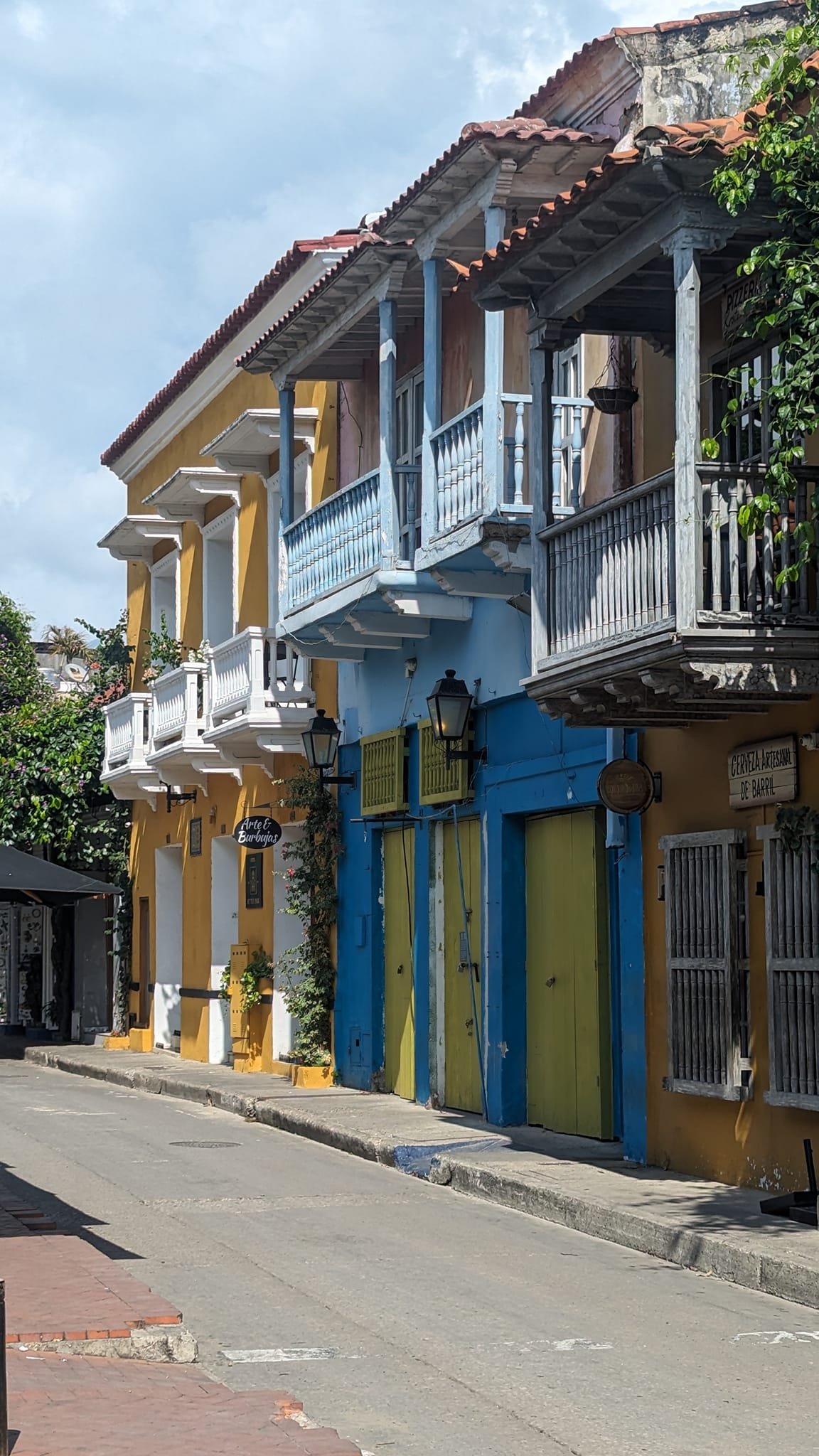
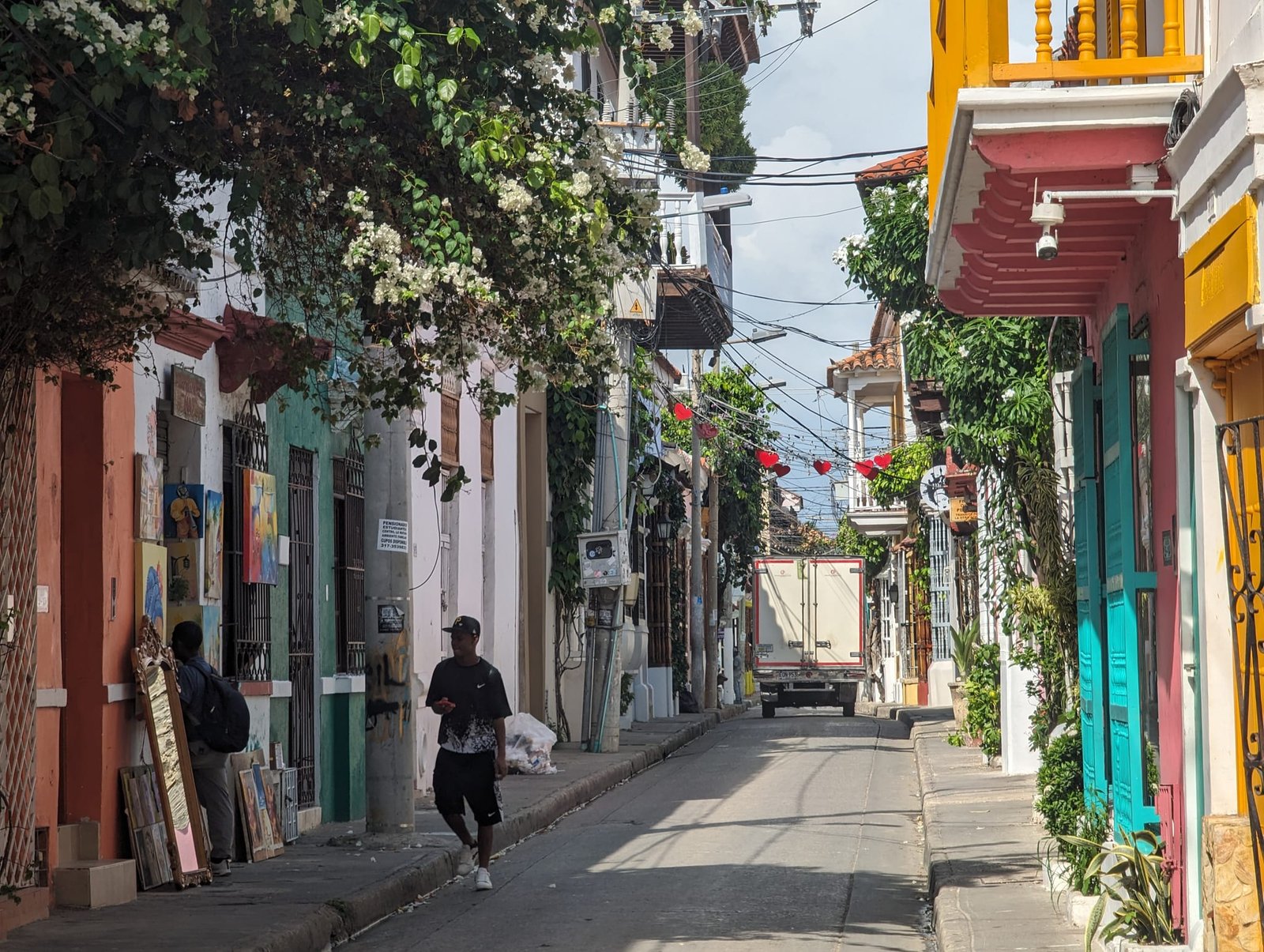
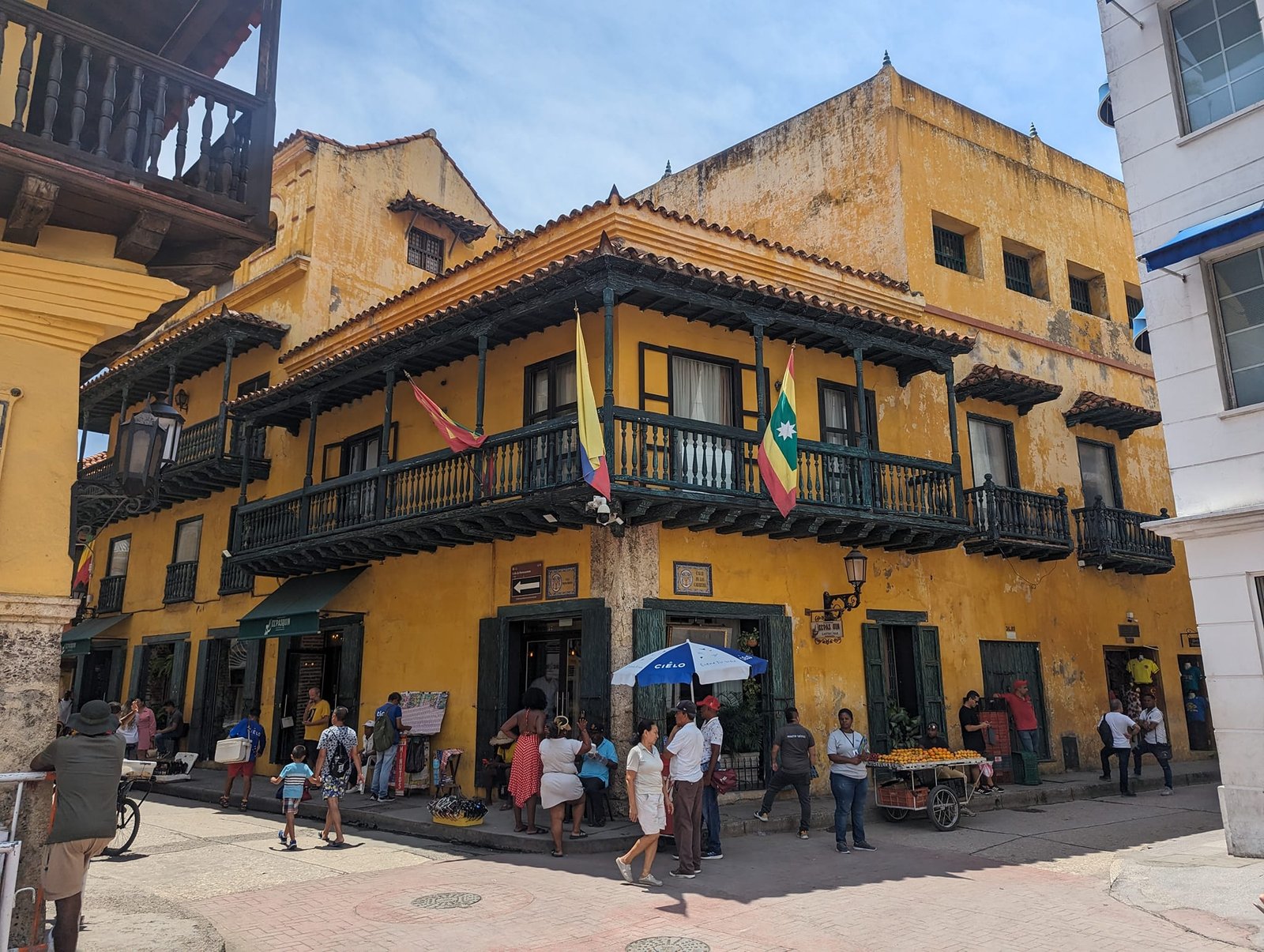
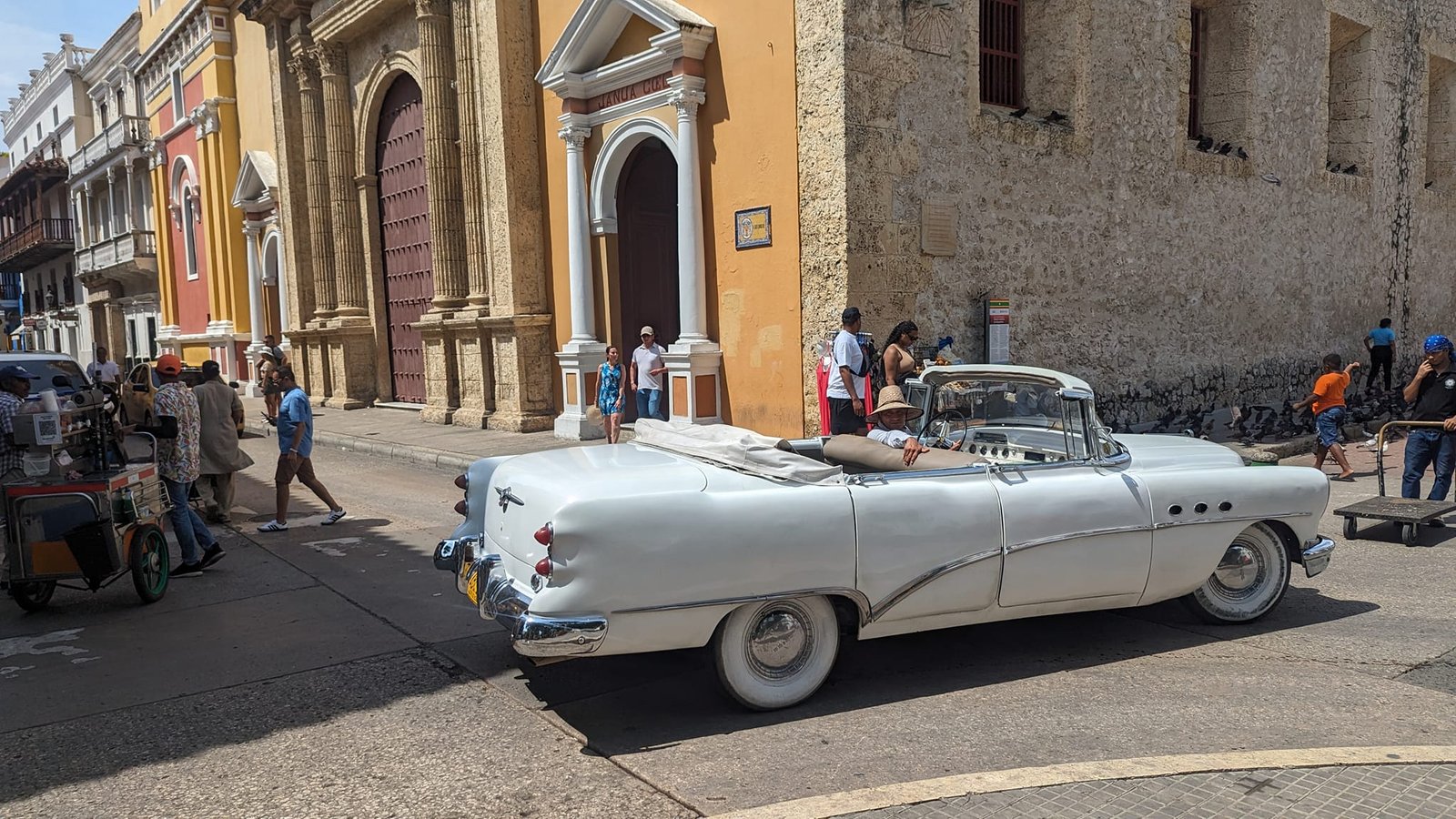
From there you can simply wander. The old town is a maze of streets with colourful houses, wooden balconies and flowers, above which rise church towers – including those of the San Pedro Claver church and the cathedral. We also came across a vintage convertible that fitted the colonial houses perfectly.
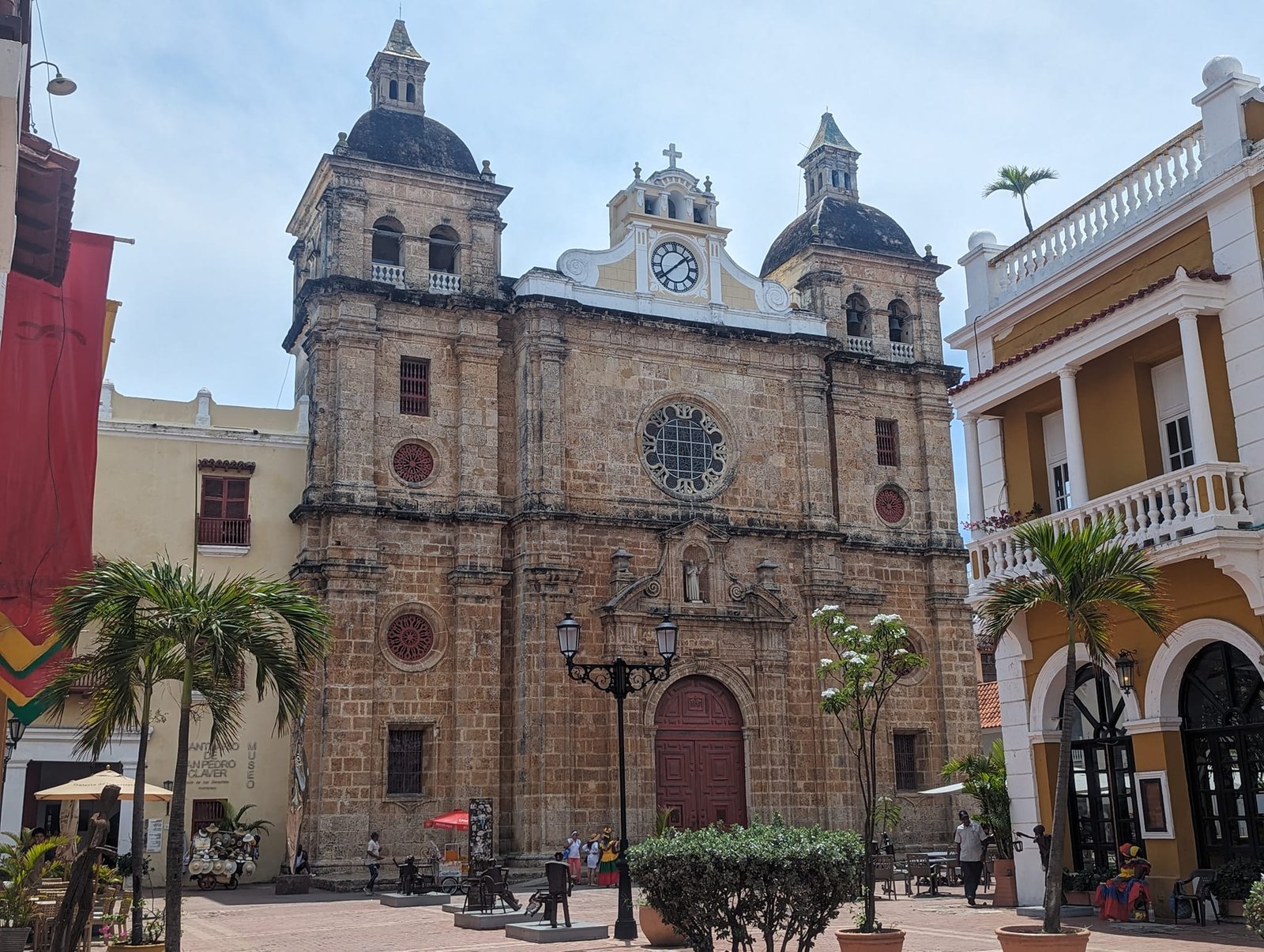
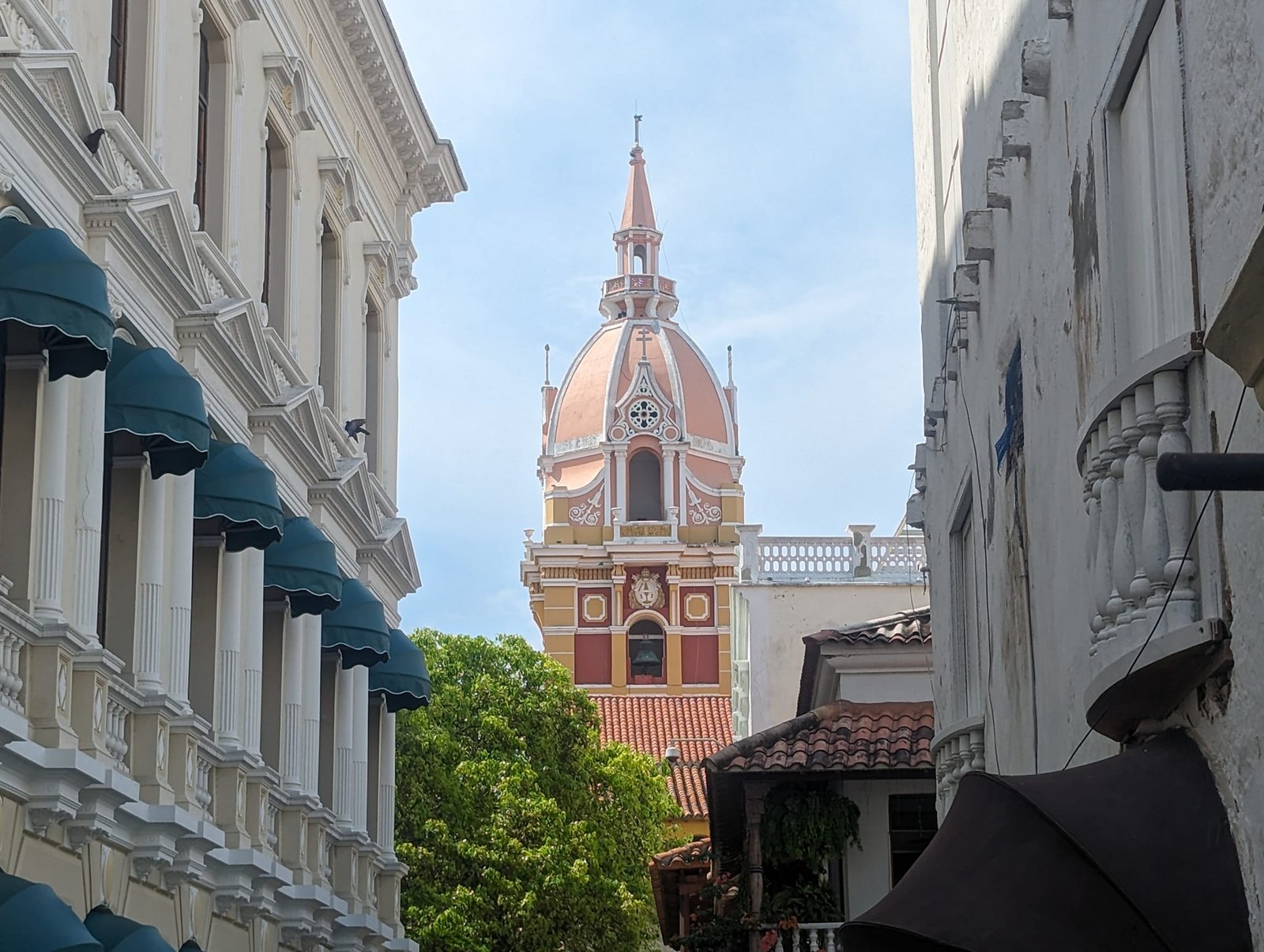
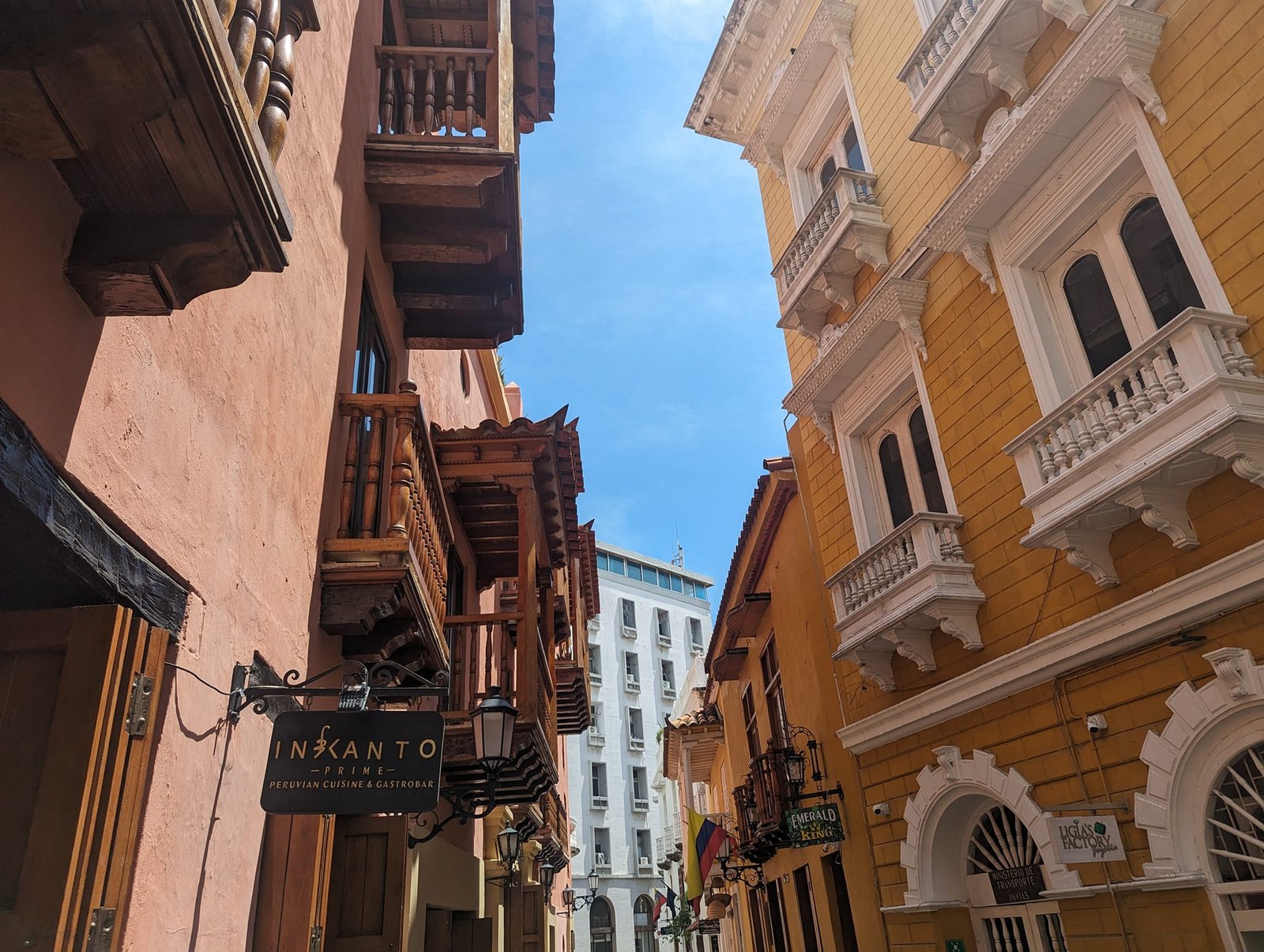
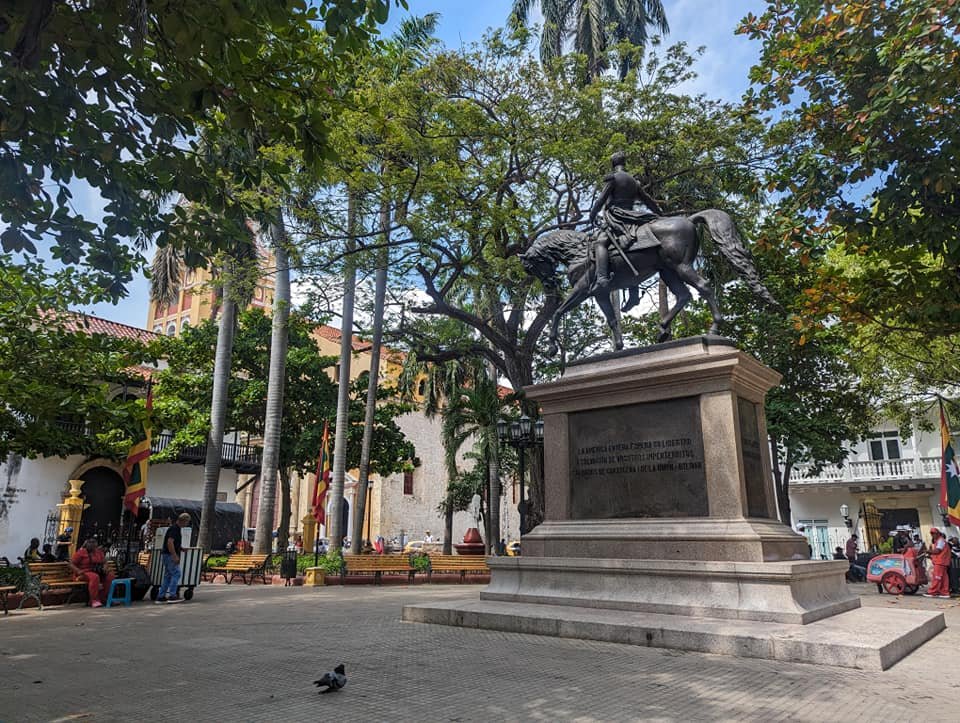
Cartagena’s history was paid for with suffering, and not only that of the slaves brought by the Spanish. The inhabitants dreamed of independence, which became possible in 1811. Four years later, in 1815, the Spanish besieged the city for three months. About a third of the population died. The starving inhabitants had to eat dogs, cats, horses and even rats, and they were too weak to bury the dead, which helped diseases spread quickly. Today the fight for independence is commemorated, among other things, by the equestrian statue of Simón Bolívar on Plaza de Bolívar.
Palenqueras and the history of runaway slaves
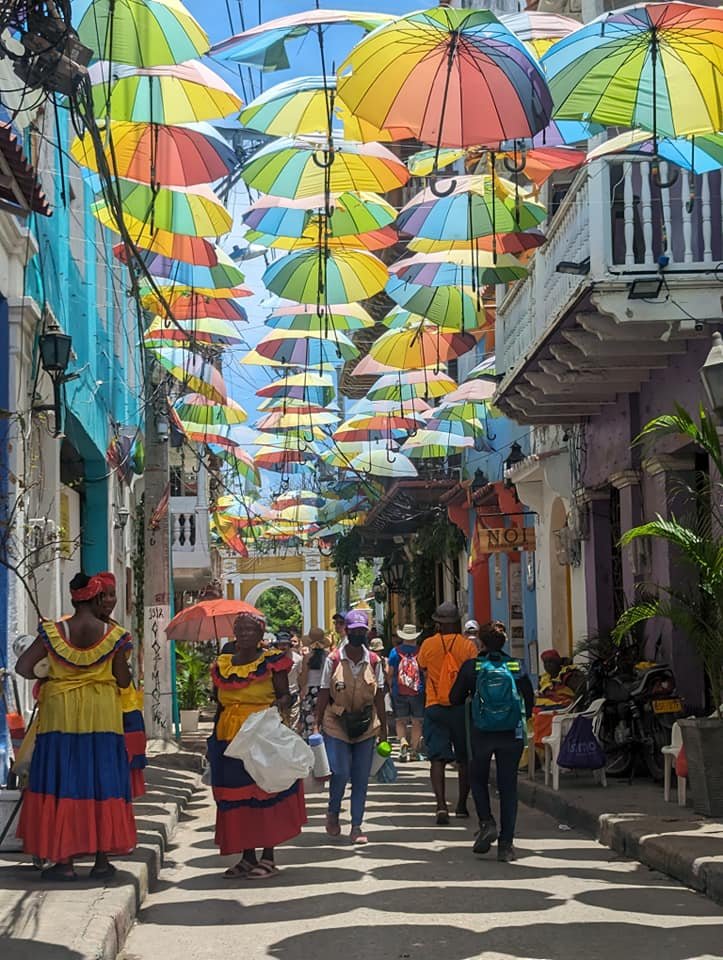
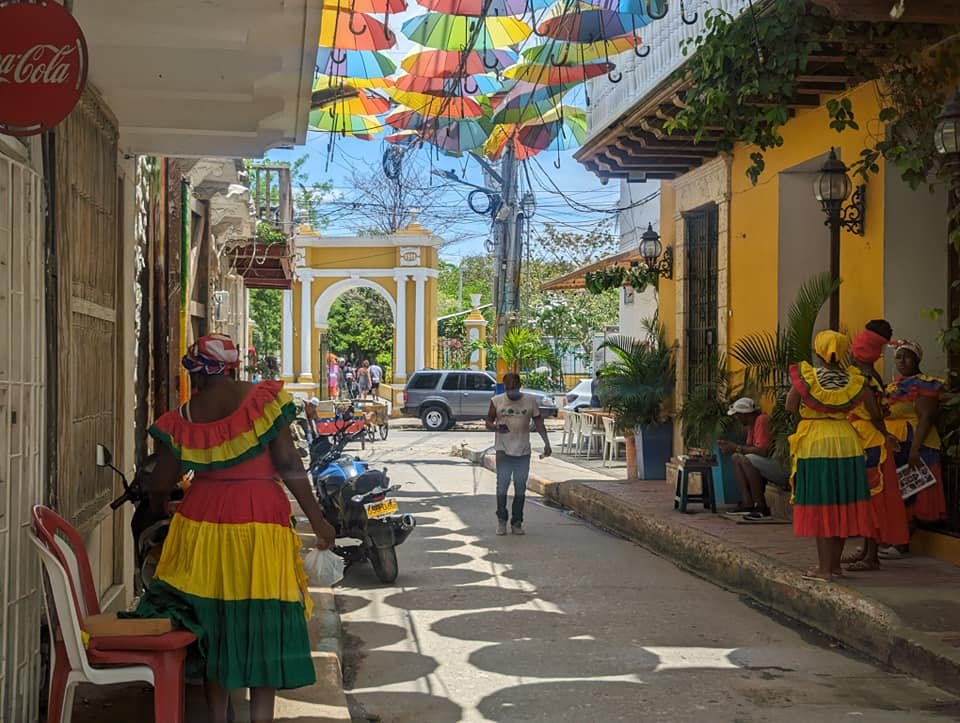
The legacy of those times is still visible in Cartagena today – many Afro-Colombians live here. In the streets of the old town and Getsemaní you also meet palenqueras: women in colourful dresses, often in the Colombian colours, with bowls full of fruit (or fake fruit). Their outfits refer to the enslaved women who managed to escape.
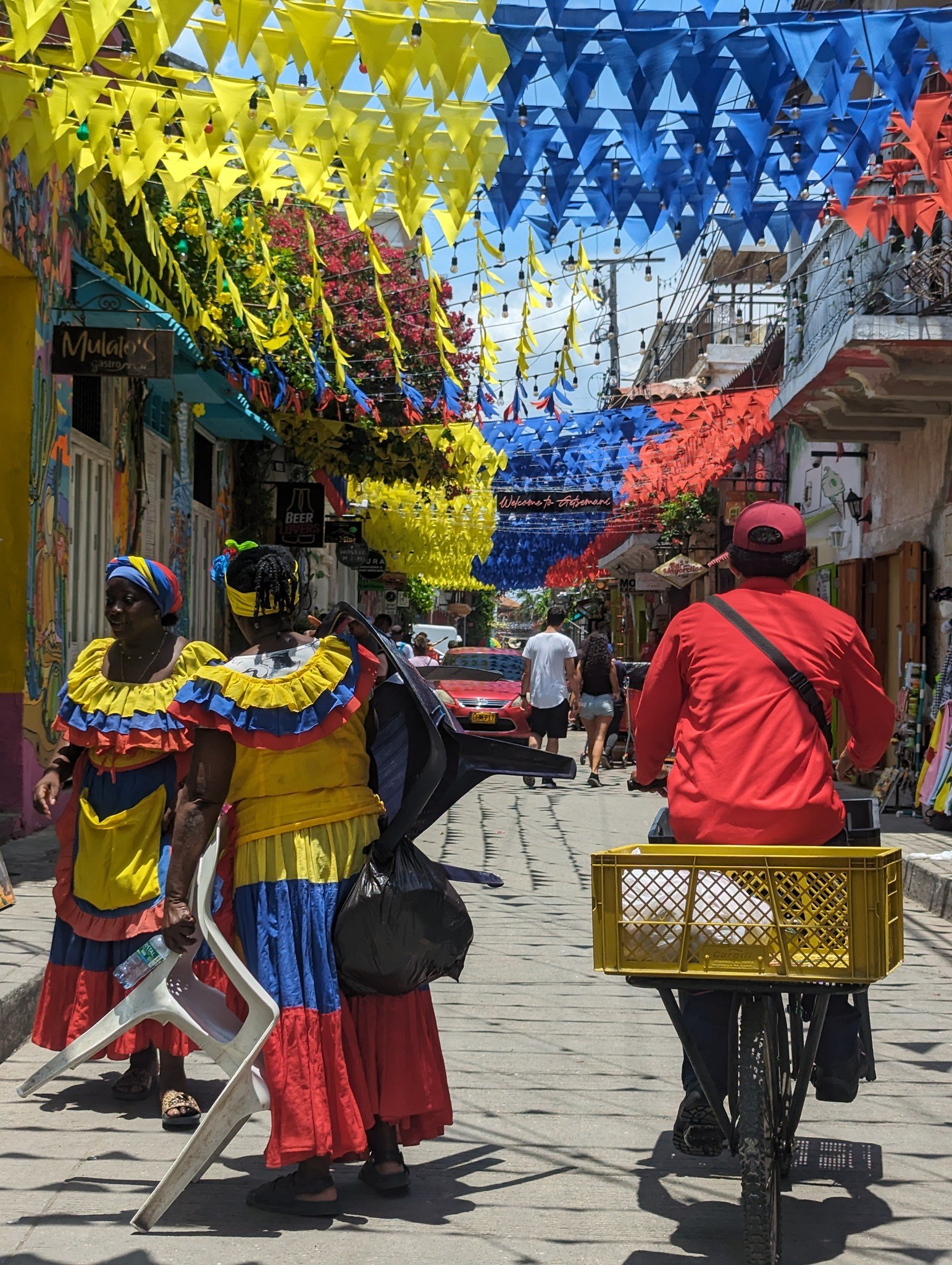
Runaway slaves founded their own settlements called palenques, surrounded by walls and set up in less populated areas. There they kept up their traditions, and to survive, the women gathered fruit and sold it. You can take a photo of the palenqueras, but you have to pay for a posed photo with them.
Centenario Park – sloths and tití monkeys
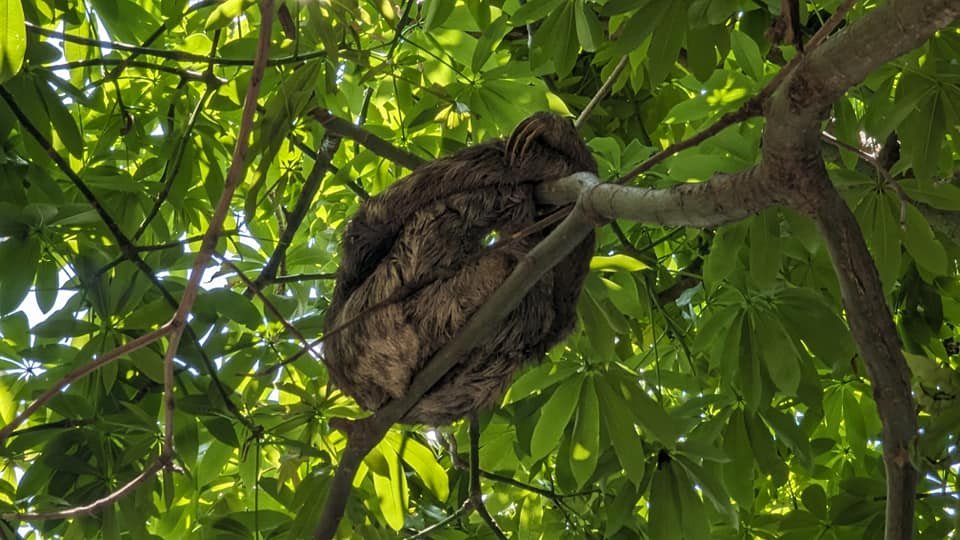
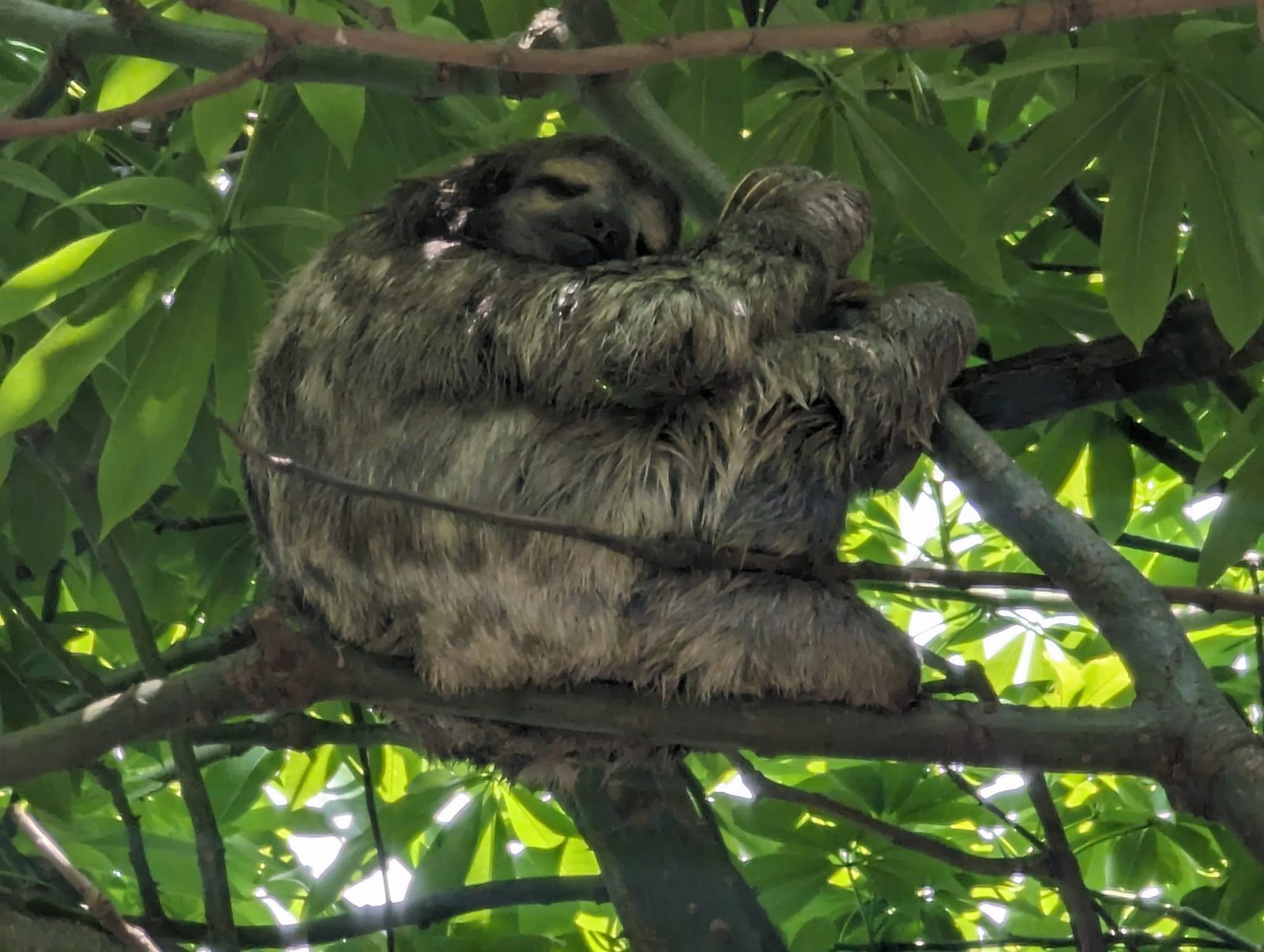
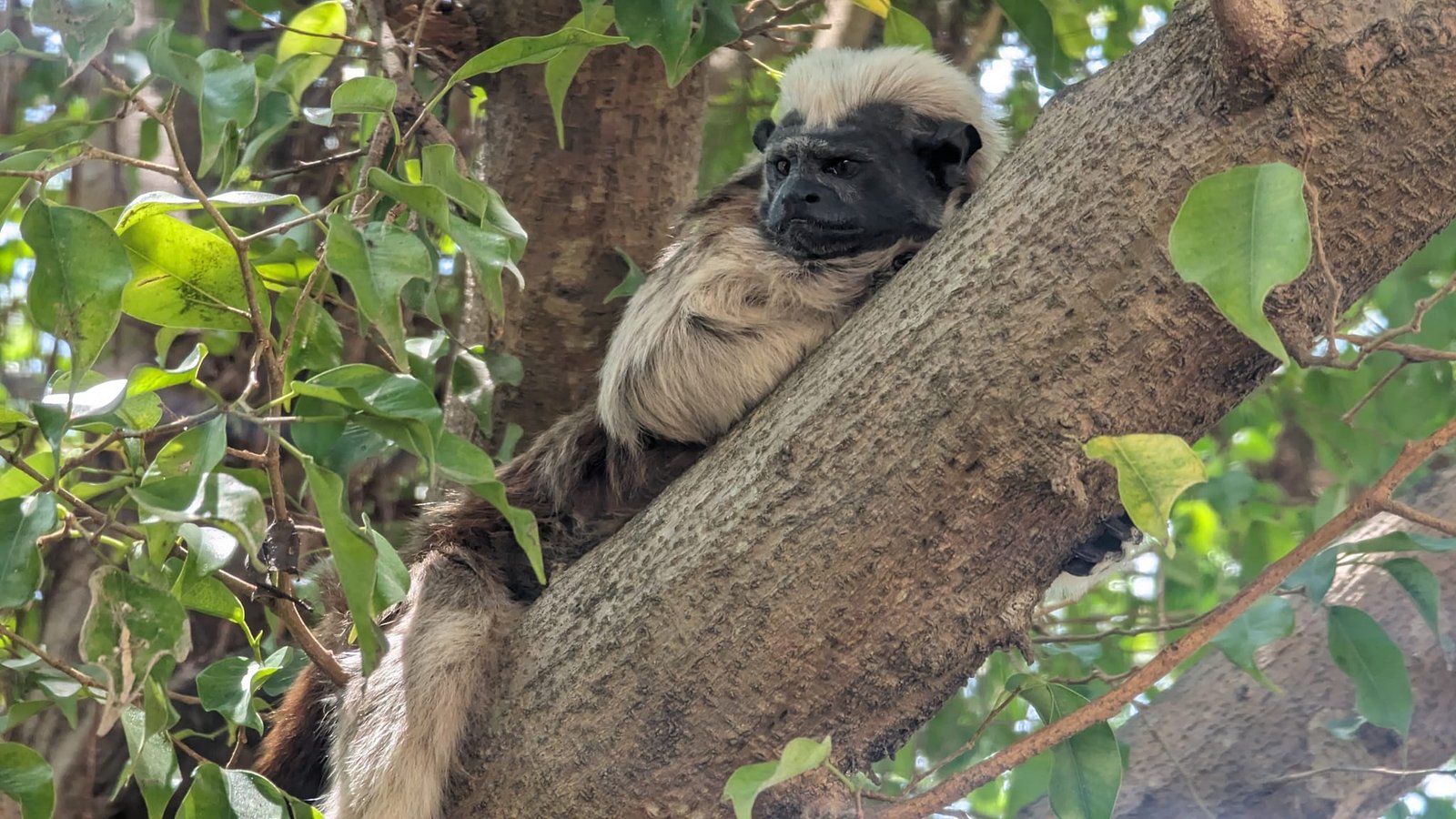
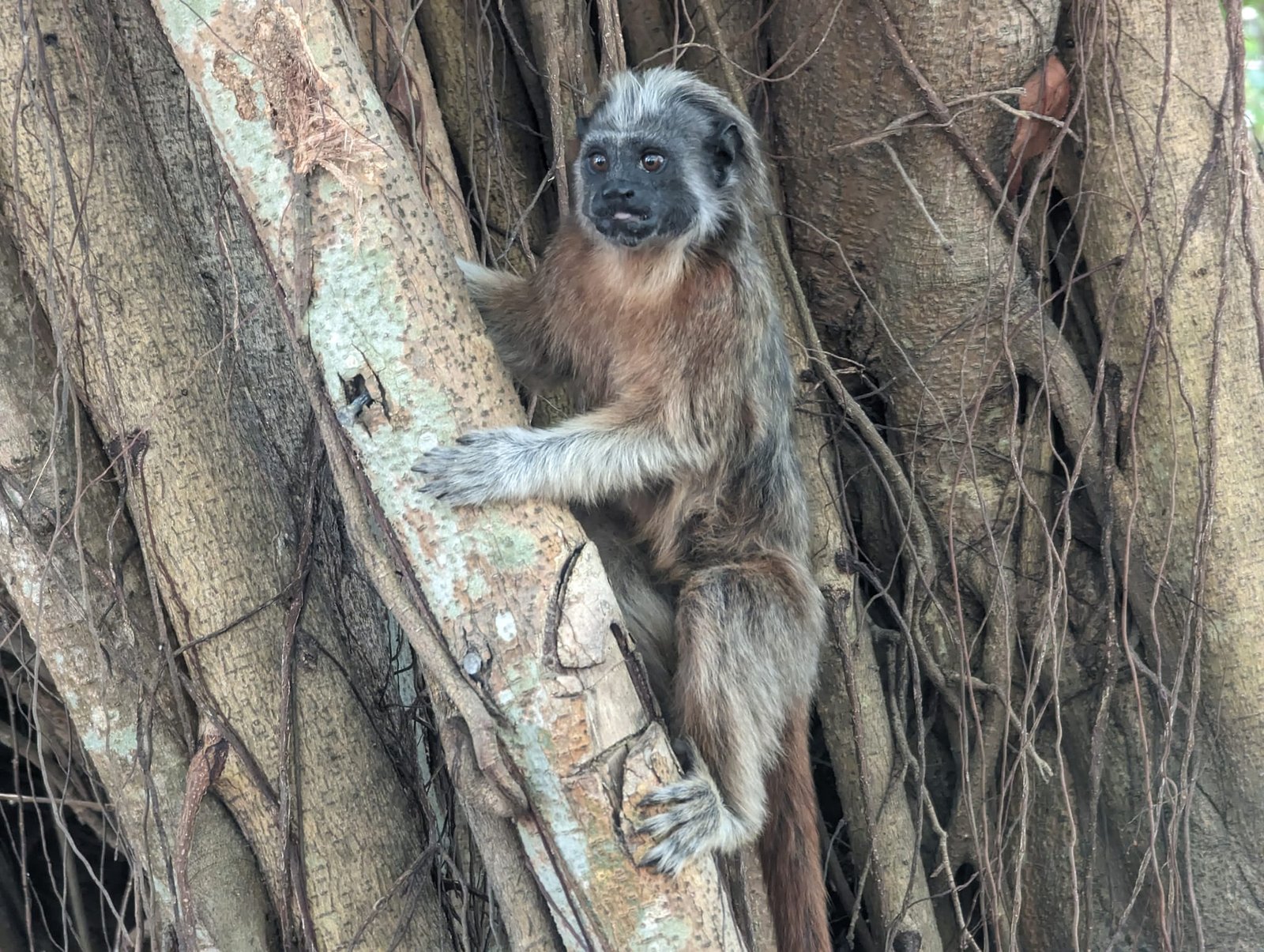
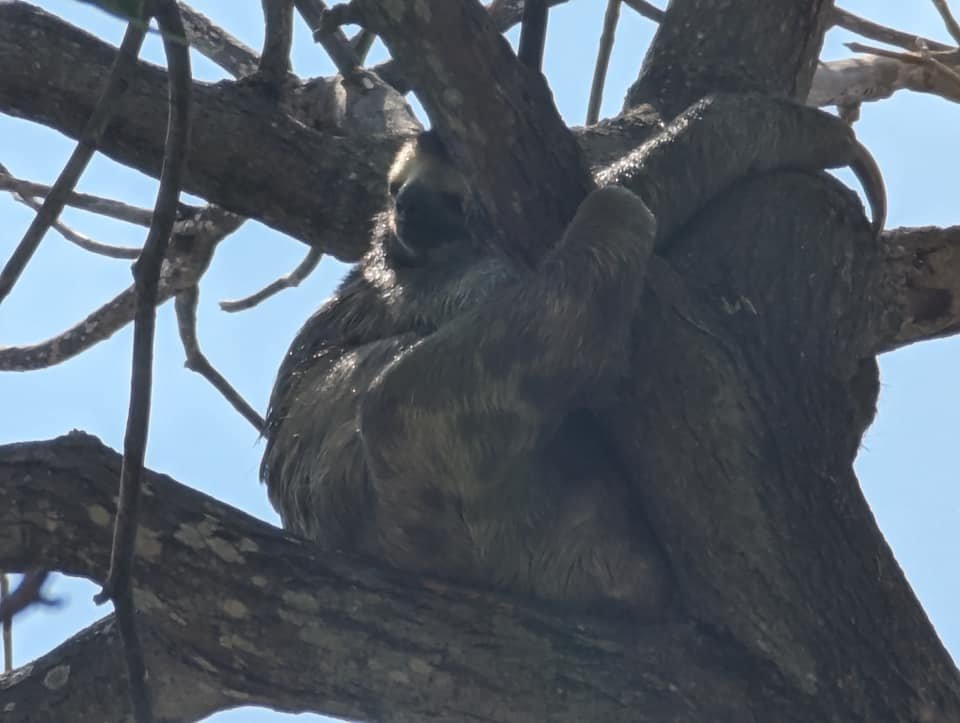
Right next to the historic centre, behind a yellow gate by the Camellón de los Mártires, lies Centenario Park. Instead of monuments it has attractions of another kind – animals, mainly sloths, tití monkeys and iguanas. We saw them all, including as many as three adorable sloths.
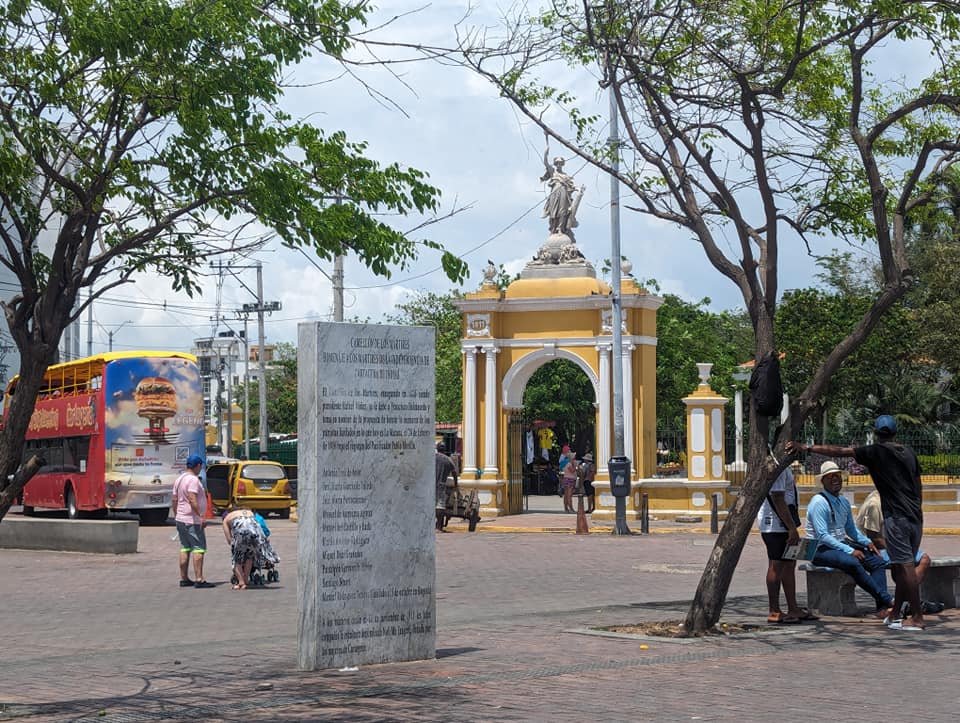
We spotted the sloths high up in the treetops, where they slept curled up between the branches, and the tití monkeys on the trunks and boughs.
Getsemaní – murals, umbrellas and evenings on the street
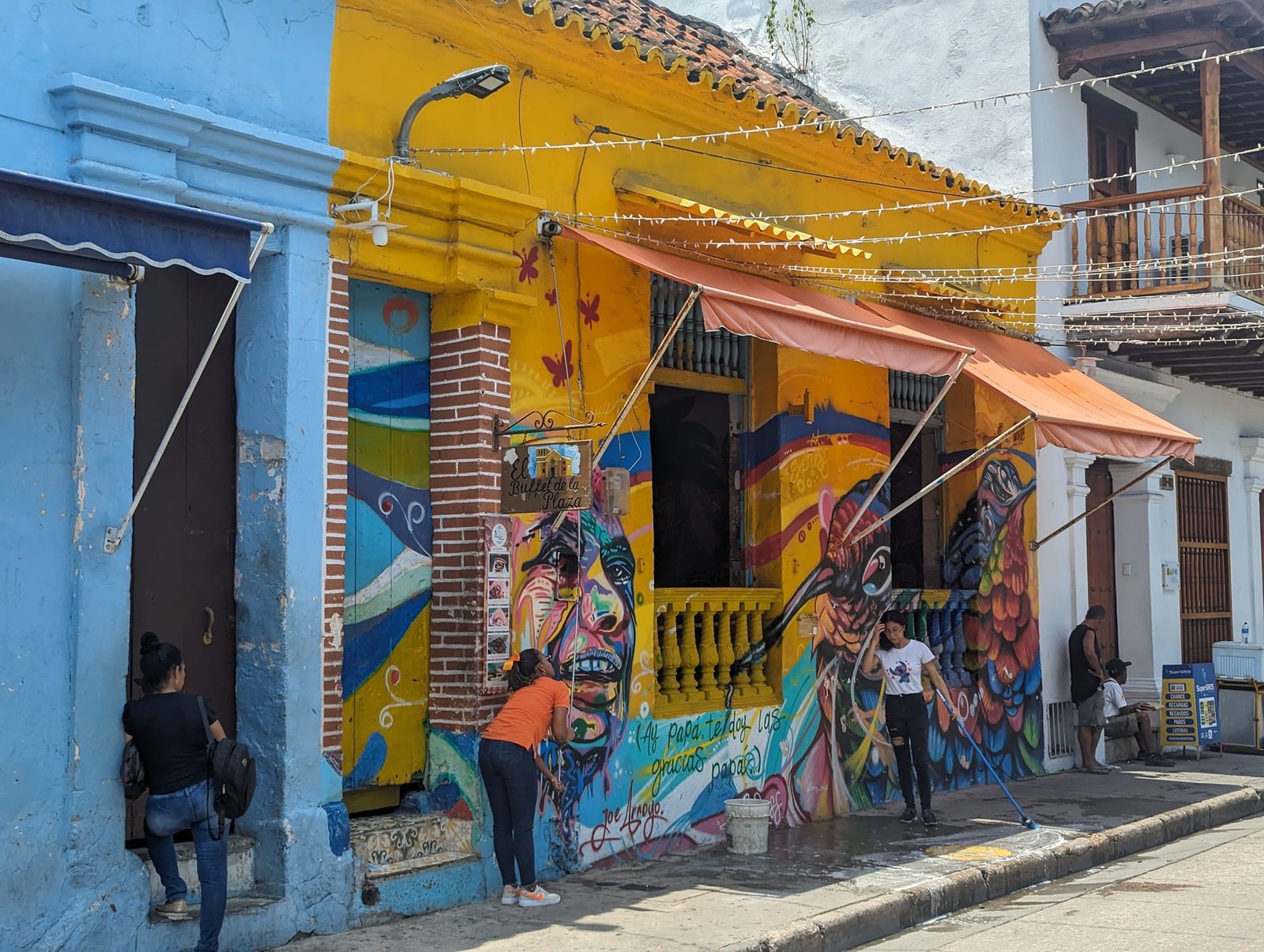
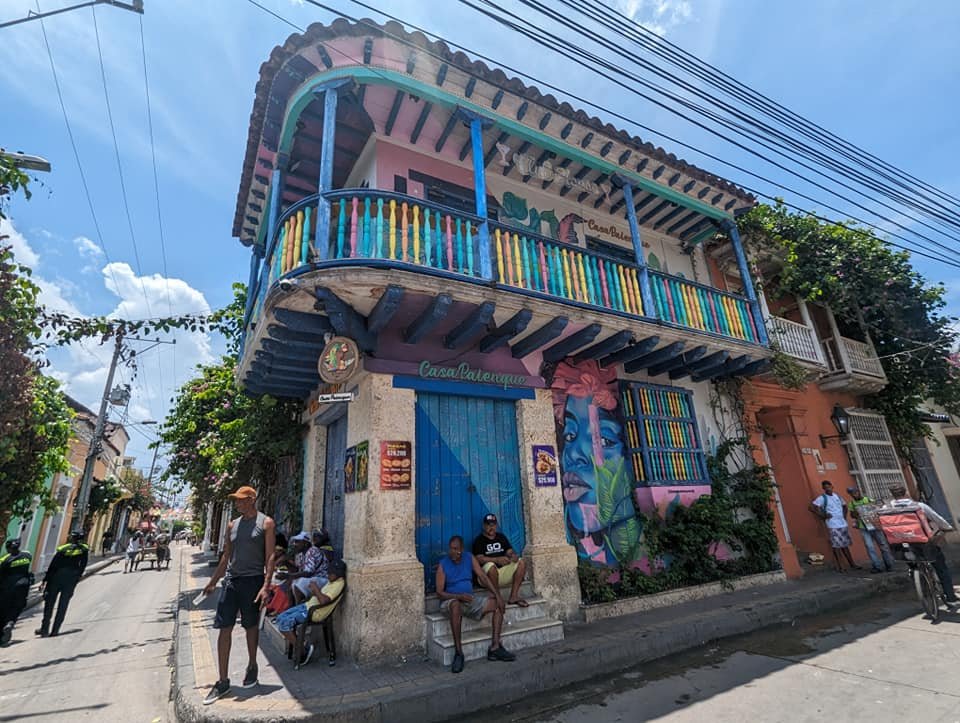
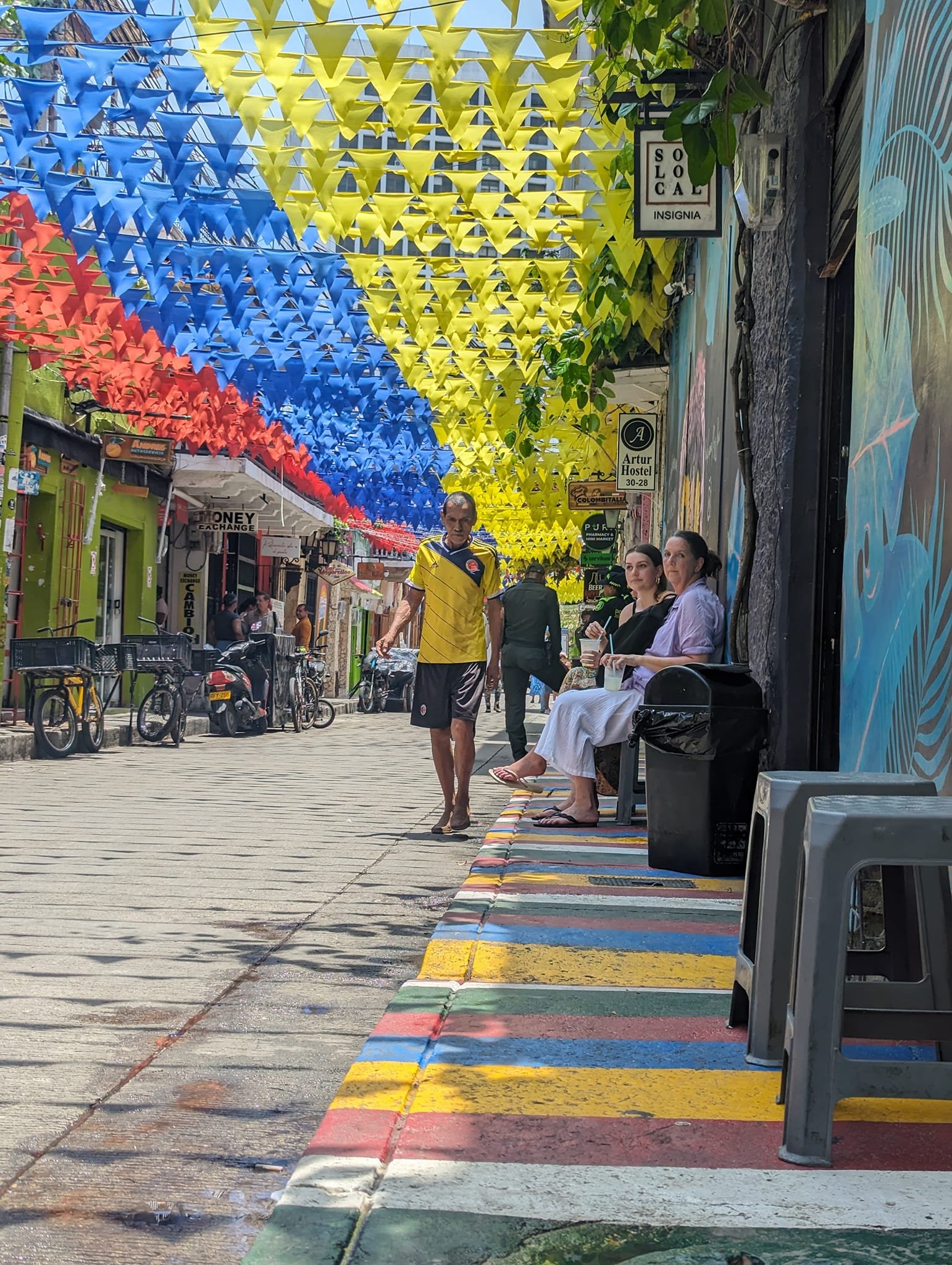
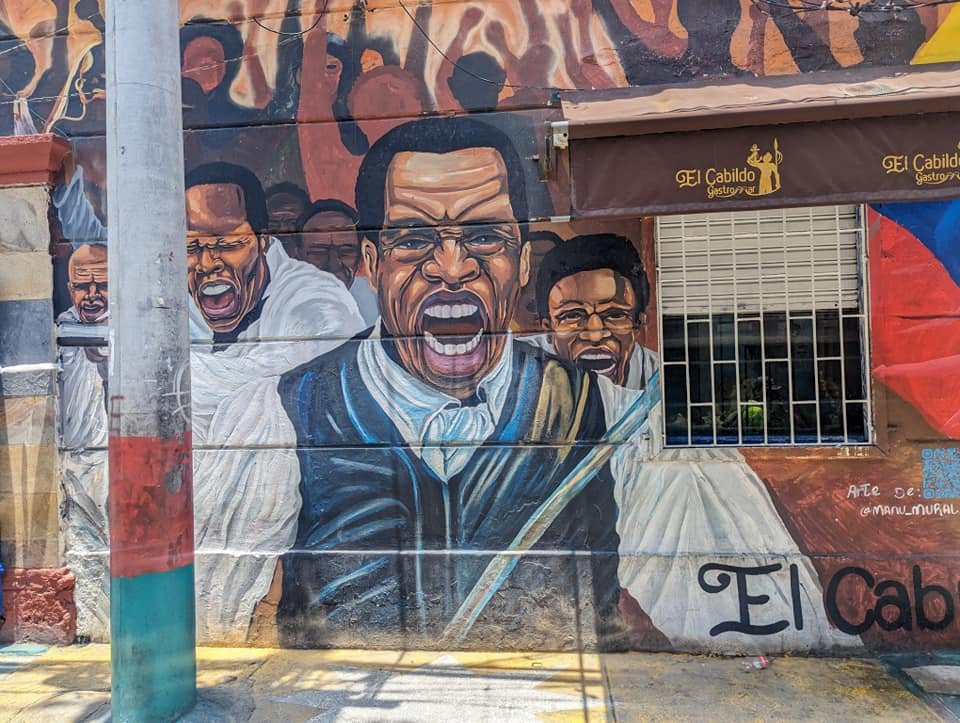
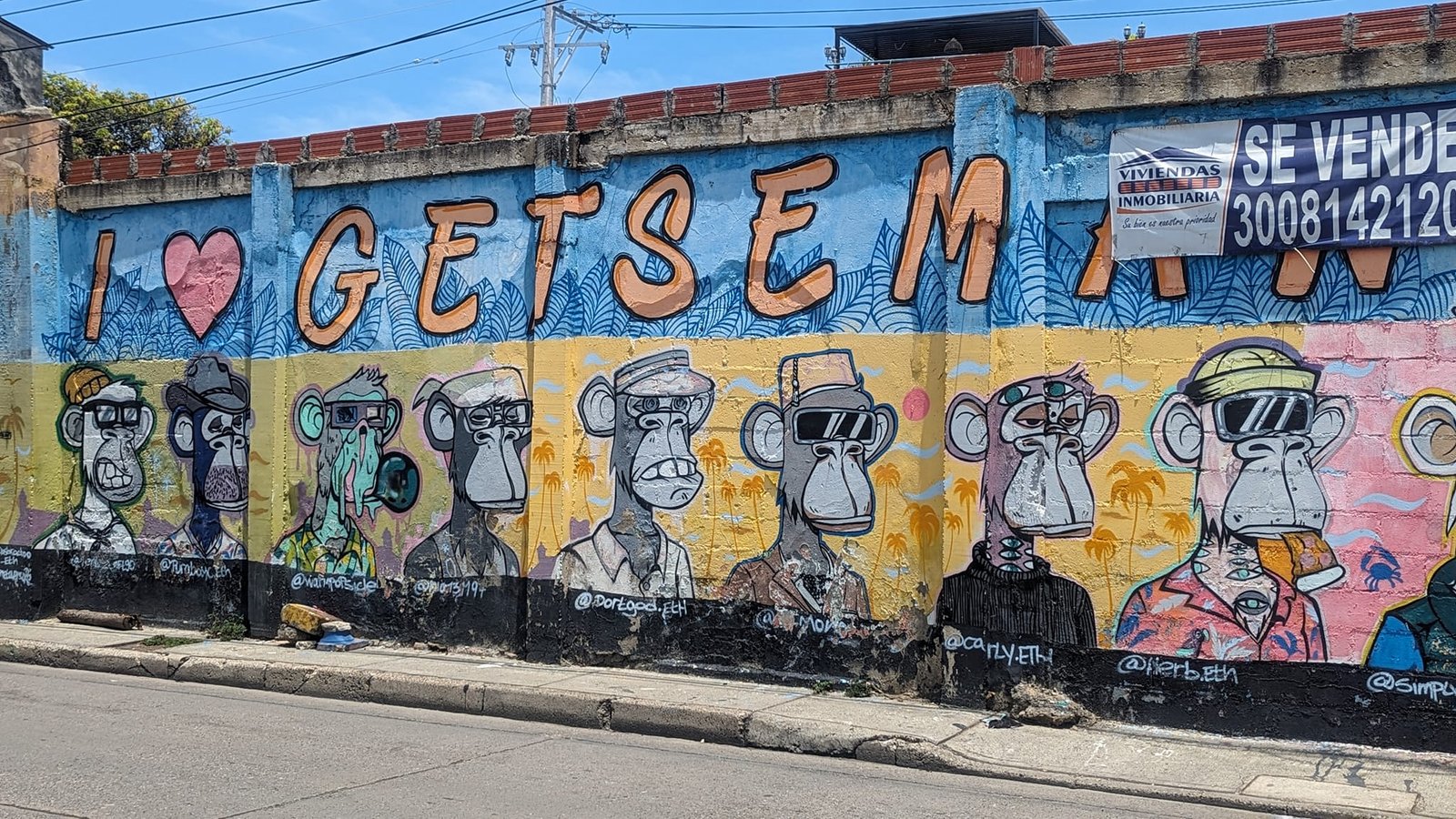
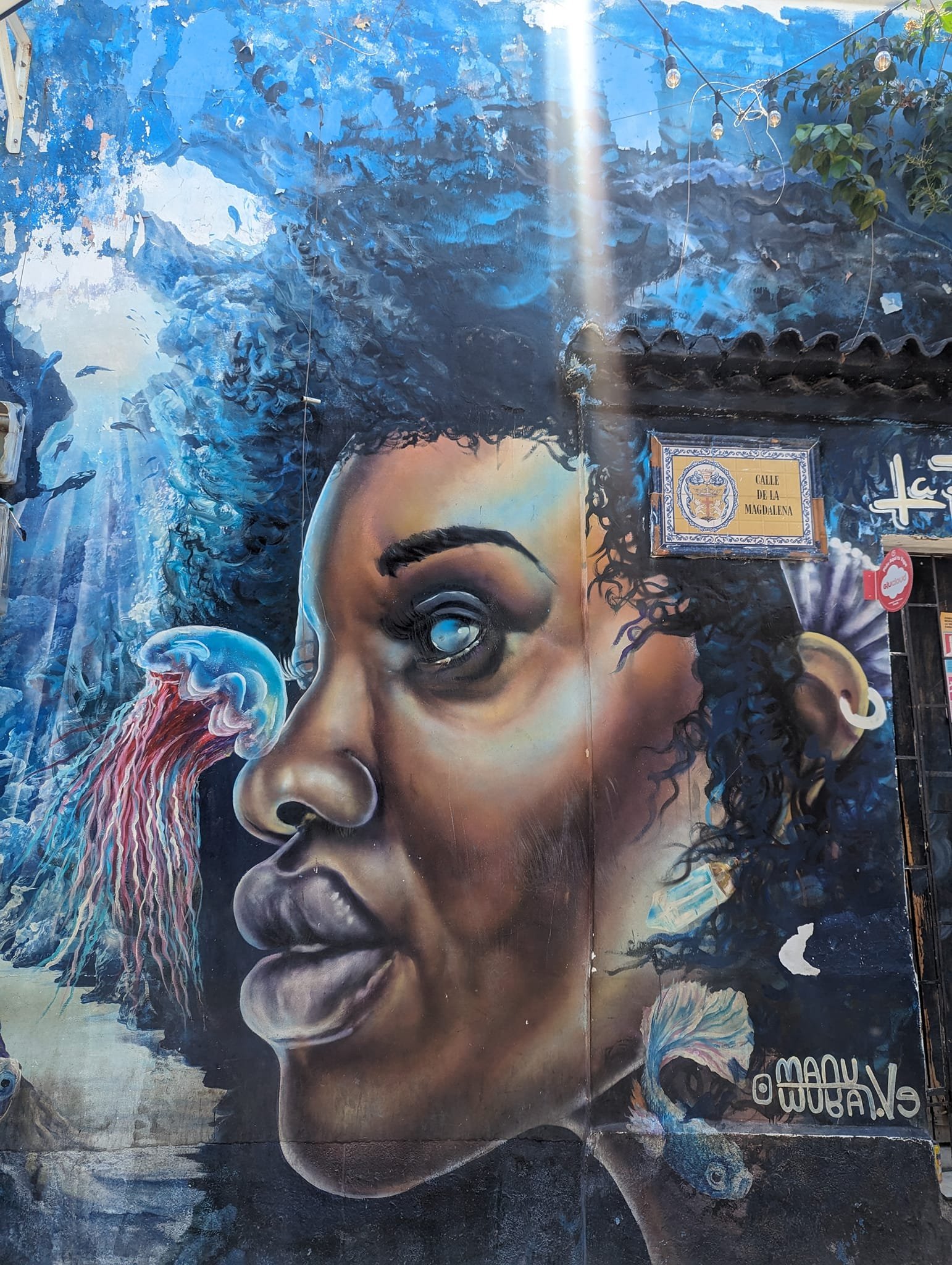
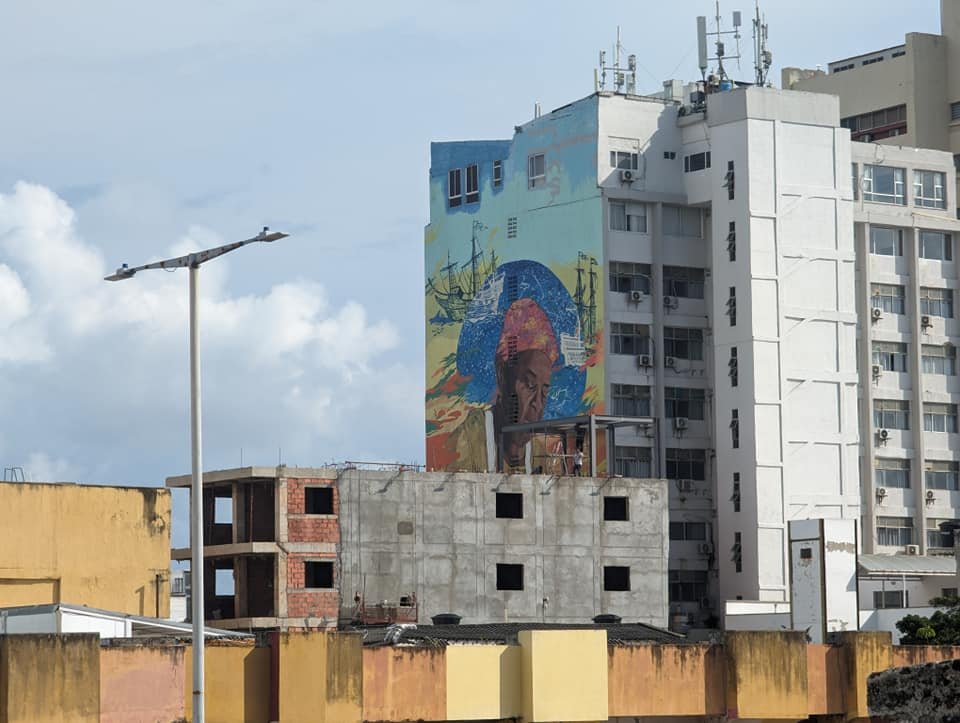
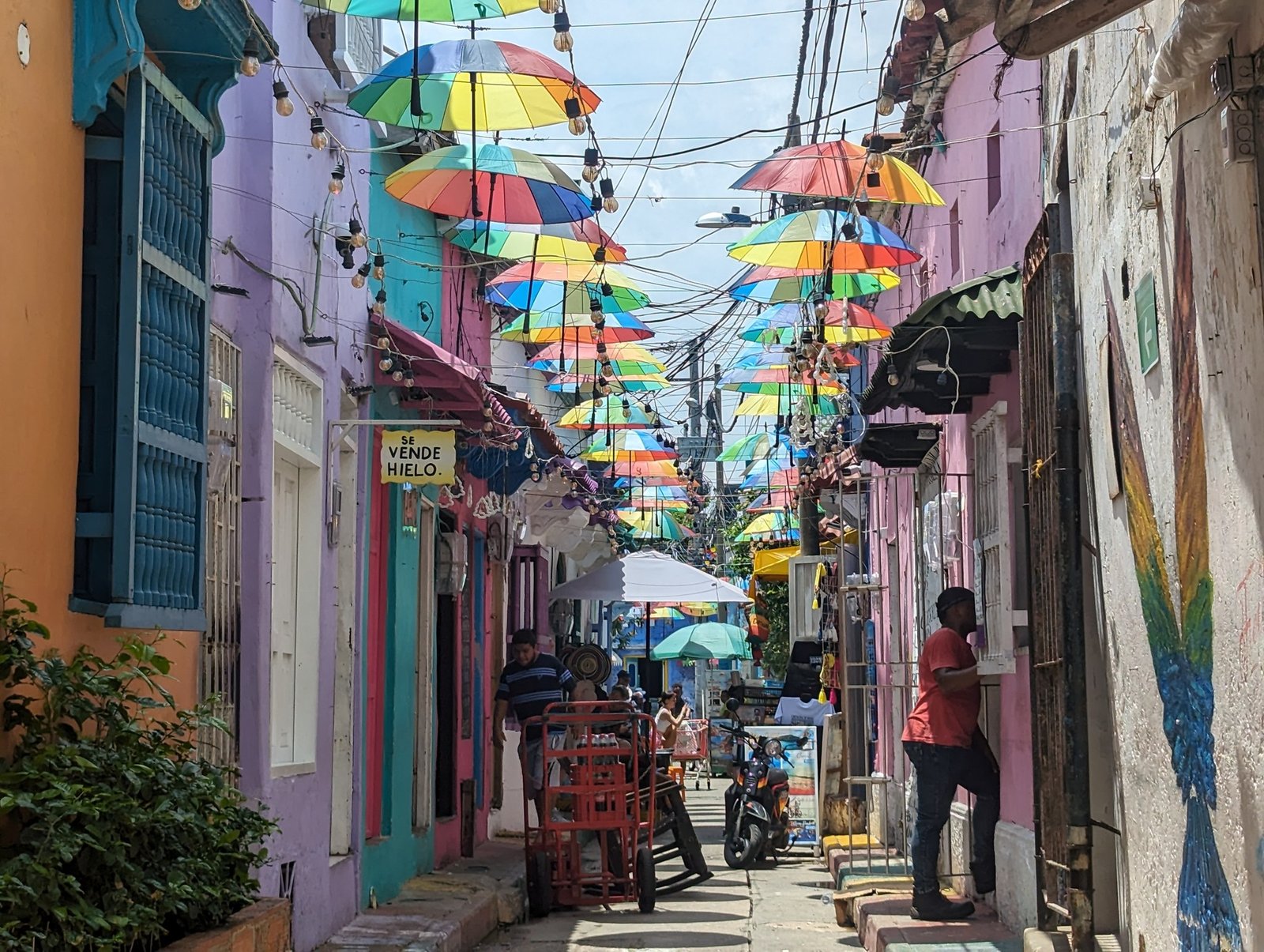
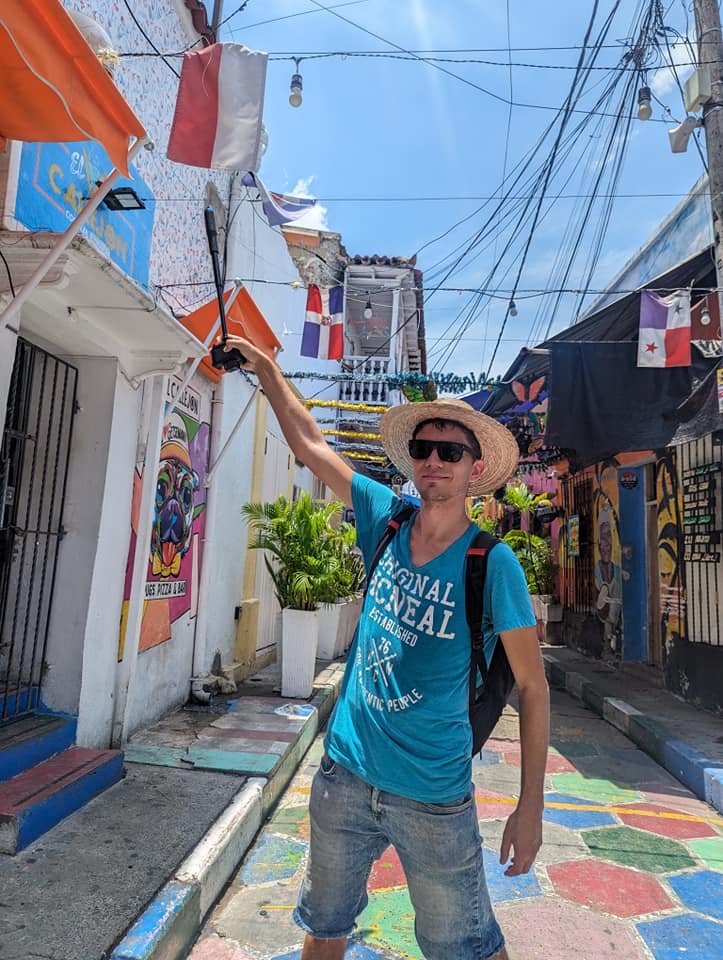
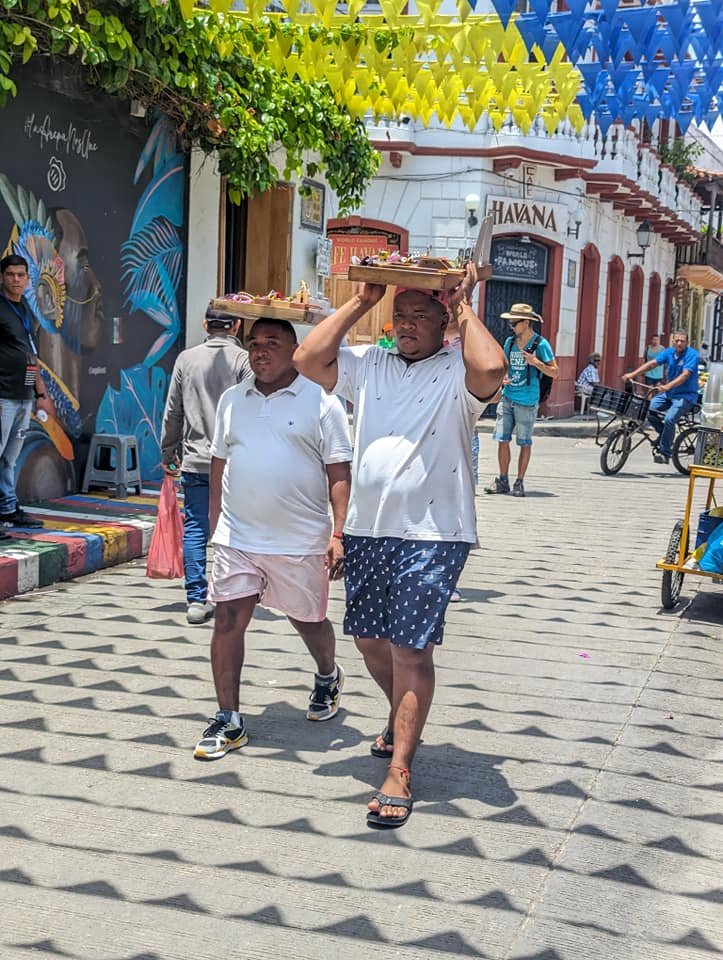
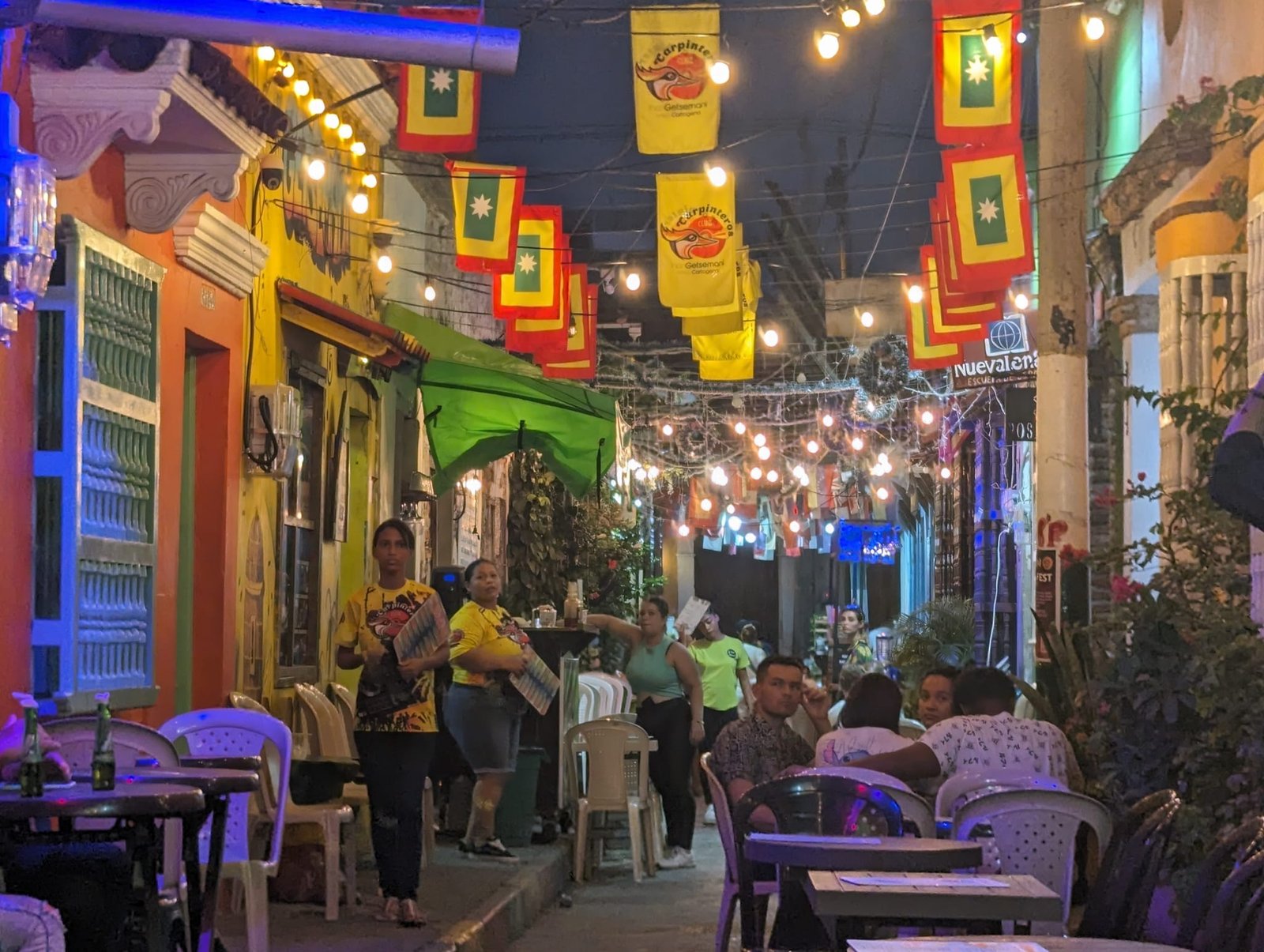
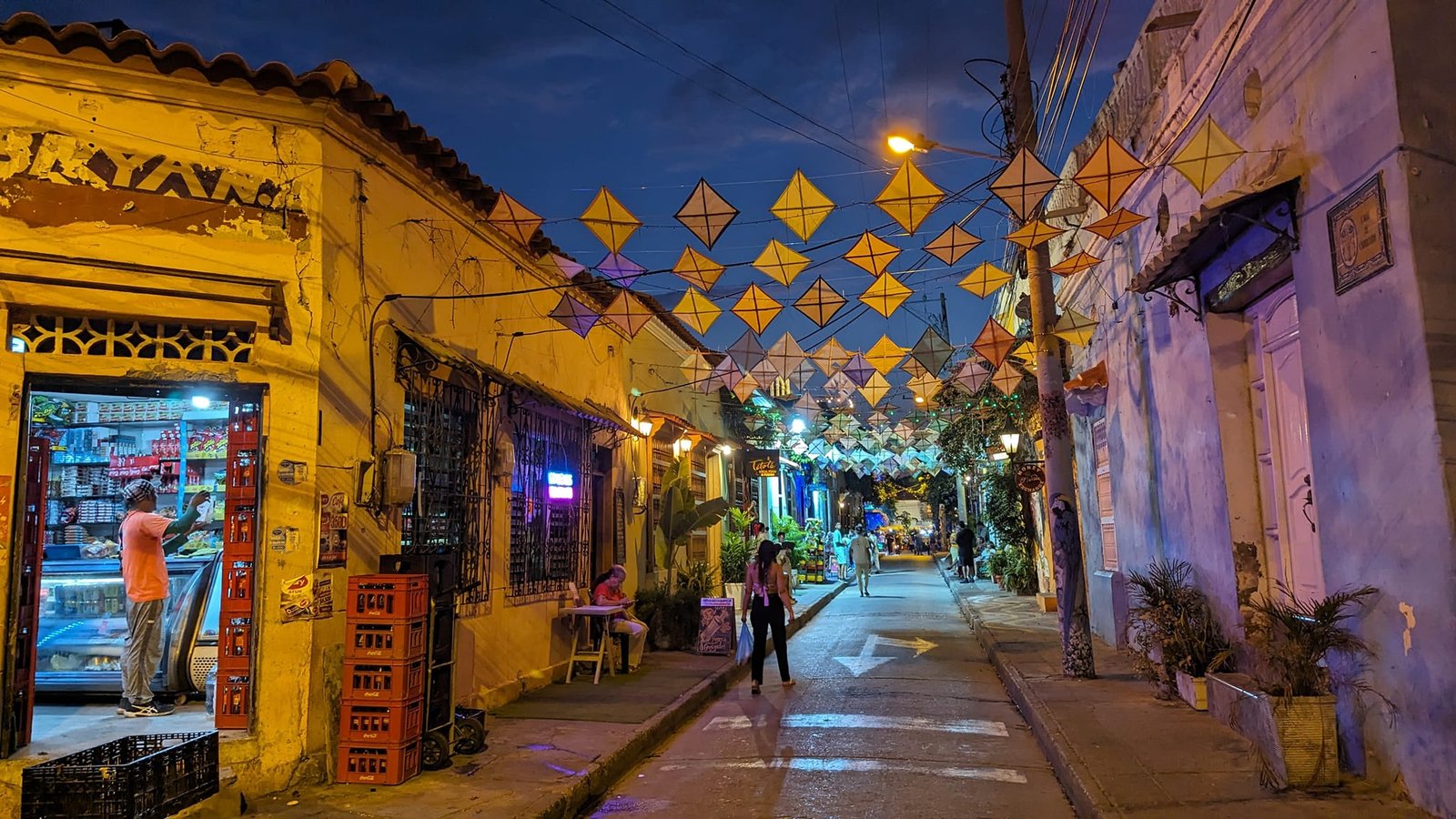
On the other side of the park lies the Getsemaní district, where the poor once lived. Today it is an arts district: handmade goods and paintings are sold here, the walls are covered with murals, and colourful umbrellas, flags and bunting hang above the streets. You could say this is what makes Cartagena one of the more “Instagrammable” cities.
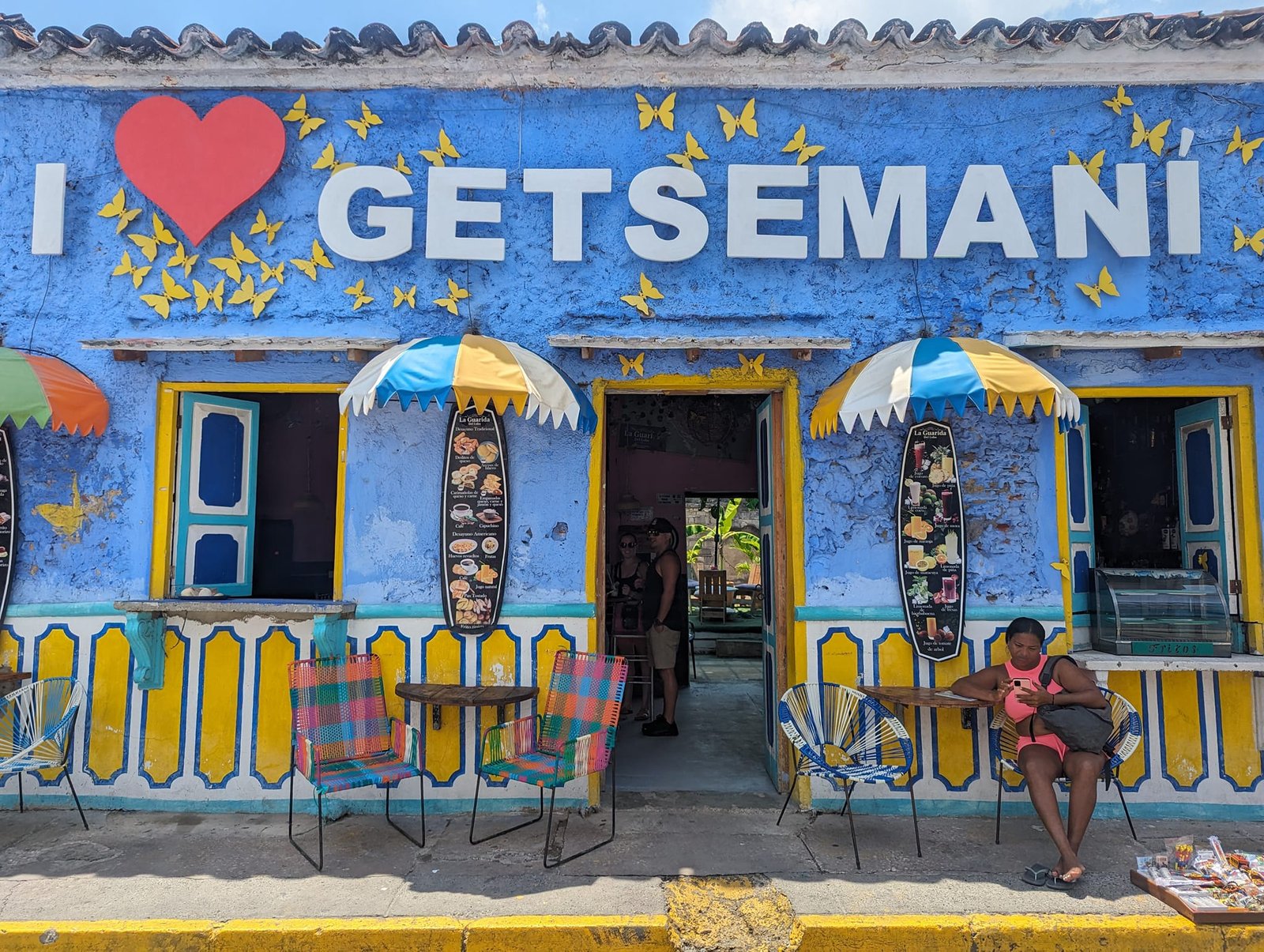
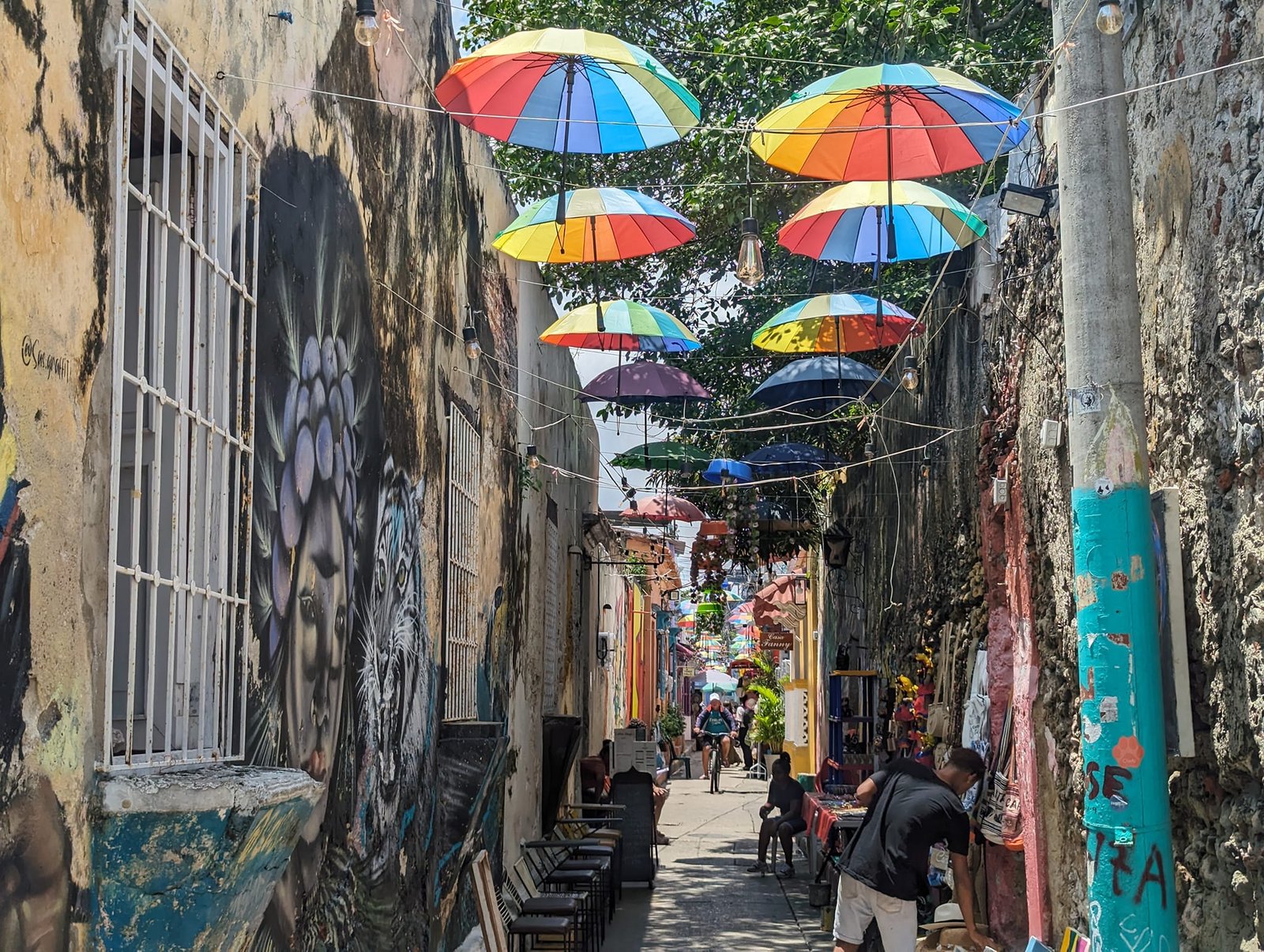
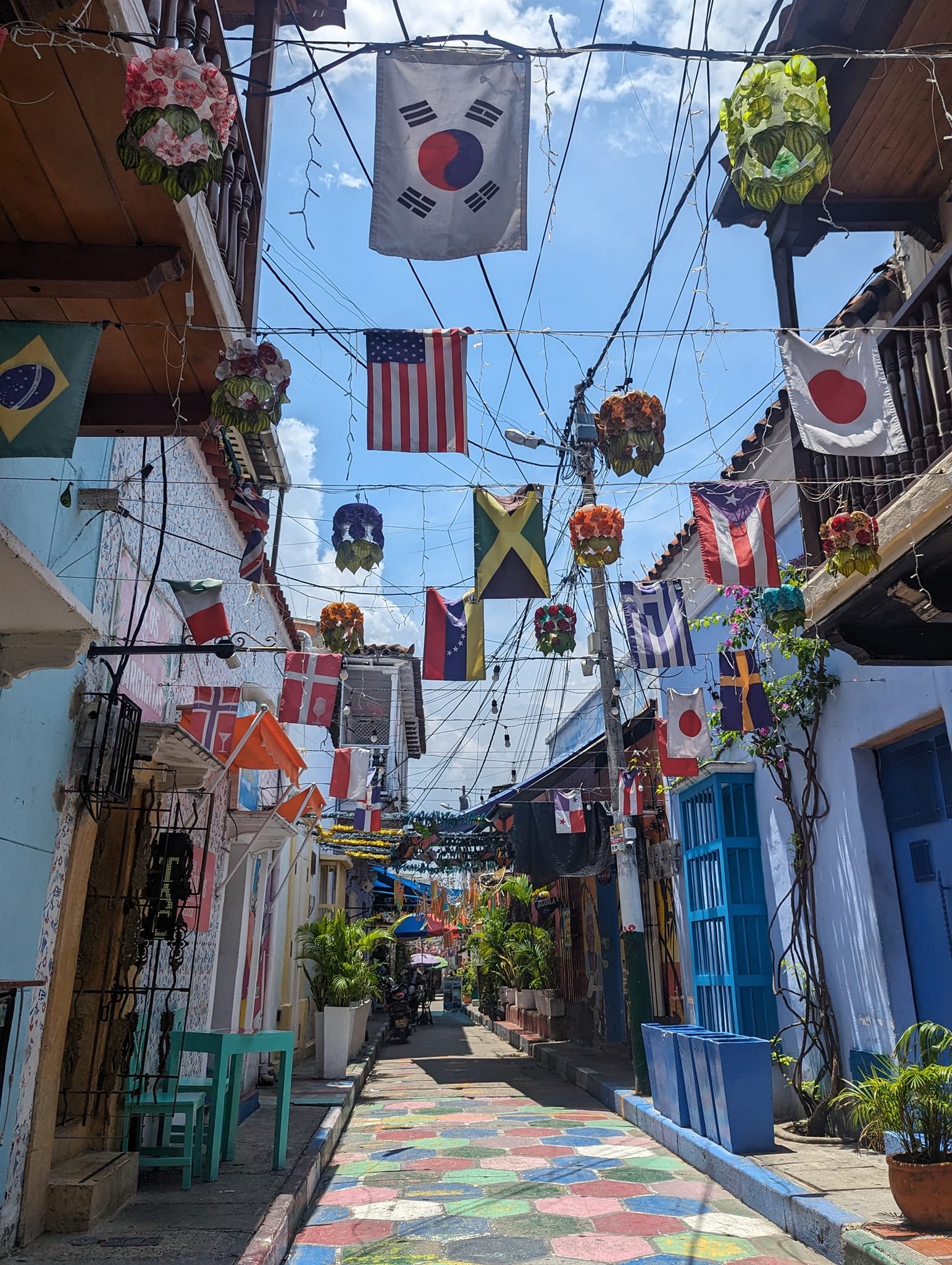
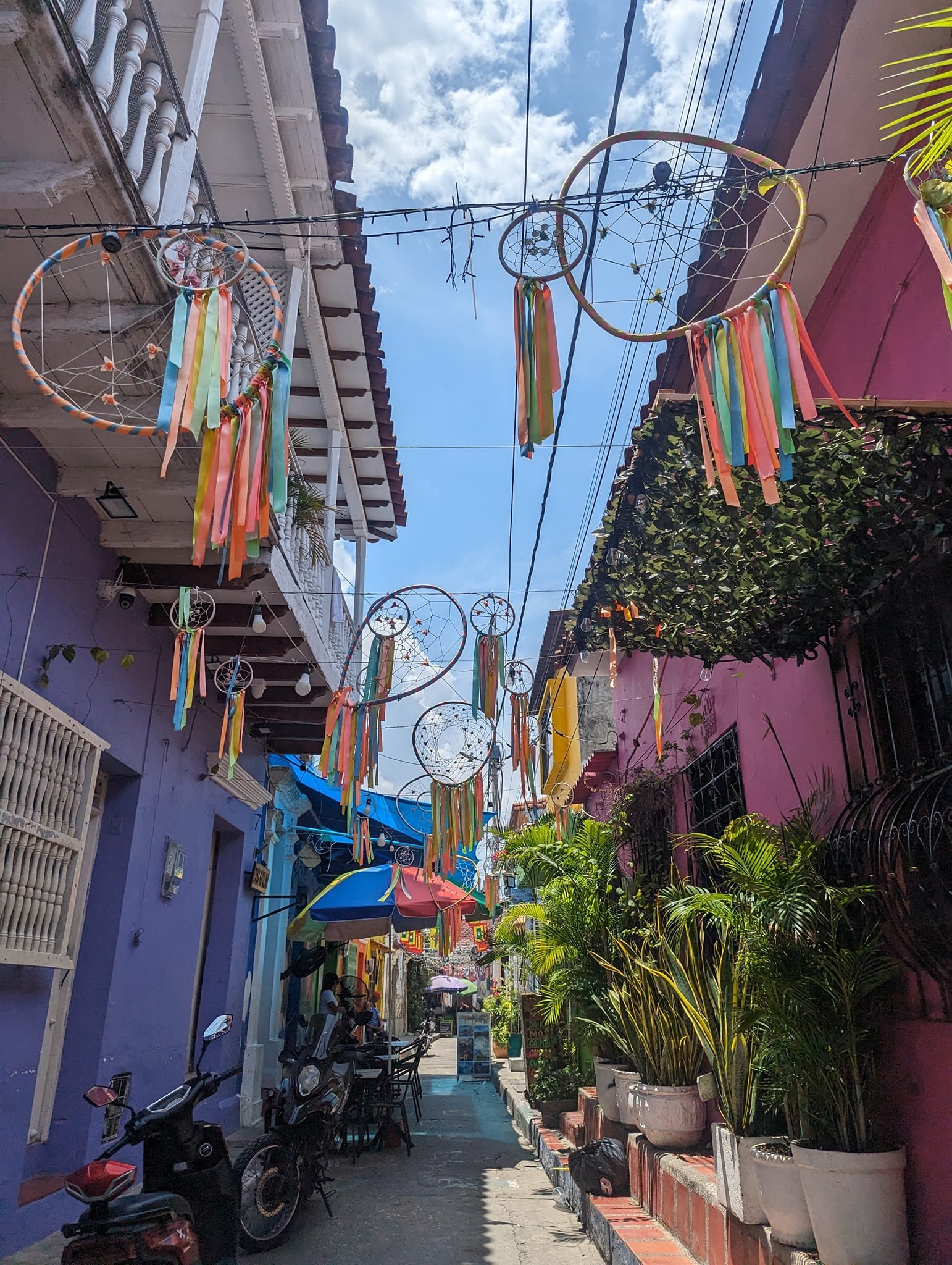
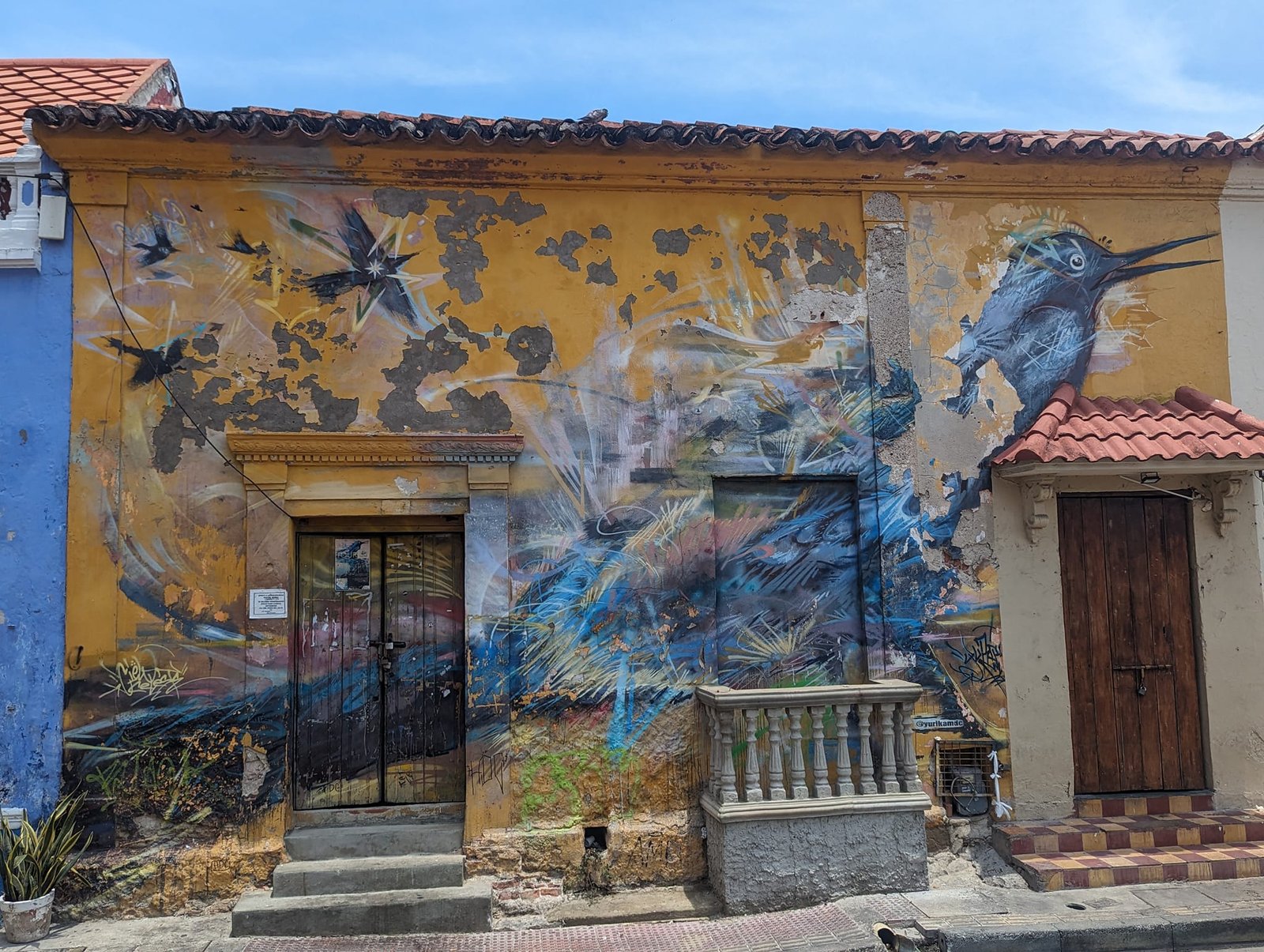
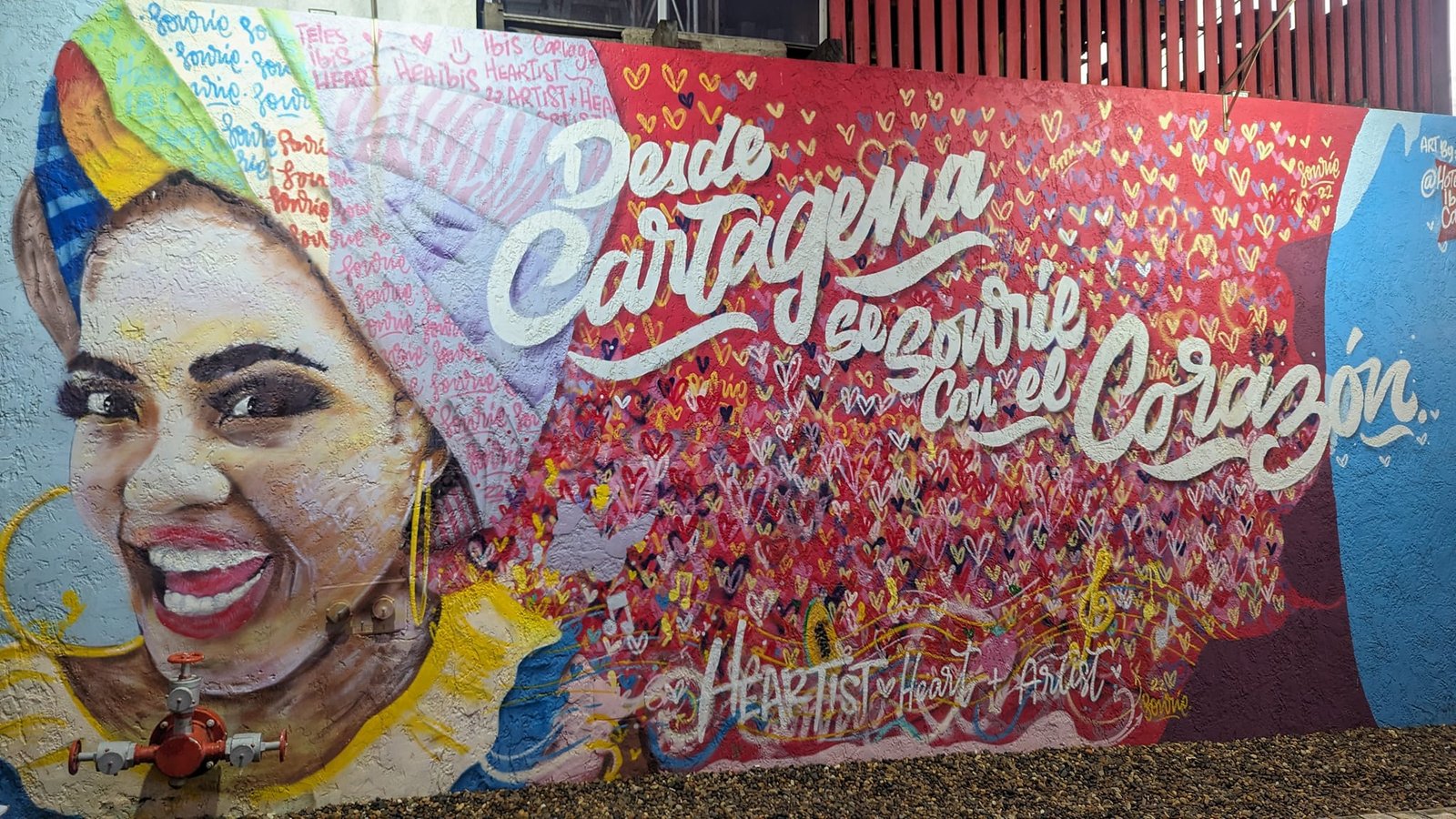
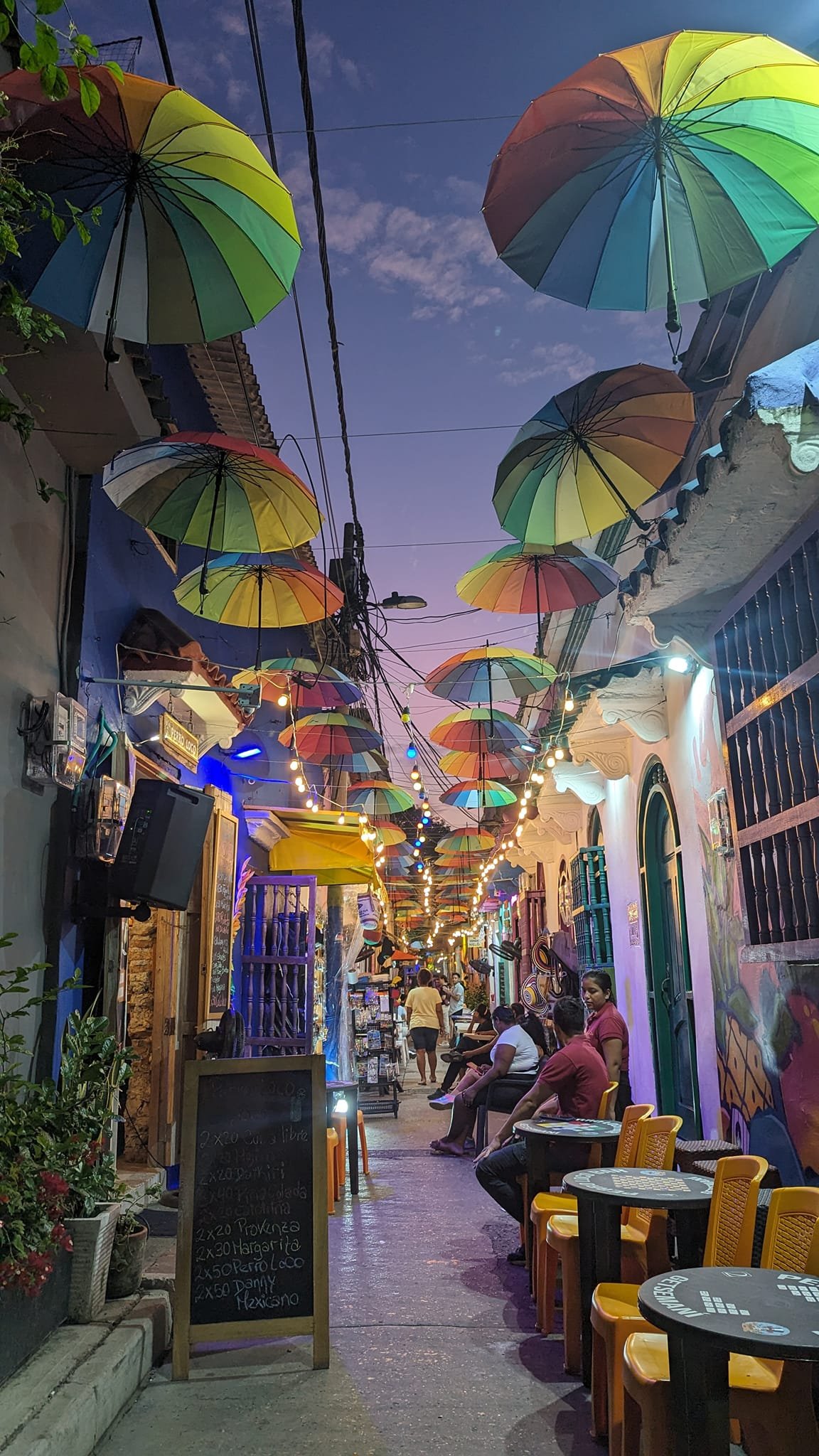
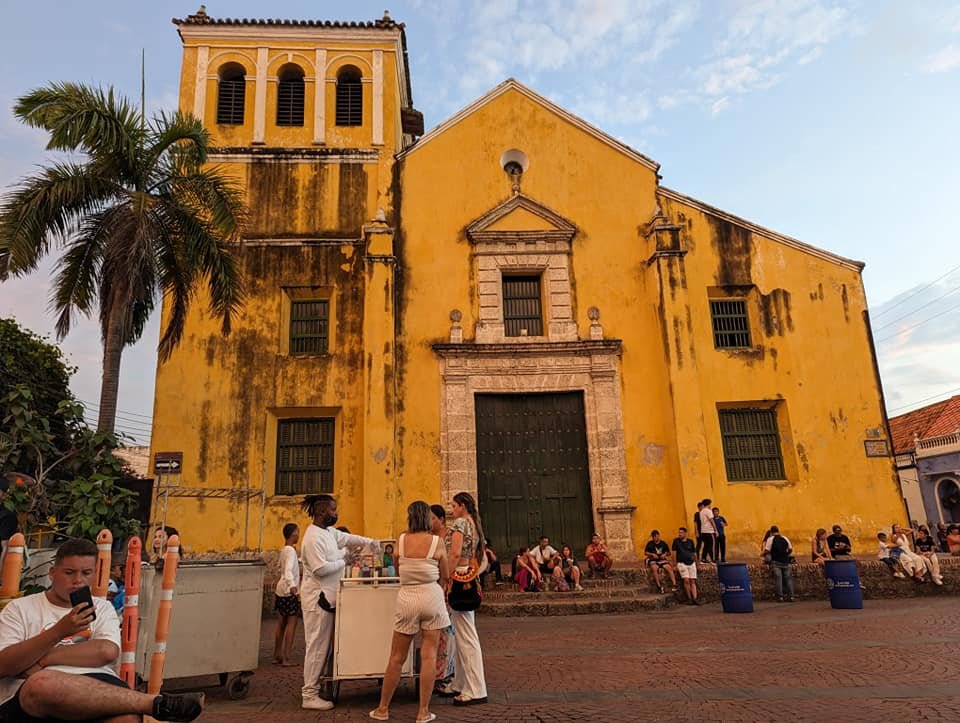
Towards evening people gather on the square by the Trinidad church. After dark the streets are lit up by strings of lights and lanterns, and the bars and restaurants put tables outside.
Bocagrande and sunsets
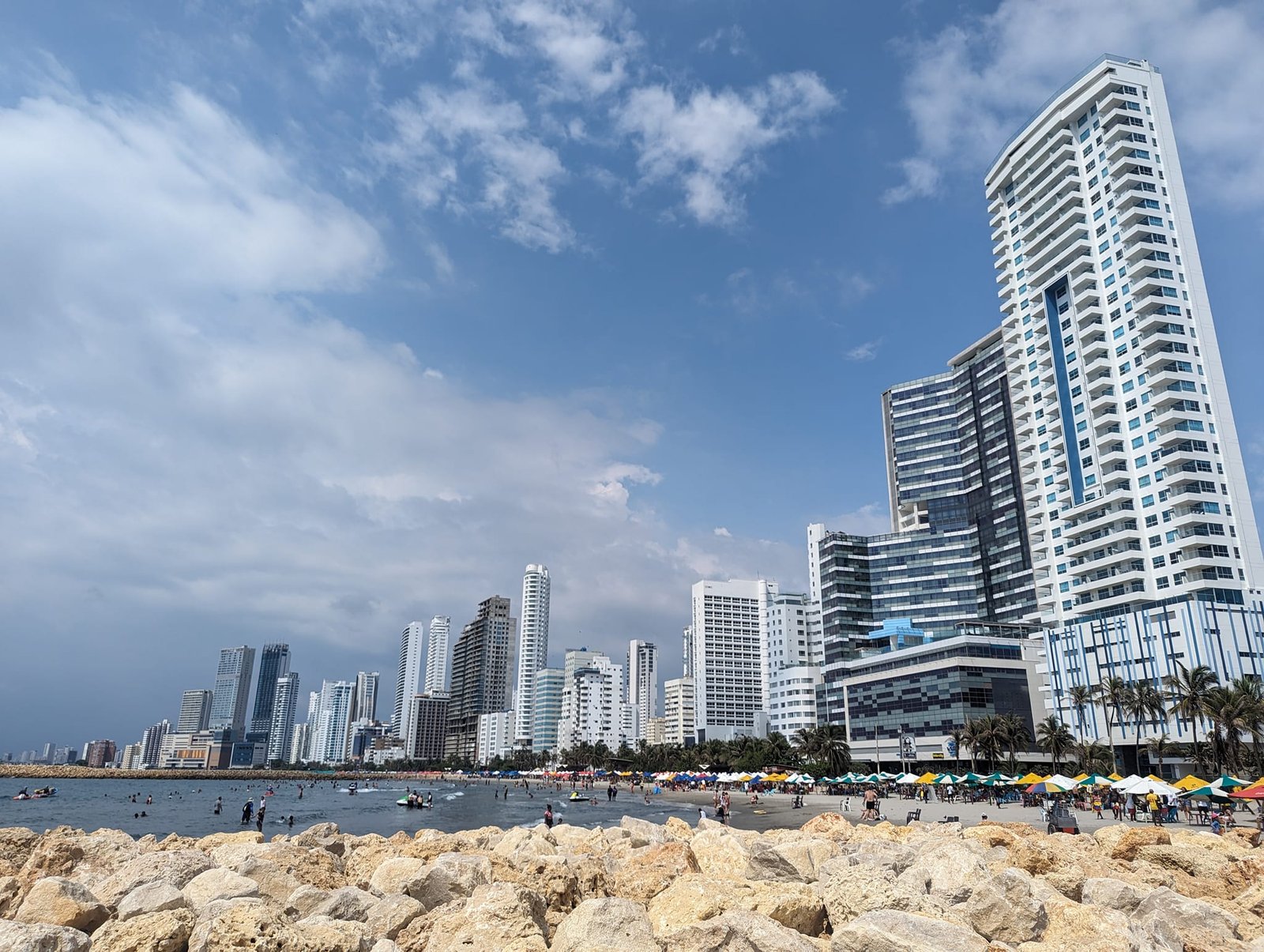
Cartagena is not just a colonial old town. From the walls and waterfronts you can see a completely different city – the skyscrapers of the Bocagrande district stretching along the beach. The contrast between them and the low houses of the old town is striking.
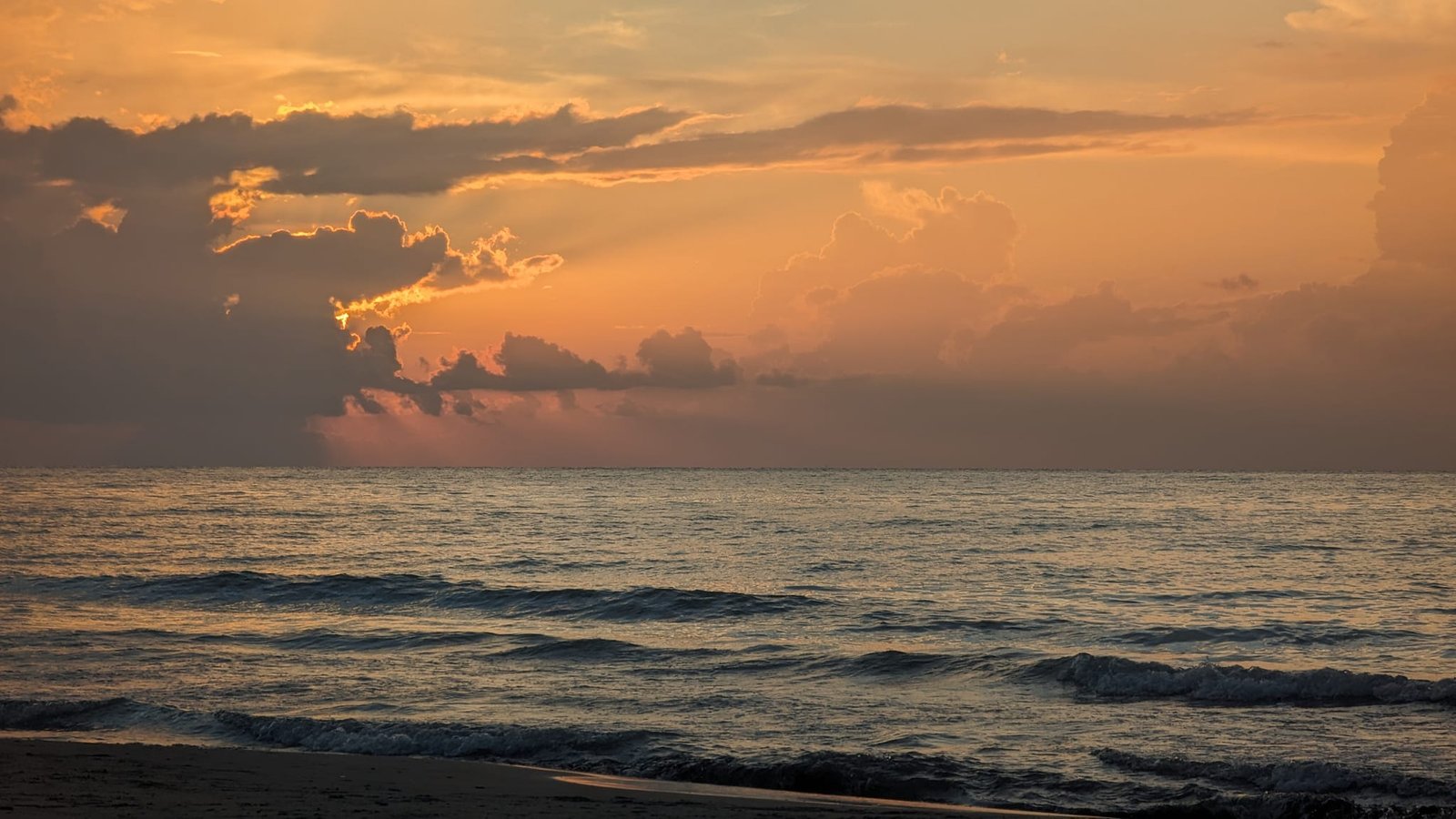
In the evening it is worth finding a spot with a view to the west – the sun sets straight into the Caribbean Sea.
On 7 May we moved on to Santa Marta and Tayrona National Park.
Practical information
- Getting there from Panama – by plane. We flew from Panama City to Cartagena with Wingo, whose ticket price allowed one change of date or destination (as of May 2024).
- Currency – the Colombian peso (COP); in May 2024, 1000 COP was about €0.23. You can hold pesos on a Revolut card, pay with it and withdraw cash from ATMs.
- Prices – relatively low, which pleasantly surprised us from the start.
- Castillo San Felipe de Barajas – entry 33,000 COP (about €8, May 2024).
- Touts and vendors – very pushy. Watch out for street rappers who demand payment after their “performance”, and you have to pay for a posed photo with a palenquera.
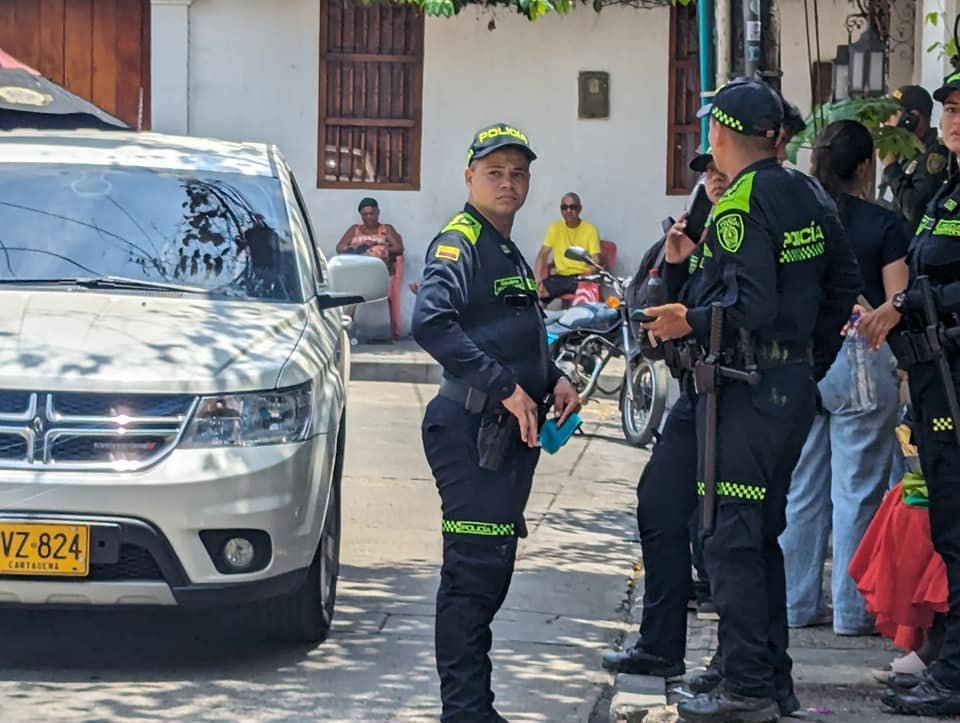
- Safety – nothing bad happened to us. In tourist areas you have to reckon with petty theft, and before booking accommodation it is worth checking which districts are safe. Keep an eye on your phone and cash, do not show off expensive gear or jewellery, and do not walk around too much after dark.
Summary
Cartagena left us with mixed feelings. The old town is beautiful, the walls and the San Felipe fort show the city’s turbulent history very well, Getsemaní delights with its murals, and the sloths in Centenario Park are a lovely surprise right in the middle of the city. On the other hand, we had never before come across touts and vendors as pushy as on Colombia’s Caribbean coast. Even so, it is definitely worth coming here – just bring patience and a firm “no, gracias”.
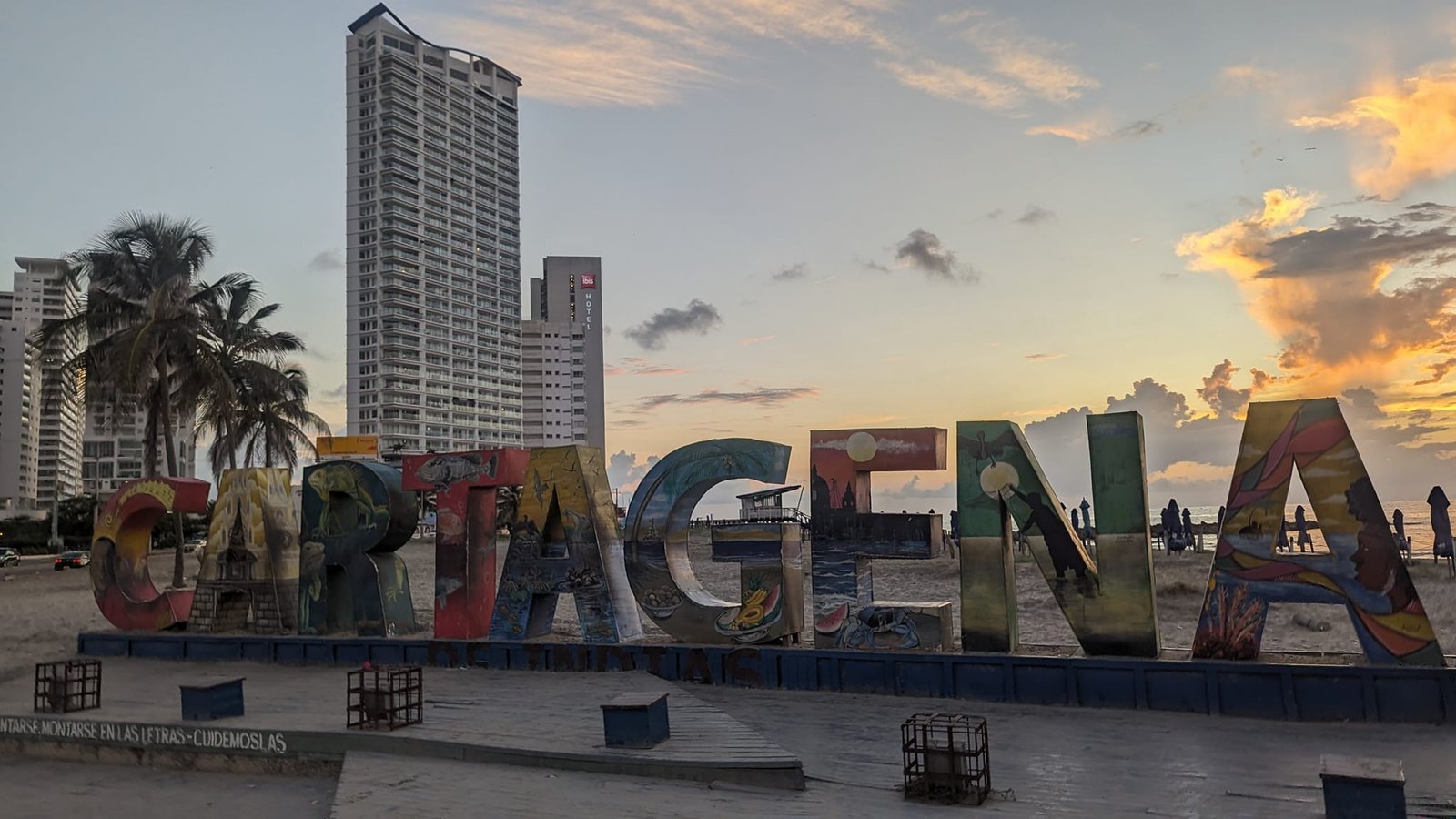
Photo gallery