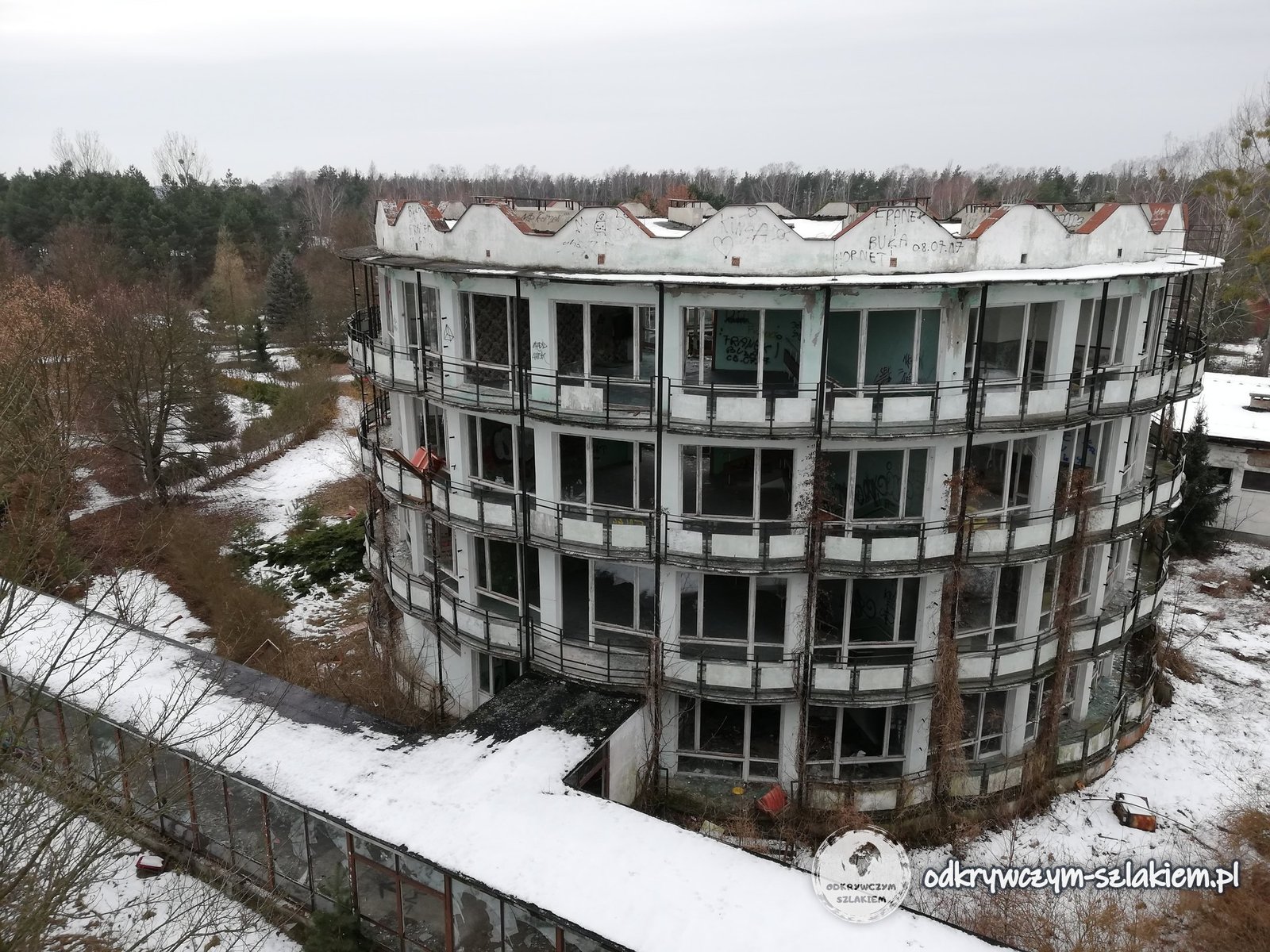
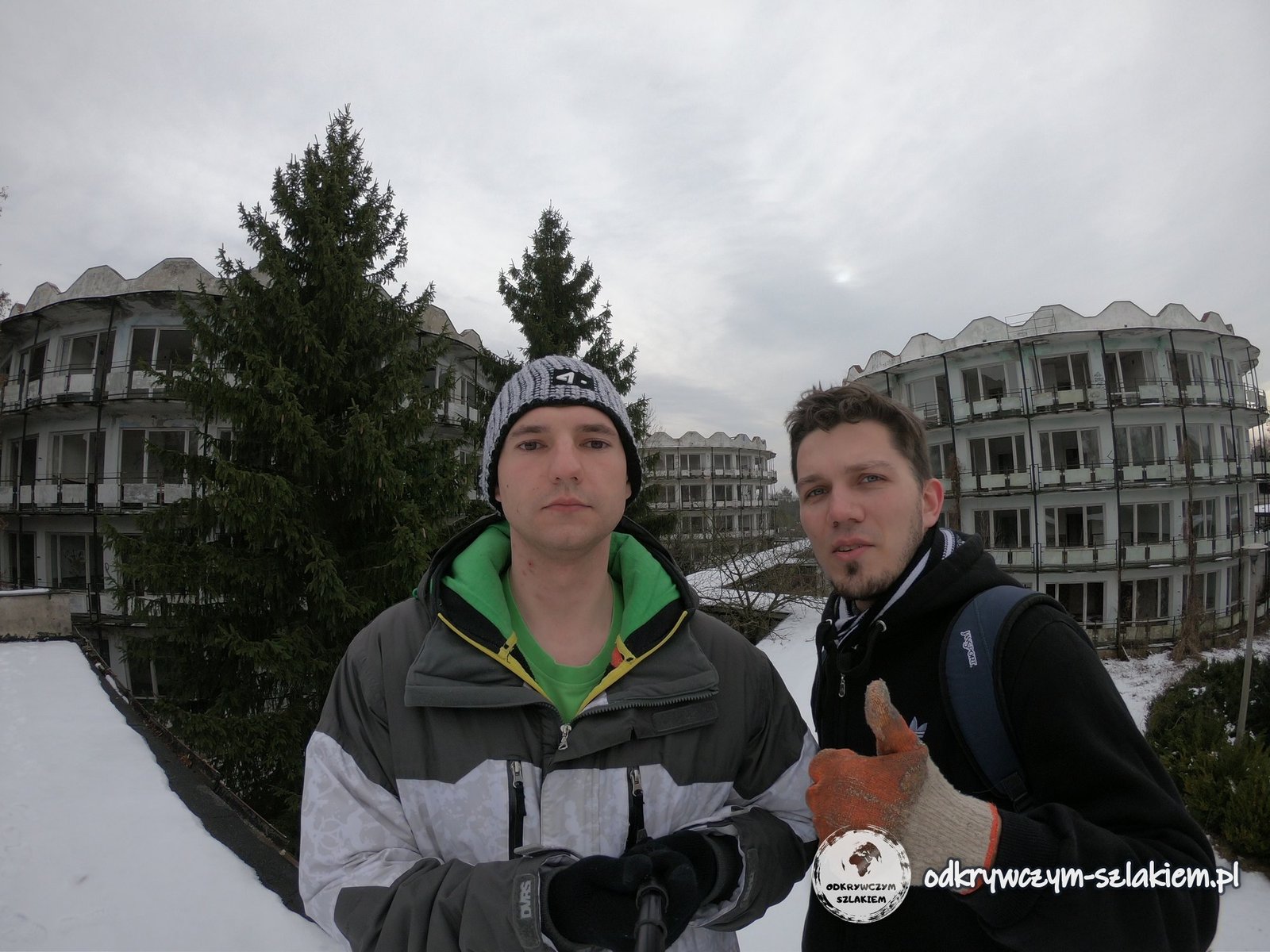
The “Okrąglaki” (“round ones”) are the former Lucień holiday resort in Miałkówek near Gostynin, recognisable by its round, multi-storey pavilions full of guest rooms. After reading a little about the place, well known in the urban exploration world, Karol and I decided to go there on 9 February 2019. The exploration took us a good few hours – the grounds could have been explored even more thoroughly, but we saw the most important places. The trip became a video on my YouTube channel – you will find it further down in this post.
Note: this post describes the situation in February 2019. Since then the resort has changed owners and the buildings keep falling apart. It is private property, so treat this post more as a story about the history of the place than as a guide.
Table of contents
- The Lucień resort – history of the Okrąglaki
- The low rotunda: kitchen and reception
- The connecting corridor and the guest rotundas
- On the roofs
- Around the resort and the video
- On the way back: the Włocławek dam
- Urbex – a few rules
The Lucień resort – history of the Okrąglaki
The resort was built for its employees by the Żyrardów Linen Works (Żyrardowskie Zakłady Przemysłu Lniarskiego) – in the 1960s or 1970s, as sources give different dates. It stands among pines and spruces by Lake Lucień, within the Gostynin-Włocławek Landscape Park. In communist times you got a stay here through a referral from your workplace.
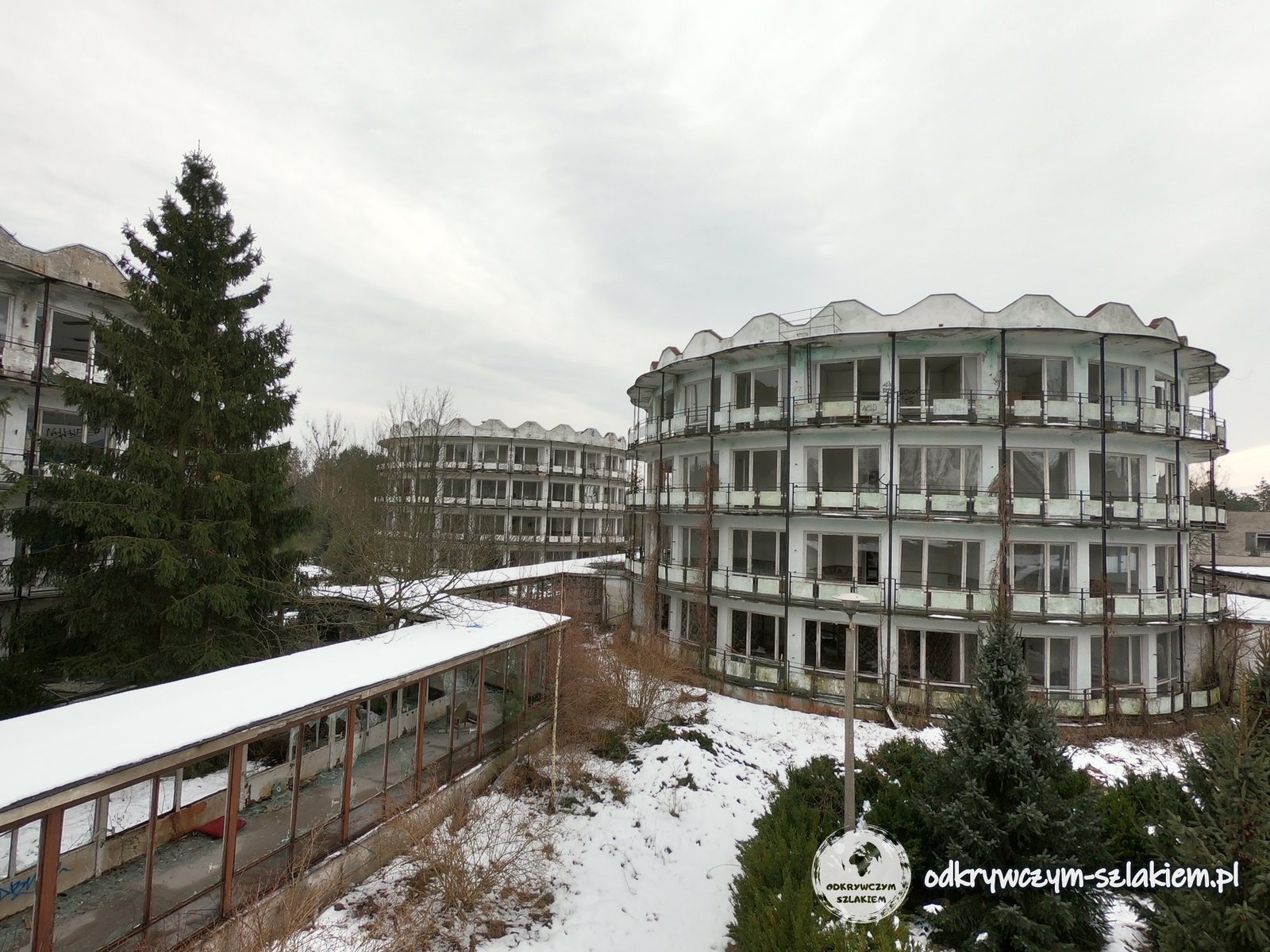
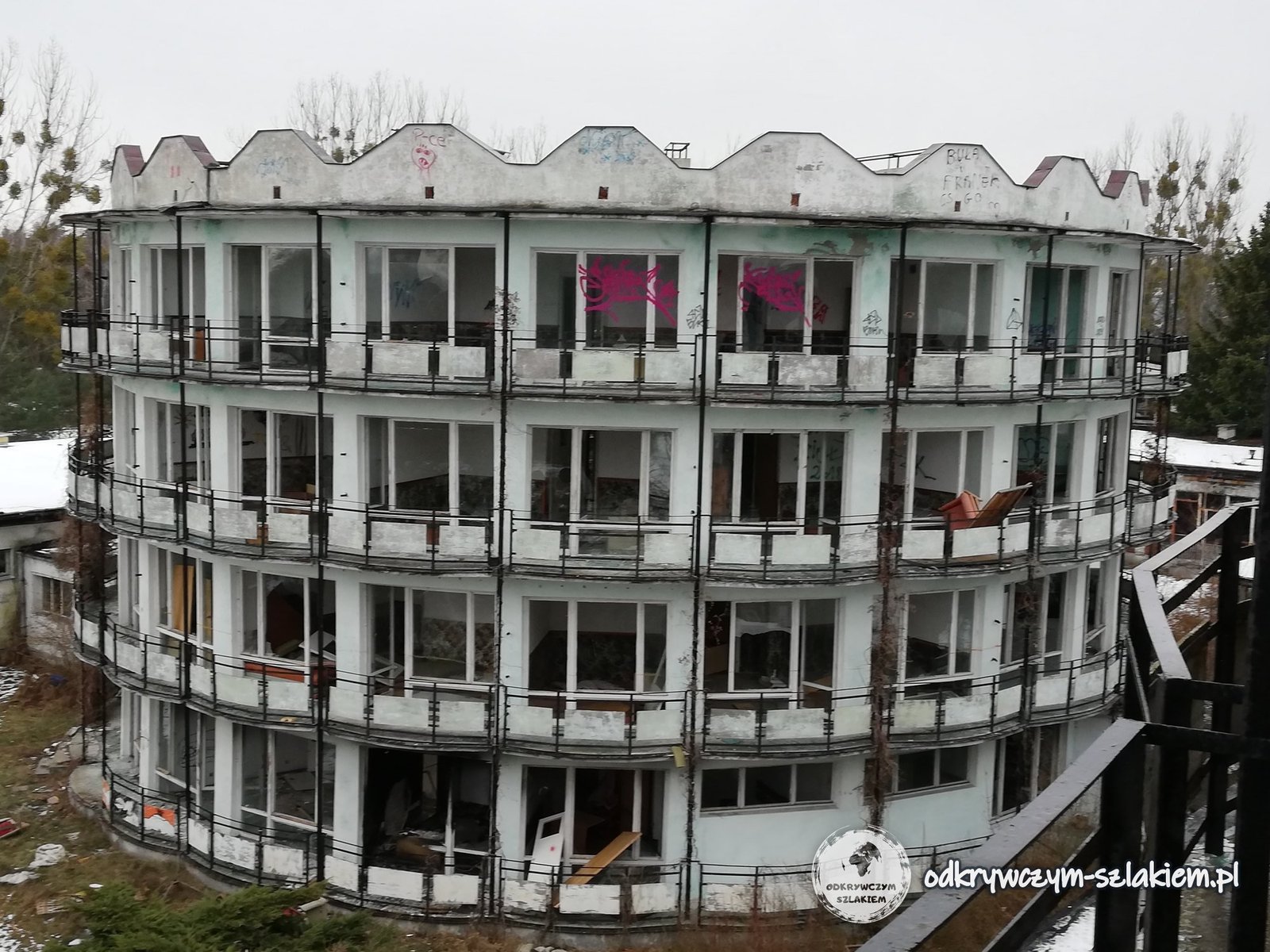
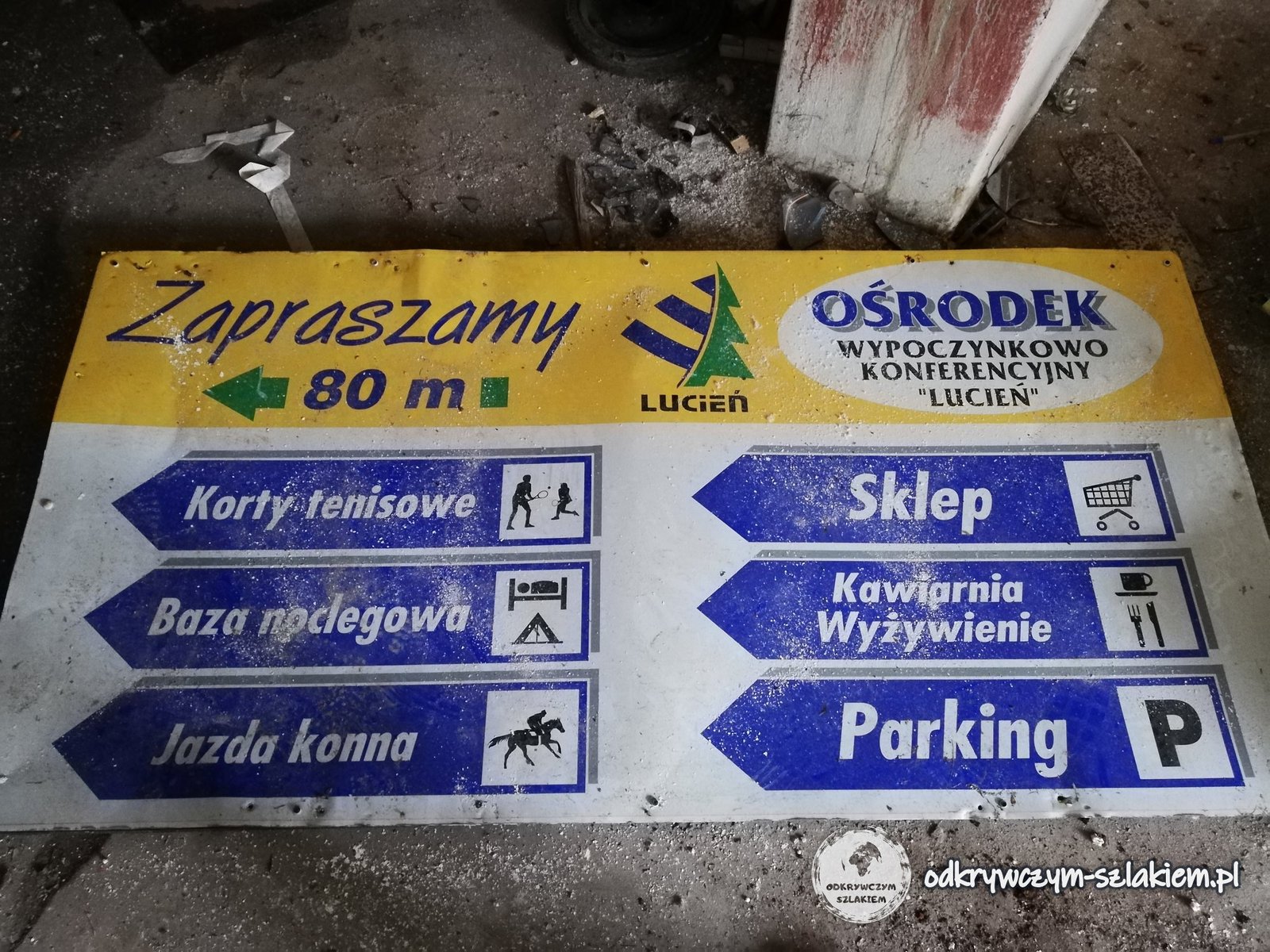
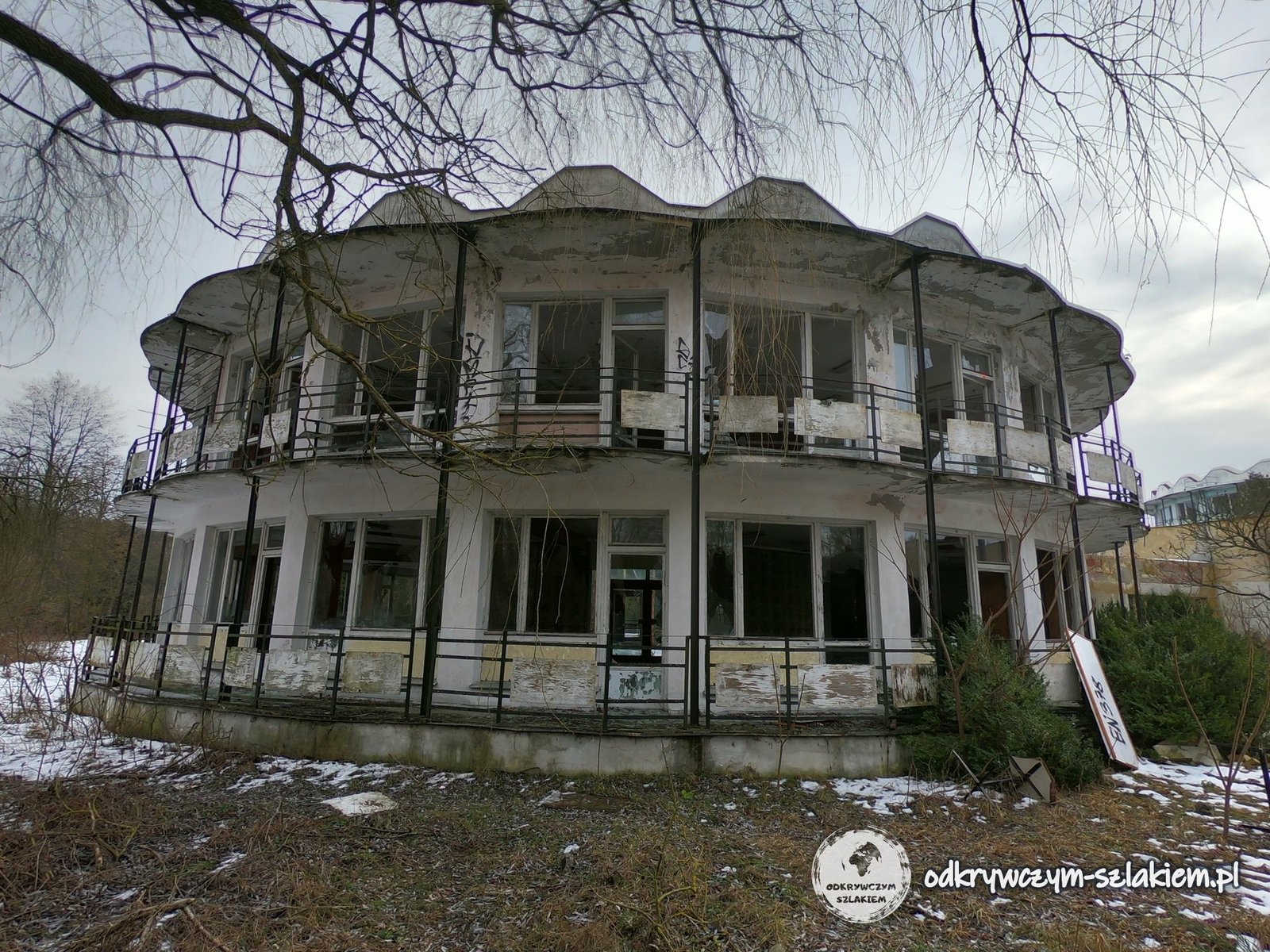
The complex consists of three four-storey rotundas with guest rooms and one lower rotunda, linked by glazed corridors. Altogether there were 120 rooms, each with its own bathroom. On top of that there was a reception, a kitchen, a canteen, a cold store, a staff block, sports pitches and tennis courts, and horse riding was available nearby – in one of the buildings there was still a sign that used to direct guests to the accommodation, the shop, the café and the car park.
The buildings had no central heating – the rooms were heated with electric heaters, and installing a heating system would have been very expensive. In 1997 the Żyrardów linen works went bankrupt and the resort was taken over by a private company, which ran it for about ten more years as a holiday and conference centre. High running costs, especially electricity, and growing competition made the owners lose interest, and in 2007 the resort closed. The property later passed to the municipality, and after several unsuccessful auctions it went back into private hands in 2021.
The low rotunda: kitchen and reception
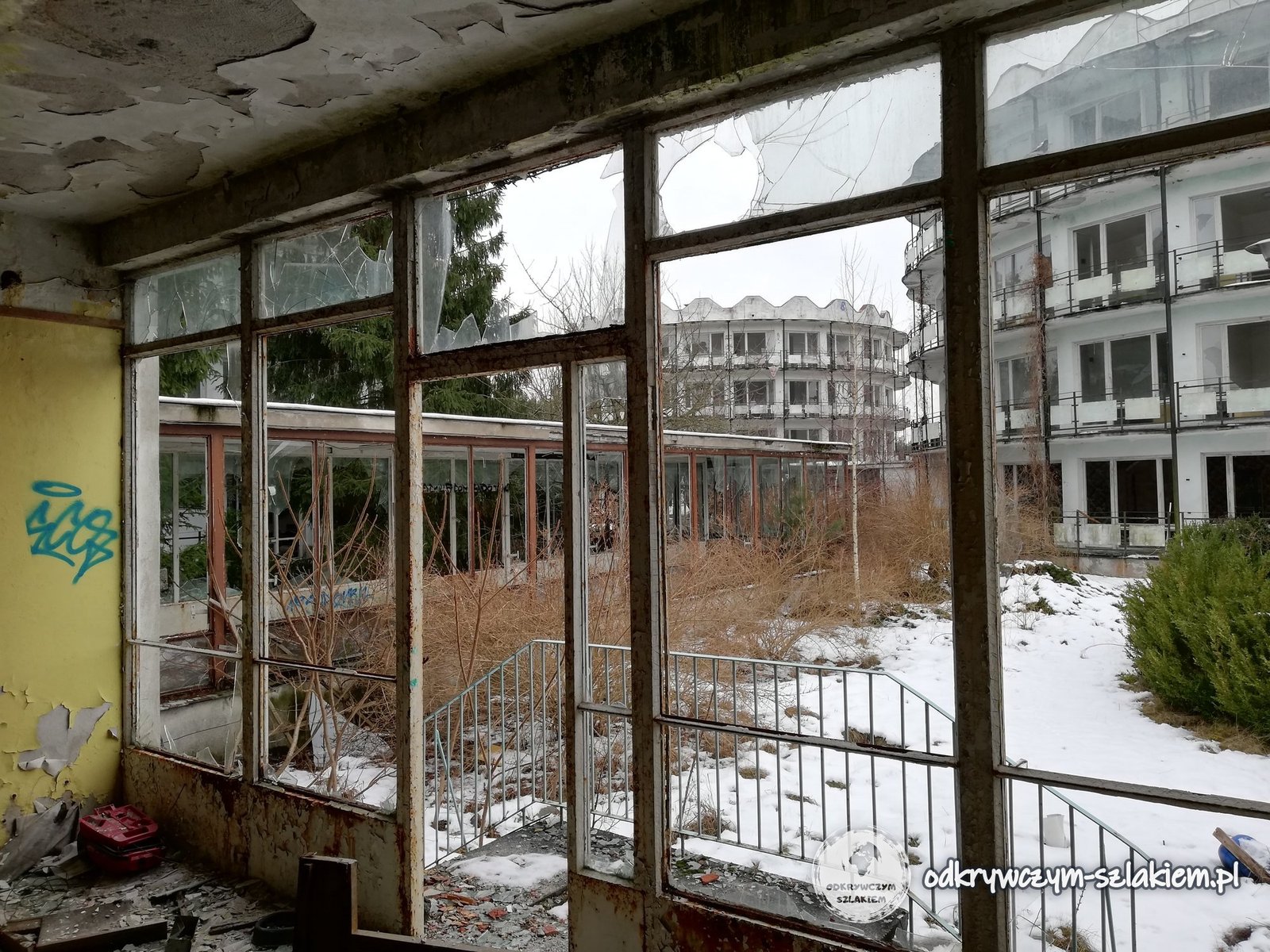
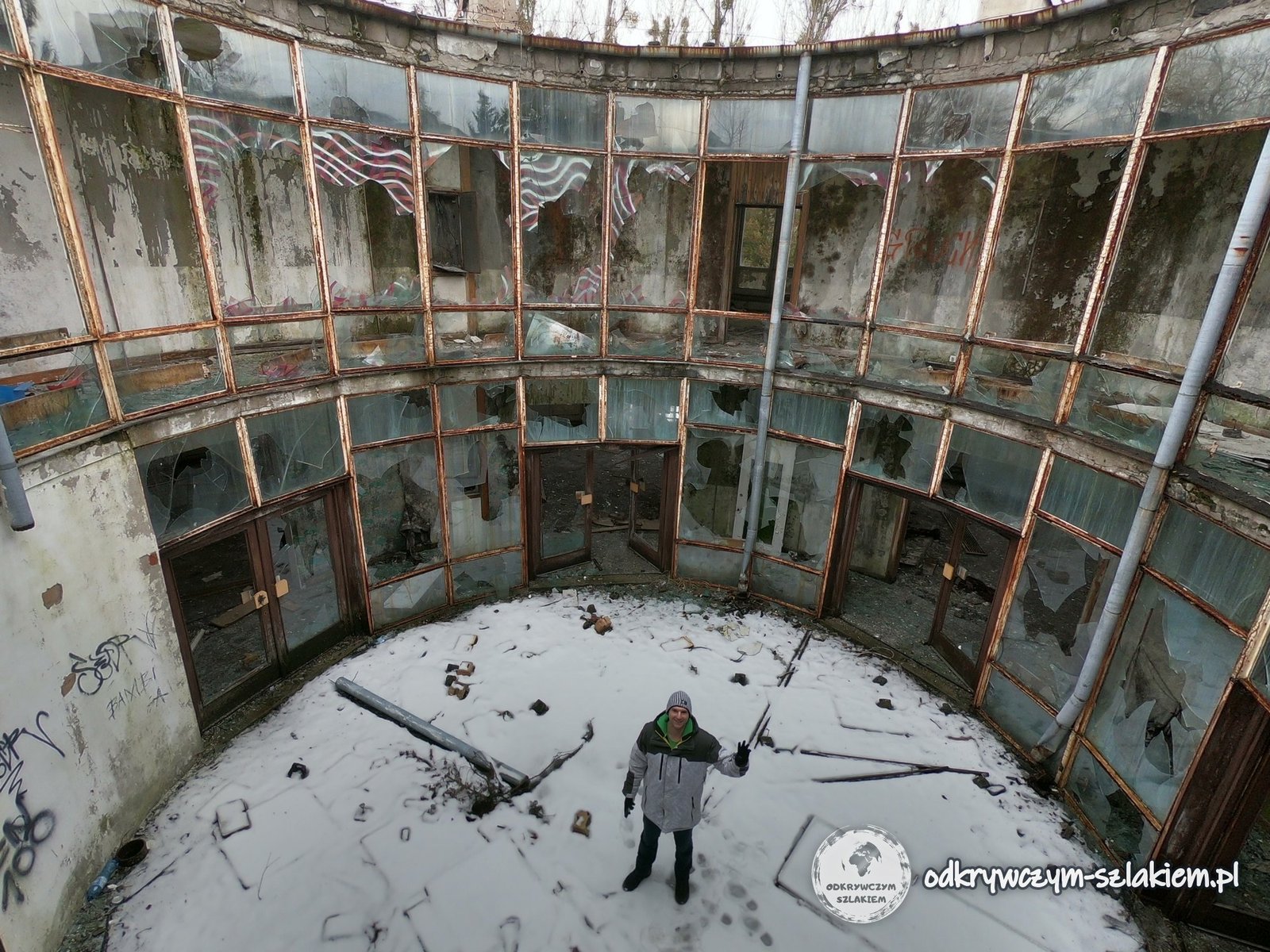
We started with the lower rotunda and its distinctive wavy roof. Inside it hides a round, glazed courtyard – in February it was covered in snow and surrounded by cracked panes, with remnants of net curtains still hanging on them.
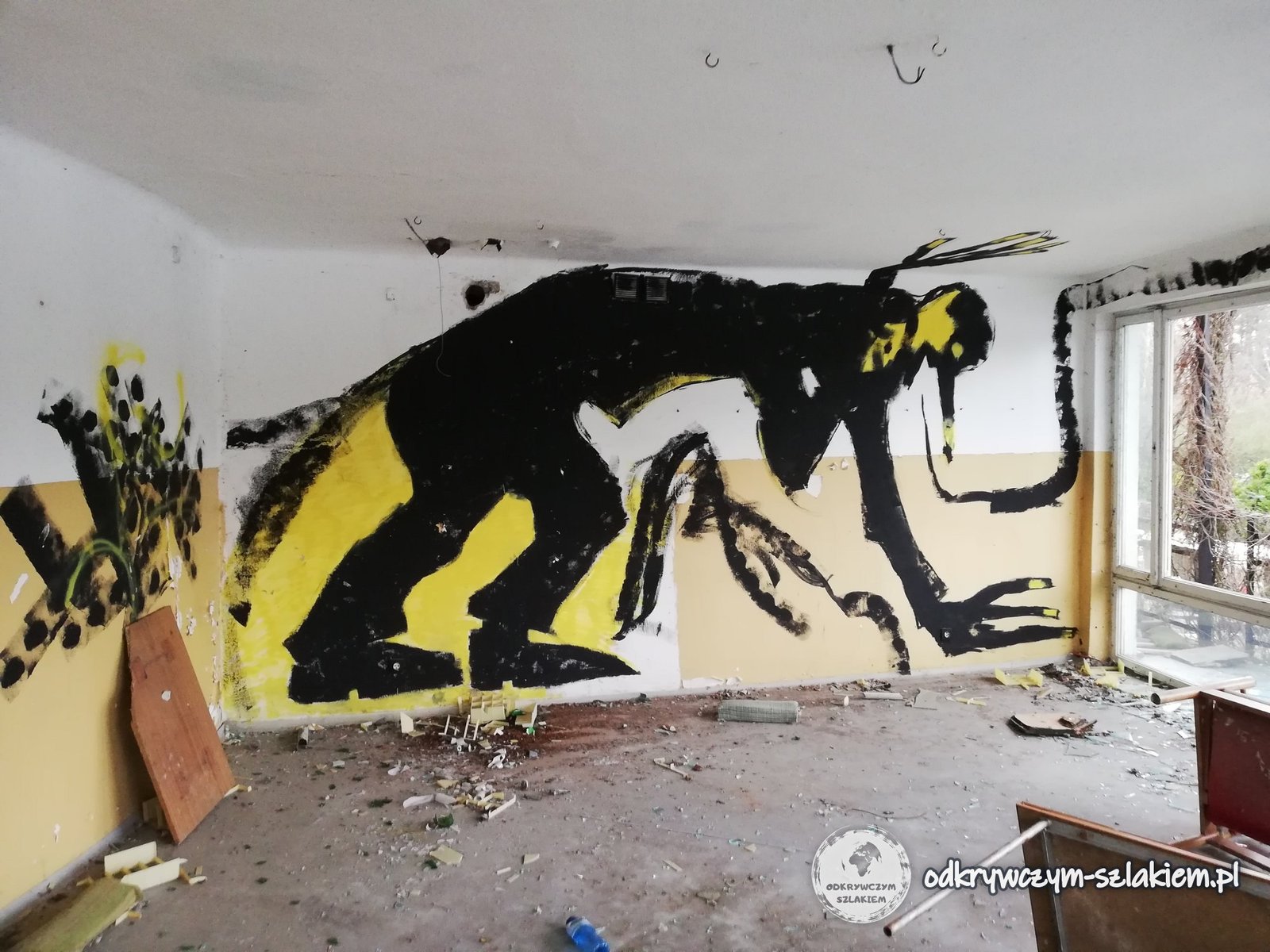
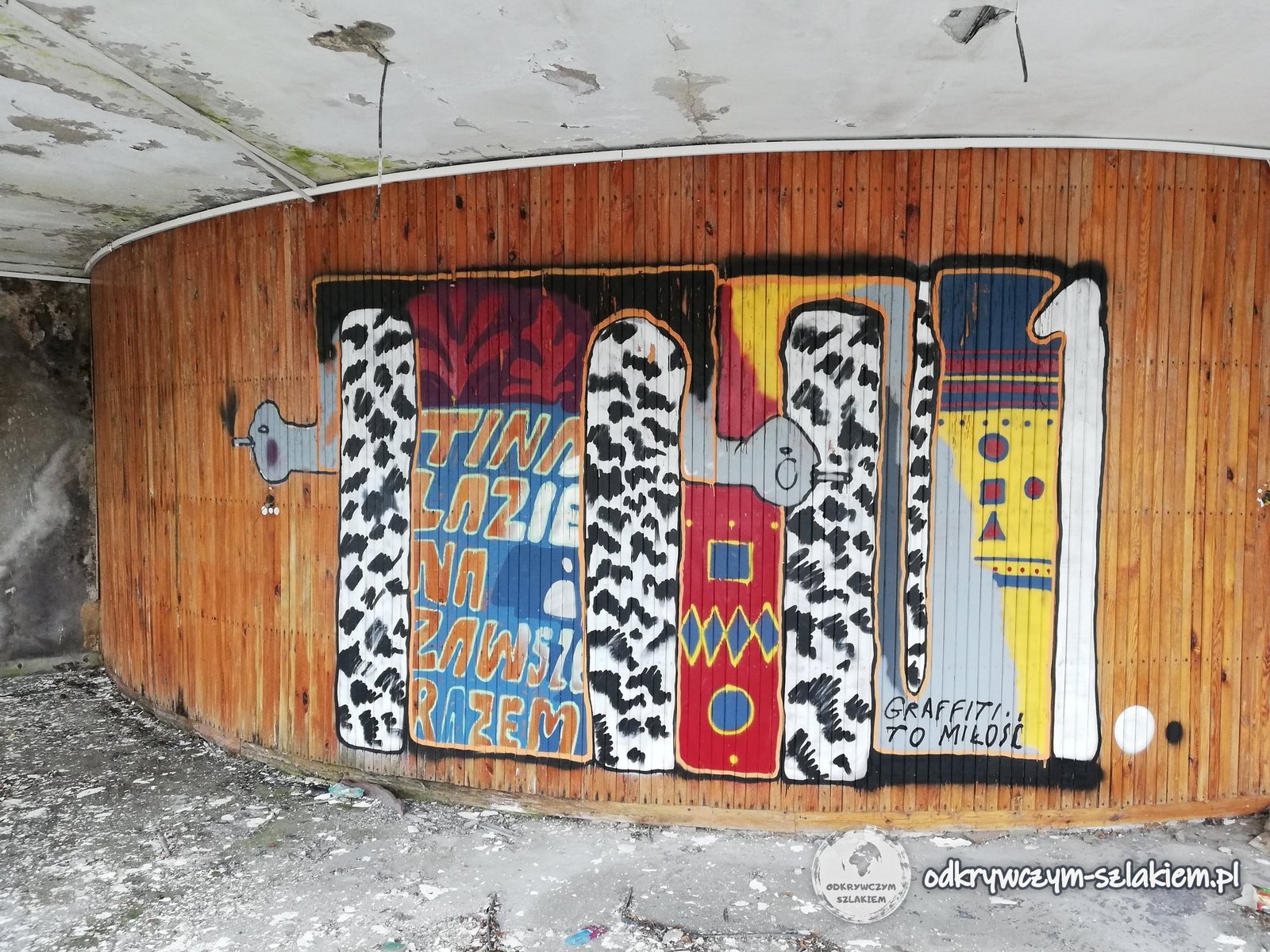
The inner corridor around the courtyard is lined with wooden panelling, on which colourful murals have appeared. Most of the writing on the walls of the resort, however, is plain scribbling.
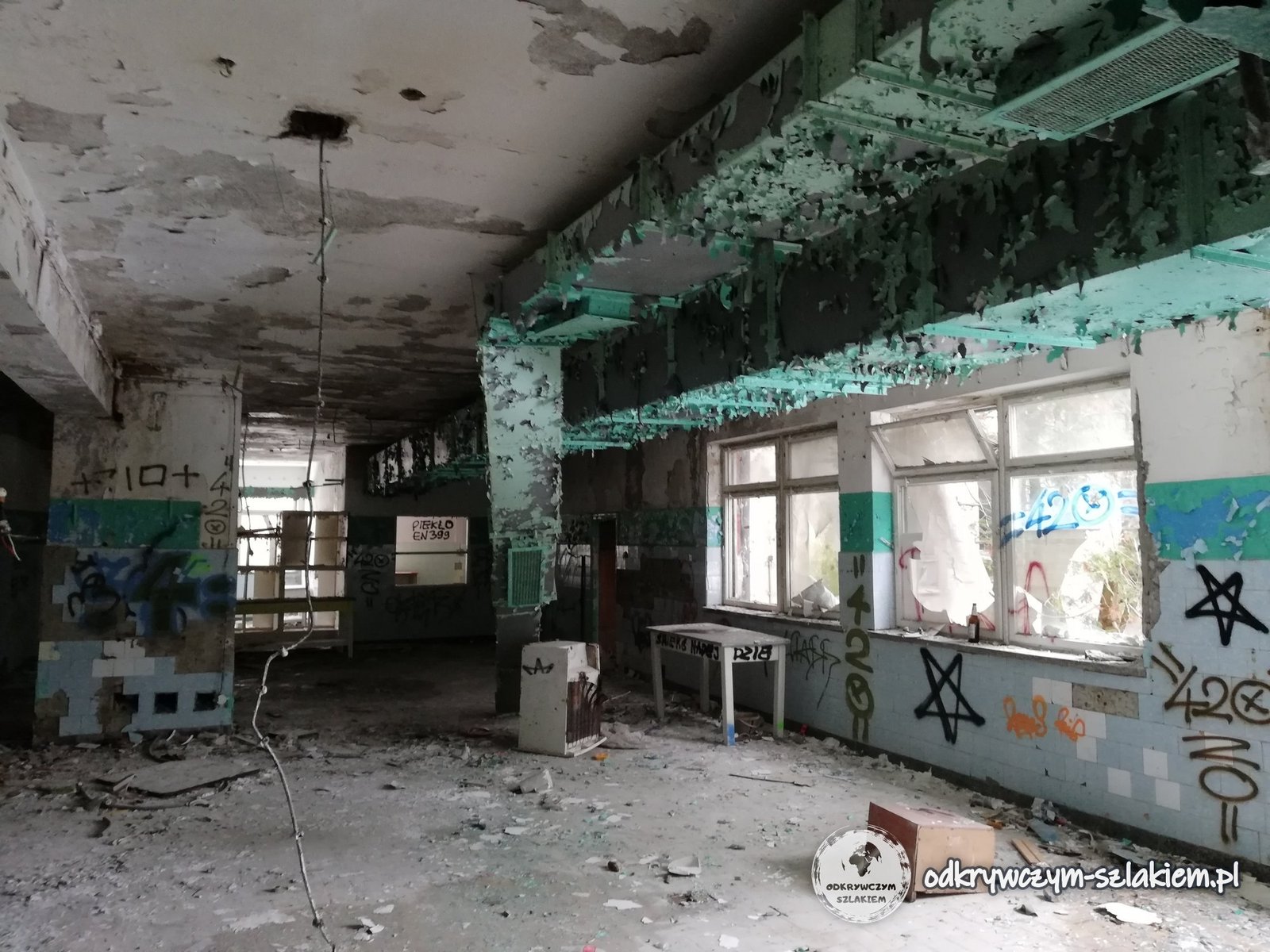
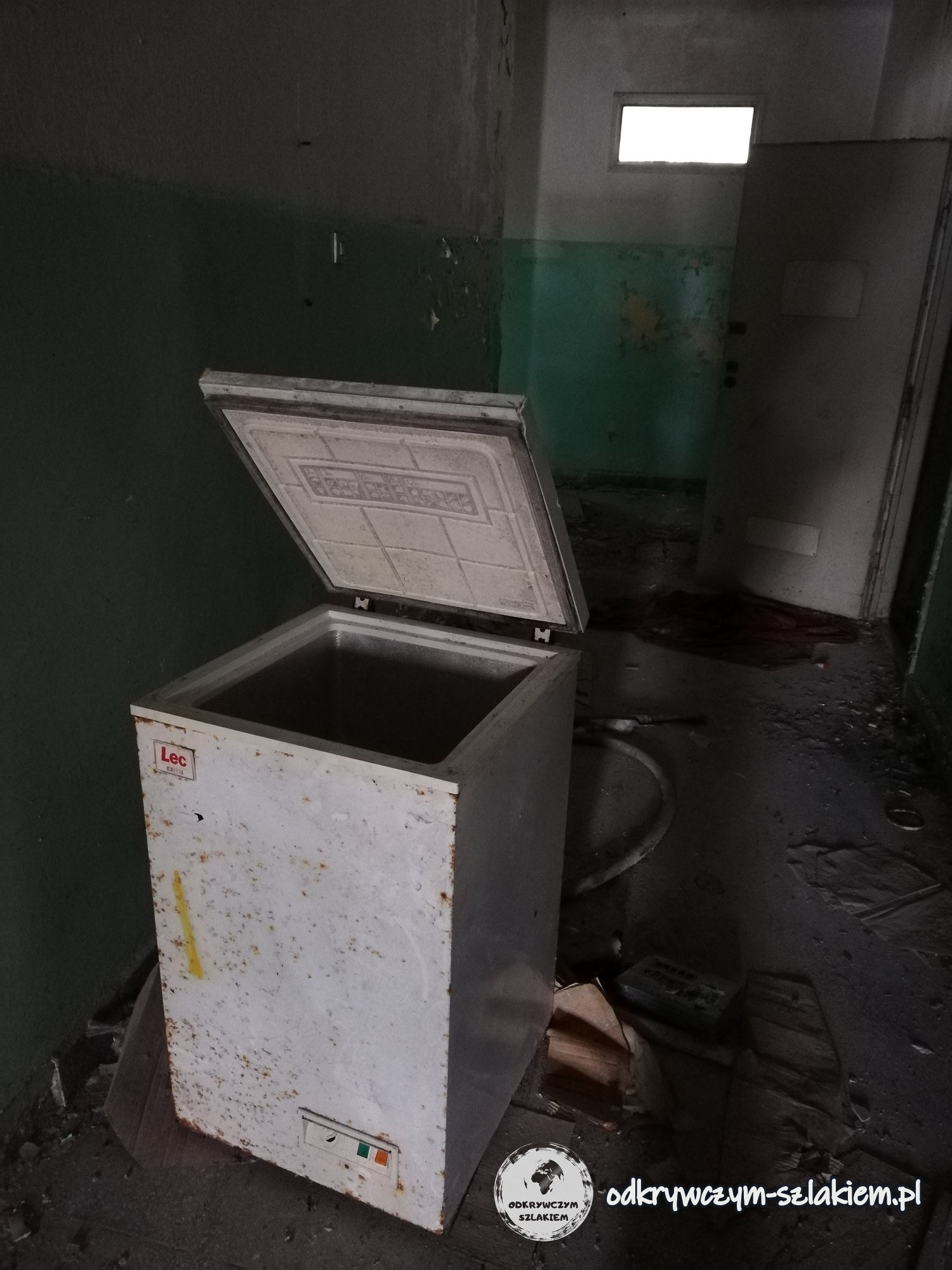
Next we got to the kitchen area: a large hall with tiled walls, ventilation ducts under the ceiling and peeling plaster. The side rooms still held freezers, old fridges and piles of empty bottles.
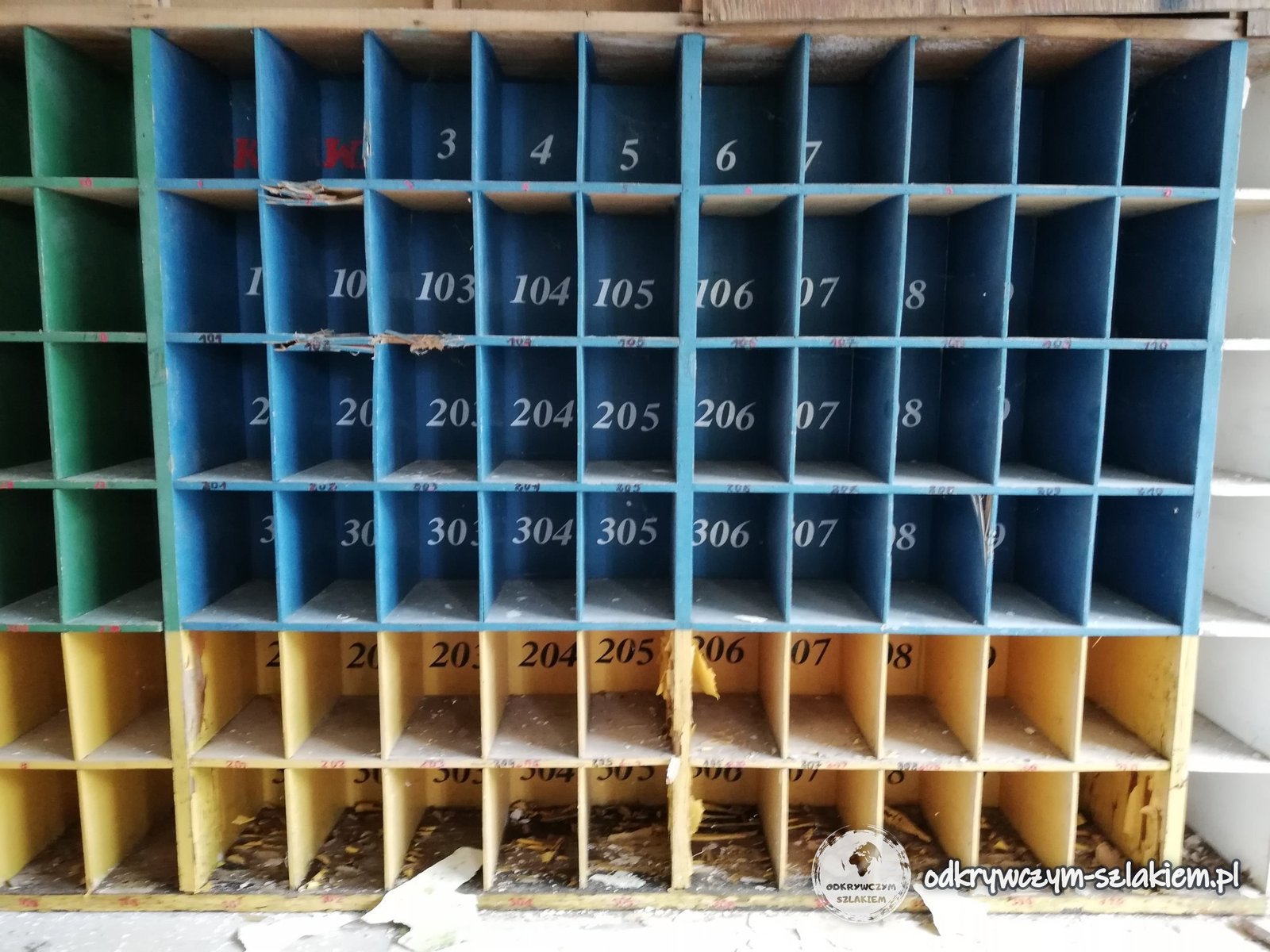
What is left of the reception is a colourful rack of key pigeonholes labelled with room numbers: 101, 102, 103…
The connecting corridor and the guest rotundas
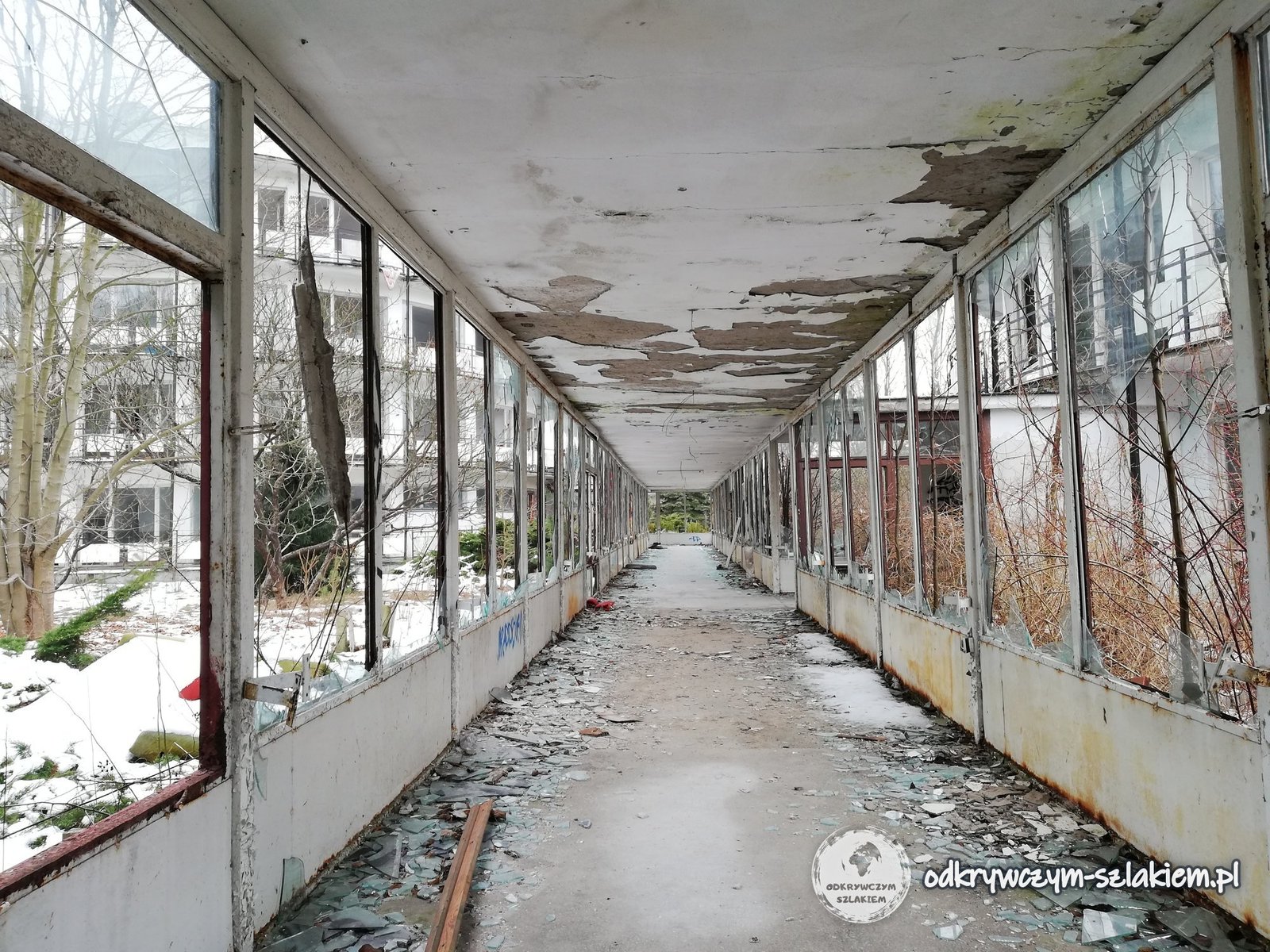
A long, glazed connecting corridor leads to the tall rotundas. Today the panes lie on the floor and snow blows inside.
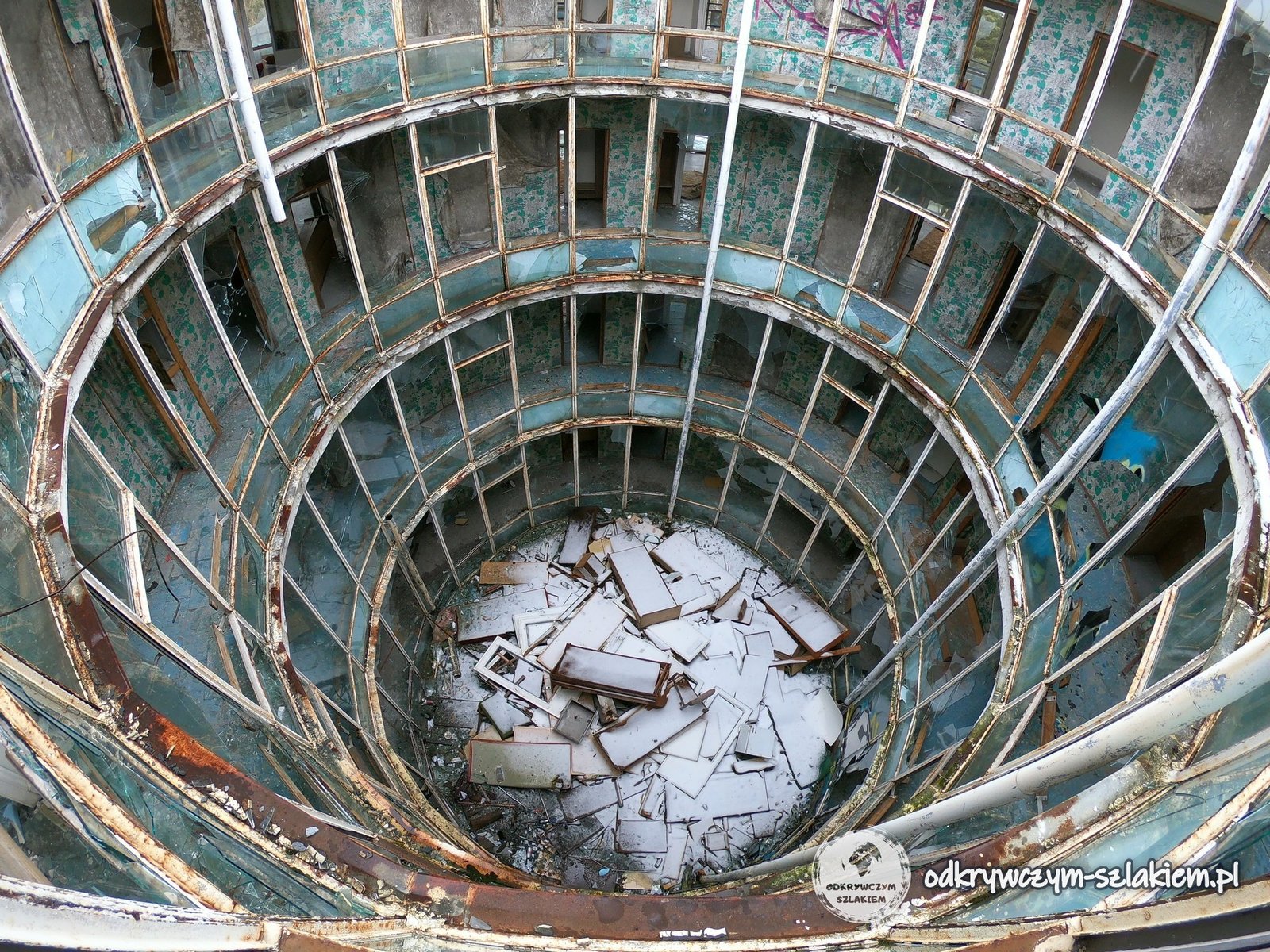
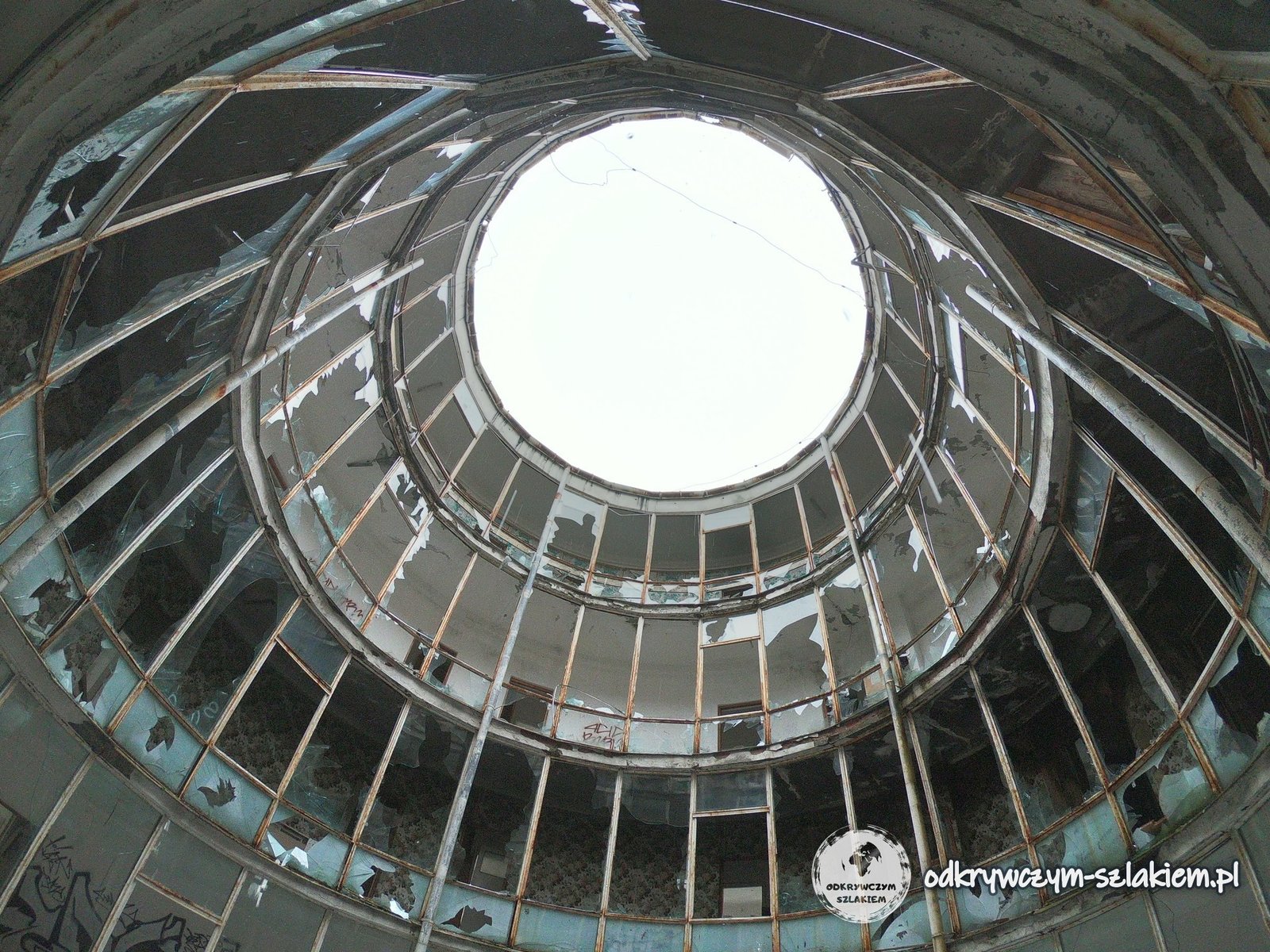
Each of the tall rotundas has a round atrium inside, reaching all the way up to the roof and surrounded by galleries leading to the rooms. At its bottom lie heaps of broken furniture, boards and glass – everything someone threw down from the upper floors.
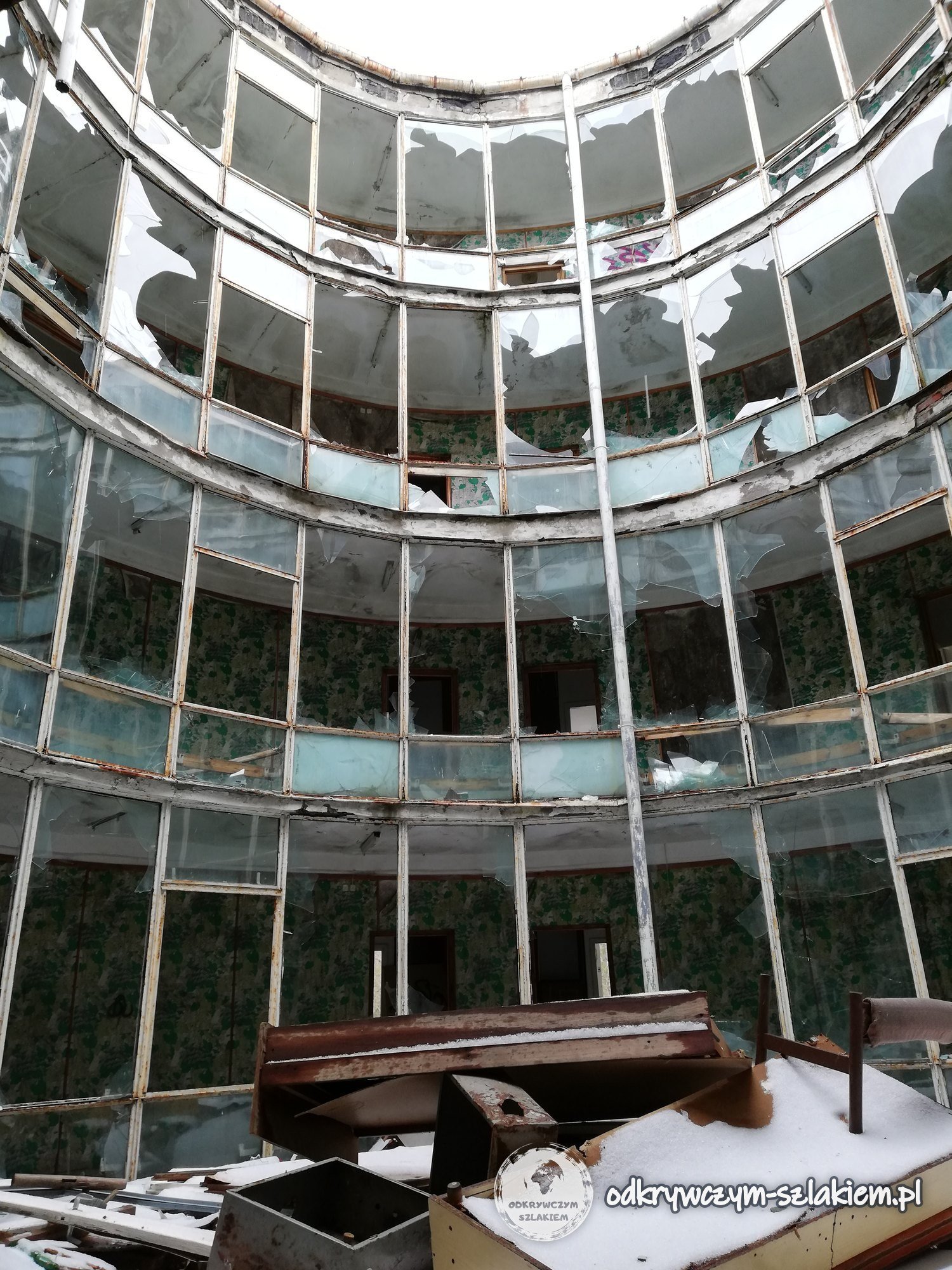
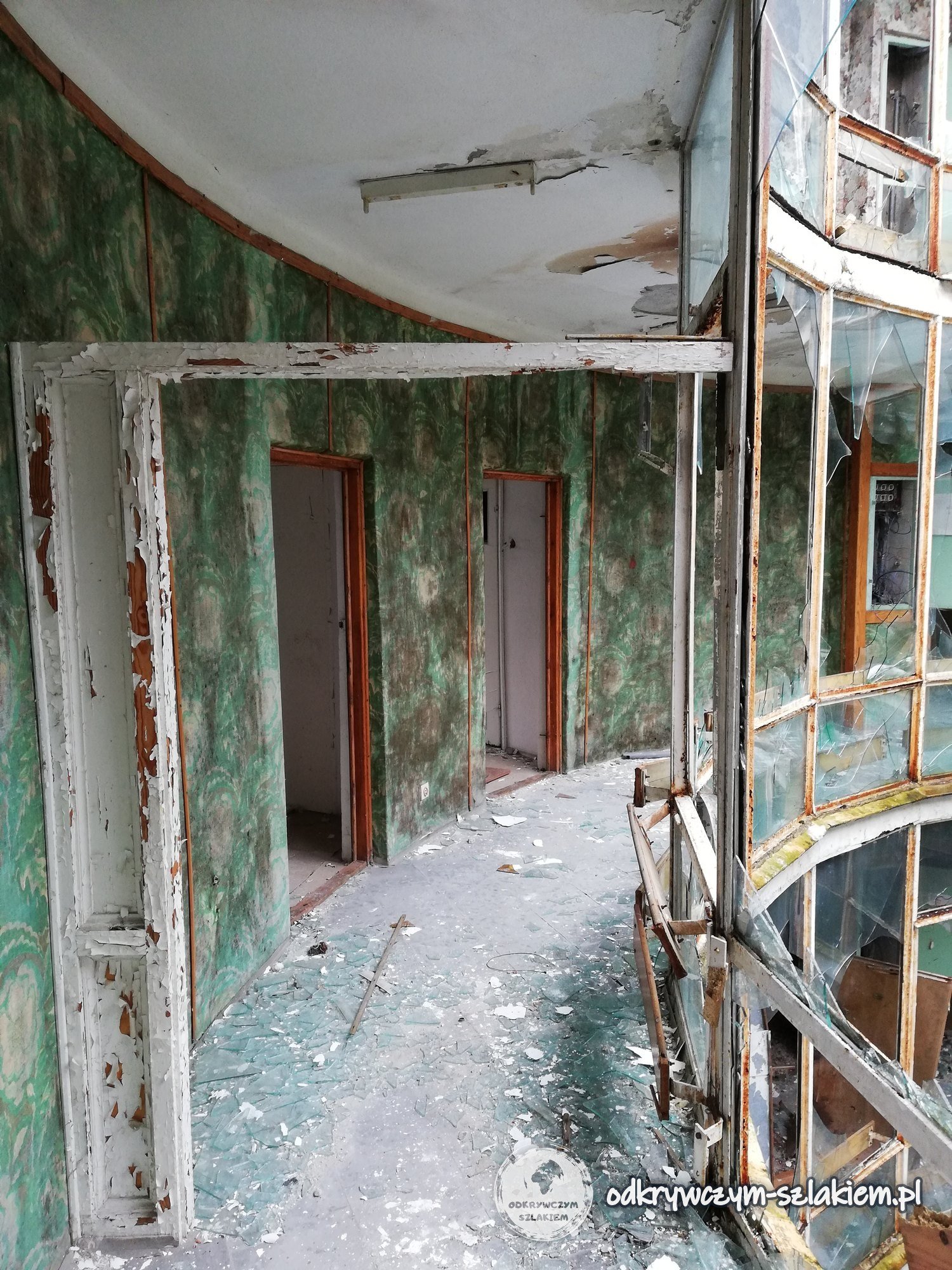
The wide angle of the GoPro captures the whole atrium at once – both from above and from the very bottom.
The rooms still have floral wallpaper, wooden panelling and here and there some furniture – cupboards, tables, sofa beds. Most of the furnishings, however, have been stolen or destroyed.
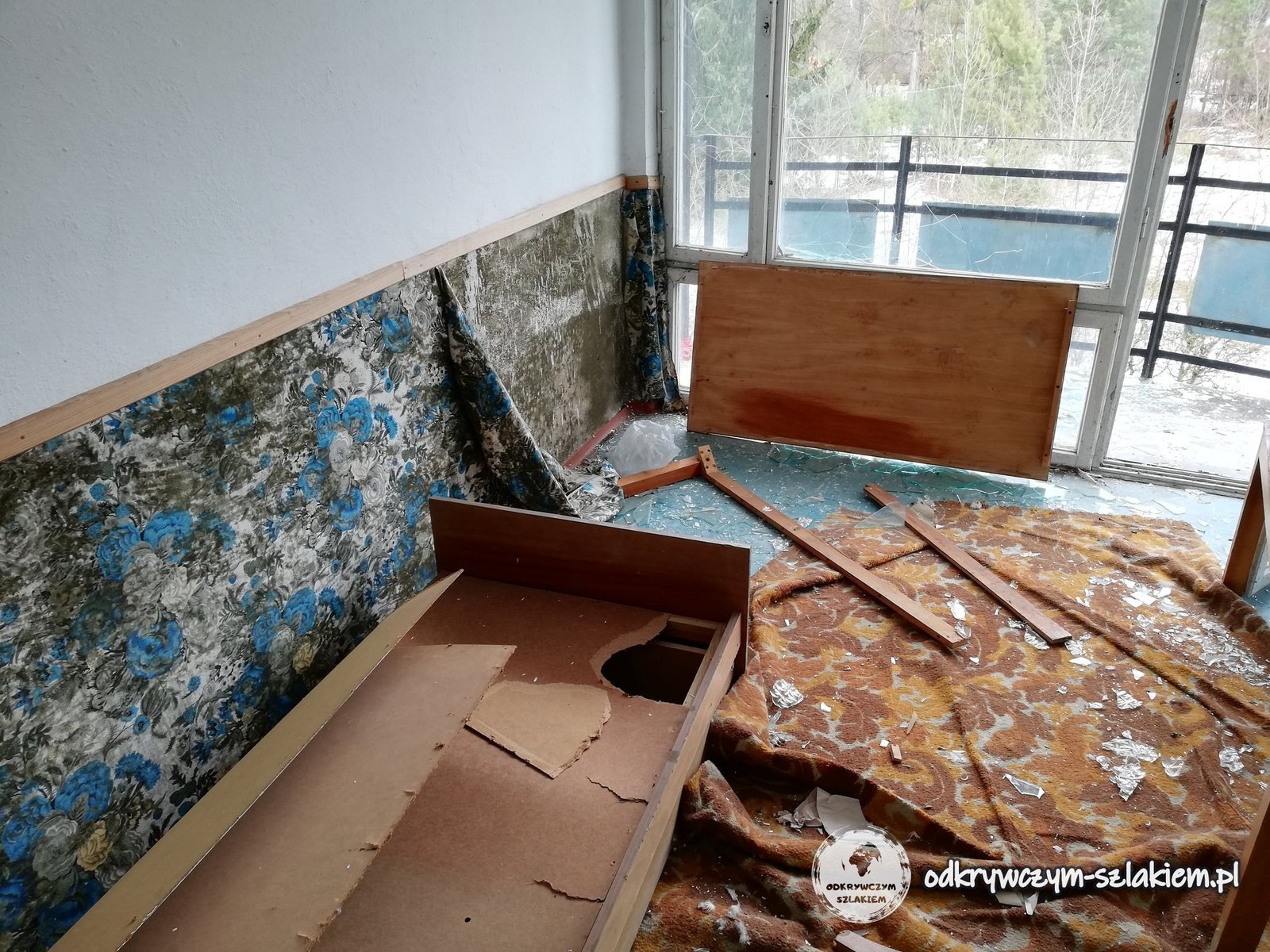
The Okrąglaki are a perfect example of how a place like this can be looted and vandalised: smashed windows, broken furniture thrown down into the atrium, ripped-out cables, traces of fire and loads of scribbles on the walls. None of this has anything to do with urban exploration – urbex is not vandalism.

On the roofs
From the roof of the lower rotunda its courtyard looks like a huge, round skylight – a birch tree has already grown on its edge.
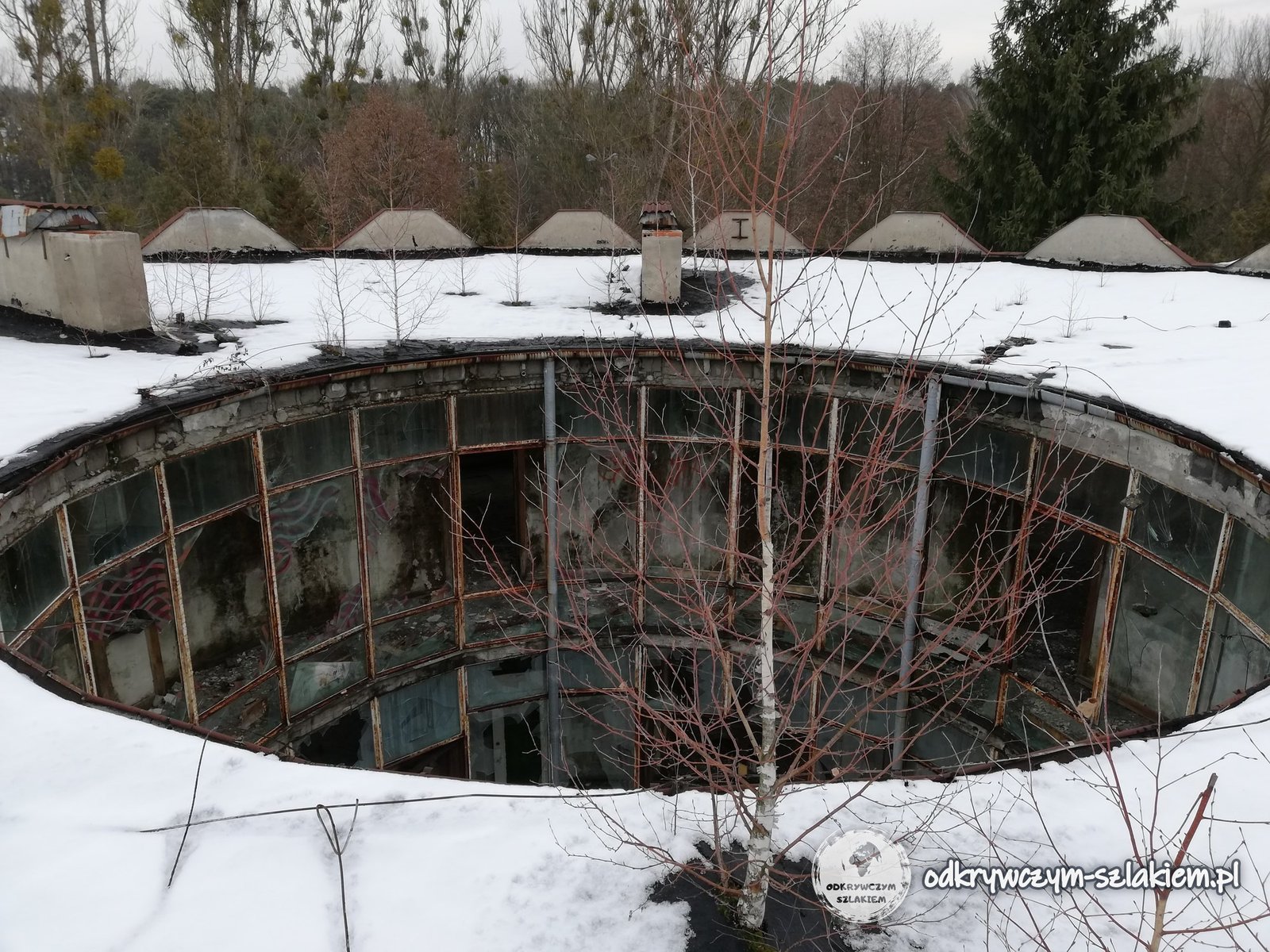
From above you can also see the layout of the whole resort: the tall rotundas stand among the trees, connected by long, low corridors.
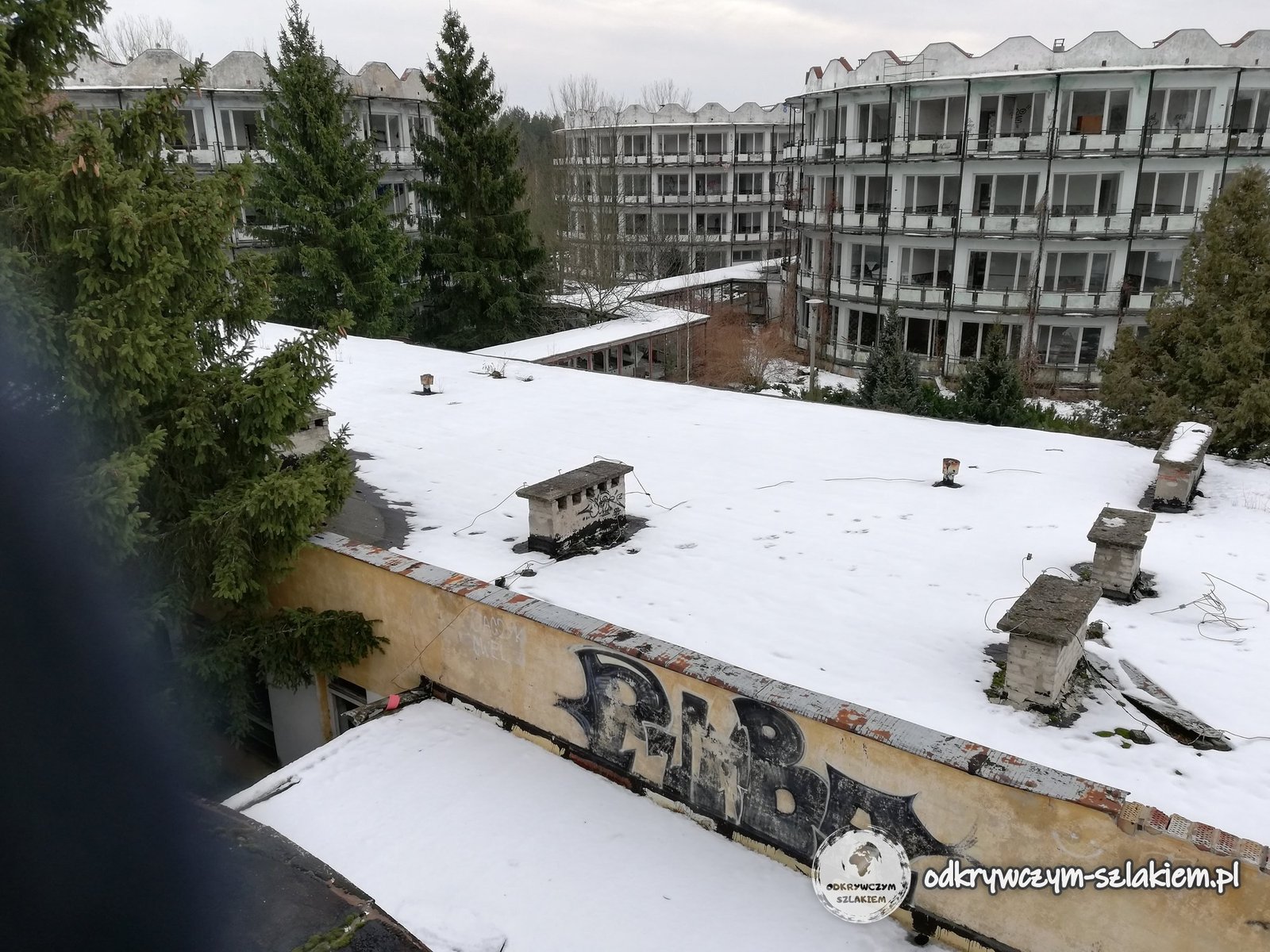
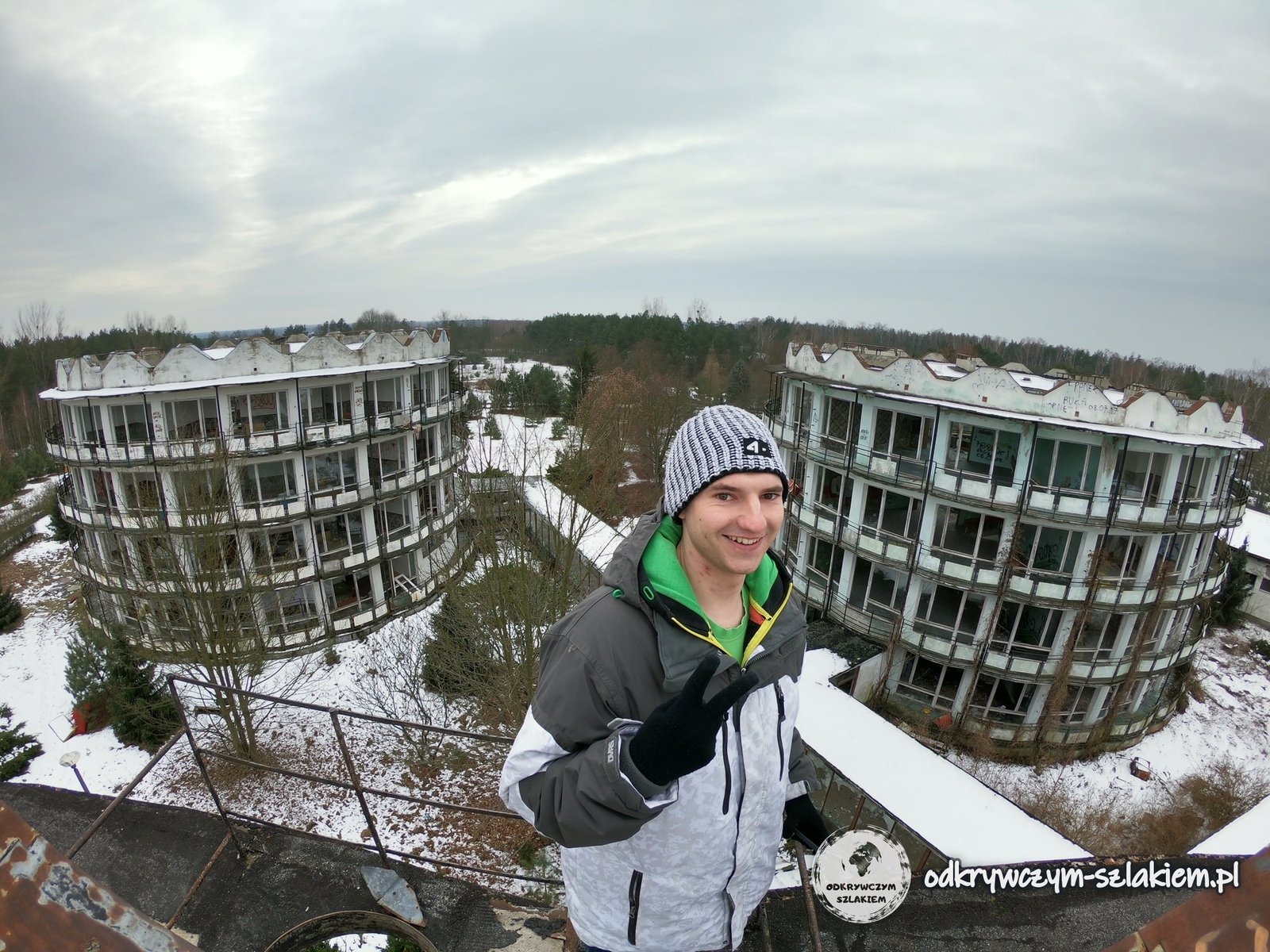
From the top level of one of the rotundas you can see the other two and the forest all around.
Around the resort and the video
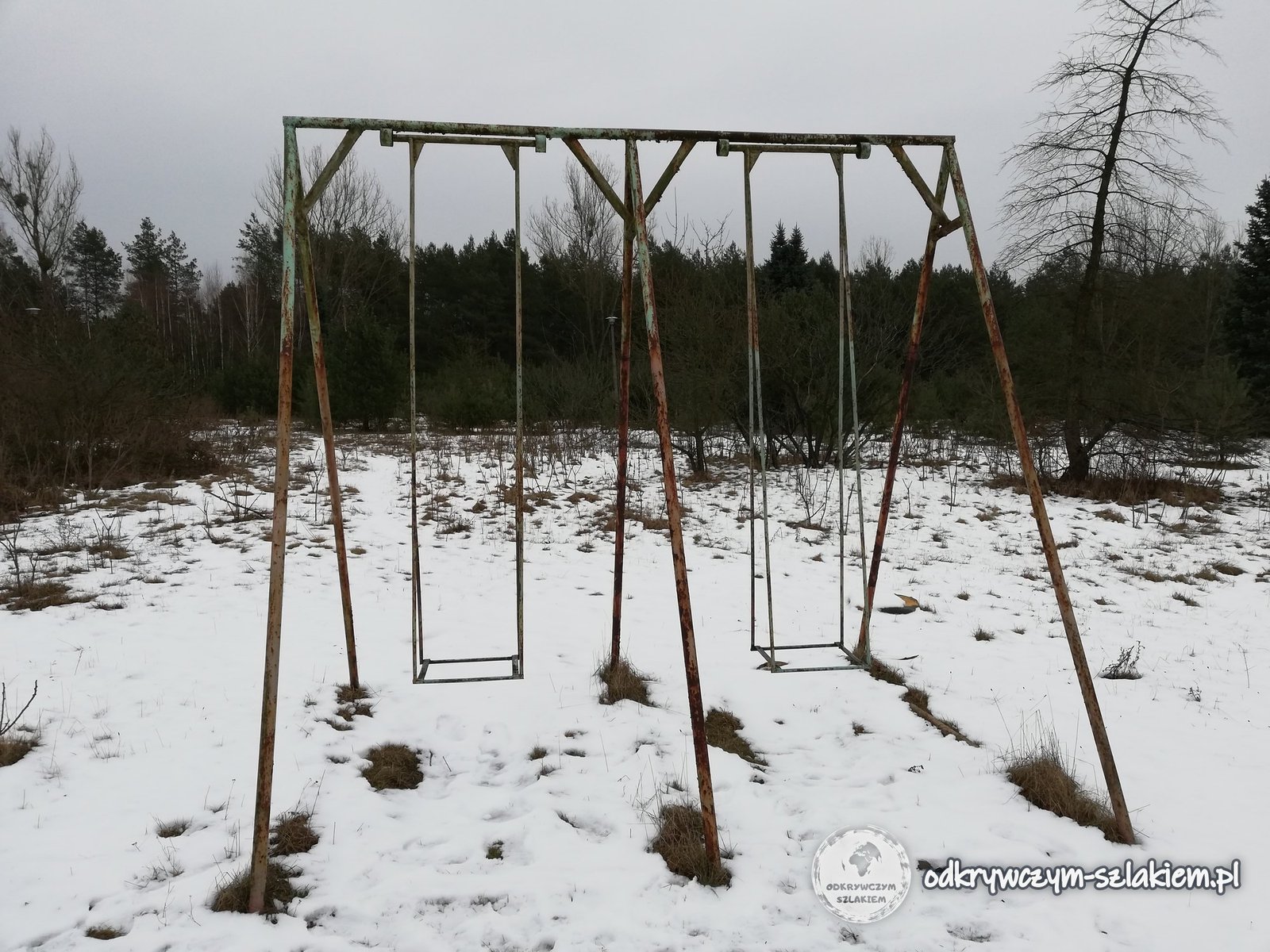
Finally we walked around the grounds – the resort covers about 8 hectares. Among the trees there are still swings from the old playground, overgrown paths and smaller service buildings.
The video of the whole trip, with Polish subtitles, is on my YouTube channel:
 18:06
On the way back: the Włocławek dam
On the way back we stopped at the dam on the Vistula in Włocławek. This is where officers of the communist Security Service (SB) threw Father Jerzy Popiełuszko, the chaplain of “Solidarity”, into the river after abducting him on 19 October 1984. His body, weighed down with a sack of stones, was found on 30 October. By the dam there is a plaque reading “Place of the martyrdom of Father Jerzy Popiełuszko” and a tall cross monument designed by Jerzy Kalina and Andrzej Krawczyk, made by the workers of the Włocławek nitrogen plant (Zakłady Azotowe Włocławek) and blessed by John Paul II on 7 June 1991.


Urbex – a few rules
Urbex, or urban exploration, means discovering abandoned places that are normally out of reach. The most important rule is: urbex is not vandalism – you don’t break, paint or take anything. It is also good practice not to share tips on how to get in – this protects the places that are still standing from thieves and vandals. The Okrąglaki have an owner, and already in 2019 the site was fenced and marked as guarded property, so always check whether entry is allowed. And safety: broken glass, missing railings, holes in the floors – never go alone, wear sturdy shoes and bring a torch.

You will find more abandoned places in the posts Szczecin and Police: urbex and Berlin: abandoned places, and in Masuria – the abandoned manor house by the pyramid in Rapa.
Photo gallery